
Red covers more ground than people expect, from a brown-leaning maroon to a vermilion that almost glows. And a red bridal outfit no longer has to mean a lehenga. Over the years of dressing brides I’ve put red into silk sarees, velvet sets, shararas, Anarkalis, gowns and sharp jacket suits, and each one asks something different of the woman wearing it. The lighter construction many makers now offer helps, because a red outfit that’s comfortable at hour six looks better than one you’re enduring. I always start with the ceremony itself: where it is, how long it runs, whether you sit on the floor, and what your family expects. Jewelry, shoes, dupatta and makeup come after, and they should support the outfit rather than fight it.
Which Red Is Yours? Undertone, Light and the Camera
Bridal reds split roughly into two families. Blue-based reds, like ruby, crimson and maroon, lean cool and deep. Orange-based reds, like scarlet, vermilion and tomato, lean warm and bright. Neither suits everyone. I hold fabric under a bride’s chin by a window in daylight, then watch her face, not the cloth. If her skin looks clearer and her eyes brighter, that red is working; if she looks sallow or flushed, we try the other family.
Then check the shade where you’ll actually wear it:
- Warm tungsten or candle light pushes red toward orange, so a scarlet can look loud at night while maroon stays rich.
- Strong daylight drains very dark maroon toward brown in photos.
- Cameras struggle with saturated red; fine embroidery on a bright red can blur into one block. Mention this to your photographer so they can expose for the outfit.
- Take a phone photo of the fabric swatch with flash and without. If the pattern disappears in both, choose more contrast in the embroidery.
Your lipstick and the outfit should share the same undertone. A blue-red lip against an orange-red lehenga makes both look slightly off, which is why I bring a swatch to the makeup trial.
1. Classic Red Bridal Lehenga With Gold Jewelry
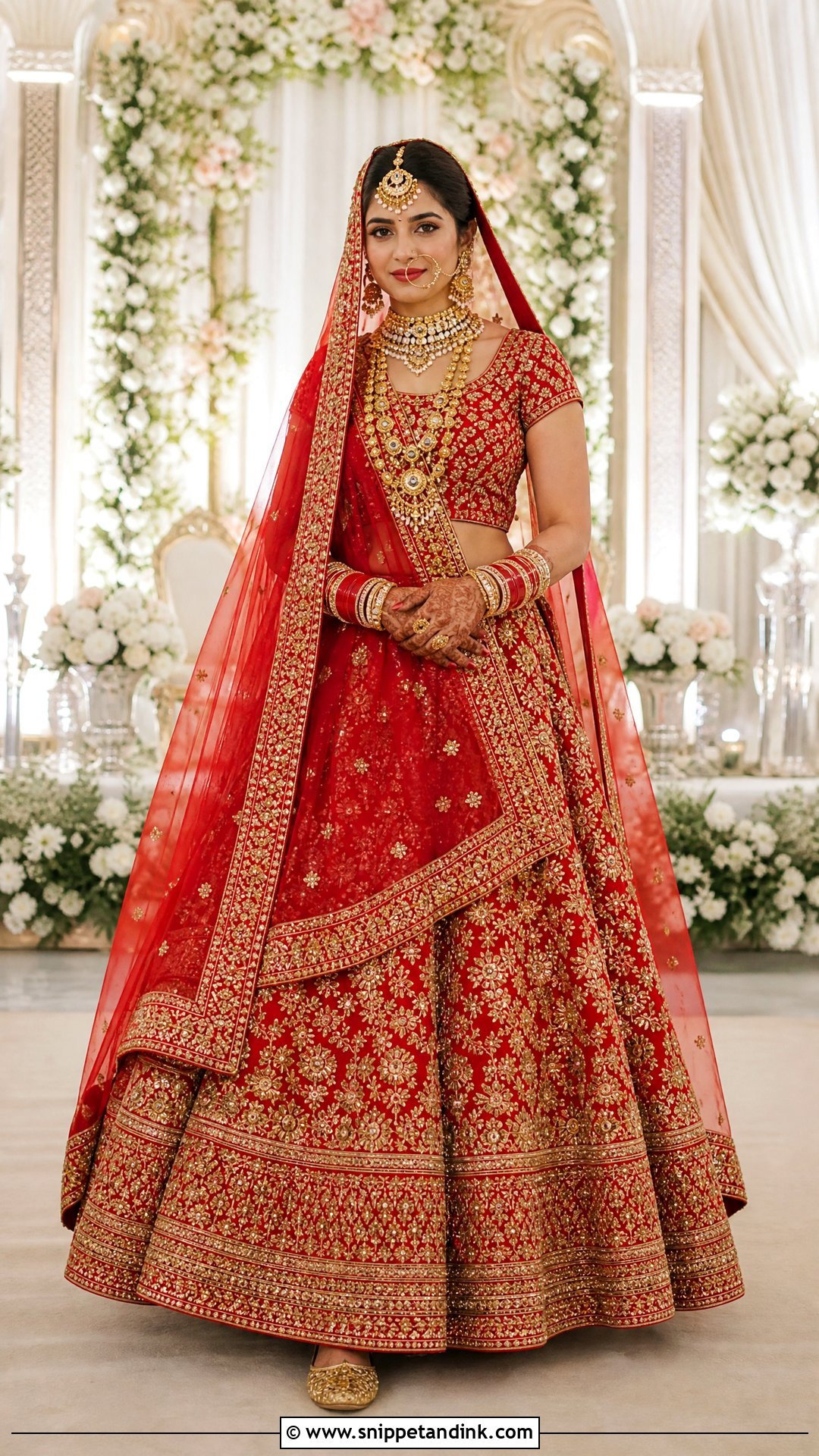
This is the outfit most grandmothers picture, and there’s a reason it keeps coming back. A classic red bridal lehenga with zardozi, zari or sequin work around a full skirt fills a mandap or a ballroom. Where I spend the fitting time is the blouse. A heavy skirt tugs the waistband down over the evening, and a blouse cut too tight under the arm means you can’t lift a hand for the garland. Drape the embroidered dupatta over one shoulder, use a lighter veil on the head, and add a gold choker, long necklace, earrings, bangles and maang tikka. Embellished gold juttis beat heels under that much fabric. Defined eyes and a rich red lip hold their own against all the gold.
2. Maroon Velvet Bridal Lehenga With Polki Jewelry
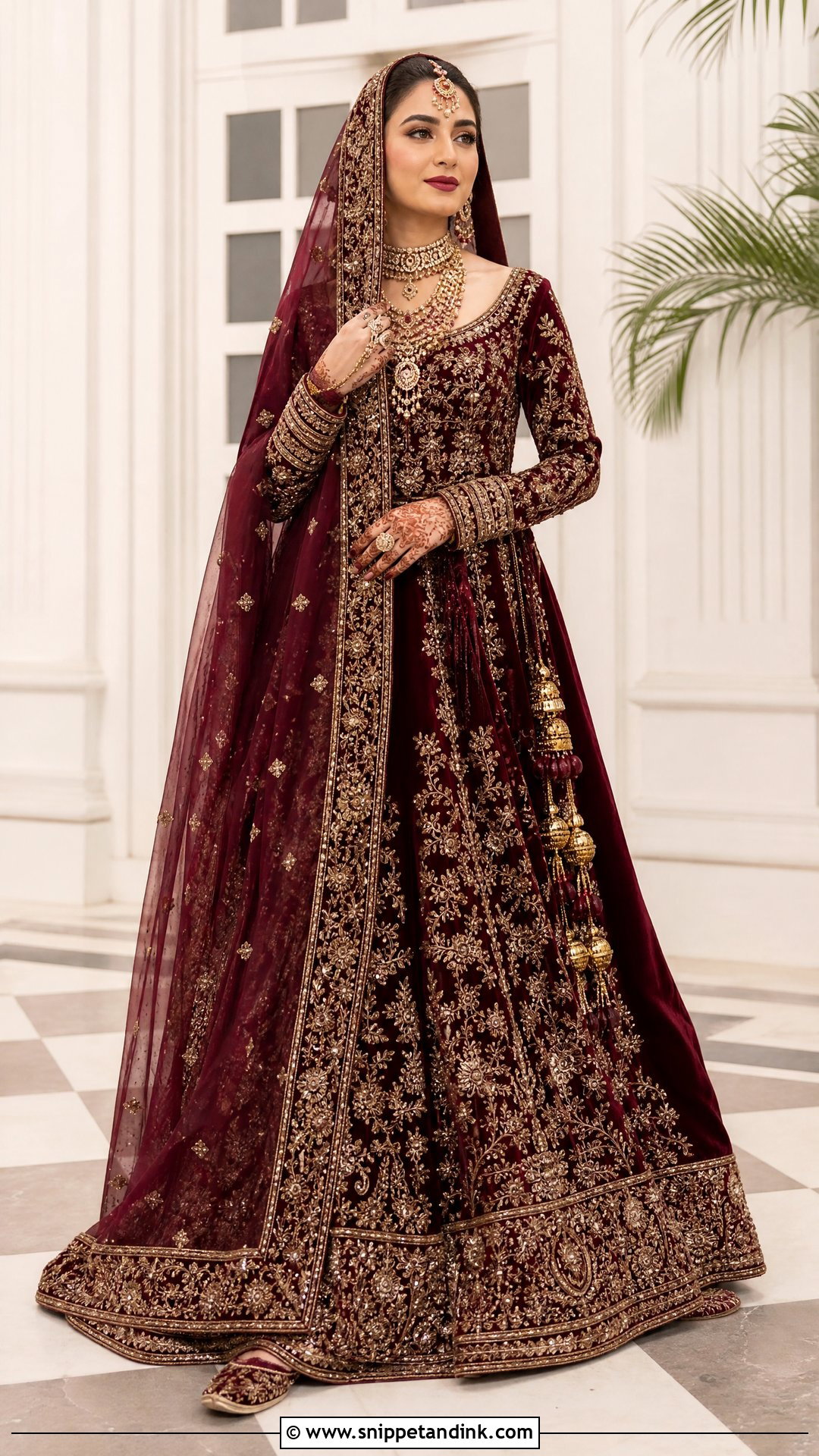
Velvet only belongs at a cool evening wedding. In heat it becomes miserable within the hour, and the pile marks wherever you sit. For a winter night ceremony, though, a maroon velvet lehenga has a depth no silk matches. I steer brides toward antique gold embroidery on velvet instead of shiny sequins, because the pile already catches light and reflective work on top can look cheap in flash photos. A matching blouse with a modest neckline and fitted sleeves, a sheer maroon dupatta with a detailed border, and polki jewelry, meaning uncut diamonds set in gold, finish it. Velvet or gold juttis, soft brown eye makeup and a berry lip suit the darker palette.
3. Red Banarasi Bridal Saree With Temple Jewelry
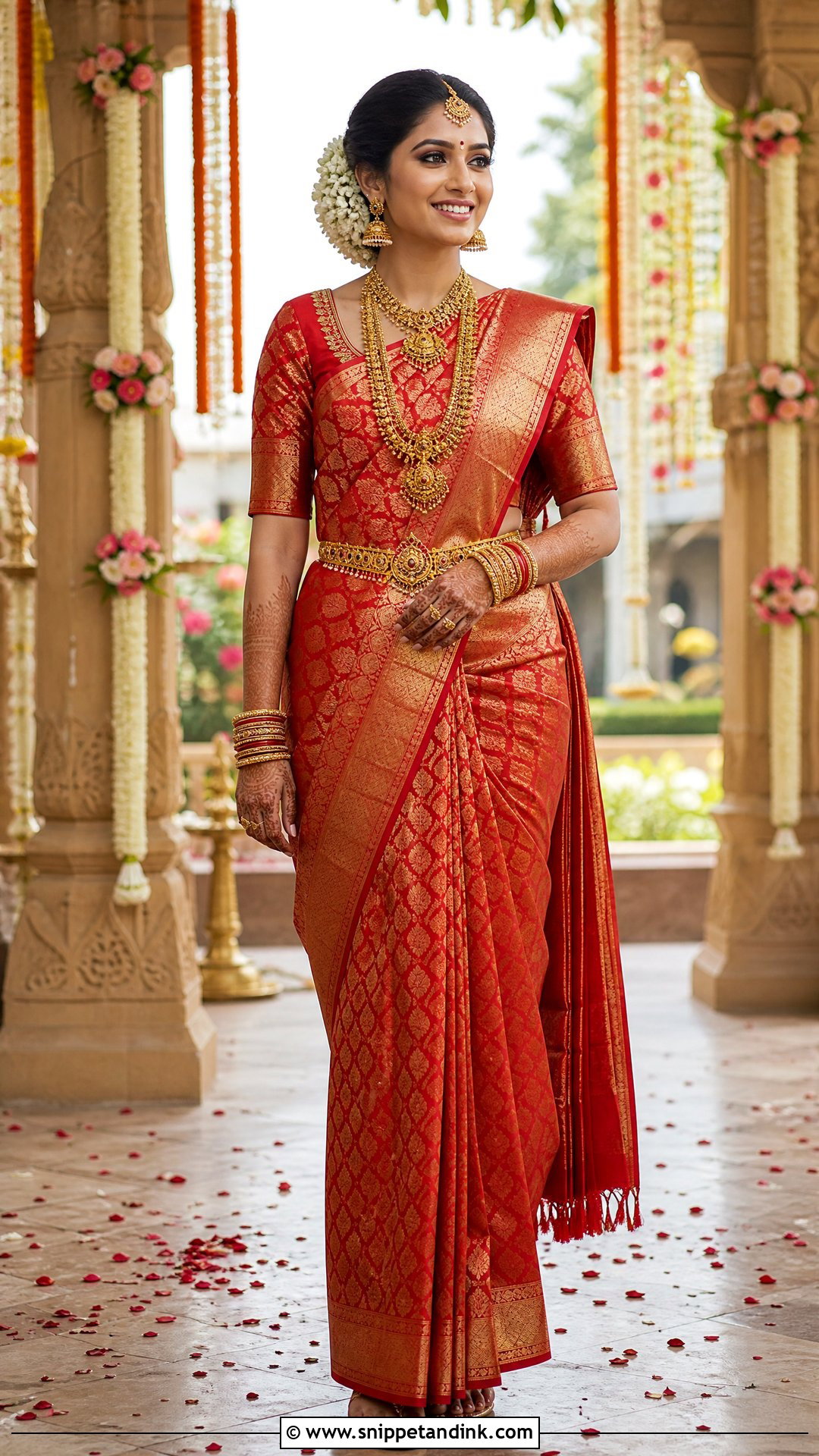
Banarasi silk is woven with zari brocade, so the pattern is part of the fabric, and the pallu is where the weaver shows off. I always look at a Banarasi from the back first, since that pallu is what guests watch during the rituals. Pair it with a fitted red silk blouse with elbow-length sleeves and quiet embroidery. Banarasi silk can be slippery, and pleats drift during a long ceremony, so have a draper set them with a few hidden safety pins at the waist. Layered temple necklaces, jhumkas, gold bangles and a waist belt finish it, along with a small red bindi and flowers around a low bun. Cushioned sandals stay hidden under the hem.
4. Red Kanjeevaram Bridal Saree With Gold Accessories
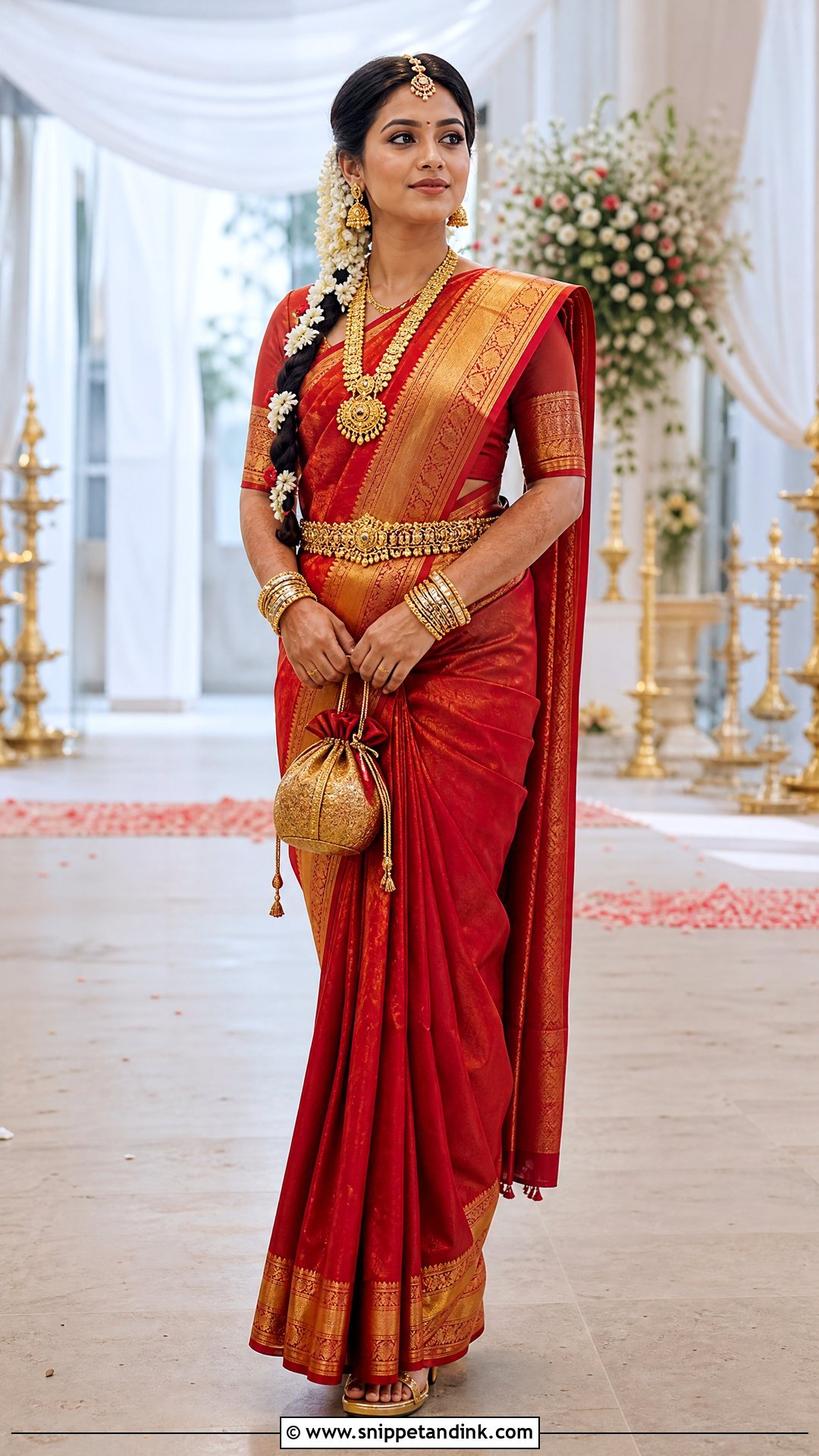
A red Kanjeevaram bridal saree is heavy silk with a broad gold border, and it drapes with real body. That weight is the thing to plan around. A Kanjeevaram stands away from the body more than a soft silk, so I’d do at least one practice drape before the wedding morning to see how it sits on you. Pick scarlet, ruby or crimson by holding each against your face in daylight. A structured blouse with short or elbow-length sleeves and a secure neckline carries layered gold necklaces, statement earrings, bangles and a waist belt. A long braid wound with fresh flowers suits it, and supportive gold sandals plus firm pallu pinning keep everything in place through rituals.
5. Red Zardozi Bridal Lehenga With A Long Veil
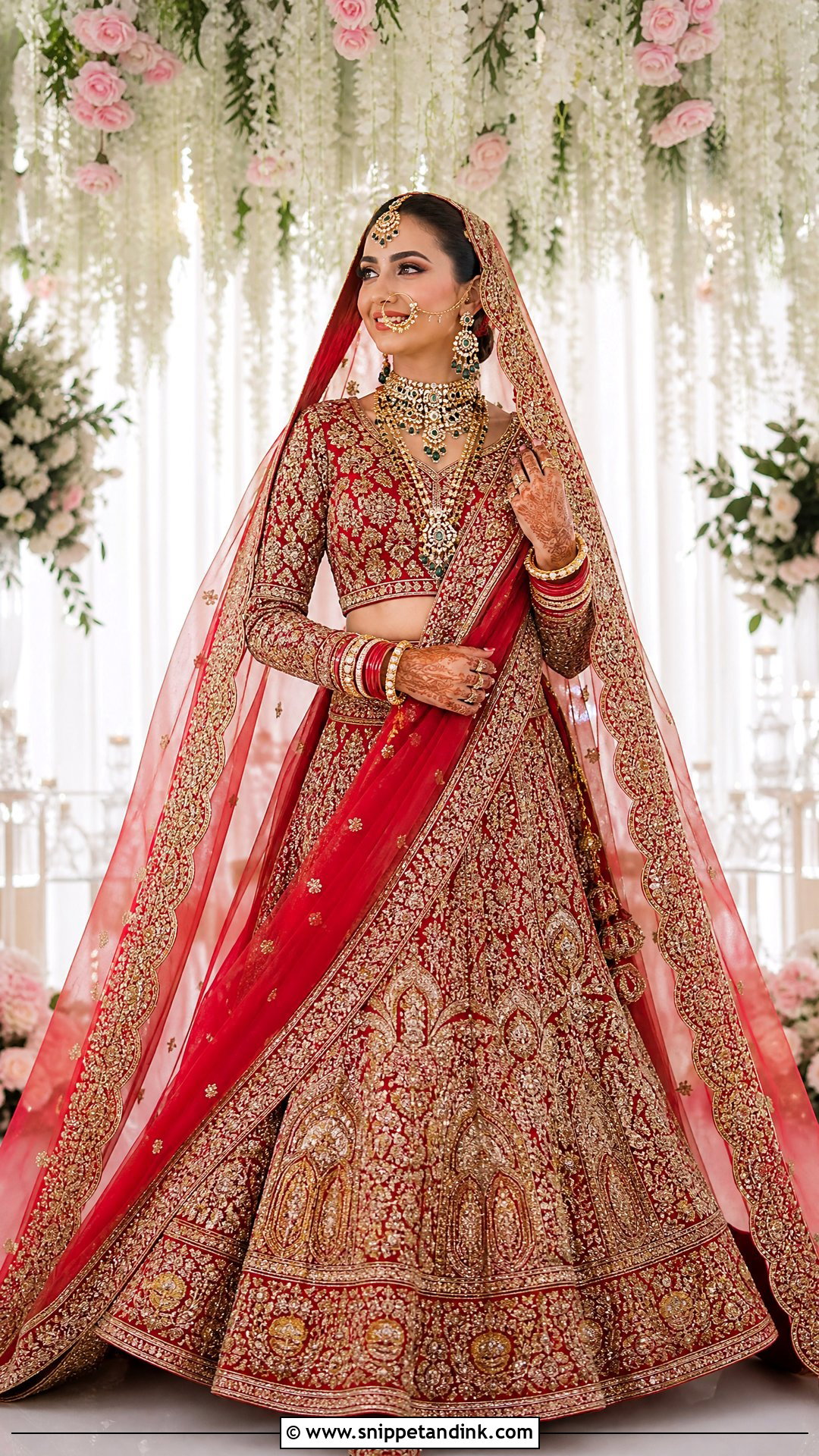
For the biggest ceremony moment, a red zardozi lehenga with a long veil is hard to beat. I keep the dense metallic embroidery at the hem and let it lighten toward the waist, which keeps the skirt from feeling top-heavy and helps it swing when you walk. One dupatta crosses the torso to define the shape, while a long sheer veil goes over the head. A scalloped or embroidered veil border frames the face in close portraits. Add a choker, long necklace, earrings, bangles and a fine nose ring if it fits your traditions, with padded juttis below. A long veil needs a helper on stairs and in wind. Plan who that is.
6. Red Bridal Lehenga With Double Dupatta
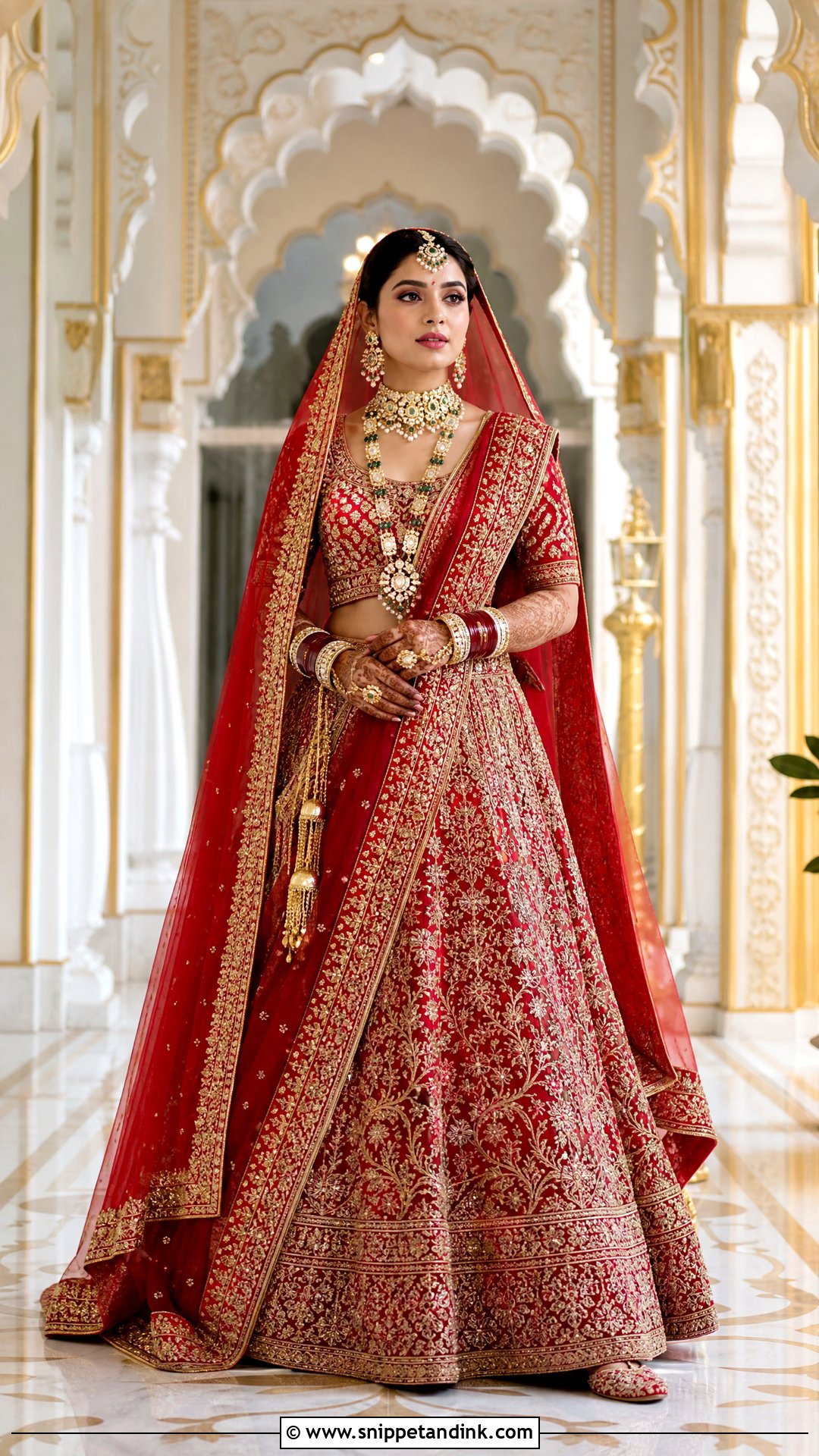
Two dupattas give you shape and coverage, but only if the weight is handled. The heavier one goes across the torso, fixed at the shoulder and waist, and the lighter net one sits on the head so it doesn’t press the hairstyle flat. Their borders should relate even when the fabrics don’t. During alterations I ask the tailor to sew small hidden loops into the blouse shoulder so the dupatta pins catch fabric, not skin or hair. Pair the lehenga and blouse with a kundan choker, long necklace, statement earrings, bangles and a small maang tikka. Embellished juttis keep you steady while greeting guests.
7. Monochrome Red Bridal Lehenga With Tonal Embroidery
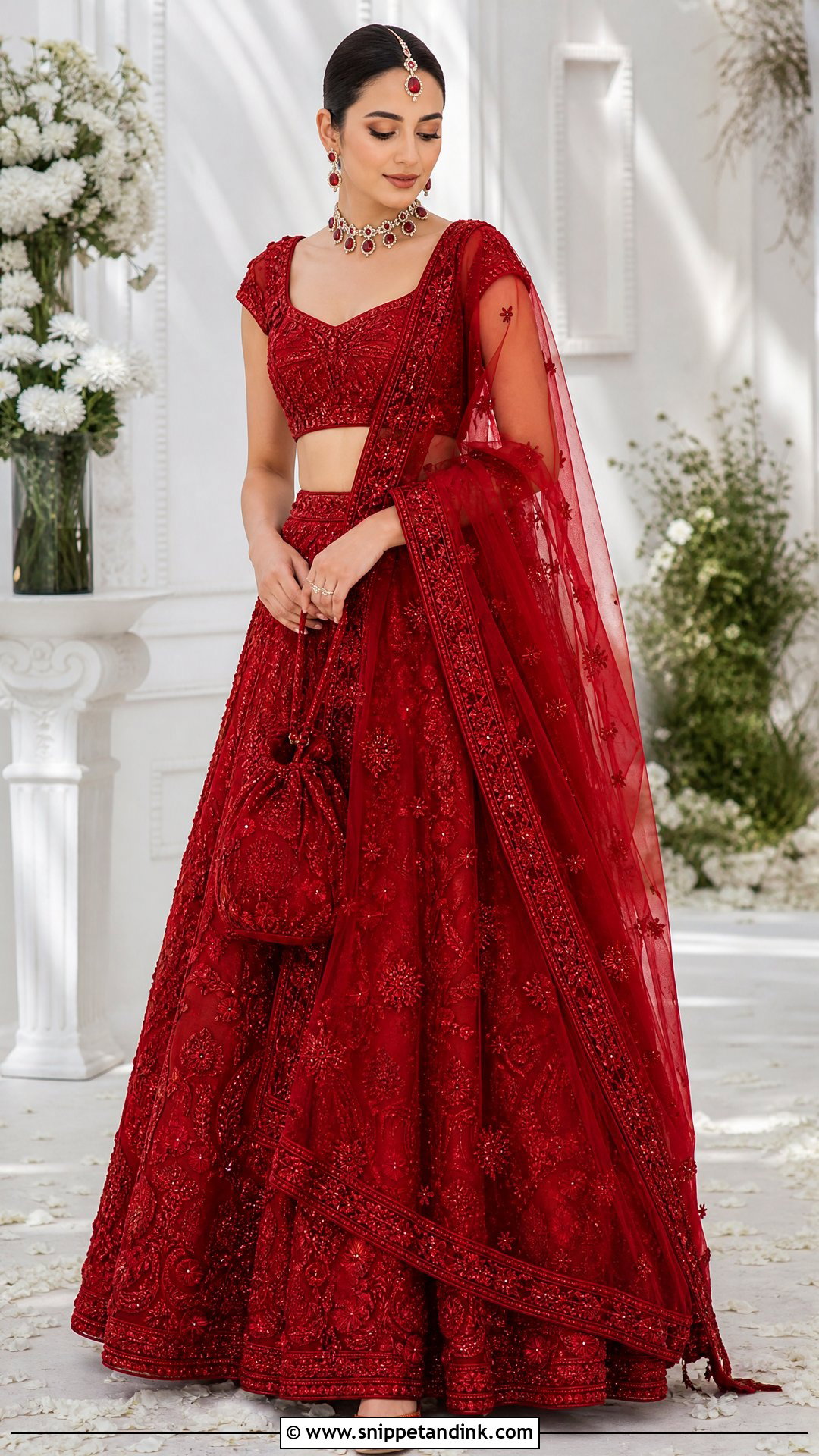
Red on red only works with plenty of texture. Tonal thread embroidery, fabric appliqué, beads and red sequins give the skirt dimension, while a matching blouse and sheer red dupatta keep the colour continuous from head to hem. Flat tonal work fades into a single block on camera, so I hold the embroidery under a phone flash at the shop to check that the pattern still reads. Diamond, ruby or uncut stone jewelry adds small sparkle without breaking the palette. Red embroidered juttis, a structured potli, fresh skin, natural blush and a lip matched closely to the fabric finish the look.
8. Red And Gold Bridal Lehenga With Traditional Jewelry
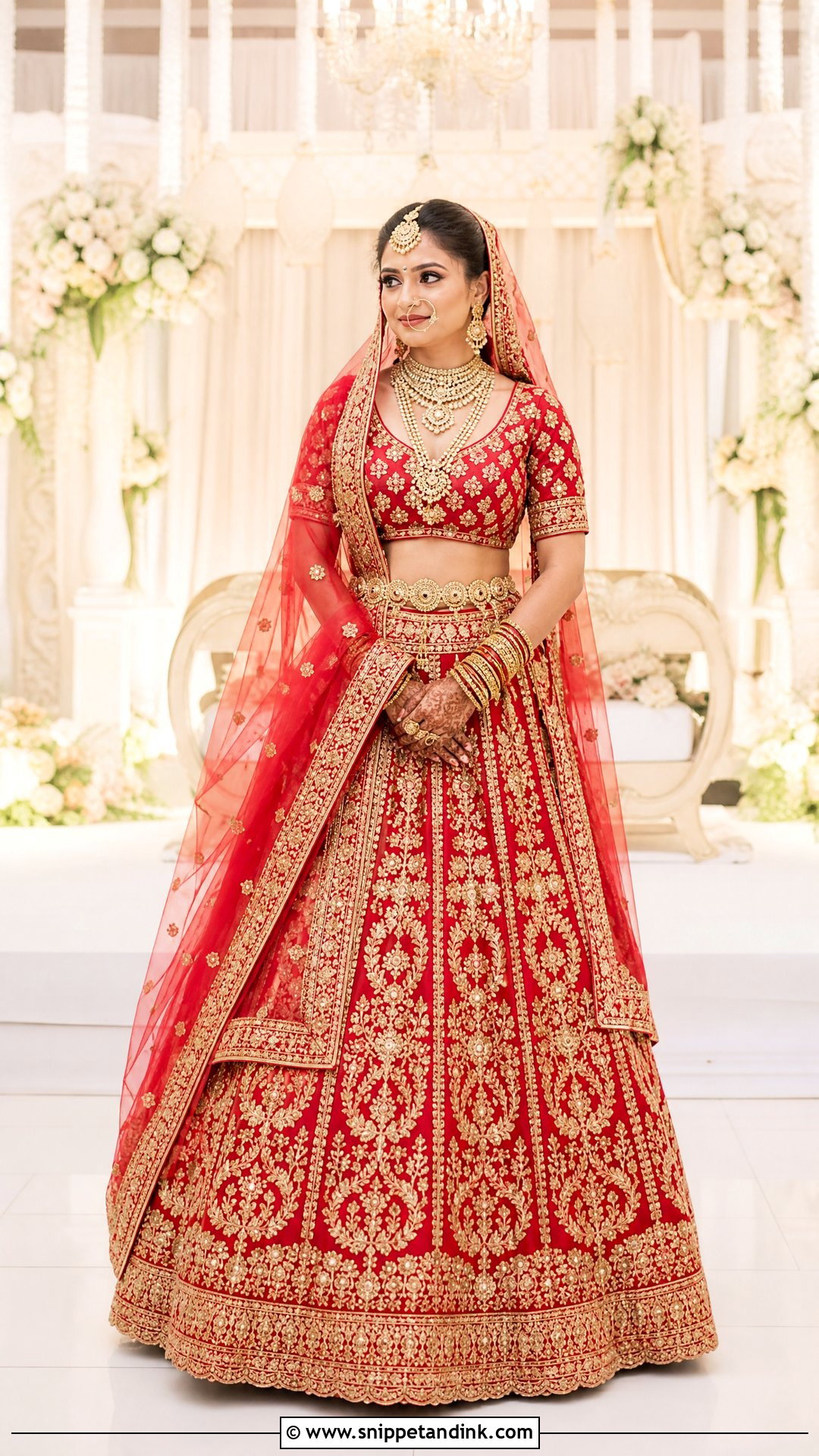
Red and gold is the pairing that rarely disappoints, indoors or out. On this one I prefer embroidery spread evenly across the skirt rather than one huge border, because even coverage looks rich from both close and far. A gold blouse gives more contrast; a red one keeps it calm. Position the sheer red dupatta with a gold border so the blouse and waistline stay visible. A gold waist belt defines the shape and quietly holds the drape too. Traditional layered necklaces, earrings, bangles and a maang tikka, plus gold juttis or block heels, complete it, with warm neutral eyeshadow, precise liner and a classic red lip.
9. Red And Ivory Bridal Lehenga With Pearl Jewelry
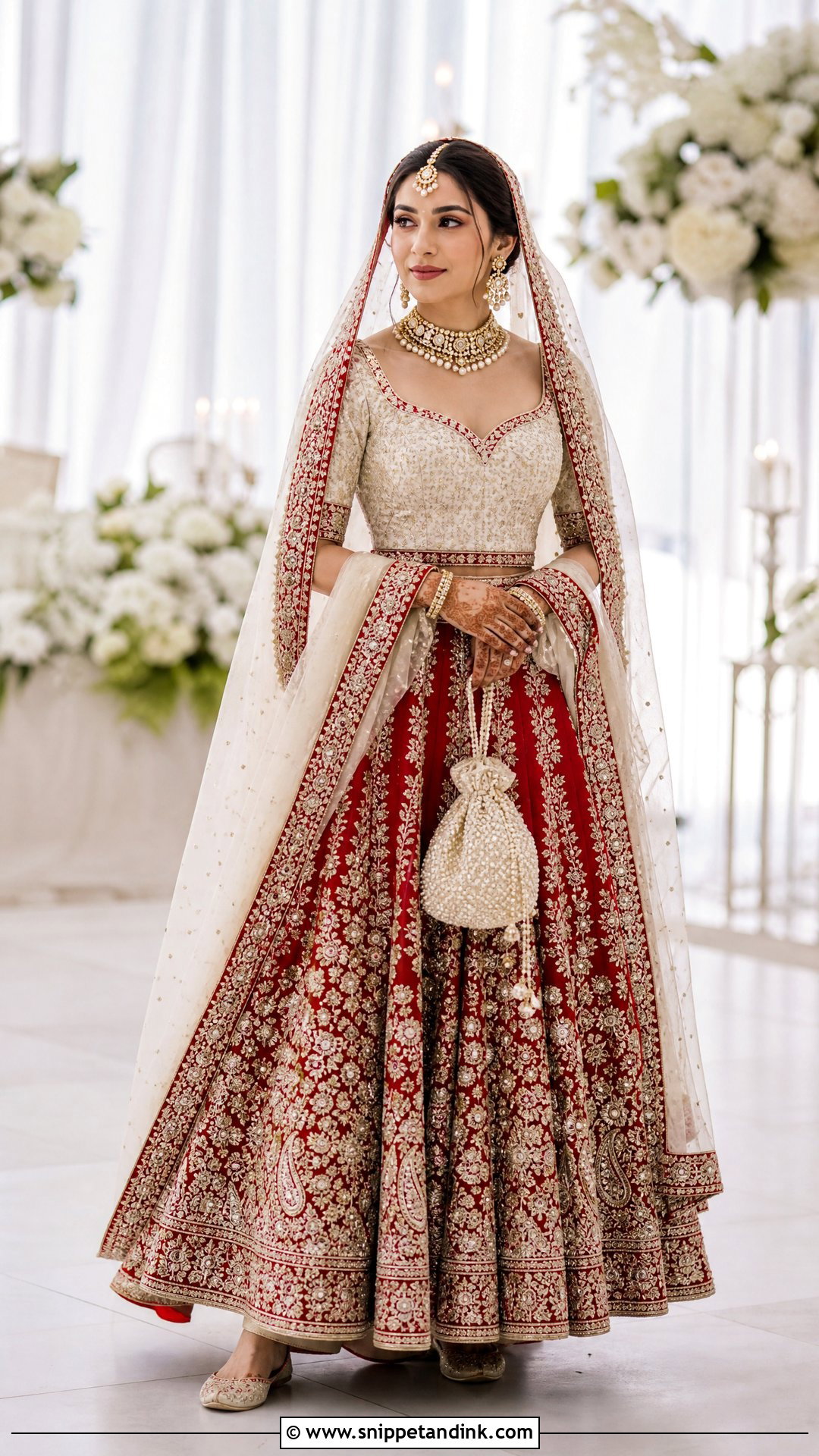
Ivory takes some of the weight out of red. Combine a red lehenga carrying ivory threadwork, pearls or muted gold with a fitted ivory blouse trimmed in red at the neckline and sleeves, then an ivory veil with a red border. That veil acts a little like a reflector, bouncing light onto the face in portraits. The trade-off is practical: ivory shows every smudge of foundation, mehndi and dust, so it needs careful handling all day. Pearl and kundan jewelry suits both colours, especially a choker with matching earrings and a simple tikka. Ivory juttis embroidered in red, a pearl potli, rose blush and a muted red lip finish it.
10. Red Floral Bridal Lehenga With Emerald Jewelry
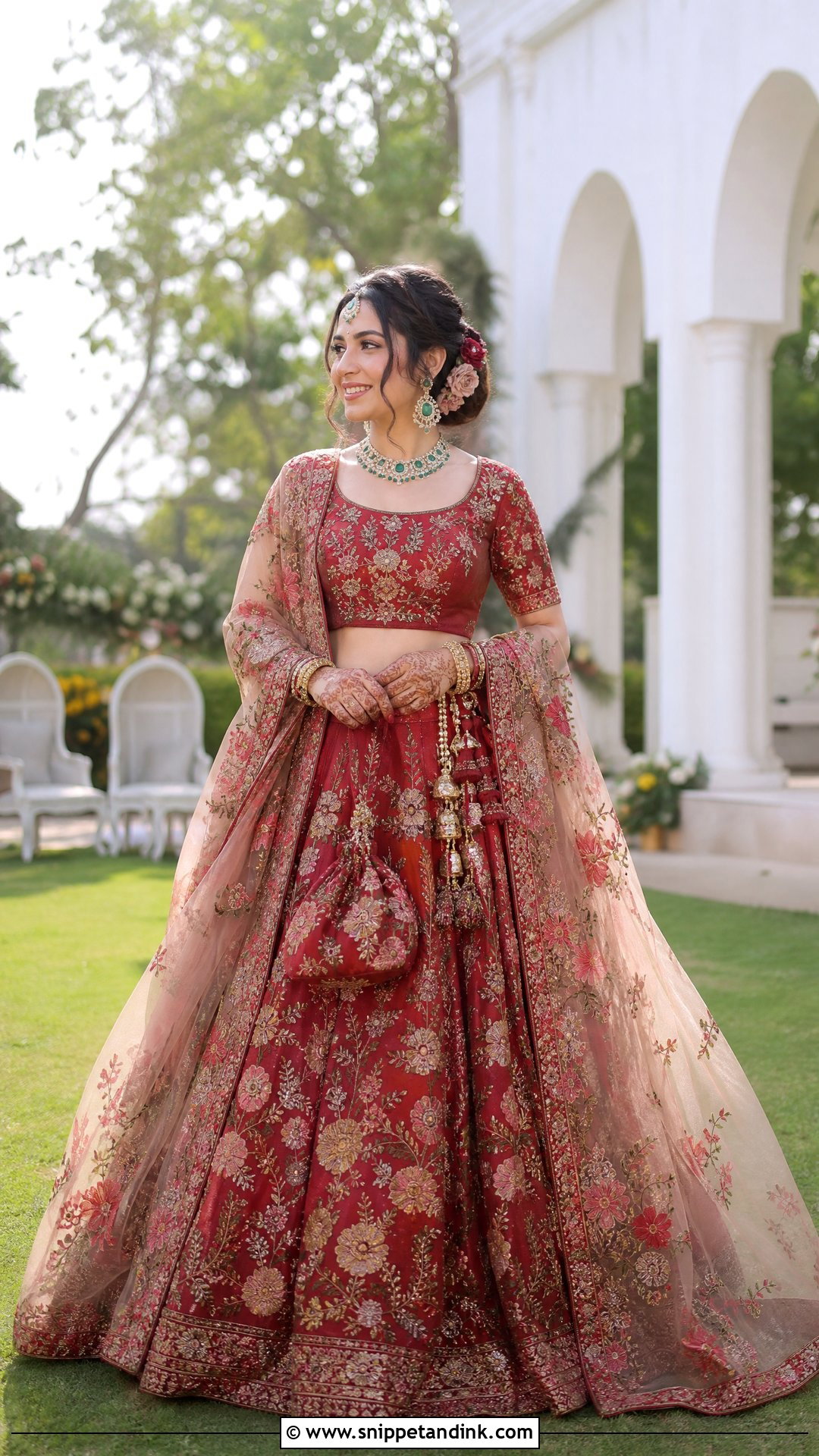
Embroidered florals in burgundy, pink, muted green and antique gold soften a bold red skirt. The thing I check is breathing room between motifs; when flowers crowd edge to edge, the pattern turns busy and loses its shape from a few metres away. Pair it with a fitted red blouse and a light dupatta edged in matching florals. Emerald jewelry picks up the green in the embroidery, so choose one statement necklace, coordinating earrings and a single headpiece rather than stacking pieces. Red juttis, a floral potli and a low bun with small flowers suit a garden or daytime wedding, with neutral eyes and a red lip keeping attention on the textiles.
11. Minimal Red Silk Bridal Lehenga With Diamond Jewelry
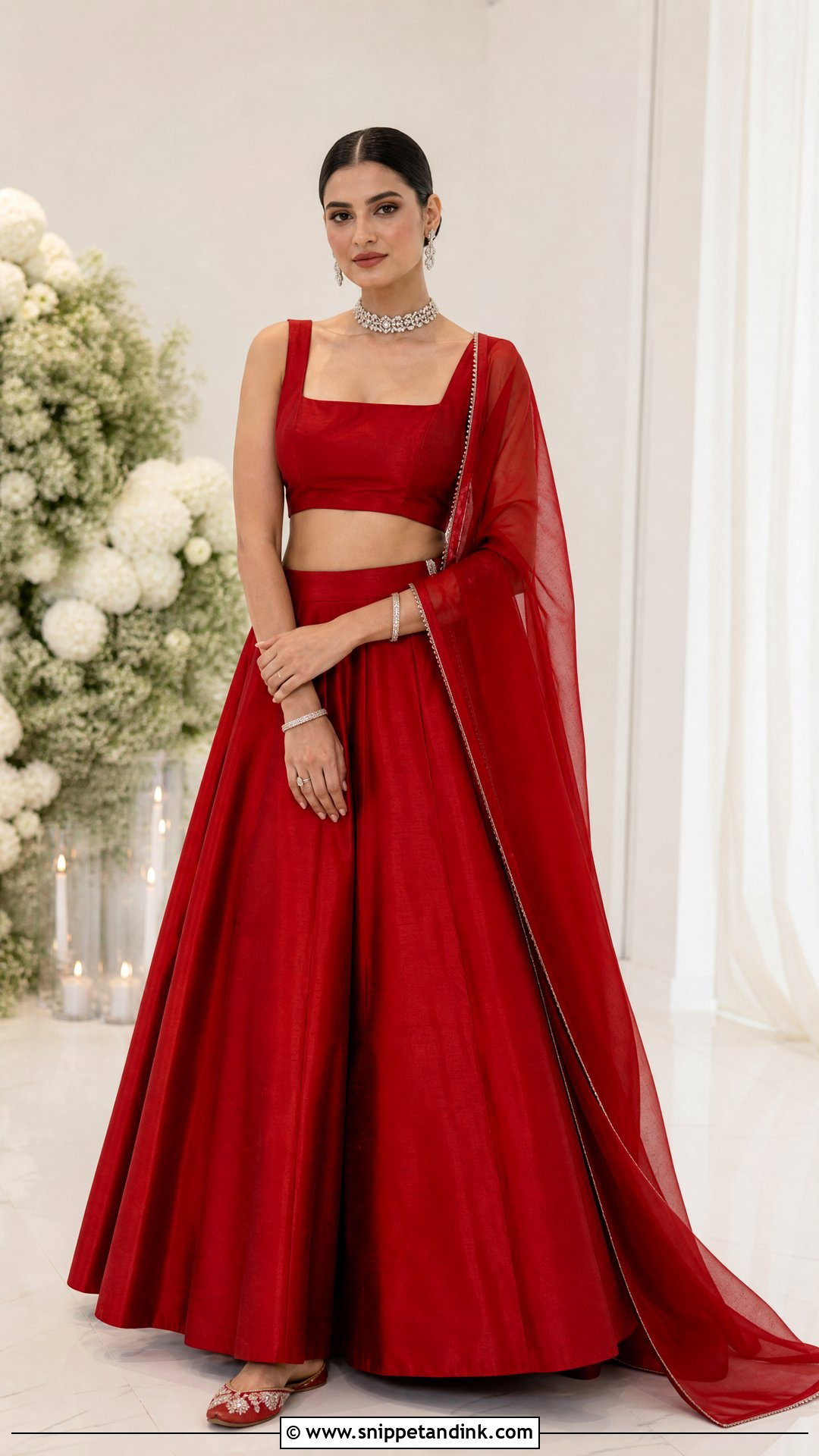
Not every bride wants dense embroidery, and a plain silk lehenga is honest about everything: fabric quality, fit and finishing all show. Look for a full skirt with a clean hem, subtle woven texture and controlled volume, then a structured blouse with a square, round or softly curved neckline. Because there’s nothing to hide behind, I’d spend the budget on the silk and on a skilled tailor rather than on embellishment. A sheer dupatta with a narrow border keeps it ceremonial. Diamond or uncut stone jewelry adds light through a fine choker, earrings and a slim bracelet stack. Pointed embroidered flats or low block heels, sleek hair and luminous skin suit an intimate ceremony or a modern venue.
12. Red Bridal Sharara With Kundan Jewelry
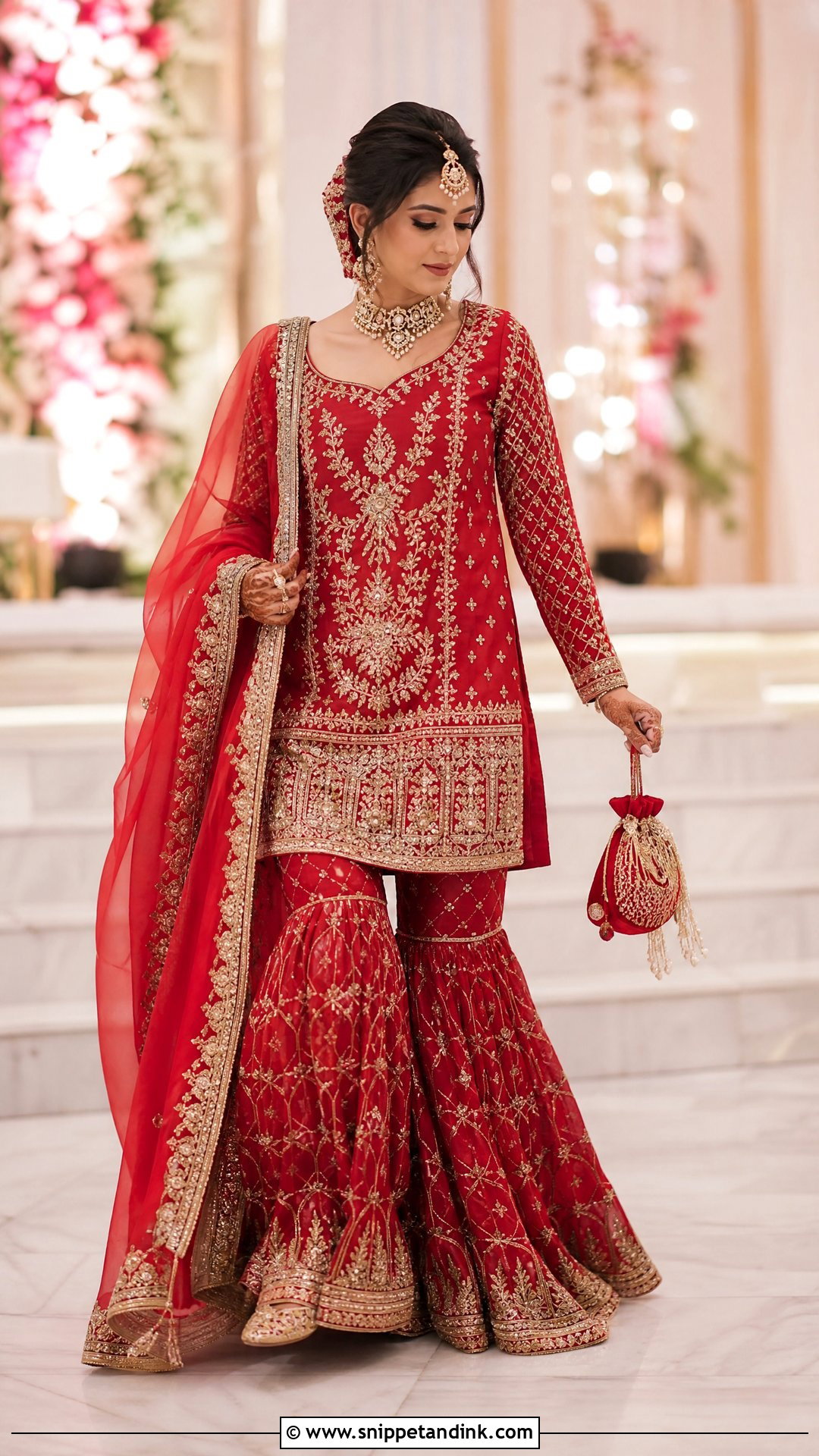
A red bridal sharara is the comfortable choice, because flared trousers let you walk, sit and dance freely in a way a full skirt doesn’t. A sharara flares from the hip, unlike a gharara, which joins at the knee. Choose a short or mid-length kurta with gold embroidery, and balance the embellishment between top and trousers so the outfit looks finished from the back. Drape a sheer red dupatta over one shoulder or across both arms. Kundan jewelry, a choker, medium earrings and a small maang tikka are usually enough. One fitting detail matters most: check the sharara hem in your actual shoes, since a hem that drags gets stepped on all evening.
13. Red Bridal Gharara With Gold Jhumkas
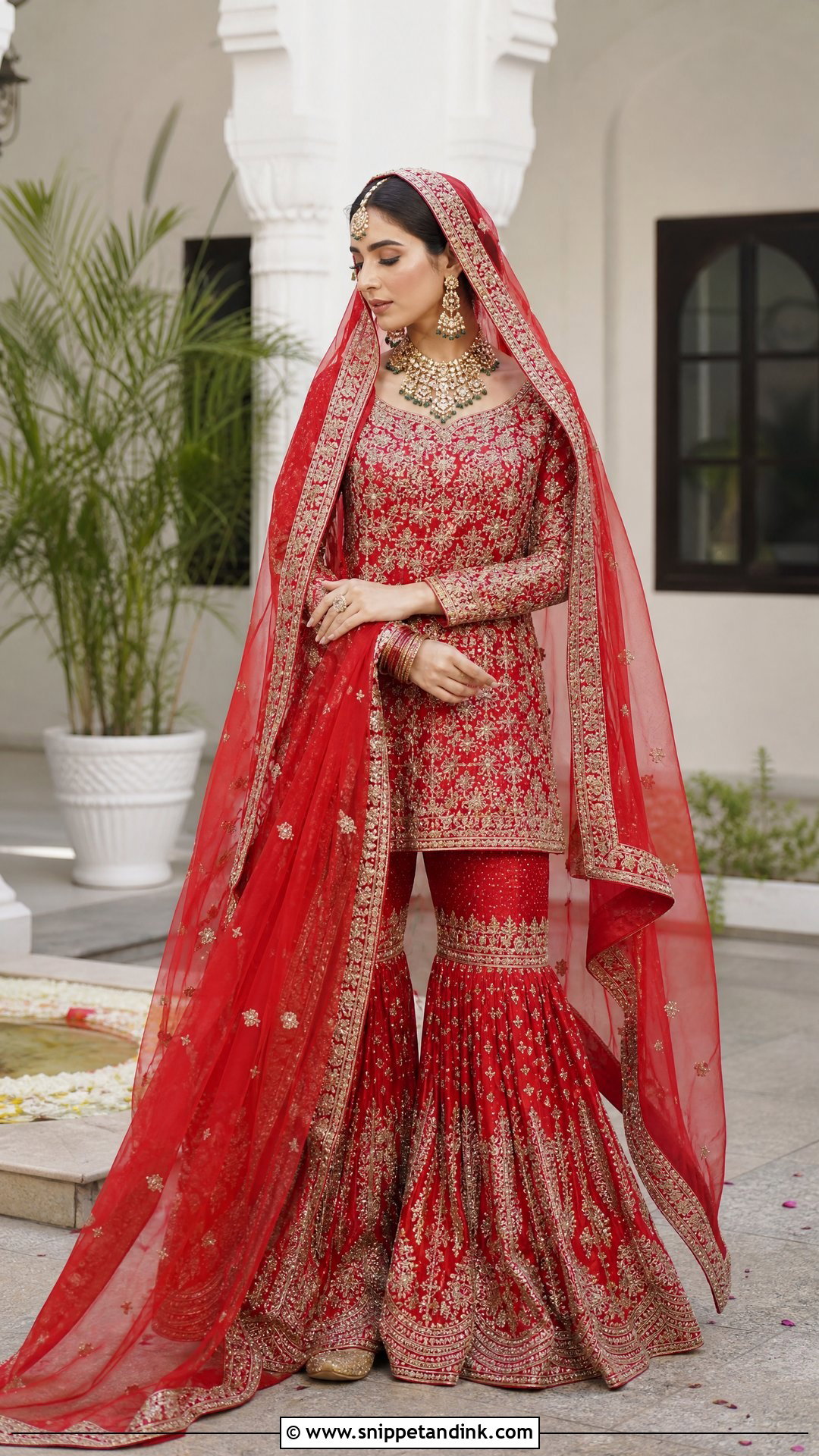
A gharara is fitted through the thigh, gathered at the knee with a band, then flares to the floor, and that knee join is what everyone notices. Pair it with a structured short kurta ending around the upper thigh so the join stays visible. Gold zari, gota or zardozi can trace the seams and the flare. A red organza or net dupatta with a detailed border draped loosely around the arms finishes the line. Gold jhumkas, a layered necklace, bangles and a passa, the side headpiece worn in many Muslim weddings, add heritage detail. Cushioned gold juttis help with long hours of standing. I’d suggest it to a bride who wants tradition but finds a lehenga too heavy.
14. Red Bridal Anarkali With A Matching Dupatta
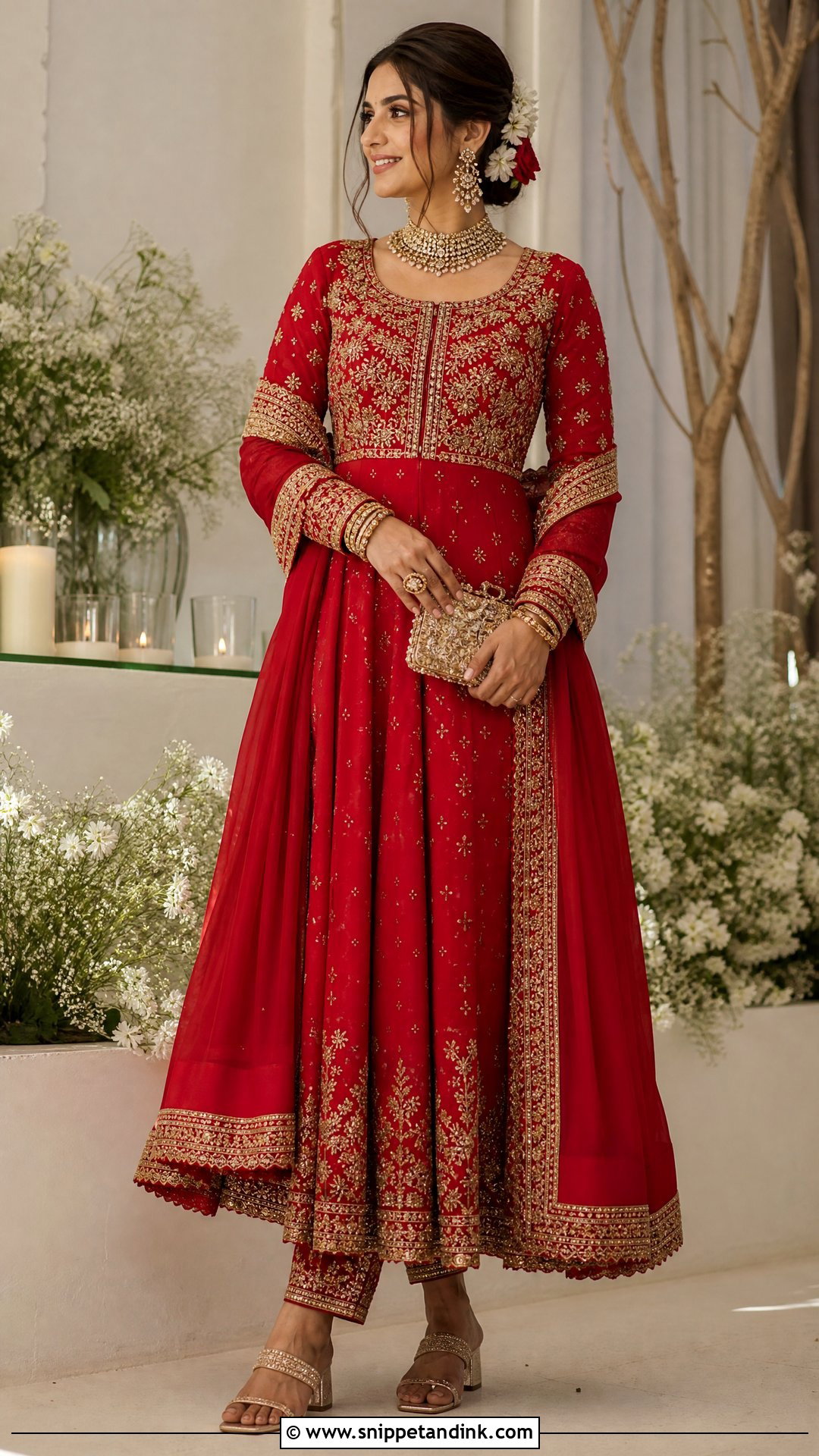
An Anarkali gives you the sweep of a gown while keeping the detail of traditional occasion wear. Choose a floor-length design with a fitted bodice, defined waist and generous flare, and place gold embroidery at the neckline, cuffs and lower panels rather than everywhere. Slim matching pants and a lightweight dupatta pinned at one shoulder keep it manageable. The waist seam is where an Anarkali fits or fails. If it sits even slightly below your natural waist, the flare starts too low and the dress looks heavy. Kundan necklace, earrings, bangles and an embroidered clutch complete it, with low block heels for stability under the long hem.
15. Red Bridal Jacket And Trouser Set
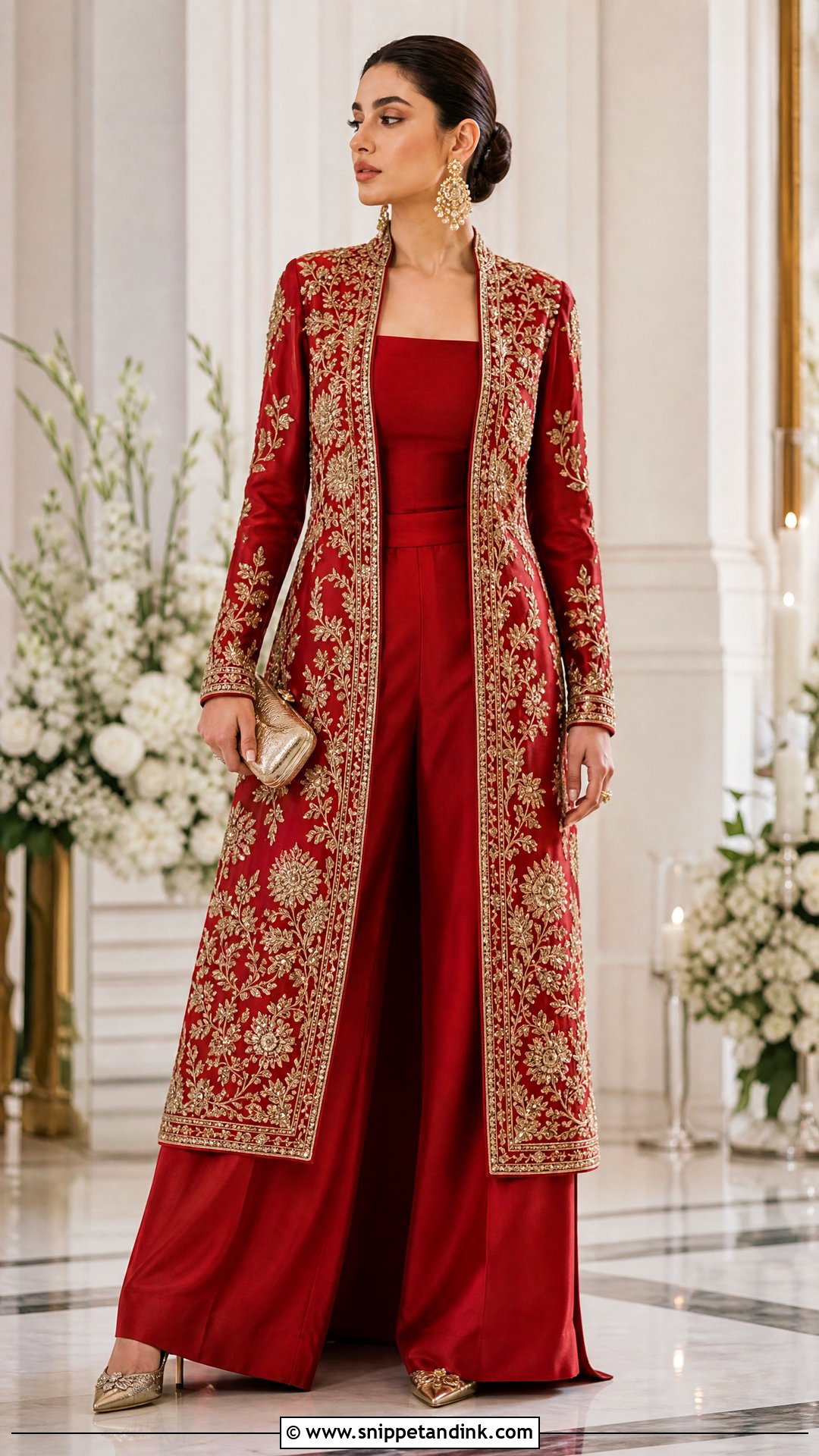
For the bride who feels most herself in tailoring, a red jacket and trouser set is a confident alternative. High-waisted, wide-leg trousers in silk, brocade or crepe go under a fitted inner top and a long embroidered jacket reaching below the knee. Gold threadwork, covered buttons or a structured collar make it read as bridal rather than as eveningwear. Brocade trousers have no stretch, so sit down at every fitting; a seat seam that pulls standing up will split sitting down. Pointed gold heels lengthen the trouser line and a compact metallic clutch keeps it neat. Pick one strong jewelry piece, chandelier earrings or a layered choker. It suits a civil ceremony or a reception entrance.
16. Red Bridal Gown With Crystal Accessories
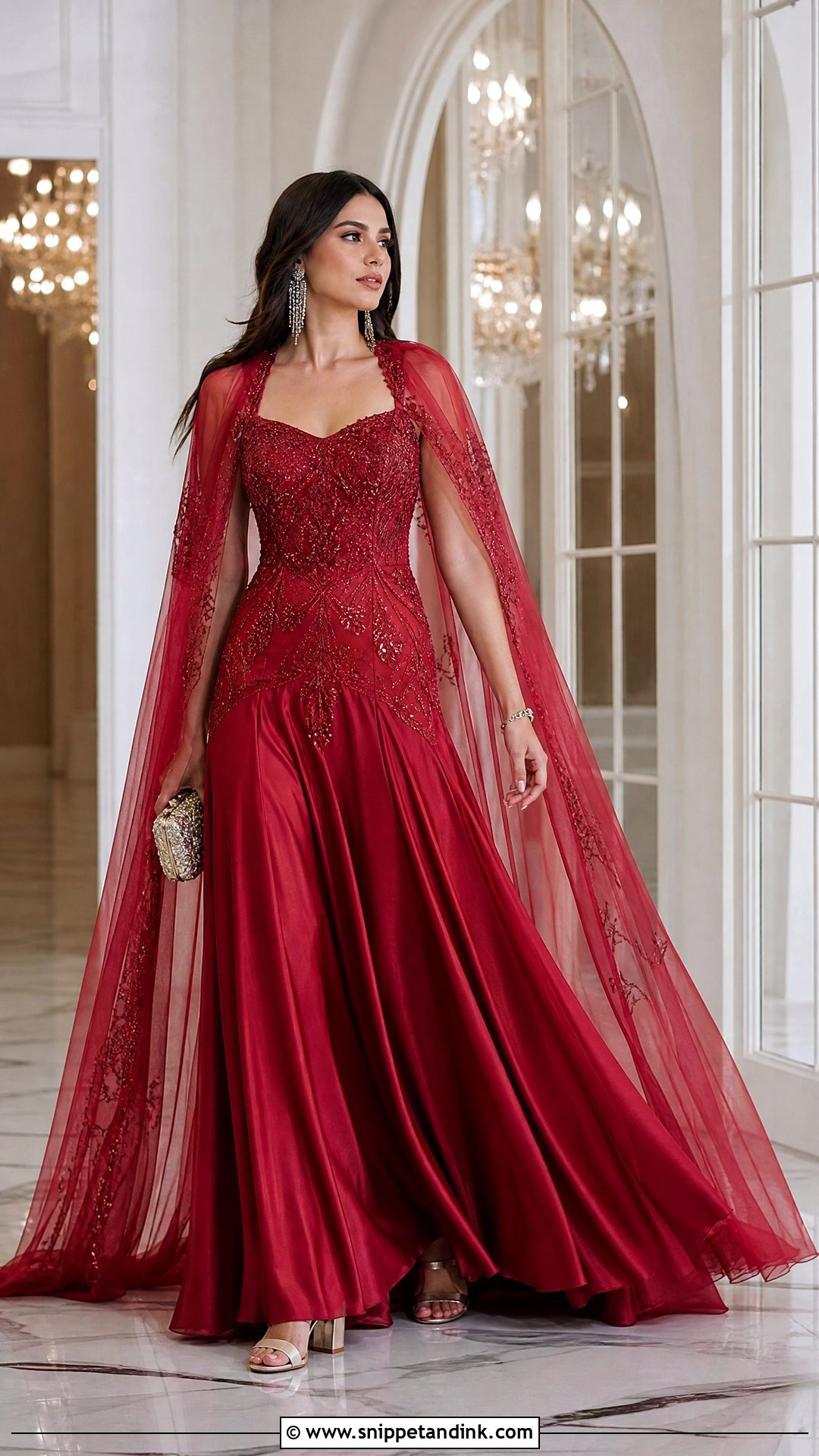
A red gown suits a ballroom reception or formal evening celebration, especially for brides changing out of a heavier ceremony outfit. Choose a structured bodice with secure straps or sleeves, and a skirt you can actually walk in. Embroidery, beadwork or tonal appliqué separates a bridal gown from an ordinary evening dress. A detachable cape or sheer veil adds ceremony and gives you movement in portraits. Crystal earrings, a fine bracelet, a small embellished clutch and metallic block heels complete it. Book a final fitting in your exact shoes, because a full skirt hemmed for the wrong heel height is a trip hazard all night.
17. Red Bridal Jacket Lehenga With Statement Earrings
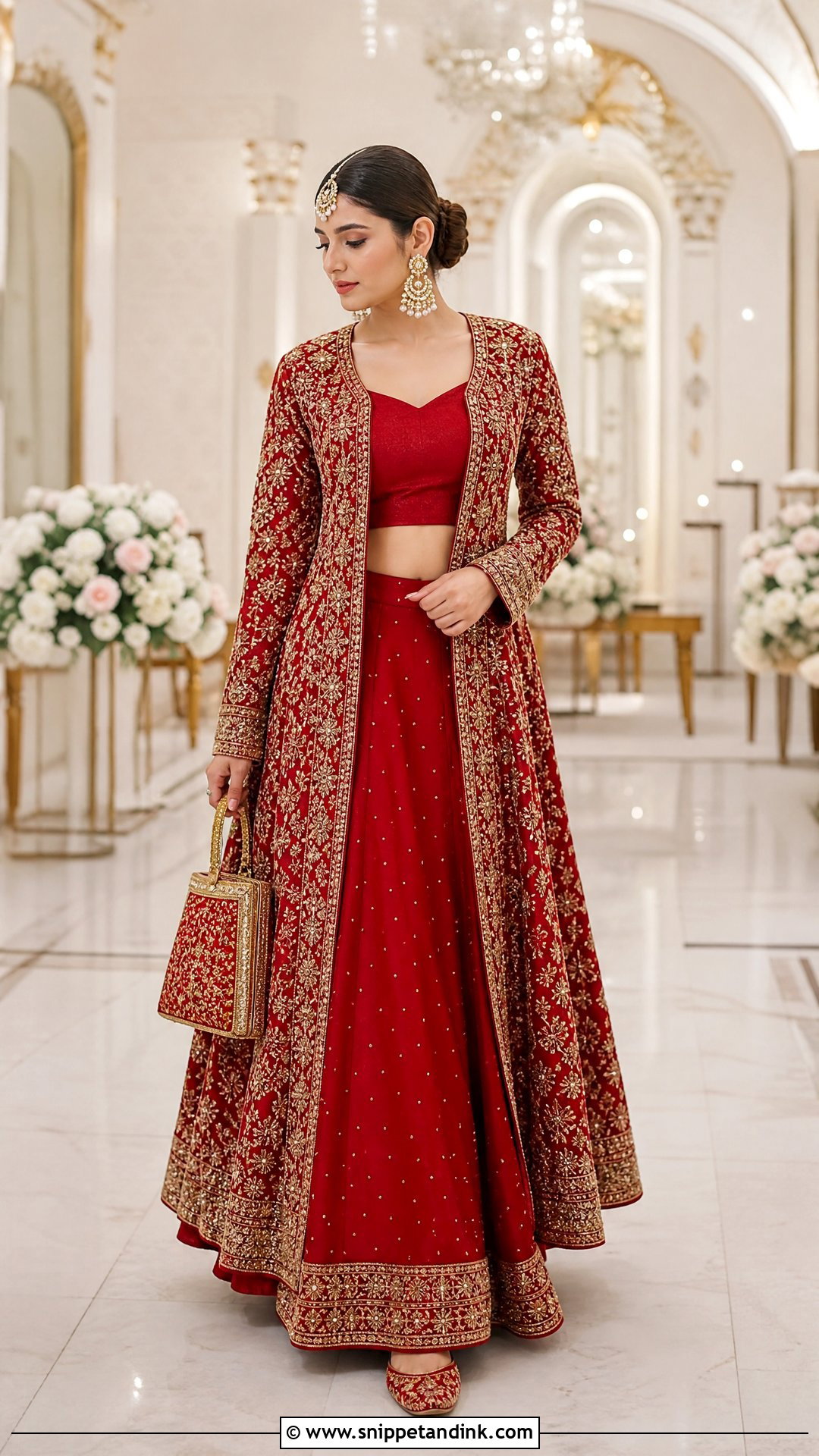
A jacket lehenga pairs the volume of a skirt with a long open-front outer layer. I’d keep the lehenga lightly embellished and the blouse simple, then let the jacket carry the work with embroidered cuffs, a defined shoulder and a border that frames the body vertically. That vertical border is flattering on almost everyone. The jacket gives coverage while the skirt stays visible. Skip a heavy necklace if the jacket neckline is ornate and wear statement earrings and a maang tikka instead, with red or gold juttis and a small structured bag. A smooth low bun keeps the shoulders clear. In warm weather, ask for the jacket in organza or net instead of silk.
18. Red Bridal Saree With A Sheer Veil
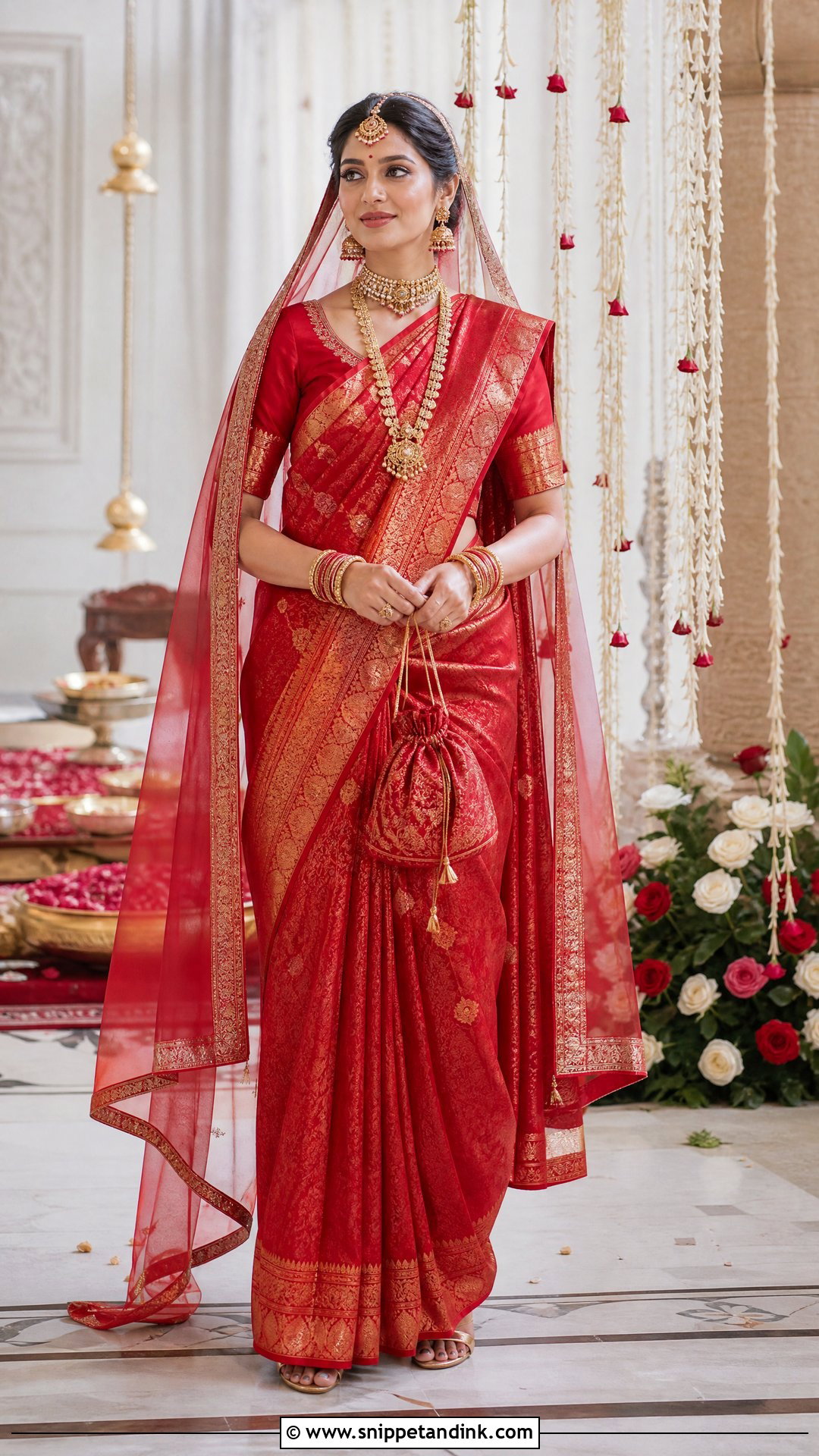
A sheer veil over a red saree layers two traditions, and the challenge is making the veil and pallu share the space. Choose a silk, satin or embroidered saree whose border relates to the veil trim. Drape the saree in clean pleats, then set the veil lightly over the head so the pallu still shows. A low bun gives the veil a stable base; without one, it slides back every time you look down. A blouse with secure sleeves supports the layers. Frame the face with a choker, long necklace, earrings, bangles and a maang tikka, then gold sandals and a small embroidered potli. Polished makeup with defined eyes and a balanced red lip ties it together.
19. Red Ombre Bridal Lehenga With Silver Jewelry
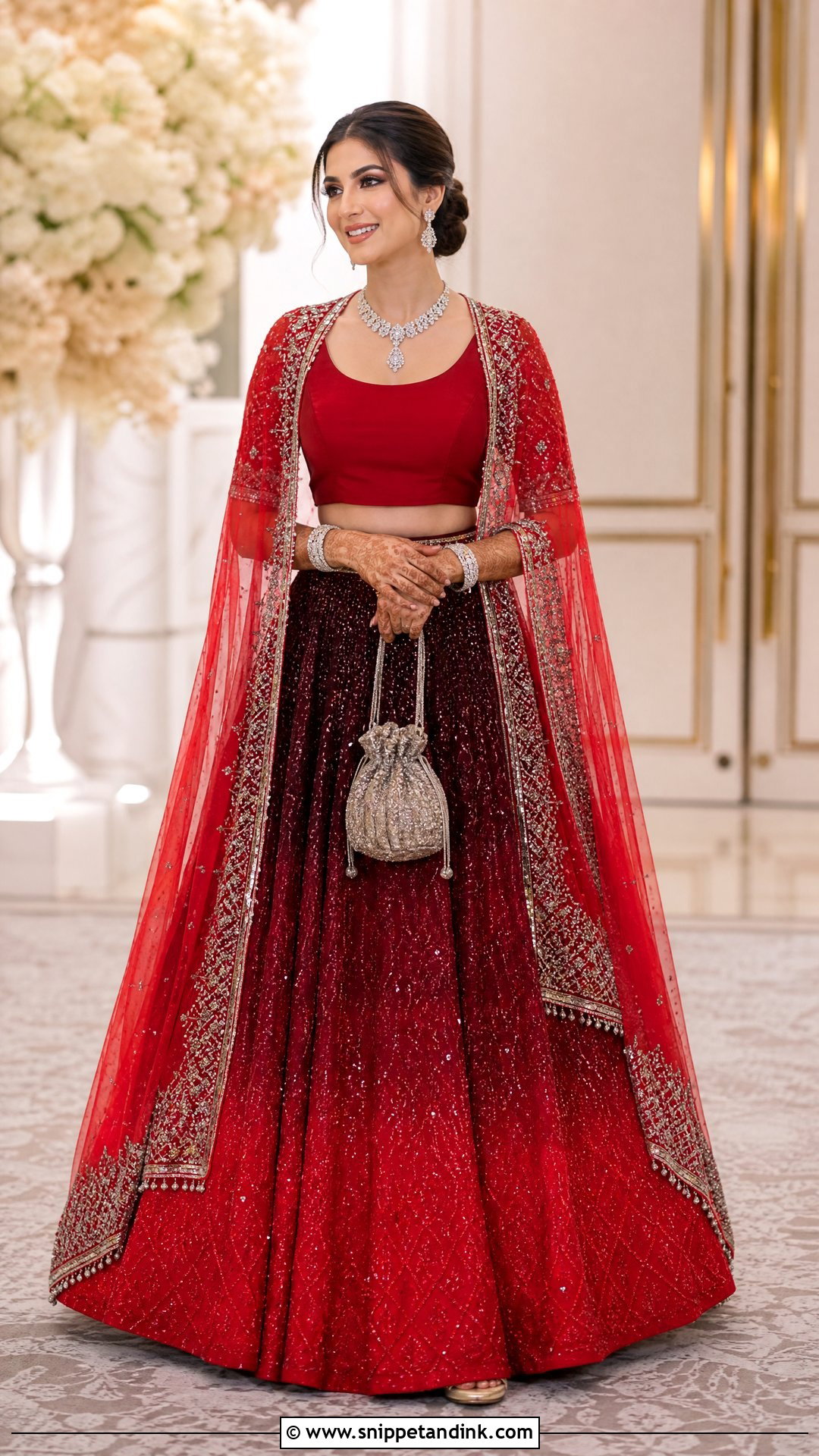
A red ombre bridal lehenga moves from deep burgundy at the hem to ruby or scarlet near the waist, and the gradient pulls the eye upward. Dyed gradients vary between bolts, so I insist on seeing the actual skirt rather than a sample swatch before approving the blouse colour. Tonal sequins, silver threadwork or crystals highlight the shift. Pair it with a solid red blouse and a light dupatta matching one of the main tones. Silver, diamond or white stone jewelry keeps the finish cool. Metallic sandals and a crystal potli finish it, with grey-brown eye makeup and a berry lip. Under bright reception lights the colour change reads clearly; in dim rooms it flattens.
20. Red Bridal Lehenga With Emerald Green Jewelry
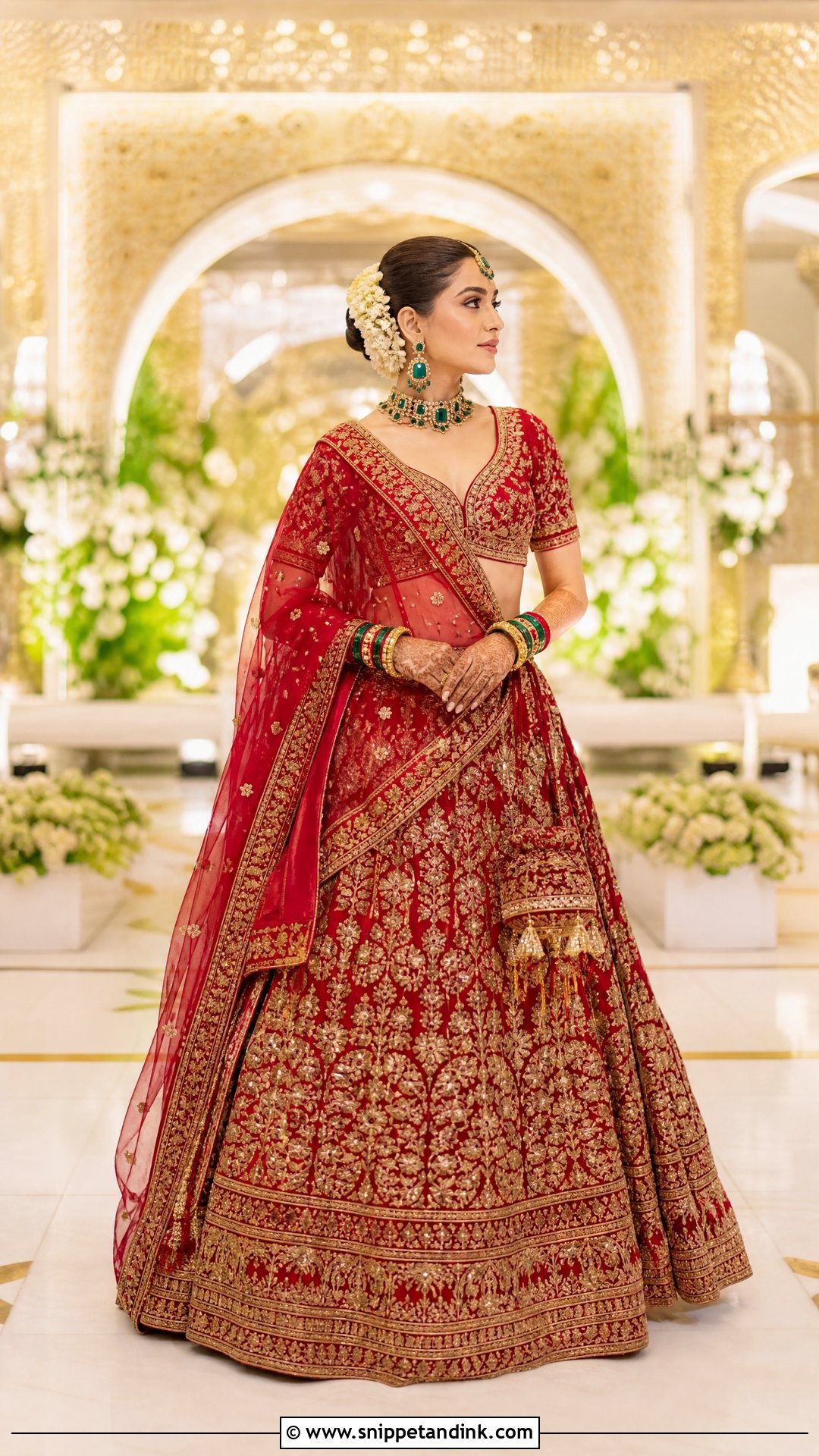
Emerald against red is a confident contrast, and it needs restraint to stay classy. Start with a ruby or crimson skirt in antique gold embroidery, a matching fitted blouse and a sheer red dupatta with a structured border. Then let the green come only from jewelry: an emerald choker or layered necklace, matching earrings and a small green-accented maang tikka. Red, gold and green are already three colours, and adding a fourth almost always tips it into costume. Gold juttis, red bangles mixed with a few green ones and an embroidered potli finish it. A smooth bun with white flowers lifts the palette, and the combination holds up in both close portraits and full-length shots.
Matching the Outfit to How Long You’ll Wear It
A heavily worked bridal lehenga can be several kilos once the skirt, can-can, blouse and dupattas are counted, and most of that hangs from your waist. That is fine for a two-hour reception. Across a long ceremony with rituals on the floor, it wears you down. When a bride shows me her shortlist, I ask how many hours she’ll be in each outfit and whether she sits on the floor, a low seat or a chair.
- Long ceremony with floor seating: a saree or a lehenga with a lighter skirt is kinder than a stiff, heavy flare.
- Lots of dancing and walking: sharara, gharara or Anarkali let your legs move freely.
- Outfit change planned: put the heaviest piece where you’ll be standing and photographed, and the lightest where you’ll eat and greet.
- Summer or outdoors: skip velvet and heavy brocade; organza, net and lighter silks breathe.
If you’re changing outfits, rehearse the switch. Count the pins, the hooks and the jewelry swaps, then time it with whoever is helping you. A change that looks simple on paper often takes far longer than the gap in the schedule, especially with a draped saree or two pinned dupattas.
Wear the Whole Red Outfit Once Before the Wedding
Red gives you a heavily embroidered lehenga for a grand ceremony, a silk saree with real heritage, or a sharara, gown, Anarkali or tailored set if you want something less expected. The decision that matters most is the one you make wearing it. Put on the complete outfit with its jewelry, shoes, dupatta and veil, then walk, sit, climb a step and lift your arms. Fit problems show up in the first ten minutes. Think about the venue temperature when choosing fabric and layers, and pick the shade and shape you feel most like yourself in, so it looks right from the entrance through the last photograph.
You'll Like These Ideas:






Leave a Reply