
Guest hair at an Indian wedding is a different job from bridal hair. You are rarely styling for one event; you are getting through a mehendi, a sangeet, the ceremony and a reception, often on back-to-back days, with dancing, heat and a dupatta to manage at each. The guests I see looking fresh at the end of the night picked styles that suited their hair and the event, not just a photo. These 25 Indian wedding guest hairstyles cover braids, buns, open hair and half-up looks, with notes on what each one needs to last and which events it fits best, so you look finished without competing with the bride.
Three Functions, Three Hairstyles, One Wash
Most guests are attending more than one event, and the best plan treats the week as one sequence rather than separate looks. Hair holds a style best on the second day after washing, and heat styling every day dries it out quickly.
A sequence I often suggest to guests:
- Wash the day before the mehendi and wear a loose braid or half-up style to the mehendi itself, since you’ll be sitting still with henna on your hands and can’t fix anything.
- For the sangeet, use the second-day texture for a high ponytail, braided bun or anything that survives dancing.
- For the ceremony or reception, wash again if needed and go for a sleek bun, curls or a polished chignon, the styles that look best on clean, smooth hair.
If you’ll have henna, plan your hair before it goes on. Wet henna on your palms means you can’t touch your hair for hours, so get any pinning done first.
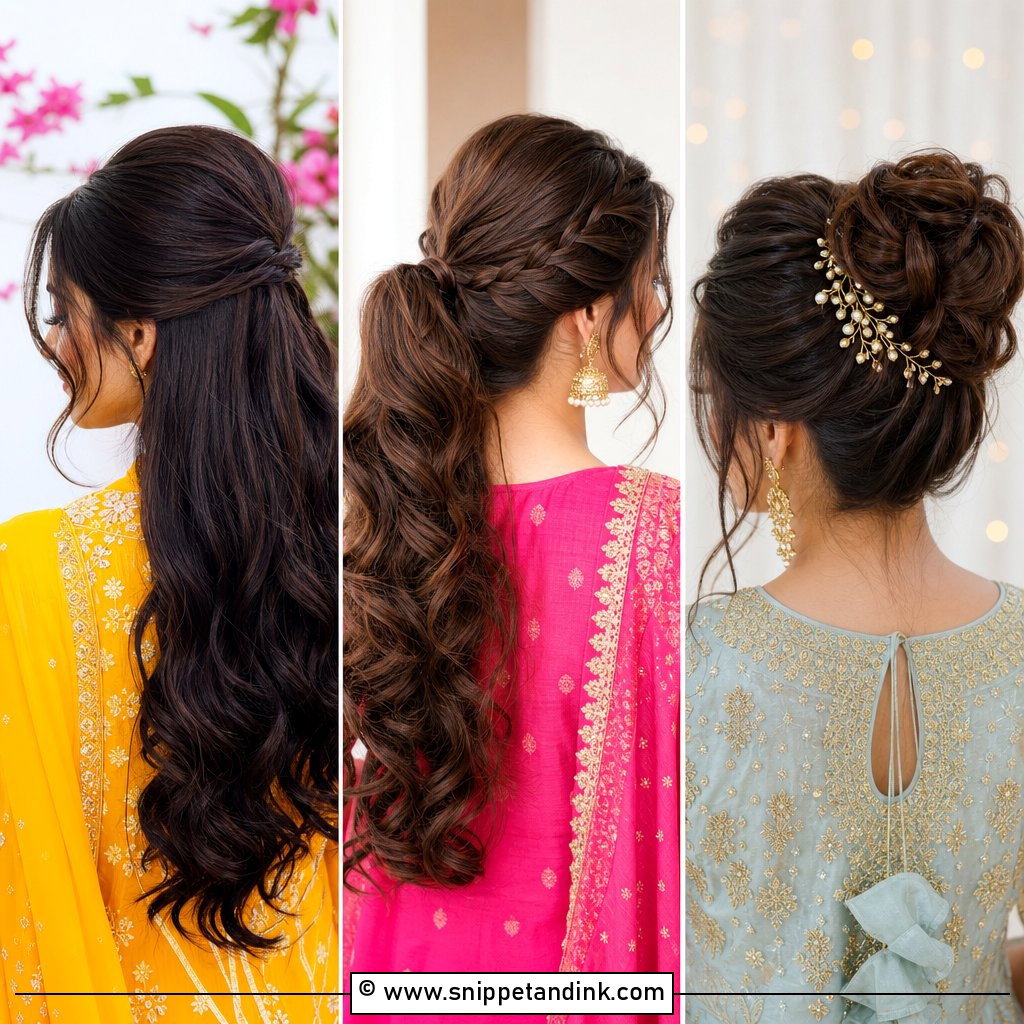
1. Half Updo With Braids
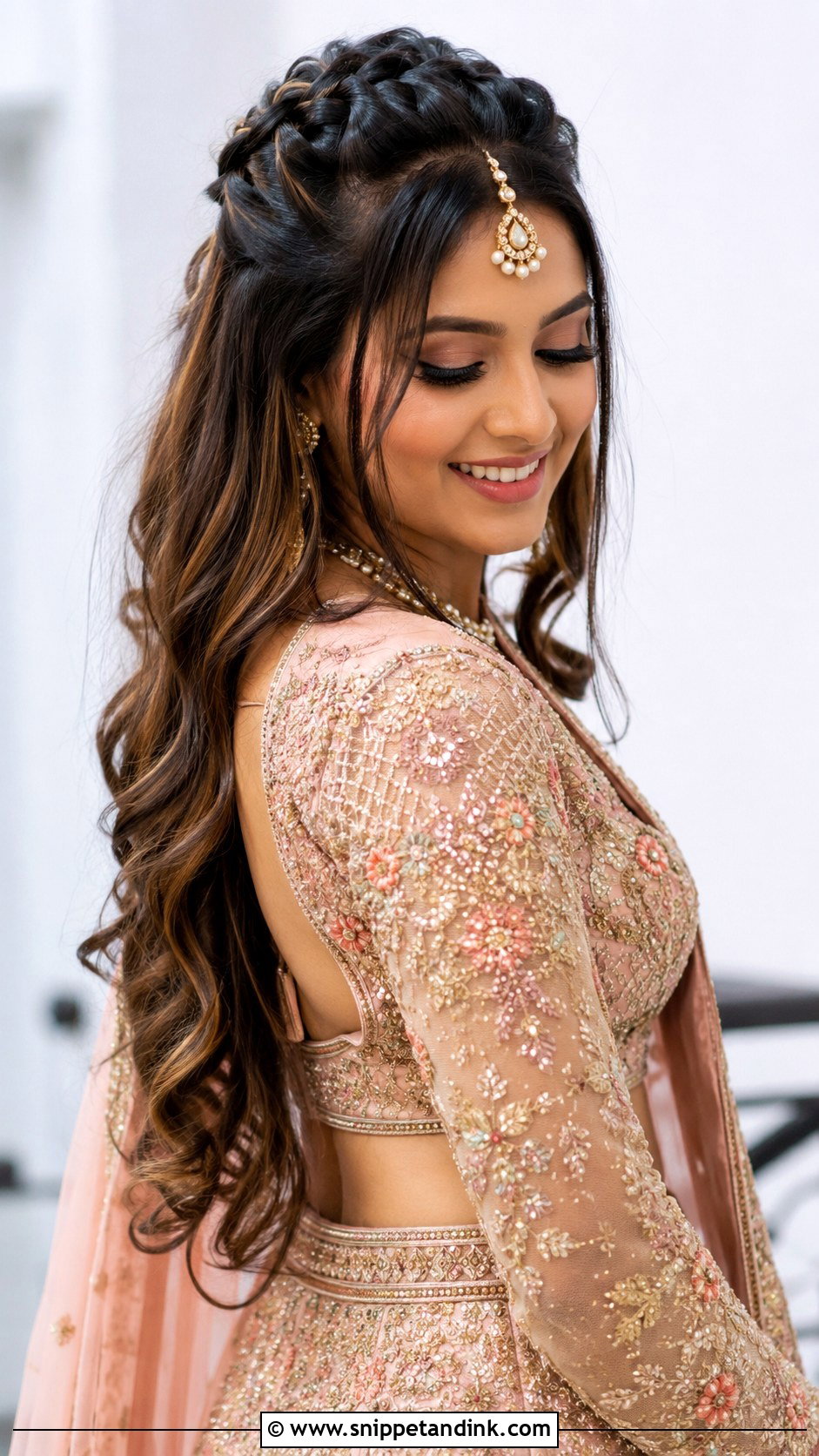
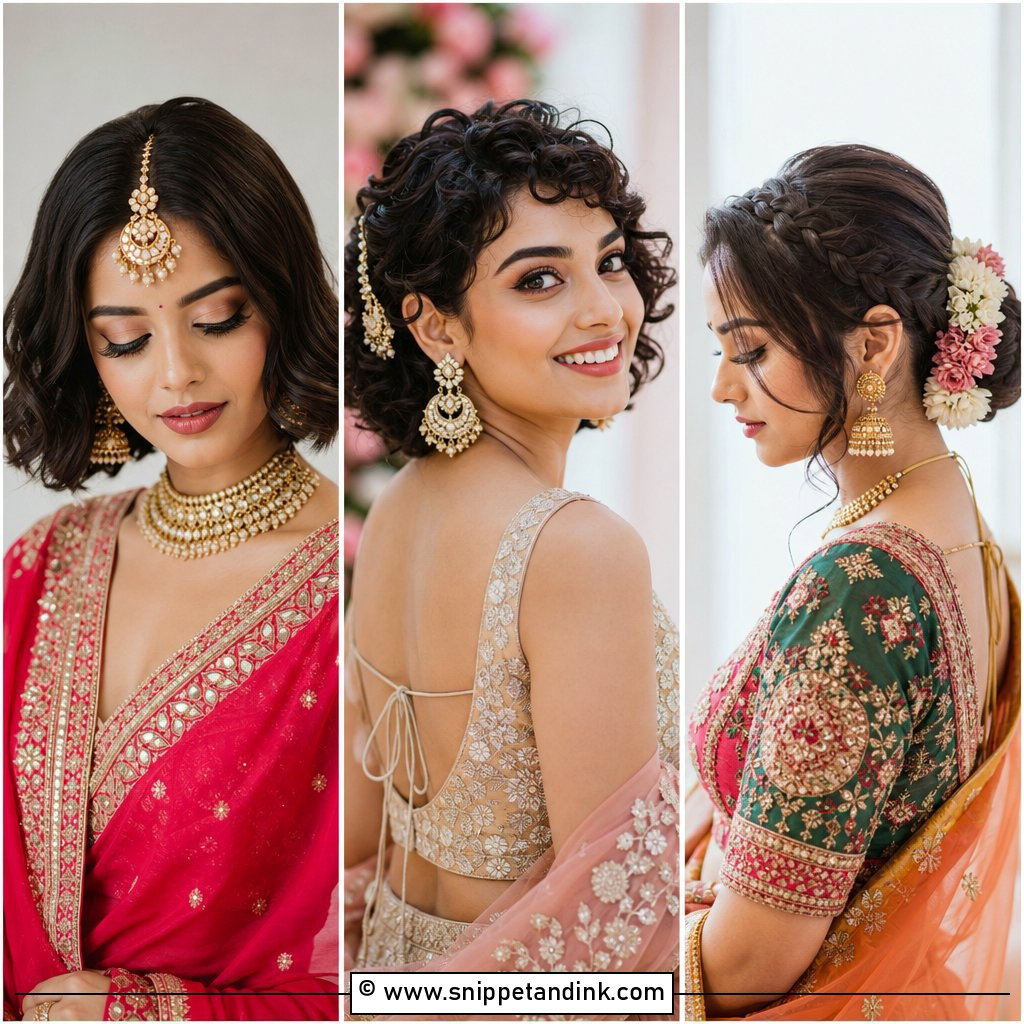
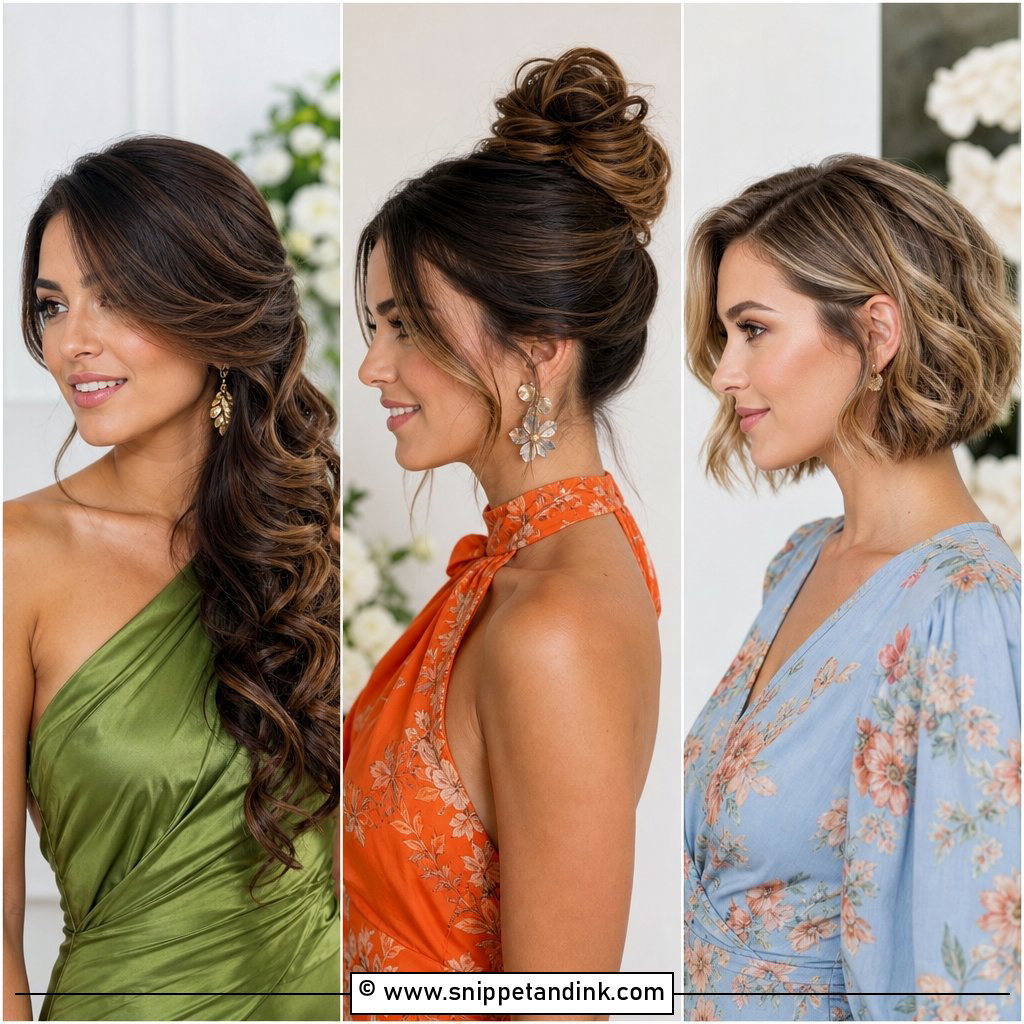
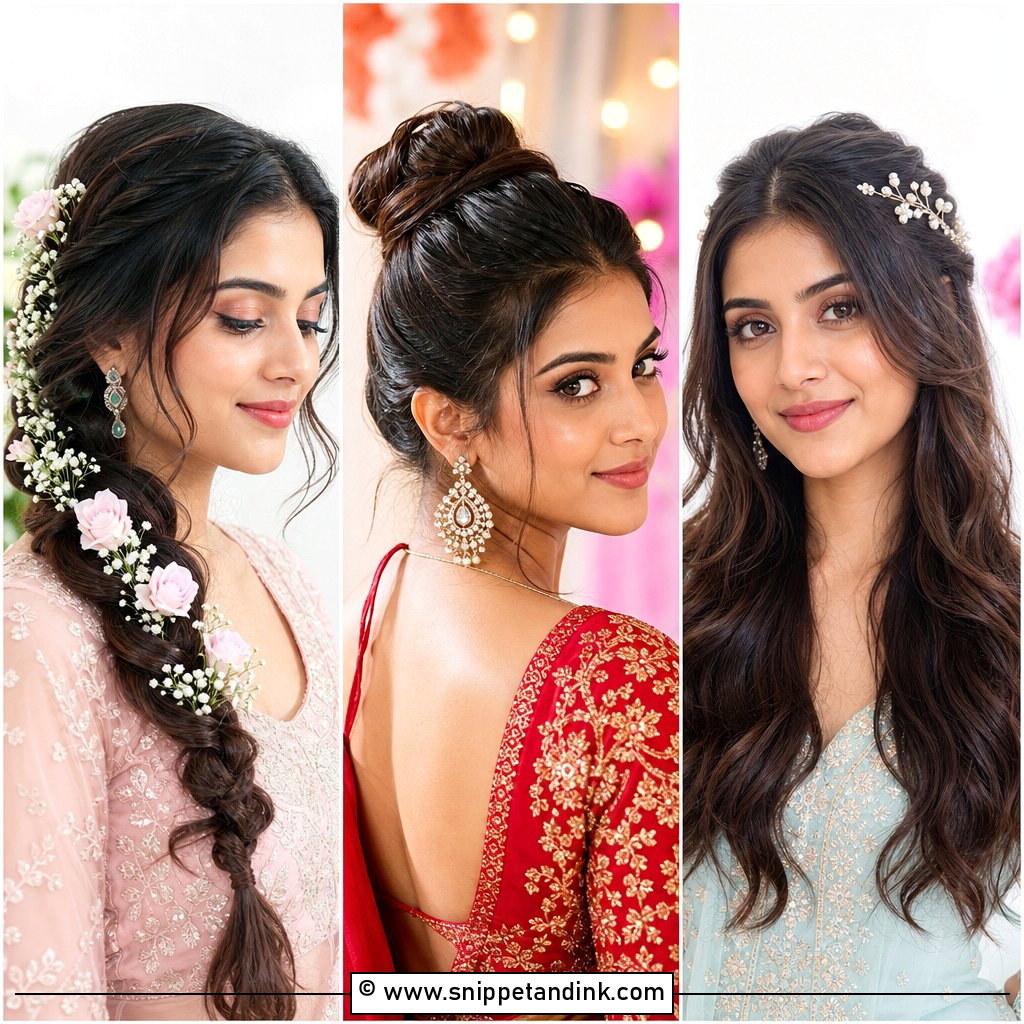
Small braids gathered at the crown keep the hair off your face while the rest of your length falls down your back. I like it with flowy lehengas and shararas, because the open length moves with the skirt. Loose braids look relaxed; tighter ones look polished, and tight is the safer choice if you plan to dance. A delicate maang tikka or tiny floral pins can sit right where the braids meet. Medium to long hair is needed, since short layers pop out of small braids within an hour.
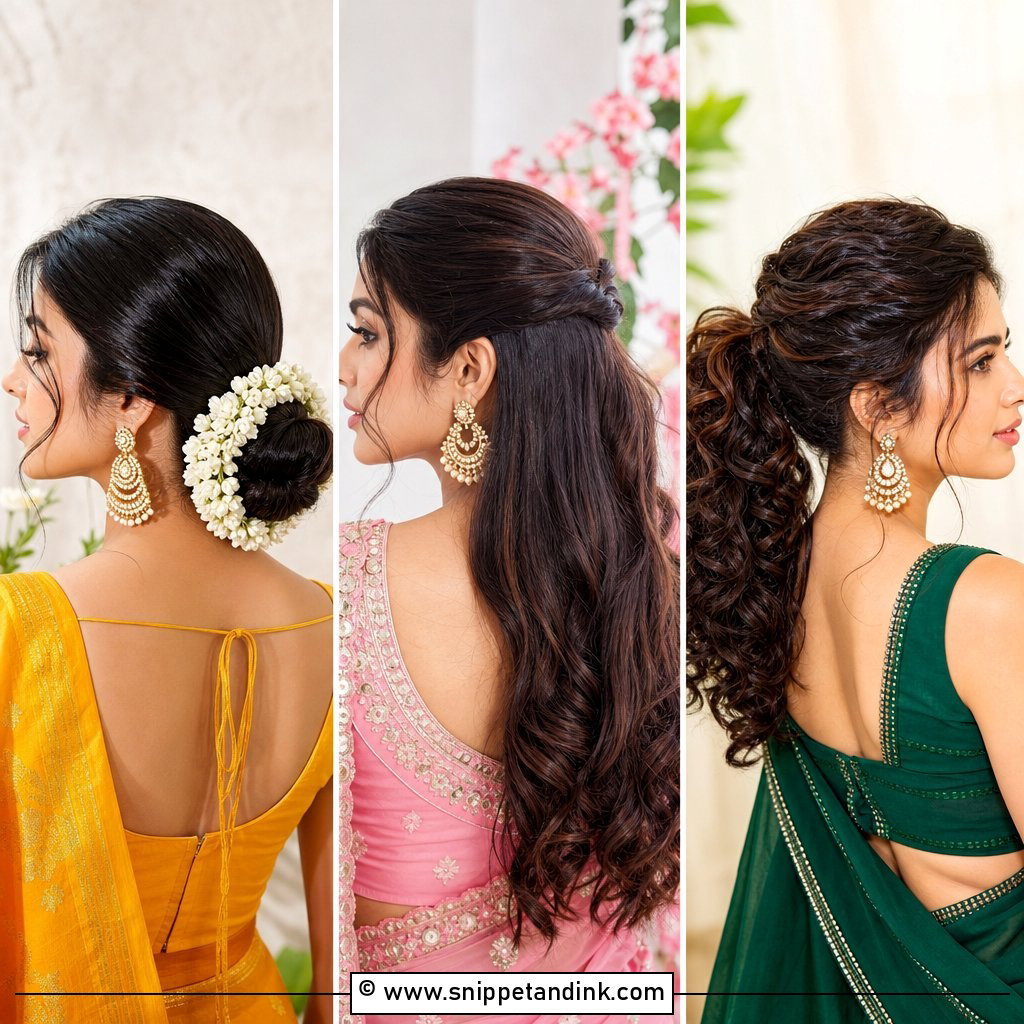
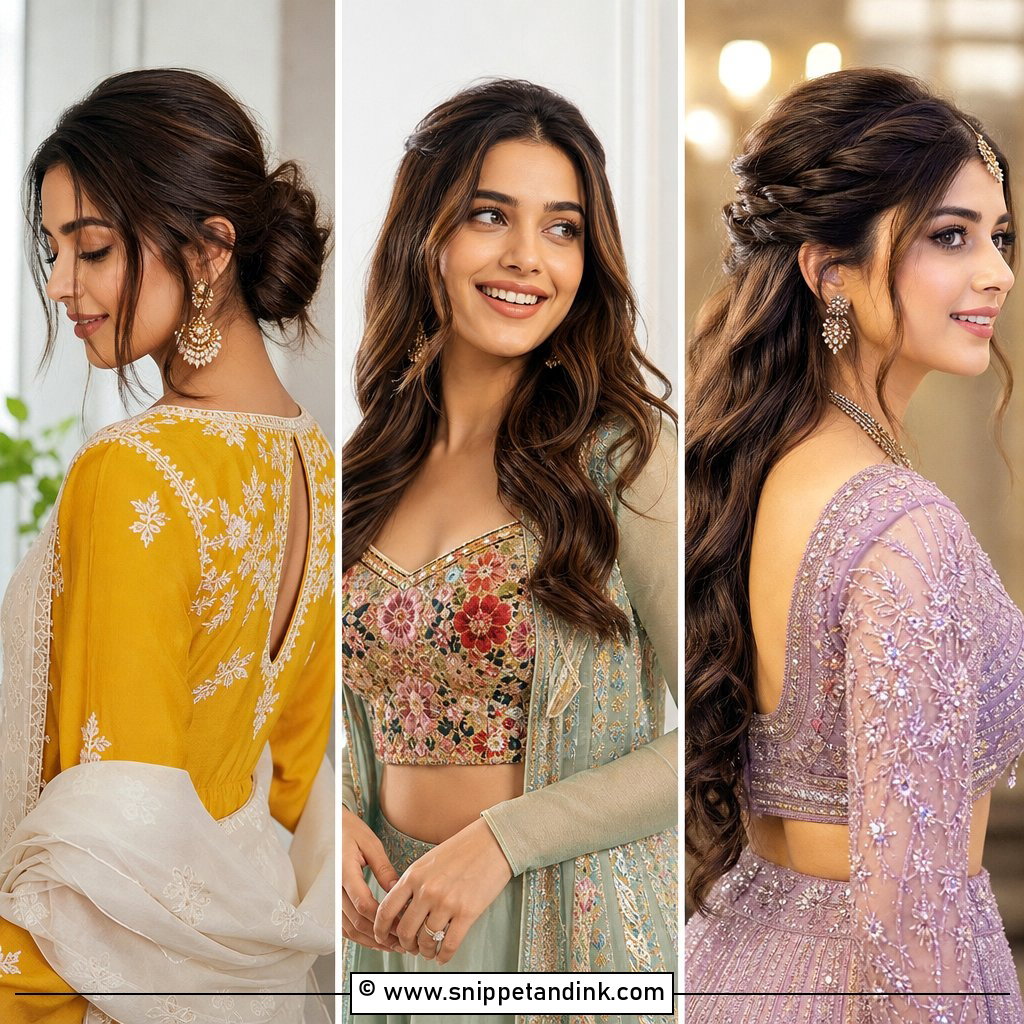
2. Low Messy Bun
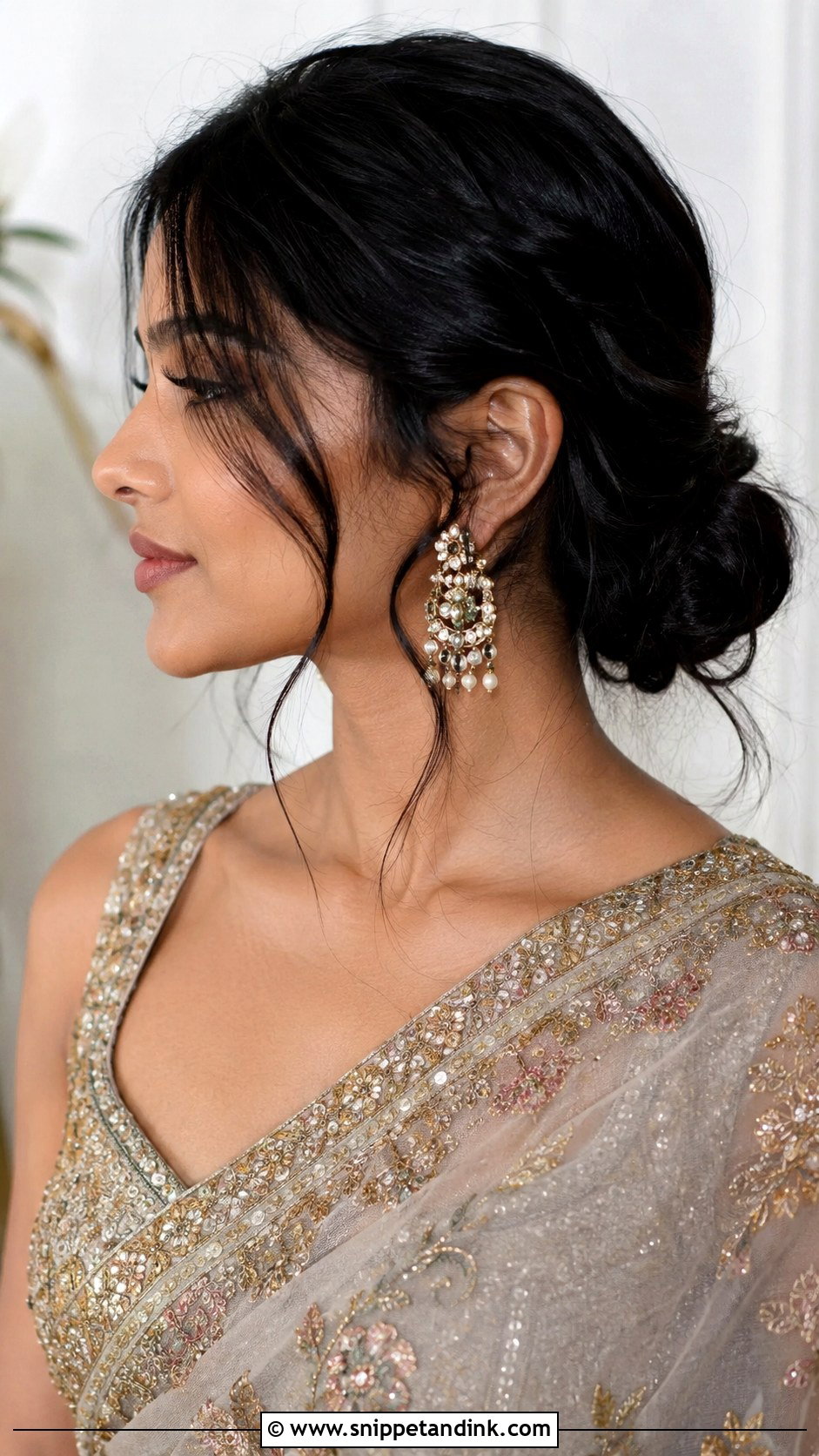
A low messy bun sits softly at the nape, with a few face-framing strands pulled out. The forgiving part is real: if a piece falls during the celebrations, it blends into the texture instead of looking like a mistake. It sits comfortably with heavy embroidered sarees and big earrings, and fresh jasmine or a sparkly pin dresses it up. Daytime functions and sangeets both suit it. What makes it last is a firm core. I pin the bun securely first and only loosen the outside, so the shape survives a long evening.
3. South Indian Braid With Flowers
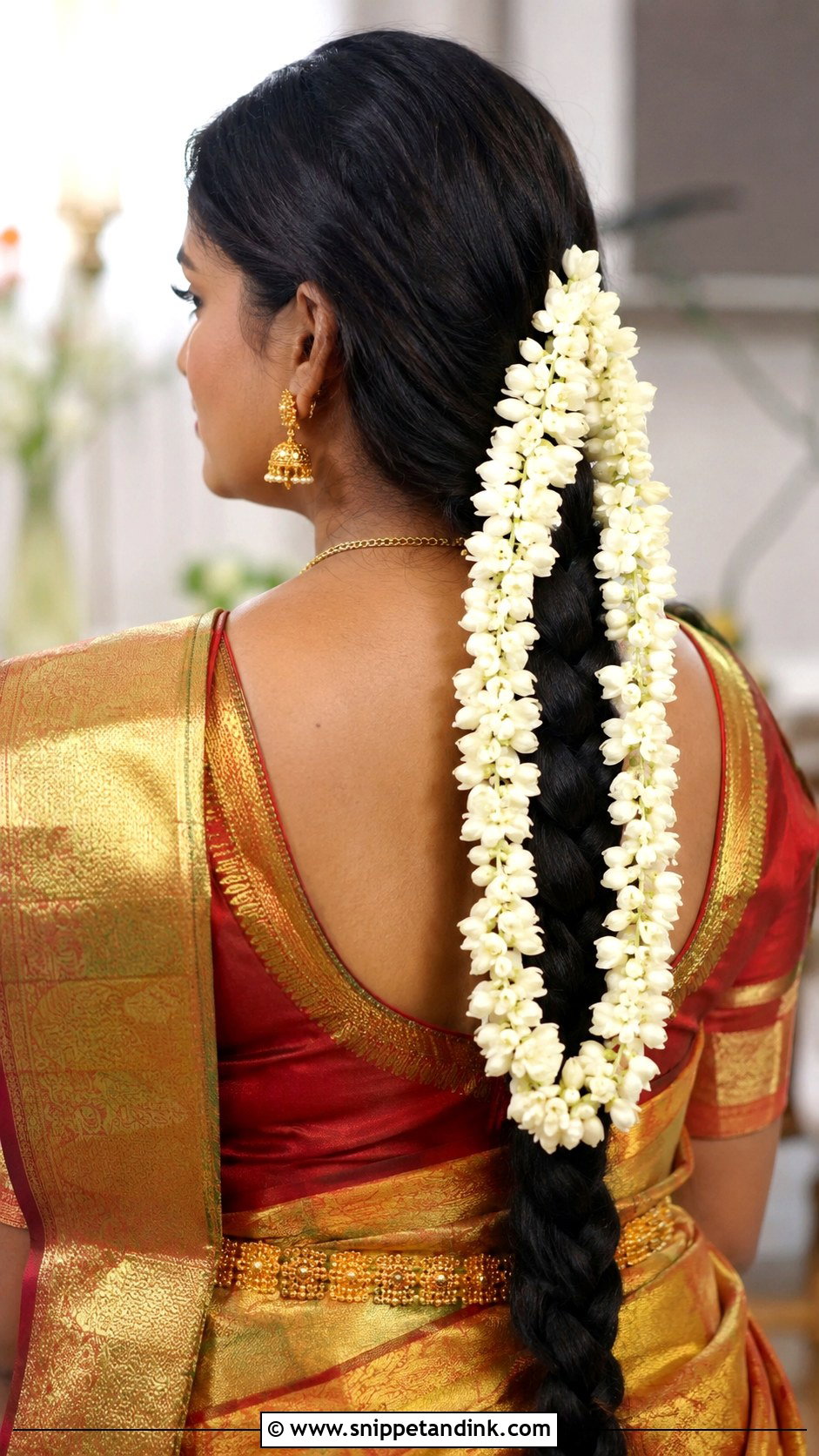
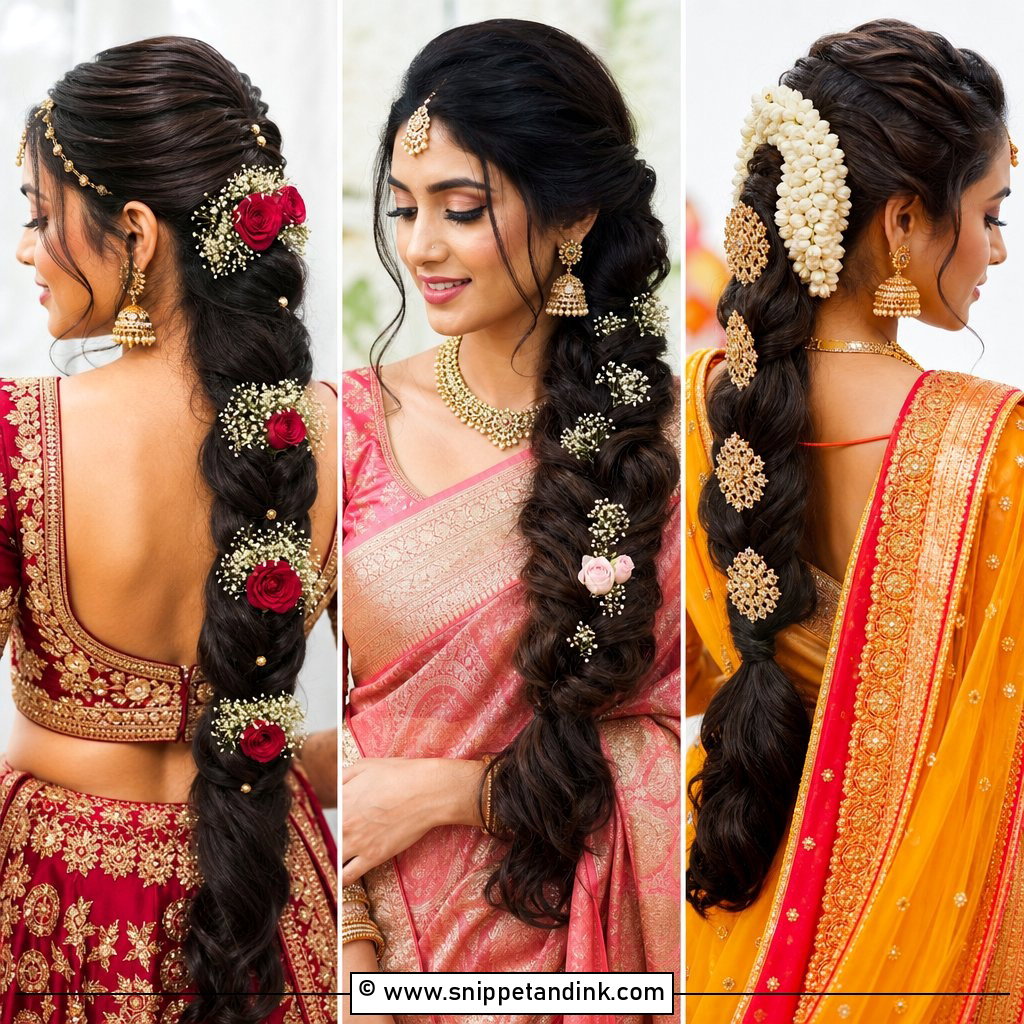
Few styles say tradition as clearly as the classic South Indian braid worn with fresh flowers. One long, thick braid runs down the back, wrapped with gajra, and it belongs with silk sarees and temple jewelry. You can keep it tight and sleek or lift the crown slightly. It needs long, dense hair to look right; on thinner hair I add a braiding extension so the braid doesn’t taper to a wisp halfway down. The gajra goes on last and gets pinned at the top and fixed with small clips along the length, or it swings loose when you sit.
4. Sleek Low Bun
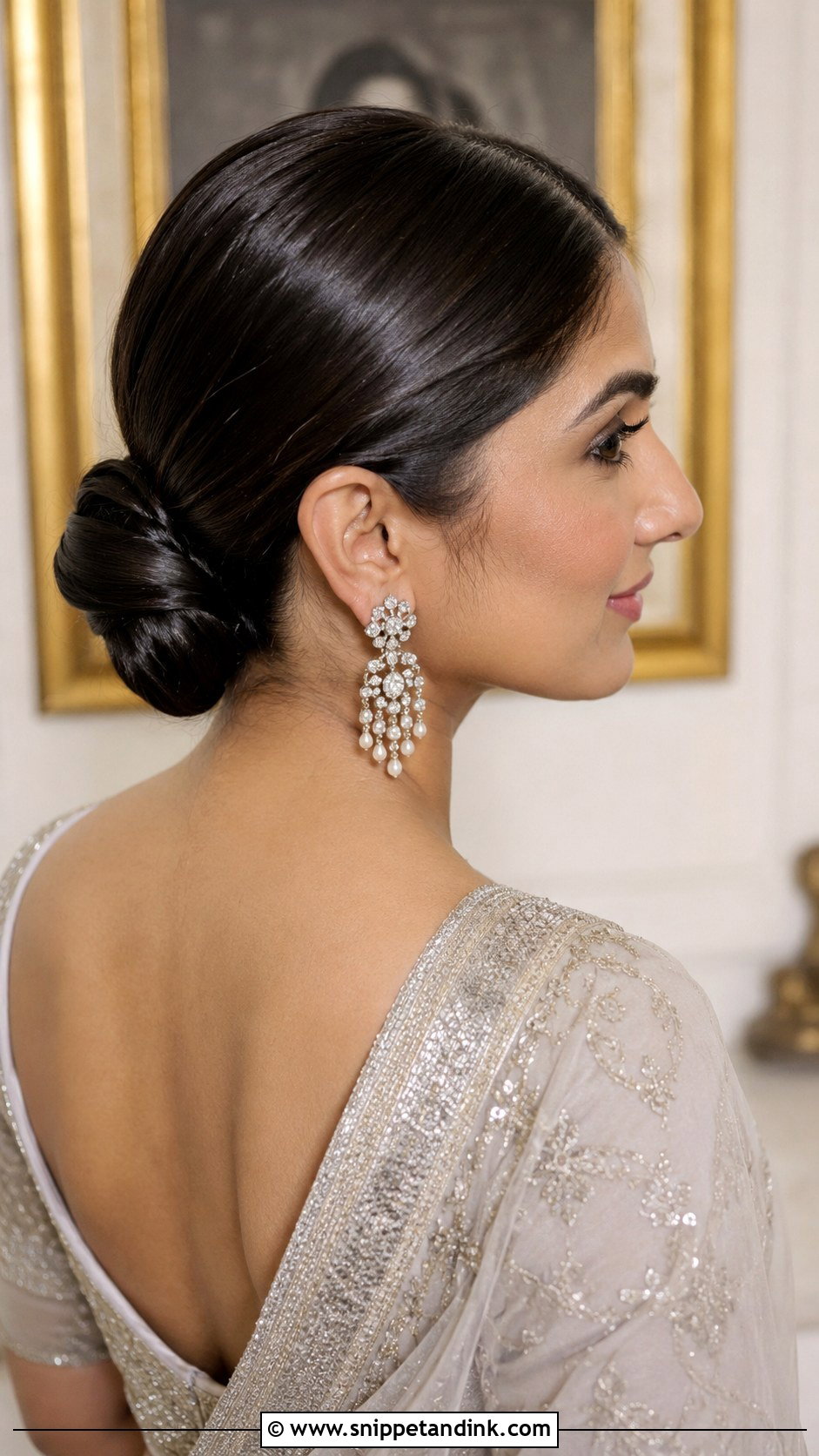
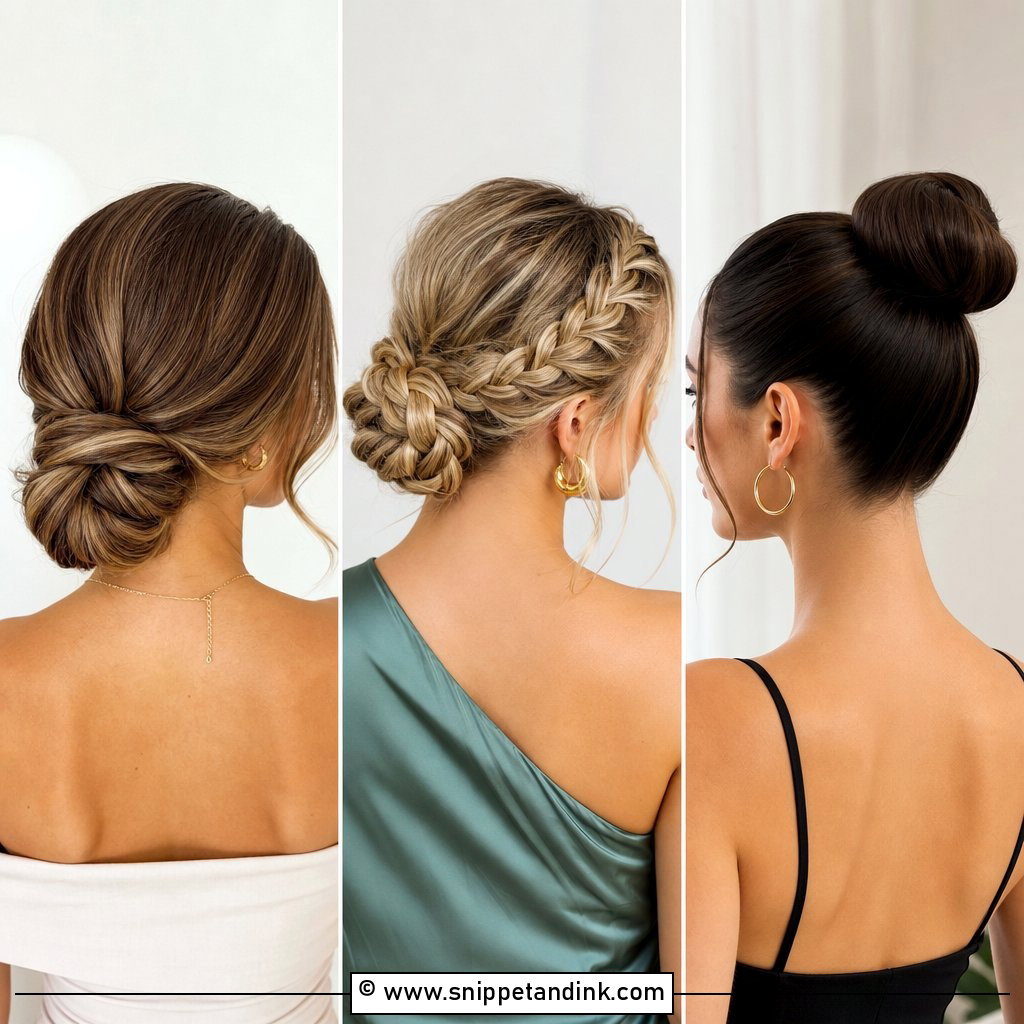
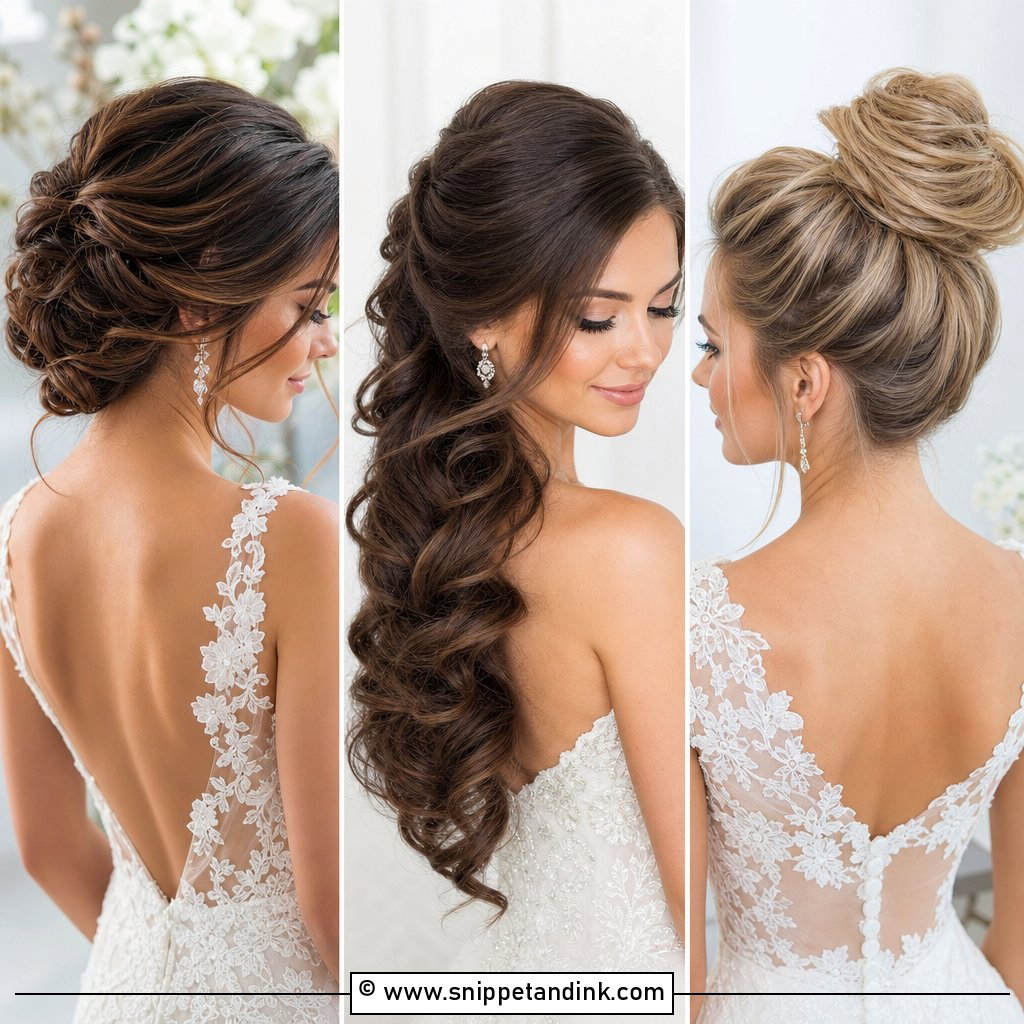
Everything is pulled back into a smooth, polished knot at the nape, leaving jewelry and outfit to do the work. I suggest it for evening receptions, especially with chandelier earrings or a maang tikka. A smoothing serum controls flyaways, but use a pea-sized amount at most, because under event lighting too much product makes hair look wet. It flatters most face shapes and works on straight or wavy hair. Very curly hair can go sleek too, but it needs a proper blow-dry first and an extra half hour.
5. Loose Curls With Side Part
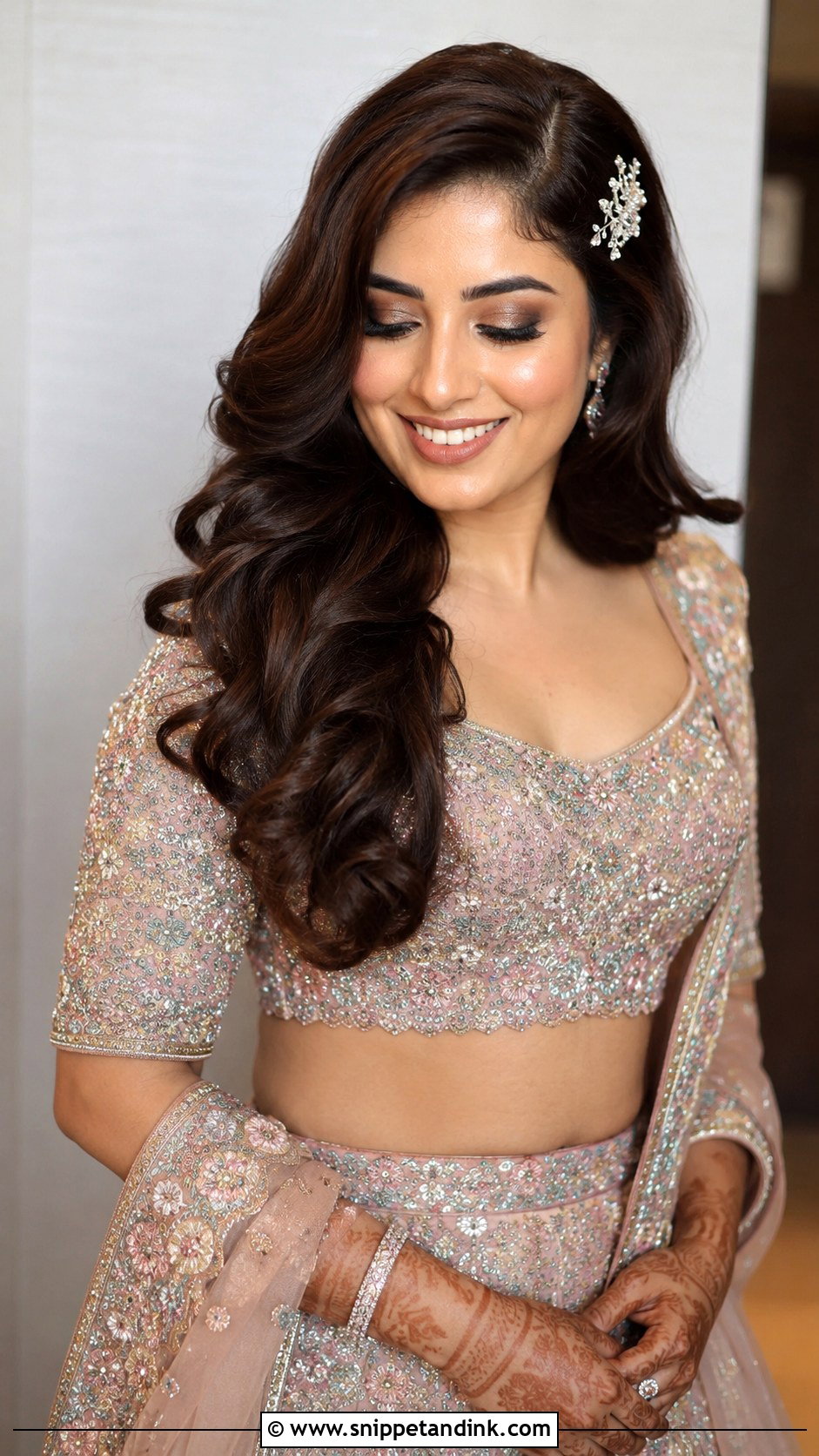
A deep side part leads into loose curls falling over one shoulder. It brings the glamour of an updo without the pinning, and it suits lehengas and gowns alike. A sparkly clip on the pinned side looks festive. Here’s the problem with curls at a sangeet: dancing and humidity drop them fast. I curl in smaller sections than the finished look needs, let each curl cool completely before touching it, and finish with flexible spray, so by the time the curls relax they land where you wanted them.
6. Fishtail Braid
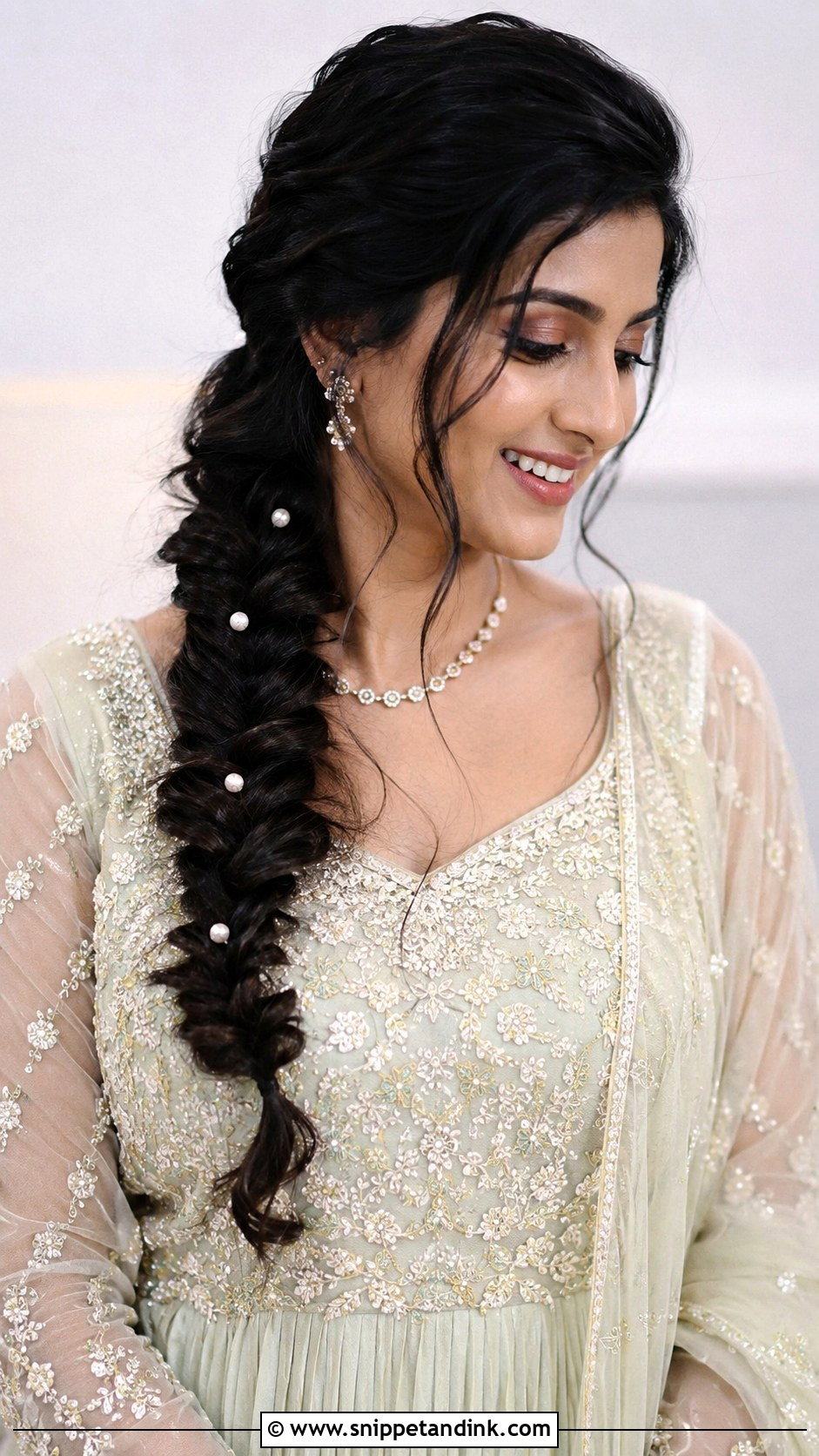
The fishtail looks complicated but uses only two sections, crossing a thin strand from the outside of one to the other, so it is one of the more forgiving braids to learn yourself. Worn over one shoulder or down the center of the back, it suits anarkalis and sarees. Loosened by hand it looks softer; kept tight it reads as tidy. Small flowers or pearl pins can sit along the plait. Long hair shows the pattern best. On layered hair, a fishtail can leave short ends sticking out on every turn, which a little wax on the fingertips smooths down.
7. Bouncy Blow Dry
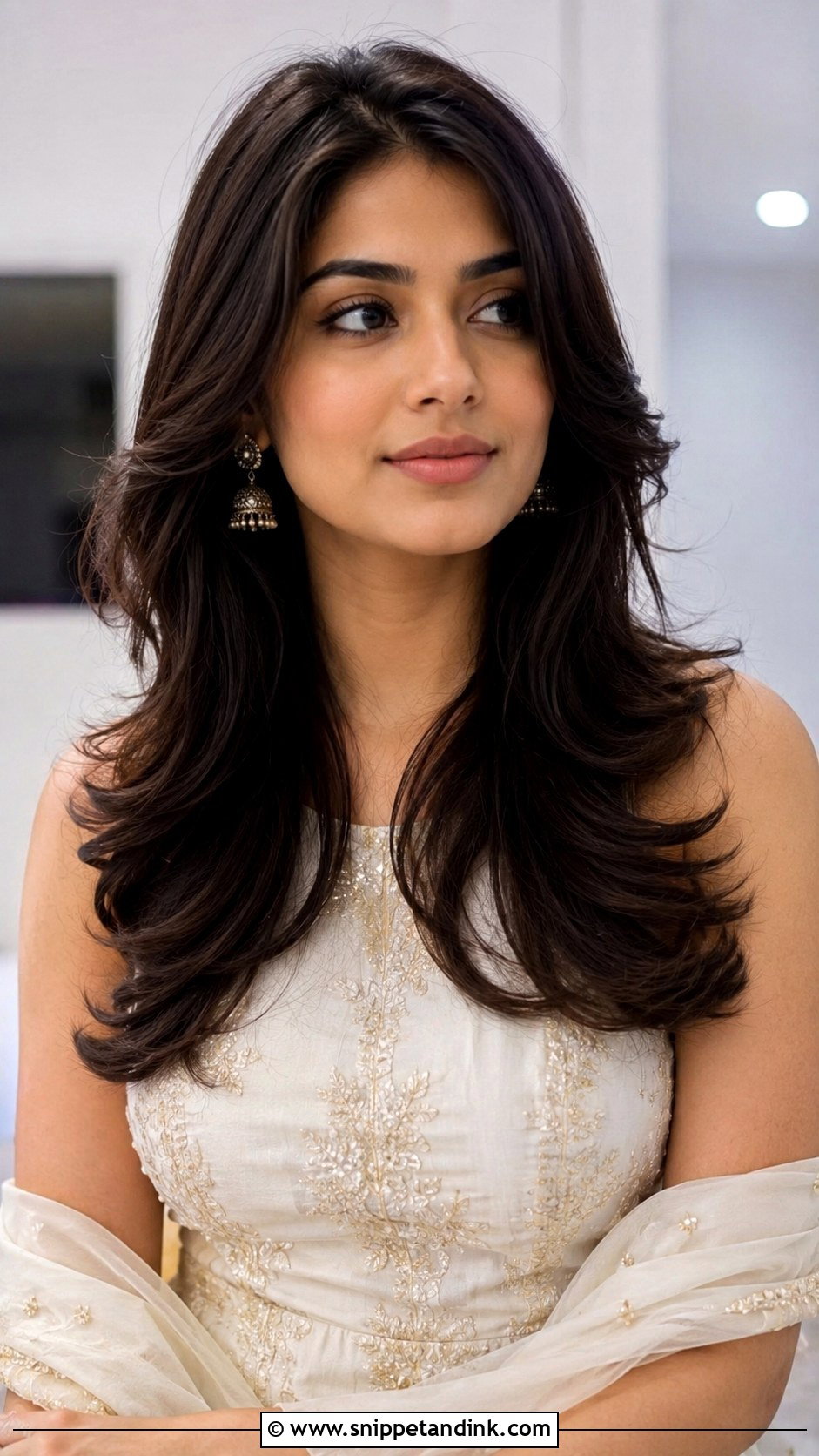
A bouncy blow-dry gives smooth volume and movement with no pins or braids at all, which is why it is the choice of guests who simply want their hair down. It suits sarees and indo-western gowns, and a slight curl at the ends adds shape. I always use a round brush and a mousse at the roots on damp hair, since a blow-dry done only on dry hair loses its bounce by lunch. It is comfortable through long daytime ceremonies. On a very humid day, though, a blow-dry is the first style to flatten, so keep a clip in your bag.
8. Dutch Braid Crown
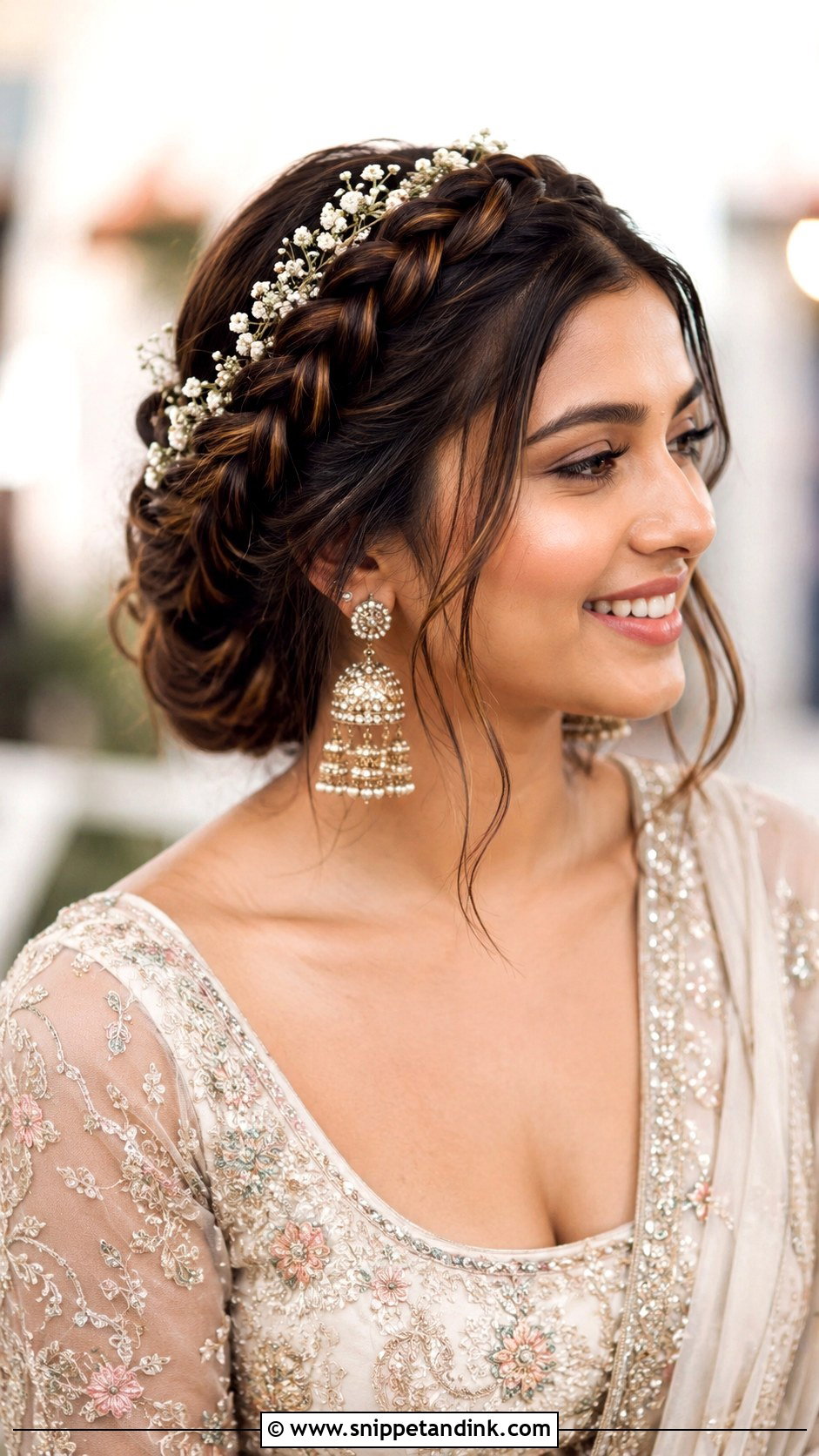
A Dutch braid wrapped around the head sits raised on top of the hair, since it is braided under rather than over, and that gives it a three-dimensional halo. It keeps hair off the neck, so I suggest it for outdoor or daytime ceremonies in heat. Small fresh flowers tucked along it work well with jhumkas and a light lehenga. It needs medium to long hair to make the full circle. If yours falls short, two braids meeting at the back and pinned under one another create the same crown.
9. Side Swept Waves
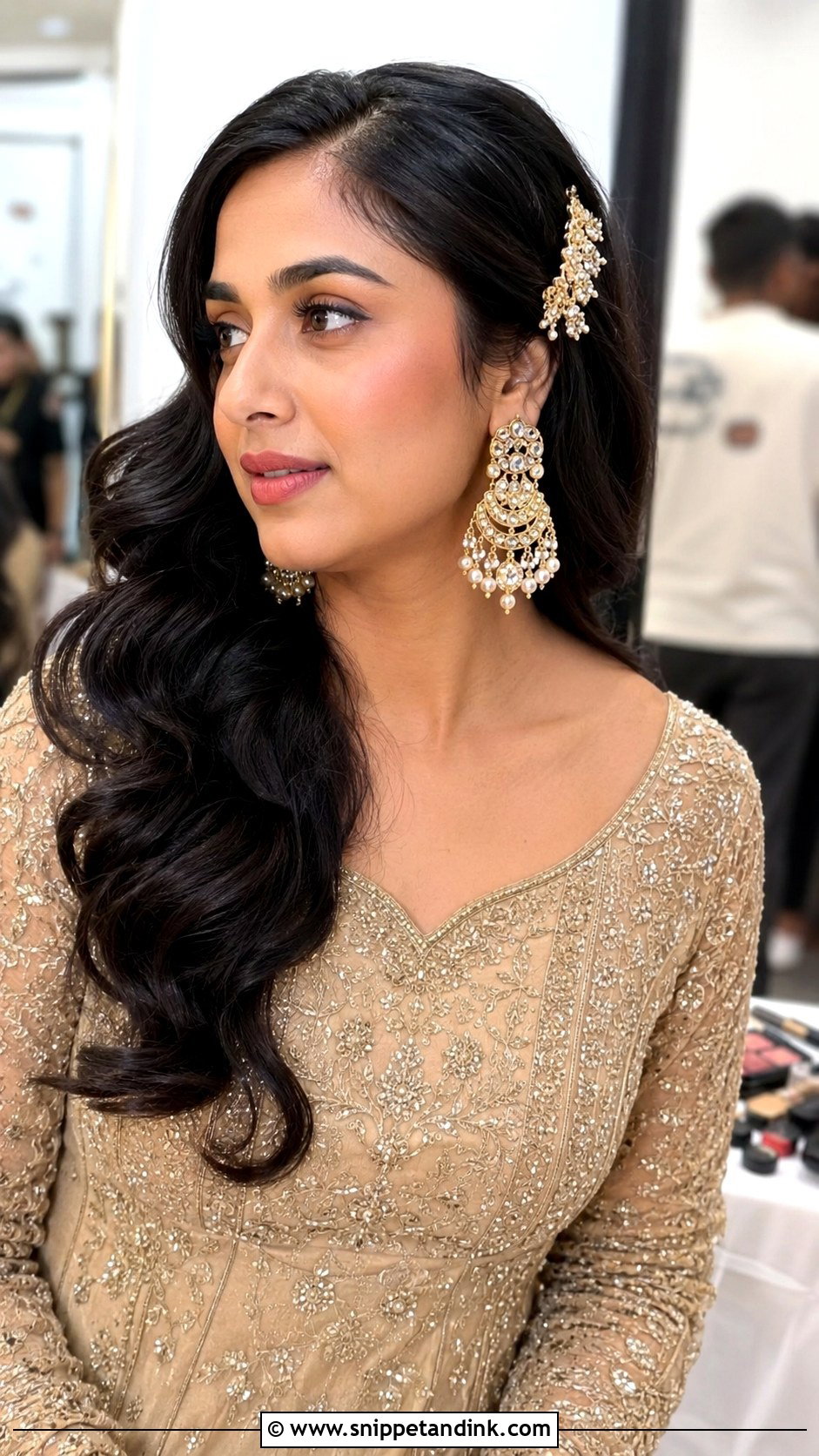
Everything sweeps to one side and falls as soft waves over the shoulder, leaving the other side clear for a heavy earring. It is a strong reception style with embroidered outfits. The opposite side has to be pinned back firmly, or the waves slowly migrate back to the middle over the evening. I hide two crossed bobby pins behind the ear and cover them with the decorative clip. Think about where your dupatta will sit, since draping it over the same shoulder buries the waves.
10. Floral Bun
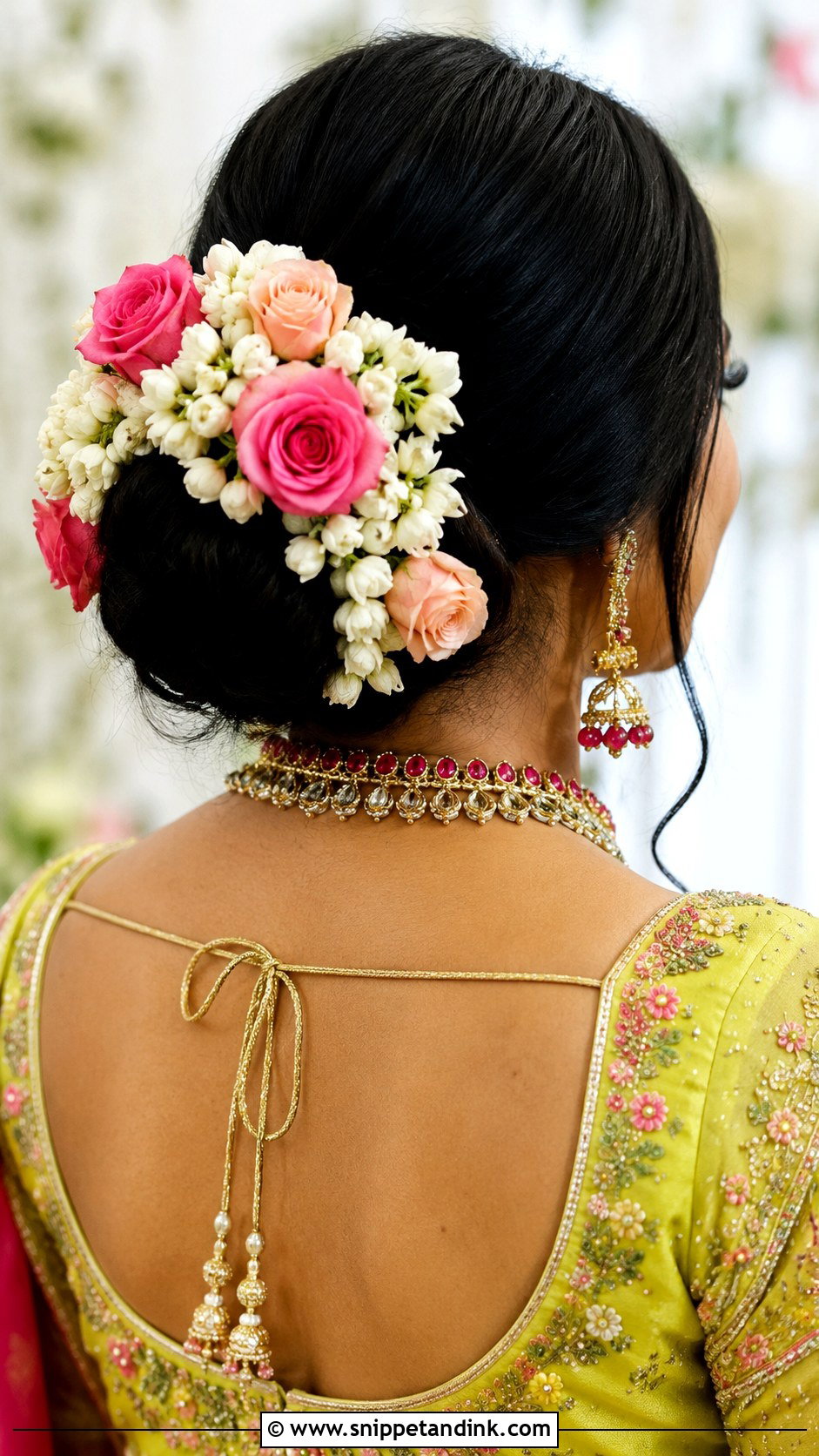
Nothing says Indian wedding quite like a bun adorned with fresh flowers, whether roses, jasmine or marigolds. I place the bun low or high depending on the neckline: high for a deep back or boat neck, low for a high collar. The flowers bring color for mehendi and haldi ceremonies. Marigolds are tough and handle heat well; roses and jasmine wilt faster, so put them in last. Most hair lengths can manage a floral bun, since the flowers hide any gaps in a smaller knot.
11. Messy Side Braid
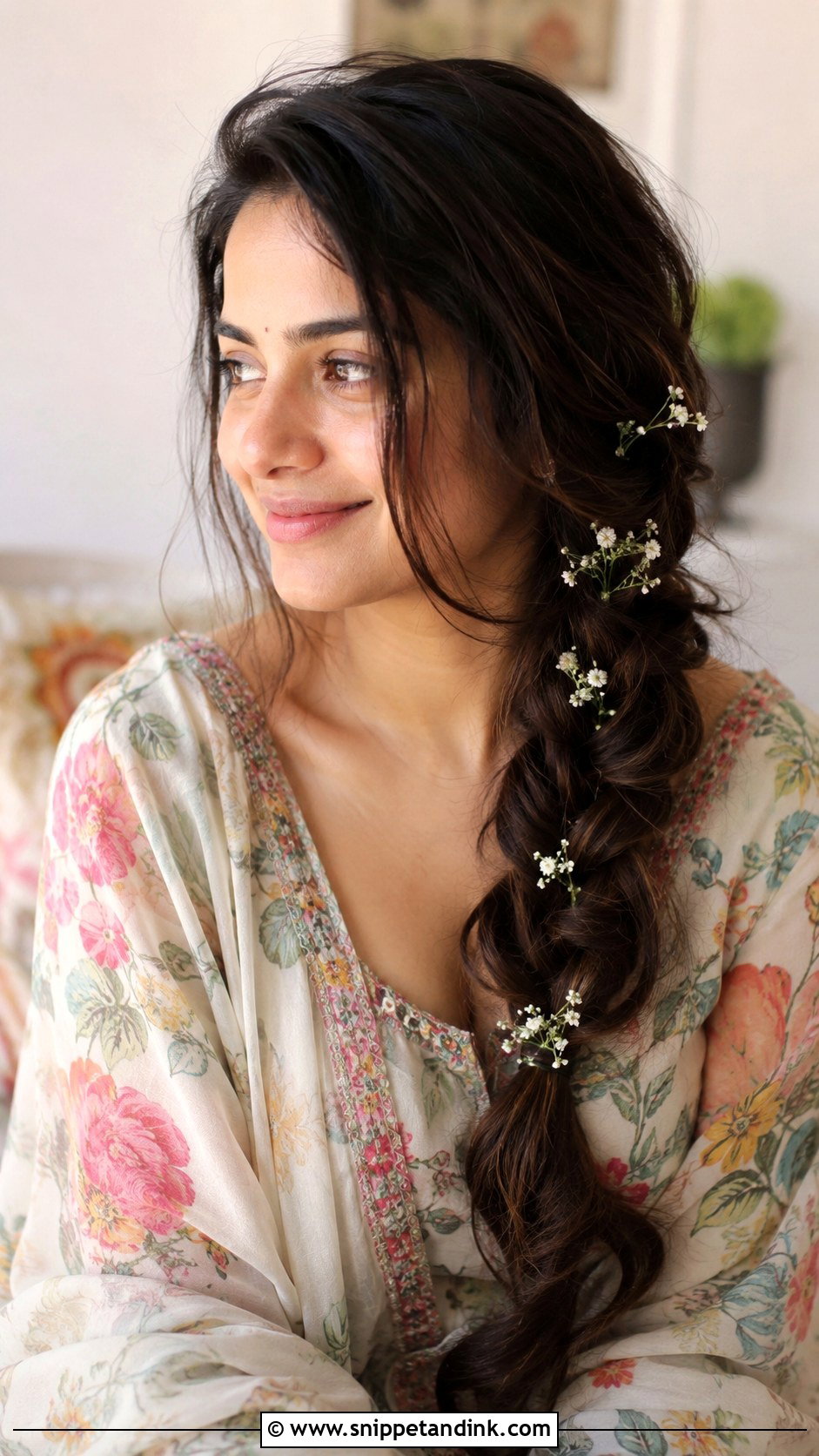
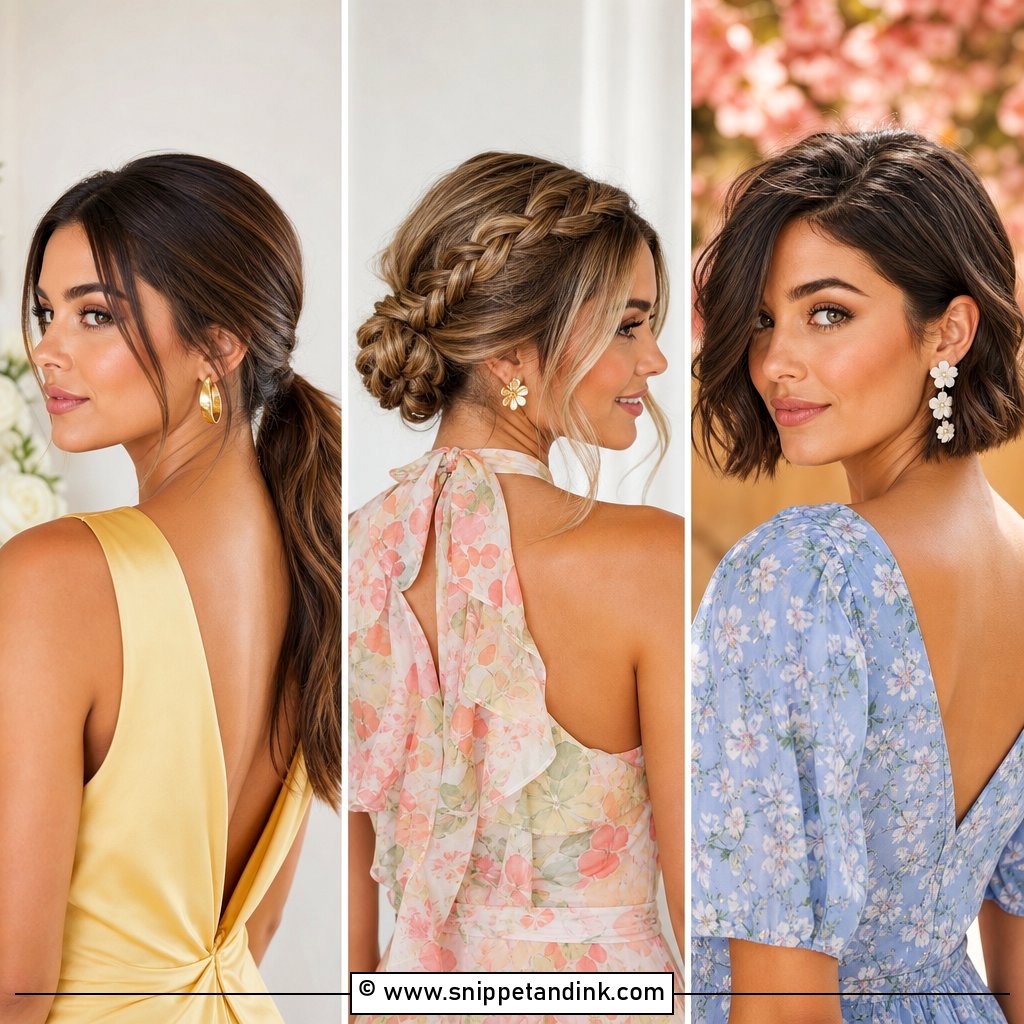
A loosely woven braid drapes over one shoulder, with pieces pulled out to look lived-in. It works with flowy fabrics and floral prints, which makes it a natural fit for a daytime mehendi or sangeet. Tiny flowers or delicate pins can be woven in. It is also the style I recommend most often to guests doing their own hair, because a messy braid hides uneven sections. Long hair suits it best, and second-day hair holds the texture far better than freshly washed hair.
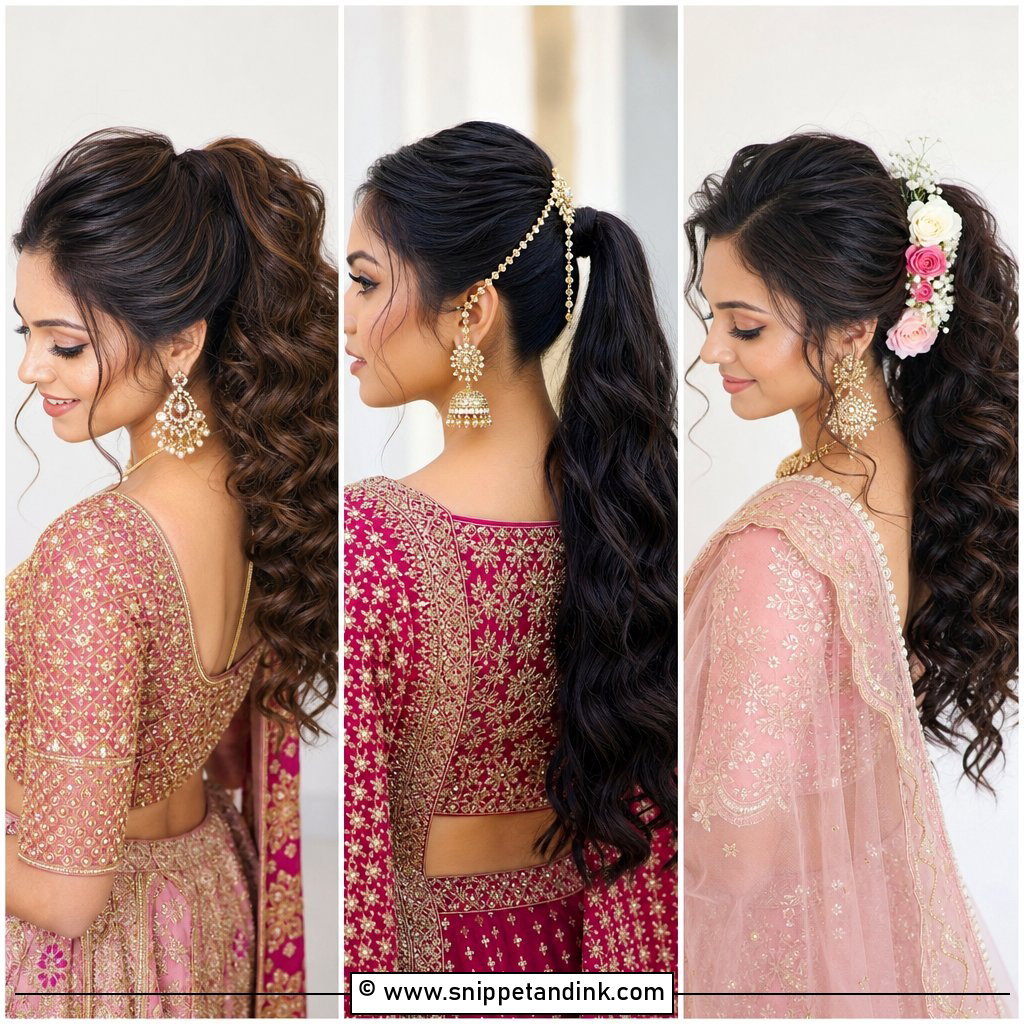
12. High Ponytail With Volume
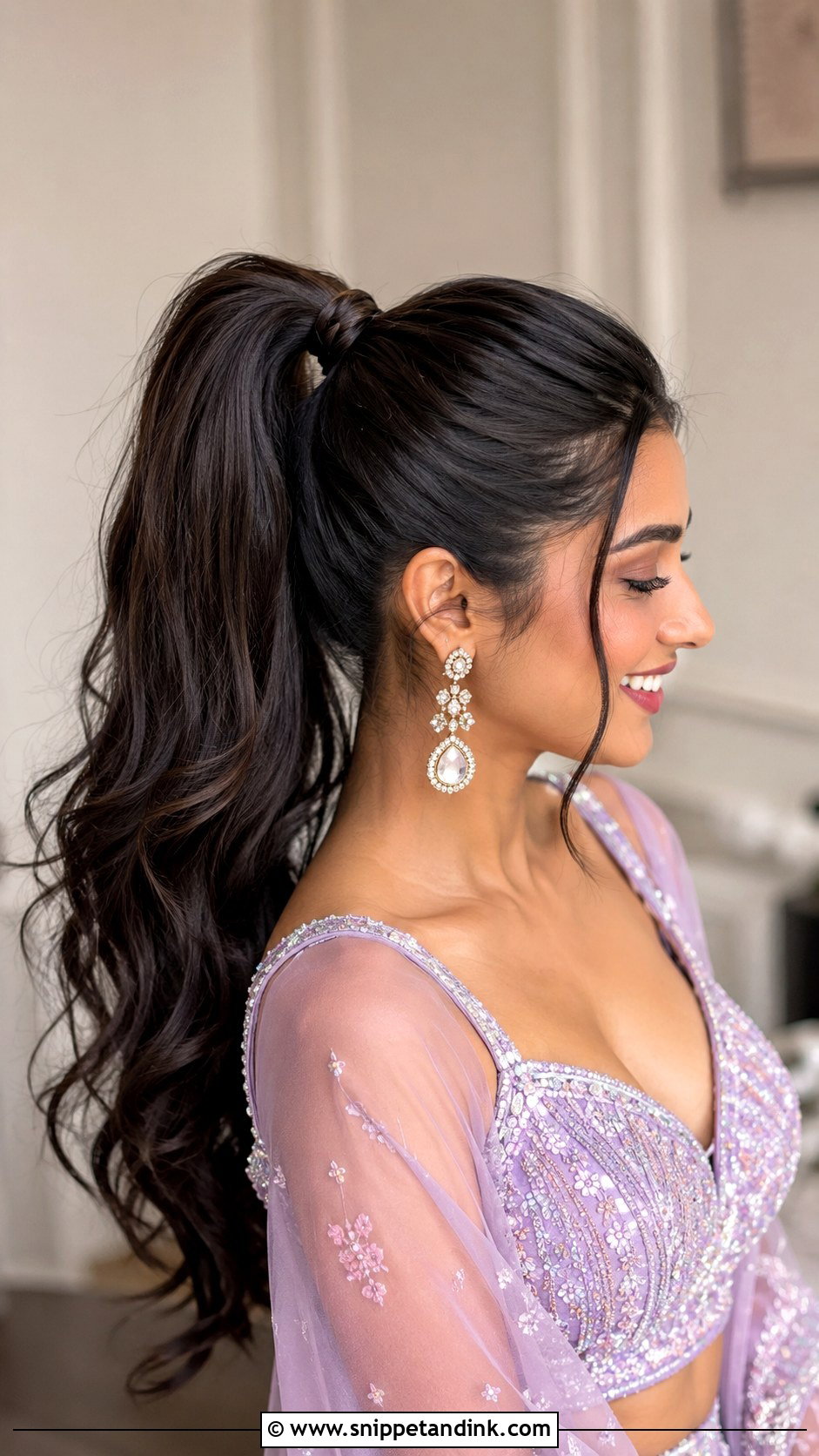
Pulling the hair up high and finishing it sleek or with bounce gives a contemporary look that still sits well with traditional outfits. Wrap a strand around the base to hide the elastic and pin it underneath. Some lift at the crown keeps it from looking flat. This is the style I suggest for anyone dancing all night at a sangeet or reception, since nothing touches the neck. Heavy, long hair can pull at the scalp after a few hours, so I secure the ponytail with two elastics and a couple of pins pushed into the base.
13. Twisted Half Up
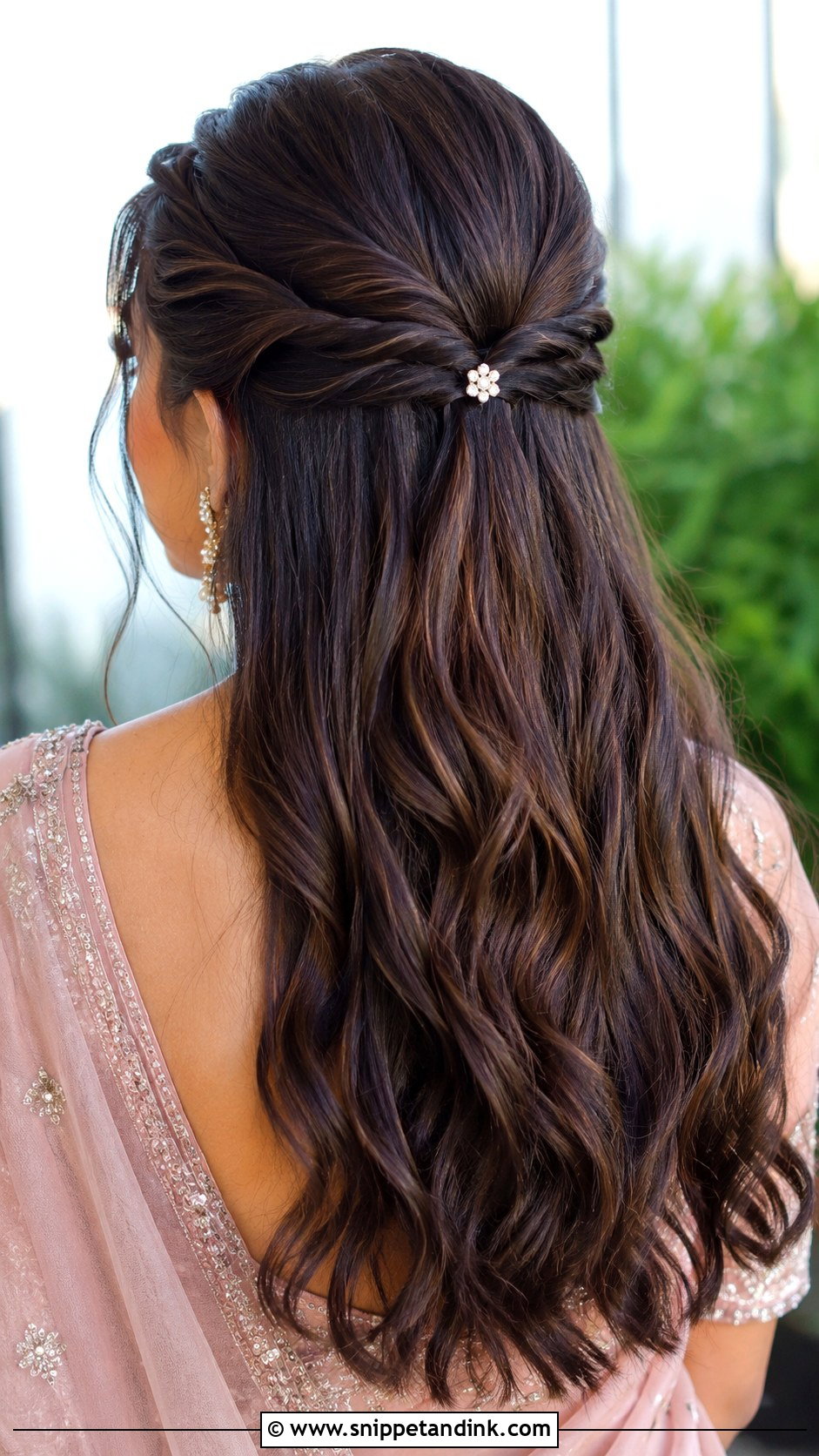
Two sections twist back from the face and meet at the crown, leaving the rest of your hair loose. It opens up the face with very little effort and sits well with lehengas and sarees at any time of day. A sparkly clip or maang tikka can sit where the twists meet. Twists tend to unwind on smooth, silky hair, so I spray each one before pinning and push the pin against the direction of the twist, which locks it.
14. Braided Bun
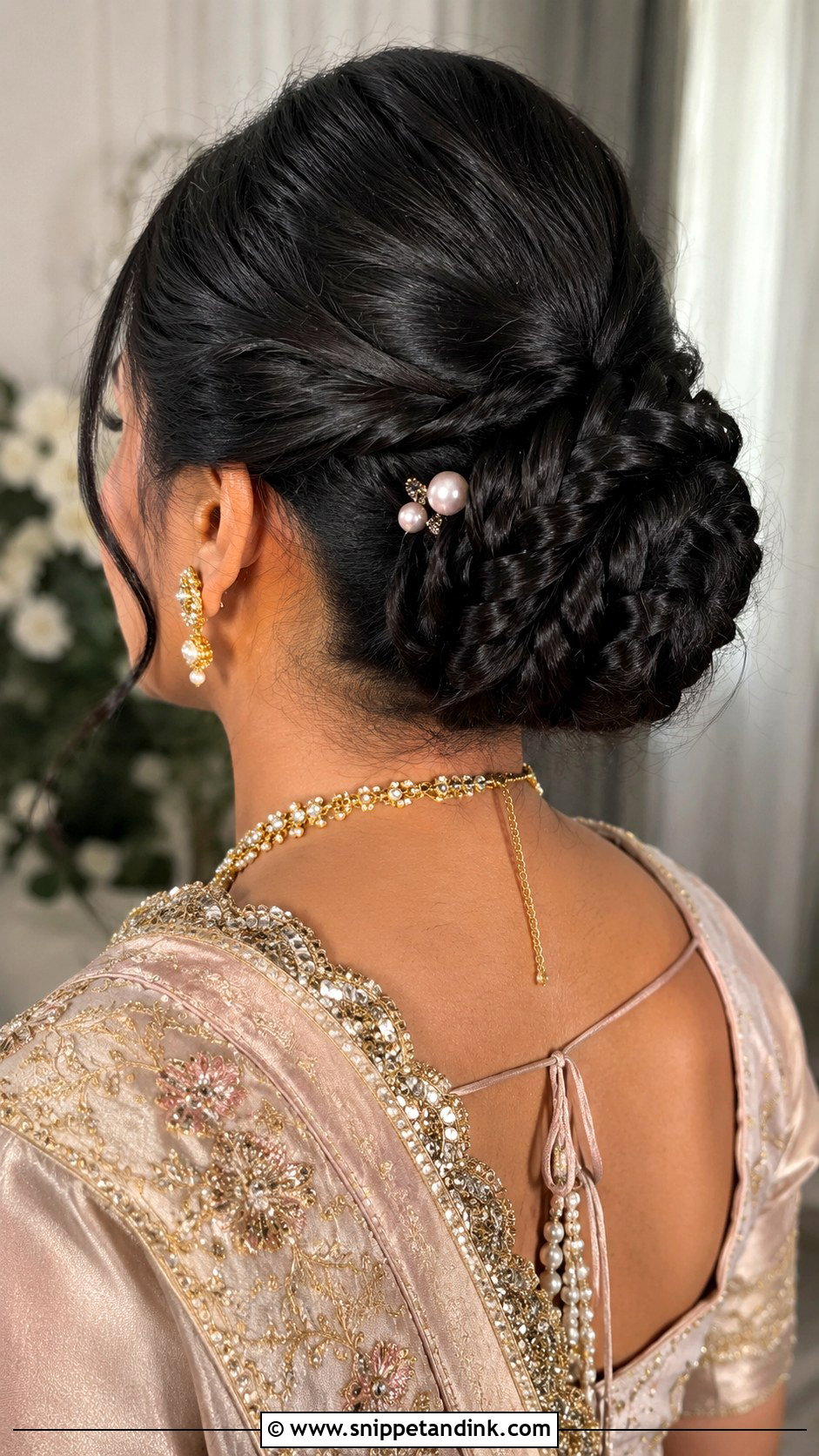
A braid wrapped into a neat bun gives texture and structure at once. I treat it as the go-to for formal receptions and evening functions, because braids give pins something to grip and the style barely moves for hours. Pearl pins or a delicate hair vine add a little shine. Medium to long hair works best, and heavy jewelry sits comfortably alongside it. If your hair is shorter, braid two small sections and wrap them around a donut for a fuller bun.
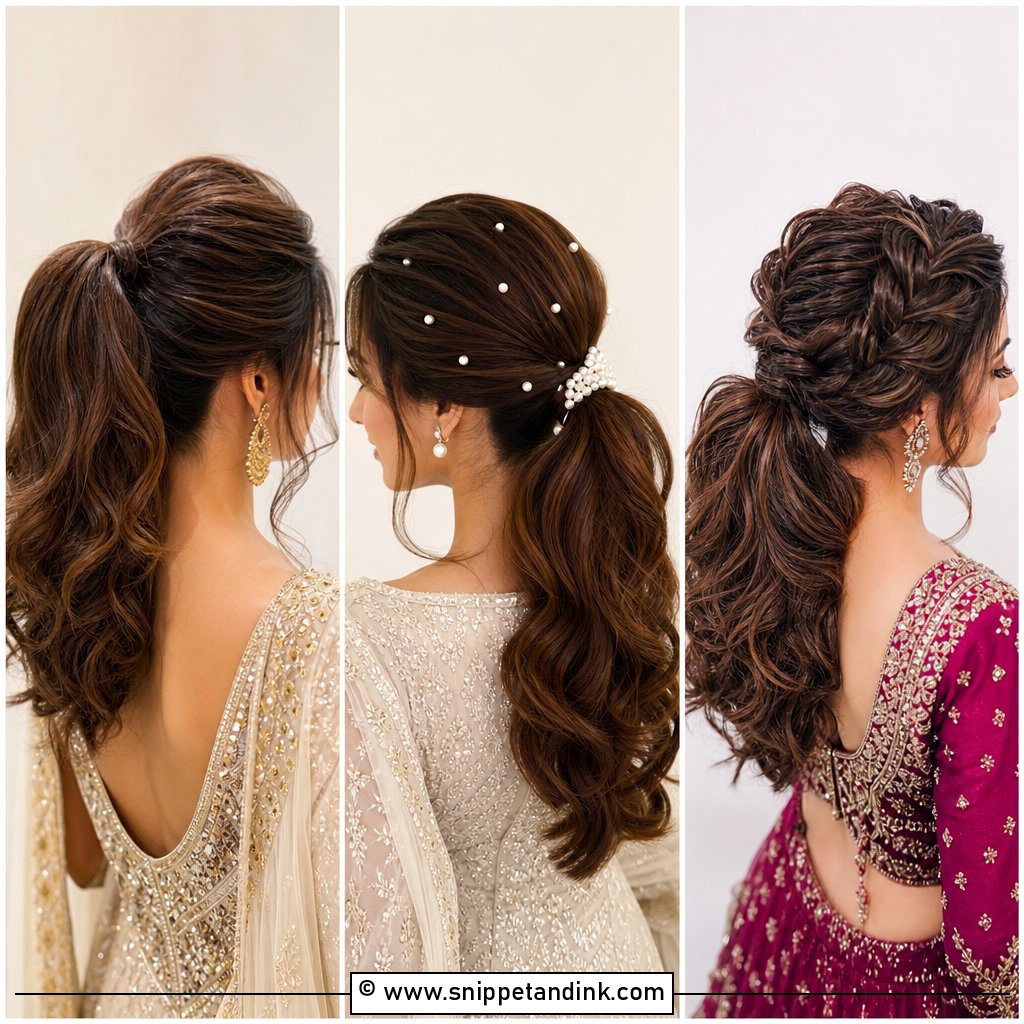
15. Open Hair With Curls And Maang Tikka
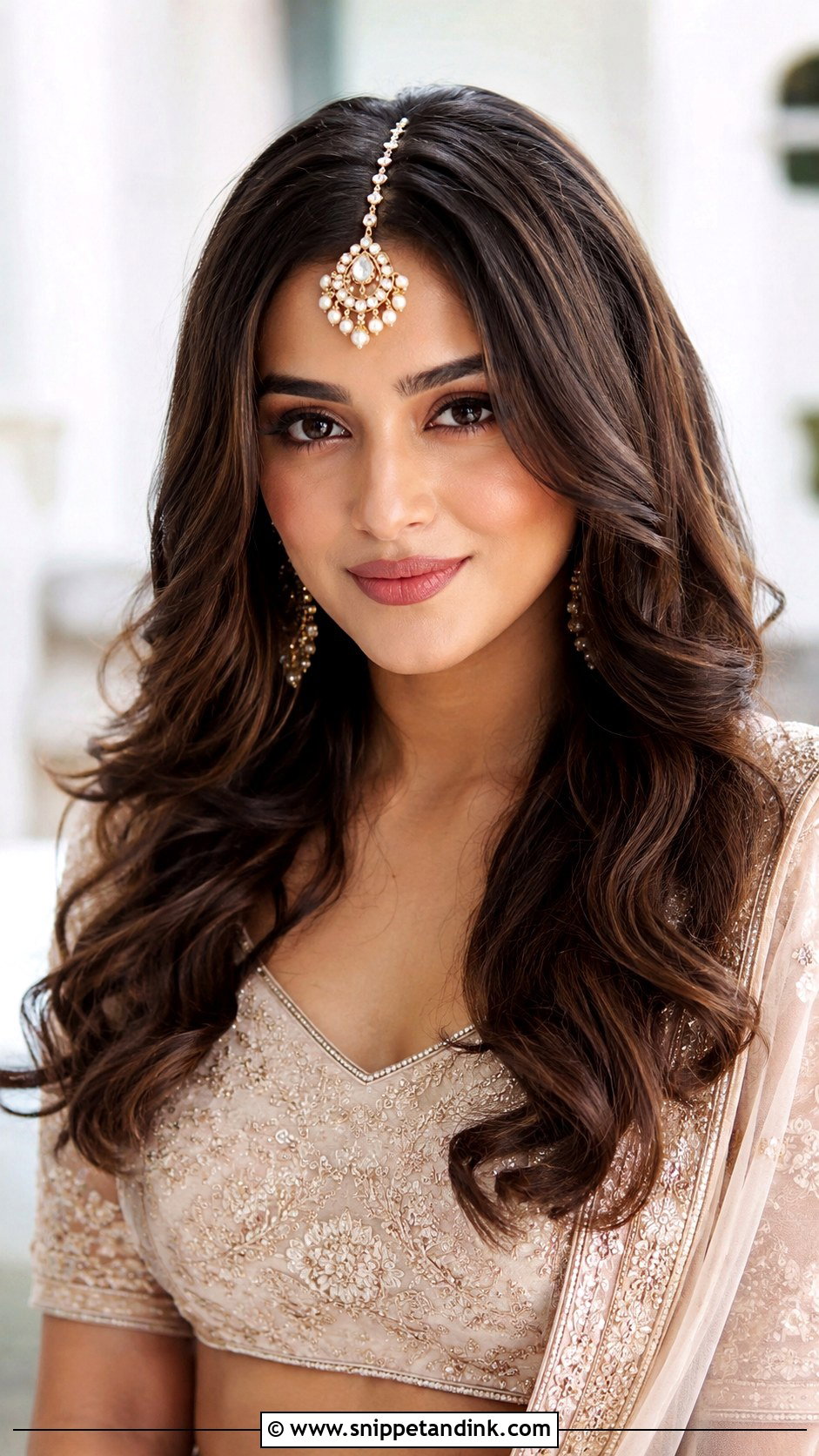
Open hair with soft curls and a statement maang tikka is about as simple as guest styling gets. The tikka sits on the forehead while gentle waves frame the face. It suits receptions and sangeets with lehengas or indo-western outfits. The tikka is what usually goes wrong: on loose hair the chain has nothing to anchor to and slides sideways. I pin a small section at the crown underneath the top layer and clip the tikka hook into that, which keeps it centered all night.
16. Bohemian Braided Half Updo
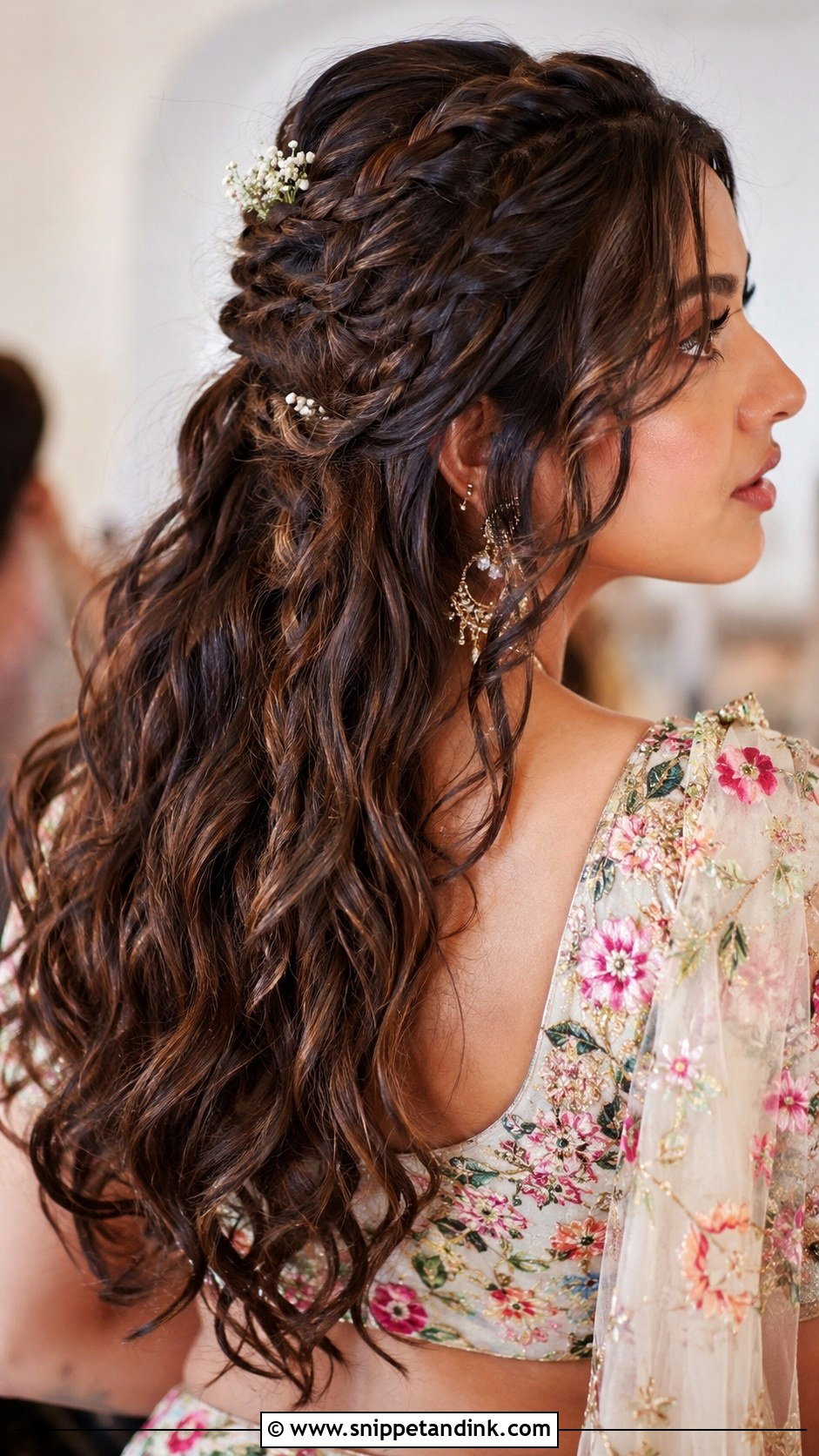
Small braids, gentle twists and loose waves are combined in a half-up style for a soft, textured finish. It keeps hair off the face and goes naturally with floral prints and flowy fabrics at mehendi and daytime functions. Tiny blooms or beads can be woven through. The more elements a style has, the more there is to come loose, so I keep the braids small and pin each one twice. Medium to long hair works best here.
17. Sleek Center Part Bun
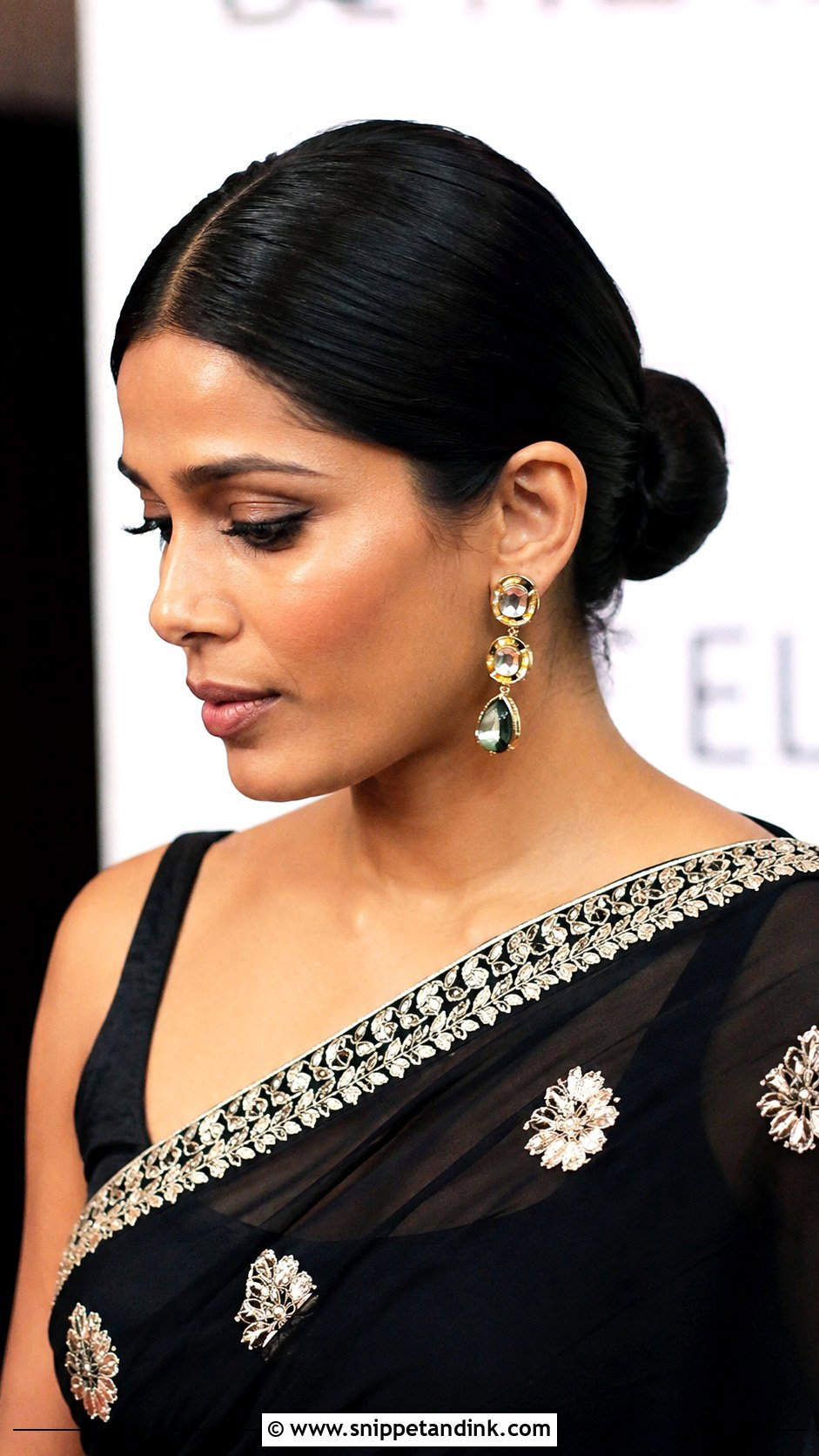
A precise middle part leads into a smooth, low bun, a clean look that suits formal receptions. The center part has to be straight, so I comb it with the tail of a comb from the hairline right back to the crown. Shine serum gives a glossy finish without flyaways. It flatters most faces and pairs well with bold earrings and a sleek saree. One honest caution: a center part shows any regrowth or scalp clearly in flash photos, so if your roots are due, a soft side part may be kinder.
18. Curly Updo With Loose Strands
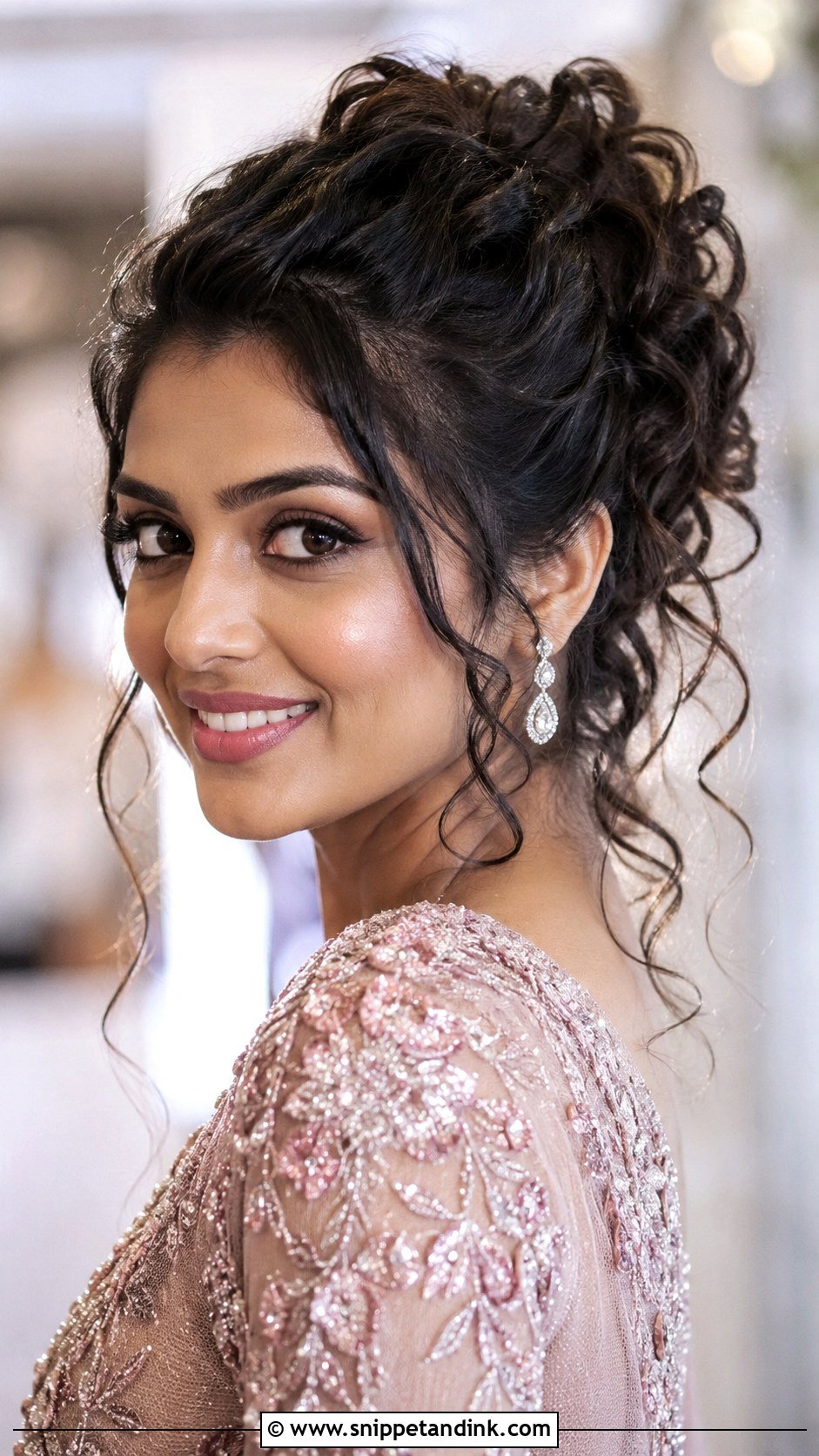
Gathering curls into a relaxed updo, with a few wispy pieces left around the face, keeps the natural texture front and center. It works with traditional and indo-western ensembles at evening celebrations, and the volume reads well in photos. A sparkly accessory or small flowers finish it. Curly hair should be styled with its own curl pattern rather than brushed out; I set it with a curl cream, let it dry, and pin it up gently by hand so the curls stay defined.
19. Waterfall Braid
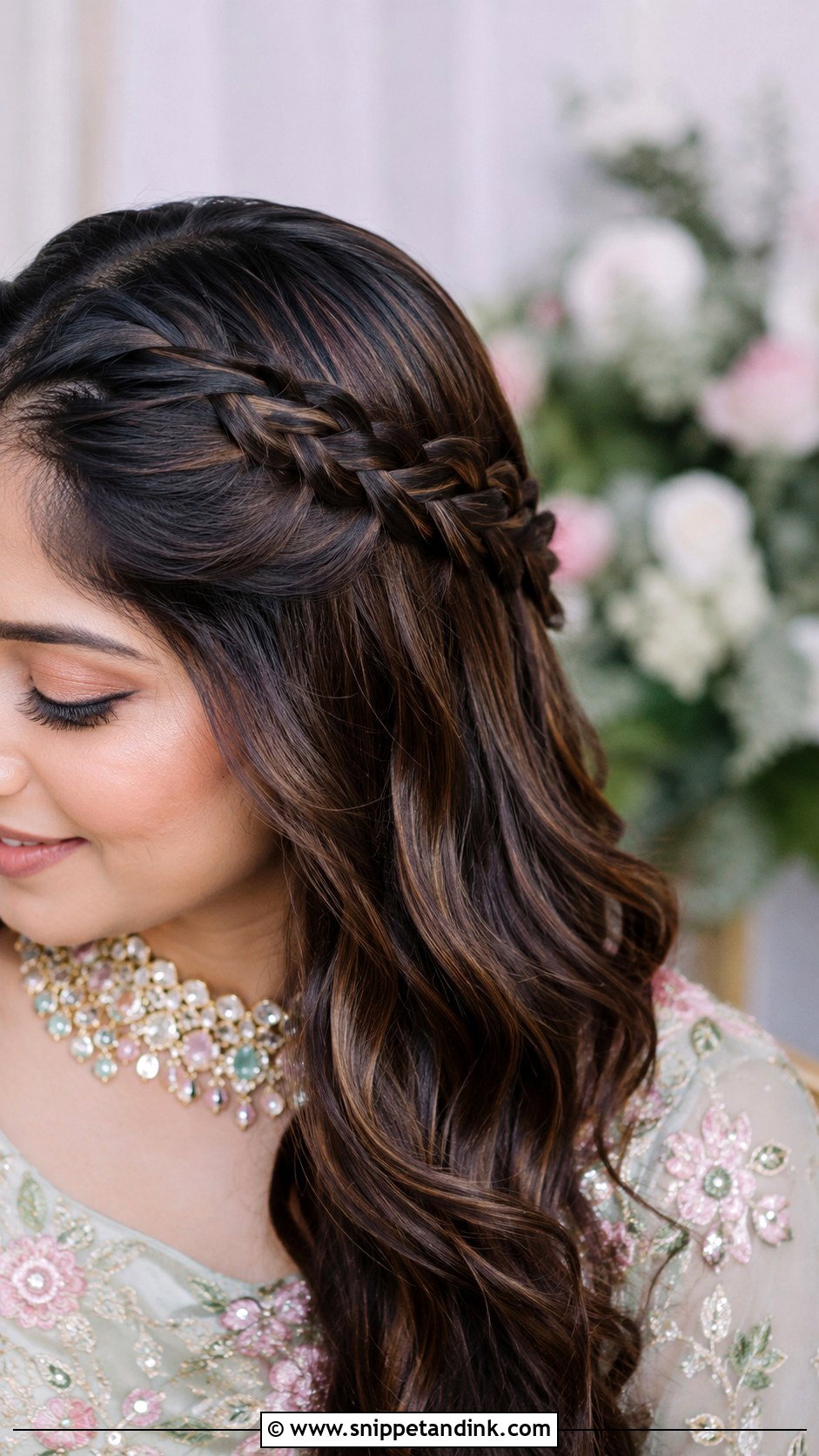
The waterfall braid looks more intricate than it is. You braid horizontally across the head and drop one strand each time, so strands fall through like a waterfall over the loose hair below. Curls or waves underneath set it off. Tiny flowers along the braid suit a daytime mehendi or sangeet, and this is the lovely, low-fuss option for medium to long hair. It needs a light grip product, since the dropped strands slip out of a too-smooth braid.
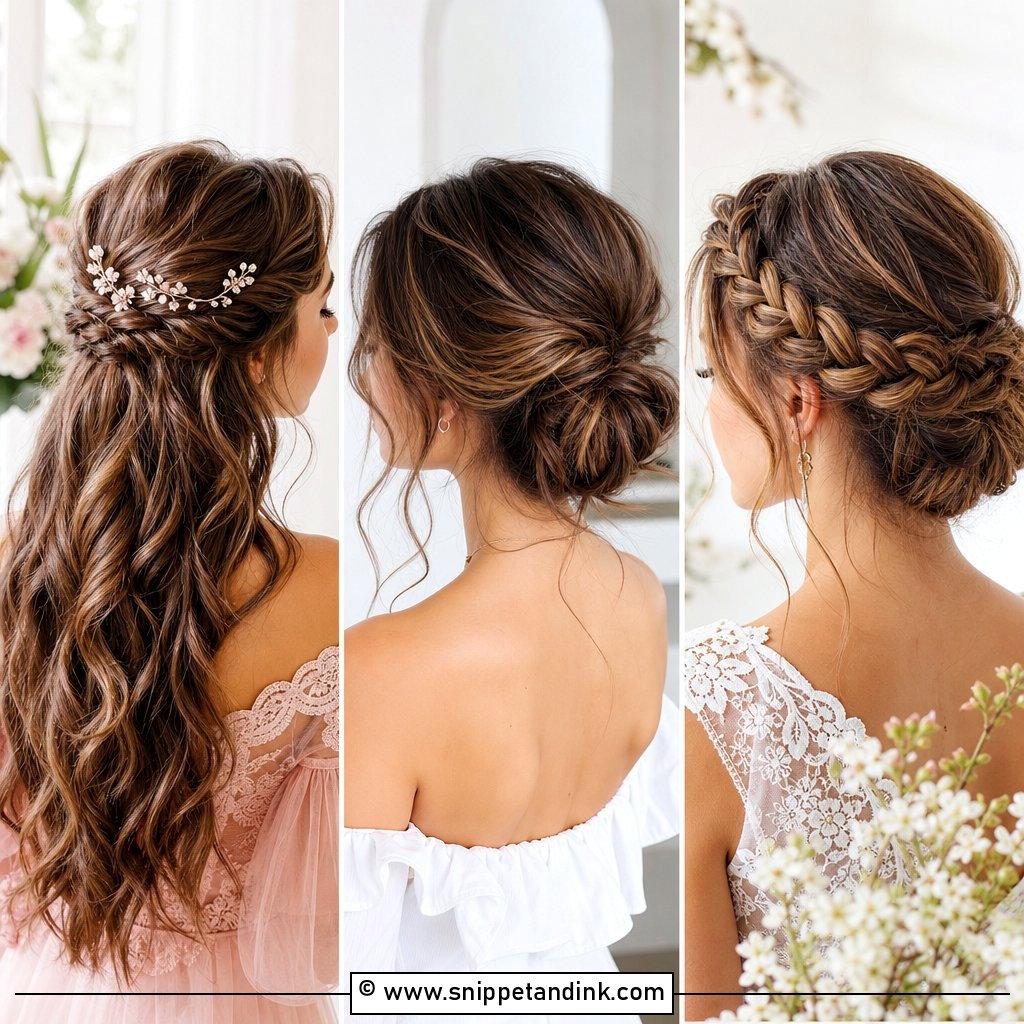
20. Vintage Inspired Finger Waves
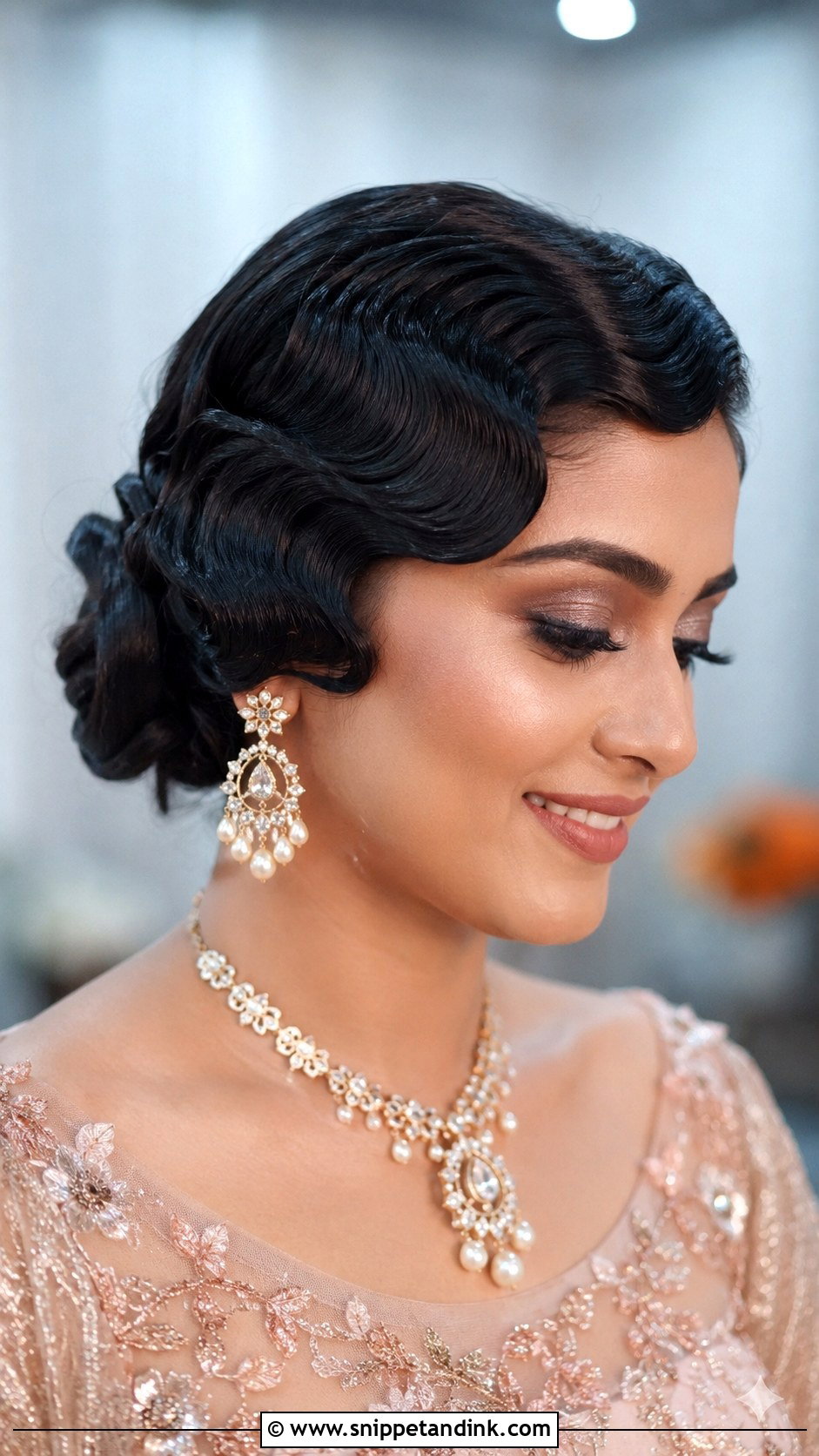
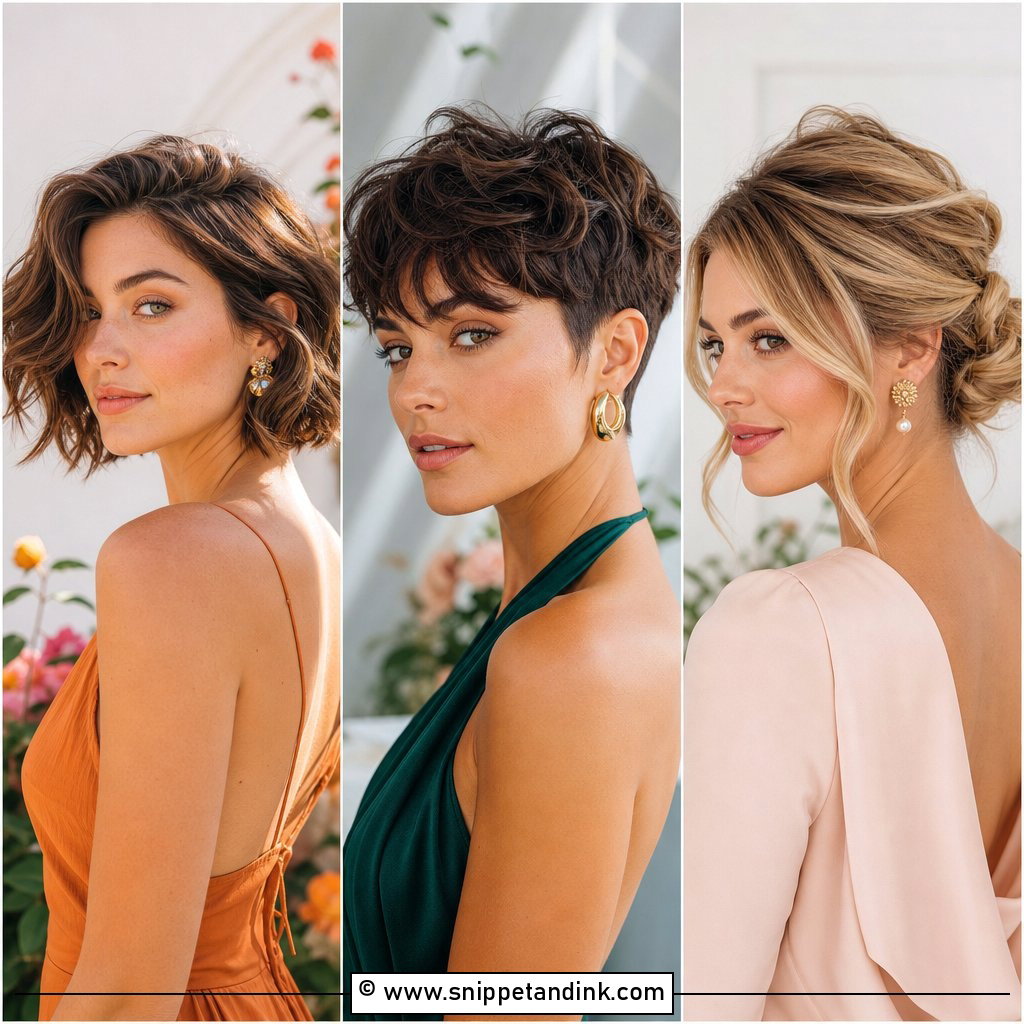
Sculpted waves sit close to the head in a retro S shape, and they look completely different from the open curls most guests wear. They work best for a reception, with statement jewelry and bold lip colors. The waves are set on damp hair with gel and clips and need time to dry fully, so book extra time or set them the night before if you are doing them yourself. Shorter to medium hair suits finger waves best; long hair is usually waved at the front and pinned up behind.
21. Crown Braid With Open Hair
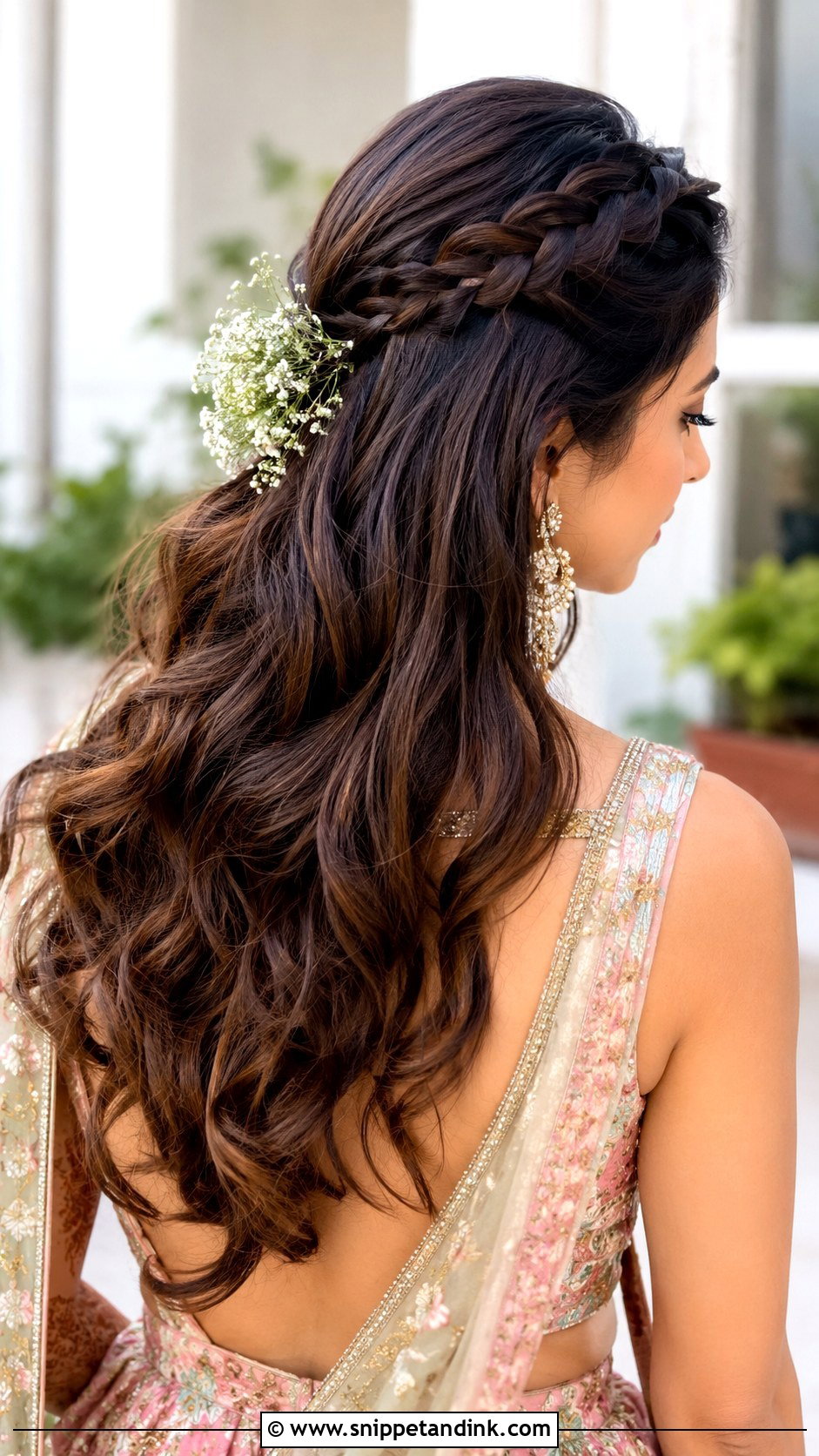
A braid crosses the top of the head like a tiara while the rest of the hair flows freely below. It keeps the front neat while showing your length and texture. Small flowers along the braid suit daytime ceremonies and outdoor celebrations. Medium to long hair works. If you will wear a dupatta over your head at any point, keep the braid flat and close to the scalp, since a raised crown pushes the fabric up and looks bulky.
22. Twisted Low Chignon
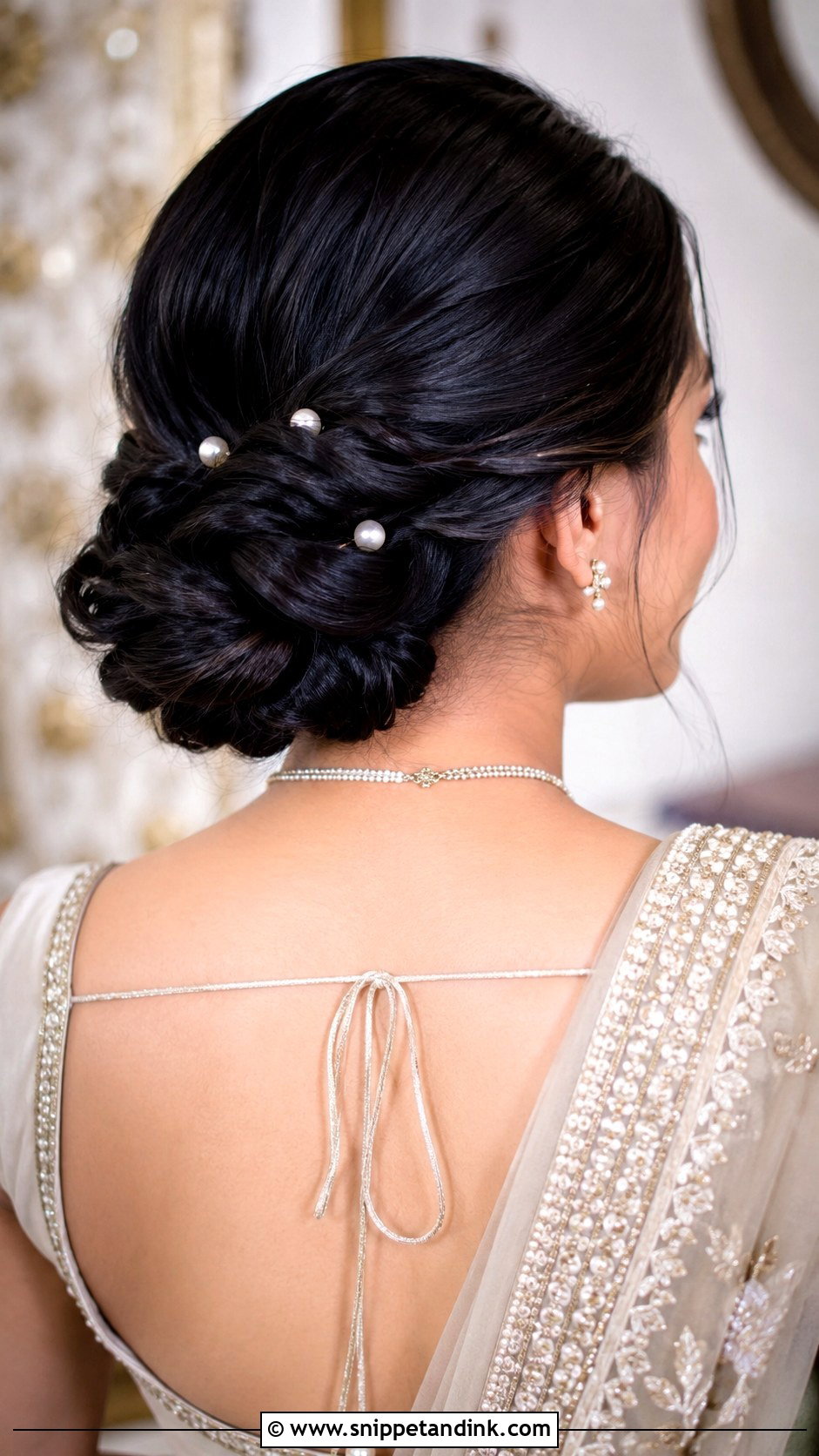
The hair is twisted and tucked into a knot that rests low at the nape, giving a smooth, sculpted shape. Jewelry gets all the attention, which is why it is a good formal reception style. A few extra twists add dimension, and pearl pins or a small accessory finish it. The chignon works on medium to long hair and suits most face shapes. It sits flat against the head, so it is one of the few updos that stays comfortable when you lean back in a chair for hours.
23. Side Bun With Gajra
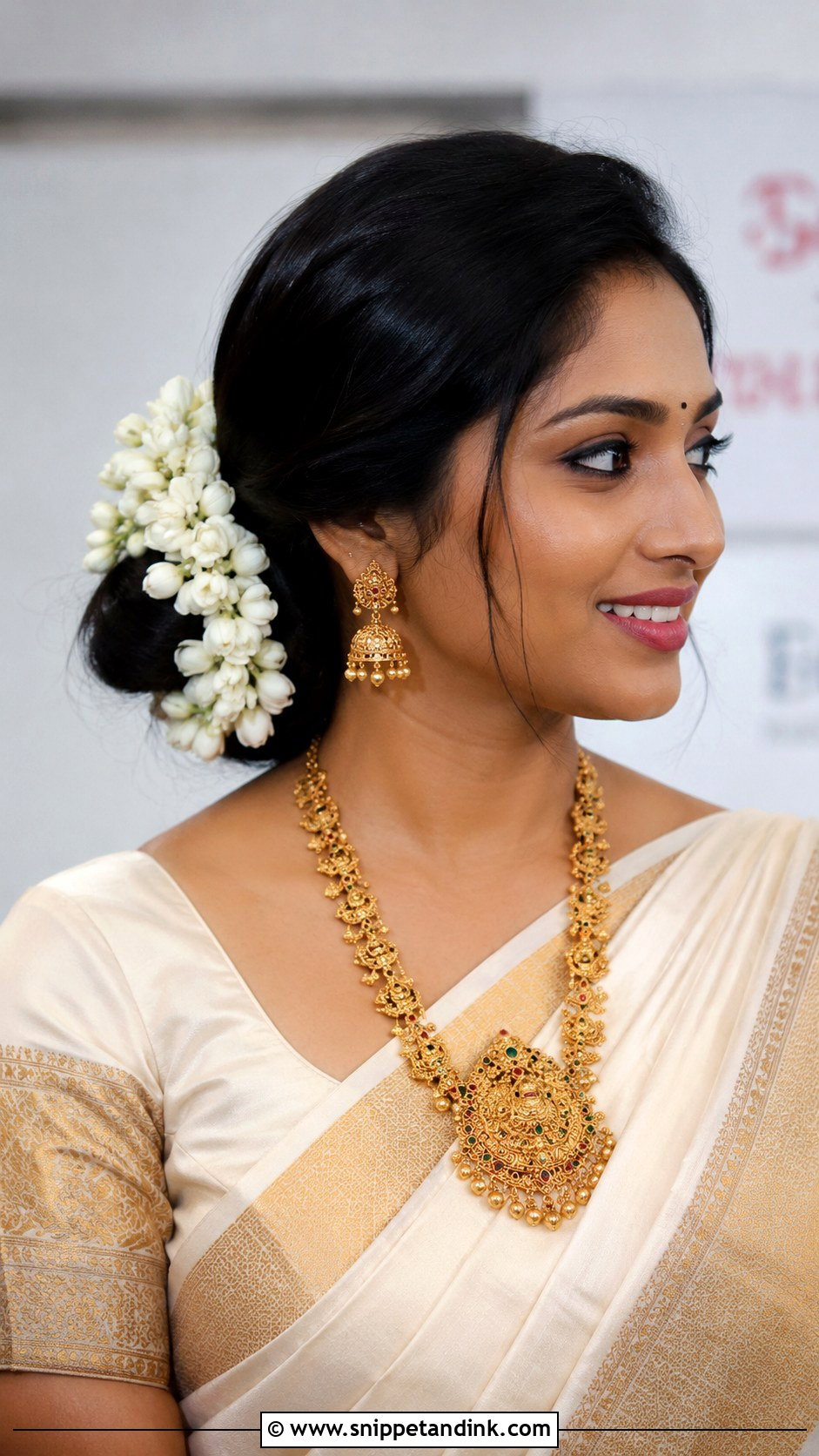
A soft bun placed to one side, wrapped in fragrant jasmine, is a classic for traditional ceremonies and daytime functions. The off-center position flatters the face and suits silk sarees and temple jewelry. Pin the gajra to the bun itself, not just around the outside, so it doesn’t hang loose during the ceremony. Choose the side away from where your saree pallu falls. It needs medium to long hair and stays comfortable throughout a long day.
24. Sleek Straight Open Hair
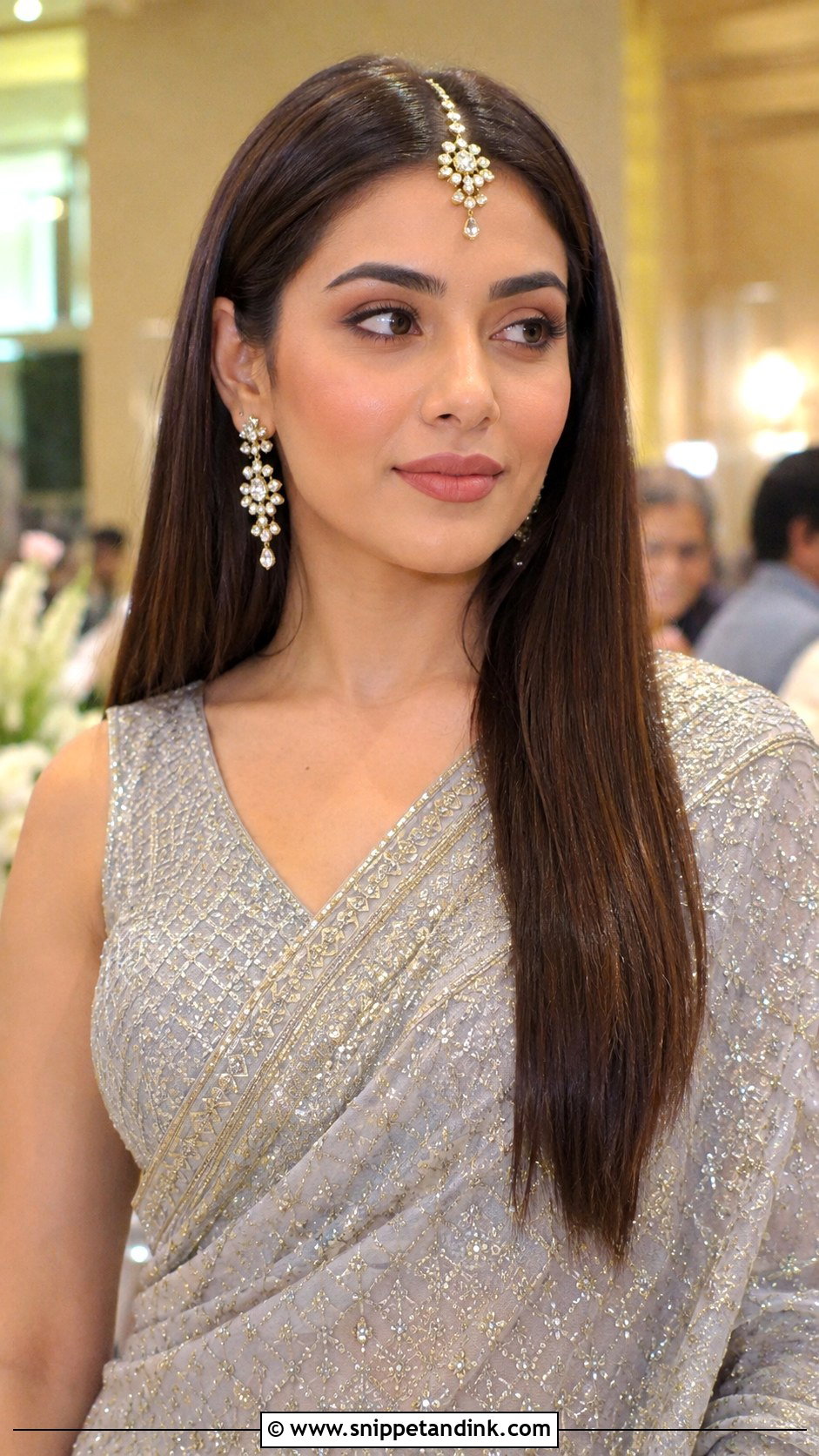
Smooth, glossy strands flowing down the back give a clean, modern look that lets the outfit and accessories take over. A straightener and shine serum create the finish. It goes with traditional outfits as well as indo-western ensembles, and a delicate maang tikka or statement earrings make it festive. Heat protection is not optional here, since you are passing a hot iron over every strand. In humid weather, sleek straight hair frizzes within hours unless you use an anti-humidity spray.
25. Floral Half Up Half Down
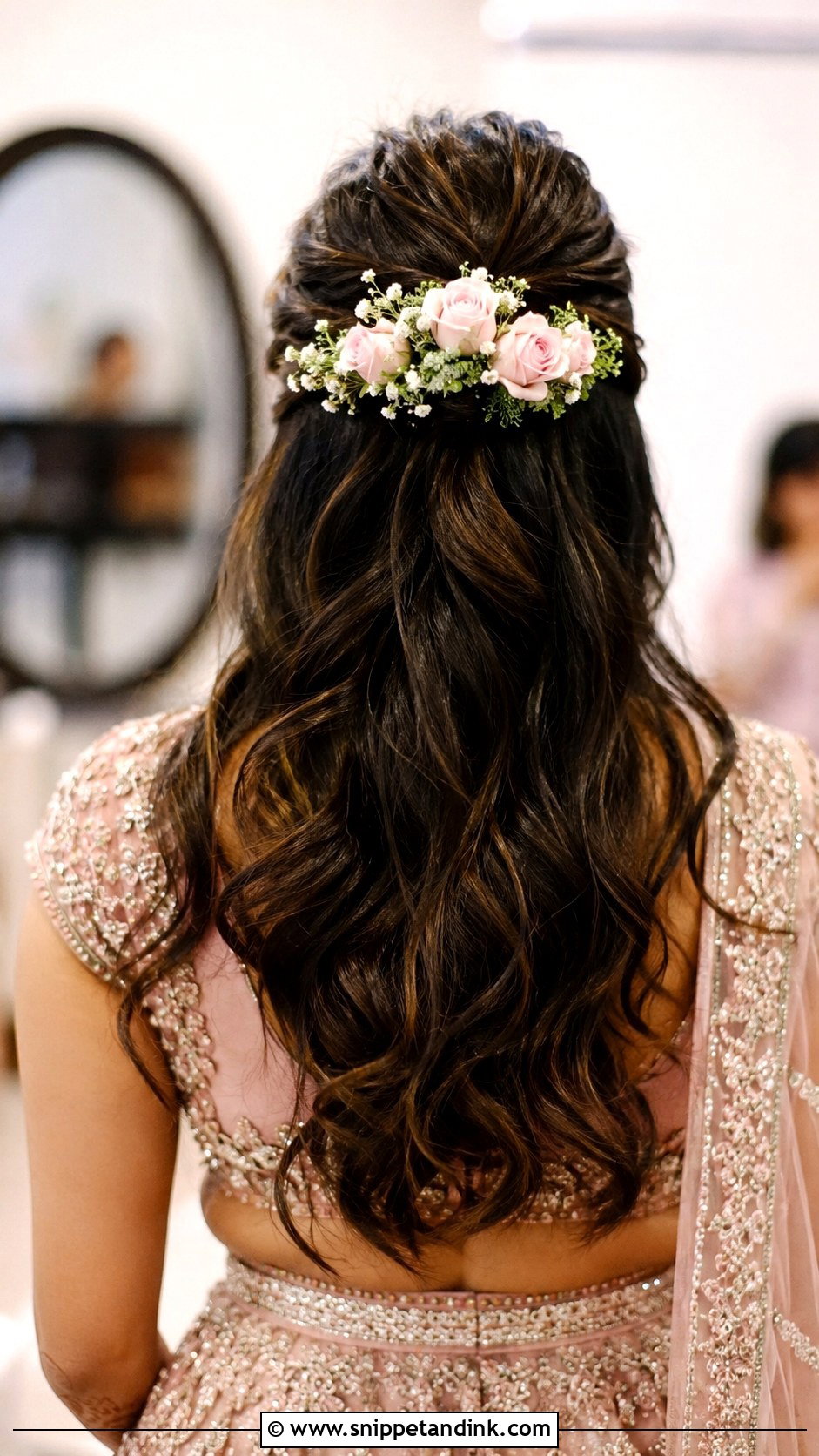
The top half is pinned back while the rest falls in soft waves, with fresh flowers tucked at the crown. It opens the face and shows off length, and it suits daytime and evening events alike. Curls underneath add volume. Medium to long hair works, and most face shapes suit it. Fresh flowers at the crown sit right in the sun at outdoor functions, so pick hardier blooms for daytime and save delicate ones for the evening.
Which of These Styles Can You Do Yourself in a Hotel Room?
Not every guest books a stylist for each function, and some of these looks are realistic to do alone in front of a hotel mirror. Others honestly aren’t.
Manageable on your own
The low messy bun, messy side braid, high ponytail, twisted half up and bouncy blow-dry are all within reach with a round brush, a curling iron and a dozen bobby pins. Practice each one once at home a week before, with the accessories you plan to wear.
Worth booking help for
Finger waves, the Dutch braid crown, a long South Indian braid with gajra and any sleek center-part bun are hard to see and control on the back of your own head. These are the styles where a hairstylist pays for themselves, especially if you’re on a schedule.
If a stylist is coming to the hotel for a group, ask to go first or last rather than in the middle. Early slots give the style time to settle before you leave, and the last slot means the freshest hair when you walk in.
Whatever you choose, pack a small kit: bobby pins in your hair color, a tail comb, a travel spray, a few clear elastics and a scrunchie for the end of the night. That covers nearly every repair you’ll need between functions.
Pack Pins, a Comb and a Plan for the Baraat
The hairstyle that works best is one you can dance and eat in without thinking about it. From South Indian braids with jasmine to sleek buns and loose curls, these looks cover different hair types, lengths and functions. Match your style to the event, the outfit and the weather, especially for long outdoor ceremonies. Maang tikkas, fresh flowers and sparkly pins add the festive finish, so long as they are pinned to something solid. Plan ahead and you’ll enjoy every function without fixing your hair in the bathroom mirror.
You'll Like These Ideas:



Leave a Reply