
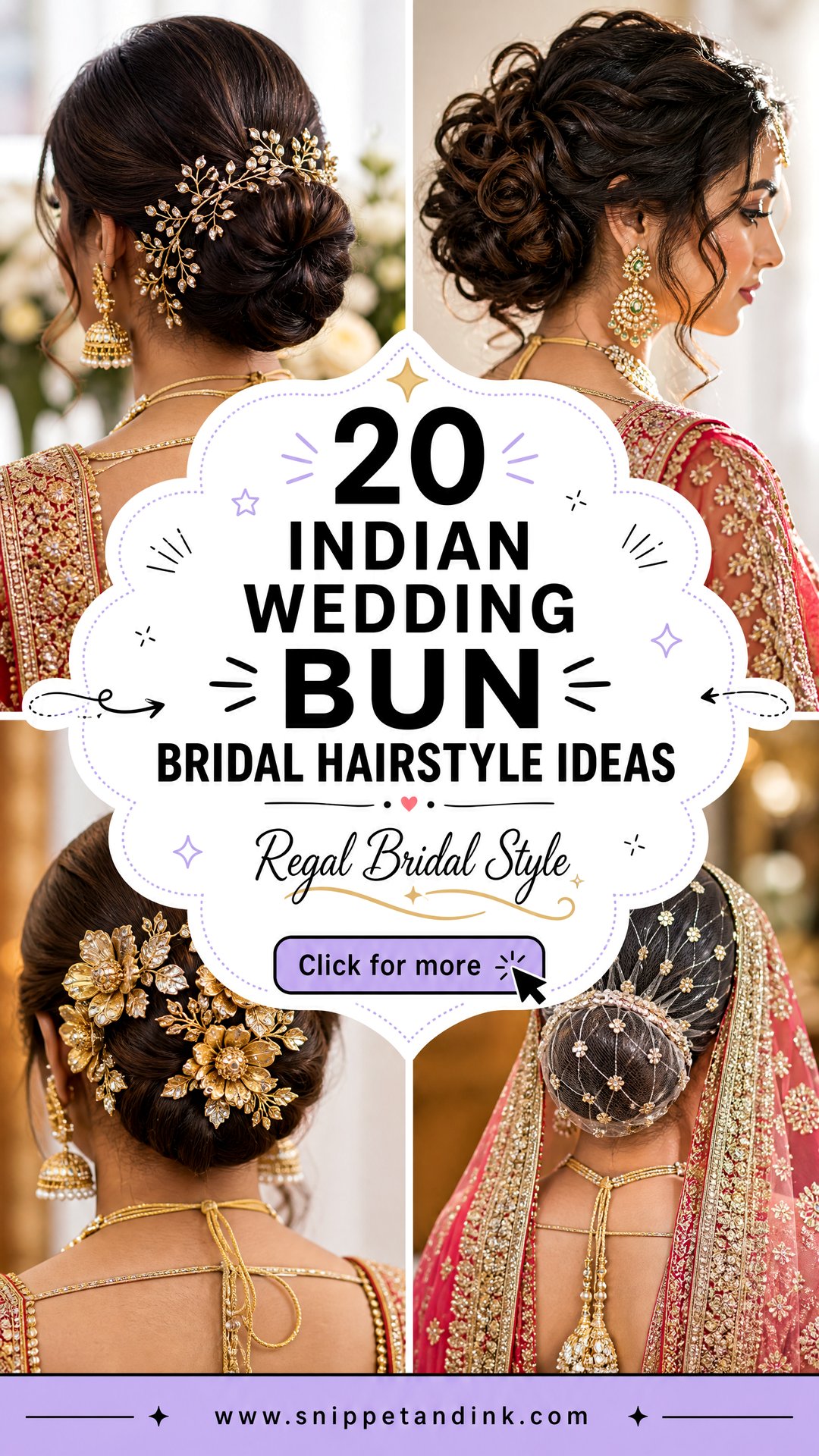
A bun carries more of an Indian bridal look than people realise. It holds the dupatta, it anchors the tikka chain, and it has to stay put through hours of sitting, bowing and hugging. The right one depends on what you’re wearing: a heavy lehenga with a pinned dupatta needs a low, solid base, while a saree with nothing on the head leaves room for flowers and height. These are the 20 buns I get asked for most, with what each one needs from your hair and where it tends to struggle.
No Oil for Two Days, and the Rest of My Bun Prep
Hair oiling is a ritual in a lot of Indian homes, and before a wedding I ask brides to pause it. Oil makes pins slide straight out of a bun and stops spray from gripping. The best base for an updo is hair washed the day before, dried fully, with a little natural grit back in it.
Length and thickness decide the base
A full low bun without help needs hair that reaches at least past the shoulders. Shorter or fine hair isn’t a problem, but I’ll plan for a padded donut, a filler or a clip-in piece matched to your colour. Tell your stylist at the trial if you have extensions or recently cut layers, since short layers poke out of a bun and need extra pinning.
What I ask you to bring to the trial
- Your actual dupatta or something of the same weight
- The maang tikka, matha patti or passa you’ll wear
- A photo of the outfit’s back, so the bun height suits the neckline
- Any clip-ins or hair accessories you’ve bought
Testing with the real weight matters. A bun that looks perfect bare can slip within an hour once a heavy dupatta is pinned into it.
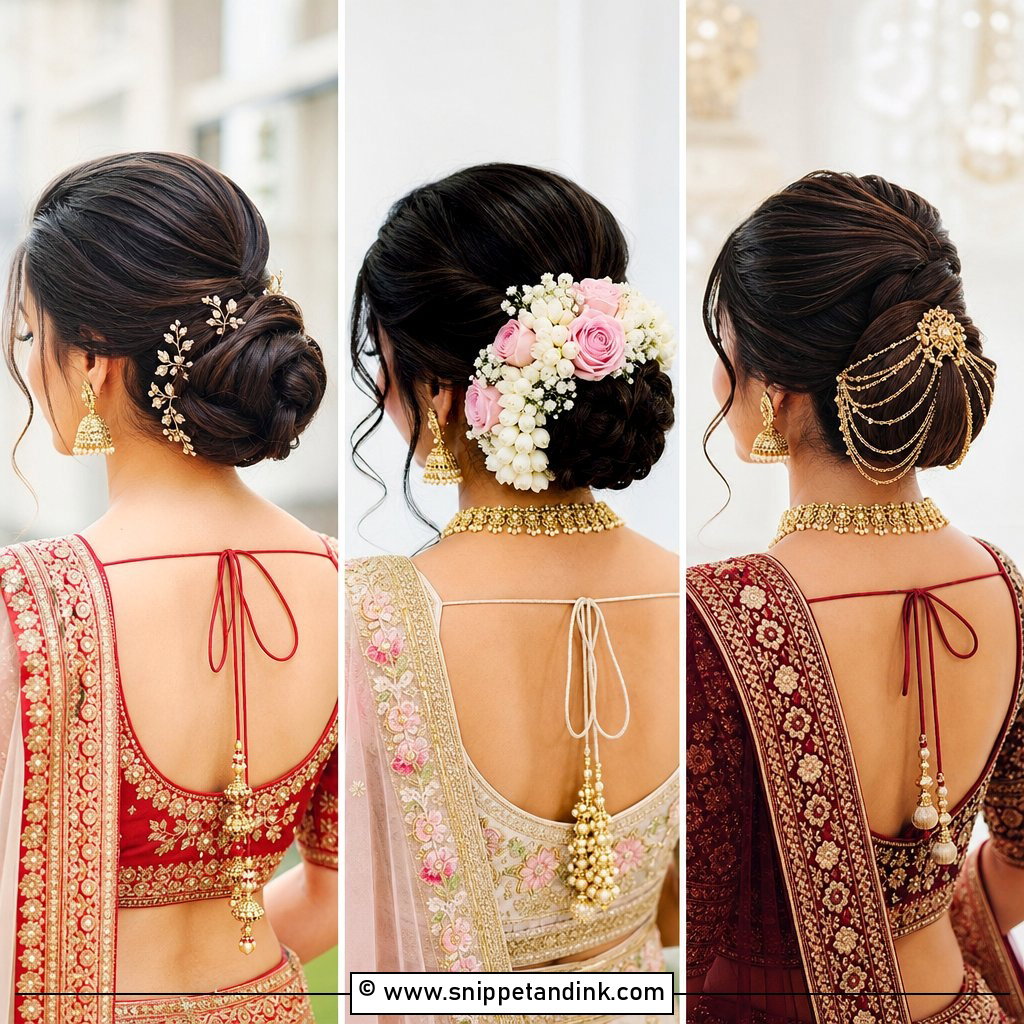
1. Low Bun With Gajra for Saree
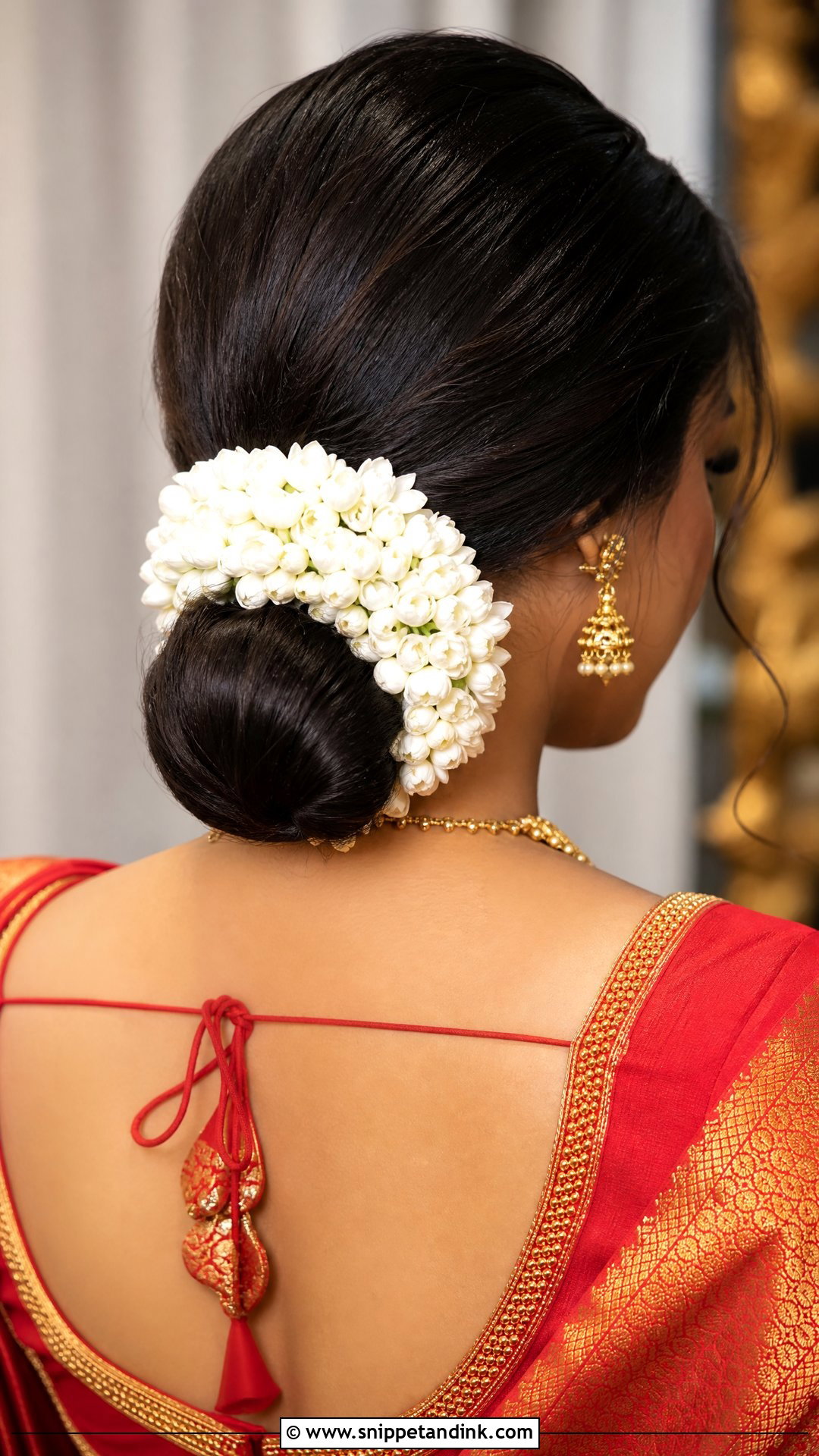
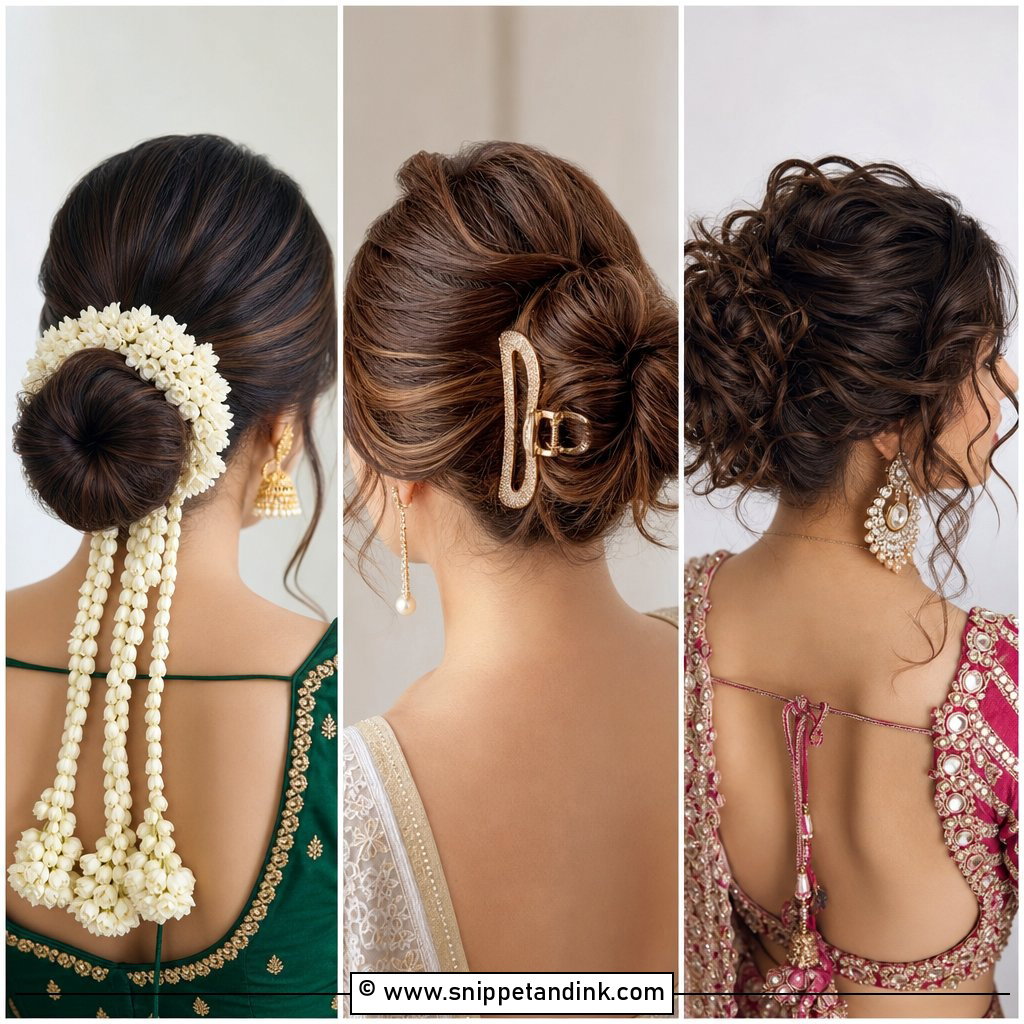
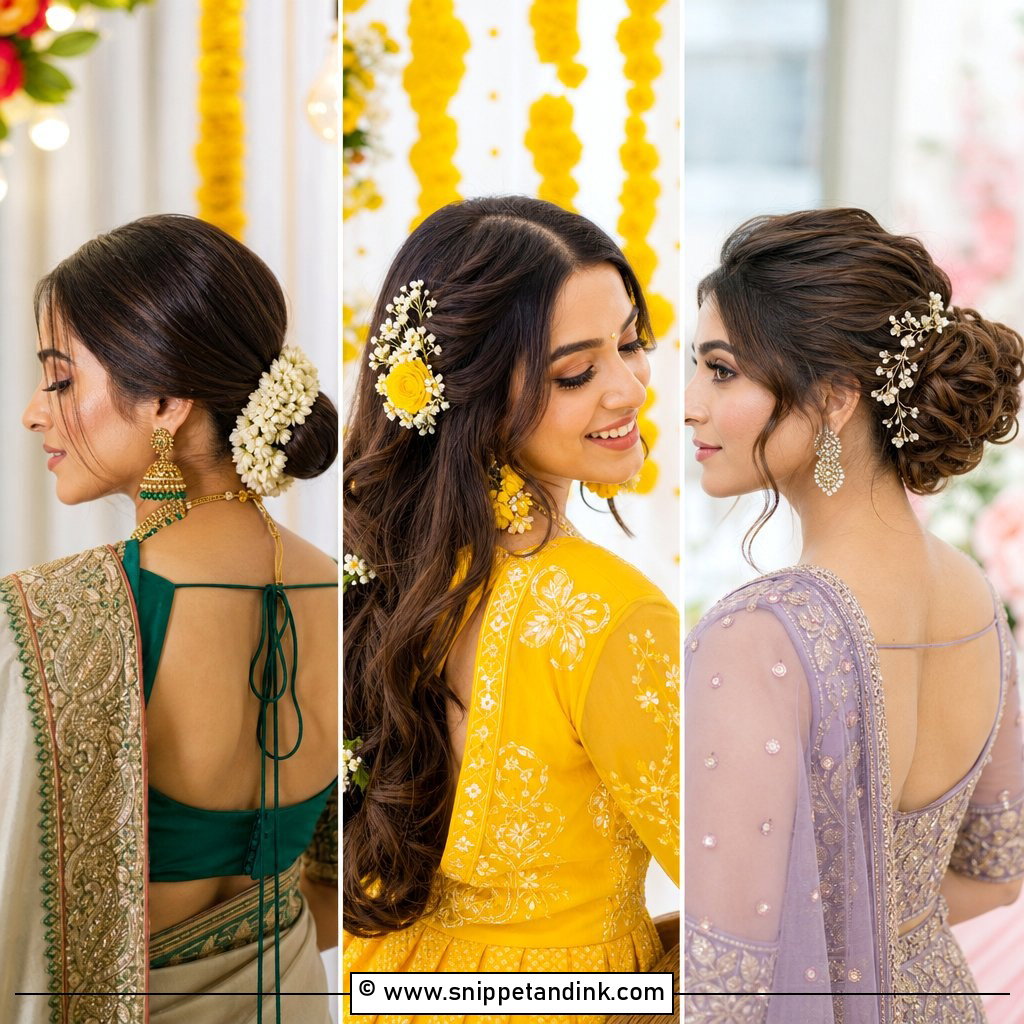
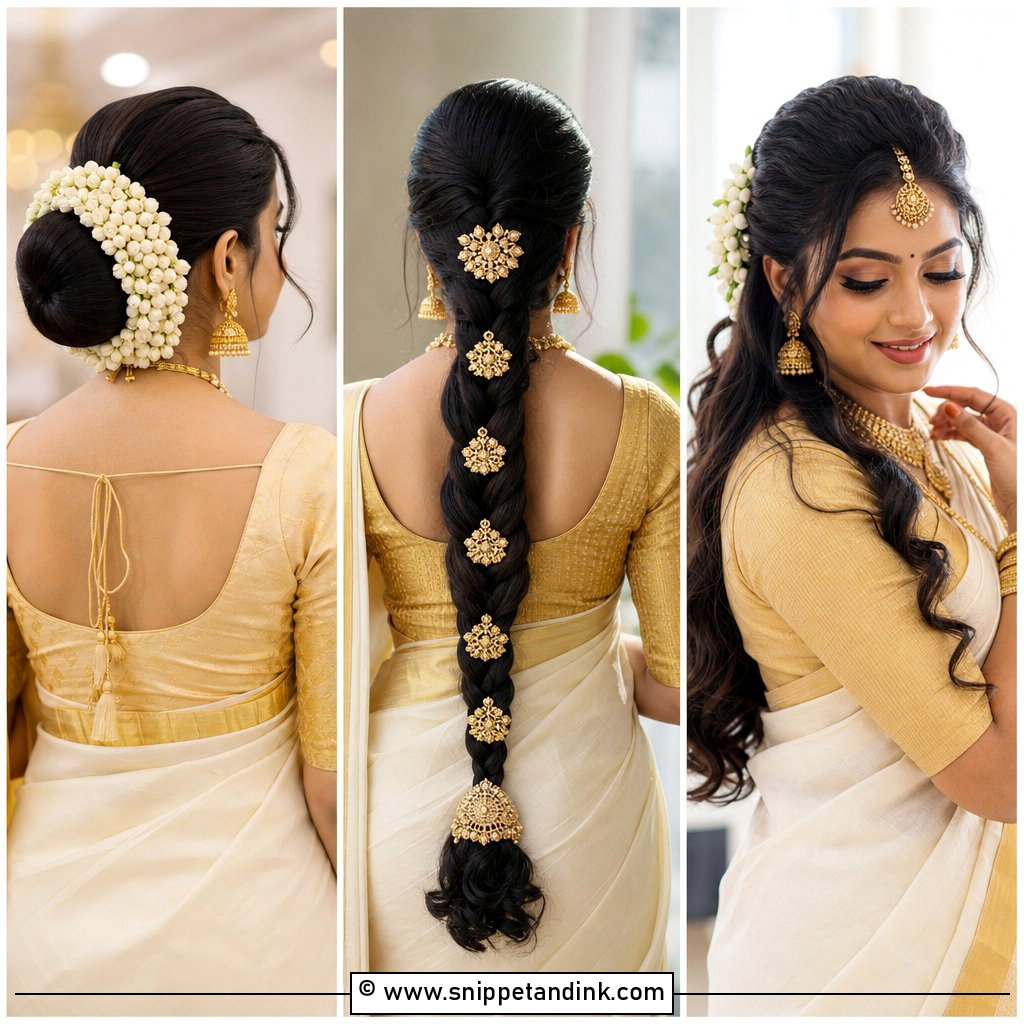
The low gajra bun is the one I trust most for a saree, because the weight of the jasmine sits right where the bun is strongest. I build the base with a small padded donut if the hair is fine, then wrap the classic gajra bun strings in a spiral and pin each loop with U-pins crossed into the base. Placed at the nape, it suits most face shapes and leaves the tikka chain free. Medium-length hair works if it reaches the nape comfortably; any shorter and I add a clip-in piece to give the bun its body.
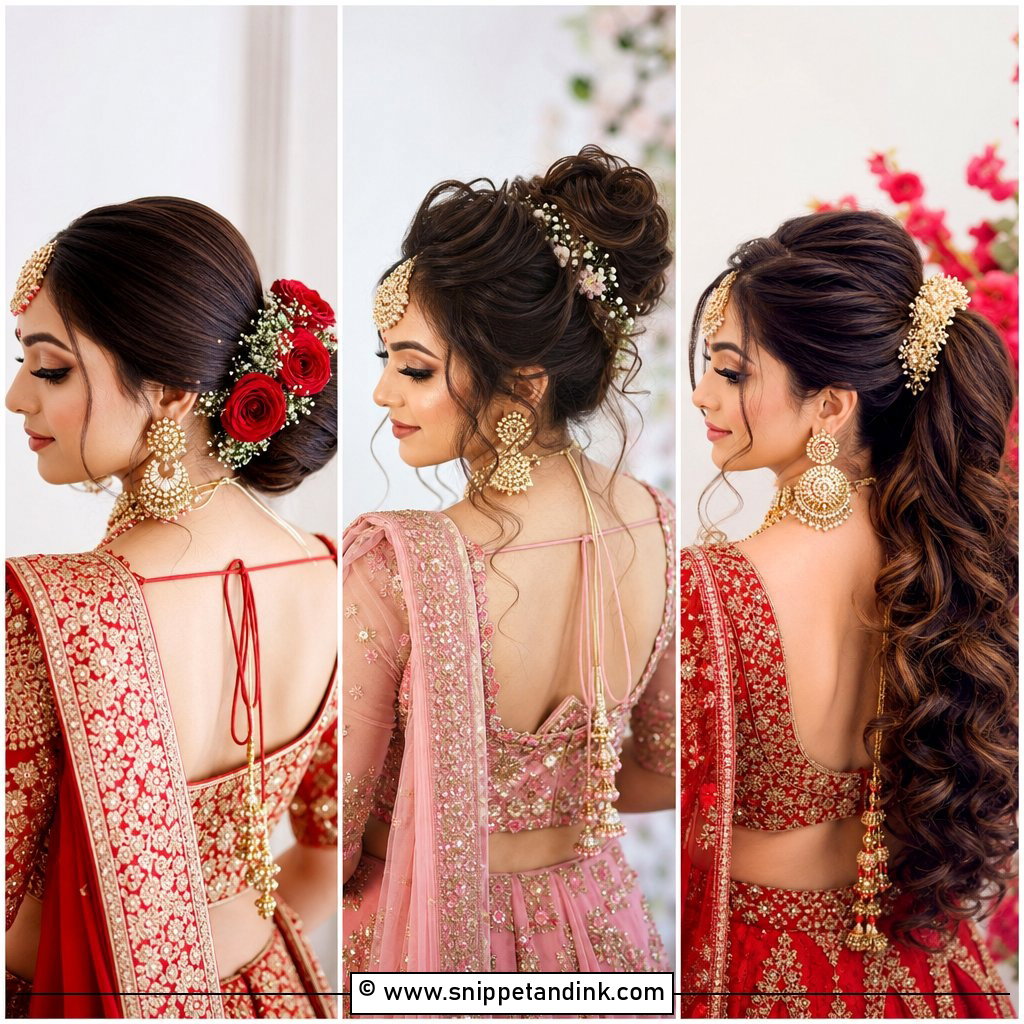
2. Messy Bun With Loose Face-Framing Strands
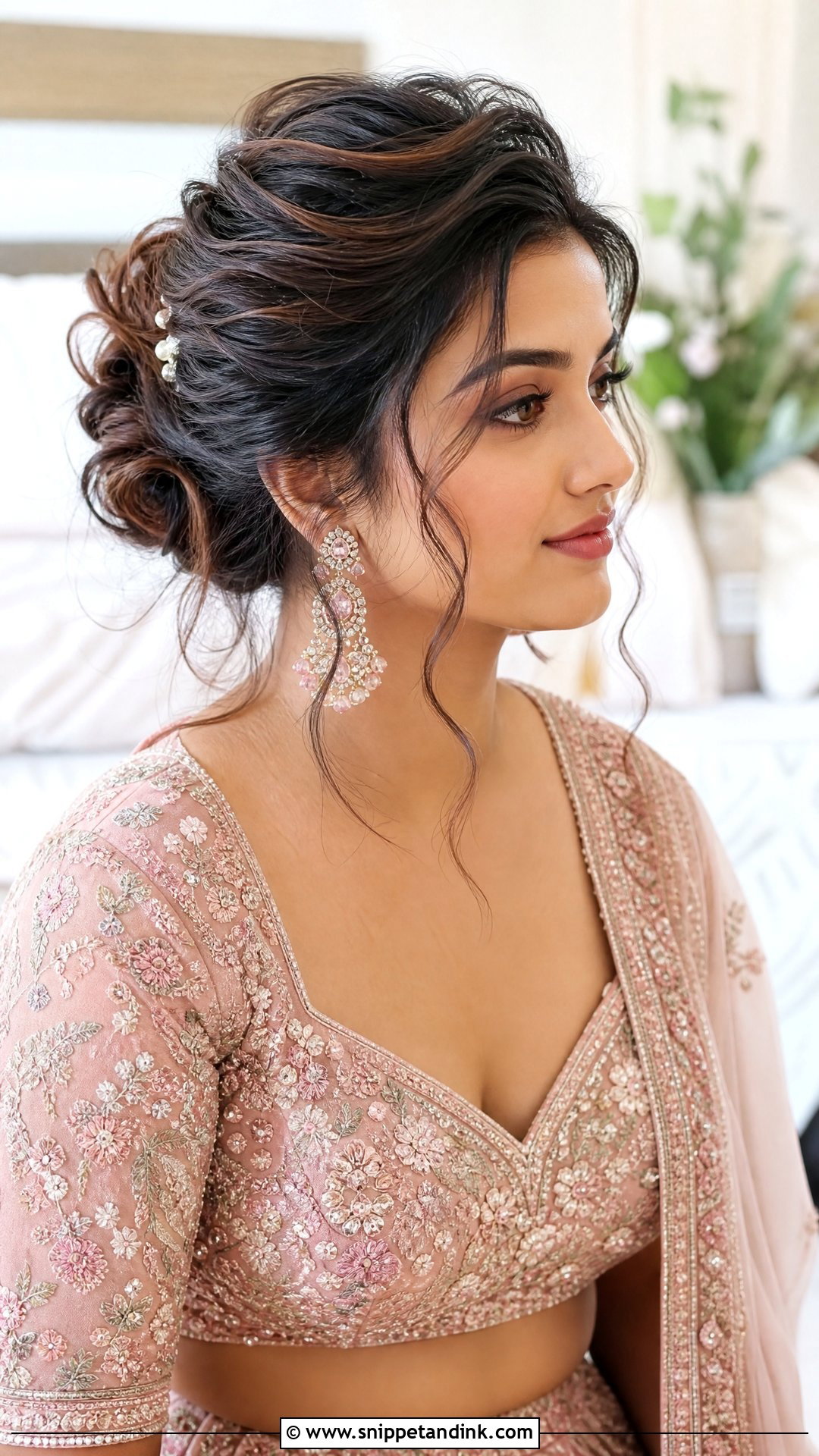
A messy bun is harder to do well than a sleek one. The mess has to be planned: I curl the whole head first, pin the bun in loose sections and pull out only the strands I want, so nothing falls that wasn’t meant to. The face-framing pieces soften a square jaw, but they also brush against heavy earrings and can tangle in jhumkas by evening. If you’re wearing big earrings, I’d keep those strands short and curled away from the face. It sits best with lehengas and fusion outfits rather than a formal silk saree.
3. Braided Bun With Fresh Flowers
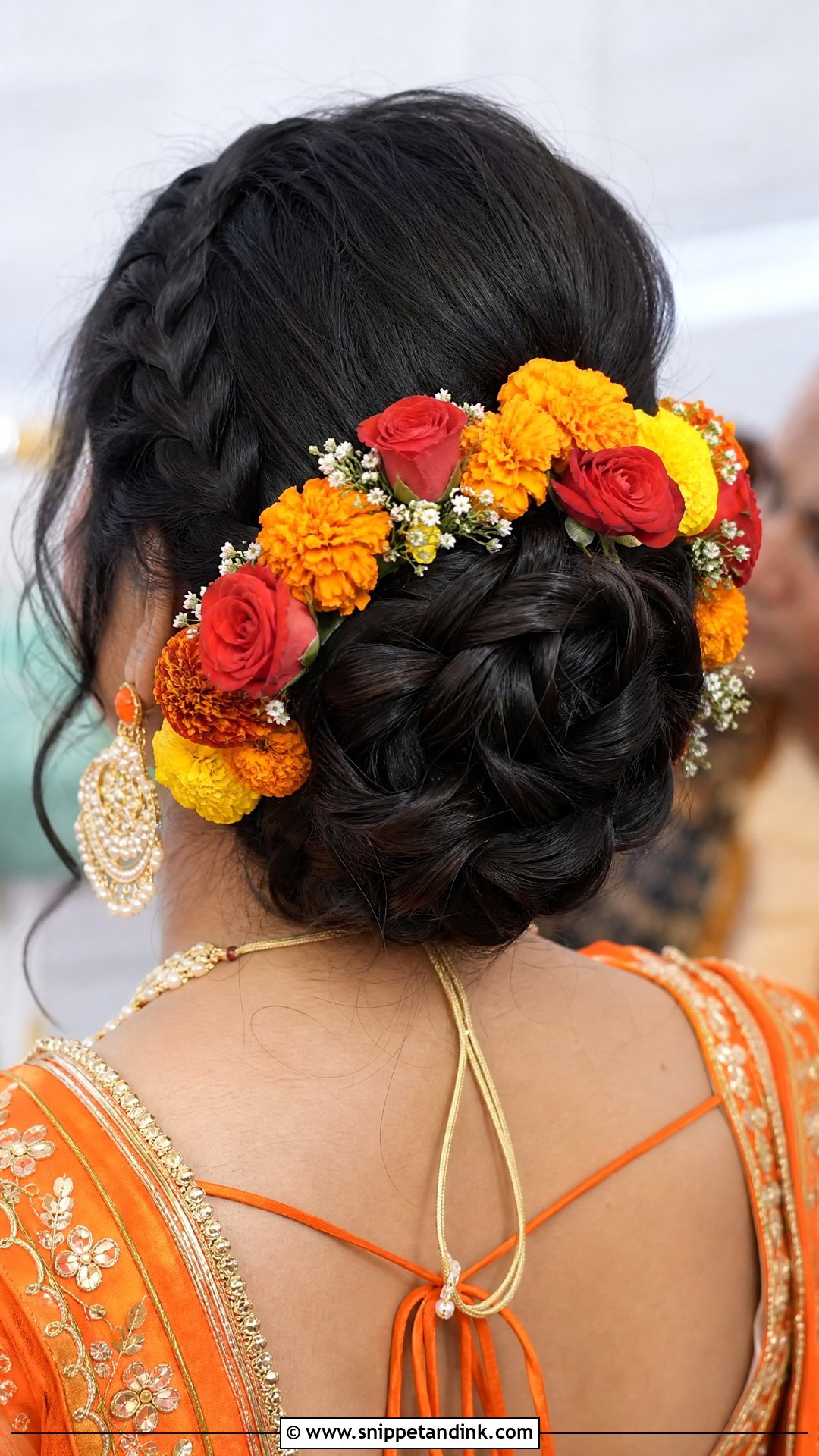
Braiding first and coiling second gives a bun built-in grip, which is why I use this one for mehndi and haldi days with a lot of dancing. A French or fishtail braid wound into a round bun locks the hair in its own pattern, and fresh flowers tuck into the braid gaps without extra pins. Marigolds and roses both sit well; baby’s breath gets lost against dark hair unless it’s packed densely. It needs thick, long hair to look full. On fine hair, I’d pancake the braid gently before coiling, pulling the edges wider so it reads bigger.
4. High Bun With Maang Tikka
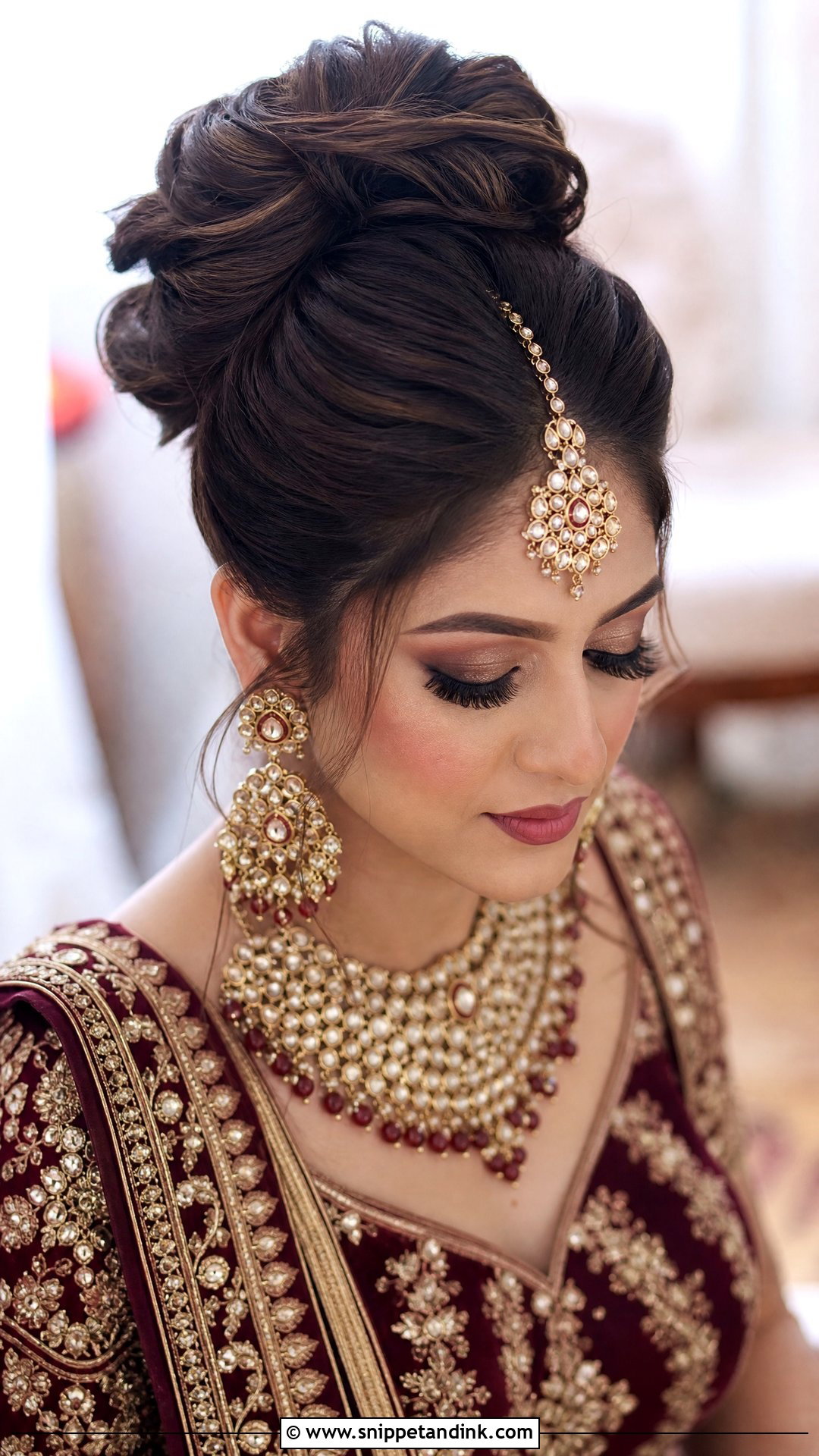
A crown-height bun adds length to a round face and lifts the whole silhouette, which makes it a strong match for a bold maang tikka. The catch is weight: a high bun has nothing below it to rest on, so I secure it to a small ponytail base with an elastic and then cross pins into that base, never just into loose hair. I’d avoid it if you’re wearing a heavy dupatta over the head, because the fabric tents over the bun and slides. With a reception gown or a lehenga worn without head covering, it holds well. A string of pearls wrapped at the base hides the elastic.
5. Side Swept Bun for Reception
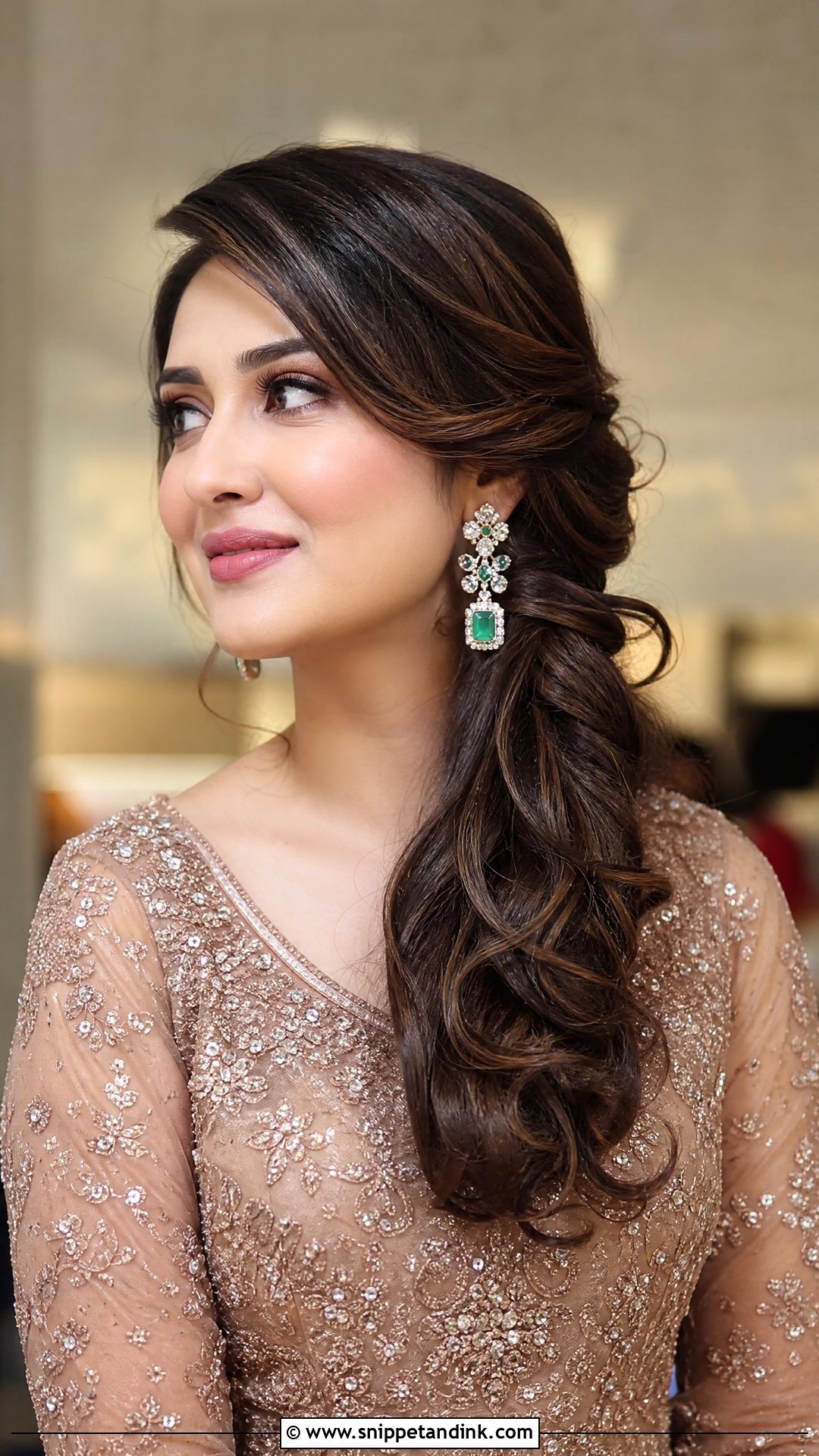
The side-swept bun reads as old Hollywood, which makes it a natural reception choice. Asymmetry softens sharp features, and loose waves near the face keep it from looking severe. The thing I warn brides about is the shoulder it sits on: if that’s the side with your statement earring, the two compete and the bun can snag on the jewelry. I set it on the opposite side to the bigger earring and pin it to a hidden anchor braid so it doesn’t slide down toward the collar as the night goes on.
6. Floral Bun With Roses
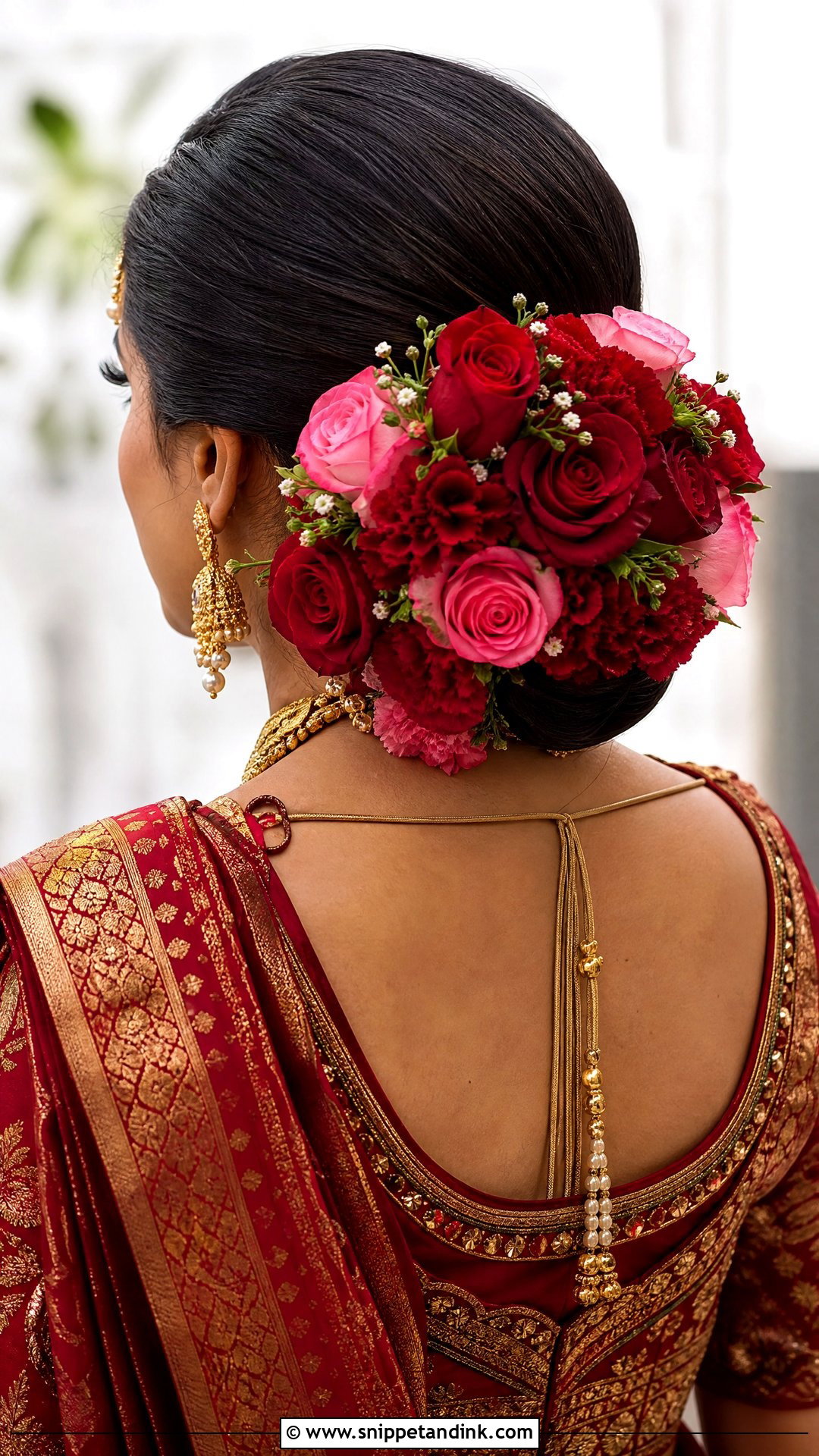
Roses are heavier and wetter than jasmine, which changes how I build this bun. I wire or pick each bloom onto a short stem before it goes in, then push the stems into the bun at an angle so the weight rests on the base rather than hanging off the edges. Deep red and blush pink both read well under warm lighting; yellow can wash out against haldi-toned skin. Treat this as your main hair statement, because with a full rose cluster you’ll want a quieter maang tikka. A few green leaves between the roses stop it looking like a single blob in photos.
7. Donut Bun With Pearl Detailing
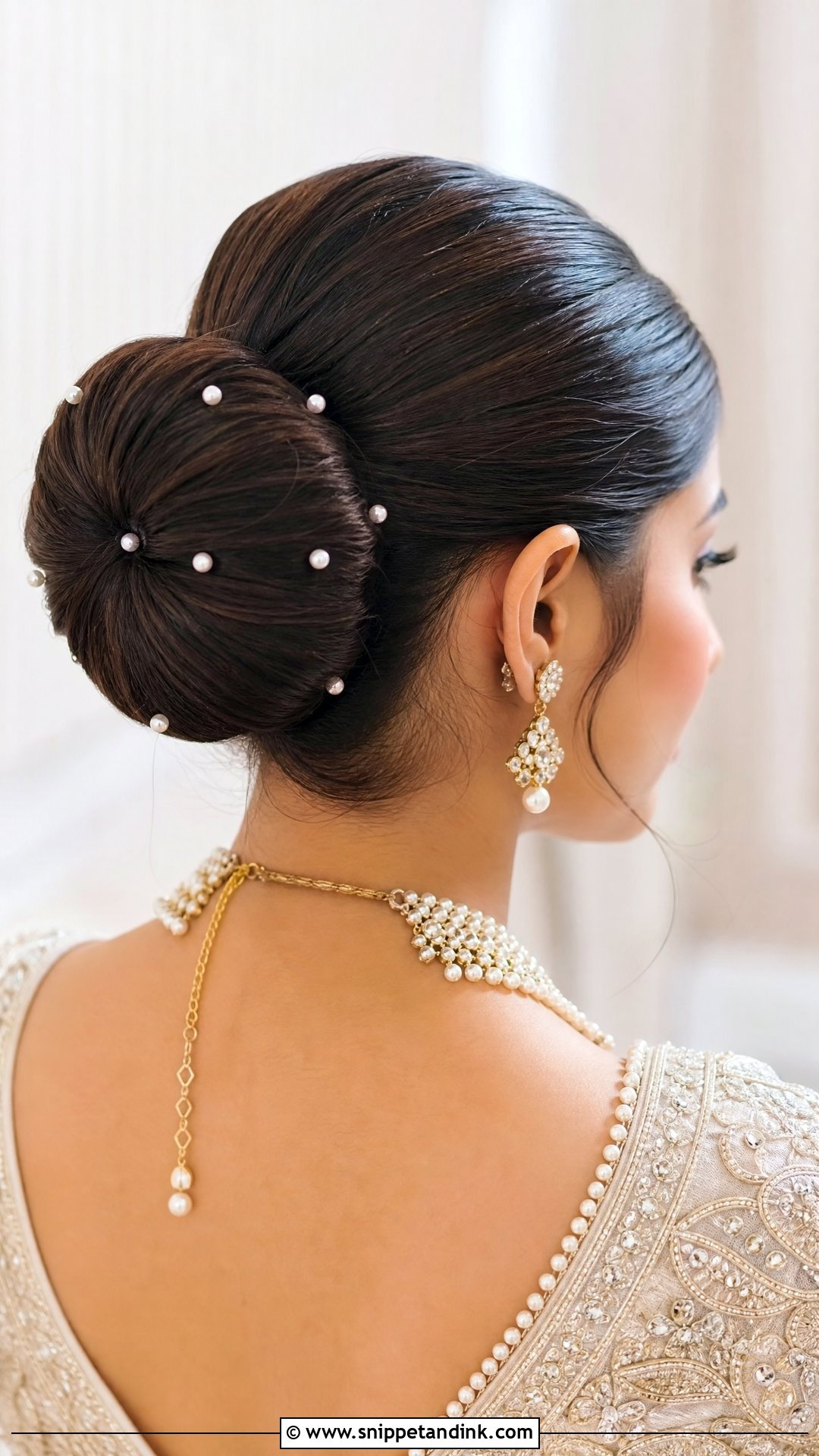
A donut bun is the cleanest shape I make. A foam ring gives a perfectly round silhouette, and the hair is wrapped smoothly around it with pearl pins set in a ring or scattered at random. It needs enough length to cover the ring fully; if the foam shows through at the edges, the look falls apart. Pearls suit white, ivory and pastel outfits. With heavy gold jewelry they can look out of place, so for a red bridal set I’d swap to small gold pins instead.
8. Twisted Bun With Baby’s Breath
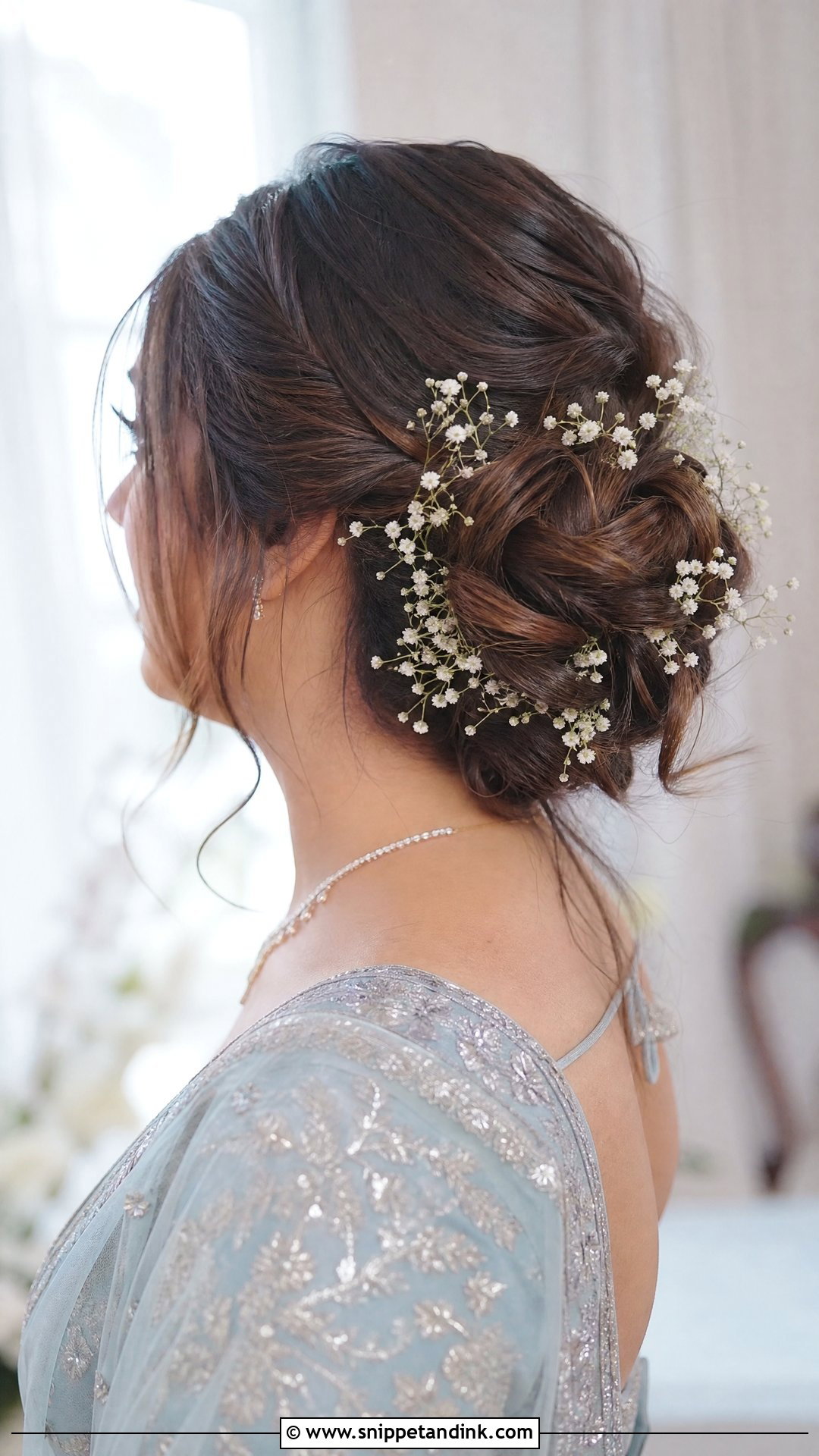
Baby’s breath is light, dries well and doesn’t brown the way jasmine does, which is why I like it for long days. The twisted bun underneath is made of rope-twisted sections pinned in loops, so it has movement without a lot of volume. I tuck the flowers in small clusters rather than single sprigs, otherwise they disappear in photos. It sits well with pastel lehengas and lighter jewelry. Against a red bridal set, the tiny white flowers look a little too delicate.
9. Marigold Bun for Haldi Ceremony
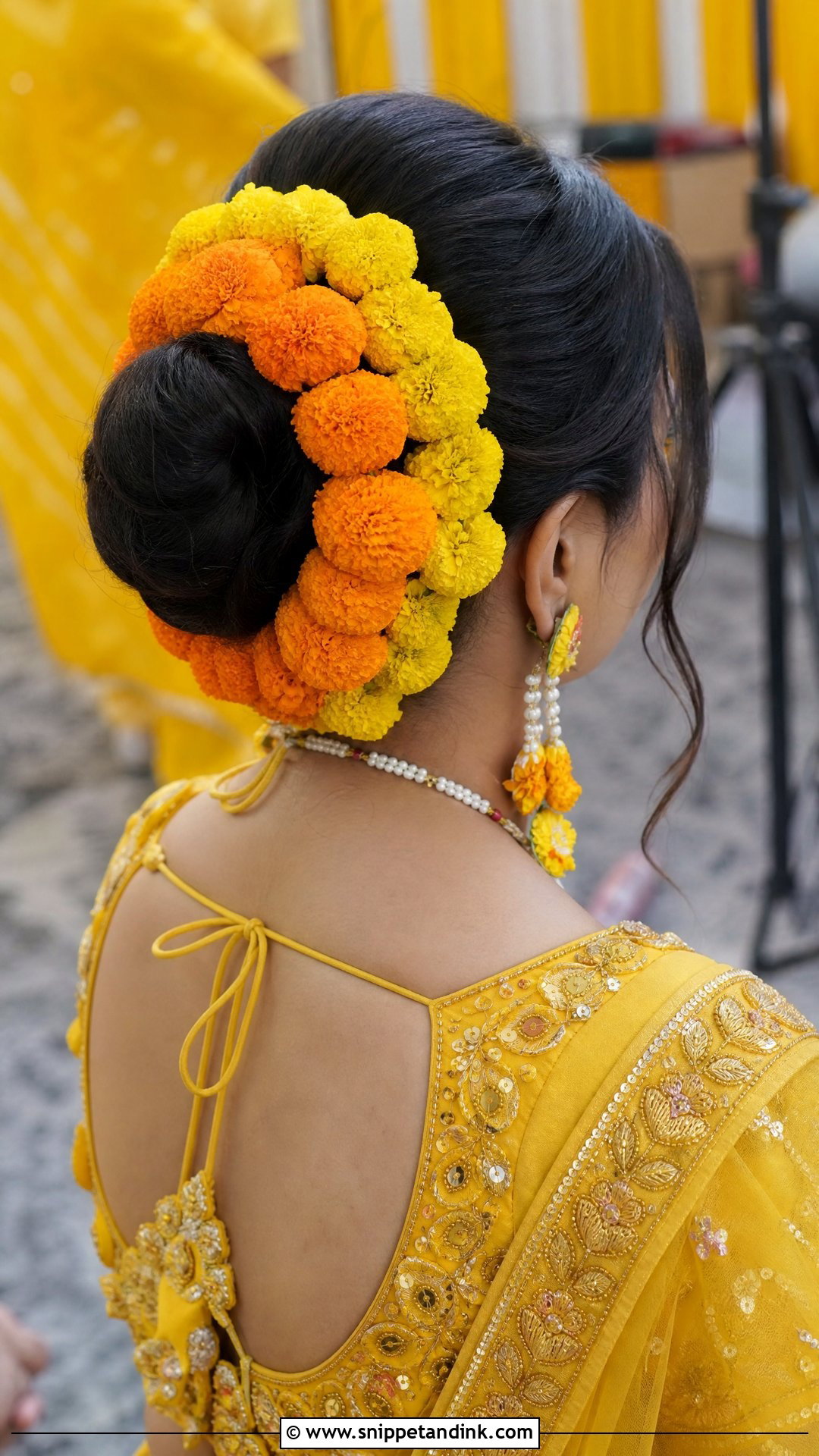
Marigolds are tied to Indian weddings for good reason: they’re bright and sturdy and they hold up in heat far better than most fresh flowers. For a haldi bun, I coil the hair low and wrap a thick marigold garland around it, pinning the string at three or four points. They look right against haldi-yellow outfits and cost far less than roses or orchids. The downside is weight, so I keep the bun close to the head and skip any extra accessories. Expect turmeric to land on the flowers too; that’s part of the day.
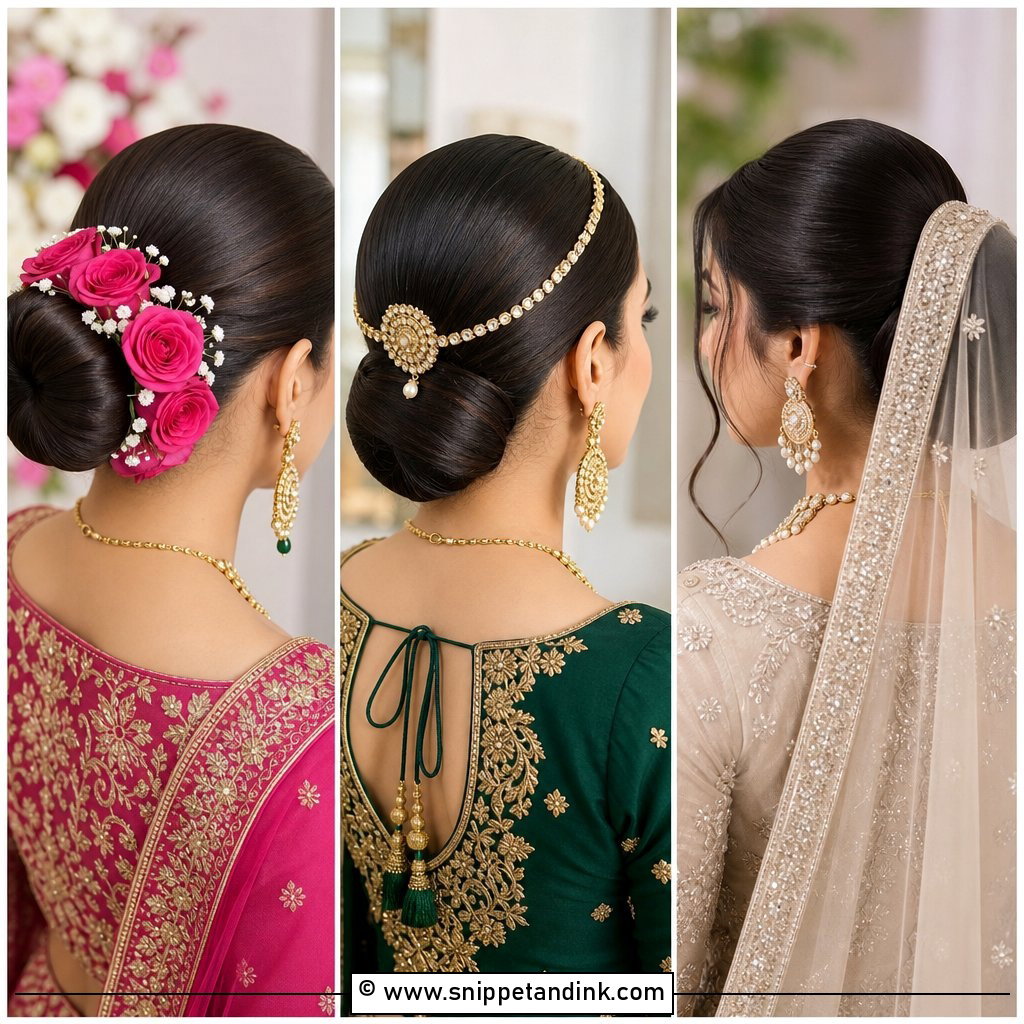
10. Sleek Low Bun With Center Part
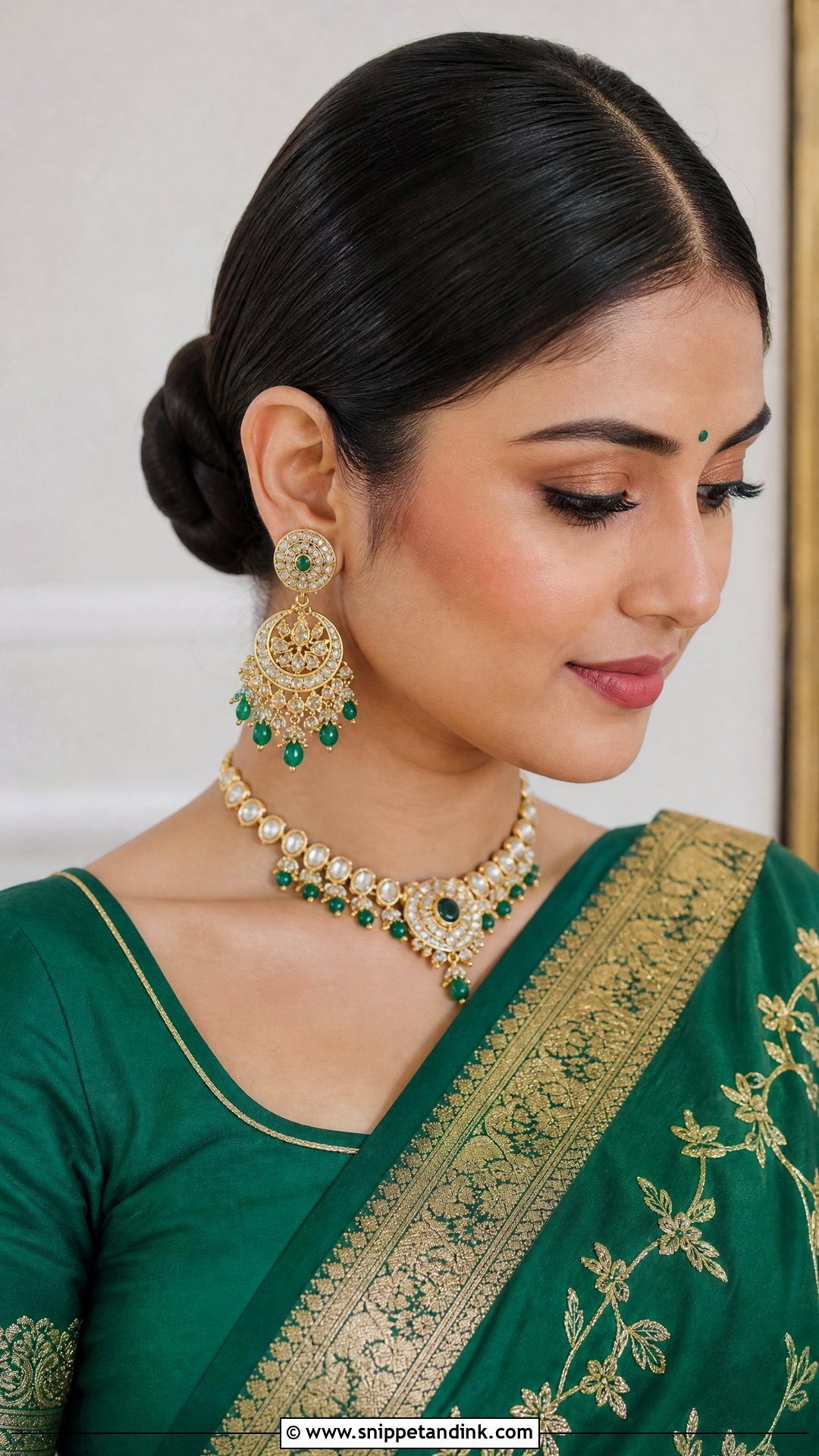
A sleek low bun with a centre part is all about the parting. If it’s even slightly off-centre, the whole face looks lopsided, so I section it with a tail comb and check it in the mirror from a distance. Smoothing every strand flat takes a strong gel or wax stick and a boar-bristle brush, and frizz-prone hair needs a blow-dry first. It flatters oval and heart-shaped faces. On a very round face or a high forehead, I’d suggest a softer side part instead. Bold earrings and a sharp tikka finish it.
11. Voluminous Bun With Puff
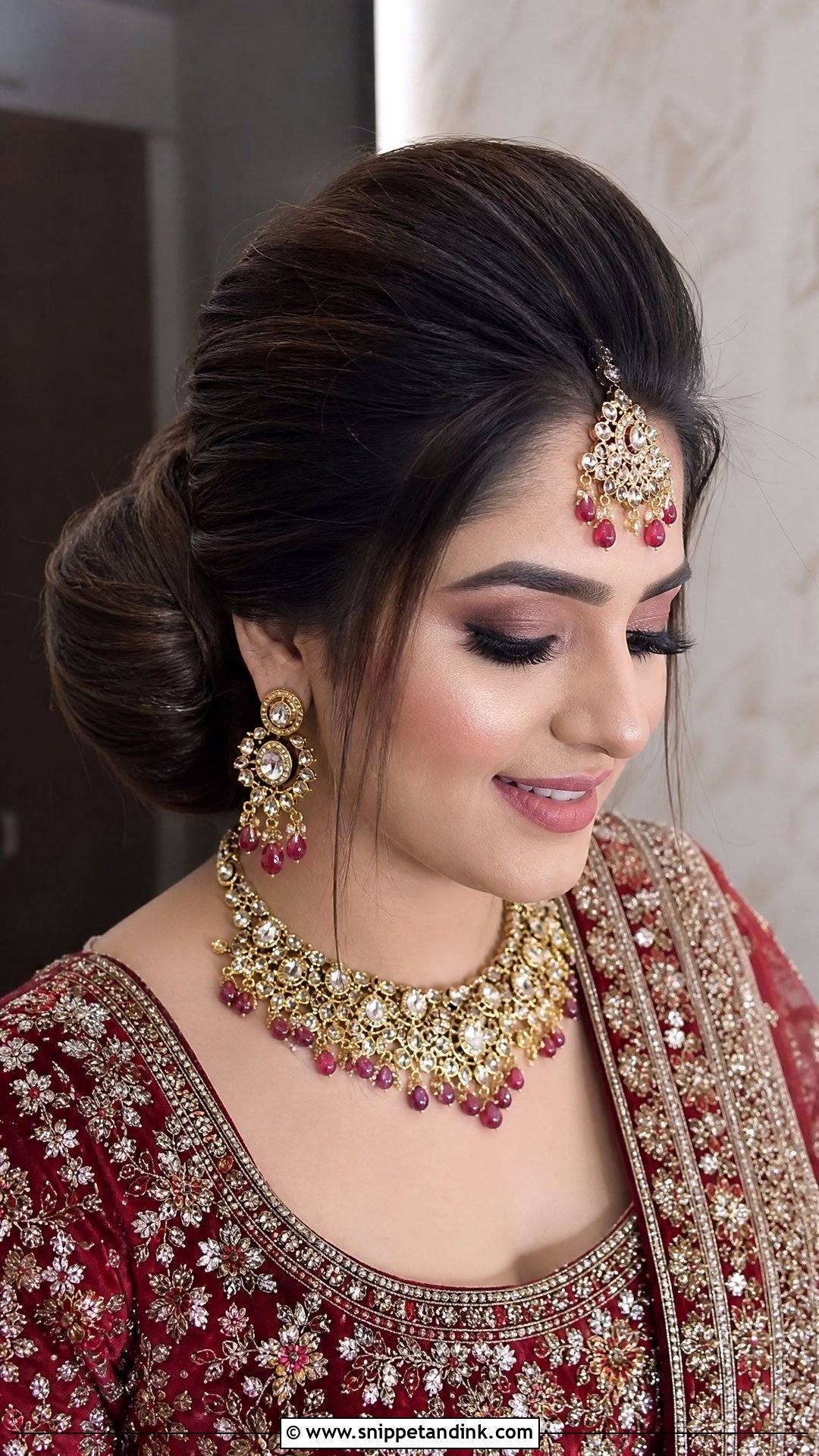
The puff is what gives this bun its royal height, and it’s the part I build most carefully. I backcomb the crown in thin sections, smooth the top layer over it and pin it with crossed bobby pins under the puff so they don’t show. Fine hair benefits most, because the teasing creates fullness the hair doesn’t naturally have. Keep the puff modest if you’re wearing a matha patti or a heavy dupatta, since both press it flat. With a single maang tikka, it can go higher.
12. Bun With Hair Vine Accessory
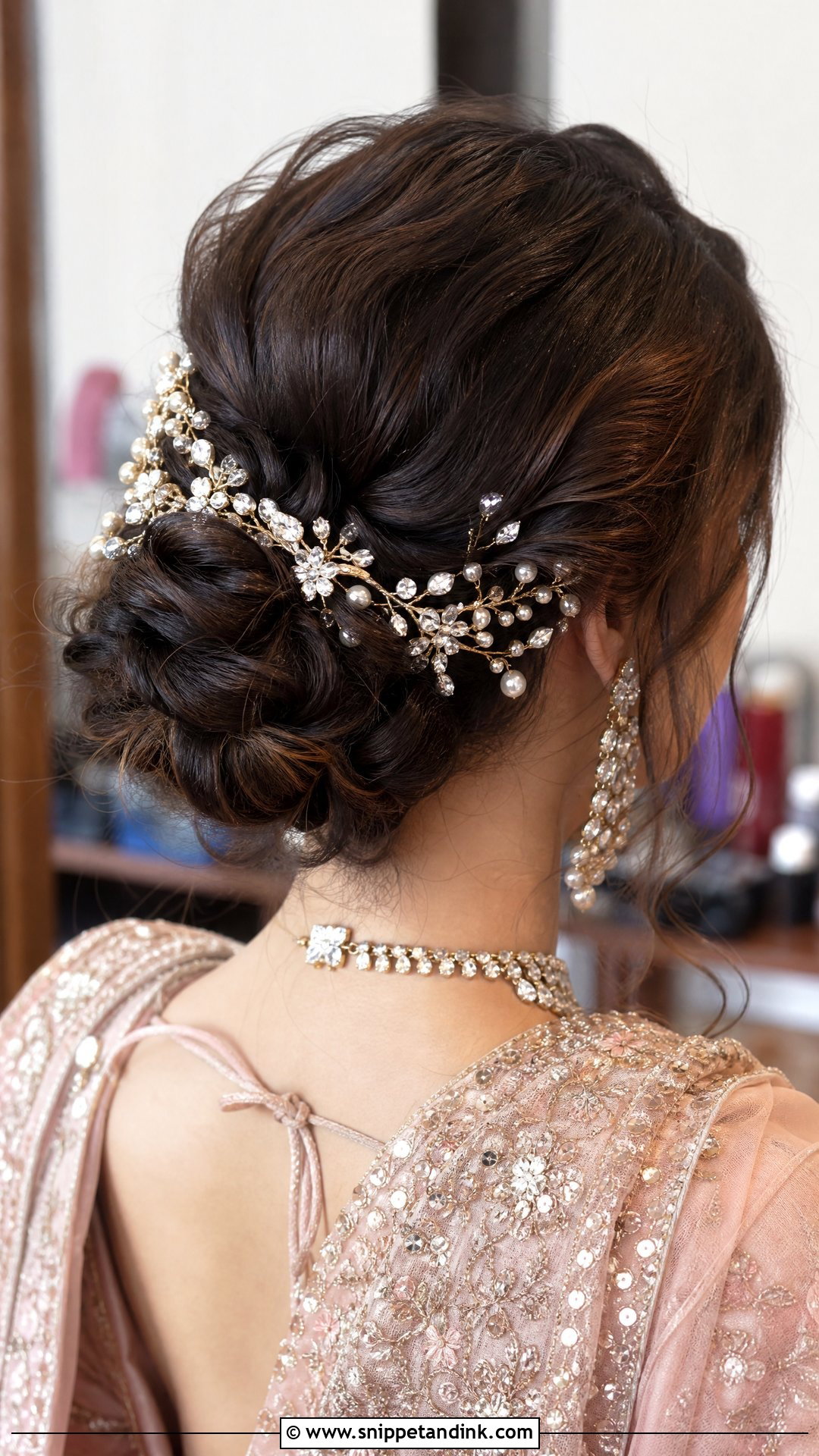
A hair vine is a flexible strand of wire set with pearls, crystals or small gold leaves, and it works best when it’s woven through the hair rather than simply laid on top. I pin it at each end and every few centimetres along the bun so it bends with the shape. A sleek base shows it off more; on a messy bun, it can get lost in the texture. Match the metal to your main jewelry. For engagements and receptions, it gives you sparkle without the weight of a full floral setup.
13. Fishtail Braided Bun
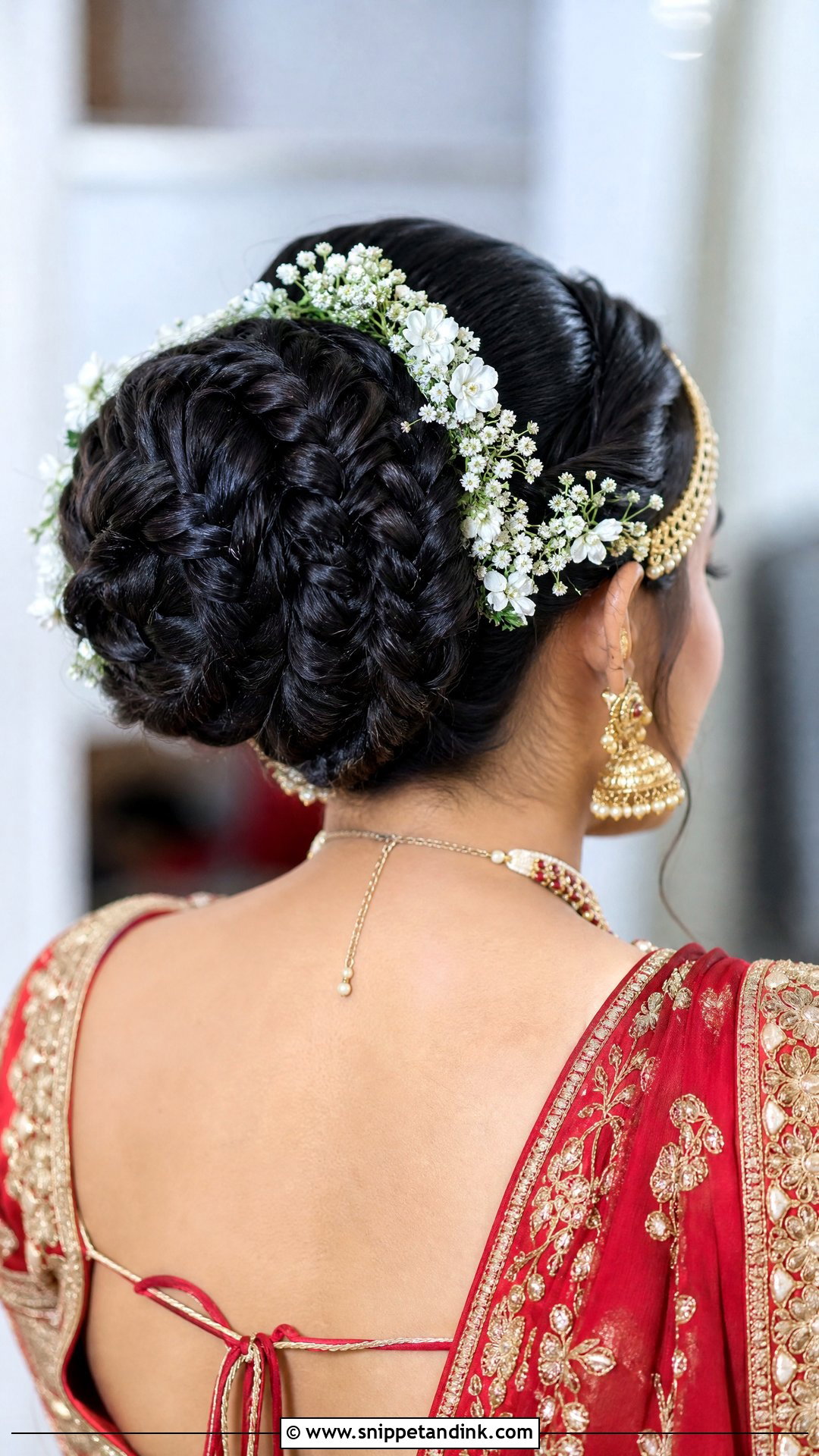
The fishtail braid is a two-strand weave with tight, fine crossings, which gives a bun texture you can actually see from a distance. I braid it loosely, coil it into a round bun and then tug the edges of each pass to open the pattern. It needs long, thick hair to make a full bun on its own. Shorter hair can still work with a clip-in ponytail braided in. Small flowers or pearl pins along the braid lines look intentional. The weave also grips pins well, so it lasts through a long day of dancing.
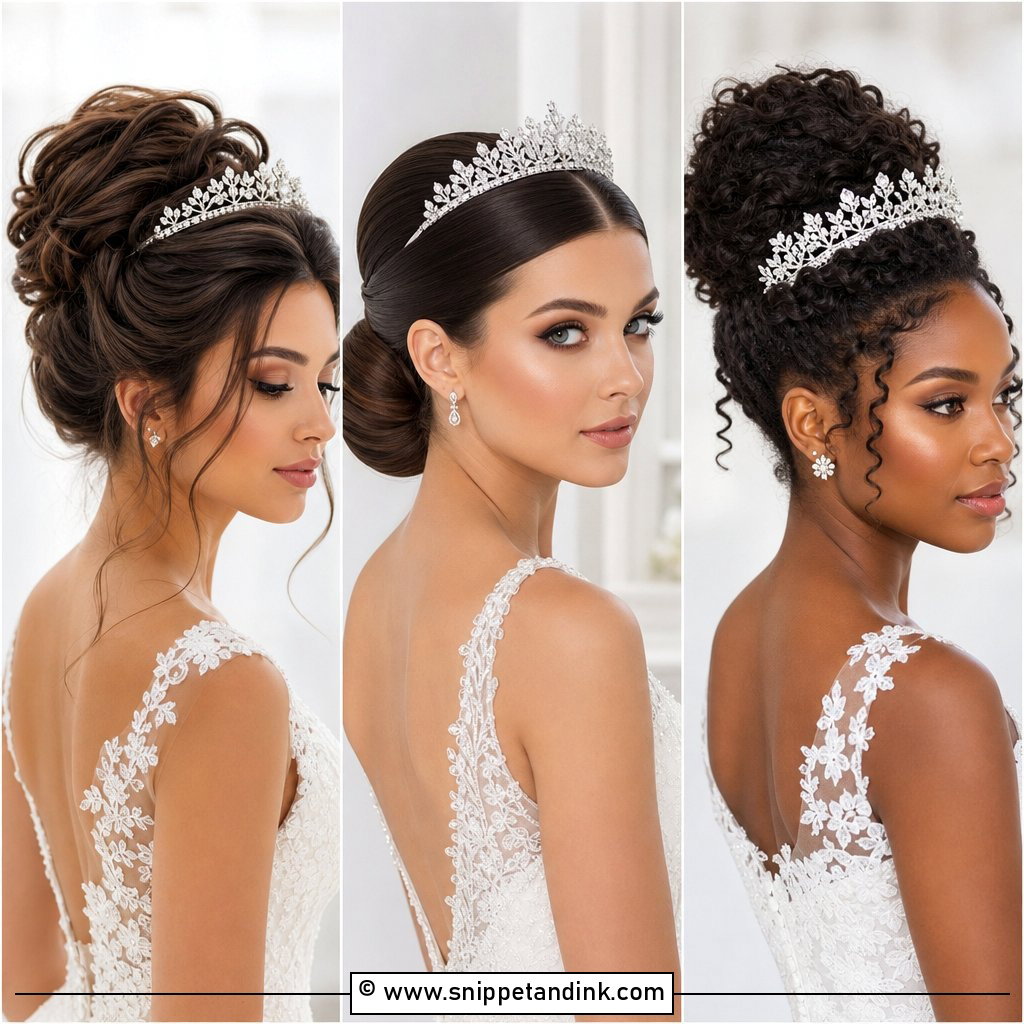
14. Bun With Maang Tikka and Matha Patti
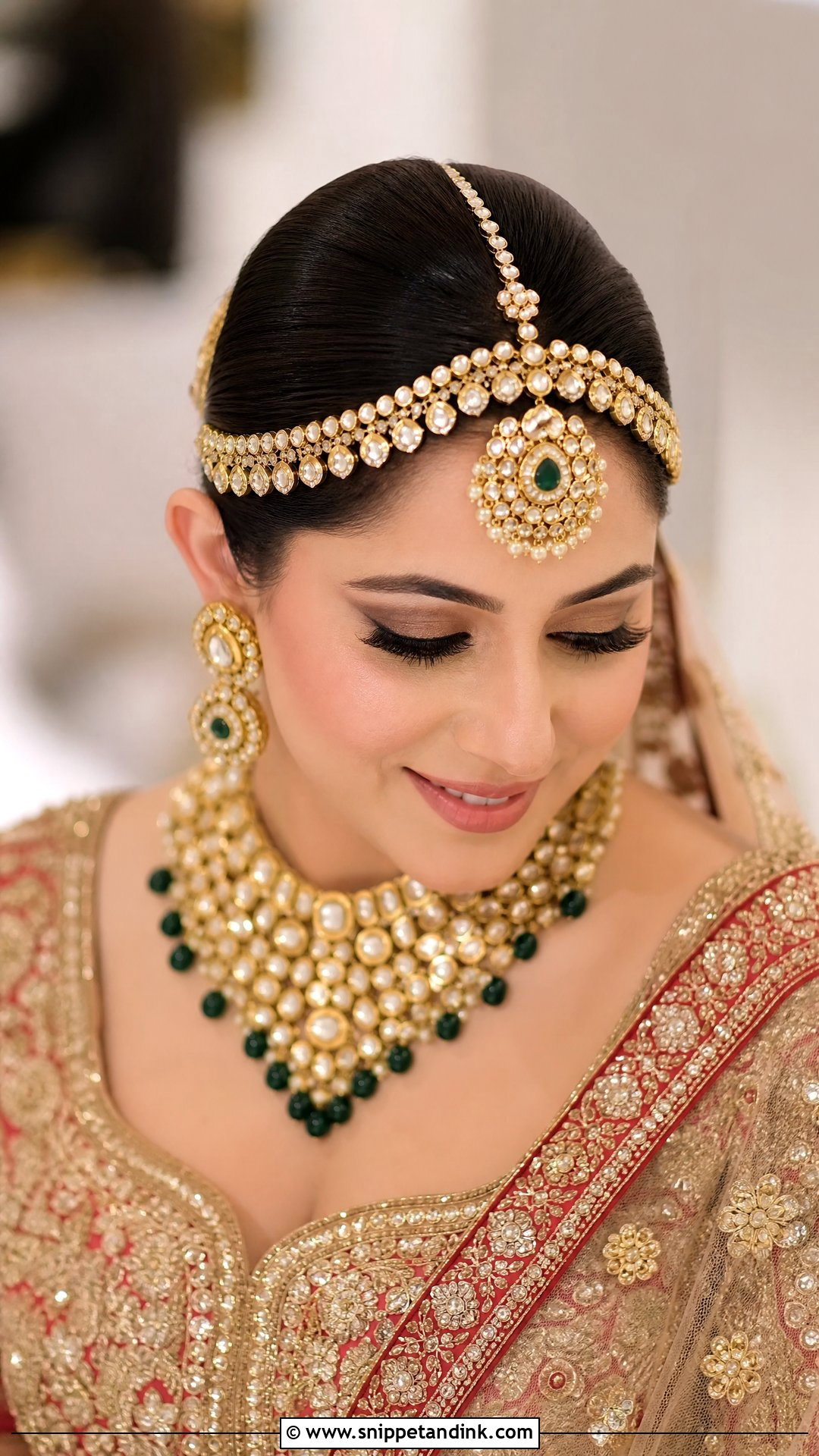
A matha patti sits across the hairline and needs the hair beneath it to be completely flat, or it tilts. I smooth the front sections back tightly and anchor the side chains with pins hidden behind the ears, then build a neat bun low enough not to pull the headpiece backwards. The polished bun is there to support the jewelry, not to compete with it. This combination suits the main ceremony with a heavy lehenga. If you have a small forehead, a full matha patti can crowd the face; a thinner single-line design is kinder.
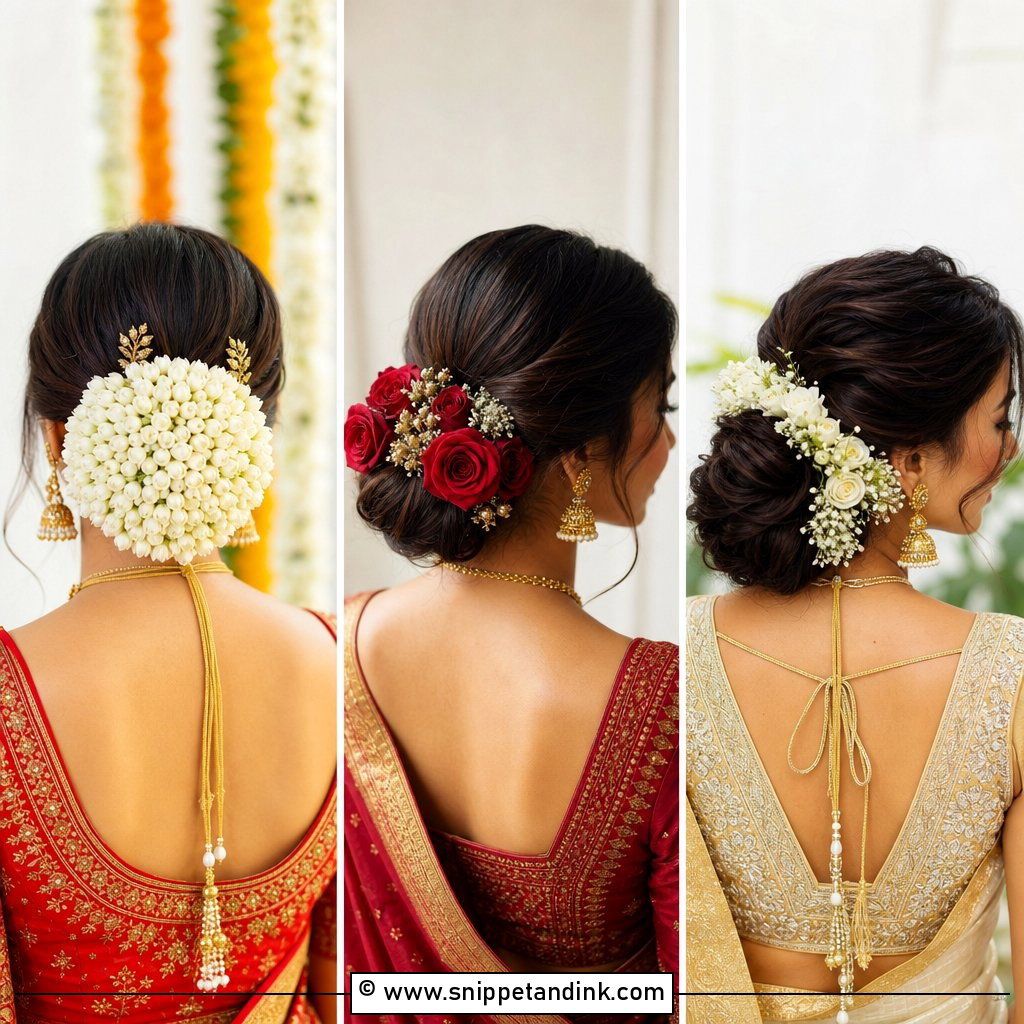
15. Curly Bun With Loose Tendrils
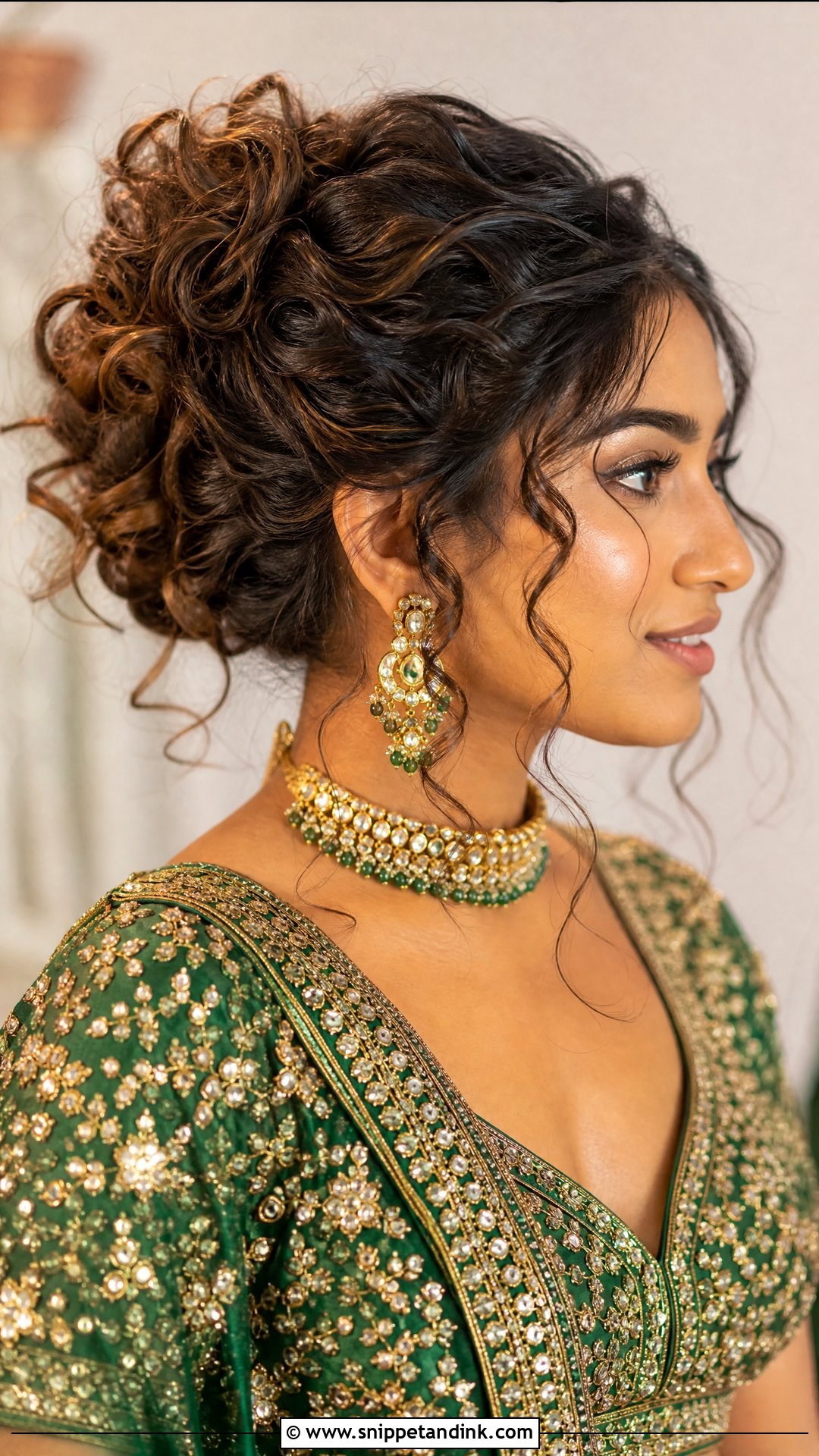
Curly hair makes a fuller bun than straight hair ever will, as long as it isn’t brushed out. I work with naturally wavy or curly hair by defining the curls with a cream, then gathering them loosely and pinning in sections. A few spirals left out around the face soften the look. The problem is frizz in humid weather, so I set the outer layer with a light-hold spray rather than a heavy one. It fits the mood of a mehndi or sangeet better than a formal ceremony.
16. Bun With Gota Flowers
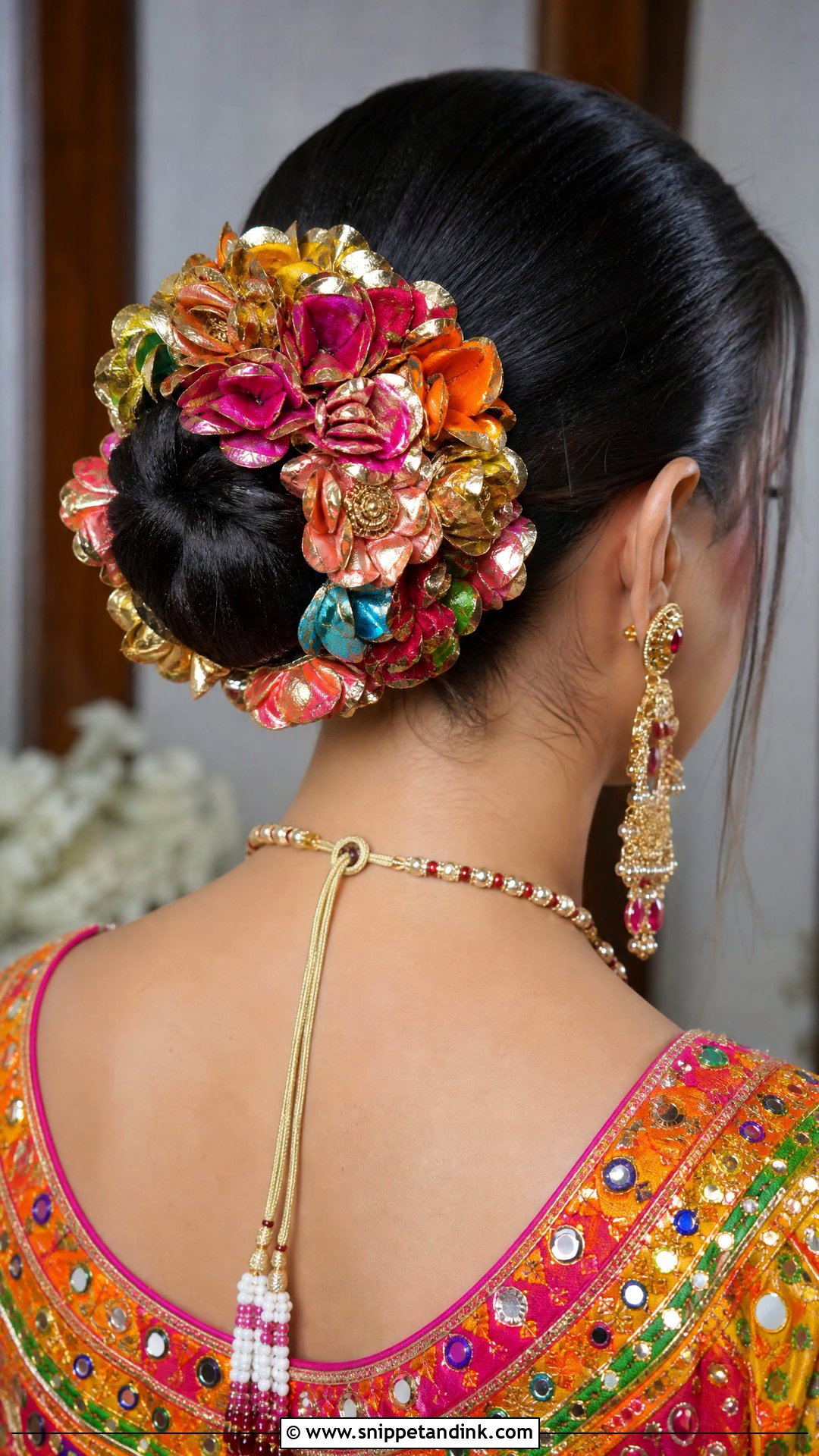
Gota flowers are made from metallic ribbon folded into petals, so they hold their shape all day without wilting. I wrap or pin them around the bun in a ring, and because they’re light, they can go on a high or low base. They sit naturally with Rajasthani and Punjabi themes, and the sheen picks up the gold work on heavy embroidered outfits. Match one colour from your outfit rather than all of them; three or four gota colours together start to look like a craft project. Mehndi and sangeet suit this best.
17. Bun With Net Veil and Dupatta
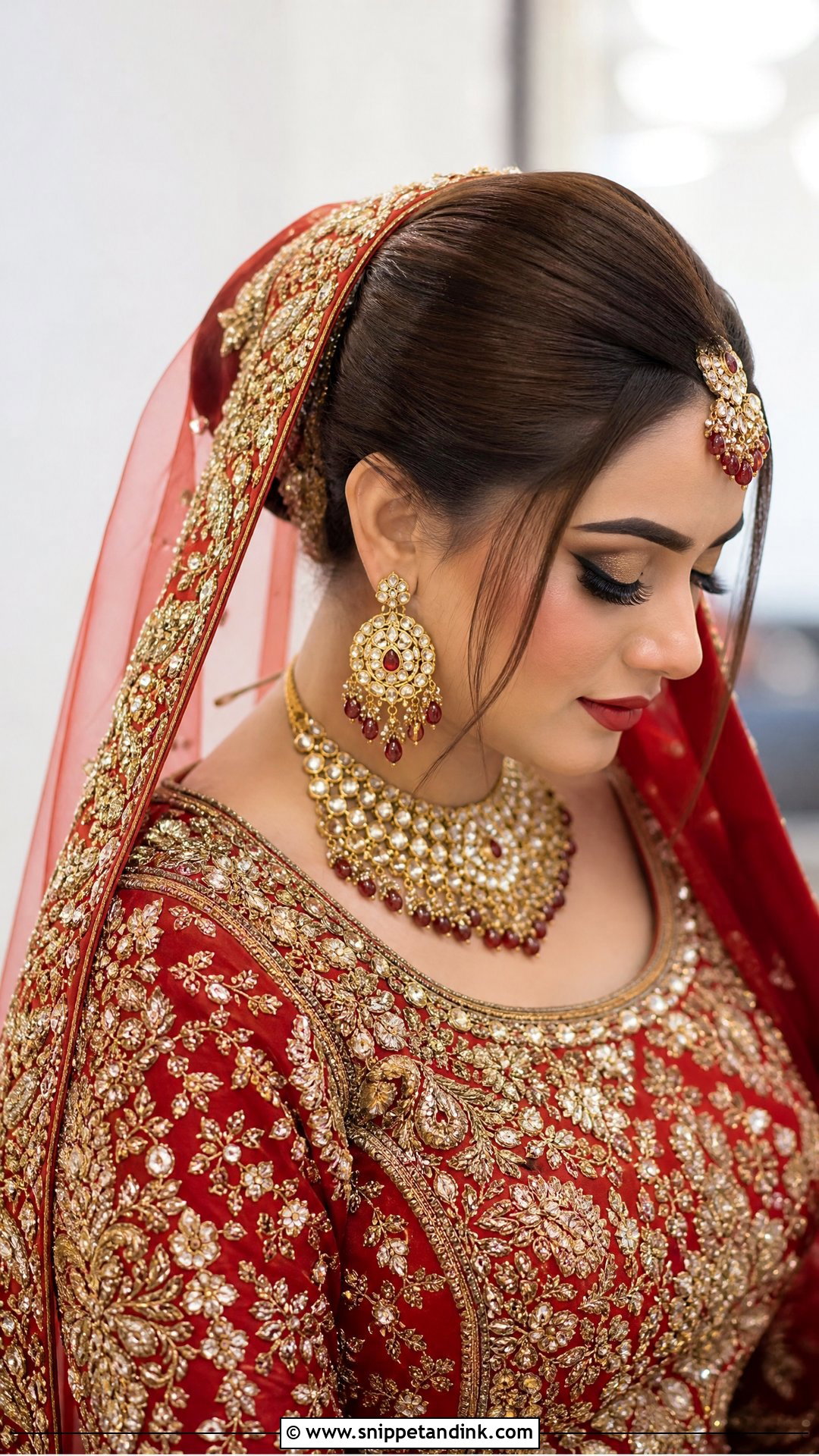
The bun under a dupatta is a structural job first. It has to be low and firm, with enough body to stop the fabric sliding back, so I usually add a filler or a small padded donut even to thick hair. I pin the dupatta straight into the bun with long U-pins and add two hidden pins near the crown to stop it slipping forward. A net veil is lighter and easier. A heavy embroidered dupatta can pull the whole style backward after a few hours if the anchor isn’t solid. Small flowers or jeweled pins can cover the pin points where the fabric meets the hair.
18. Rose and Leaf Bun for Mehendi
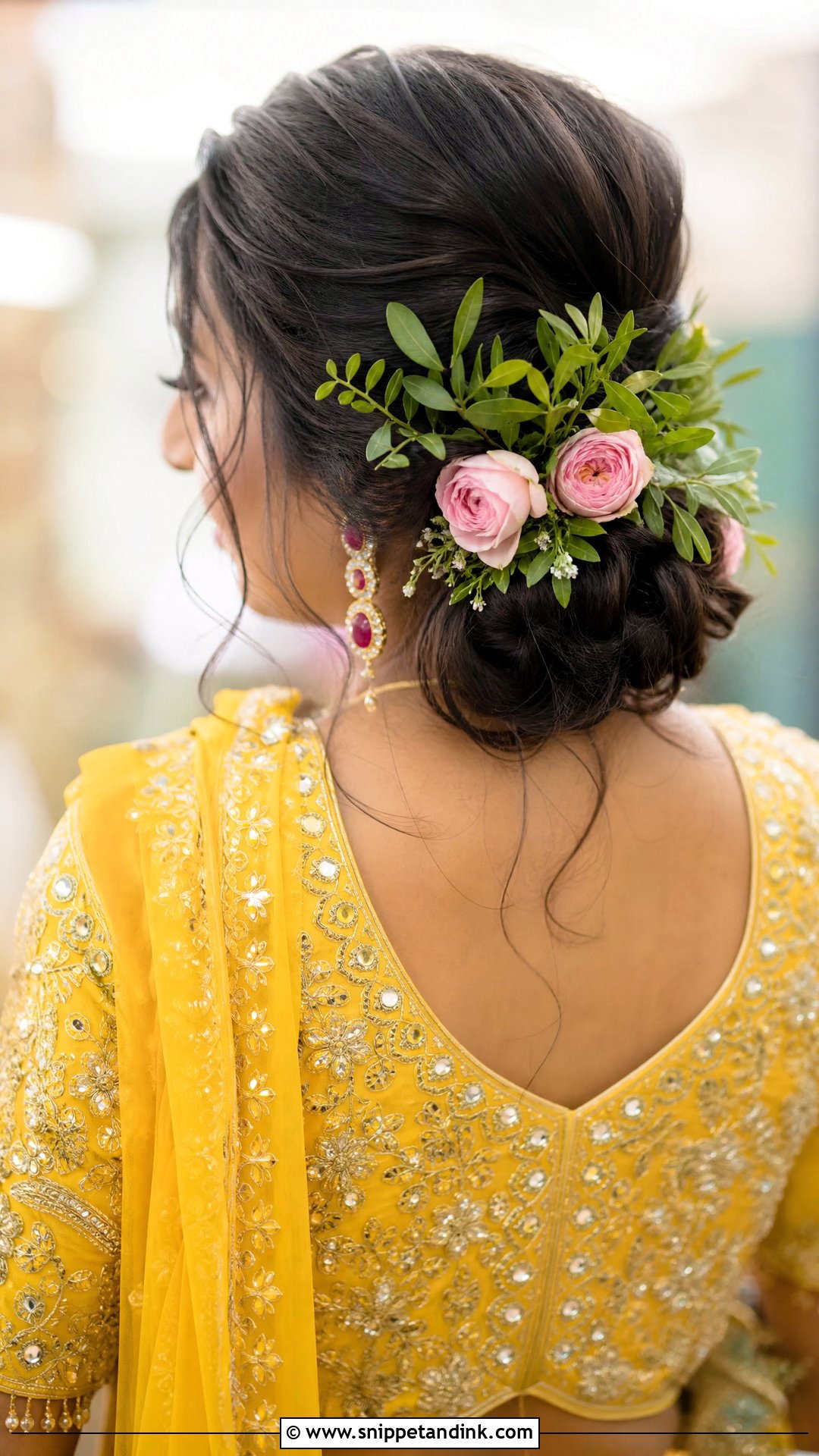
Roses and fresh leaves suit the looser, less formal mood of a mehndi day. I build a low or messy bun and tuck in soft pink or red roses with a few green leaves in between for contrast. The leaves wilt faster than the roses in hot sun, so I add them last and pick waxy leaves that hold up longer. Brides who want a garden feel will like this one. Keep the jewelry light, as the flowers already do the work.
19. Bun With Kundan Hair Accessories
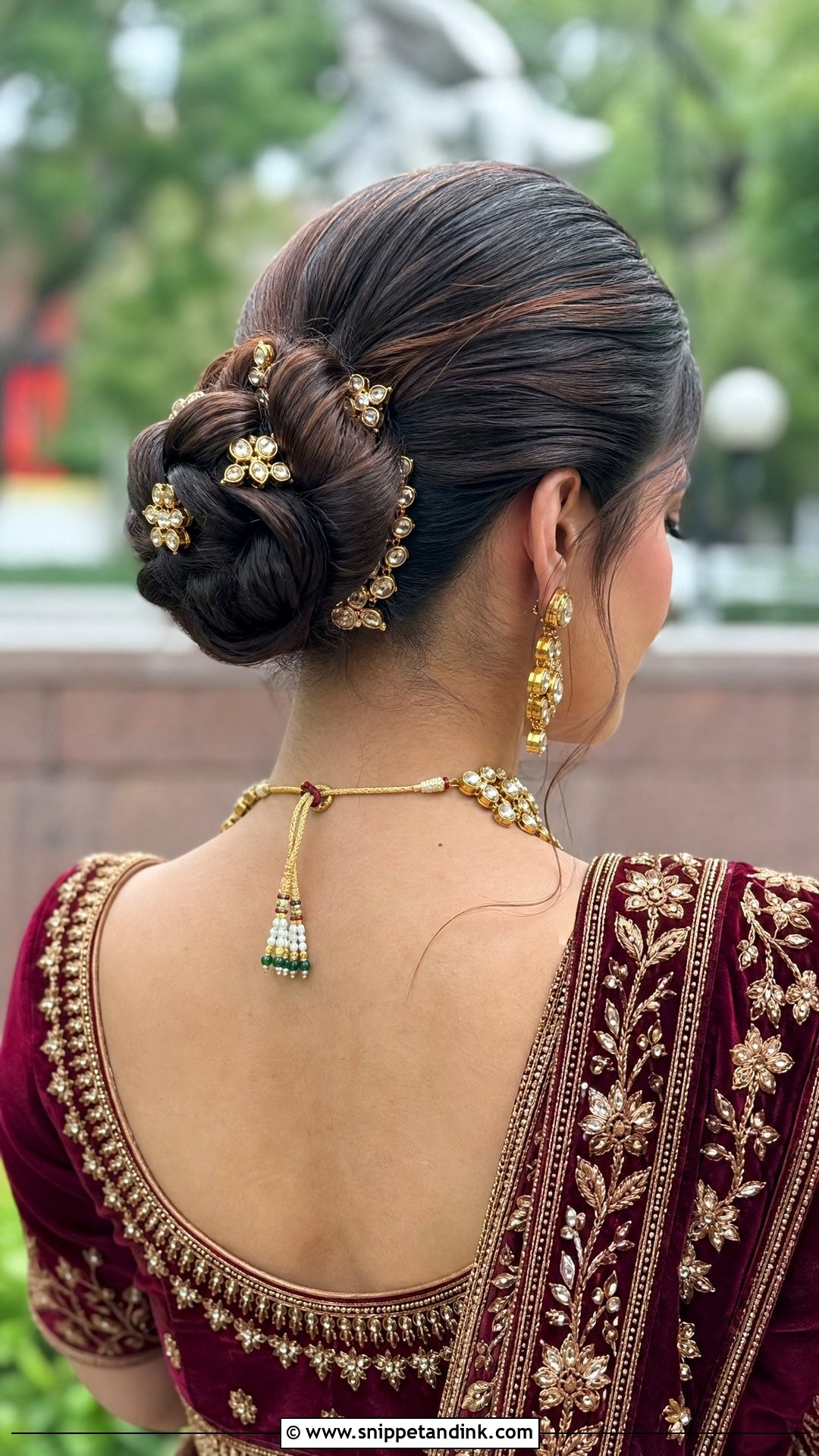
Kundan pins are gold settings with uncut stones, and they’re heavier than they look, so I place them in the solid centre of the bun, not on the outer edges where the hair is thinner. A few well-placed pieces work better than many. They read best with a matching kundan set, and they lift even a simple twisted bun into something more formal. Keep the rest of the styling quiet. If the bun is soft or loose, I’d add a hidden anchor braid first so the pins have something firm to grip.


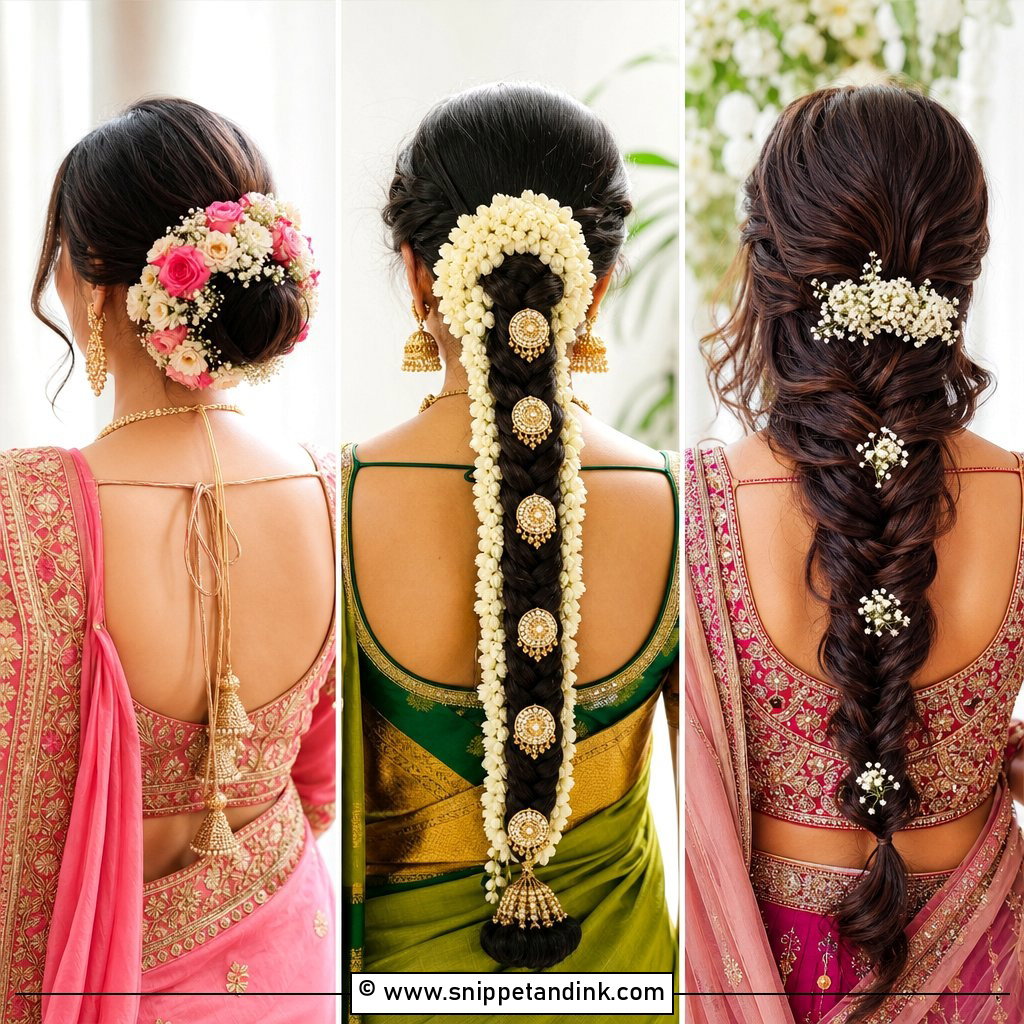
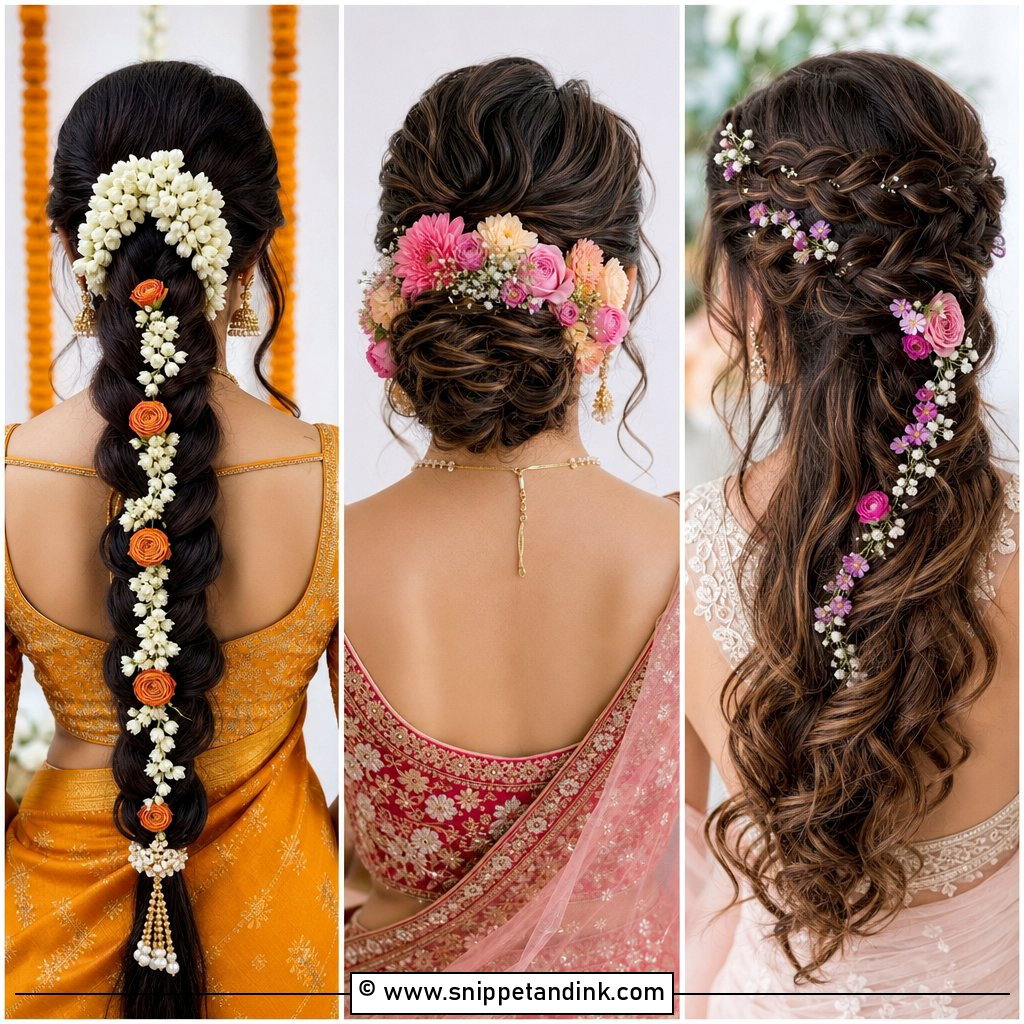
20. Bun With Long Flower Strings
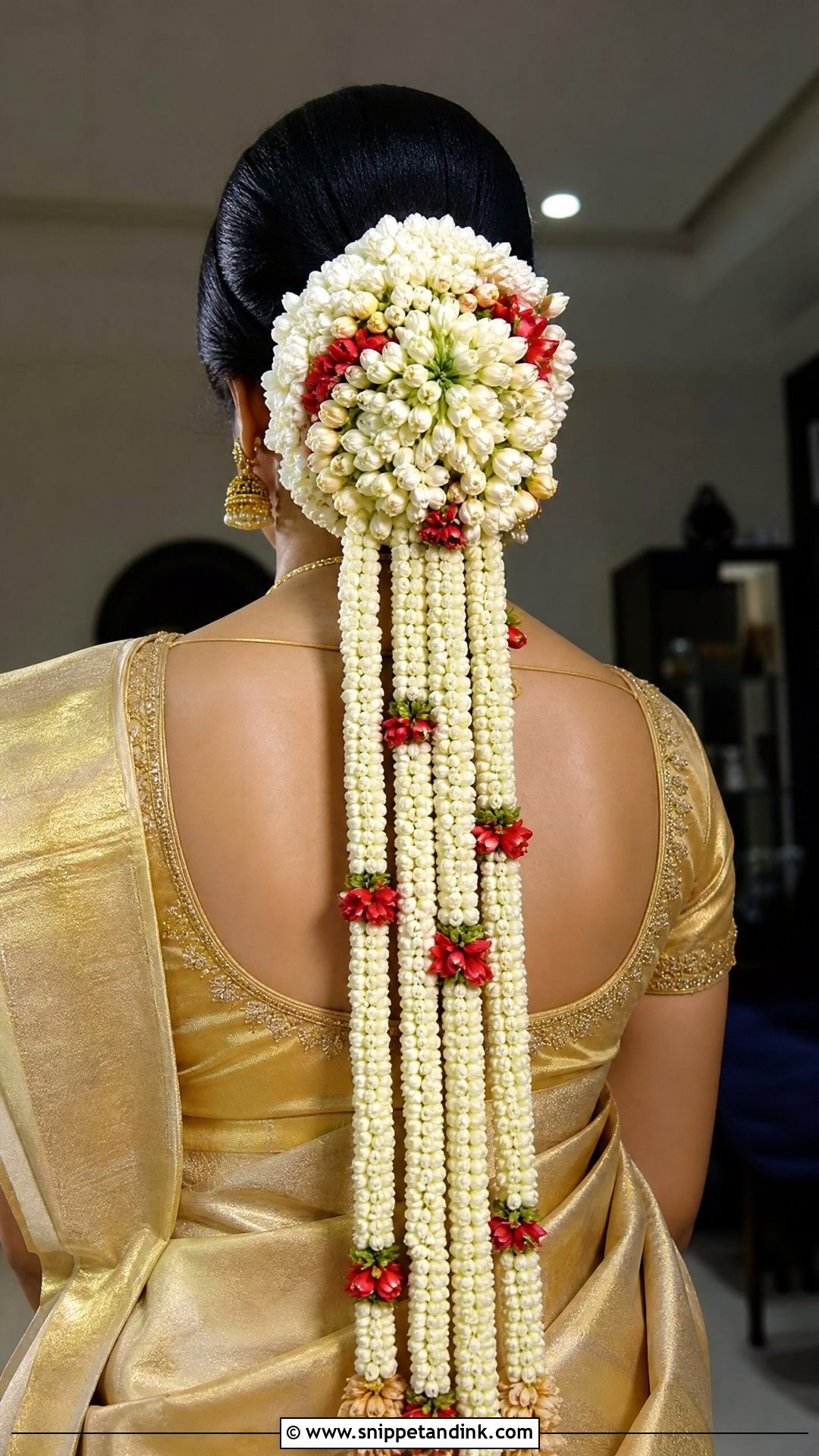
Long flower strings falling down the back are central to many South Indian bridal beauty traditions. I anchor the strings at the base of the bun with crossed U-pins and stitch them together lightly with thread if they’re very long, so they hang as one piece rather than separating when the bride turns her head. Jasmine is the classic, though rose petals and orchids also work. Heavy strings pull on a bun, so this style needs a firm base and enough hair to hold the pins. It suits silk sarees and traditional lehengas.
Fresh Flowers on a Bun Weigh More Than You’d Think
A thick jasmine gajra or a full marigold garland adds real weight, and it pulls downward all day. I plan the bun’s anchor points around the flowers, not the other way round, and I attach fresh flowers last so they spend as little time as possible out of the cold.
- Buy jasmine as closed buds the morning of the event; they open through the day and smell strongest by evening.
- Keep strings wrapped in a damp cloth in the fridge until the hair is finished.
- Pin flower strings with long U-pins crossed in an X, not with single bobby pins.
- If you have hay fever or sensitive skin, choose gota or silk flowers near the face and keep fresh blooms at the back.
If the Bun Starts Slipping Mid-Ceremony
It happens, usually when a dupatta gets tugged. Don’t pull the pins out. Have someone push the bun gently back up toward the head and slide two long U-pins in from below, angled upward into the base. Keep a small pouch of matching pins and a travel hairspray with your bridesmaid, and the fix takes under a minute.
What Your Bun Has to Carry on the Day
Your bun has a practical job on the wedding day: it holds the dupatta, carries the flowers and keeps the tikka steady. Start with what you’ll be wearing on your head, then pick the style that suits your hair length and the event. Take two or three of these ideas to your trial and test the one you like with your actual dupatta and jewelry pinned in place. Sit with it for an hour, turn your head, and see how it feels before you commit.
You'll Like These Ideas:







Leave a Reply