
A maang tikka is only as steady as the hair holding it. The chain runs down the part, the hook sits buried in the crown, and the pendant has to land in the centre of the forehead without swinging every time you laugh. That means the hairstyle is half the work. Heavy bridal pieces need a firm, centred base. A small tikka can sit on softer, looser hair. The styles below cover the wedding itself as well as engagements, sangeet nights, mehndi and festive dressing, and I’ve noted which ones carry weight and which only suit a lighter piece.
Chain Length and Where the Pendant Should Land
Most tikka problems I fix on the day come from the chain length, not the hairstyle. The pendant should sit at the centre of the forehead, usually just below the hairline. Too long and it drops onto your brow and blocks your bindi; too short and it lifts off the skin and sways.
- Put the tikka on with your hair parted and measure where the pendant falls before any styling. Adjust the hook or ask a jeweller to shorten the chain if needed.
- A high forehead can take a longer chain. A low hairline needs a shorter one, or the pendant sits on your eyebrows.
- Heavy pendants pull the chain taut. The hook needs a firm base or it slides forward through the evening.
- If the tikka has an S-hook, close it slightly with your fingers so it grips the hair instead of sliding through it.
Rent or buy the tikka before your hair trial if you can. The weight changes what I can build under it.
1. Bridal Bun With Maang Tikka
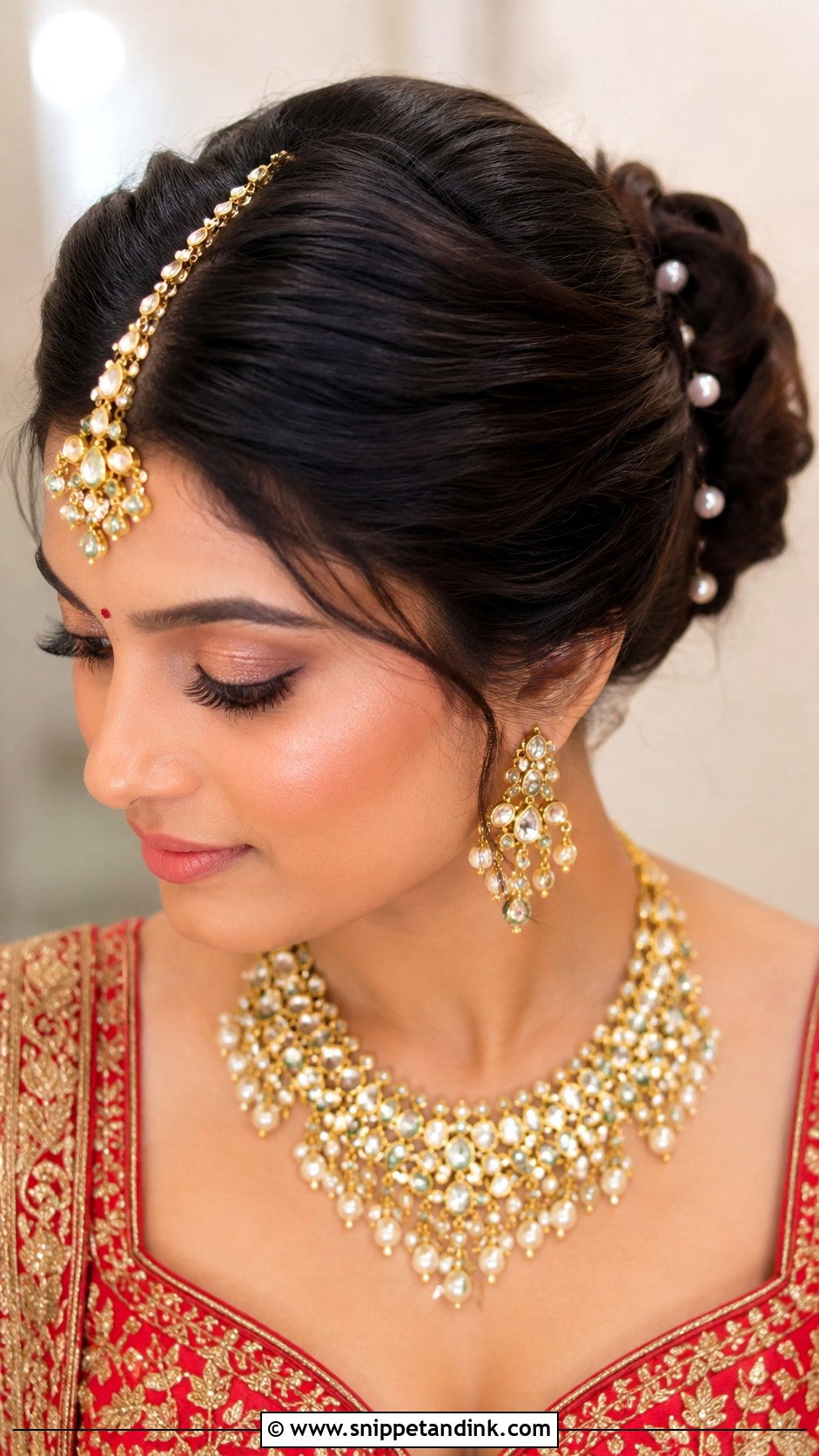
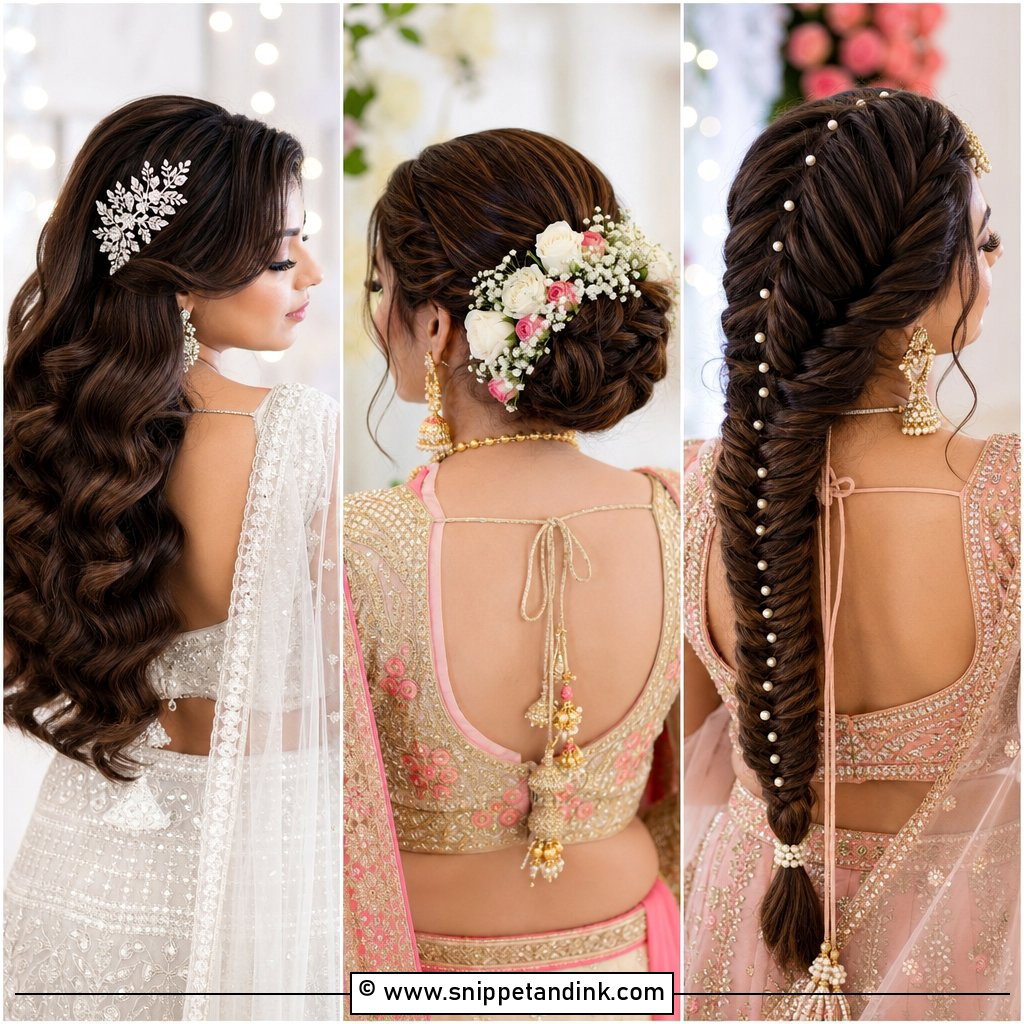
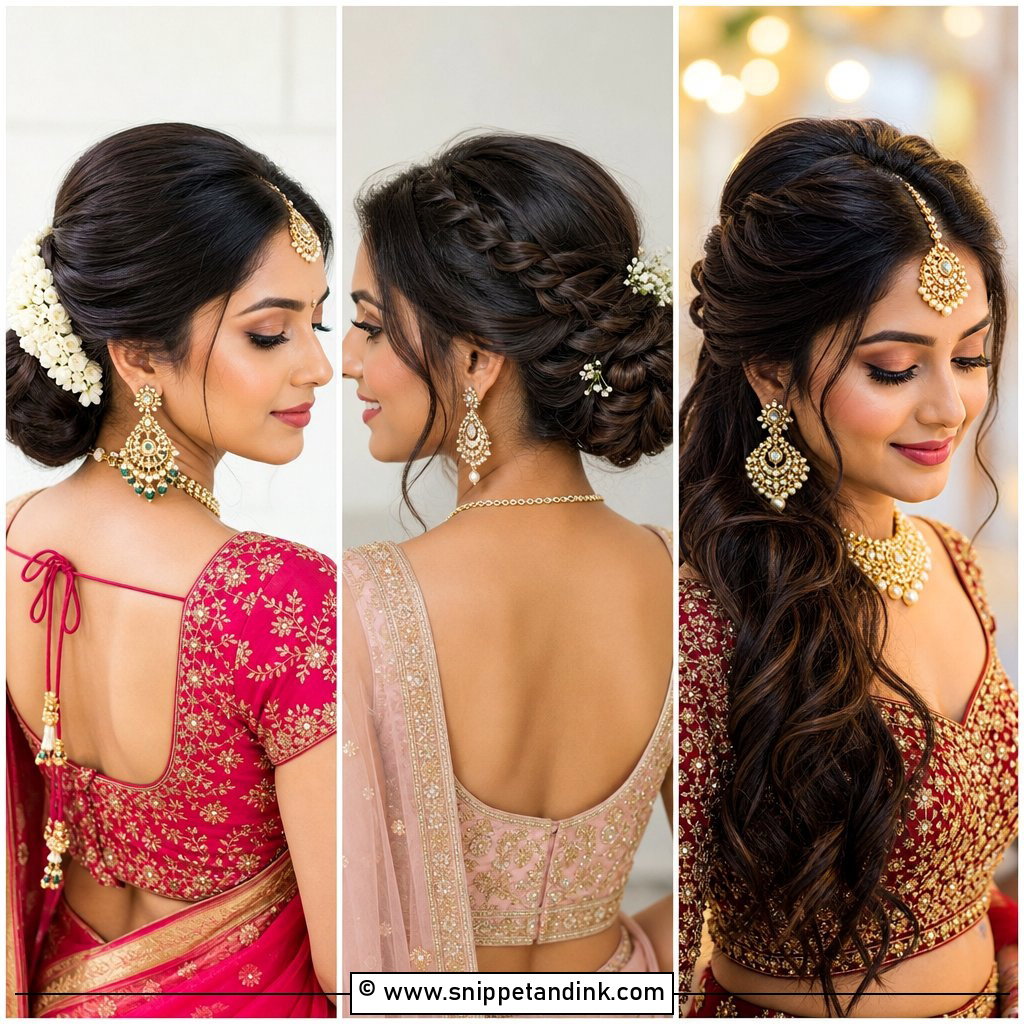
The bun is the most dependable base for a bridal tikka. A clean centre part gives the chain a straight track, and a bun at the back leaves the crown free for the hook. Lehengas, sarees and heavy dupattas all work with it because nothing competes with the jewelry at the face. A low bun reads softer; a fuller bun, often built over padding, gives a more traditional bridal shape. Flowers or pearl pins finish it. I set the hook before I shape the bun, since a bun pulls the crown hair back and can drag the chain off-centre if it goes in later.
2. Open Curls With Maang Tikka
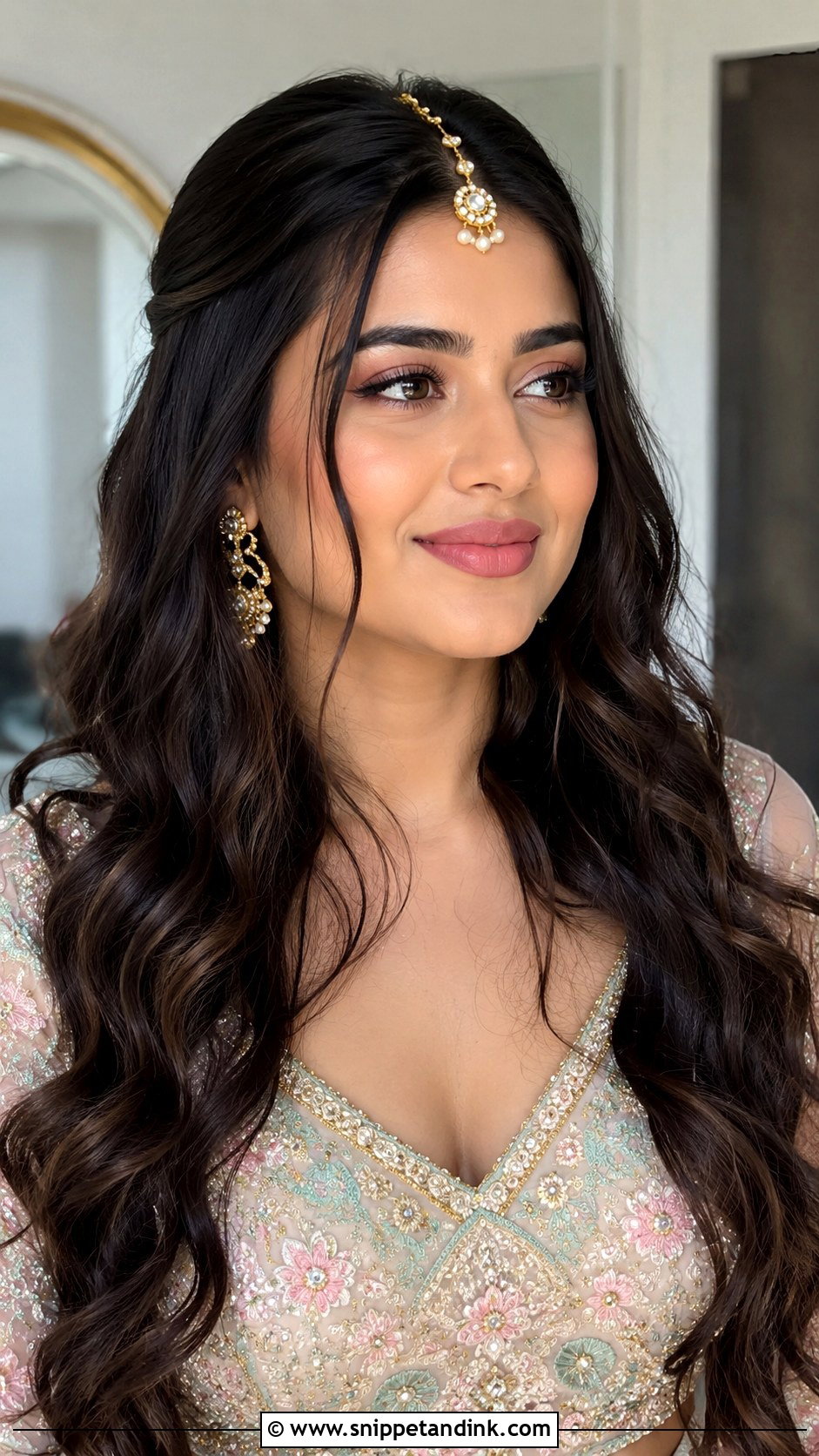
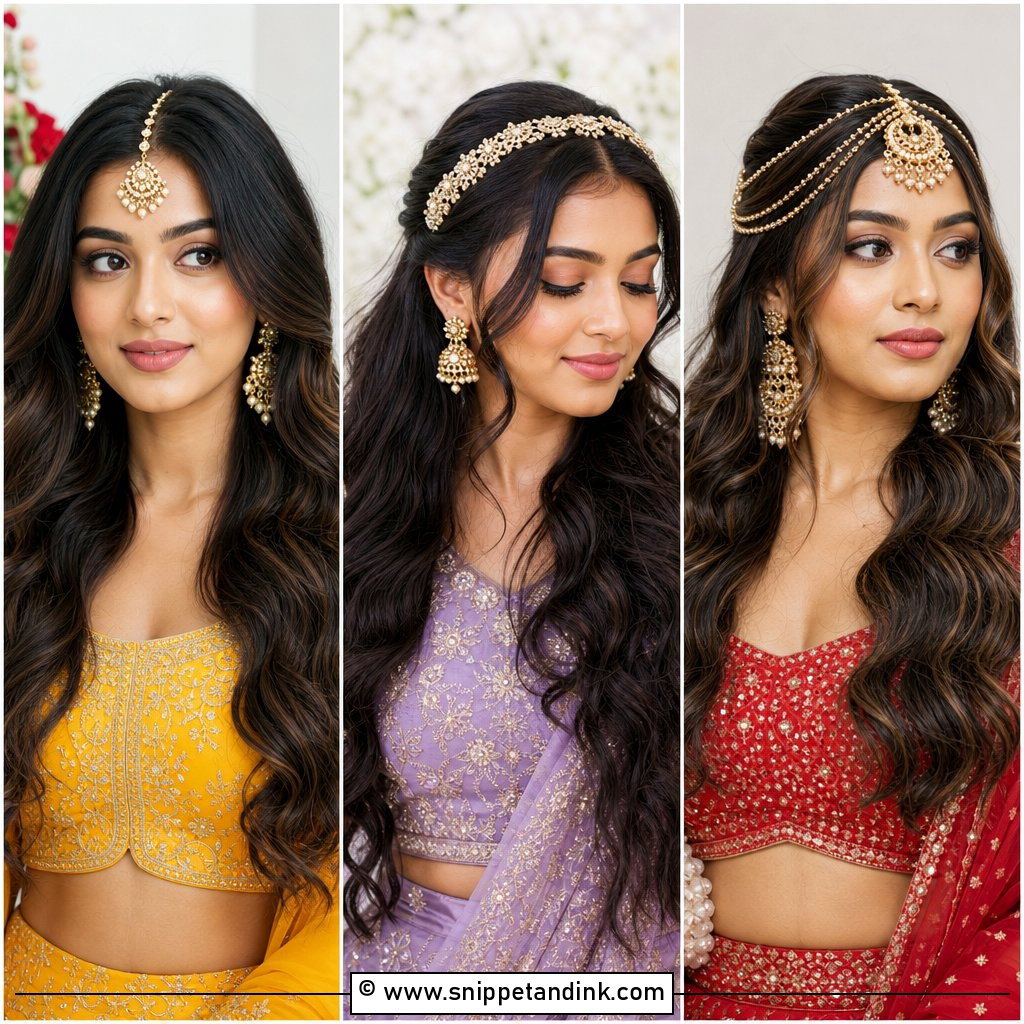
Open curls are lovely for engagements, receptions and sangeet, and for bridesmaids who want to look dressed up without wearing an updo. The trouble is that loose hair gives the tikka hook nothing solid to grip. I tease a small section at the crown, set the hook into it and cover it with a smooth layer, then curl the rest. Keep the part exact; on open hair, a crooked part shows in every front photo. Brush the curls out so they look glossy rather than tight.
3. Sleek Low Bun With Maang Tikka
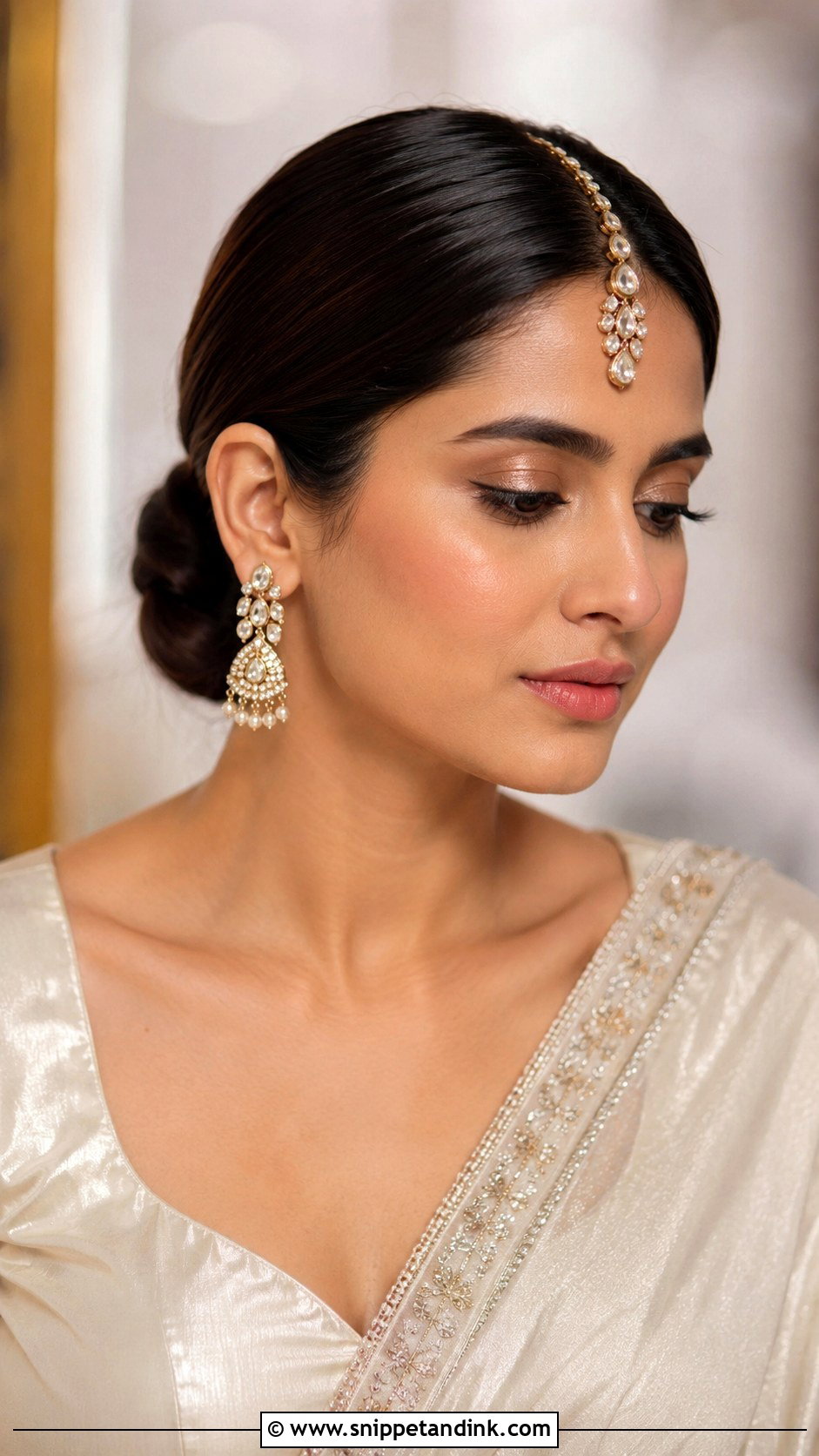
Nothing distracts from the jewelry here. Hair is parted precisely, smoothed close to the head and gathered at the nape, which leaves the tikka, earrings and neckline completely visible. It suits bold makeup, high-neck blouses and heavy embroidery. I use a smoothing cream through the lengths and a wax stick only along the part, because the chain sits right on top of it and any oil shows as a dark line around the metal in close-ups. Avoid it if your hair has a strong natural wave; humidity will lift it by evening.
4. Half Up Hairstyle With Maang Tikka
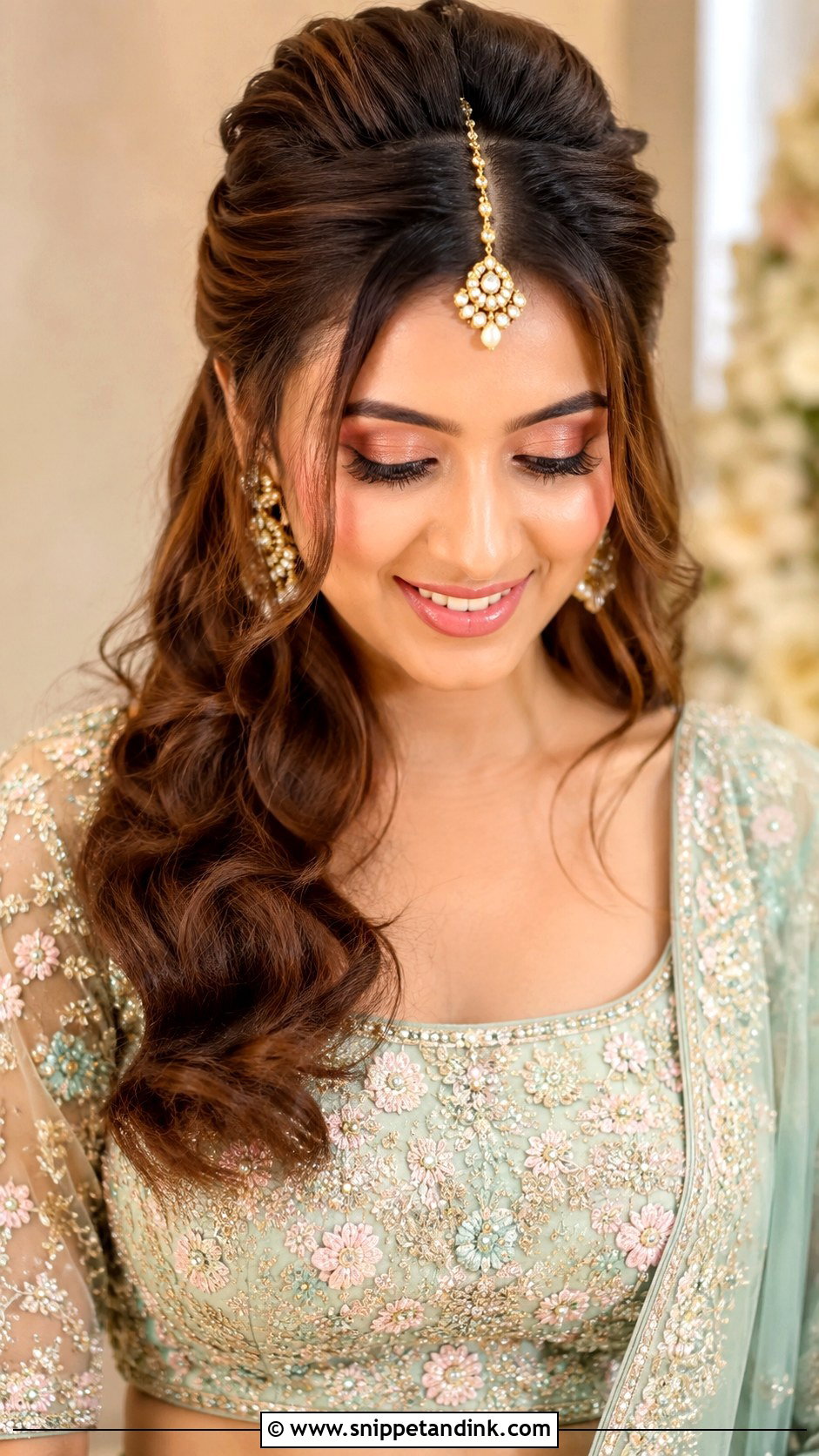
Pinning the top section back gives the tikka a secure anchor while the rest of the hair stays loose. I put the hook into the pinned-back crown, which is the most reliable spot on a half-up style. Waves, curls or long layers all suit the lengths. It’s a good choice for mehndi, engagement and festive events since there’s less weight on the scalp than with a full bun. Keep the pinned section neat, because that’s what the chain lies across.
5. Side Braid With Maang Tikka
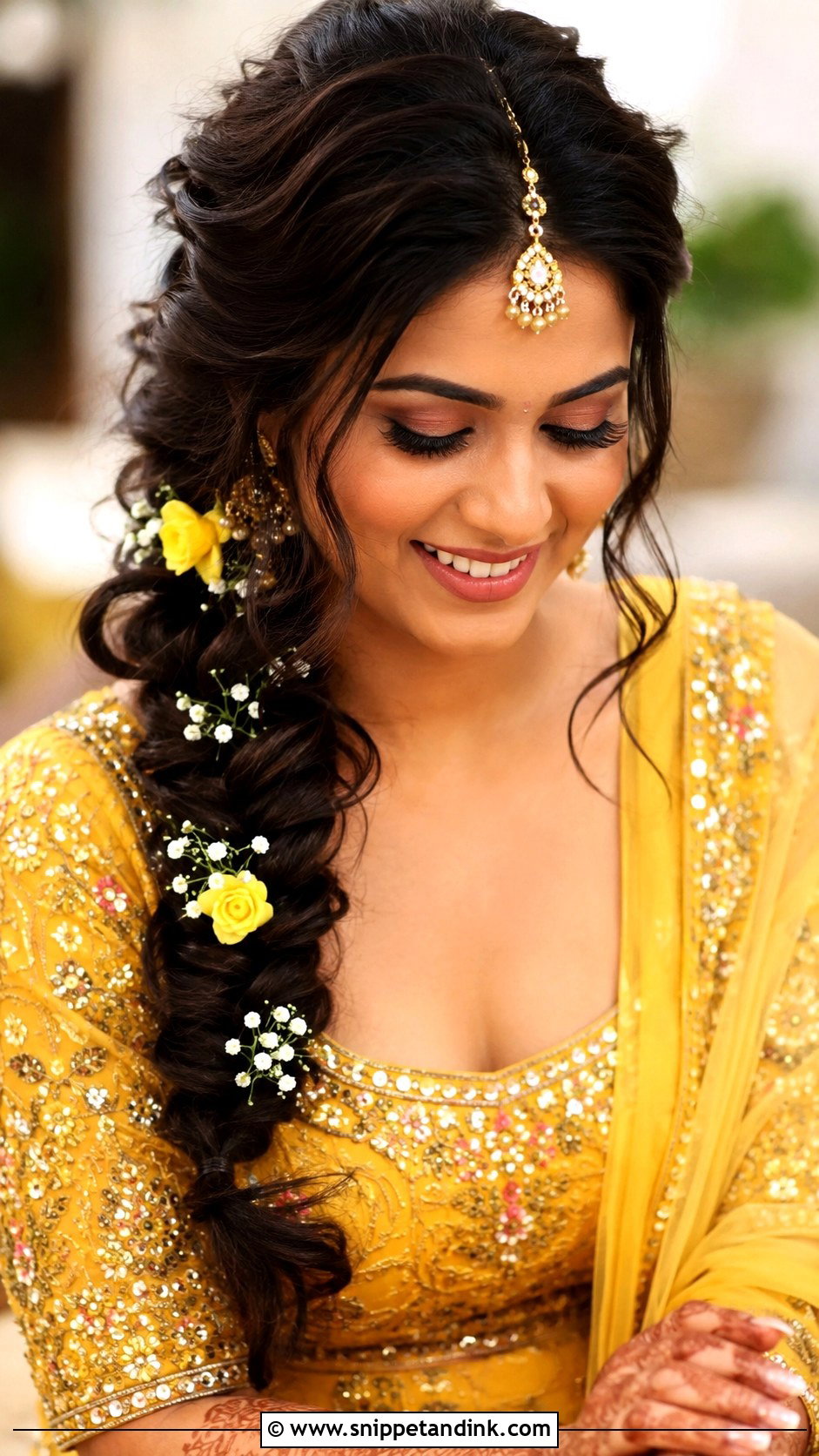
A side braid shows off the tikka from the front and keeps the hair under control on a long, active day. It falls over one shoulder, so the face and jewelry stay clear. I like it for mehndi functions and haldi, when you’re sitting for hours, hugging relatives and possibly getting splashed. Braid loosely and pull the edges out for texture, then tuck small flowers, pearls or gold pins into it. Long hair holds the braid best. Shoulder length usually unravels at the end.
6. Fishtail Braid With Maang Tikka
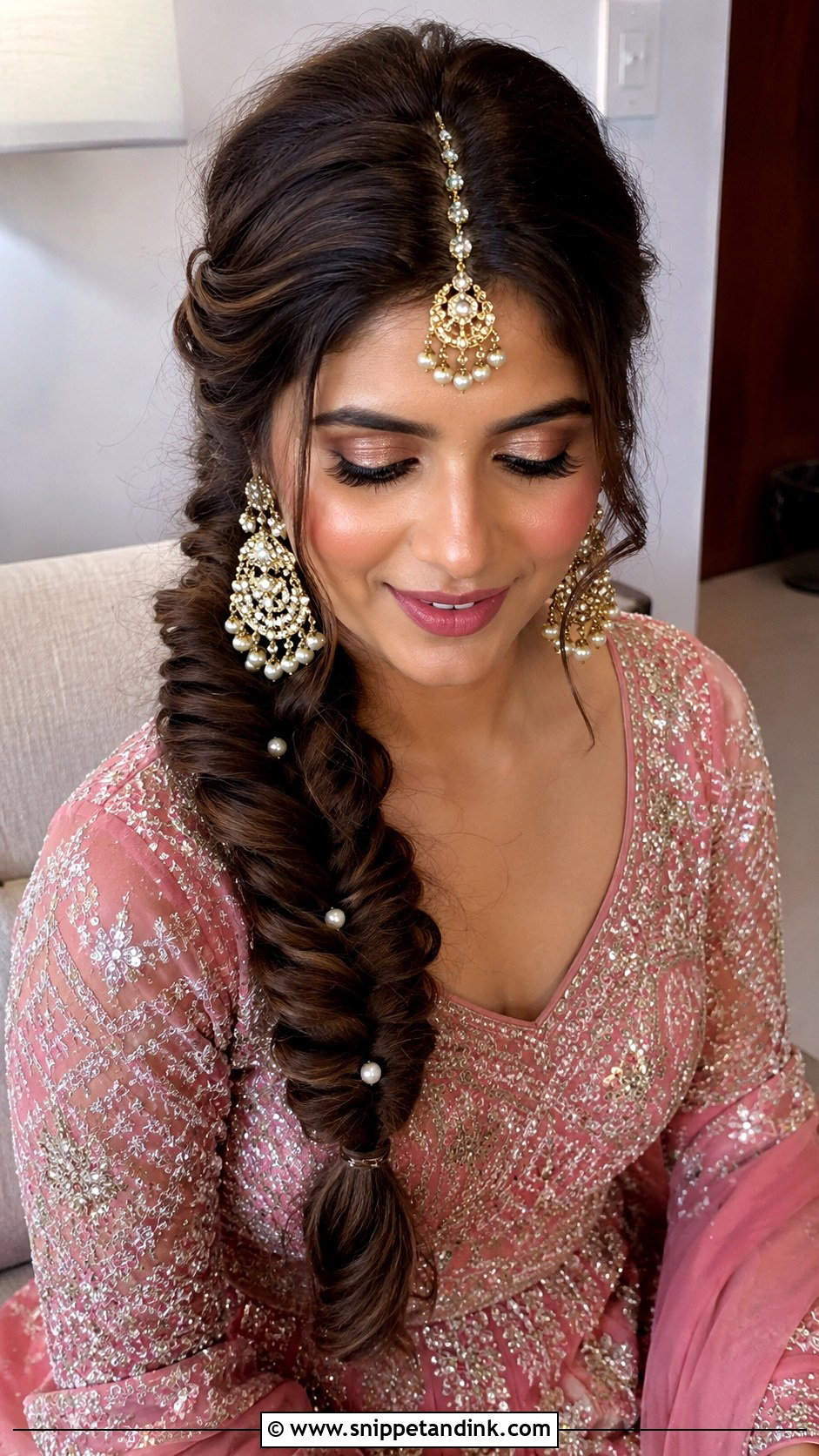
The fishtail’s fine, woven pattern gives texture without extra accessories, so it pairs well with a bold tikka or matha patti for modern Indian wedding looks. I keep the crown and centre part smooth so the chain sits flat, then braid from the nape down. Pull the edges gently once it’s done to widen it. Lehengas, shararas and embroidered gowns all suit it. It needs long, fairly thick hair; on fine hair a fishtail looks wiry rather than full.
7. Gajra Bun With Maang Tikka
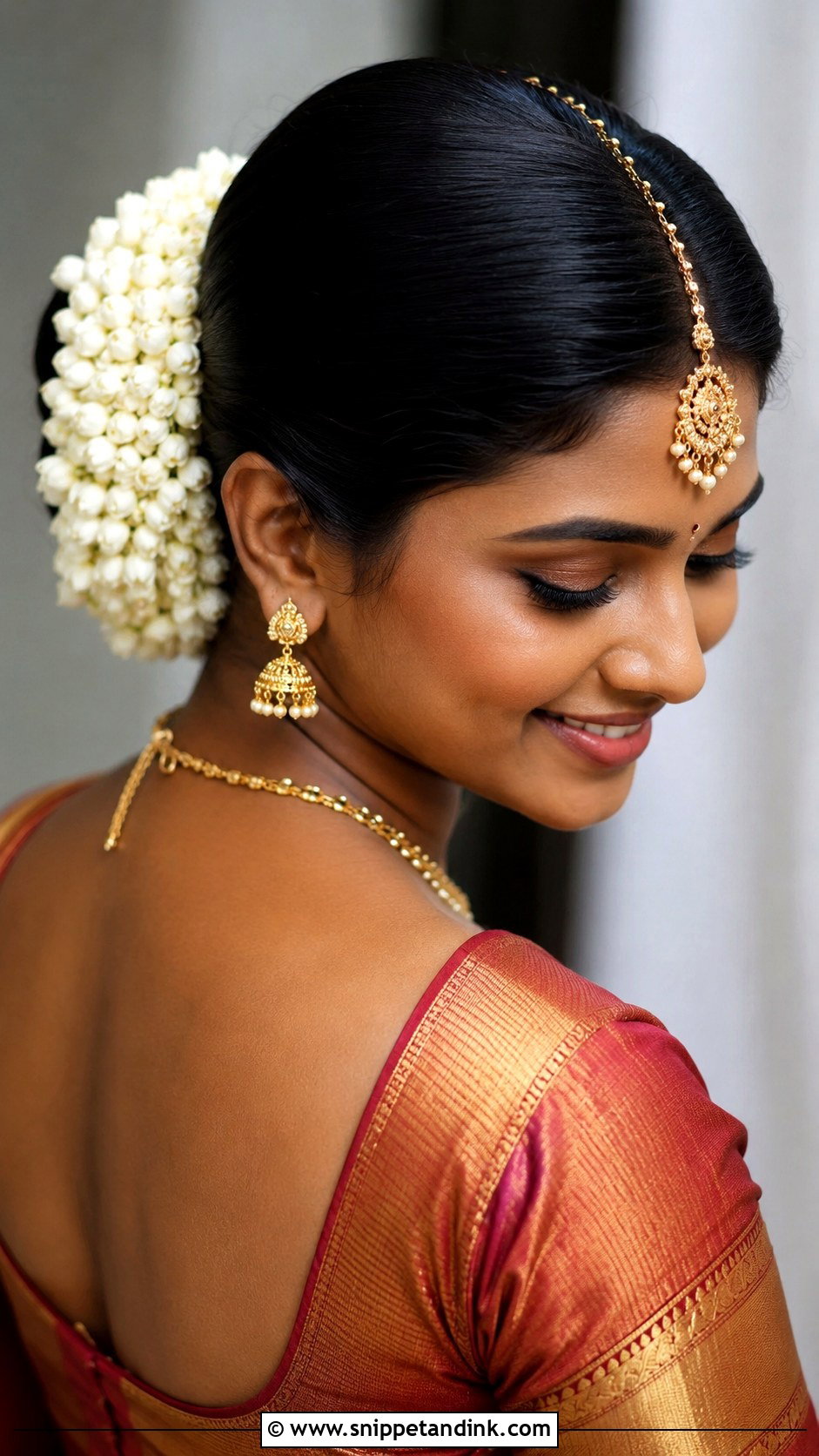
Jasmine around a bun is the most traditional pairing on this list, and one of the most practical. The bun gives the gajra something firm to wrap and the tikka a clear crown. It sits naturally with sarees, silk, temple jewelry and South Asian bridal looks. A gajra is heavy once it’s long and dense, so I pin it to the bun in several places, not just at the ends. Fresh jasmine also browns within hours in heat, so keep it in the fridge wrapped in a damp cloth and put it on last.
8. Messy Bun With Maang Tikka
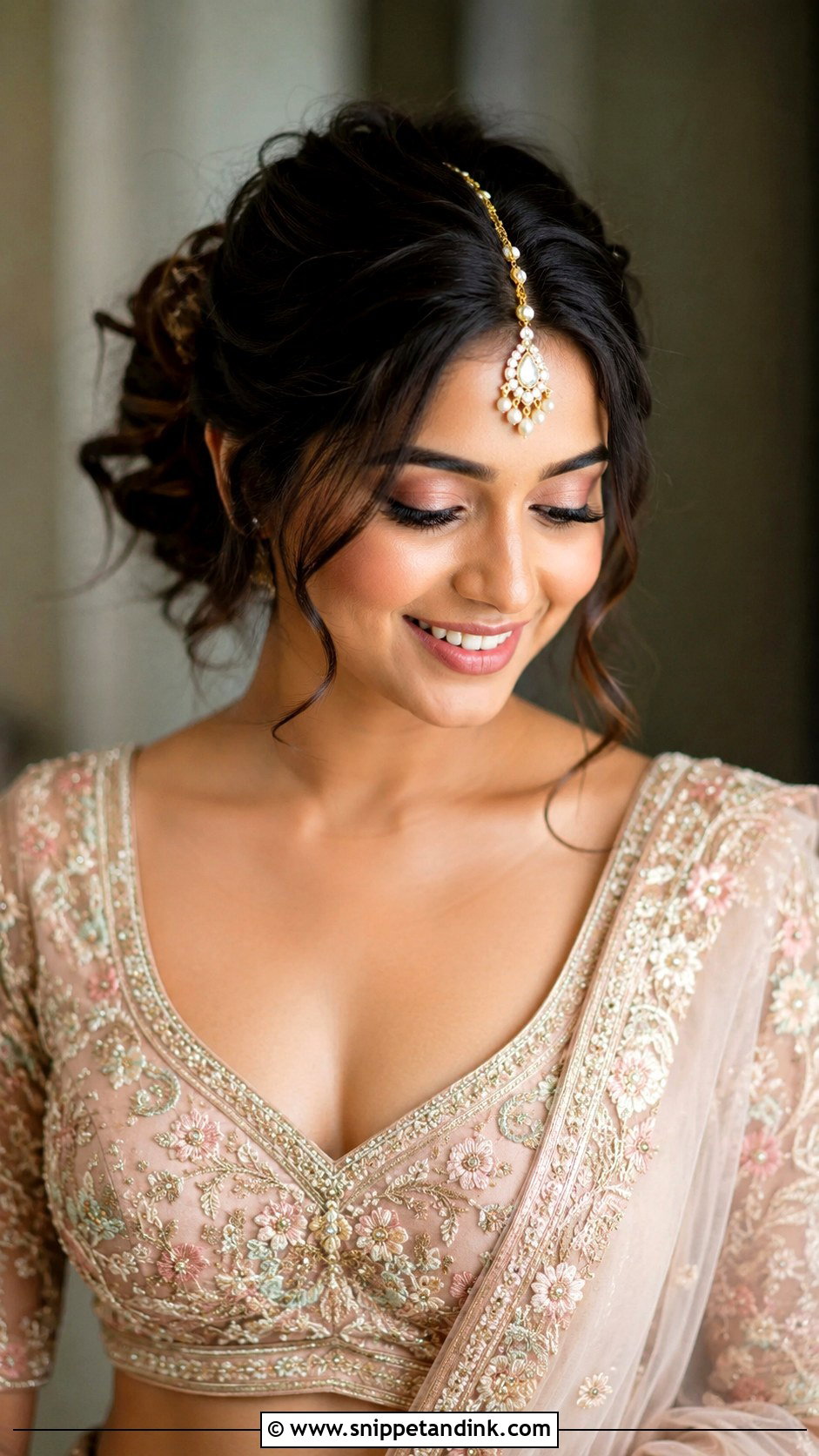
A messy bun suits pastel lehengas, floral outfits and lighter jewelry, since the relaxed shape doesn’t fight a delicate piece. Texture and loose face-framing strands make it soft. The catch with a tikka: the crown still has to be tidy and centred, because a frizzy or lifted crown shifts the chain. I keep the front controlled and put the texture only in the bun. It’s a good bridesmaid or daytime option.
9. Puff Hairstyle With Maang Tikka
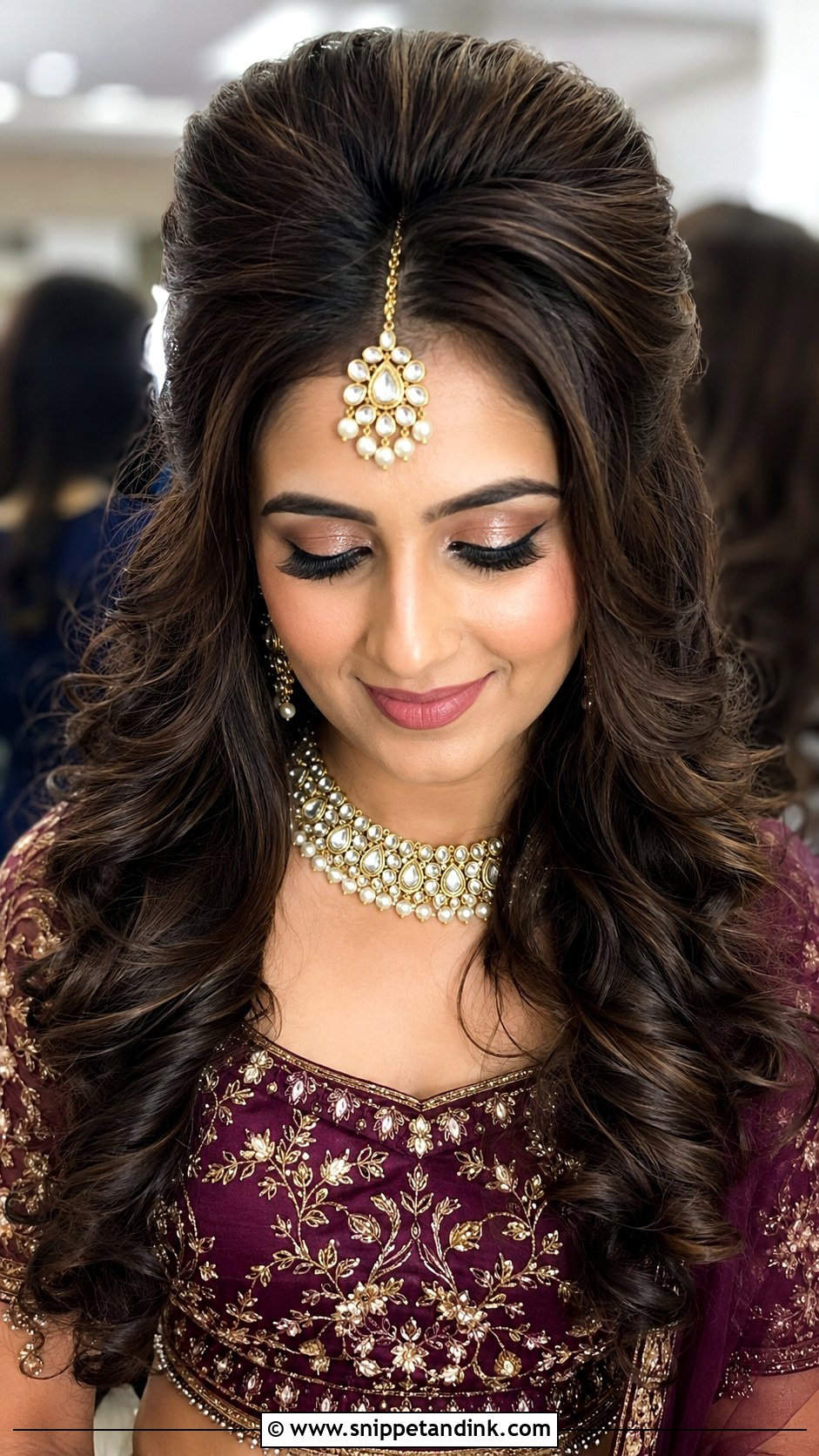
A puff hairstyle with maang tikka gives height at the crown and, just as useful, a dense pad of hair to hold the hook. That makes it my answer for hair that’s flat at the roots or for a tikka with a heavy pendant. The puff can lead into a bun, braid, ponytail or open curls. Keep it modest; a tall puff pushes the chain upward and the pendant sits too high on the forehead. Round and heart-shaped faces benefit from the lift.
10. Straight Hair With Maang Tikka
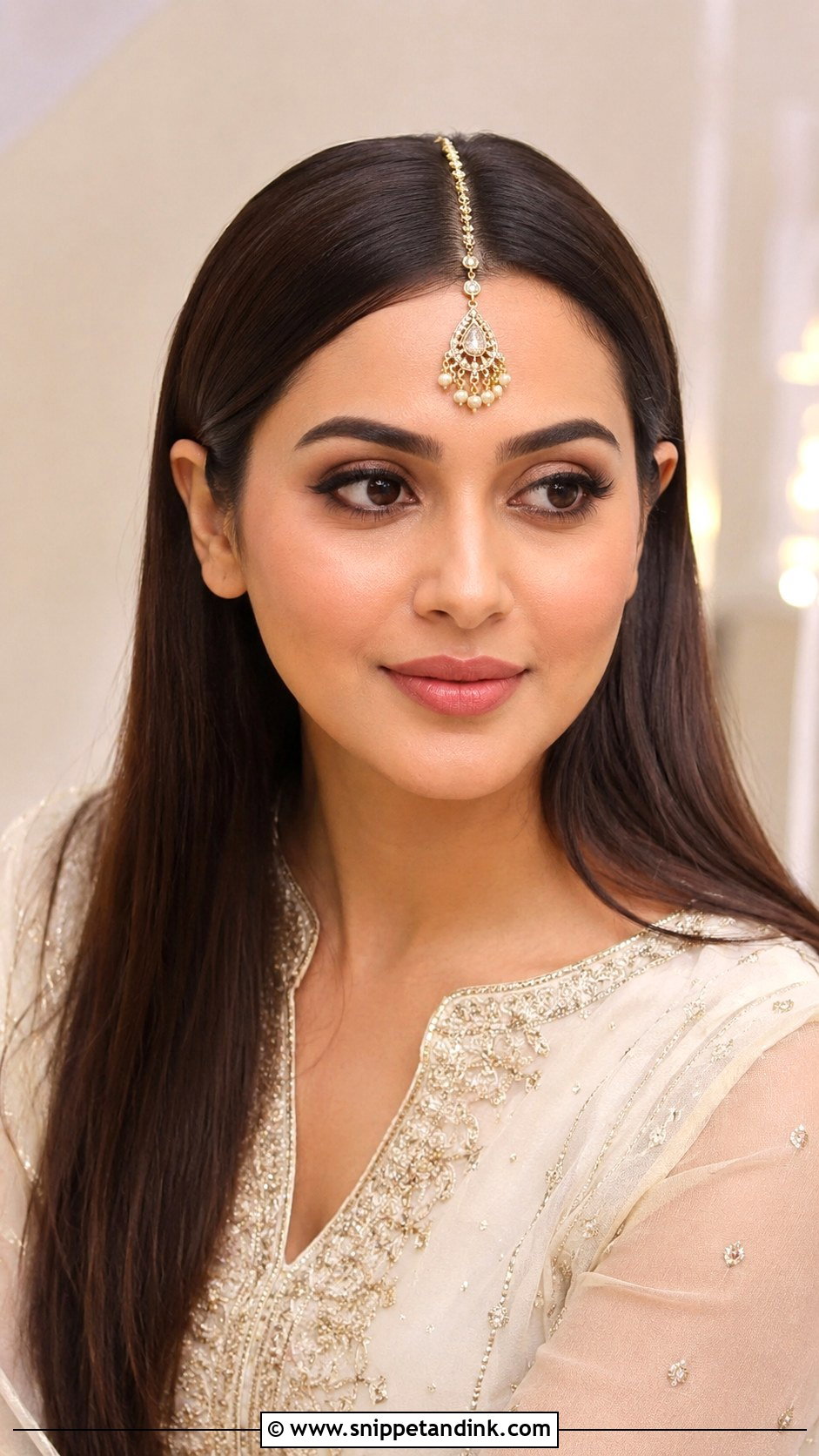
Straight hair puts all the attention on the tikka, which suits a strong statement piece. The part has to be crisp and both sides even, since there’s no texture to hide anything. The hook is the hard part, because sleek hair is slippery. I backcomb a coin-sized section under the crown, set the hook, and smooth the top layer over it. Bend the ends slightly inward or tuck the front behind the ears to keep it from looking plain. It suits festive parties and bridesmaids more than a bride with heavy jewelry.
11. Low Ponytail With Maang Tikka
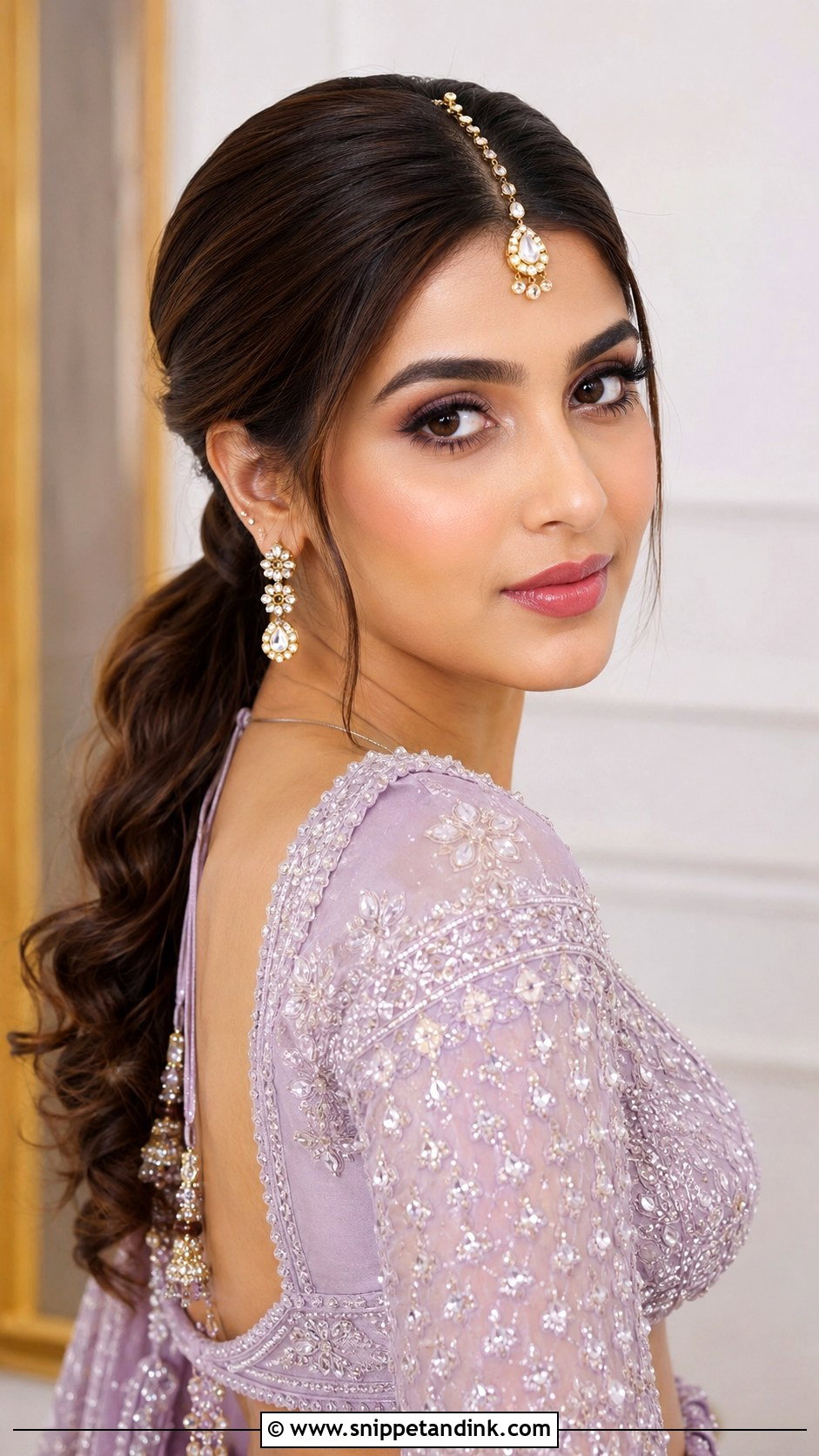
A low ponytail is a modern swap for a bun. Hair is parted in the centre, smoothed at the crown and gathered at the nape, with the length left straight, waved or curled. Contemporary lehengas, pre-draped sarees and minimal jewelry sets go well with it. I wrap a strand around the elastic and pin it so the base looks finished. The ponytail sits below the hook, so it doesn’t interfere with the tikka. Just don’t pull the crown so tight that the part widens.
12. Matha Patti Hairstyle With Maang Tikka
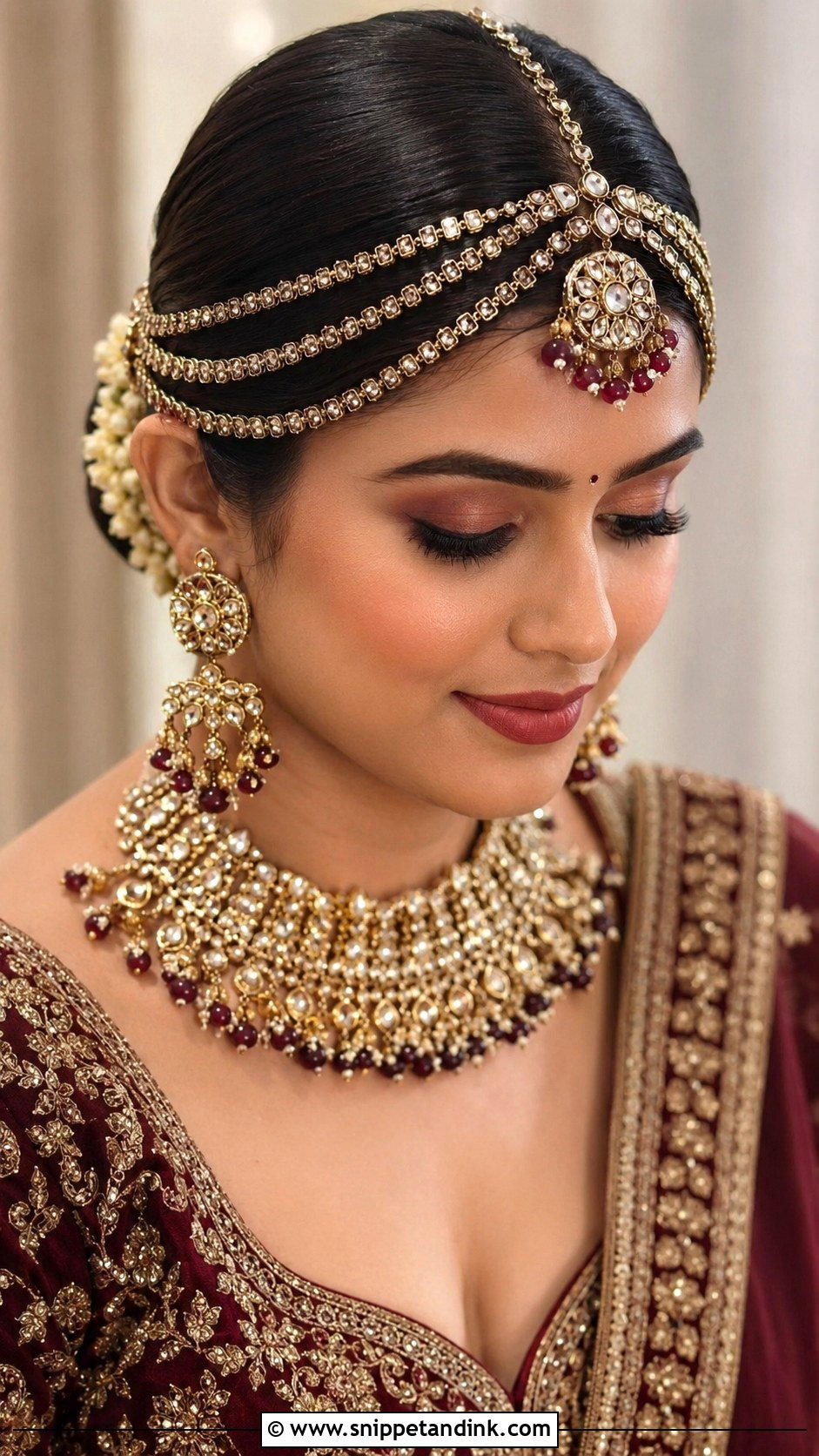
A matha patti hairstyle with maang tikka frames the whole forehead, so the hair has to stay out of the way. Sleek or low buns, or waves pinned well back, give the side chains room. I hook the centre first, then pin each side chain behind the ears, checking in the mirror that both sides hang at the same height. Uneven chains are the most common problem in photos. Heavy lehengas, dupattas and traditional makeup all suit it.
13. Passa And Maang Tikka Hairstyle
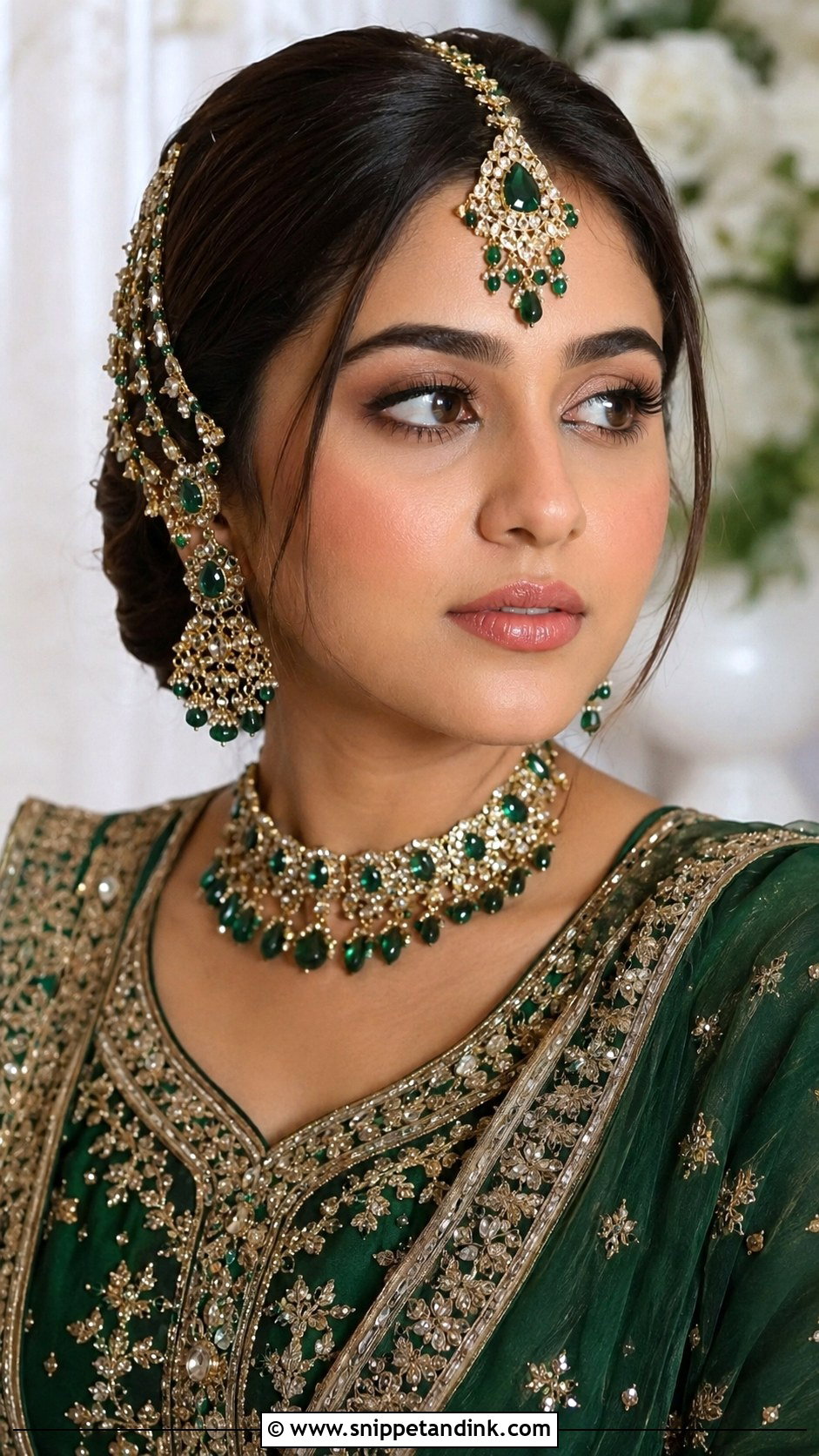
With a passa on one side and a tikka in the centre, there are two heavy pieces pulling at the hair. That calls for a controlled style: a low bun, a side-parted bun or waves pinned well back from the face. The passa needs its own anchor, usually a cluster of pins in a teased section above the ear. It’s often worn for nikkah, receptions and bridal portraits. Keep the front smooth and skip loose face-framing pieces, so both pieces of jewelry stay visible and nothing tangles in the passa chains.
14. Short Hair With Maang Tikka
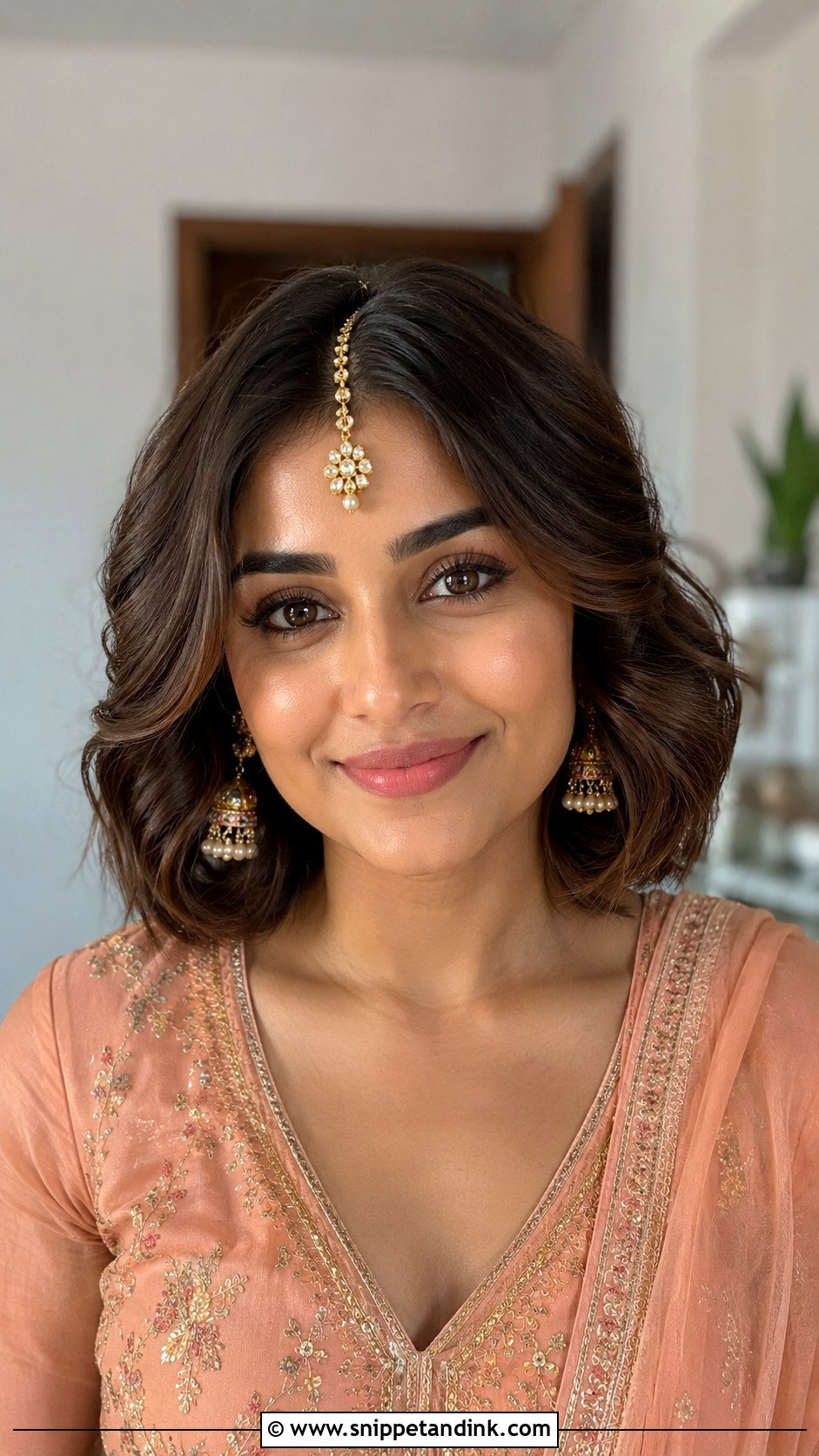
Short hair can carry a tikka with a little engineering. On a bob, lob or shoulder-length cut, I create a centre part and build a small anchor at the crown with a clear elastic or a few crossed pins, then hook the tikka into that. Soft waves add volume; straight hair looks sharper. Keep the tikka light, since short hair can’t spread the weight of a heavy pendant. It suits wedding guests and bridesmaids who don’t want extensions, though brides wear it too.
15. Loose Waves With Maang Tikka
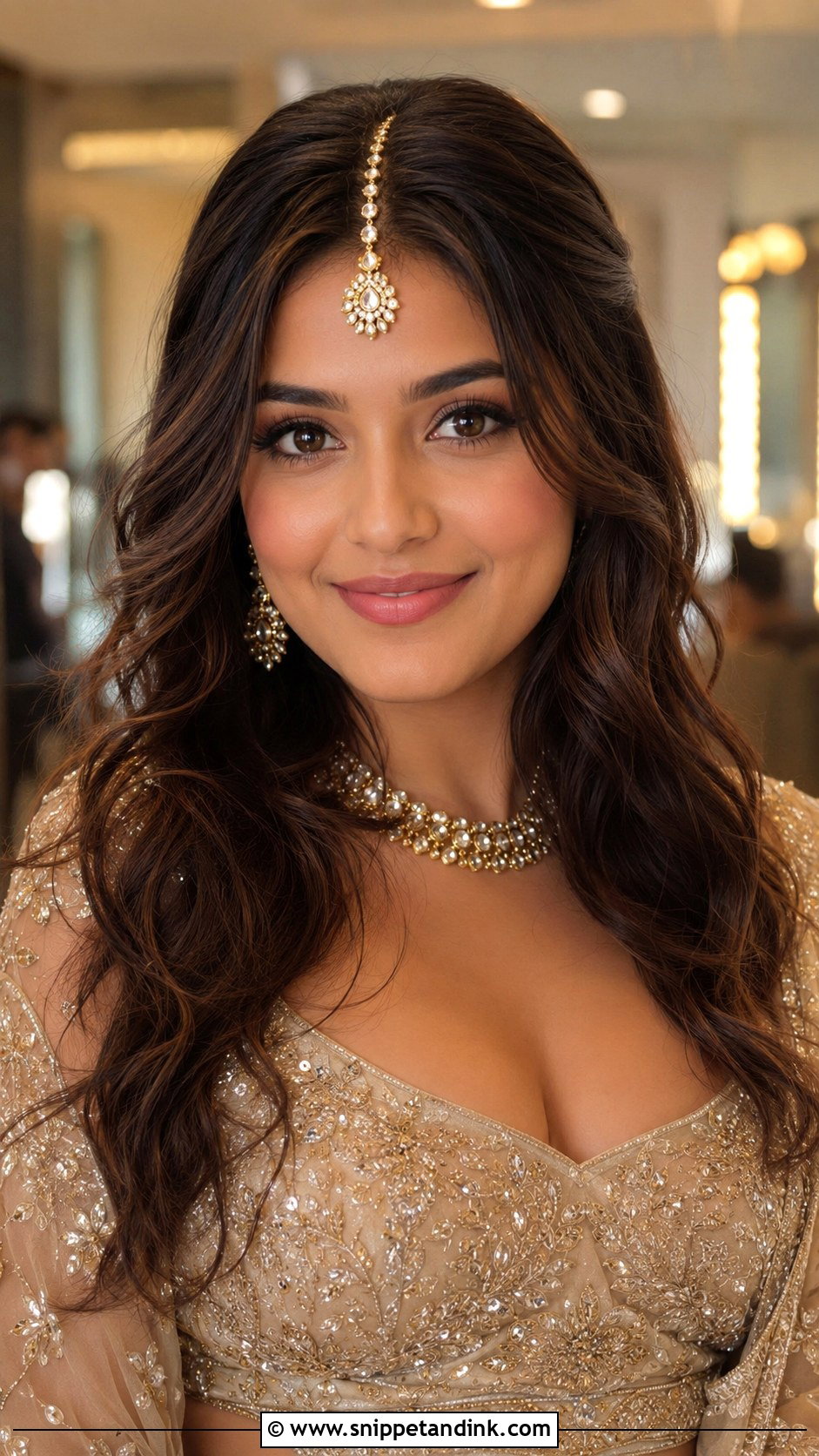
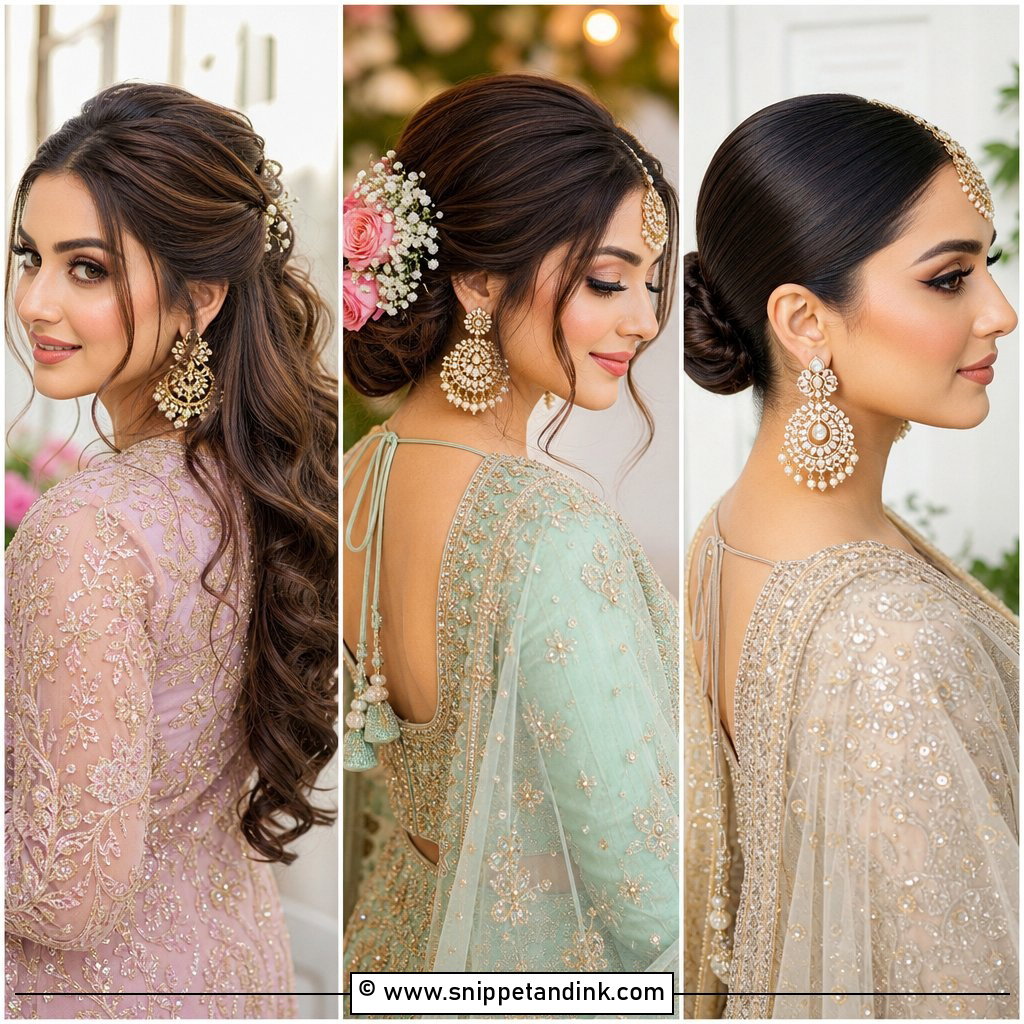
Loose waves add body and soften a tikka, which suits guests and bridesmaids. Medium to long hair with a clear centre part works best. Waves pushed behind the shoulders keep portraits clean; brought forward, they add fullness around the face. Match the tikka to the outfit: a delicate one for lighter clothes, a larger one for a heavy lehenga. As with any open style, the hook needs a teased base at the crown or it slides by mid-evening.
Order of Work: Hair, Then Tikka, Then Dupatta
On a bridal morning, the order matters as much as the style. Do things out of sequence and you end up unpinning one thing to fit another.
- Makeup first, so nothing gets pulled across a finished face.
- Hair to the stage where the crown and part are finished, with the anchor section for the hook ready.
- Tikka in. Hook buried and pinned with two crossed bobby pins, pendant checked in a mirror at eye level.
- Finish the rest of the hairstyle, then add matha patti or passa chains if you’re wearing them.
- Dupatta last. If it goes over the head, pin it just behind the tikka hook so its weight doesn’t drag the chain back.
Taking It Off at the End of the Night
Unpin the dupatta first, then the side chains, then the tikka, and slide the hook out gently. If it’s caught, open the hair around it with your fingers rather than pulling. Hooks tear out more hair than any pin.
A Tikka That Sits Still Holds the Whole Look Together
A heavy bridal tikka looks regal over a sleek bun, and a small one looks soft with curls or waves. Braids last through long ceremonies, and ponytails or short styles feel modern. Whichever you go for, practise with the actual tikka, dupatta, earrings and outfit before the event. That’s the only way to check the weight, the chain length and how everything sits together. When the tikka stays centred and still, the rest of the look falls into place.
You'll Like These Ideas:


Leave a Reply