
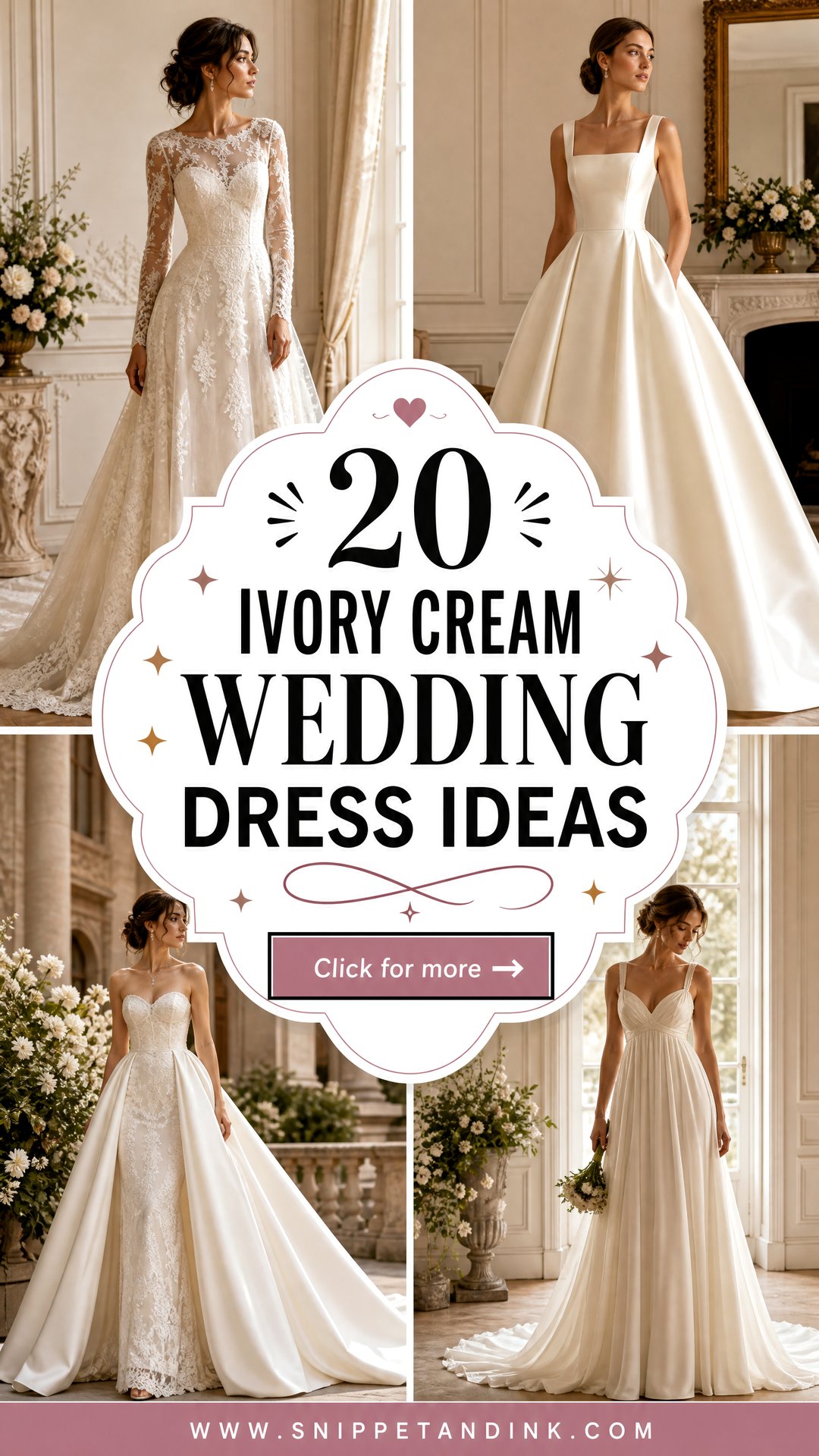
Most of the brides I dress end up in ivory or cream, even the ones who came in asking for white. Warmer shades are kinder to most skin tones, and they make lace, satin, pearls and appliqués look richer because the detail casts a softer shadow than it does on optic white. They suit a minimalist city ceremony as easily as a ballroom or a beach. Current bridal shapes run from clean columns and lace ball gowns to Basque waists, detachable layers, big bows and short reception dresses. Below are twenty complete looks, each with the shoes, veil and jewellery I’d pair with it and the fitting point I’d watch.
Ivory, Cream, Champagne: What the Swatch Names Mean
Bridal shade names aren’t standardised. One designer’s ivory is another’s soft white, and the names on a swatch card only make sense when you see them side by side. Roughly, this is how they run from coolest to warmest.
- Optic or bright white. Treated to look blue-white. Very crisp in daylight, and the shade most likely to look stark against warm or olive skin.
- Soft or natural white. The undyed colour of the fibre. Slightly gentler and suits most complexions.
- Ivory. A white with a faint yellow or grey base. On fair skin it can look like white in photos; on deeper skin it looks warm and clean.
- Cream. Noticeably warmer, close to a pale butter. It flatters golden and olive undertones and makes lace look rich.
- Champagne. Pink-beige, often layered under ivory lace to give it depth.
The test I trust is simple. Stand by a window without makeup and hold the swatch under your chin. If it makes your skin look grey or sallow, go one step warmer or cooler. If your skin looks brighter, that’s your shade, whatever the label says.
1. Ivory Cream Satin A-Line Wedding Dress
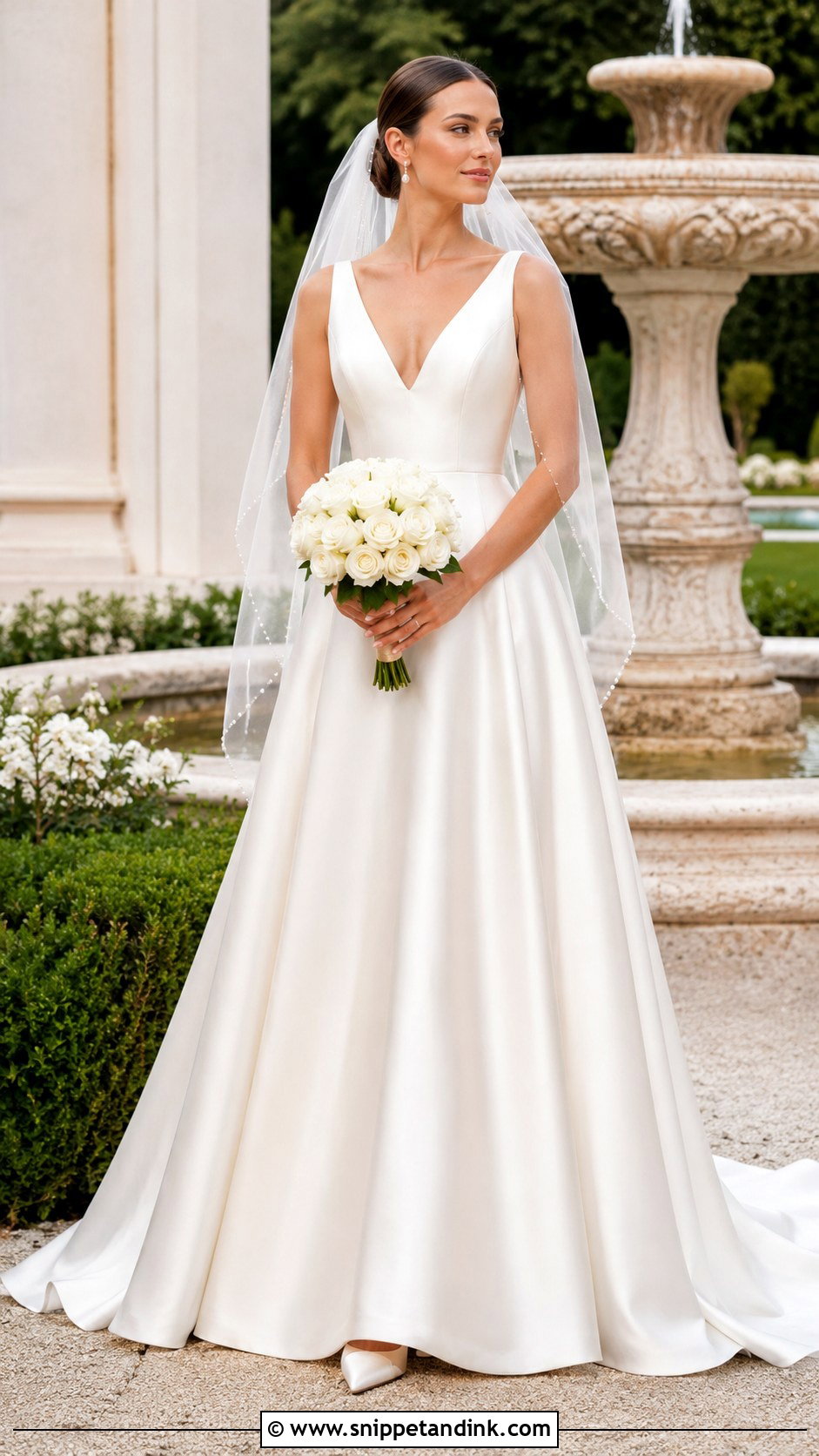
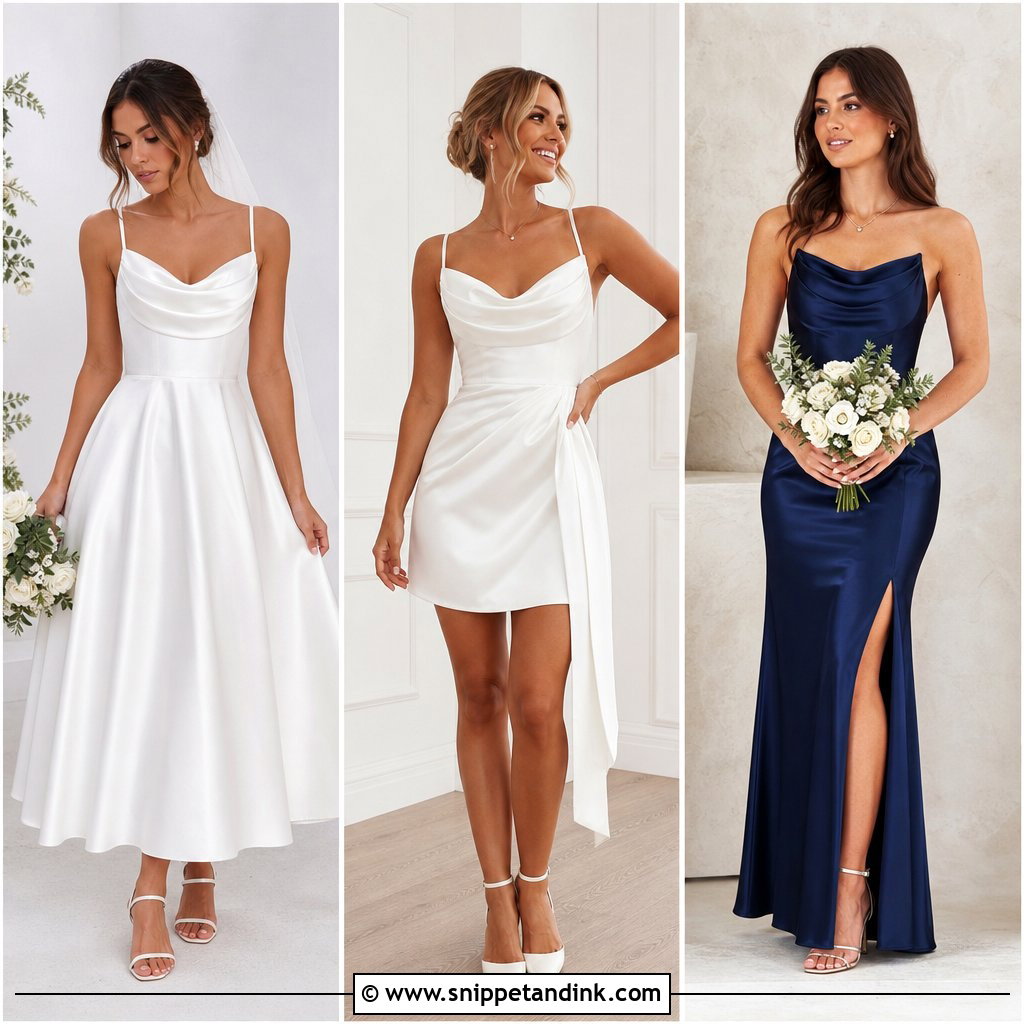
Satin and an A-line skirt is the safest combination in bridal, and I mean that as praise. A fitted bodice with a soft V or scoop neck, then a skirt falling cleanly from the waist, gives structure without stiffness and leaves room to walk and dance. Satin reflects light, so a crease shows more on it than on lace; it needs a proper steam the morning of the wedding. Pointed ivory pumps, pearl drops and a plain fingertip veil. With a plain bodice, a fine tennis bracelet does more than a necklace. White roses and pale greenery keep the colours calm.
2. Ivory Cream Long Sleeve Lace Wedding Dress
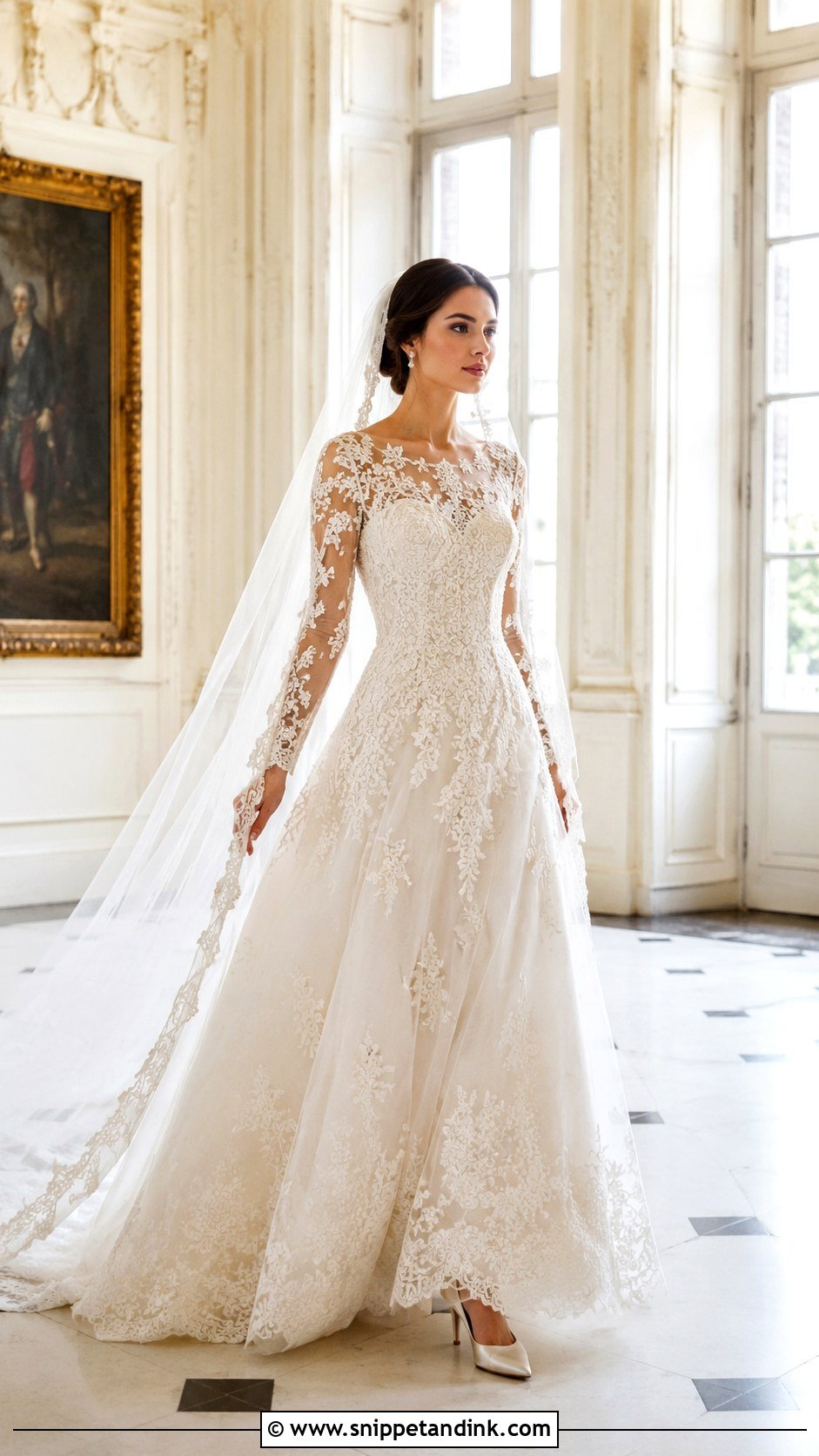
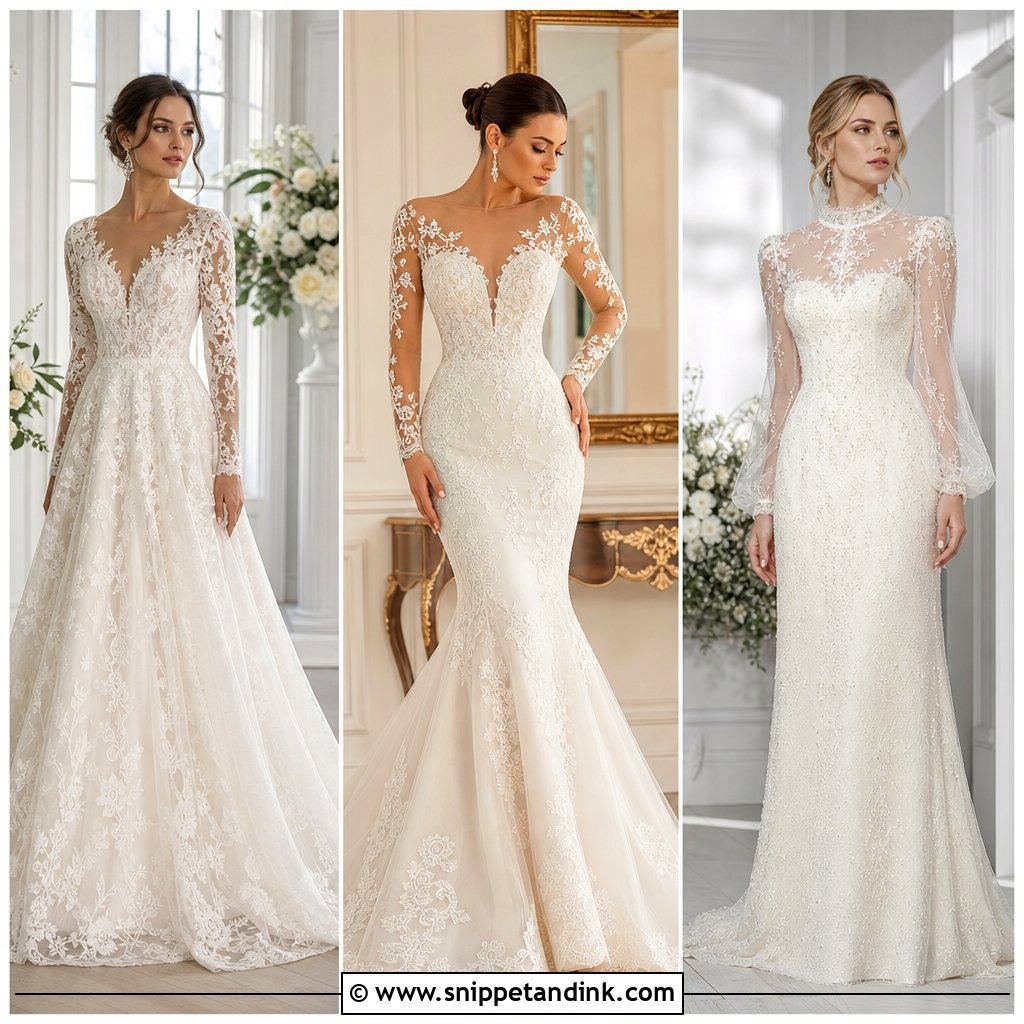
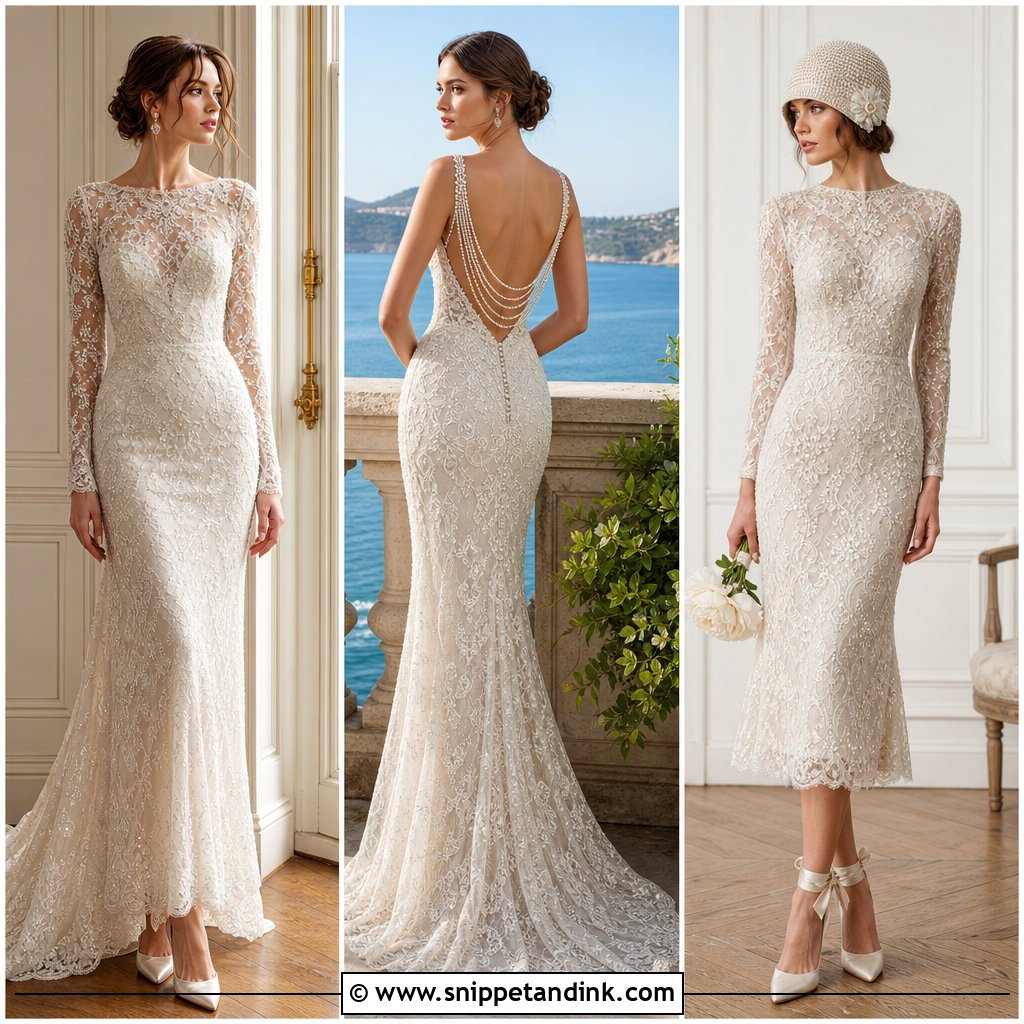
Lace sleeves are where ivory and cream really earn their place, because the warmer shade lets the pattern show. A bodice in floral or botanical lace, sheer sleeves and a soft A-line skirt. Bateau, illusion or a modest V neckline. I always ask brides to bend their elbows and hold a pretend bouquet in sleeved lace, since sleeves that fit standing straight can pull tight across the back. Ivory satin heels, pearl studs and a lace-edged cathedral veil that echoes the gown. A low bun keeps the neckline clear. Roses or peonies wrapped in cream ribbon suit historic estates and cool-weather weddings.
3. Ivory Cream Strapless Ball Gown Wedding Dress
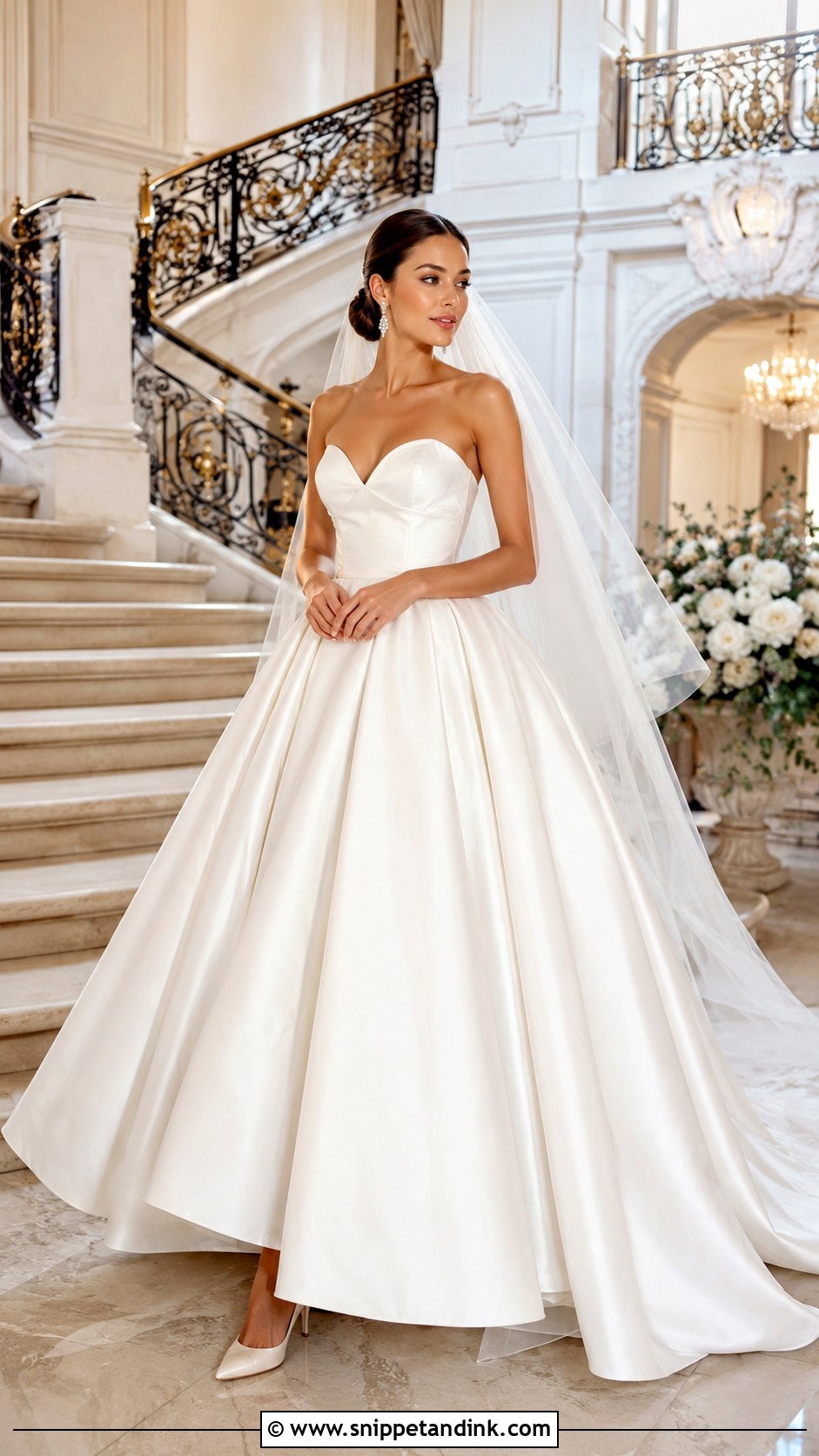
A strapless ivory ball gown is about the entrance. A sculpted bodice with a sweetheart or softly curved neckline, then layers of satin, Mikado or organza beneath. Strapless only works when the support is built in: boning, a waist stay and a bodice altered to your ribcage, so it stays up without you tugging at it every few minutes. Crystal earrings, a fine bracelet and closed ivory heels under the skirt. A long veil and a neat updo. If the bodice has folds or beading, skip the necklace. Grand staircases and ballrooms give the skirt the room it needs.
4. Ivory Cream Square Neck Mikado Wedding Dress
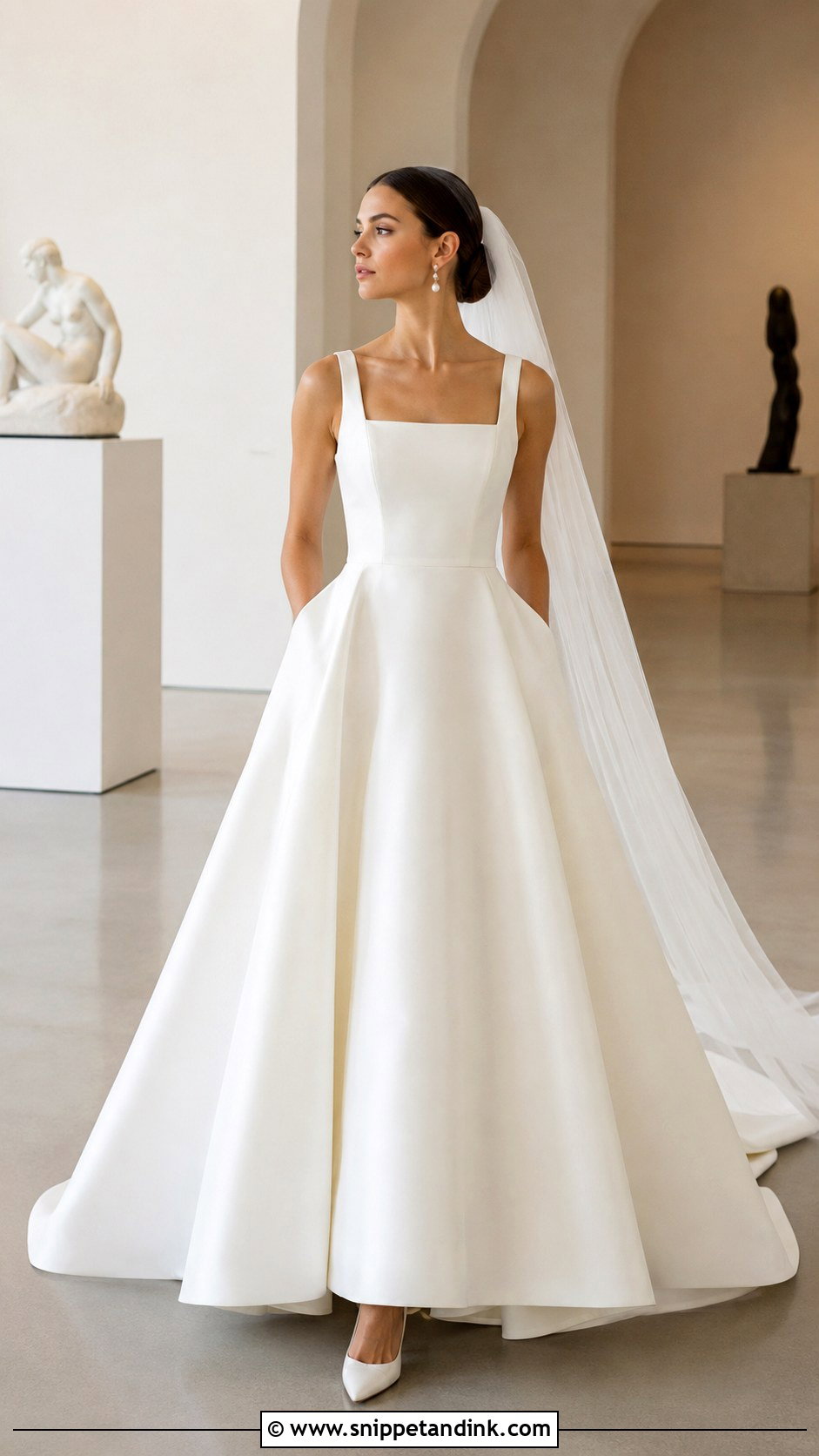
Square neck and Mikado: classic, but with a modern edge. Mikado holds its shape, so it suits an A-line or softly fitted line, and wide straps with well-placed seams frame the neckline. The fabric is crisp and a little unforgiving of fit errors, so I focus on the strap angle; straps that sit too wide slip toward the edge of the shoulder. Pearl-and-crystal earrings, a sleek low chignon and pointed satin pumps. A long plain veil leaves the architecture alone. A compact white bouquet with ivory ribbon. City venues, museums and formal gardens suit it.
5. Ivory Cream Off Shoulder Wedding Dress
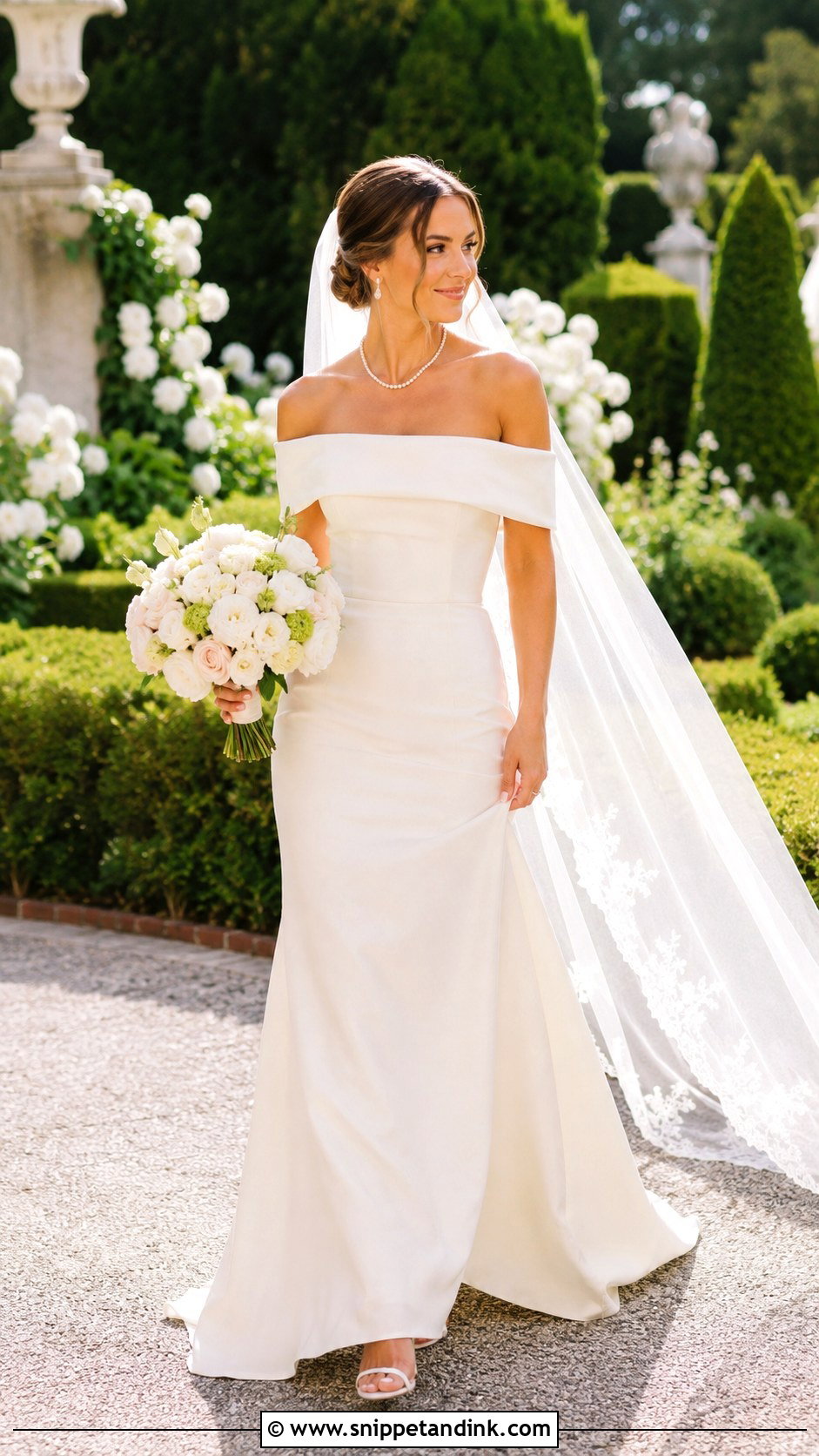
Off-the-shoulder draws the eye along the collarbone and shoulders. A folded satin neckline is clean; lace sleeves feel more traditional. A fitted waist and gently flared skirt balance that wide horizontal line. This is one of the few shapes here where a short pearl necklace works, because it sits in the open space the neckline leaves. Small drops and ivory slingbacks. A low textured bun or side-swept waves. Attach the veil below the hairstyle so it falls down the back. The sleeve band needs enough give to lift your arms, so test it hugging your mum in the fitting room.
6. Ivory Cream Minimalist Slip Wedding Dress
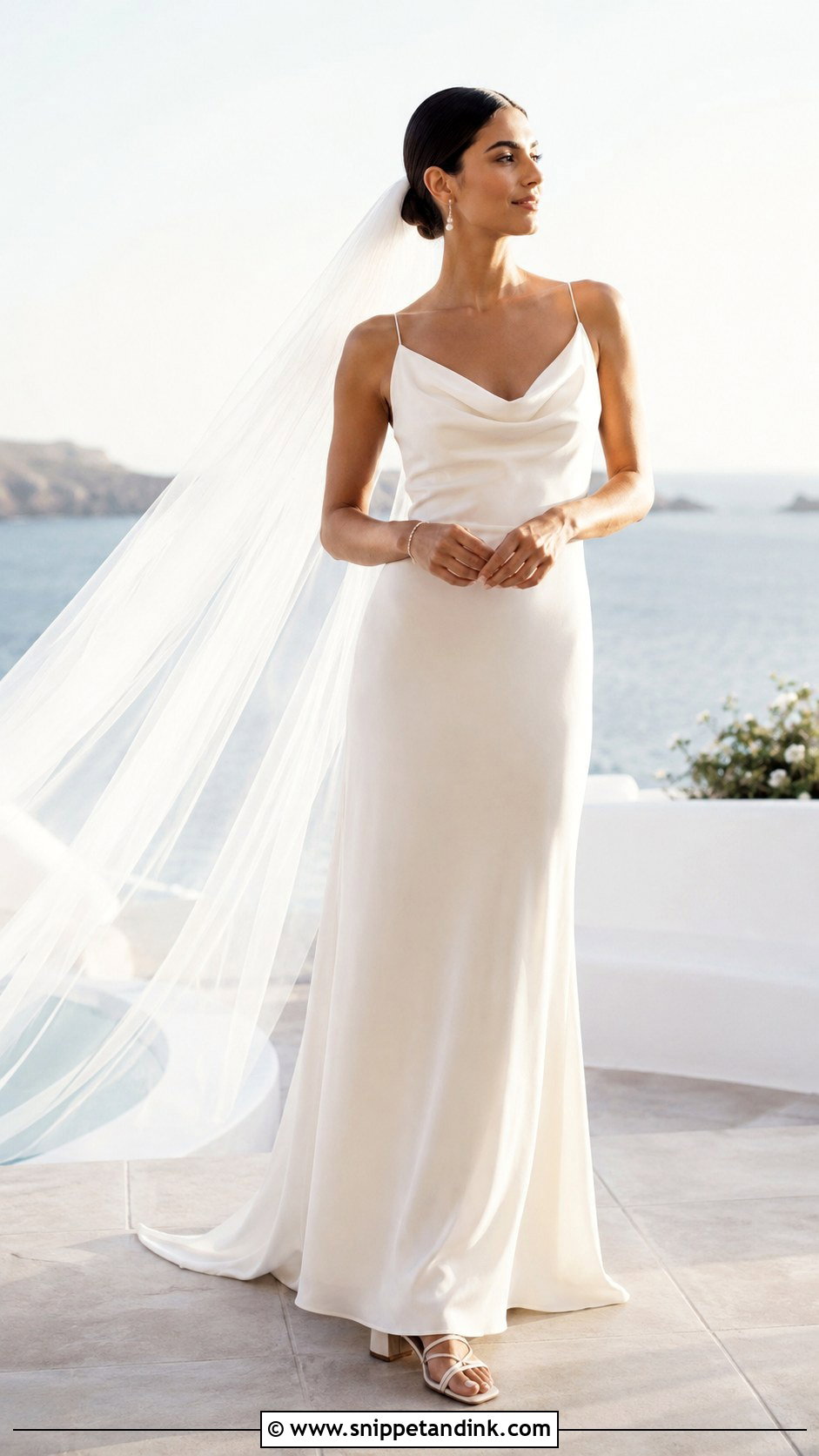
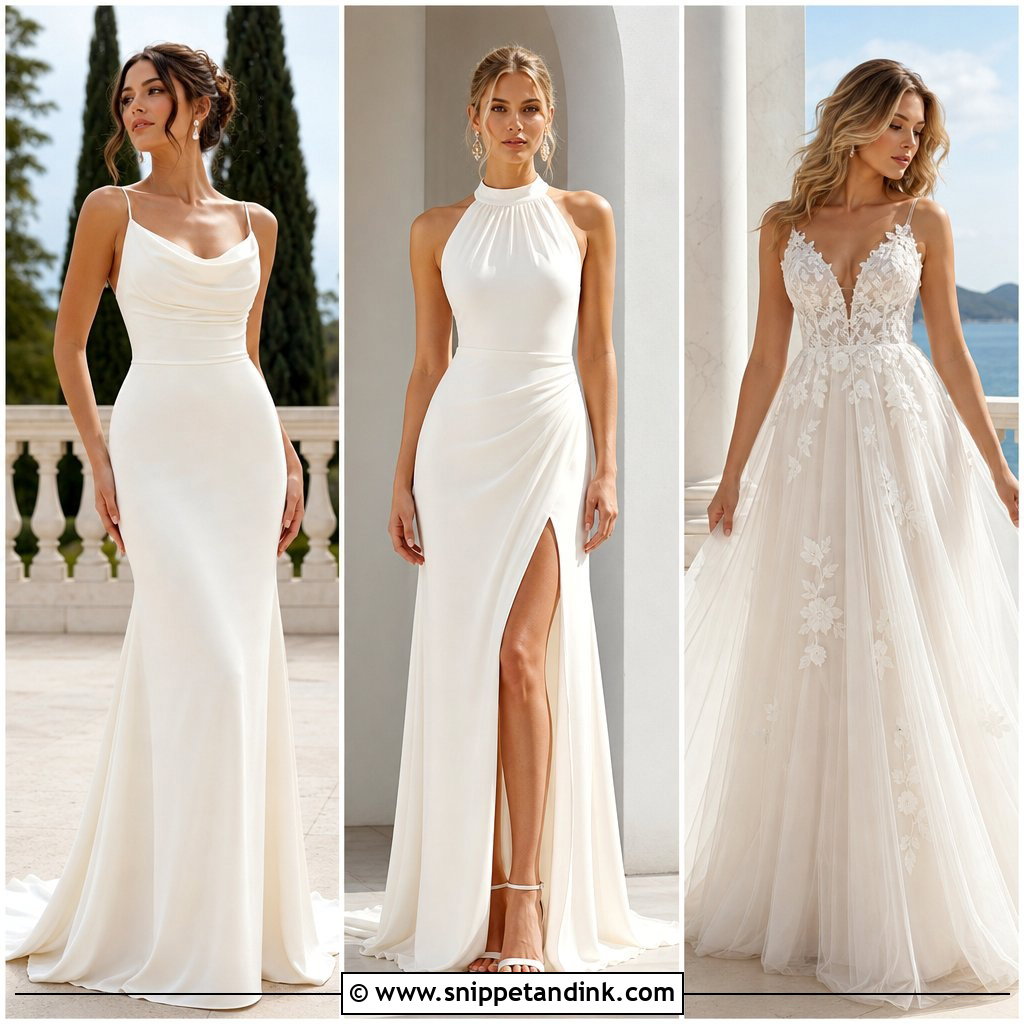
A bias-cut slip in ivory satin is quiet and light, made for a beach or a small outdoor ceremony. Narrow straps, a soft cowl, nothing else. The honest catch is that minimal dresses reveal everything, from a strap line to a bra edge, so the underwear choice and the tailoring take most of the effort. Low block-heel sandals, fine gold or pearl earrings and a delicate bracelet. A sheer chapel veil makes it unmistakably bridal. Soft waves, a polished bun or a low ponytail, depending on the wind. Add a light chiffon cape if the evening turns cool.
7. Ivory Cream Basque Waist Wedding Dress
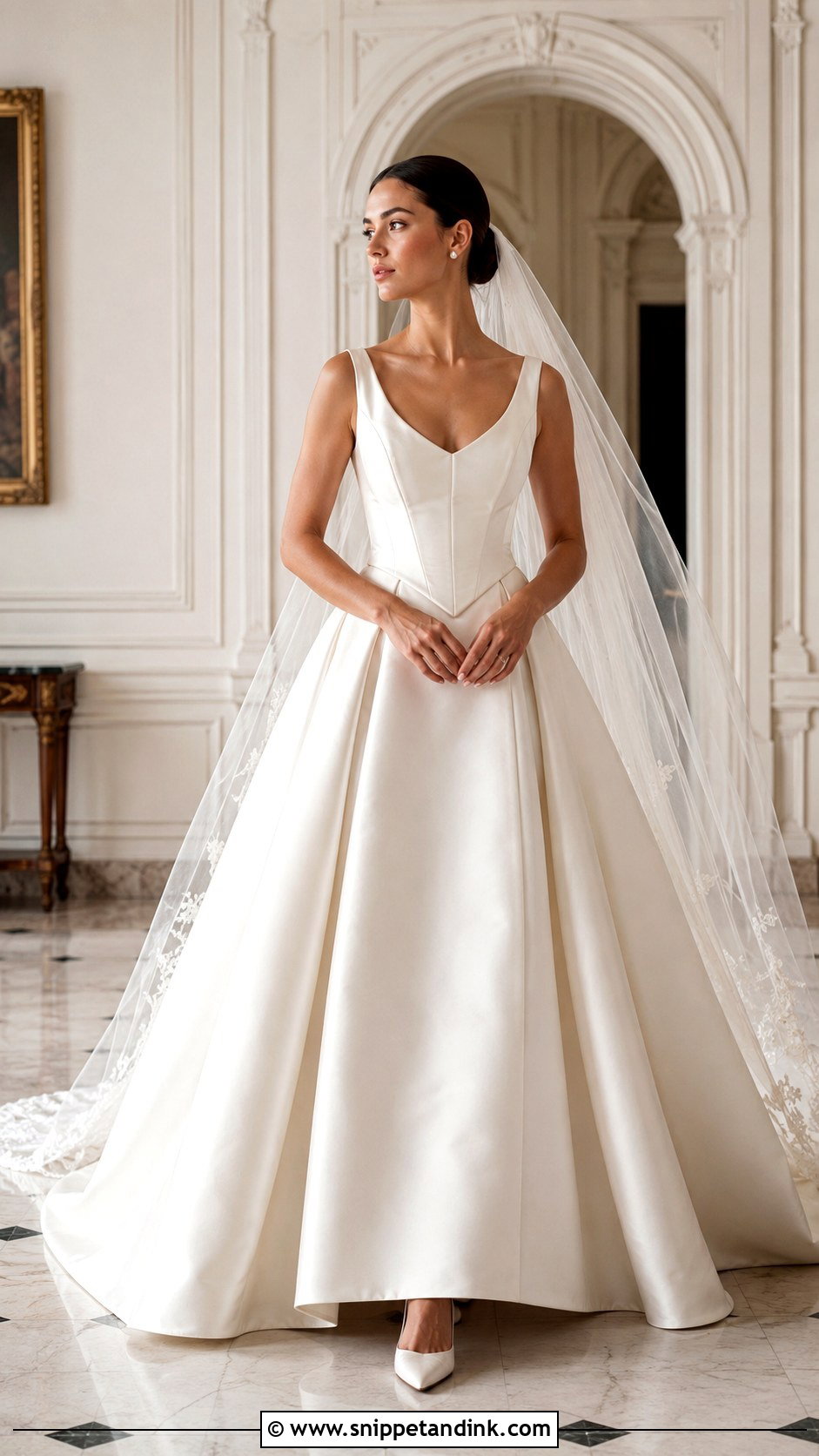
The Basque waist dips into a V below the natural waistline, which lengthens the torso before the skirt flows out. In ivory, a structured corset-style bodice with a full satin or tulle skirt looks rich rather than stark. The waist is already the focal point, so accessories stay small: pearl studs, a narrow bracelet, pointed ivory heels. A cathedral veil and a tidy bun suit the formal proportions, or a veil with a narrow lace edge for something softer. On shorter torsos, I keep the point of the V shallow; a deep dip can make the legs look shorter.
8. Ivory Cream Floral Applique Wedding Dress
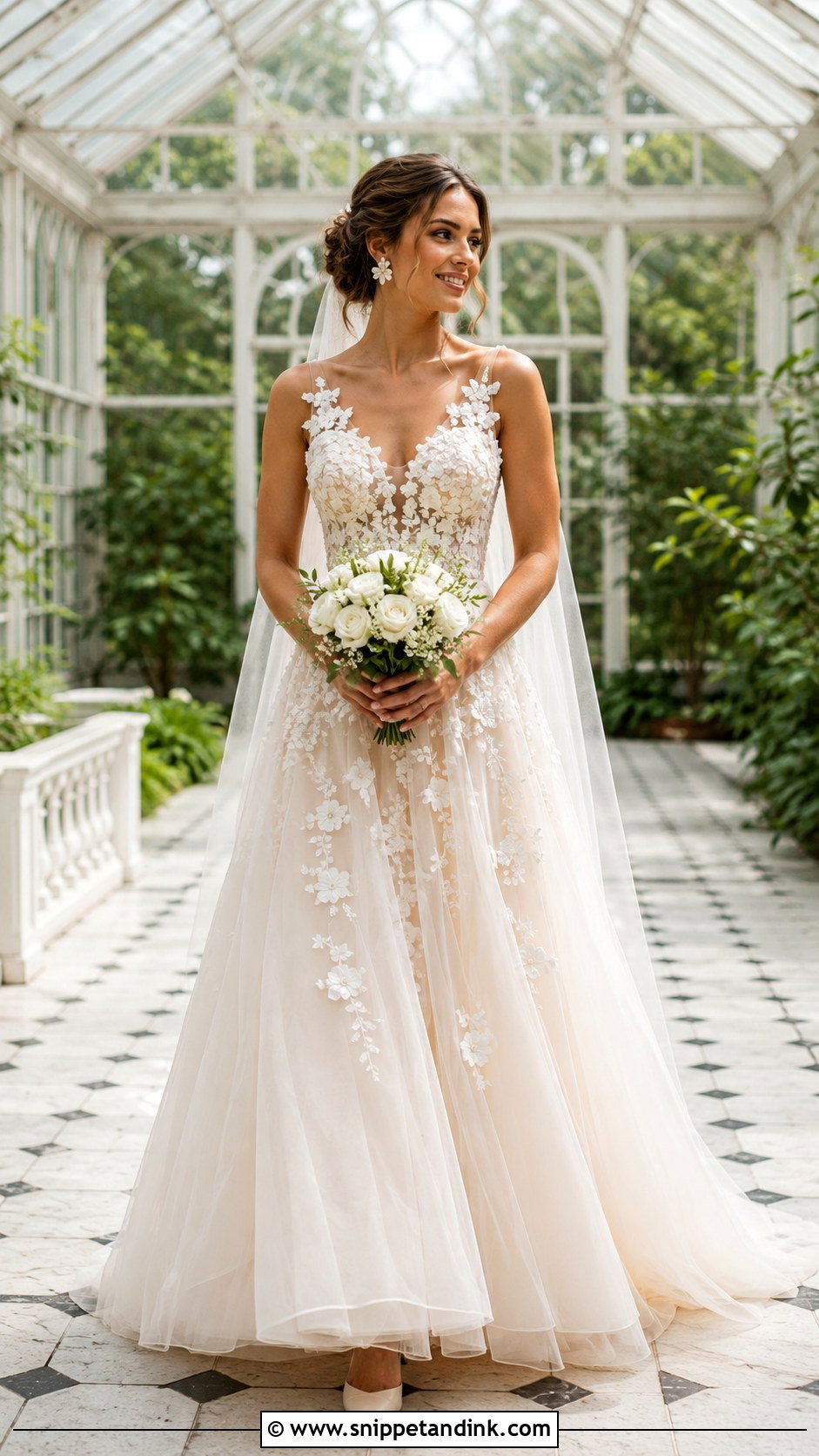
Three-dimensional flowers on ivory tulle keep the palette soft while adding real texture. Concentrate the appliqués on the bodice and let them scatter down the A-line skirt, so the dress has a focal point and doesn’t read as wallpaper. Plain ivory heels, small floral earrings and a sheer veil with minimal edging. A loose low bun leaves the detail visible. Keep the bouquet to one or two flower varieties. Before the day, gently test the appliqués on the bodice and arms, since a loose petal near the underarm will catch every time you move. Gardens and conservatories suit it.
9. Ivory Cream High Neck Lace Wedding Dress
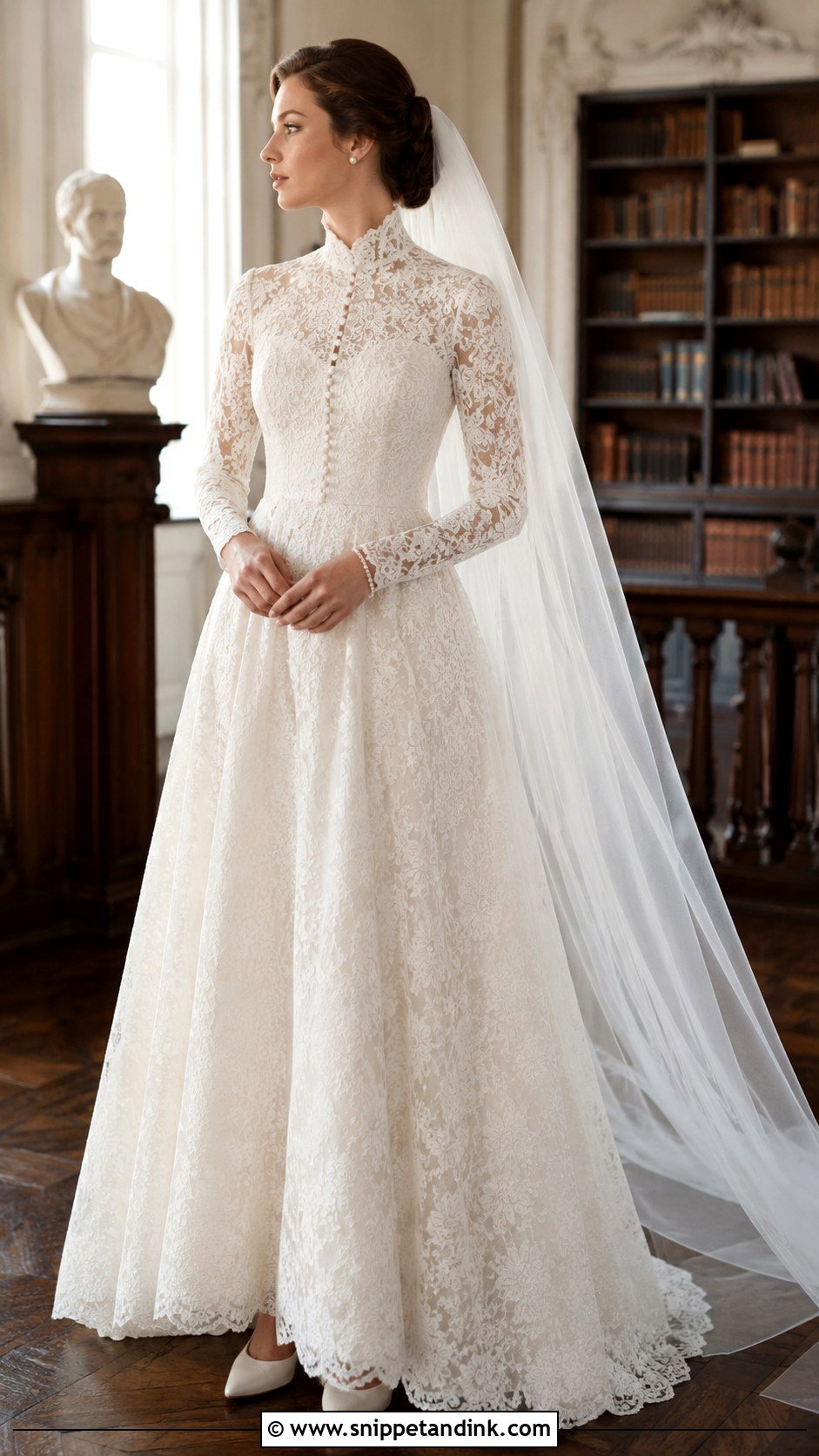
High-neck lace in cream has a vintage, slightly bookish feel I love for libraries, historic halls and autumn weddings. A fitted lace bodice, sheer long sleeves, covered buttons and an A-line or column skirt. The neckline covers everything, so no necklace; pearl studs, a slim bracelet and a hair comb instead. Ivory closed pumps. A smooth bun shows the lace around the neck. Keep the veil plain to avoid lace on lace on lace. Covered buttons look lovely and take ages, so build ten minutes for them into the dressing schedule, or ask for a hidden zip beneath.
10. Ivory Cream Tea Length Wedding Dress
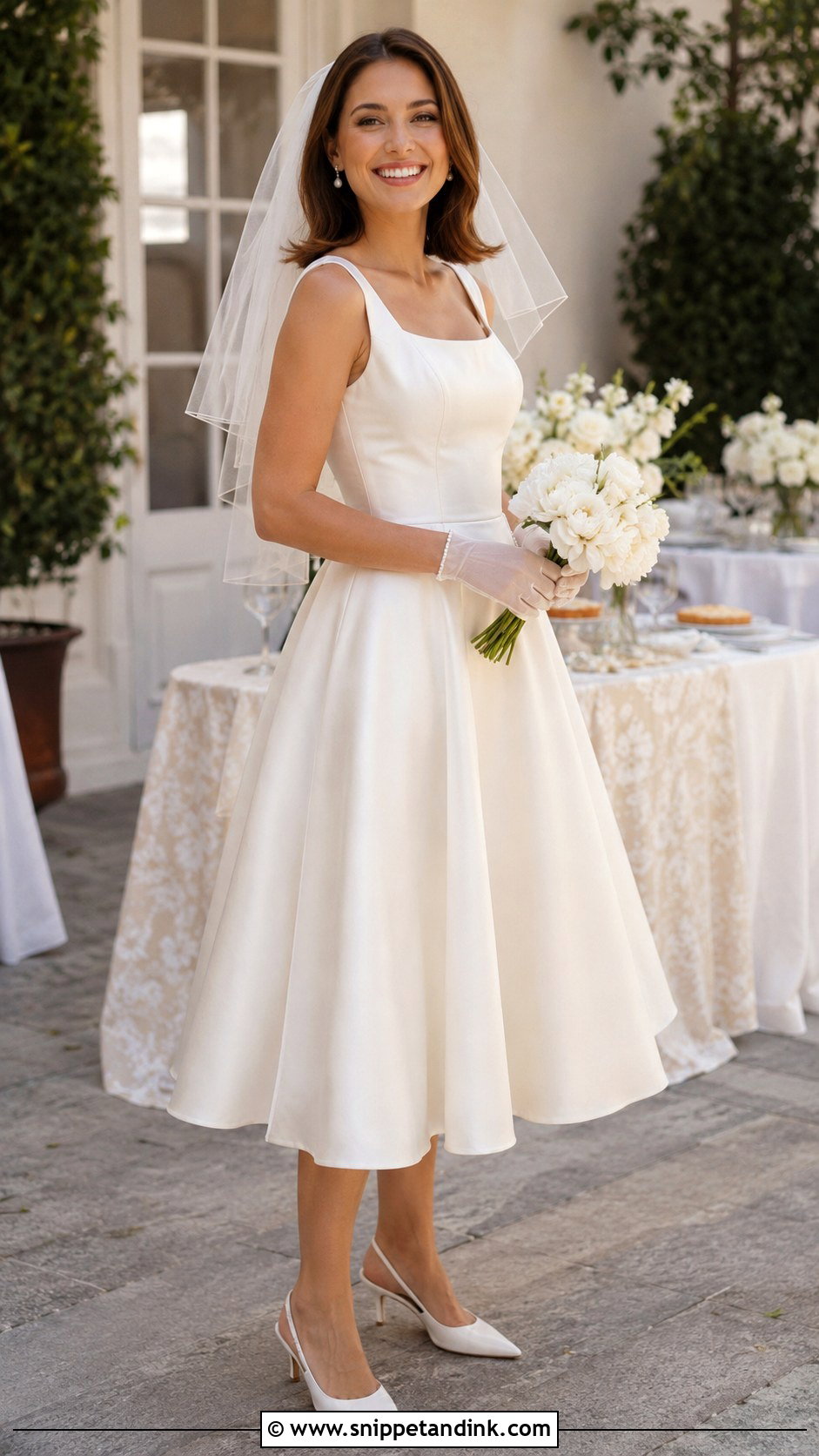
Tea length in ivory has cheerful movement and a little vintage character. A fitted waist, a supportive bodice and a skirt between knee and ankle; satin gives a crisp shape, layered tulle a softer one. Your shoes are now on show, so pointed pumps, slingbacks or refined block heels in ivory, ideally the same shade as the dress. Pearl earrings, short gloves if the setting suits them, and a shoulder-length veil or a small bow. A compact bouquet keeps the scale right. It suits a courthouse ceremony, a restaurant reception or a small garden wedding where you’ll be on your feet.
11. Ivory Cream Mermaid Wedding Dress
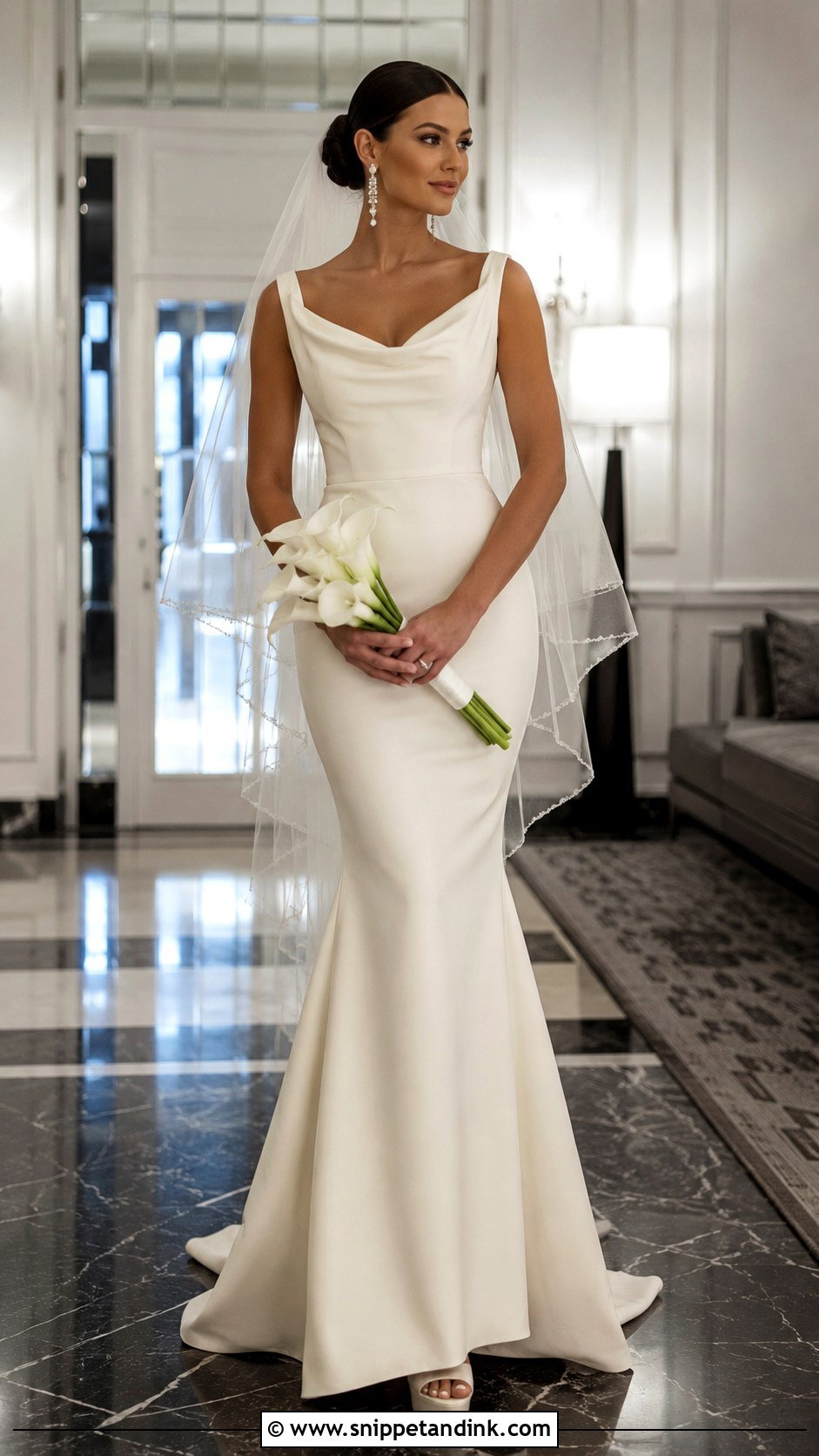
A mermaid follows the body and then flares at the knee or lower thigh, and in ivory the shape looks softer than in stark white. Smooth crepe for minimalism, lace for texture. My non-negotiable at fittings is a stair test, because the flare point decides whether you can climb steps at all. Sit, walk and dance in it before signing off. I like platform heels here: they add height without a steep angle, and that helps when the knee is narrow. A fitted fingertip veil, long drop earrings and a sleek bun or side part. Carry a long, narrow bouquet.
12. Ivory Cream Detachable Overskirt Wedding Dress
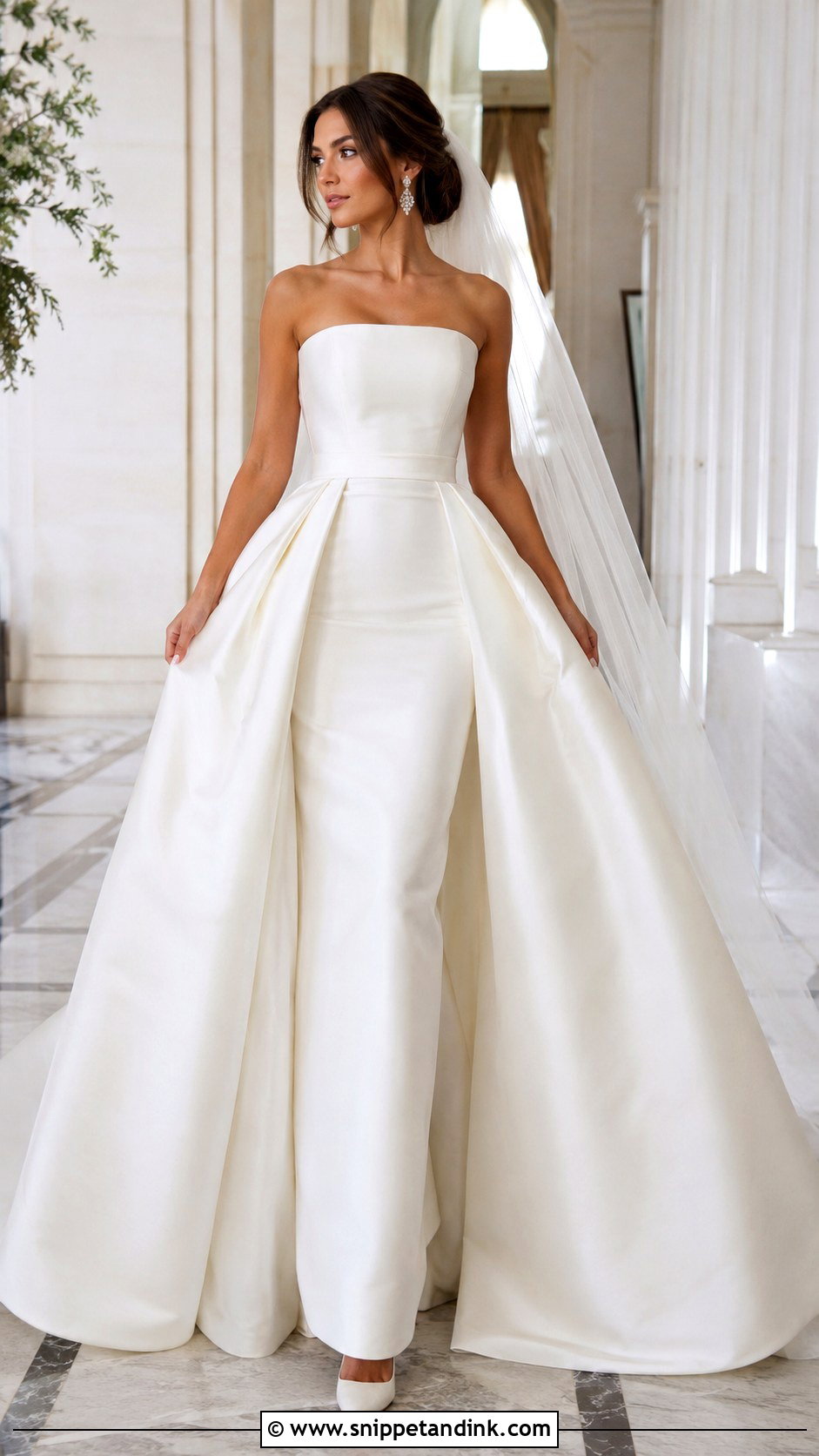
Want a formal ceremony gown and a lighter reception look without buying two dresses? A detachable overskirt does it. A fitted column or sheath underneath, a full satin or tulle overskirt on top for the ceremony, with ivory heels, crystal drops and a long veil. After the vows, remove the veil and overskirt and change the earrings to small hoops or pearl studs. Ivory varies between fabric batches, so I check the overskirt and base dress side by side near a window, and I make sure the fastening lies flat and stays hidden.
13. Ivory Cream Chiffon Beach Wedding Dress
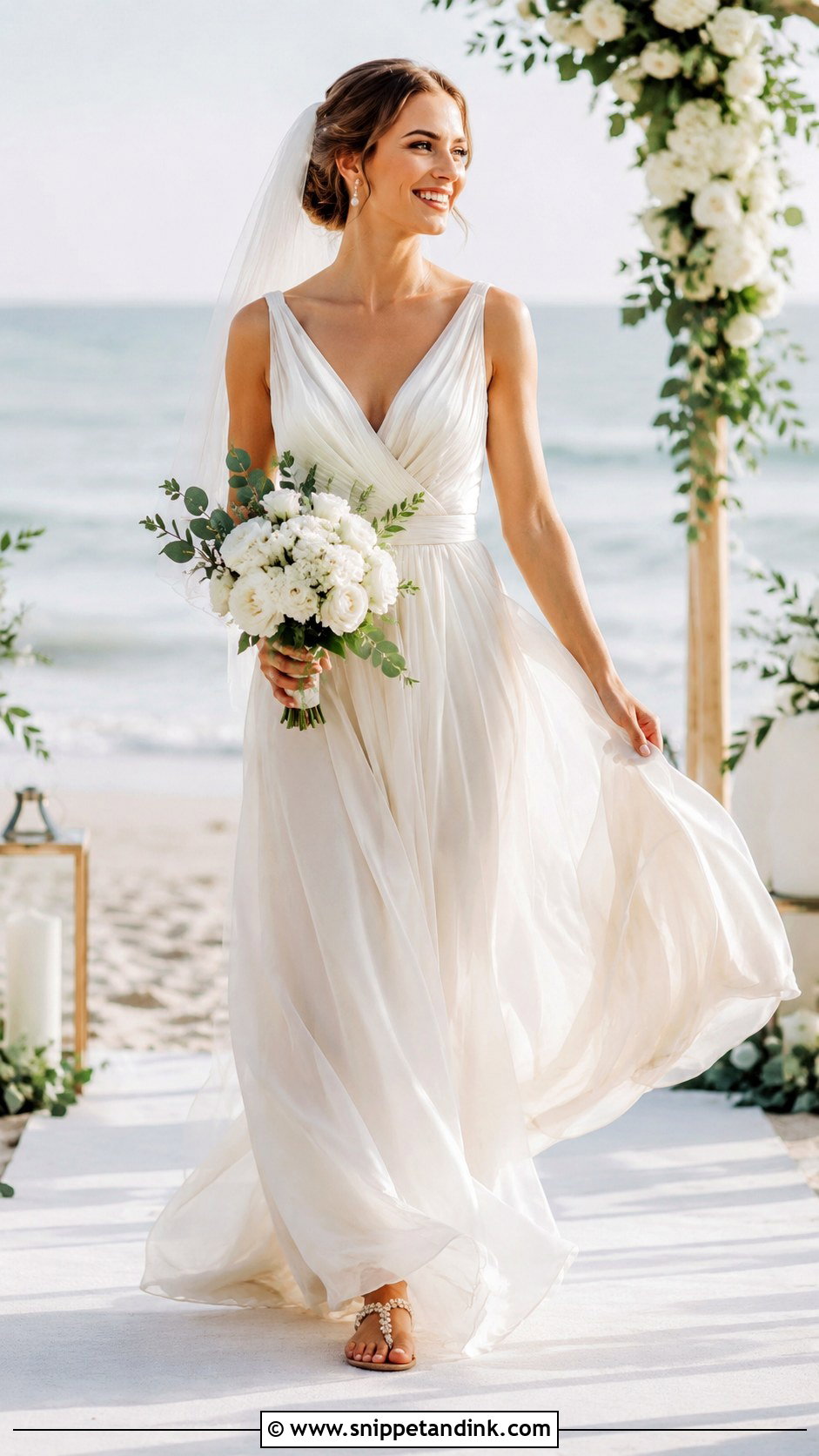
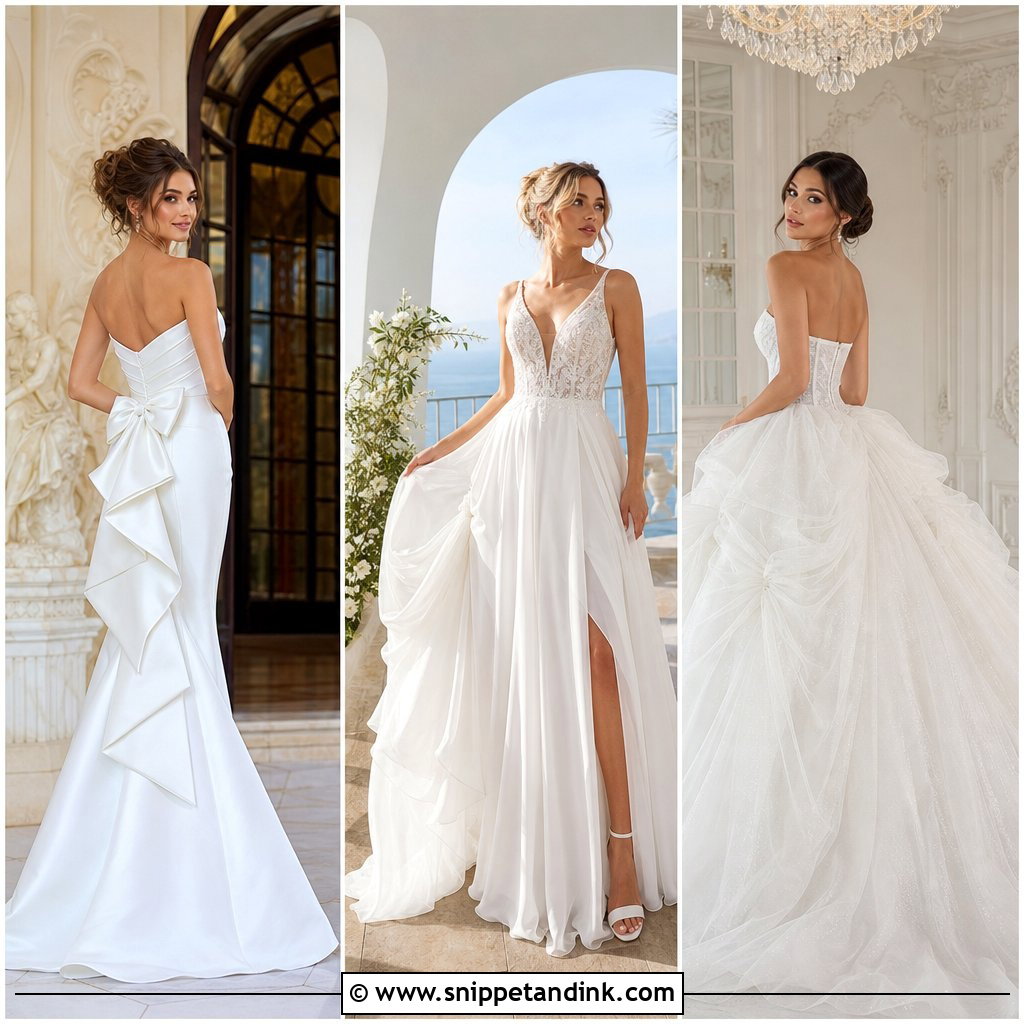
Chiffon on sand is the sensible choice: light, breathable and happy to move with the wind. An A-line or empire waist with a lined bodice, a flowing skirt and comfortable straps. Skip long trains; sand sticks to them and they drag through wet patches. Flat embellished sandals, small pearl earrings and a light veil pinned firmly, since sea breezes lift loose veils straight off the head. A loose braid or low bun survives humidity far better than tight curls. White flowers with green foliage finish a look made for beach venues, coastal resorts and warm-weather weddings.
14. Ivory Cream Pearl Beaded Wedding Dress
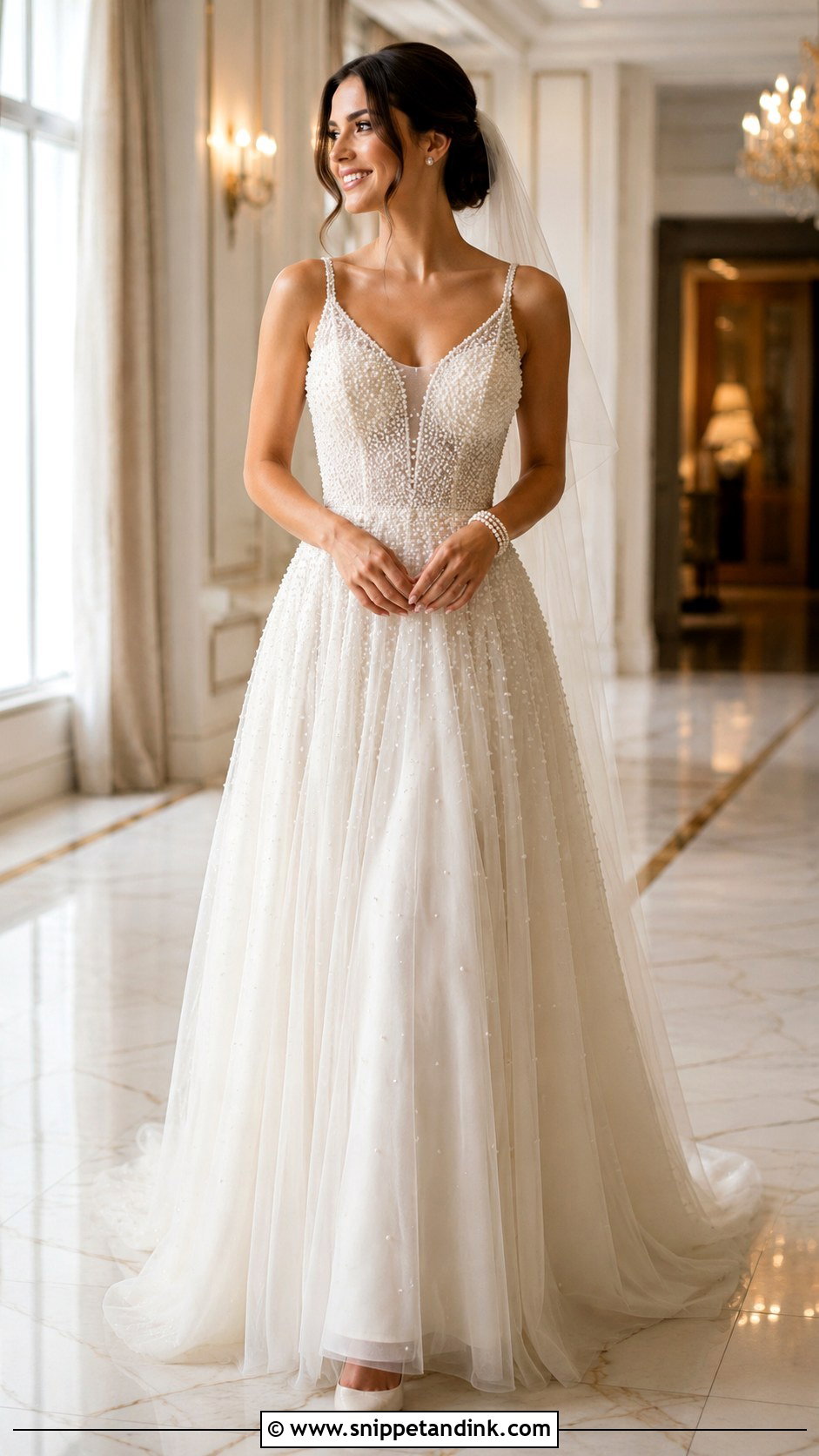
Small pearls give ivory a glow without the glitter of crystal. I prefer them placed on the bodice, the sleeves or the top of the skirt rather than all over. A fitted tulle bodice with a flowing A-line skirt balances the detail. Pearl studs, a simple pearl bracelet and an unembellished veil. Plain satin heels keep it grounded. A neat bun or polished waves, depending on the neckline. Pearls come in their own range of whites, so hold your jewellery against the dress before buying; bright white pearls can make a cream gown look slightly yellow.
15. Ivory Cream Cap Sleeve Wedding Dress
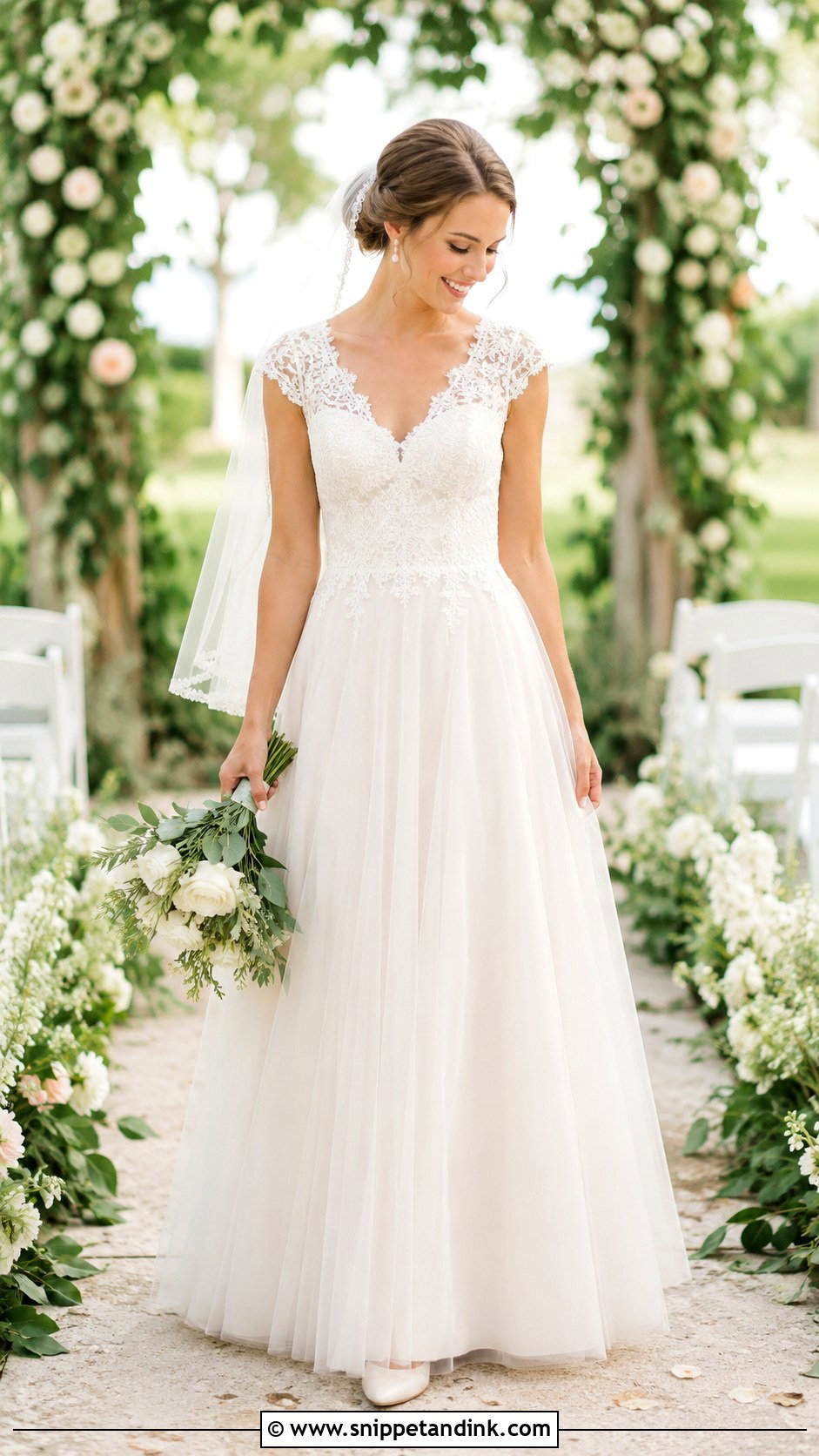
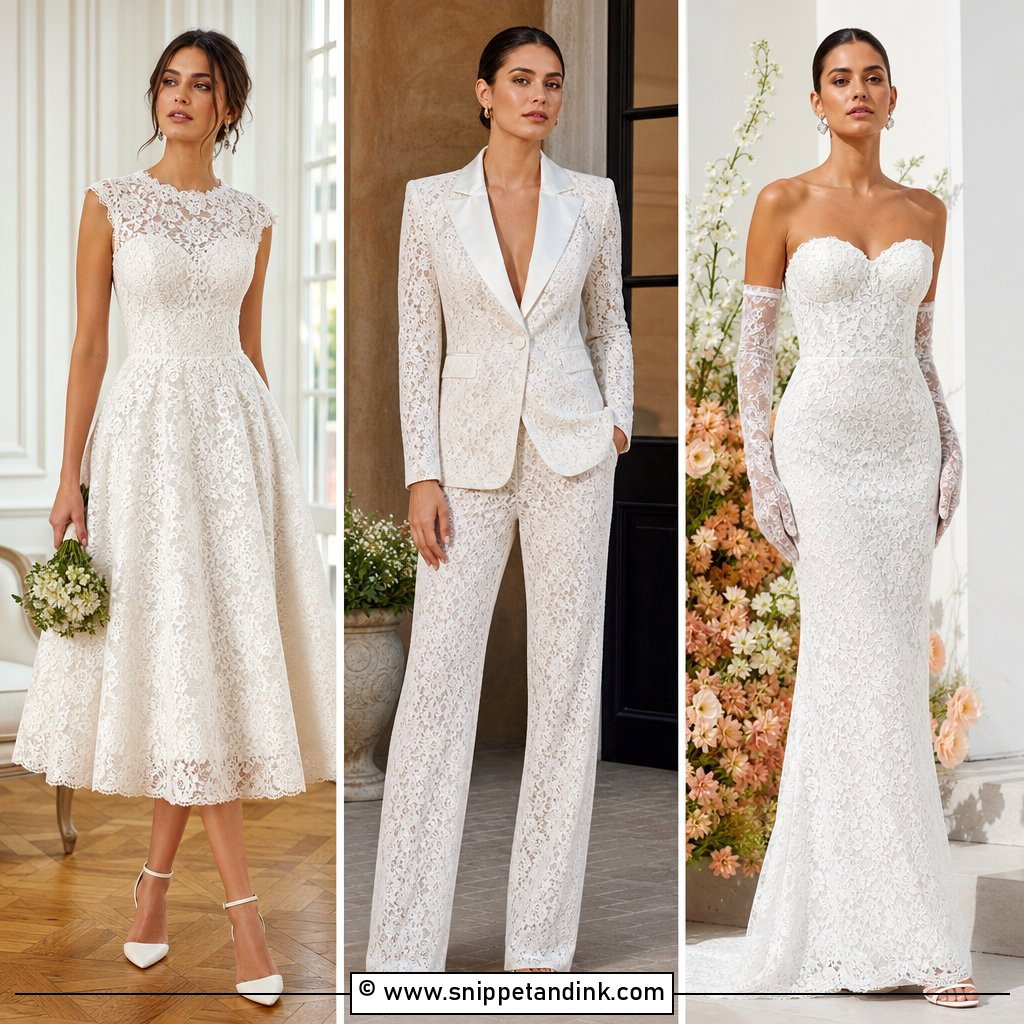
Cap sleeves give a little shoulder coverage without the commitment of a full sleeve. Lace caps with a V-neck bodice and a chiffon, satin or tulle A-line skirt, wearable from spring to autumn. Ivory pumps, pearl drops and a waist-length or fingertip veil. A soft updo shows the sleeve shape, and a few face-framing pieces stop it looking severe. If the bodice lace is detailed, keep the ribbon plain and the jewellery minimal. Cap sleeves sit right on the curve of the shoulder, so a few millimetres of adjustment at the strap makes the difference between neat and slipping.
16. Ivory Cream Corset Tulle Wedding Dress
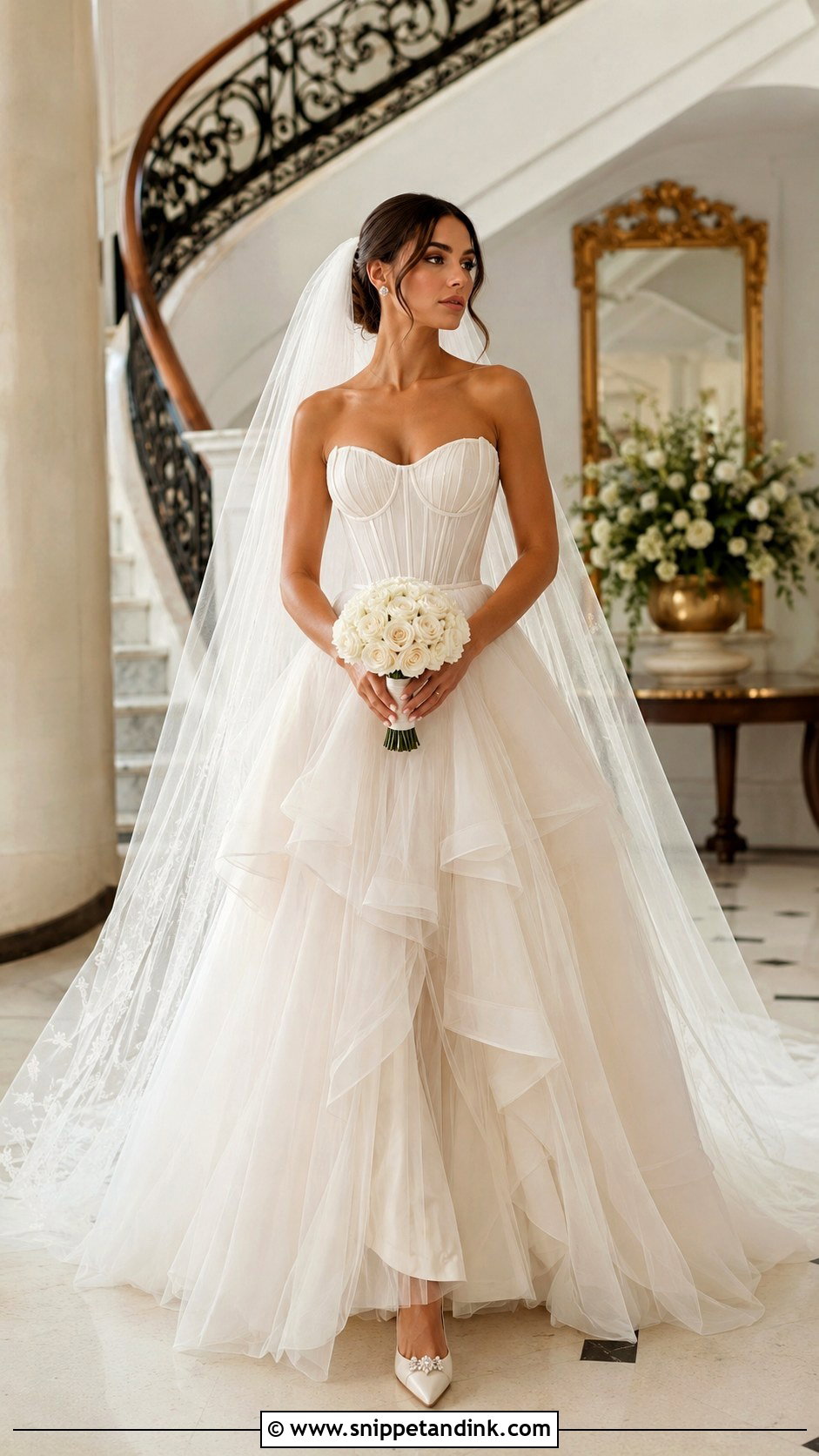
Structure on top and softness below: a corset bodice with a tulle skirt. Look for carefully fitted boning, a curved neckline and several light skirt layers. A lined bodice gives more coverage, and lace panels soften the construction. Pointed ivory heels, crystal studs and a long sheer veil that floats behind you. Keep the hair simple. Corsets need time in alterations, and the fit changes if your weight shifts in the final weeks, so I schedule the last bodice adjustment as close to the wedding as practical. A small cream bouquet balances the volume.
17. Ivory Cream One Shoulder Wedding Dress
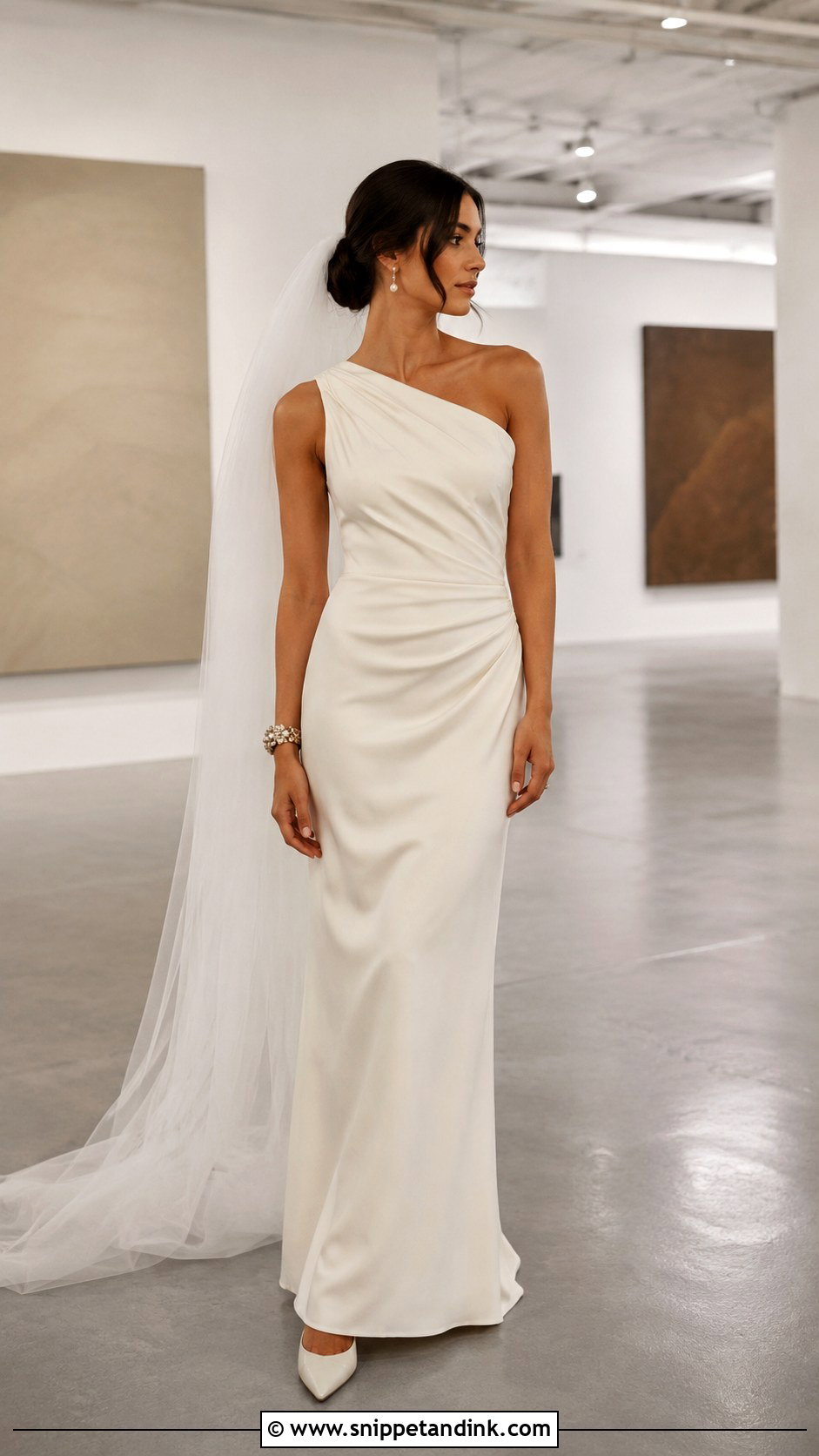
One shoulder makes ivory feel fashion-forward. Choose a column for sleekness or an A-line for movement, with soft draping at the shoulder and waist for depth. Skip the necklace, which fights the angle. A decorative bracelet on the bare arm, understated earrings and ivory pointed pumps. Put a low side bun on the bare-shoulder side so the eye travels across the neckline. Attach a plain veil behind the hairstyle, or swap it for a sculptural hair piece. Check the strap stays put when you raise the bouquet; a strip of fashion tape on the inside solves most slipping.
18. Ivory Cream Empire Waist Wedding Dress
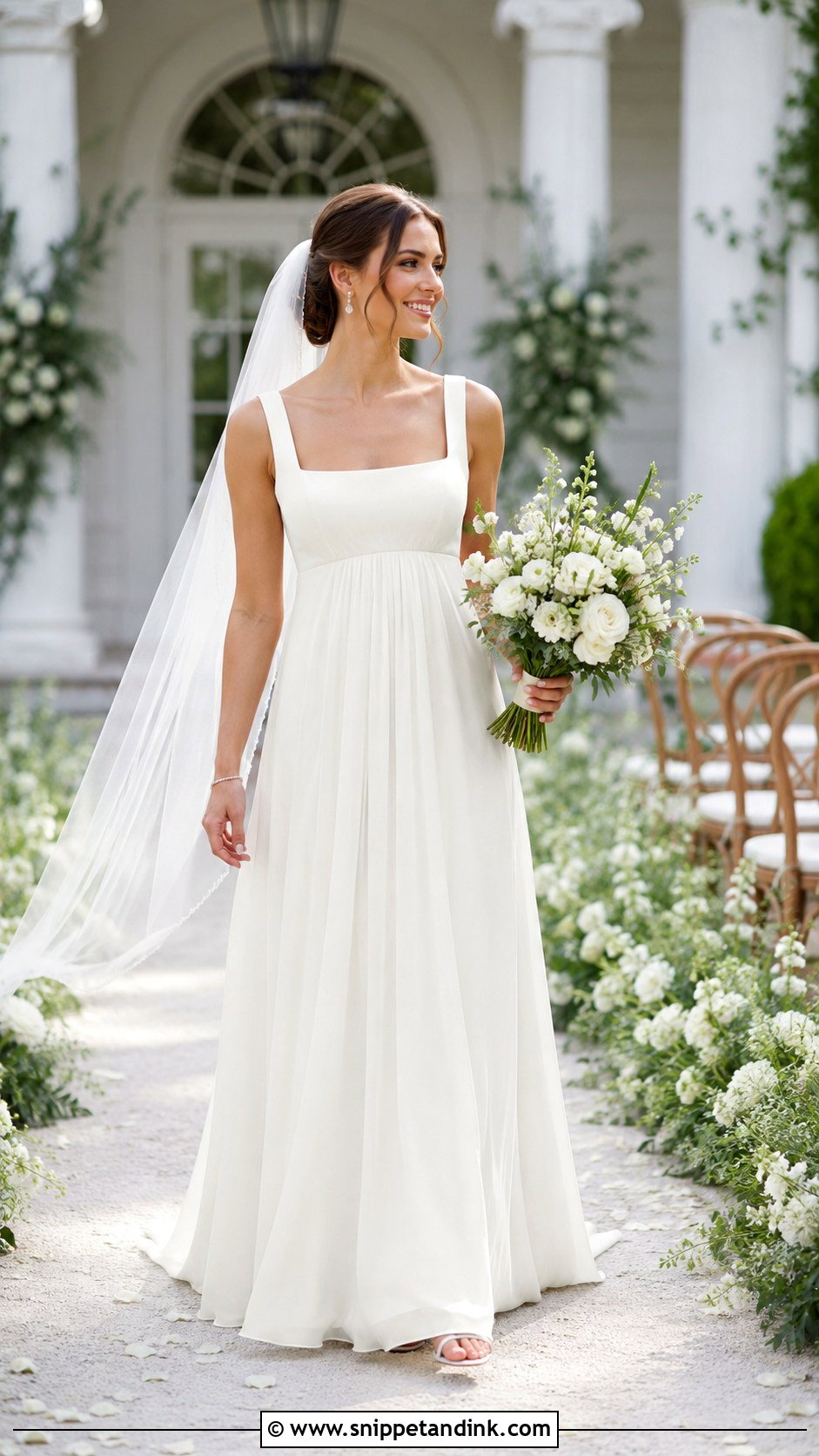
The empire waist sits right under the bust and lets a loose skirt fall from there, so nothing presses on your middle all day. Chiffon, soft crepe or light satin all suit it. A supportive V-neck or square-neck bodice with wider straps keeps it secure. Low block heels, delicate drops and a narrow bracelet. A chapel veil adds presence without weight. Soft waves or a low twisted bun. I recommend this shape to brides who feel restricted in structured gowns, to anyone marrying outdoors in heat, and to pregnant brides, since the skirt allows for change between fittings and the wedding.
19. Ivory Cream Bow Back Wedding Dress
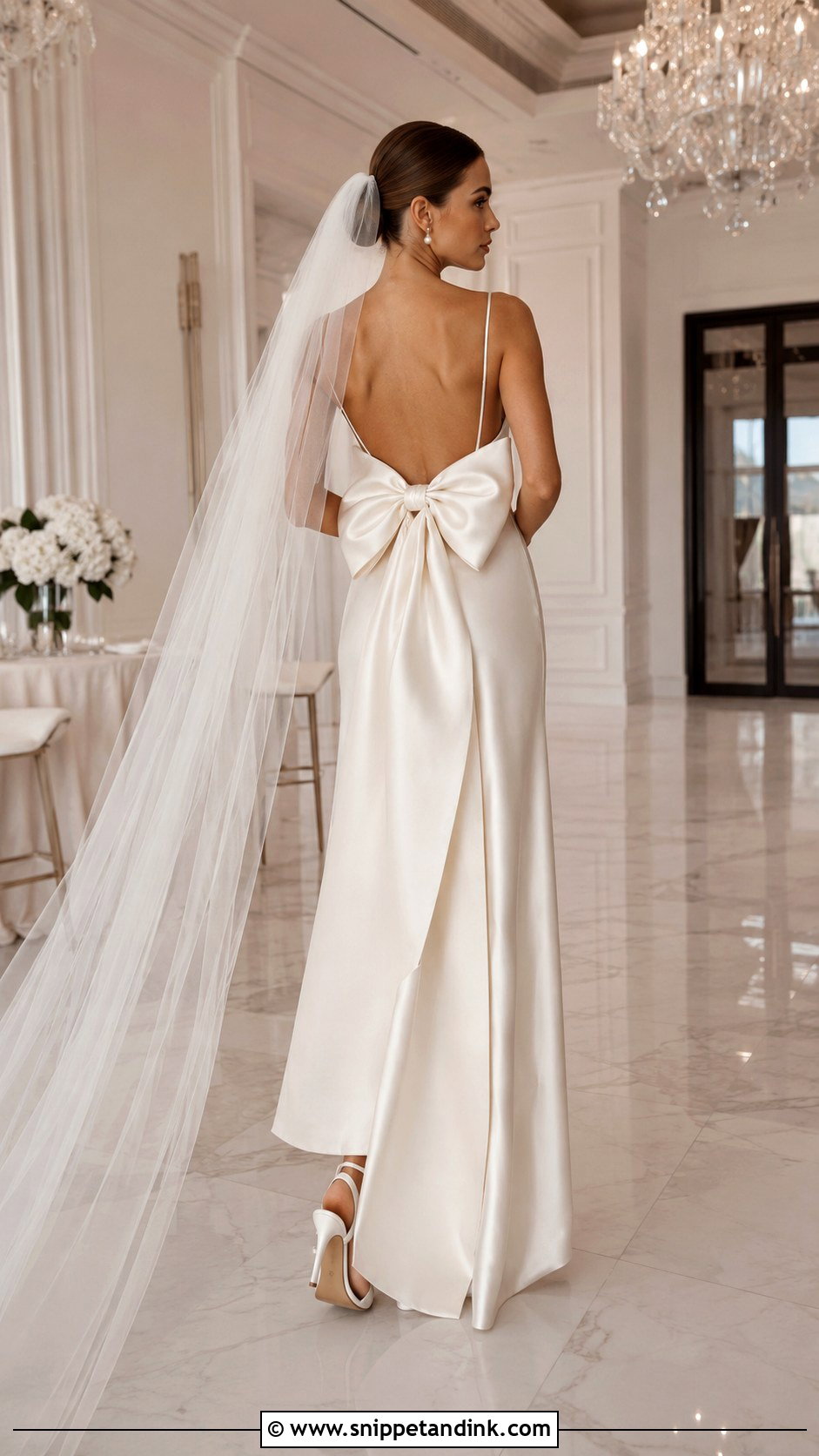
A big bow at the back turns a simple ivory gown into the dress people remember. The best version is a sleek column or A-line with a structured satin bow at the waist or upper back. A bow that size needs internal stiffening or a hidden wire, or it wilts by the reception. Choose a plain veil you can remove after the ceremony so the bow is visible in photos. Pearl earrings, ivory slingbacks and a polished bun. An oversized bouquet hides nothing at the back but can unbalance the front, so carry something compact with a clean ribbon wrap.
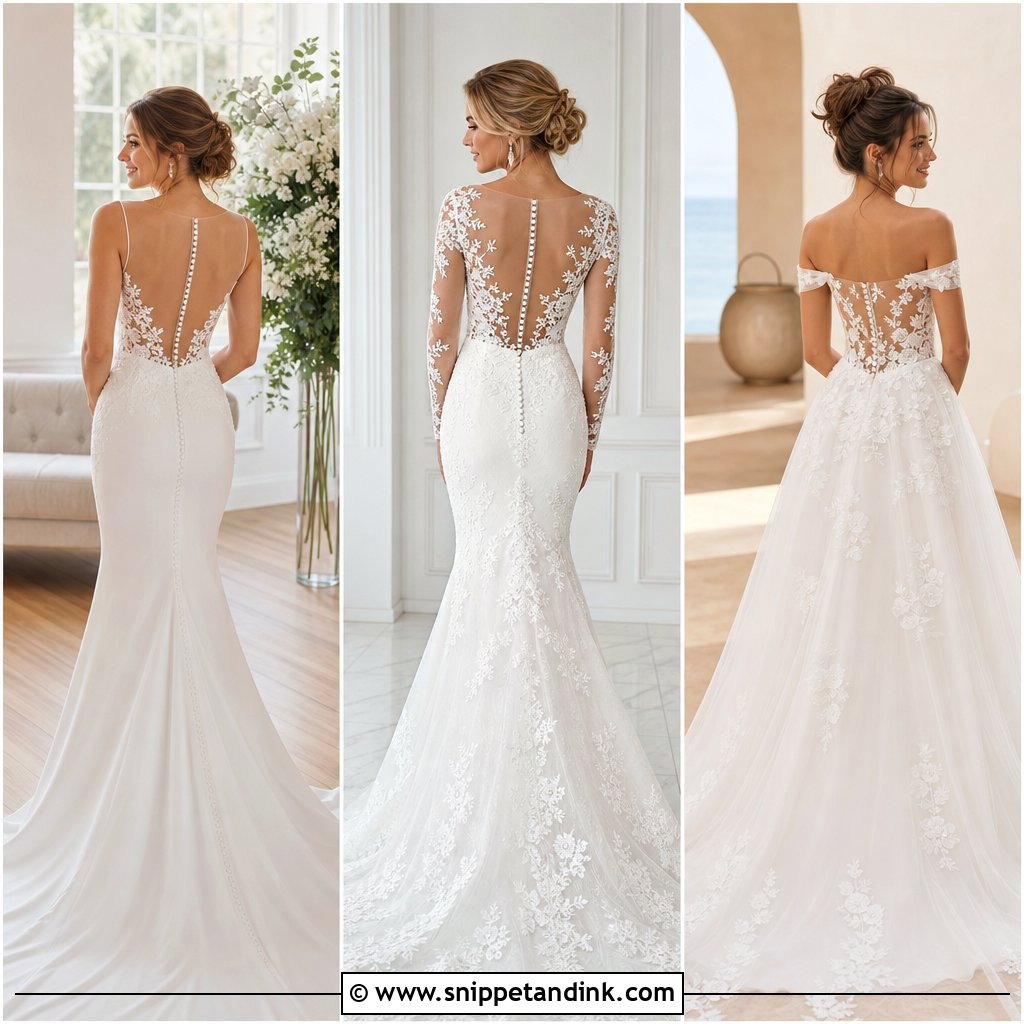


20. Ivory Cream Short Wedding Dress
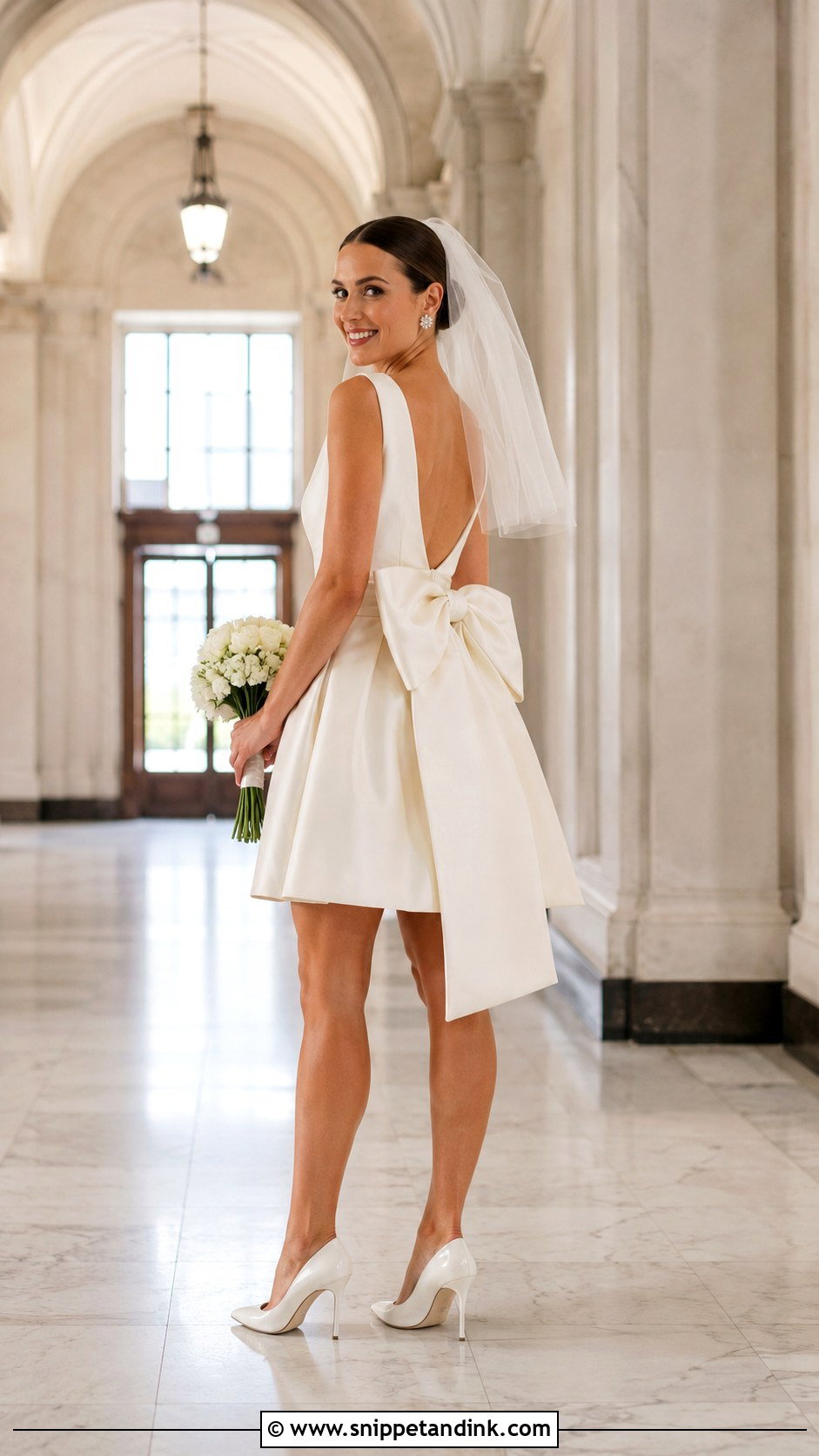
A short ivory dress suits a civil ceremony, a reception change or a small wedding. A fitted mini, a tailored shift or a short A-line in satin, crepe or textured jacquard. It needs one bridal signal, such as a bow, a structured neckline, pearl trim or a removable train, or it can look like a party dress. Pointed pumps, slingbacks or ankle-strap shoes, statement earrings, and a short veil, birdcage veil or hair bow. A small structured bag if you need one. Shoes take centre stage here, so they deserve the budget you’d otherwise spend on a long veil.
Matching Veil, Shoes and Pearls to an Off-White Gown
This is the part brides rarely expect. Every off-white comes from a different dye lot or mill, so a veil, shoes and pearls bought separately almost never match the dress by chance. Next to a cream gown, a bright white veil looks blue; next to a white veil, the cream looks yellow.
How I get them to agree
- Ask the bridal shop for a small fabric swatch from your gown’s hem allowance and carry it to every accessory appointment.
- Order the veil from the same shop or designer where possible; most can tint tulle to match.
- For shoes, satin can be dyed to a swatch. Otherwise, choose nude, metallic or a slightly darker shade rather than a near-match that is a touch too white.
- Choose cream or ivory pearls rather than bright white ones, and hold them against the bodice before buying.
- Check flowers too. Pure white roses look whiter against a cream gown; ivory or cream varieties sit more naturally.
When something can’t be matched, contrast on purpose. A clearly metallic shoe or a blush ribbon looks like a decision; a nearly matching white looks like an accident.
Look at the Gown in Daylight Before You Say Yes
An ivory or cream gown should let you move, suit the venue and feel like you. Satin A-lines and Mikado ball gowns bring structure; chiffon, crepe and slip dresses feel lighter. Lace sleeves, pearls, appliqués, detachable skirts and bows add personality without leaving the soft palette. At fittings, assess the whole outfit together, shoes, jewellery, veil, hair and underwear, because one wrong white throws the rest off. Before deciding, photograph the dress by a window and again under indoor lights. Careful styling and good alterations will do more for the final look than any single trend.
You'll Like These Ideas:




Leave a Reply