
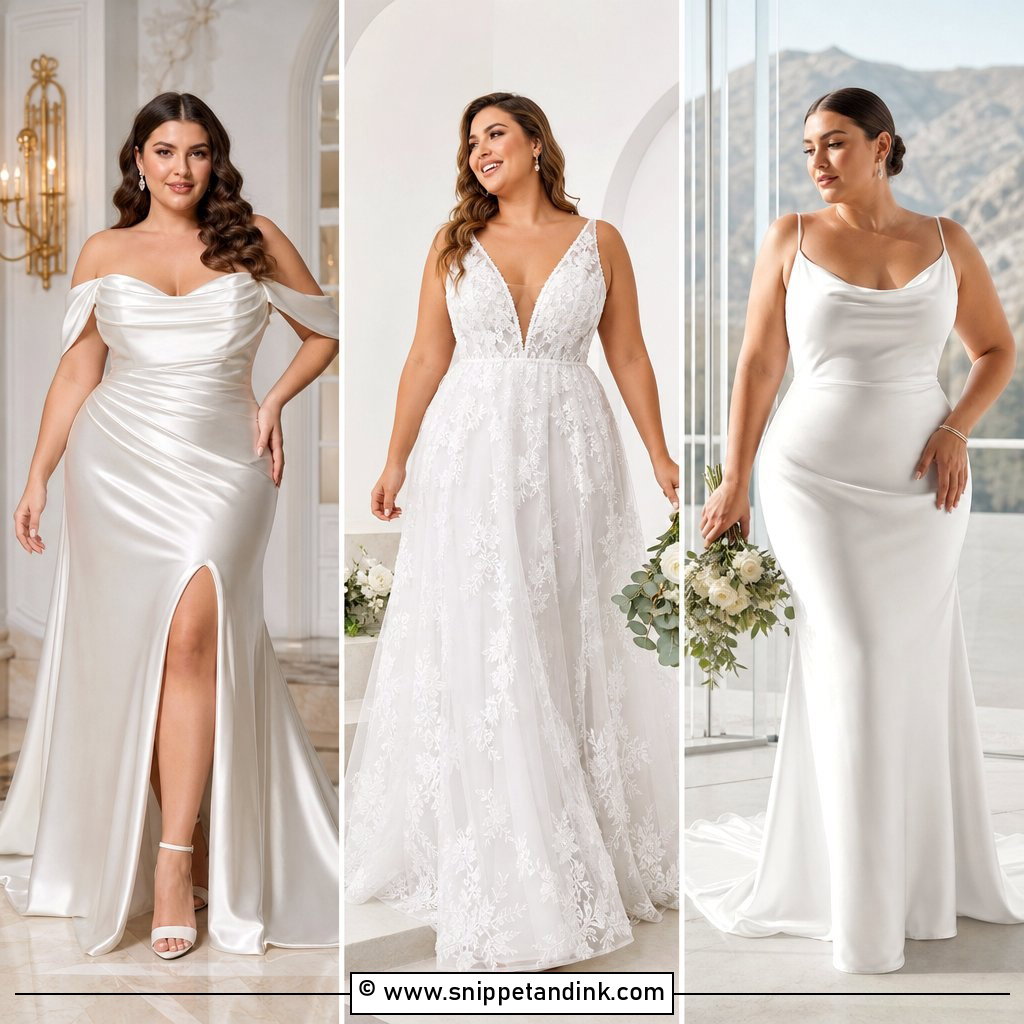
Dress shopping should be fun, and for a lot of plus size brides it hasn’t been, mostly because of rules about which shapes they are supposedly allowed to wear. I don’t work that way. Curvy brides can wear a fitted mermaid, an airy A-line, a huge ball gown or a sleek column; what decides whether it works is construction, support and fit. The twenty dresses below cover romantic, modern, glamorous and classic styles, and for each one I’ve noted what I check at the fitting. Good tailoring, a fabric with some weight, shoes you can stand in and restrained accessories will do more for you than any silhouette rule.
Bridal Sizes Run Small, So Order by Tape Measure
The first thing I tell plus size brides is to ignore the number on the label. Bridal sizing is cut smaller than high-street sizing, often by one to three sizes, and it varies between designers. A bride who wears an 18 in everyday clothes might order a 20 or 22 in a gown. That says nothing about her body; it is how the charts are drawn.
How ordering actually works
- Get measured at bust, natural waist and hips by the shop, wearing the type of bra you plan to wear on the day.
- Most designers order by your largest measurement against their own chart. Taking a dress in is simple; letting it out is limited by how much seam allowance exists.
- Ask whether the designer makes custom sizes or adds length for a small fee. Many do for curvy and tall brides.
- Made-to-order gowns usually take several months to arrive, so start shopping around nine to twelve months out and allow time for two or three fittings after delivery.
Samples are a real problem. Many boutiques still stock most gowns in small sizes, which means you’re asked to imagine a dress held together with clips. Before booking, I’d phone and ask what size range the shop carries in its samples and whether specific designers can be ordered in for your appointment. A shop that stocks curvy samples will give you a far truer picture of how a dress moves.
1. Plus Size A-Line Lace Wedding Dress
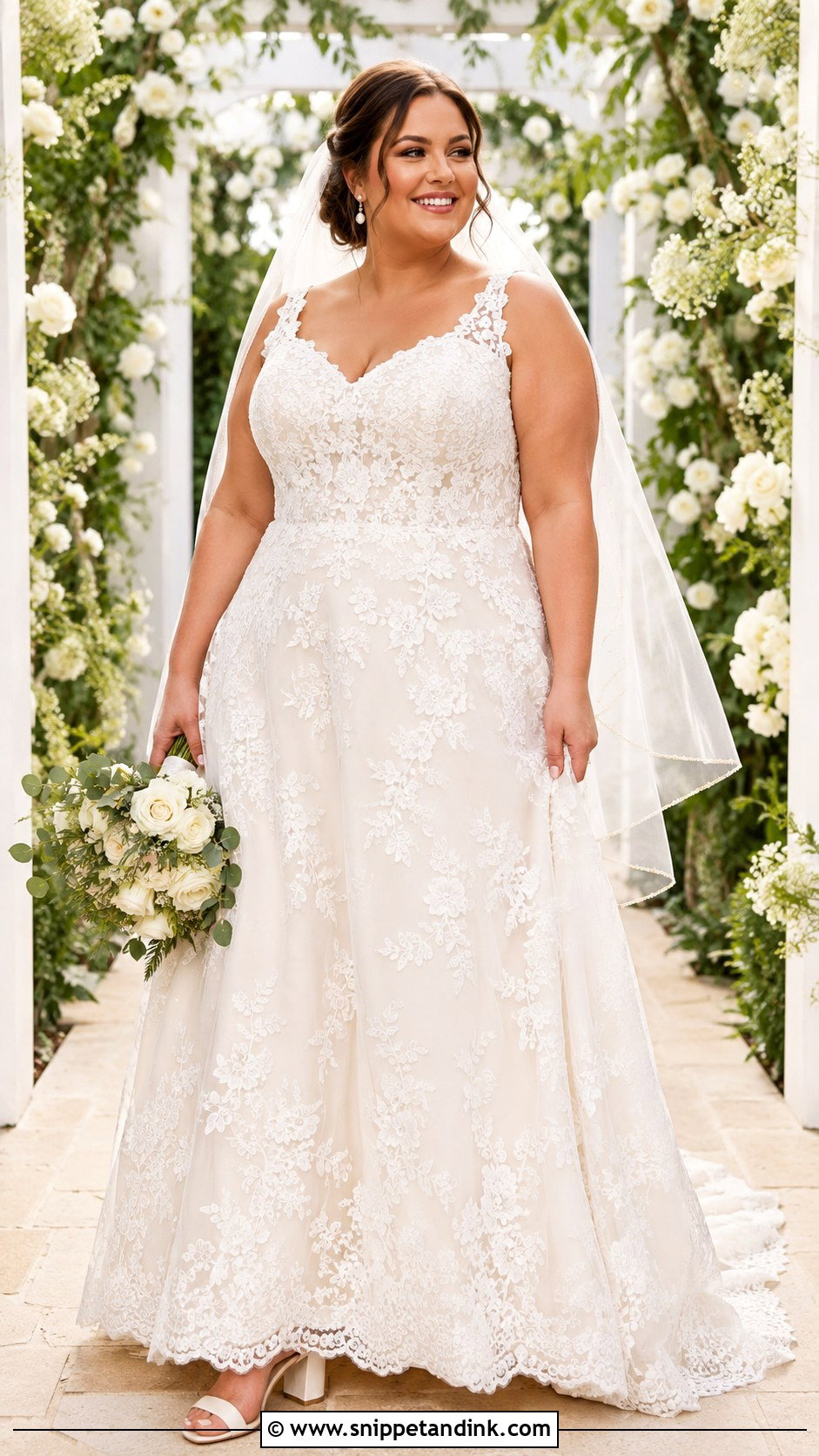
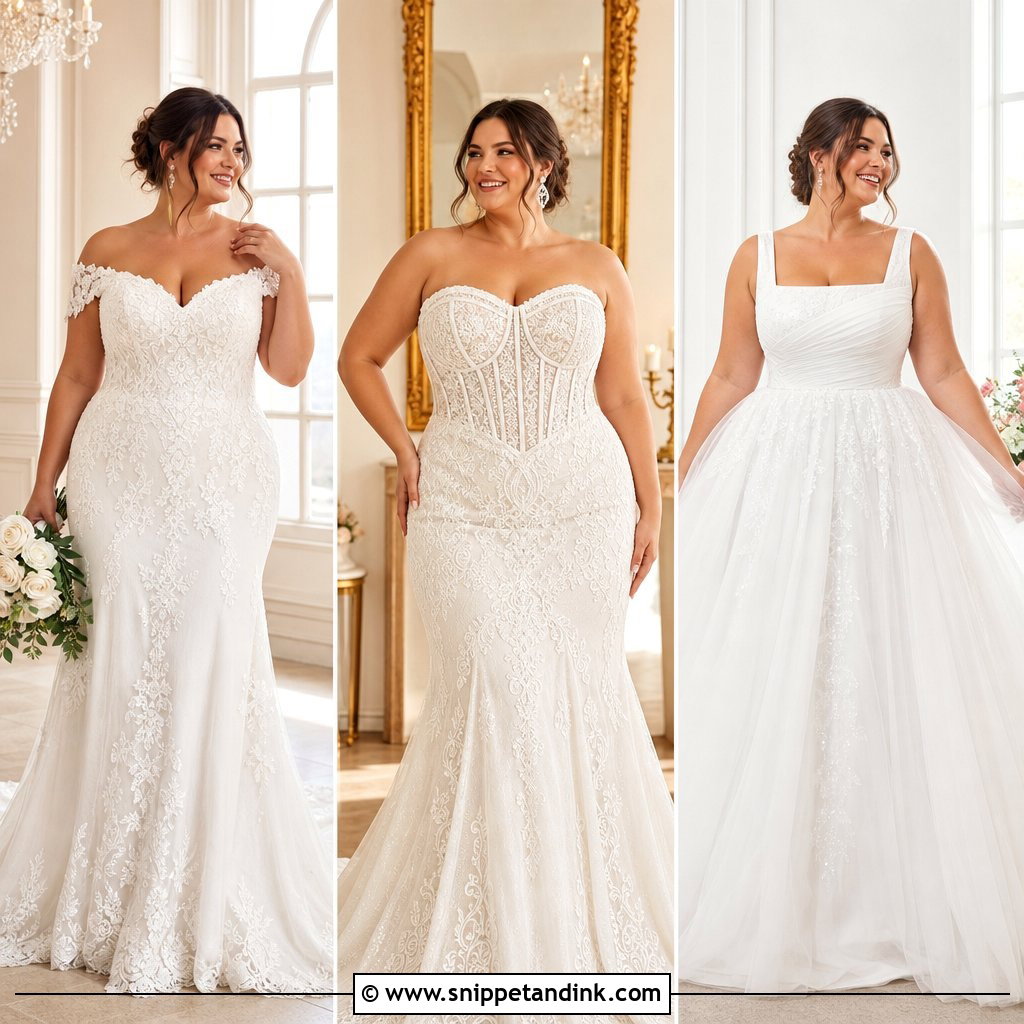
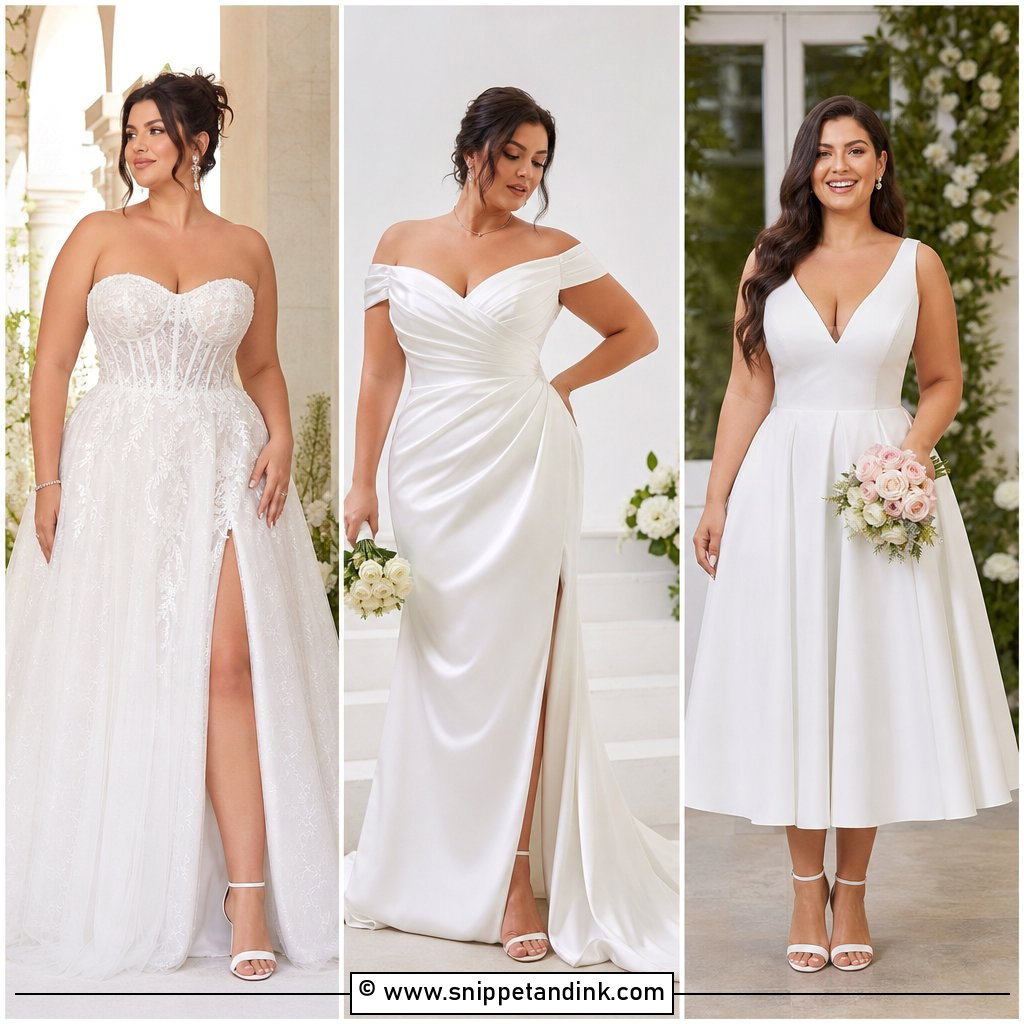
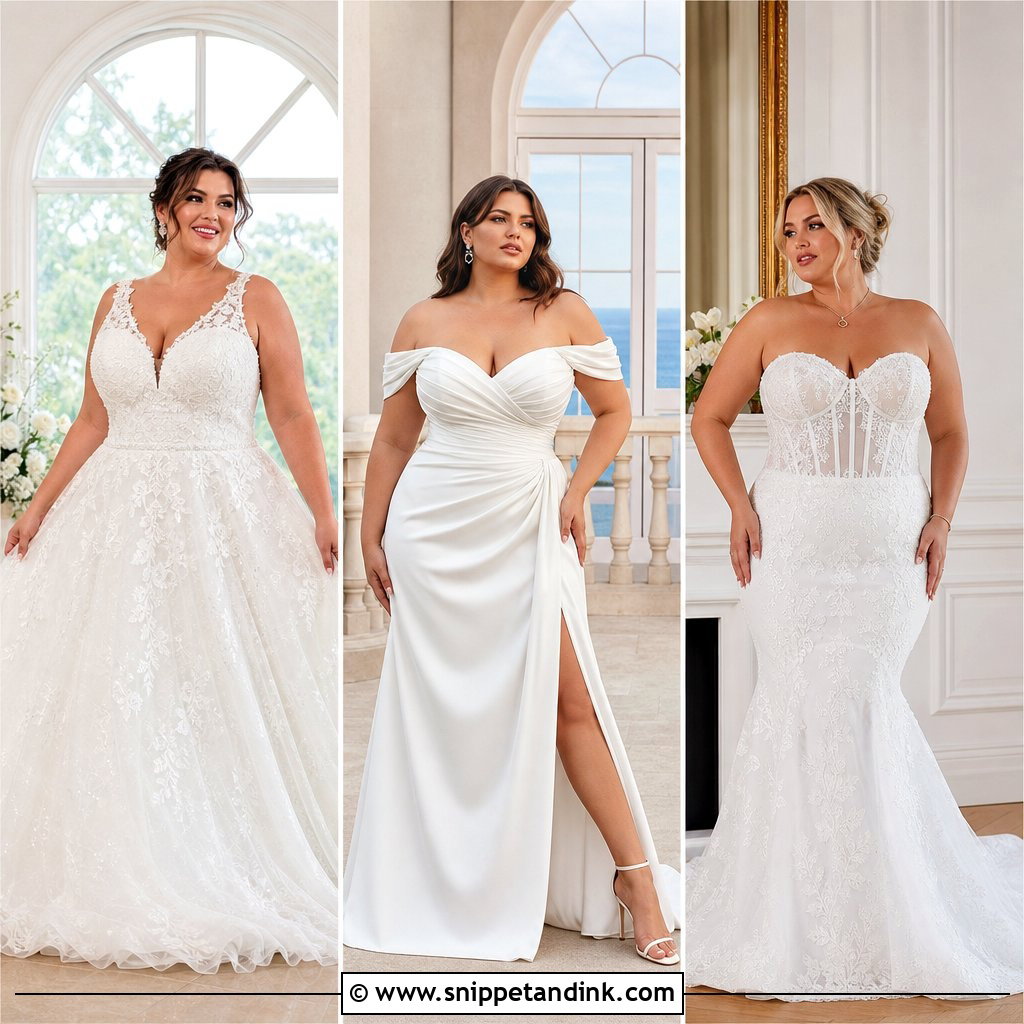
Lace on an A-line skirt is the dress most brides try first, and it earns that spot. The bodice should do the supporting: inner boning, wide straps and a seam at your natural waist. Then the skirt opens gradually rather than puffing out from the hip. Floral appliqués give texture, and a lightly lined neckline keeps the top delicate. Pearl drops, a fingertip veil, ivory block-heel sandals and a small blush-and-white bouquet finish it. Hem length matters more than people expect. If the skirt touches the floor in front, you’ll kick it with every step, so I set it to float just clear of your shoes.
2. Plus Size Off-the-Shoulder Ball Gown
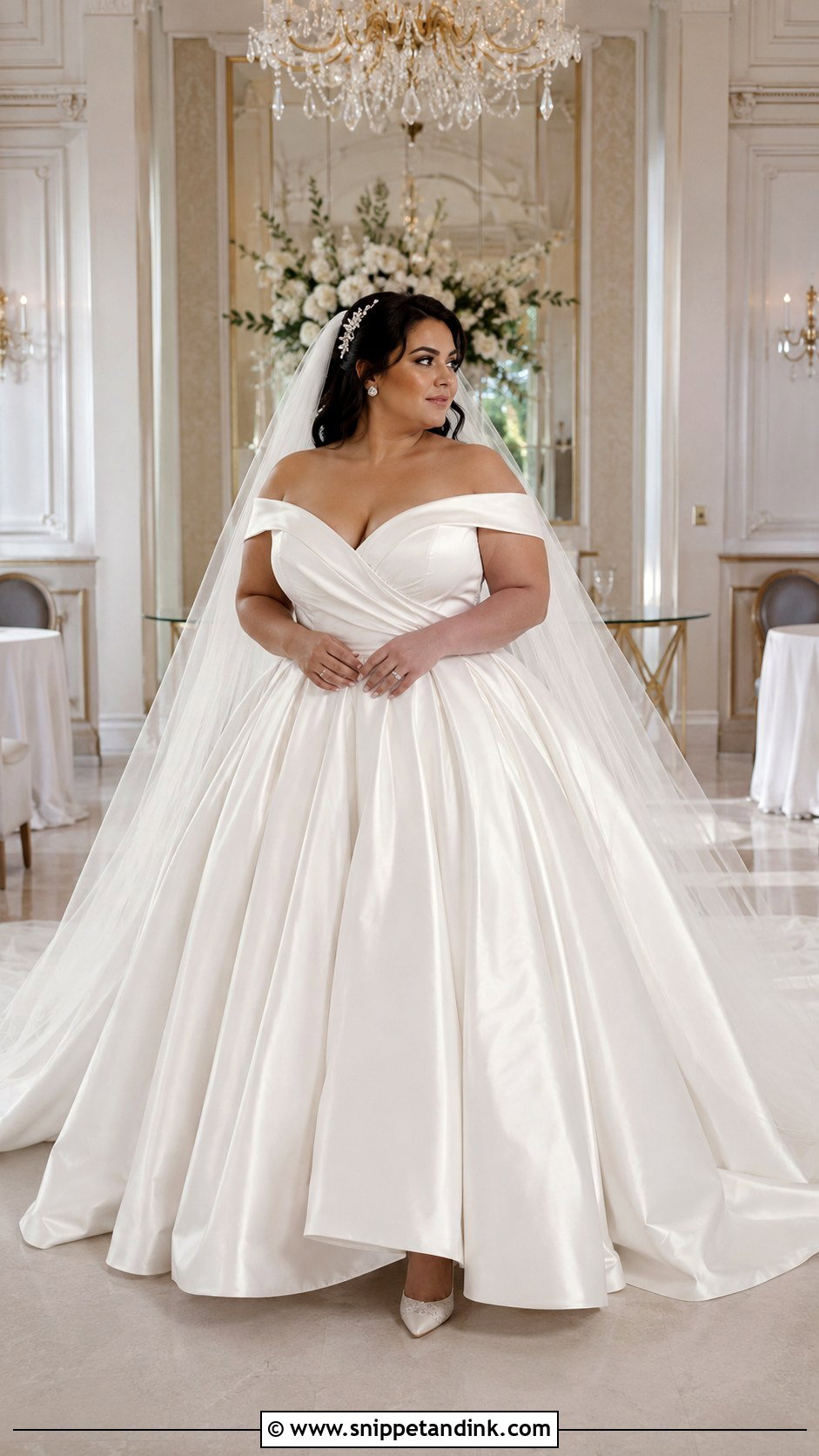
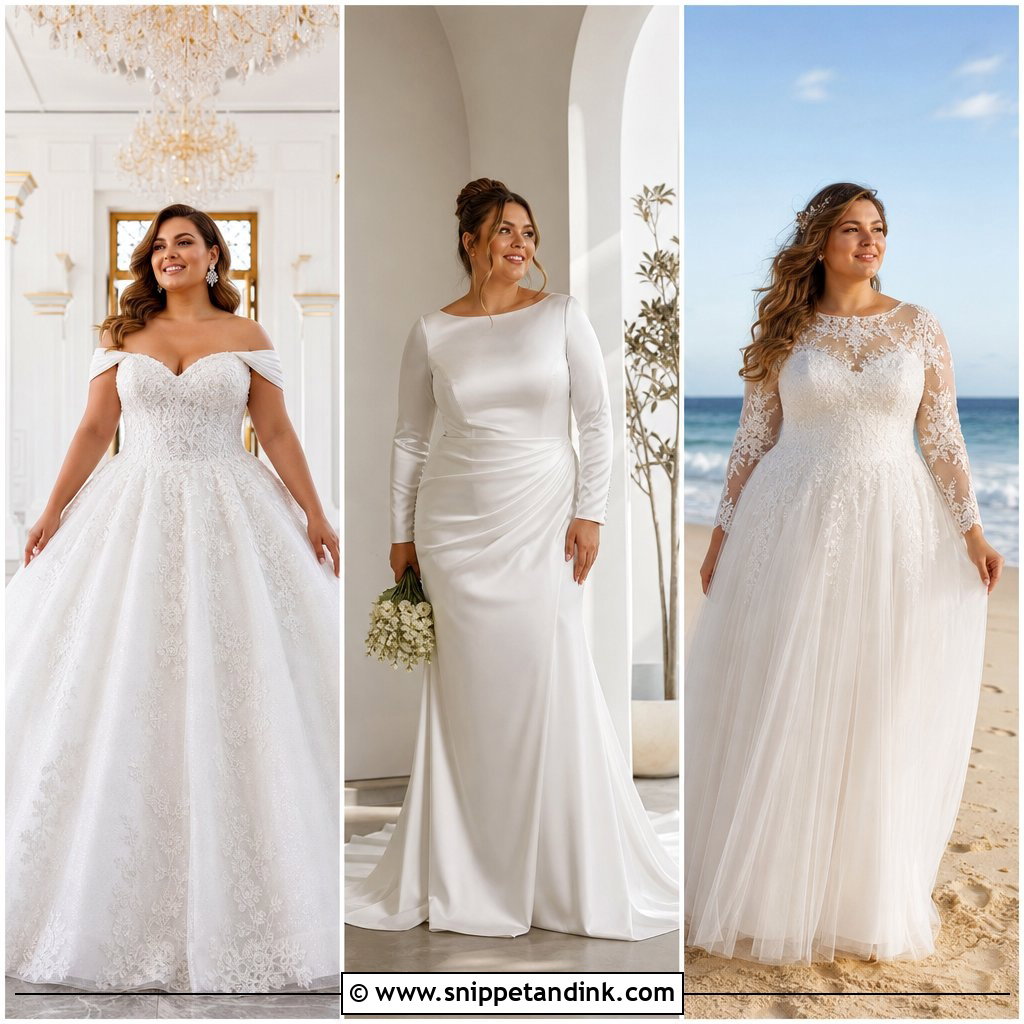
An off-the-shoulder ball gown makes an entrance, and the internal corset is what makes it wearable. I look for a structured bodice that holds itself up so the sleeve band isn’t carrying the weight; otherwise the band slides down your arms all evening. Satin reads crisp and dramatic, layered tulle lighter and softer. A crystal comb, simple studs and low pointed pumps are enough, and a cathedral veil extends the shape for a ballroom, hotel or estate. Ask for a bustle from the start. A full skirt with a train weighs a lot by the time you’ve been dancing, and hidden loops let you lift it off the floor after the ceremony.
3. Plus Size Long Sleeve Wedding Dress
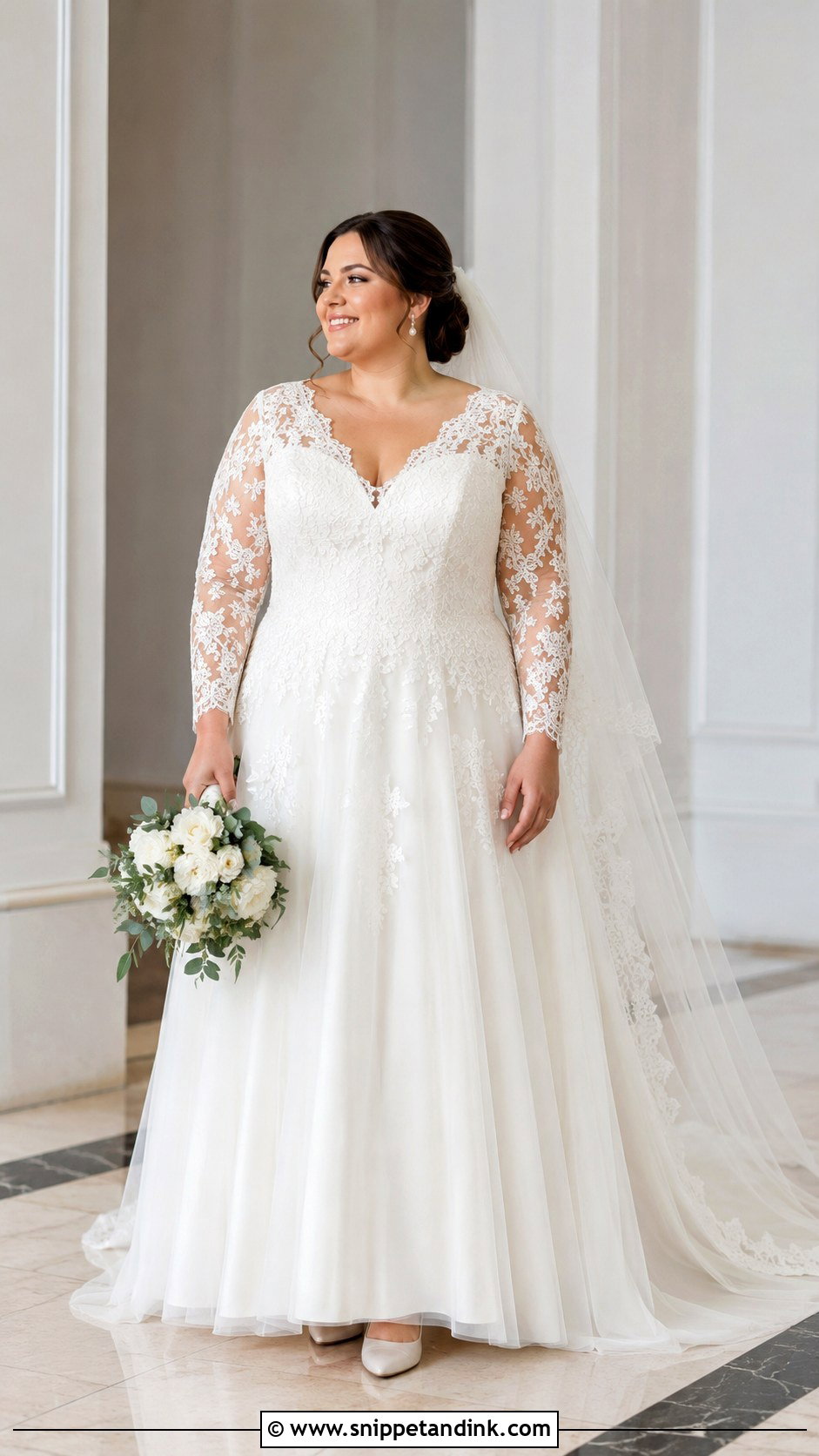
Sheer lace sleeves add coverage without heat or bulk, since the skin still shows softly beneath the pattern. Under the lace, a supportive V-neck or sweetheart bodice does the real work, paired with an A-line or gently fitted skirt. Pearl earrings, closed-toe ivory heels and a low bun keep it classic; a chapel veil suits a church, a jewelled comb a smaller venue. The upper arm is where long sleeves fail. If the lace has no stretch, it binds the moment you lift your arms to hug someone, so I always ask for stretch lace and a fitting where the bride raises both arms above her head.
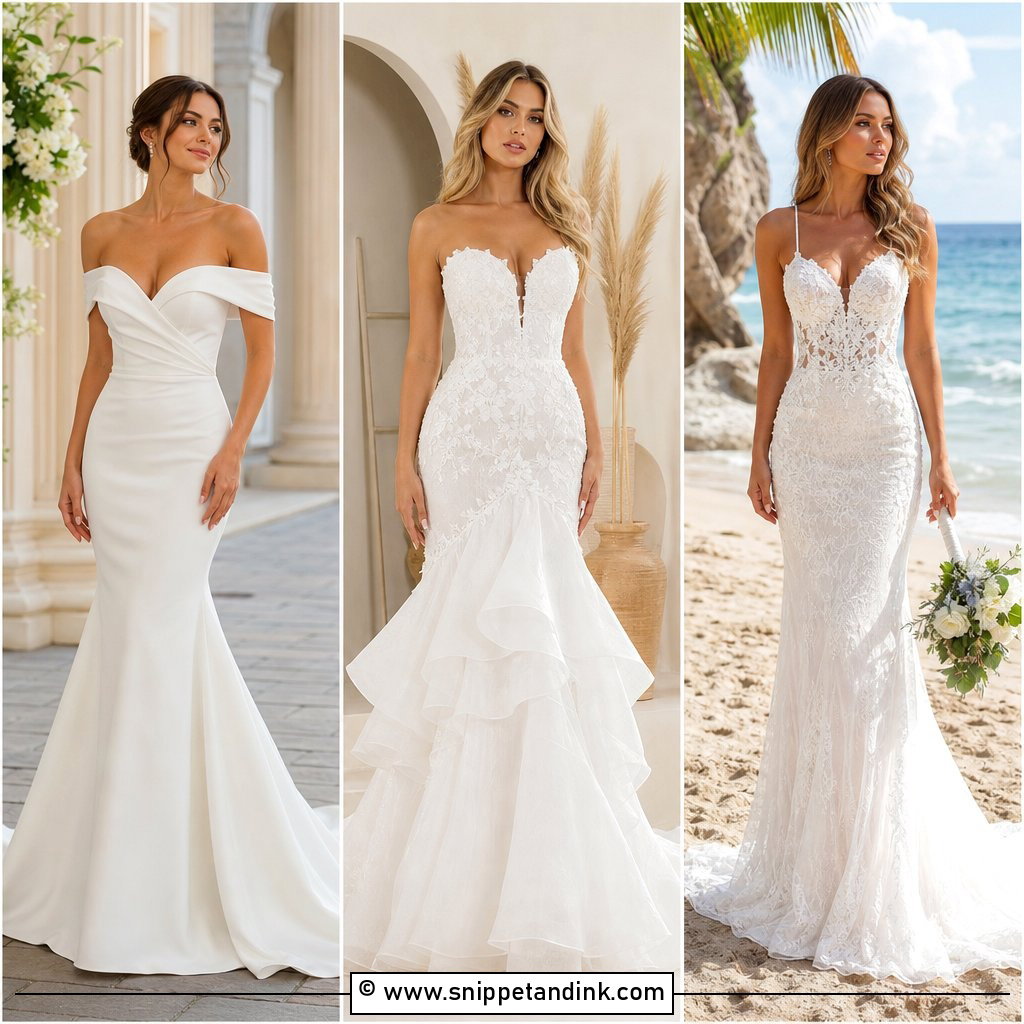
4. Plus Size Mermaid Wedding Dress
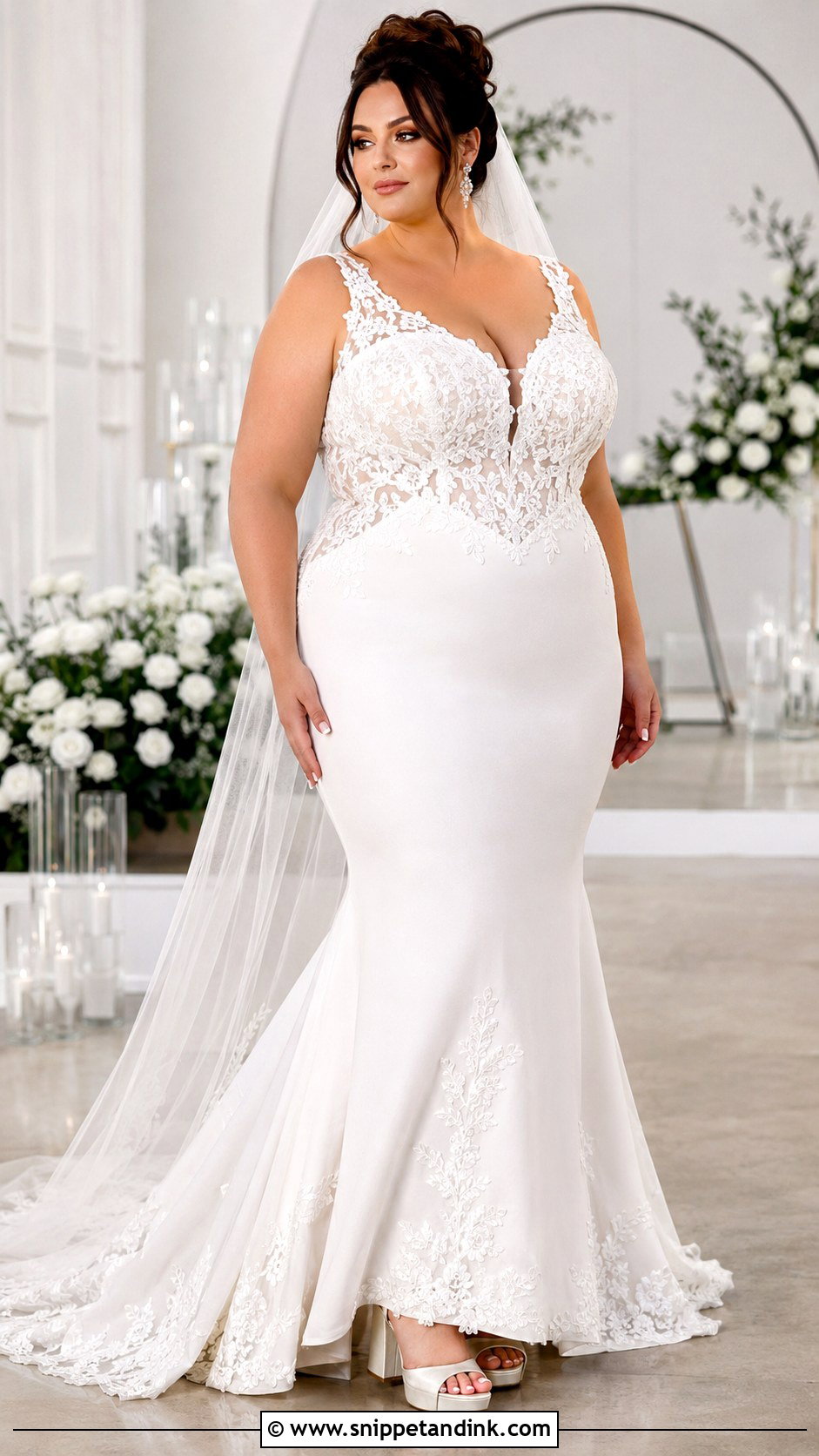
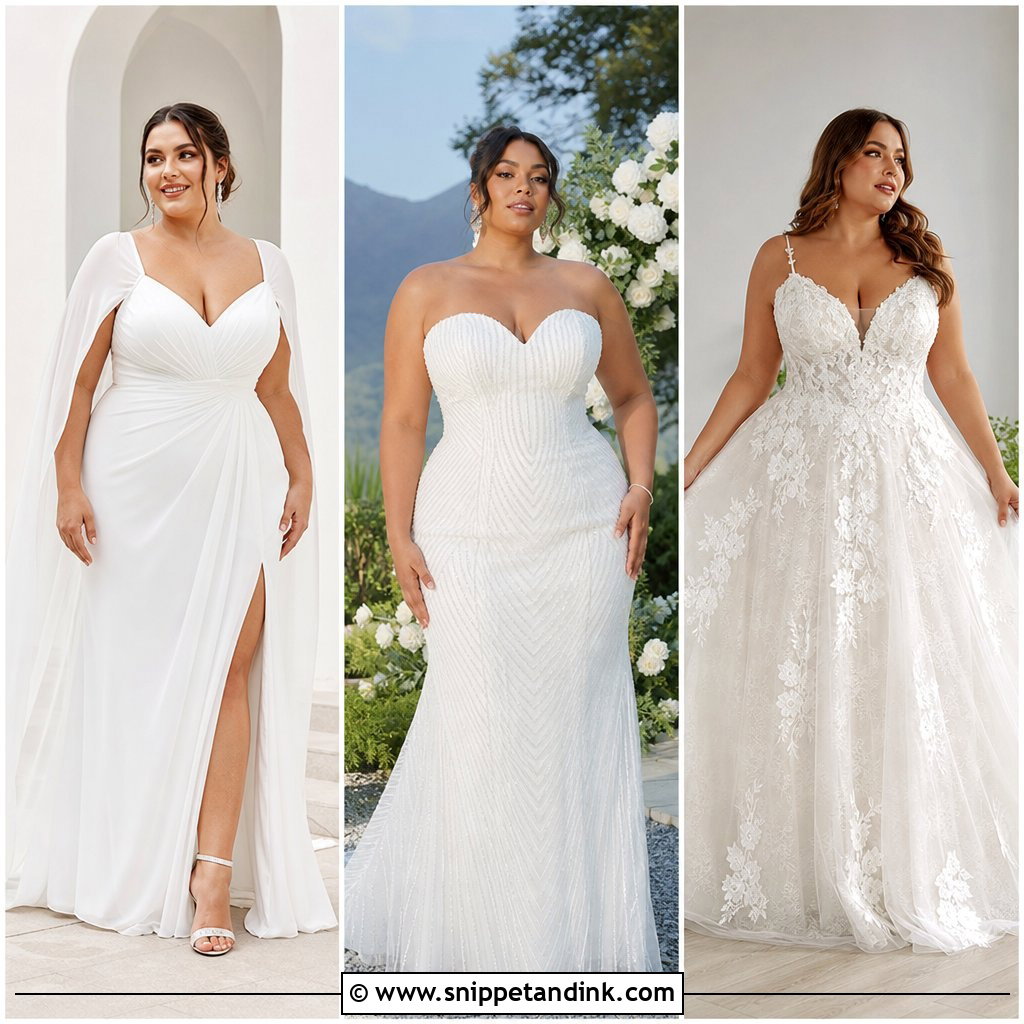
The mermaid is fitted through the bust, waist and hips and flares near the knee, and curvy brides often look incredible in it. Fabric choice decides comfort. Stretch crepe, lined lace or a softer mikado follows the body, while a stiff fabric fights it and makes walking hard. Careful seaming and built-in bust support stop you hitching the dress up all night. A sleek veil, crystal earrings, stable block heels and a smooth updo keep the line clean. Where the flare starts is my main adjustment: a little higher than the sample and you can climb steps and sit at dinner. Request a secure bustle for the train.
5. Plus Size Satin Wedding Dress
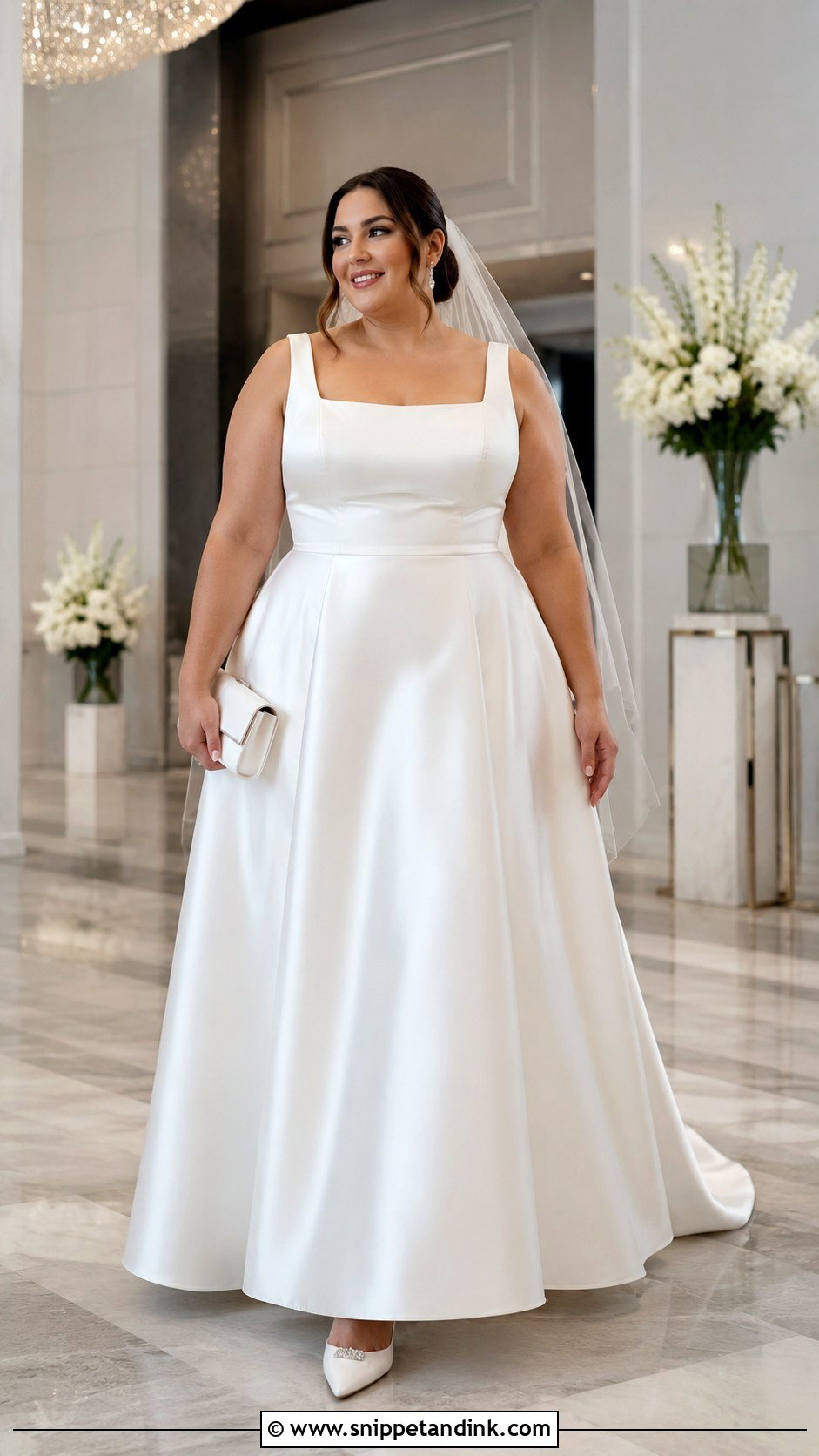
Satin needs no decoration; it reflects light in broad, soft bands. An A-line, fit-and-flare or softly draped cut with a well-built bodice suits it, and a square or portrait neckline gives a modern shape. Pearl-and-crystal earrings, pointed ivory pumps, a simple tulle veil and a small white clutch finish the outfit. Covered buttons, a few waist pleats or a narrow satin belt add definition. Shine shows every ripple, so satin is unforgiving of loose fit or wrinkles. I check it under the venue’s kind of light if I can, and I always book a professional steam close to the day, because satin creases badly in a garment bag.
6. Plus Size V-Neck Wedding Dress
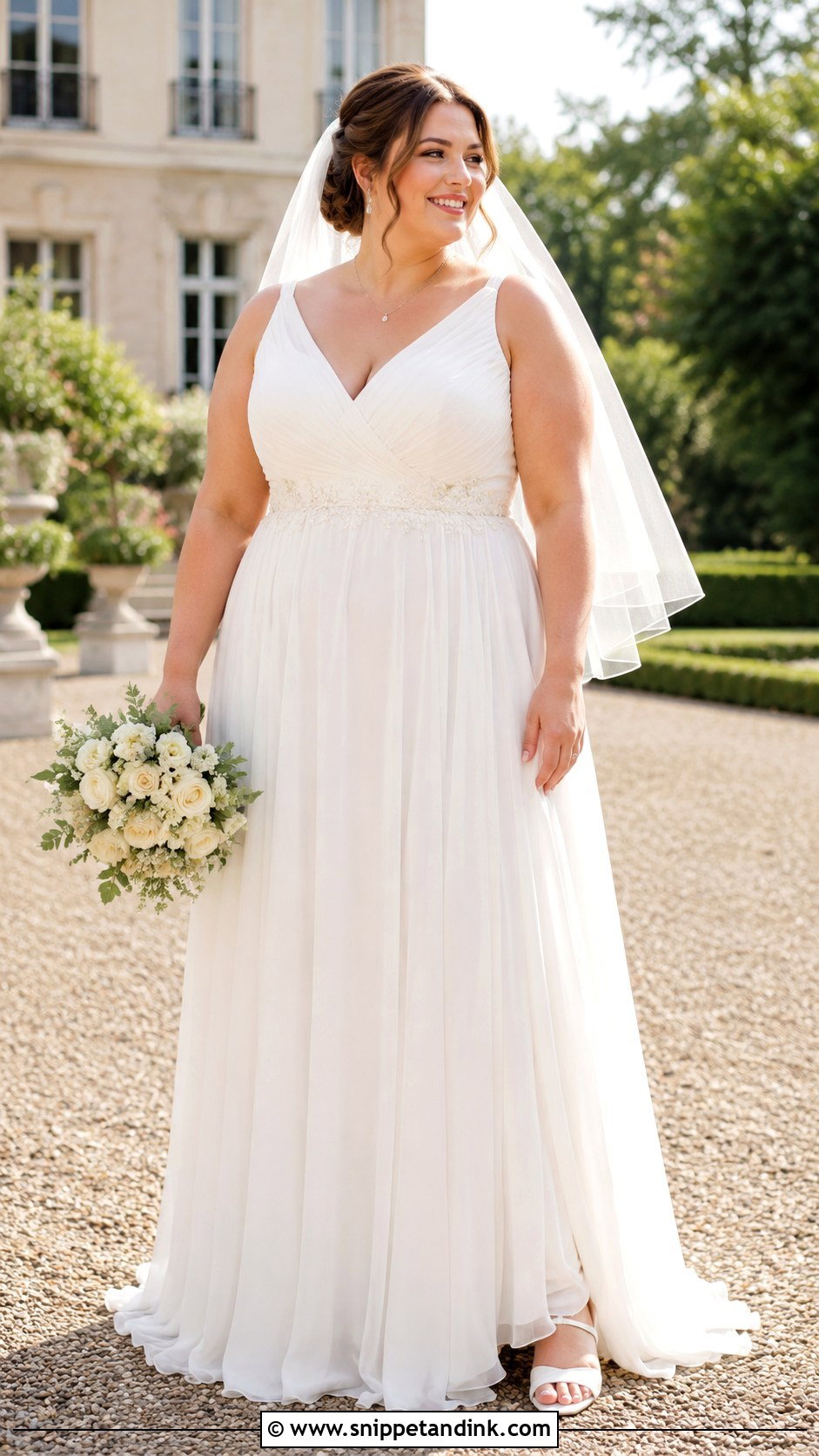
A V-neck frames the face and gives the necklace somewhere to sit. Depth is your call, modest or plunging, but the deeper it goes, the more the bodice needs proper support. Wide straps are more comfortable on a fuller bust, especially with boning, cups and a secure back. A chiffon skirt keeps it soft; a mikado one makes it formal. A pendant, drop earrings, an elbow veil and ivory slingbacks are plenty. I watch the neckline while the bride sits and bends during alterations. If it gapes, it needs taking in at the seam, and I tell brides fashion tape is a backup, never the fix.
7. Plus Size Sweetheart Neckline Wedding Dress
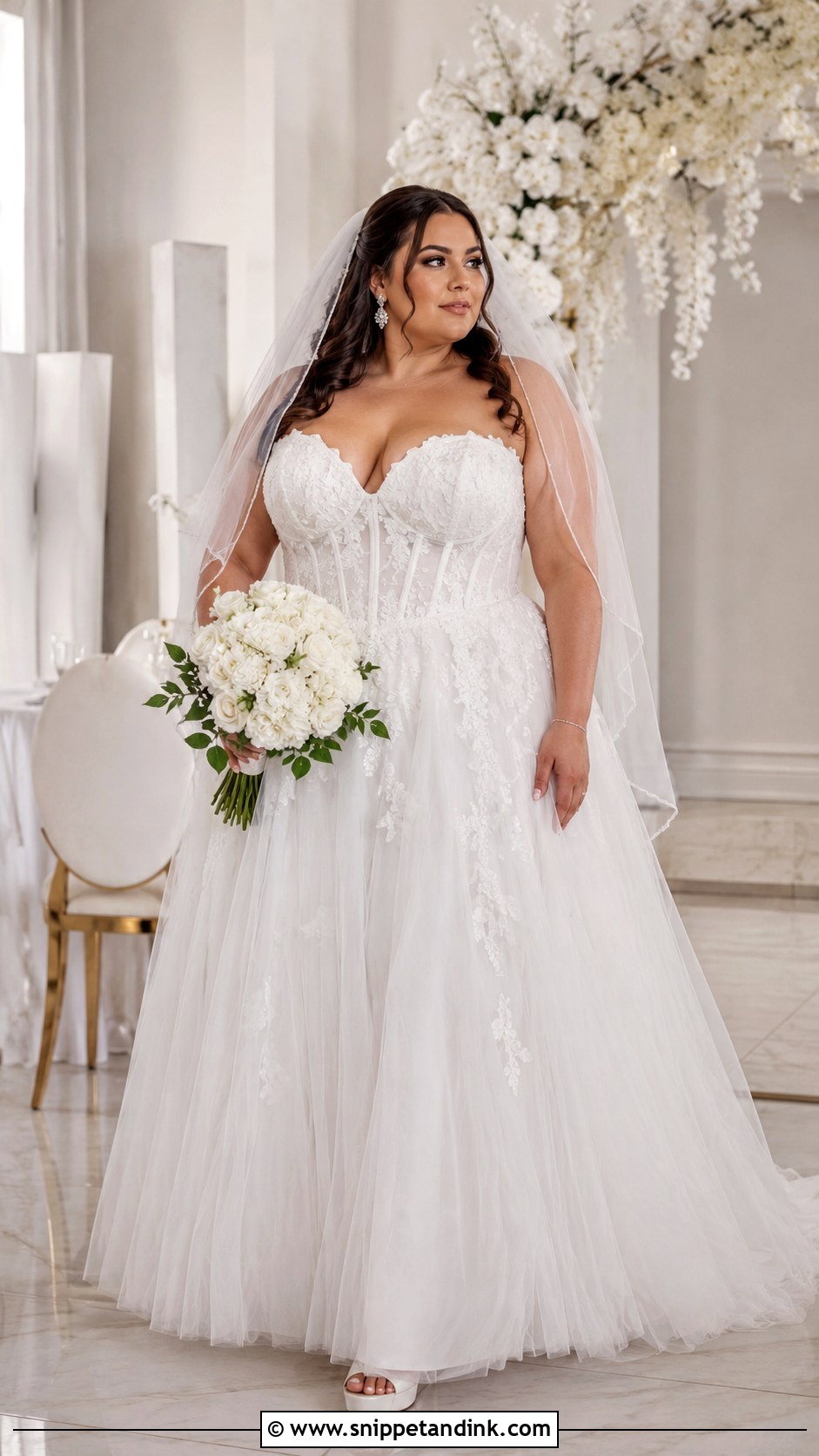
The sweetheart’s curved neckline is pure romance, and support is everything. I look for internal boning, moulded cups and a back that feels firm when you twist. Detachable straps give security for the ceremony and can come off for the party. Pair it with a full tulle skirt, a lace A-line or a sleek fit-and-flare. A necklace only if the bodice is plain; beaded bodices look calmer with earrings alone. A fingertip veil, ivory platform sandals and soft curls complete it. Strapless sweethearts can dig in under the arm, so check the side seams as carefully as the front.
8. Plus Size Square Neck Wedding Dress
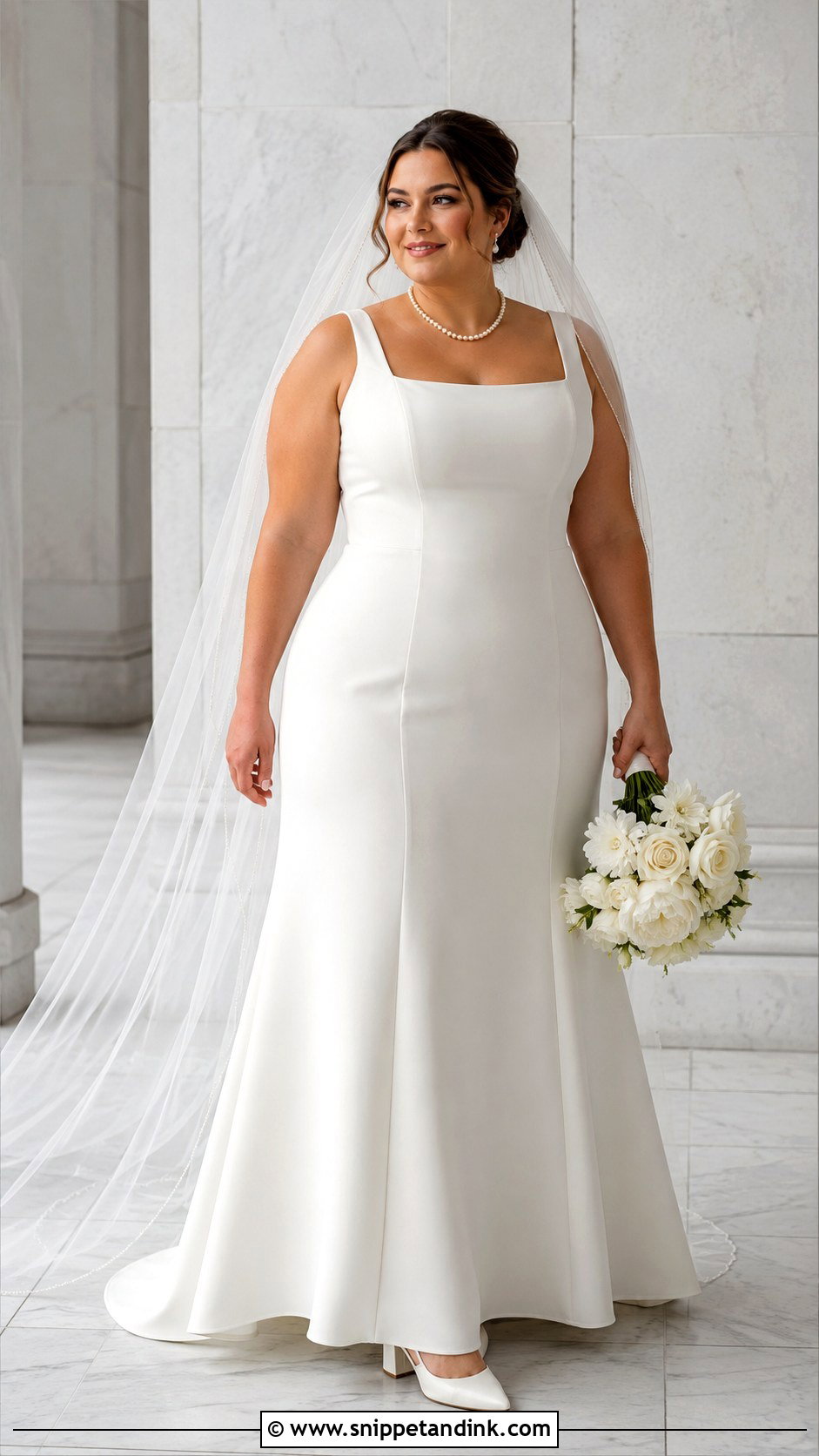
A square neckline draws a straight line across the collarbone, and wide straps give it a frame with room for real support. A smooth crepe dress with princess seams or a satin A-line with a softly pleated skirt both suit it. A short pearl necklace, small earrings and a low bun keep it neat, and a sheer cathedral veil softens the architectural neckline. Block-heel pumps and a compact bouquet of structured white flowers finish it for a city or modern venue. On a fuller bust the corners of a square neck can lift away from the skin, so I pin it while the bride raises her arms and sits.
9. Plus Size Boho Lace Wedding Dress
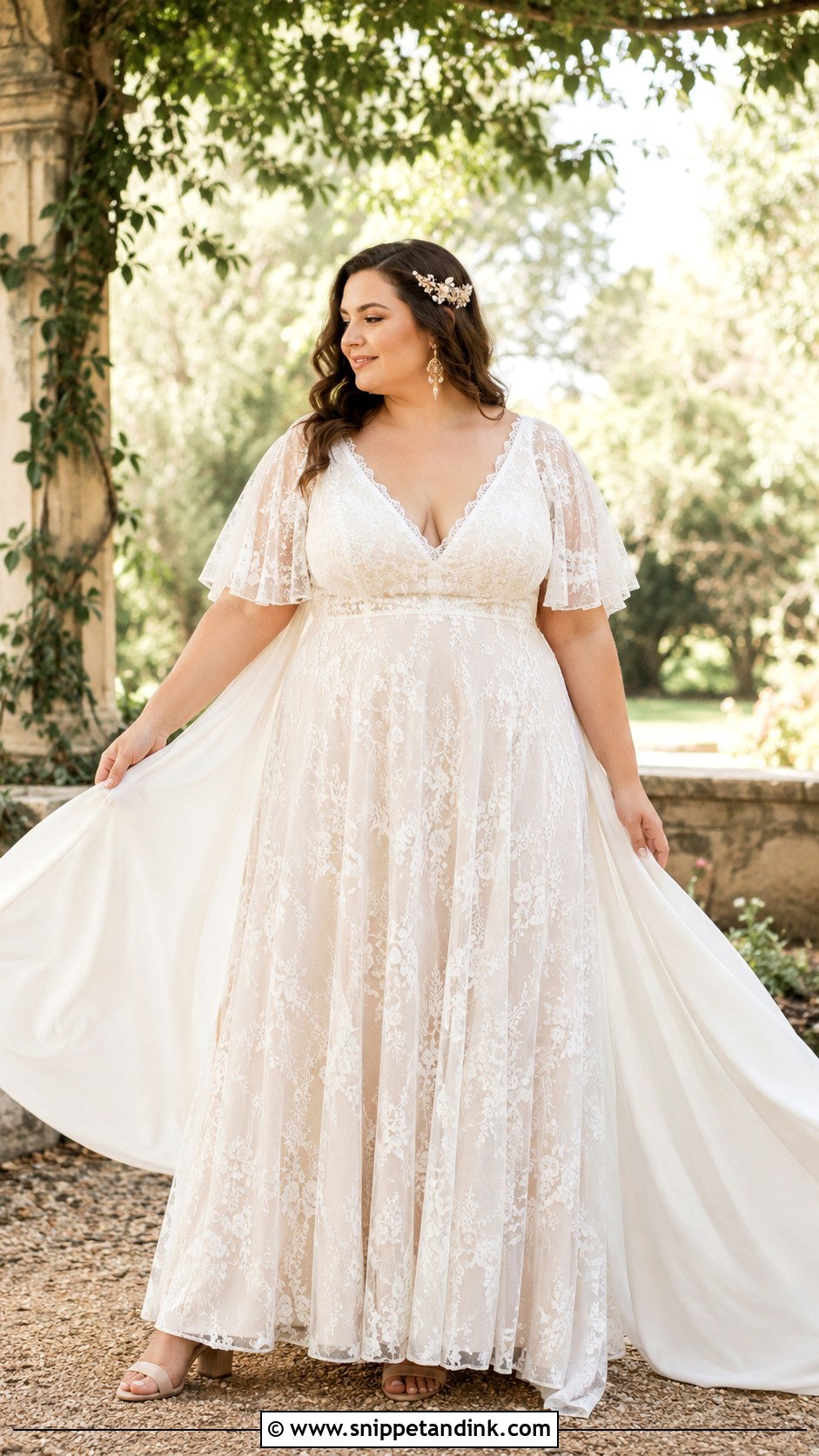
Boho lace is relaxed by design, so it needs a lighter fabric and soft lining that breathes outdoors. An easy A-line or column moves comfortably, and flutter sleeves, a V-neck and a lightly defined waist give detail without formality. A floral comb, delicate gold earrings and low block-heel sandals suit it, with a chiffon cape or simple veil that moves in the breeze. Keep the bouquet loose, all greenery and pale flowers. Think about the ground. A long train on grass picks up stains and on sand it drags, so for a garden, woodland or beach I’d keep the train short or have a bustle ready.
10. Plus Size Tea Length Wedding Dress
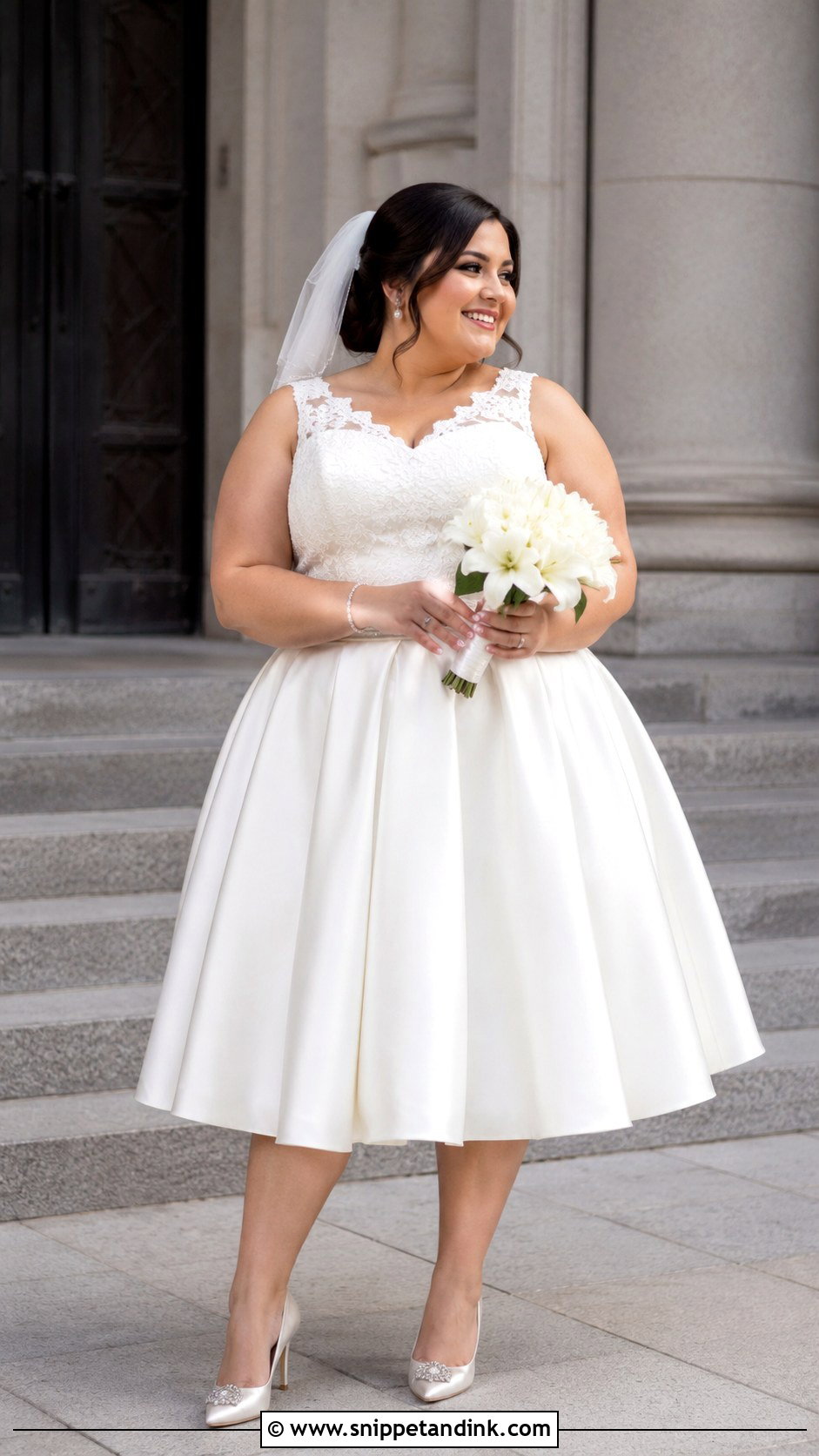
Tea length falls below the knee or around the lower calf, and it puts your shoes on full show. A fitted lace bodice with a flared skirt, or smooth satin with a bateau neck, both work. Comfortable embellished pumps, pearl studs and a short veil or structured headband suit the vintage feel, and a cropped jacket covers the arms on a cool day. It’s a natural fit for courthouse weddings, restaurant receptions and garden parties. The hem placement changes how it looks dramatically. I try two or three lengths with the final shoes on and stop the hem at a slimmer point of the leg, not across the widest part of the calf.
11. Plus Size Minimalist Crepe Wedding Dress
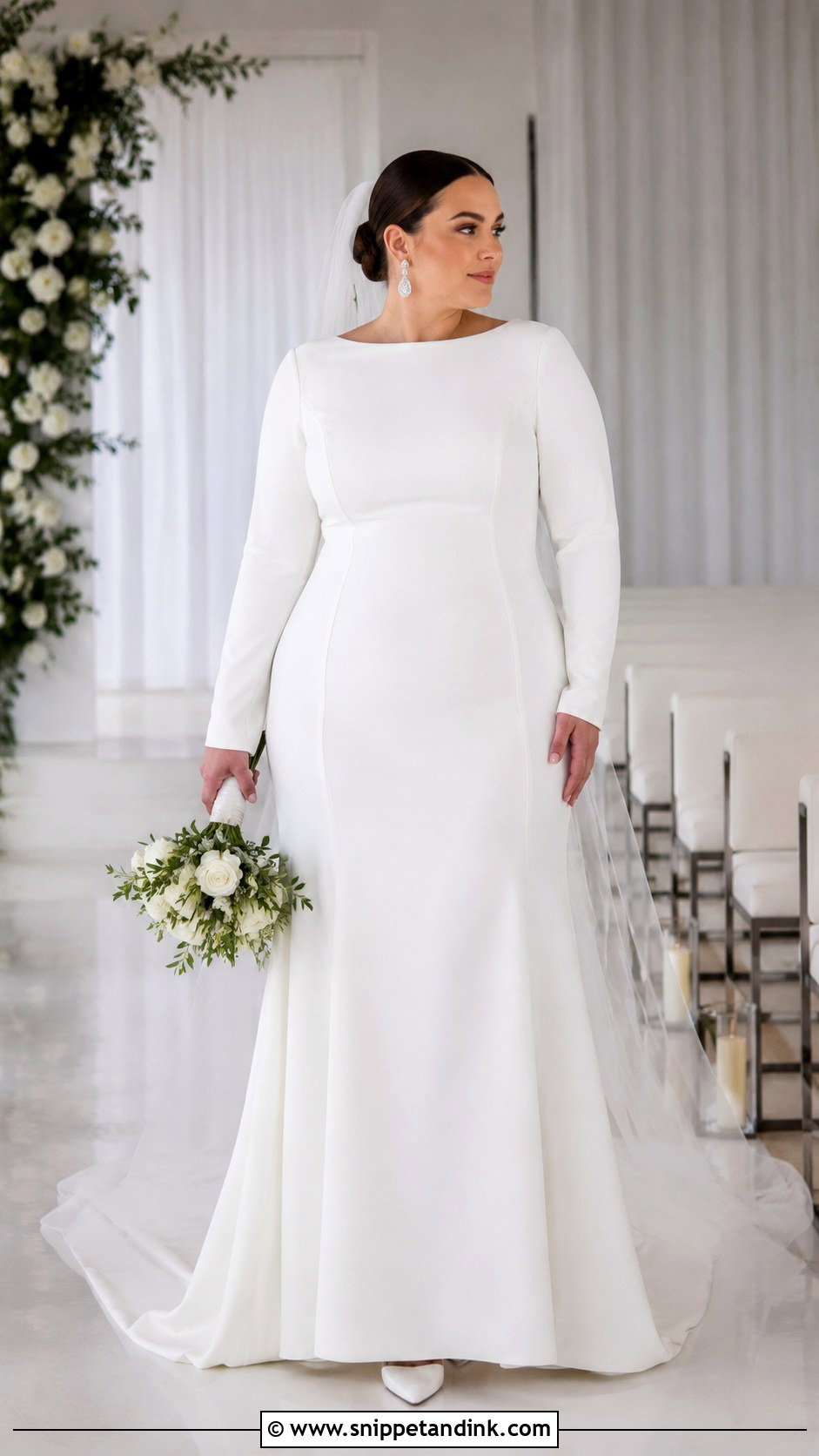
Minimalist crepe relies on its weight. A substantial stretch crepe skims the body and smooths it; a thin one clings and shows every line underneath. A bateau, square or simple V-neck goes well with long princess seams and a gently flared skirt. Sculptural earrings, sleek pointed shoes, a smooth low bun and a long plain veil keep the minimal aesthetic, with a compact white bouquet. With no decoration, alterations matter most here. Shoulders, bust, waist and hem should all sit right, and I ask for a soft, breathable lining because crepe can feel warm over a long day.
12. Plus Size Empire Waist Wedding Dress
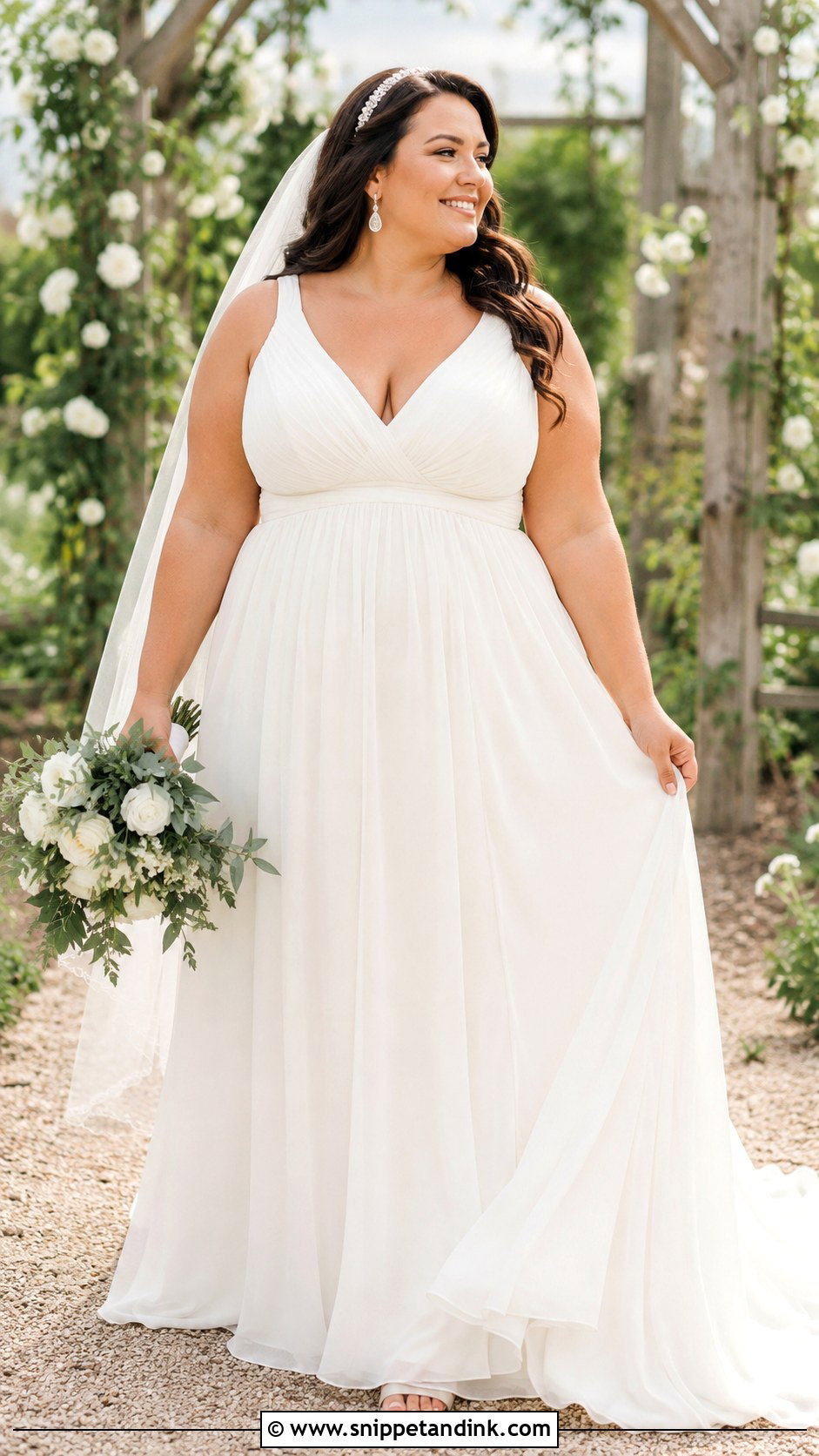
An empire waist wedding dress puts its seam right under the bust and lets the skirt flow from there, so nothing grips the waist or hips. Many brides find it the most comfortable dress they try. It still needs a supportive bodice, with wider straps, a V-neck or softly gathered sleeves. Chiffon, georgette and light tulle move without bulk. Drop earrings, a narrow headband and low metallic or ivory sandals suit it; a chapel veil feels traditional, a chiffon cape more modern. The under-bust seam is the critical point. Even a small shift up or down throws the proportions off, so I mark it with the bride’s own bra on.
13. Plus Size Corset Wedding Dress
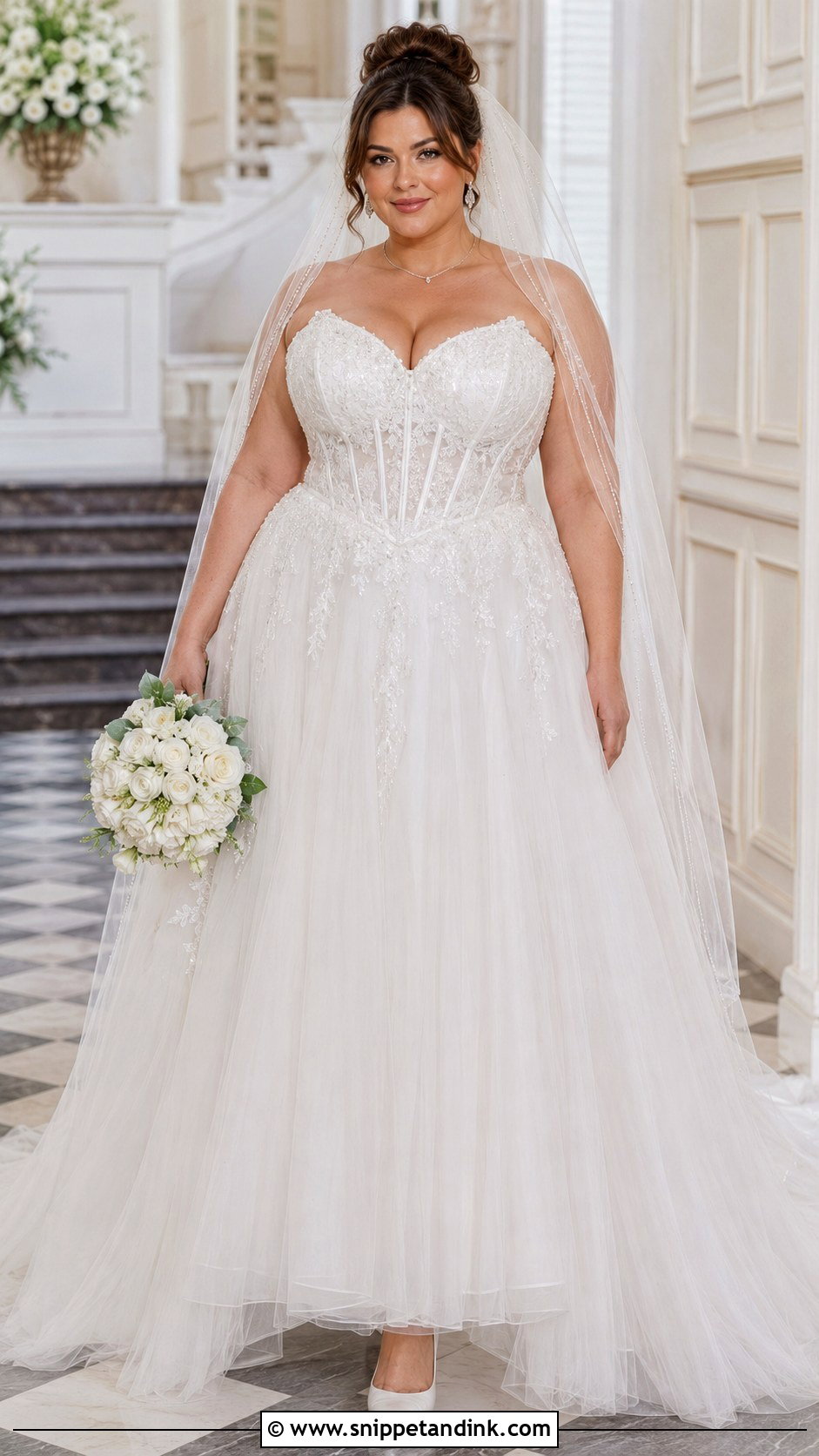
A well-built corset is one of the most supportive bodices a curvy bride can wear. Modern versions use flexible boning, adjustable lacing, padded cups and shaped panels rather than rigid steel. Pair it with a tulle ball gown, a satin A-line or fitted crepe. If the boning or embroidery shows, keep accessories simple: crystal studs, a sheer veil and classic closed-toe pumps. Wear your wedding-day underwear to every fitting. You should be able to breathe, sit and eat dinner in it. Lacing is a skill, so I teach whoever is dressing you on the morning, since an unevenly laced back gaps and puckers in photos.
14. Plus Size High Neck Wedding Dress
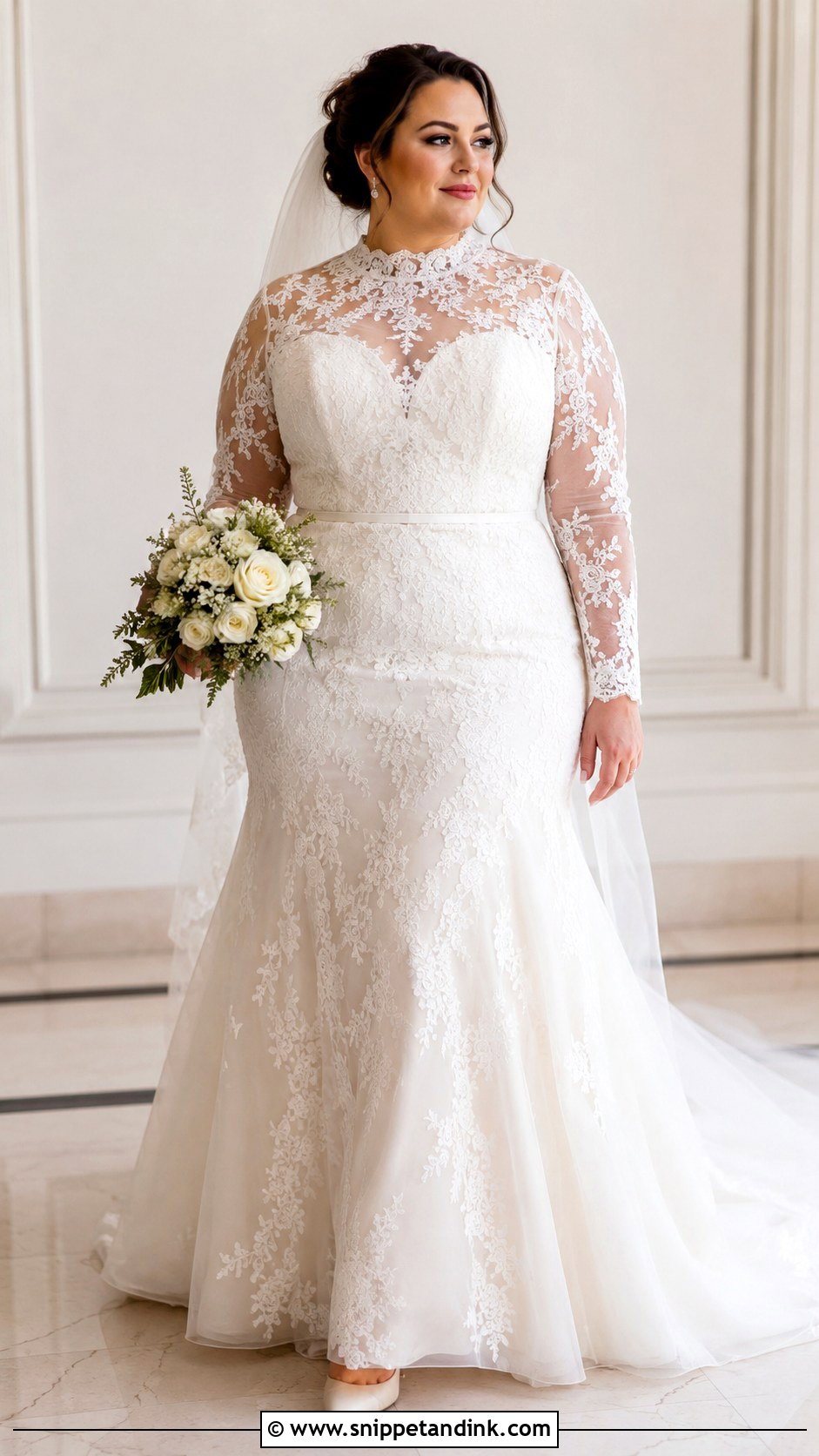
A high neck pulls attention to the face and shoulders. Sheer lace, illusion mesh or a draped halter keeps it light, where solid fabric up to the chin can look heavy on a fuller bust. A defined waist with an A-line, fit-and-flare or fluid column skirt balances it. Skip the necklace and wear small earrings, an updo or swept-back waves, pointed heels and a veil fixed beneath the hair. It suits formal ceremonies and city venues. I run a finger around the inside of the collar at every fitting. Rough lace edges or a tight hook at the nape become genuinely uncomfortable after a few hours.
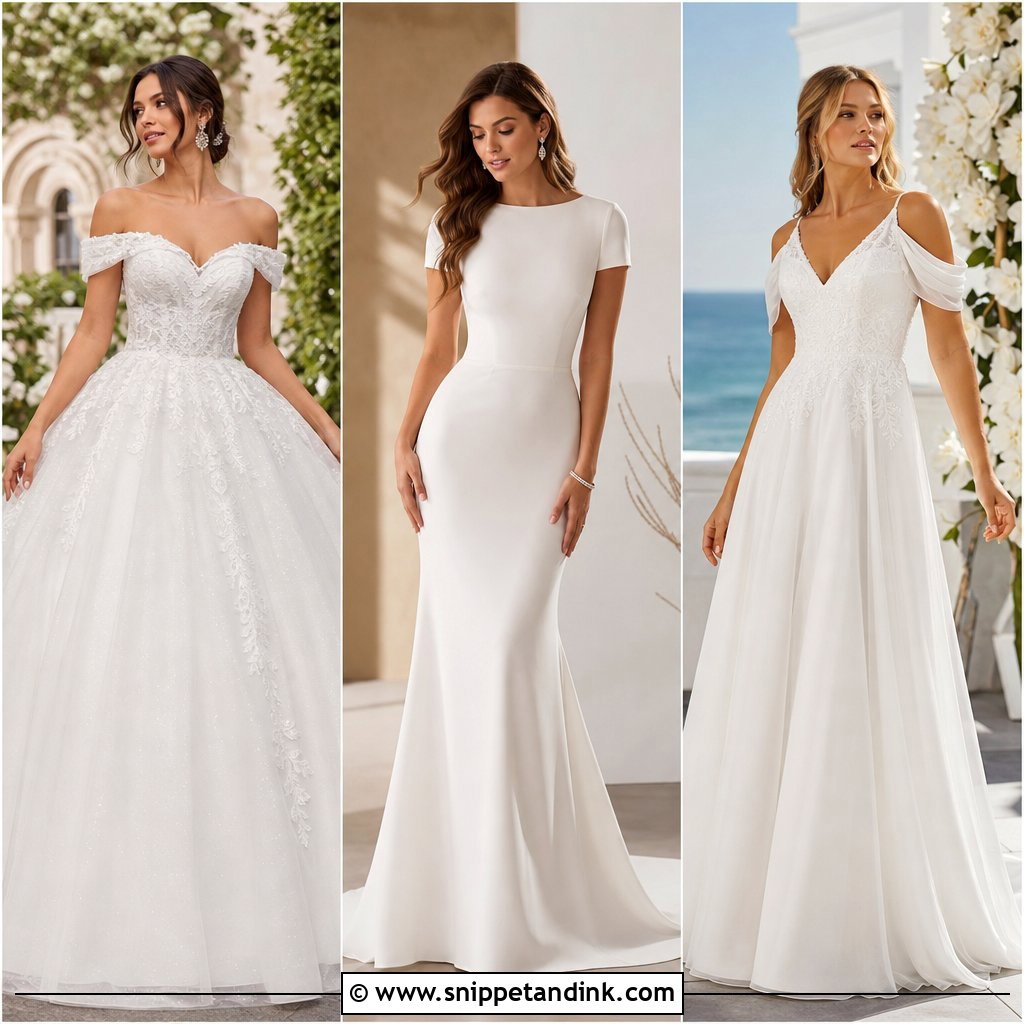

15. Plus Size Floral Appliqué Wedding Dress
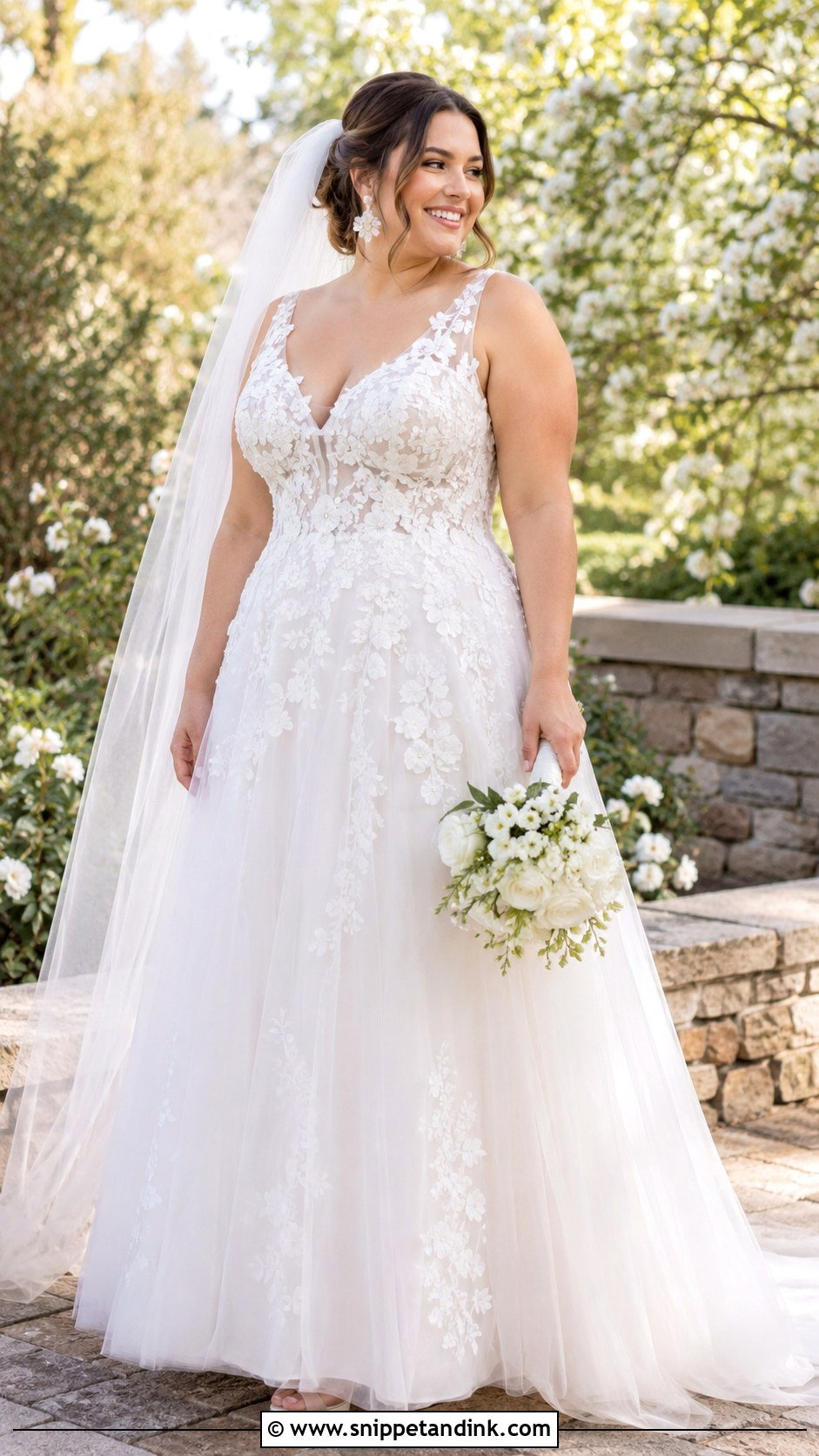
Appliqué flowers give a dress depth and a romantic character, and placement is where I spend time. They can trail across the bodice, mark the waist or scatter down a tulle skirt; the dress looks lighter when they are spread out rather than clustered in one heavy patch. A lined illusion bodice, supportive straps and an A-line skirt make a wearable base. Floral earrings, ivory block heels, a plain-edged sheer veil and a simple bouquet let the flowers lead at a garden, estate or spring wedding. Run your hand along the inside of the arms. Stiff lace edges sewn there rub and snag the veil.
16. Plus Size Wedding Dress With Cape
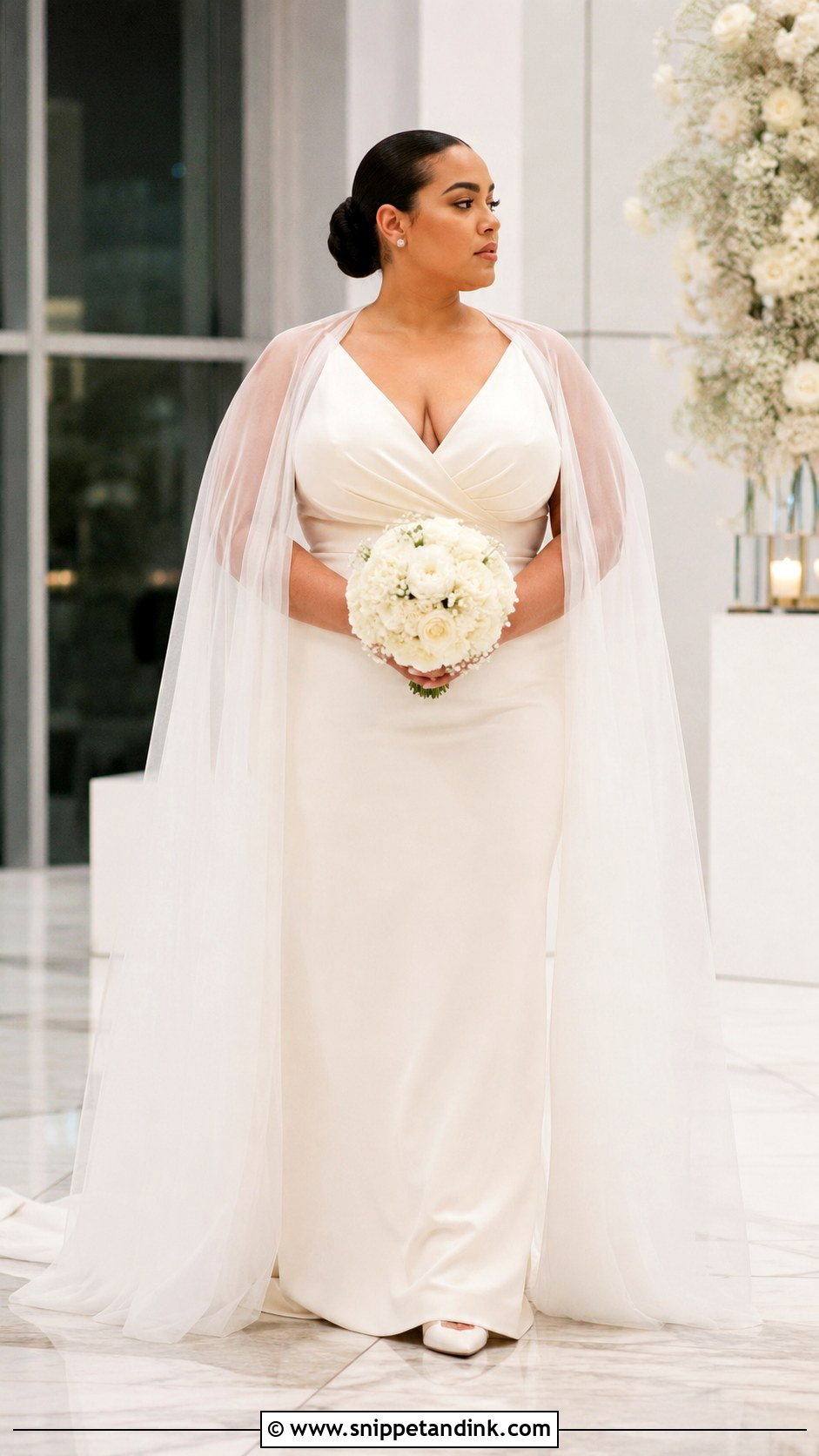
A cape turns a simple gown into a ceremony look you can take off later. Start with sleek crepe, satin or mikado, then add a sheer tulle cape, a pearl-detailed capelet, or a floor-length chiffon layer fixed at the shoulders. It gives light arm coverage and moves as you walk down the aisle. Stud earrings, a polished bun and comfortable pointed shoes are enough; with a long or decorated cape, I’d skip the veil. Detachable is the way to go. Check the fastenings on the morning: they should be secure, yet easy for a bridesmaid to undo without pulling your hair or the neckline.
17. Plus Size Wedding Dress With Detachable Sleeves
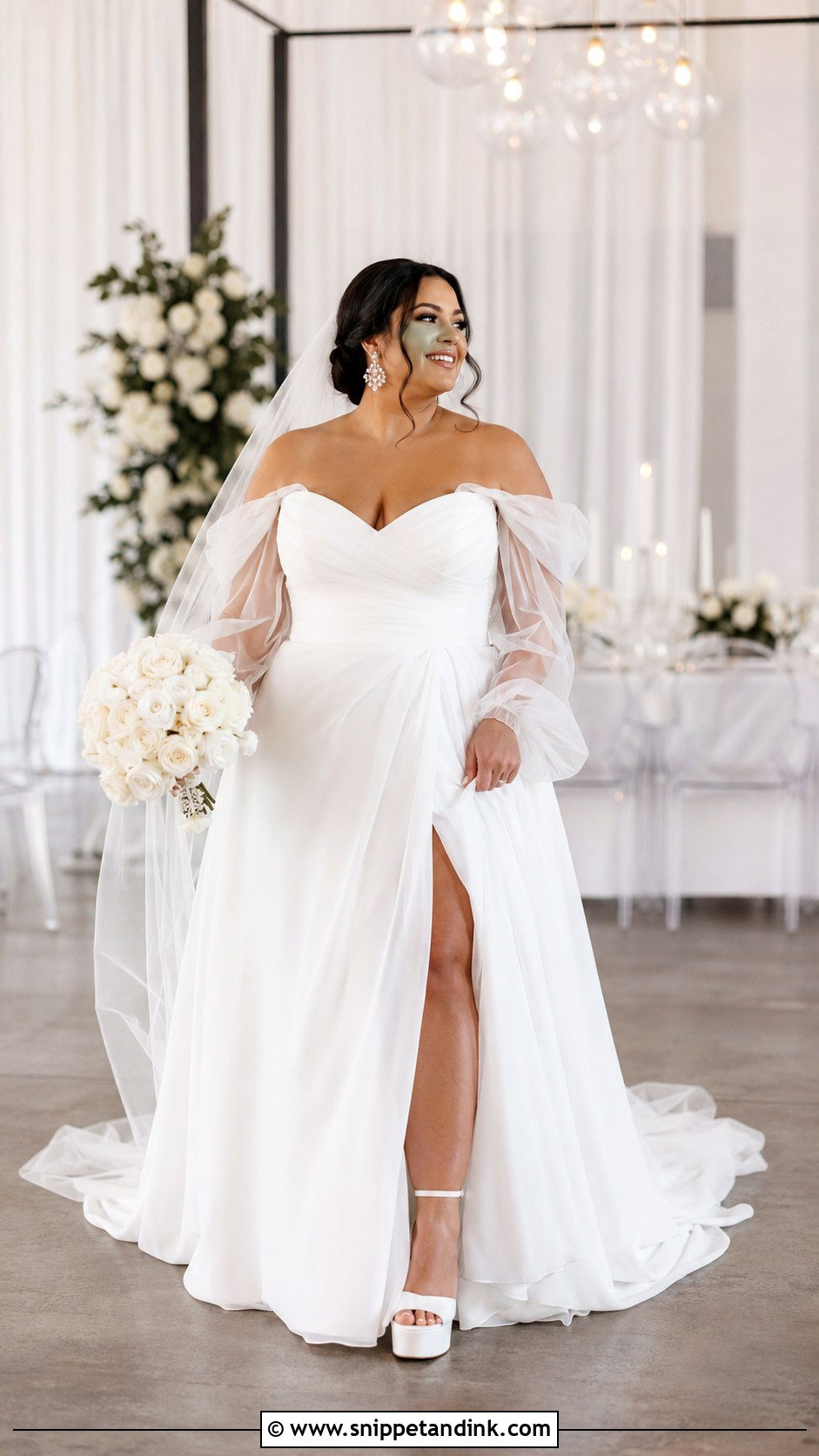
Detachable sleeves give you two dresses for one budget. The base is a strapless or sleeveless gown with a properly fitted bodice; the sleeves, whether off-the-shoulder tulle, fitted lace or airy puffs, are worn for the ceremony and removed for the reception. Statement earrings, a fingertip veil and platform block heels suit it, with little else. It works with ball gowns, A-lines and fitted shapes. The weak point is the elastic or band that holds the sleeve in place. If it’s too tight, it presses a groove into the upper arm and slides down, so I fit it with arms moving, and check that the snaps or loops are easy for a helper to manage.
18. Plus Size Blush Wedding Dress
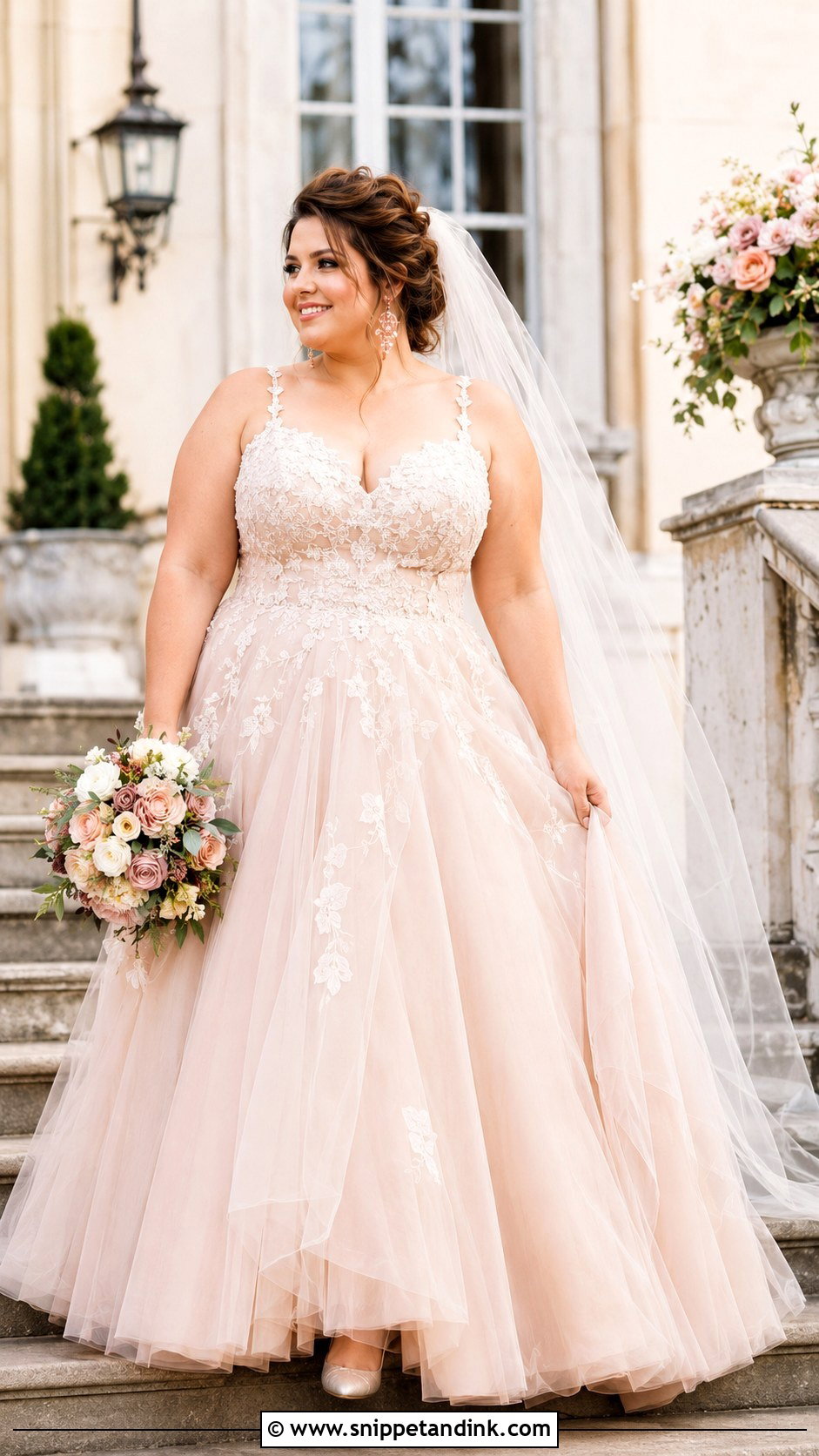
Blush gives you colour while staying clearly bridal. Shades run from pale pink and rose-beige to a nude lining under ivory lace, and the right one depends on your skin, not the trend. A blush tulle ball gown feels storybook; fitted lace or satin is quieter. Rose-gold earrings, ivory shoes, a sheer veil and a bouquet of white, blush and muted greenery tie it together. Blush shifts with light more than white does. I always take the dress to a window and then under warm indoor bulbs, because a shade that glows in daylight can turn flesh-toned in photos or wash out paler skin.
19. Plus Size Pearl Wedding Dress
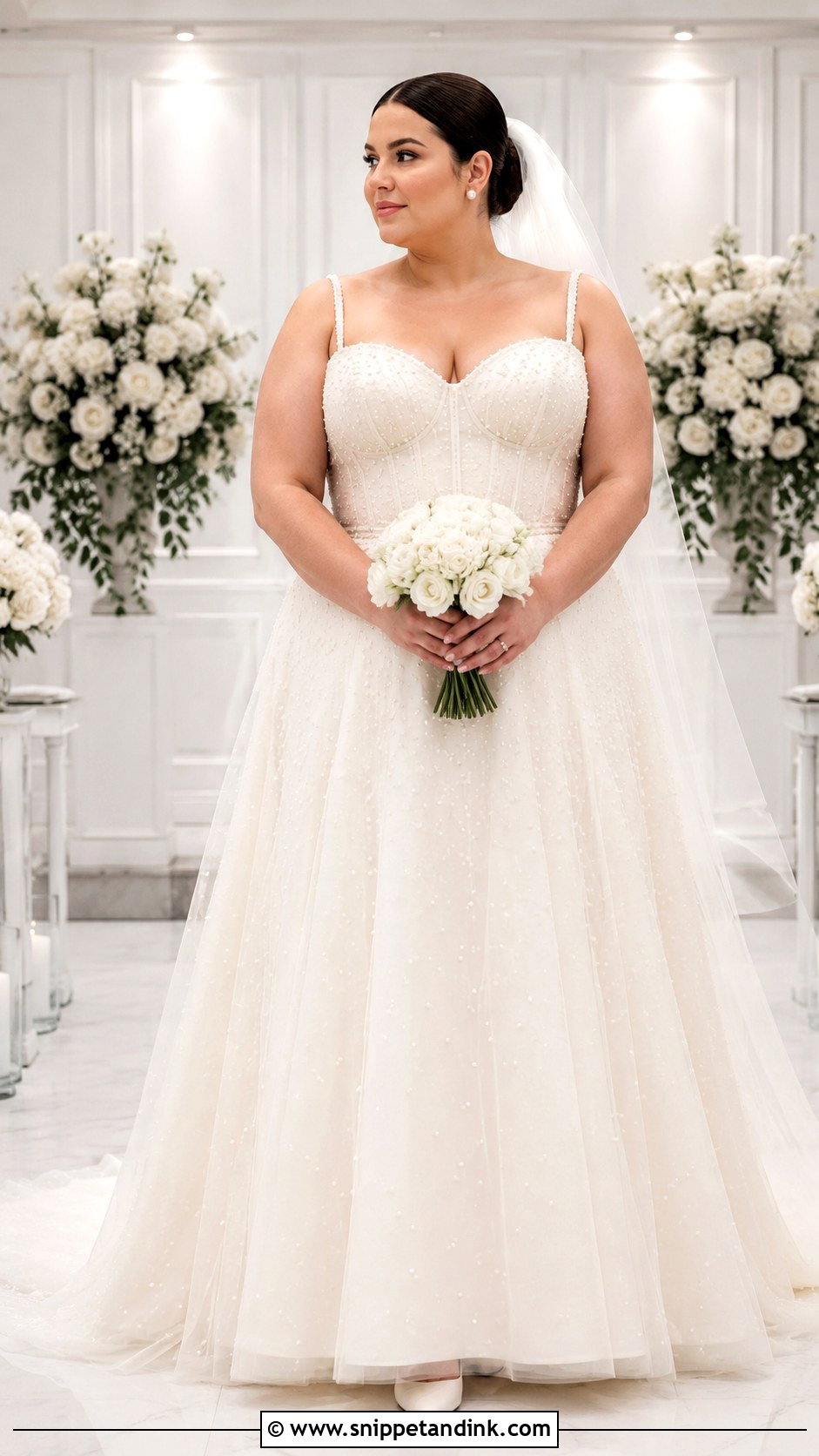
Pearls give a softer shine than crystals. They can sit around the neckline, scatter across illusion sleeves or spread evenly over a tulle overlay, on any supportive A-line, fitted or ball gown base. Simple pearl studs, satin shoes and a plain-edged veil are enough; a heavy necklace competes with the bodice. A sleek bun or pinned curls finish it. Before buying, run your hand over the embellished areas. Pearls on the inner arm rub, and loosely stitched clusters come off at the first hug. When the dress travels, pack it with tissue between the folds so the beads don’t press into the fabric.


20. Plus Size Black and White Wedding Dress
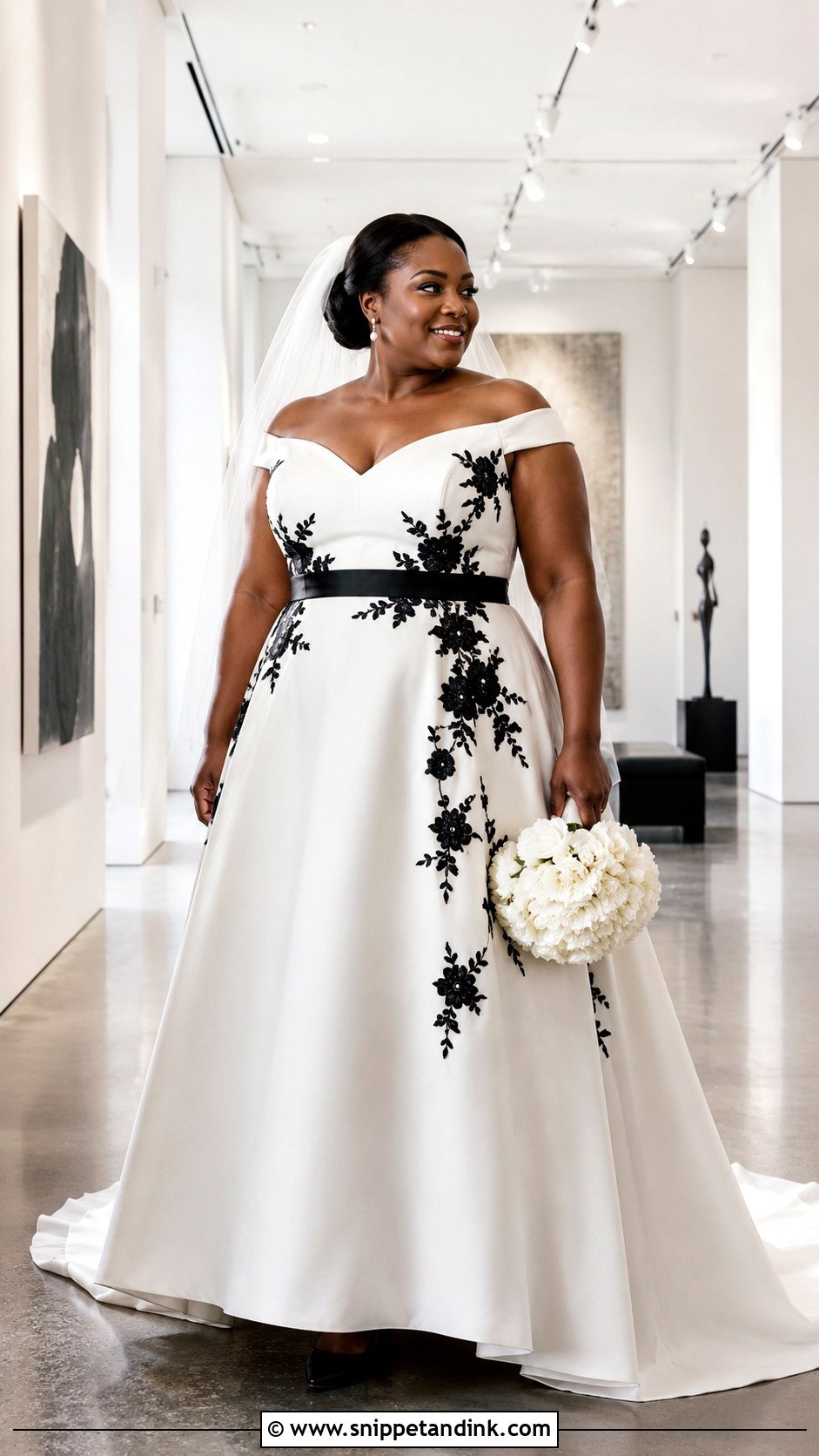
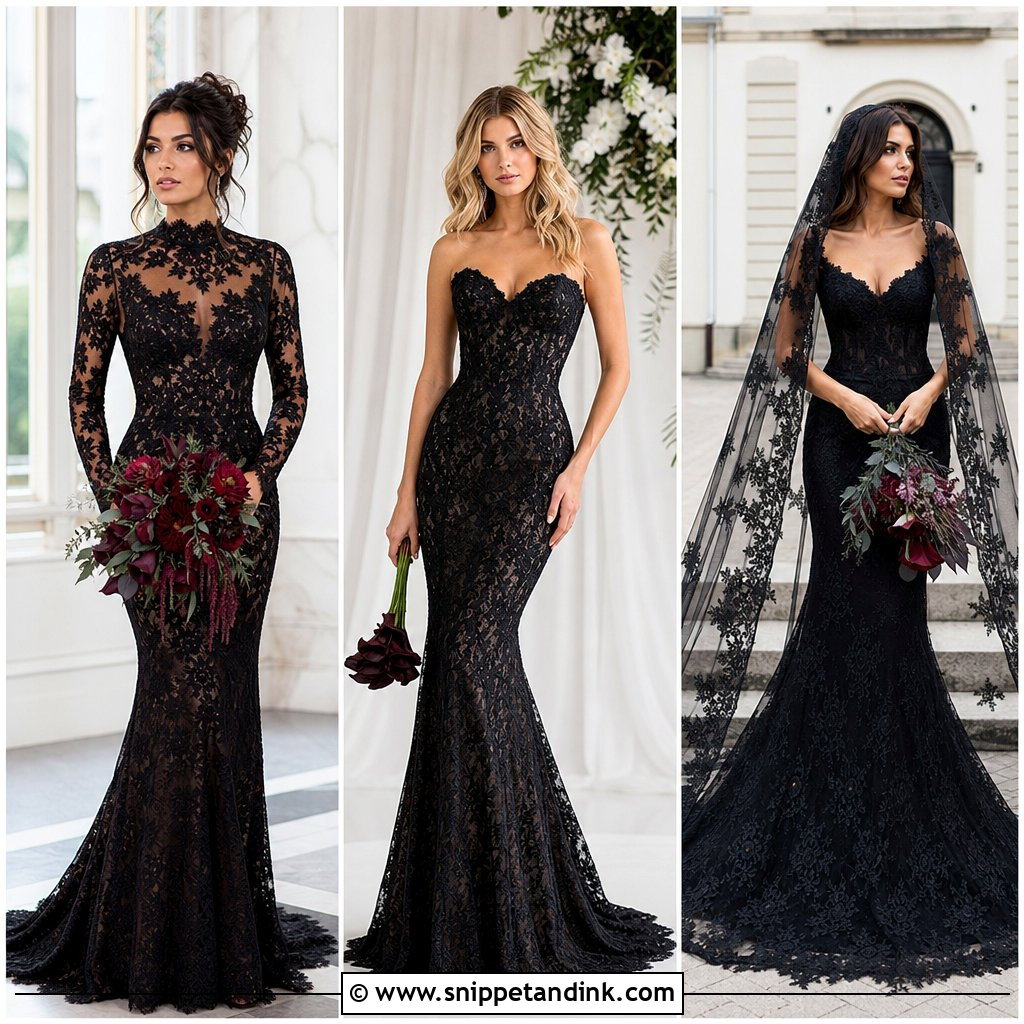
Black accents on a white gown are bold and modern, and restraint makes them work. A black satin sash on a clean A-line, black floral appliqués on tulle, or an ivory crepe dress with black gloves, a bow and matching heels each make a strong graphic look. Keep pearl or crystal earrings near the face for brightness, and a plain white veil keeps the outfit bridal. I tell brides to repeat the black two or three times at most, otherwise it starts to read as a costume. One practical point: black dye can transfer onto white when damp, so ask whether a black sash is colourfast before a summer or outdoor wedding.
Shapewear, Chafing and Bustles on a Long Day
A dress that fits in the fitting room still has to survive the ceremony, photos, dinner and dancing. The comfort questions I go through with every curvy bride are the ones nobody else seems to mention.
- Thigh chafing: anti-chafe shorts or a balm under a long skirt make a huge difference, especially in summer and in mermaid or column shapes where the thighs touch.
- Shapewear: only wear it if it feels good. Heavy shapewear under a boned bodice gets hot and can roll at the waist; a well-built bodice often removes the need entirely.
- Straps and boning: if anything presses at the second fitting, say so. It will press harder after eight hours.
- Shoes: a lower block heel or a cushioned wedge carries more weight comfortably than a stiletto, and nobody sees your feet under a full skirt.
Bustles deserve their own planning. Full skirts and trains are heavy, and a bustle that holds the fabric well depends on the number of hooks or ties and on who does it. I show a bridesmaid how to bustle the dress at the final fitting and take a photo on her phone, because by the time you need it, the shop’s instructions will be long forgotten.
Finally, bring a small kit: fashion tape, a few safety pins, a needle threaded in matching colour and a spare pair of flat shoes. Most wardrobe problems at a wedding are small and quick to fix if someone has the right thing in her bag.
Your Body Is the Pattern, Not the Problem
No body-shape rule decides which dress is right for you. The right one supports you, reflects your taste and lets you enjoy the whole day. The dresses above range from fitted to flowing and from traditional to bold, so try at least one shape you’d normally avoid; curvy brides are often surprised by a mermaid or a column. Put fabric quality and alterations in the budget from the start. Sit, walk, lift your arms and dance in every serious contender. When a dress fits your body properly, you stop thinking about it, and that is how you know.
You'll Like These Ideas:




Leave a Reply