
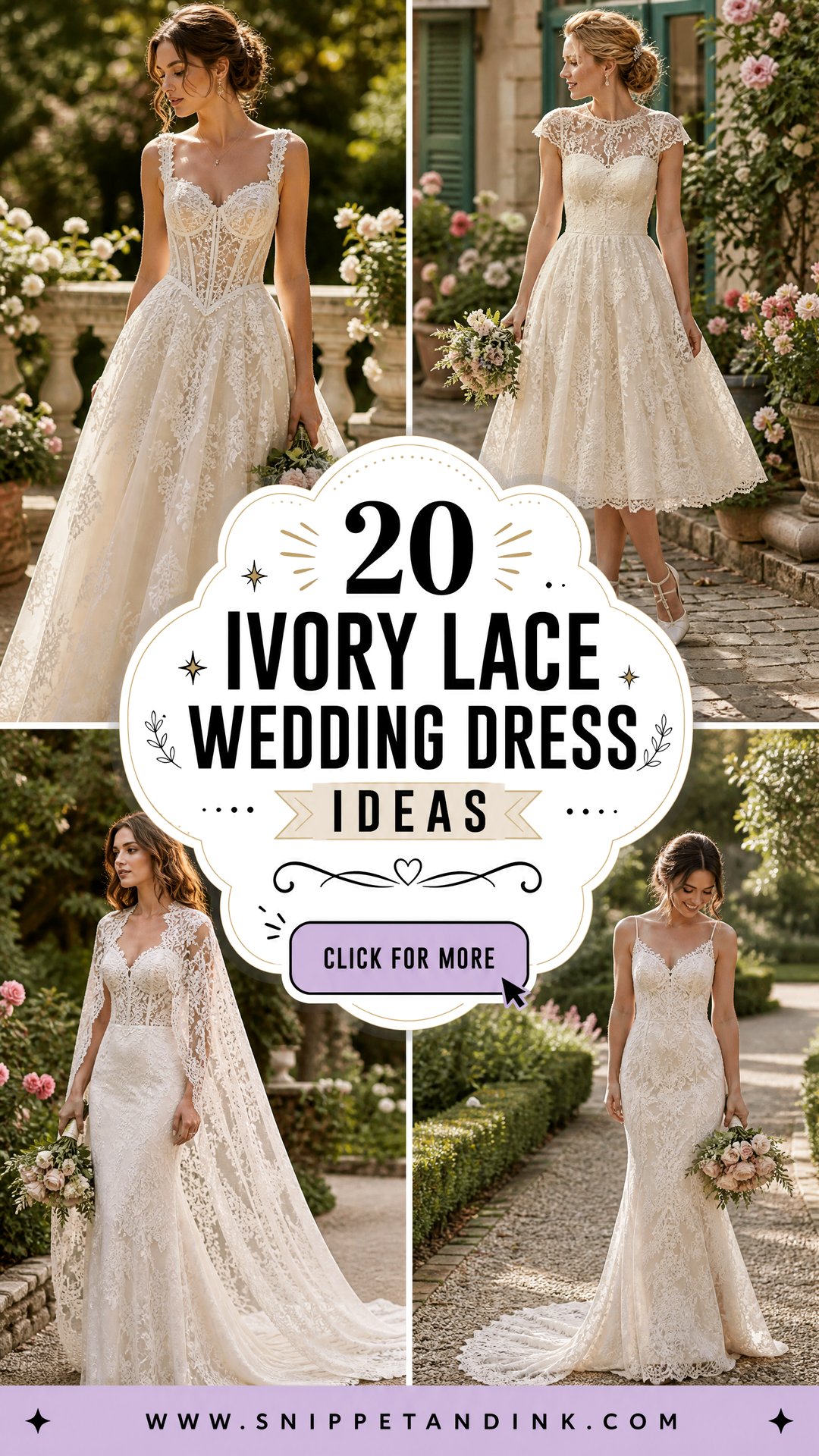
Lace is the fabric I see brides fall for fastest and regret least, provided they understand how it’s built. Against ivory, the pattern softens; in daylight the motifs read as texture rather than contrast, which is why so many lace gowns look warmer in photos than they did under shop lighting. Below are twenty ivory lace silhouettes, from fine Chantilly and raised floral appliqué to corseted bodices and convertible gowns. With each one I’ve noted how it fits, what to test at your fittings, and how I’d style the shoes, veil and jewellery around it, so you can picture the whole outfit rather than just the dress on a hanger.
How the Main Lace Types Behave Once You’re Wearing Them
Bridal salons tend to talk about lace by romance. I’d rather talk about weight and wear, because those decide how the dress feels at hour nine.
Fine net laces
Chantilly and similar flat laces sit on a light net and outline their motifs with thin thread. They drape like a second skin and add almost no weight, so they suit sheaths, sleeves and summer weddings. They also snag on jewellery and catch on rough stone, and a pulled thread in net is hard to repair invisibly.
Corded and raised laces
Alençon-style lace has a raised cord stitched around each motif, which gives it a crisp, defined edge. It holds structure well on bodices and photographs with more depth, but it is stiffer and heavier, and the cord can rub on the inner arm if used on fitted sleeves.
Guipure and heavy appliqué
Guipure has no net backing; the motifs are joined by small bars, so it stands up by itself. That makes it graphic and modern, and quite heavy across a full skirt. Three-dimensional floral appliqué on tulle sits in between, light at the base and fragile at the petals.
Run your hand over the lace at your appointment and feel the back of it. Scratchy cording or rough glued edges will be against your skin all day.
1. Ivory Lace A-Line Wedding Dress
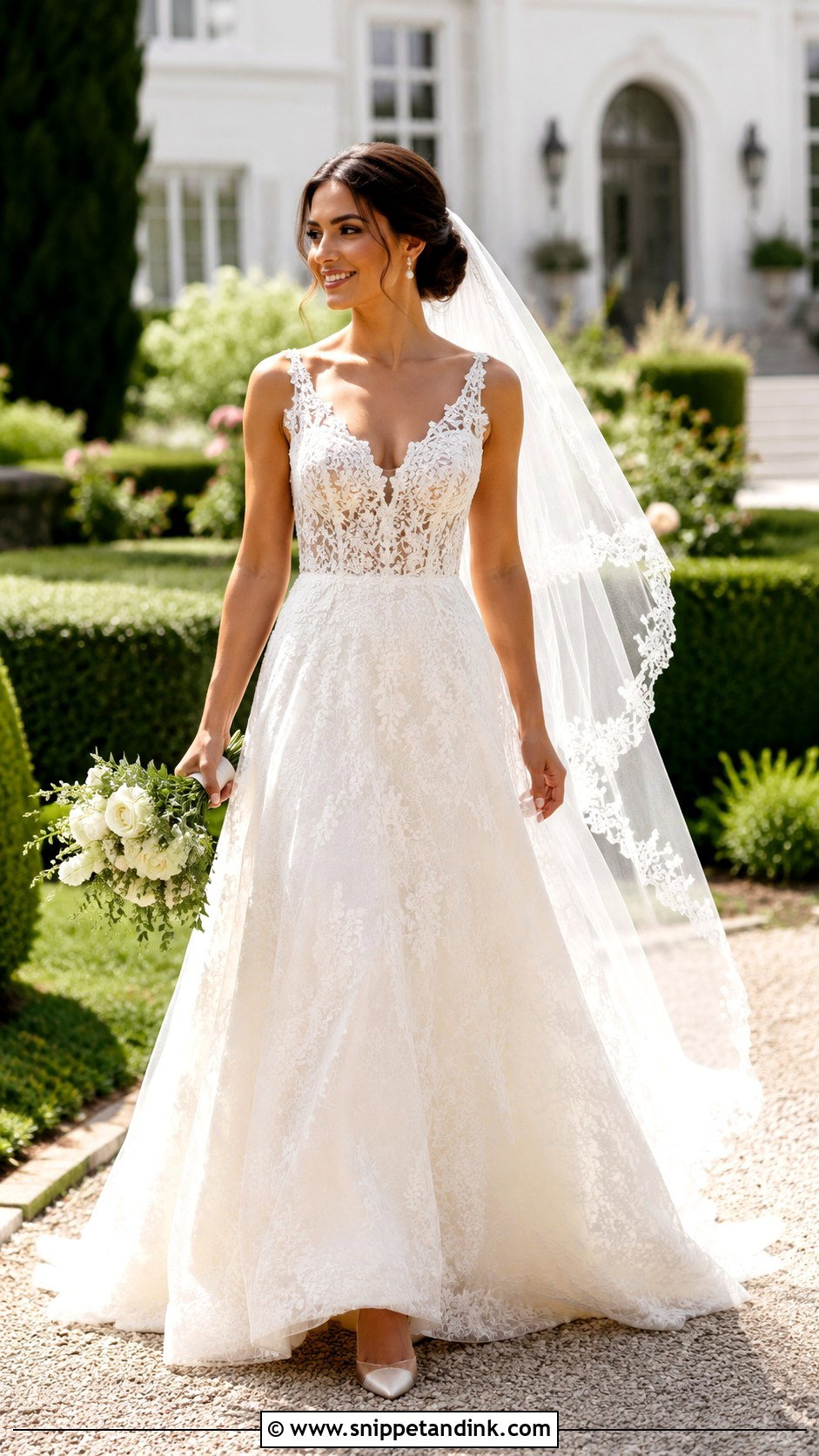
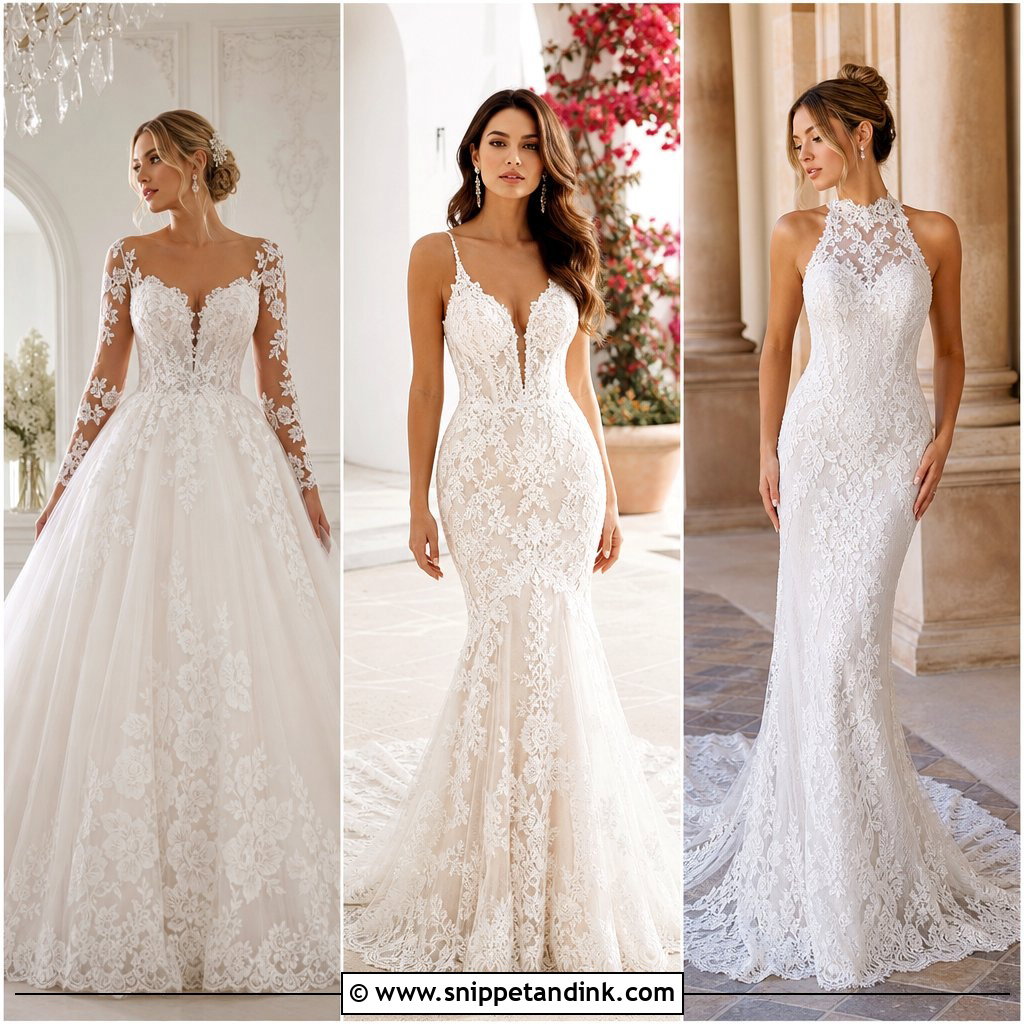
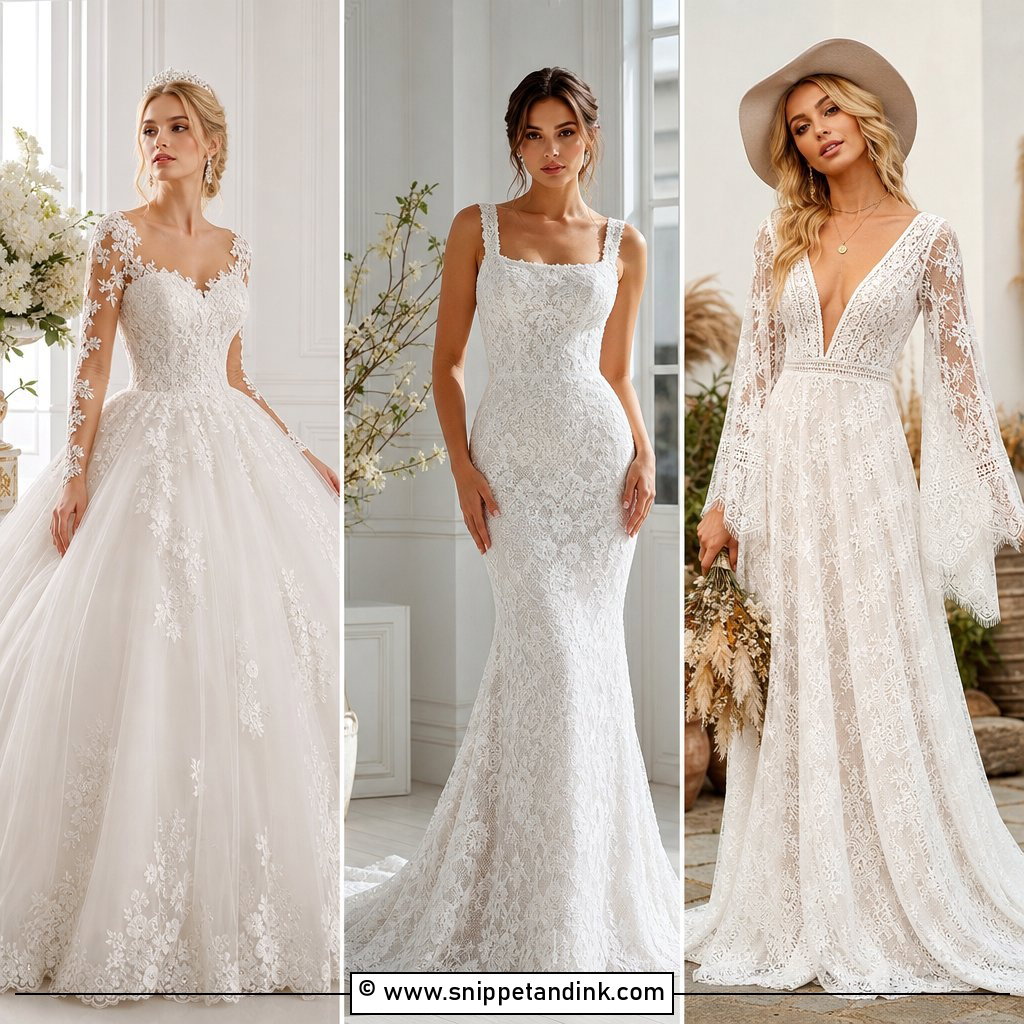
The A-line is the shape I pull first for almost every bride, because it’s honest about what lace does well. A fitted bodice shows the pattern clearly, and a floor-length skirt in tulle or chiffon keeps the weight down. Fine floral lace suits this cut; heavy guipure on a full A-line skirt can drag the hem flat. Pointed ivory pumps, pearl drops, a fingertip veil with a matching lace edge and a small bouquet with pale greenery finish it. Have the hem set while you’re wearing your actual wedding shoes. Even a centimetre of difference means the lace scallop either skims the floor or catches under your toe.
2. Ivory Lace Long Sleeve Wedding Dress
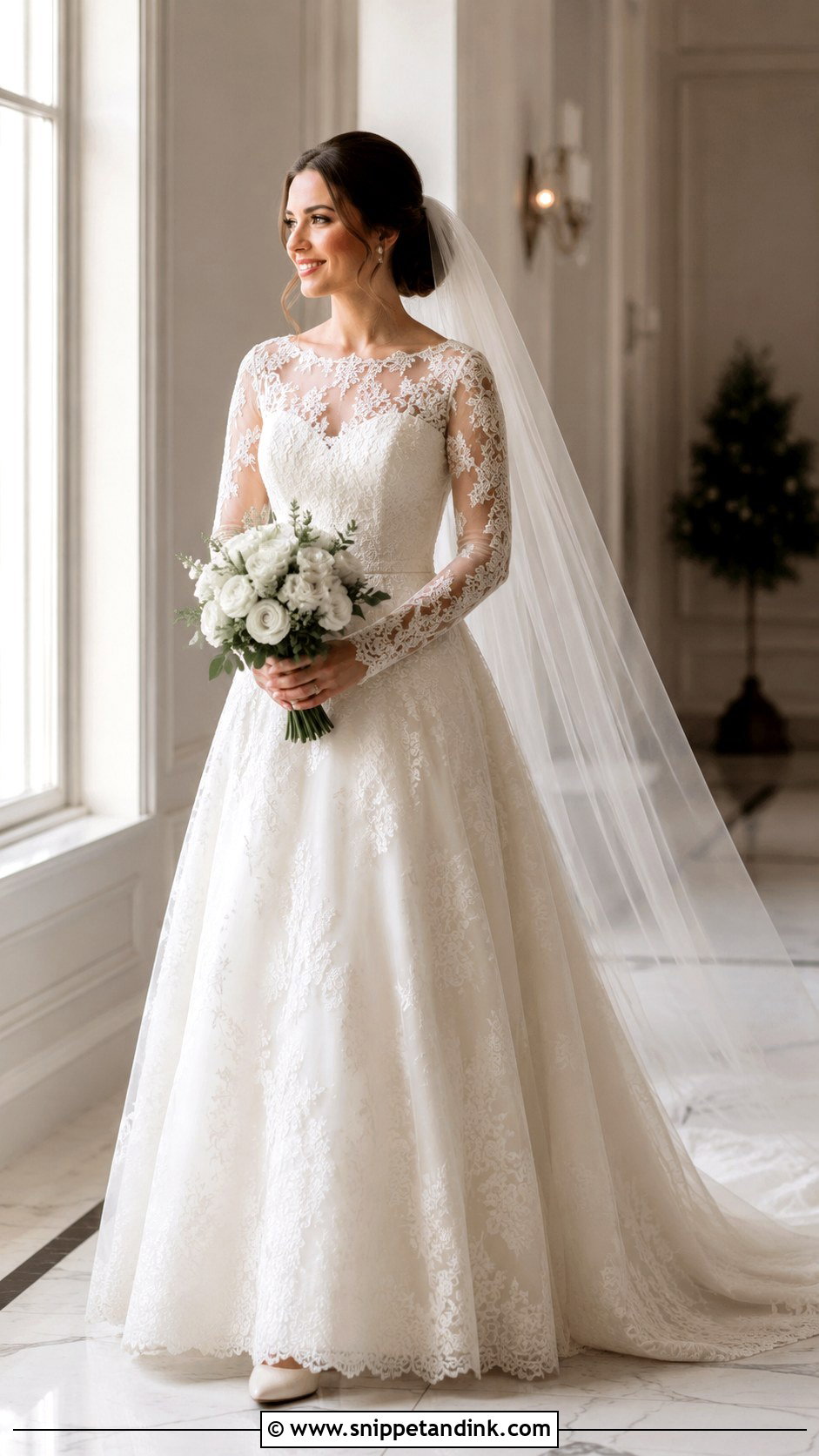
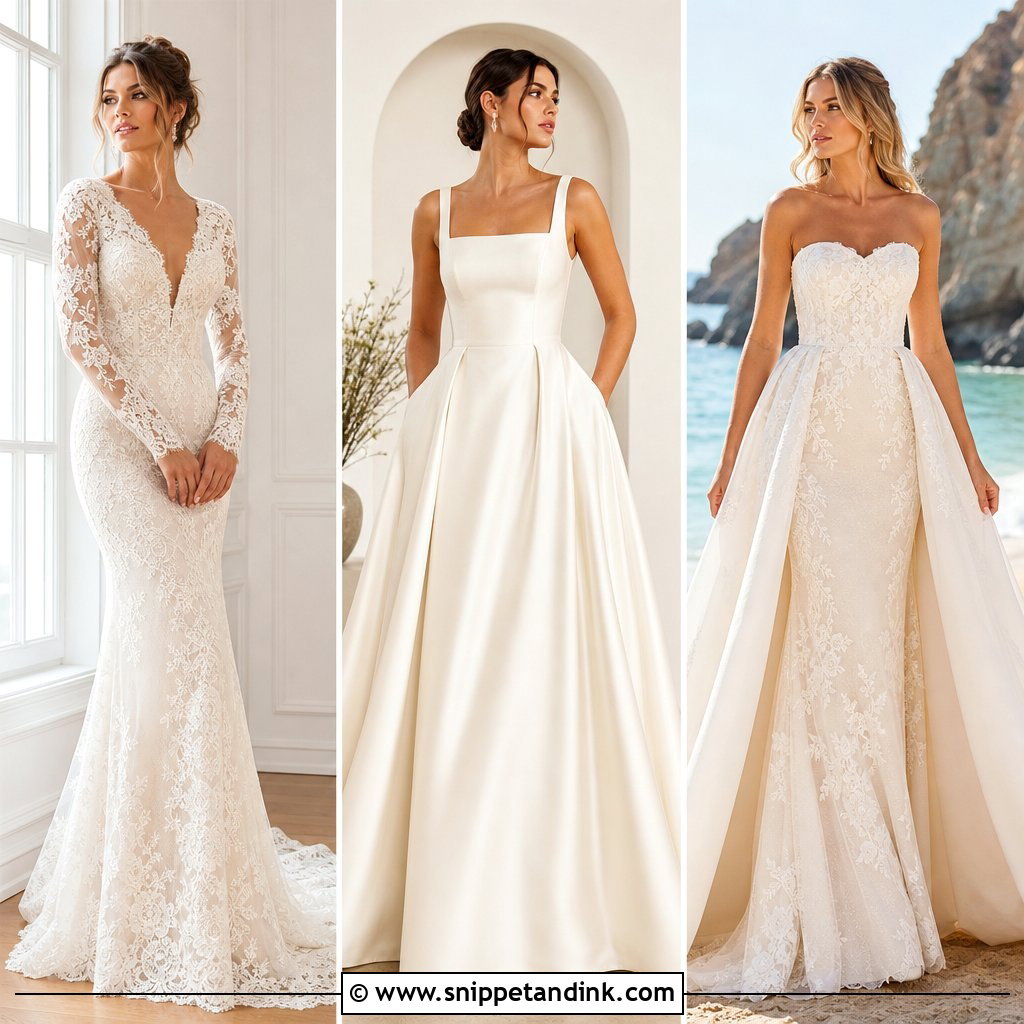
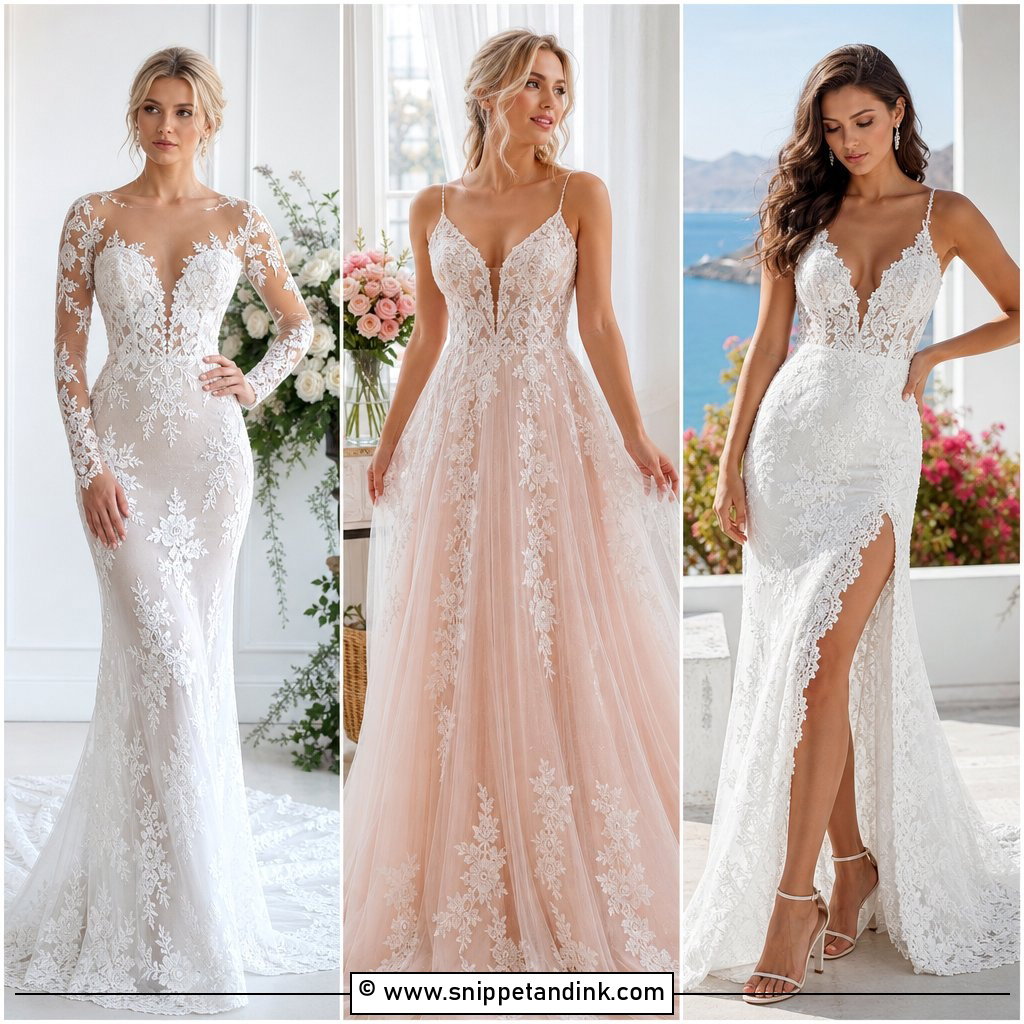
Long lace sleeves are made for a cold-weather wedding, but they’re also where fit goes wrong most often. Illusion mesh with appliquéd lace gives coverage without much weight; a lined bodice and plain flowing skirt stop the gown looking overworked. Sit down and bend your elbows in the fitting room. Lace has very little stretch, and sleeves cut too close will stop you hugging anyone or lifting a glass. Satin pumps, pearl studs and a plain cathedral veil without a border leave the sleeve pattern visible. For moving between venues in winter, an ivory cape or faux-fur wrap does more than a cardigan ever could.
3. Ivory Lace Mermaid Wedding Dress
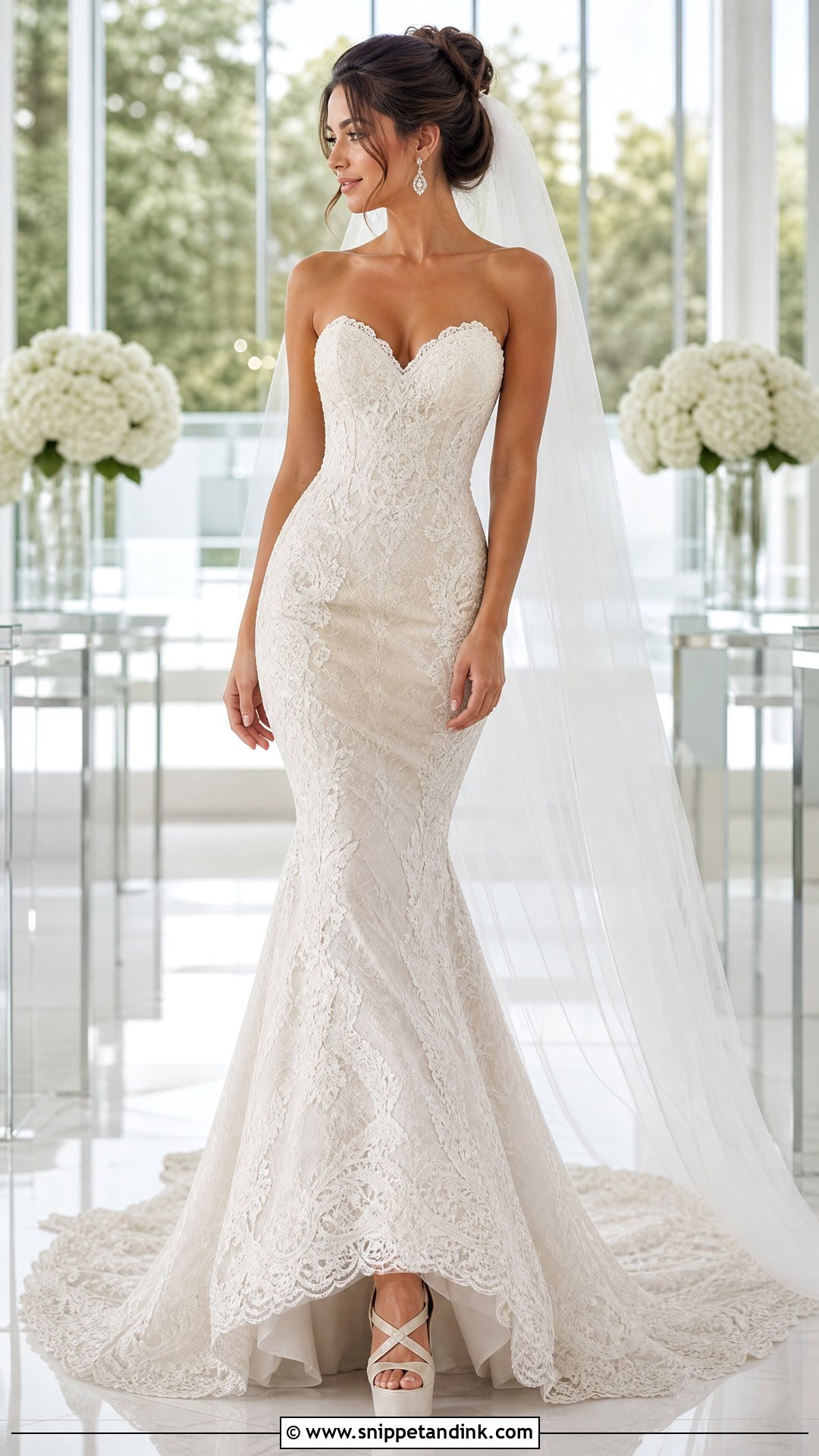
A mermaid gown shapes through the bodice, waist and hips before flaring near the knee, and the lace placement makes or breaks it. Appliqués should follow the vertical seams; motifs that sit horizontally across the hips make the flare look lower than it is. A sweetheart or soft curved neckline balances the fitted body. Pair it with comfortable platform heels, narrow drop earrings, a sleek low bun and a plain chapel veil. At every fitting, walk, sit and climb a few steps. If you can’t manage a staircase in the sample, a smaller size certainly won’t help; good internal structure matters far more than a tight cut.
4. Ivory Lace Ball Gown Wedding Dress
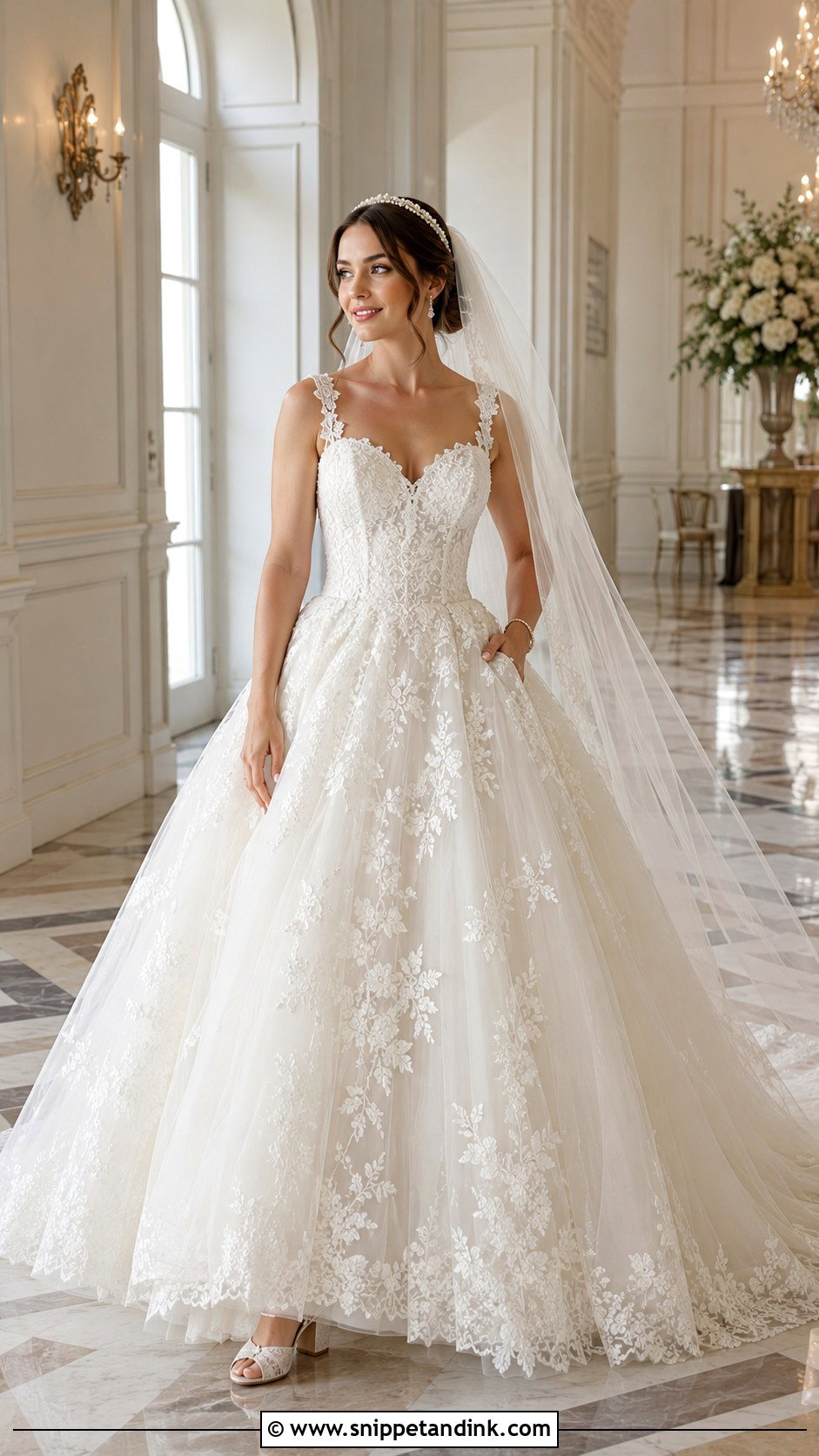
A lace ball gown gets its drama from scale rather than sparkle. I prefer the lace dense across the bodice and thinning out as it scatters down a layered tulle skirt, which gives depth that all-over lace can’t. A natural or slightly dropped waist suits most torsos. Block-heel shoes keep you stable under all that volume, and a tiara or pearl headband sits well with a long veil anchored beneath an updo. Skip the necklace if the neckline is already embroidered. Before you commit, measure the aisle and the gaps between reception tables. Wide skirts and narrow barn aisles are a real problem on the day.
5. Ivory Chantilly Lace Wedding Dress
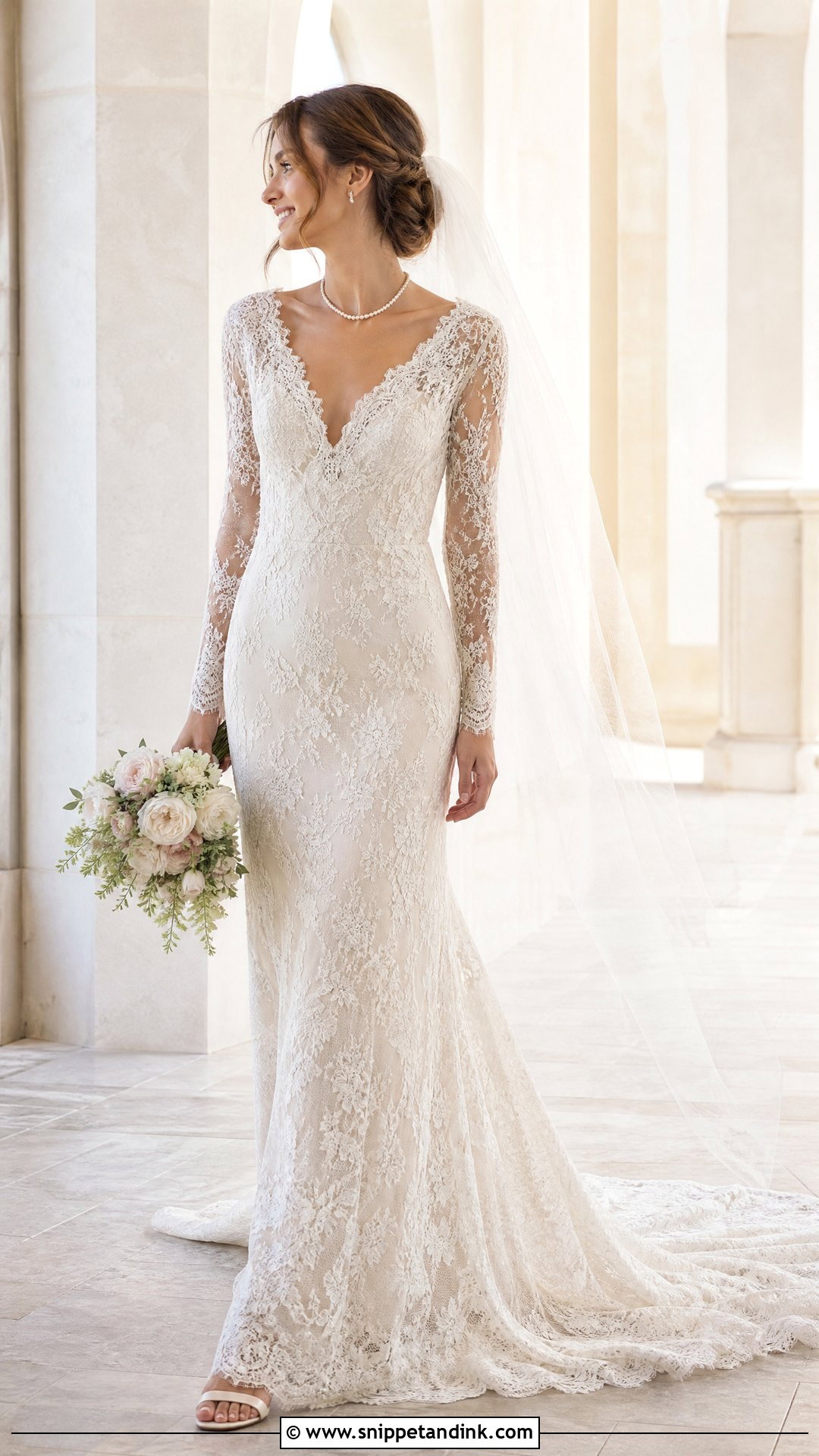
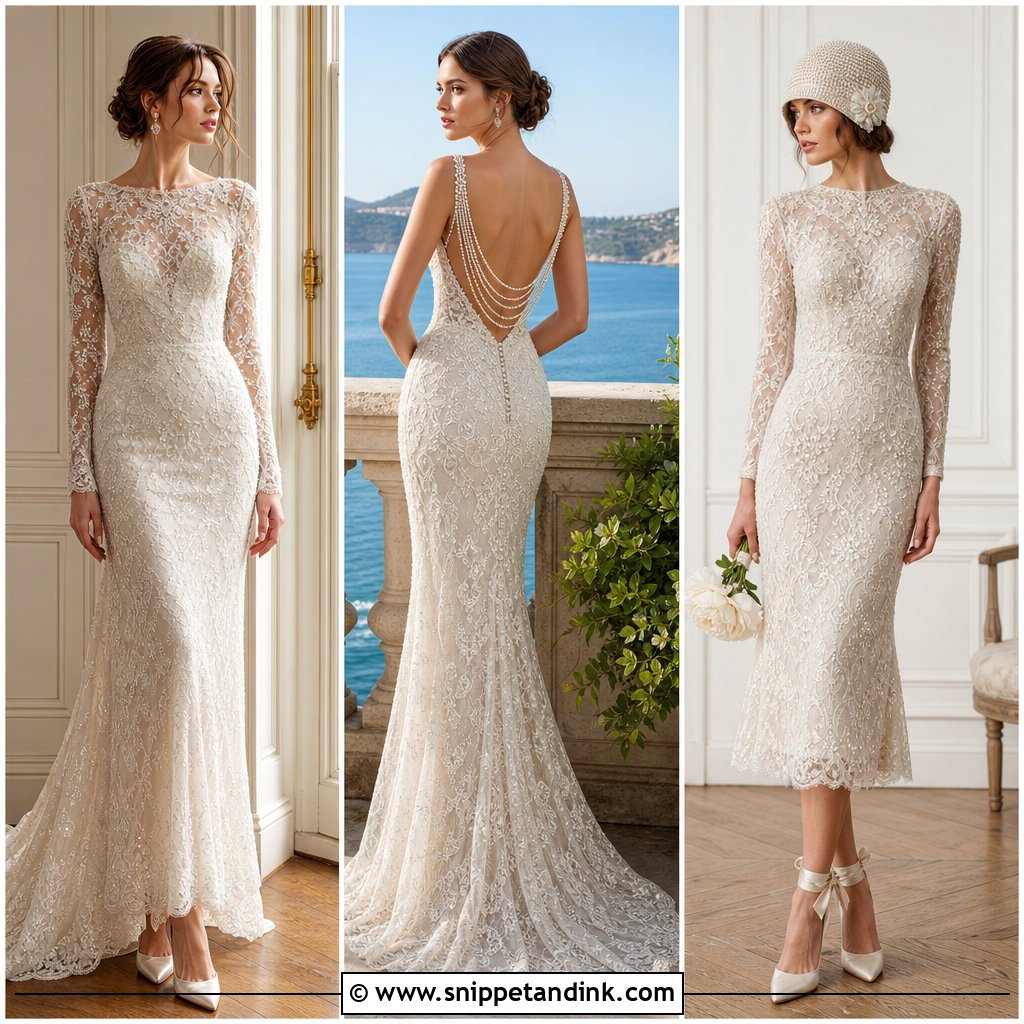
Chantilly is the lace I recommend when a bride wants pattern without bulk. It’s fine and flat, worked on a light net with delicately outlined flowers, so an ivory Chantilly lace wedding dress drapes softly over a column, A-line or gentle flare. An ivory lining gives a tonal look; a champagne underlayer makes the pattern stand out. Slim satin sandals, a single strand of pearls and a raw-edge veil keep everything light. The trade-off is fragility. Chantilly snags easily, so I check every bracelet clasp, shoe buckle and bouquet pin before the bride gets dressed.
6. Ivory Floral Lace Wedding Dress
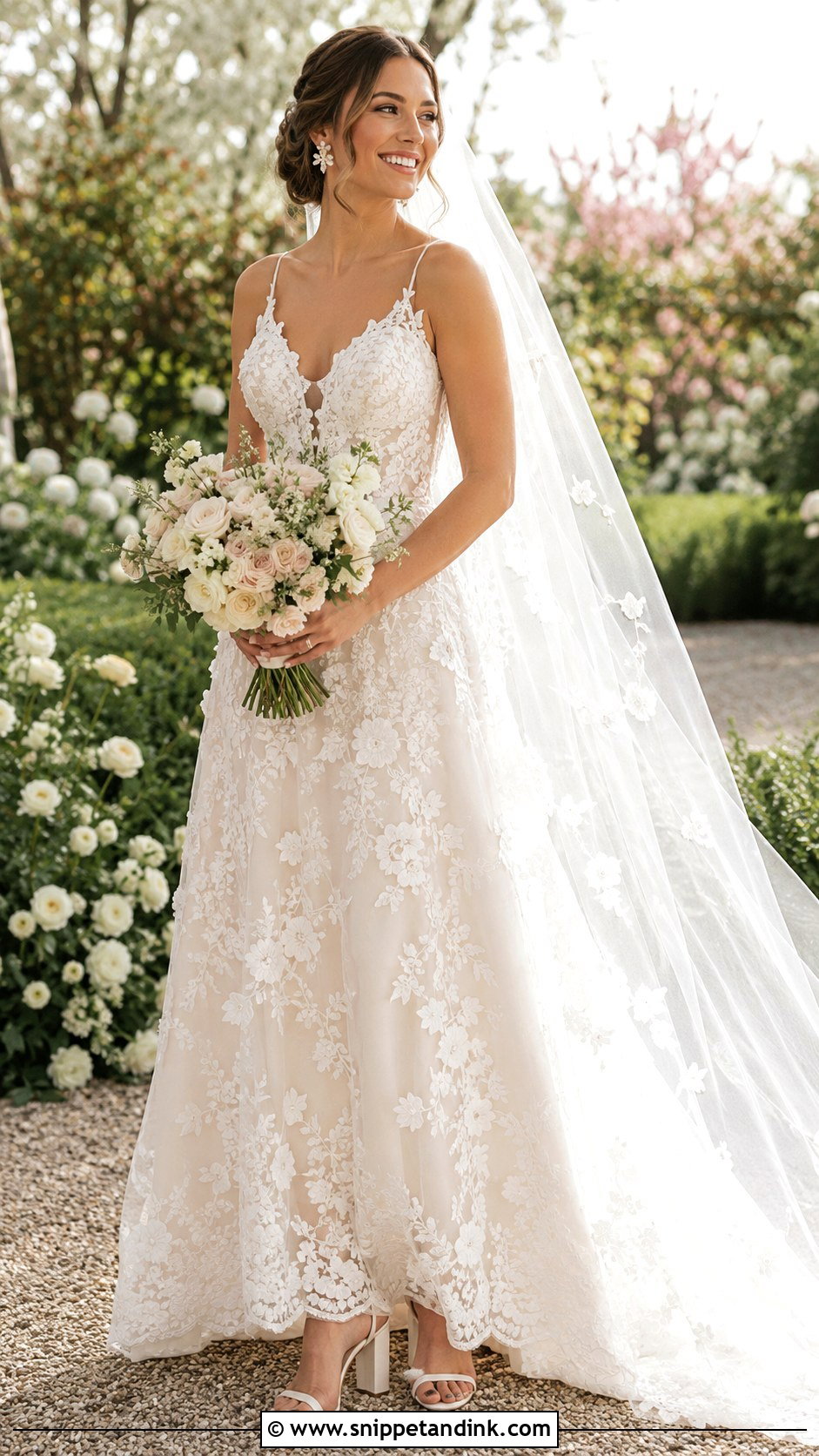
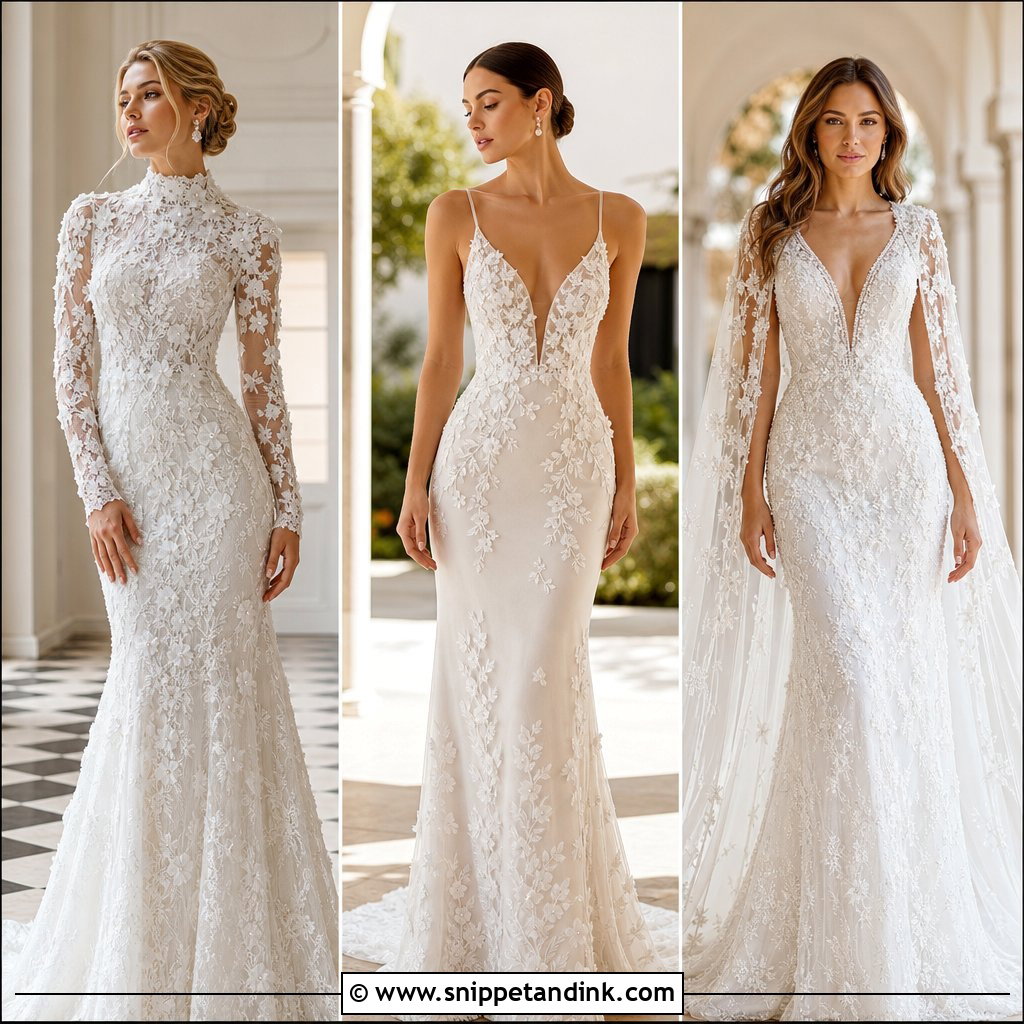
Medium-scale floral appliqués, framing the neckline and waist and then trailing lightly down the skirt, give the most natural look for spring or an outdoor ceremony. That placement keeps the eye moving without crowding the gown. A soft A-line with narrow straps and a manageable train suits it. Ivory block-heel sandals, small floral earrings and a veil with a few matching appliqués near the edge tie it together. Choose a structured bouquet over a huge one so the lace stays visible. Raised petals crush easily; hang the gown with space around it and never pack it under other clothes.
7. Ivory Lace Off Shoulder Wedding Dress
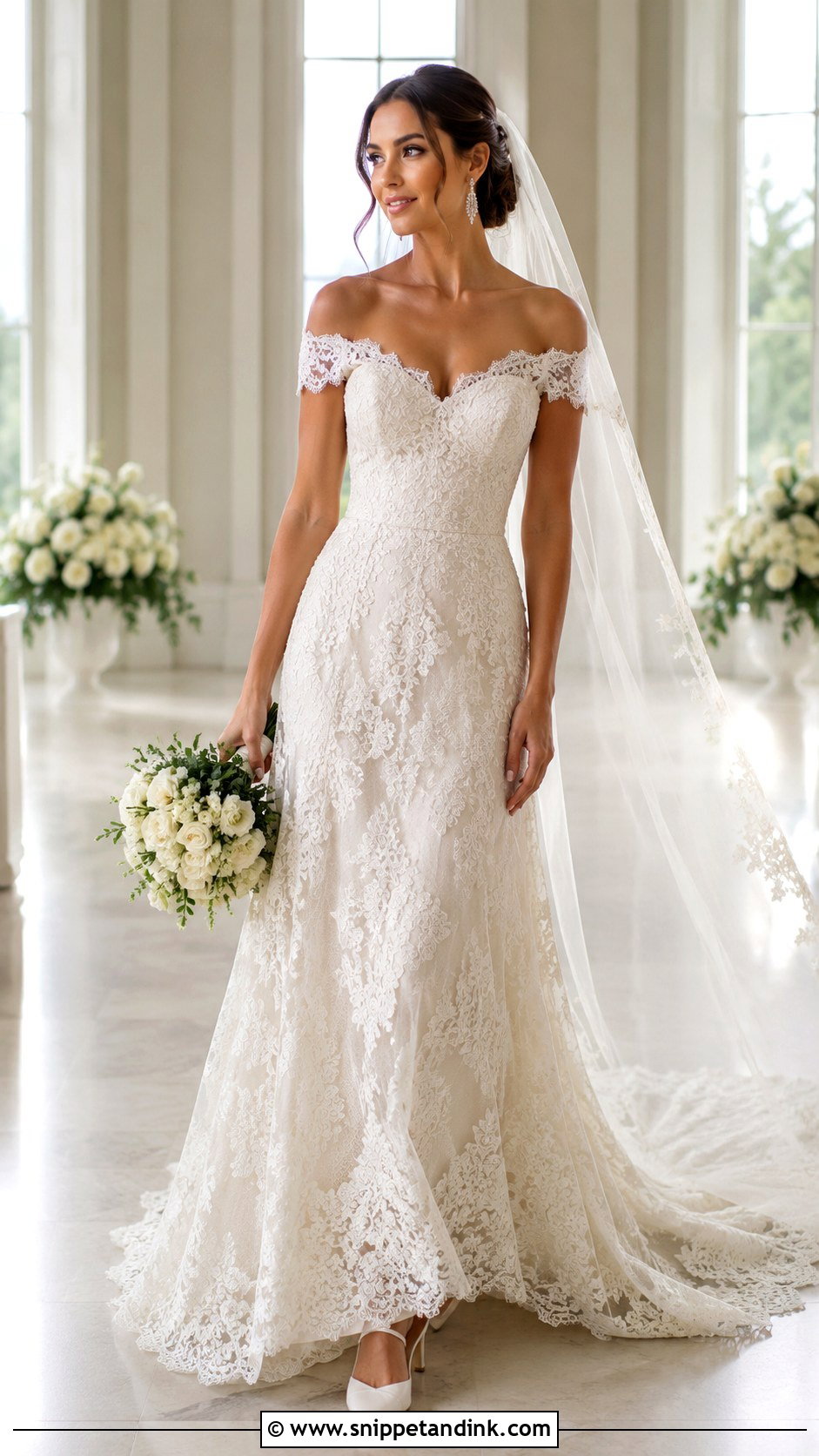
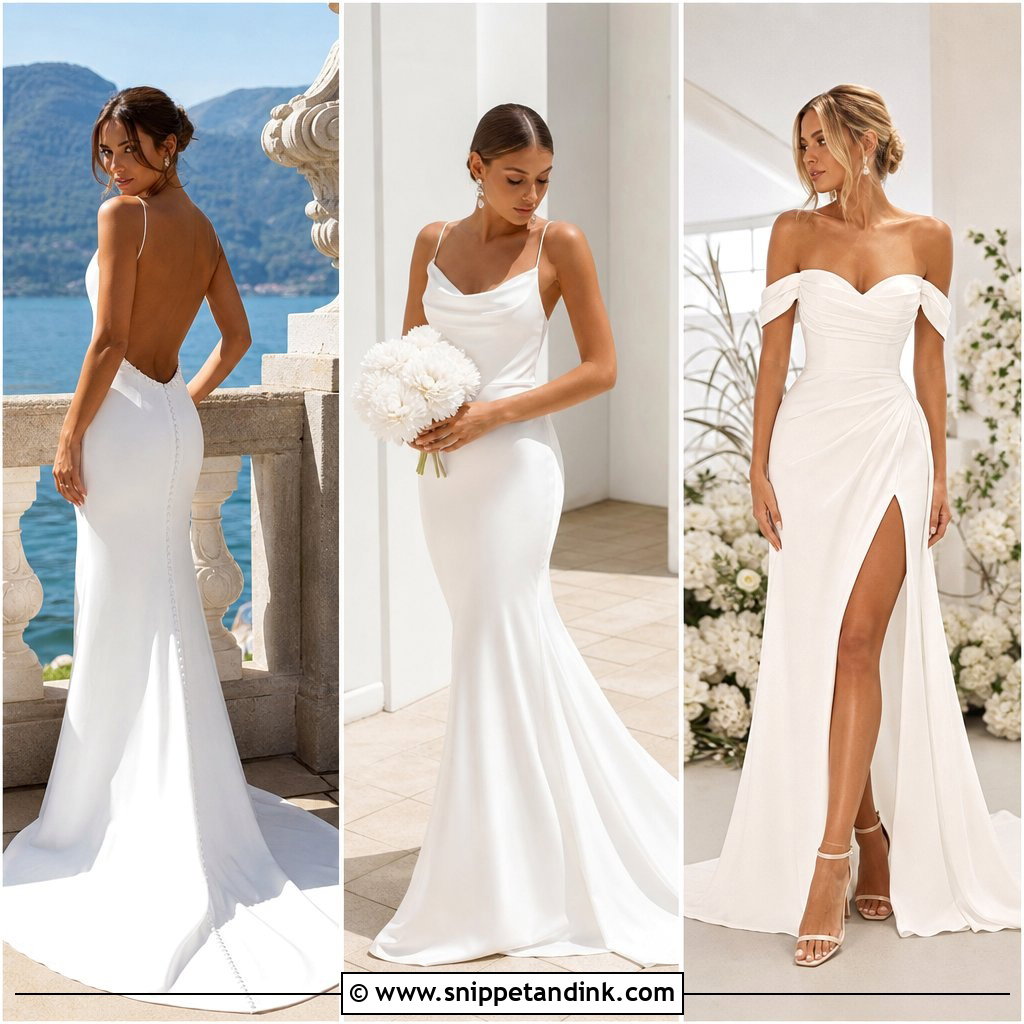
Off-the-shoulder lace frames the collarbones, but the question I always ask is whether you can hug someone in it. The bodice needs real internal support so the neckline doesn’t rely on the sleeves to stay up. A softly fitted waist and flowing skirt keep it balanced for a formal or relaxed setting. Wear chandelier earrings instead of a necklace, or a short pendant if you must. Pointed slingbacks and a chapel veil add no extra width at the shoulder. At alterations, raise both arms and wrap them around the fitter. Fashion tape is a backup, not the plan.
8. Ivory Lace Square Neck Wedding Dress
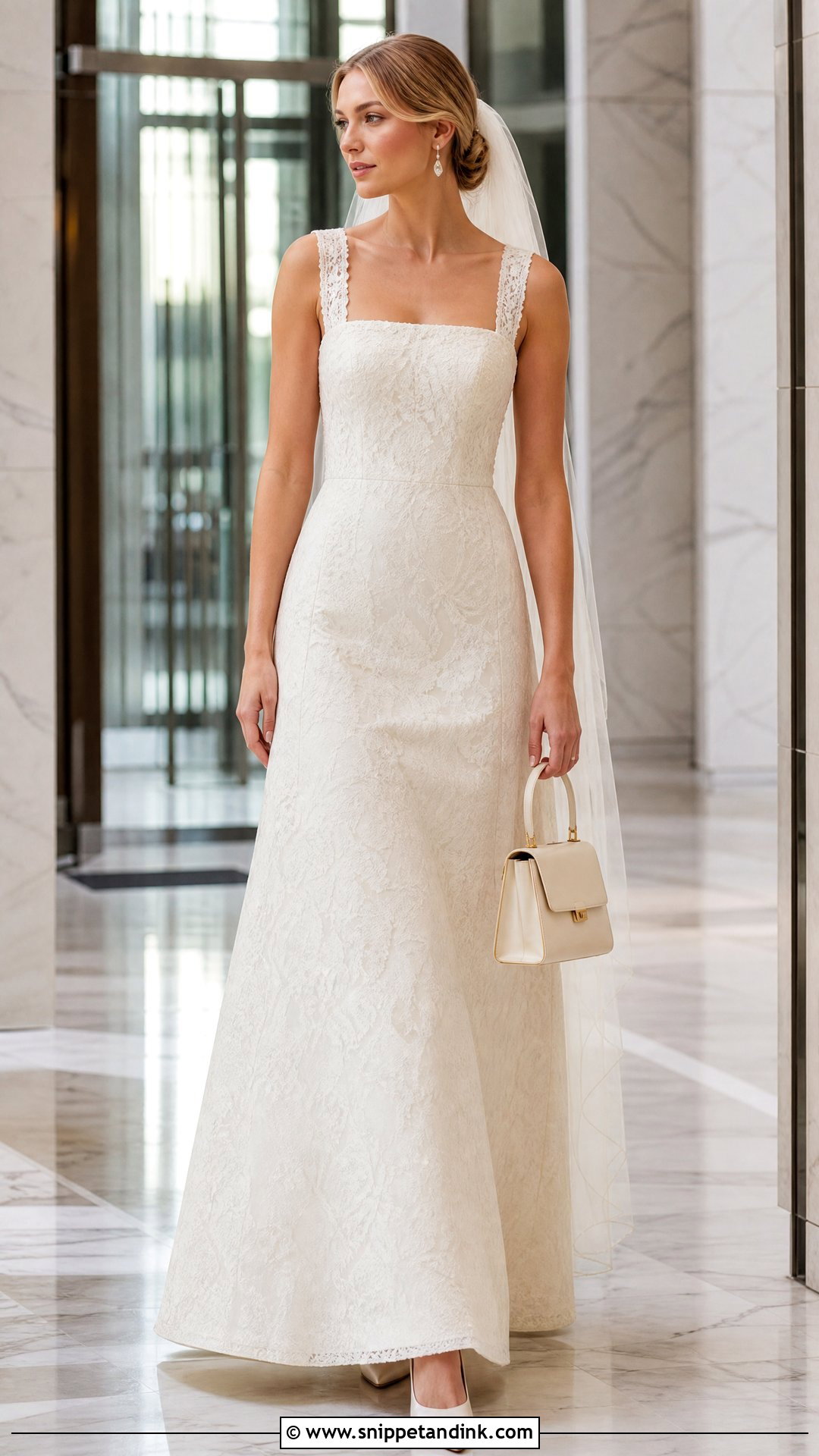
A square neckline gives lace a modern edge because the straight lines contrast with the soft florals. Wide straps or short lace sleeves give the support; an A-line or column skirt carries the clean effect down. I’d style it with pearl-and-gold earrings, ivory pumps and a small structured bag. A low chignon with the veil set beneath it keeps the neckline clear. You can ask for the square cut a little higher for more coverage. Watch the corners in the mirror at every fitting; if they buckle or gape even slightly, the geometric look disappears.
9. Ivory Lace Corset Wedding Dress
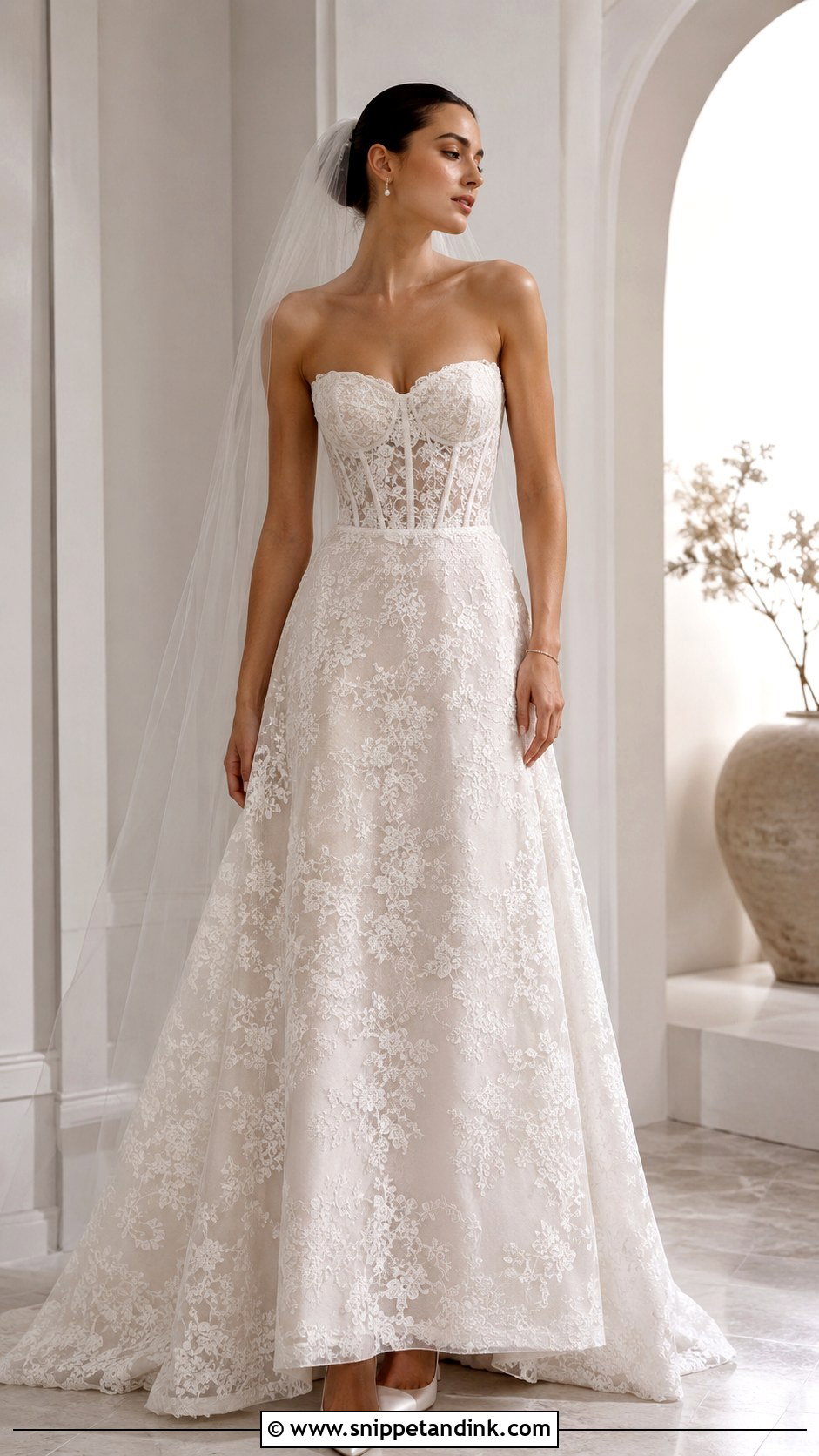
A corset bodice puts the structure on show, with lace layered over an ivory or champagne lining to highlight the seams. Look for curved seaming, built-in cups and boning that follows your torso instead of digging in. The skirt can be an A-line, a full ball gown or a soft flare. Satin pumps, a fine tennis bracelet and a plain veil keep attention on the bodice. My fitting rule: sit for several minutes and breathe deeply before you approve anything. You need to eat dinner and give a speech in this, and a corset that’s comfortable standing can bite hard once you sit.
10. Ivory Lace Basque Waist Wedding Dress
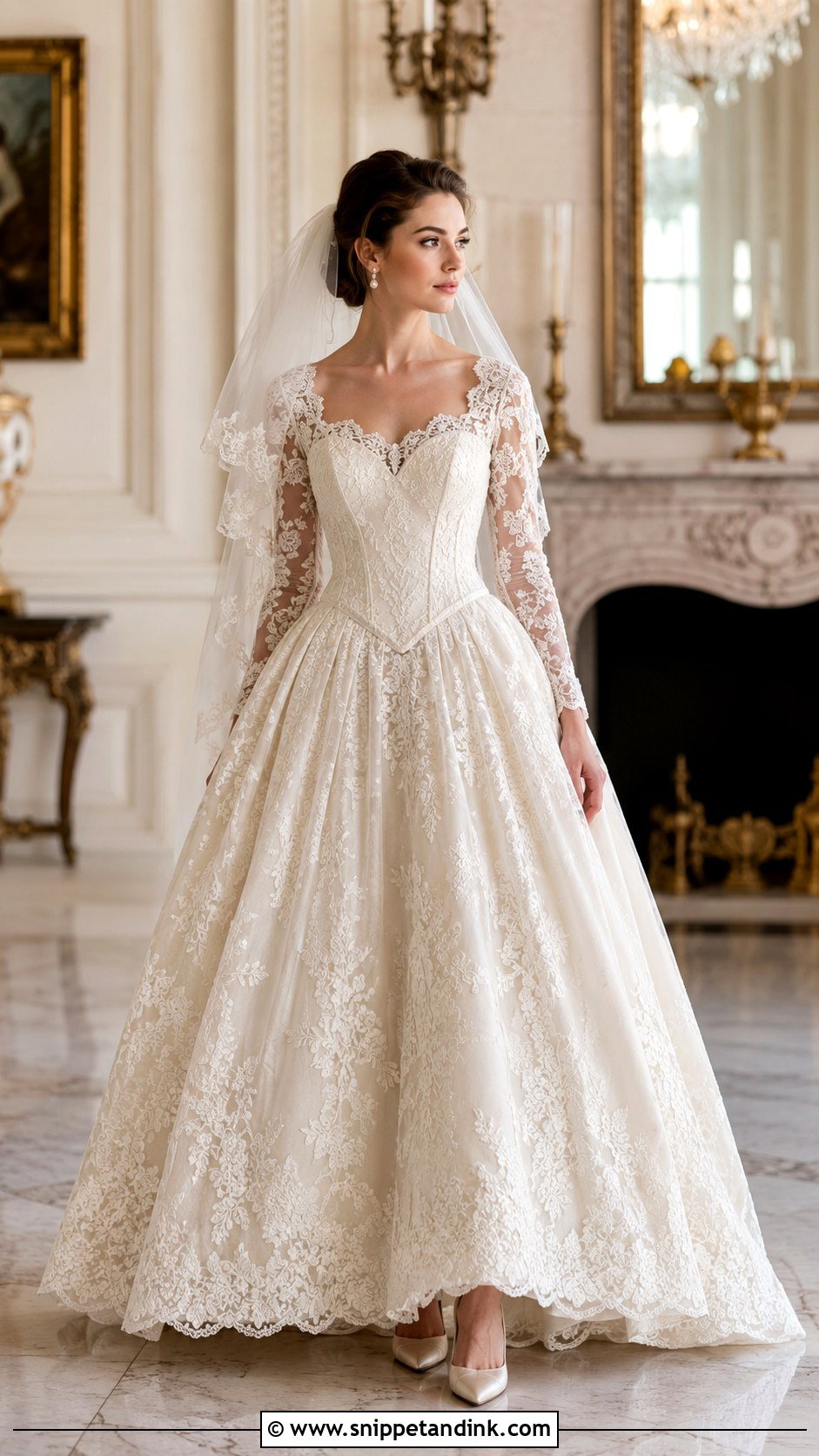
The basque waist dips into a gentle V at the centre front, which lengthens the torso and gives a vintage outline over a full or gathered skirt. Symmetry is everything here; lace motifs that drift off-centre at the point make the whole bodice look crooked. Almond-toe heels, pearl button earrings and a medium veil ending above the fullest part of the skirt suit it, with a smooth updo. The point should stay flat when you sit as well as when you stand. If it digs into your lap or flips up, the waist is too long or too rigid.
11. Ivory Lace Sheath Wedding Dress
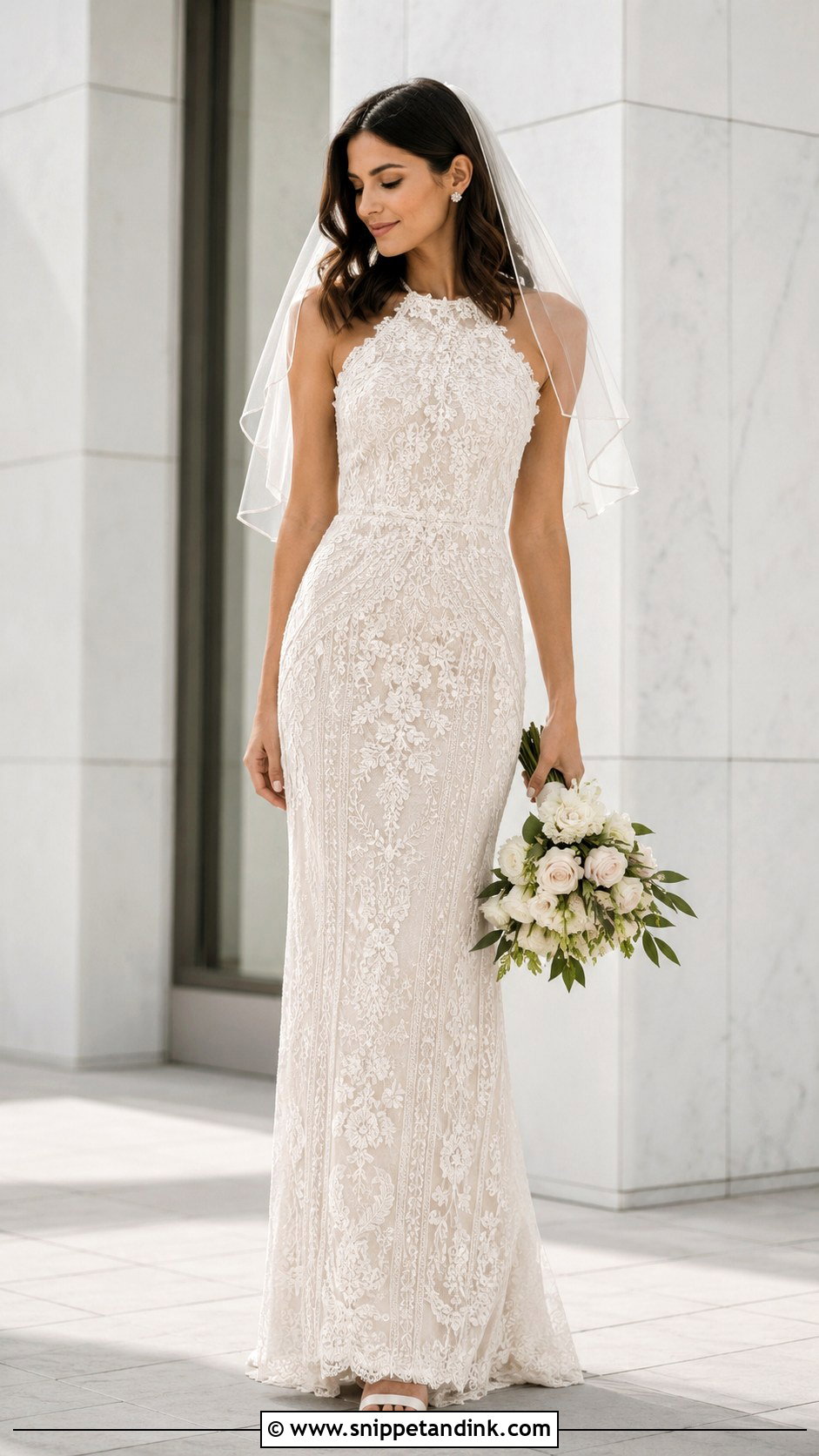
On an ivory lace sheath wedding dress, the lace does all the talking because the shape doesn’t. The narrow silhouette follows the body without a mermaid’s flare, so it suits intimate venues, city weddings and destination ceremonies. Vertical lace placement draws a long line. Sleek sandals, small crystal studs, a shoulder-length veil and soft waves keep it relaxed. Sheaths show every undergarment seam through lace, so bring your exact underwear to each fitting. A short back slit gives you a normal stride without changing the line.
12. Ivory Lace High Neck Wedding Dress
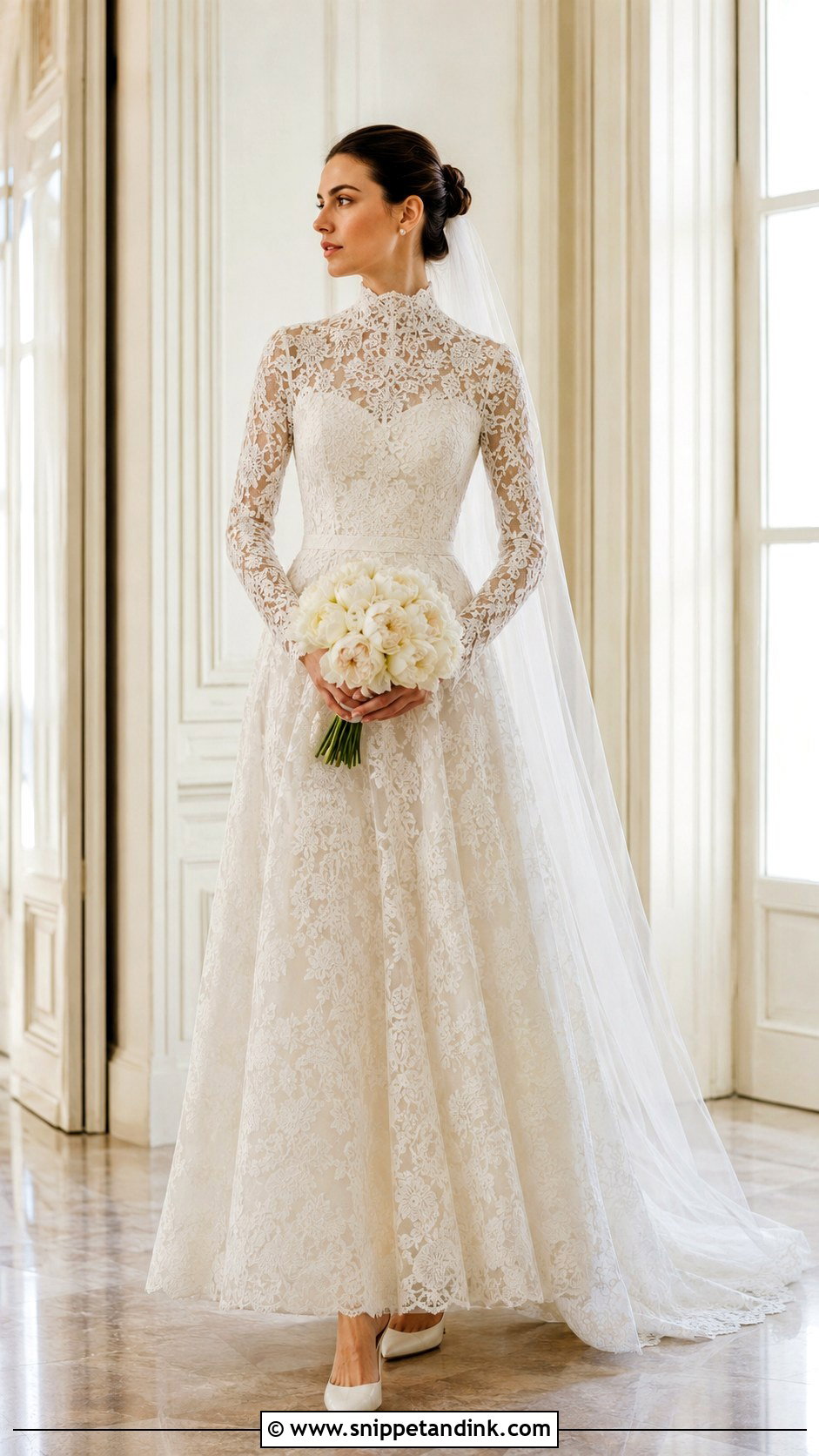
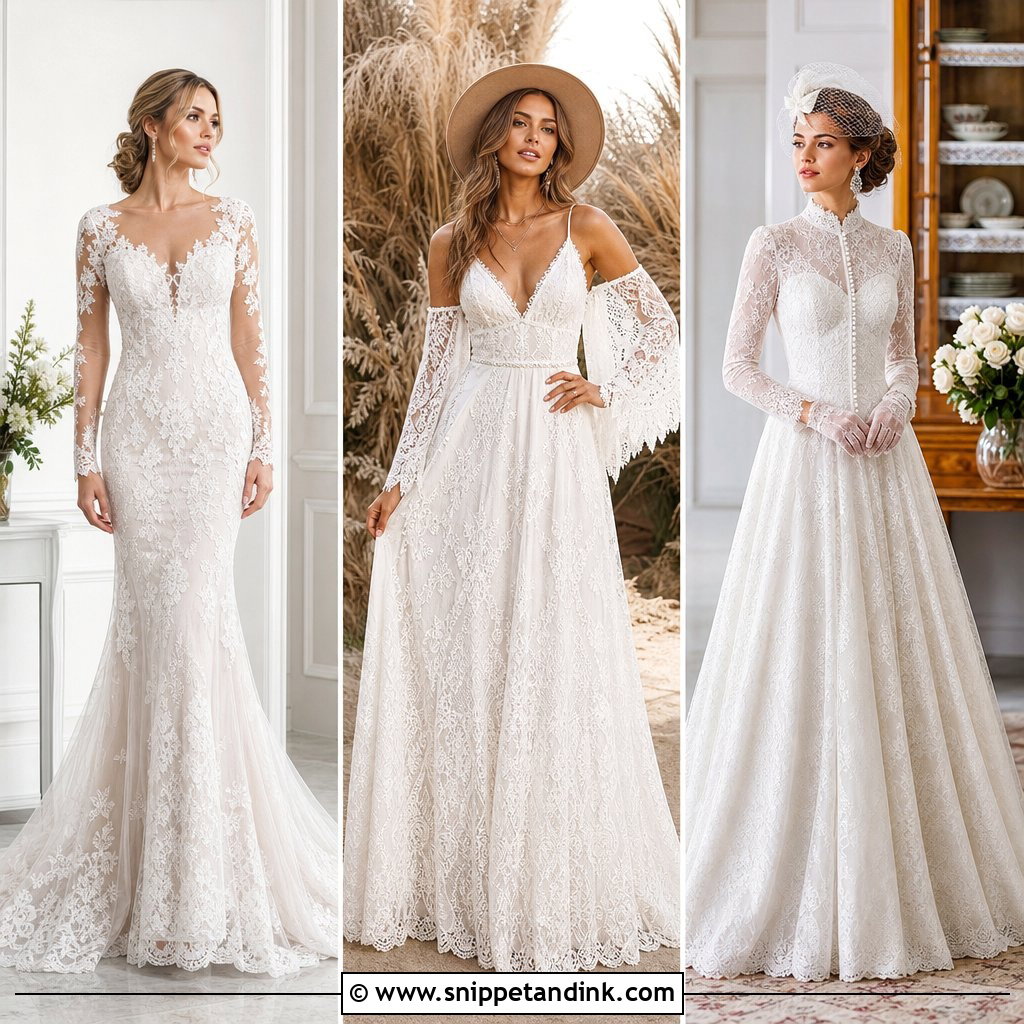
A high lace neck gives coverage and an old-world feel. A sheer lace yoke over a lined sweetheart or bateau bodice keeps the top half from feeling heavy. Pair it with a plain skirt, fitted sleeves and a row of covered buttons down the back. Pearl studs, low pointed pumps and a veil secured beneath a neat bun are all you need. No necklace here; it fights the collar and snags fine threads. Turn your head side to side in the fitting room. If the collar edge scratches, ask for a softer finish or a few millimetres of ease, which makes a big difference by evening.
13. Ivory Lace Boho Wedding Dress
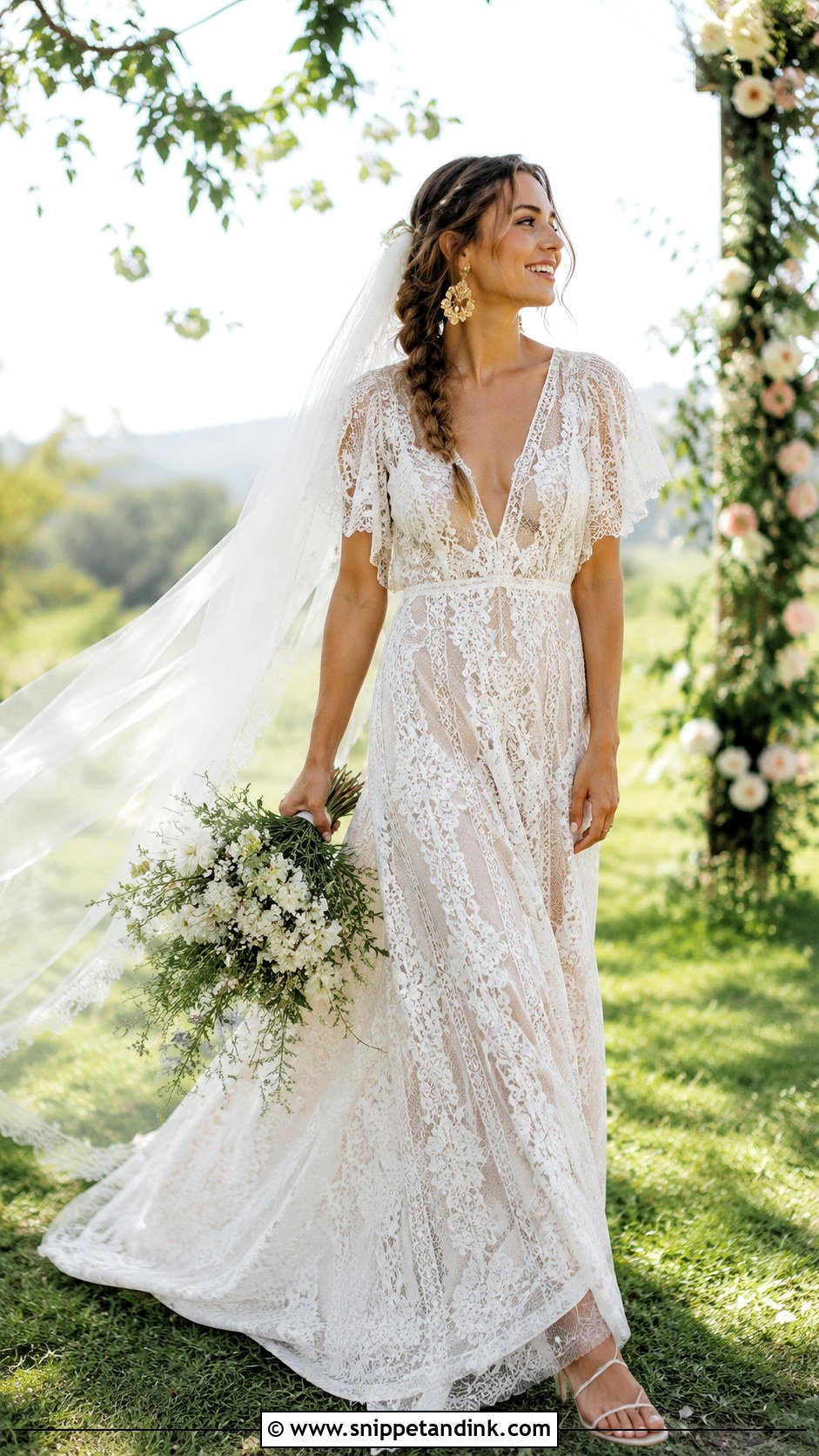
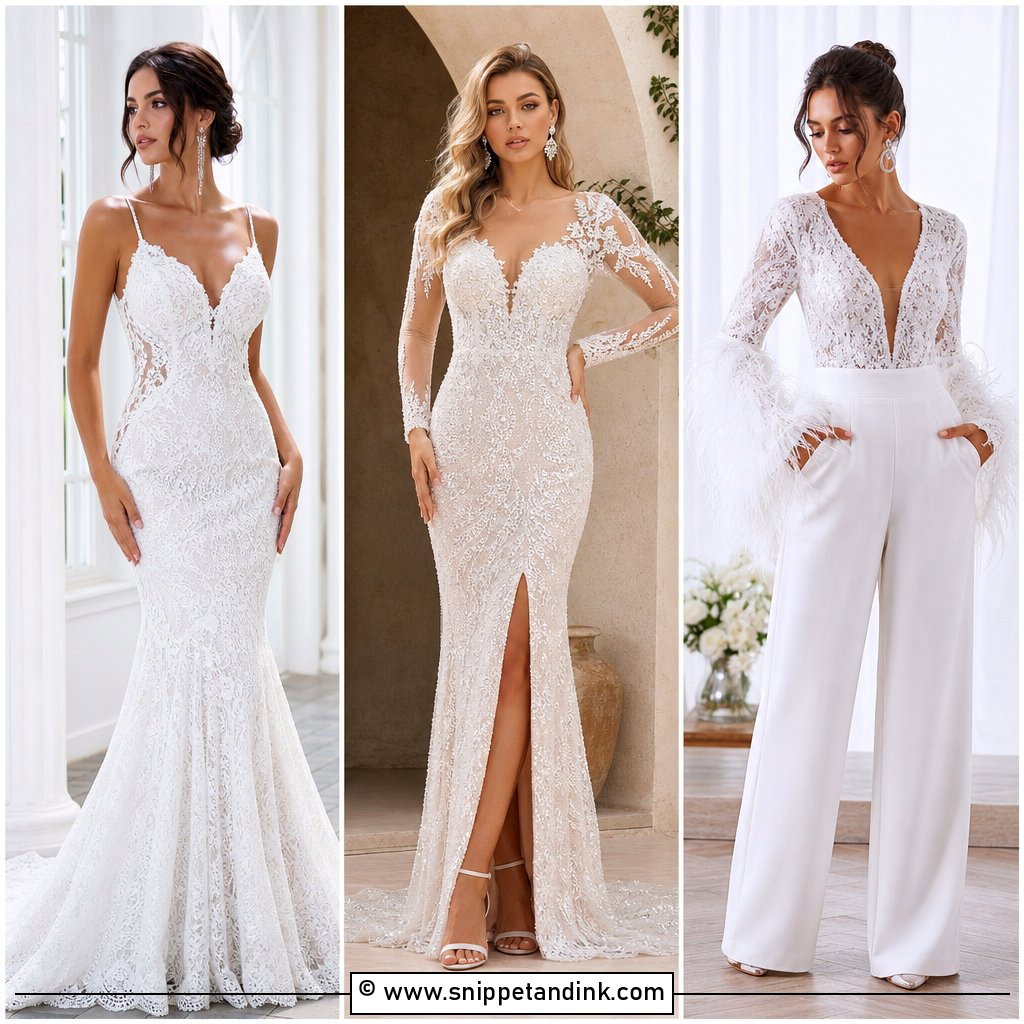
Boho lace is about ease, so I look for flowing skirts, soft linings and organic, open lace patterns rather than a stiff bodice. Flutter sleeves, narrow straps or a soft V-neck suit a meadow, beach or backyard. Low block-heel sandals, textured gold earrings and a loose braid fit the mood, with an airy tulle veil or a light cape. Choose shoes for the actual ground, whether grass, gravel or sand. Lace trains collect seeds, twigs and sand outdoors, so skip a long train unless it bustles securely.
14. Ivory Vintage Lace Tea Length Wedding Dress
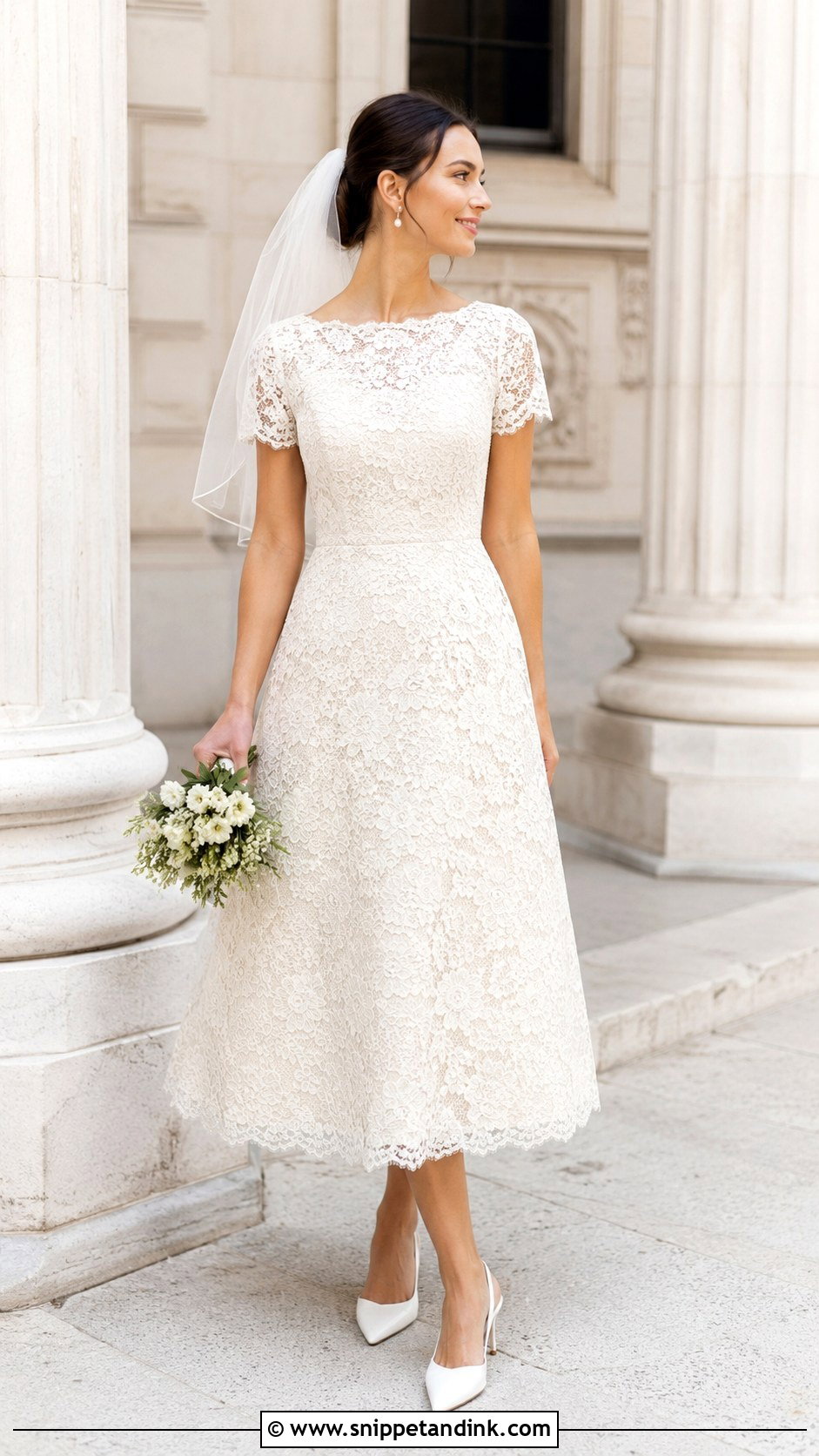
Tea length shows your shoes, which makes it one of the most fun lace silhouettes to style. The hem should land between the lower calf and the ankle. A fitted bodice with short sleeves, a bateau neckline or covered buttons gives the 1950s finish, and pointed slingbacks, pearl earrings and a short veil or bow complete it. Because the hem is so visible, any unevenness shows immediately, so set the length in your final shoes. A light petticoat adds lift and movement. It suits courthouse ceremonies, restaurants and daytime parties.
15. Ivory Lace Cape Sleeve Wedding Dress
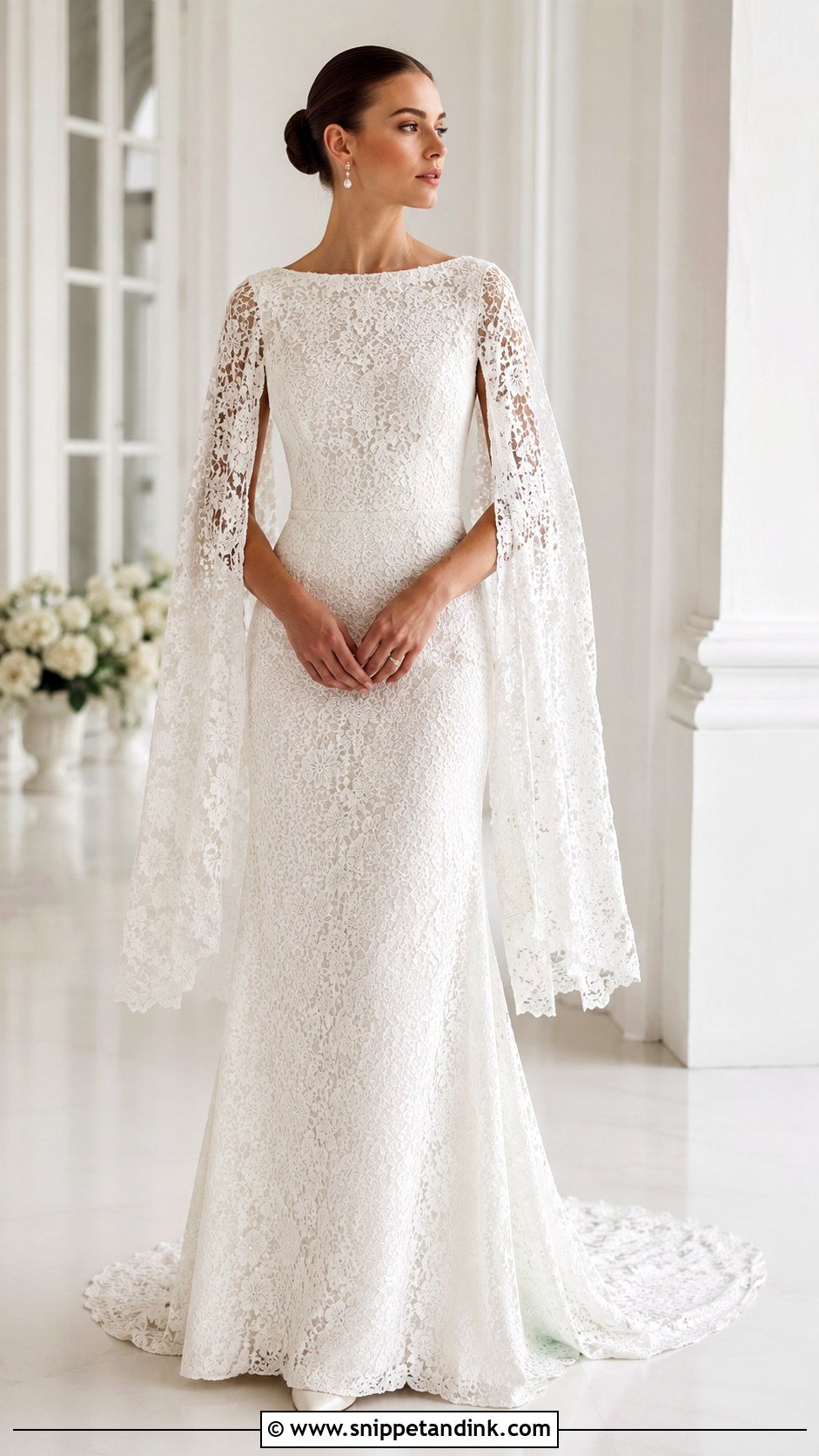
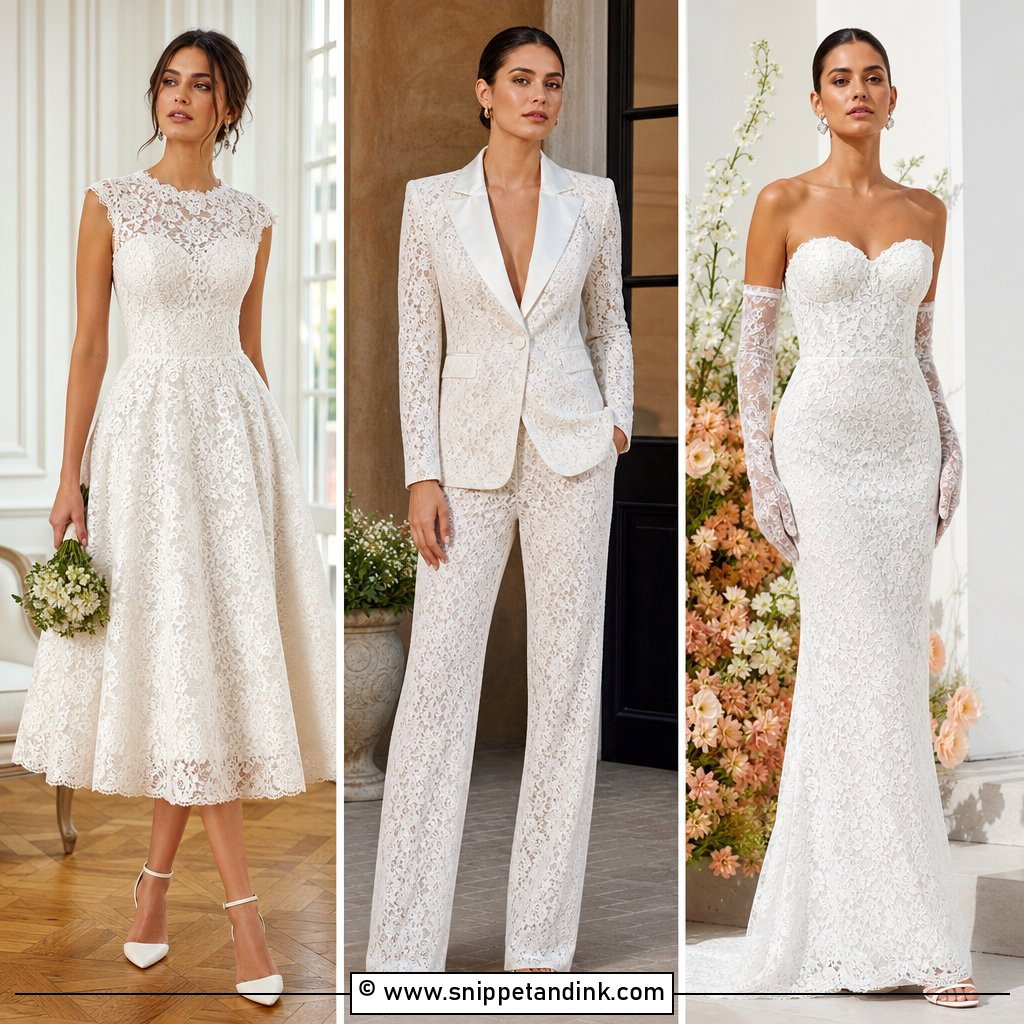
A lace cape sleeve drapes off the neckline and falls loosely over the upper arm, giving coverage that moves. On a column or A-line gown, the cape should look light; heavy lace here starts to look like a costume. Streamlined pumps, small earrings and a low bun keep the shoulder line visible. A veil is optional, and if you wear one, it should start below the cape. Raise and lower your arms at fittings to make sure the lace doesn’t pull across your back. I’d also ask for an extra anchor stitch at each attachment point so the panels don’t twist as you walk.
16. Ivory Lace Open Back Wedding Dress
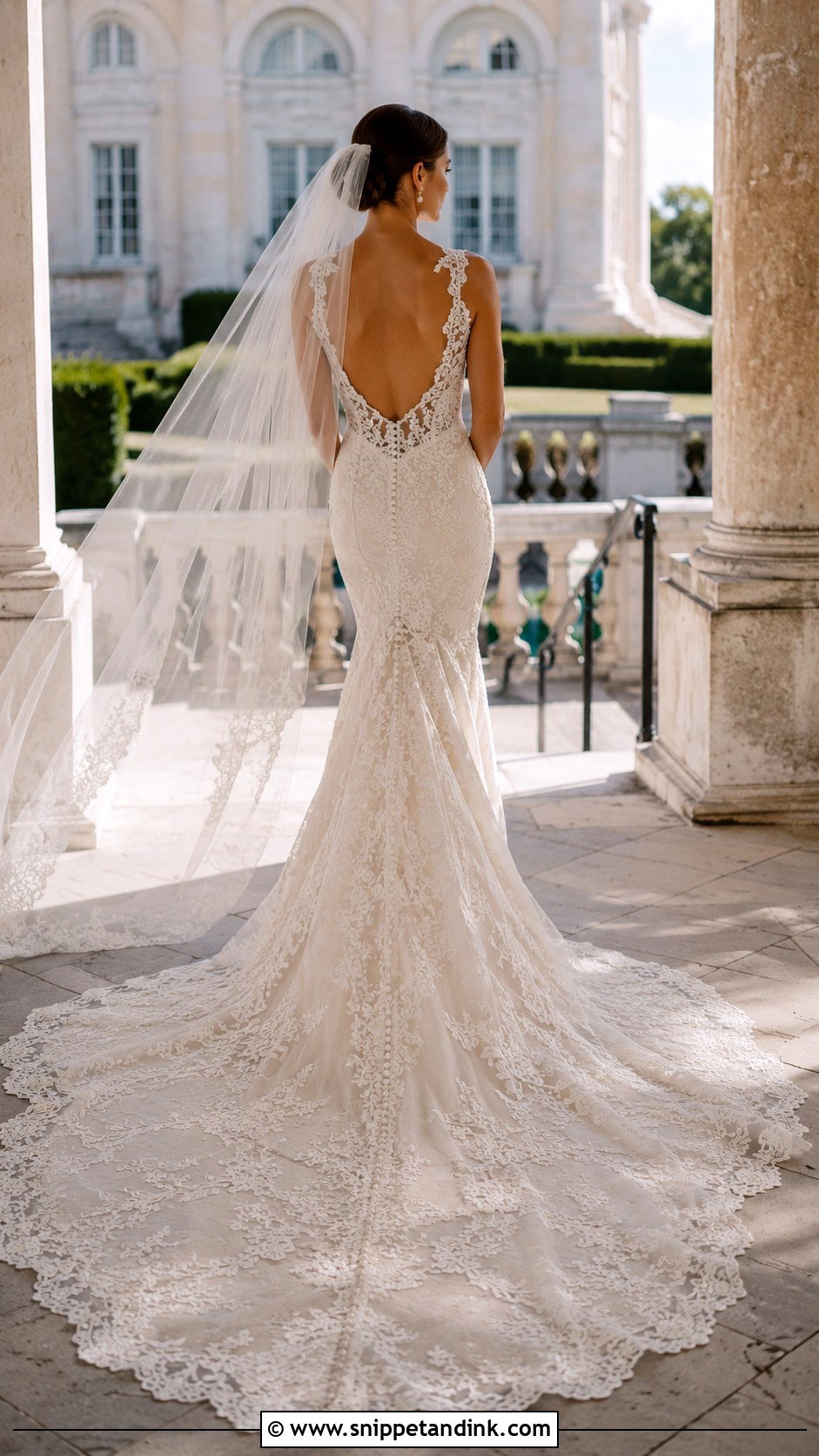
From the front an open-back lace gown can look traditional; then you turn around. The opening should be framed with appliqués, covered buttons or scalloped edging, and illusion mesh adds support without hiding the skin. Undergarments are the tricky part, so I usually ask for cups sewn into the bodice rather than relying on a backless bra. A low chignon, back-drop earrings and a sheer veil keep the view clear. A chapel train adds movement as you walk away. Roll your shoulders and sit at fittings; the back must lie flat in every position.
17. Ivory Lace Wedding Dress With Detachable Overskirt
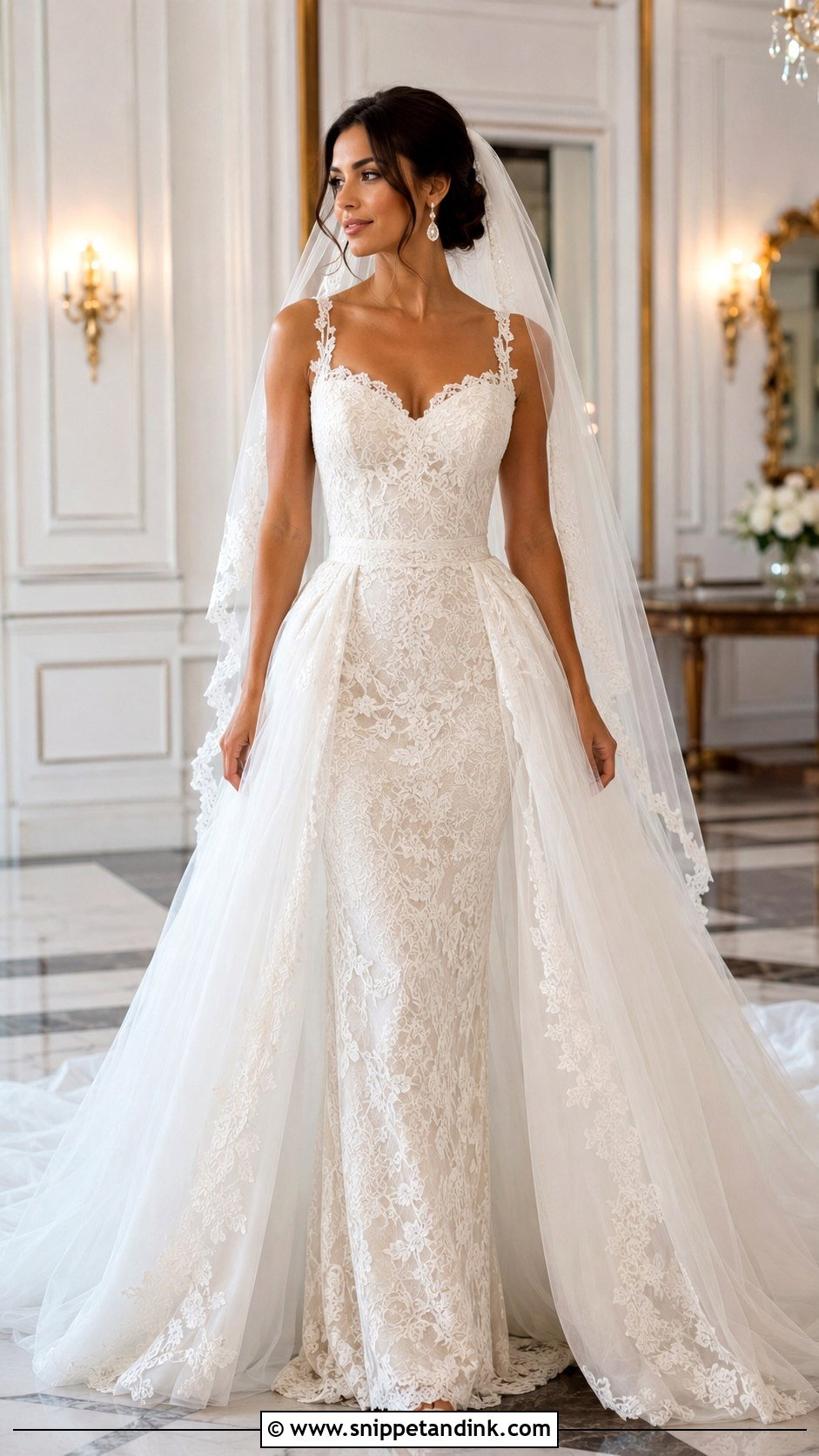
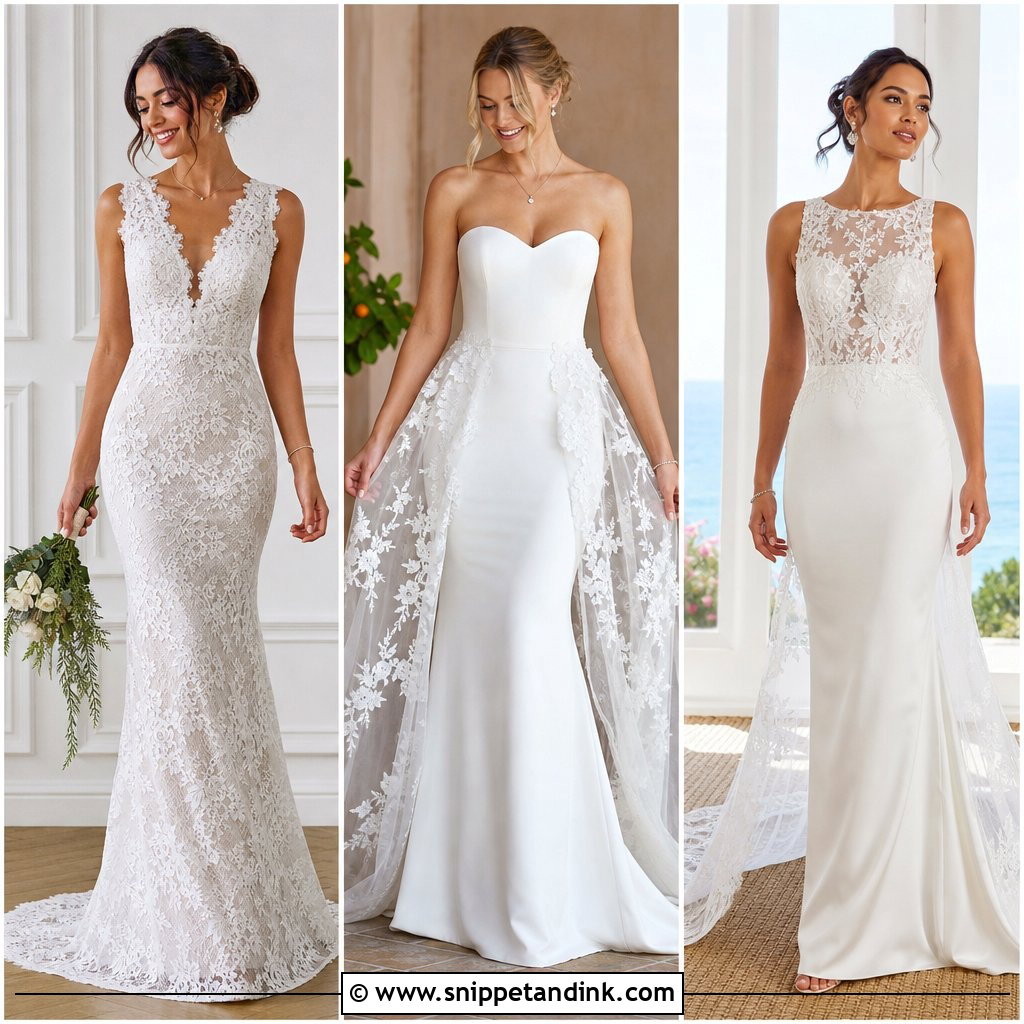
A detachable overskirt gives you two dresses for the price of one fitting schedule. The base is usually a fitted lace column, sheath or mermaid; for the ceremony you add a full tulle or lace-trimmed overskirt, then remove it for dancing. Check the two ivories in daylight, since separate fabrics from different dye lots can drift apart. Medium heels, drop earrings and a veil scaled to the fuller look suit the ceremony version. Have a bridesmaid practise the fastening before the day; hooks and hidden snaps take longer than people expect.
18. Ivory Lace Wedding Dress With Removable Sleeves
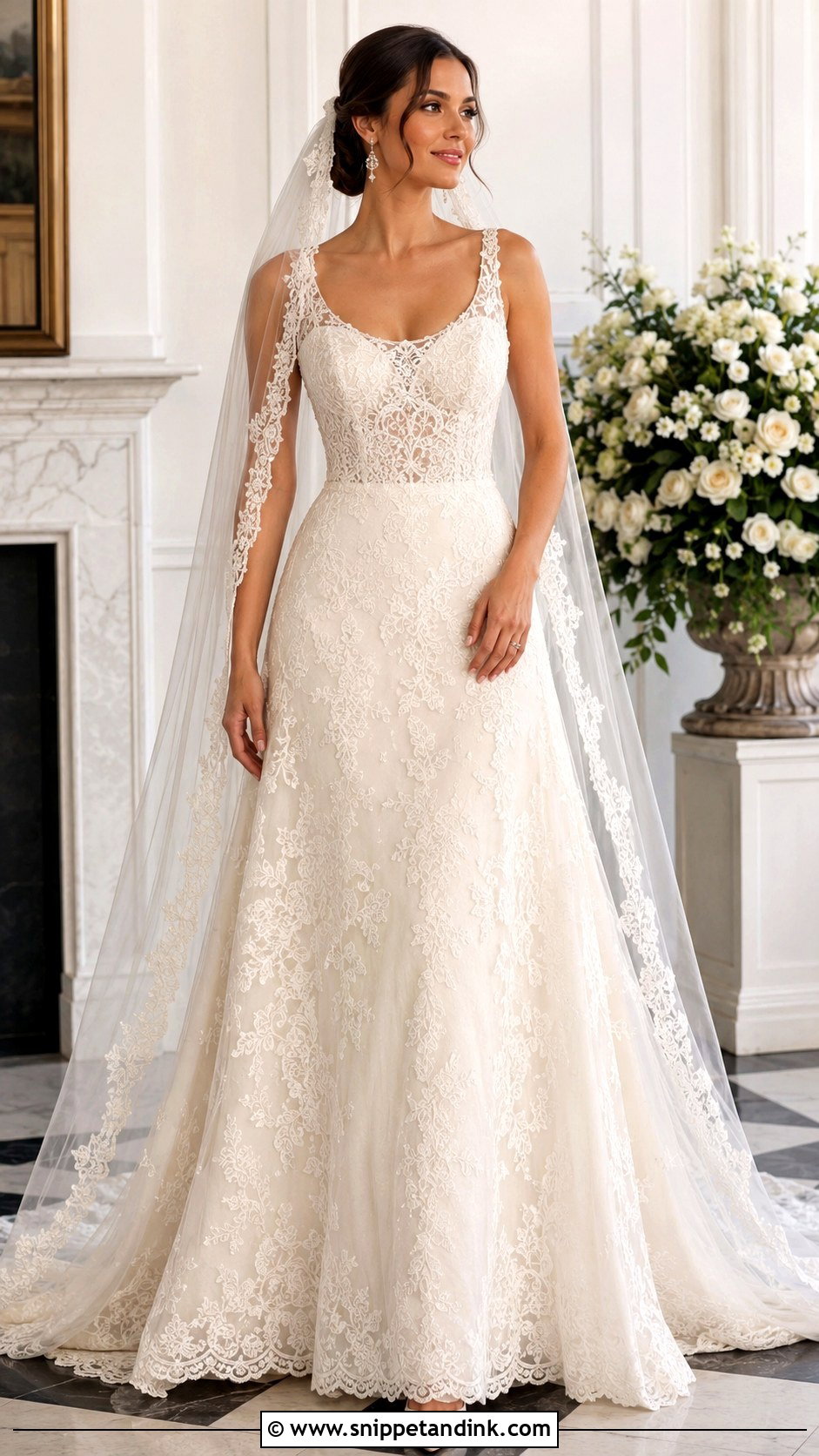
Removable sleeves are the answer for brides who need coverage for a religious ceremony and want bare shoulders at the reception. Start with a supportive strapless or sleeveless gown and attach fitted lace sleeves at the neckline or armholes. The lace motifs must line up across the join or the sleeves look like an afterthought. Closed-toe pumps, a chapel veil and small earrings suit the ceremony; switch to statement earrings when the sleeves come off. Test the fastenings by moving your arms freely, and store the sleeves in a labelled bag so they don’t disappear in the evening chaos.
19. Plus Size Ivory Lace Wedding Dress
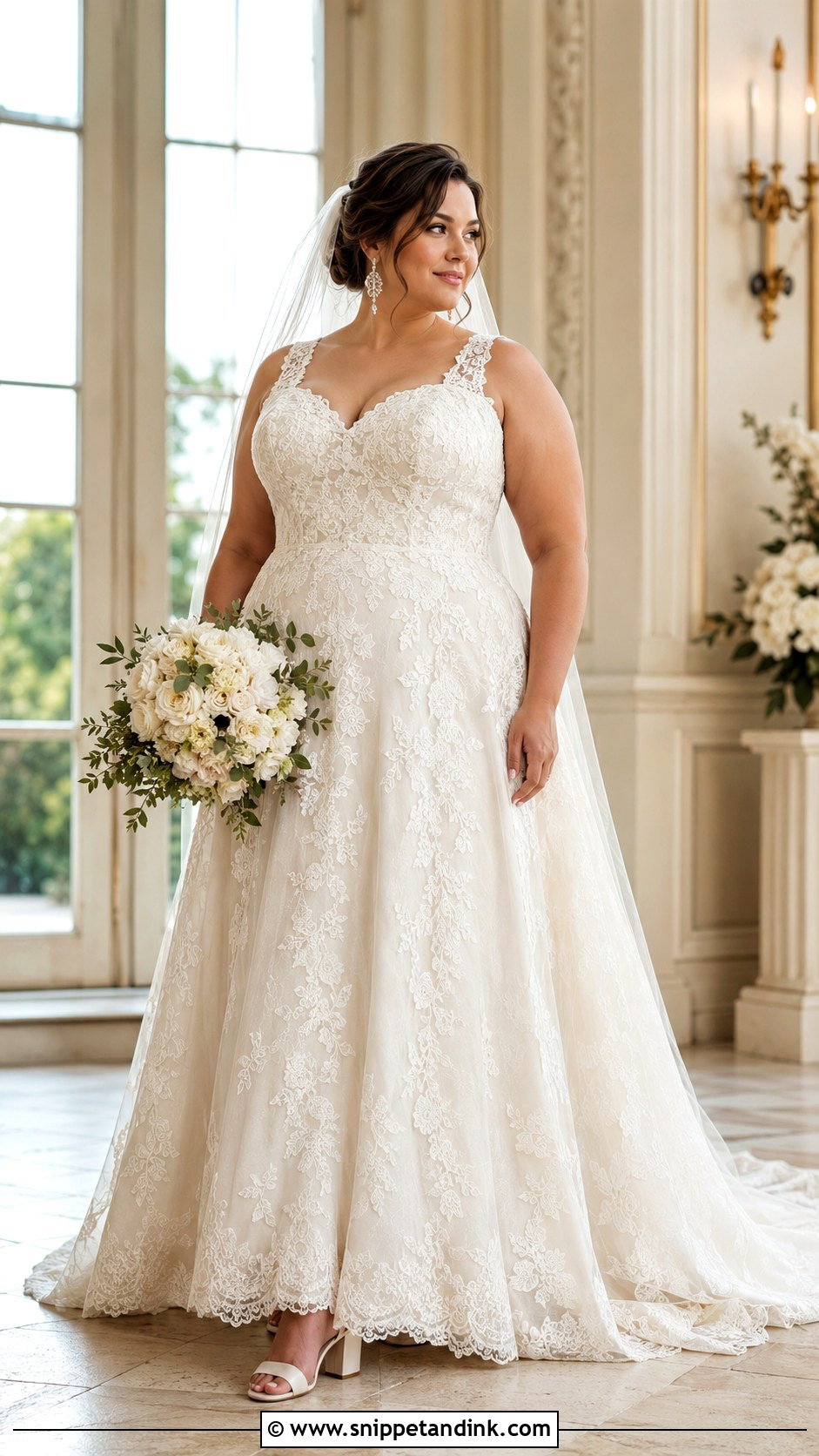
For a plus-size bride, I start with support and work outward. An A-line, fit-and-flare or ball gown with a structured bodice and well-placed lace gives shape without squeezing. Wider straps, built-in cups and flexible boning provide security where compression would just be uncomfortable. Pick the silhouette you feel best in; body-shape rules are guidelines at most. Stable block heels and a veil in proportion to the skirt round it off. Ask the salon for samples close to your size so you can judge the neckline and waist properly. A skilled bridal tailor can re-cut straps, seams and hems while keeping the lace pattern intact.
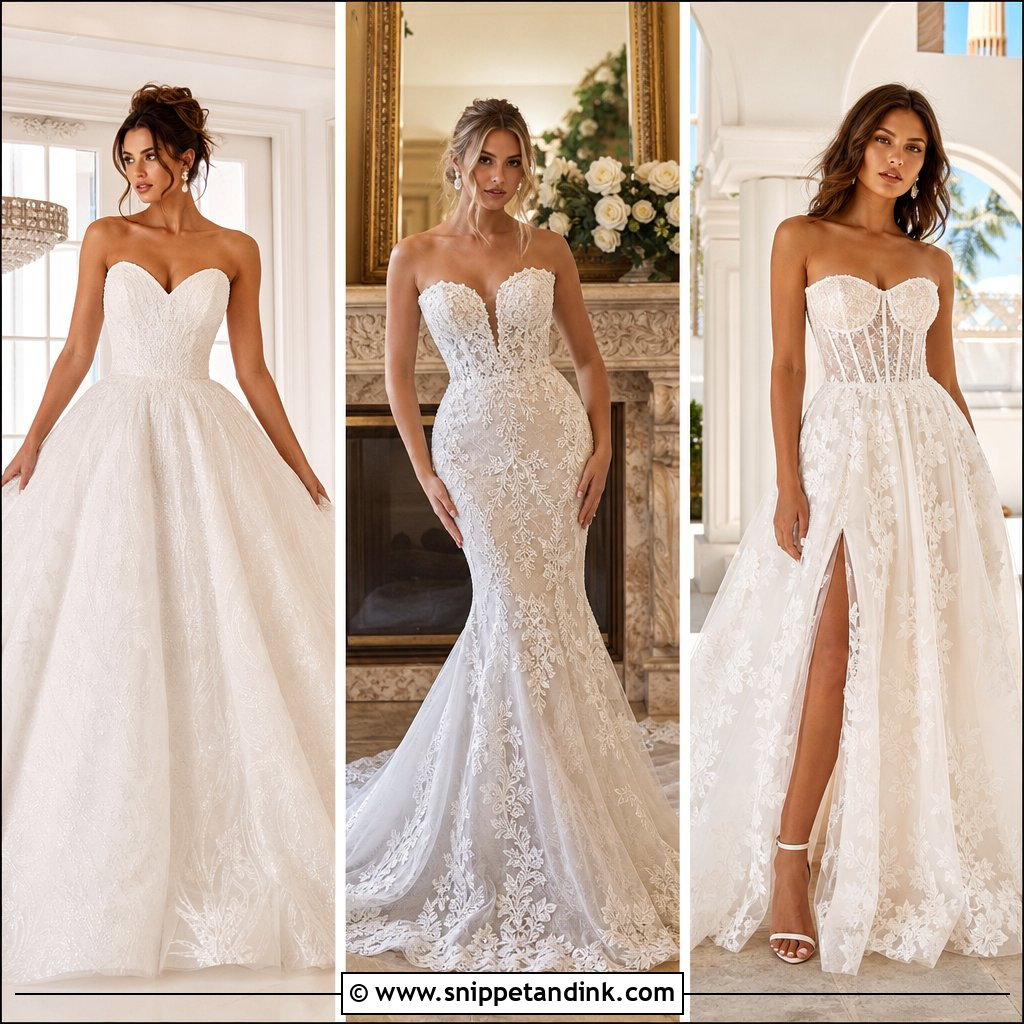

20. Petite Ivory Lace Wedding Dress
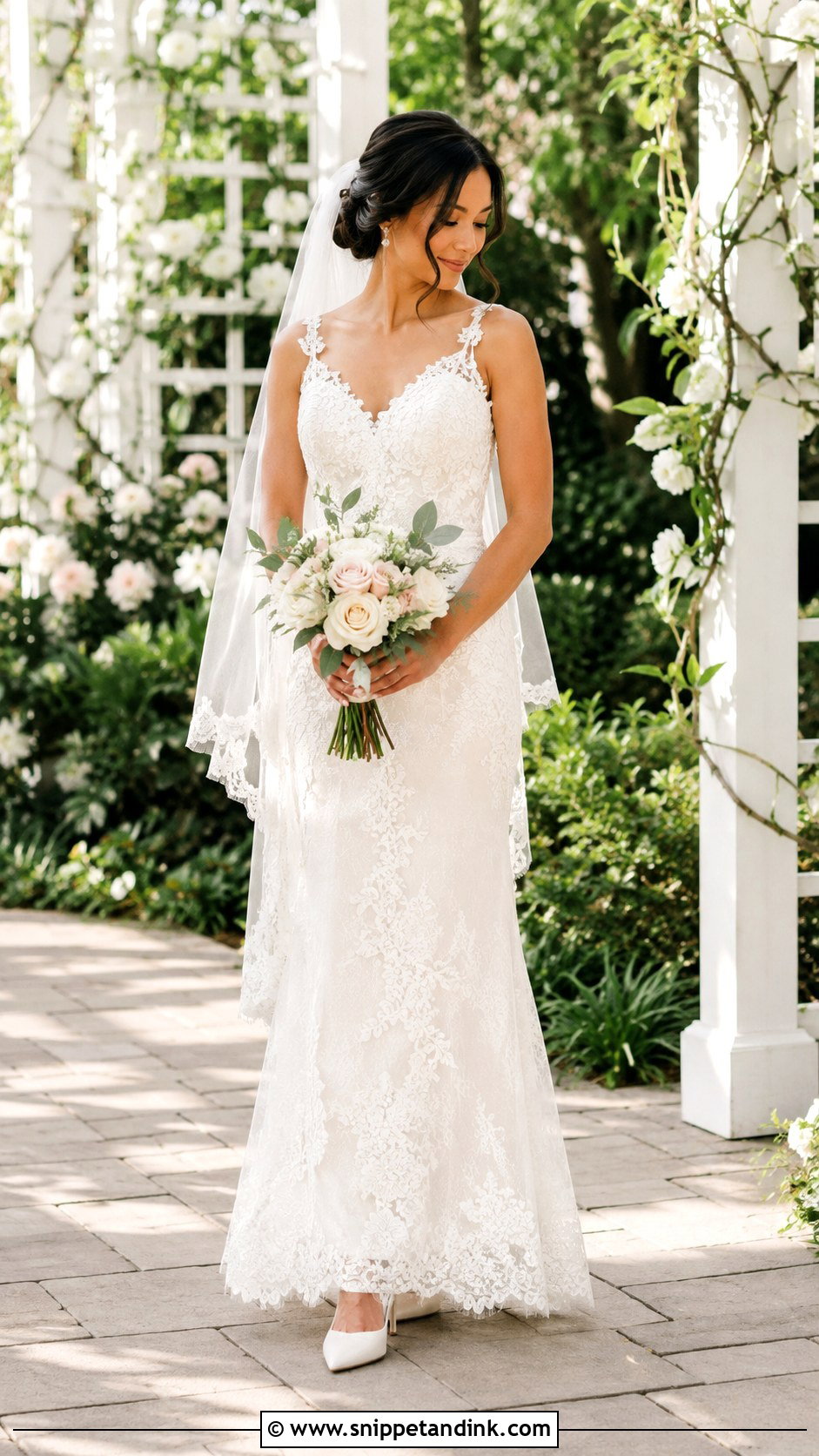
On a petite frame, scale is the whole game. Fine or medium-scale lace, a defined natural waist and an uninterrupted skirt draw a clean vertical line; large motifs can swallow a smaller body. A narrow A-line, sheath or gentle fit-and-flare usually works better than a full skirt. Pointed heels, small earrings and a fingertip veil that doesn’t trail far past the hem keep proportions right, with a bouquet sized to match. Petite alterations go well beyond the hem. Ask whether the bodice length, strap position and lace placement can be adjusted too, because a standard gown simply shortened tends to look it.
Why a Veil Can Make Ivory Lace Look Dingy
Ivory is not one shade. Every maker dyes it slightly differently, and the lining underneath changes how the lace reads. The most common styling mistake I see is a bright white veil or white satin shoes worn with an ivory lace gown. Next to true white, ivory starts to look faintly yellow, and in photographs that can read as a dress that isn’t quite clean.
- Ask the salon for a small fabric swatch from the gown, including a piece of lining, and take it shopping.
- Compare veil tulle against the swatch in daylight, not under shop bulbs, which warm everything.
- When in doubt, choose a veil a touch softer than the dress rather than brighter.
- Match shoes to the lining, which is the larger area, rather than to the lace.
Pearls are worth checking too. Very white pearls can look chalky against warm ivory, while cream or slightly rosé pearls blend in. Hold the earrings to the bodice before you buy them.
Take the Lace Outside Before You Say Yes
Shop lighting flatters lace and hides its flaws, so ask to step near a window or out the door with any gown you’re serious about. Compare linings and necklines in daylight, then bring your shoes, veil, jewellery and undergarments to the final fittings. Leave time for at least two or three rounds of alterations; lace adjustments are slower than plain fabric because the motifs often have to be unpicked and reapplied by hand. Trends are a useful starting point. Comfort and the way you feel in it are what you’ll remember.
You'll Like These Ideas:




Leave a Reply