
Ivory sits a shade warmer than bright white, and that small shift is why I reach for it so often in fittings. Optic white can make fair or olive skin look faintly grey under indoor lighting, while ivory puts a little warmth back into the face. It also gets along with pearls, champagne metallics and satin accessories, which can look dingy next to stark white. The gowns below cover weddings, receptions, galas, engagement parties and other dressy evenings, and they lean on what bridal design is doing right now: clean silhouettes, sculpted bodices, corsetry, lace texture and detachable layers. Watch the fabric as closely as the cut, because ivory satin, ivory lace and ivory crepe can look like three separate colors hanging side by side.
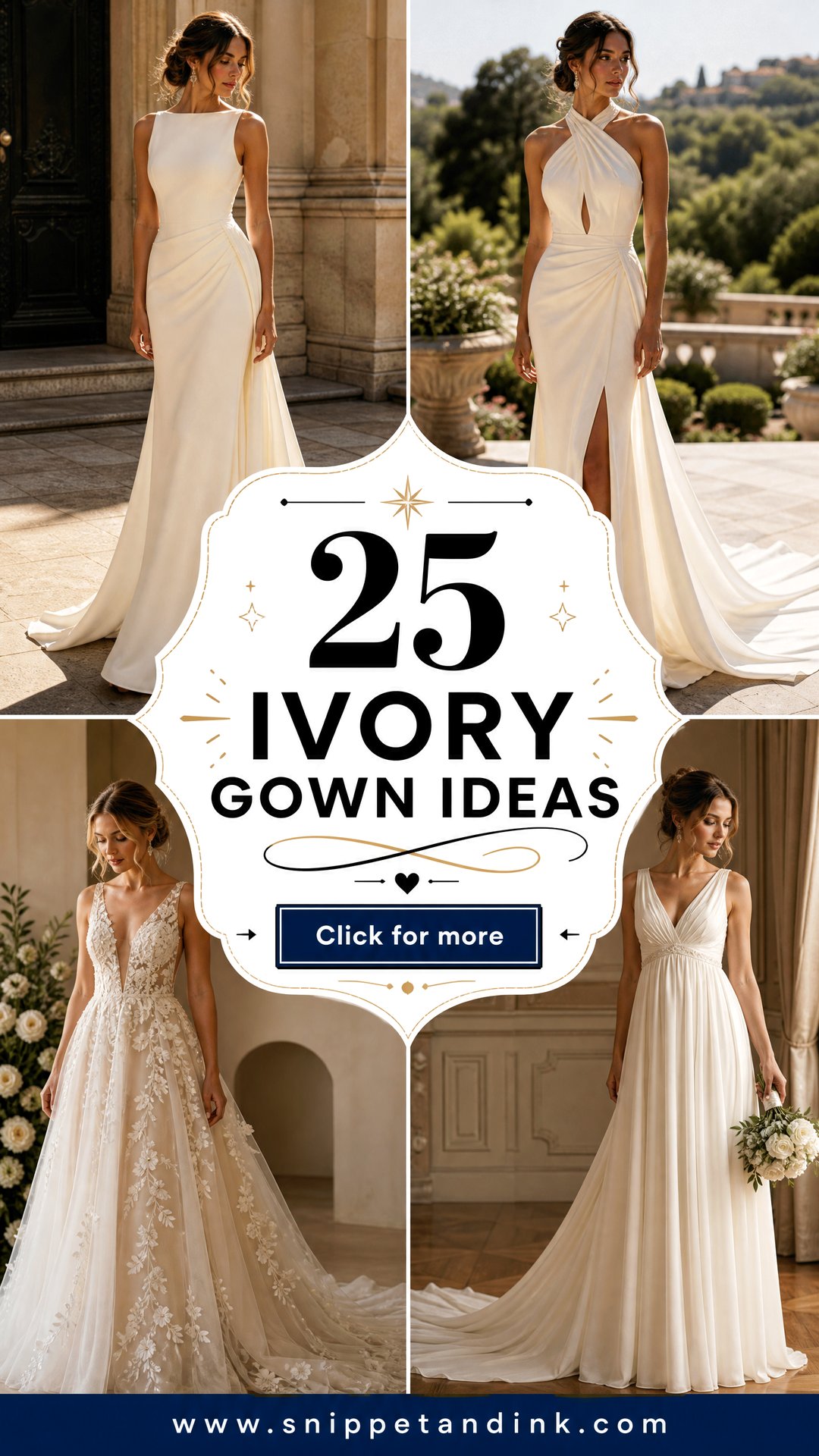
Testing a Shade of Ivory Against Your Skin and Your Venue Light
Ivory isn’t one color. Bridal fabric runs from silk white and diamond white through ivory to warmer champagne, and different designers use those names loosely. Two gowns labeled ivory from separate shops can look noticeably different when you hold them side by side, so I never take the label on trust.
What I check at the first appointment
- Hold the fabric right under your chin beside a window, not under the shop’s warm spotlights. If your face looks sallow, try a step cooler; if it looks washed out, try a step warmer.
- Lay a sheet of plain printer paper against the skirt. Next to true white, you can see how much yellow or pink the ivory really carries.
- Ask for swatches of the outer fabric and the lining to take home. Veil, shoes, gloves and wrap should be matched to that swatch, never to memory or a phone screen.
- Think about where you’ll stand. Warm candlelight pushes ivory toward cream, while open shade outdoors cools it down.
The fabric shifts the shade as well. Satin reflects light, so ivory satin looks brighter where the sun hits it and creamier in the folds. Crepe is matte and shows the color more honestly. Lace takes on some of the tone of whatever lining sits beneath it. This is why a veil ordered as ivory from another maker can look stark or yellowish next to the gown in pictures. A photographer can correct the overall color of an image, but not two whites that disagree, so the matching has to happen at the swatch stage.
1. Ivory Satin Gown
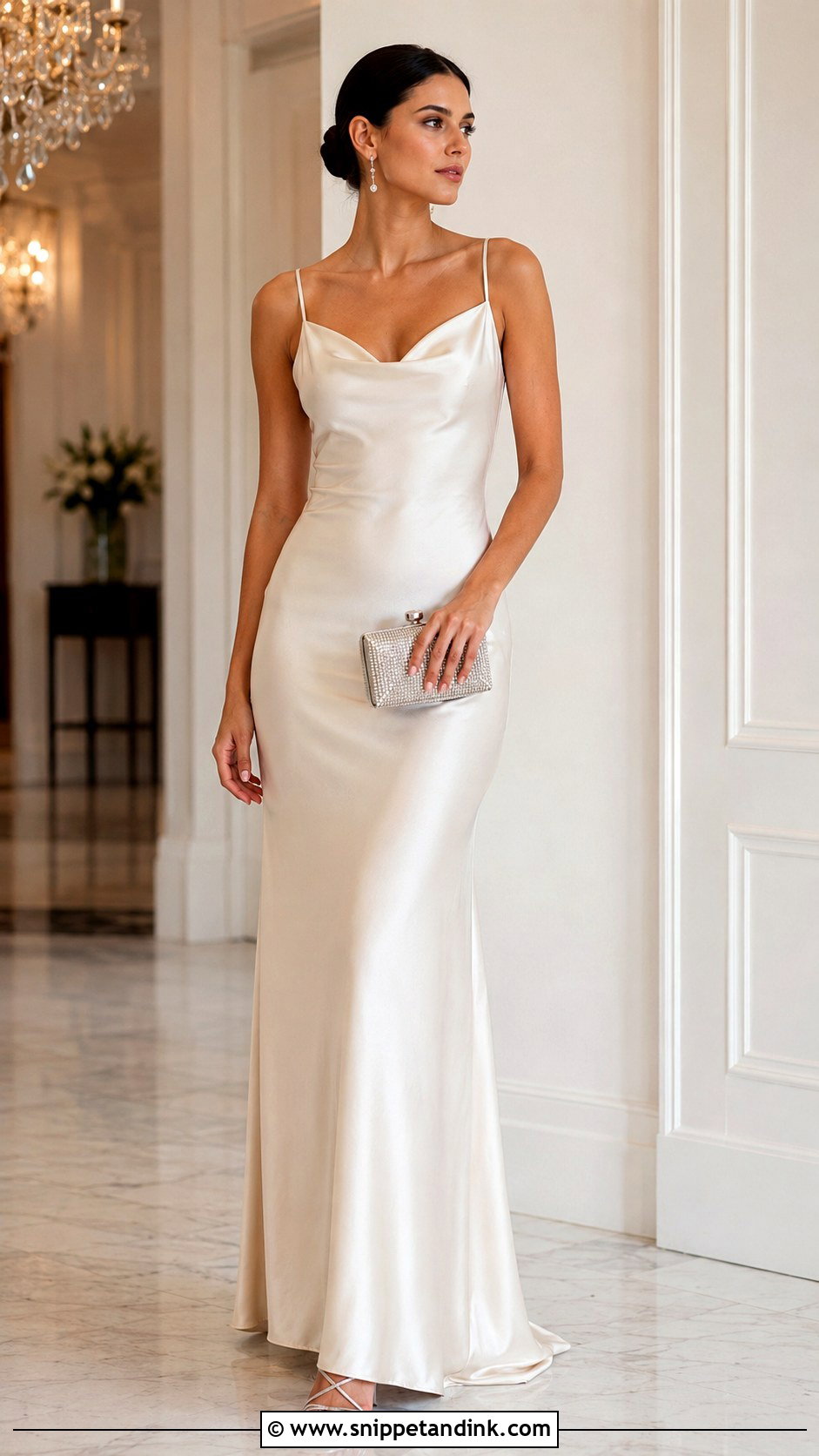
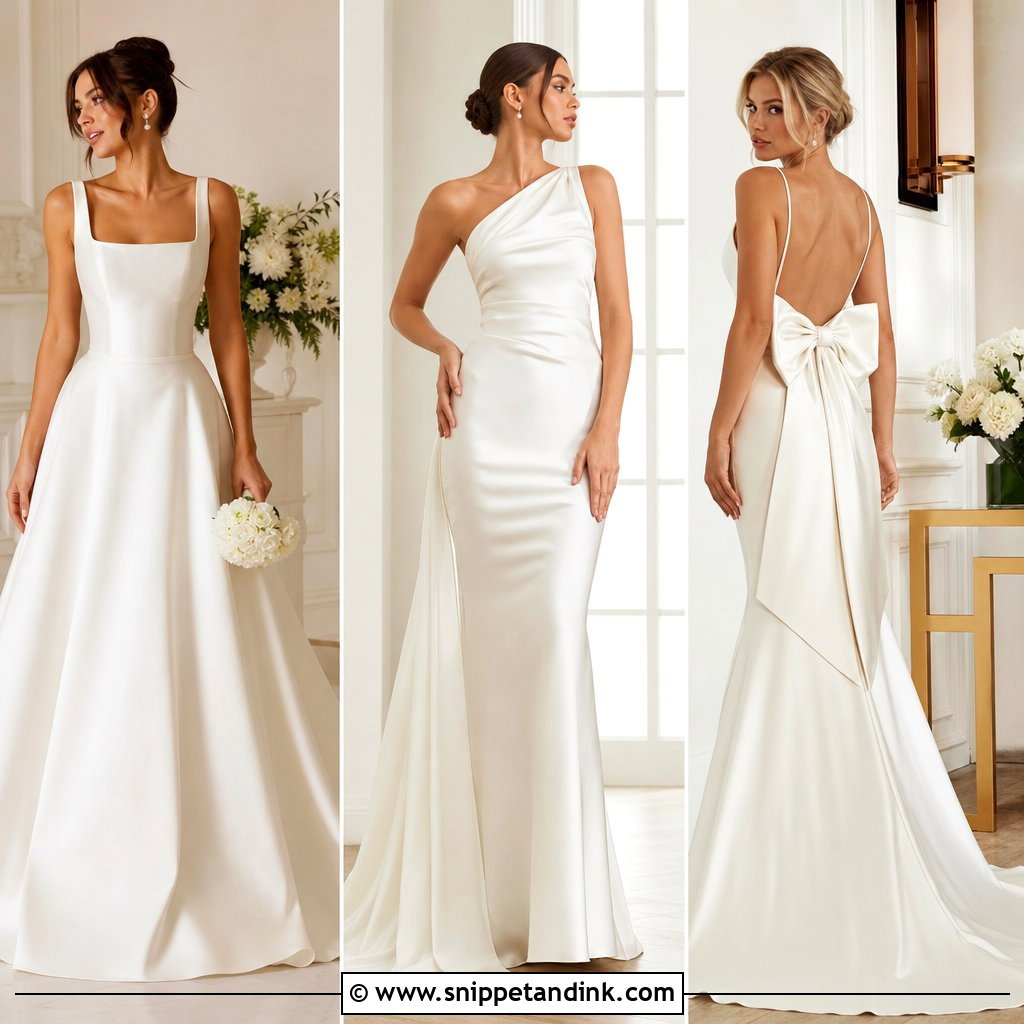
Satin shows everything, which is exactly why it looks expensive when the fit is right. A bias cut drapes over the hips instead of gripping them, but it also reveals every line underneath, so I ask brides to bring smooth, no-line underwear to the first fitting rather than the last. For an evening event, silver strappy heels, a crystal clutch and small drop earrings are enough; a plain neckline can take a tennis necklace or a pearl choker. Keep the hair sleek in a low bun or a soft side part so the fabric stays the focus. One honest warning: satin creases where you sit, so plan the main portraits before the dinner, not after. Receptions, black-tie events and engagement photos suit it best.
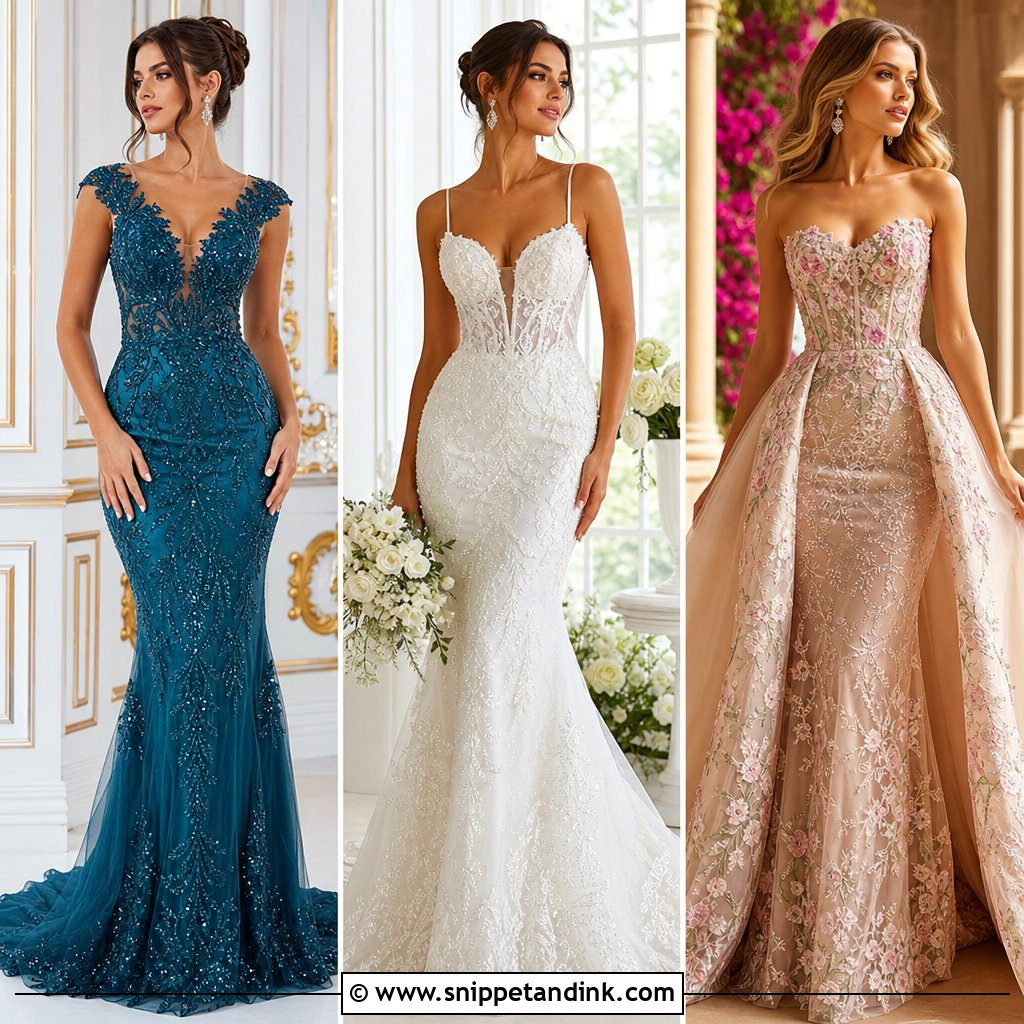
2. Ivory Lace Gown
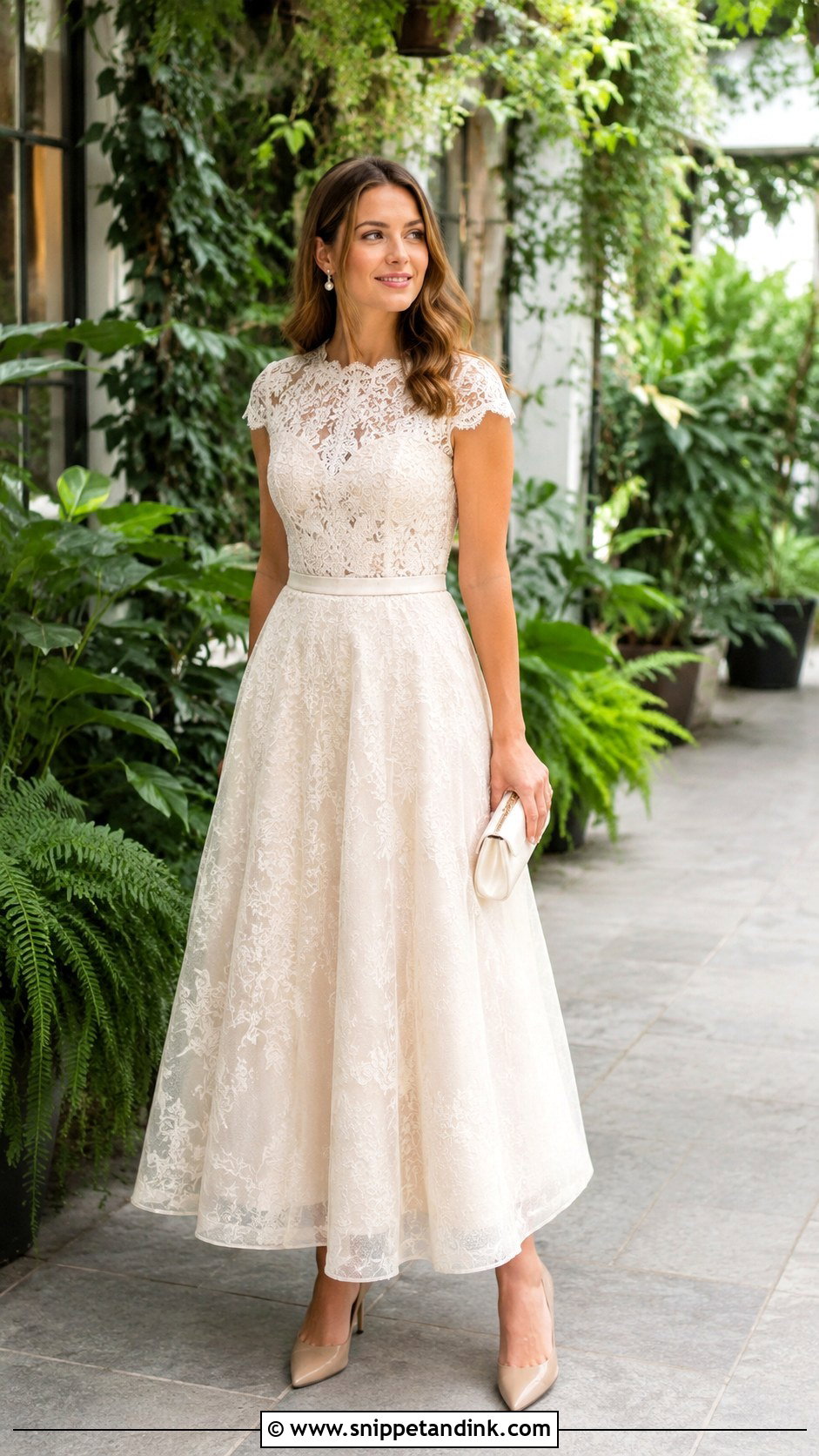
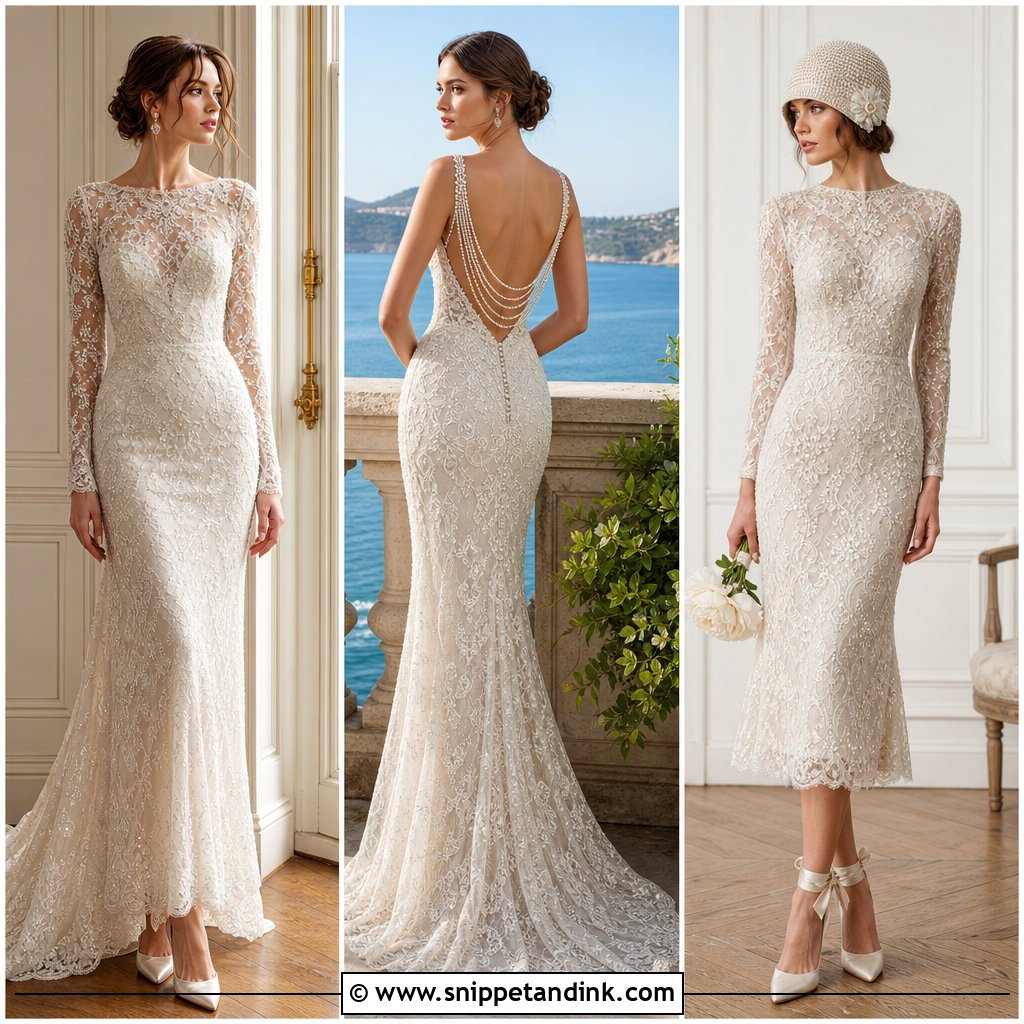
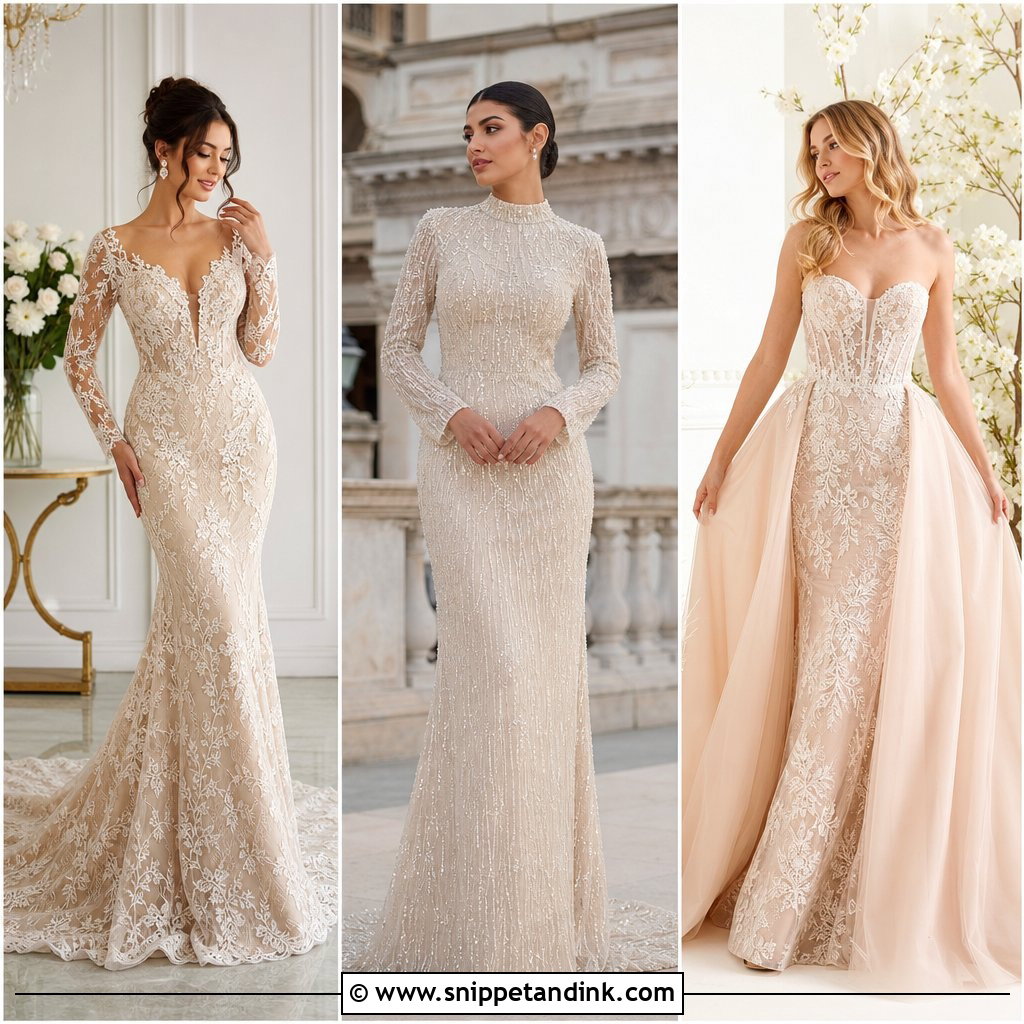
Lace keeps ivory from feeling stark, and the lining underneath decides most of the effect. Ivory lace over an ivory lining reads soft and old-fashioned in a good way; the same lace over a nude or champagne lining looks warmer and more current, so I always ask to see both before anyone commits. Pick an A-line, sheath or fit-and-flare according to how you like to move. I also check where the big motifs land, because a flower sitting right on the bust point is distracting in every front-facing photo. Pointed ivory pumps or nude heels, pearl earrings and a small satin clutch are plenty with detailed lace. Finish with a low chignon, loose waves or half-up hair for garden events, formal showers and daytime ceremonies.
3. Ivory A Line Gown
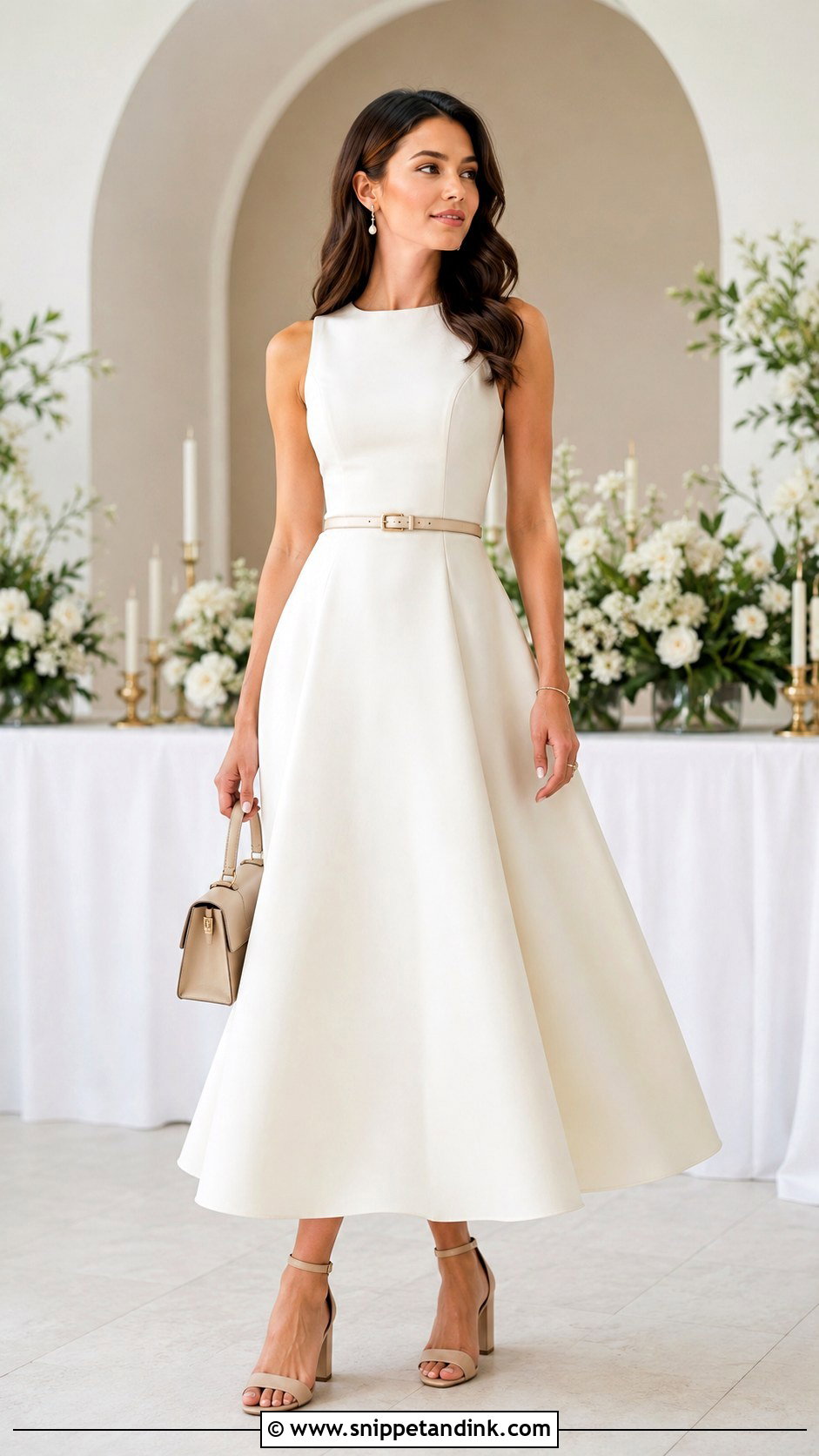
A-line is the shape I pull first when a bride isn’t sure what suits her. The fitted bodice and gradually widening skirt balance most figures without asking for any drama. Fabric changes its character a lot, from satin that holds the skirt out to chiffon that lets it fall straight. Block heels or pointed pumps, a structured mini bag and delicate earrings finish it, with a thin belt if the bodice is plain. Where A-lines go wrong is the hem: have it taken up in the exact shoes you’ll wear, or the front edge will catch your toes on every step. It gives comfort, coverage and movement for daytime and evening alike.
4. Ivory Ball Gown
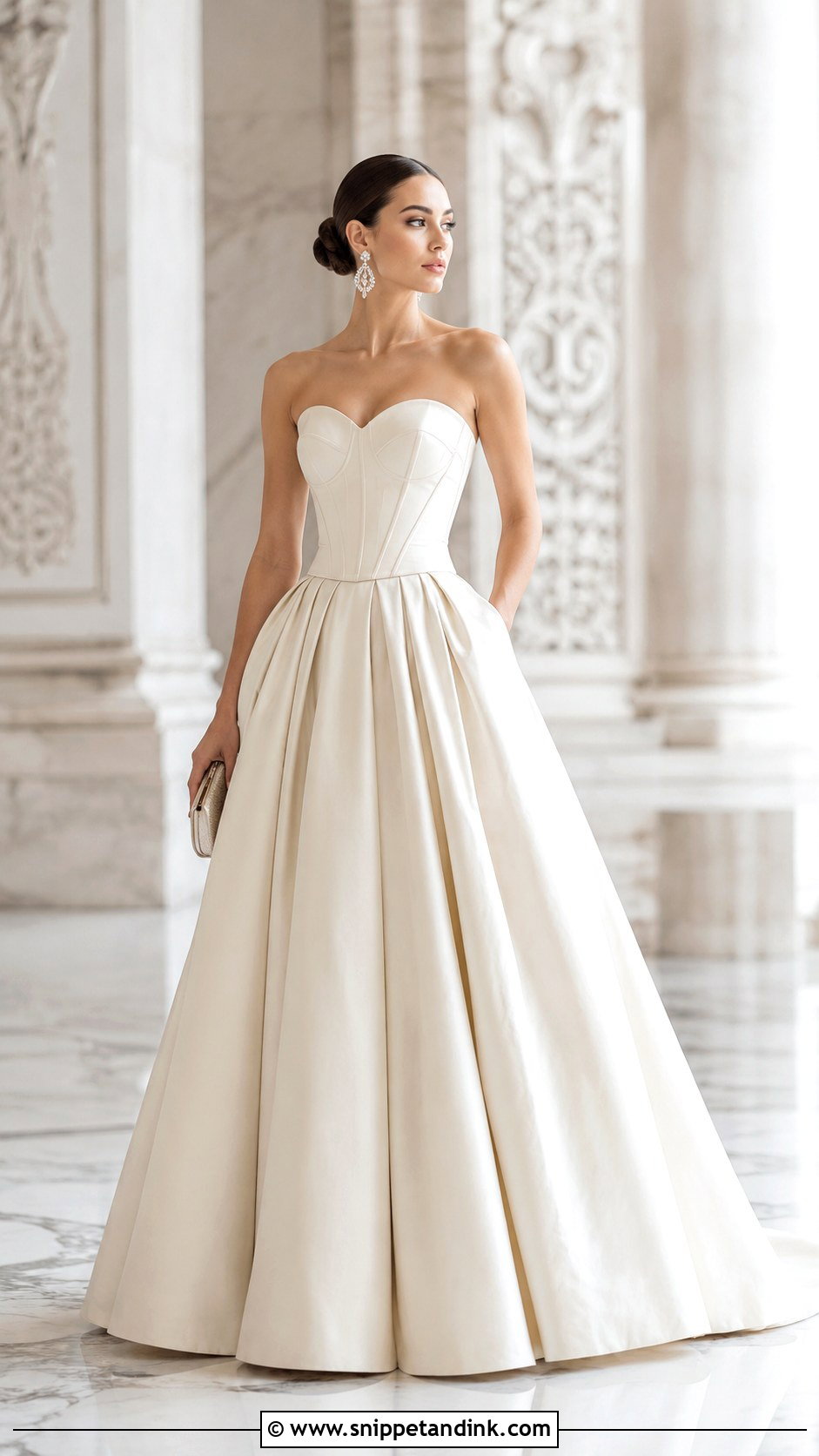
A full ivory skirt makes an entrance before you’ve said a word, and the softer color stops all that volume from looking like a costume. Go clean in the bodice for a modern feel, or add lace, tulle or embroidery for romance. At a ball gown fitting I check two practical things: whether you can get through a normal doorway and into the car, and how heavy the skirt feels after twenty minutes of standing, because layered tulle and a hoop carry real weight. Heels hide under the hem, so wear comfortable ones. Crystal earrings, a sleek clutch, a smooth bun, soft glam makeup and one simple necklace keep the rest controlled. Grand receptions and formal galas are its natural home.
5. Ivory Mermaid Gown
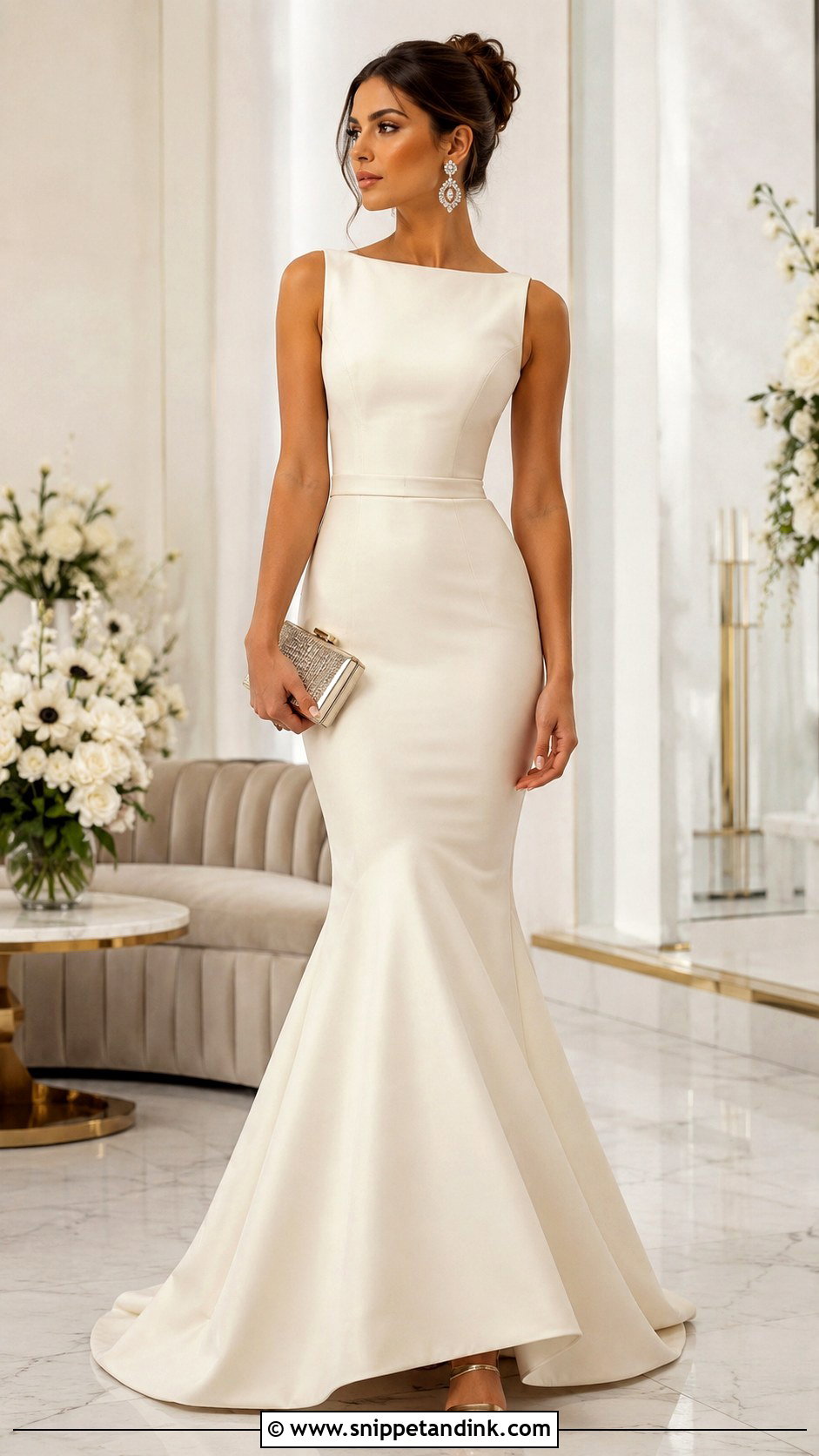
Everything about a mermaid depends on where the flare starts. It follows the body through the bodice and hips, then opens below the knee, and if that point is set too low you’ll shuffle all evening. I have brides sit, climb a step and dance a few beats before the seamstress marks it. Supportive crepe, satin or mikado hold the sculpted line far better than a soft fabric would. Slim heels, a small metallic clutch and statement earrings beat a heavy necklace, and a strapless or off-shoulder neckline looks sharper with a clean updo. The ivory tone keeps the glamour soft for formal receptions and red-carpet-style evenings.
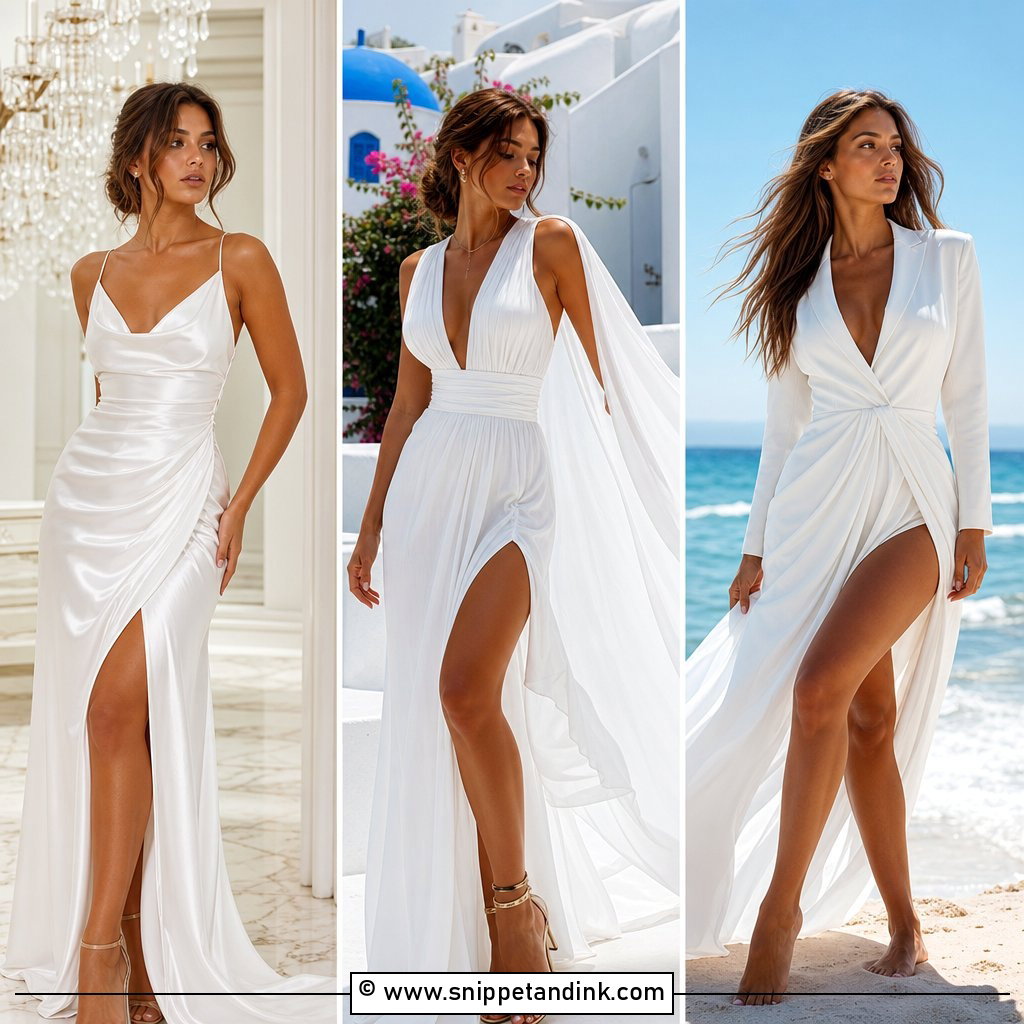
6. Ivory Slip Gown
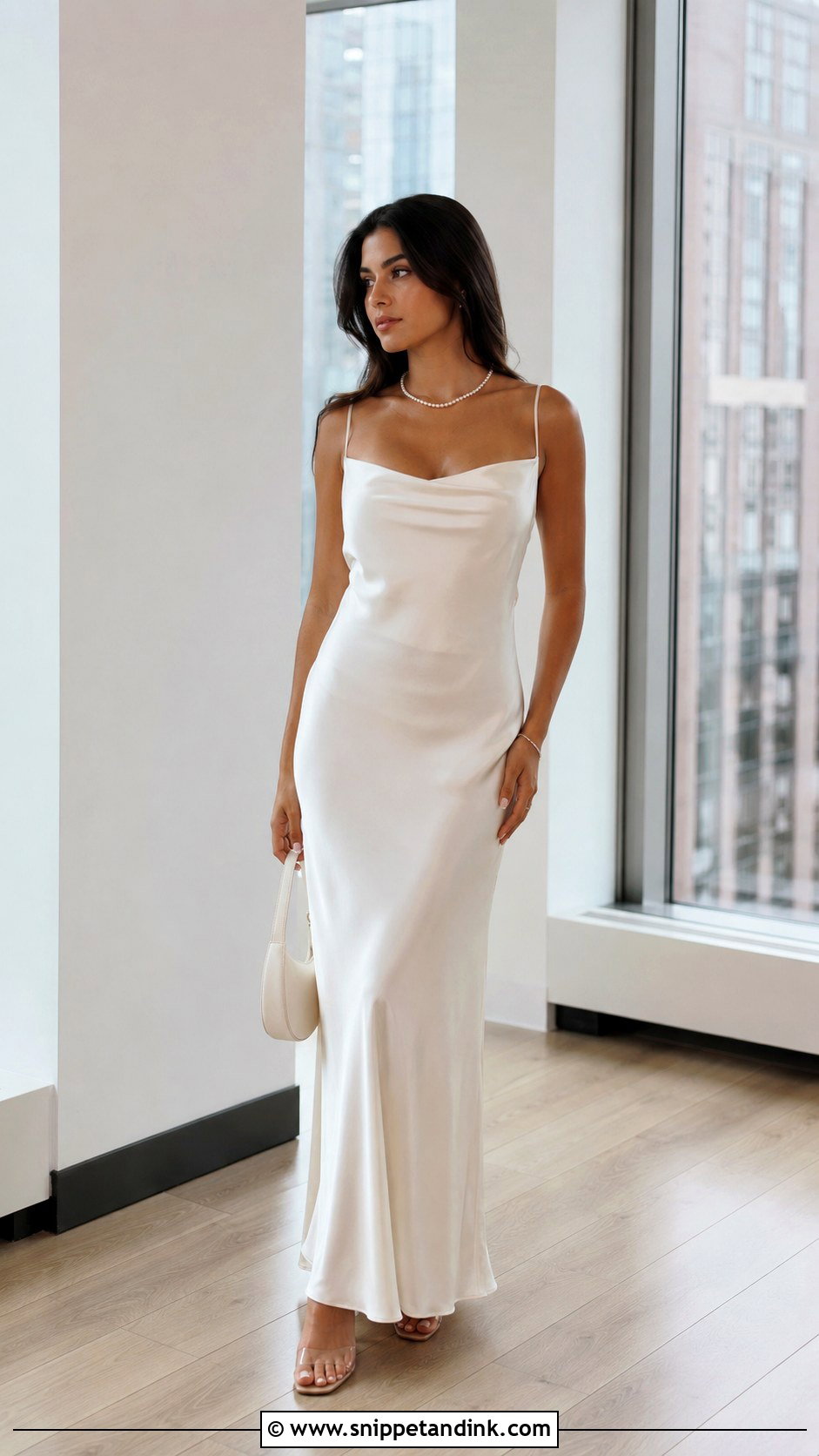
A slip gown has nowhere to hide, which is both its appeal and its risk. The good ones skim rather than cling, usually cut in satin, silk, or silky crepe, and I’d only sign off on one after a bride has seen it under bright light with her actual underwear on. Barely-there heels, a sleek shoulder bag and one delicate piece, say pearls or crystal studs, are all it needs. A tailored ivory blazer or soft wrap adds coverage for a church or a cool night. City celebrations, destination events and rehearsal dinners suit it, as long as the styling looks deliberate rather than underdressed.
7. Ivory Off Shoulder Gown
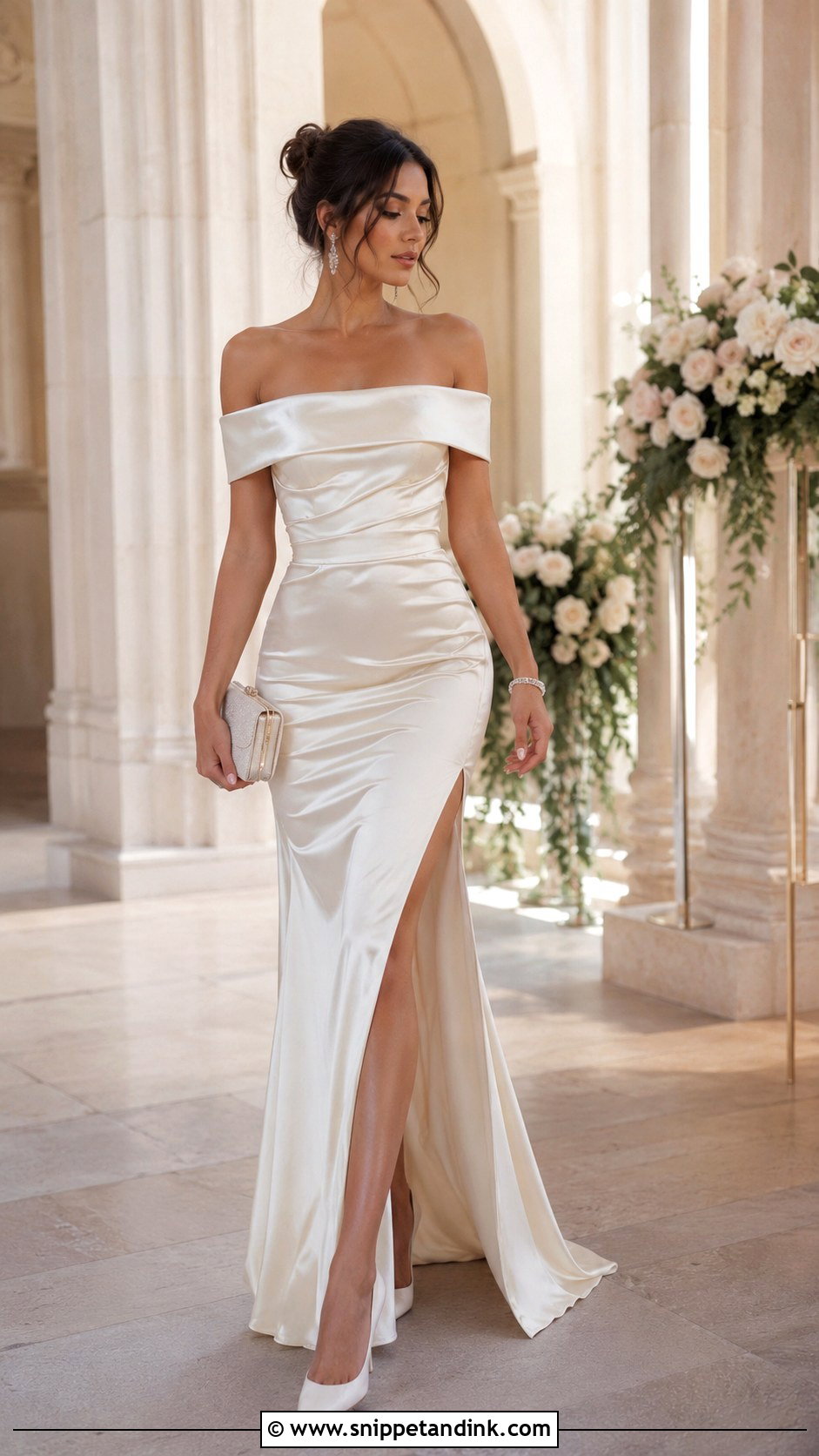
Off-shoulder necklines frame the collarbones nicely, but they also limit your arms. At the fitting I ask the bride to lift both hands above her head: if the band digs in or rides up, it needs elastic or a slightly lower set now, not on the morning. Satin, lace, crepe and tulle all work, depending on how formal the day is. Drop earrings, a bracelet and pointed heels give balance, and the neckline should stay bare. A low bun, soft curls or brushed waves keep the shoulders on show for evening events and portraits.
8. Ivory Long Sleeve Gown
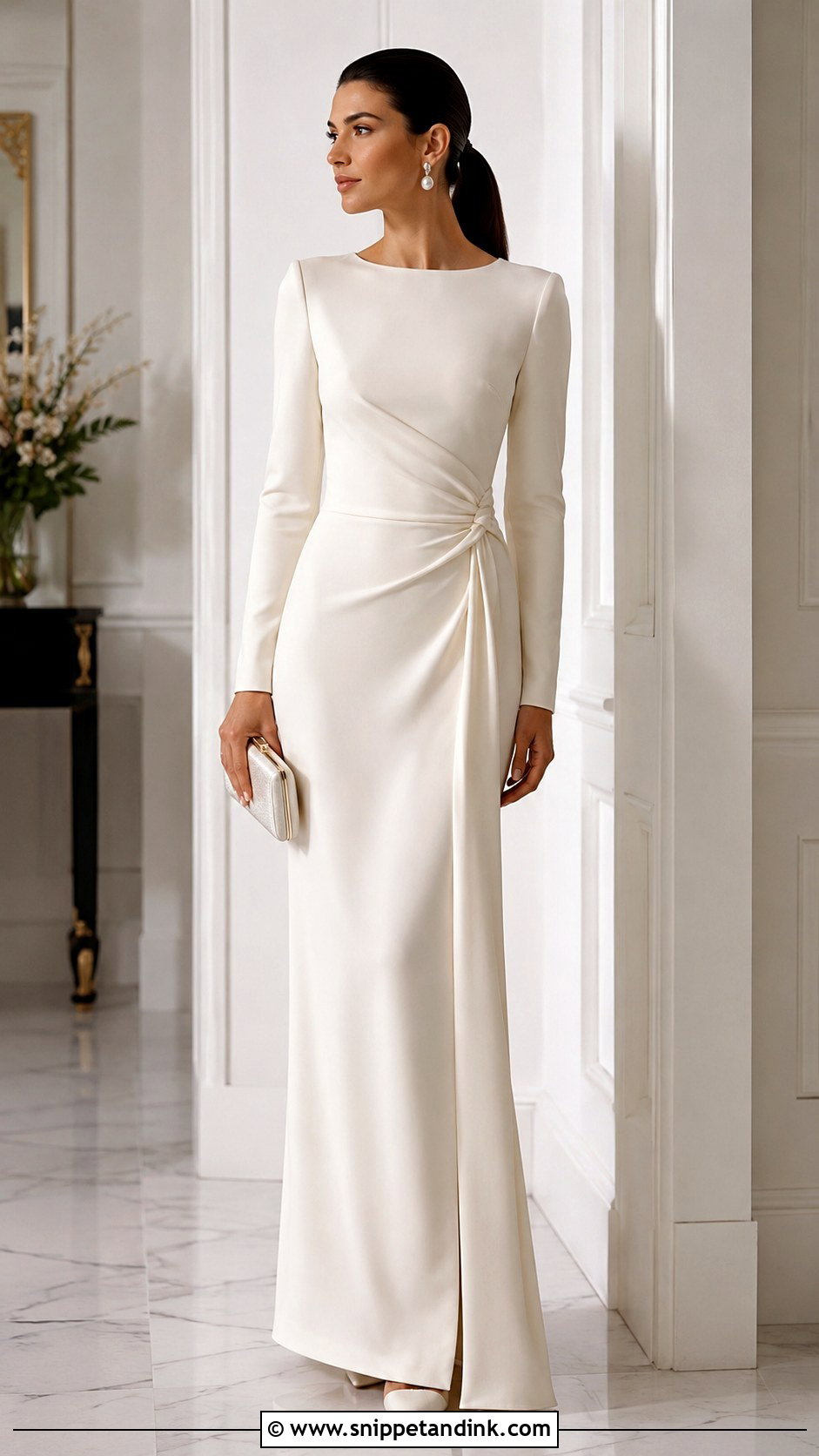
What the sleeves are made of changes the whole mood. Sheer lace reads romantic, satin reads formal, and fitted crepe reads minimal. The detail I watch is the armhole. If it’s cut low and tight, you won’t be able to hug anyone or raise a glass without the bodice lifting with your arm. Closed-toe heels, pearl or crystal earrings and a structured clutch finish the outfit. Wear your hair up with a high neckline and down in soft waves with an open one. It’s a sensible pick for cooler months, formal ceremonies and courthouse celebrations, where coverage looks considered rather than heavy.
9. Ivory Corset Gown
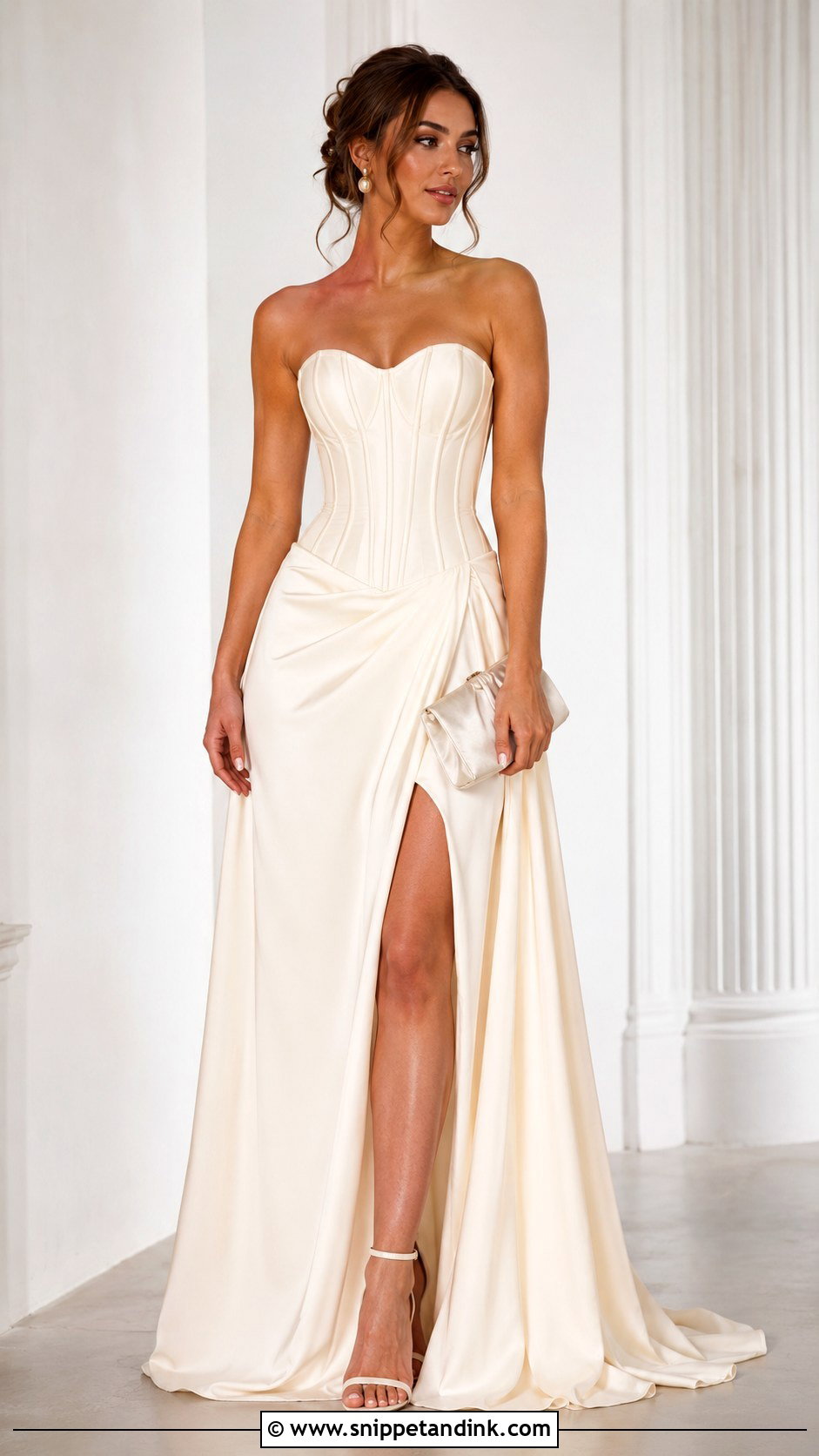
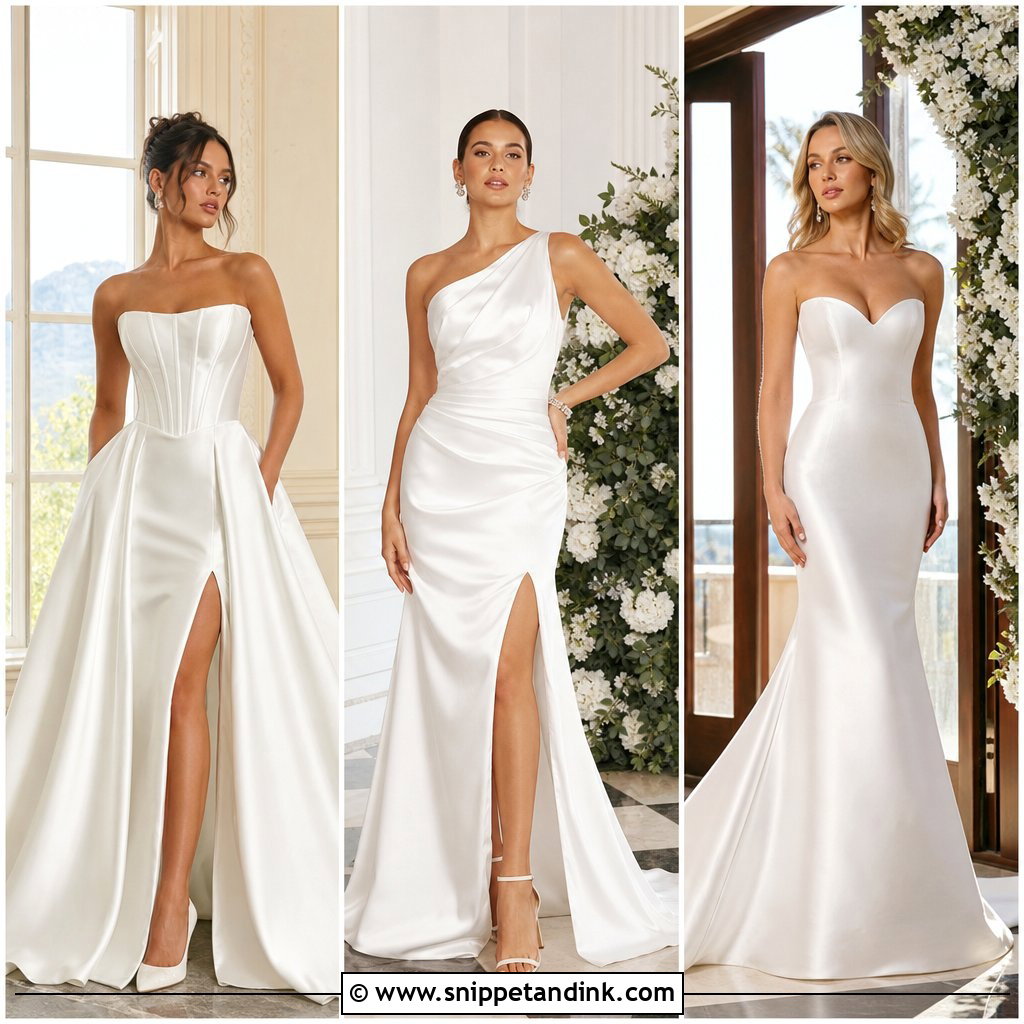
Structure is the point here. The bodice defines the waist and supports the bust, so the skirt underneath can be slim, full or softly flowing. Quality shows in the boning and seams; flimsy channels warp after a few hours of sitting and leave ripples across the waist in photos. I tell brides to sit for a good half hour at the final fitting, because a bodice that feels fine standing can bite when you’re seated at dinner. Ankle-strap heels, a satin clutch and simple earrings keep it tasteful, with a soft updo or smooth blowout. It suits brides, engagement events and editorial shoots, and guests only when the couple has said ivory is welcome.
10. Ivory Tulle Gown
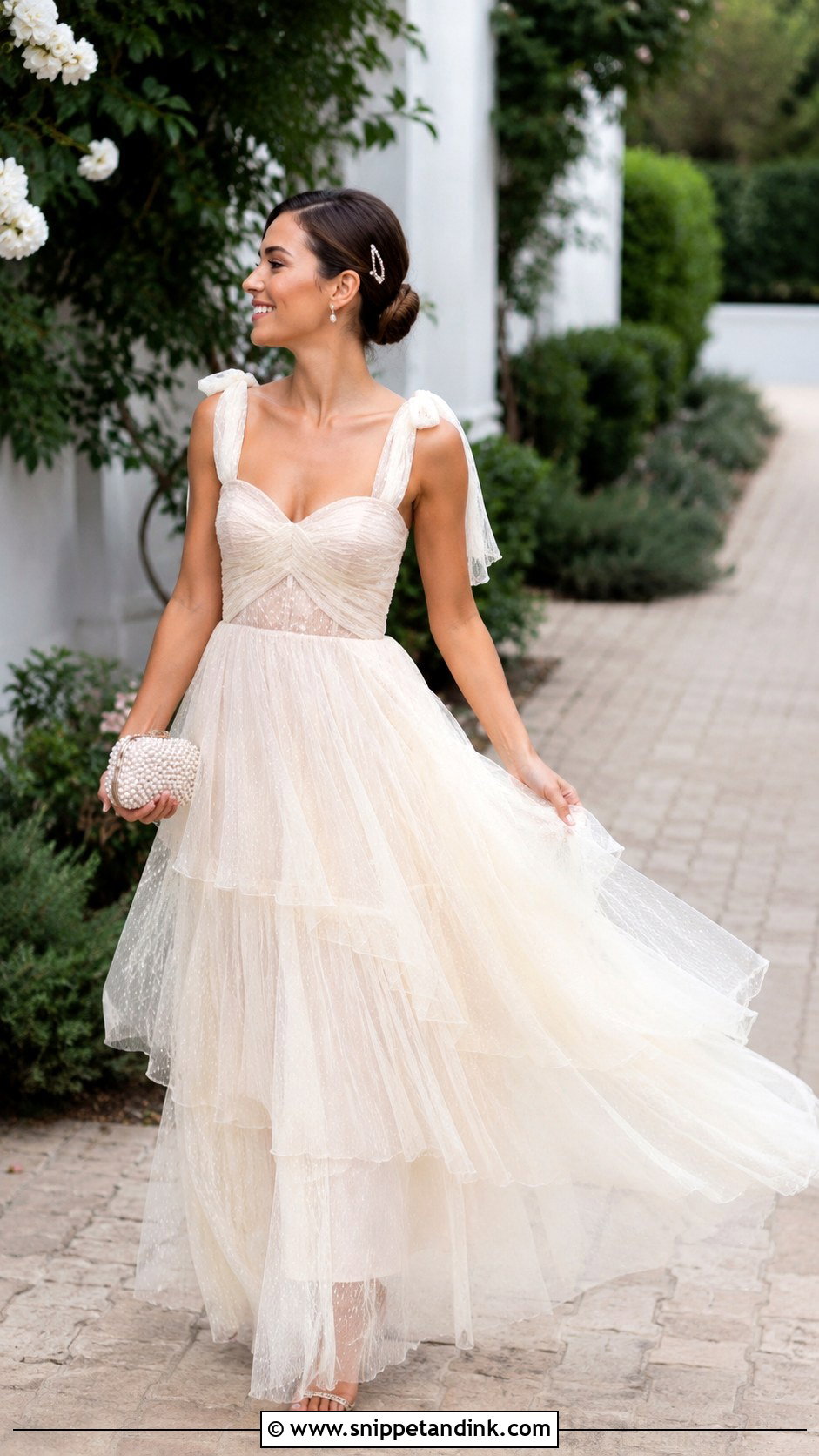
Tulle is airy, and it catches on almost everything. Layered tulle builds volume while a single sheer overlay simply moves with you. I warn brides about prong-set bracelets, rough stone walls and garden benches, since a snag in fine tulle tends to run. Delicate heels, a pearl hairpin, small earrings and a dainty clutch suit its weight. With a full skirt, keep the top half quiet: a fitted bodice, thin straps or a clean neckline. In natural light ivory tulle glows rather than glares, so it does well at garden parties, bridal events and daytime portraits.
11. Ivory Chiffon Gown
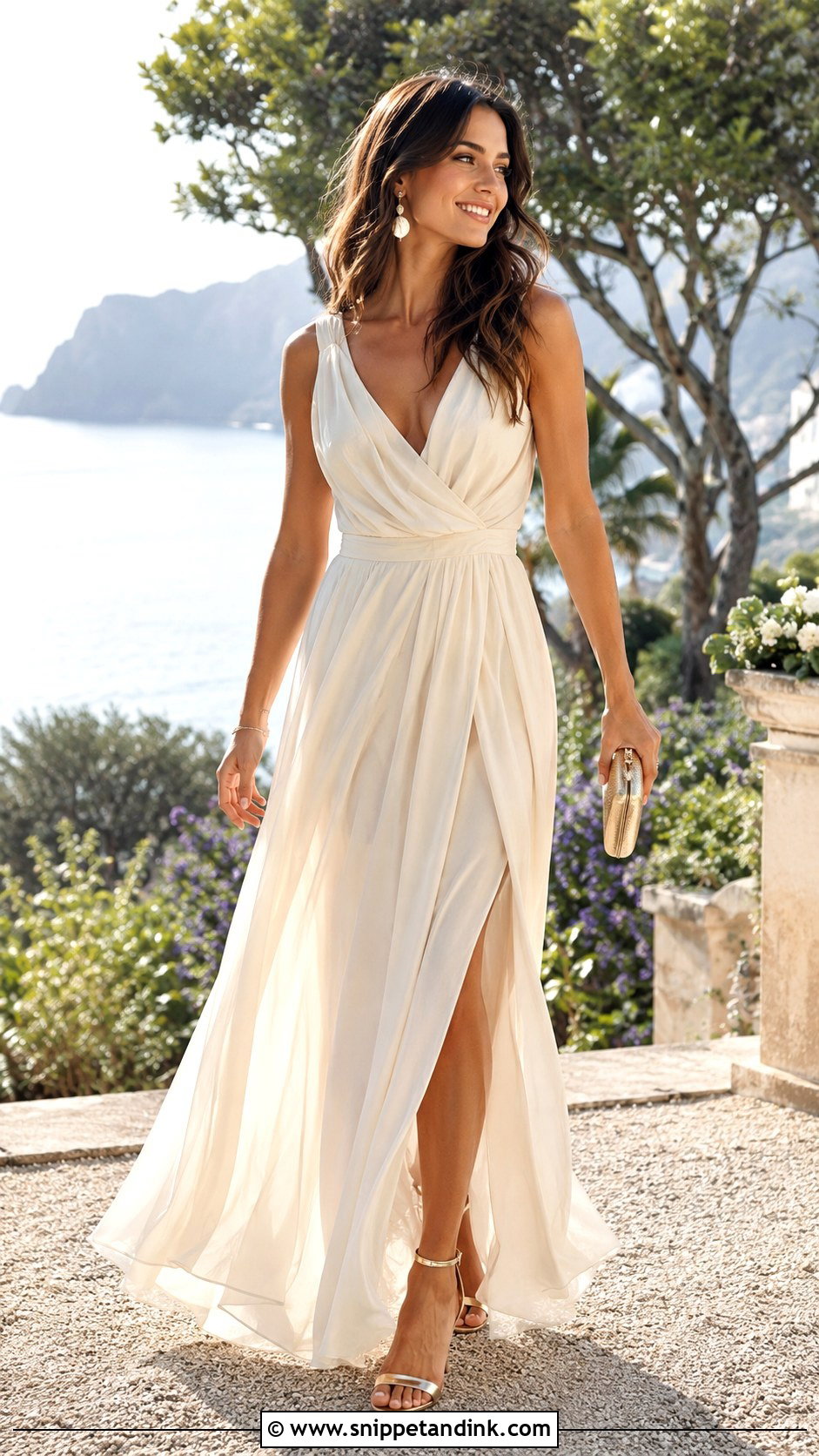
Chiffon is what I suggest for heat and long days, since it breathes and doesn’t hold creases the way satin does. Silk chiffon can water-spot and fray at raw edges, though, so steer it away from wet lawns. A wrap bodice, pleated skirt, or empire waist gives a relaxed fit that still looks finished. Nude or metallic sandals, soft earrings and a small clutch match its weight, with a loose updo or natural waves. Beach celebrations, garden events and semi-formal evenings are where chiffon earns its place.
12. Ivory Crepe Gown
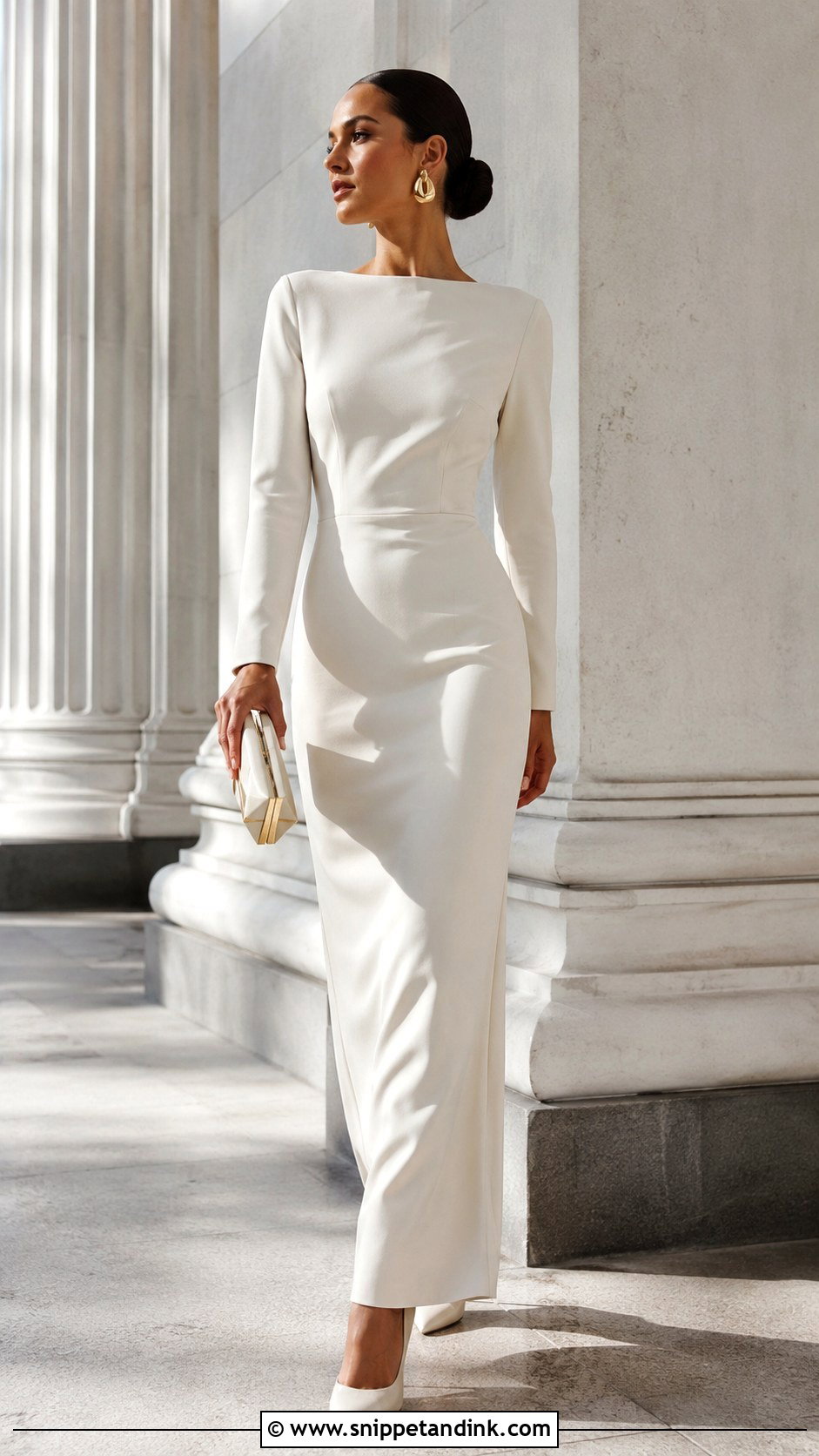
My favorite fabric for the bride who wants no lace and no beading. Crepe has enough weight to hang in clean, tailored lines and enough give to stay comfortable, which is a rare pairing. It’s unforgiving of rushed alterations, though: a column that’s even slightly too snug pulls across the hips and shows every ridge. Column, sheath and fit-and-flare shapes all suit it. Pointed heels, sculptural earrings and a structured clutch work well, and when the gown is very plain, a sleek bun, glossy makeup or a statement bracelet adds interest. Courthouse weddings, formal dinners and black-tie events fit its grown-up tone.
13. Ivory Sequin Gown
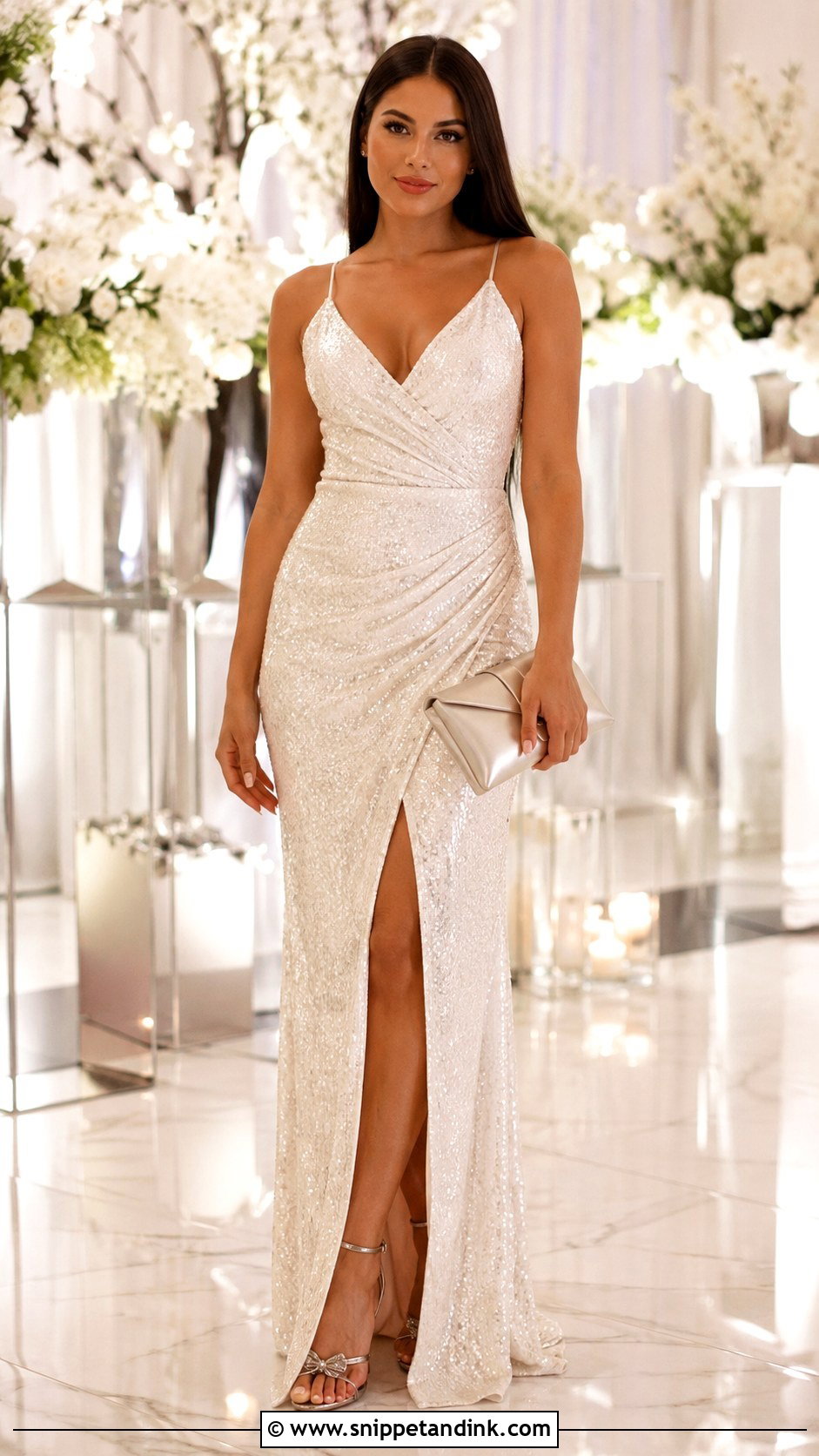
Ivory sequins sparkle without the hard flash of silver or gold. Keep the shape simple, a long sleeve column, slip or fitted gown, so the shine stays controlled. Something I always mention before anyone buys: sequins scratch, both your inner arms and anyone you hug, so check the underarm seams and ask whether the sleeves are lined. Metallic heels, a satin clutch and small studs or clean drops are enough jewelry. Sleek straight hair or a low bun keeps it polished for evening receptions and galas.
14. Ivory Beaded Gown
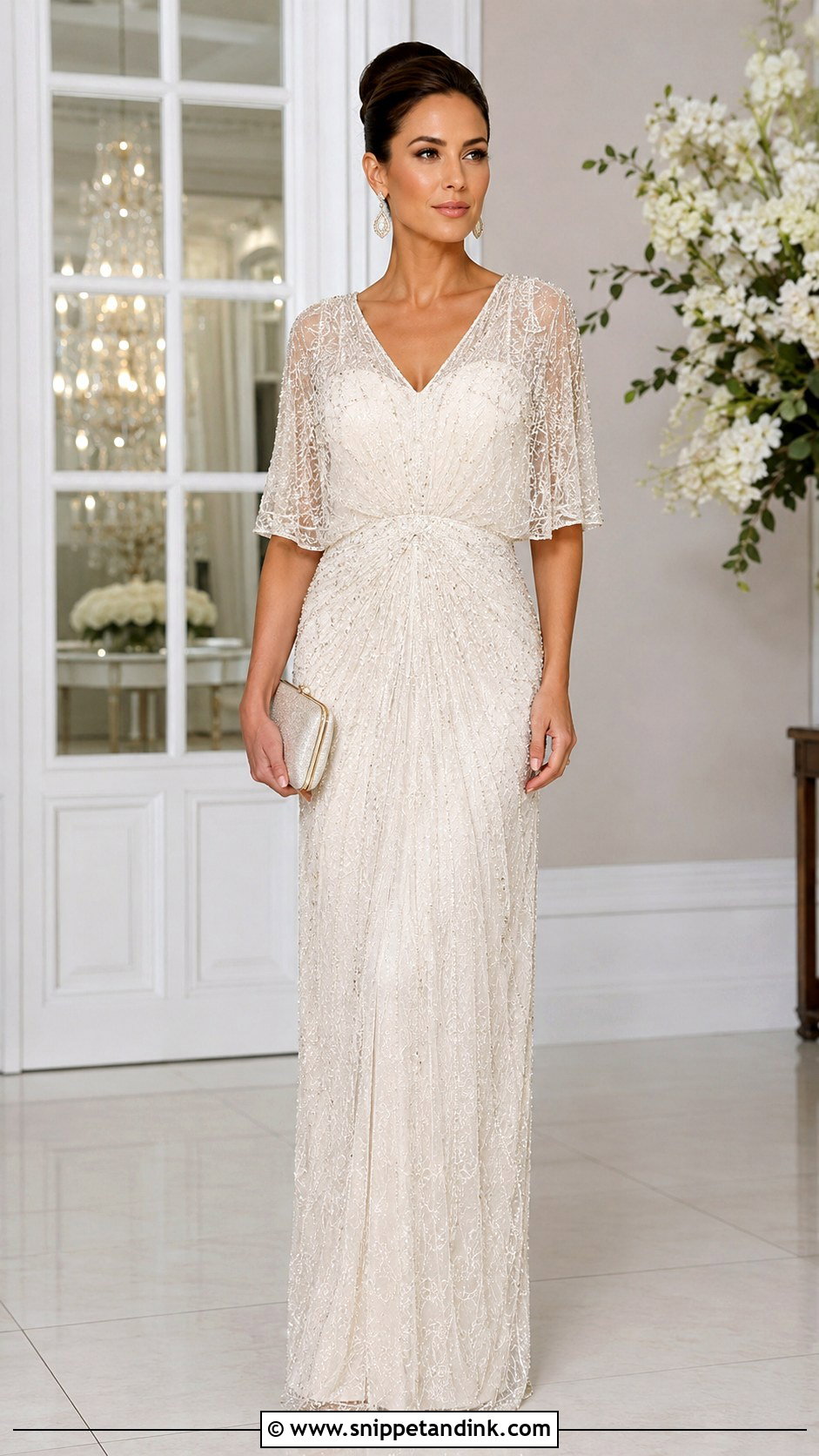
Beadwork adds weight along with the sparkle, and a heavily beaded bodice can feel very different at hour six than it did in the fitting room. I look for beads that follow the body’s lines or gather at the neckline, waist or sleeves, and I tug gently at the threads, because loosely secured beads shed on the dance floor. Keep accessories refined: simple heels, a compact clutch, delicate earrings, and a bracelet only with short or no sleeves. A smooth updo or soft waves tucked behind the ears finishes it. It dresses up formal receptions, anniversary parties and black-tie occasions without any bold color.

15. Ivory Halter Gown
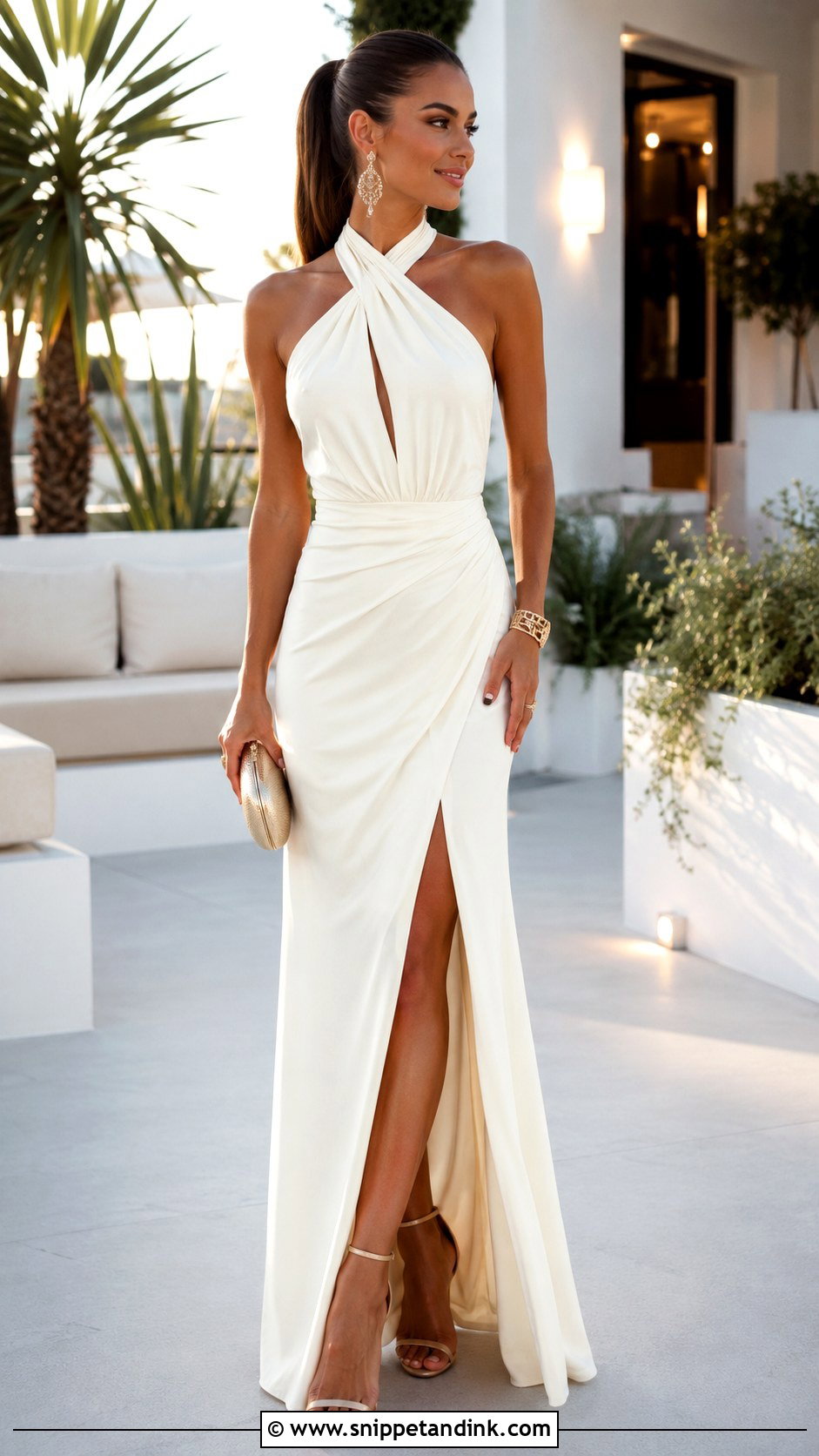
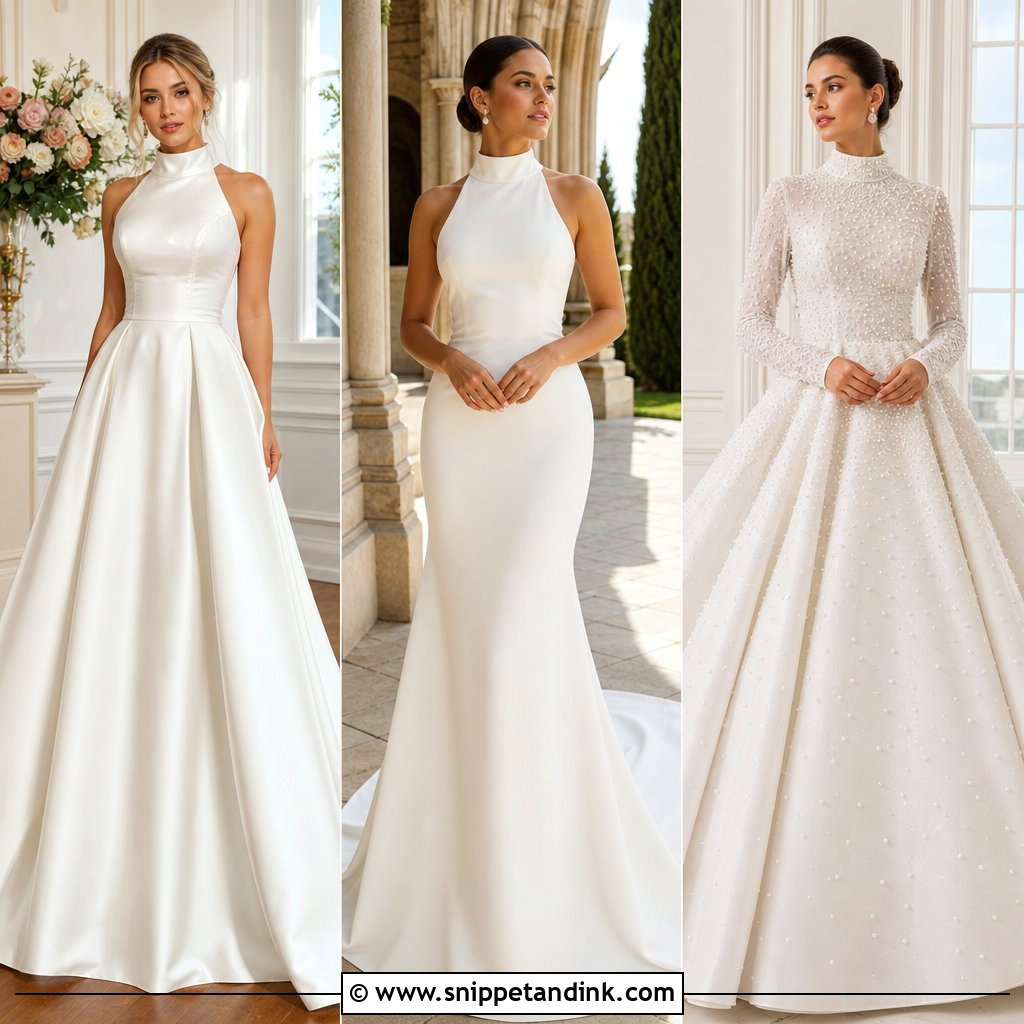
A halter lengthens the neck and gives a strong, modern line, and satin, crepe or jersey keep that shape clean. The strap carries weight on the back of the neck, so with a heavier skirt I check whether there’s an internal waist stay taking some of the load; without one, it can ache by the evening. Slim heels, statement earrings and a small clutch are plenty. Skip the necklace entirely. A sleek bun or high ponytail shows off the shoulders, which makes this a natural fit for destination celebrations and formal summer evenings.
16. Ivory One Shoulder Gown
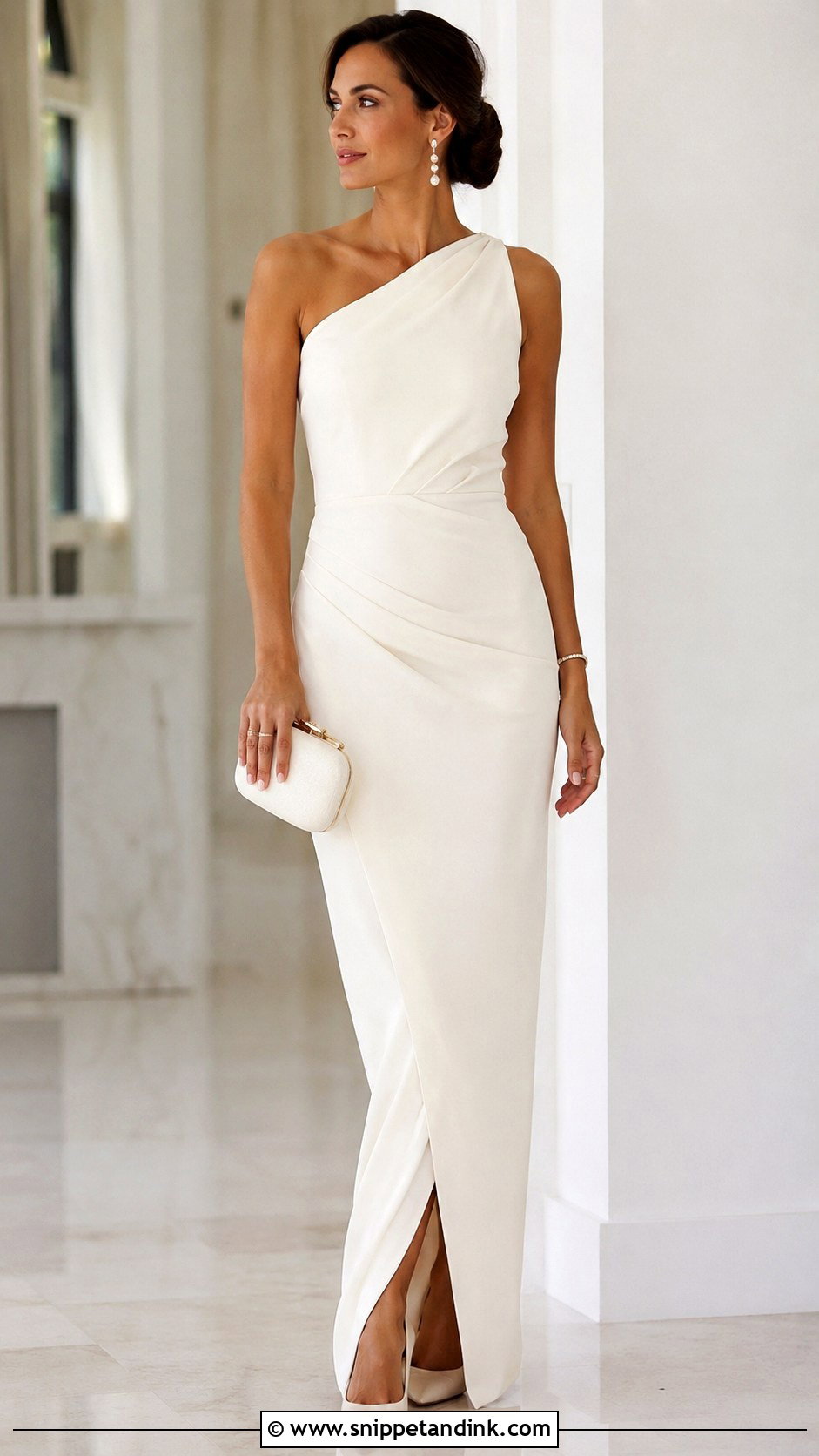
The asymmetric neckline gives even a plain gown something to look at. Crepe keeps it minimal and satin softens it for evening. Before the wedding I have the bride raise her arm on the strapped side; if the single strap slides, a small silicone strip or a stitch to the bra cup sorts it out. Earrings do the work here, one statement piece on the bare side or balanced drops, with pointed heels and a clean clutch. Keep bracelets plain, especially near shoulder draping, where they can snag. A side-parted bun or smooth waves can follow the neckline’s direction for galas, receptions, formal dinners, and upscale celebrations.
17. Ivory High Neck Gown
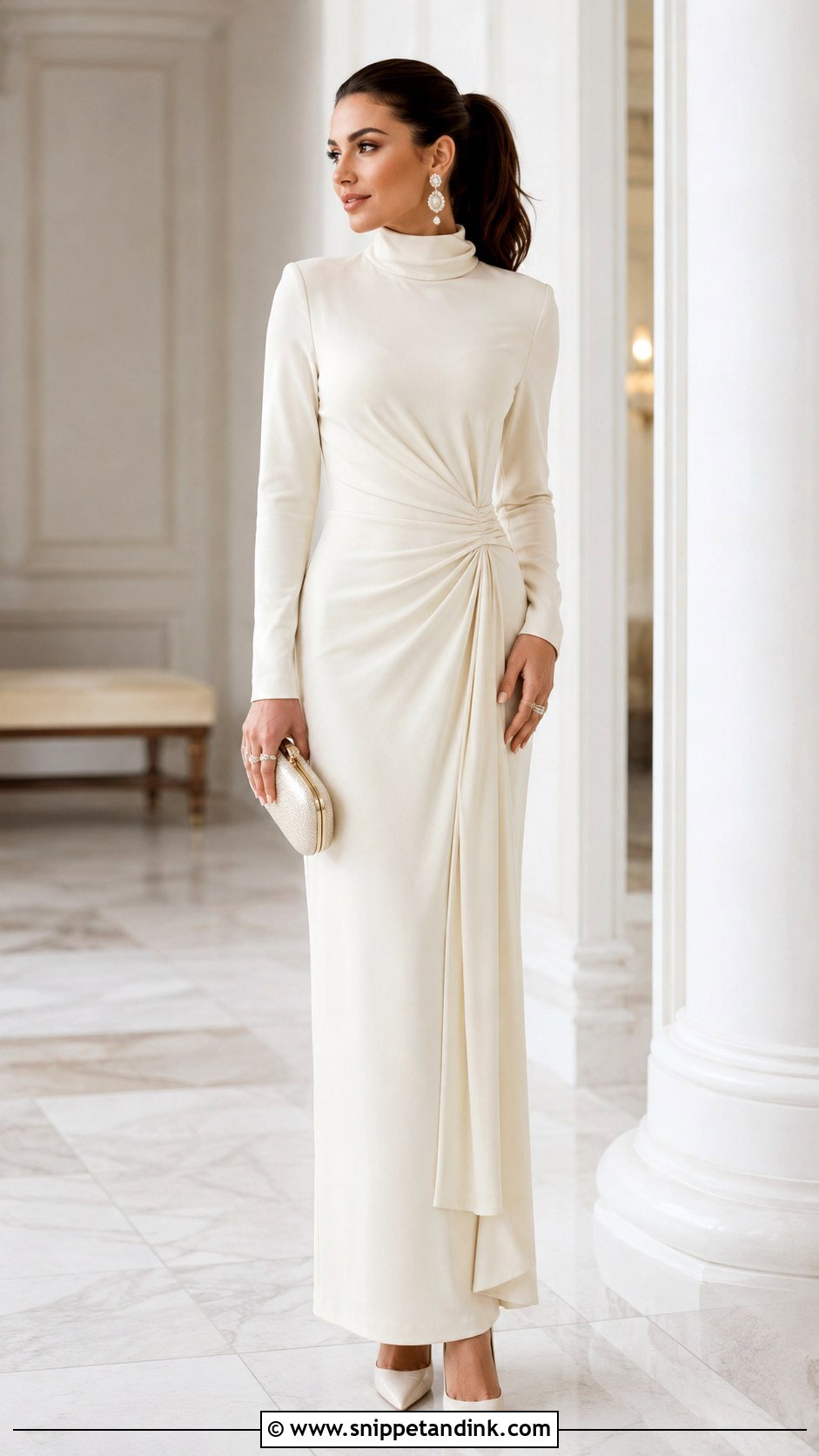
A high neck covers the collarbones and moves the attention to your face, so I style it from the ears up: earrings, rings and a clutch rather than any necklace. It works in crepe, lace or chiffon. On a closed collar, the opening should clear your throat by about a finger’s width, or it starts to feel tight around the speeches. Pointed heels or sleek sandals depending on the season, plus a bun or polished ponytail, open up the face. It suits formal ceremonies, winter events and evenings where you’d rather not rely on sparkle.
18. Ivory Strapless Gown
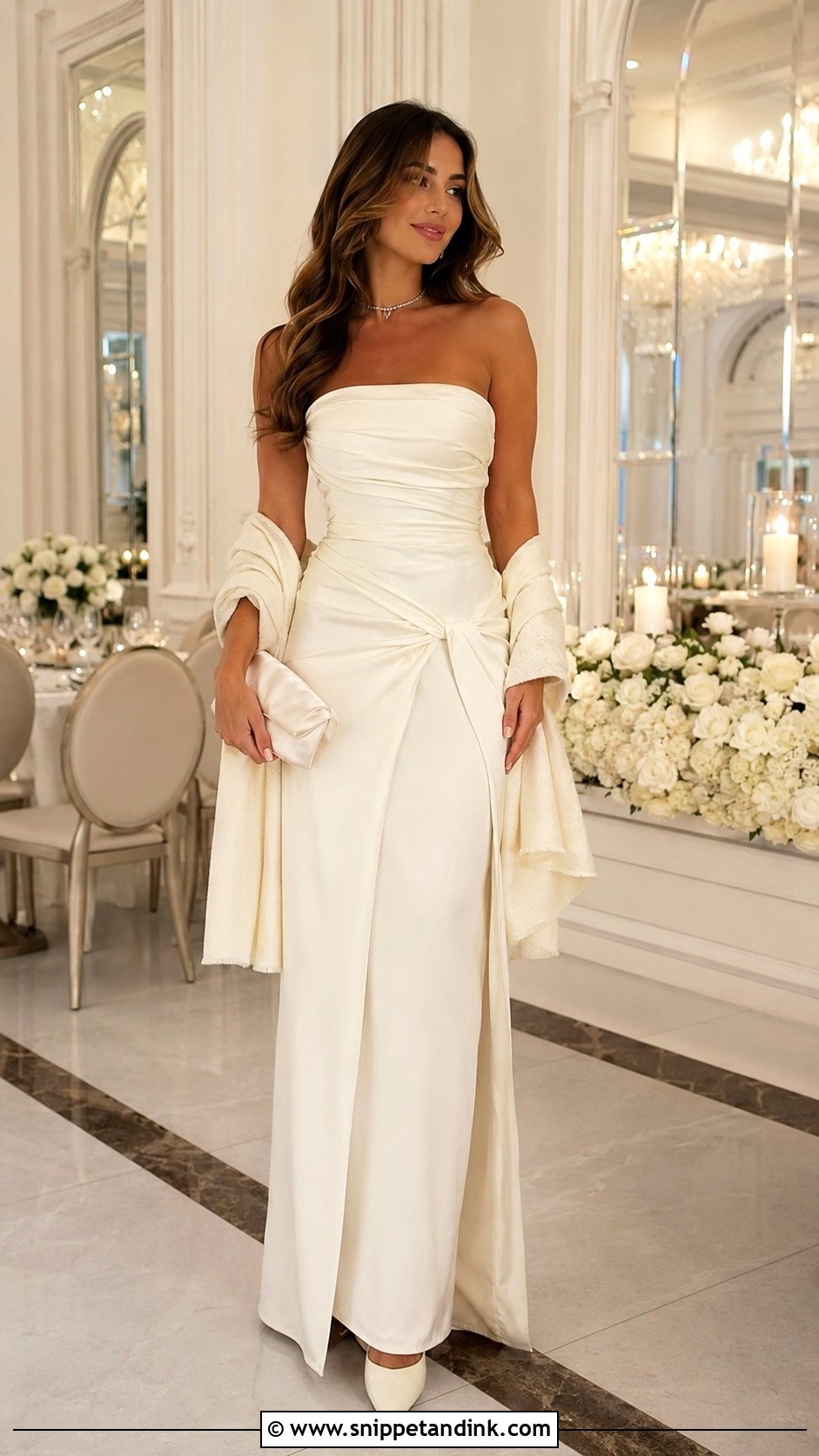
Strapless gowns live or die on bodice fit. If you’re tugging it up every few minutes, it isn’t fitted firmly enough at the ribcage, and that’s where the seamstress should take it in, not at the bust. Go for a structured bodice, a floor-length skirt, pointed heels and a satin clutch. A plain neckline can carry a delicate necklace; otherwise wear statement earrings and leave the chest bare. Bring a shawl, capelet or tailored blazer for coverage. It’s endlessly adaptable for formal celebrations and galas, provided it stays put while you sit, walk and pose.
19. Ivory Cape Gown
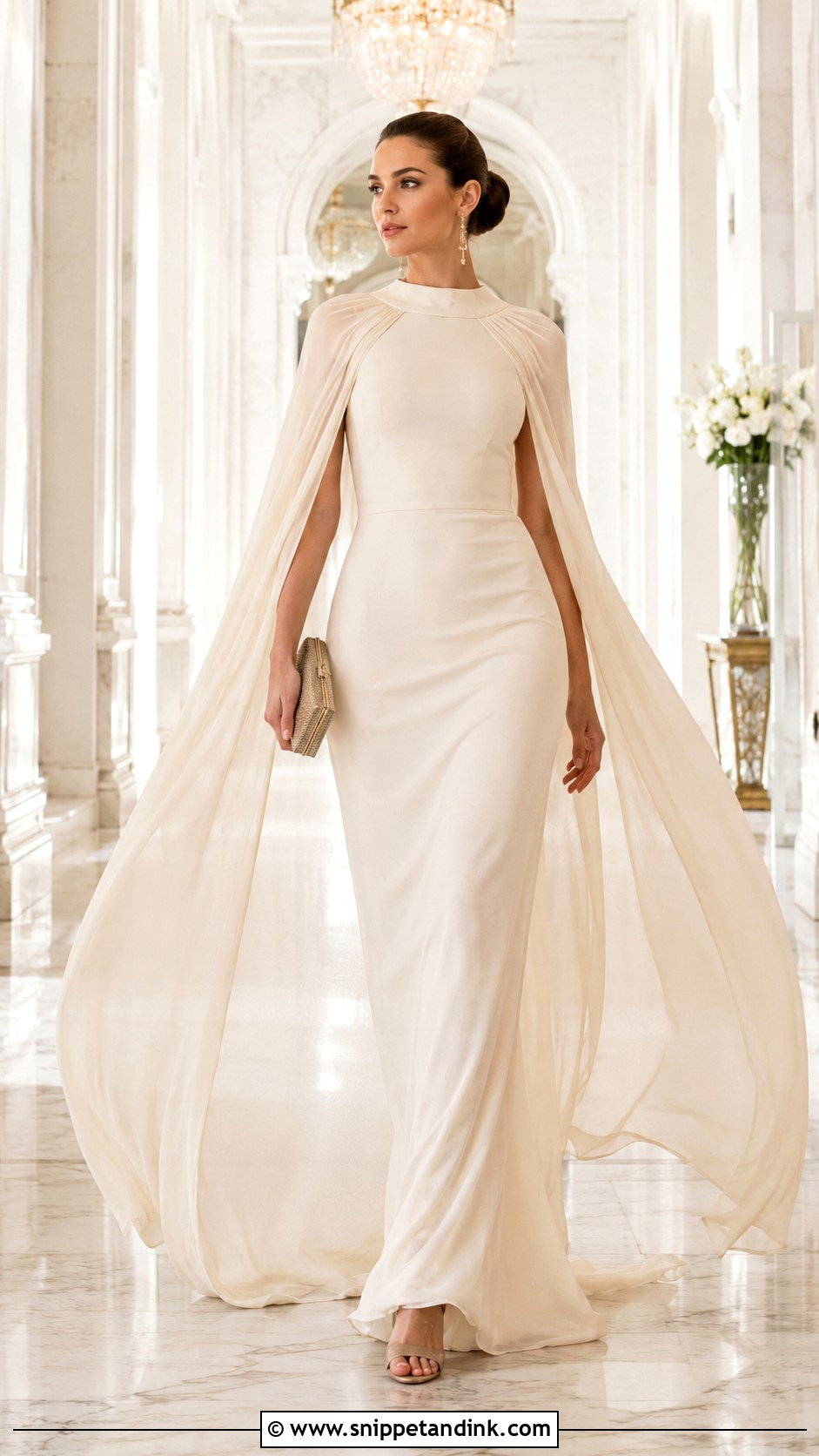
A cape gives you drama without the weight of a long train. Sheer, satin, lace and chiffon capes each set a different mood, and they make the back view as considered as the front. Check how it attaches: a cape stitched into the shoulder seams moves with you, while one hooked onto the neckline can drag the bodice backward. Simple heels, sleek earrings and a compact clutch let the cape stay the main detail, and hair pulled back keeps the neckline clean. It’s made for ceremony entrances, gala settings and evening photos.



20. Ivory Gown With Bow
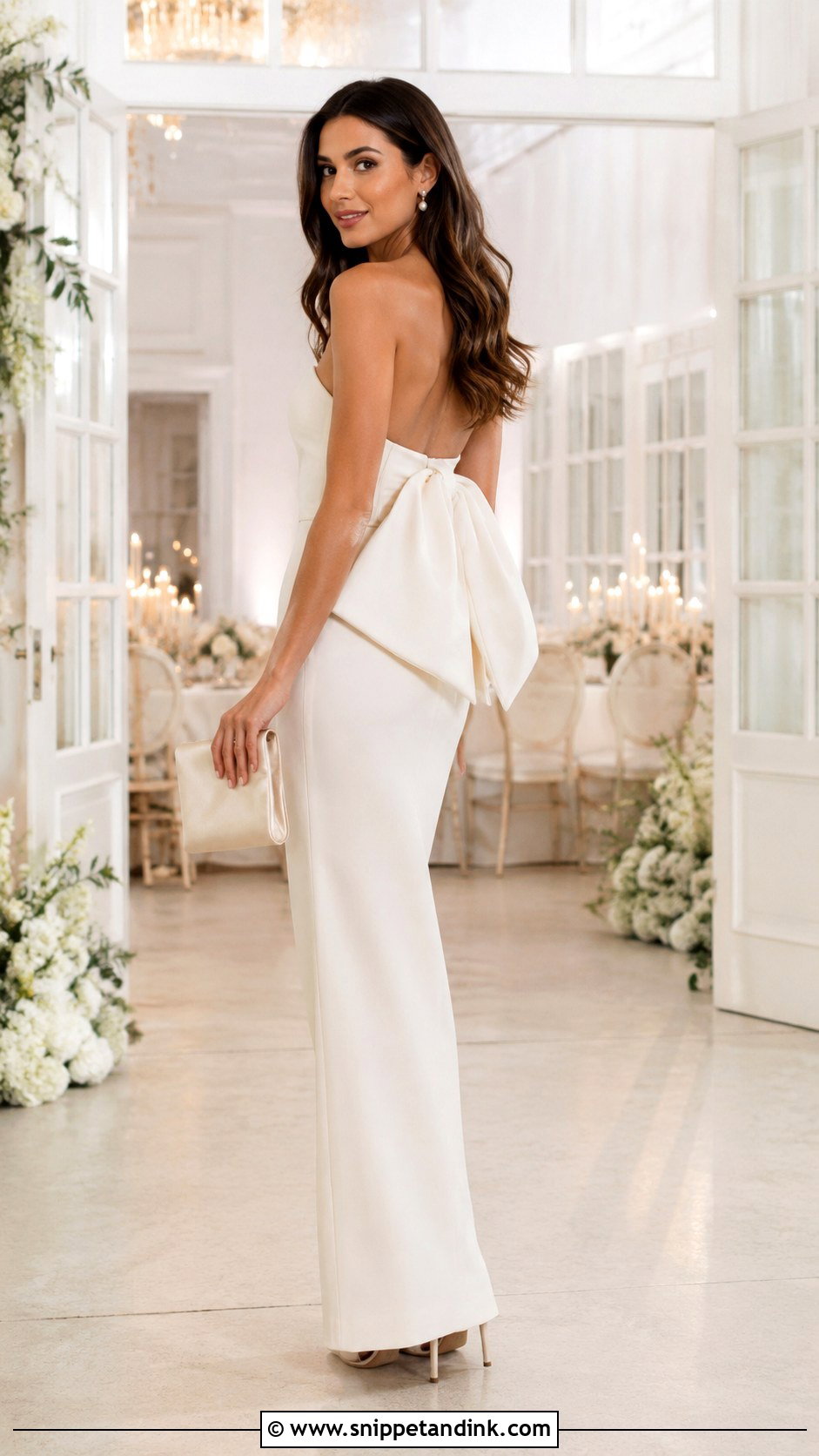
A bow is one strong detail, so I treat the rest of the outfit as background. Placement changes the read: a back bow on a column gown looks modern, a waist bow on an A-line looks classic, and a shoulder bow pulls focus up toward the face. Large satin bows need interfacing inside or they flatten and droop by the reception, so ask how yours is built. Simple heels, pearl earrings and a satin clutch are enough, without extra statement pieces. A clean bun or soft waves keeps it balanced for formal parties, engagement celebrations and romantic receptions.
21. Ivory Floral Applique Gown
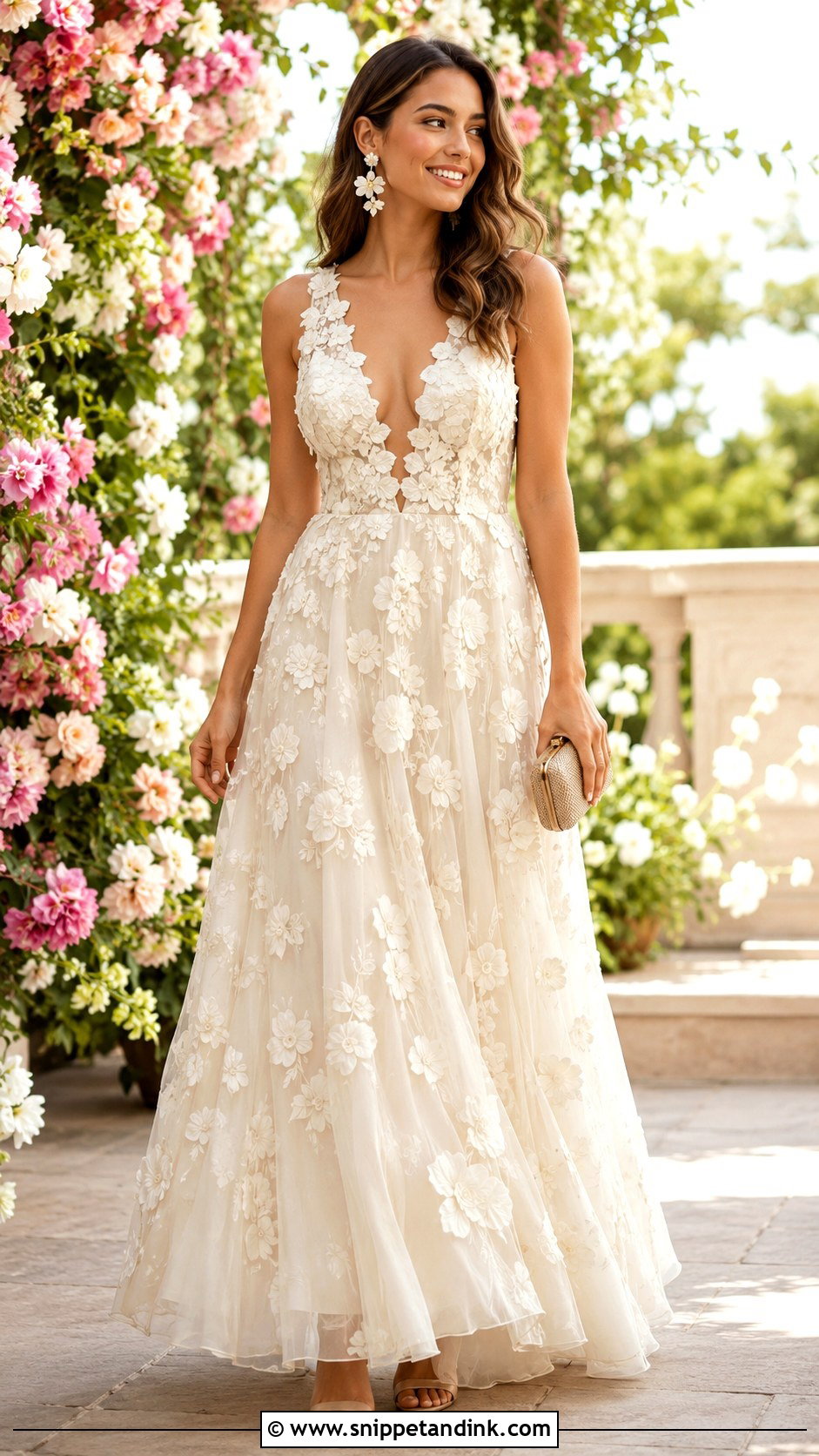
Raised appliques give an ivory floral applique gown texture without relying on sparkle. I prefer appliques grouped along the bodice, sleeves, hem or train rather than scattered evenly, which tends to look busy. Look at the edges of each flower up close: stitched appliques sit flat, while glued ones can lift and curl after a day of movement. Nude or ivory heels, floral earrings and a small clutch suit it, and a bold applique wants simple hair, loose waves or a low bun. Garden events, spring celebrations and formal showers suit its gentle detail.
22. Ivory Pleated Gown
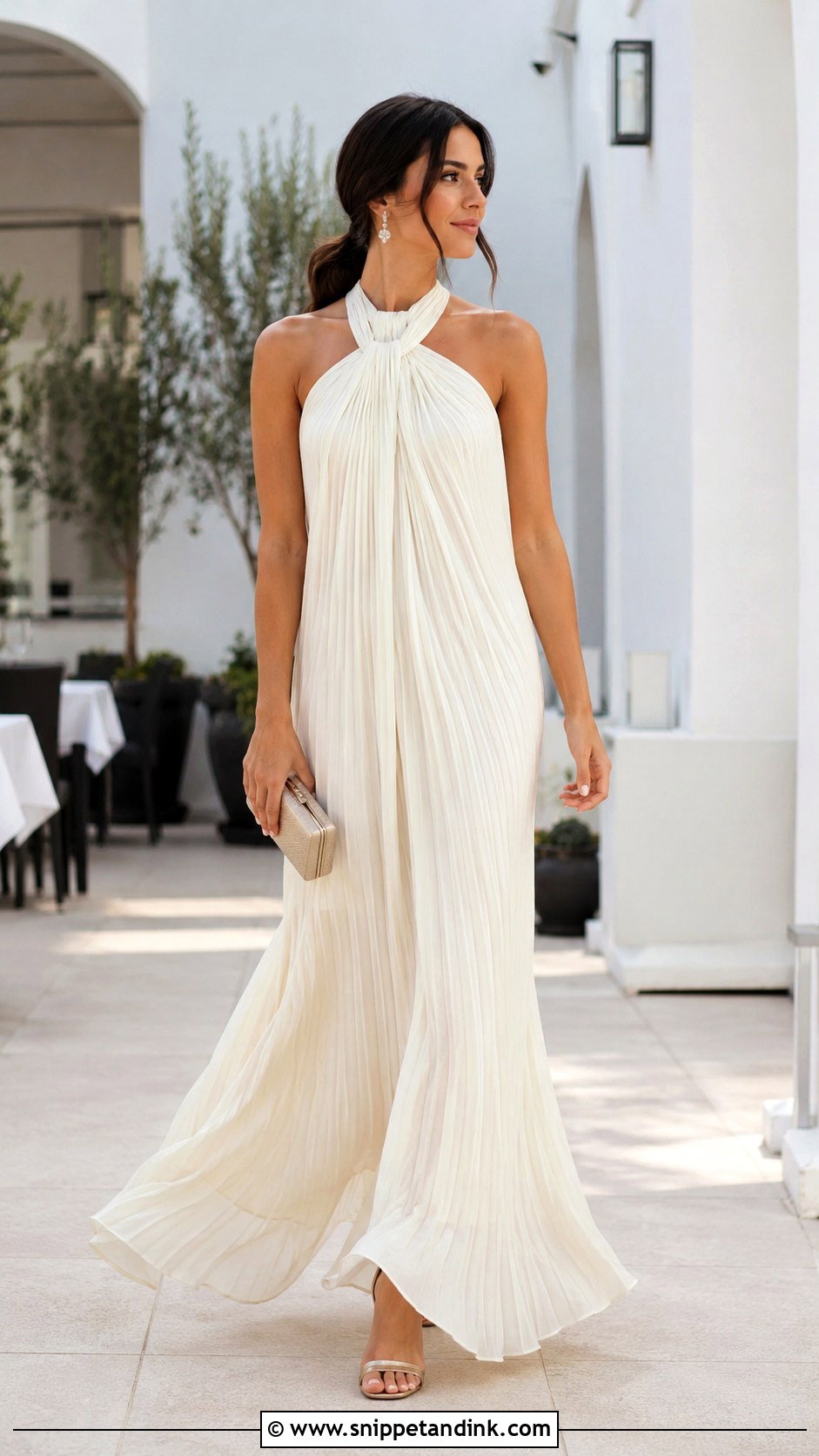
Pleats give you movement and structure at the same time. Fine pleats flow, while wider ones look tailored and more formal. Ask whether the pleats are heat-set or only pressed: heat-set pleats on synthetic fabric hold their shape through humidity and hours of sitting, while pressed pleats in natural fibers relax by the evening. Metallic sandals, a slim clutch and delicate earrings keep the styling light, with a belt if the gown is loose. Soft waves, a low ponytail or a simple bun let the pleats move freely at warm-weather events, formal lunches and destination celebrations.
23. Ivory Empire Waist Gown
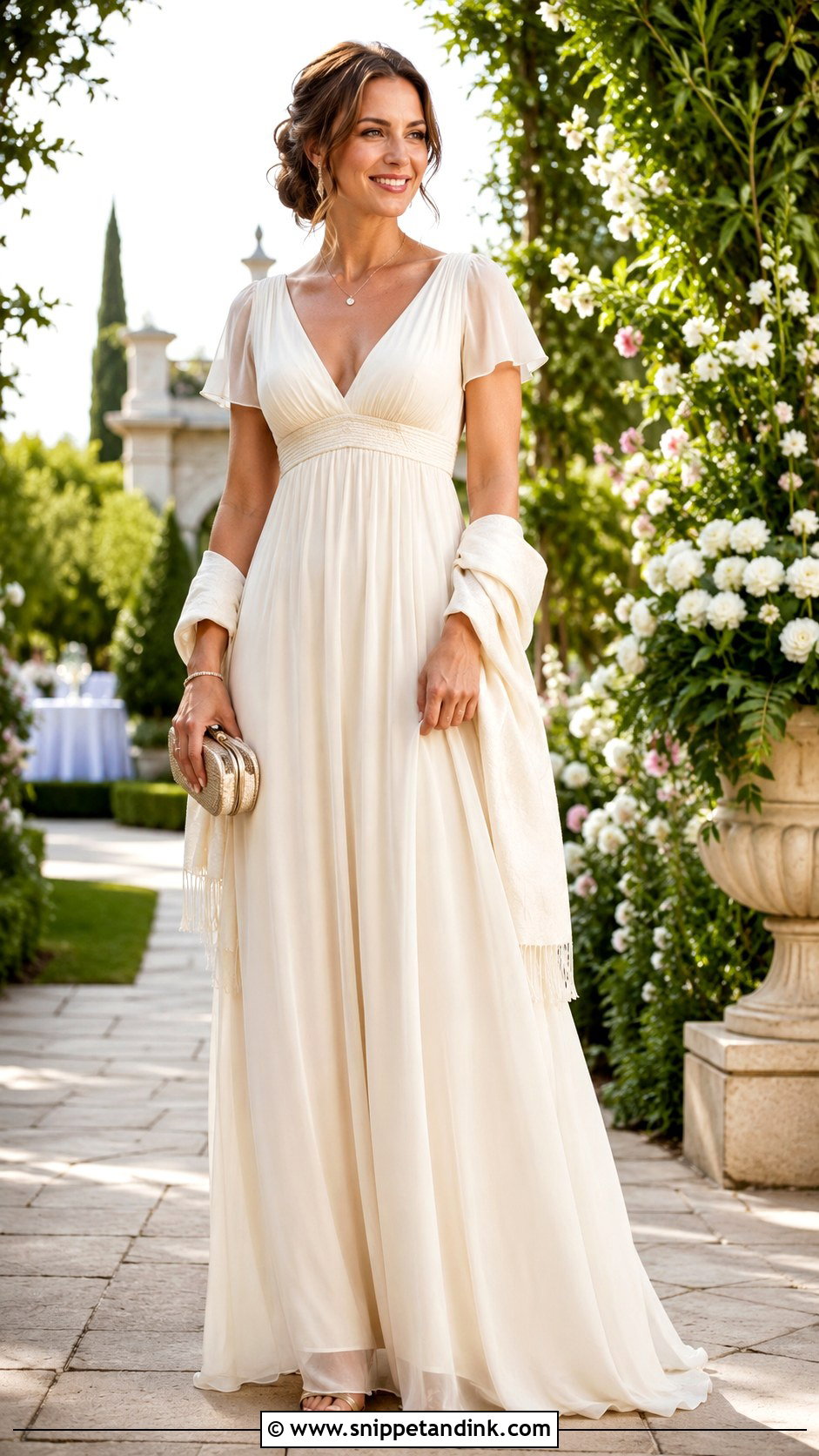
An ivory empire waist gown raises the waistline to just under the bust and lets the skirt fall away, which makes it the easiest shape to sit, eat and dance in. Nothing presses on the stomach, so I often suggest it for pregnant brides and guests. Chiffon, satin or lightweight crepe all suit it. On a petite or full-busted frame, check exactly where that seam lands; if it sits on the bust rather than under it, the torso looks shorter. Low heels or dressy sandals, a delicate necklace, a small clutch and a wrap for thin straps finish it for outdoor celebrations and garden parties.
24. Ivory Two Piece Gown
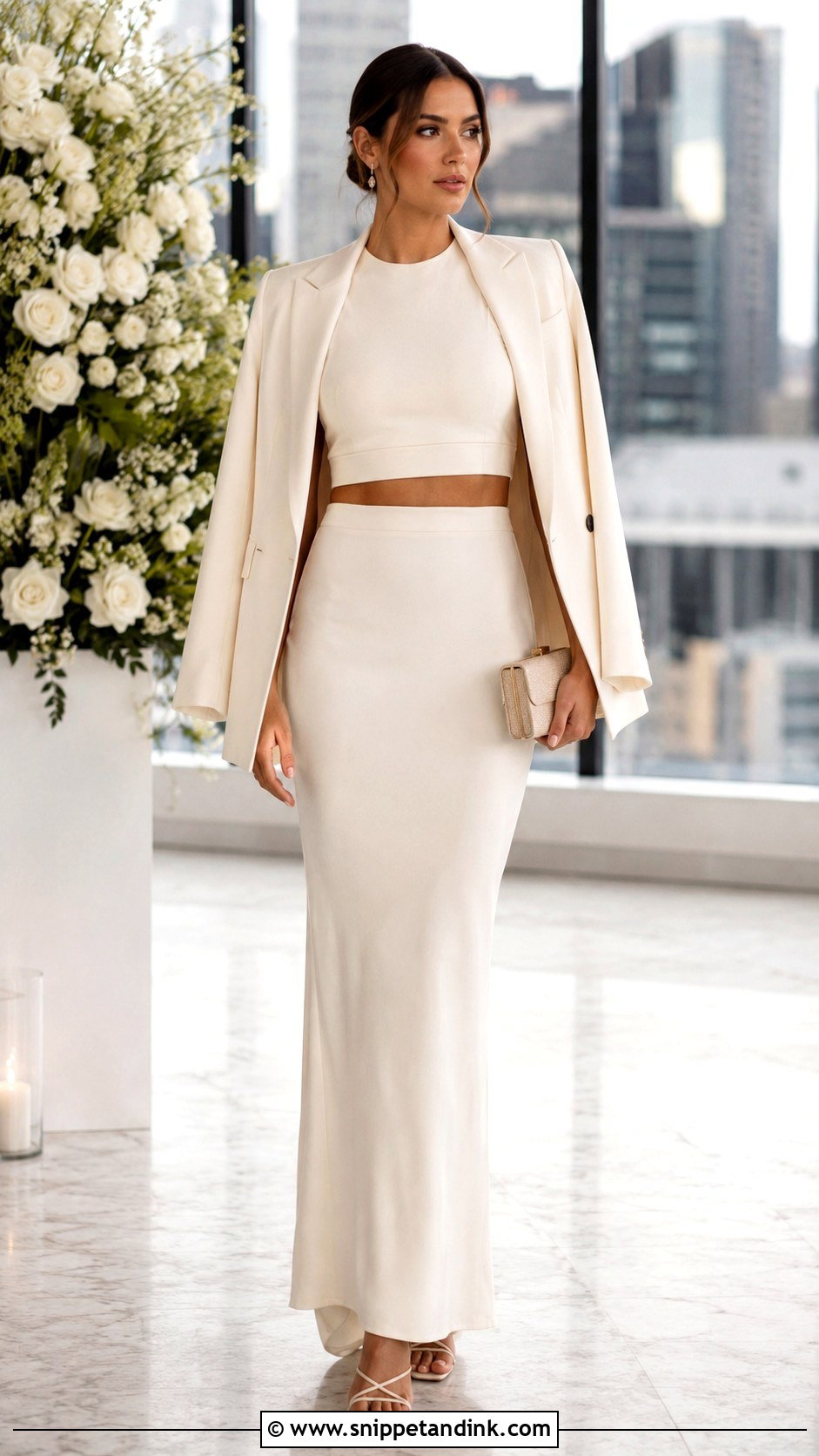
A two piece pairs a fitted top or cropped bodice with a long skirt, and it offers something a one-piece can’t: each half is altered separately, which helps a lot if your top and bottom are different sizes. A high-waisted skirt keeps coverage and a polished line. Strappy heels, sleek earrings and a small clutch suit it, with a soft wrap or structured blazer over a minimal set. I’d keep the gap between top and skirt small for the ceremony and let it show more at the party. Receptions, engagement parties, courthouse celebrations and fashion-forward evenings are good settings for it.


25. Ivory Gown With Gloves
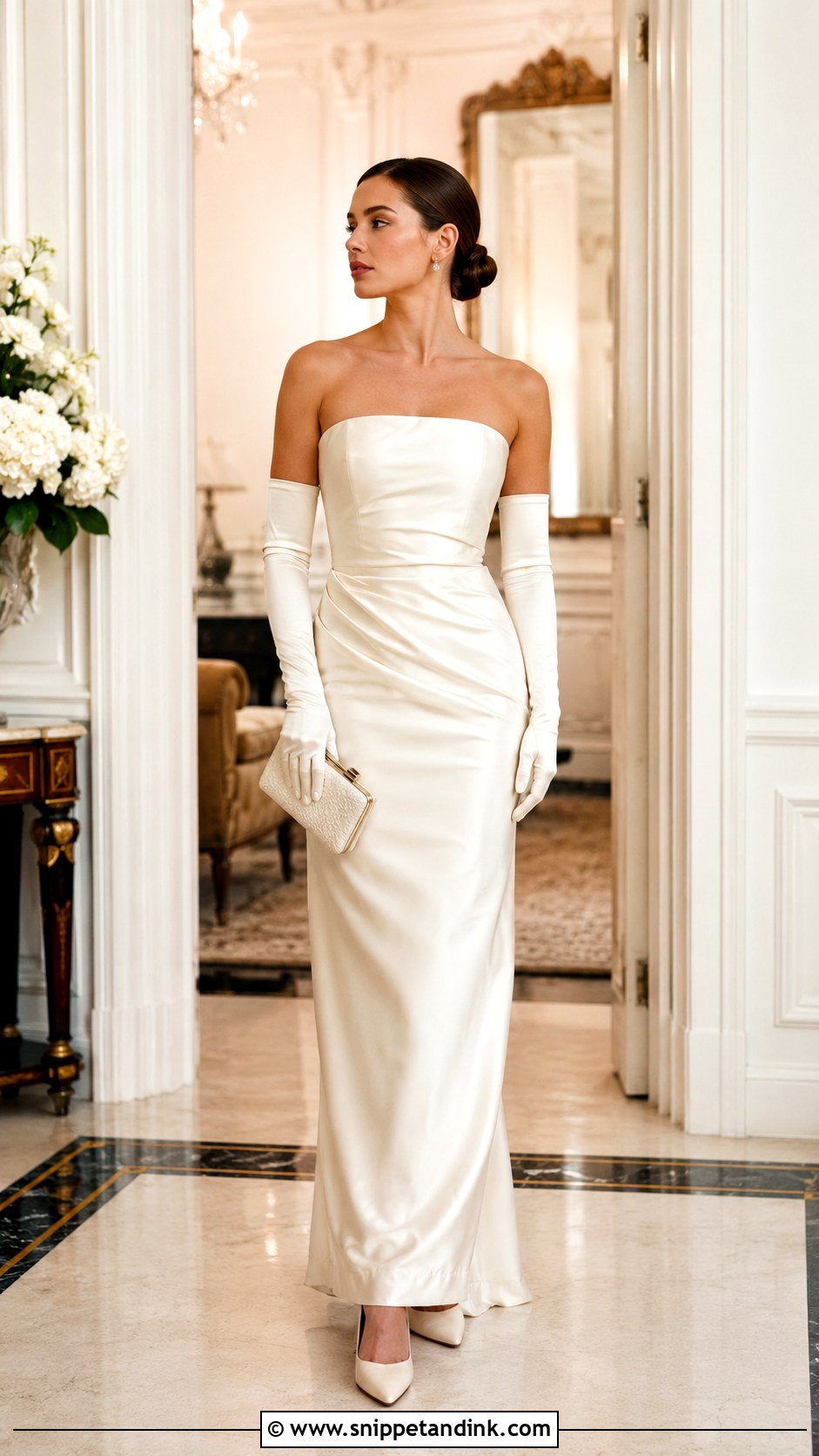
Gloves bring a vintage, formal finish in sheer, satin, lace or stretch fabric, and long ones sit best with strapless, off-shoulder or sleeveless gowns. The practical issue is the ring exchange. Either choose a fingerless or slip-off style, or plan for someone to hold one glove during the vows; a ring worn over the glove is a styling choice, not a way to receive one. Small earrings, a compact clutch and pointed heels or delicate sandals finish it, with hair in a low bun or polished updo. Galas, formal receptions and dramatic portraits suit it.
Caring for Pale Fabric From the Morning Steam to the Storage Box
Ivory forgives a little more than bright white, but it still shows makeup, grass and wine. Most of the damage I see happens in the last few hours before the ceremony, or in the months after, when the gown sits in the wrong bag.
On the morning
- Steam, don’t iron. Hold the steamer a few inches from satin and work from the inside where you can, because water droplets can leave marks on silk.
- Finish makeup and hair before you dress, then step into the gown rather than pulling it over your head. A thin scarf over the face protects the neckline if it must go over.
- Skip fresh self-tanner and heavy body shimmer for a couple of days beforehand. Both transfer onto the inside of a bodice and around the armholes.
- If something spills, blot with a clean white cloth and plain water. Rubbing spreads the mark and roughs up the surface of satin.
After the wedding
Get the gown to a specialist cleaner within a few weeks. Champagne, sweat and cake leave sugary marks that are almost invisible at first and turn brown as they oxidize. Store it in a breathable cotton bag or an acid-free box with acid-free tissue in the folds, never in the plastic bag it came home in, which traps moisture and speeds up yellowing. Heavily beaded gowns should be folded flat rather than hung, since the weight stretches the straps. Keep the box somewhere cool and dark, away from a damp basement or a hot attic.
Ivory Looks Different in Every Fabric
Ivory changes with the fabric it’s cut in, so the silhouette and finish do most of the work. Lace and tulle bring romance, crepe and satin look modern, and beading or sequins carry the evening shine. Accessories then set the mood: satin heels, pearl earrings, crystal details, a sleek clutch, a soft wrap. My advice is to settle the gown first, in daylight and against your face, and build the outfit around it afterward, rather than buying shoes and jewelry before you know which ivory you’re matching.
You'll Like These Ideas:







Leave a Reply