
Sakura is one of the few floral themes where the empty space on the cake matters as much as the flowers. A bare branch, a scatter of pink, a lot of clean white: that restraint is what makes these cakes read as Japanese rather than simply pink. In my own work, the blossoms come as gum paste sugar flowers, hand painting or wafer paper, sometimes alongside pressed floral styling, and the flavours inside can follow the theme with matcha, yuzu or red bean. Below are twenty cherry blossom designs, each with the practical note I’d give a couple sitting across from me at a consultation.
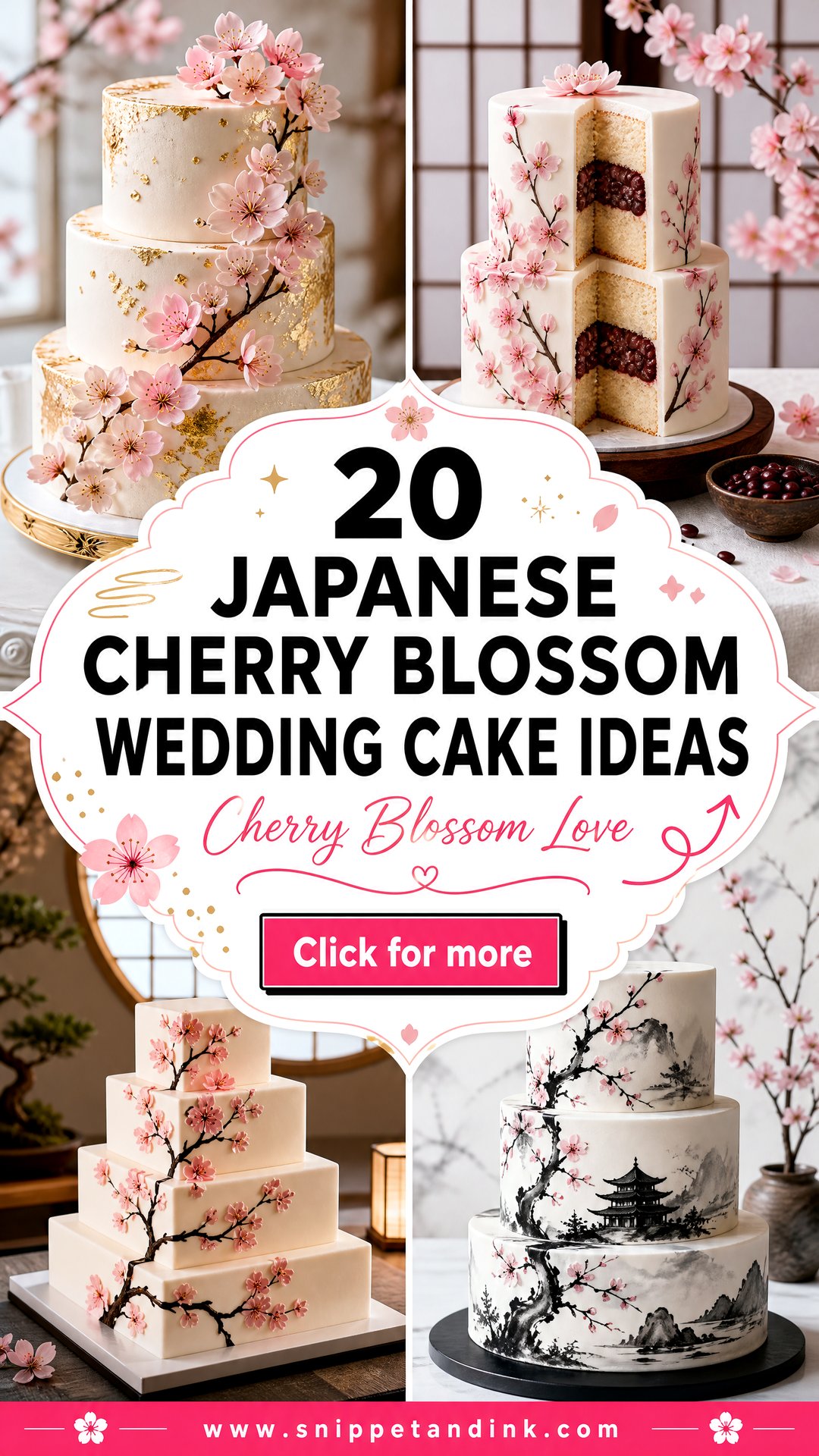
Cherry Blossoms Celebrate Spring and Also Its Brevity
In Japan, sakura stands for renewal and for the short, fleeting nature of beauty, since the trees bloom for only a week or two. Couples usually love that second meaning once they hear it. Cherry blossoms also have a long place in Japanese celebrations: salted blossoms steeped in hot water make a pale pink tea that is served at engagements and weddings.
If the theme comes from your heritage, ask family which details feel right. If it’s an aesthetic you admire, I’d lean on the flowers, painting style and flavours, and go lightly on props like lanterns and pagodas, which can tip into costume if they aren’t part of your own story.
1. Japanese Cherry Blossom Wedding Cake With White Tiers
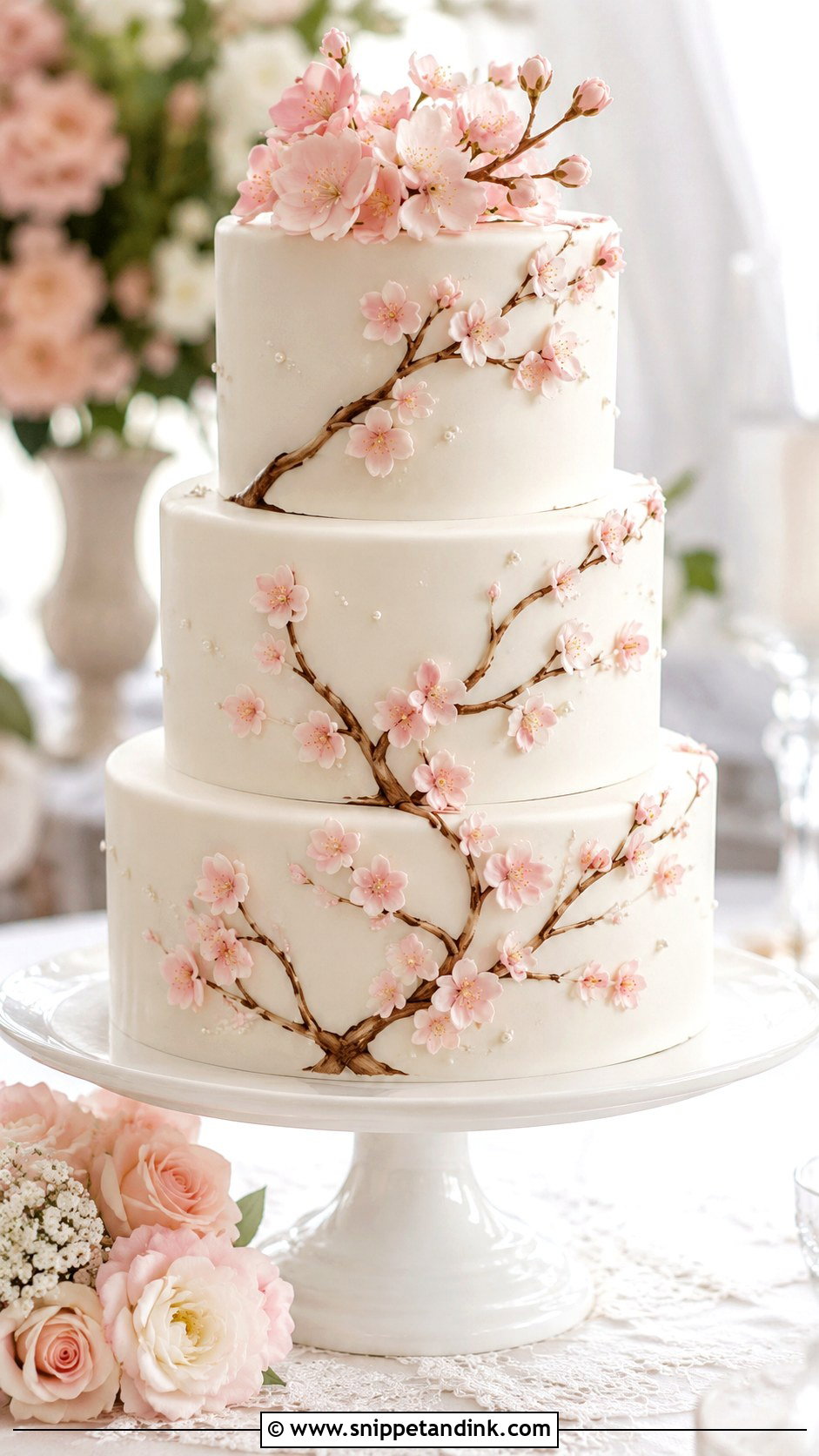
Start here if you’re unsure. A white tiered cake gives every pink petal room, and the blossoms do their job in small clusters rather than as a blanket. Fondant gives a crisp canvas for a painted branch; white buttercream reads softer but needs to be chilled firm before anything is painted on it. I run one thin brown branch around the tiers and gather sugar blossoms where it forks, the way flowers grow on a real bough. Vanilla, almond or yuzu sponge suits it, and a few pearls are as far as I’d go with extra shine.
2. Japanese Cherry Blossom Wedding Cake With Pink Ombre
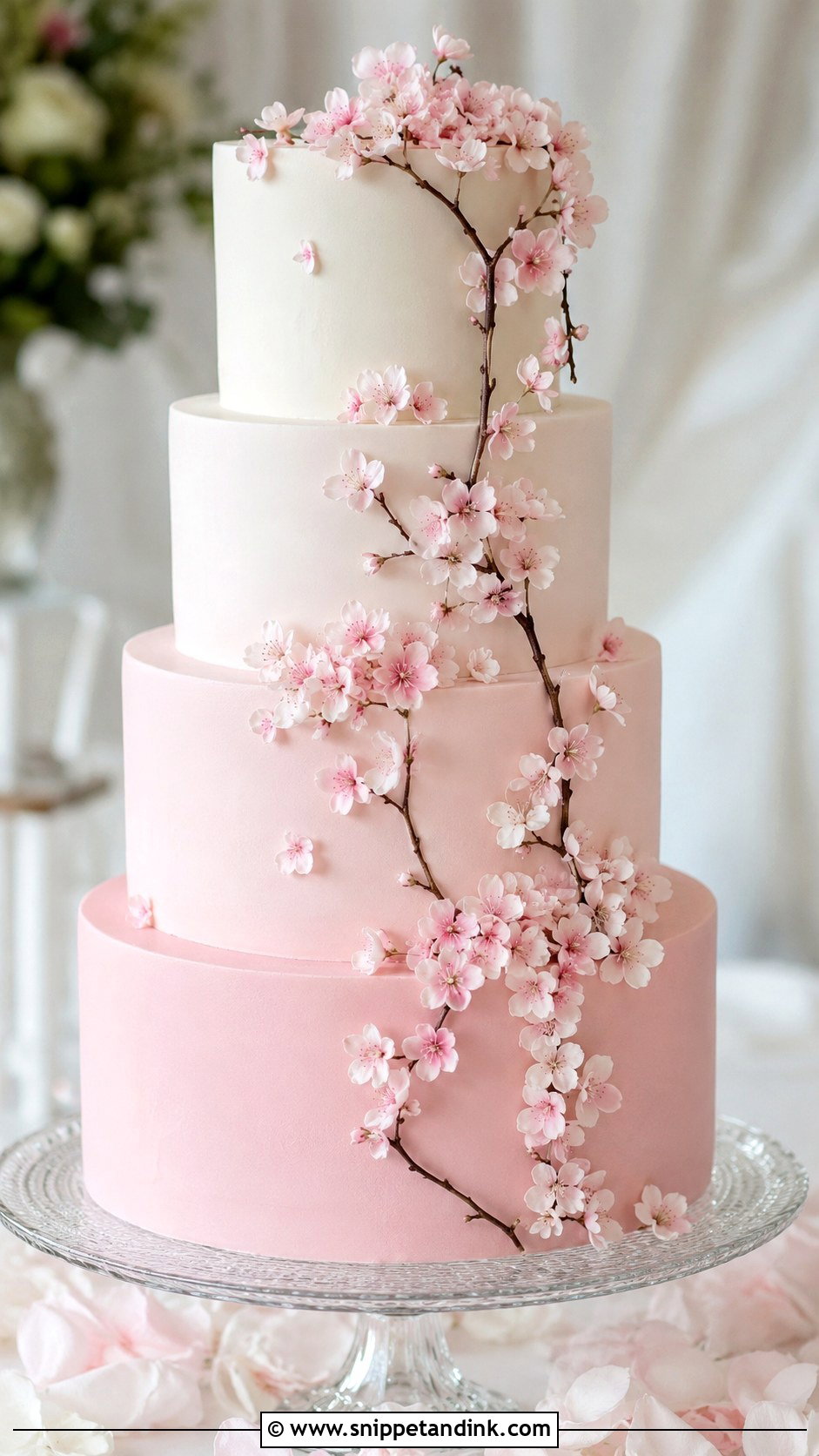
Ombre buttercream is graded tier by tier, blush at the base fading to ivory at the top, and the trick is mixing all the shades from one batch so they share the same undertone. Mix each tier from scratch and the pinks never quite agree. A pink ombre wedding cake carries a diagonal branch well, with petals in two or three tints so they don’t vanish into the background. Strawberry, sakura or vanilla bean filling fits the colour.
3. Japanese Cherry Blossom Wedding Cake With Hand Painted Branches
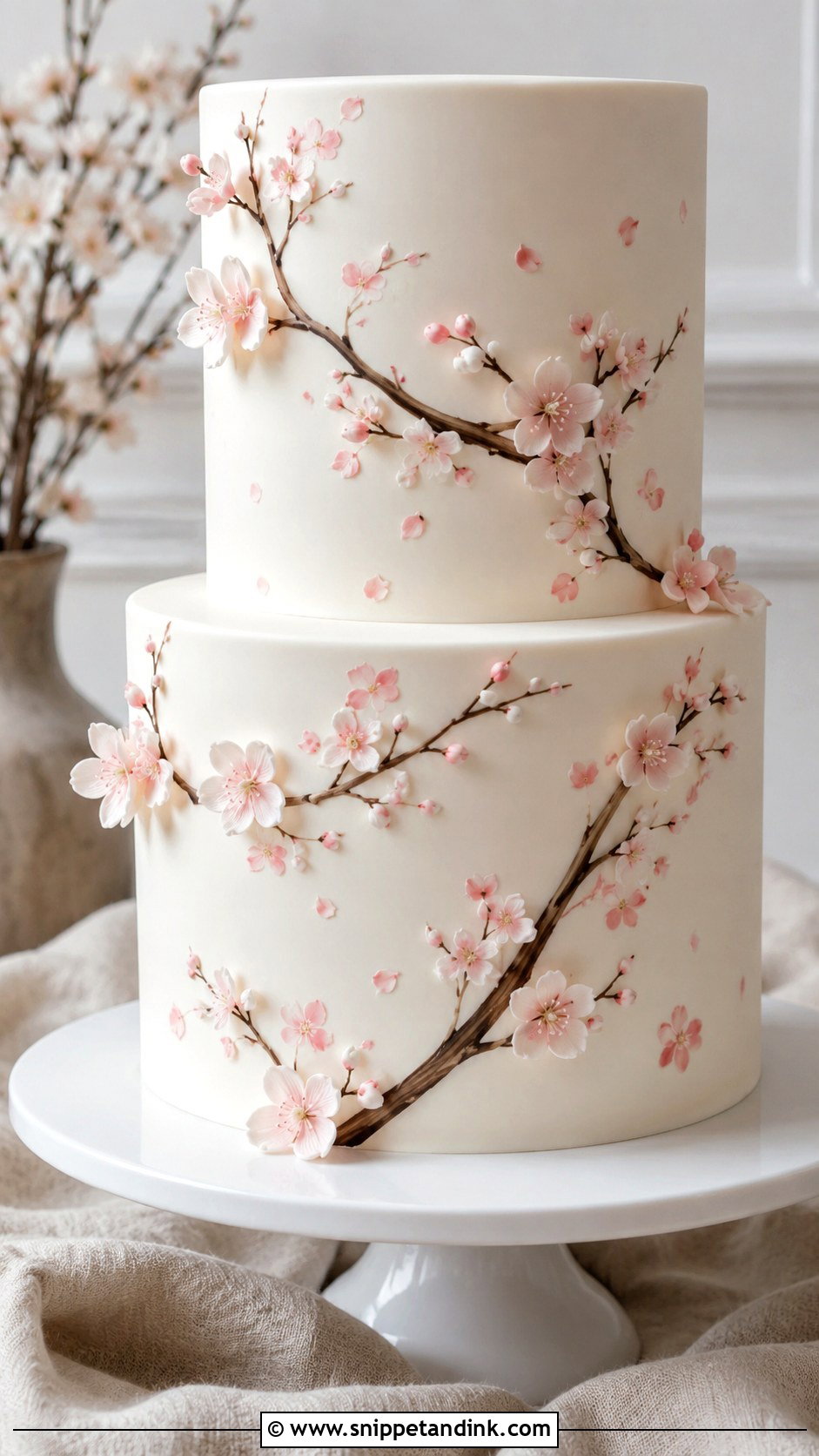
Painted branches are the most Japanese-feeling design on this list, closest to sumi-e ink painting, and they depend entirely on the painter. I use edible paints on smooth white or pale ivory fondant, starting with the branch in one confident stroke and adding petals afterward. Hesitant strokes look shaky up close. A few raised sugar petals laid over the painting add depth. If your baker doesn’t show you painted work in their portfolio, choose a different design rather than asking them to learn on your cake.
4. Japanese Cherry Blossom Wedding Cake With Sugar Flowers
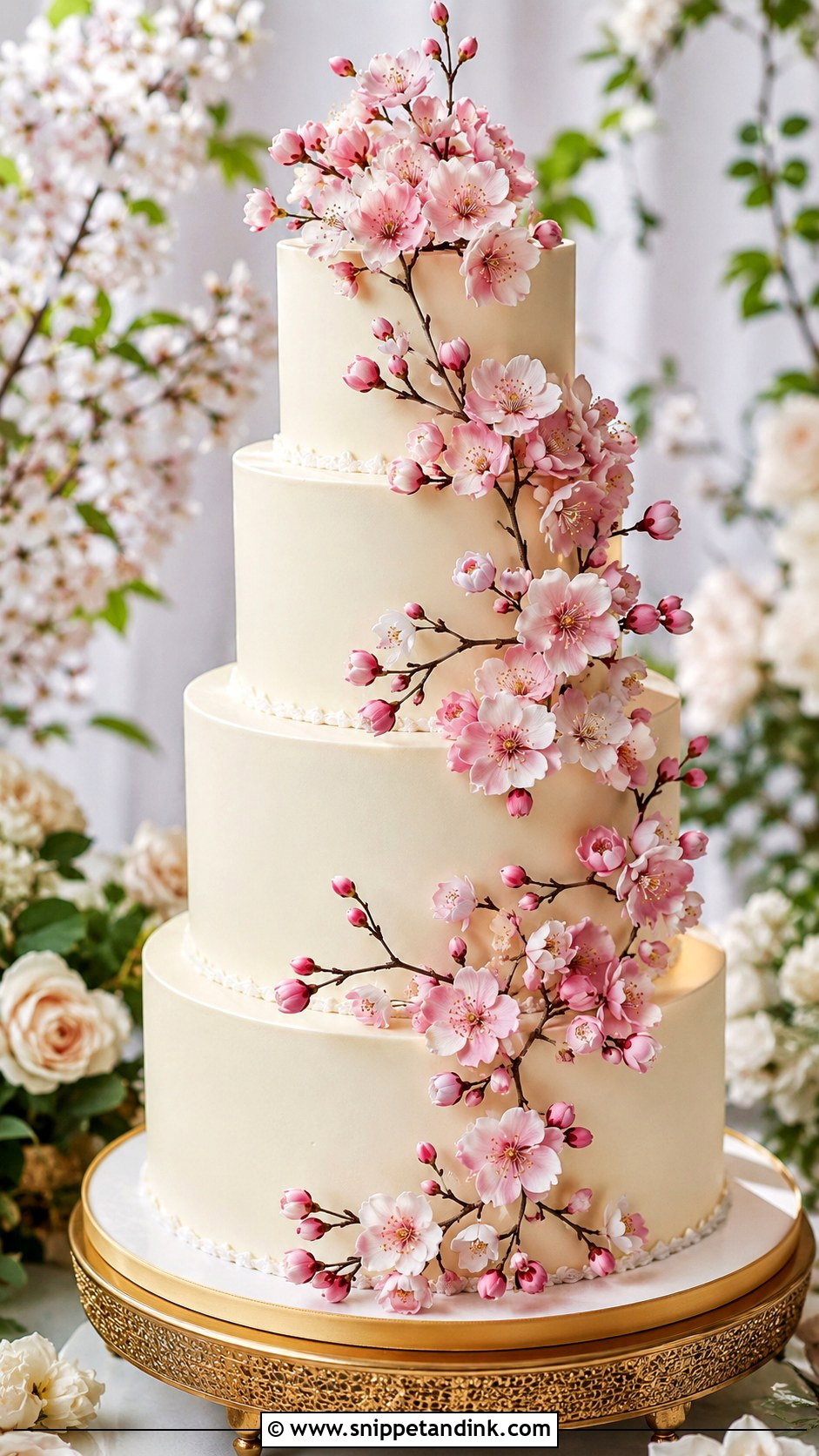
A real cherry blossom petal has a small notch at its tip, and that detail is what makes sugar sakura look real rather than like generic five-petal flowers. I cut each petal from gum paste, notch it, thin the edge and dust the centre a deeper pink. Gum paste flowers keep for months if they stay dry, so they can be made well ahead. On three or four tier cakes they can cascade from top to base, with a few closed buds mixed in. Ivory, pale blush or soft grey bases all let them show, and every wired spray must sit in a food-safe pick, never straight into the sponge.
5. Japanese Cherry Blossom Wedding Cake With Gold Accents
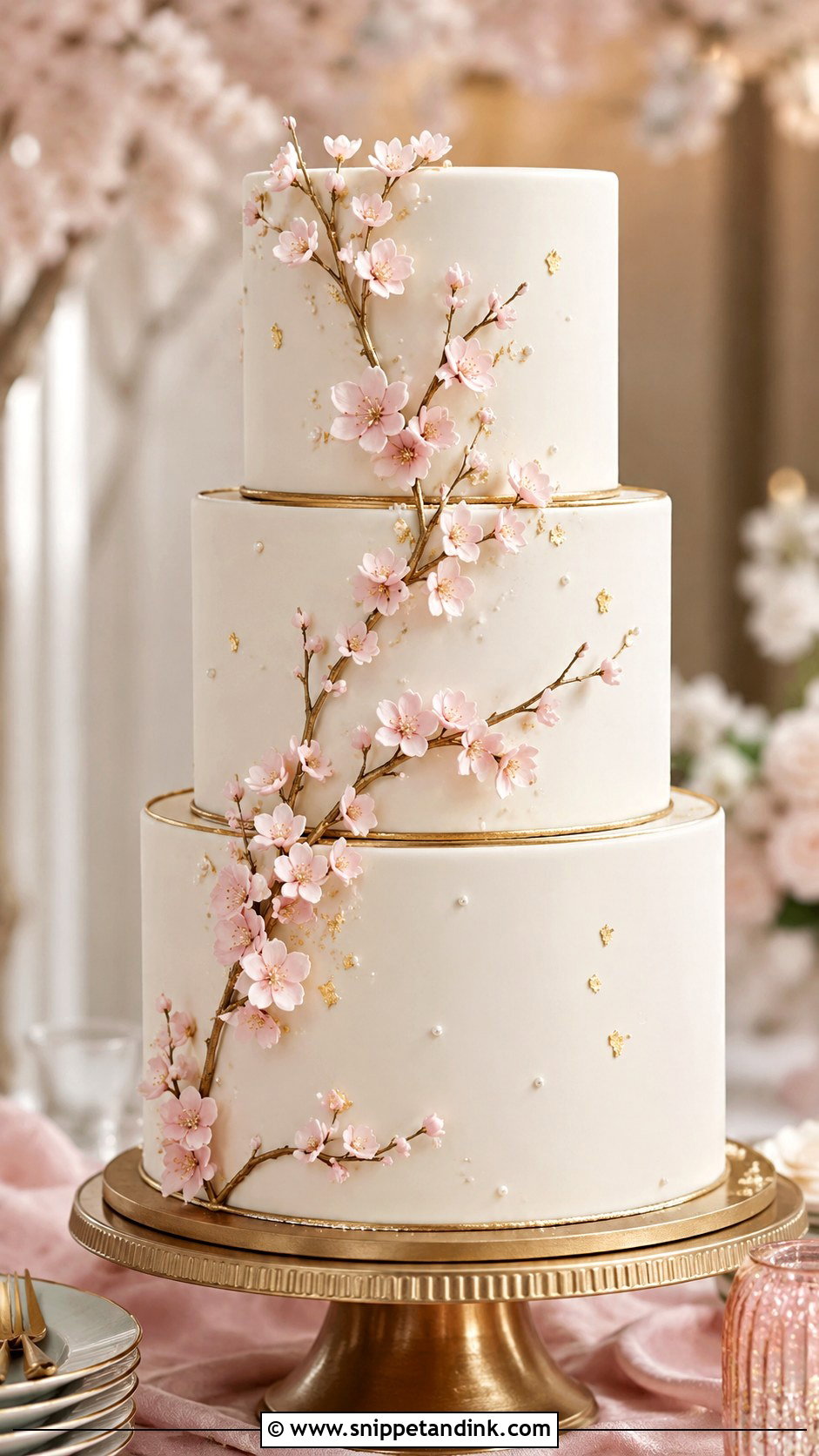
Gold works with sakura when it’s one element: a thin rim on each tier, a few flakes of leaf, or a gold line tracing the branch. Pile on more and the blossoms lose their delicacy. Pink against ivory with a touch of gold is a formal combination for an evening hotel reception. Keep the clusters loose so the gold reads as intentional. Almond with raspberry, or vanilla with yuzu curd, suit the polish.
6. Japanese Cherry Blossom Wedding Cake With Matcha Layers
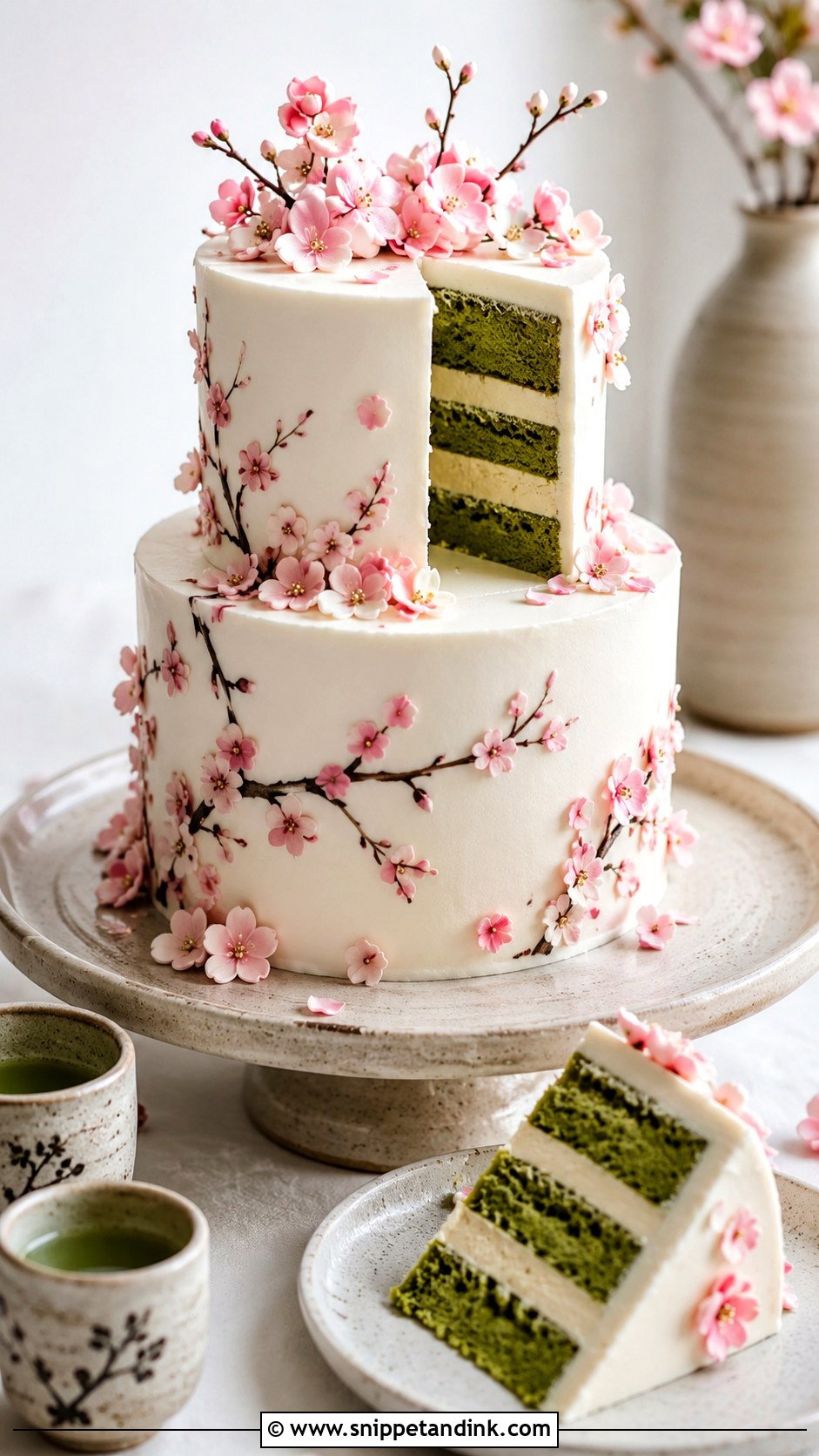
Matcha changes colour in the oven. Baked into a sponge, even a bright culinary grade turns more olive than the vivid green people expect from a matcha latte, and it dulls further in strong light. If the green slice is the point, I use more matcha than a recipe suggests, a high-quality culinary grade, and keep the cut cake covered until serving. Outside, white buttercream and a few sakura branches keep it bridal. White chocolate, red bean, strawberry or yuzu all balance matcha’s bitterness.
7. Japanese Cherry Blossom Wedding Cake With Yuzu Filling
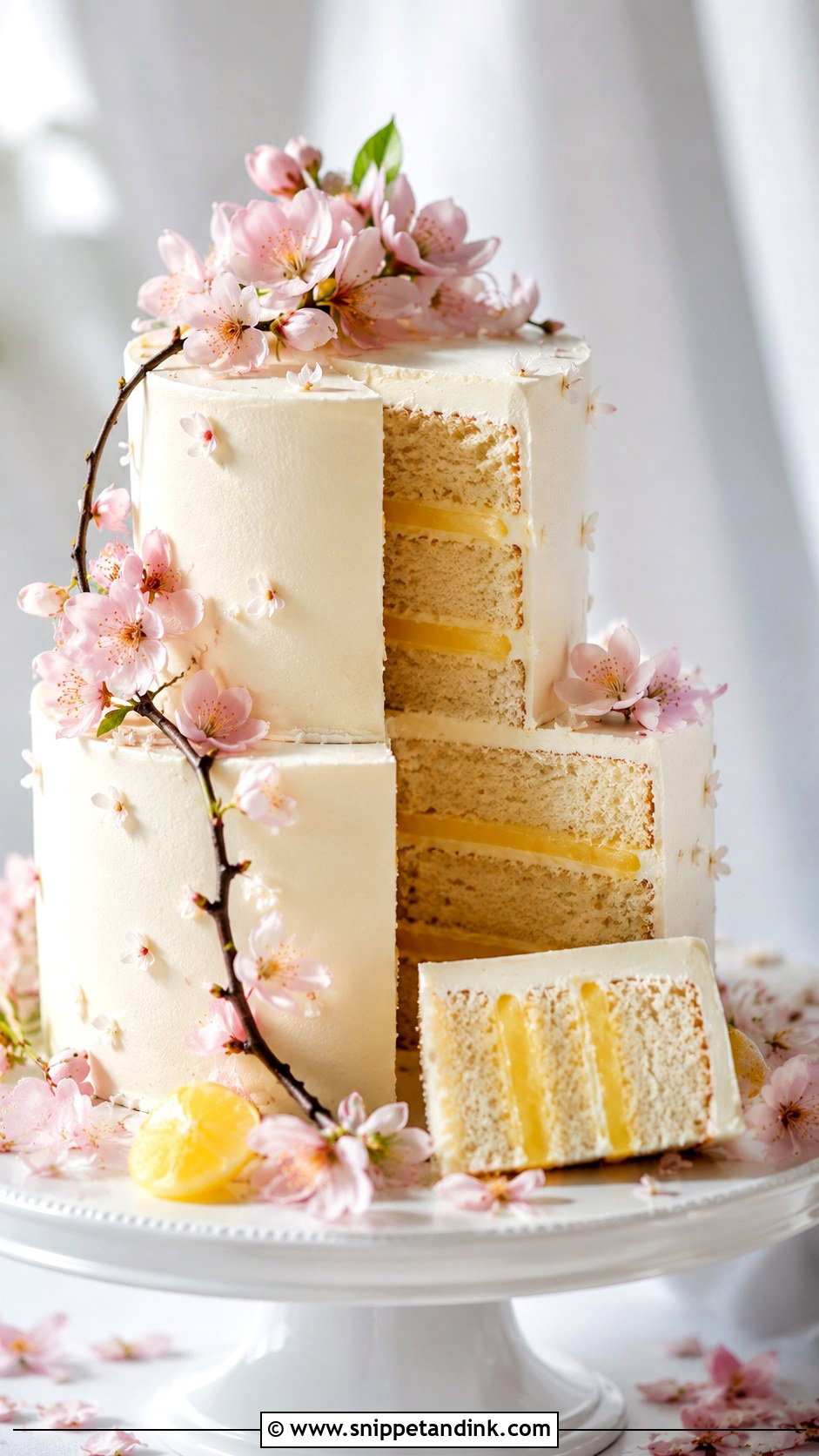
Yuzu tastes like a cross between lemon, mandarin and grapefruit, and it makes a sharp, clean curd that lifts a heavy meal. Fresh yuzu is hard to find outside Japan, so most bakers use bottled juice, which is fine for curd. Curd is soft, though, so I pipe a stiff buttercream ring around each layer before filling it; without that dam it bulges out the sides once the tiers are stacked. A pale sponge with pink sakura and thin branches outside, and a few small white blossoms among the pink, completes it.
8. Japanese Cherry Blossom Wedding Cake With Red Bean Filling
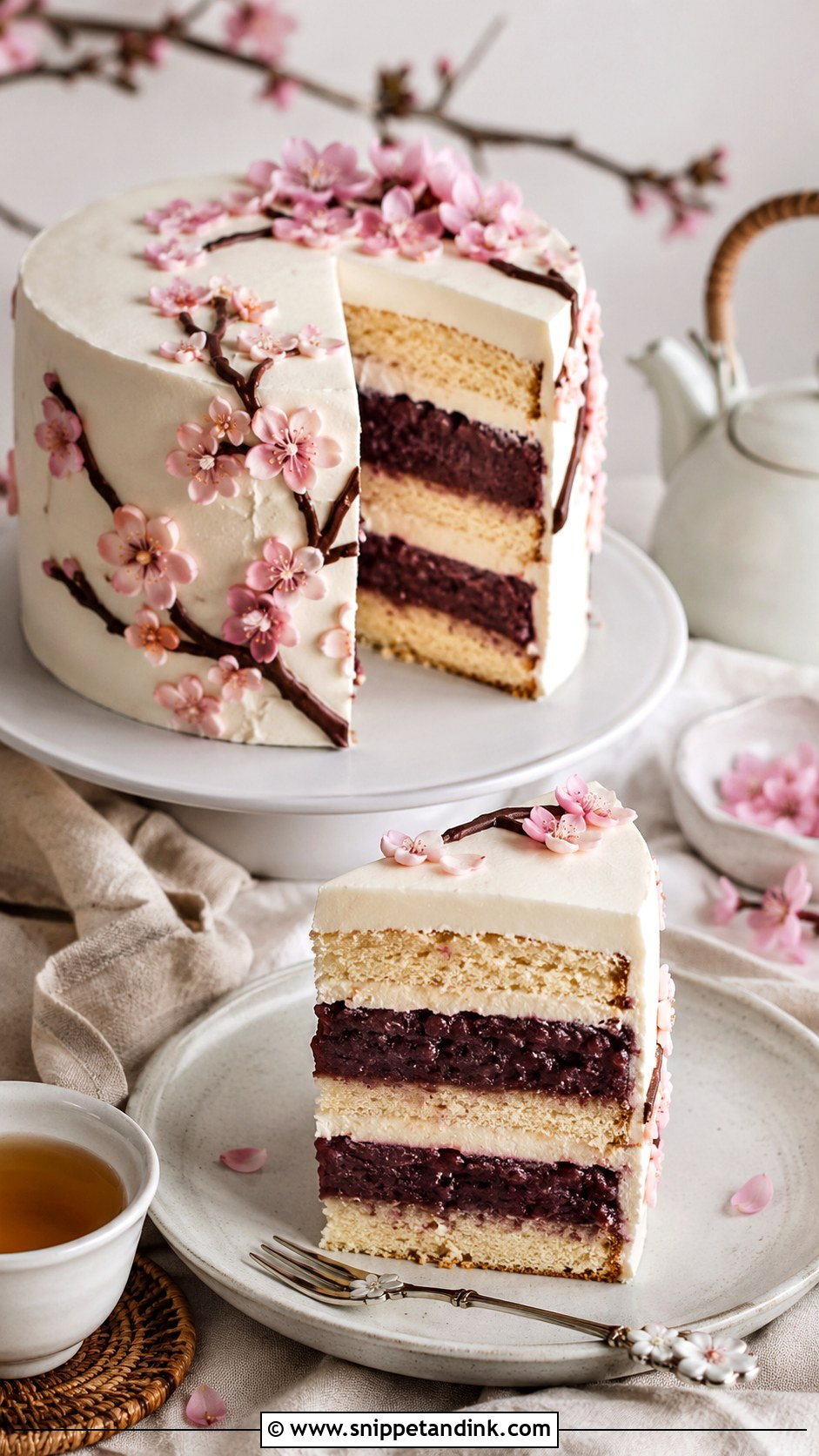
Red bean paste comes smooth or chunky, and for a cake filling I use the smooth kind, koshian, because it spreads in an even layer and doesn’t tear the sponge. It’s mildly sweet and earthy and works with vanilla, matcha or almond cake. Some guests haven’t tried it, so I’d pair it with a more familiar flavour on another tier. Outside, keep ivory frosting, a clean branch and a few blush flowers per tier. It suits a garden wedding with a tea service.
9. Japanese Cherry Blossom Wedding Cake With Watercolor Frosting
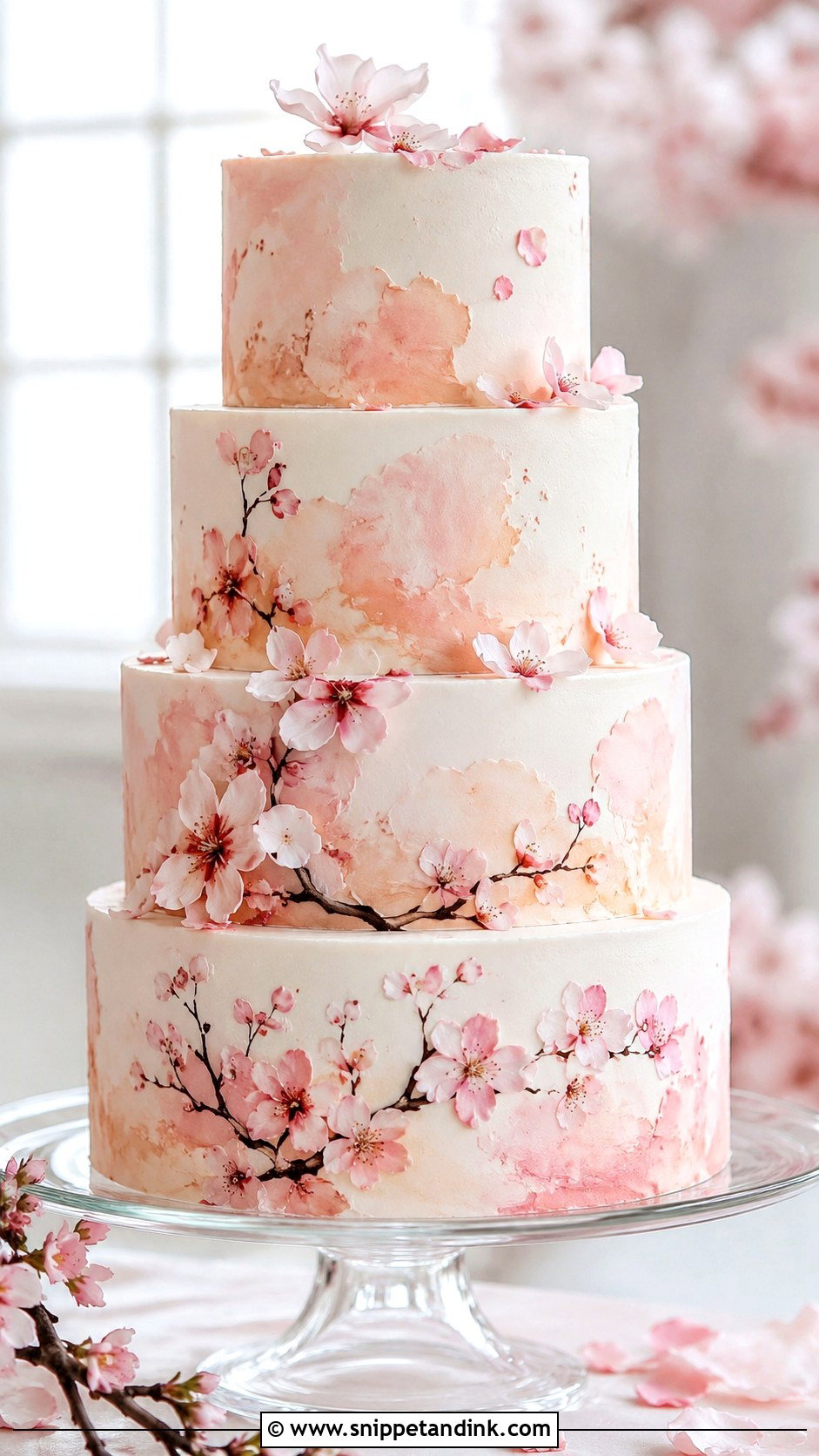
Watercolour frosting is pale pink, ivory and a hint of peach blended with a palette knife onto chilled buttercream or brushed onto fondant. It should look like light, not like paint. Add painted branches or wafer paper blossoms so the soft colour has something with a clear edge on top of it. Round tiers suit it best. Keep the topper small, a cluster of blossoms or a plain monogram, so the colour stays the focus.
10. Japanese Cherry Blossom Wedding Cake With Wafer Paper Flowers
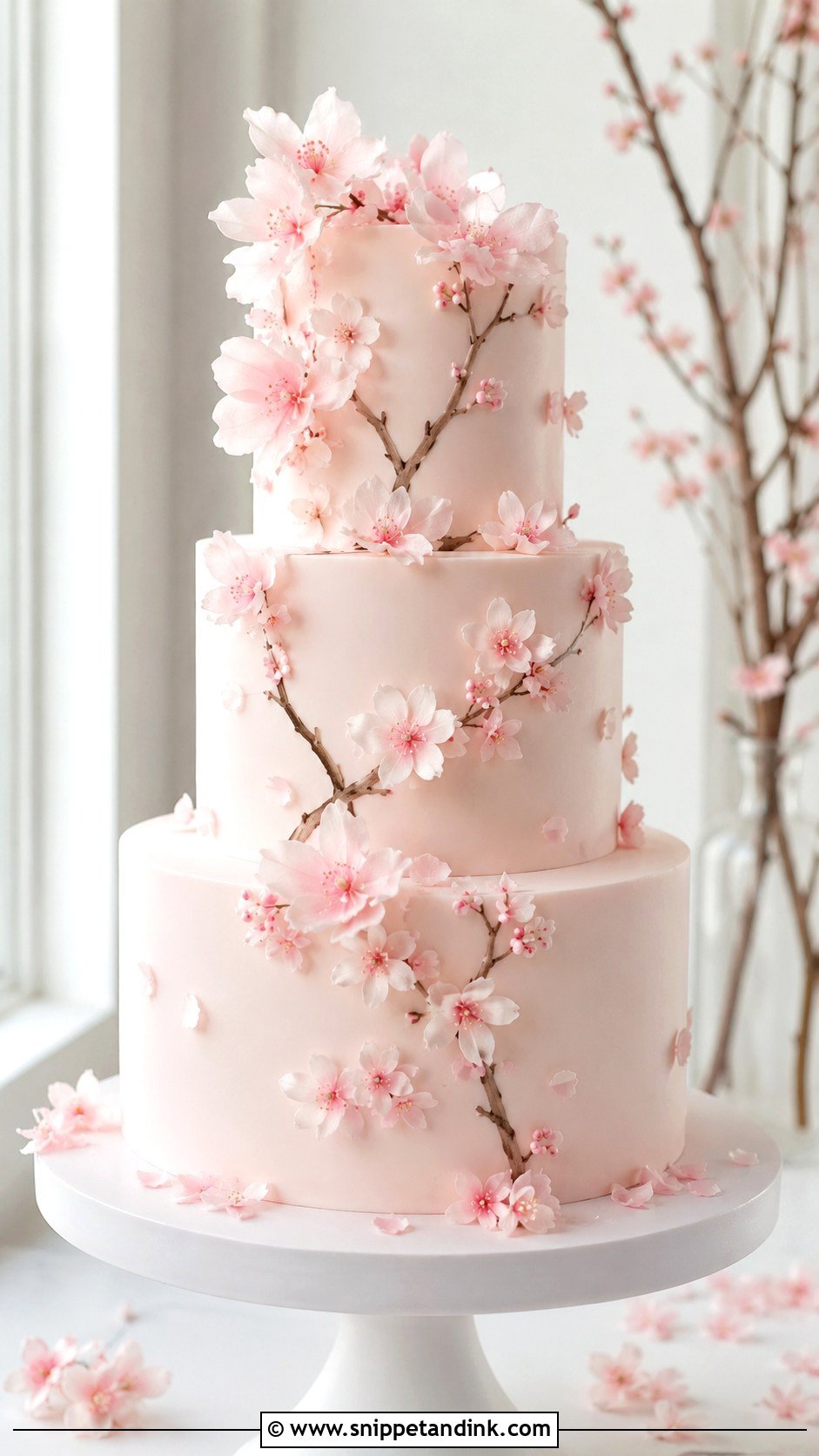
Wafer paper is the right material for sakura because real cherry petals are thin and slightly translucent, and wafer paper gets close to that. It also weighs almost nothing. Its weakness is moisture: it softens and wilts in humidity or if it sits directly against wet buttercream, so for a summer or outdoor wedding I’d steer you toward gum paste. On a white, blush or pale blue base, place the flowers along a painted branch, small and scattered.
11. Japanese Cherry Blossom Wedding Cake With Lantern Details
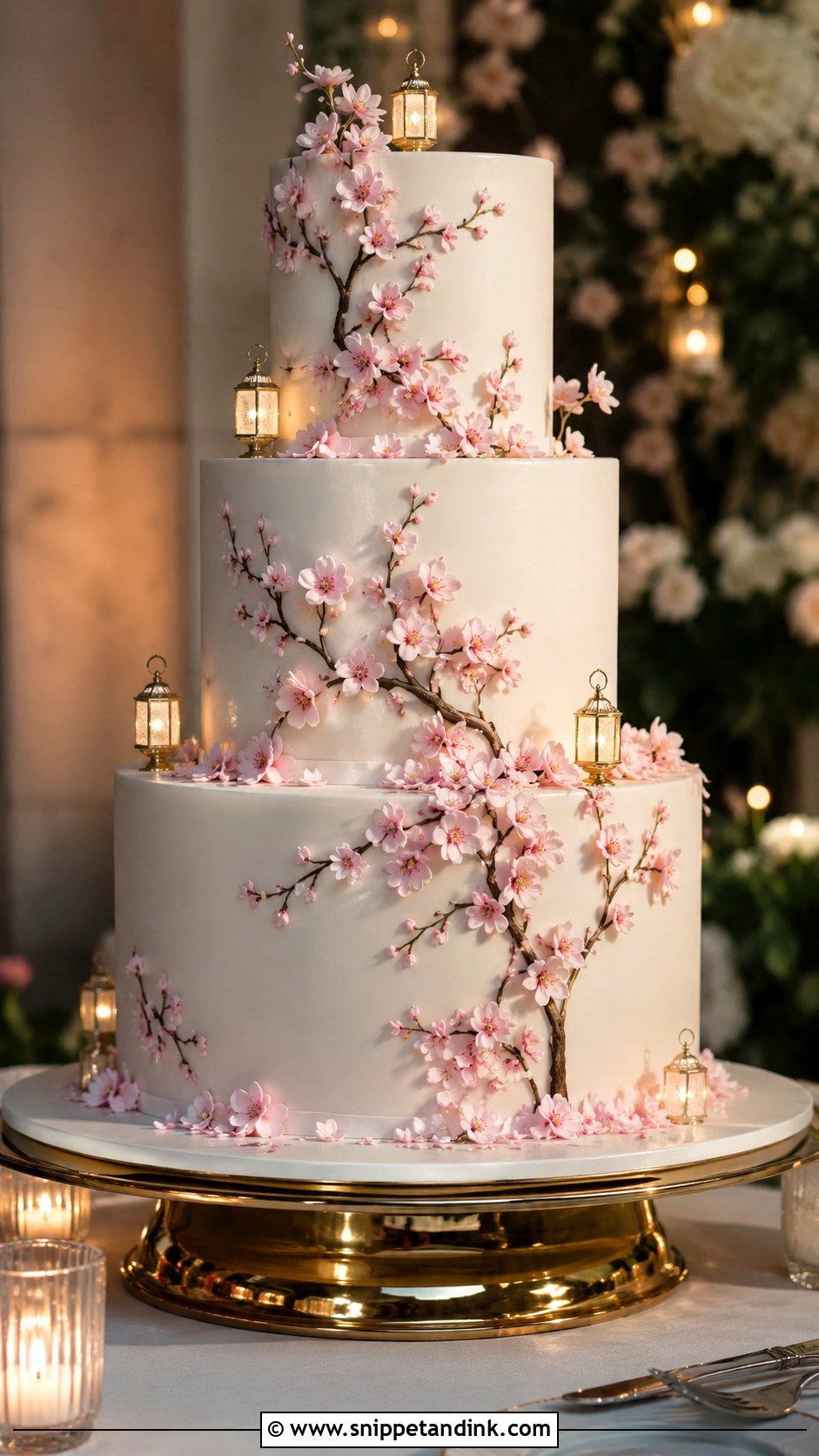
Lanterns turn the cake into a garden scene, and that’s a lot to ask of a cake. I keep them small, often a single topper or a few tiny shapes in modelling chocolate or gold, on a white or blush tiered cake with delicate branches. The palette stays at ivory, blush, brown and gold. They suit evening receptions with warm string lighting, where the motif repeats around the room. Vanilla sponge with strawberry or yuzu filling fits.
12. Japanese Cherry Blossom Wedding Cake With Fan Topper
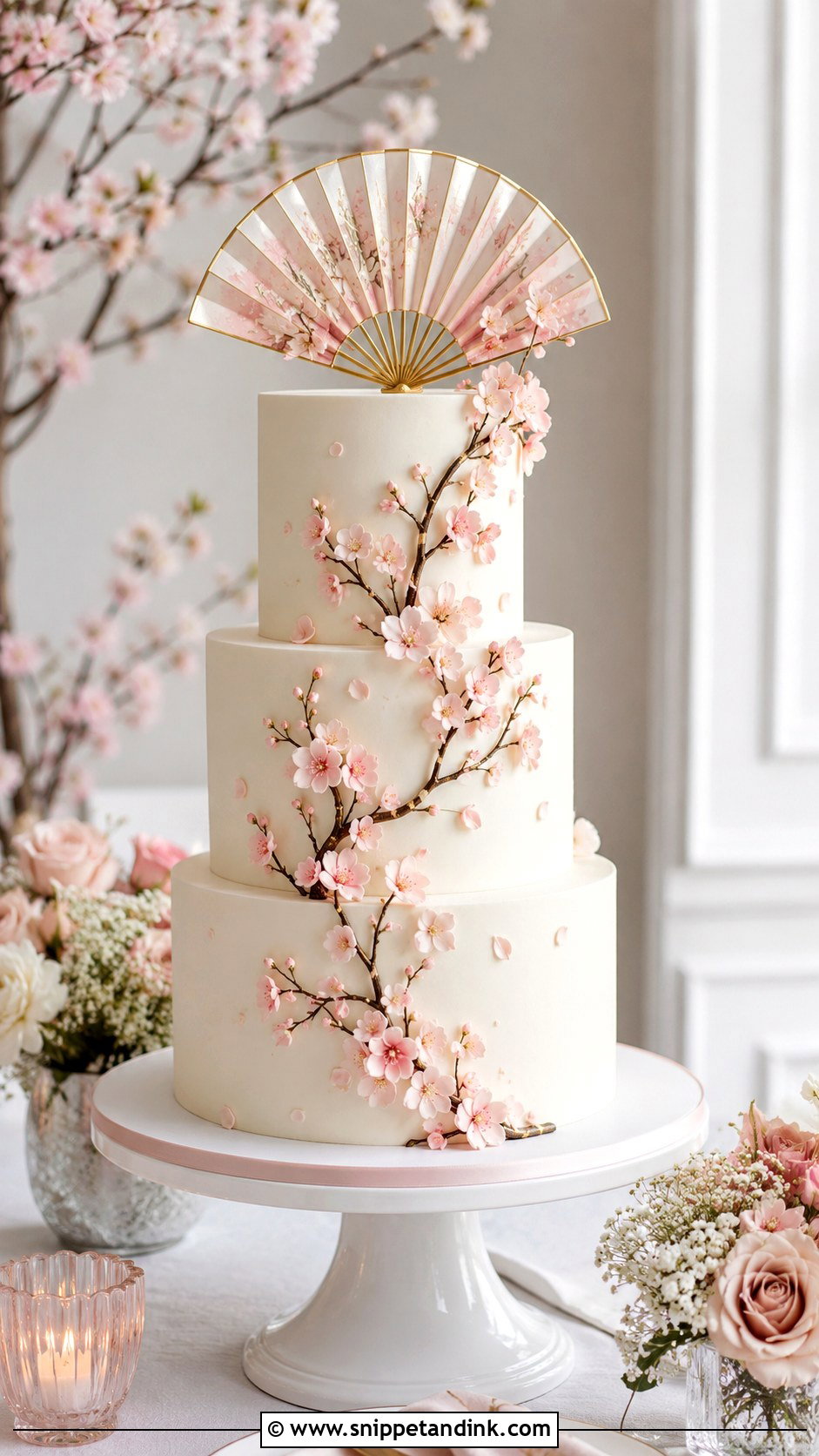
A folded fan topper gives the cake a strong shape at the top, which helps in photos. I make fans from wafer paper or thin gum paste folded over a dowel while soft; acrylic toppers are sturdier but look less handmade. Ivory, blush or soft gold all work. Let the branches climb toward the fan so the eye travels upward, keeping the lower tiers simpler and the blossoms small.
13. Japanese Cherry Blossom Wedding Cake With Kintsugi Lines
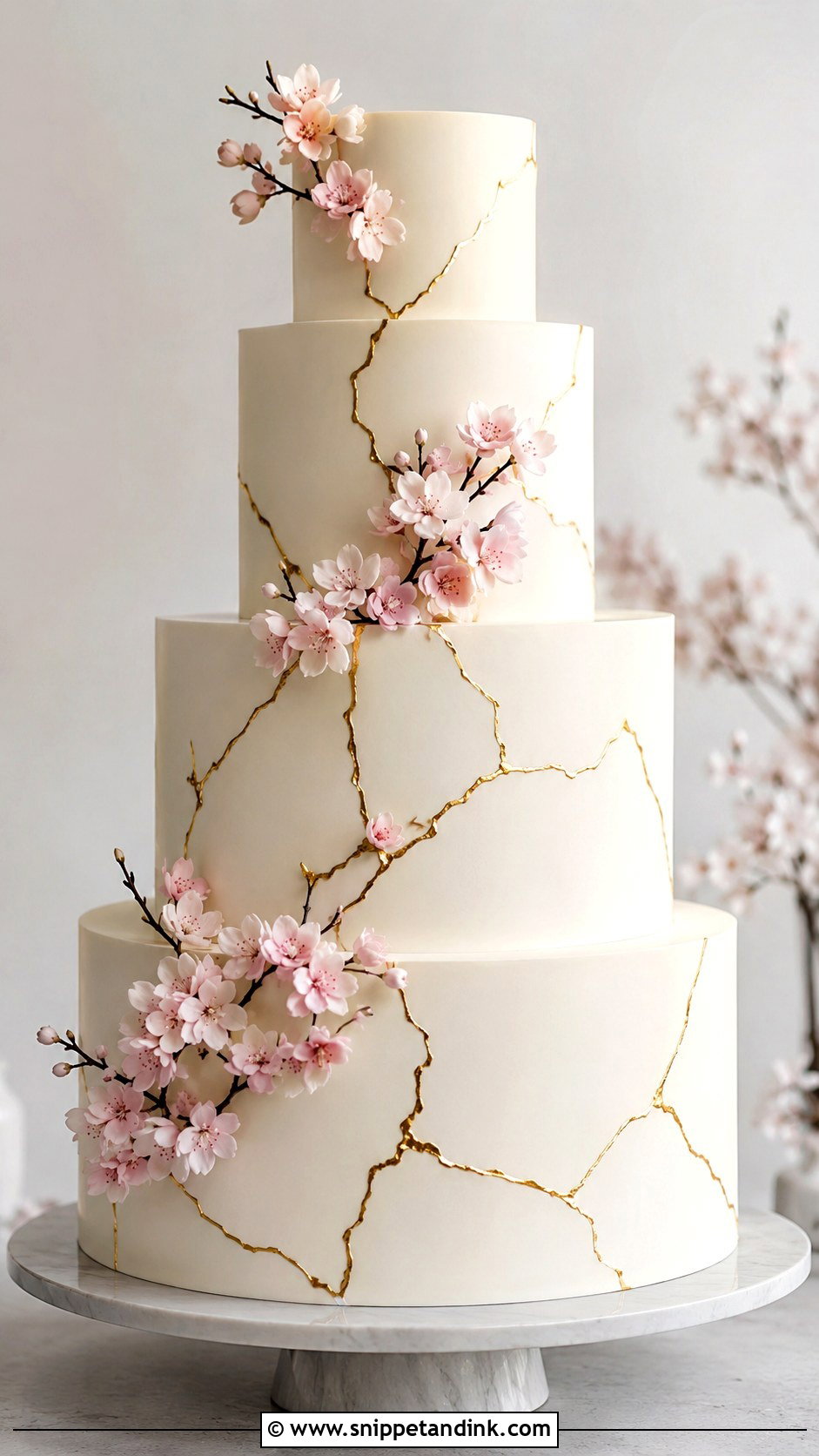
Kintsugi is the Japanese practice of repairing broken ceramics with lacquer and gold, so the cracks become part of the object. On a cake, I paint fine, uneven gold lines across smooth fondant with edible lustre or lay strips of gold leaf, following the way real cracks wander. Thick, regular lines look like stripes. Let a few blossoms sit along the gold paths. It’s a design with a story about repair and strength, so it suits couples who would enjoy explaining it.
14. Japanese Cherry Blossom Wedding Cake With Square Tiers
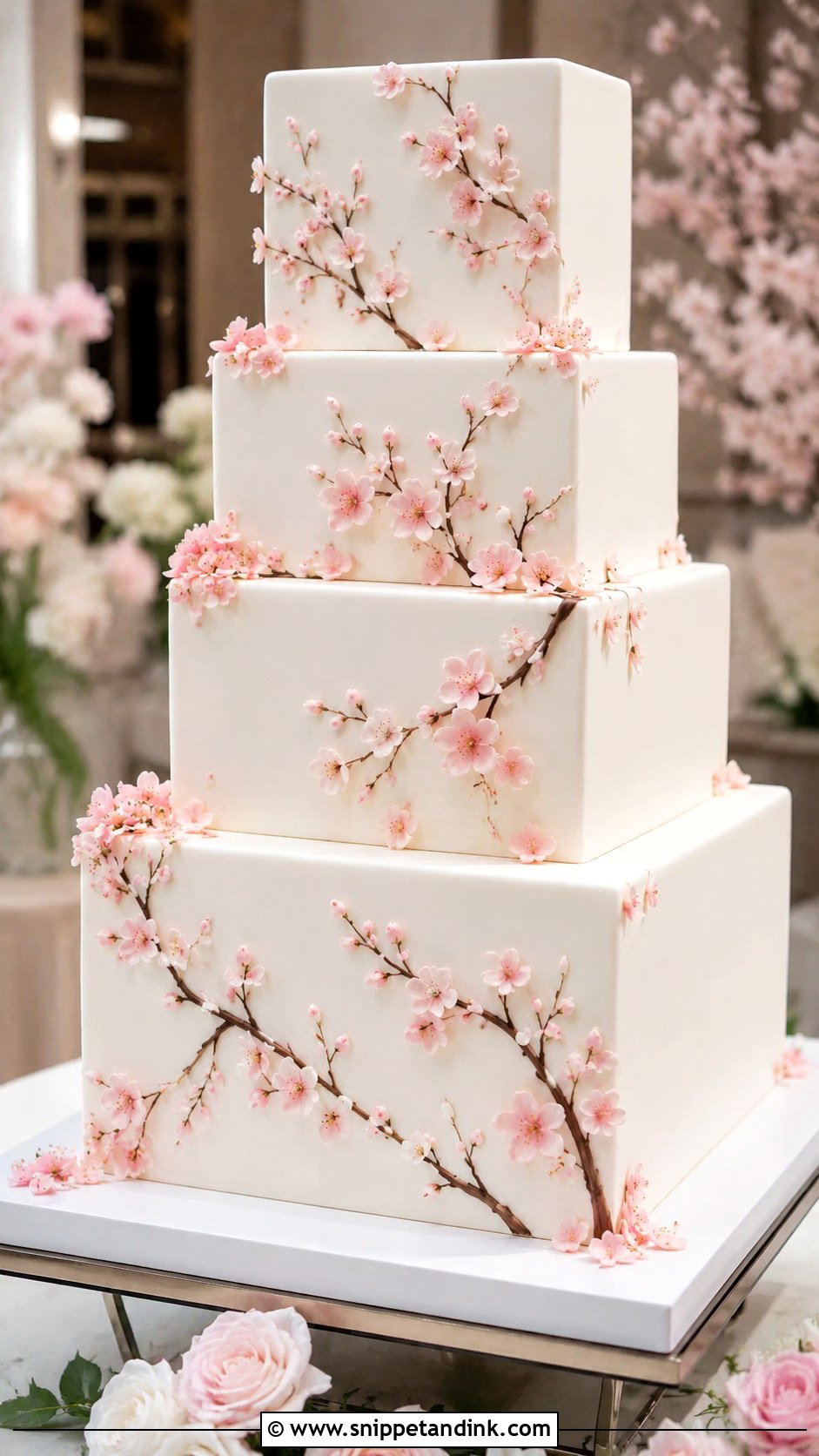
Square tiers look modern and architectural, and the hard corners make the blossoms look softer by contrast. They’re also harder to finish. Sharp corners in buttercream take time, and square tiers are trickier to cut evenly, so I’d mention that to your caterer. Wrap painted branches around the corners so they appear to grow across two faces of the tier, and place flowers diagonally. A small cluster of sugar blossoms on top is enough.

15. Japanese Cherry Blossom Wedding Cake With Semi Naked Frosting
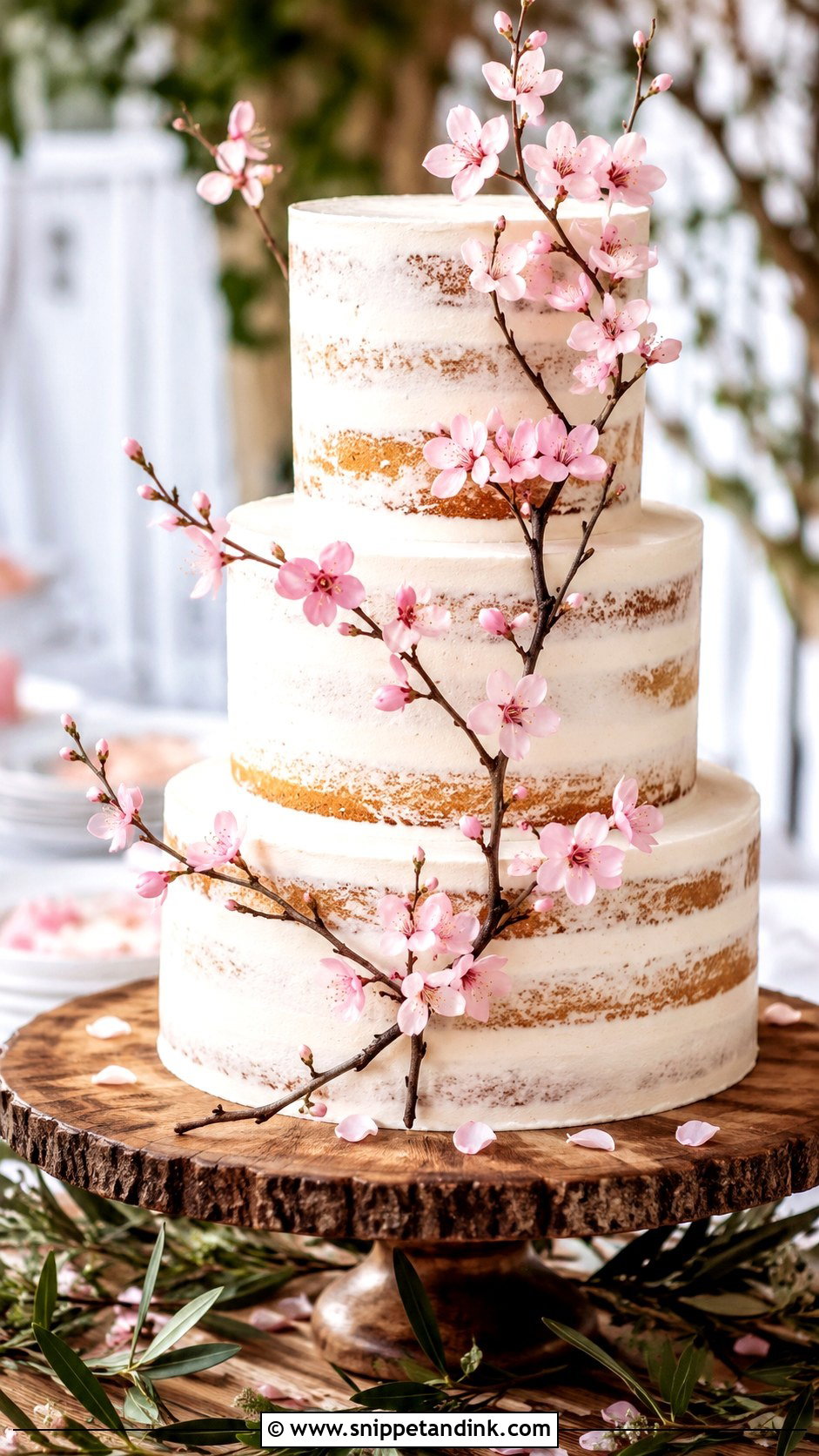
A semi naked cherry blossom cake shows the sponge through a thin scrape of buttercream, which looks warm and relaxed. Exposed sponge dries faster than a fully coated cake, so I brush each layer with syrup and finish it as close to the wedding as I can. Small branches, sugar blossoms and a few loose petals sit well on the rough texture. Vanilla, almond or honey cake suits it, on a wooden or pale ceramic stand.
16. Japanese Cherry Blossom Wedding Cake With Blue Background
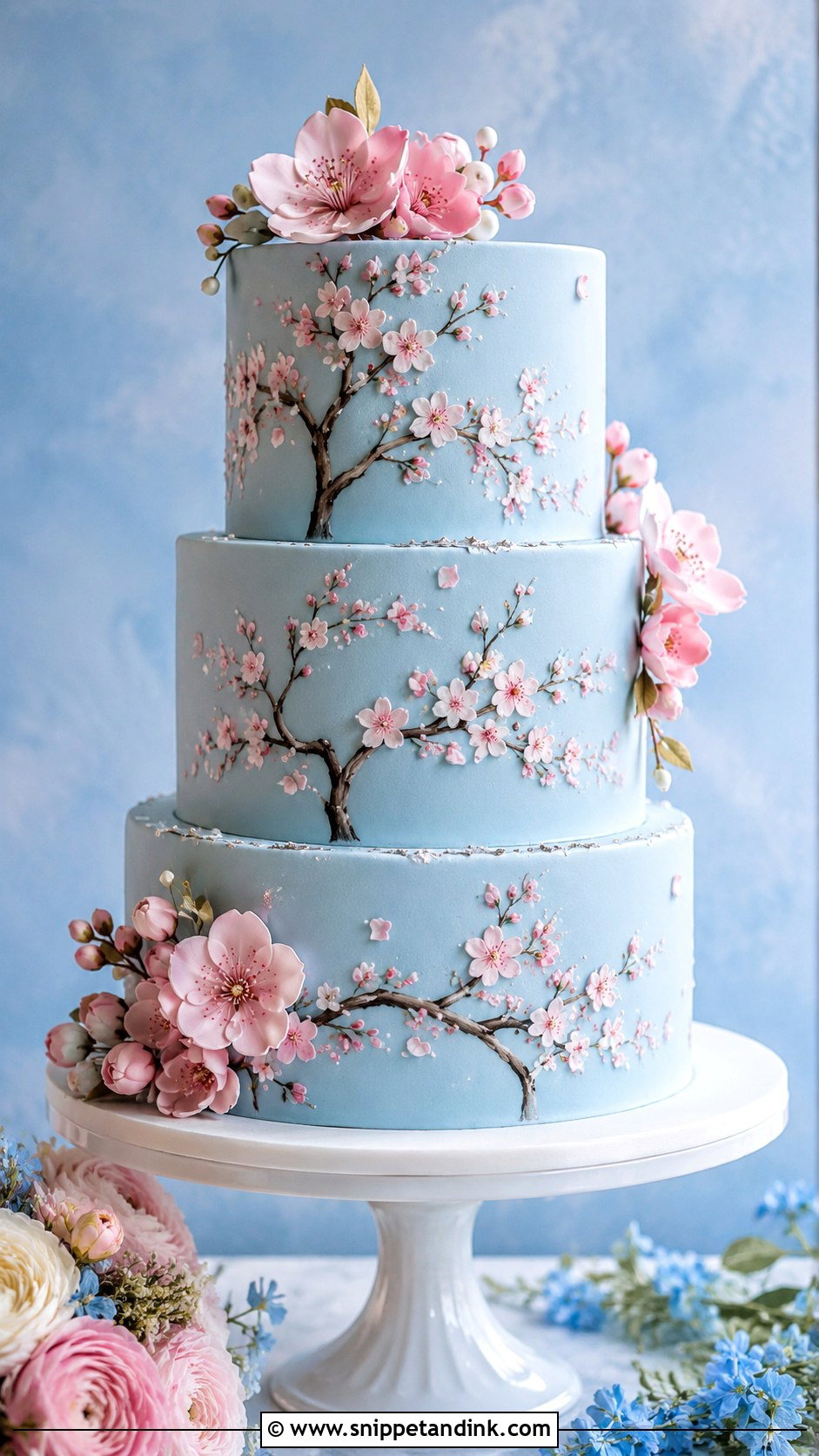
Pale blue makes pink blossoms pop, like a spring sky behind a tree. Blue in buttercream is tricky, though: butter is yellow, and yellow plus blue drifts toward green. I start with a whiter buttercream or use fondant, and a tiny touch of violet keeps the blue clean. Painted brown branches and pink sugar blossoms go on top, kept light so the blue shows. White chocolate with raspberry, or vanilla with lemon cream, suits the cool palette.
17. Japanese Cherry Blossom Wedding Cake With Floating Petals
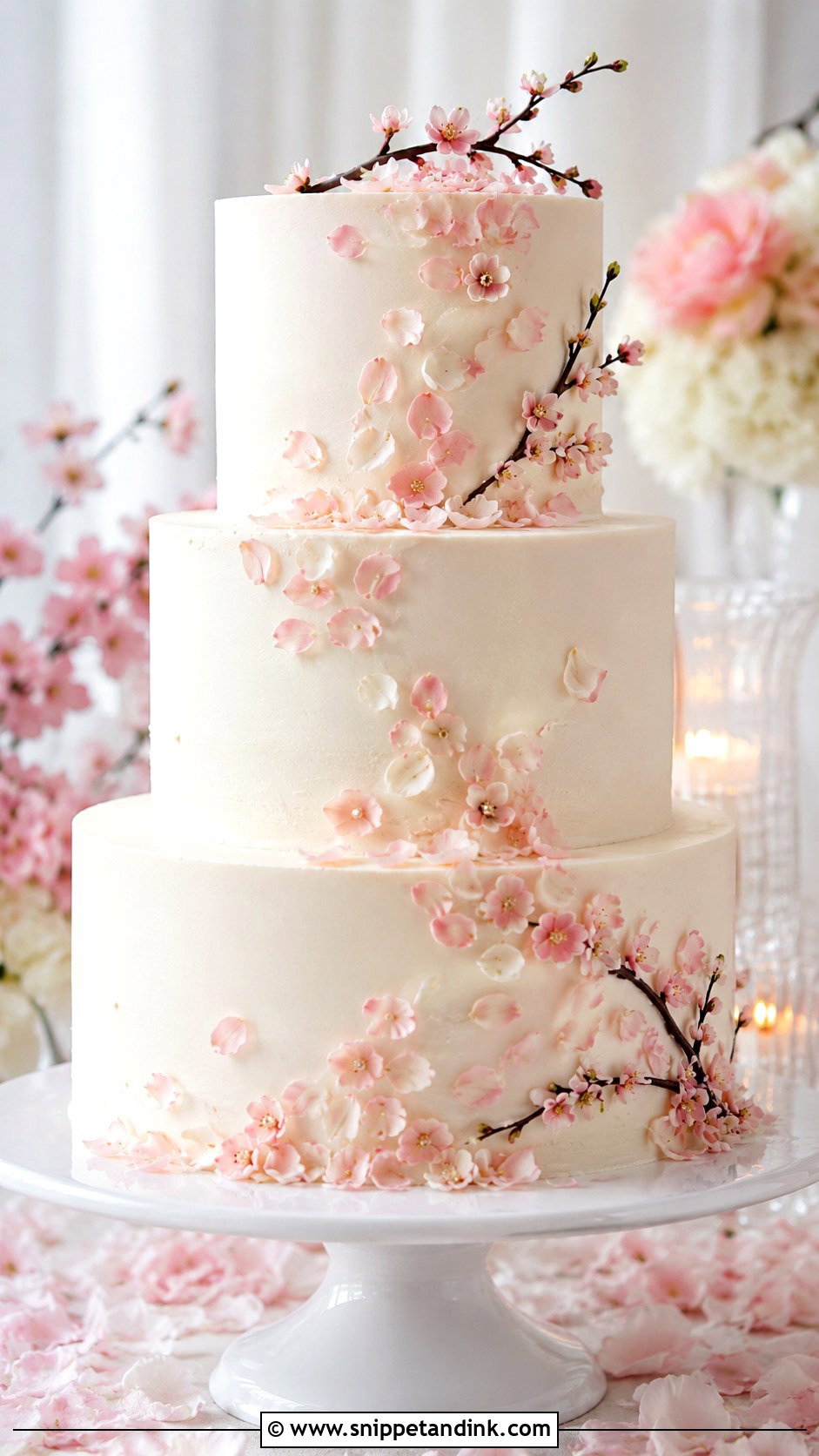
Floating petals give movement without a big floral cascade. On ivory or pale blush, I place tiny sugar petals in a gentle sweep from the top tier downward, mixing sizes and letting some tilt, as falling petals do. A branch near the top gives them a source. The eye follows the path down the cake, which is what you want in photos.
18. Japanese Cherry Blossom Wedding Cake With Garden Flowers
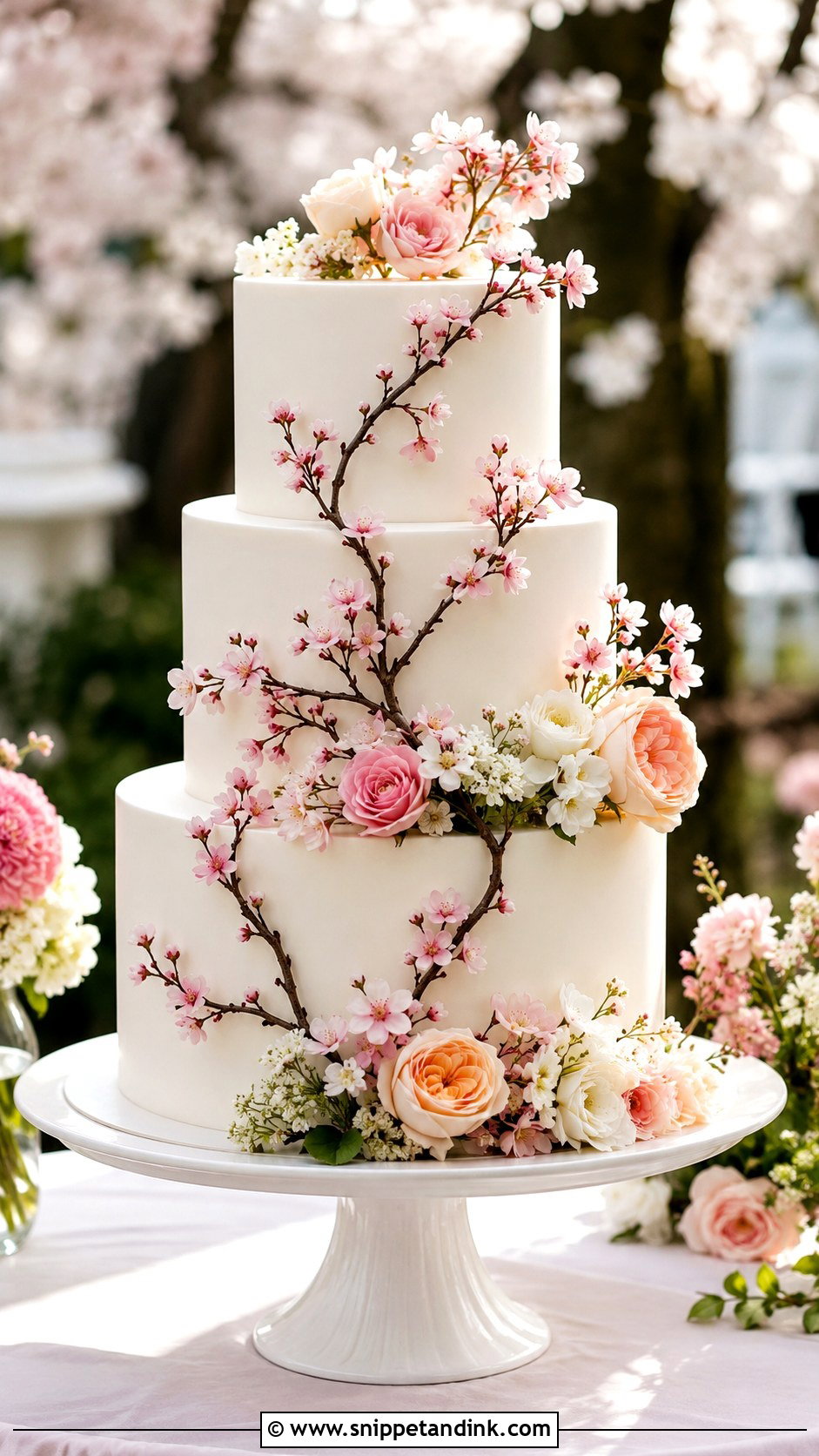
Mixing sakura with other flowers works only if the cherry blossom stays in charge. Keep the branches visible, add small white blooms, blush spray roses or pale peach flowers, and avoid anything big enough to hide the branch. Real roses must be unsprayed and kept off the frosting with picks or wraps. A smooth ivory base keeps the mix tidy. Vanilla bean, strawberry cream or yuzu curd fit the garden feel.
19. Japanese Cherry Blossom Wedding Cake With Black Ink Style
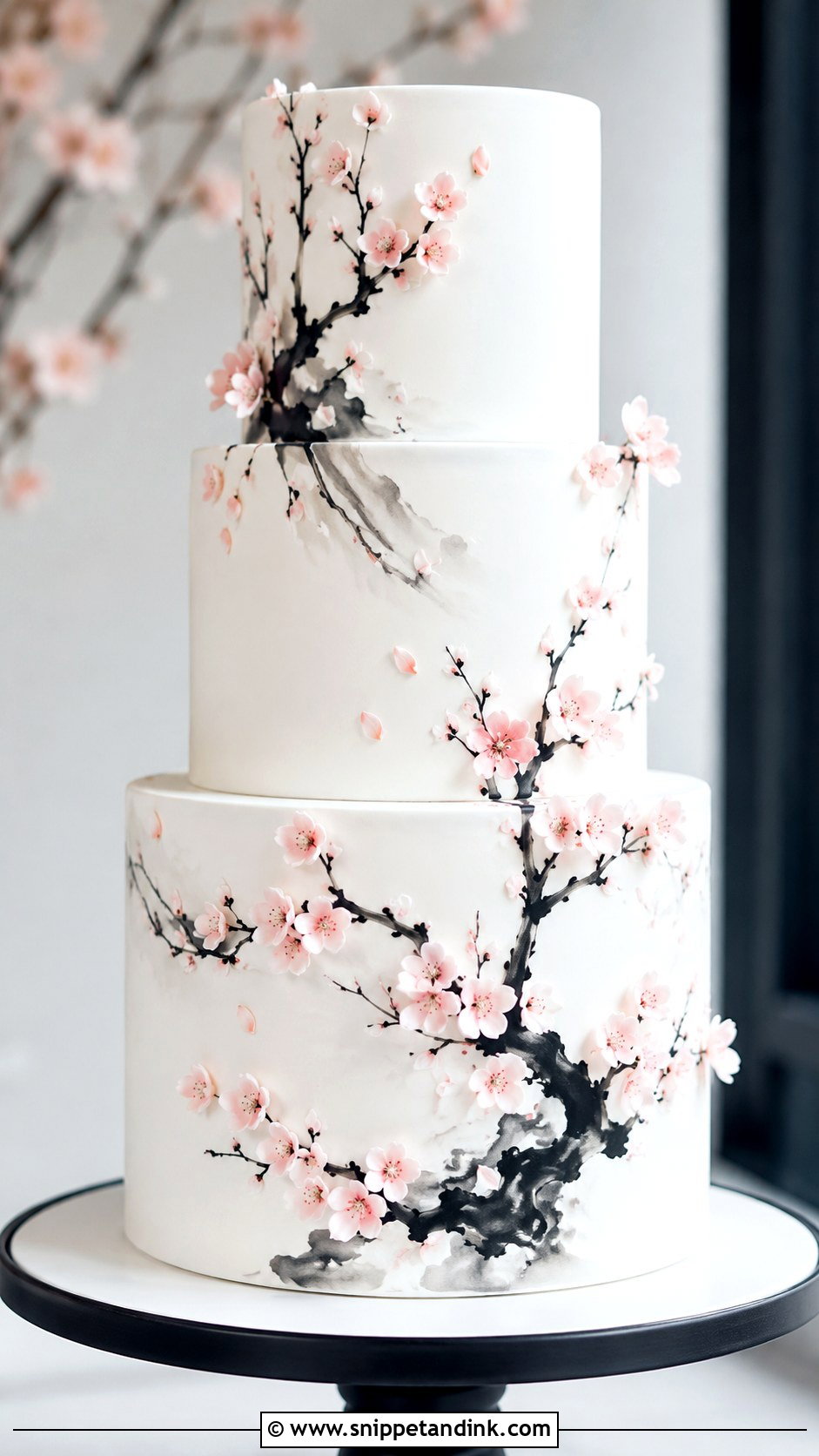
Ink-style branches in black or deep brown on white are bold and graphic, close to Japanese brush painting. I paint them in edible paint or food-safe ink rather than black buttercream, which needs so much colour it tastes bitter and stains mouths. Keep the blossoms delicate so the contrast doesn’t turn harsh, and add a few soft grey shadows or blush petals for depth. Clean, minimalist venues with strong lighting suit it.

20. Japanese Cherry Blossom Wedding Cake With Pagoda Topper
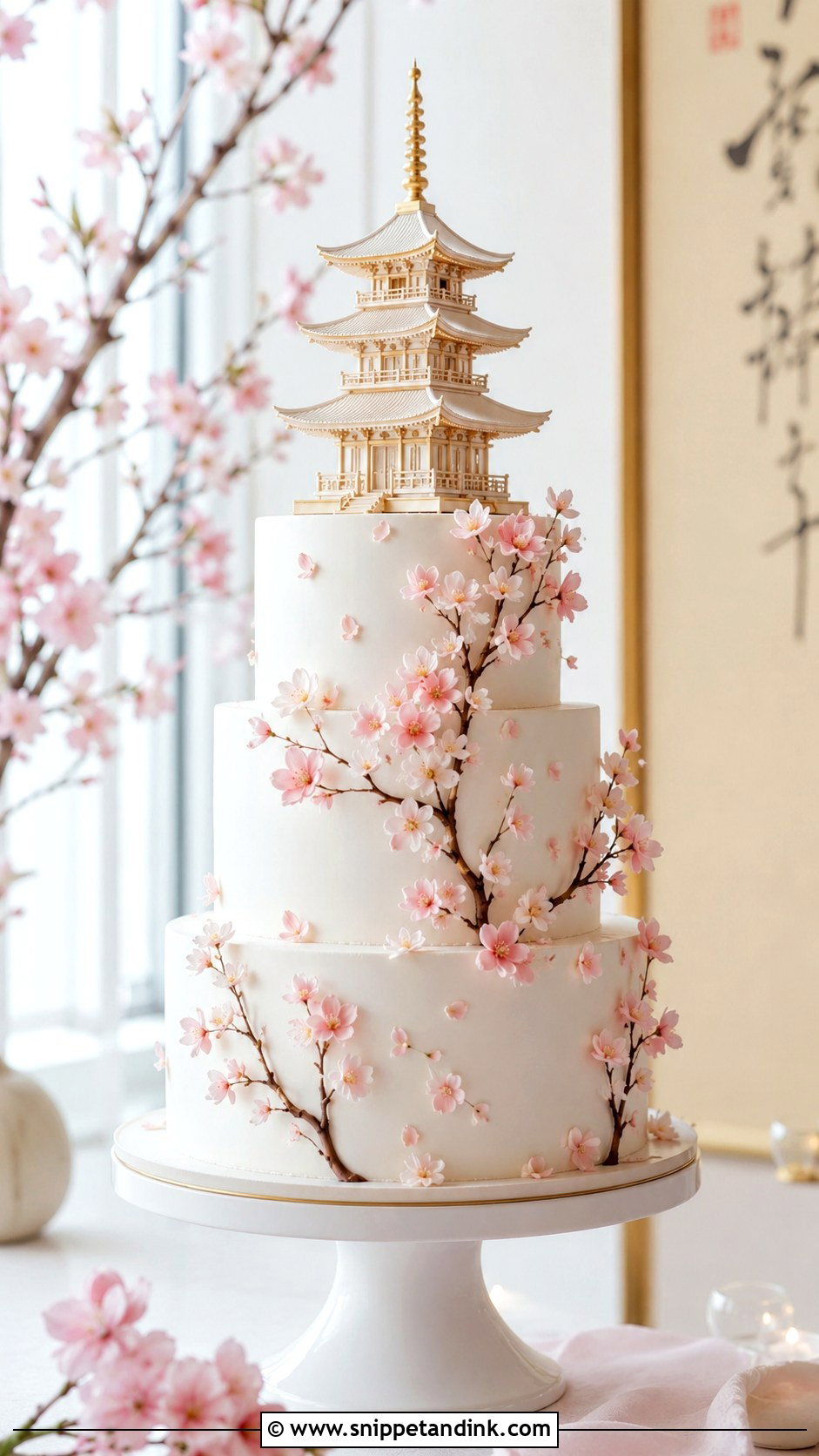
A pagoda topper is the most themed choice here, and I’d keep it small and in ivory, blush or gold so it reads as a sculpture rather than a souvenir. Toppers made of resin or ceramic are heavy and need a support plate under them. Smooth white tiers with sakura rising toward the top hold it in place visually. A few sugar petals around the base of the cake stand finish it.
Sakura Flavour Tastes Salty, Floral and Faintly of Almond
Couples often assume a cherry blossom cake tastes of cherries. It doesn’t. Real sakura flavour comes from salt-pickled blossoms and leaves, and it’s delicate, a little salty and reminiscent of almond. Pickled leaves and flowers have to be soaked to draw out the salt before they go anywhere near a filling. Many bottled sakura flavourings are artificial and can taste soapy if overused.
Questions worth settling at the tasting
- Is the sakura flavour from real pickled blossoms or a flavouring, and can you taste it on its own?
- How green will the matcha layer look once baked, and can you see a cut slice from a past cake?
- Is the yuzu fresh or bottled, and how sharp is the curd against the sponge?
- Are the blossoms gum paste or wafer paper, and how will they cope with your venue’s humidity?
- Can one tier carry a familiar flavour for guests who’d rather skip red bean or matcha?
Delicate Petals Travel Separately From the Cake
Sugar and wafer paper blossoms are brittle, and a single pothole can snap a branch spray. For anything with a cascade, I deliver the tiers already stacked and painted, then place the flowers on site from a separate padded box. That means the baker needs a quiet corner and twenty to forty minutes at the venue before guests arrive, so build that into the setup schedule.
Keep the cake out of direct sun and away from air conditioning vents. Sun fades pink petal dust surprisingly fast, and moving a chilled cake into a warm, humid room makes fondant sweat, which softens wafer paper flowers where they touch the surface. If the cake will sit outside for photos, keep that window short and bring it back indoors.
Plan the Branch Before Adding a Single Blossom
The cakes that work best start from a simple base and one well-drawn branch, and then the blossoms are placed where a real tree would put them. Decide the tier shape, finish and flavour first. Then add one feature, gold, matcha, watercolour or a fan, and stop. Quiet or bold, a sakura cake built that way carries the feeling of spring without crowding it.
You'll Like These Ideas:








Leave a Reply