
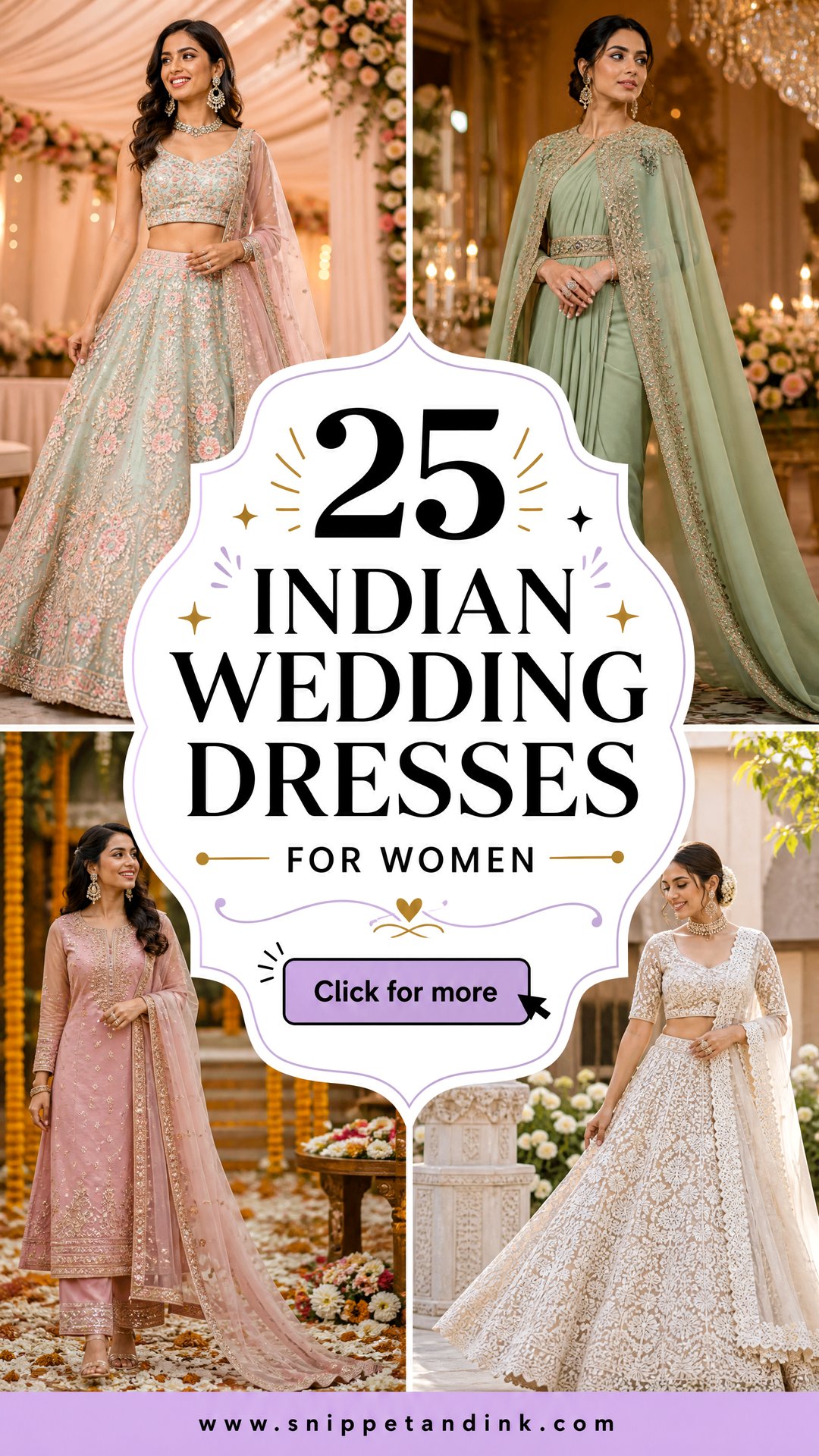
An Indian wedding usually means several outfits, not one, and each function asks for something slightly different. Haldi wants washable cotton, the reception wants shine, and the ceremony wants something respectful enough for elders. When women ask me what to wear, I start with the event and the venue, then the weather, then how much dancing and walking they’ll do. A classic silk saree, a mirror work lehenga, a sharara or an Indo-Western gown can all be right on different days. Jewelry should support the outfit, never fight it. Here are 25 looks for bridesmaids, guests, sisters, cousins and close family, with what I’d watch for in each.
Colours a Guest Should Leave to the Bride
Most Indian weddings are relaxed about guest colours, but a few unwritten rules still matter, and they vary by community. I always ask guests to find out what the bride is wearing for each function before they buy.
- Bright bridal red and maroon at the main ceremony: in most North Indian weddings, leave it to the bride.
- Solid black: some families consider it unlucky at a wedding, though it’s often fine at a cocktail or reception.
- All-white: associated with mourning in many Hindu communities, so add colour or a strong border.
- Bridal-style jewelry: heavy maang tikkas, choora-style bangles and full bridal sets read as bridal.
That still leaves almost every colour on the wheel. Jewel tones, pastels and metallics are safe at nearly every function. If you’re a bridesmaid or close family member, the bride may have a palette for you; ask early, since it changes what you can buy.
Coverage matters too. Temples, gurdwaras and some family homes expect covered shoulders, and a gurdwara ceremony means covering your head, so I’d carry a dupatta or stole even with a saree. Sleeveless blouses and deep backs are usually fine at a hotel reception but can feel out of place at a morning ceremony in front of grandparents.
1. Red Bridal Lehenga
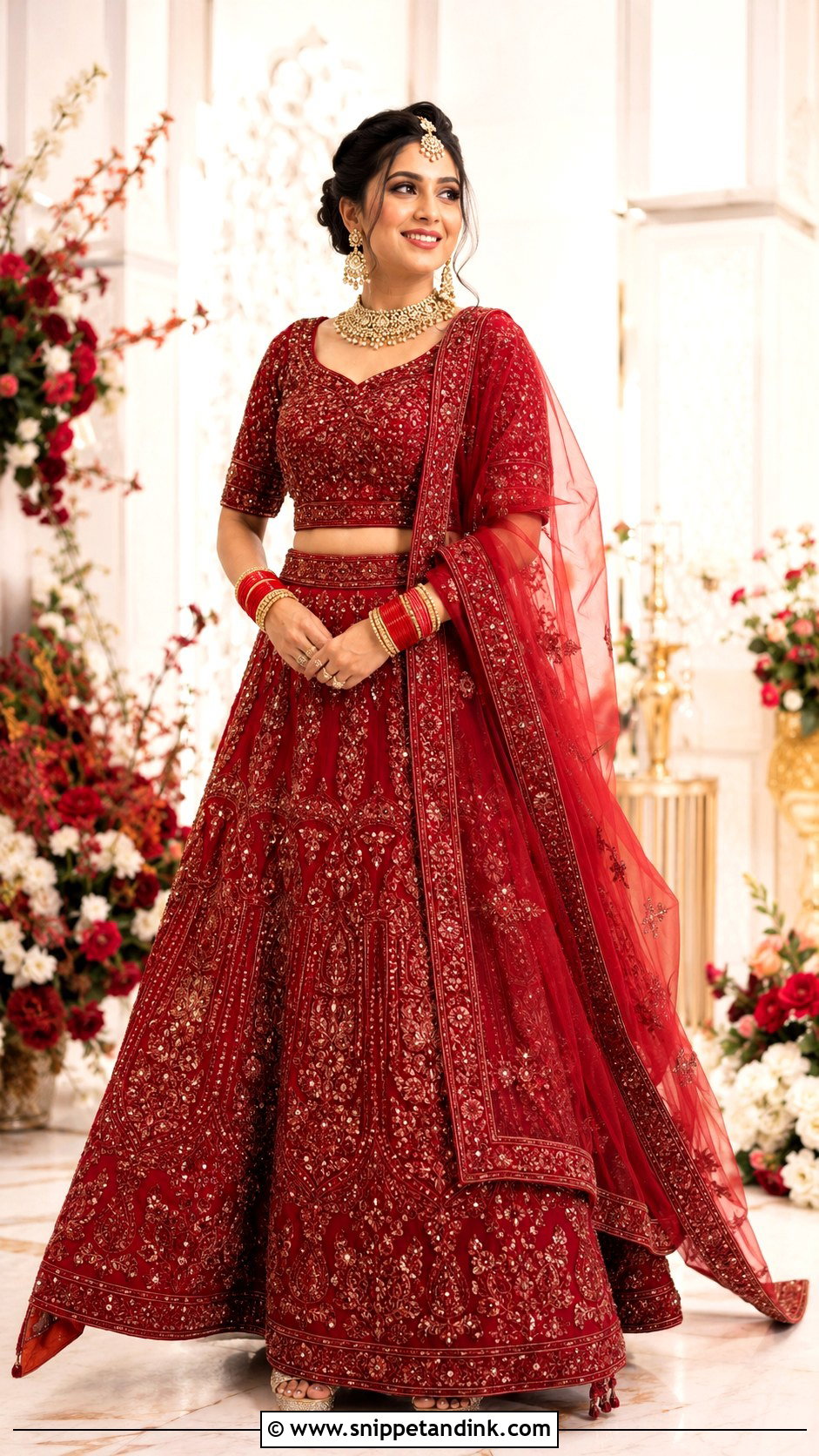
The red lehenga belongs to the bride, and nothing else on this list carries the same weight in the mandap. Zari, zardozi, sequin or thread embroidery on a flared skirt gives the grand ceremony look. Sweetheart, square or high necklines all suit; I pick by the jewelry, since a high neck hides a heavy necklace. Many brides wear two dupattas, one draped over the shoulder and one over the head, so I plan the pinning at the trial. Antique-gold embroidery softens red more than bright yellow gold. Guests, admire this one and choose another colour.
2. Pastel Lehenga For Wedding Guest
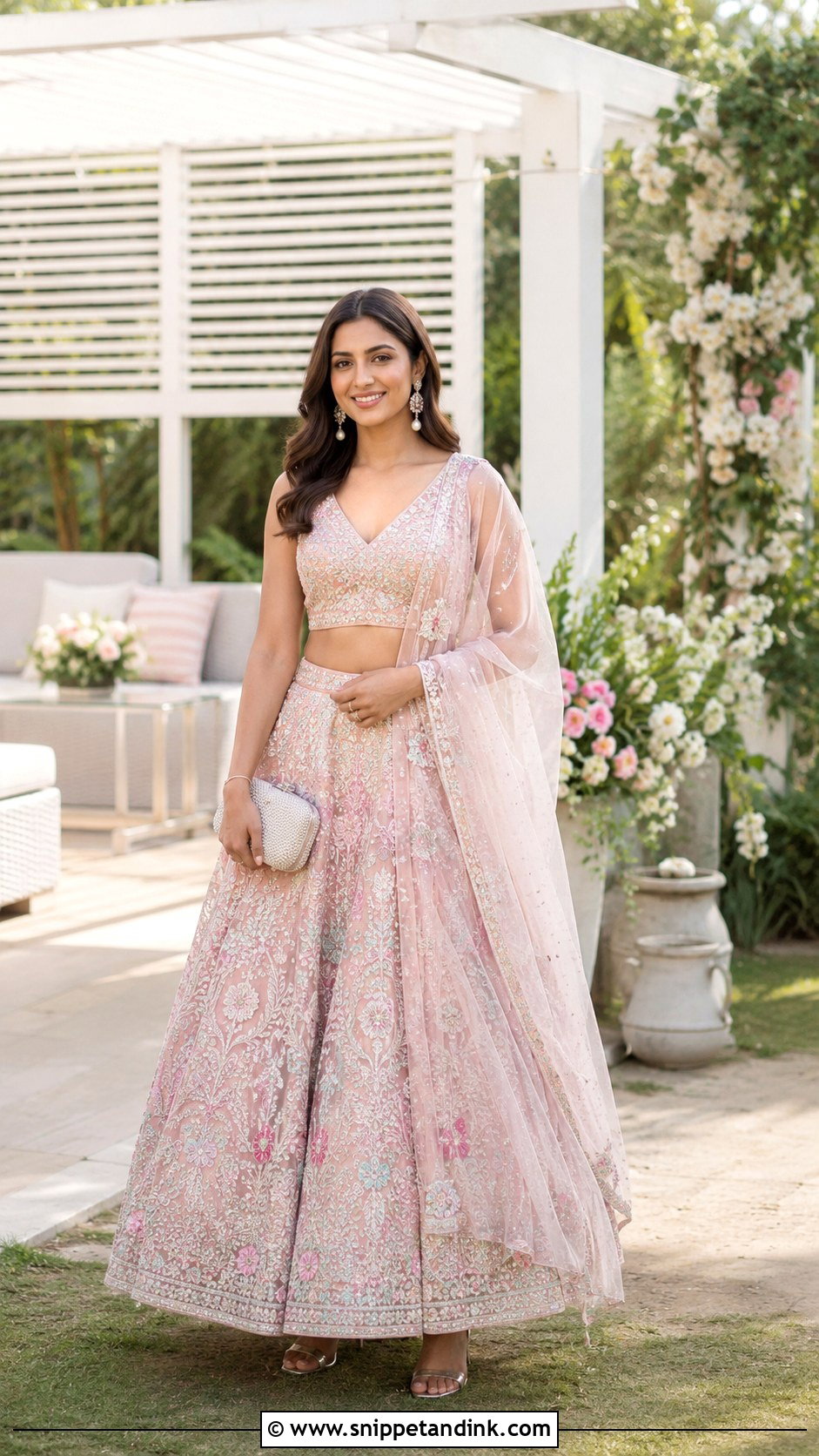
Pastels are where I send most guests for daytime events. Blush, powder blue, mint, peach and lavender suit mehndi, engagements and garden ceremonies. Light embroidery, pearls, floral threadwork or small sequins are enough. Pastels shift a lot with light, so check a mint or lavender in daylight and under warm bulbs before deciding; under yellow lights they can turn grey. A fitted blouse, a sheer dupatta, kundan earrings and metallic heels finish it. Keep makeup soft with a neutral lip.
3. Banarasi Silk Saree
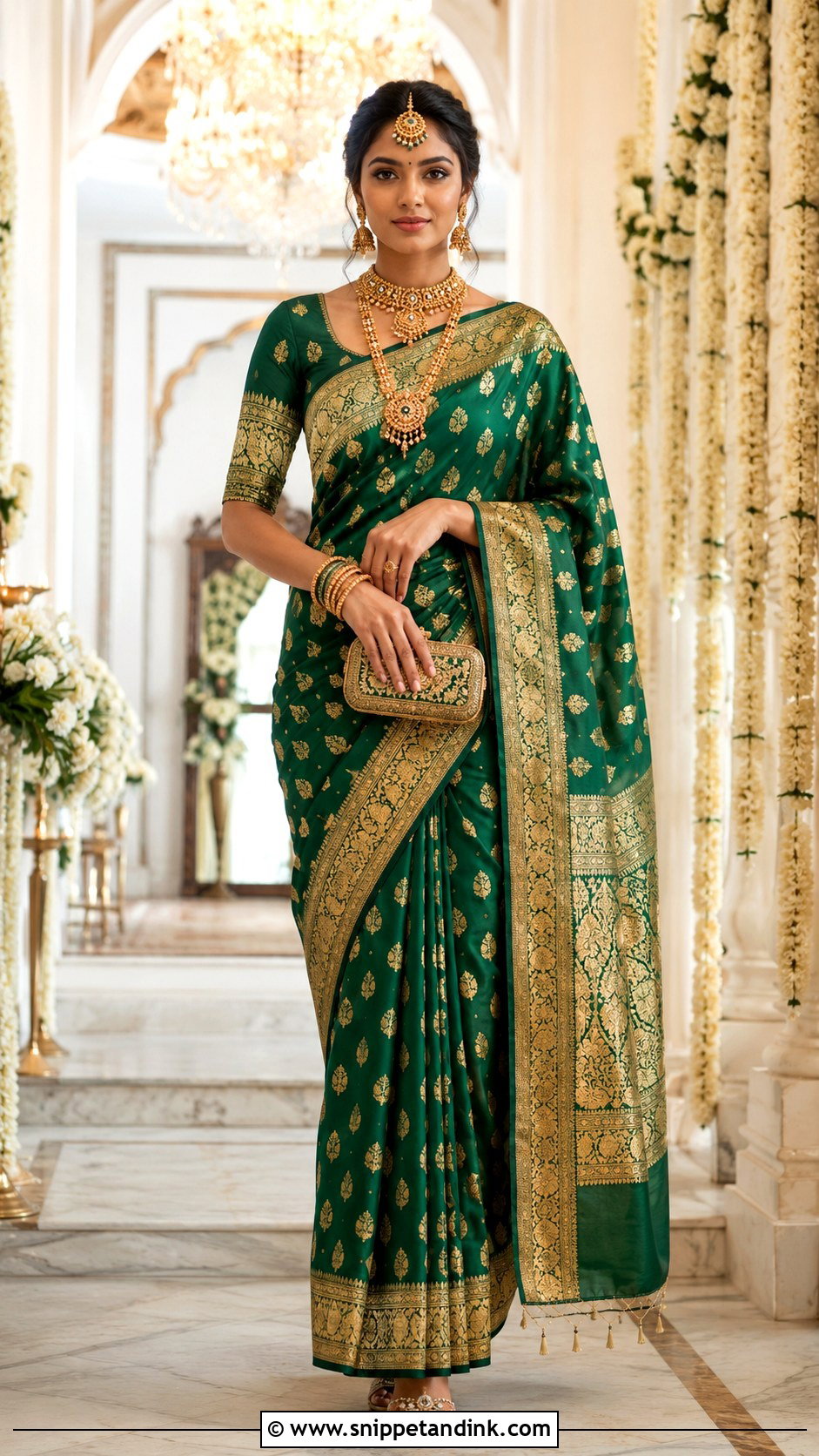
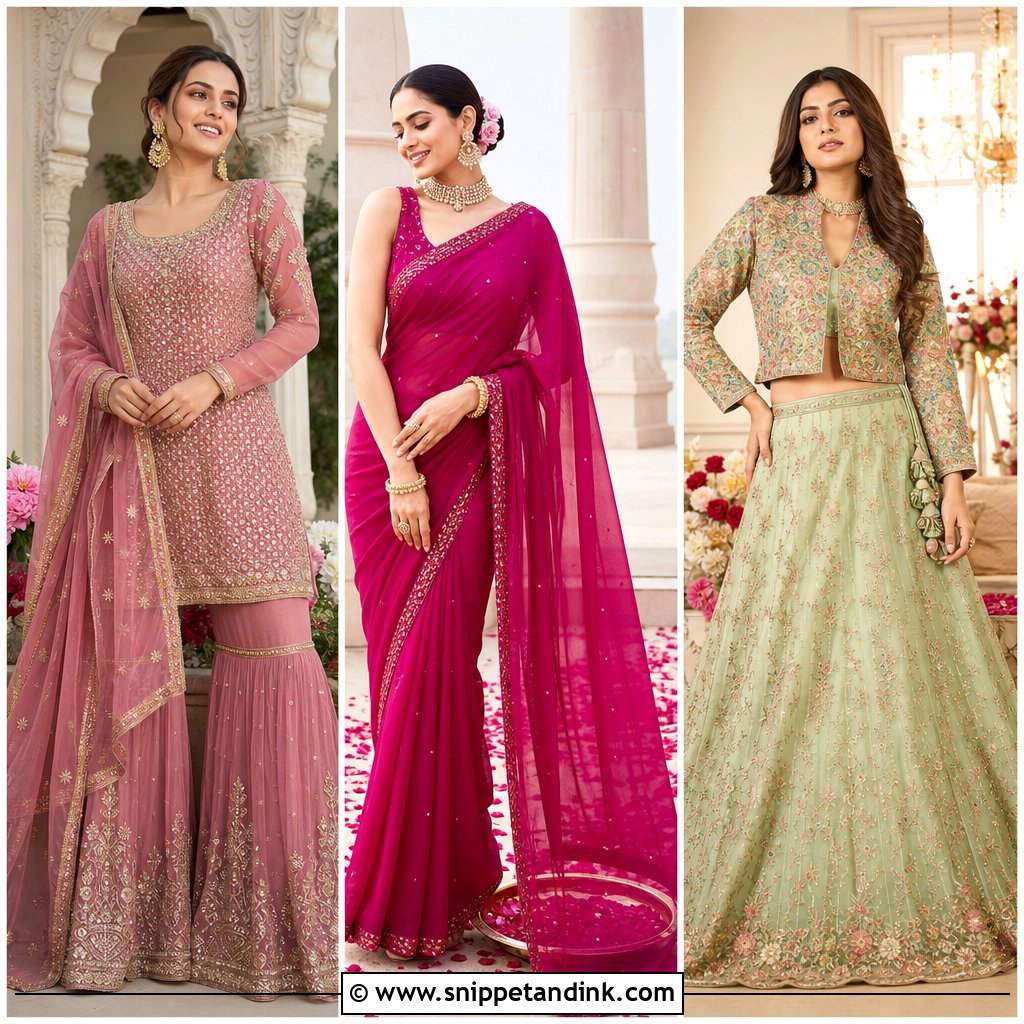
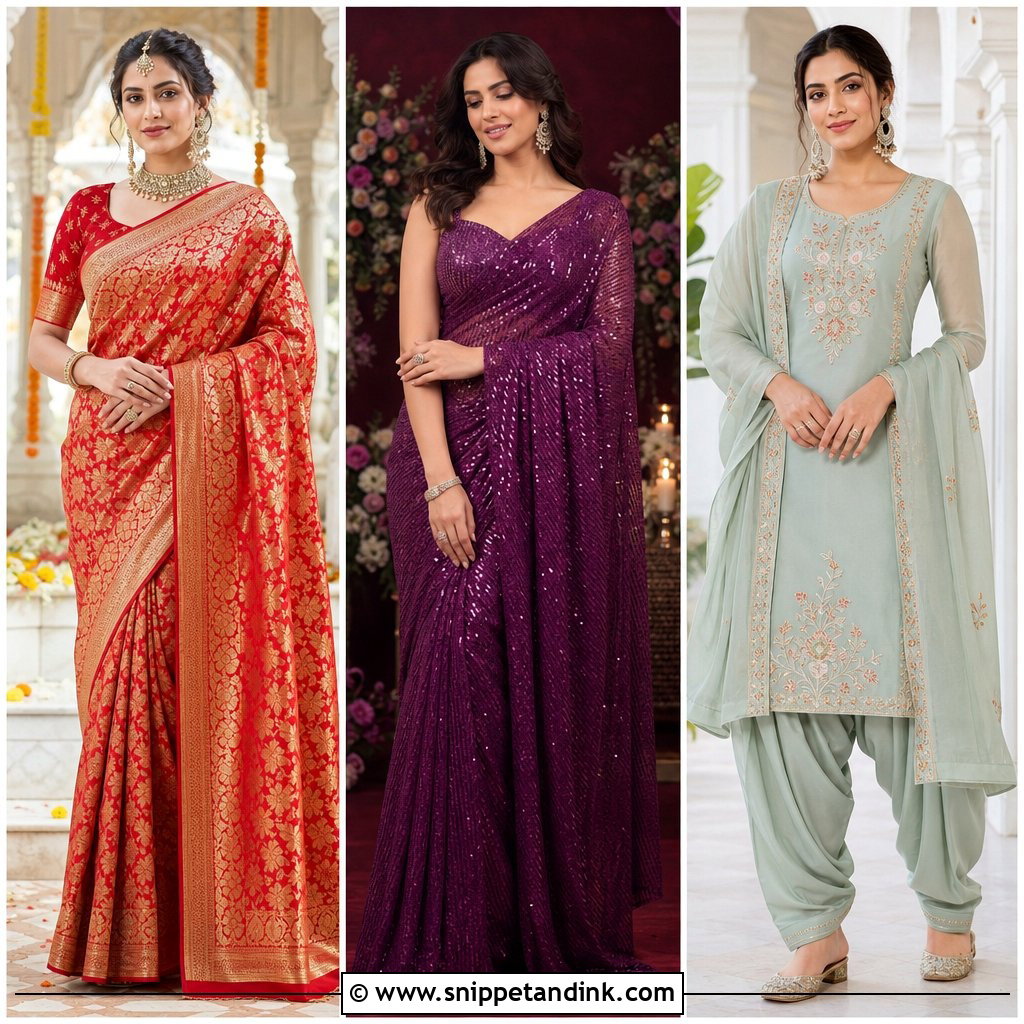
A Banarasi silk saree is the piece you’ll still wear in ten years. Emerald, deep red, royal blue, magenta and mustard look rich against gold woven motifs. Pair it with a fitted silk blouse, temple jewelry and bangles. Real Banarasi silk is slippery and heavy, so the pleats need pinning at the waist and the pallu at the shoulder, or it slides by lunch. A well-stitched cotton petticoat helps more than people think. A bun with fresh flowers finishes it for ceremonies, rituals and formal receptions.
4. Sequin Saree For Reception
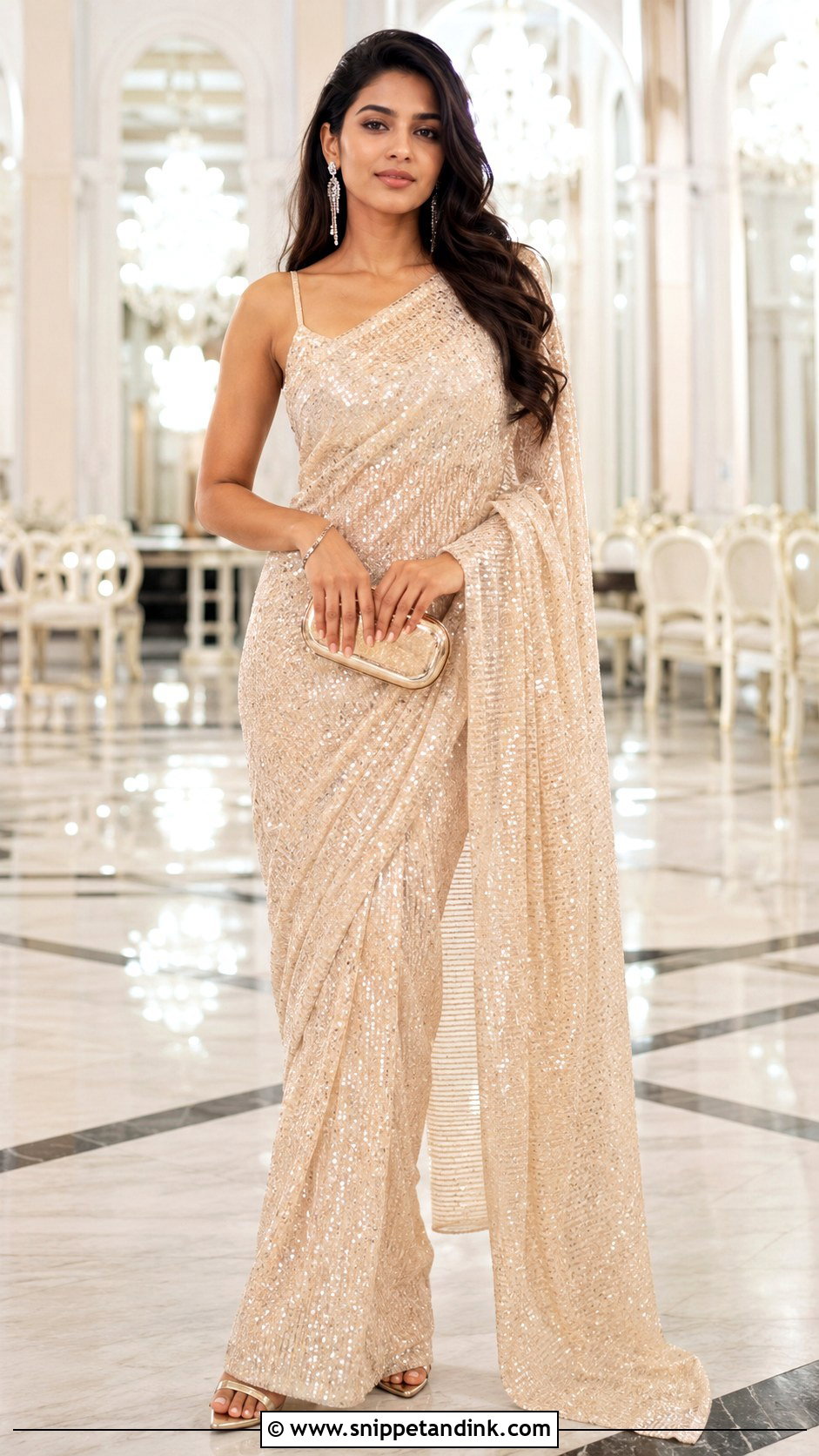
Evening receptions are where sequins make sense. Champagne, silver, rose gold, emerald and black sequin sarees all work; a simple blouse keeps the look clean. Sleeveless, full-sleeve or deep-back blouses change the mood from understated to dramatic. Sequins can scratch the inner arm and catch on bracelets, so I keep wrist jewelry minimal and smooth. Crystal earrings, strappy heels and a metallic clutch. This suits receptions, cocktails and sangeet nights.
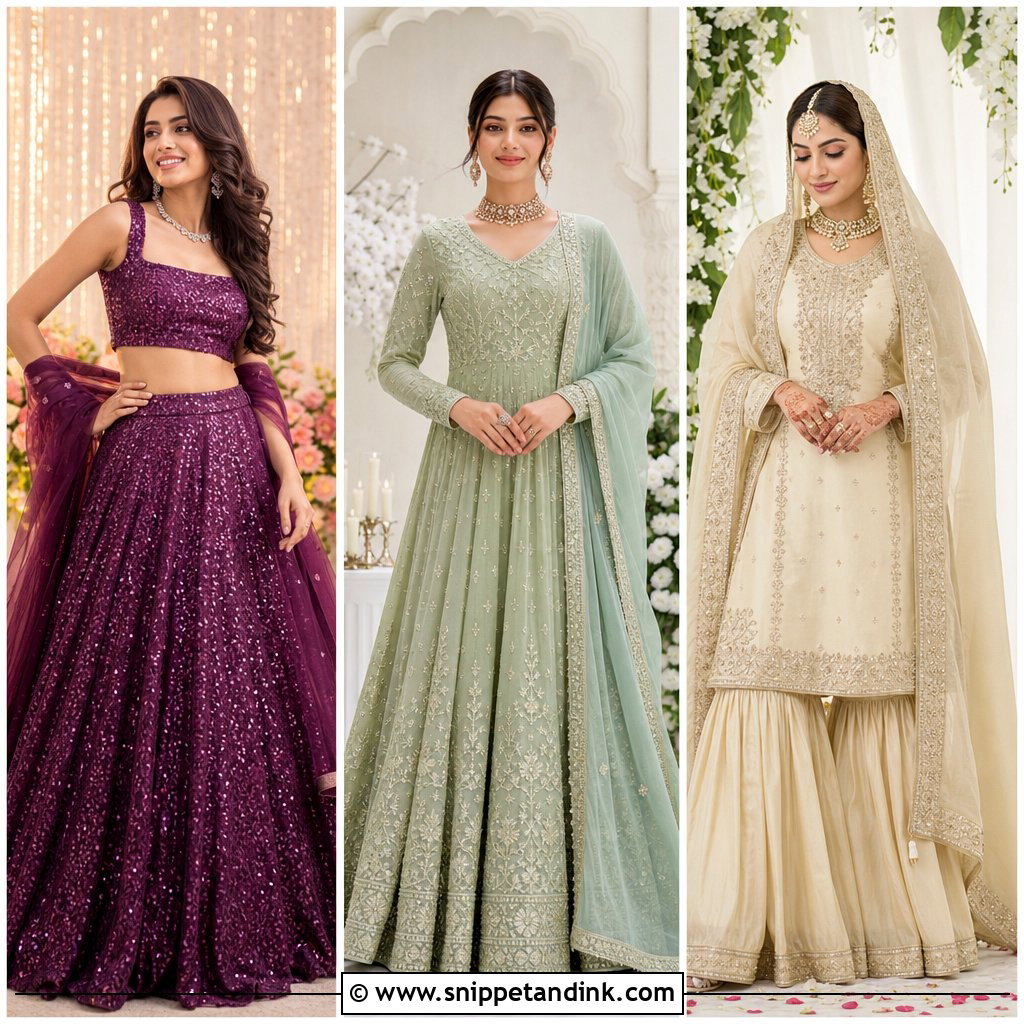
5. Anarkali Suit For Wedding
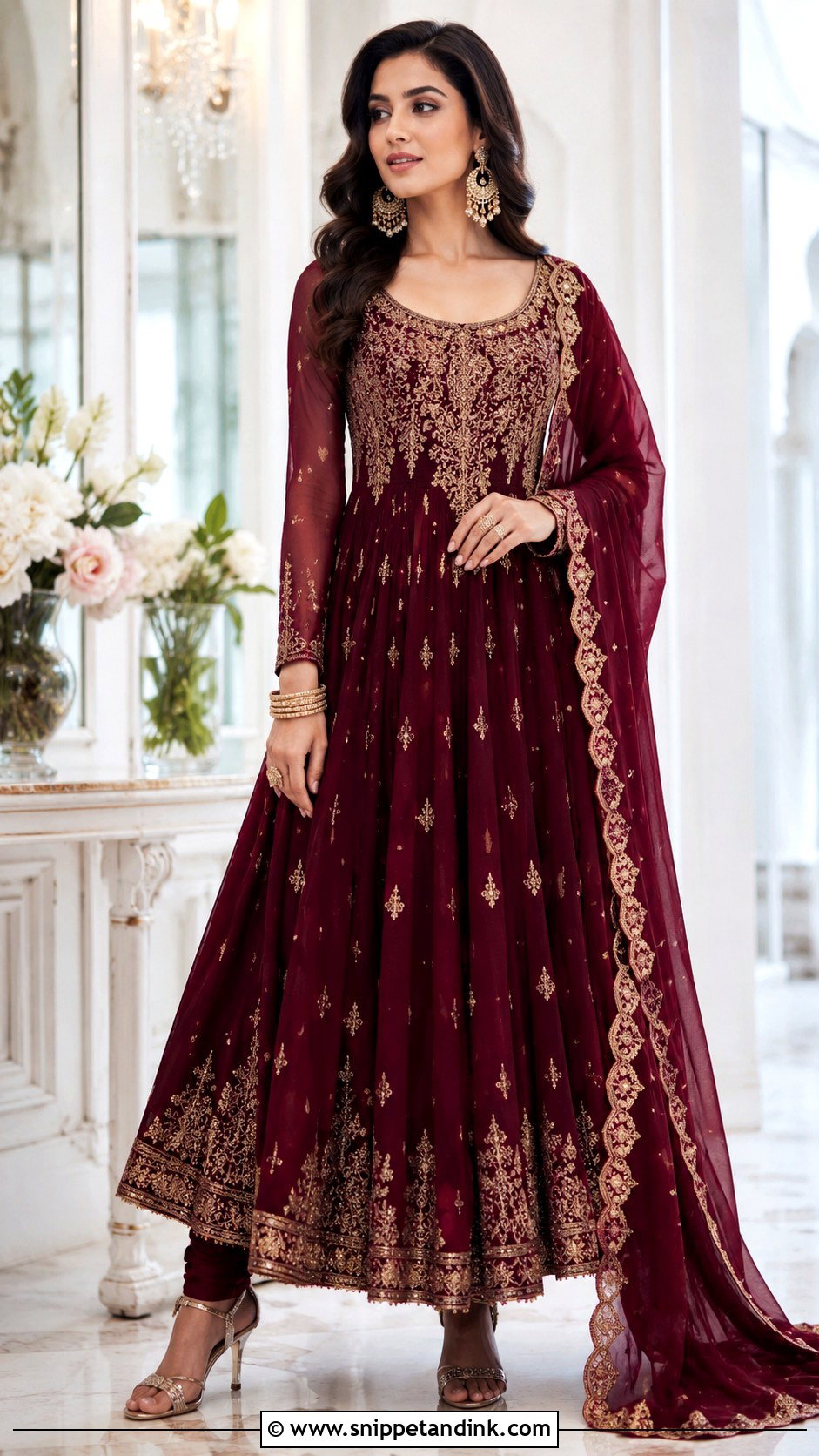
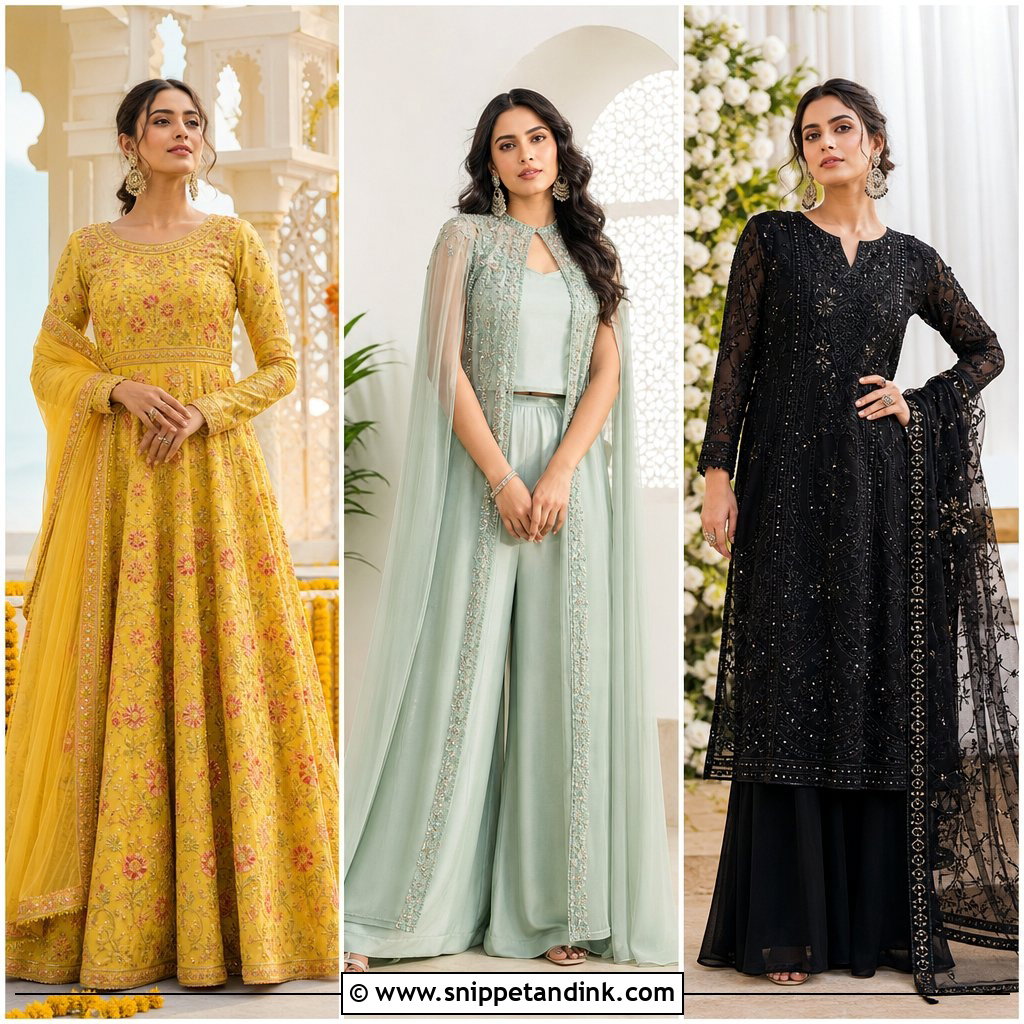
The Anarkali is the easiest outfit on this list to wear well on most body types. The long flared shape reads like a dress but stays traditional. For a wedding, choose embroidery at the neckline, sleeves, border or hem. Wine, navy, emerald, plum and maroon for evening; pastels for daytime. I check where the flare starts: it should begin at your natural waist, or at the narrowest point just under the bust, never below it, or the shape looks shapeless. Churidar, a matching dupatta and statement earrings complete it.
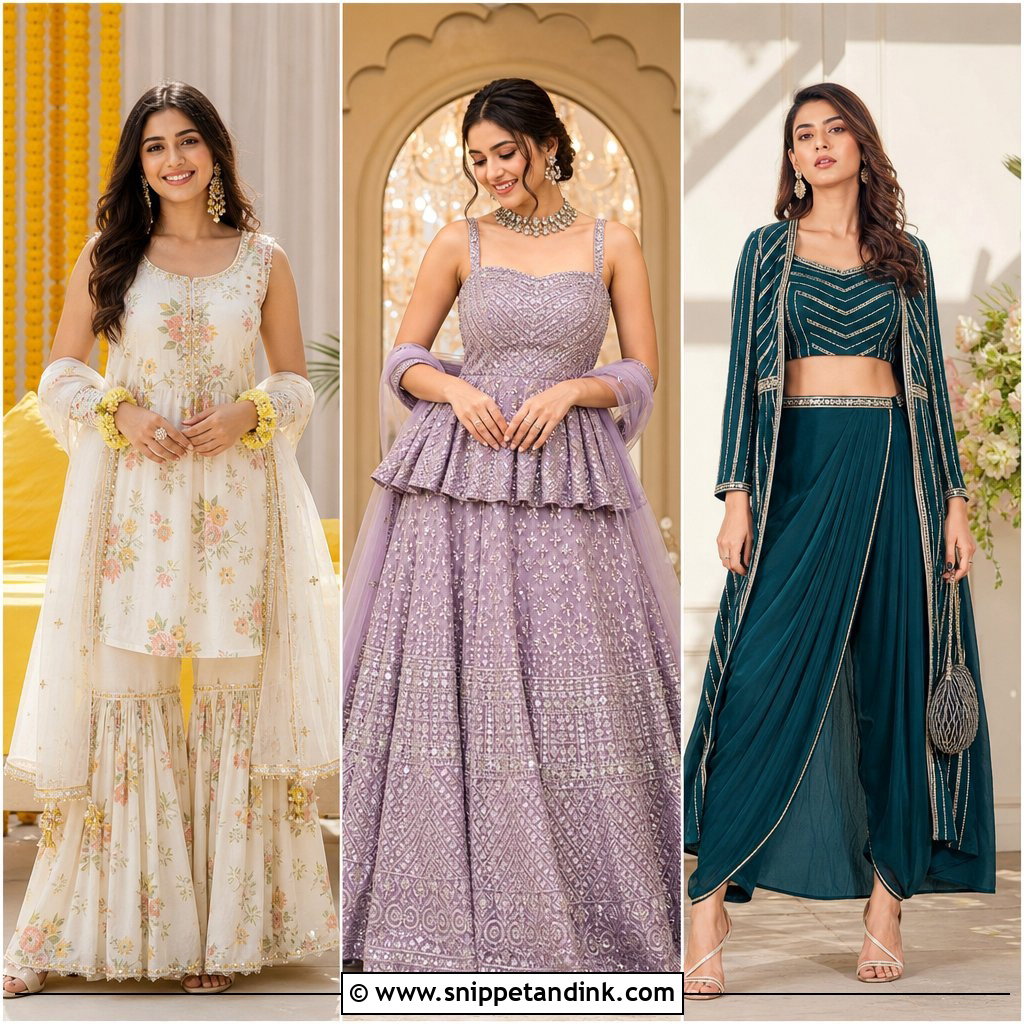
6. Sharara Set For Mehndi
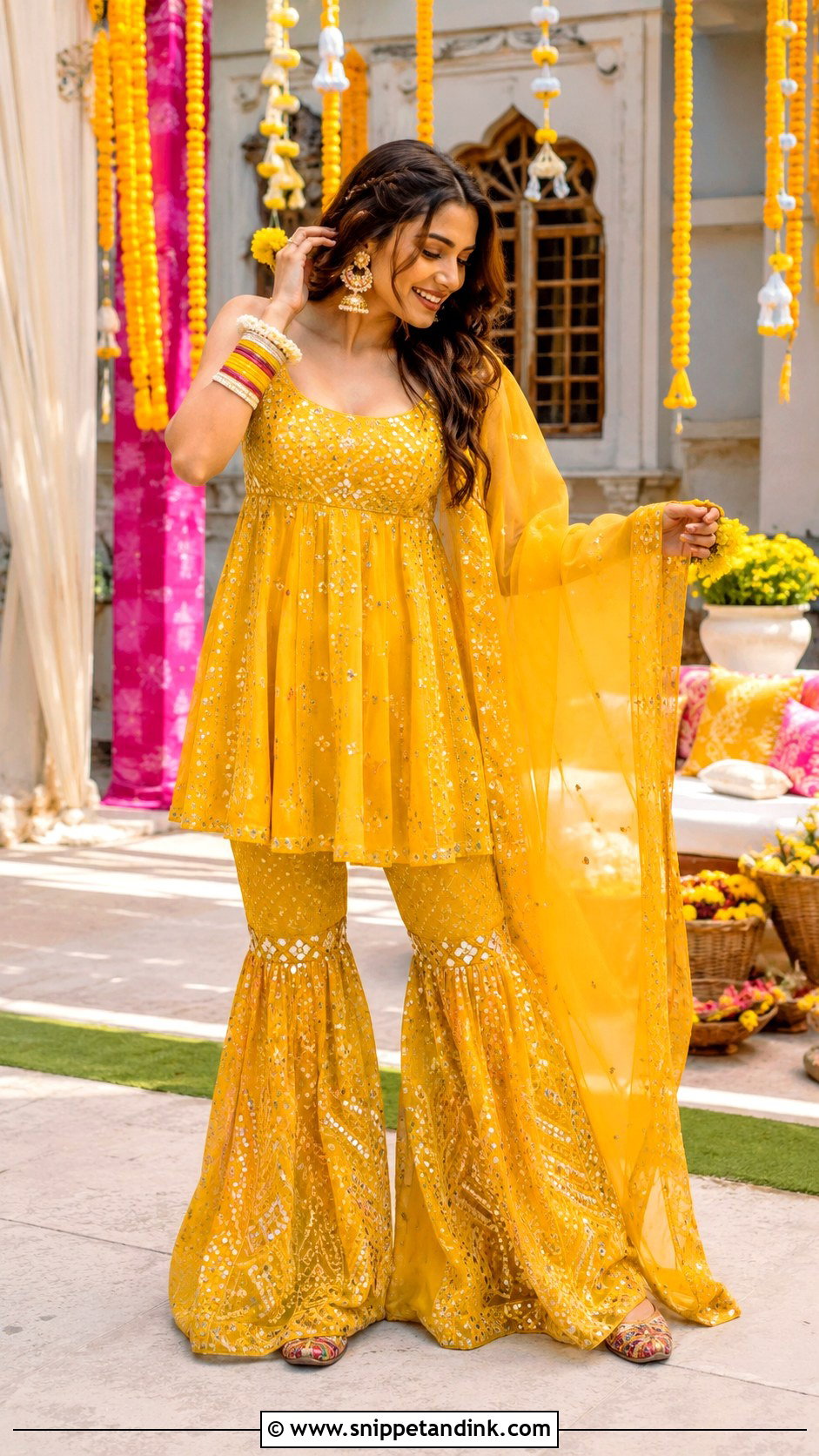
Shararas are made for mehndi: you can sit cross-legged, walk across grass and dance without lifting anything. For colour, I’d go to bright shades like yellow, lime, orange, fuchsia or turquoise, with mirror work, gota patti, tassels or threadwork. A short kurta keeps it youthful. The full legs take a lot of fabric, so keep the dupatta light. Jhumkas, bangles and juttis keep you comfortable on cushions for hours.
7. Gharara Suit For Wedding
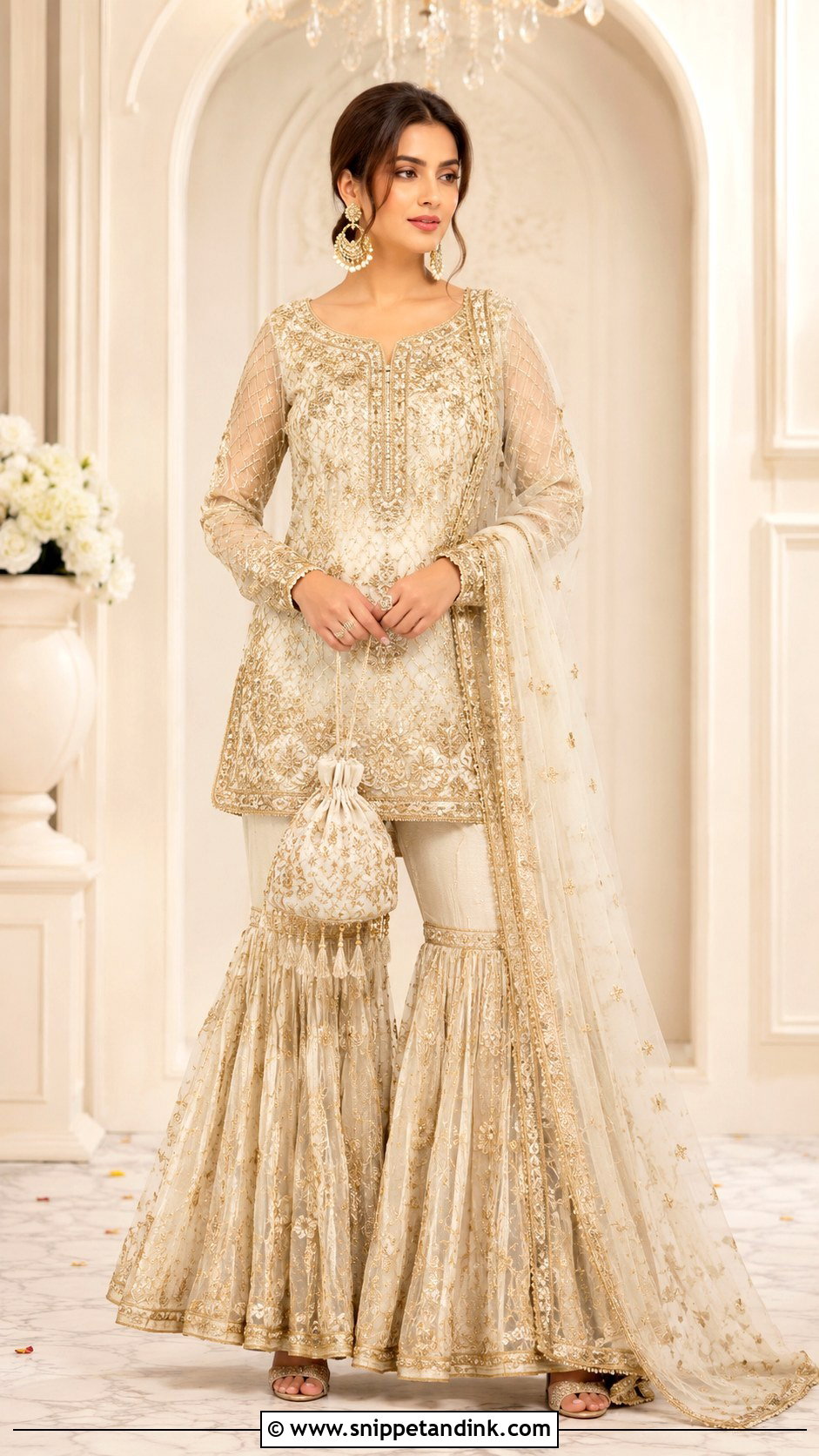
Ghararas are often confused with shararas, but the shape is different: fitted through the thigh, then flaring from the knee, with a band or joint marking where the flare begins. That joint has to sit at your actual knee or walking feels odd, so I always check it at the fitting. Silk, brocade, georgette and organza with zari, mirror work or fine embroidery suit it. Ivory, gold, sage, pink and deep green are classic. A short kurta, flowing dupatta, chandbalis and a potli bag finish it for a nikkah, reception or family wedding.
8. Indo Western Gown
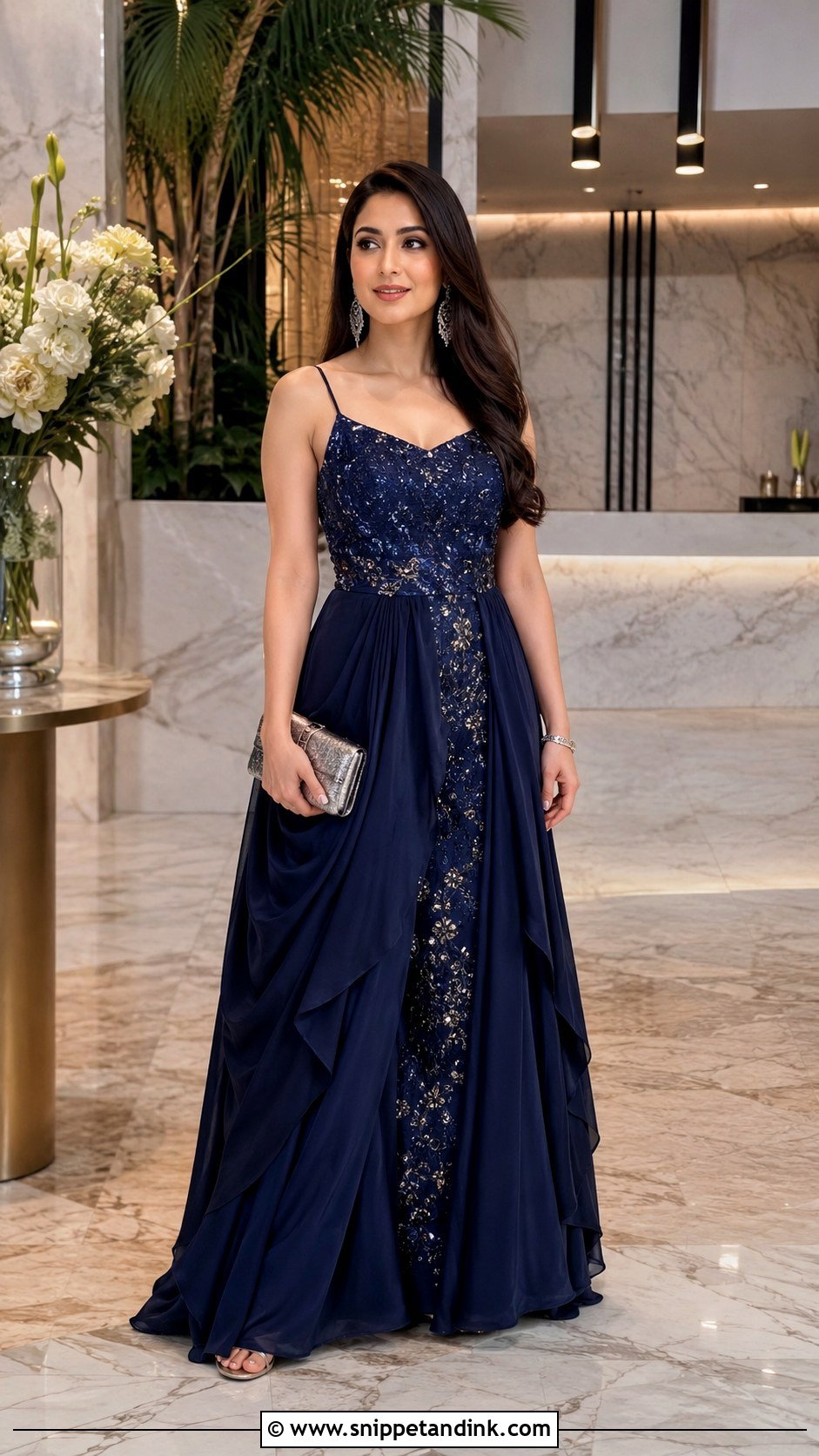
An Indo-Western gown gives Indian detail in a shape you already know how to wear. Embroidered bodices, cape sleeves, draped panels, attached dupattas or subtle sequins keep it festive. Navy, champagne, mauve, teal and wine suit receptions and engagements. Gowns rely on fit at the bust and waist more than draped outfits do, so I’d budget for alterations. Statement earrings, sleek heels and a clutch, and nothing more. It works well at destination weddings and hotel receptions.
9. Silk Lehenga Choli
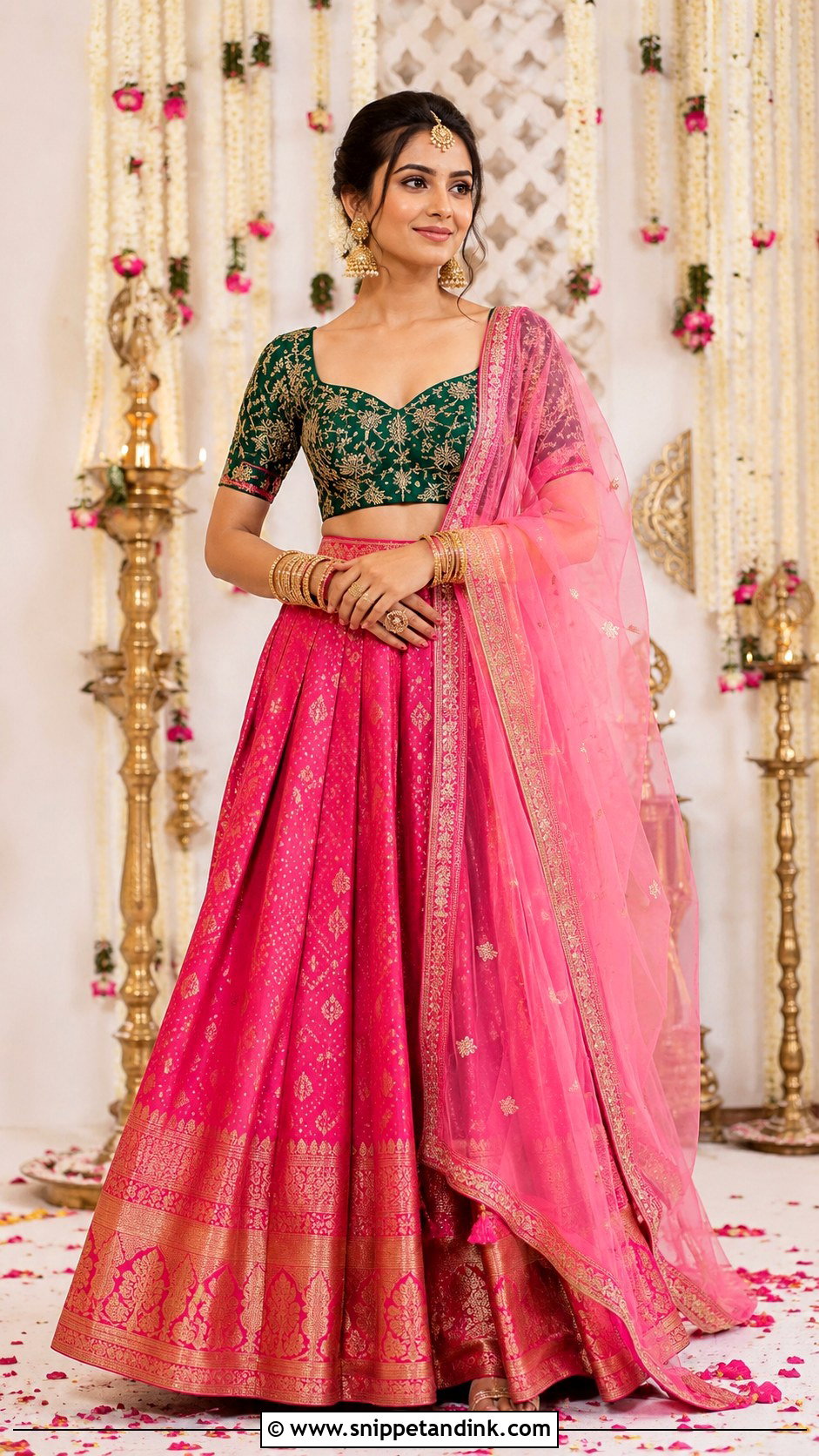
Silk carries a lehenga on its own, without much sparkle. Woven motifs, contrast borders or light zari give a ceremony-ready look. Rani pink, mustard, teal, purple and rust look especially deep in silk. Pair it with a matching or contrast blouse and a dupatta in organza, net or silk. Silk shows water spots, so if there’s a chance of rain or spilled drinks, carry a dry tissue to blot rather than rub. Traditional jewelry, bangles and embroidered sandals finish it.
10. Floral Lehenga For Day Wedding
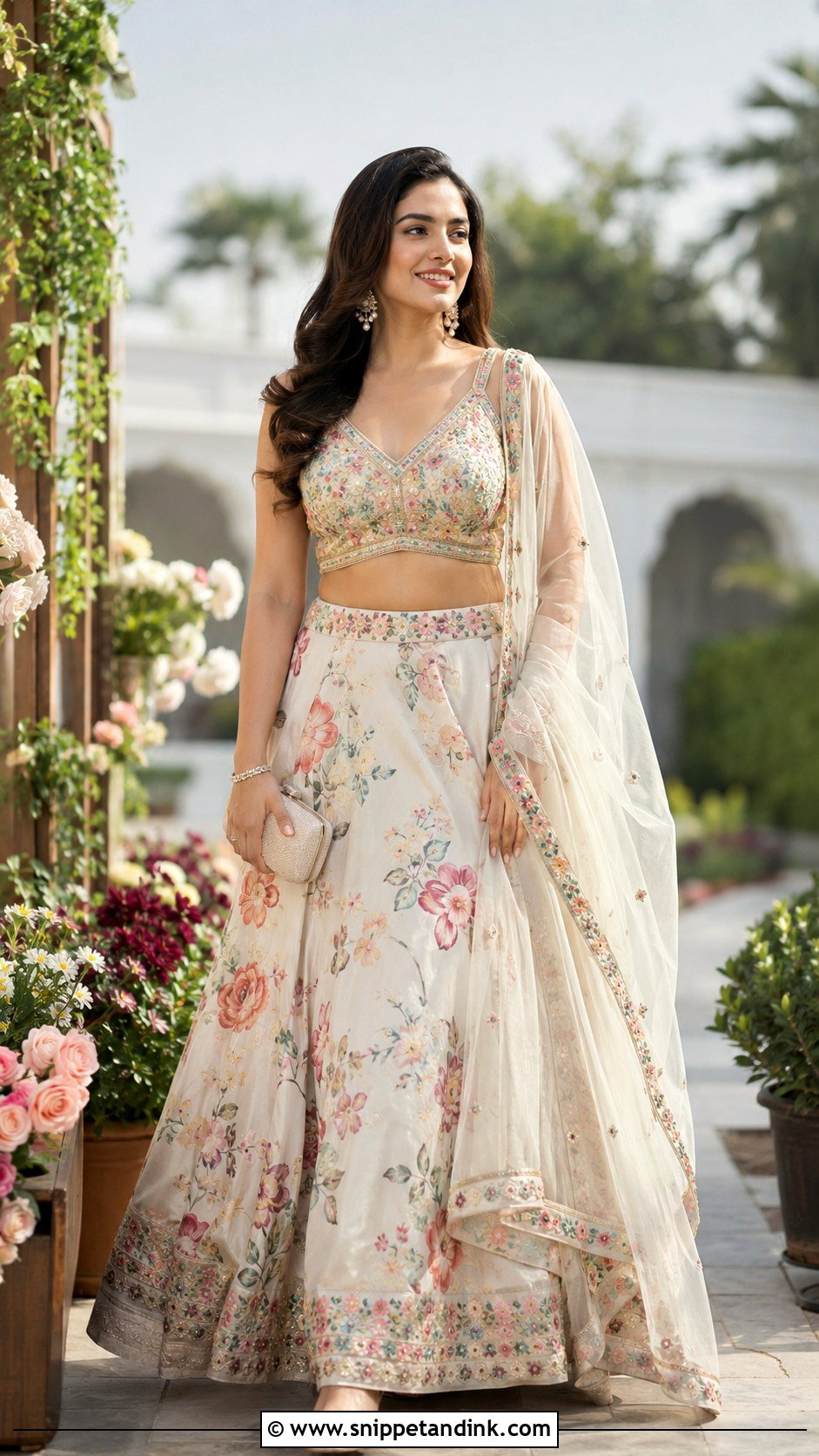
Florals suit daytime because they look like the setting. Printed florals for outdoor venues, embroidered florals for something dressier. Georgette, organza, chiffon and silk blends move easily. Ivory, peach, lilac, sage and sky blue make a soft guest look. With a print, I keep the blouse plain or lightly embroidered, otherwise the outfit gets busy. Pearl earrings, block heels and a small clutch suit garden ceremonies and spring and summer events.
11. Jacket Lehenga
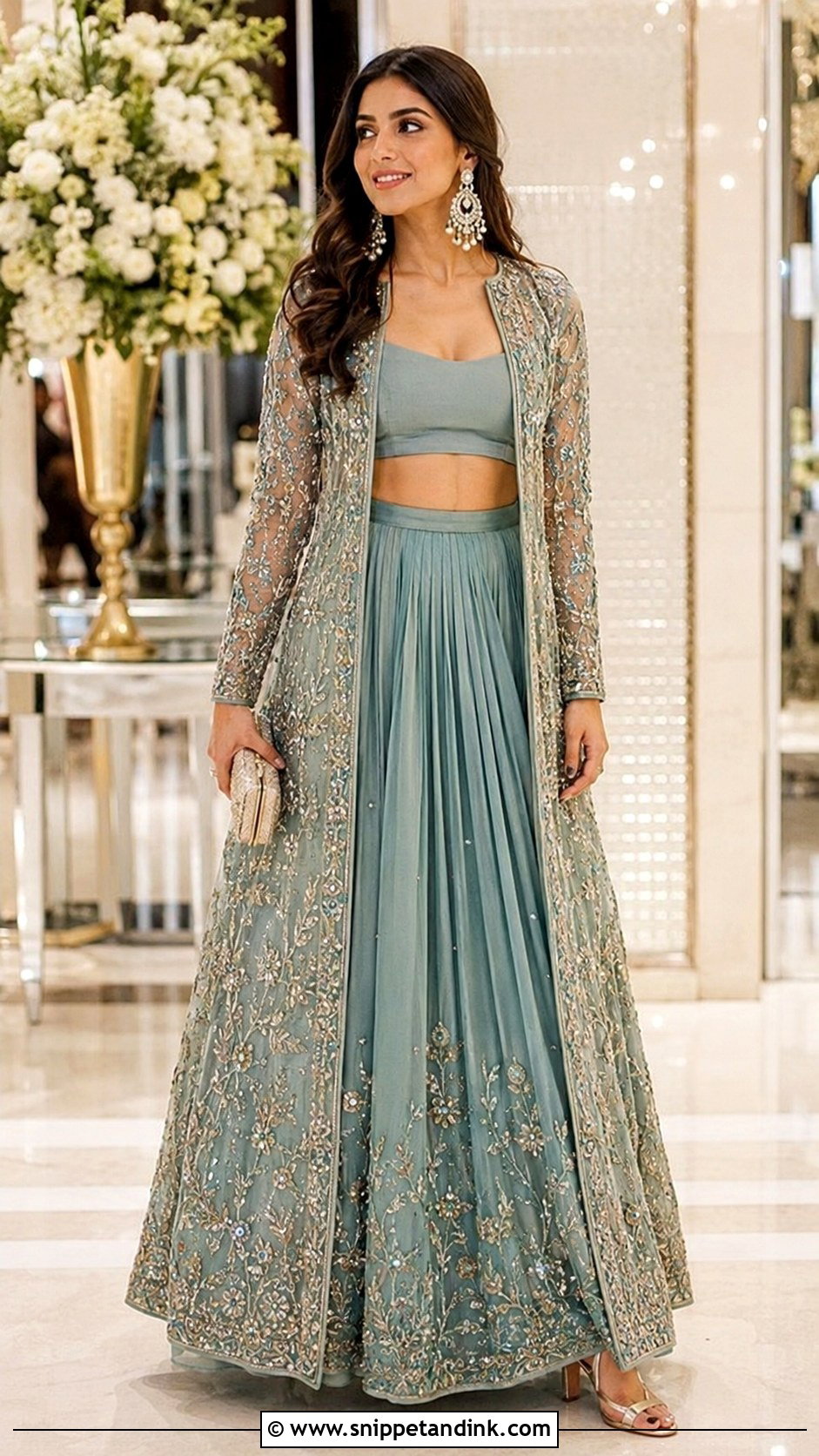
A jacket replaces the dupatta and gives coverage on the arms, which many women ask me for. Long or short, embroidered over a blouse and lehenga skirt, it creates a clean layered line for receptions, sangeet and winter weddings. Sheer embroidered jackets are light; brocade jackets are structured. If the jacket is heavy, keep the blouse simple. Check the armholes when you lift your arms; layered sleeves get tight fast. Statement earrings and heels.
12. Cape Saree
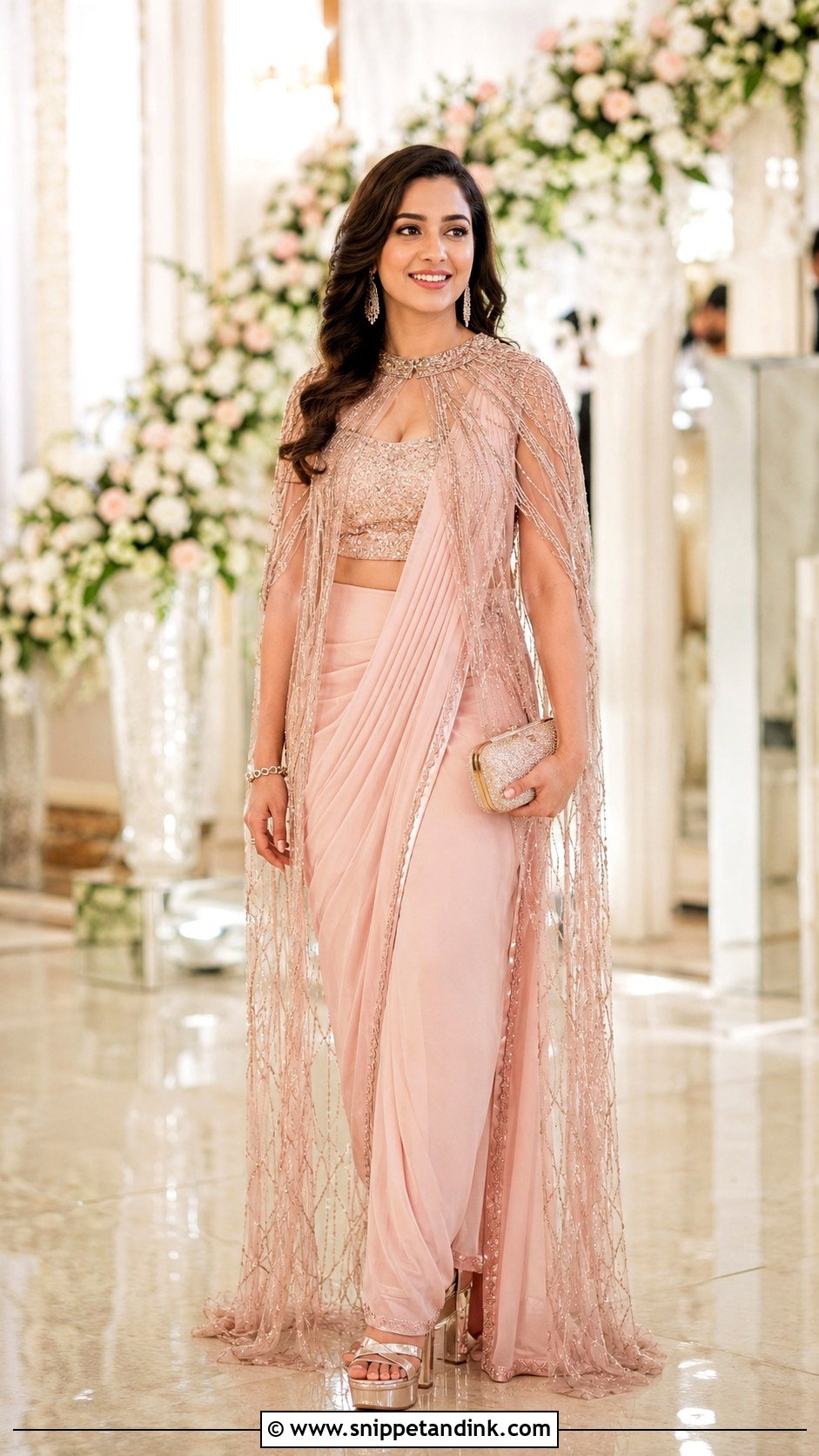
A cape saree swaps the pallu, and often the necklace, for a cape over the shoulders. It’s modern and stays put. Pre-draped versions are easiest to style. Soft net, chiffon, crepe and georgette suit it; silver, blush, ivory, teal and wine work for receptions and cocktails. An embellished cape is heavier than it looks, so wear it for a while before deciding. Drop earrings and a bracelet are enough, since the cape already frames the face.
13. Palazzo Suit For Wedding
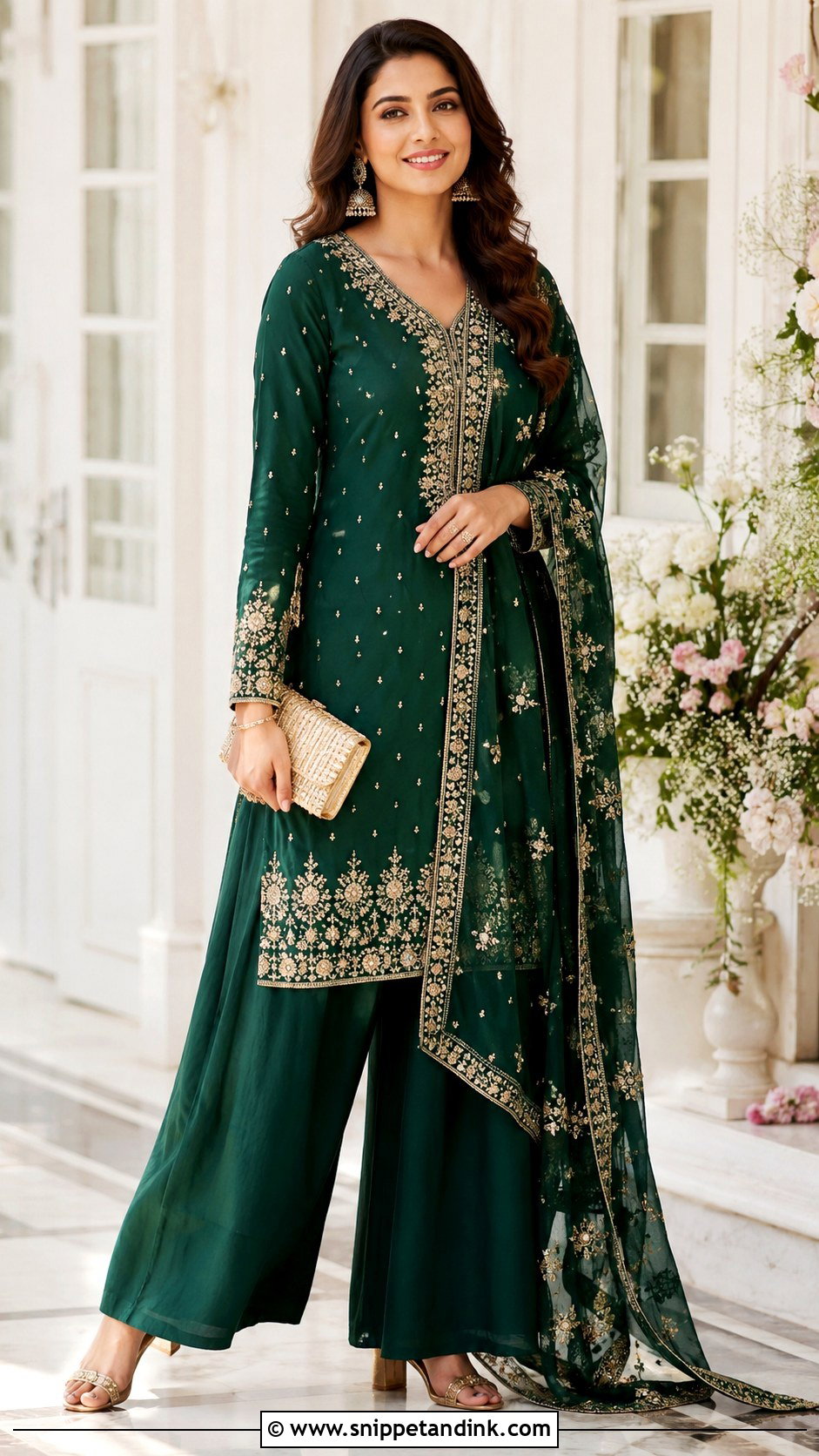
Women who don’t want to manage a lehenga or saree still look properly dressed in a well-made palazzo suit. The kurta can be short, straight, A-line or embellished. For a wedding, silk, georgette, chanderi or brocade, with embroidered necklines, sleeve borders and dupattas. Palazzos need hemming to the shoe you’ll wear, so bring the shoes to the tailor. Block heels, jhumkas and a structured clutch suit daytime ceremonies and family functions.
14. Salwar Kameez For Wedding
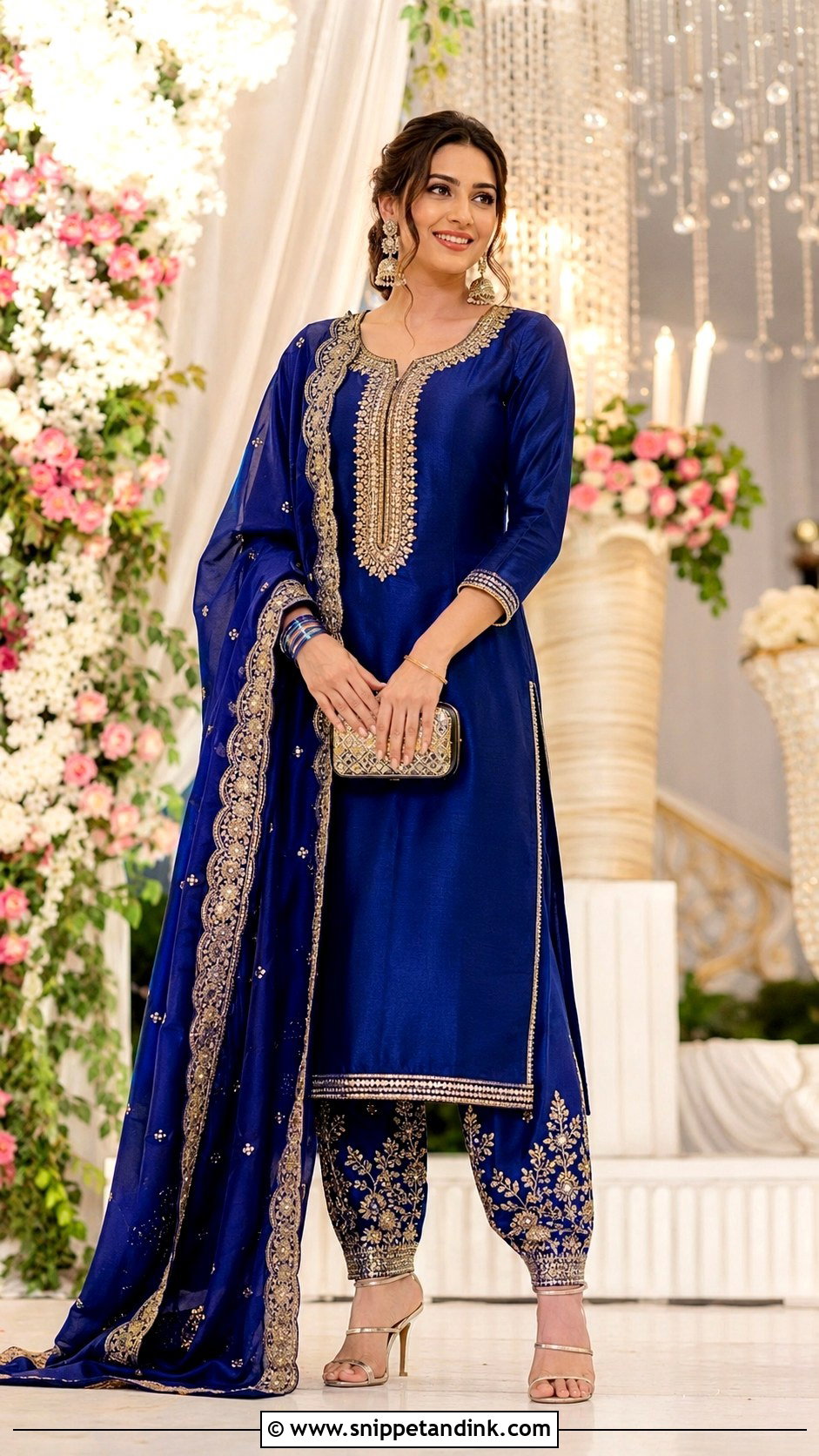
A dressy salwar kameez never looks out of place, and it’s the most comfortable outfit for ceremonies with lots of sitting and greeting. Fabric and colour carry it: a silk, georgette or brocade kameez with embroidered salwar and a statement dupatta. Maroon, bottle green, royal blue and magenta for evening; peach, mint, cream and rose for daytime. A heavy dupatta can make a light suit feel uneven, so I match their weight. Jhumkas, bangles and embellished flats or heels.
15. Net Lehenga For Sangeet
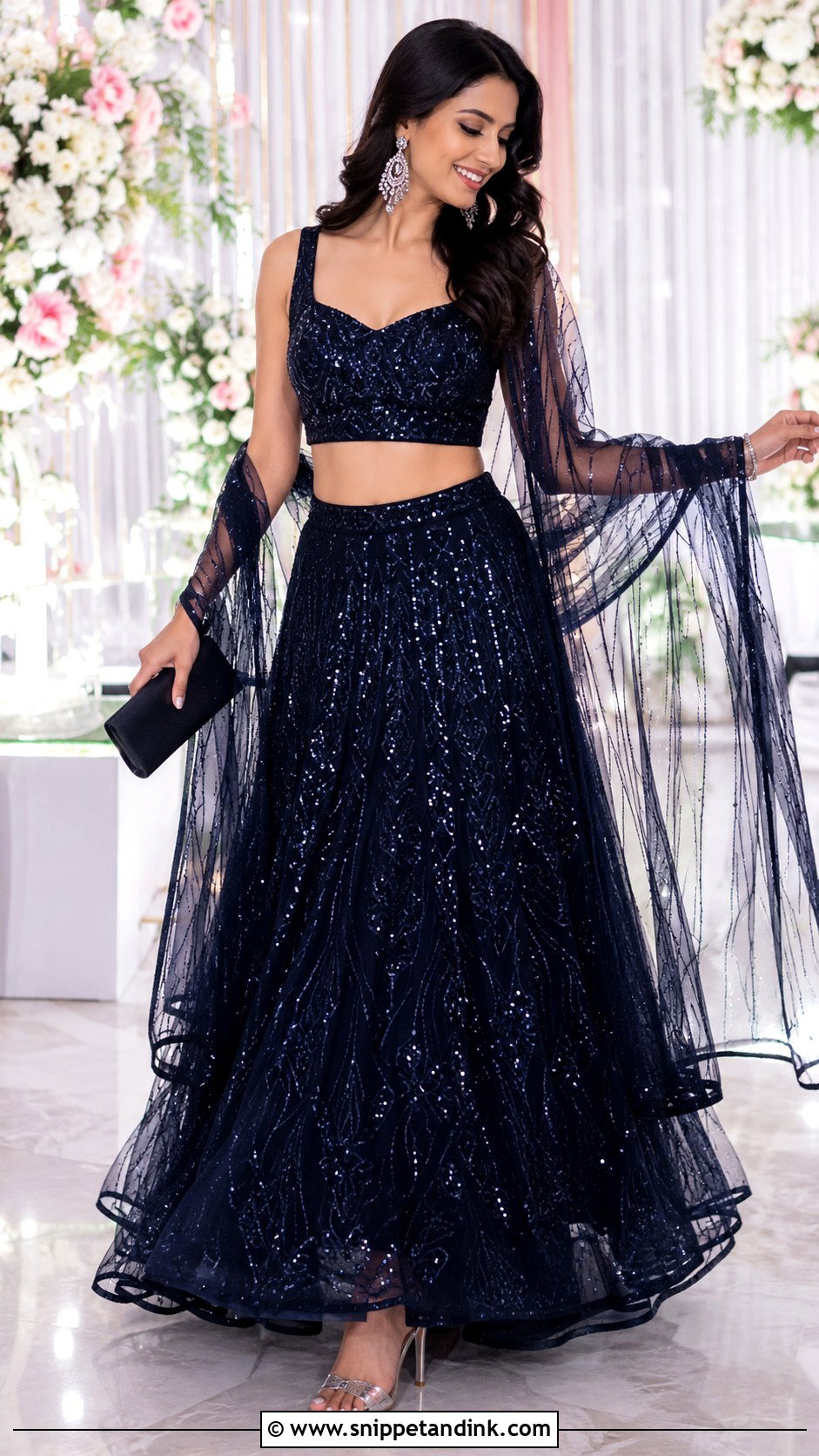
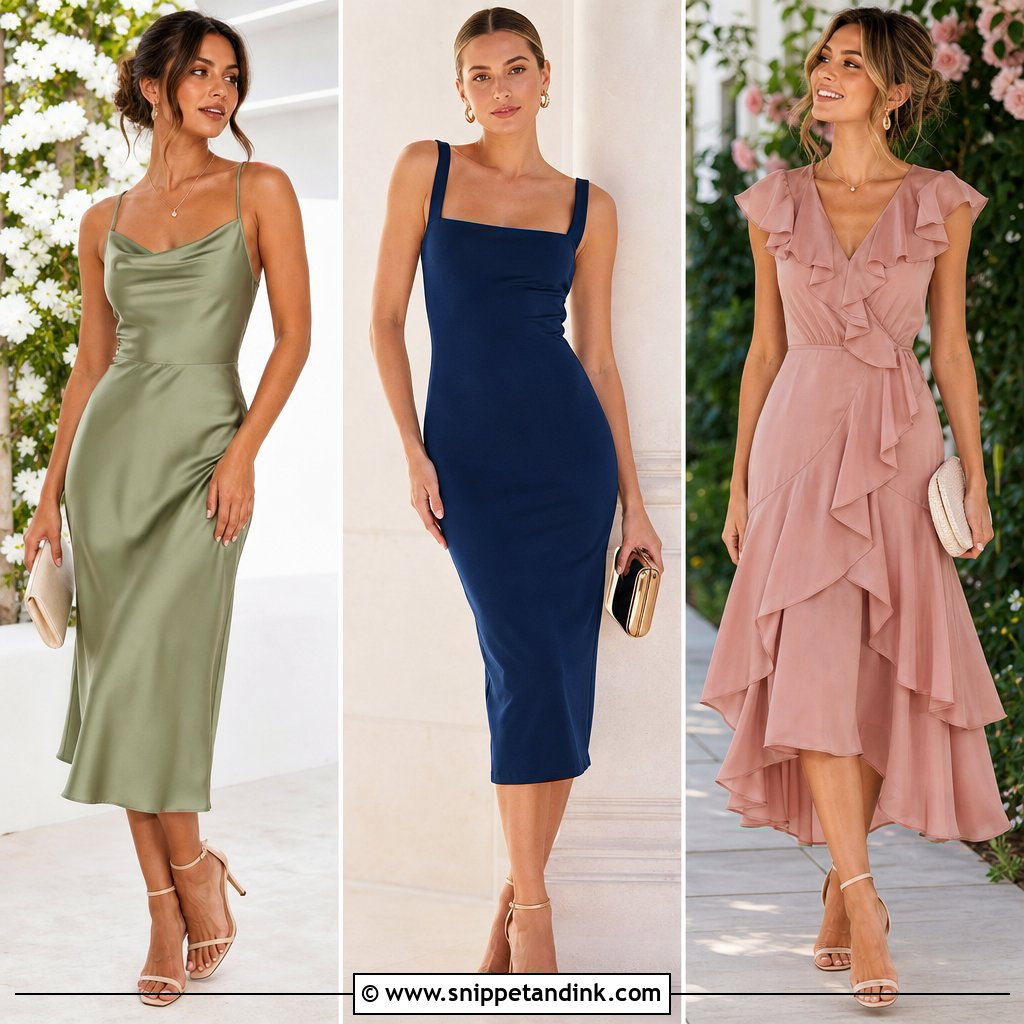
Net gives a full skirt with very little weight, which makes it a good dance lehenga. Sequins, crystals or embroidered panels catch stage lights. Midnight blue, silver, lavender, rose gold and wine all suit. A fitted blouse and soft dupatta keep it balanced. Net snags on rough jewelry and can scratch the legs if the lining is thin, so I check the inner layer. Secure heels or dressy flats for hours of dancing, statement earrings, and no heavy necklace if the blouse is worked.
16. Organza Saree For Wedding
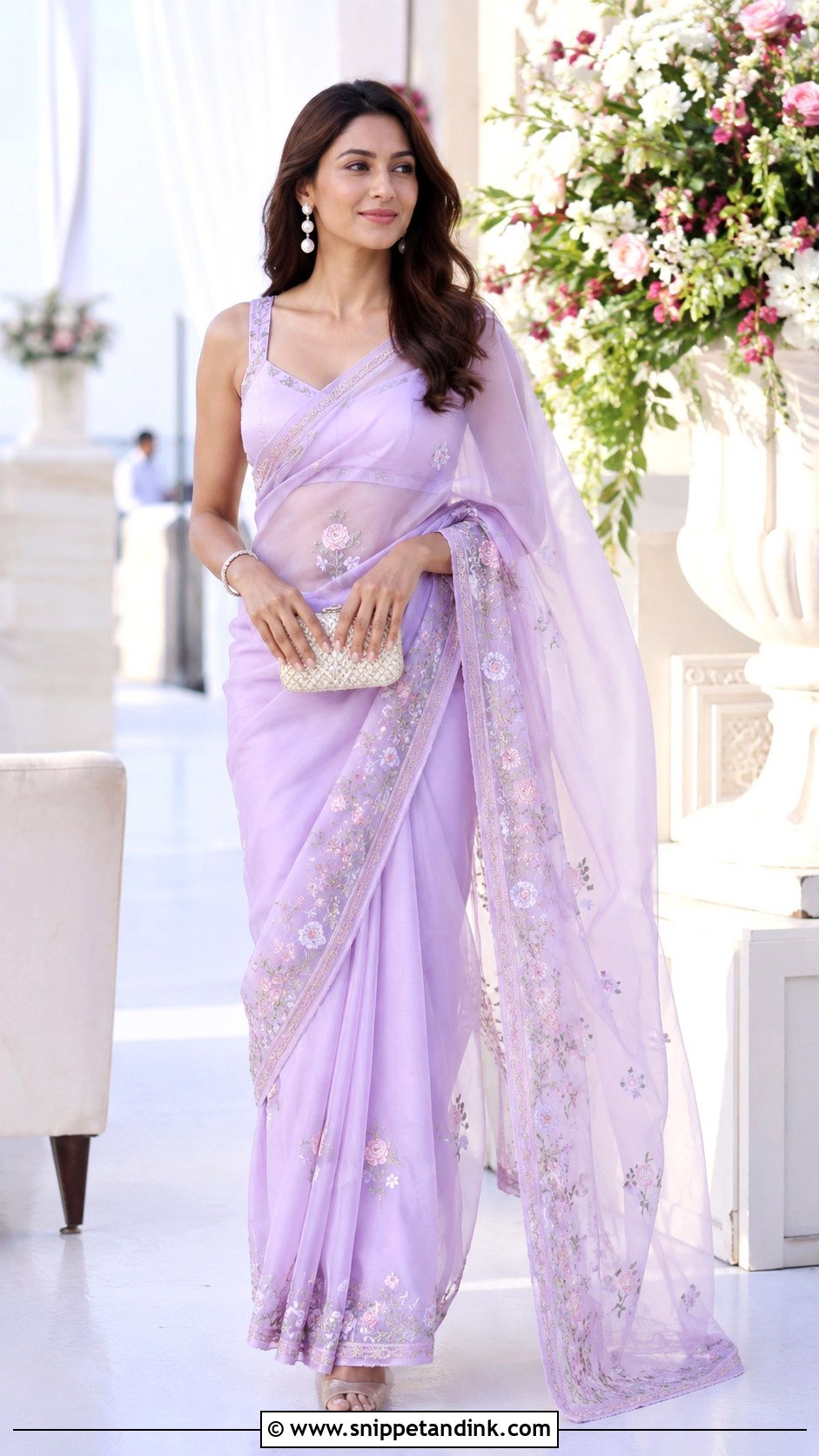
Organza is crisp and light, so the saree holds a soft shape for daytime ceremonies. Floral embroidery, scalloped borders, pearls or soft zari make it wedding-ready. Ivory, blush, pistachio, lilac and powder blue look best. Because organza is slightly stiff, the pleats don’t fall on their own; I pin them neatly and press lightly with a steamer. Pearl earrings, a slim bracelet and comfortable heels finish it.
17. Velvet Lehenga For Winter Wedding
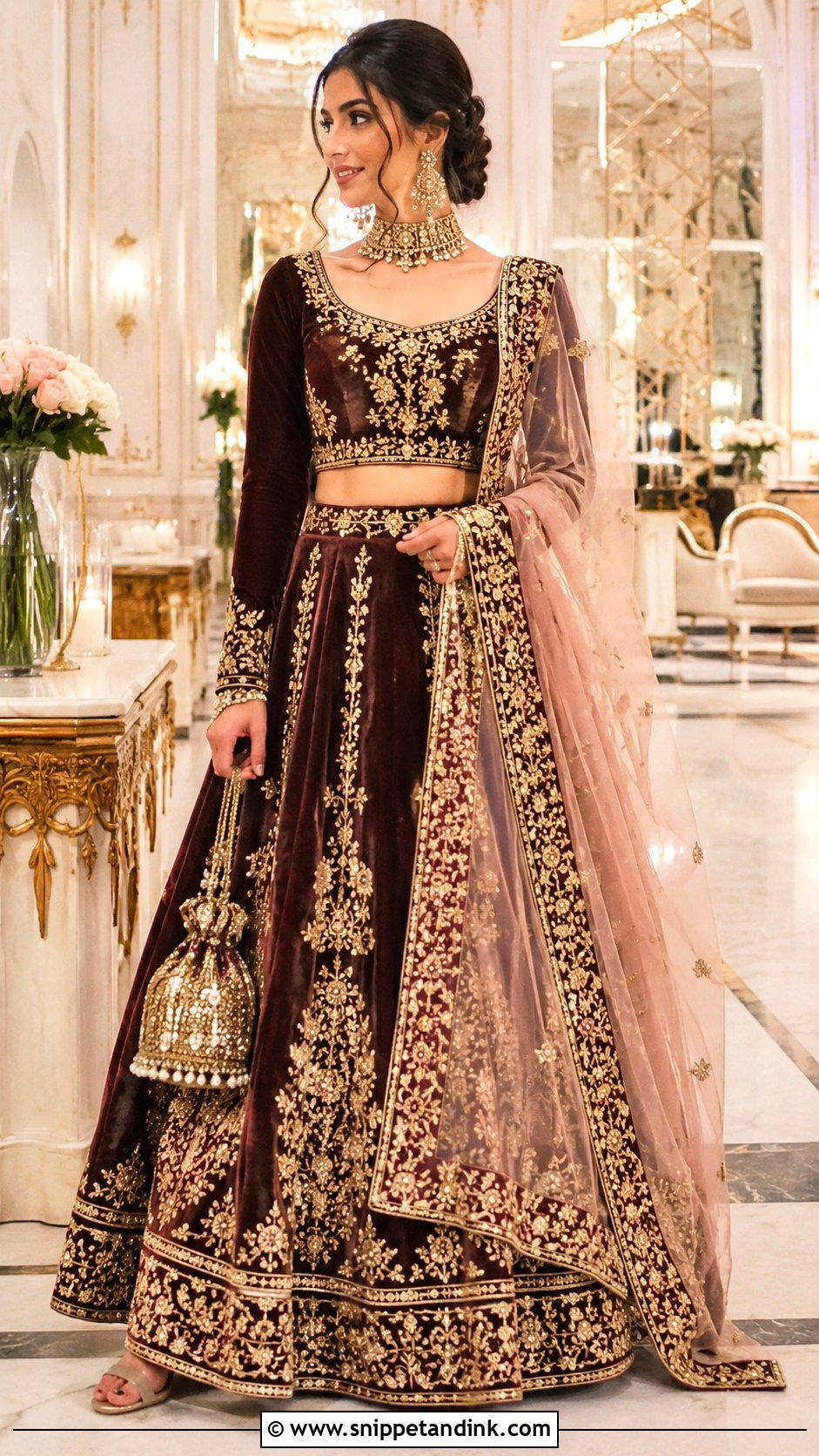
Velvet is warm and rich, which makes it right for winter evenings and wrong for a summer afternoon. Maroon, emerald, navy, plum and black look deep in velvet. Antique gold, copper or silver embroidery gives a regal finish. Velvet is heavy, so I balance it with a net or organza dupatta and a long-sleeved fitted blouse. Store it hanging, not folded, because crushed pile doesn’t fully recover. Statement jewelry and heels for an evening ceremony or reception.
18. Mirror Work Lehenga
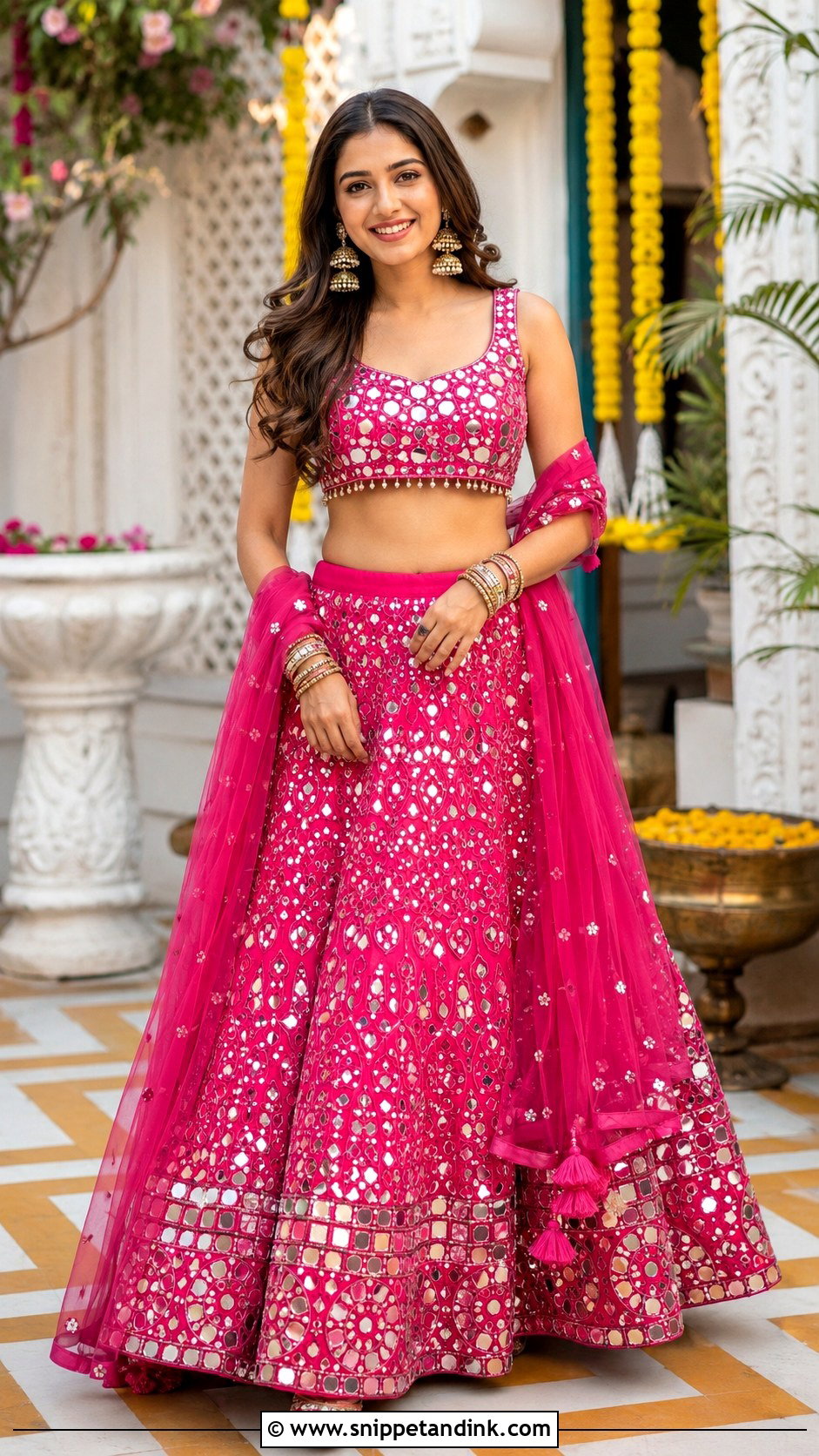
Mirrors add festive energy and reflect light around you. Yellow, orange, pink, cobalt and green look joyful for mehndi, sangeet and daytime events; ivory or pastel mirror work is softer. A simple blouse shape is best because the embellishment already stands out. Mirror-heavy skirts weigh more than you expect and the raised edges can catch on dupattas, so pair it with a light one. Juttis and hoops or jhumkas finish it.
19. Chikankari Lehenga
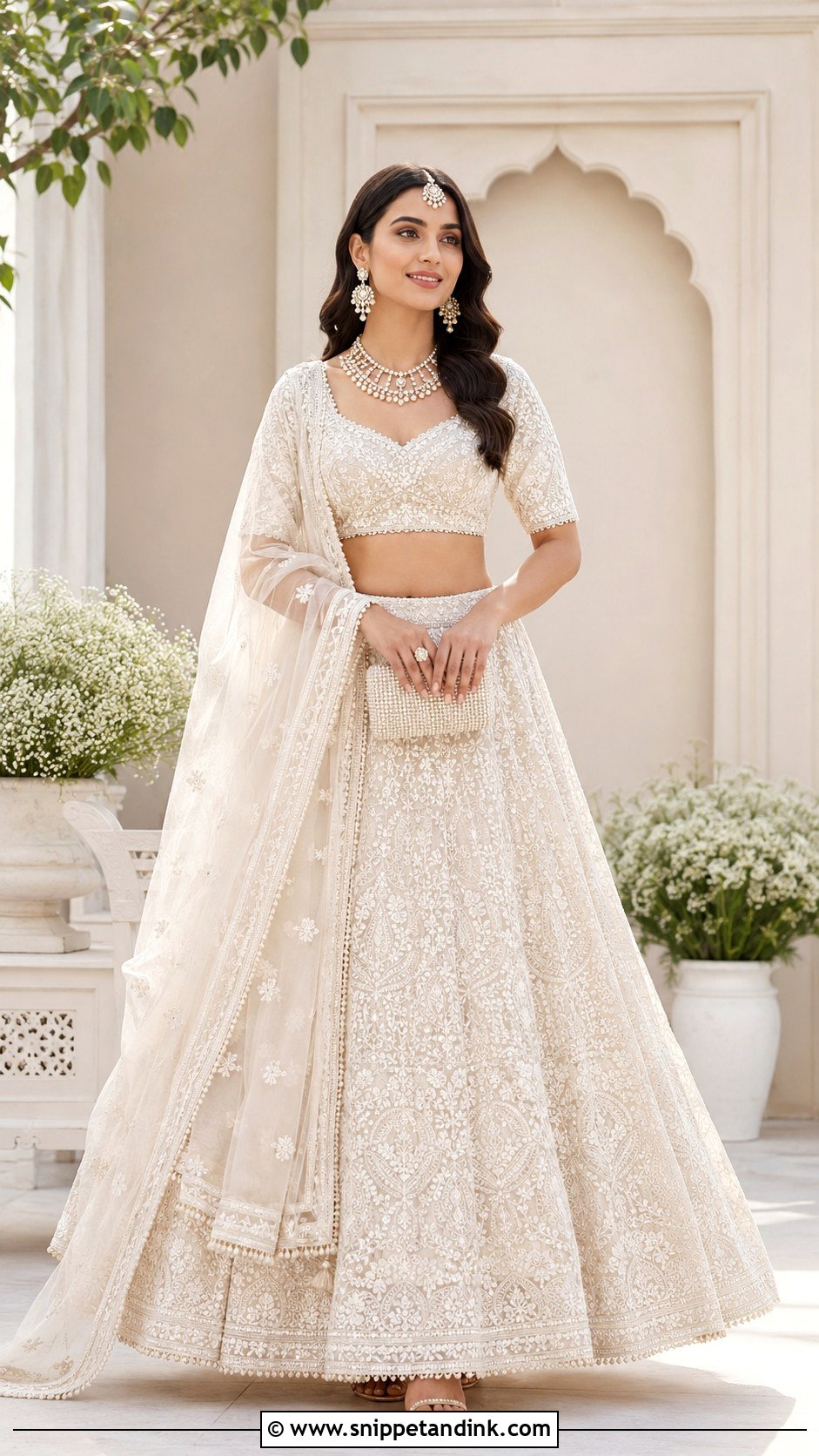
Chikankari is hand embroidery from Lucknow, worked in fine white or tonal thread, and it reads as quiet craftsmanship rather than shine. It suits engagements, daytime weddings and small ceremonies. Ivory, blush, mint, powder blue and pale yellow are common; deeper colours with tonal work are less expected. Real hand chikankari has small irregularities, which is how you tell it from machine work. A fitted blouse, sheer dupatta and pearl, polki or kundan jewelry suit it. Keep shoes and bag understated.
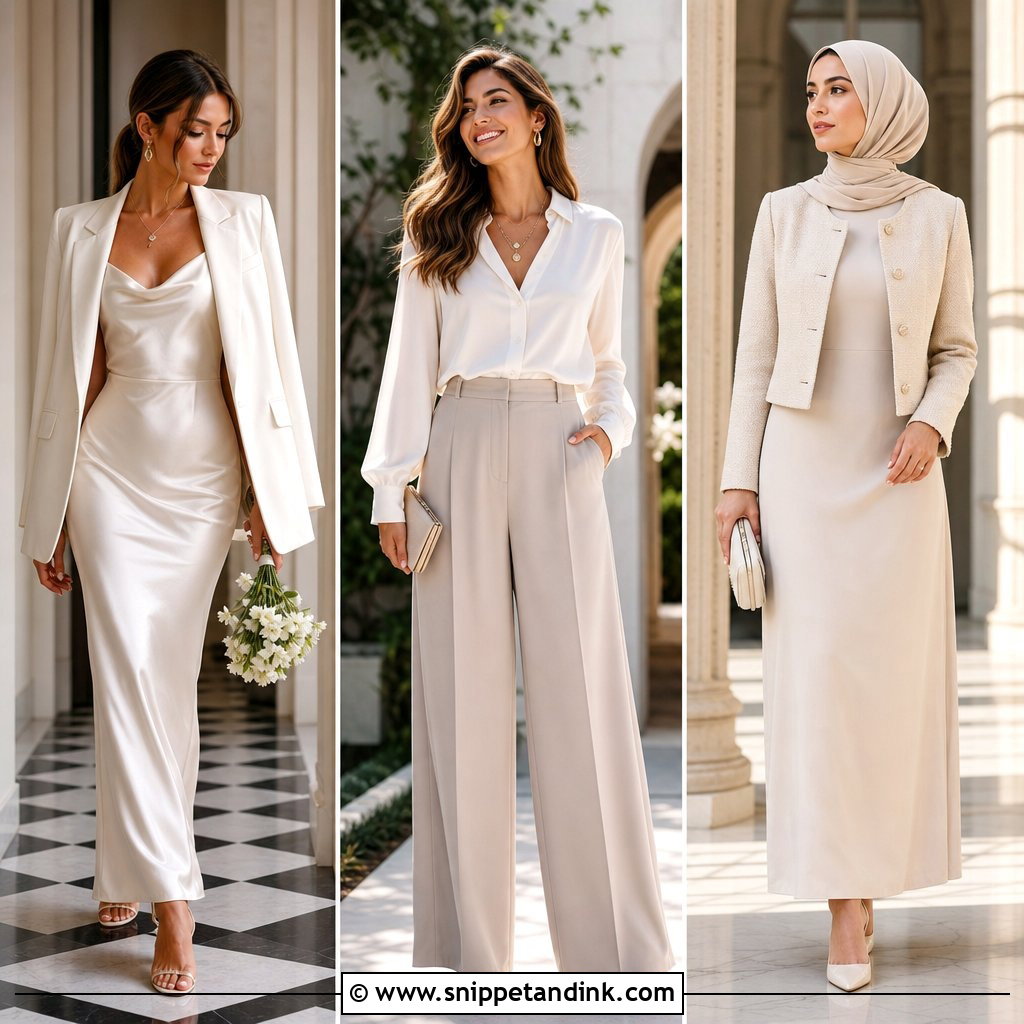
20. Ruffle Saree
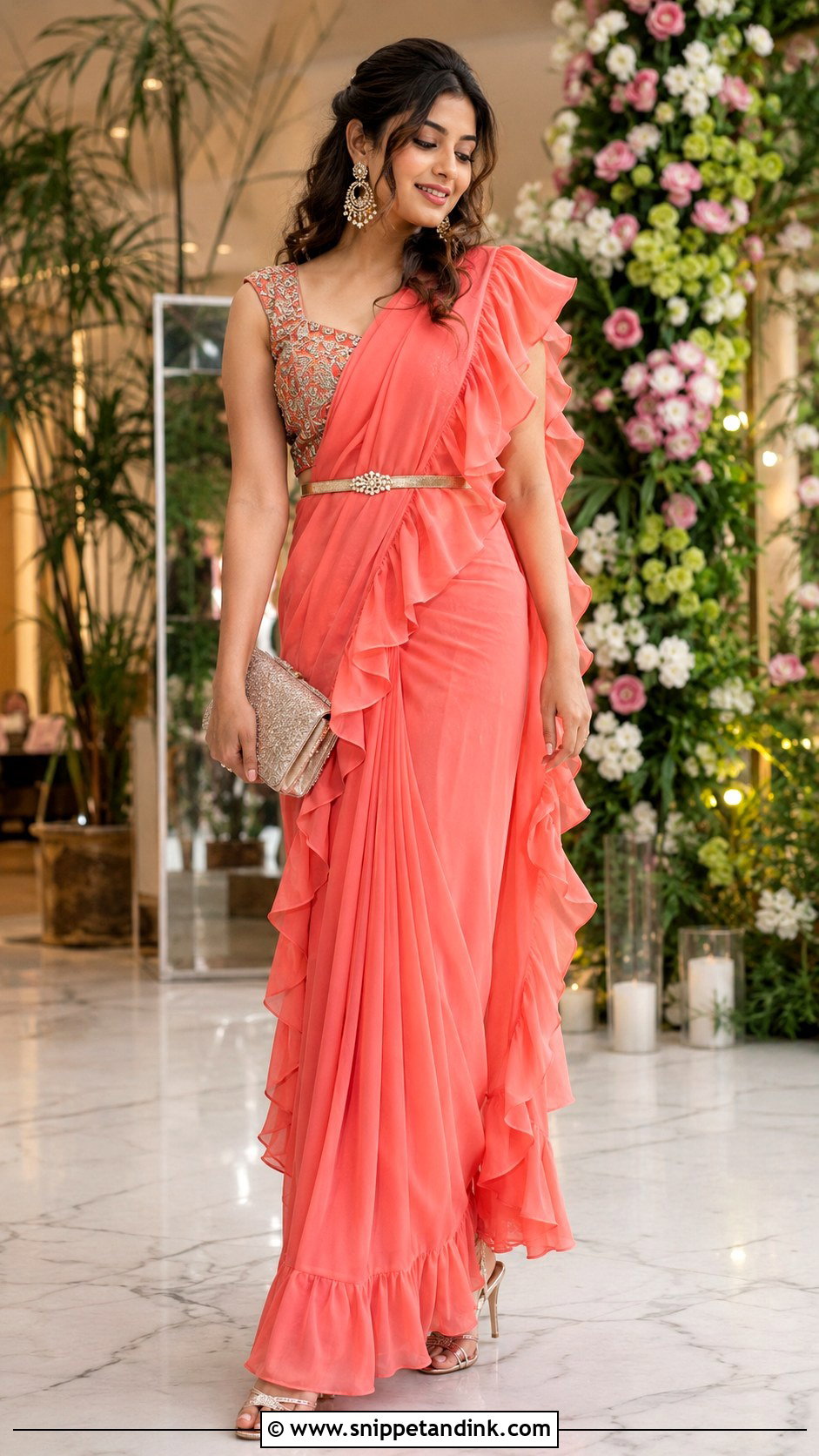
A ruffle saree is usually partly pre-stitched, so it’s an easy drape for first-timers. The ruffled border adds movement; georgette, chiffon and crepe let the ruffles fall softly. A belt defines the waist and holds the drape. Coral, lavender, emerald, ivory and metallics all work. Long ruffles catch on heels, especially on stairs, so I’d check the hem length in your actual shoes. A statement blouse and earrings for an engagement, reception or sangeet.
21. Printed Anarkali Dress
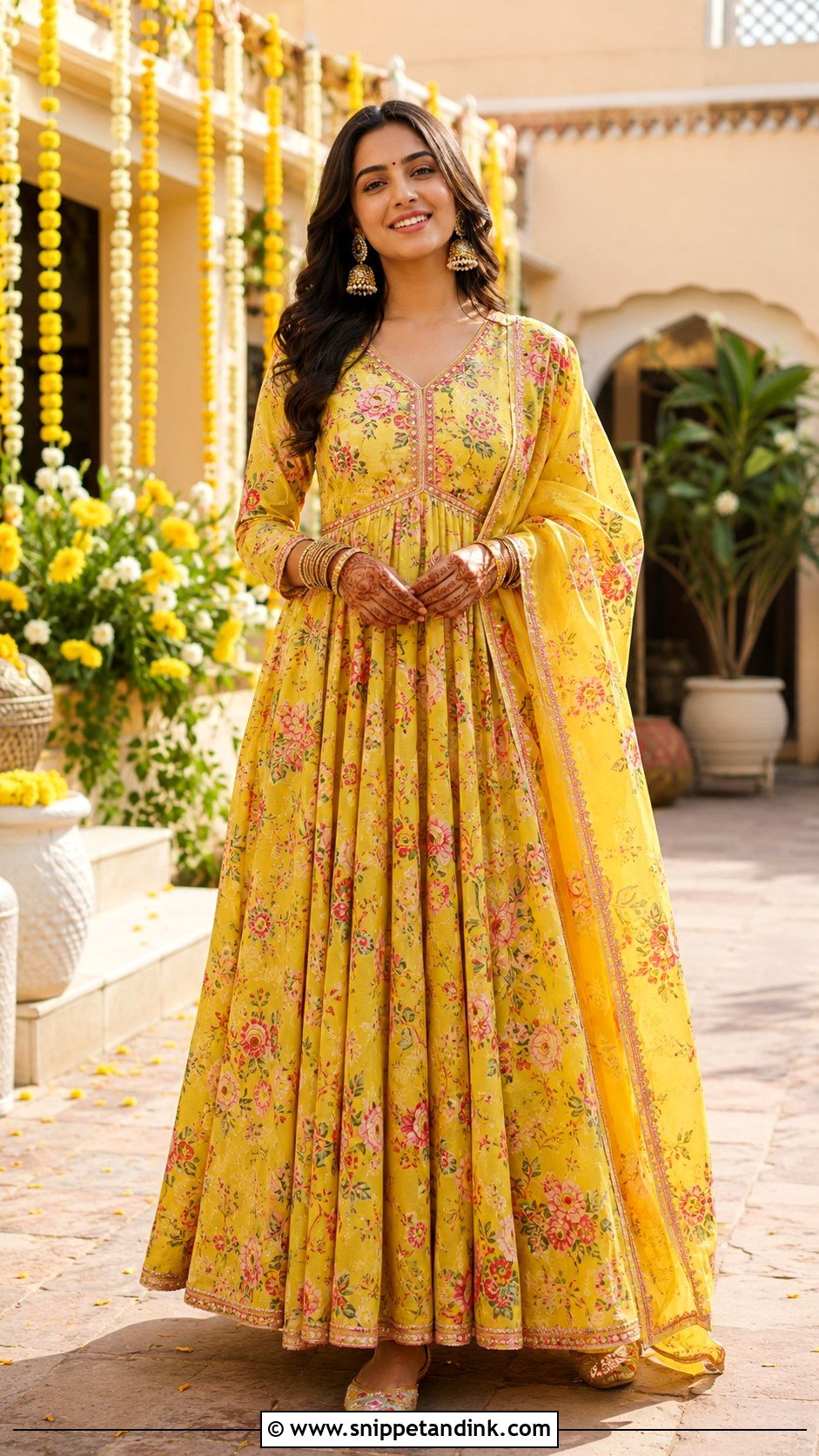
A printed Anarkali is the comfortable choice for mehndi, haldi and daytime family events. Block prints, florals, bandhani, leheriya and paisley all feel traditional. Cotton silk, georgette, muslin and chanderi suit different seasons. Cotton and muslin breathe best outdoors but crease quickly, so steam them the morning of. A matching dupatta, earrings, bangles and juttis complete it without any embellishment. A small bindi finishes it.
22. Kurta With Skirt
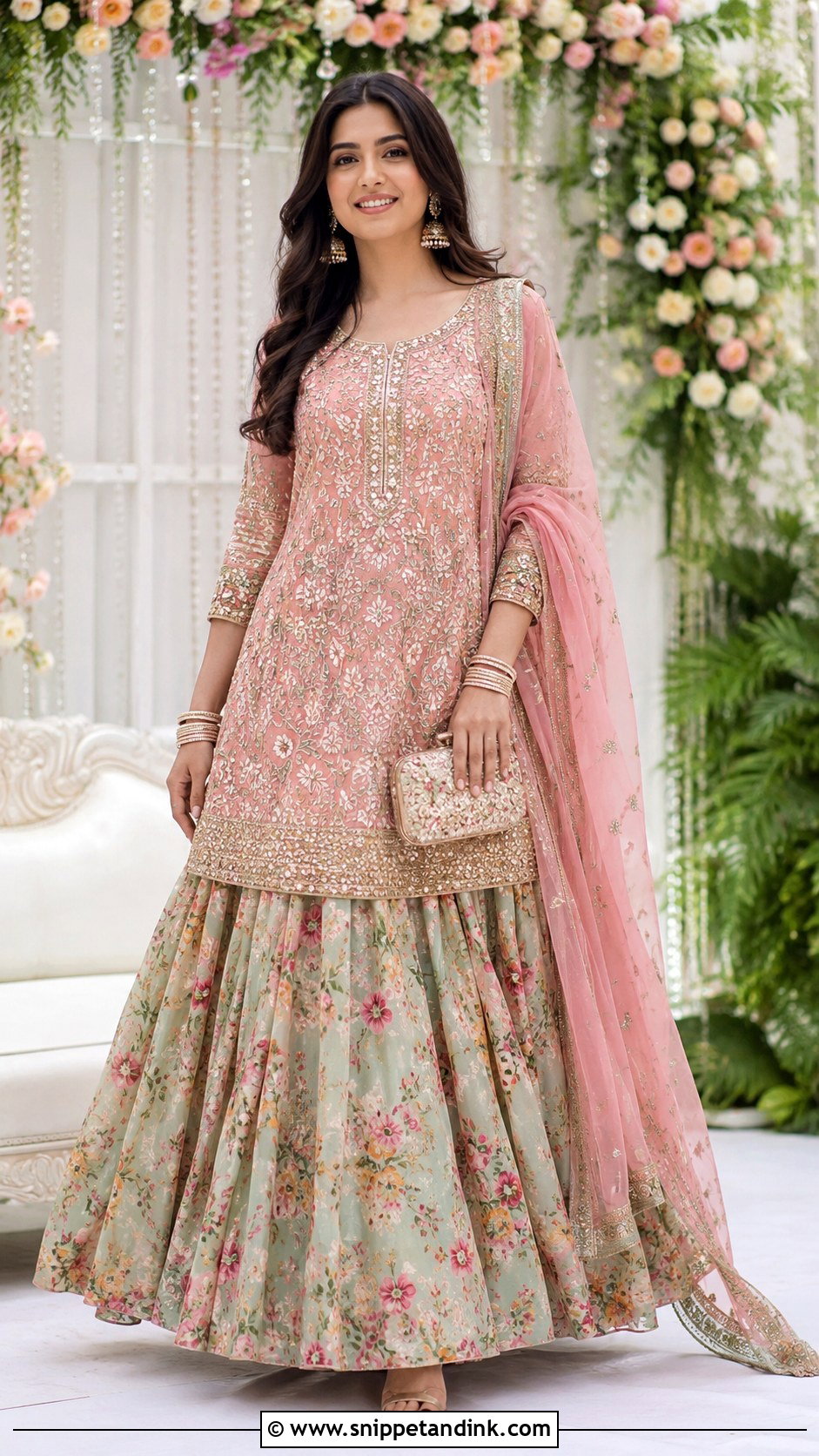
A kurta with a skirt is the lighter cousin of the lehenga. A long embroidered kurta over a flared skirt looks graceful; a short kurta with a printed or embellished skirt looks younger. Add a dupatta for a traditional event. Silk, cotton silk, georgette and chanderi all work. Because the kurta covers the waistband, the skirt can have an elastic or drawstring waist, which is much kinder for a long day. Jhumkas, bangles and dressy flats suit mehndi, haldi and engagement parties.
23. Dhoti Pant Set For Wedding
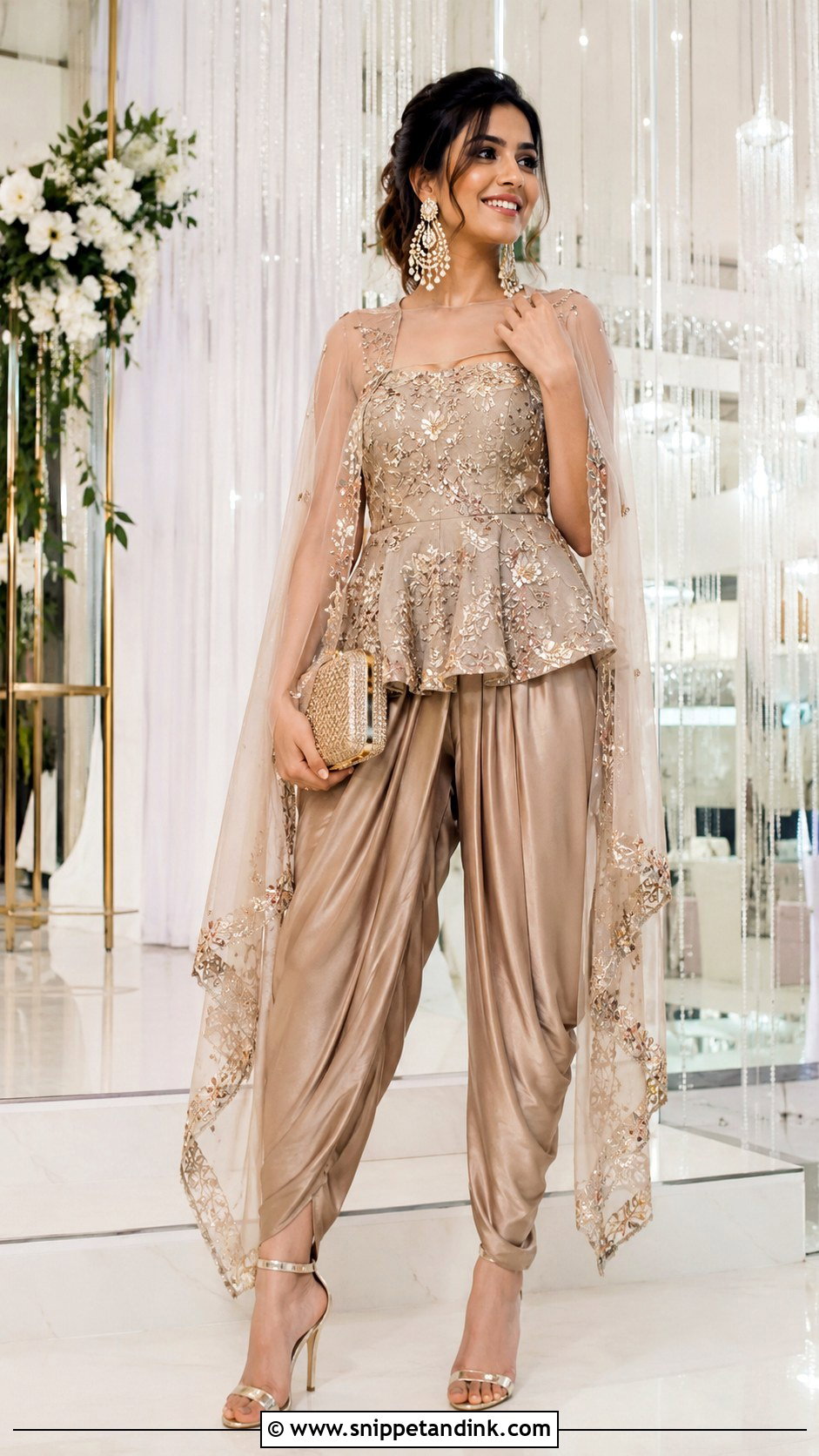
A dhoti pant set gives a fusion look that moves very freely. Draped dhoti pants pair with an embroidered kurta, peplum, cape blouse or jacket. Silk, crepe, georgette and satin blends keep it polished; jewel tones, metallic accents or mirror work make it wedding-appropriate. The drape adds volume at the hip, so I balance it with a fitted top. Statement earrings, heels and a clutch suit sangeet, mehndi or a reception.
24. Peplum Sharara Set
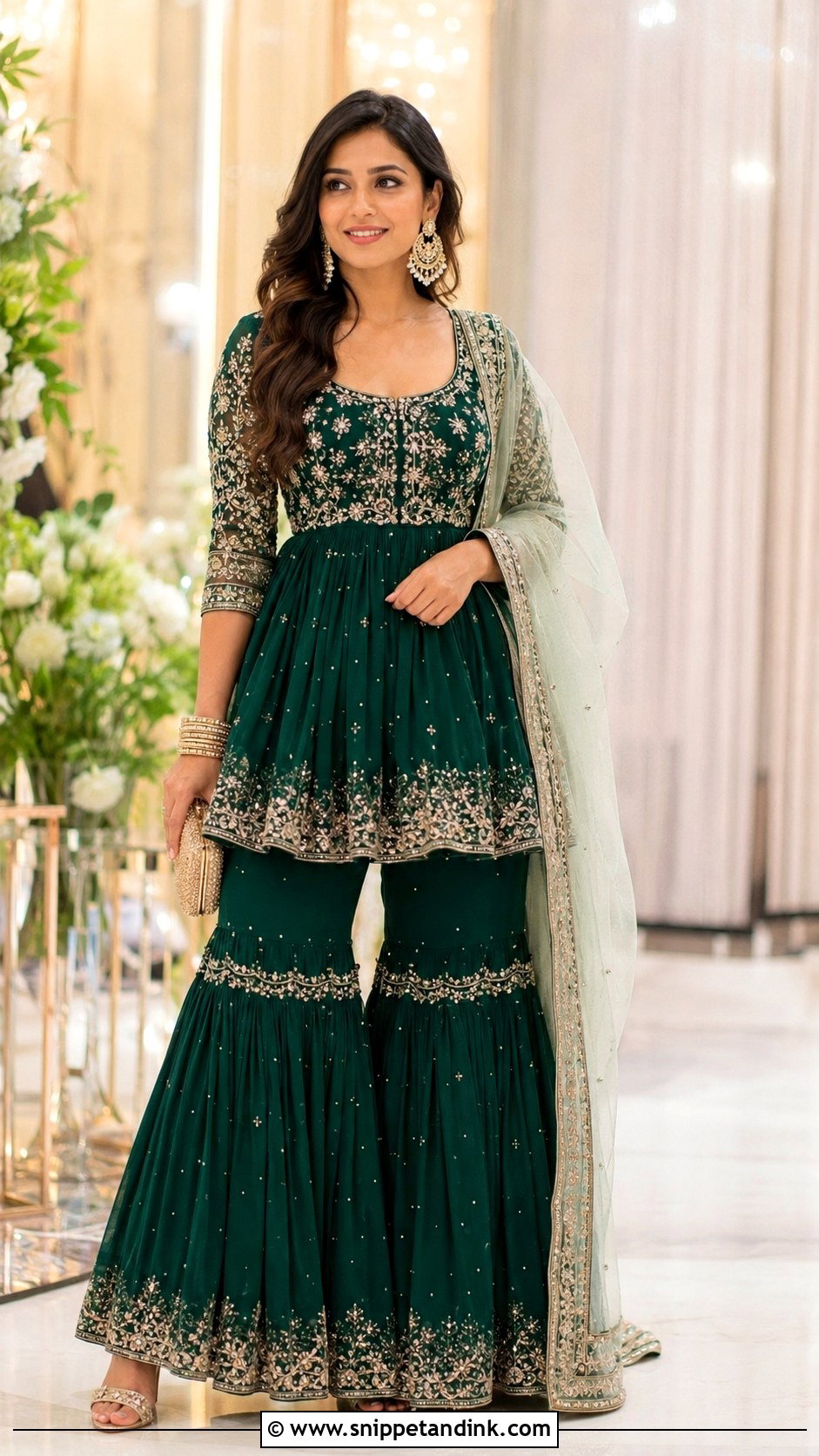
A peplum sharara set pairs a structured top with an easy bottom. The peplum defines the waist; the sharara adds flow. Embroidery, mirror work, gota patti or sequins depending on the event. Bright shades for mehndi; pastels and jewel tones for receptions or engagements. Peplum length matters on shorter frames; a peplum ending just below the waist keeps your legs looking long. A light dupatta softens it, with earrings, bangles and heels or flats.

25. Pre Draped Saree
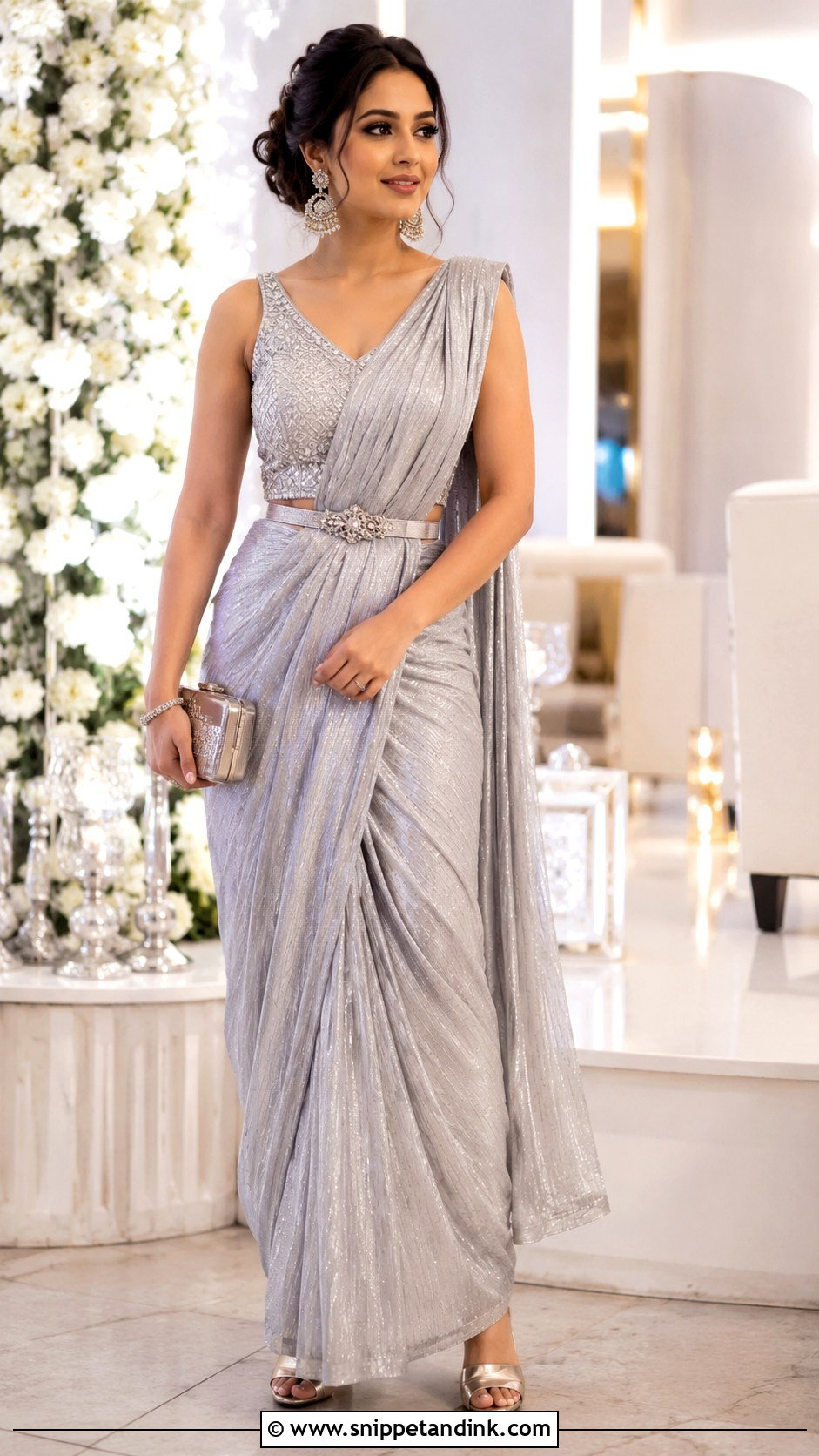
If you’ve never worn a saree, start with a pre-draped one. Stitched pleats, attached pallus, belts or built-in drapes stay secure through long events. Satin, crepe, georgette or sequins depending on formality. A pre-draped saree is cut for a set length, so try it on with the heels you’ll wear. Pair it with a blouse, statement earrings and a compact clutch for receptions, engagement parties and destination weddings.
If You’ve Never Worn a Saree Before
A saree looks hard because the first drape usually is. With a bit of practice, it isn’t. I’d do one full practice drape at home a week before the wedding, in the actual saree, petticoat, blouse and shoes.
What makes the first drape easier
- Wear your heels before you start; the saree length is set by them.
- Tie the petticoat firmly at the waist; it holds the whole drape.
- Make the pleats on a bed or table, then lift them and tuck them in together.
- Pin the pleats in place under the waistband and the pallu at the shoulder.
- Walk, sit and climb a step before you leave the house.
Expect it to take longer than you planned the first time. If the saree is heavy silk or you’re nervous, book a draper for the morning; many salons and makeup artists can arrange one. A pre-draped saree or a pre-stitched pleat set is a perfectly good shortcut.
Wear Something You Can Celebrate In
Picking an outfit gets easier once you match it to the event, your comfort and the setting. Lehengas feel grand at ceremonies and sangeets; sarees suit receptions and rituals. Anarkalis, shararas, ghararas, palazzo suits and Indo-Western pieces give you festive style with easier movement. Pay attention to fabric, season, colour and accessories so the whole look feels balanced. Above all, wear something you can celebrate in. A good Indian wedding outfit is respectful, comfortable and recognisably yours.
You'll Like These Ideas:


Leave a Reply