
Lace adds texture and personality to almost any bridal shape, which is why I pull it for brides who swear they don’t want lace and end up in it anyway. The twenty dresses below run from classic gowns to modern cuts, vintage details and relaxed designs for different venues, seasons and bodies. Designers keep finding new partners for lace: corset bodices, sculpted waists, detachable overskirts and much cleaner silhouettes than the heavily patterned gowns of a decade ago. My rule when styling any of them is that the dress comes first. Look at the lace pattern, neckline, skirt volume and train, and only then choose the veil, shoes and jewellery. Cathedral, garden, beach or a small city venue, each look here is styled from head to toe.
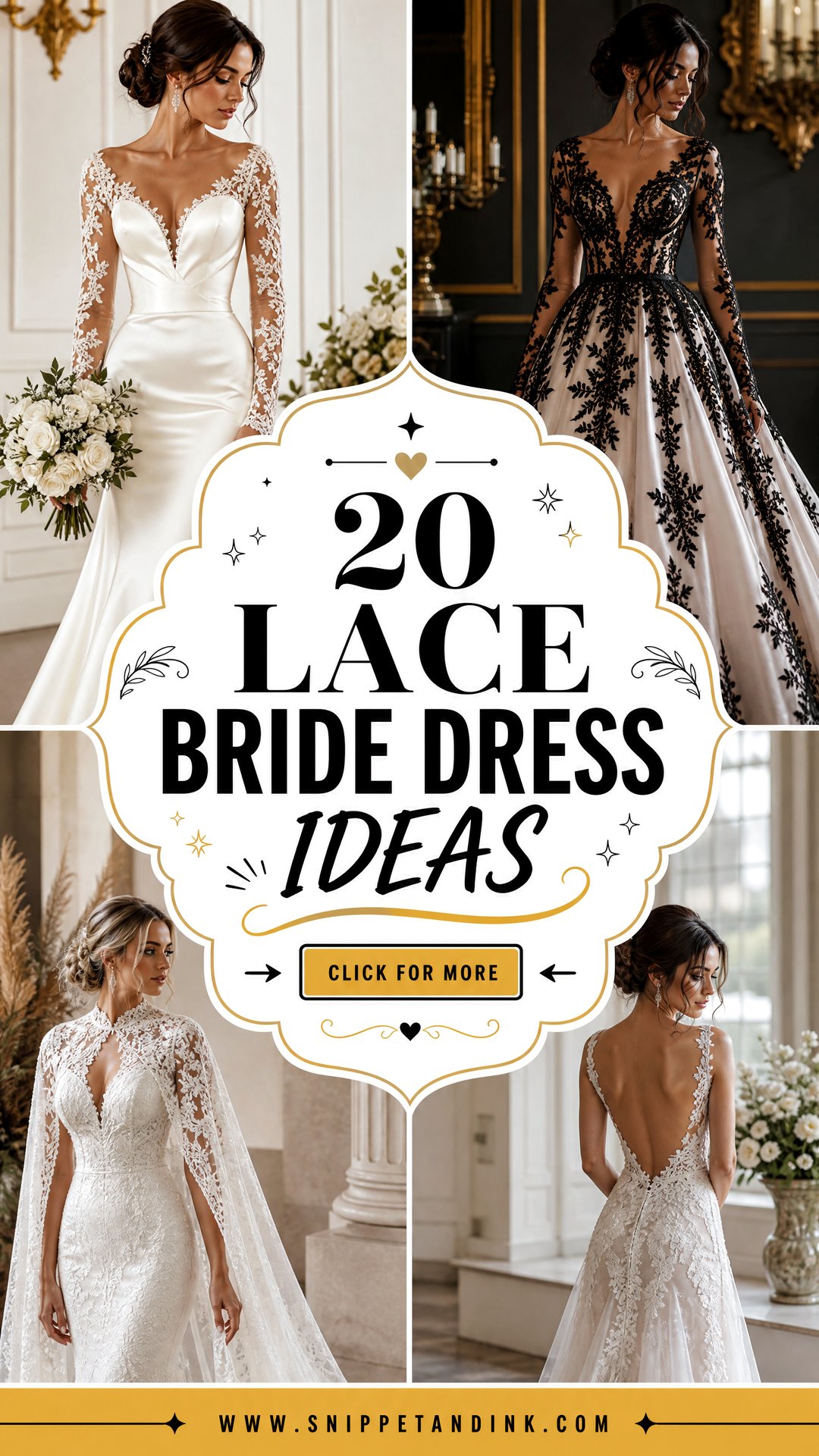
Your Veil Edge Should Agree With Your Lace
The veil sits right on top of the lace in most photographs, so it’s the accessory most likely to clash with your gown. I decide on the edge before anything else.
- Plain cut edge: the safe choice for any gown with heavy or allover lace. It lets the dress stay the focus and never competes with the pattern.
- Lace-edged veil: works when the gown’s lace is quieter or limited to the bodice. Ask whether the bridal shop can source trim from the same lace family, or use offcuts from your own hem.
- Scattered appliqués: lovely over a plain skirt, but on a lace skirt they turn into visual noise from behind.
- Ribbon or horsehair edge: gives a crisp outline in photos and pairs well with satin-and-lace combinations.
Colour matters as much as pattern. Veil tulle comes in white, diamond white, ivory and light ivory, and ivory tulle beside white lace looks dingy. Hold the veil fabric against the gown near a window before ordering. Finally, check the comb placement: a heavy lace-edged veil pulls on fine hair, so your hairstylist may want to anchor it lower.
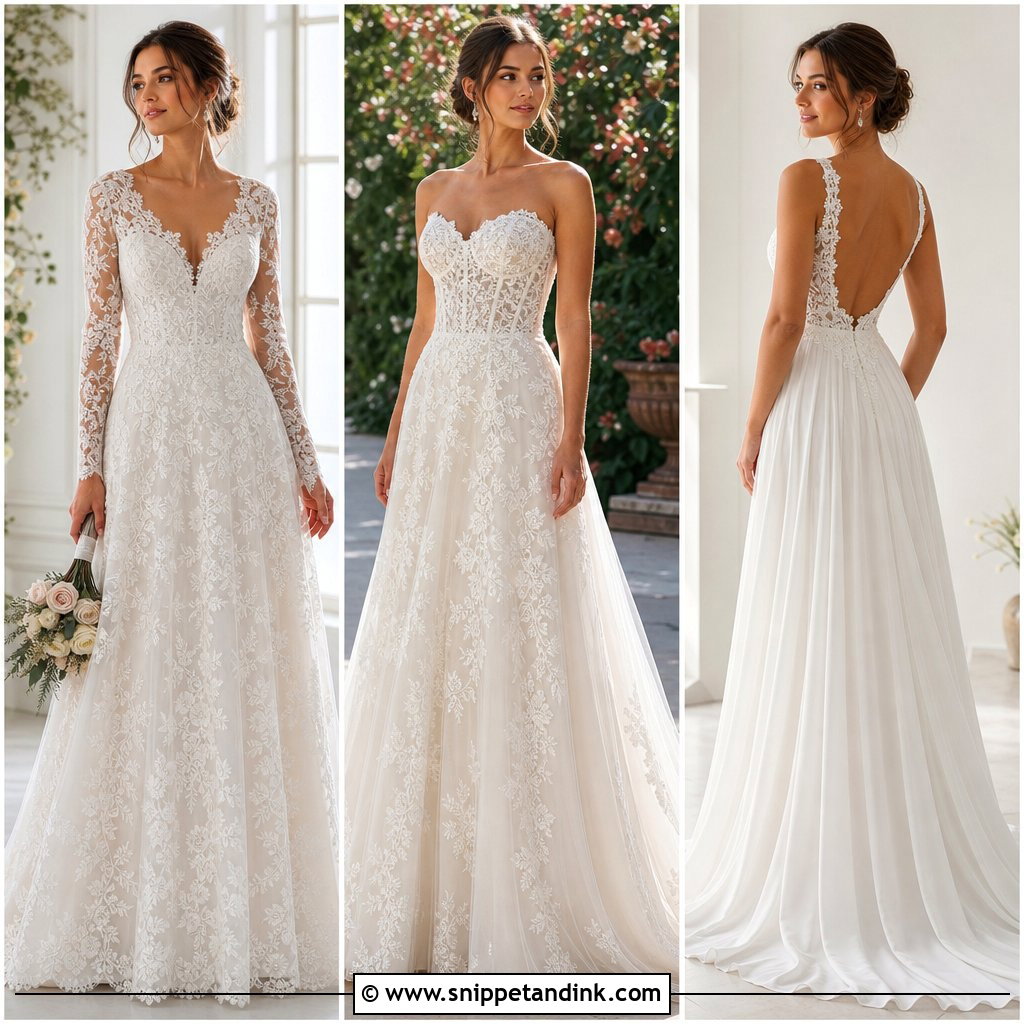
1. Long Sleeve Lace A-Line Wedding Dress
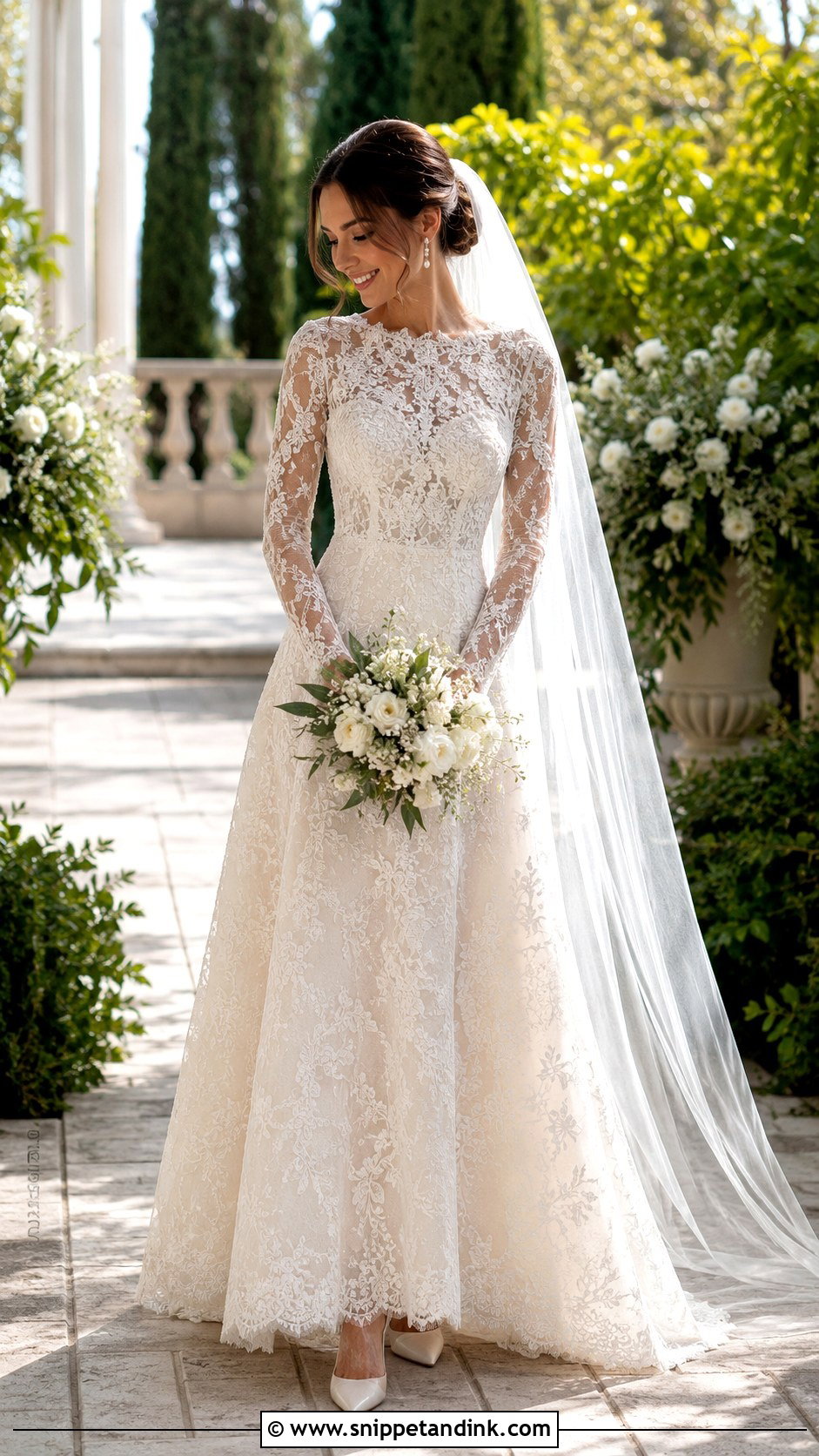
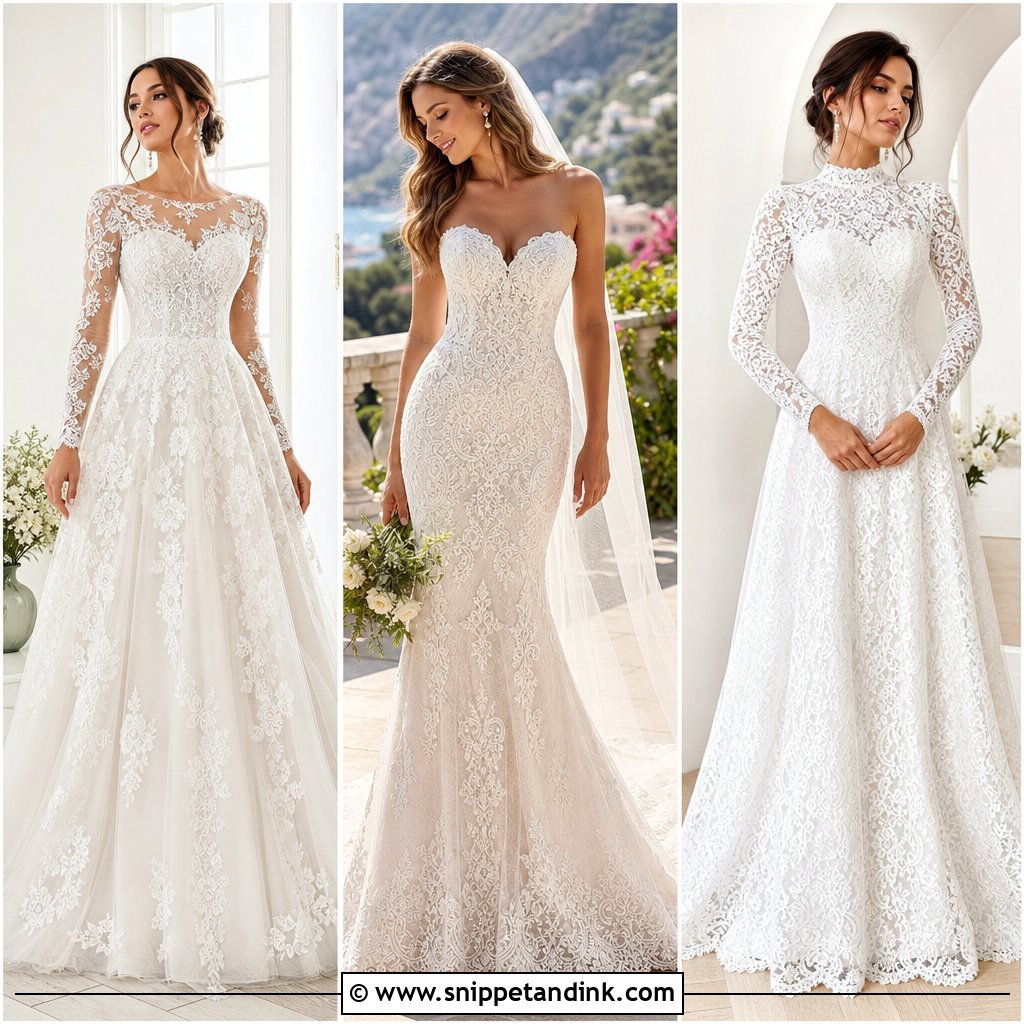
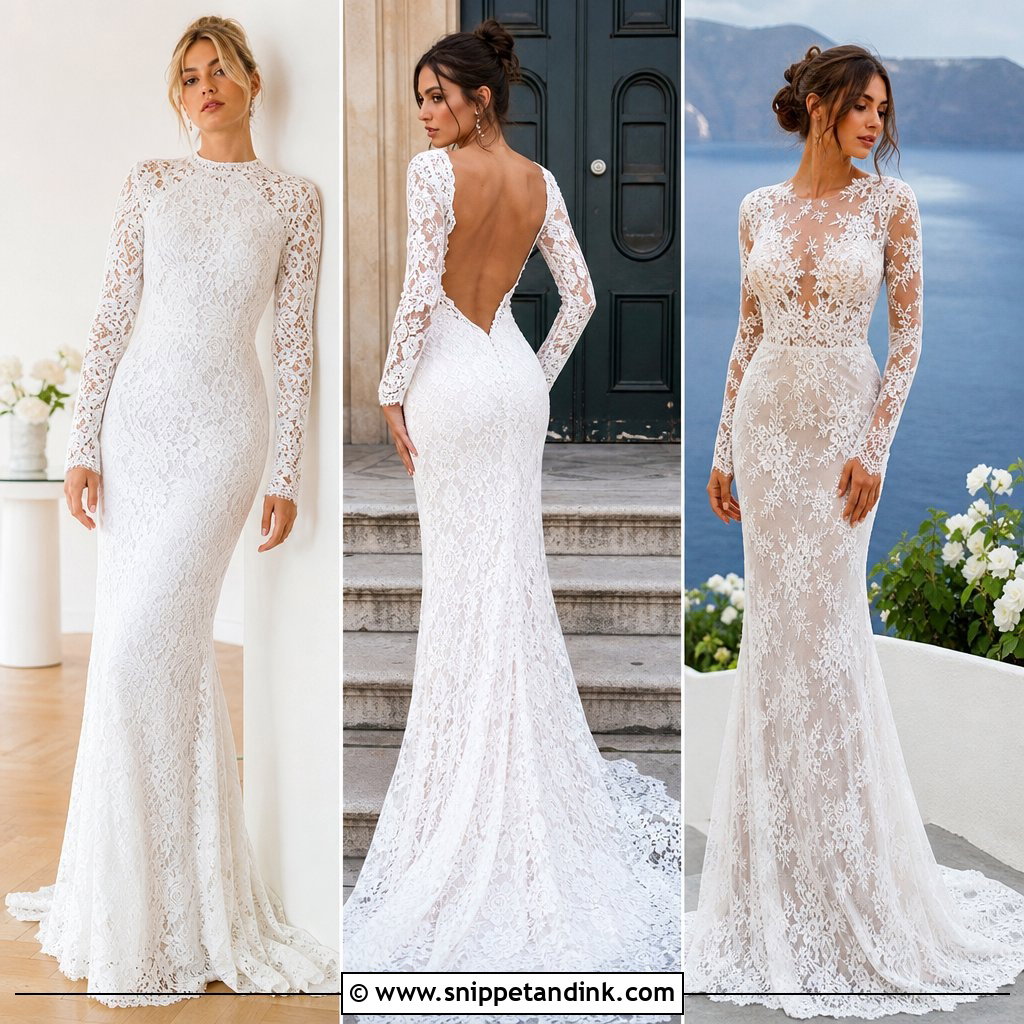
Long sleeves on an A-line give coverage without weight, as long as the lace is fine and the lining light. Delicate floral lace over a thin ivory lining lets the skirt swing when you walk. A fitted bodice and soft V keep the top half open. Pearl drops, an airy fingertip veil and pointed ivory pumps with a mid heel finish it, with a small white-and-green bouquet. Autumn through early spring is its season. One detail I always check on sheer sleeves: the lining in the bodice should be close in colour to the sleeve mesh, or the sleeves look like they were added later.
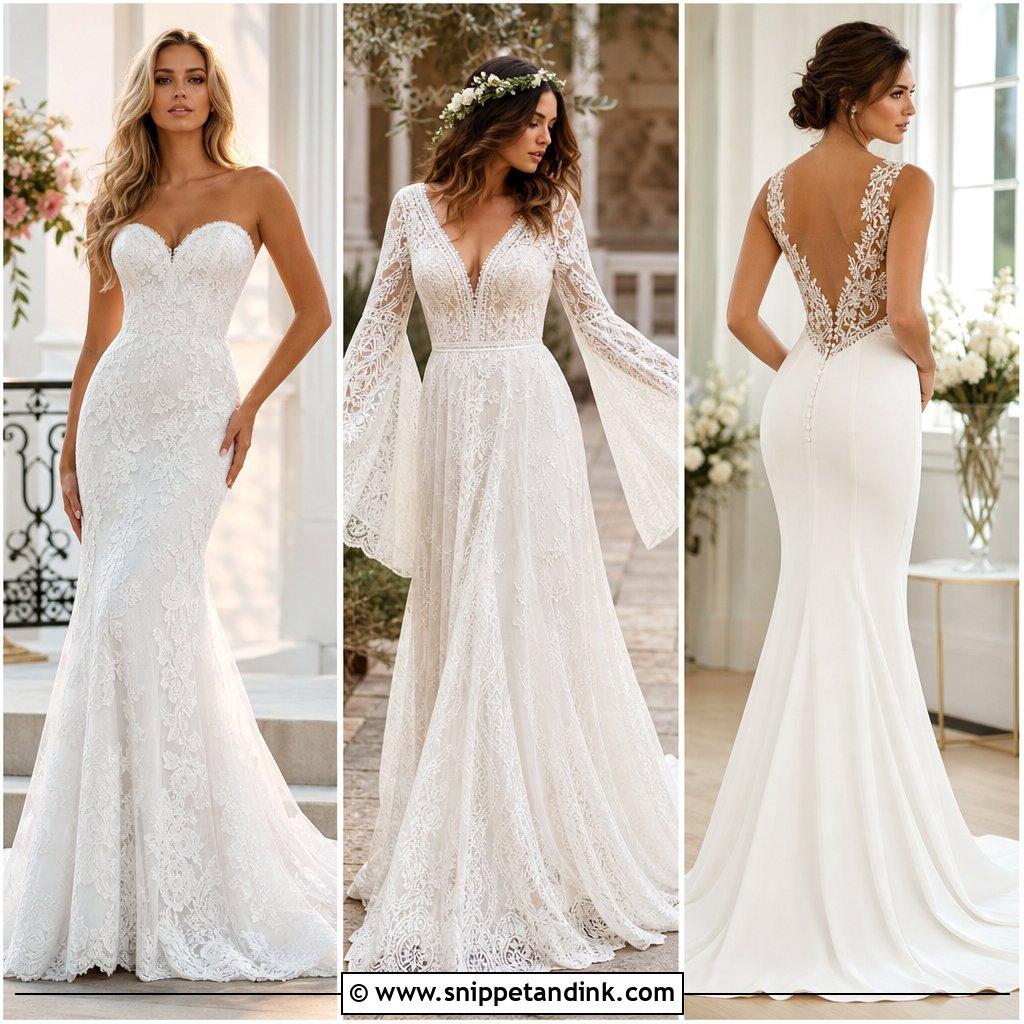
2. Strapless Lace Ball Gown Wedding Dress
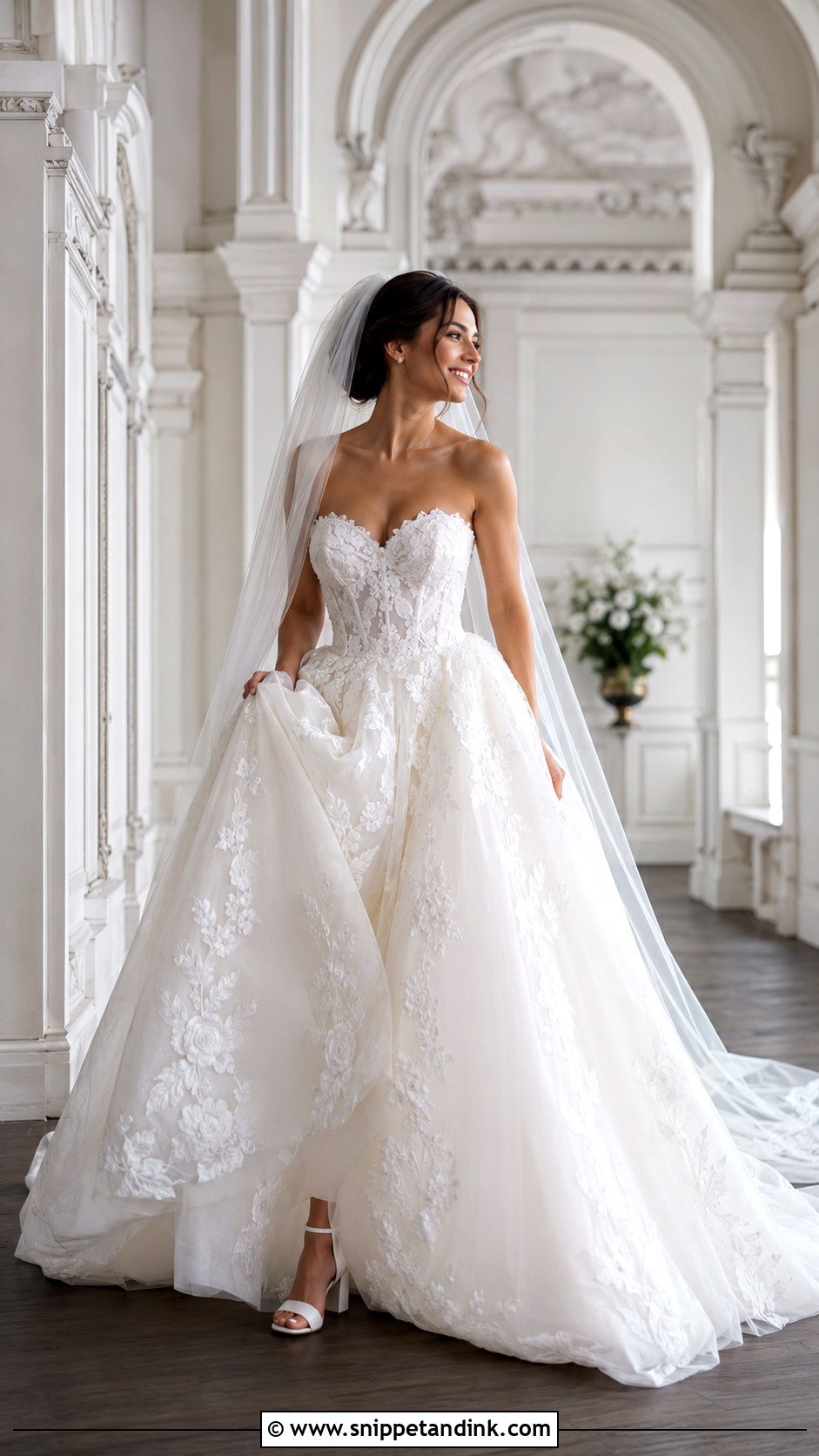
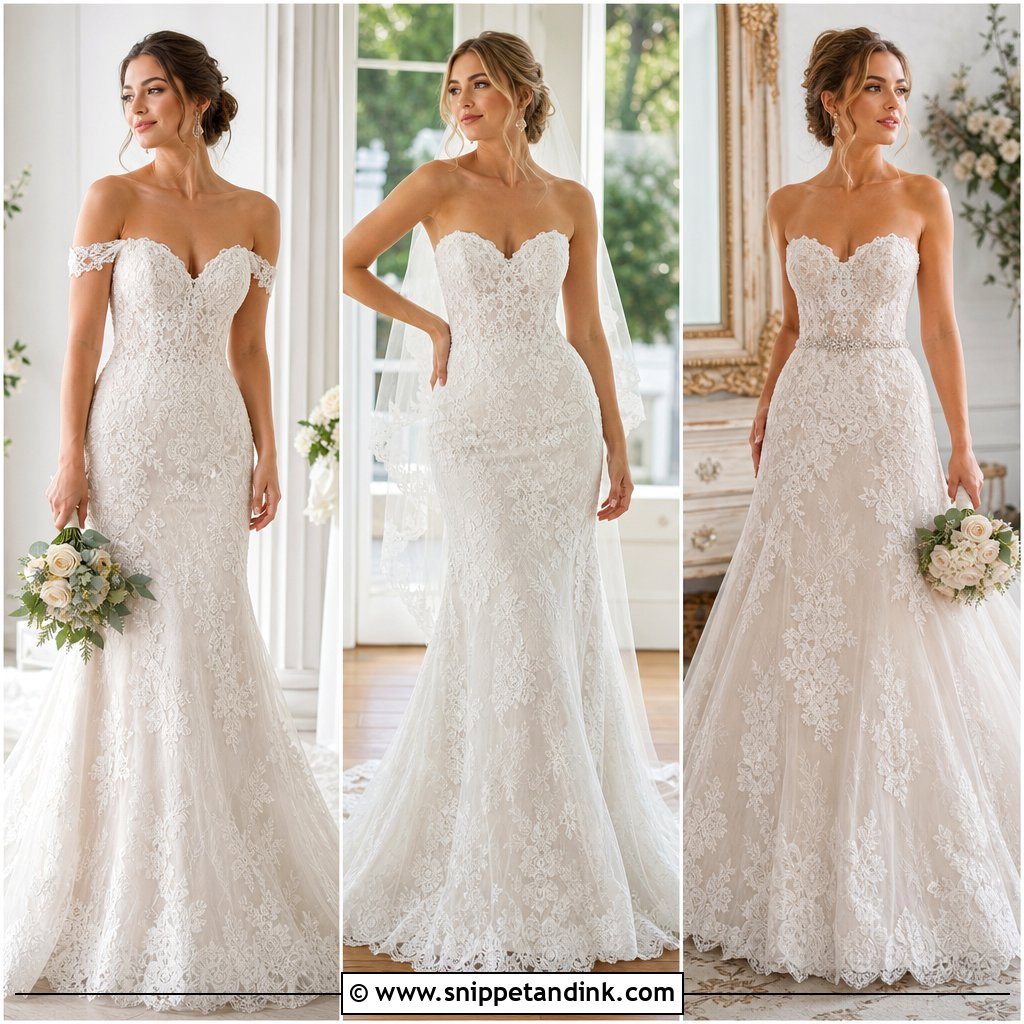
A strapless lace ball gown is all entrance. A sweetheart or softly curved neckline frames the shoulders while internal corsetry does the holding up and sets a clean waist. The lace should spread gradually from the bodice into the skirt; lace that stops dead at the waist cuts you in half visually. Cathedral veil, crystal studs, satin block heels hidden under the hem and a polished low bun complete it. Leave the big necklace at home, because the gown has enough going on. A compact bouquet and one meaningful bracelet or ring are plenty.
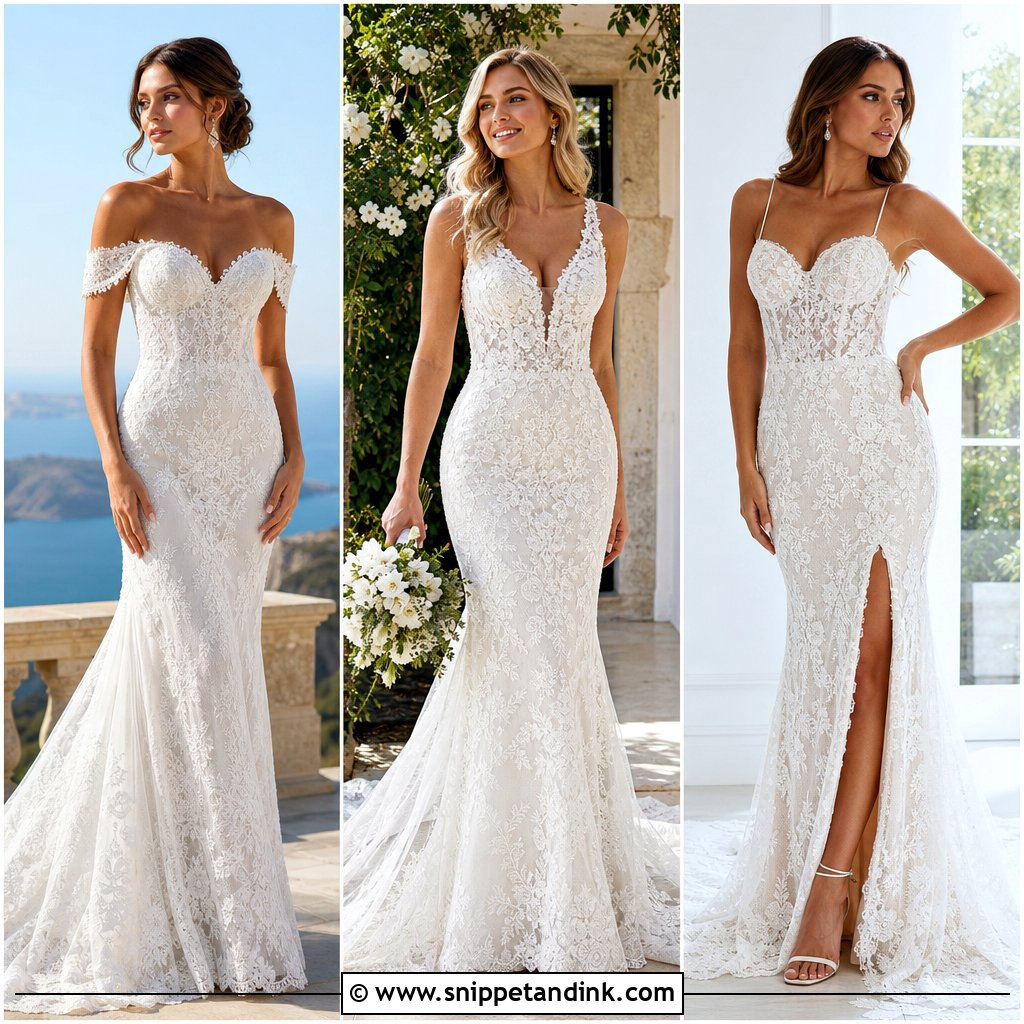
3. Mermaid Lace Wedding Dress With Cathedral Veil
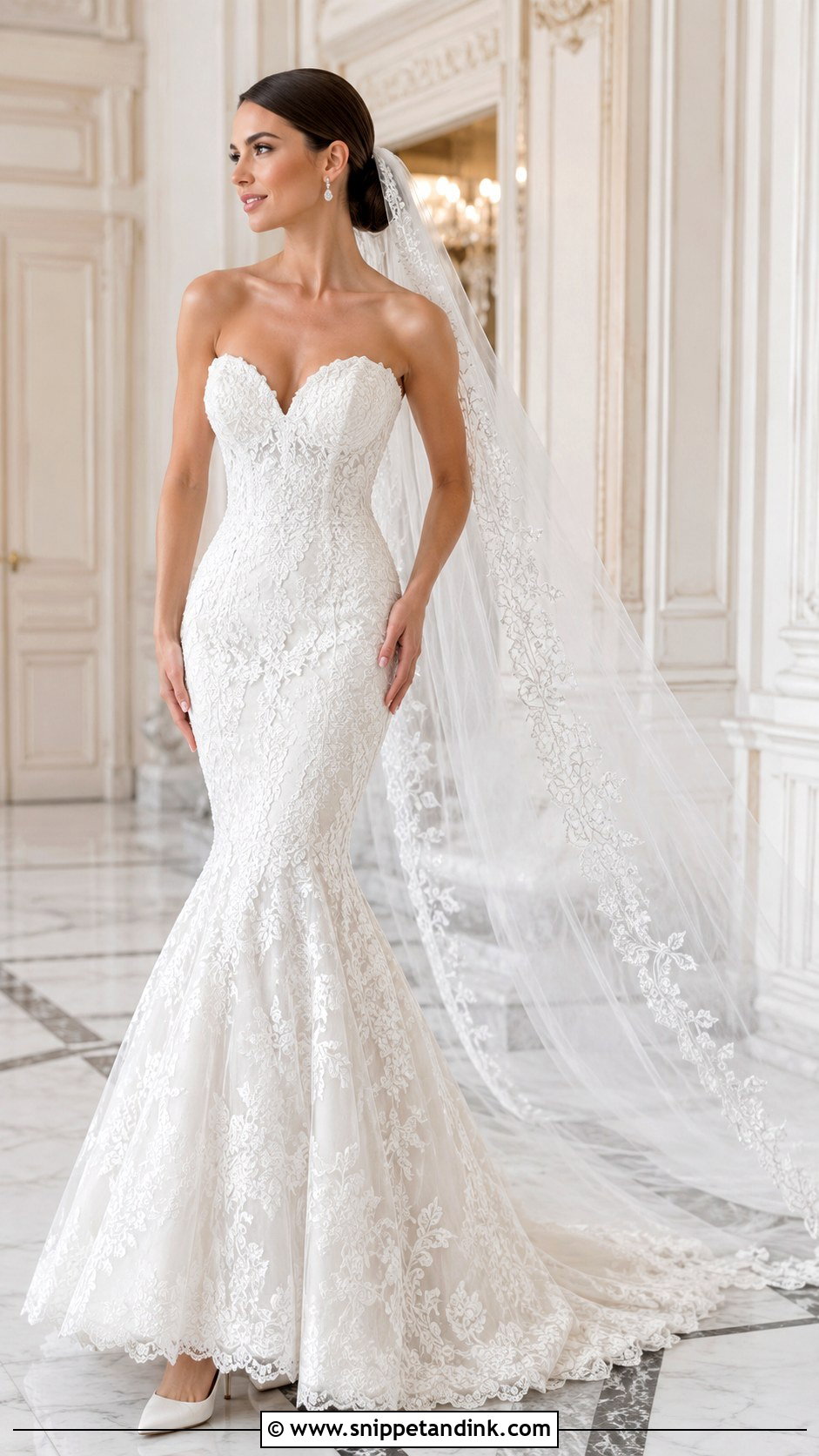
Mermaid lace works best when the pattern follows the body down into the flare, so the skirt doesn’t look like it belongs to a different dress. Choose a sweetheart, scoop or V bodice for the coverage you like. A cathedral veil softens the fitted cut, and if its border repeats the gown’s lace motif, the whole look ties together. Pointed pumps, small diamond or crystal studs and a sleek chignon finish it. I’ll be blunt: a narrow skirt limits how you move, so walk, sit and take a stair at every fitting, and ask for a strong bustle with more than one hook point.
4. High Neck Vintage Lace Wedding Dress
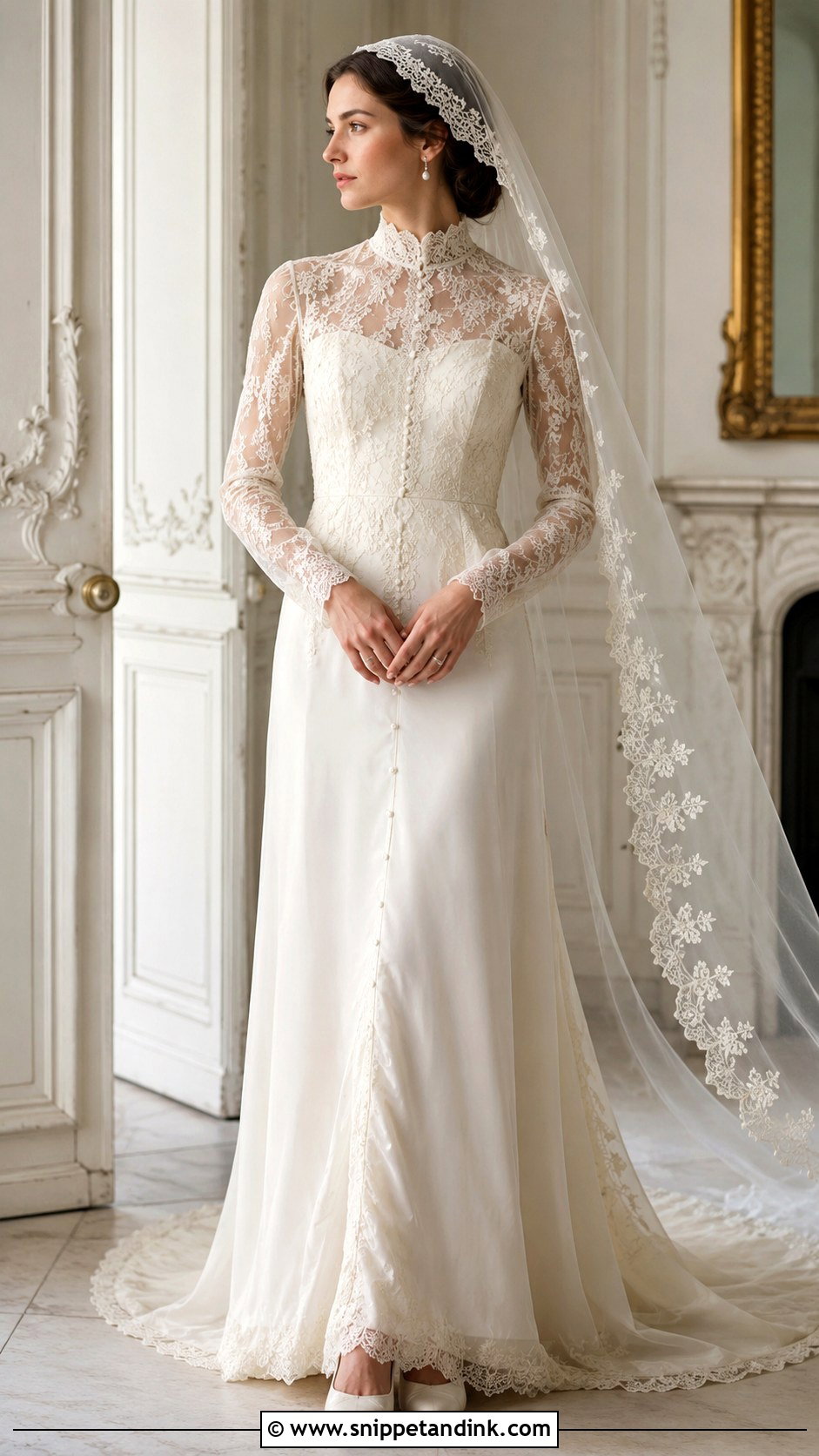
Fine lace, a high neck and a row of covered buttons is the most recognisable vintage formula there is. Keep the skirt fluid, an A-line or column, so the closed neckline doesn’t feel heavy. Sheer lace sleeves soften it, and a lined torso keeps coverage comfortable. Pearl earrings, low ivory heels and a simple tulle veil tucked under a smooth bun suit it. A lace-trimmed Juliet cap veil pushes the vintage feel further, but only if its lace complements the gown’s rather than trying to match it exactly. Keep makeup fresh rather than period. Historic venues and cooler months suit it.
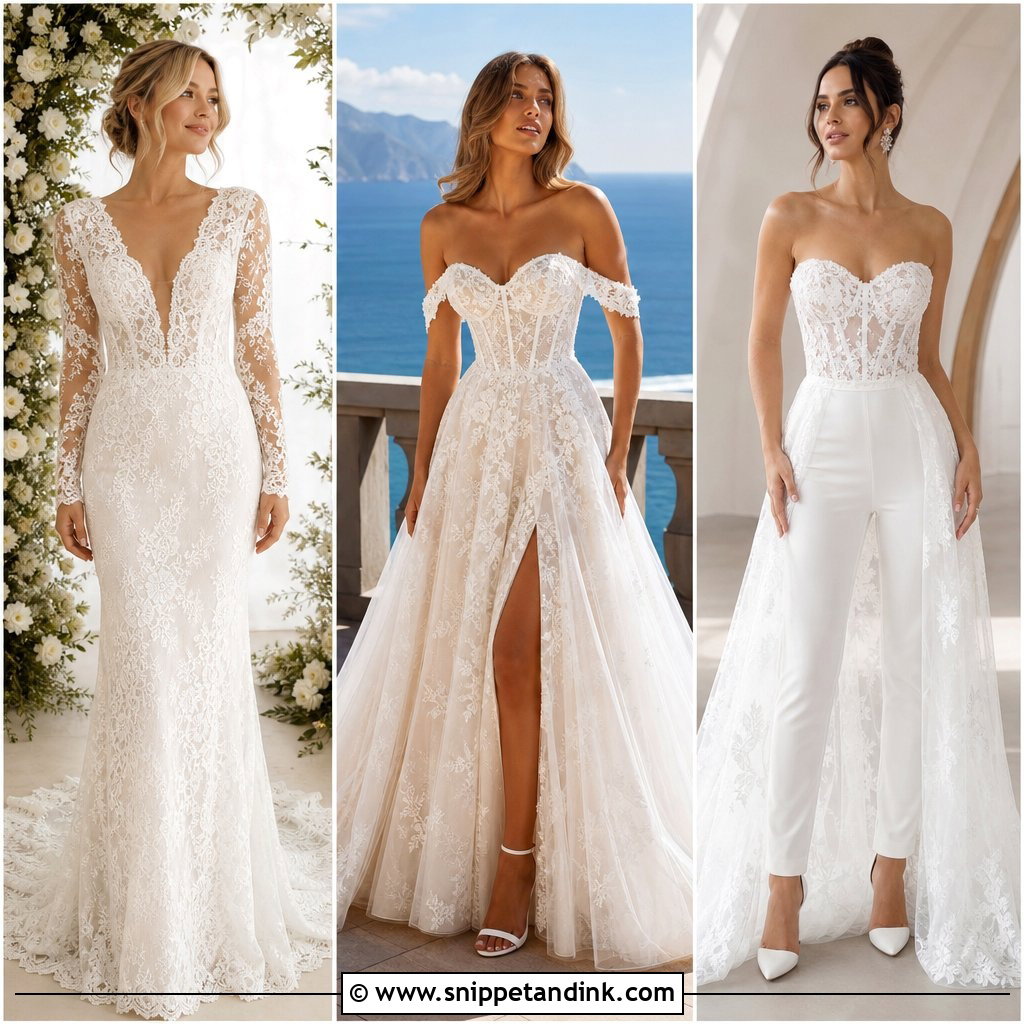
5. Off The Shoulder Lace Wedding Dress
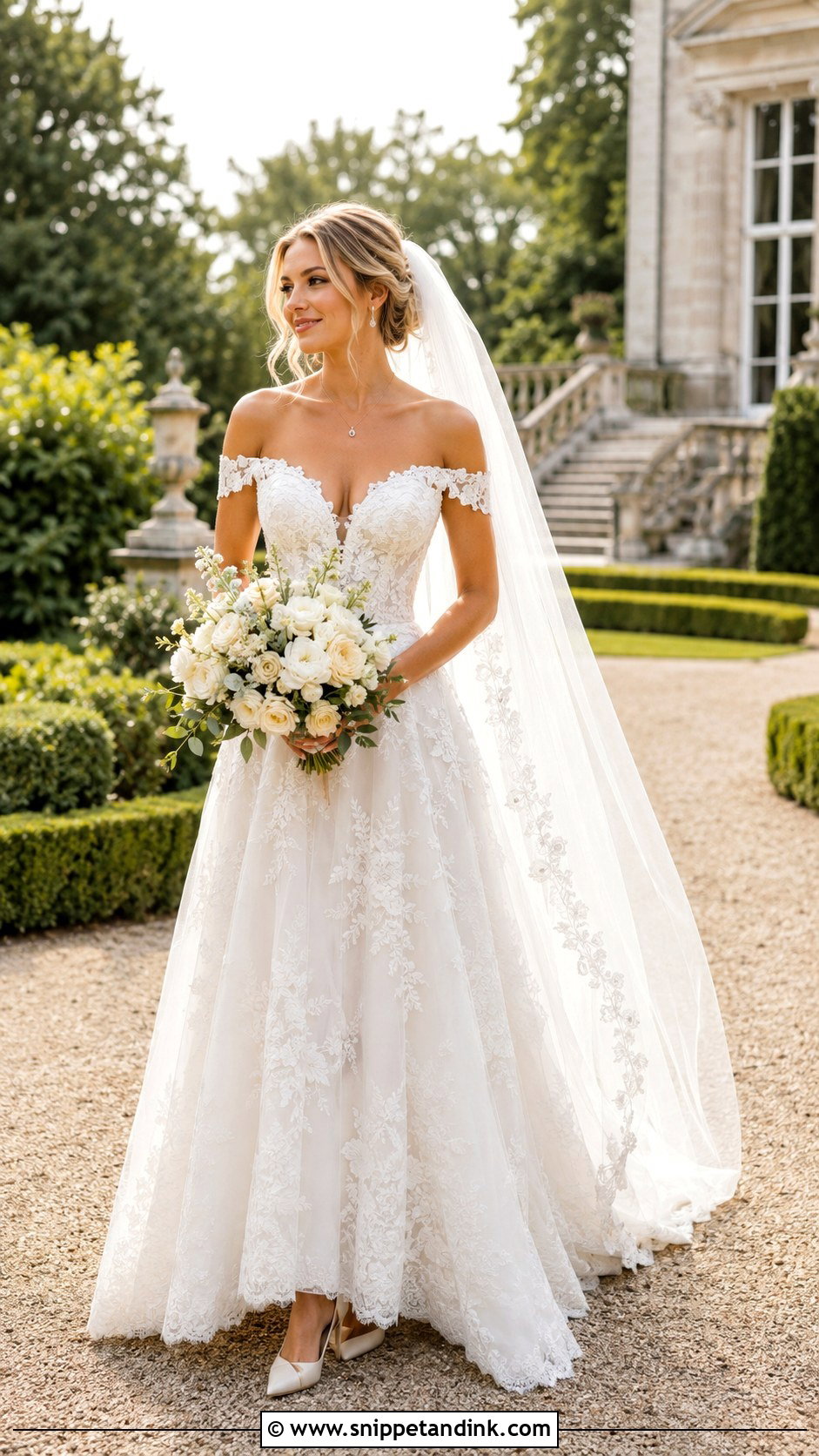
Off-the-shoulder lace frames the collarbones, but it has to be engineered so you can lift your arms. Test that at the very first fitting. Secure sleeves or straps with a structured bodice underneath are what stop it shifting. An A-line or fit-and-flare balances the wide neckline and gives the lace room. A fine pendant, small drops and a chapel veil under loose waves or a low bun suit it. Slingbacks stay on better than open sandals. Keep the bouquet medium-sized, since an oversized one hides the bodice in every front-on photo. Gardens, formal halls and estates are natural settings.
6. Square Neck Lace A-Line Wedding Dress
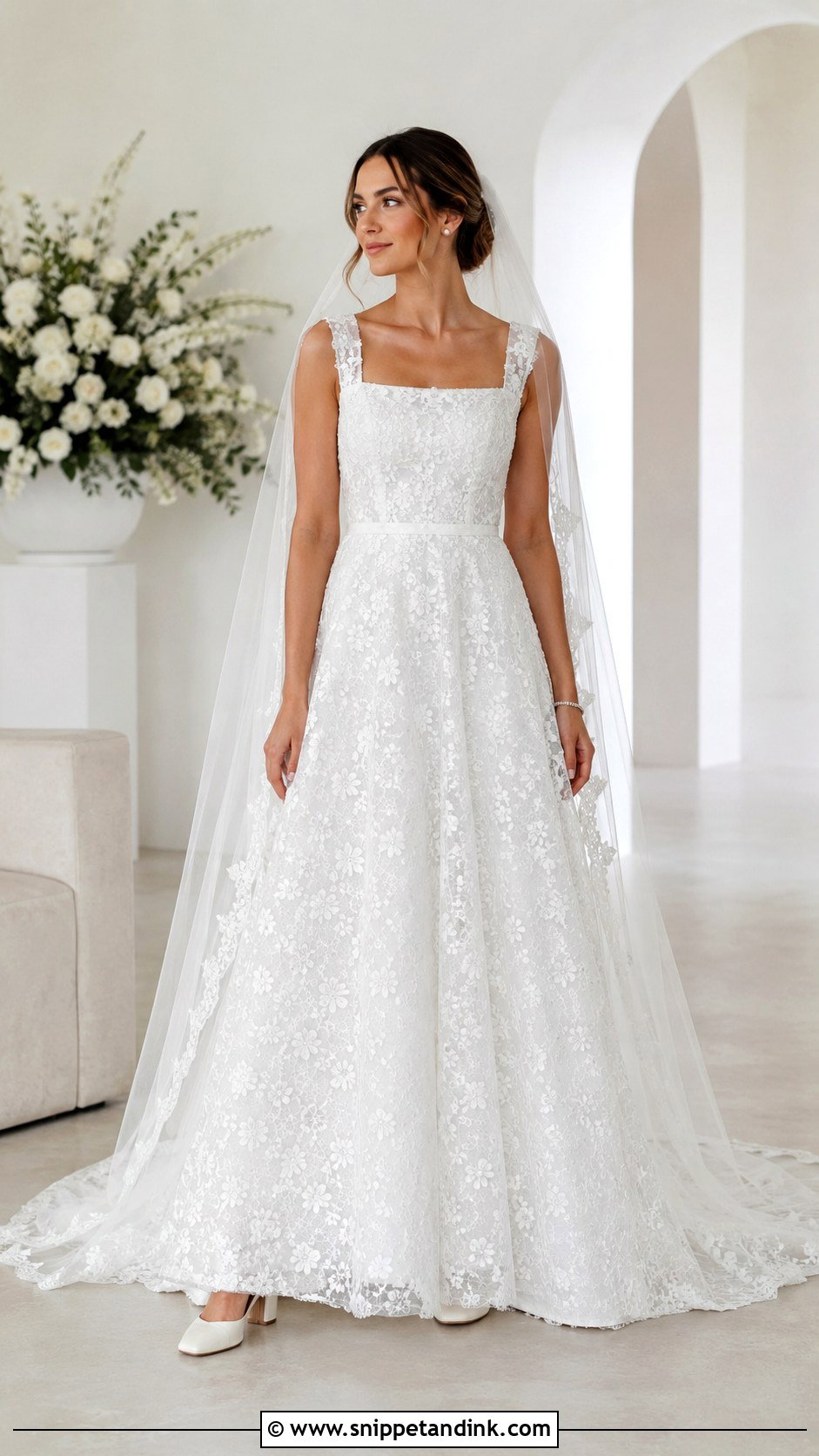
Square necks put a clean, angular line against soft floral or botanical lace, and that contrast is the whole appeal. Wider straps give support and the fitted waist should flow straight into a light skirt. Pearl studs, a narrow bracelet and a sheer chapel veil without a heavy border keep it uncluttered. Closed pumps or refined block heels are kinder for long hours standing. I like a centre-parted bun here; it echoes the symmetry of the neckline. Front-on photos are where this dress wins, because neckline, waist and skirt read as clear, simple proportions.
7. Corset Lace Basque Waist Wedding Dress
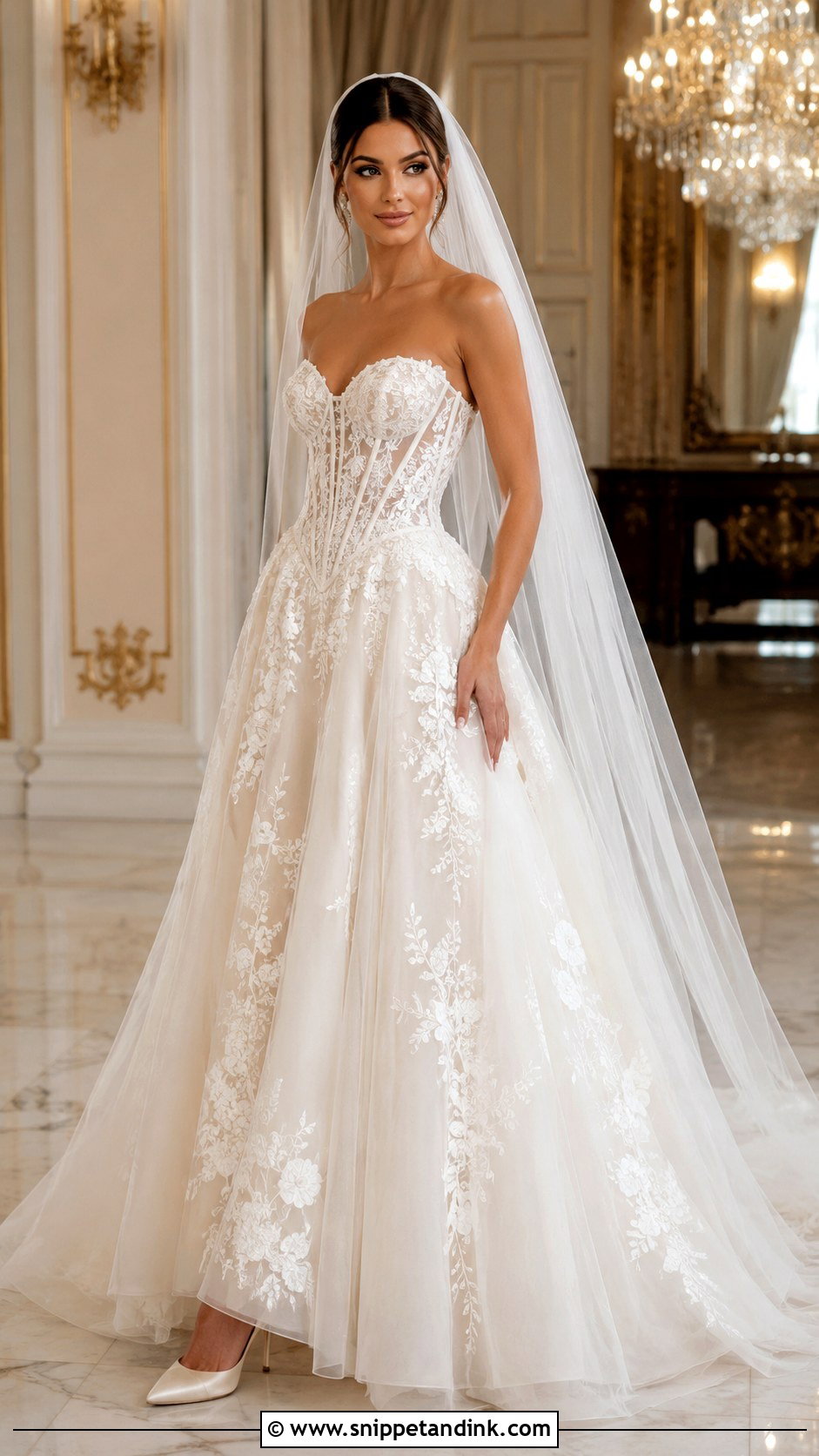
A basque waist dips to a point and lengthens the torso, so it needs a full A-line or ball gown skirt to carry the drama on. Choose a corset bodice with carefully placed appliqués and as much lining as you want for coverage. A simple cathedral veil, pearl or crystal studs and satin pumps suit it, with hair in a low knot so the corsetry shows from every side. Don’t stack bold accessories. The bodice is the jewellery. In alterations, I watch two things: that the point sits dead centre, and that the boning bends with you when you sit rather than digging into your ribs.
8. Boho Crochet Lace Wedding Dress
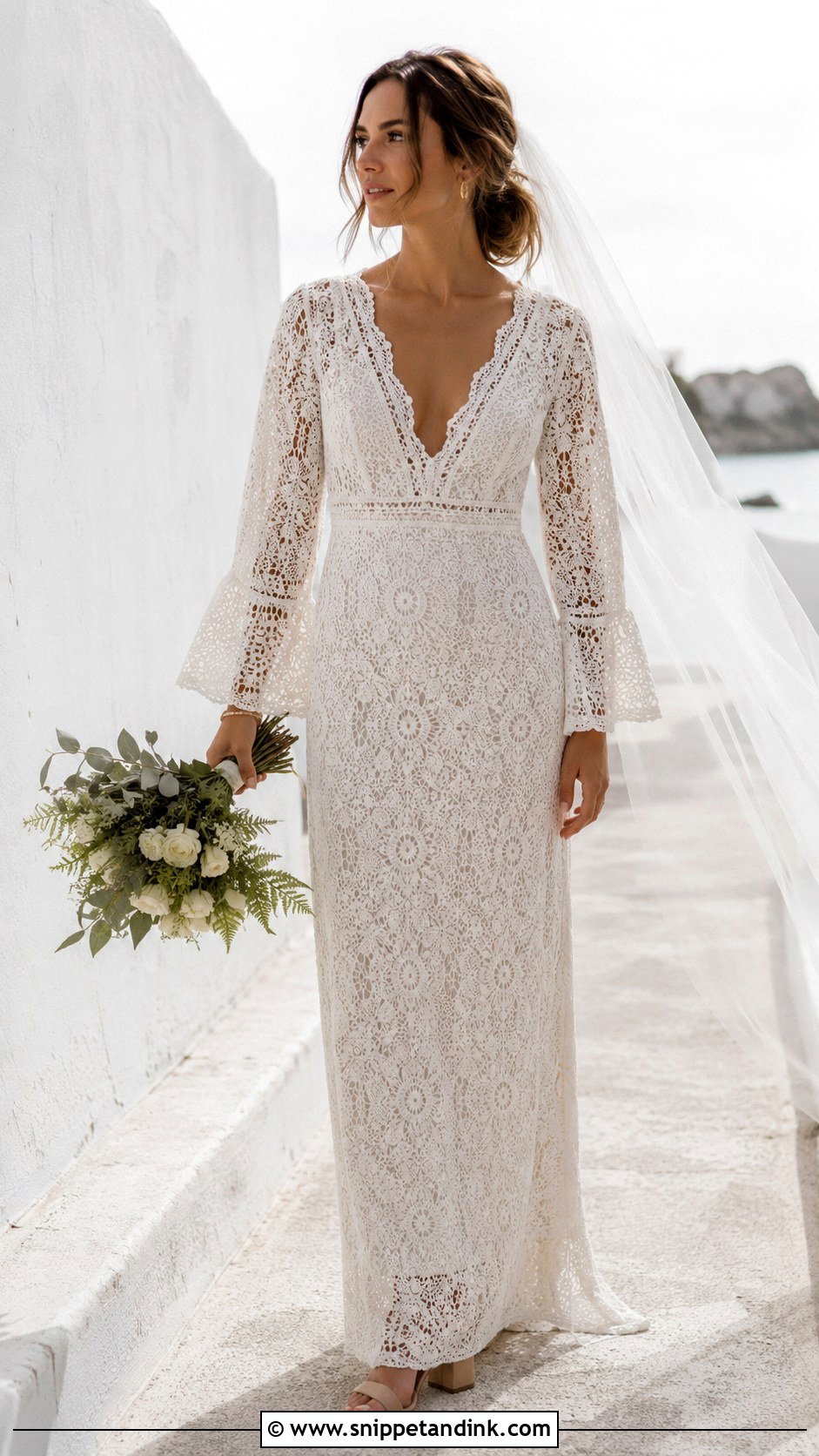
A crochet lace wedding dress is the most relaxed option here, made for beaches, deserts, woods and casual outdoor ceremonies. A softly fitted sheath or easy A-line with a comfortable lining suits it, and the crochet pattern should be big enough to read in photographs. Bell sleeves, a V-neck or an open back bring personality without needing many accessories. Low block-heel sandals, small gold earrings and a loose bouquet are enough, with soft waves or a textured bun and a floral pin. Swap the long veil for a fingertip one or a light cape. Crochet stretches when wet and when hung, so store it folded and keep it off damp sand until the photos are done.
9. Satin Wedding Dress With Lace Sleeves
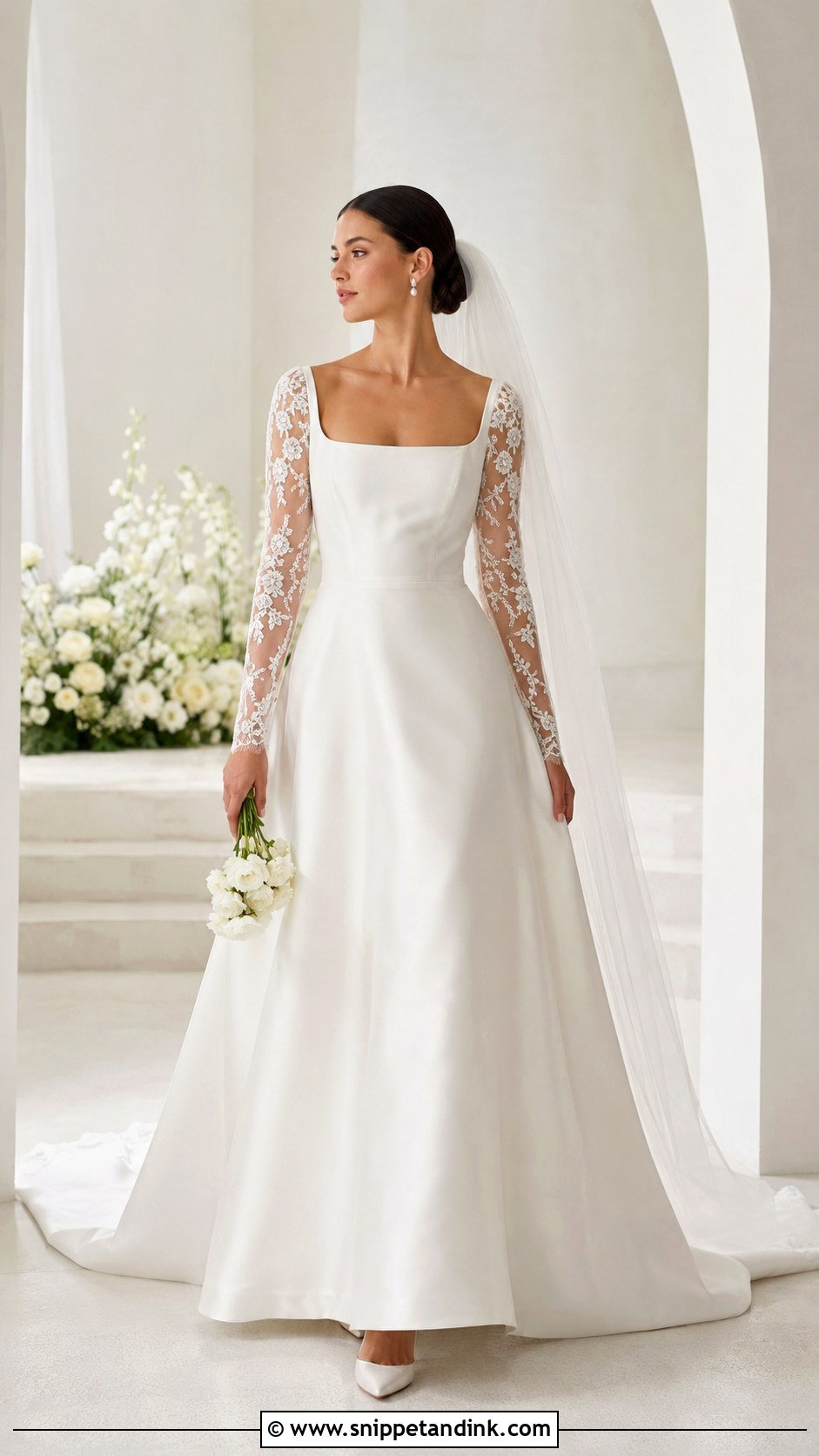
Smooth satin with detachable lace sleeves is my favourite answer for a bride who loves minimal gowns but wants coverage for a religious ceremony. The satin is a clean base and the sleeves bring texture around the shoulders and arms. A fitted A-line or column keeps the contrast clear. A plain cathedral veil, pointed satin pumps, pearl earrings and a sleek bun or ponytail complete it. Take the sleeves off and you have a simpler reception look. Ask the seamstress for discreet, secure attachment points, ideally hidden snaps along the neckline seam, so the sleeves sit naturally and don’t slide.
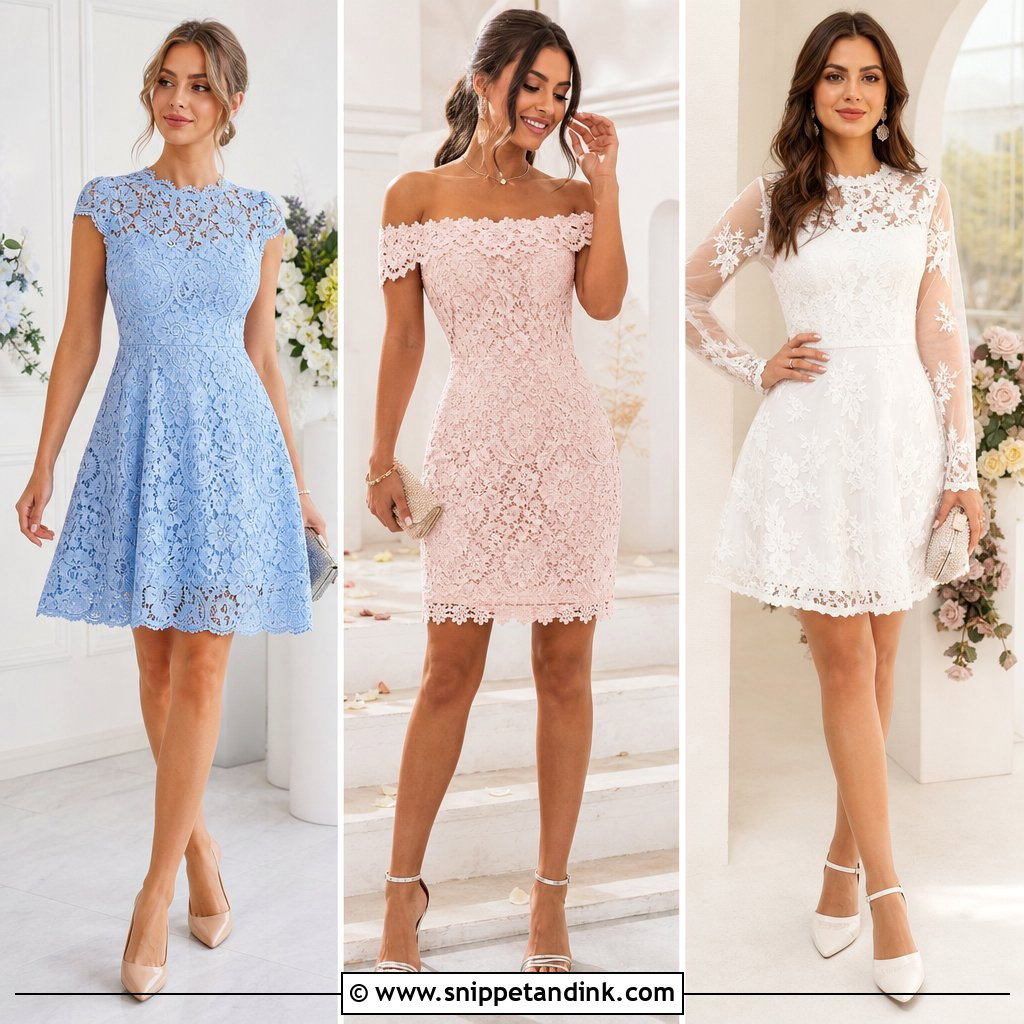
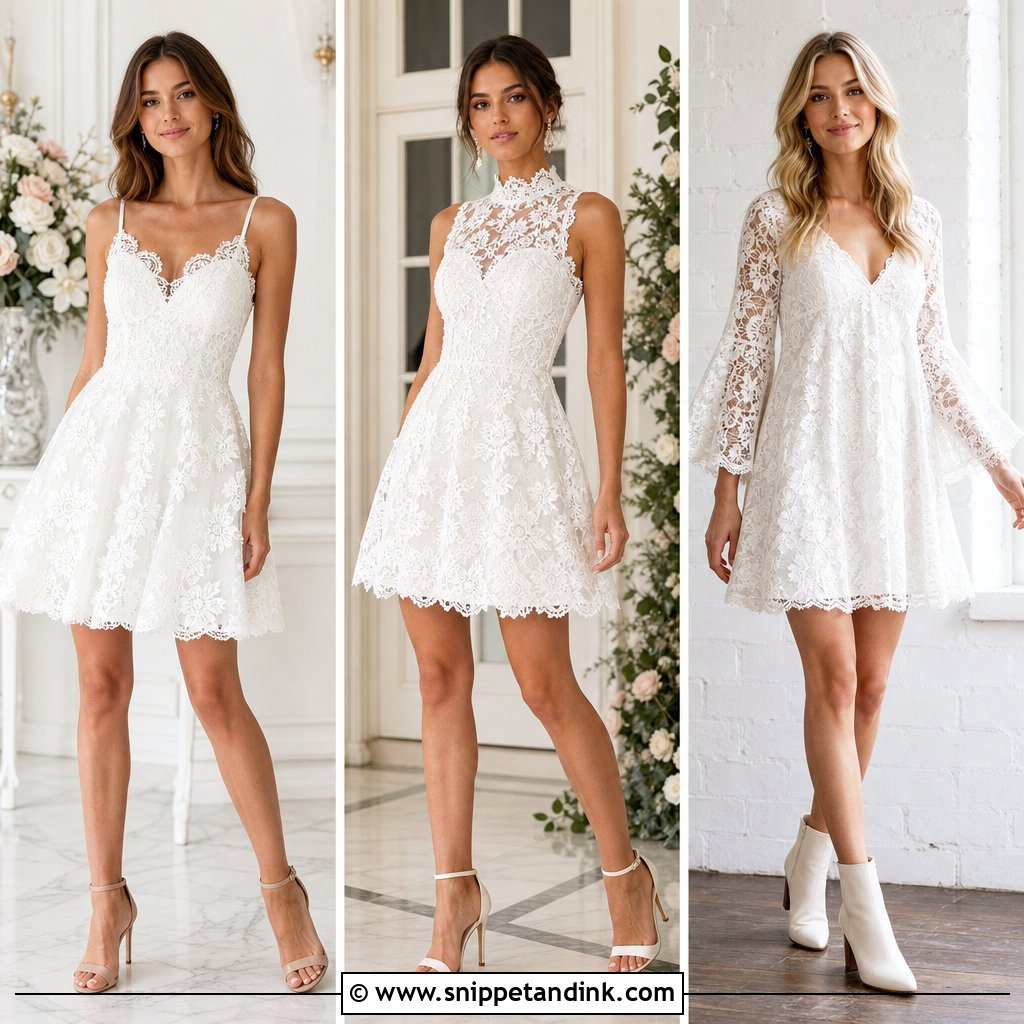
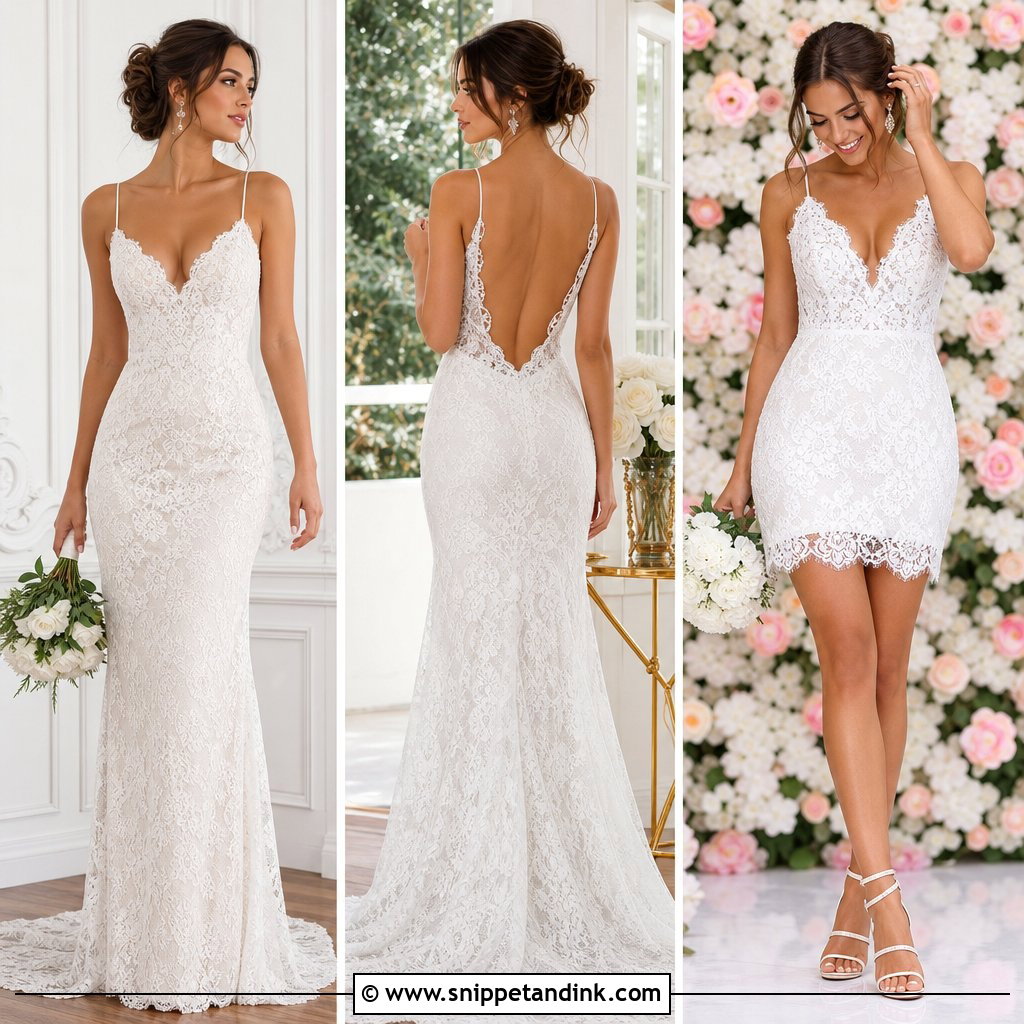
10. Short Lace Wedding Dress
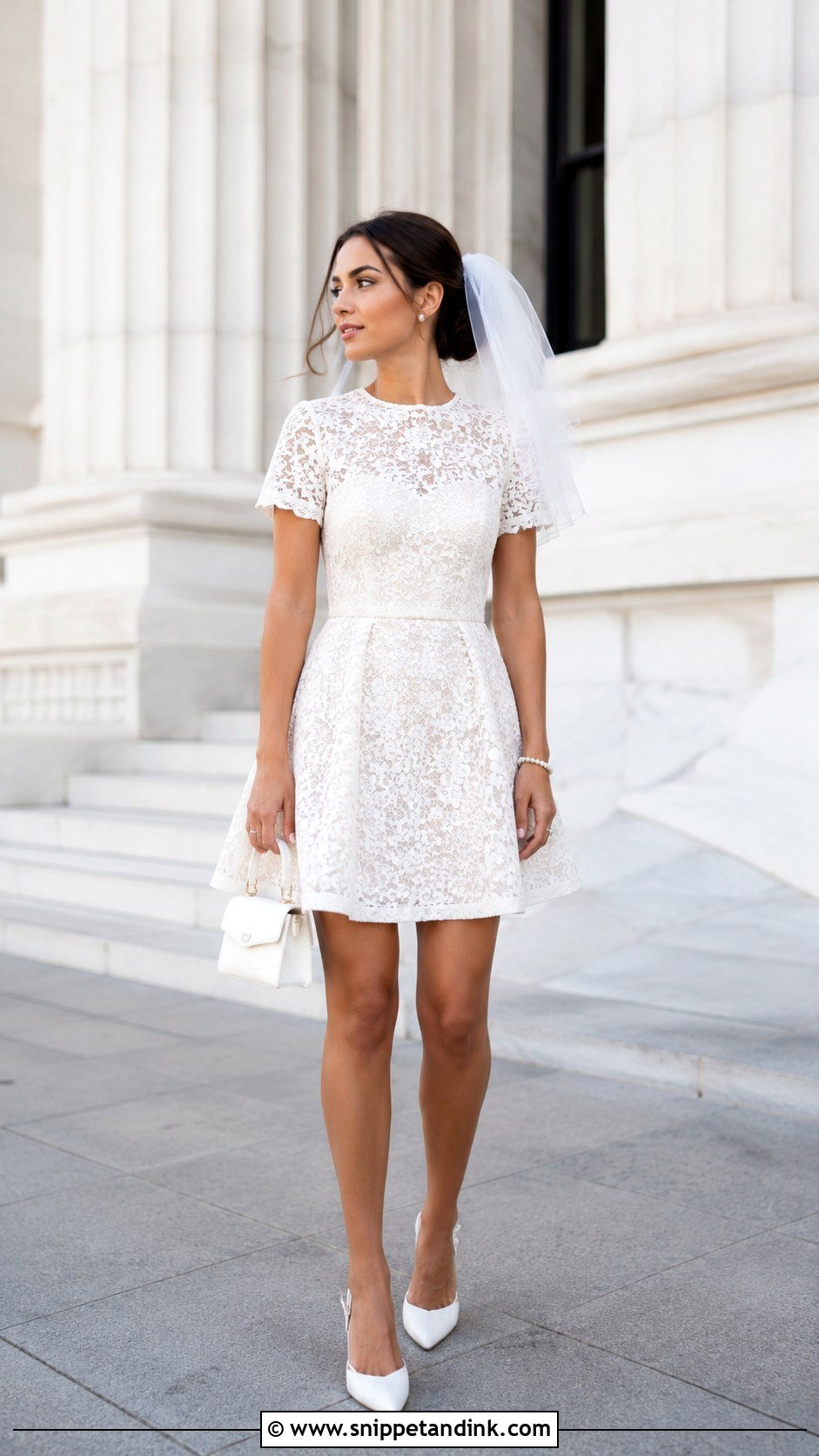
Short lace suits a courthouse ceremony, a bridal brunch or a reception change. Choose a structured mini with a defined waist, good lining and sleeves or straps that hold it in place as you move. Pointed slingbacks lengthen the leg; pearl studs and a small top-handle bag finish it. A short veil or oversized bow makes it unmistakably bridal. Because the hem and shoes are fully on show, proportion is everything, and the shoes have to look special from every angle. On a cold day, a tailored coat keeps you warm without swamping the dress.
11. Tea Length Lace Wedding Dress
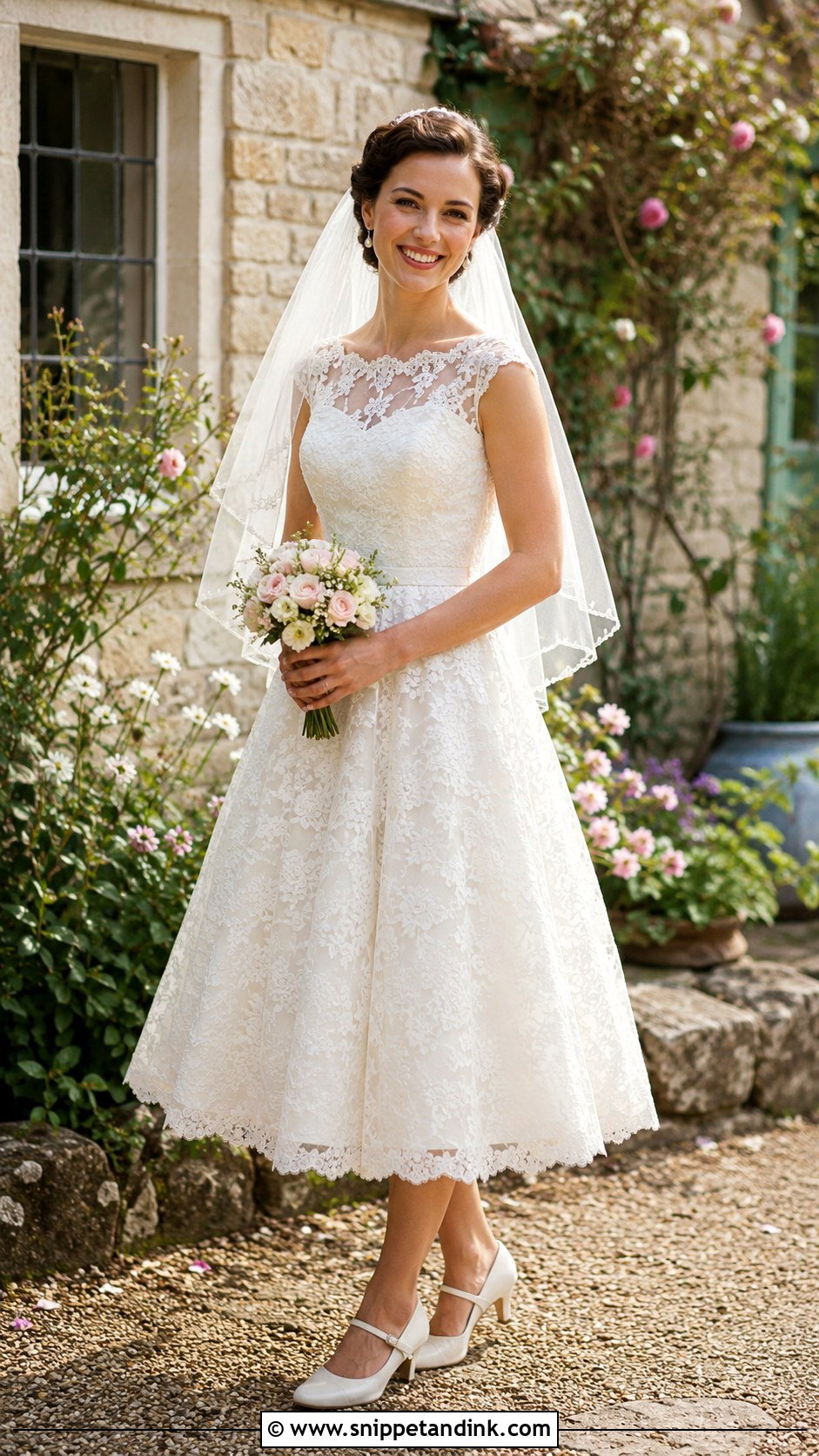
Tea length falls between knee and ankle and gives you room to move. A fitted bodice and gently flared skirt are the classic proportions, and floral lace keeps the shorter length clearly bridal. Footwear becomes a feature: pointed pumps, low block heels or Mary Janes all suit it. Pearl earrings, a wrist-length veil and a compact bouquet lean vintage; drop the veil for a sculptural hair piece if you’d like it more modern. The hem placement is the detail I fuss over. It looks best ending at the narrowest point of the calf, and an inch either way changes the whole line.
12. Plus Size Lace Fit And Flare Wedding Dress
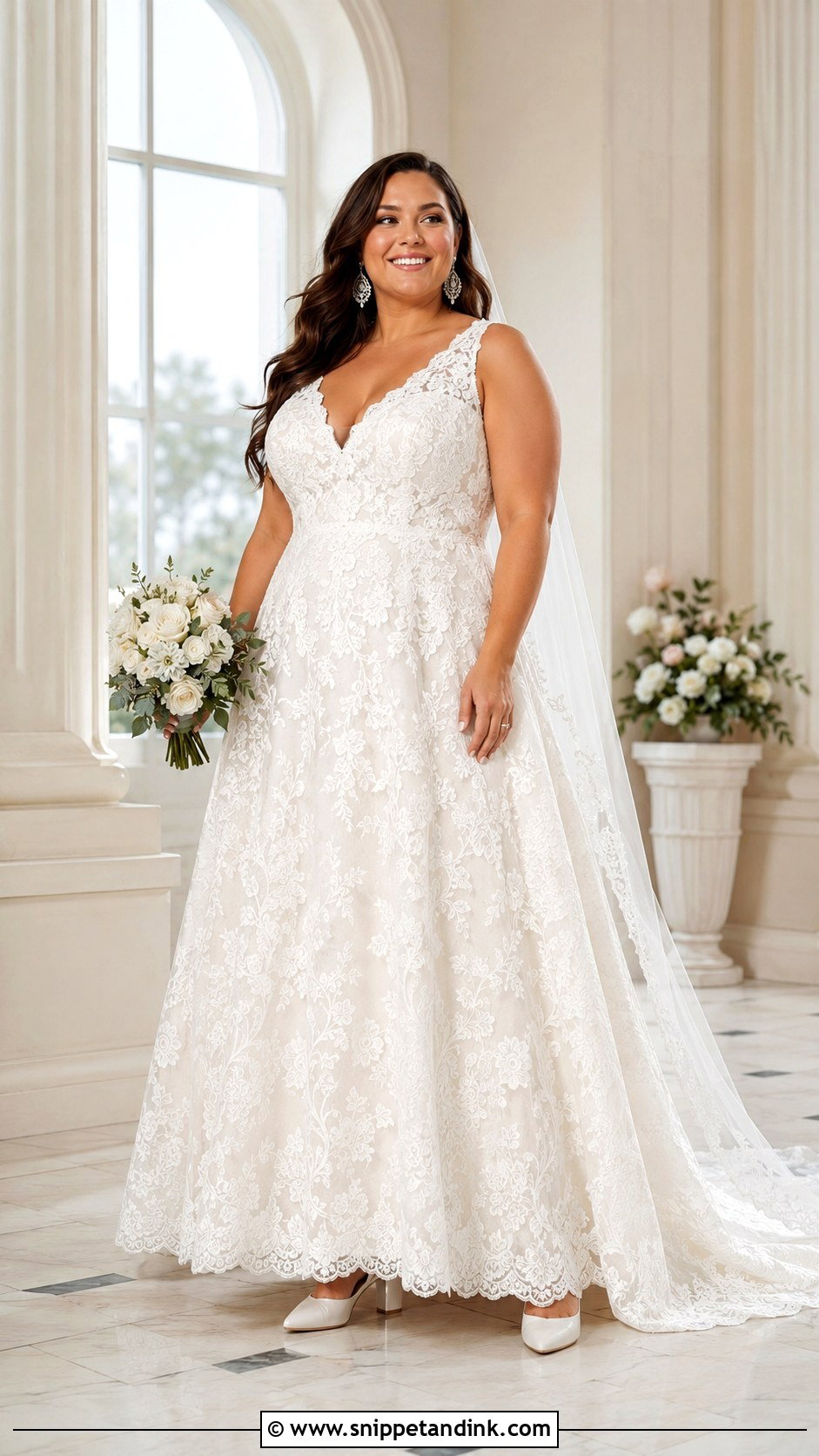
For plus-size brides, fit-and-flare gives definition with support built in. Look for a structured bodice, adjustable construction and lace that flows unbroken from neckline to skirt. A V-neck or soft scoop opens the upper body, and wider straps leave room for your own bra if you prefer one. Block-heel pumps, statement earrings and a light chapel veil suit it, plus a secure bustle for after the ceremony. Rather than following body-shape rules, I have brides try the same style with the flare starting at different heights. The right one is obvious the moment you walk and sit in it.
13. Petite Lace Sheath Wedding Dress
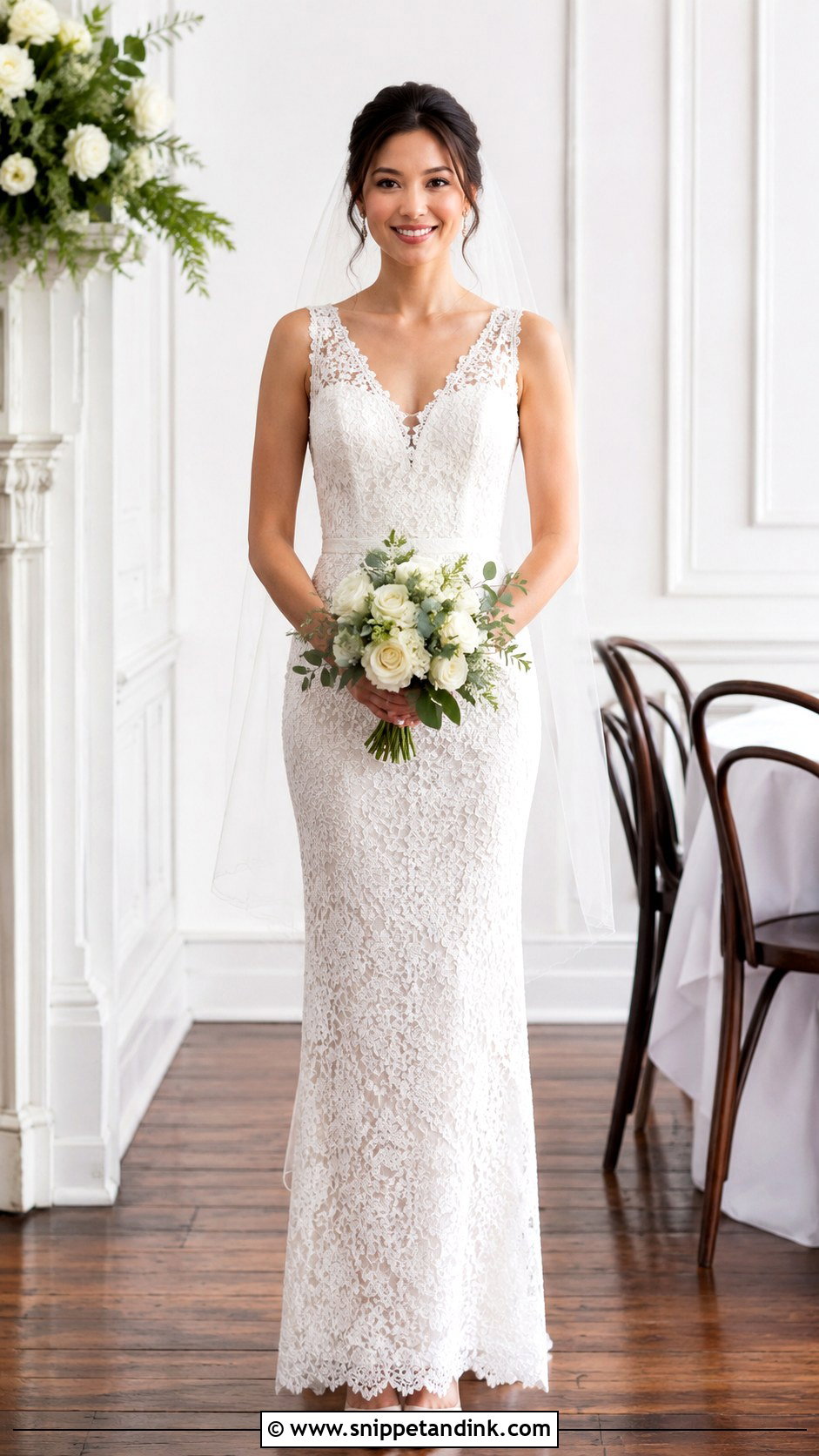
A lace sheath keeps a petite frame long and clean, without extra skirt volume to wade through. Smaller lace motifs, a defined natural waist and a train that bustles easily are the things to look for. A V-neck or narrow square neckline lengthens the upper body, especially with minimal jewellery. Pointed heels, petite drops and a plain veil scaled to your height complete it, and hair worn up adds a little height. Alterations are where petite gowns are won or lost: shifting a strap or the waistline by a fraction changes the proportions far more than it would on a taller bride.
14. Blush Lace Wedding Dress
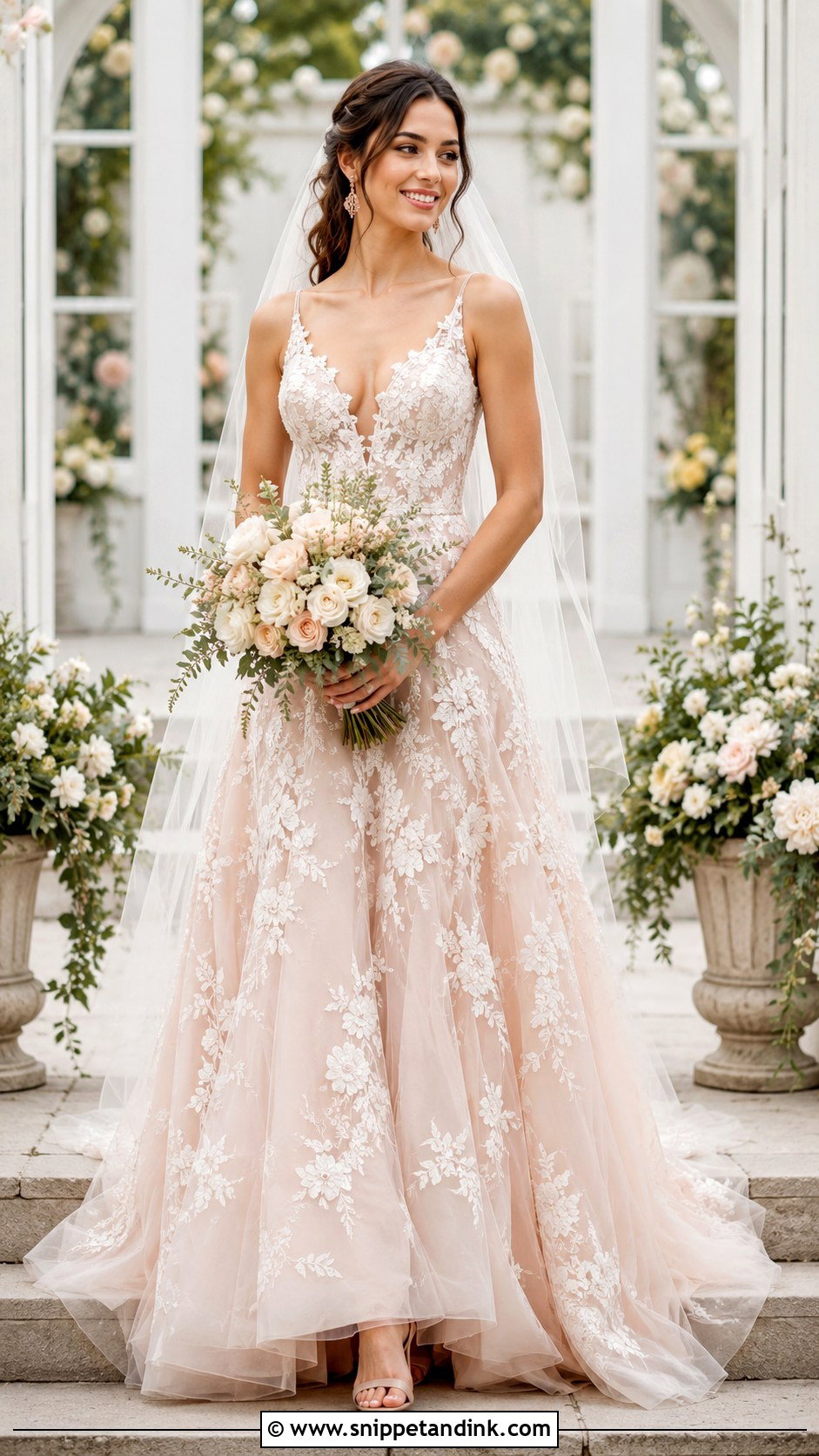
A blush lining under ivory lace makes the appliqués stand out with depth that pure white can’t give. Choose an A-line, fit-and-flare or soft ball gown to match the formality of the venue. Champagne heels, rose-gold earrings and a sheer ivory veil suit it, with a light neutral bouquet that doesn’t fight the undertone. Soft makeup with a pink lip connects the palette quietly. Blush linings vary a great deal from one fabric to another, so I always take the swatch to daylight and then under warm indoor bulbs, because a shade that looks peachy in a shop can turn almost grey by candlelight.

15. Black And Ivory Lace Wedding Dress
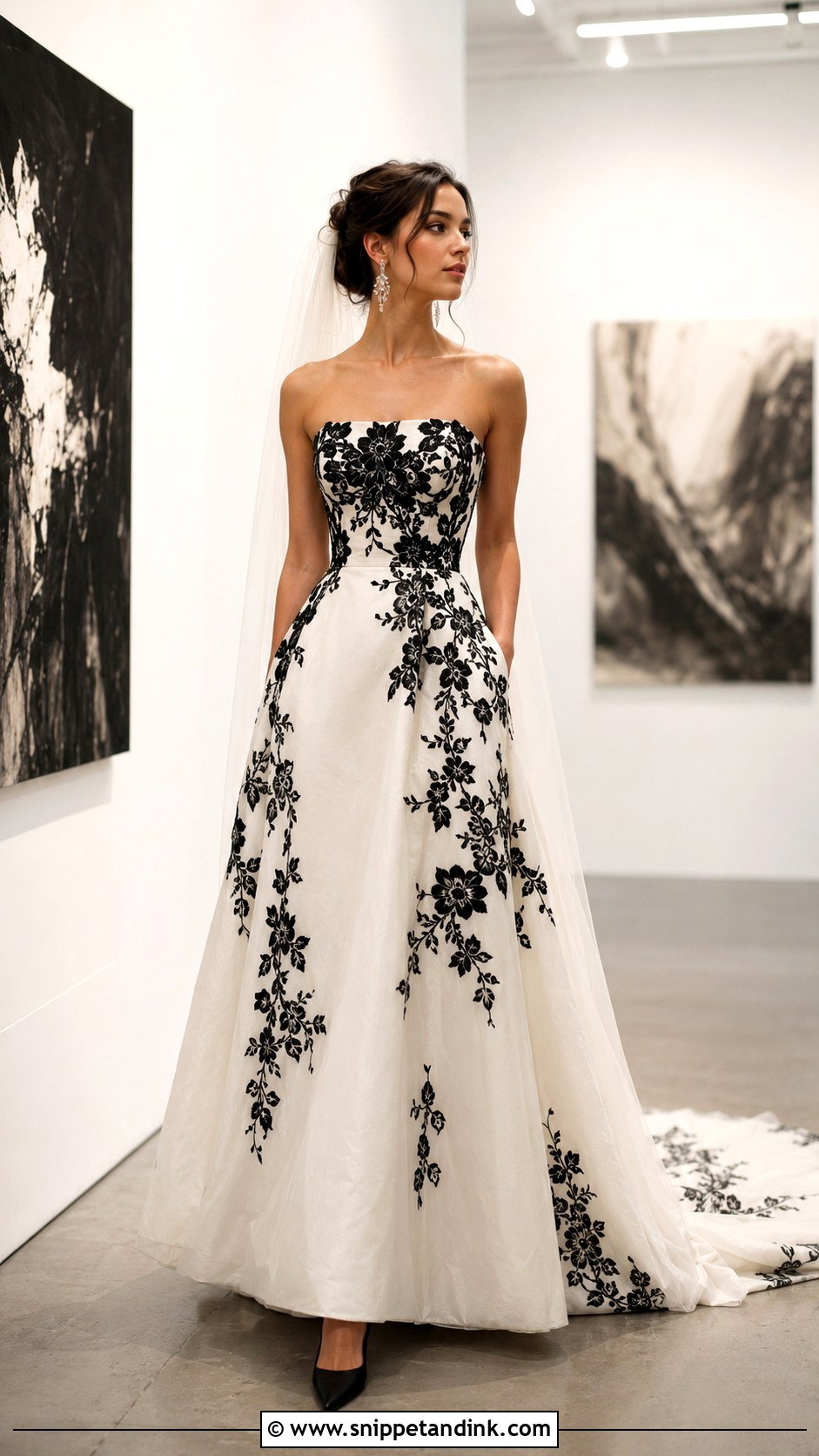
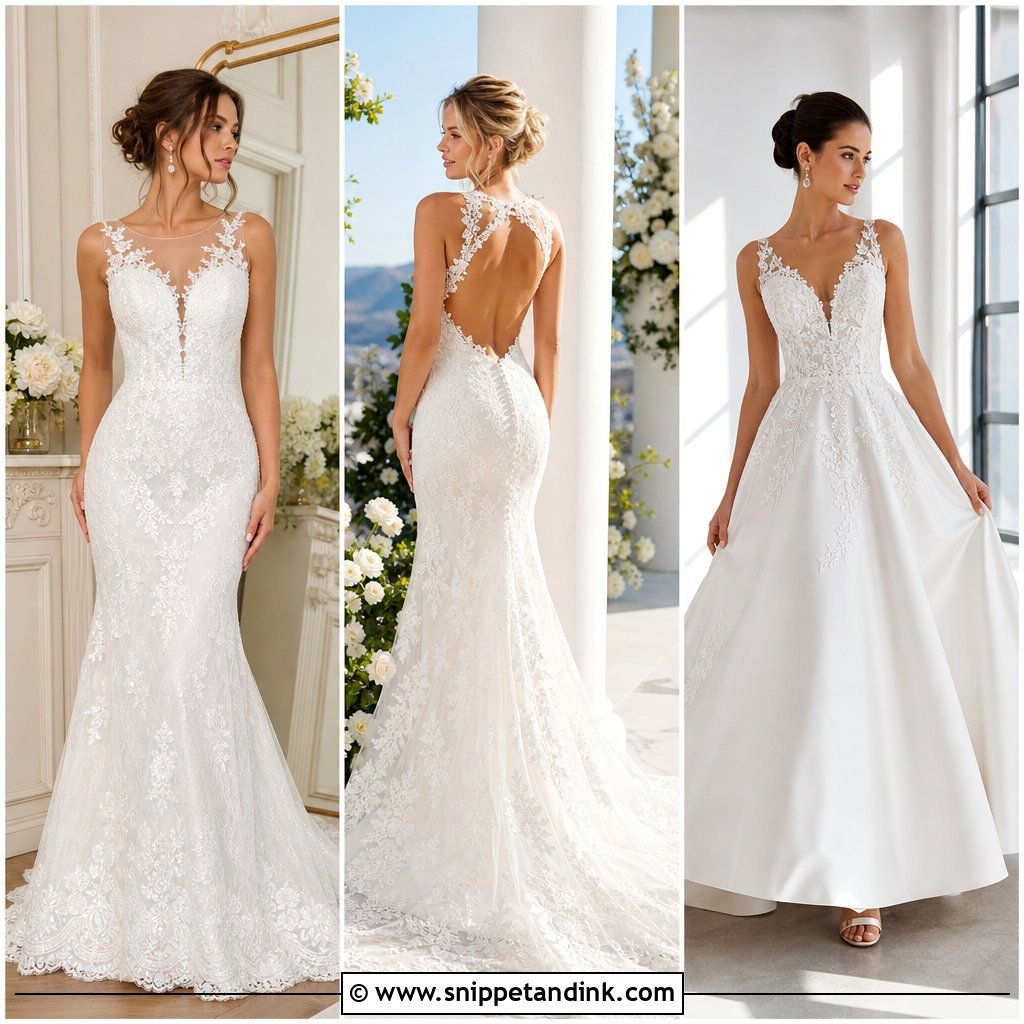
Black and ivory lace is for a bride who wants contrast and isn’t afraid of it. There are a few ways to do it: ivory lace over a black lining, black embroidery on an ivory base, or a mostly ivory gown with a few dark appliqués. Keep the silhouette simple, an A-line or column, so the colour reads as sophisticated rather than costume. Black pointed pumps, crystal earrings and a plain ivory veil are enough, with a sleek bun and a restrained bouquet. Leave other colours out. High contrast is tricky for cameras, so take test photos in venue lighting; bright ivory beside black can lose its detail in strong sun.
16. Lace Wedding Dress With Detachable Overskirt
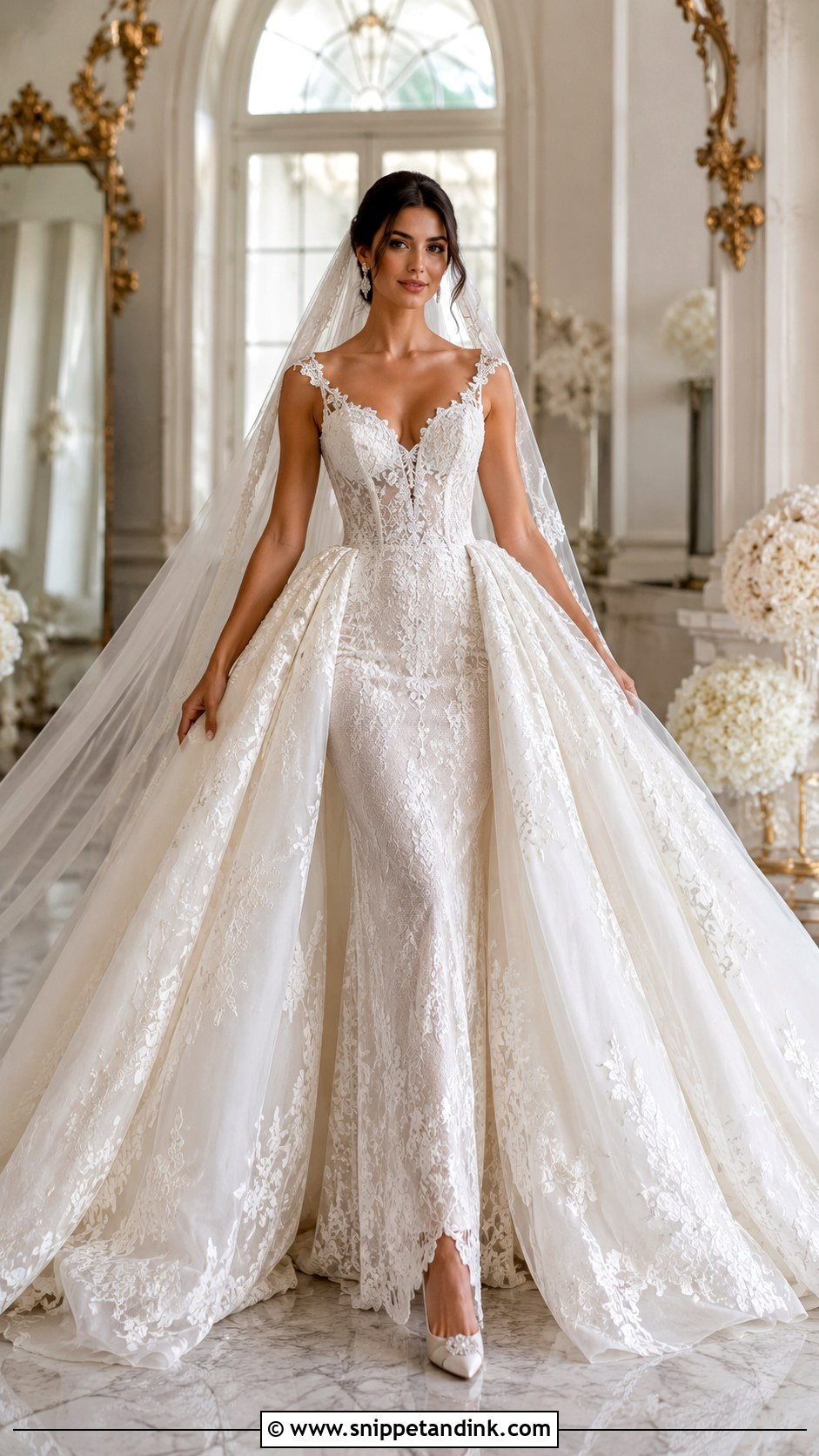
A fitted lace dress with a detachable overskirt gives you ball gown volume for the ceremony and a slim silhouette for the party. The overskirt should attach smoothly at the waist with no gaps and no bulky fastenings showing. Match its lace and colour closely to the base dress. Cathedral veil, small crystal earrings and comfortable pumps for the ceremony; swap the veil for a decorative comb afterwards. Rehearse the change with a bridesmaid before the day, ideally twice. The first attempt always takes longer than anyone expects, and you don’t want to lose reception time to hooks.
17. Lace Cape Sleeve Wedding Dress
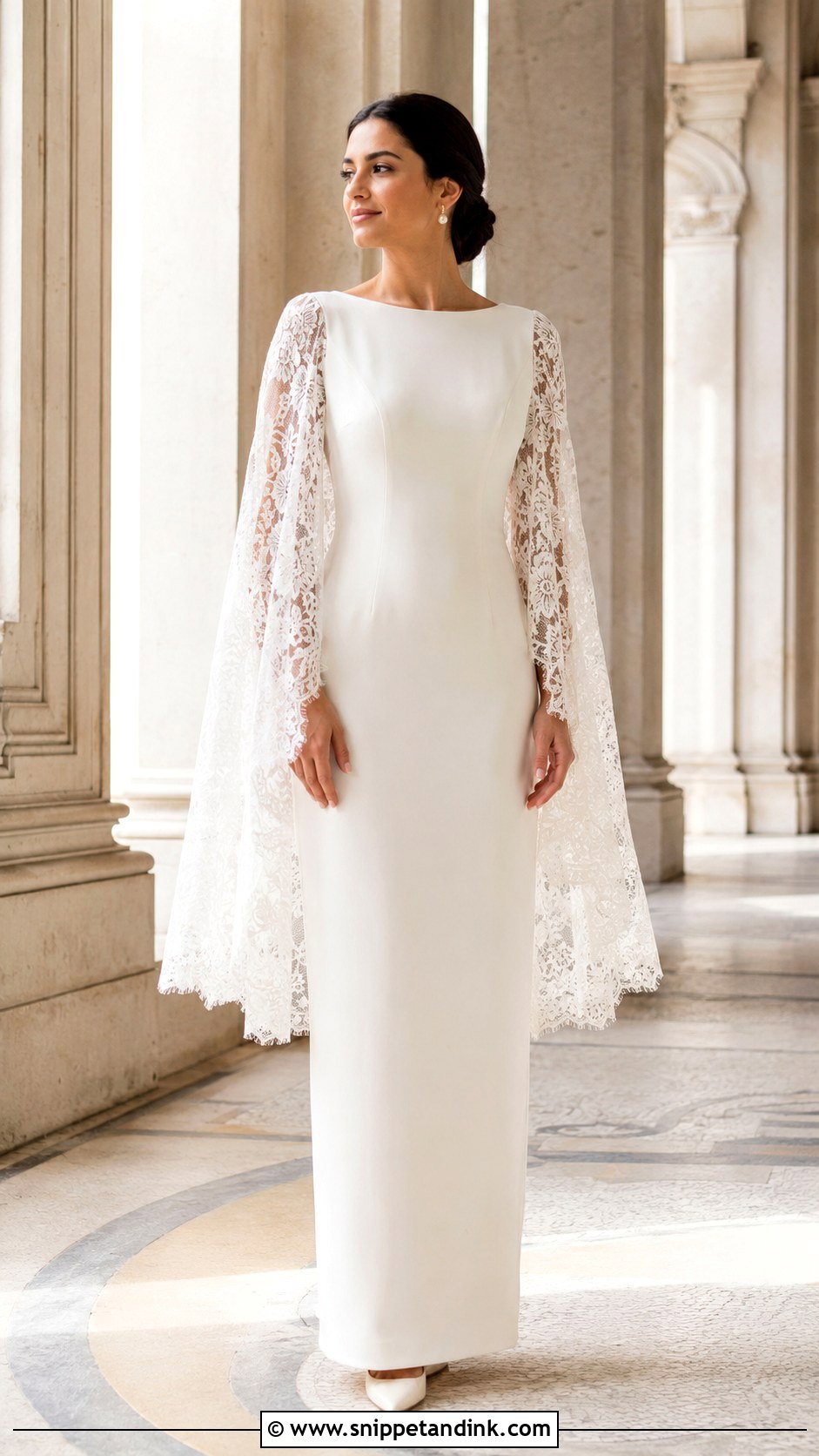
Cape sleeves add movement and coverage while leaving your arms free. The cape might stop at the elbow, the wrist or carry on to the floor, so choose a length that suits the venue and silhouette. A clean column or modest A-line keeps the extra fabric from overwhelming you. Pointed pumps, understated earrings and a low bun complete it. If the cape is long and detailed, skip the veil; two layers fighting at the back look messy in photos. A detachable cape can come off for dancing. Raise and lower your arms at fittings to see how the lace falls, and check the attachment points hold under the cape’s weight.
18. Backless Lace Wedding Dress
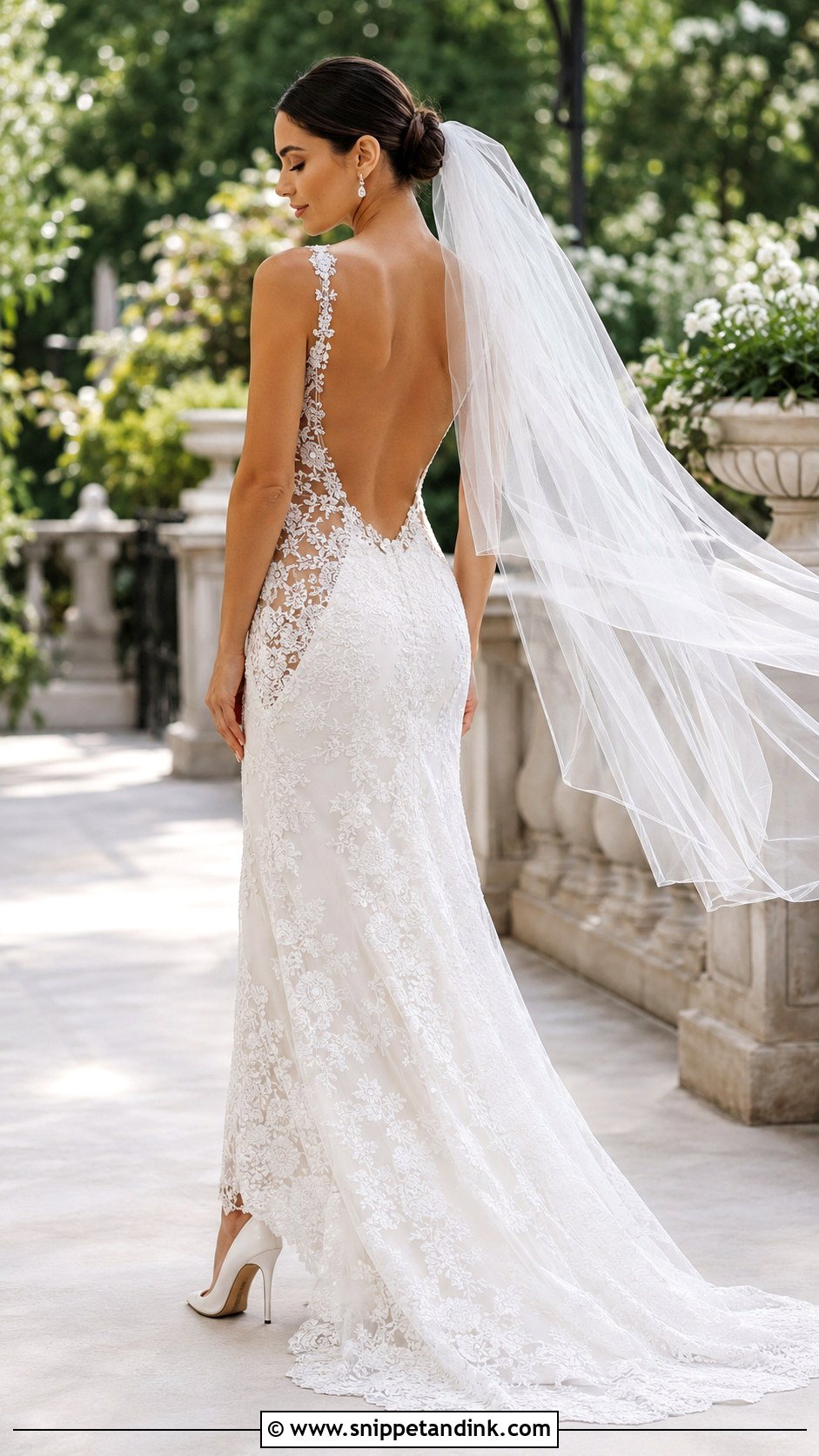
A backless lace wedding dress keeps the front quiet and saves the drama for behind you. What holds it on is the engineering: supportive side panels, hidden boning or illusion mesh across the open area. A sheath, A-line or fitted shape can all work, depending on how much movement you want. A low bun or side-swept hair keeps the back on show, with a plain sheer veil, fine earrings and sleek pumps. Skip necklaces; they swing round and hang awkwardly down an open back. At fittings, sit, reach and dance. If the back panels gape when you lean forward, they need taking in.
19. Illusion Neckline Lace Wedding Dress
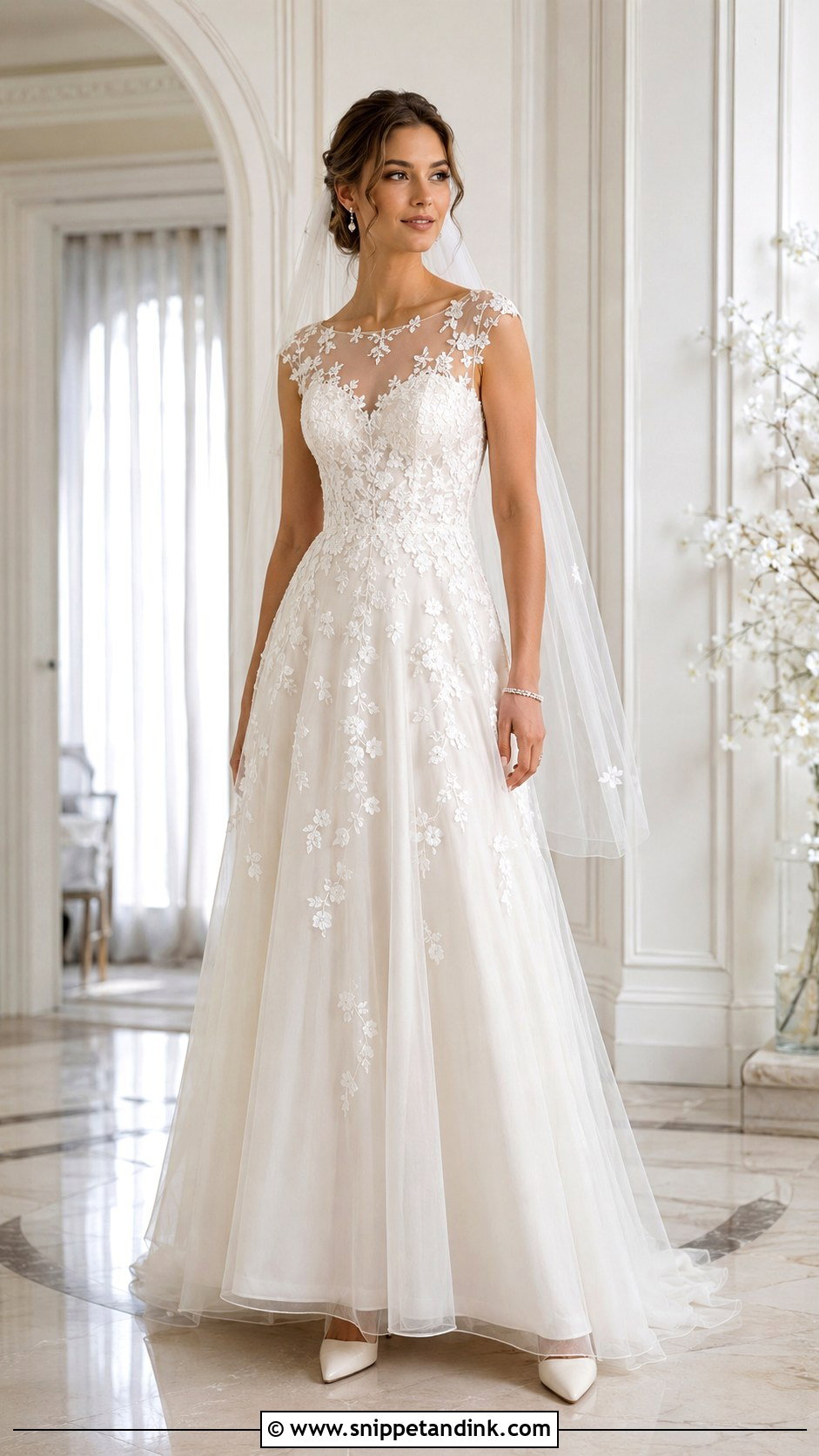
Illusion necklines make appliqués look as if they float on skin while giving far more support than an open bodice. Choose fine mesh close to your skin tone that lies flat across the neckline with no pulling. A fitted bodice over an A-line or soft flare balances the detailed top. Pearl earrings, a simple bracelet and a plain tulle veil suit it, with a low bun or half-up style. The mistake I see most often is approving mesh under shop lighting alone. Photograph it with flash and look at it in daylight before alterations, because mesh can shine or turn lighter than skin on camera.
20. Two Piece Lace Bridal Set
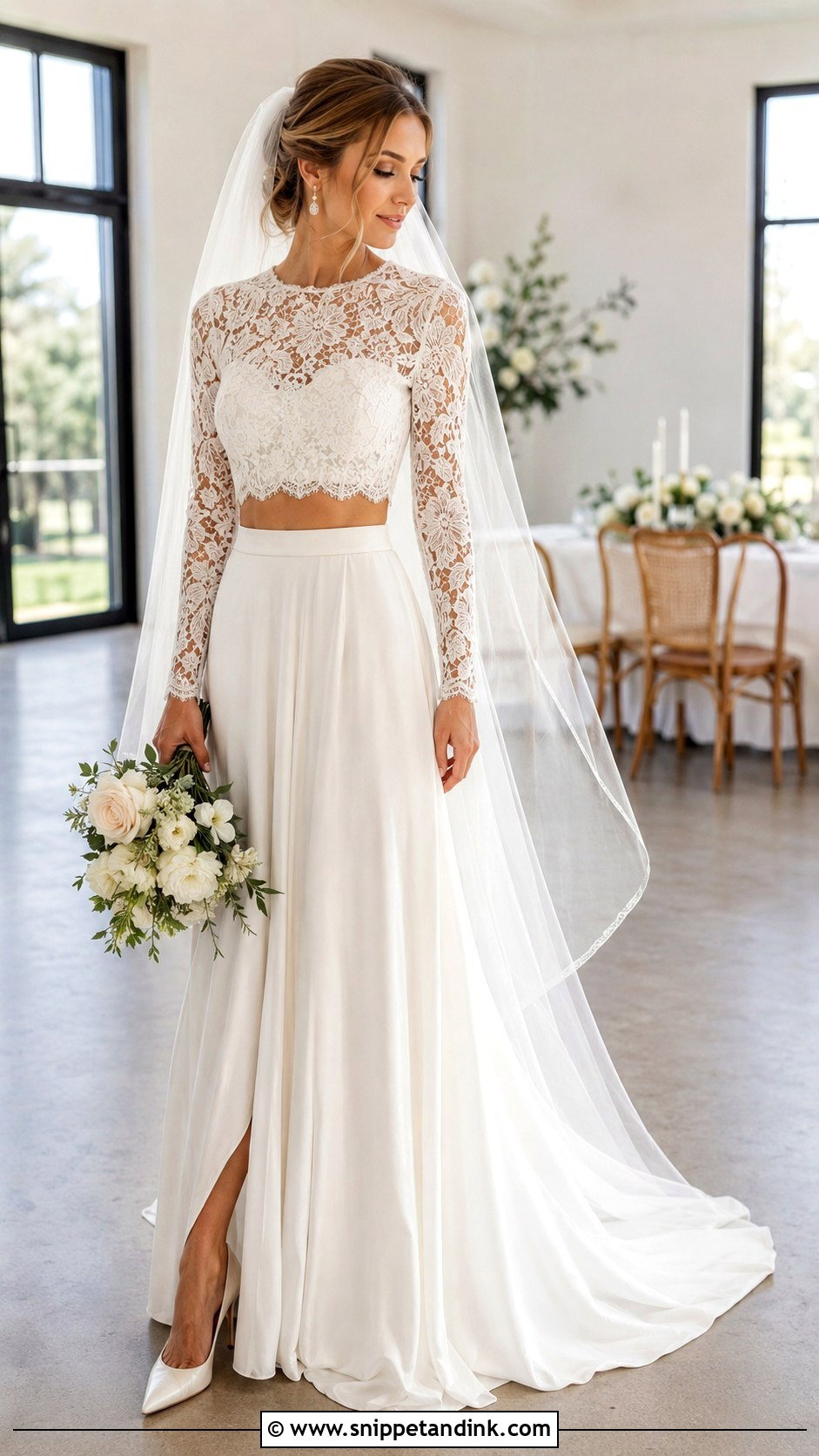
A two-piece lace set is the modern alternative to a one-piece gown. Pair a fitted lace top with a high-waisted A-line, column or flowing chiffon skirt, and decide how much midriff, if any, you’re happy to show. Keep both ivories consistent unless contrast is deliberate. Minimal drop earrings, pointed pumps and a plain fingertip veil finish it. A structured top suits a fluid skirt; a softer lace blouse pairs best with a tailored bottom. Ask the seamstress for small hidden hooks or a waist tab so the top doesn’t ride up when you lift your arms. And the honest bonus: both pieces are far easier to wear again.
Six Lace Gowns In and They All Look the Same?
It happens at nearly every appointment. Lace gowns are similar enough that after a handful they blur together, and brides start judging by mood instead of fit. A little structure fixes that.
Before the appointment
- Bring a strapless bra in nude and the height of heel you expect to wear.
- Save five or six photos of dresses you like and be ready to say what you like about each: the neckline, the lace, the skirt.
- Keep the group small. Two people whose opinion you trust beat five who all want something different.
During it
- Try one of each silhouette first, A-line, fit-and-flare, ball gown and sheath, before comparing lace. Shape rules out more dresses than pattern does.
- Ask to see each gown from three metres away as well as up close. Lace that’s pretty at arm’s length can read as flat texture down an aisle.
- Remember that samples are often clipped to fit. Ask what the finished bodice will be like in your size, and how much of the lace placement changes with alterations.
- Take a photo from the back of every contender. You’ll spend the ceremony with guests looking at it.
Lace Scale, Lining Colour and the Way You Move
A good lace dress balances detail with comfort, proportions that suit you and accessories that support the gown instead of competing with it. The range here is wide, from long-sleeve A-lines and ball gowns to short dresses, two-piece sets and detachable layers. When you compare them, look at lace scale, lining colour, neckline support, how the skirt moves and how long the train is. Take your shoes and underwear to every fitting so the alterations are accurate. Trends can give you a starting point, but the gown that feels natural when you walk, sit and dance is the one you’ll be glad you chose.
You'll Like These Ideas:




Leave a Reply