
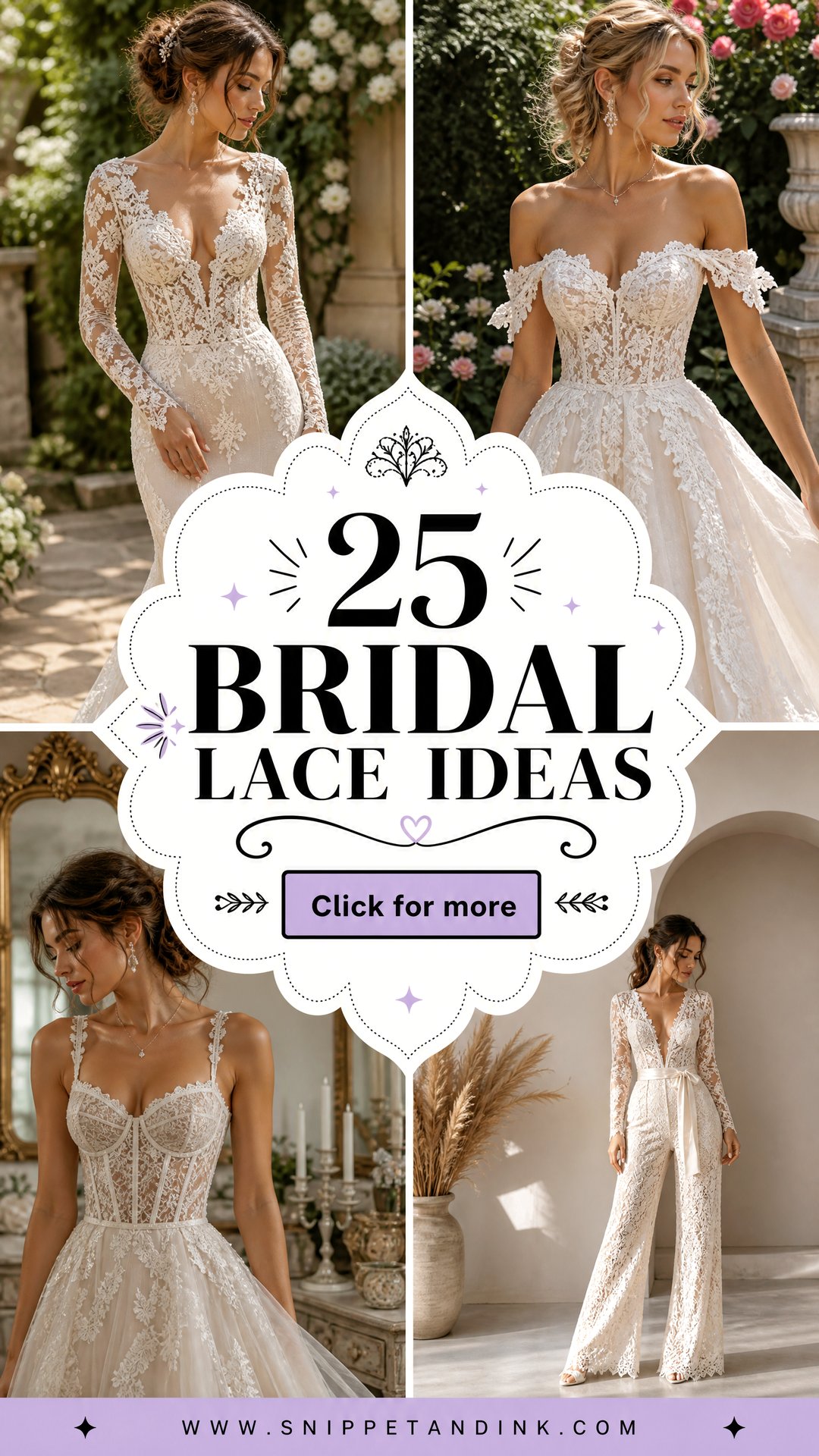
Lace is the fabric brides ask to touch first when they walk into a fitting room, and it’s also the one they understand least. Two dresses can both be called “lace” and behave completely differently: one floats, one stands away from the body like sculpture, one catches on every bracelet. Soft Chantilly lace is fine and delicate, guipure is bold and raised, and embroidered lace on tulle adds texture that reads well in photos. Below are twenty-five ways to wear it, from long-sleeved gowns to separates, with what I look for at each fitting. After the list, I explain how to tell lace types apart, why lace alterations take longer, and how to care for it afterwards.
Chantilly, Alençon or Guipure? Reading Lace in the Fitting Room
Labels on bridal gowns often just say “lace”, so it helps to know what you’re touching. These are the types I see most:
- Chantilly: very fine, with a delicate floral pattern outlined in thin thread on a sheer net. Soft and drapey, but fragile.
- Alençon: also on a net base, but each motif is outlined with a raised cord, giving it more definition and a slightly heavier feel. It holds up better to wear.
- Guipure: no net at all. Motifs are linked by little bars, so it looks sculptural and stands away from the body. Heavier and less flexible.
- Embroidered lace on tulle: patterns stitched onto tulle, often with beads or sequins. Light, and the most common in modern gowns.
Hold the lace up to the light and gently scrunch a corner. Fine lace springs back softly; stiff or scratchy lace will feel the same against your arms at hour eight. If the gown has sleeves, rub the inside against your skin before deciding.
1. Long Sleeve Lace Wedding Dress
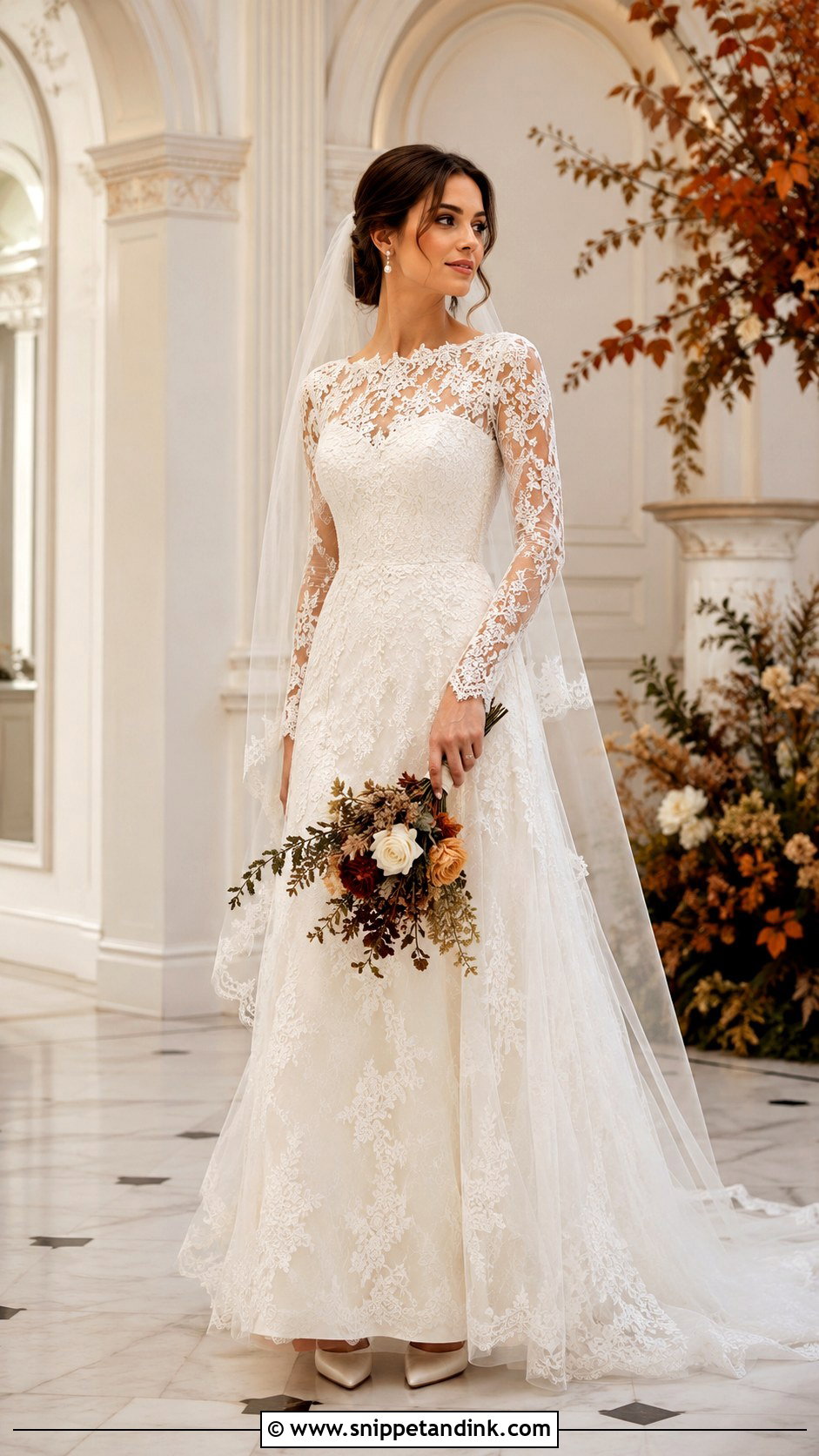
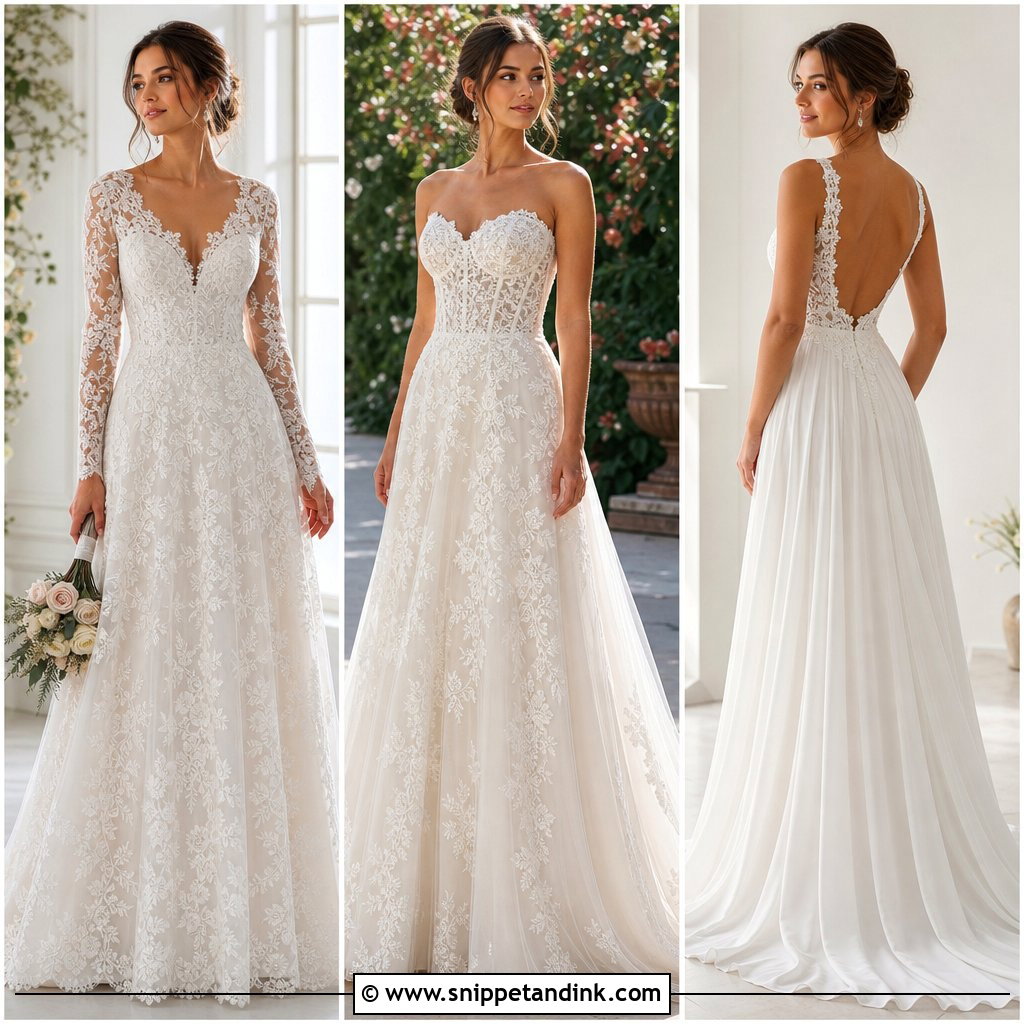
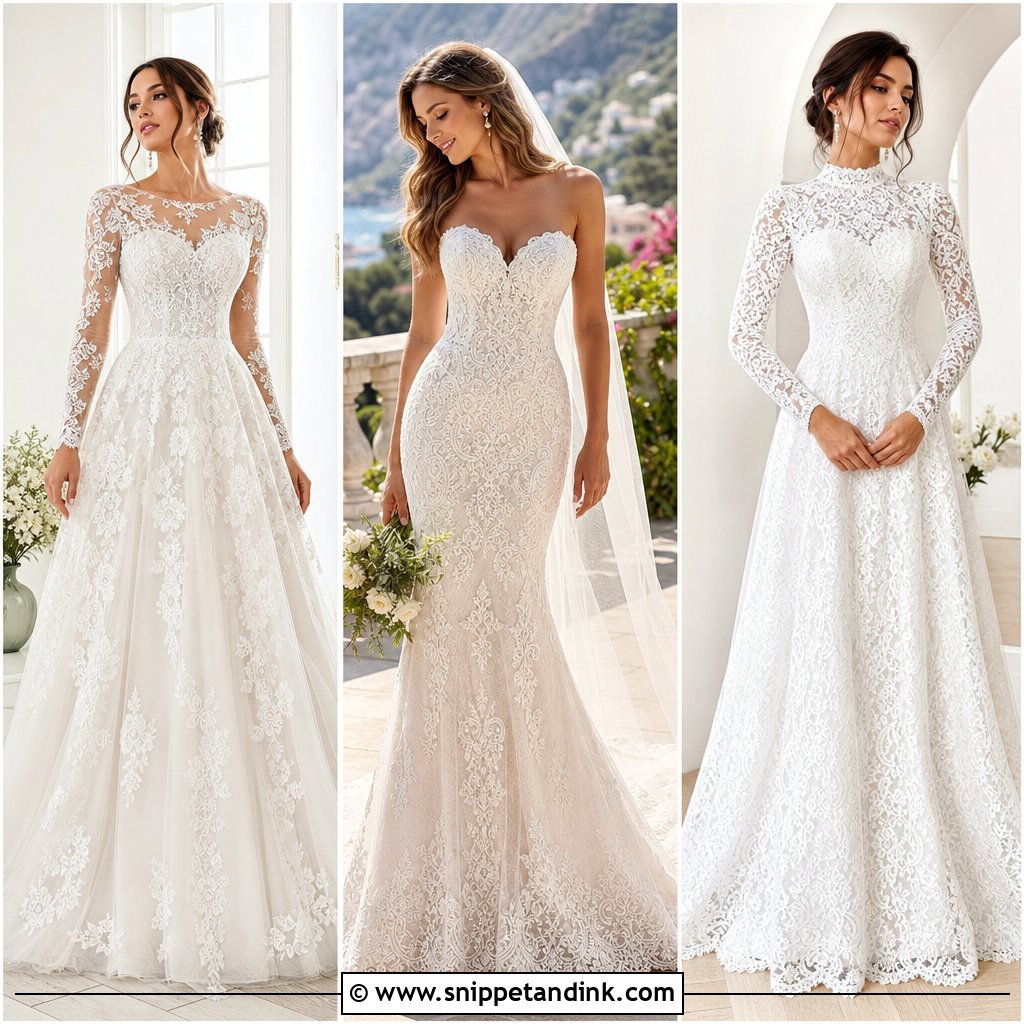
Long lace sleeves give coverage and still look soft, which is why this remains one of the most requested cuts for autumn, winter and formal indoor weddings. Sheer unlined sleeves feel lighter; lined sleeves hold their shape but are warmer. I always check the sleeve at the elbow bend, because lace has little stretch and a tight sleeve pulls the shoulder seam when you lift a bouquet. A fitted bodice with an A-line skirt, pearl drops, a low bun and a fingertip veil complete it.
2. Off Shoulder Lace Wedding Dress
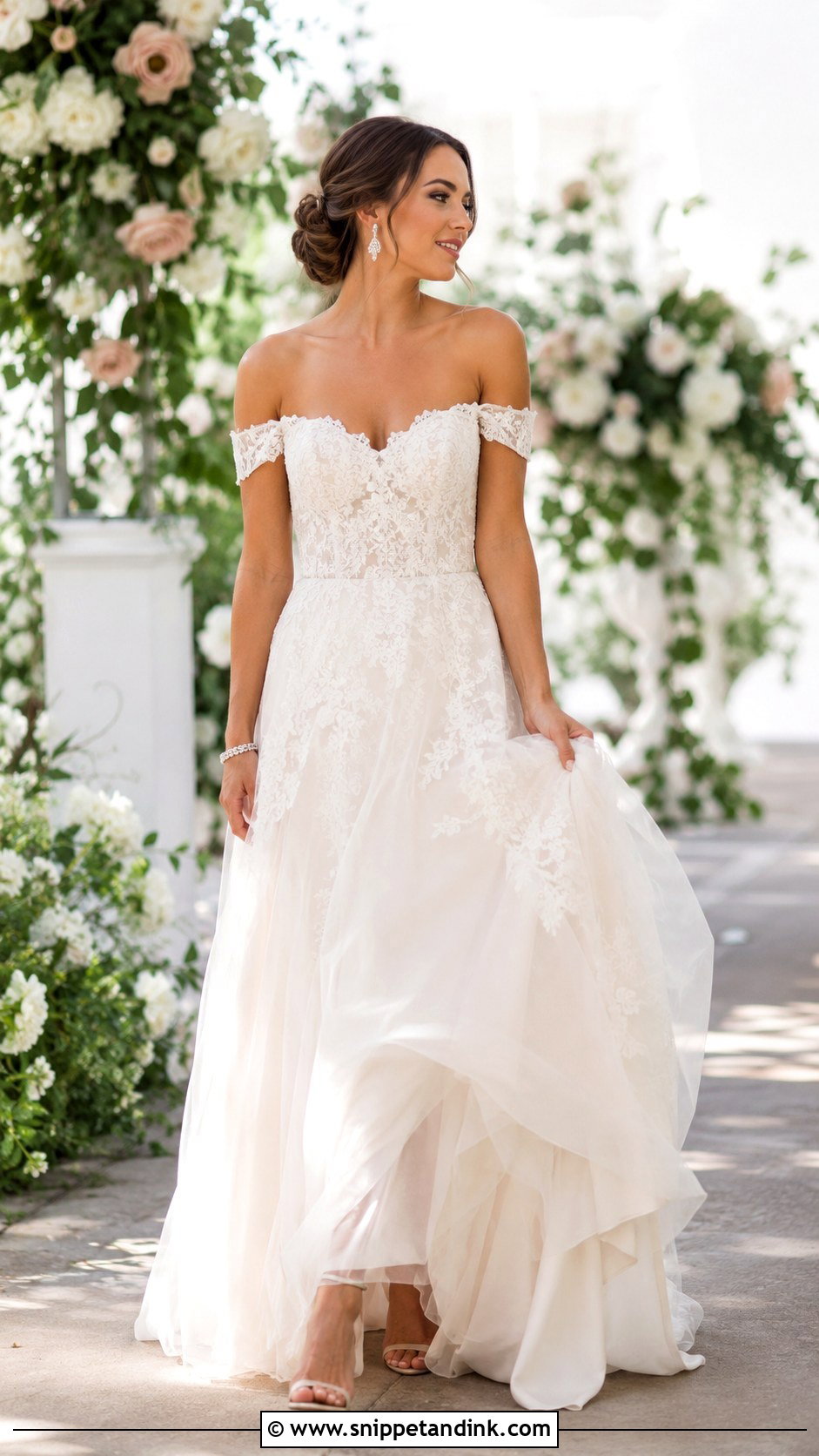
An off-shoulder lace neckline shows the collarbones without feeling exposed. Scalloped edges along the band are pretty, but they’re also where I see the most slipping, so the inner band usually needs elastic or a silicone strip. I’d skip the necklace and let the neckline frame the face, with crystal studs, a fine bracelet, pointed ivory heels and a soft veil under a low chignon. It sits naturally at garden and ballroom weddings.
3. High Neck Lace Wedding Dress
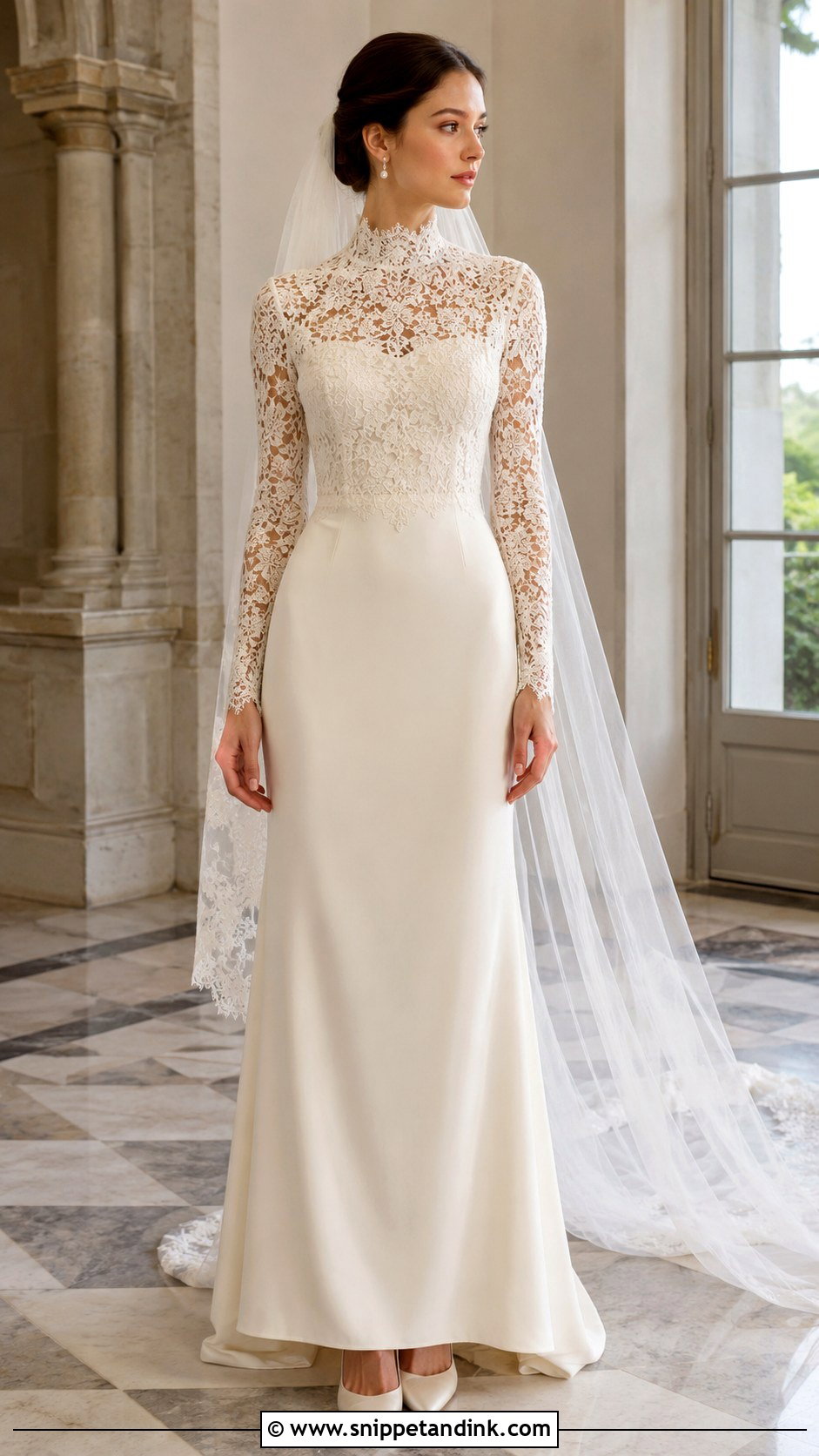
A high lace neck only works if the lace is fine. Heavy guipure up to the jaw looks stiff and feels hot, while delicate Chantilly or tulle-backed lace reads graceful and slightly vintage. A sheer yoke and a plain skirt keep it from looking too traditional. Pearl earrings, a sleek bun and satin pumps are plenty; a long veil adds height. Brides wanting modest coverage often find this cut more comfortable than they expected.
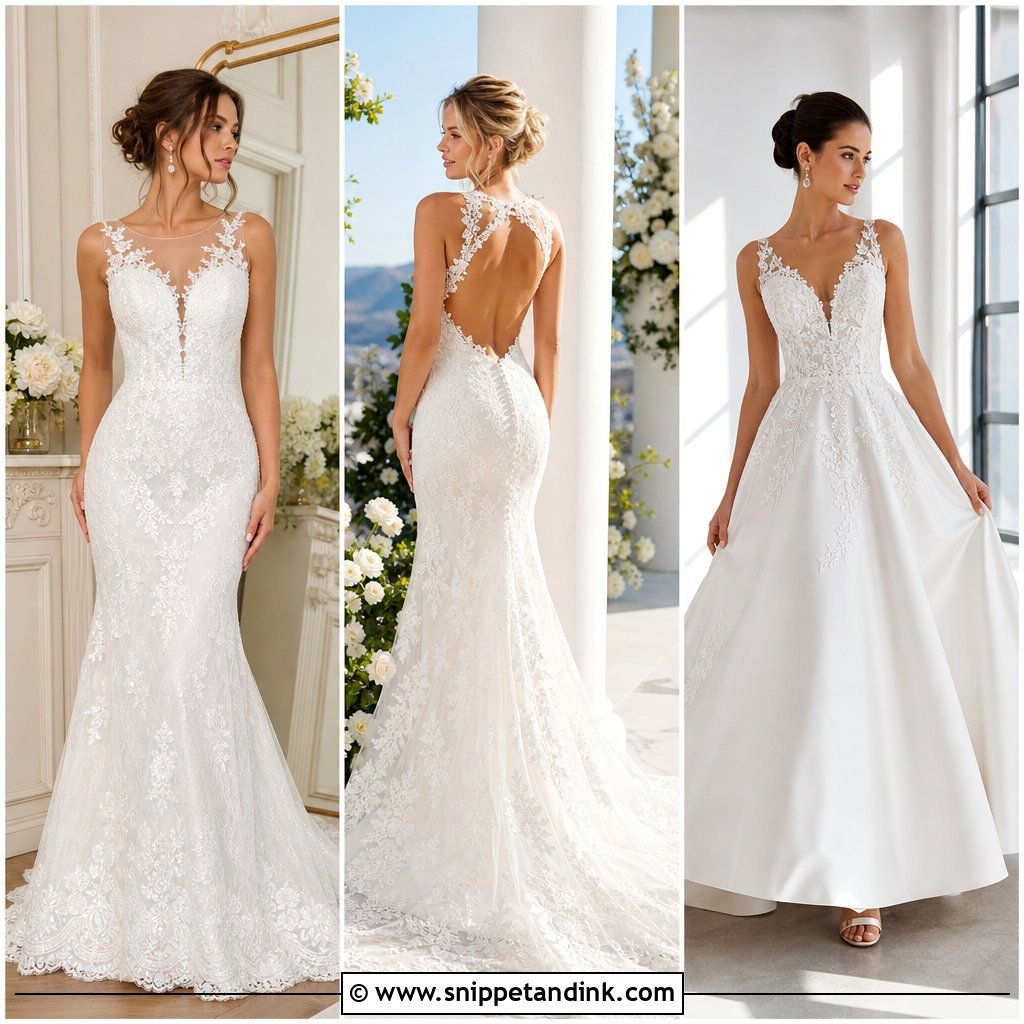
4. Lace Mermaid Wedding Dress
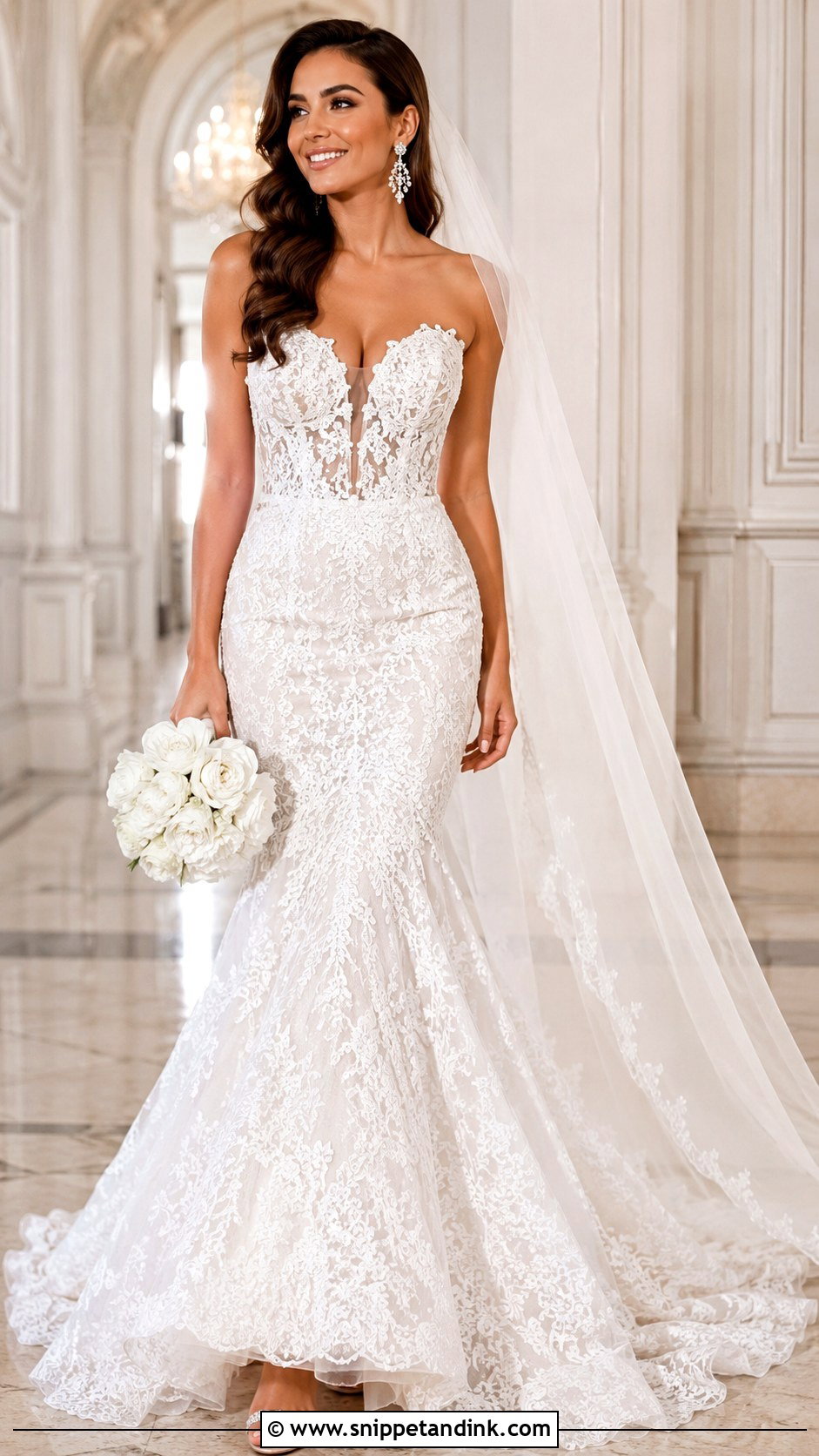
Mermaid gowns fit closely through the hips and flare near the knee, so lace placement can make or break them. Floral appliqué softens the structure and can hide seams. My honest note: the flare point has to sit exactly right for your height, or walking and sitting become a struggle; I check it with the bride climbing a step. Statement earrings, glossy waves, heeled sandals and a long veil suit formal and evening ceremonies.
5. Lace Ball Gown Wedding Dress
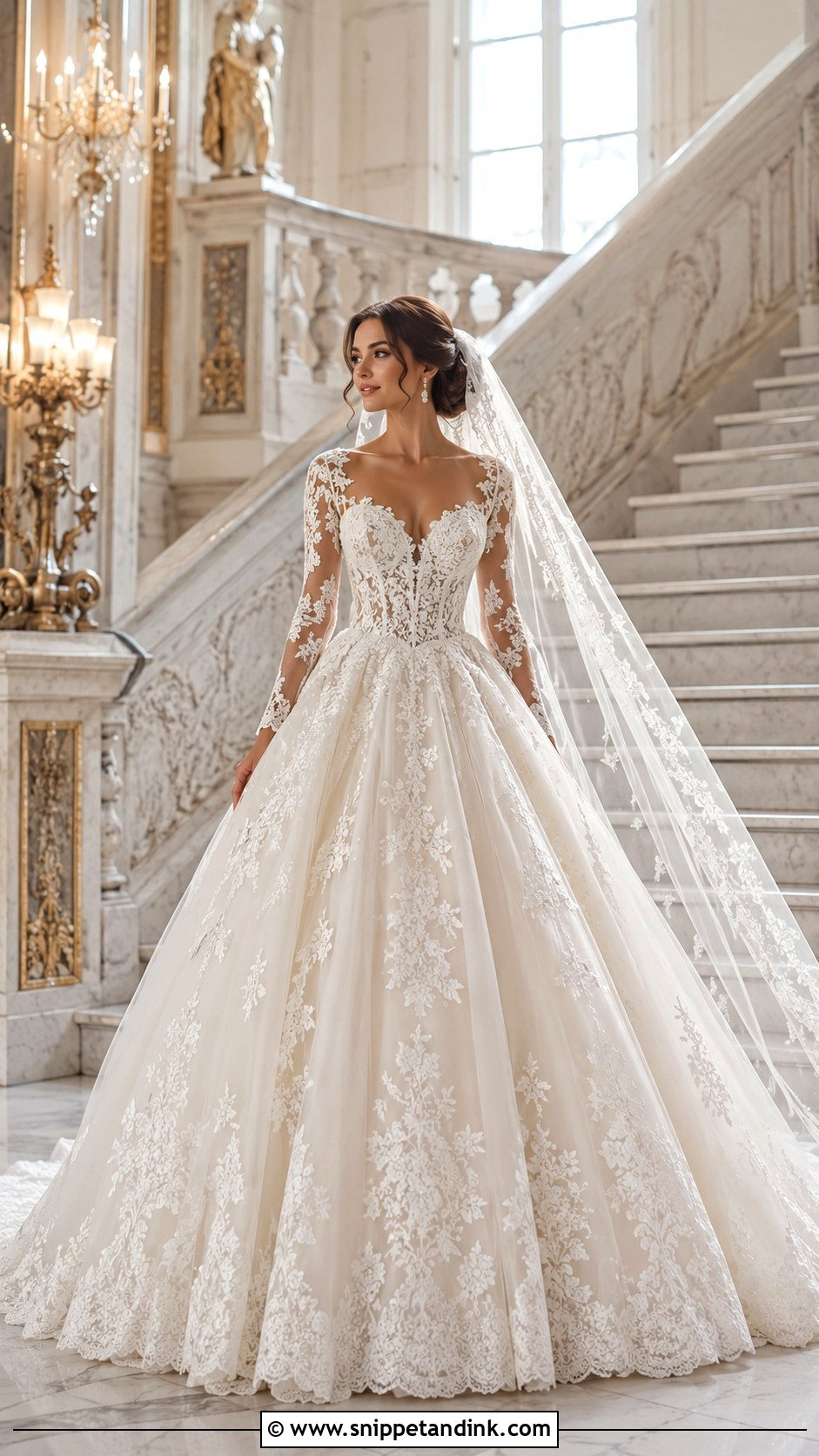
A lace ball gown can easily look heavy, so I prefer lace concentrated on the bodice and scattered lightly down the skirt. The full skirt gives you room to wear platform heels nobody will see, which I recommend because a ball gown is a long day of standing. A cathedral veil, pearls and a classic updo suit grand ballrooms and formal venues where a big entrance fits the room.
6. Lace A Line Wedding Dress
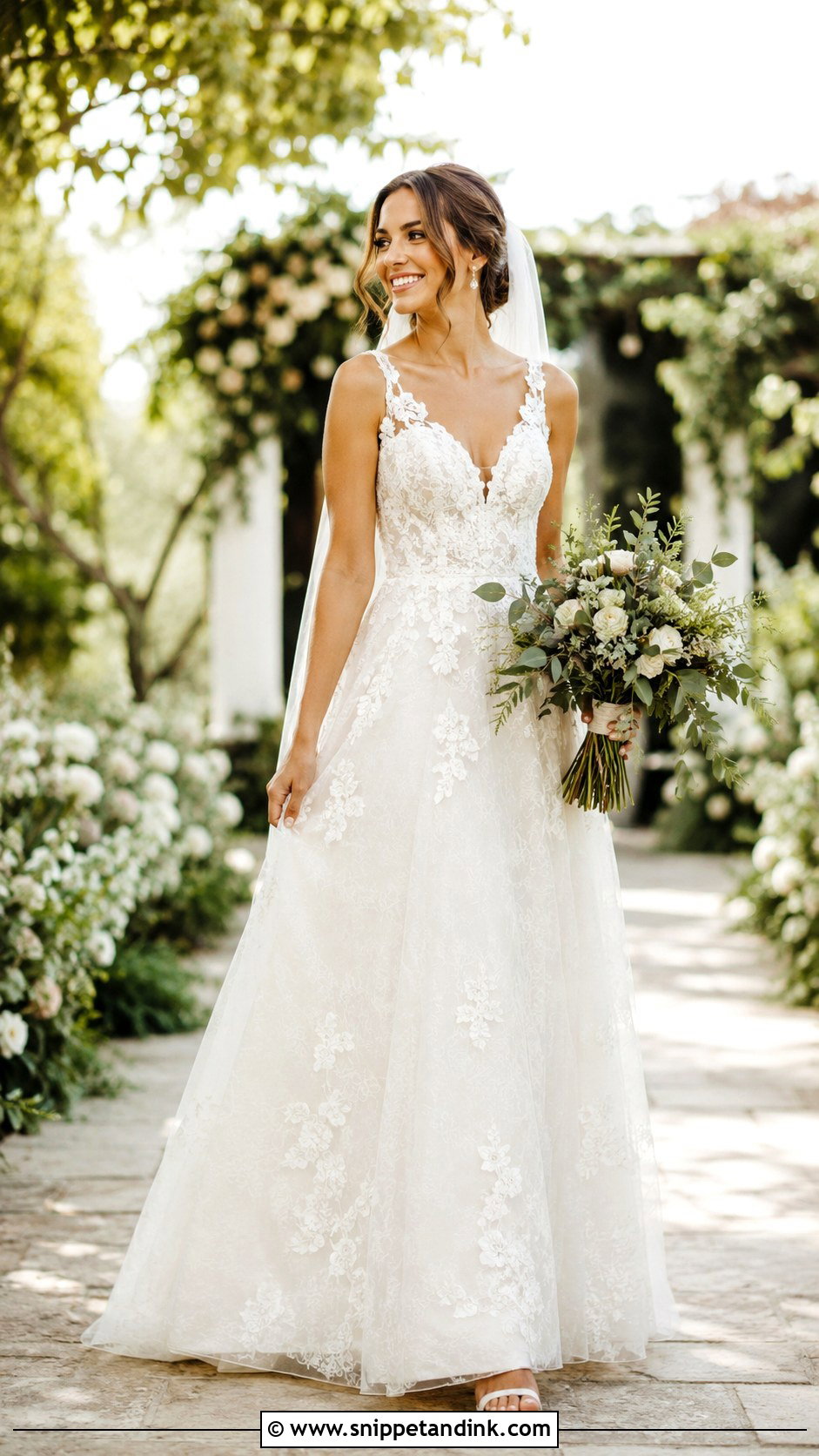
The lace A-line suits more body shapes than any other cut I fit. It’s close through the bodice and opens gently from the waist, so you can sit, dance and breathe. Floral lace reads romantic; geometric lace looks cleaner. Block heels, a soft veil, small earrings and a greenery bouquet keep it comfortable from ceremony to the last song, which is exactly why I so often suggest it as a starting point.
7. Strapless Lace Wedding Dress
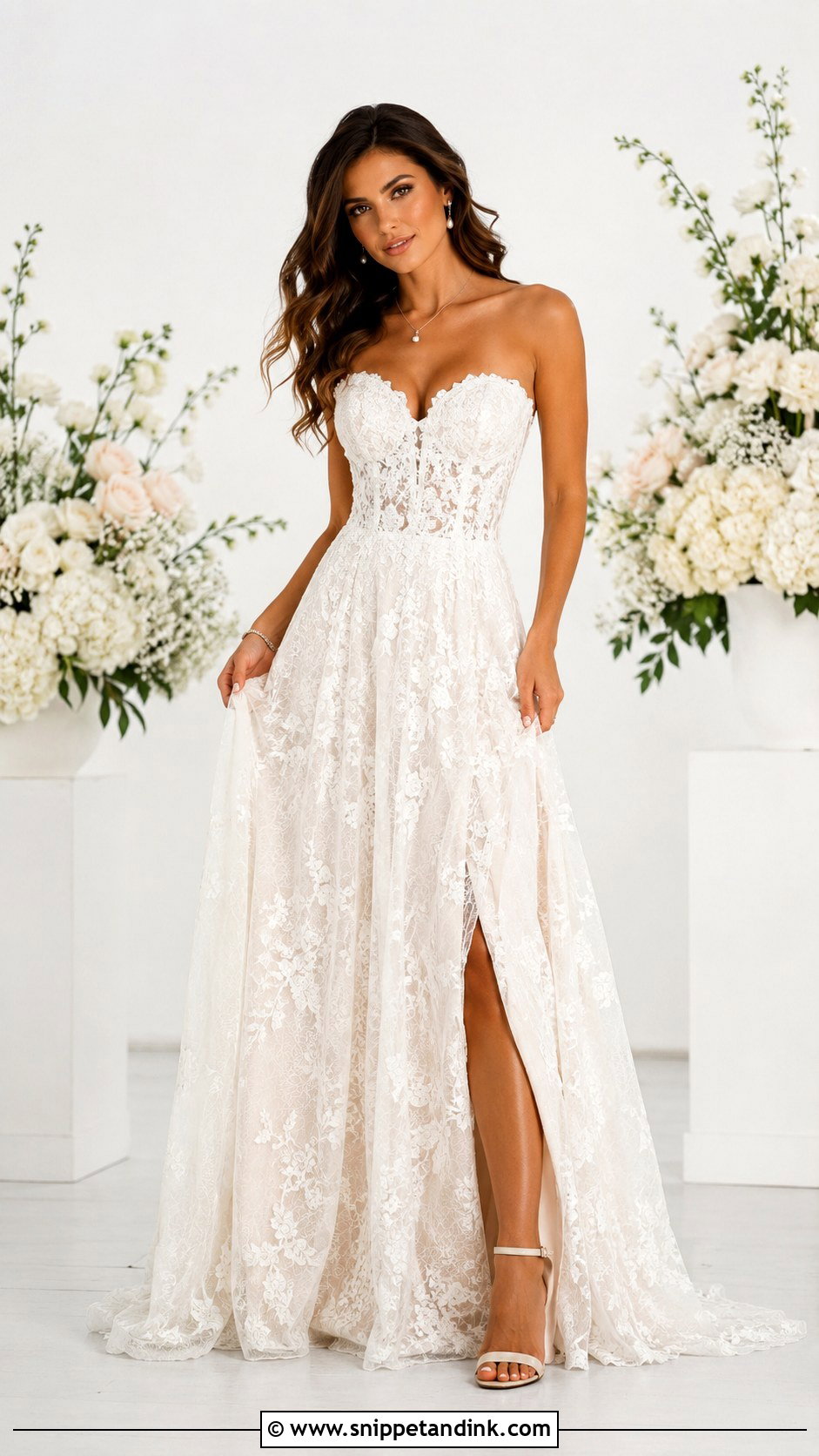
Strapless lace puts the texture right at the neckline, so the shape of that edge matters. A sweetheart softens it; a straight neckline looks more modern. Without straps, the bodice must be built to stay up on its own, with boning and a firm waist stay. Skirts can go from slim column to full A-line depending on the venue. A short necklace, drop earrings, soft waves and ivory heels suit warm-weather weddings.
8. Lace Corset Wedding Dress
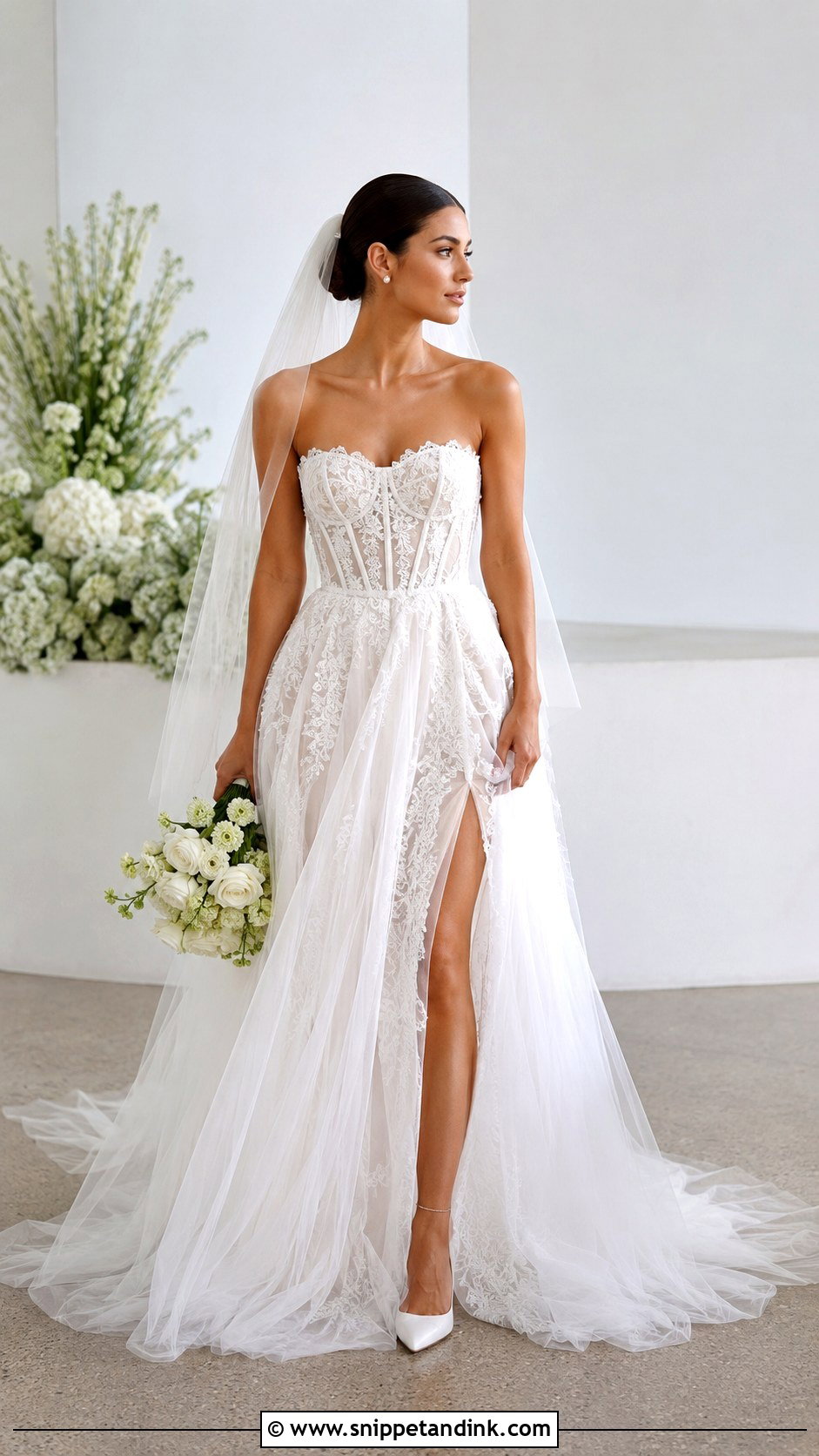
Corset bodices give real shape, and lace over boning keeps them from looking harsh. Visible boning reads fashion-forward; lined lace gives a classic finish. A flowing tulle or satin skirt balances the fitted top. Lace over a corset needs careful matching at the seams, where the pattern should continue across rather than stop abruptly, so ask to see the side seams up close. Pearl studs, a sheer veil, pointed heels and a neat bun finish it.
9. Sheer Lace Wedding Dress
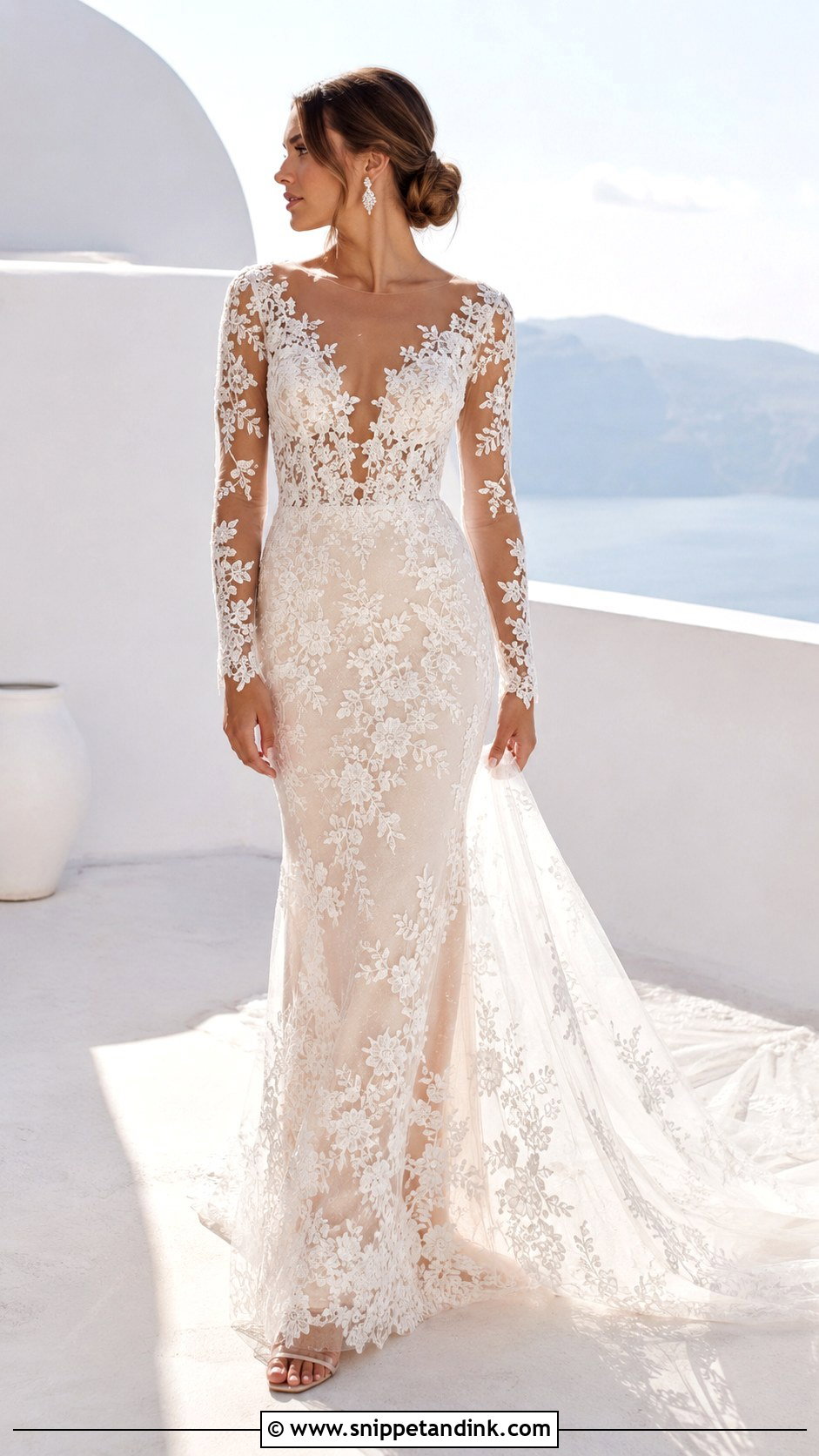
Sheer lace relies on its lining. Illusion panels, sheer sleeves and overlays look refined when the lining matches your skin tone closely; a lining that’s too pale or too pink shows up clearly in flash photos. Nude or ivory lining under floral lace gives a soft layered effect. Keep accessories minimal, with barely-there heels, soft makeup, a low bun and small crystals. It suits destination and evening weddings with a fashion edge.
10. Lace Wedding Dress With Train
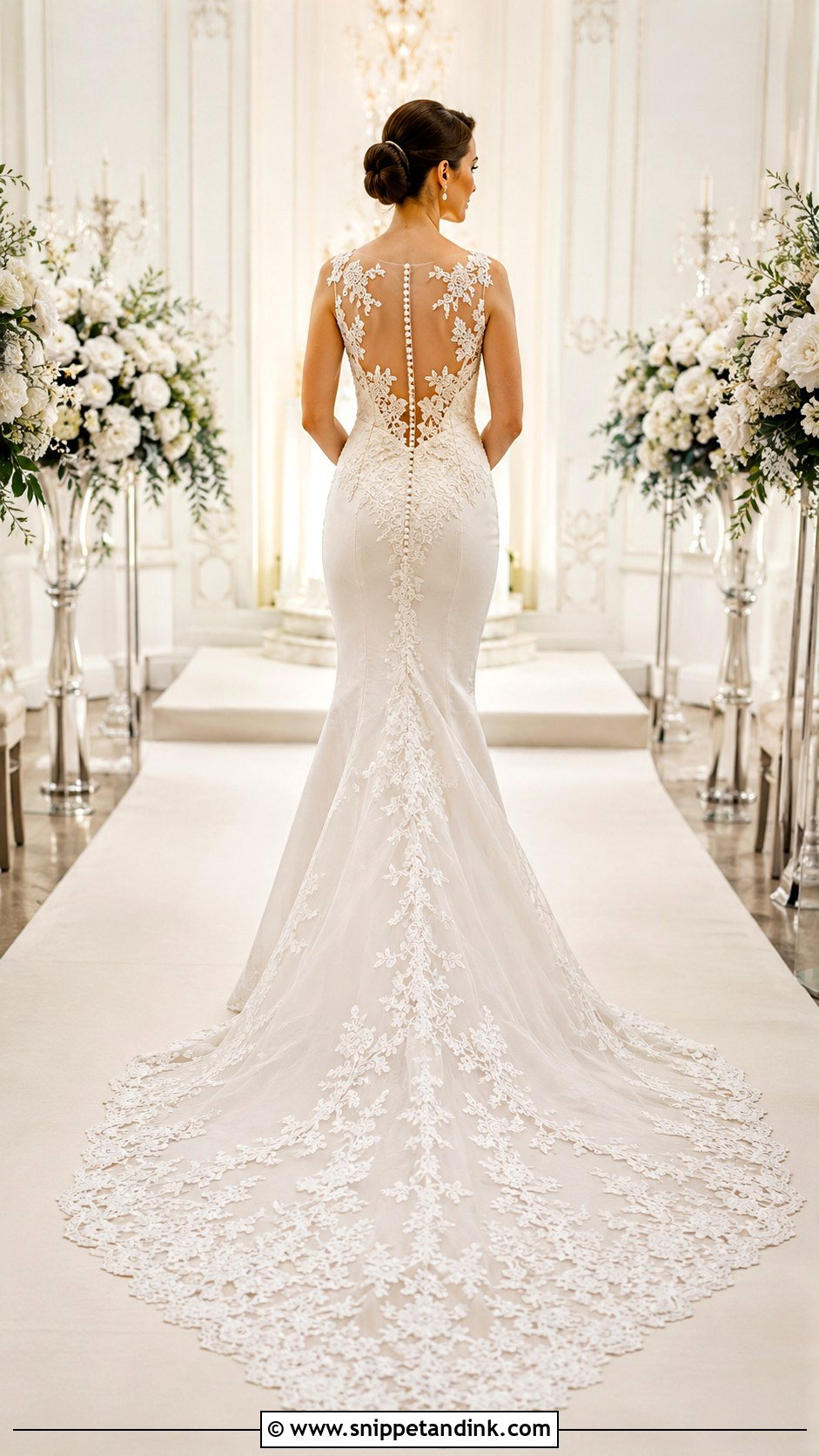
A lace train looks best from behind, which is where most ceremony photos are taken. It can be fully lace, lace-edged or scattered with appliqué. Outdoors, lace trains pick up twigs and grass in the open pattern, so I’d ask a bridesmaid to check it after any garden walk. A fitted bodice and smooth skirt let the train stand out. A cathedral veil adds drama, or skip the veil and let the train work alone.
11. Boho Lace Wedding Dress
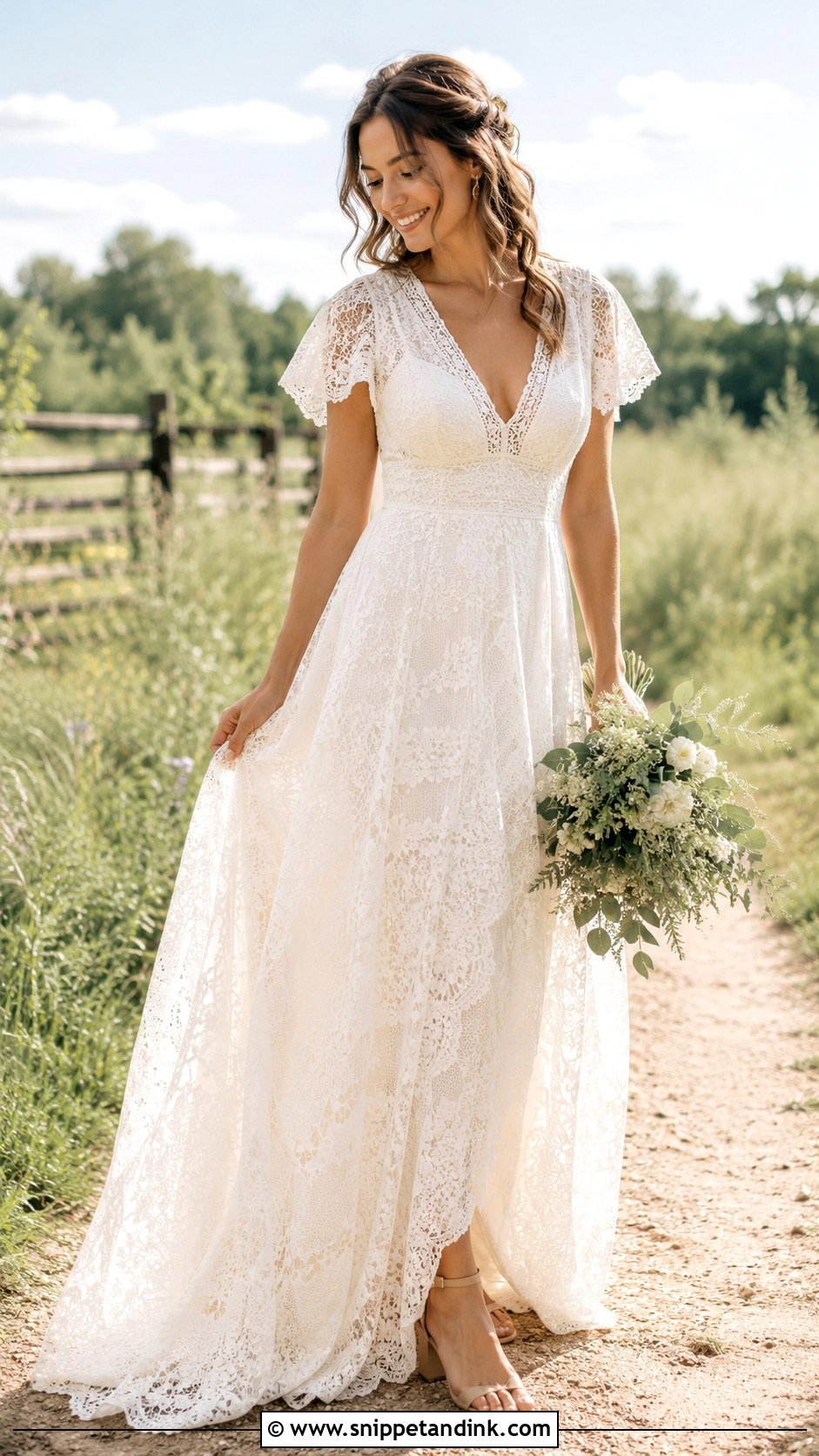
Boho lace relaxes the whole look: soft lace, flutter sleeves, a flowing skirt and a waist that isn’t rigid. Crochet-style or floral lace suits beach, countryside and outdoor venues. Loose waves, flat sandals or low block heels, small hoops and a greenery bouquet keep it easy. A simple veil or flower comb is enough. This is the lace dress I see brides actually dance in.
12. Vintage Lace Wedding Dress
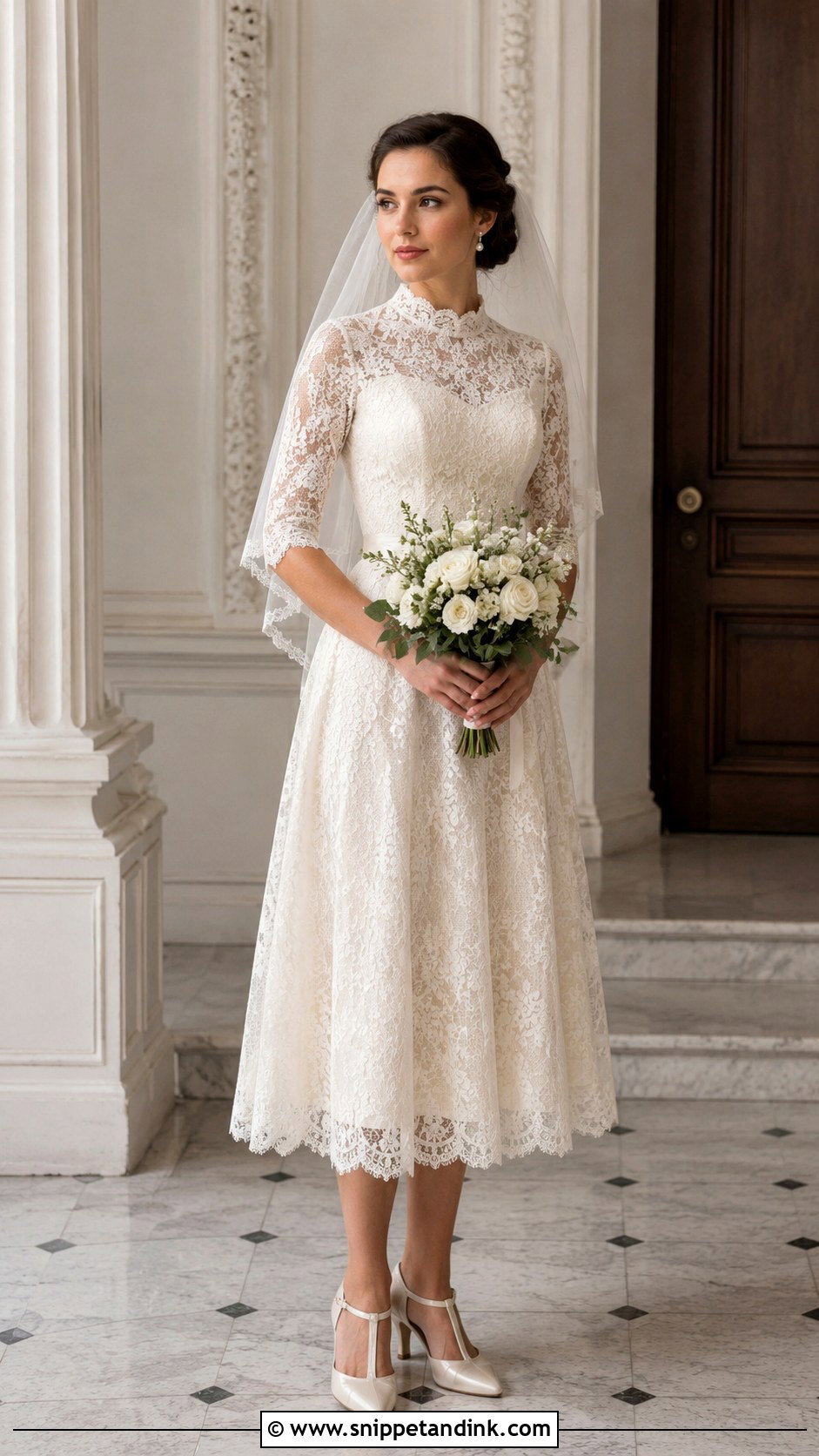
Vintage lace brings character: a high neck, scalloped sleeves, a tea-length skirt, a basque waist or lace-covered buttons down the back. The way to keep it from looking like a costume is fresh styling: clean makeup, simple pearls and modern ivory heels. A birdcage veil leans retro; a plain tulle veil looks more classic. If you’re wearing a family dress, have a specialist check the lace for weak spots before any alterations begin.
13. Floral Lace Wedding Dress
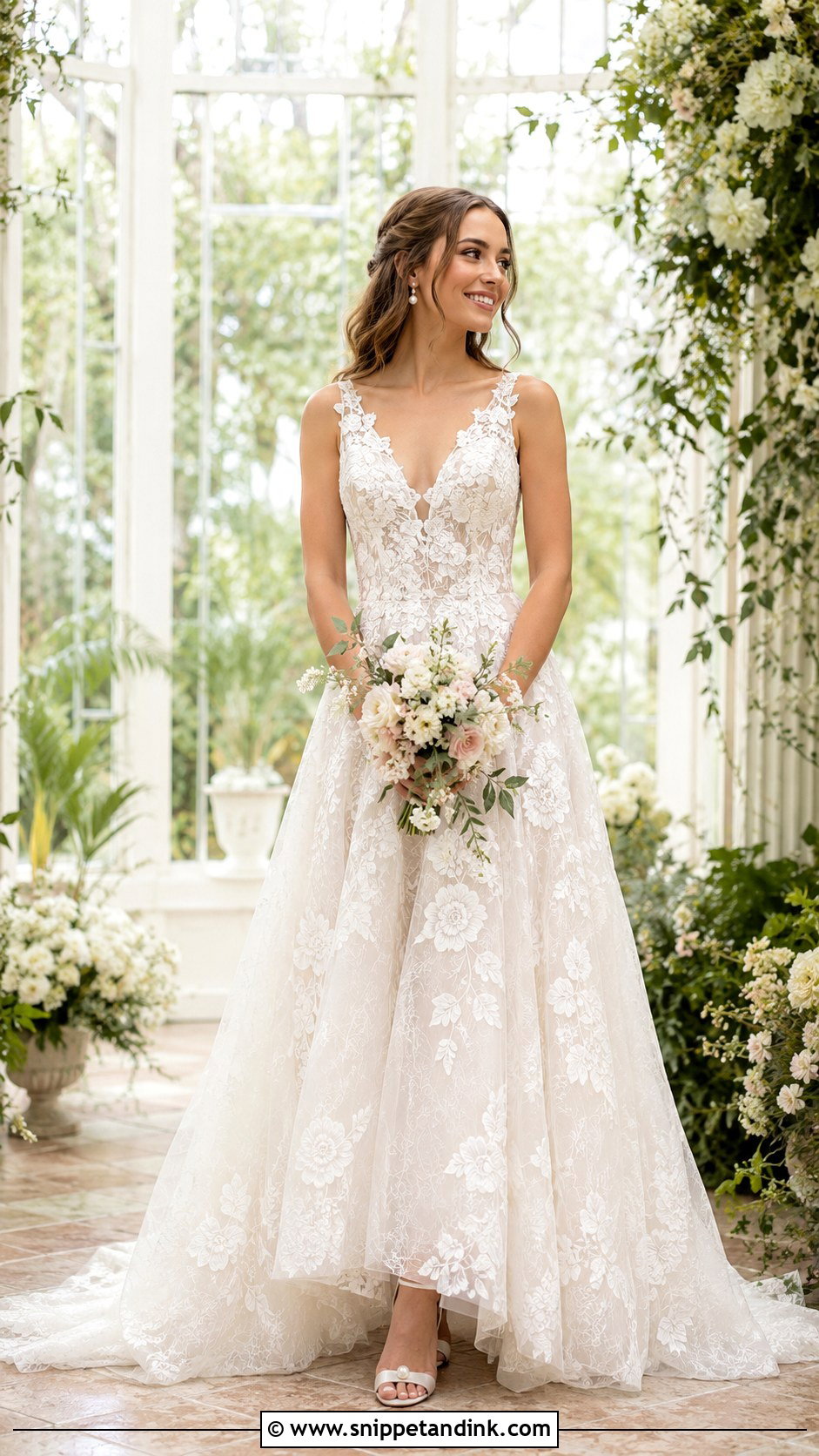
Floral lace is all about scale. Large appliqué flowers look bold and modern; small floral lace reads delicate and traditional. The prettiest versions place flowers on the bodice and let them thin out down the skirt. Keep the bouquet simple so it doesn’t compete with the pattern, and choose soft curls and pearl earrings. Spring weddings, greenhouses and outdoor portraits suit it naturally.
14. Chantilly Lace Wedding Dress
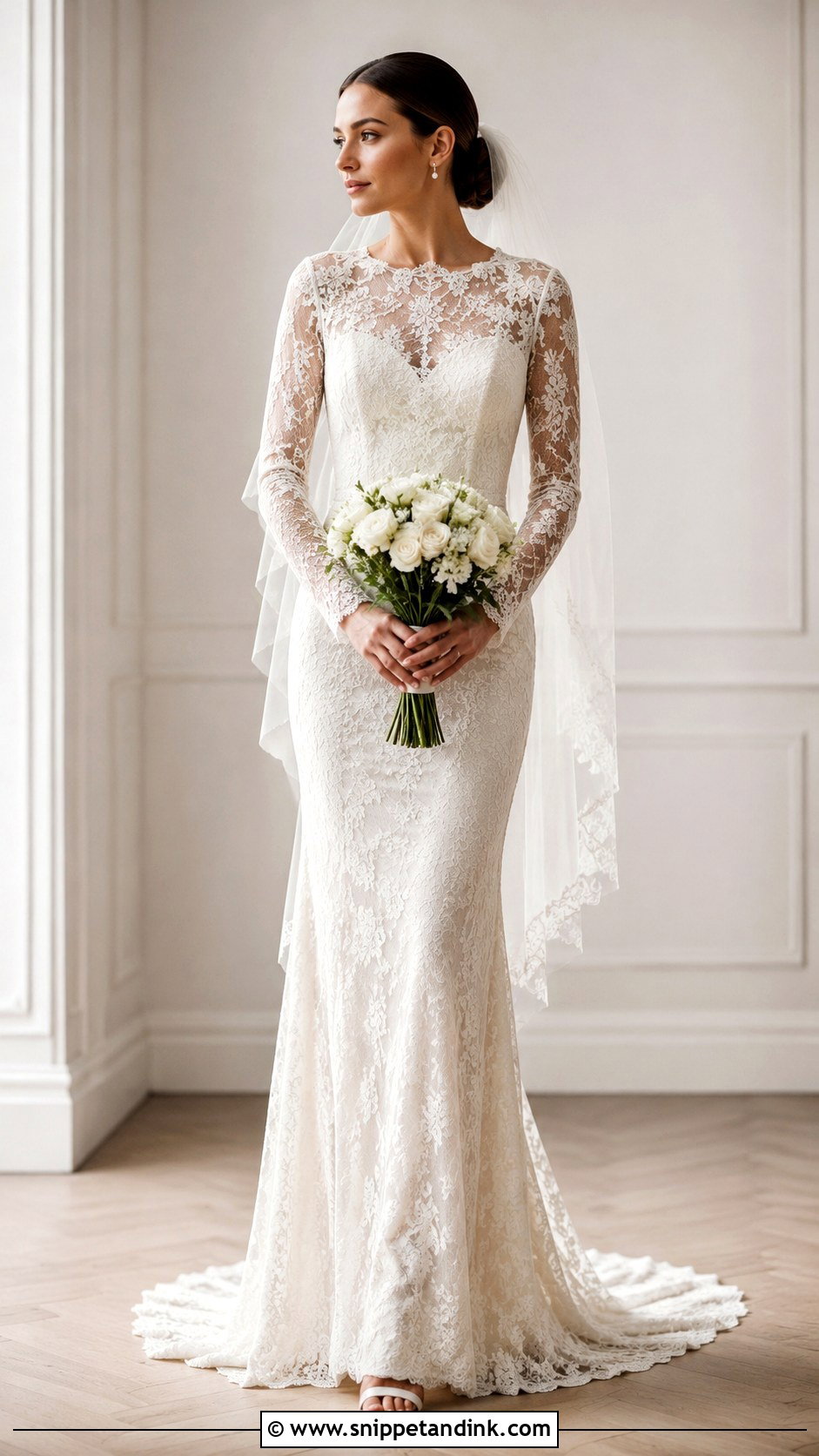
A Chantilly lace wedding dress uses one of the finest laces there is, with a delicate pattern outlined in thread on a sheer net. It drapes beautifully on fitted gowns, sleeves, overlays and illusion necklines. It’s also fragile, so I keep rings and bracelets with sharp prongs away from it. Tiny pearls, satin heels, a soft veil and a low bun suit it. A slip lining reads modern; a fuller skirt reads traditional.
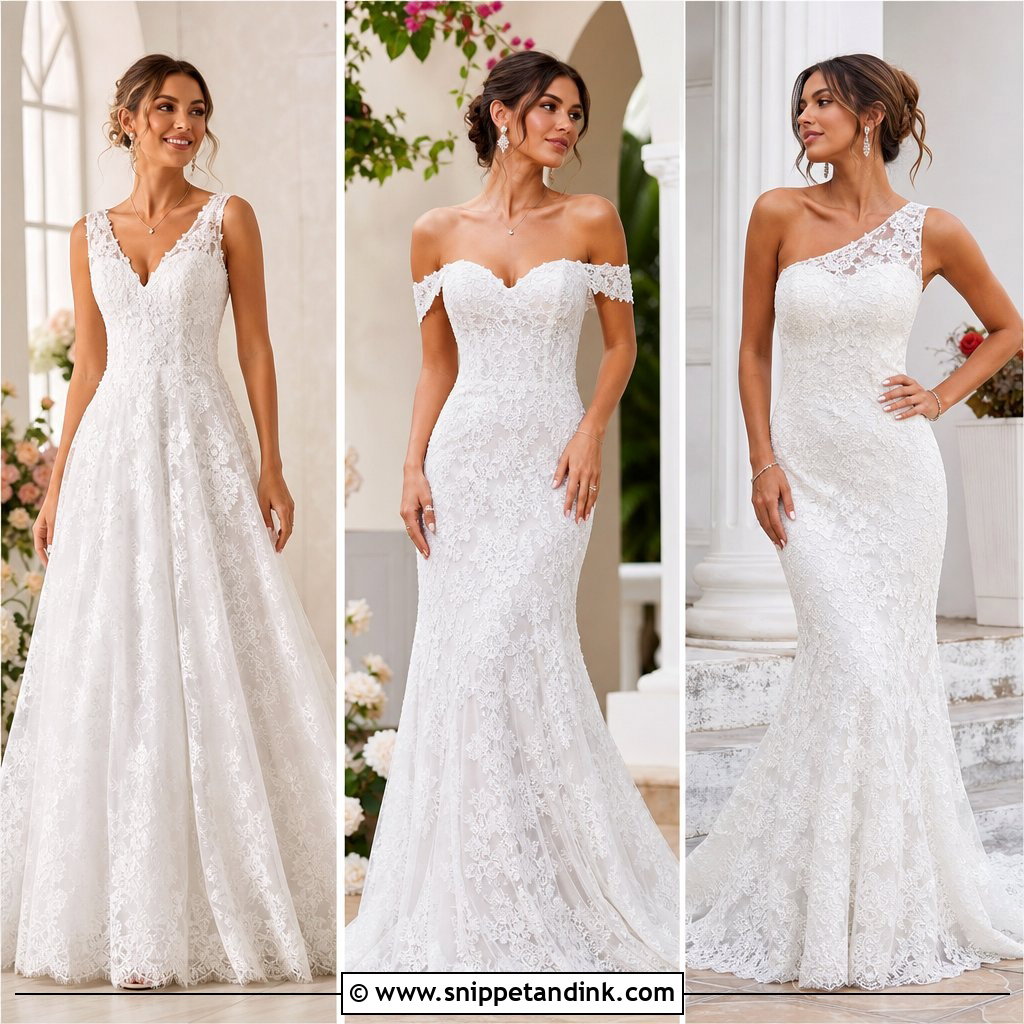

15. Guipure Lace Wedding Dress
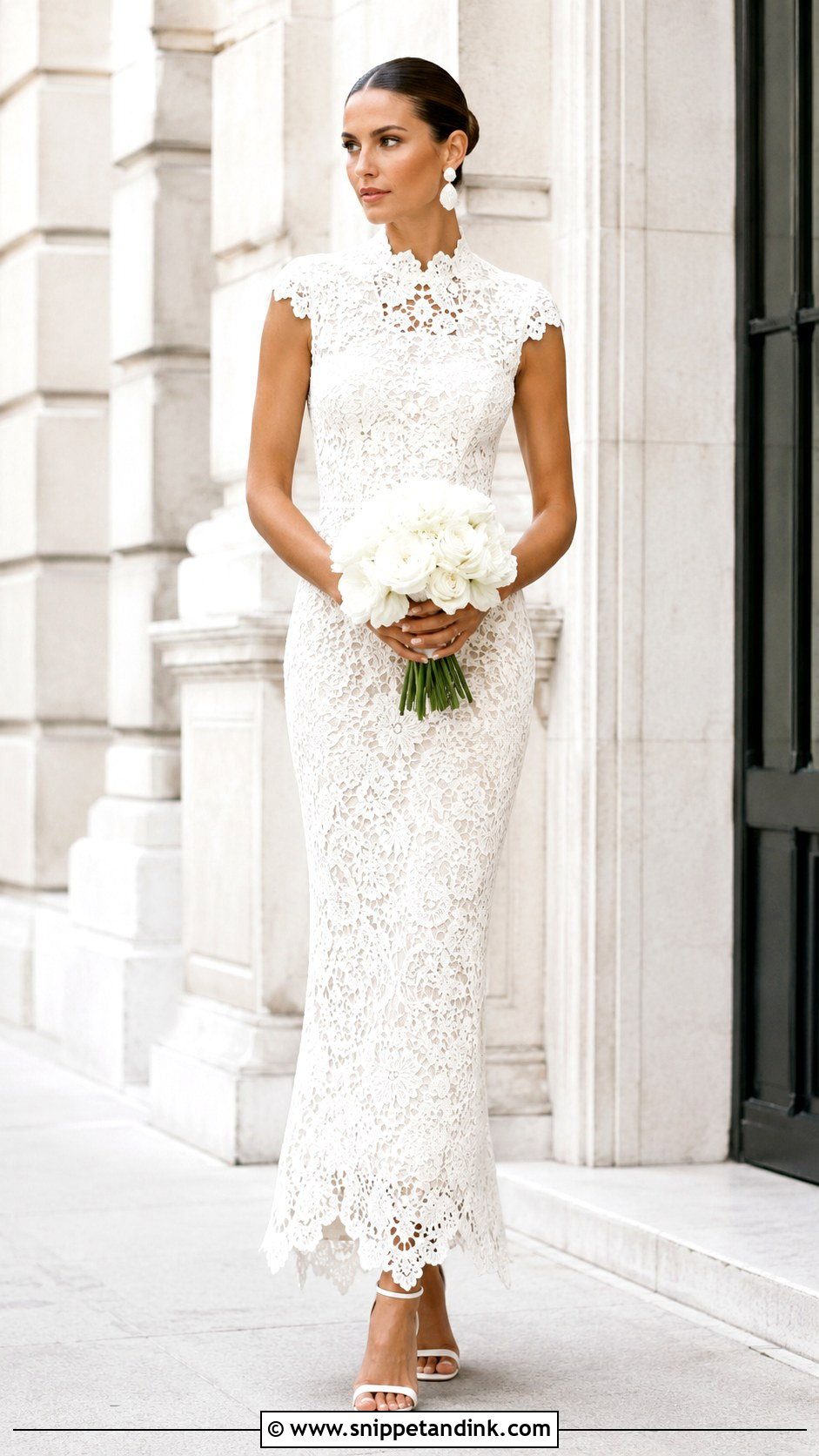
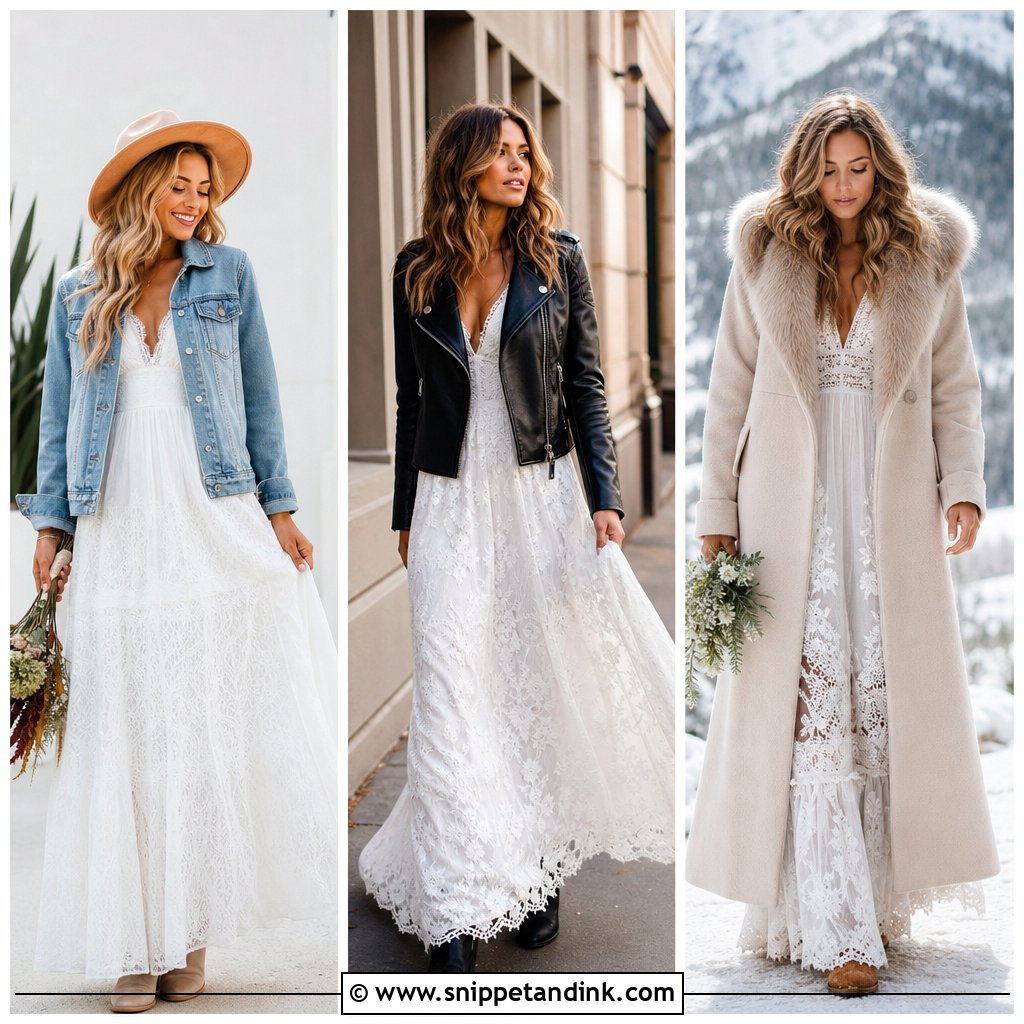
Guipure has no net background: its motifs are joined by small bars, so it stands away from the body with a raised, almost carved texture. That structure suits sheaths, fitted bodices, sleeves and modern midi lengths. It’s heavier than Chantilly and doesn’t drape, so it isn’t the right lace for a floaty gown. With sleek earrings, smooth hair, simple heels and a structured bouquet, it suits city weddings and modern venues.
16. Lace Sleeve Wedding Dress
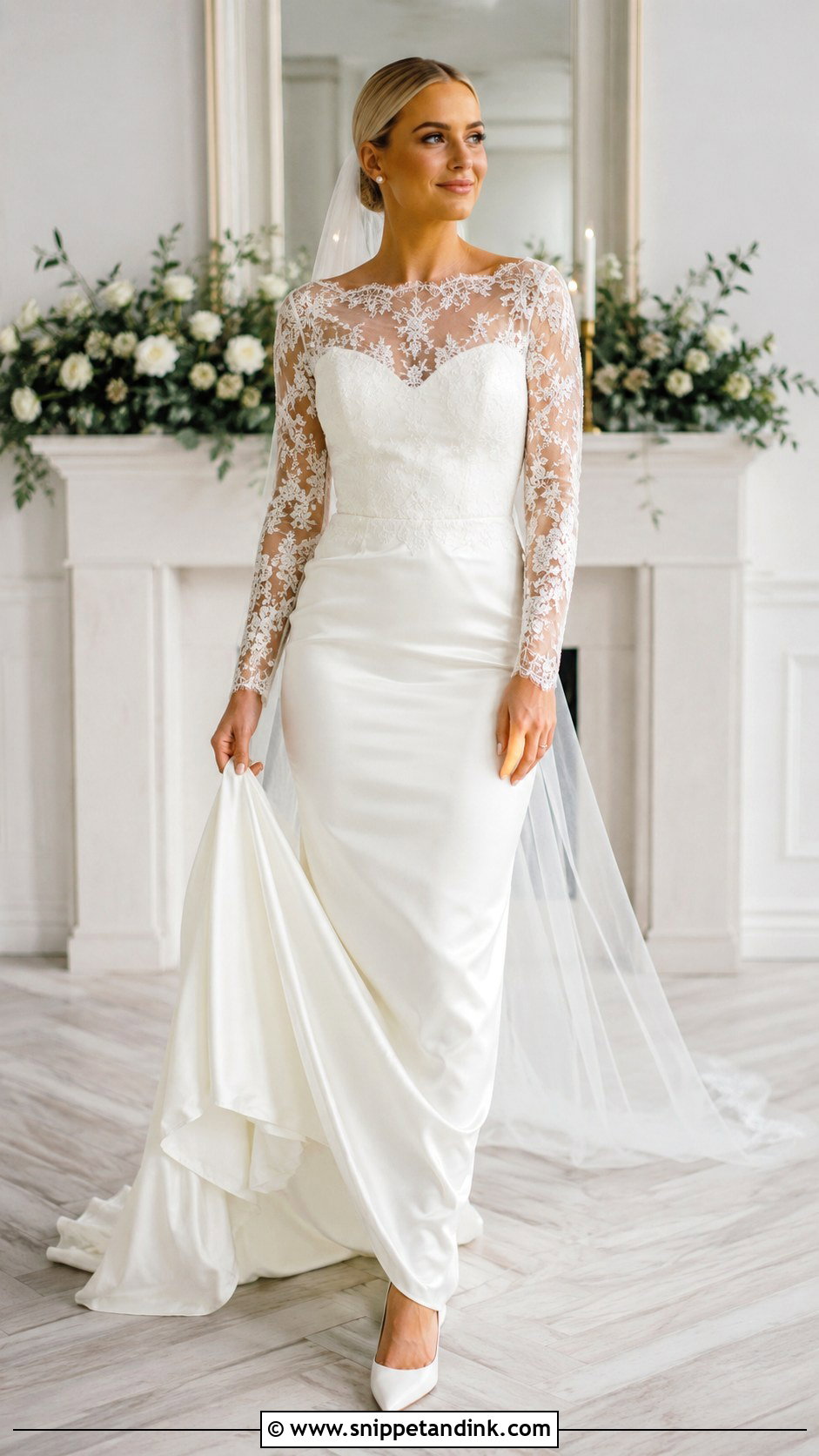
Lace only on the sleeves is a smart compromise: the dress is satin, crepe, chiffon or tulle, and the sleeves carry the romance. Long sheer sleeves look graceful, puffed lace sleeves feel playful and fitted lace sleeves read classic. I make sure the lace colour matches the base fabric closely, since ivory lace on a white satin body looks yellow. A clean veil, pearl studs and heels matching the base fabric suit it.
17. Lace Bodice Wedding Dress
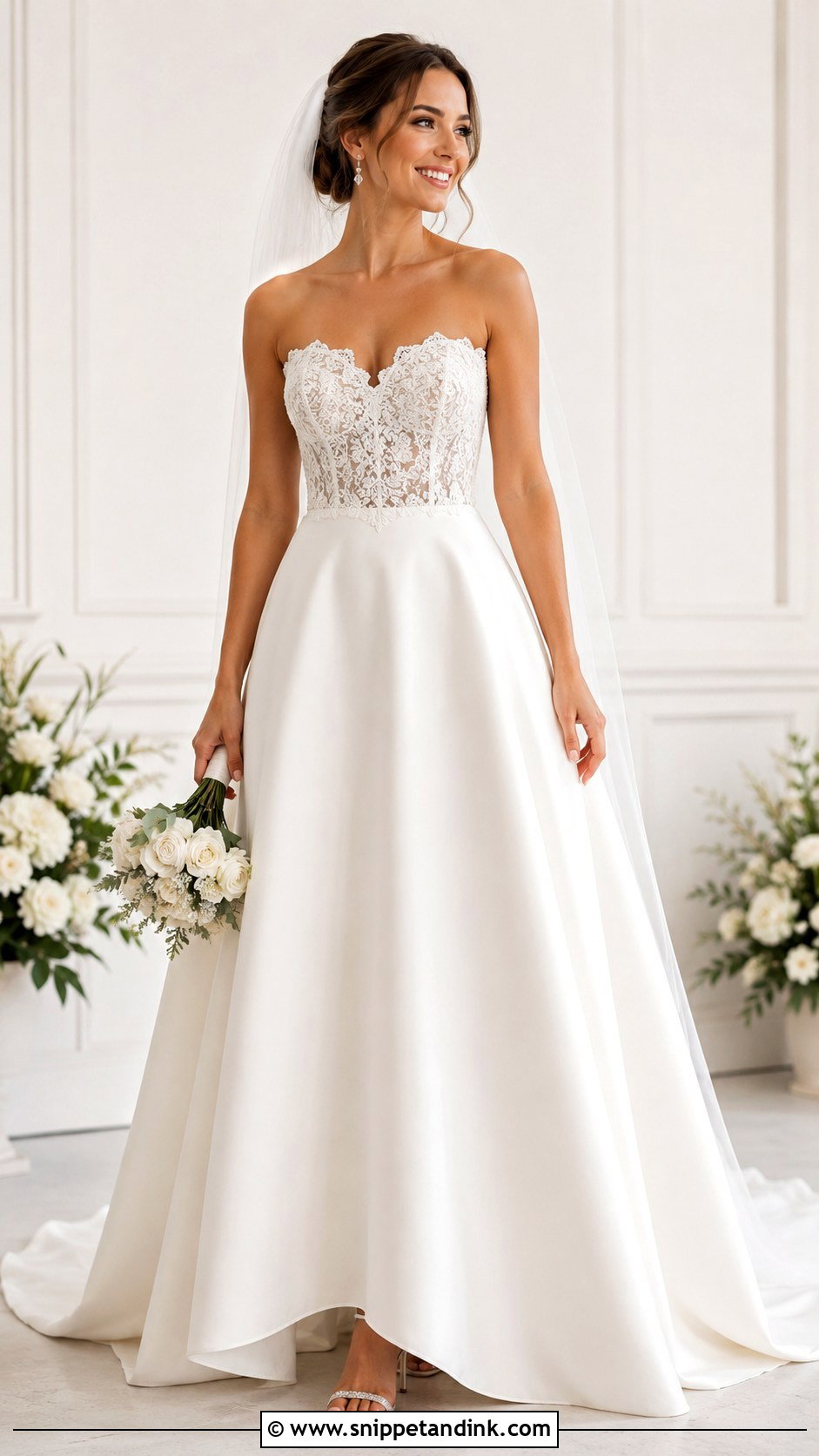
A lace bodice with a plain satin, organza or tulle skirt gives detail above and calm below, and the contrast photographs well. It also keeps cost and weight down. Choose the neckline (V, square or sweetheart) by comfort. A veil with little or no lace stops the top half looking busy. Simple earrings and elegant heels are enough, and it suits almost any venue.
18. Lace Overlay Wedding Dress
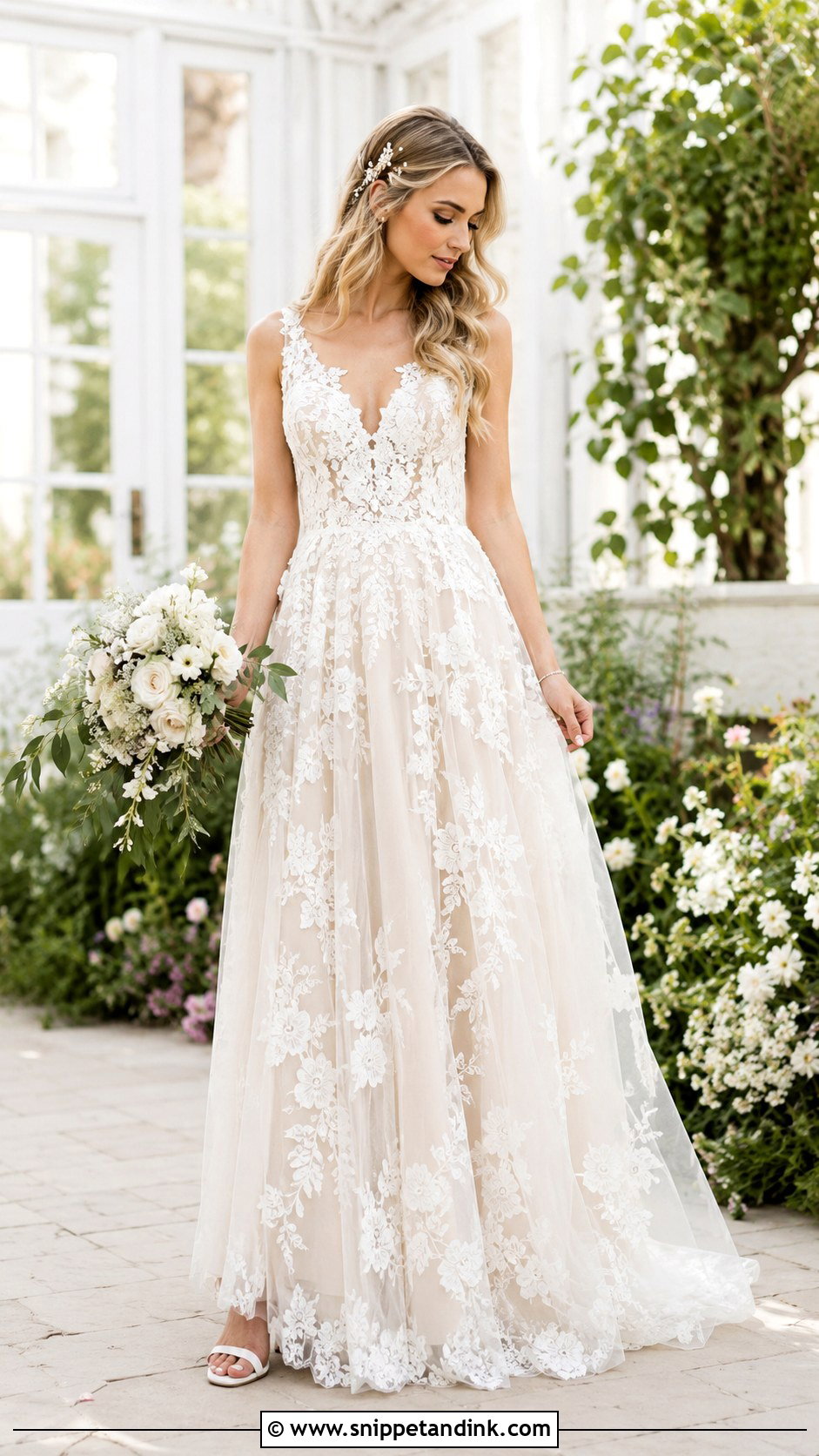
Overlays layer lace over another fabric, so the underlayer gives shape and the lace adds texture. Ivory over nude looks modern; ivory over ivory looks classic. A fitted overlay reads sleek, a loose one more vintage. Overlays can shift slightly against the lining when you walk, so ask how the two layers are tacked together. Soft waves, pearl pins, simple heels and a fine bracelet complete it without needing beading.
19. Lace Tea Length Wedding Dress
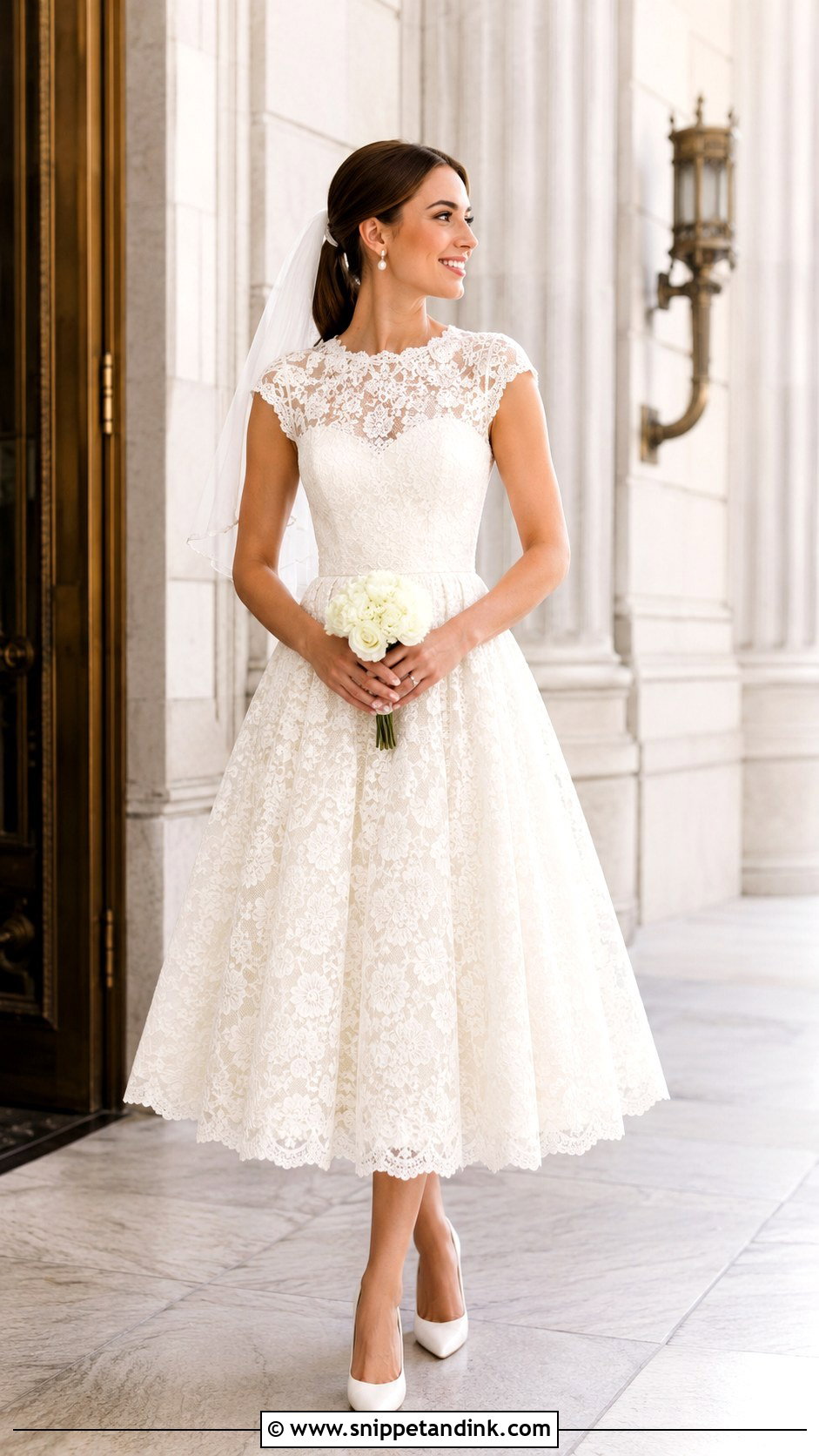
Tea length falls between knee and ankle and shows off your shoes, so choose them carefully. A fitted bodice with a full lace skirt looks vintage; a slim lace sheath works for a city courthouse wedding. Pointed pumps, pearl earrings, a short veil and a neat ponytail or soft bun suit it. It’s easy to dance in and works well as a reception change too.

20. Lace Mini Wedding Dress
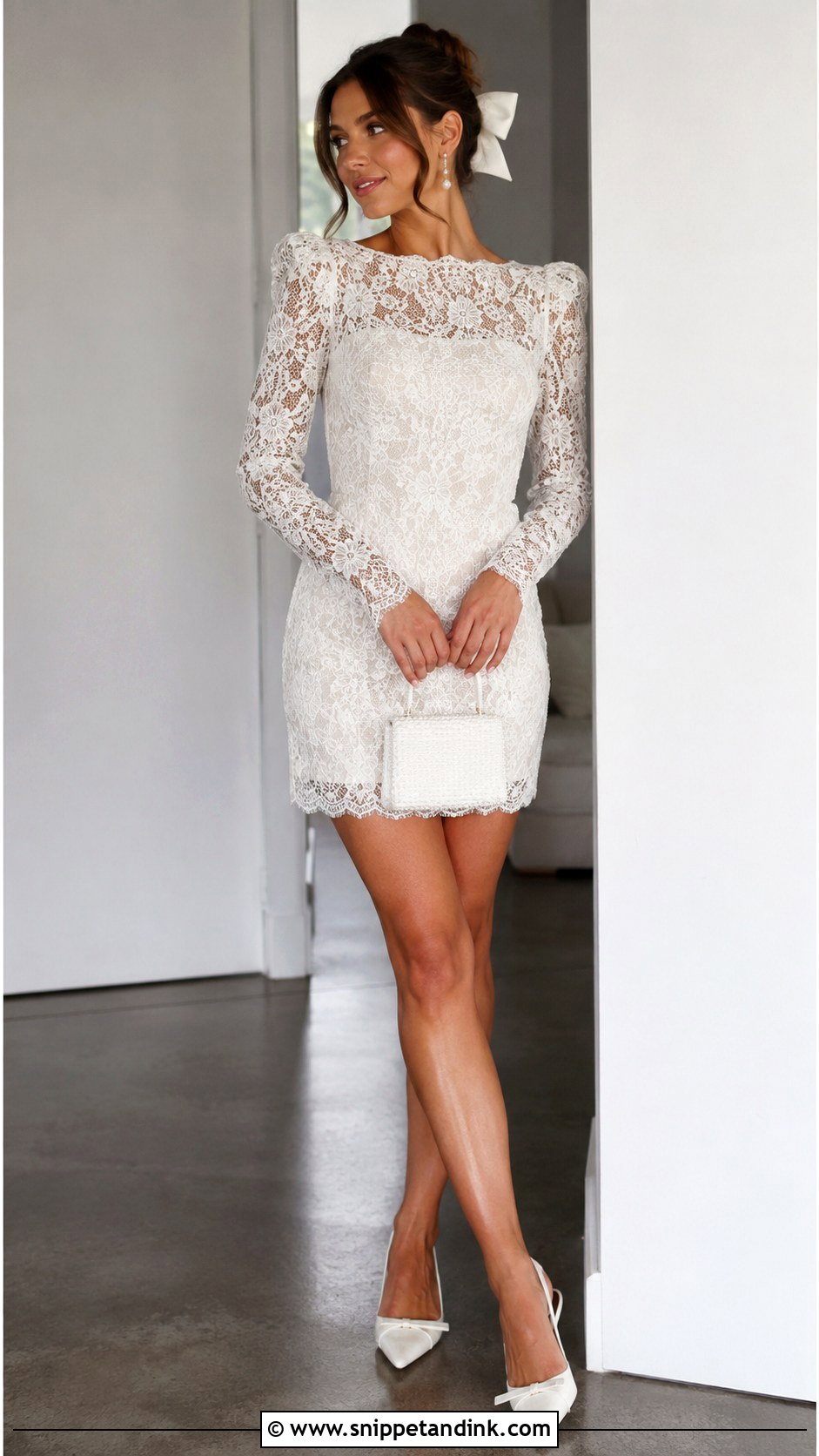
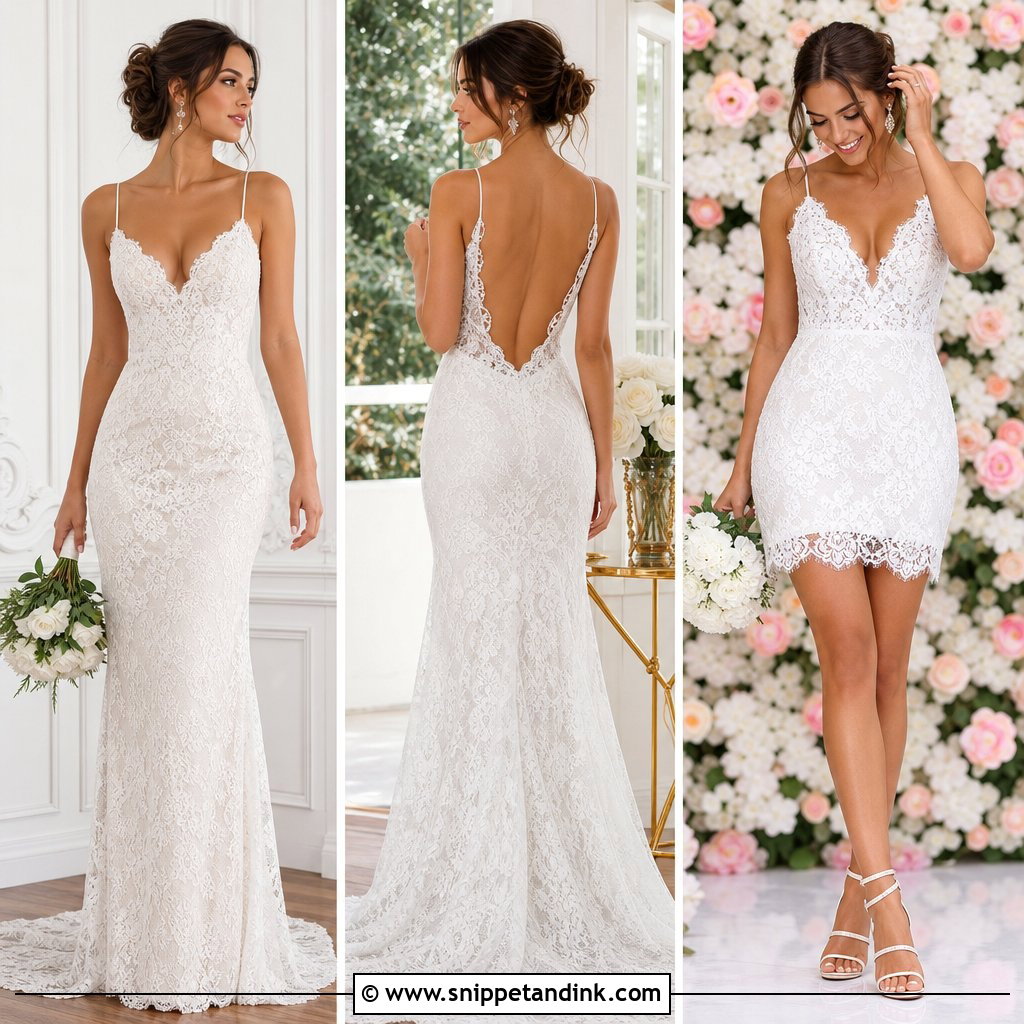
A lace mini suits a civil ceremony, shower, after-party or reception change. Long sleeves make it polished; strapless makes it lively. With a short hem, the lace has to be lined well, as sheer lace at that length shows a lot when you sit. Slingback heels, pearl earrings, a small top-handle bag and a bow or short veil keep it clearly bridal.
21. Lace Jumpsuit Bridal Look
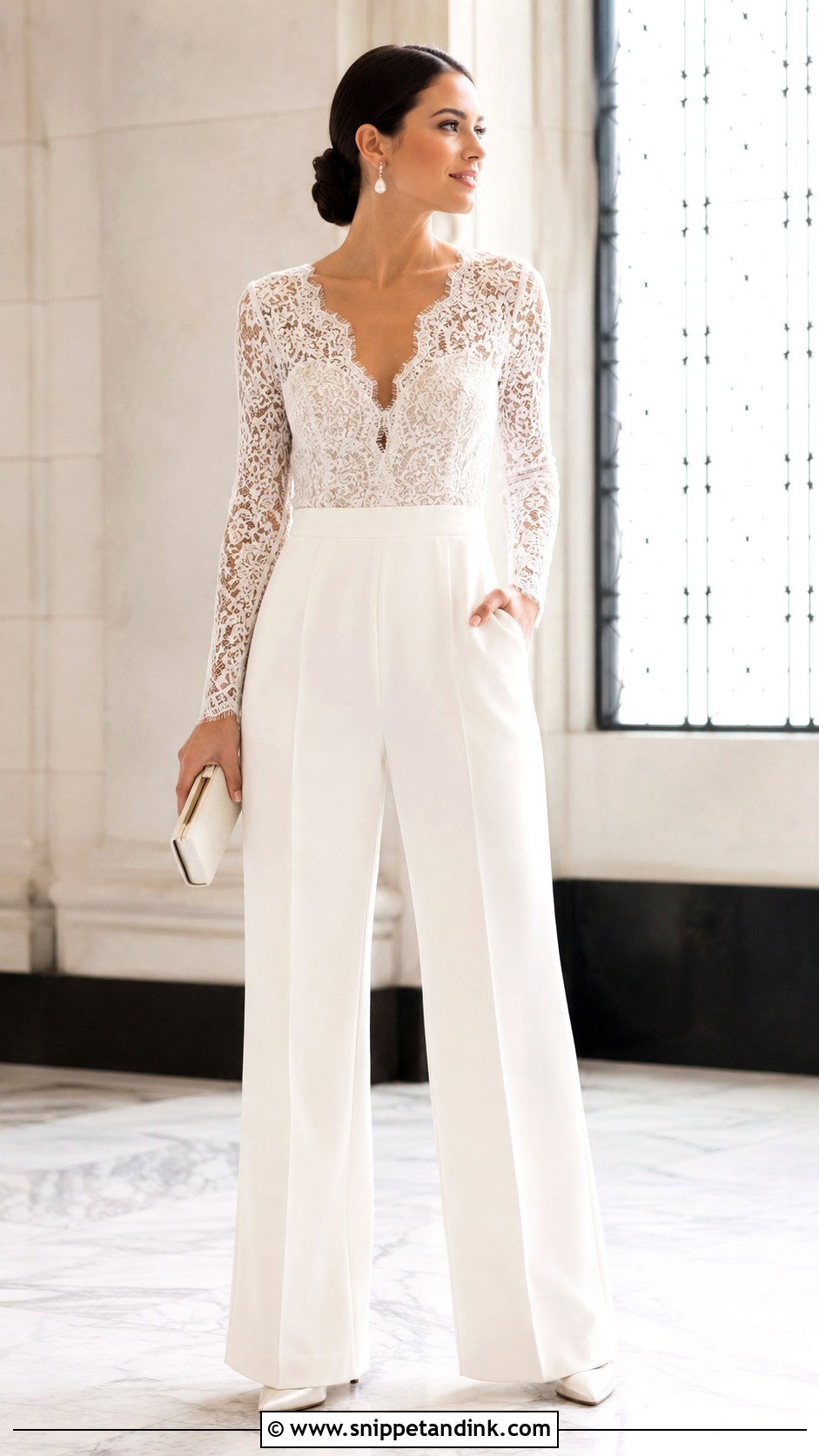
A lace bodice above wide-leg trousers balances romance and tailoring. Lined lace looks polished for a ceremony; sheer sleeves soften it. Pointed heels, a sleek clutch, pearl earrings and a low bun suit it, and a short veil or cape adds bridal drama without a gown. Have the trousers hemmed in your exact shoes. It suits courthouse weddings, rehearsal events, elopements and reception dancing.
22. Lace Two Piece Bridal Look
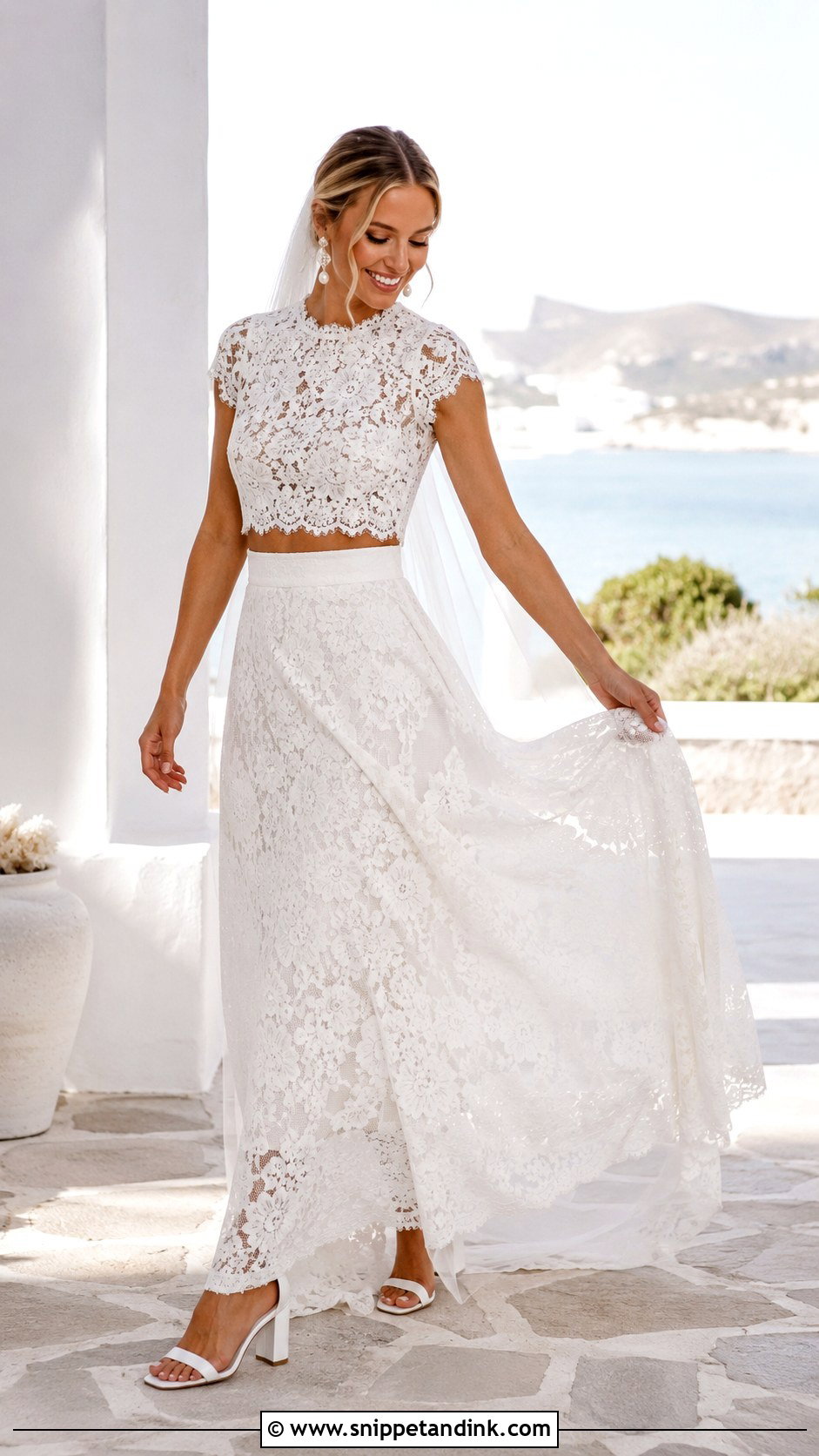
A lace two piece bridal look lets you size top and skirt separately, which helps when your top and bottom halves are different sizes. A lace crop top with a high-waisted skirt shows a little skin; a longer top covers more. Fitted skirts look sleek, flowing ones softer. Matching ivory looks calm; lace with satin adds contrast. Block heels, pearls, a soft veil and natural makeup suit beach weddings and modern venues.
23. Lace Cape Wedding Dress
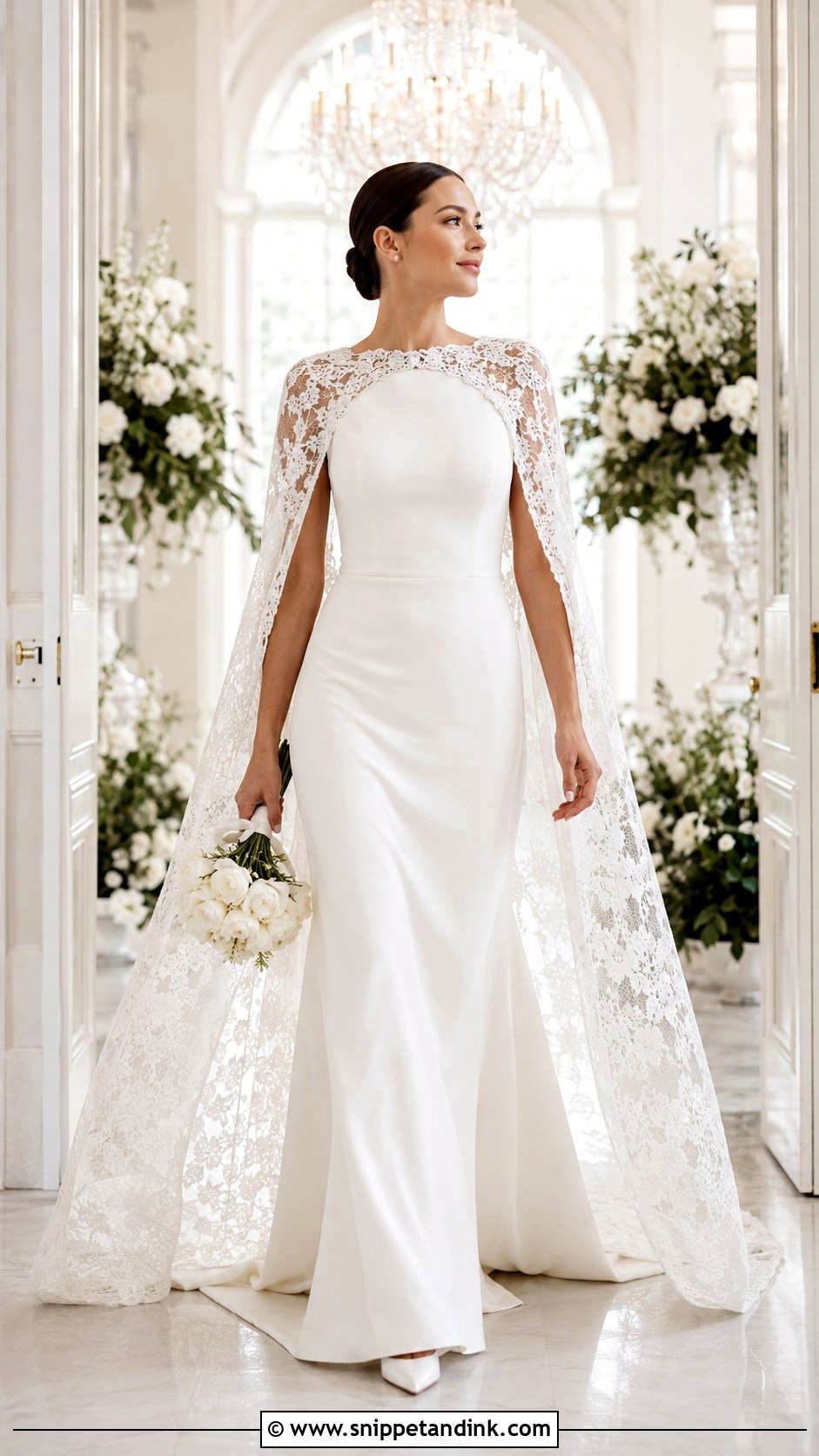
A lace cape gives movement and coverage, and it can replace a veil entirely. It may fall from the shoulders, attach at the neckline or flow from the back. Over plain satin or crepe, the lace becomes the main detail. Long capes suit a ceremony entrance; shorter capelets feel lighter. Check how it fastens, since a heavy lace cape needs secure hooks, not a single button. Sleek heels, small earrings and smooth hair complete it.
24. Lace Veil Bridal Look
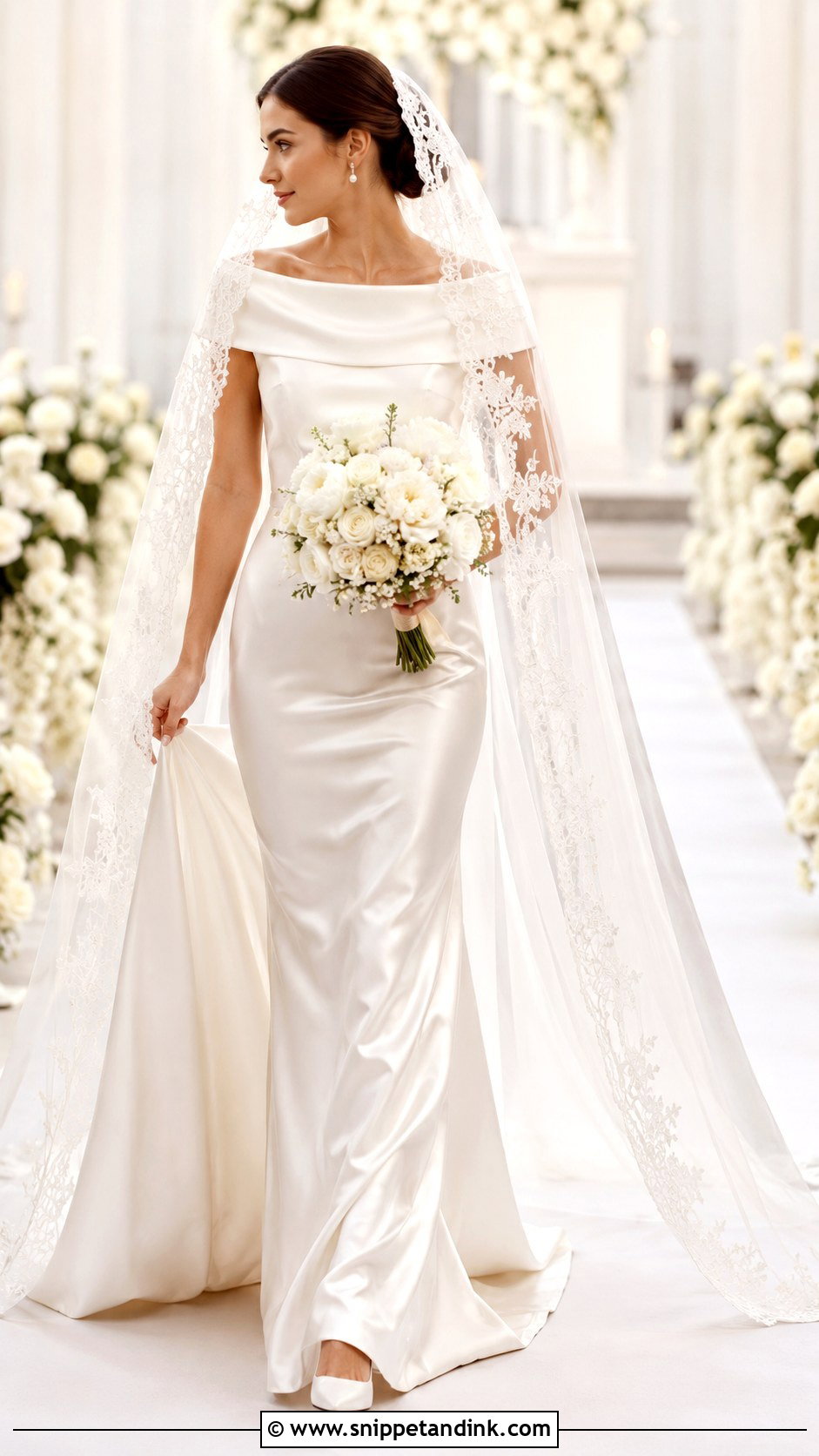
A lace-trimmed veil gives a plain gown romance right around the face and along the back. Fingertip length moves easily; cathedral makes an entrance. I match the veil lace to any lace on the dress or shoes, or keep it as the only lace in the look, because two different laces side by side rarely agree. Delicate jewellery, satin pumps, pearl earrings and a clean bun keep it refined at nearly any venue.
25. Lace Reception Dress
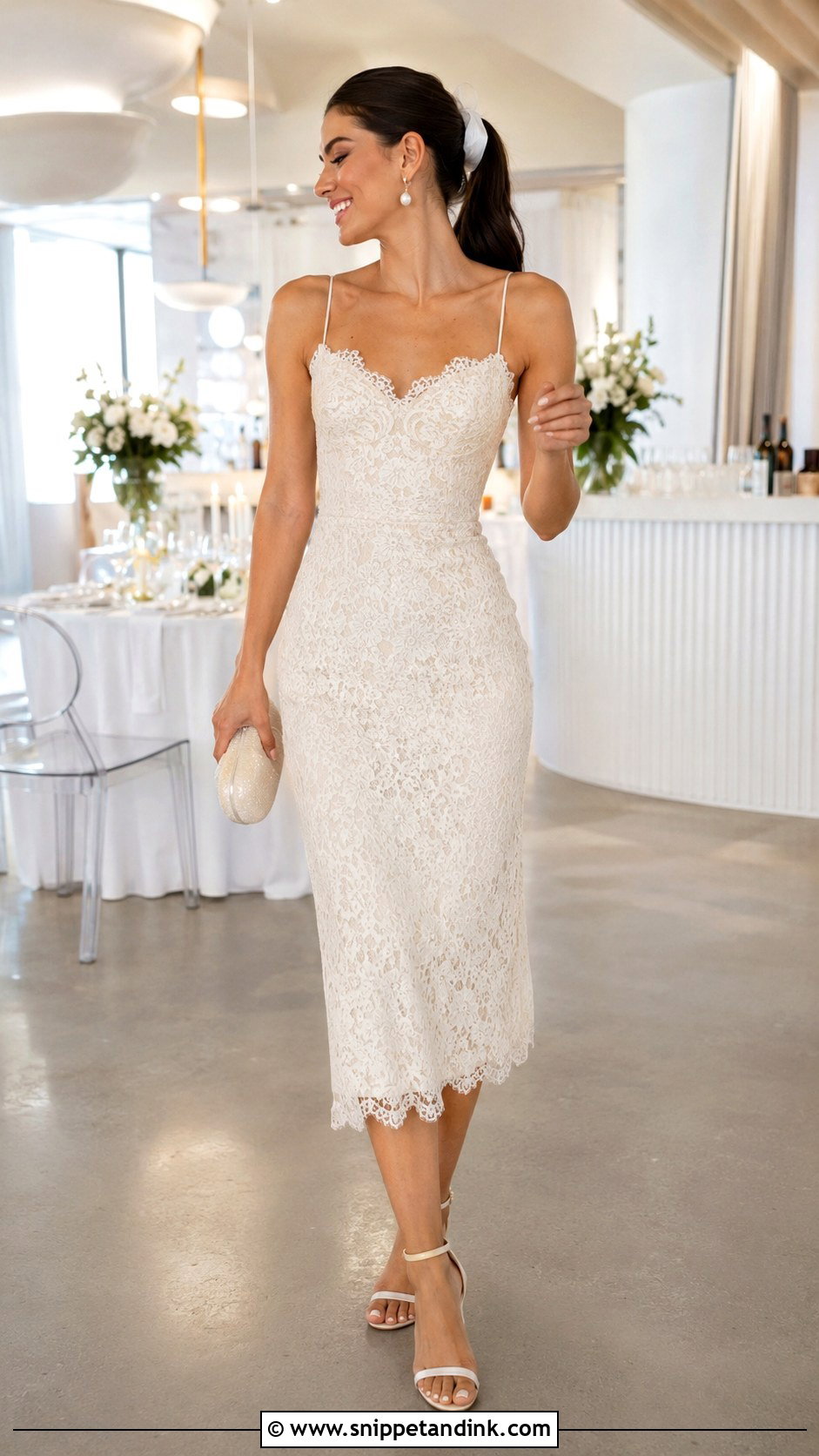
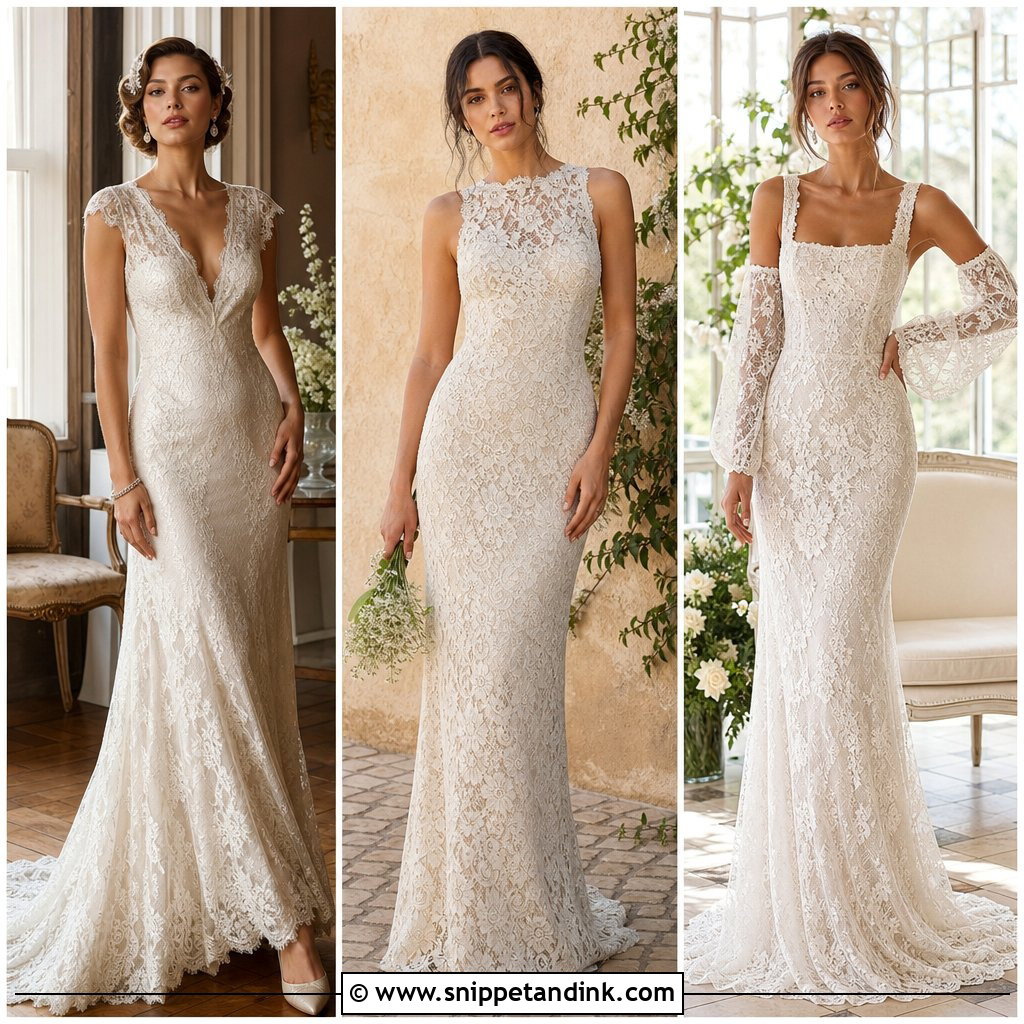
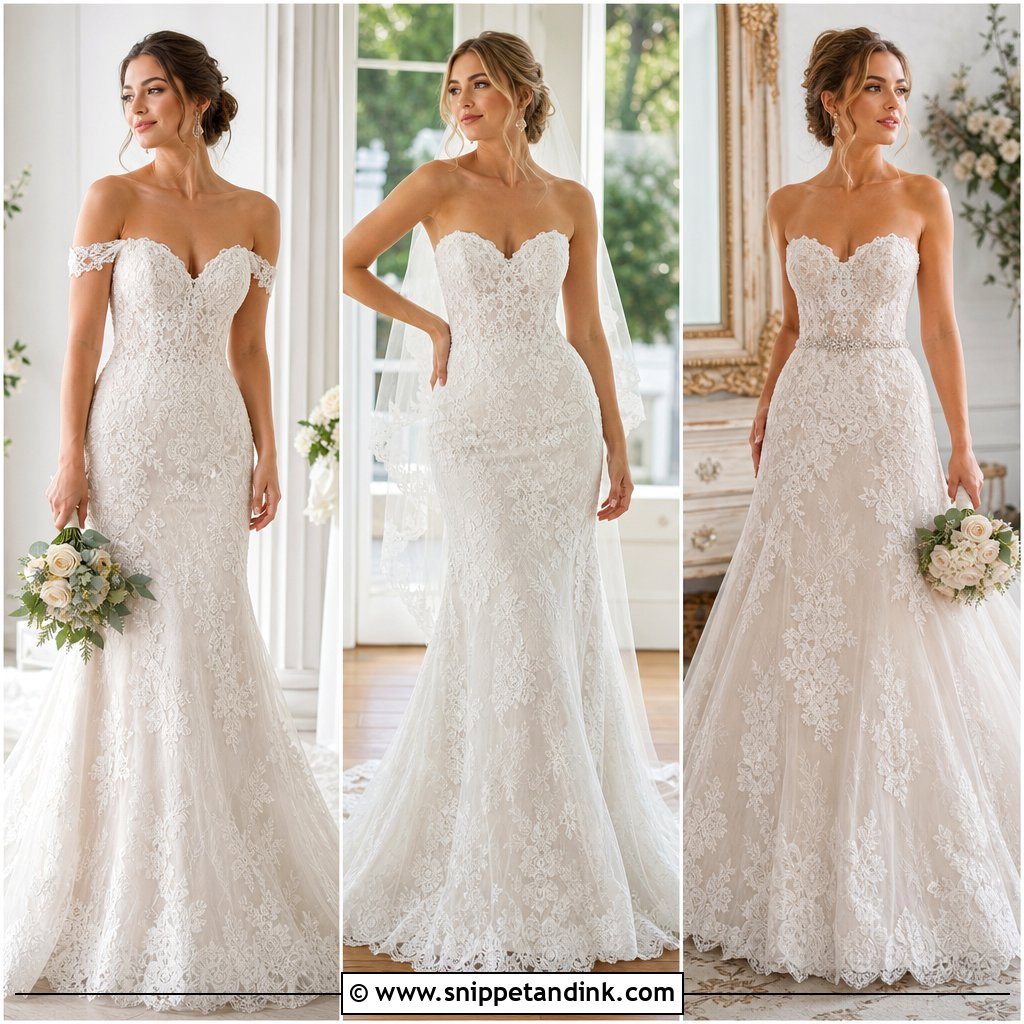
A lace reception dress keeps the bridal feel while giving you freedom to dance. A lace midi, mini or slim column all work. Shorter hems suit dancing; a fitted midi suits a long dinner. Comfortable heels, a small clutch, pearl or crystal earrings and a hair bow or sleek ponytail finish it. Choosing a lace that echoes the ceremony gown connects the two looks in photos.
Lace Hems Can’t Just Be Cut
A plain hem is shortened by cutting and stitching. A scalloped lace edge has to be unpicked, the skirt shortened, and the lace reattached by hand, sometimes motif by motif. The same goes for taking in a lace bodice, where the pattern needs to keep running across the seam. That’s why alterations on lace usually take longer and cost more than on satin or crepe. I’d allow time for at least two fittings and start them around two to three months before the wedding.
Caring for Lace Once the Dancing Stops
Lace gets dirty at the hem first, and wine or makeup on lace should never be rubbed, since rubbing pushes the stain into the threads and can pull the fibres. Blot gently with a clean white cloth and leave the rest to a specialist cleaner. Get the dress cleaned within a few weeks; sugar from drinks can turn yellow over time even when it isn’t visible yet.
For storage, keep lace away from plastic bags and from wire hangers, since heavy lace stretches when it hangs for months. Fold it loosely with acid-free tissue between the layers and keep it somewhere cool and dark. If you plan to pass the dress down one day, refold it now and then so the creases don’t weaken in the same place.
Lace Works When Something Else Stays Quiet
Lace suits almost every bride and season. It feels classic in long sleeves, modern in a jumpsuit, romantic as floral appliqué and playful in a mini. Balance is the rule I come back to. Bold lace needs plain accessories; a minimal dress can take a lace veil, cape or sleeve. Think about comfort, how you’ll move and how the lace feels against your skin after a long day, and choose the type of lace as carefully as the shape of the dress.
You'll Like These Ideas:








Leave a Reply