
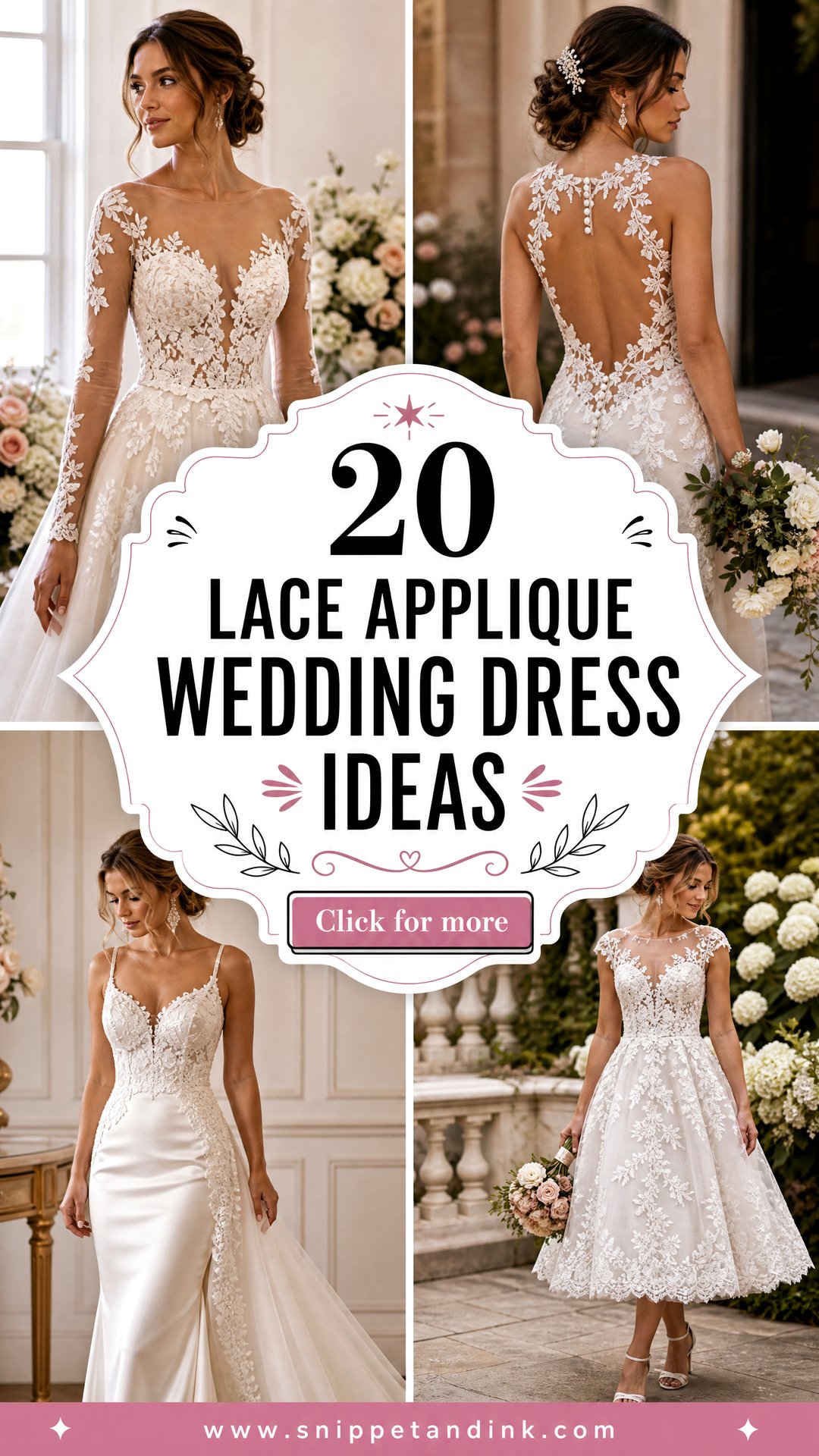
Appliqué is lace that has been cut out motif by motif and stitched onto another fabric, and where those motifs land decides how a gown reads. Scattered flowers soften stiff satin. A dense cluster at the waist pulls the eye in. A trail across the shoulder blades makes the back the main event. Lace has also moved beyond the classic all-over gown, and it now turns up on modern combinations featuring basque waists, corsetry and detachable pieces. Below are twenty silhouettes styled from shoes to veil, with notes on the placement that makes each one work and the fittings it needs.
Spotting Good Appliqué Work on a Sample Gown
Two dresses can look identical on a rail and wear very differently after a long day. When I check a sample, I turn the bodice inside out and look at how each motif is attached. Hand-stitched appliqué has fine stitches around every edge, and it sits flat because the lace has been eased to the curve of the body.
- Run a fingernail gently under the edge of a few motifs. They should stay down. Edges that lift easily are usually glued or tacked at only a few points, and they will curl after cleaning.
- Look at the cut edges. Well-cut lace follows the outline of the flower or leaf. Rough, straight trimmed edges suggest the motifs were punched out quickly.
- Compare left and right. On a good bodice the motifs are mirrored, so the neckline and waist look balanced from the front.
- Lift the skirt. Heavy appliqué on the hem should be backed or spaced out, or it pulls the tulle and makes the skirt hang unevenly.
A sample has been tried on many times, so small lifts are normal on it. What matters is how your own gown is made, so ask the salon how theirs are attached.
1. A-Line Lace Applique Wedding Dress
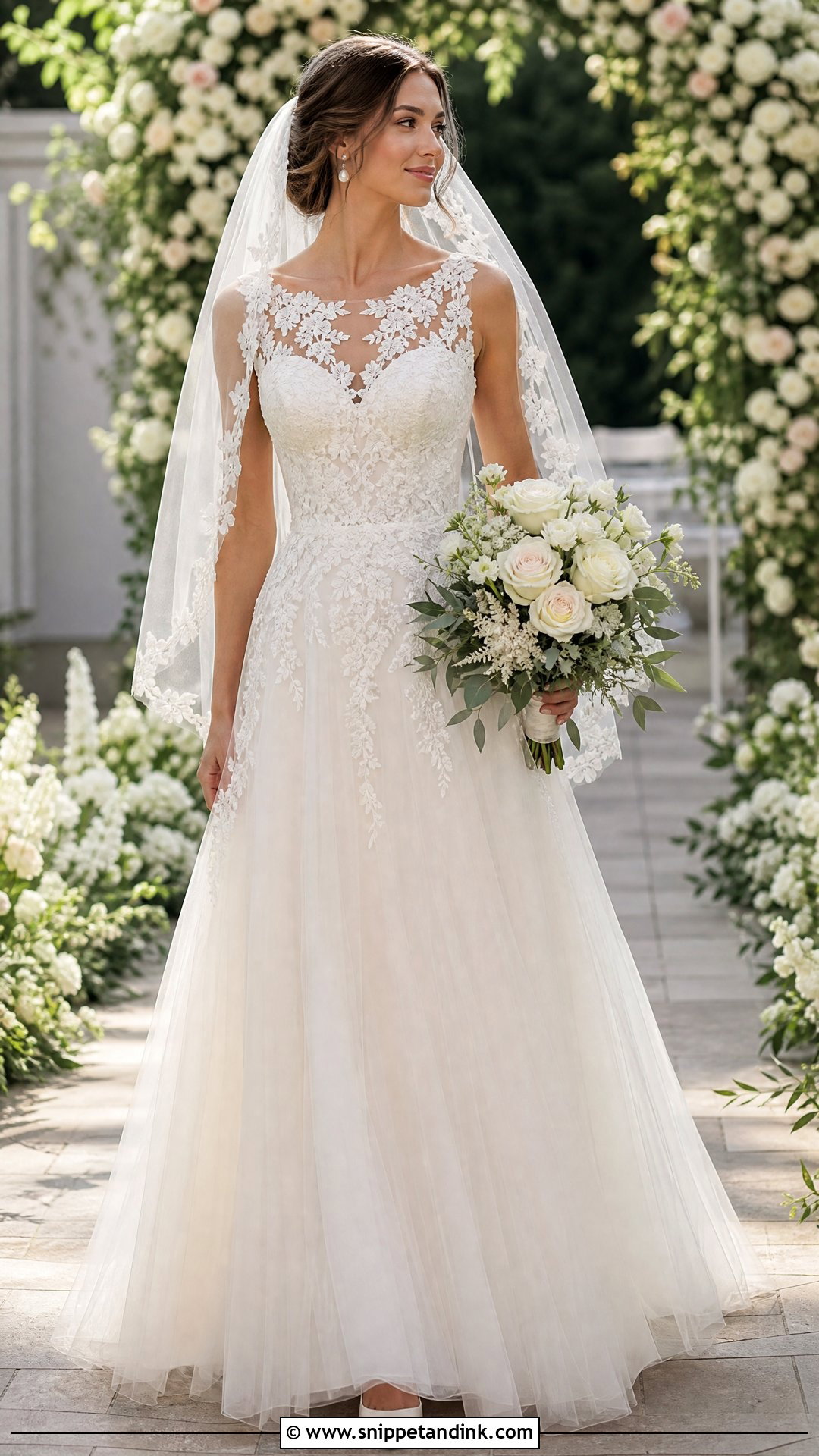
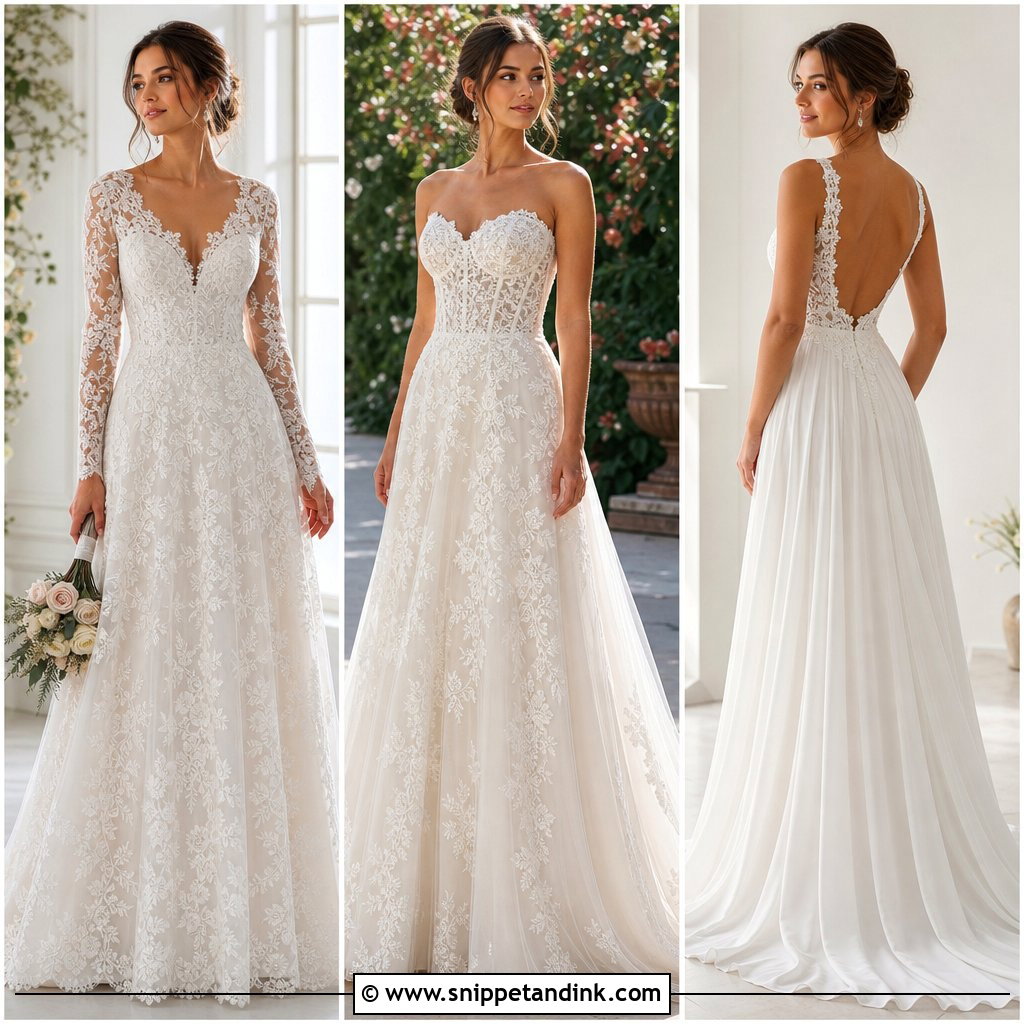
The A-line is the easiest place to start, because the fitted bodice flows into a skirt that never grips the hips. I like floral motifs that begin at the neckline and thin out toward the hem, which keeps it light. An illusion bateau or soft V keeps the top half graceful. Pointed ivory pumps, pearl drops and a fingertip veil with a matching lace edge finish it, with a loose low bun. I look closely at the hem on these: a skirt where the motifs simply stop looks cut off in photos, so I prefer a gradual fade.
2. Ball Gown Lace Applique Wedding Dress
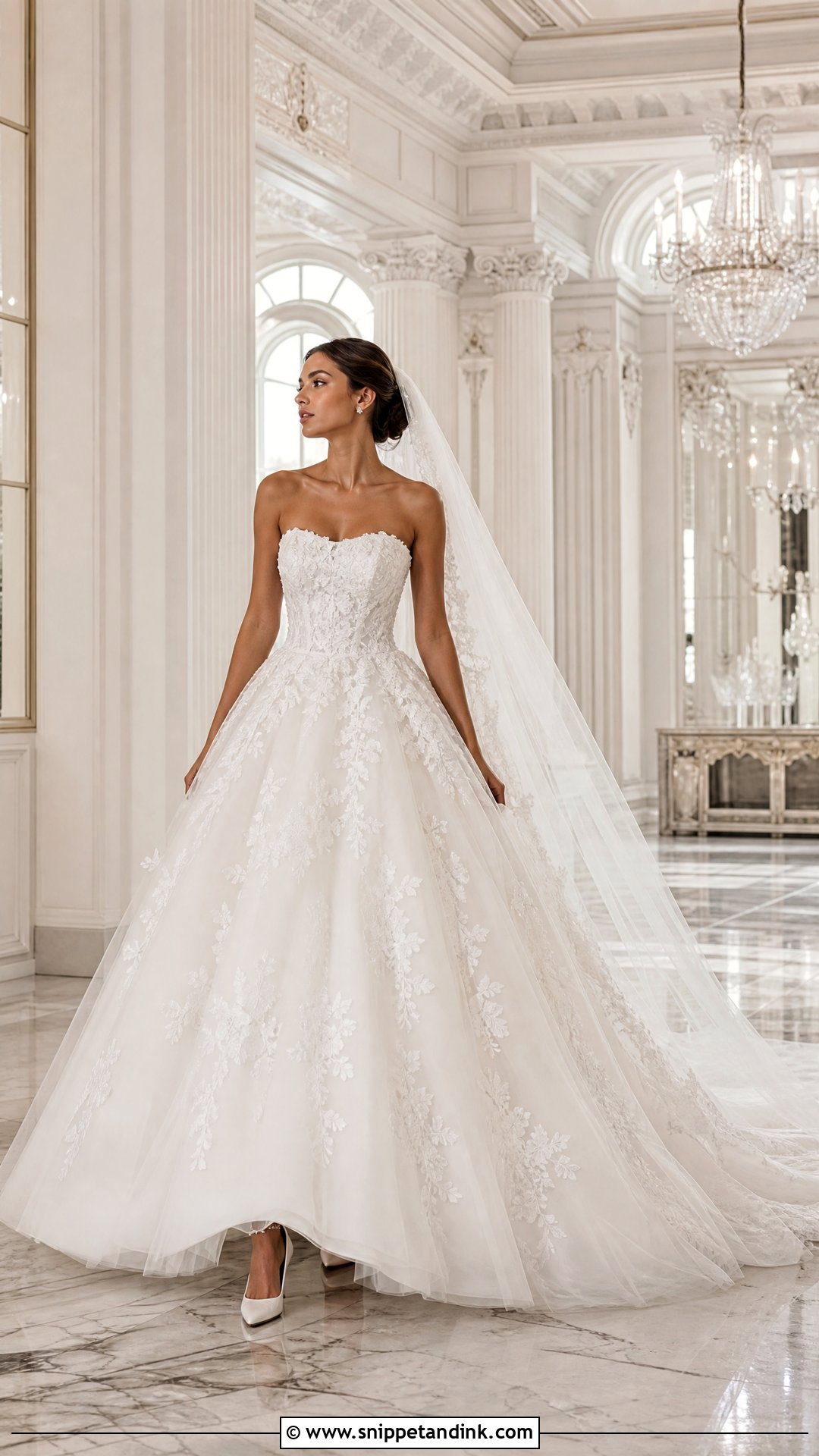
Ball gowns carry appliqué over the bodice and the upper skirt, with a strapless structured top holding everything up and tulle doing the volume. The best ones space the motifs wider as they go down, so the skirt stays airy. Go too dense at the hem and the skirt looks heavy and drags. Style it with a cathedral veil, crystal studs and satin pumps nobody will see. A polished chignon suits the scale. With that much skirt, the bouquet should stay simple and the jewelry small. Save it for a big room.
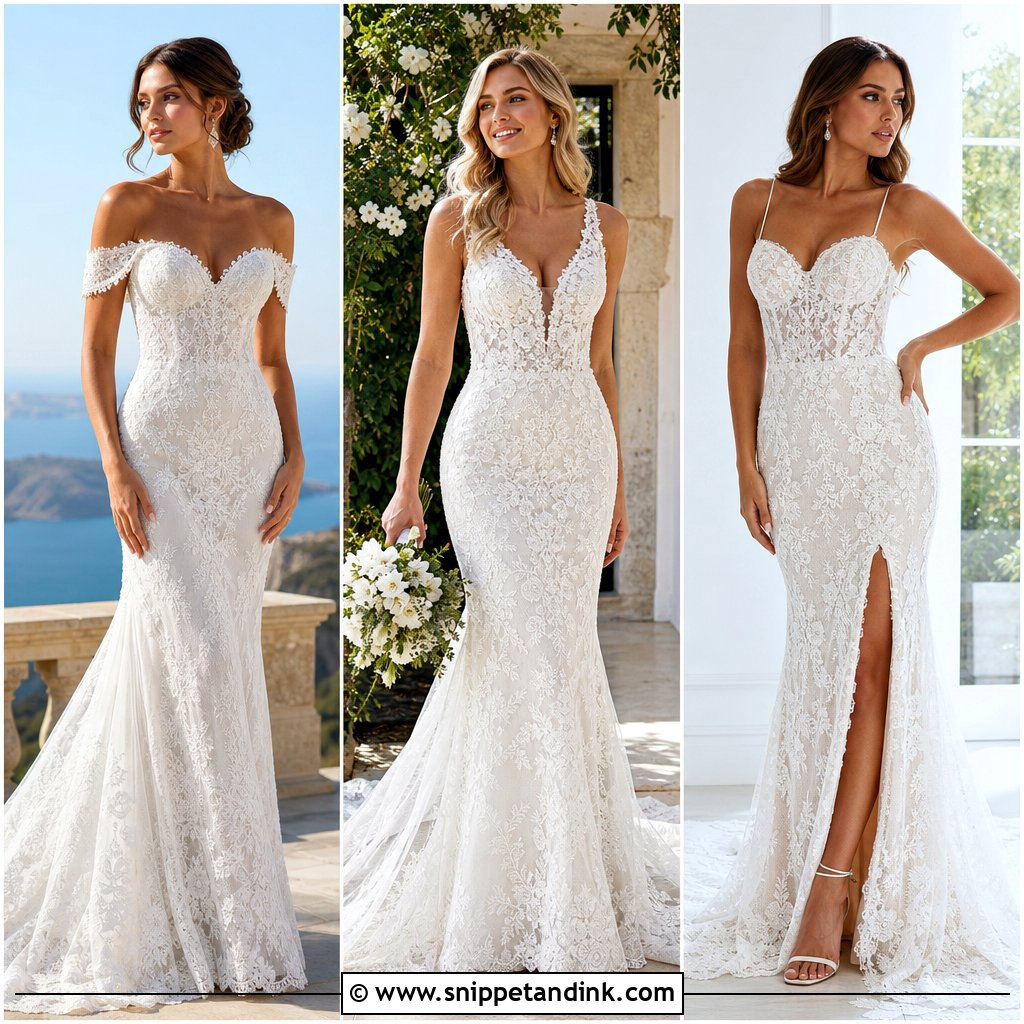
3. Mermaid Lace Applique Wedding Dress
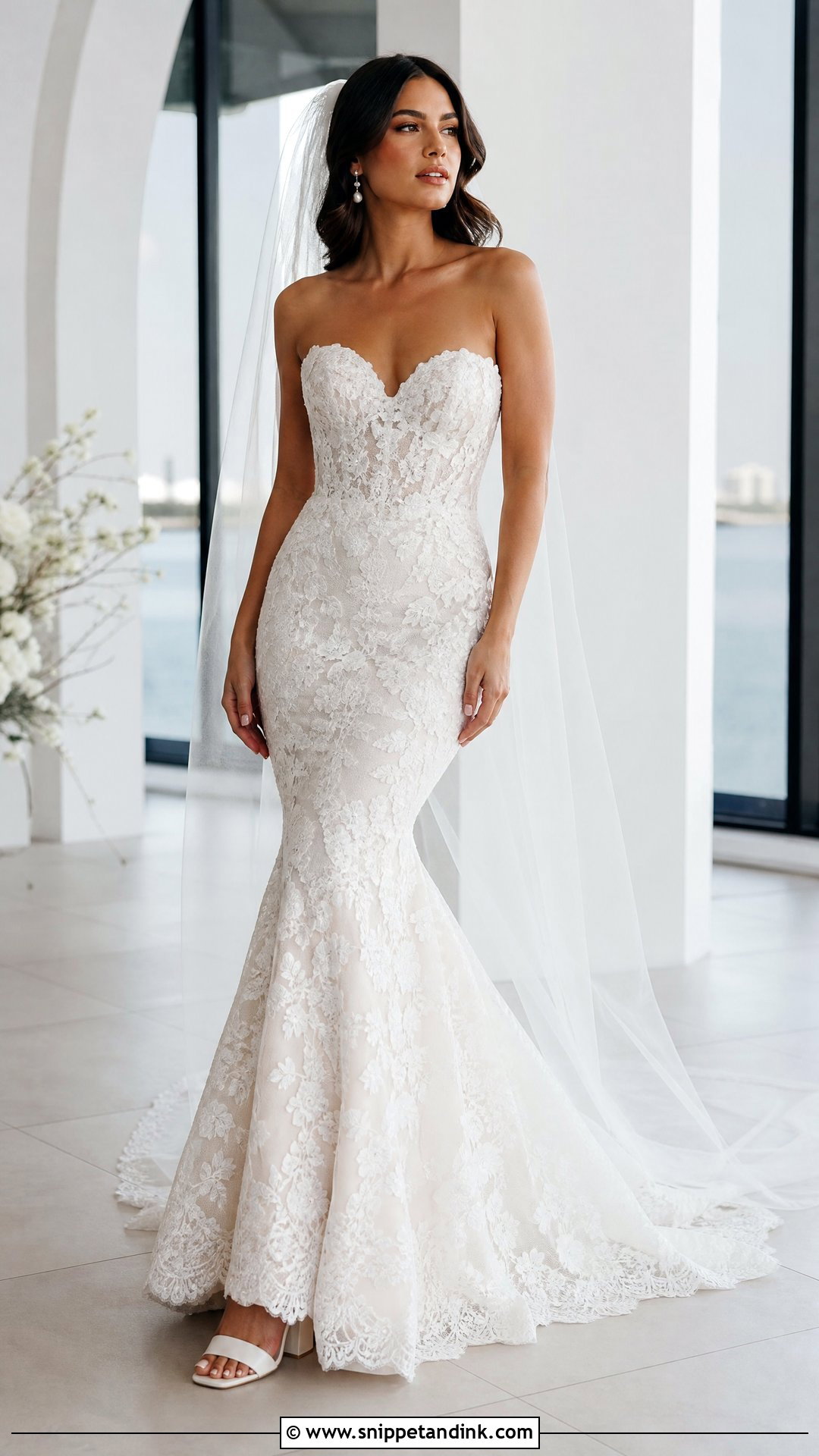
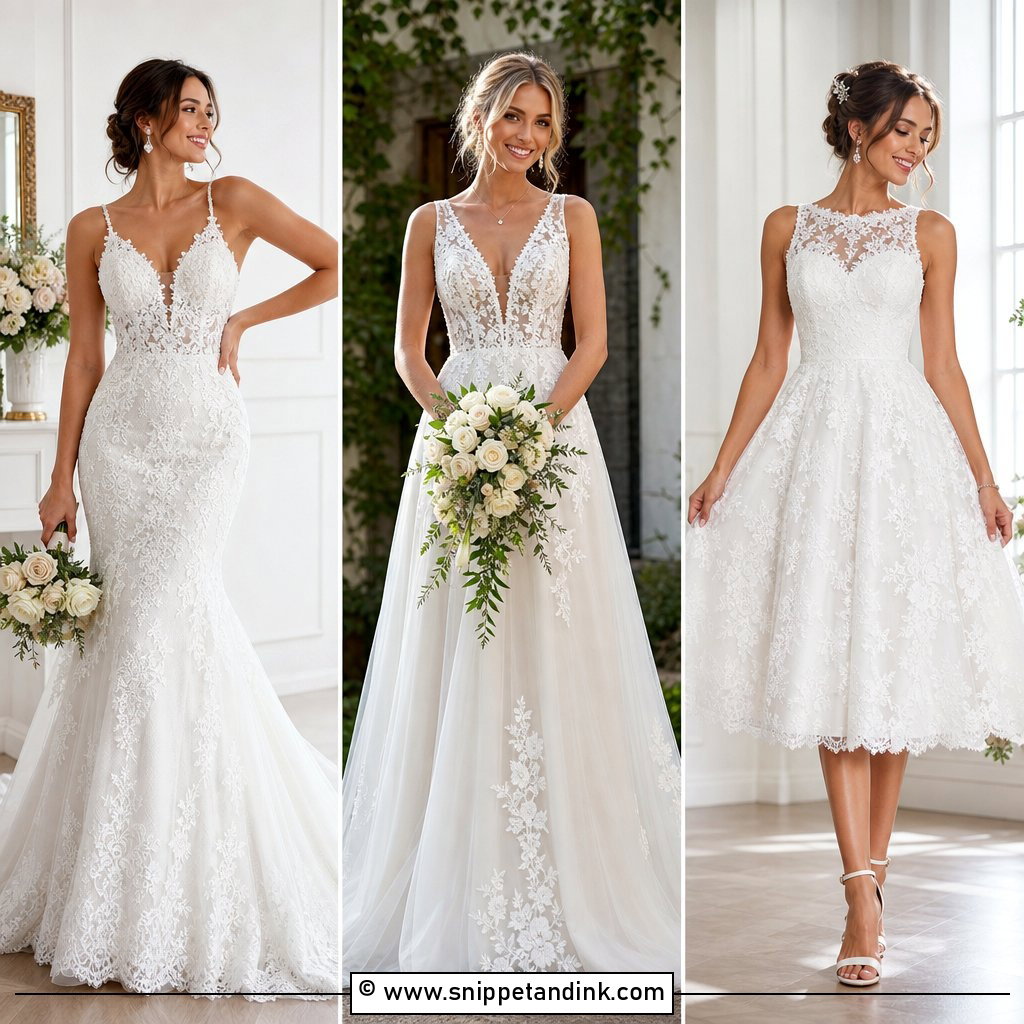
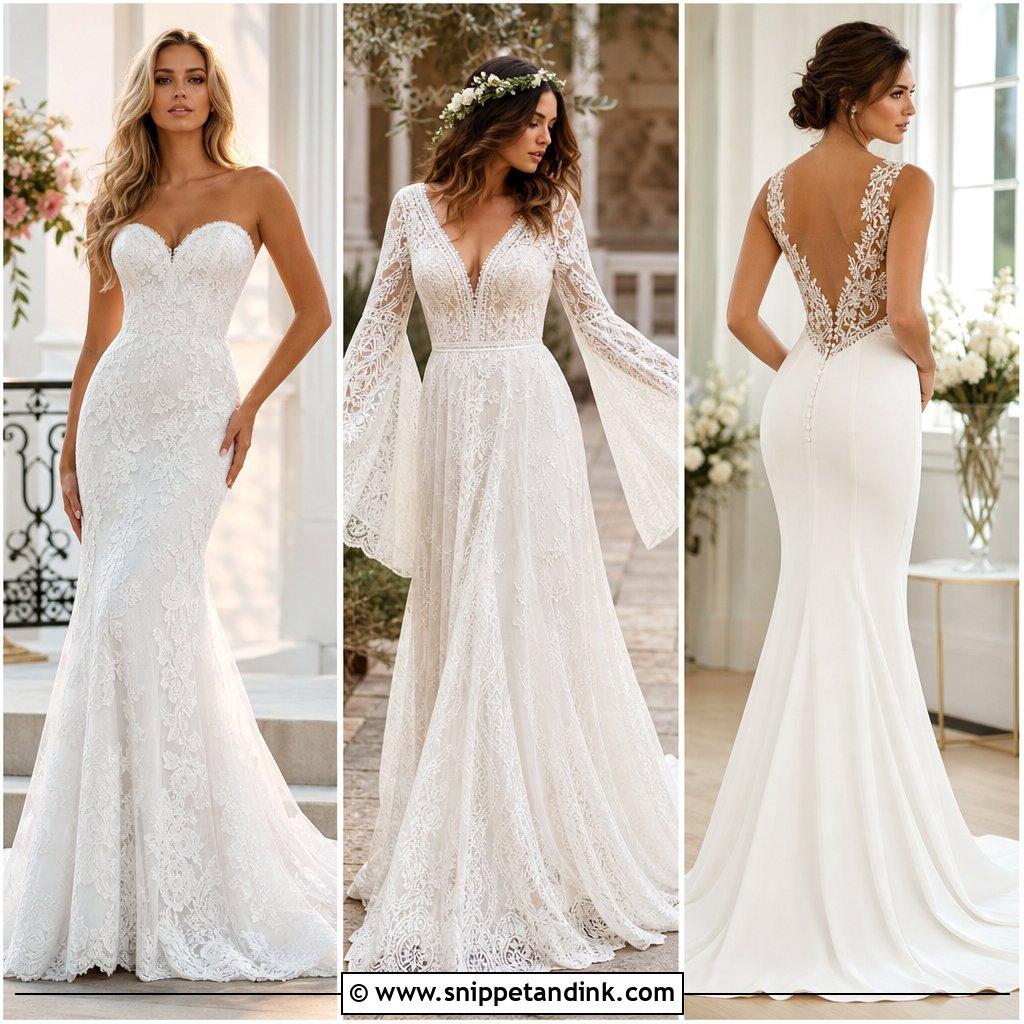
On a mermaid, appliqué can do the shaping work. An elongated floral pattern that runs vertically down the torso draws a long line from neckline to flare. A sweetheart bodice with an illusion panel at the centre adds security. Block-heel sandals, a fine tennis bracelet and small pearl earrings keep it calm, and a long plain veil gives the eye a rest from all that detail. Hollywood waves suit the shape. The flare point is the fitting I spend longest on; sit and stride in it before you decide, because motifs sewn across the knee make it harder to move that seam later.
4. Fit-And-Flare Lace Applique Wedding Dress
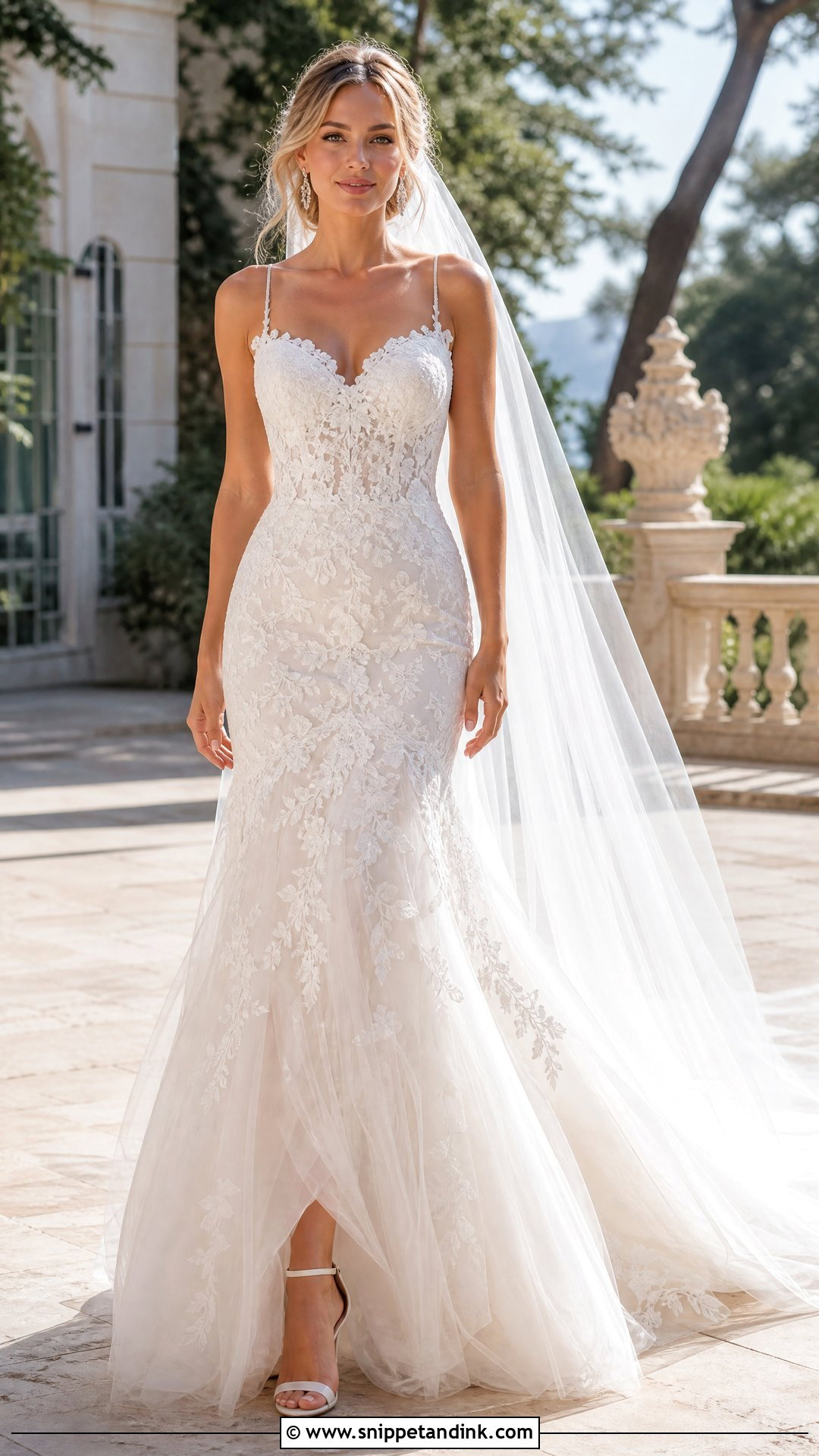
Want the shape of a mermaid without the restriction? Fit-and-flare widens higher on the leg, so walking and dancing come easily. It suits botanical appliques clustered at the bodice and hip, then lighter on the skirt. Thin straps and a curved neckline frame without competing. Ankle-strap heels, small earrings and a sheer chapel veil finish it, and a half-up style keeps hair off the bodice. It’s a good match for estates and relaxed formal weddings.
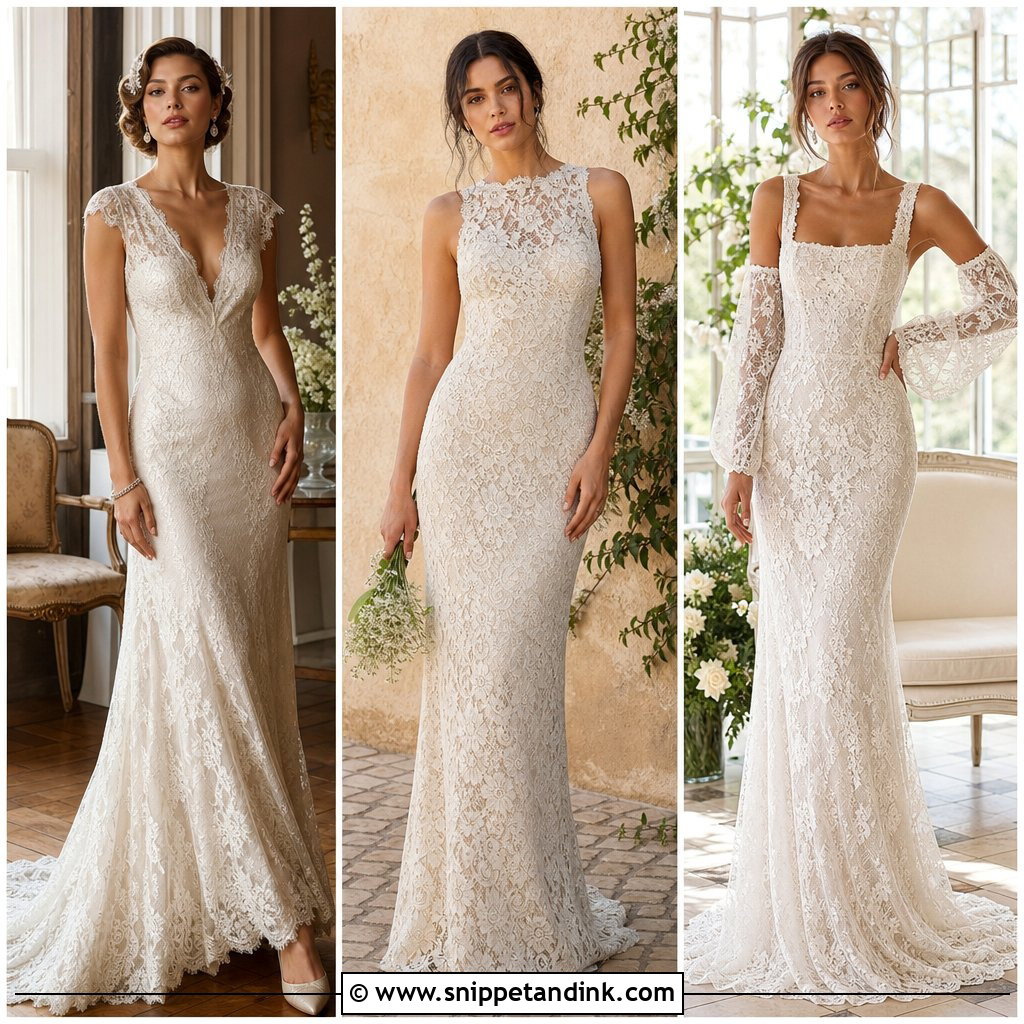
5. Sheath Lace Applique Wedding Dress
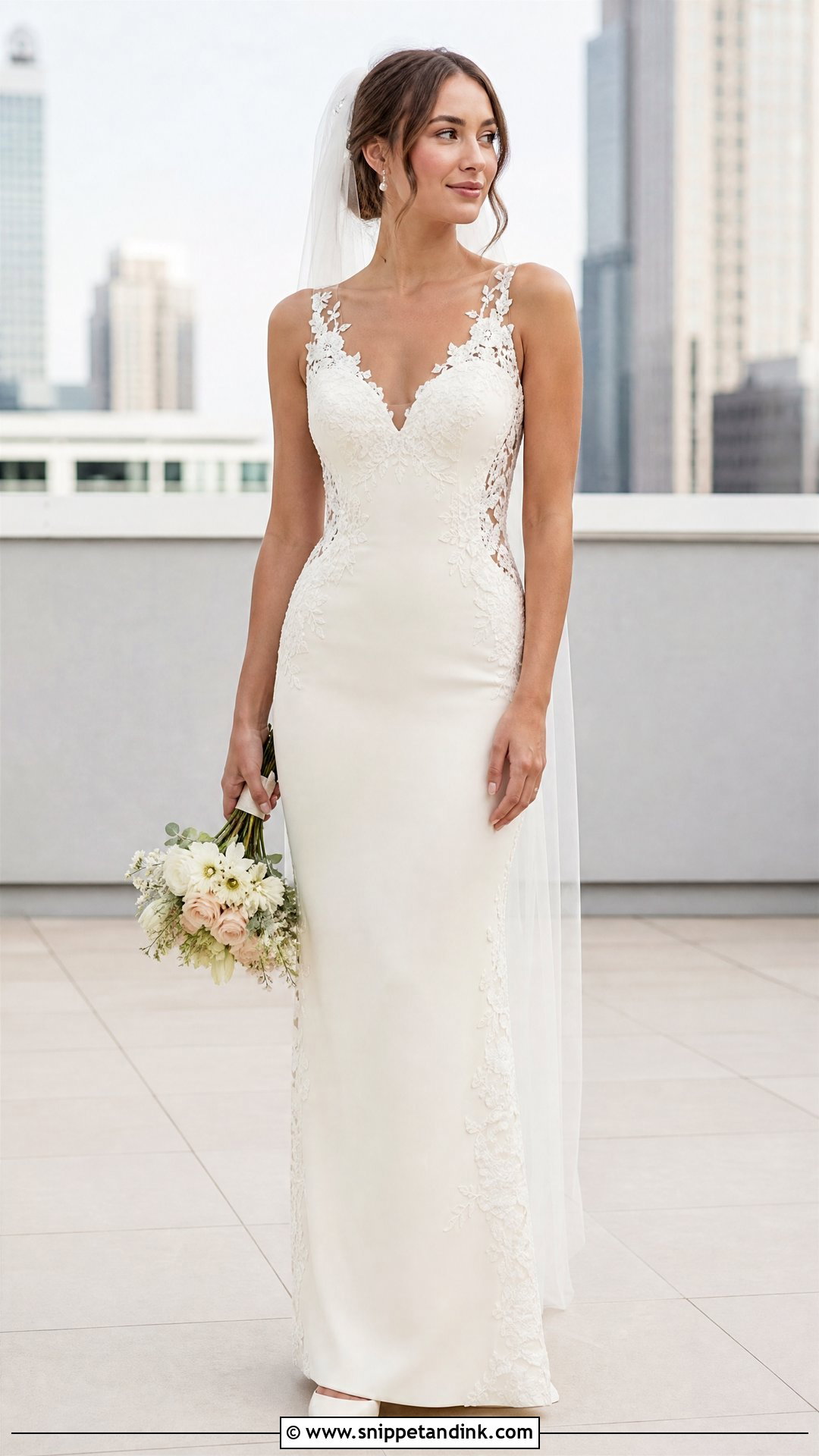
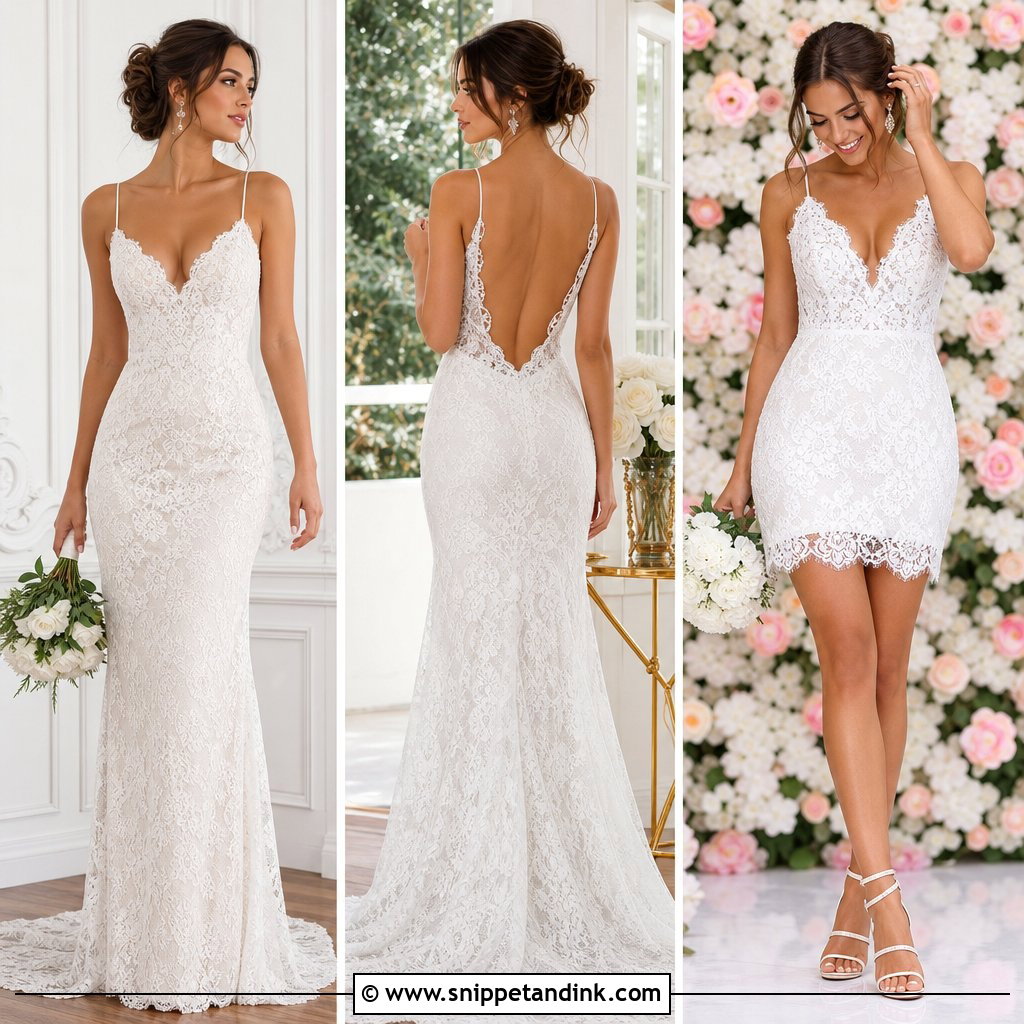
Sheaths need restraint. Put the appliqué along the neckline, the waist and down the side seams, and leave the rest plain so the clean cut stays visible. A square or modest V-neck suits the straight line. Sleek ivory heels, a compact bouquet and a plain narrow chapel veil are all it needs, with a low ponytail or neat bun. Because a sheath sits close to the body, ask for a light lining and a back slit placed high enough for stairs. It’s at home in city venues, on rooftops and at small destination ceremonies.
6. Basque Waist Lace Applique Wedding Dress
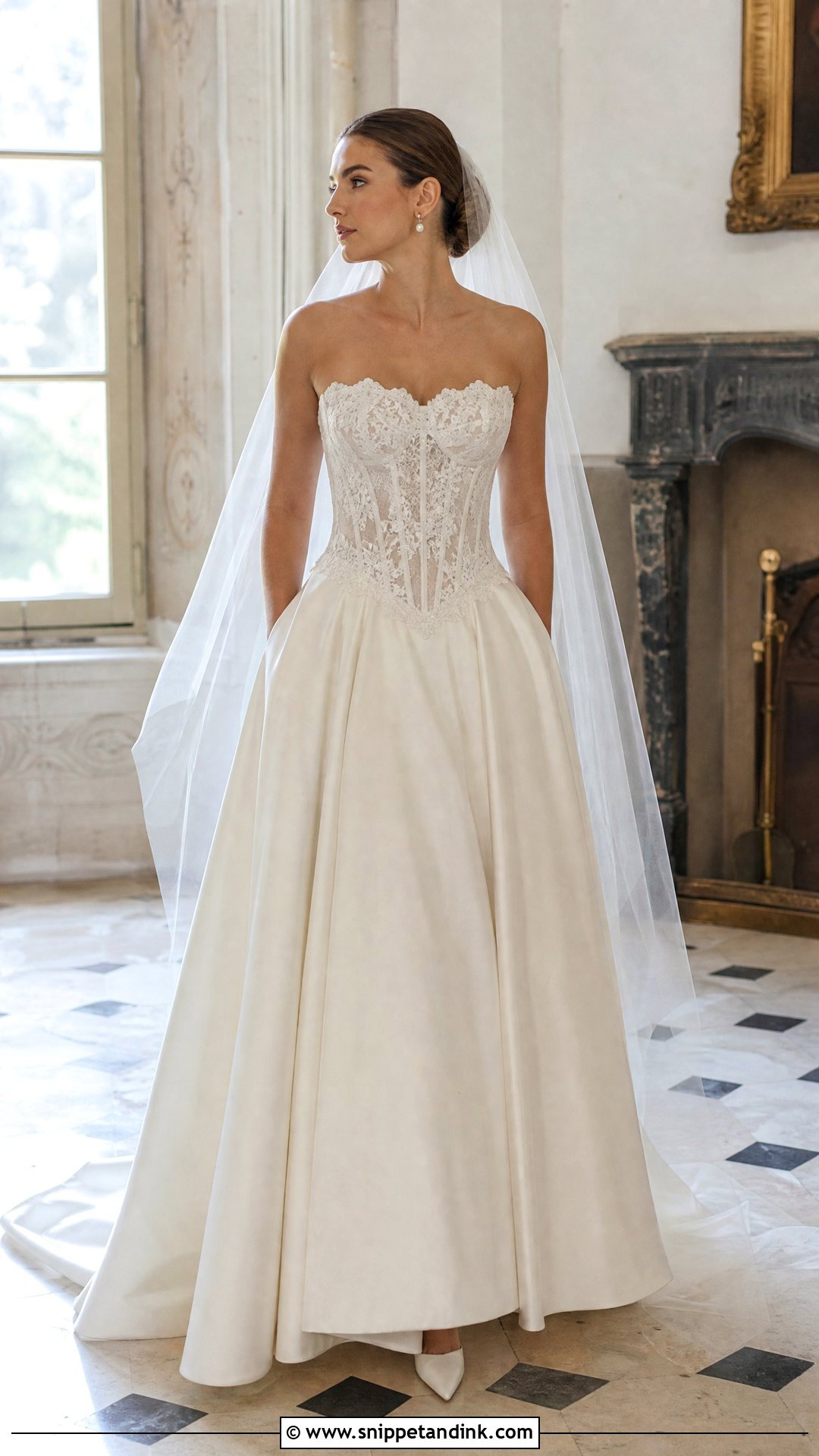
A basque waist dips into a soft V below the natural waist and lengthens the body. Appliqués that follow the point and fan out across the bodice make the shape obvious, and it’s a cut that sits naturally beside vintage lace and corsetry. A structured corset with a full satin or tulle skirt gives the historic feel. Pearl earrings, closed-toe pumps and a long veil under a smooth updo complete it. Keep the neck bare so the waist stays the focus. Watch the point when you sit: if it is placed too low, the tip digs into your thighs at dinner.
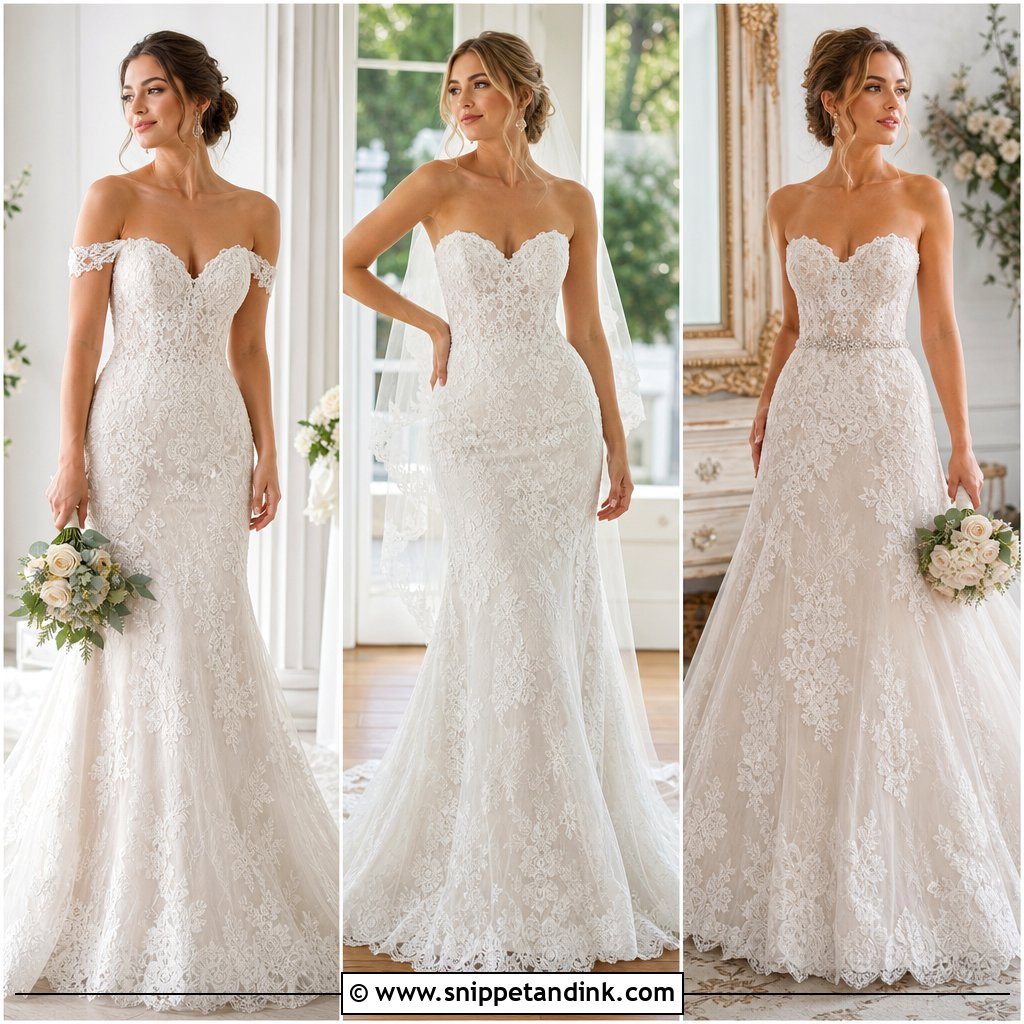
7. Sweetheart Lace Applique Wedding Dress
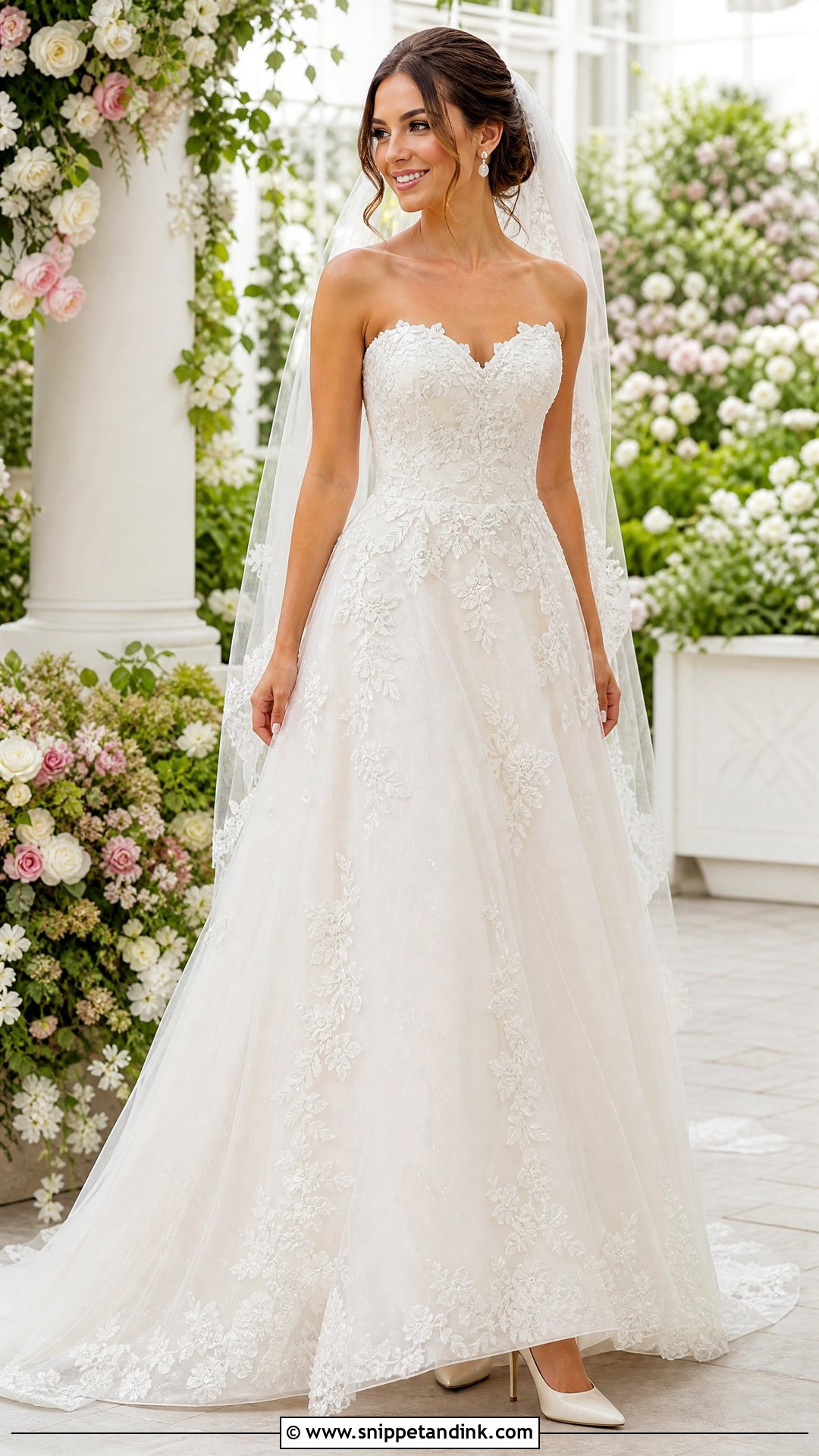
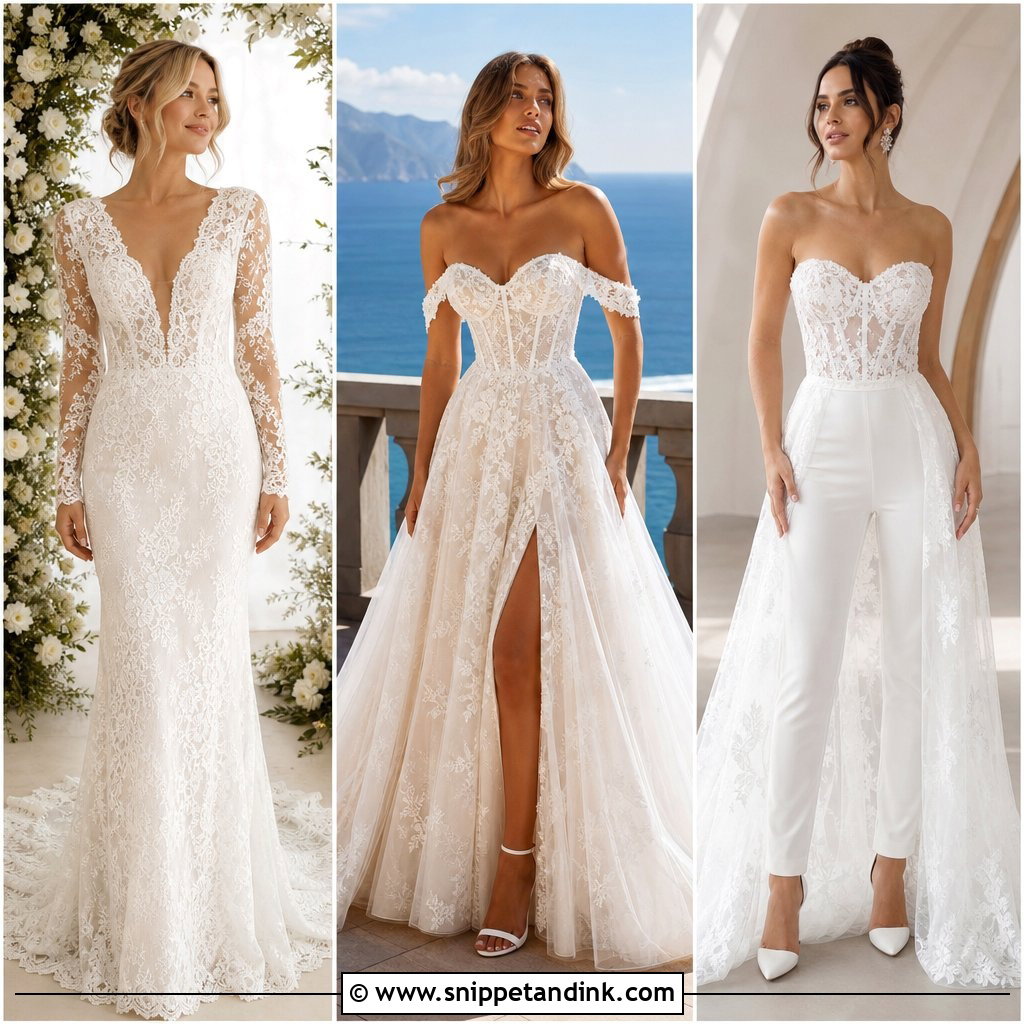
Curves and florals belong together in a sweetheart lace applique wedding dress. Motifs along the edge of the neckline soften the curve. The visible bodice shouldn’t be doing the holding; look for internal boning, moulded cups and a firmly fitted back. A flowing A-line keeps it comfortable. Pearl-and-crystal earrings, ivory heels and a veil with a narrow lace border suit it, with loose curls or a relaxed bun. If you want more coverage for the ceremony, sheer detachable straps can be made to clip in.
8. Square Neck Lace Applique Wedding Dress
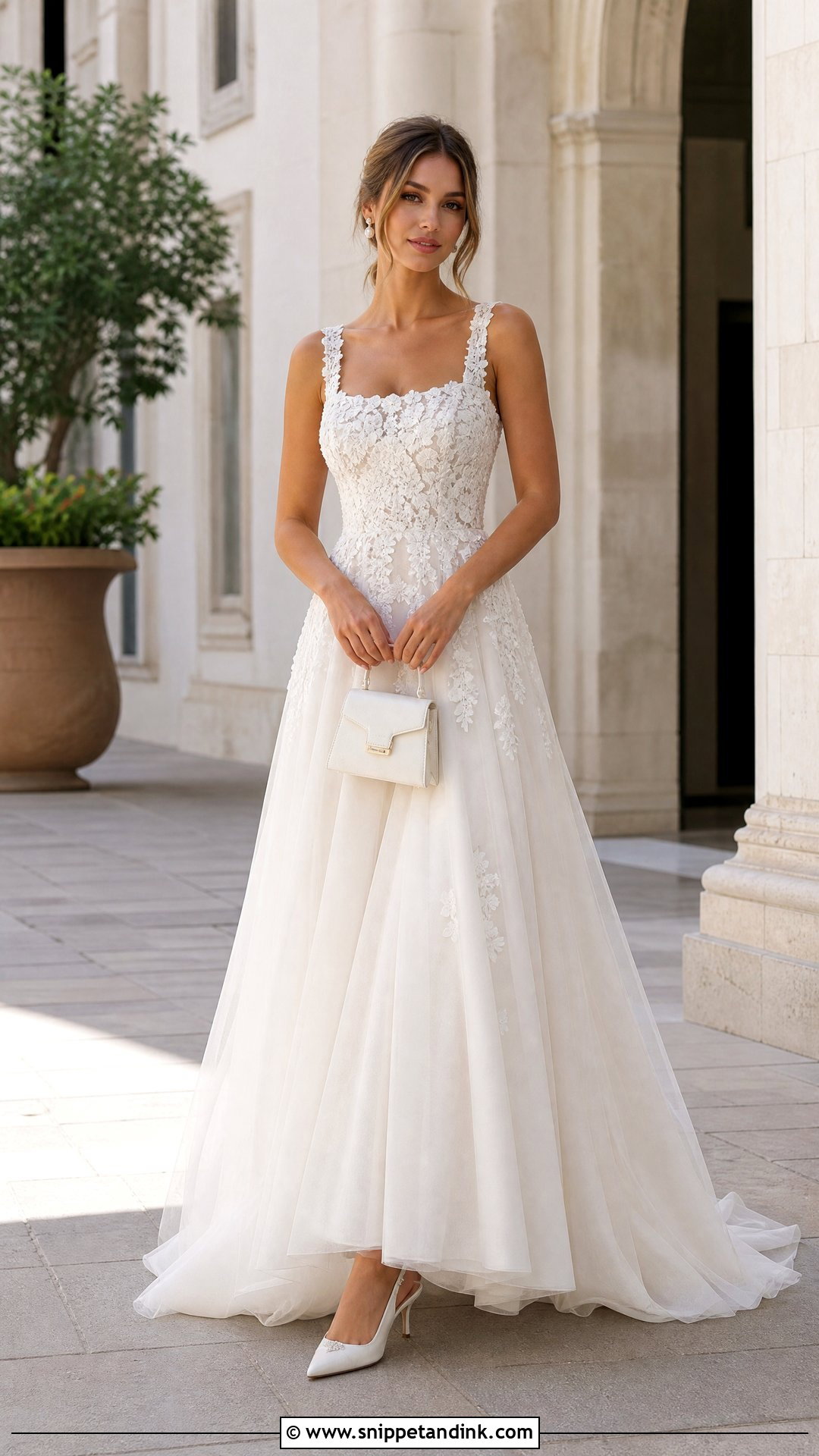
A square neckline gives floral lace a crisp frame. Motifs arranged around the neckline and straps, then dropping lightly onto an A-line or column skirt, keep it fresh rather than fussy. Wide straps support and draw clean lines across the shoulders. Pointed slingbacks, a structured mini bag and pearl studs suit it, and a centre-parted low bun echoes the symmetry. Pick a plain tulle veil at fingertip or chapel length. I check that the appliqués on each corner are mirror images; when they don’t match, the neckline looks crooked in every straight-on photo.
9. Off-The-Shoulder Lace Applique Wedding Dress
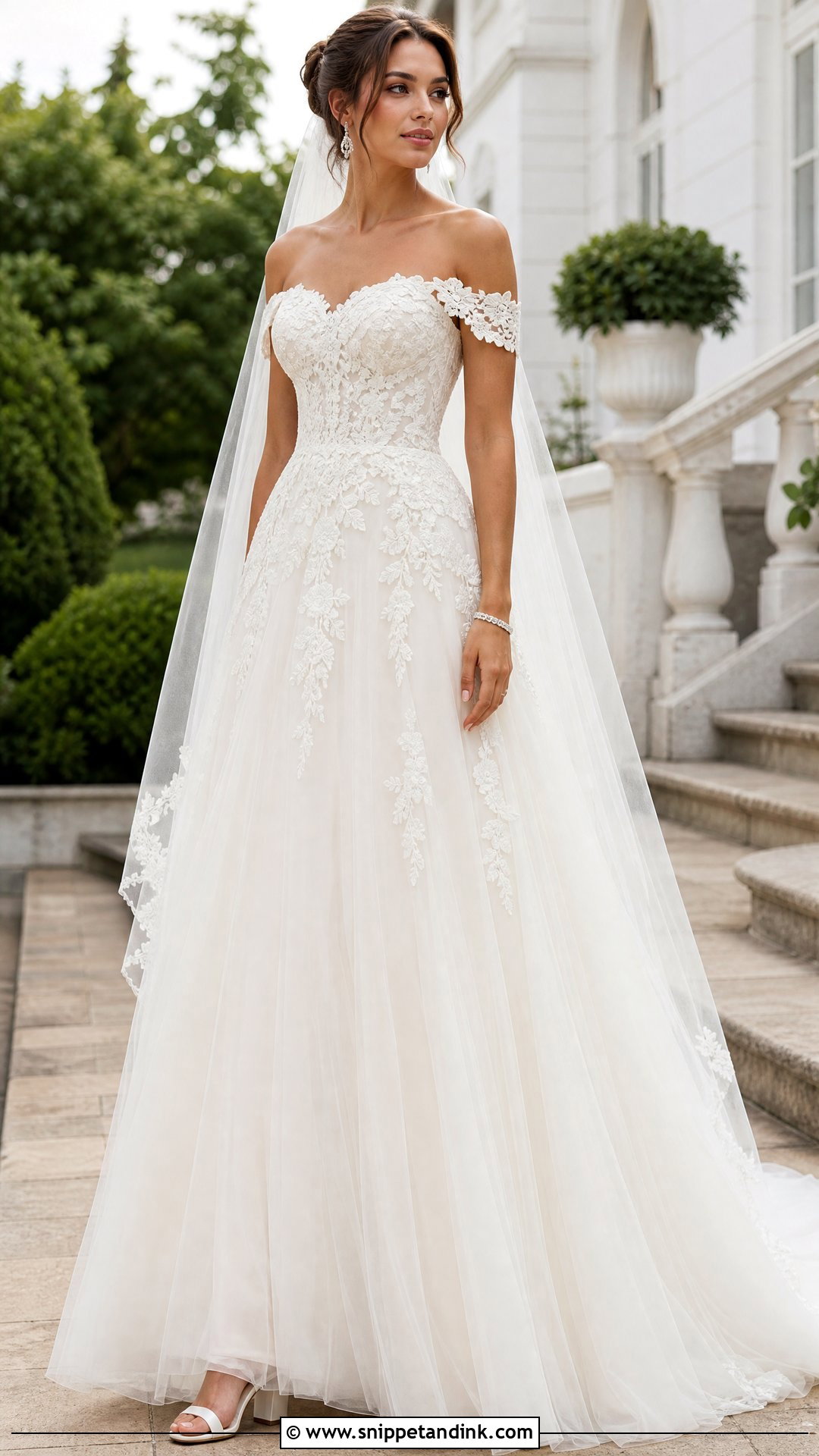
Off-the-shoulder appliqué frames the collarbone and upper arms. The neckline needs internal structure, or you’ll spend the reception pulling it up. Lace along the folded edge can run across the bodice and fade into a tulle skirt. Drop earrings, a fine bracelet and ivory block heels finish it; leave the necklace off. A low textured bun takes a chapel veil set just above it. At alterations, lift your arms and twist side to side. If the sleeves bite into the upper arm, they need loosening before the day, not after the photos.
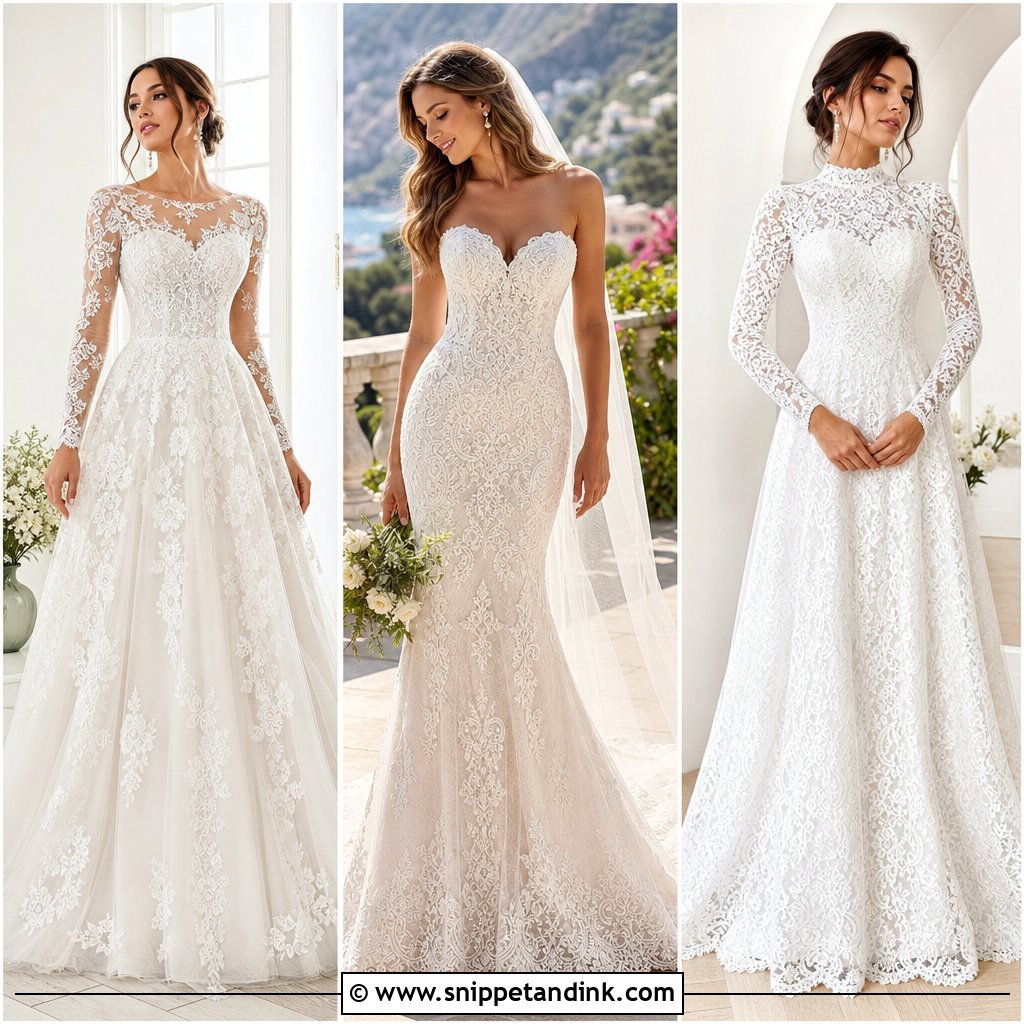
10. Long Sleeve Lace Applique Wedding Dress
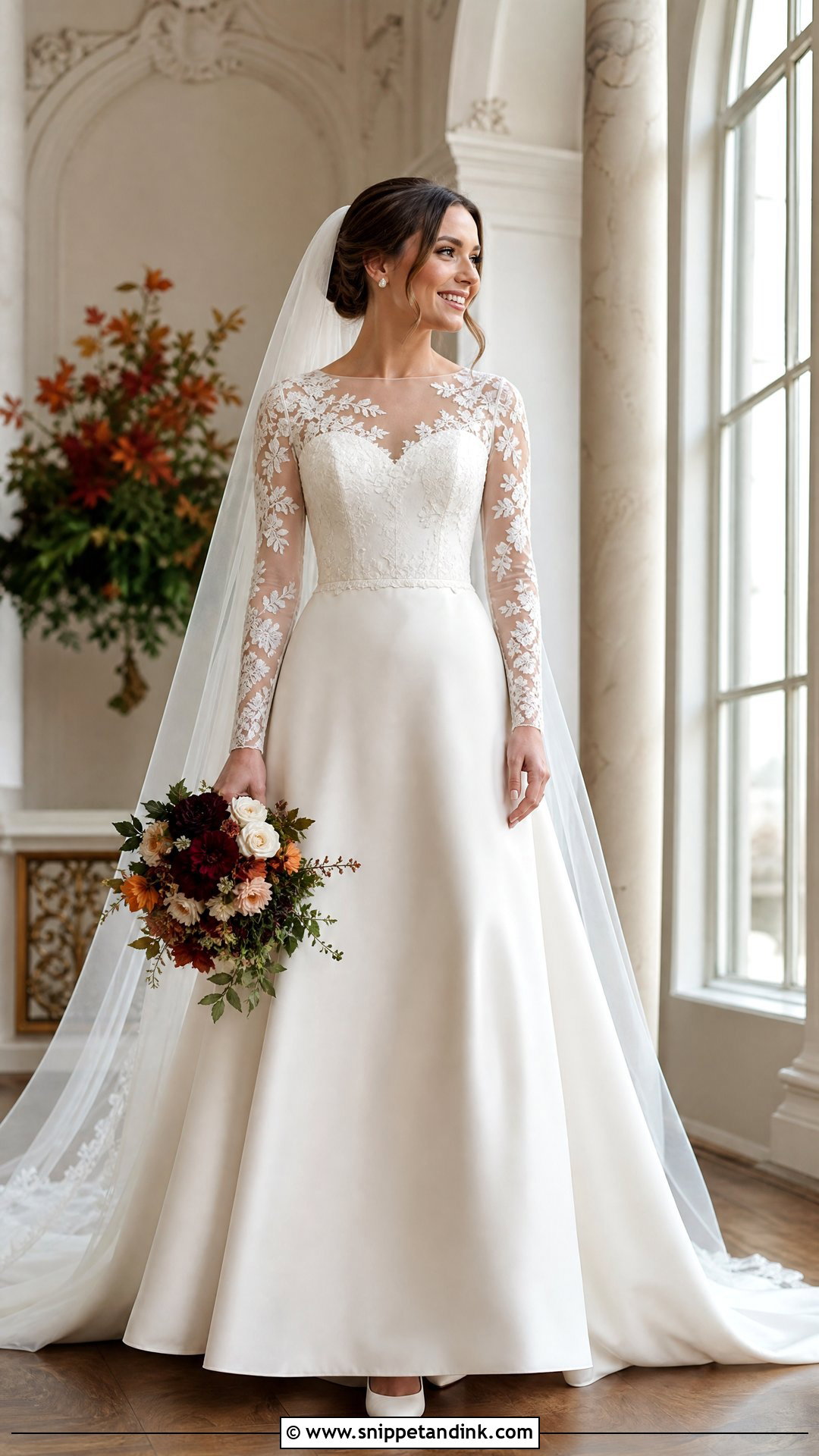
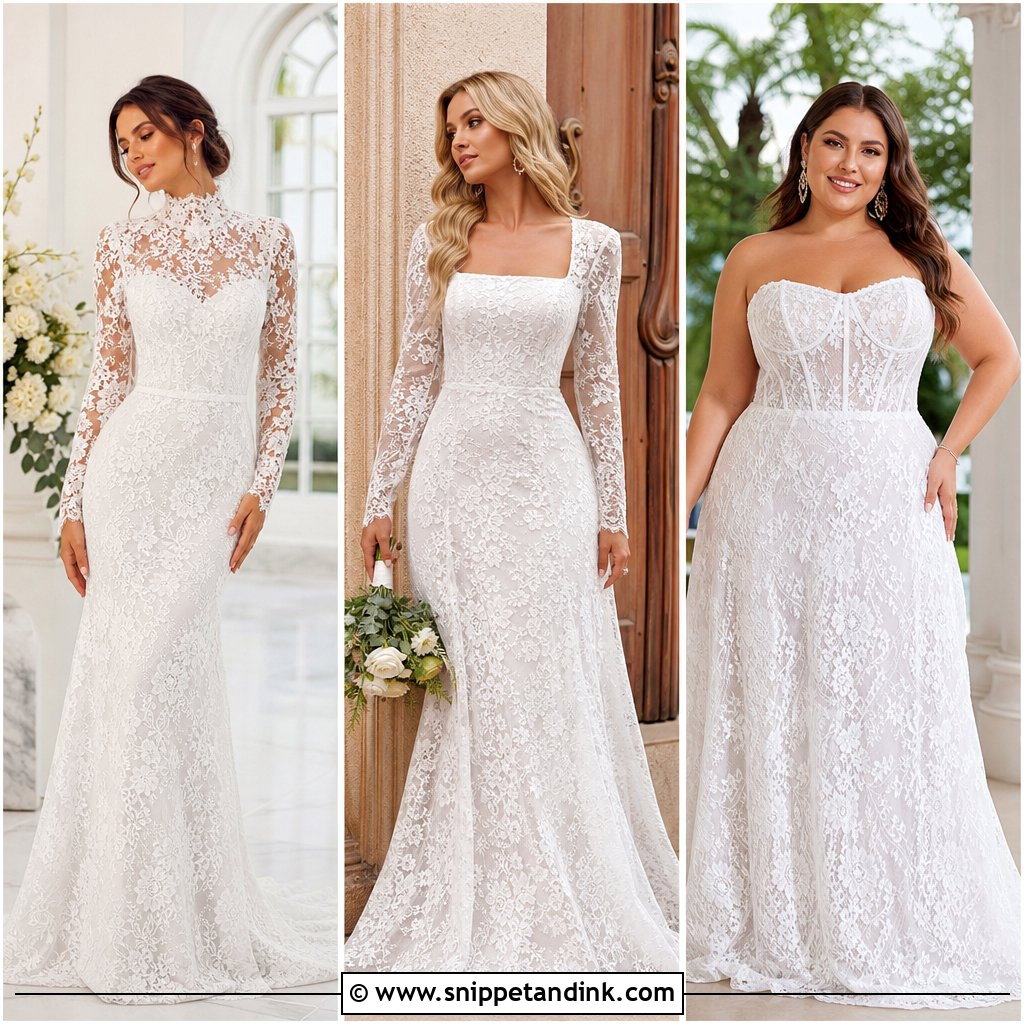
Long sleeves are where appliqué looks most delicate. Sheer fitted sleeves scattered with motifs give coverage and still show skin, and the lace can carry on across a structured bodice into a crepe, satin or tulle skirt depending on how formal you want it. Closed-toe pumps, pearl earrings and a plain veil falling past the train suit it. A smooth chignon keeps the shoulders clear. Check the armholes and elbows by reaching across a table; sleeves that look perfect standing often can’t bend. Autumn and winter weddings in older buildings suit this gown.
11. Cap Sleeve Lace Applique Wedding Dress
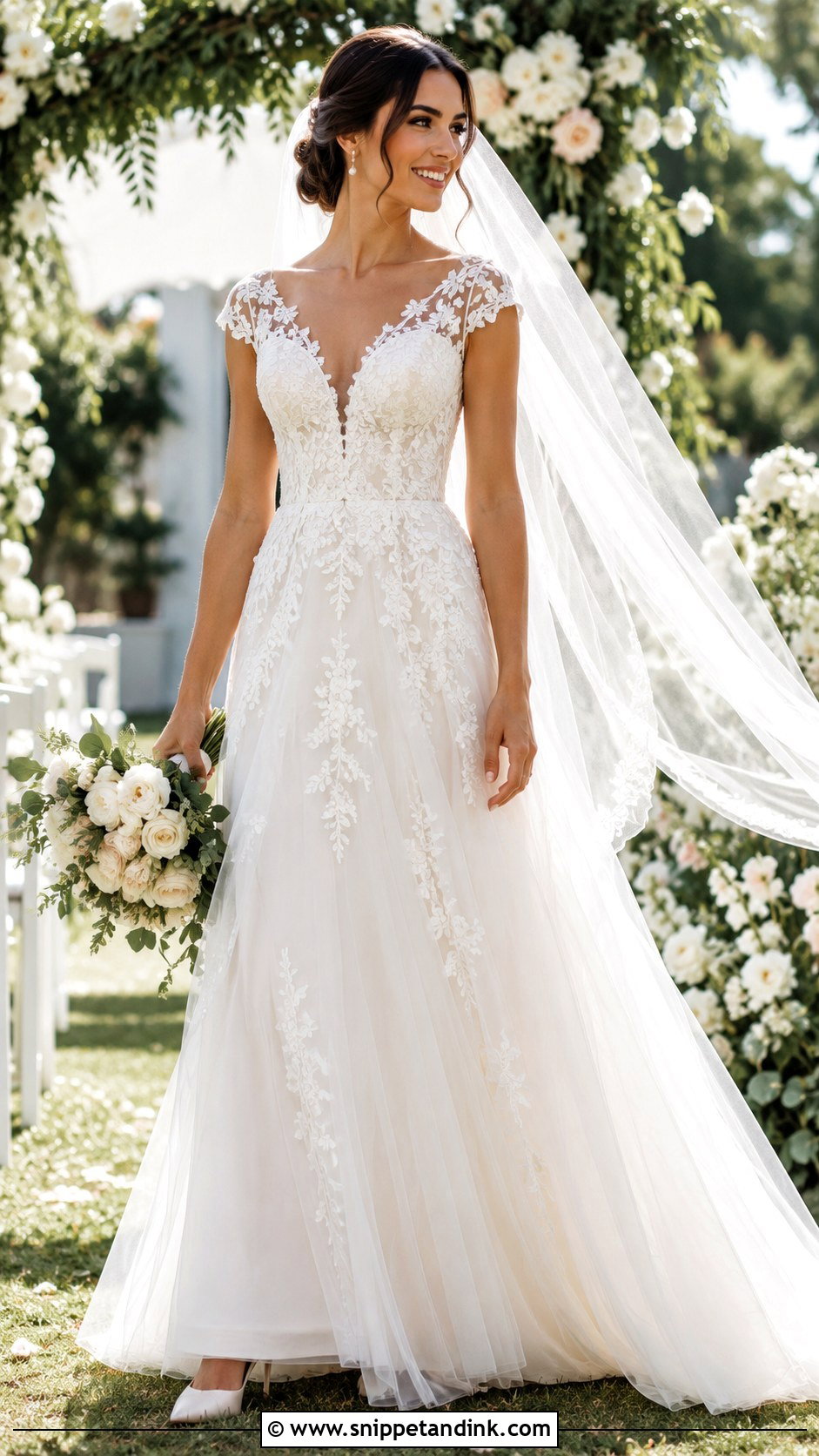
Cap sleeves give a little coverage and keep the shoulders open. The appliqué should flow from bodice onto sleeve as one pattern, with no visible seam where they meet. A soft V and a gently fitted waist pair with an A-line chiffon or tulle skirt. Low-heel pumps, small pearls and a light fingertip veil finish it, with a braided updo or half-up style. Cap sleeves cut too short slide up when you raise your arms, so ask your fitter to watch them while you wave. This is a good middle ground between straps and full sleeves for daytime and garden ceremonies.
12. High Neck Lace Applique Wedding Dress
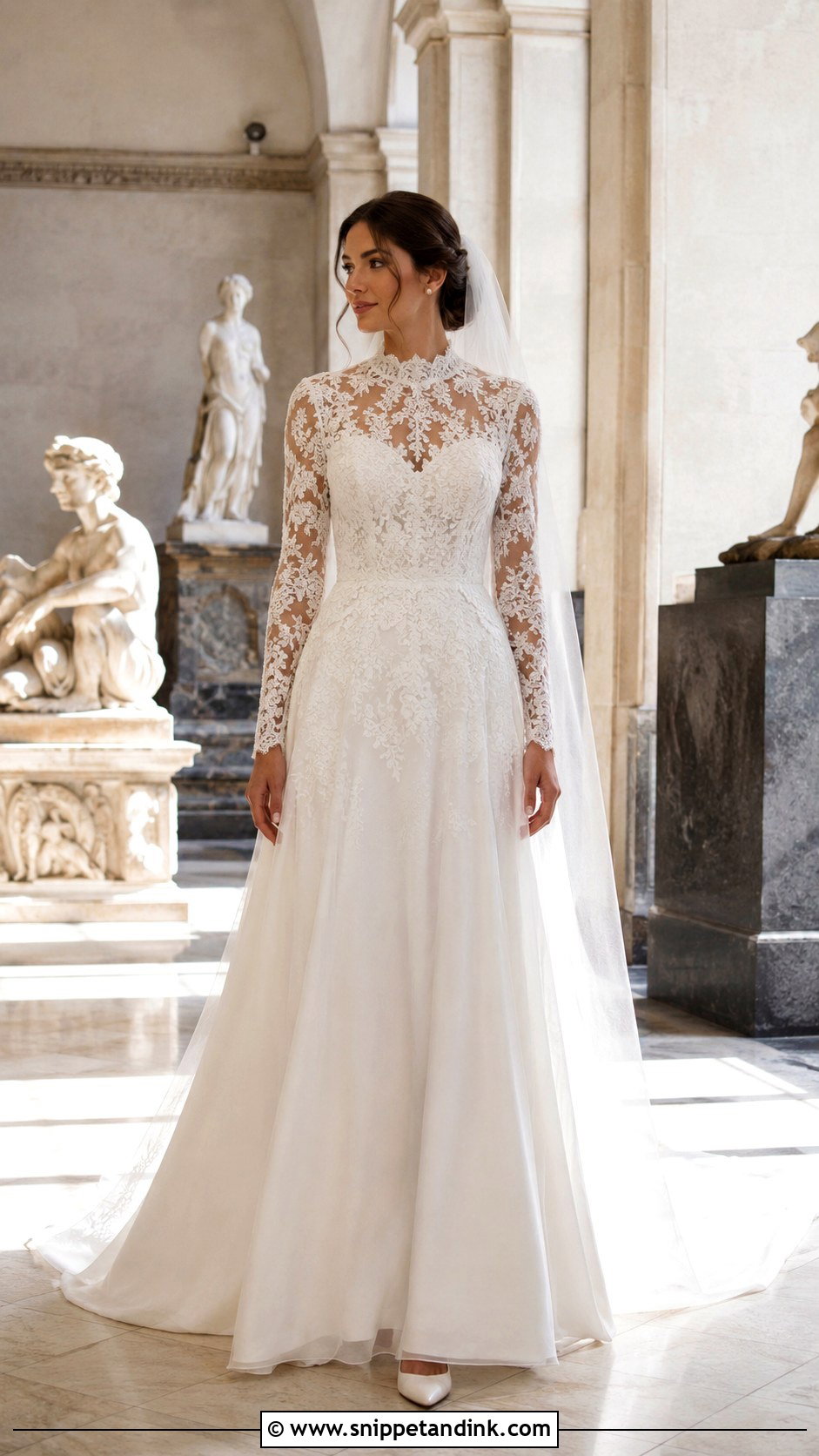
A high neck gives a vintage note with graceful coverage. The best versions layer sheer lace over a sweetheart or scoop lining, so the motifs seem to sit on bare skin. Long sleeves make it formal; a sleeveless high neck is lighter for warm months. Pearl studs, pointed pumps and a plain veil beneath a polished bun are enough. No necklace. A defined waist and a soft skirt keep the coverage from looking heavy. Ask for soft, flexible lace at the collar; stiff lace there rubs the jaw every time you turn.
13. Illusion Bodice Lace Applique Wedding Dress
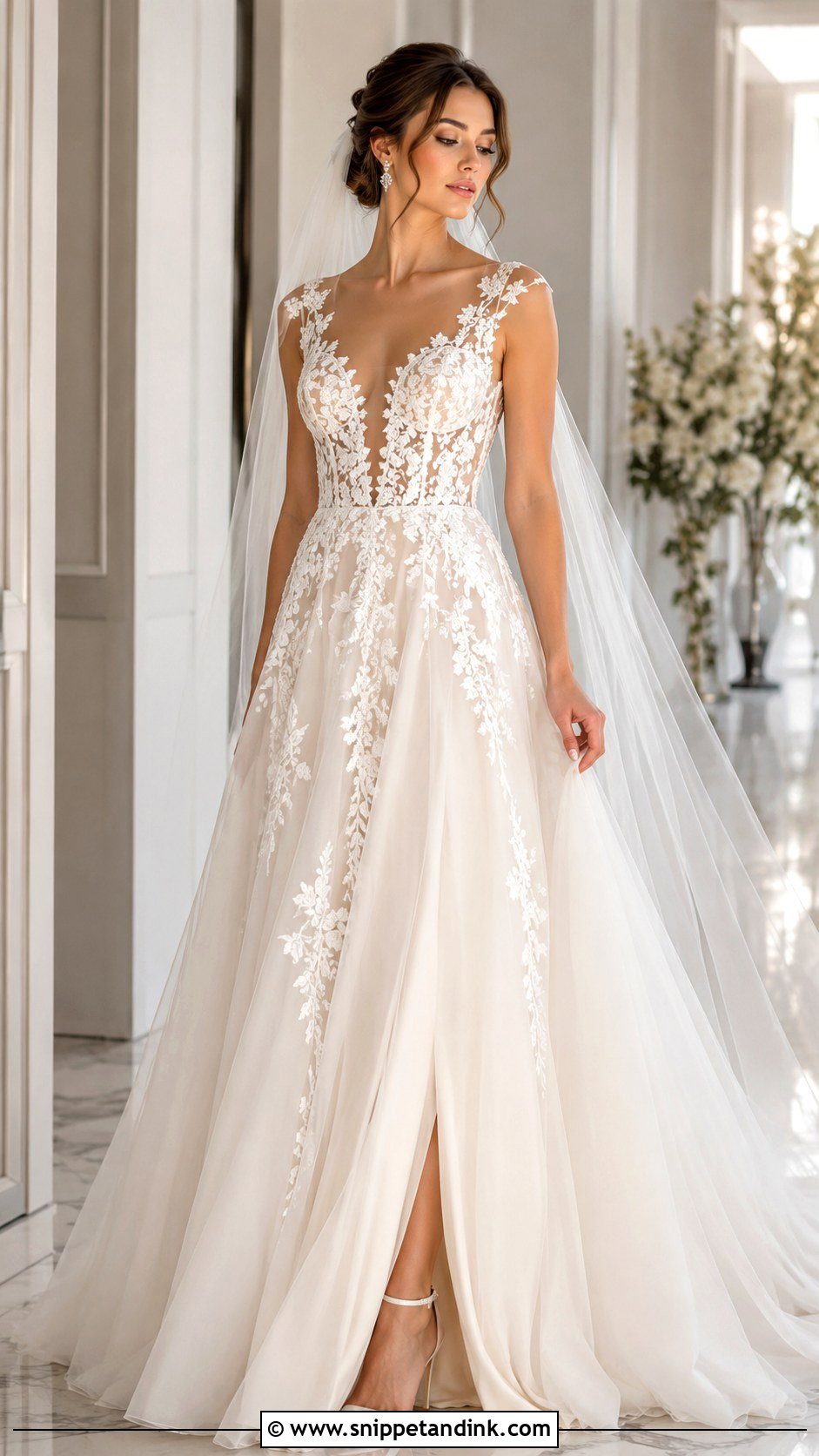
Illusion bodices let appliqués float across the neckline and torso. Getting the mesh to match your skin is the job, and it is harder than it sounds. A shade too light turns grey in photos; a shade too dark looks like a panel. Look at swatches in daylight against your chest, not your hand. Motifs can frame a plunging neck, run over the shoulders and continue onto the skirt. Delicate earrings, a thin bracelet and satin heels finish it, with a plain cathedral veil. A low bun or side-swept waves depends on the neckline.
14. Corset Bodice Lace Applique Wedding Dress
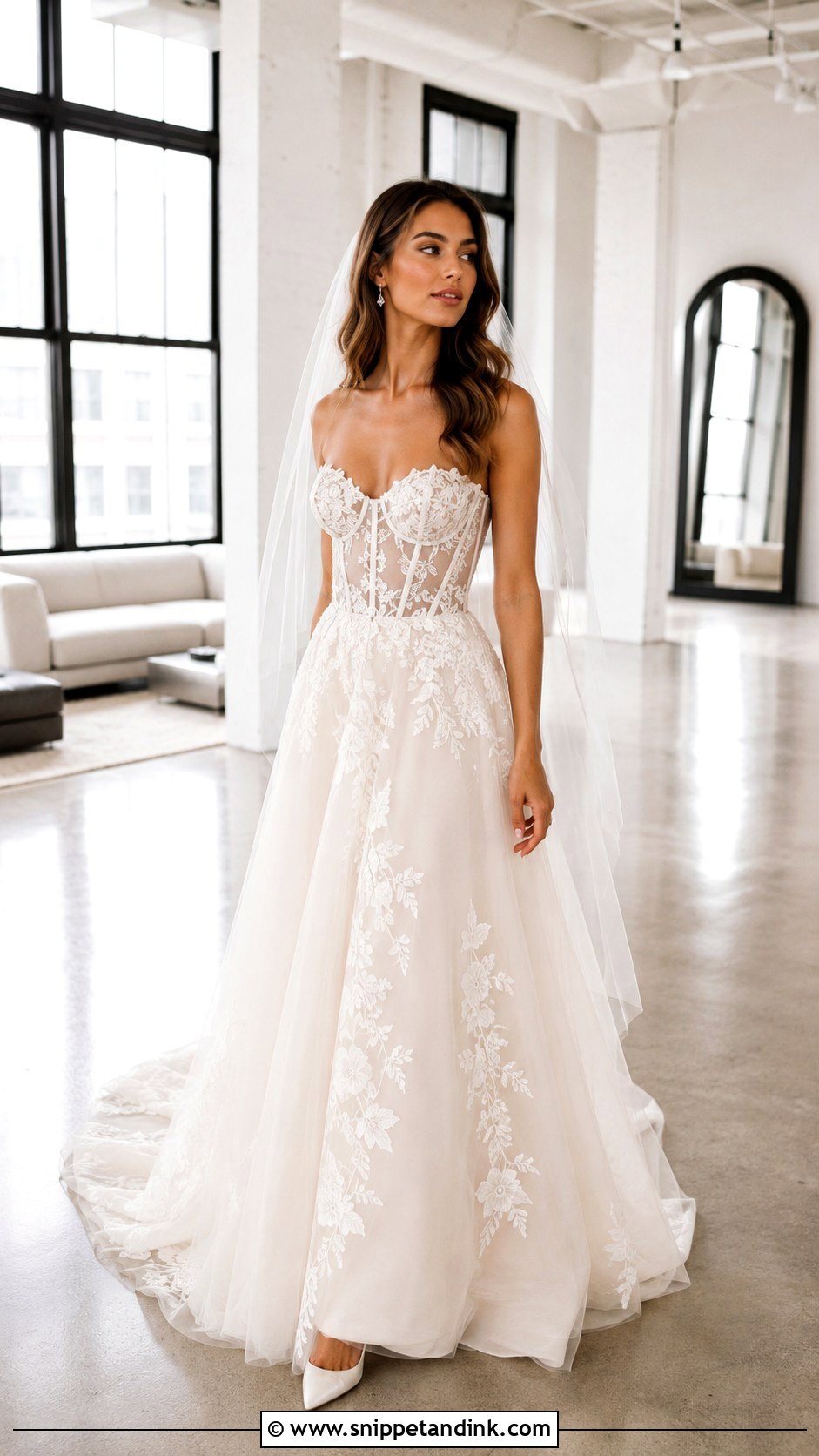
Visible corsetry gives appliqué a firm frame. Supportive boning, well-fitted cups and motifs laid over the seams make the structure look deliberate, not harsh. A soft A-line skirt gives contrast; a fitted skirt sharpens the line. Drop earrings, satin heels and a veil with no border are enough, and a sleek bun keeps the bodice visible. Ask the salon to show you how the back closes and how tight it should be laced. A correct fit lets you sit, eat and breathe; if you can’t do all three, it’s too tight.

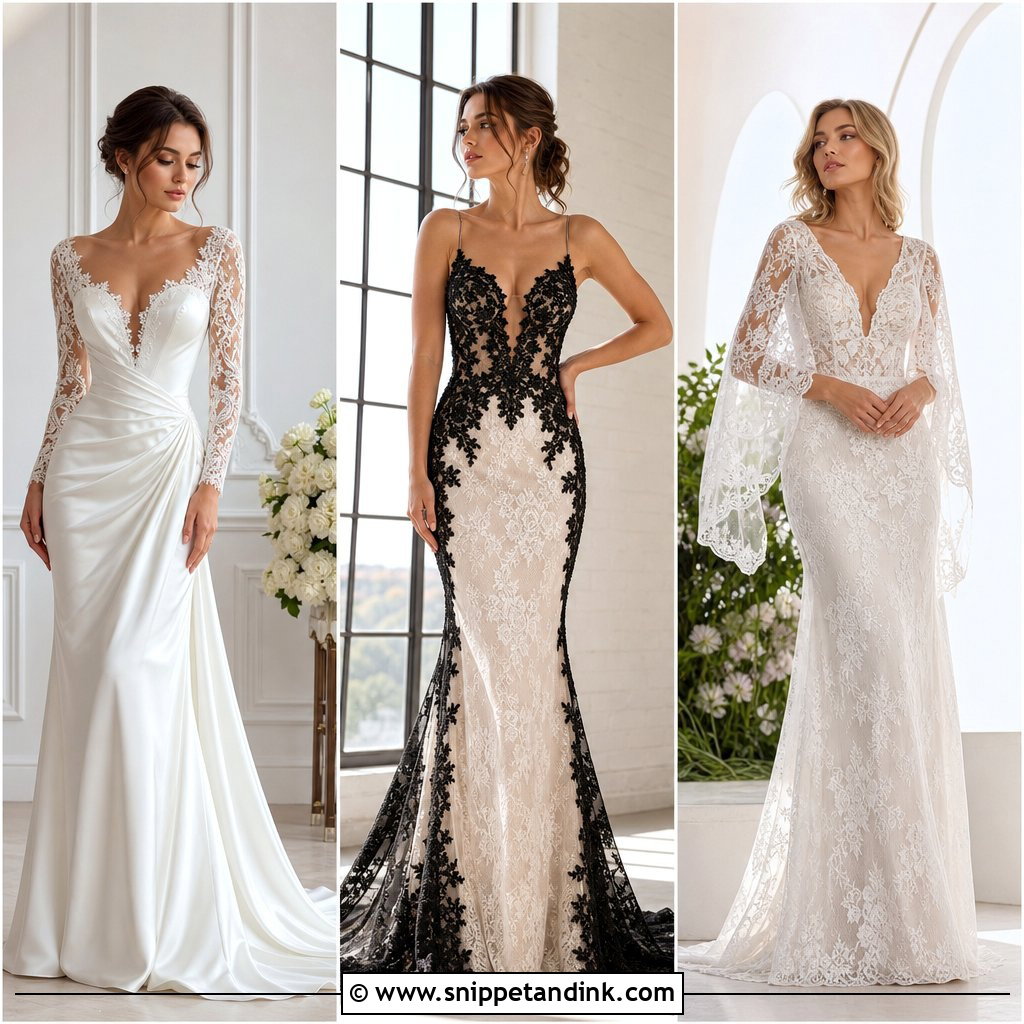
15. Open Back Lace Applique Wedding Dress
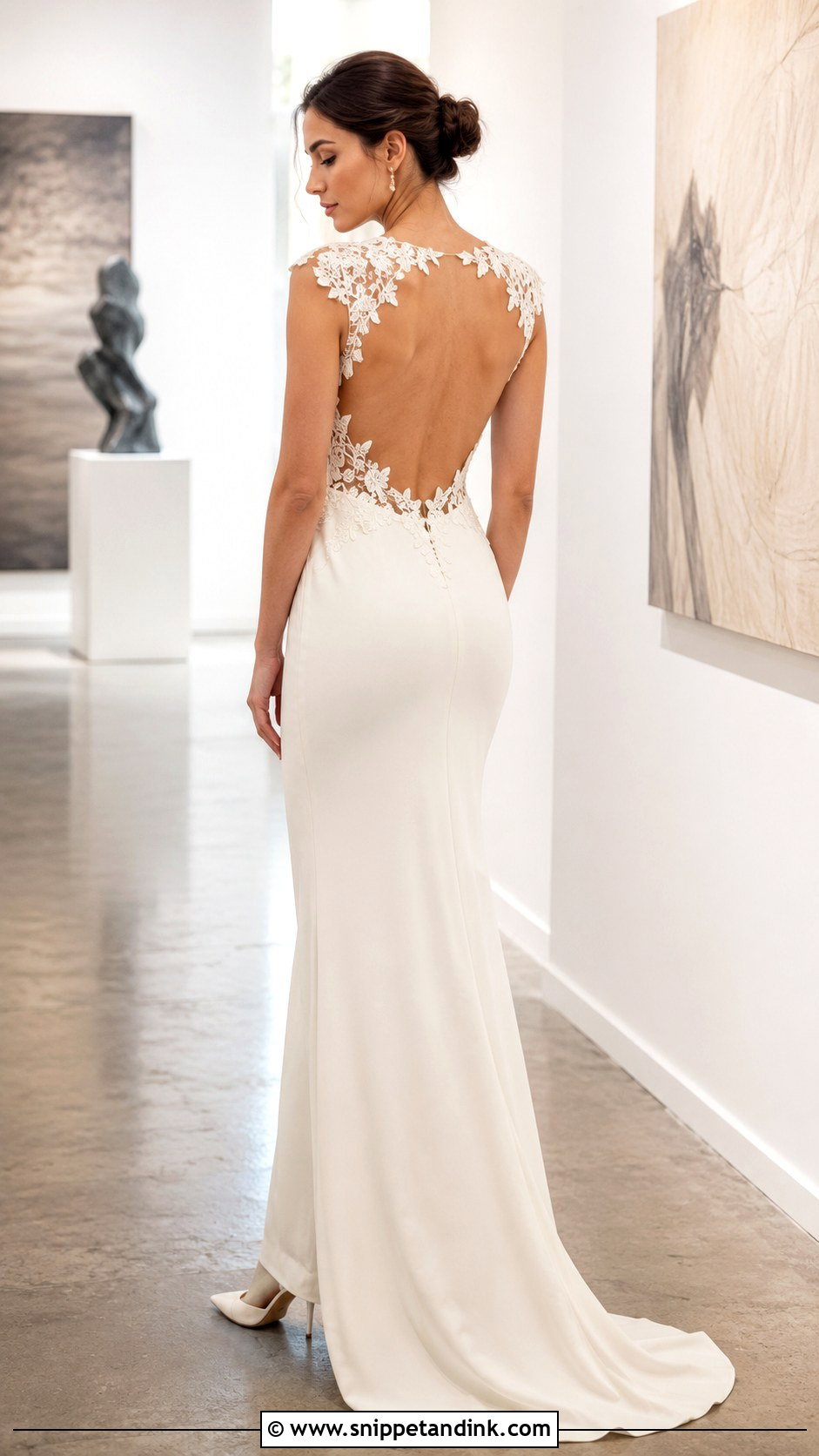
Few details make a more striking exit than an open back framed with lace appliqués. Motifs tracing the shoulder blades or an illusion panel make the back look finished from every angle. A high front neckline balances a deep back, and a fitted crepe skirt keeps it sleek. Backward-facing earrings, a neat updo and a veil you remove after the ceremony let the lace show. Low-back bras rarely work under a really deep cut, so ask whether cups can be sewn into the bodice. Pointed ivory pumps keep it clean.
16. Detachable Sleeve Lace Applique Wedding Dress
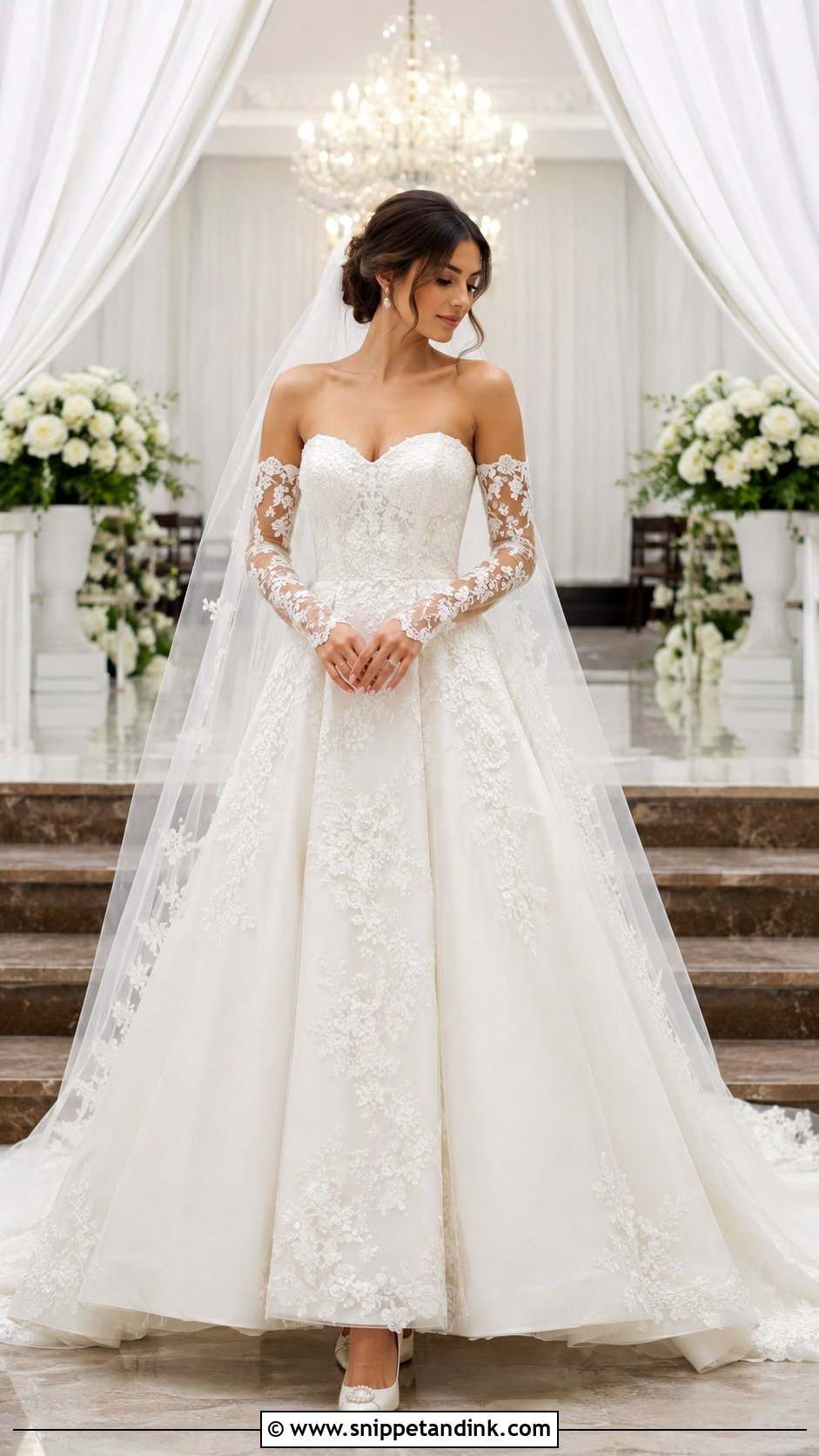
Detachable appliqué sleeves give one gown two looks. Wear the sheer sleeves for the ceremony, then unhook them for a strapless or sleeveless reception. For the change to look natural, the sleeve motifs must match the bodice lace exactly, ideally cut from the same bolt. An A-line or fit-and-flare skirt works with both versions. A long veil, pearl earrings and closed-toe heels suit the ceremony; statement earrings or a fine bracelet suit the party. Ask for the attachment points to sit under a motif so nothing shows. Bulky snaps on the shoulder are a giveaway.
17. Lace Applique Overskirt Wedding Dress
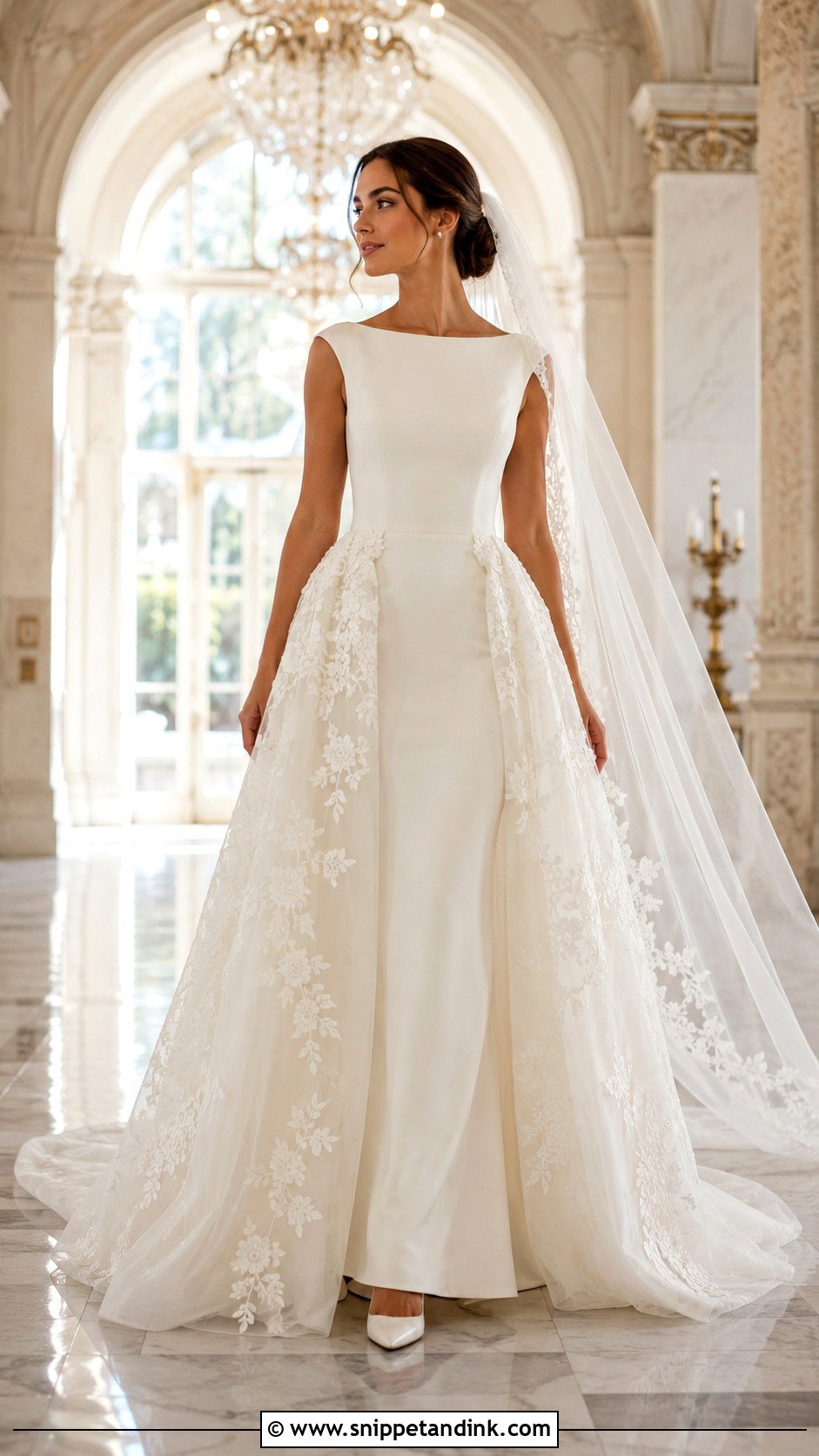
An appliqué overskirt adds ceremony drama to a simple base. Start with a column, sheath or fit-and-flare dress and add a full tulle overskirt scattered with motifs. You get a grand aisle look without carrying that skirt all night. A cathedral veil, pearl studs and pumps finish the ceremony version, and both come off for the reception. The waistband must close flat and firmly without changing how the base dress fits. Matching motifs on both layers make the two halves read as one gown.
18. 3D Floral Lace Applique Wedding Dress
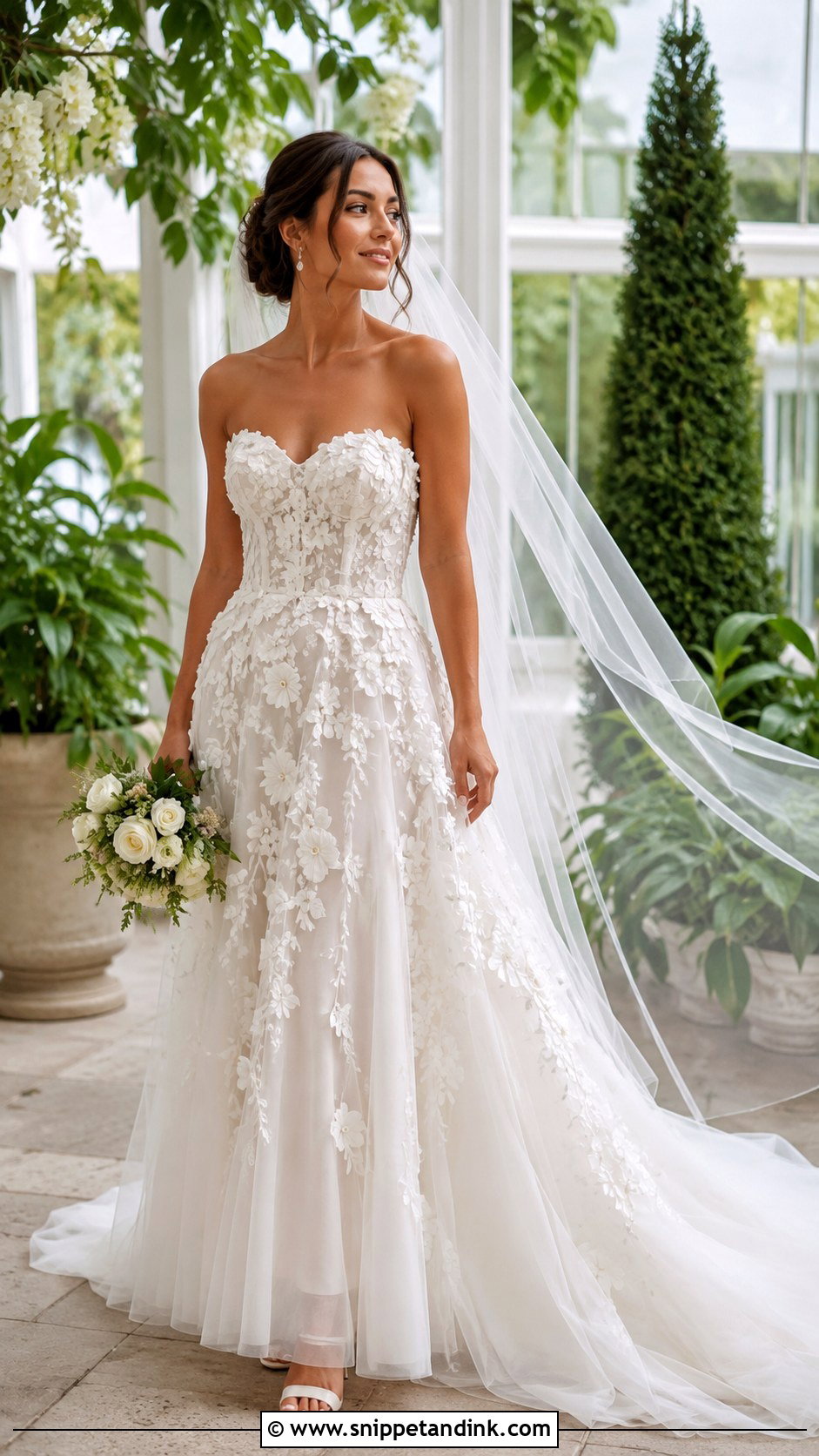
Dimensional flowers bring texture to a lace applique wedding dress. Keep the raised petals concentrated at the bodice, neckline or upper skirt instead of covering every surface. Small pearl or crystal centres add a little light. Plain earrings, satin heels and a plain tulle veil let the flowers lead, and a soft low bun with natural makeup suits the botanical mood. Raised petals snag on prong-set bracelets and embellished veils, so keep both simple. Gardens and conservatories with good daylight show the texture best.
19. Satin Wedding Dress With Lace Applique
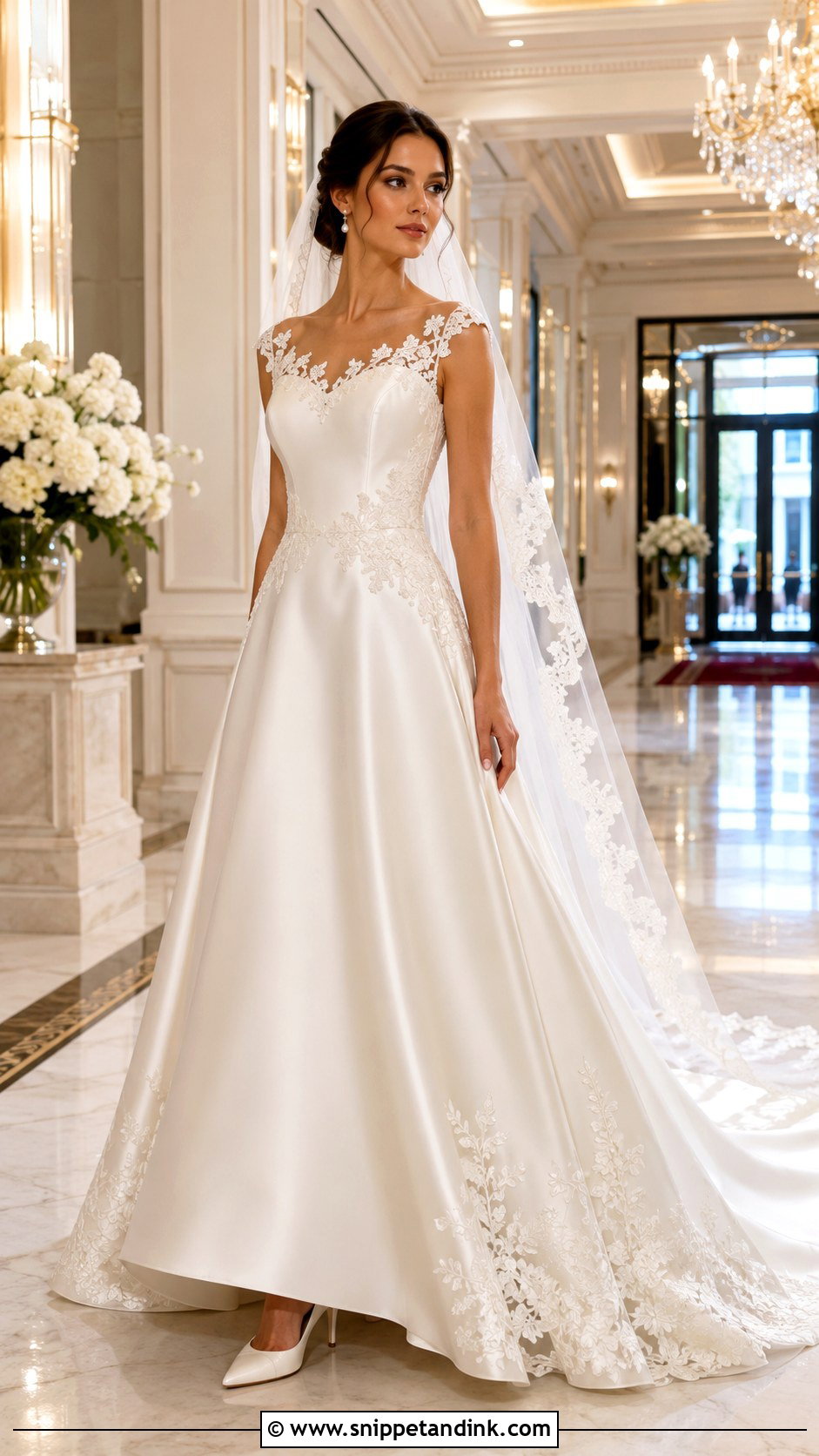
Satin and lace contrast well in one gown. Place the appliqué along the neckline, waist, back or train and let the rest of the satin stay smooth. A strapless A-line or square-neck ball gown gives the satin room to shine. Pearl drops, classic pumps and a veil with a little matching lace near the edge suit it, with a sleek bun. Satin marks easily and shows every crease, so agree who steams it, how it travels to the venue and when it goes on. You get lace detail without an all-over lace look.
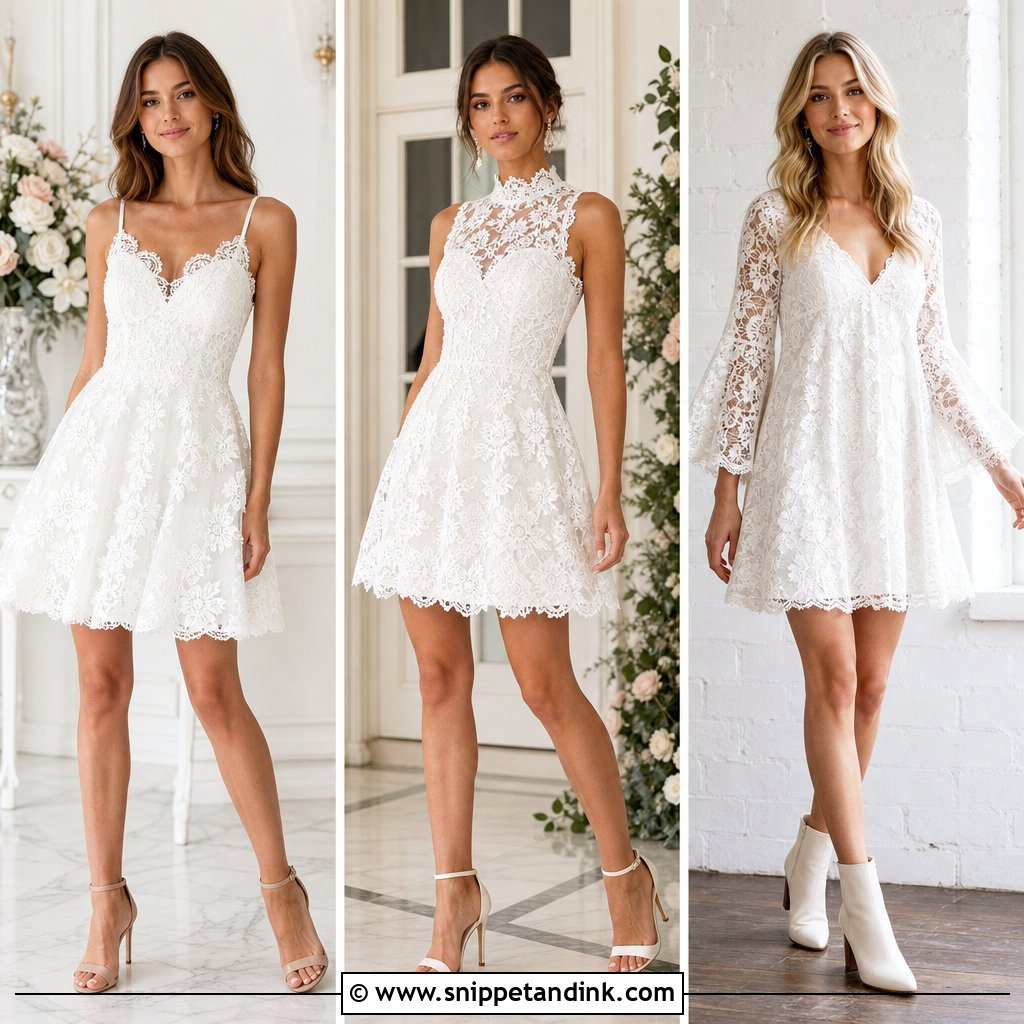
20. Tea-Length Lace Applique Wedding Dress
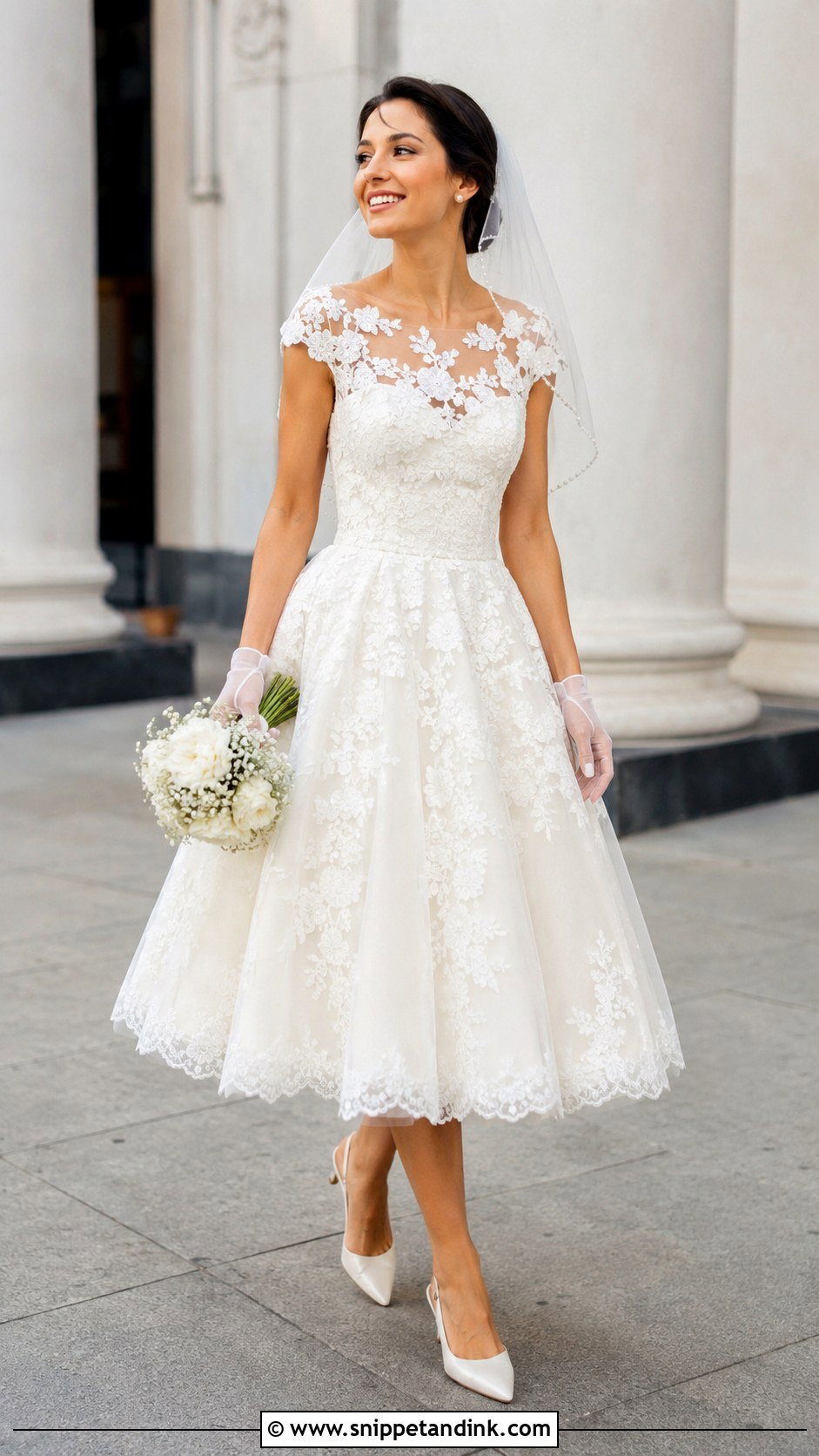
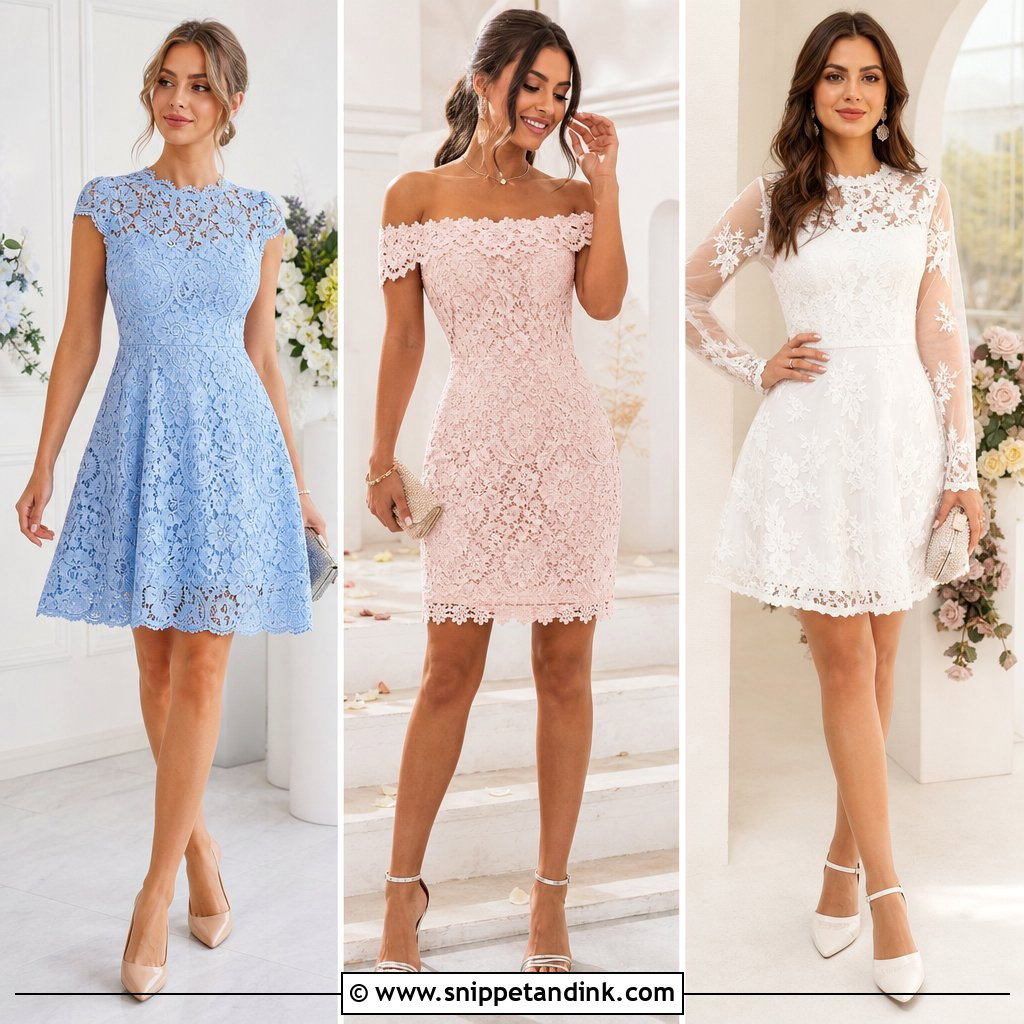
Tea length is playful and easy to move in. The hem lands between knee and ankle, so the shoes are fully on show. An A-line skirt with appliqués across the bodice, scattered lightly toward the hem, suits the proportion. Pointed pumps, slingbacks or block heels in ivory all work. Pearl studs, short gloves if you like them and a birdcage or fingertip veil finish it, with a neat bun, soft waves or a chin-length bob. Shortening a lace-edged hem means unpicking and re-placing motifs, so allow extra time for that alteration. City and courthouse weddings suit it.
Why Appliqué Gowns Take Longer to Alter
Taking in a plain satin seam is quick. Taking in a seam covered by lace motifs means the motifs crossing it have to be unpicked, the seam altered, and the lace stitched back by hand so the pattern still flows. Hems are the same: a scalloped lace hem can’t be cut, so the fitter shortens from the waist or moves the scallop up piece by piece.
- Allow more time. Start alterations around two to three months before the wedding and expect at least one extra appointment compared with a plain gown.
- Ask about spare lace. Many makers send offcuts or can order extra, which helps when coverage is added or a motif needs replacing.
- Be clear about adding coverage early. New sleeves or a higher back need matching lace, which may take weeks to arrive.
- Expect the cost to vary. Lace work is charged on time, so quotes for the same change can differ widely between seamstresses.
If your veil is being edged to match, give the veil maker a small piece of the gown’s lace or a clear close-up photo. Matching the motif scale matters more than matching the exact pattern.
Where the Lace Lands Matters Most
One technique, twenty very different gowns. Appliqué can soften a ball gown, sharpen a sheath or turn a plain satin dress into something personal. Settle the silhouette and coverage first, then look at the scale, placement and texture of the lace. Bring your shoes and underwear to every fitting, and test each gown walking, sitting and lifting your arms. Let accessories step back. The gown you want is the one that still feels like yours when you see the photos years later.
You'll Like These Ideas:




Leave a Reply