
Lace that runs from neckline to hem is the fabric I get asked about more than any other at fittings. It disguises seams, forgives small fit issues and carries a lot of detail without any sparkle. It also comes in more shapes than people expect: a fitted mermaid, a soft A-line, a full ball gown, a sleek sheath or a high-neck column can all be covered in lace and look like completely different dresses. What changes the mood most is the lining color, the weight of the lace and what you wear with it. Below are 25 ideas, each with the things I actually check when a bride tries one on.
Chantilly, Alençon or Guipure? Know the Lace Before the Silhouette
Before we get to shapes, it helps to know what you’re touching on the rail, because lace types behave very differently once they’re on a body. Boutiques use these names loosely, but most bridal lace falls into a few families.
- Chantilly: a very fine, flat net with delicately outlined motifs. It drapes softly and suits sheaths and sleeves, but it snags easily on rings and bracelet clasps.
- Alençon: a net lace with a cord outlining each motif, so it has more relief and holds a scalloped edge well. You’ll see it on structured bodices and ball gowns.
- Guipure: motifs joined by little bars instead of a net background. It’s heavier and more sculptural, great on modern and boho dresses, though it can feel stiff over the hips.
- Embroidered or 3D lace: tulle with stitched or raised flowers. Plenty of texture, but raised petals can flatten if you sit on them for a long dinner.
In the fitting room I rub a corner of the lace between my fingers and drape it over my forearm. If it falls in soft folds, it will move with a fitted cut. If it holds its shape on its own, it wants a fuller or more structured silhouette to sit on.
1. Full Lace A Line Wedding Dress
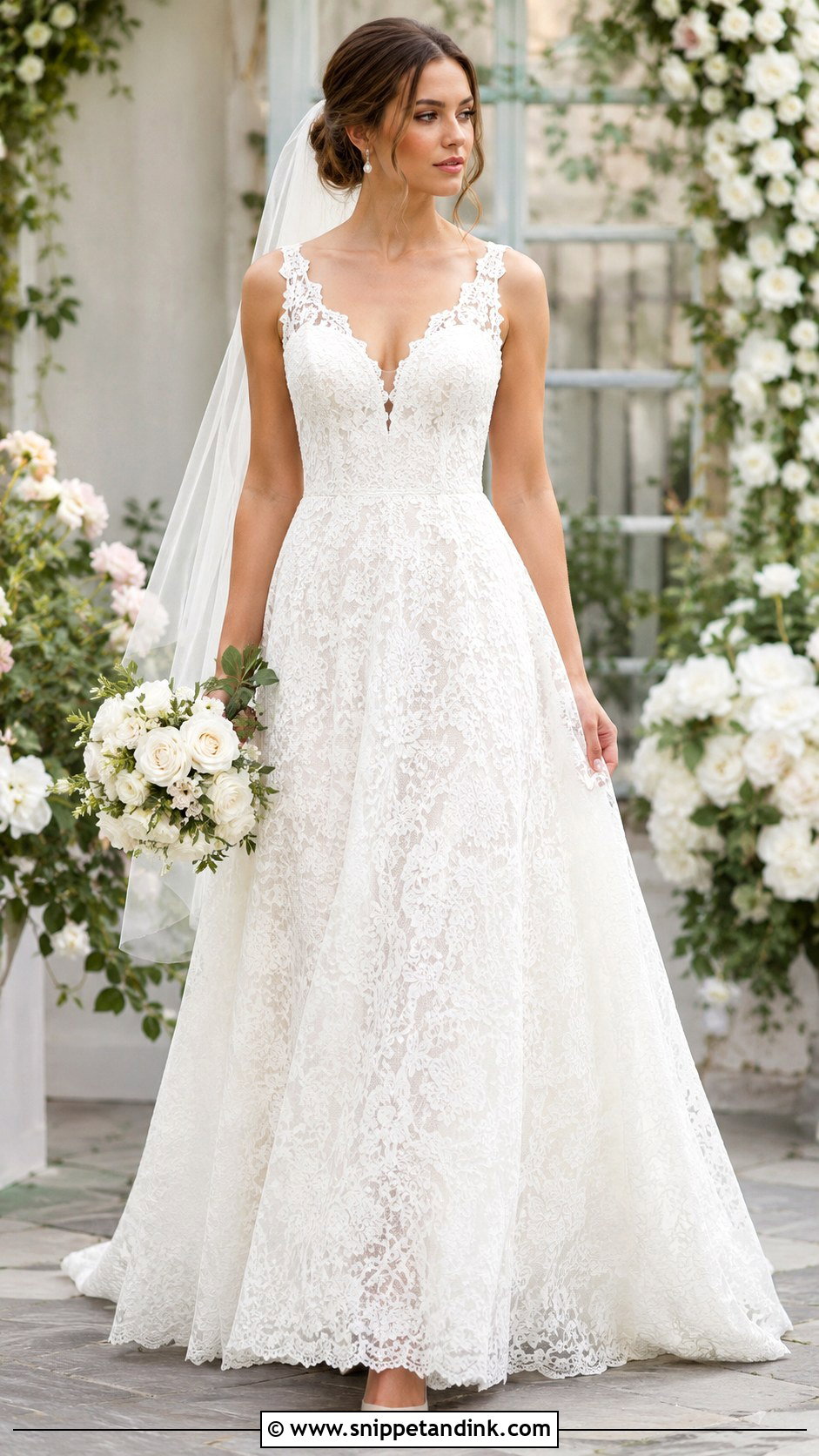
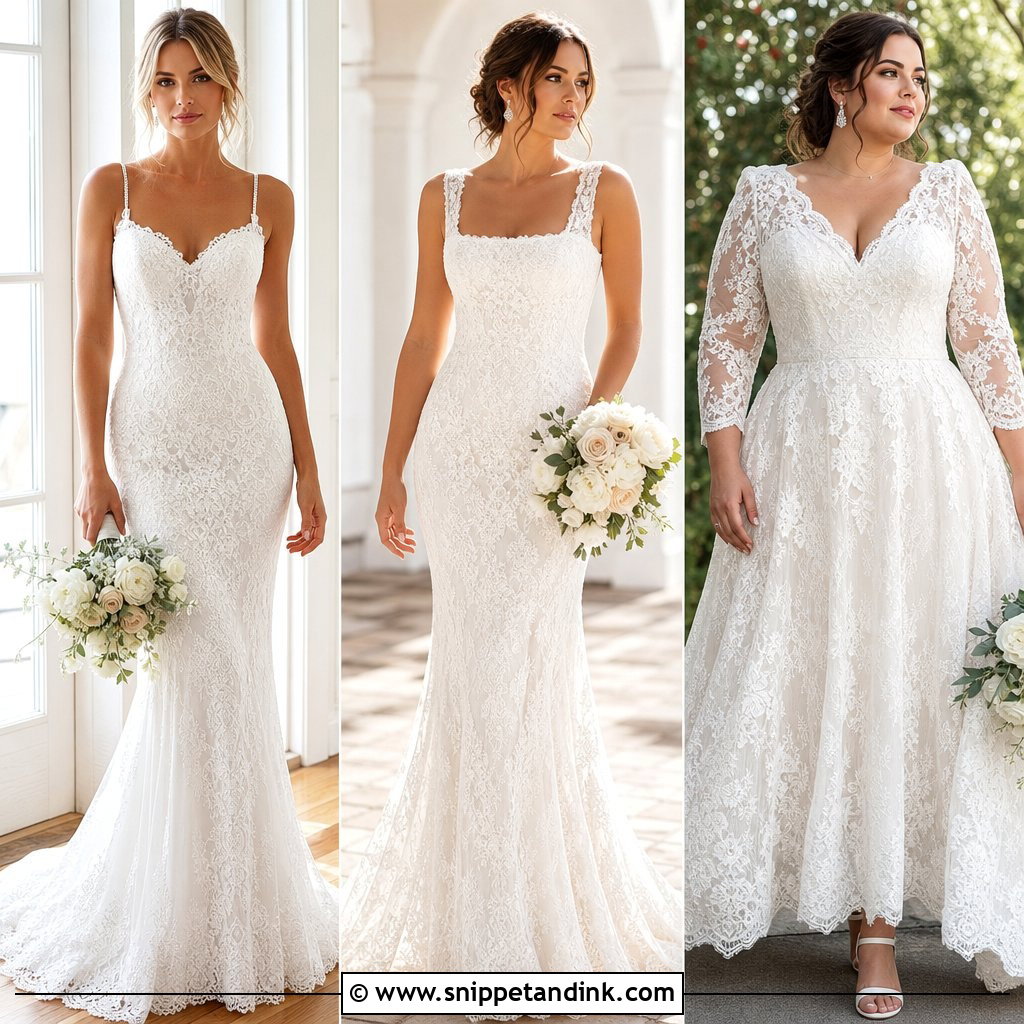
This is the silhouette I point most first-time shoppers toward. The fitted bodice holds the lace flat, while the skirt falls away from the hips and leaves room to walk, sit and dance. What I check is how the lace meets at the waist seam. On better gowns the motifs are cut out and laid over the seam by hand so the pattern looks continuous; on cheaper ones you’ll see a hard line where two pieces of lace butt together. Soft floral lace suits a garden, while corded lace reads more formal. Ivory pointed heels and a plain veil keep the attention on the fabric.
2. Full Lace Ball Gown Wedding Dress
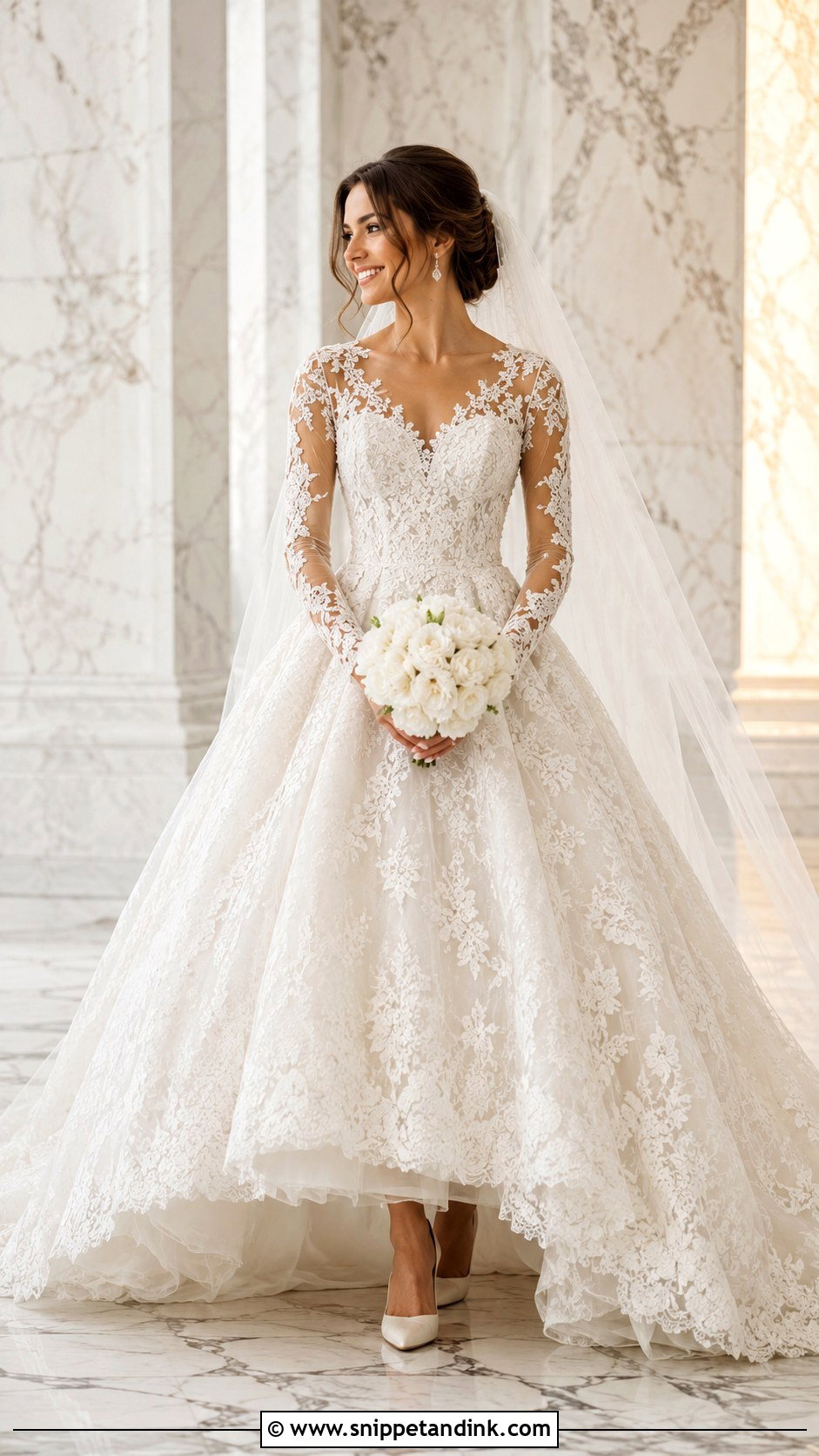
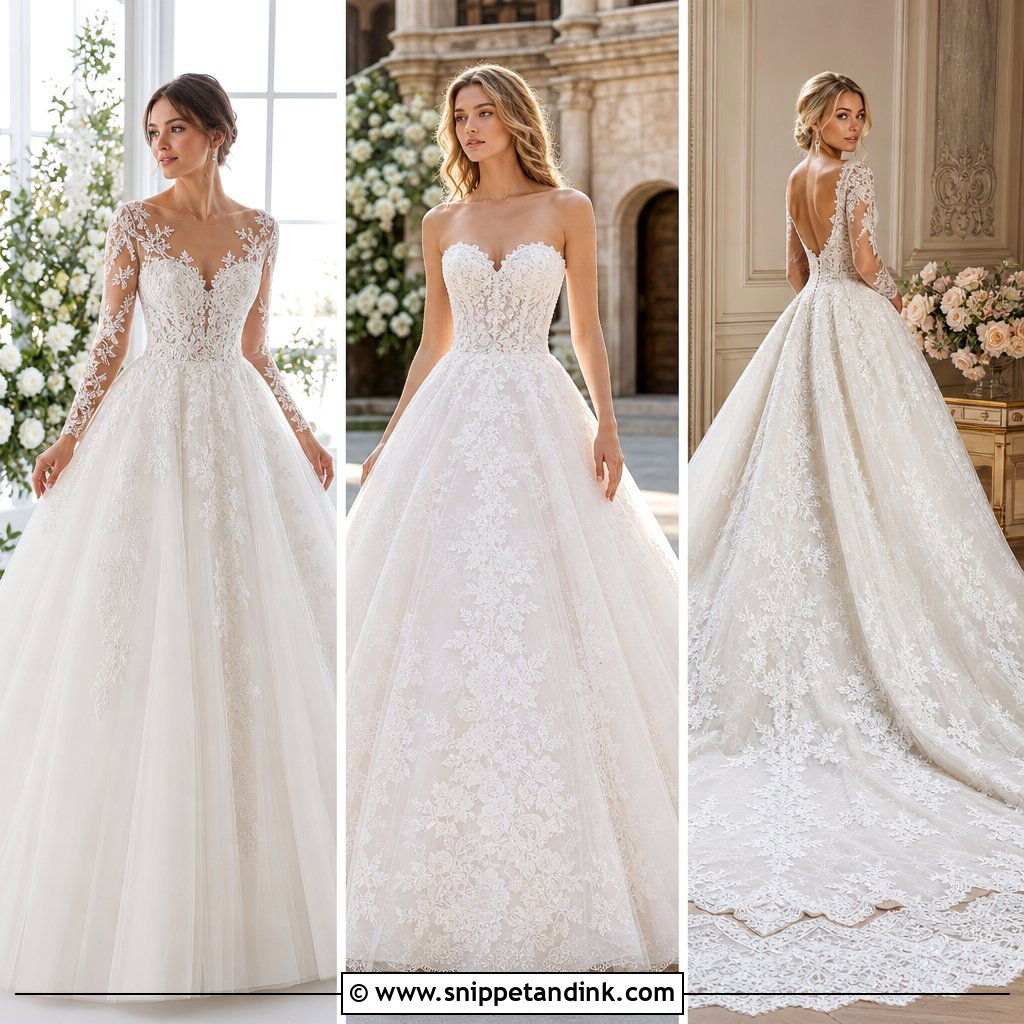
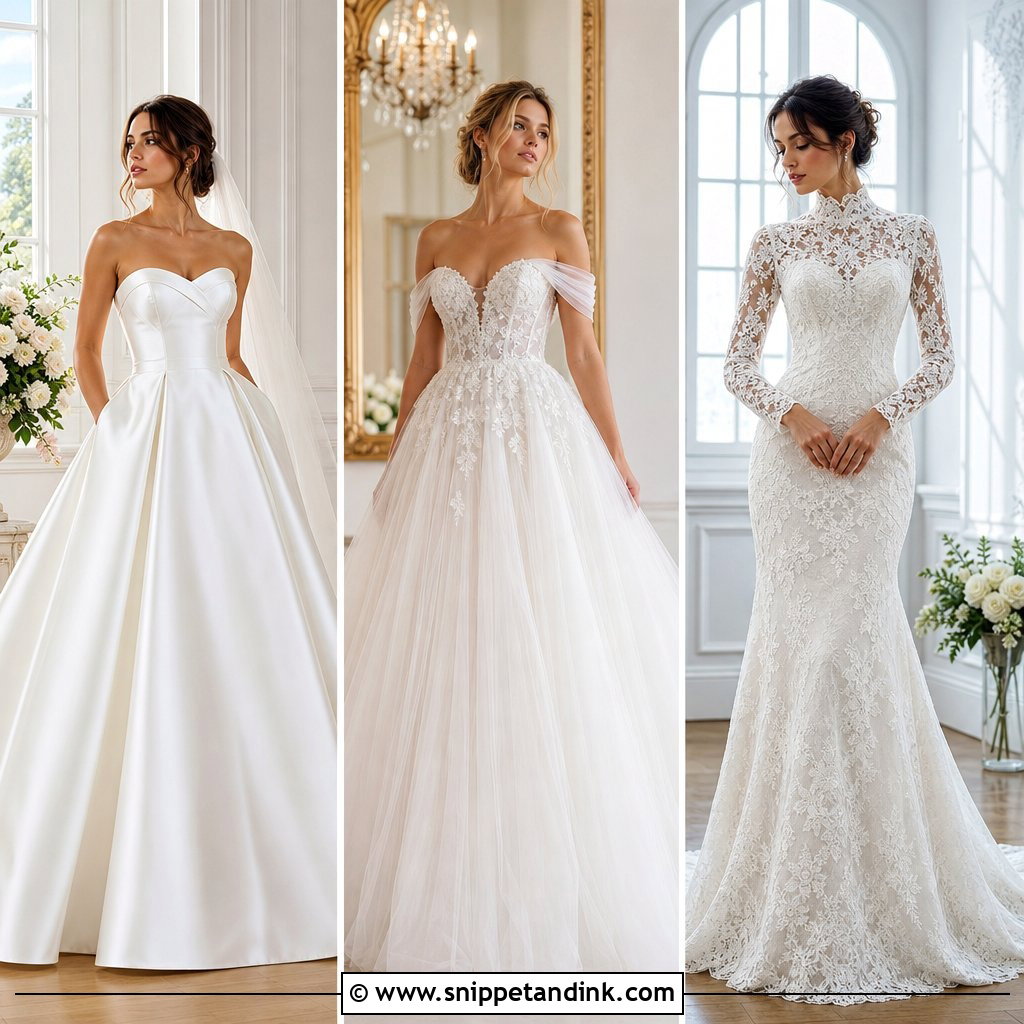
A lace ball gown needs more going on underneath than people realize. Lace has no body of its own, so the volume comes from layers of tulle or a horsehair-edged petticoat, and you will feel that weight by the third hour. I always have a bride sit, stand and turn in the sample before she decides. Matte lace without beading tends to age better in photos than heavily sequinned versions, which can flare under flash. Add a long veil and simple drop earrings, and save this shape for a venue with the floor space to show it.
3. Full Lace Mermaid Wedding Dress
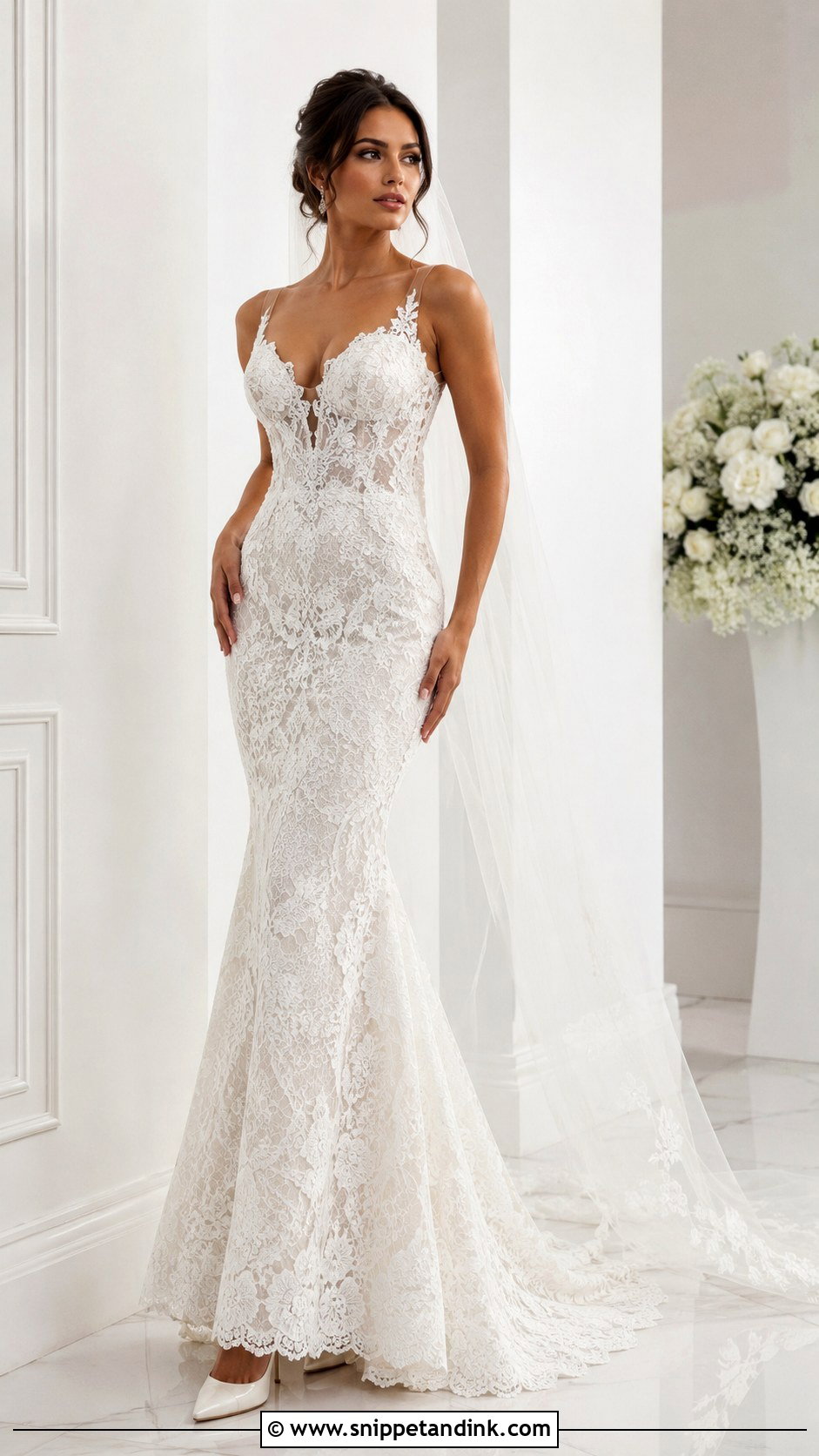
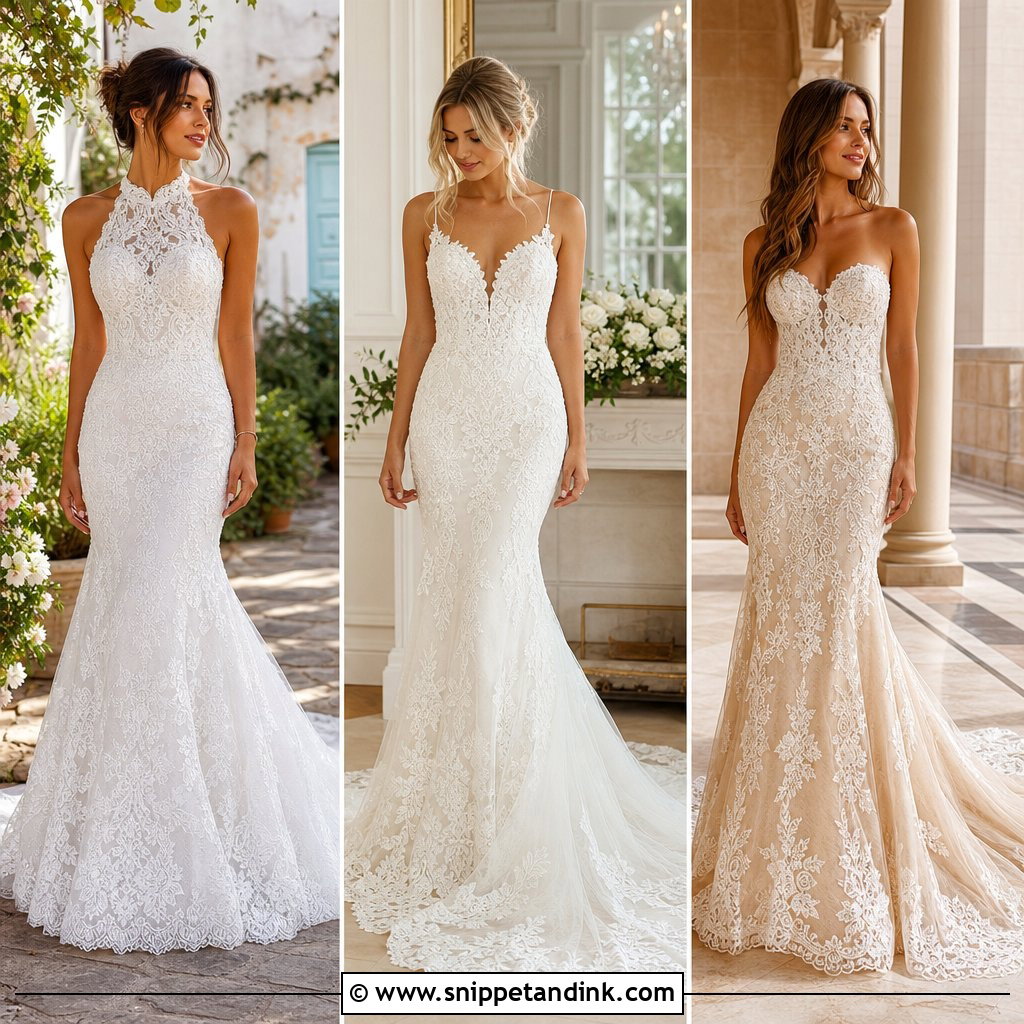
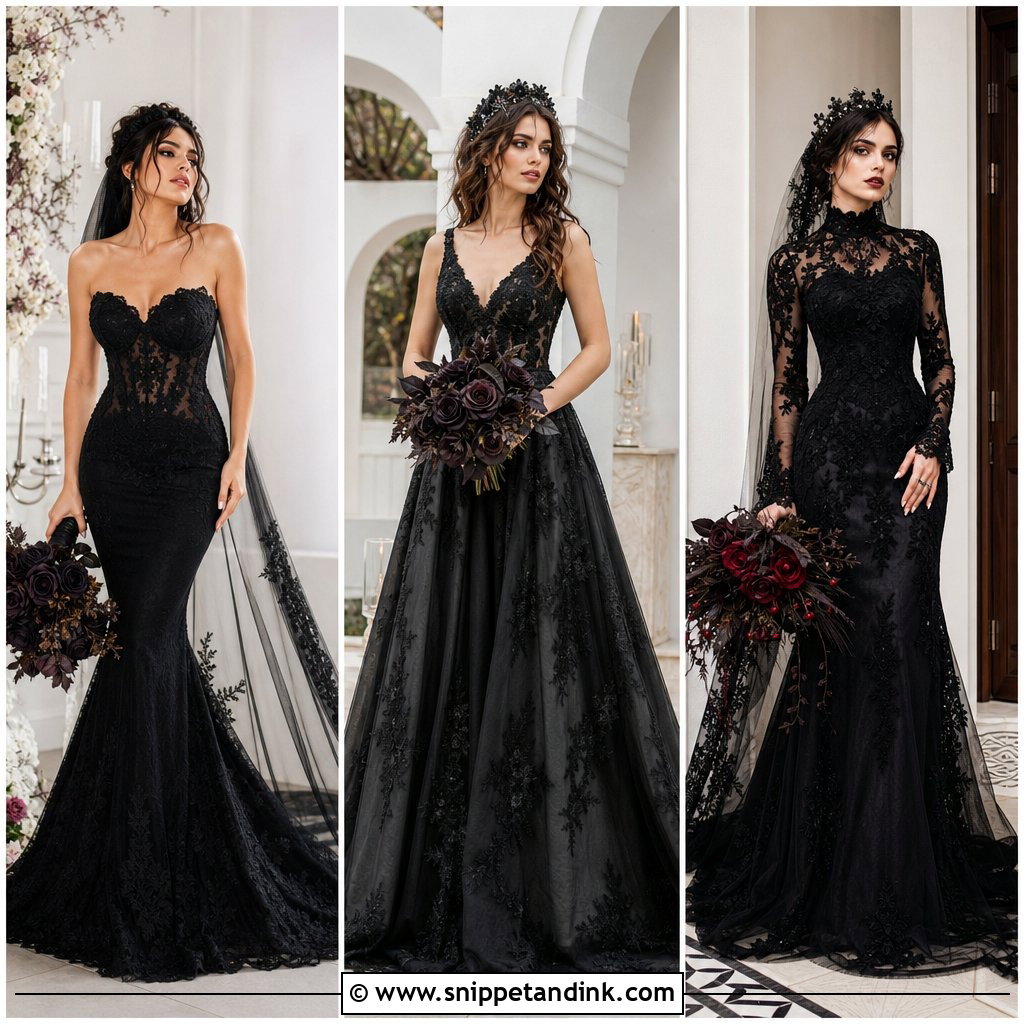
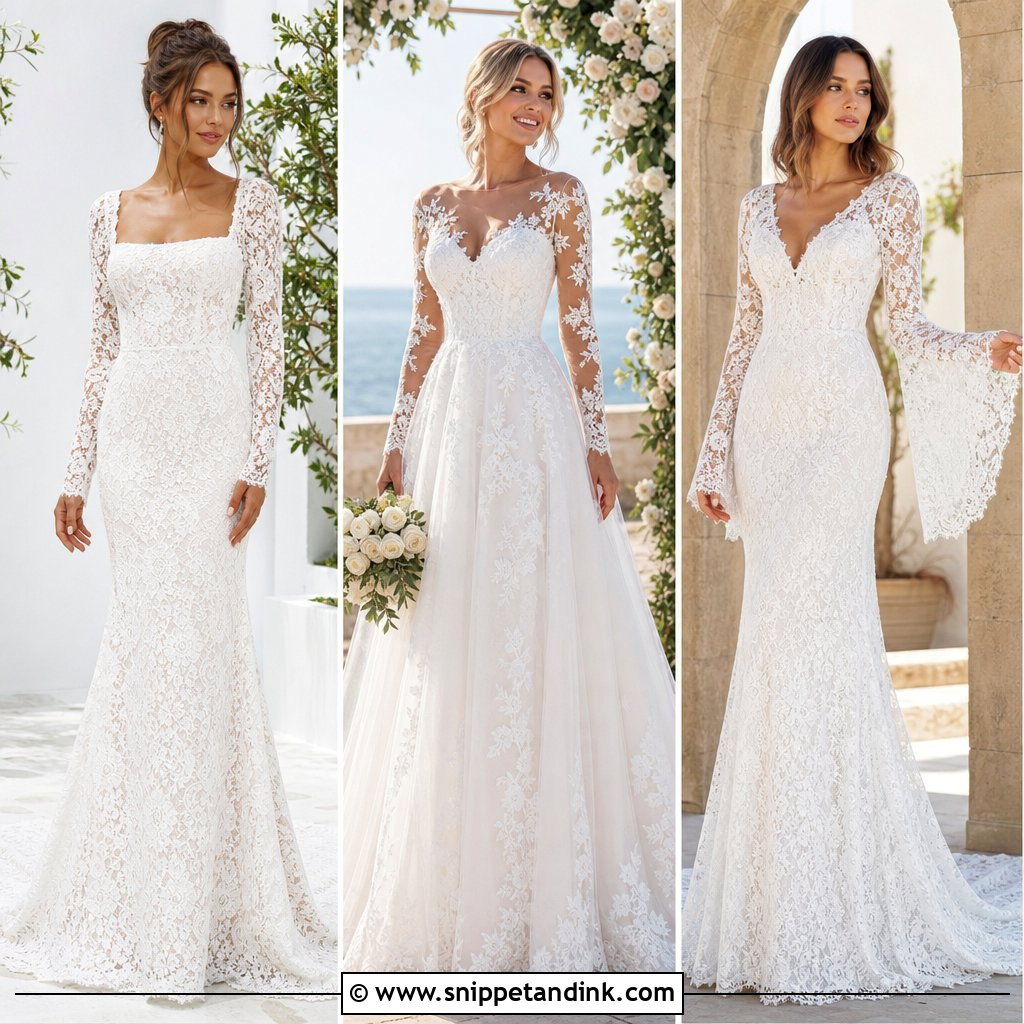
Mermaids are the least forgiving cut here, because the lace has to follow you closely from bust to knee before it flares. Lace with a little stretch in its base net moves far better in this shape than rigid corded lace, which can ripple across the hips with every step. For the same reason I’d avoid thick appliqués sitting right on the hip line. A deep scalloped hem gives the flare some movement at the floor. Be honest about dancing: most mermaids need a bustle and a little practice to walk in.
4. Full Lace Sheath Wedding Dress
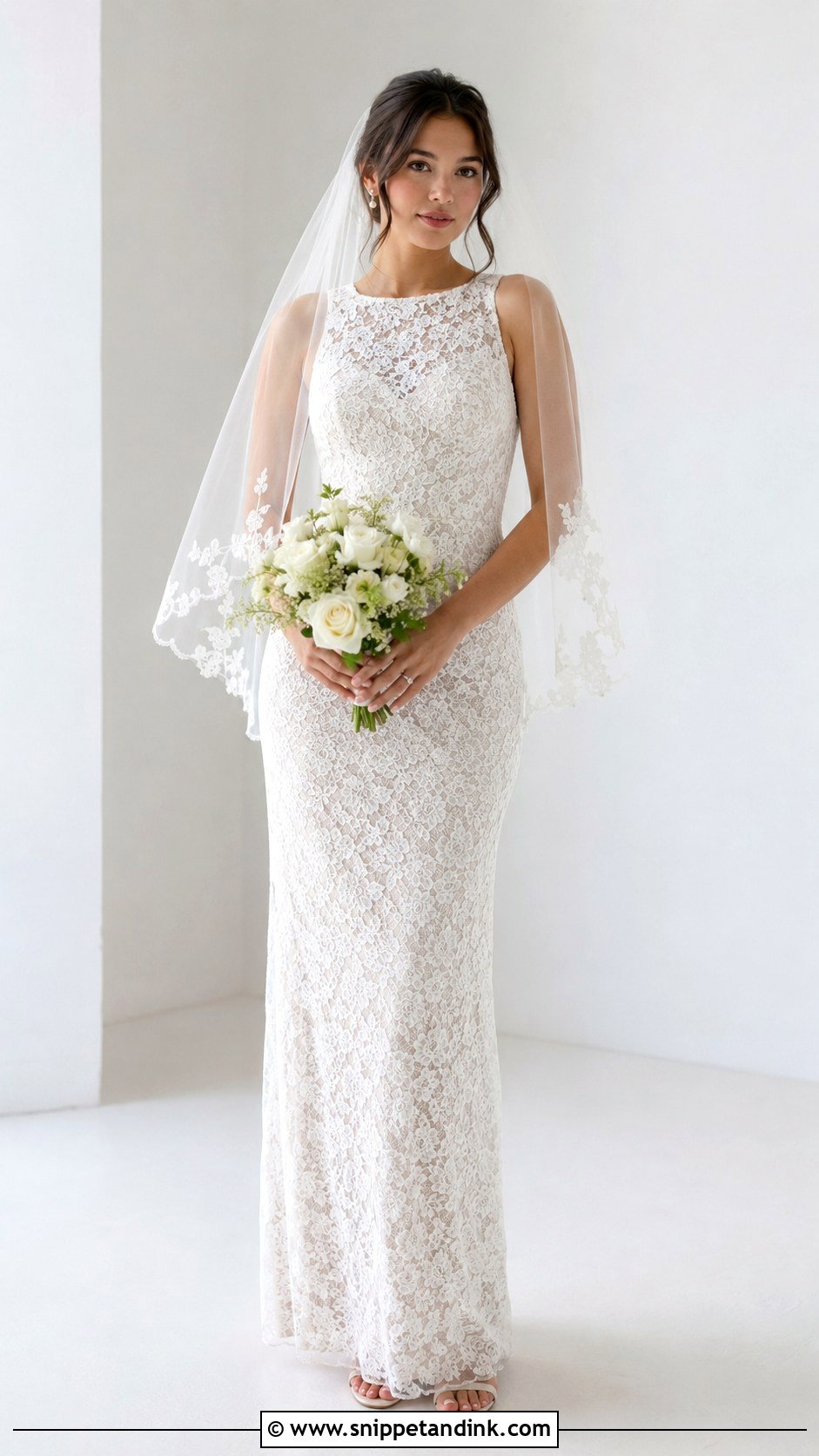
There’s almost nothing to hide behind in a sheath, which is exactly why lace quality matters so much. Hold the fabric up to the light at your appointment. Dense, even lace drapes cleanly, while thin lace shows every lining seam underneath. With a stretch lining this becomes one of the most comfortable gowns to wear all day, and it suits beach ceremonies and small rooms. I style it with barely-there heels, a low bun, pearl studs and a fingertip veil. Long sleeves and a high neck sit well on it because the slim skirt keeps everything in proportion.
5. Full Lace Long Sleeve Wedding Dress
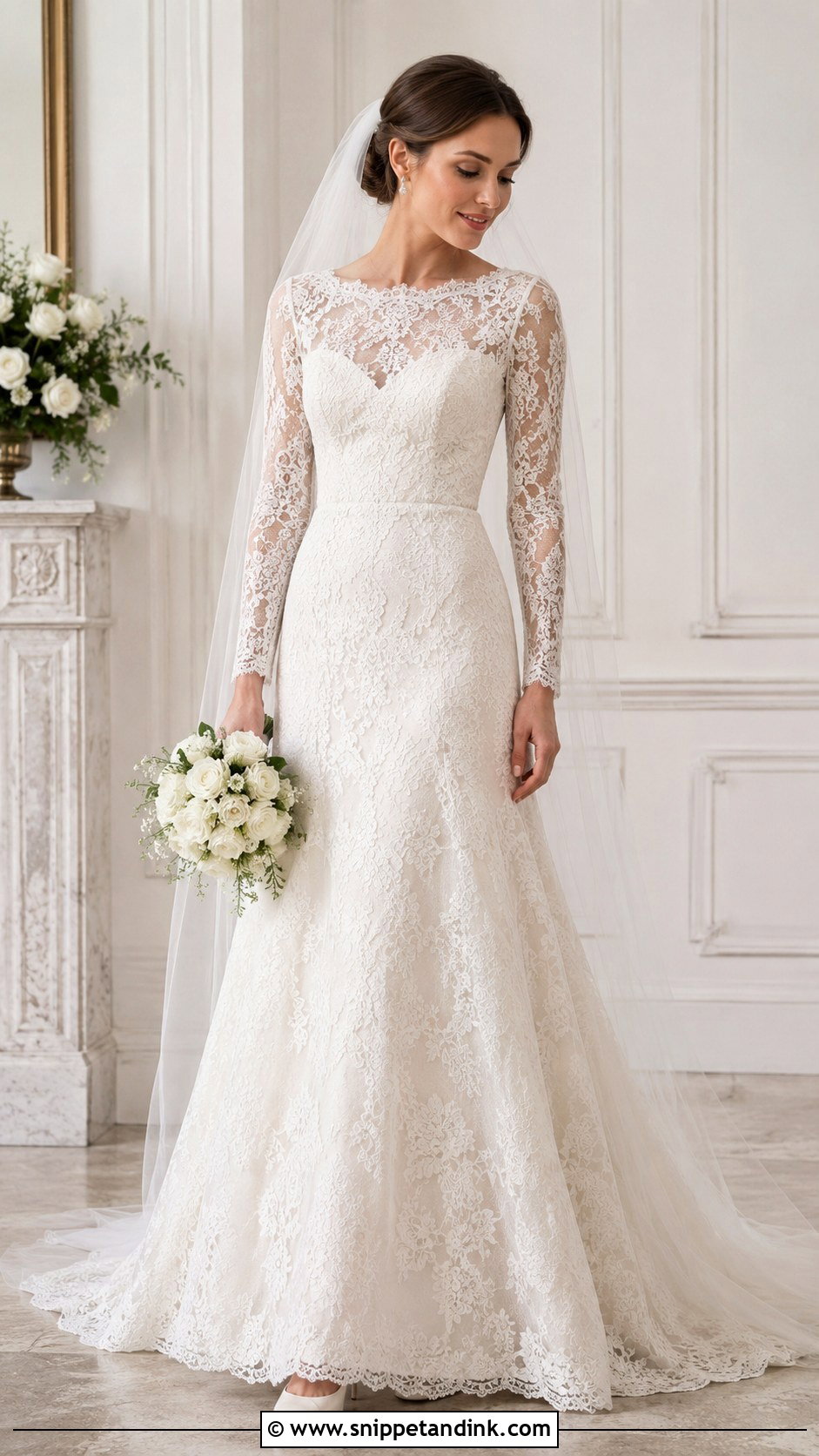
Sleeves are where lace fit problems show up first. Cut too narrow, they stop you lifting your arms to hug anyone, so I ask every bride to raise both arms over her head in the fitting room before we go any further. Slightly sheer lace over the arm looks lighter than you’d expect and can be worn well into warm months. A fitted sleeve pairs best with a bateau or scoop neckline; a soft bishop sleeve or tapered cuff changes the whole feel. Leave bracelets off, since the sleeve is already doing that job.
6. Full Lace Off Shoulder Wedding Dress
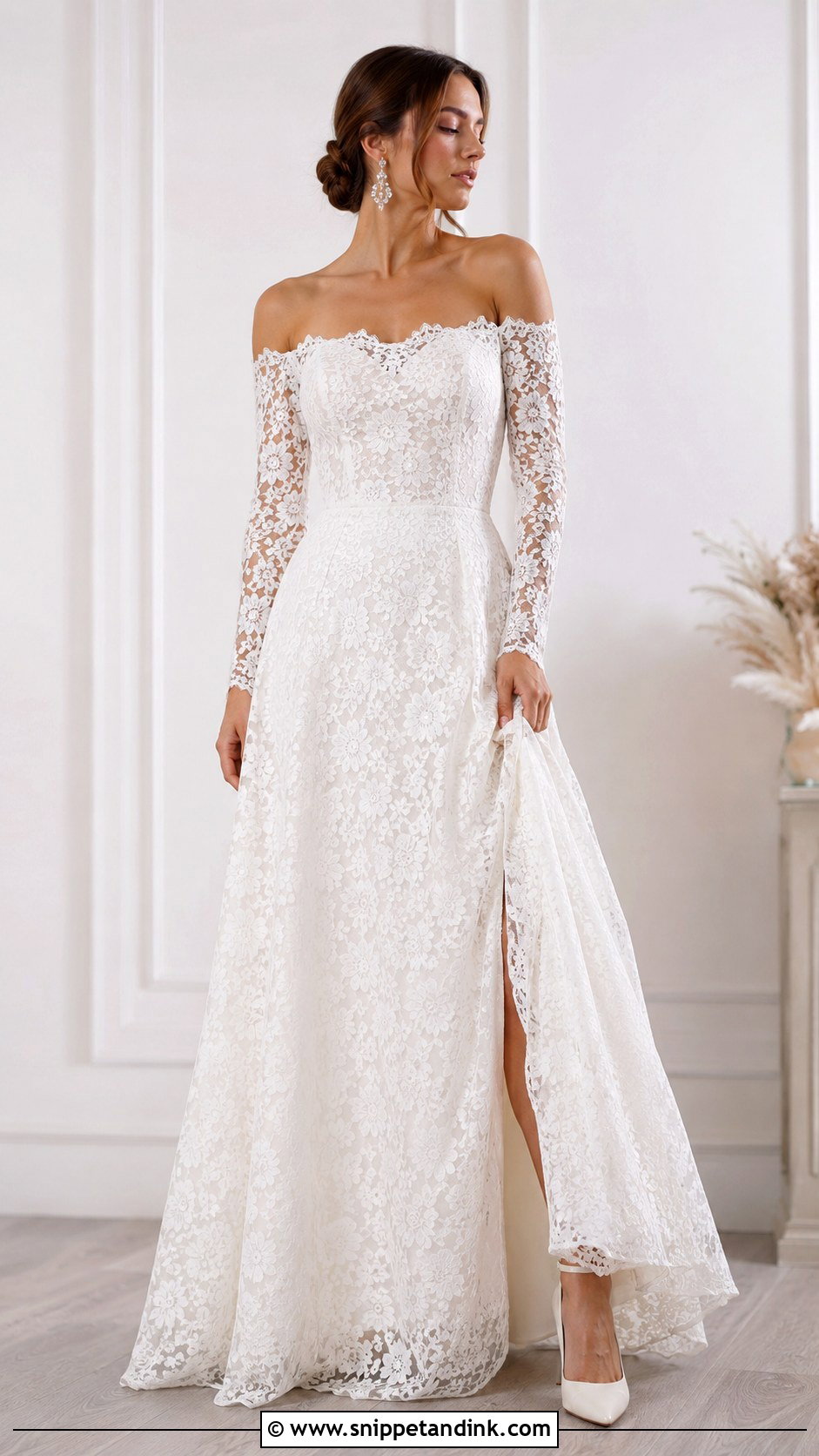
An off-shoulder neckline only works if the bands stay where they’re put, and lace bands love to slide down when you move. Ask whether there’s silicone grip tape or a hidden elastic inside the band, then test it by reaching forward as if you’re signing the register. Get that right and the neckline frames the collarbone neatly on an A-line or a ball gown. A low chignon keeps the shoulders clear. I’d wear statement earrings and leave the necklace at home.
7. Full Lace Strapless Wedding Dress
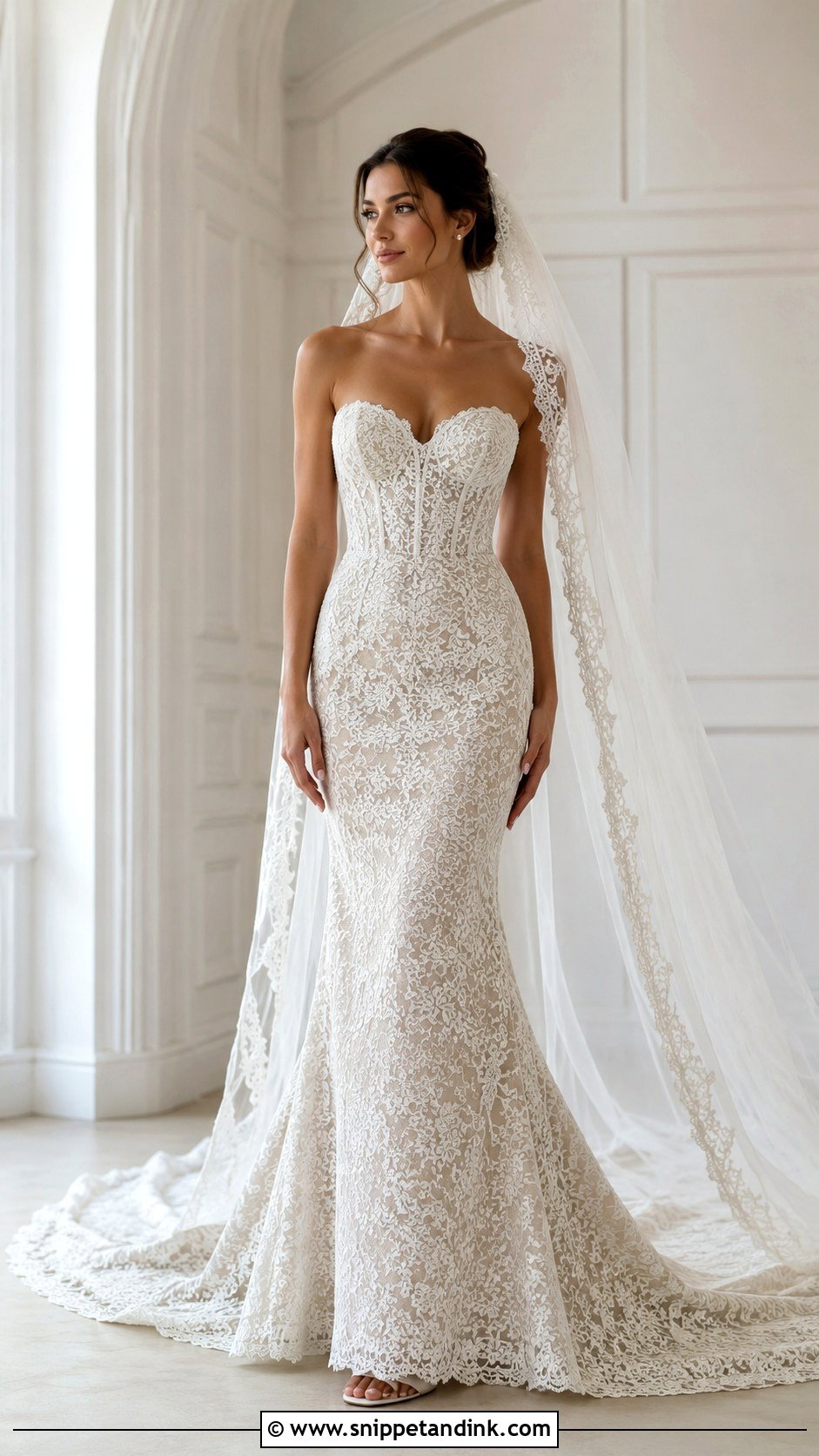
Without straps, every bit of support comes from the inside: boning, a waist stay and a bodice taken in to fit closely. I would never let a bride buy a strapless lace gown that doesn’t feel secure when she bends forward to pick something up. A sweetheart edge reads romantic, a straight-across line more modern. Match the veil to the room: a cathedral length turns this into a church gown, a short one keeps it light. Pearl studs and ivory heels are plenty.
8. Full Lace High Neck Wedding Dress
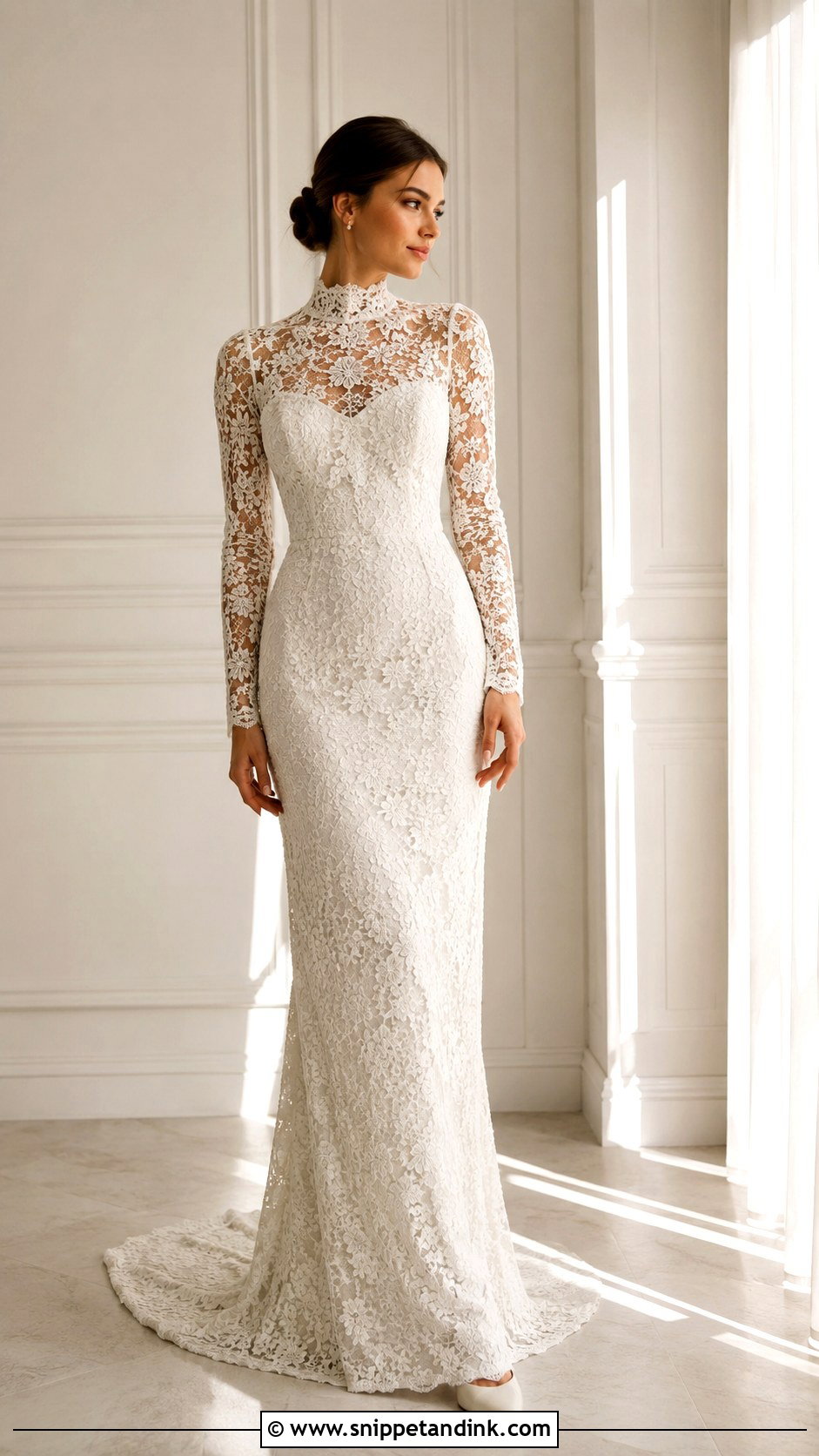
High necklines put the lace right next to your face, so study how the motifs are placed around the collar before you look at anything else. A symmetrical motif centered at the throat looks deliberate. A pattern chopped off at random looks cheap, however good the rest of the dress is. Sheer lace at the neck over a lined bodice stops it feeling heavy. Pull your hair back into a sleek bun or low ponytail and skip the necklace. A slim skirt reads modern; an A-line reads classic.
9. Full Lace V Neck Wedding Dress
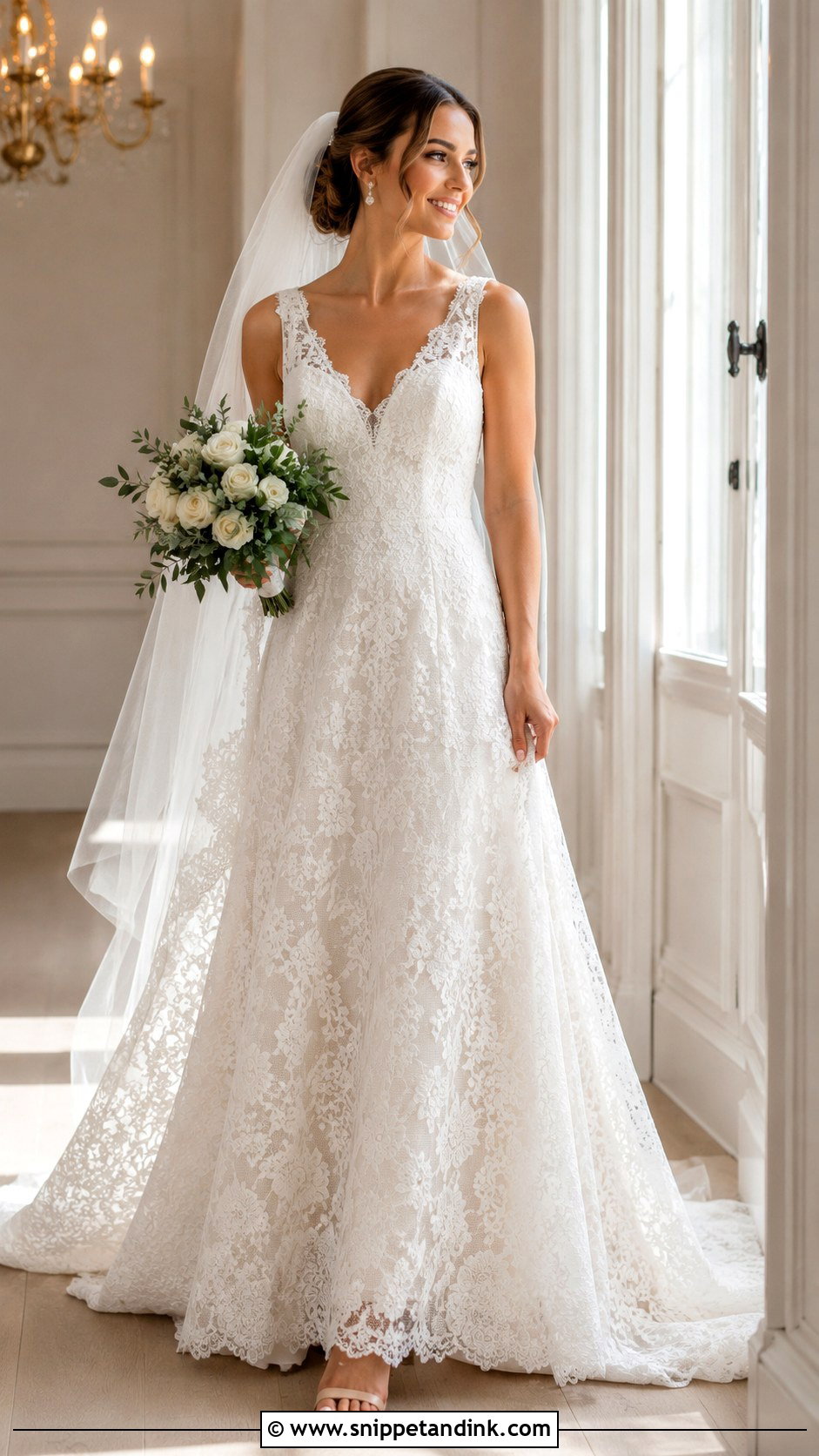
A V-neck draws the eye down and lengthens the torso, and a lace edge softens the point compared with plain crepe. The detail I check is whether the lace along the neckline has been stabilized. If it hasn’t, the edges start curling outward after a few hours, and a dressmaker may need to add a fine stay tape along the inside. A shallow V suits a refined look, while a deeper one will need fashion tape. Only wear a pendant if the neckline edge is plain.
10. Full Lace Square Neck Wedding Dress
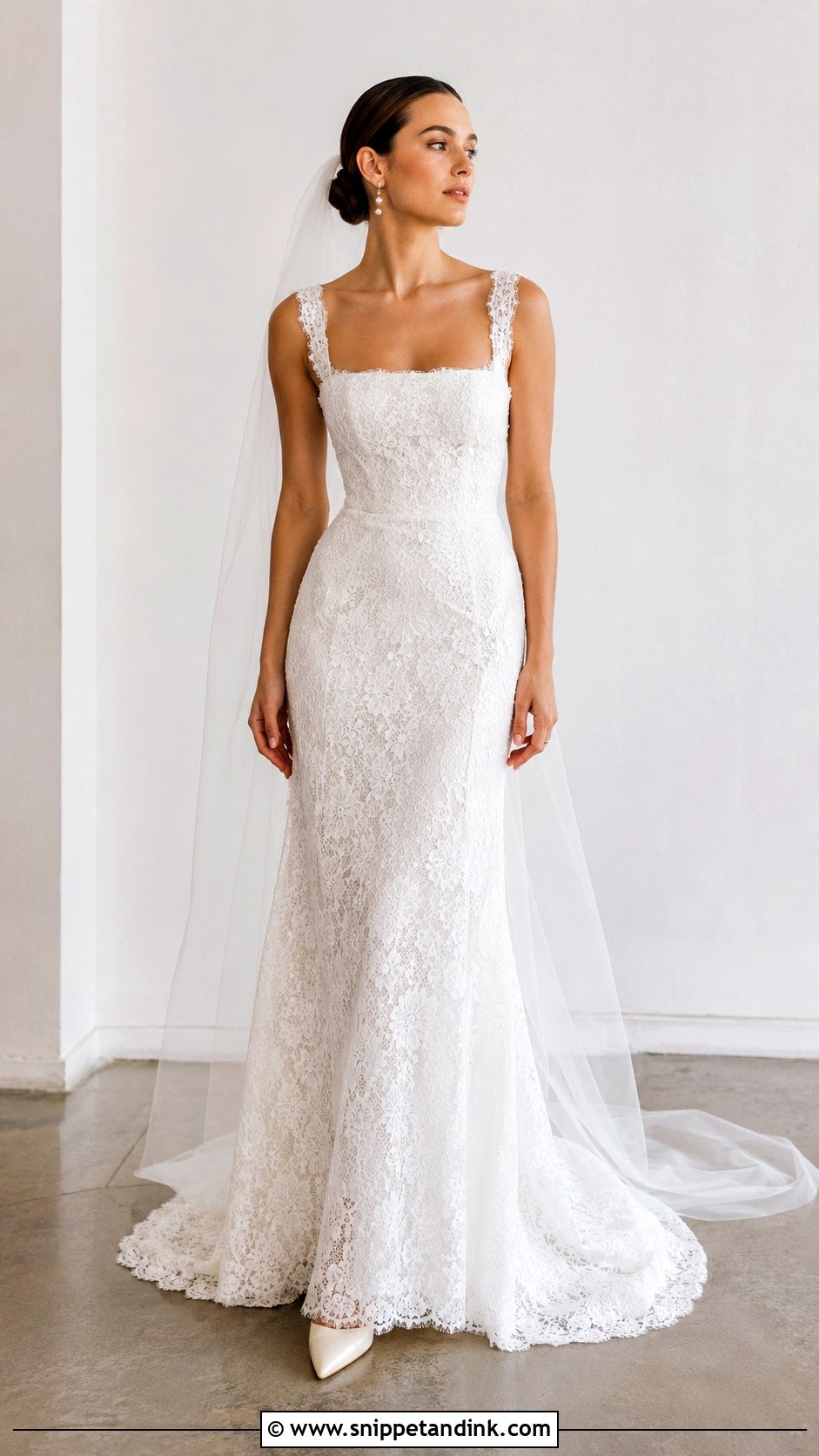
Square necklines give delicate lace a firm frame, and they sit more securely than a sweetheart does. If you hate tugging a bodice up all evening, that alone is a good reason to choose one. Wide straps or cap sleeves suit the straight line, and a smooth updo shows it off. When the lace is busy, choose a veil with a plain cut edge so the two don’t compete. Pearl hoops and pointed heels finish it without fuss.
11. Full Lace Sweetheart Wedding Dress
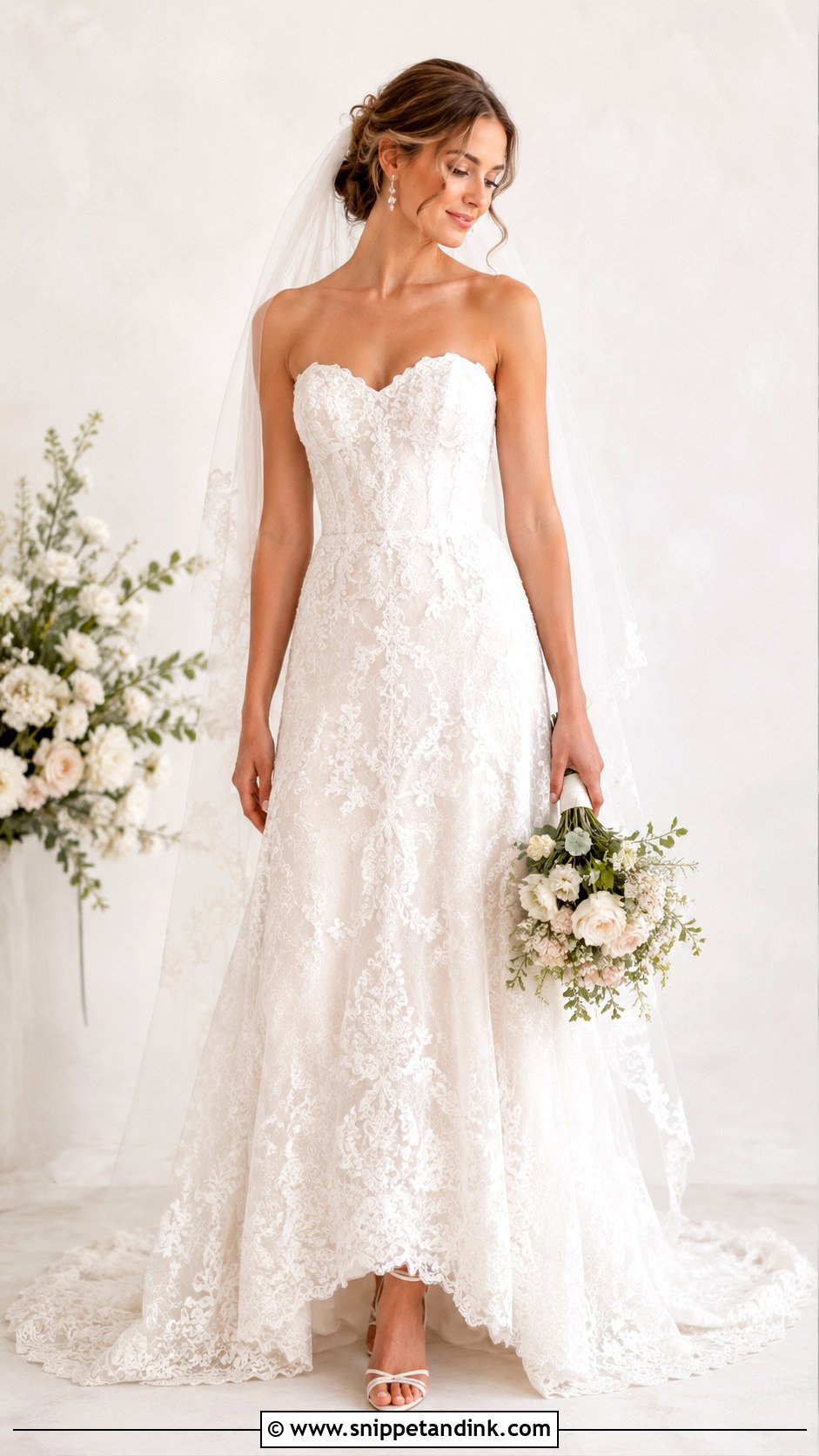
The curve of a sweetheart neckline is only as good as the cups inside it. I look for built-in cups that match your actual size rather than generic padding, because a gap at the neckline shows in every seated photo. On a ball gown it feels classic; on a mermaid, more glamorous. Be careful pairing it with a lace-trimmed veil, since two different lace patterns close together rarely look intentional. A quieter fix is asking your seamstress to edge the veil with offcuts from the gown’s own hem.
12. Full Lace Corset Wedding Dress
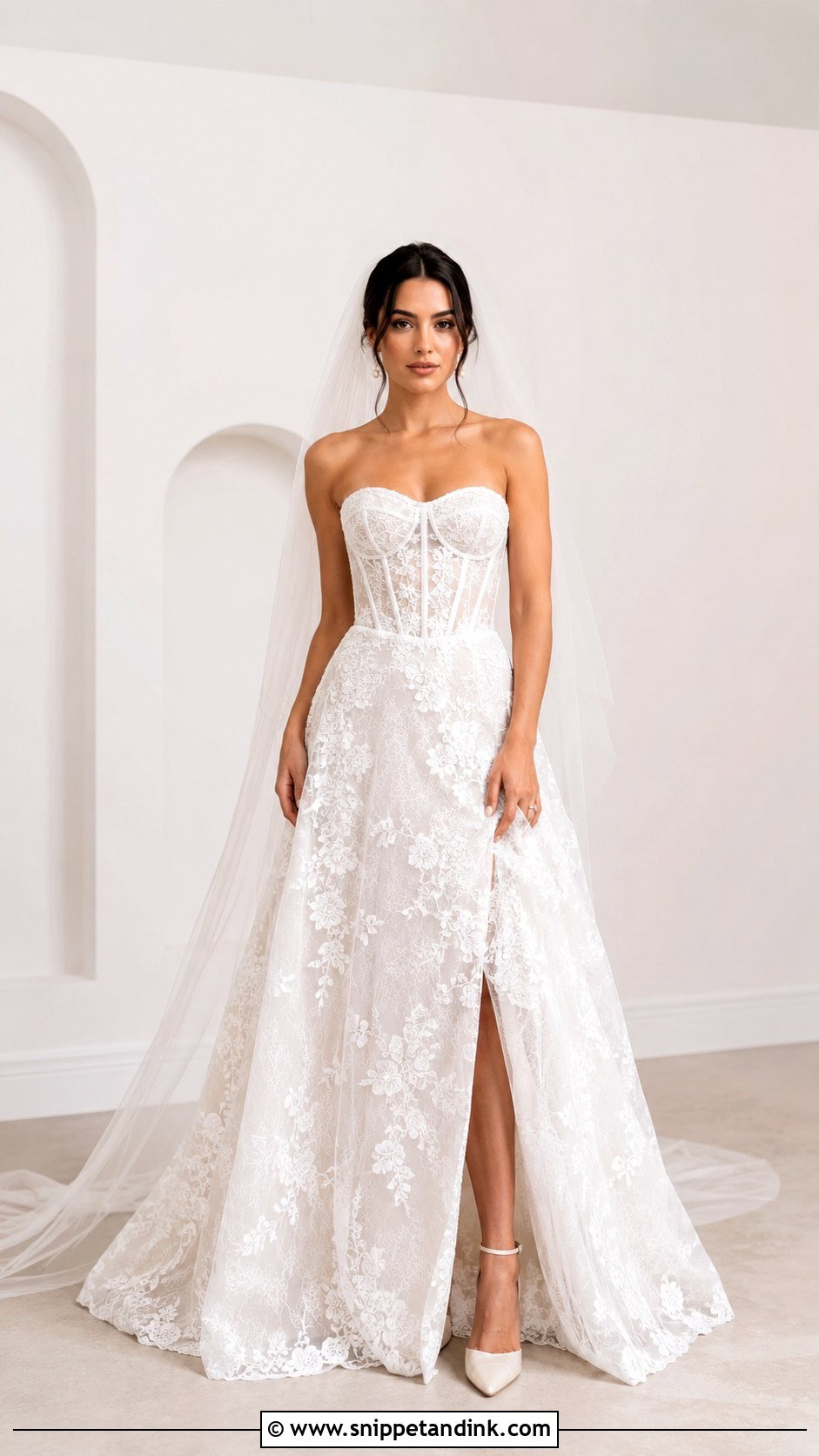
Corset bodices are meant to be snug, but there’s a real difference between secure and restrictive, and you’ll feel it at dinner. When I fit one, I ask the bride to take a full breath and then sit down; if either feels hard, it needs letting out. Visible boning under sheer lace looks fashion-led, while boning hidden beneath floral lace stays classic. Lace-up backs give the most room for small weight changes in the final weeks. It sits best over an A-line, ball gown or fit-and-flare skirt.
13. Full Lace Fit And Flare Wedding Dress
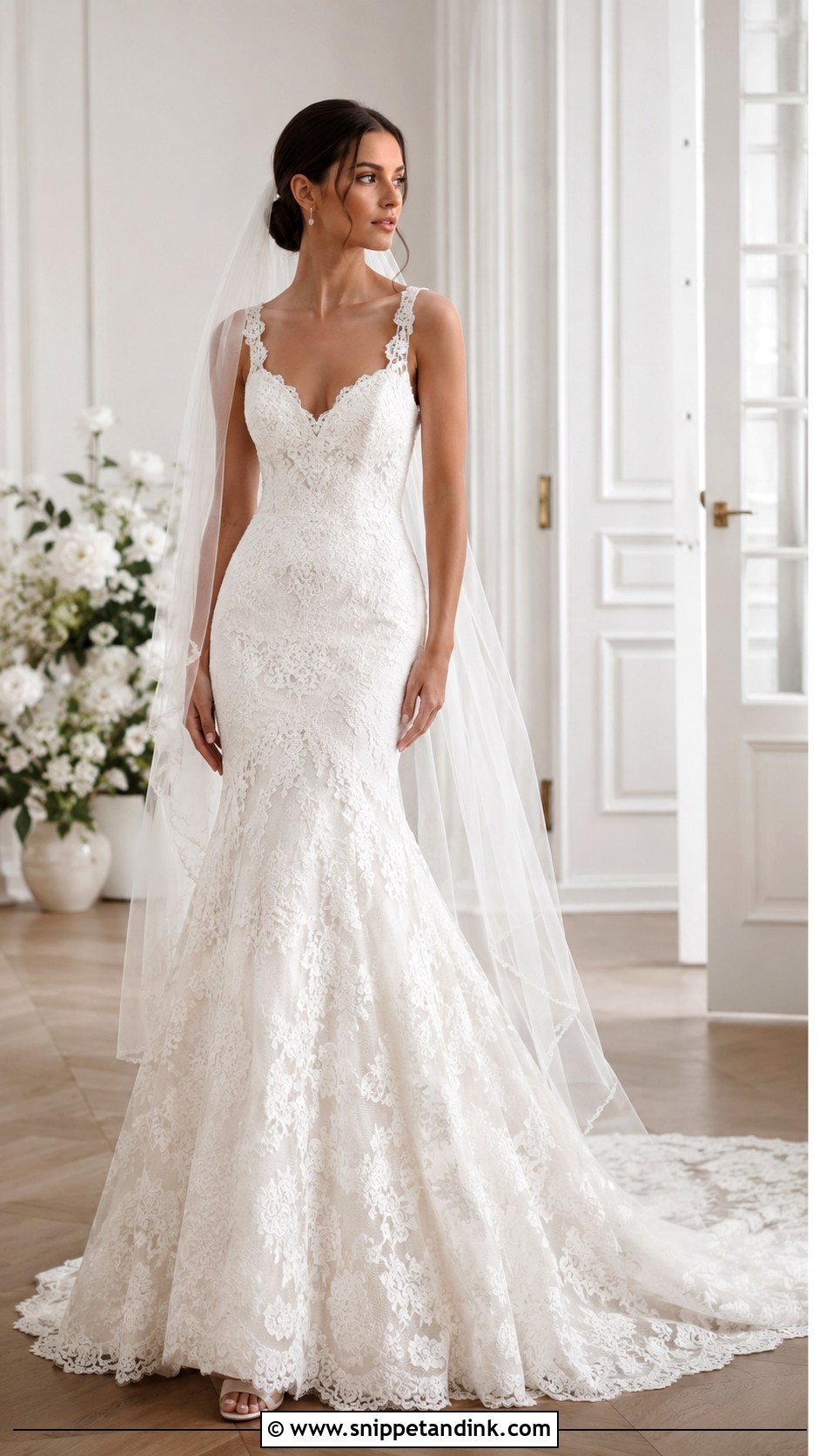
Think of this as the mermaid’s easier cousin. It hugs the hips and opens around mid-thigh rather than at the knee, so you can walk and climb stairs without shuffling. How the lace is laid out around the waist matters more than the pattern itself: pieces joined so the motifs flow across the hip look far smoother than straight horizontal seams. Medium heels are the sensible choice, since you’ll be standing more than you think. A plain veil and small earrings keep it tidy.
14. Full Lace Boho Wedding Dress
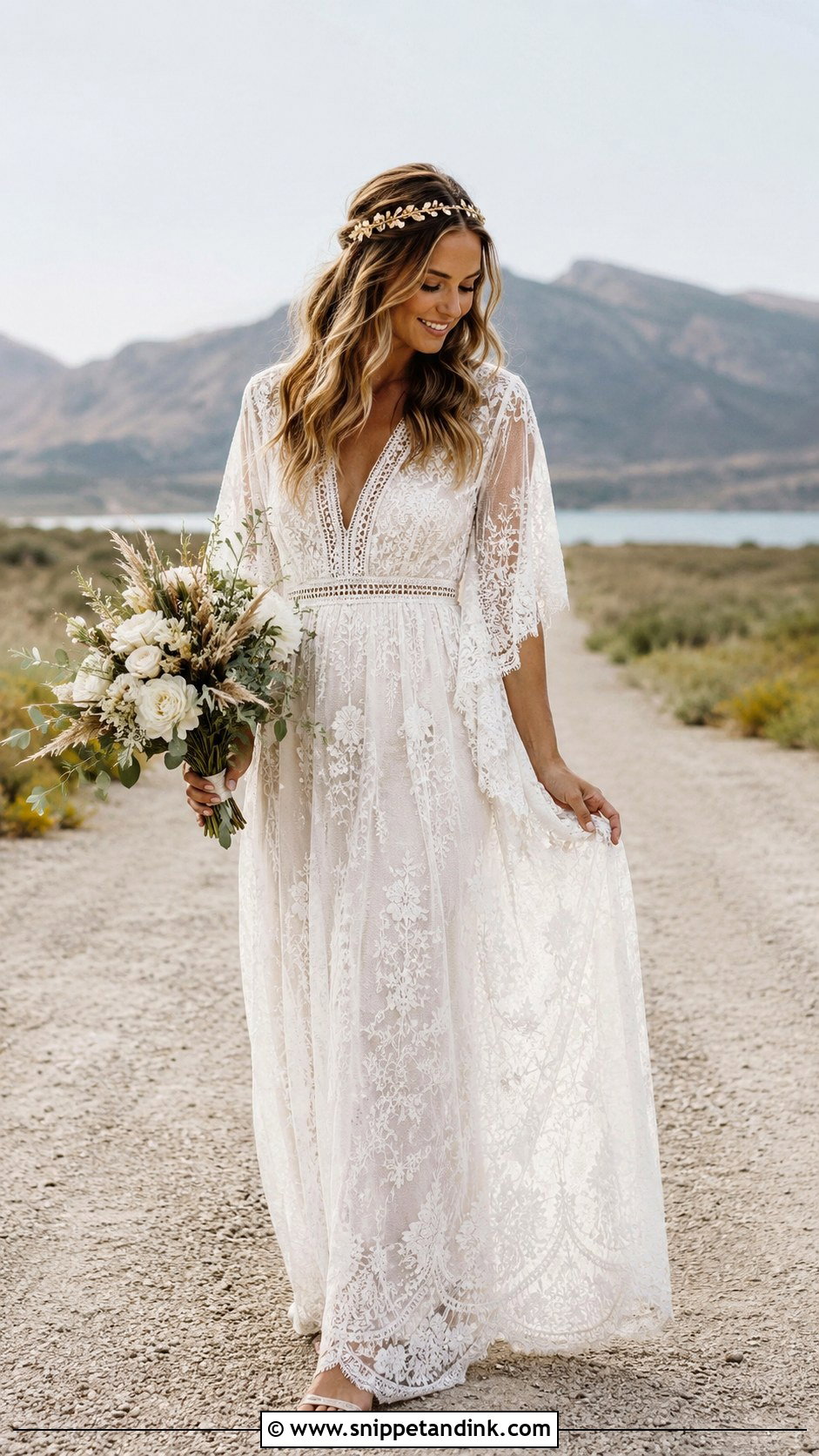
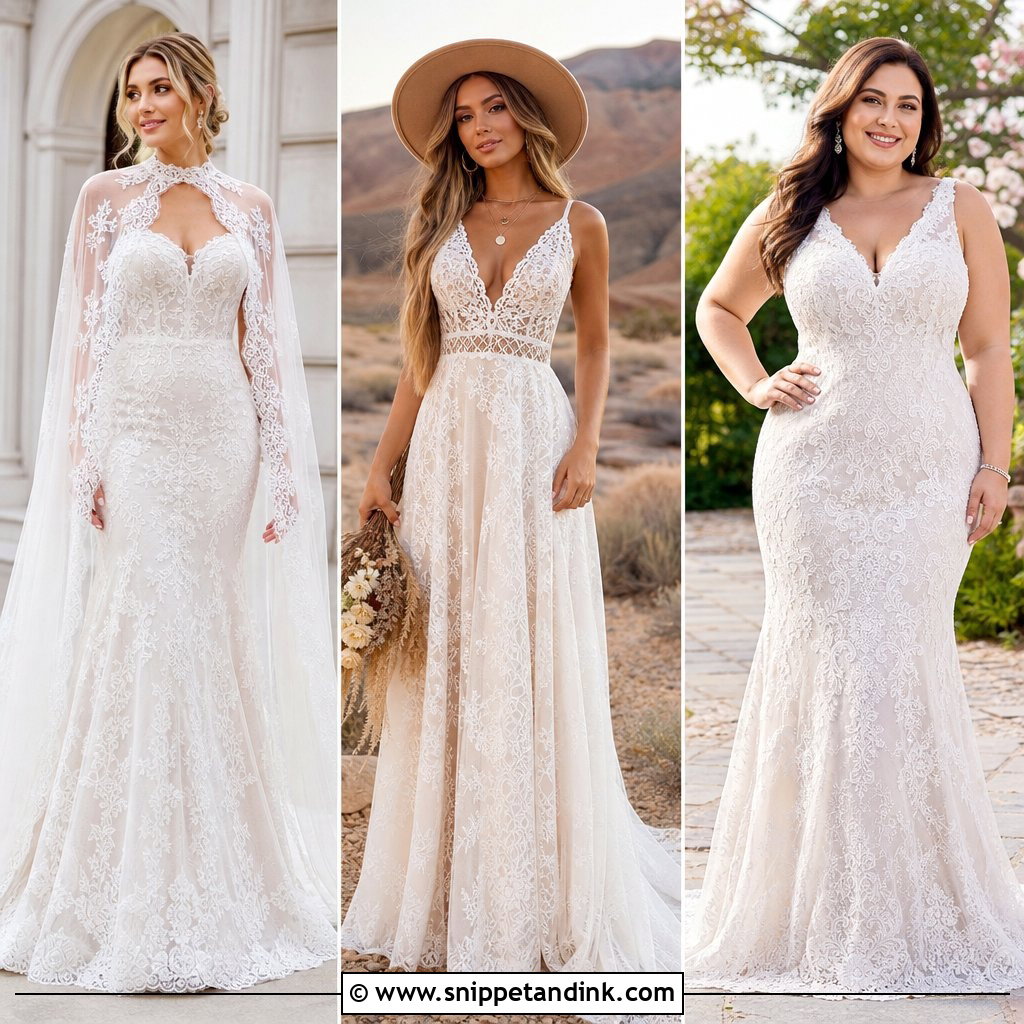
Boho lace tends to be softer and more open, often crochet-style or guipure, and it breathes well outdoors. Bell sleeves, flutter sleeves, open backs and loose A-line skirts all suit it. Ask for a champagne or nude lining if pure ivory looks stark against your skin. One honest warning: open guipure catches on tree bark, rough stone and Velcro, so watch where you lean at an outdoor venue. Loose waves, block heels and a thin hair vine are all it needs.

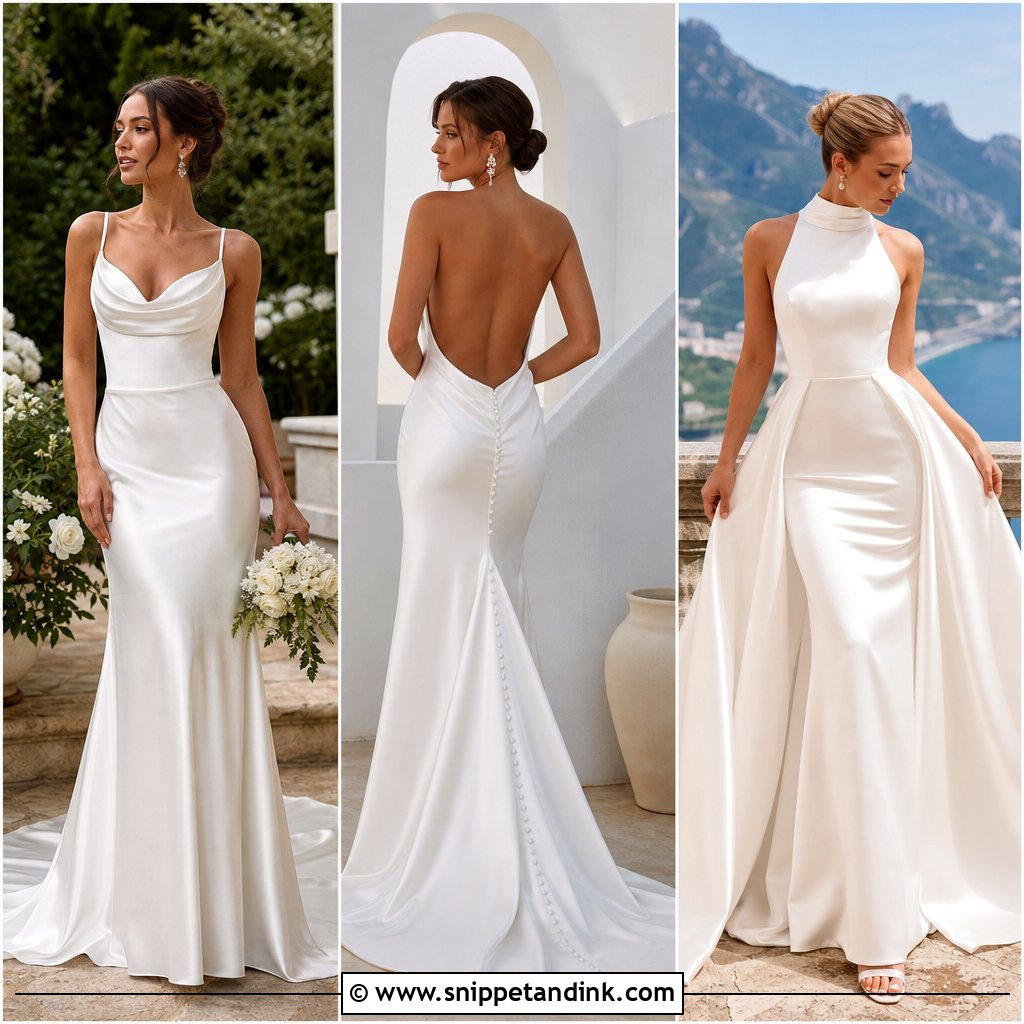
15. Full Lace Vintage Wedding Dress
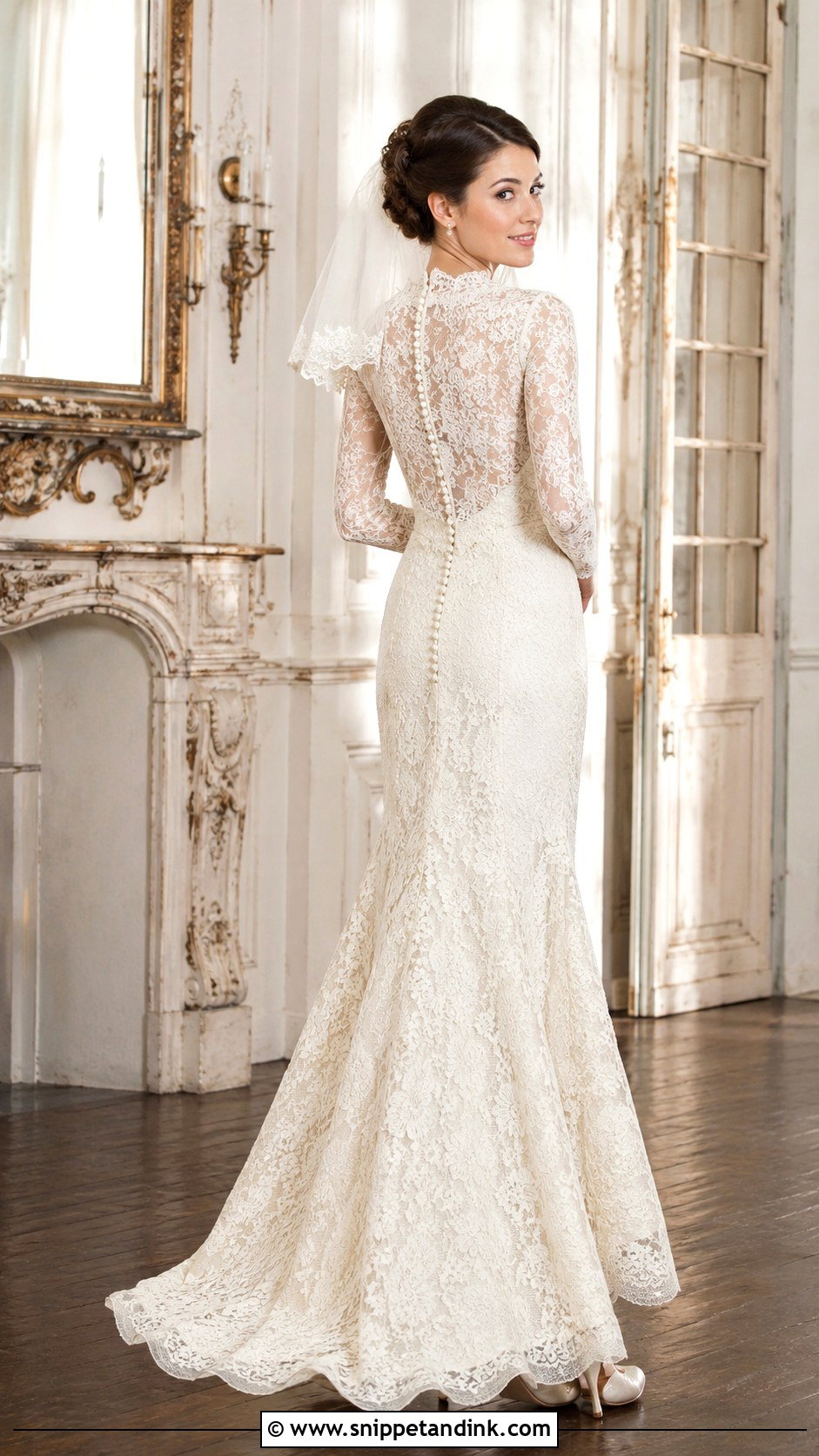
A full lace vintage wedding dress works best when you pick one decade and commit to it. A slim 1920s line, a full 1950s skirt and a long-sleeved 1970s column all use lace differently, and mixing cues from all three starts to look like costume. Scalloped edges, covered buttons and high necks are the details that carry the period. If you’re buying a genuinely old gown, check the lace at the underarms and hem first, because that’s where aged lace weakens and yellows. Modern shoes and clean makeup keep it from feeling like fancy dress, and a birdcage, Juliet cap or fingertip veil can finish it depending on the era.
16. Full Lace Backless Wedding Dress
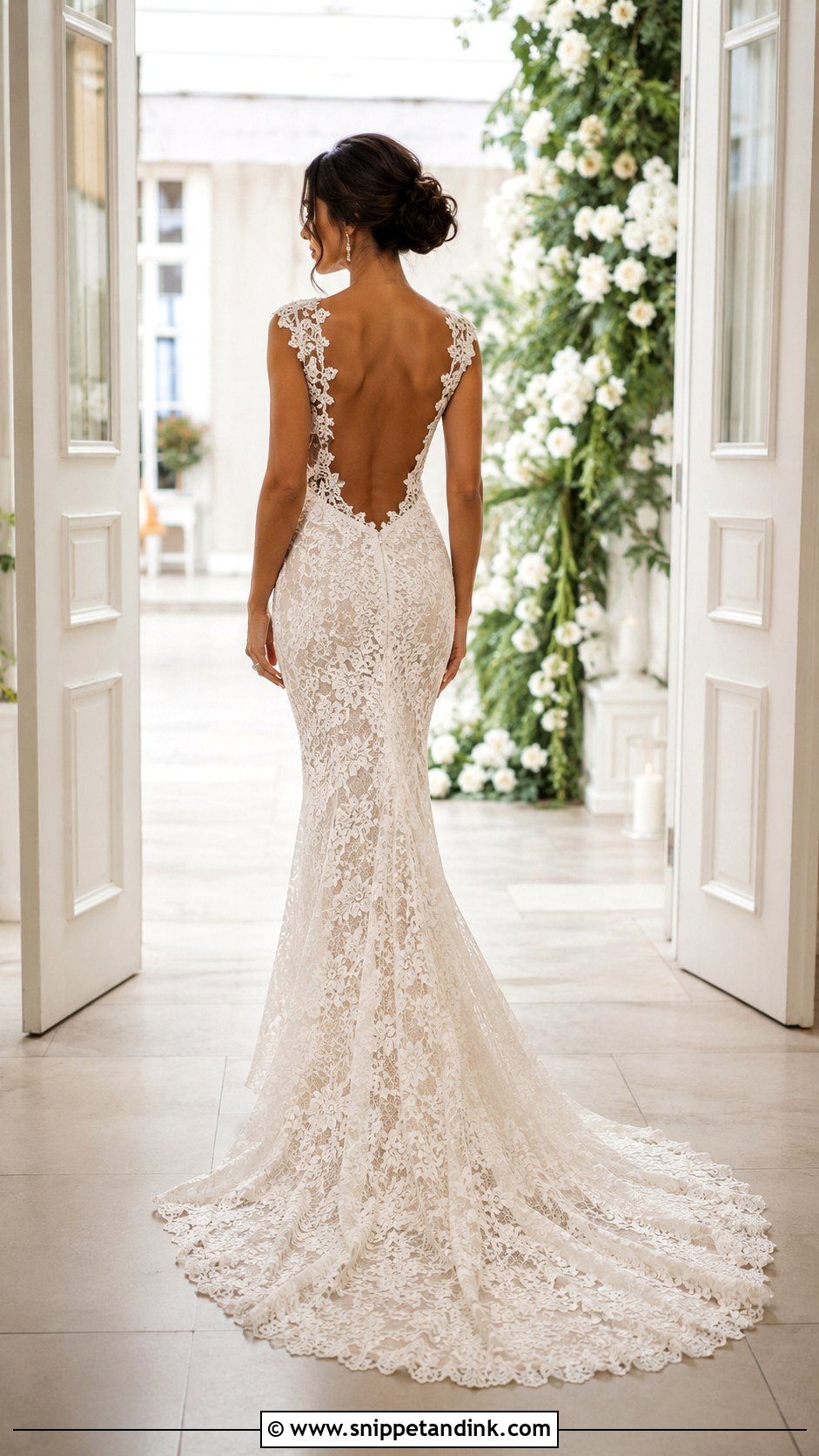
An open back changes what you can wear underneath, so raise the undergarment question at your first alteration appointment, not your last. Most seamstresses can sew cups straight into the bodice so you need no bra at all. Scalloped lace along the edge of the opening looks softer than a plain cut edge. Wear your hair up or swept to one side and keep the veil sheer, and let earrings do the work a necklace would only interrupt.
17. Full Lace Illusion Wedding Dress
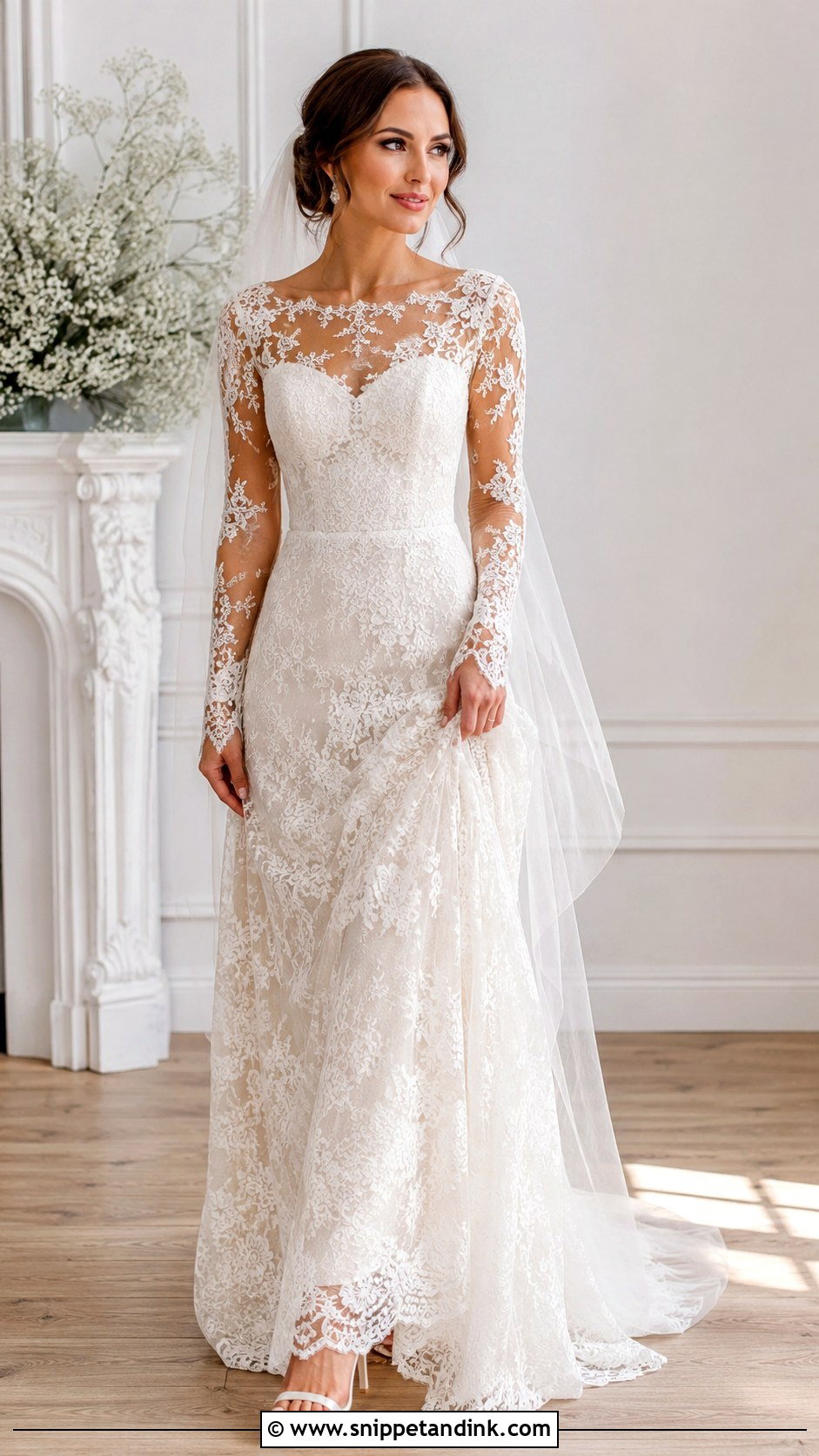
Illusion panels are fine mesh, usually tulle, with lace appliqués stitched on so the lace appears to float on the skin. The mesh tone is the whole trick. I take a few swatches to a window and hold them against the bride’s chest and arm, because mesh a shade too pink or too pale shows up as an obvious patch in photos. Matched well, it gives coverage at the neckline, sleeves or back without adding weight. Keep makeup soft and choose a veil that won’t sit over the lace work.
18. Full Lace Plus Size Wedding Dress
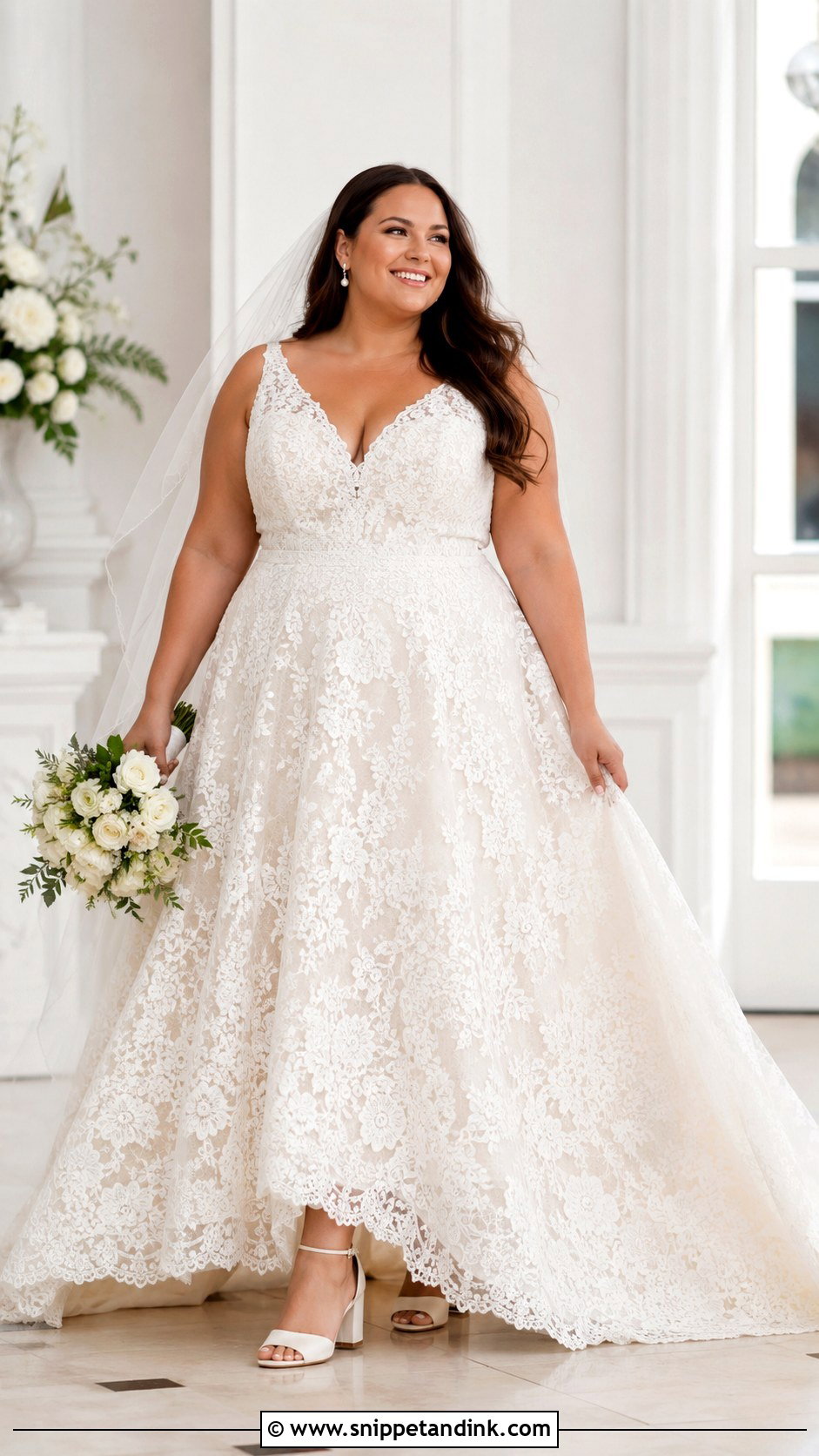
Fit matters more than the number on the label, and with lace that means checking the bodice structure and lining before anything else. I look for a firm inner corset or power-mesh lining, because lace on its own stretches and can show undergarment lines. A-line skirts define the waist and move easily; fit-and-flare shapes show off curves. V-necks, off-shoulder cuts and long lace sleeves all look right when they’re tailored to you rather than to the sample size. Pick a veil in proportion to the dress, and shoes you can genuinely stand in for hours.
19. Full Lace Petite Wedding Dress
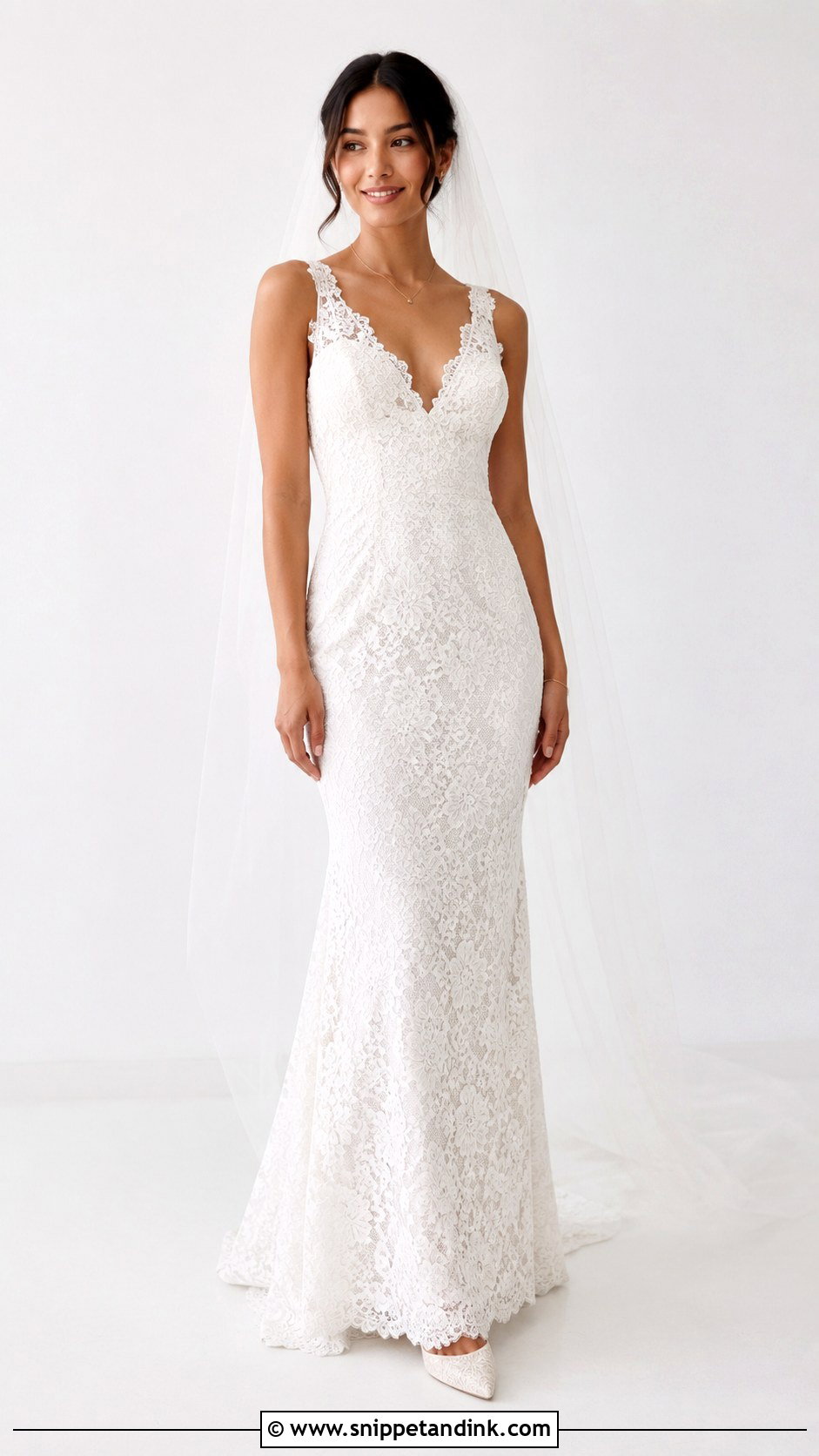
Scale is everything on a smaller frame. Big, open motifs designed for a long gown can look oversized on a short bride, so I steer petite clients toward finer patterns with small repeats. A sheath, A-line or fit-and-flare all work, especially with a V-neck or a slightly raised waist to add length. Keep any train light, because a heavy one drags the whole dress backward. Lace suits petite brides perfectly well once the pattern size matches the body wearing it.

20. Full Lace Beach Wedding Dress
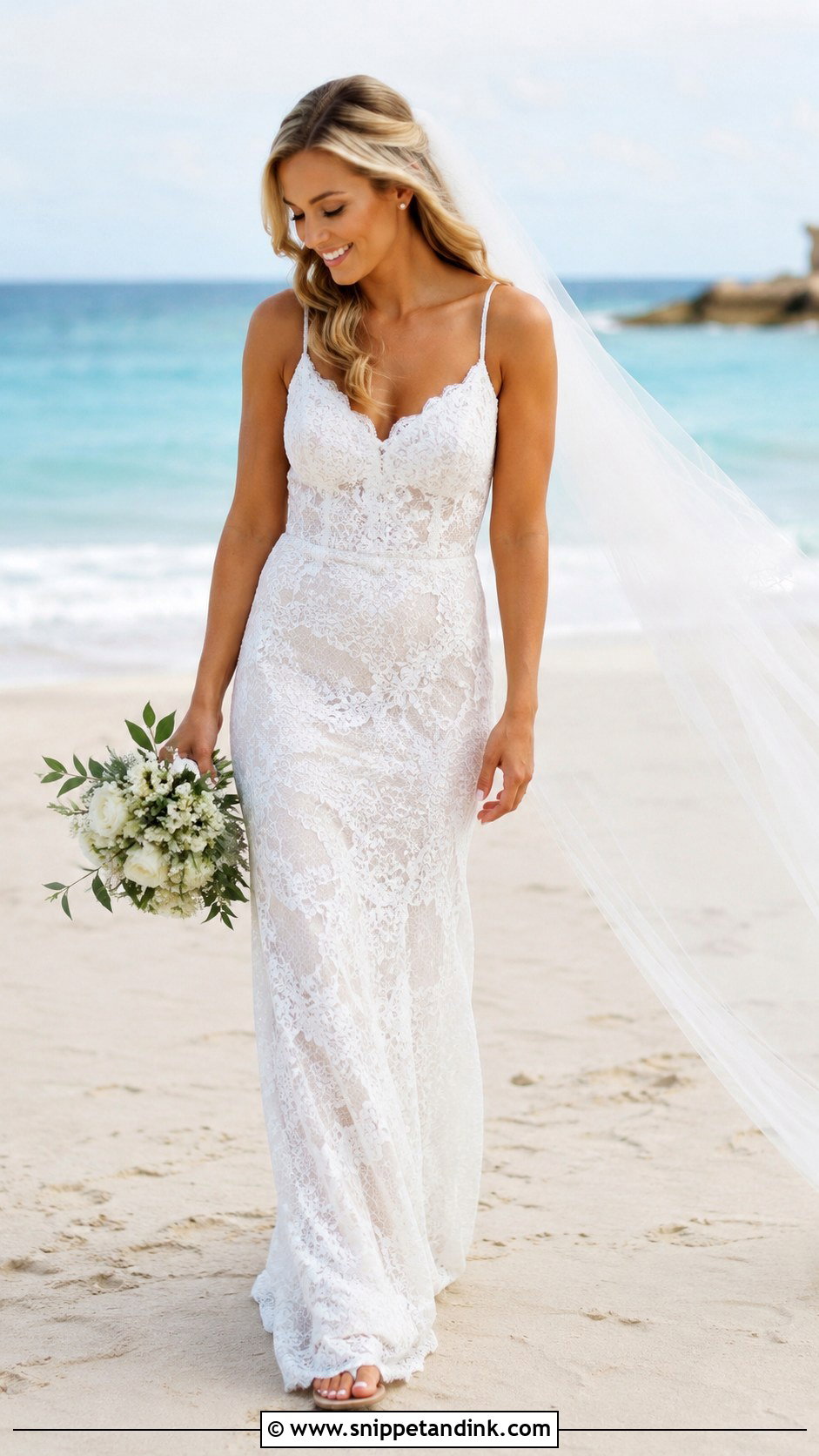
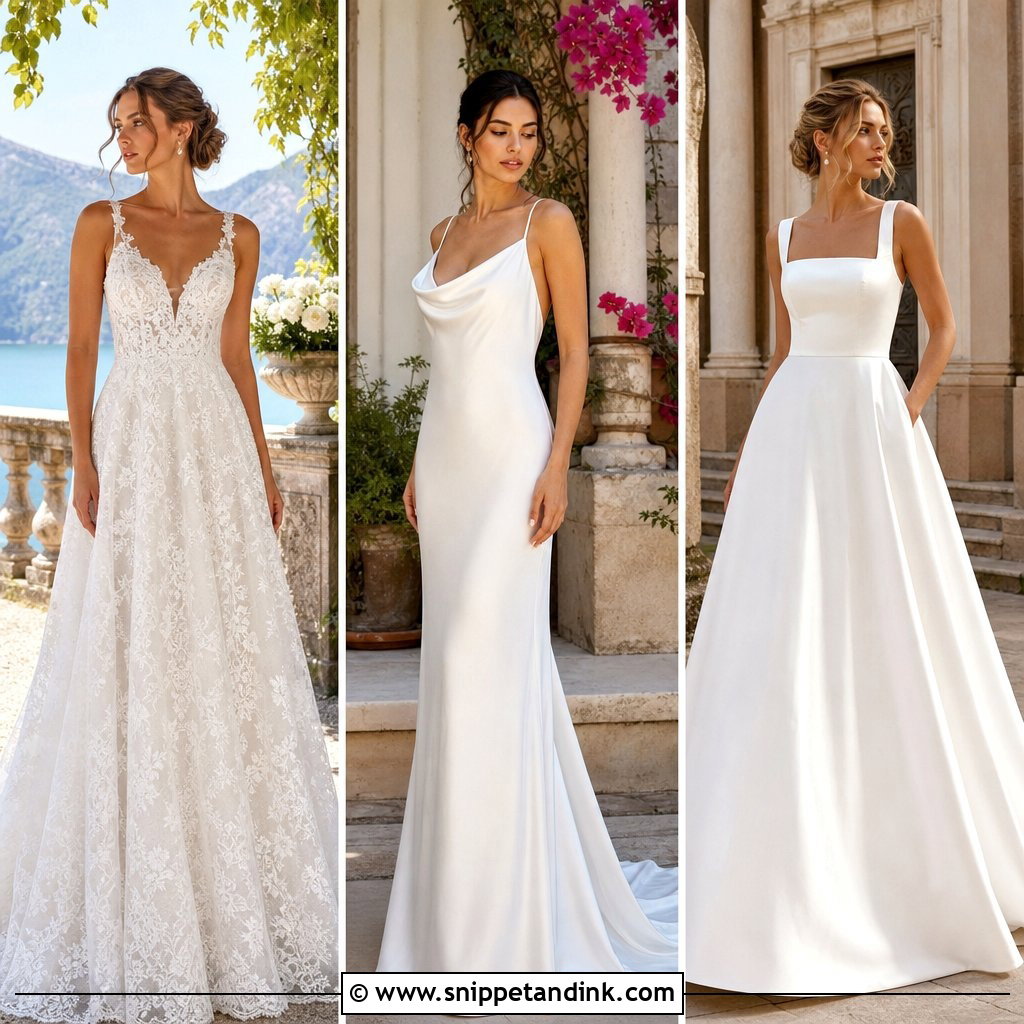
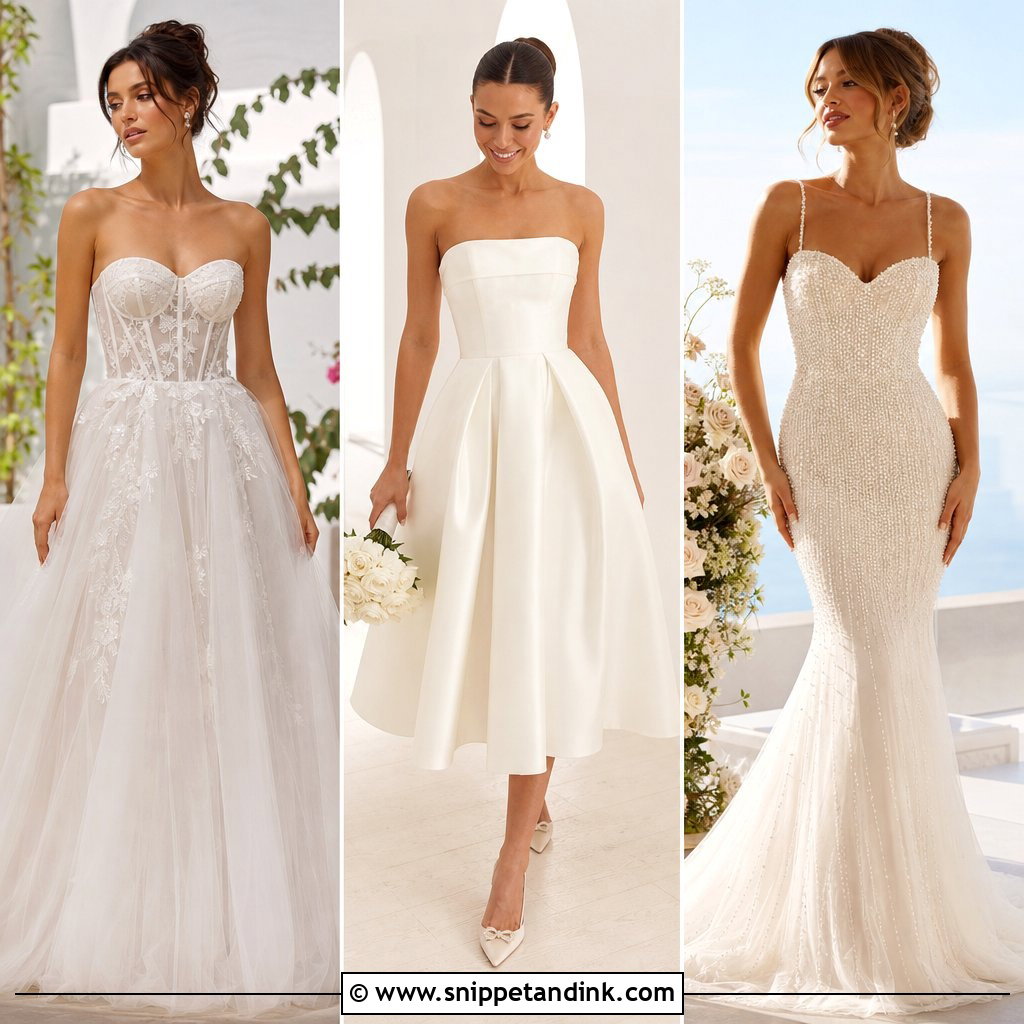
Sand and salt are hard on lace. Fine lace snags on shells and grit, and a long train becomes a broom within minutes, so I’d go short or train-free for a shoreline ceremony. Soft lace over a single light lining stays cool; leave the petticoats behind. Sheath, A-line and boho shapes all suit the setting. Flat sandals or low block heels won’t sink, and a hair comb holds far better in wind than a long veil does.
21. Full Lace Garden Wedding Dress
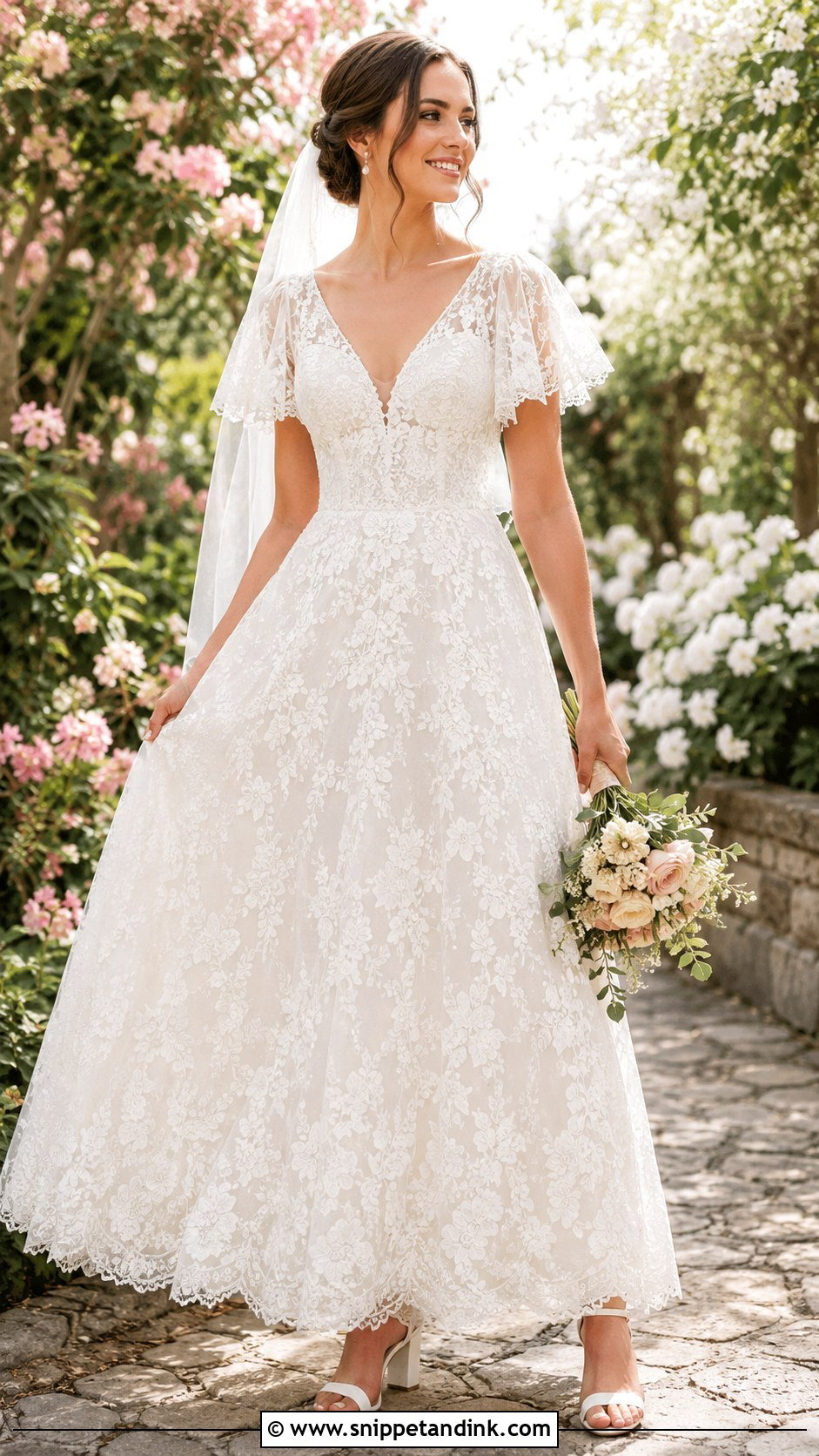
Botanical lace, with leaves and vines rather than full roses, looks at home in a garden, and a textured pattern disguises small marks near the hem better than smooth satin. A soft A-line skirt with flutter sleeves or an off-shoulder neckline keeps the dress light. Heels and lawns don’t mix, so think block heels, wedges or dressy flats. An airy veil with subtle lace trim moves nicely outdoors, and pearl earrings are enough. I’d keep this one for spring through early fall.
22. Full Lace Winter Wedding Dress
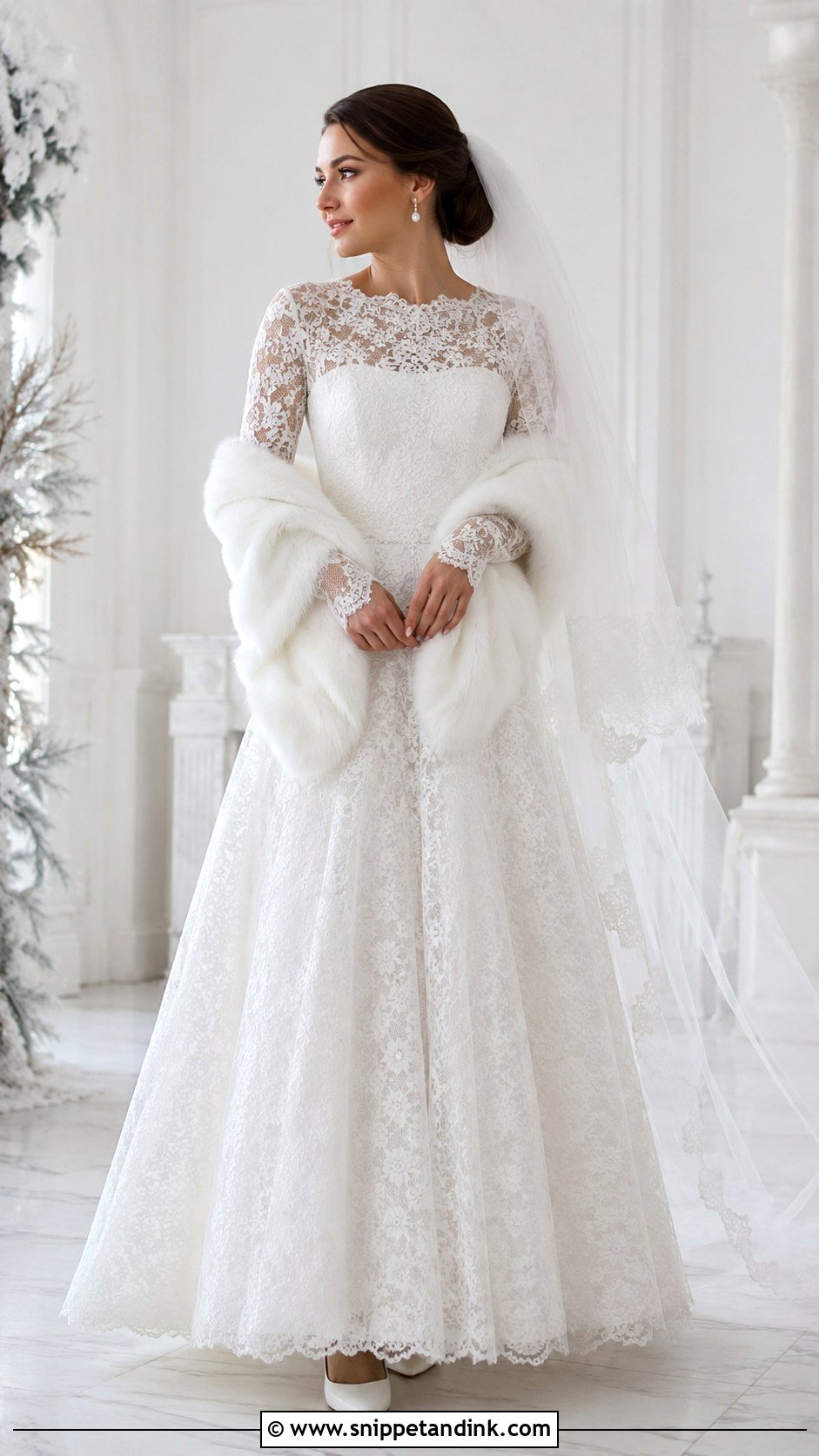
Heavier lace suits the cold months. It sits more substantially over a lined bodice and holds its own against dark wood and candlelight, where fine lace can look thin. Long sleeves and higher necklines help too. Ivory lace over a champagne or blush lining warms up pale winter skin, which flat ivory can wash out. For outdoor photos, a faux fur wrap or tailored cape saves you from shivering through the portraits, and closed-toe heels keep it formal.
23. Full Lace Summer Wedding Dress
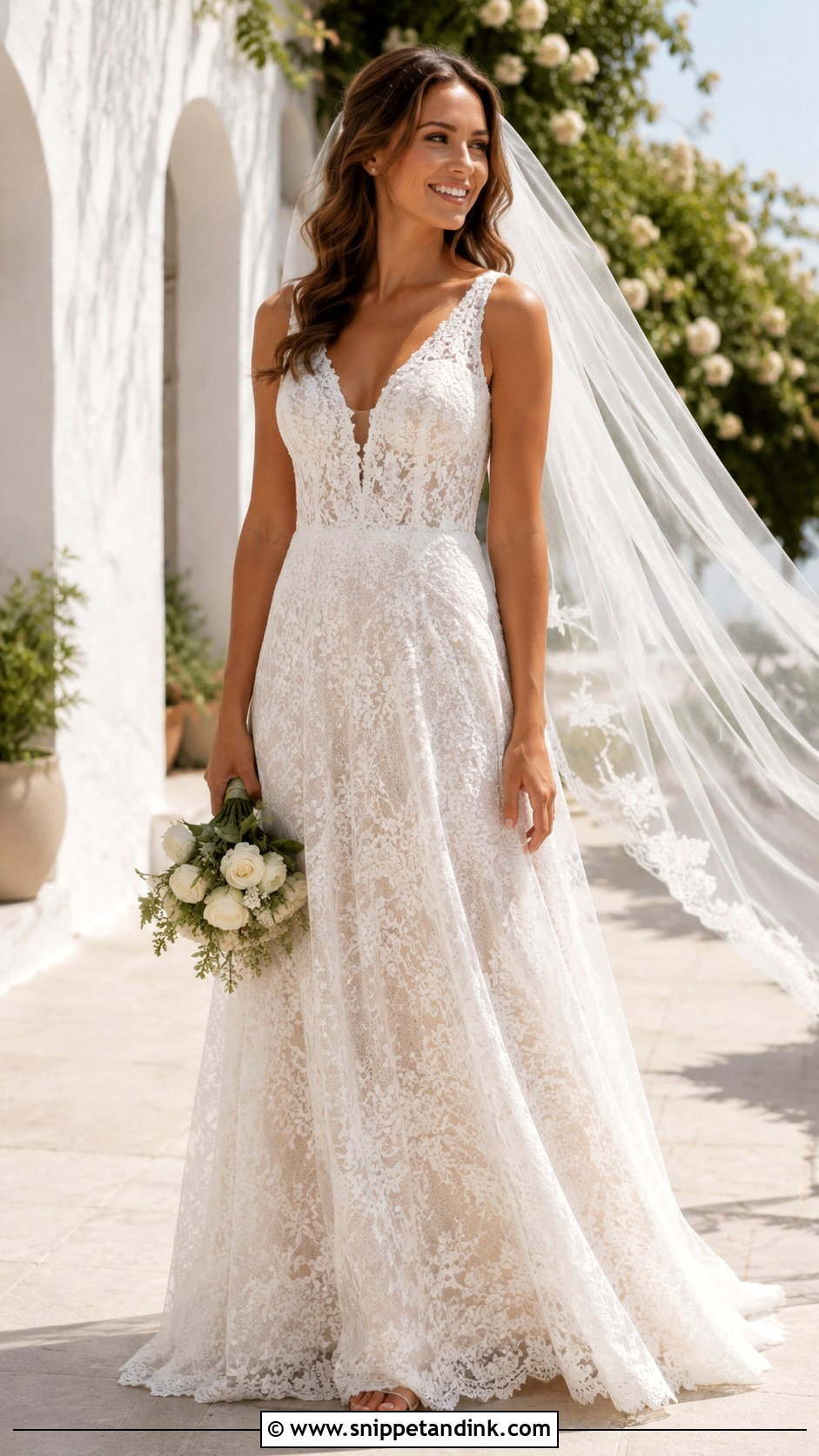
Summer heat is mostly a lining problem. The lace itself usually breathes; it’s polyester linings and stacked petticoats that trap warmth, so ask whether the lining can be swapped for a lighter one or cut back to a single layer. Strapless, spaghetti strap, V-neck and sleeveless A-lines all let air move. If you want sleeves, sheer cap or flutter sleeves are far cooler than long ones. A short train and open-toe heels make the afternoon easier.
24. Full Lace Reception Wedding Dress
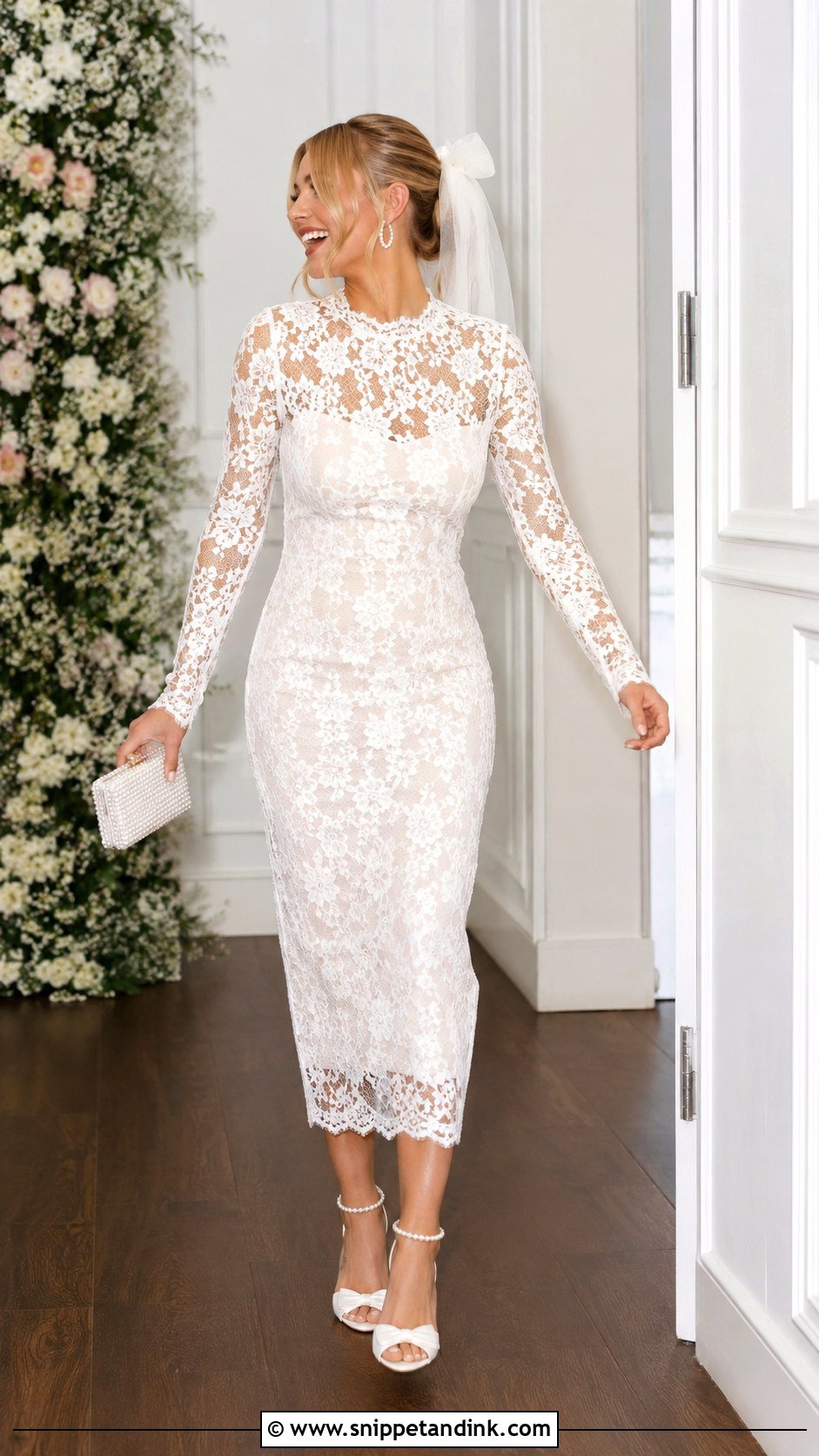
A second dress makes sense when your main gown has a long train or a heavy skirt you won’t want to dance in. A lace midi, a sleeved mini or a simple sheath gown keeps the lace running through both looks. Rehearse the change itself: hooks, zips and tiny buttons on lace take longer than anyone expects, so have one practiced helper standing by. Sparkly flats or embellished sandals work for dancing, and a hair bow or pearl hoops keep it playful.
25. Full Lace Civil Wedding Dress
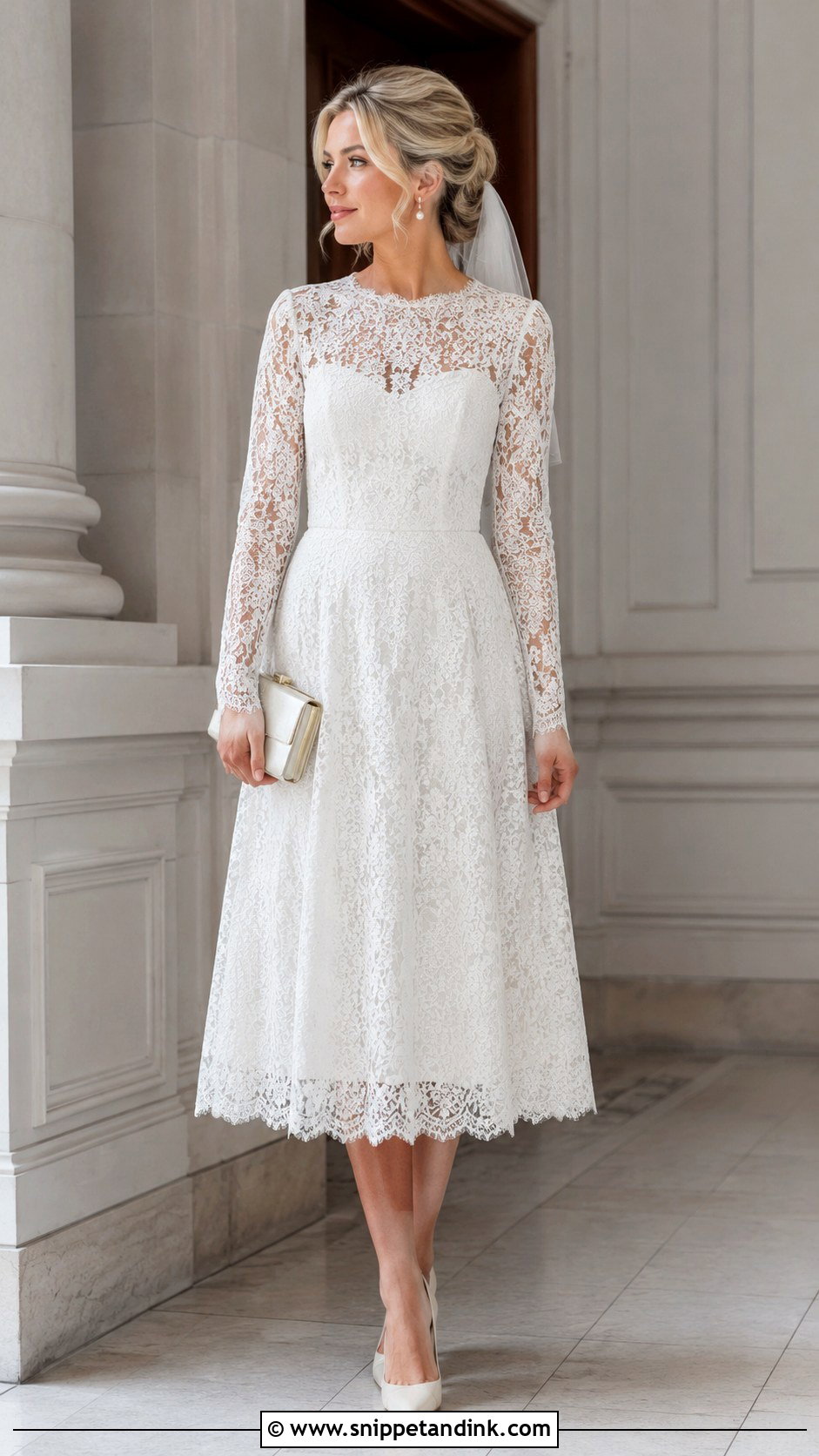
For a courthouse or small registry ceremony, a lace sheath, midi or tea-length dress feels bridal without overwhelming the room. The lace gives you texture, so the dress never reads as office wear. Ivory and soft cream are kinder to most skin tones than bright white under fluorescent lighting. Pointed pumps, a structured clutch and a short veil or bow are enough. A shorter dress also means simpler alterations and less waiting on them.
Why Lace Hems and Bustles Need Extra Fitting Time
Shortening a plain satin hem is a quick cut and stitch. A scalloped lace hem is a different job: the seamstress usually unpicks the border, shortens the skirt underneath and hand-sews the lace back on motif by motif so the scallops still line up. That takes far longer, and the price normally reflects it, although rates vary a lot from one area to another.
Plan on two or three fittings, starting roughly two to three months before the wedding. Bring the exact shoes and undergarments to every appointment. Even a half-inch difference in heel height changes where that lace border lands on the floor.
Bustling a lace train
Lace trains are usually bustled with hidden hooks or ribbon loops, and the attachment points should be sewn onto a solid motif rather than bare net, which can tear under the weight of the skirt. Have your seamstress show whoever will be helping you on the day, then let that person practice it at least twice before the wedding.
Snags, Spills and Storage After the Last Dance
Lace survives a wedding better than most people fear, but it does catch. If a thread pulls on the day, don’t cut it. Ease the loop through to the wrong side with a pin, or leave it for your cleaner. Blot wine or makeup gently and never rub, since rubbing drives the stain into the net and roughens the fibers.
Afterwards, get the gown to a cleaner who handles bridal work within a few weeks. Sugar from champagne or cake is invisible at first and turns brown as it oxidizes. For storage, skip the plastic garment bag: lace keeps best folded in acid-free tissue inside a breathable box, somewhere cool and dark. Hanging it for years lets the weight of the skirt pull on the shoulders and stretch the lace out of shape.
A Dress This Detailed Needs Very Little Added
Lace covers far more ground than most brides expect, from a strict vintage gown to a stripped-back civil dress. What makes one right is less about the lace itself and more about how it’s cut, lined and supported underneath. Go to your appointments knowing your venue, your season and how many hours you’ll be wearing it. Then judge each dress by how it behaves when you sit, reach and walk. A gown that already carries this much detail needs very little added to it.
You'll Like These Ideas:






Leave a Reply