
Lace used to mean one kind of wedding dress. Now it turns up on visible corsets, graphic column gowns, minis, capes and separates, and the same fabric can look romantic on one dress and sharp on the next. What changes it is the scale of the pattern, the colour of the lining underneath and how much of the gown it actually covers. When a bride brings me a screenshot of a lace gown, I look at those three things before the silhouette, because they decide whether the dress feels current or heavy. Below are 20 lace gowns styled from veil to shoes, with the fitting notes I’d give for each.
Five Kinds of Lace You’ll Hear Named at a Fitting
Shop assistants will name the lace on every sample, and knowing what those names mean helps you understand why two lace gowns can feel so different on.
- Chantilly: very fine and flat, with delicate florals on a soft net. Light and fluid, good for sleeves and slips, but it snags easily.
- Alençon: outlined with a raised cord, so motifs stand out. It holds shape well on bodices and is often cut into appliqués.
- Guipure: heavy motifs joined by bars with no net behind them. Structured and graphic, ideal for midis and minis.
- Venise: thick, raised and sculptural. It adds weight and works on structured gowns rather than flowing ones.
- Embroidered tulle: threadwork stitched onto tulle, sometimes sold as lace. Lighter and cheaper, but it can look flatter in photos.
Ask to touch the lining and lace together. A stiff Venise on a fluid slip dress, or a delicate Chantilly on a heavy ball gown, tends to look like the fabric is fighting the shape.
1. Strapless Lace Wedding Dress With A-Line Skirt
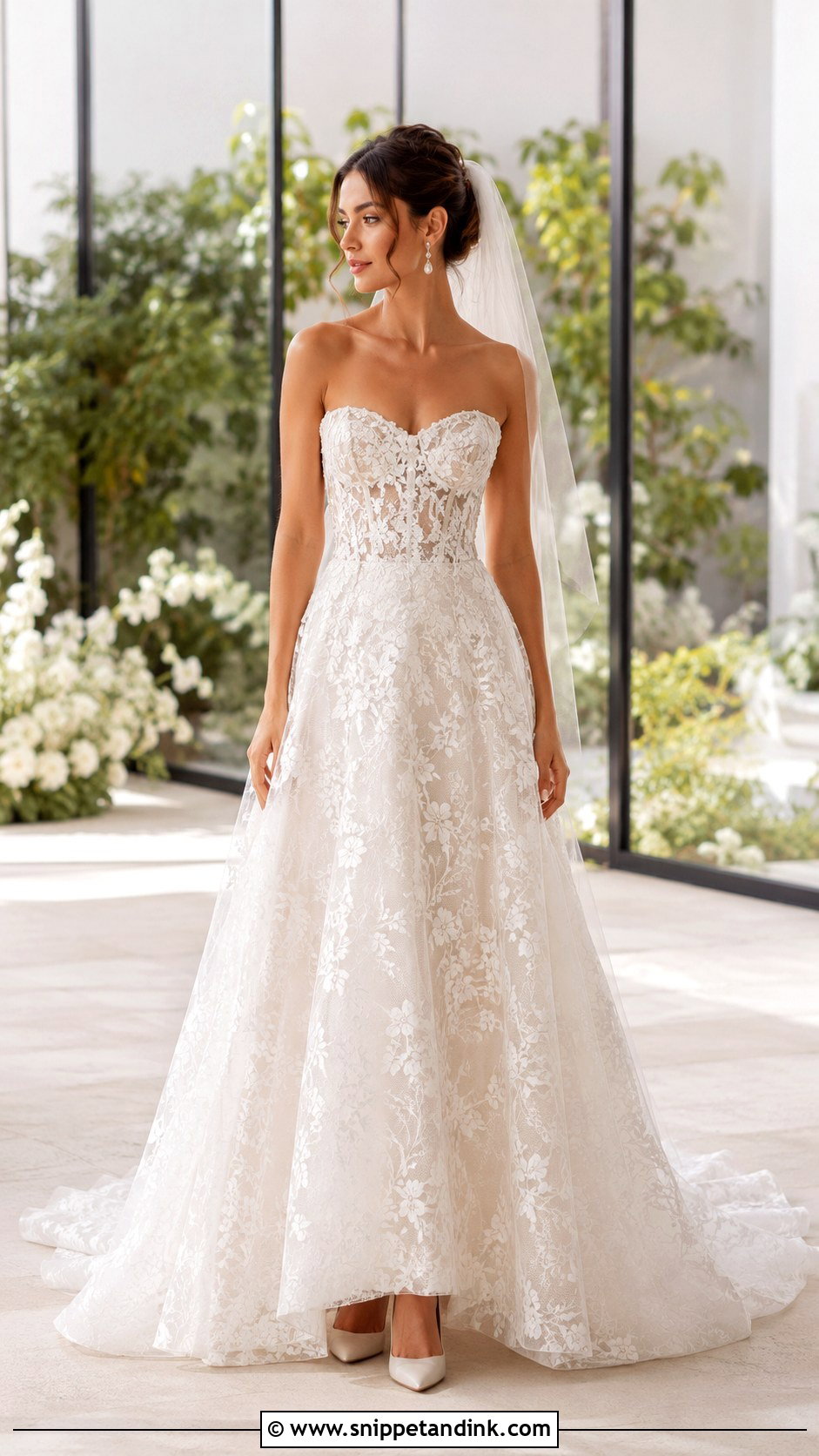
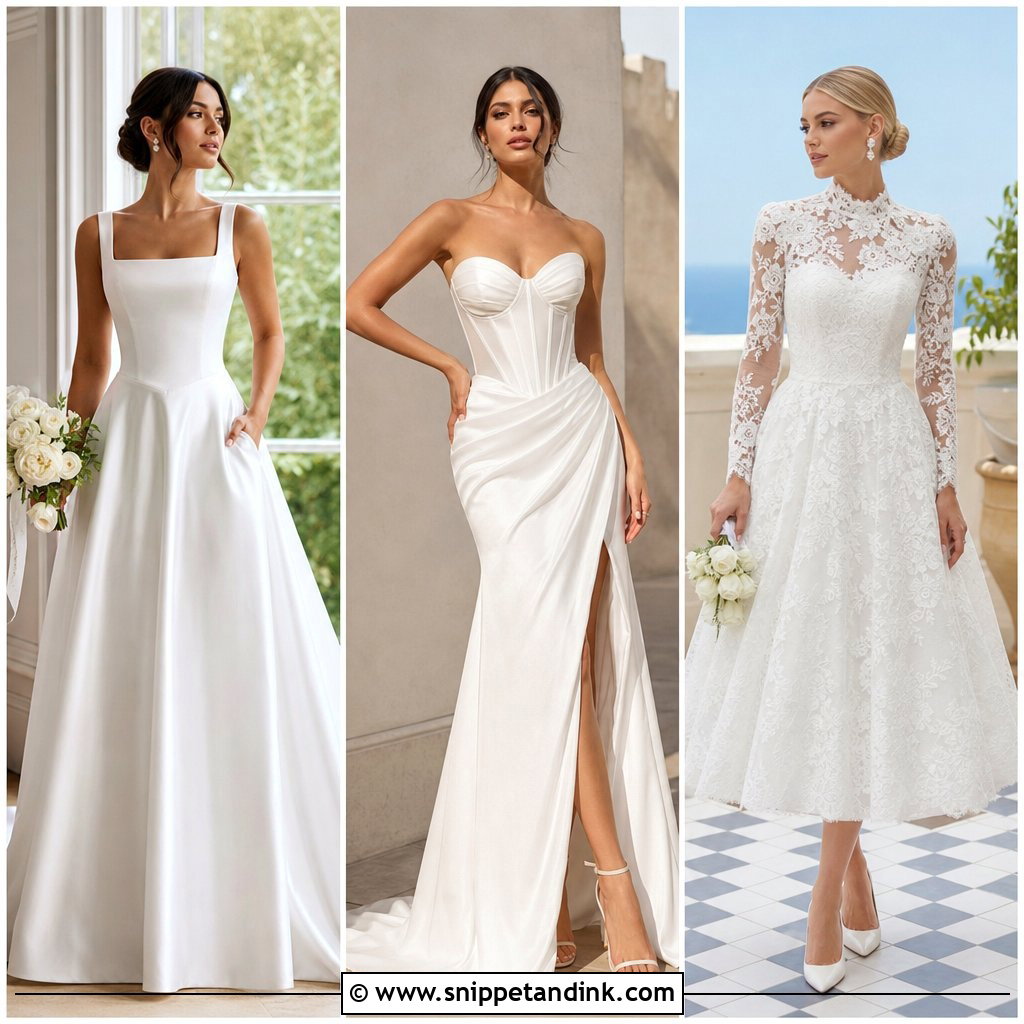
Strapless with an A-line skirt is the easiest lace gown to wear for a long day, and probably the one I suggest most to brides who want lace but don’t know where to start. Visible boning or a clean curved neckline keeps the bodice from looking dated. Let the lace run from the bodice onto a lightly gathered skirt so there is no hard line at the waist. A nude lining shows the pattern; an ivory lining softens it and covers more. Pointed pumps, pearl drops and a plain-edged fingertip veil are all it needs. Keep the hair low so the neckline stays clear.
2. Long Sleeve Lace Wedding Dress With Open Back
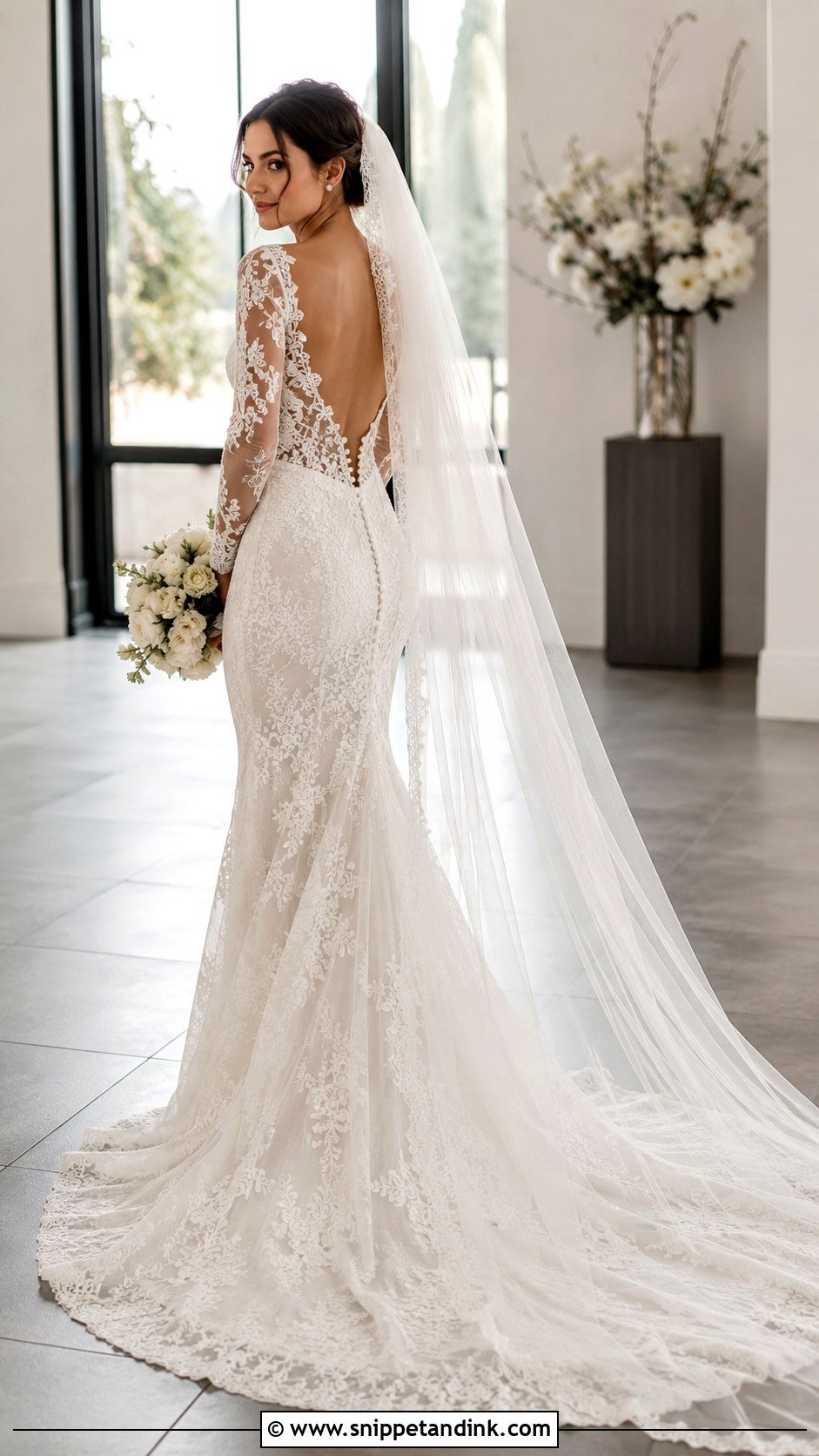
Long lace sleeves with a bare back suit an autumn or winter wedding, when you want coverage in front and something to look at as you walk away. Placed motifs on the sleeves look lighter than solid lace. A bateau or modest V in front works well. Covered buttons extending toward the train finish the back. Keep the jewellery to studs and a small comb. The thing I check here is the shoulder: a fitted lace sleeve with no back support tends to slide outward, so I often add a fine illusion strip or interior boning across the open back.
3. Square Neck Lace Wedding Dress With Fitted Skirt
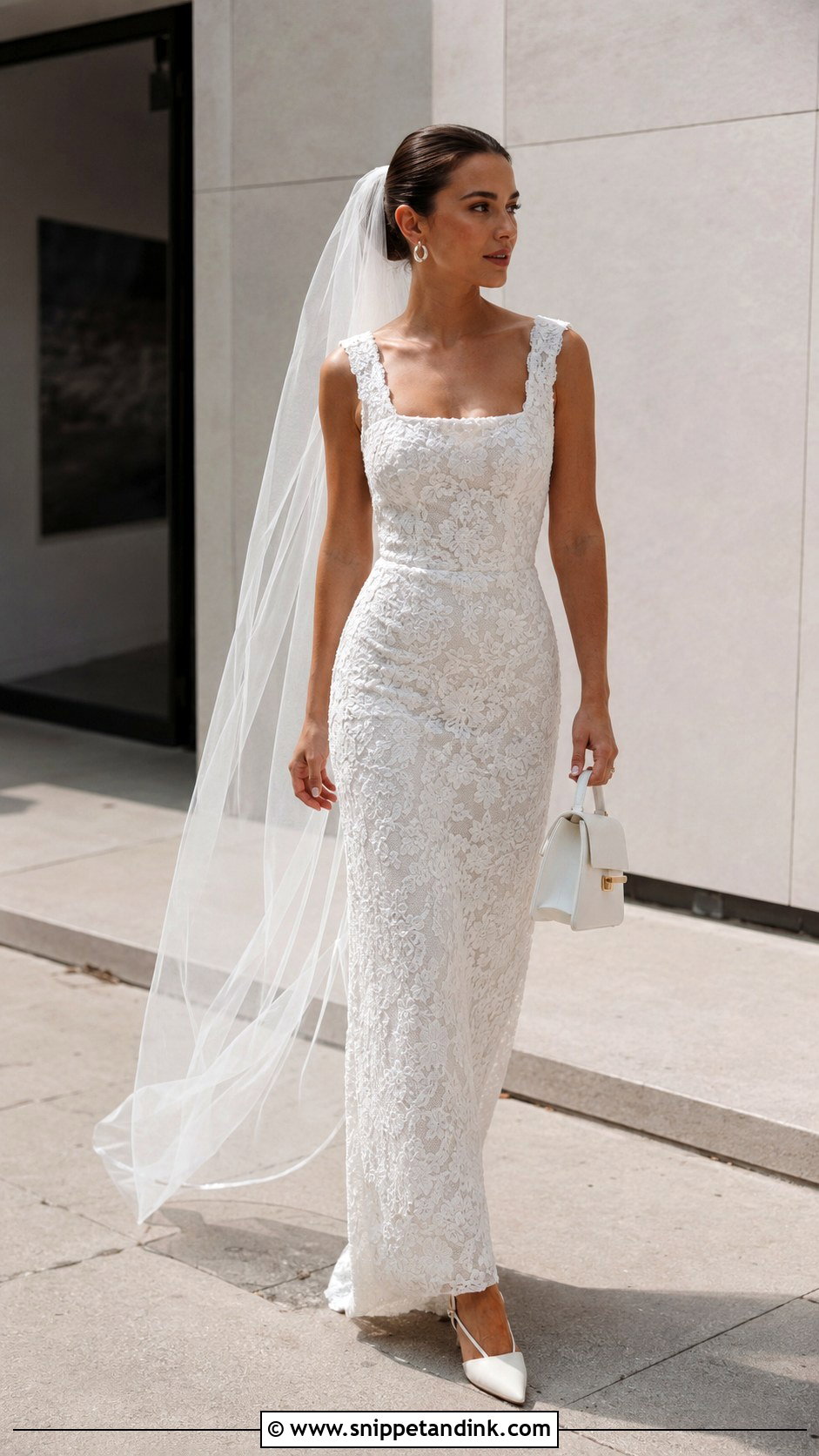
A square neck turns lace architectural. Wide straps, a fitted bodice and a straight or softly flared skirt keep it clean, and medium-scale florals over a solid ivory lining read as texture rather than pattern. A sleek bun, small pearl hoops and a narrow cathedral veil set under the hair suit the shape. This is a gown with nowhere to hide, so tailoring through the bust, waist and hips has to be precise. If the bodice gapes at the square corners when you breathe in, ask your seamstress to take in the neckline edge before anything else.
4. High Neck Lace Wedding Dress With Low Back
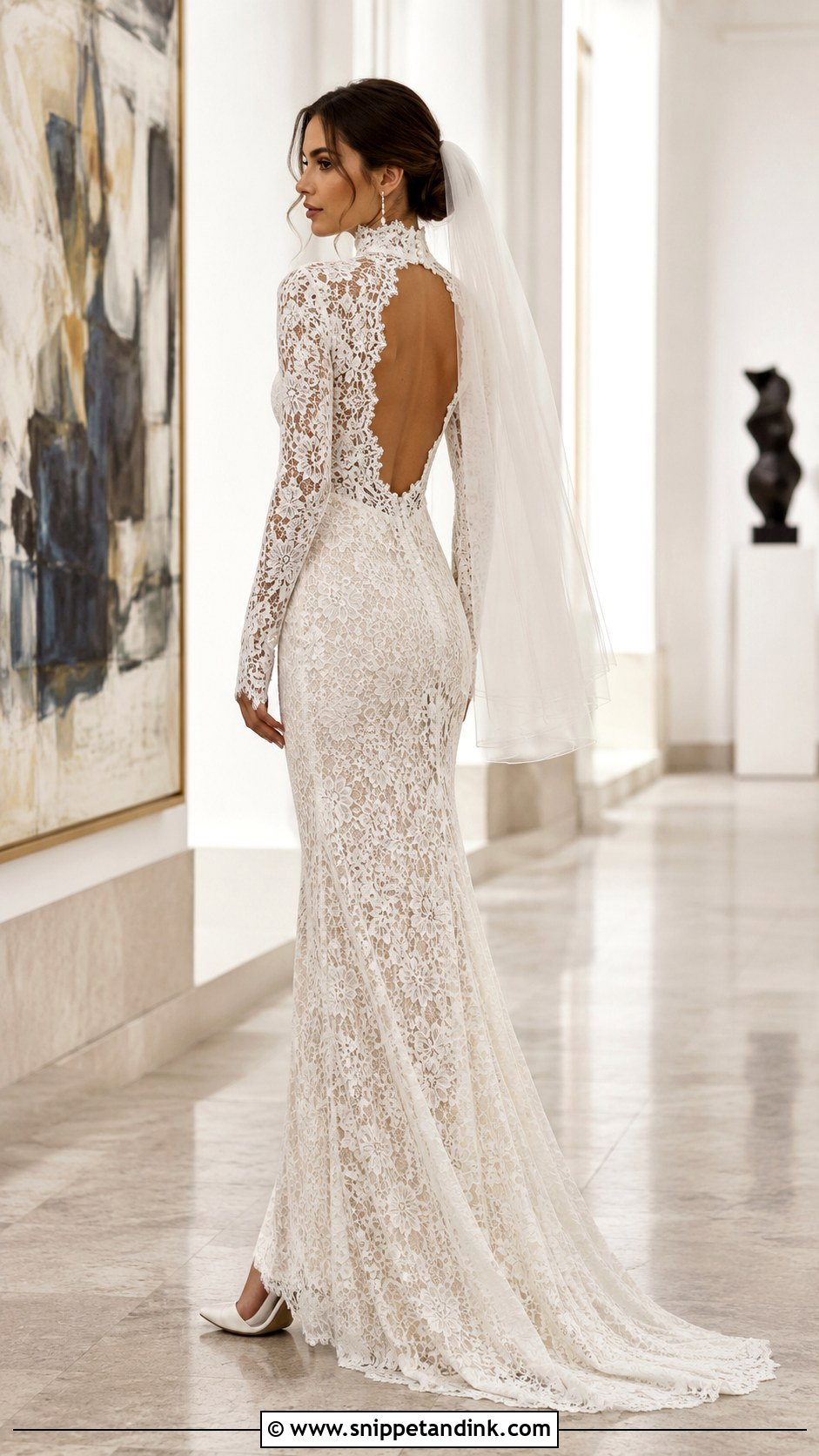
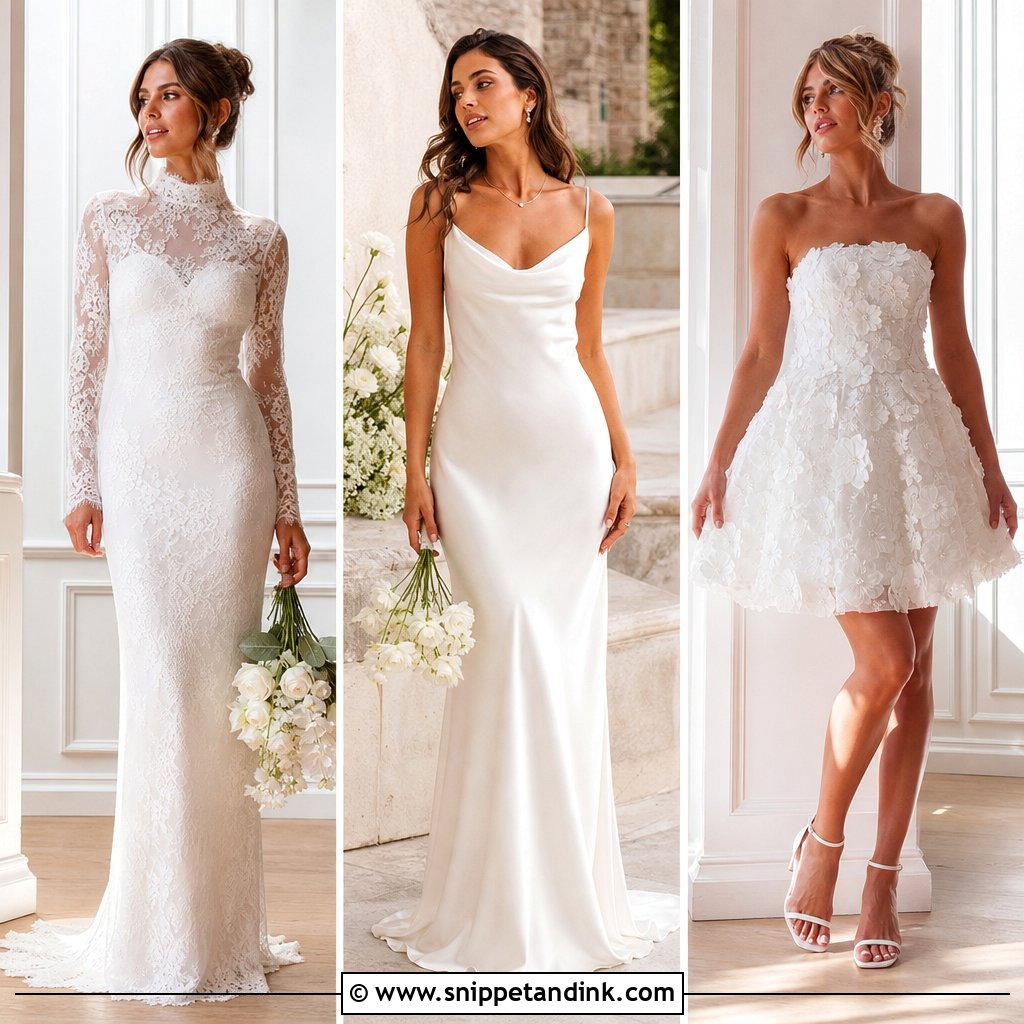
Covered at the front, open at the back: it’s the gown for a bride who wants the surprise to come as she turns around. Choose fine, open lace so the high neck doesn’t feel heavy, and pair it with a fitted waist and fluid column skirt. Scalloped edges, tiny buttons or narrow straps can frame the back. Wear the hair up so the whole back shows. One practical point: a low back limits your bra options, so ask about built-in cups at the first fitting rather than the last.
5. Lace Corset Wedding Dress With Full Skirt
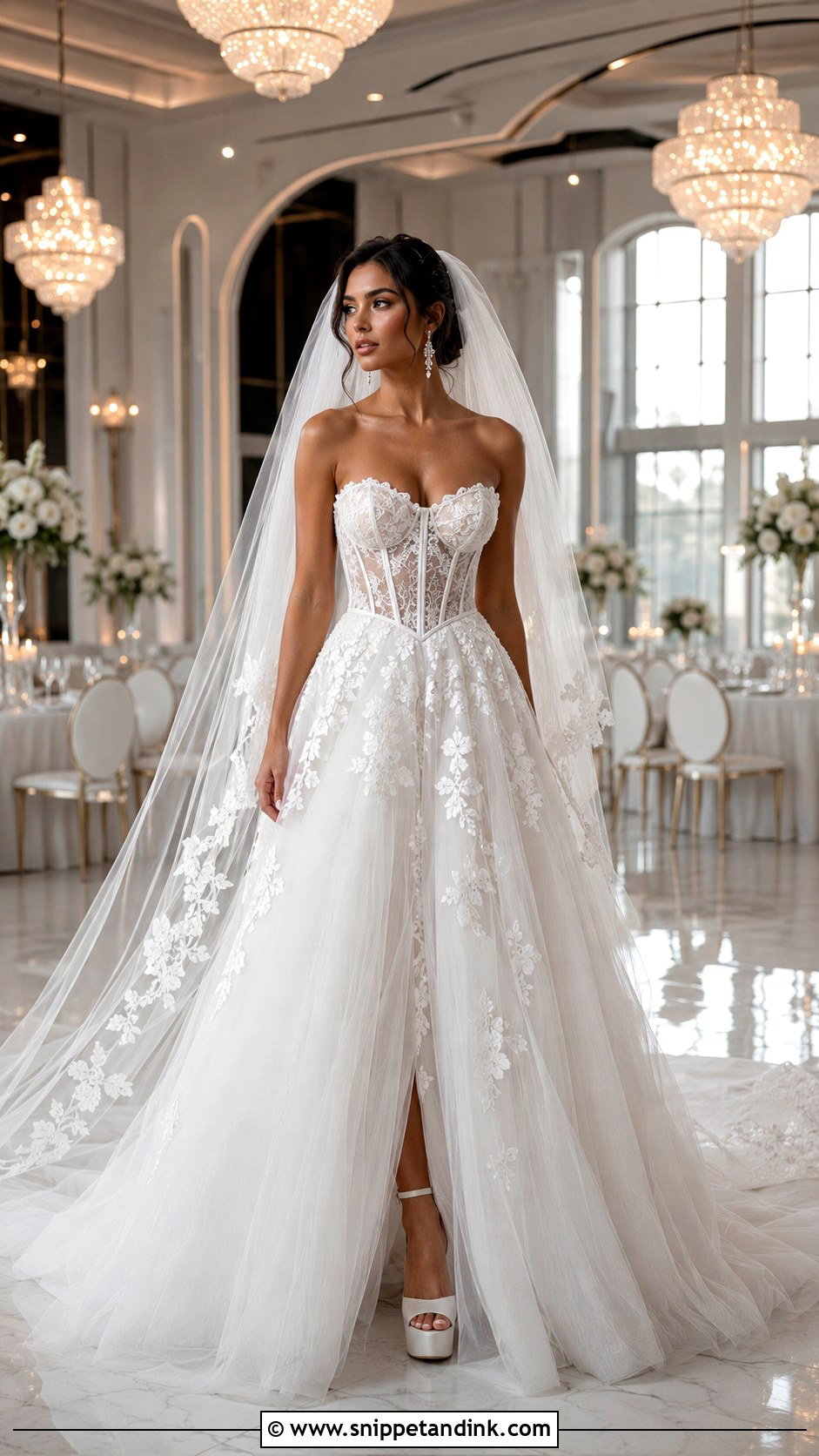
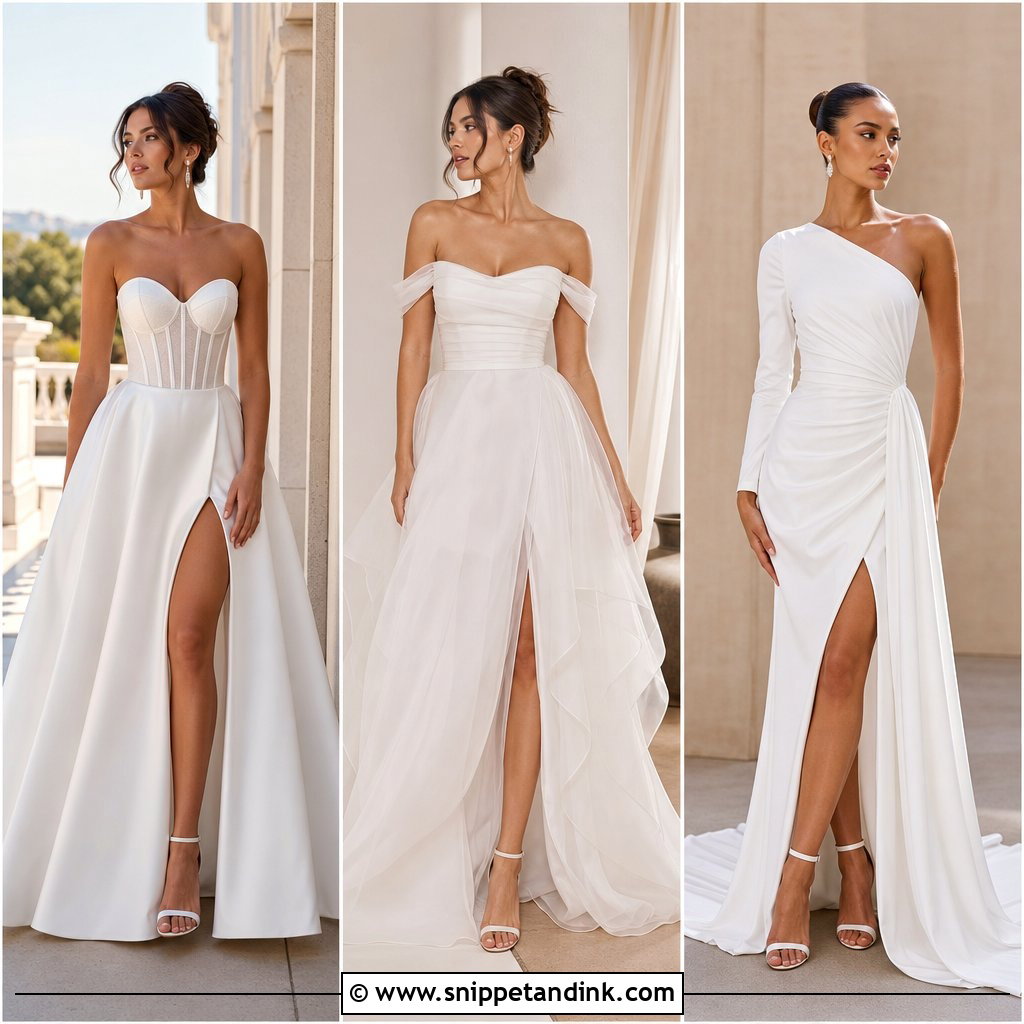
Corsetry should be seen in this gown, which means the boning placement is part of the design. I look for a structured bodice with built-in cups and a basque or slightly dropped waist, over a full tulle skirt scattered with lace appliqués. For more coverage, choose an opaque lining close to the lace colour instead of deep nude. Keep the veil plain so the bodice detail stays visible. Corsets are cut on very different patterns, so sit, eat a few bites and raise your arms in the fitting room. You should be able to breathe fully without the top edge cutting in.
6. Off-the-Shoulder Lace Wedding Dress With Train
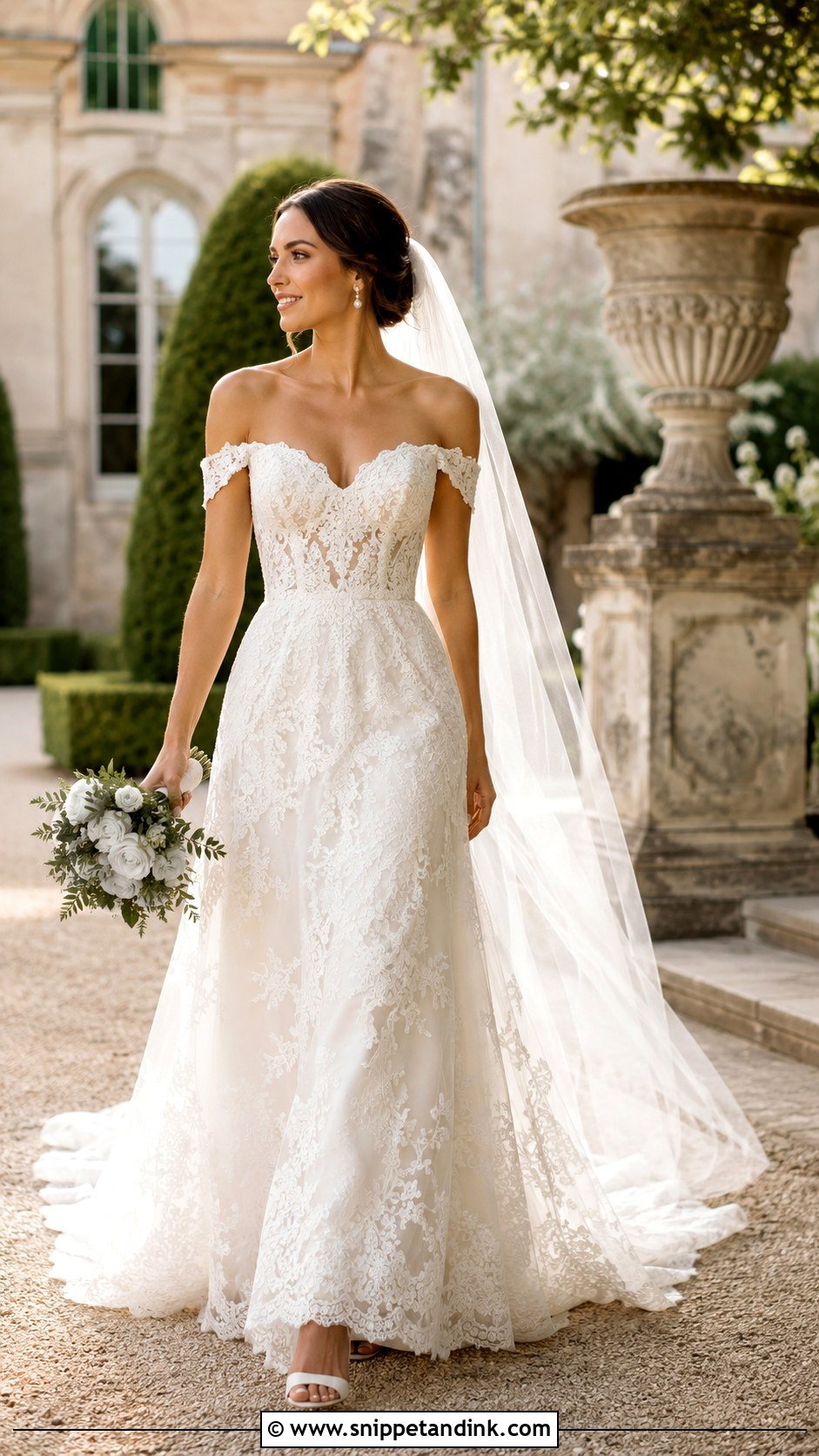
Off-the-shoulder lace frames the collarbones, but those straps want to wander. A good one has an internal bodice doing the real work, with lace straps that are lightly structured or removable. Carry the fit down to the waist and into a mermaid or A-line skirt so the shoulders aren’t the only focus. A short pendant, pearl studs and a long sheer veil suit it, with a bouquet in a simple shape. If there is a chapel or cathedral train, plan the bustle now; lace trains are heavy, and an unbustled one gets stepped on during the first dance.
7. Lace Mermaid Wedding Dress With Detachable Sleeves
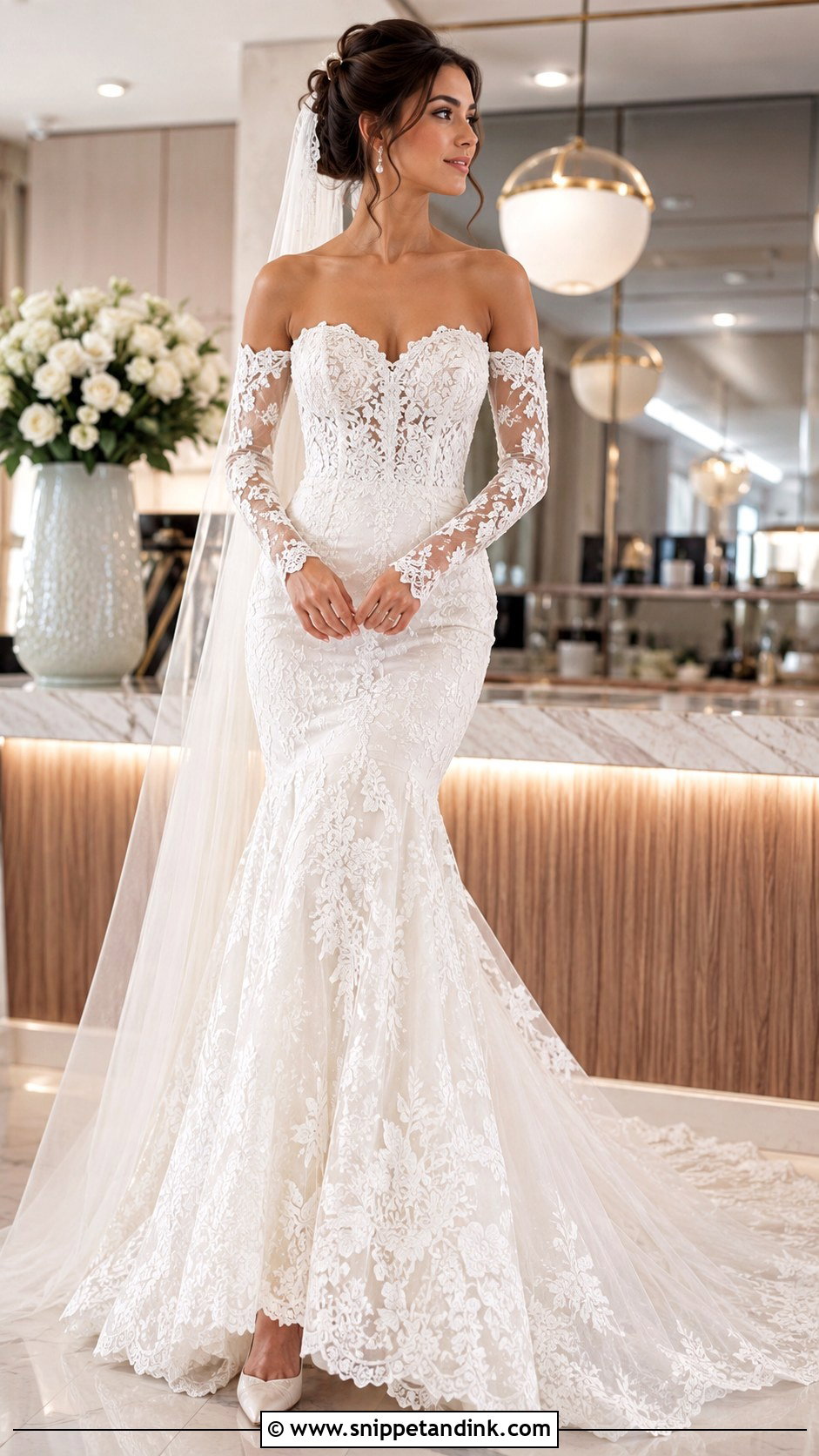
A mermaid gown with detachable lace sleeves gives you a covered ceremony look and a bare-shouldered reception one. I prefer lace with directional motifs that follow the body and run naturally into the flare, which makes the gown look longer. The bodice and lining need to be fitted smoothly so the lace doesn’t ripple at the hips. Sleek hair and a narrow veil keep the line. Walk, sit and dance in it during alterations. If the flare starts too high, you’ll be taking half-steps all night.
8. Floral Lace Wedding Dress With Plunging Neckline
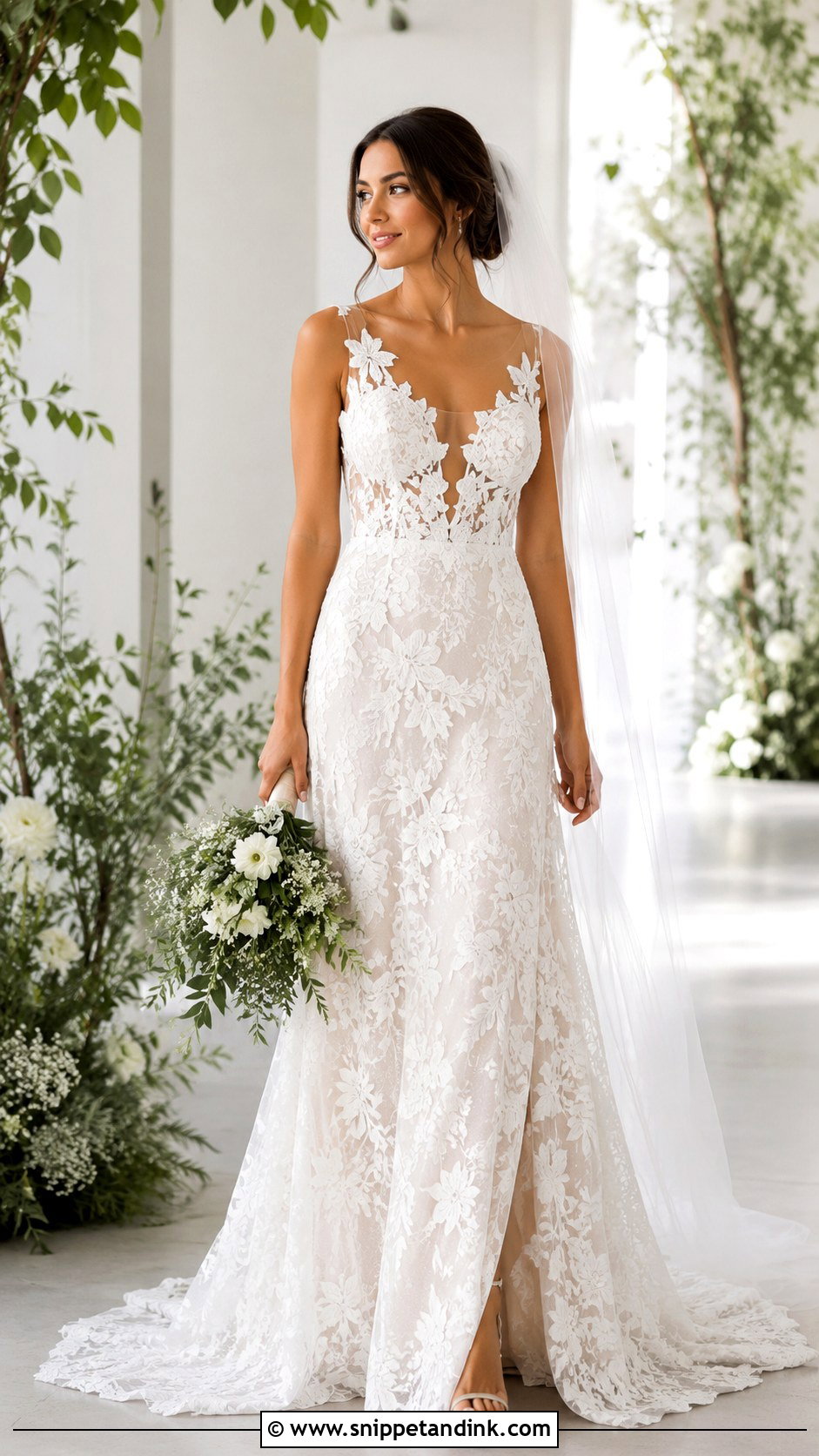
Oversized floral lace looks bold when the neckline underneath is simple and deep. The construction is what makes it wearable: side panels, built-in cups and skin-toned illusion mesh hold everything in place. Give big motifs room on an A-line or softly fitted skirt, and keep everything else quiet: small earrings, plain sandals, a veil with no embroidery. A smooth chignon leaves the neckline as the focus. Want more coverage? The illusion panel can be raised without losing the long V line, and most seamstresses can do it in one appointment.
9. Geometric Lace Wedding Dress With Column Skirt
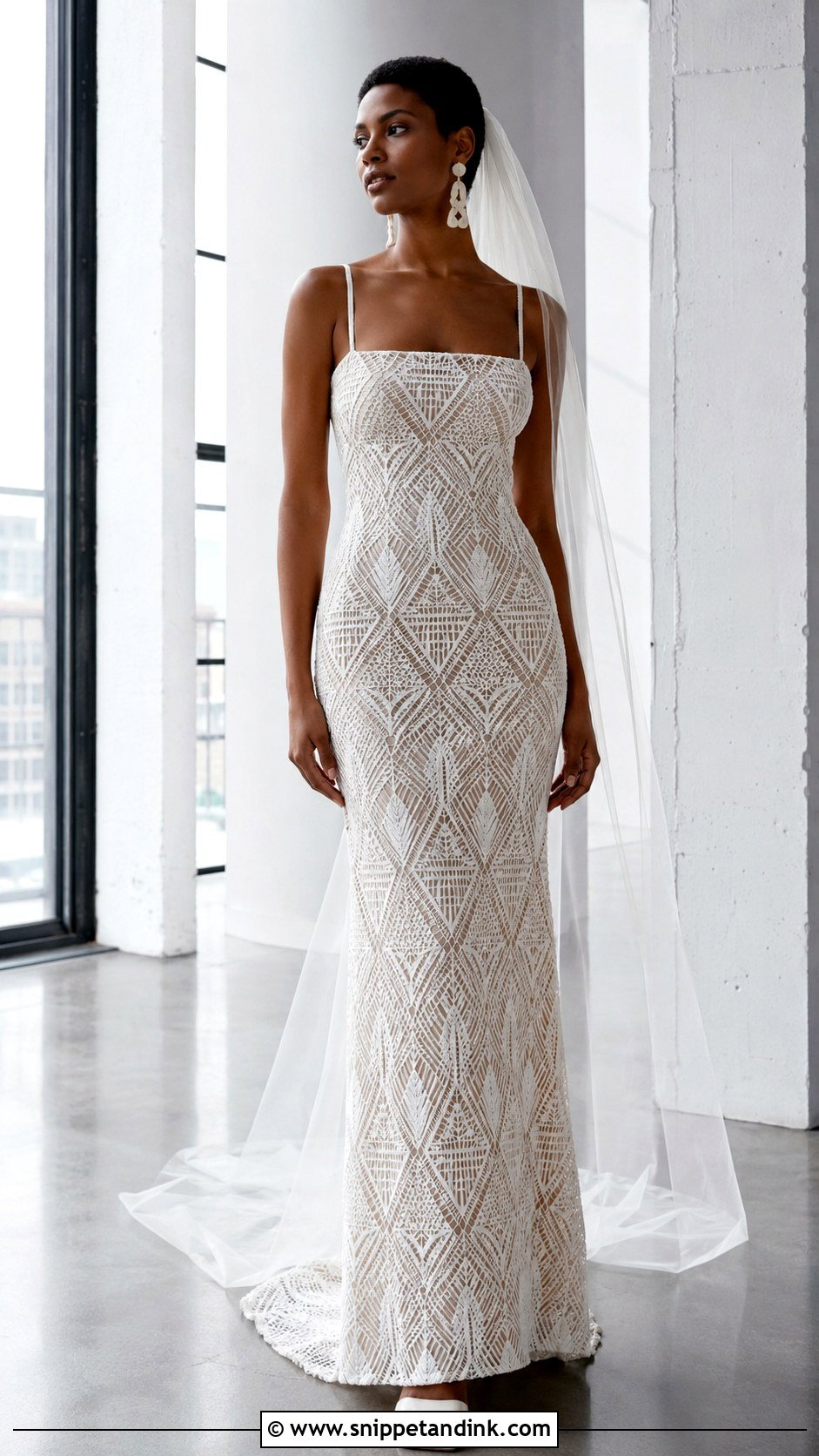
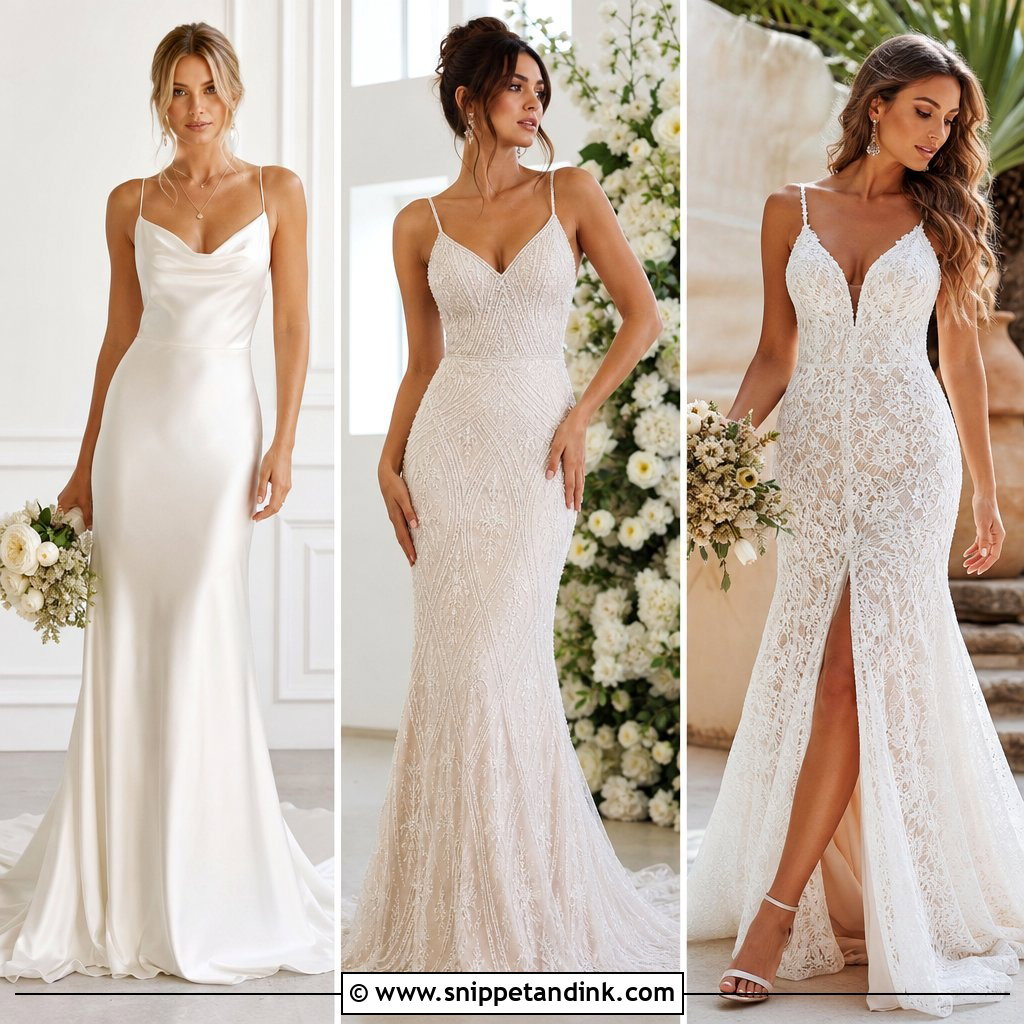
Geometric lace has no flowers at all, just diamonds, grids or abstract lines, and it gives a column gown a graphic edge. Lay it over a smooth ivory lining so the pattern reads clearly. A straight neckline or cap sleeves continue the clean shape. Sculptural earrings, square-toe heels and a sleek low bun suit it, and a plain floor-length veil softens the geometry. Column gowns sit close to the body, so a little stretch in the lining and a back slit placed at the right height make walking and stairs far easier. I’d pick this for a loft or a city venue.
10. Lace Ball Gown Wedding Dress With Basque Waist
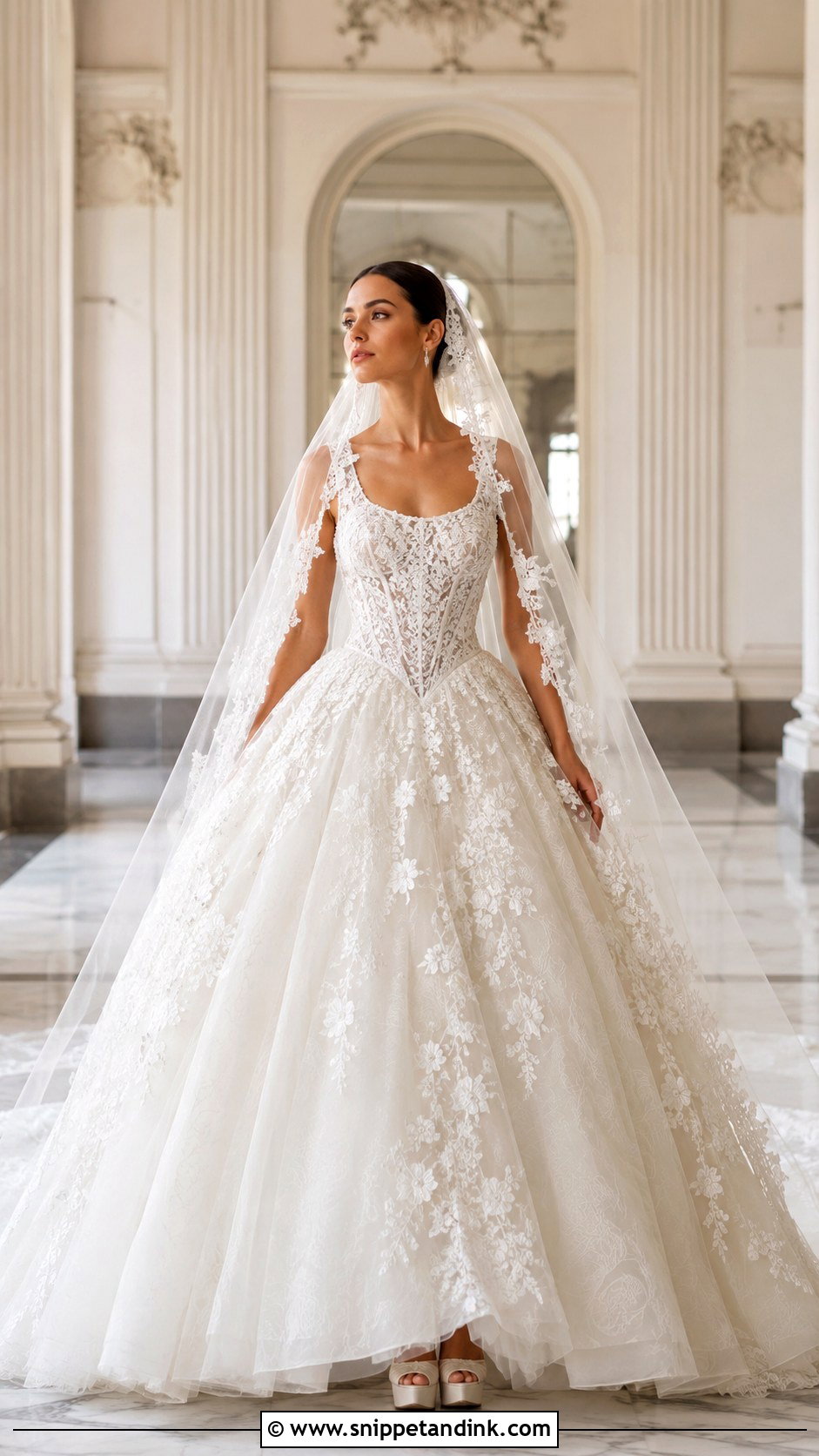
A basque waist is the V-shaped dip at the front of the bodice, and on a lace ball gown it links the fitted top to the full skirt without a hard horizontal line. It also makes the waist look smaller. Crisp lace appliqués on tulle or organza keep the volume light; dense lace on every layer gets heavy fast. A scoop, strapless or off-the-shoulder neckline balances the skirt. Platform heels hidden under the hem are a good idea here. Save this one for a big indoor room where the skirt has space, and ask for a bustle that takes the train fully off the floor.
11. Minimal Lace Wedding Dress With Crepe Skirt
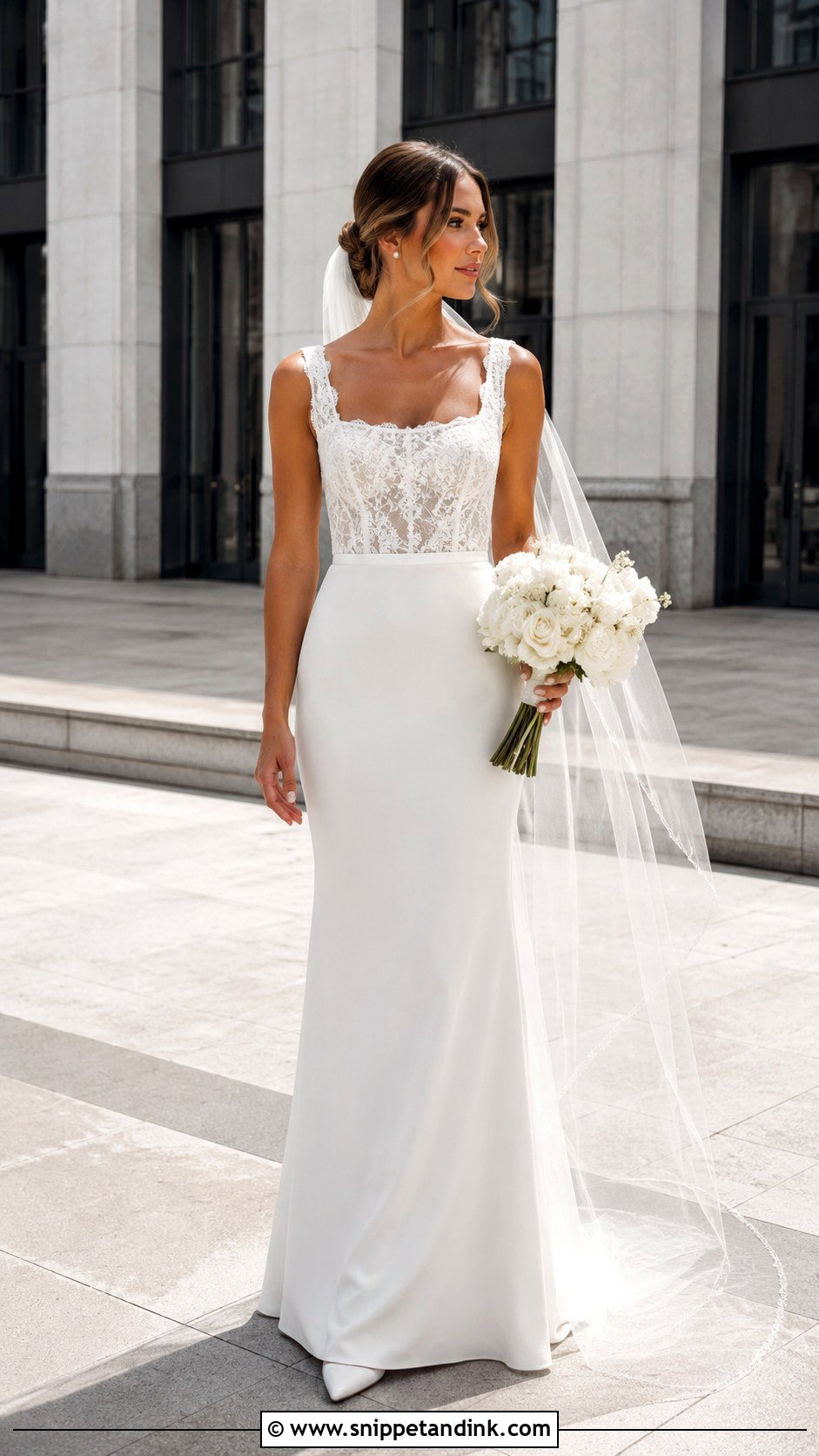
Sometimes the most modern use of lace is a small amount of it. A lace bodice over a plain crepe skirt gives texture above the waist and one clean line below. Narrow straps, a square neck or short sleeves suit the bodice; the crepe can fall straight or flare slightly at the hem. Pearl studs, pointed pumps and a raw-edge veil keep it pared back. The seam where lace meets crepe is the detail I look at hardest. It should sit level and flat, because on such a simple dress a wobbly waist seam is the first thing the camera finds.
12. Lace Wedding Dress With Satin Overskirt
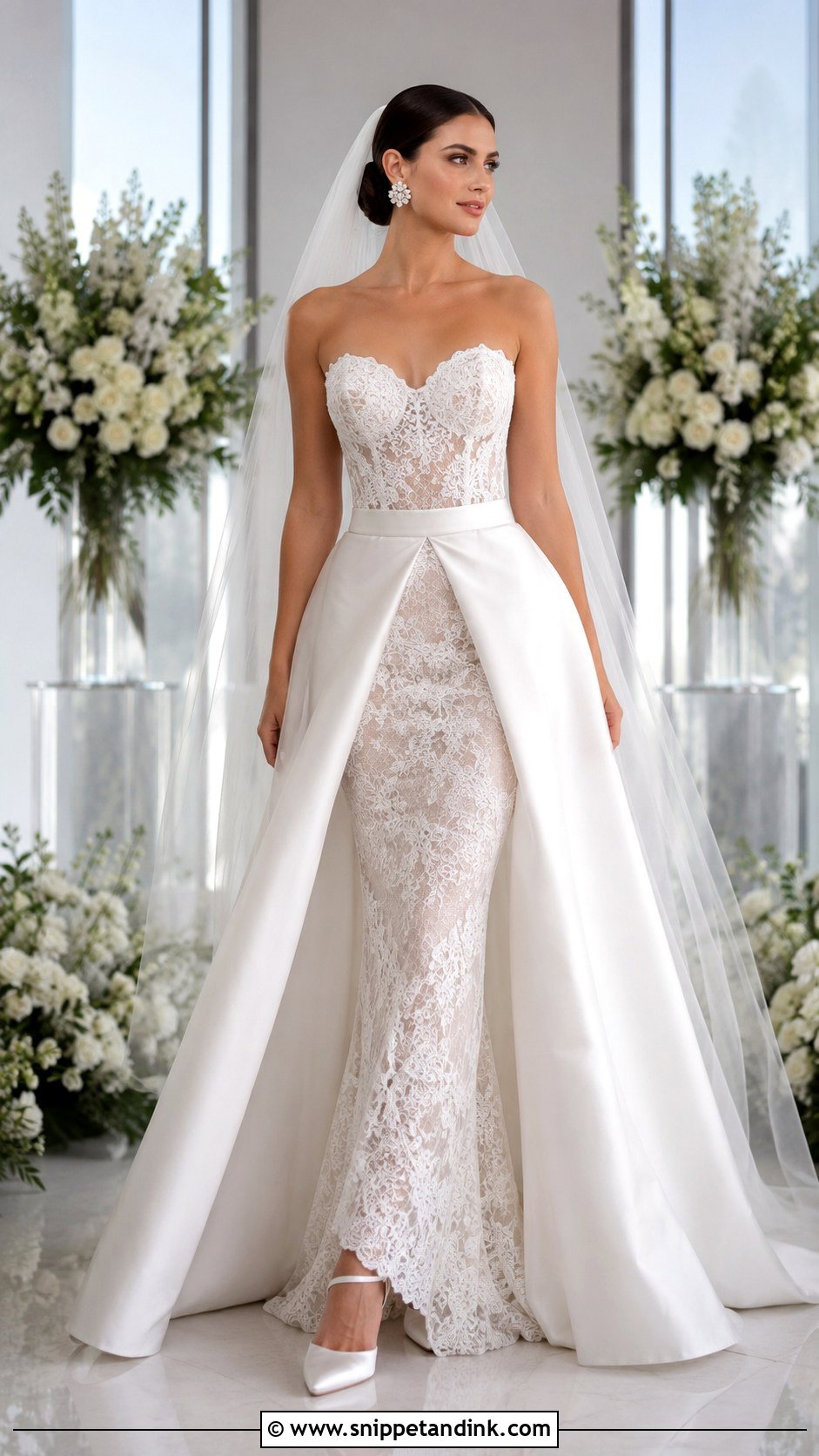
A detachable satin overskirt turns a fitted lace gown into a bigger ceremony dress. The gown underneath has to stand alone, so pick a lace column or fit-and-flare you’d happily wear by itself. The overskirt should attach at the natural or dropped waist without bulk. A split front shows the lace and makes walking easier. After the overskirt comes off, swap to smaller earrings or a sleek hair clip for the second look. Hold the satin, lace and lining together in daylight first; bright white satin next to ivory lace looks grubby in photos.
13. Lace Slip Wedding Dress With Scalloped Neckline
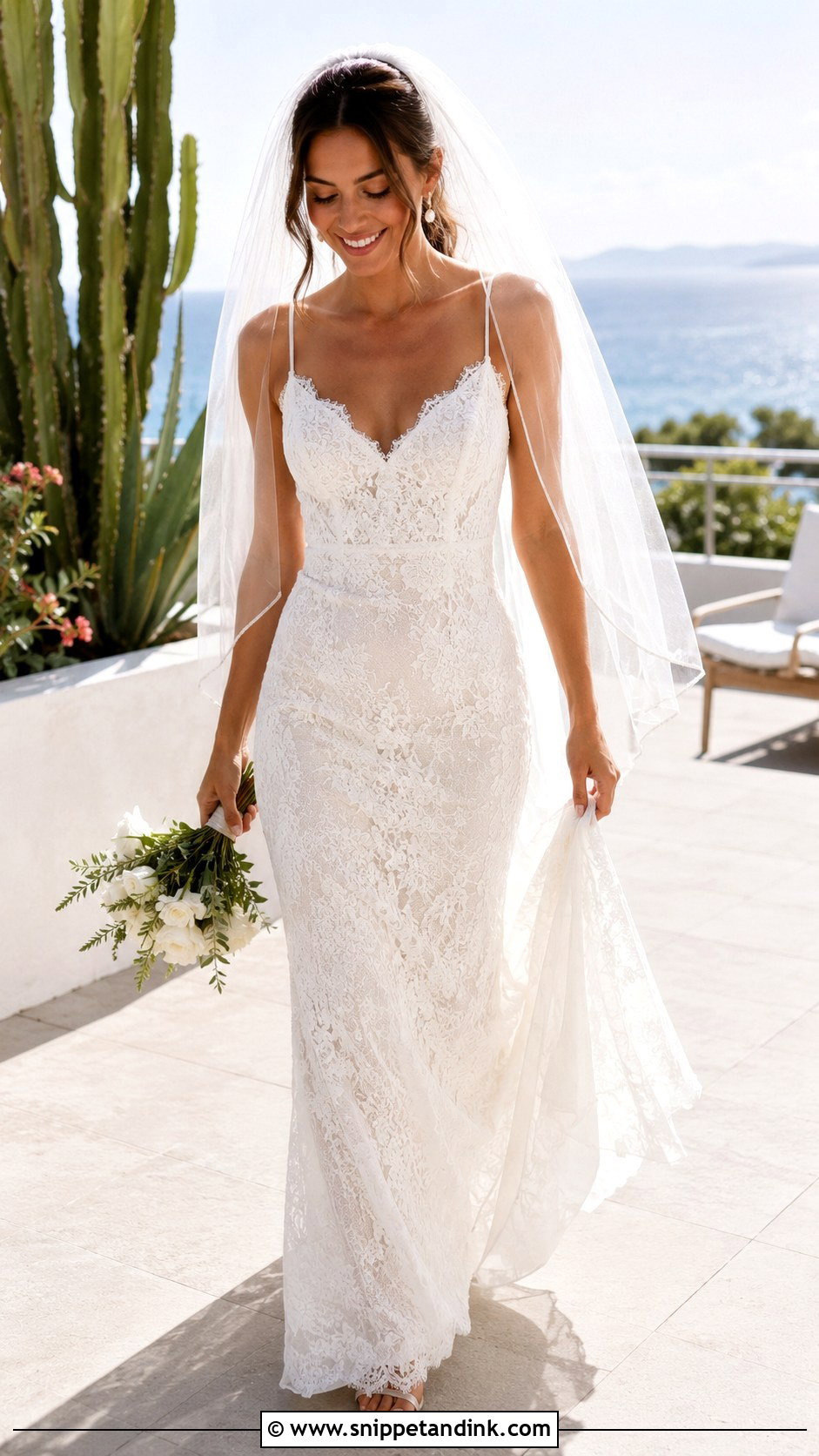
A bias-cut lace slip is the coolest gown here for a hot climate. Look for a supportive lining, adjustable straps and a scalloped neckline, and choose fine lace; anything stiff fights the bias drape. Delicate sandals and small earrings suit it, with loose waves or a neat low knot keeping the mood easy. Bias cut clings and shows every line, so test the gown in sunlight and with a camera flash before you settle on underwear. Pack a lace shawl for the evening breeze.
14. Lace Midi Wedding Dress With Block Heels
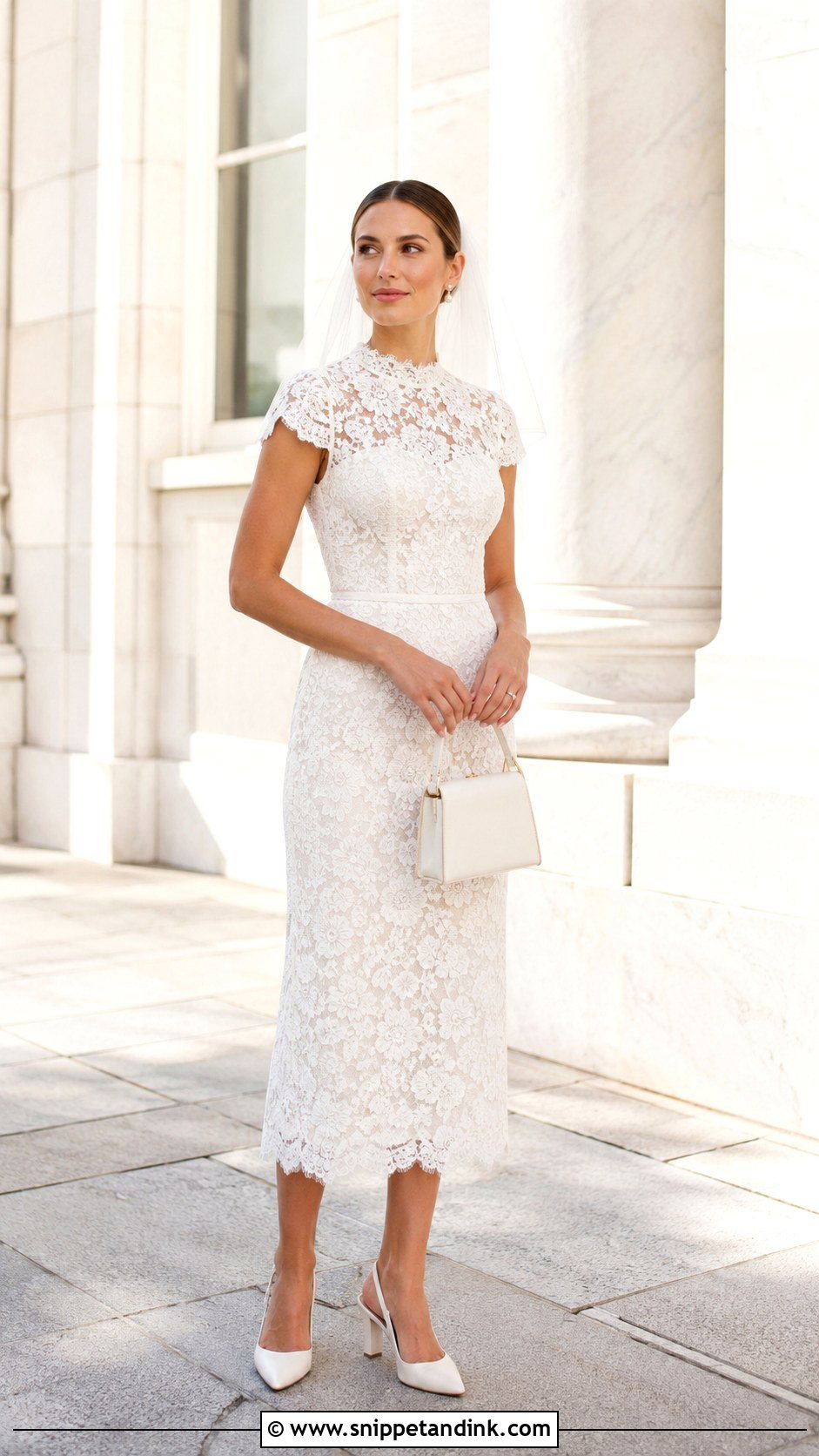
A lace midi gives you bridal detail without a train to manage. The hem should fall between the lower calf and the ankle, with a fitted waist and a clean neckline. Guipure, the heavier lace with no net background, holds its shape on a shorter skirt. Ivory block heels, a small top-handle bag and a short veil or birdcage suit it. Your shoes are fully on show, so a pointed toe lengthens the leg and an ankle strap steadies you on grass. Check that the lining ends neatly at or just above the lace hem; a lining that peeks out below looks unfinished.
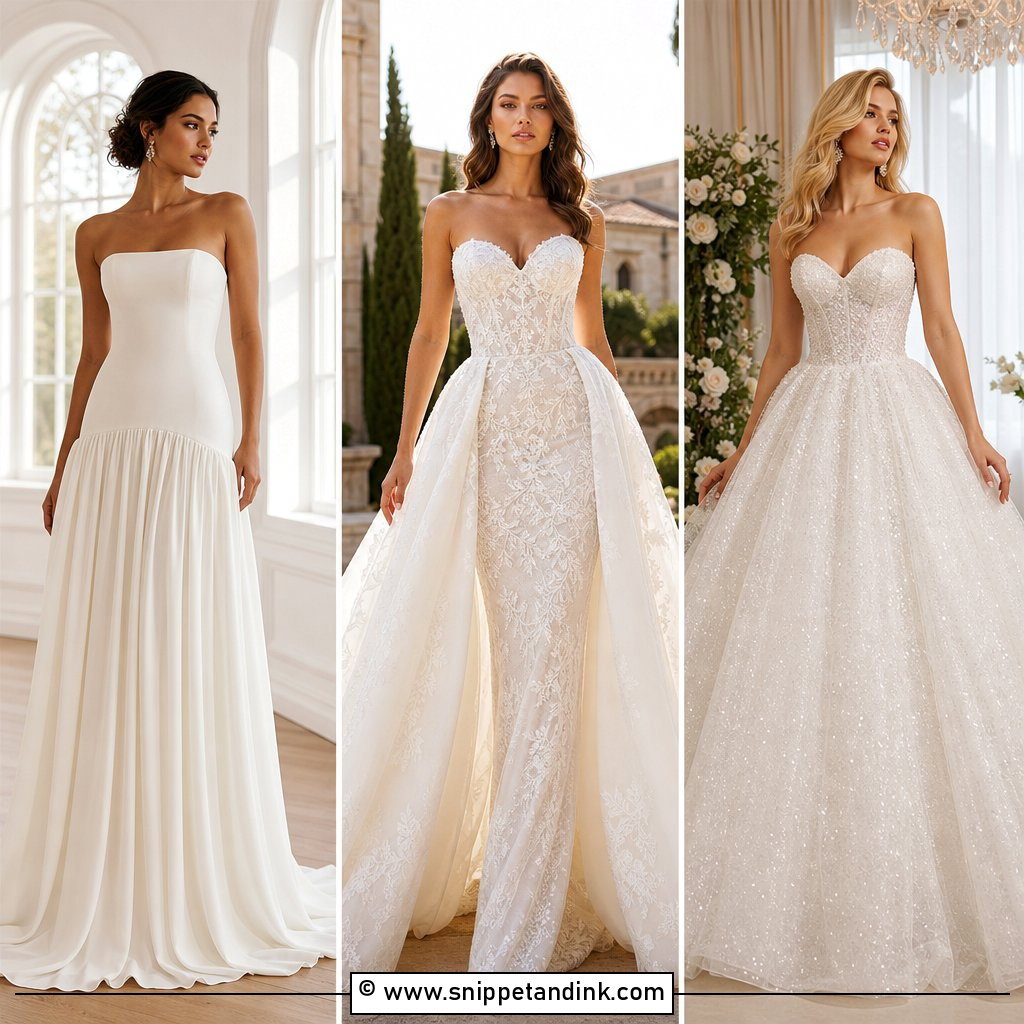
15. Lace Mini Wedding Dress With Sheer Sleeves
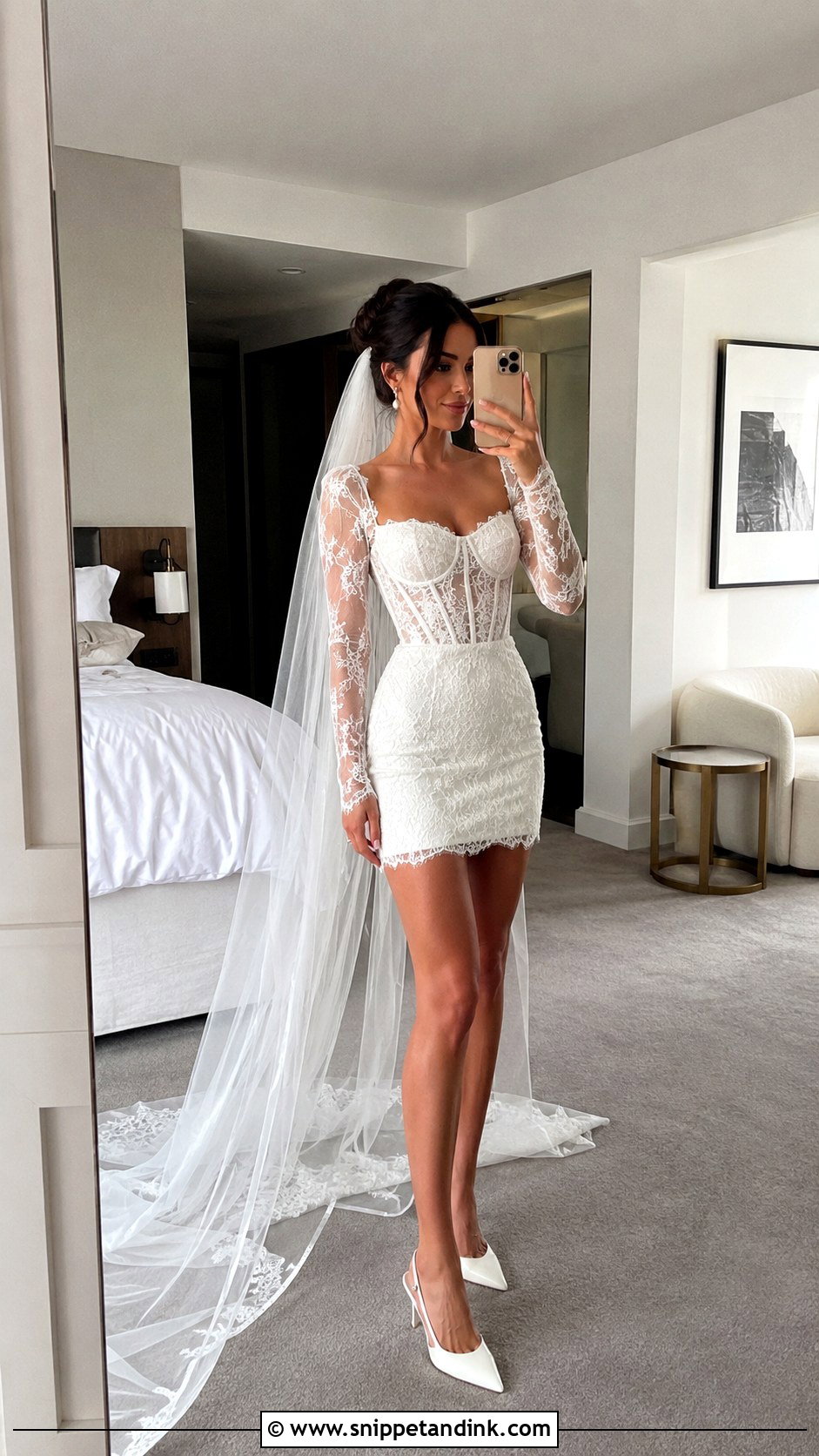
A short lace dress only looks bridal when the proportions are worked out. Balance the short hem with long sheer sleeves and a high or square neckline, with a fitted bodice and defined waist. Pointed slingbacks, pearl drops and a compact bouquet finish it; a long veil over a mini is a fun contrast if you like a fashion edge. Sit down in it before you buy. If the hem rides up more than a couple of inches, it will spend the whole reception doing that. Tailored shorts under a fuller skirt help too.
16. Boho Lace Wedding Dress With Bell Sleeves
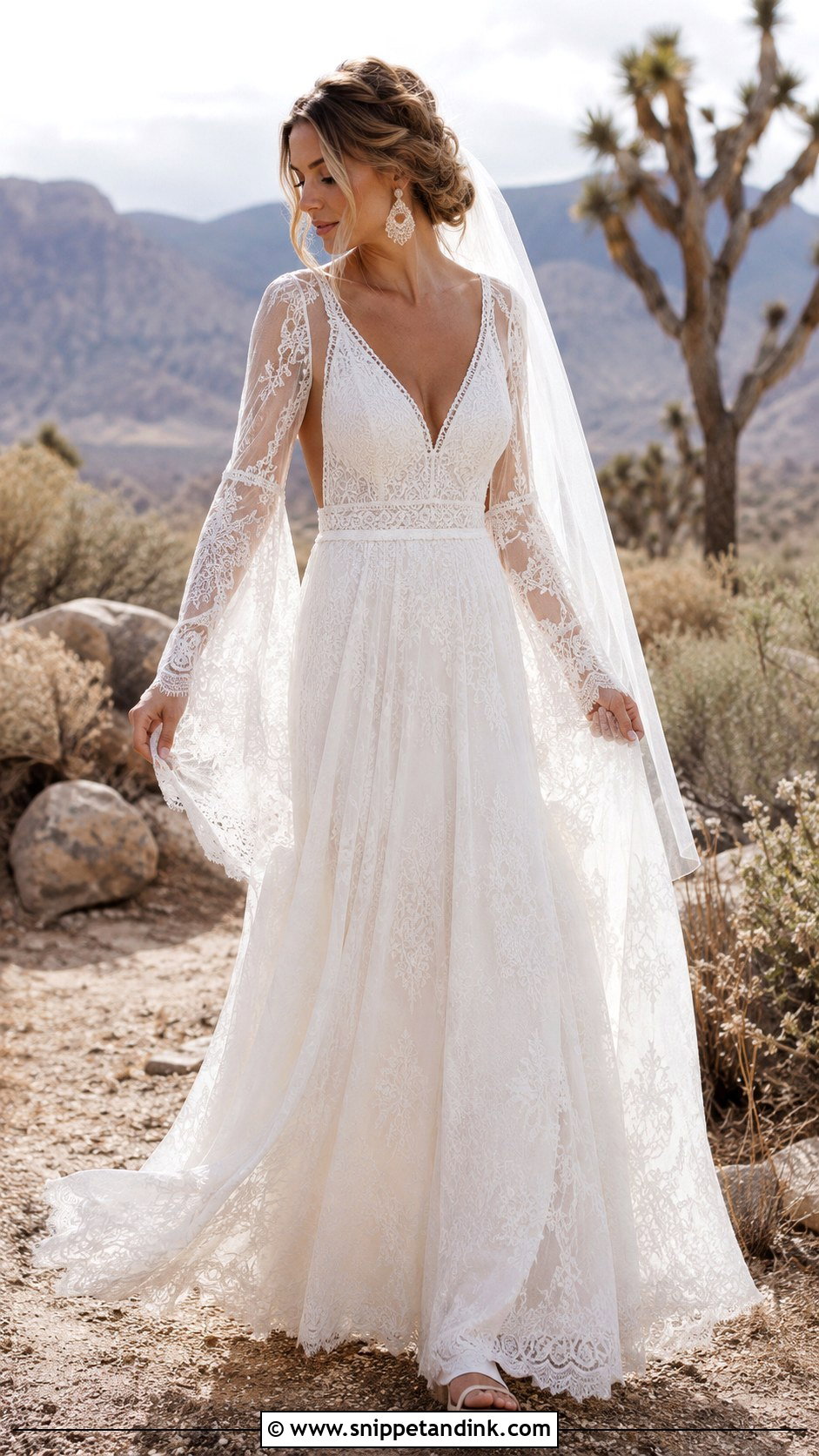
Lightweight lace and a flowing skirt let a boho gown move in the breeze, and the bell sleeves are the feature. Keep them widening below the elbow but not so far that they drag through your plate or tangle in the bouquet. A V-neck and open back suit the relaxed shape. Sandals, textured earrings and a loose braided updo with the veil set underneath finish it. Open boho lace catches on everything: bracelets, rough tree bark, the buckle of your sandal. Leave bracelets off and check the shoes for anything sharp.
17. Vintage Lace Wedding Dress With Modern Accessories
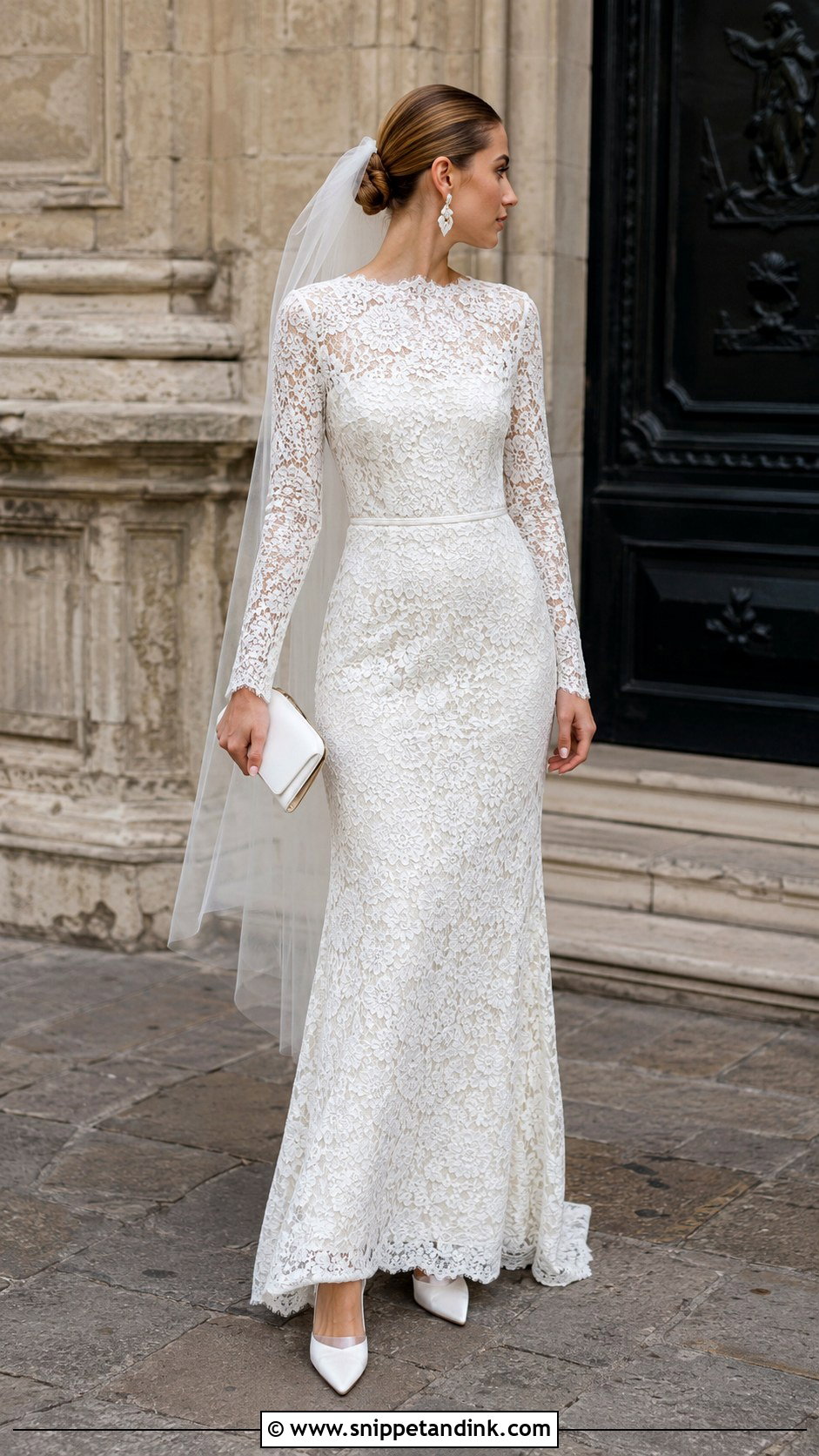
Vintage lace looks current when everything around it is modern. Choose a tea-length or full-length gown with delicate sleeves, a defined waist and fine botanical lace, then keep the accessories clean: pointed slingbacks, small sculptural earrings, a plain veil and a sleek low bun. If the dress is genuinely old, have the seams, closures and lining checked by a seamstress who works with vintage before any alterations. Old lace tears rather than stretches, so it often needs reinforcing more than reshaping. Done well, it should look collected, not costumed.
18. Colored Lace Wedding Dress With Ivory Veil
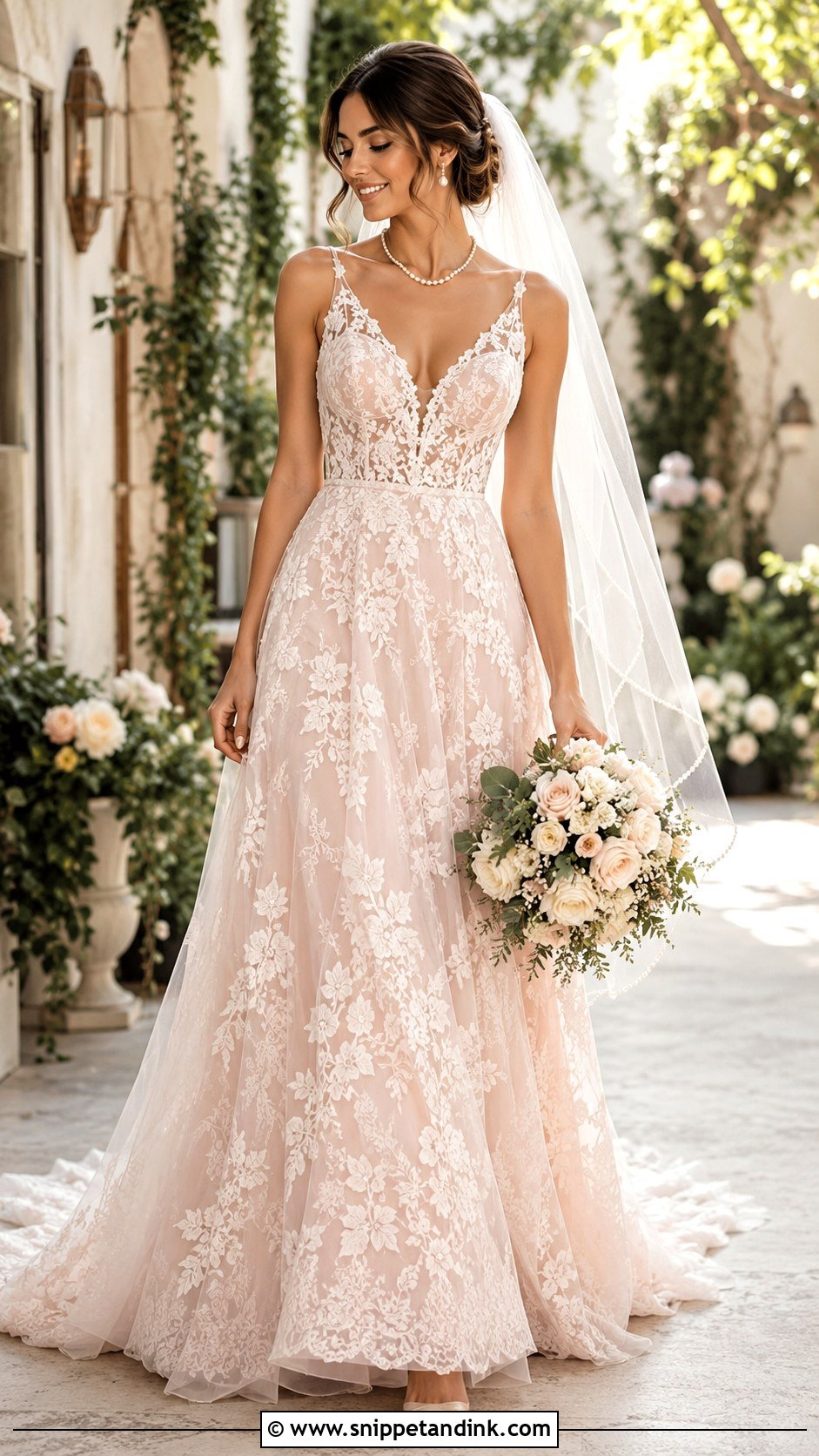
Coloured lining under ivory lace gives the dress depth while the lace itself stays bridal. Blush and champagne are the gentlest; pale blue and soft grey make a stronger contrast. Choose one lining colour under a familiar shape, an A-line, column or ball gown. Ivory lace keeps the veil, shoes and pearls easy to match. Choose flowers that pick up the lining colour without copying it exactly. Look at the gown by a window, under warm lamps and on camera, because a blush lining can read as flesh-coloured in some light and pink in others.
19. Two-Piece Lace Wedding Dress With Maxi Skirt
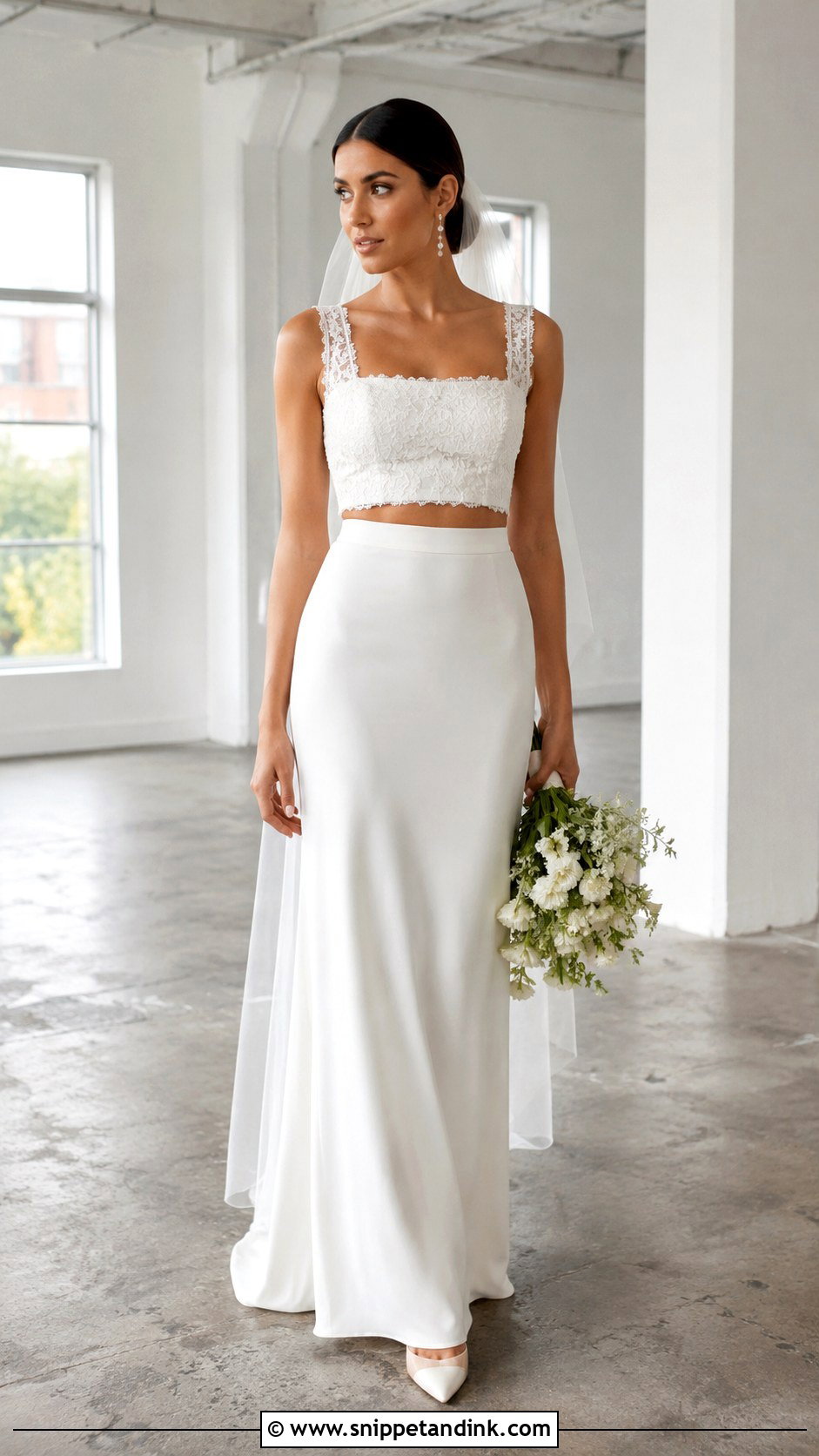
Separates mean you can choose the top and skirt independently, and later wear them apart. A fitted lace top with a high-waisted satin, crepe or tulle maxi skirt in the same ivory works; show a narrow band of skin or let the pieces meet. Square neck, long sleeves or a corset top suit different seasons. If you buy the pieces from different collections, compare them side by side, as two ivories almost never match. Raise your arms and sit in the fitting room to check the top stays down.
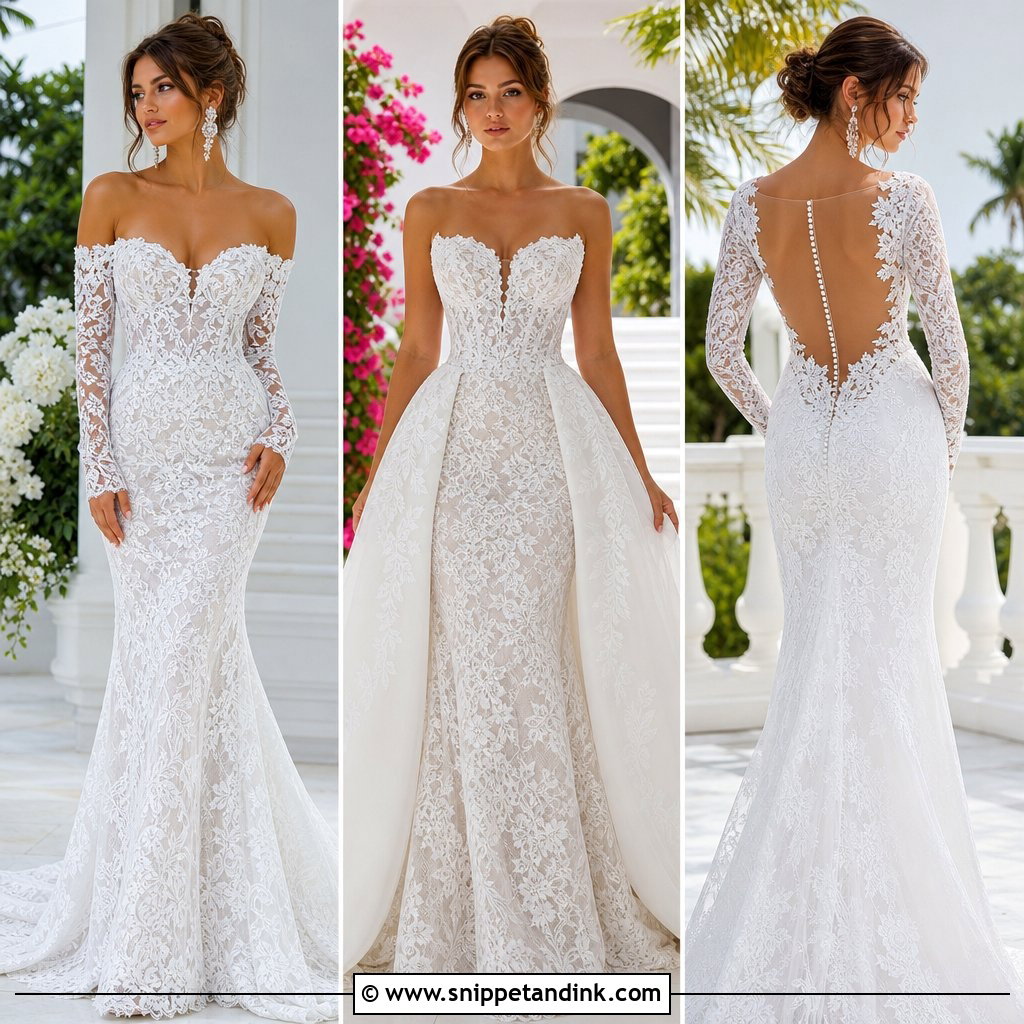
20. Lace Cape Wedding Dress With Simple Silhouette
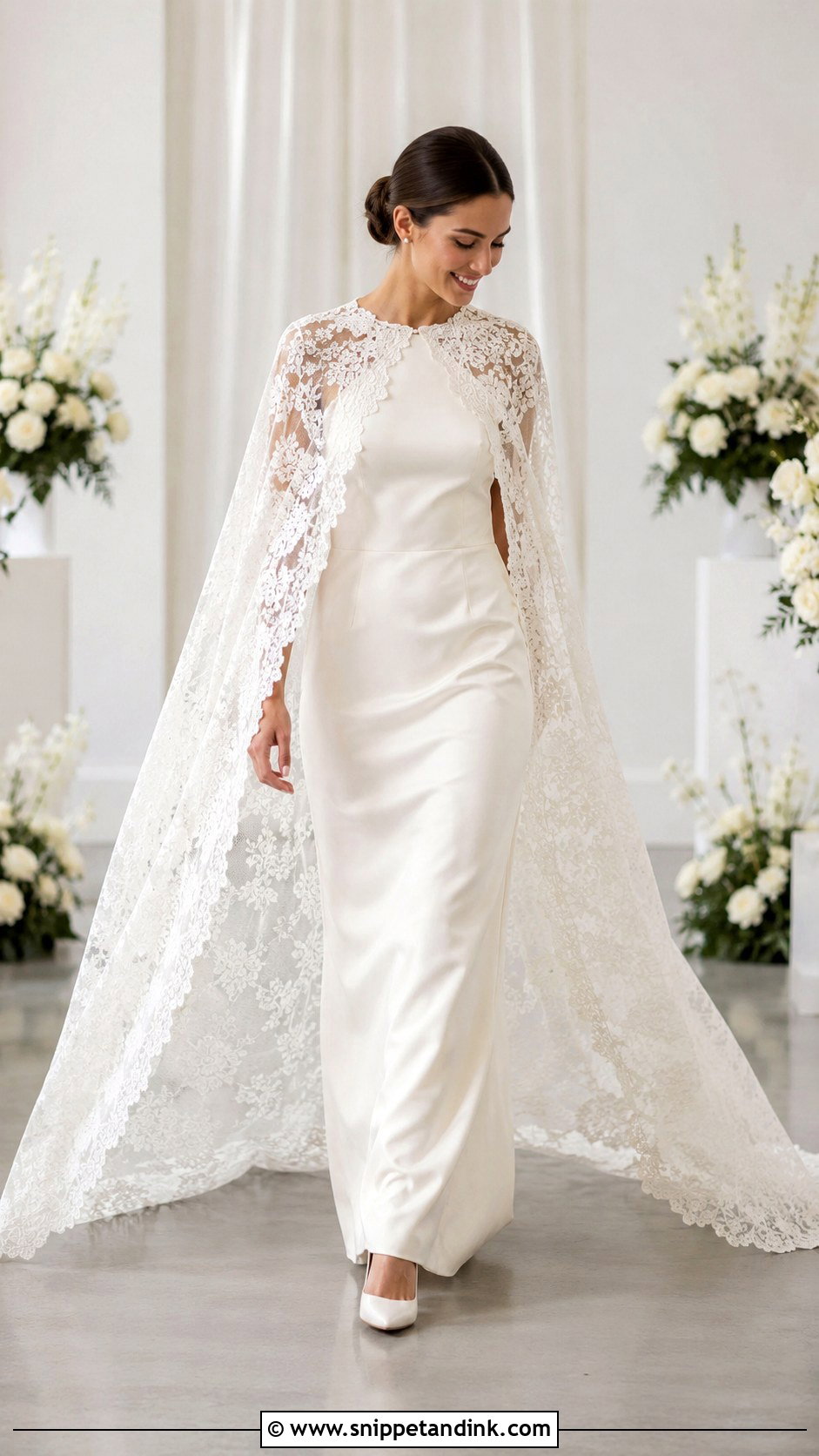
A lace cape lets a plain crepe or satin gown carry ceremony drama without adding embellishment to the dress itself. Let the cape fall from the shoulders to the floor and show off its scalloped edge. The fastening should keep it centred without pulling at the neckline, which usually means a hook at each shoulder rather than one at the throat. Studs, sleek heels and a low bun are enough, and most brides can skip the veil since the cape gives length behind. It comes off for dinner, and the gown underneath is easy to dance in.
Why a Lace Hem Costs More to Alter Than a Plain One
A satin hem is shortened by cutting and re-stitching. A scalloped lace hem can’t be done that way, because cutting straight across loses the scallop. Instead, the seamstress unpicks the lace edge, shortens the skirt underneath and re-appliqués the lace by hand, moving motifs so the pattern still looks continuous. The same happens when a lace bodice is taken in. That hand work is why lace alterations often take longer and cost more than brides expect, and why it pays to buy as close to your size as you can.
Leave enough time for at least two or three fittings, and bring your shoes and underwear to every one so the hem is only set once.
Snags and Makeup Marks on the Day
Lace picks up foundation, fake tan and lipstick faster than smooth fabric, and the marks settle into the texture. Get dressed after your makeup is finished, step in rather than pulling the gown over your head, and keep bracelets with clasps off until you’re fully dressed. If a thread does catch, don’t pull it. Ask whoever is helping you to tuck the loop to the back of the lace with a needle or a dab of clear fabric glue, and leave the proper repair until after the wedding.
Turn Around in the Mirror Before You Say Yes
A corset, a clean column, a detachable overskirt, a colored lining, a new neckline or a shorter hem: each of these changes what lace says. When you’re comparing gowns, look at the back as carefully as the front. Sit and walk in each one, and think about how the train, lining, accessories and alterations add up. Comfort is what lets you forget about the dress. From a single lace bodice to a full lace ball gown, the right one fits your venue, your proportions and how you actually like to dress.
You'll Like These Ideas:








Leave a Reply