
Lace is the fabric brides touch first when they walk into a bridal shop, and with good reason: it gives a dress texture you can see from the back of a church and detail you only notice up close. The catch is that lace varies enormously. A fine net lace and a heavy corded one behave like different fabrics, and the wrong one in the wrong cut can look stiff or busy. Below are twenty lace dresses, from A-lines and ball gowns to sheaths and vintage shapes, from romantic Chantilly lace to satin skirts with lace bodices. For each, I’ve noted the lace, the fit point to check and the accessories that leave the pattern room to show.
Chantilly, Alençon or Guipure? Telling Laces Apart by Hand
Shop labels aren’t always reliable, so I teach brides to judge lace by looking and touching. The type changes how a dress drapes, how heavy it feels by evening and how easily it can be altered.
- Chantilly: very fine, soft and flat, with a delicate floral pattern on a net background. It drapes and moves, suits sleeves and overlays, and snags easily.
- Alençon: a net lace whose motifs are outlined with a raised cord, so the flowers stand out slightly when you run a finger across them. It holds more shape than Chantilly and is often used for appliqués.
- Guipure: no net at all, only bold motifs linked by small bars. Heavier and more sculptural, best on simple cuts.
- Embroidered tulle: thread stitched directly onto tulle. Light and inexpensive to produce, but the pattern can’t be cut out and moved the way appliqué lace can.
Hold the fabric against your forearm too. Some laces, particularly corded and synthetic ones, feel scratchy on bare skin, which matters for sleeves and necklines you’ll wear for twelve hours.
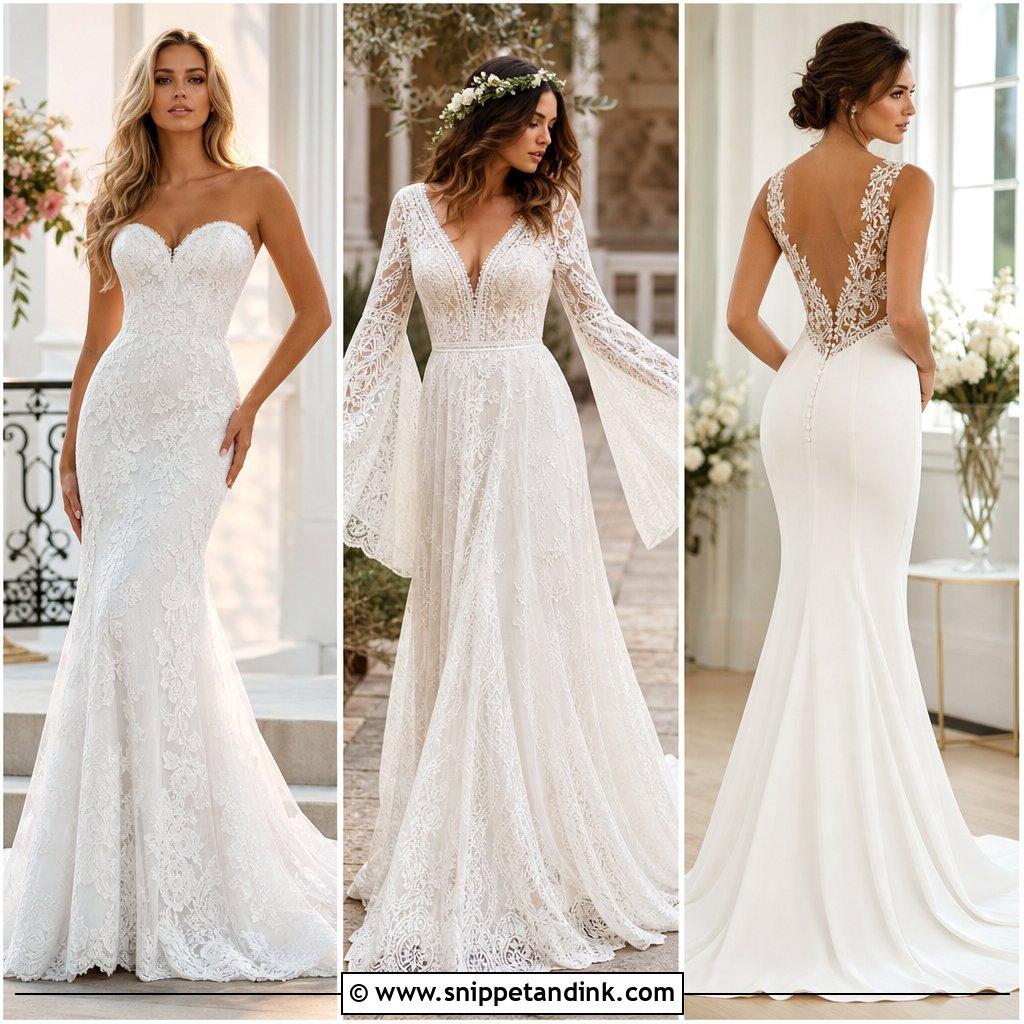
1. Classic A-Line Lace Wedding Dress
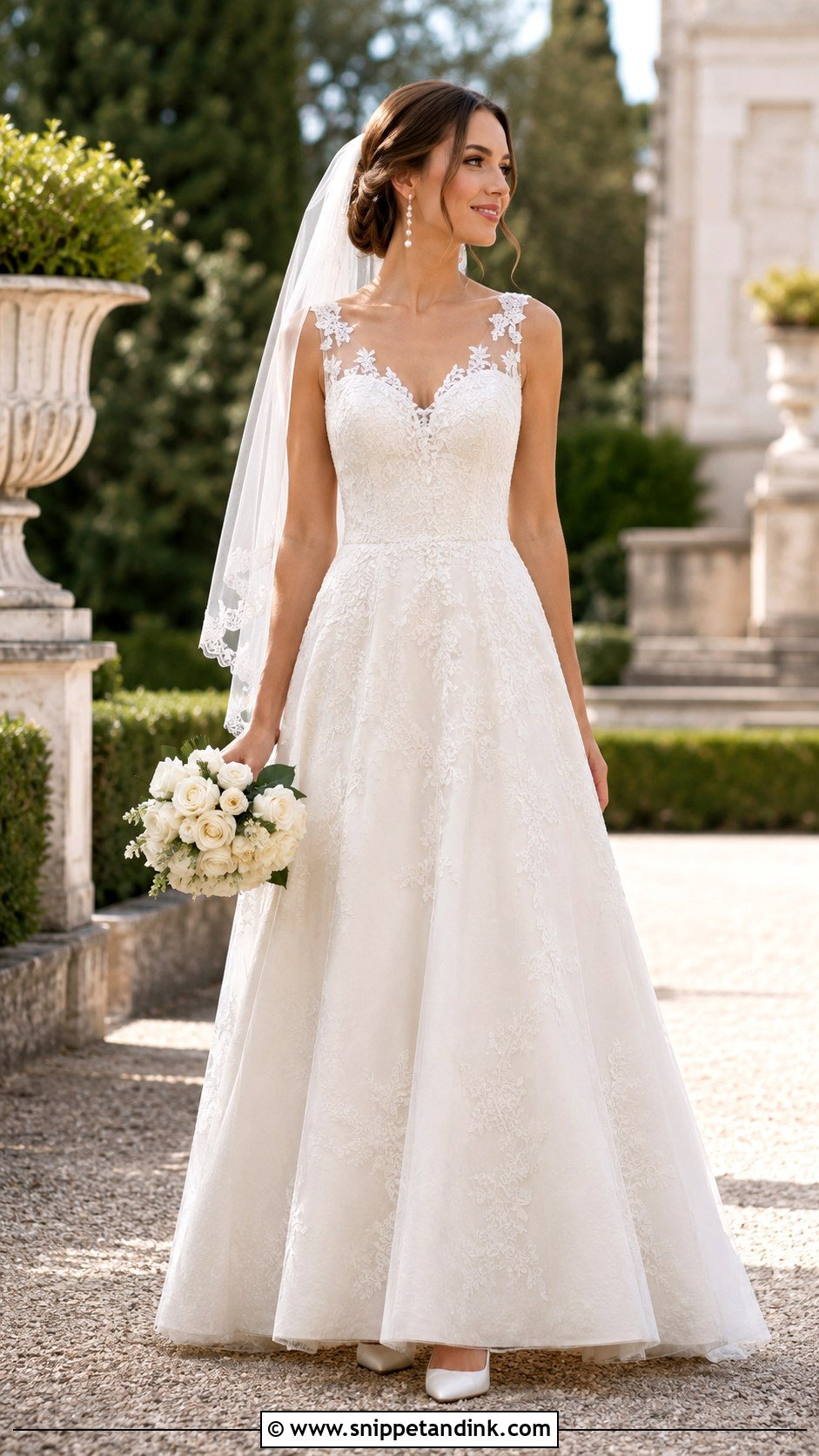
The A-line is the easiest place to start with lace because the skirt doesn’t stretch or pull the pattern out of shape. A fitted lace bodice defines the waist and the skirt widens gradually. I’d choose an ivory lining over a stark white one; it warms the lace and makes floral motifs read more clearly. A fingertip veil, pearl drops and pointed ivory pumps keep it traditional, and a small bunch of white roses with greenery doesn’t compete with the pattern. You can walk, sit and dance in it without thinking, which is more than I can say for half the gowns in a shop.
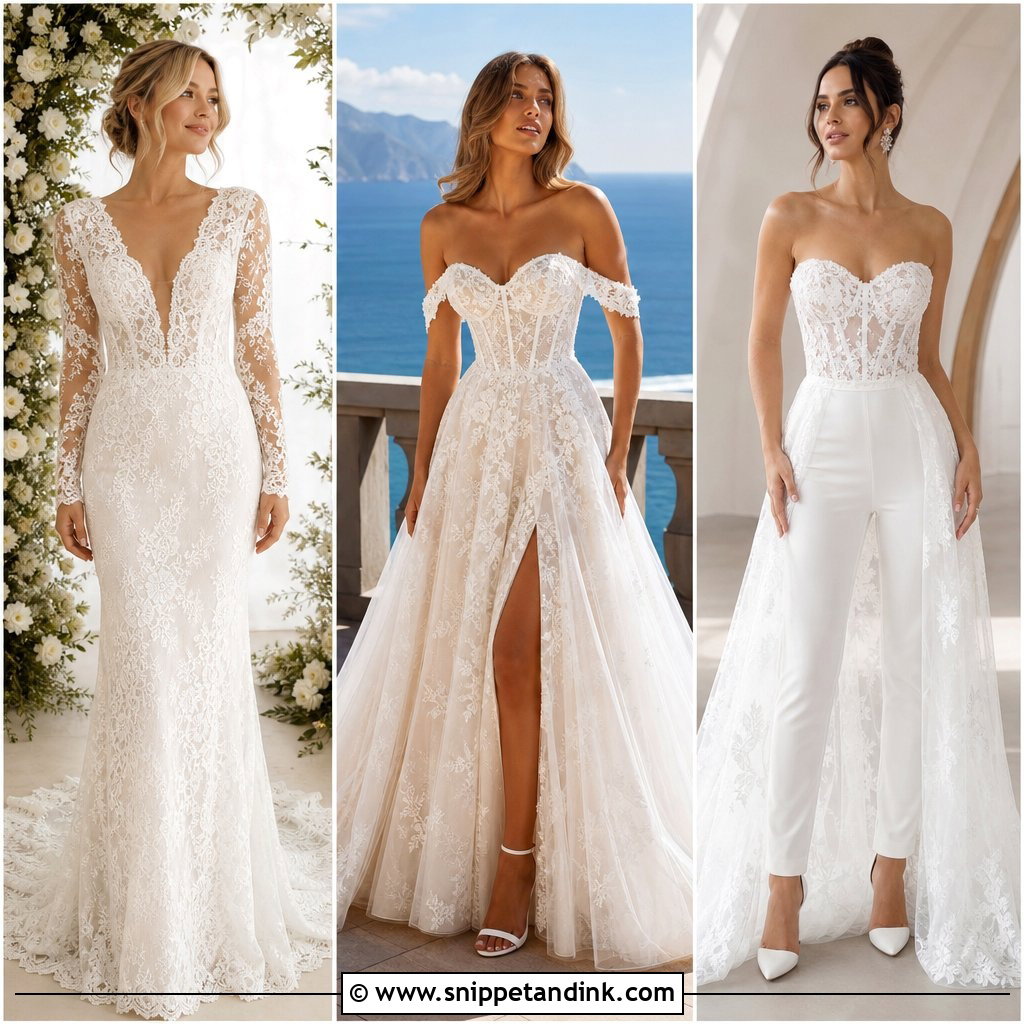
2. Classic Long Sleeve Lace Wedding Dress
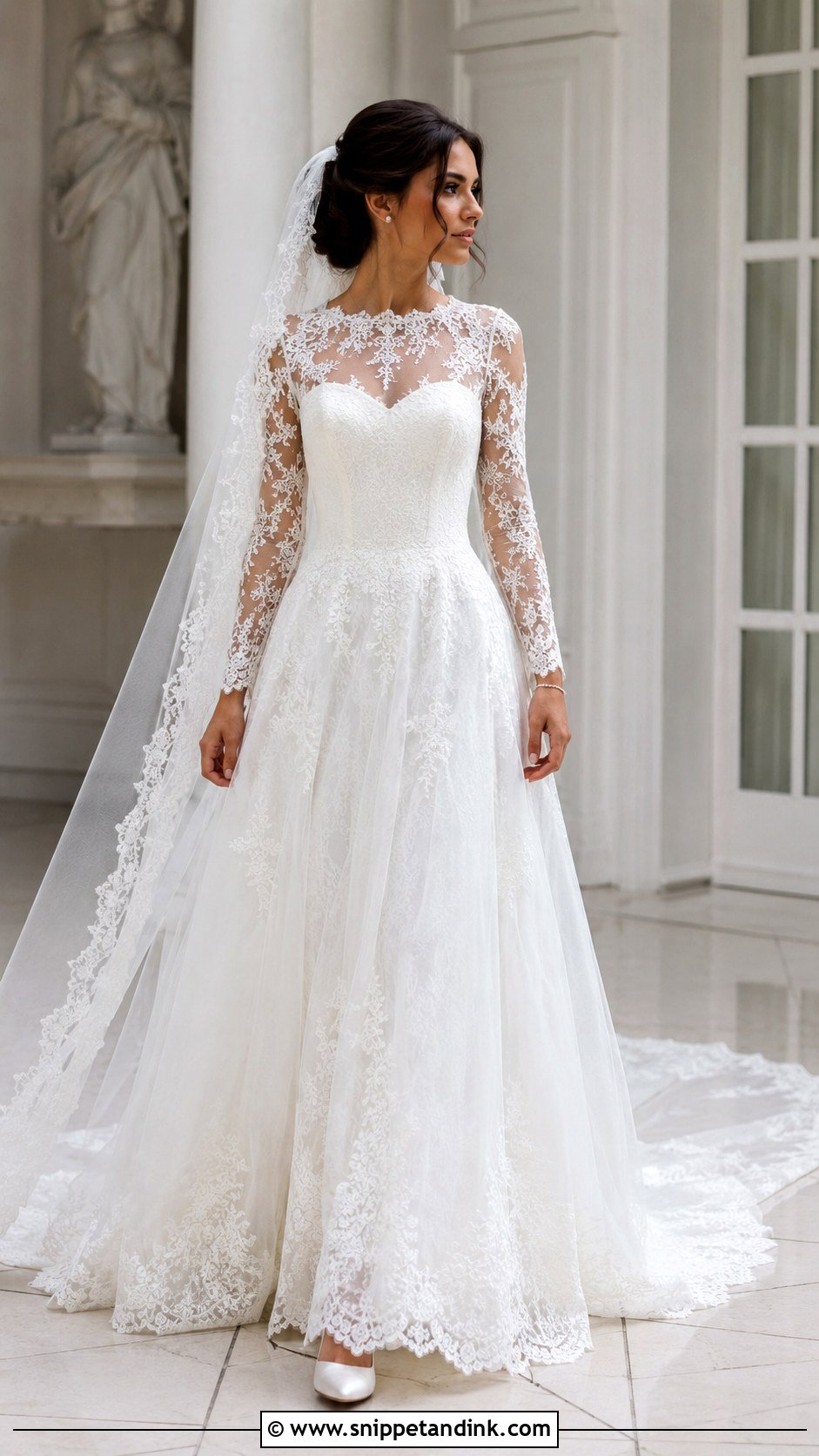
Lace sleeves can be the best part of a dress or the most irritating, and the difference is the fit at the elbow and wrist. Bend your arms and raise them at the fitting; if the lace pulls at the elbow, it will eventually split along a seam. A lined sweetheart bodice under a sheer lace overlay gives coverage while keeping the arms light. A cathedral veil trimmed in matching lace finishes the ceremony look. Pearl studs, a delicate bracelet and closed-toe satin heels keep it understated, and the extra coverage suits autumn, winter and over-air-conditioned venues.
3. Classic Lace Ball Gown Wedding Dress
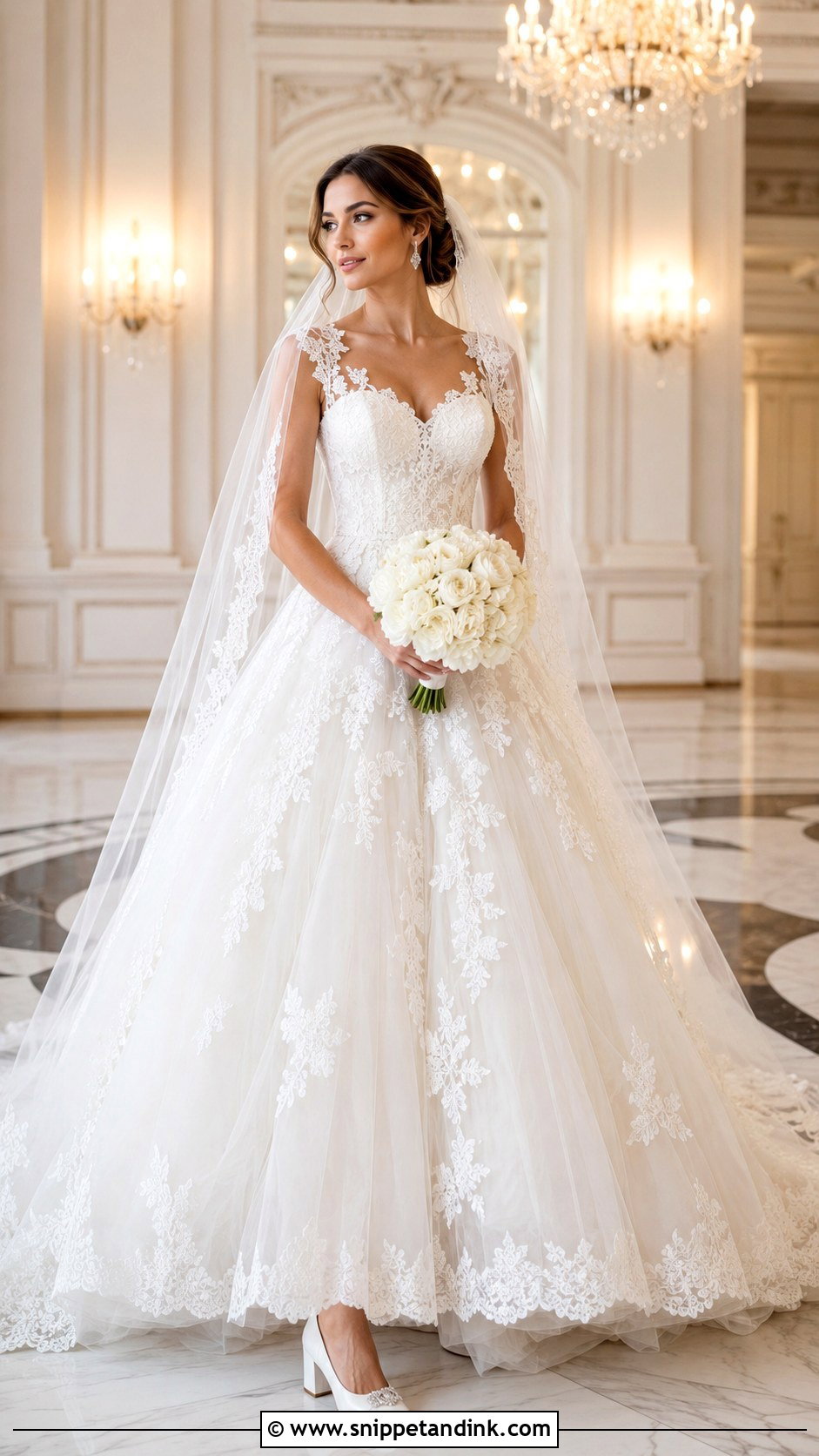
A lace ball gown sounds heavy, but the best ones aren’t. Lace appliqués set on layers of tulle keep the skirt light and moving; a skirt made entirely of heavy lace drags. The full skirt should start at your natural waist. A neat chignon keeps long hair off the lace bodice, and a simple chapel veil leaves the appliqués visible. Block-heel pumps hidden under the hem will save your feet. The skirt is wide, so a medium, rounded bouquet keeps everything in proportion. Ballrooms, historic venues and evening ceremonies give it the space it needs.
4. Classic Strapless Lace Wedding Dress
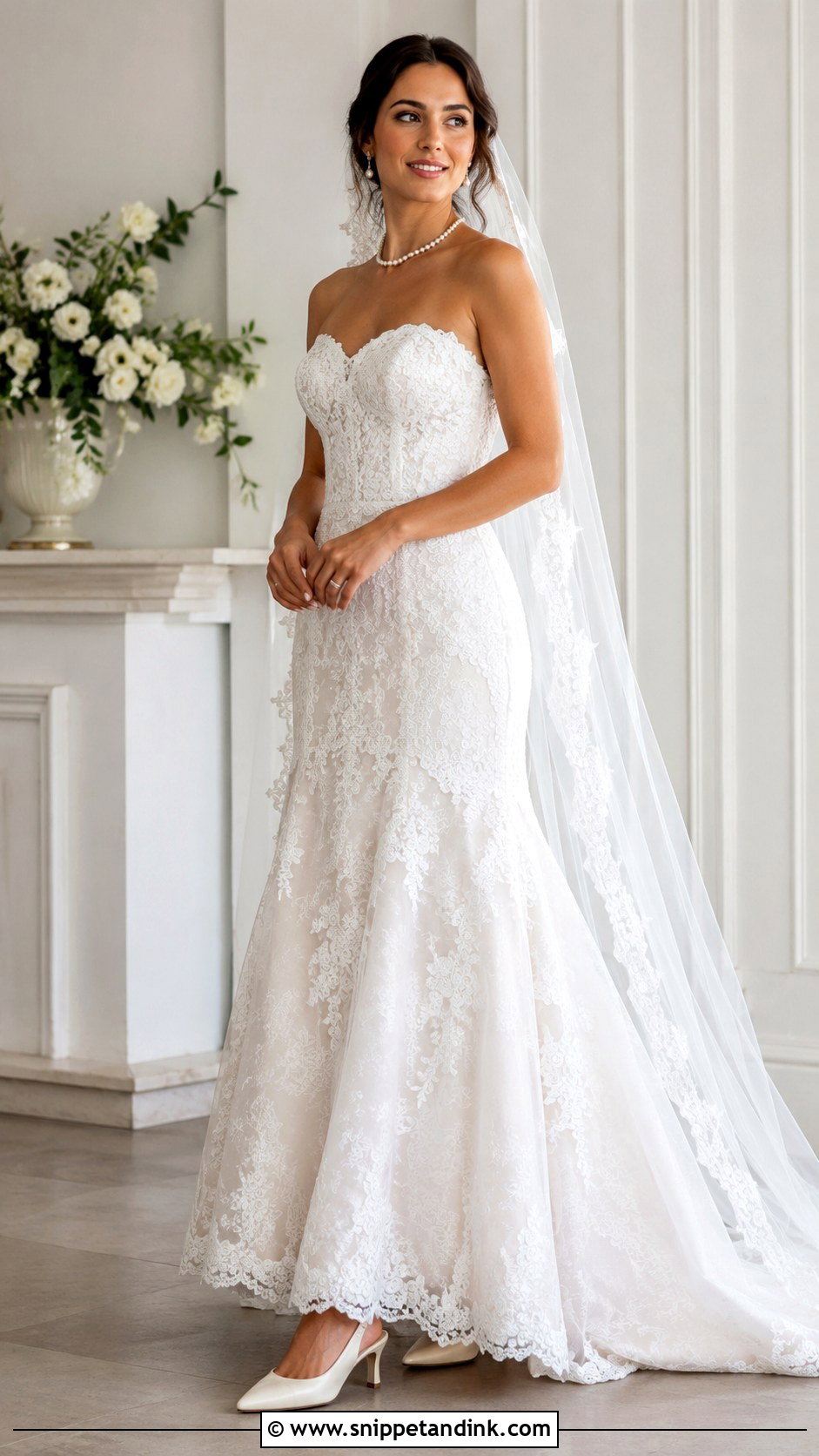
Strapless lace is the most flexible version, because almost everything about it can change with accessories. The structure has to be right first: internal boning and a straight or softly curved neckline that stays put when you sit, hug and dance. If the bodice is even slightly loose, the lace ripples along the top edge. An A-line or gently flared skirt balances the bare shoulders. For a church ceremony, a fitted detachable bolero gives coverage you can remove later. A short pearl necklace, slingback heels and a low bun or smooth waves keep the shoulders as the focus.
5. Classic Sweetheart Lace Wedding Dress
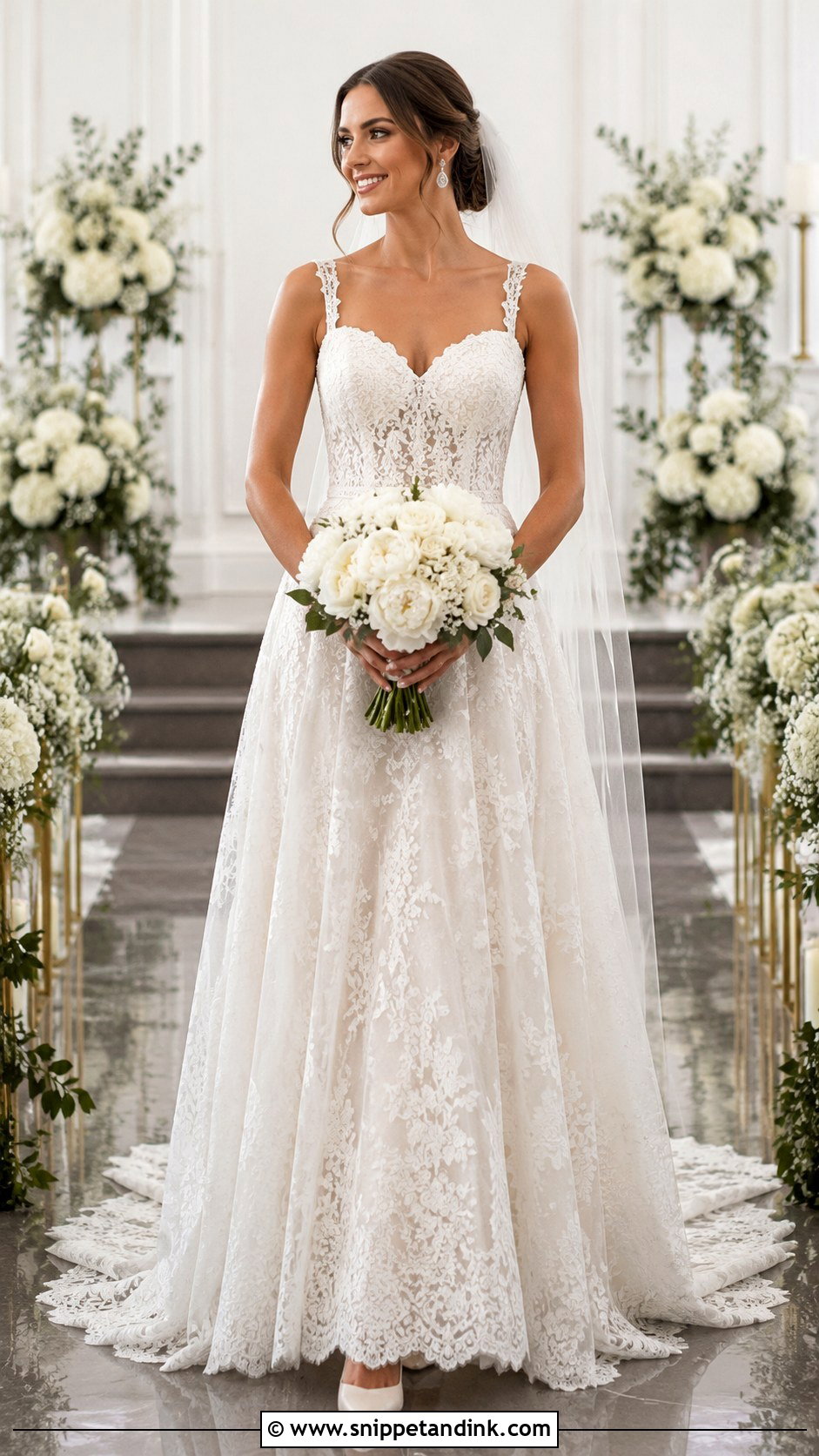
With a sweetheart neckline in lace, I look at the symmetry of the motifs. A good dressmaker places matching flowers on each side of the curve; a poorly cut one lets the pattern run off at different points, which shows clearly in close-up photos. The neckline can be strapless or held with narrow lace straps for support. A defined natural waist and flowing skirt give the traditional bridal proportion. Skip the large necklace and let teardrop earrings work with the lace instead. A plain tulle veil, almond-toe satin pumps and peonies or roses complete it.
6. Classic High Neck Lace Wedding Dress
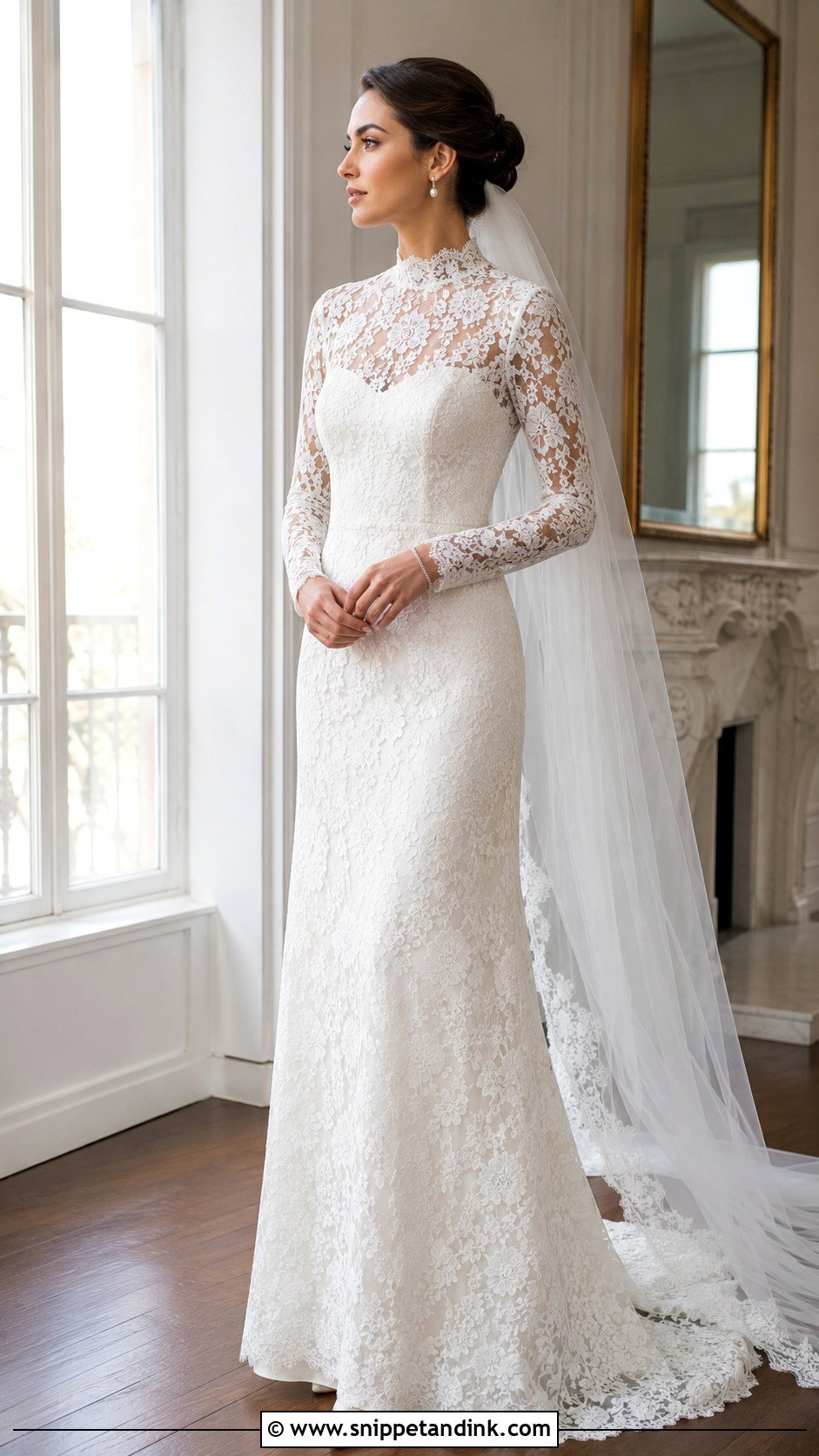
A high lace collar sits right against the skin, so comfort around the neck matters more than anything else here. Turn your head side to side at the fitting; a stiff collar edge rubs, and a soft inner binding prevents that over a long day. Sheer lace at the neckline over a lined bodice keeps it light. A slim A-line skirt, covered buttons and fitted sleeves add to the traditional feel. Wear your hair up with the veil fixed beneath the bun, and no necklace. A narrow bracelet and pointed heels are enough. Lighter laces make it wearable in warmer months too.
7. Classic Off-the-Shoulder Lace Wedding Dress
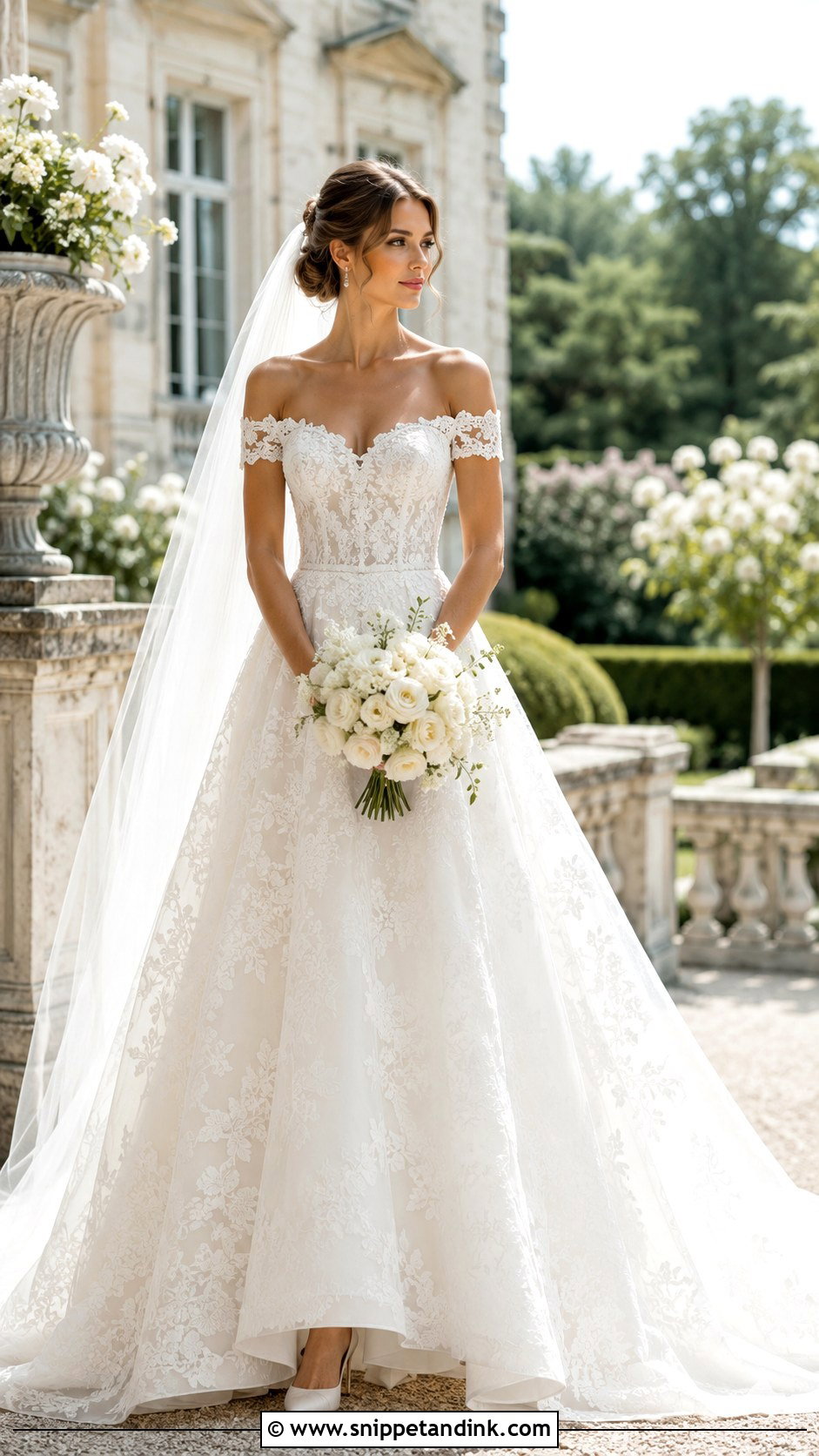
Off-the-shoulder lace sits on the upper arm, and that’s where it either rests gently or digs in. The bodice beneath needs proper inner structure so the sleeves aren’t holding the dress up. Lift your arms and hug someone at the fitting; if the band leaves a mark, it needs loosening. An A-line or full skirt balances the horizontal neckline. A plain cathedral veil keeps the shoulders visible from behind. A low textured bun, small drops, a minimal ivory clutch and a soft bouquet of white flowers with pale greenery complete it.
8. Classic V-Neck Lace Wedding Dress
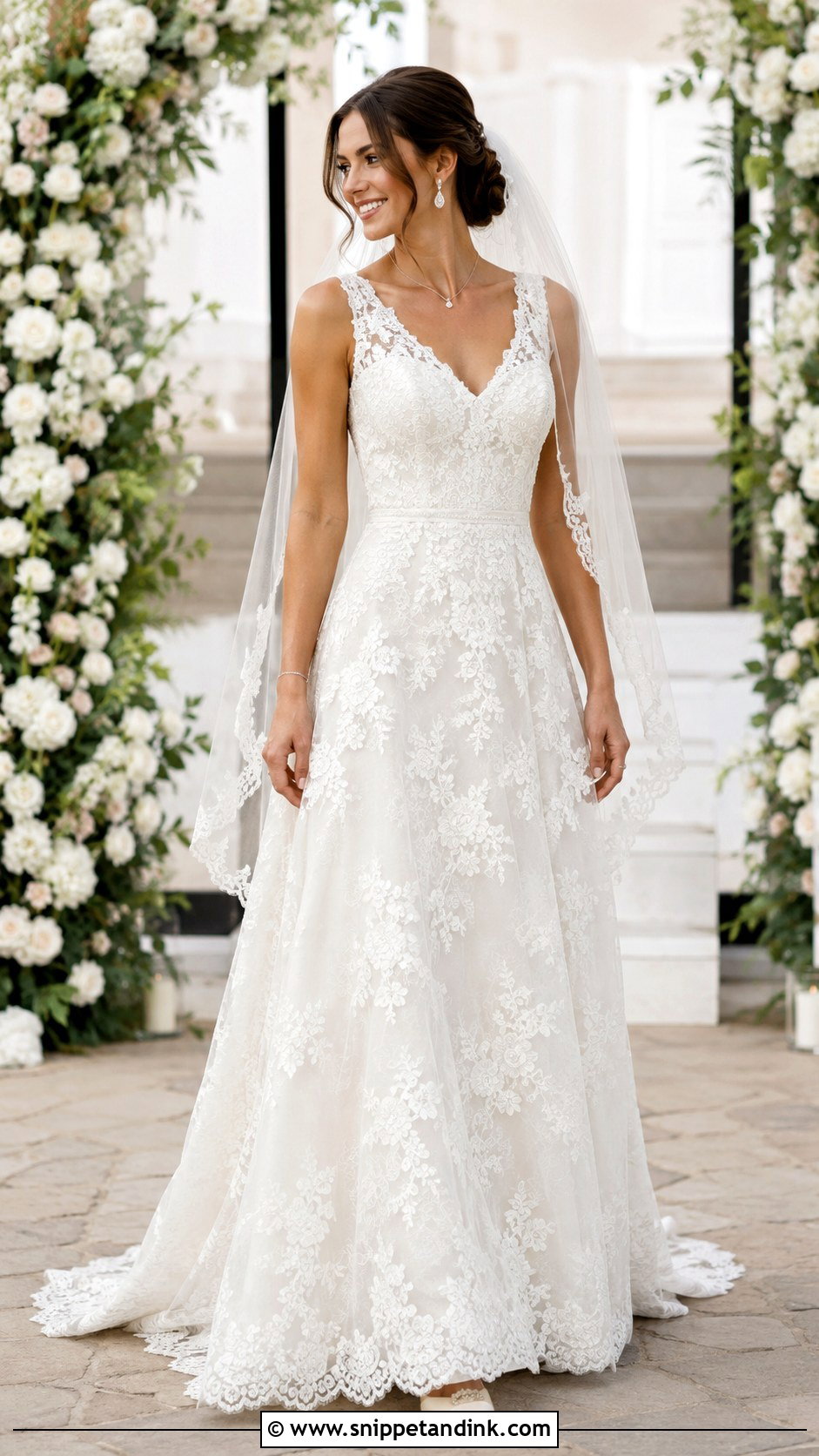
A moderate V in lace looks classic; a deep plunge looks of its moment. Wide lace straps support the bodice and give the pattern room to show. A narrow waist seam and covered buttons down the back finish it neatly over a soft A-line skirt. A small pendant can sit inside the V if it follows the line of the neckline, but keep it fine. A fingertip veil, crystal earrings and pointed ivory heels suit it, and loose waves or a half-up style soften the overall shape. It moves between indoor and outdoor settings easily.
9. Classic Square Neck Lace Wedding Dress
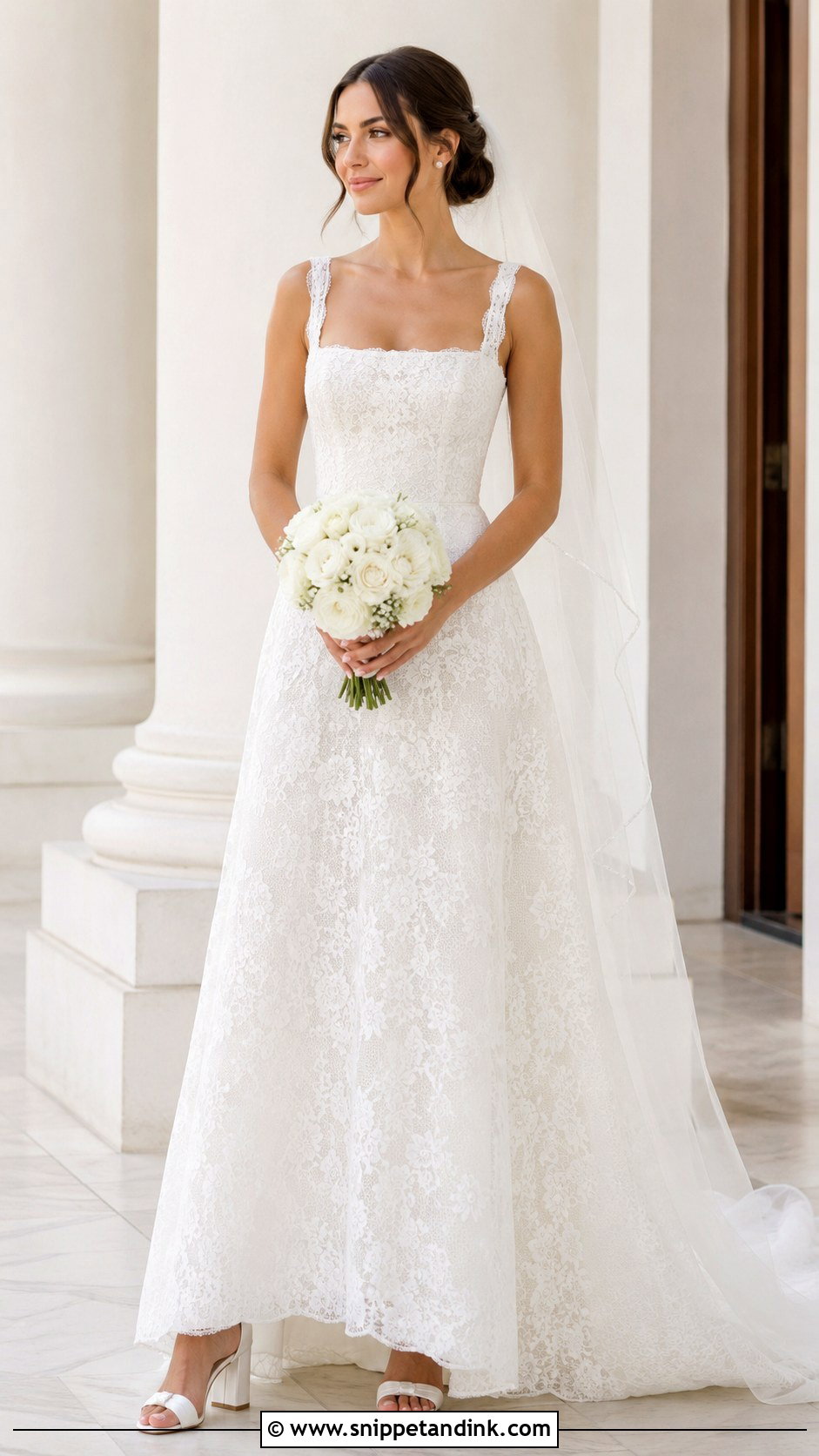
Square necklines in lace need a fine pattern. A large motif against straight edges can look heavy; a small floral lace softens the geometry. The corners are what I check at every fitting, sitting and standing, because lace has some stretch and the corners can lift if the bodice isn’t firmly structured underneath. Wide straps or fitted lace sleeves suit it, with an A-line skirt for balance. Pearl-and-diamond studs, a smooth low bun and a simple chapel veil are enough, with block-heel satin shoes for stability and a compact, rounded bouquet.
10. Classic Lace Mermaid Wedding Dress
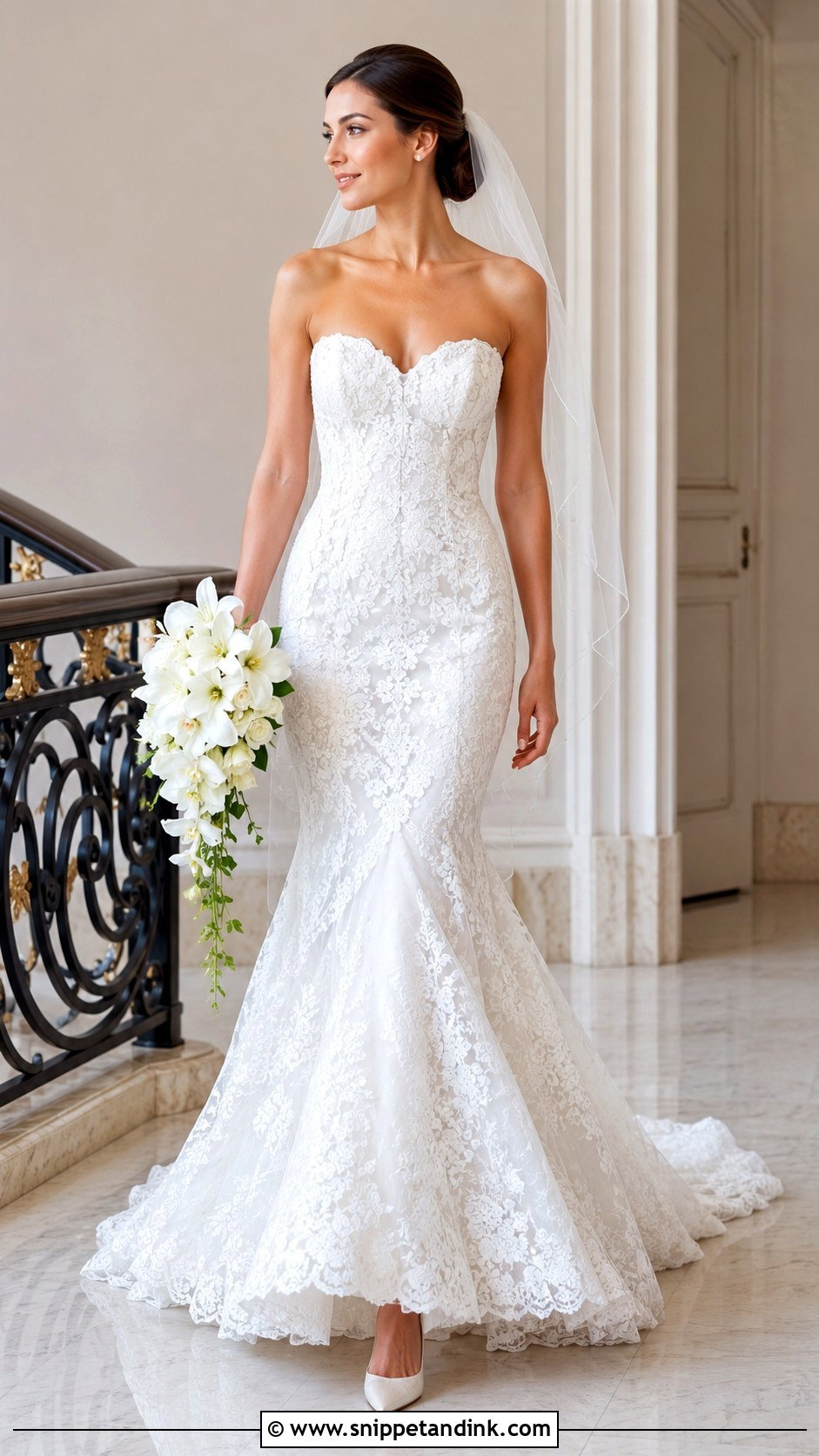
Lace suits a mermaid shape well because it moulds to the body, but the transition into the flare decides whether it looks refined. A gradual flare beginning near the knee looks classic; an abrupt one looks costume-like. A supportive bodice with a sweetheart or modest V keeps it from looking overdone. Walk, sit and climb a few steps at the fitting, since this is the most restrictive silhouette in the list. A single-layer veil, simple studs and sleek pumps keep it calm, and a narrow cascading bouquet follows the long line. A low bun or side-parted waves suit it.
11. Classic Lace Fit-and-Flare Wedding Dress
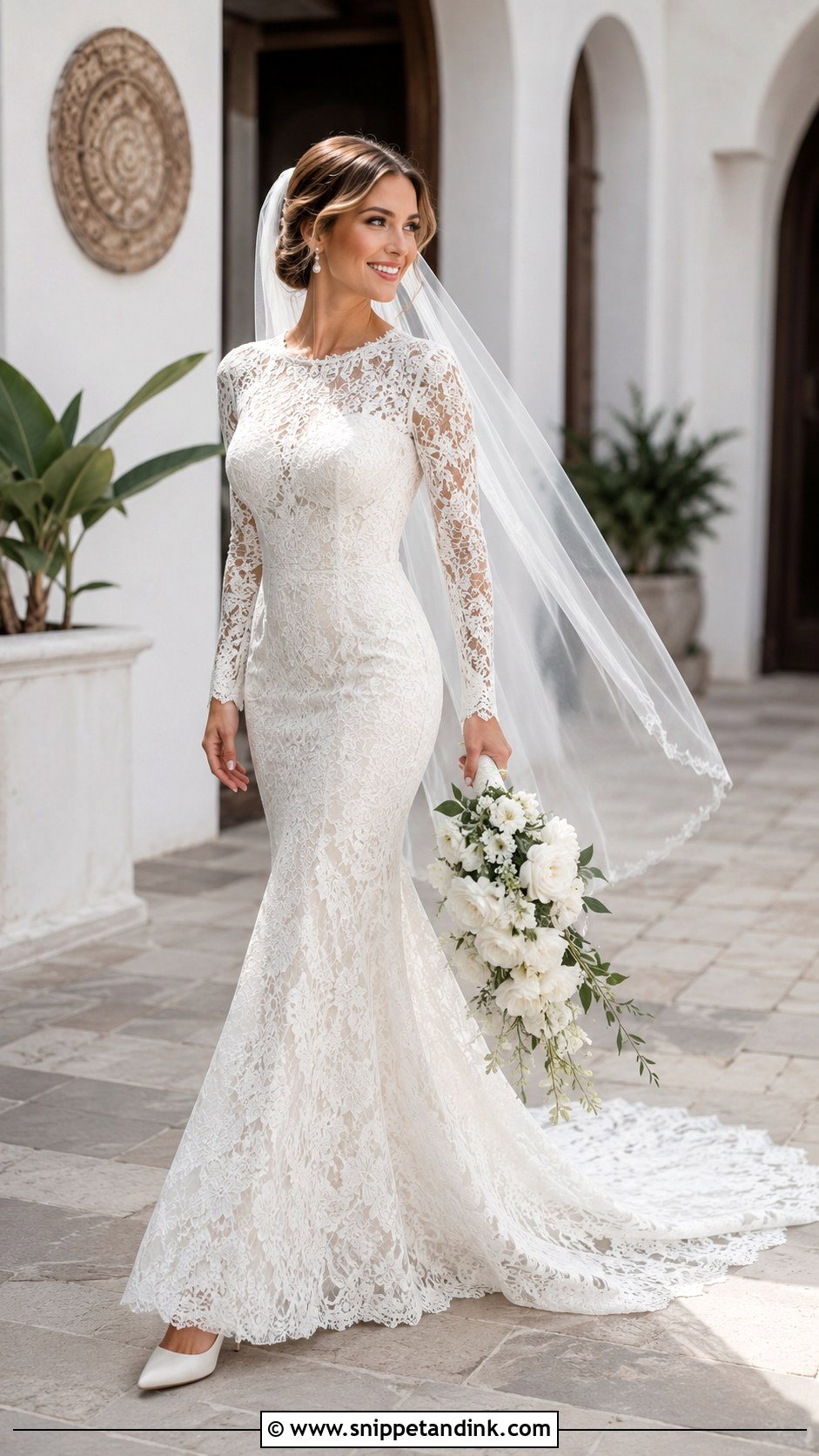
Fit-and-flare gives you shape through the bodice and hips but starts the skirt earlier than a mermaid, so dancing is far easier. Allover lace with a clean neckline, supportive straps and a low or mid-height back is the classic version. A chapel train adds ceremony without dragging. Wear a raw-edge veil so the back stays visible, with a loose chignon, pearl drops and stable heels. An elongated bouquet echoes the vertical line. Test the bustle at the final fitting and make sure the person doing it on the day has practised it.
12. Classic Lace Sheath Wedding Dress
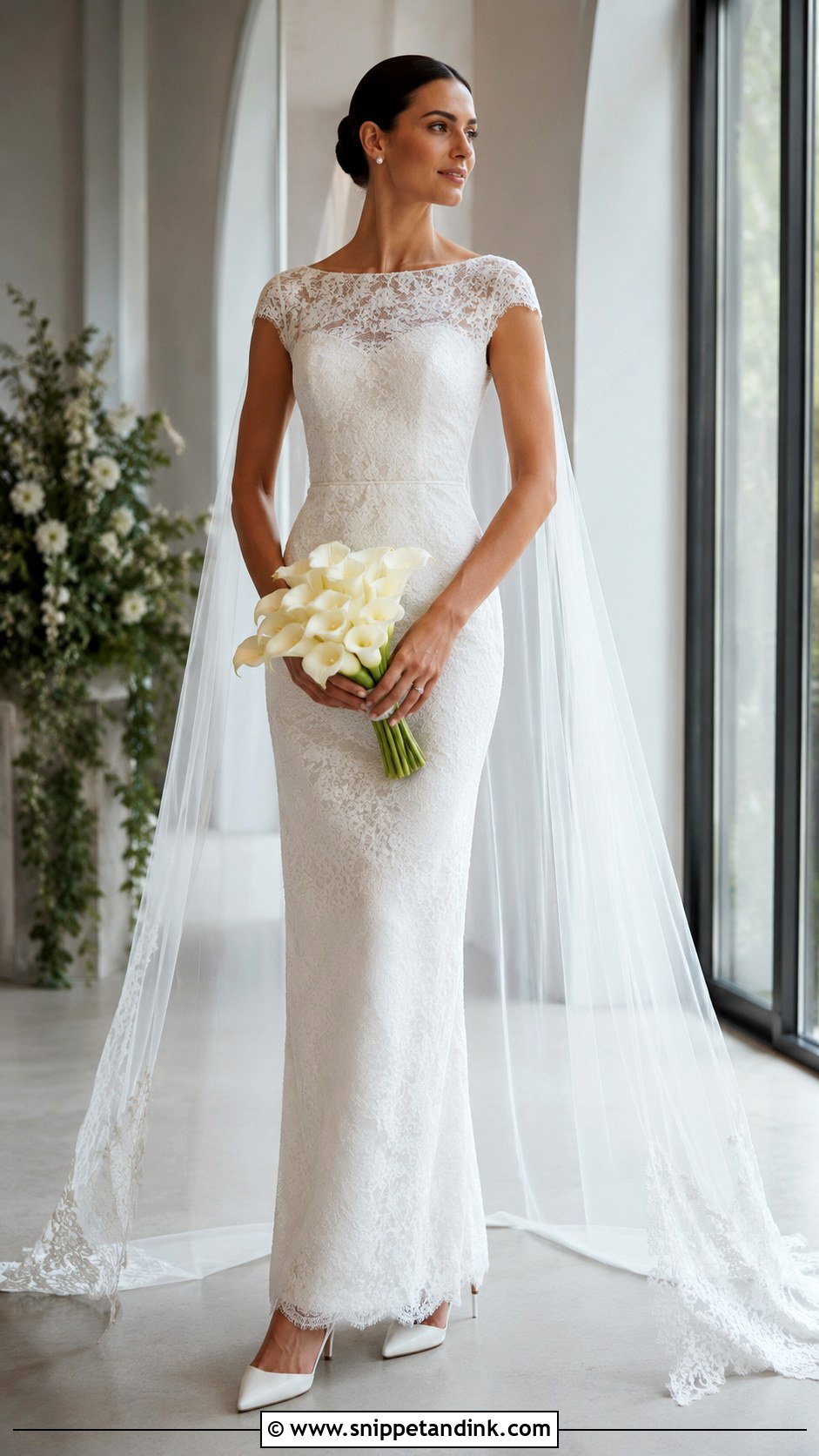
A lace sheath wedding dress falls close to the body with no wide skirt, so the lace pattern needs to be small and consistent; a large motif across a narrow skirt gets cut awkwardly at the seams. A bateau neckline, cap sleeves and a lightly defined waist give coverage and shape. Check your stride, since sheaths restrict leg movement more than any other cut. Smooth undergarments and well-placed lining help the lace lie flat. A short veil or tulle cape, pearl studs, pointed slingbacks and a few callas or roses suit intimate rooms and modern venues.
13. Classic Lace Wedding Dress With Cathedral Train
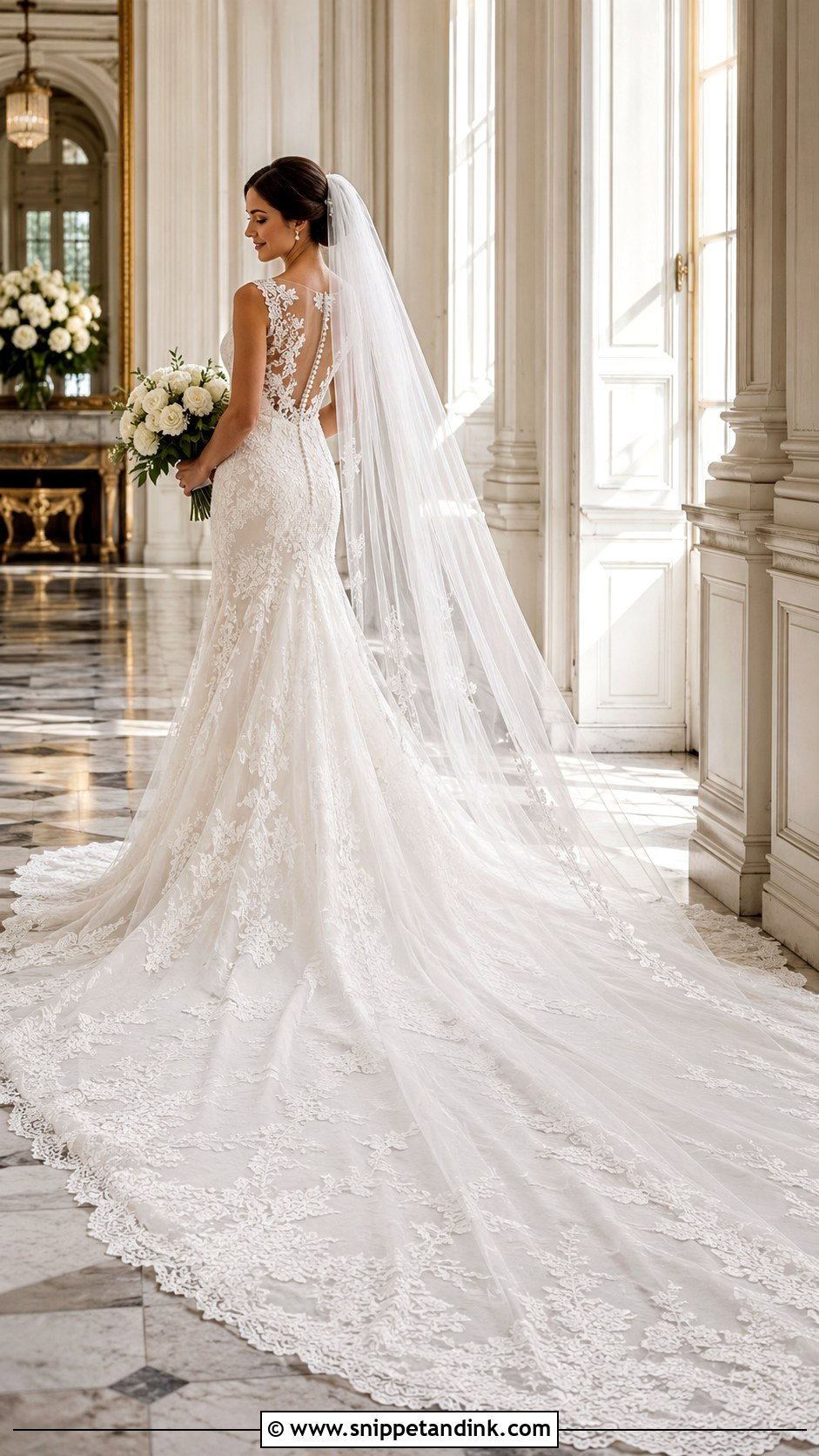
With a cathedral train, the lace has to continue from bodice to hem in one coherent pattern, because when the train is spread out behind you, that’s what people photograph. Appliqués that stop abruptly at the hip look unfinished from behind. A fitted waist and restrained neckline balance the length. A simple veil just longer than the dress, small earrings and closed-toe pumps keep the attention on the back. Have a secure bustle added during alterations and practise it, since lace trains are heavy and can tear if bustled hurriedly.
14. Classic Lace Wedding Dress With Cap Sleeves
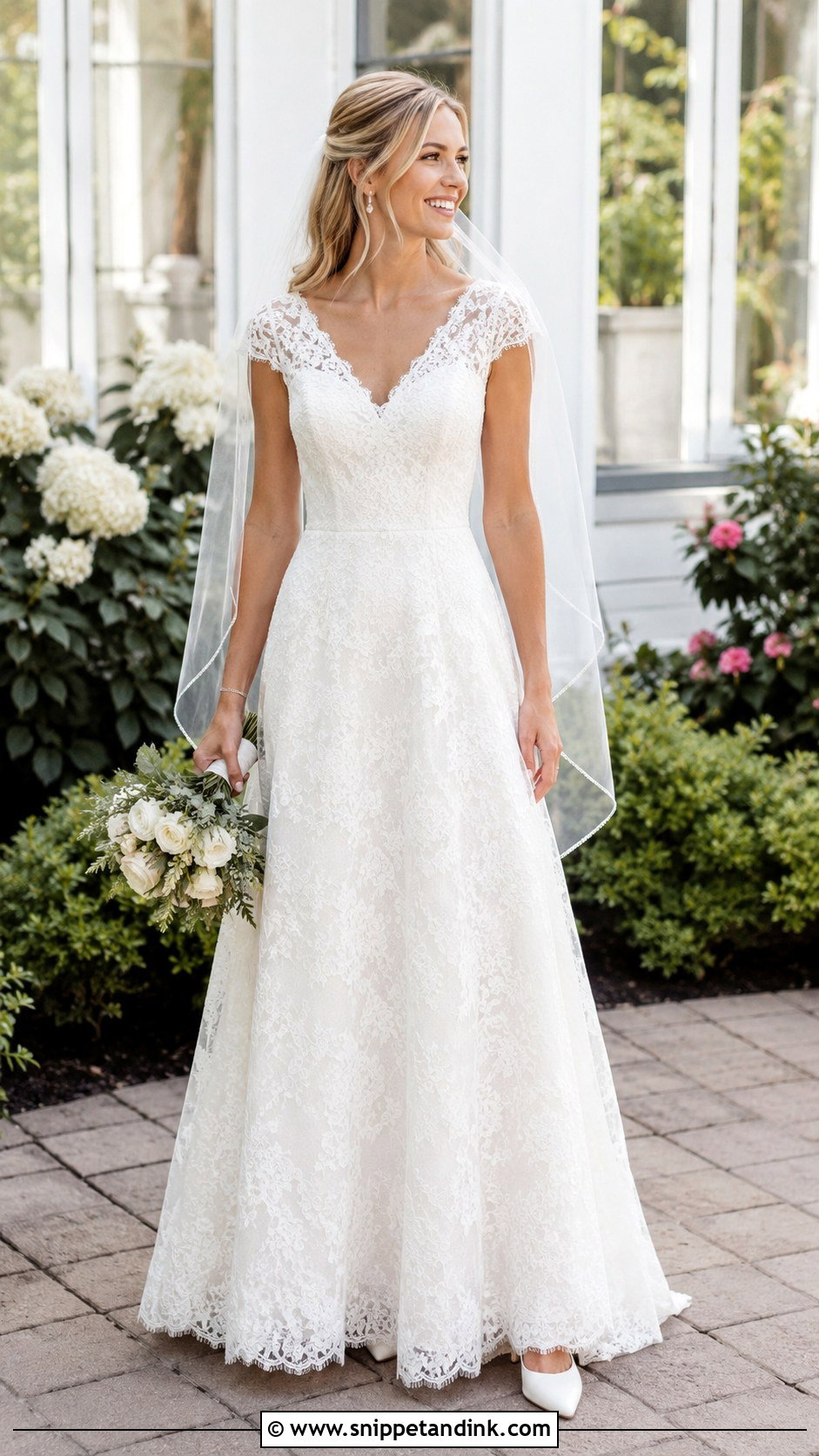
Cap sleeves in matching lace connect the neckline and bodice smoothly and give the lightest possible shoulder coverage. The sleeve edge is what I watch: it should rest flat on the arm, not cut into it, and the lace pattern should mirror on both sides. A scoop or soft V with an A-line skirt is the traditional pairing. Because the coverage is minimal, it’s comfortable in warm and mild weather. A fingertip veil, pearl earrings, a slim bracelet and low ivory heels finish it, and a half-up style keeps the sleeves on show.

15. Classic Lace Wedding Dress With Illusion Neckline
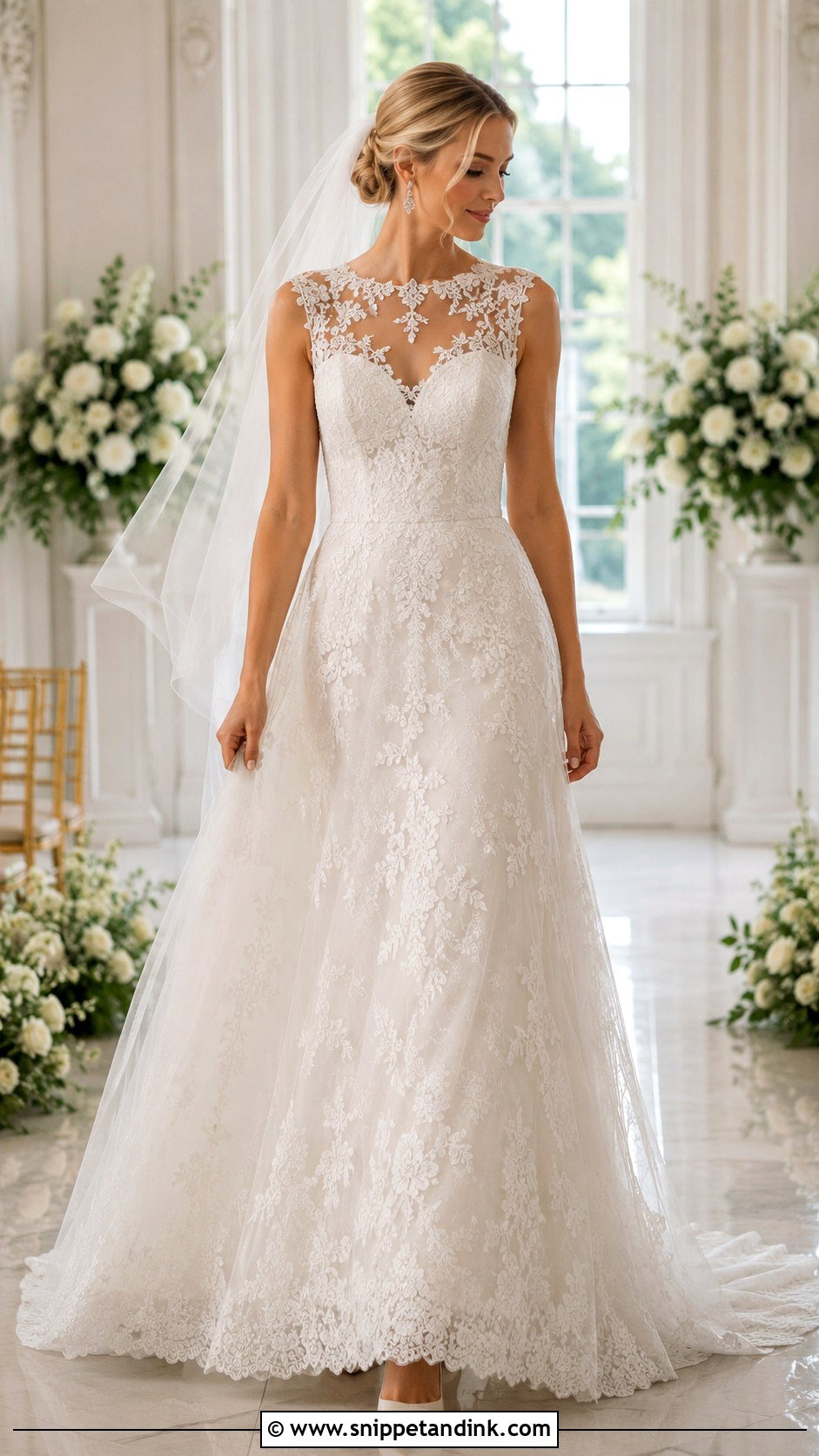
An illusion neckline sets lace on fine mesh so it seems to float, and the mesh also quietly supports the bodice. Choose soft mesh in a shade close to your skin, with appliqués placed evenly around the collarbone. A sweetheart lining beneath gives definition. Look at it in daylight and take a phone photo with flash, because mesh that looks invisible in the shop can show up in pictures. Avoid heavy necklaces that snag the mesh. A flowing A-line skirt with covered back buttons, a plain tulle veil, small crystal earrings and ivory pumps complete it.
16. Classic Chantilly Lace Wedding Dress
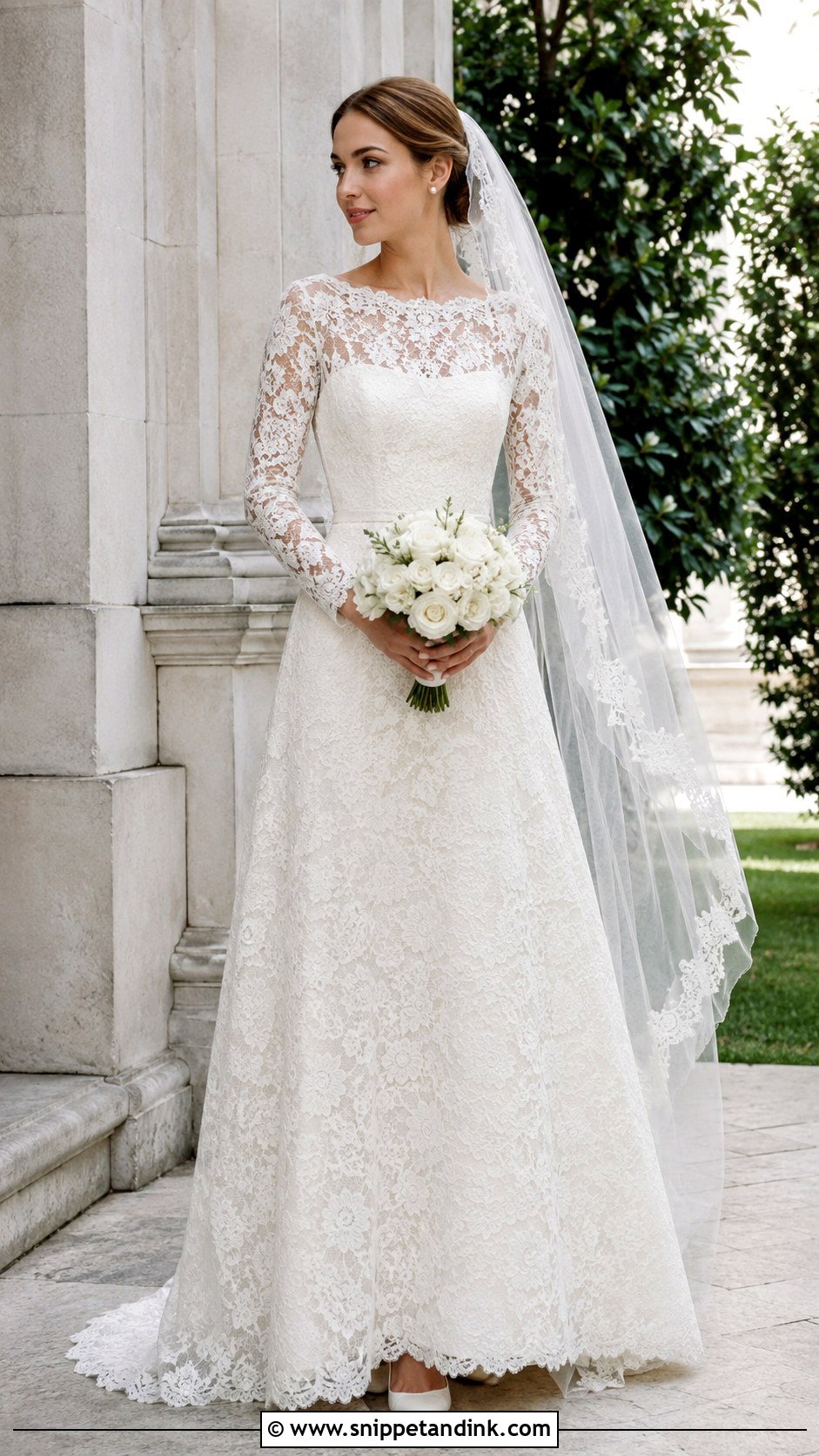
Chantilly is the fine, soft lace with a delicate floral pattern on a net ground, and it drapes rather than stands. It’s lovely across a whole A-line or as an overlay on the bodice and sleeves. That softness makes it fragile, so check every accessory for edges that could snag: bracelet clasps, shoe buckles, the pins in a bouquet wrap. An ivory or soft white lining keeps the pattern visible without harsh contrast. A bateau neckline and fitted sleeves give the light lace some structure. A lace-edged veil, pearl studs, satin pumps and a compact bouquet complete it.
17. Classic Guipure Lace Wedding Dress
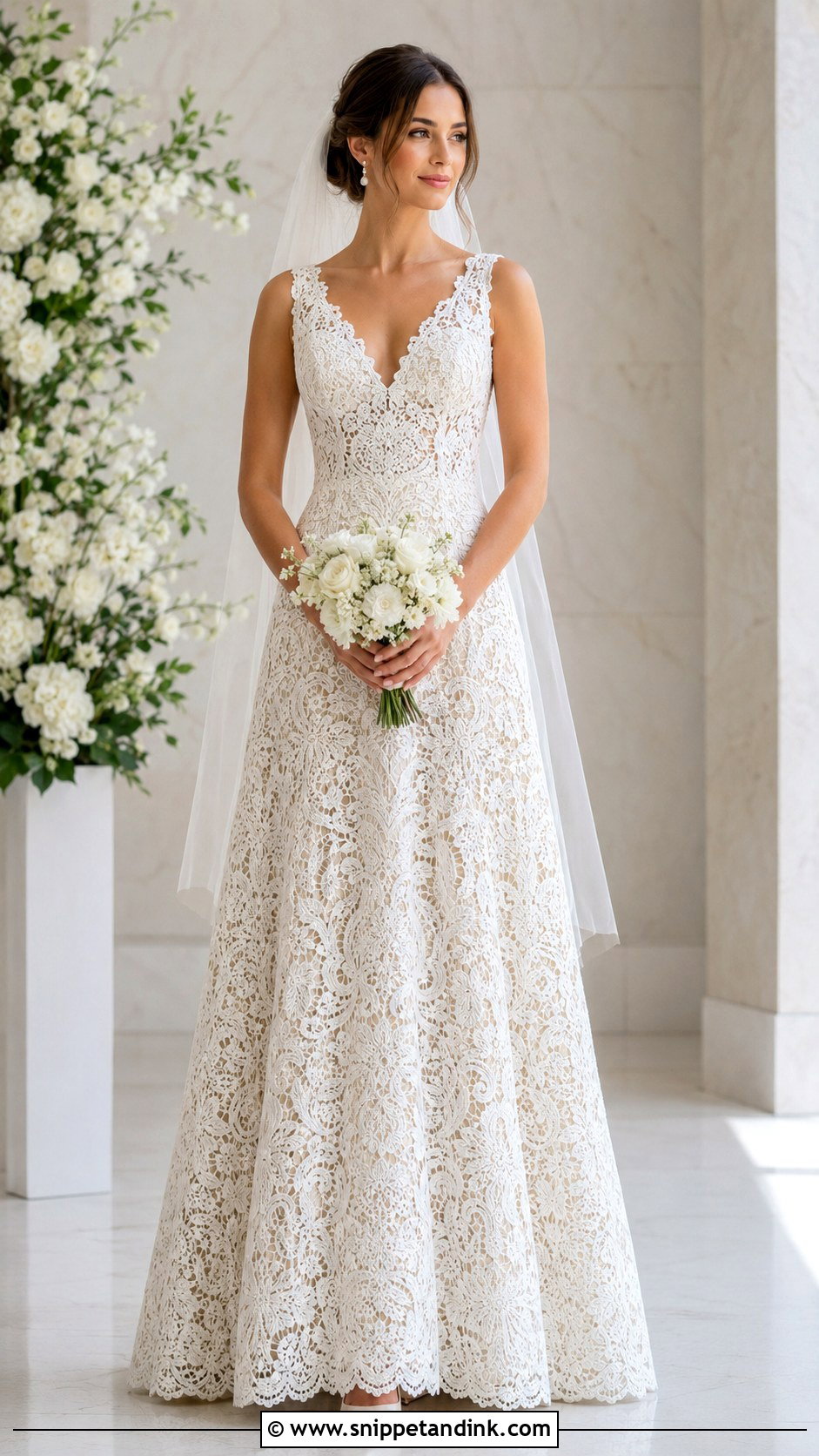
Guipure lace has no net background; its bold motifs are joined by small bars, which gives it weight and a sculptural texture. That boldness needs a simple cut, like a clean A-line or fitted sheath, with a modest V, wide straps and a plain waist. At alterations, ask that major motifs line up at the seams; guipure can’t be trimmed invisibly the way fine lace can, so a mismatched seam shows. A lining close to the lace colour looks traditional. A plain veil, pearl earrings, smooth satin shoes, a sleek bun and a small white bouquet suit it.
18. Classic Lace Wedding Dress With Satin Skirt
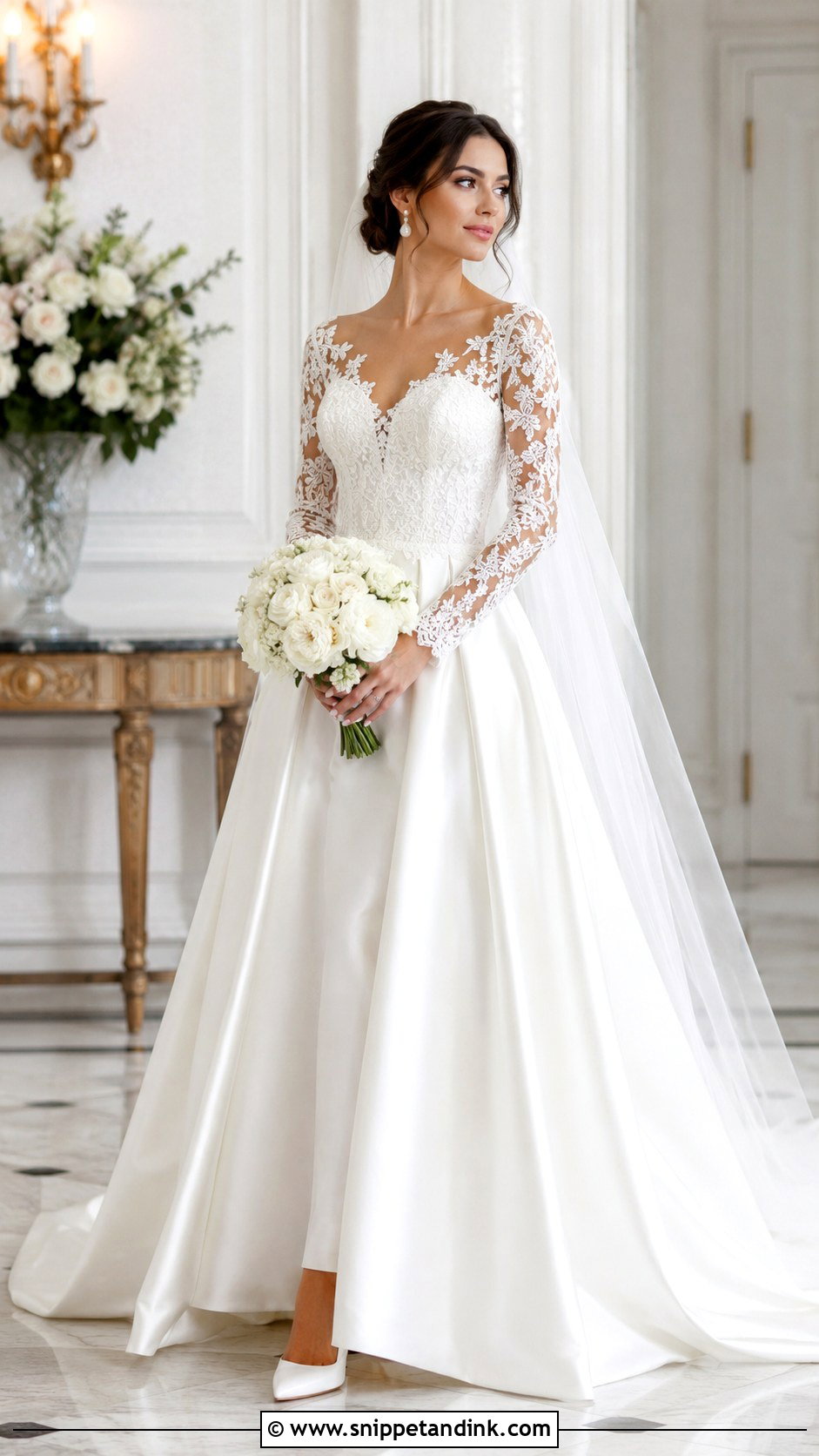
Lace bodice, satin skirt: texture near the face, smooth fabric below. The waist seam is where these two fabrics meet, and I check it from every angle, because lace and satin stretch differently and the seam can wave if the tension isn’t right. Long sleeves or wide straps suit the bodice, with a clean A-line or ball gown skirt. Satin creases and marks easily, so plan how the dress travels and have it steamed on arrival. A plain cathedral veil, pearl drops, satin pumps matching the skirt and a structured white bouquet keep it formal.
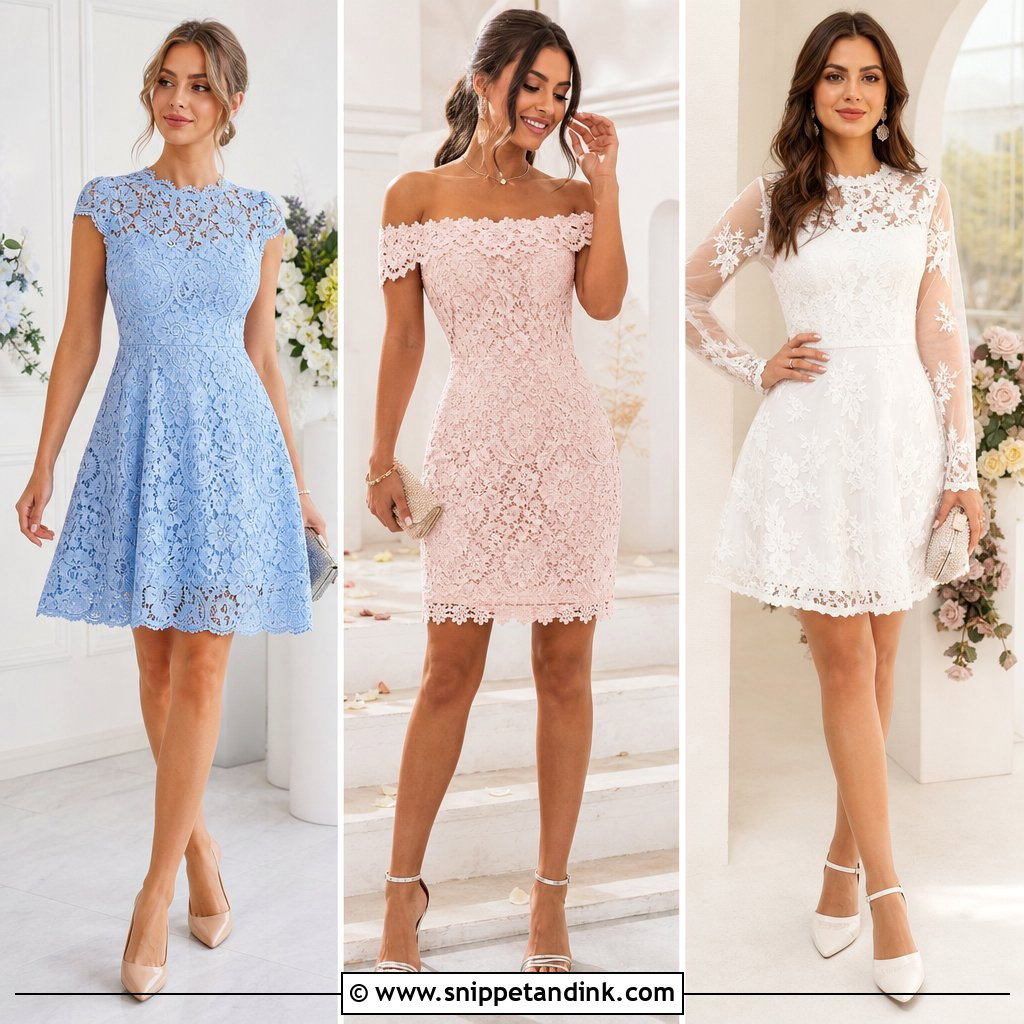
19. Classic Tea-Length Lace Wedding Dress
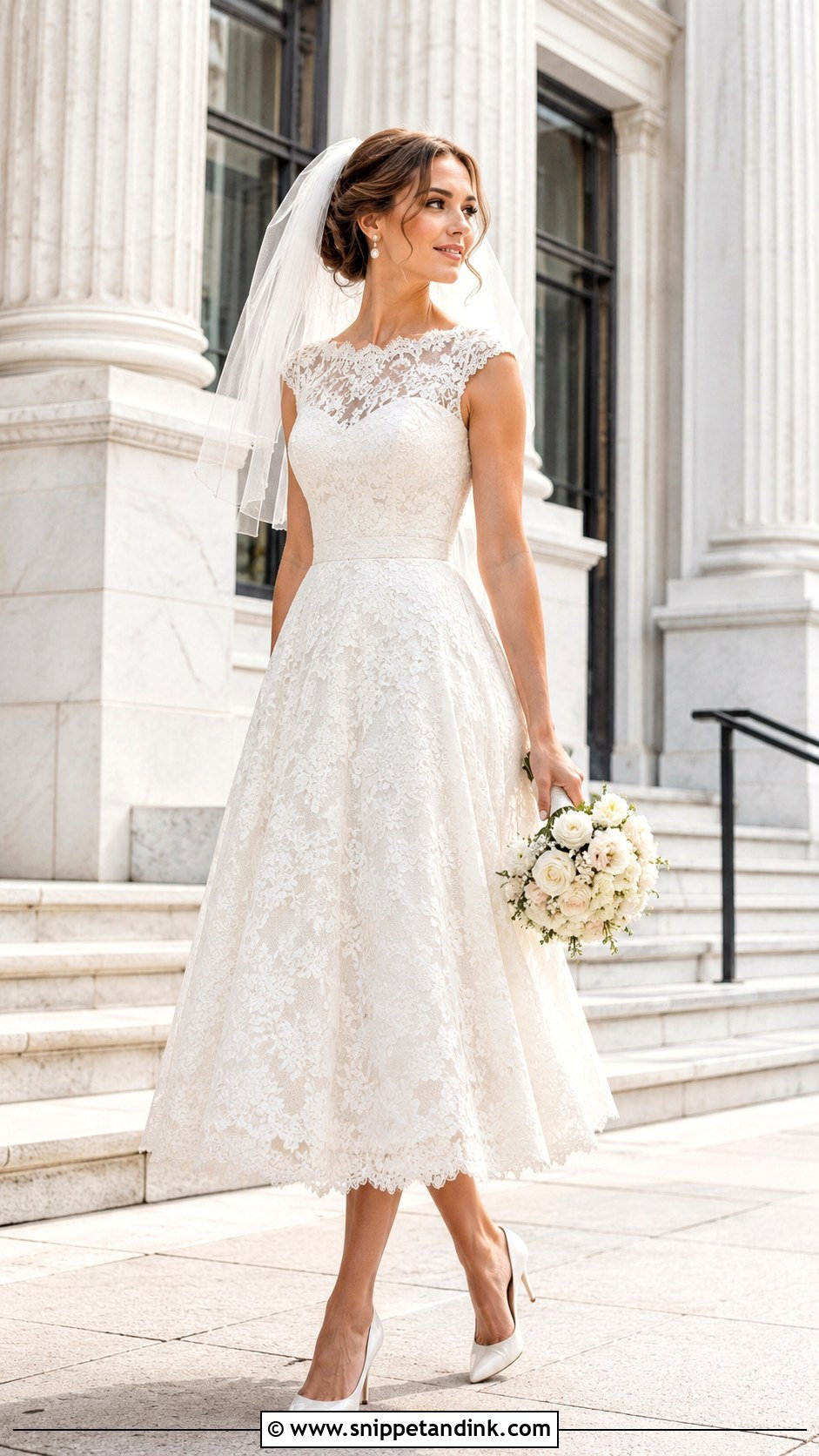
A tea-length lace wedding dress has a 1950s feel, with a fitted lace bodice, defined waist and softly flared skirt ending between knee and ankle. Shoes are fully visible, so choose them as part of the outfit and have the final hem set while you wear them; an uneven tea-length hem is easy to spot. Pointed pumps or polished flats suit it, with short gloves if you like the period touch. A birdcage or shoulder-length veil keeps the proportions light. It’s comfortable for courthouse weddings, daytime receptions and smaller rooms.


20. Classic Vintage Lace Wedding Dress
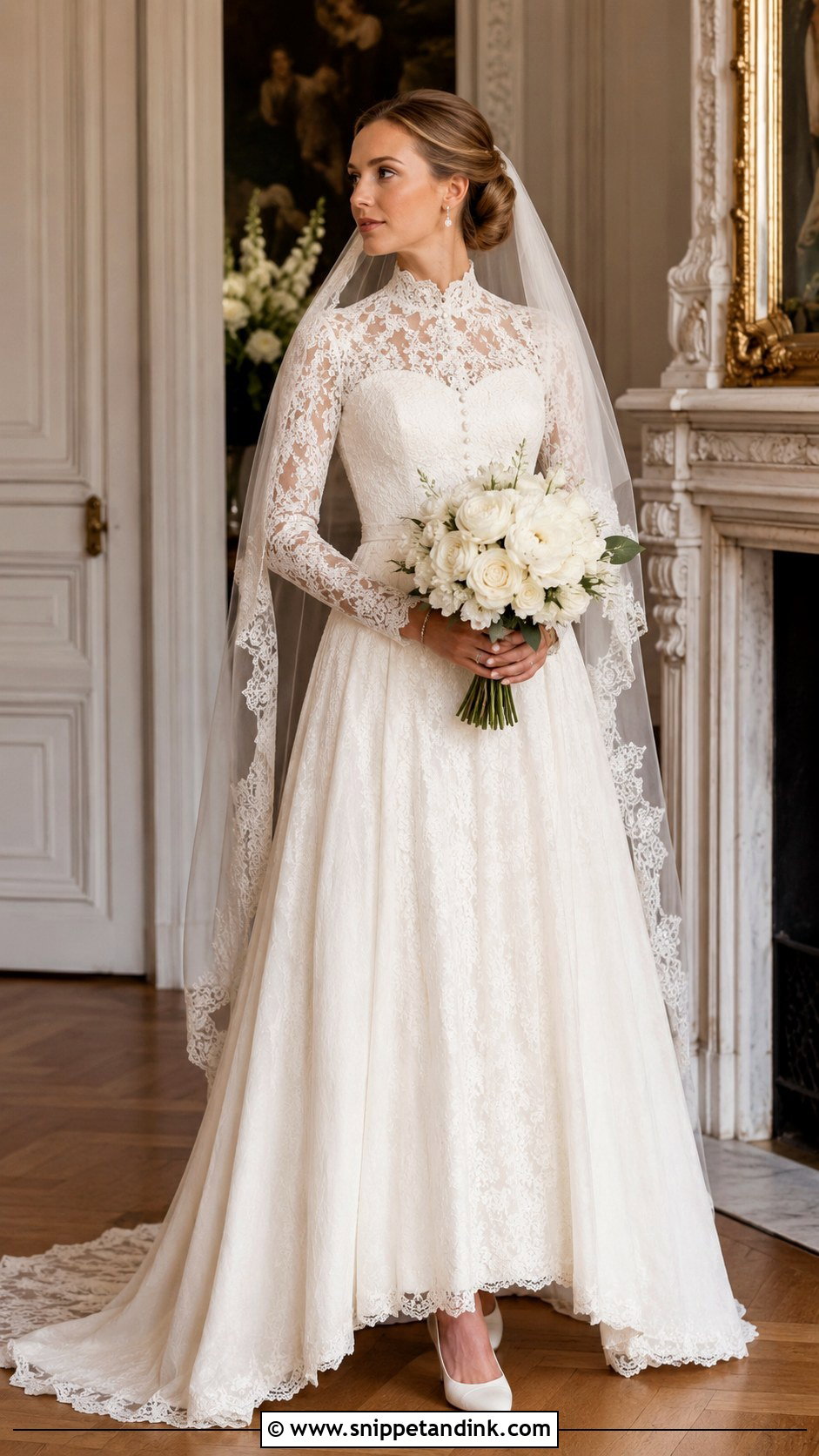
Vintage lace dresses look best when the details are period but the fit is modern. A high neckline, fitted sleeves, covered buttons and a soft skirt give the shape; cream or ivory deepens the antique feeling. If you’re wearing an authentic older gown, have a textile conservator or experienced bridal seamstress inspect it before alterations. Old lace weakens along seams and at stress points such as underarms, and fragile sections may need backing with new net. Pearl earrings, a lace-edged veil, low satin heels and a smooth chignon or soft finger waves suit it without tipping into costume.
When Lace Snags or the Hem Gets Grubby on the Day
Lace is tougher than it looks, but it catches. Most problems on the day come from outside the dress: a bracelet clasp, the hook of a groom’s cufflink, a rough stone step, a dog greeting you at the door. A pulled thread can usually be eased back with a needle from the inside. Never cut it, because cutting a lace thread can start a run along the pattern.
Put together a small kit for whoever is looking after you: a needle threaded in ivory, a few small safety pins, clear nail polish only for the lining and never the lace itself, white chalk for light marks, and a clean white cloth. Grass and mud on a lace hem are better left alone until the dress is professionally cleaned. Rubbing pushes the stain into the threads.
Cleaning and storing it afterwards
Take the dress to a cleaner experienced with bridal lace within a few weeks of the wedding, and point out every mark, including spills you can’t see. Store it folded in acid-free tissue in a breathable box, with tissue inside each fold. Lace hung on a hanger for months stretches under the weight of the skirt.
Start With the Lace You’d Want to Touch All Day
A lace gown works when the fit lets you move and the lace suits the cut. Decide the shape and neckline first, then think about the lace itself: the scale of the pattern, the colour of the lining, how much sleeve you want, the train and the venue. Keep accessories quiet so the pattern has room. A veil that suits the dress, shoes you can stand in, restrained jewelry and a bouquet sized to the skirt will tie it together. Choose the dress that feels right on your body, not just on the hanger.
You'll Like These Ideas:













Leave a Reply