
Anarkali gowns keep coming back to wedding guest wardrobes for a practical reason: the fitted bodice and long flared skirt look dressed up from every angle, yet you can sit, eat and dance in one far more easily than in a heavy lehenga. What makes or breaks the outfit is usually the dupatta, not the gown. Fabric weight, where the embroidery sits and how the drape is pinned decide whether you still look put together six hours in. Right now I see floor-length cuts, tone-on-tone threadwork, Chikankari, organza dupattas, jacket layers and cape drapes everywhere. If you are dressing for a wedding function, an engagement or a family festival, each idea below comes with the notes I give at a fitting.
Fitting an Anarkali So the Flare Falls Properly
Most Anarkali complaints I hear at fittings come down to one seam. The flare is cut to start at a set point, usually the natural waist or just under the bust in empire styles, and if that seam lands too low on you the skirt hangs flat and the bodice wrinkles. Ready-made gowns are cut for an average torso, so the first thing I do is pin the bodice and see where that seam actually sits.
- Waist seam: it should sit at your narrowest point or right under the bust. Moving it is a real alteration, so ask the tailor before buying if you are between sizes.
- Armholes: high and close armholes let you lift your arms to dance without the whole bodice riding up.
- Hem: measure in the shoes you will wear. Floor-skimming, never pooling.
- Flare: count the kalis or panels. More panels mean more swing, but also more weight on your waist if you will be standing for hours.
- Lining: full length, soft and not clingy. A stiff can-can underneath adds volume but makes getting in and out of a car awkward.
Leave at least two weeks for alterations, longer in wedding season when tailors are booked solid. Taking in a bodice is easy. Letting one out depends entirely on how much seam allowance was left inside, and many ready-made gowns leave very little, so if you are in doubt, buy the bigger size.
1. Floor Length Anarkali Gown With Dupatta
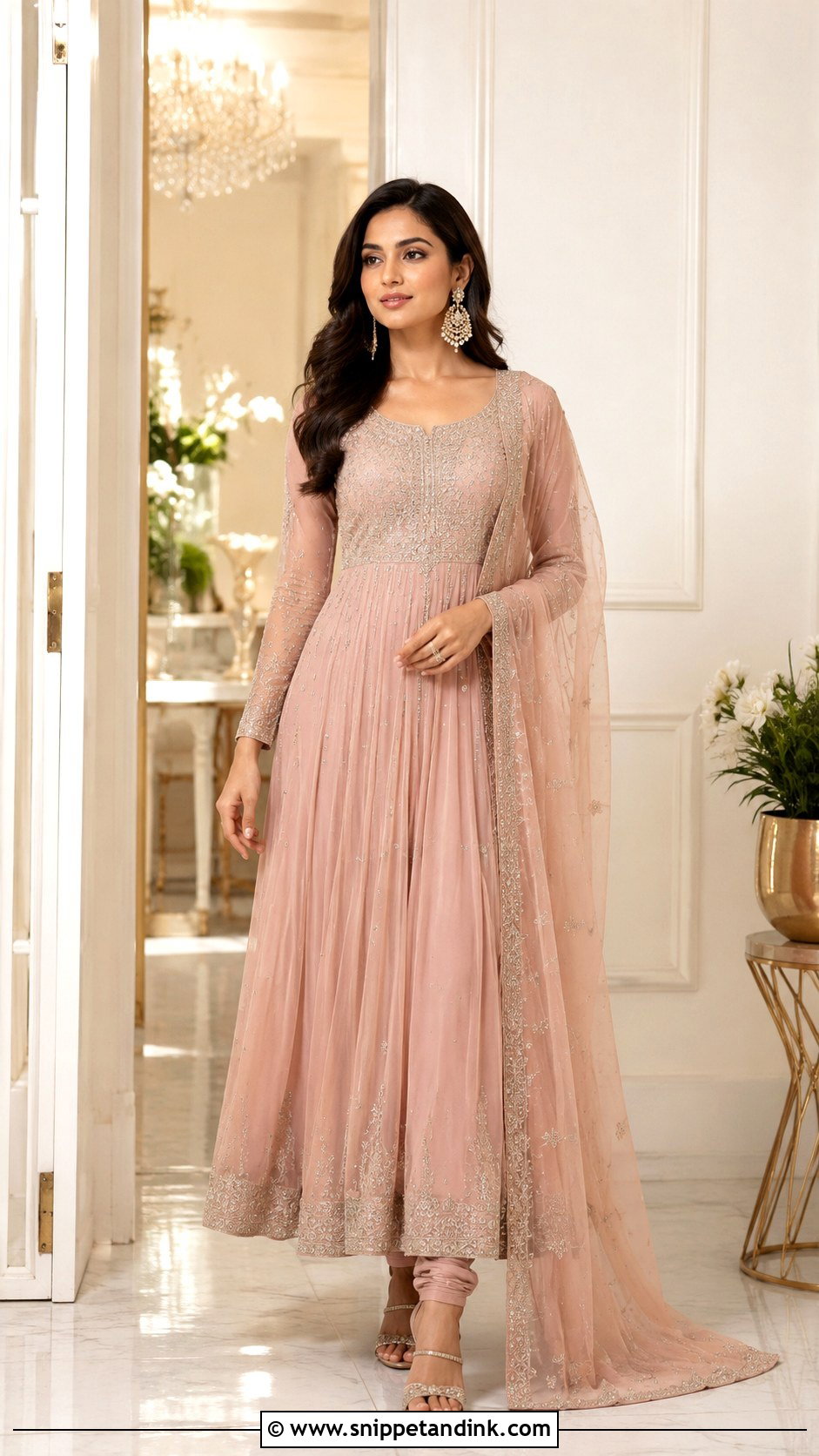
A floor length Anarkali gown with dupatta is the version I reach for first when someone wants to look polished with almost no styling. Georgette, silk blend or soft net give the flare a clean fall. The thing I check before anything else is length in your actual shoes: the hem should skim the floor with a little room to spare, because a gown that pools catches on stairs and gets trodden on at the buffet. Wear churidar or slim trousers underneath, chandelier earrings, a slim bangle stack and embellished block heels. Drape the dupatta over one shoulder so the bodice embroidery stays visible.
2. Embroidered Anarkali Gown With Dupatta
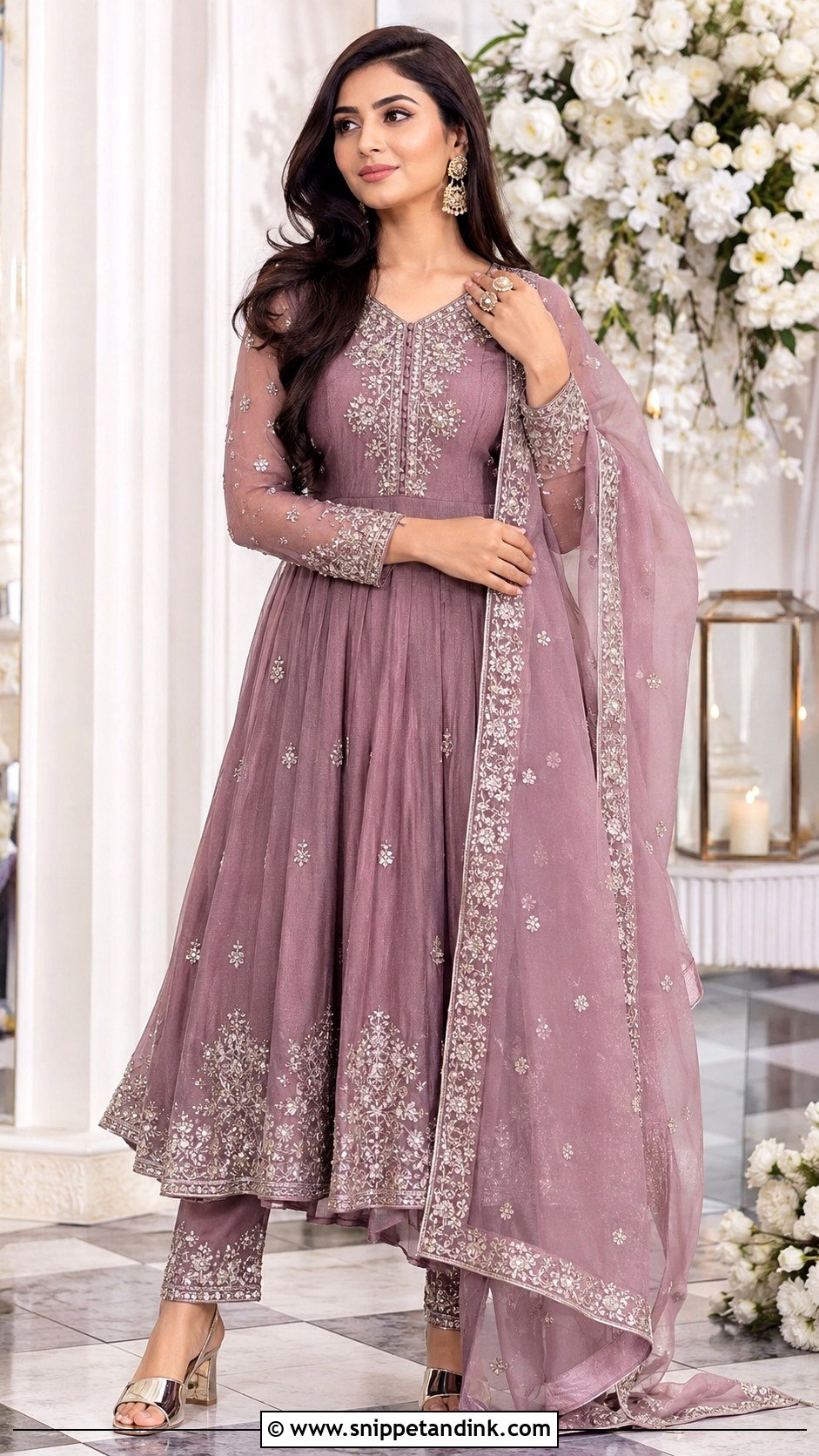
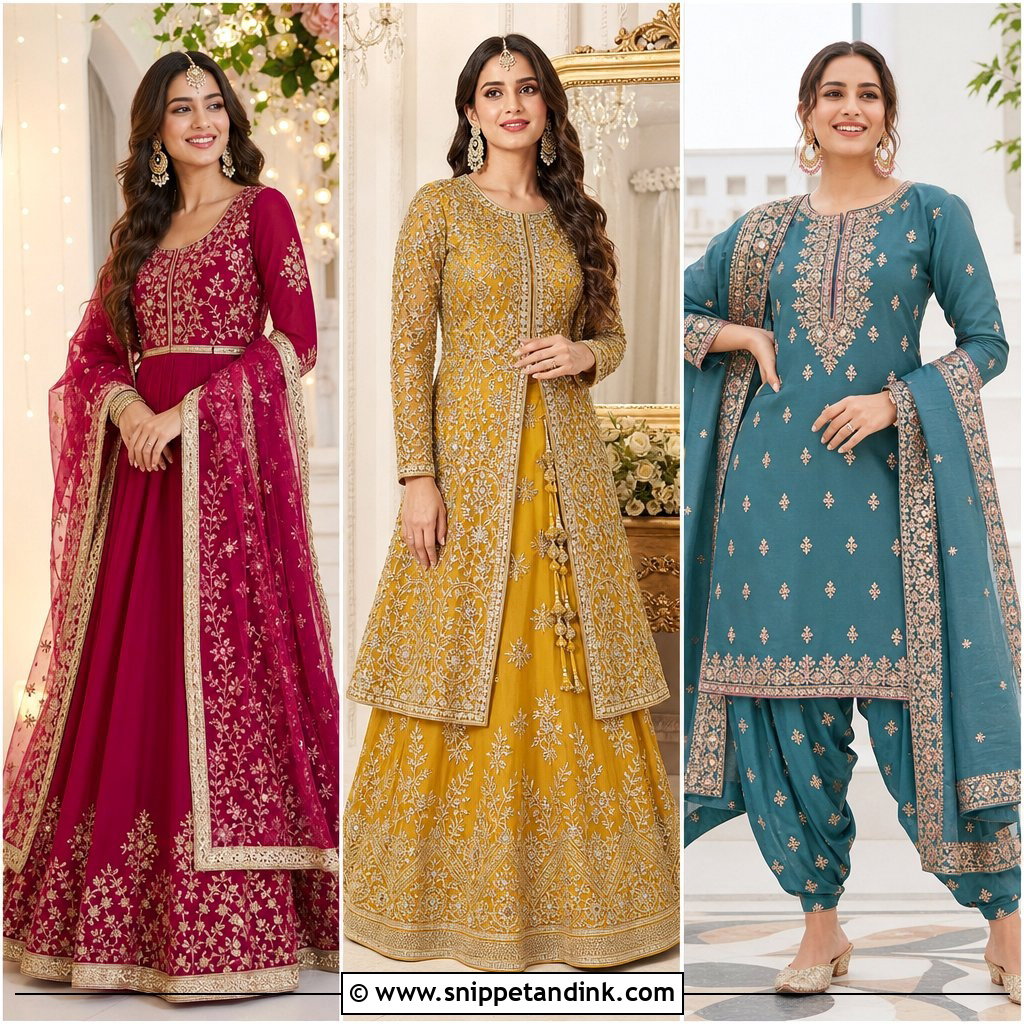
With embroidery, placement matters more than quantity. I look for work concentrated at the neckline, sleeves, waistline and hem, because an all-over heavily worked gown gets genuinely heavy and you’ll feel it in your shoulders by the reception. Gold, silver, resham, sequin or plain thread all suit the occasion; just know that sequins running down a sleeve seam scratch the inner arm. Pair it with a sheer dupatta carrying a matching border, pointed juttis or low heels and one statement ring. Keep jewelry clean over heavy work, and wear a sleek bun or soft waves so the neckline isn’t hidden.
3. Chikankari Anarkali Gown With Dupatta
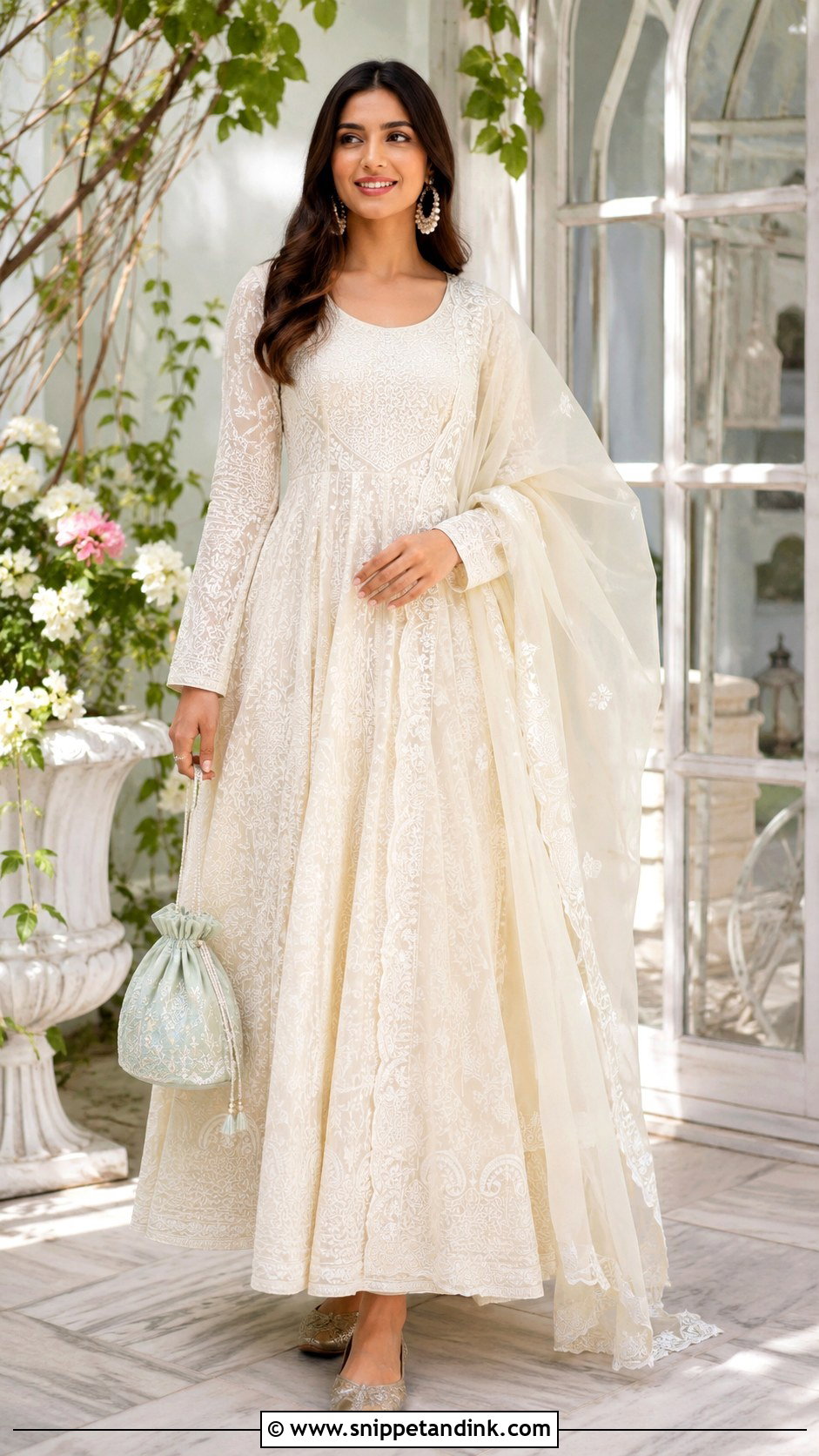
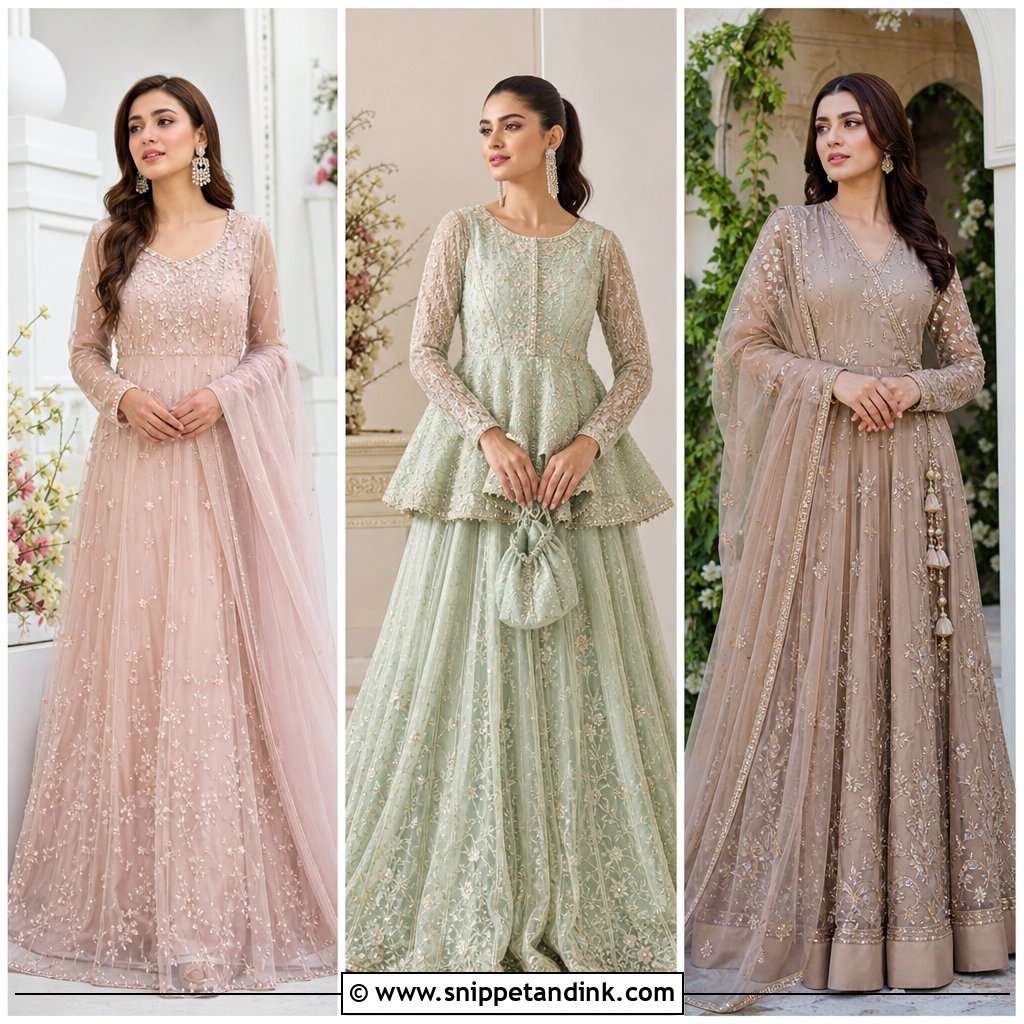
Chikankari is fine white-thread hand embroidery on cotton, georgette or mul, and that lightness is exactly why I suggest it for daytime functions in warm weather. Ivory, blush, mint, powder blue and pale yellow suit it best. Genuine hand work has small irregularities in the stitches, and the shadow work shows through sheer fabric, so ask for a matching slip if the gown is unlined. Add a light chiffon or organza dupatta, pearl earrings, metallic flats and a small potli. Oversized jewelry fights the fine stitching, so leave it at home. A center-parted low bun suits family lunches and festive mornings.
4. Velvet Anarkali Gown With Dupatta
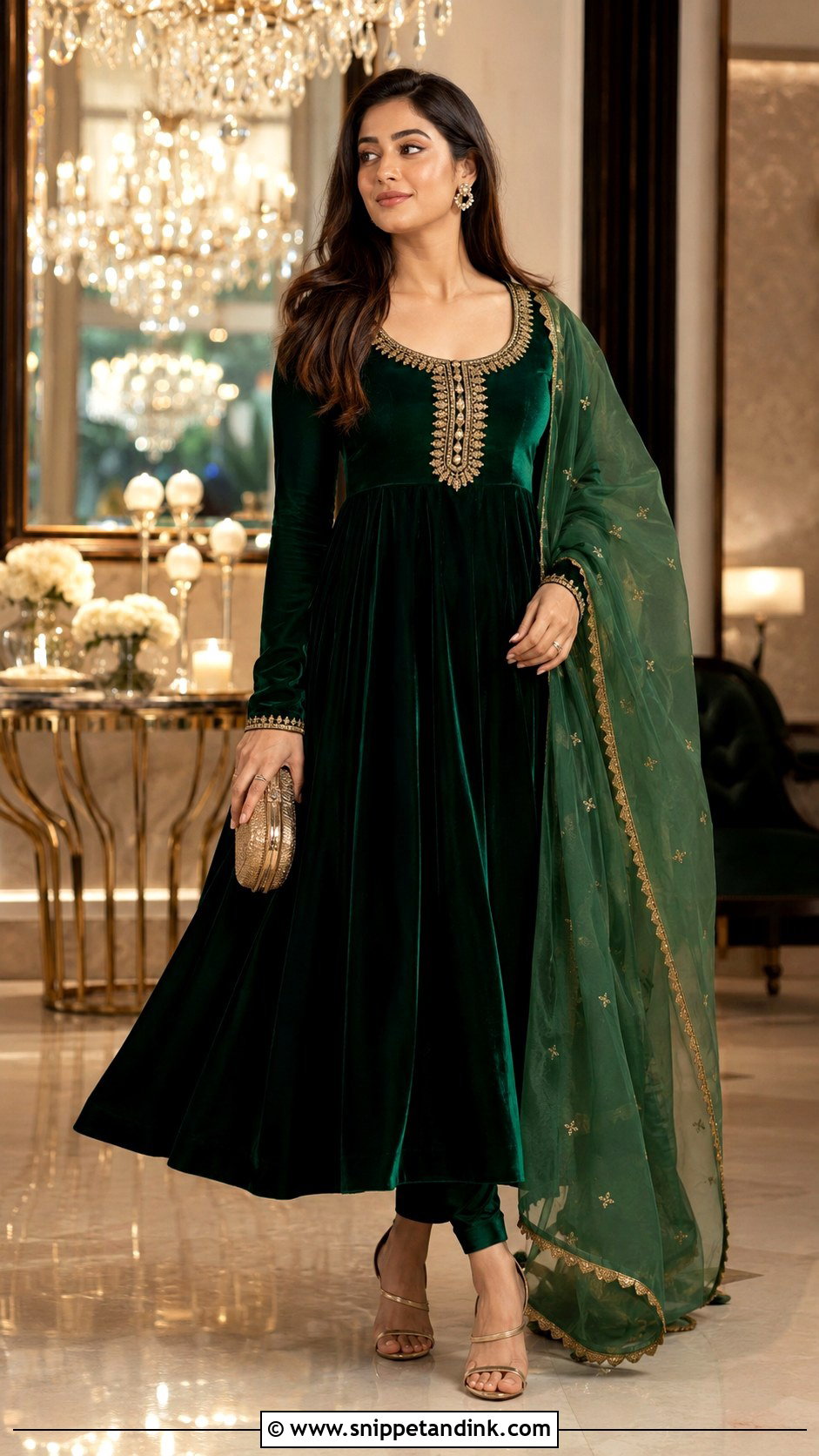
Velvet is the one Anarkali fabric I only recommend for cold-weather evenings. It holds warmth, and in a heated banquet hall that turns uncomfortable fast. Deep green, navy, plum, chocolate and maroon read richest because the pile catches light. I’d keep embroidery to the neckline, cuffs or hem and pair it with a lightweight net or organza dupatta, never a velvet one, which drags and slides off the shoulder. Velvet also marks wherever it’s crushed, so hang it rather than folding it and steam it from the back. Metallic heels, kundan studs and a structured clutch finish it.
5. Pastel Anarkali Gown With Dupatta
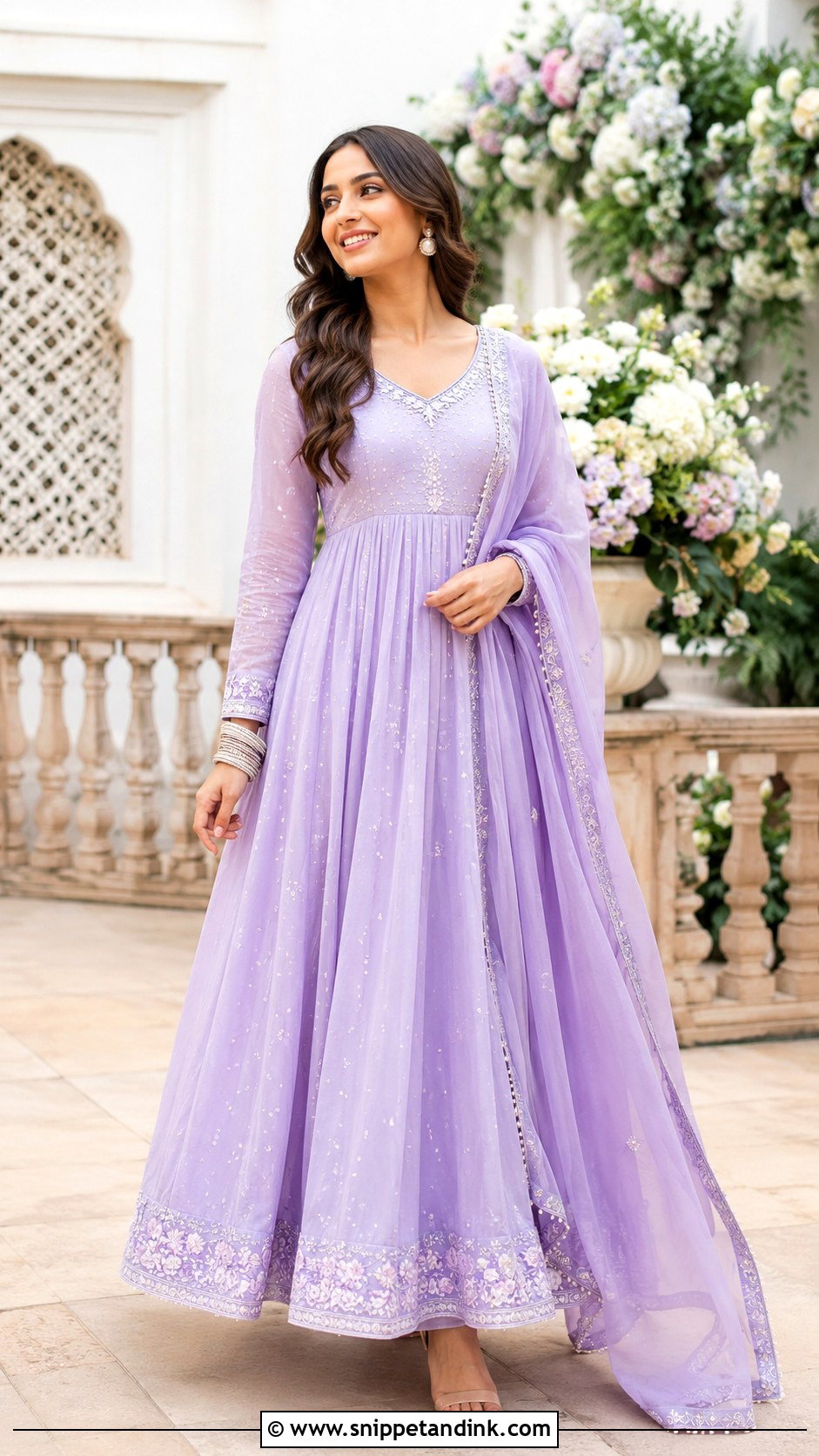
A pastel Anarkali gown with dupatta needs one test people skip: hold the fabric under your chin by a window before buying. Lavender, peach, sage, mint, powder pink and sky blue can wash out some complexions right next to the face. Delicate embroidery, mirror accents or subtle sequins keep it festive. I like nude heels, pearl jewelry and a dupatta one shade deeper, worn as a side drape so it moves without swallowing the pale palette. Fresh, glowing makeup suits daytime weddings and summer engagements.
6. White Anarkali Gown With Dupatta
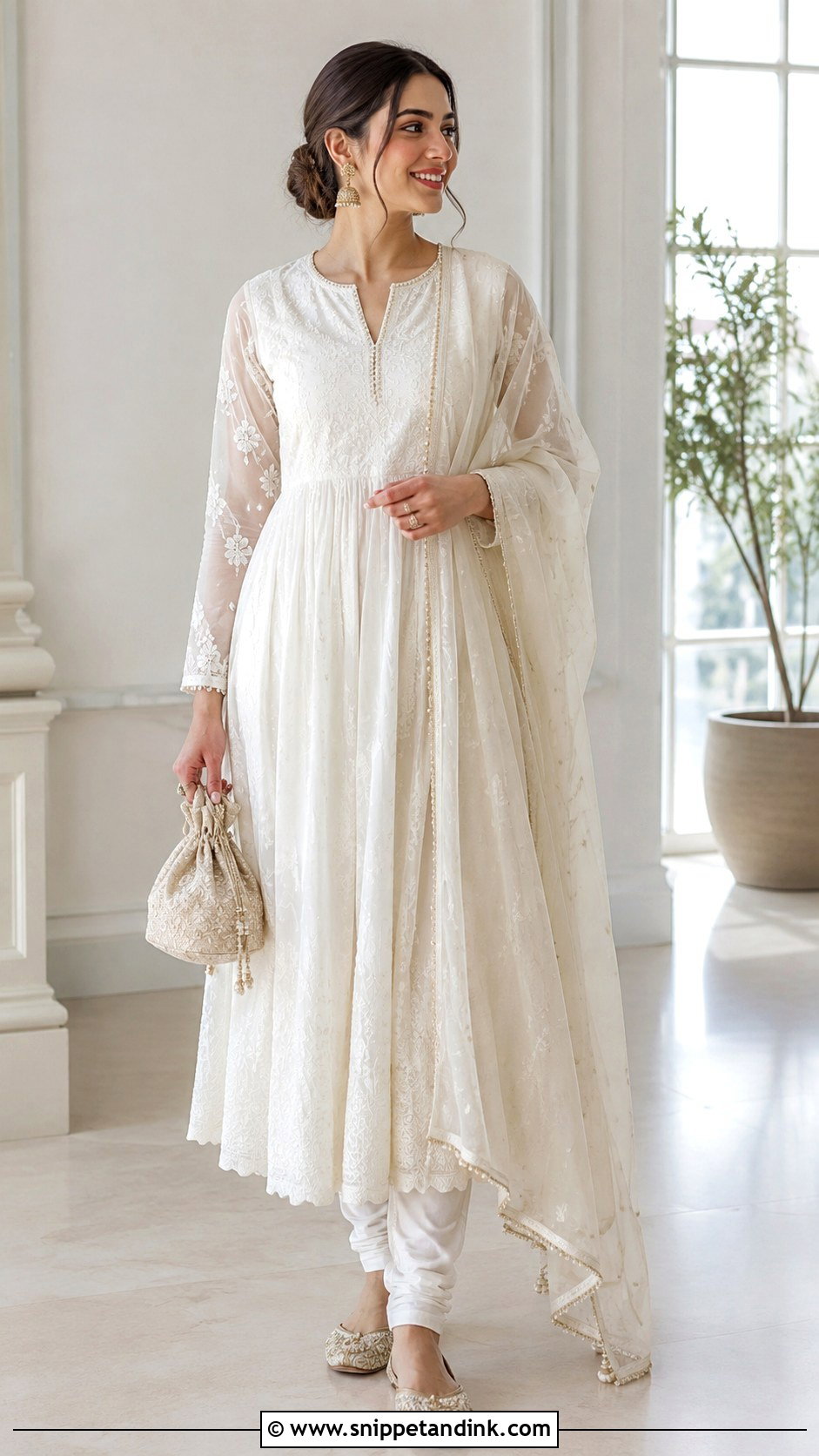
Before you wear white, check the family’s customs. In some communities white is linked to mourning and is unwelcome at a wedding; in others ivory and white are completely normal for daytime functions. If it’s fine, choose texture: Chikankari, lace, tone-on-tone threadwork or an embroidered border, otherwise the gown looks flat in photos. Add contrast with gold jhumkas, embellished juttis, a pastel potli or a colored dupatta. White shows every makeup smudge at the neckline, so I tuck blotting papers and a stain pen into the clutch.
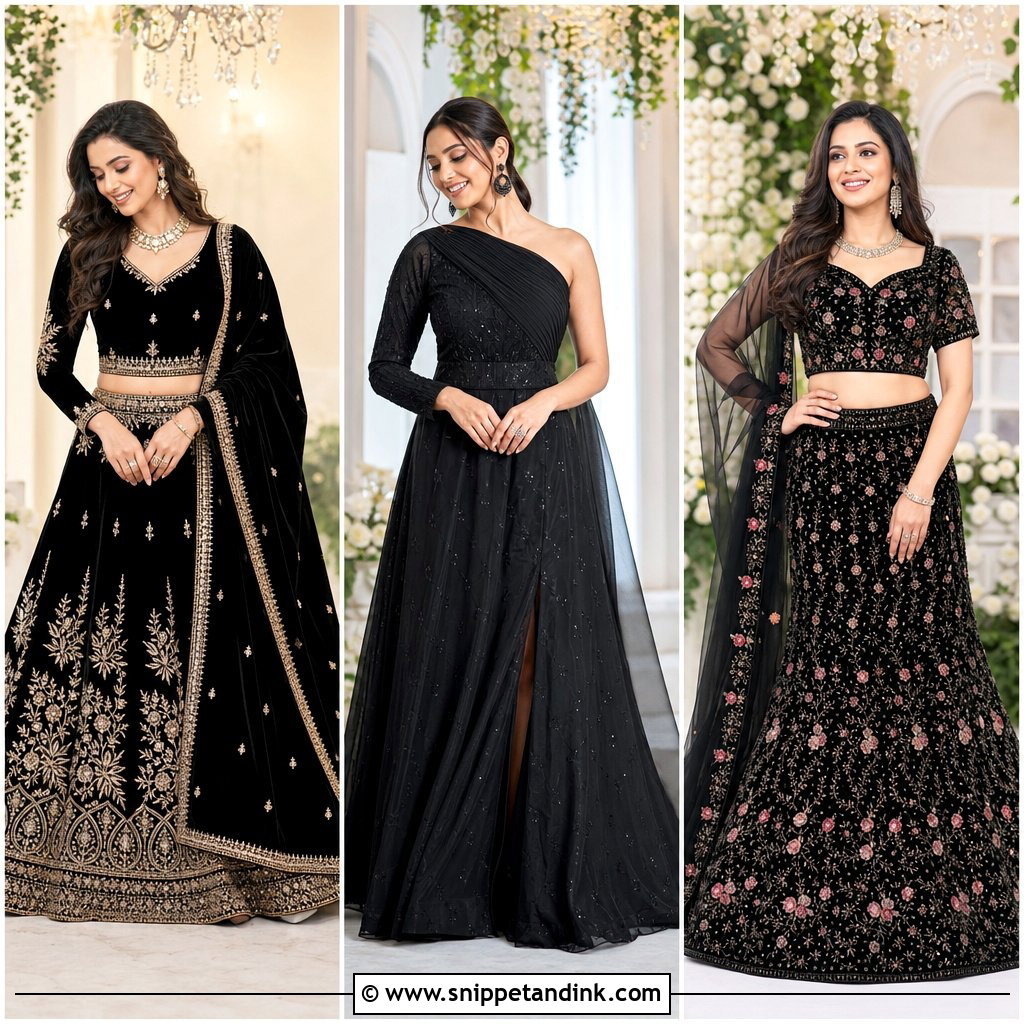
7. Black Anarkali Gown With Dupatta
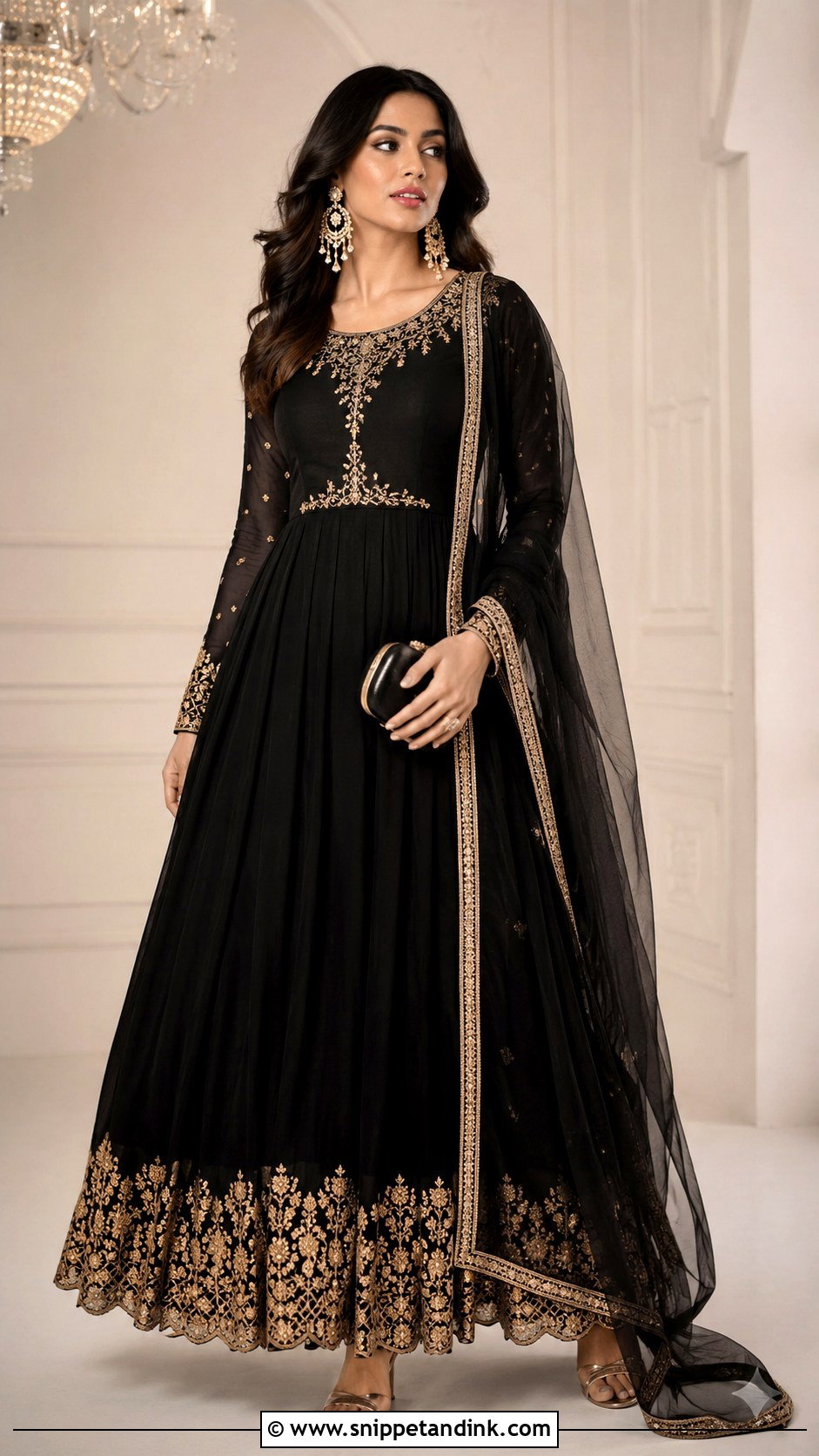
Black needs the embroidery to do the work. Under evening lighting plain black loses its shape and you turn into a silhouette in photos, so gold, silver or multicolor threadwork is what I look for. A sheer black dupatta with a metallic border keeps it cohesive, while an emerald, red or beige contrast dupatta adds personality. Some families consider black unlucky at a wedding, so a quick word with the hosts is worth it. Statement earrings, heeled sandals and a compact clutch are enough.
8. Red Anarkali Gown With Dupatta
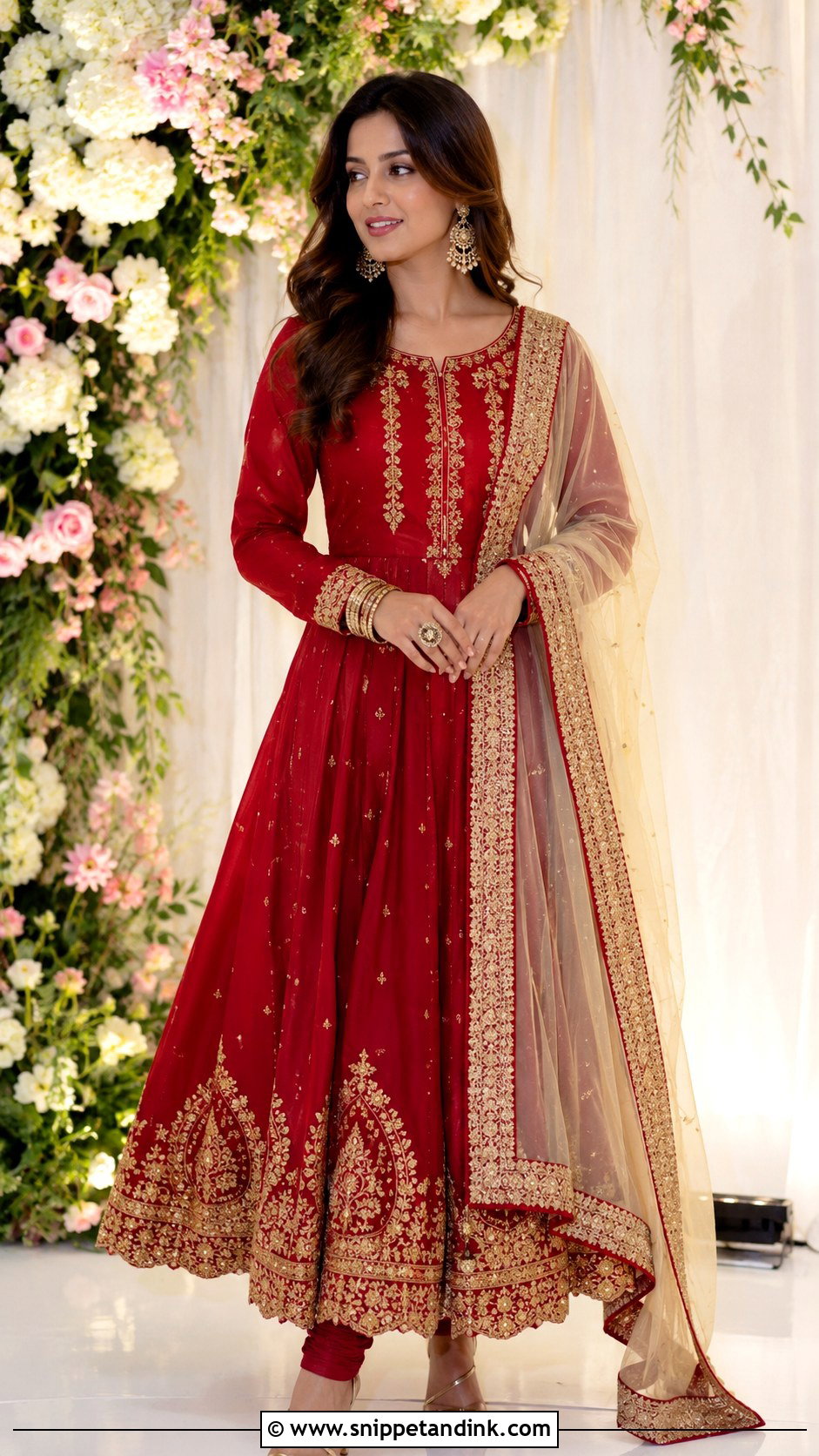
Red is the color I’m most careful about for guests. At many South Asian weddings red belongs to the bride, and arriving in a bright red Anarkali for the main ceremony can read as competition. Save it for engagement parties or family functions where you know it’s welcome, or move to brick or deep ruby. Gold embroidery, zari borders and mirror accents sit well on it. Pair with gold heels, kundan earrings and a soft beige or matching dupatta, keeping the dupatta lighter if the gown is heavily worked. Defined eyes and a neat hairstyle are plenty with a color this strong.
9. Pink Anarkali Gown With Dupatta
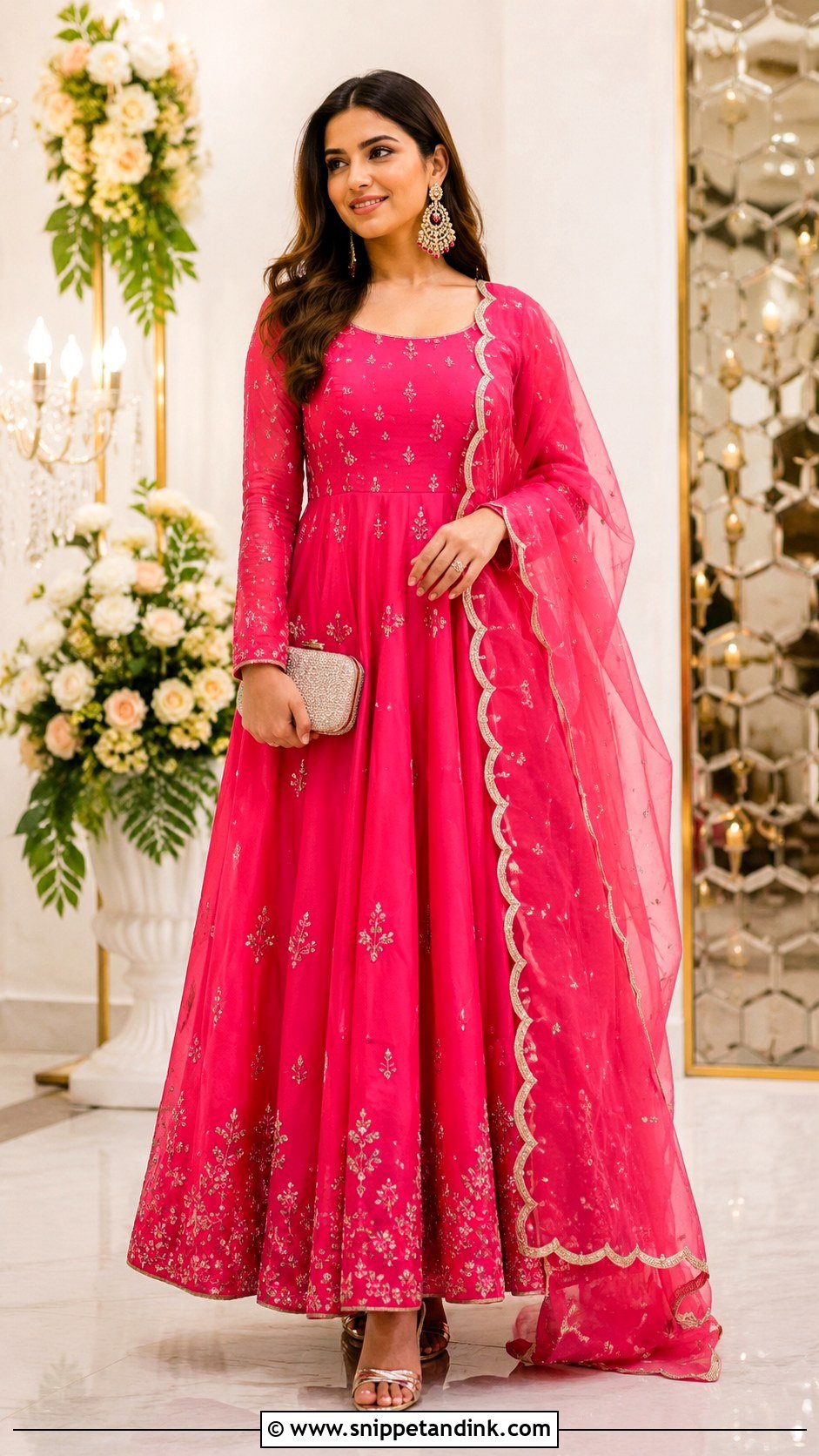
Pink changes character entirely by shade. Blush and rose read delicate in daylight; hot pink and rani pink hold up under evening and stage lights at a sangeet. I match metals to depth: pearl or silver with pale pinks, gold or kundan with rani. A net or organza dupatta with a scalloped border finishes it, over metallic heels, juttis or embroidered sandals. It’s also the easiest color to coordinate across a group of bridesmaids, since each woman can pick the pink that suits her skin and the group still looks related.
10. Green Anarkali Gown With Dupatta
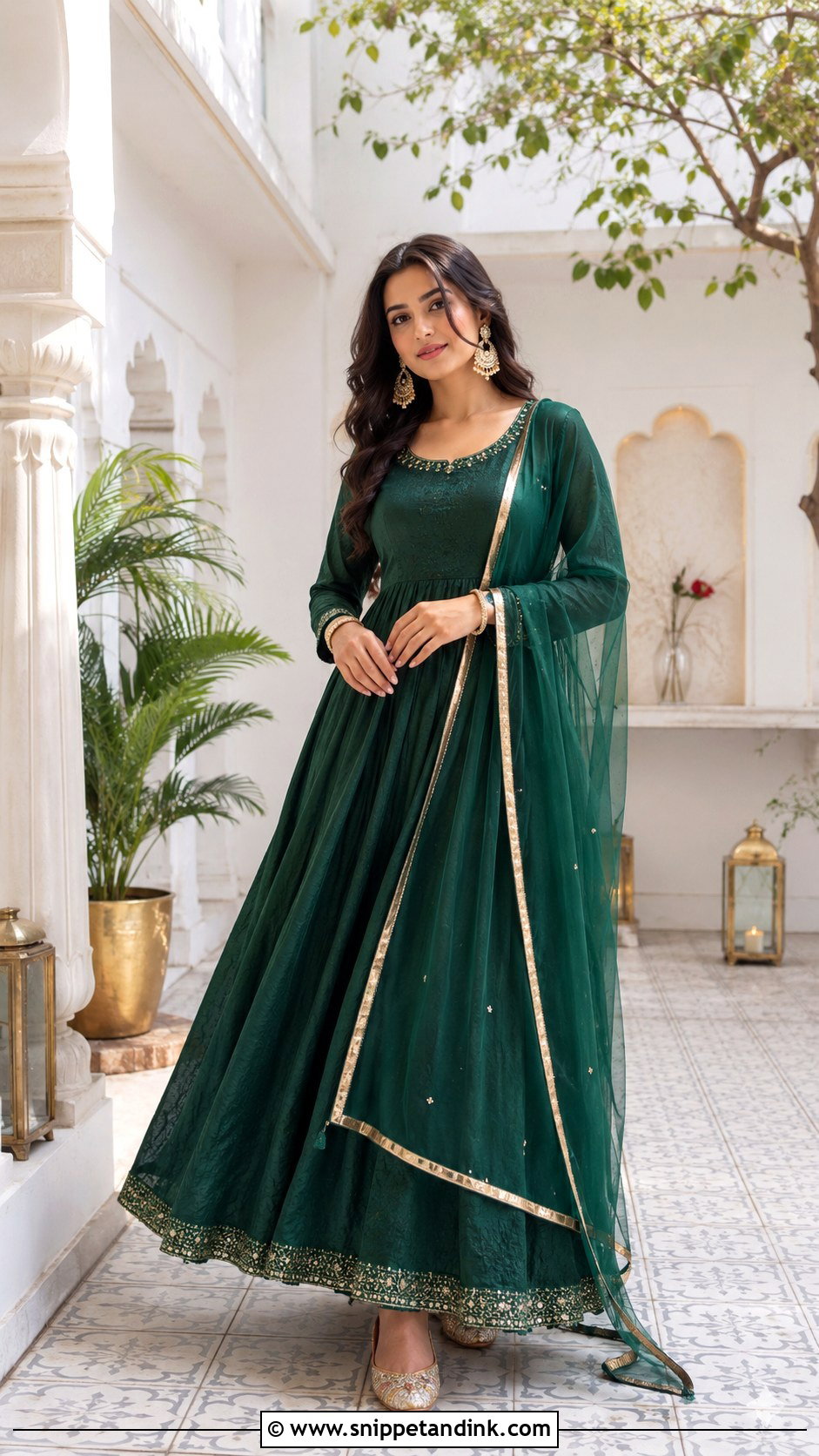
A green Anarkali gown with dupatta feels festive without being the obvious choice. Emerald reads formal; mint, sage and pistachio are lighter for daytime. One caution from the fitting room: yellow-greens like pistachio can look sallow under warm indoor bulbs, so I check them in daylight and in lamplight before committing. Deep greens go with antique gold and a matching dupatta, softer greens with pearl earrings and nude heels. A pink, ivory or gold-toned contrast dupatta gives a mehendi-style look real punch, and a wide flare shows the color off as you walk.
11. Blue Anarkali Gown With Dupatta
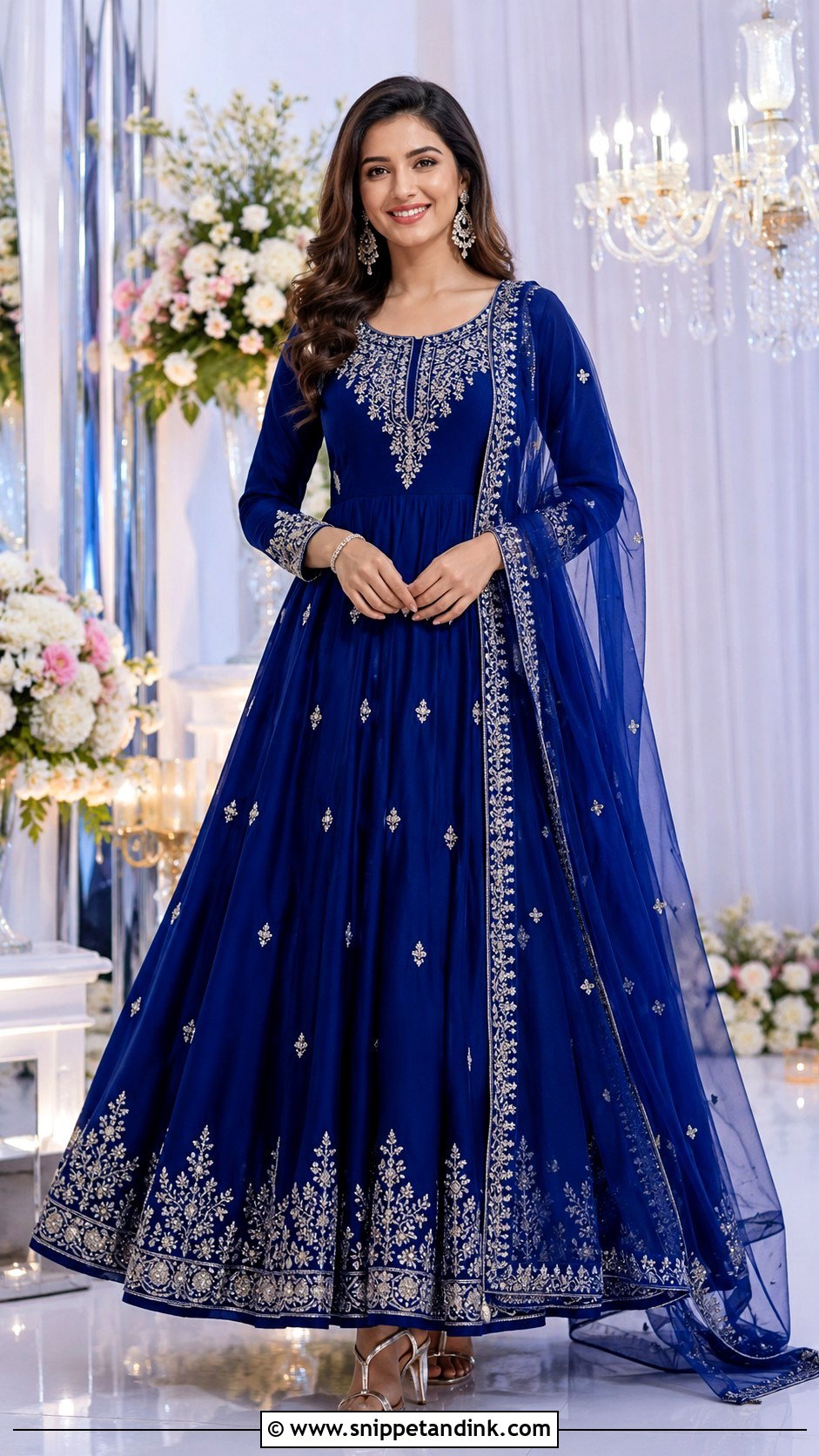
Blue is my safe suggestion for a guest who wants color but nothing loud. Navy and royal blue hold up at evening events; powder blue and aqua belong in daylight. Silver embroidery looks crisp on cool blues, while gold warms them for a festive mood. A sheer dupatta in the same shade keeps the line long, which helps petite frames, whereas a contrast dupatta adds interest but breaks the column. Finish with metallic heels, drop earrings and a slim bracelet. Navy also hides small food spills far better than any pastel, which counts at a long dinner.
12. Yellow Anarkali Gown With Dupatta
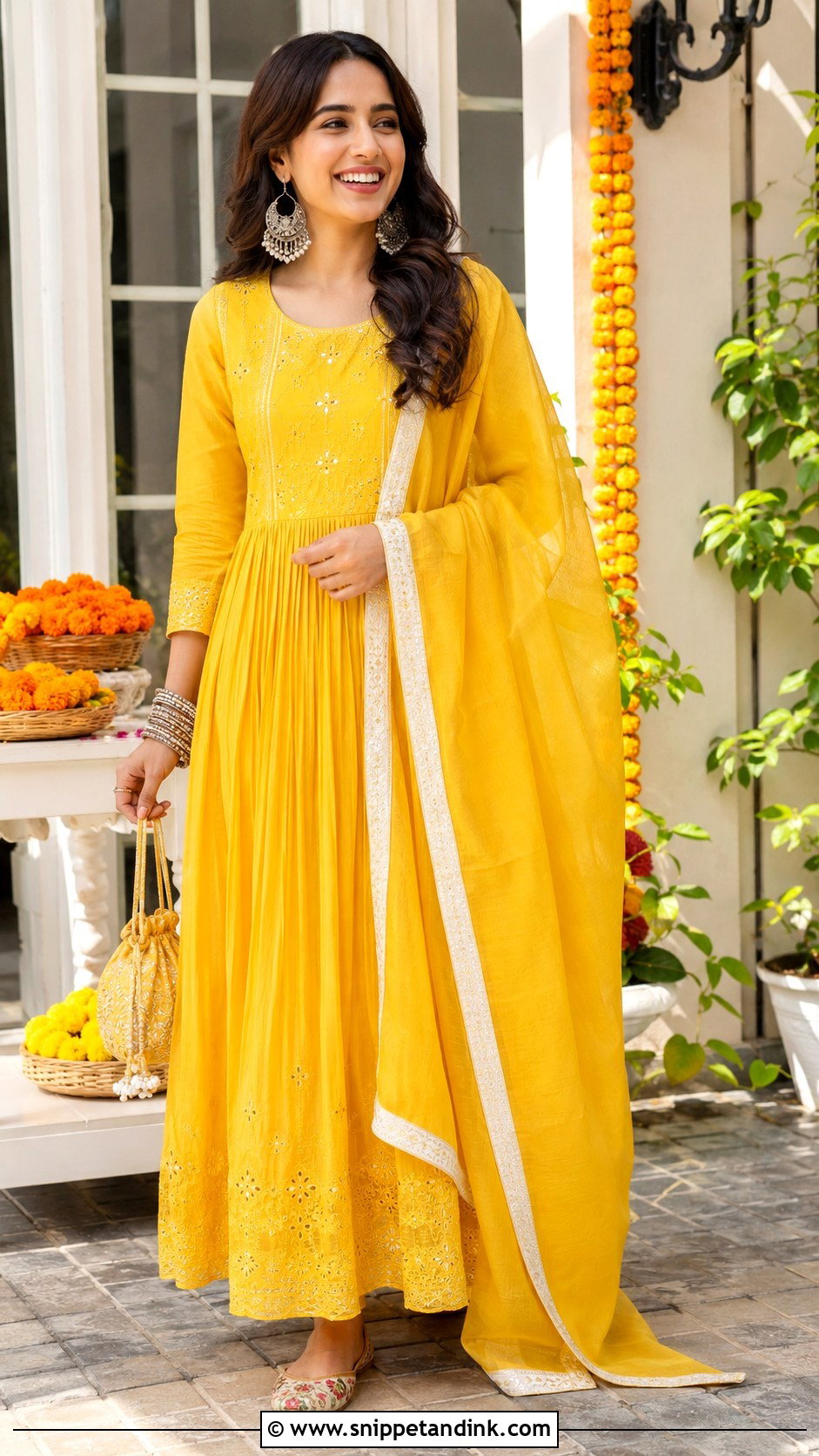
Yellow is the classic haldi and daytime color, and I’d plan around that event specifically. Mustard, marigold, lemon or butter yellow in cotton silk, georgette, muslin or chiffon stays breathable in the sun. If there’s any chance of turmeric paste flying around, don’t wear your best silk; haldi stains are notoriously hard to lift, so pick something washable. Oxidized jewelry keeps it relaxed, gold makes it more festive. A white, pink or matching yellow dupatta works, with embroidered flats, bangles and a small bag.
13. Floral Anarkali Gown With Dupatta
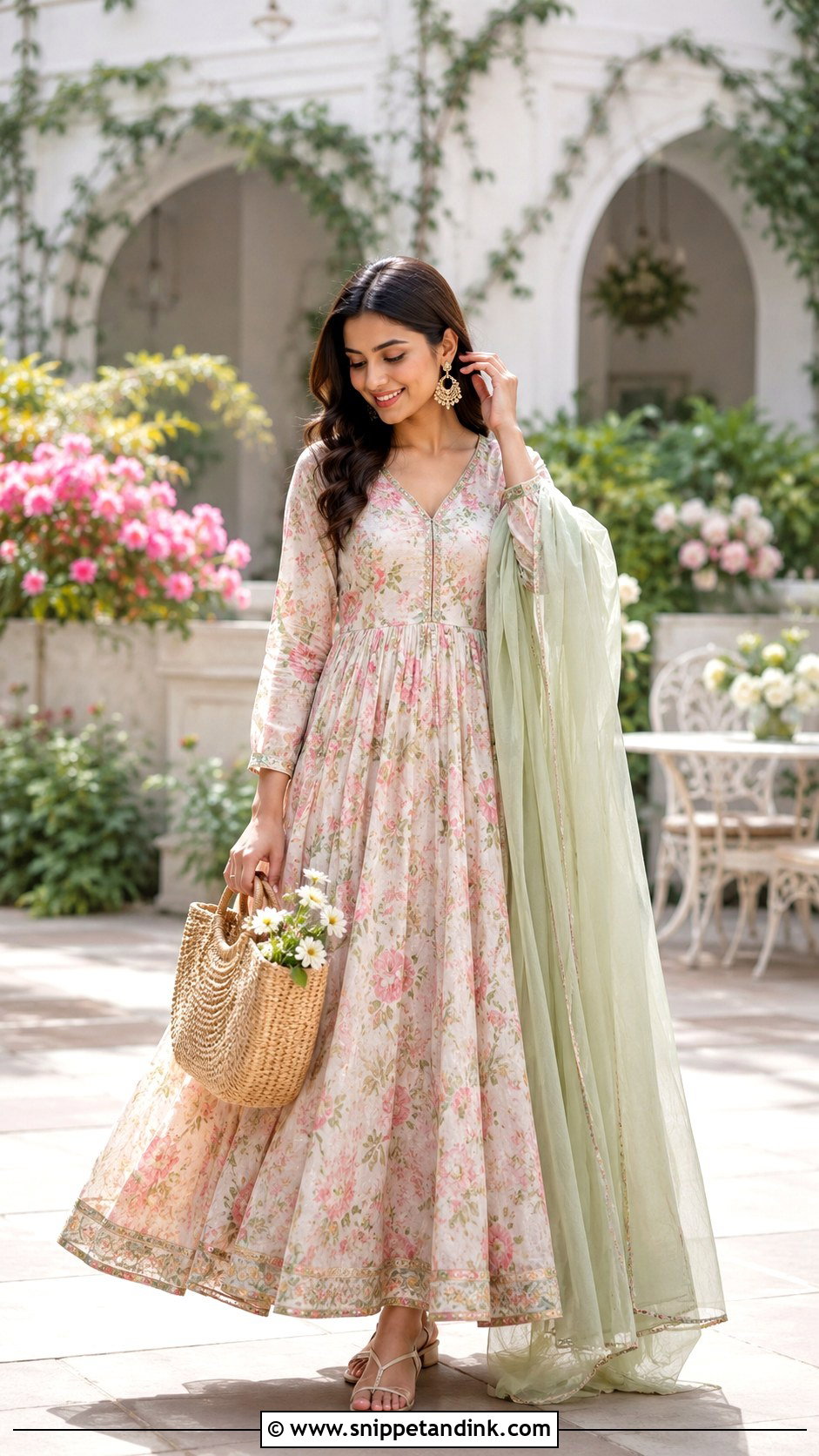
Print scale decides the styling here. Small florals read delicate and take a bordered dupatta well; large motifs need a plain dupatta, or the outfit becomes one busy pattern from shoulder to floor. Soft georgette, cotton, chiffon and organza carry prints nicely. Add simple earrings, sandals you can walk on grass in and a woven or embroidered bag. Garden events and daytime functions suit it, with hair left soft and natural.
14. Printed Anarkali Gown With Dupatta
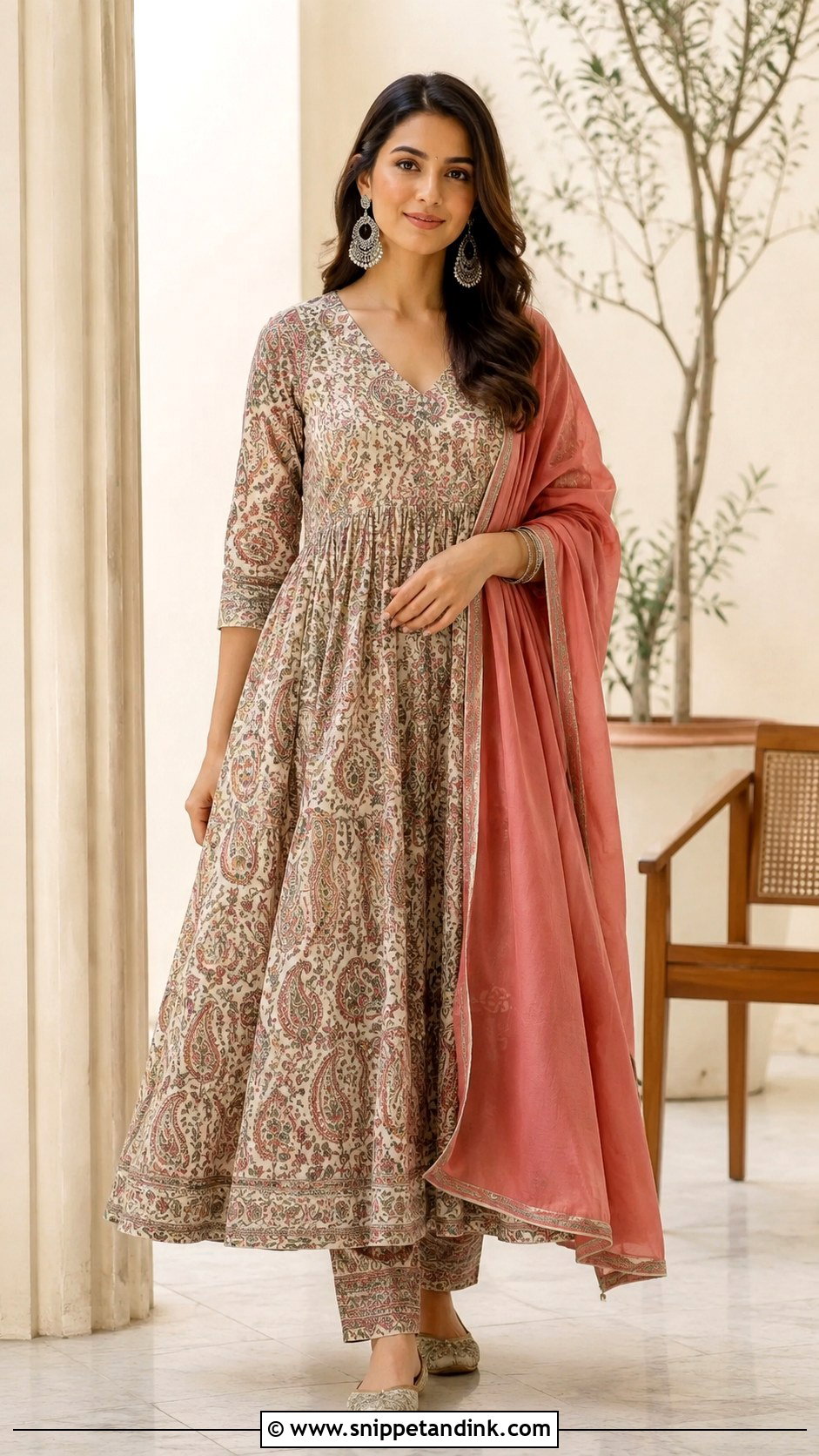
Printed Anarkalis are the ones I tell people to pack for destination weddings. They’re lighter than embroidered pieces, crease less and nothing snags in a suitcase. Block, paisley, floral, geometric and Mughal-inspired prints look lively without any embellishment. My trick is to pull one color from the print for the dupatta so it looks coordinated rather than matched. Oxidized earrings, juttis and a simple bangle stack suit it. With a bold print, keep the dupatta and jewelry plain.
15. Silk Anarkali Gown With Dupatta
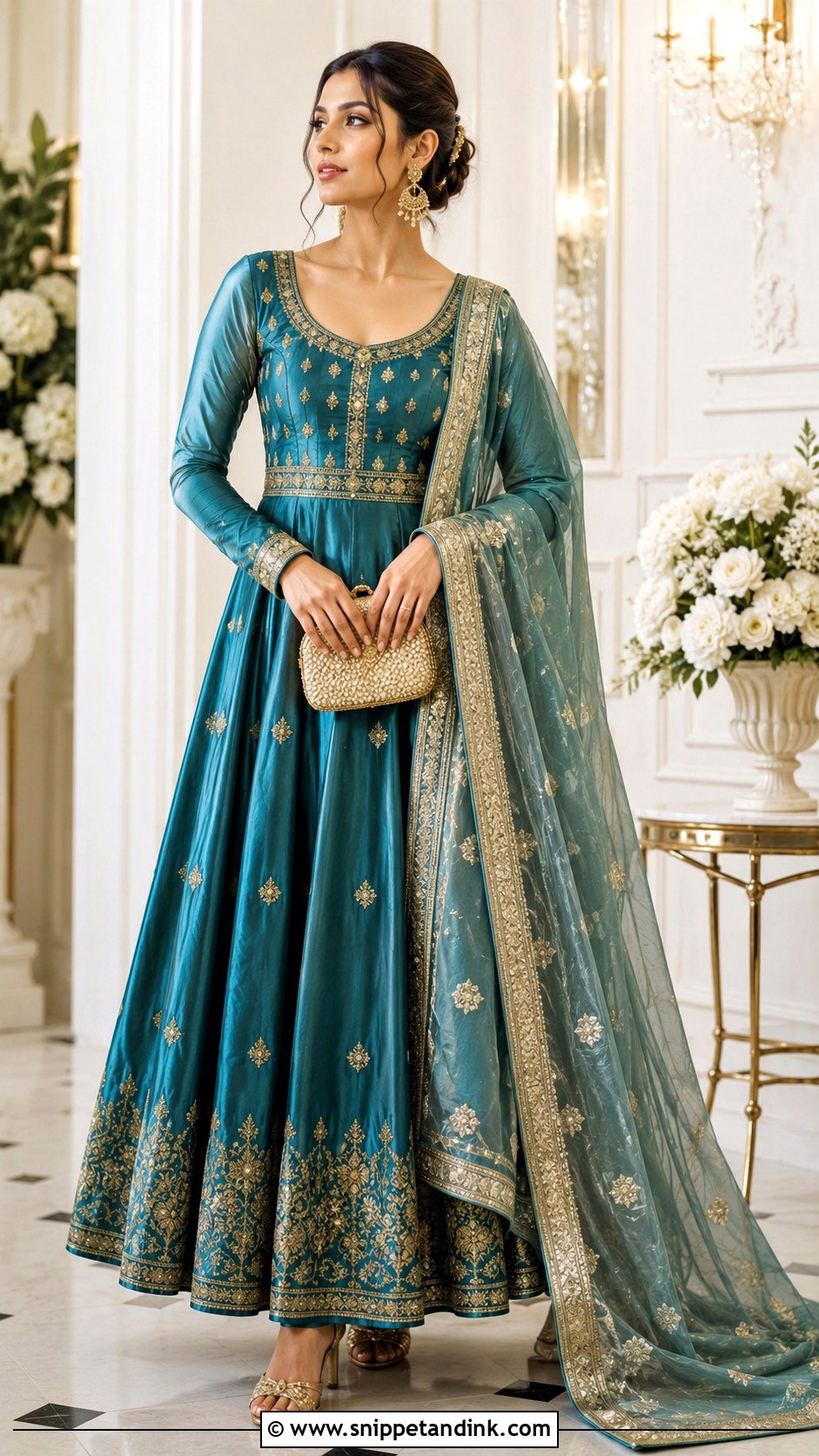
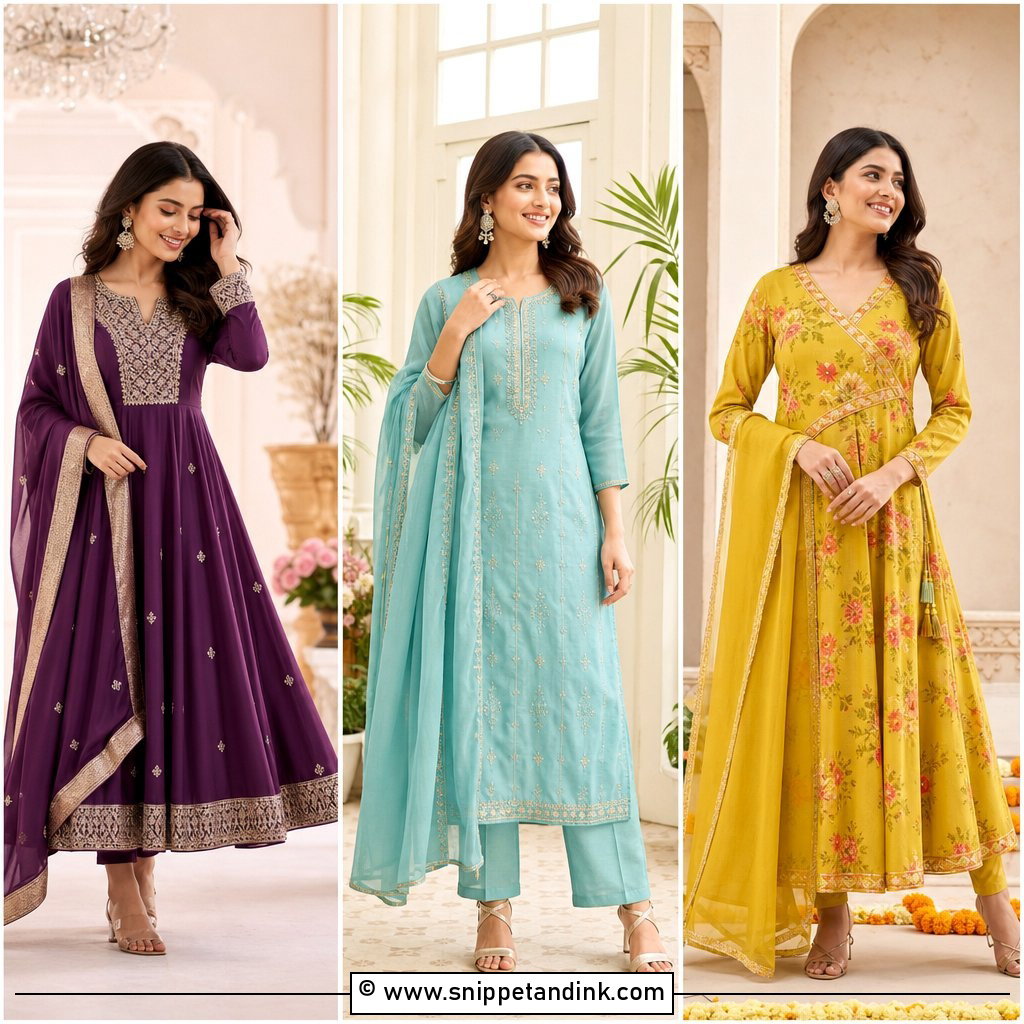
Silk has its own body, so a flared or paneled silk Anarkali holds its shape without stiff lining. That same structure is its weak point: silk shows water marks and seat creases, so I’d avoid it for a function where you’ll sit on the floor for hours. Jewel tones, pastels or ivory with zari detailing suit formal gatherings. A Banarasi, tissue or organza dupatta lifts it instantly. Gold earrings, embellished heels and a classic clutch are plenty, and bulky layers on top only fight the rich surface. It gives you a traditional look without committing to a lehenga or sari.
16. Georgette Anarkali Gown With Dupatta
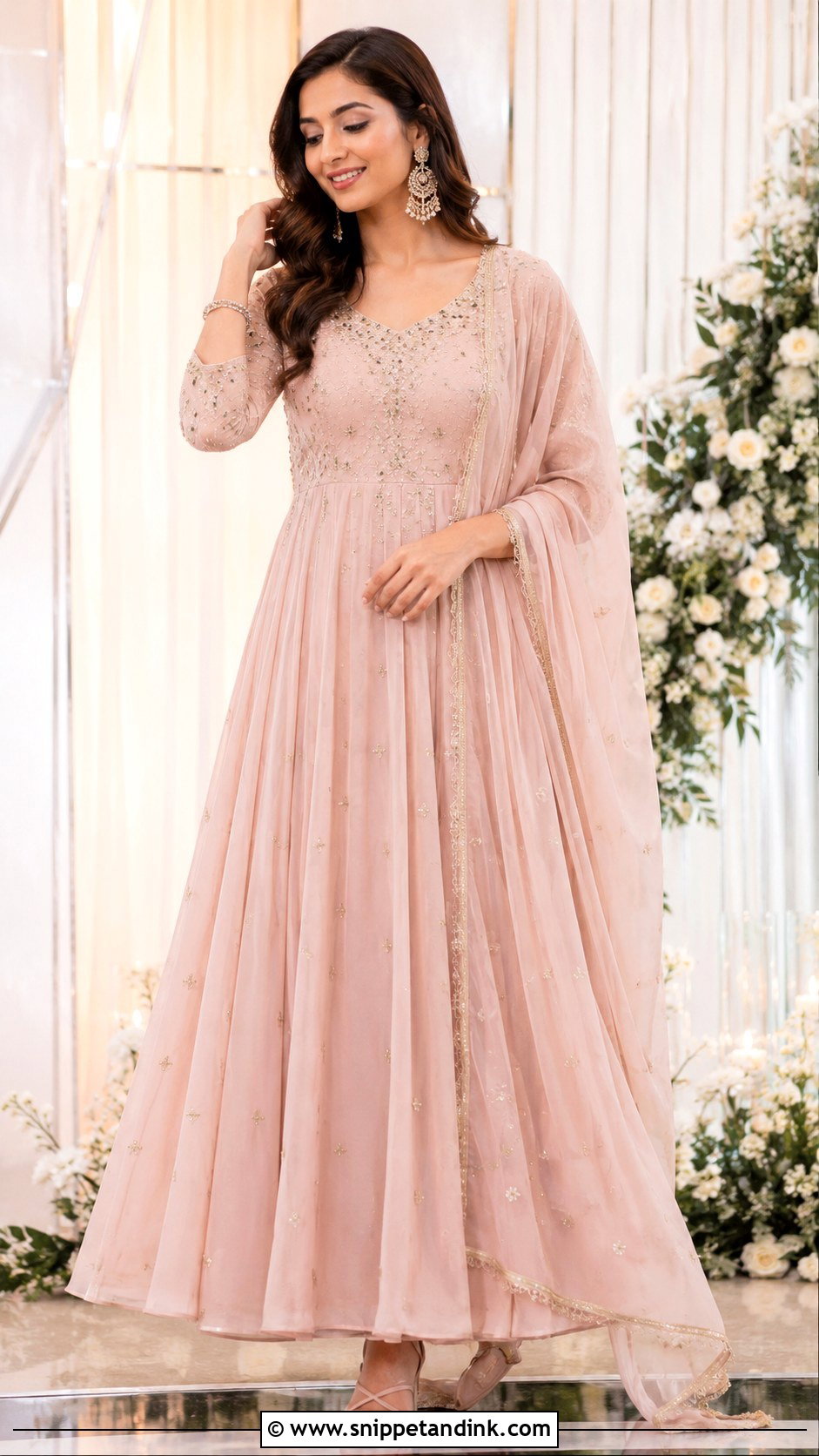
Georgette is what I’d wear to a wedding that runs from lunch into the night. It’s light, drapes close to the body and recovers from sitting better than silk, and it takes embroidery, sequins, prints and layered hems equally well. The detail I check is the lining. Cheaper georgette gowns come with a short or stiff lining that clings to the legs or shows a ridge through the fabric, so look for a full-length one that falls smoothly. Pair it with a matching chiffon or net dupatta, mid-height heels, statement earrings and a fine bracelet.
17. Organza Dupatta Anarkali Gown
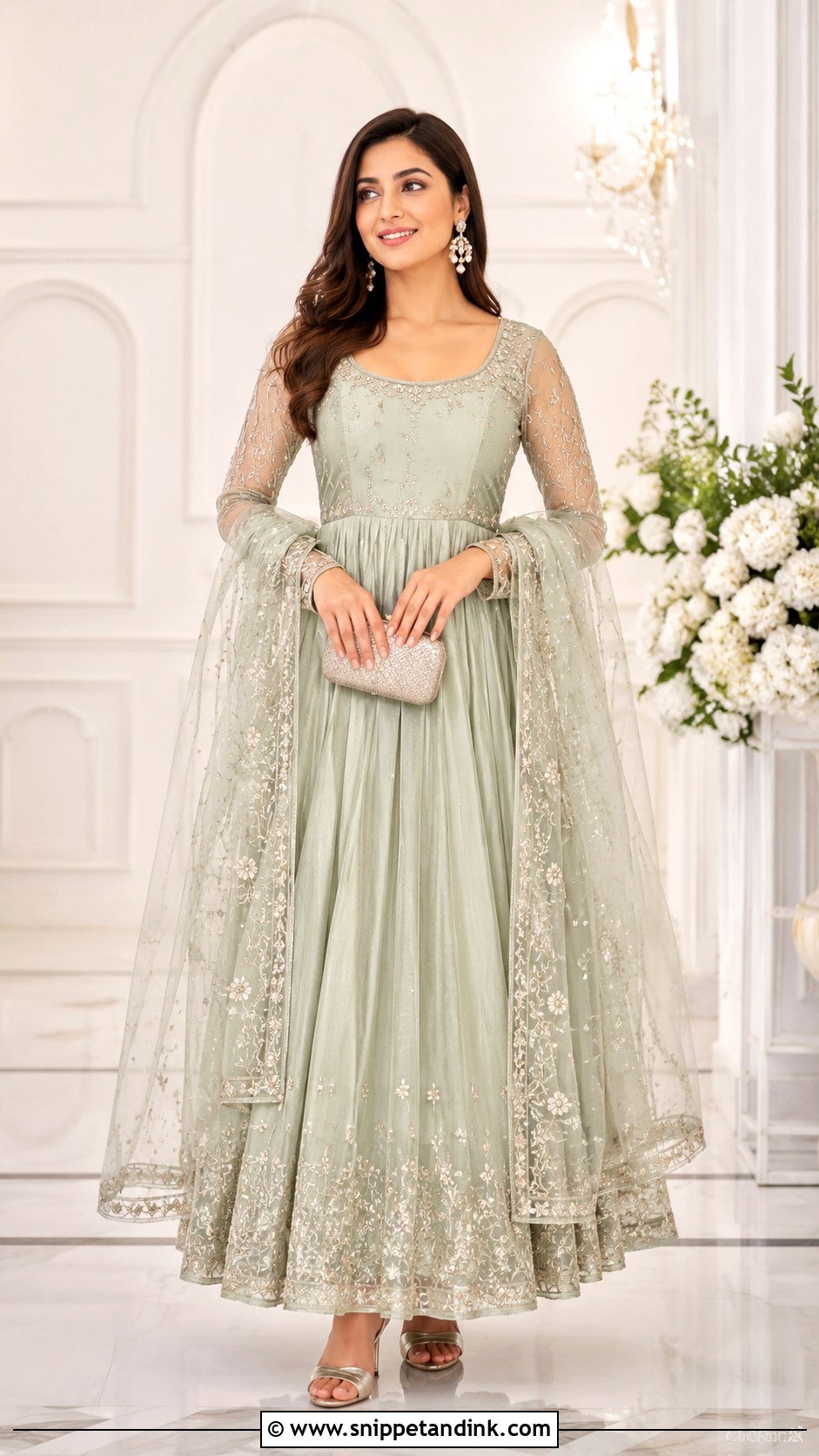
Organza is stiffer than chiffon, so the dupatta keeps a crisp shape and adds volume around the shoulders. That slick fiber is also why it slides, and I always secure it with two small safety pins hidden in the fold at the shoulder seam. It sits well over pastel, embroidered and tone-on-tone gowns. Drape it over both shoulders for a traditional feel or from one shoulder for a modern line. If the dupatta has embroidery or a scalloped edge, keep the gown quieter. Organza can feel scratchy on bare arms, so wear it around the house for ten minutes before the day.
18. Net Dupatta Anarkali Gown
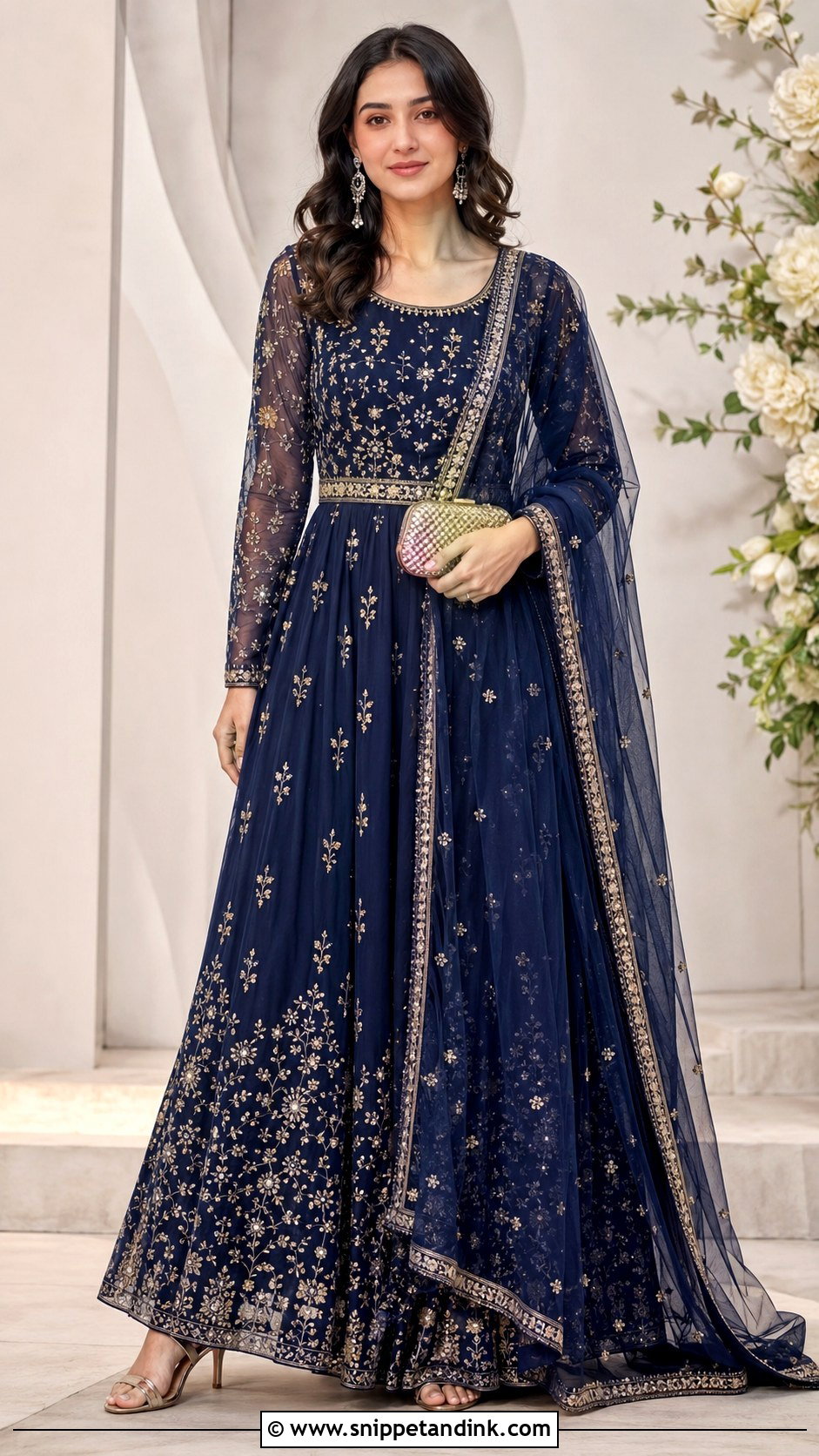
A net dupatta is the one to choose when your gown is the main event. It’s sheer enough that embroidery and sequins show through and light enough that it won’t drag the neckline down. Look for a border, small motifs or beadwork so the edges look finished; in evening light the open weave catches sparkle. Net snags easily on rings, bangles and clutch clasps, so I keep jewelry smooth-edged on the dupatta arm. Heels, drop earrings and a compact clutch complete it, and the flare can carry the drama.
19. Banarasi Dupatta Anarkali Gown
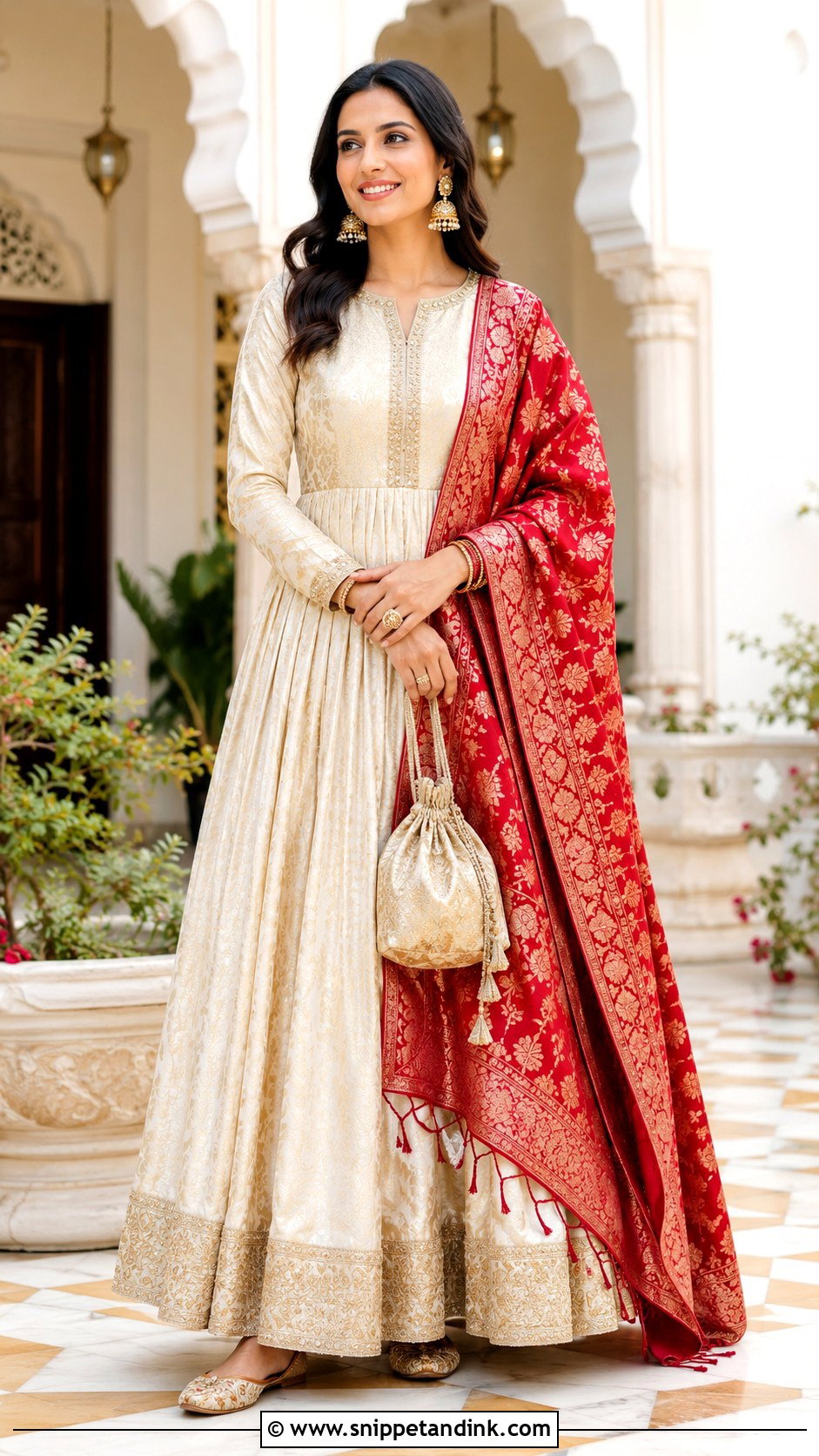
A Banarasi dupatta Anarkali gown is the smartest way I know to make one simple gown work for several functions. Start with a plain or lightly embroidered Anarkali in silk, georgette or cotton silk, then add a woven Banarasi dupatta, matched or contrasting. Ivory with red, green with gold, pink with orange and navy with gold are pairings that rarely go wrong. A Banarasi is heavy, though. It needs pinning at the shoulder and sits best over one shoulder and arm rather than around the neck. Jhumkas, bangles and embellished footwear keep the finish traditional.
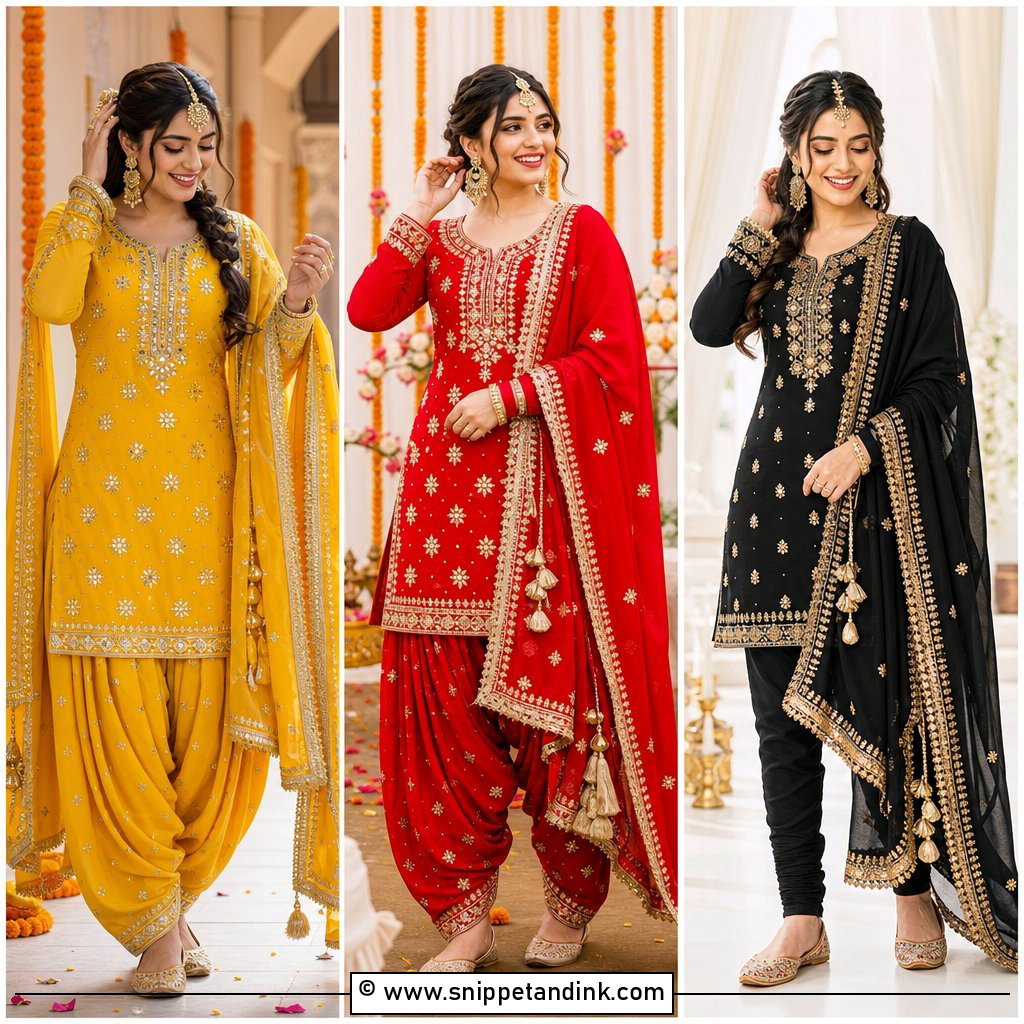


20. Contrast Dupatta Anarkali Gown
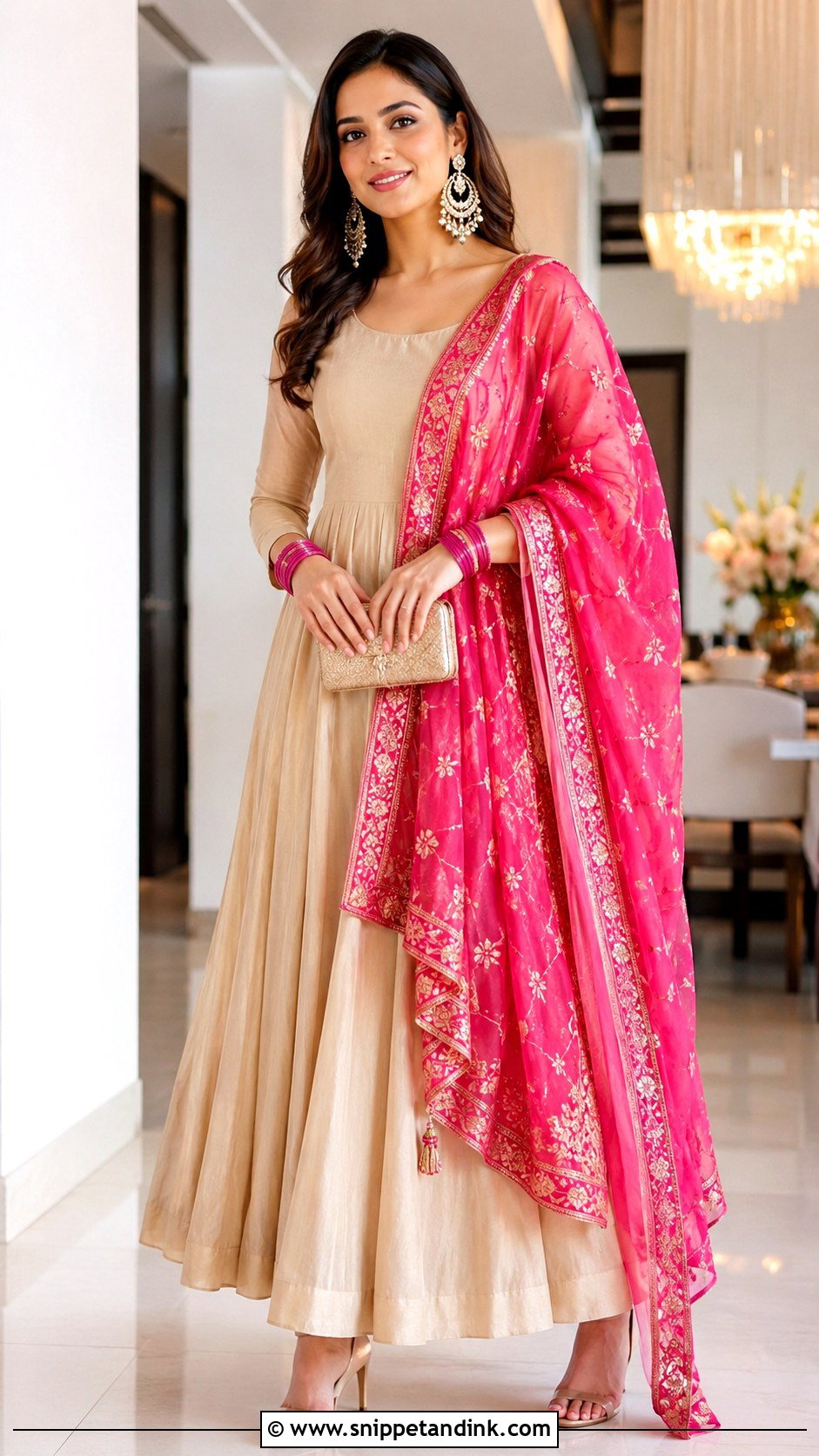
Contrast is the cheapest way to restyle a gown you already own. A plain gown looks completely different with a pink, yellow, blue, green or orange dupatta. What makes it look planned is repetition: echo the dupatta color in one small detail, such as earrings or shoes. Over a simple gown, use an embroidered, printed or bordered dupatta; over a detailed gown, keep it plain. I’d hold the two fabrics together in daylight first, because two brights that matched in the shop can clash under warm reception lighting.
21. Jacket Anarkali Gown With Dupatta
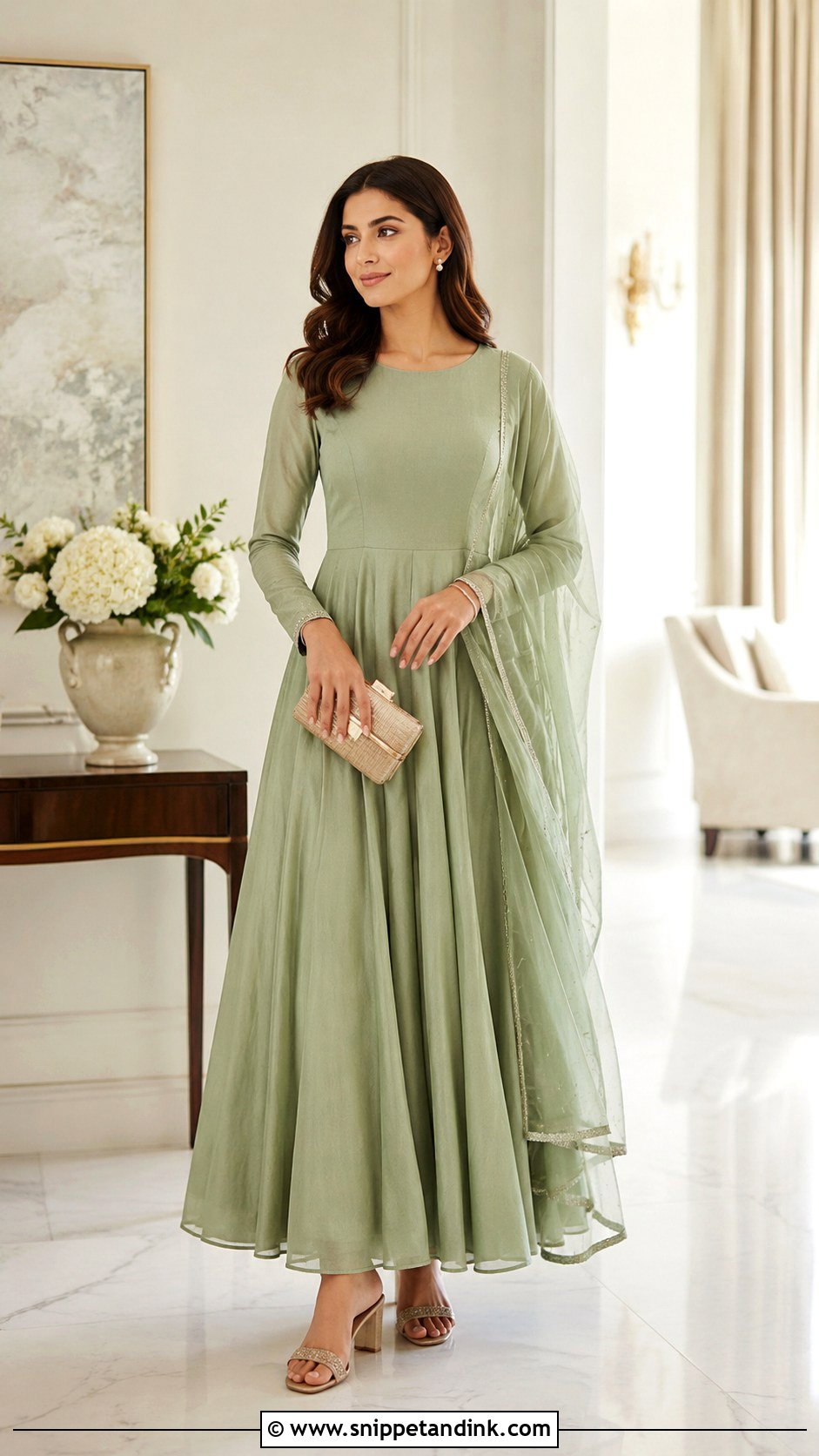
A jacket layer gives coverage without losing the fitted shape, which is why I suggest it for religious functions and cooler evenings. Jackets come long, short, sheer, embroidered or printed. Keep the inner gown simple so the layers add depth instead of bulk, and drape a sheer dupatta on one side only, since three heavy layers on the shoulders get hot quickly. Straight pants or churidar, block heels and sleek earrings complete it. A long open jacket also swings as you walk, which gives candid shots some life.
22. Cape Anarkali Gown With Dupatta
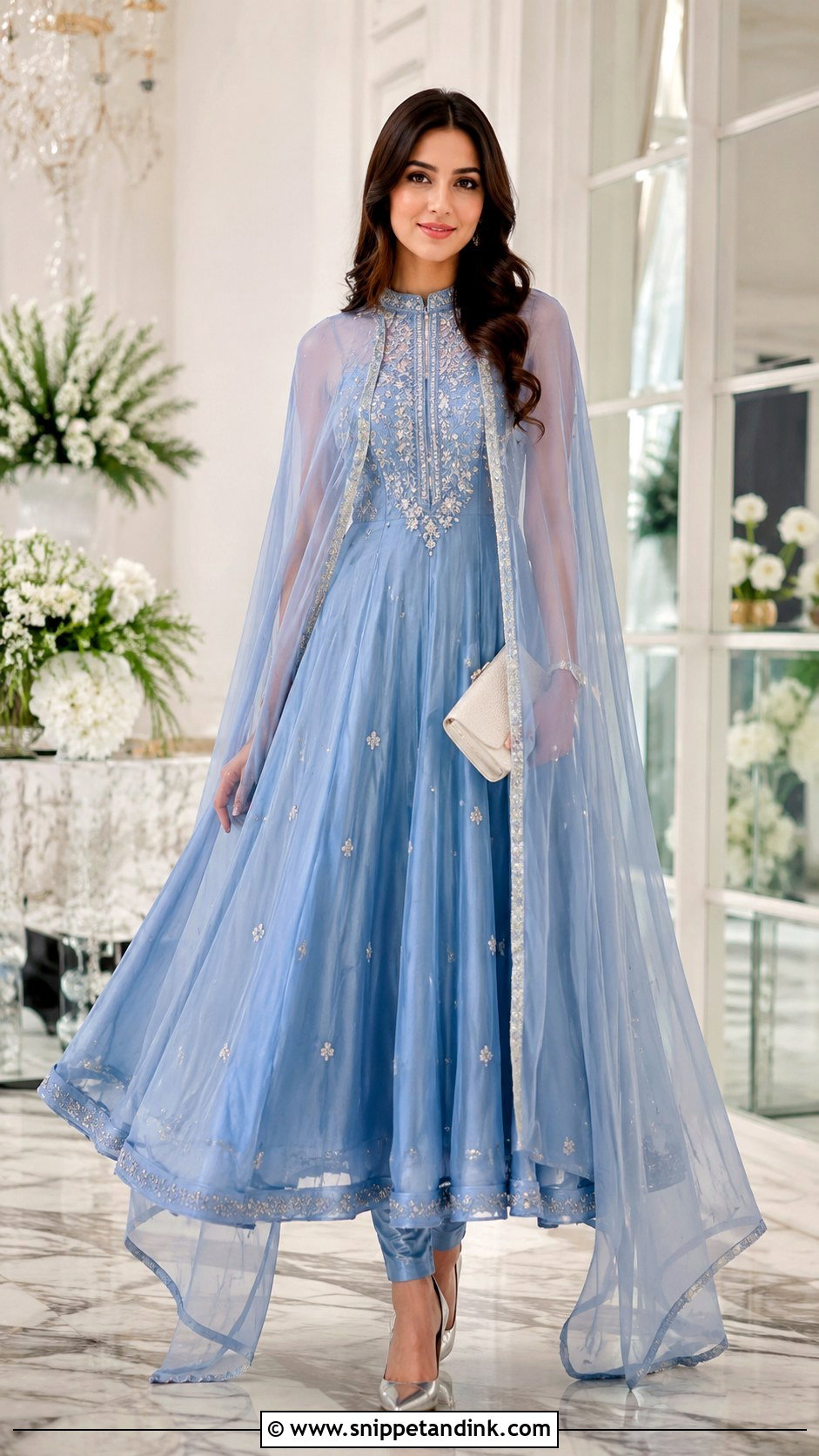
A cape Anarkali gown with dupatta either comes with an attached sheer cape, or you can mimic one by draping a soft dupatta across both shoulders and pinning it at the back. Net, organza, chiffon and georgette fall best. Keep the bodice fitted and the skirt flared so the cape doesn’t make you look boxy, a real risk on petite frames. The cape fills the shoulder area, so skip heavy necklaces. Before the day, practise reaching forward in it; some capes pull tight across the back when you lift a plate.
23. Angrakha Anarkali Gown With Dupatta
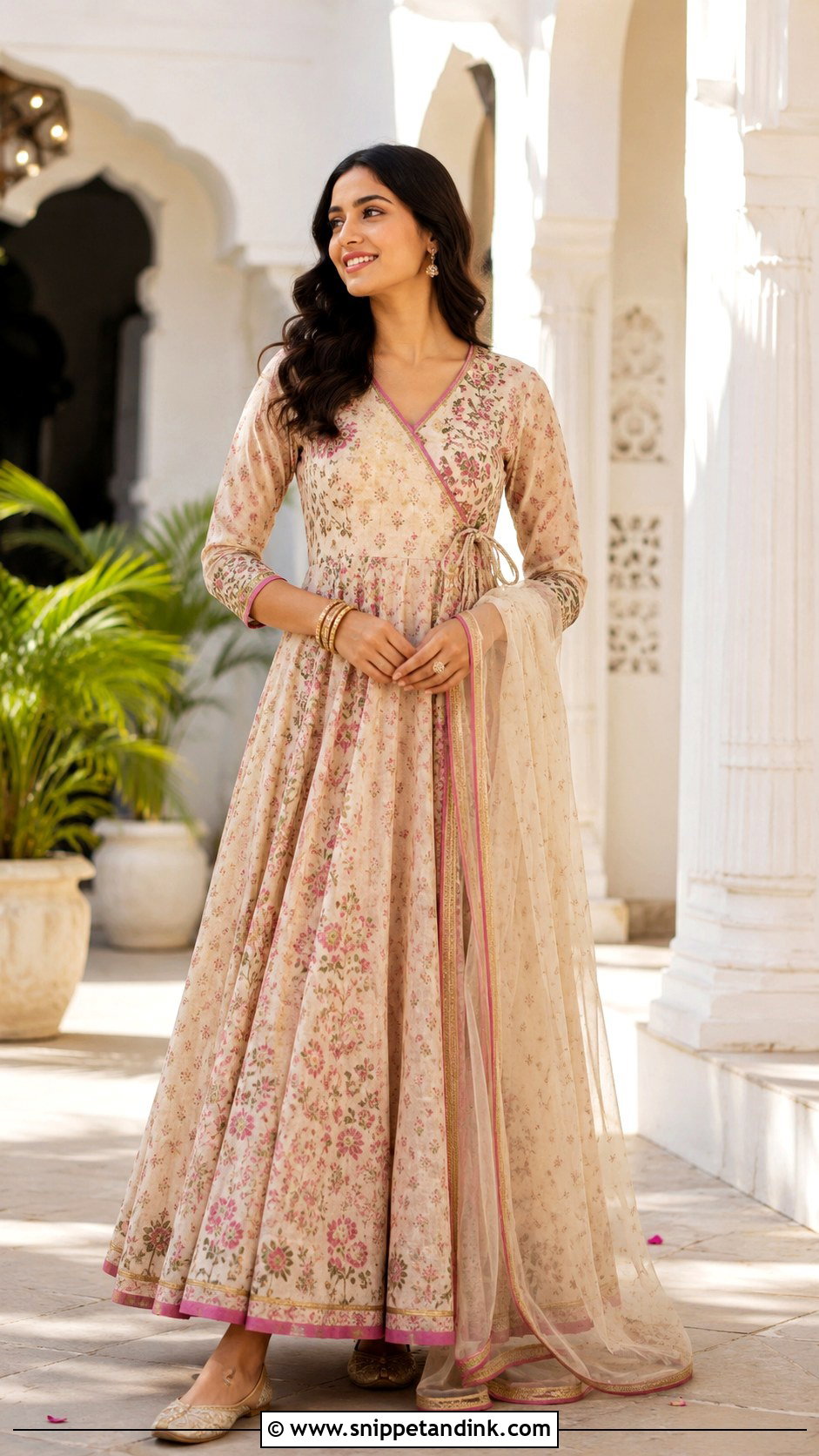
The angrakha’s crossover neckline and side tie are why it flatters so many shapes: the tie defines the waist without tight fitting. I check the overlap first, because on some ready-made pieces it gapes when you sit or bend, and a hidden press stud sewn inside fixes that in minutes. Printed cotton suits casual events, georgette semi-formal ones and silk richer occasions. A light dupatta, juttis, earrings and stacked bangles finish it, and the diagonal neckline is decoration enough without a heavy necklace.
24. Mirror Work Anarkali Gown With Dupatta
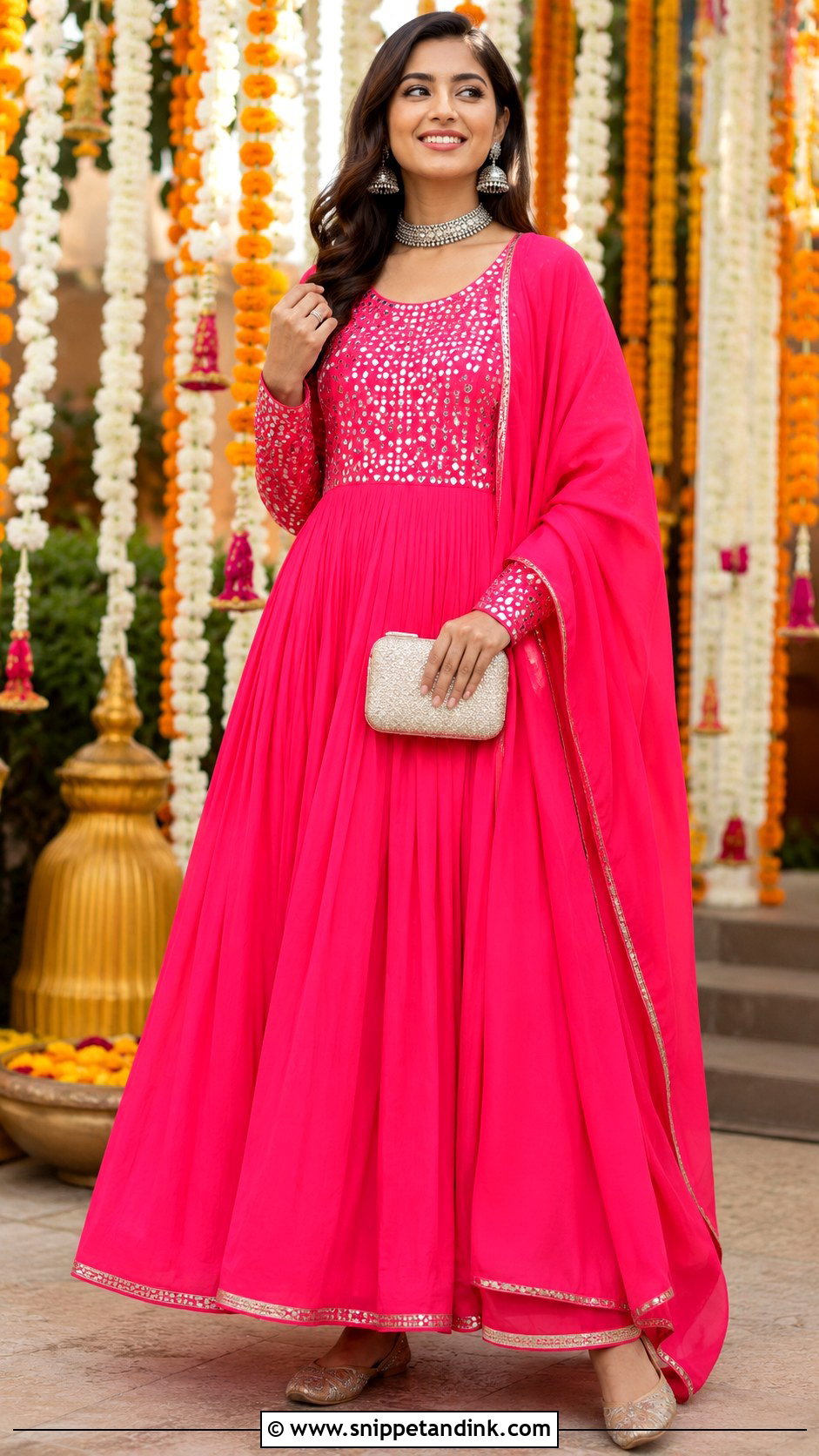
Mirror work in bright yellow, pink, blue, orange or green is pure celebration. I steer people toward gowns where the mirrors sit on the yoke, sleeves or hem rather than covering the whole body, since every mirror adds weight and a fully covered bodice is stiff to sit in. A plain or lightly bordered dupatta is enough. Silver jewelry, juttis, soft waves or a braid and a simple bag suit it. Mirrors can bounce camera flash into bright spots in photos, a fair trade at a lively sangeet.
25. Minimal Anarkali Gown With Dupatta
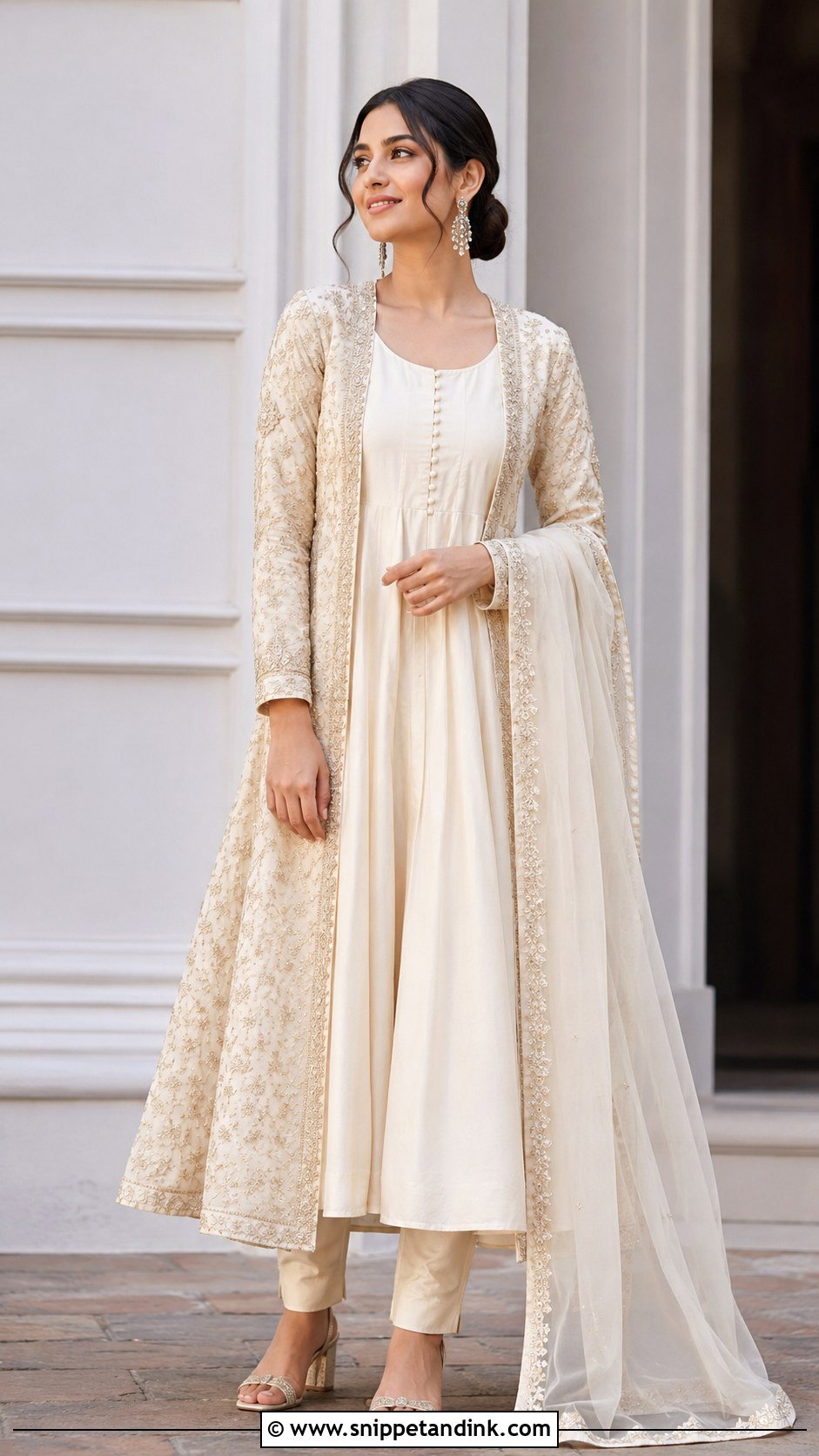
Minimal doesn’t mean plain. I look for a clean cut with one considered feature, such as a fine border, neckline embroidery or a good dupatta, and fabric quality matters more here because nothing hides poor stitching. Ivory, beige, blush, sage, navy and charcoal all work. Add pearl studs, thin bangles, comfortable heels and a neat clutch, with the dupatta draped loosely over one shoulder or across both arms. Intimate gatherings and daytime events where comfort counts are where it shines.
Draping and Securing a Dupatta That Lasts Through the Sangeet
A dupatta that keeps sliding is the most common reason a guest looks rumpled in the later photos. The fix is pins placed where nobody sees them. I use small safety pins on the inside of the fold and catch the gown’s shoulder seam or a bra strap, not just the dupatta fabric, so the weight hangs from something stable.
The drapes I use most
- One shoulder: pleat the dupatta lengthwise into narrow folds, pin at the left shoulder and let the length fall down the back. The easiest drape for dancing.
- Across both arms: rest it across the back and in the crook of each elbow. Graceful, but you will adjust it all evening, so keep it for a short photo session.
- Front V: lay it over both shoulders with the ends down the back and pin at each shoulder. Good for ceremonies where more coverage is expected.
- Over the head: keep a few bobby pins in your bag for a gurdwara ceremony or nikah where a covered head is customary.
Heavier dupattas such as Banarasi need two pins at the shoulder and one at the waist. Slippery organza and satin grip far better when the pin goes through a folded pleat rather than a single layer.
Folding and Storing Embroidered Anarkalis Between Weddings
Zari and metallic thread tarnish in humidity, and sequins press dents into fabric when folded under weight. After the event I hang the gown inside out for a day so any perspiration dries completely before it is put away.
- Wrap it in soft muslin or an old cotton sheet, never plastic, which traps moisture.
- Lay tissue paper between the embroidered layers so sequins and zari don’t rub against each other.
- Refold every few months along different lines, because permanent creases can split older silk.
- Send heavily worked pieces to a dry cleaner who handles ethnic wear; home washing loosens beads and mirrors.
- Steam velvet and georgette from the inside rather than ironing over embroidery.
The Dupatta Decides More Than the Gown Does
Across the whole list the silhouette barely changes; everything around it does. A floor-length embroidered gown, soft Chikankari, winter velvet, mirror work and a jacket layer each belong to a different kind of function. Give the dupatta as much thought as the gown, since it sets the color story and the level of formality. Match the fabric to the weather and to how many hours you’ll wear it, pair heavy gowns with light accessories, and let a simple gown carry a statement dupatta.
You'll Like These Ideas:



Leave a Reply