
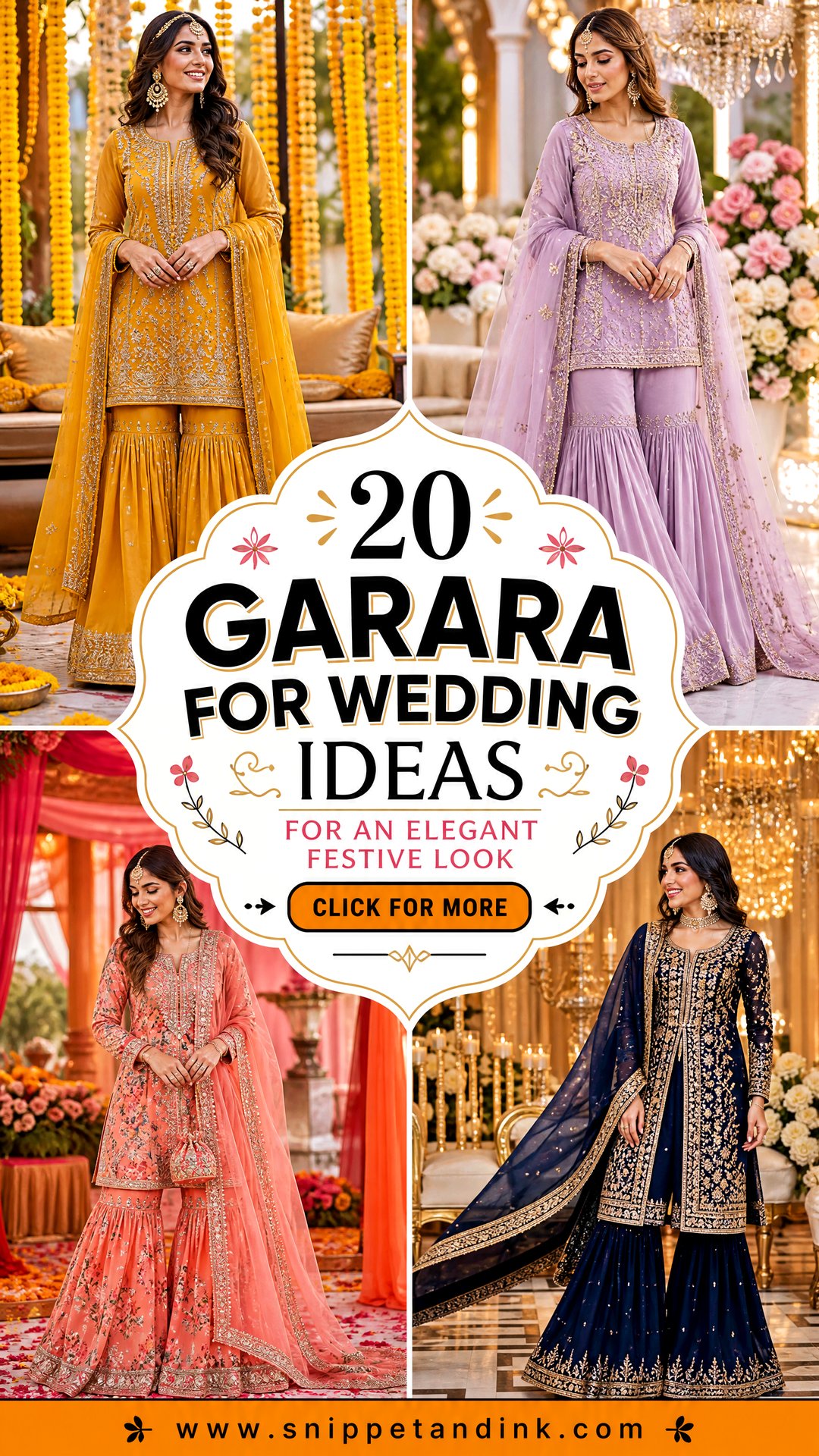
Nothing moves like a garara. The leg is fitted to the knee, then a joint opens into a wide gathered flare, and that single construction works on brides, bridesmaids, sisters and guests alike. What changes the outfit is fabric and function. Georgette is airy enough for a daytime mehndi, raw silk holds a crisp shape for the nikah, velvet belongs to winter evenings, and organza gives lift without much weight. I match the embroidery to the occasion first and only then think about jewellery, shoes and how the dupatta sits. The twenty outfits below run from traditional red to pastels, florals and peplum tops, each with notes from the fitting room.
What Each Fabric Does to the Flare
Two gararas in the same colour can look like different garments because of what they are cut from. Before a client chooses a design, I put fabric swatches in her hand and ask her to gather them, since the flare is just many panels of that fabric gathered at the knee.
- Georgette and chiffon fall close to the leg and swing as you walk. Best for heat and dancing, but they need a lining in pale colours.
- Raw silk stands slightly away from the body and holds embroidery well. It creases where you sit, so it suits ceremonies more than long dinners.
- Velvet is warm and heavy. I use it on the kurti or the upper leg and switch to silk for the flare.
- Organza and tissue give volume without weight and a little sheen, but they crush and snag more easily.
- Brocade and Banarasi make the flare stiff and wide, which flatters a tall frame and can overwhelm a petite one.
1. Red Bridal Garara
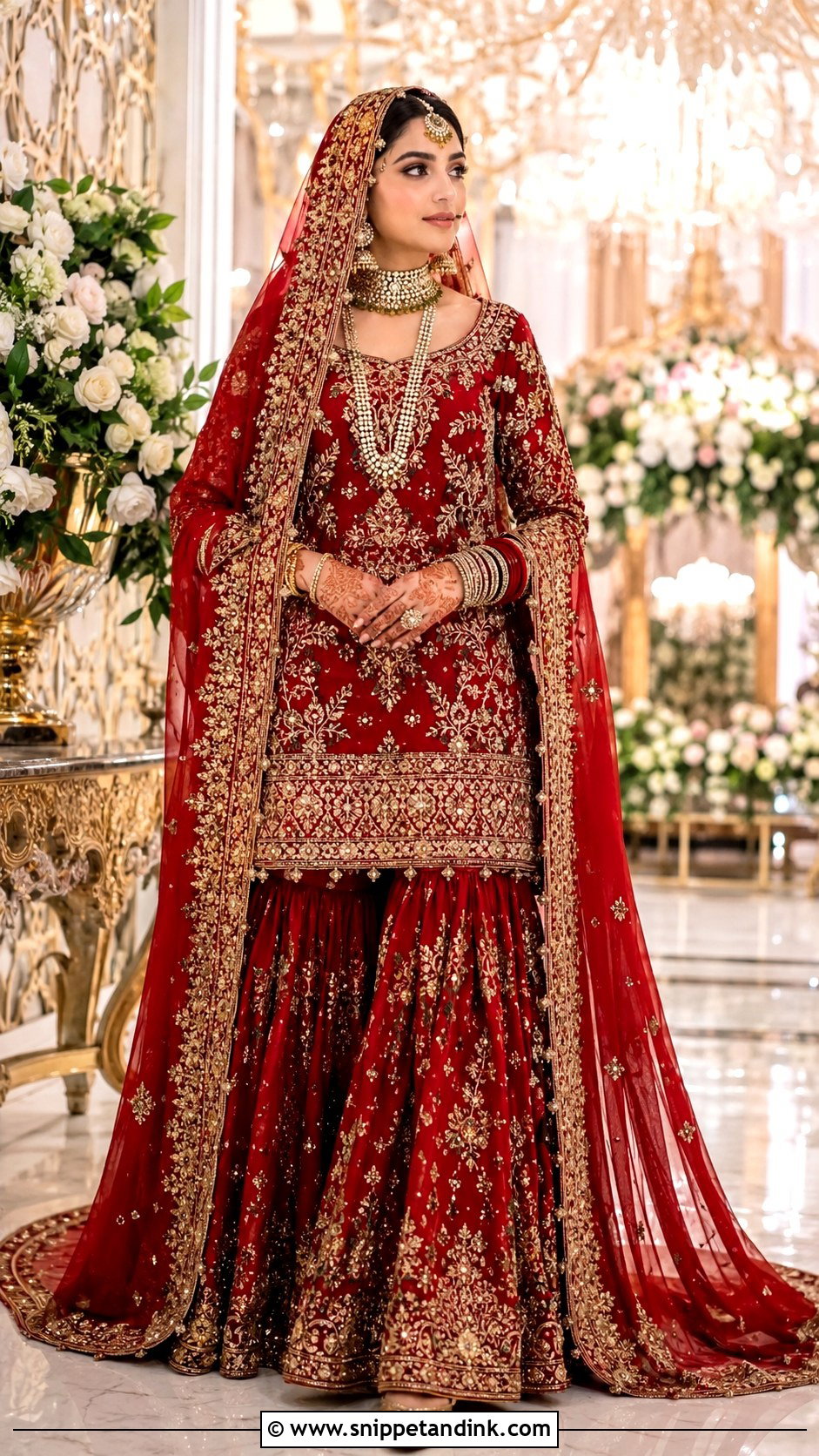
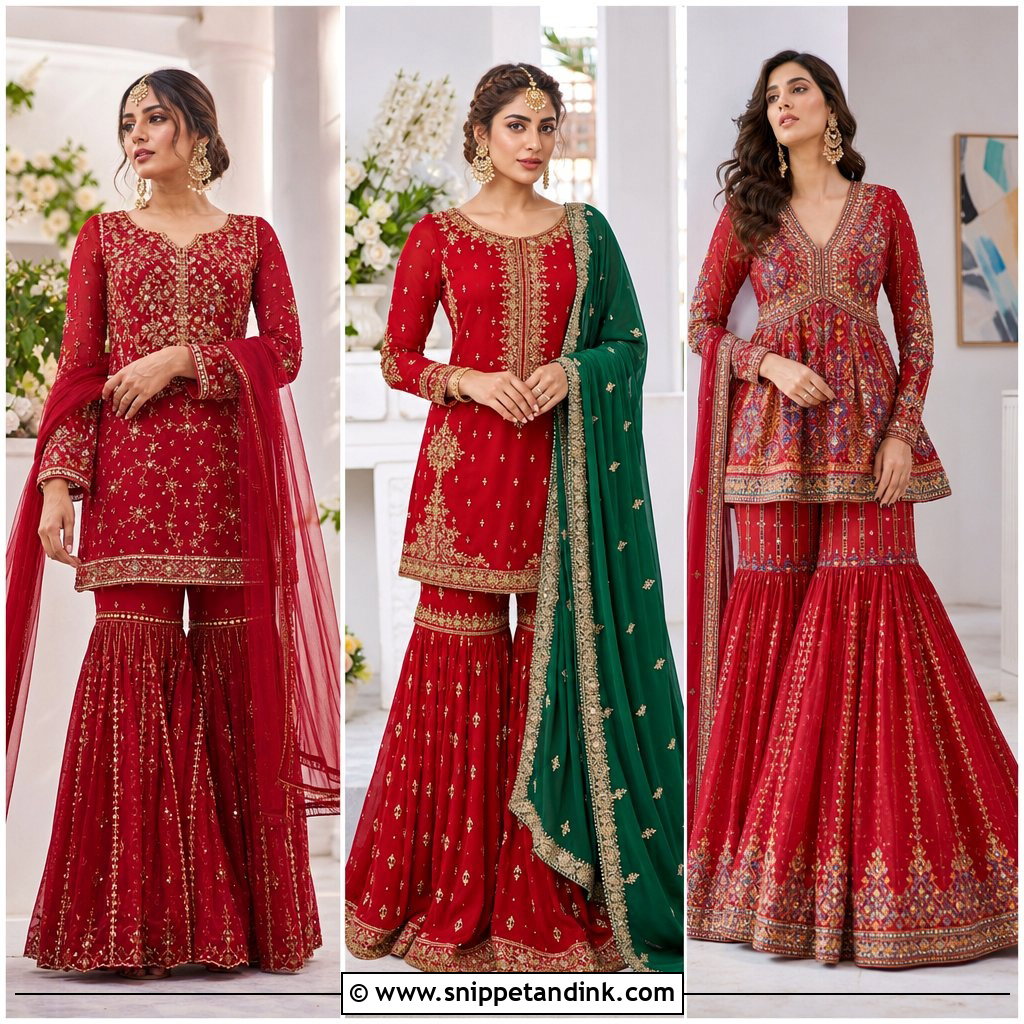
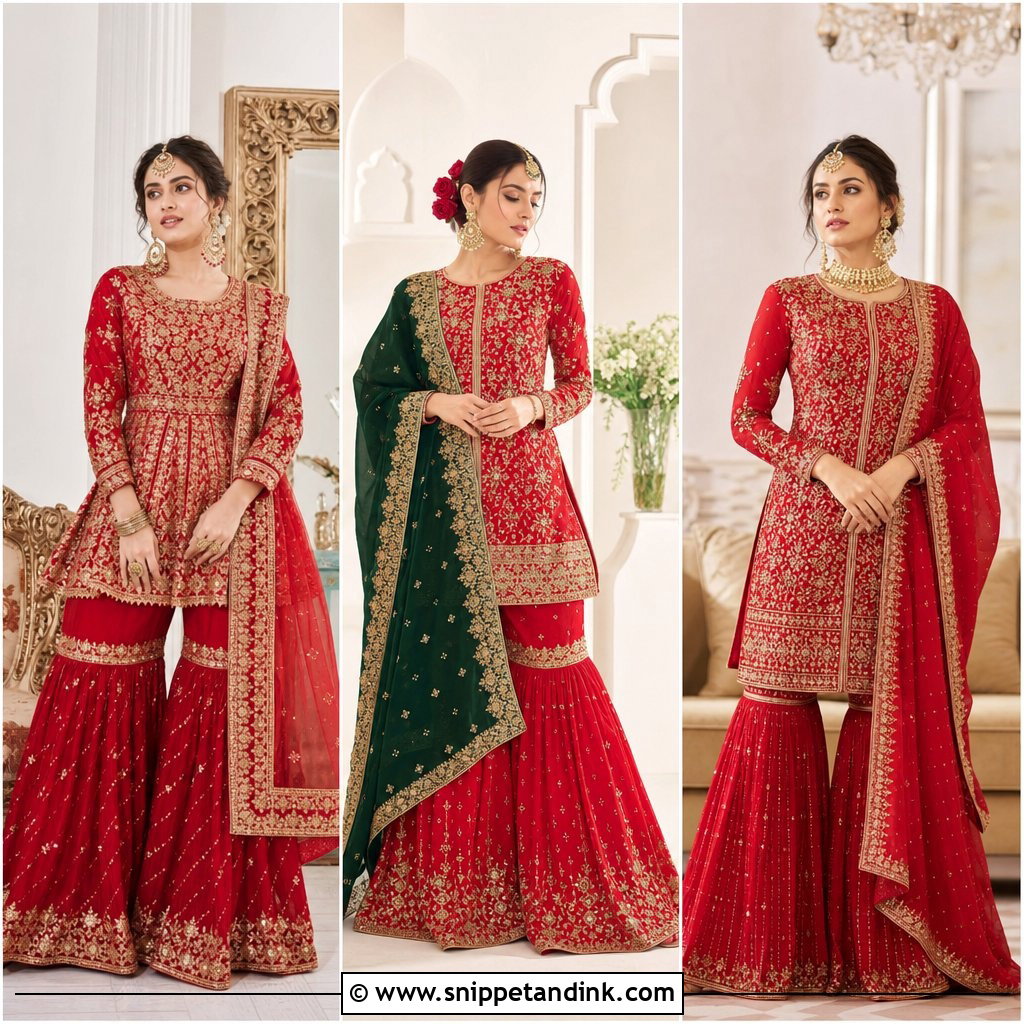
Red is the classic, and it carries the most weight of any outfit on this list. Pair a fitted short kurti in raw silk or velvet with a heavily flared garara in zari, dabka, sequin or antique-gold work. A red net dupatta with a wide border covers the head while a lighter one rests on a shoulder. Kundan choker, long necklace, jhumkas, maang tikka and bangles complete the bridal set. My main concern at fittings is the waist: a heavy garara drops by a centimetre or two over the evening, so I ask for a firm waistband with hooks rather than a drawstring alone. Gold juttis, a sleek bun and a red lip finish it.
2. Ivory Nikah Garara
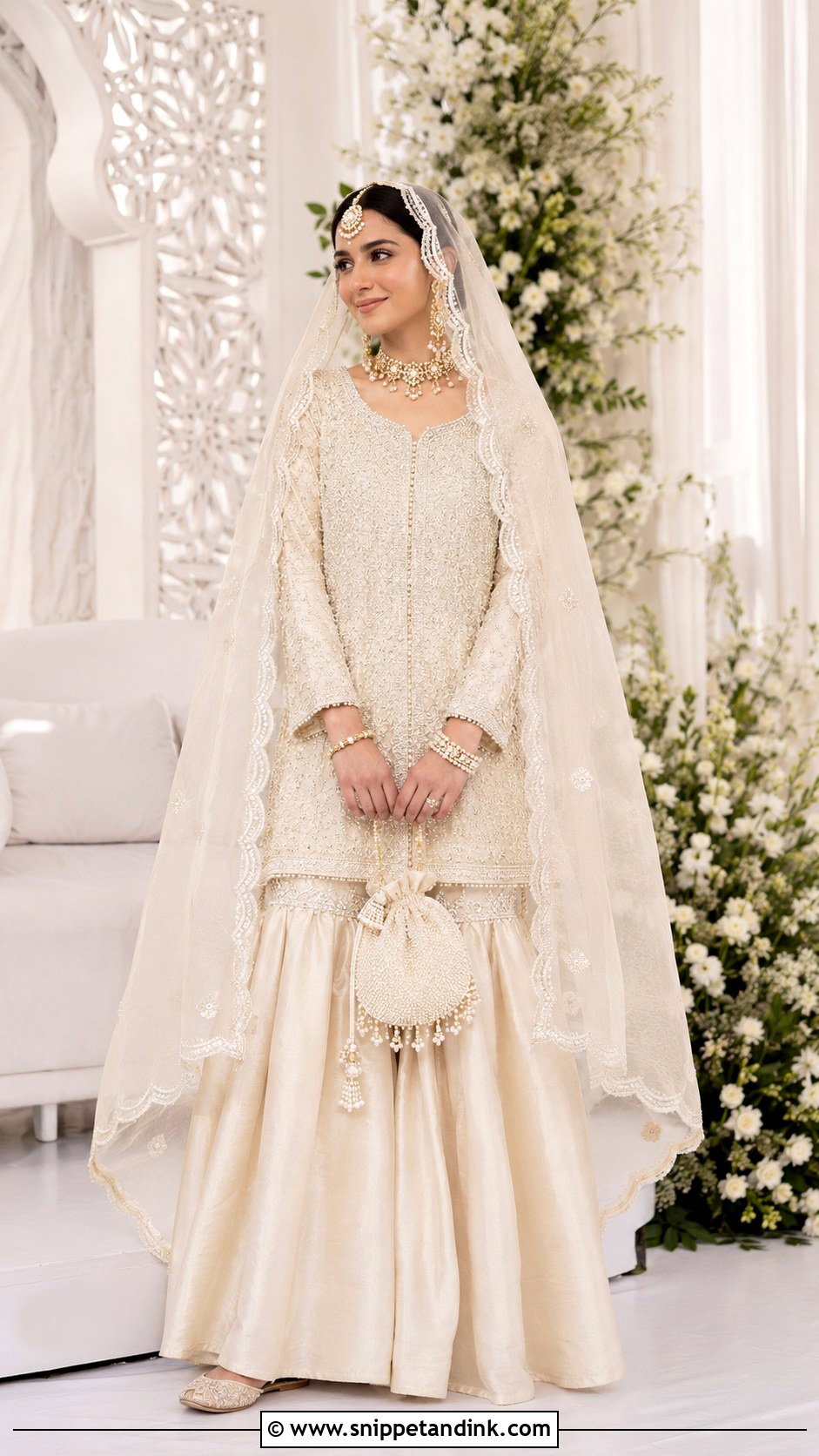
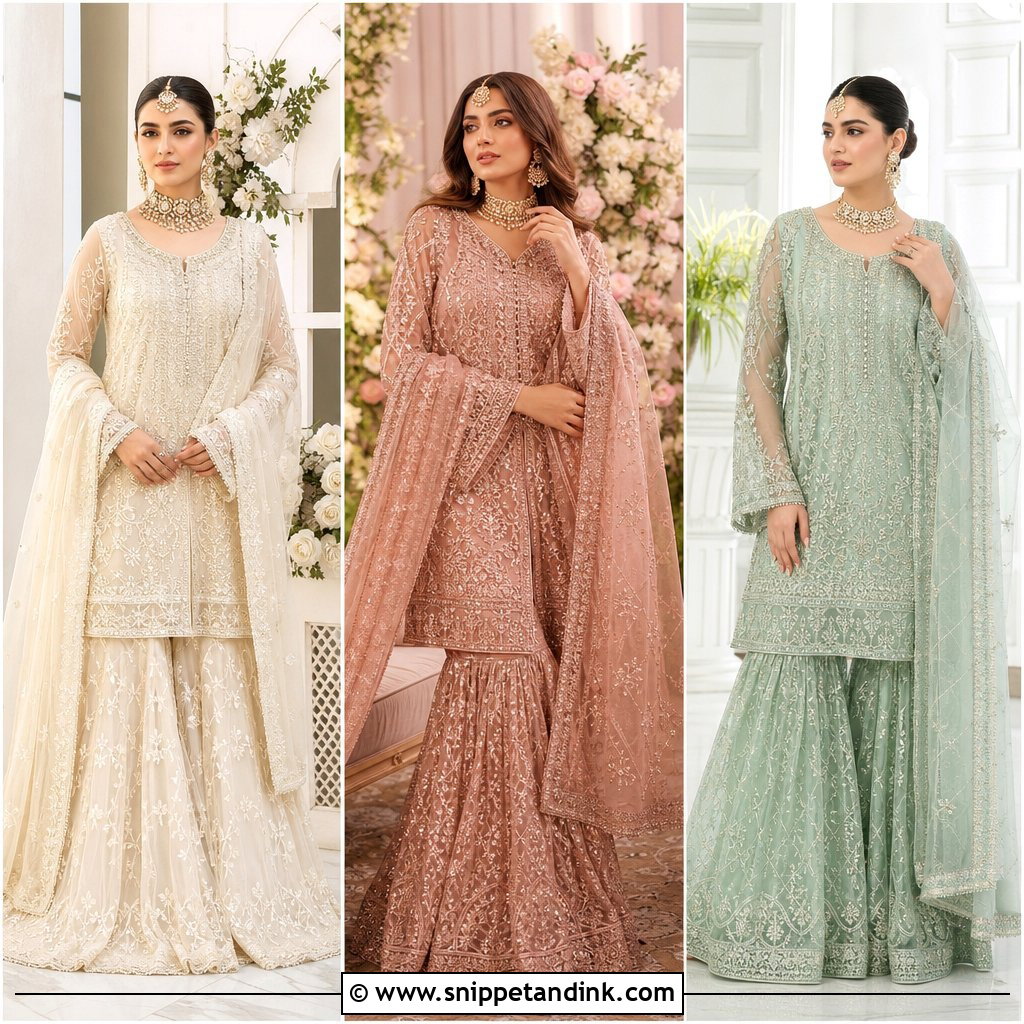
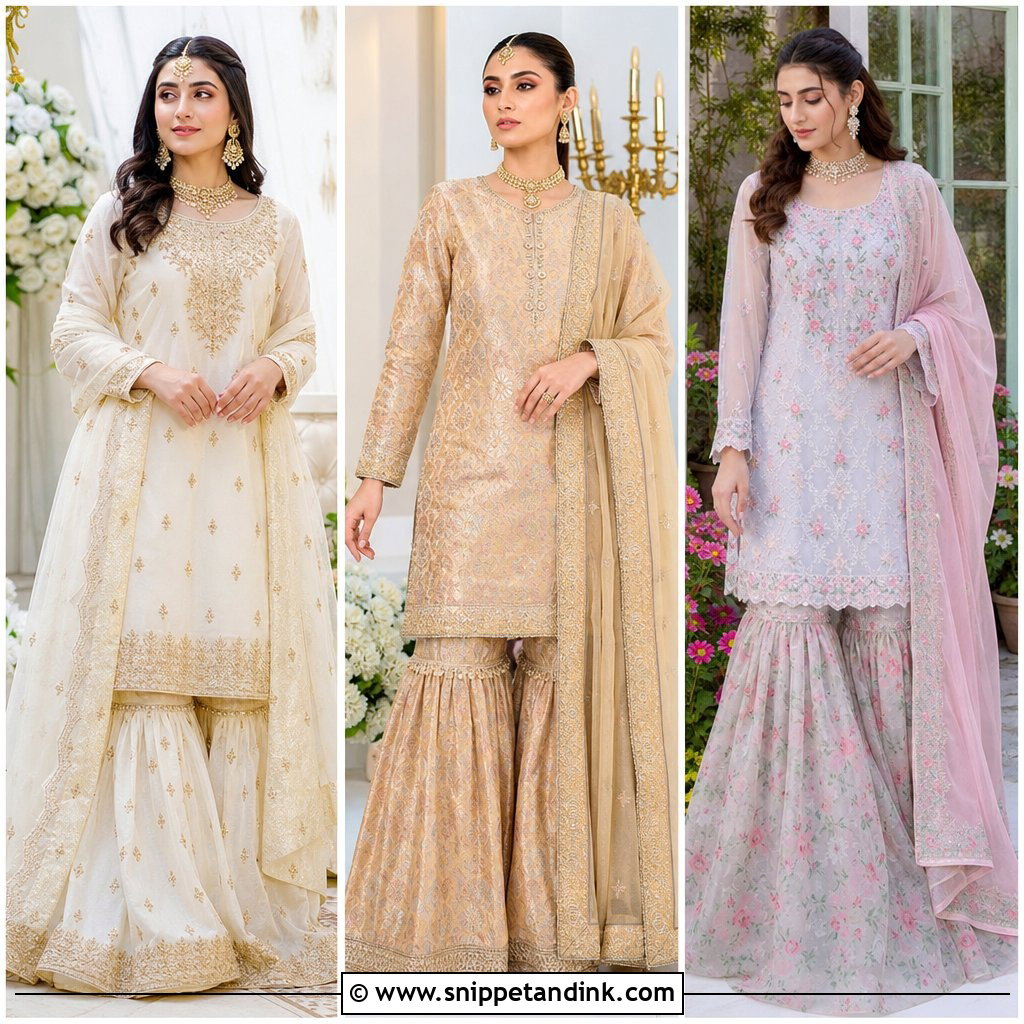
For a nikah, I want an outfit that is calm in photographs and easy to sit in. An ivory silk garara with fine gold thread, pearls and small sequins pairs with a straight short kurti in full or three-quarter sleeves, which keeps the line modest. A sheer organza dupatta with scalloped edging is pinned over the head and left to fall on both sides. Pearl-and-kundan jewellery gives a little contrast. Ivory juttis, a pearl potli and white flowers in a low bun finish it. Ivory reads slightly yellow next to bright white flowers, so I ask the florist for cream blooms instead.
3. Emerald Green Wedding Garara
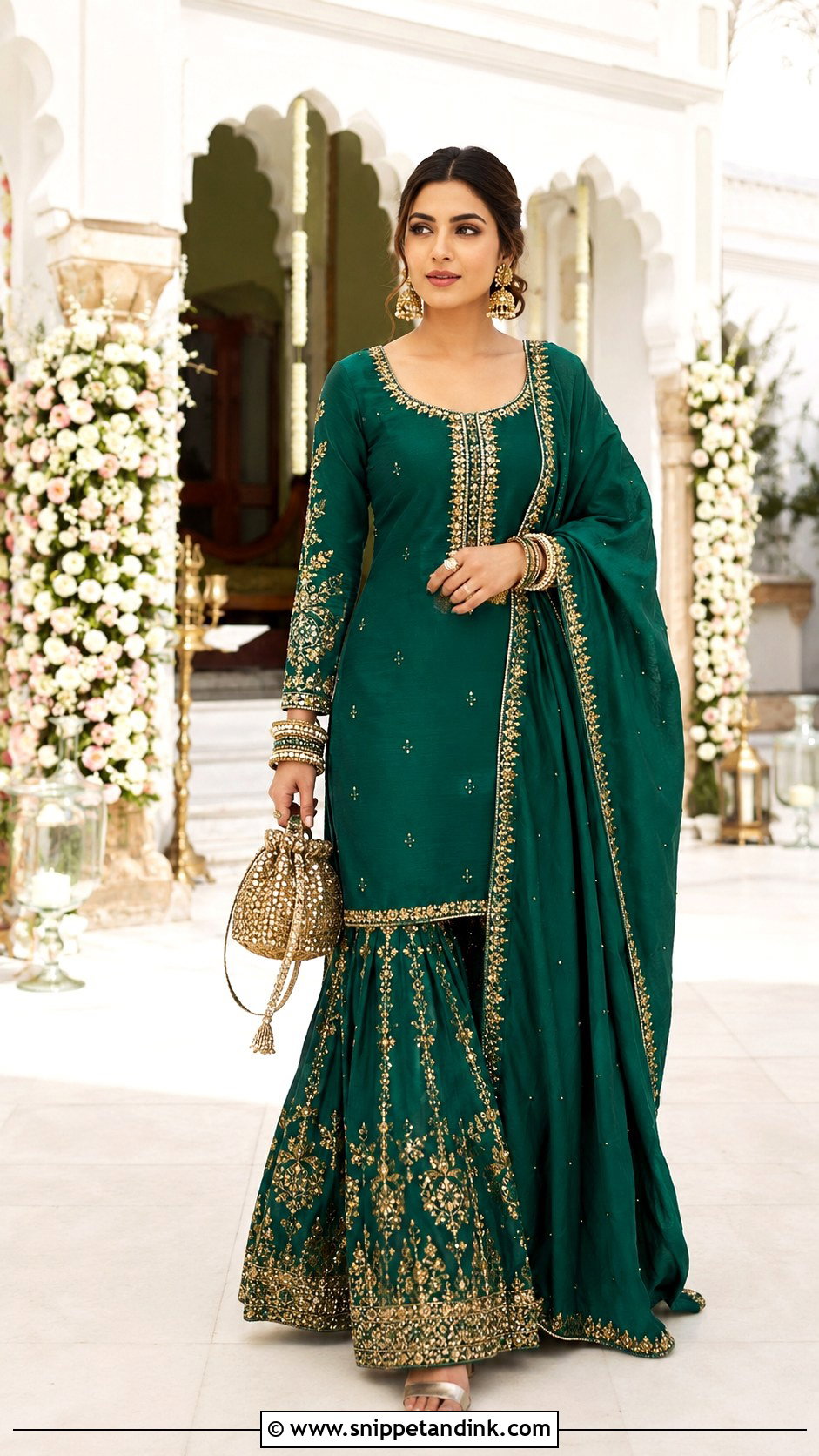
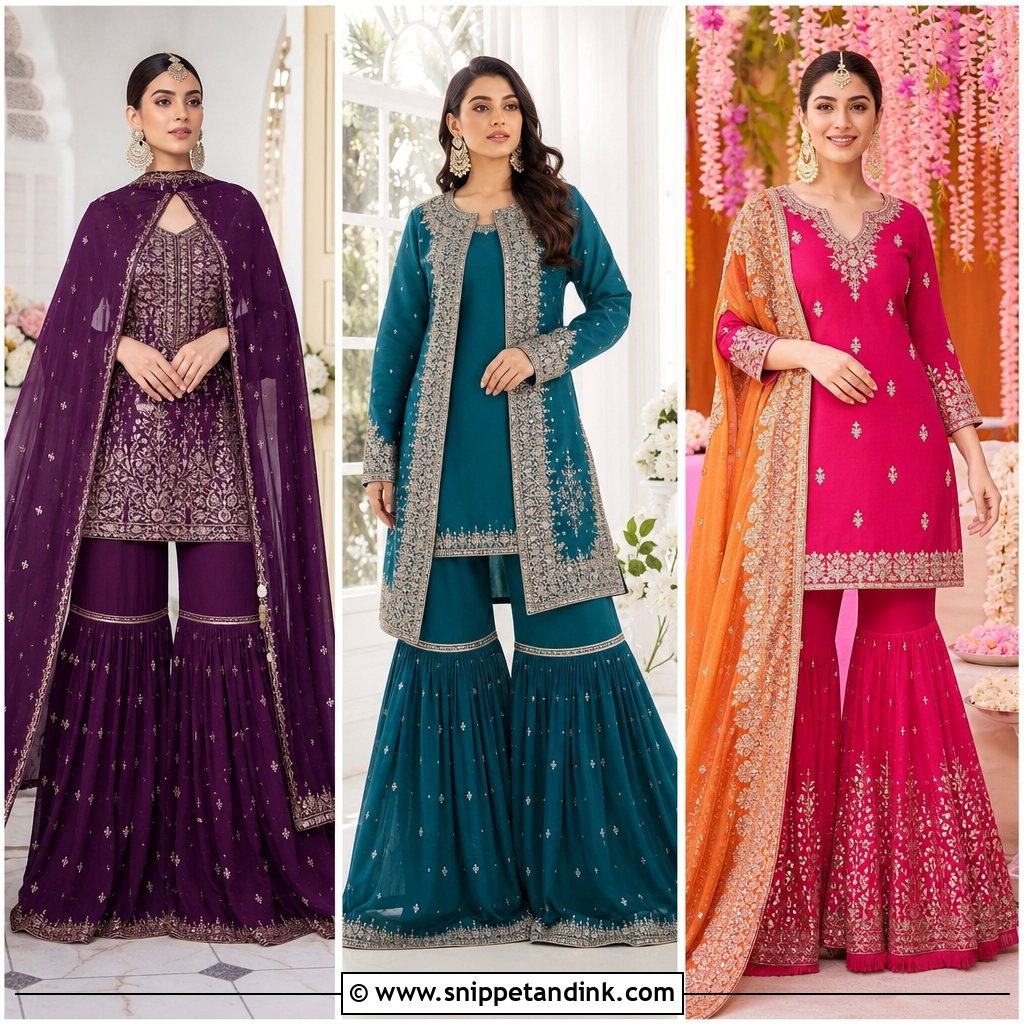
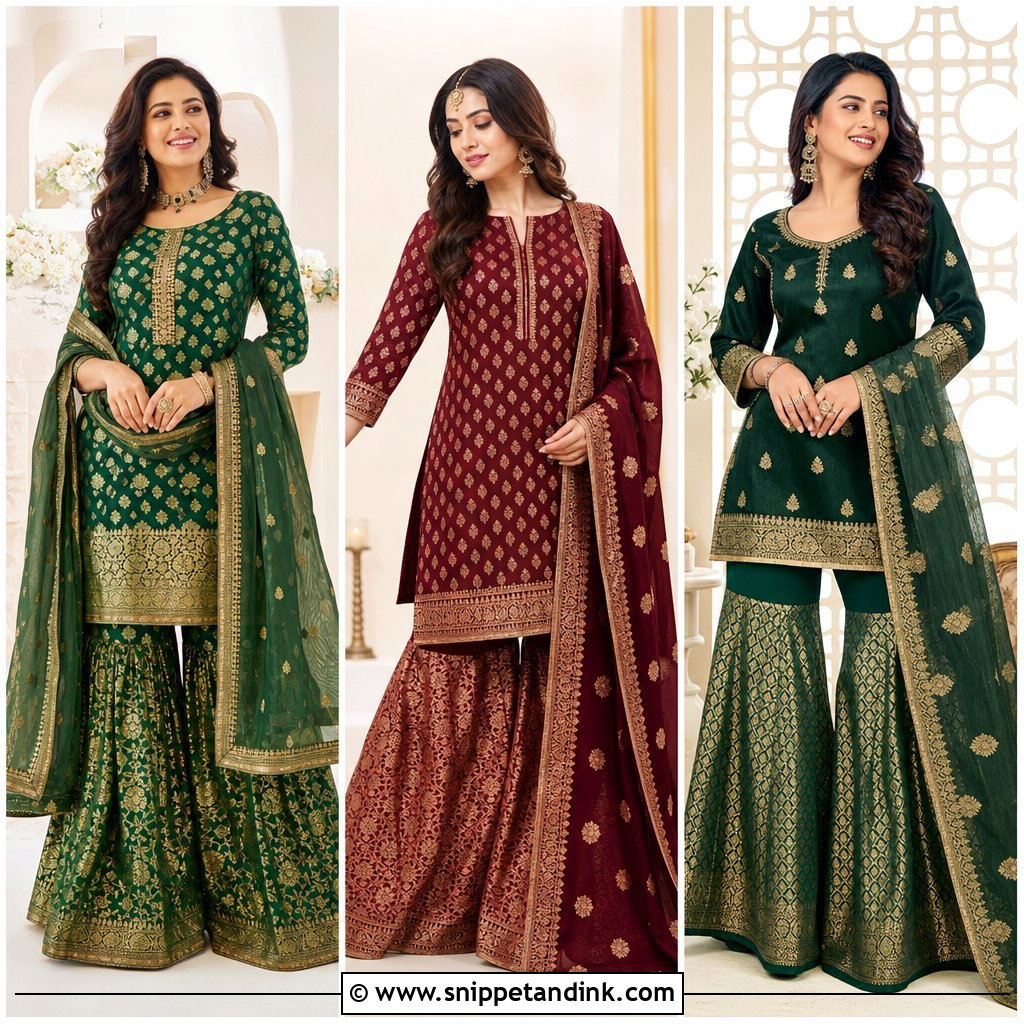
Emerald gives full colour without bridal red. A silk or georgette garara with fine gold embroidery at the knees and lower flare pairs with a fitted emerald kurti, square or softly rounded at the neck. Georgette emerald is the friendlier choice for a guest, because silk in a deep jewel tone shows every crease after a car journey. A chiffon dupatta with scattered gold motifs stays easy to carry. Antique-gold jhumkas, stacked bangles and a small maang tikka suit the shade. Choose block heels or juttis by how far you’ll walk, add a gold potli, and finish with a smooth bun and bronze makeup.
4. Blush Pink Garara
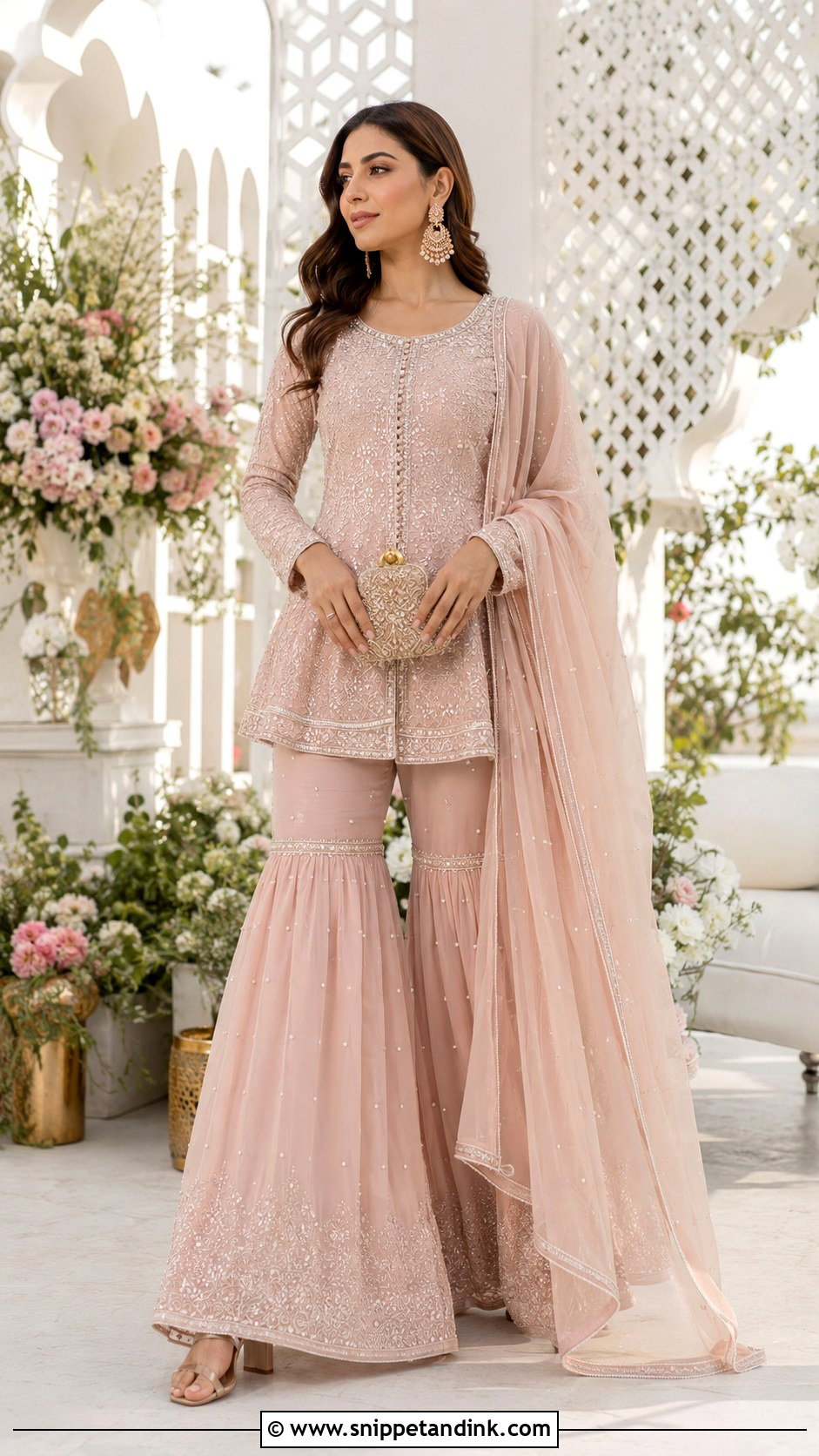
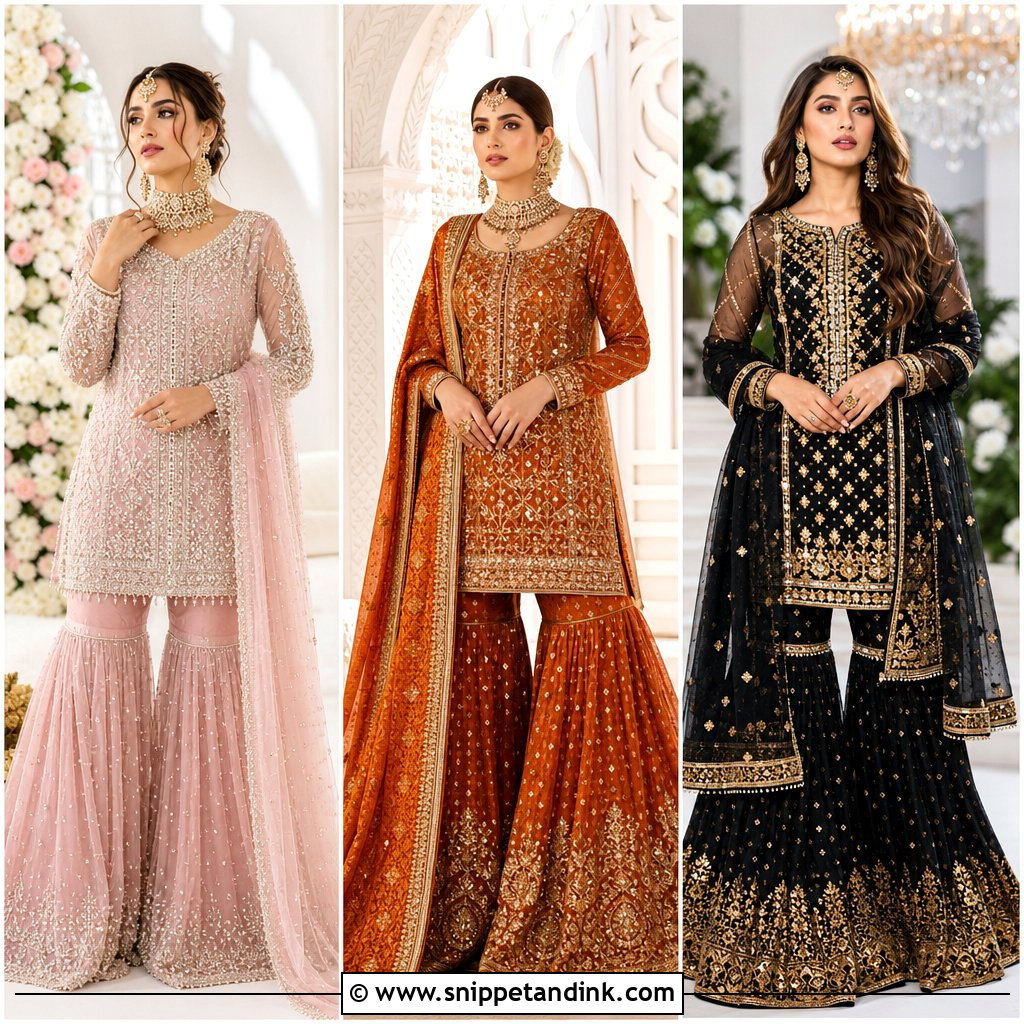
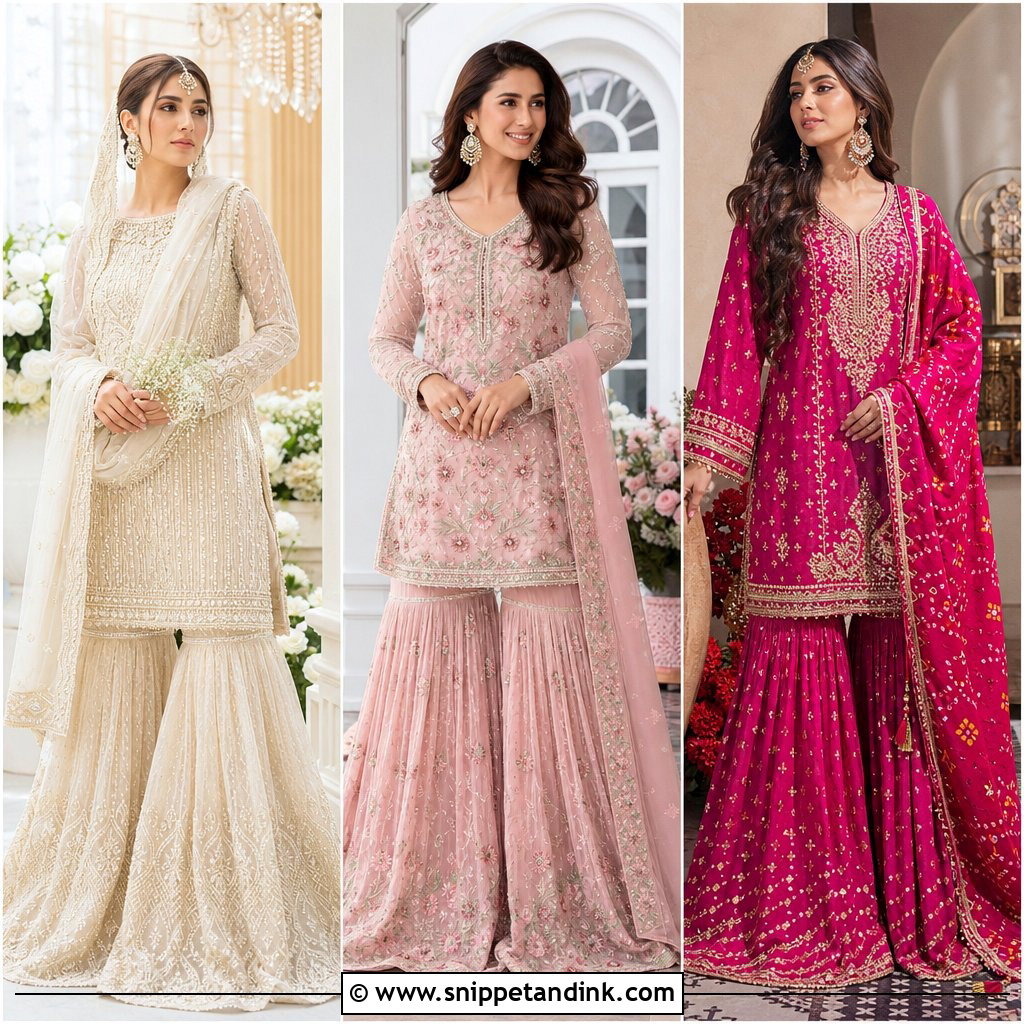
Blush pink is my safest suggestion for a bridesmaid who doesn’t want to look bridal. A light georgette garara in pearl, thread and tonal sequins keeps the shine low, and a short peplum kurti adds shape at the waist against the wide flare. Layer a sheer blush dupatta with a narrow pearl border. Rose-gold earrings, a fine bracelet and a small clutch keep the colour soft. Block heels rather than stilettos, because thin heels sink into the hem gathers when you step. Loose waves or a low ponytail and peach blush finish it.
5. Mustard Mehndi Garara
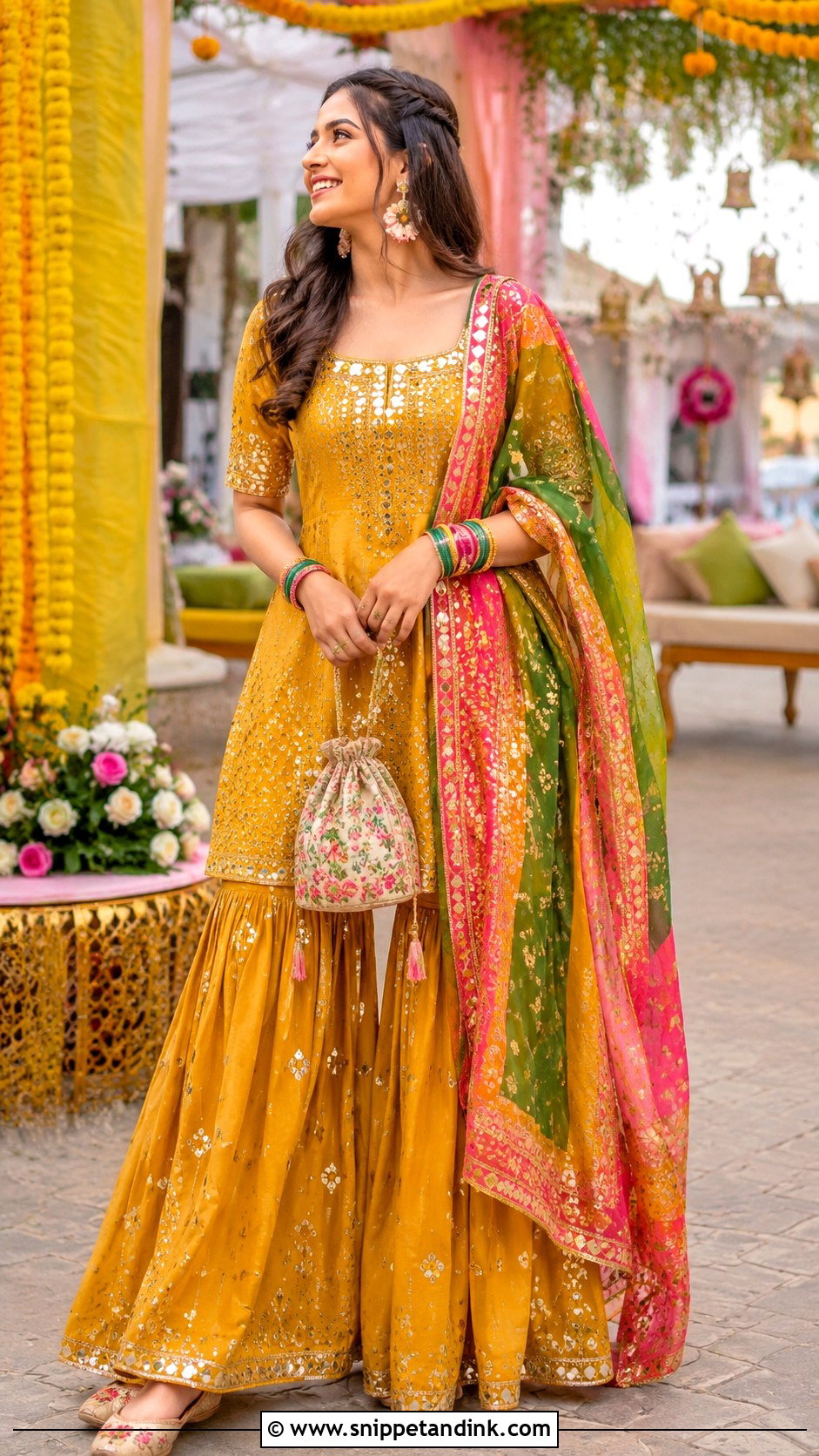
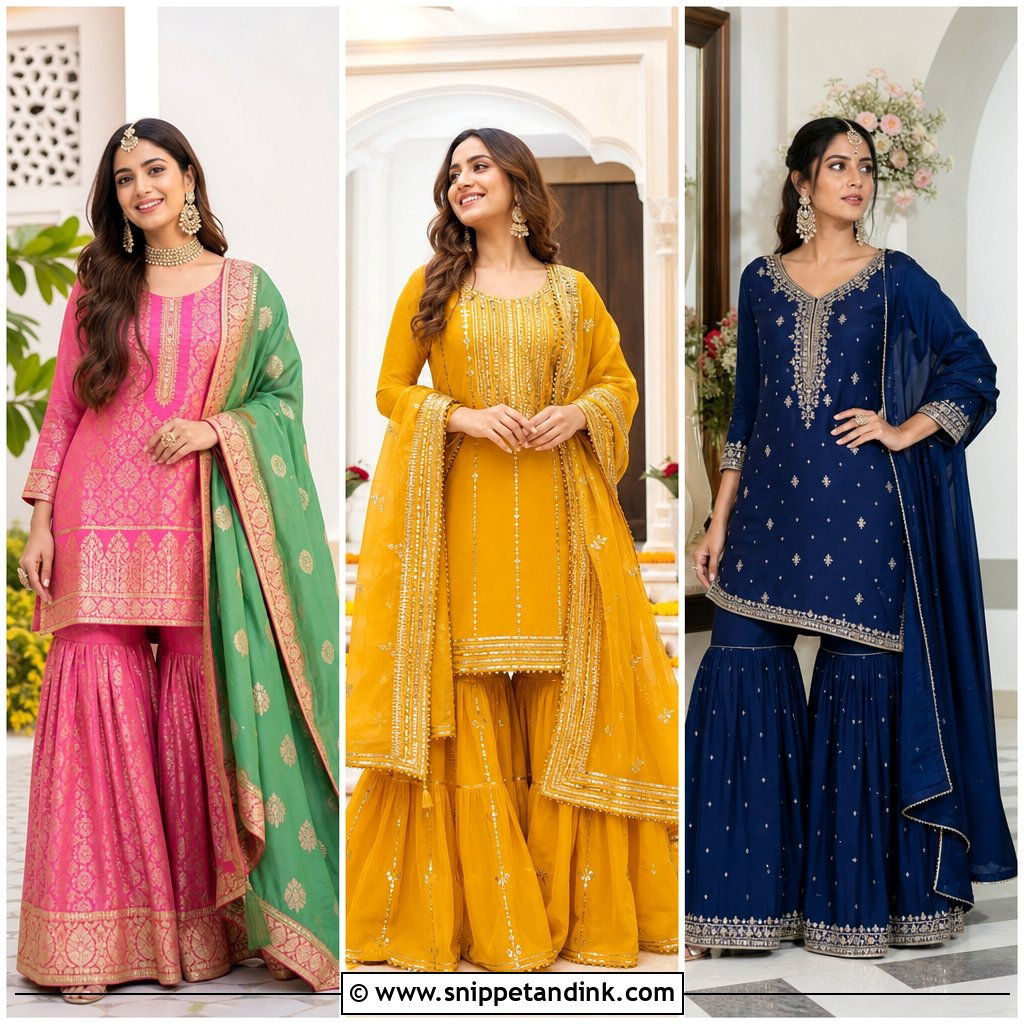
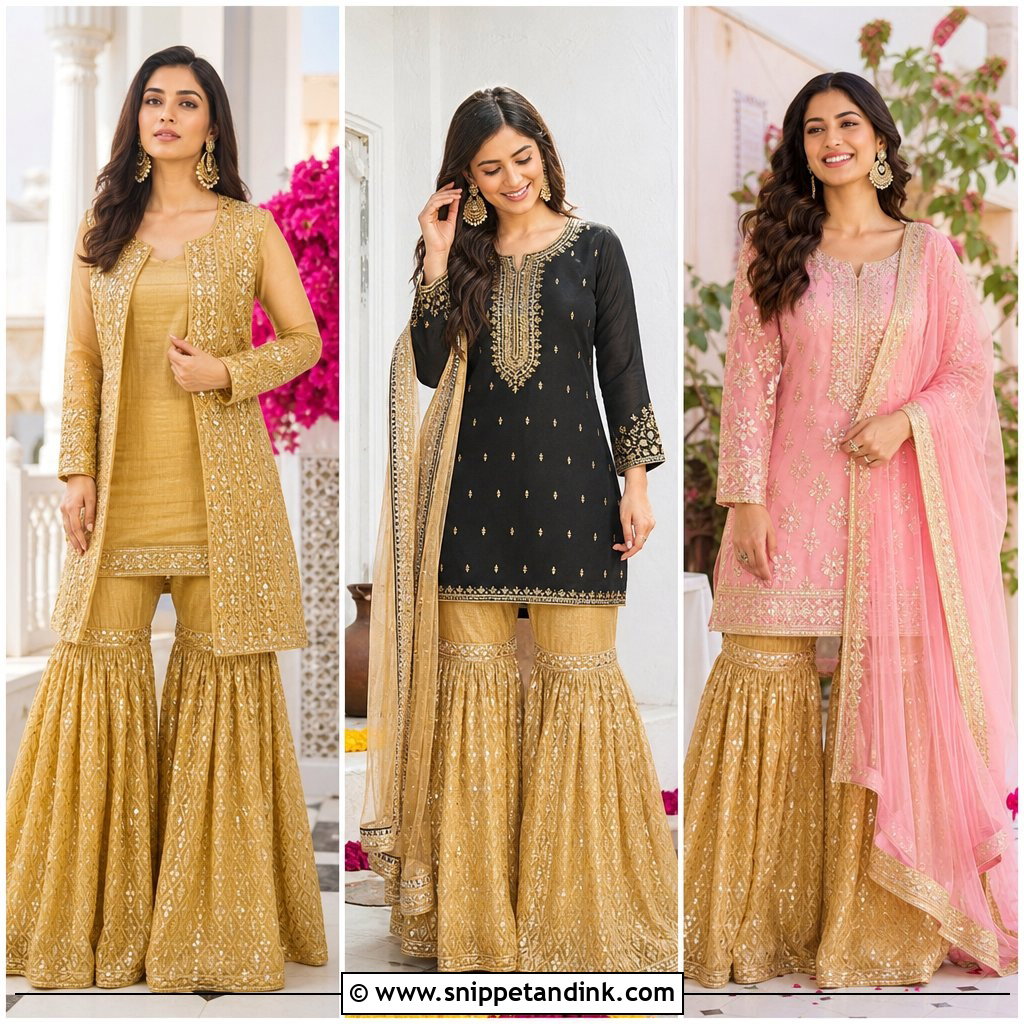
Mehndi day needs clothes that let someone paint your hands. A comfortable mustard garara in breathable georgette or cotton-silk, with mirror work, coloured thread and a contrasting border, pairs with a short kurti in elbow-length sleeves. Those sleeves are the practical detail I insist on: wet henna on the forearm needs a few hours untouched, and full sleeves ruin both. A light green, pink or multicolour dupatta pinned to one shoulder adds contrast. Skip long necklaces that swing into wet paste. Flat juttis, a braid with flowers and waterproof eye makeup keep it workable.
6. Royal Blue Sangeet Garara
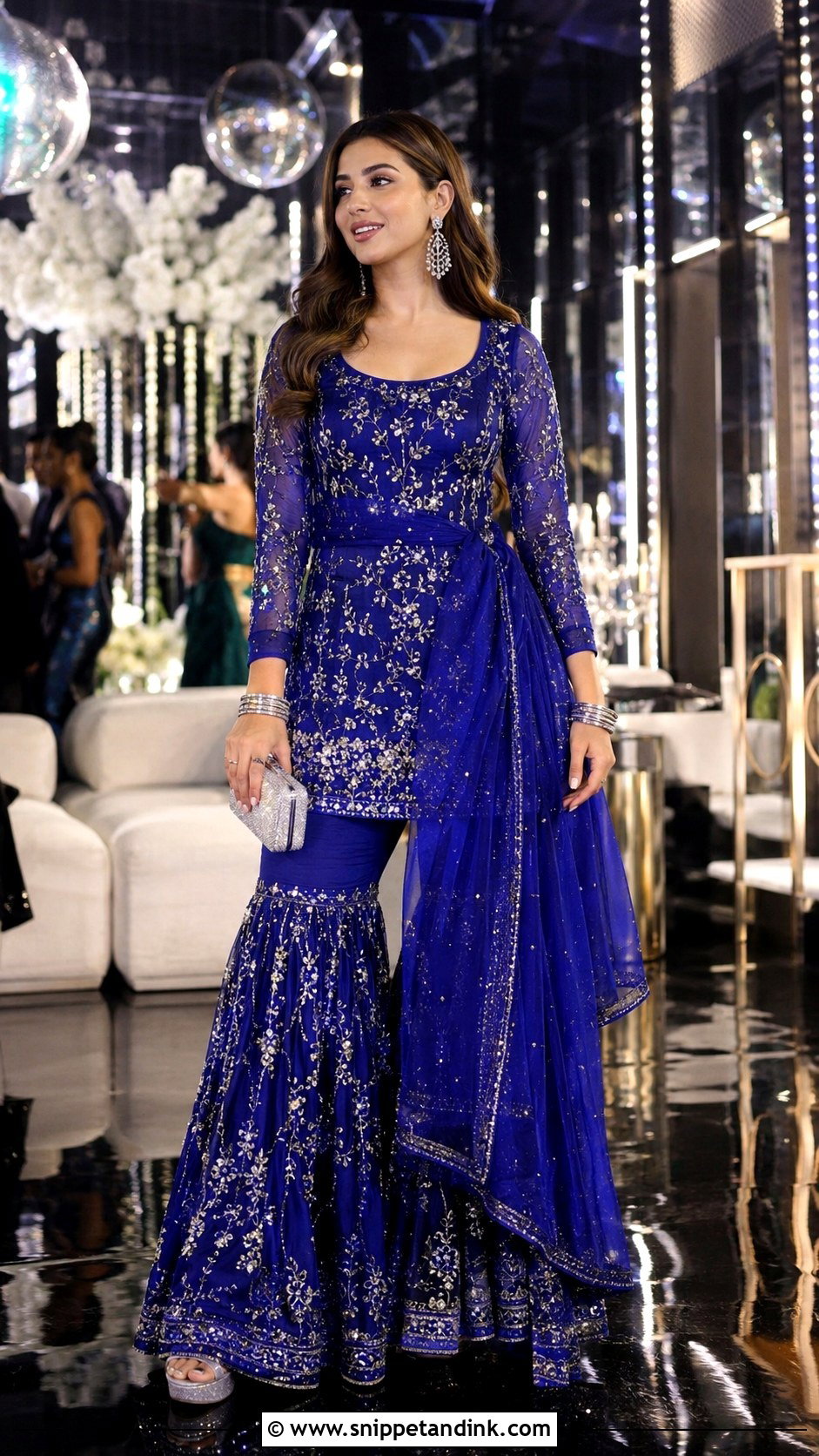
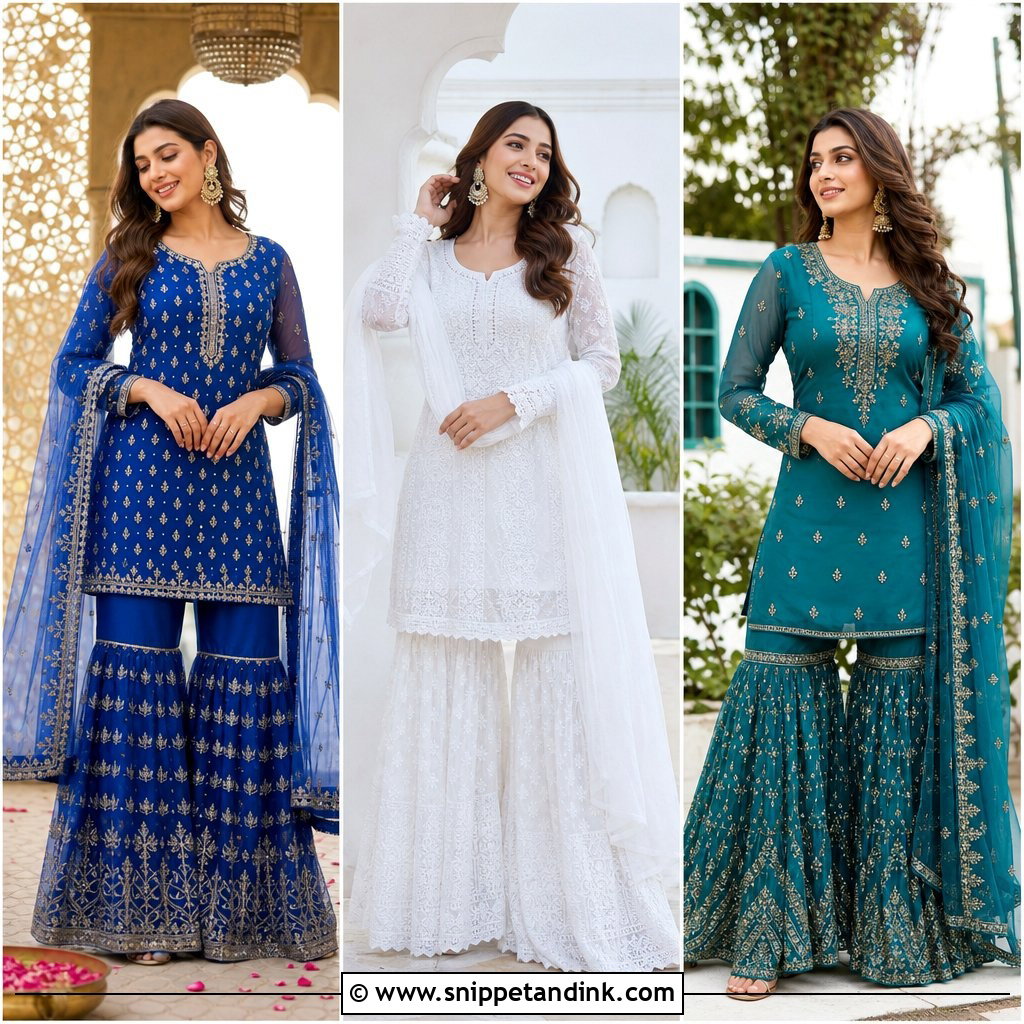
Royal blue glows under evening lights, which makes it right for a sangeet. Choose a fluid georgette set in silver sequins, beads or geometric mirror work, with a sleeveless or short-sleeved fitted kurti so you can lift your arms while dancing. Drape a light net dupatta across one shoulder and pin it at the waist; a loose dupatta on a dance floor gets stepped on. Crystal earrings, silver bangles and a small clutch keep the palette cool. Cushioned block heels or embellished flats, never narrow stilettos. A high ponytail keeps the neckline clear.
7. Maroon Velvet Garara
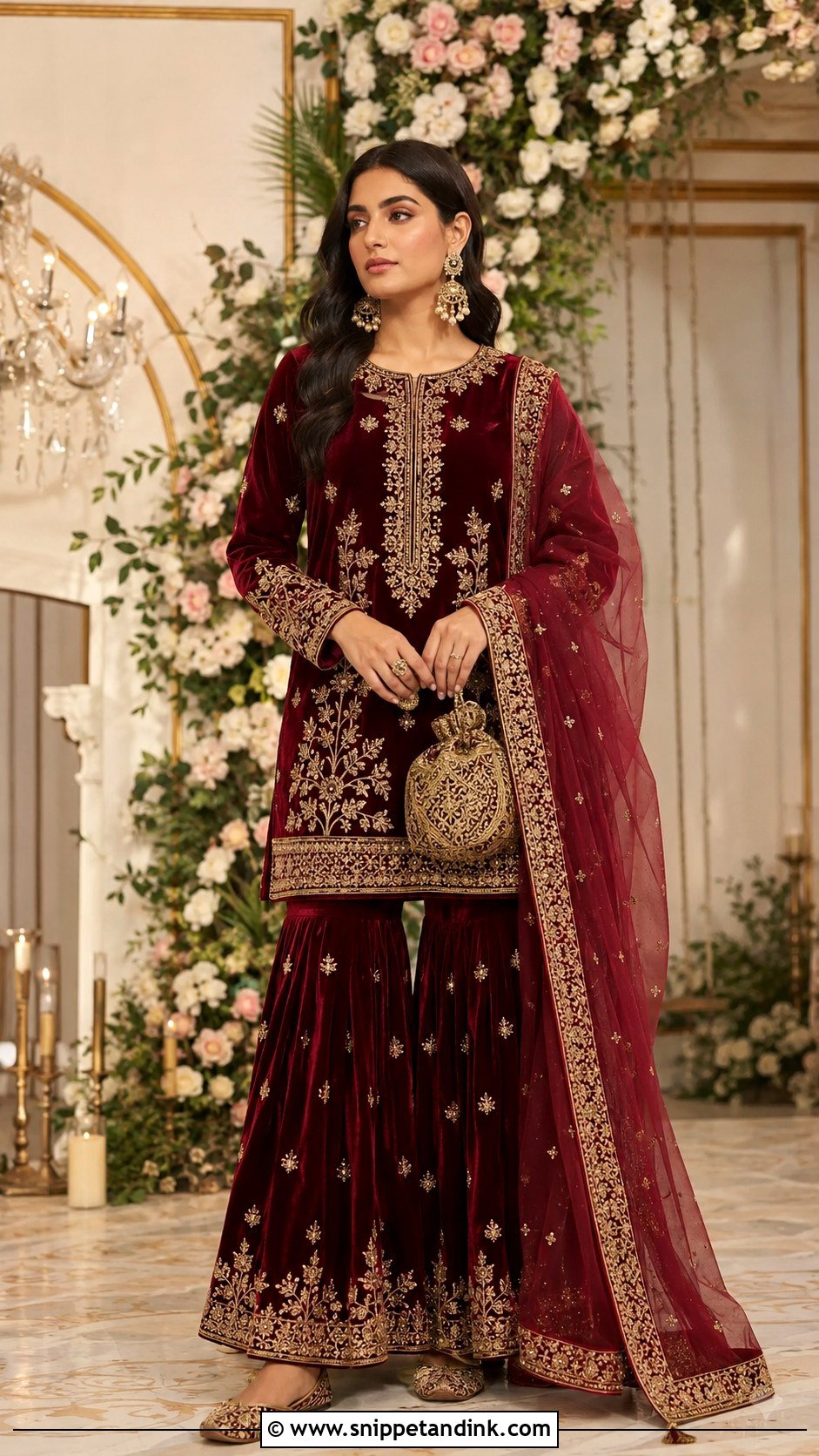
Velvet belongs to cold weather. A maroon velvet garara pairs with a short kurti in antique-gold zardozi at neckline, cuffs and hem, and the work should stay concentrated because velvet already has depth. A full velvet garara is heavy, so I balance it with a soft net or chiffon dupatta rather than another rich fabric. Gold earrings, a statement ring and a brocade potli complete it. Velvet crushes permanently if packed tight, so travel with it on a hanger under a breathable cover. Maroon juttis or gold block heels, a low bun and a berry lip finish the look.
8. Champagne Reception Garara
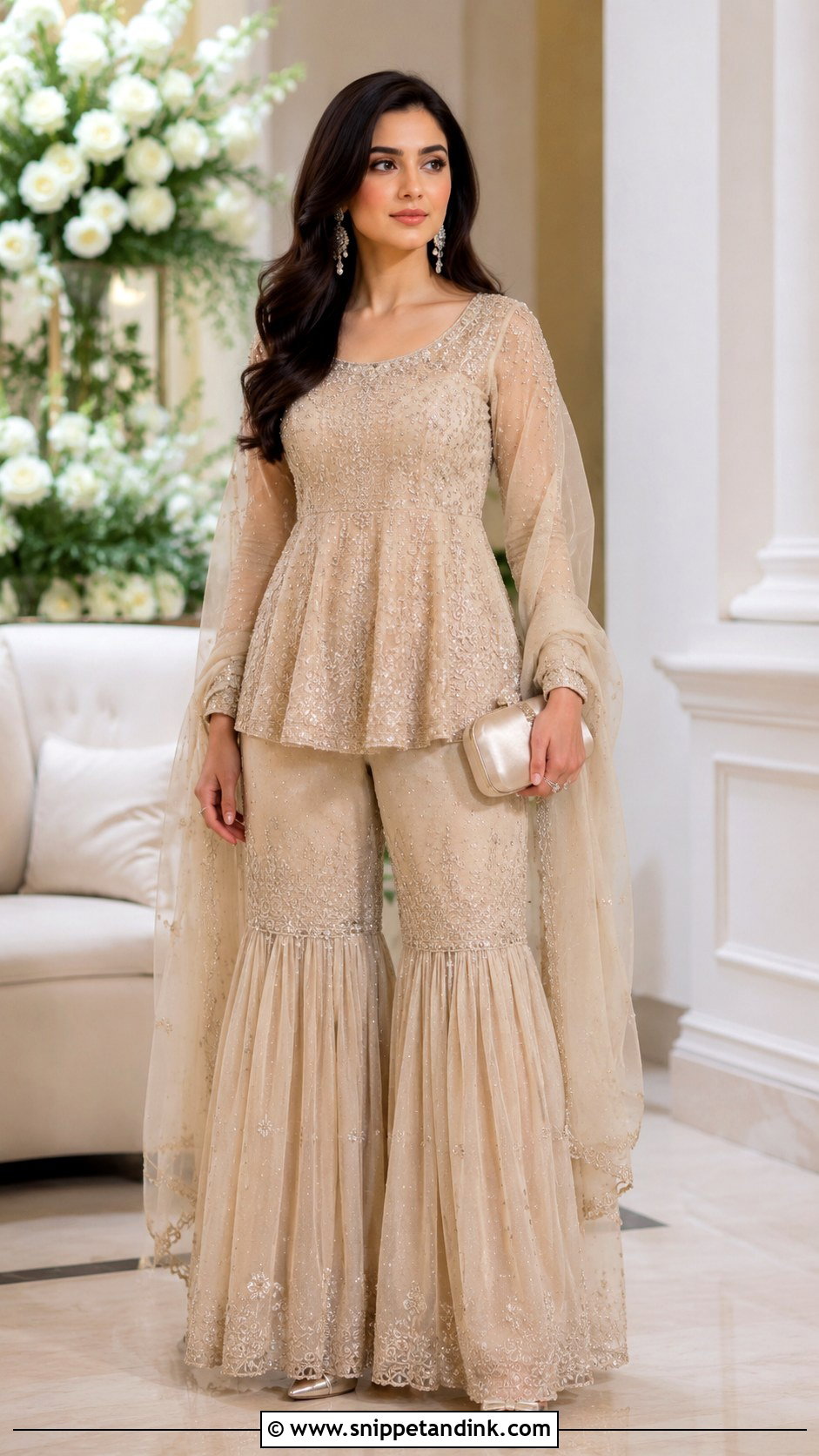
Champagne is quiet reception glamour. A silk-organza or net set in tonal beads, crystals, pearls and restrained silver work pairs with a fitted peplum top, while the structured flare keeps the outfit unmistakably a garara. Carry the dupatta over one arm, or pin it behind the shoulders if you’ll be greeting guests for hours. Crystal drops, a slim bracelet and a satin clutch are plenty. Kitten heels suit the long hem. I’d always check champagne in the venue’s light before committing, as it can wash out warm skin under yellow bulbs.
9. Black and Gold Garara
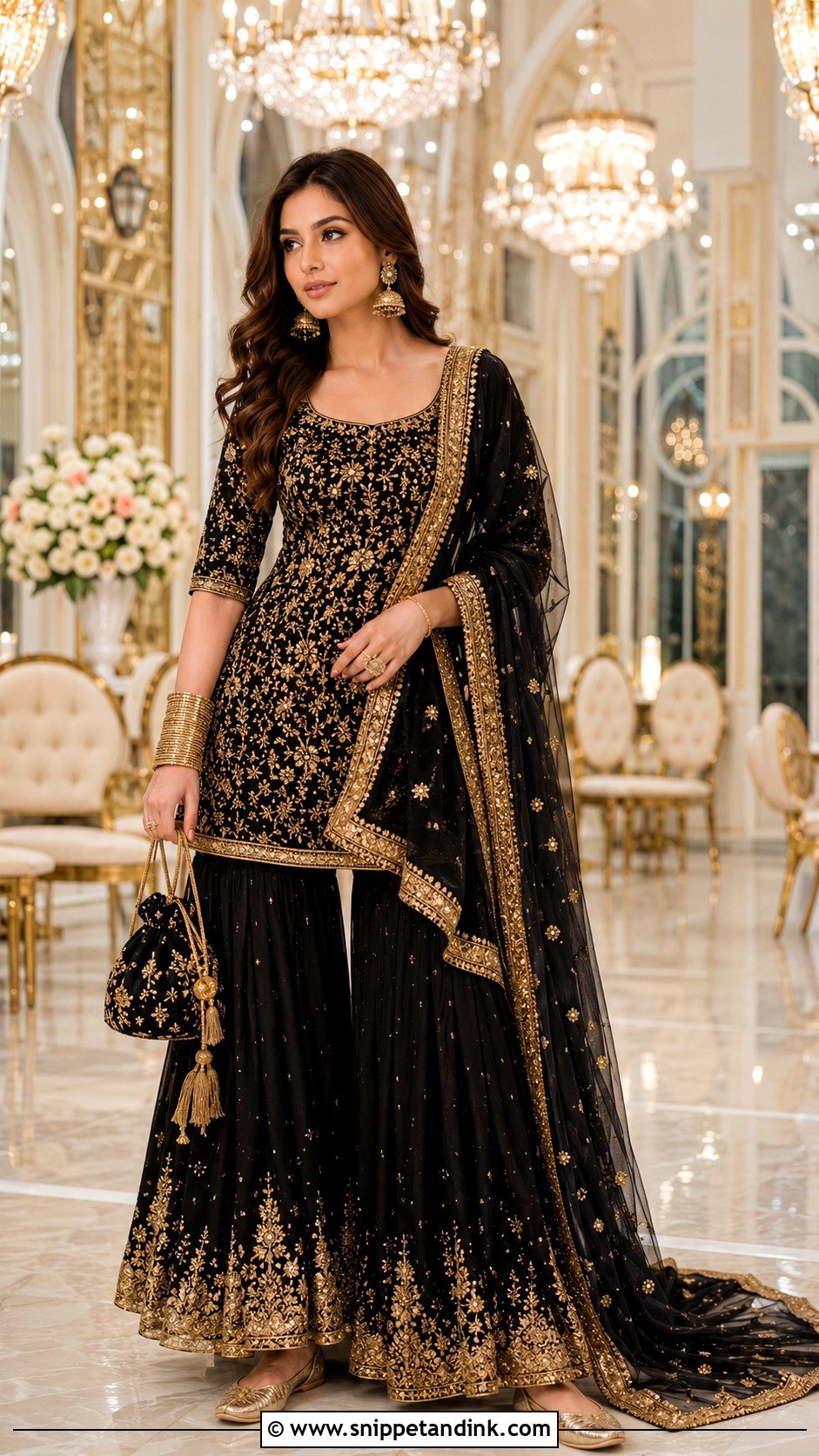
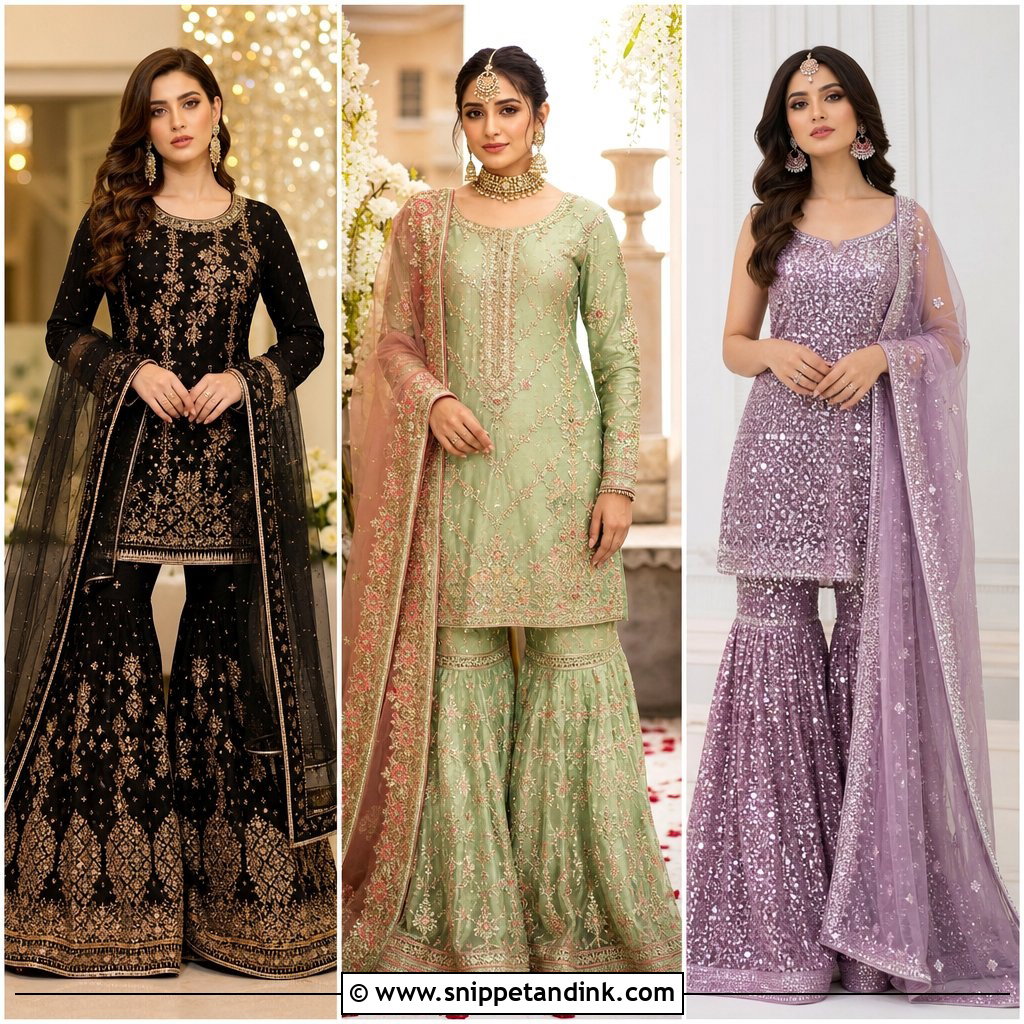
Black and gold makes a sharp evening guest outfit, and I’d check with the hosts first, since some families still avoid black at weddings. Choose a black silk garara with gold gota, zari or florals at the knees and hem, and a short black kurti with a defined neckline and fitted sleeves. A light black dupatta with a gold border adds formality without hiding the shape. Antique-gold jhumkas, stacked cuffs, a black-and-gold potli and metallic juttis suit it. Keep the jewellery near the face rather than wearing every statement piece at once. A sleek ponytail and golden eyes finish it.
10. Pastel Lavender Garara
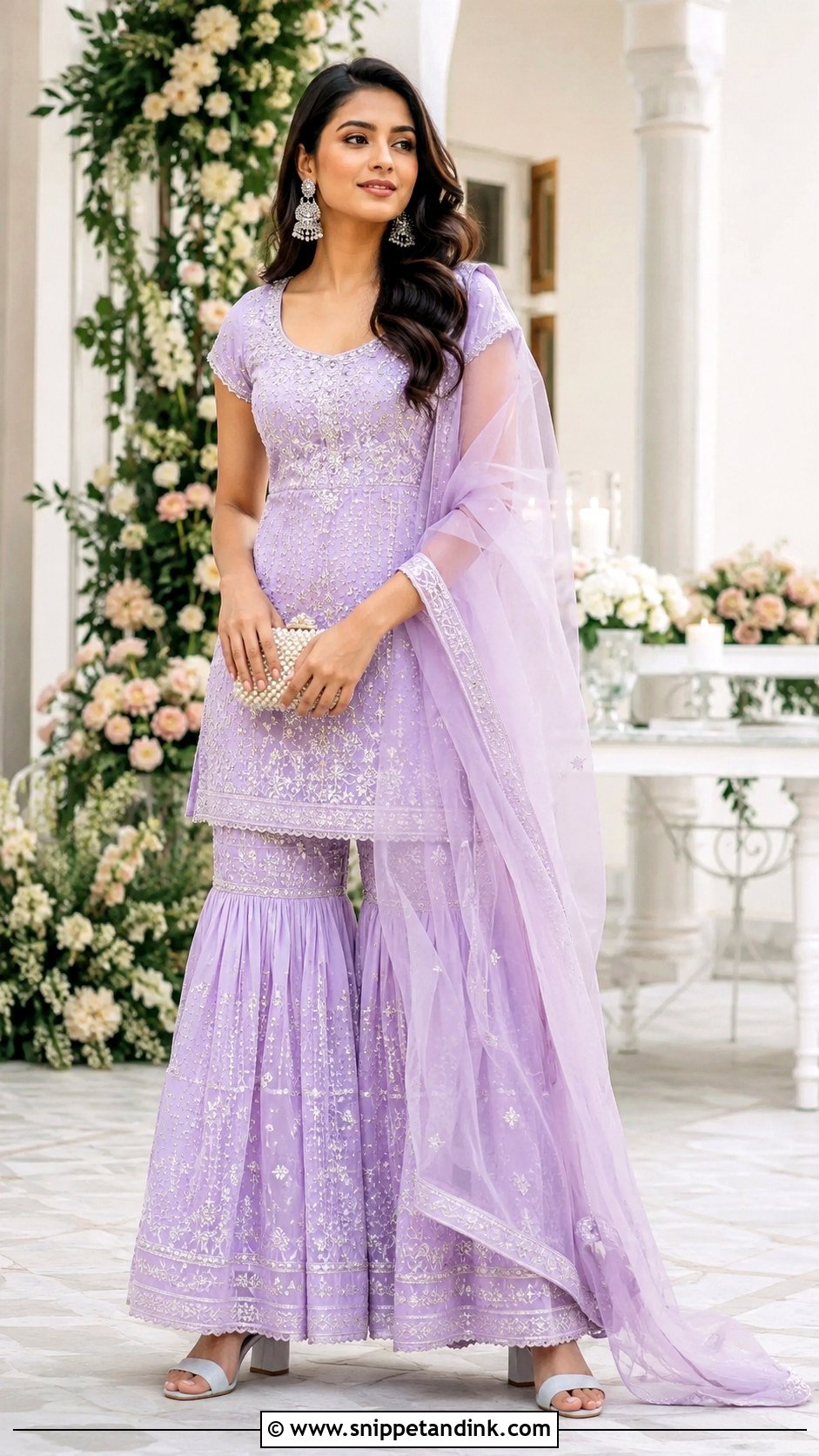
Lavender is fresh at a daytime function. A georgette garara in silver thread, tiny sequins and soft florals pairs with a fitted short kurti ending just above the widest part of the flare, so the two shapes stay separate. A sheer lavender dupatta can go loosely across the arms or be pinned on one shoulder to free your hands. Silver jhumkas, a fine ring and a pearl clutch add a little shine. Pale georgette needs a lining or it turns sheer in sunlight. Grey, silver or nude block heels, loose curls and lilac-toned eyes finish it.
11. Mint Green Day Wedding Garara
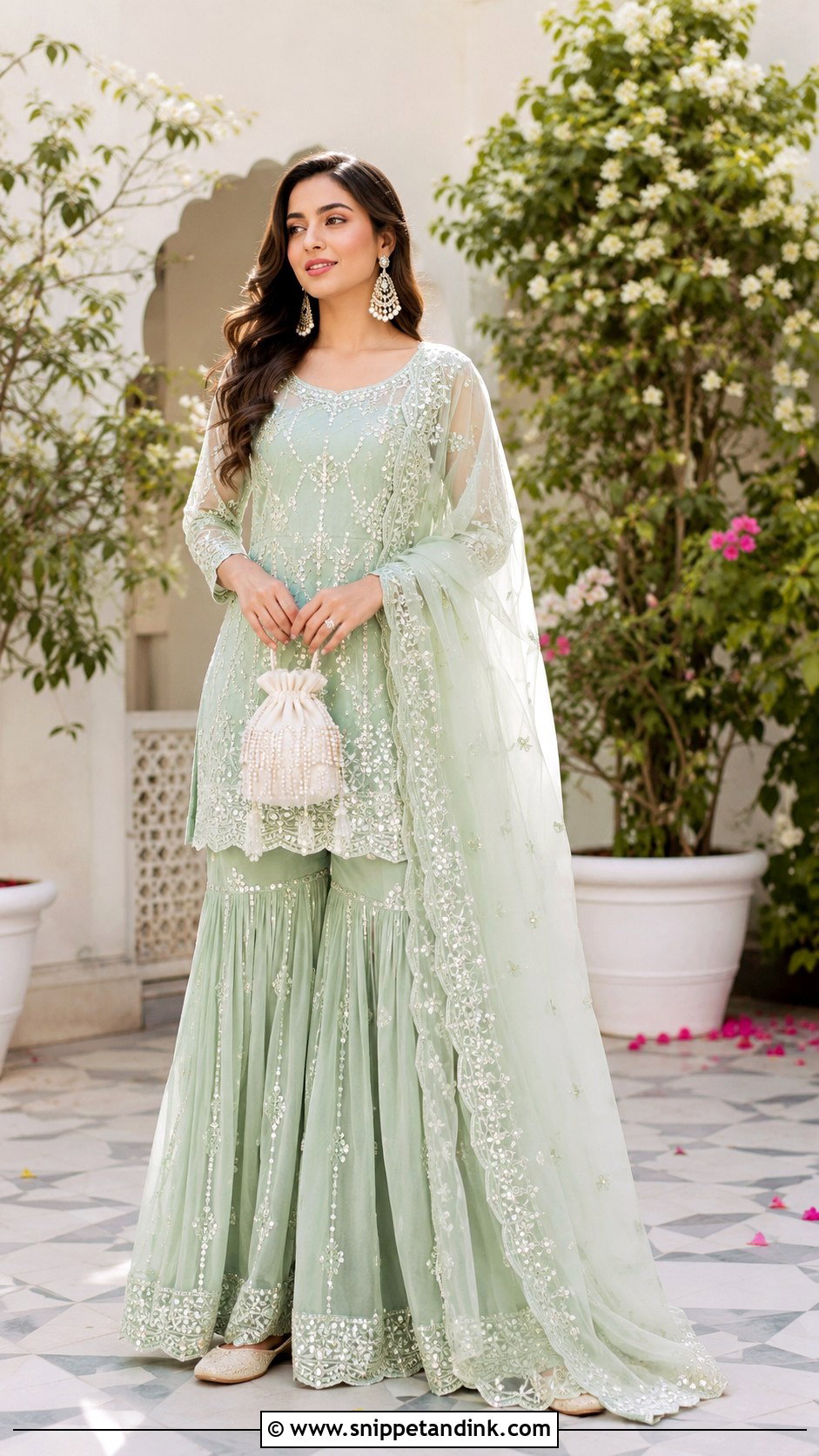
Mint is made for an outdoor wedding. A chiffon or georgette garara with white threadwork, pearls and small mirrors pairs with a straight short kurti finished in a scalloped hem. A matching organza dupatta with embroidered corners goes over one shoulder with a discreet pin. Pearl earrings, slim bangles and a white potli keep it clean. On grass, I’d choose ivory juttis or low blocks and have the hem cut to just clear the ground; a pastel flare picks up green stains from a lawn quickly. A braided bun or loose waves and peach blush complete it.
12. Coral Floral Garara
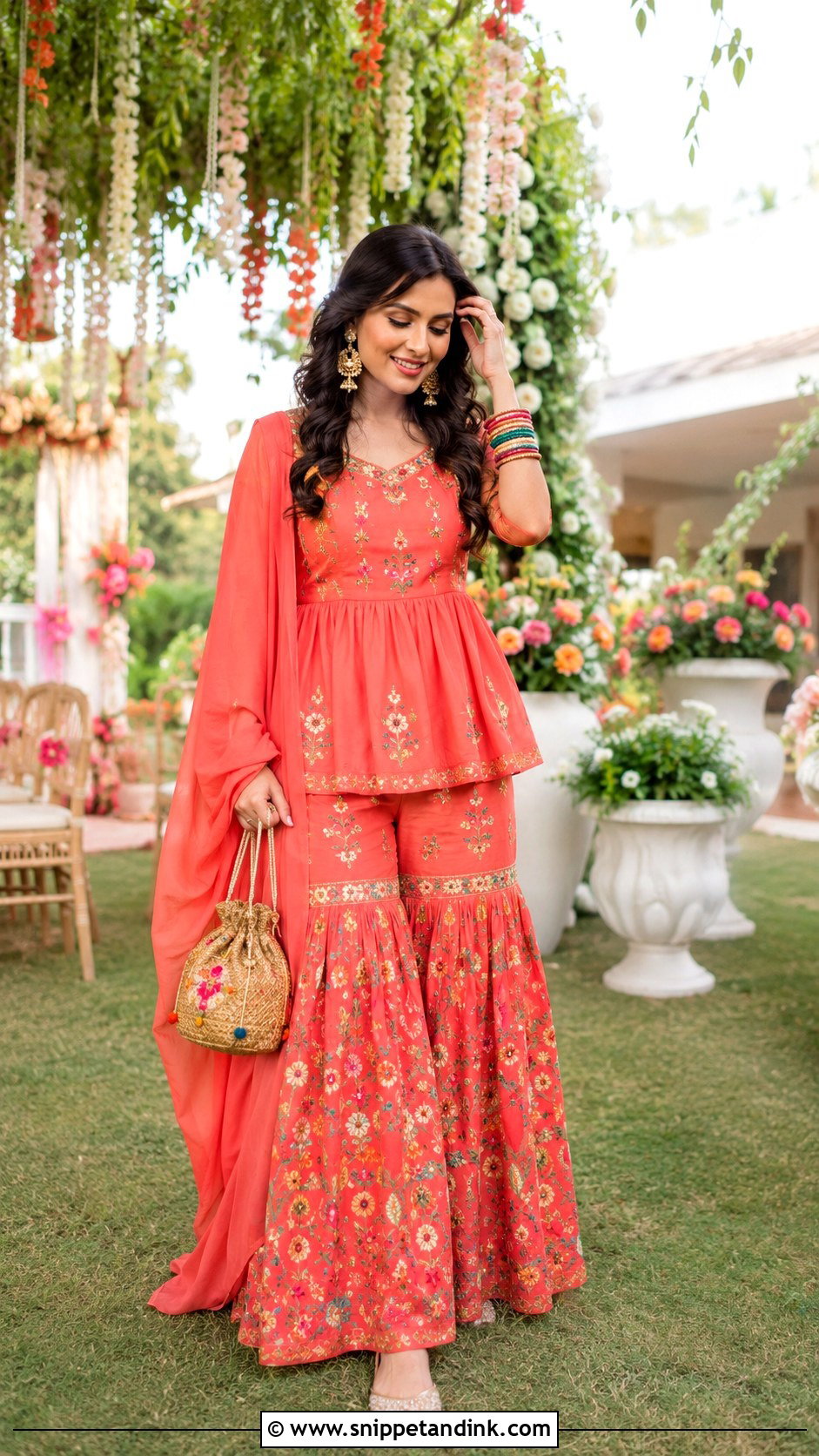
A coral garara with flowers in pink, green, yellow and ivory is cheerful daytime dressing, and georgette lets that embroidery move. Pair it with a coral peplum kurti that repeats the motifs at neckline and hem. Then give the eye a rest: a plain chiffon dupatta, or the whole outfit tips into busy. Small gold jhumkas, colourful bangles, a woven potli and nude or gold juttis are enough. I like this on sisters and bridesmaids who’ll be photographed together, since the multicolour embroidery ties into almost any decor. A half-up style with loose waves keeps it young.
13. White and Gold Garara
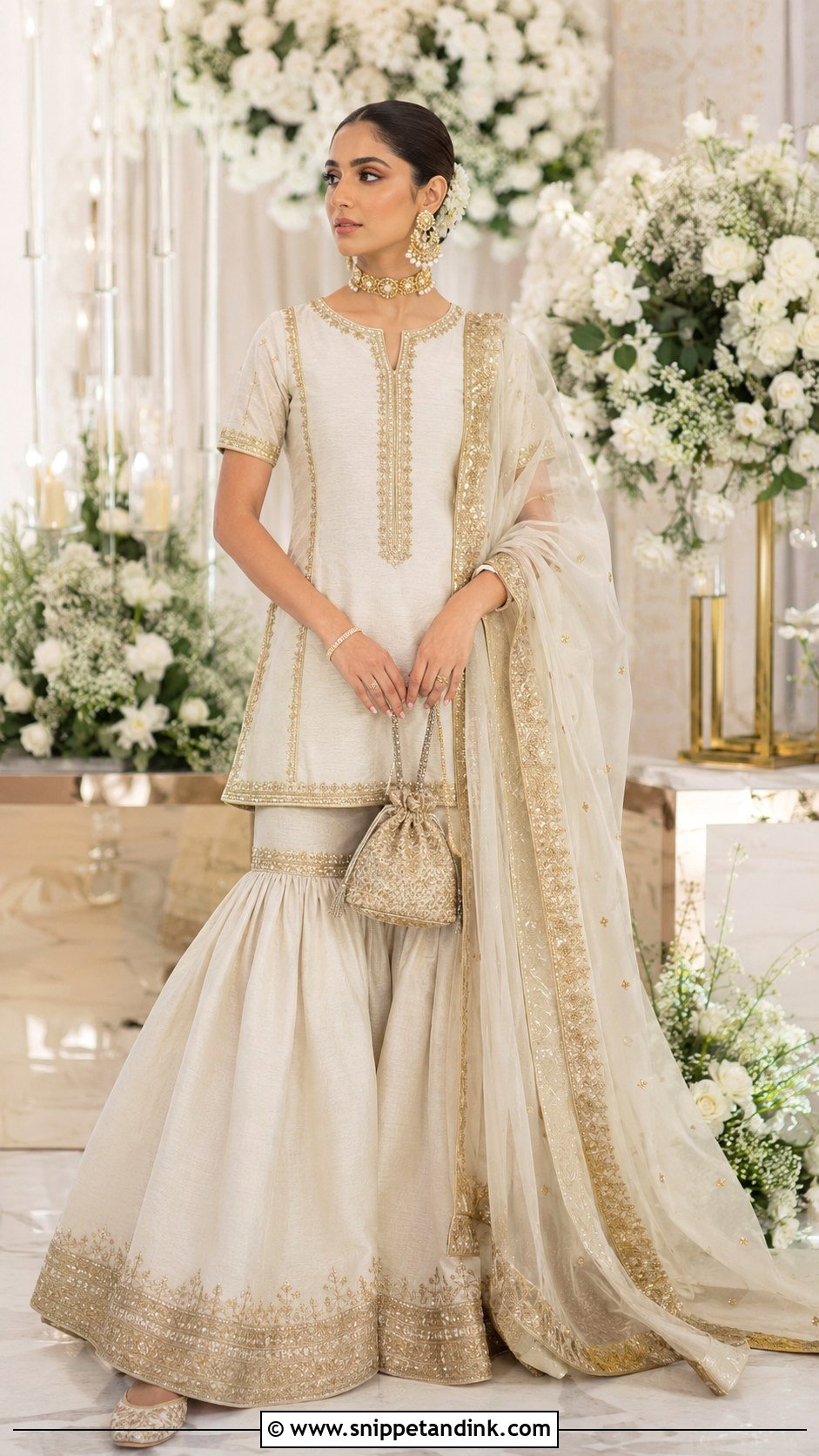
White and gold is regal, but only where white is welcome; some families reserve it for mourning, so ask before you buy. A white raw-silk garara with gold zari lines, gota borders and placed motifs pairs with a short white kurti with a structured neckline and three-quarter sleeves. A sheer white dupatta edged in gold goes over both shoulders or pins to one side. Gold chandbalis, a slim choker, a metallic potli and juttis complete it. One emerald or ruby piece adds controlled colour. Strong eyes and a muted red lip stop all that white from washing you out in photographs.
14. Teal Peplum Garara
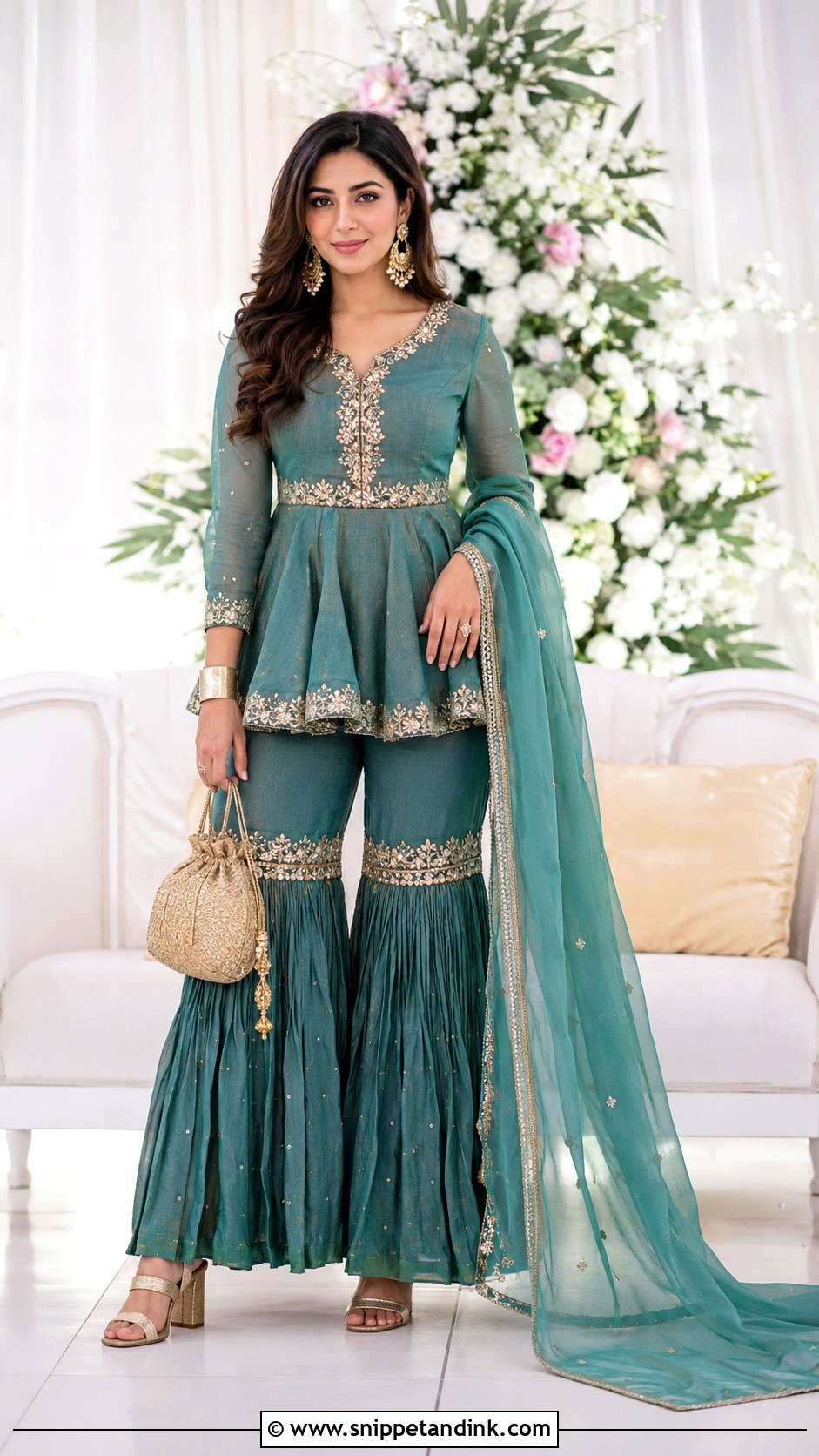
Teal with a peplum mixes a traditional lower half with a sharper top. The peplum should define the waist and flare gently over the hip, ending above the knee joint so the garara’s fitted section still shows. Pair it with a matching teal garara embroidered in gold at the knee seams and hem. A dupatta in teal, gold or a lighter turquoise adds depth. Statement earrings, one bold cuff, a structured potli and gold block heels finish it. If the earrings are big, leave the neck bare; if they’re small, add a short necklace. A sleek ponytail suits a sangeet or reception.
15. Fuchsia Mirror Work Garara
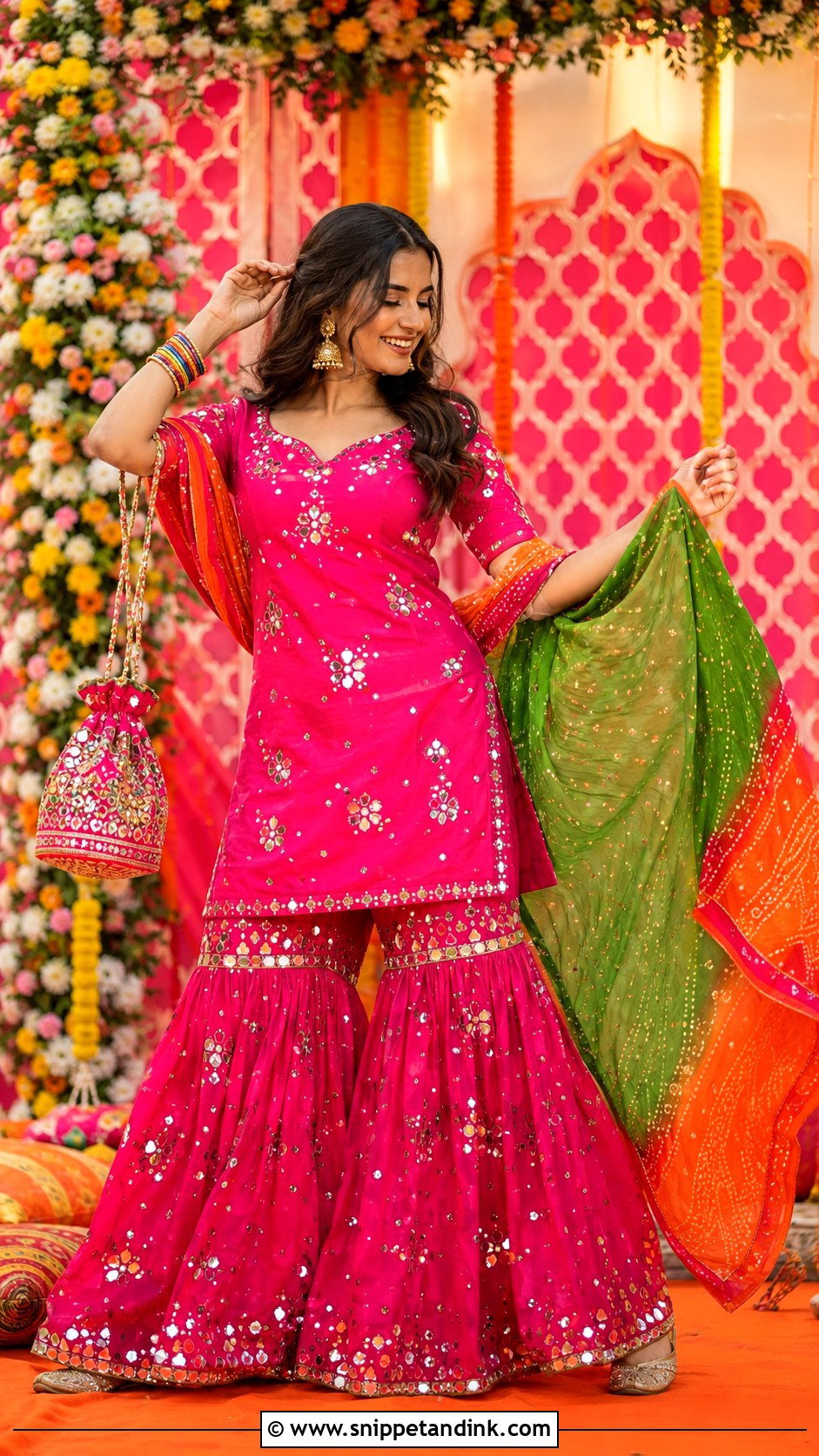
Fuchsia and mirror work is mehndi and sangeet energy in one outfit. I keep mirrors to the knees, the lower flare and the kurti neckline, because mirrors on the sleeves catch on bangles and dupattas while dancing. A cropped or short fitted kurti keeps the proportions right and the outfit easy to move in. Add a contrasting orange, green or multicolour dupatta with a simple border. Gold hoops or jhumkas, colourful bangles, a small potli and flat juttis suit it. A high braided ponytail stays put. Finish with waterproof liner and a bright pink lip.
16. Navy Blue Long Kurta Garara
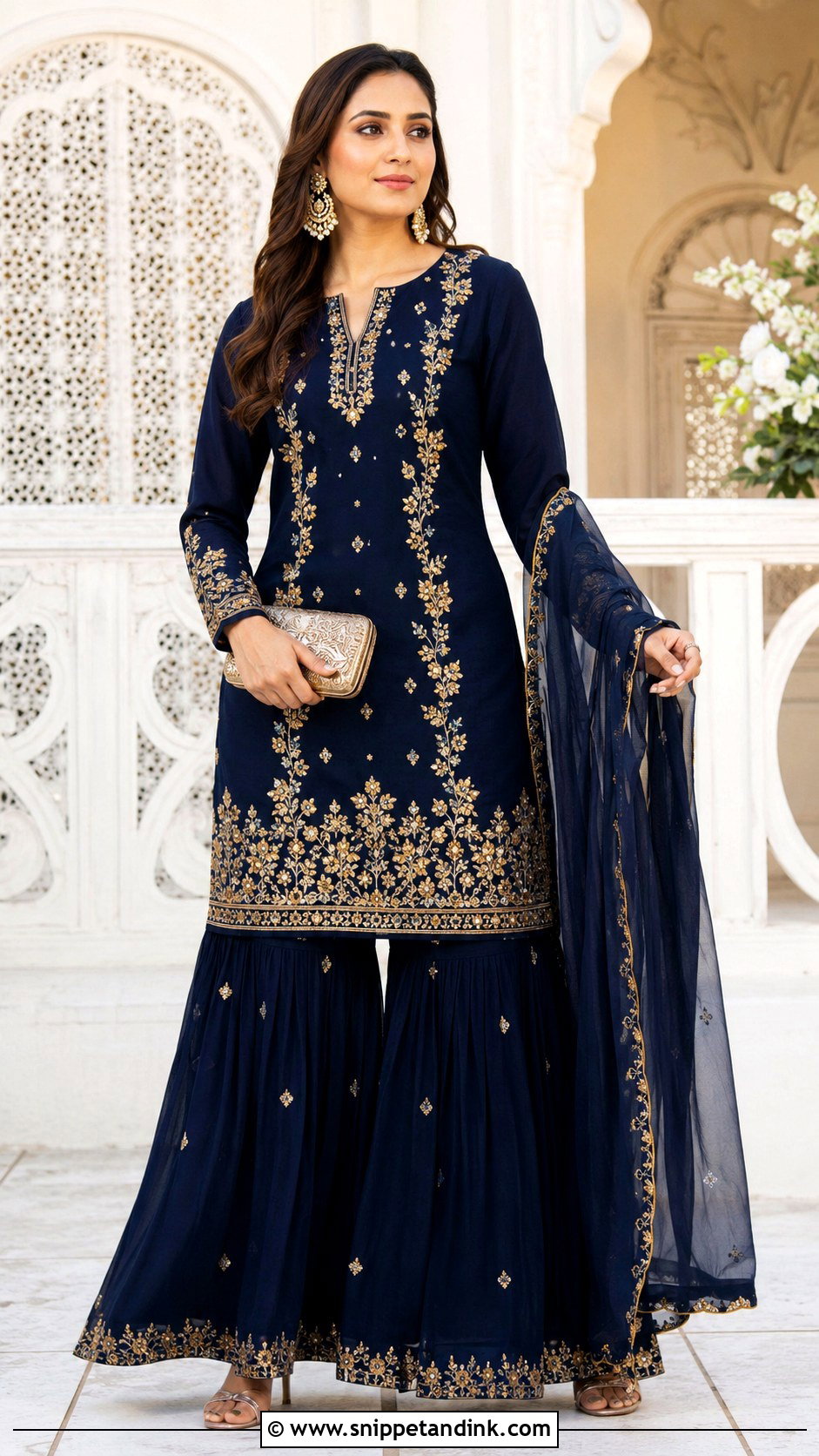
A long kurta over a navy garara gives coverage and a formal, lengthened line. Choose a knee-length or slightly longer kurta with side slits cut high enough to reveal the fitted upper leg and the flare. Fine gold embroidery at neckline, sleeves and borders keeps the dark colour from feeling heavy. A navy chiffon dupatta with scattered motifs finishes it smoothly. The tailoring point I check most: the kurta must fit closely through the shoulders and bust, or the extra length swamps a smaller frame. Gold earrings, a brocade clutch, metallic heels and a side-parted low bun complete the outfit.
17. Peach Organza Garara
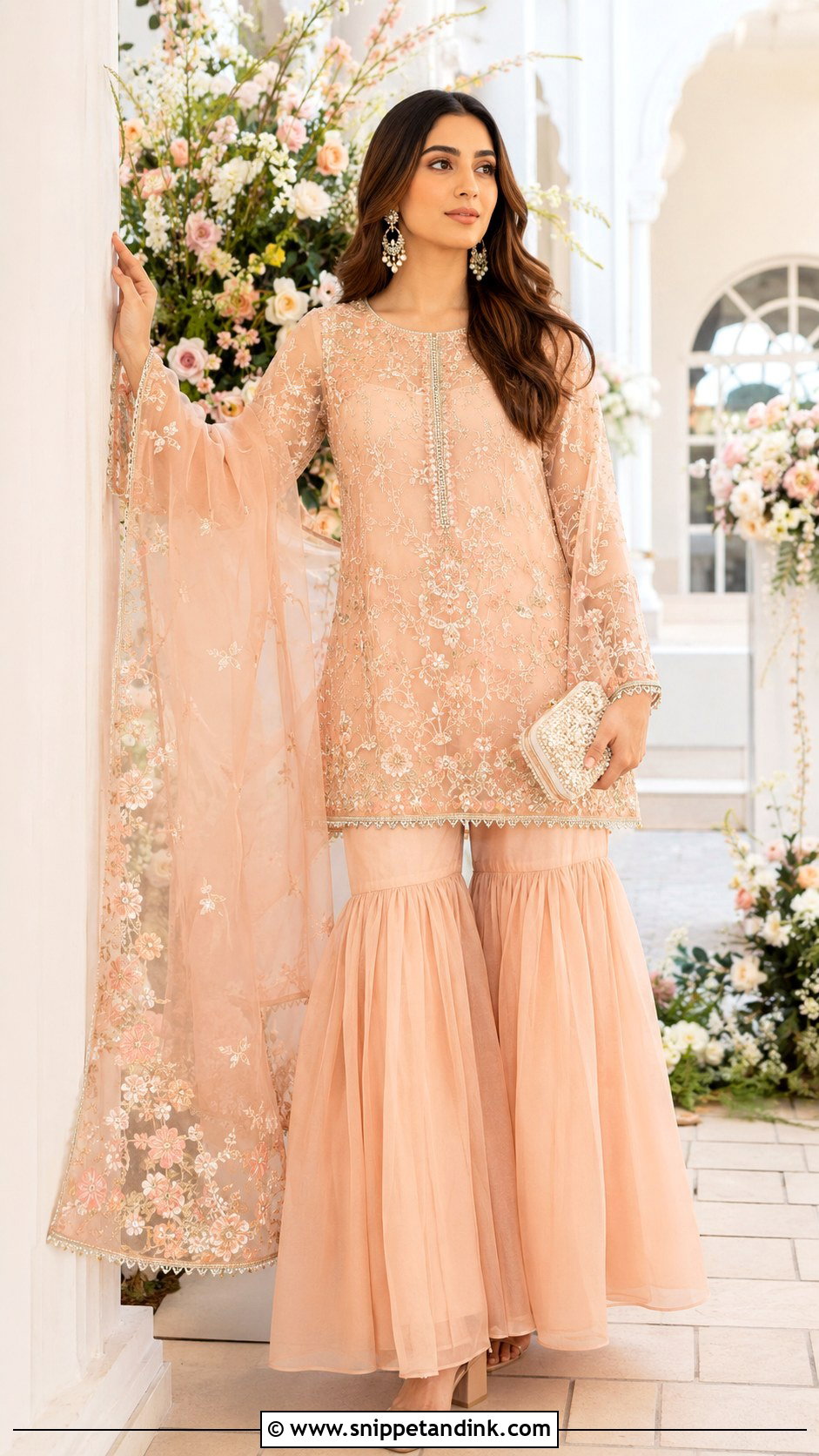
Organza gives a garara gentle structure. I ask for the upper section to be lined and the flare carefully shaped, so the crisp fabric holds its form without puffing into extra bulk at the hips. Pair it with a short embroidered kurti in pearls, thread and small gold accents, and a sheer peach dupatta with floral edging draped lightly around the arms. Pearl drops, a fine bracelet, a beaded clutch and nude block heels are enough, since translucent fabric already does a lot. Organza snags on rough jewellery clasps, so check your bracelet before you wear it. Soft curls and champagne eyes finish it.
18. Rust Orange Garara
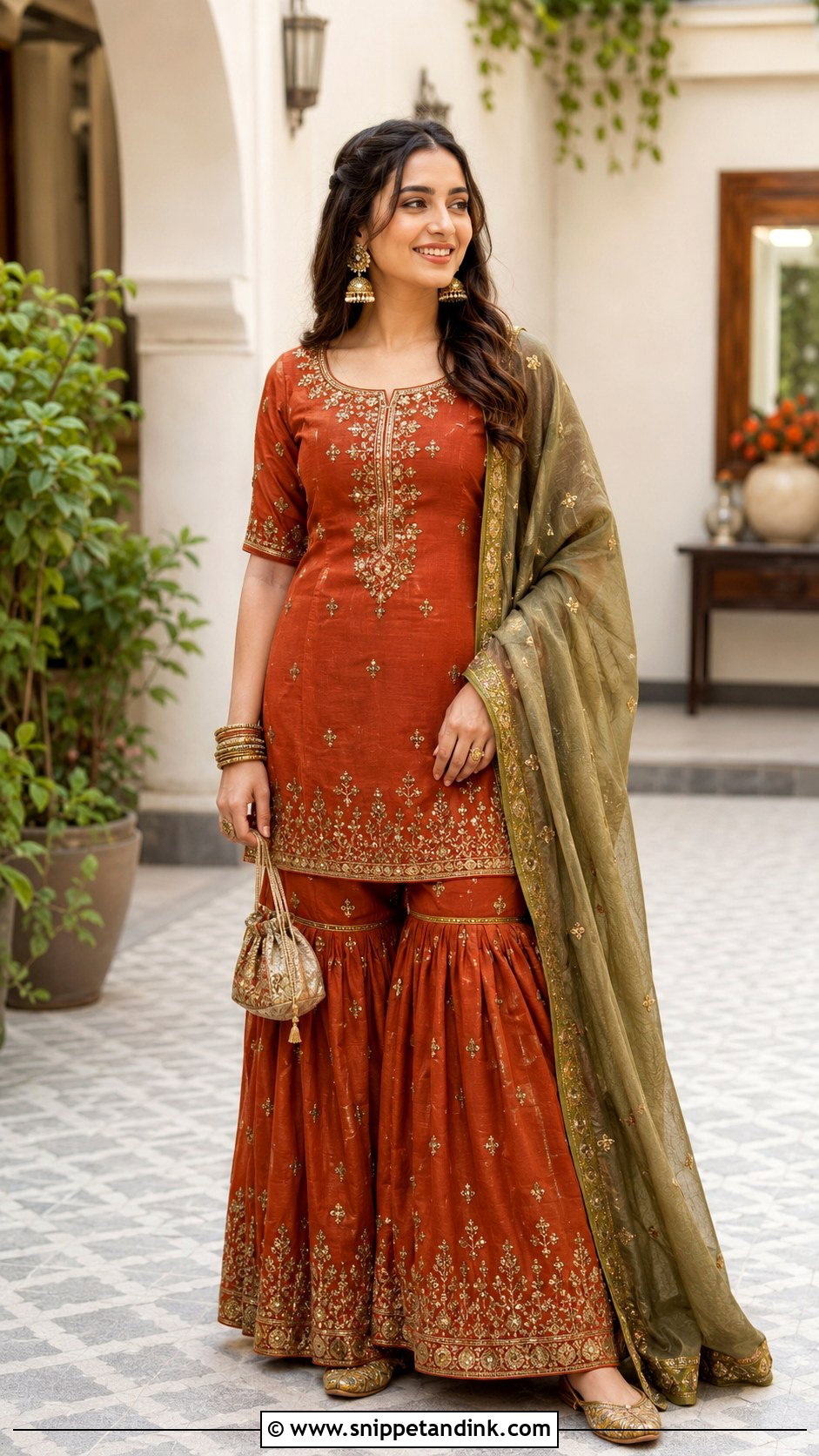
Rust is warm and distinctive for an autumn wedding or a mehndi. A silk-blend or georgette garara in antique-gold embroidery with small green accents pairs with a fitted rust kurti, V-neck or rounded. The fun is in the dupatta: olive, bottle green or deep pink all work against rust. Antique jhumkas, textured bangles and a traditional potli support the earthy palette, and gold juttis keep it comfortable. A loose braid with floral pins is relaxed; a low bun is more formal. Copper eyes and a terracotta lip suit it far better than cool pinks.
19. Silver Gray Garara
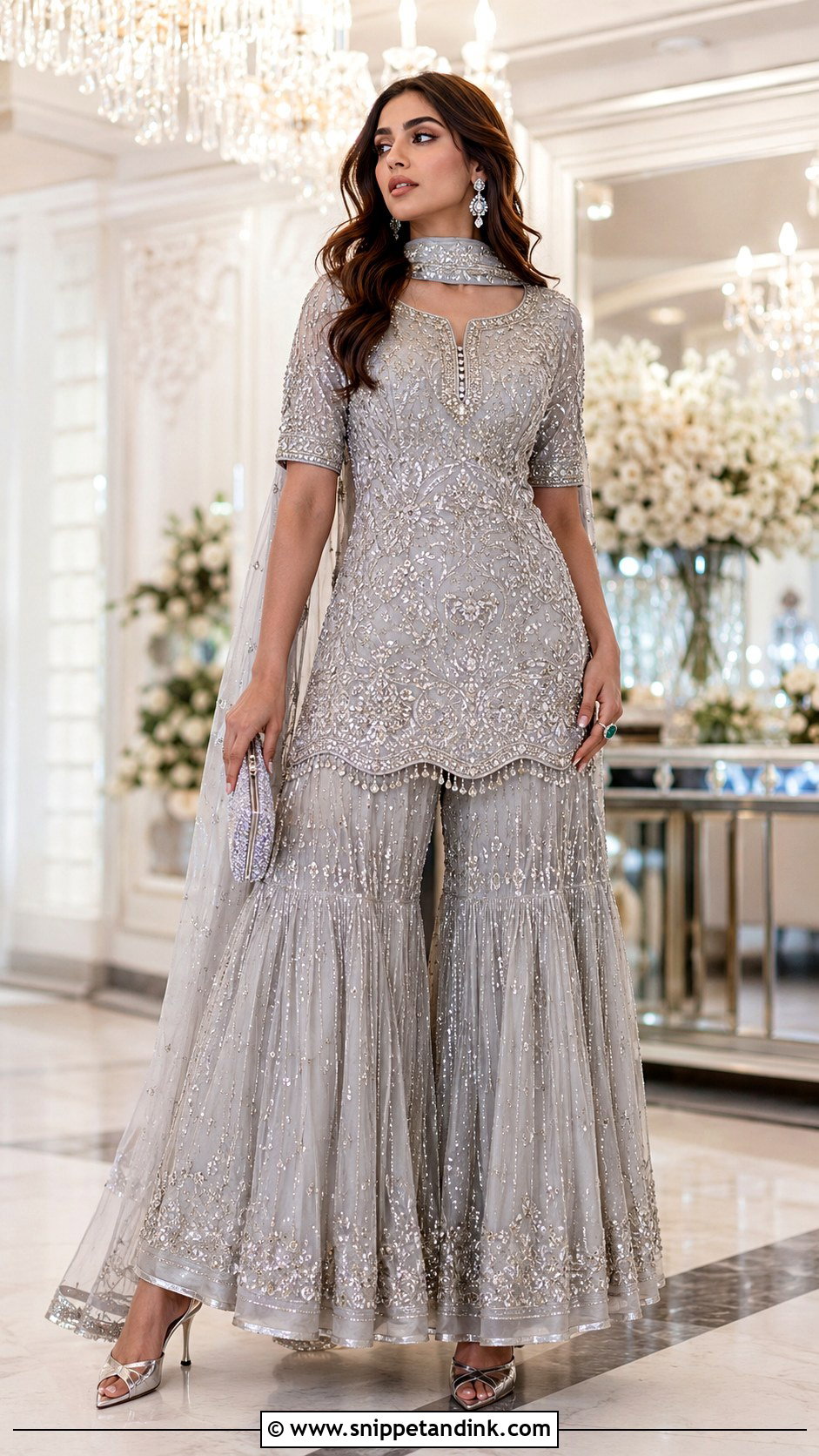
Silver grey is an unusual choice for an evening reception, and that is its appeal. Choose a fluid garara in silk, net or georgette with crystals, tonal sequins and fine silver thread, and a structured short kurti or soft peplum. Wear the dupatta behind the shoulders to keep the front clean. Crystal earrings, a silver clutch and grey or metallic kitten heels suit it. Grey can look flat on camera, so I always add one coloured accessory, an emerald, sapphire or deep pink piece. A sleek bun and cool smoky eyes finish it.
20. Farshi Garara
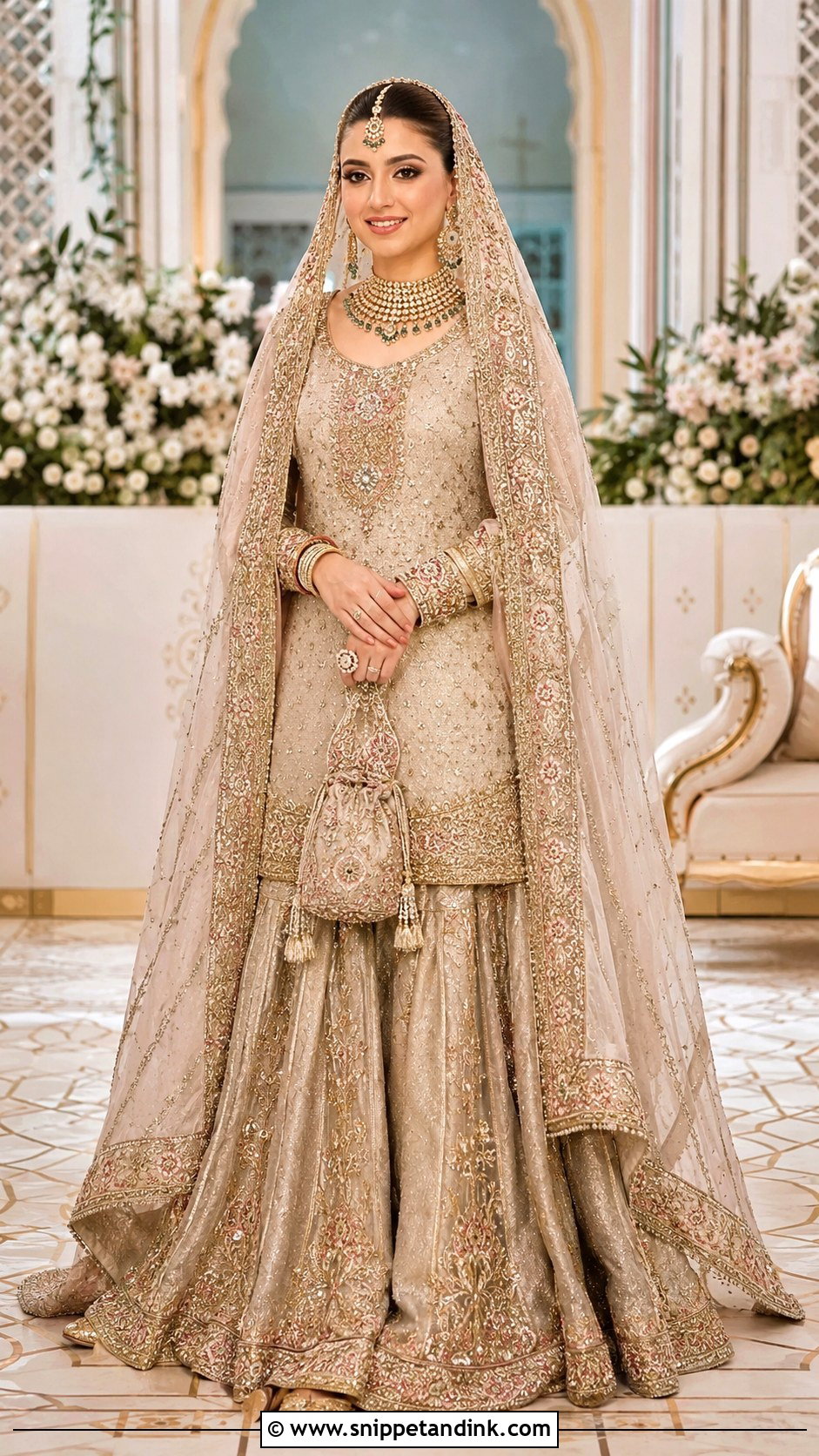
A farshi garara trails around the feet and is the most dramatic shape here, so I reserve it for the bride or a very close family member at a formal ceremony. Richly embroidered raw silk or brocade gives the length enough body. A fitted short kurti keeps the focus low. A net dupatta with a detailed border goes over the head or across both shoulders, with kundan jewellery, a statement maang tikka, bangles and flat juttis hidden under the hem. Have the length cut while you wear those juttis. Practise turning on the spot at home: you step out of the trailing fabric, never pivot on it.
Heat, Rain and Lawns Change How a Garara Should Be Cut
The weather and floor matter more with a garara than with most outfits, because so much fabric sits near the ground. For an outdoor summer function I move clients toward cotton-silk, georgette or chiffon with lighter thread or gota work, and I lift the hem so it just clears the grass. Zardozi and heavy sequins hold heat against the body for hours.
If rain is possible, skip pale silks altogether; water marks on silk often stay after cleaning. Pack a small towel and a few safety pins so a damp hem can be pinned up for a dash between tents. In a cold winter hall, a velvet kurti or an embroidered shawl over the dupatta keeps you warm without hiding the flare, which is far better than a coat over the whole outfit in every photograph.
Finally, think about seating. Low floor cushions at a mehndi and stage sofas at a reception both crush the flare, so I tell brides to sit forward and spread the panels out to the side. It takes a second and saves the gathers from flattening by the end of the night.
From Mehndi Mirrors to a Farshi Trail
One silhouette, a lot of range. Rich red, maroon, emerald and farshi cuts suit formal ceremonies; mint, lavender, peach and blush lighten up daytime functions; mirror work and bright colour belong to the mehndi and sangeet. The fabric decides how the flare behaves, so weigh comfort, weather and how much you’ll move before you fall for a colour. Pair heavy embroidery with simpler jewellery or a light dupatta. And whatever you wear, give yourself secure draping, supportive shoes and a final fitting in the exact outfit, so you can stop adjusting and enjoy the celebration.
You'll Like These Ideas:


Leave a Reply