
Put a red dupatta over almost any lehenga and it starts to look bridal. That’s why I treat the dupatta as its own decision rather than an add-on. The fabric, border and drape decide how your face is framed, how the skirt balances and how much of the blouse shows. Zari, bandhani and gota sit at the traditional end; net, organza and cutwork are lighter and more modern. Double-dupatta arrangements, shoulder drapes and long trailing veils give you more ways to balance coverage against how freely you can move. Below are twenty pairings of a red dupatta with lehengas in red, ivory, blush, gold, green and more, with notes on how each one drapes.

Weigh It in Your Hands Before You Buy It
The first thing I do with any bridal dupatta is hold it up by two corners and feel the weight. A plain net with a narrow border is barely there. Add a wide zari border, sequins all over and tassels, and it can pull hard on the hairstyle within an hour. Your neck notices that by the pheras, and the pins start to give.
- Head dupattas: net, organza, georgette or soft bandhani, with the heaviest work at the border, not the middle.
- Shoulder dupattas: velvet, Banarasi silk, tissue or mirror work, which are too heavy to wear on the head for long.
- Length: most bridal dupattas are a little over two metres, but a trailing veil or a double drape needs more. Measure against your height and the drape you want.
- Width: a wider dupatta covers the head and still falls to the elbows; a narrow one slides back.
Bring the dupatta, or a length of the same fabric, to your hair trial. A hairstylist can’t plan pin placement for a veil they’ve never held, and a heavy border may need a firmer bun or a small hidden padding to hold it.
1. Red Net Dupatta With Red Bridal Lehenga
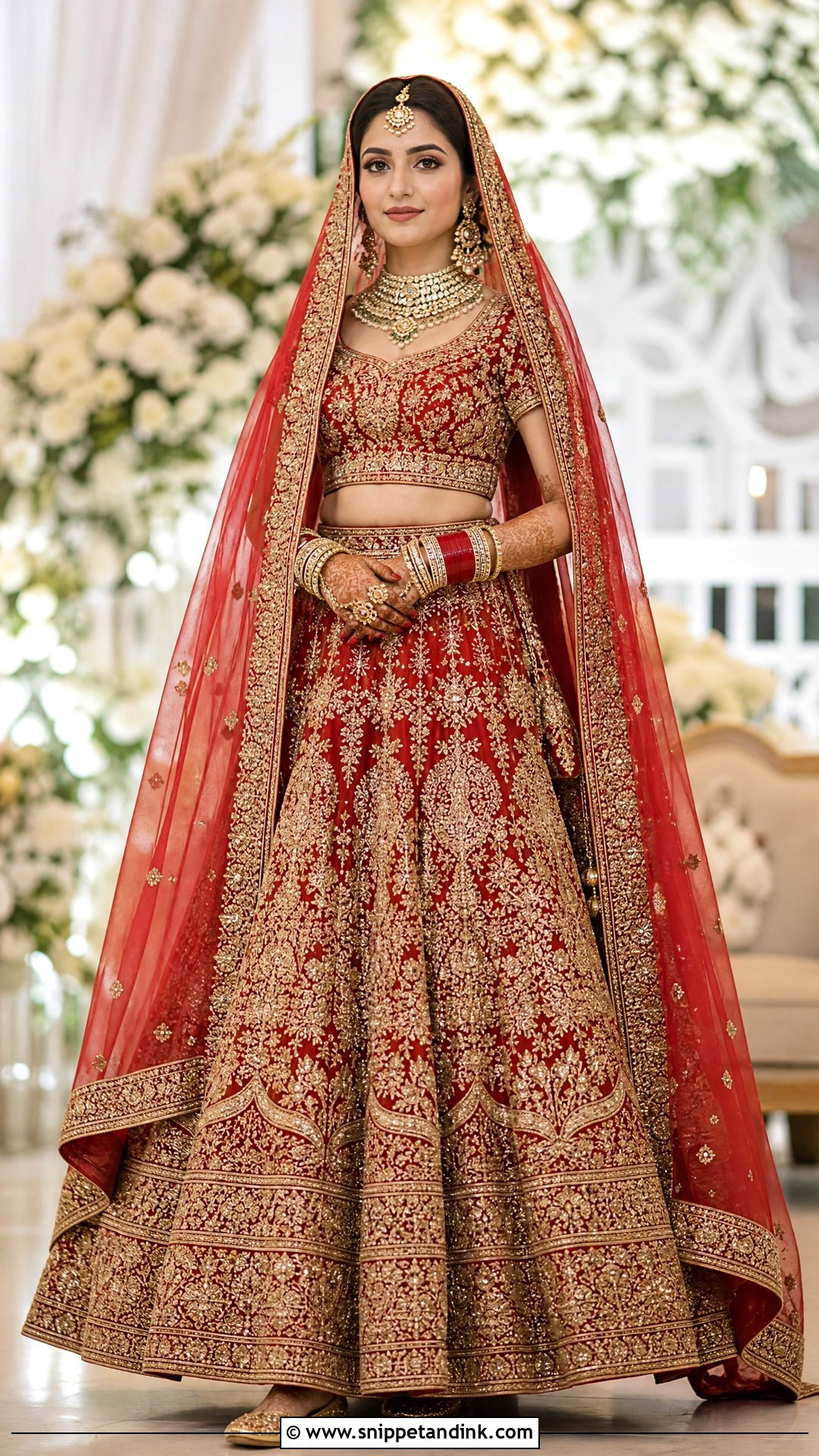
Net is the fabric I reach for when the lehenga’s embroidery is the star, because you can see through it to everything underneath. Choose a light red net with a wide zari border and only scattered sequins or small florals. Over the head, the border should sit right at the hairline and fall evenly on both shoulders; if one side drops lower, re-pin before anyone starts photographing. A fitted red blouse, a kundan choker, maang tikka, red bangles and gold juttis complete it. Net snags on everything, so I use small covered pins near the bun and shoulders and keep rough bracelets well away. It is happiest at an indoor ceremony.
2. Red Zari Dupatta With Gold Bridal Lehenga
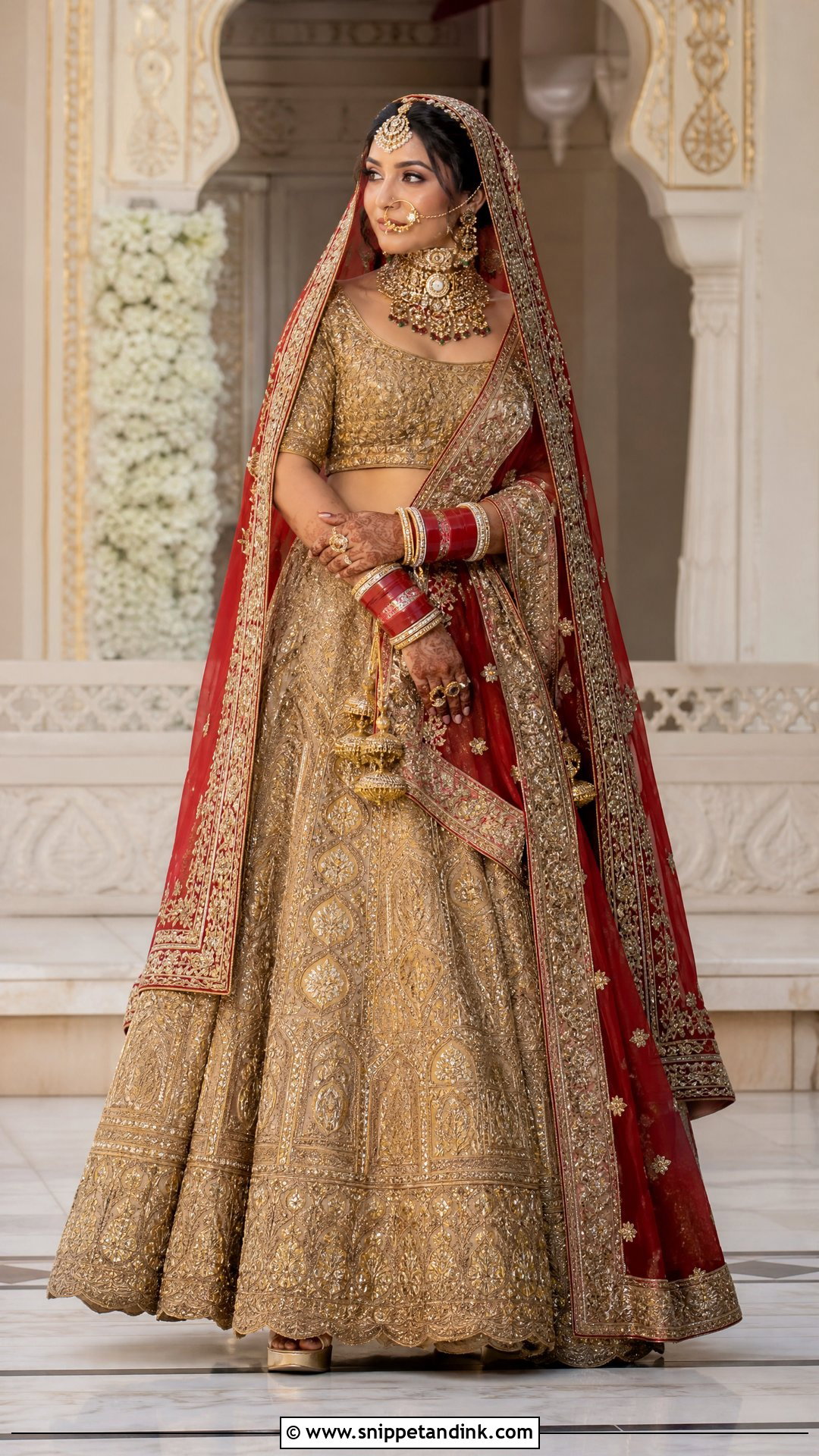
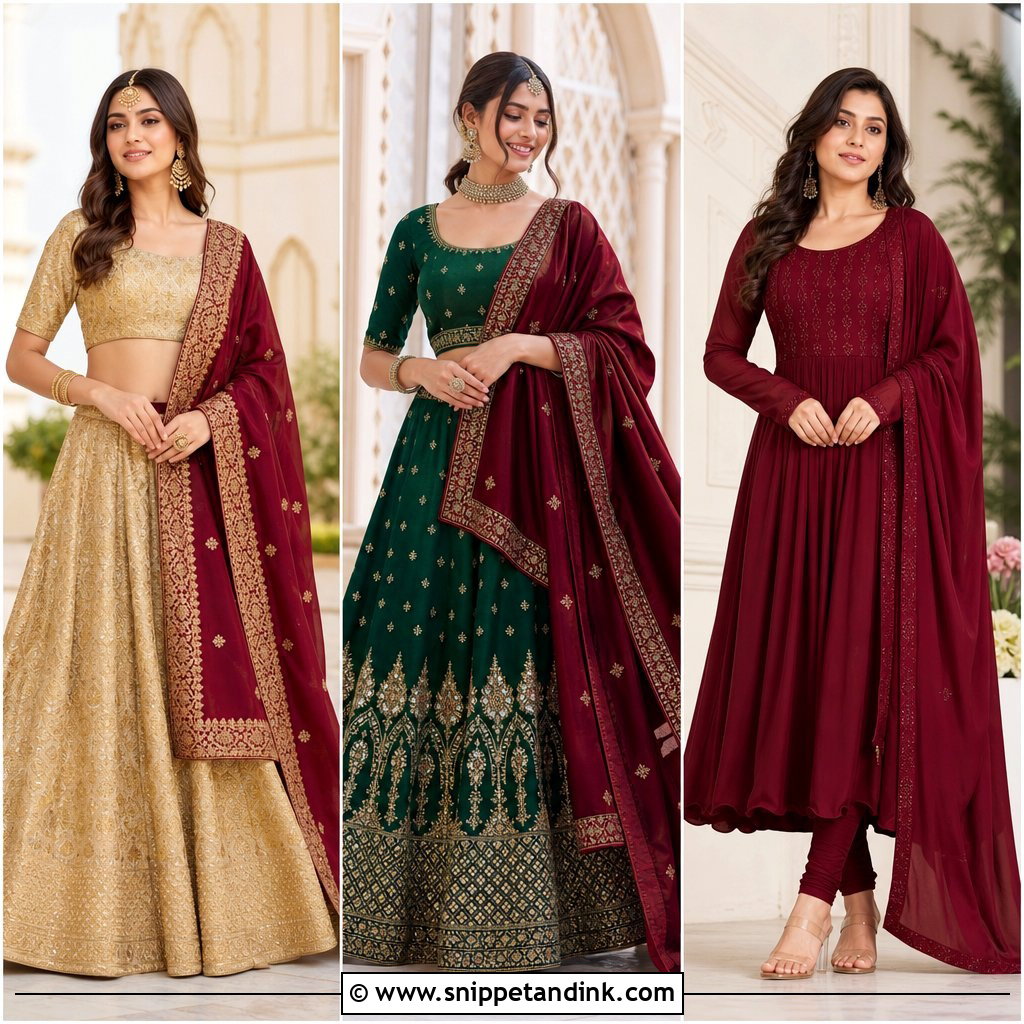
A gold lehenga can look flat in photos without a strong colour near the face, and a deep red zari dupatta fixes that. Look for red silk or tissue with an ornate gold border, small butis and neatly finished corners. Drape one side over the shoulder and let the other fall behind the arm. A gold blouse with red embroidery ties the two colours together. Antique gold jewellery, a statement nath, red and gold bangles and gold platform sandals suit it, with a classic red lip. I always ask for the dupatta to be lighter than the lehenga. A heavy silk on top of a heavy skirt makes every step harder.
3. Red Bandhani Dupatta With Maroon Lehenga
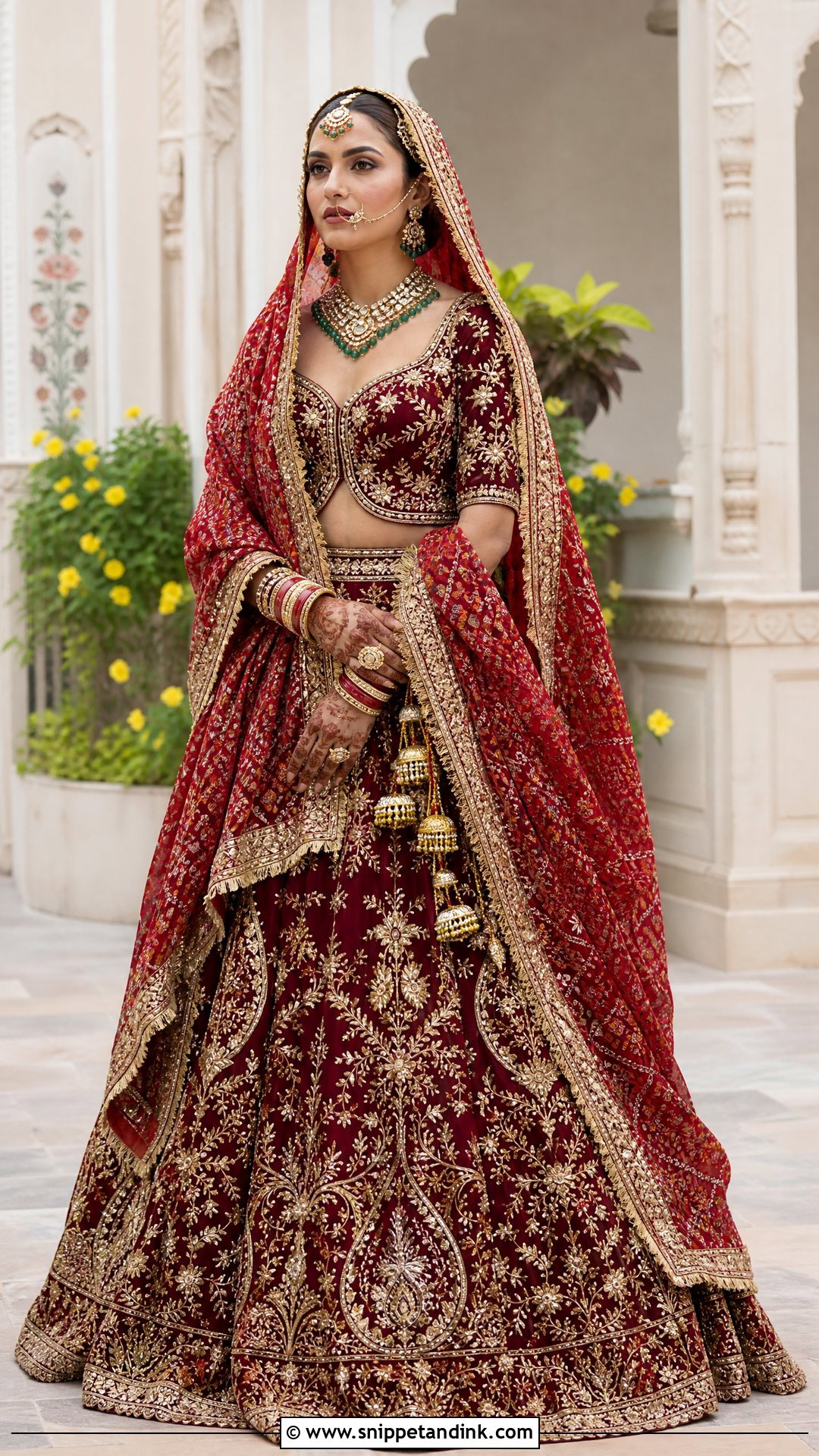
Bandhani’s tiny resist-dyed dots add texture that zardozi or dabka on a maroon lehenga can’t compete with, because the two work at completely different scales. A red bandhani dupatta finished with gota borders, tassels or small mirrors goes over the head, with one corner caught at the wrist so the pattern stays open. A maroon blouse with a modest neck carries layered necklaces; a kundan set with green beads adds a quiet contrast, alongside red bangles and velvet juttis. Bandhani is soft and slightly crinkled from the tying, which is why it sits close around the face and stays comfortable through long ceremonies. Don’t let anyone iron the crinkle flat.
4. Red Organza Dupatta With Ivory Lehenga
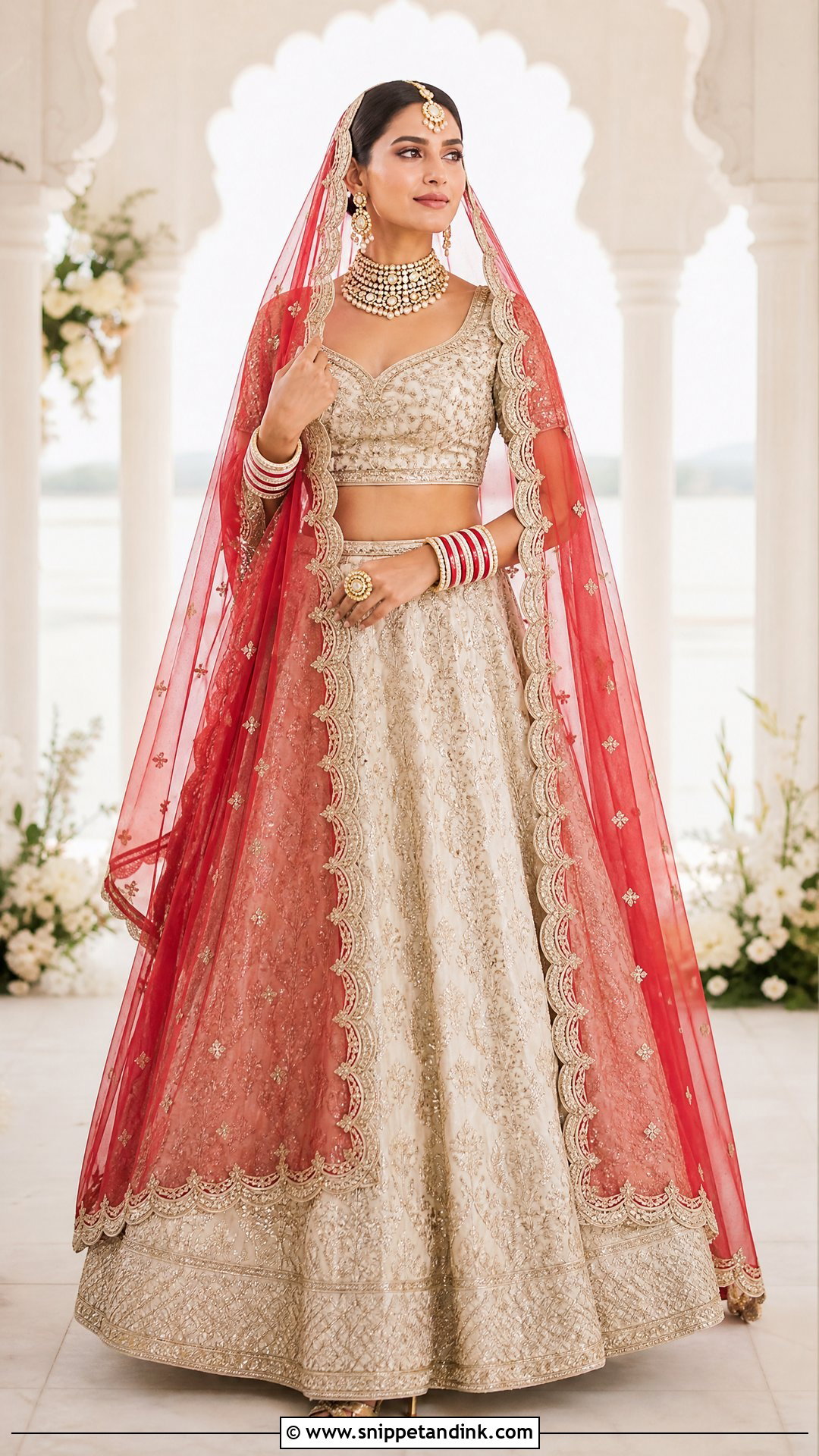
Would you like something light that still keeps red in the picture? An ivory lehenga with a sheer red organza dupatta is crisp and modern. Gold threadwork, pearls or restrained sequins on the ivory skirt and blouse are enough. The red dupatta needs a narrow scalloped border and widely spaced motifs so it doesn’t overpower the pale base. Over the head, let the sides fall freely behind the shoulders. Polki, ivory bangles with a few red ones and gold embroidered heels suit it. Organza holds a crisp edge, which frames the face well, but straight out of the packet it has hard fold lines. I steam it on low and soften the folds by hand before any pin goes in.
5. Red Velvet Dupatta With Red Winter Lehenga
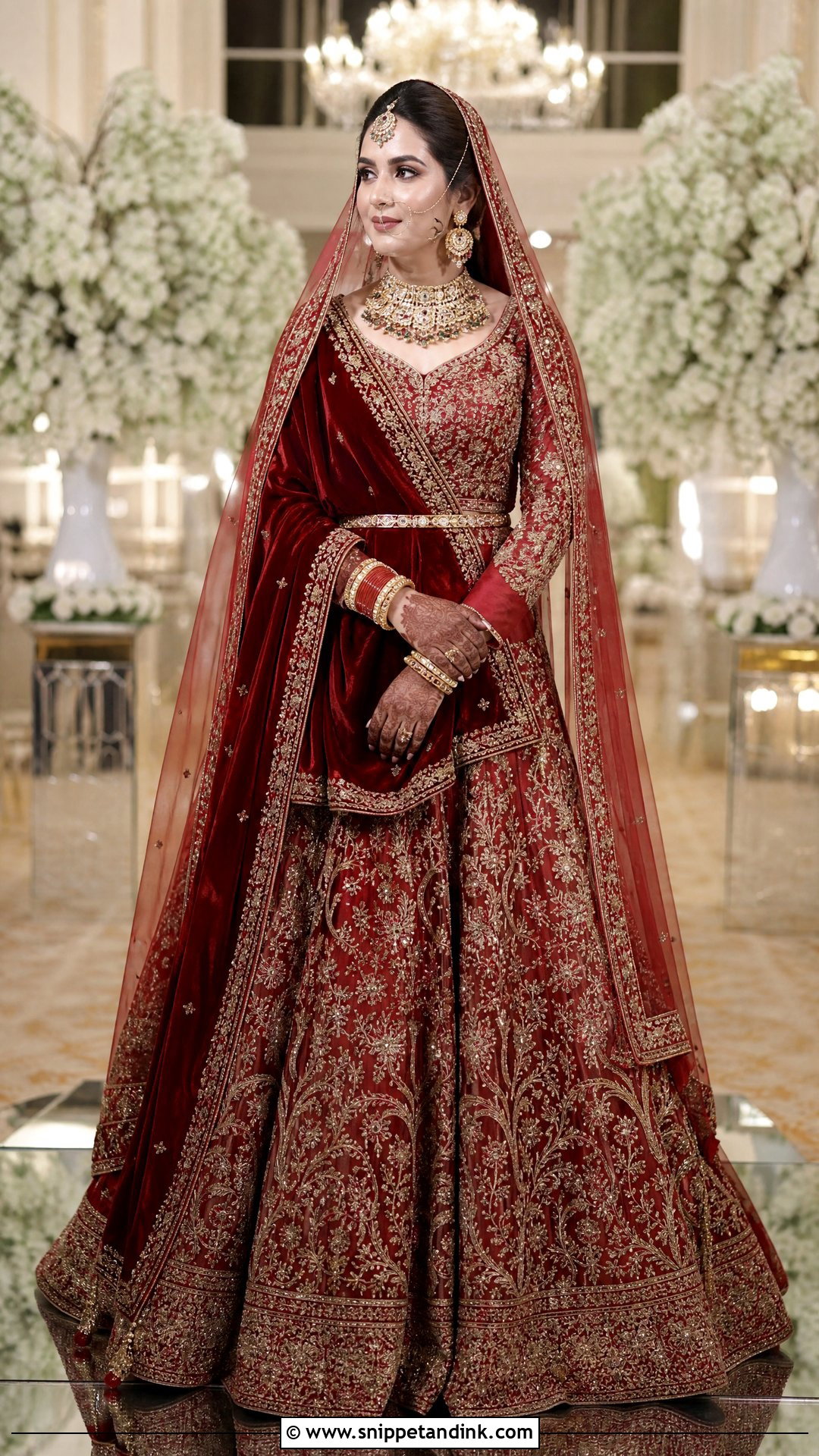
Velvet is too heavy for most brides to wear over the head for hours, so I put it across one shoulder instead. A red velvet dupatta over a red raw silk lehenga with antique gold work and a long-sleeved blouse looks majestic at a winter wedding. If your ceremony needs a covered head, add a light net dupatta as the veil. A slim embellished belt at the waist stops the velvet sliding off the shoulder. Heritage gold jewellery, a passa or maang tikka, bangles and closed juttis finish it. Keep the decoration on the velvet to one strong border and a few spaced motifs, or it becomes something you carry rather than wear.
6. Red Embroidered Dupatta With Blush Pink Lehenga
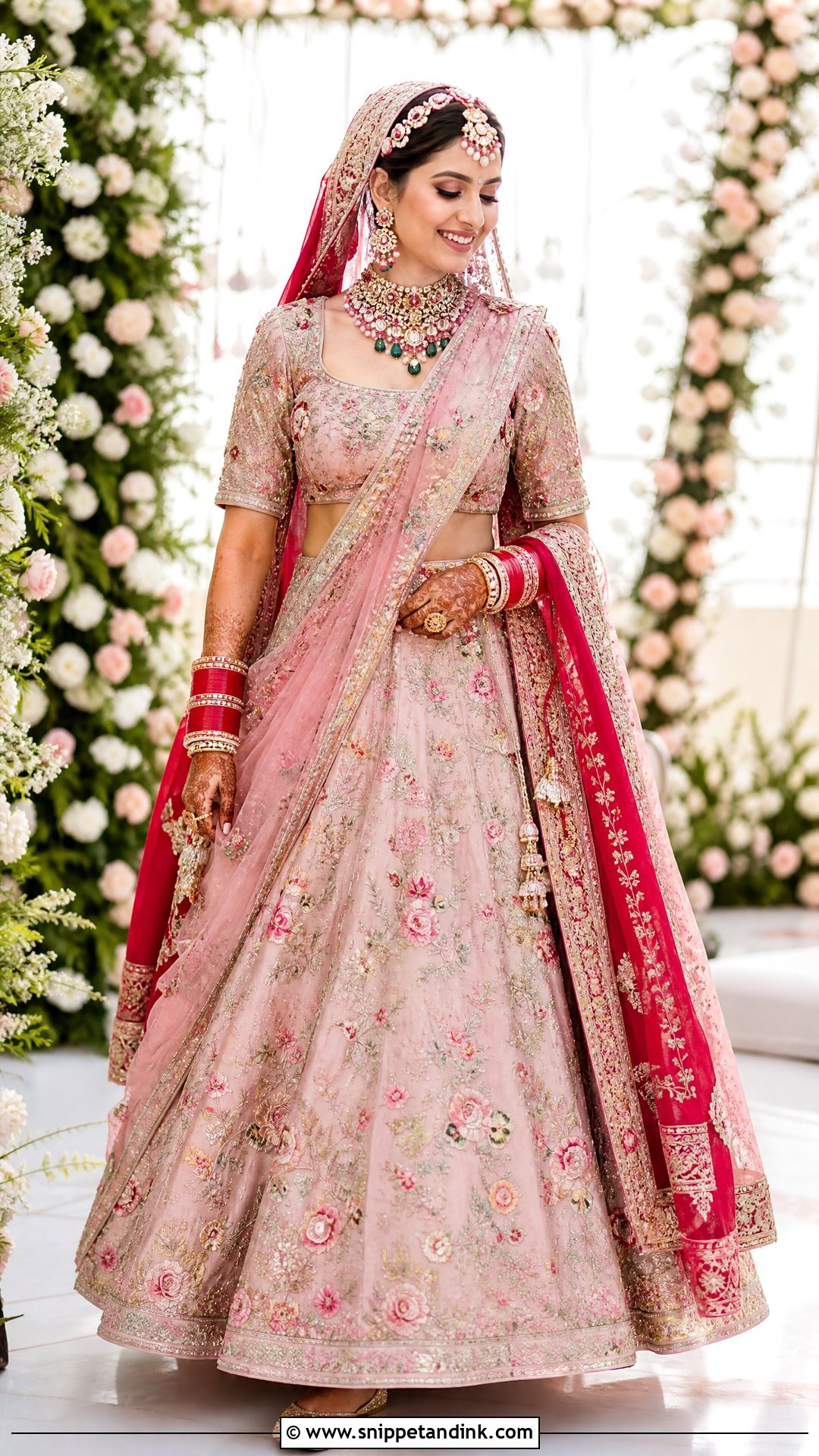
Blush pink alone can read as pastel party wear, and a red embroidered dupatta gives it bridal weight. Pick a blush lehenga with silver-gold threadwork and a matching blouse, then choose a red dupatta that repeats one element from the skirt, perhaps the vine or the paisley. That repetition is what makes two colours look planned. A scalloped gold border frames the face neatly. Kundan with pink or green beads, a delicate nath, bangles and metallic juttis suit it. If you want a second drape across the body, make it blush so the red stays near your face and doesn’t cover the softer outfit.
7. Red Cutwork Dupatta With Champagne Lehenga
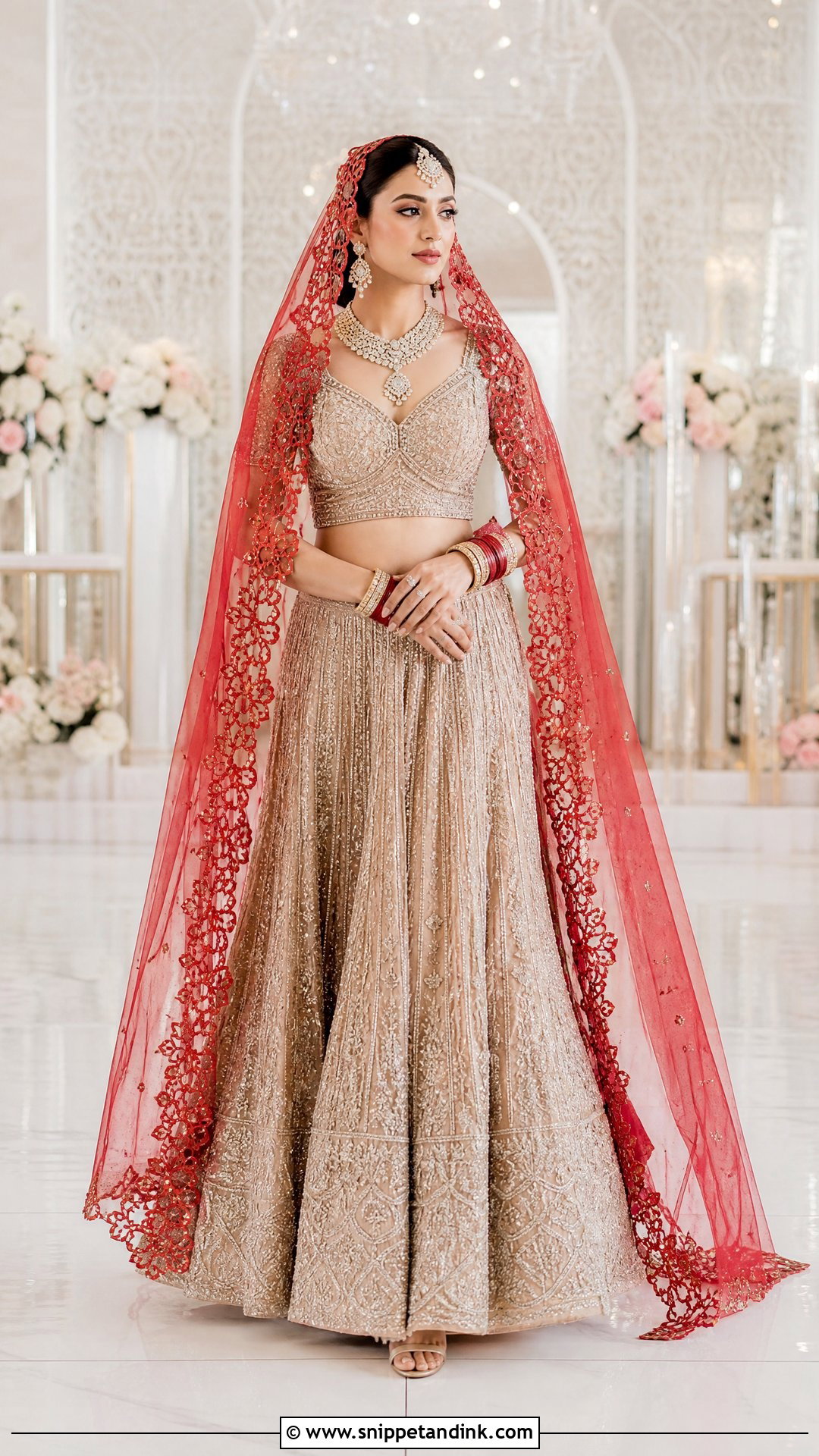
Fine cutwork along a red dupatta gives a champagne lehenga a shaped, almost architectural edge in place of a straight border. Check how the cut edges are finished; poorly bound cutwork frays and catches on jewellery by the end of the day. A champagne skirt with tonal beads and sequins lets the red become the focal point. Set the dupatta over a sleek bun and spread the cutwork edge around the shoulders so its outline shows. Diamond-polki, red bangles, a small maang tikka and champagne heels suit it. Keep the blouse neckline simple, because cutwork and a busy neckline side by side turn into clutter, and I’d rather the edge drape symmetrically.
8. Red Gota Patti Dupatta With Yellow Lehenga
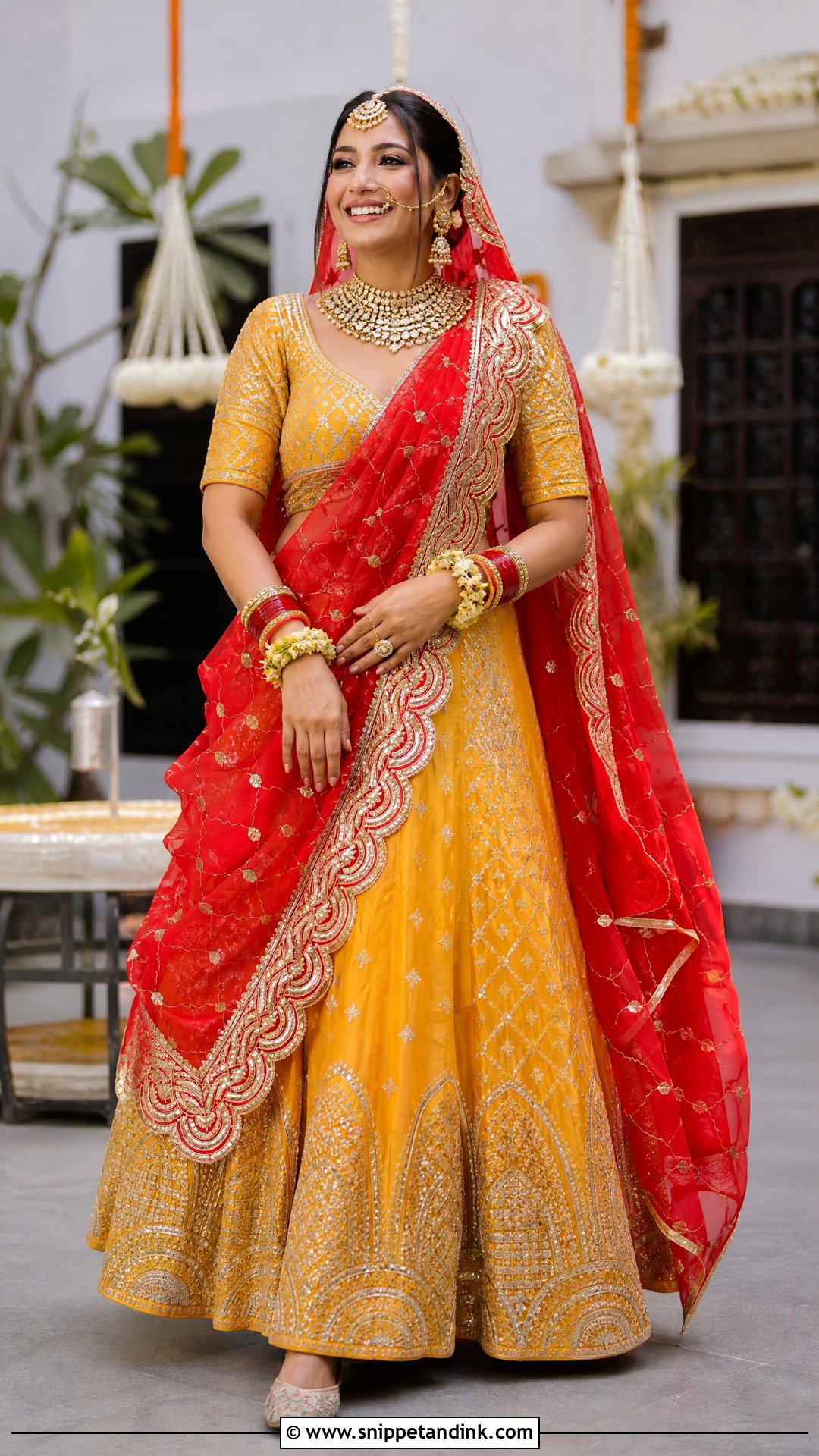
Red on yellow is joyful, and a red gota patti dupatta over a mustard, marigold or muted yellow lehenga feels right for a daytime ceremony. Gota is light for how much it shines, so the dupatta can carry ribbon motifs, a defined border and small tassels without dragging. Drape it from the head toward one shoulder and leave plenty of yellow skirt showing. Gold kundan, floral bangles and comfortable juttis finish it. A soft braid or low bun gives the pins something firm to grip. I’d repeat one gold tone through the gota, jewellery and shoes so a bright palette doesn’t look scattered.
9. Red Floral Dupatta With Pastel Green Lehenga
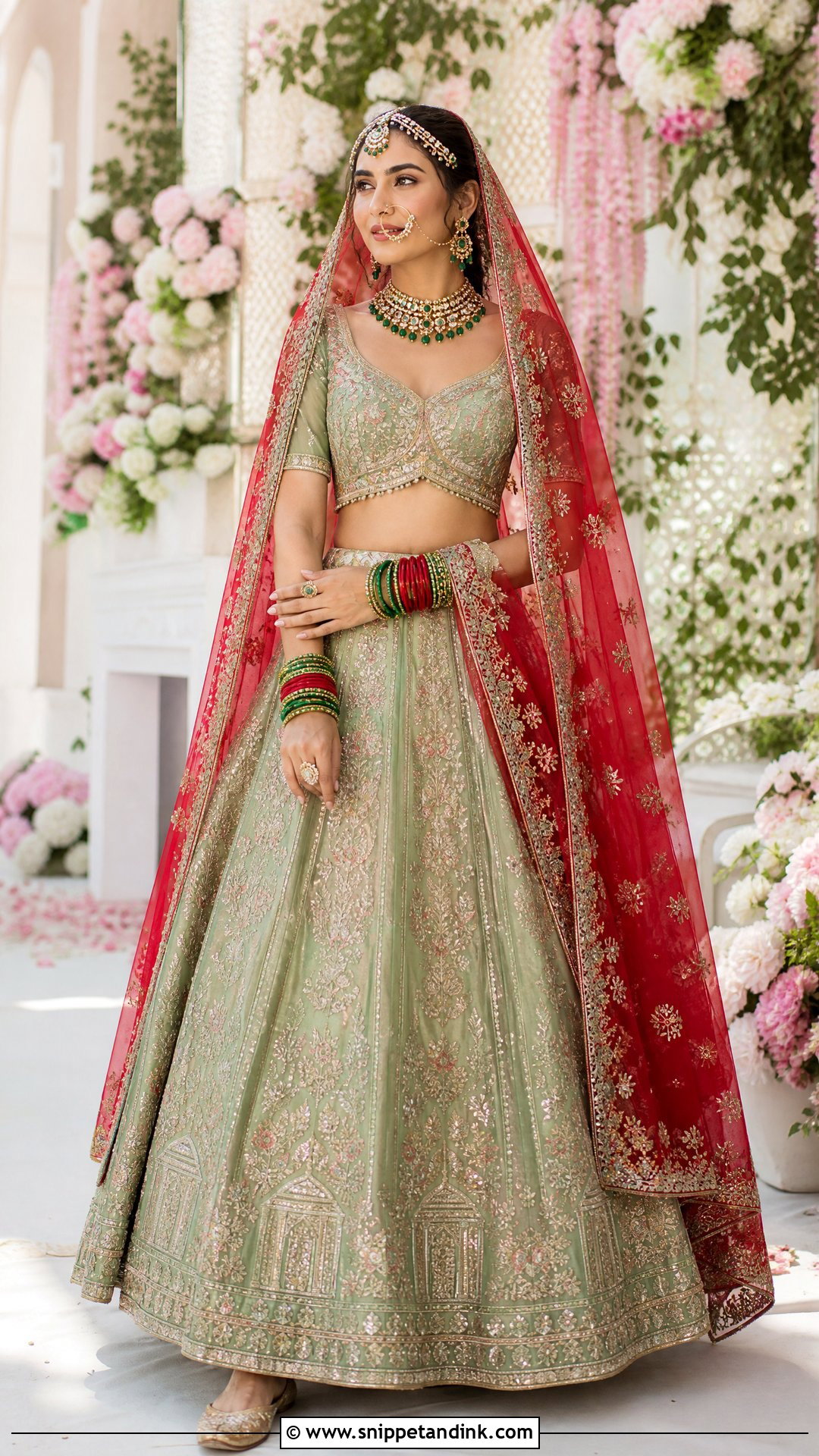
Pastel green behind a red floral dupatta looks fresh in daylight. A mint, sage or pistachio lehenga with fine gold embroidery and a few red accents on the blouse gives the red something to connect to. A sheer red dupatta with hand-embroidered flowers goes over the head, with one side pinned behind the shoulder so the neckline stays visible. Kundan with green stones, a gold nath, mixed red and green bangles and metallic juttis suit it. Watch the scale: big flowers on the dupatta need a quieter lehenga, or the eye has nowhere to rest. Keep any fresh flowers to the colours already in the outfit.
10. Red Sequined Dupatta With Burgundy Lehenga
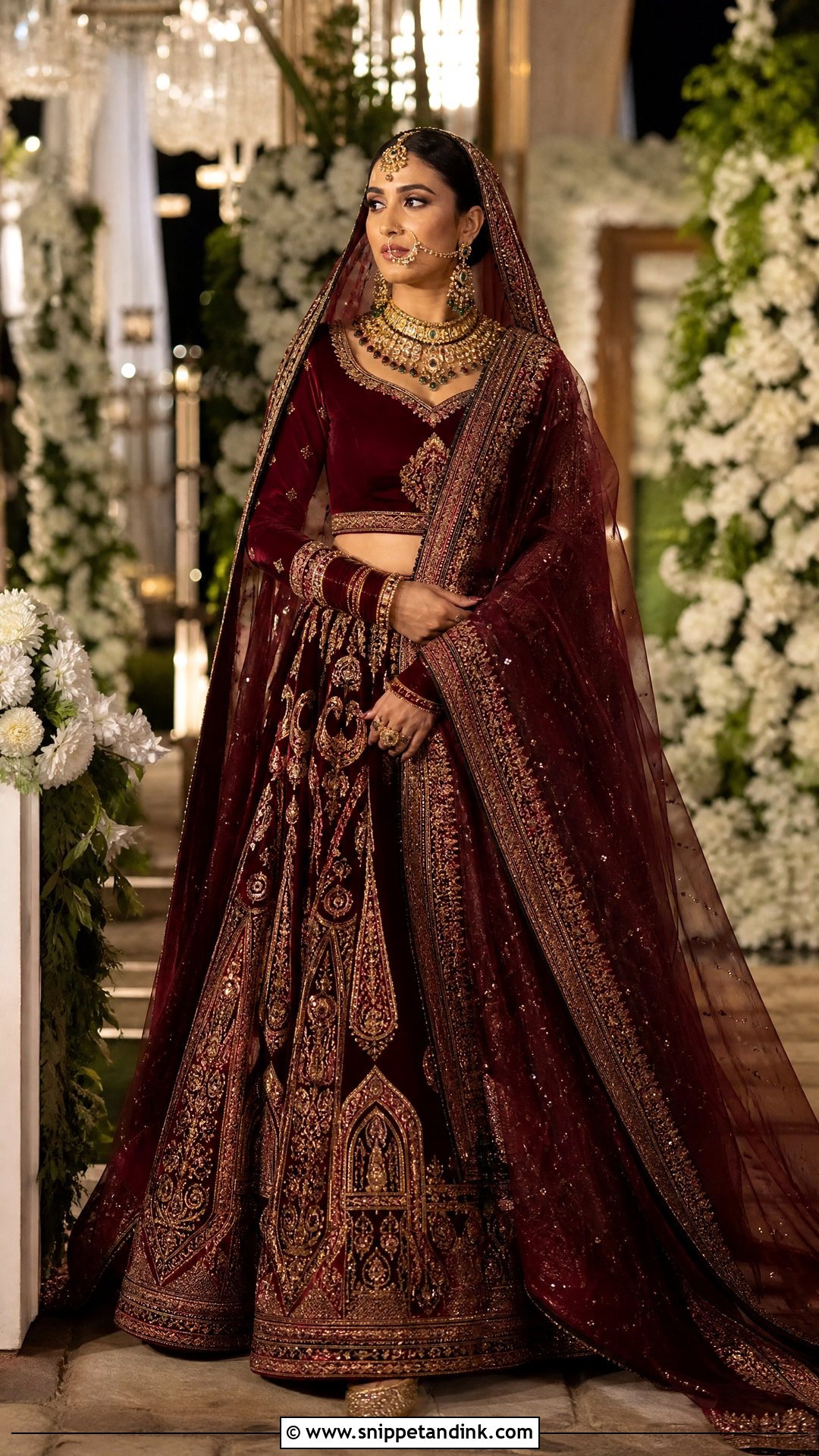
Big sequins bounce camera flash straight back and can blow out in photographs, which is why I steer brides toward fine, evenly spaced ones on a red sequined dupatta. Over a burgundy velvet or raw silk lehenga with red and antique gold work, it adds a soft glow under evening lights. Drape it over the head with a narrow embellished edge at the forehead, and let the back fall in one long smooth line rather than bunched folds. Antique polki, a bold nath, burgundy bangles and gold juttis are plenty. Keep the blouse matte and the makeup softly defined, since the dupatta already supplies the shine.
11. Red Scalloped Dupatta With Peach Lehenga
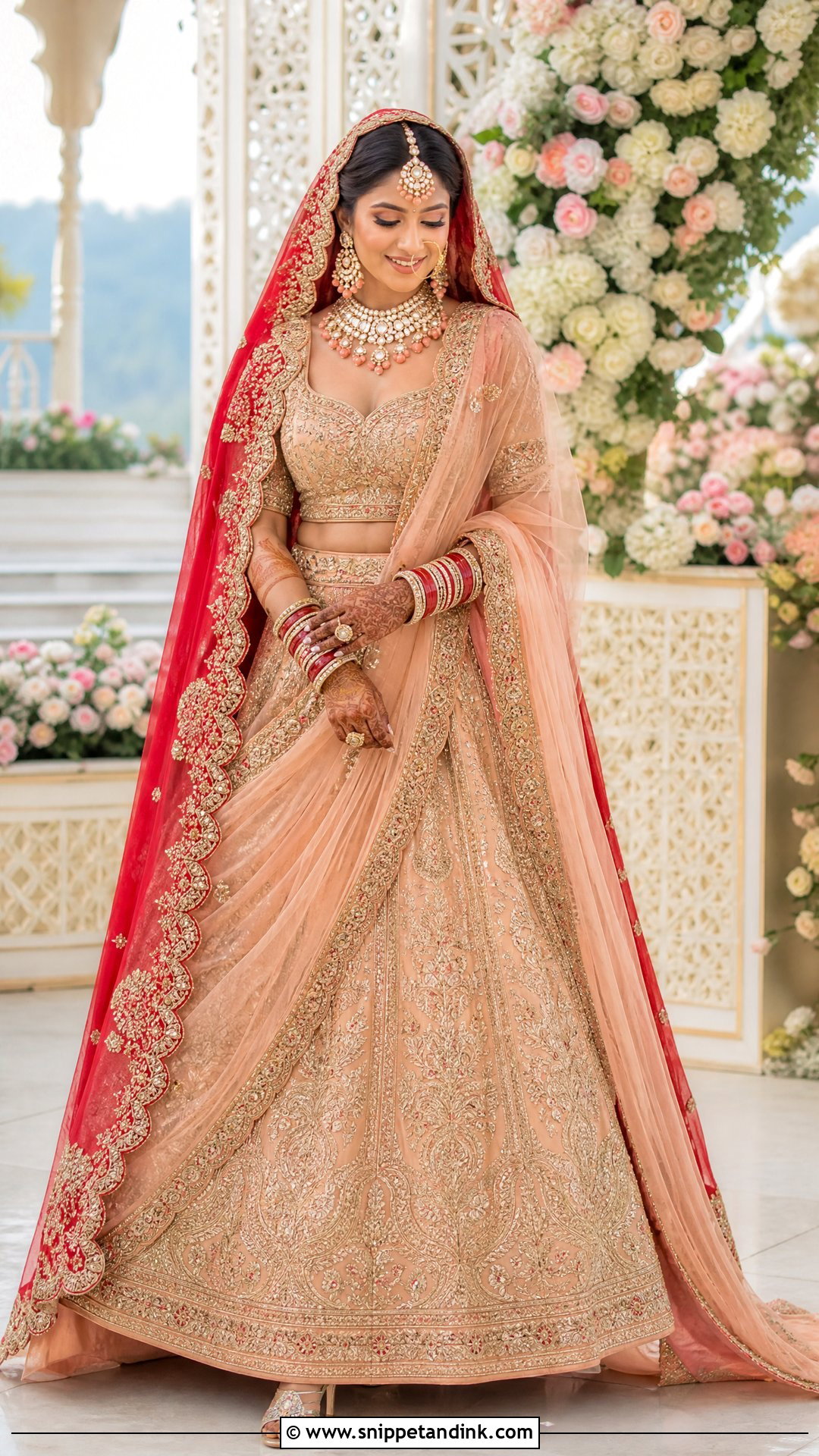
Scalloped edges soften a structured peach lehenga, and the scallops themselves are where I spend my draping time, arranging each curve along the hairline so none fold under. The border can carry pearls, sequins, threadwork or small florals that echo the skirt. A peach skirt with fine gold work and a high or sweetheart neckline sits well beneath. Polki with peach beads, red and gold bangles, an understated nath and gold heels suit it. If you’d like more structure, pleat a second peach dupatta across the front. Keep the red layer sheer so the blouse and necklace stay visible. It’s a pairing that looks especially fresh in bright daylight portraits.
12. Red Double Dupatta With Ivory Bridal Lehenga
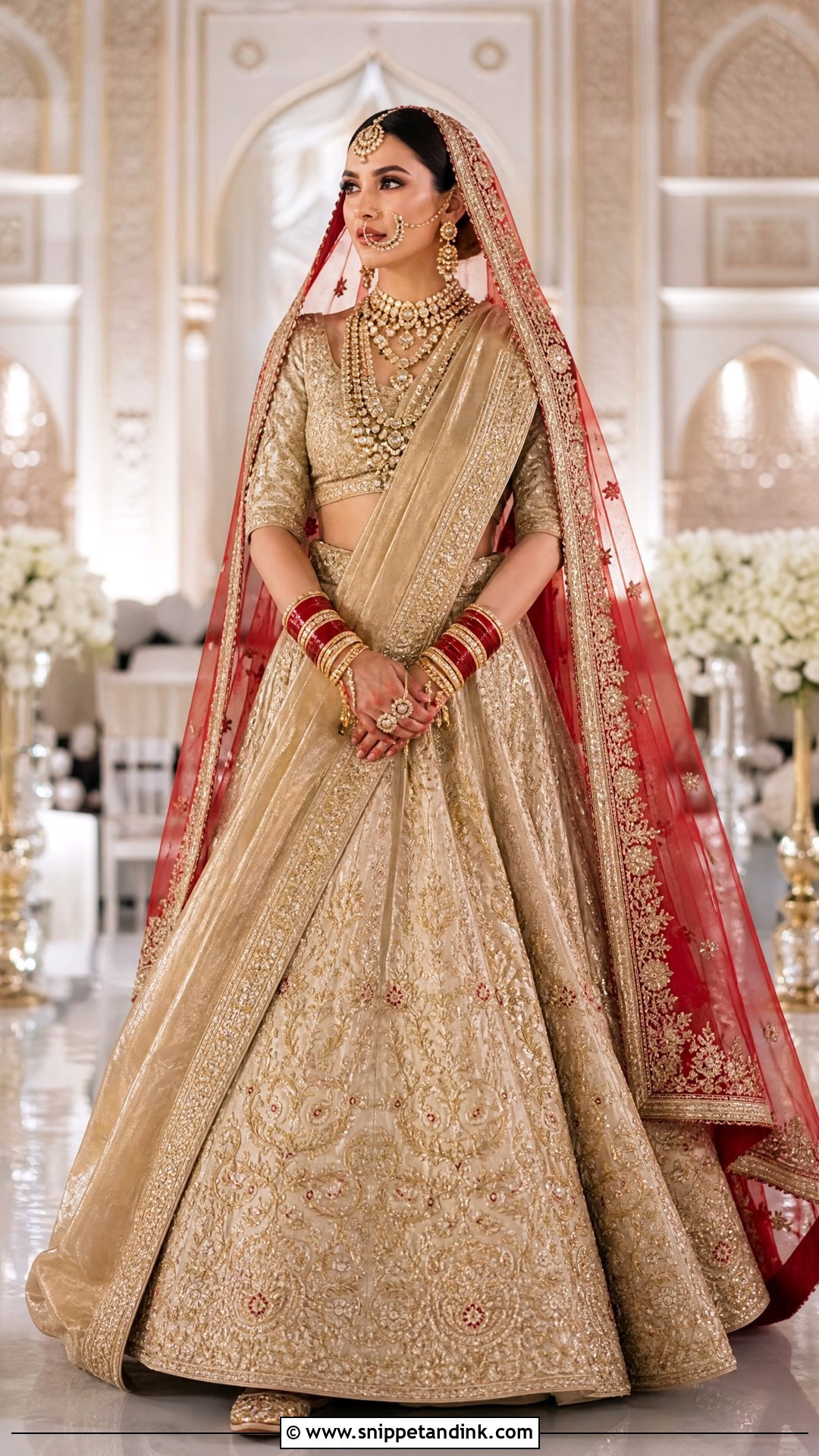
Two dupattas let you control coverage and movement separately. On an ivory lehenga, a light red net over the head carries the broad embroidered border, while an ivory or gold tissue dupatta across the torso has a finer finish so the two don’t compete. Pair them with an ivory lehenga in gold zardozi with a few red details, plus a polki choker, long necklace, maang tikka, nath, red bangles and gold footwear. Pin the shoulder dupatta firmly at the waist so your hands stay free. The trick is different weights. When both layers are heavy, the pressure on your head and shoulders adds up fast, and I’d simplify before the wedding rather than during it.
13. Red Veil Dupatta With Monochrome Bridal Lehenga
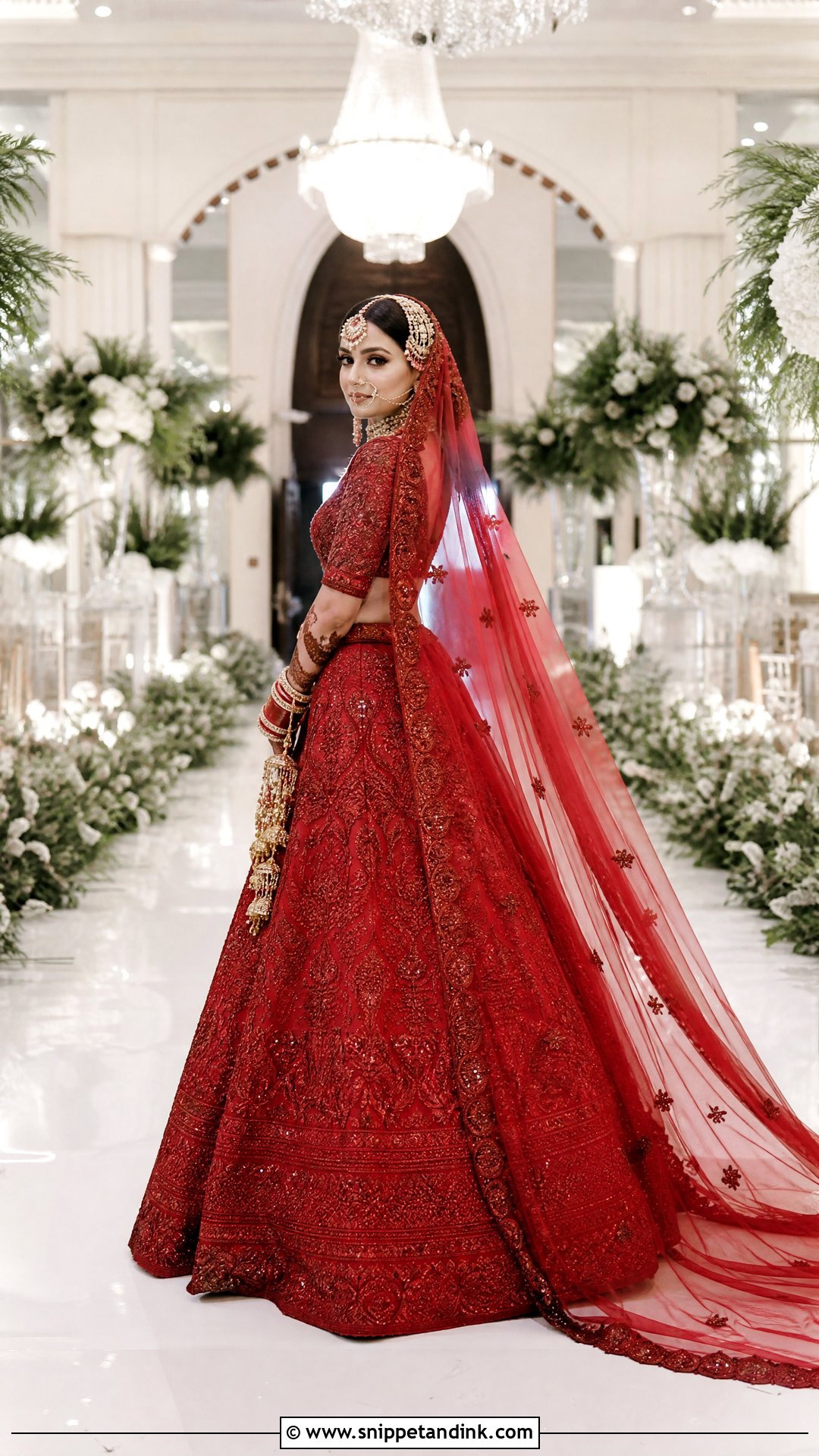
A long trailing veil makes the entrance, and keeping everything else red makes it look like one continuous piece. Start with a red lehenga and blouse in tonal threadwork, gold zardozi or placed sequins, then add an extended red net dupatta with the embroidery gathered at the border and lower edge, where the trail shows it off. Secure it above a low bun so it falls without bunching at the shoulders. If you need firmer coverage at the front, add a second shorter red dupatta. Kundan, a statement nath, bridal bangles and platform juttis finish it. Ask someone to straighten the trail before every walk; I’d keep it no longer than you can safely turn in.
14. Red Chikankari Dupatta With White Lehenga
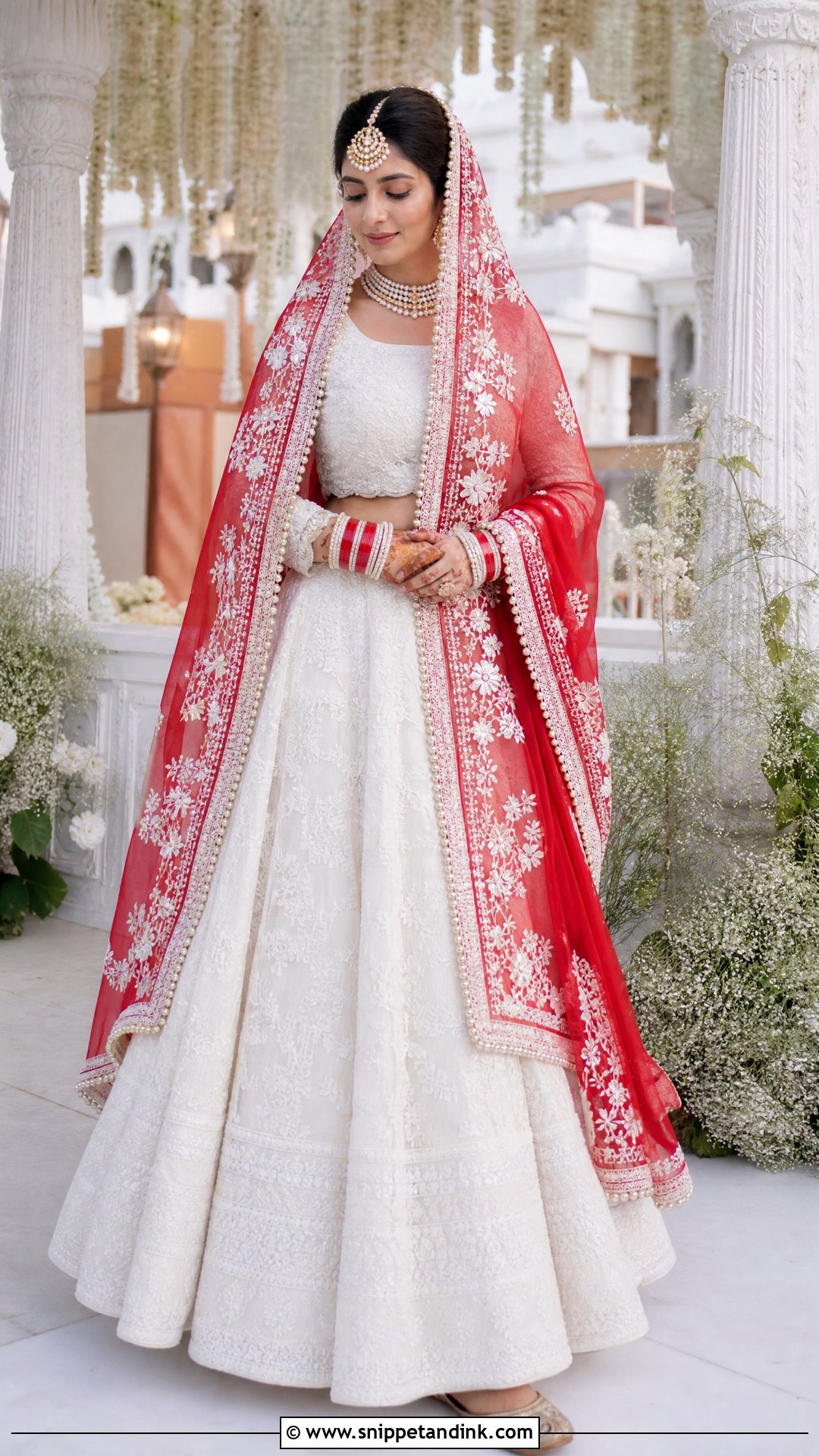
Chikankari is shadow embroidery, fine white stitching that reads as texture more than pattern, and on a red dupatta over a white lehenga it looks airy and handmade. Choose a white or off-white skirt with tonal work and light sequins, and a blouse with comfortable coverage. The red dupatta can carry white threadwork, tiny pearls and a narrow scalloped edge. Wear it over the head with one side forward and one behind the shoulder. Pearl-polki, a red maang tikka, white and red bangles and metallic juttis suit it. Keep the lehenga quiet, since chikankari is delicate and disappears next to heavy embellishment. The red and white contrast reads clearly from across a sunlit courtyard.
15. Red Banarasi Dupatta With Cream Lehenga
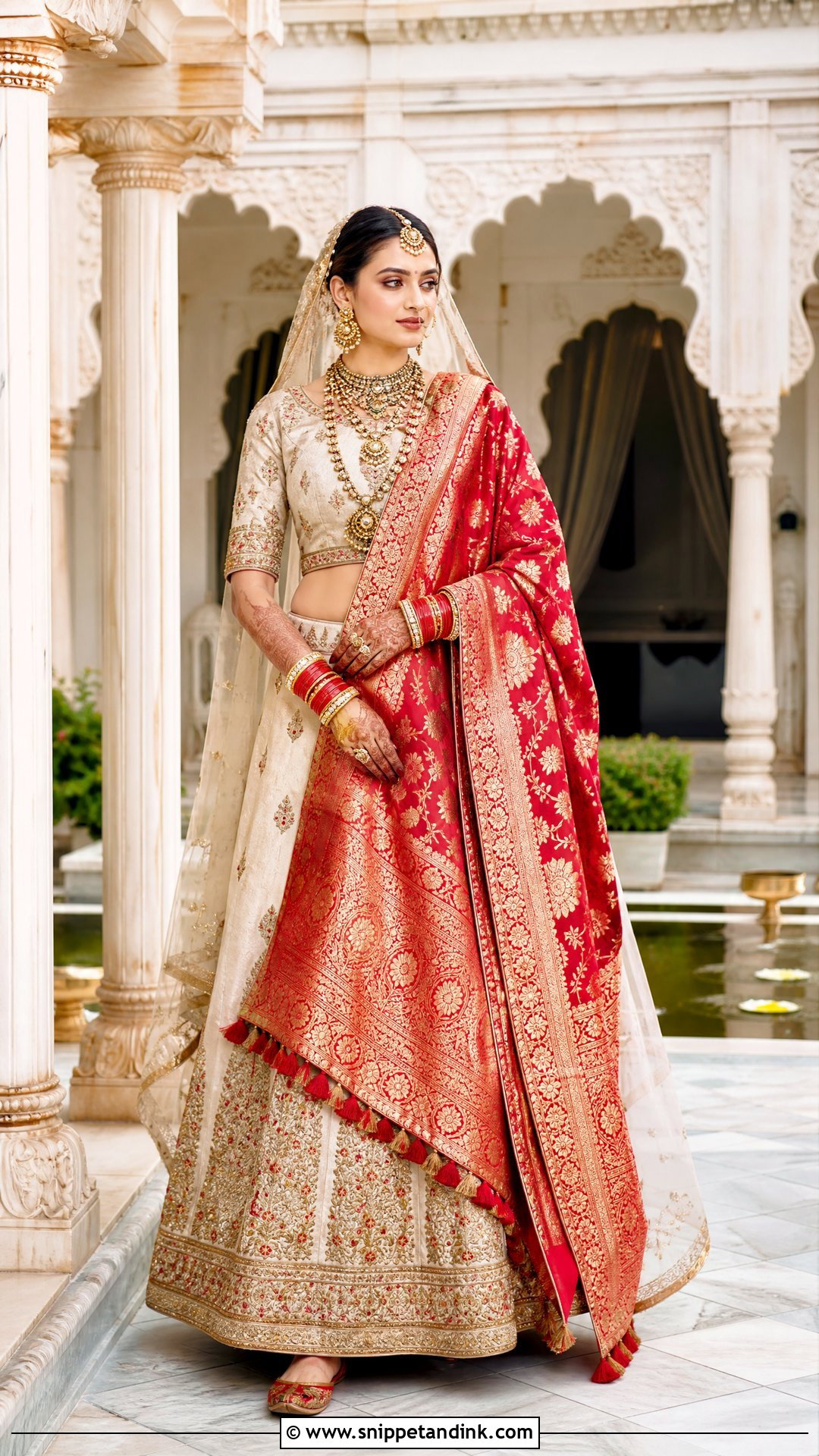
Folding a Banarasi tightly hides the very weave you paid for, so I always drape it wide. A red Banarasi with gold floral motifs, butis and an ornate pallu suits a cream silk lehenga. Rather than covering your head with it, lay it across one shoulder and spread part of it over the arm so the pallu shows. Add a light cream net veil over the head if needed. Red and gold embroidery on the lehenga ties both layers together, and an elbow-length sleeve keeps the blouse classic. Antique gold necklaces, a maang tikka, red bangles and brocade juttis complete it. It belongs at a formal ceremony.
16. Red Mirror Work Dupatta With Orange Lehenga
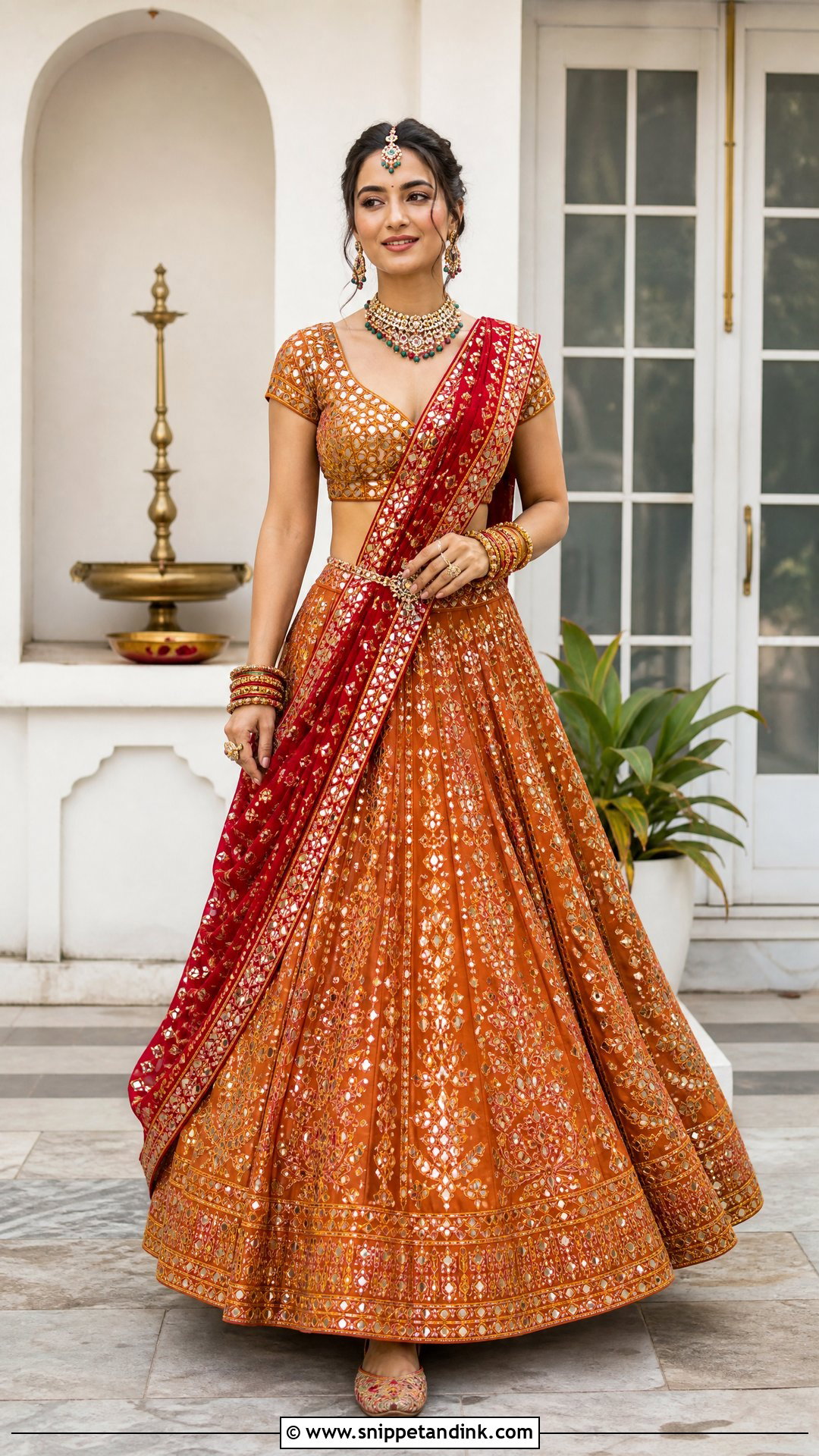
Neon orange and red clash, but burnt orange, rust or vermilion move into red smoothly, and that’s the version I’d pair with a red mirror work dupatta. The lehenga can carry gold threadwork and small mirrors; the dupatta should repeat the border with controlled mirror placement. Drape it diagonally across the torso, fixed at one shoulder and the opposite side of the waist. That drape shows the blouse, defines the waist and keeps the fabric out of your hands. Gold jewellery with coloured beads, red-orange bangles and embroidered juttis suit it. Mirror work is heavy, so keep the most decorated part off your head and use a light matching veil for coverage.
17. Red Pearl Border Dupatta With Rose Gold Lehenga
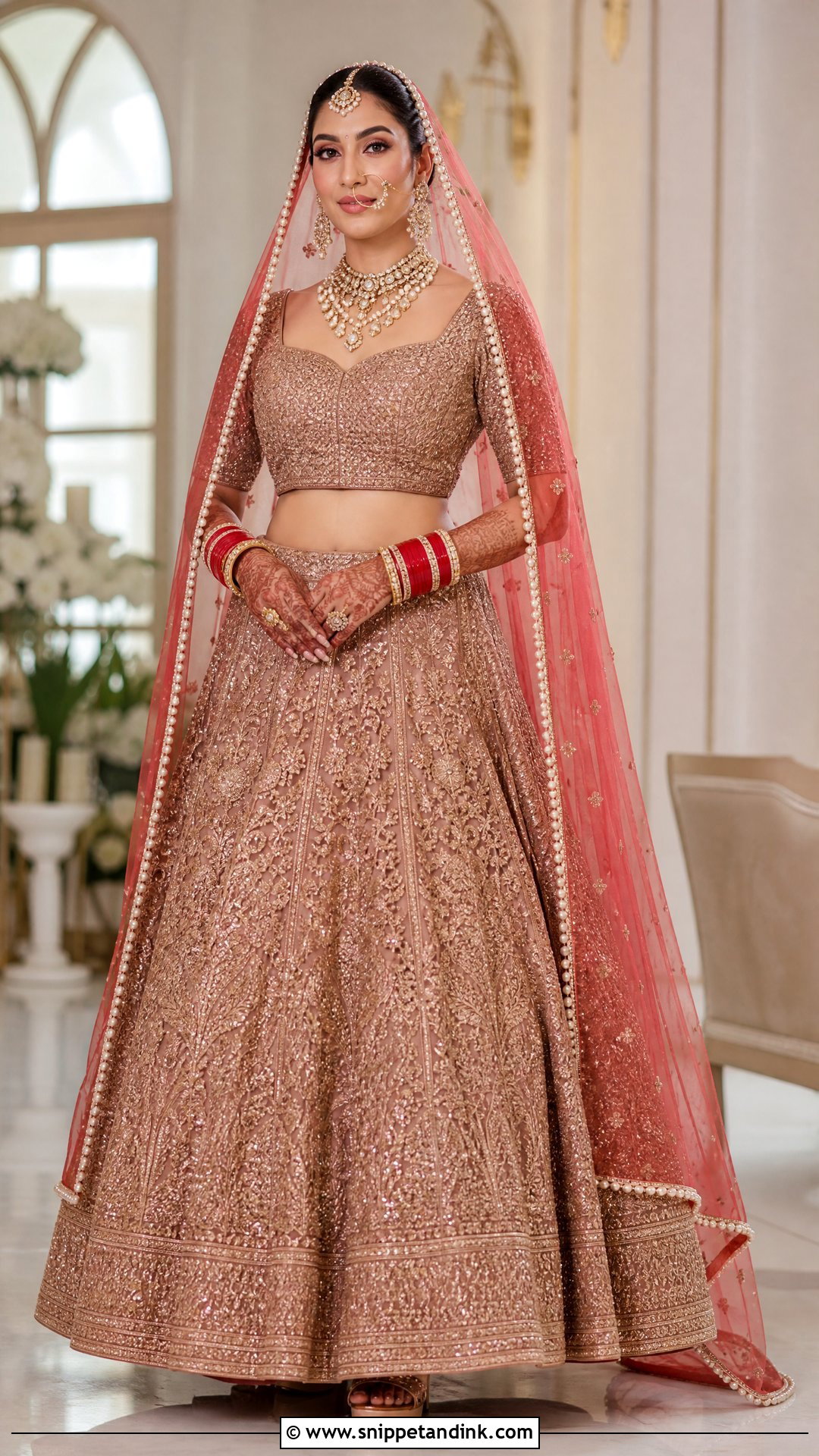
Pearl trims weigh more than they look. A red dupatta edged in pearls over a rose gold lehenga looks refined, but I keep the base fabric light, a soft net or organza, to make up for the border. The skirt can carry tonal sequins, beads and florals, with a clean, fitted blouse. Over the head, arrange the pearl edge so it frames the face without pressing against the maang tikka. Pearl-polki necklaces, drop earrings, a delicate nath, red bangles and rose gold heels suit it. If the border keeps sliding backward, secure it near the bun with hidden pins. It suits a bride who wants red but not a fully traditional palette.
18. Red Jaal Dupatta With Gold Embroidered Lehenga
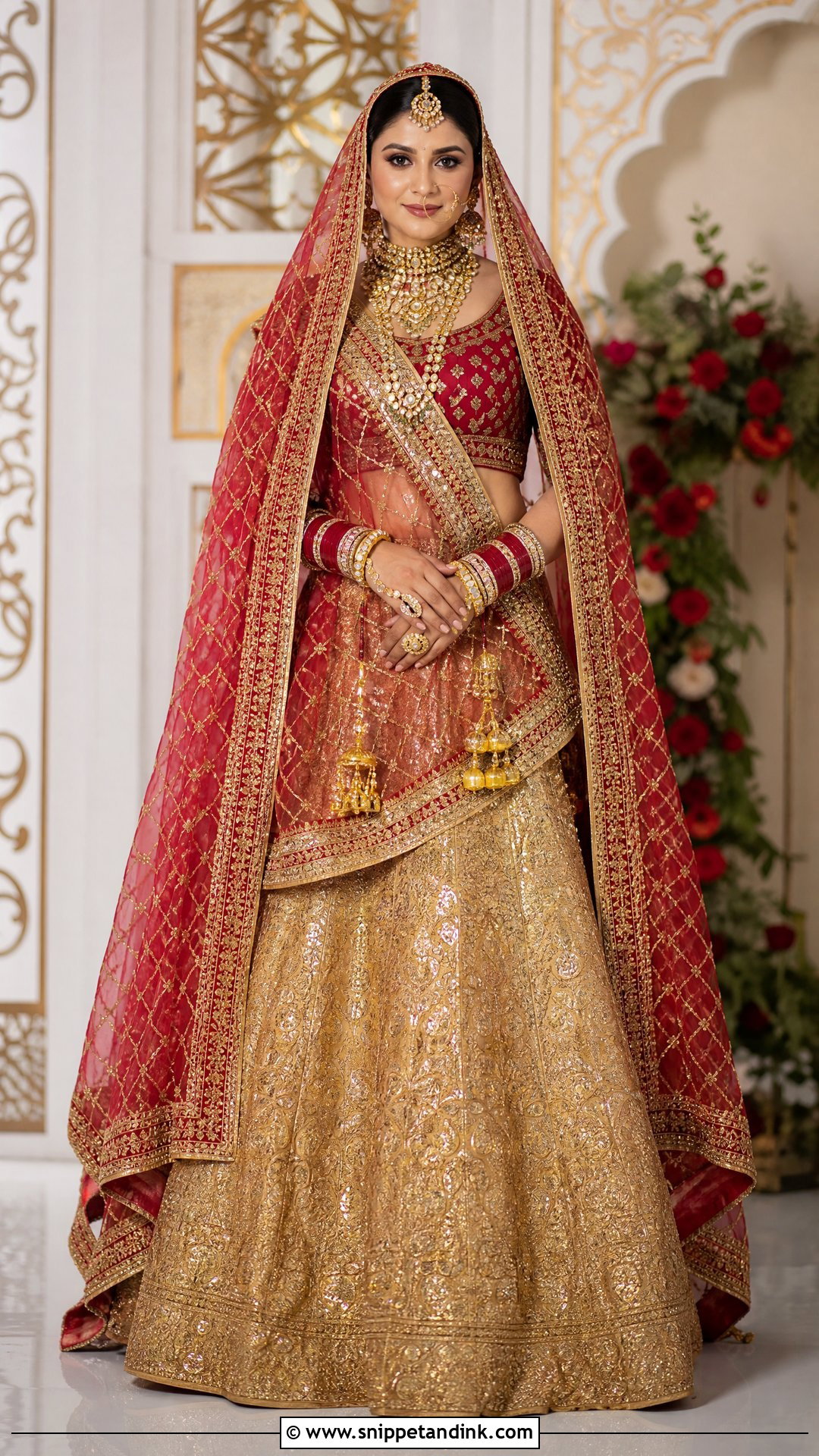
Jaal means net or lattice, an all-over pattern of vines, florals or geometric links, and on fine red net it adds pattern without weight. Pair the dupatta with a gold embroidered lehenga and a red blouse matching the dupatta’s base. A substantial gold border keeps the edge defined. Set it over the head and spread it across the shoulders so the lattice stays open; fold it and the pattern turns into stripes. Layered kundan, a central maang tikka, red bangles and gold juttis finish it. Keep the blouse neckline plain. The patterned veil and the clearly shaped skirt then read well from the front and the back.
19. Red Doli Embroidered Dupatta With Red Lehenga
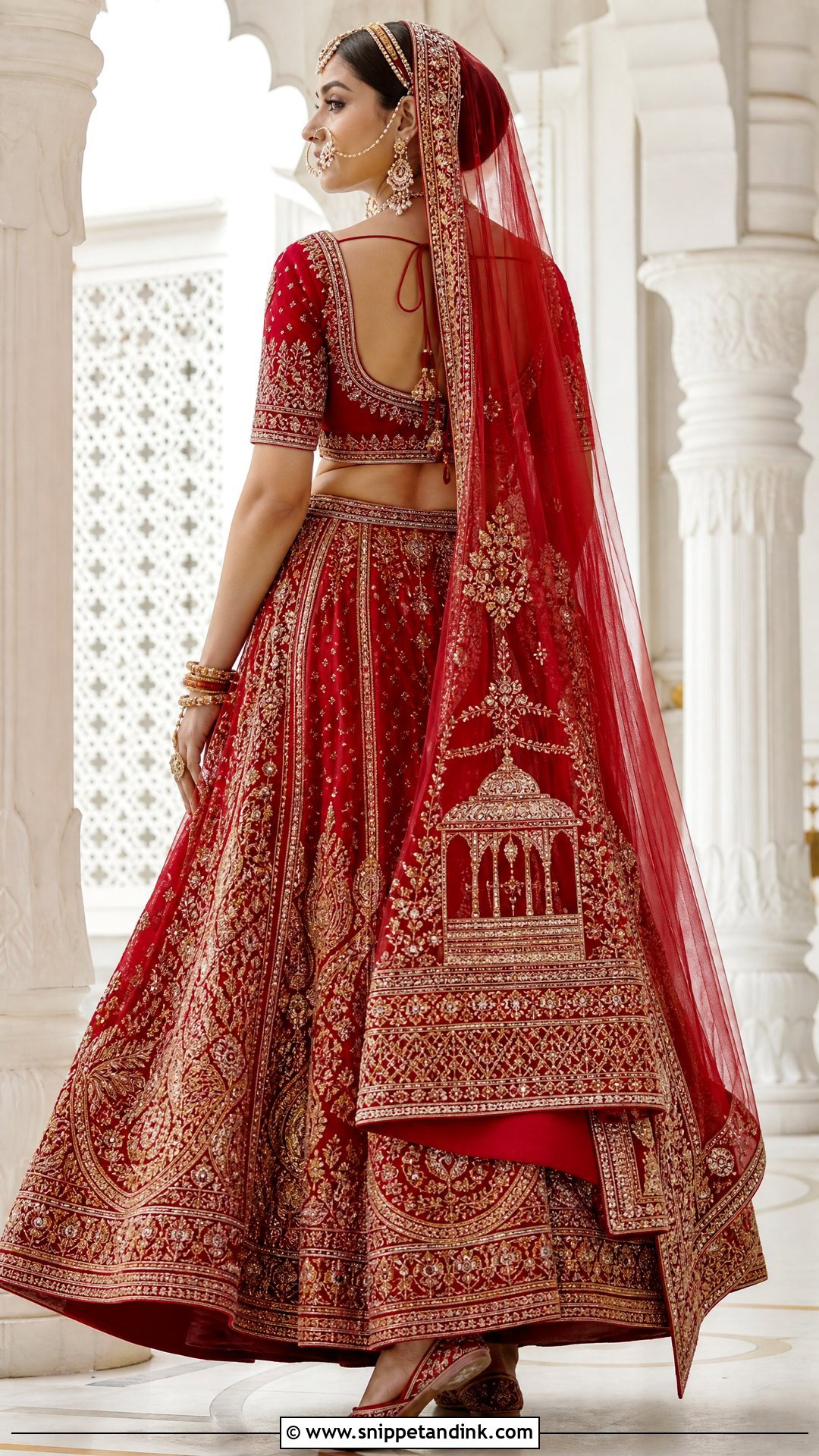
A doli embroidered dupatta tells a story across your back, often a bridal procession, a border of flowers or a piece of symbolic artwork. That panel must lie flat, so never pleat it; folds distort the figures. Pair it with a red lehenga in related but sparser embroidery so the illustrated veil stands out. Wear it over the head and let the decorated section fall straight behind you. Heritage kundan, a large nath, traditional bangles and red-gold juttis finish it. Before the day, I photograph the bride from behind in the full outfit to check the motif sits centred and stays visible as she walks.
20. Red Dupatta With Green Bridal Lehenga
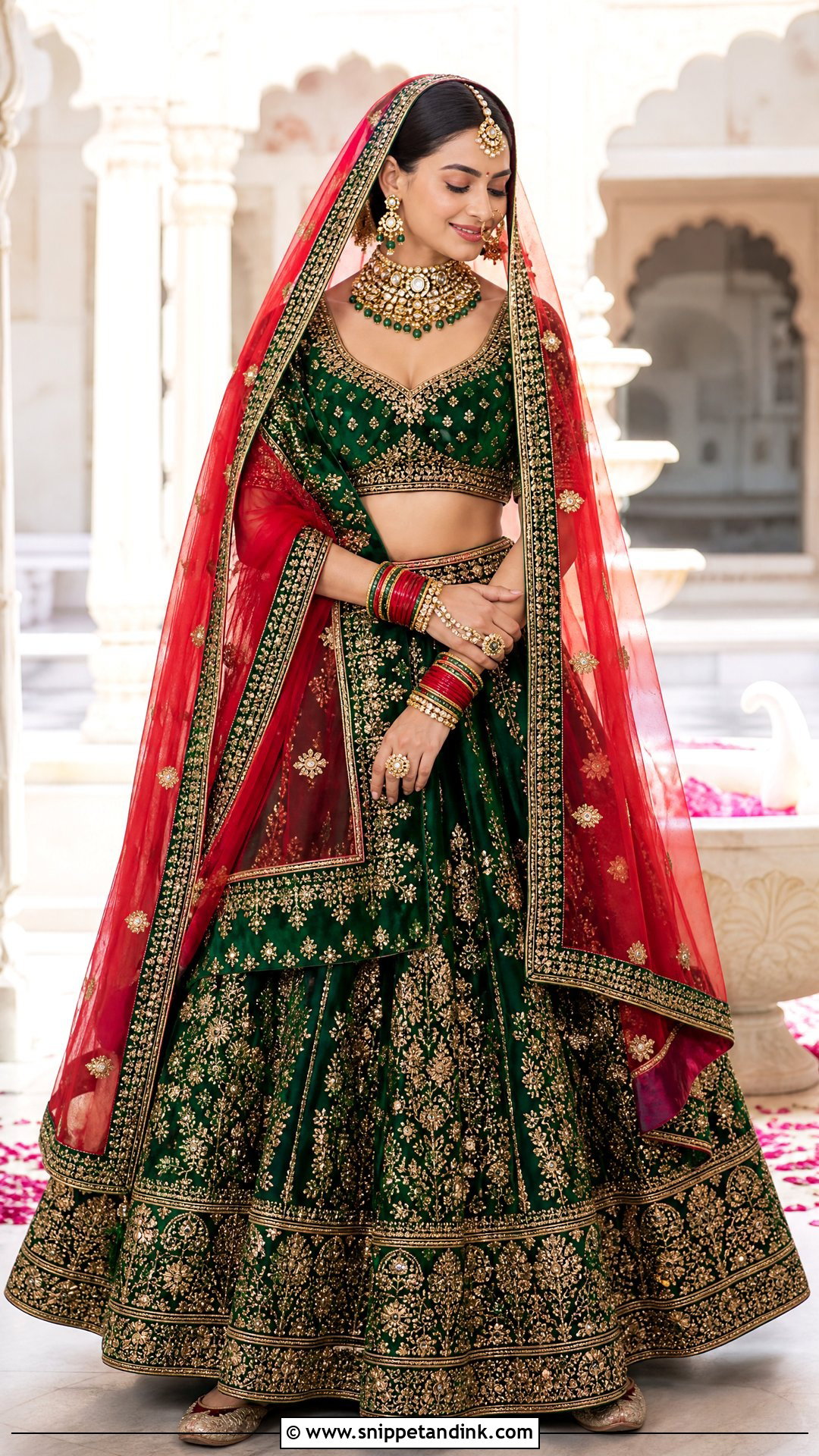
Green and red give a heritage feel, but only when one colour clearly leads. Start with an emerald or bottle-green lehenga in antique gold embroidery with small red details, and add a sheer red dupatta over the head whose border repeats the green and gold. A matching green blouse keeps the base unified so the red sits mainly around the face and shoulders. Uncut polki, green bead strands, a gold nath, red and green bangles and gold juttis suit it. Use equal amounts of each colour and the outfit looks split down the middle, which is the one mistake I see most with this pairing.
A Head Drape That Stays Put Through the Pheras
Most dupatta problems on the day come from the base, not the fabric. A low, firm bun gives the pins something solid to hold; slippery, freshly washed hair and loose open styles give them nothing. I drape the dupatta after the jewellery is on, so it frames the maang tikka and earrings instead of trapping them underneath.
How I set it
- Find the centre of the border and place it at the hairline, so both sides fall evenly.
- Pin through the dupatta into the bun with long bobby pins crossed in an X, not a single straight pin.
- Make a small pleat at each side of the head so the border curves around the face rather than sitting flat and stiff.
- Fix the shoulders with small safety pins through the blouse seam, where they hide under the drape.
- Leave enough slack at the back that you can turn your head fully without tugging the front edge.
Hand one person, a sister or a friend, a few spare pins and ask them to check the drape before each ritual and photo set. Fixing a slipped border takes a minute if someone is watching for it, and much longer once it’s half off.
Sheer Over the Head, Heavy Across the Shoulder
A good bridal dupatta frames you, stays where it was pinned and is still comfortable after the last ritual. Weigh up the lehenga colour, how dense its embroidery is, the neckline, your jewellery and the fabric weight together. As a rule, sheer net and organza go over the head, while Banarasi silk, velvet and heavily worked pieces sit better across the shoulder. Do a full trial with shoes, jewellery, hairstyle and pins, and photograph it from the front, side and back. Whichever red you choose, that rehearsal is what makes it look settled rather than fussed over on the day.
You'll Like These Ideas:


Leave a Reply