
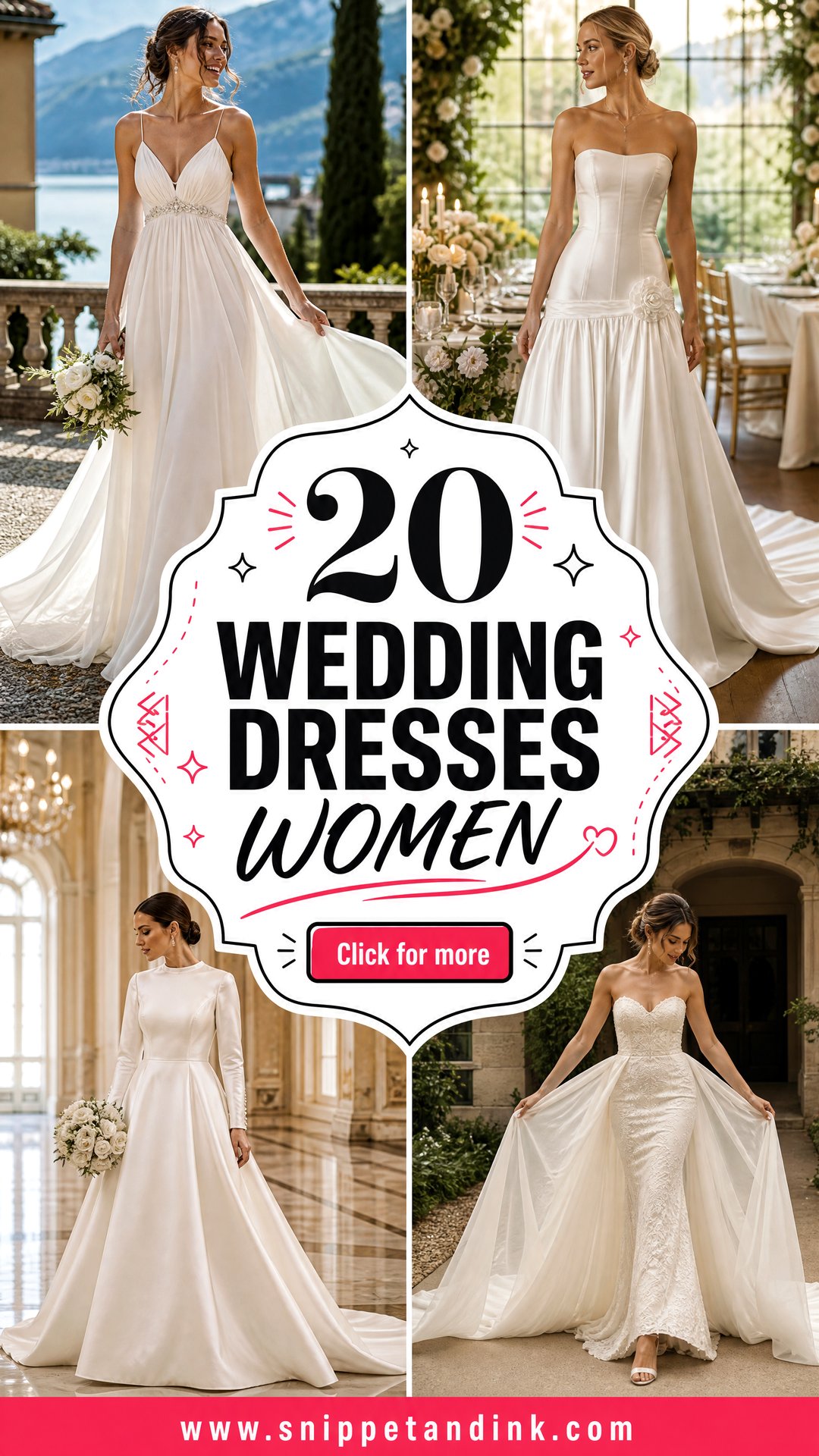
Brides usually walk into their first appointment with a screenshot and leave with something completely different. That’s not indecision; it’s what happens when fabric meets a real body. The shapes on the rails right now range from classic lace and ball gowns to sculpted corsets, Basque waists, fluid crepe and removable layers, so there’s a lot to sort through. My test is simple. The dress has to support you, suit how formal the day is, and let you move without thinking about it. Below are 20 complete looks across seasons, venues and body types, each with notes on fabric, neckline, undergarments and the alterations to plan for.
Matching the Gown to How Formal Your Day Is
Before silhouette, I ask brides two questions: what time does the ceremony start, and what will the guests be wearing? A dress can be right for your body and still feel wrong in the room.
- Evening and black tie: heavier fabrics like satin, mikado and structured lace, longer trains, and fuller skirts all suit the setting.
- Daytime and garden: lighter tulle, chiffon, organza and soft lace move better outdoors and look fresher in sunlight.
- Courthouse and small restaurants: tea length, minis, clean columns and removable layers keep you comfortable in tight spaces.
- Beach and destination: skip rigid boning and thick underskirts, and keep the train short enough to stay out of the sand.
Season matters too. Heavy satin and long sleeves are warm in summer heat, and fine chiffon can feel thin in a cold church. If you’re unsure, look at how the dress sits in the light your venue will actually have. Satin glows under evening lights; matte crepe can look flat in a dim room.
1. Classic Satin Ball Gown Wedding Dress
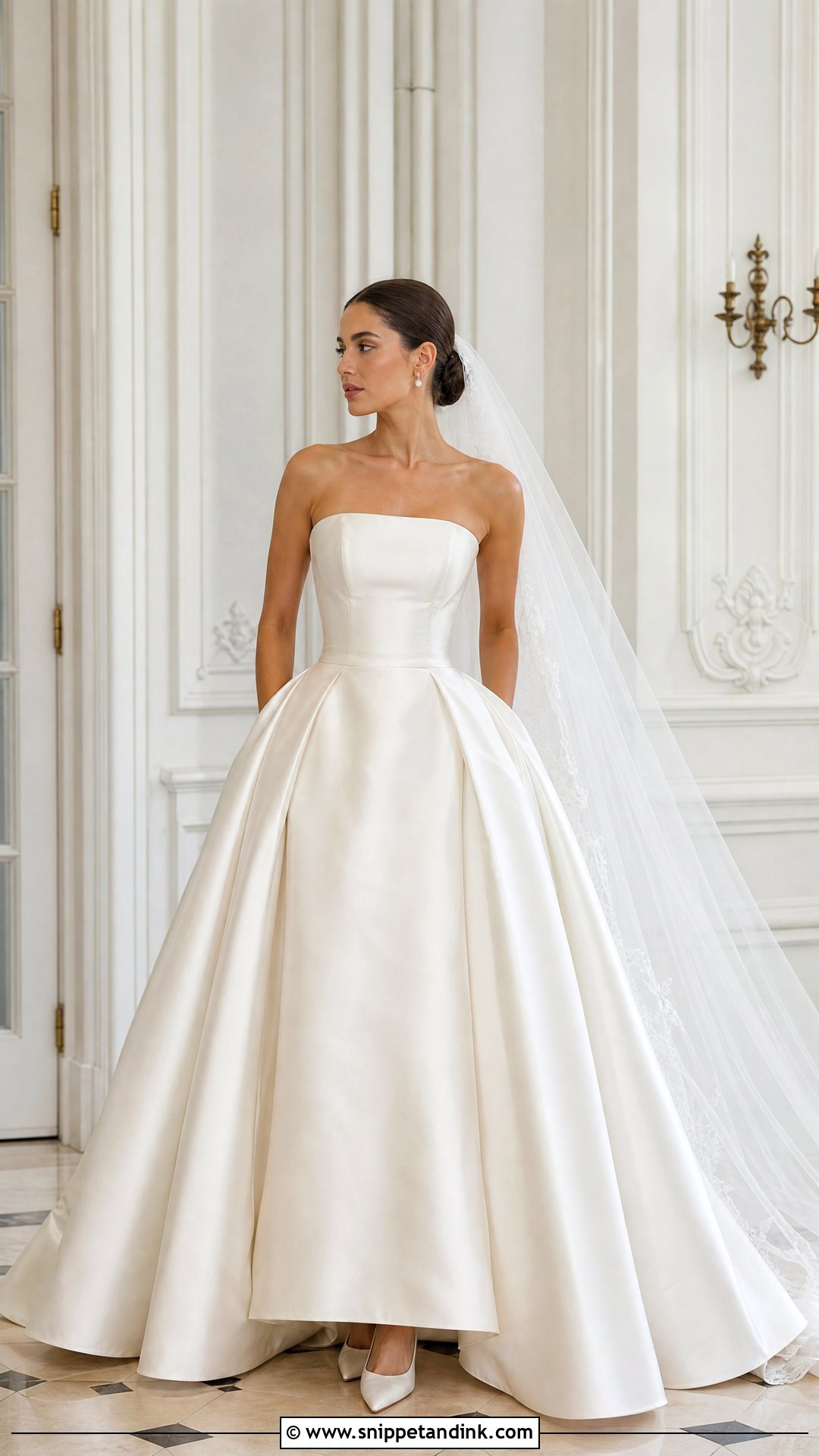
Satin ball gowns are the most traditional shape on this list, and they still earn their place. A fitted bodice over an inner corset holds the waist and keeps a strapless, square or softly scooped neck in place through a long ceremony. Ivory and soft white satin differ more than you’d think against skin, so hold both up to your face in daylight. Pointed satin pumps, pearl drops, a fingertip or cathedral veil and a sleek low bun let the fabric speak. On a petite frame, ask for less volume in the skirt; taller brides can carry more, plus a longer train. Satin shows every seam, so keep the alterations exact.
2. Long Sleeve Lace Wedding Dress
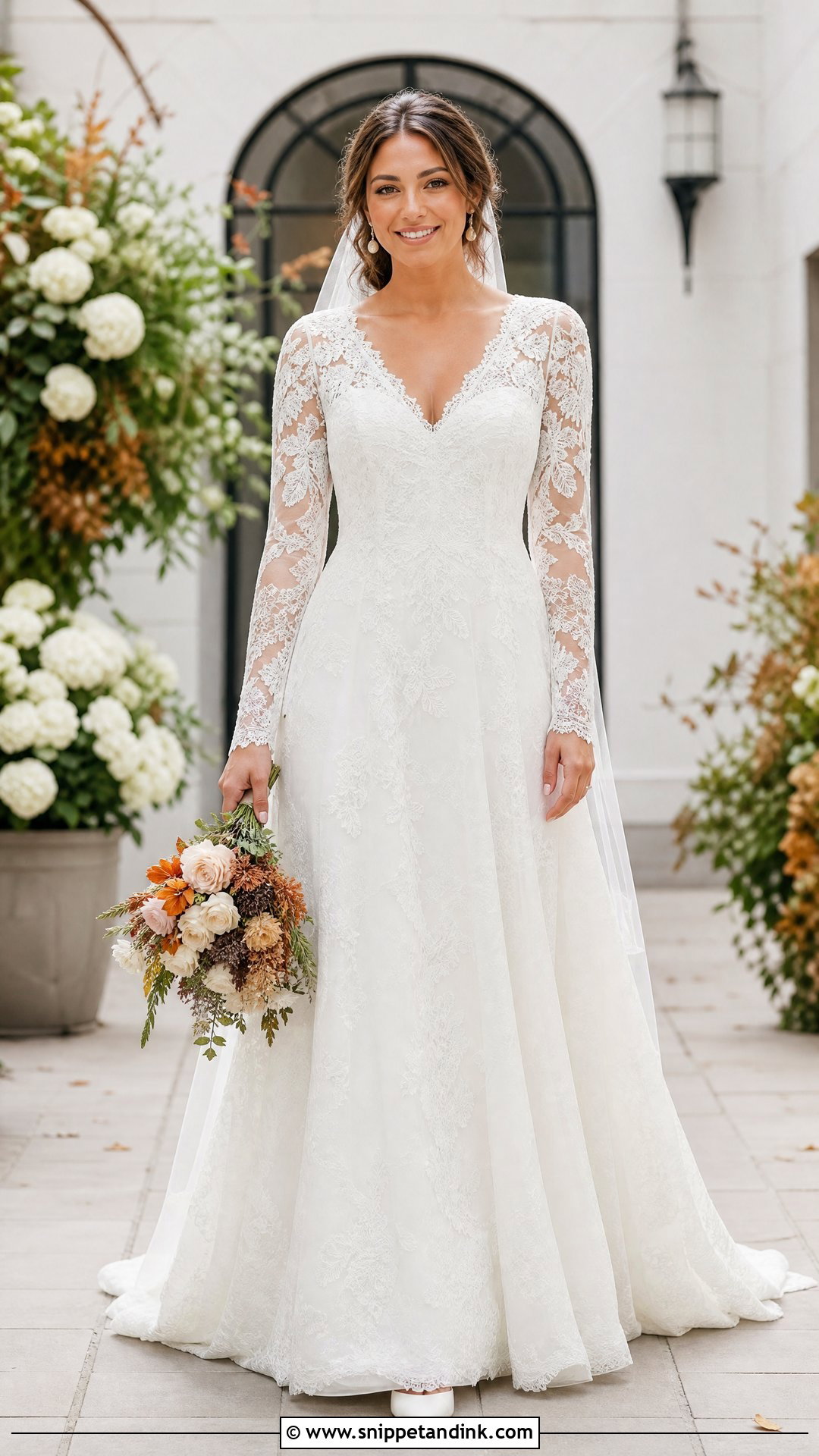
Long lace sleeves give coverage and softness without needing beading. The bodice should be lined and supportive under the sheer sleeves, with a V-neck, bateau or modest scoop above a flowing A-line skirt. Closed-toe ivory heels, a small comb and crystal or pearl studs are enough; a plain veil keeps the lace from looking crowded. It’s natural for autumn and winter, and fine for summer in a lightweight lace. Sleeves are where lace dresses most often fail. Bend your elbows and lift your arms at the fitting. If the lace pulls at the underarm or across the upper back, the sleeve needs more room, and it’s an easy fix before the final hem.
3. Minimalist Crepe Column Wedding Dress
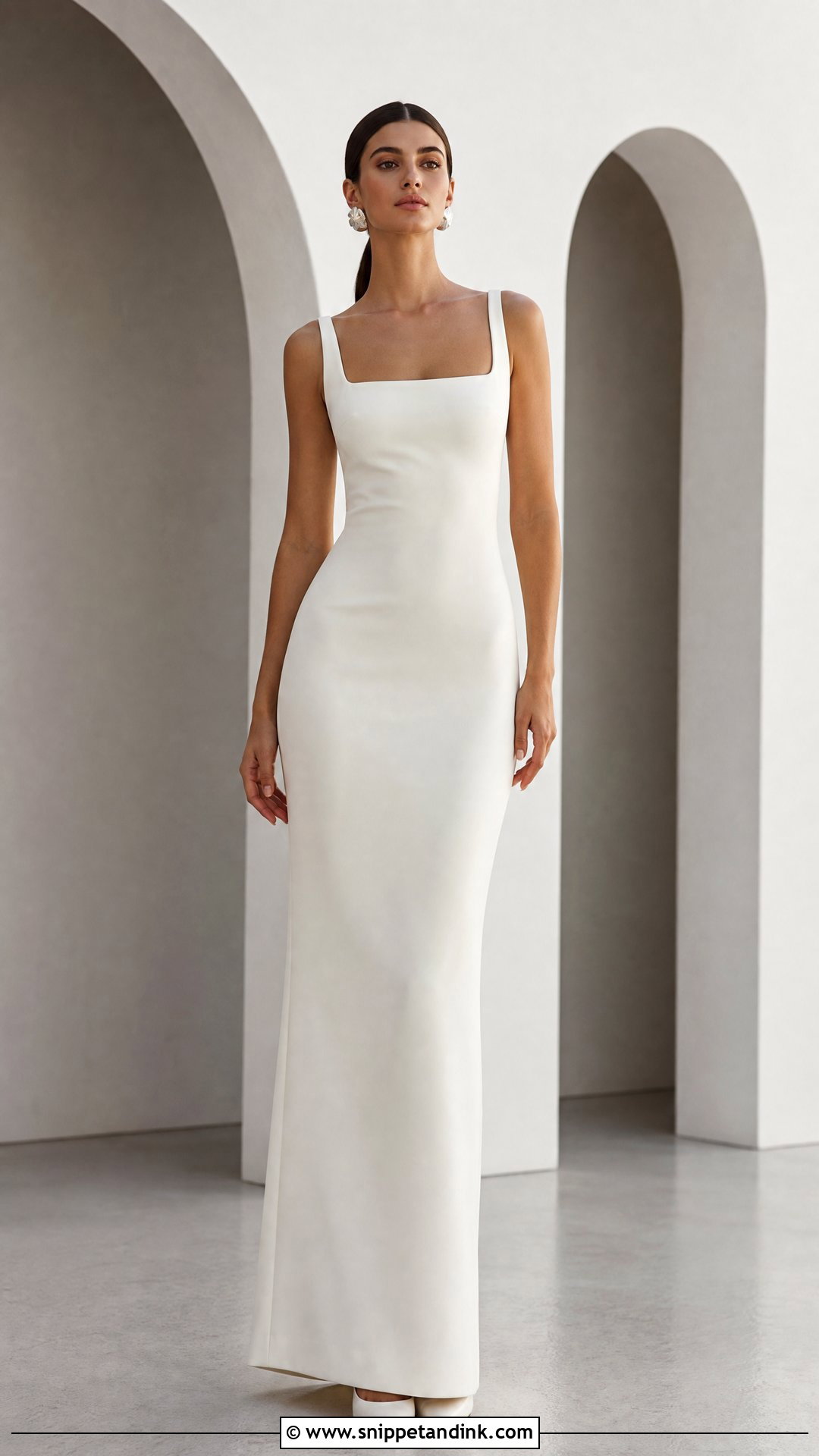
A crepe column has nowhere to hide, which is exactly why it looks so modern. Pick a substantial stretch crepe; thin crepe clings and shows every line underneath, while a heavier weight skims. A square, high boat or soft cowl neckline gives just enough shape. Sculptural earrings, pointed pumps, a sleek ponytail or centre-parted bun and a structured clutch keep it sharp. For more ceremony drama, add a removable overskirt or a long veil. Smooth, edge-free underwear and careful tailoring matter more here than anywhere, so test the fit sitting, walking and climbing stairs before the final pressing.
4. Basque Waist Wedding Dress
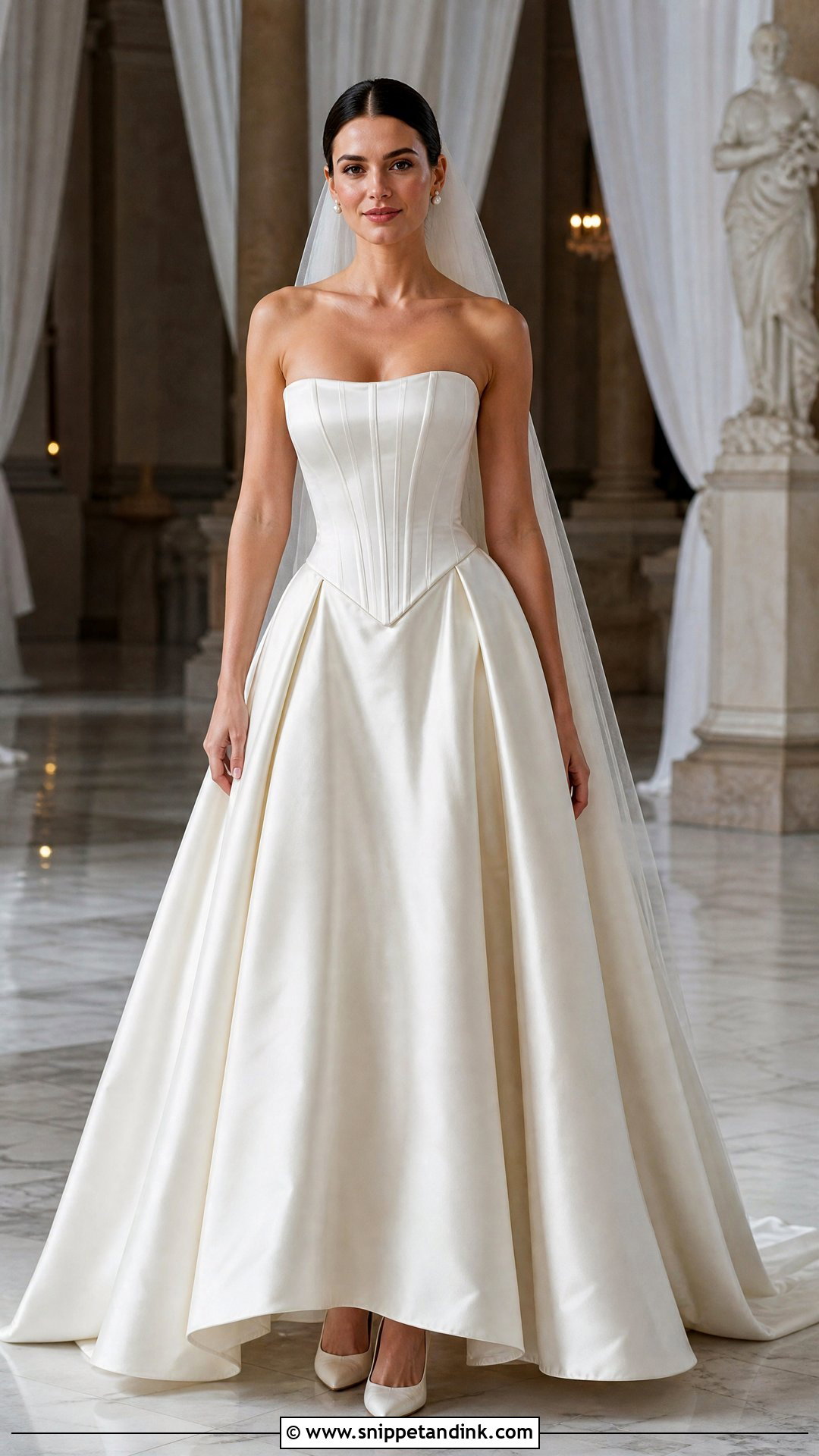
The Basque waist dips into a point below the natural waistline, which lengthens the torso and gives the skirt a dramatic start. I like it with a structured corset top and a softly gathered satin or tulle skirt. Strapless, off-the-shoulder or a soft scoop all work, depending on how much support you want. Pearl studs, a narrow veil and pumps or block heels finish it; skip a big necklace. It adapts to most body shapes, but only with the right boning and cup placement. During alterations, sit down and watch the point. If it pushes into your hips or flips up, it needs shortening or reshaping.
5. Floral Appliqué A-Line Wedding Dress
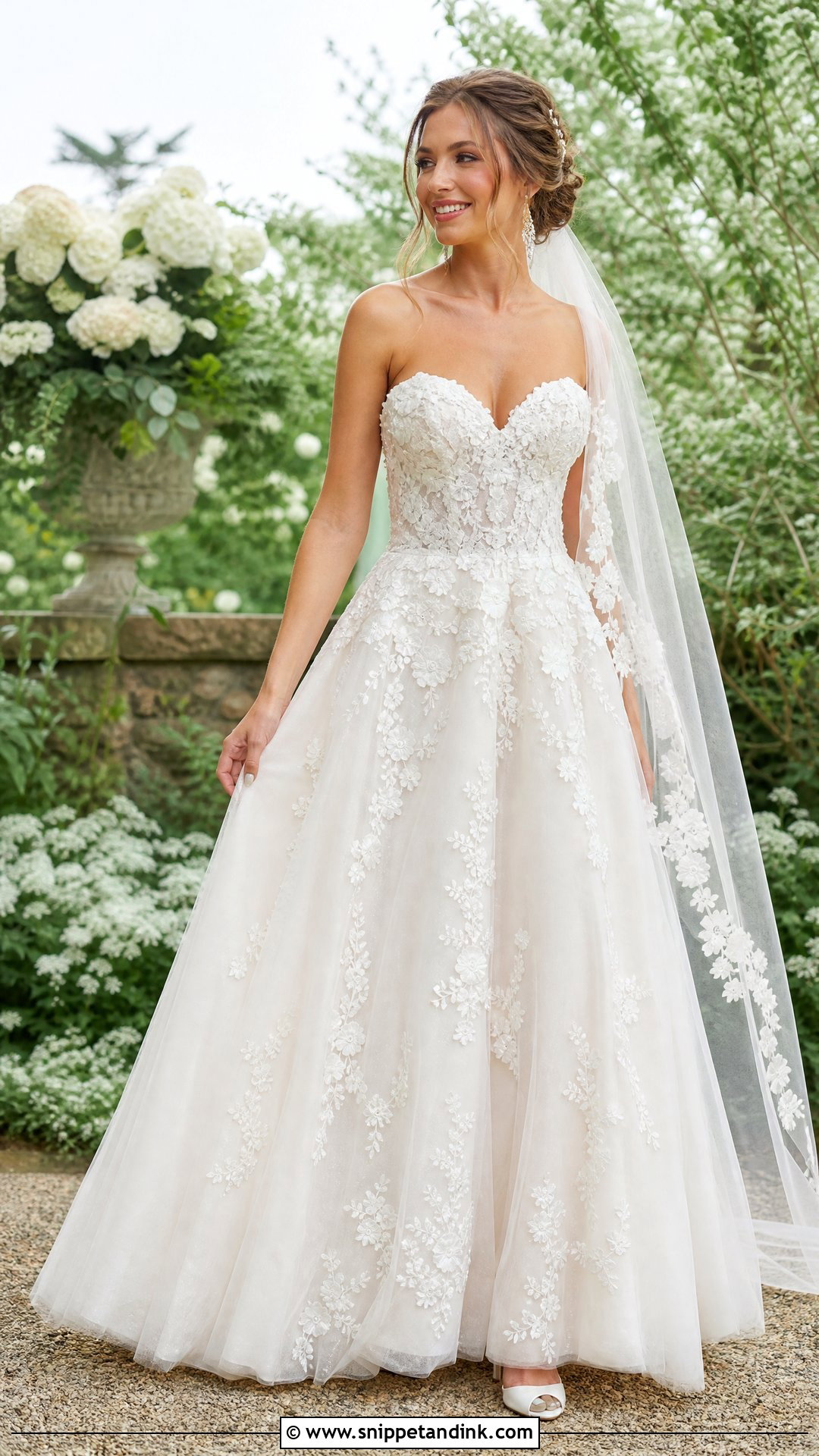
Raised flowers look best when they’re heaviest near the neckline and thin out down the skirt, so the dress feels light rather than weighed down. A lined sweetheart bodice, thin straps and airy tulle layers make a comfortable base. Simple drops, ivory heels and a veil edged with a few matching flowers suit it, with loose waves or a soft updo. It’s a garden and spring dress at heart. Check the appliqués at the waist and under the arms. Raised petals there rub against skin for hours, and a seamstress can flatten or move the ones that scratch.
6. Off-the-Shoulder Mermaid Wedding Dress
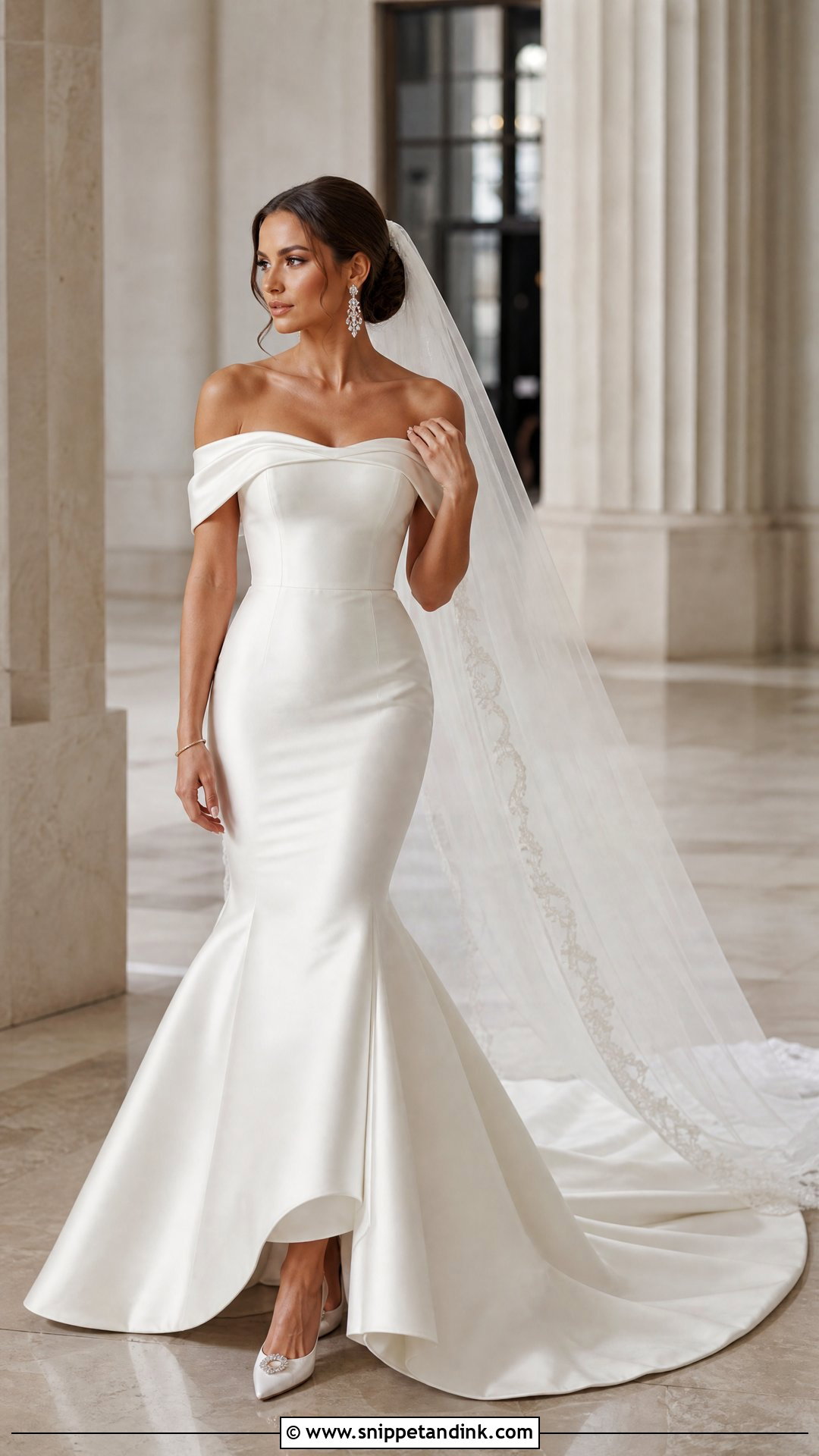
An off-the-shoulder mermaid shows the shoulders and follows your curves to the knee. That much fit needs a fabric with body, like mikado, satin or lined lace, or the skirt shows every line. The neckline should hold across the upper arms without pinning them down. Crystal earrings, a long plain veil, pointed heels and an updo keep it formal. Where the flare starts matters most. Too high and it looks shapeless; too low and you can barely walk. Practise moving in the sample before you order, and plan a wrist loop, a secure bustle and a hem set in your shoes.
7. Square Neck A-Line Wedding Dress
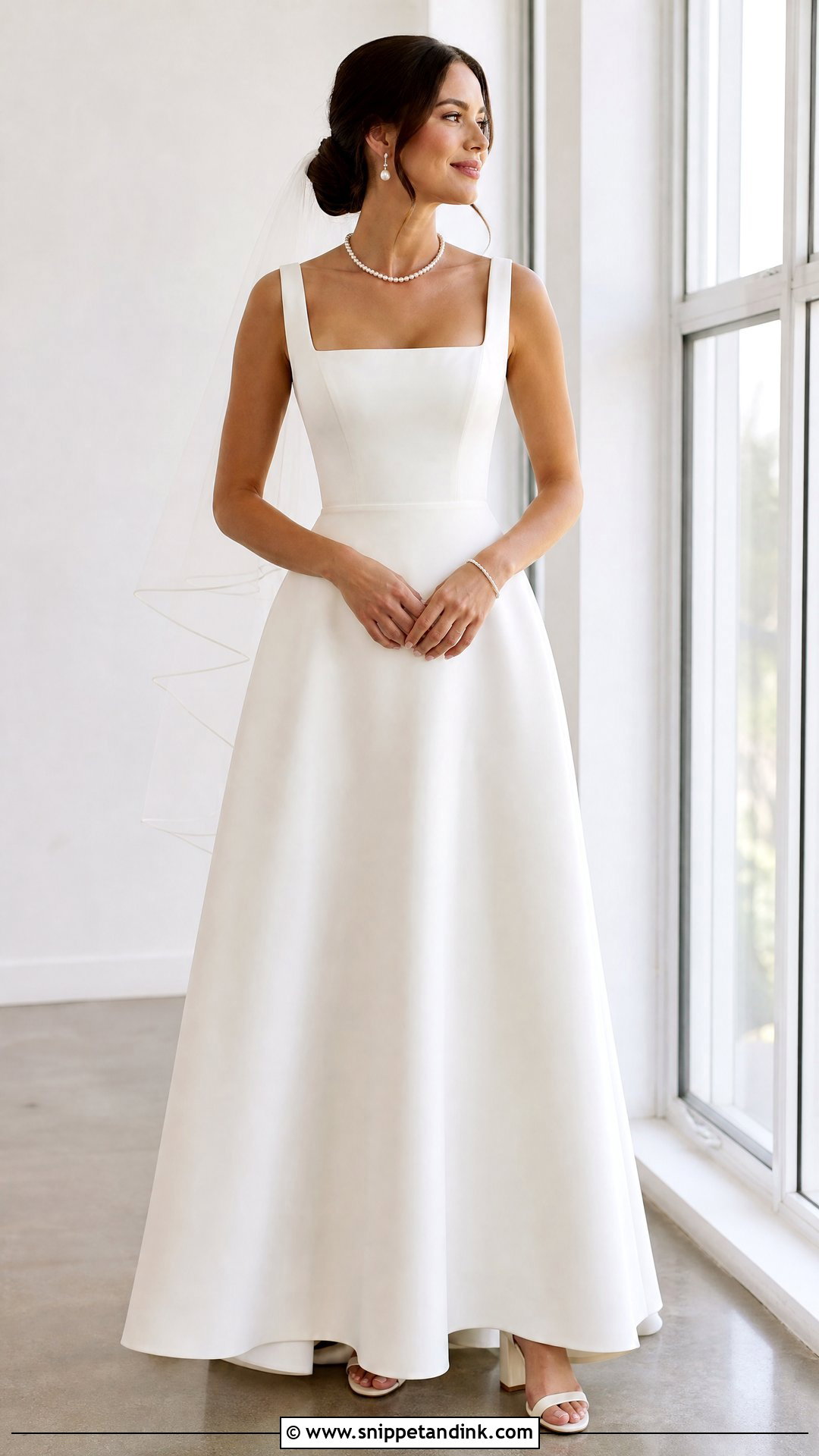
Square necklines are one of the easiest to wear, because the straps can be wide enough to hide a bra or built-in support. Matte satin, crepe or lightweight mikado give a smooth finish for most seasons. The bodice should meet the skirt at the natural waist and the A-line should fall away from the hips rather than cling. Pearl earrings, a single-strand necklace, comfortable block heels and a medium-length veil complete it, with a low chignon. It’s a good choice if you want structure but also want to move. Look at the neckline from the side during fittings. A square edge that gapes when you lean forward needs taking in at the top.
8. Chiffon Empire Waist Wedding Dress
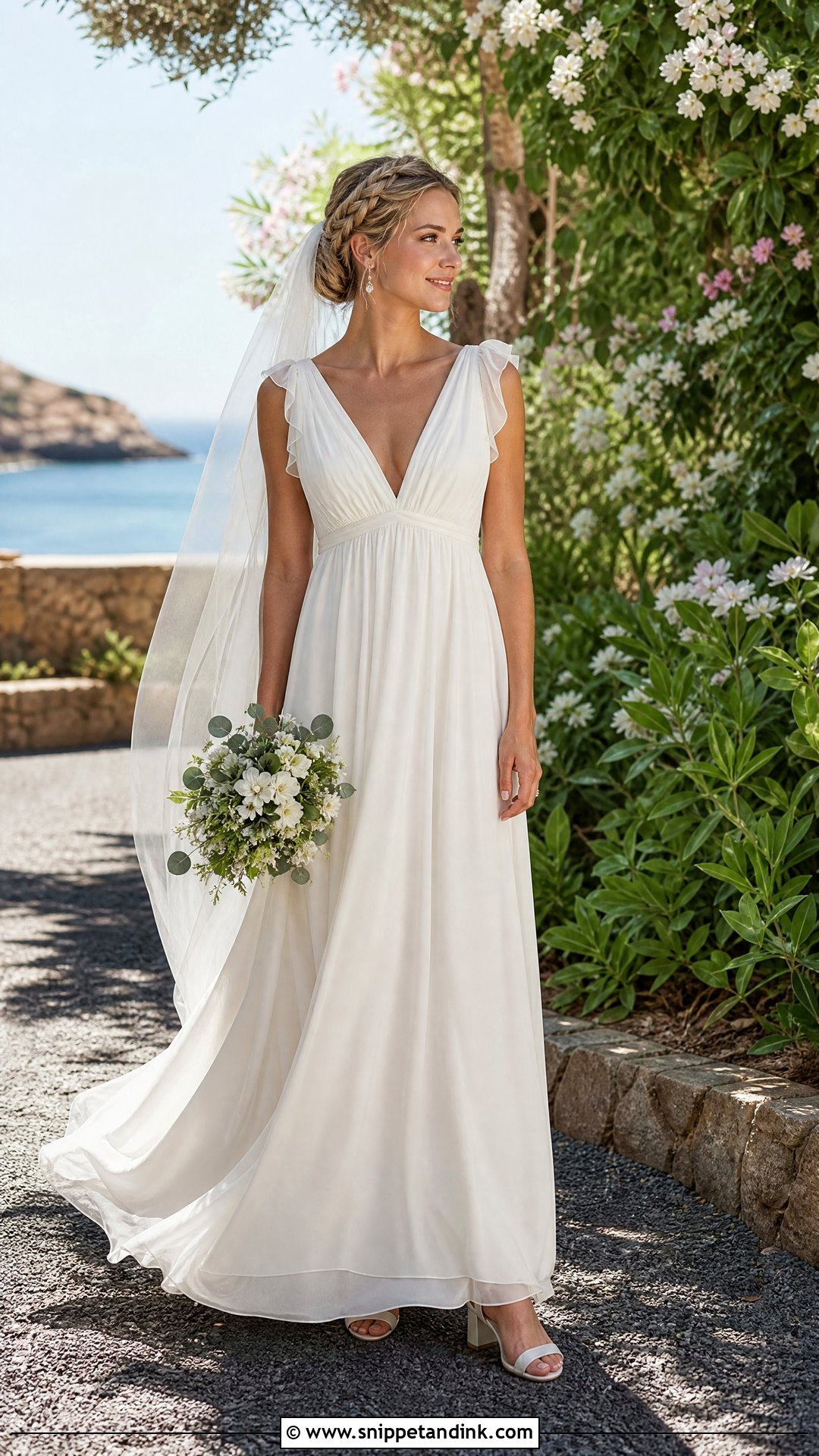
Empire waists sit just below the bust and leave everything below loose, which makes them cool and comfortable in warm weather. Choose a V-neck or softly gathered crossover bodice with proper support inside. Low block heels, delicate earrings and a light veil suit it, with a loose braided updo or soft waves. Pregnant brides and anyone who dislikes pressure at the waist tend to love this shape. Two checks: the chiffon should be fully lined, because single-layer chiffon goes sheer in sunshine, and the hem should float just above the ground so the layers don’t catch under your shoes.
9. Tea Length Wedding Dress With Heels
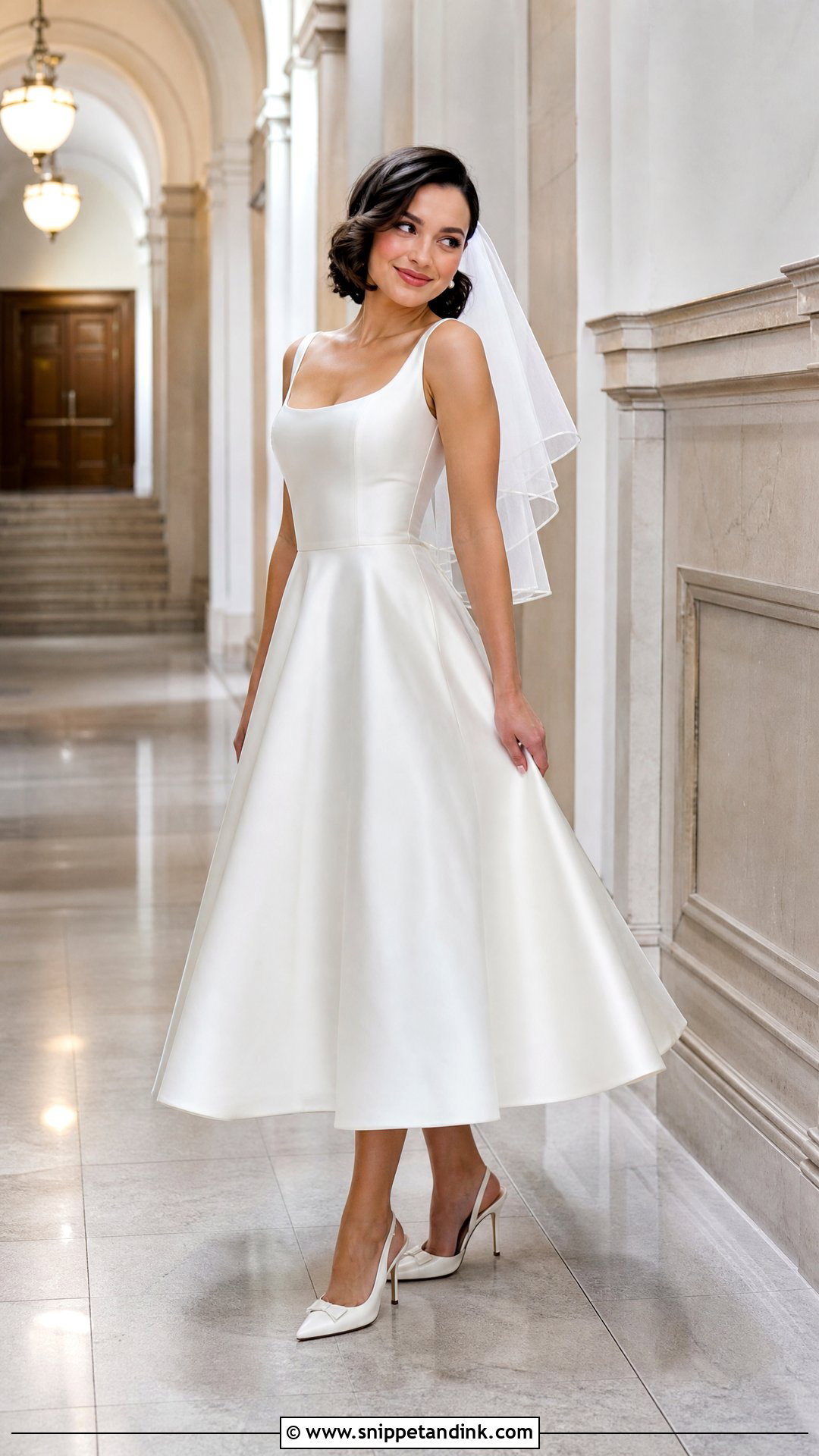
Tea length is a shoe dress. A fitted bodice and a full skirt ending between knee and ankle put your footwear on show all day. Satin, organza, lace and structured tulle all hold the shape. Pointed pumps, slingbacks or neat flats, pearl earrings and a short veil finish it, with a smooth bun or a softly curled bob. Hem placement is critical: an inch up or down changes the whole proportion, so I pin it with the bride in her shoes and look from across the room. A very full skirt may need a light petticoat. Courthouse weddings and dance-heavy receptions suit it.
10. Strapless Drop Waist Wedding Dress
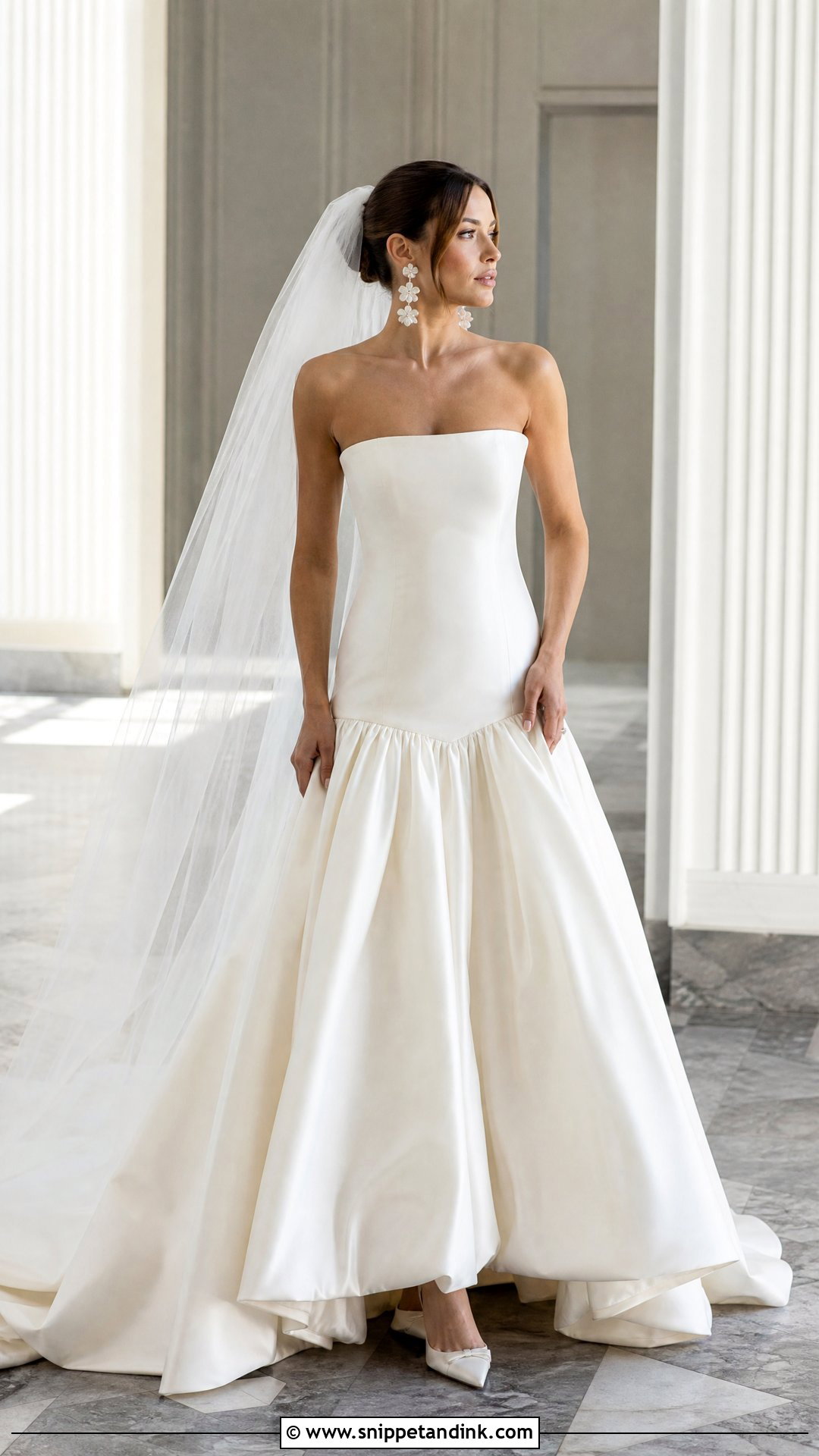
A drop waist stretches the bodice down past the natural waist before the skirt opens out. It looks more dramatic than a natural-waist ball gown and suits long torsos especially well, although the waist point can be moved during alterations for shorter ones. Internal boning, well-placed cups and a secure back closure keep the strapless neckline steady. A sheer cathedral veil, statement earrings, sleek satin heels and a polished updo complete it. The test I insist on is sitting. A long rigid bodice can dig into the hips when you sit, and the fix is a slightly softer bottom edge or a shorter line.
11. High Neck Lace Wedding Dress
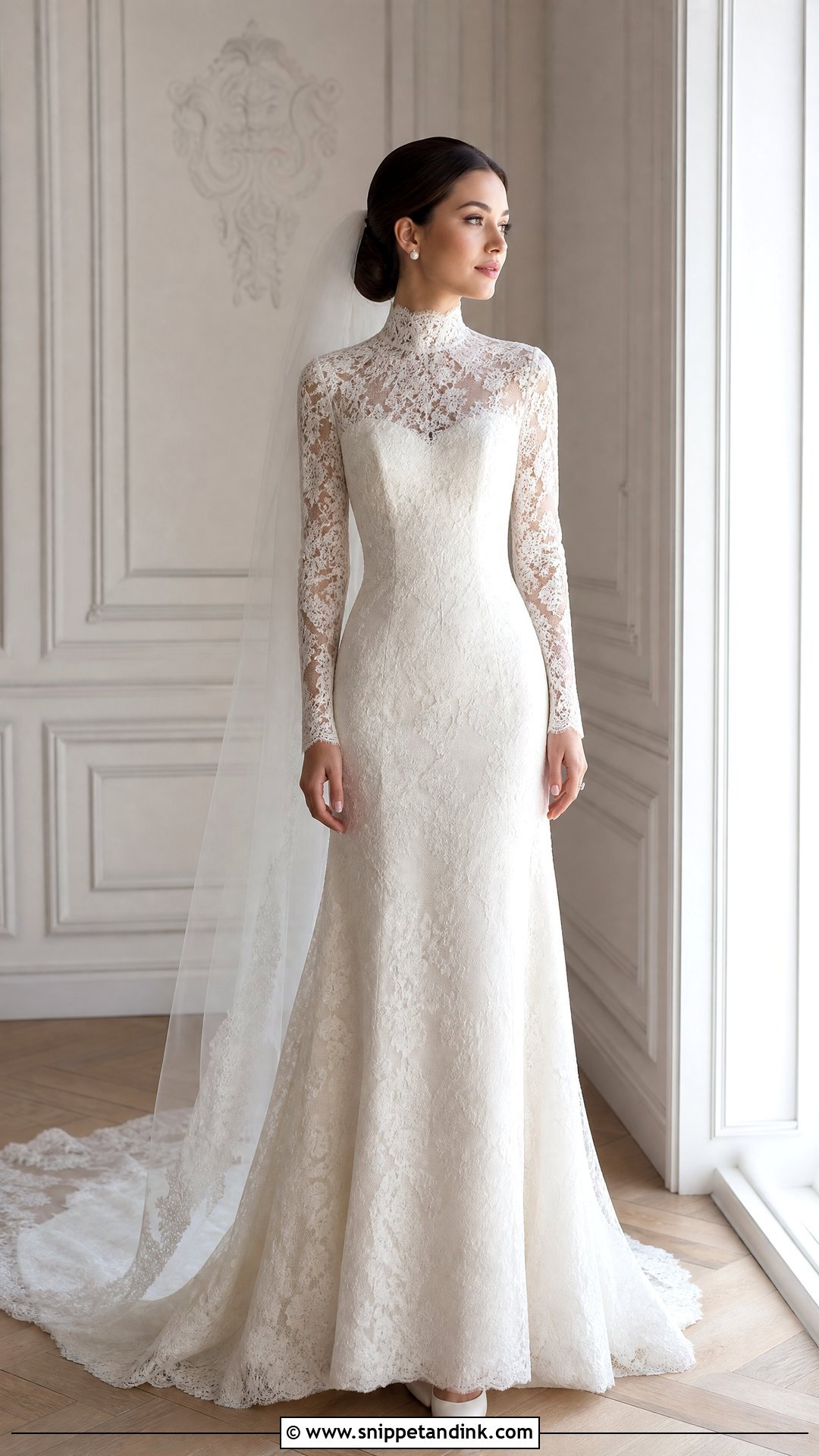
With a high lace neck, the lining underneath decides the look. A lined sweetheart or scoop underlay beneath the sheer lace gives shape, and a fitted waist with a softly flared skirt stops the covered top from feeling heavy. Pearl studs, a low bun, ivory pumps and a veil fixed below the hair are enough; no necklace. It suits formal and cool-season weddings, and breathable lace makes it workable in warmer months. Check the collar for scratching. Lace edges can be rough, and a thin, soft lining around the neck and armholes fixes it without changing the look.
12. One Shoulder Draped Wedding Dress
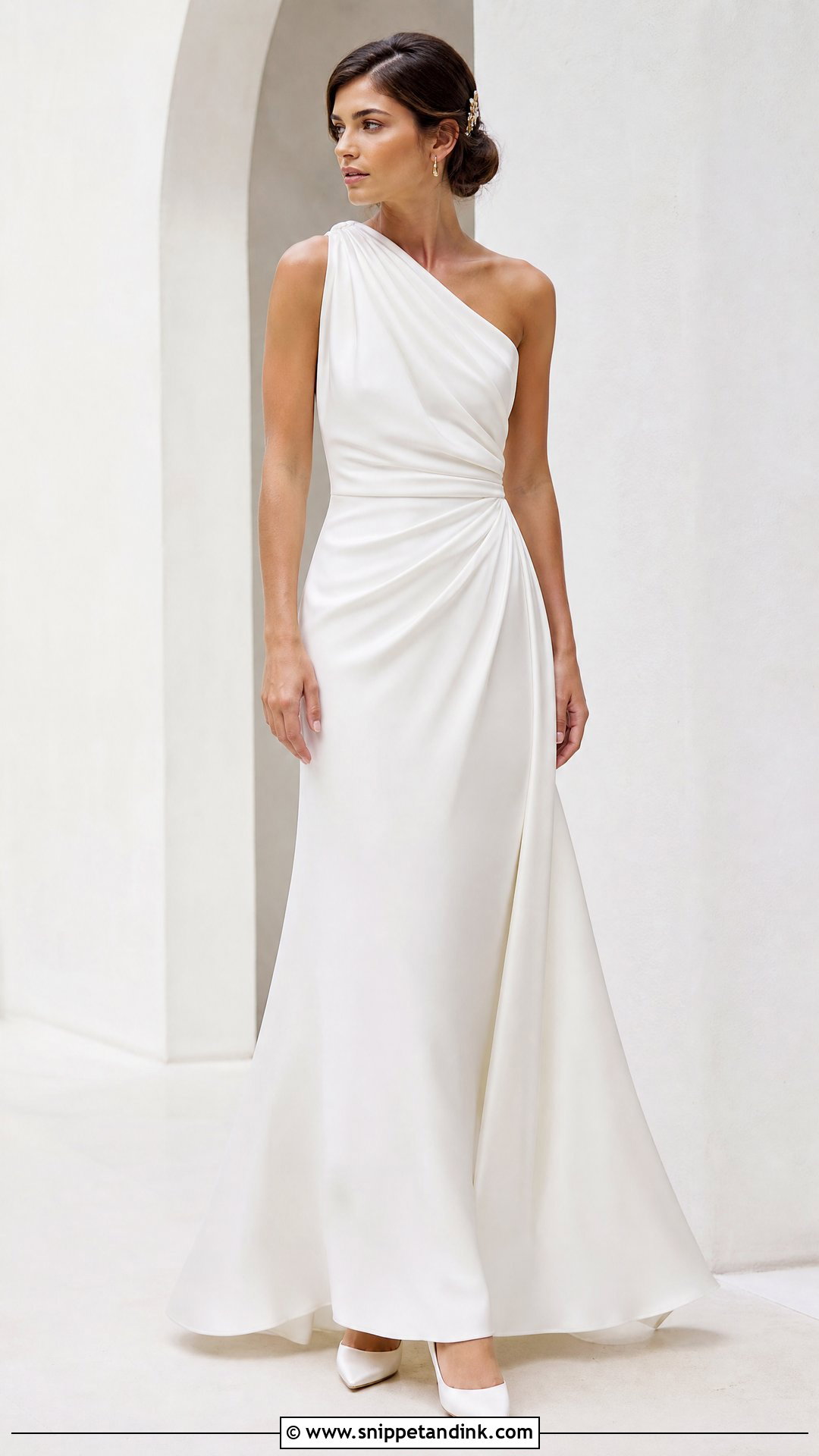
Draped one-shoulder dresses are about the diagonal line, so keep everything else quiet. Fluid crepe or satin, soft drape across the bodice and waist, and a column or gently flared skirt keep it balanced. Small earrings, a metallic hairpin and pointed ivory heels are plenty; a necklace would cut across the shape. Wear your hair in a side bun on the bare side. Minimal indoor spaces, coastal settings and modern formal venues all suit it. Tailoring around the bust and underarm is where this cut succeeds or fails, so hug someone, raise your arm and sit at the fitting to make sure the drape stays put.
13. Plus Size Corset Ball Gown Wedding Dress
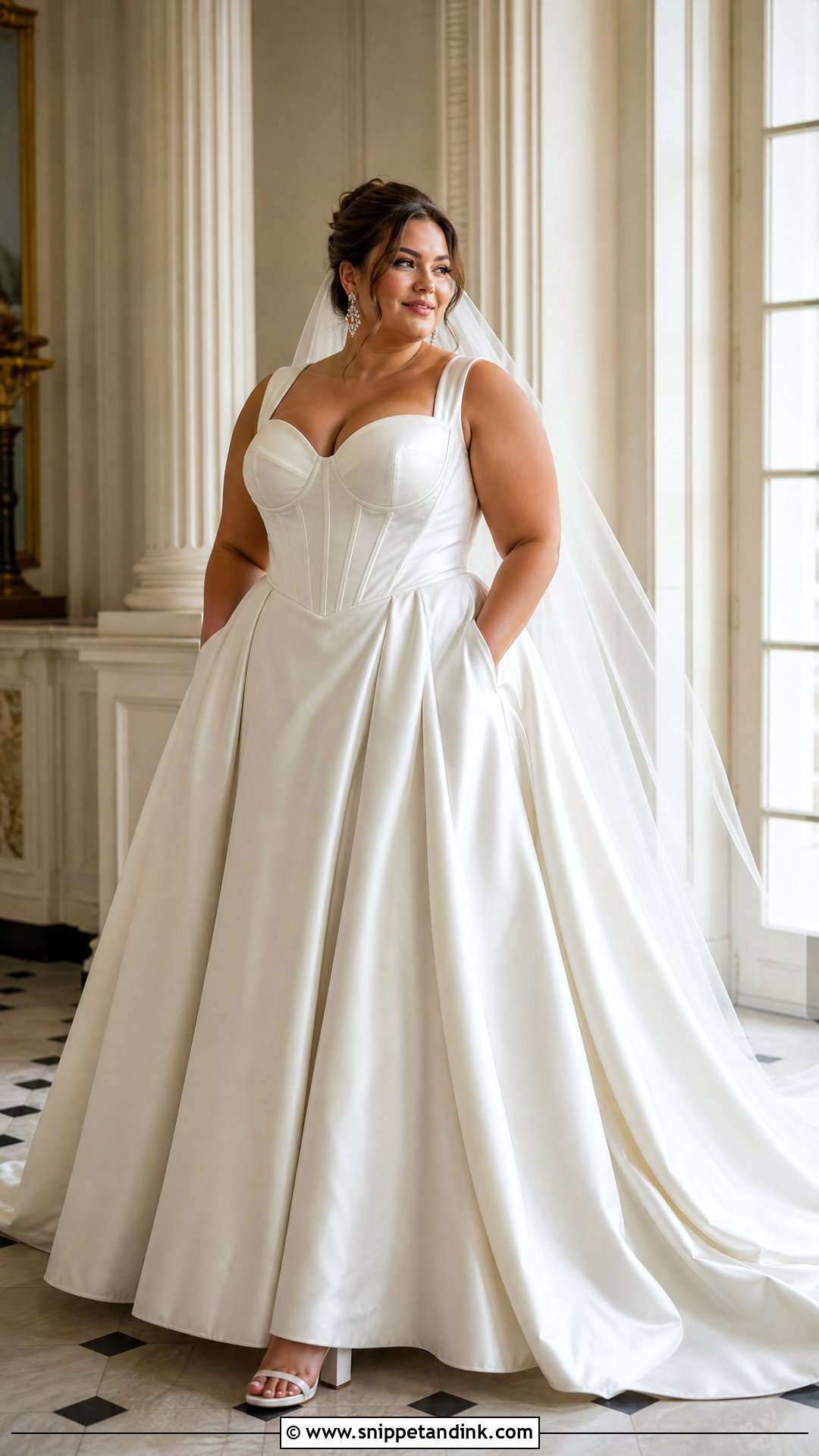
A corset ball gown can give real support with a clear waist and a skirt that flows from it. For plus size brides, the construction matters more than the label: proportional boning, supportive cups and a comfortable back closure should be designed in, not scaled up from a smaller pattern. Wide-set straps or off-the-shoulder bands add security if you want it. Block heels, sparkling earrings and a long veil past the train complete it, with a soft updo. Call the boutique before you visit and ask which sample sizes they carry, so you try dresses that actually fit. At fittings, sit and dance. You should breathe freely and feel no painful pressure.
14. Petite Fit and Flare Wedding Dress
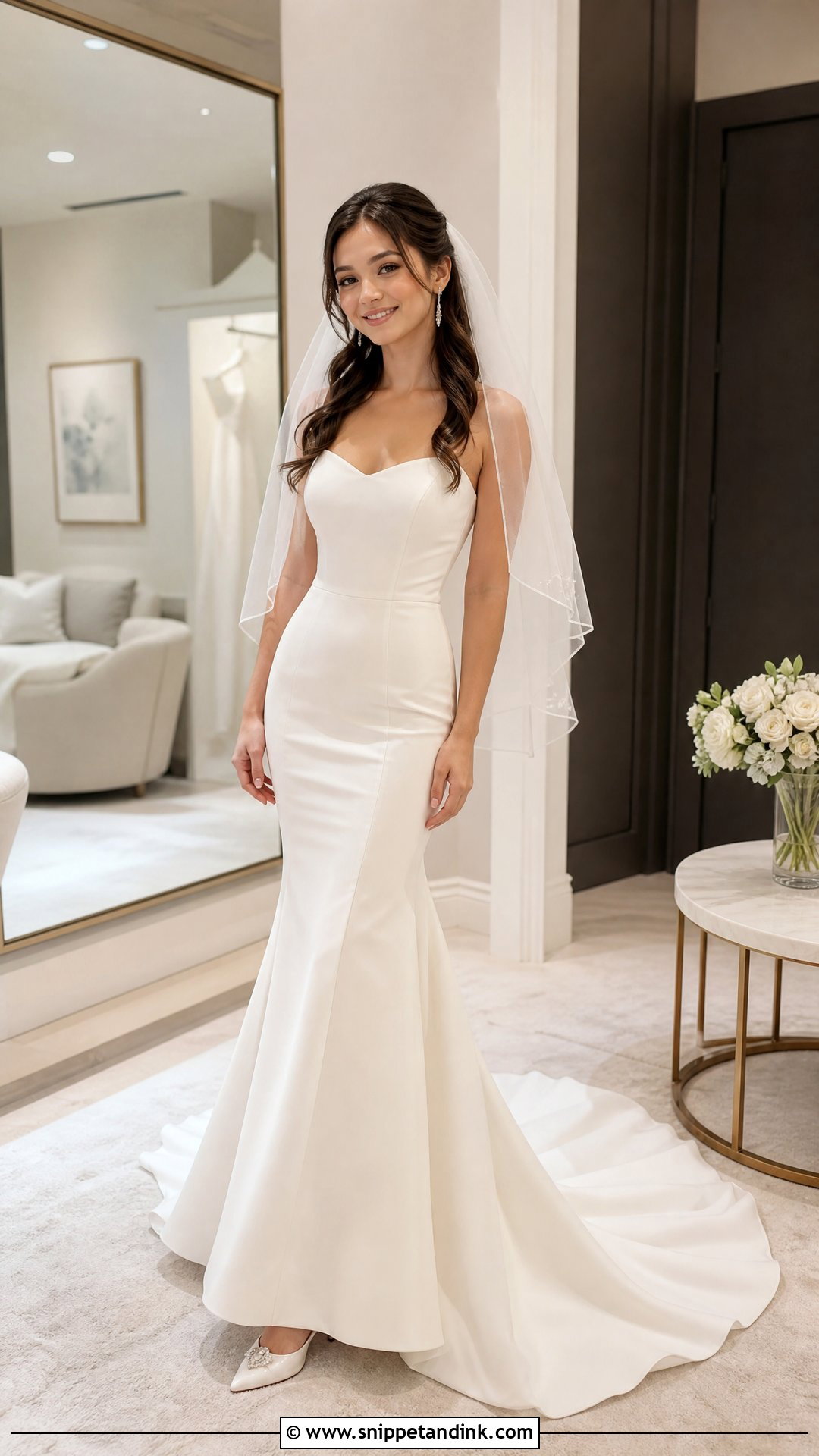
Fit-and-flare suits petite brides when the flare is gradual and the volume is restrained. A raised or natural waist, a close fit through the hips, vertical seams, smaller lace motifs and a moderate train keep proportions right. Pointed heels, small drops and a narrow fingertip veil finish it, with a neat updo or half-up style. Don’t assume you need towering shoes; good tailoring does more for your height. Ask whether the dress can be ordered with petite proportions, a shorter bodice and a knee break set for your leg. That’s cleaner than cutting a big chunk off the hem, which can drop the flare too low.
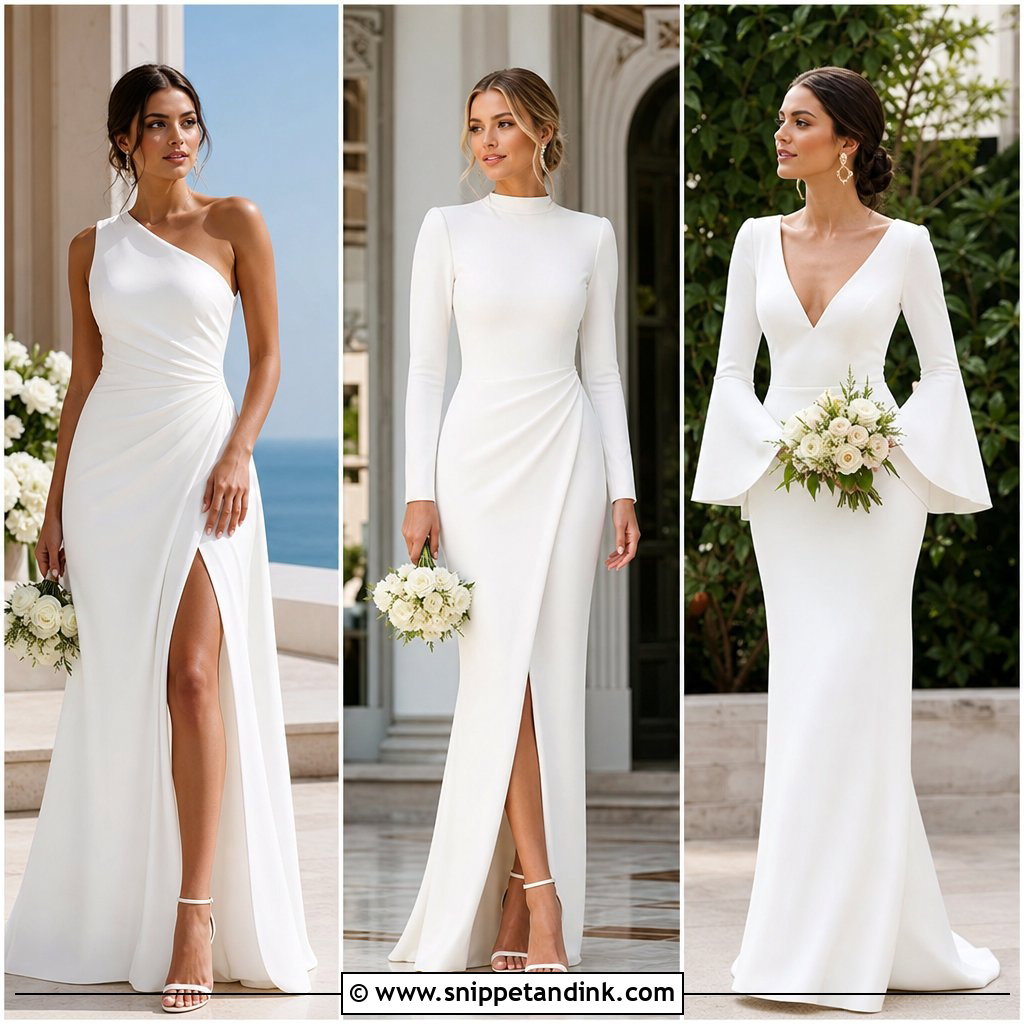
15. Modest Long Sleeve Satin Wedding Dress
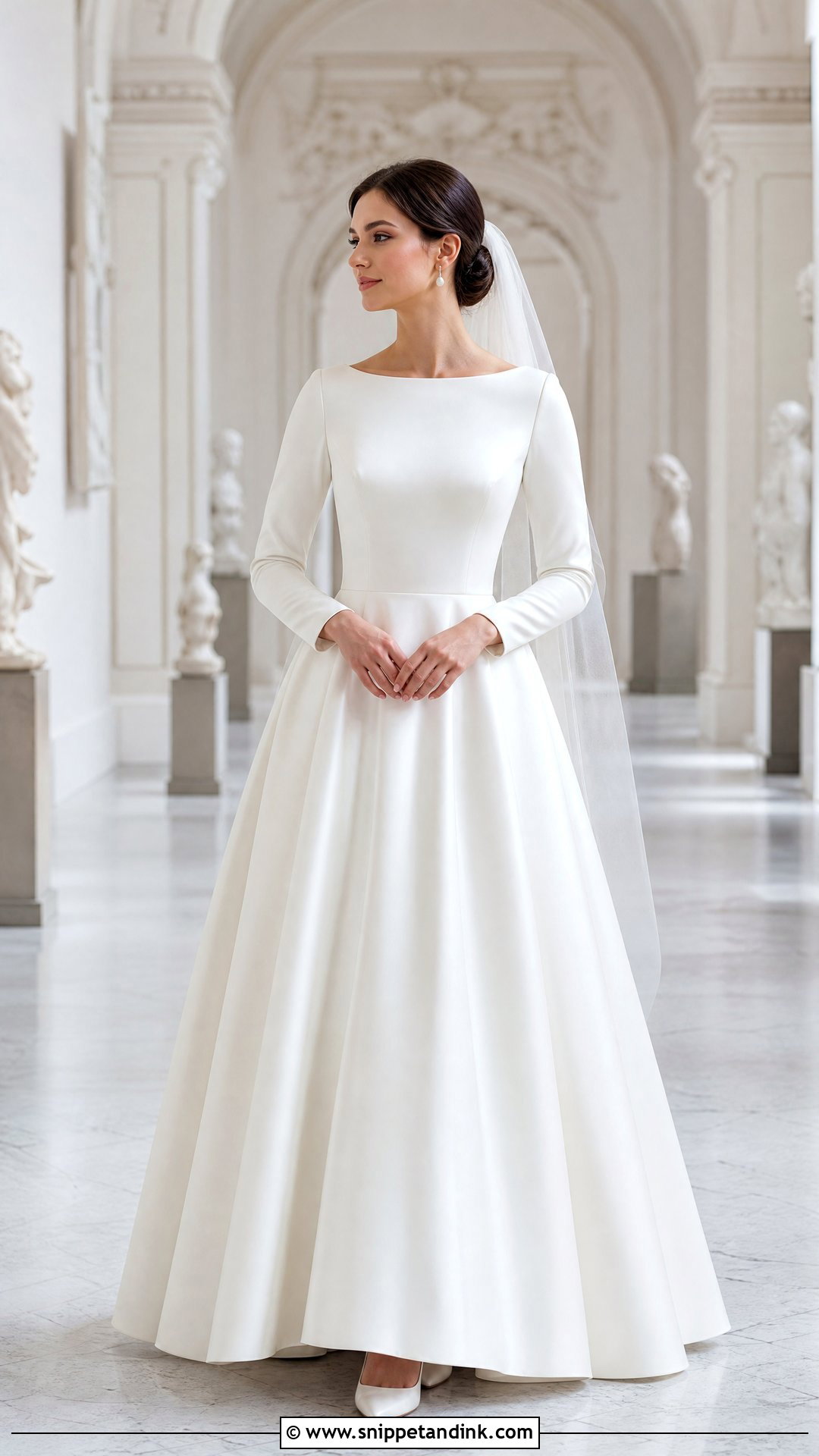
Smooth satin makes a modest dress look formal and clean. Choose a fitted bodice with an opaque lining, a bateau or high scoop neck and tailored sleeves to the wrist, with a defined waist and a full A-line. Pearl earrings, closed-toe pumps, a simple veil and a low bun keep it uncluttered. Structured satin sleeves are less forgiving than lace, so ask about discreet stretch panels or reshaped armholes. Test them by reaching across a table, lifting your arms and sitting down. The fabric should stay smooth over the shoulders without pulling at the elbows or back.
16. Boho Bell Sleeve Wedding Dress
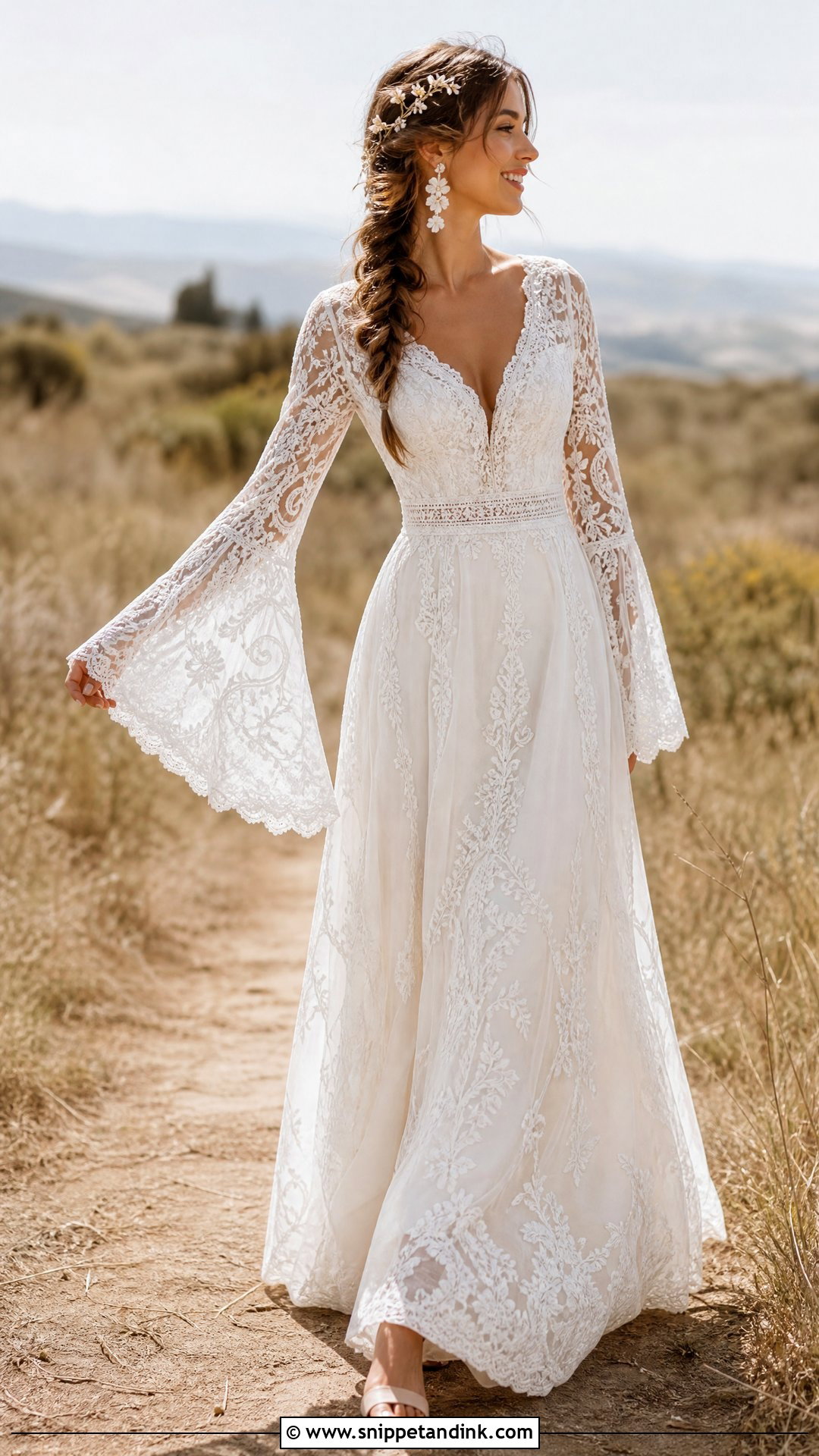
Bell sleeves widen below the elbow, and the length decides whether they’re charming or a nuisance. Too long and they drag through the bouquet ribbons, the cake and every table setting. I have the seamstress pin them with the bride’s arms relaxed at her sides, never held up. Lightweight lace, chiffon or embroidered tulle with a fitted bodice and flowing skirt keeps it relaxed. Neutral block-heel sandals, floral earrings, a hair vine and loose waves or a low braid finish it. It suits woodland, desert and casual destination weddings. Make sure there’s a comfortable lining, real bust support and a practical hem with a small bustle for uneven ground.
17. Detachable Overskirt Wedding Dress
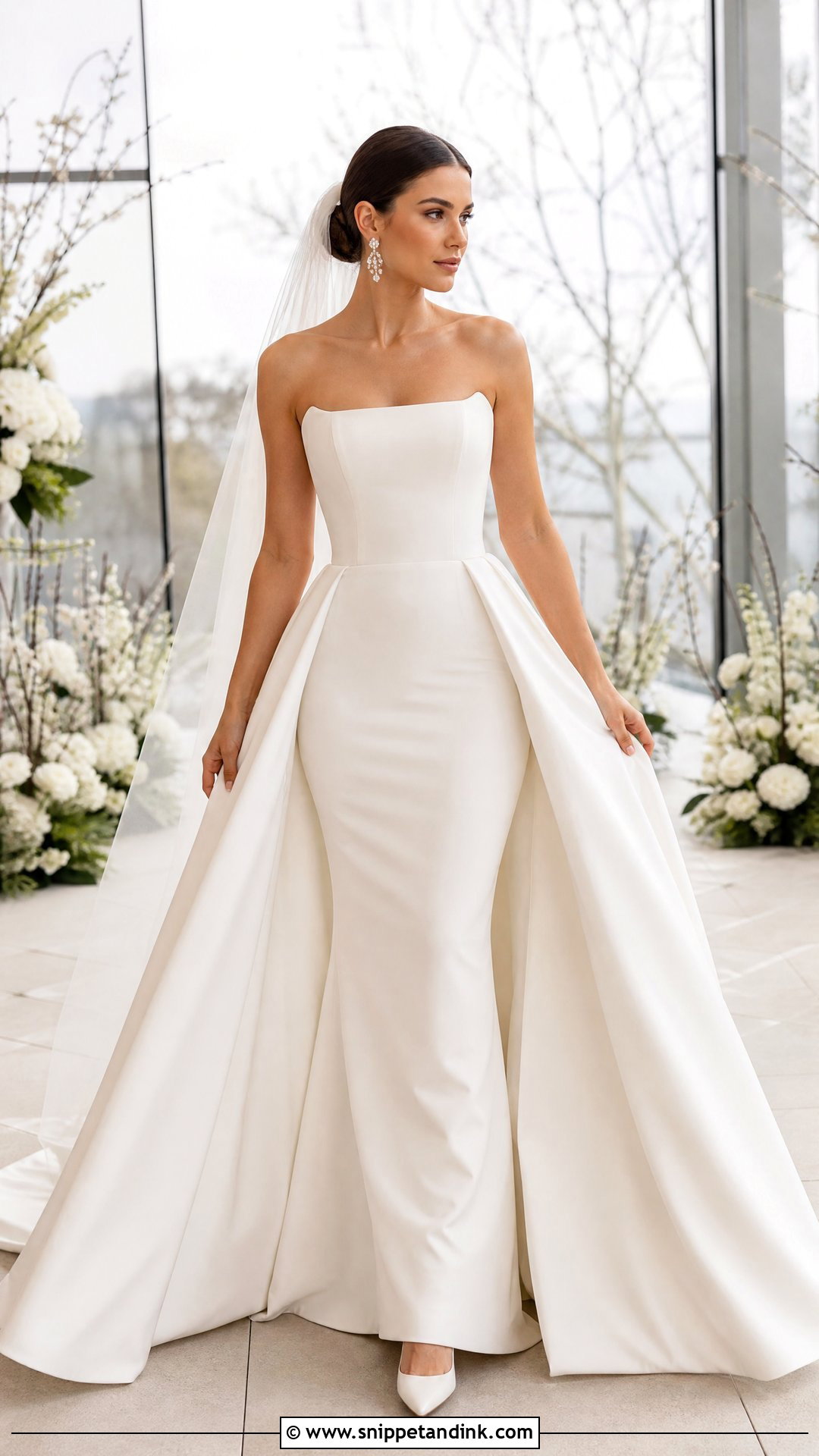
A detachable overskirt gives you a ceremony gown and a reception dress without a full change. Start with a fitted column, sheath or mermaid base in satin, crepe or something embellished, then add a full overskirt for the ceremony. Statement earrings, pointed heels and a veil that suits both versions are enough, with a hairstyle that still looks finished once the skirt is gone. The attachment needs testing: hooks, snaps or a hidden waistband shouldn’t add bulk at the waist. Have a bridesmaid practise taking it off and hanging it up, so it doesn’t end up in a heap on the floor.
18. Colored Floral Wedding Dress
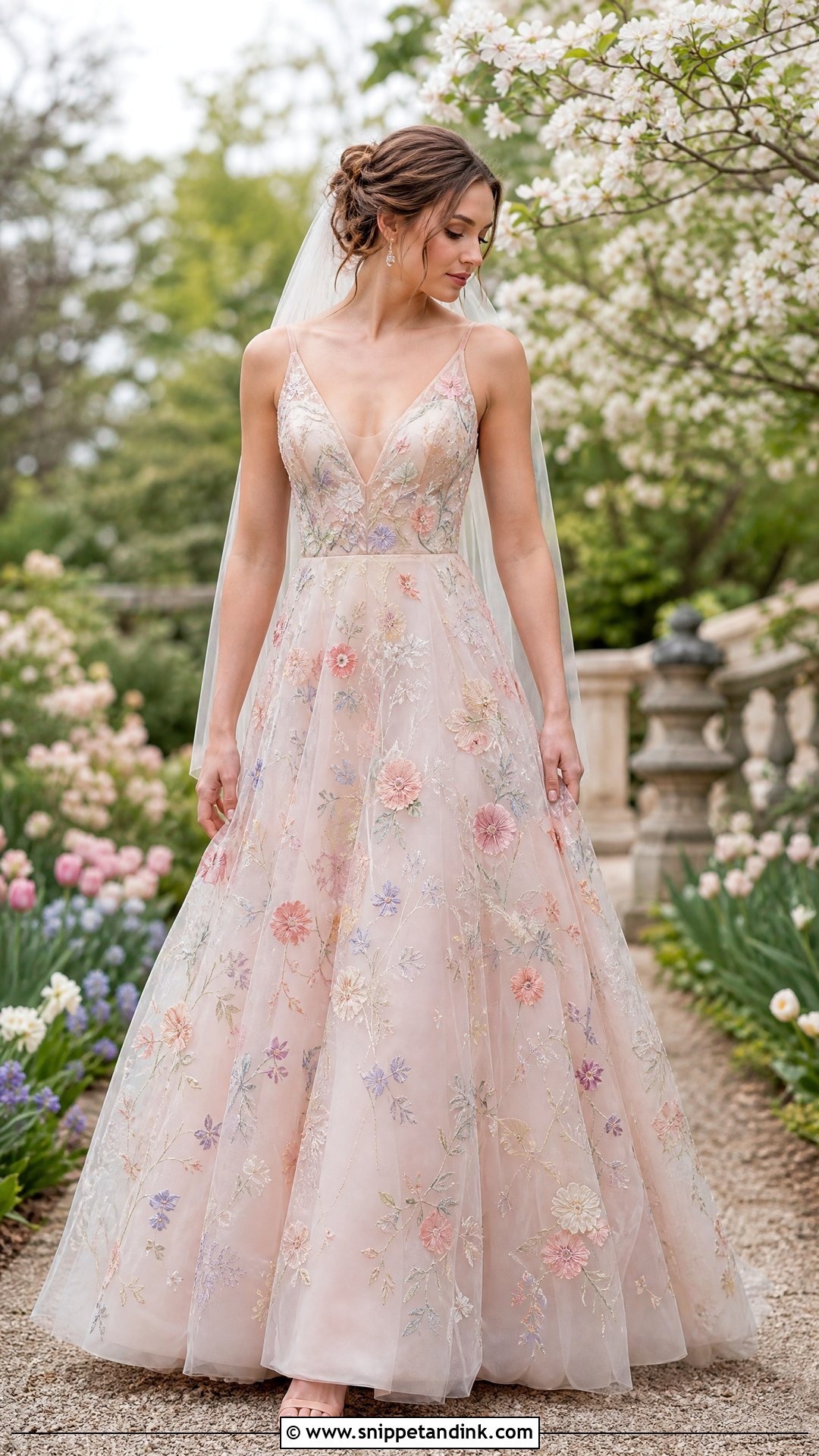
A colored floral wedding dress is a gentle step away from solid white. Think of an ivory, blush, pale blue or champagne base with embroidered flowers. An A-line or ball gown gives the pattern room to breathe. Neutral heels, small earrings and a plain veil keep it from getting busy, and one quiet shade from the embroidery can go into the bouquet. Always look at it in daylight before ordering. The lining colour under the embroidery changes how the flowers read, and a pale blue lining that looks soft in the shop can look grey outside.
19. Halter Neck Wedding Dress
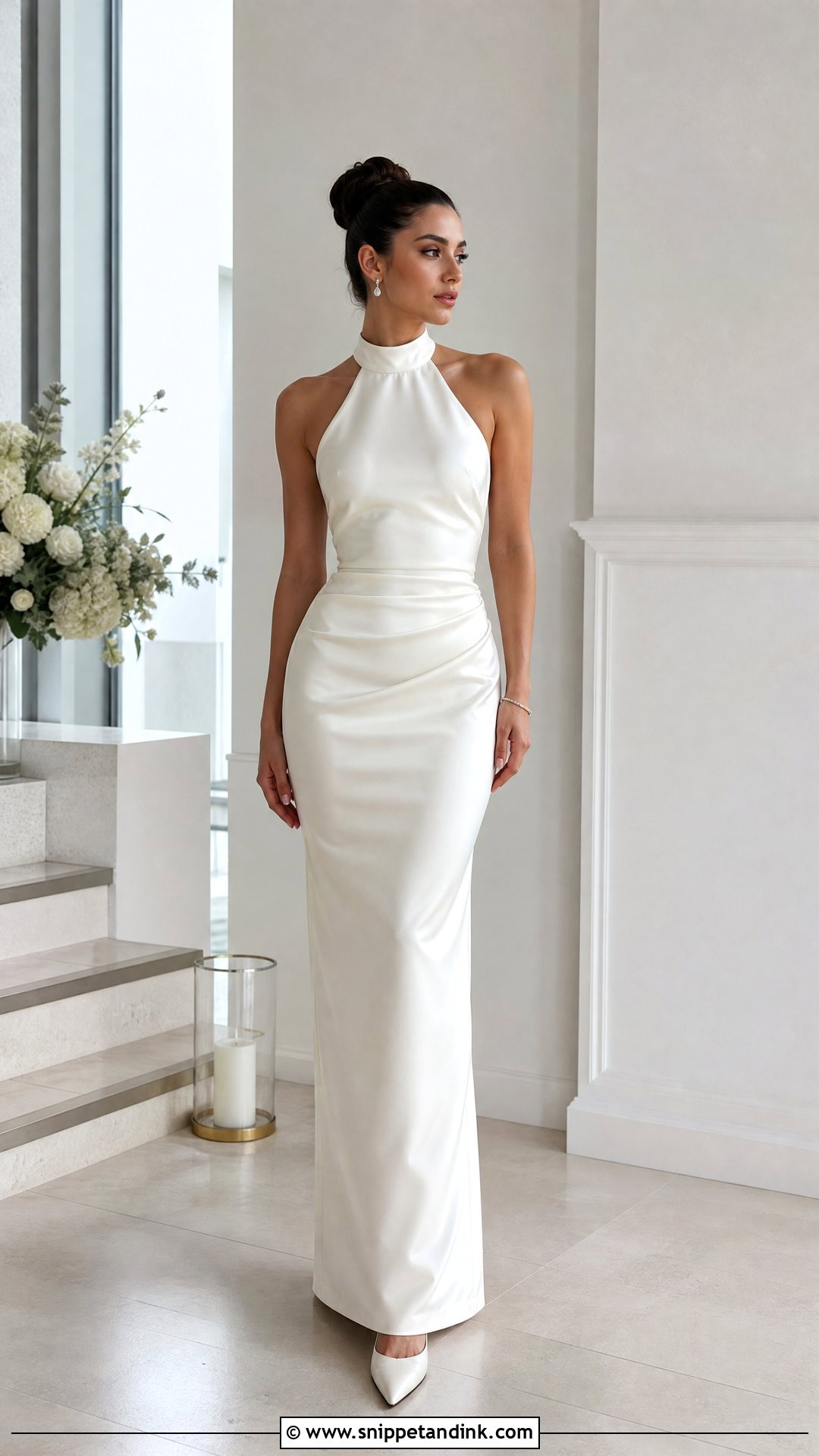
Halter necks frame the shoulders and give a long line through the upper body. Structured satin is the formal version; fluid crepe softer. A fitted column, A-line or low-volume trumpet balances the higher neck. Small drops, a slim bracelet, pointed pumps and a high bun or ponytail keep the neck and shoulders clear. No necklace. Two pressure points matter: the back of the neck, where the strap sits, and the underarms. Wear it for a while at the fitting. If you need more support, ask for built-in cups, side boning or discreet internal straps.
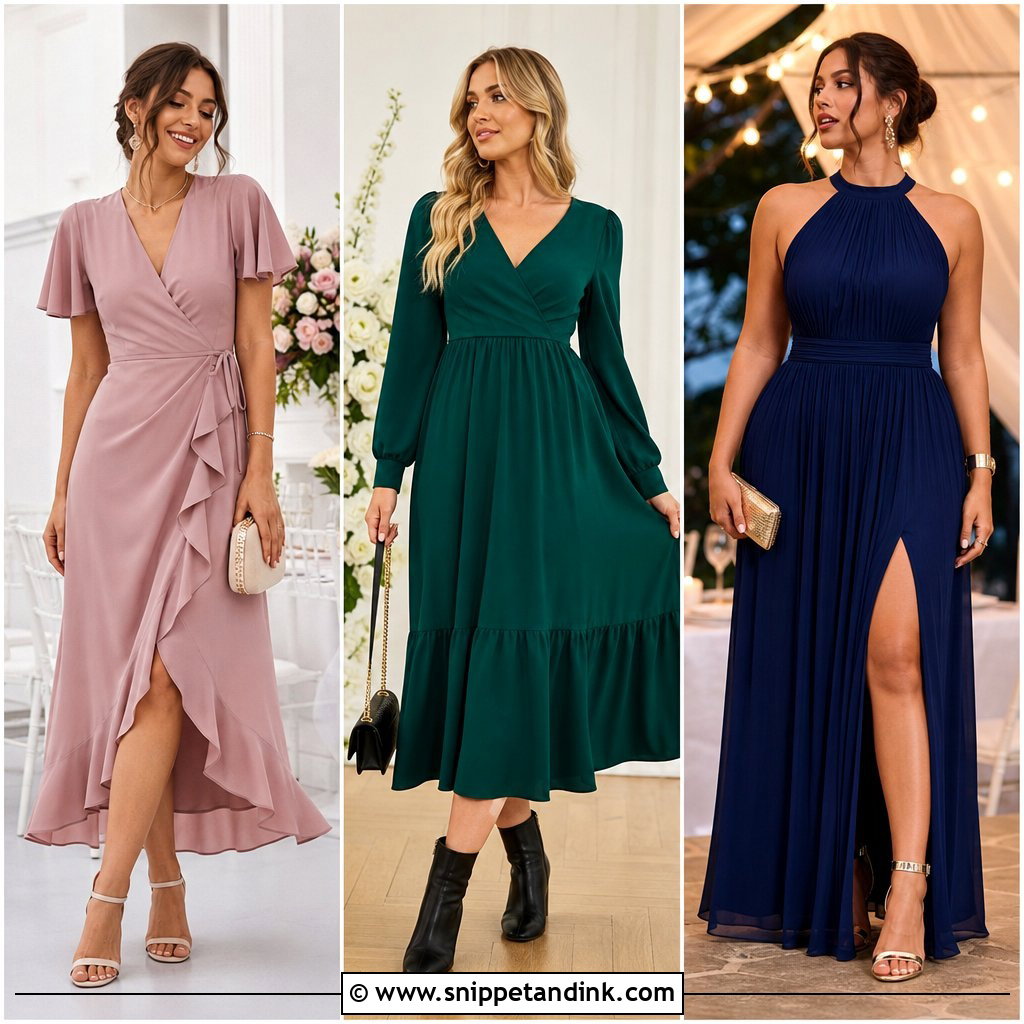
20. Wedding Dress With Removable Sleeves
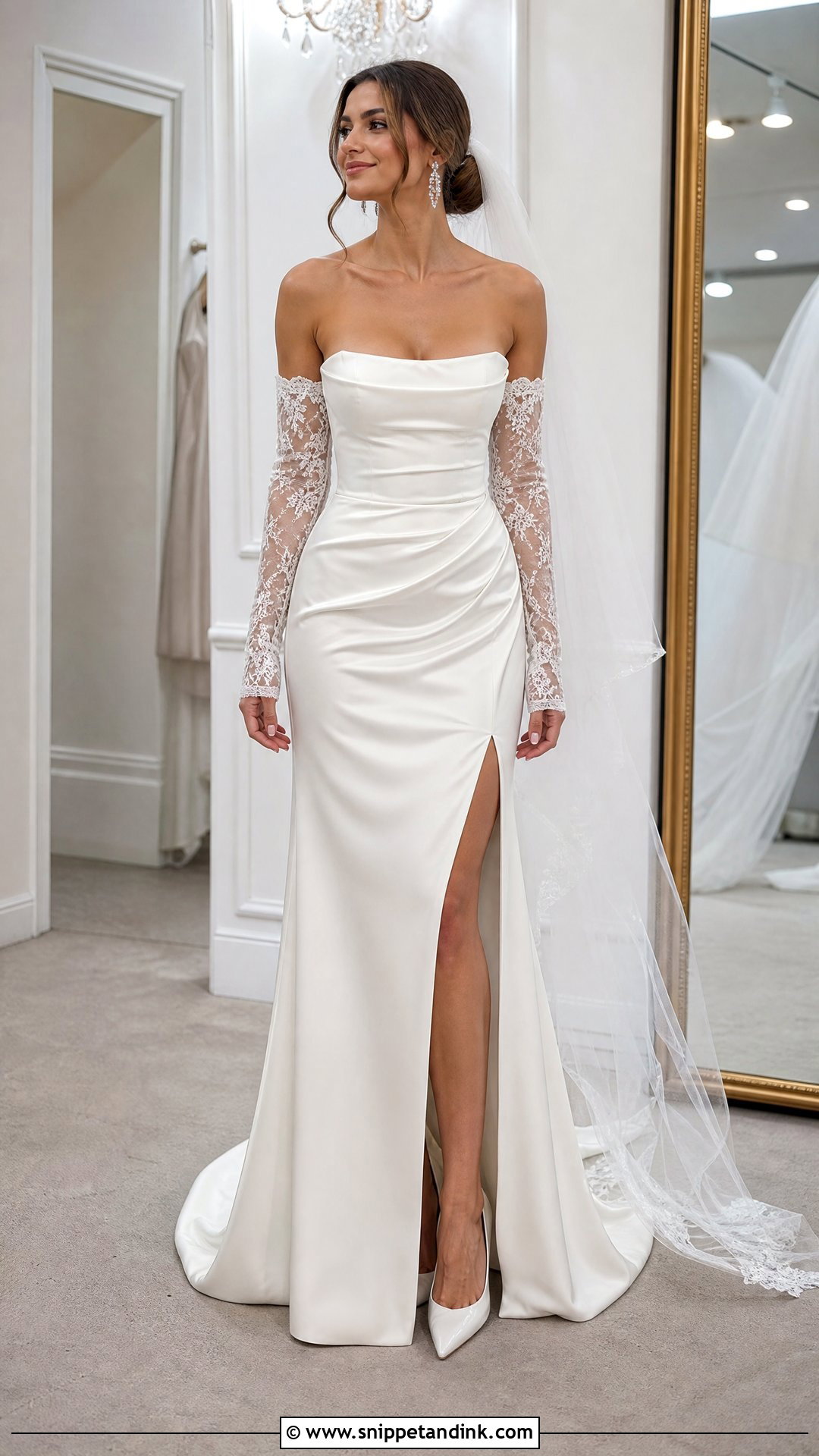
Removable sleeves let one dress move from covered and romantic to sleek for the party. Start with a strapless or thin-strap gown in satin, lace or structured crepe, then add fitted lace sleeves, off-the-shoulder drapes or full long sleeves for the ceremony. A long veil, good earrings and comfortable heels suit both versions. Choose a hairstyle that still balances once the sleeves are off, like a low bun or soft waves. Attachment points should be hidden, secure and easy for a helper. Practise taking them off before the day, and keep a labelled garment bag ready so they don’t get lost in the reception.
A Shopping Calendar That Leaves Room for Alterations
Most bridal gowns are made to order after you choose them, not taken off a rail, so timing catches a lot of brides out. Production often takes several months and varies a lot between designers. These are the windows I plan around:
- Nine to twelve months out: start appointments. This leaves time for production plus alterations without paying for a rush order.
- Once ordered: ask for the expected delivery date in writing, and whether the dress is cut to your measurements or a standard size.
- Around two to three months before: first fitting. Bring the shoes and undergarments you’ll wear on the day.
- Middle fittings: hem, bustle and any added details such as sleeves or pockets.
- Two to three weeks out: final fitting and pressing. Bring the person who’ll help you dress and bustle.
Short on time? Off-the-rack sample sales and ready-to-wear bridal lines are good options, and many boutiques can tell you which dresses they hold in stock. Just leave enough time for alterations, because a dress that arrives on time and then waits in a queue for the seamstress is the most common panic I see.
A Dress You Forget You’re Wearing by the Speeches
Compare whole looks, not single details. If you’d like more shapes side by side, there’s a second round of 20 Wedding Dresses Women keep asking about, from classic to convertible. Start with the silhouette you feel comfortable in, then look at neckline, fabric, support, train and accessories. Move naturally at every fitting: sit, walk, turn, raise your arms and test the bustle before you sign off the alterations. Bring your real shoes and undergarments so the hem and bodice are fitted properly. A gown is doing its job when you stop adjusting it and start enjoying the day.
You'll Like These Ideas:



Leave a Reply