
A close friend’s Indian wedding usually means three or four outfits, not one. There may be a haldi in the morning, a mehendi with music, a sangeet you’re expected to dance at, the ceremony itself and a reception. I dress guests by matching each outfit to the hour, the venue and how much moving around that function involves: breathable sharara sets for daytime, embroidered lehengas, silk sarees and gowns after dark. Before you buy anything, ask your friend three things. What are the colors the bride and her family are wearing? Are there religious venue rules? Is there a theme for any function? The twenty outfits below are grouped by event, with the shoes, bag and hair I’d pair with each.
Rent, Borrow or Buy for a Friend’s Wedding?
Guests rarely need to own every outfit they wear to a multi-day wedding, and I’m honest with clients about where the money is worth spending.
- Buy the piece you’ll wear again: a kurta set, a co-ord, a silk saree. Saree and blouse combinations can be restyled for years.
- Rent the one-night showpiece, usually a heavy lehenga or an embellished gown for the reception. Book early in wedding season and ask whether minor alterations are allowed.
- Borrow sarees from friends or family. A saree has no fixed size, so the only thing you need made is a blouse, and many tailors can turn one around in a week or two.
Whatever you choose, try it on with the shoes you’ll actually wear and sit down in it. Most of the fixes I make on wedding mornings come from outfits that were only ever tried standing up.
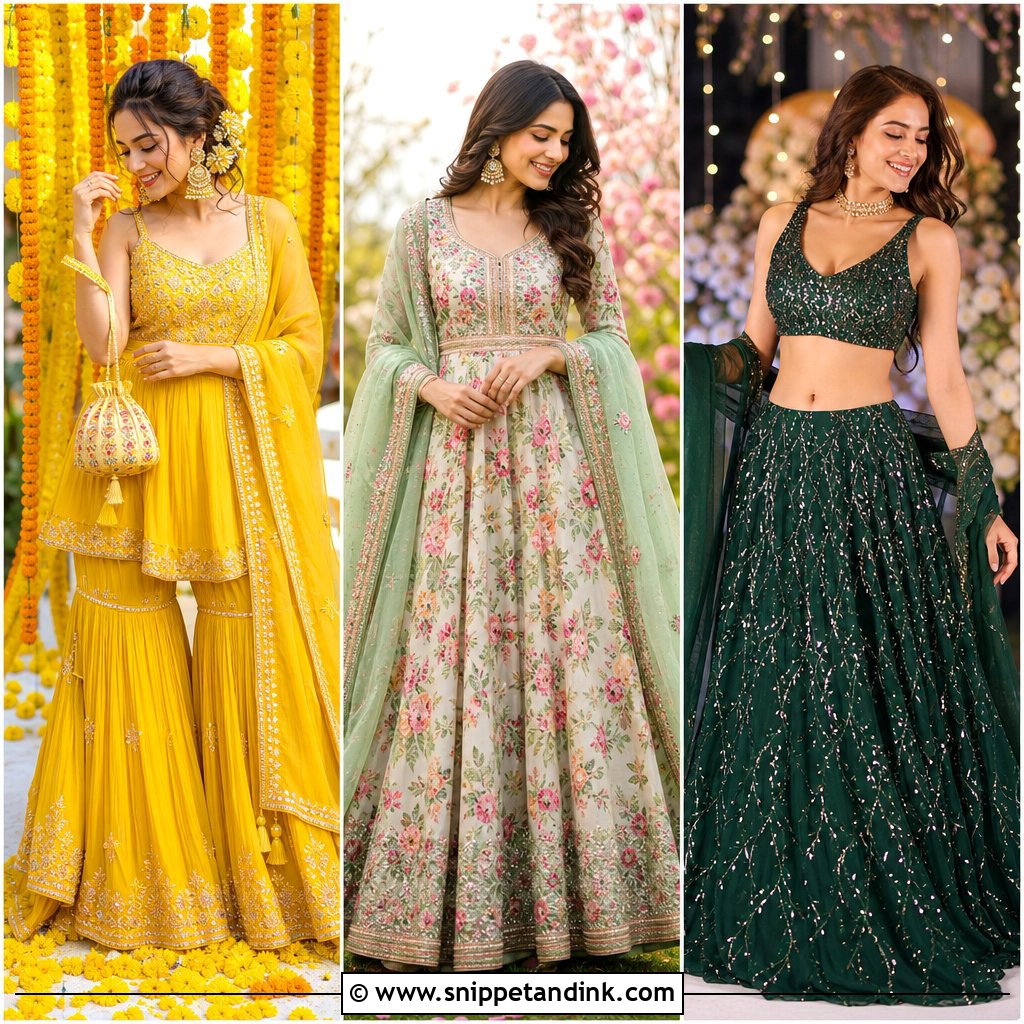
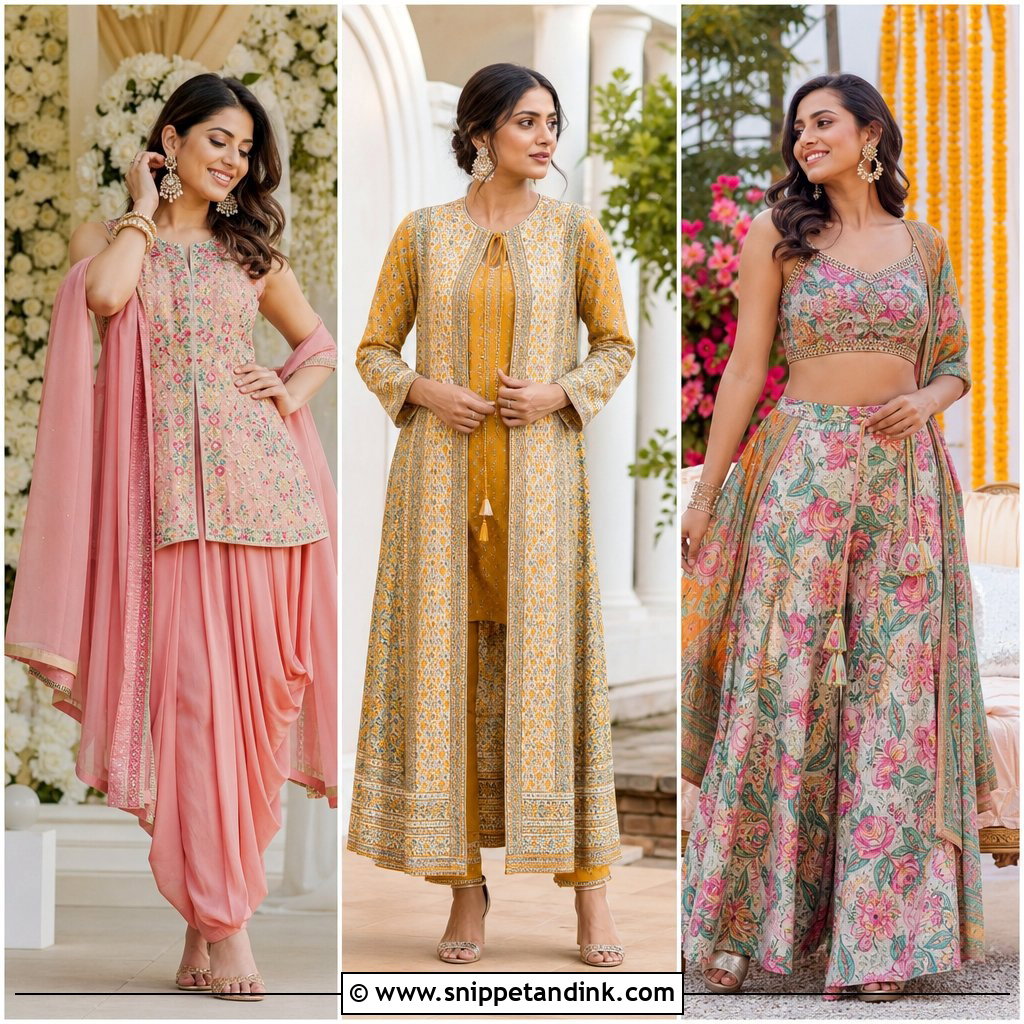
1. Yellow Sharara Set for Haldi
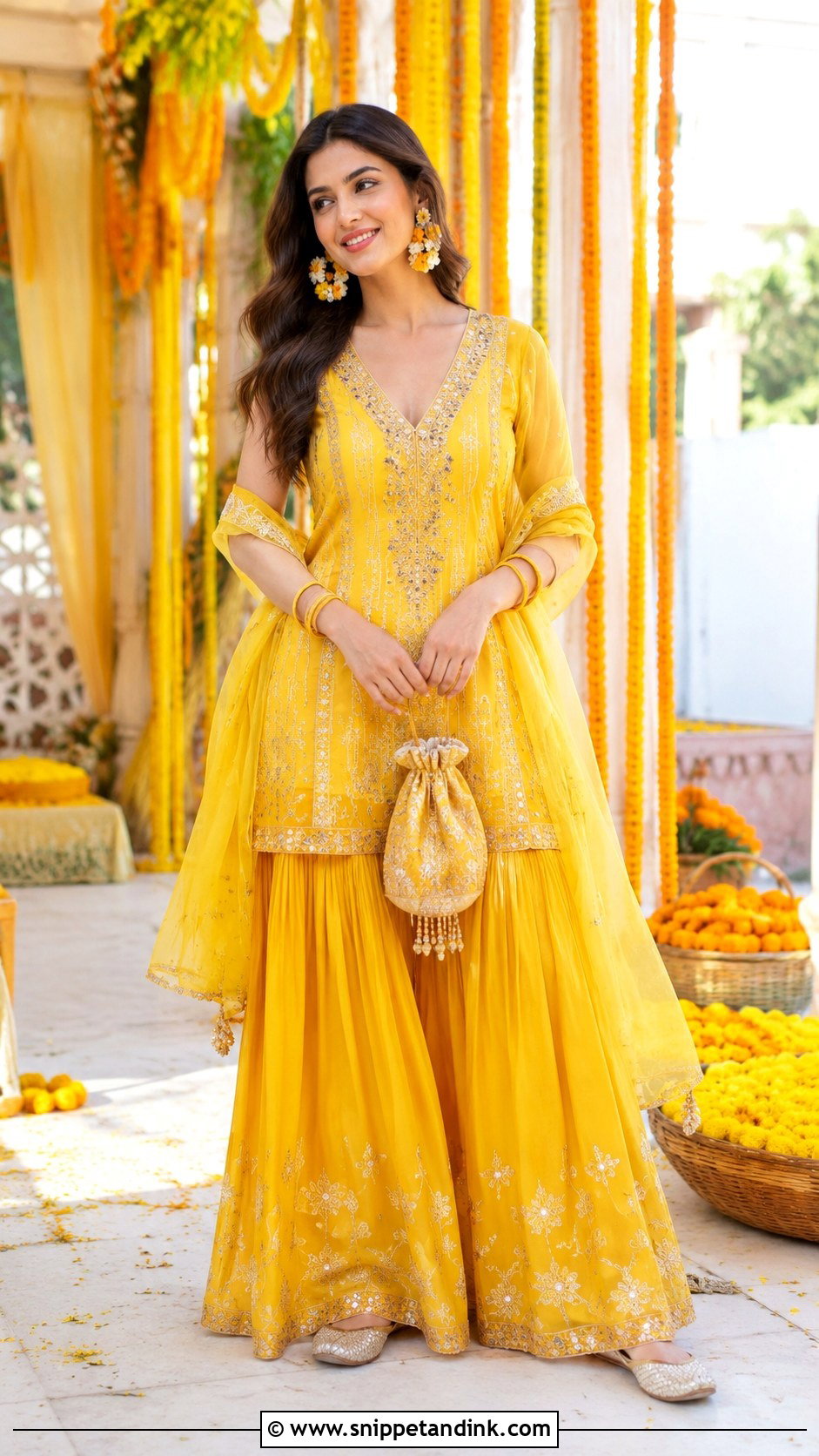
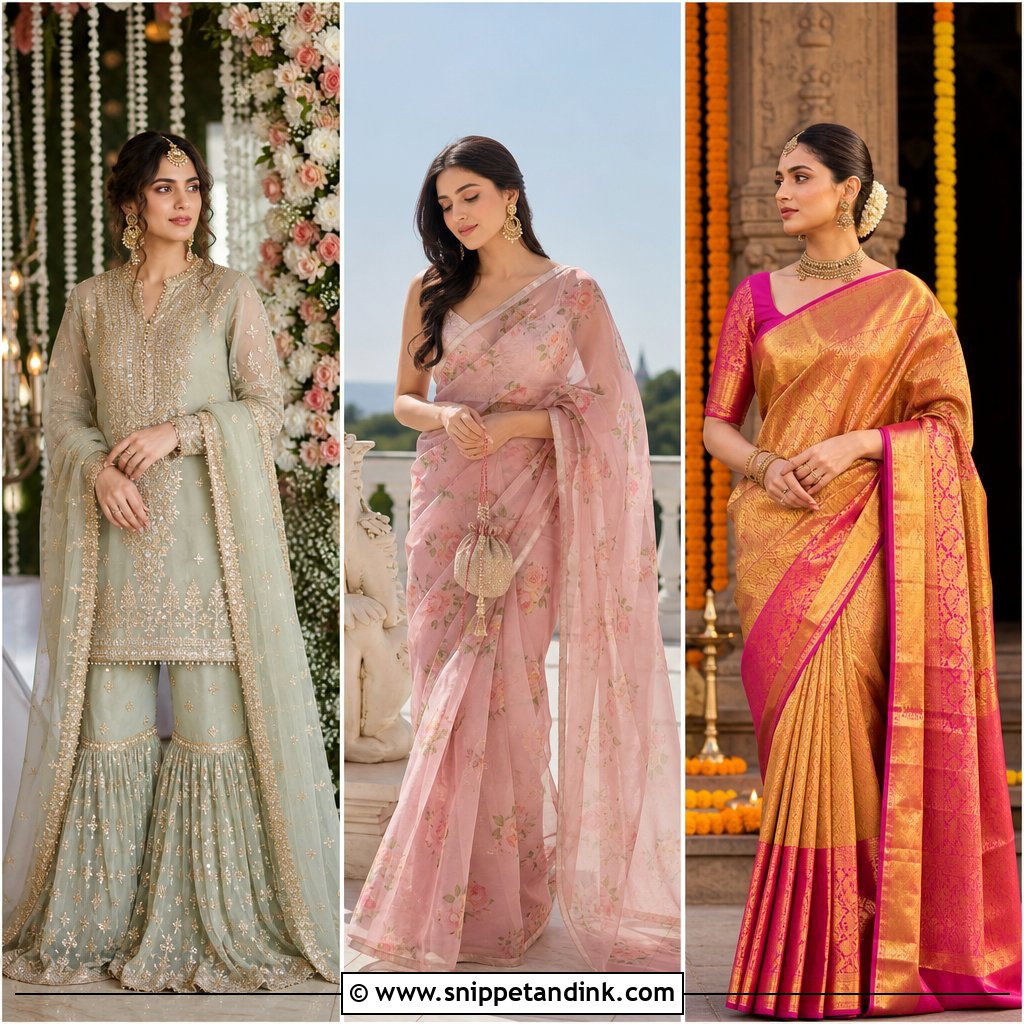
Turmeric stains, so the first rule I give haldi guests is not to wear anything you’d mourn. A yellow sharara set handles the morning well: a short embroidered kurta, wide sharara pants and a light dupatta. Cotton silk, georgette or chanderi breathe in daytime heat. Mustard, marigold, lemon and mango all suit the ritual. Floral earrings, slim bangles and flat metallic juttis are easy on grass. Tie your hair back in a braid or soft bun. Keep the embroidery moderate; as a guest you shouldn’t look more dressed up than the bride in her haldi outfit.
2. Green Floral Lehenga for Mehendi
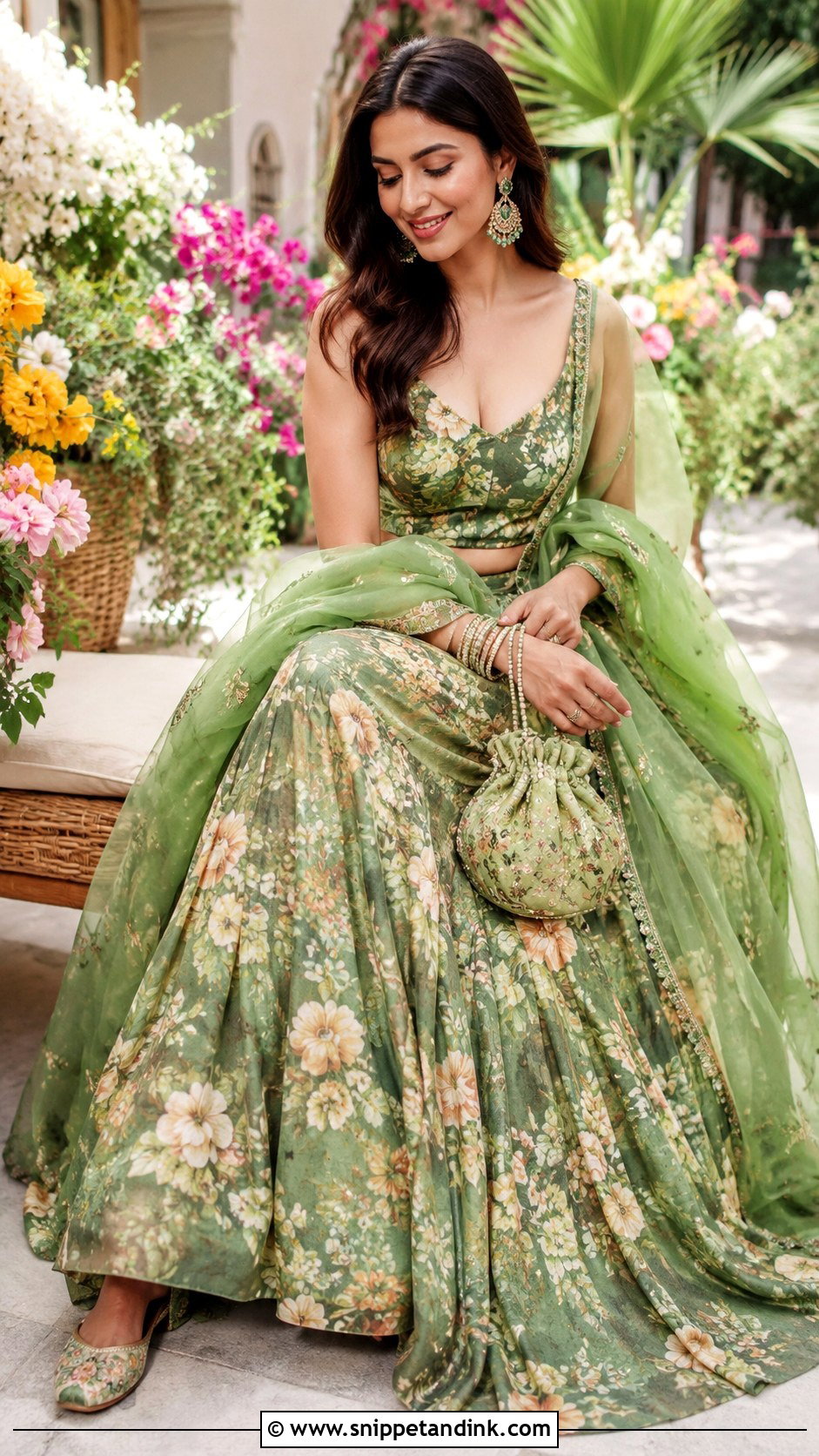
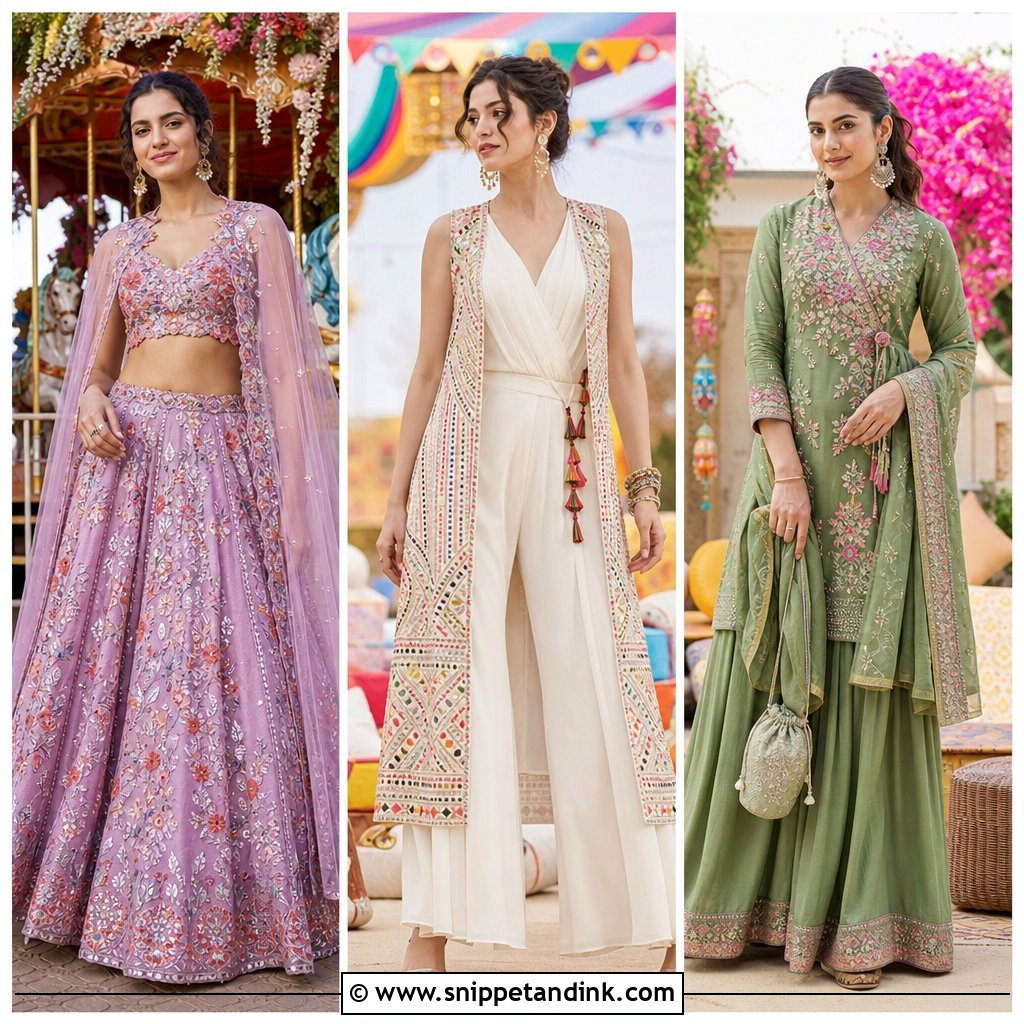
Green and mehendi go together, and I’d dress a friend in a lightweight floral lehenga with a fitted blouse and a soft net or organza dupatta. Think practically about the henna. You’ll sit for a while with your hands out, so a skirt with gentle flare that lets you sit cross-legged matters more than heavy beadwork. Printed florals, threadwork or small mirrors are enough. A potli with a wrist strap keeps your phone close while the paste dries. Chandbalis, stacked bangles, juttis and a flower-trimmed side braid suit it. Emerald, mint, lime and sage all work, unless the family has asked for a palette.
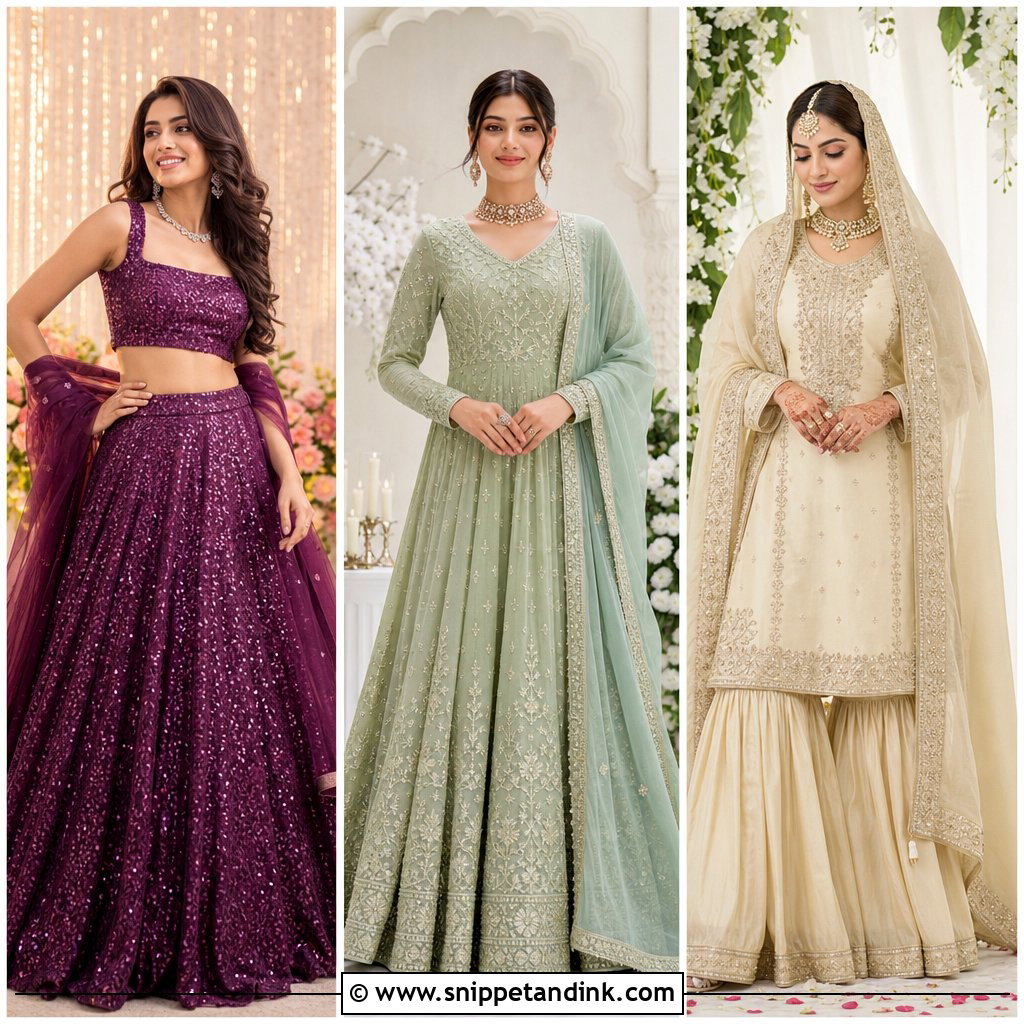
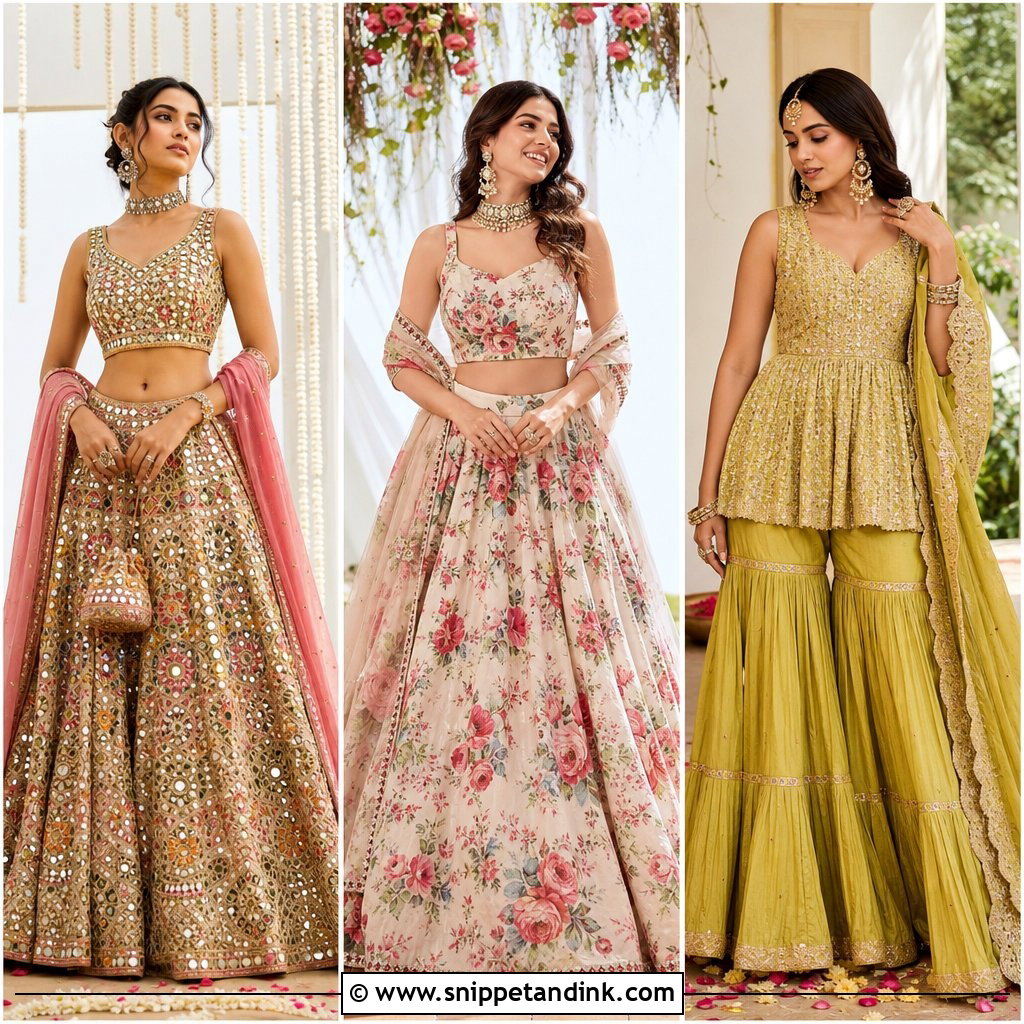
3. Mirror Work Lehenga for Sangeet
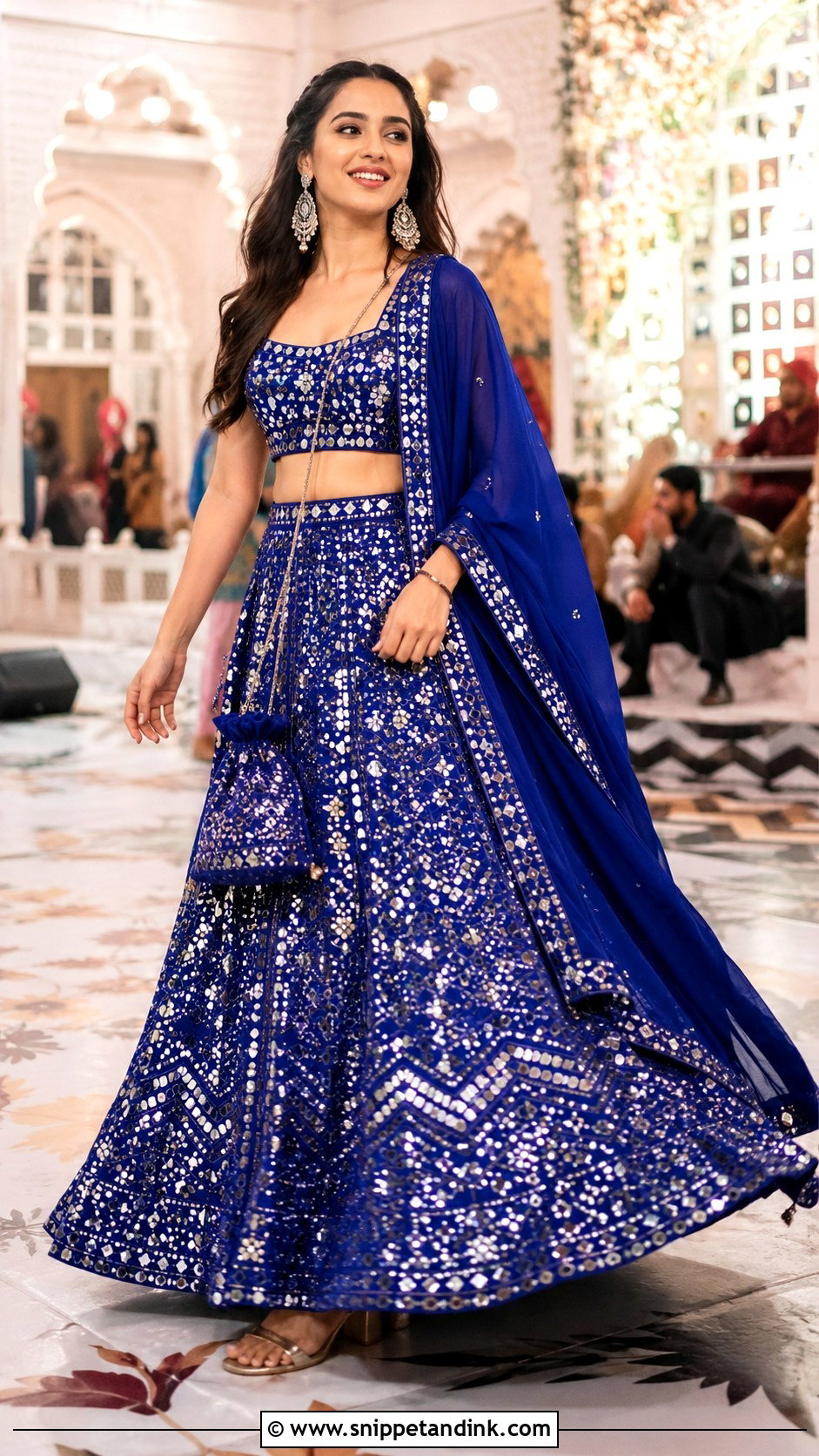
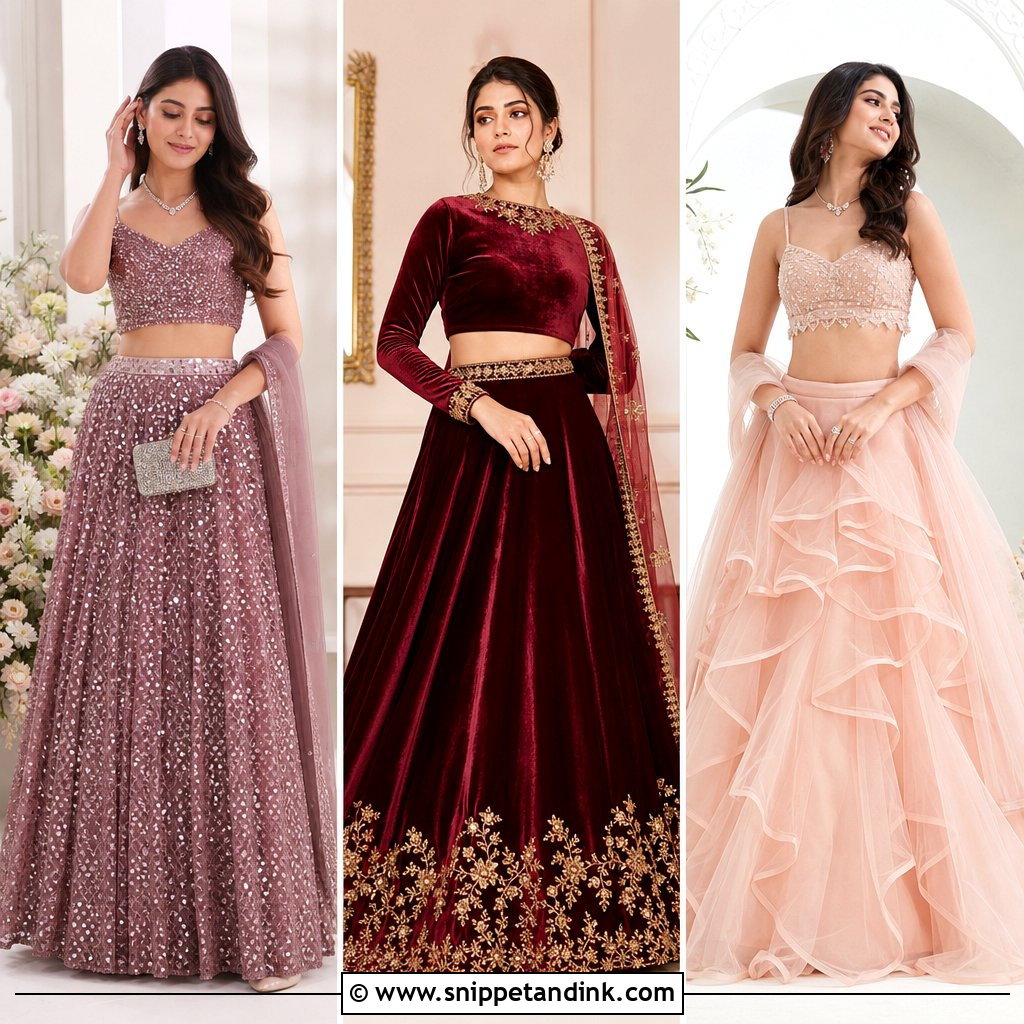
A mirror-work lehenga is the sangeet outfit I’d pick for any friend who’s in a group dance. Jewel tones like cobalt, deep purple, teal and magenta stand out under stage lights and keep well clear of bridal red. The hem is my main concern. It should clear the floor in your shoes by a finger’s width, or you’ll step on it mid-routine. Choose a light skirt, a supportive blouse and a dupatta pinned at the shoulder and the waist. Statement earrings, block heels or cushioned juttis, and a crossbody potli for your phone. A sleek ponytail survives the dancing better than open waves.
4. Sequin Saree for Cocktail Party
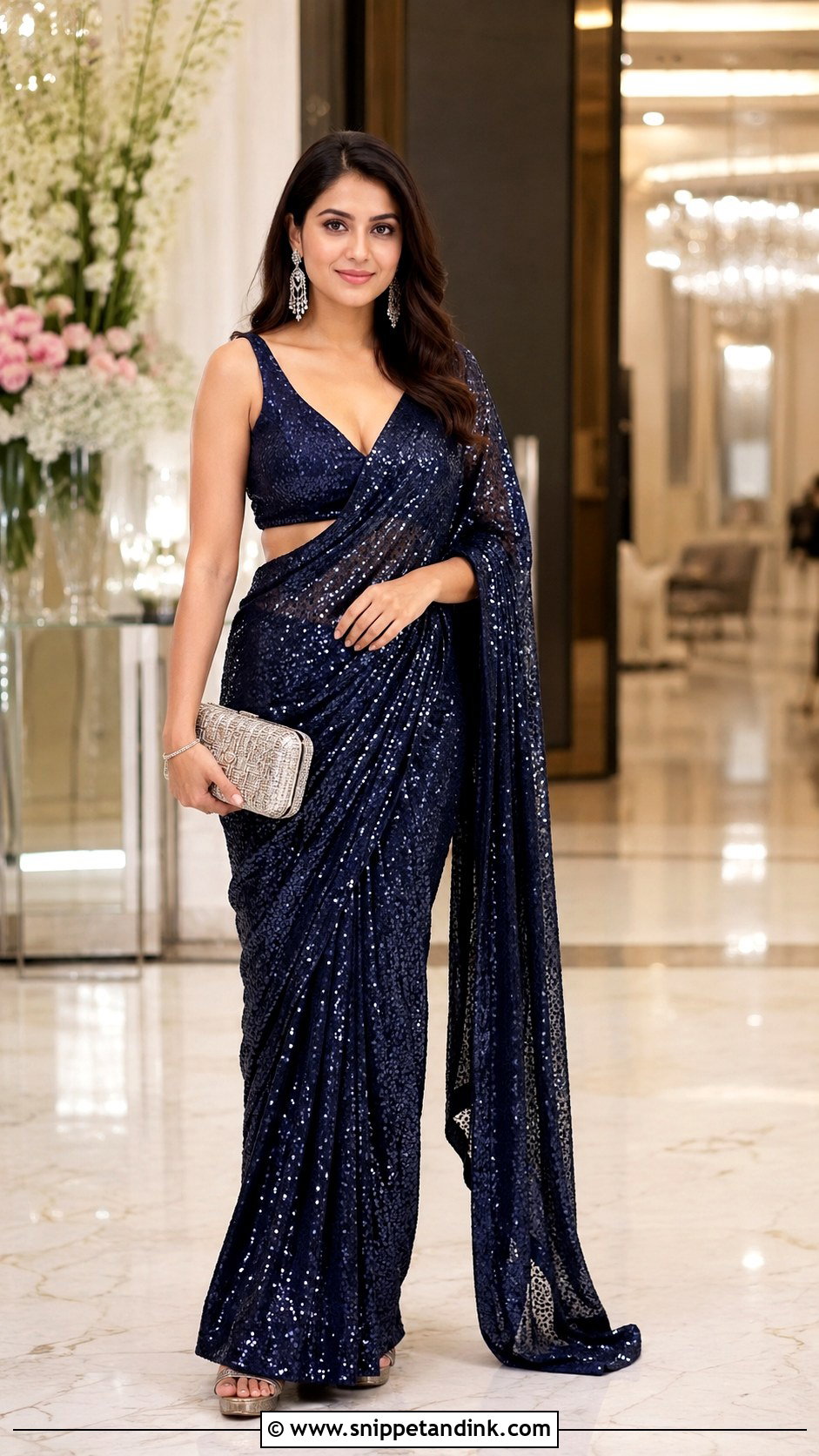
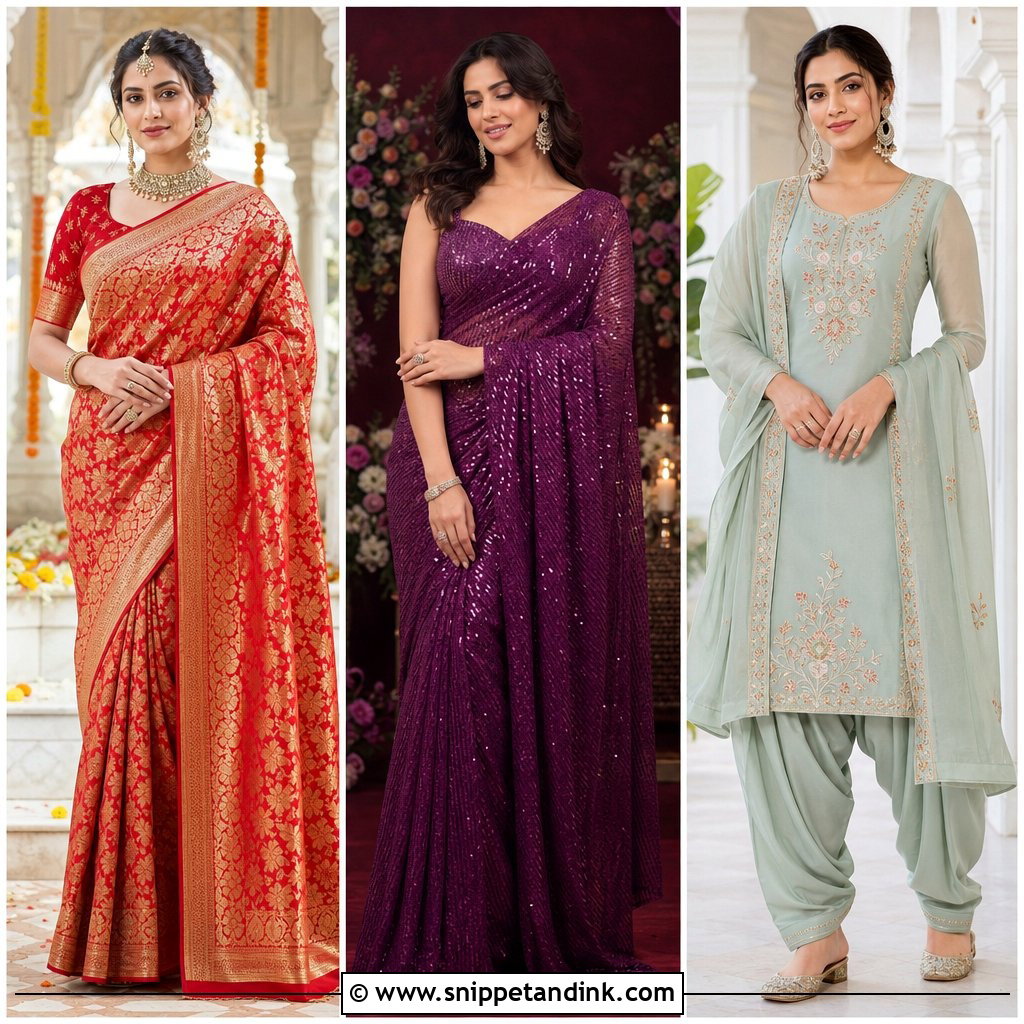
For the cocktail night, a sequin saree gives evening glamour with very little effort. Navy, plum, charcoal, bronze or deep green look rich under low light. Fine, evenly spaced sequins read polished; large paillettes can look costume-like up close. Check the lining before you buy. Unlined sequin fabric scratches, especially at the waist where the pleats sit. If draping makes you nervous, a pre-stitched version stays put while you mingle. Crystal earrings, a structured clutch and metallic block heels are enough, and the necklace can stay home.
5. Pastel Anarkali for Day Wedding
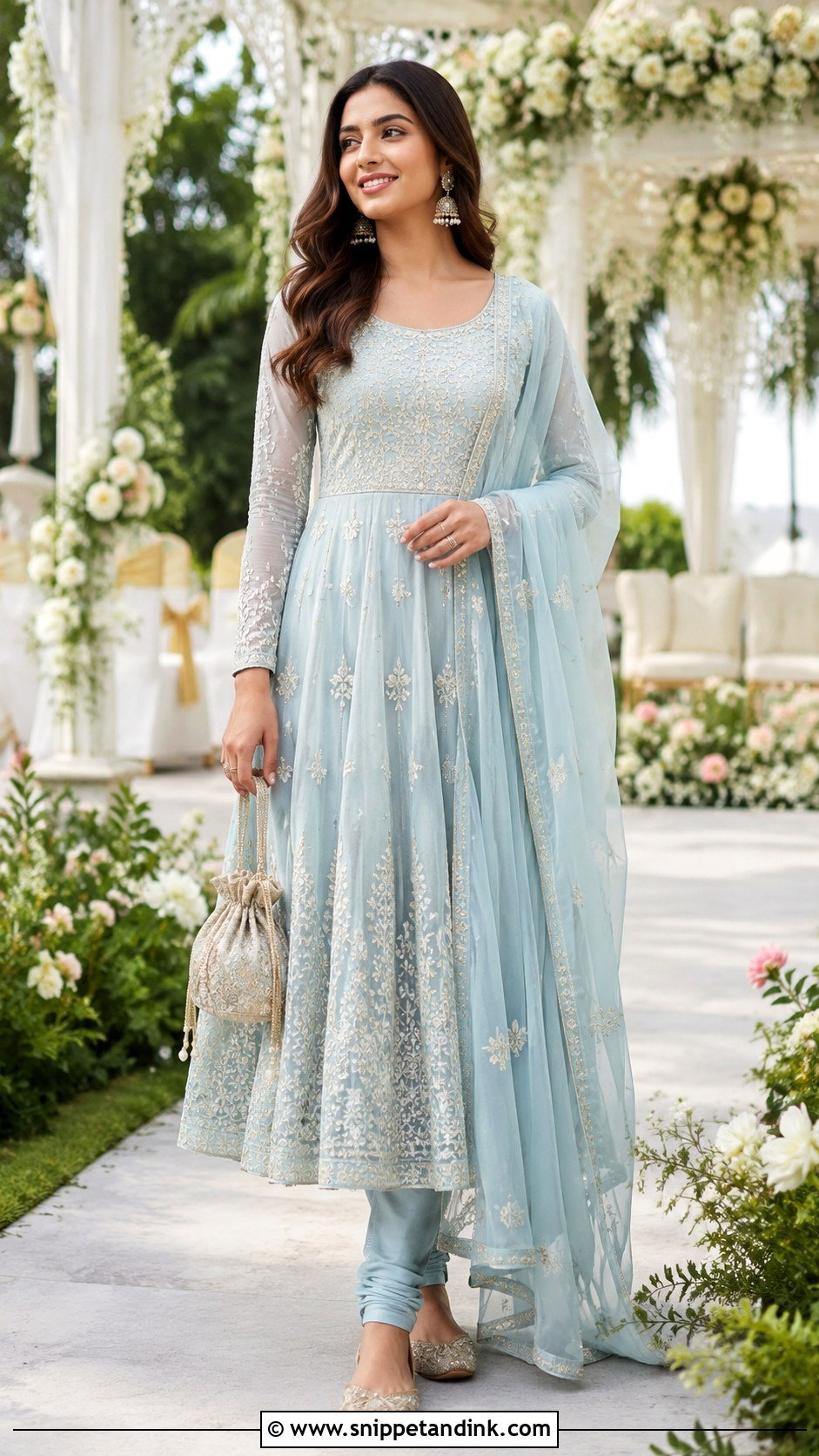
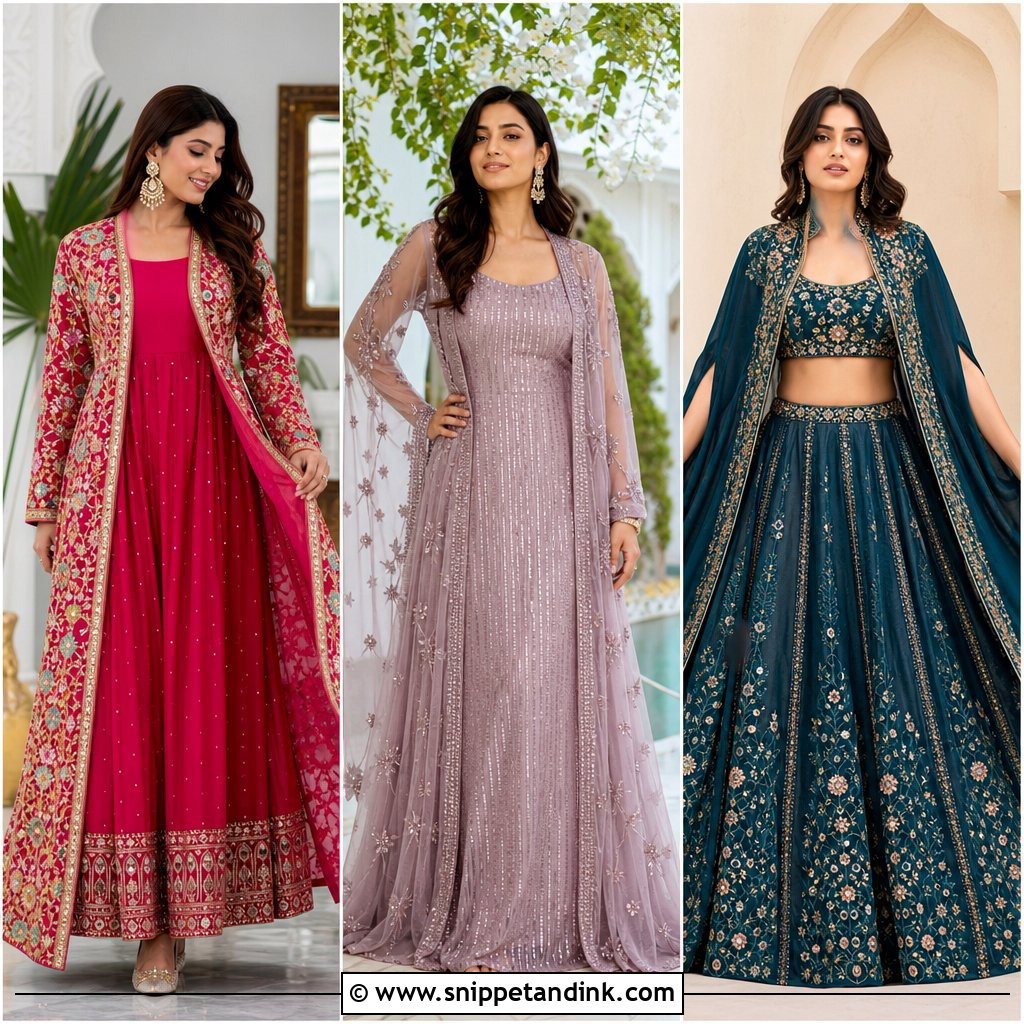
If you’ve never worn Indian clothing before, start with an Anarkali. It goes on like a dress, it’s forgiving on fit, and it looks right at a daytime ceremony. I’d choose calf or floor length in powder blue, lilac, peach, pistachio or dusty rose, with threadwork, small pearls or soft gold embroidery. Wear it with churidar pants and a light dupatta you can drape over your head if the ceremony calls for it. Pearl drops, a delicate bracelet, embellished flats and a small potli rather than your everyday handbag. For an outdoor venue, avoid heavy lining; Anarkalis with thick lining trap heat.
6. Banarasi Silk Saree for Wedding Ceremony
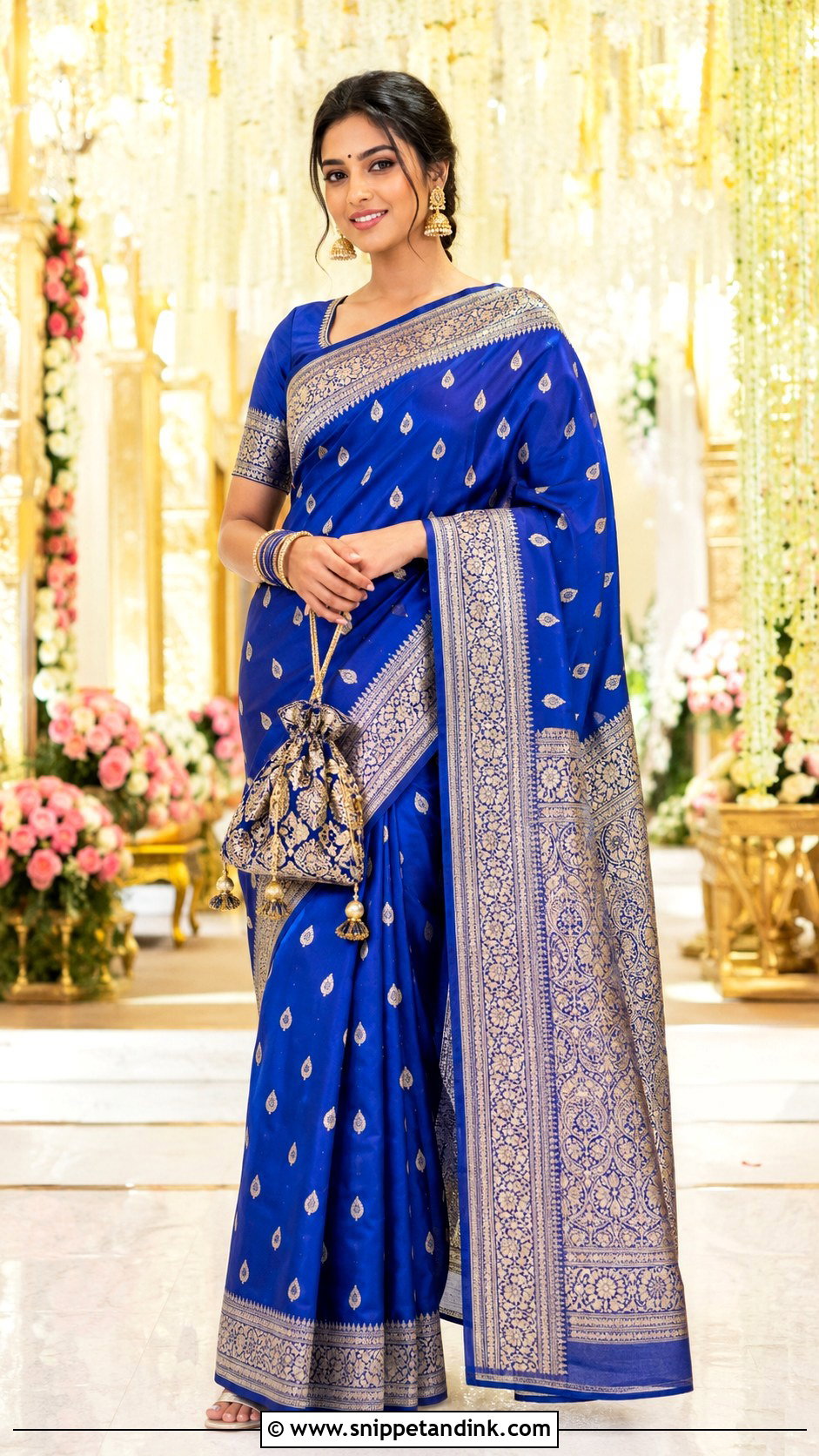
Banarasi silk has a woven richness that suits the main ceremony, and it carries itself without much extra decoration. Royal blue, aubergine, green, copper and muted pink are safe guest shades, depending on the family. A well-fitted blouse in a matching or softly contrasting color keeps it classic. Gold jhumkas, a few bangles, a small bindi and comfortable sandals are plenty. In hot weather, ask for a lighter Banarasi weave such as a georgette or organza base rather than heavy katan silk. And ask your friend whether any color has meaning at her family’s ceremony; red and gold together can read as bridal in some communities.
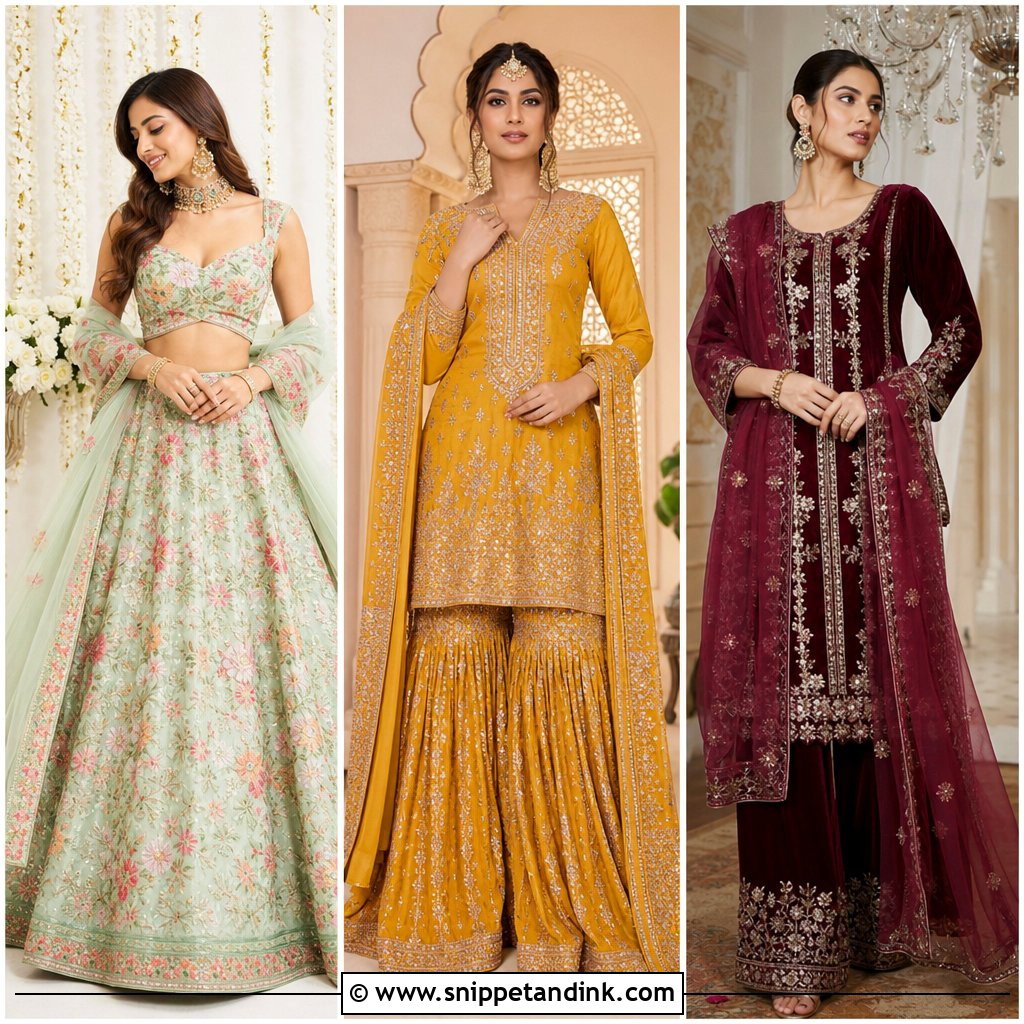
7. Chanderi Suit With Organza Dupatta
Chanderi is a fine handwoven fabric with a soft sheen, and a Chanderi kurta suit with an organza dupatta is my answer for a roka, welcome lunch or daytime ceremony where a lehenga would be too much. A straight or gently flared kurta in lavender, mint, coral, turquoise or golden beige, with cigarette pants, looks neat. Choose a dupatta with a delicate border and fix it with a small pin at the shoulder; organza slides off chanderi easily. Pearl earrings, thin bangles, embroidered mules and a compact potli are all it needs. It suits guests who want something light and modest.
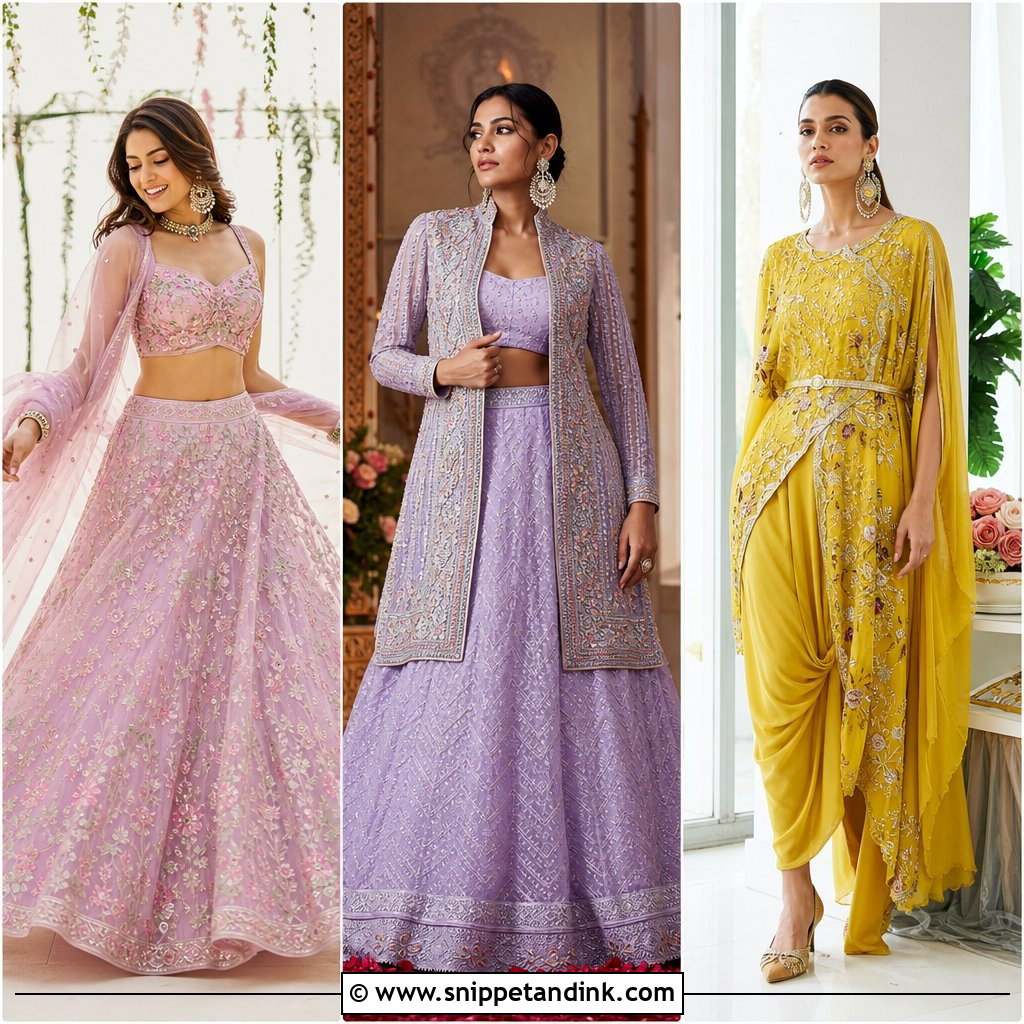
8. Jacket Lehenga for Winter Wedding
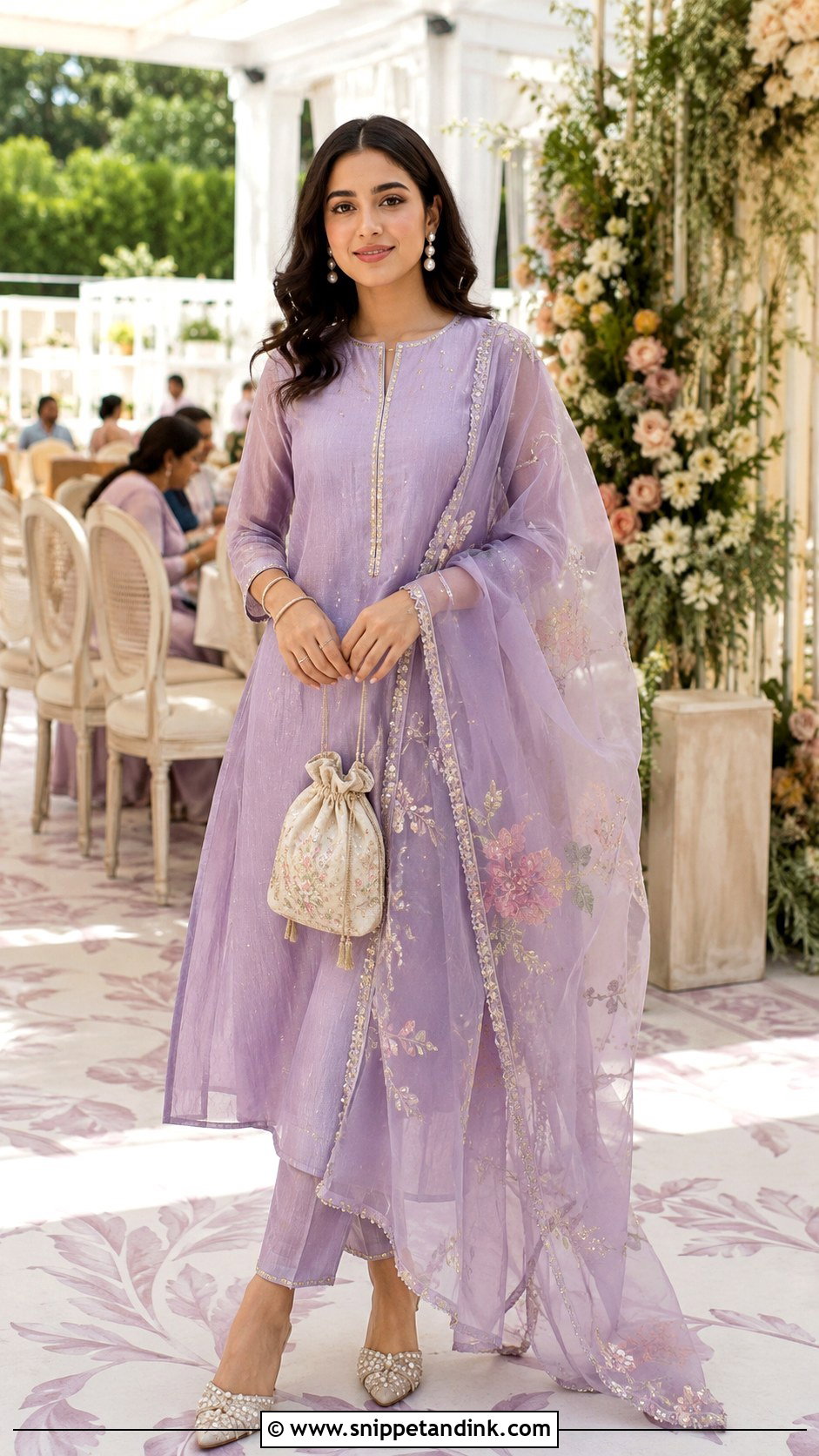
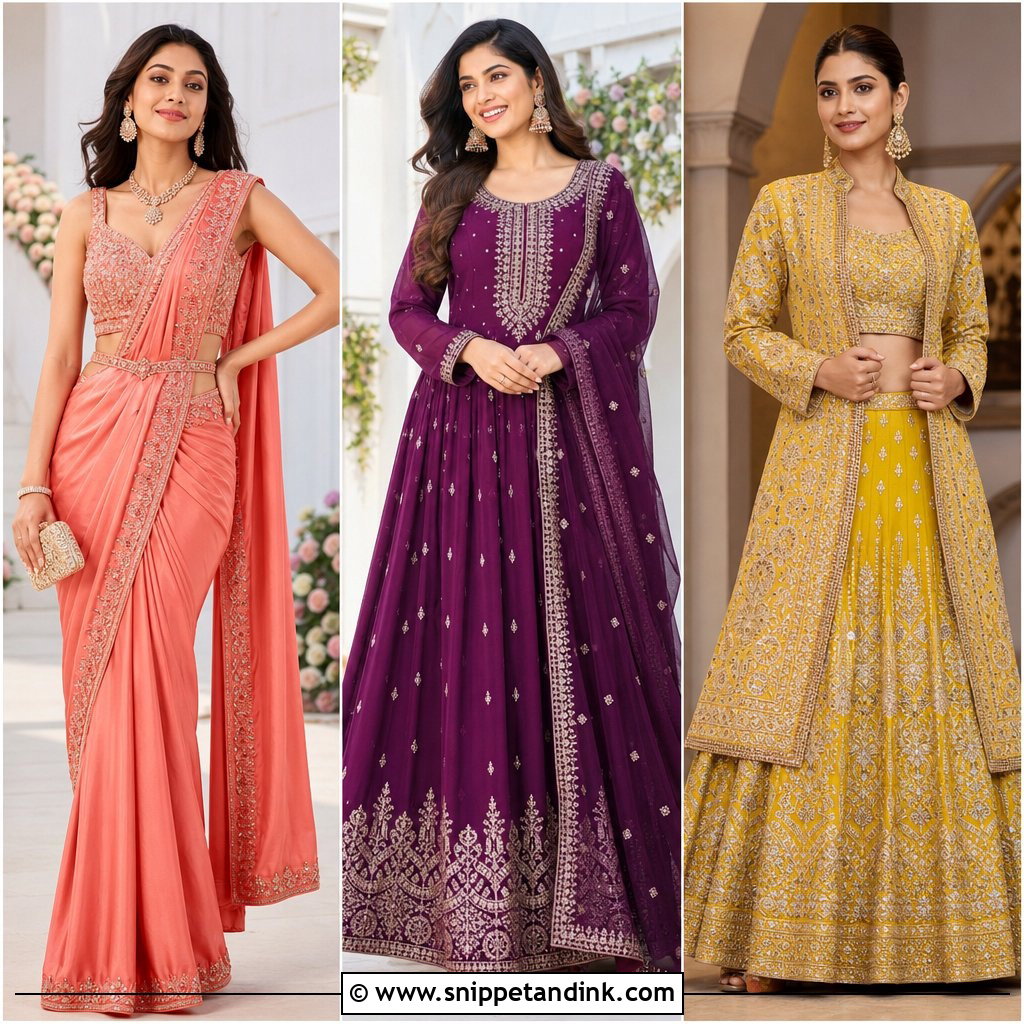
A jacket lehenga solves two winter problems at once: it keeps you warm and replaces a dupatta that would slip off every time you put on a shawl. Start with a flowing skirt and a simple fitted blouse, then add a long embroidered jacket to the knee or ankle in velvet, silk or brocade. Navy, wine, forest green and deep purple suit the season. Check the armholes when you try it on. A jacket with tight sleeves restricts you at dinner and on the dance floor. Chandelier earrings, a cocktail ring, closed-toe heels or juttis and a sleek bun finish it; skip heavy jewelry if the jacket is ornate.
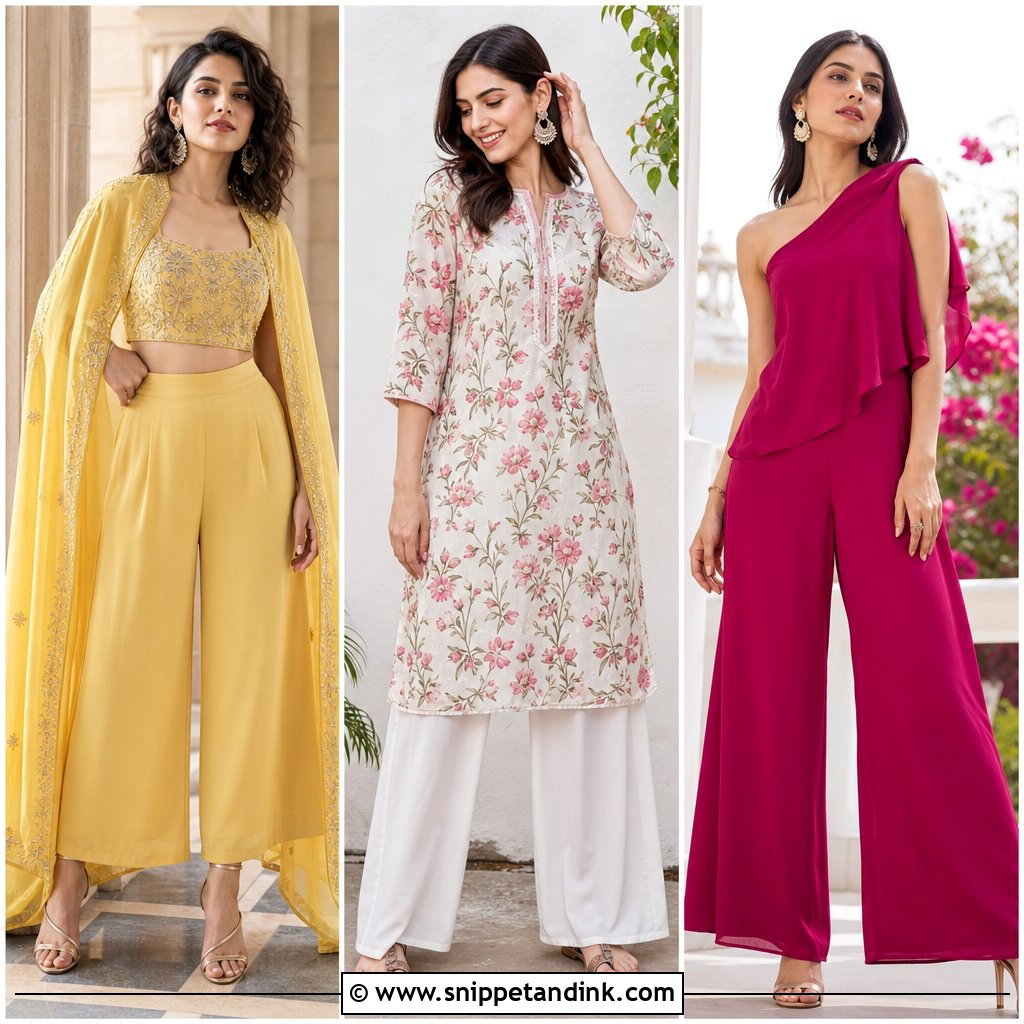
9. Cape Palazzo Set for Reception
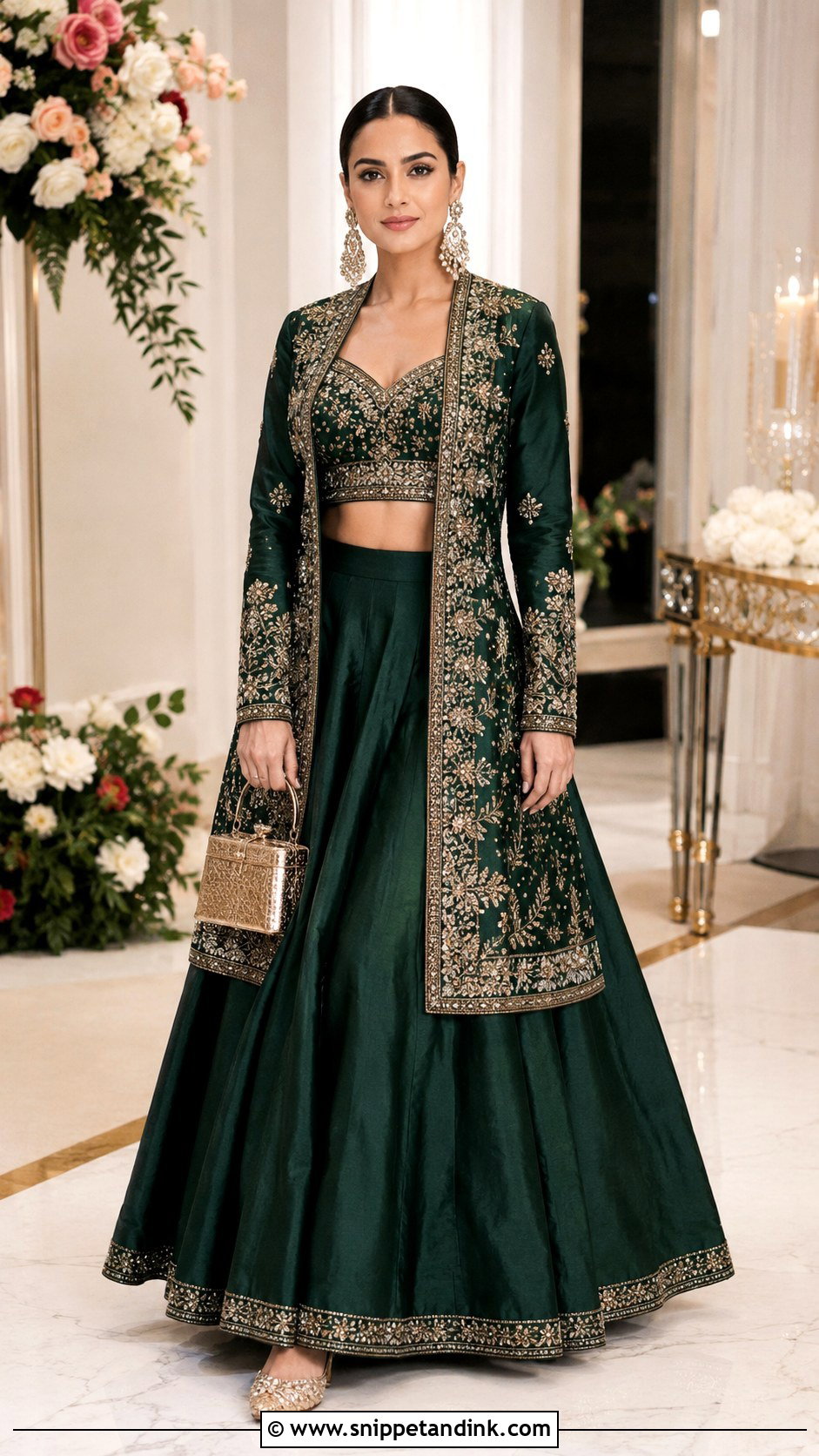
A flowing cape and palazzo set is the reception outfit I suggest to friends who don’t want to manage a saree or a voluminous skirt. Pair a fitted or softly draped inner top with high-waisted palazzos and a sheer embroidered cape. Midnight blue, deep plum, emerald, silver-gray and teal suit evening venues. Some families avoid black at weddings, so I’d check before choosing it. The palazzos should skim the floor without hiding your shoes entirely. Long earrings, a sleek clutch and platform or block heels finish it, with simple hair so the neckline shows.
10. Pre-Draped Saree With Belt
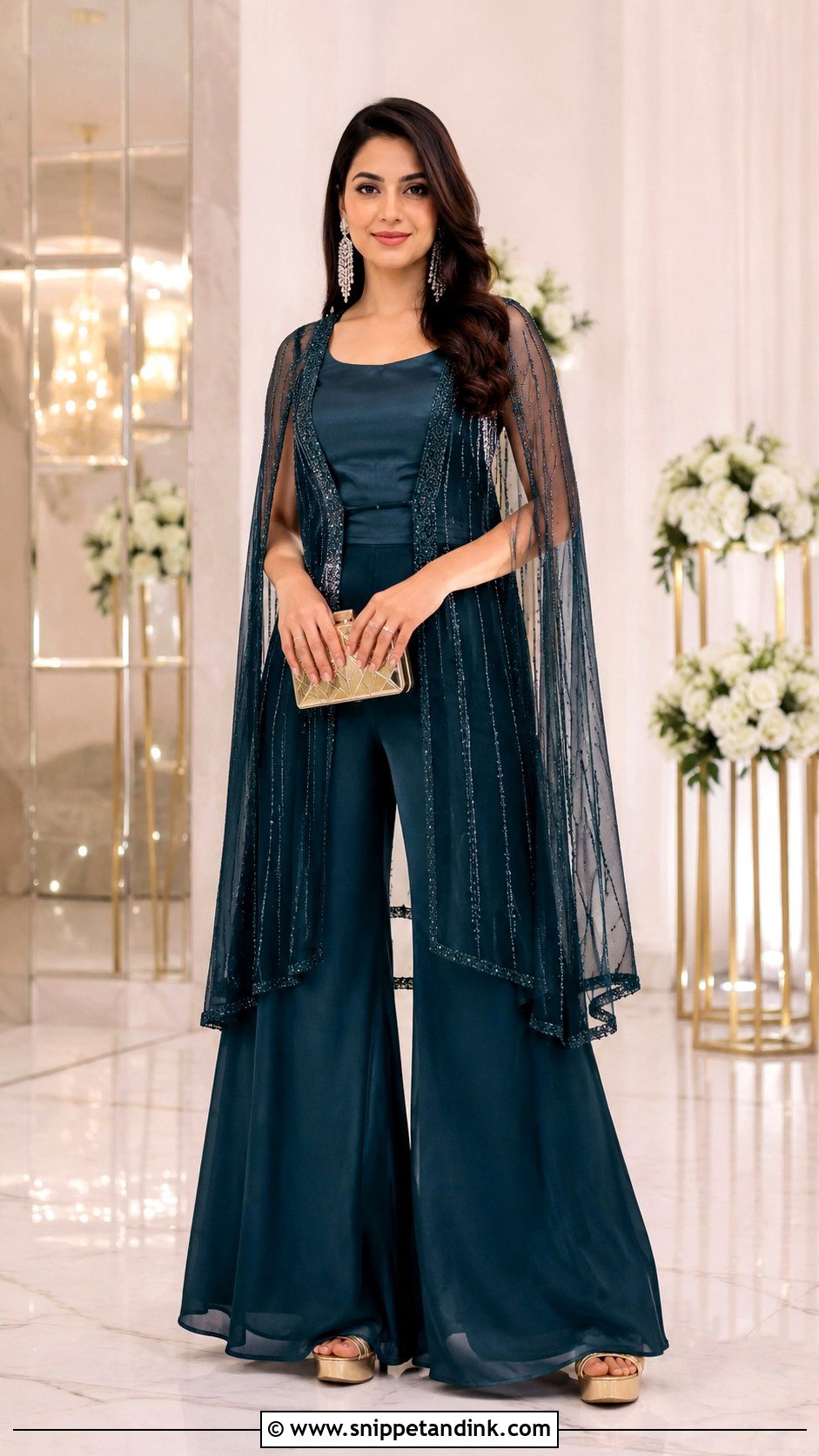
The belt on a pre-draped saree isn’t decoration. It’s what keeps the pleats from shifting while you dance, and it defines the waist neatly. Georgette or crepe in teal, mauve, sapphire, olive or rose drapes fluidly. Pair it with a structured blouse in a cut you’re comfortable in: short sleeves, modest sleeveless or a square neck. Drop earrings, stacked bracelets, a small clutch and supportive heels are enough; if the blouse neckline is the statement, skip the necklace. It suits a sangeet, cocktail night or reception. Have the hem adjusted to your heels before the wedding.
11. Indo-Western Dhoti Pant Set
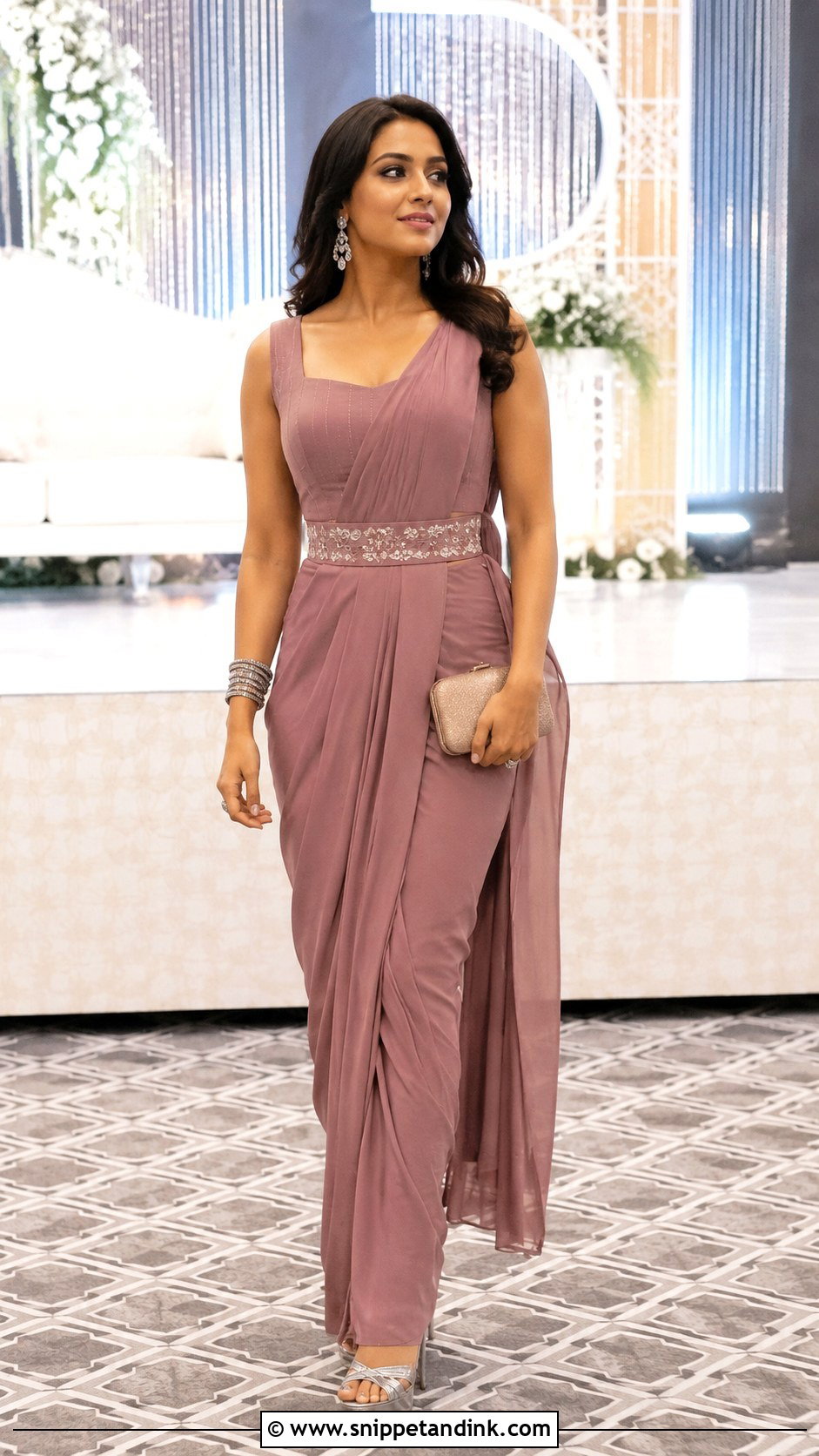
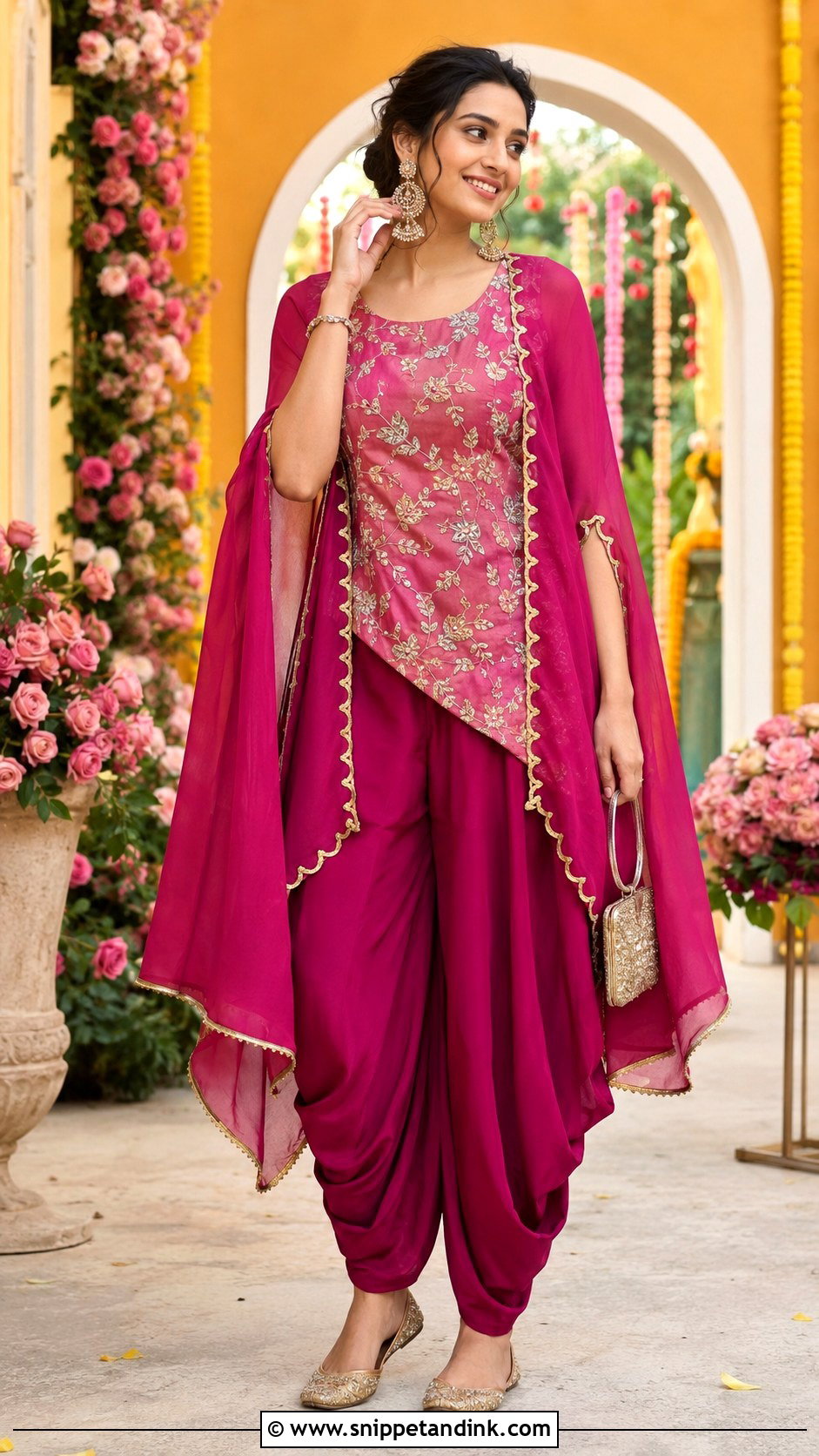
Want something comfortable that still feels distinctive? An Indo-Western dhoti pant set works for a mehendi, welcome party or relaxed sangeet. Wear draped dhoti pants with a fitted peplum, asymmetric tunic or short embroidered kurta. The pants already carry volume, so the top should be defined; a loose top on dhoti pants looks shapeless in photos. A light cape or narrow dupatta adds coverage. Statement earrings, metallic juttis and a wristlet. For a destination wedding, I like this set because it packs flat in a suitcase, which a structured lehenga never does.
12. Embroidered Kurta With Palazzo Pants
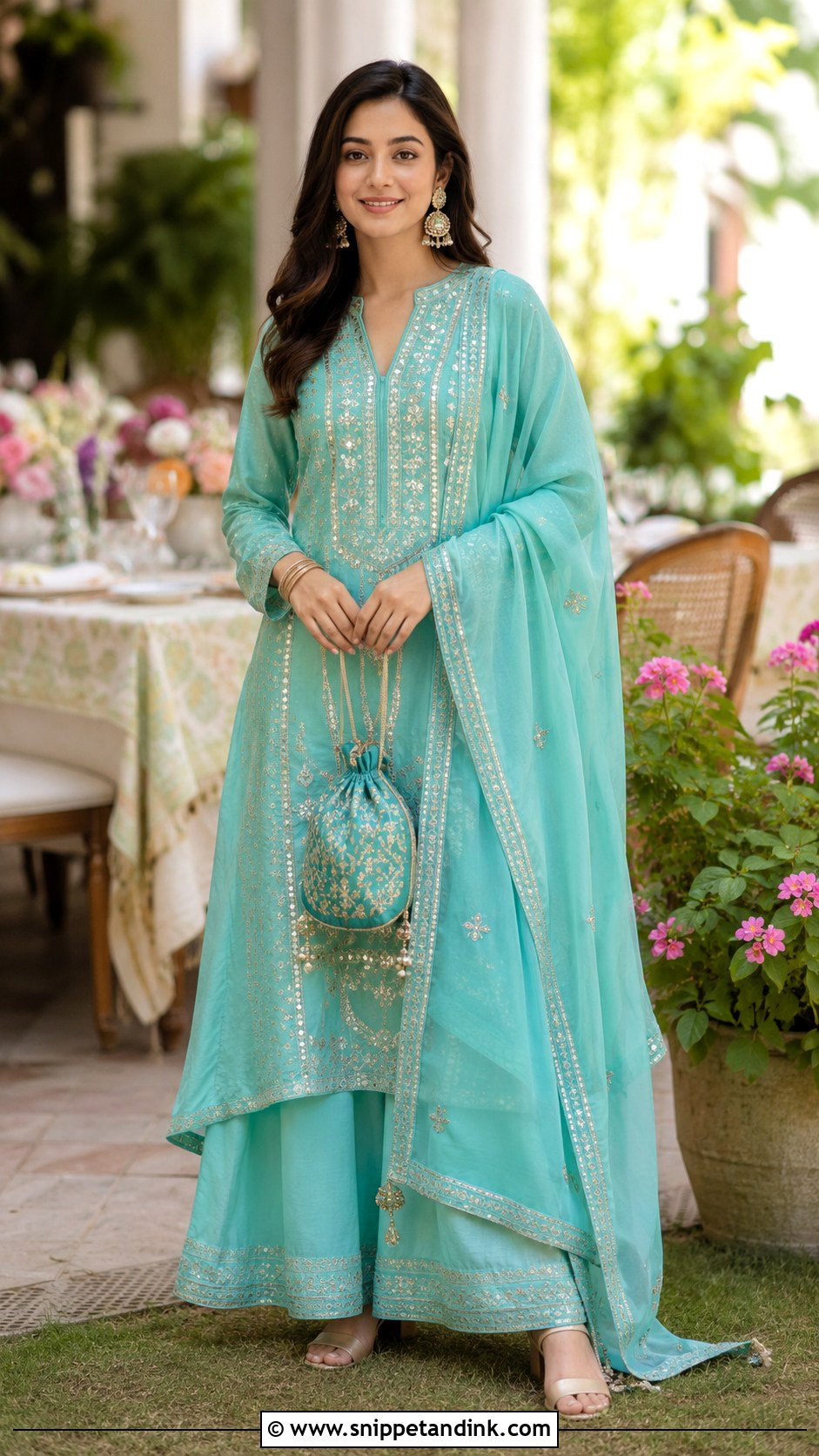
An embroidered kurta with palazzo pants is comfortable without looking casual, and it’s what I’d wear myself to a long family lunch. Choose a knee-length straight kurta with threadwork, gota or small mirrors, fluid palazzos and a coordinated dupatta. Coral, turquoise, fuchsia, mustard or leaf green suit a mehendi, haldi or lunch. If the kurta is heavily worked, keep the pants plain. Three-quarter sleeves and a higher neckline add coverage for guests who prefer it. Jhumkas, slim bangles, low heels or embroidered flats, and a drawstring potli that won’t spill when it’s set down on a chair.
13. Floral Organza Saree for Summer Wedding
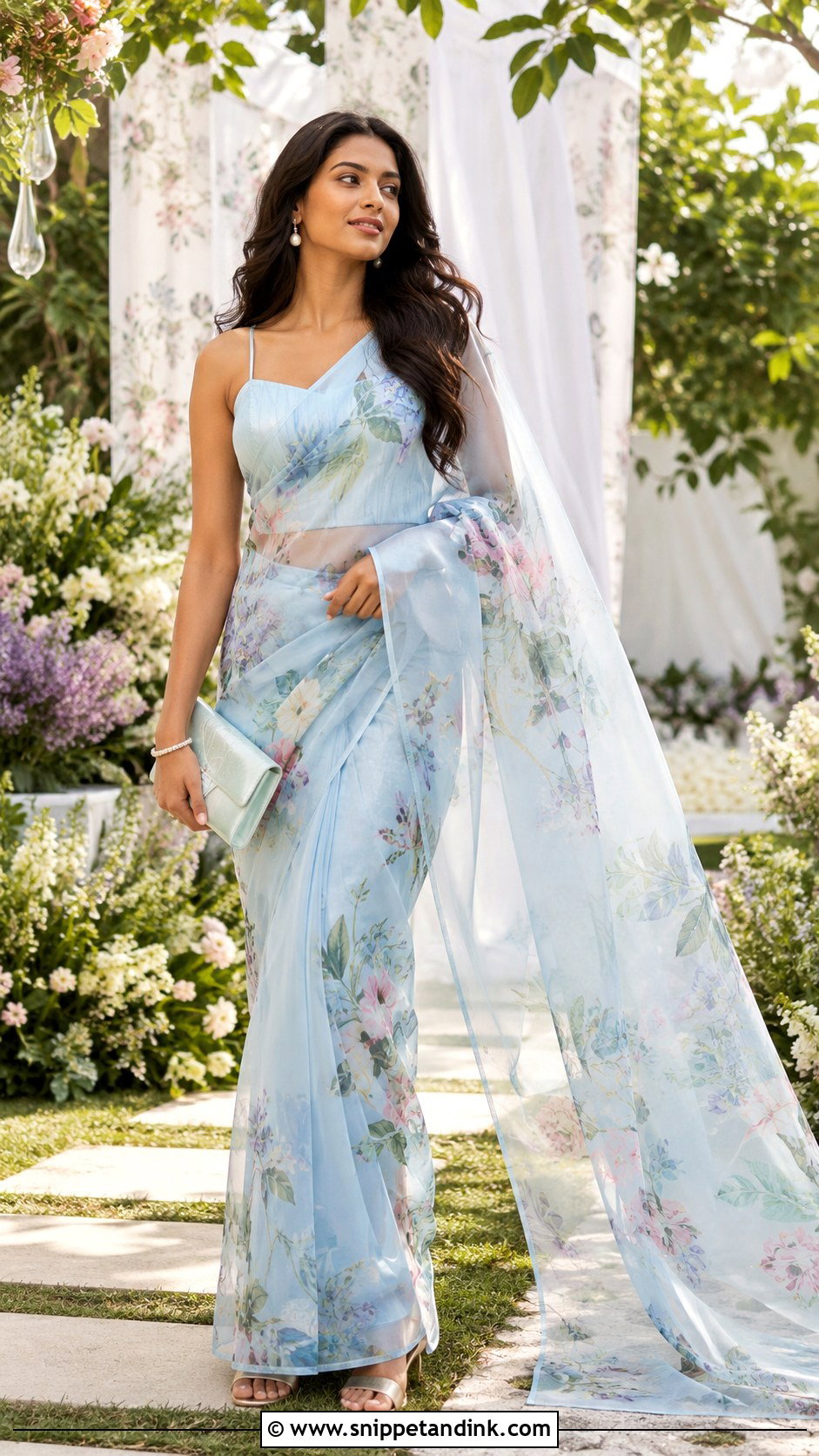
Floral organza is my favorite summer-wedding saree because it’s light enough for outdoor heat and still looks dressed up. Choose a soft blue, peach, lilac, mint or pink base with watercolor florals or small botanicals, and a plain blouse that picks up one color from the print. Organza is springy, so pleat it carefully and press the pleats flat, or it balloons at the hip. Pearl earrings, a slim bracelet, comfortable metallic sandals and a small pastel clutch are enough. Low buns and pinned waves cope with heat better than open hair. If the invitation includes family dress guidance, confirm that pale colors are fine.
14. Velvet Lehenga for Evening Wedding
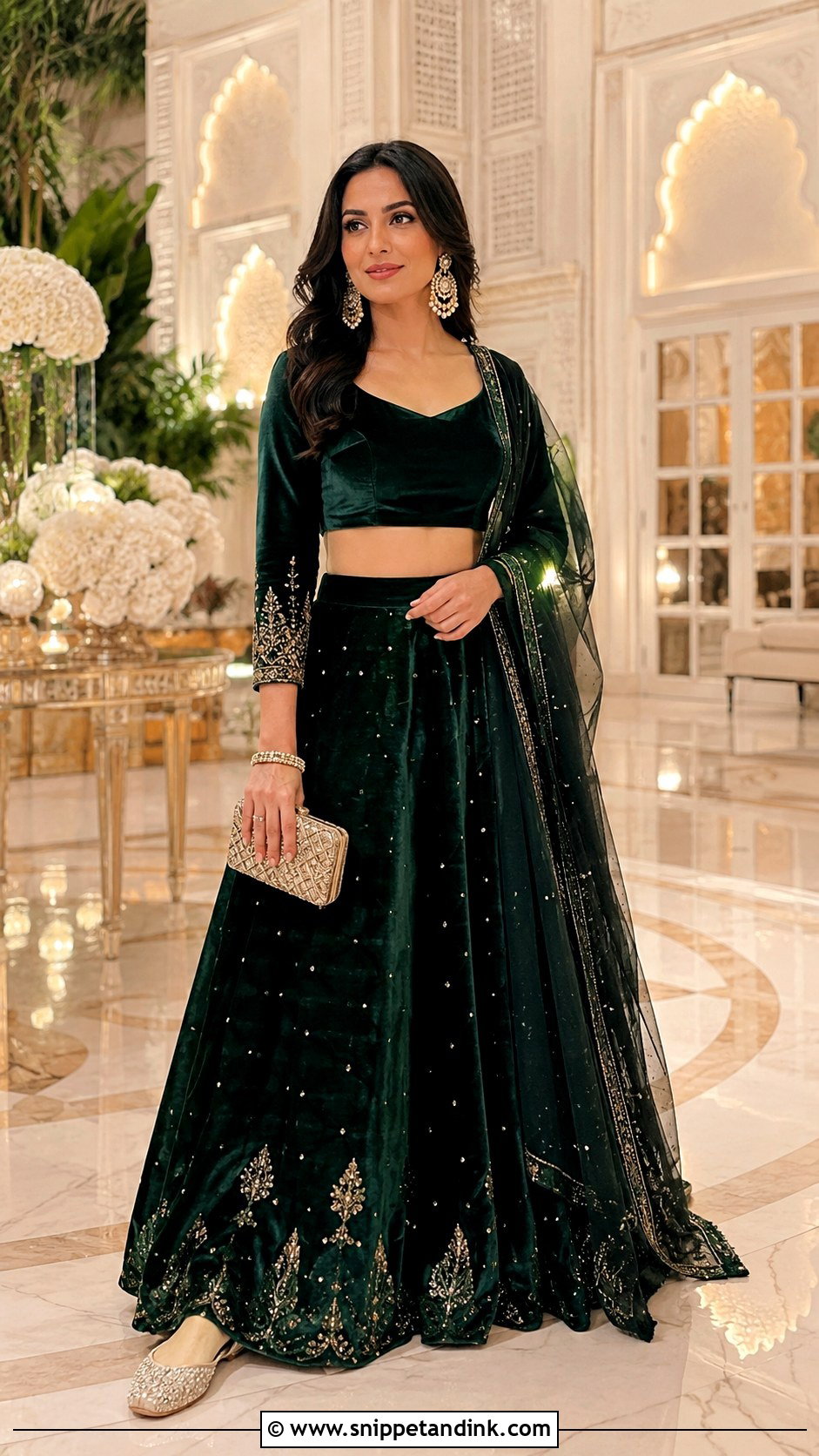
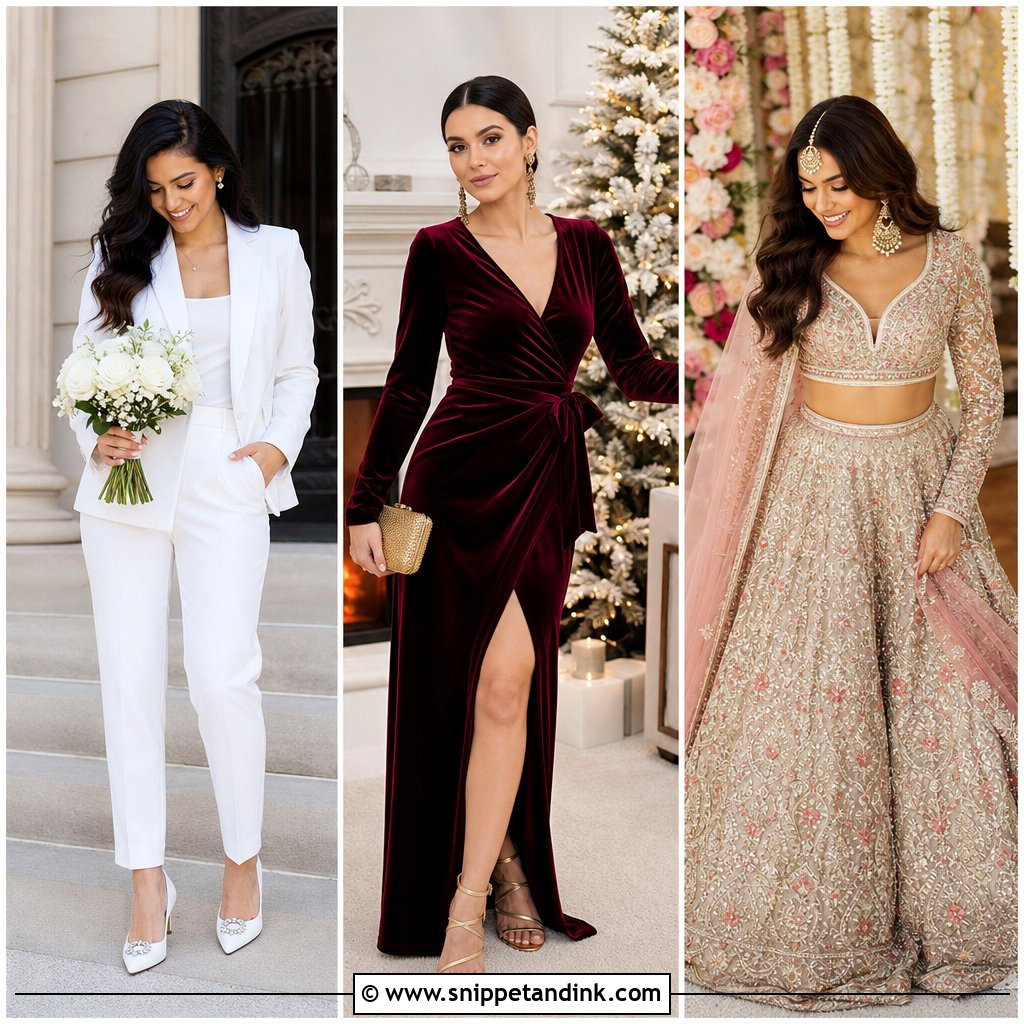
Velvet belongs to winter evenings and air-conditioned ballrooms. Outdoors in summer, it becomes unbearable within an hour. Choose a velvet lehenga in emerald, navy, aubergine, rust or deep rose with a coordinating blouse, and keep the embroidery to the hem or neckline; fully worked velvet is heavy to carry all night. A light net dupatta balances the weight. Chandelier earrings and one statement ring are enough jewelry. Closed-toe heels or embellished juttis and a small metallic clutch finish it, with a neat bun or side-parted waves.
15. Silk Skirt and Crop Top Set
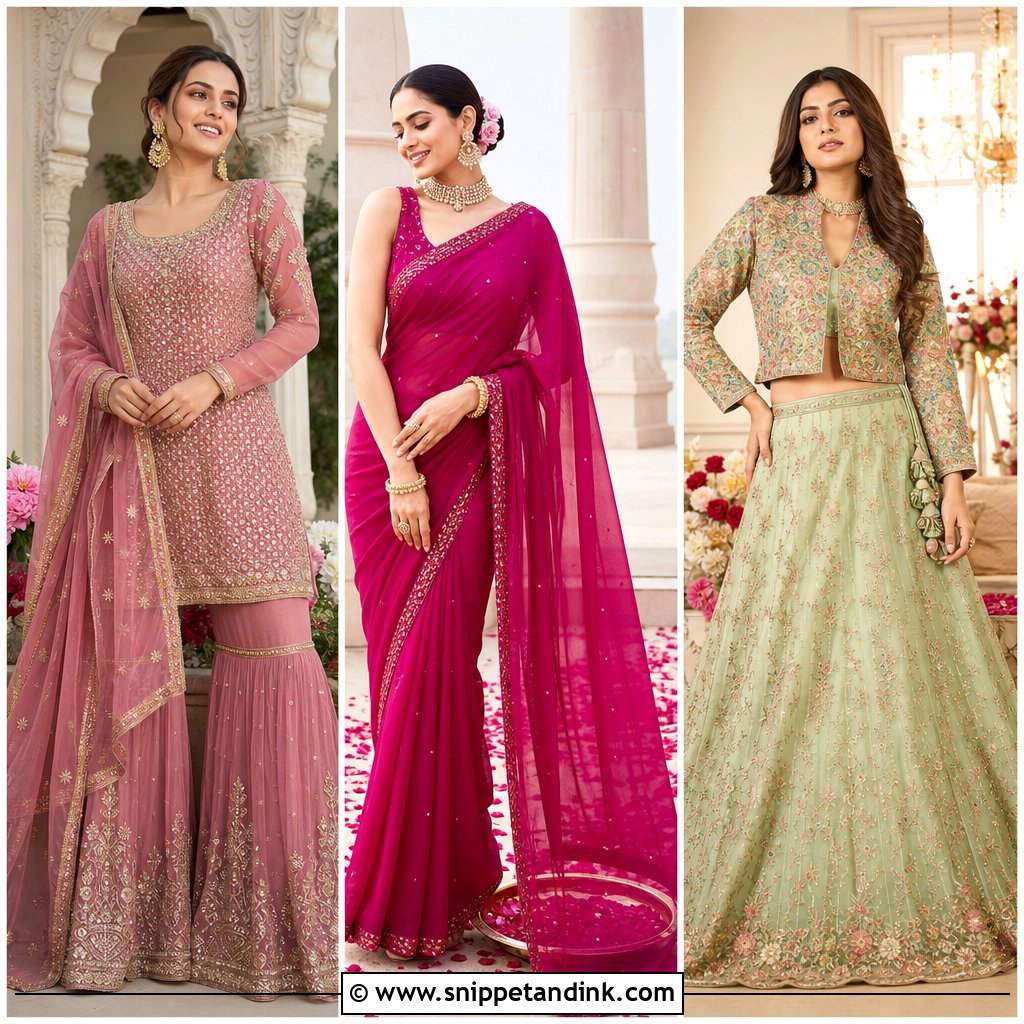
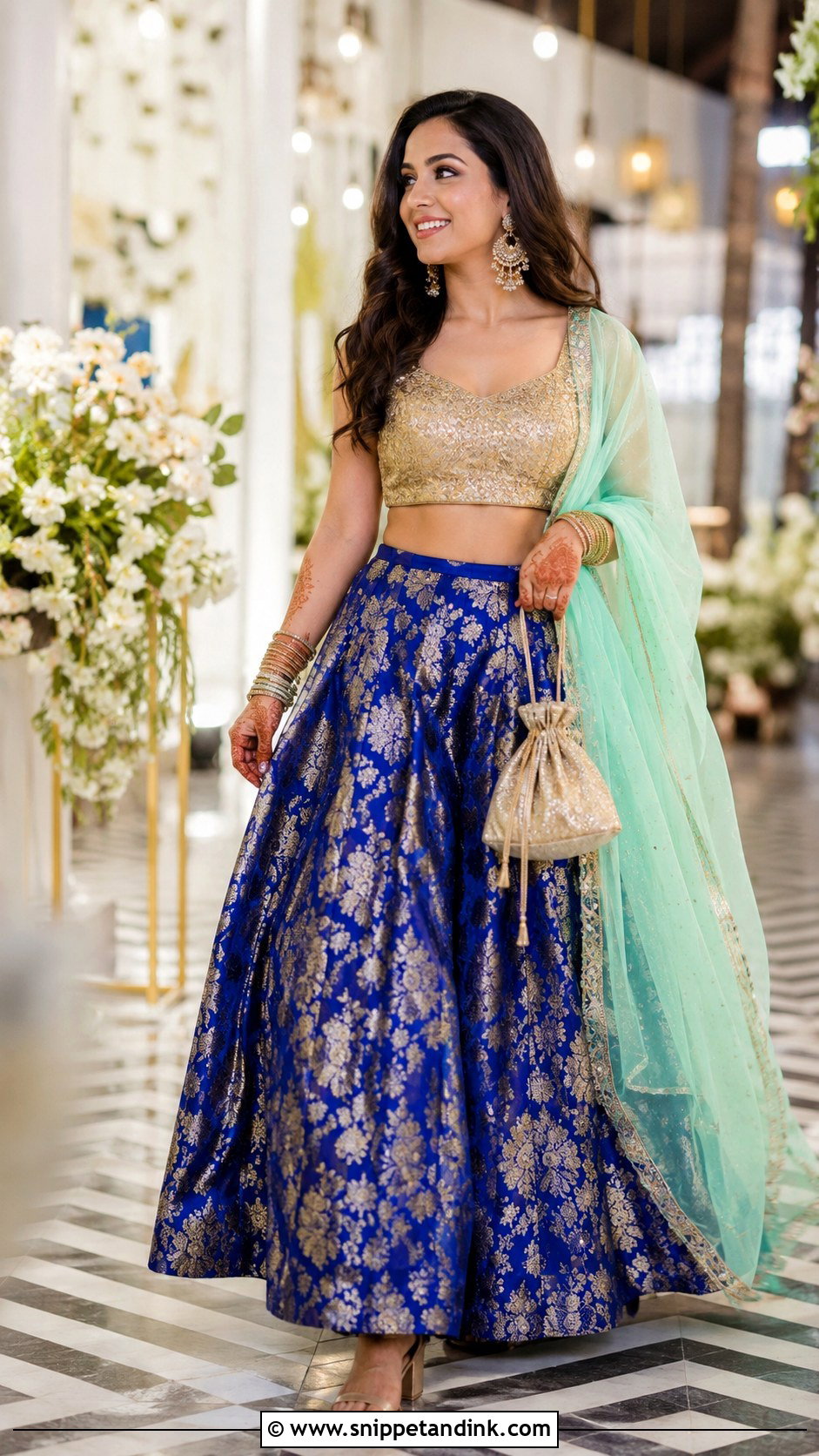
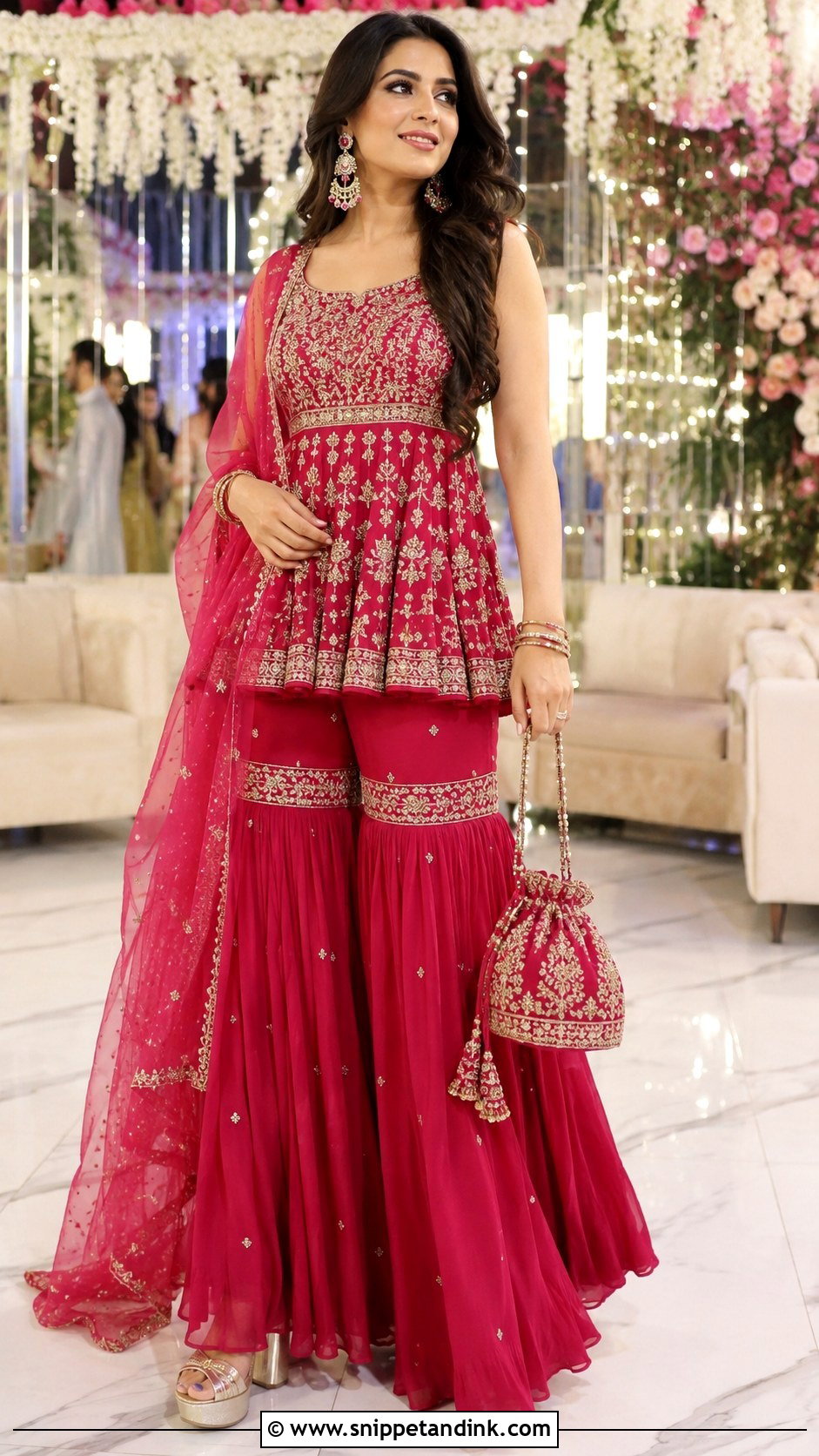
A silk skirt and crop top set is the most re-wearable guest outfit on this list. Choose a full-length skirt with woven motifs, a comfortable blouse and a contrasting dupatta. The blouse can meet the waistband or run slightly longer for coverage. Cobalt with gold, purple with mint, coral with teal and magenta with orange are festive pairings I keep coming back to. Keep the skirt lightly structured rather than layered with cancan, so it moves naturally. Traditional earrings, bangles, a potli and block heels suit a sangeet, engagement or reception, and afterward each piece works with simpler separates.
16. Peplum Sharara Set
Peplum sharara sets balance a fitted top with very fluid pants, and they’re kind to anyone who wants lehenga movement with the security of trousers. Choose a waist-defining peplum, wide sharara pants and a light dupatta, with an embroidered neckline, scalloped hem or small mirrors. Raspberry, turquoise, peacock blue, plum and coral suit a sangeet or evening mehendi. The peplum has to end at your natural waist. Too low and it cuts the leg line against the flare of the pants. Drop earrings, a few bangles, cushioned platform heels and a sleek ponytail or soft curls finish it.
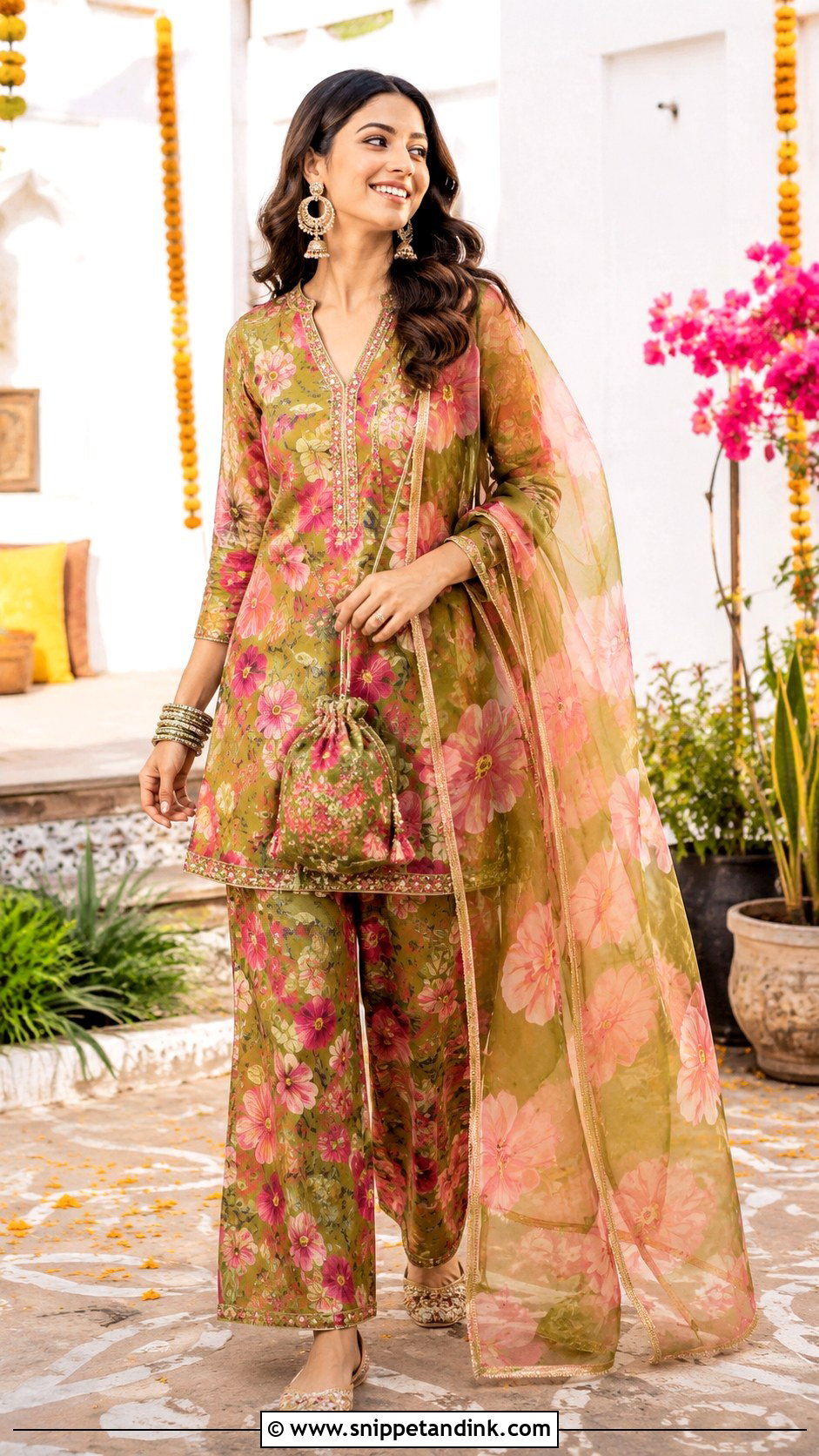
17. Printed Co-Ord Set for Mehendi
A printed Indian co-ord set is a relaxed option for a mehendi or pre-wedding brunch. A matching kurta-style top and wide-leg pants in a bright floral, paisley or block print look intentional with very little effort. An organza dupatta or short embroidered jacket makes it read as celebration wear. Pick washable cotton or easy-care fabric; between henna, outdoor seating and food, something will land on you. Hoop jhumkas, stacked bangles, flat juttis and a crossbody potli suit it, with a loose braid or high ponytail to keep your hands and neckline clear.
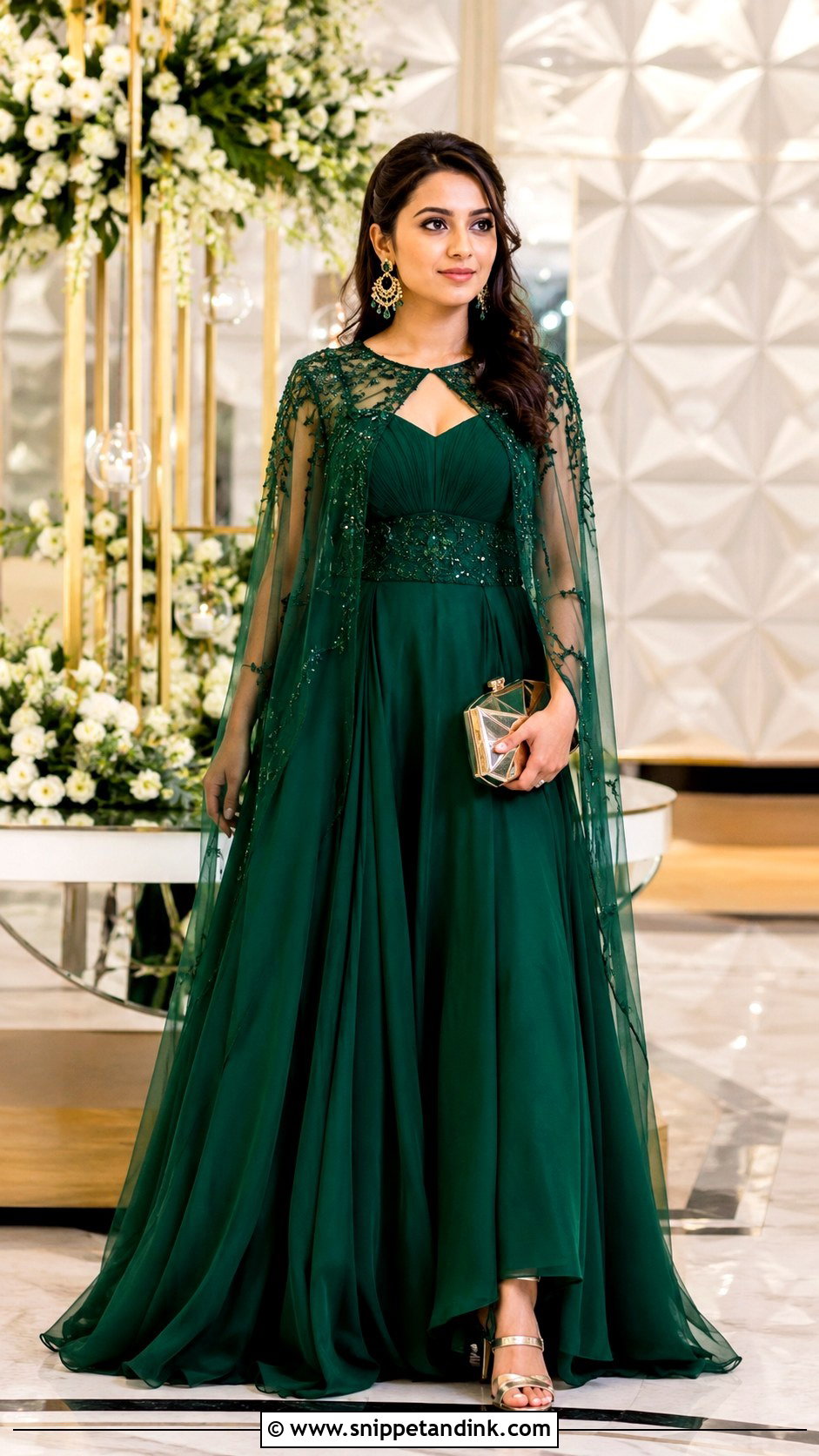
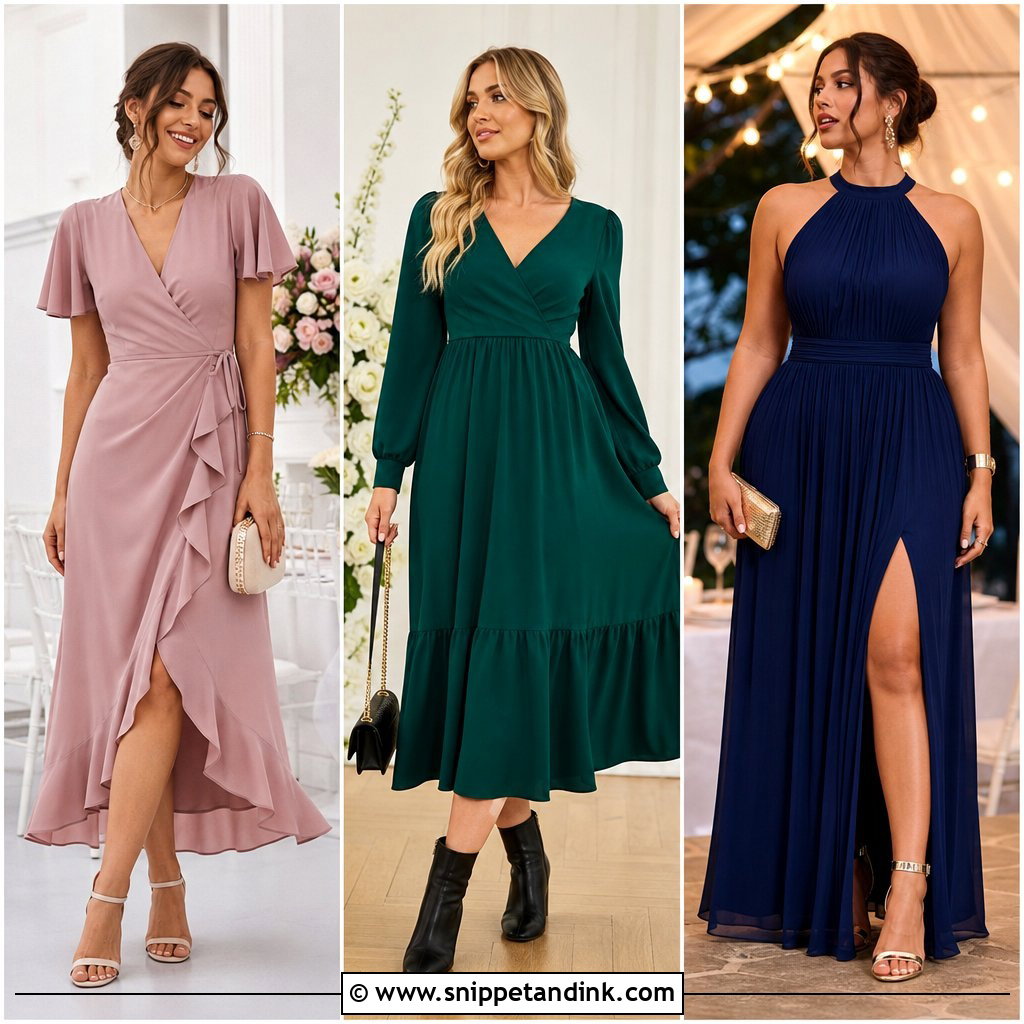
18. Floor-Length Gown for Reception
A floor-length gown is fine for many receptions, but I always tell friends to confirm Western formalwear is welcome before buying one. Choose a jewel tone like emerald, sapphire, plum or deep turquoise, with a defined waist and a skirt you can walk in. Subtle beading, draping or an embroidered cape links the gown to the festive mood. Skip trains entirely. Crowded halls and dance floors turn them into a tripping hazard for you and everyone around you. Avoid white, ivory and any color the couple has reserved. Chandelier earrings, a metallic clutch and block heels finish it. It’s a comfortable route for non-Indian guests who want to respect the dress code in a familiar shape.
19. Kanjeevaram Saree for South Indian Wedding
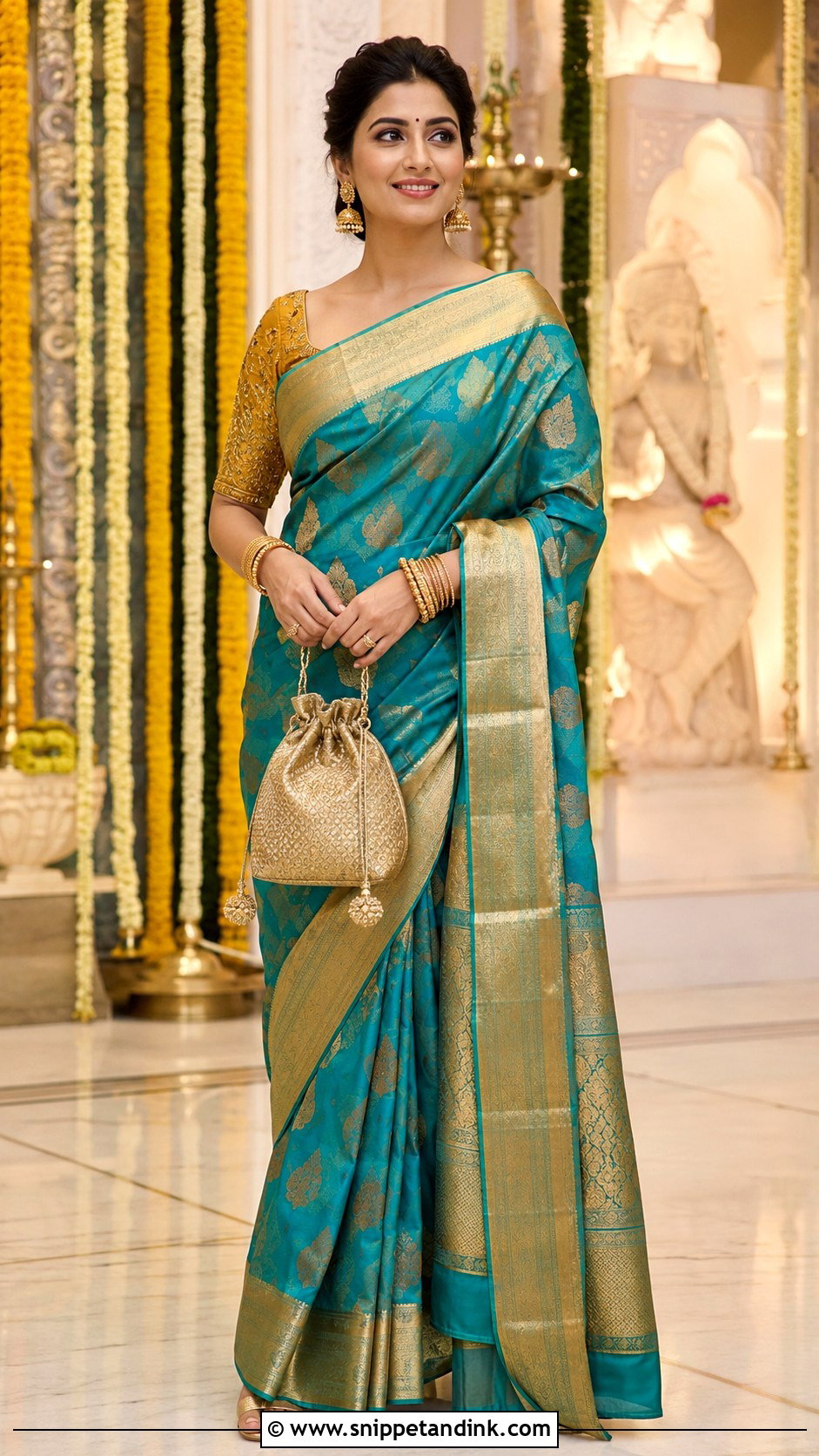
Kanjeevaram silk suits a South Indian wedding ceremony and shows real respect for the occasion. Guest-appropriate pairings include teal and gold, purple and green, blue and copper, or mustard and magenta. It’s a heavy, stiff silk, so practice the drape at home or book someone to drape you; first-timers often find the pleats won’t sit. A tailored blouse with room to lift your arms, temple-style earrings, gold bangles, a small bindi and a structured potli complete it. Add jasmine to a low bun only if it suits the family’s customs. Cushioned sandals under the hem help through a long ceremony, often on your feet.

20. Minimal Lehenga for Close Friend’s Wedding
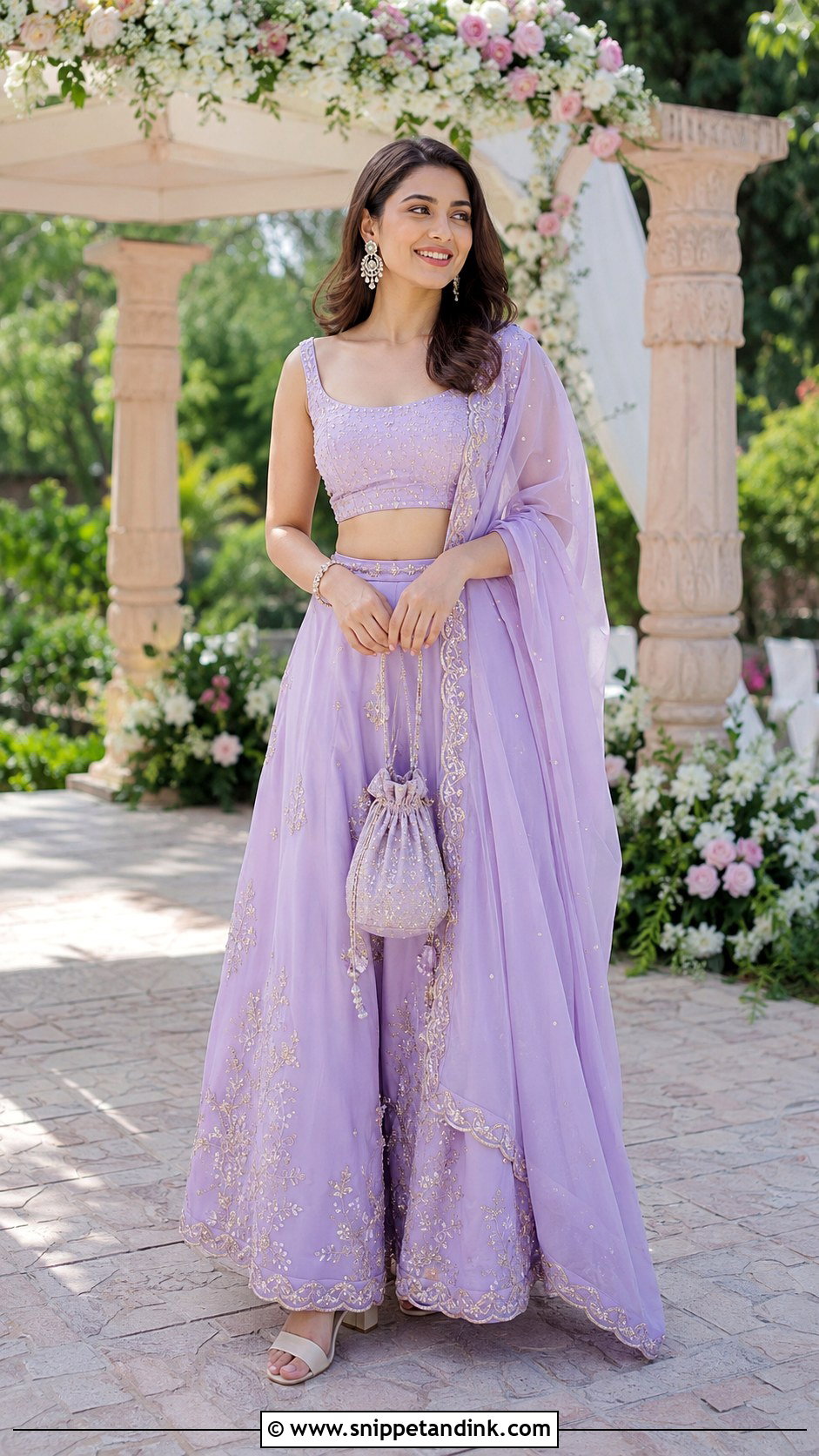
For the main ceremony, a minimal lehenga looks special without competing with your friend’s bridal outfit. Lavender, blue, green, peach or any color the couple has approved works. Choose elegant threadwork, printed motifs or a lightly worked border, not dense bridal embroidery, with a fitted blouse and neatly draped dupatta. Medium earrings, a slim bracelet, a small potli and block heels are enough. If you’re in the bride’s friend group, coordinate color and jewelry with the others. If not, let the invitation set the formality. Leave oversized head jewelry and heavy layering to the bride.
First Saree? Practice the Drape Twice and Carry Pins
Many friends at Indian weddings are wearing a saree for the first time, and I’d love every one of them to do a practice run at home. Drape it once with a video, then again the night before, and walk up and down stairs in it. You’ll learn where it pulls and how much pleat fabric you need at the waist.
On the day, ask whether the bride’s family has a draper for guests. Many larger weddings do. If not, a pre-stitched saree takes the stress away entirely. Wear a fitted petticoat in a matching color, tuck firmly, and pin the pleats at the waist and the pallu at the shoulder. Keep spare safety pins in your bag; someone will always ask for one.
Temples and gurdwaras have their own rules
At a gurdwara, everyone covers their head and removes their shoes, so carry a dupatta or scarf even if your outfit doesn’t need one, and wear shoes that slip off easily. Temple ceremonies often mean sitting on the floor for a long stretch, so a skirt with enough flare to sit cross-legged matters more than heels. If you’re unsure, ask your friend; she’ll appreciate that you checked.
Two Questions for Your Friend, Then Dress for Dancing
A good guest outfit at an Indian wedding respects the couple’s traditions and still lets you eat, sit and dance in it. Look at the invitation first, then ask your friend about colors and any religious or venue rules. Breathable fabrics carry the daytime functions; richer textures belong to the evening. Wear supportive shoes whenever there’s dancing or a long ceremony, and have everything fitted so you’re not adjusting it all night. A saree, lehenga, sharara, Anarkali or Indo-Western set can all work, as long as it fits well and you feel like yourself in it.
You'll Like These Ideas:




Leave a Reply