
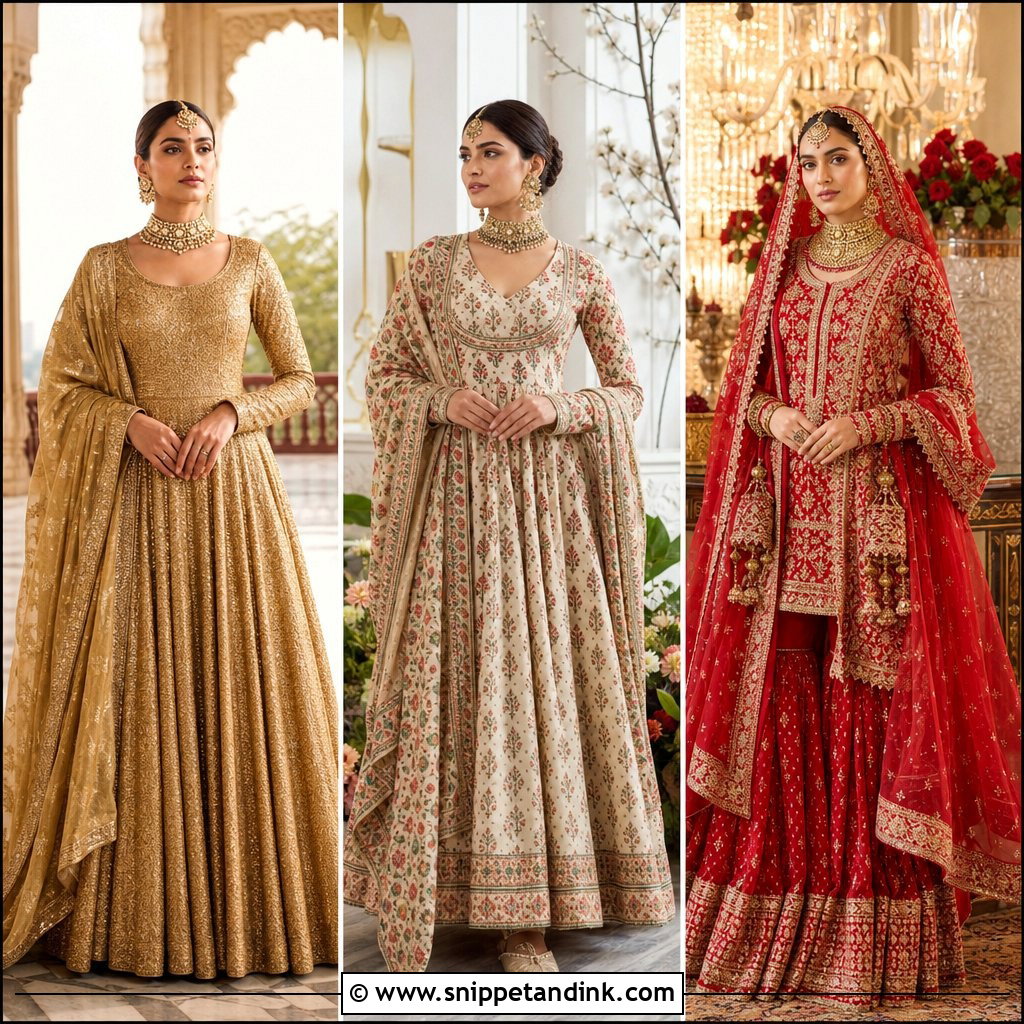
Plenty of Punjabi brides wear a lehenga for one event and a suit for everything else, and some choose a suit for the Anand Karaj itself. A well-made bridal suit carries a mehndi, sangeet, chooda ceremony, reception or small family function, and it is far easier to sit, kneel and dance in than a heavy skirt. When I style a bride for a suit, I start from the event and the floor she’ll be sitting on, then work out silhouette, embroidery and dupatta from there. The ideas below run from Patiala and sharara sets to velvet, phulkari and pastel Anarkalis, each with the practical detail I’d want a bride to know before ordering.
Placing a Bridal Suit Order With Your Tailor or Boutique
Hand embroidery is slow work. Zardozi, dabka and dense gota on a bridal dupatta can take several weeks on their own, so I tell brides to place orders for the main suits around four to six months out, and earlier if the boutique is busy in wedding season. Ready-made suits still need alteration time, usually two or three weeks.
What I bring to the first appointment
- The juttis or heels you’ll wear, so the salwar or sharara length is cut to them.
- The bra you’ll wear underneath, since kameez fit changes with it.
- A photo of the chooda, so sleeve length can be planned around it.
- A list of events, with what you’ll be doing at each: sitting on the floor, dancing or greeting guests.
Look at fabric swatches in daylight as well as under shop lights, since maroon and wine look almost identical indoors. Ask whether the kameez is lined and with what. A cotton lining under net or silk is far cooler than polyester. Plan two fittings at least: one to check the shape, and a final one roughly two weeks before the first event.
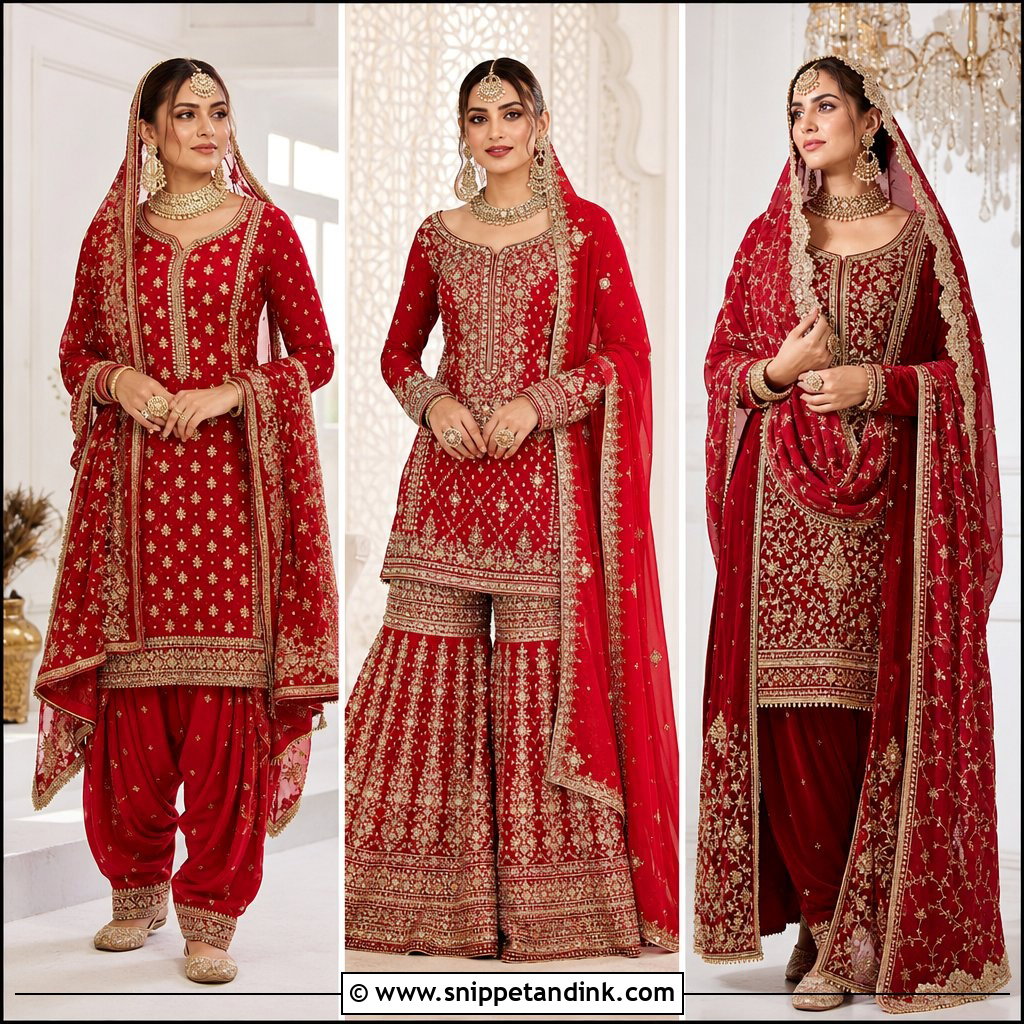
1. Red Punjabi Bridal Patiala Suit
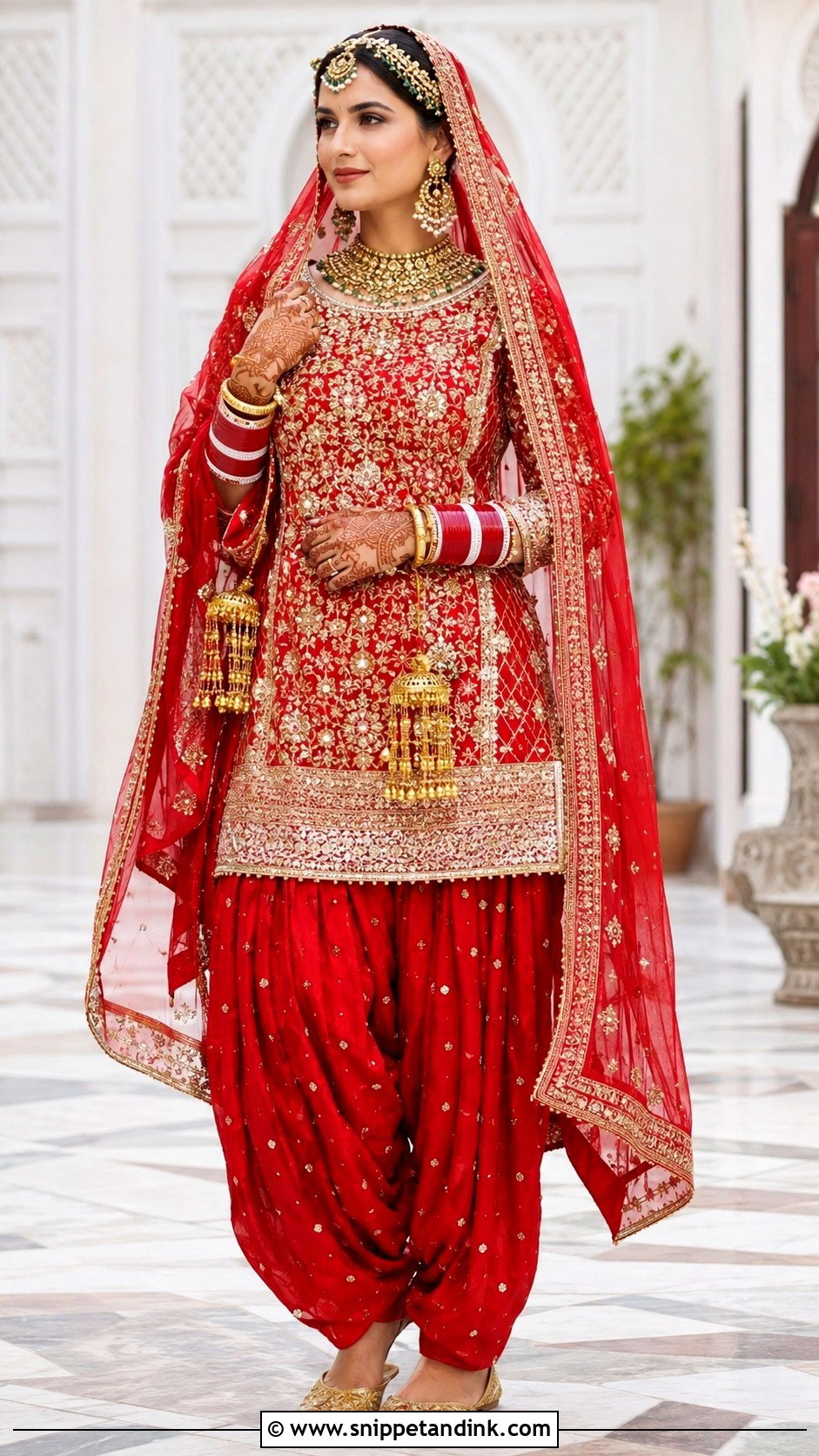
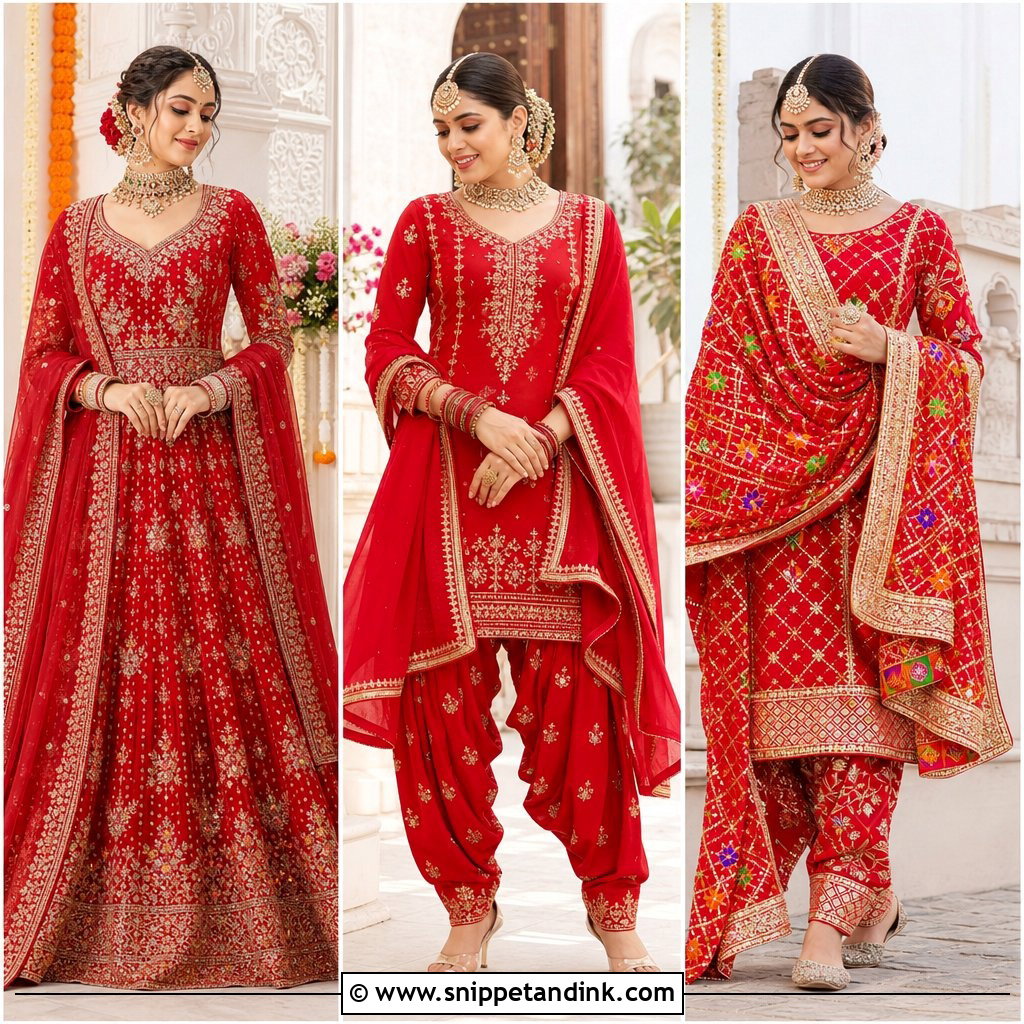
For a bride who wants the most recognisably Punjabi look, a red Punjabi bridal Patiala suit is hard to beat: a short, heavily worked kameez over a deeply pleated salwar, a red dupatta with zari or gota borders. The pleats are the thing to check. A proper Patiala uses a lot of fabric, and if the tailor skimps, the salwar hangs flat instead of falling in folds. Add matha patti, chooda, kalire, jhumkas and gold juttis. With rich enough embroidery it works for the chooda ceremony, the mehndi or the Anand Karaj, and soft red lips with defined eyes suit it best.
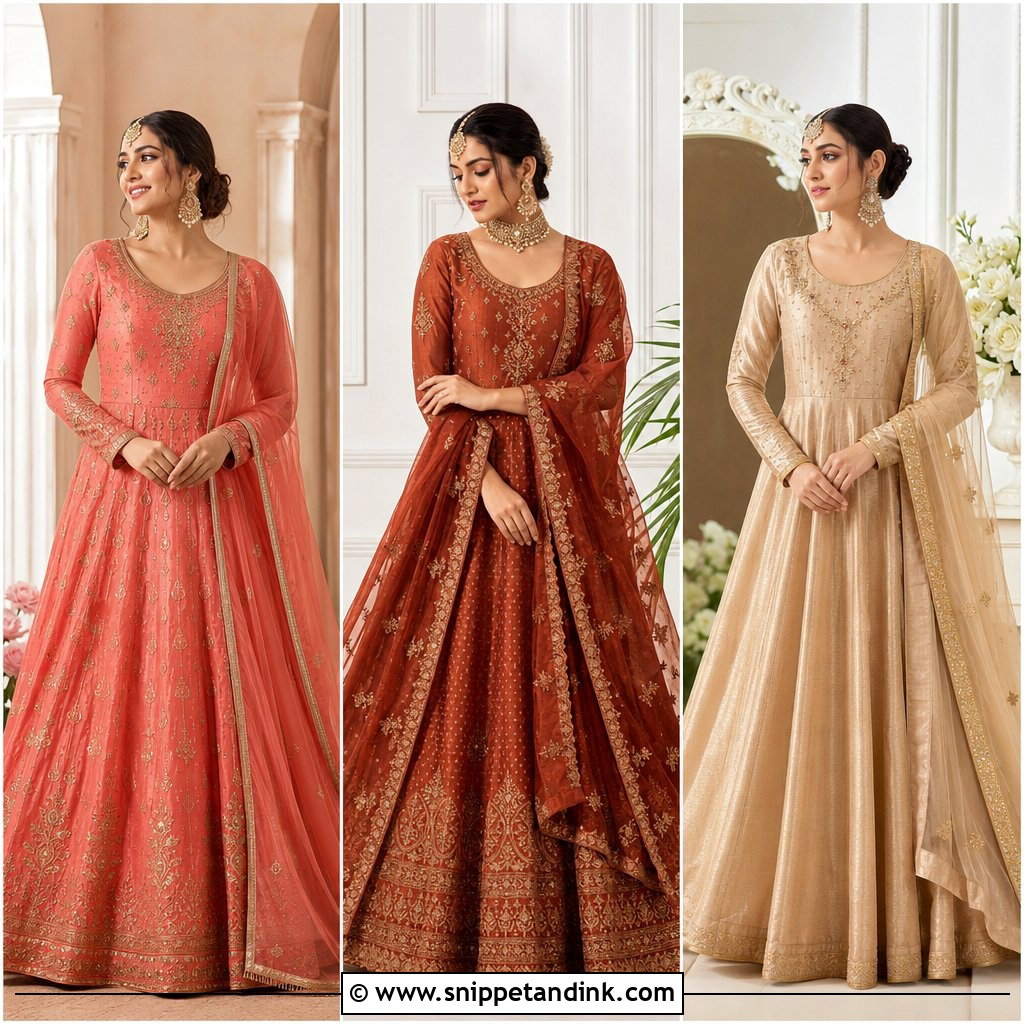
2. Maroon Punjabi Bridal Anarkali Suit
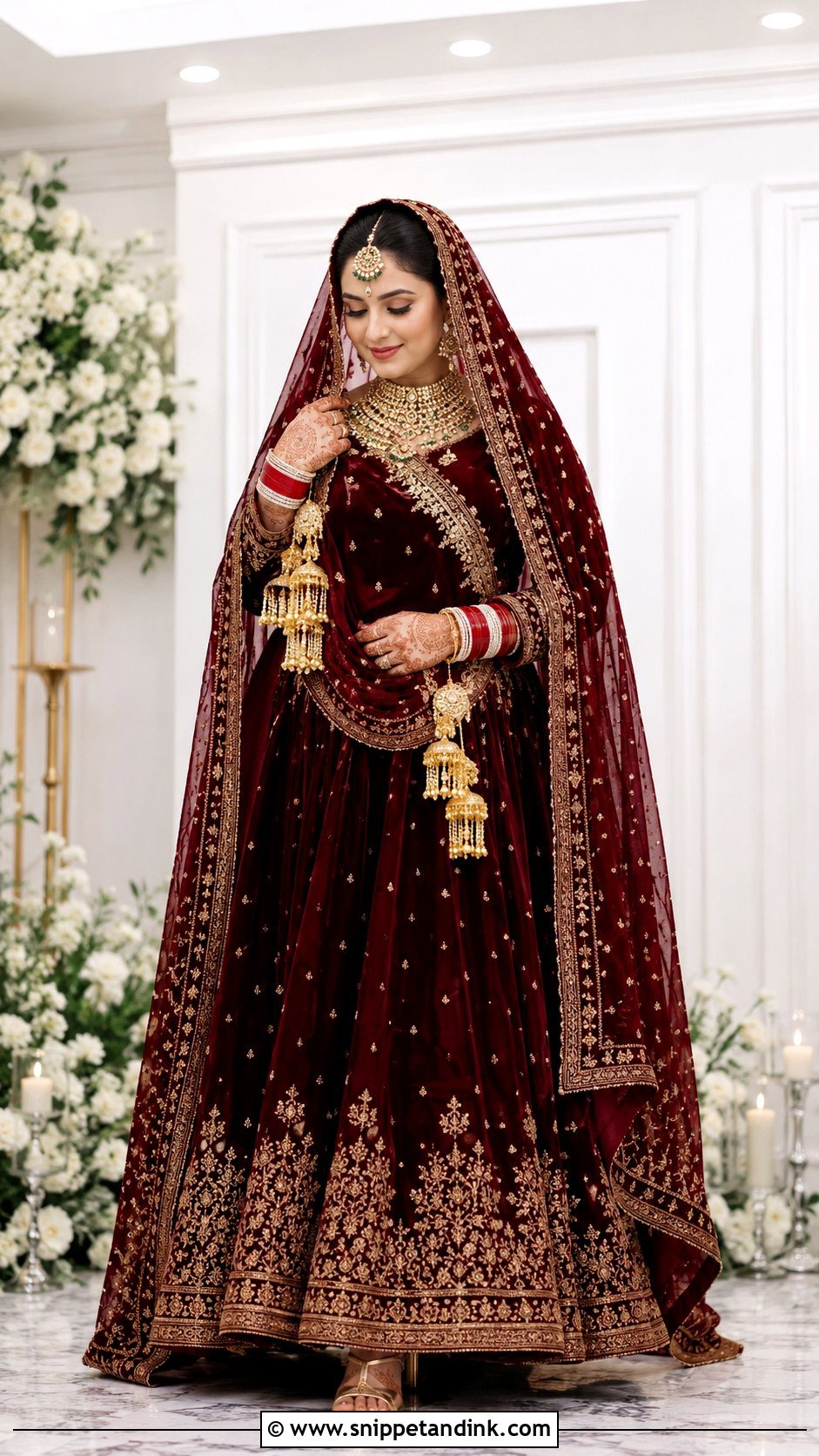
Maroon flatters most skin tones and looks deep and rich in silk, velvet or georgette. A floor-length Anarkali with gold embroidery, a fitted bodice and long sleeves gives a graceful flare as you walk. My caution is the flare itself: a very wide Anarkali gathers awkwardly when you sit cross-legged on the floor, so for a gurdwara ceremony I ask for a moderate panel count. Drape the bordered dupatta over the head and pair it with kundan, red chooda and kalire. Under winter evening lights, maroon looks warmer and richer than bright red.
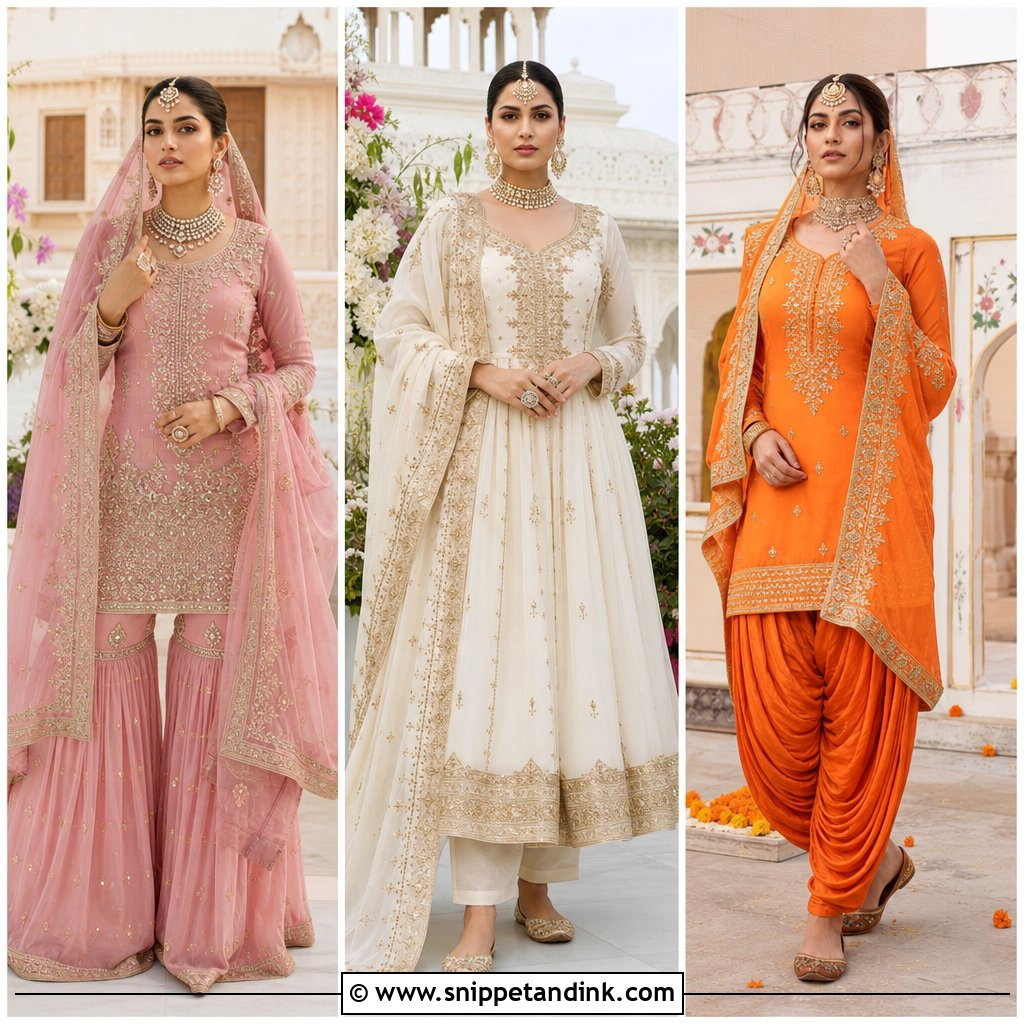
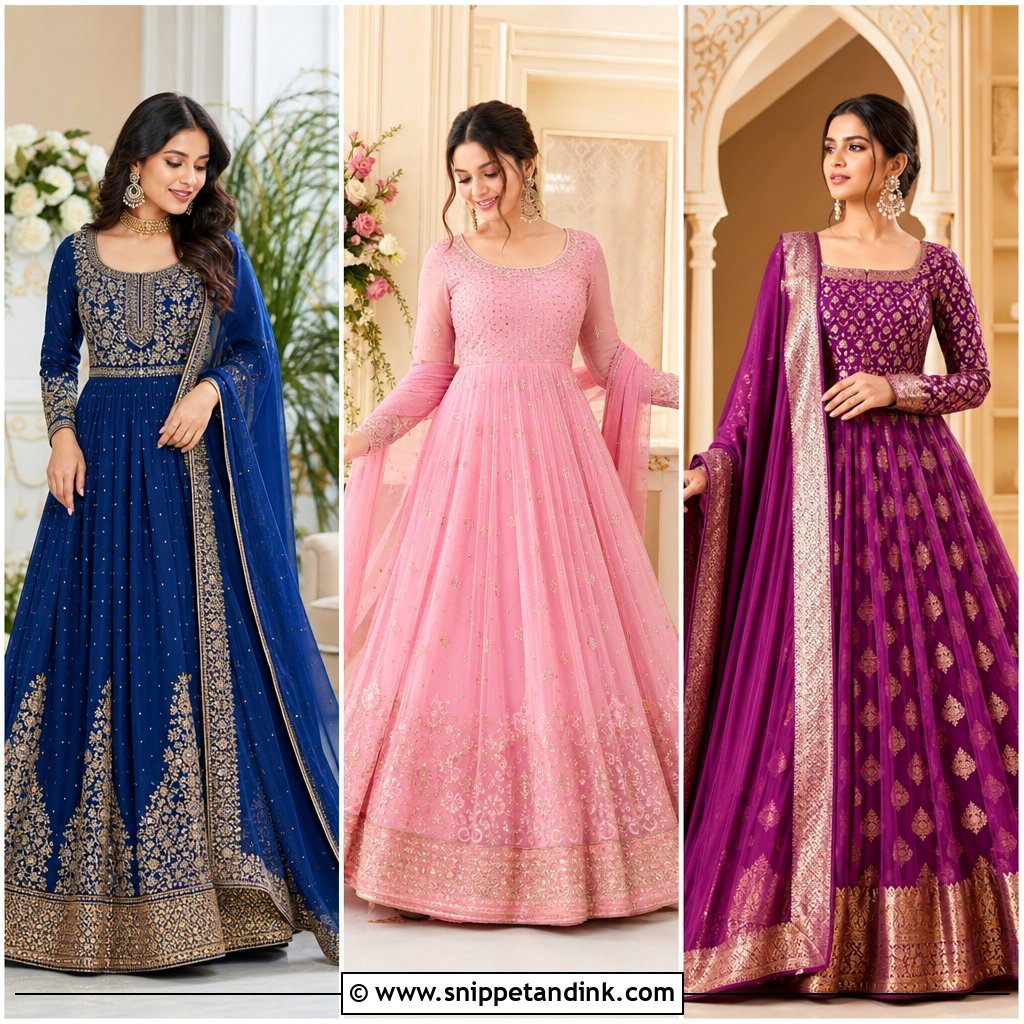
3. Pink Punjabi Bridal Sharara Suit
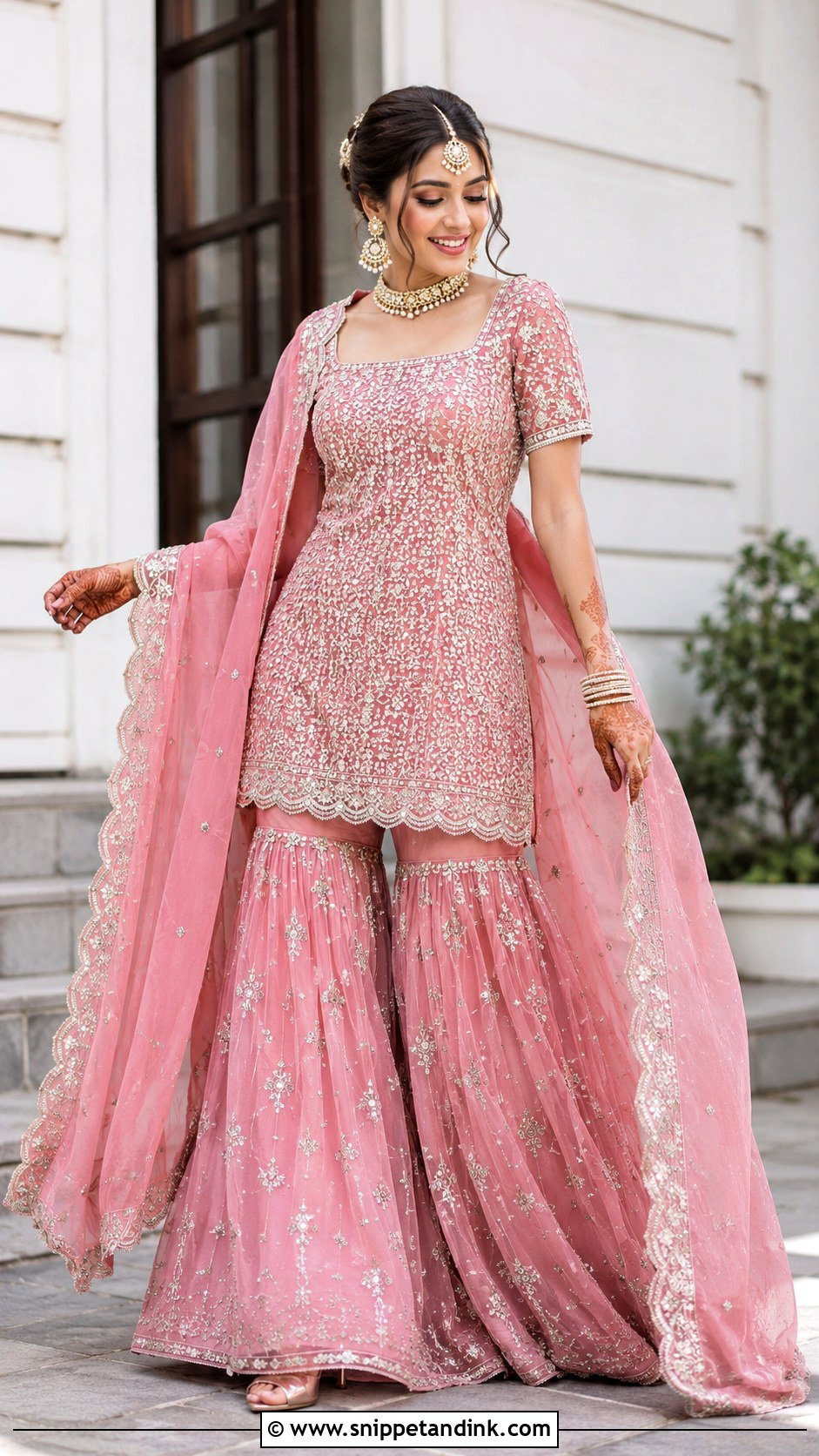
Pink shararas feel softer and more romantic while staying traditional. A short kurti worked in zardozi, sequins or mirror work sits over wide, flared sharara pants, with a net or organza dupatta edged in scallops. The shade changes the mood: blush for a daytime function with pearls and dewy skin, rani pink for a sangeet with heavier earrings and metallic heels. I always check where the sharara flares from. Flaring at the knee moves well when dancing, while flaring from the thigh looks fuller but can tangle on stairs.
4. Ivory Punjabi Bridal Gharara Suit
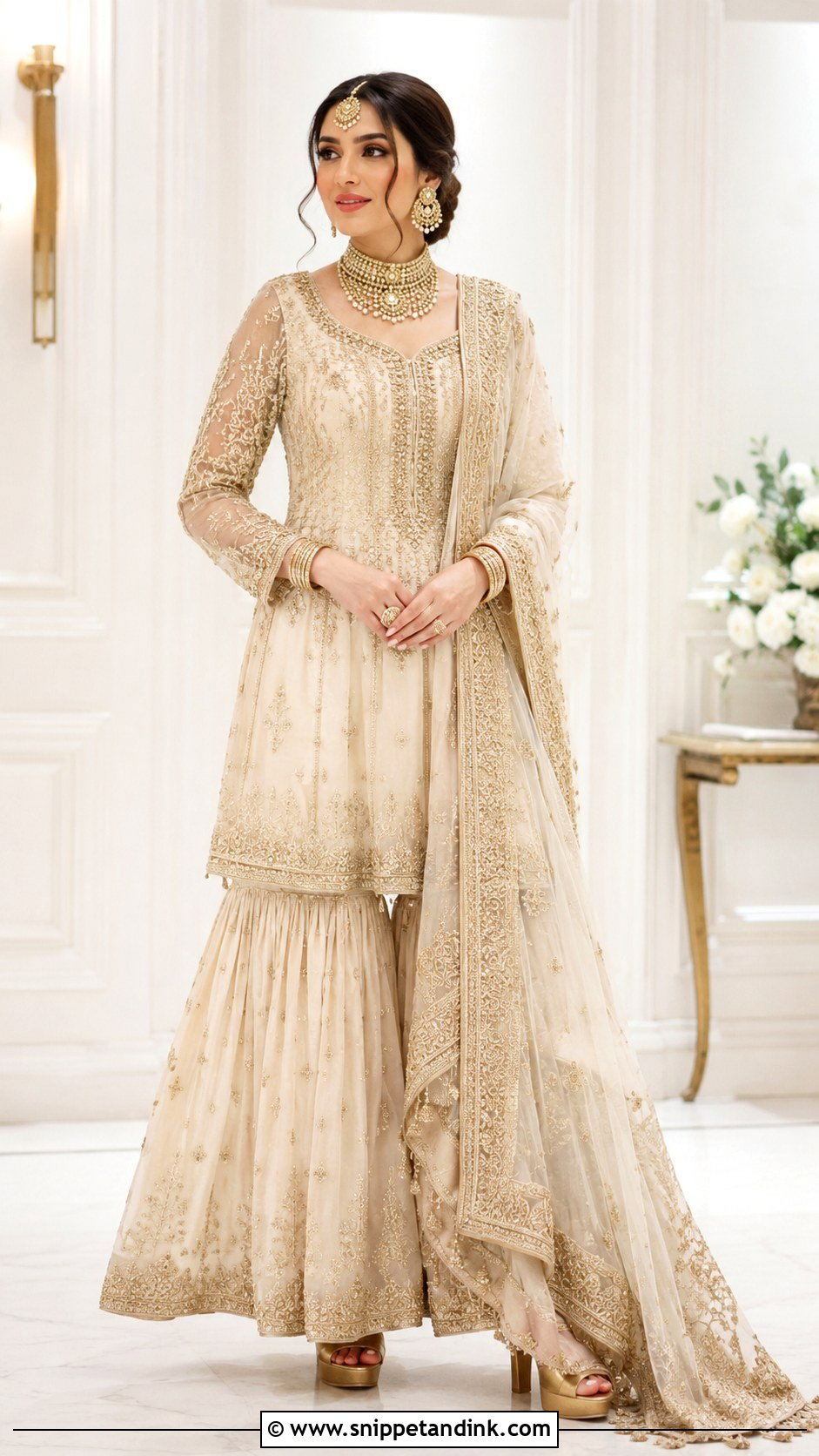
Ivory with gold, champagne or antique embroidery looks polished and modern while keeping a traditional gharara shape, with its fitted kurta and gathered bottoms joined at the knee. It suits an engagement, reception or quieter Anand Karaj. The dupatta needs a heavy border, otherwise the whole outfit reads as a guest look rather than bridal. Ivory makes jewellery stand out, so polki, kundan, emerald accents or pearls all look strong against it. Be realistic about stains: ivory shows turmeric, mehndi and food instantly, so I’d keep it away from any messy ceremony.
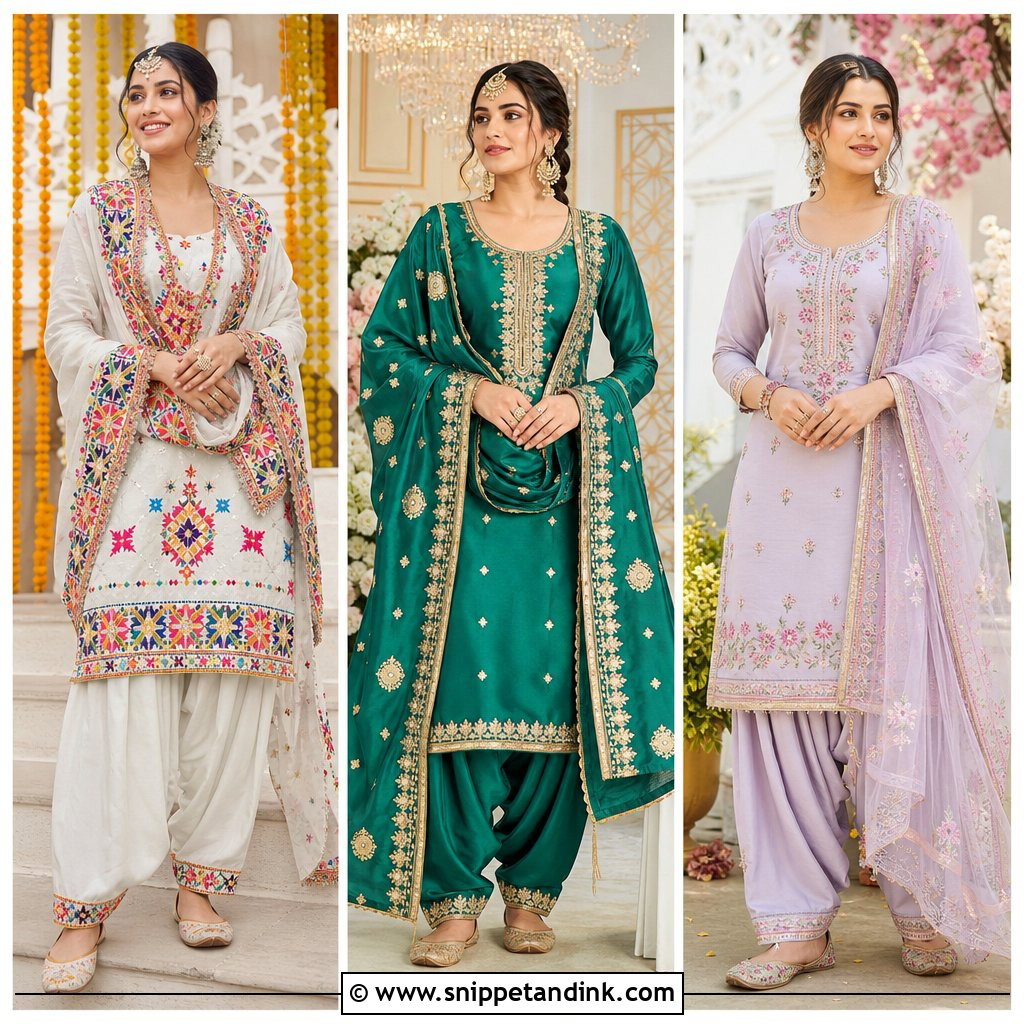
5. Phulkari Punjabi Bridal Suit
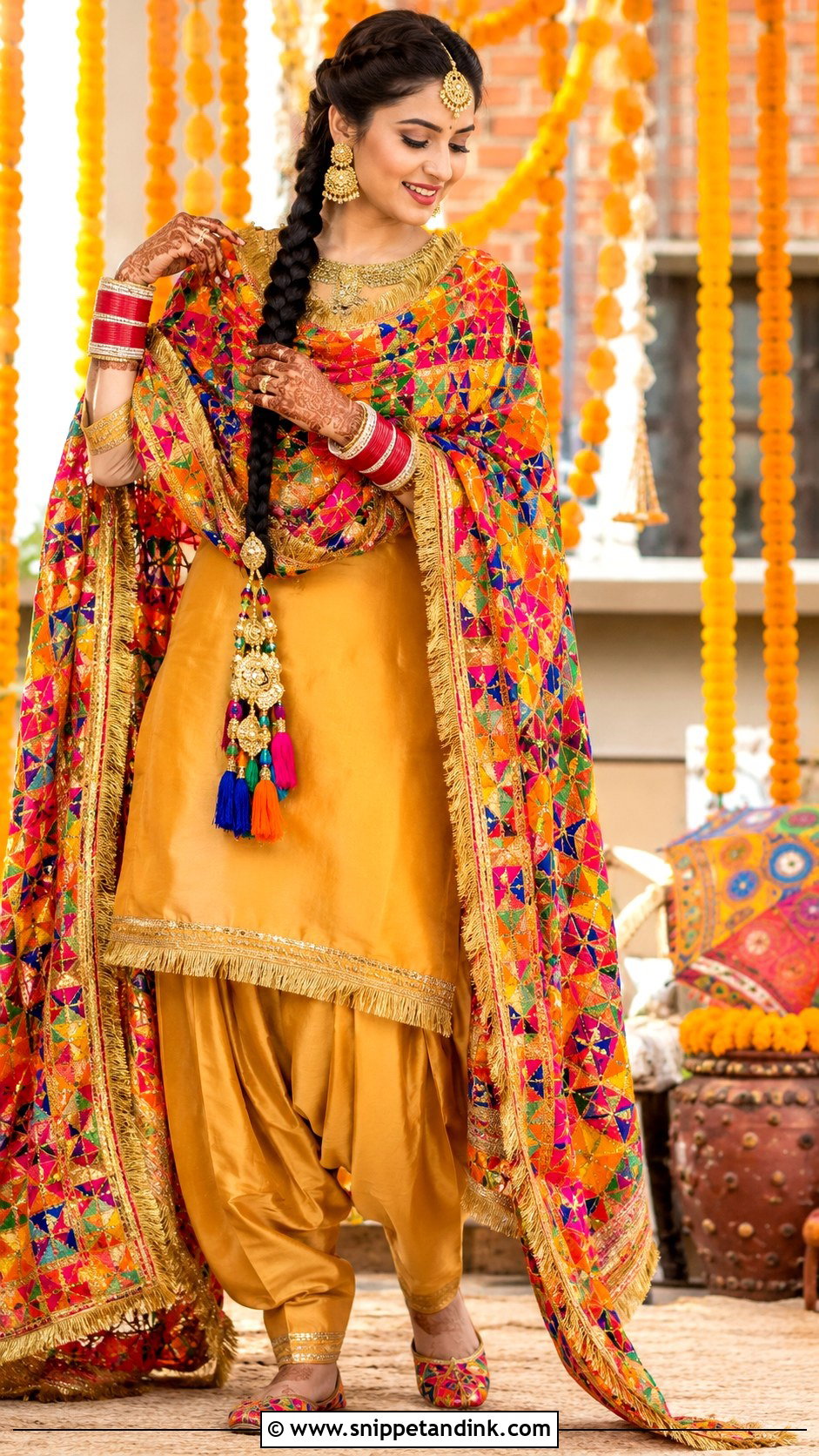
Here the dupatta is the whole point. A plain or lightly worked silk salwar kameez lets a heavy phulkari dupatta, with its dense darn-stitch flowers, frame the face and shoulders. Red, orange, mustard, pink or multicoloured phulkari all work depending on the event. Real hand-stitched phulkari is heavier than machine copies and drapes with more body, which I prefer for a head drape because it stays in place. Add traditional gold jewellery, a paranda, chooda and bright juttis. It feels most at home at a mehndi, jaggo, haldi or ceremony held at home.
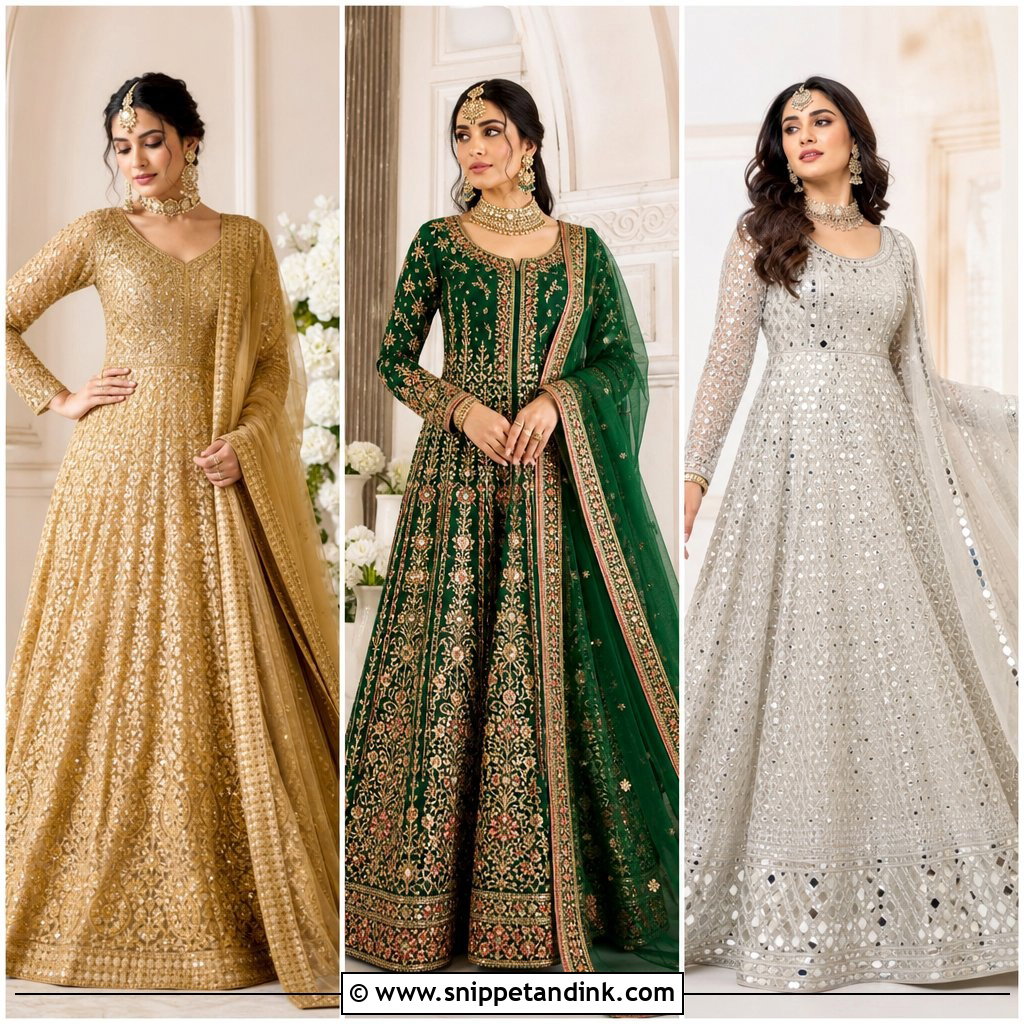
6. Green Punjabi Bridal Mehndi Suit
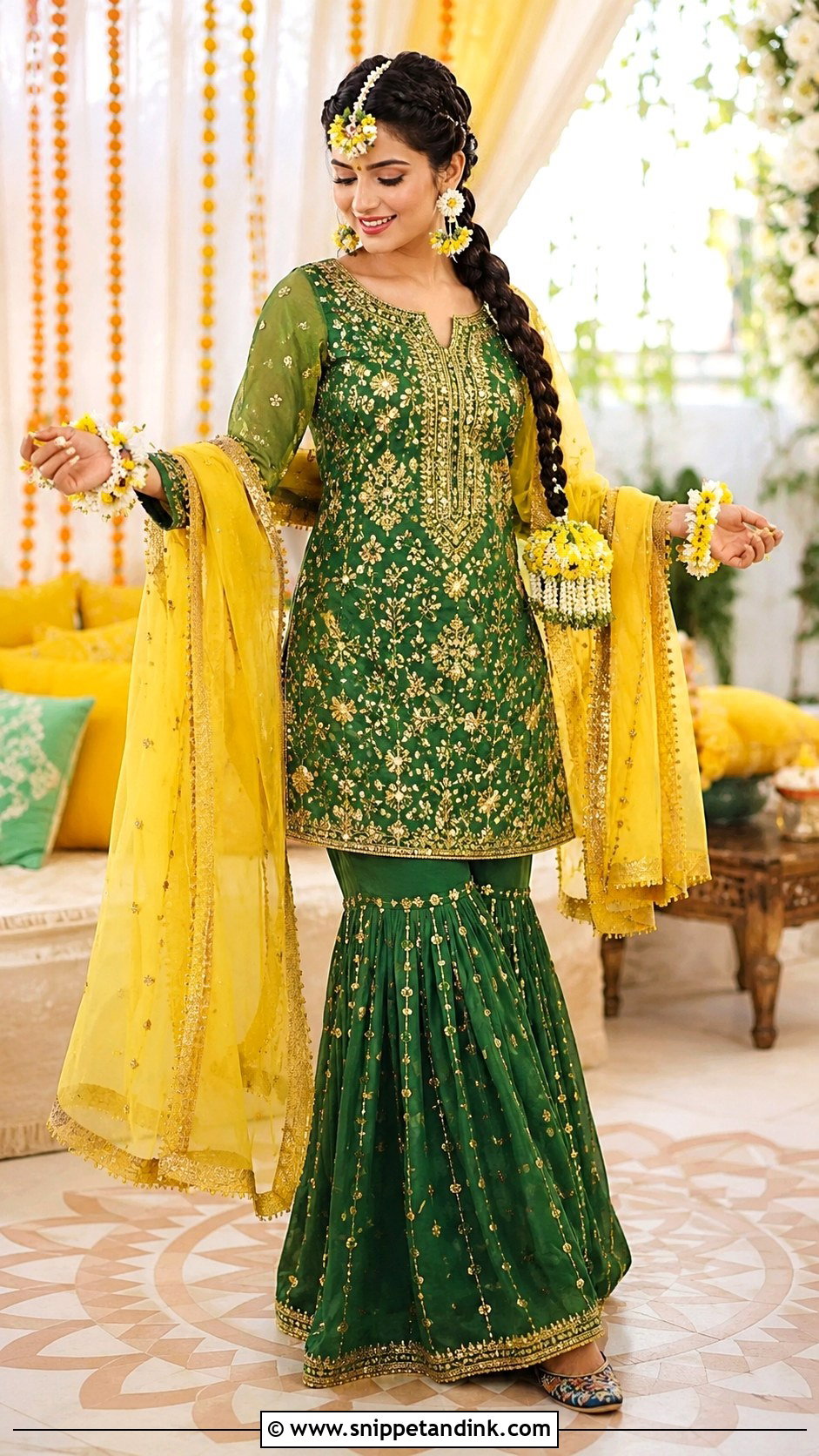
Green is the colour most brides reach for at a mehndi: parrot, emerald or a true mehndi green, worked with mirrors, gota patti or thread embroidery. Sharara, Patiala or palazzo bottoms all work, so choose by how you like to sit. A contrasting dupatta in yellow, pink, orange or gold keeps it playful. You will be sitting still for hours while the henna dries, then dancing, so I recommend breathable cotton silk and short or three-quarter sleeves that keep fabric off wet henna. Floral jewellery and a paranda braid finish it.
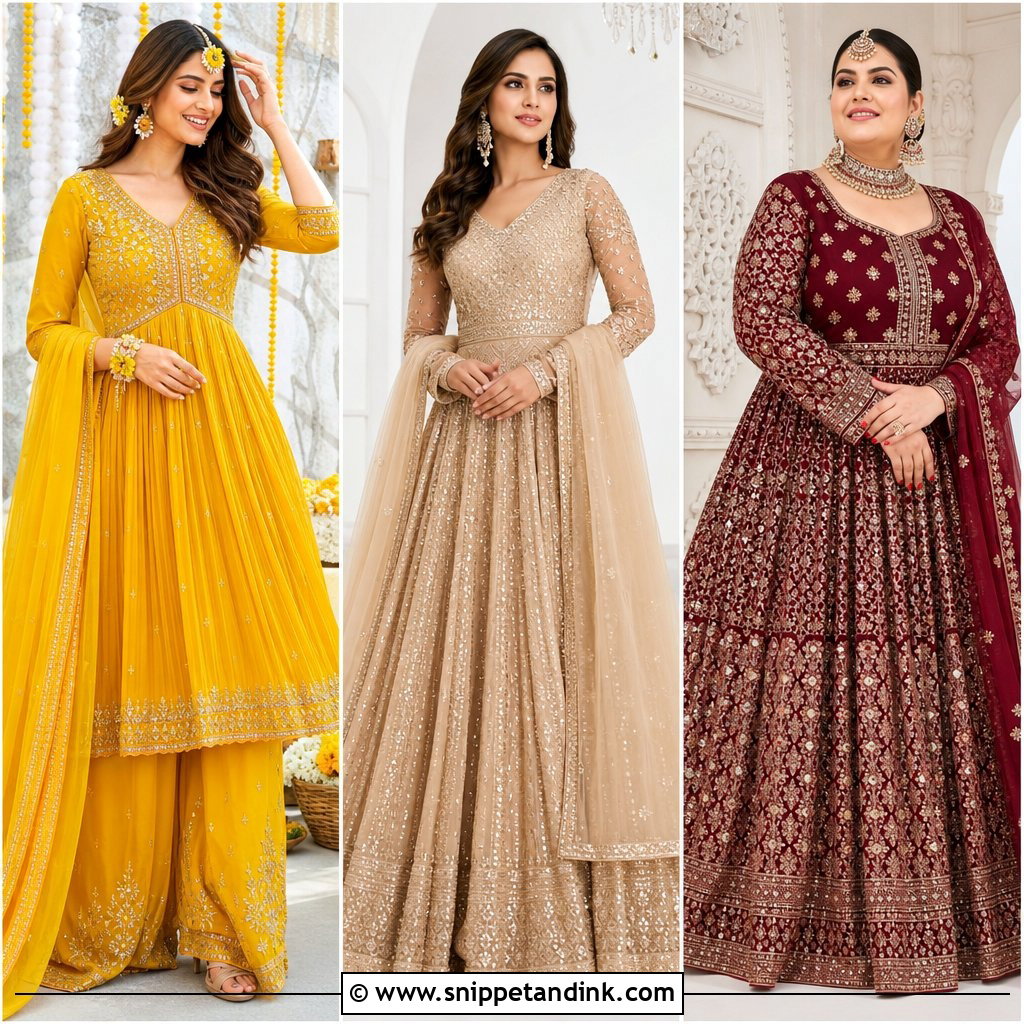
7. Yellow Punjabi Bridal Haldi Suit
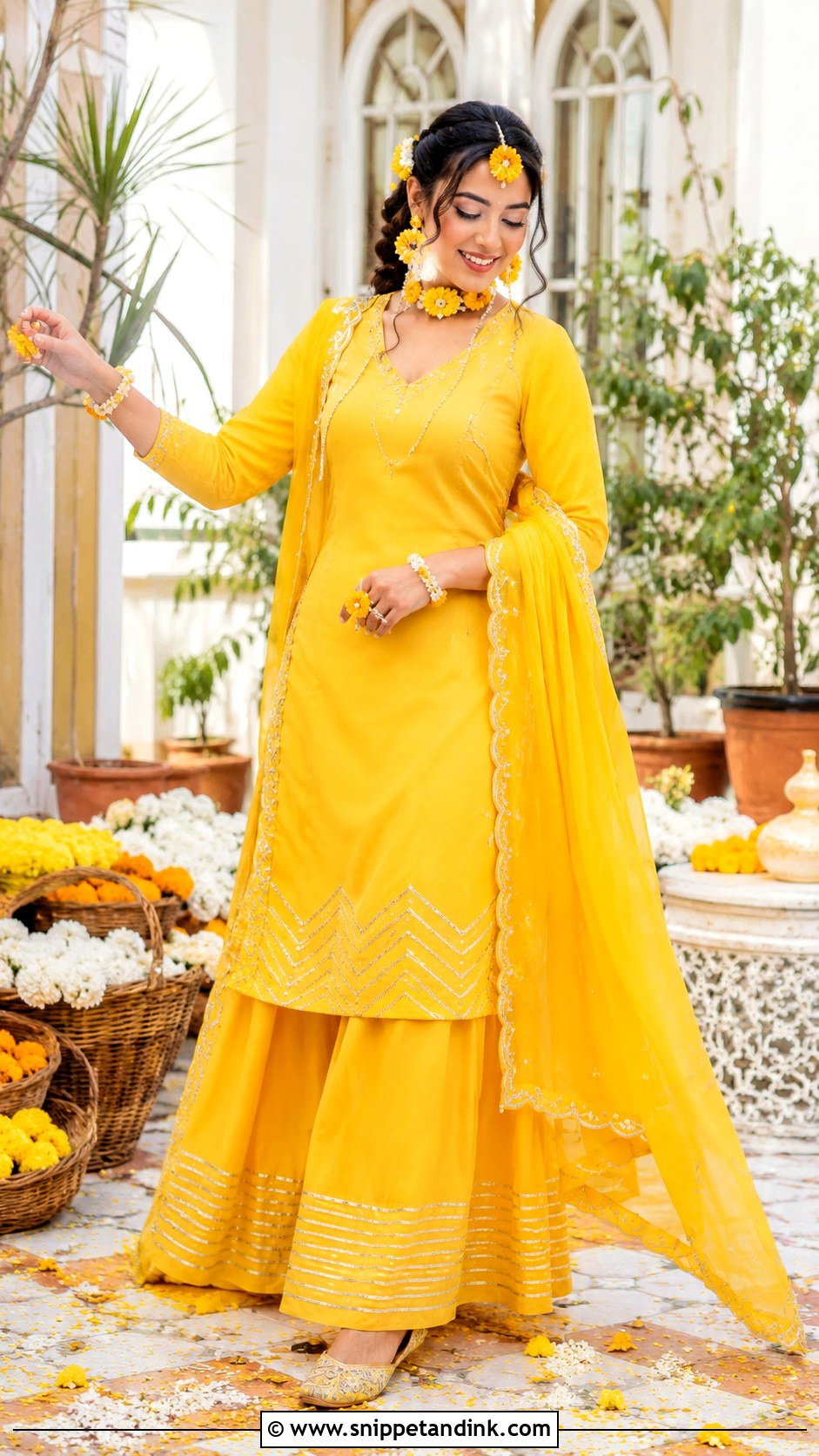
A yellow Punjabi bridal haldi suit in mustard, marigold or lemon keeps the morning bright. Light embroidery, mirror work or gota edging is enough, and a soft organza or chiffon dupatta is easier to manage than a heavy one. My honest advice is to treat this outfit as one that may not come out clean: turmeric paste stains silk and gota stubbornly, so I steer brides to washable cotton or a fabric they won’t mind losing. Floral jewellery, glass bangles and a simple braid or bun suit the morning.
8. White Punjabi Bridal Suit With Red Dupatta
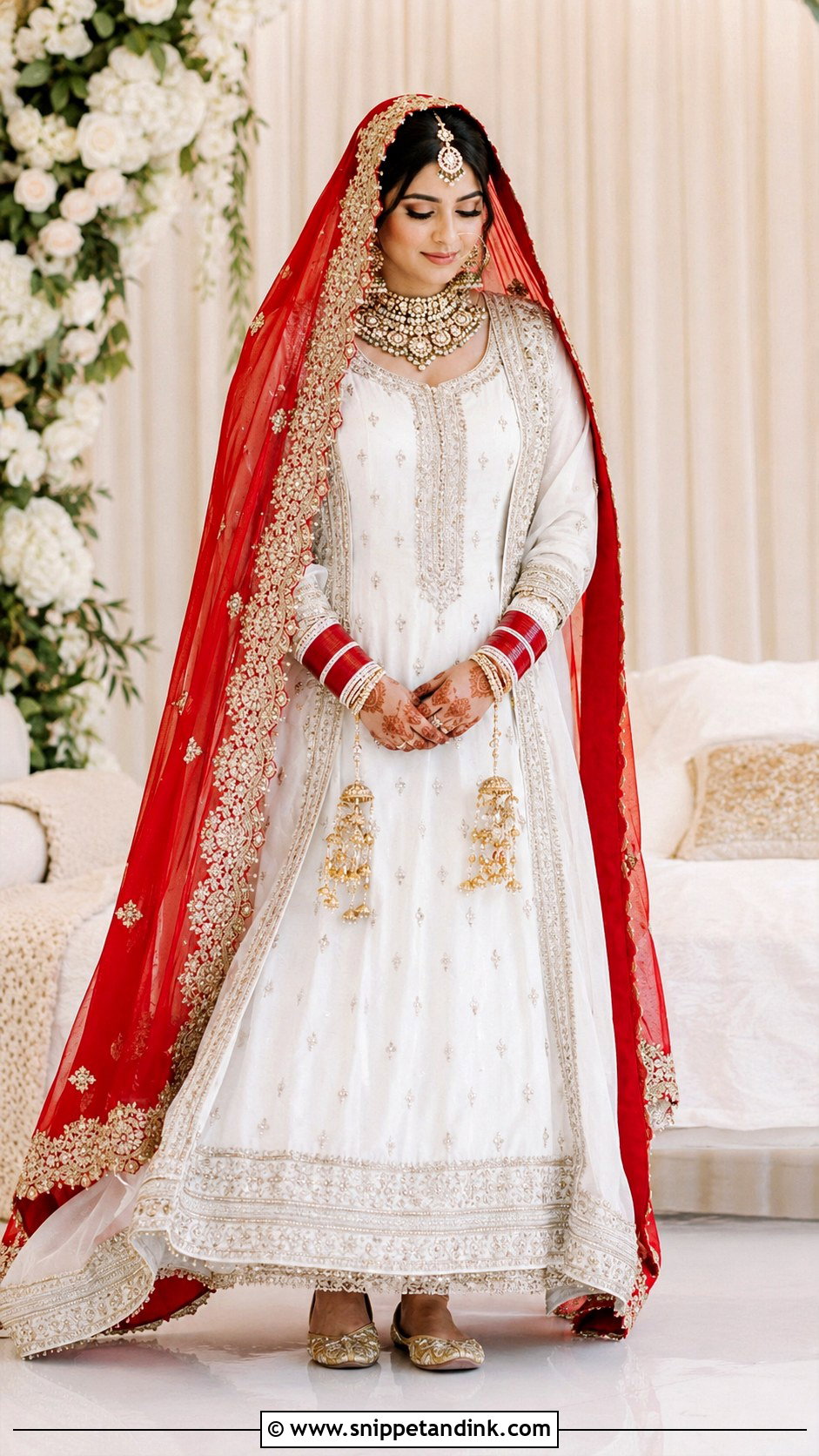
White as a base keeps the suit clean and bright, and a red bordered dupatta brings in the bridal tradition at once. A long kameez or Anarkali with gold embroidery under a rich red head drape suits an Anand Karaj, engagement or intimate ceremony. The thing I check is dye. A deep red dupatta can bleed onto white in heat or rain, so I ask for the dupatta to be colour-tested before the day. Red chooda, kalire, gold juttis and kundan tie the two colours together, with soft makeup so the dupatta stays the strongest colour.
9. Gold Punjabi Bridal Palazzo Suit
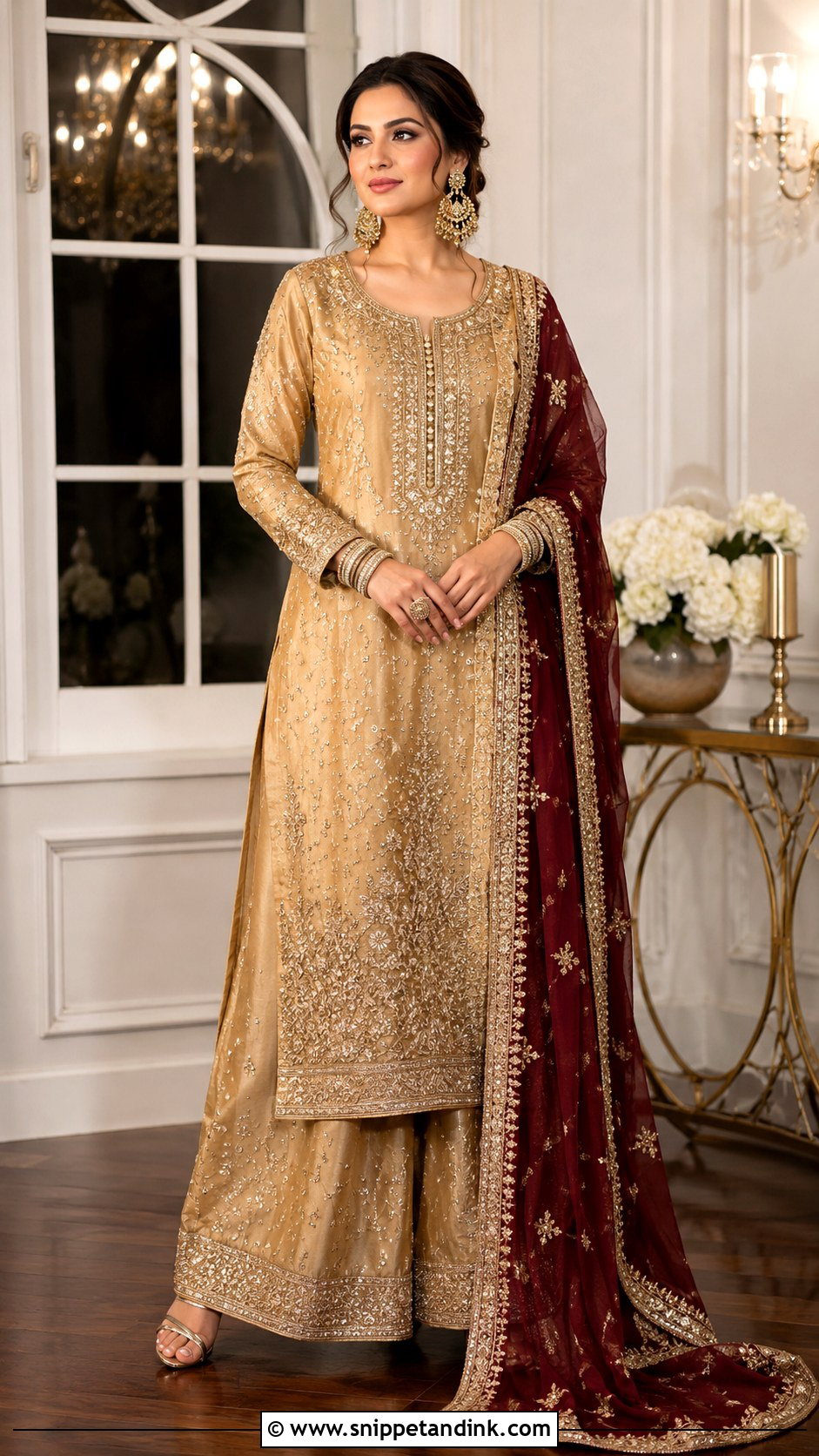
Gold palazzo sets give shimmer with easy movement. A straight or slightly flared kurta in silk, brocade or tissue over wide palazzos feels relaxed, and gold-on-gold embroidery gives depth. A dupatta in maroon, emerald or deep pink adds contrast. Tissue fabric is the one to be careful with, since it creases sharply and shows every fold, so I’d want it steamed on site. Reception dinners, engagements and post-wedding events suit it best, with statement earrings, stacked bangles and metallic heels.
10. Velvet Punjabi Bridal Suit
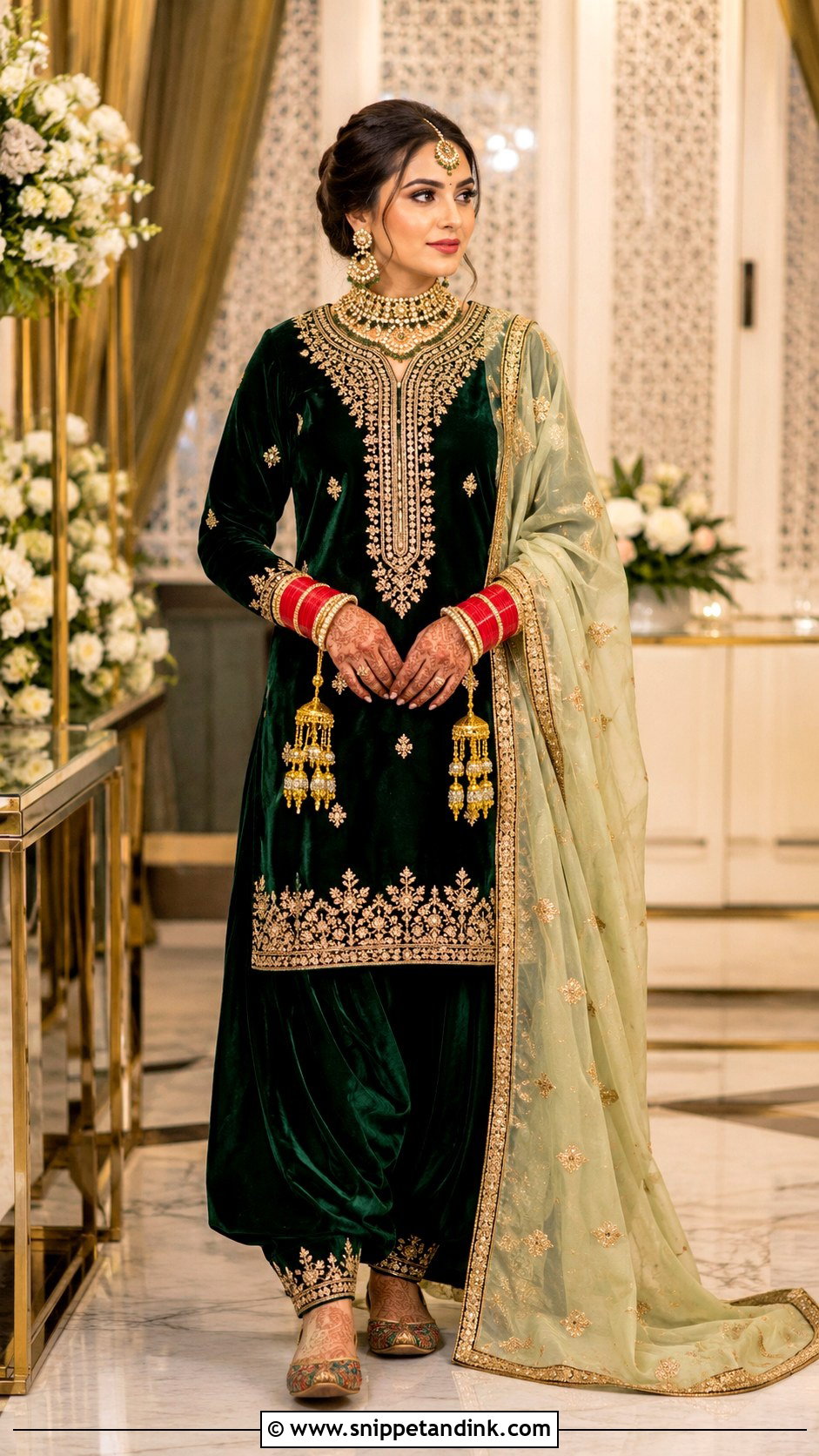
Velvet is the winter fabric. It absorbs light so the colour looks deep, and even simple embroidery looks rich against the pile. Maroon, bottle green, navy, wine and royal blue all work, as a straight kurta with salwar, a sharara set or a floor-length Anarkali. Velvet is heavy and warm, and that matters: in a heated hall it becomes hot within an hour, and the pile crushes if you sit on it for long. A lighter net or organza dupatta balances it. Add kundan, a sleek bun, chooda and embroidered juttis for an evening event.
11. Pastel Punjabi Bridal Anarkali Suit
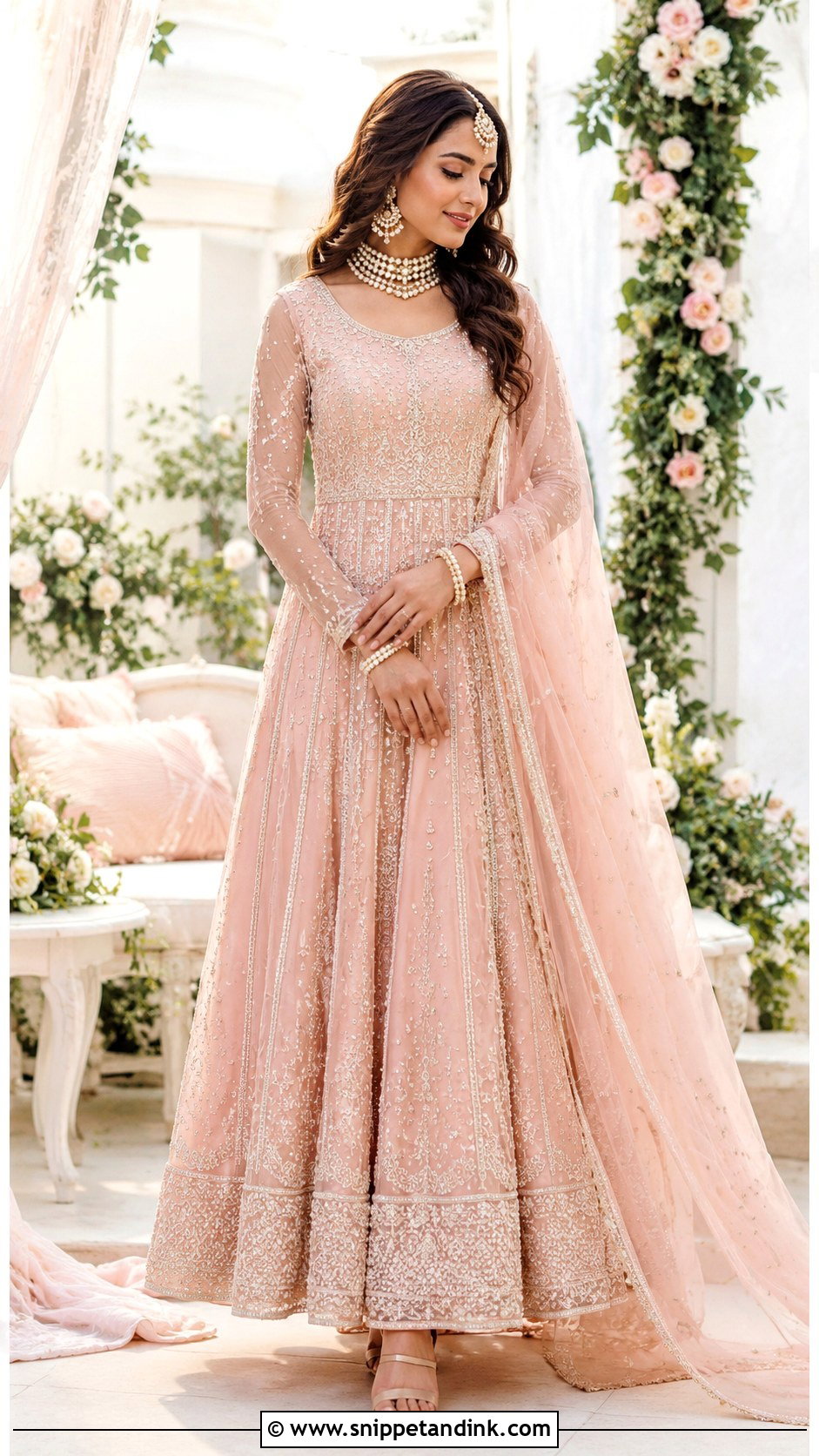
Powder blue, blush, mint, lavender and peach look graceful in daylight, with silver, pearl, thread or light gold embroidery keeping it bridal without weight. A floor-length Anarkali with a flowing dupatta moves well at outdoor functions. I always look at pastels against the bride’s skin in natural light before committing; some shades wash out deeper or olive skin, and a slightly warmer version usually fixes it. Pearls, soft curls and neutral juttis complete it for an engagement, roka, daytime Anand Karaj or morning reception.
12. Orange Punjabi Bridal Sharara Suit
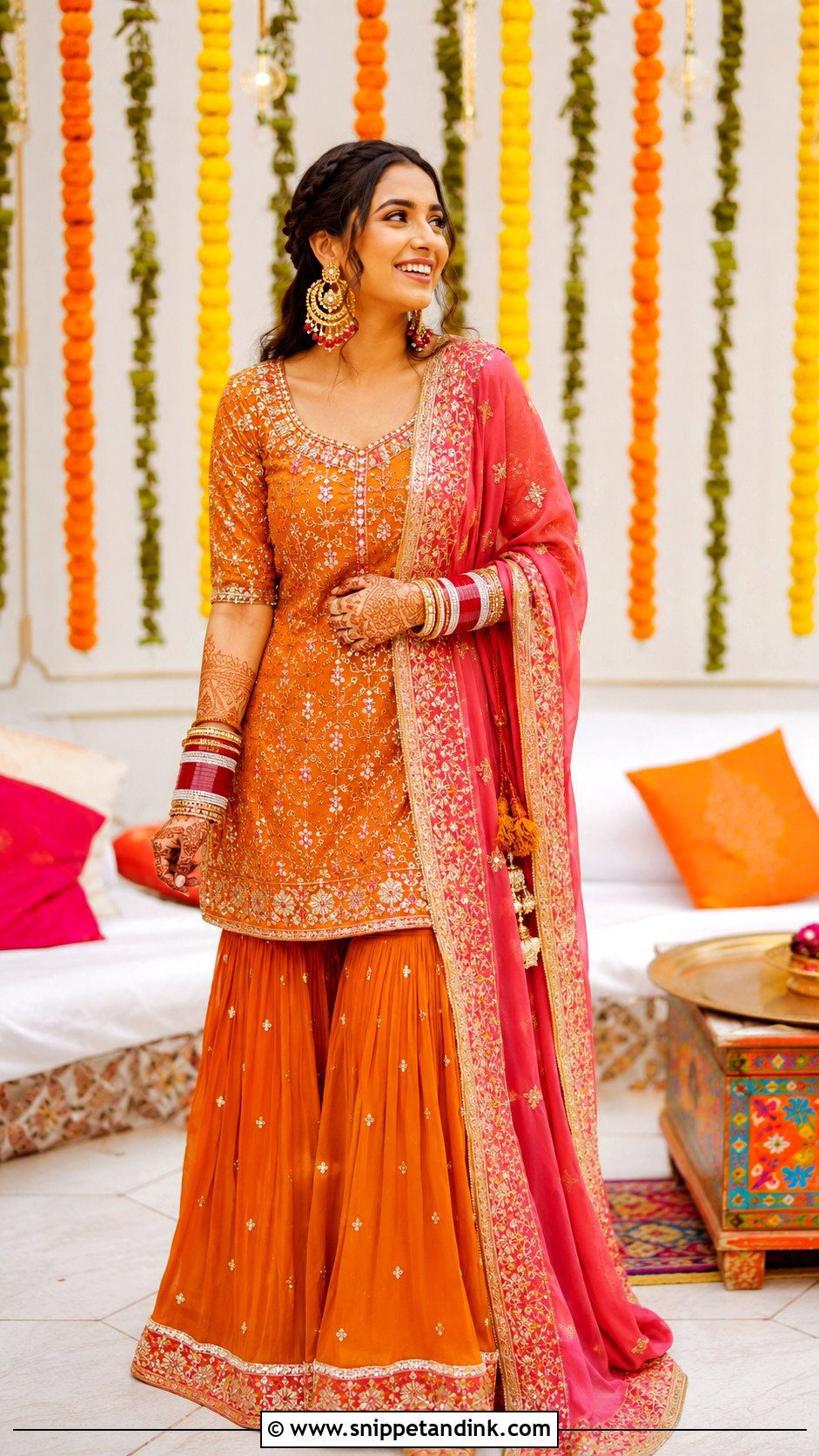
Orange carries wedding energy, especially at a mehndi, jaggo or daytime sangeet. A burnt orange, tangerine or rust kurti with gold embroidery over a flared sharara, plus a pink or green dupatta, gives that lively Punjabi colour mix. The sharara makes it easy to dance and move around. Orange is a shade where makeup matters: I keep skin warm with bronzer and peach blush, since cool pink tones look off next to it. Statement jhumkas, chooda and embellished juttis finish it.
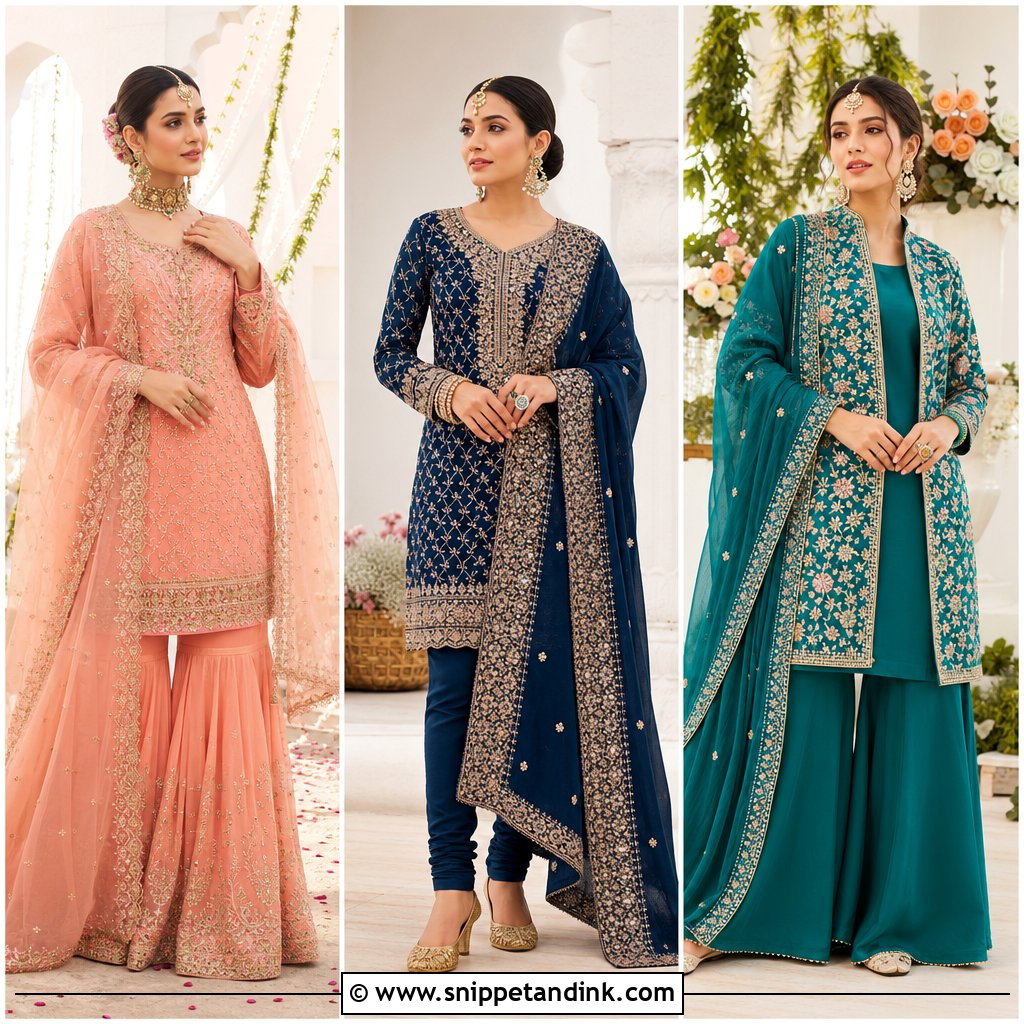
13. Blue Punjabi Bridal Suit
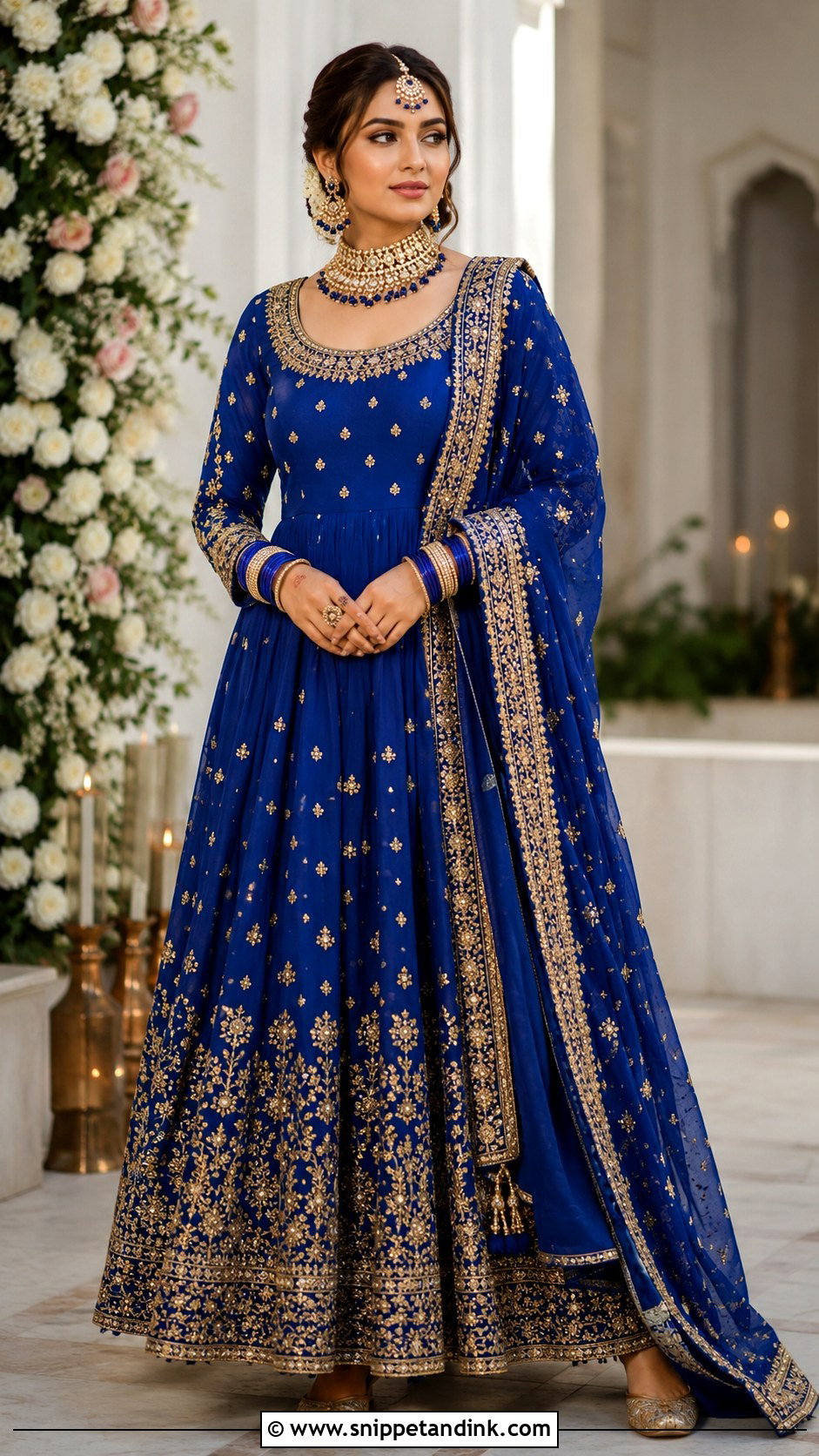
Blue is a good alternative if red, pink and maroon don’t feel like you. Navy and royal blue with gold embroidery look formal; powder blue with silver or pearl detailing looks fresh in the day; teal sits between the two. A straight suit, Anarkali, sharara or palazzo set all work. Match metals to the embroidery: gold work with kundan, silver work with diamonds or pearls. Some families prefer traditional red for the ceremony itself, so I’d talk it through at home before ordering blue for the Anand Karaj.
14. Punjabi Bridal Suit With Heavy Dupatta
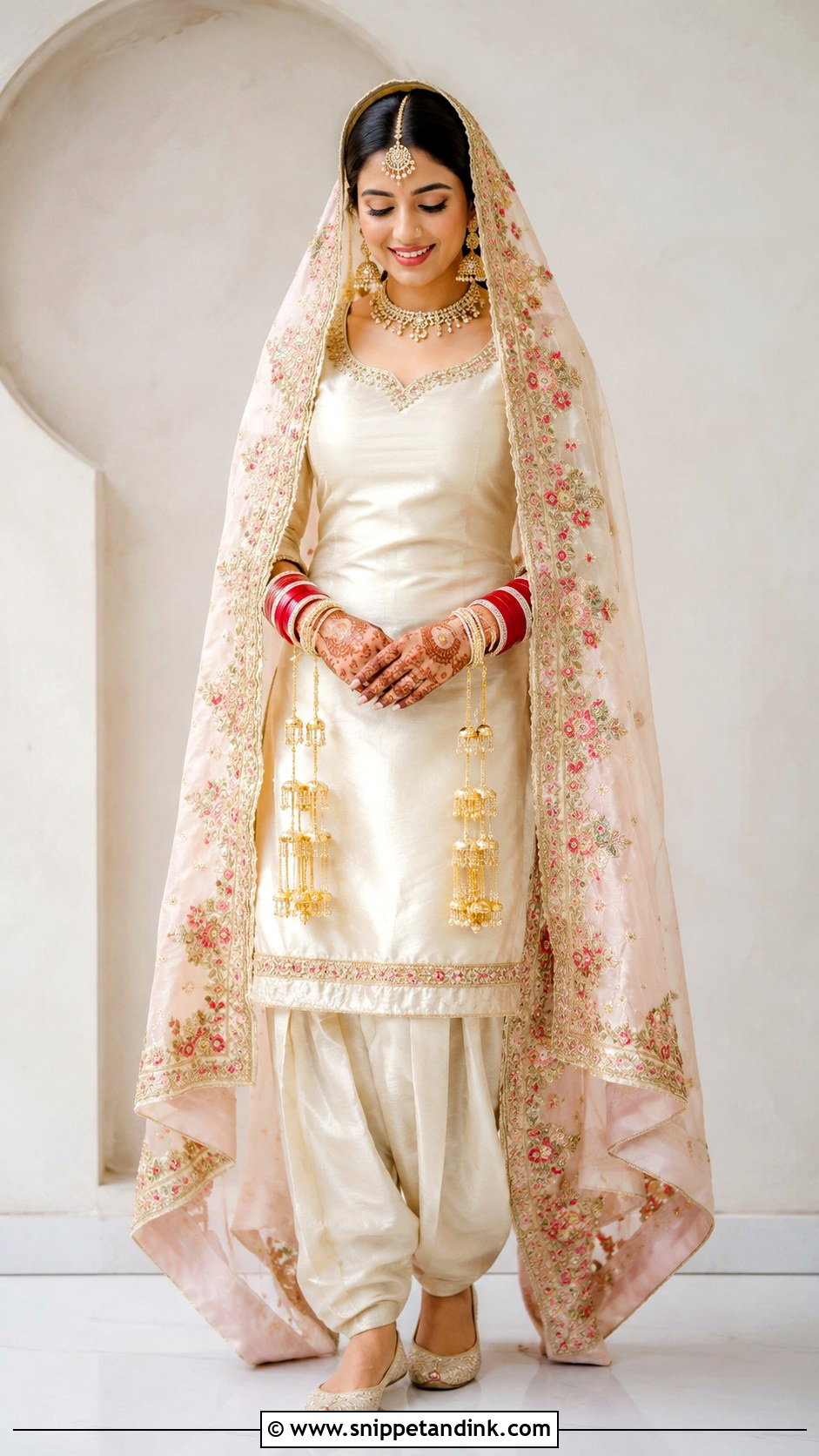
Putting the weight into the dupatta keeps the bride comfortable and still reads as bridal. A lighter silk, georgette or crepe kurta with matching bottoms carries a statement dupatta in phulkari, zardozi, gota, sequin or zari work. The practical problem is weight on the head. A heavily embroidered dupatta can pull backwards and drag the hair, so I anchor it to a firm base in the hairstyle rather than to loose hair. Drape it over the head and one shoulder with chooda, kalire, jhumkas and juttis for ceremonies and family rituals.
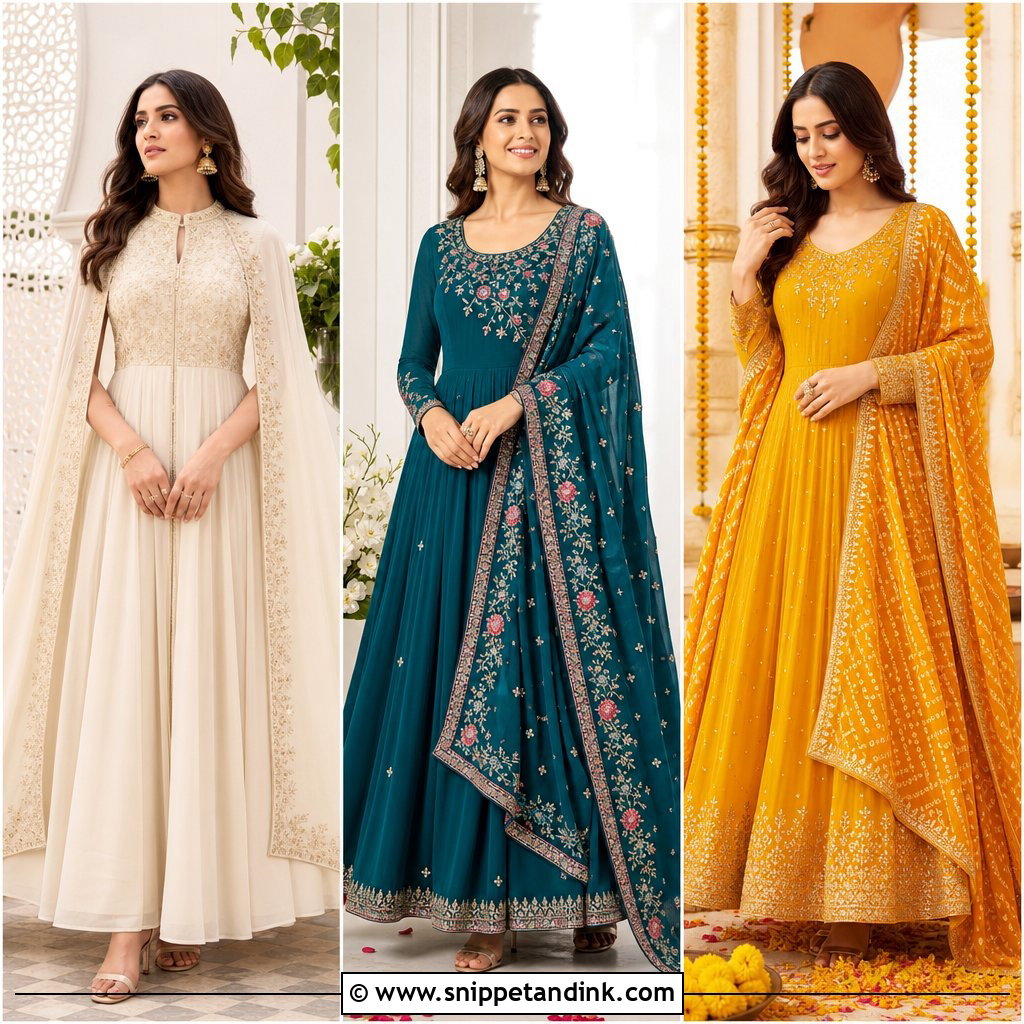
15. Punjabi Bridal Suit With Jacket
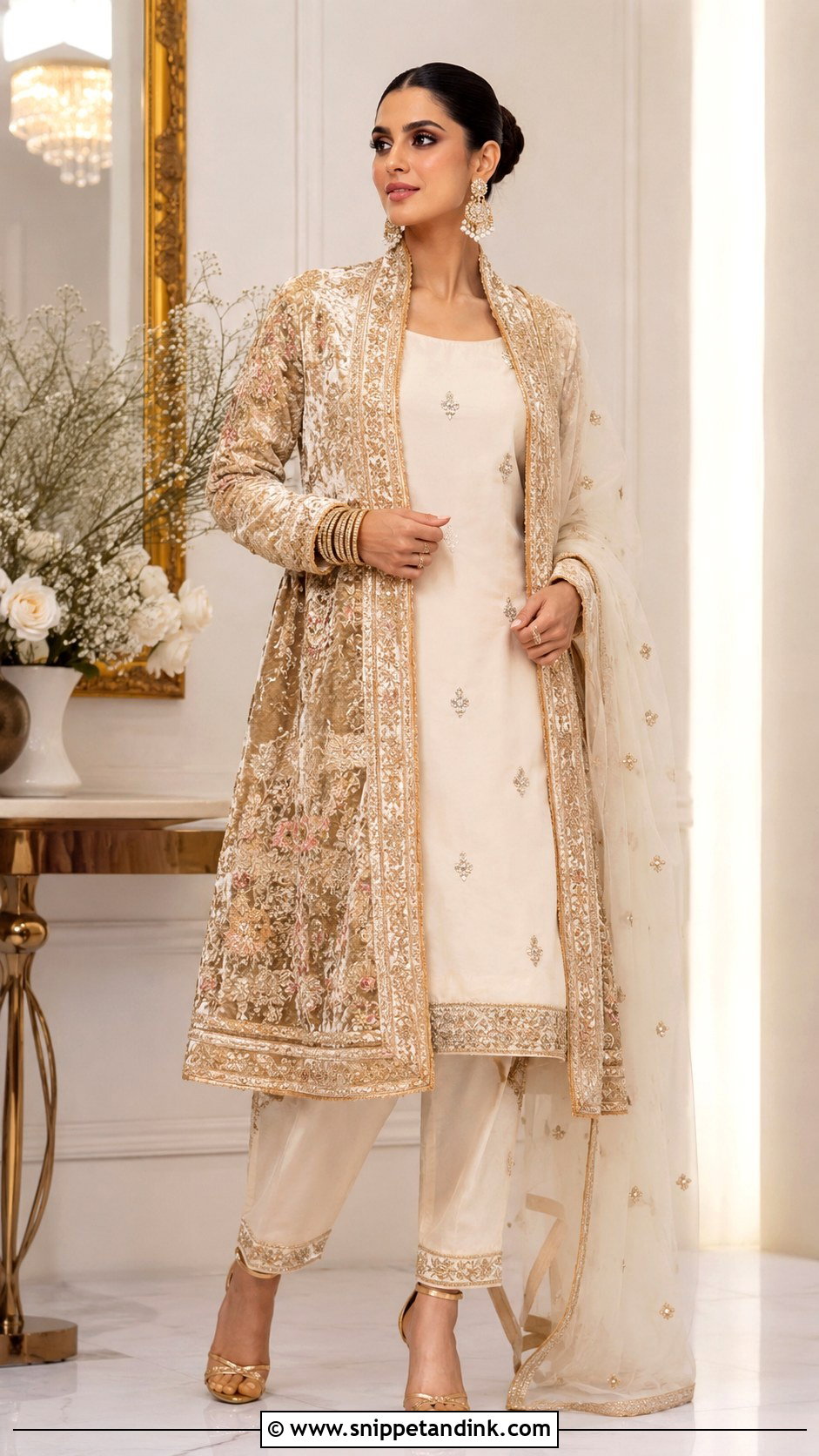
A jacket gives a suit a modern, structured shape. A straight kurta and pants with a long embroidered jacket, short peplum jacket or cape lets the jacket carry the heavy embroidery while the base stays easy to wear. Velvet jackets suit winter, while organza or silk is better for spring and summer. I’d check the jacket’s armholes in particular: when they are cut tight over a kurta sleeve, you can’t raise your arms to dance. With a jacket, keep the dupatta minimal or skip it, and add statement earrings, a sleek bun and embellished heels.
16. Punjabi Bridal Salwar Kameez With Paranda
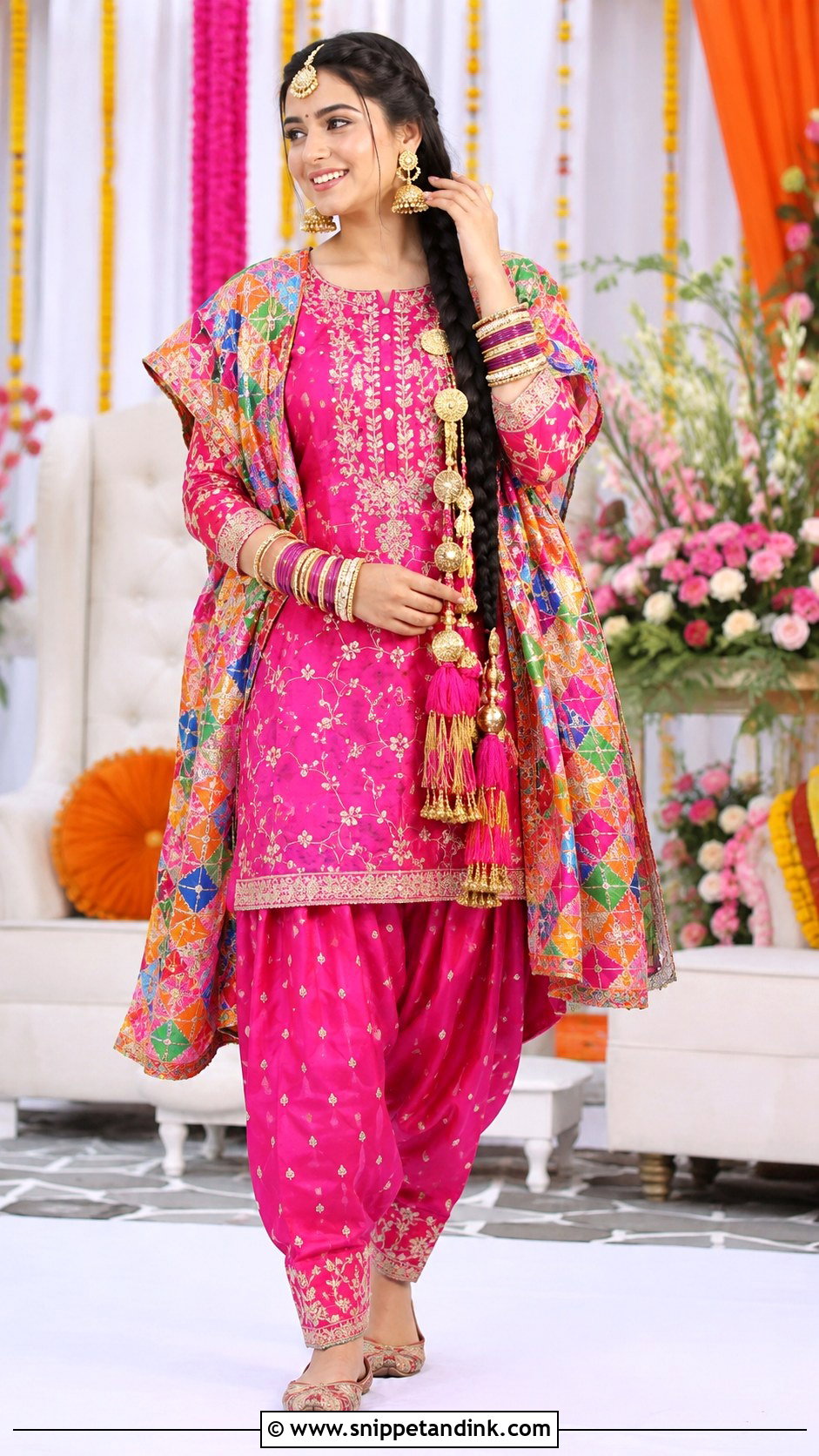
A Punjabi bridal salwar kameez with paranda feels playful and deeply rooted in Punjabi culture. A colourful kameez with salwar or Patiala bottoms, the hair in a long braid finished with a tasselled paranda, suits a mehndi, jaggo or home function. Bright pink, green, yellow, orange and red all feel festive. I match the paranda to the dupatta or embroidery colour, and I braid it in rather than tying it at the end, so it doesn’t slip out while dancing. Add a phulkari or gota dupatta, jhumkas, bangles and juttis.
17. Punjabi Bridal Suit With Chooda And Kalire
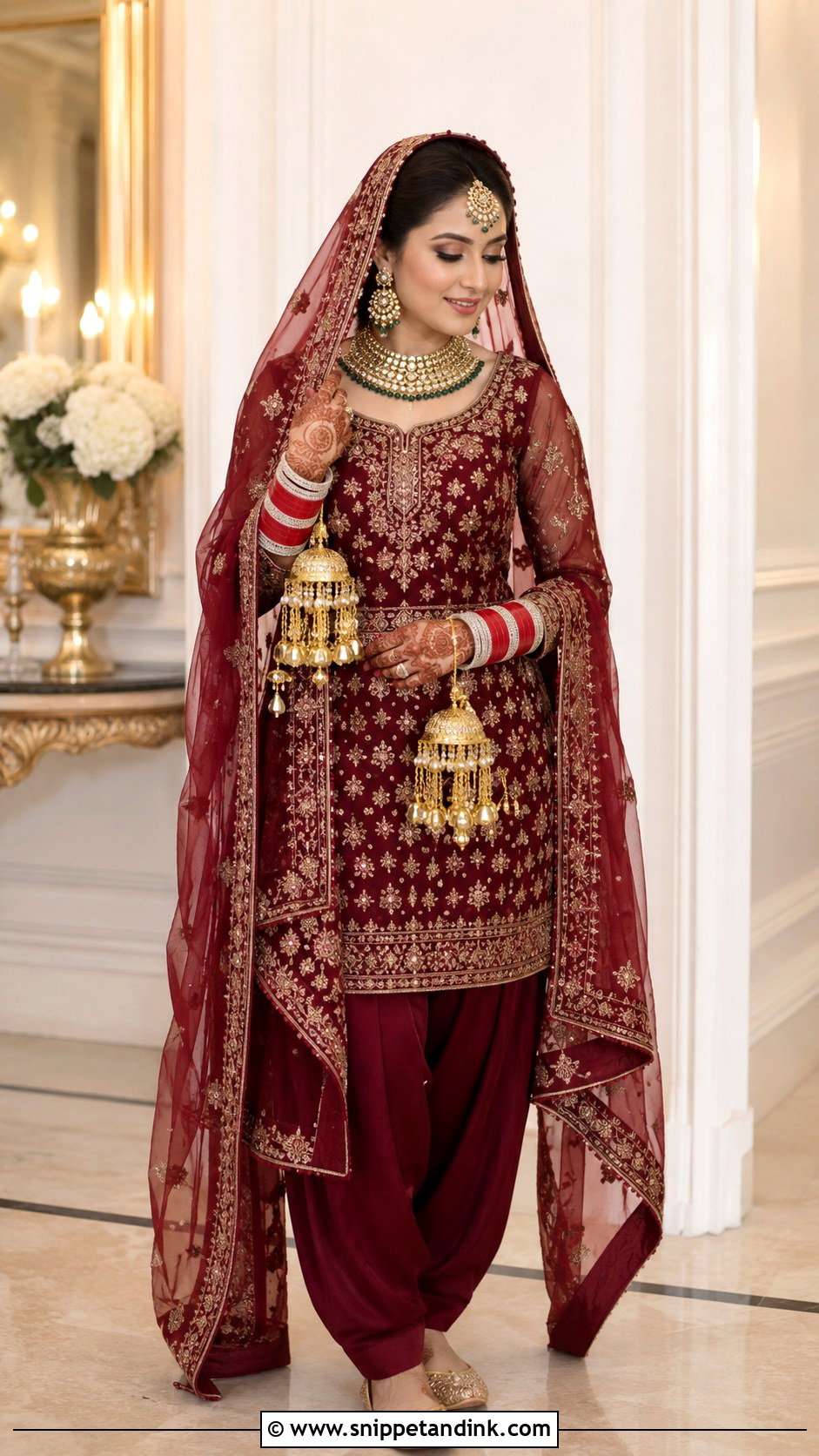
The chooda and kalire are the emotional heart of the Punjabi bridal look, so the suit should let them show. The colour can be red, maroon, pink, ivory or green. Sleeves matter most: three-quarter, fitted full or sheer sleeves keep the wrists visible. I’d avoid wide bell sleeves with heavy edges, which catch on kalire and hide the chooda in photos. A head-draped dupatta, statement earrings and traditional juttis finish it for the chooda ritual, the ceremony or portraits beforehand.
18. Punjabi Bridal Suit For Anand Karaj
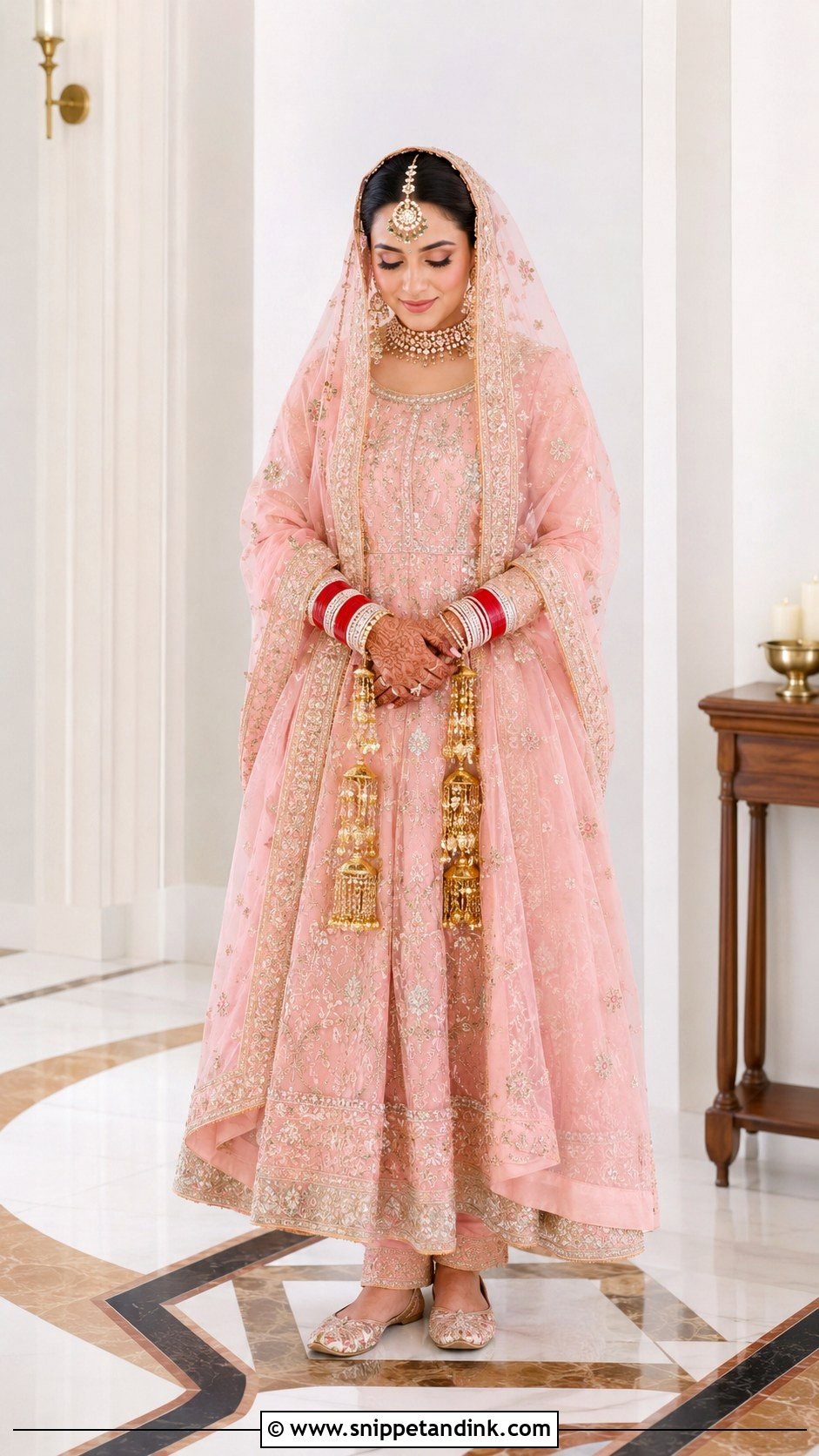
A Punjabi bridal suit for Anand Karaj has to be respectful and comfortable to sit in on the gurdwara floor. A salwar kameez, Anarkali, sharara or gharara in red, ivory, pink, maroon or pastel all work. The dupatta must cover the head securely through the whole ceremony. Very stiff fabrics bunch up when you sit cross-legged, so soft silk, georgette, organza or lined net are better. I ask brides to sit on the floor in their final fitting and stand up again without help. Traditional jewellery, chooda, kalire and comfortable juttis finish it.
19. Punjabi Bridal Suit For Reception
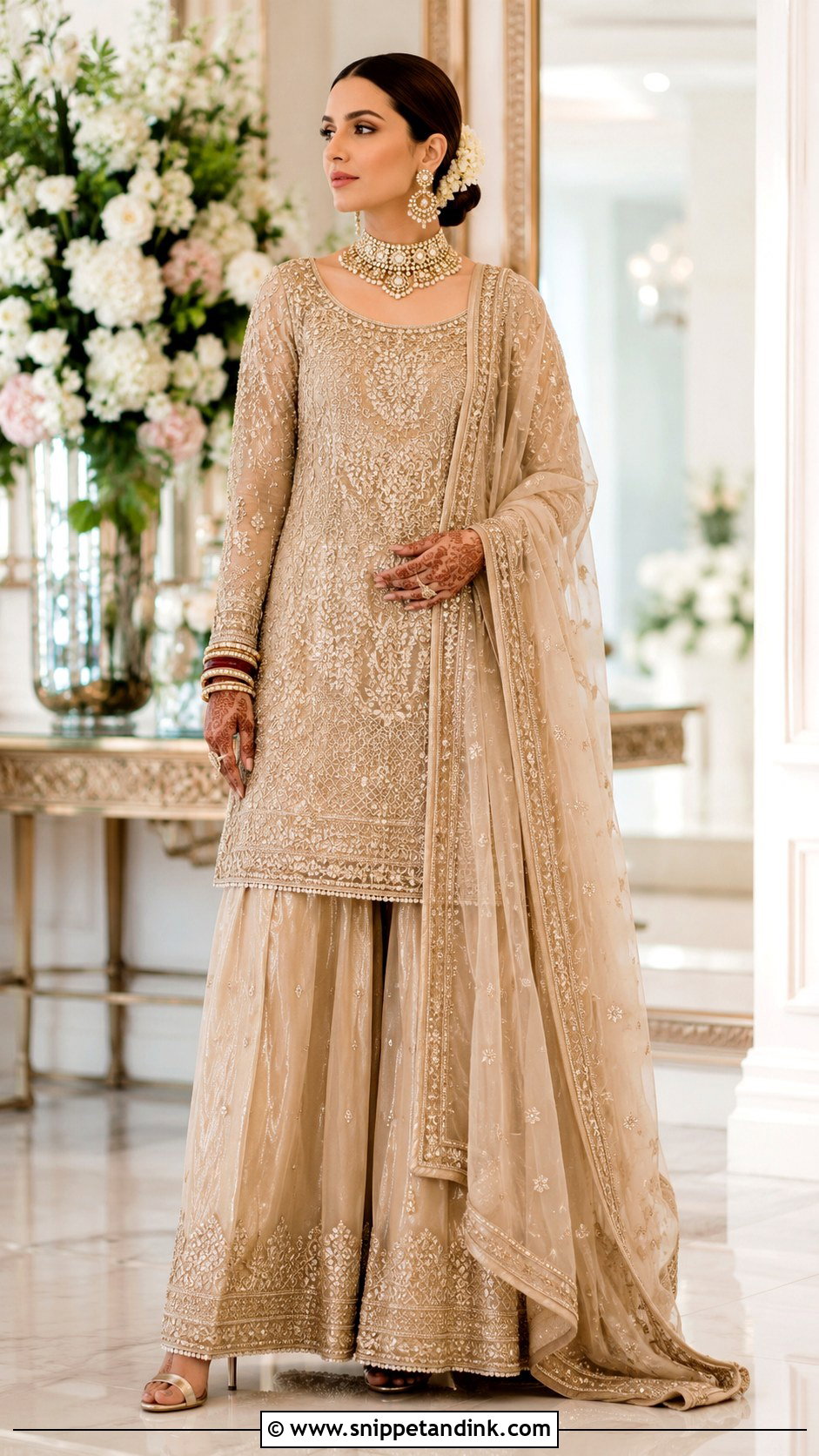
At a reception, you are mostly greeting guests and posing, so a stronger, more glamorous silhouette works. A velvet Anarkali, embellished palazzo suit, jacket suit or heavily worked sharara all look right under evening lights. Champagne, wine, navy, emerald, gold and rose pink feel elegant. You’ll be standing for long periods, so I recommend block heels or padded juttis over a stiletto. A lighter dupatta keeps it bridal without extra weight, with statement jewellery and a refined hairstyle.
20. Punjabi Bridal Suit For Sangeet
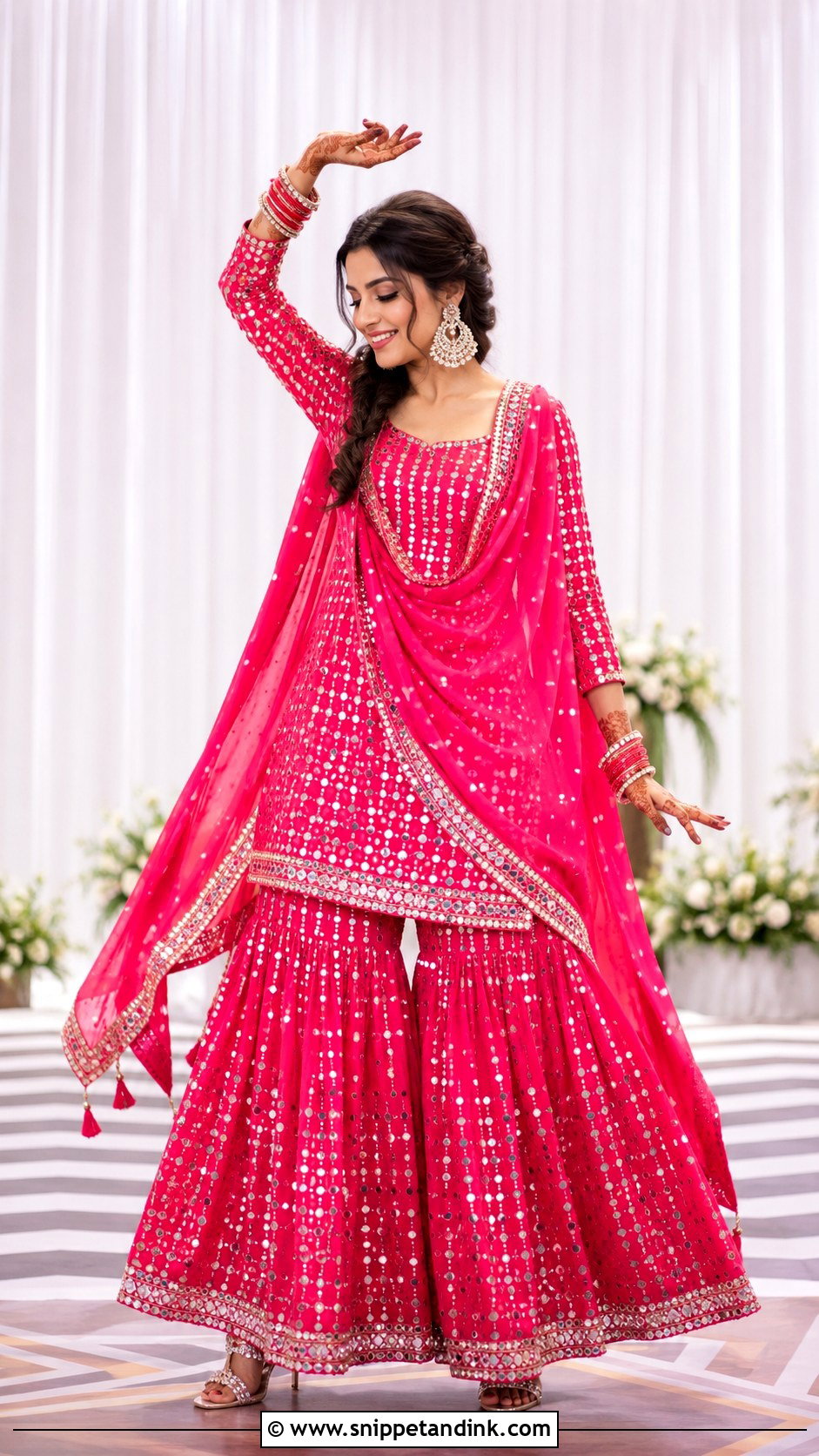
The sangeet is a dancing event, so movement comes first. A sharara, gharara or lighter-flared Anarkali moves well. Mirror work, sequins, gota patti and metallic thread catch the light on the dance floor. Rani pink, emerald, orange, royal blue and gold look bright. I’d either pin the dupatta in several places or ask the tailor to stitch a pre-draped dupatta, so you have both hands free. Statement earrings, bangles and supportive heels or juttis let you enjoy the night without stopping to fix your outfit.
21. Punjabi Bridal Suit For Roka
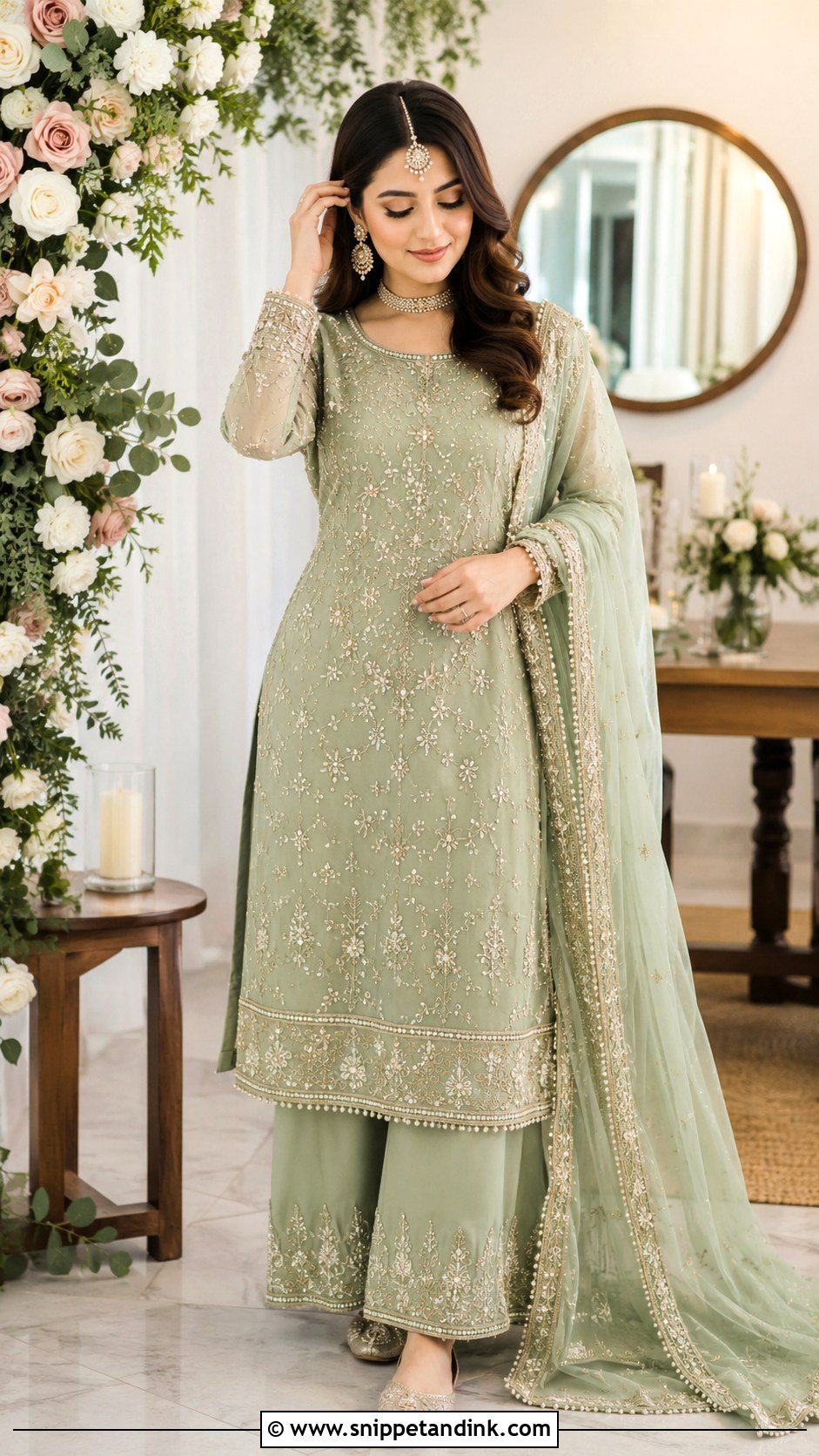
A roka is often the first event, so the outfit should feel special without competing with the main wedding look. A polished pastel, jewel tone or soft metallic suit, as a straight kurta with palazzos, a light Anarkali or a subtle sharara, is right. Pearls, sequins, thread work or small gota details keep it gentle. A dupatta with a neat border adds a ceremonial touch. I’d keep jewellery and makeup a step lighter than the wedding plan, so the bridal look still has somewhere to build.
22. Punjabi Bridal Suit For Jaggo
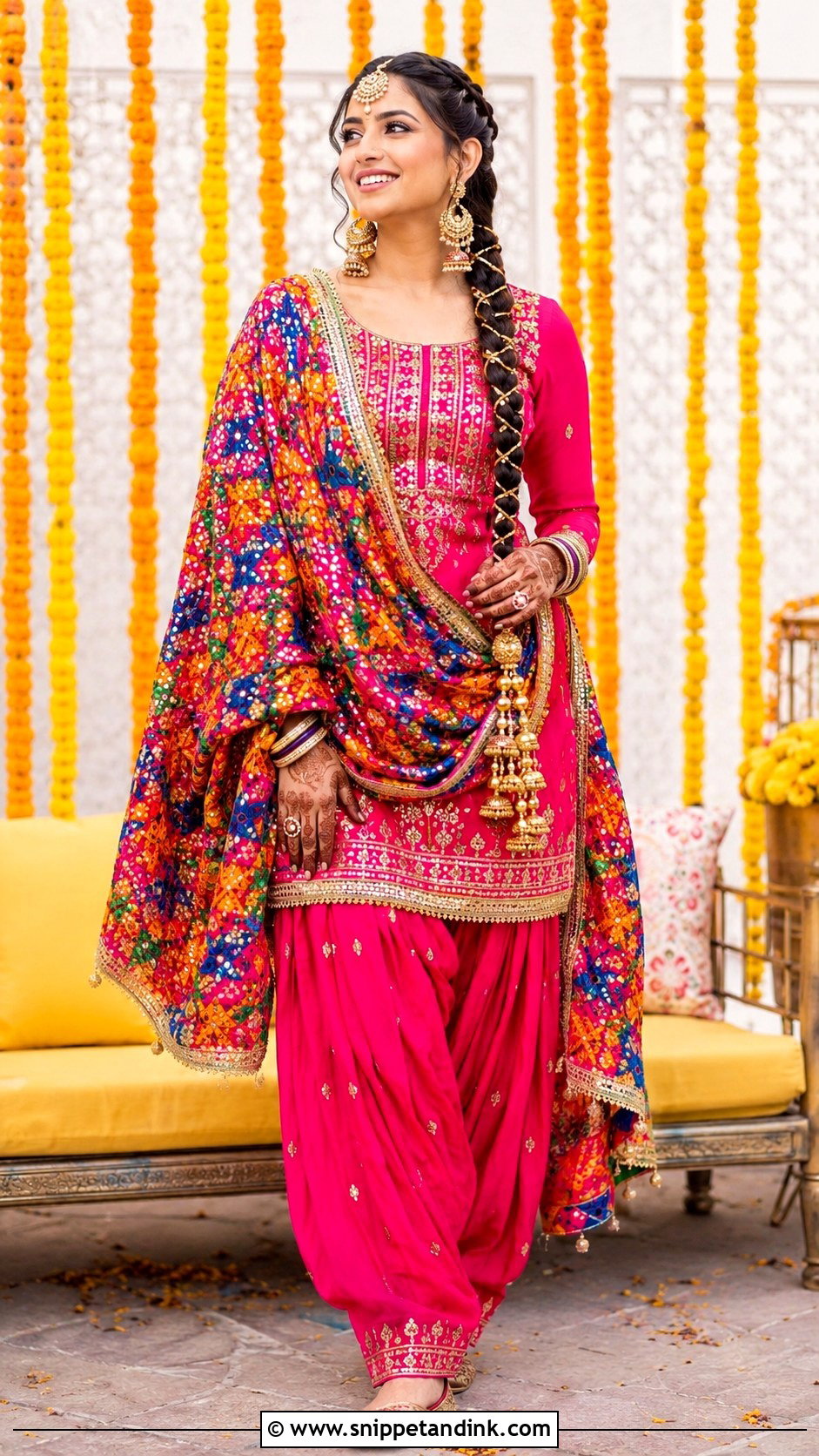
A Punjabi bridal suit for jaggo needs to survive music, dancing and a lot of family energy late at night. A bright Patiala, sharara or salwar kameez with phulkari details works, in hot pink, yellow, orange, green or red. A phulkari dupatta makes it instantly Punjabi. If the family carries the decorated jaggo pot with lit diyas, I’d keep chiffon and loose dupatta ends well clear of the flames and pin everything firmly. Add a paranda, bangles, jhumkas and embroidered juttis.
23. Punjabi Bridal Suit For Plus Size Bride
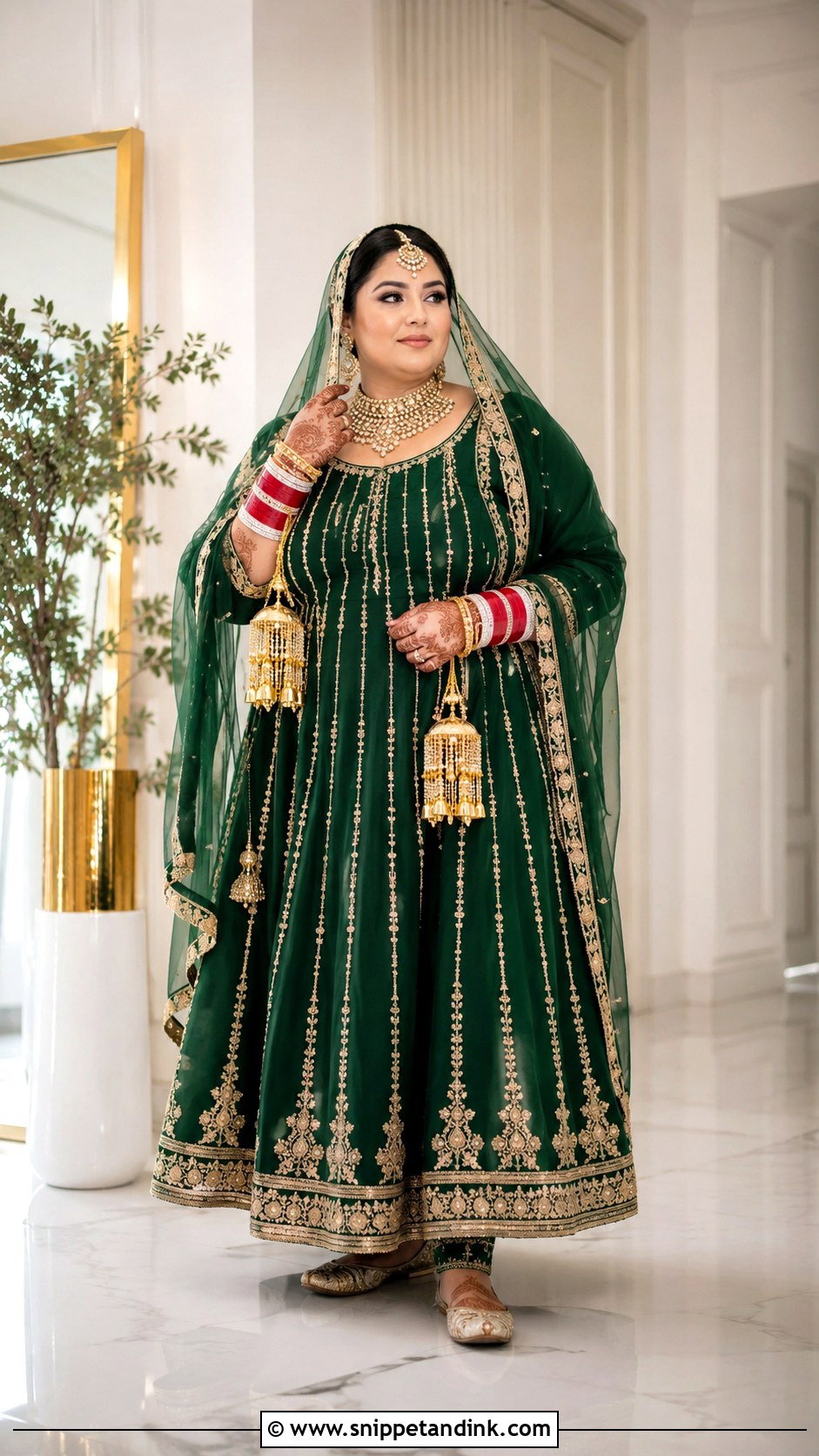
For a plus size bride, the aim is comfort and proportion, not hiding. A well-fitted Anarkali, straight suit with palazzos or a sharara with a structured kurta all look good. Fabrics that drape smoothly, such as silk blends, georgette, crepe or soft velvet, flatter more than stiff brocade, which can add bulk and restrict movement. Vertical embroidery and balanced borders give a long line. The fitting detail I focus on is the armhole and bust. If those are right, everything else hangs properly. Supportive footwear and secure dupatta pins finish the look.
24. Simple Punjabi Bridal Suit
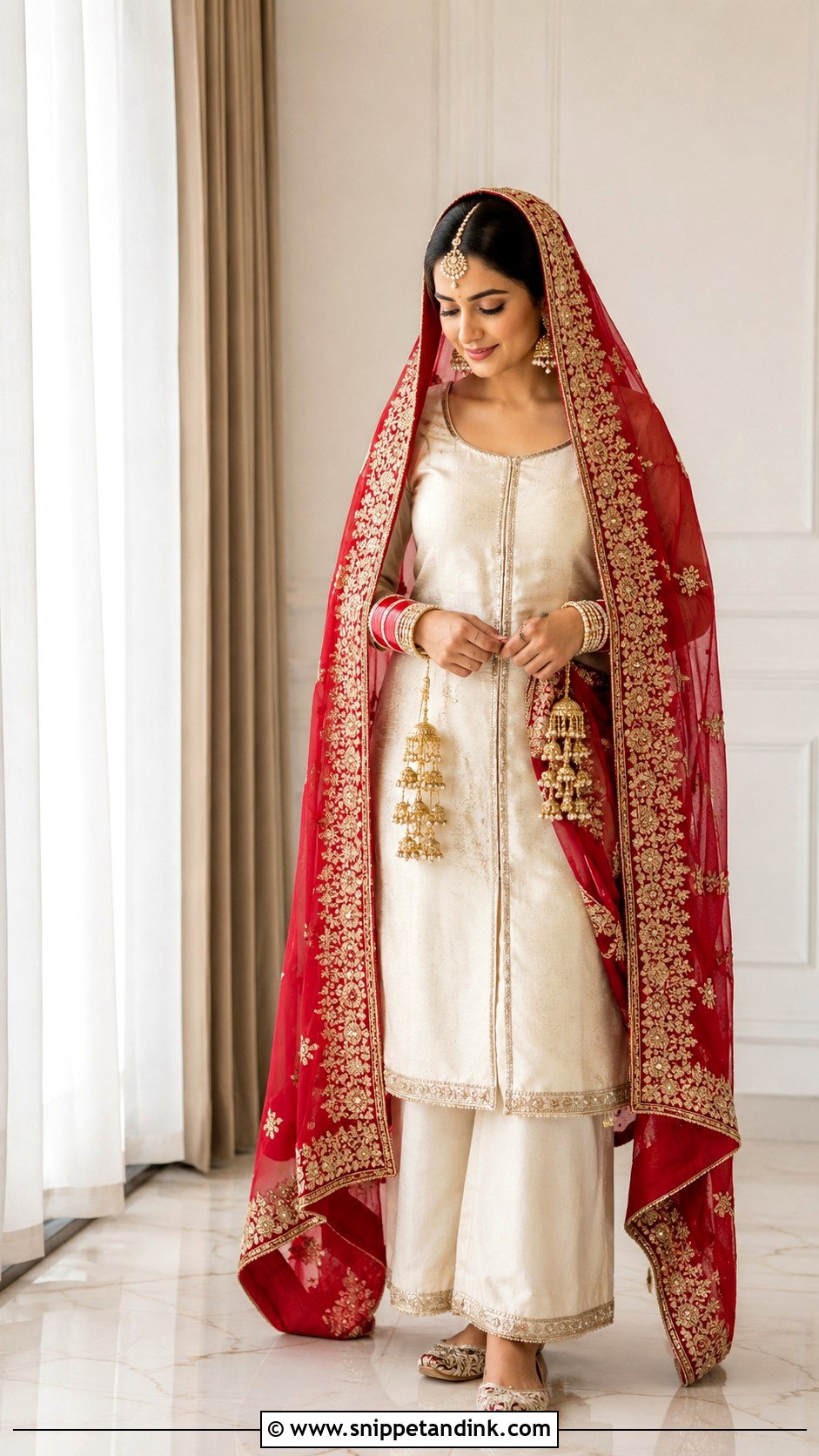
A simple suit works when the fabric and tailoring are excellent and there is one strong detail: a heavy dupatta, a rich border or fine embroidery at the neckline. A straight silk suit with salwar or palazzos can look very refined. Ivory, blush, sage, peach and beige feel soft, while red and maroon keep it traditional. With a simple suit, every fitting flaw is visible, so I spend extra time on the kameez side seams and hem length. Chooda, small kalire, jhumkas and embroidered juttis bring it into bridal territory for an intimate ceremony, court wedding or post-wedding ritual.
25. Designer Punjabi Bridal Suit
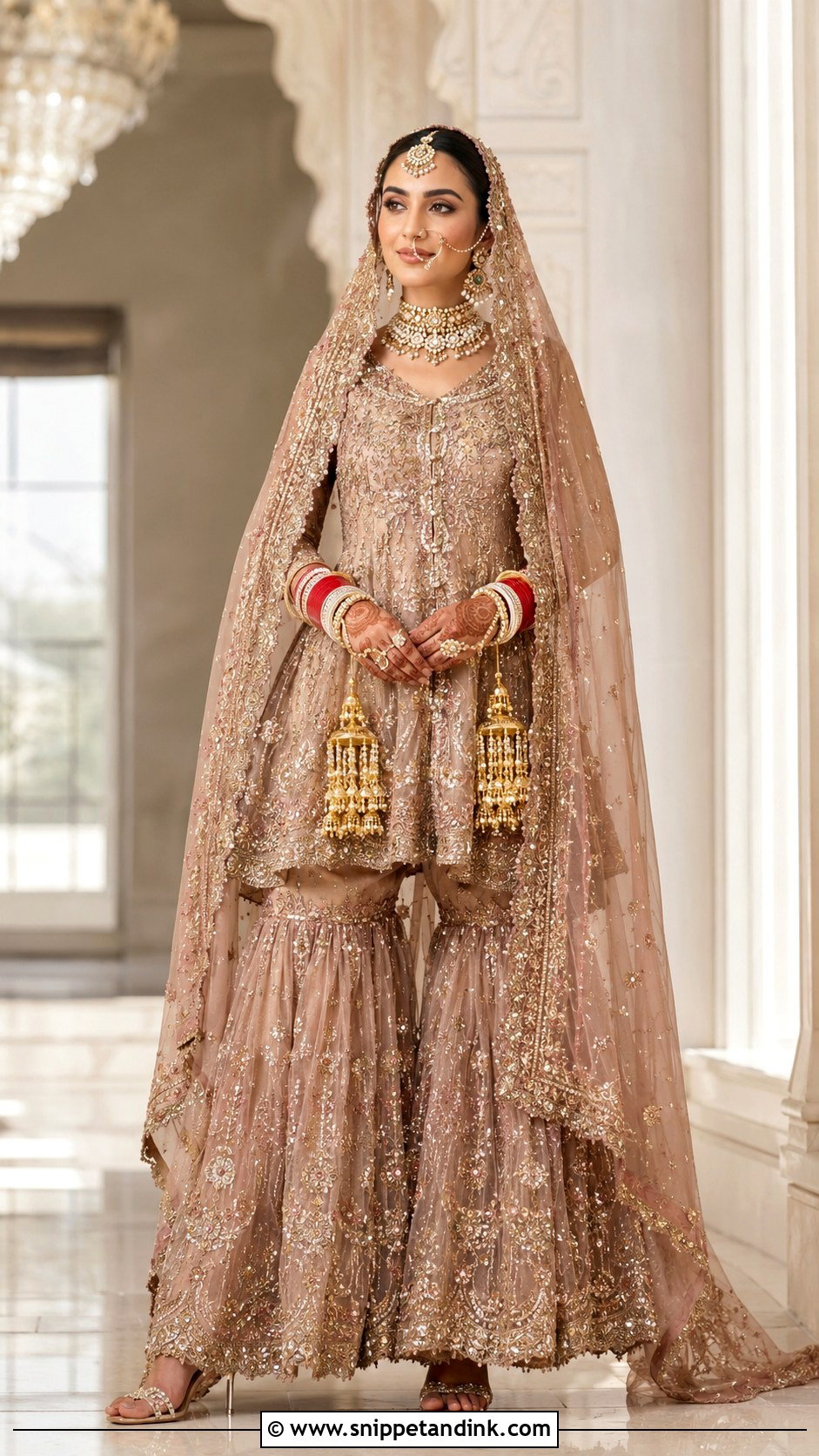
A designer Punjabi bridal suit gives you a custom silhouette, handwork and luxury fabric: a peplum sharara, structured gharara, layered Anarkali, velvet jacket suit or modern Patiala with couture finishing. Choose embroidery that fits the mood, whether zardozi, dabka, phulkari-inspired motifs, pearls, sequins or gota. Couture pieces still have to be wearable, so I test the dupatta weight, sleeves and bottom shape well before the final fitting. Match the jewellery to the neckline and hairstyle rather than adding everything at once.
Securing a Heavy Dupatta Through Four Laavan
At an Anand Karaj, the bride walks around the Guru Granth Sahib four times for the laavan, sits on the floor between rounds and keeps her head covered throughout. A heavy bridal dupatta has to stay in place through all of that, and it is the part of the outfit I spend most time pinning on the morning.
- Build a firm base first: a low bun or a padded section at the crown gives the pins something to grip.
- Use U-pins and small safety pins through the dupatta into the base, not into loose hair.
- Pin a second point at the shoulder so the weight is shared and the dupatta doesn’t pull backwards.
- Walk a full circle and sit down before leaving the getting-ready room. If it shifts, add a pin where it moved.
Make sure someone in the family knows how the dupatta has been pinned so they can reset it after photos. Heavy embroidery also scratches, so I place a soft fold of fabric at the back of the neck where the border sits. For the reception or sangeet, a lighter dupatta or a stitched drape is often much easier.
A Wardrobe That Follows the Wedding Week
Punjabi bridal suits let a bride carry tradition and comfort through every event of the week, from a red Patiala and phulkari dupatta at the mehndi to a velvet Anarkali or pastel sharara for the reception. What makes each one work is the same set of choices: fabric for the season, a fit you can sit in, a dupatta that stays put, and jewellery and footwear chosen with the ceremony in mind. Plan the week’s outfits together, so each one has its own role and nothing competes with the main wedding look.
You'll Like These Ideas:





Leave a Reply