
Lace, sculpted shapes, long trains and the mantilla are what most people mean by a Spanish wedding look. Spanish-inspired bridal fashion can go traditional or very modern depending on fabric and styling; a lace gown and mantilla is the classic, while clean satin and sharp tailoring give a simpler version. I always build the outfit from the hem up. The shoes have to suit the length, the jewellery has to suit the neckline, and a veil or cape should never fight the dress. Below are twenty complete looks, with notes on fit, comfort and the settings each one handles best.
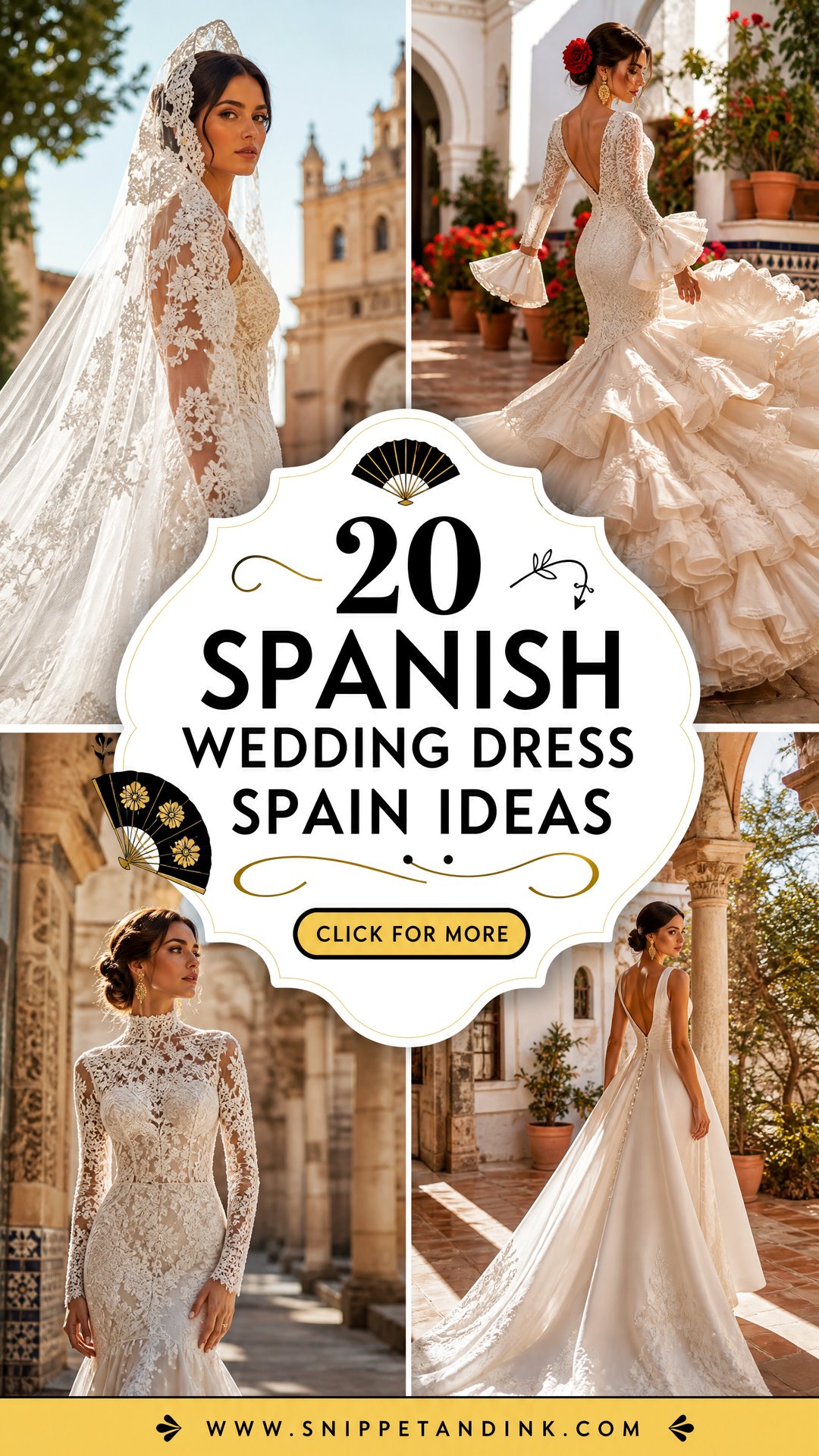
Chantilly, Guipure or Alençon: Lace Types That Change How a Gown Wears
Spanish looks lean heavily on lace, and the type of lace changes how the gown feels, moves and travels. When a bride tells me she wants a lace dress, my next question is which one.
Chantilly
Fine, flat and very light, with delicate floral outlines on a sheer net. It drapes beautifully in heat and suits mantillas and illusion sleeves, but it snags easily on jewellery and rough stone.
Guipure
A heavier lace with no net behind it, so the motifs are joined by small bars. It looks bold and graphic and holds a shape well, but it’s warmer to wear and stiff against bare skin.
Alençon and Re-embroidered Lace
These have a corded outline that gives the pattern depth and a raised edge. They photograph with clear detail and sit nicely on structured bodices. The cording adds weight, which matters across a full skirt.
For an Andalusian summer, I’d lean toward Chantilly or a lightly corded lace on a breathable lining. Save guipure for cooler months or an air-conditioned evening venue.
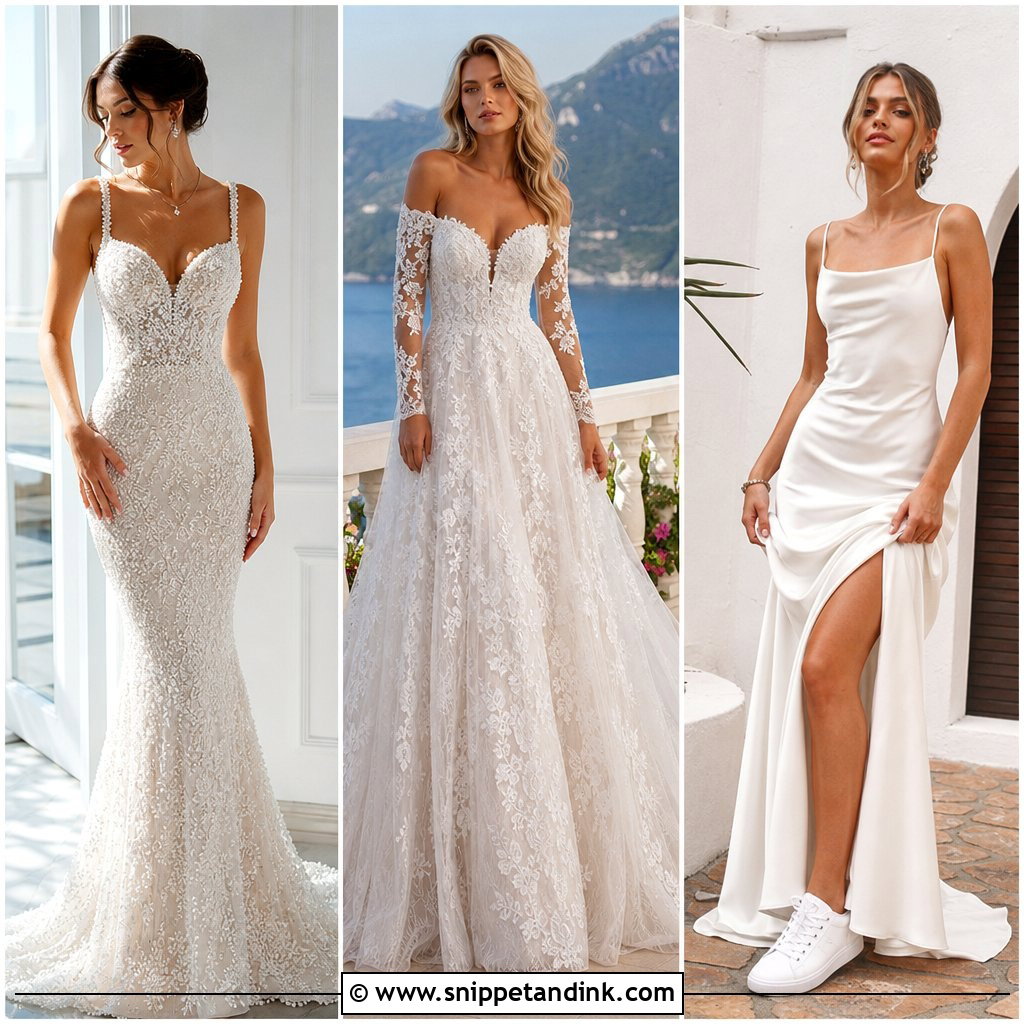
1. Spanish Lace Mermaid Wedding Dress
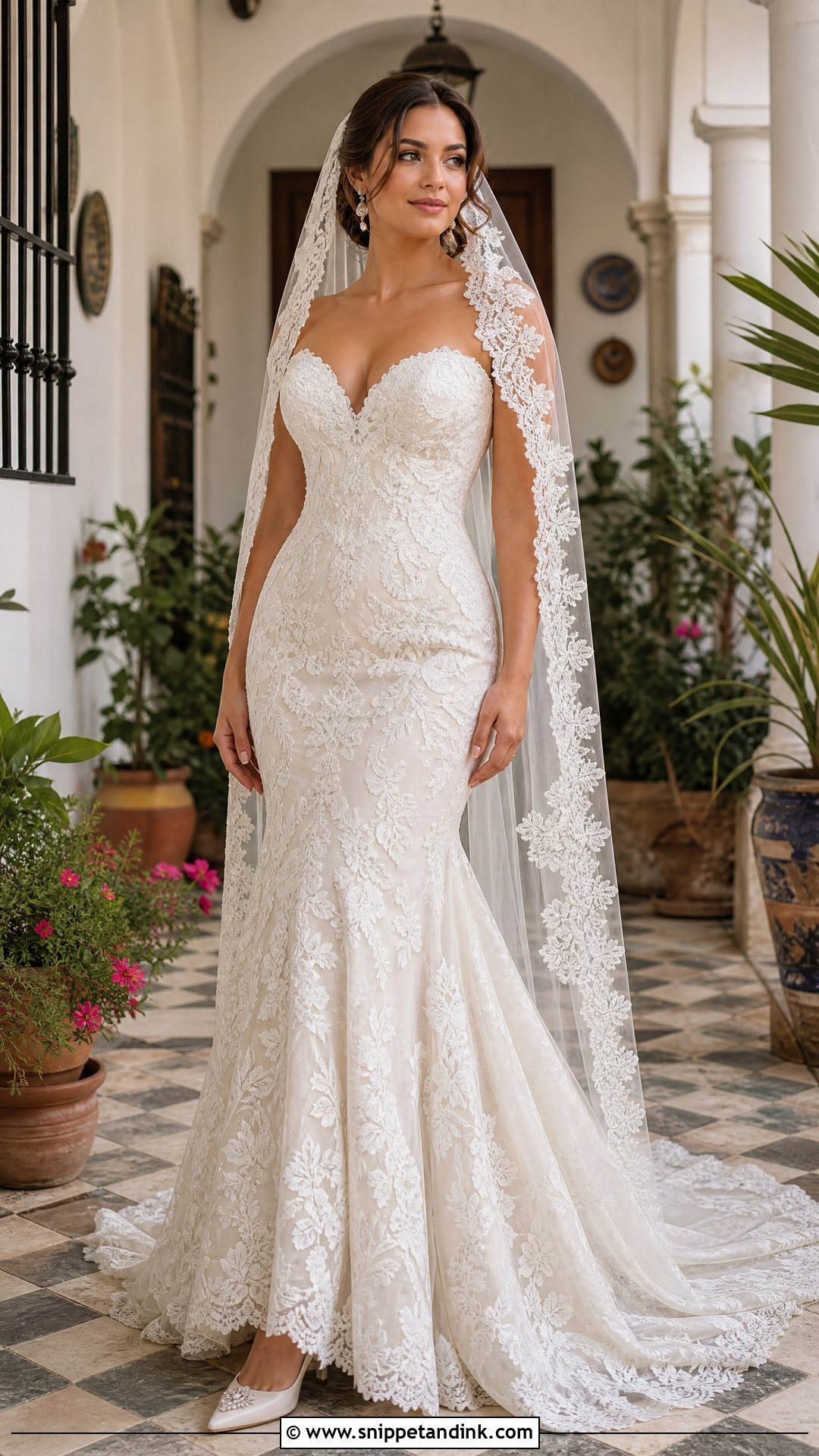
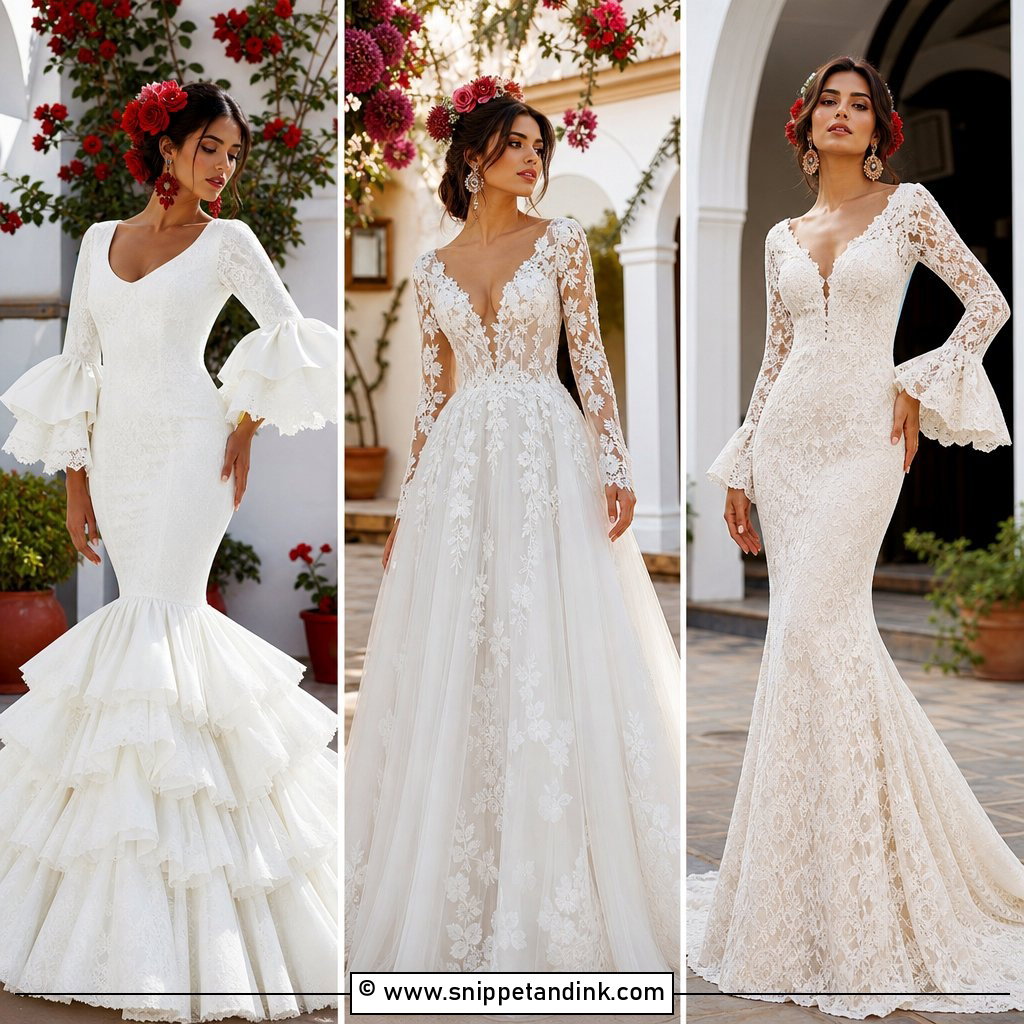
Mermaid lace is fitted all the way to the knee, so the fitting appointment decides everything. I want the flare to start at or just above the knee; any lower and stairs become a problem. A supportive bodice, floral lace and a sweetheart or soft V keep it romantic. Pointed pumps, pearl drops and a lace-edged fingertip veil are enough, and a low bun keeps the neckline and back clear. Removable lace sleeves or a sheer bolero add coverage. Historic estates, hotels and Mediterranean settings suit this shape.
2. Spanish Mantilla Veil Wedding Dress
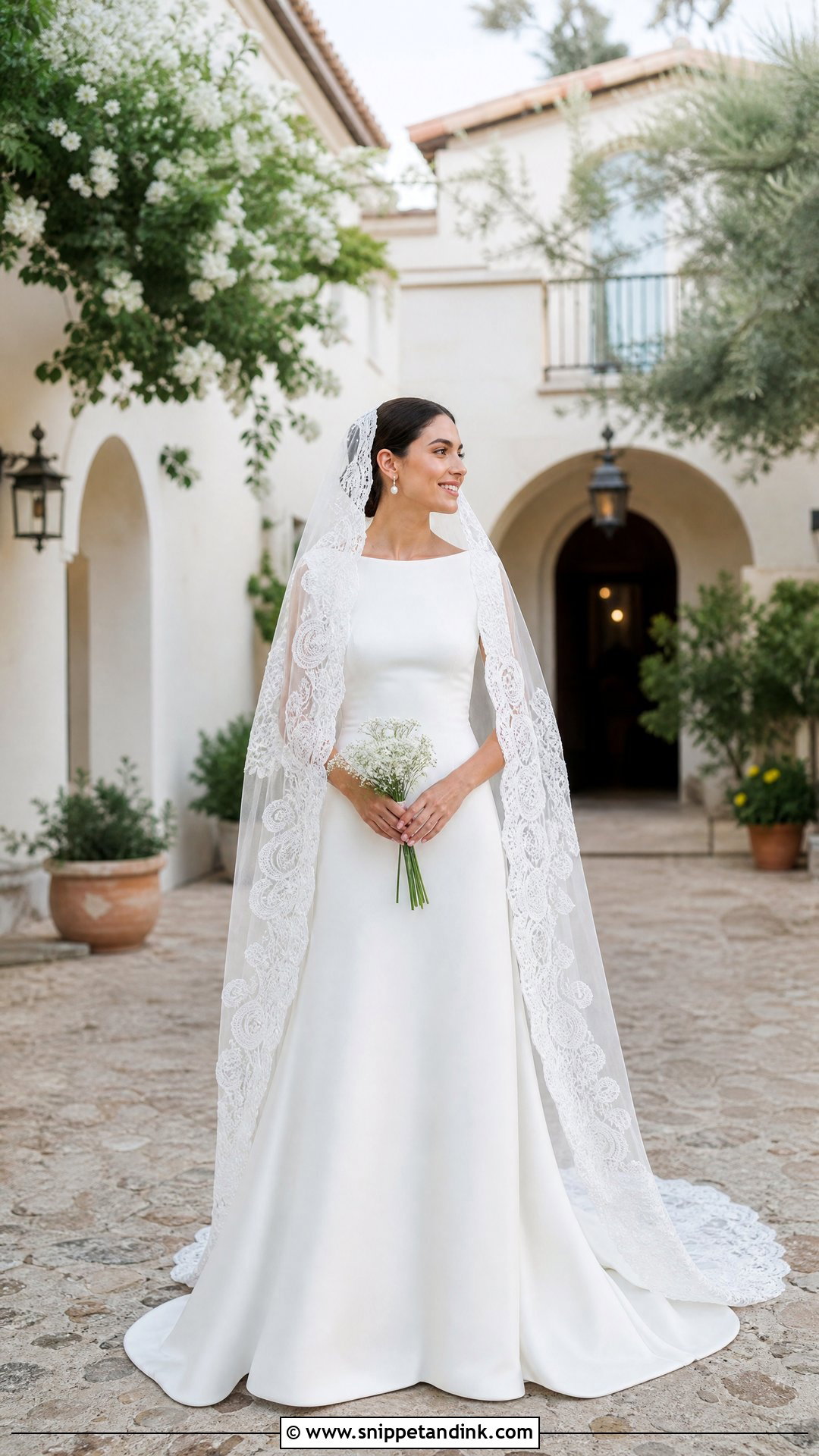
Let the mantilla lead and keep the dress quiet. An ivory crepe or satin gown with a fitted waist and gentle A-line gives the lace border a clean background, whereas heavy beading underneath makes the two compete. The mantilla sits over a smooth low bun, framing the face and falling behind the shoulders. On a petite frame, I’d go fingertip or chapel rather than cathedral, because a very long lace veil can swamp you. Pearl studs, a slim bracelet and satin pumps complete it.
3. Off Shoulder Spanish Wedding Dress
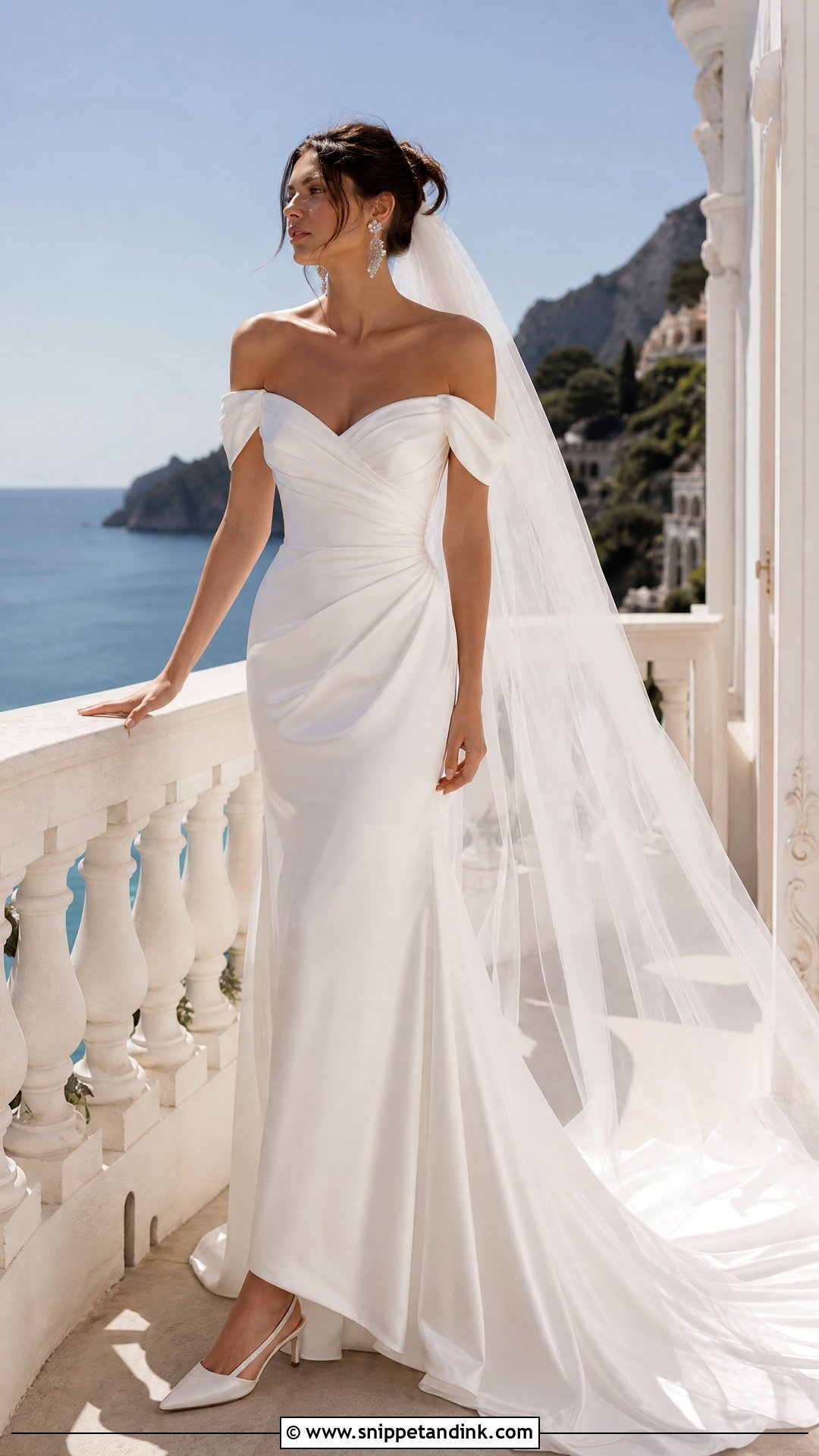
Will it stay up? That’s the honest question with any off-shoulder gown, and the answer depends on an inner corset with a firm grip band at the top. Without one, the neckline creeps up with every arm movement. Satin, lace or structured crepe all work with a fitted waist and flowing skirt. Draped sleeves give light arm coverage. Either a collarbone necklace or statement earrings, not both. A centre-parted chignon, slingbacks and a cathedral veil starting under the bun finish it. Petite brides tend to suit a narrower skirt; taller brides can carry a big train.
4. Long Sleeve Spanish Lace Wedding Dress
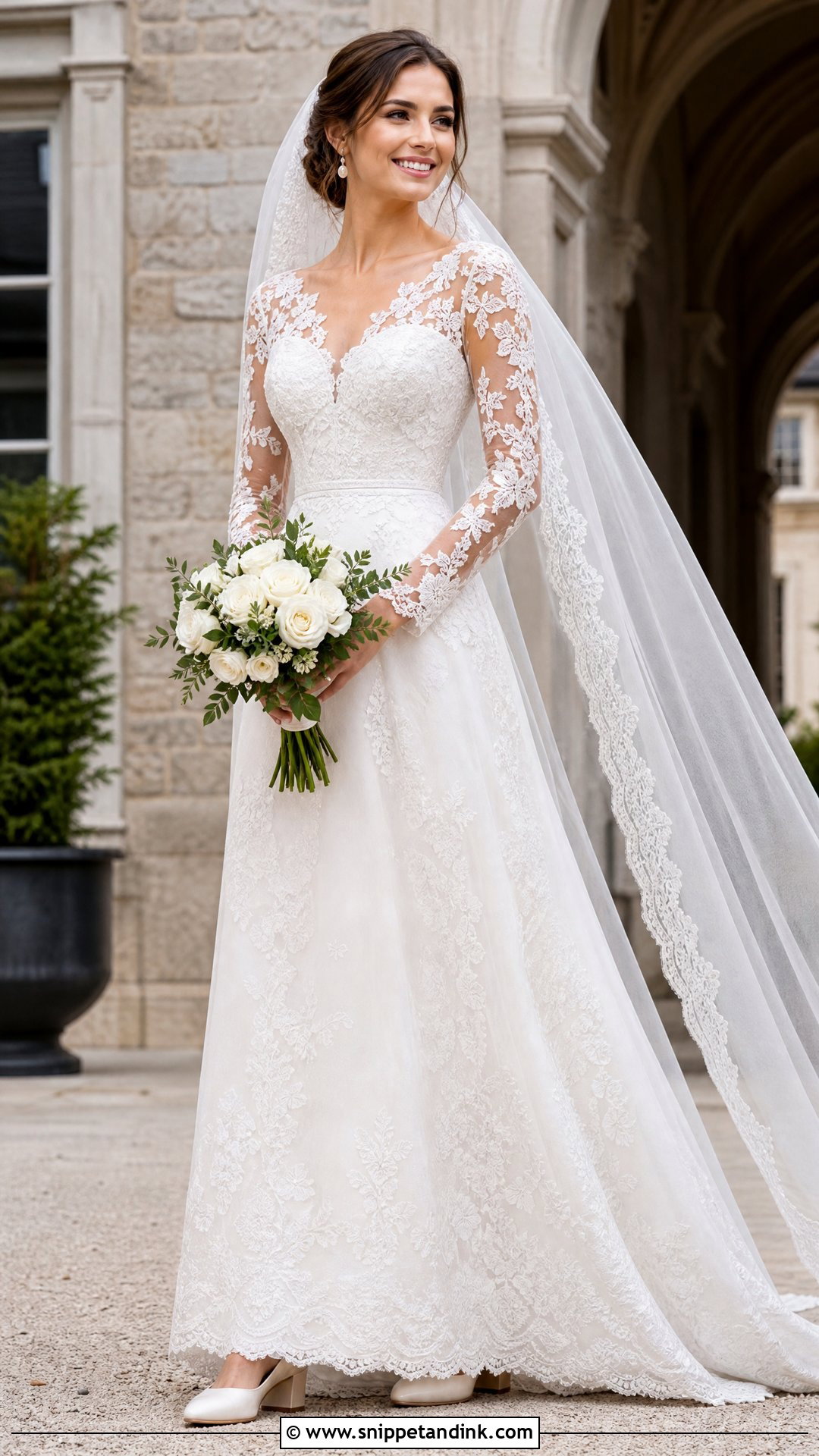
Long lace sleeves add texture without weight when they’re illusion tulle with appliqués placed sparingly. A defined waist and A-line or fit-and-flare skirt keep the shape. Lining the bodice softly gives coverage without hiding the pattern. If your arms are fuller, ask for a sleeve with a little stretch in the mesh; rigid tulle pulls at the elbow and wrinkles when you bend. Low block heels handle stone walkways. A lace-edged veil, small pearls and a neat bun are enough, plus an ivory wool wrap if you’re moving between locations in winter.
5. Flamenco Ruffle Spanish Wedding Dress
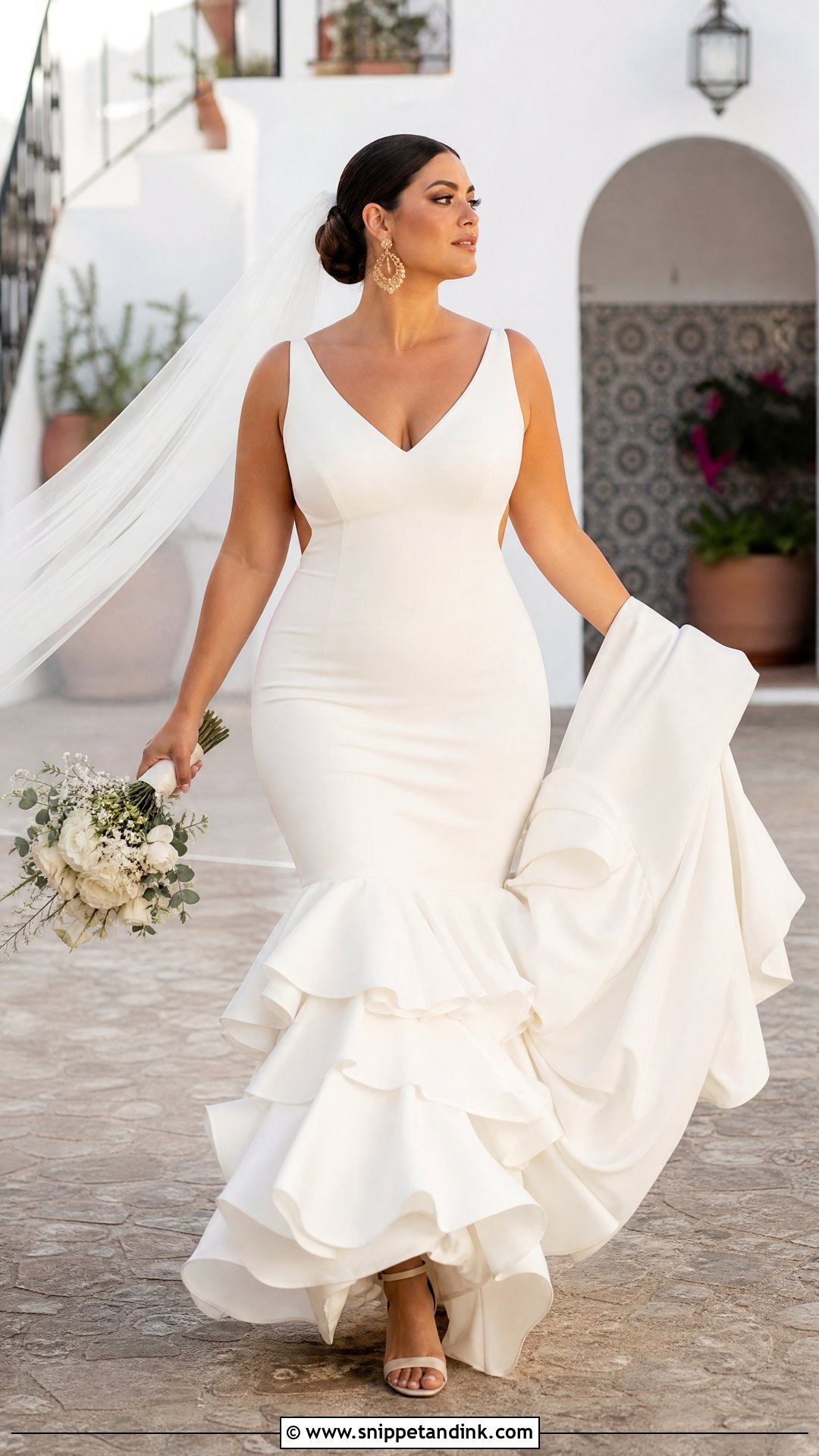
Controlled ruffles are the difference between a flamenco-inspired wedding dress and a costume. A fitted crepe gown that follows the body before opening into layered ruffles below the hips or knees is the line I’d look for, with a clean V, subtle lace or an asymmetric neck above. The flare point matters for walking: too low and the ruffles catch under your feet. Stable heels, a smooth bun, sculptural gold earrings and a tulle veil you remove after the ceremony keep the volume in check.
6. Basque Waist Spanish Wedding Dress
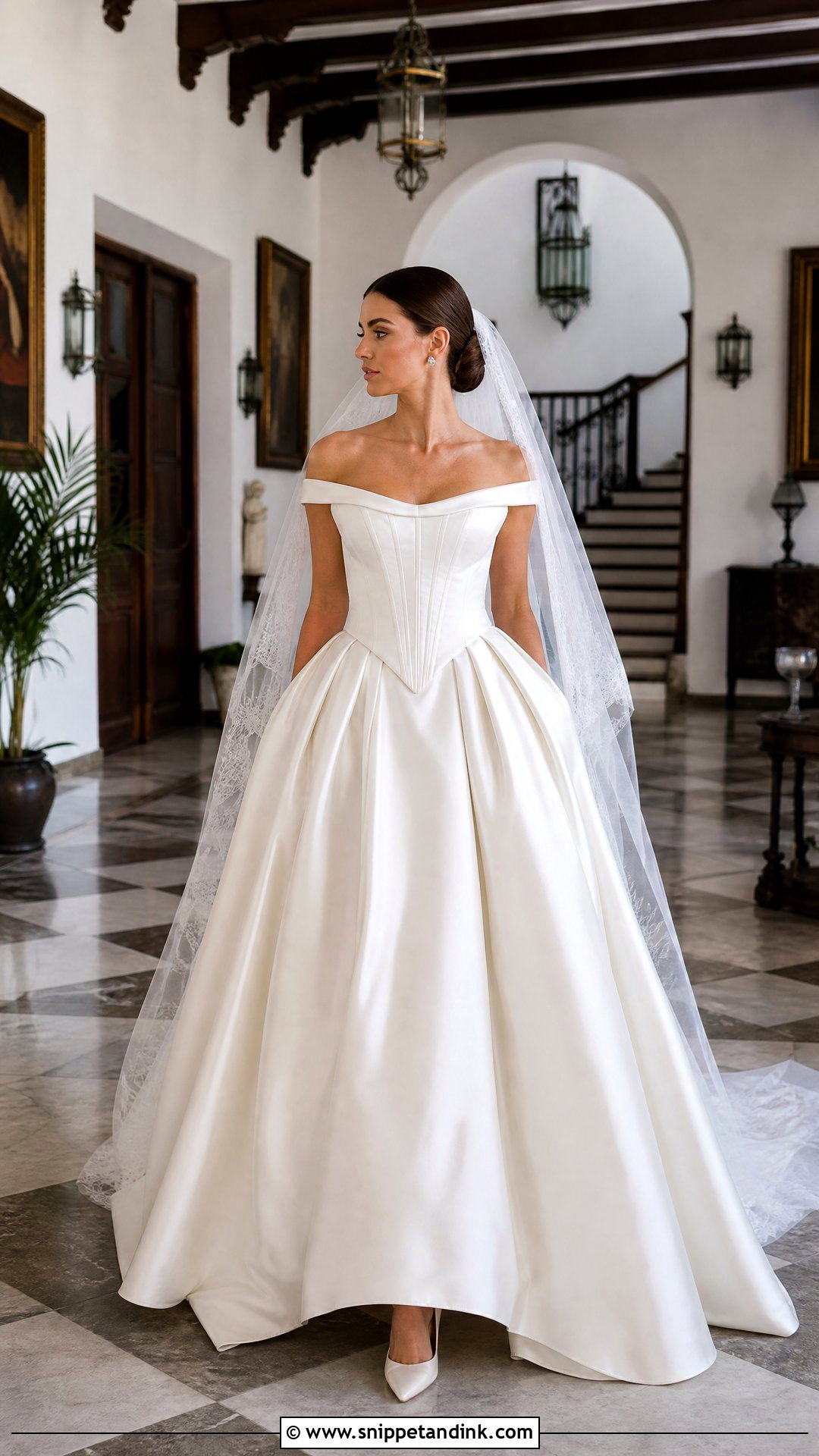
The pointed basque line lengthens the torso, but only if the point lands at the right spot for your body. I always ask the seamstress to adjust it to the bride’s torso length, because a point set too low digs into the hips when sitting and one set too high looks cut short. A structured corset with good boning over a full satin, mikado or lace skirt is the classic version, and it suits many sizes when fitted properly rather than tightly. Chapel veil, crystal studs, closed-toe pumps and a small structured bouquet.
7. Cathedral Train Spanish Wedding Dress
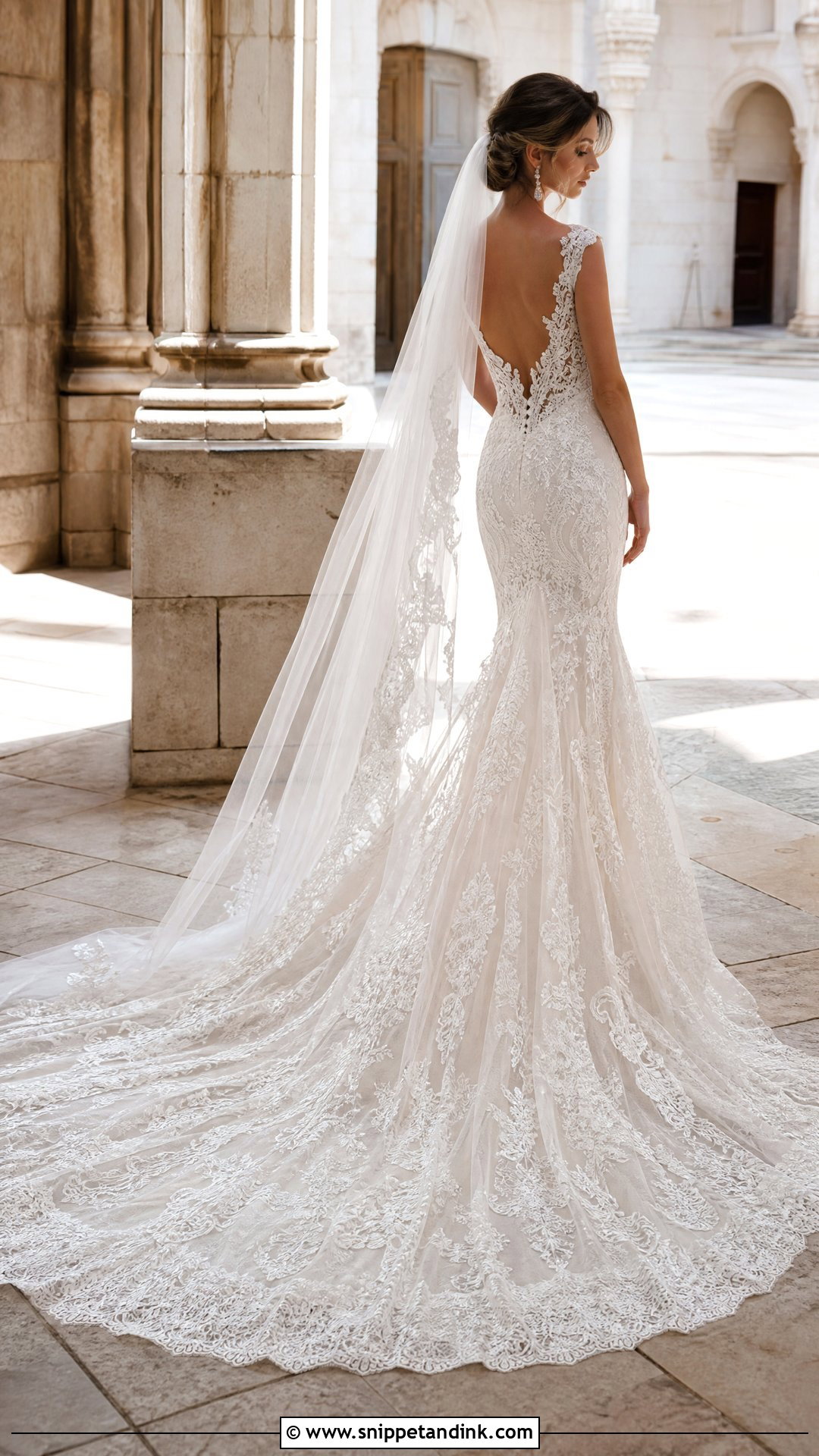
Picture a long cathedral train crossing a stone courtyard. It’s spectacular, and it’s also the highest-maintenance option here. The train should flow smoothly from the gown rather than starting with sudden bulk. A secure bustle is essential, and I make sure whoever is hooking it up practises before the day. Choose a light veil slightly longer than the train, or a short one if the lace is heavy. Low platforms add height and stability. It needs space, so check the aisle width.
8. Strapless Corset Spanish Wedding Dress
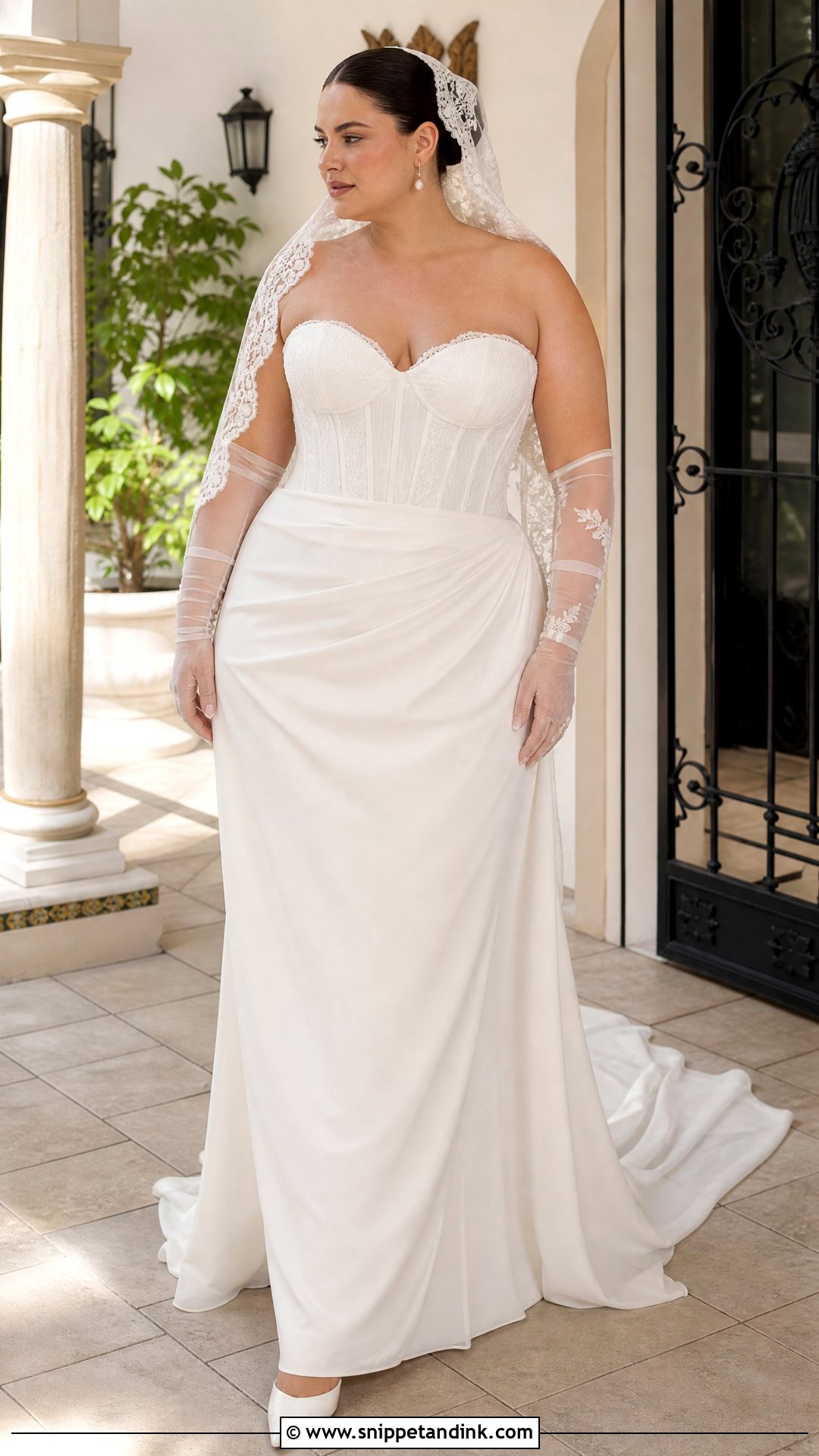
Strapless corsets look sculpted and modern when the bodice has proper internal support and the neckline stays up without hitching. A fuller bust needs built-in cups and real alterations; this is not a gown to buy off the rack and wear as is. A gathered A-line or fitted lace skirt sets the formality. Detachable gloves or sheer off-shoulder sleeves create a second ceremony look, and a mantilla-style veil softens the sharp construction. Pearl earrings, a sleek bun and pointed heels. Skip the necklace if the bodice is beaded.
9. High Neck Spanish Lace Wedding Dress
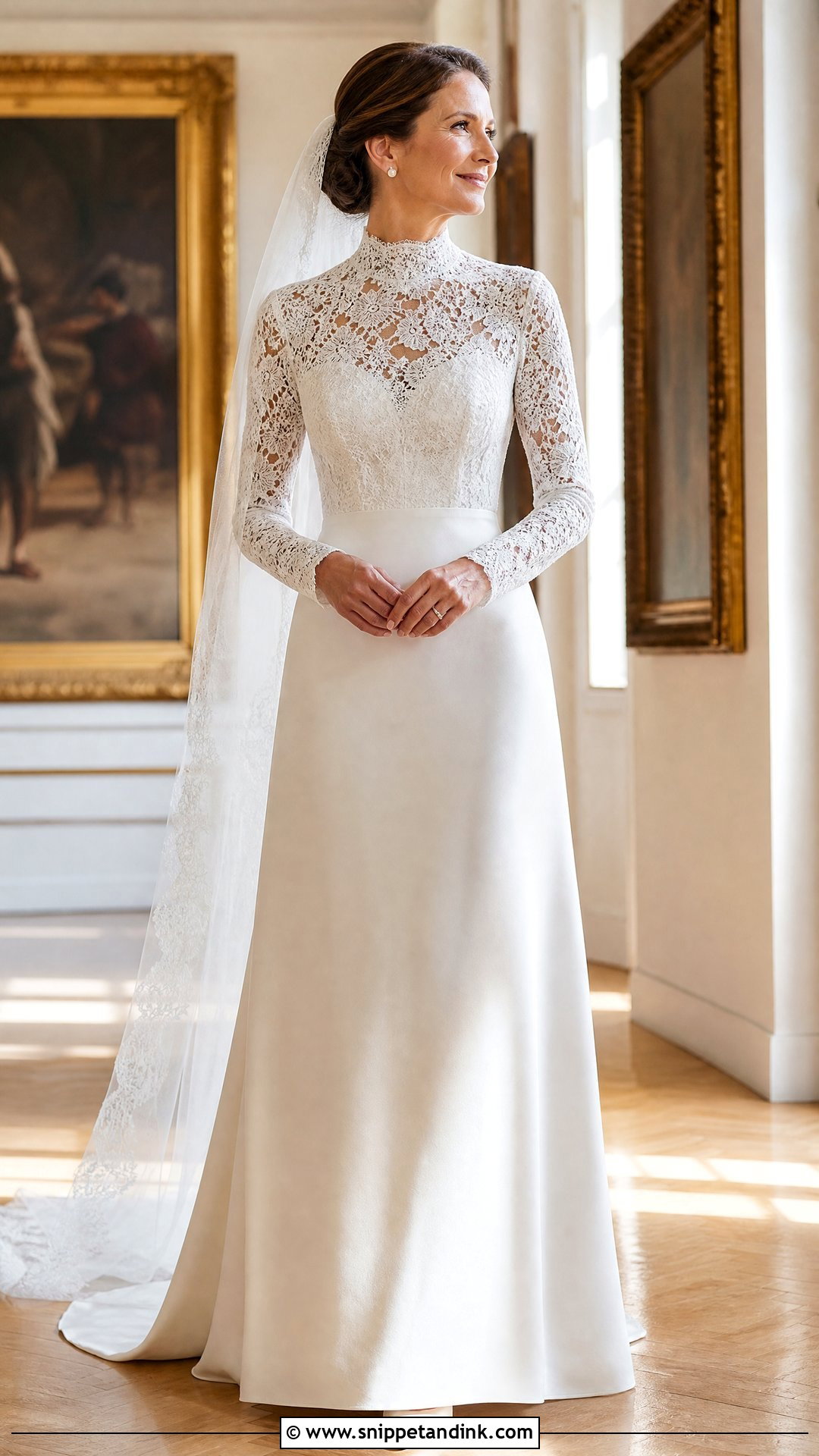
With a high lace neckline, the neck does the decorating. A fitted lace bodice with a sheer collar and a skirt falling cleanly from the waist, with cap or long sleeves, is refined without feeling heavy. Small earrings only. I usually set a plain tulle veil beneath a low bun so the collar stays fully visible. Pointed satin flats or low heels work for long days. Decide how much lining you want behind the lace during alterations, since it can be adjusted panel by panel. Cooler weather and daytime ceremonies suit it.
10. Cap Sleeve Spanish Wedding Dress
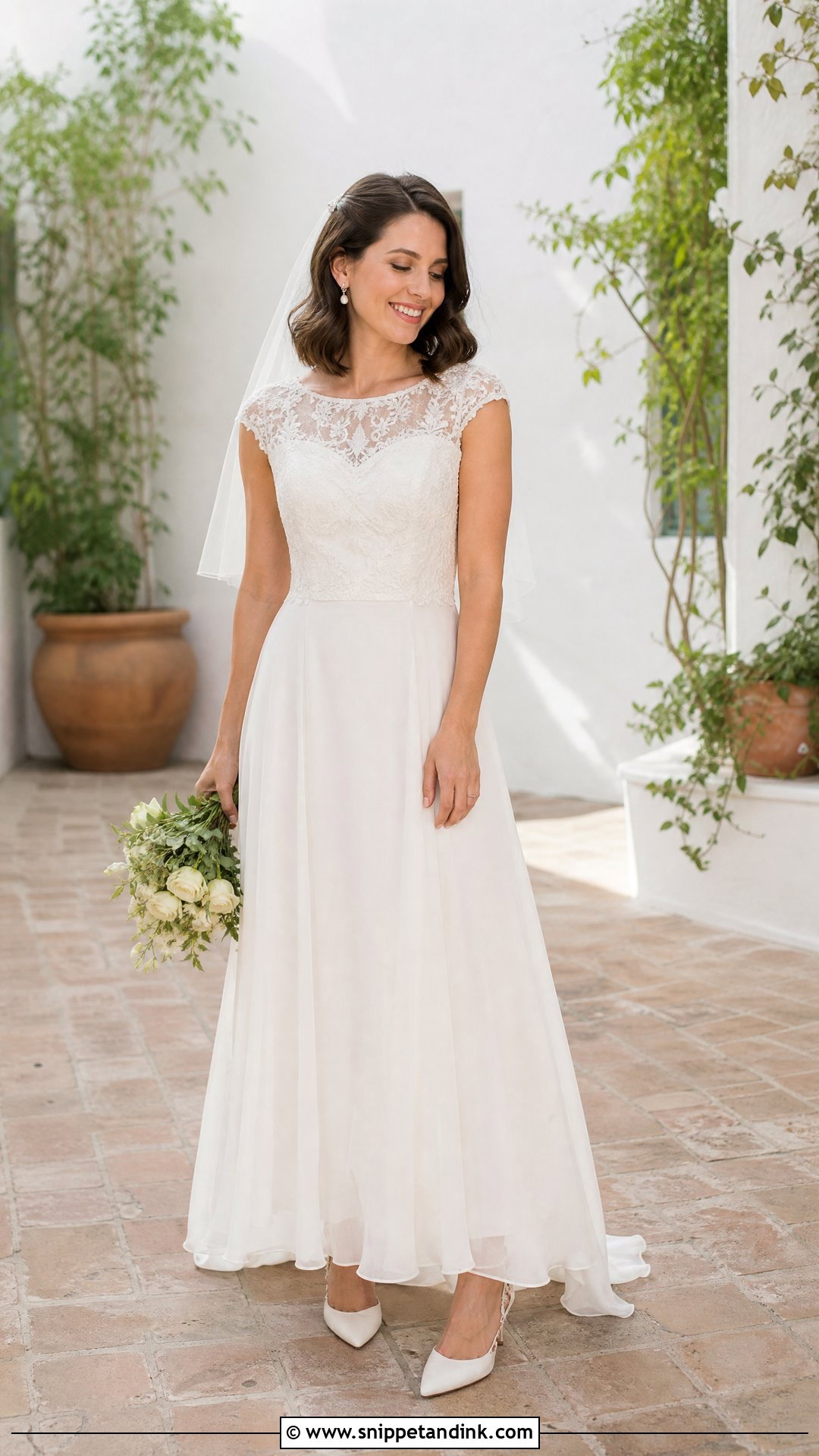
Cap sleeves give a little coverage and keep things light. The fit test is simple: raise your arms. If the sleeve band digs in or lifts the bodice, it needs releasing at the underarm. A lace or embroidered bodice over an A-line chiffon, tulle or satin skirt suits most figures. A shoulder-length veil shows off the upper back, while a longer lace-edged one is more formal. Soft waves pinned behind one ear can replace a bun. Pearl drops and slingbacks suit a garden, terrace or courtyard.
11. Satin A Line Spanish Wedding Dress
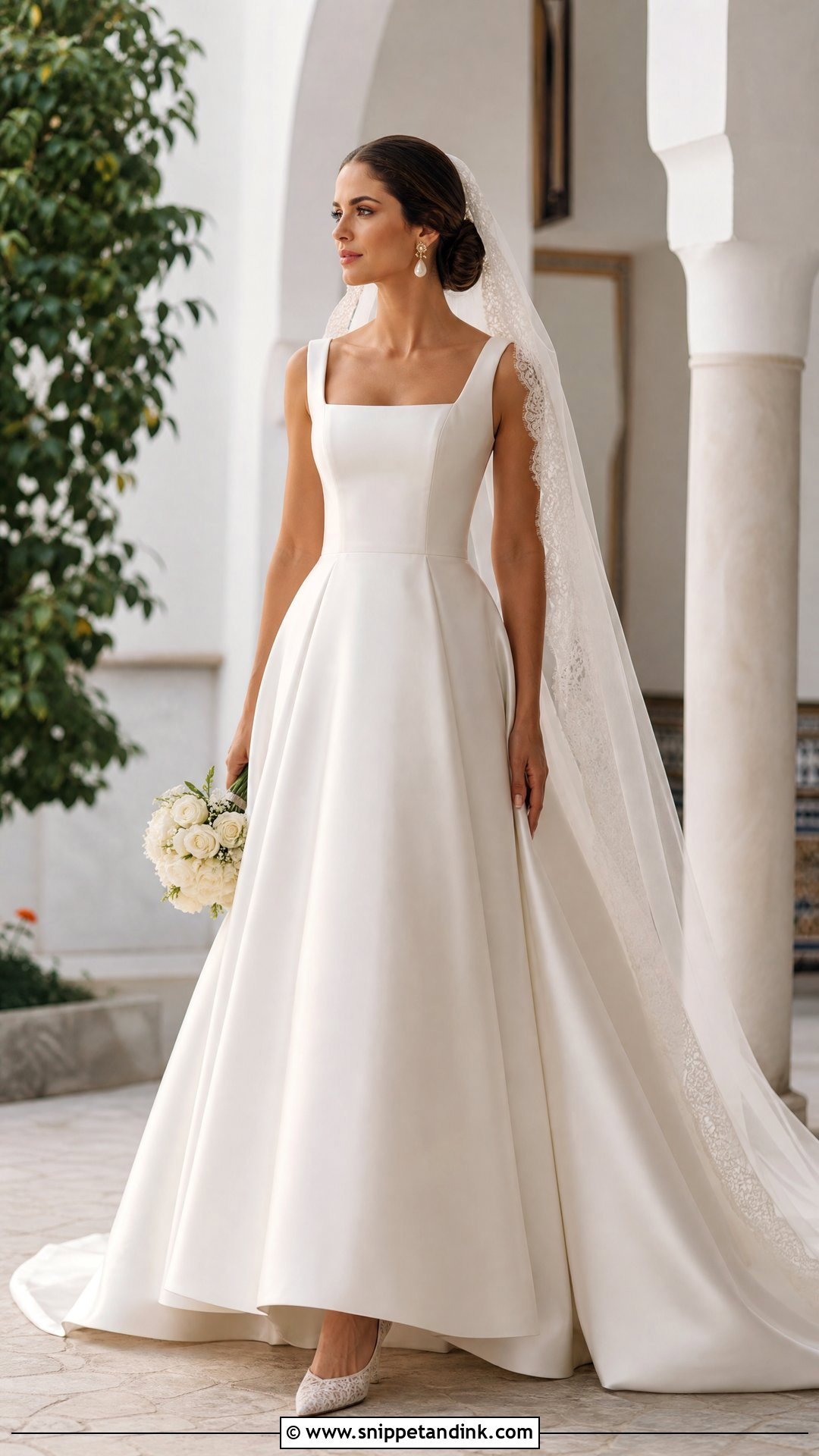
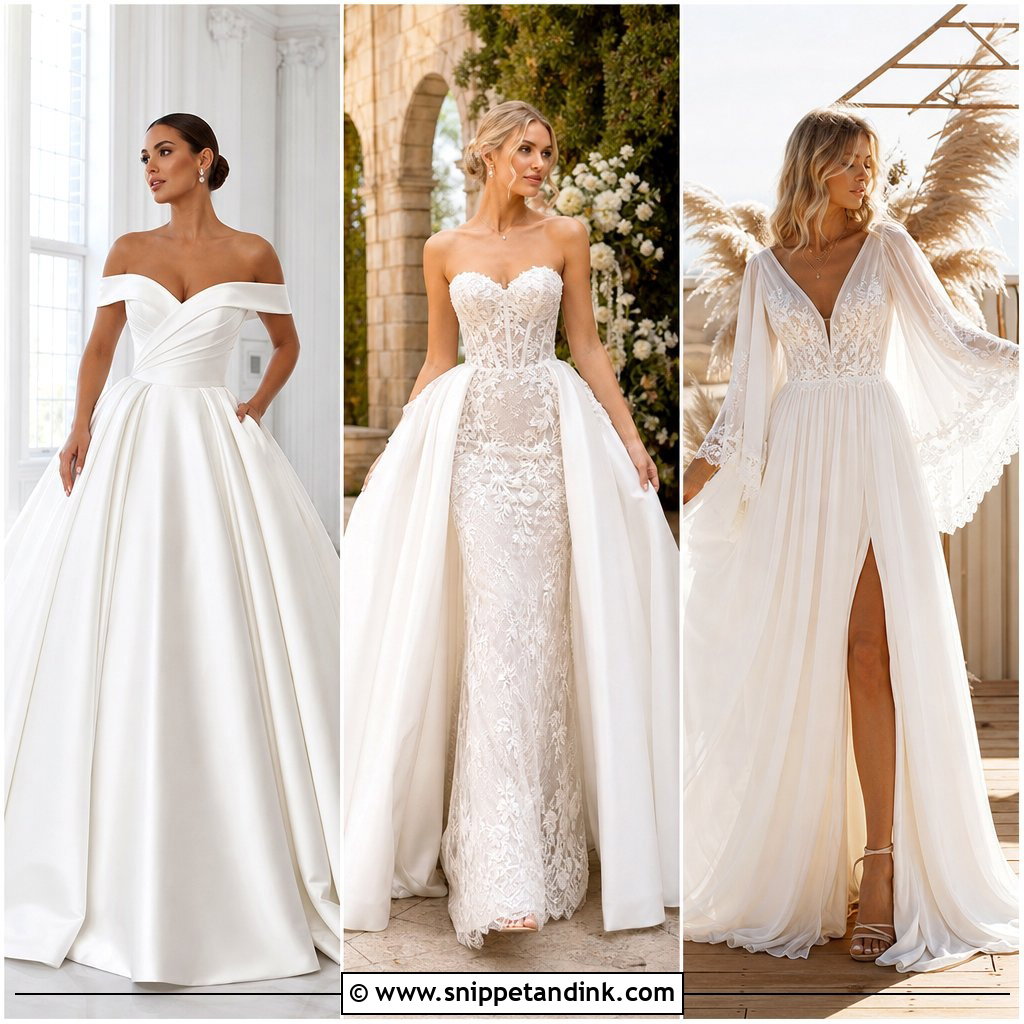
Satin reflects light softly and keeps an A-line looking clean. A fitted bodice and a skirt that skims the hips without clinging, with a square, scoop or draped neck, is a gown that works in almost any setting. Lace-covered pumps, pearl and gold earrings and a mantilla veil with a narrow scalloped edge bring the Spanish note. Hidden pockets and a removable train are useful extras. Satin creases easily, and I’d book steaming as close to the ceremony as you can, on site if possible.
12. Mikado Ball Gown Spanish Wedding Dress
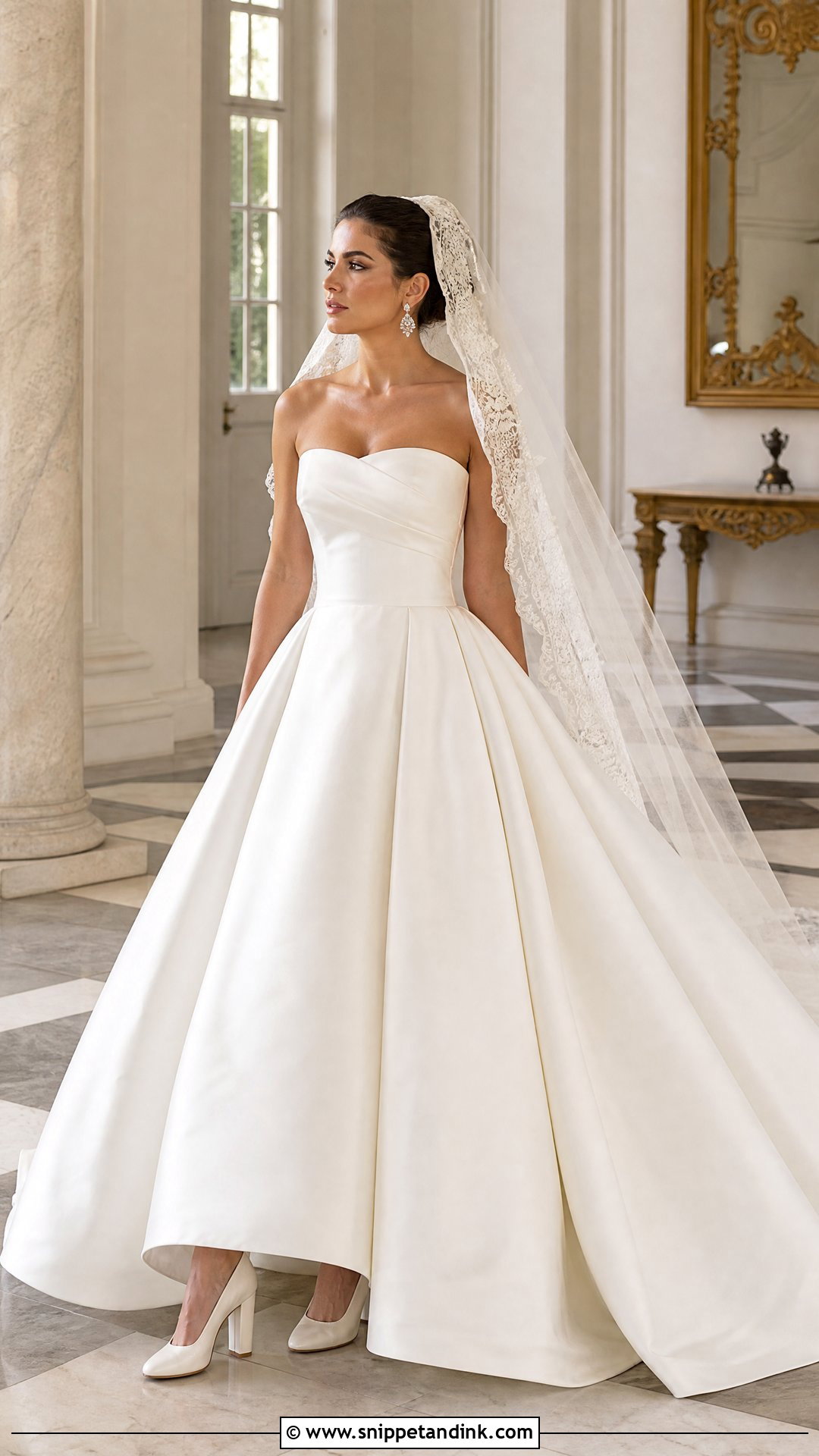
Mikado is a heavy, slightly stiff silk blend that holds pleats and volume on its own, which is why it suits a big ballroom skirt. A fitted bodice, clean pleats, a straight or softly curved strapless neckline and a lace mantilla give a formal balance. I’d choose a soft petticoat over a hoop so the skirt moves naturally. Proportion is key: on a petite frame, reduce the volume and train; taller or plus-size brides often suit broader pleats falling from the waist. Block-heel pumps, crystal earrings and a sleek updo complete it.
13. Low Back Spanish Wedding Dress
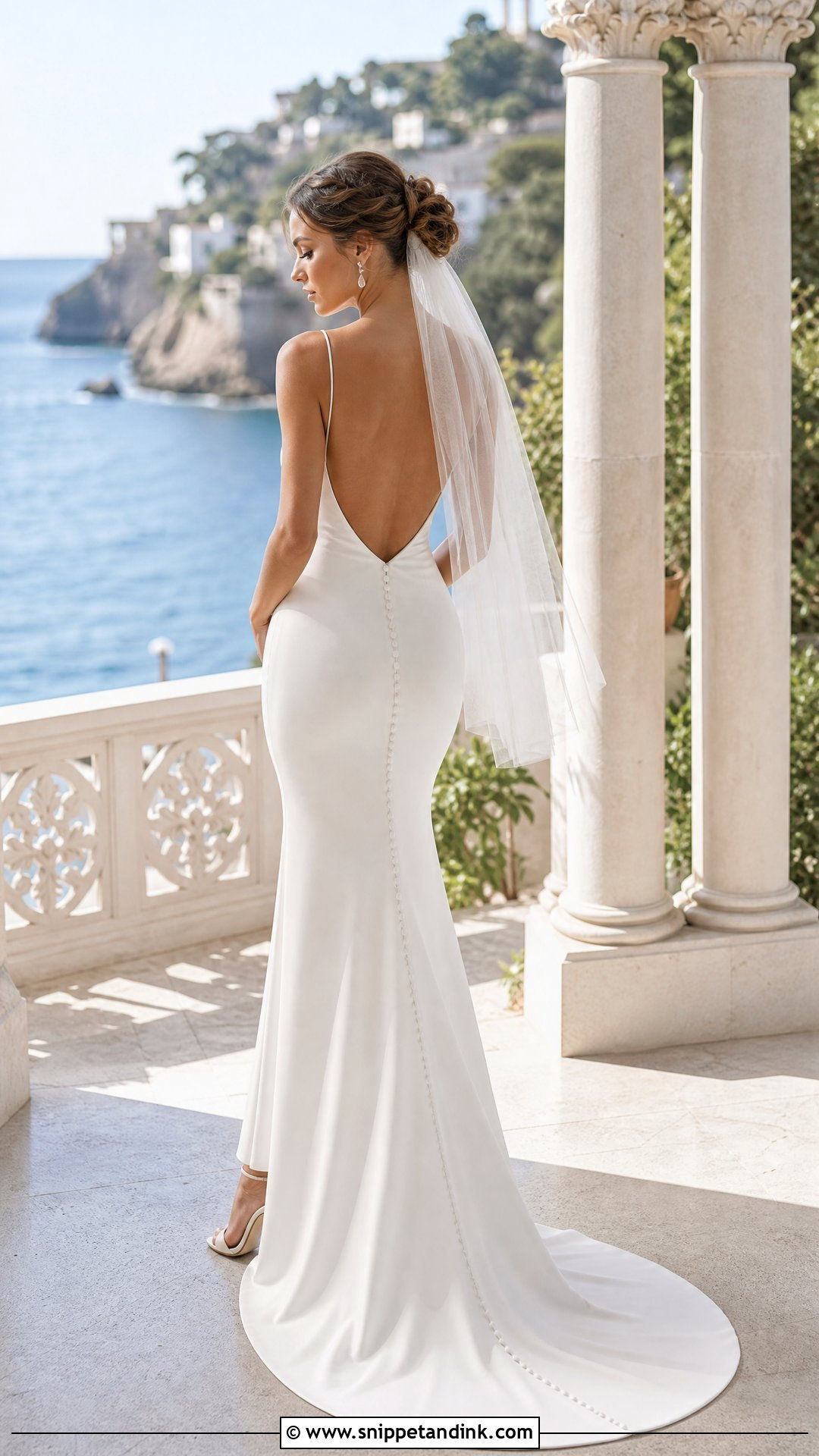
The underwear conversation for a low back should happen at the first fitting, not the last. Built-in cups or adhesive options need planning, and the back opening should be set to your comfort level from the start. A crepe or lace gown with supportive side panels and secure straps keeps the front restrained. Buttons running toward the train lengthen the line. Attach the veil below a braided bun so the back shows during the entrance. A detachable lace cape covers you for a church ceremony. Lightweight fabric suits warm open-air venues.
14. Square Neck Spanish Wedding Dress
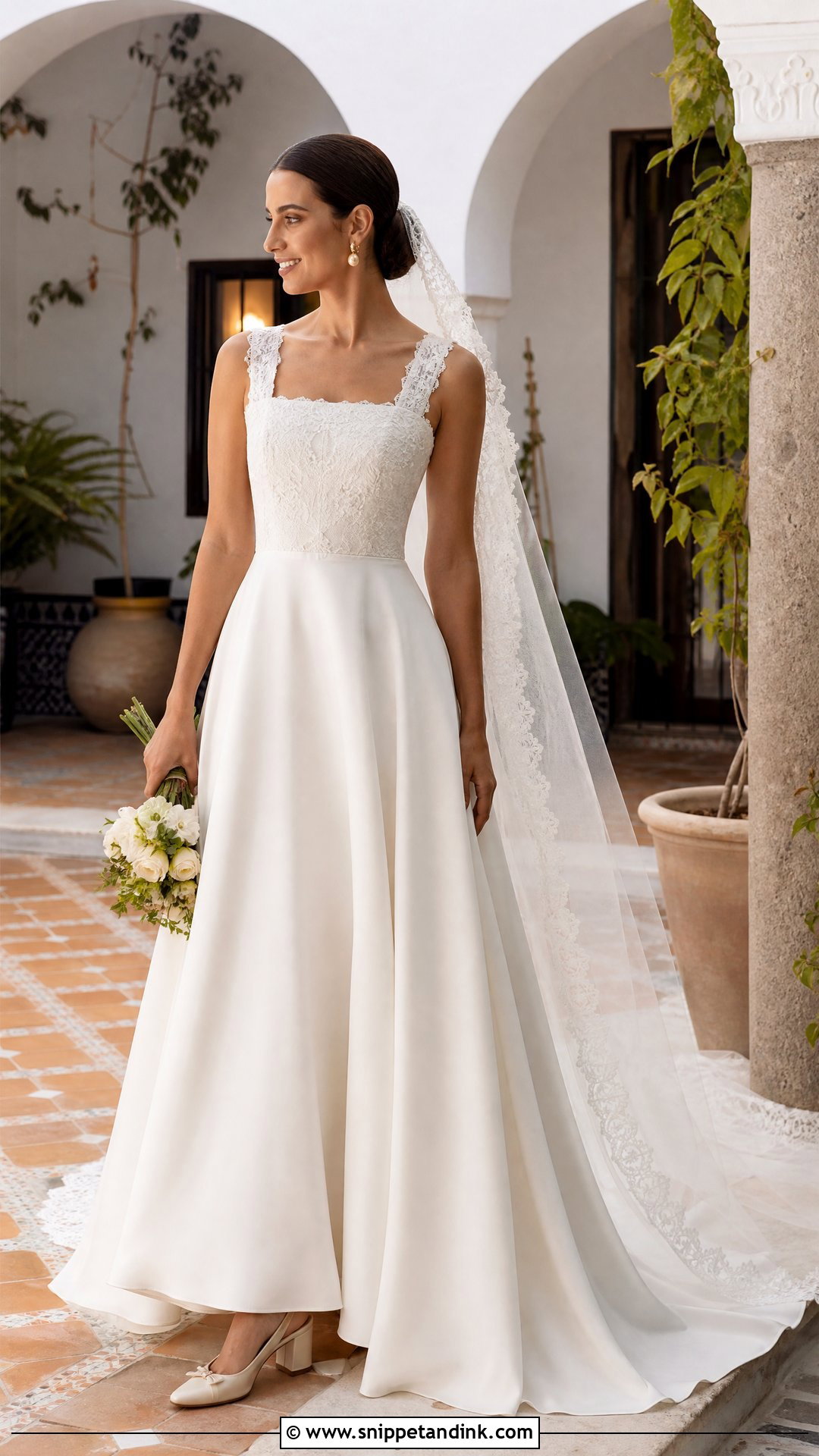
Square necklines give lace a crisp frame and offer more built-in support than most. A fitted bodice with wide straps and a defined waist can sit over a flowing A-line or a slim crepe skirt. Fuller busts benefit from adjusting the neckline depth and widening the straps slightly, which a good seamstress can do without changing the look. A short pendant or drop earrings, a low bun and a chapel lace veil finish it. Almond-toe block heels and a small structured bag are practical for portraits.


15. Drop Waist Spanish Wedding Dress
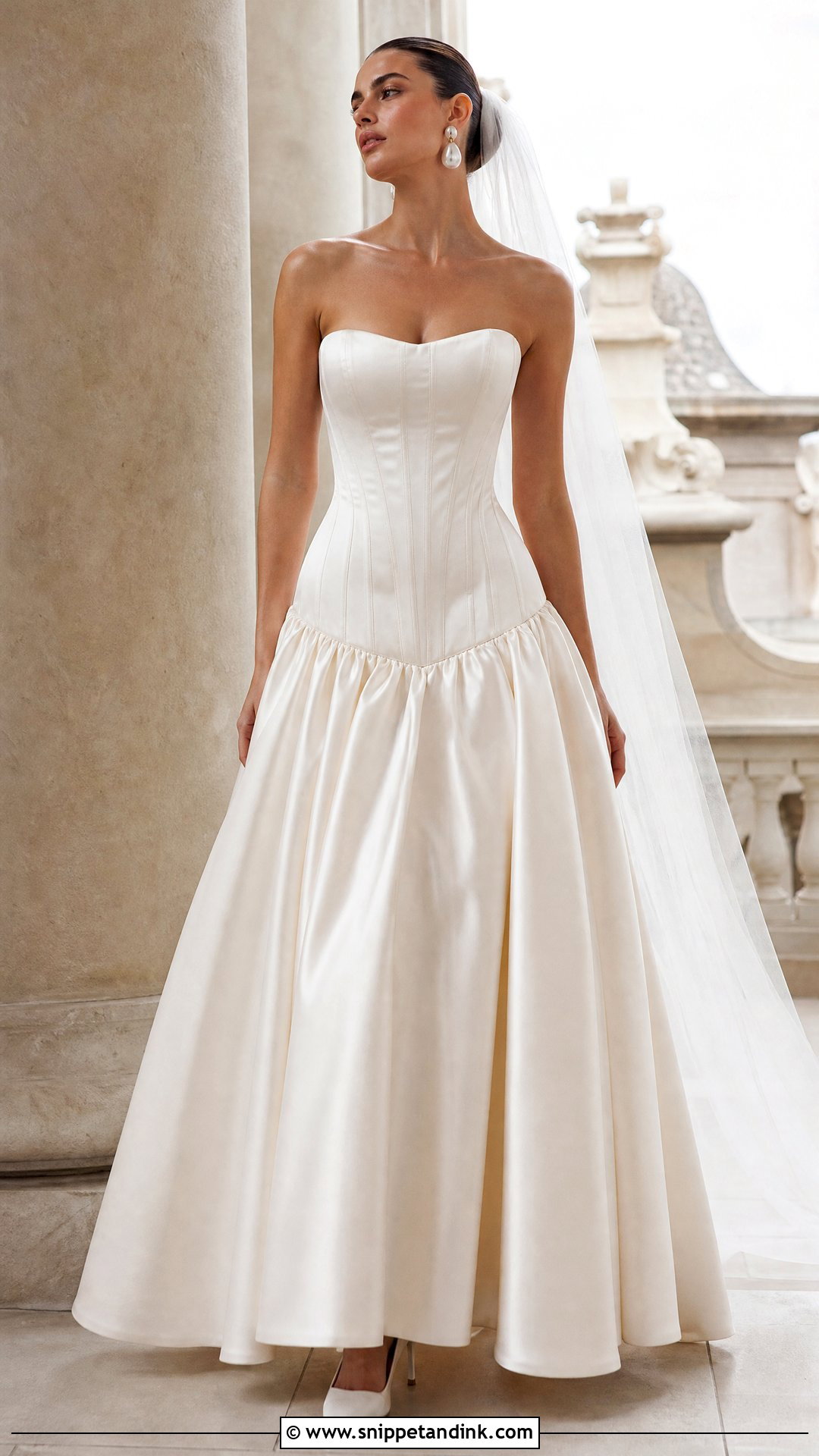
Drop waists lengthen the torso before the skirt opens out, so where the seam sits is personal. I’d go subtle on a petite frame and let a long-torso bride enjoy a dramatic low line. Careful corset construction keeps the bodice comfortable for sitting and breathing. Lace, mikado and satin each give a different softness. Pointed heels, statement pearls and a plain veil keep attention on the long bodice, and a smooth bun reinforces it. It’s fashion-forward but still formal enough for a church.
16. Spanish Wedding Dress With Detachable Sleeves
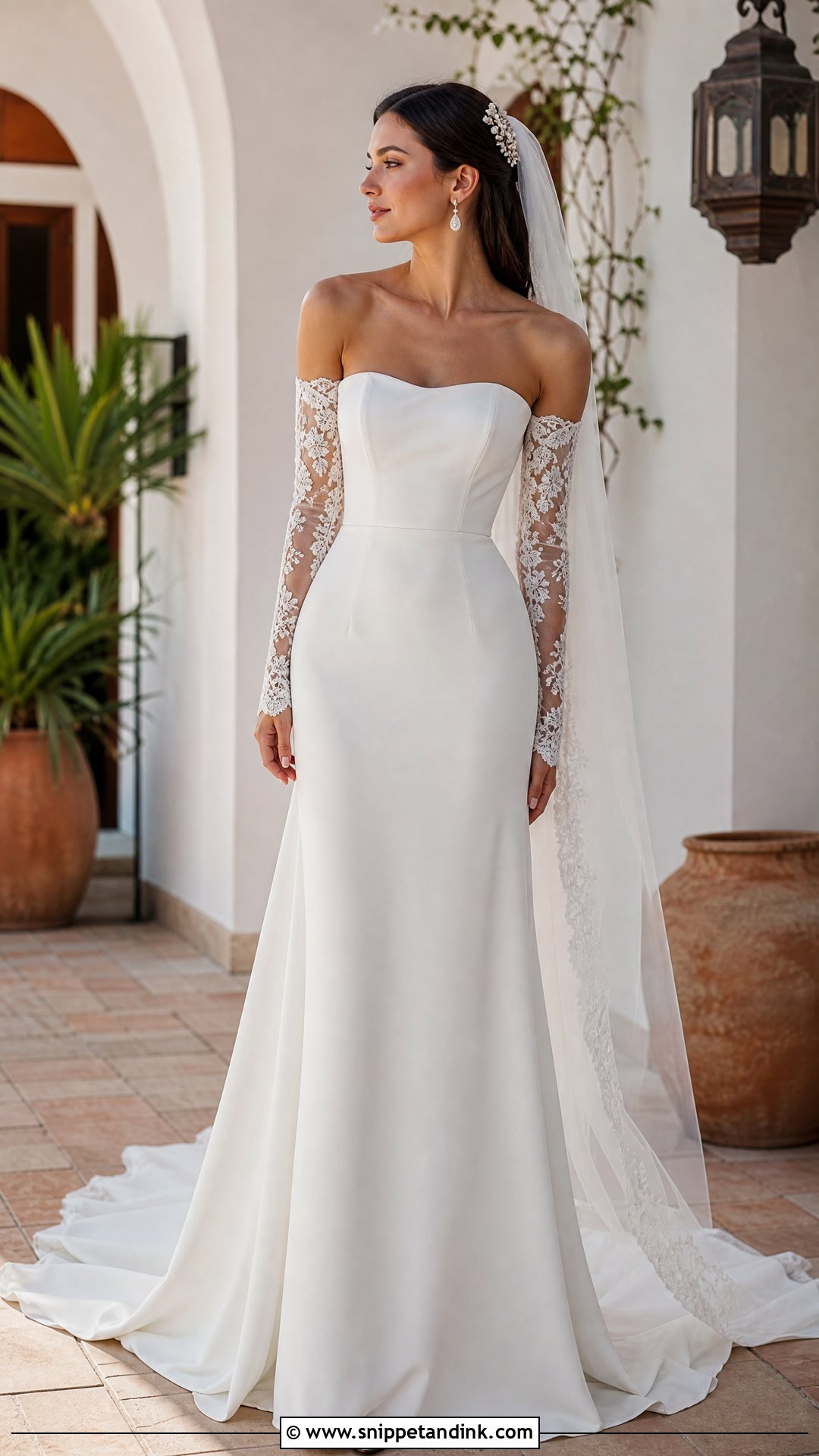
Detachable sleeves solve two problems at once: coverage for the ceremony and freedom for the dancing. A strapless or sleeveless gown with long illusion sleeves that attach invisibly is the setup. The appliqués on the sleeves must match the gown exactly, or they look like an add-on. I test the fastenings with a full range of arm movement at the fitting, because hidden hooks under the arm can pop when you hug. A low chignon, cushioned pumps and a lace-edged veil, swapped for a pearl comb later.
17. Spanish Wedding Dress With Detachable Overskirt
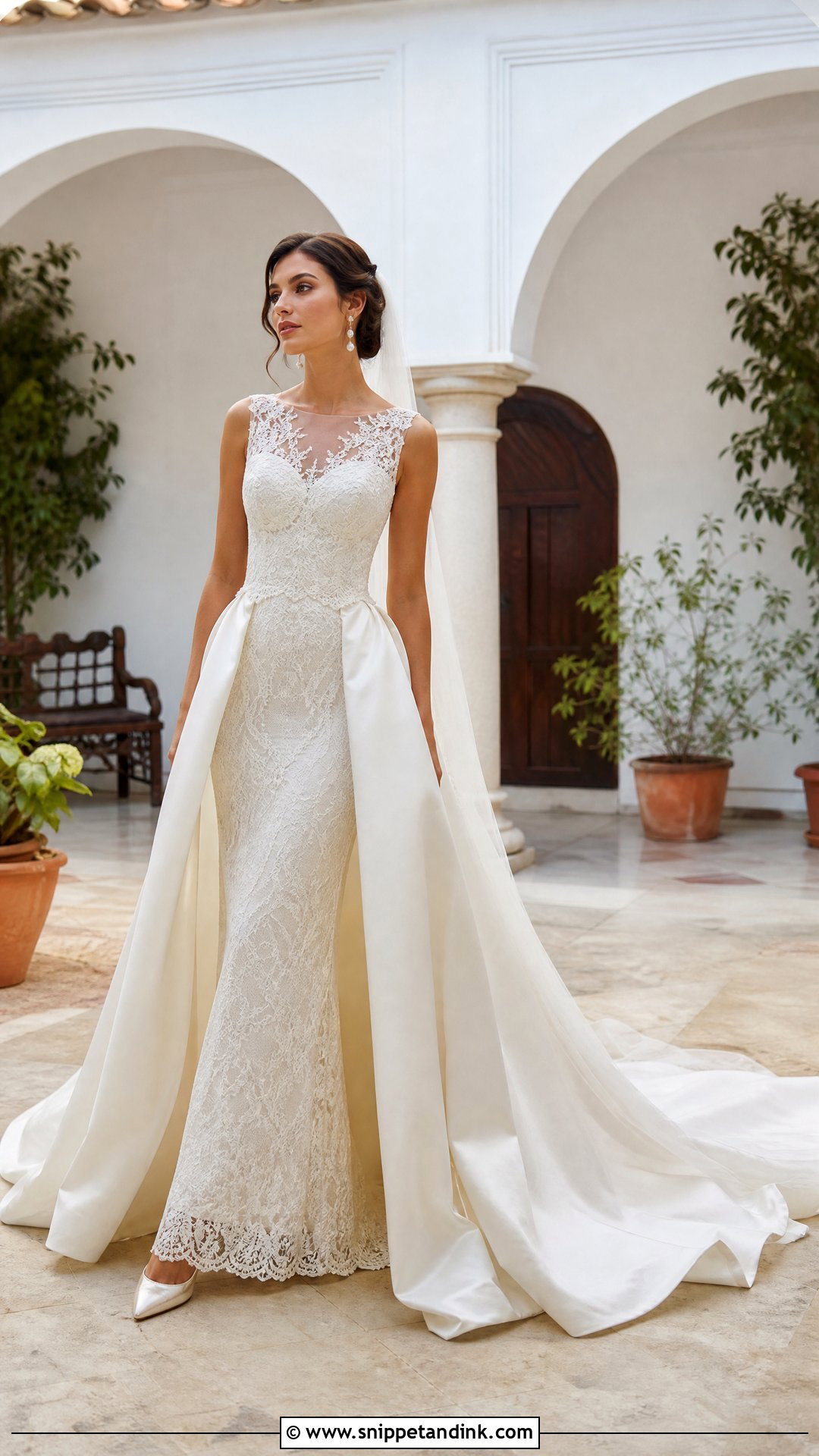
One gown, two moods. A lace mermaid or crepe column fitted through the waist and hips sits under a light satin, tulle or mikado overskirt with a flowing train. The join should disappear under a belt, bow or appliqués. I’d walk and sit in both versions at the final fitting, and check the base gown’s hem length without the overskirt, since it often needs its own adjustment. A long veil and pearls for the ceremony, then a decorative comb once the overskirt and veil come off.
18. Tea Length Spanish Wedding Dress
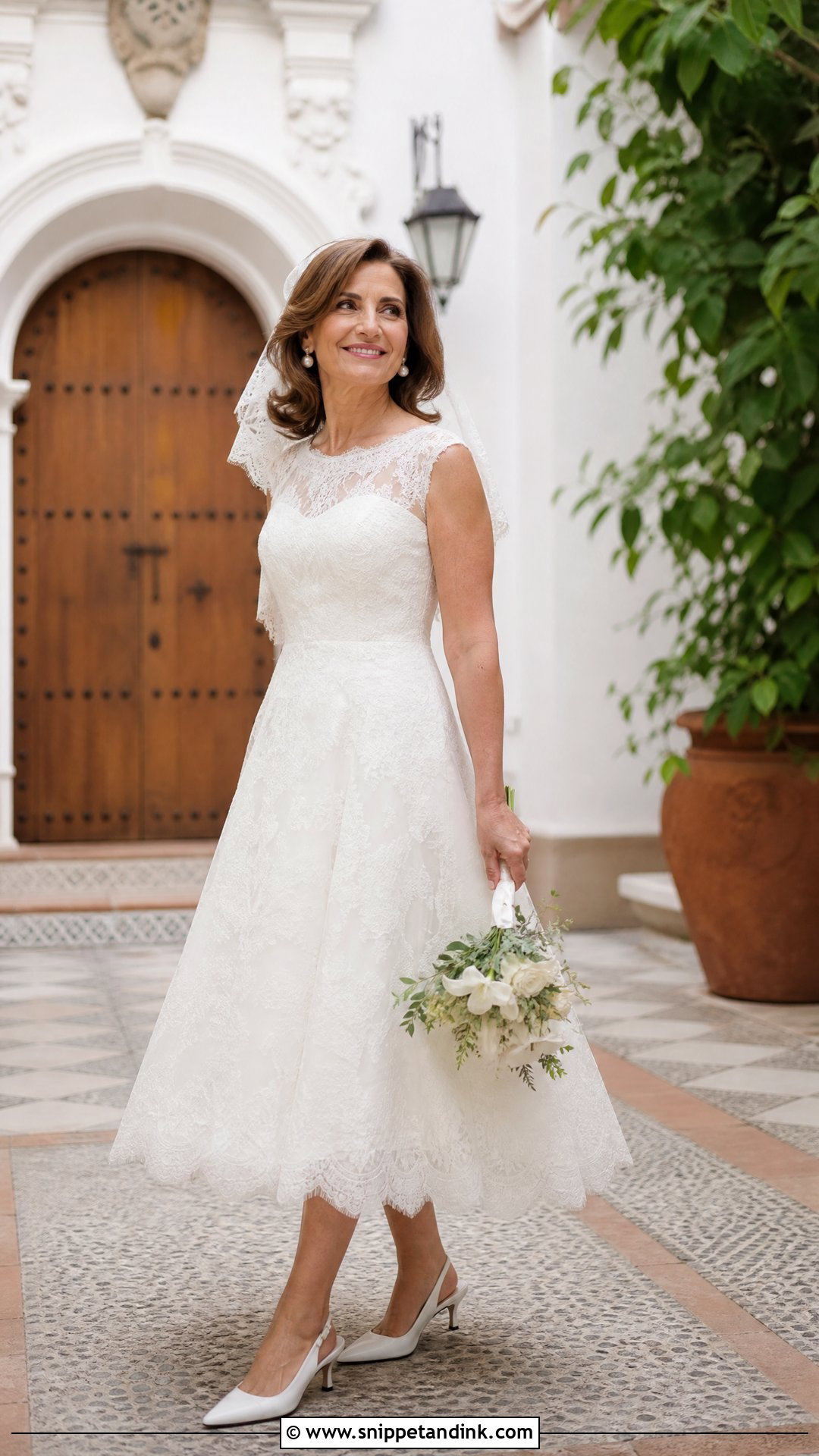
Civil ceremonies and daytime parties suit tea length. A fitted lace bodice and soft flare ending between knee and ankle, ideally with a scalloped hem, draw the eye to the shoes. Choose slingbacks you can stand in for a long time. Hem length matters more than people think: a petite bride can lose leg length if it ends at the widest part of the calf, so I’d set it a little higher or lower than that point. A short mantilla-style veil, pearls and a low bun or shoulder waves suit it.
19. Minimalist Spanish Column Wedding Dress
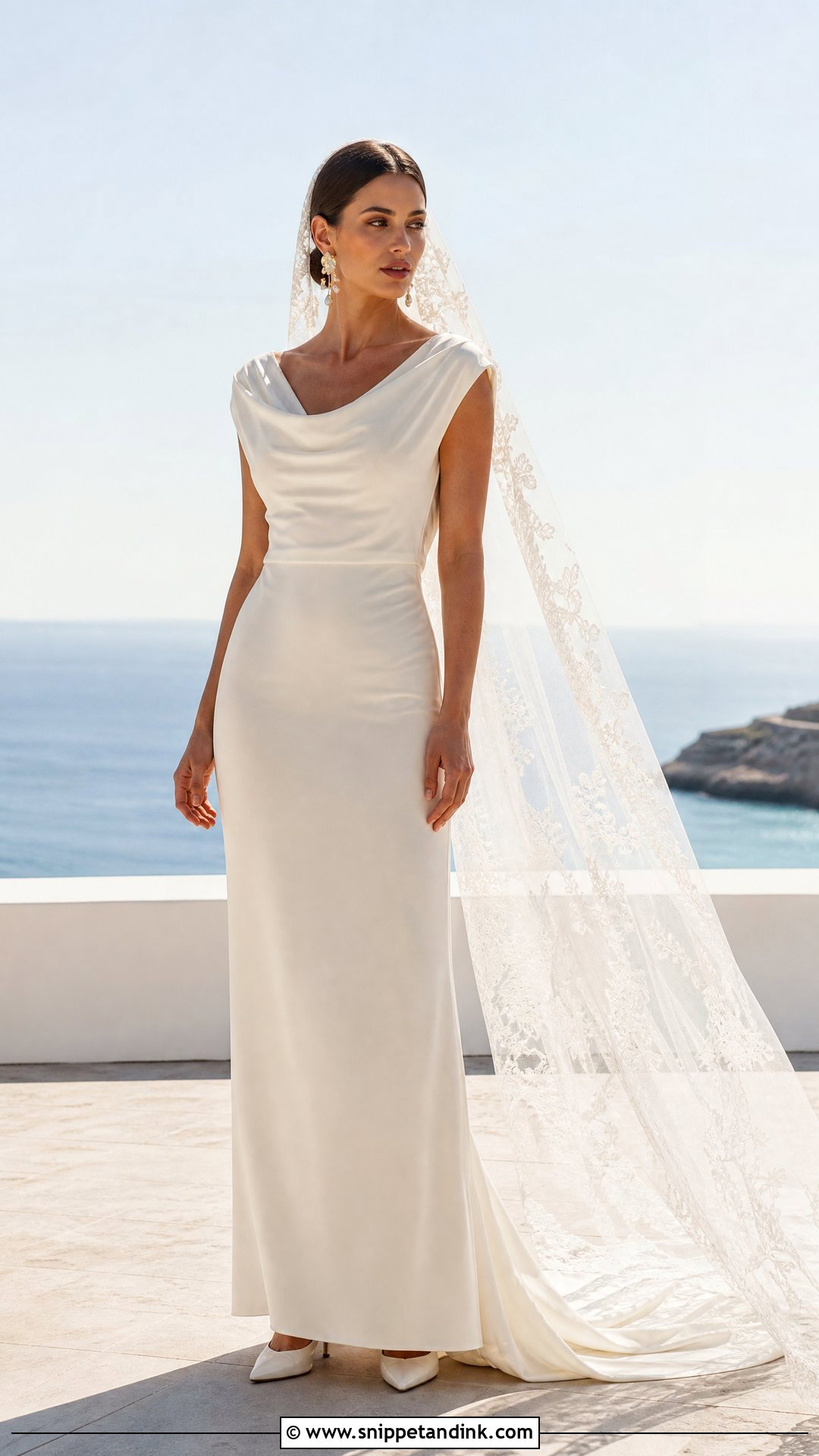
Minimal can still feel Spanish when the veil carries the tradition. A crepe or silk column with a draped neckline, defined waist and short train sits under a lace mantilla, and everything else stays plain. The fabric should skim the hips without pulling; if it creases horizontally when you stand still, it’s too tight. Sculptural earrings, pointed pumps and a sleek centre-parted bun finish it. A crepe cape or removable sleeves add coverage. Every seam shows on a gown this simple, so tailoring has to be precise.

20. Spanish Wedding Dress With Floral Appliques
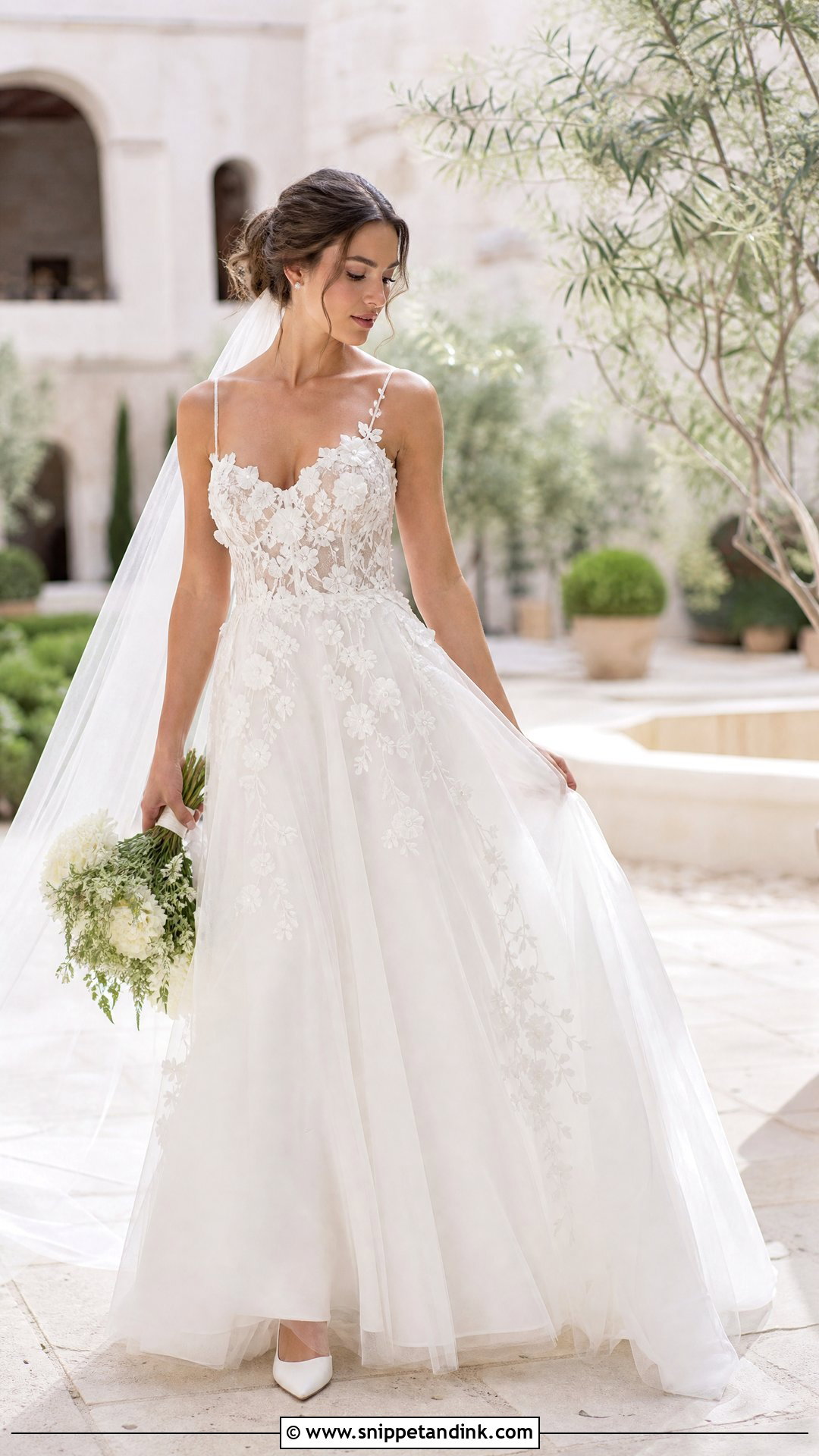
Raised appliqués look softest when they cluster rather than cover. I’d look for flowers concentrated at the neckline, waist or train over a fitted bodice and A-line tulle skirt. A plain sheer veil, satin heels and pearl studs let them show. Check the inner arms and waist for scratchy appliqué backing, which can rub over a long day. Detachable floral sleeves or a matching cape make it bolder. A loose low bun echoes the softness. Spring and summer gardens and courtyards suit it.
Kneeling, Signing and Dancing in a Spanish Ceremony Dress
A Spanish church ceremony asks more of a dress than most people expect. Before you settle on a gown, think through the moments where you’ll move in it.
- Kneeling. Many Catholic ceremonies include kneeling at the altar. A tight mermaid or a stiff corset can make this awkward, so practise kneeling and rising at the fitting, with your shoes on.
- Walking with the padrino. Traditionally the bride walks in on the arm of the padrino, often her father. Make sure your train and veil leave room for him on one side.
- The arras and rings. The couple exchange thirteen coins during the ceremony, and rings in Spain are often worn on the right hand. Keep bracelets and long sleeves away from that hand so nothing catches.
- Signing the register. You’ll lean forward over a table. Check that a deep V or off-shoulder neckline stays in place when you do.
- A long night. Dinner and dancing in Spain can run past dawn. A second pair of shoes and a bustled or detachable train make the later hours much easier.
None of this needs to change your choice of gown. It just tells your seamstress what the dress has to survive, and she’ll fit it accordingly.
A Spanish Gown Should Still Feel Good at Dawn
Spanish influence can come from one element or several: lace, a mantilla, a fitted mermaid, a corset, a long train. They don’t all need to be in the same outfit. Start with a silhouette that supports you and fits the venue, then add shoes, jewellery, hair pieces and coverage until it feels complete. Walk, sit and dance in it during alterations, especially in fitted skirts and long trains. Minimal crepe or full floral lace, the right dress is the one you forget you’re wearing by midnight.
You'll Like These Ideas:







Leave a Reply