
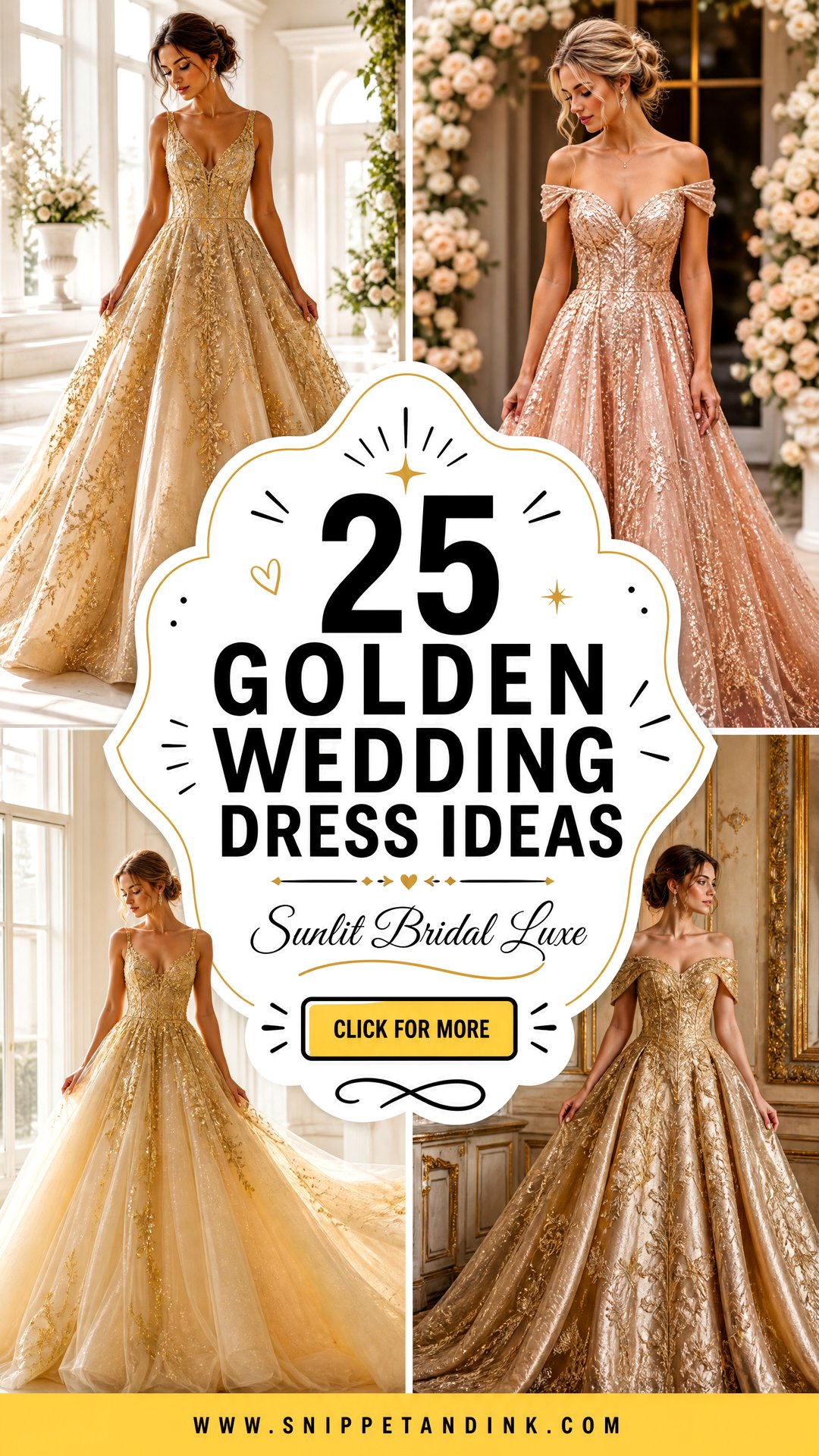
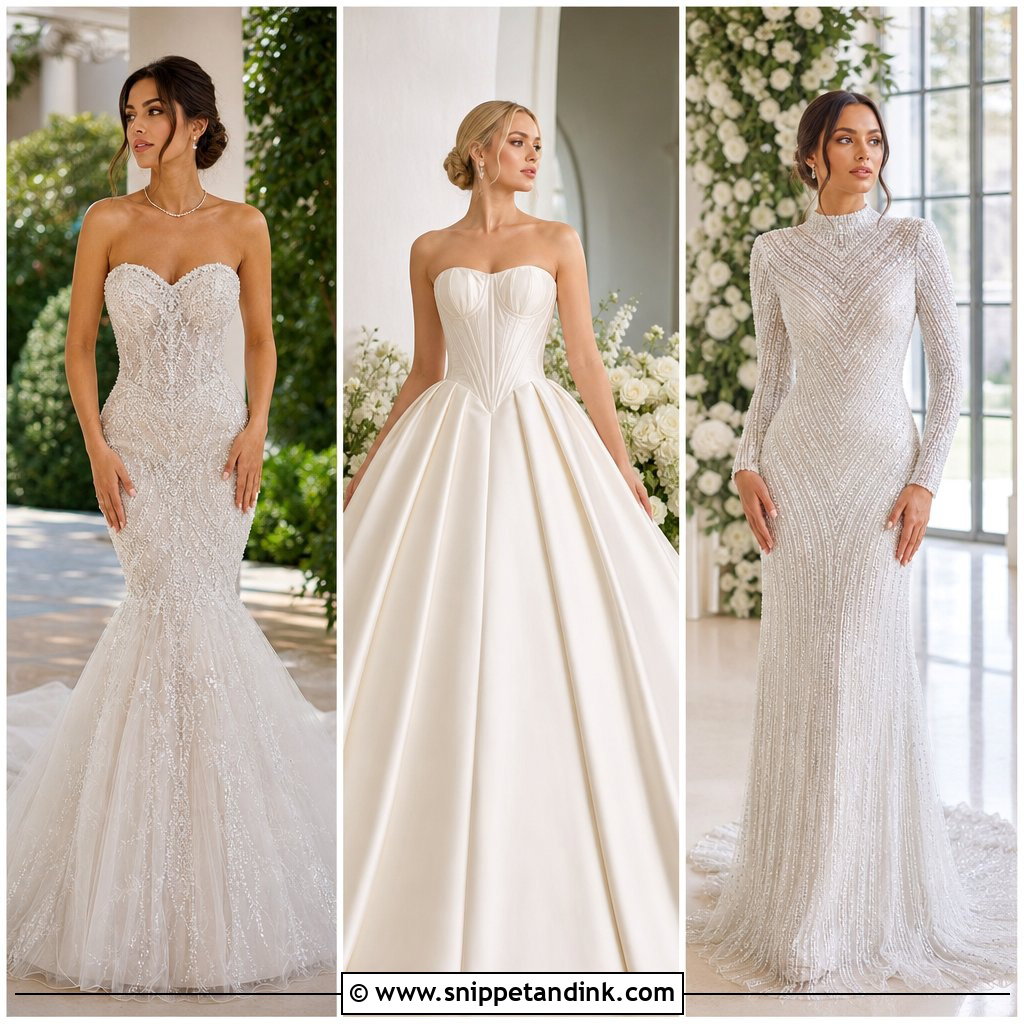
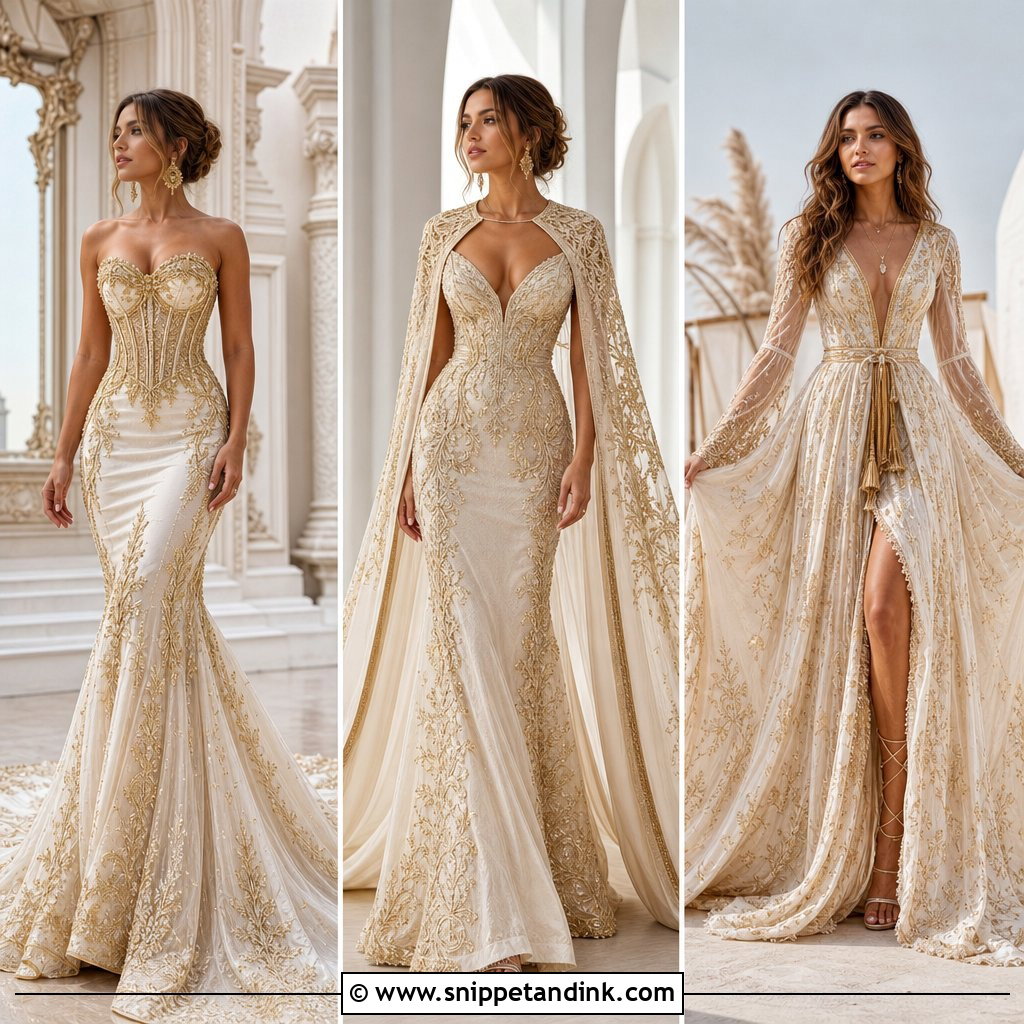
A gold wedding dress breaks the white-dress formula without losing the bridal feeling, and in my experience that is what brides are really after when they ask about it. The color covers a wide range. Pale champagne reads almost neutral beside ivory flowers, while a fully sequined gown turns the aisle into a stage. What matters is matching the depth of gold to the time of day and the fabric to the venue, because gold in afternoon sun and gold under evening uplighting are two different colors. Texture, sculptural shapes and personal color choices are all strong in bridal right now, and gold sits easily among them. Here are 25 ways I’d put a bride in it, from barely there to full shimmer.
Why the Shop Sample Might Not Match the Gown You Order
Gold is a dyed or metallic finish, and both vary between production runs more than white fabric does. The sample you try on has also spent months under shop lights and in other brides’ hands, so it may look warmer or duller than a fresh gown. Before you order, ask for a cutting of the actual fabric and look at it in daylight against your skin.
Questions I’d put to the salon
- Is the color made in dye lots, and can I see a swatch from my order before it ships?
- How long is production? Made-to-order gowns often take several months, so confirm before setting fitting dates.
- Does the lining come in more than one shade? A nude lining makes gold look warmer than an ivory one.
- Can alterations be sewn with matching gold thread so hem and seam changes don’t show?
If the swatch arrives noticeably different, raise it in writing straight away. A color problem is far easier to fix before the gown is cut than after.
1. Gold A Line Wedding Dress
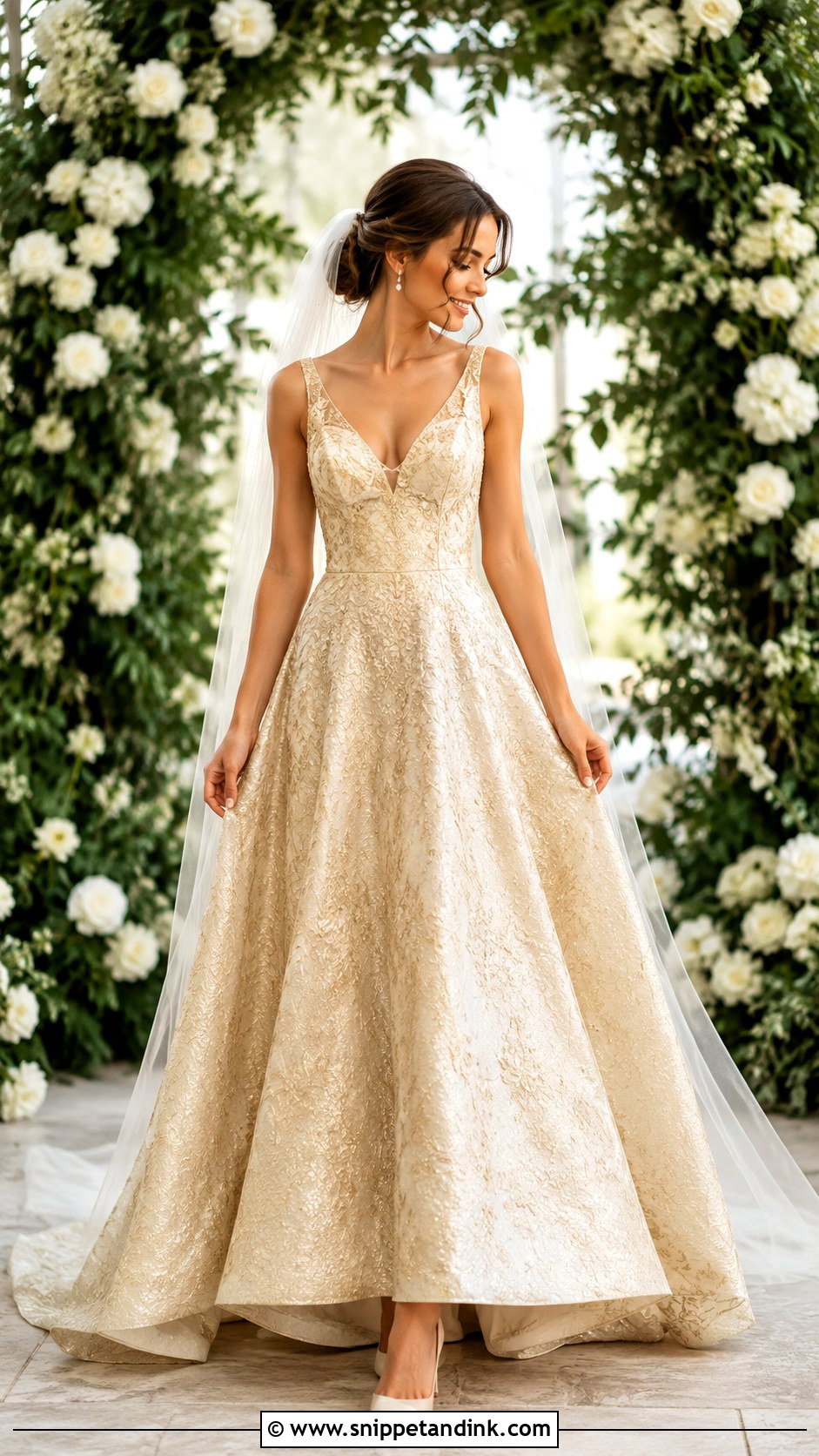
This is my safest recommendation for a bride trying gold for the first time. The fitted bodice and gently flaring skirt suit almost every figure, so the color becomes the only new thing to get used to. Champagne tulle gives a soft glow. Satin looks smoother and more polished but shows every alteration line, so it needs a careful seamstress. Ivory pointed heels, pearl drops and a raw-edge veil keep it classic, and a pale bouquet of cream and blush lets the dress stay the focus.
2. Gold Ball Gown Wedding Dress
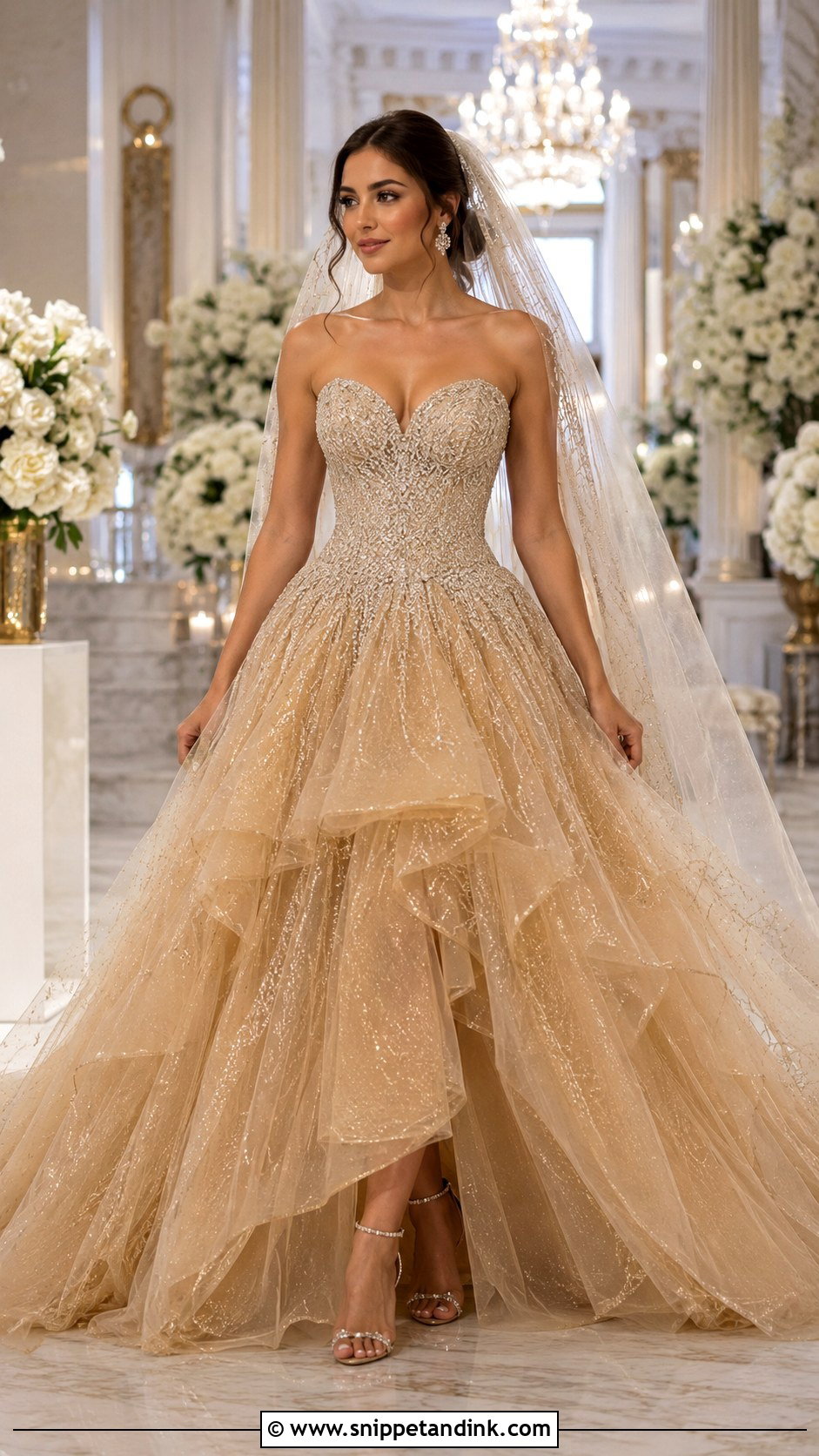
A gold ball gown wedding dress layered in tulle, organza or glitter fabric gives you the fairytale aisle walk. Glitter tulle sheds, though, so expect sparkle on the groom’s jacket by the end of the night. A structured bodice balances the skirt, and a sweetheart, square or off-shoulder neckline keeps the top soft. With a cathedral veil, crystal earrings and delicate metallic heels, leave out anything oversized. Grand venues with wide aisles suit it best; a narrow aisle squeezes the skirt in every photo.
3. Gold Mermaid Wedding Dress
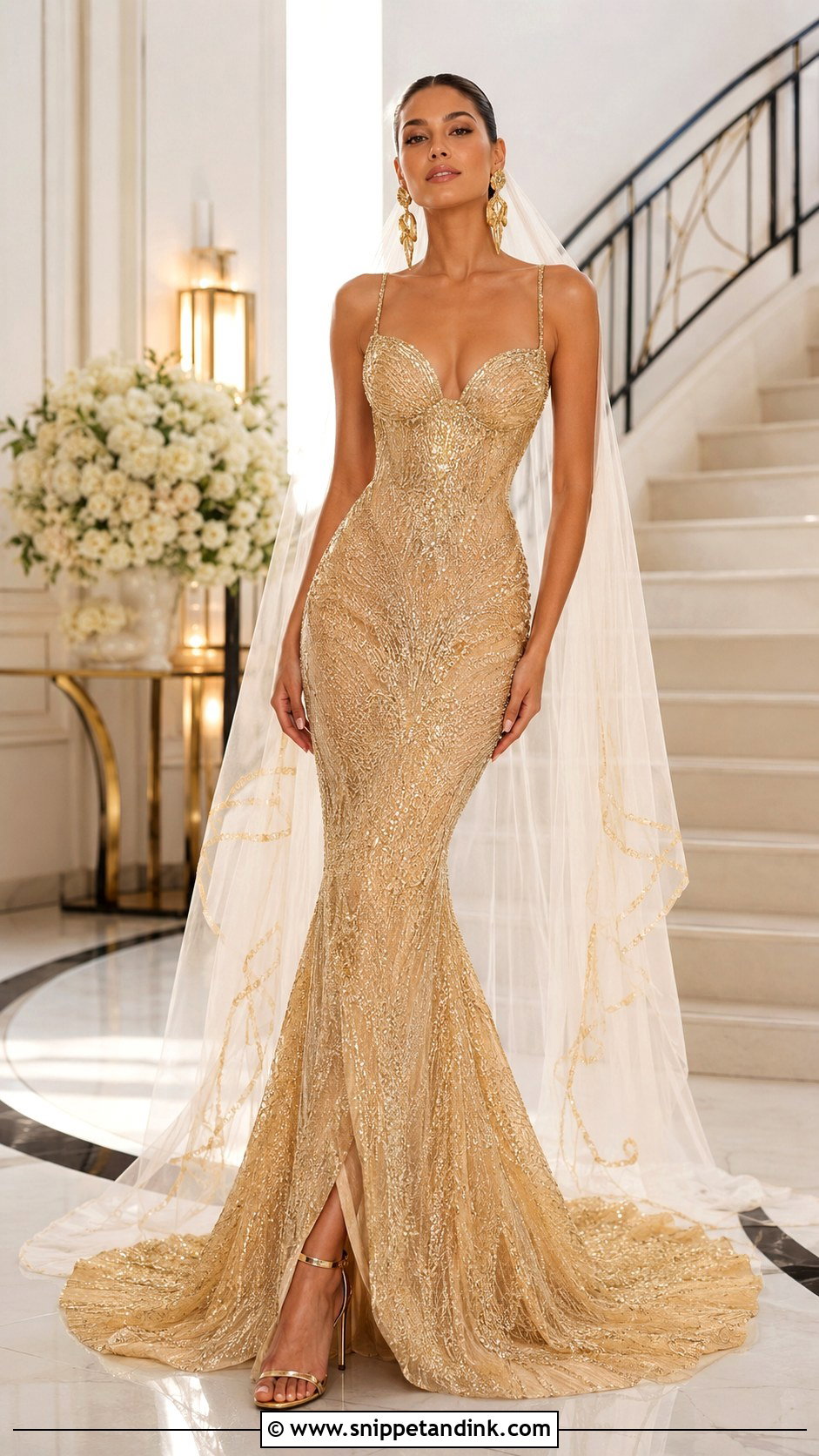
Mermaid is the silhouette where gold works hardest, because shimmer follows every curve between bust and knee. That also means the fit has to be precise. If the flare starts too high, you’ll walk in tiny steps all day, so I ask brides to climb a step and sit down at every fitting. Beaded lace or stretch crepe with subtle sparkle is kinder to move in than rigid satin. Strappy gold heels, sculptural earrings and a sleek veil suit a black-tie hotel wedding.
4. Gold Sequin Wedding Dress
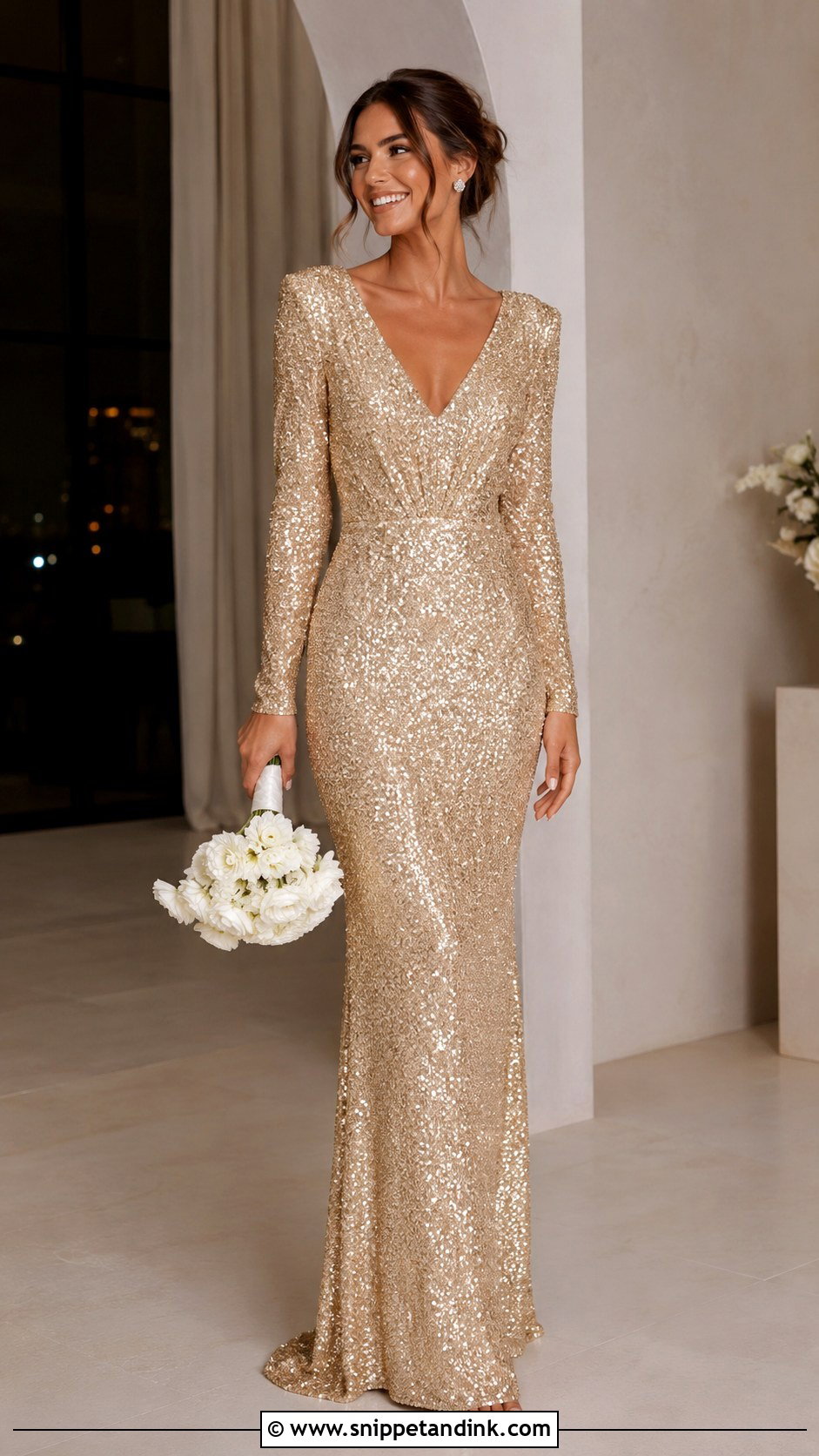
Sequins belong at night. They catch candlelight and dance-floor lighting like nothing else, while harsh midday sun can make them glare in photos. For a refined version I’d pick a slim column, long sleeves or a clean V neckline; all-over sequins with an open back and a short train is the louder route. Since the dress is bright, everything else stays controlled: minimal heels, small studs, and a soft smoky eye or glossy nude lip.
5. Champagne Gold Wedding Dress
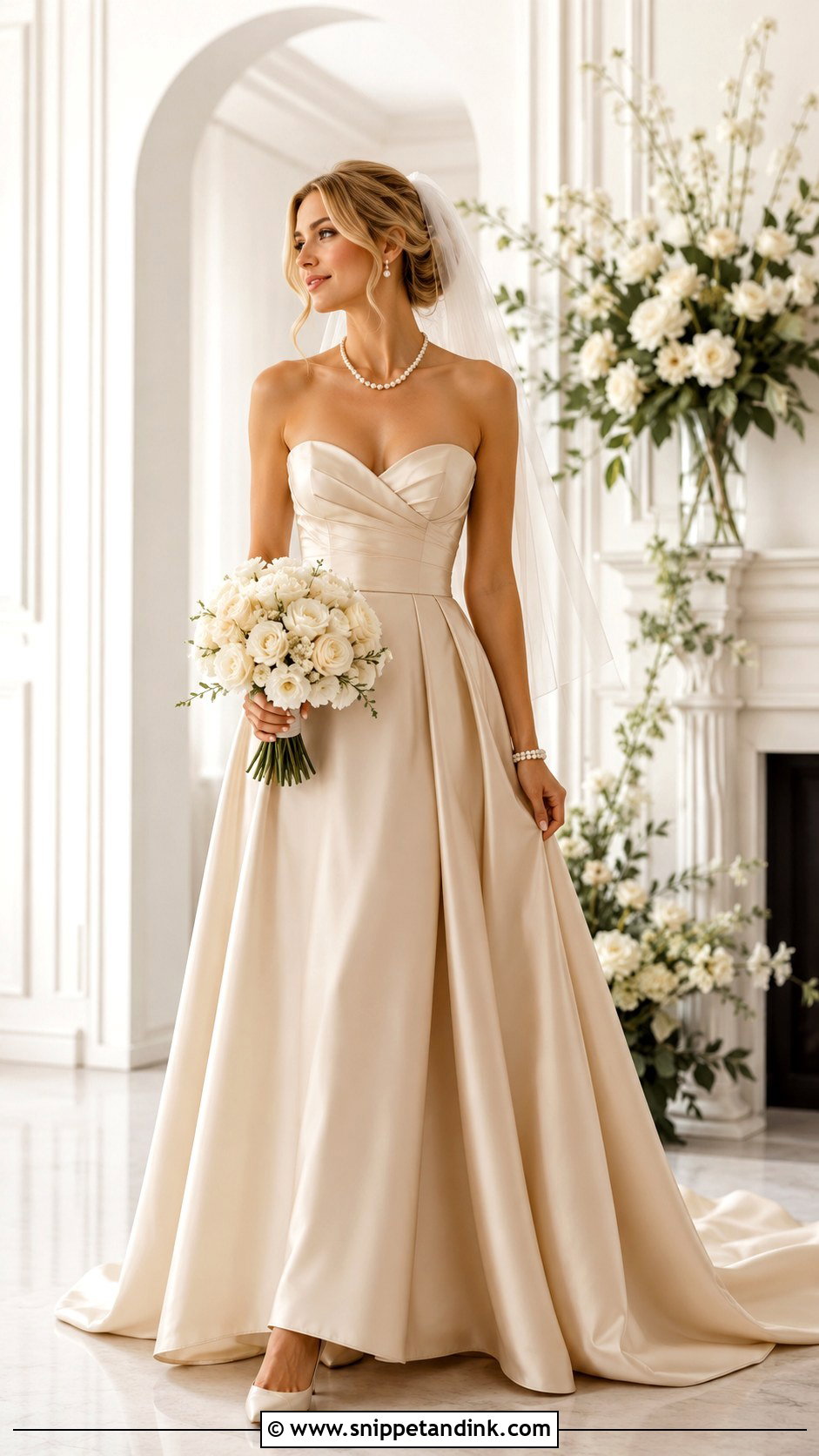
Champagne gold is where many brides land after trying brighter golds, because it sits between ivory, beige and pale gold and flatters most skin tones. In satin, chiffon, tulle or lace, the color looks dimensional rather than flat. Ivory heels, pearls and white roses with buttercream blooms keep everything in the same warm family. One check I always make: next to a stark white veil, champagne can look dingy, so match the veil to the dress, not to an idea of white.
6. Rose Gold Wedding Dress
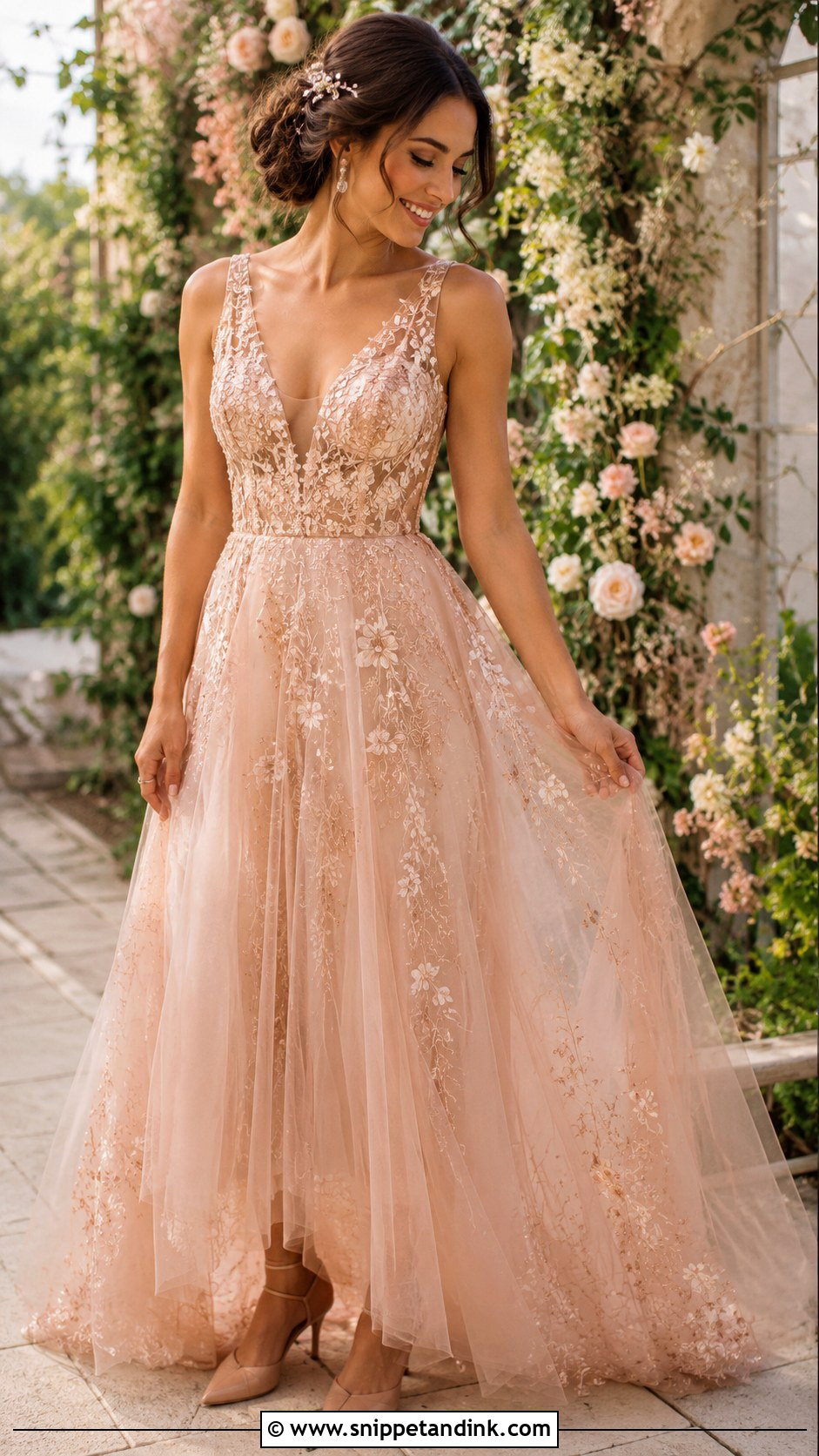
Rose gold has a pink undertone that warms the look without losing softness, and it suits spring and summer especially. It works in tulle, lace, sequins and embroidered overlays. I’d pair it with nude heels, blush flowers, pearl hair pins and soft gold jewelry, keeping the veil sheer and simple if the dress shimmers. Rosy cheeks and a soft pink lip complete the color story, but don’t match the lipstick exactly to the fabric, or it starts to look like a costume.
7. White And Gold Wedding Dress
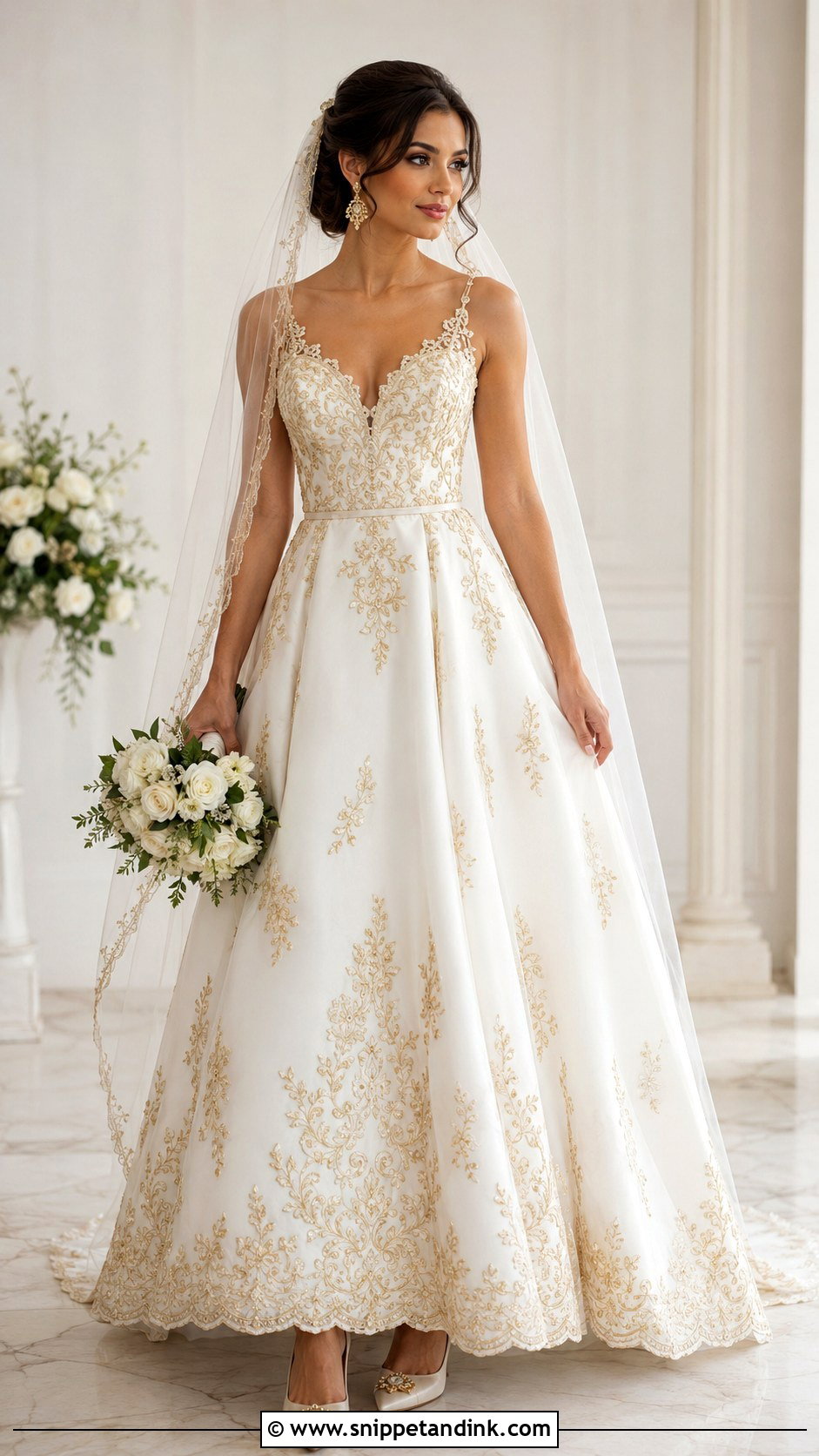
If your family expects white, this is the compromise that rarely causes friction. The white base reads clearly bridal, and gold embroidery, beading or appliqué adds warmth on top. It works on A-lines, fitted gowns, sleeved dresses and ball gowns alike. I’d keep the shoes ivory, add gold earrings and consider a veil with a thin gold edge so the two colors connect. Keep the bouquet mostly white; yellow flowers fight the gold details instead of framing them.
8. Gold Lace Wedding Dress
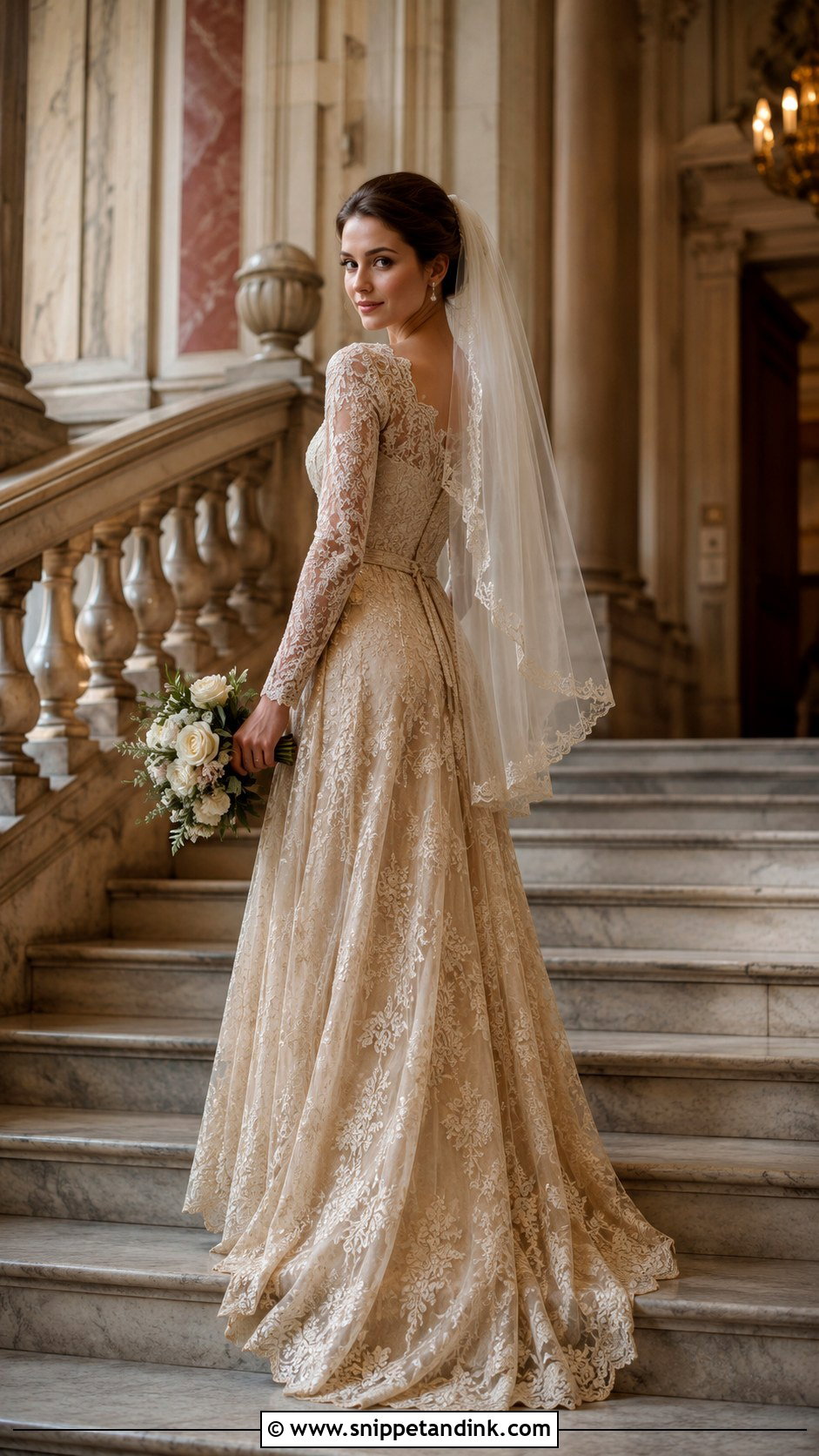
Gold lace has a vintage softness that is detailed without being loud. Lace woven with gold thread, or laid over champagne lining, looks warm up close and almost ivory from across the room. Long sleeves give a classic shape, an illusion neckline softens it, and a fitted bodice over a flowing skirt keeps it balanced. A fingertip veil is my usual choice here because it doesn’t hide the pattern. Pearl earrings, satin pumps and a low chignon suit estate and historic venues.
9. Gold Satin Wedding Dress
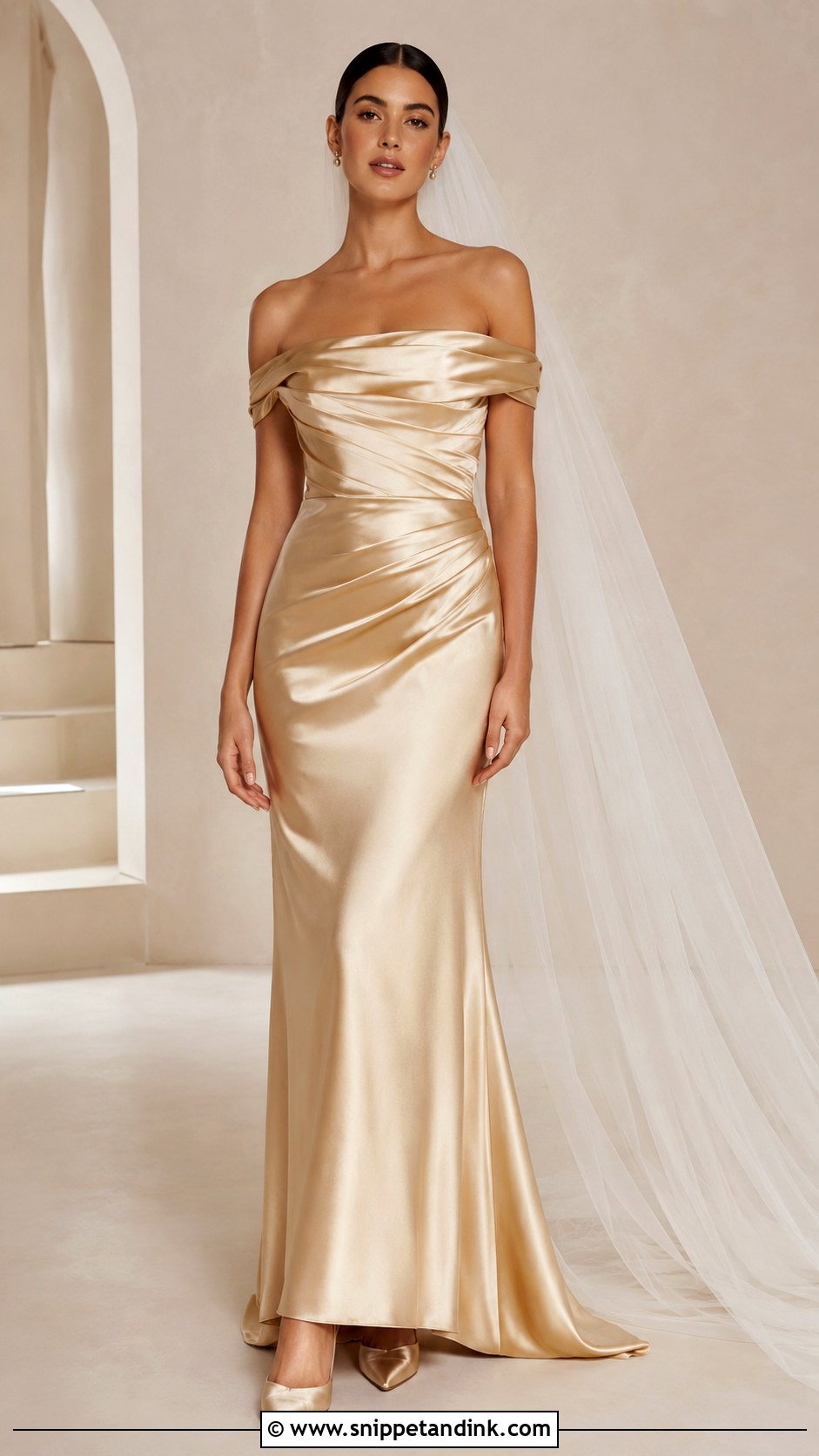
Satin hides nothing, which is the reason to love it and the reason to fit it carefully. Bias-cut gowns, structured ball gowns, simple A-lines and off-shoulder styles suit it because the cut is the whole design. The fabric reflects light, so gold satin reads richer on camera than in person. Pointed satin heels, minimal jewelry and a long plain veil with a polished bun give it a modern finish. Expect creases wherever you sit; a hand steamer in the getting-ready room fixes most of them.
10. Gold Tulle Wedding Dress
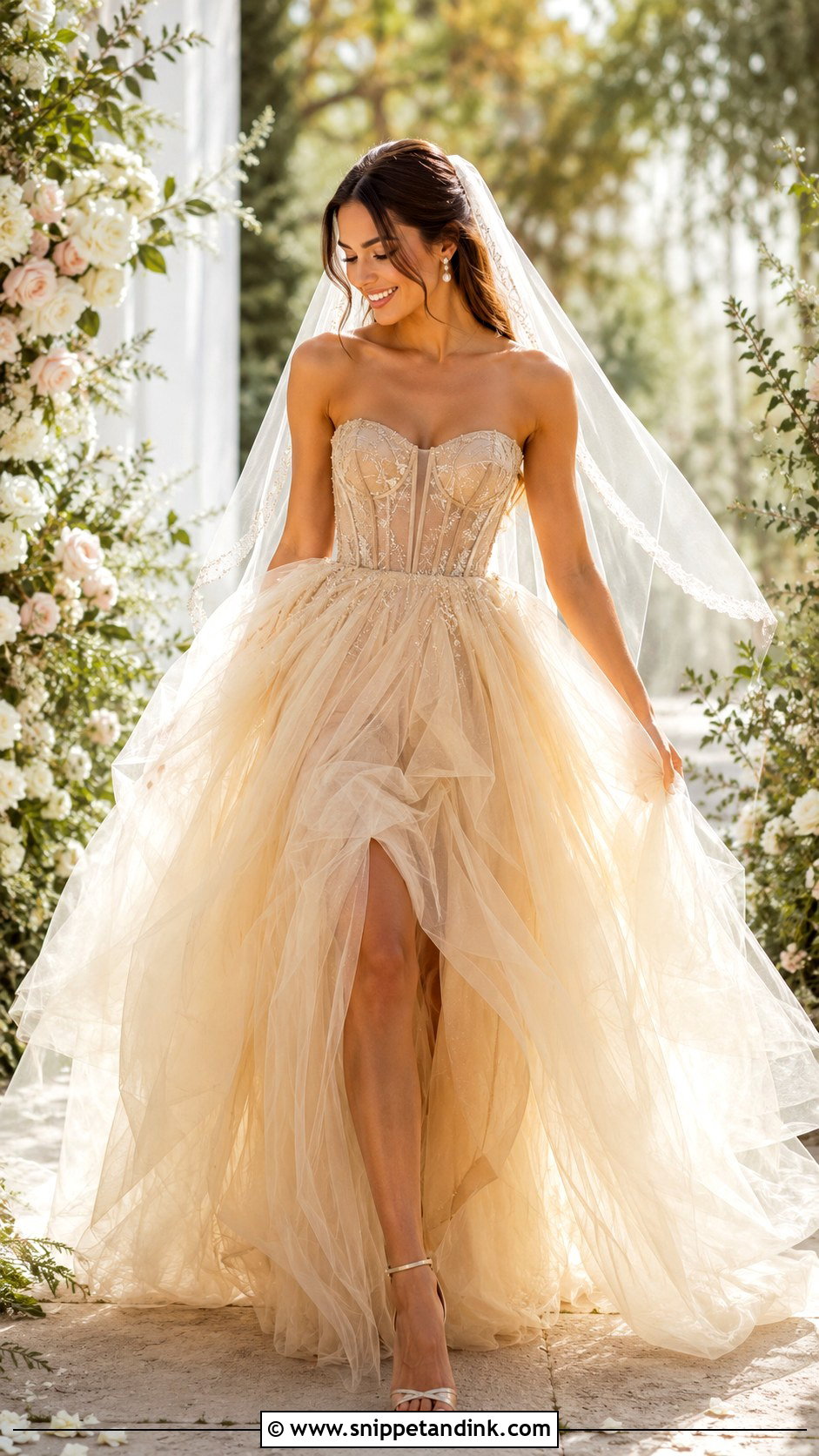
Tulle makes gold look lighter, especially layered over a nude, ivory or champagne lining. A gathered skirt moves well outdoors, and a fitted corset bodice gives it shape. On a breezy day, though, tulle layers lift and tangle, so I secure the veil and bustle before outdoor portraits. Delicate ankle-strap heels, small pearl earrings and white or pale peach flowers finish it. The weight is minimal, which you’ll appreciate late in the evening.
11. Gold Long Sleeve Wedding Dress
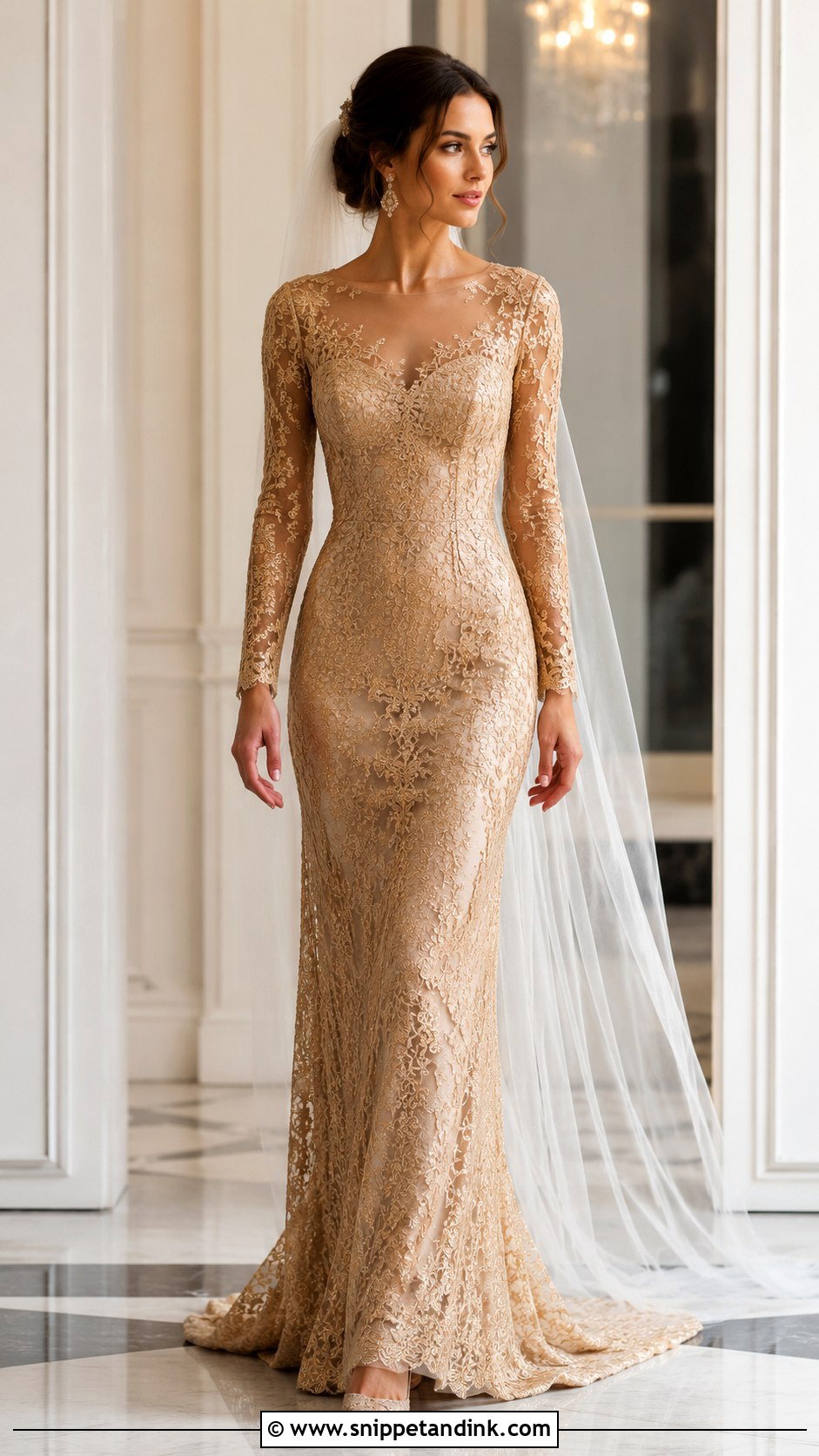
Long sleeves calm the richness of gold, especially on a gown with beading, lace, or sheer illusion fabric. Fitted sleeves with a high or bateau neckline feel formal; sheer sleeves with embroidered gold feel softer. Before you buy, raise your arms over your head. A tight armhole is the main reason brides regret sleeves. Closed-toe heels, drop earrings and a neat low bun suit it, and a plain veil keeps the sleeve detail visible.
12. Gold Off Shoulder Wedding Dress
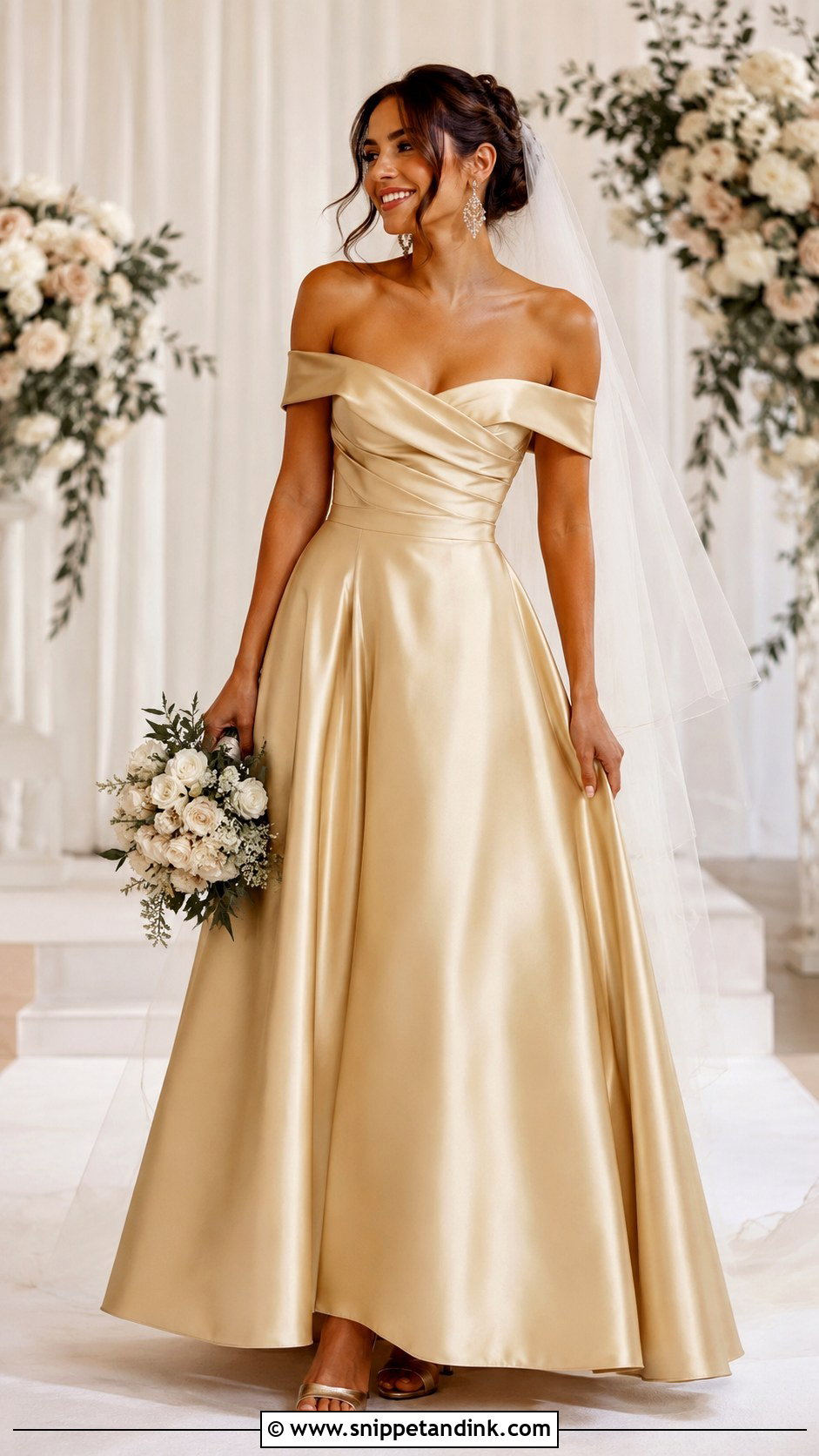
An off-shoulder neckline frames the collarbone and offsets a heavy gold fabric. With an A-line skirt it reads classic, and on a mermaid gown it turns glamorous. The band has to be fitted while you move: too tight restricts your arms, too loose slides down before the first dance. A short necklace can work, though I usually prefer statement earrings here, with metallic heels and ivory flowers.
13. Gold Strapless Wedding Dress
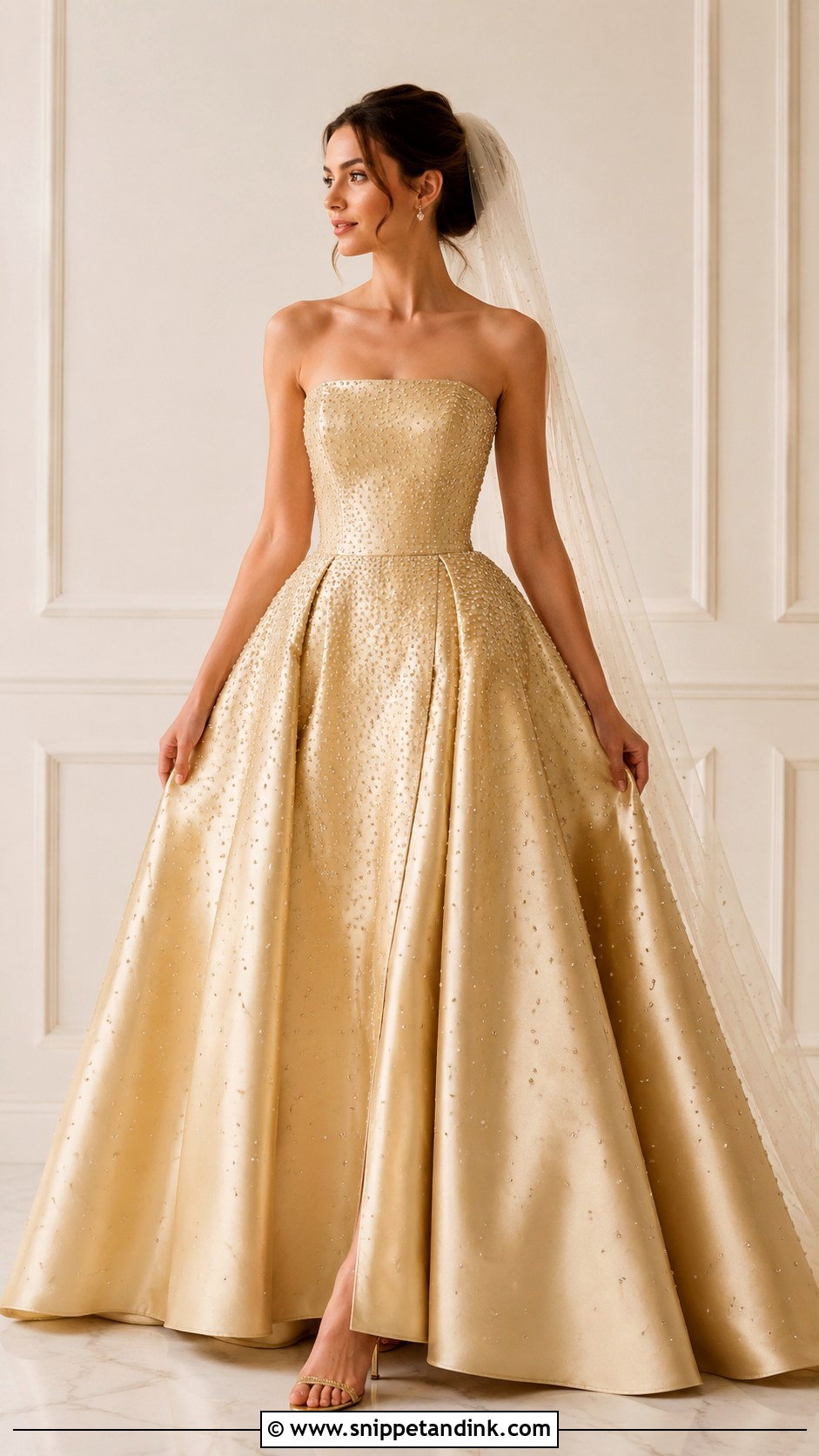
Strapless is the easiest gold dress to accessorize, because the open neckline gives jewelry room. A strapless ball gown reads grand, a strapless column sleek. Comfort depends entirely on what’s inside, so look at the bodice for boning and a waist stay before you fall for the outside. A simple veil, crystal studs and a soft updo that keeps the neckline clear are all it needs.
14. Gold High Neck Wedding Dress
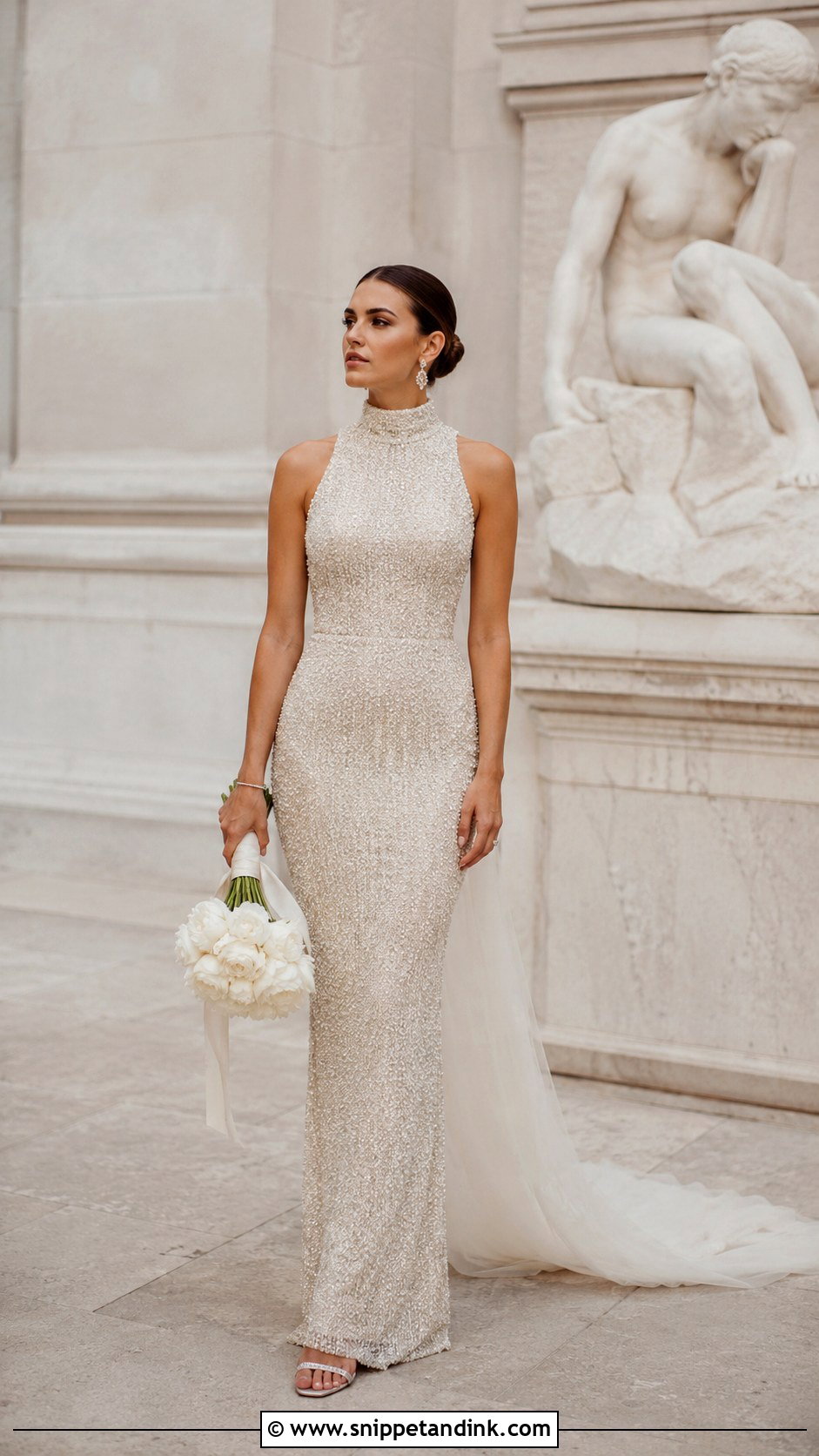
A high neck gives coverage and a slightly editorial look, and gold keeps it from feeling severe. Lace, crepe, satin and beaded mesh all suit it; a high-neck column is sleek, a high-neck A-line softer. Since the neckline is covered, skip the necklace and put the attention on earrings and shoes. High necks run warm, so for a summer ceremony I’d look for an open back or sheer mesh. A low bun or smooth ponytail keeps the neckline clean.

15. Gold Sheath Wedding Dress
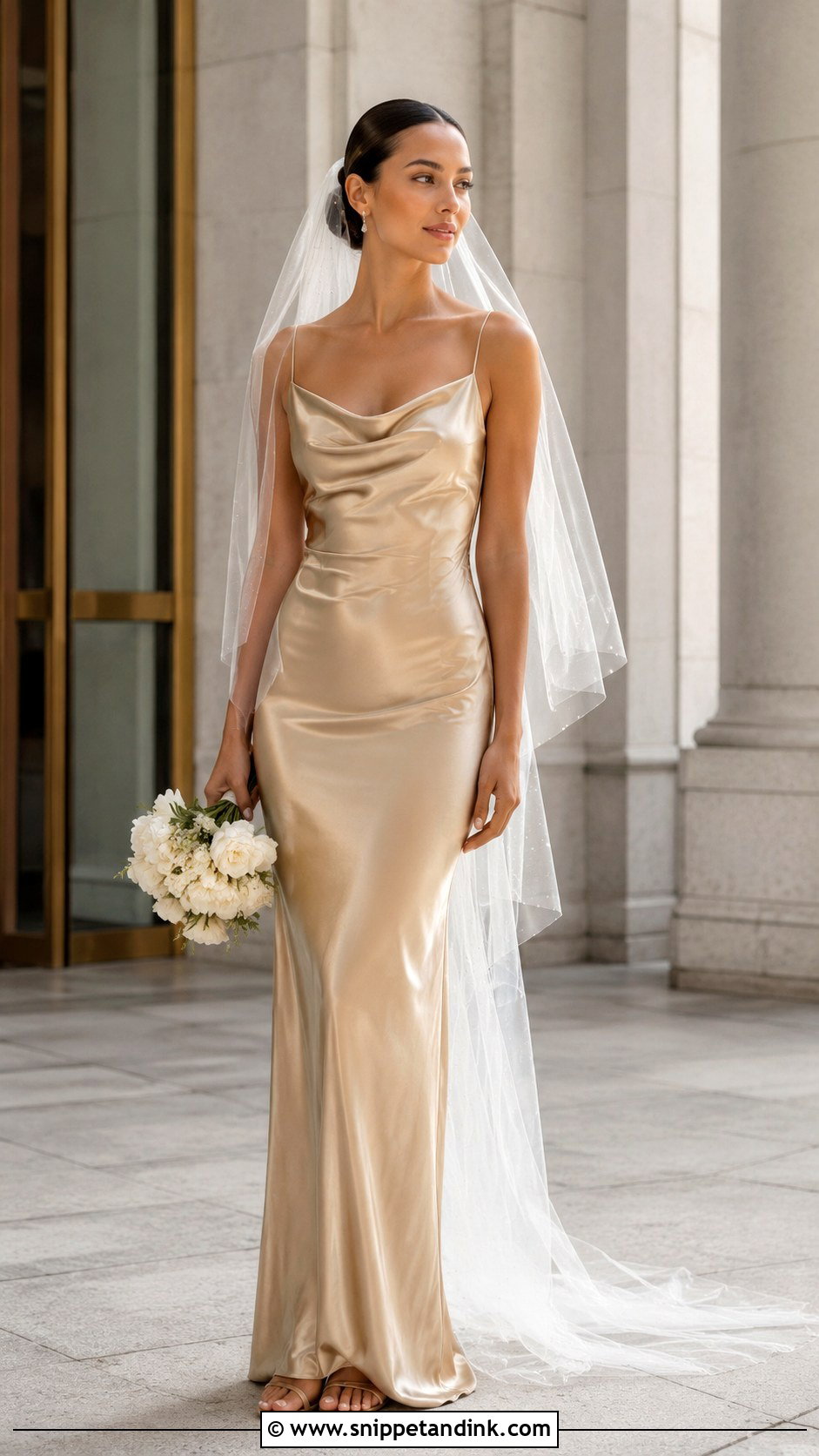
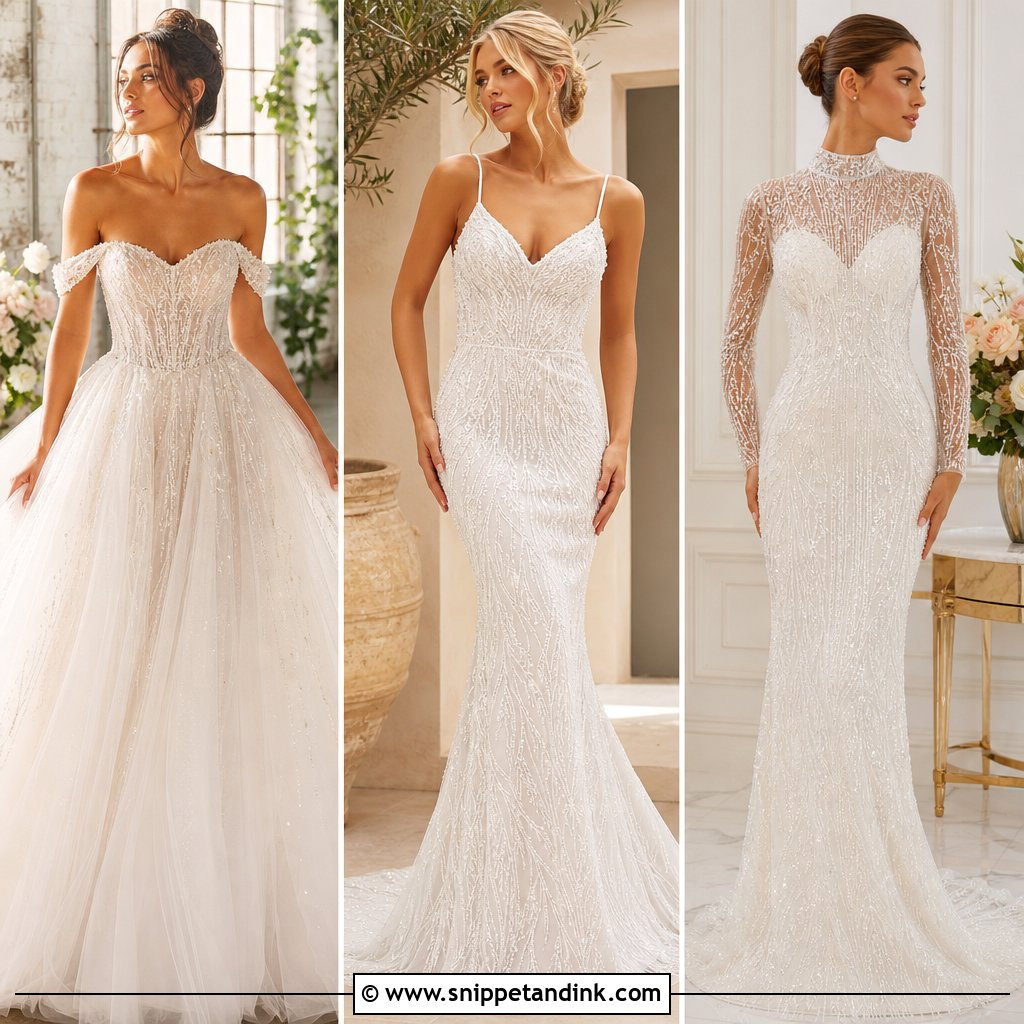
A sheath follows the body without the flare of a mermaid or the volume of a ball gown, so you can sit, dance and get into a car without help. Liquid satin looks elegant, sequins add sparkle and lace adds romance. Liquid satin is unforgiving over shapewear lines, so try it on with the underwear you’ll actually wear. A sheer veil or cape adds drama for the ceremony without breaking the line, which suits city halls and destination weddings.
16. Gold Boho Wedding Dress
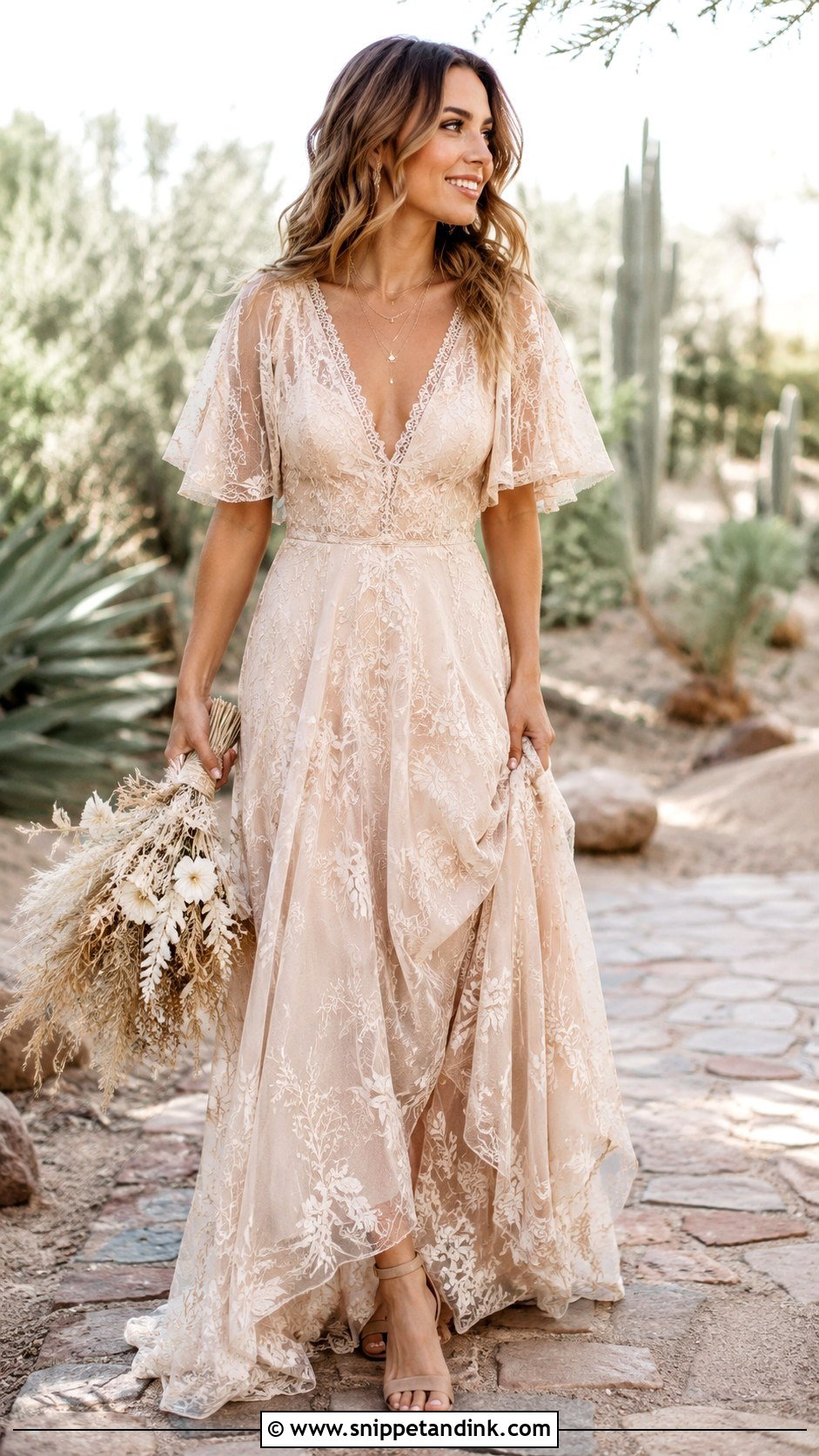
The secret to gold in a boho dress is a muted or antique tone, never a hard metallic. Soft gold lace, embroidered mesh, flutter sleeves and tiered skirts all move easily. Nude block heels sink into lawn far less than stilettos do, and layered fine jewelry with loose waves suits the mood. Instead of a heavy veil, try a sheer cape or a hair comb, and keep the bouquet loose with dried grasses and cream flowers. Outdoor weddings, desert settings and free-spirited brides are where it belongs.
17. Gold Beach Wedding Dress
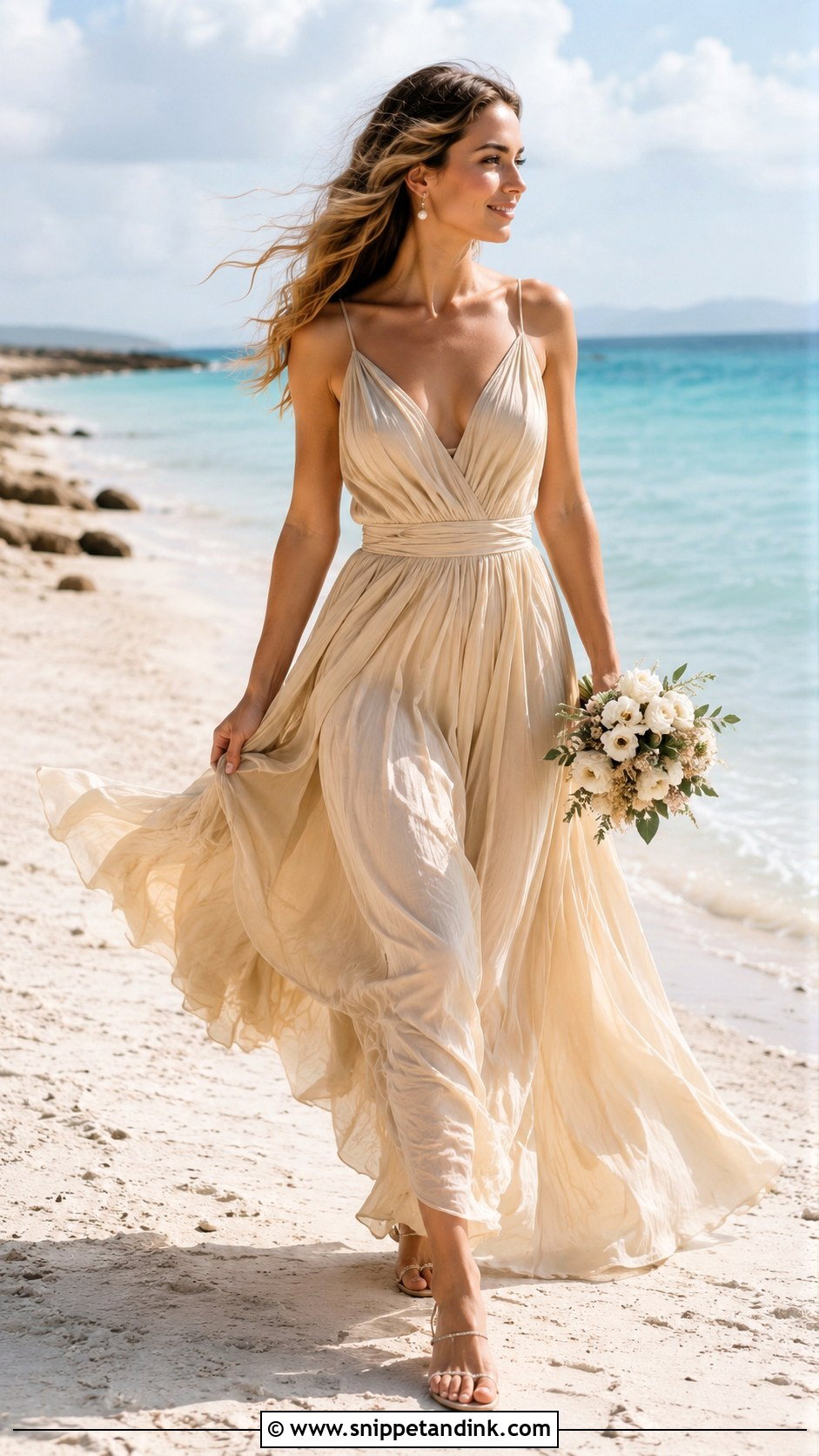
Heat and wind choose the beach dress, not the mood board. Champagne chiffon, silk or airy tulle breathe, while heavy sequins and stiff satin trap heat and drag through sand. A slip, a flowing A-line or a one-shoulder cut all work near water. Flat sandals, pearl earrings and hair that can survive a breeze finish it, and I’d skip a long veil for a shoreline ceremony. White orchids or cream roses keep the bouquet fresh.
18. Gold Wedding Dress With Cape
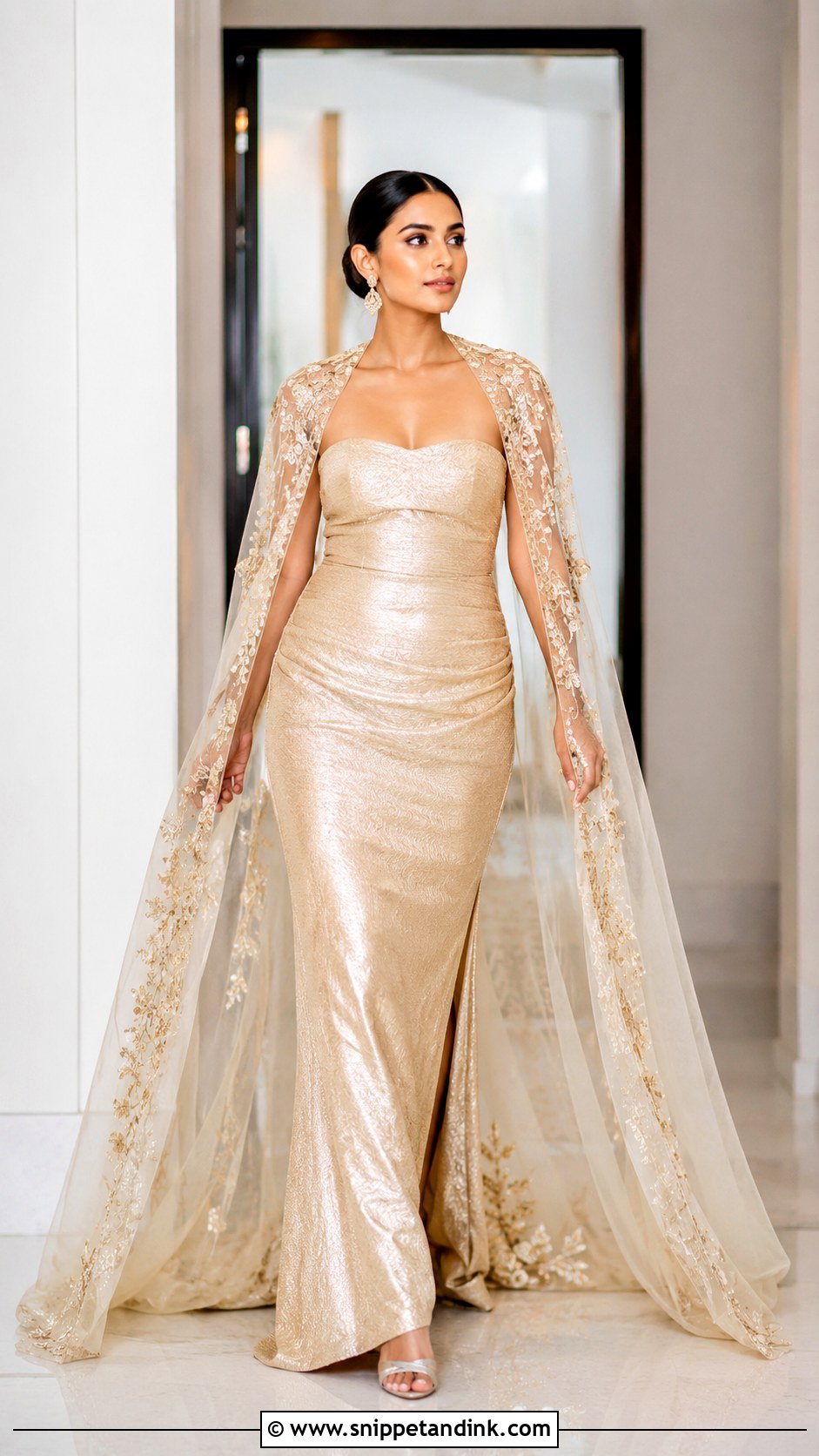
A gold wedding dress with a cape can replace the veil entirely, which suits brides who never liked the idea of fabric over their face. A sleek sheath under a sheer embroidered cape works, and so does a strapless gown with a detachable satin cape. Match the earrings to the cape’s level of detail and skip the necklace if it’s beaded. I ask for capes that clip off, so you’re covered for a religious ceremony and free for dancing.
19. Gold Wedding Dress With Train
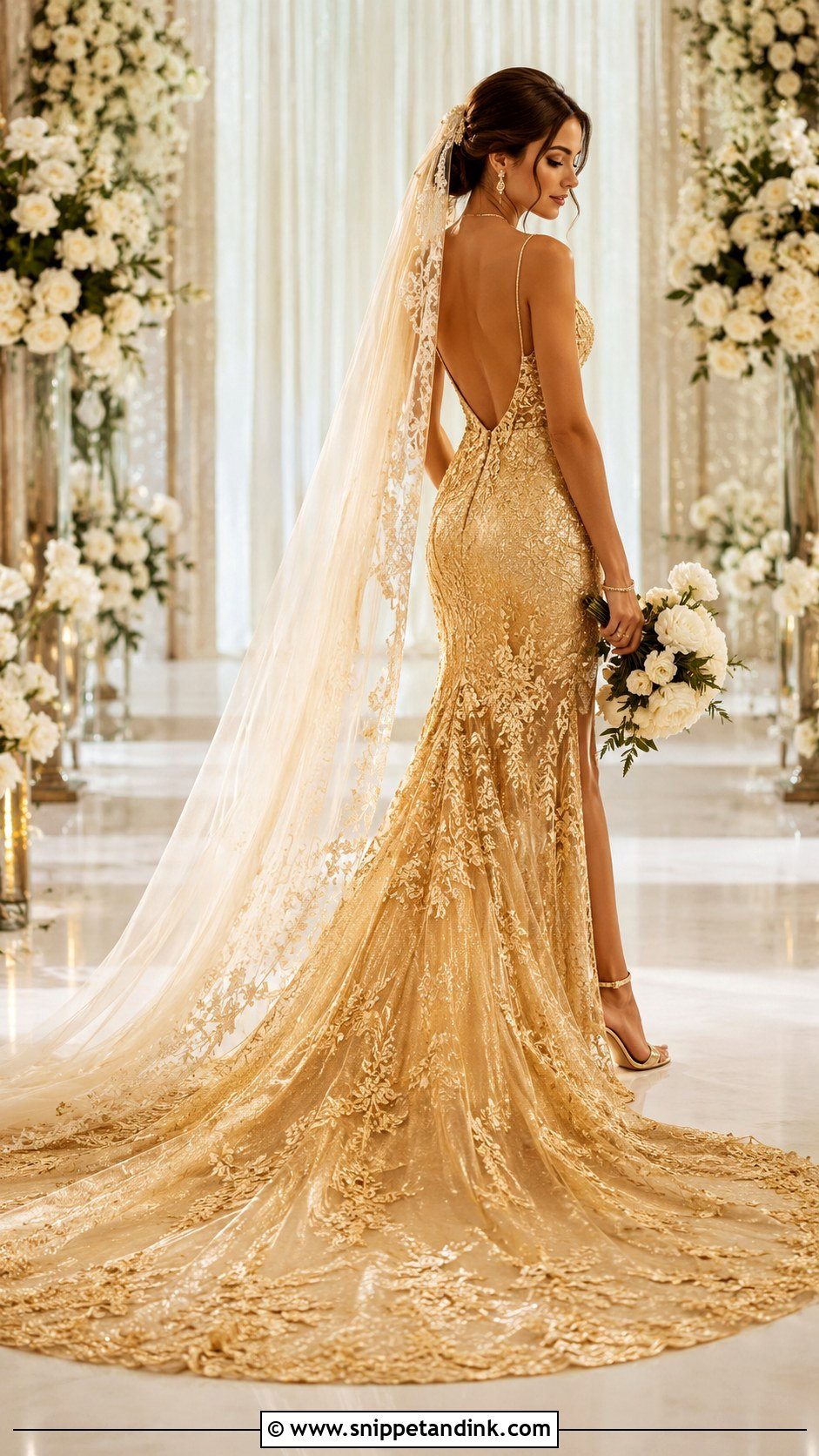
A train gives the aisle walk and the back-view photos their drama. Chapel length suits most weddings; cathedral length needs a large venue with a long aisle. Gold fabric shows a train’s movement well, but it shows dirt too, especially pale champagne at an outdoor venue. Plan the bustle from the start and have someone practise fastening it at your last fitting. Elegant heels, a long veil and simple jewelry keep the focus behind you.
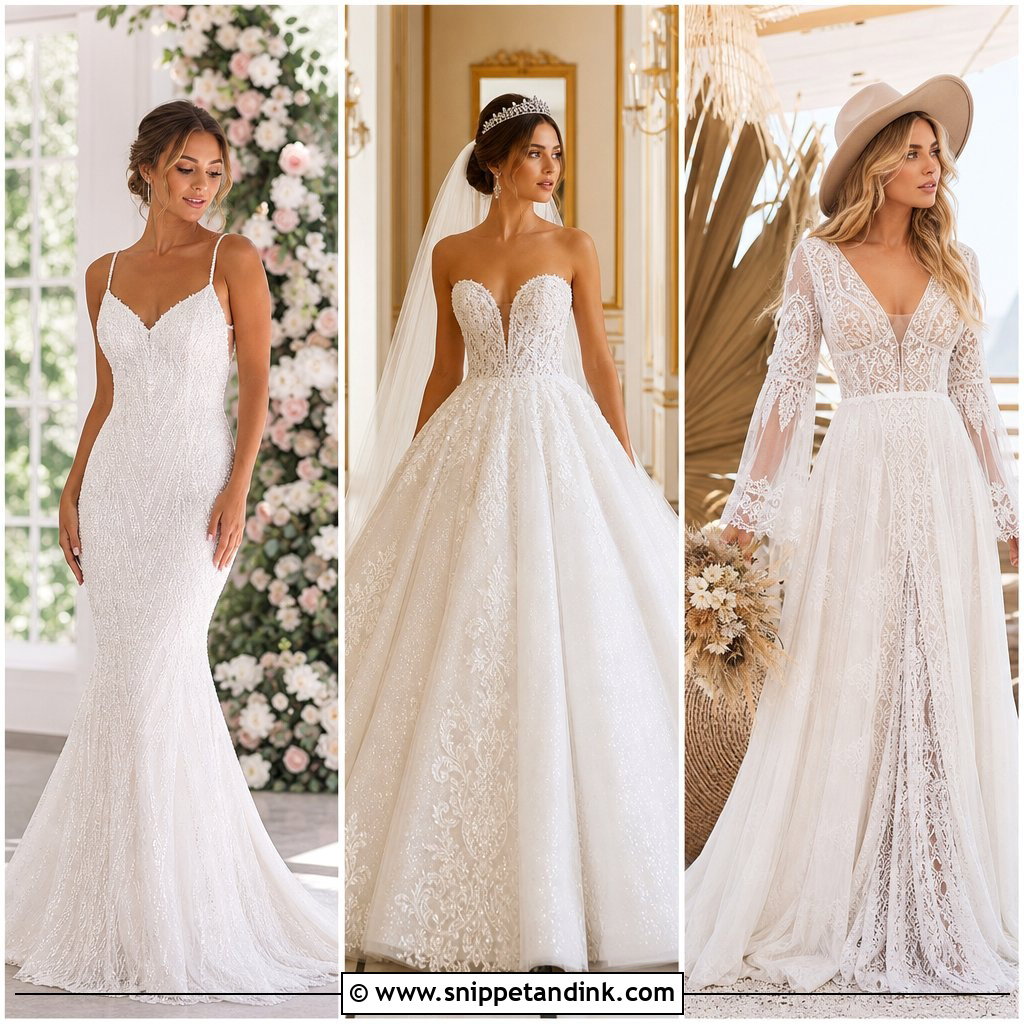
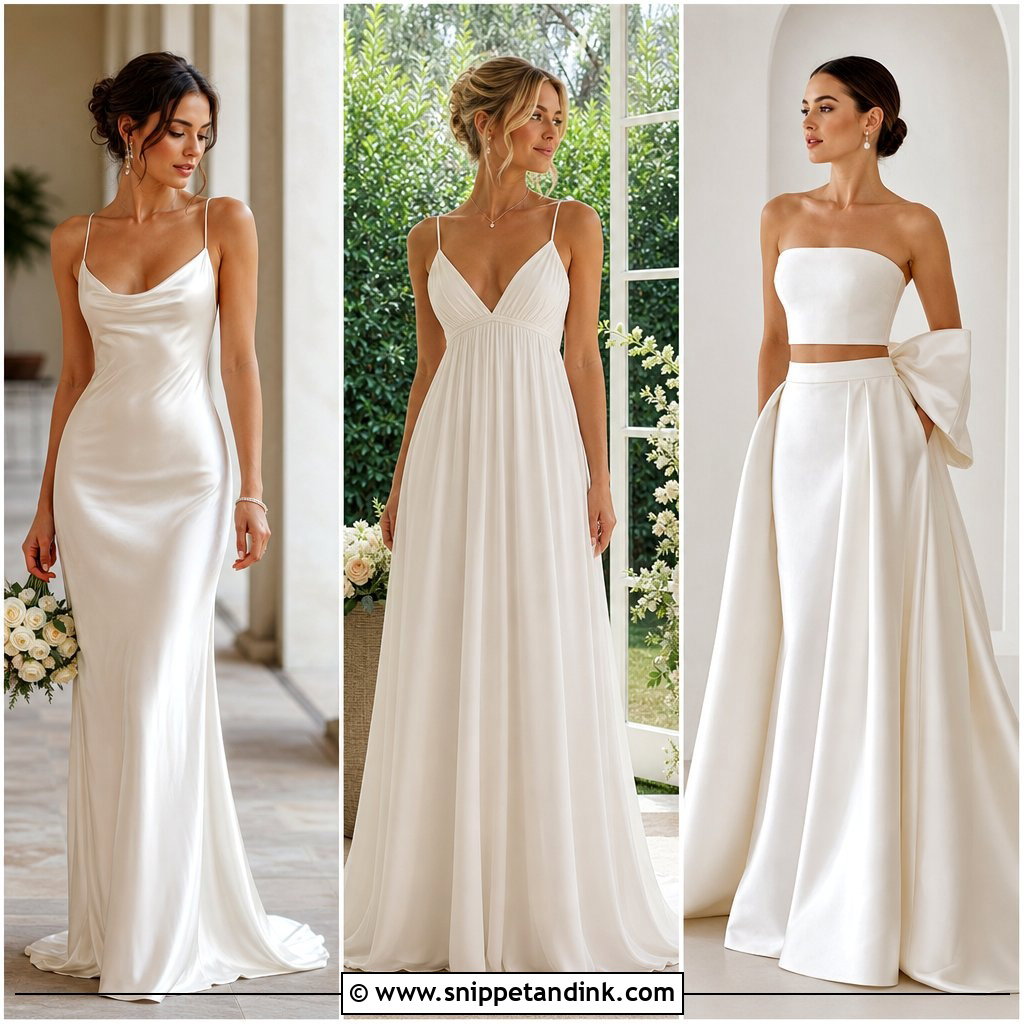
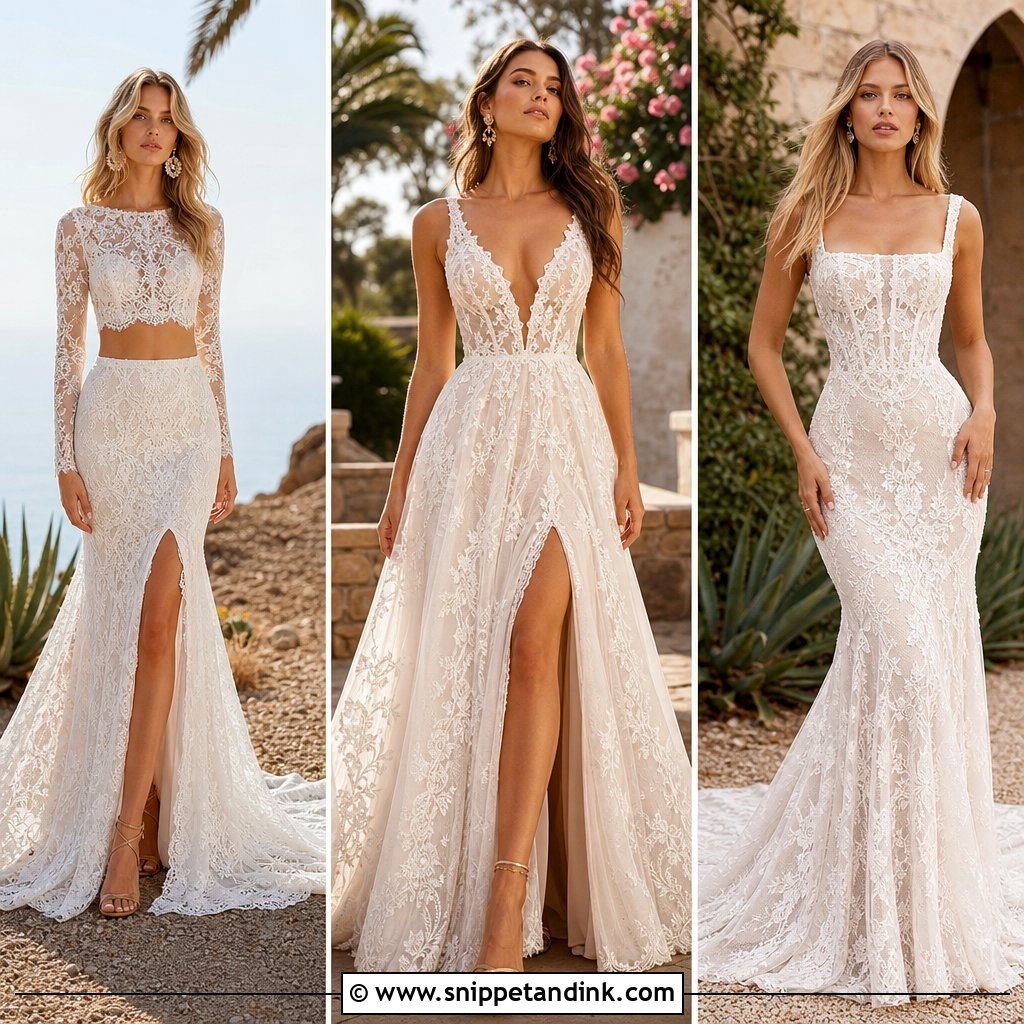

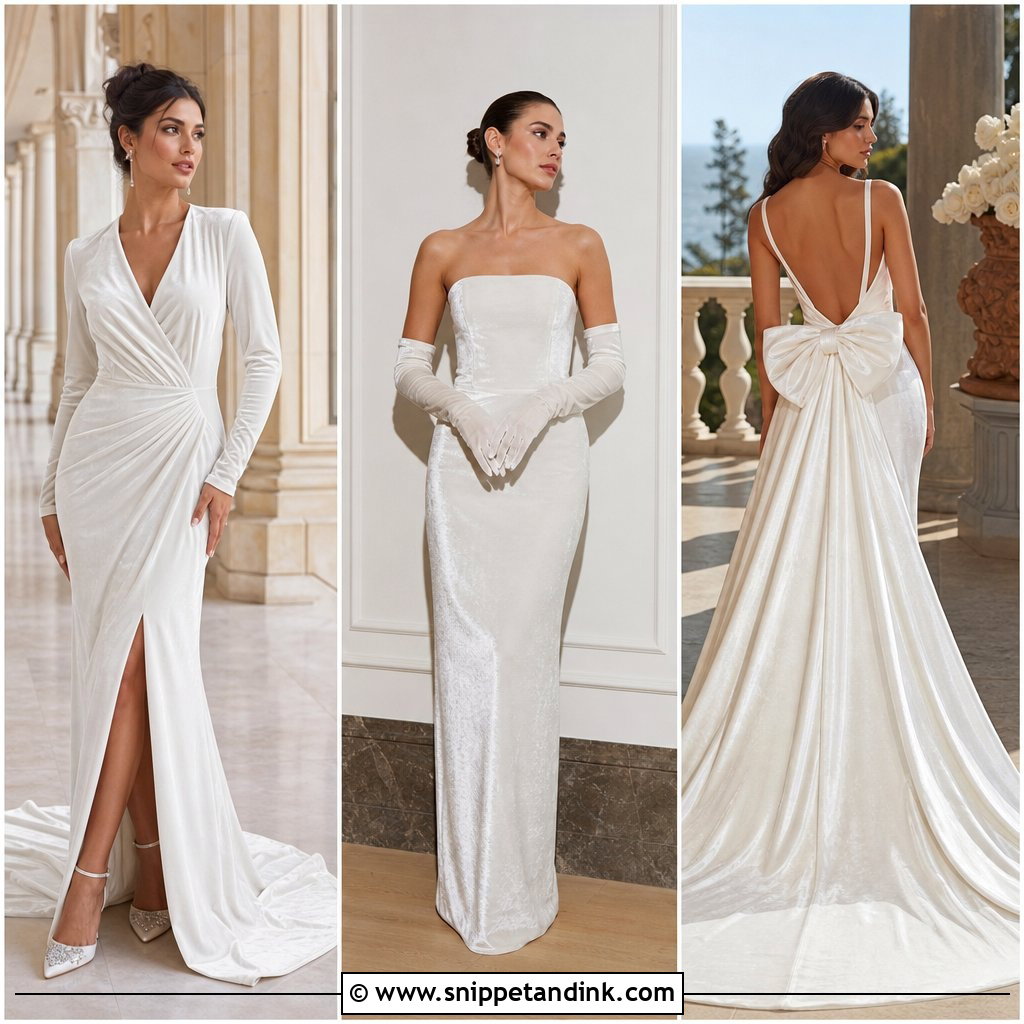
20. Gold Embroidered Wedding Dress
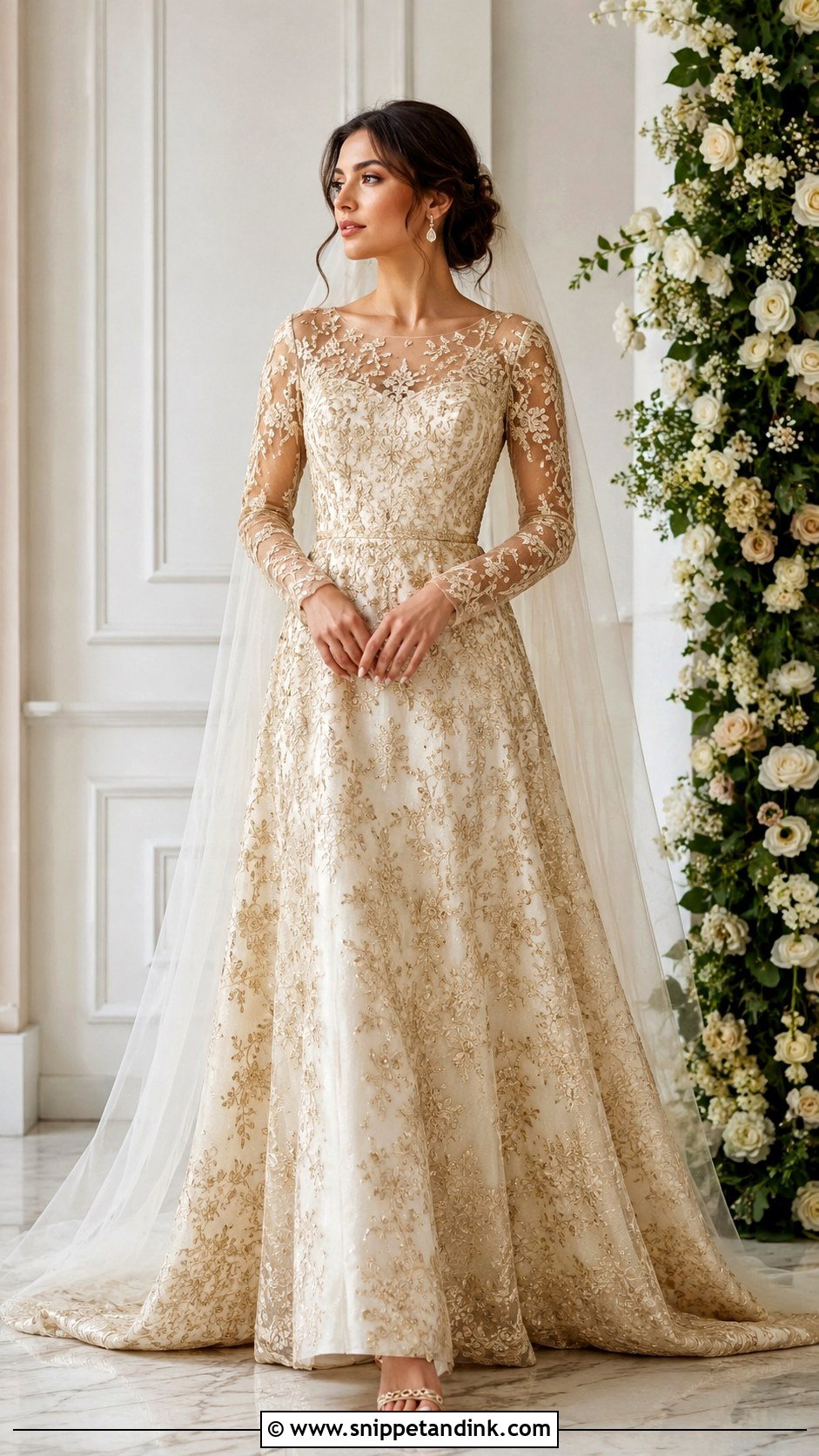
Embroidery fits more wedding settings than any other gold detail, because the motif sets the mood: floral vines feel romantic, geometric work modern, leafy appliqué vintage. A white, ivory, nude or champagne base makes the gold thread stand out. I always turn the embroidery over and look at the reverse, since loose threads and rough knots scratch against skin over a long day. Simple heels, soft earrings and a veil that doesn’t cover the pattern let the craftsmanship lead.
21. Gold Beaded Wedding Dress
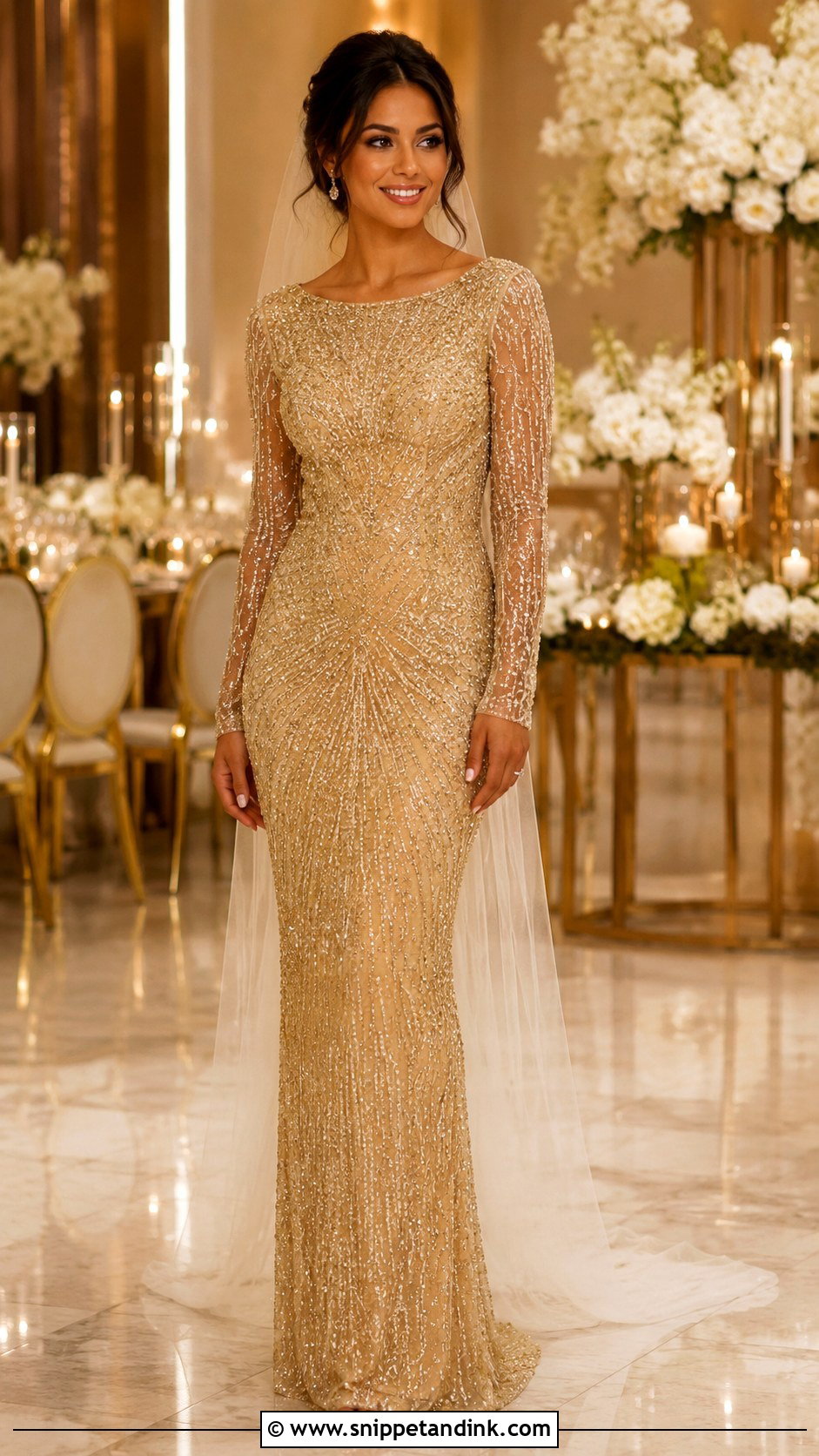
Tiny beads catch light more softly than large sequins, which is why beaded gold carries from a daytime ceremony into an evening reception. Beading sits well on fitted gowns, sleeves, sheaths and vintage cuts. Weight is the trade-off. Full beading gets heavy after several hours, so lift the dress at the shop and wear it for a good while before committing. Understated heels, small earrings and a plain veil keep the beadwork in charge.
22. Antique Gold Wedding Dress
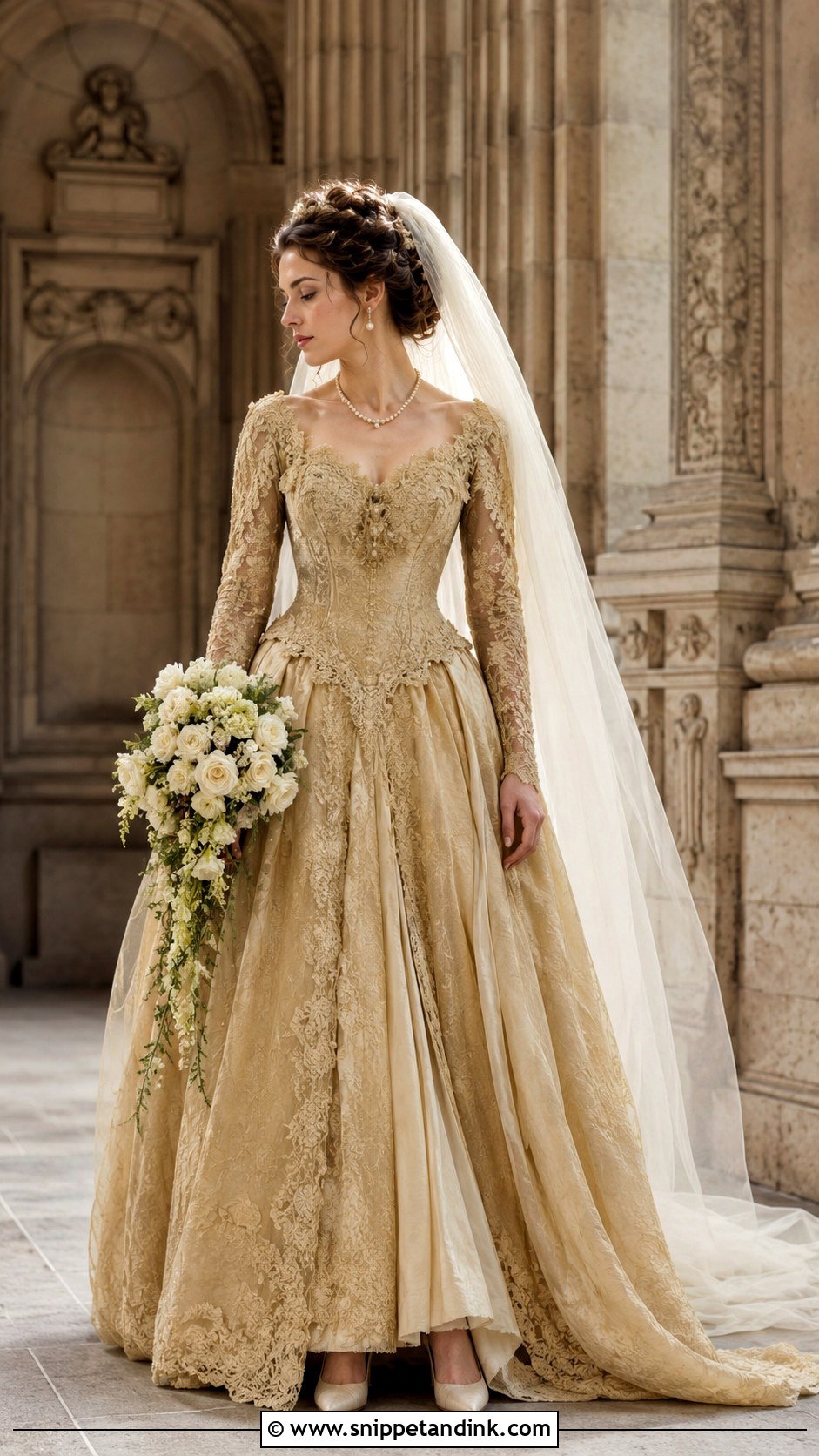
Antique gold has less bright yellow shine and more warmth, and brides are usually surprised how easy it is to wear. It looks rich in lace, brocade, satin and beaded fabrics. Ivory or nude heels, pearls and cream flowers with muted greenery fit it. A birdcage veil pushes it toward retro, a long plain veil keeps it classic. Historic venues and fall weddings suit its old-world warmth best.
23. Gold Two Piece Wedding Dress
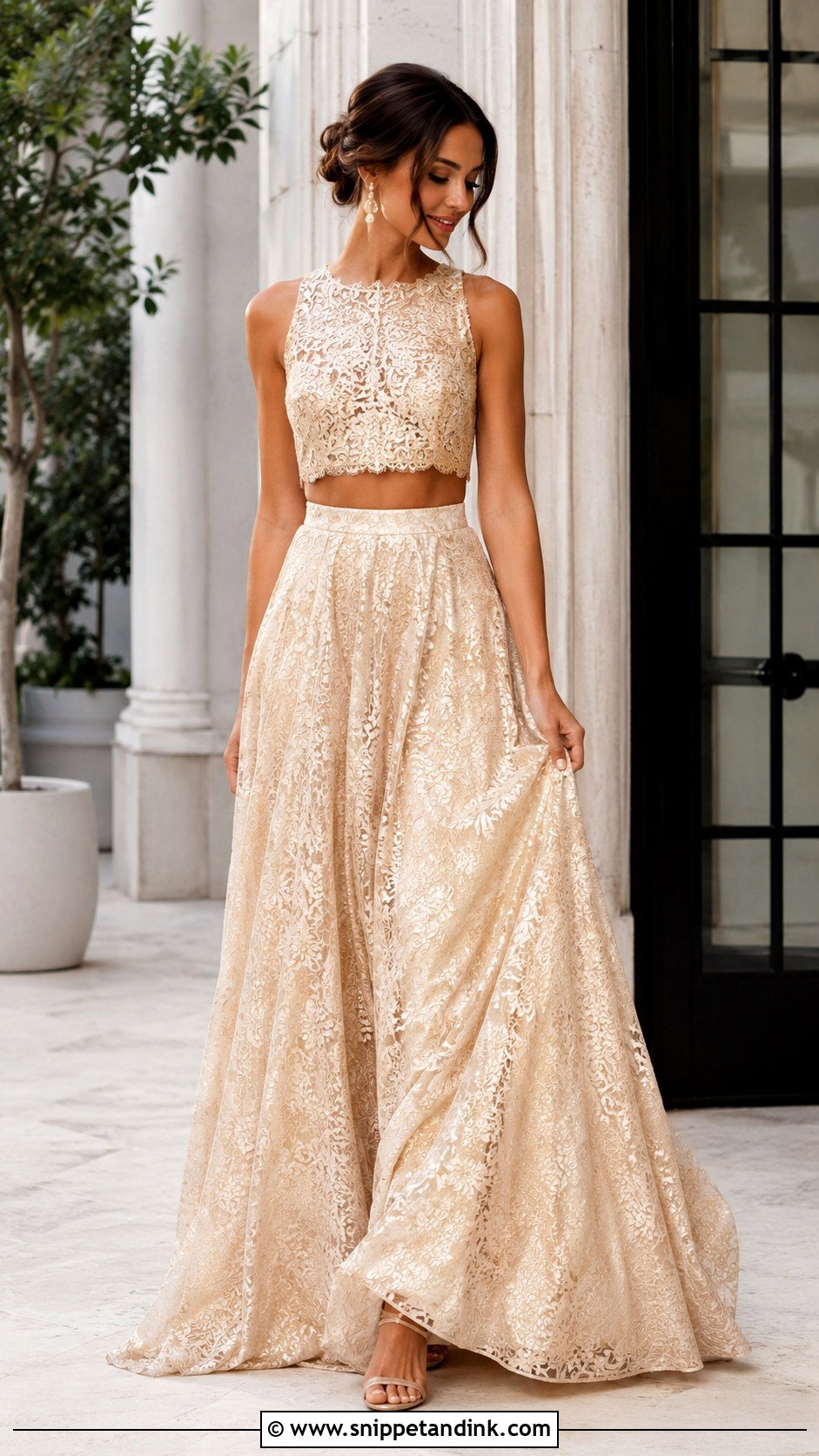
A two-piece gives you comfort and often an easier alteration, since the top and skirt are fitted separately. A cropped lace top over a high-waist skirt feels romantic; a satin blouse with a full skirt looks polished. A beaded top with a plain gold skirt balances the shine. The waistline needs care. Any gap between the pieces should be deliberate, or the look slips toward casual, so test it by raising your arms and sitting down.
24. Gold Short Wedding Dress
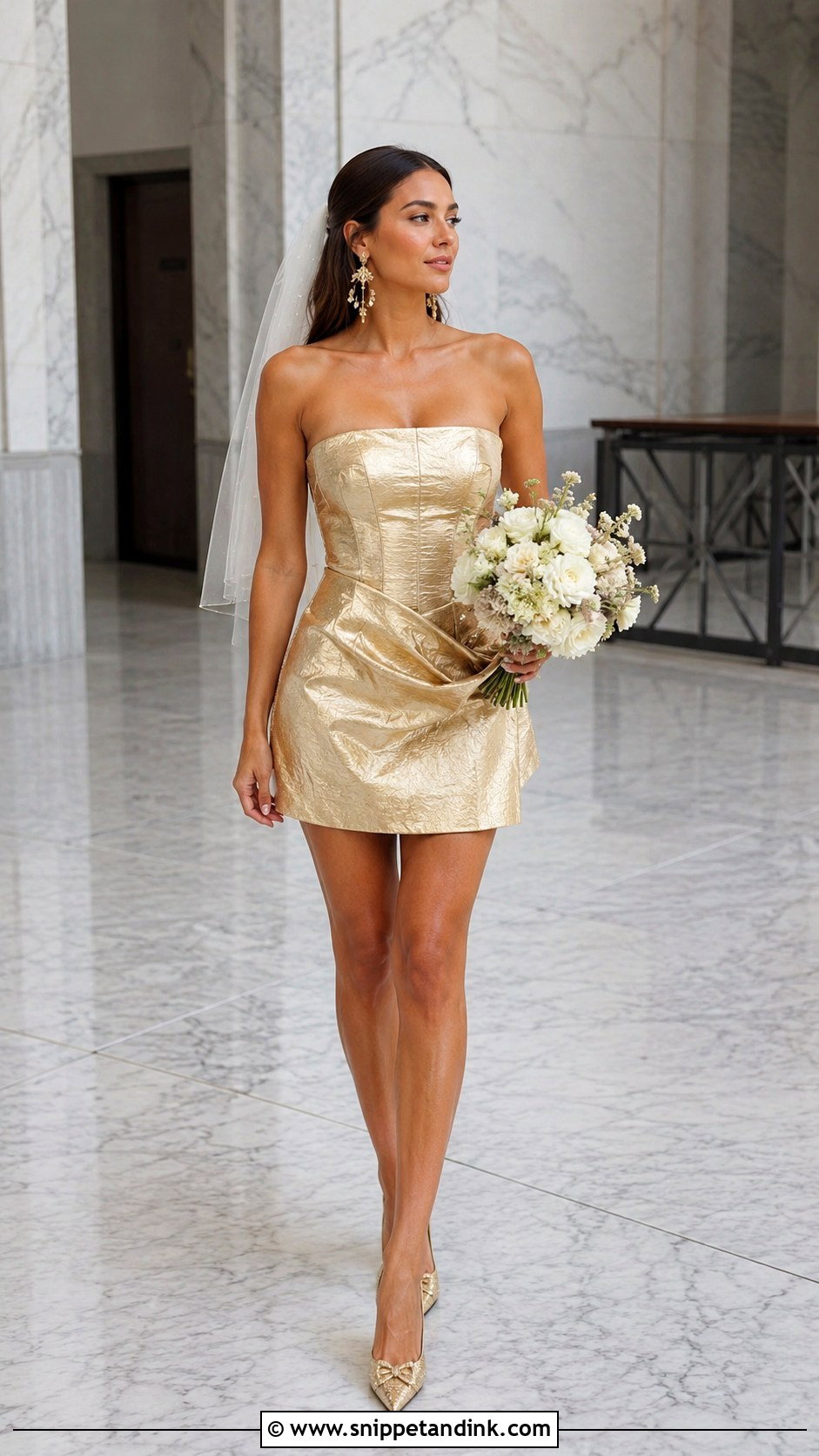
A short gold dress is the easiest to dance in, and it suits civil ceremonies, elopements, second looks and after-party moments. A structured mini looks modern; tea length gives vintage charm. Your shoes are on full show, so choose them first. With sequins, keep accessories minimal; with satin or tulle, there’s room for a sparkly shoe or earring. A small veil or a bow adds the bridal note.
25. Gold Reception Wedding Dress
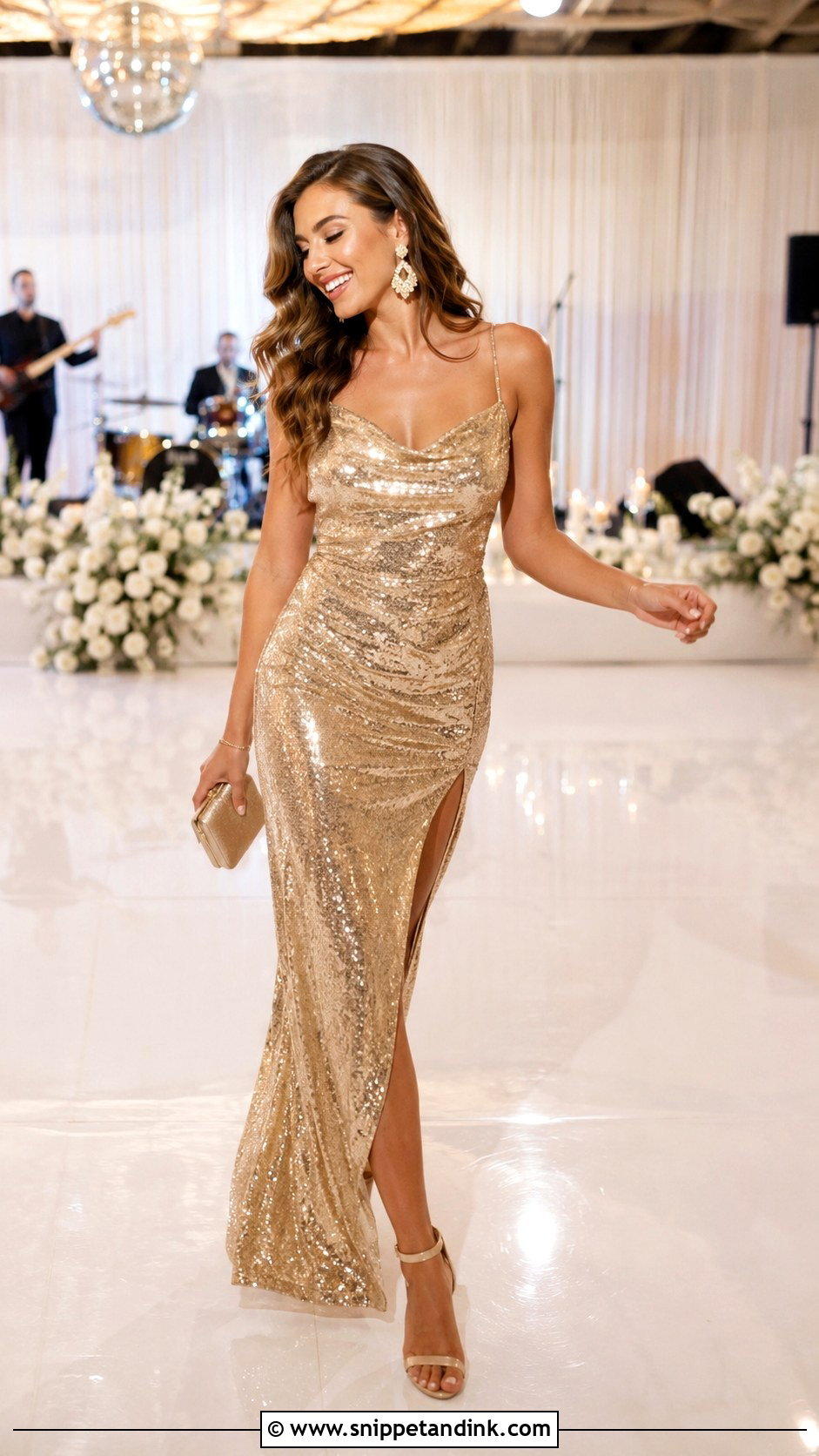
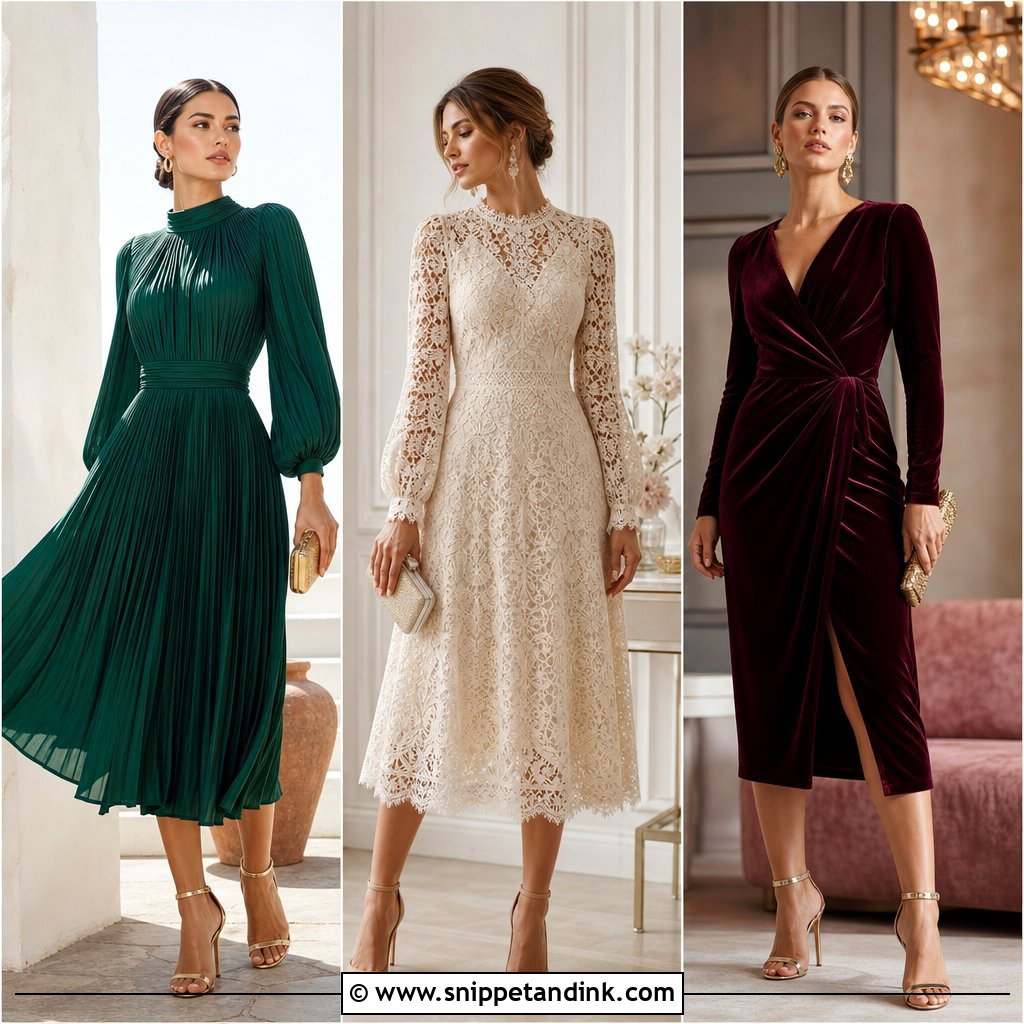
A gold reception dress is the answer when your ceremony gown has a long train or a heavy skirt. A gold sequin slip dress, a beaded midi, a satin mini or a sleek column all dance better than a ball gown. Plan the change itself: a helper, a private room and a hanger ready for the first dress so it doesn’t end up crumpled on a chair. Swap the veil for a bow or a comb, then add party heels and bolder earrings.
Stopping a Gold Bride From Blending Into Gold Decor
Gold dresses and gold-themed weddings often arrive together, and that is where brides disappear in photos. If the chargers, chairs, linens and backdrop are all gold, a gold gown merges into the room. Decide which one leads. When the dress is gold, I ask the decorator to keep the backdrop behind the altar in a contrasting tone, such as deep green or dark wood, so you read clearly against it.
Bridesmaids, the groom and the flowers
Gold bridesmaid dresses next to a gold bride flatten everyone in group photos. Deeper shades like emerald, burgundy or navy make gold glow by contrast. For the groom, a charcoal, navy or black suit gives the cleanest frame, and a small gold pocket square ties him in without copying your dress.
Flowers follow the same logic. Yellow blooms held against a gold gown tend to look muddy in photos, while ivory, white and deep jewel tones give the dress a clear edge.
Linens matter as well. Metallic tablecloths and mirrored chargers bounce light upward, which can make a gold bodice look washed out in close-ups at the table, while matte linens keep the shine on you.
Gold Works When the Venue and the Hour Agree
Gold can be champagne tulle, a regal ball gown, sleek satin or a full-sequin entrance, and each one is bridal when it suits the room and the time of day. Daylight favors softer, paler golds; candlelight and evening receptions can carry real shine. Keep accessories quieter than the dress, choose shoes you can stand in for hours, and make your final decision under the same kind of light your guests will see you in.
You'll Like These Ideas:




Leave a Reply