
A gown that looks right on a hanger can feel completely wrong once it’s zipped, and the reverse happens just as often. Brides now pick from clean satin columns, lace ball gowns, sculpted corsets, floral appliqué and easy reception shapes, and each one asks something different of your venue, your stride and your patience on a long day. Below are 25 bridal gown styles, grouped loosely by silhouette, fabric, neckline and detail. For each I’ve noted what I watch for in the fitting room, so you can walk into a boutique already knowing what to try.
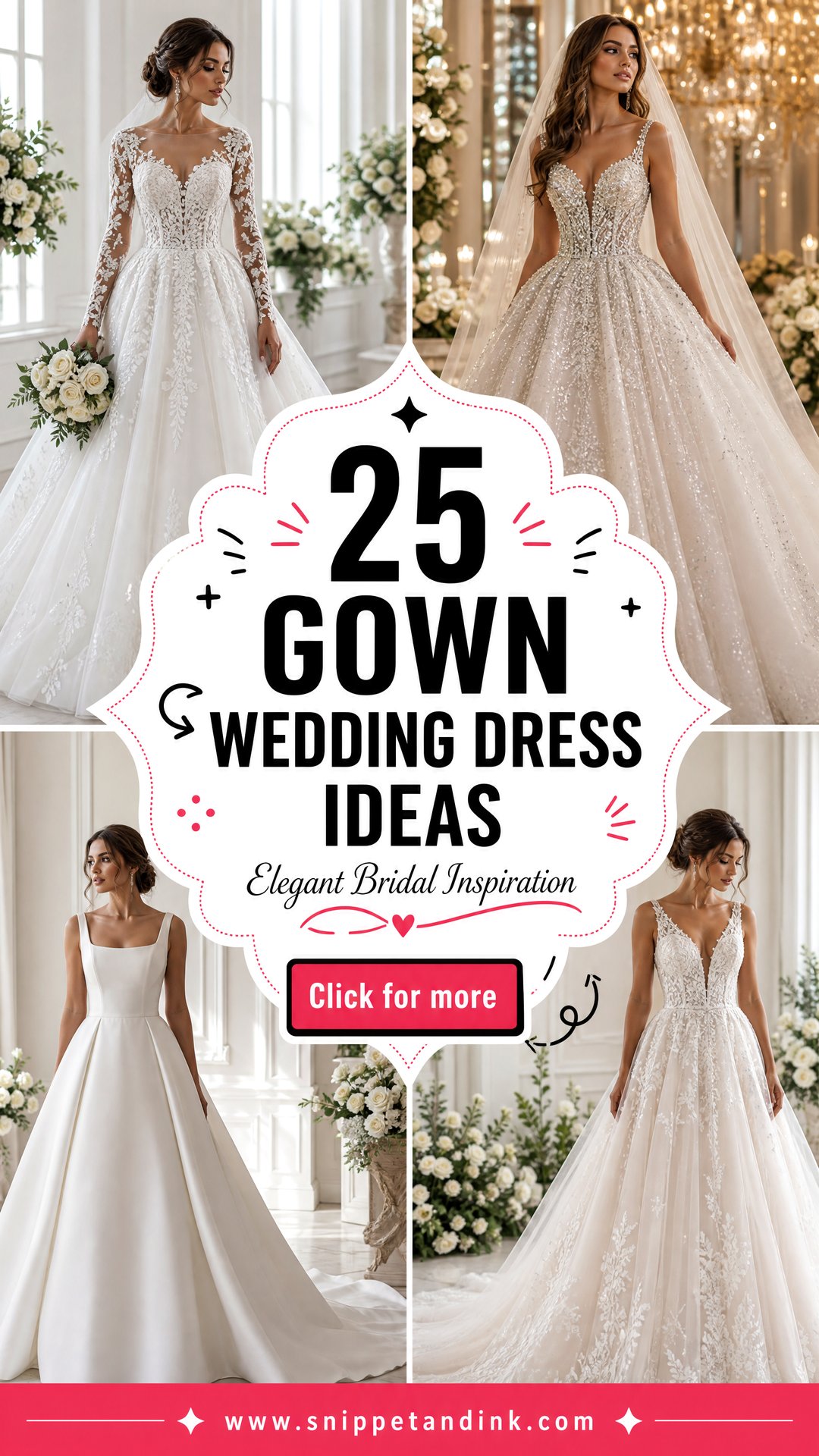
Gowns Take Longer to Arrive Than Most Brides Expect
The calendar usually decides which of these gowns are still possible, so I’d look at it before falling for a silhouette. Most bridal gowns are made to order after you choose them, not taken off a rack, and the timeline runs roughly like this:
- Start trying on about nine to twelve months before the wedding.
- Allow several months for the gown to be made and shipped; four to six is common, and some designers quote longer.
- Leave around two to three months for alterations, usually across two or three fittings.
- Hold the final fitting two to four weeks before the day, with your shoes and underwear.
Short on time? Sample gowns and in-stock styles exist, and some boutiques offer rush production for a fee. Heavily beaded or lace gowns are the ones I’d avoid on a tight timeline, because their alterations take the longest.
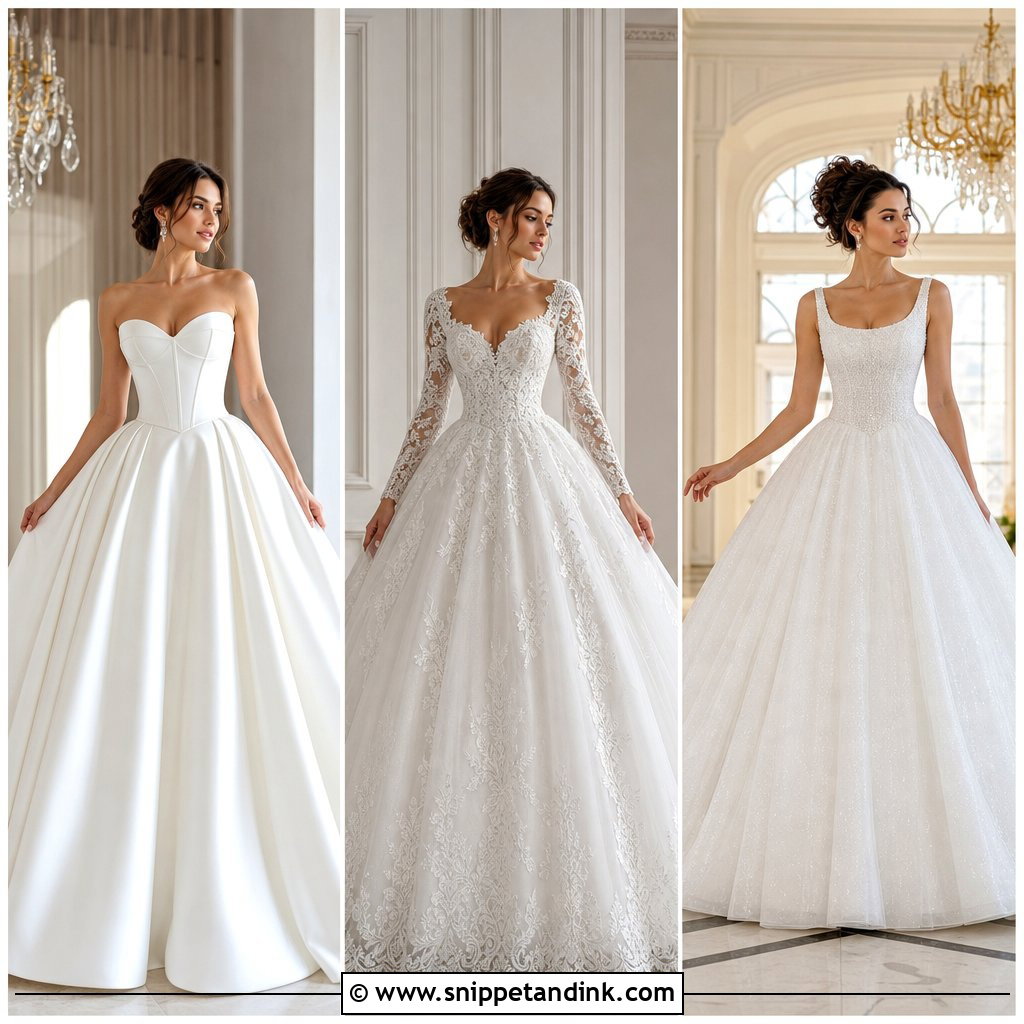
1. Ball Gown Wedding Dress
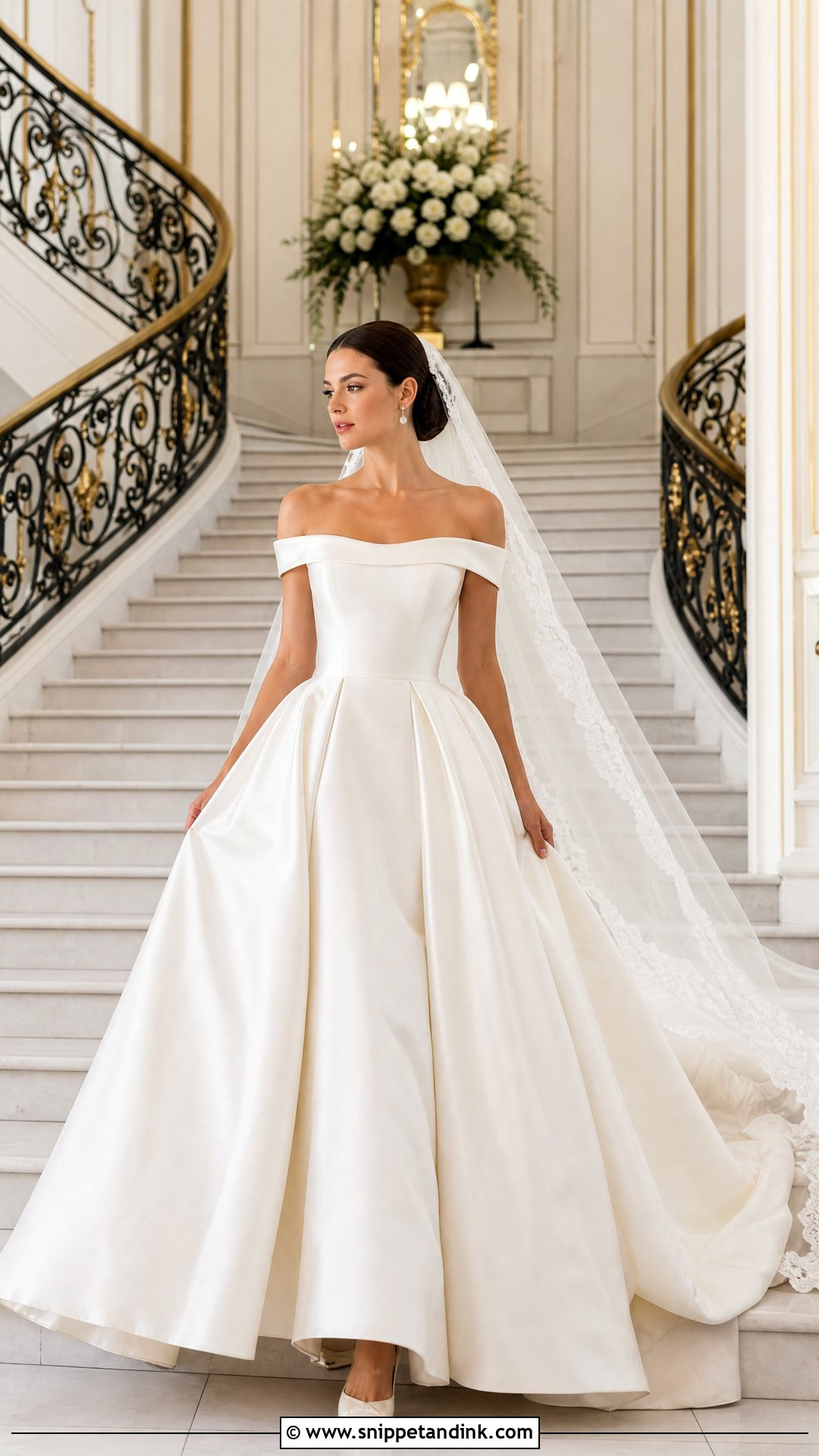
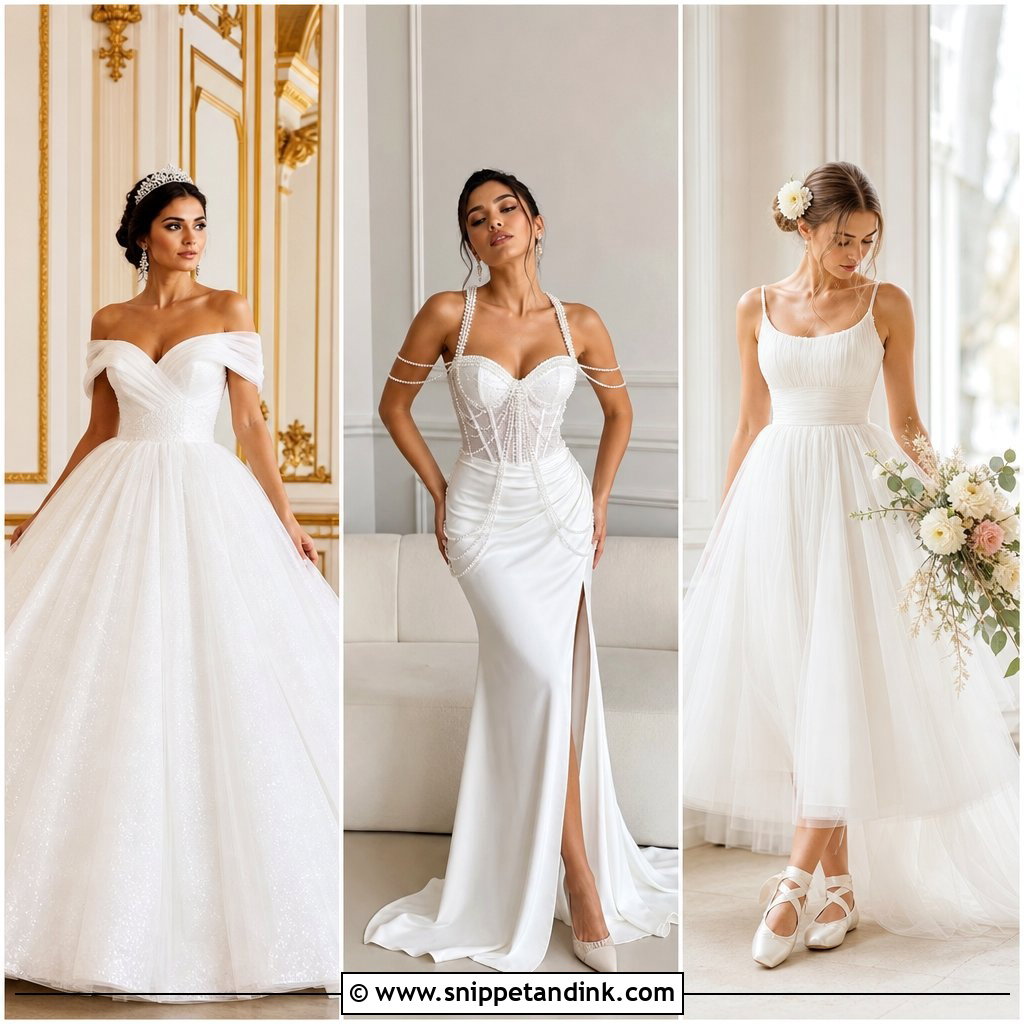
A ball gown wedding dress gives the classic entrance: a defined waist and a full skirt that fills a staircase or a ballroom aisle. Satin reads regal, tulle reads soft, and organza gives volume that’s lighter to carry. On petite brides, I lower the volume rather than lose the shape; fewer petticoat layers keep the skirt from swallowing her. Remember that you’ll need space to sit, use a bathroom and get into a car in this dress, so check the hoop or crinoline at the fitting. Pearl studs and a plain veil are enough.
2. A Line Gown Wedding Dress
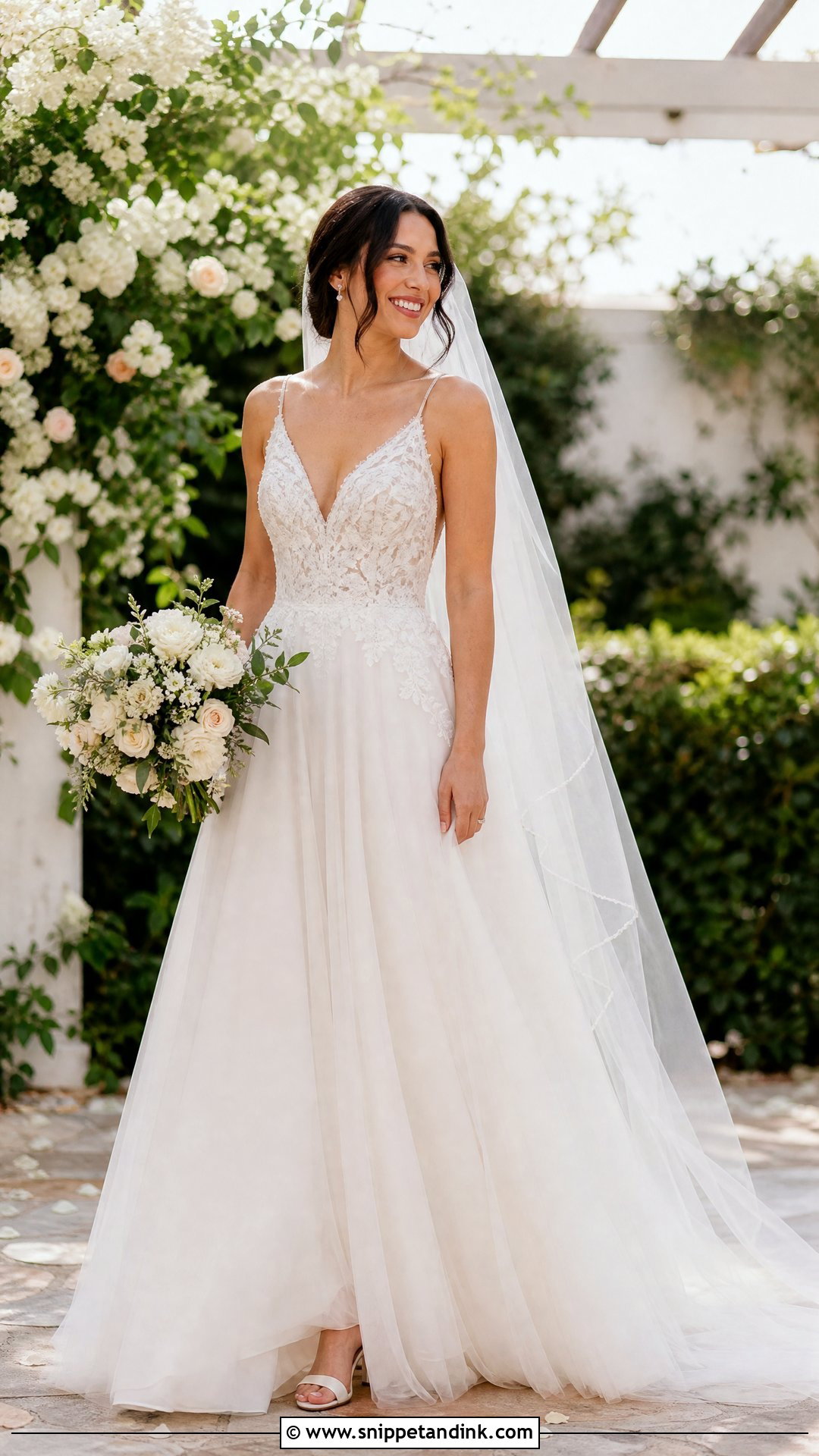
If a bride walks in unsure, the A-line is the first shape I pull. It skims the waist and falls away from the hips without much weight, so it moves easily between a garden, an estate and a ballroom. Crepe makes it modern; lace or embroidered tulle softens it. It’s also the most comfortable silhouette to sit and dance in, which brides tend to undervalue until hour eight. Block heels, a soft veil and delicate earrings.
3. Mermaid Gown Wedding Dress
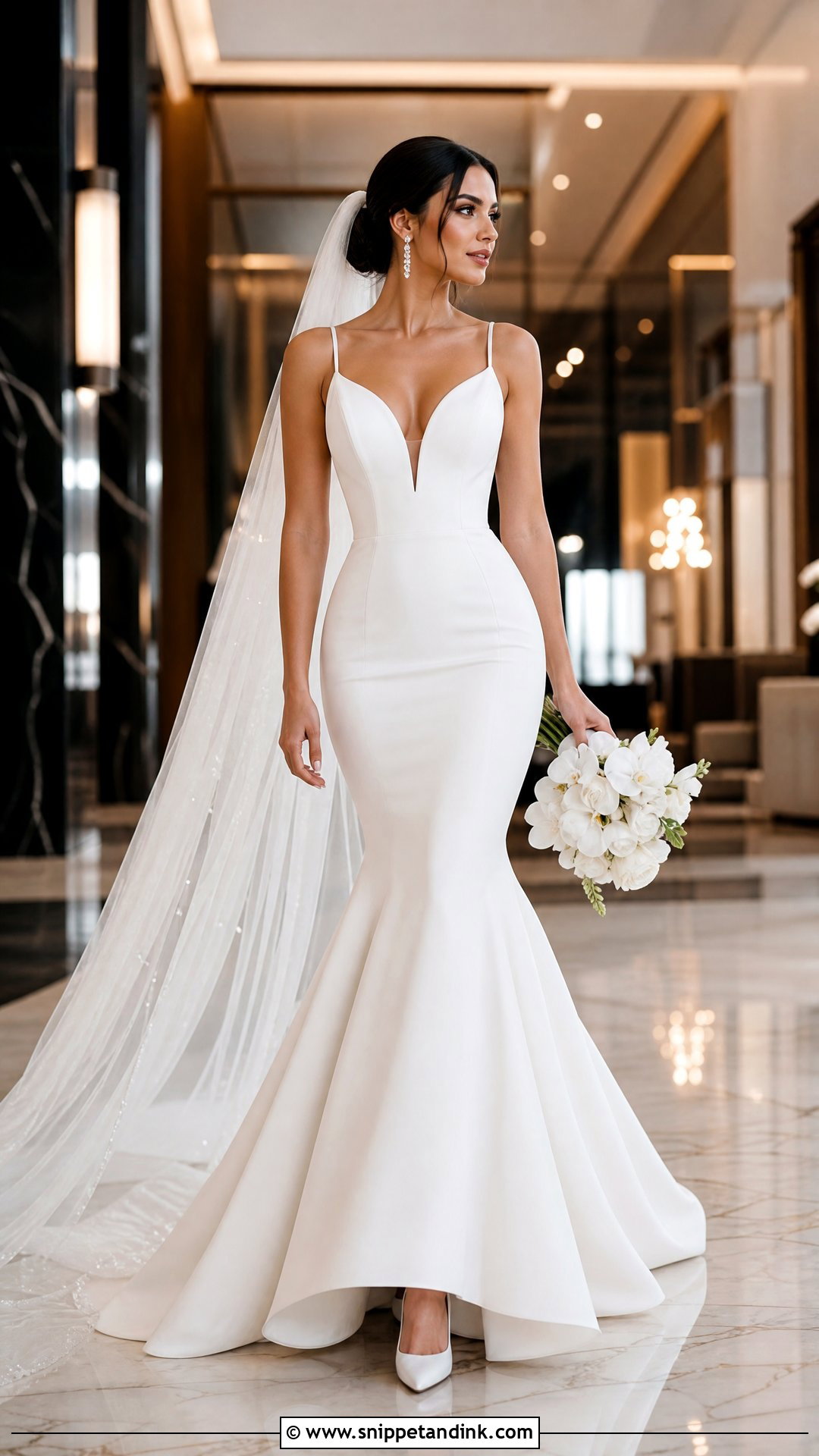
The mermaid is fitted through the bodice and hips and flares at or below the knee. It’s dramatic and suits evening and black-tie weddings. It also restricts your stride more than any other silhouette, and where the flare starts decides how much: a flare at the knee lets you walk, a flare lower down turns you into a shuffler. Stretch crepe forgives more than lace. At every fitting I make the bride sit, climb a step and dance before I pin anything. Sleek heels and drop earrings suit it.
4. Satin Gown Wedding Dress
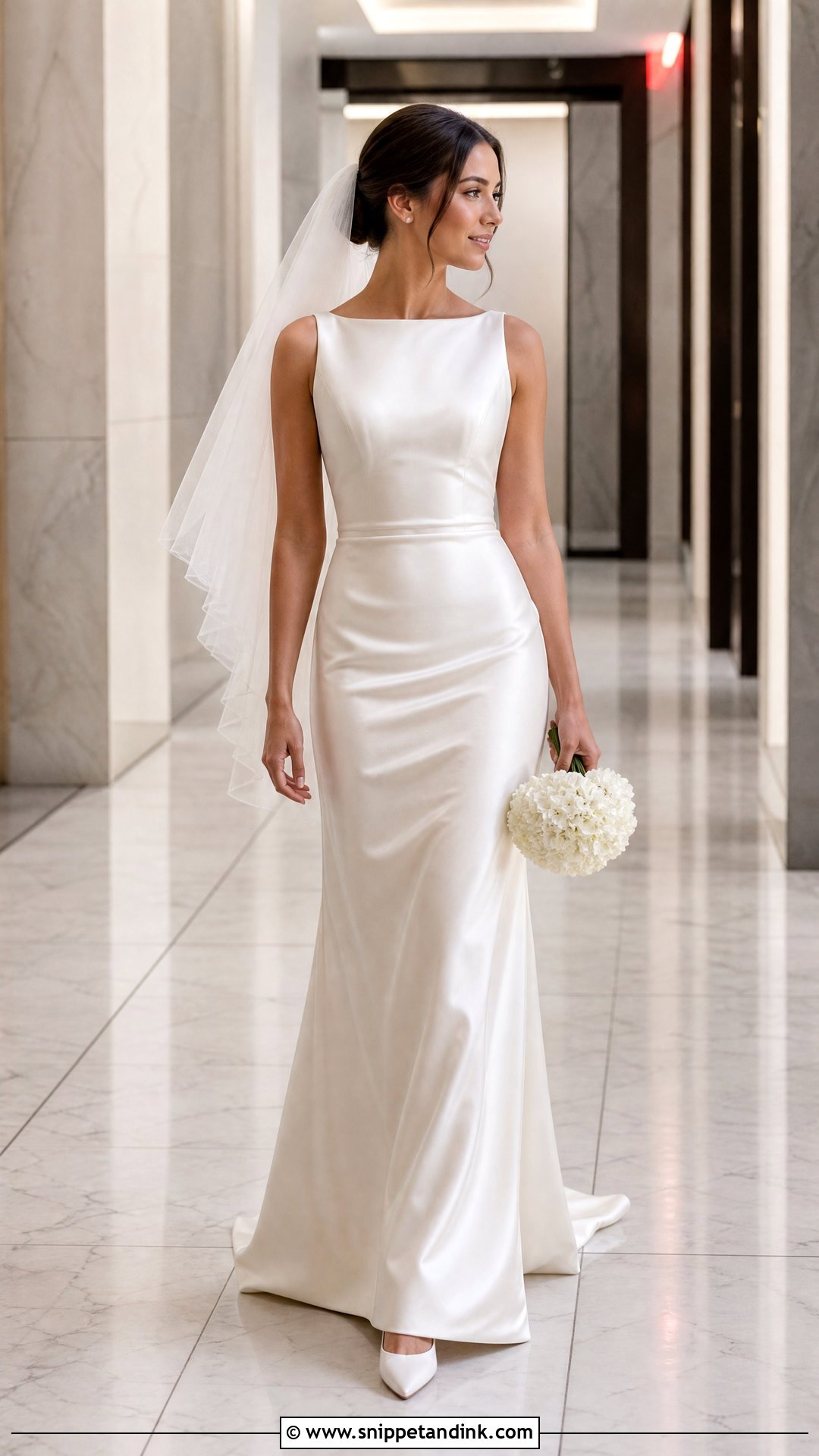
Satin catches light on its own, so even a plain shape looks expensive. It suits columns, ball gowns, A-lines and corsets alike. The honest drawback is that satin shows every alteration shortcut, every pull line and, on the day, every crease from sitting in the car. Good tailoring isn’t optional with this fabric. A cathedral veil for the ceremony, then a sleek hair bow or pearl pins for the reception, with pointed pumps and minimal jewelry.
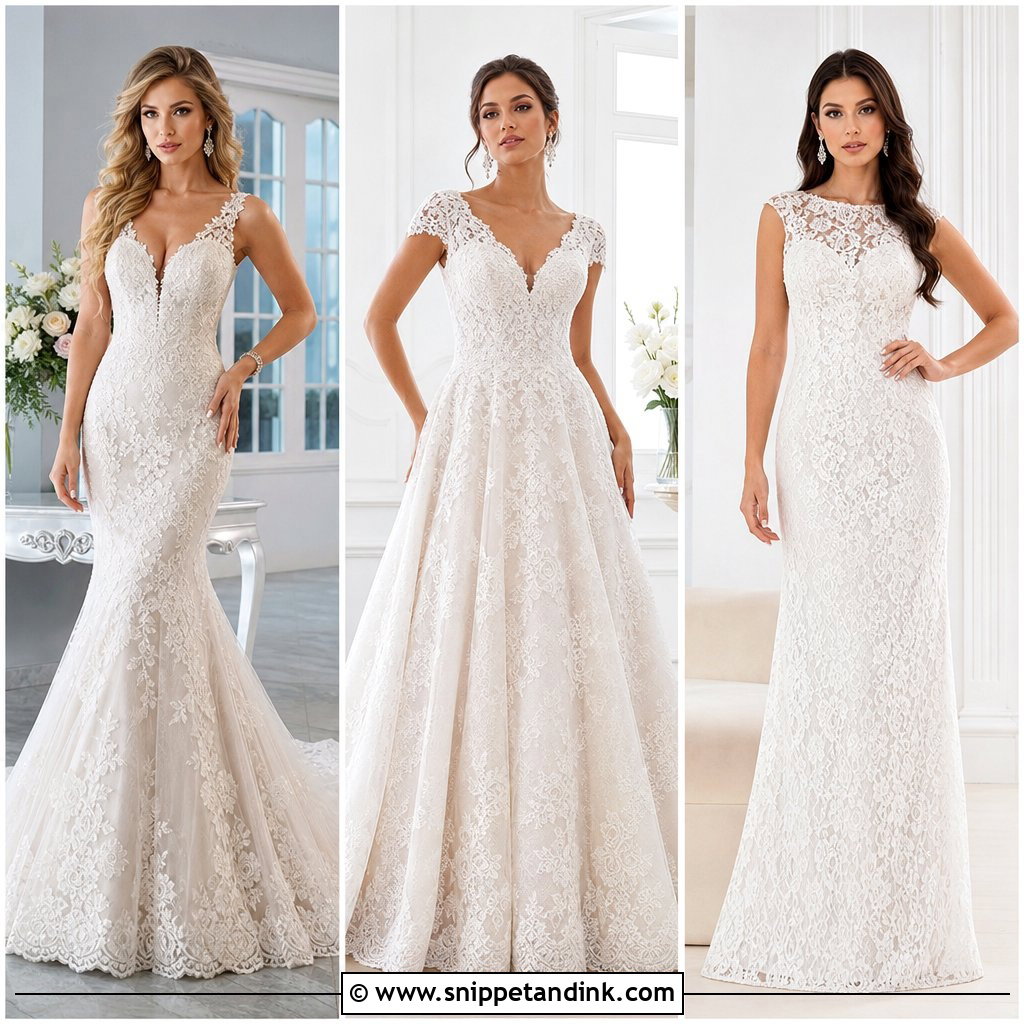
5. Lace Gown Wedding Dress
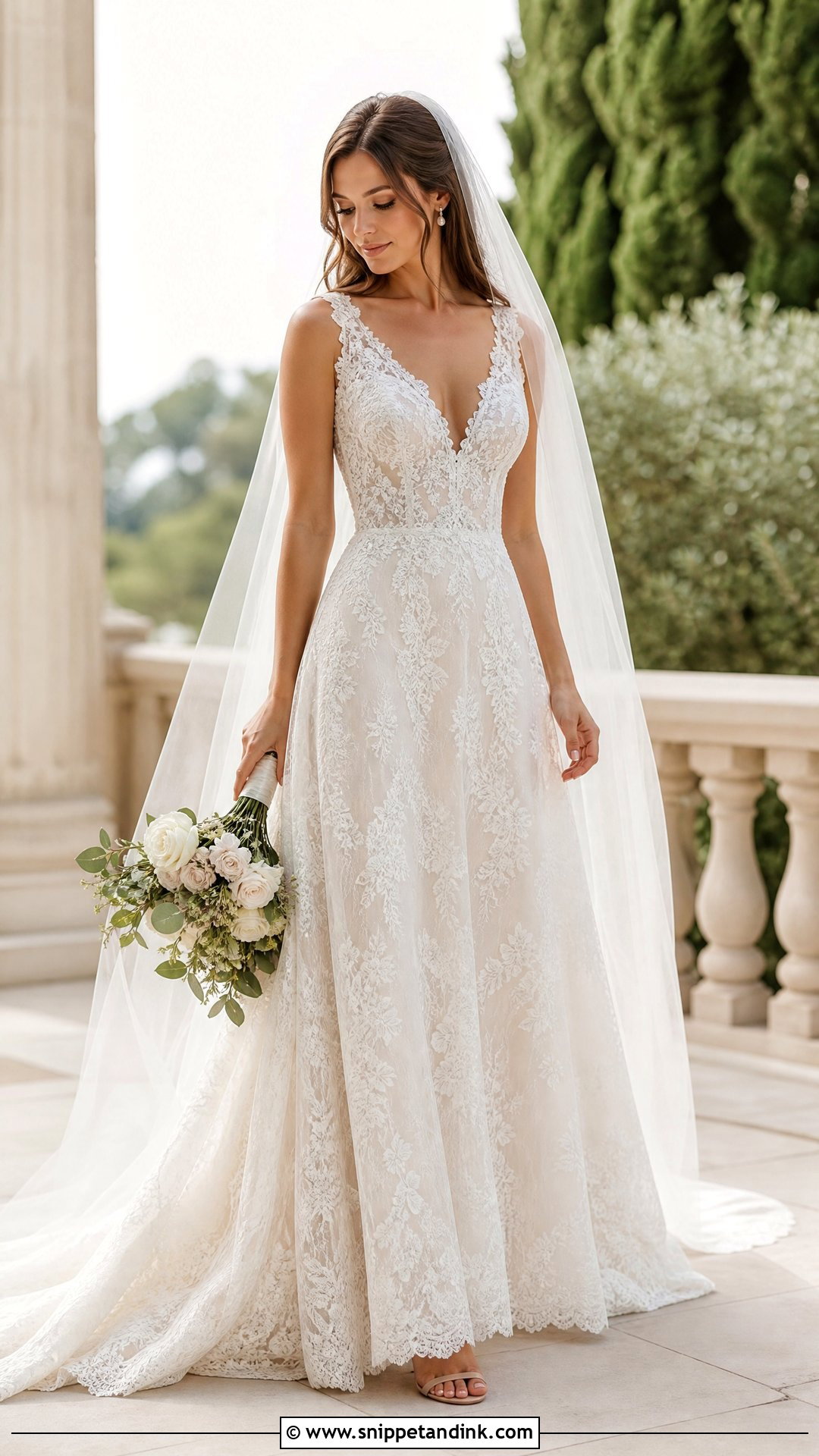
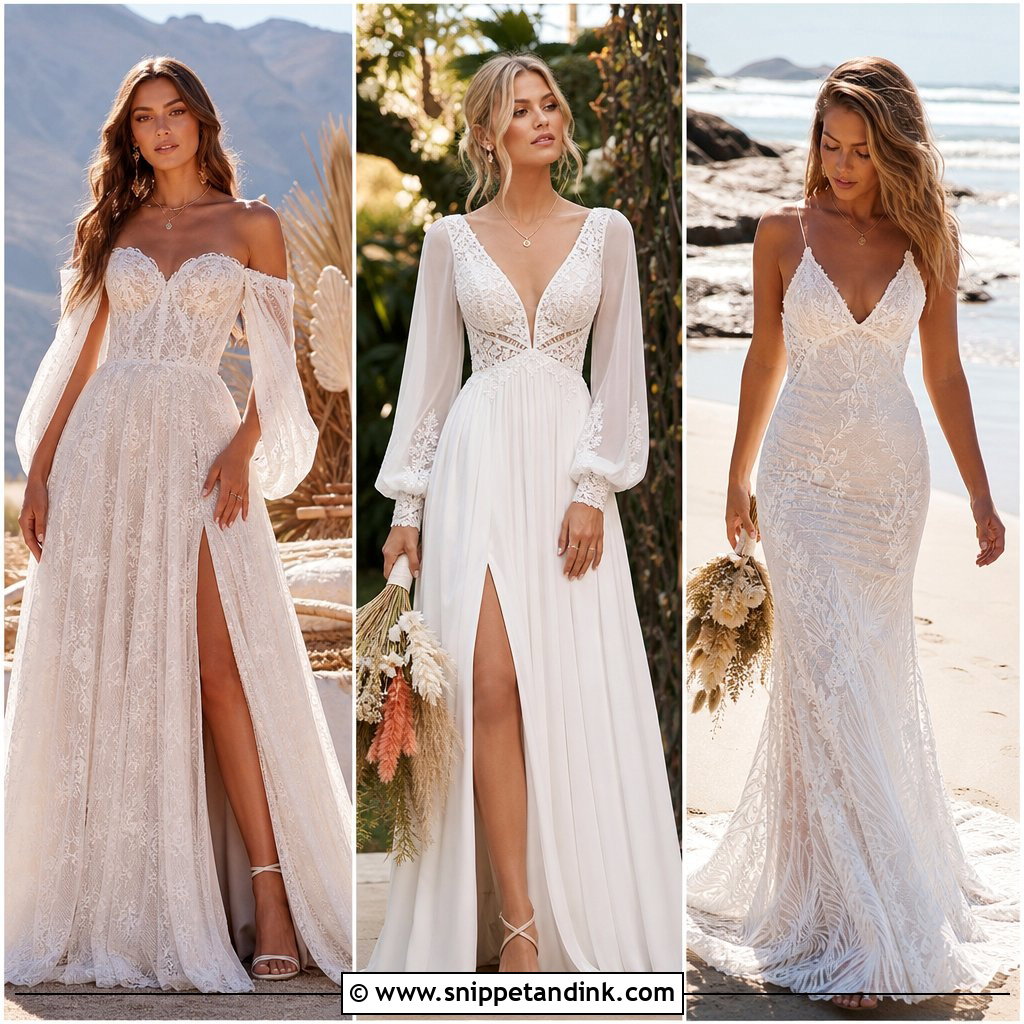
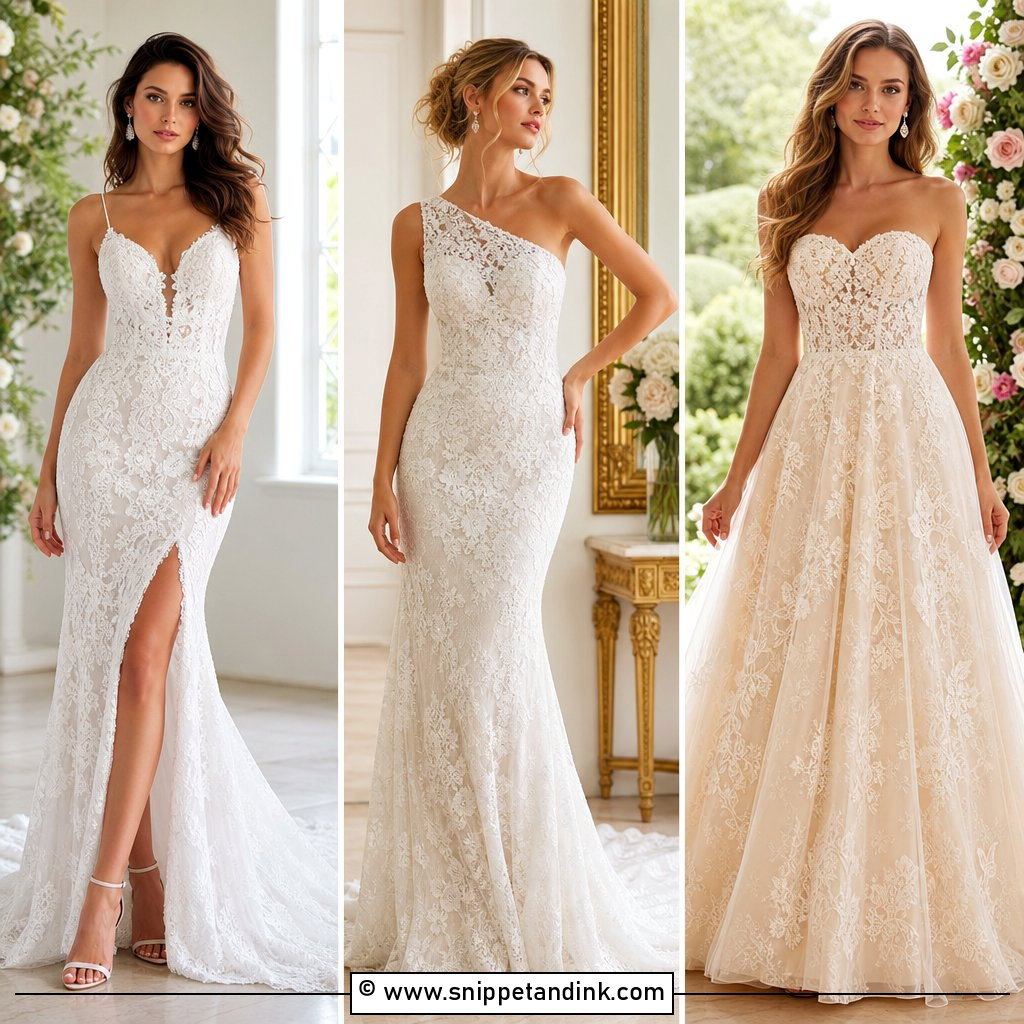
Lace covers a huge range: vintage, boho, classic and refined all depend on the pattern. A fitted lace gown is dramatic; a lace A-line is sweeter. For outdoor summer venues, I’d pick a lighter lace with a soft cotton or silk lining that breathes. For formal weddings, lace layered over satin or tulle has more depth. One thing to look at closely: how the lace meets at the seams. On a well-made gown the pattern is matched or appliquéd over the seam; on a cheaper one it just stops. Keep the veil plain if the lace is busy.
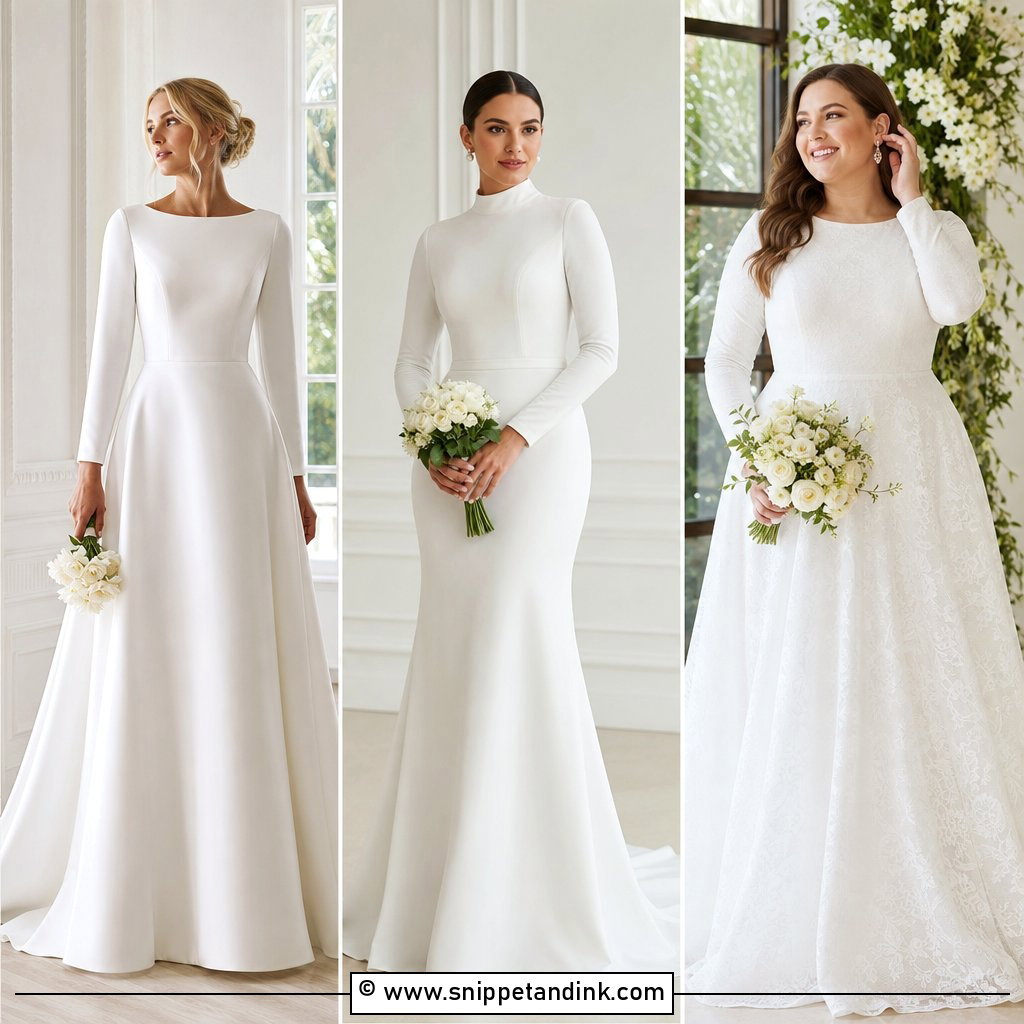
6. Long Sleeve Gown Wedding Dress
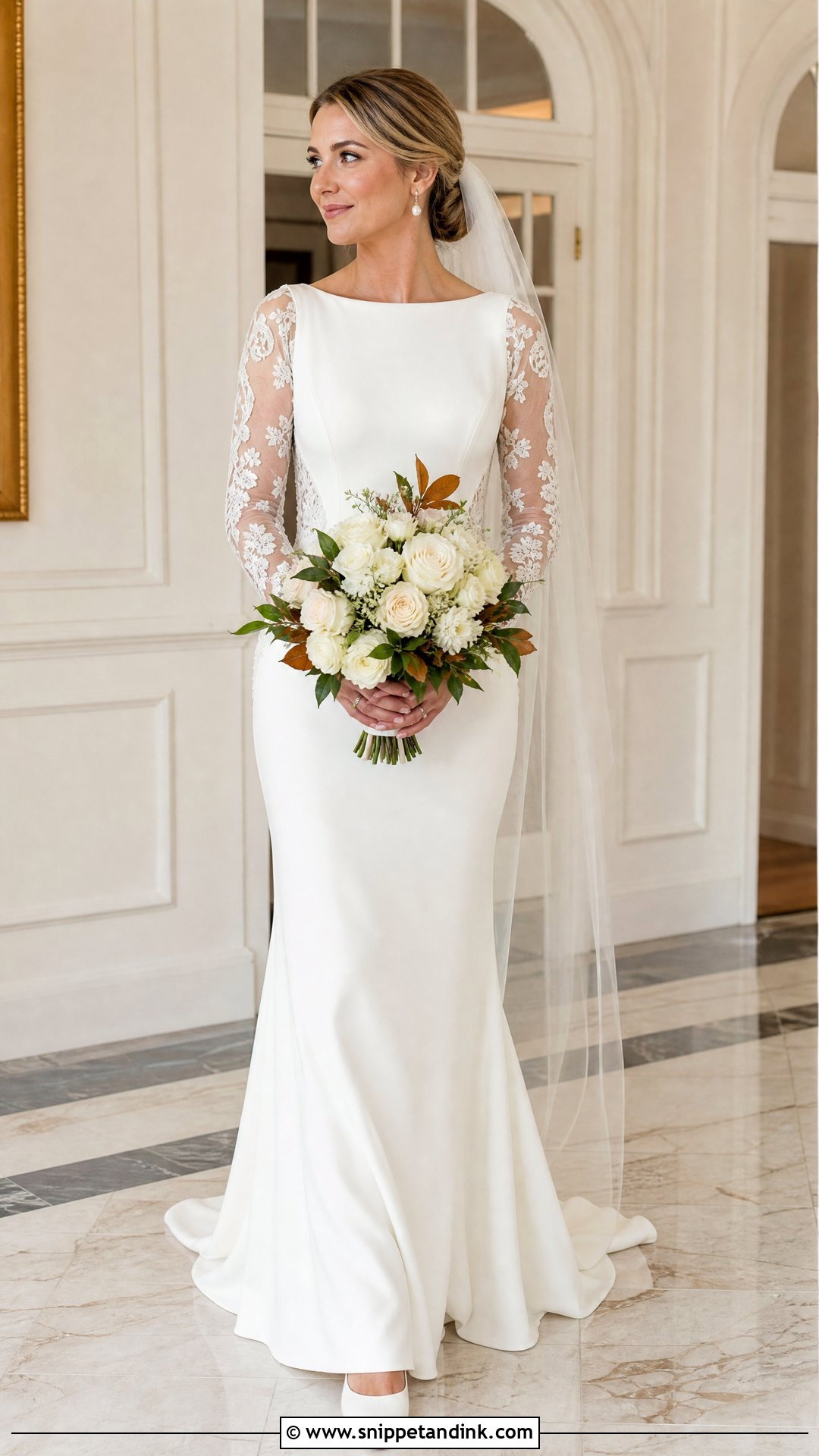
A long sleeve gown wedding dress suits fall, winter and formal weddings, and sheer lace sleeves can work in summer too. Fitted crepe is clean and modern; puff or bishop sleeves are softer. At fittings, I have brides reach forward and hug me, because sleeves set too tight at the armhole stop you lifting your arms. Open backs, square necklines or detachable sleeves keep it current. A sleek updo shows off the sleeves and neckline.
7. Off Shoulder Gown Wedding Dress
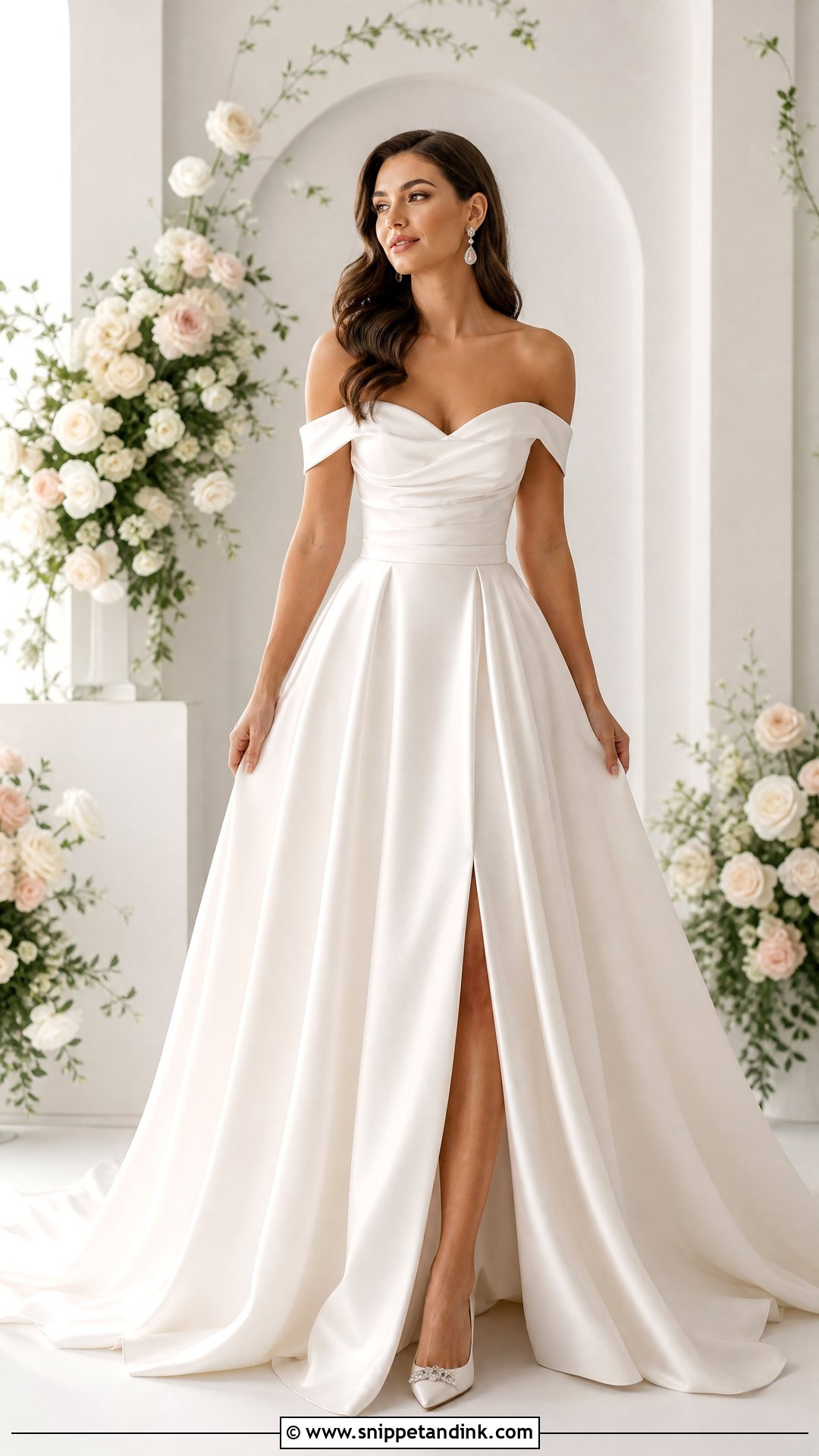
Off the shoulder frames the collarbones without being revealing, and it works on ball gowns, mermaids, satin A-lines and lace. The bodice needs strong internal structure, or the sleeves creep up and you spend the day pushing them down. Folded satin cuffs read classic; lace or tulle sleeves read dreamier. Loose waves or a low bun keep the neckline open. Drop earrings and a simple veil finish it.
8. Strapless Gown Wedding Dress
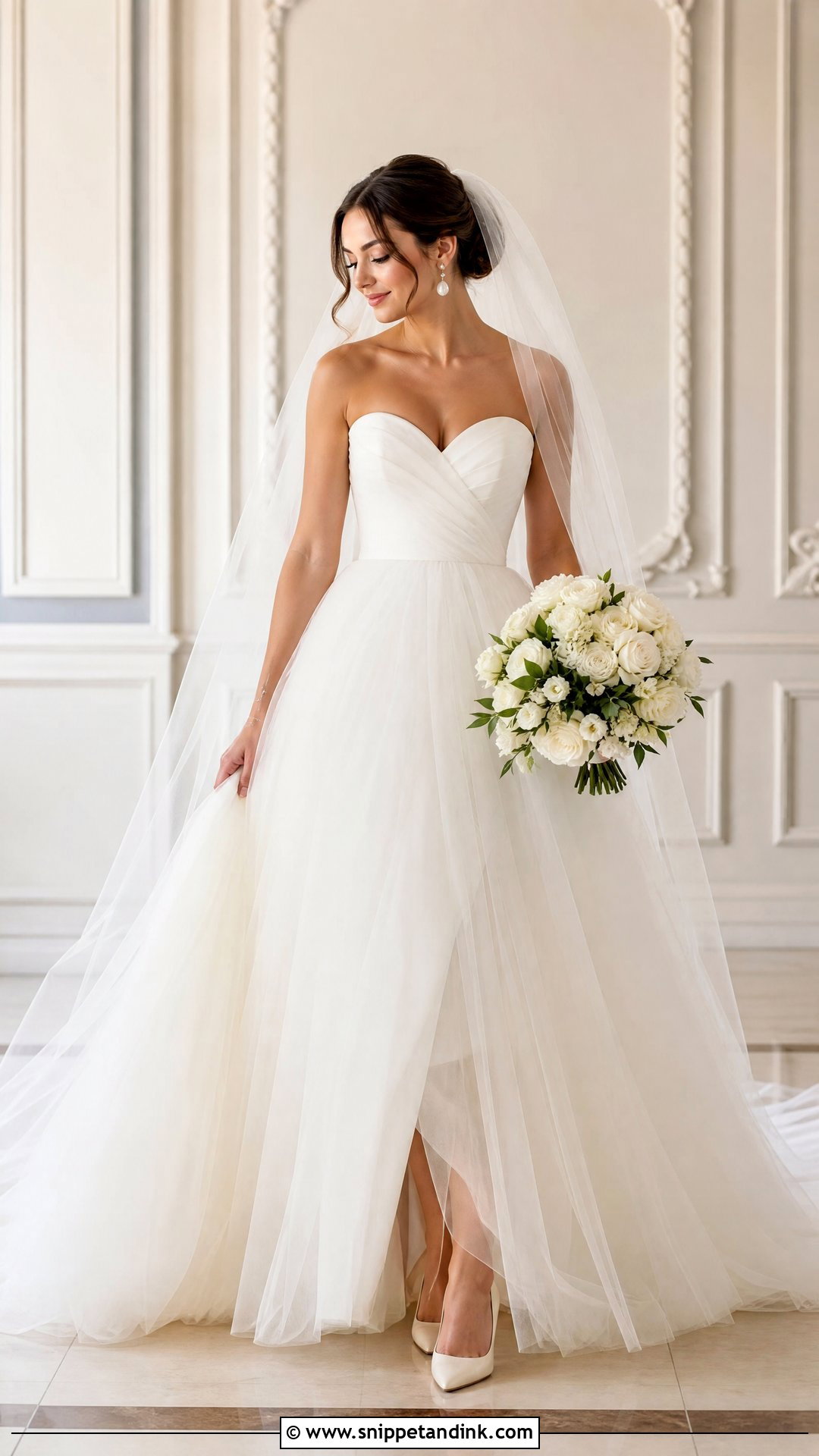
Strapless is the most versatile neckline in bridal, and fit is everything. A properly built bodice holds itself up through boning and a snug top edge; a poorly fitted one slips or digs in under the arms. Sweetheart is softer, straight across is crisper, and both work with any skirt from ball gown to column. I’d let the veil carry detail if the dress is plain, and keep it plain if the gown is beaded. Most brides I dress choose bare collarbones and earrings over a necklace.
9. Corset Gown Wedding Dress
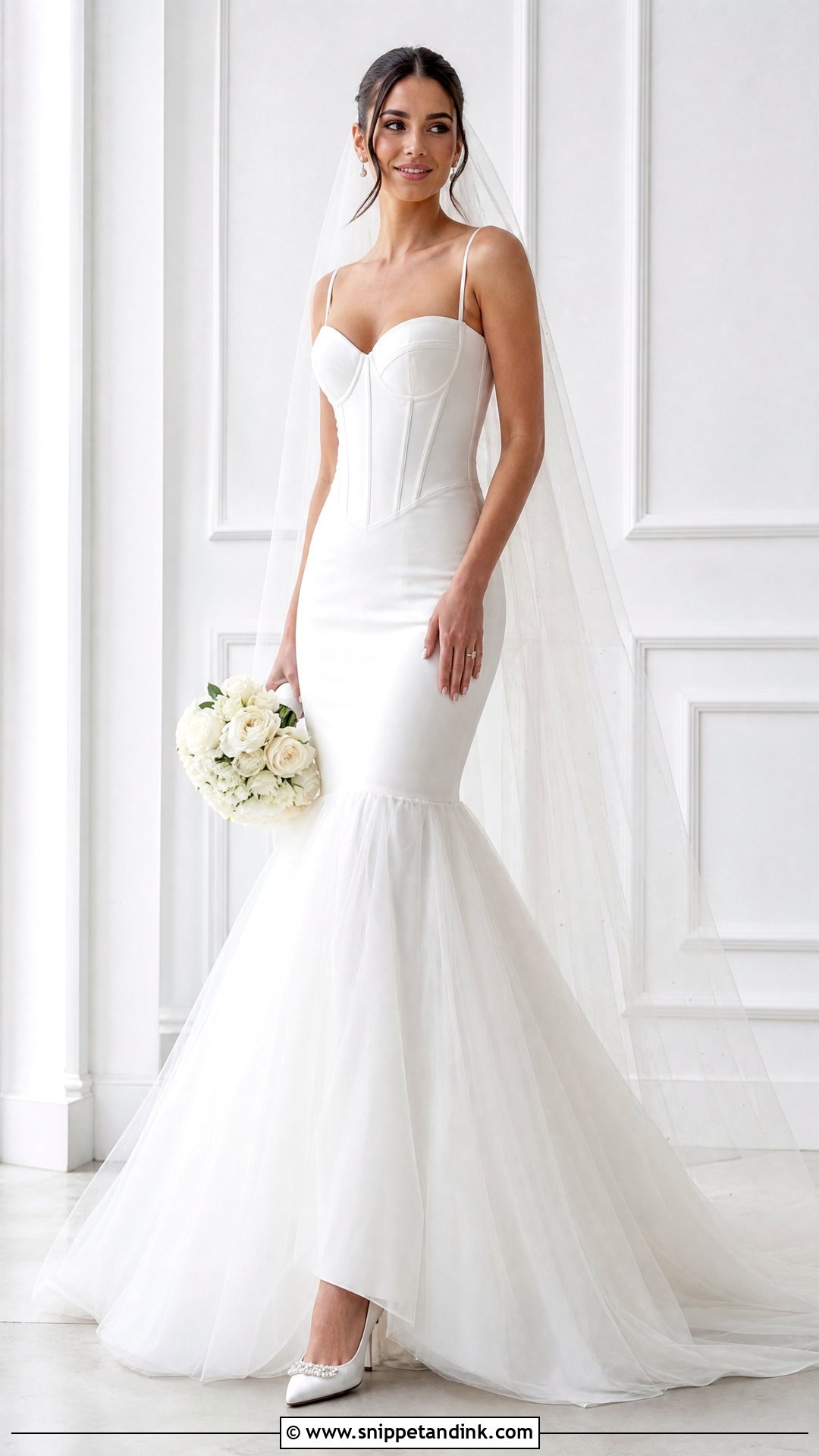
Corsets give structure and a defined waist, and visible boning, lace-up backs and sculpted bodices are popular right now. Pair one with a full tulle skirt for romance, satin for formality or fitted crepe for a sleeker line. Sheer panels with lace or floral appliqué soften the effect. A lace-up back is my favorite practical feature, since it can be tightened or loosened by a few centimeters on the day if the bride’s body changes in the final weeks. Simple veil, pointed heels, small earrings.
10. Minimalist Gown Wedding Dress
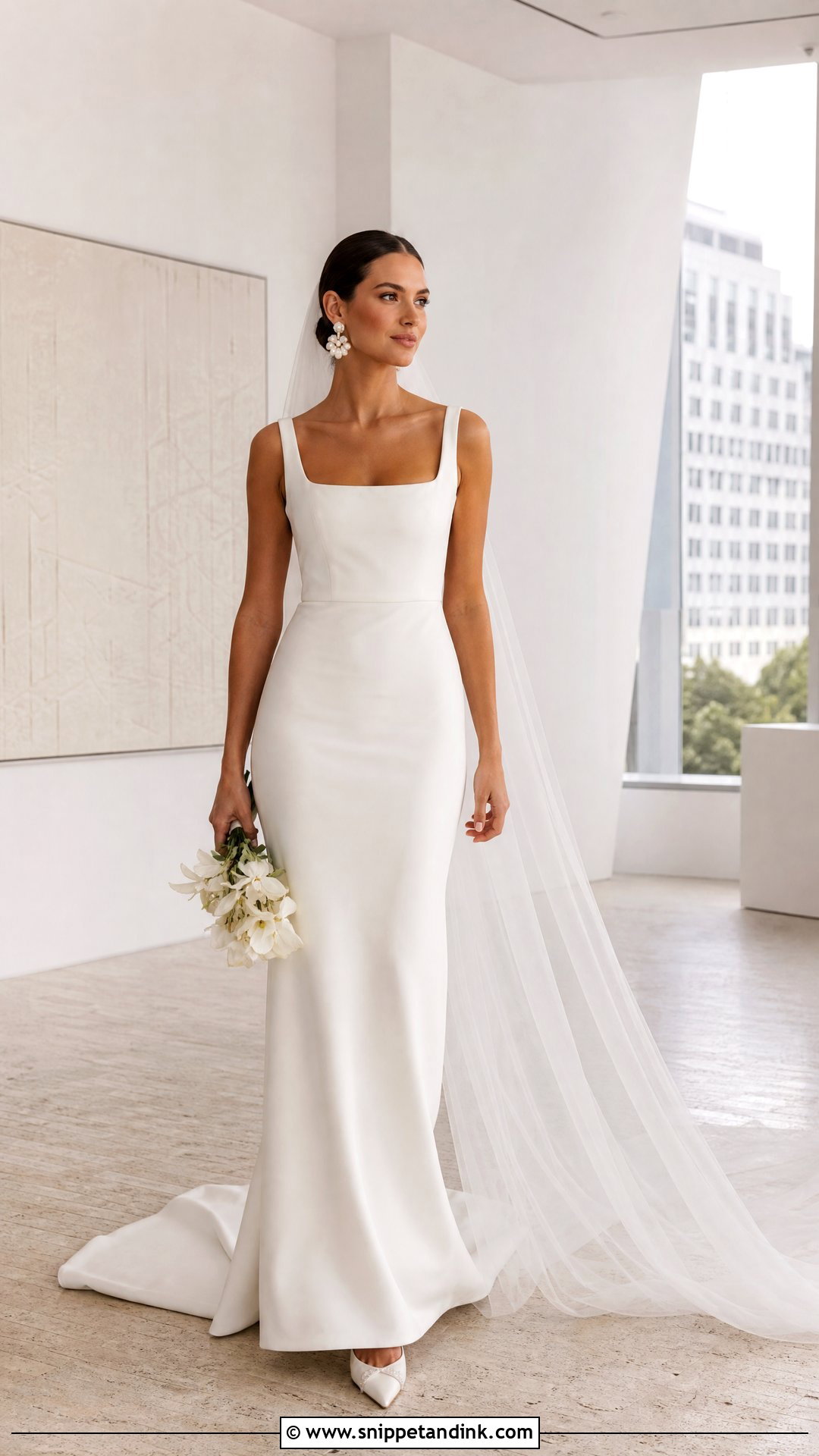
A minimalist gown lives or dies on fit and fabric, because there’s nothing to hide behind. A square neckline, a column skirt, a satin finish or a subtle train can carry the whole look. I’d plan an extra fitting for this style; on a plain dress, a shoulder seam two millimeters out shows in every photo. Courthouses, rooftops and modern hotels suit it. Accessories do more work here: sculptural earrings, a smooth bun or a long plain veil, then gloves or a cape for the reception.
11. Floral Applique Gown Wedding Dress
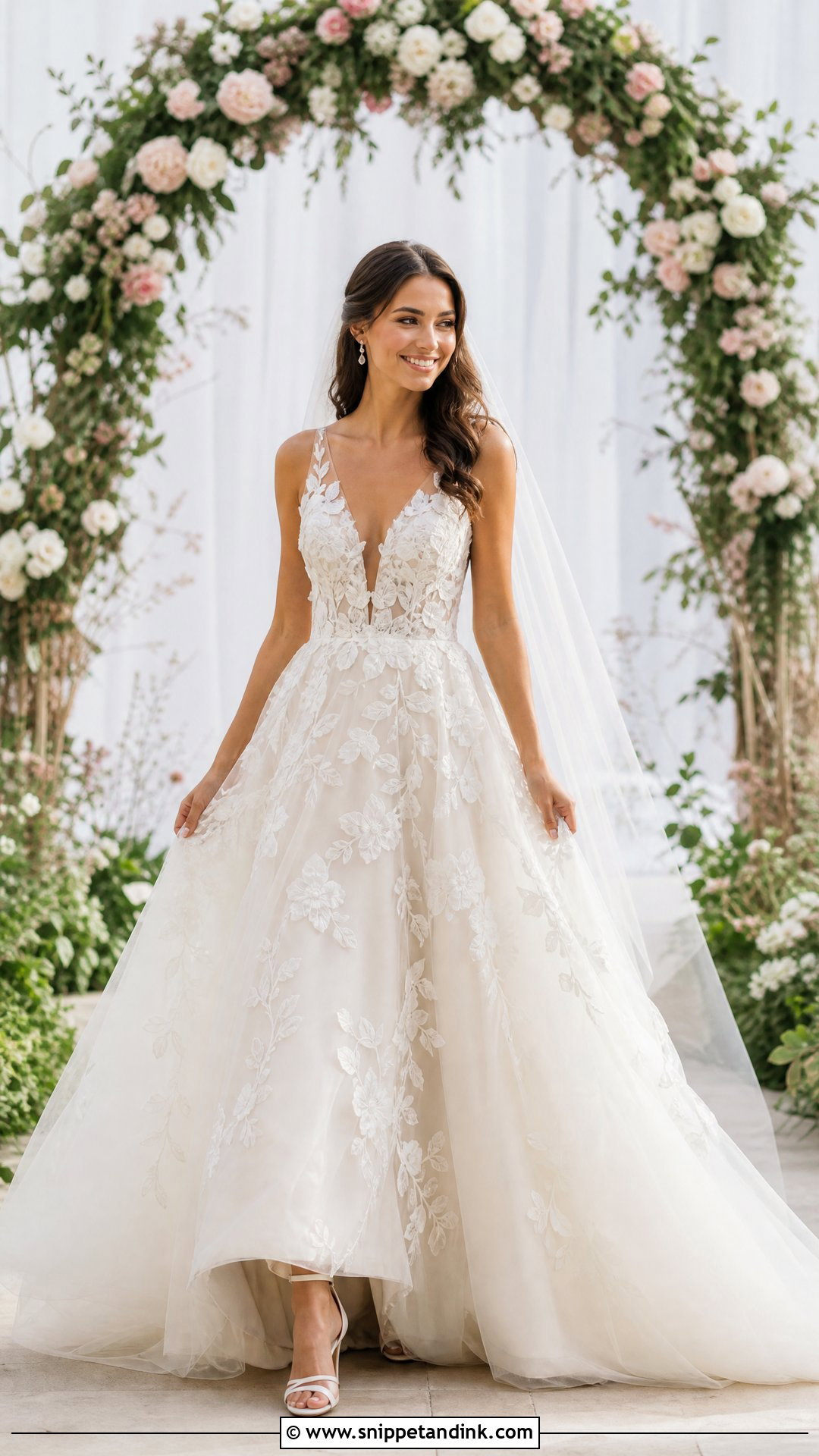
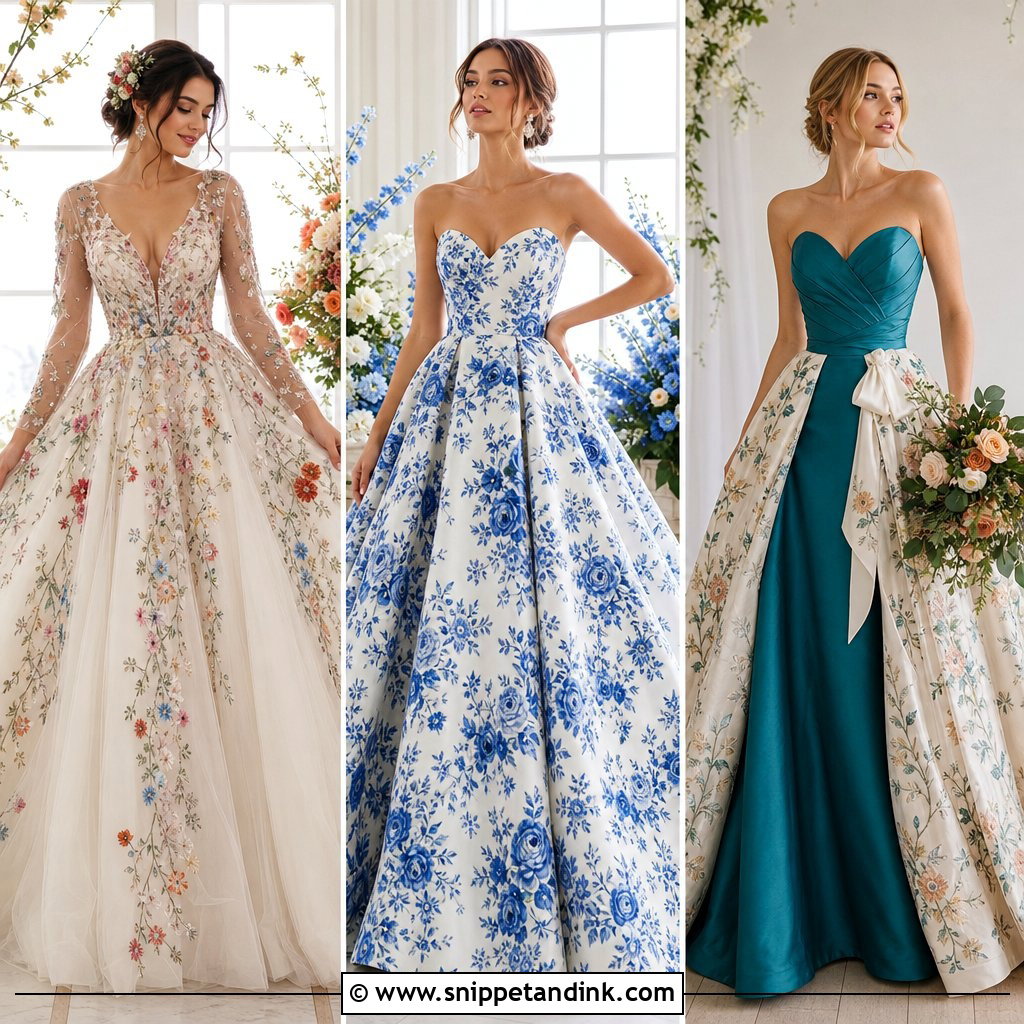
Appliqué flowers sit on top of the fabric and give the gown real dimension, which flat lace can’t. They suit tulle, organza and soft A-lines. Scattered flowers stay delicate; large 3D blooms are much bolder. With raised appliqué, I check where the bride’s arms rest, because flowers on the side of the bodice can catch on bracelets and bouquet ribbon. Garden and spring weddings suit it. Nude or ivory heels and a sheer veil keep the flowers in focus.
12. Beaded Gown Wedding Dress
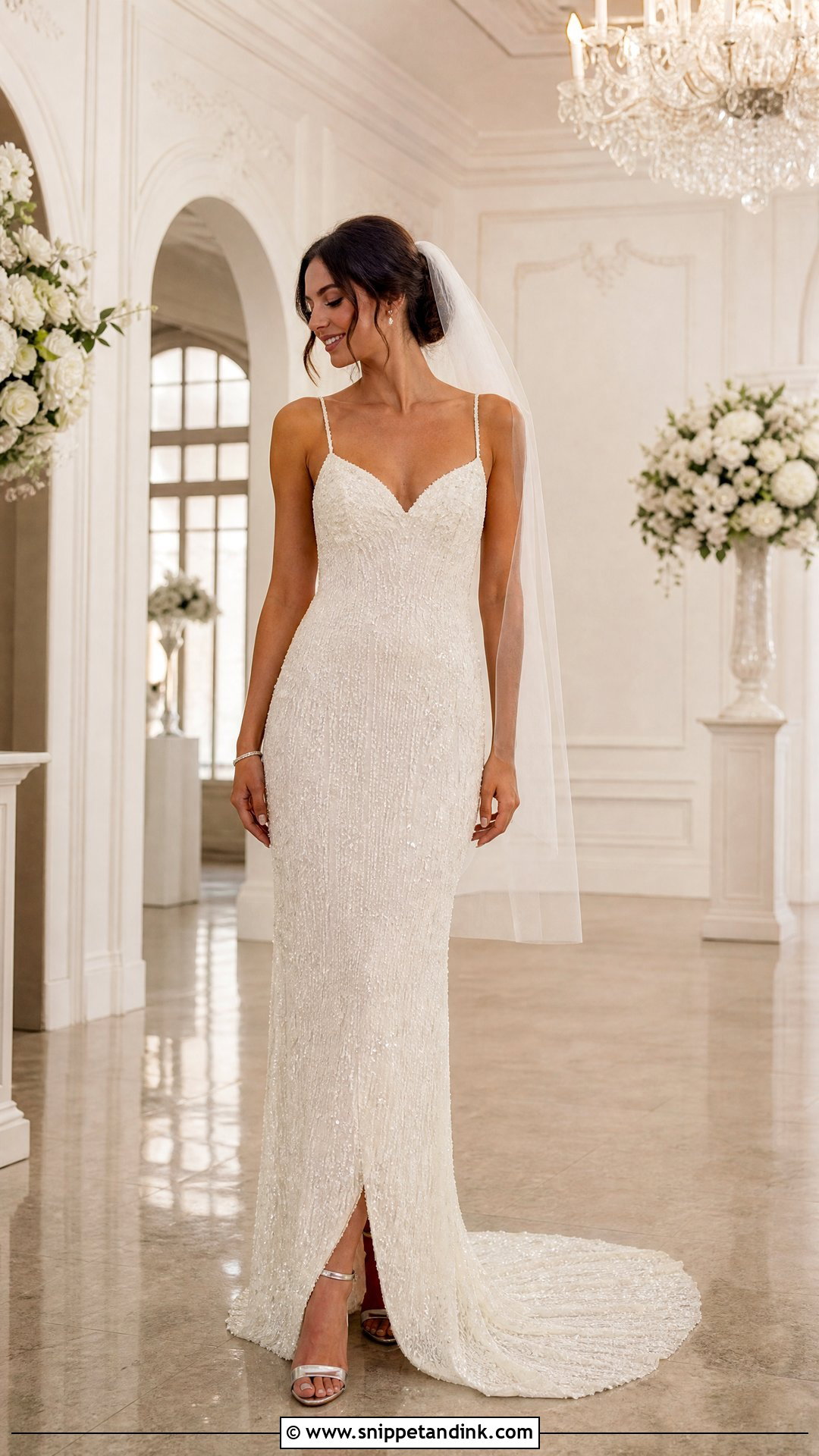
Beading brings sparkle that comes alive in evening light, from soft pearl work to full crystal and sequin. A beaded column is sleek; a beaded A-line moves more. Heavy beading adds real weight, so I ask brides to wear the sample for a good while and lift their arms before deciding. Look for a comfortable lining, since bead backings can scratch. Earrings or a bracelet rather than a necklace, metallic or ivory heels and a soft veil finish it.
13. Tulle Gown Wedding Dress
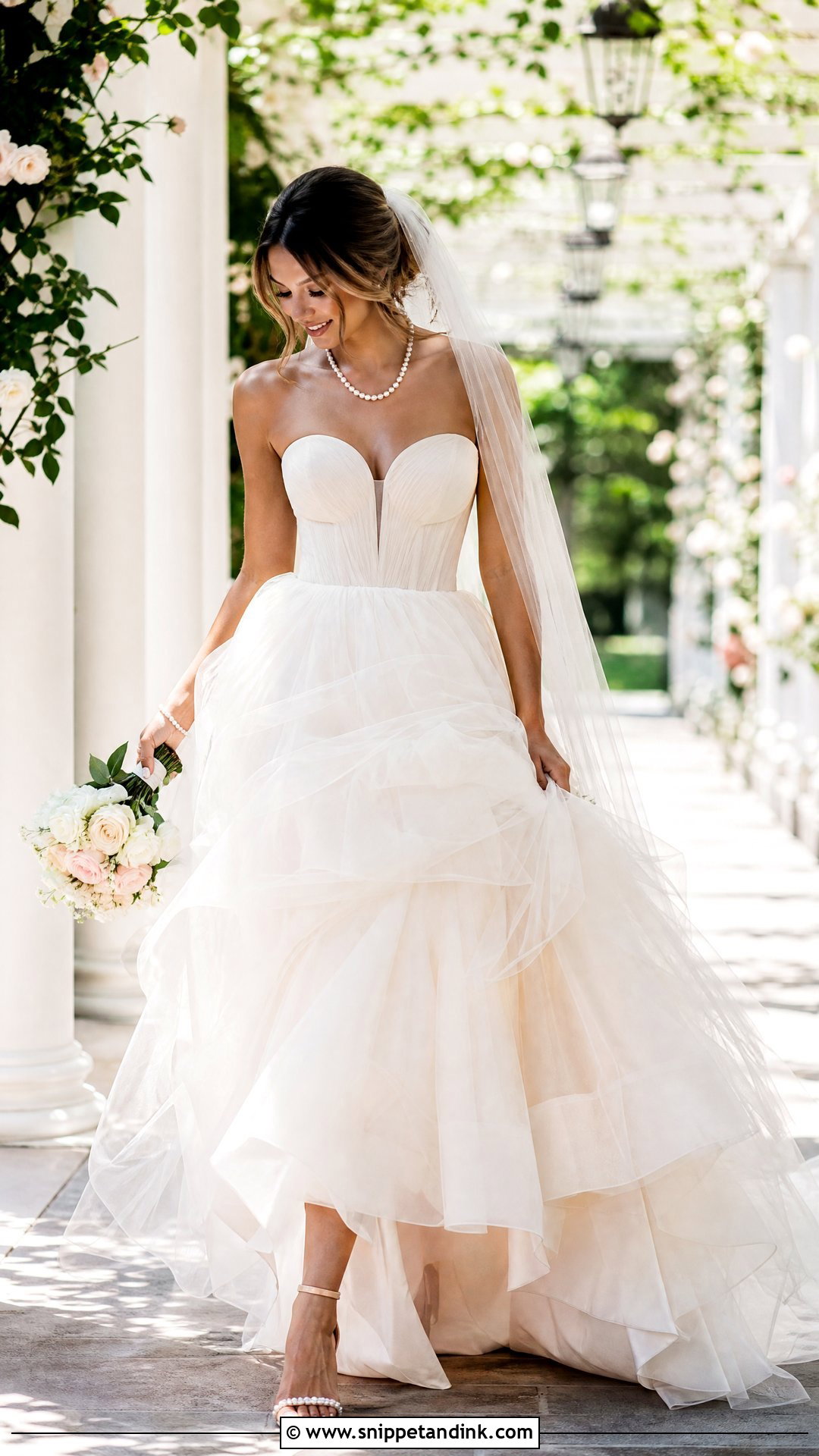
A tulle gown wedding dress can be a full princess skirt, a floating A-line or a sheer overskirt over a fitted base. Plain tulle with a structured bodice keeps it modern; embroidery, tiny pearls or floral appliqué add detail. Tulle is also the fabric most likely to snag, on heels, on decor and on the bouquet, so I’d make sure the hem is set to clear your shoes when you walk. Delicate heels, a sheer veil and soft waves suit it.
14. Crepe Gown Wedding Dress
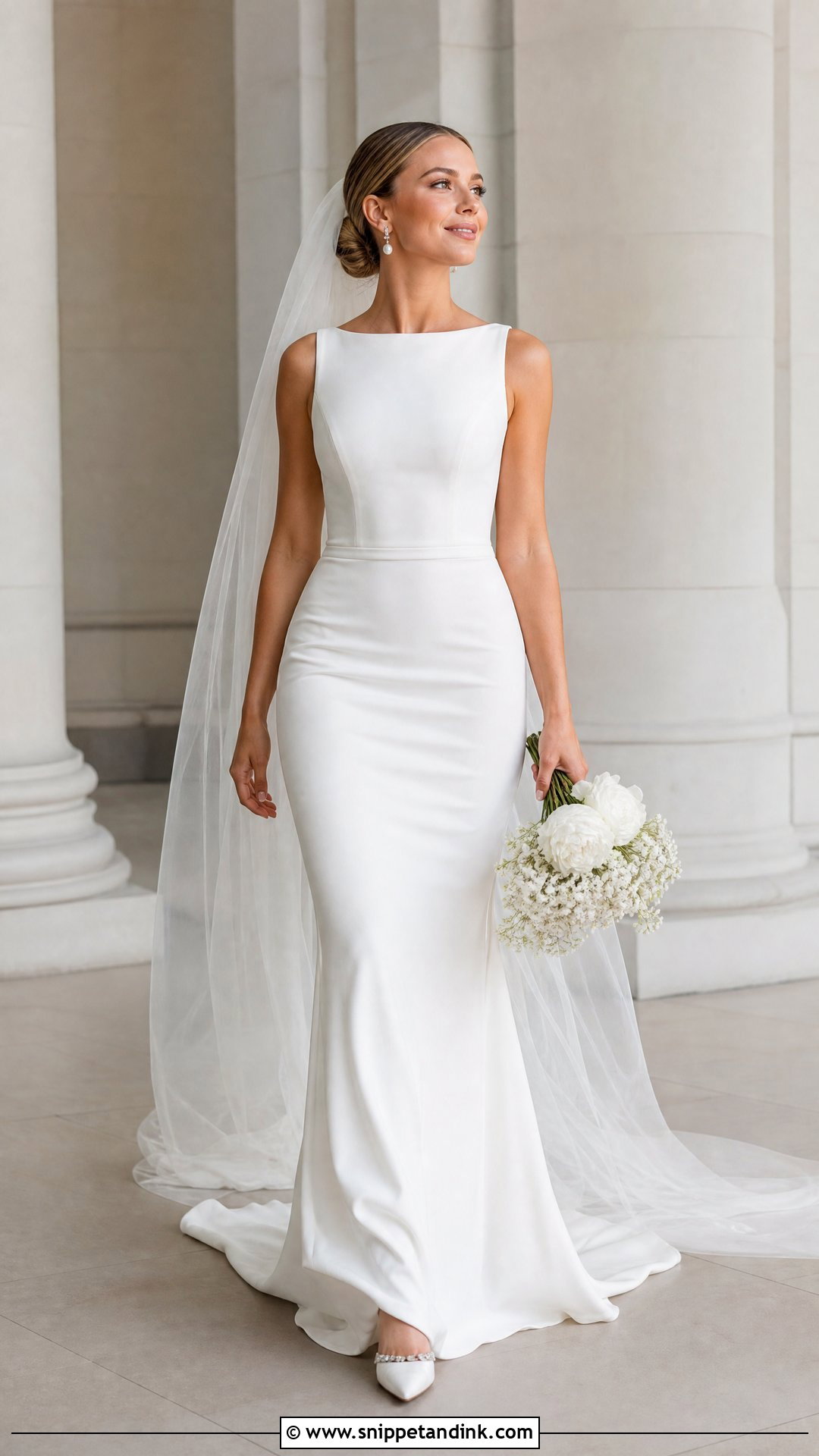
Crepe has enough weight to skim the body, which is why sheaths, columns and mermaids are so often cut in it. It shines less than satin and looks quietly expensive. Because crepe is so plain, tailoring has to be precise at the seams, neckline and hem, and I’d always check how it sits over underwear, which crepe shows more than people expect. It pairs well with dramatic veils, capes, overskirts or statement sleeves. Pointed heels, pearl earrings and a neat bun.
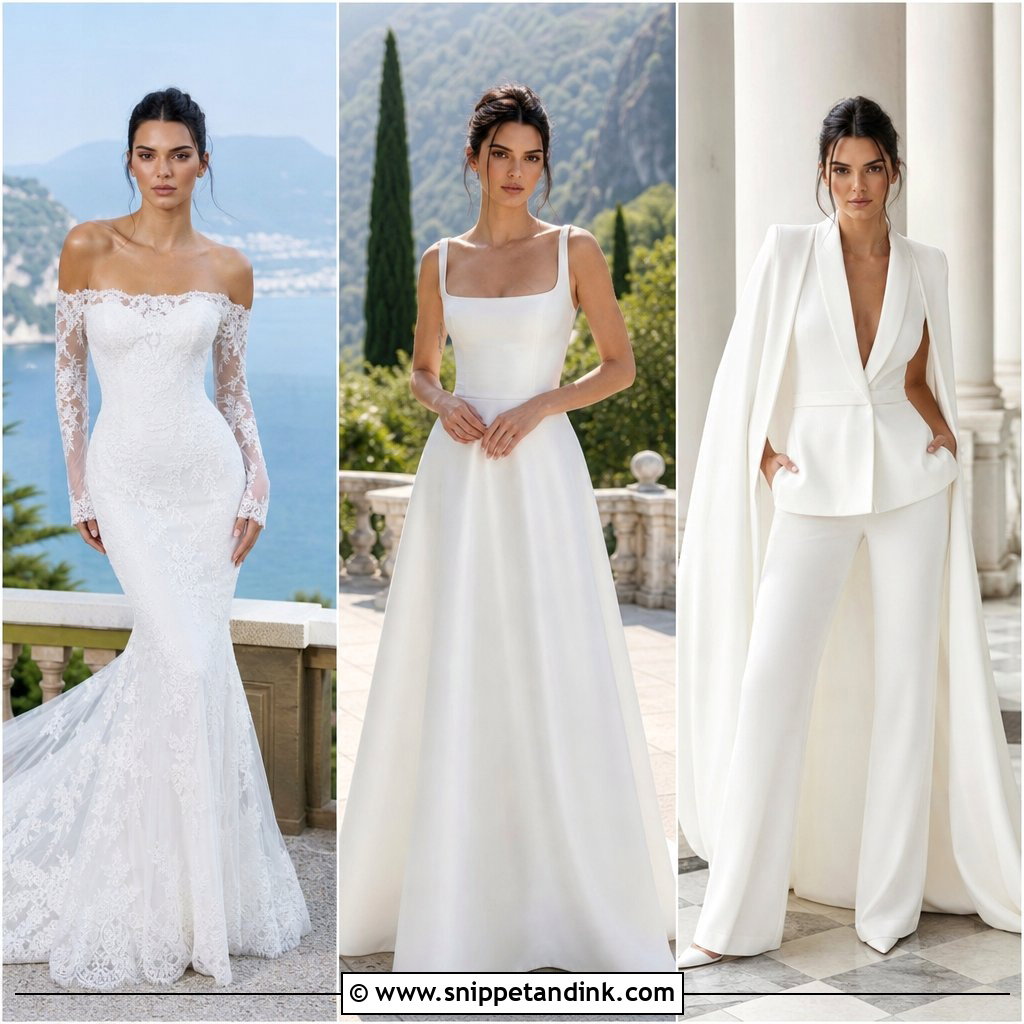
15. Square Neck Gown Wedding Dress
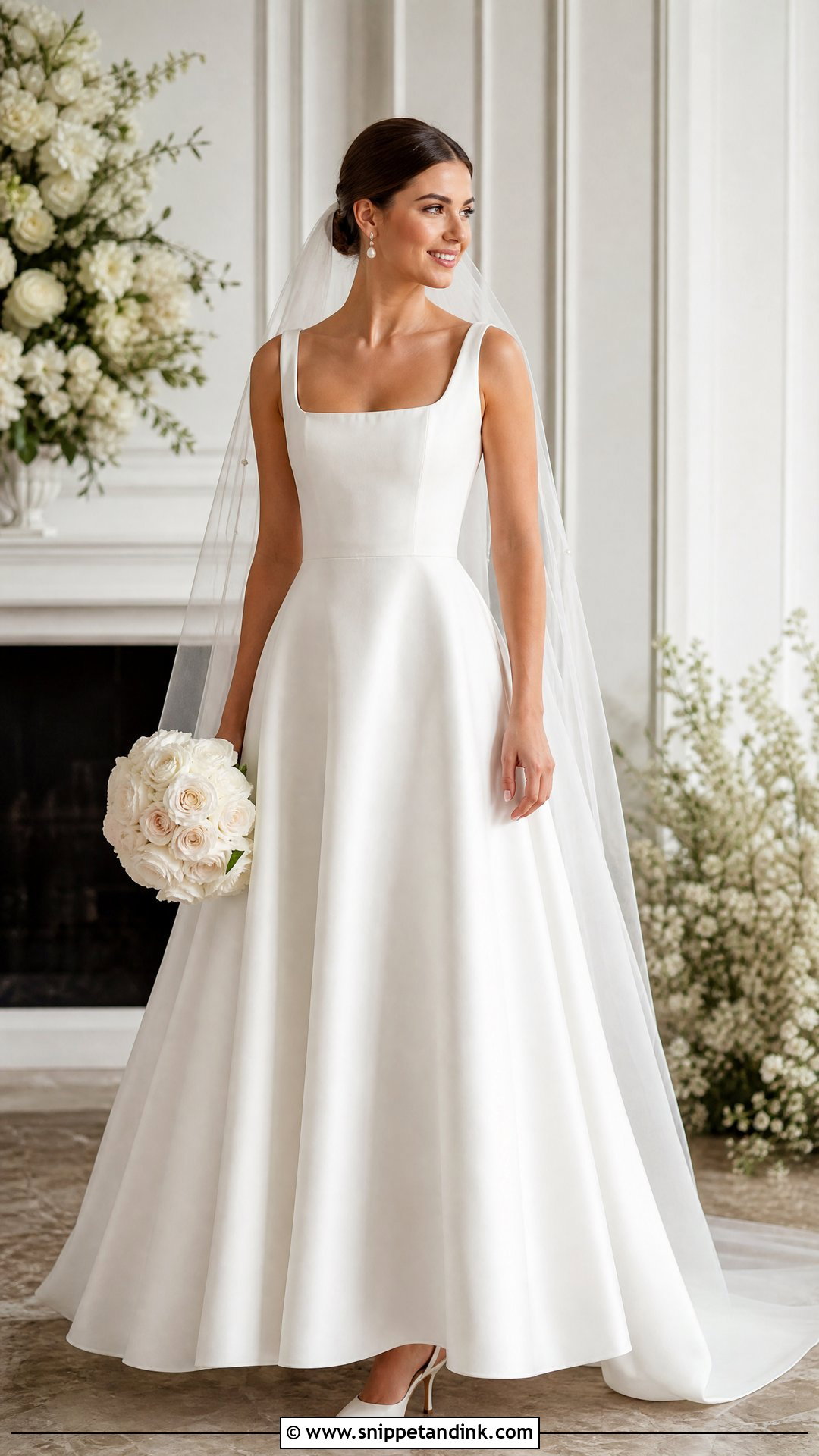
A square neck frames the chest and shoulders cleanly and has a slightly vintage feel without tipping into costume. It works in satin, crepe, lace and mikado. Thin straps look delicate; wider straps give more support, which brides with a fuller bust usually prefer. A square neck A-line reads classic; a fitted column reads modern. The corners of a square neck should sit flat against the skin, so I check them with the bride breathing in and out. Low bun, small hoops or pearls, fingertip veil.
16. V Neck Gown Wedding Dress
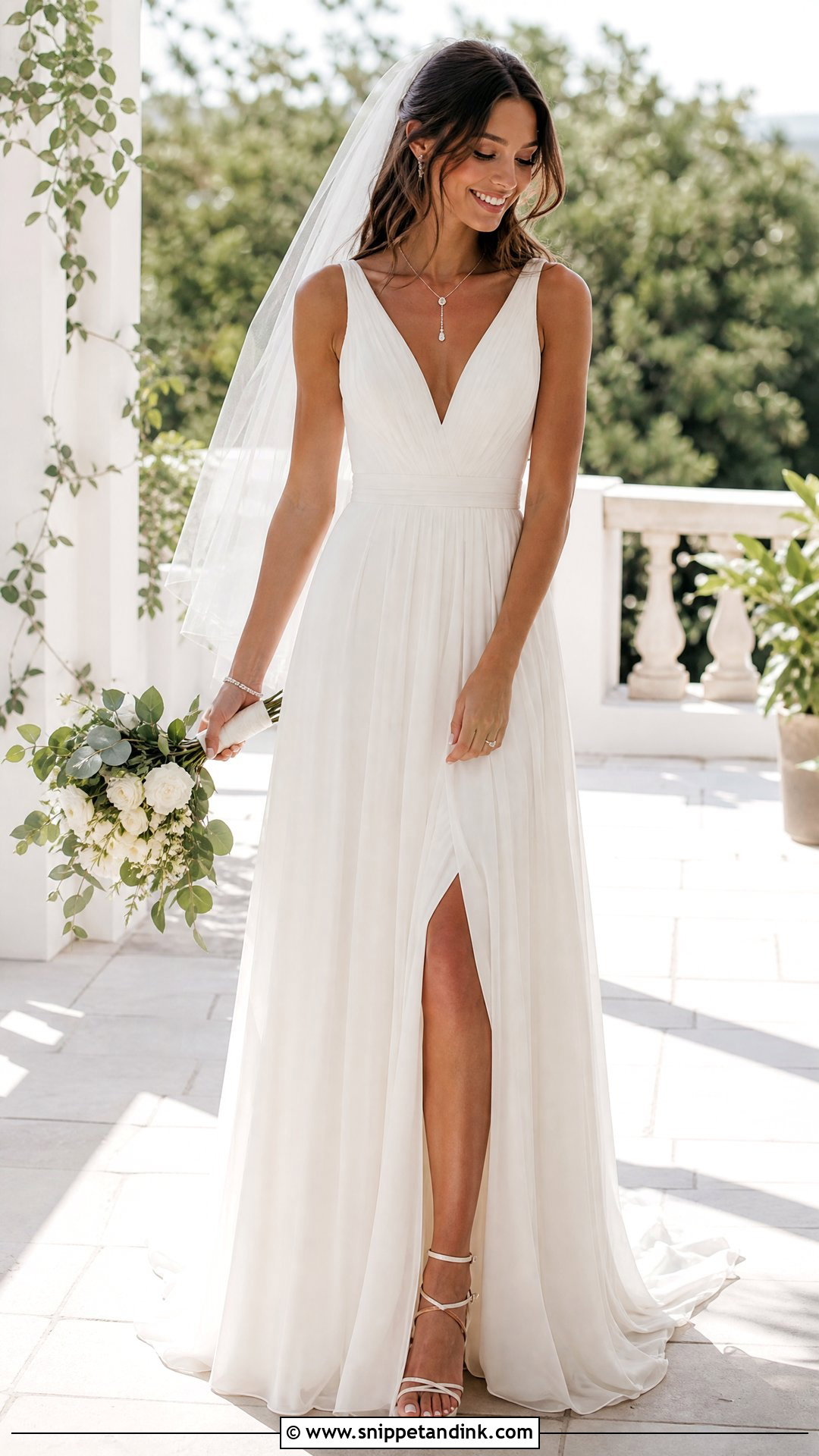
A V neck lengthens the upper body. Its depth can be modest, dramatic or softened with illusion mesh, on chiffon, lace, satin or crepe. Brides with a larger bust usually do better with a wider strap and a firmly built bodice; a narrow V with thin straps gapes when you lean forward. A clean waist and gentle skirt keep it refined. A pendant, soft earrings and strappy heels finish it without crowding the neckline.
17. High Neck Gown Wedding Dress
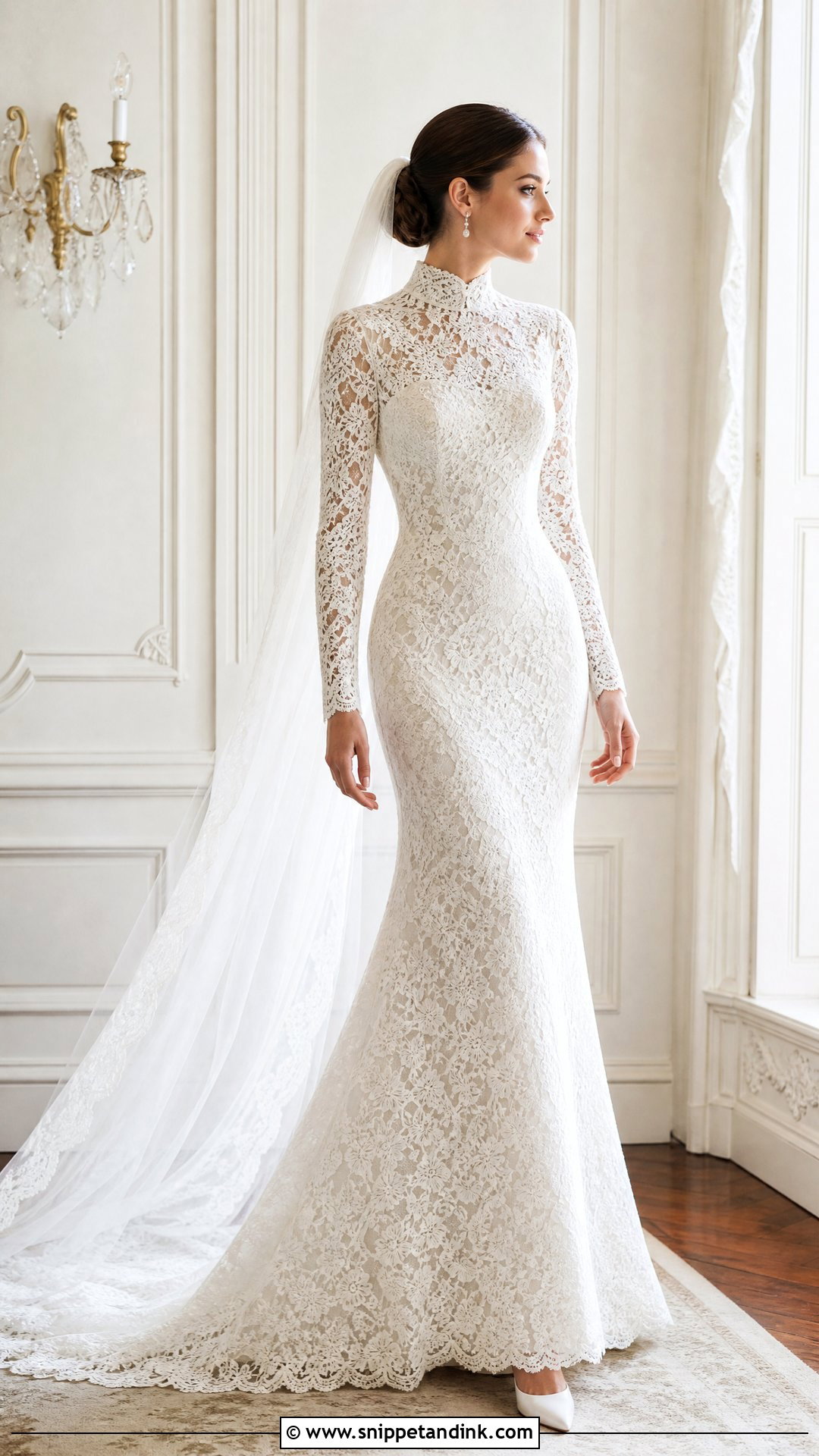
A high neck reads regal and gives coverage while still looking polished. Lace versions feel vintage; satin or crepe versions look architectural. I like pairing a high neck with an open back, fitted sleeves or a clean column, so the contrast keeps it fresh. Hair goes up and the necklace stays home. Check the collar when you turn your head and talk; if it presses on the throat, it needs letting out by a few millimeters. A long veil or cape adds ceremony drama.
18. Backless Gown Wedding Dress
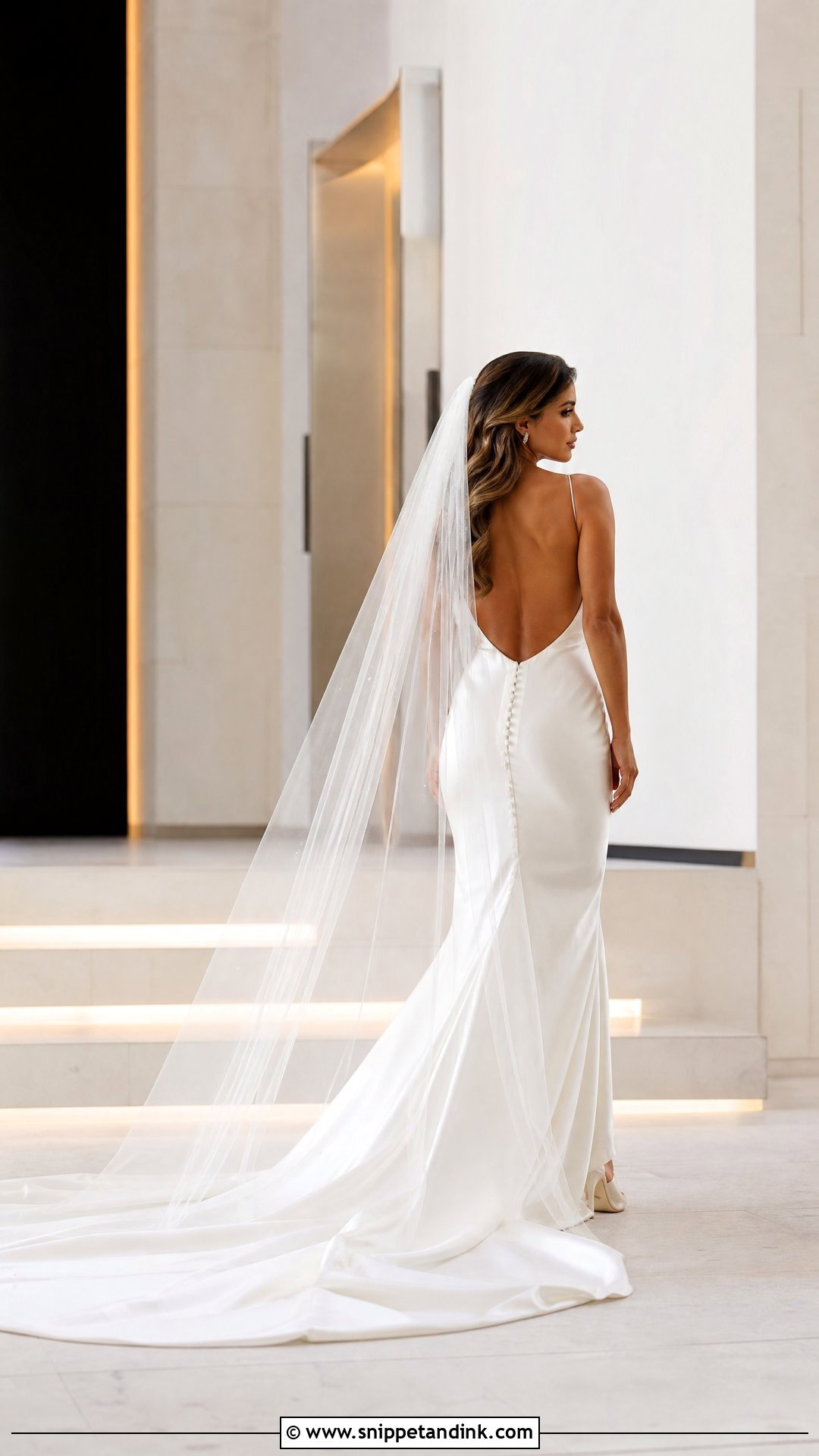
An open back makes the walk down the aisle and every turn in photos a moment. A plain satin gown with a bare back is modern; lace edging softens it. Fit and support are the whole job here, so I’d start bra planning at the first fitting, not the last; many backless gowns need cups built in. A back necklace or a delicate veil highlights the detail. Keep hair lifted or swept to one side so the back stays visible.
19. Cape Gown Wedding Dress
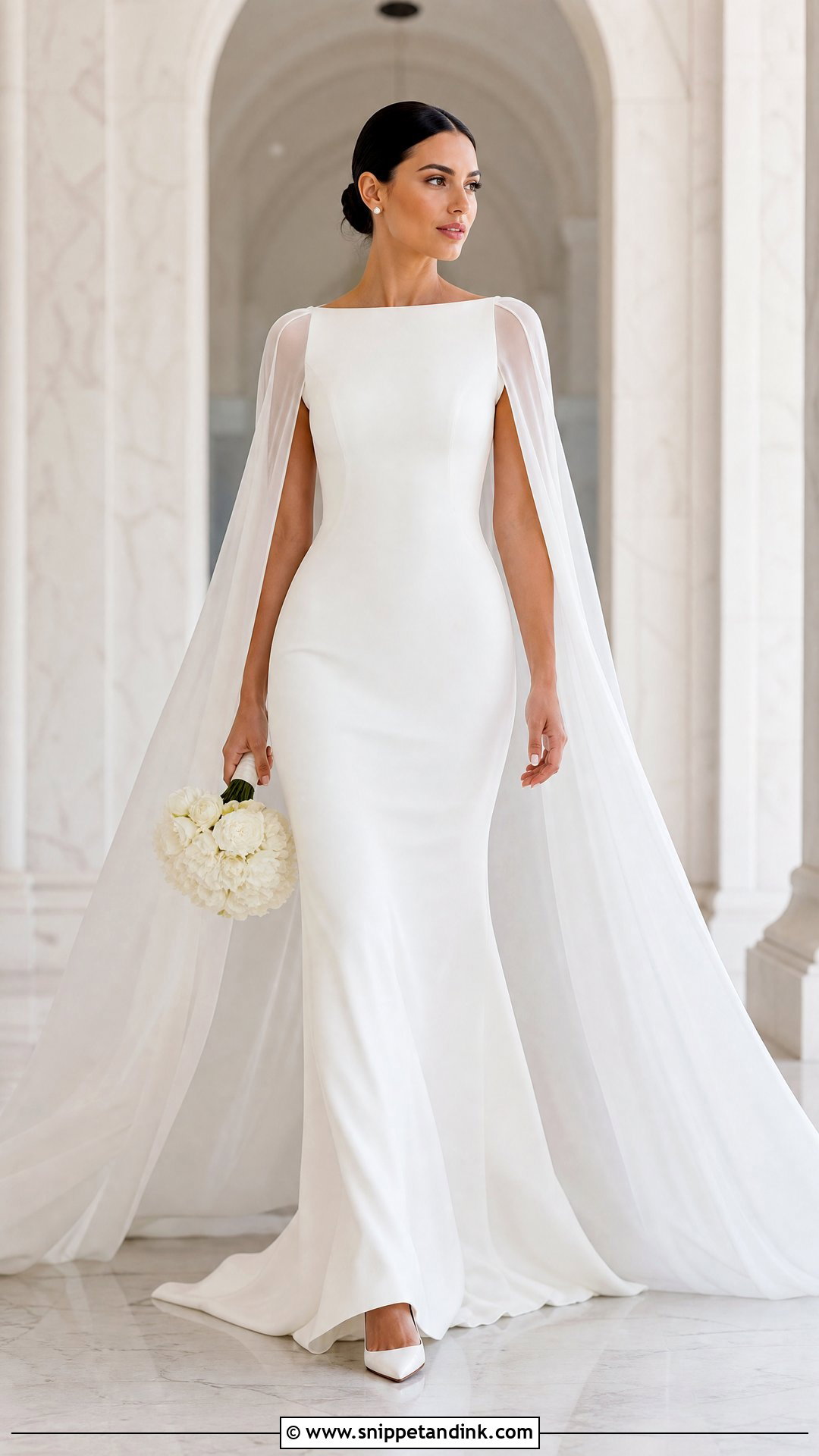
A cape is an alternative to a veil and adds instant movement. Sheer, lace, pearl-trimmed, satin or detachable, it works especially well over a minimalist gown. A long trailing cape is formal; a shoulder capelet or sheer tulle cape is softer. Check how it attaches: capes held by snaps at the shoulder can pull the neckline backward if they’re heavy. Sleek heels, small earrings and smooth hair keep the outfit intentional.
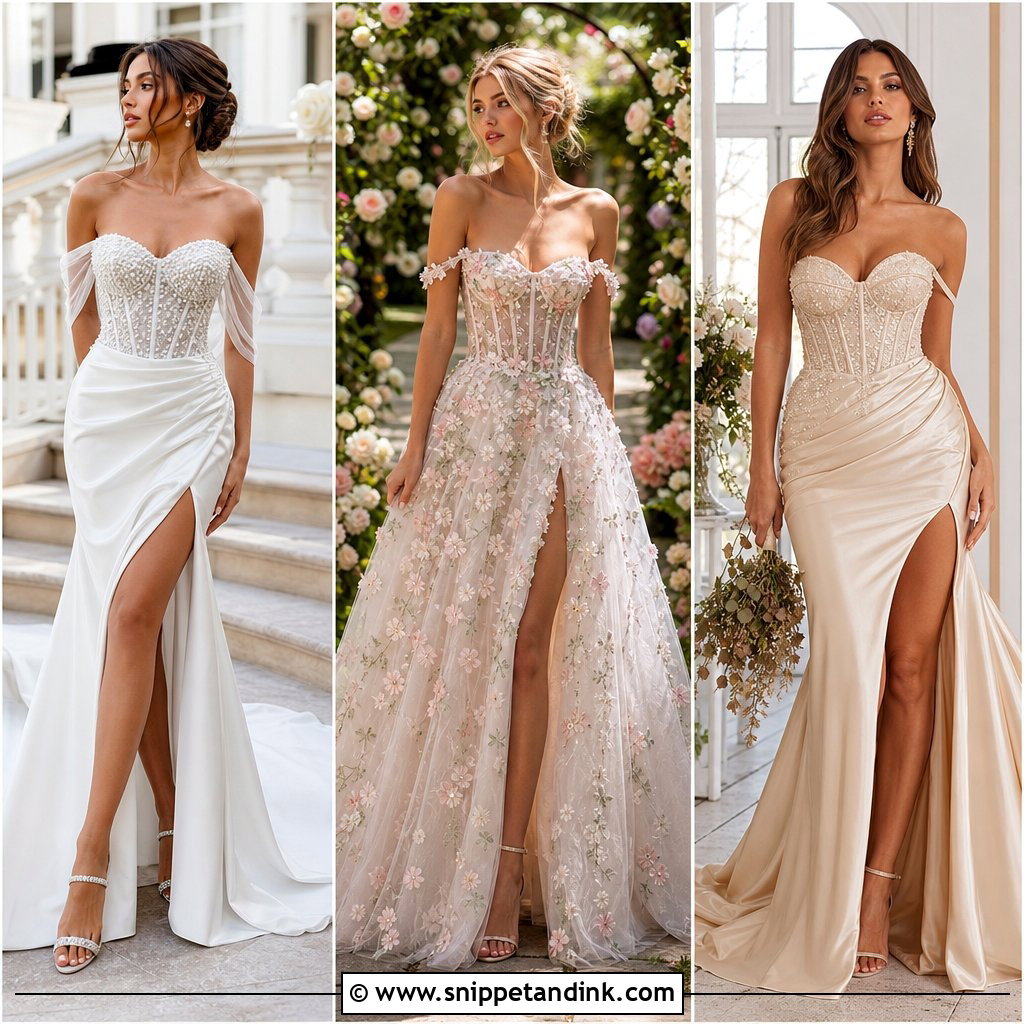
20. Detachable Overskirt Gown Wedding Dress
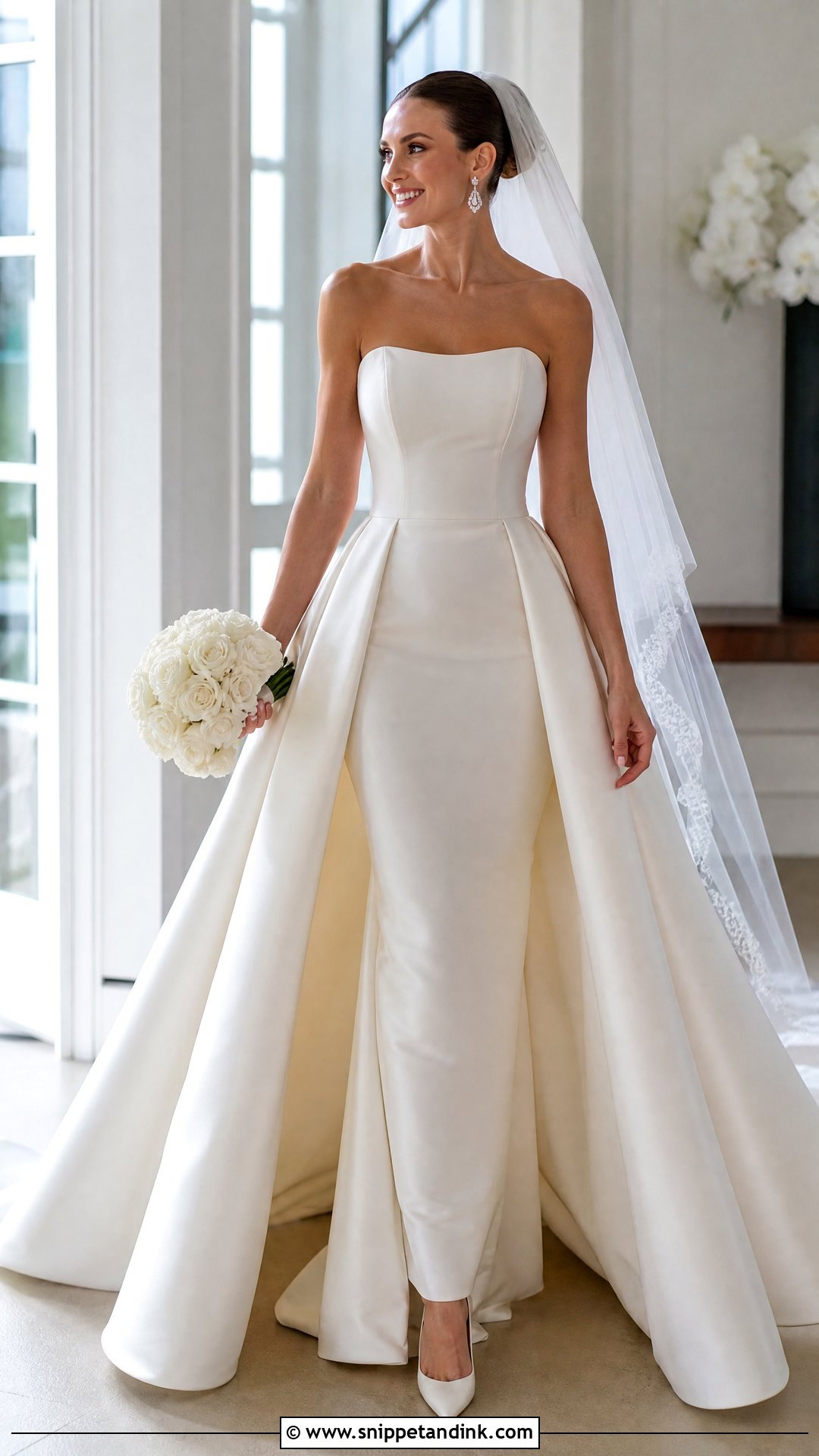
A detachable overskirt gown wedding dress gives you a full ceremony skirt and a sleek reception dress in one. Overskirts sit well over mermaid, sheath and column gowns, in satin for formality or tulle and organza for lightness. The waistband is where these succeed or fail: it should sit flush with the gown so the join is invisible in photos. I also have the bride practice the swap with whoever will help her on the day. Classic veil for the ceremony, statement earrings after.
21. Tea Length Gown Wedding Dress
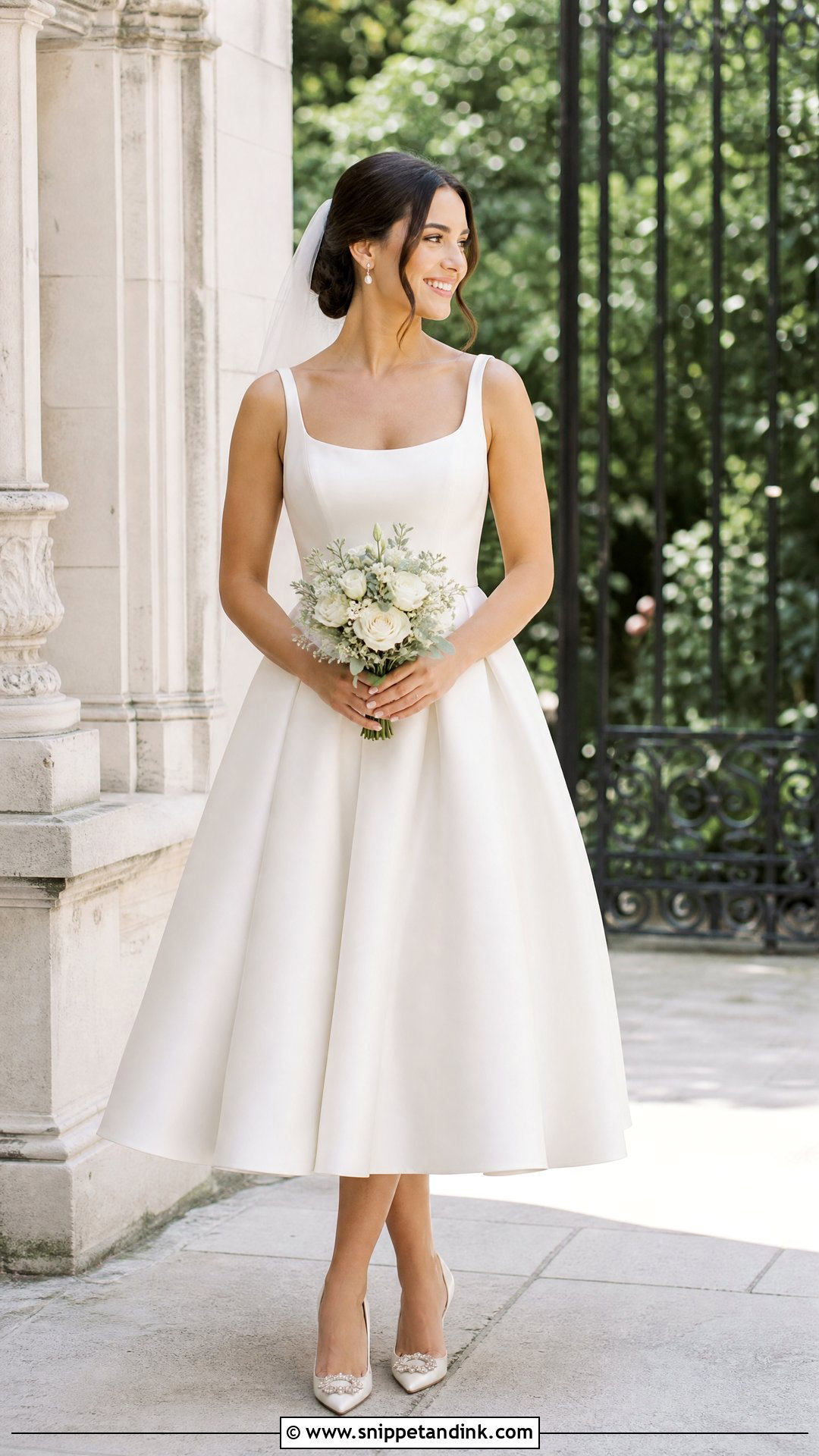
Tea length falls between knee and ankle and puts your shoes on show. It suits courthouse weddings, brunch receptions, garden ceremonies and relaxed city celebrations. Satin gives structure, tulle gives volume, lace gives romance. The hem height decides the whole proportion; I pin it with the bride in her actual wedding shoes, because two centimeters changes how long her legs look. Heels, slingbacks or embellished flats, a short veil and pearl earrings.
22. Slip Gown Wedding Dress
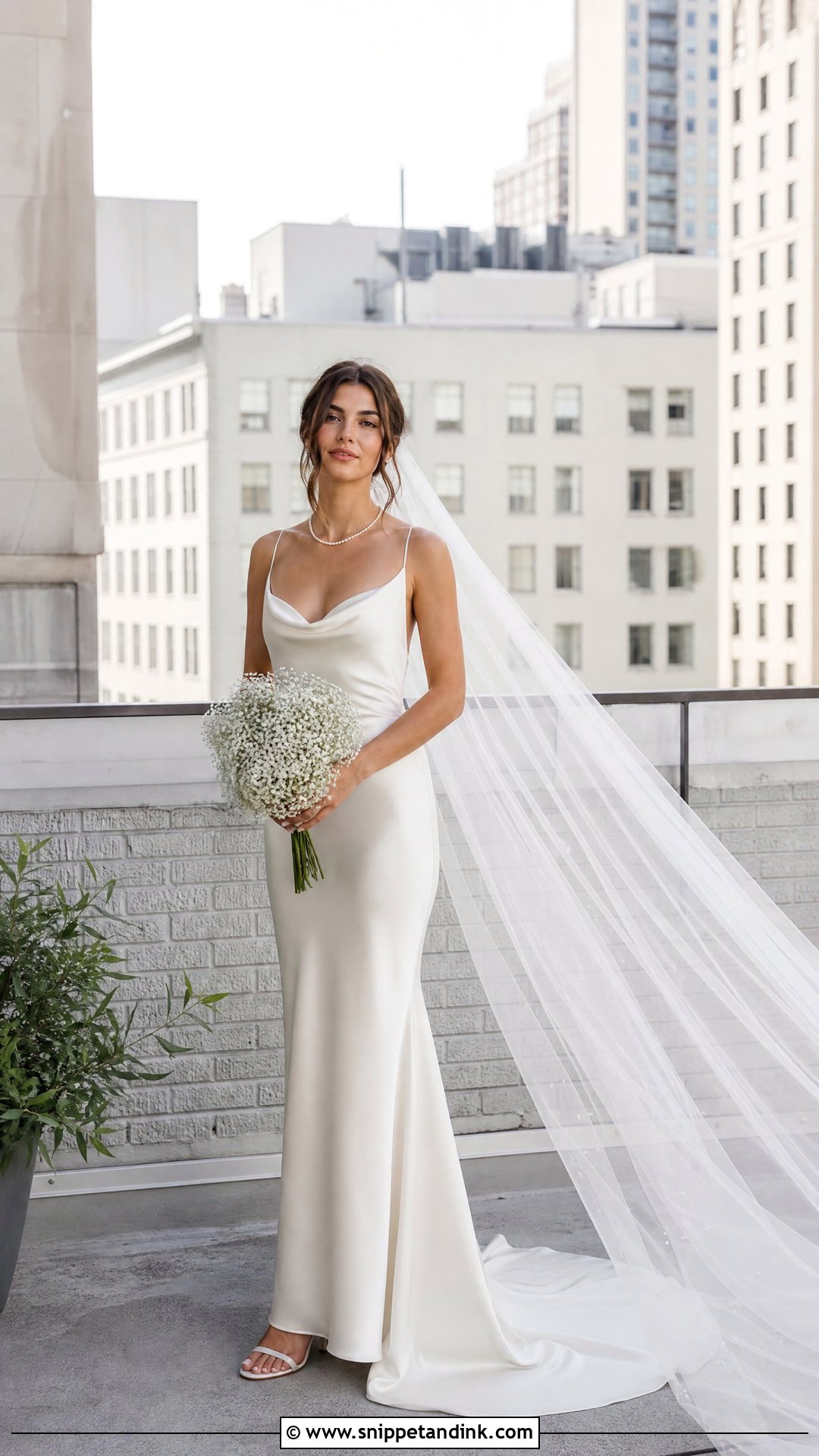
The slip is a bias-cut gown that skims the body without structure, usually in silk, satin or charmeuse. It suits beach weddings, rooftops and small gatherings. Bias cut is beautiful and unforgiving: it shows underwear lines, stretches slightly over time and needs a tailor who’s worked with it. Smooth, invisible undergarments matter as much as the dress. A long veil gives romance, a blazer makes it city, pearls soften it.
23. Halter Gown Wedding Dress
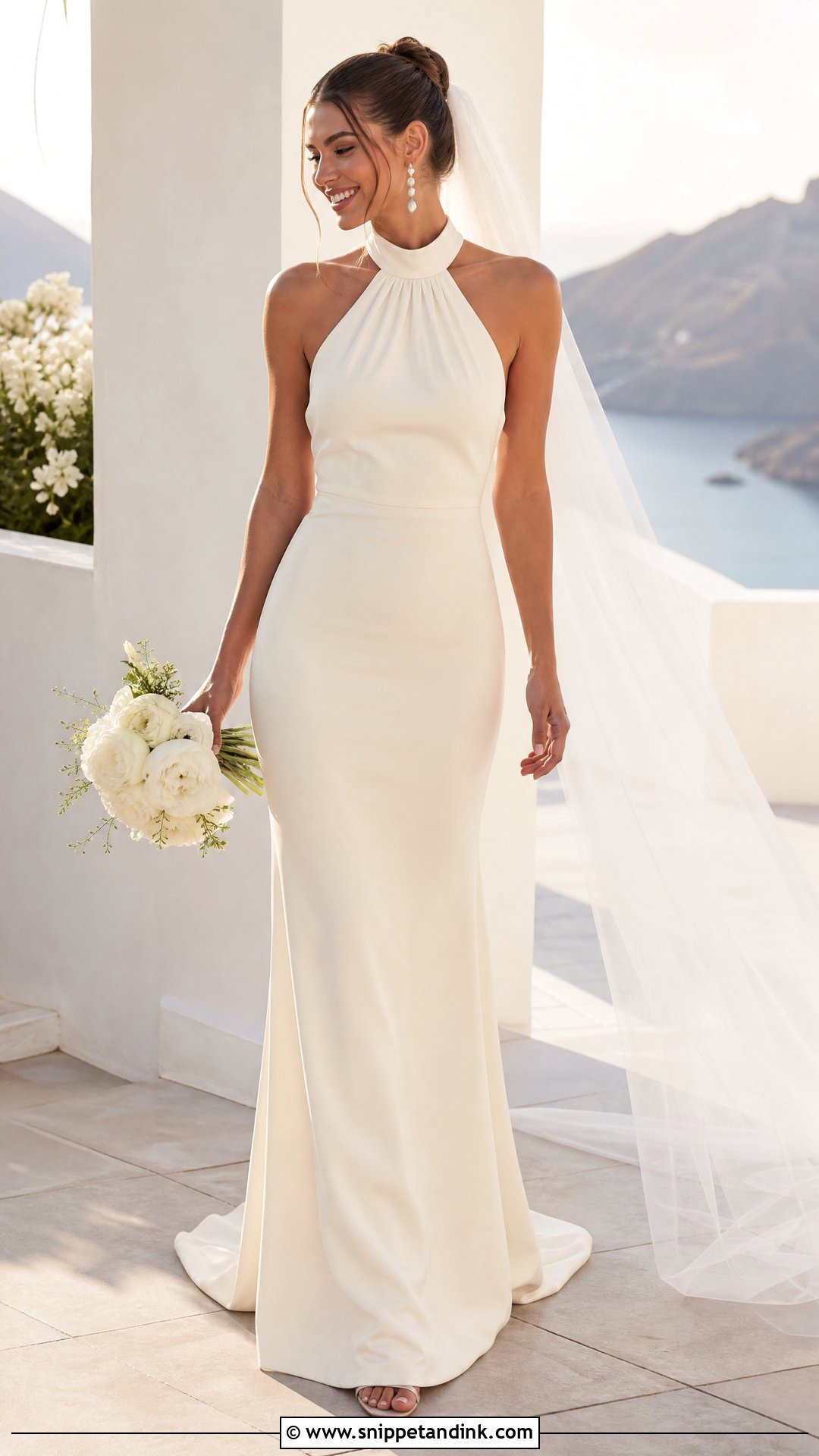
A halter gown wedding dress shows off the shoulders and gives support without conventional straps. It works with fitted crepe, satin columns and flowing chiffon skirts. A high halter is modern; a plunging one more glamorous. Hair is best pulled back, since the neckline is the design. The neck strap carries weight, so in heavier fabrics I check it doesn’t leave the back of the neck aching by evening. Drop earrings, a simple bracelet and no necklace. Warm-weather and destination weddings suit it.
24. Basque Waist Gown Wedding Dress
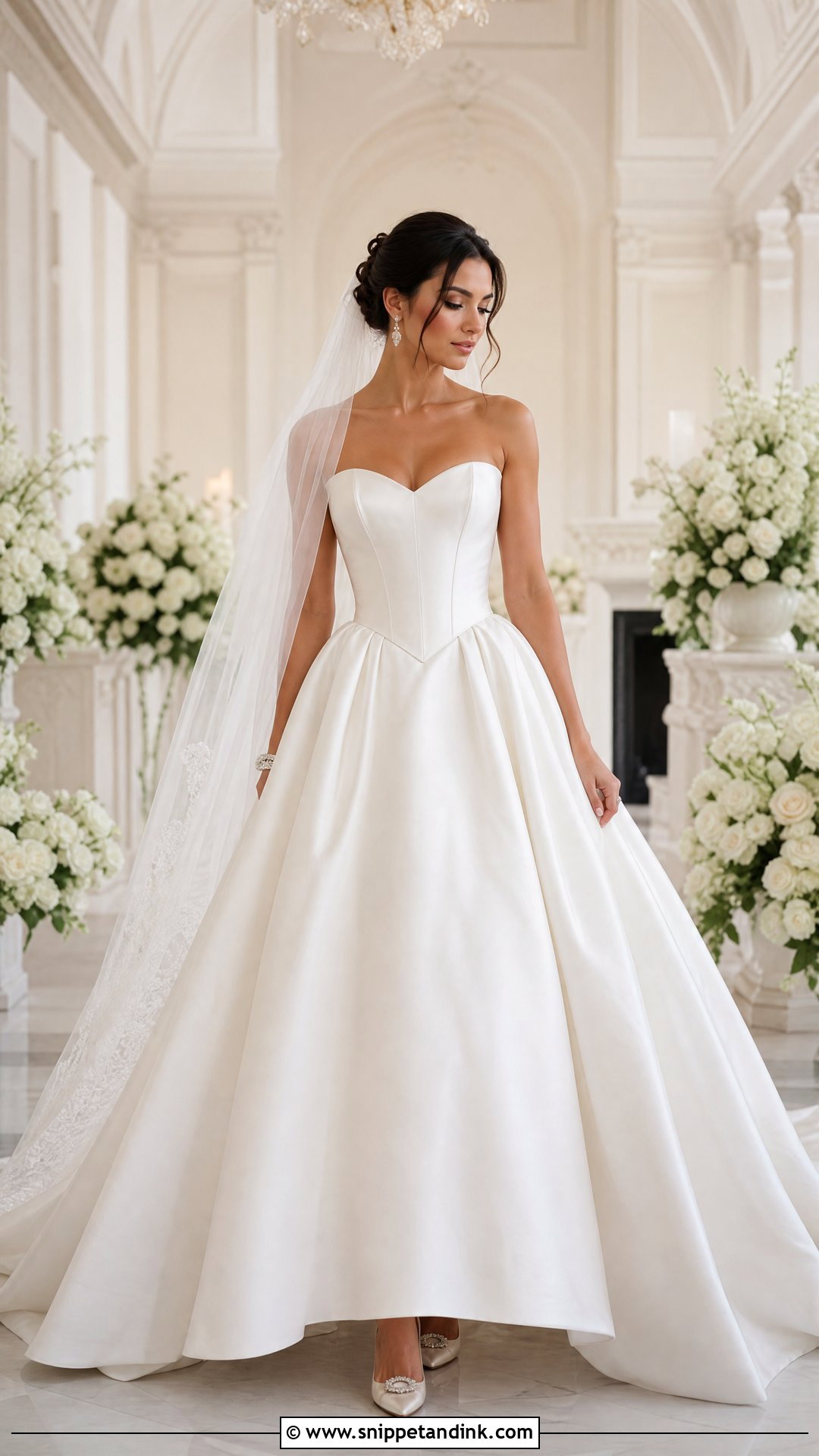
A basque waist gown wedding dress has a dropped, pointed waistline that lengthens the torso before the skirt begins. It appears most on structured ball gowns and corsets and has a storybook feel. On shorter torsos, I bring the point up slightly so the skirt doesn’t look like it starts at the hips. Satin, tulle and lace all suit. A clean bodice with little embellishment keeps it modern; lace or pearls soften it. Long veil, elegant heels, simple jewelry.
25. Short Sleeve Gown Wedding Dress
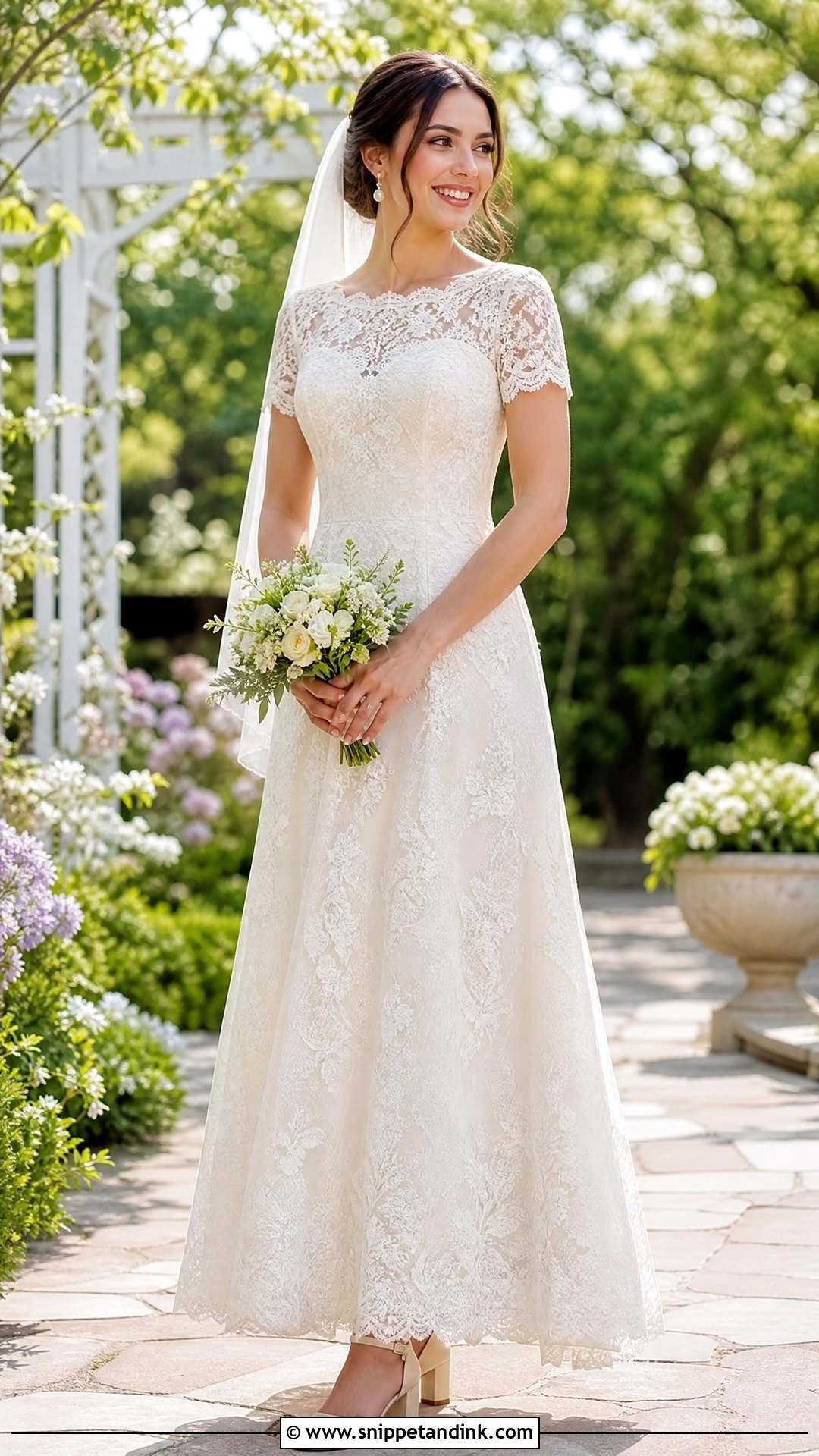
Short sleeves sit between sleeveless and long sleeve: a little coverage, still light. Cap sleeves are delicate, flutter sleeves soft, structured short sleeves modern. They suit spring, summer and daytime weddings in lace, chiffon, tulle or satin. A fitted bodice with an A-line skirt keeps it classic; a square neckline with clean short sleeves updates it. Watch the sleeve hem on the arm, as one that cuts across the widest point can make the arm look wider in photos. Comfortable heels, pearl earrings, simple veil.
Your Train After the Ceremony
Any gown with a train needs a bustle for the reception, and it’s one of the alterations brides forget to discuss. The seamstress adds hidden hooks, buttons or ribbon ties that lift the train off the floor so you can dance without someone stepping on it.
The common types
- Over bustle: the train is hooked up onto the outside of the skirt. Quick and sturdy, suited to satin and heavier fabrics.
- Under bustle: the train is tucked under and tied inside the skirt with ribbons. It creates soft folds and works well on tulle and organza.
- Ballroom bustle: many points around the waistline lift the train evenly, so the skirt looks almost floor-length with no train at all.
At the final fitting, I bring in the person who’ll do the bustling on the day, usually the maid of honor, and have her practice it twice. Color-coded ribbon ties help enormously when it’s dark and noisy at the reception. Lace and beaded trains are heavier, so they need more attachment points or the bustle will pull loose by the first dance.
Try the Shape You Swore You’d Never Wear
The right bridal gown is the one you forget about once you’re moving, laughing and dancing in it. Some brides love the drama of a ball gown; others want a slip, a crepe column or plain satin. Sleeves, necklines, appliqué, capes and overskirts can change a dress’s whole mood. Think about your venue, season, photos and comfort over the full day, then try on at least one silhouette you’re sure won’t suit you. In my fitting room, that’s the dress that surprises brides more often than any other.
You'll Like These Ideas:







Leave a Reply