
A Mehandi is the longest sitting you’ll do all wedding week. The bride is usually still for hours while the henna goes on, then she’s up for photos, music and dancing once it dries, so the outfit has to handle both. When I style a Mehandi bride, I settle the sleeves and the dupatta before I even look at color: short or three-quarter sleeves keep the forearms free for the artist, and a dupatta that’s pinned rather than draped loose won’t slide onto wet paste. Lightweight lehengas, shararas, sarees and pre-draped sets all work once those two things are sorted. Yellow and green are still the traditional pull, but floral prints, mirror work, color blocking and pastels are all fair game now. Below are twenty complete looks, from small home gatherings to big garden events.

Planning Your Outfit Around the Henna Chair
Bridal henna is slow. A full design on hands and feet can take several hours, and the paste then needs to stay on as long as you can manage, ideally six hours or overnight, for the stain to develop properly. So the outfit you wear while the artist works is the one you’ll be photographed in, eating in and probably dancing in. Before you commit to any look below, I’d run through a few checks at your final fitting.
- Sit on a low cushion or sofa with your forearms resting on your knees for ten minutes. If the waistband digs in or the blouse pulls at the armholes now, it will feel far worse at hour three.
- Hold your arms straight out in front of you. The sleeve should end at least a hand’s width above where the artist plans to stop.
- Find out whether your feet are being done. Floor-length skirts and dhoti hems then have to be lifted and clipped out of the way, so you want a hem that gathers easily.
- Turn each embellished piece inside out and run a hand over it. Rough sequin backing and metal gota edges scratch skin that is already sensitive from paste and sealant.
Should you change once the paste is off?
Some brides wear a simple cotton set for application and switch into the show outfit once the paste has dried and started to flake. It protects the expensive piece, but you’ll need help dressing without smudging anything, and nothing that pulls over the head will work. Front openings, side zips and drawstring waists are what make that change possible.
1. Yellow Gota Patti Mehandi Bridal Lehenga
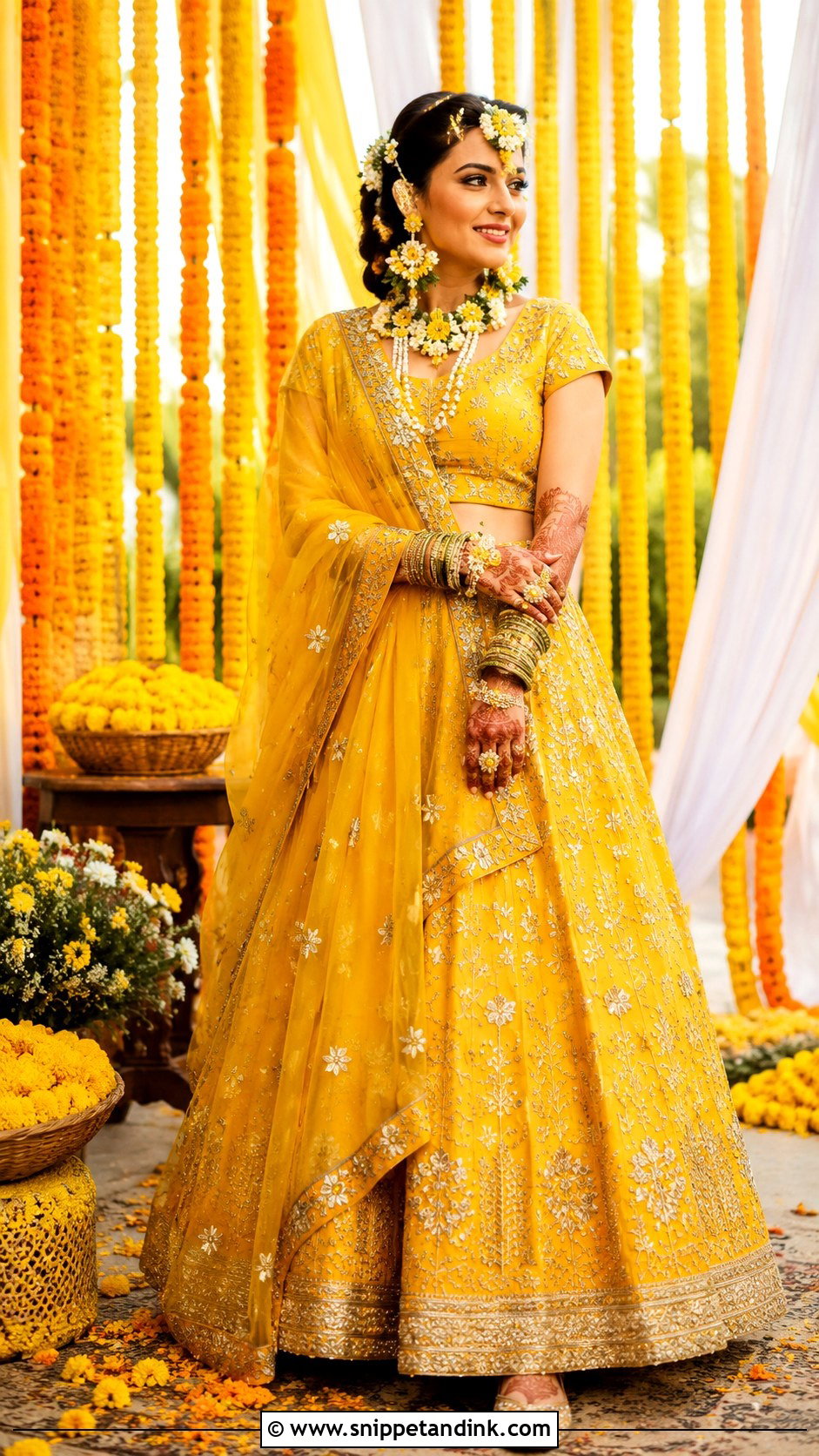
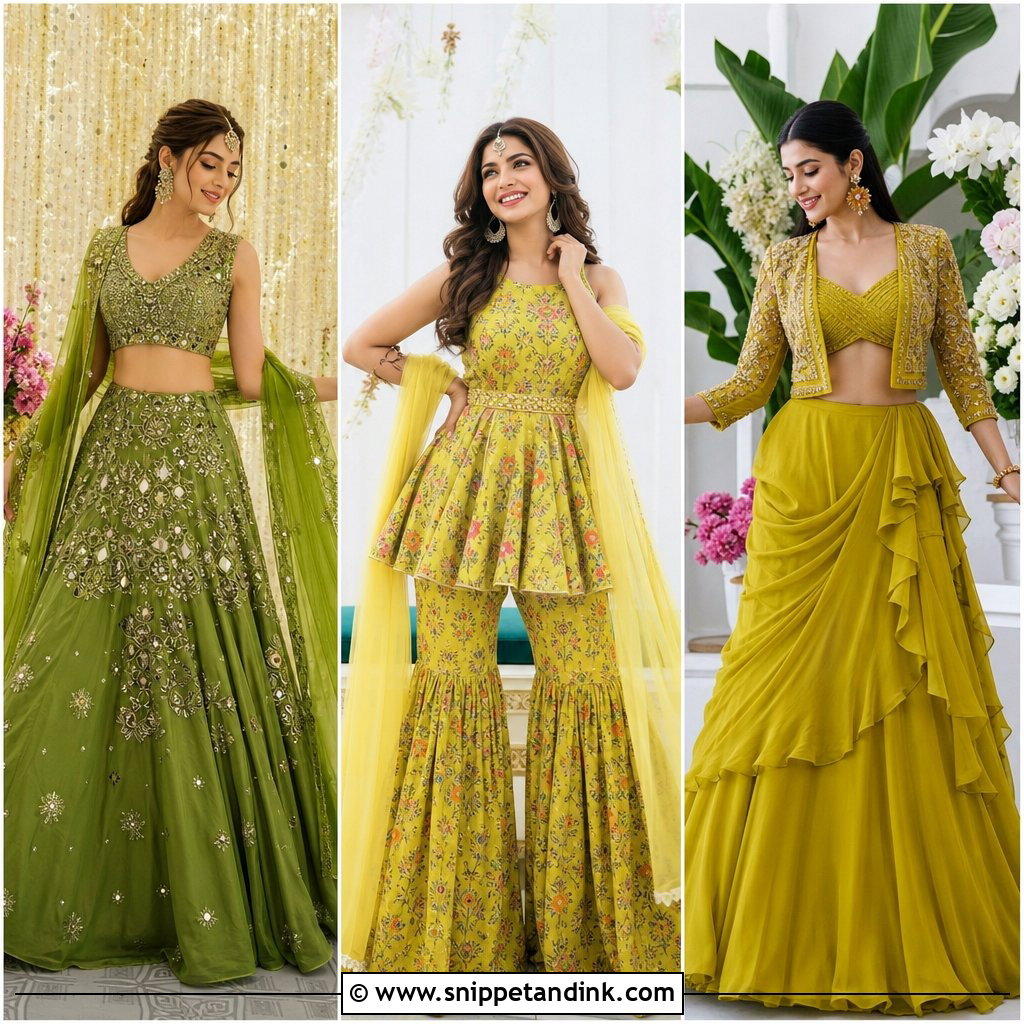
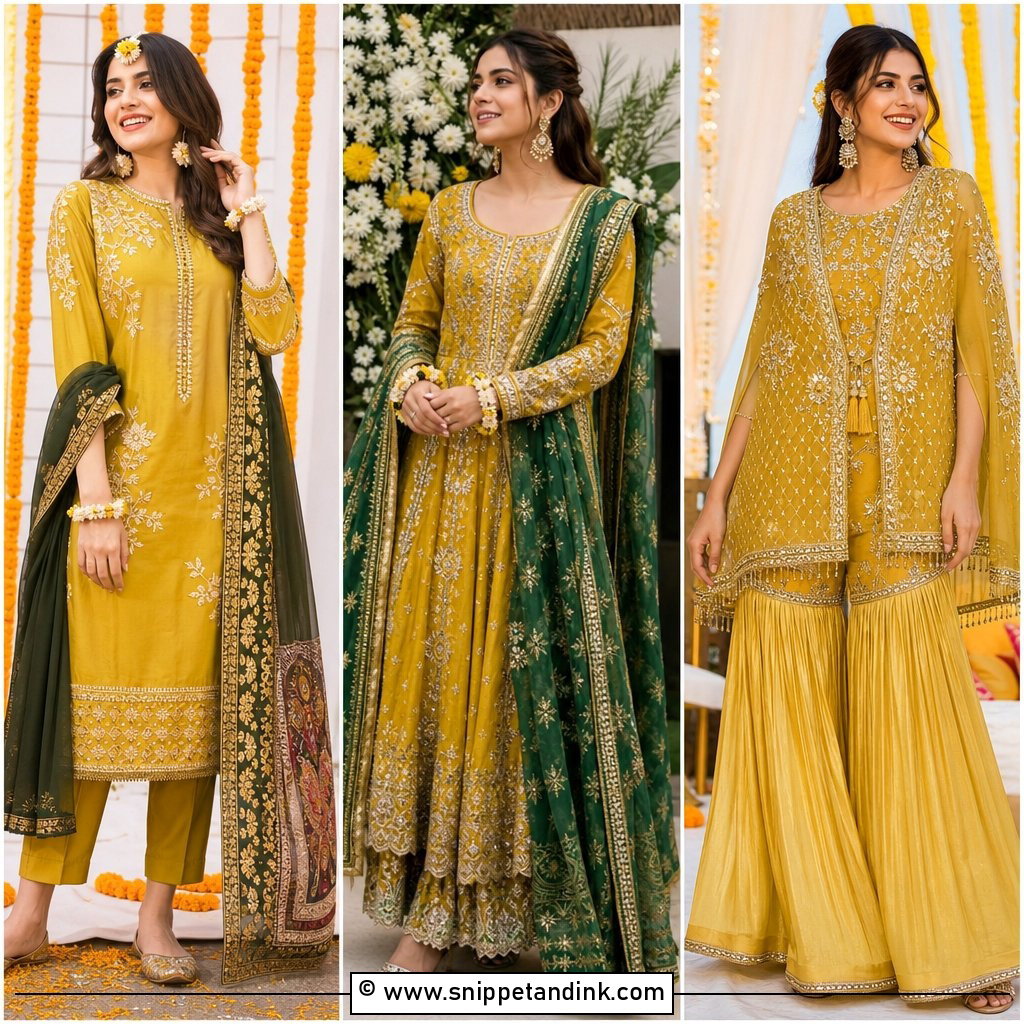
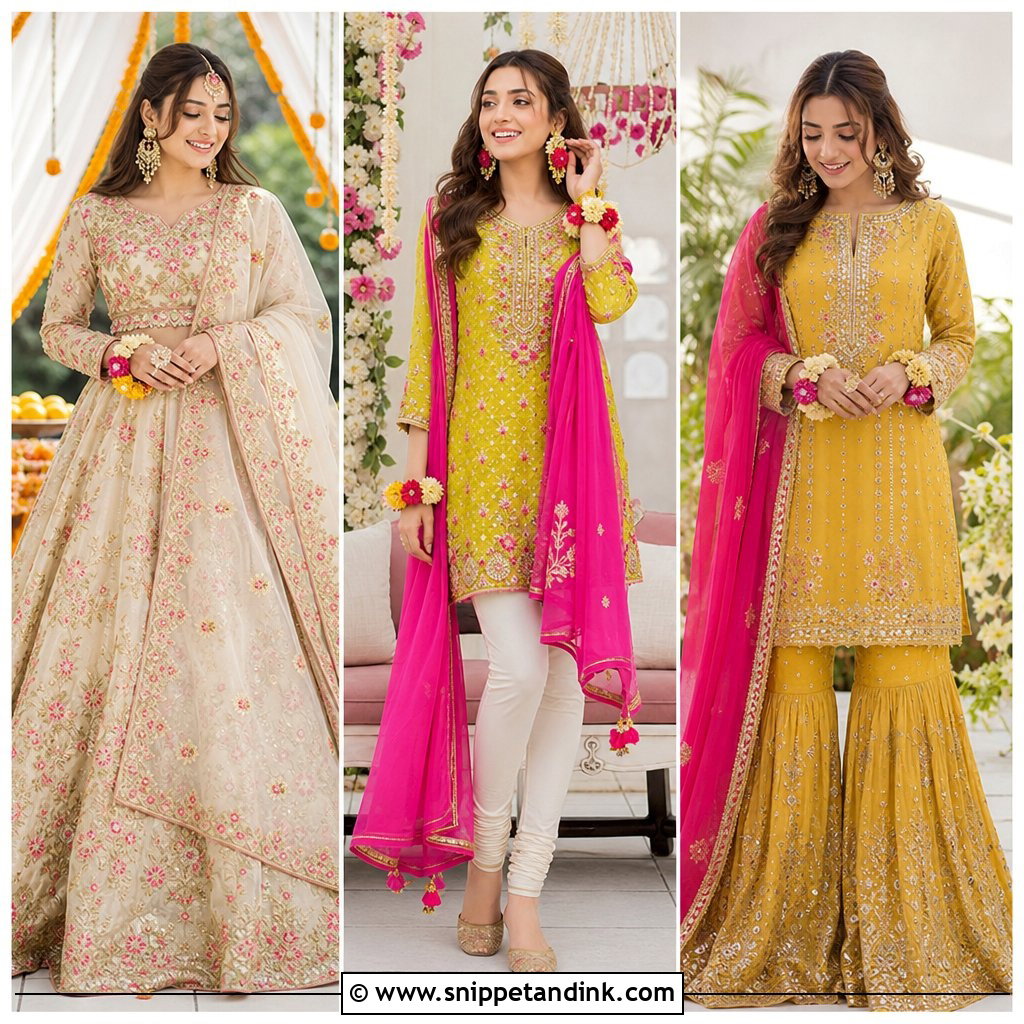
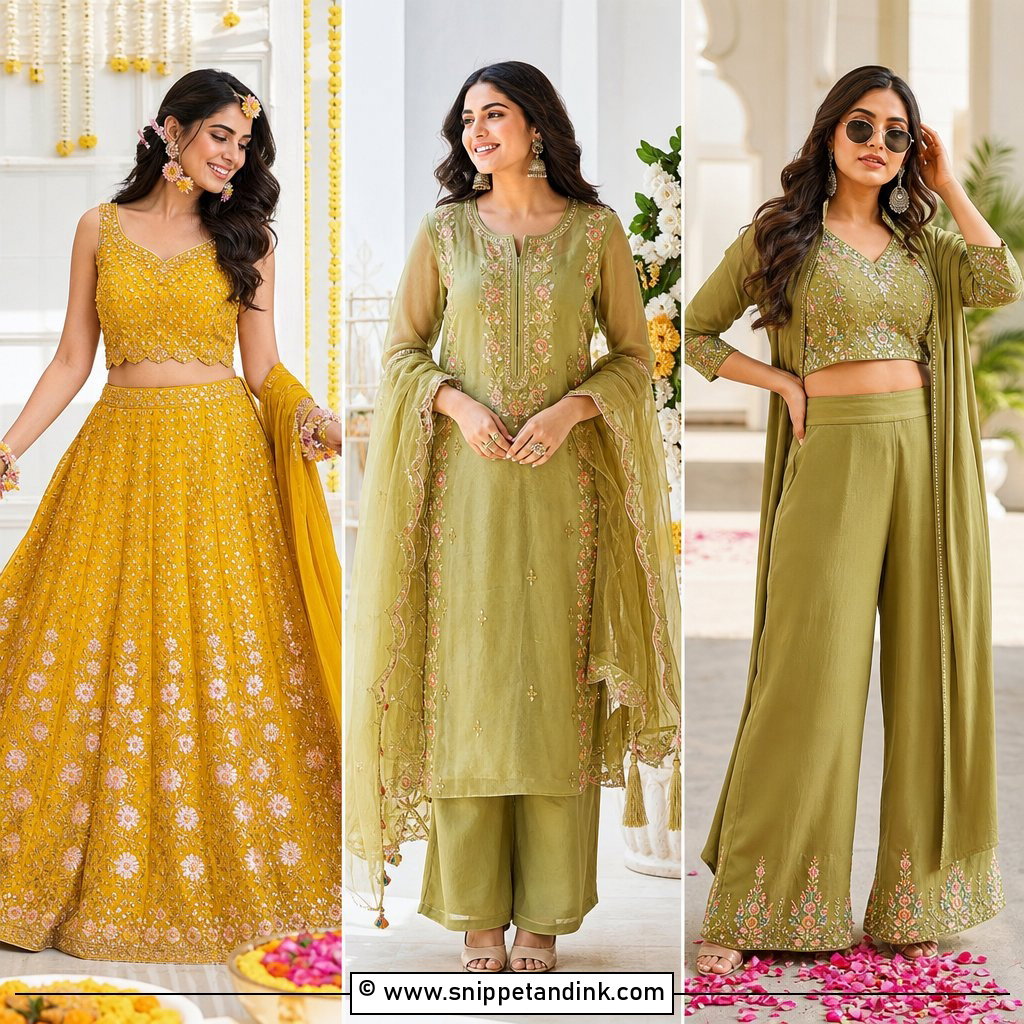
Gota patti is the reason this one works. It’s a flat metallic ribbon trim, so it adds shine without the weight of dense zardozi, and on georgette or a silk blend the skirt stays light enough to sit in all afternoon. Keep the blouse short-sleeved so your arms are clear for henna application, and pin a sheer dupatta over one shoulder with two or three hidden safety pins at the back of the blouse; a single pin always works loose. Floral earrings, a matching maang tikka, stacked bangles and embroidered juttis finish it. I’d braid the hair and tuck in tiny flowers so nothing swings forward onto wet hands. Against marigold decor this yellow glows in daylight, though under warm evening bulbs it can tip toward orange, so I keep it for daytime functions.
2. Green Mirror Work Mehandi Bridal Lehenga
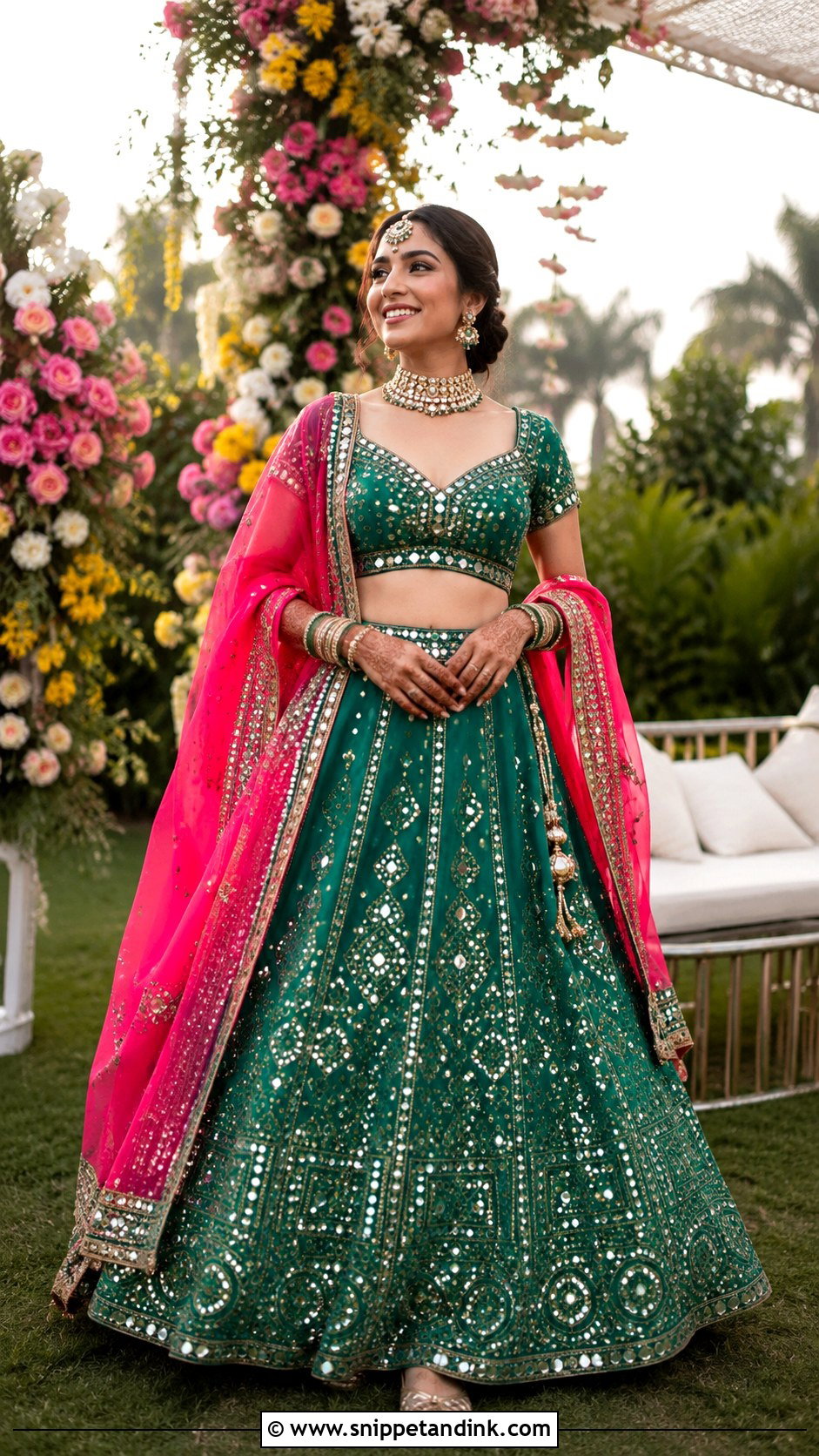
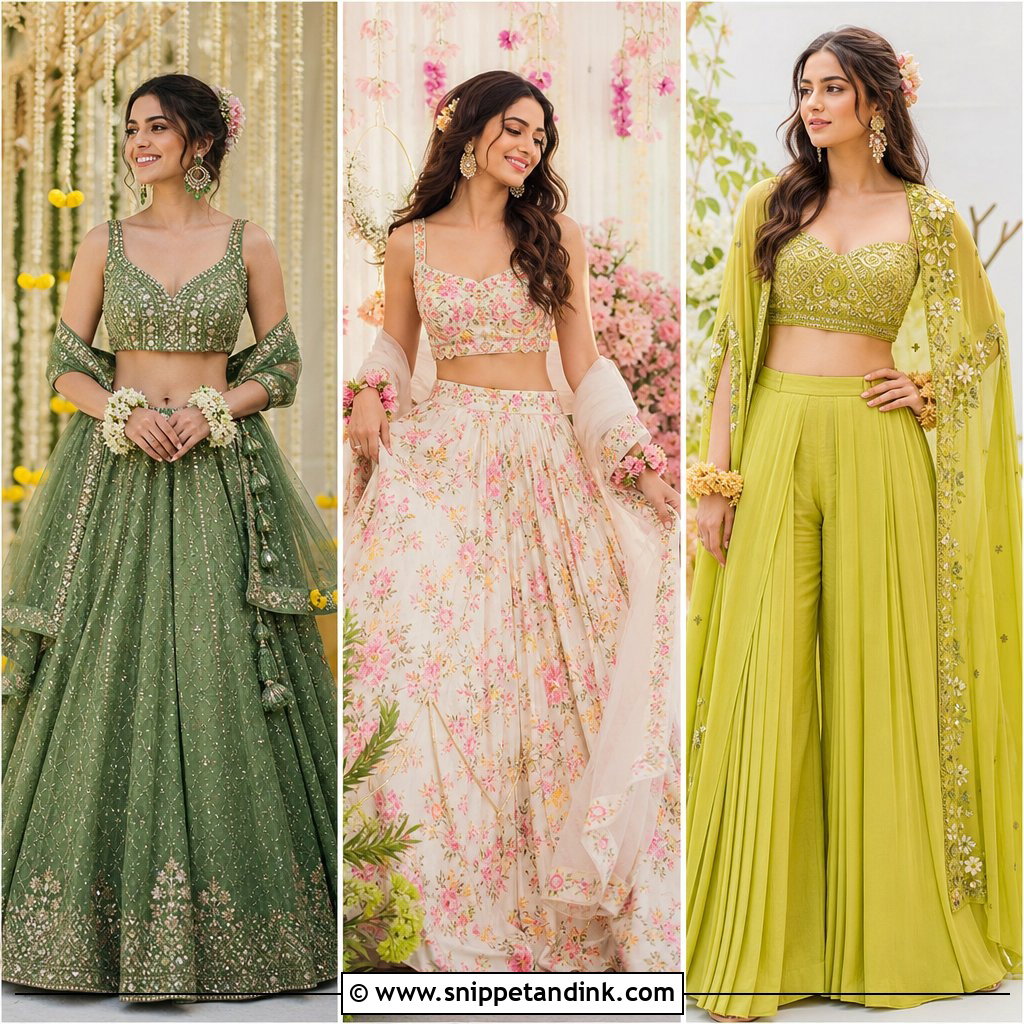
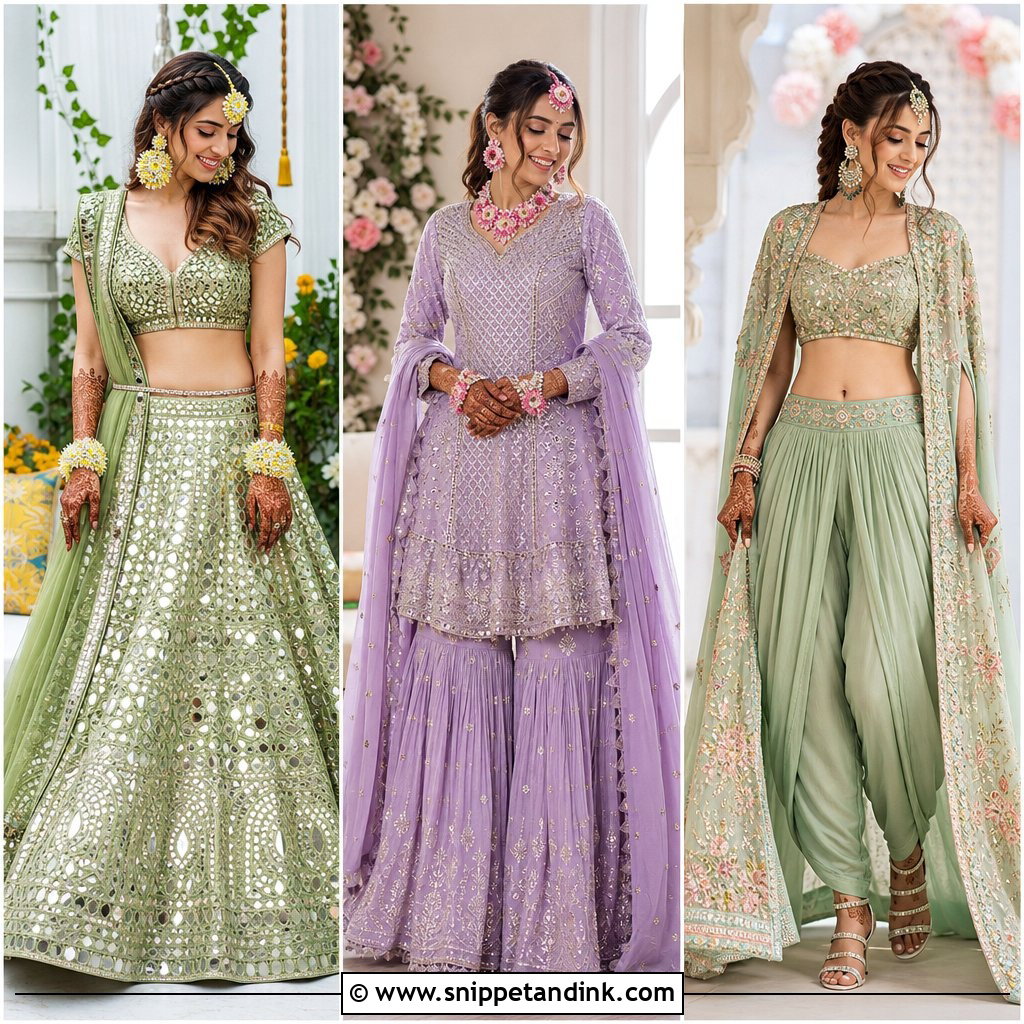
Green lets the Mehandi feel bridal without borrowing the red you’ll probably wear for the ceremony. I’d pick emerald or leaf green with scattered mirror work rather than solid mirror panels; small mirrors catch the light in photos, while big clusters get heavy and press into the inside of your arms when you sit. A cropped blouse with short sleeves or comfortable straps keeps things easy. Add a pink or orange dupatta so the outfit doesn’t go flat in pictures, then gold-toned jhumkas, a kundan choker, bangles and metallic juttis. Ask your tailor for a moderate flare: enough to swing when you walk, not so much that it bunches across your lap during the henna. A sleek ponytail or loose braid keeps the choker on show. It suits an outdoor lawn or a bright courtyard.
3. Multicolor Floral Mehandi Bridal Lehenga
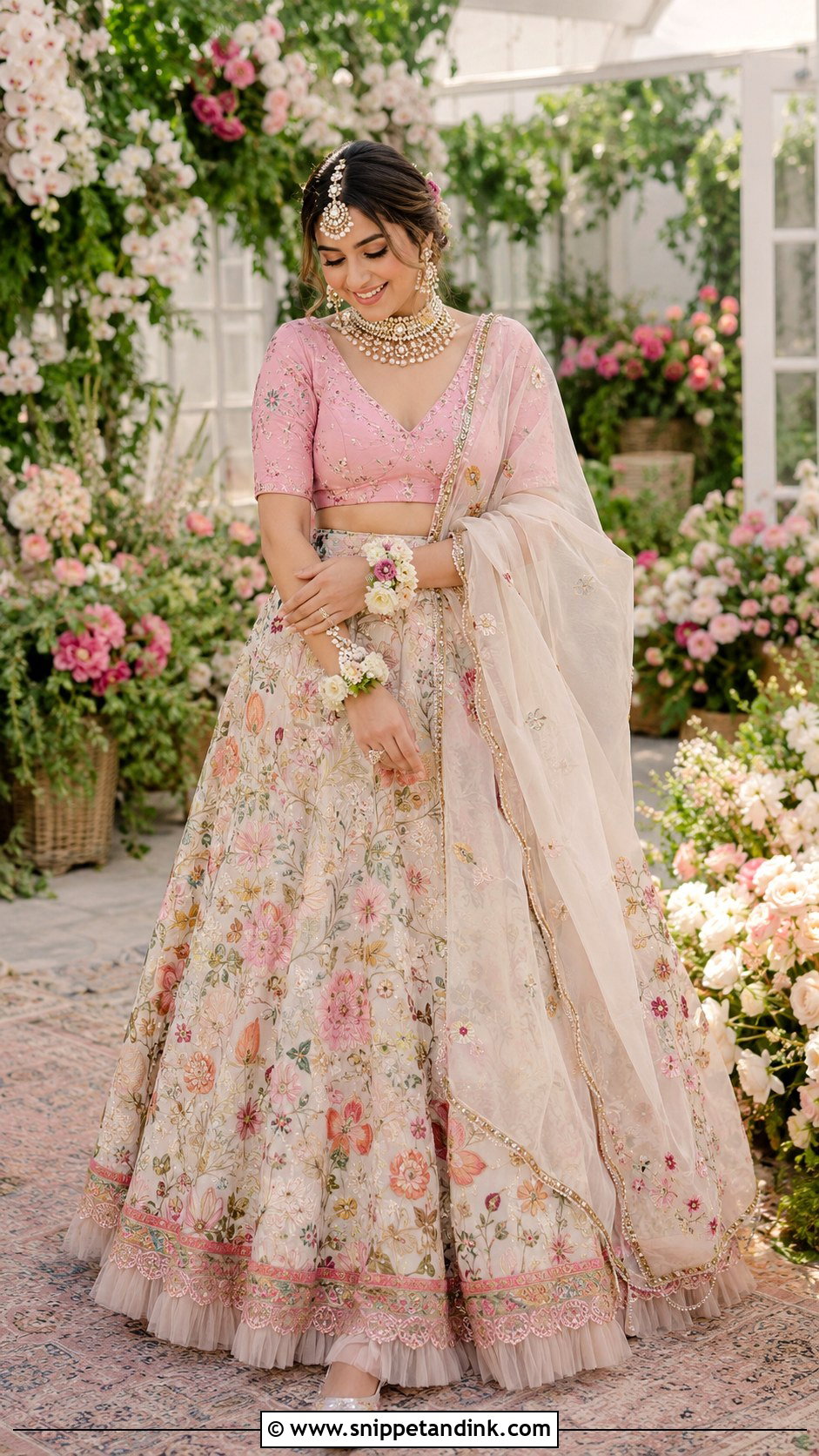
Print does most of the work here, which is why I suggest it to brides who find heavy embroidery tiring to wear. An ivory skirt scattered with pink, orange, yellow and green flowers turns a multicolor floral lehenga into something fresh for daytime, and printed fabric weighs far less than an embroidered skirt of the same size. Balance the busy skirt with a solid pink or green blouse. One thing I always check is the print scale. Tiny florals blur into texture from across a lawn, while larger blooms still read clearly in group photos. A sheer organza dupatta with a narrow border, pearl and kundan pieces, floral bangles and pastel juttis keep it light. Soft curls in a half-up style suit it, with extra pins at the crown, since a warm garden afternoon is exactly where curls drop.
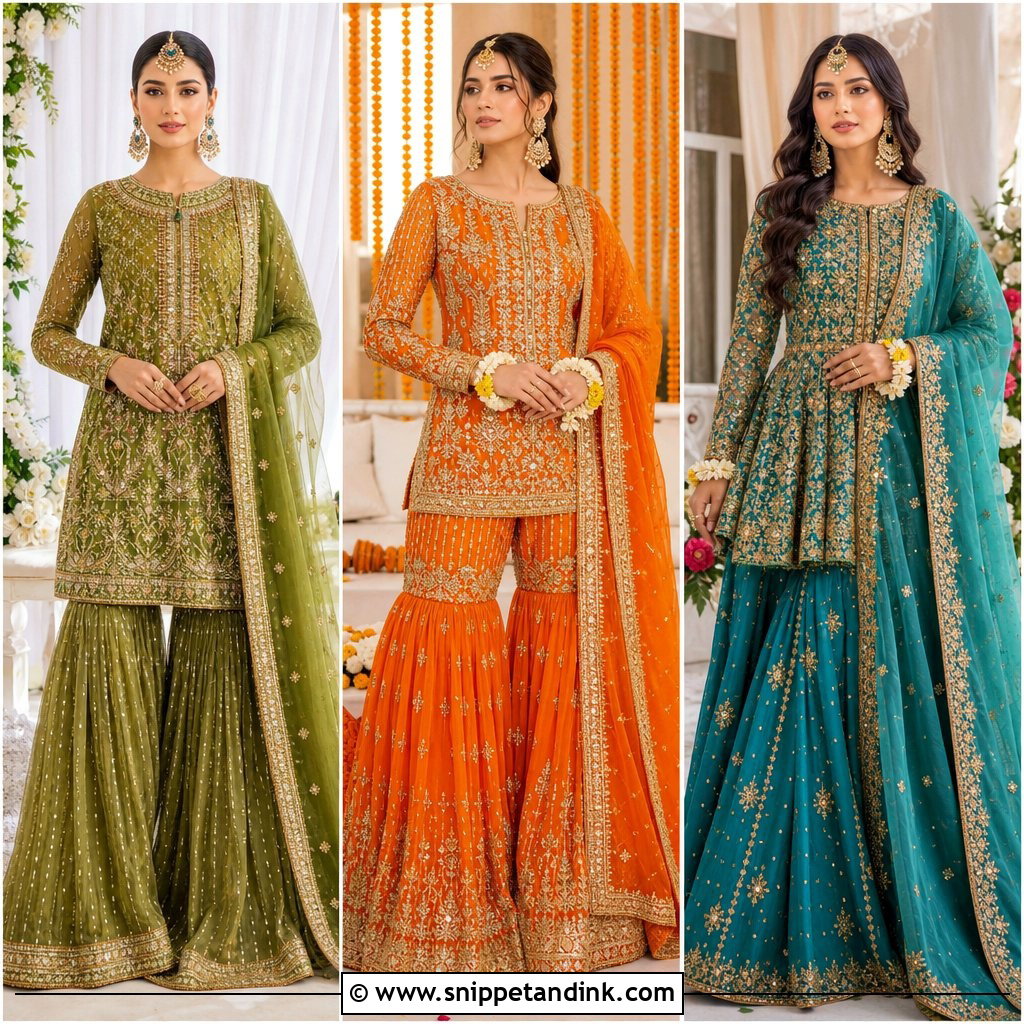
4. Pink Sharara Mehandi Bridal Set
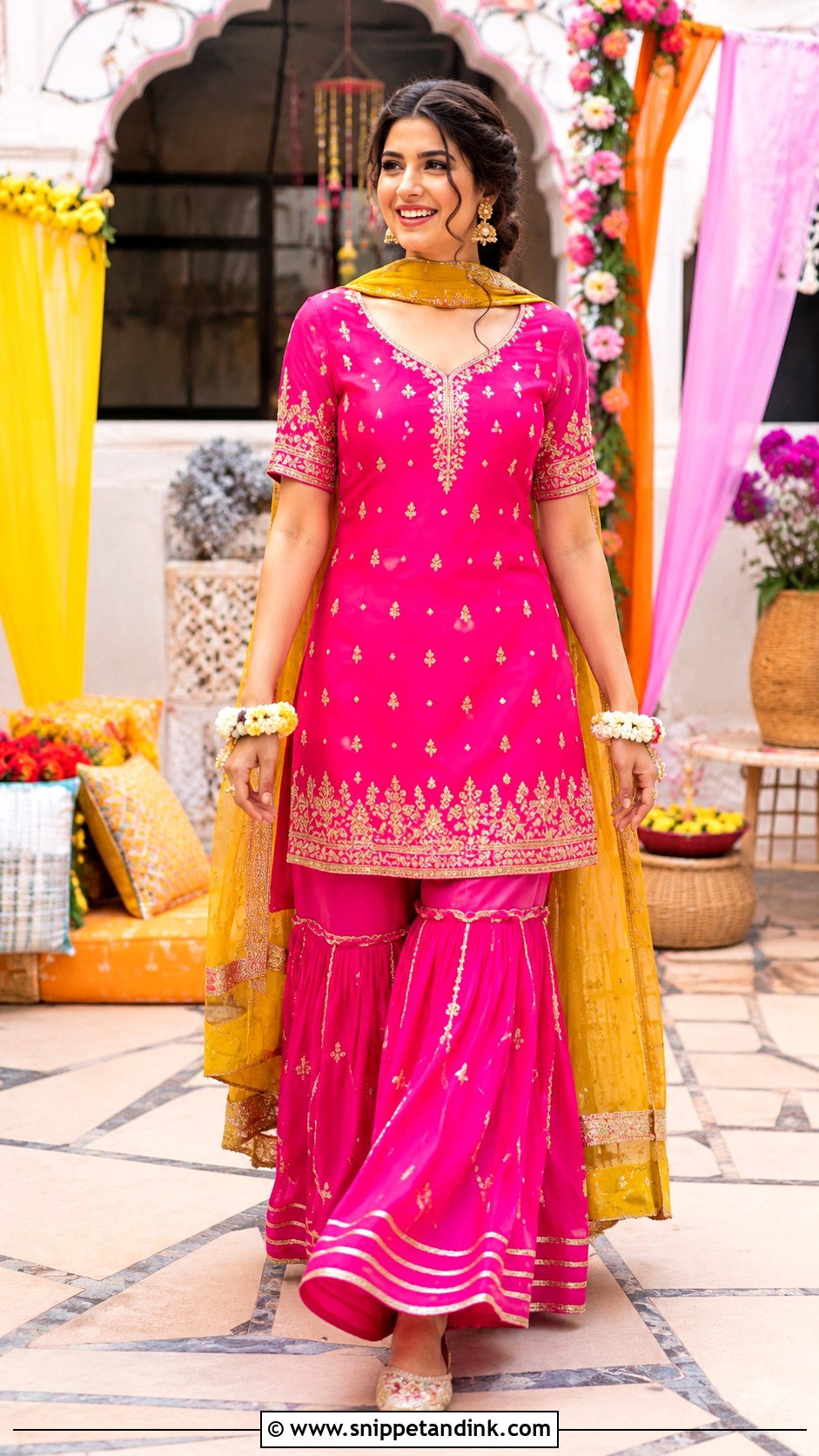
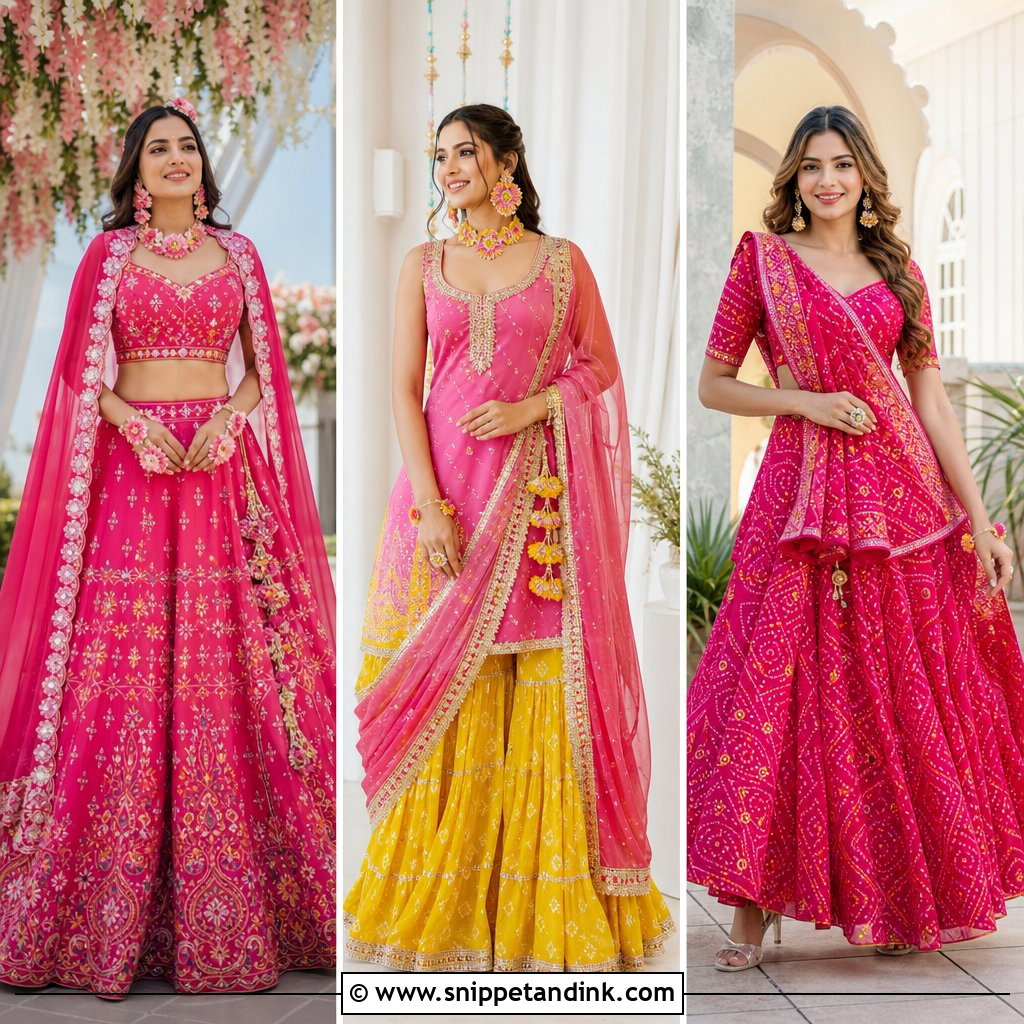
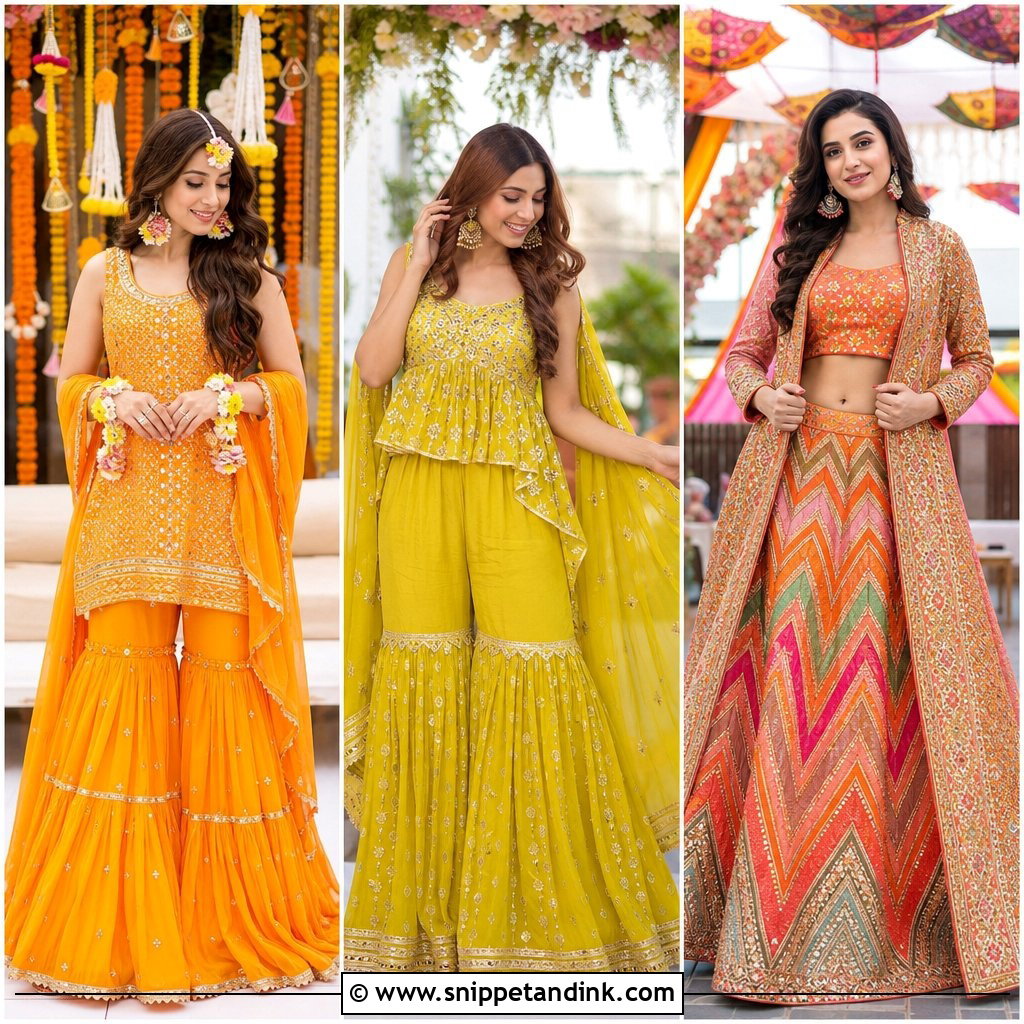
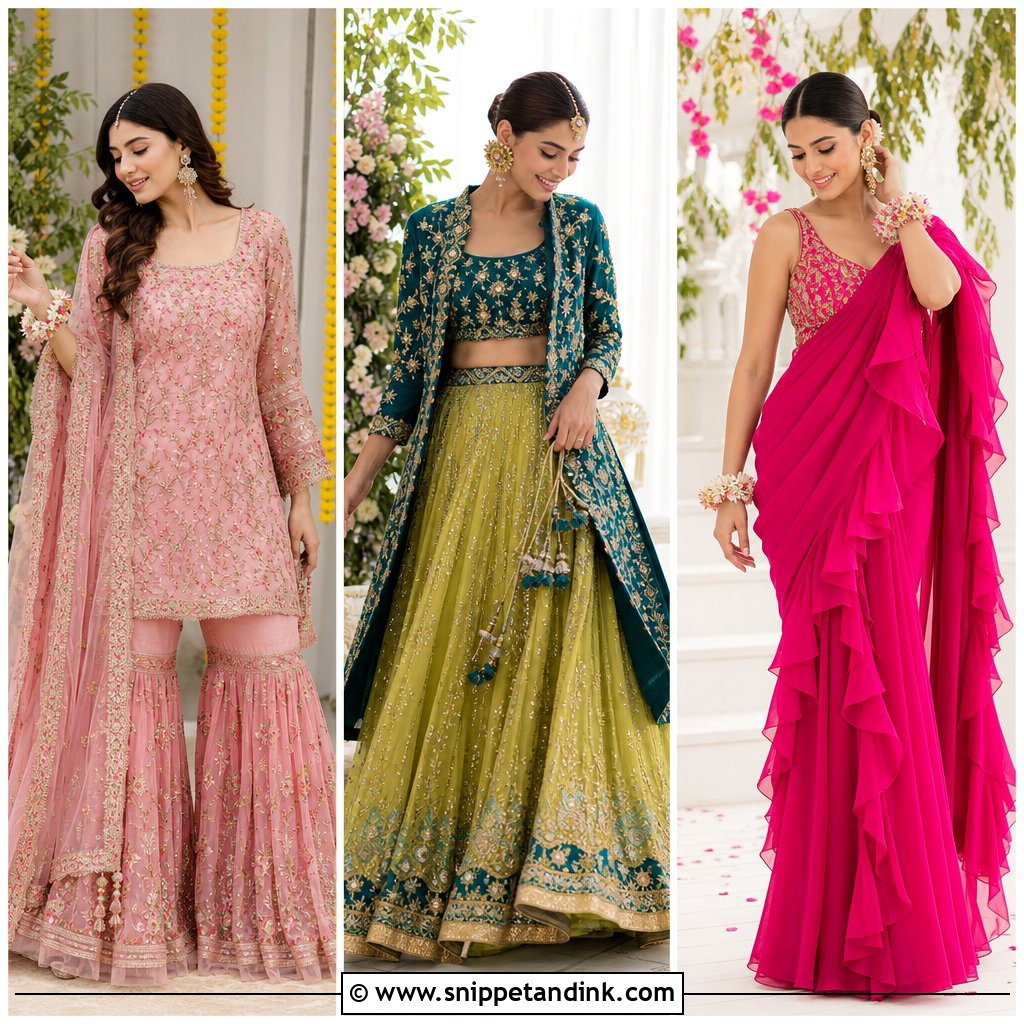
A pink sharara set is the outfit I reach for when a bride tells me she plans to dance the minute her henna is dry. The kurti stays short, finished with gota patti, mirror work or thread embroidery, and the wide sharara legs give you the swing of a skirt with none of the bulk on your lap. The dupatta is the fiddly part. Drape a light yellow or orange one behind the shoulders and pin it at both sides near the elbows, or it will slip the moment you lift your arms. Gold jhumkas, a statement maang tikka, floral bracelets and embellished juttis complete it, with a flower-trimmed low ponytail. Separates are simply easier to sit and walk in over a long evening.
5. Lime Green Gharara Mehandi Bridal Set
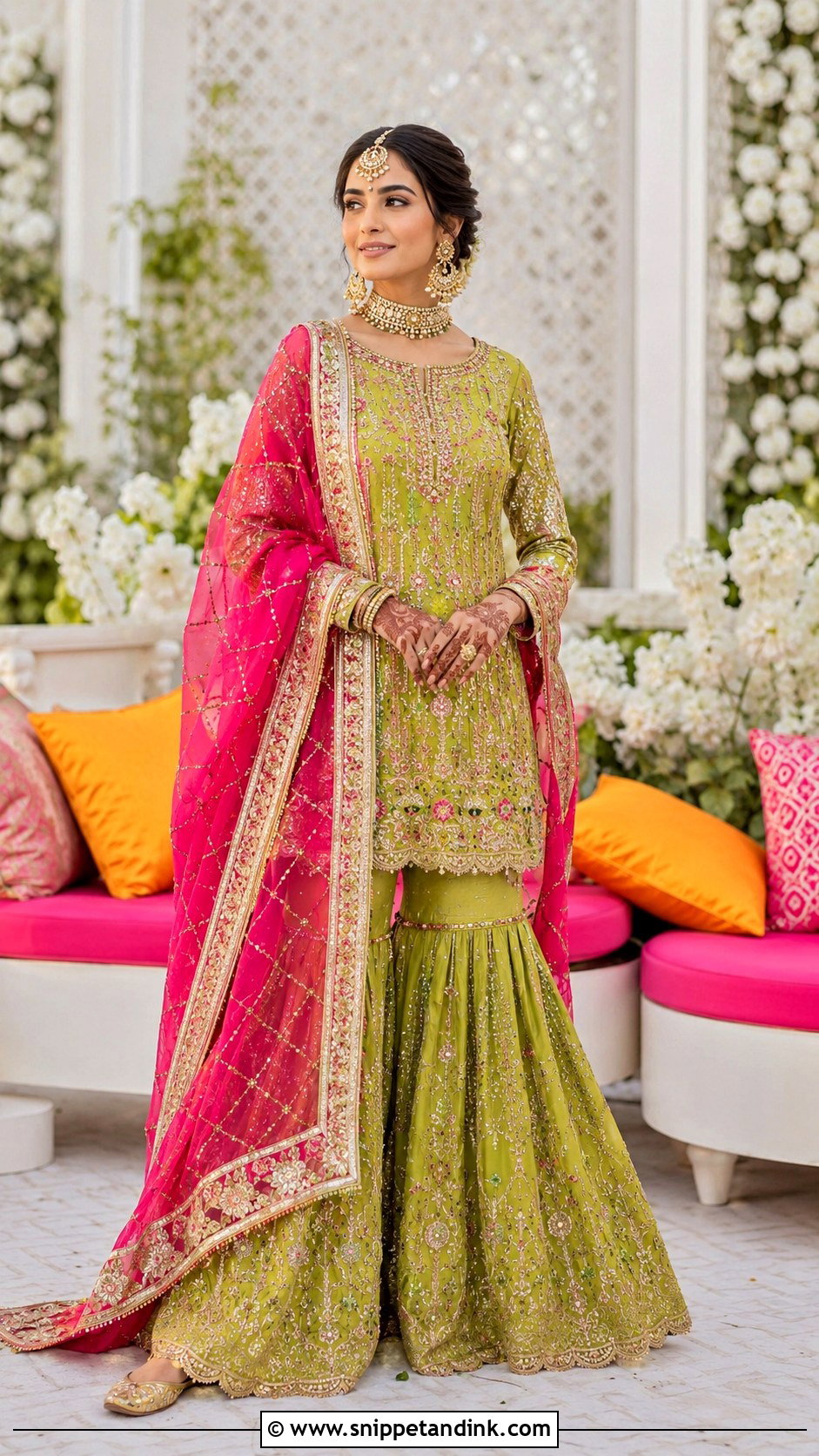
Lime green sits right next to fresh paste and deep brown stains without fighting either. A gharara is not the same as a sharara: it’s fitted down to the knee and then flares out in gathered panels, so try it on sitting cross-legged as well as standing, because the knee joint is where it pulls. Pick a light fabric so the panels move instead of standing stiff. A fuchsia dupatta with a slim gota border makes a cheerful contrast, and chandbalis, a delicate choker, a small maang tikka and gold juttis finish it. Keep the sleeves above the elbow. I’d do a center-parted braid with small white flowers. It rewards a bride who loves heritage shapes but still wants a playful color.
6. Orange Anarkali Mehandi Bridal Dress
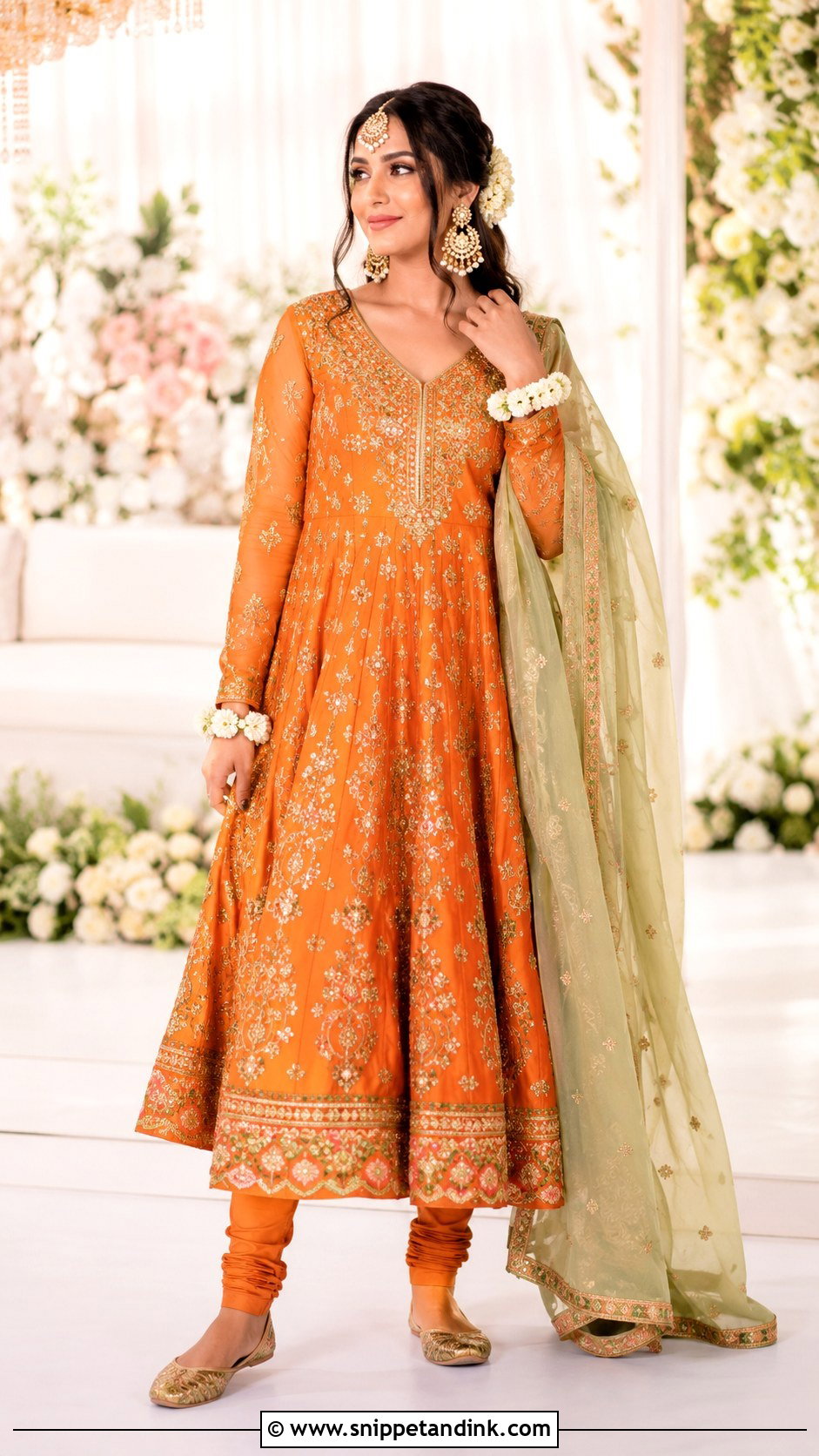
One flowing piece instead of separates appeals to brides who don’t want to manage a waistband while they sit, and an orange Anarkali with a fitted bodice and generous flare has that ease. Elbow-length sleeves leave room for most forearm designs, but if your artist is taking the henna up past the elbow, ask for short sleeves instead. Keep the gold threadwork to the neckline and hem so the dress stays light. Slim churidar pants, a light green dupatta over one shoulder, kundan earrings, a small maang tikka, floral bangles and cushioned gold juttis complete it. A neat low bun keeps loose strands away from wet paste. It suits an indoor or evening function where you’d like more coverage.
7. Yellow Peplum Sharara Mehandi Bridal Set
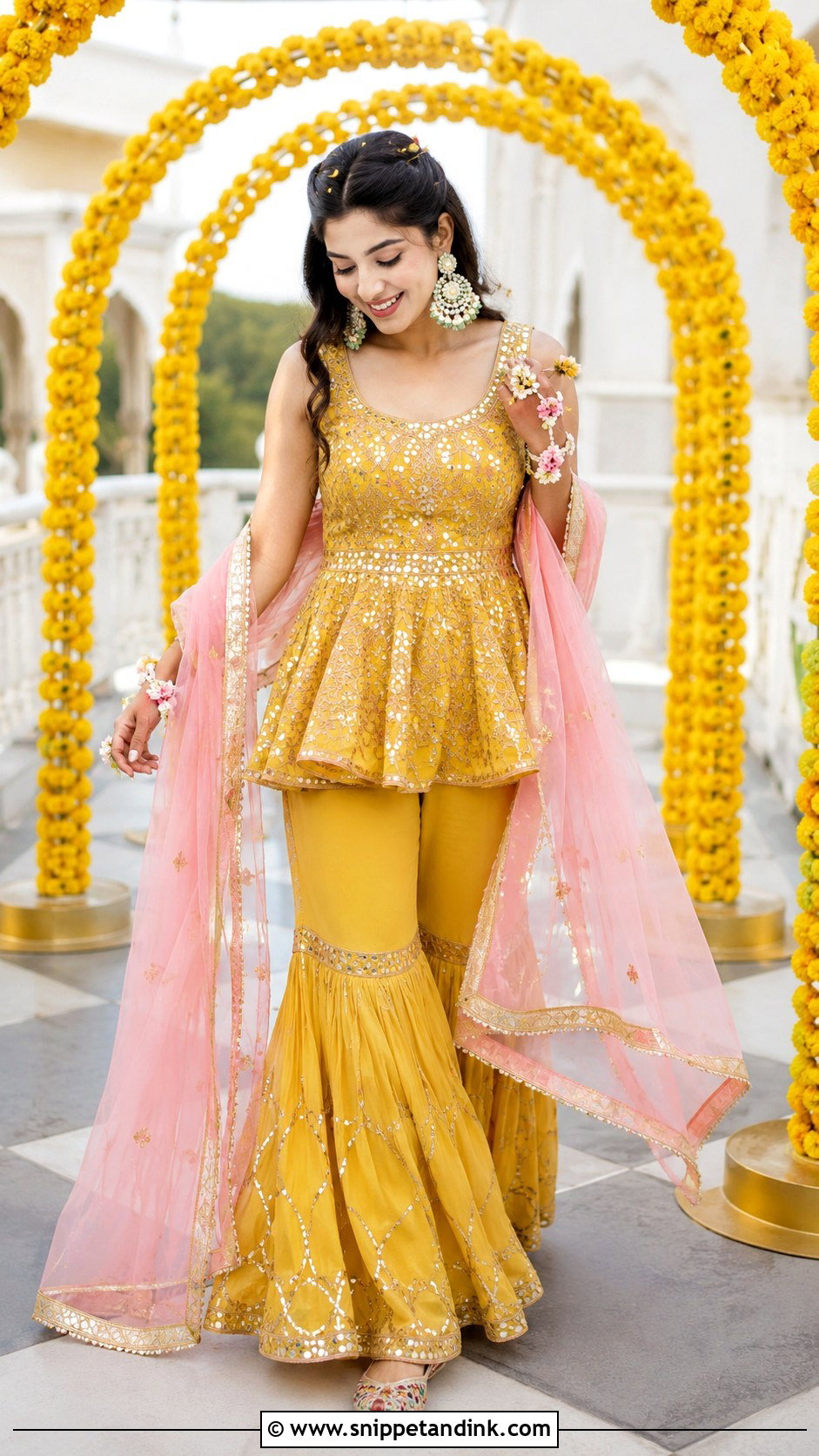
A peplum gives the traditional sharara a defined waist, and because it flares just below, it doesn’t ride up when you sit the way a tight crop top can. Look for mustard or marigold yellow with short sleeves and light mirror or sequin work. Sequins deserve a quick test: run your fingertips over the inside of the sleeve, because scratchy backing irritates arms that have just been hennaed. Pair it with a matching wide-leg sharara and an airy pink dupatta draped behind the arms. Oversized earrings, a slim choker, fresh-flower hand jewelry and embroidered flats finish the look, with a side braid or high ponytail. It’s a strong pick for a Mehandi that turns into a dance floor.
8. Green Cape Mehandi Bridal Lehenga
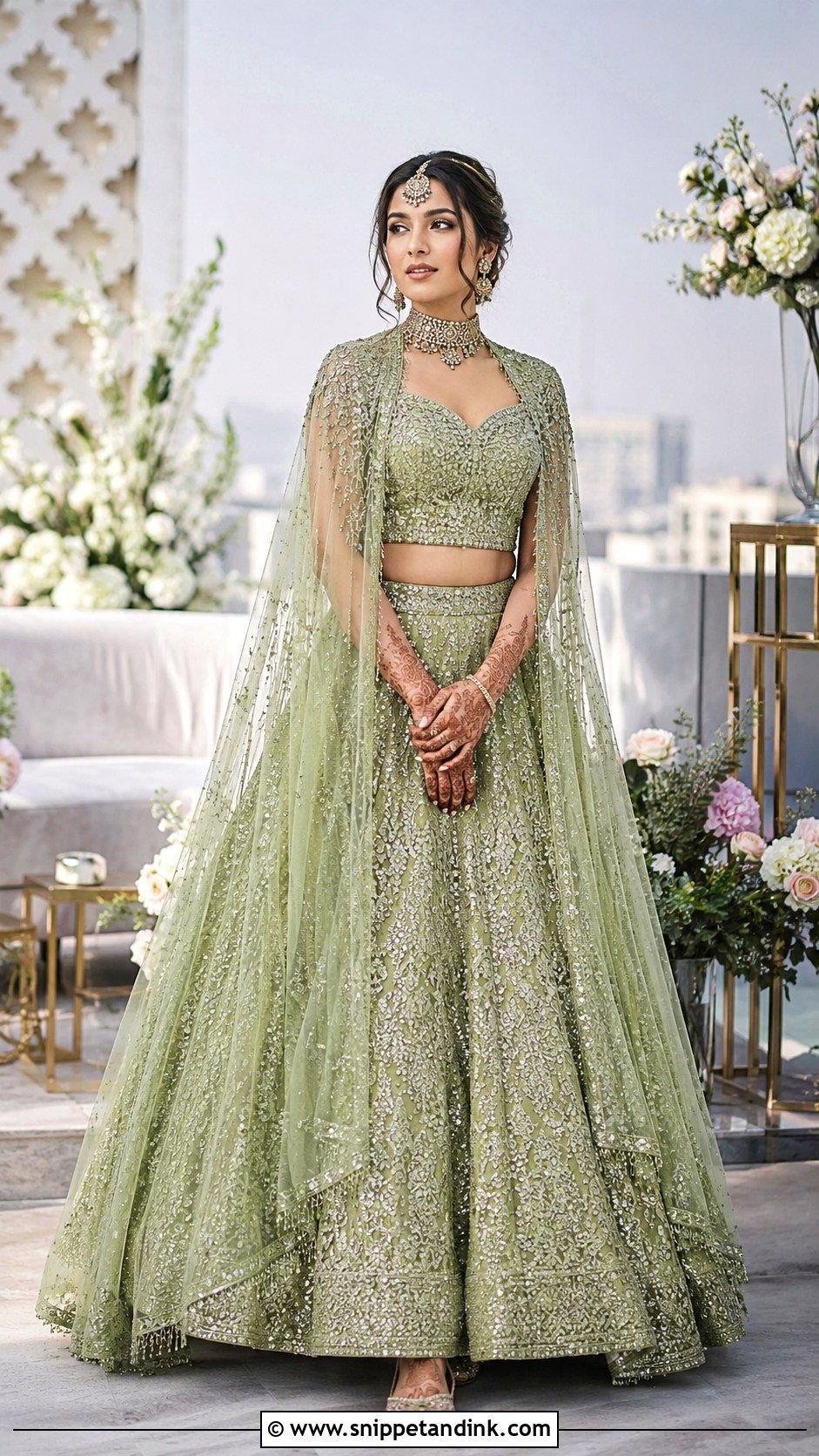
A cape solves the dupatta problem outright, because there’s nothing loose to slide onto wet hands. Start with a mint or pistachio lehenga with subtle sequin or mirror work, add a fitted sleeveless blouse and a sheer detachable cape falling from the shoulders. The length matters more than the design. I measure with the bride’s arms resting on her knees, since that’s how she’ll sit for the henna, and in that position the cape needs to stop above the wrists. In photos the sheer panel moves every time you turn. Pair a kundan choker, studs, a statement maang tikka and neutral embellished juttis, with a sleek bun to show the neckline. It fits a hotel, rooftop or garden Mehandi.
9. Floral Skirt And Crop Top Mehandi Bridal Outfit
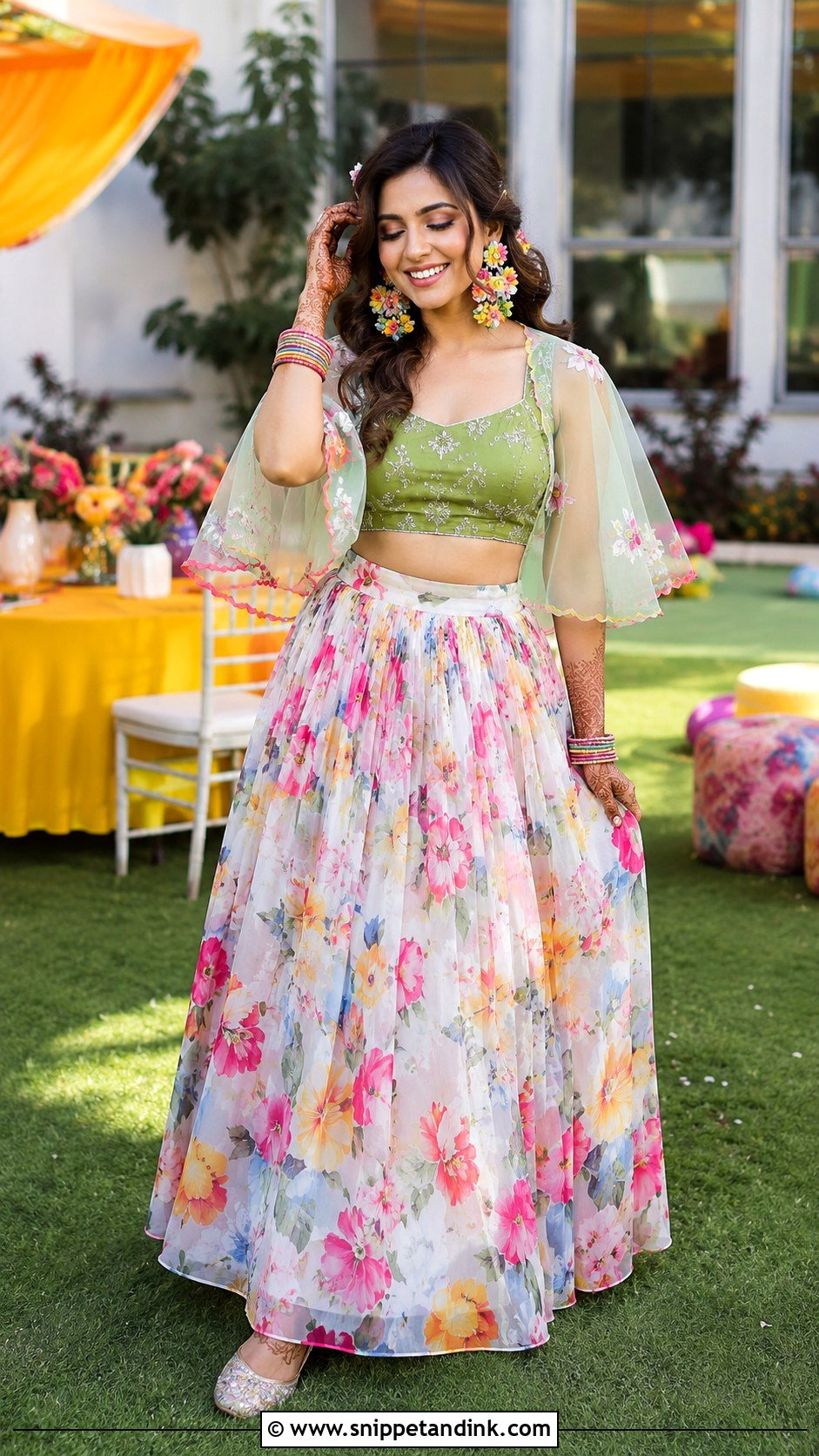
For a small daytime Mehandi at home, a full floral skirt and crop top is relaxed without looking underdressed. The skirt, in yellow, pink, green and coral, carries the color, so the solid crop top only needs light beadwork. Check that the top has a little stretch or a back zip with a hook at the top, because crop tops cut too close gape when you lean forward to rest your hands on a cushion. Add a short organza dupatta on one shoulder if family expects something more traditional. Floral earrings, a simple choker, bangles and metallic juttis are plenty. Soft waves or a loose braid with flowers suit the easy shape.
10. Ivory Threadwork Mehandi Bridal Lehenga
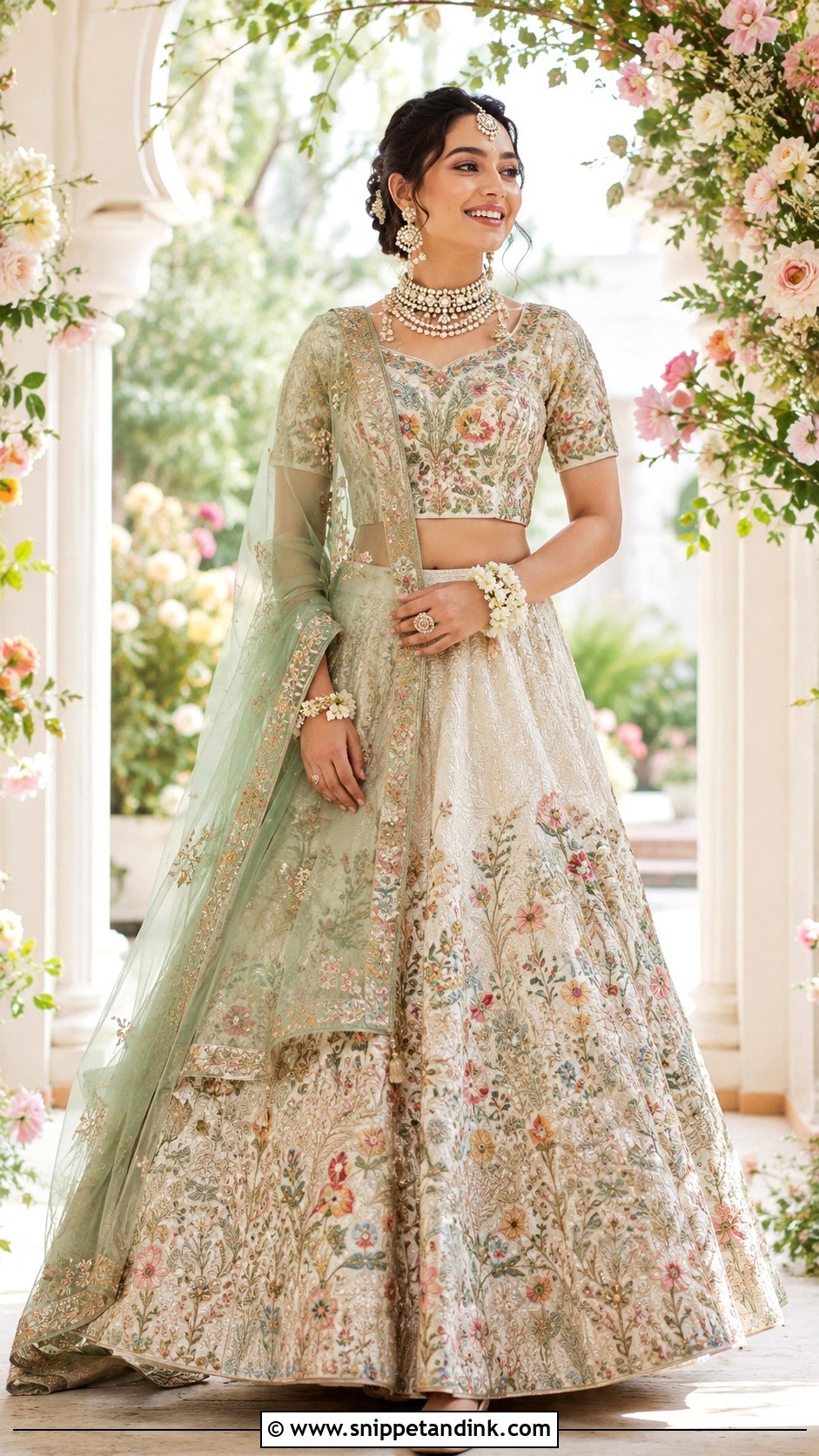
Not every bride wants yellow or green, and ivory with colored threadwork is my usual answer. Botanical embroidery in pink, orange, turquoise and leaf green keeps the cheerful mood on a neutral base. The catch with ivory is staining: wet paste and the lemon-sugar sealant the artist dabs on will both mark it, so keep a cotton sheet over your lap during application. A pink or mint dupatta brings color up near the face, which helps in close-ups where ivory alone can wash out some skin tones. Pearl-kundan jewelry, floral hand accessories and ivory embroidered juttis suit it, with a loose low bun and pastel flowers. Choose short sleeves or an open shoulder so the artist can work comfortably. It sits well in a garden set with white seating and floral arches.
11. Pink And Orange Color Block Mehandi Bridal Lehenga
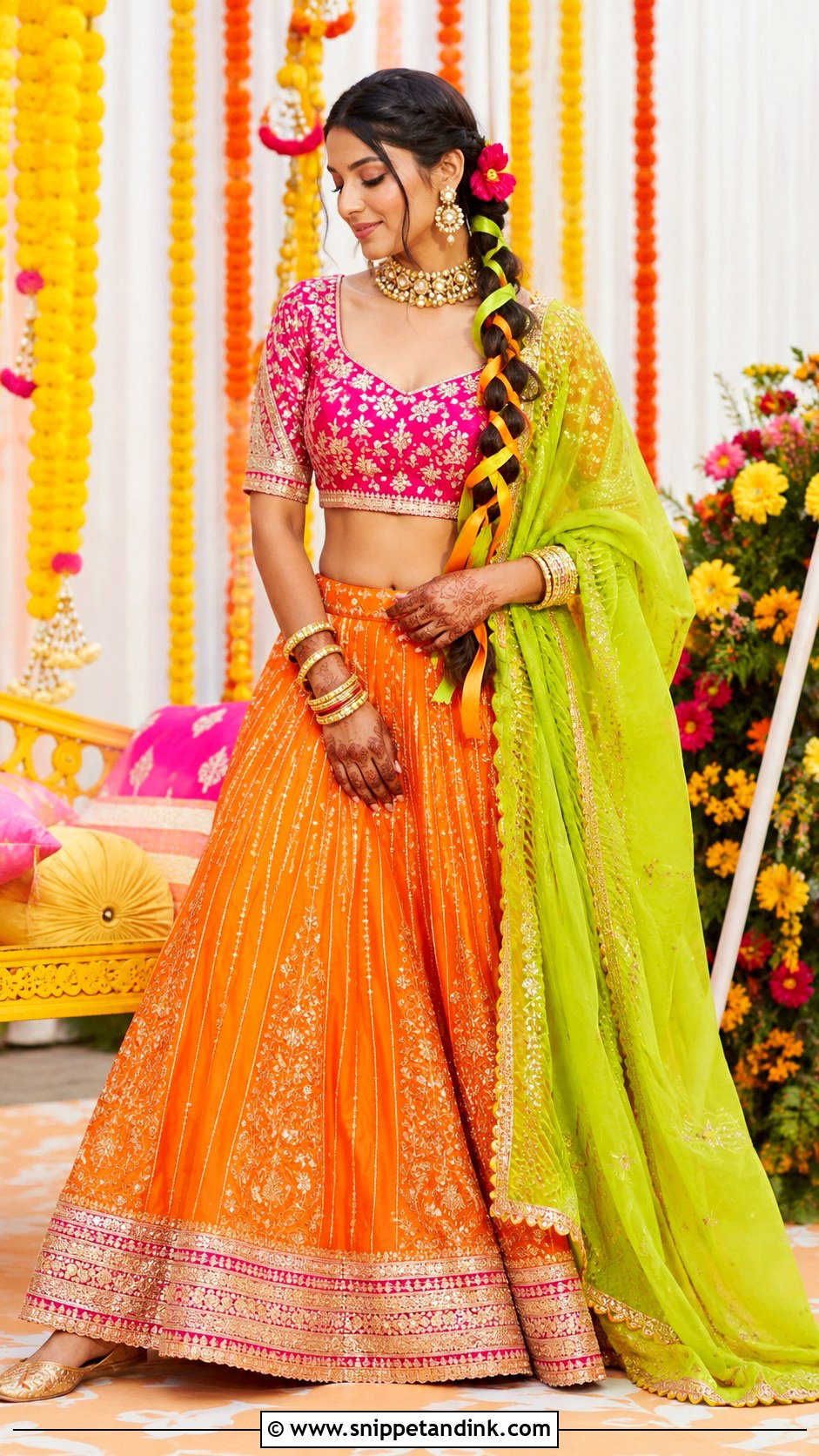
Color blocking gives energy without dense embellishment, and it’s lighter to wear for exactly that reason. Try a fuchsia blouse with an orange lehenga and a lime or yellow dupatta. Keep the embroidery at the borders so each block stays clean, and let gold gota run through all three pieces; without a shared trim, separates in loud colors can look like they came from different outfits. Accessorize with a kundan choker, medium earrings, a maang tikka, stacked bangles and gold juttis. A braid wrapped in matching ribbon adds one playful detail. I’d skip the embellished potli bag and any oversized pieces, because the colors already carry the outfit. Save it for a loud, music-heavy Mehandi.
12. Mustard Dhoti Pant Mehandi Bridal Set
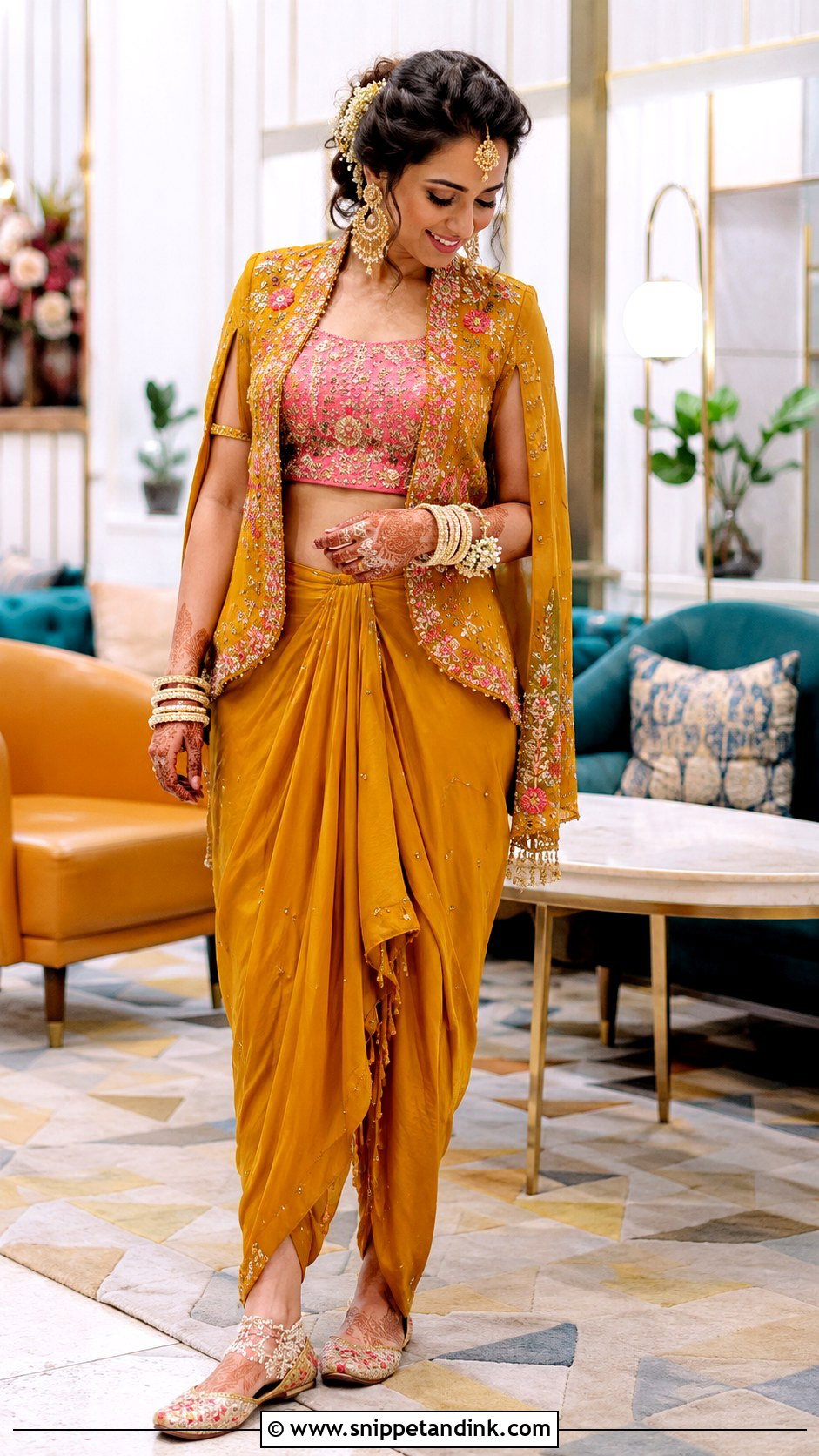
Flowing dhoti pants give a Mehandi outfit an Indo-Western shape that still feels festive. Pair mustard draped pants with an embroidered cropped blouse in pink or green, and swap the long dupatta for a short asymmetric jacket or a light shoulder drape, since a trailing dupatta is the piece most likely to end up in the henna. Statement chandbalis, a slim headpiece, stacked bangles and embellished mojaris finish it, with a sleek ponytail to balance the volume of the pants. Fit is where dhoti pants go wrong. The drape is cut low through the seat, so sit down at your final fitting, make sure the waist doesn’t dig in, and check that the hem clears the floor in the shoes you’ll actually wear. It suits a contemporary event with lounge seating.
13. Mint Green Palazzo Mehandi Bridal Set
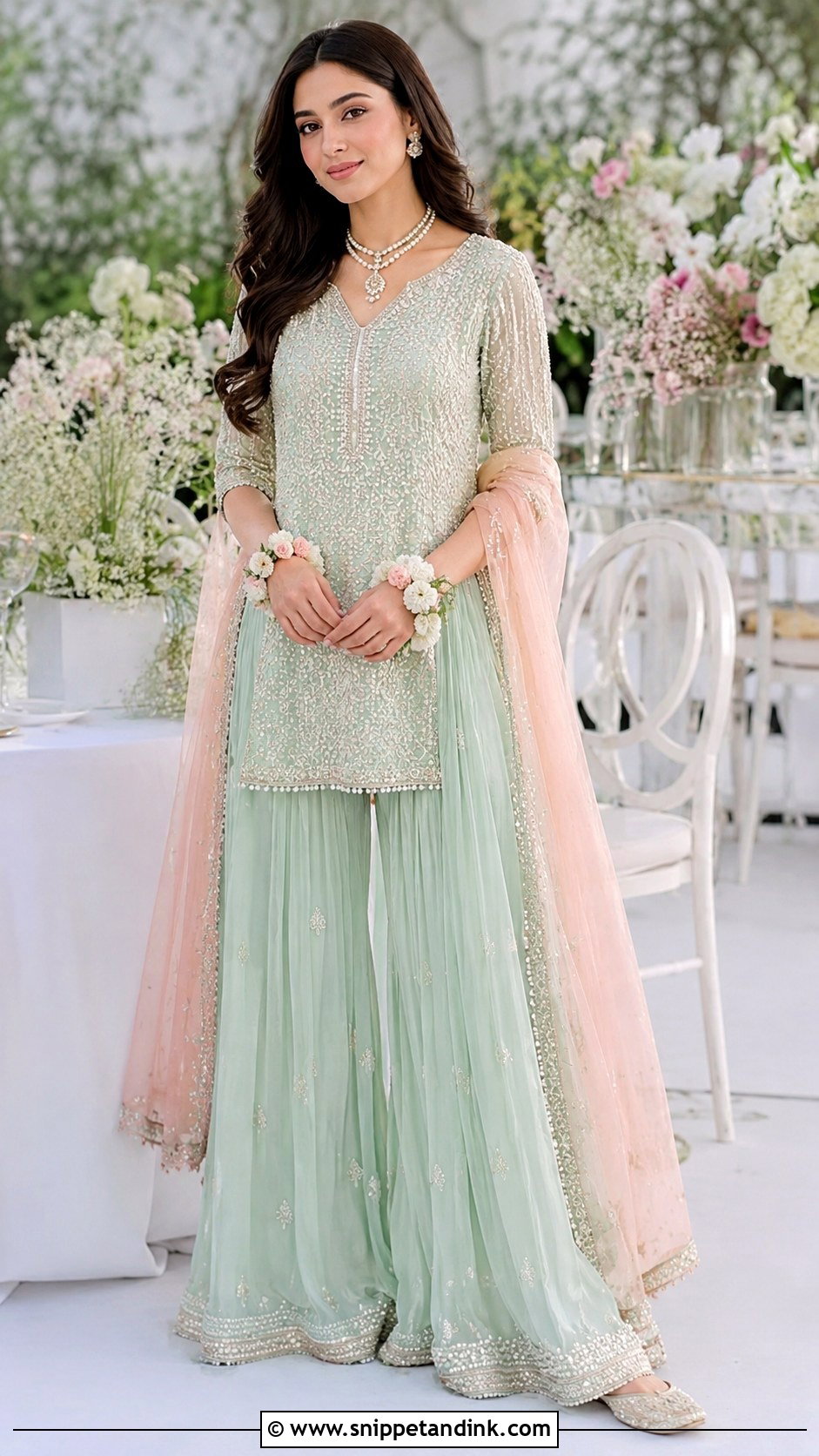
Mint is calm, so it’s a good pick for a bride who finds bright yellow too loud on her. Wide-leg palazzos with a short embroidered kurta or structured crop top are about the easiest thing on this list to sit in for hours. Pearl detailing or silver threadwork gives enough sparkle for the camera, and silver is softer against mint than heavy gold, which can look brassy next to pale green. A blush dupatta secured behind the shoulders adds contrast. Pearl earrings, a kundan choker, pale floral bracelets and silver juttis keep the palette cohesive. Pin soft waves back from the face or wear a low braided ponytail. Save it for a spring or summer Mehandi with pastel flowers.
14. Fuchsia Jacket Mehandi Bridal Lehenga
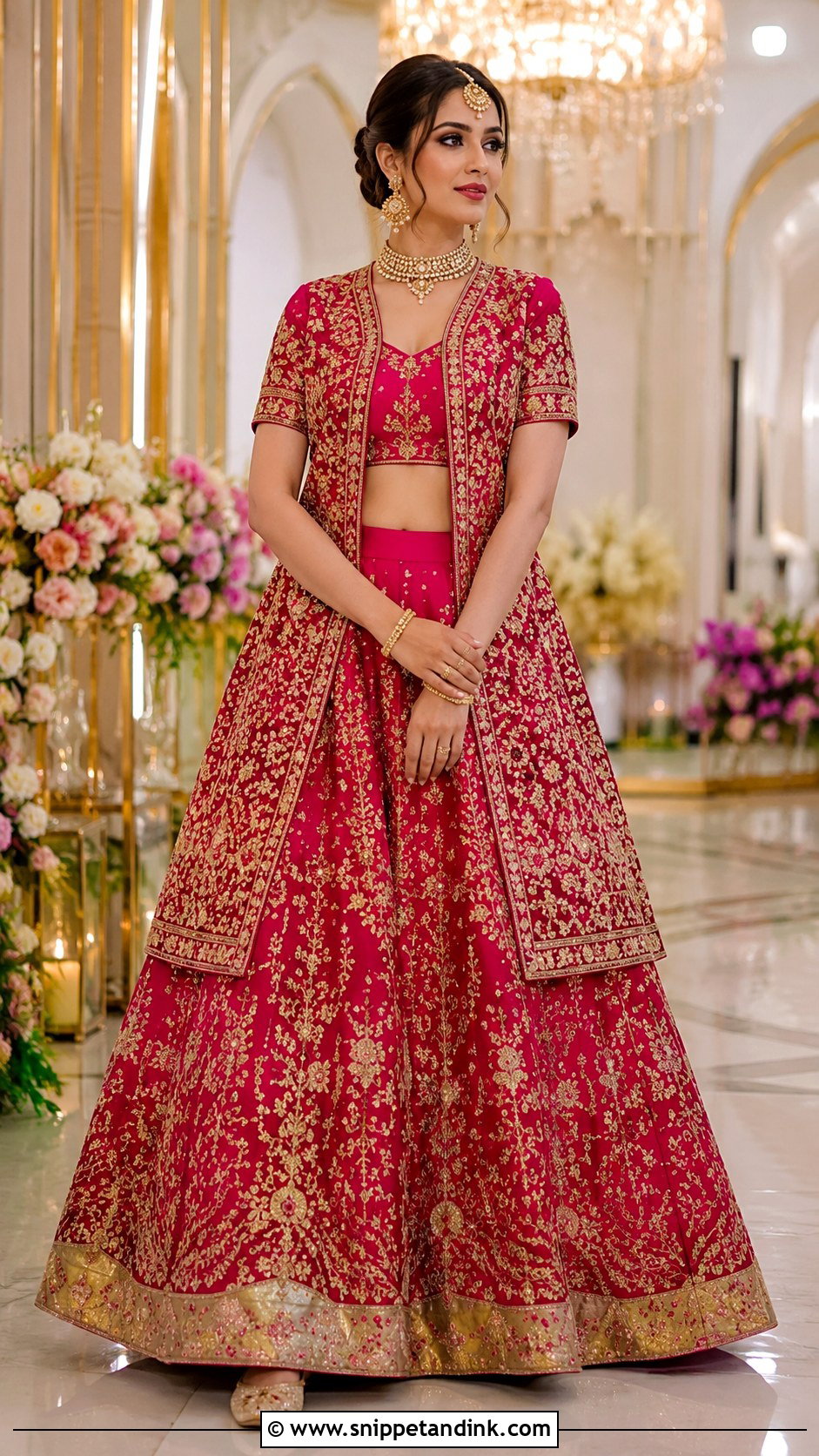
Once the function runs into the evening, fuchsia holds its color under warm lights where pastels fade. Wear a plain or lightly embroidered lehenga with a matching crop top, then layer an open-front jacket worked in gota, sequins or threadwork. The jacket stands in for the dupatta, which keeps the outfit streamlined. Sleeves are my main concern. A full-length jacket sleeve has to come off for the henna, and you can’t slide it back on while paste is still sitting on your arms, so choose sleeves that end above the elbow. Gold earrings, a layered choker, a maang tikka and metallic juttis complete it, with a high ponytail or smooth bun so the jacket detail shows. It’s for a bride who wants fashion-forward lines with clear South Asian roots.
15. Yellow Organza Saree Mehandi Bridal Outfit
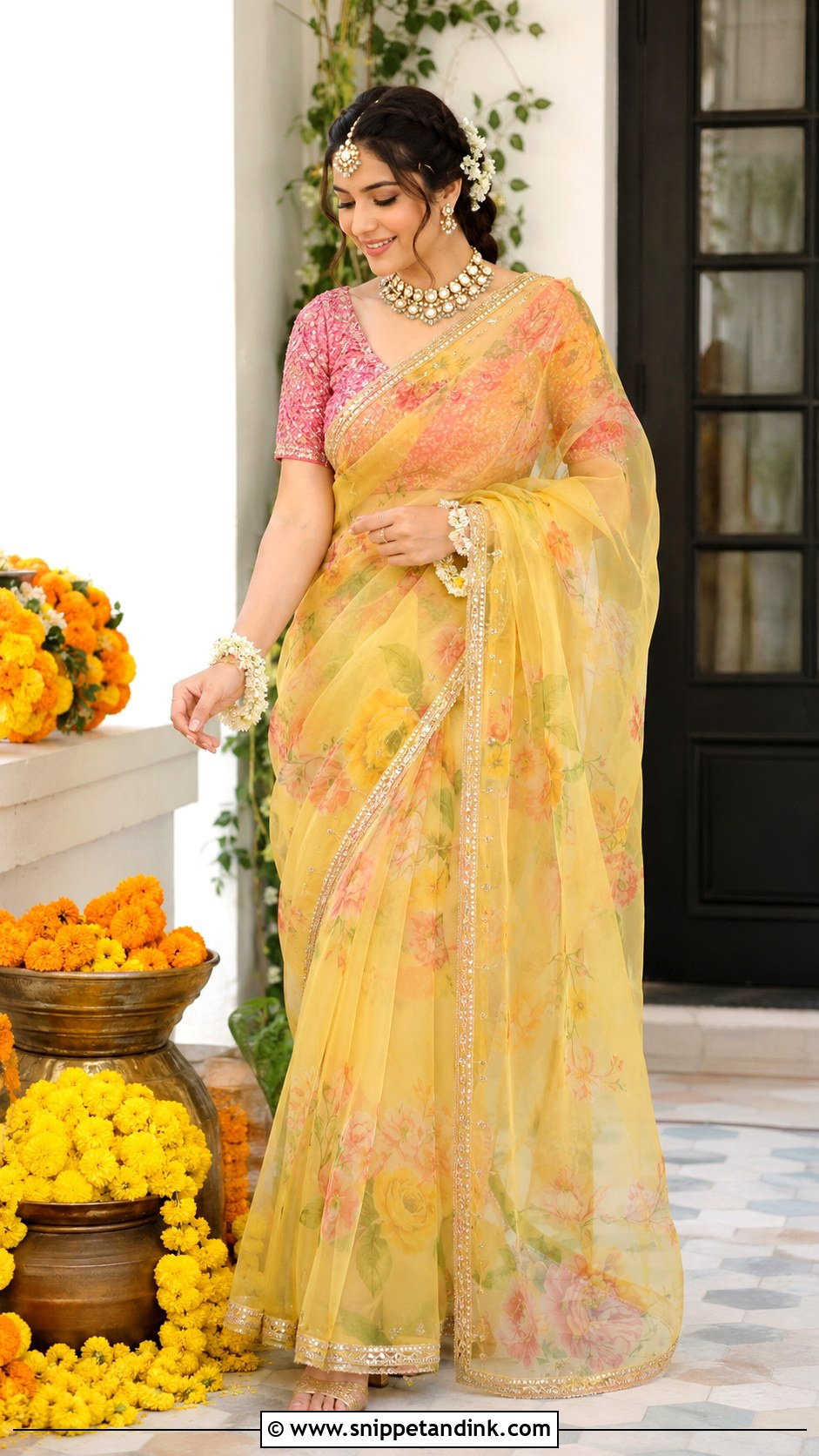
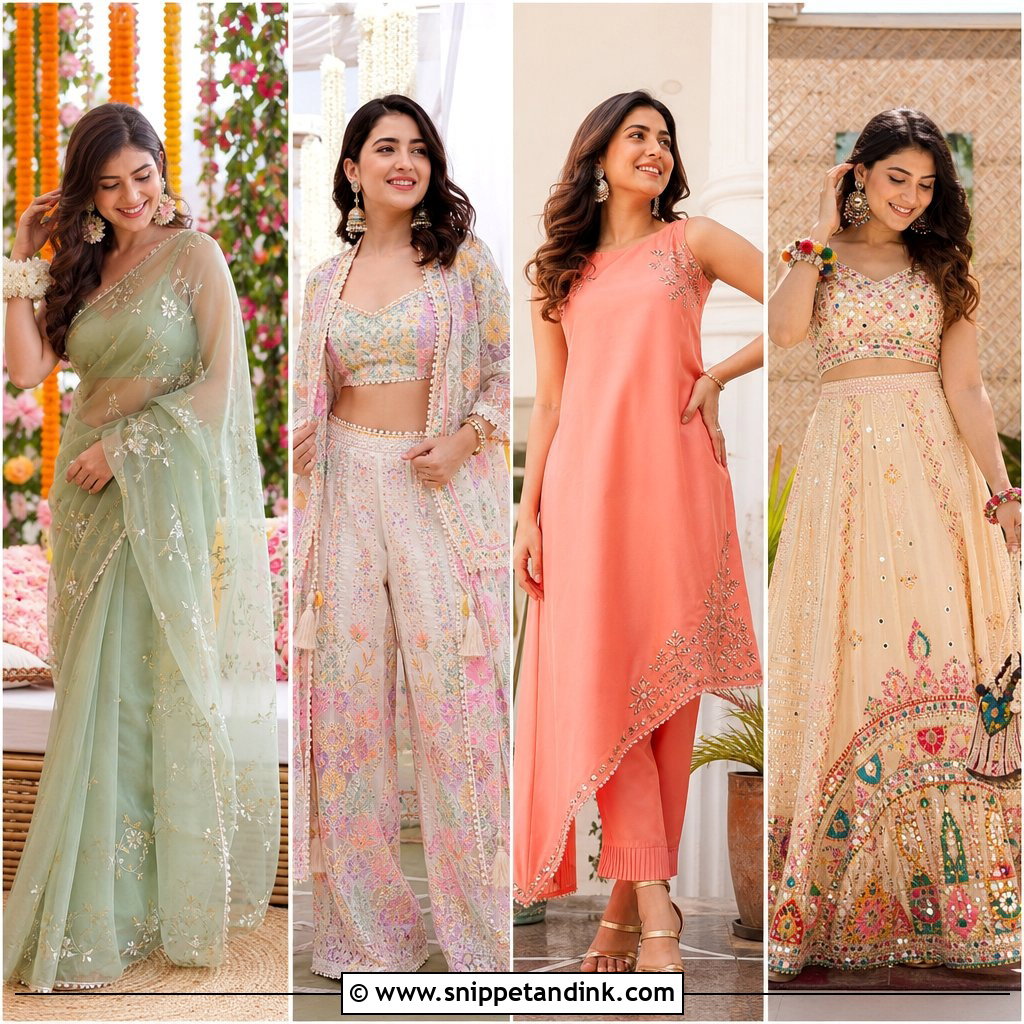
Organza is crisp and sheer, so a yellow saree in it looks airy, but it also slips and creases more than silk. I only suggest this one to brides who already wear sarees comfortably. Look for floral embroidery, a scalloped border or delicate gota, and pair it with a short-sleeved pink or green blouse. Have the pleats pinned at the waist and the pallu fixed at the shoulder before the artist starts, because once your hands are covered you can’t adjust anything yourself. A kundan choker, earrings, floral bracelets and cushioned juttis or low block heels complete it, with a flower-adorned bun. Keep it for a smaller daytime event where someone can help you re-tuck between photos.
16. Green Banarasi Saree Mehandi Bridal Outfit
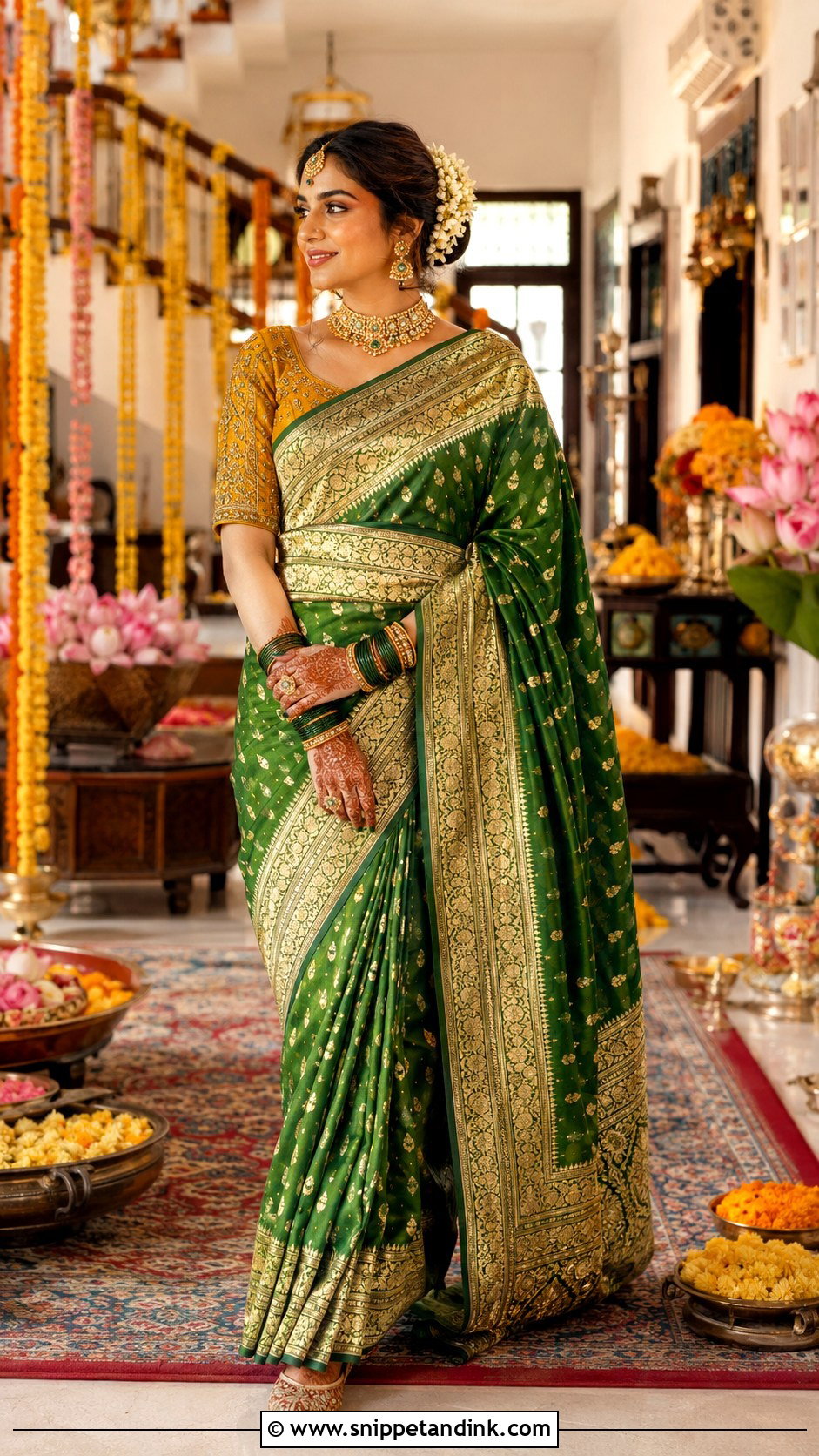
Banarasi silk carries heirloom weight, both literally and in what it means to a family. A green saree with gold woven motifs, paired with a pink or mustard blouse cut above the elbow, looks classic. If you’ll be seated for hours, ask for a lighter Banarasi weave such as georgette or organza, because a heavy brocade drape gets hot fast. Keep the drape neat and pin the pallu firmly so it can’t slide toward fresh henna. Traditional gold earrings, a choker, a maang tikka, glass bangles and embroidered juttis finish it, with a center-parted bun ringed in jasmine. Skip a second dupatta. This one belongs at a family-centered home Mehandi where the heirloom pieces come out.
17. Lavender Draped Skirt Mehandi Bridal Outfit
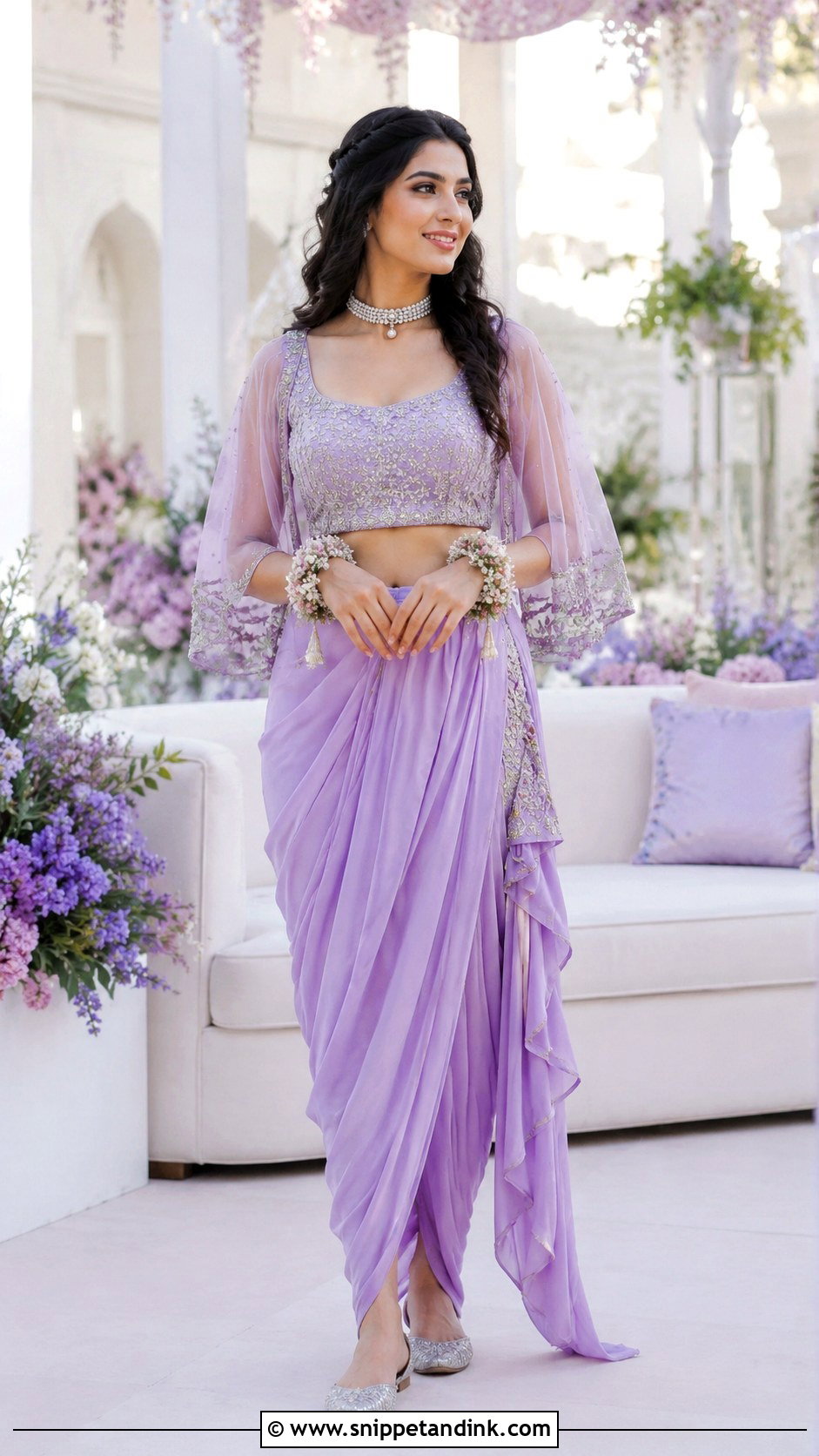
Lavender steps away from the usual yellow, green and pink without losing the festive mood. A pre-draped skirt with soft pleats has the look of a saree with none of the re-pinning, which is why I suggest it to brides who’ve never worn a drape. Pair it with an embroidered sleeveless blouse and, for movement, a short sheer cape or a narrow attached pallu rather than another loose layer. Silver mirror work or pearls keep it bridal. Lavender can be tricky in photos, since warm yellow light sometimes turns it greyish, so look at a swatch under your venue lighting first. Pearl earrings, a delicate choker, lavender floral bracelets and silver flats finish it, with a relaxed ponytail or braided half-up style. It suits a pastel setup with lilac flowers and white furnishings.
18. White And Yellow Chikankari Mehandi Bridal Lehenga
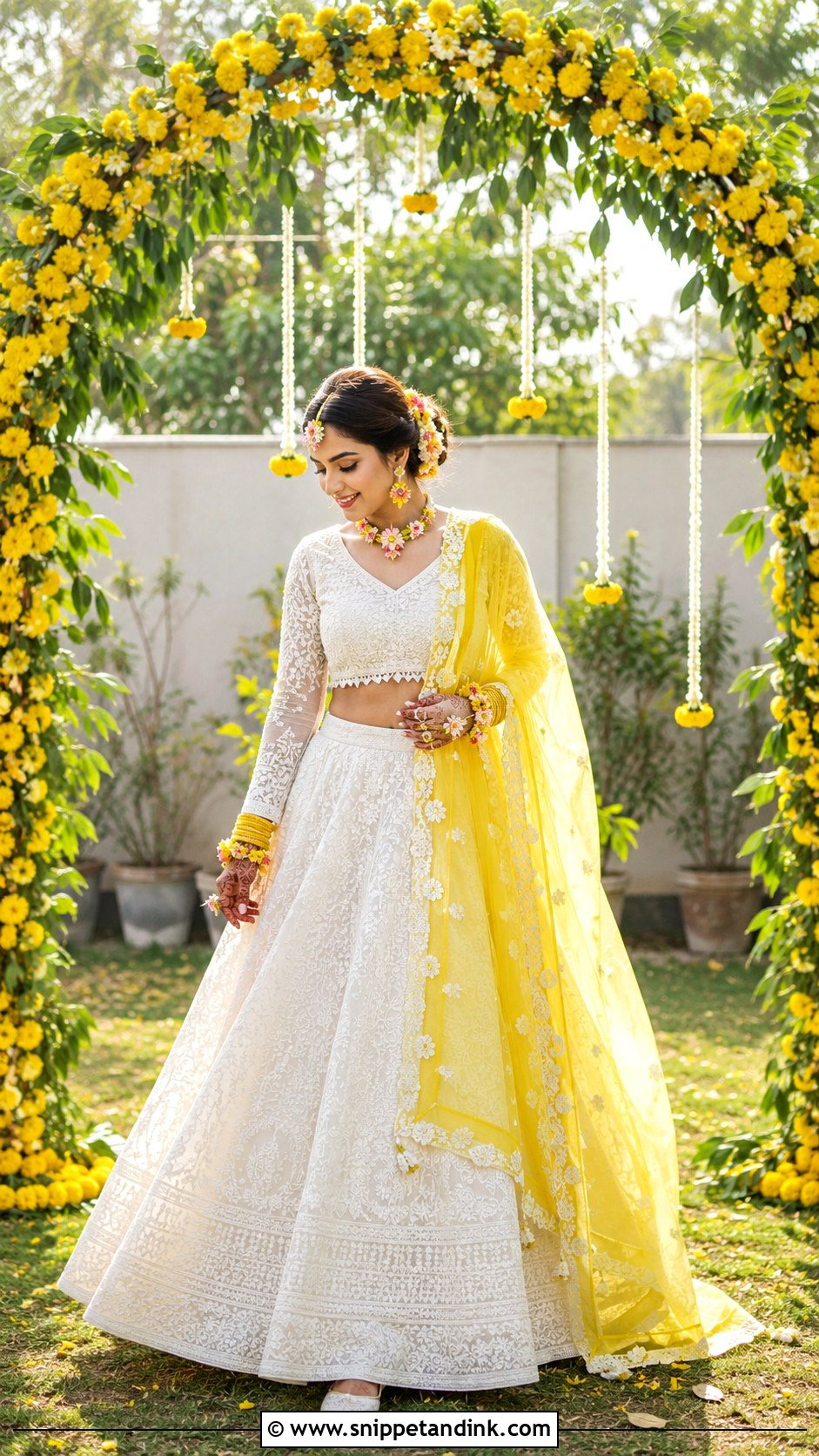
Chikankari is fine hand embroidery on cotton or georgette, and white with yellow accents is about the freshest pairing on this list. Start with a white embroidered lehenga and short-sleeved blouse, then add a sunshine-yellow organza dupatta with a slim floral or gota border. A few small mirrors bring light to the textured stitching. I’ll be honest, though: white is the riskiest color you can wear to your own Mehandi. Henna paste stains cotton badly once it sets, so keep the skirt covered with a sheet during application and rest decorated hands on a towel, never your lap. Colorful floral jewelry, pearl earrings, yellow bangles and white juttis complete it, with a loose braid tucked with yellow flowers. Best for a bright daytime event.
19. Red And Pink Patiala Mehandi Bridal Suit
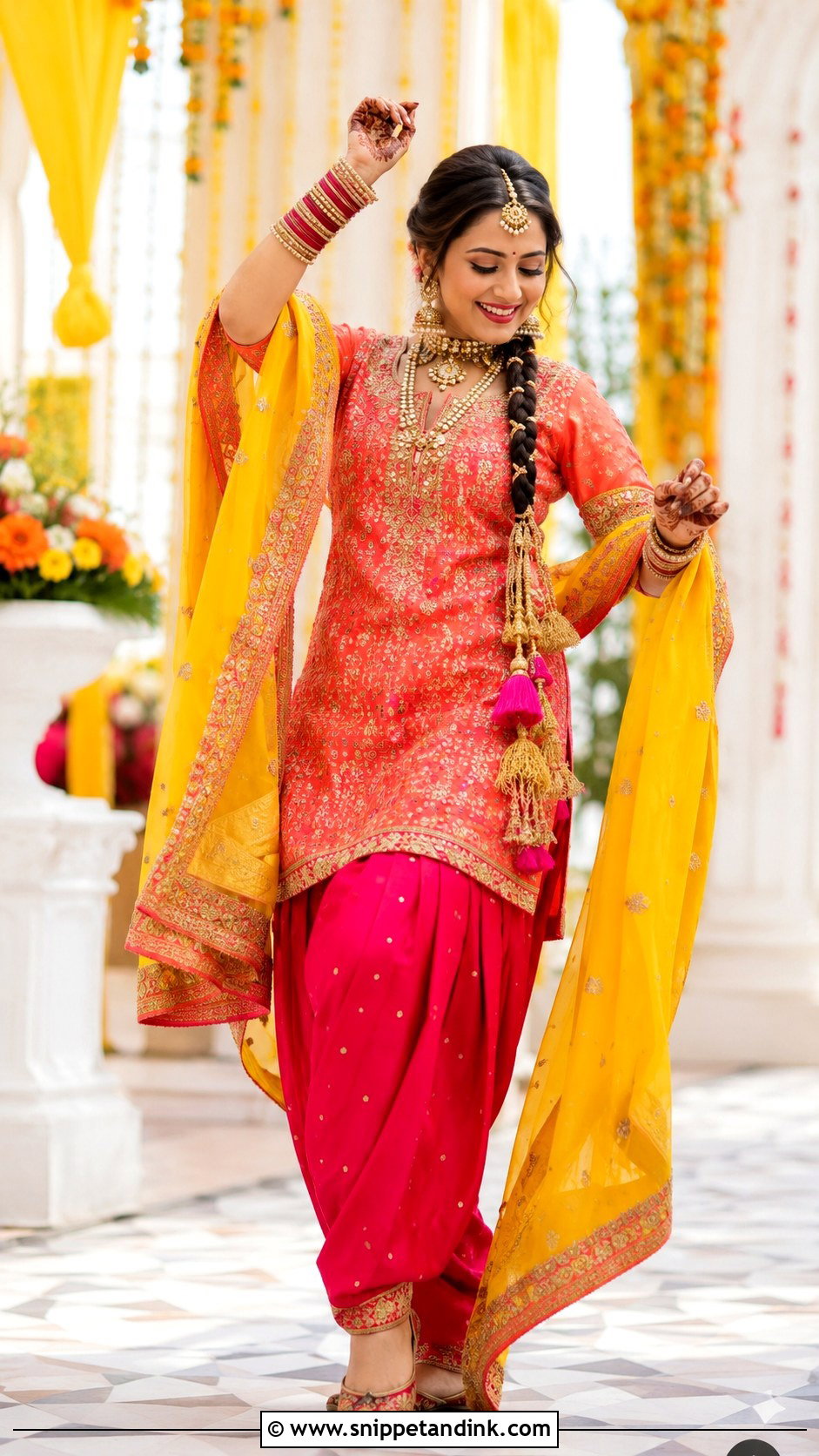
A Patiala suit gives you more freedom to move than anything else here, which is why it’s such a Punjabi favorite for dholki-style nights. Pair deep pink Patiala pants with a short red or coral kameez trimmed in gota or small mirrors, and add a yellow dupatta behind the shoulders. The pleated salwar uses a lot of fabric, so choose a soft one that folds when you sit cross-legged instead of ballooning around you. Traditional jhumkas, layered necklaces, bangles, a maang tikka and embroidered Punjabi juttis complete it, and a long braid with a decorative paranda nods to its regional roots. Keep the kameez sleeves short, pin the dupatta before the henna begins, then go and dance.
20. Teal Jumpsuit With Dupatta Mehandi Bridal Outfit
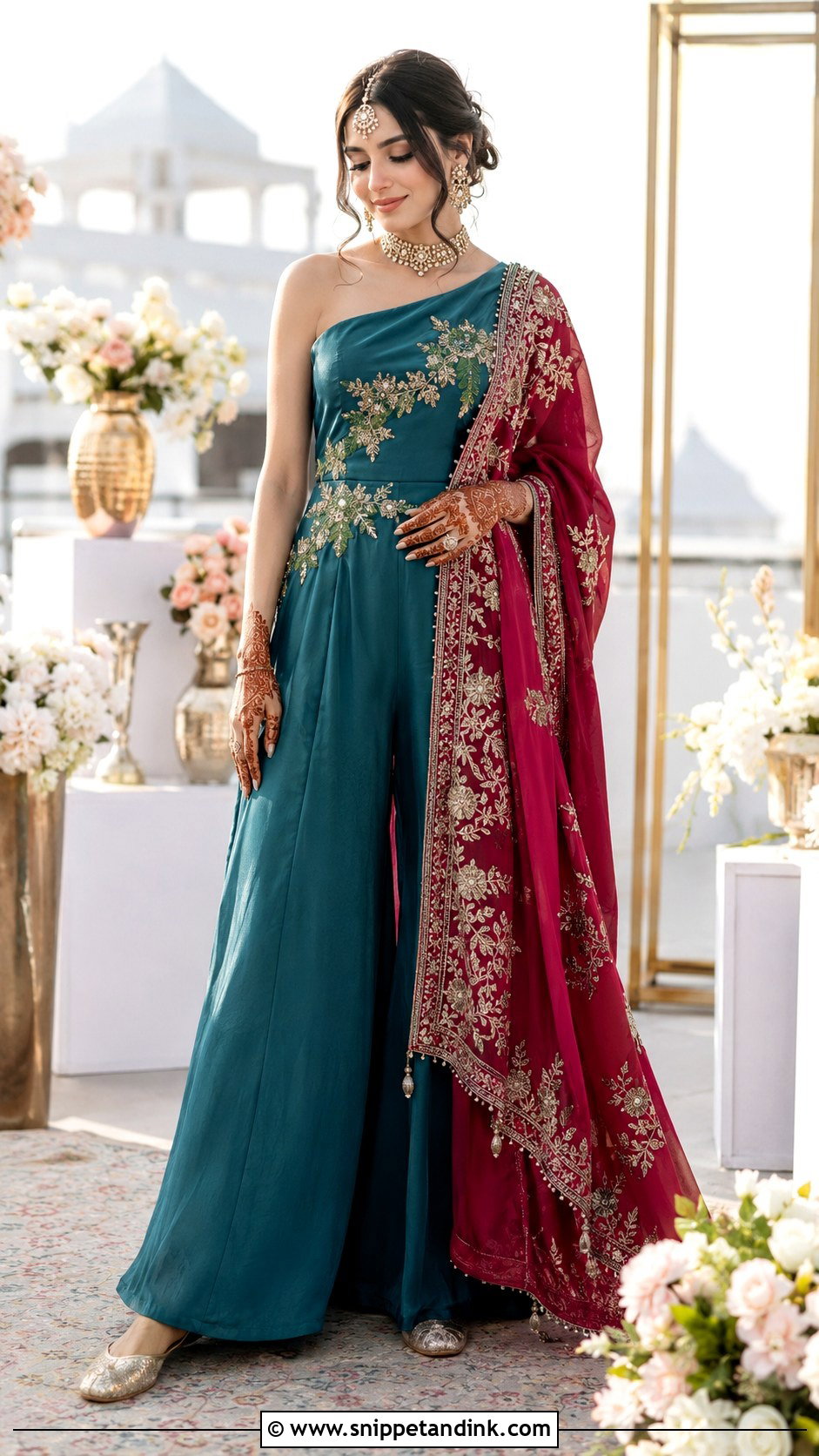
The most modern option here is a teal wide-leg jumpsuit with a detachable embroidered dupatta. A fitted bodice with short sleeves or an asymmetric neckline sits over flowing legs that read as a skirt when you stand. There’s one practical point I always raise with the tailor: bathroom trips. A jumpsuit has to come almost fully off, which is awkward with hennaed hands, so ask for a long back zip and plan on someone helping you. Attach a fuchsia or multicolor dupatta at one shoulder and secure it at the back so both hands stay free. A statement choker, matching earrings, a slim maang tikka, metallic flats and a sleek ponytail finish it. Hidden pockets are worth asking for too. It fits a rooftop or resort Mehandi.
Henna Stains, Tarnished Gota and Getting the Outfit Home
Henna marks fabric in two ways. Wet paste presses straight into the weave, and the sugary sealant or oil used to keep the paste in place leaves sticky spots that attract dust. Pale cotton and georgette show both. If a smear happens, let it dry and gently lift off what you can, but don’t rub or put an iron near it, because heat can set the stain. Take it to a dry cleaner used to embroidered pieces and tell them plainly that it’s henna.
Storing gota and mirror work
Most gota patti today is a metallic-coated ribbon, and it dulls when it sits in damp or rubs against other metal. After the event, air the outfit for a day, then fold it with acid-free tissue or soft muslin between the layers so embroidered panels don’t scrape each other. Store it in a cotton bag rather than plastic, which traps moisture. Wrap mirror work so the edges can’t snag the skirt, and fold heavy lehengas instead of hanging them, since a hanging skirt can stretch at the waistband.
Mehandi outfits are among the easiest bridal pieces to wear again, at a cousin’s sangeet or a festival. If that’s your plan, refold the outfit along new lines every few months so permanent creases don’t settle into the embroidery.
Sleeves First, Color Second
If I could leave a Mehandi bride with one rule, it would be to settle the sleeves and the dupatta before falling for a color. Traditional yellow lehengas and green shararas are still the classic route, but pastel sets, printed skirts, sarees, capes and jumpsuits all earn their place. Breathable fabric and light embellishment will matter far more at hour four than they did at the first fitting. Wear flat juttis or cushioned shoes, let jewelry and flowers support the outfit instead of competing with it, and pick the color and shape that suit you and your venue. Then sit back and let the artist work.
You'll Like These Ideas:


Leave a Reply