
A Mehandi outfit has a harder job than most wedding clothes. You sit on a low cushion for hours while someone holds your arm, you get up to dance the moment the dholki starts, and you are photographed under strong afternoon sun or warm string lights. When I dress a bride or her family for this night, I start from those practical facts rather than from a colour board. Below are thirty outfits I’d genuinely put on a client, from the yellow lehenga to Indo-western separates, with notes on how each one behaves once the henna comes out.
Dressing for Four Hours on a Floor Cushion
Most Mehandi outfits fail for practical reasons, not style ones. The bride sits low, often with one leg folded, while the artist works on both hands and both feet. That can mean three or four hours in one position, then another hour or two with wet paste she can’t touch.
So I check a few things at every fitting before I even look in the mirror:
- Sleeves. Can they be pushed above the elbow, or are they short or absent? Fitted full sleeves are the most common mistake I see.
- Hem and leg. Sit on the floor in the shop. Sharara, gharara, palazzo and flared lehengas are comfortable; narrow churidars and pencil skirts are not.
- Waist. A blouse or kurta that rides up when you lean forward will need a hook-and-eye fix or a longer hem.
- Dupatta weight. If it’s heavy, plan to pin it flat to one shoulder, or choose a cape or jacket style instead.
- Feet. If your feet are getting henna, you’ll want slip-on juttis or open sandals you can step into without bending.
Guests have it easier, since they’re not covered in paste for half the night. A guest can wear fuller sleeves and a longer dupatta, though anyone planning a small henna design on one palm should still leave that wrist free.
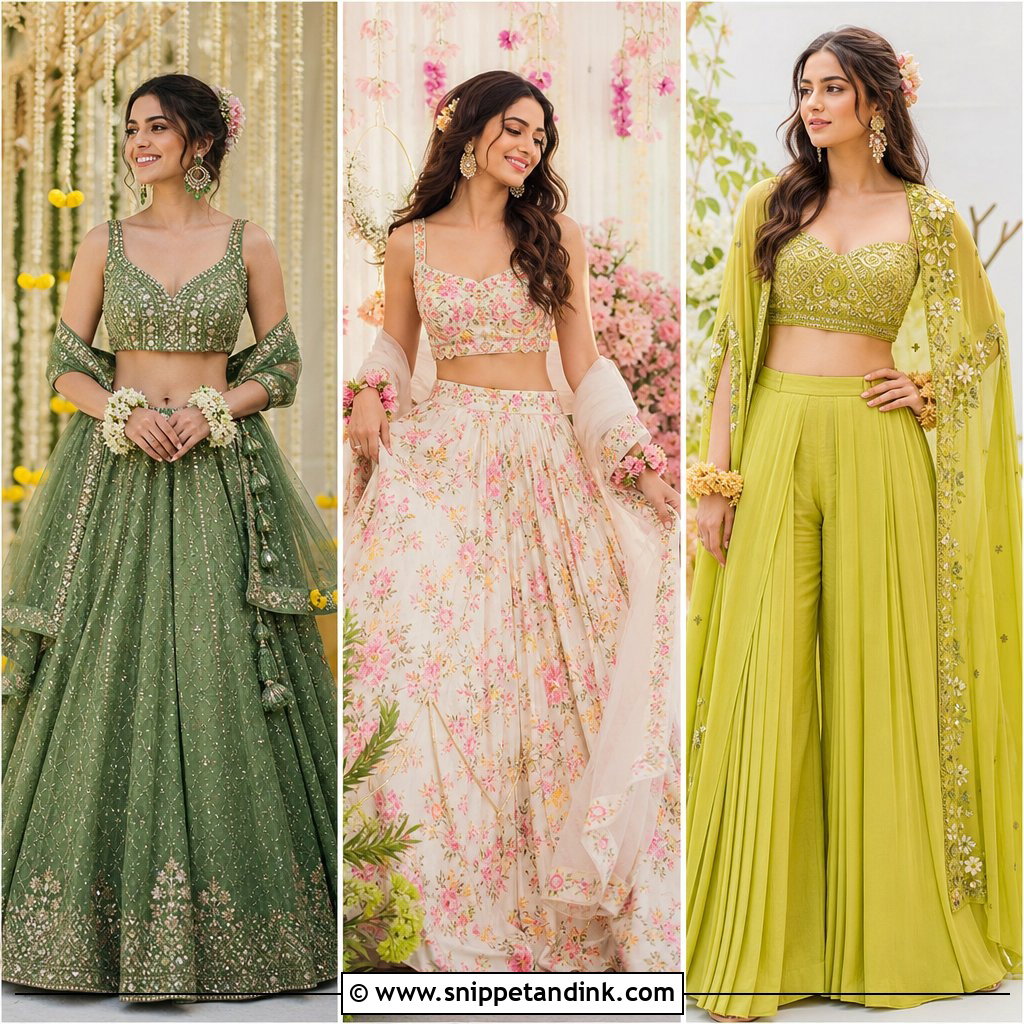
1. Yellow Mehandi Lehenga
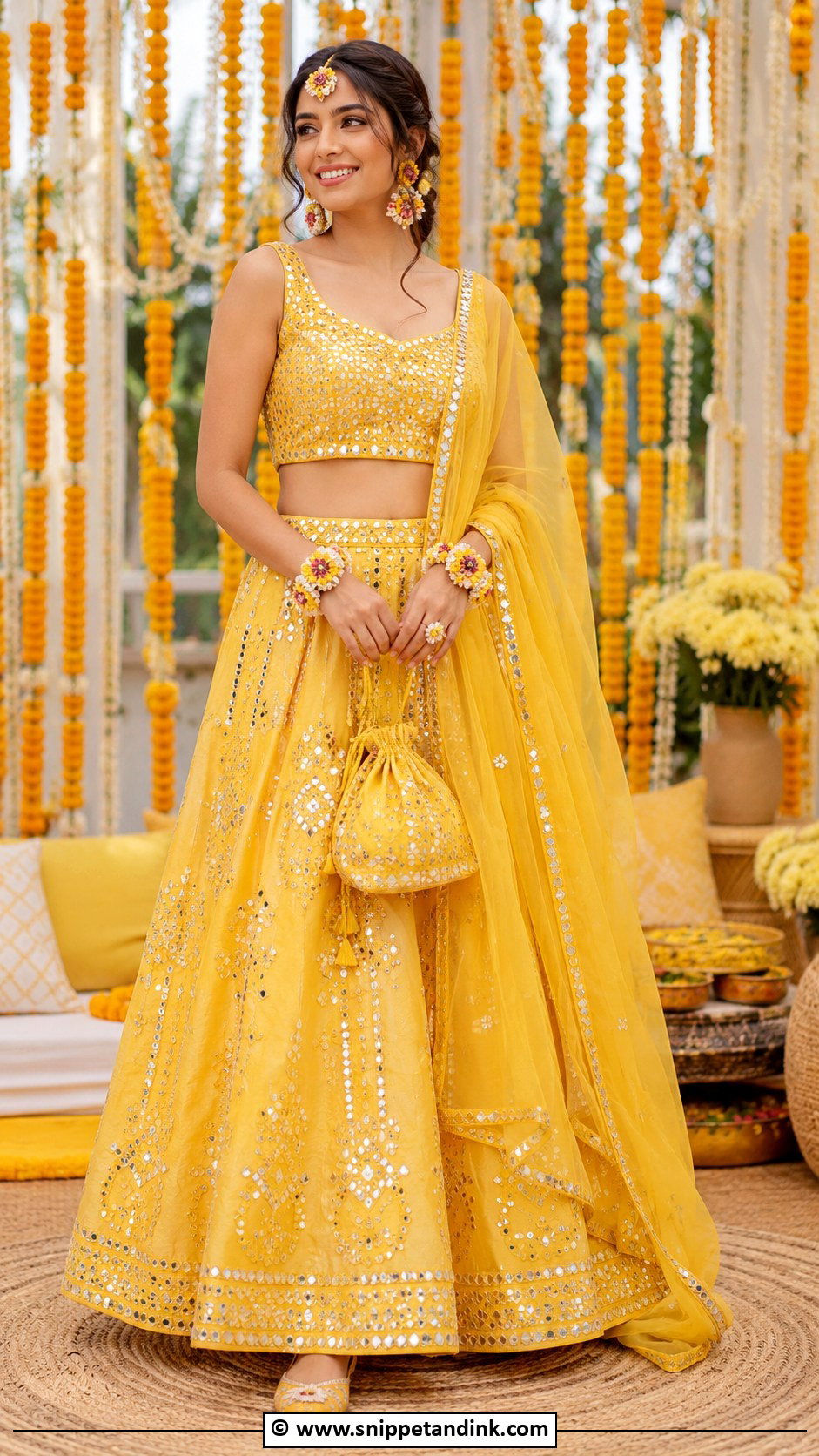
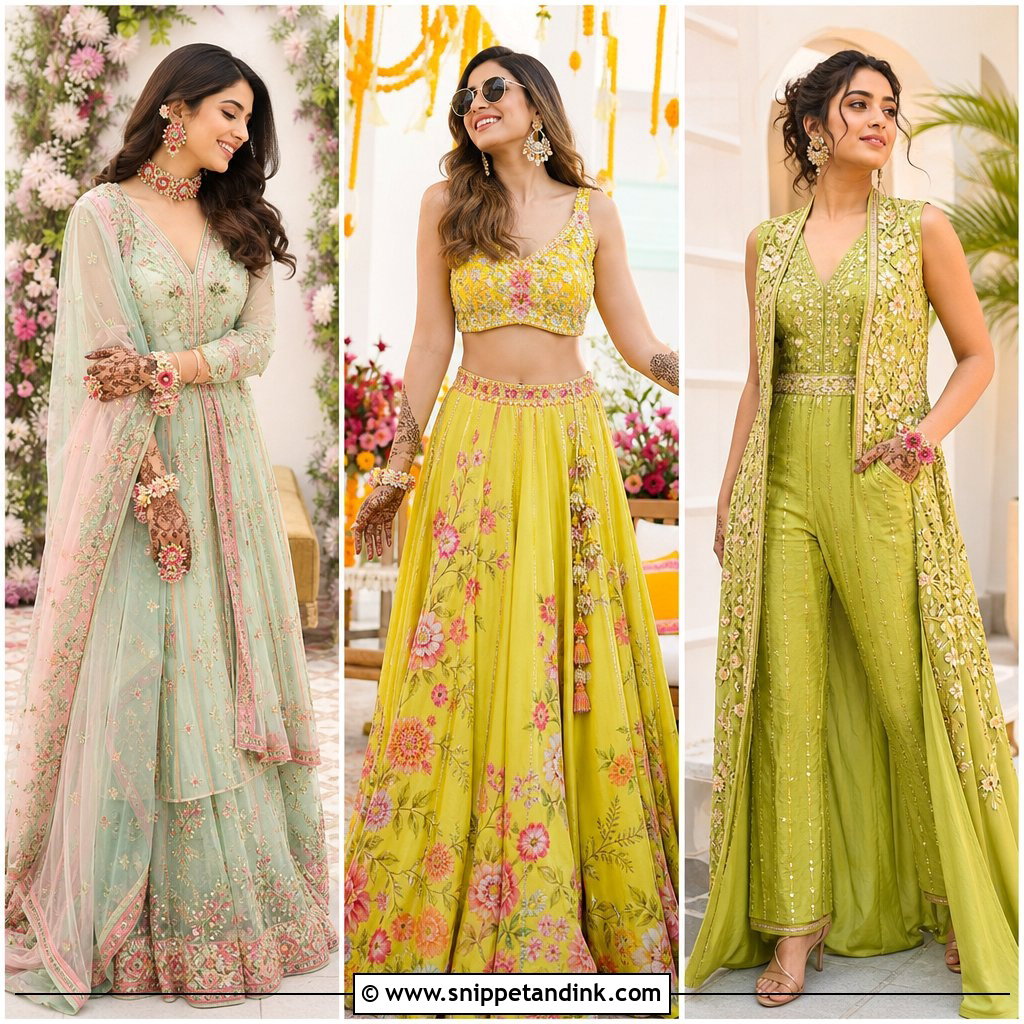
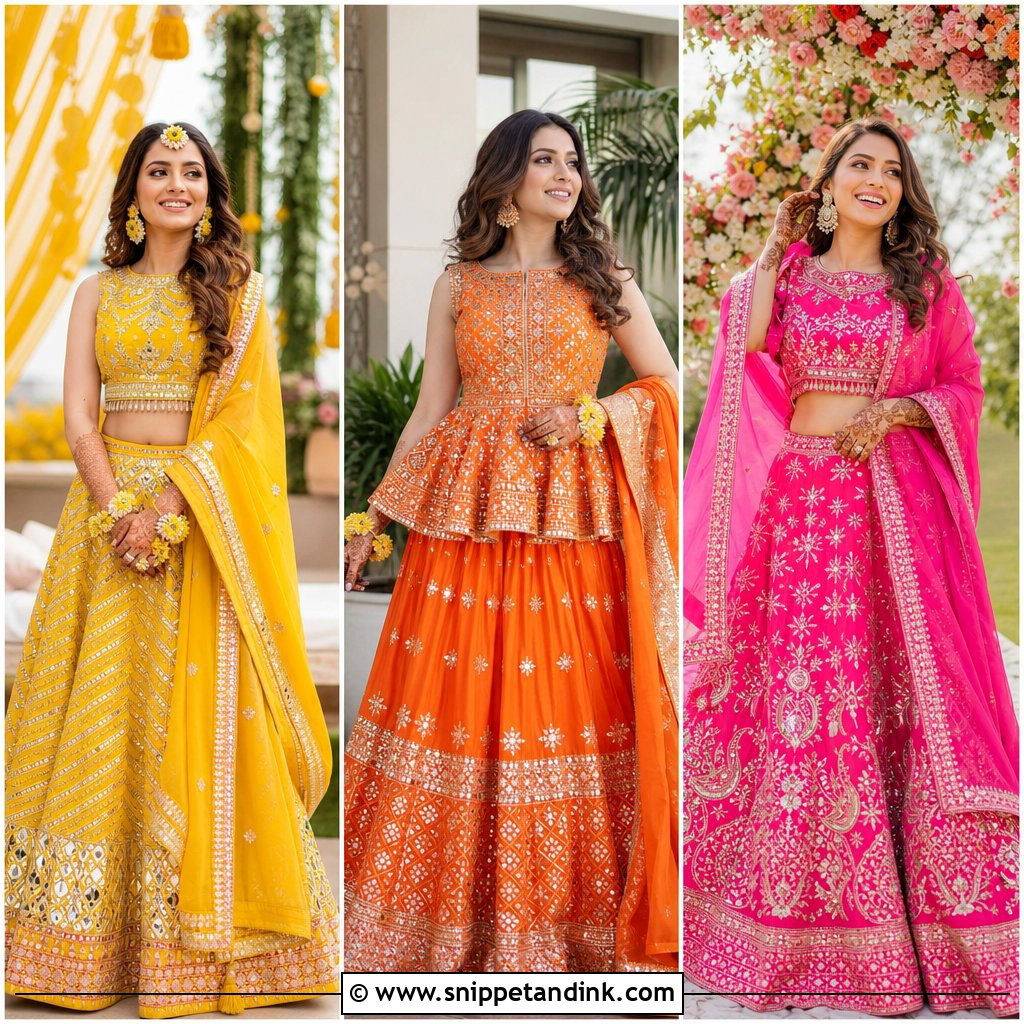
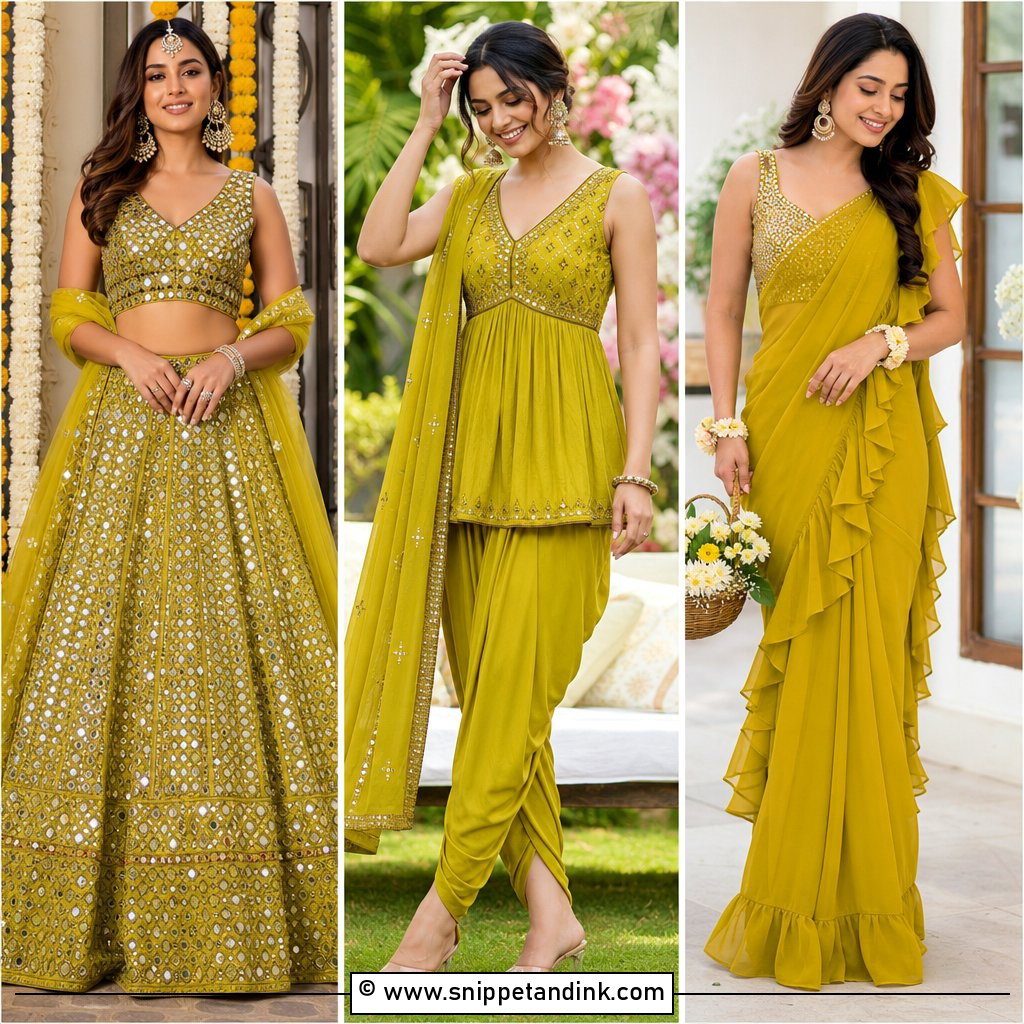
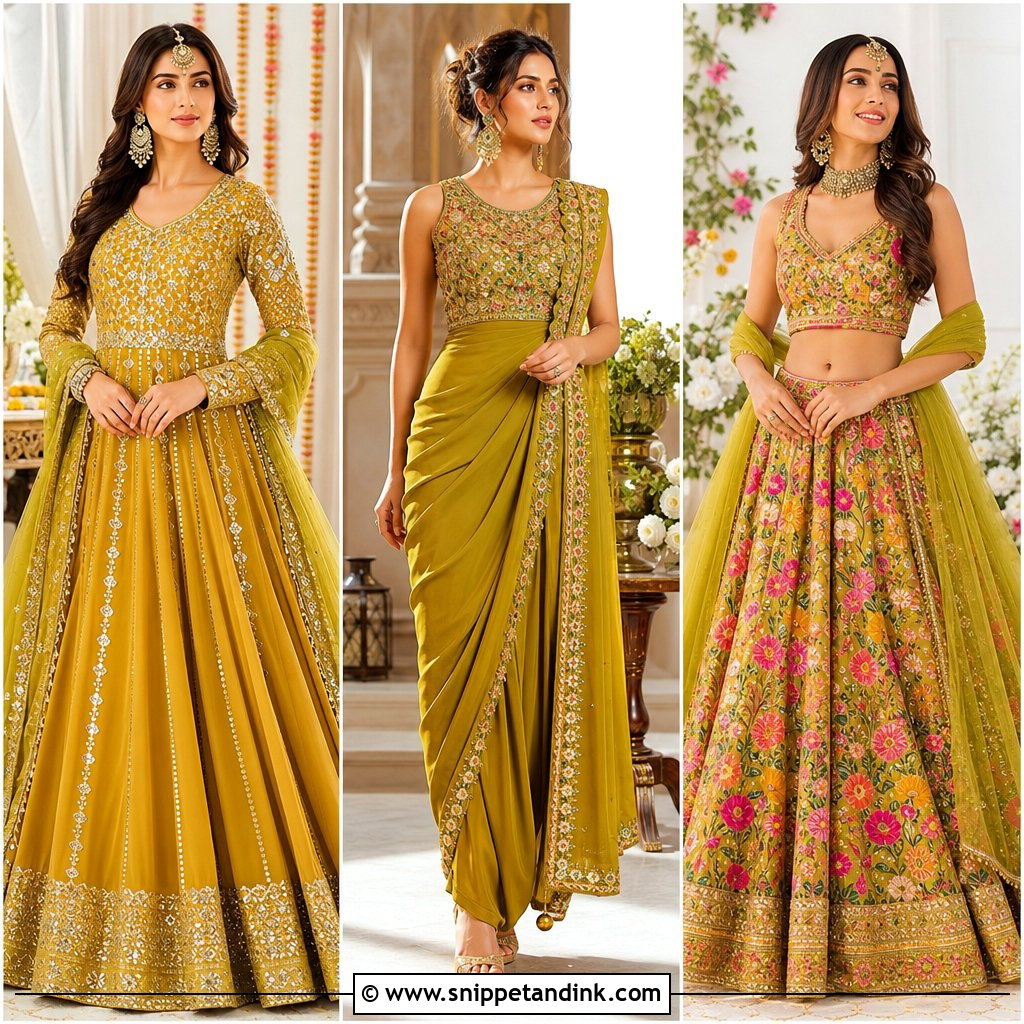
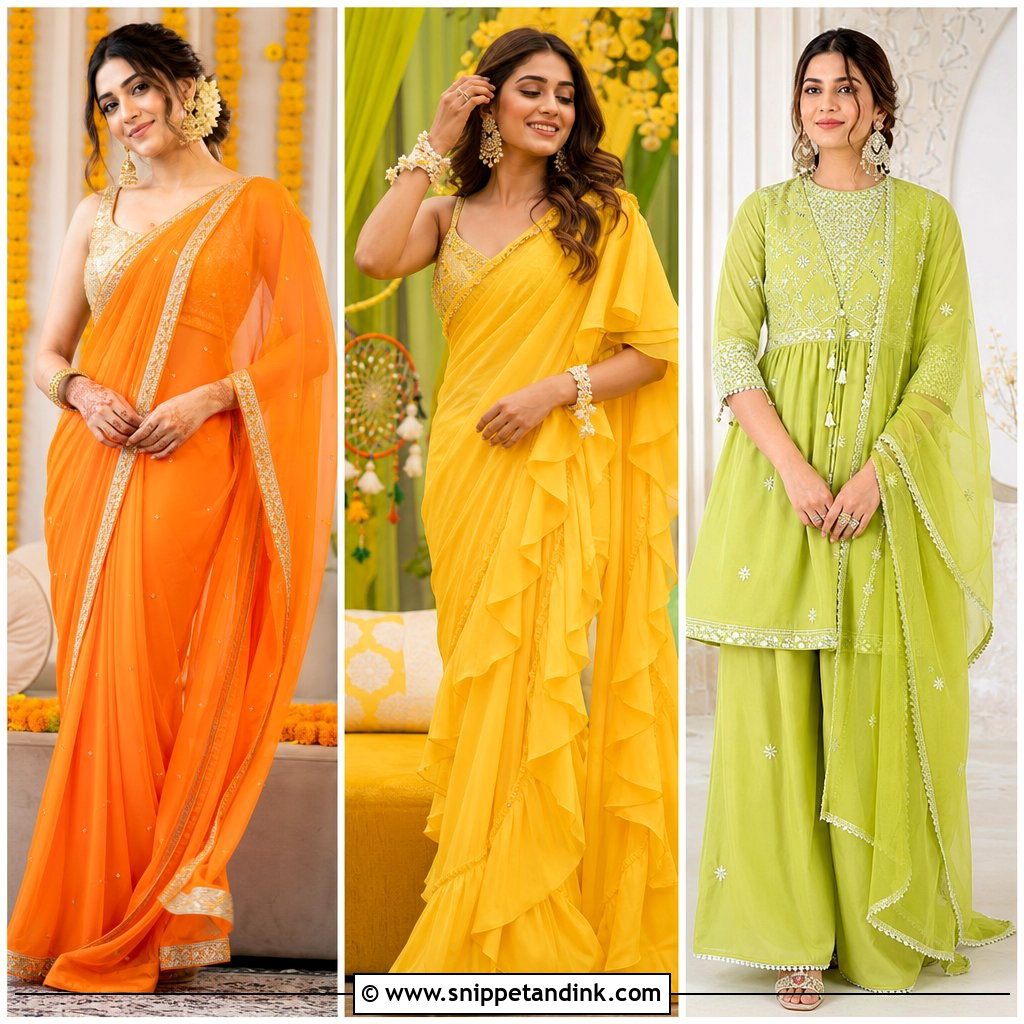
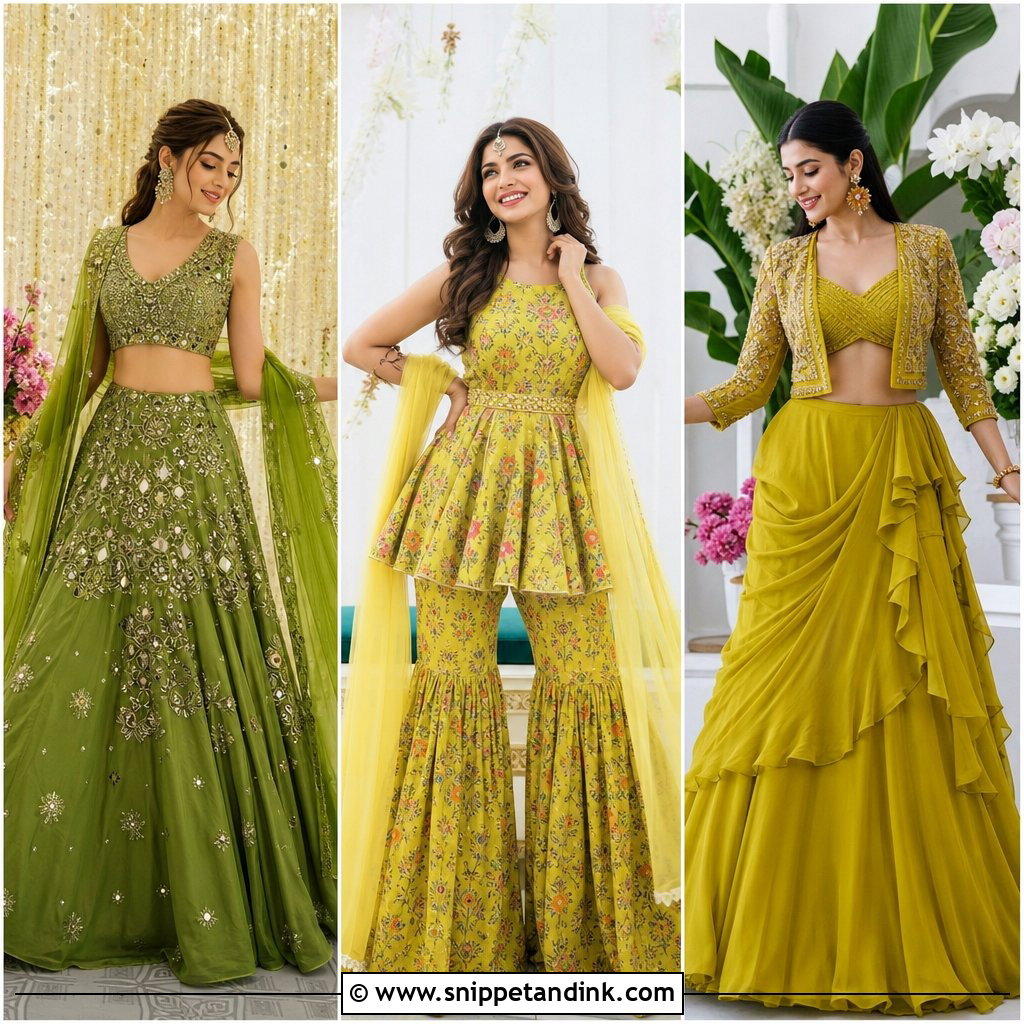
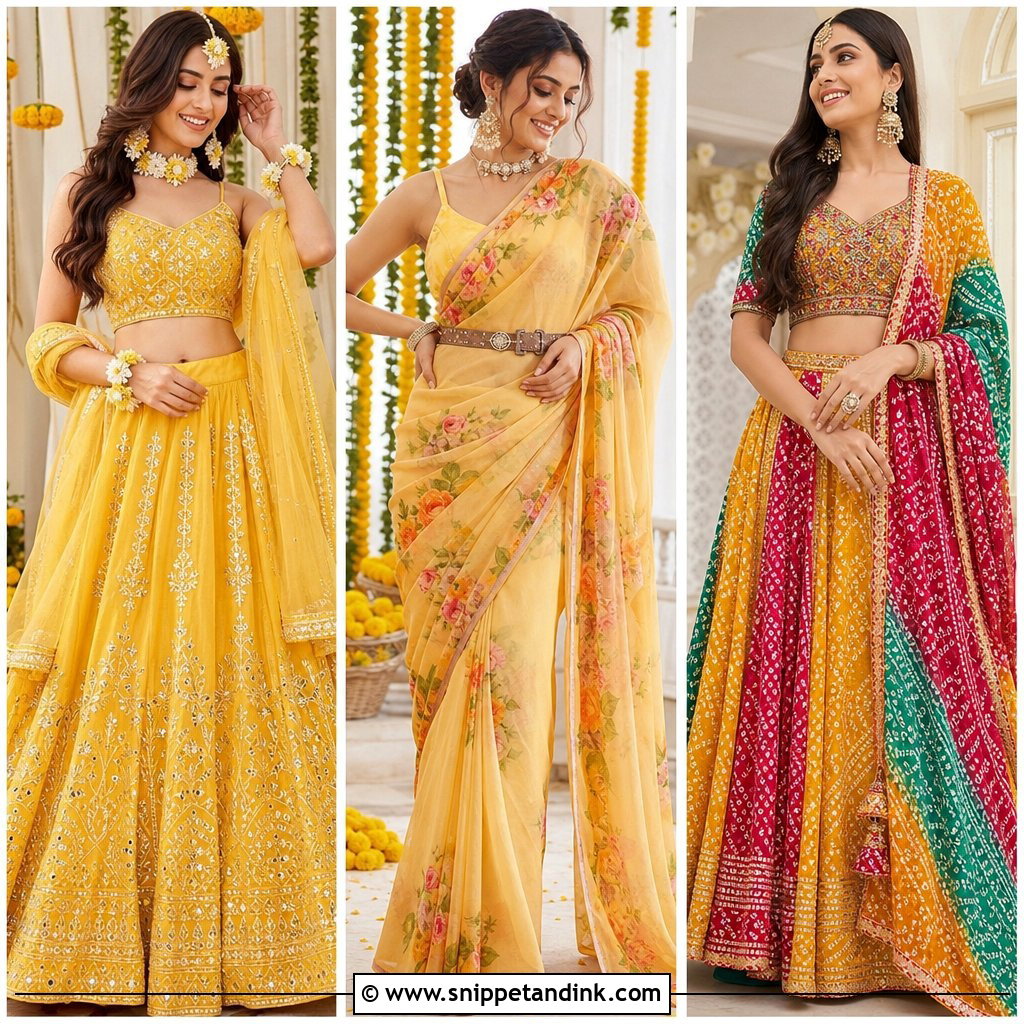
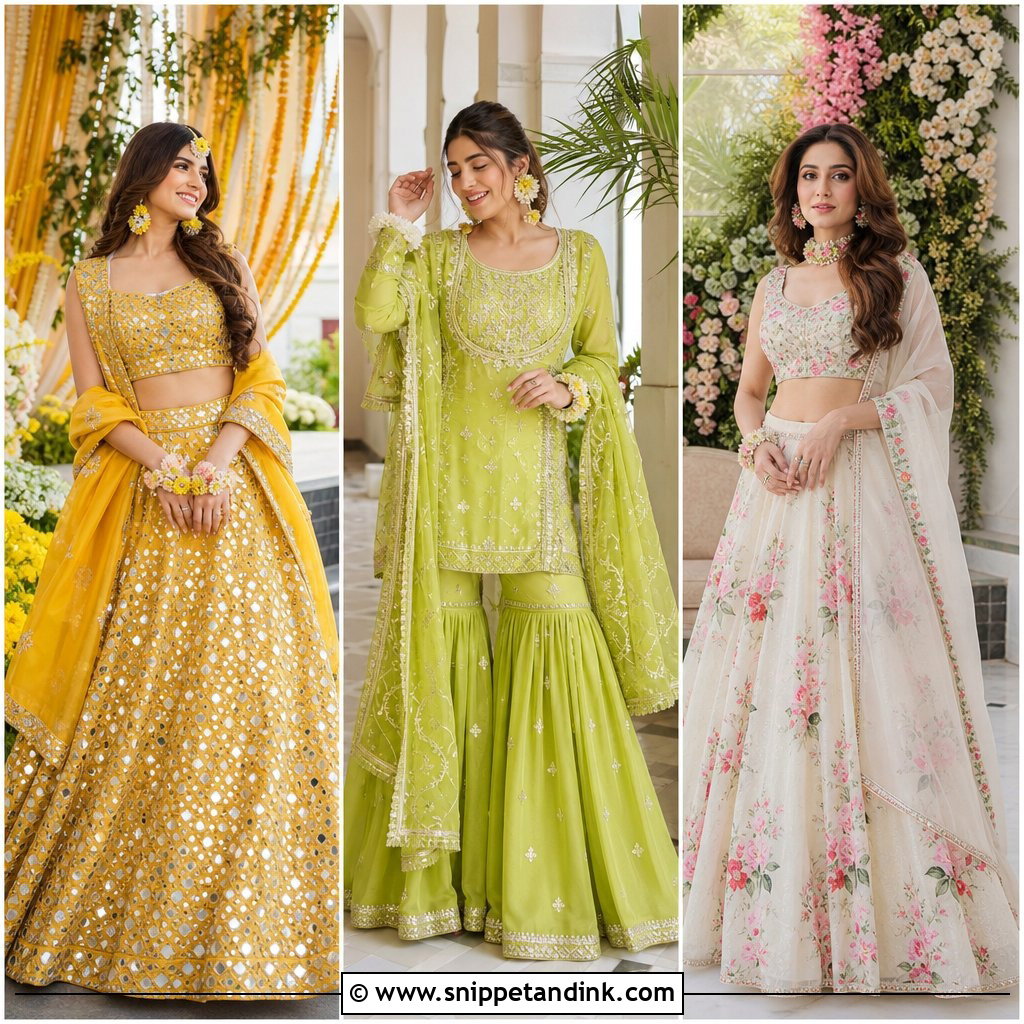
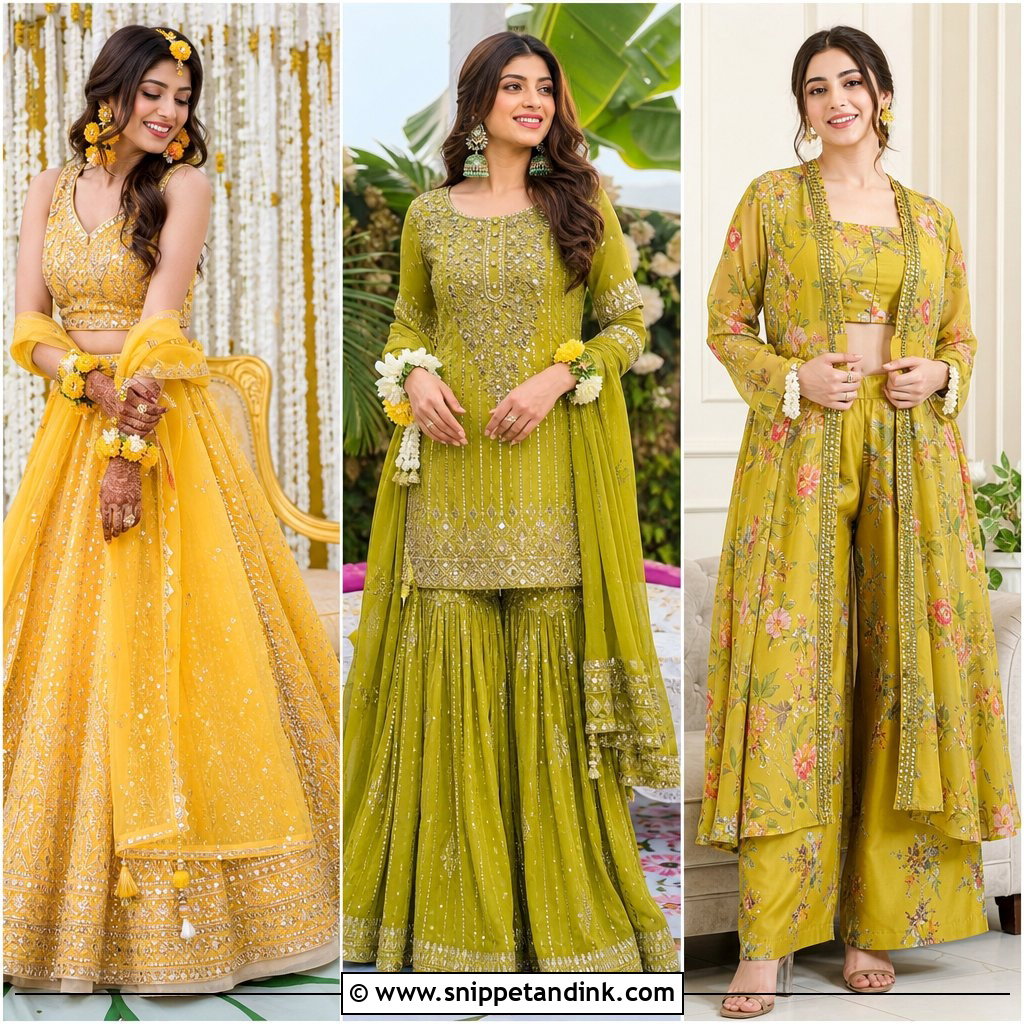
Yellow is the colour most families expect, and it earns its place because haldi tones flatter almost every skin under daylight. The catch is fabric. A heavy raw silk in yellow turns brassy and stiff, so I pull georgette, cotton silk or chanderi with gota patti or mirror work instead. Keep the choli short or sleeveless so the artist can reach your elbow, and pin the dupatta to one shoulder before you sit. Floral jewelry and juttis finish it without adding weight to your arms.
2. Green Mehandi Anarkali Suit
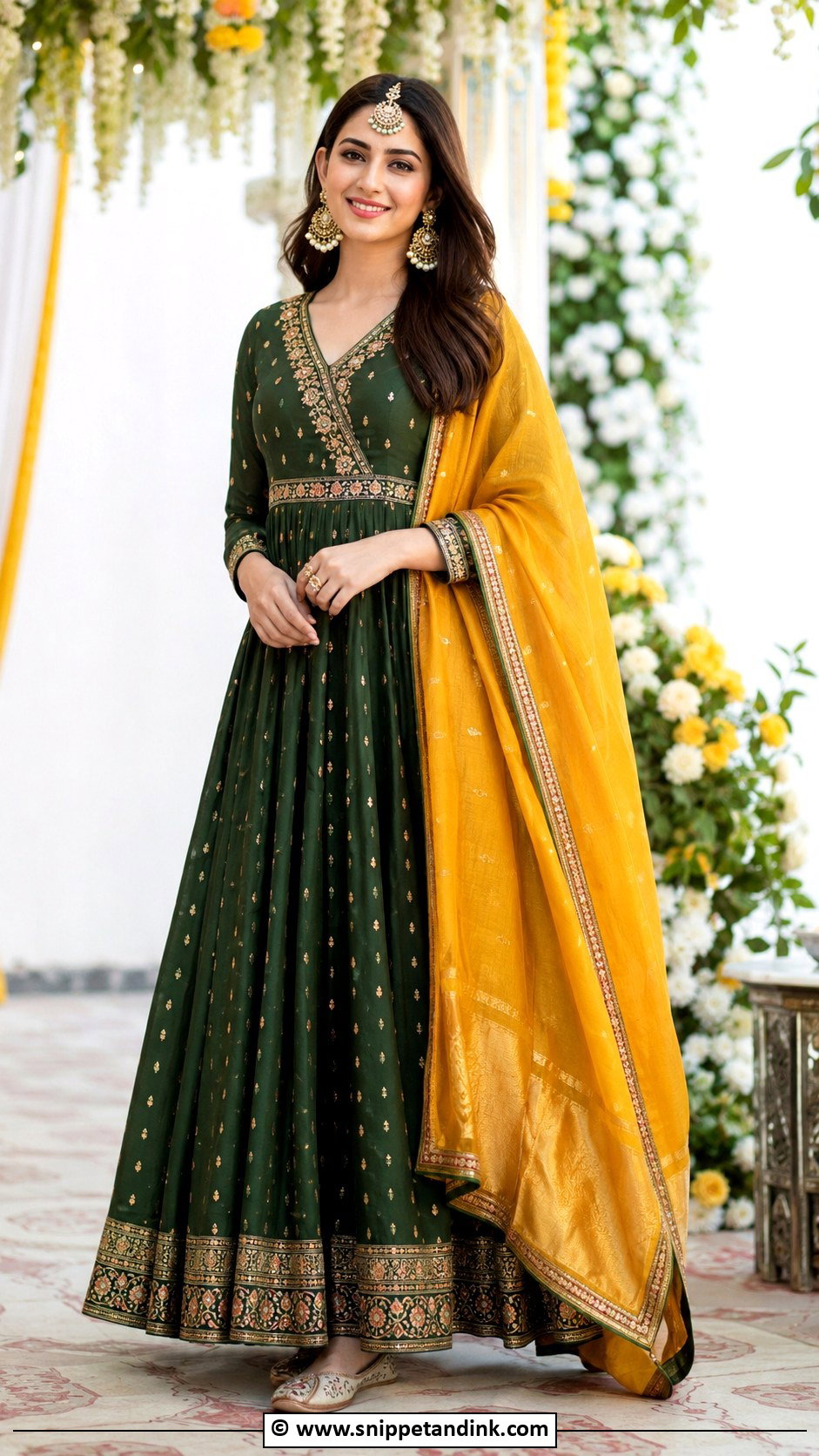
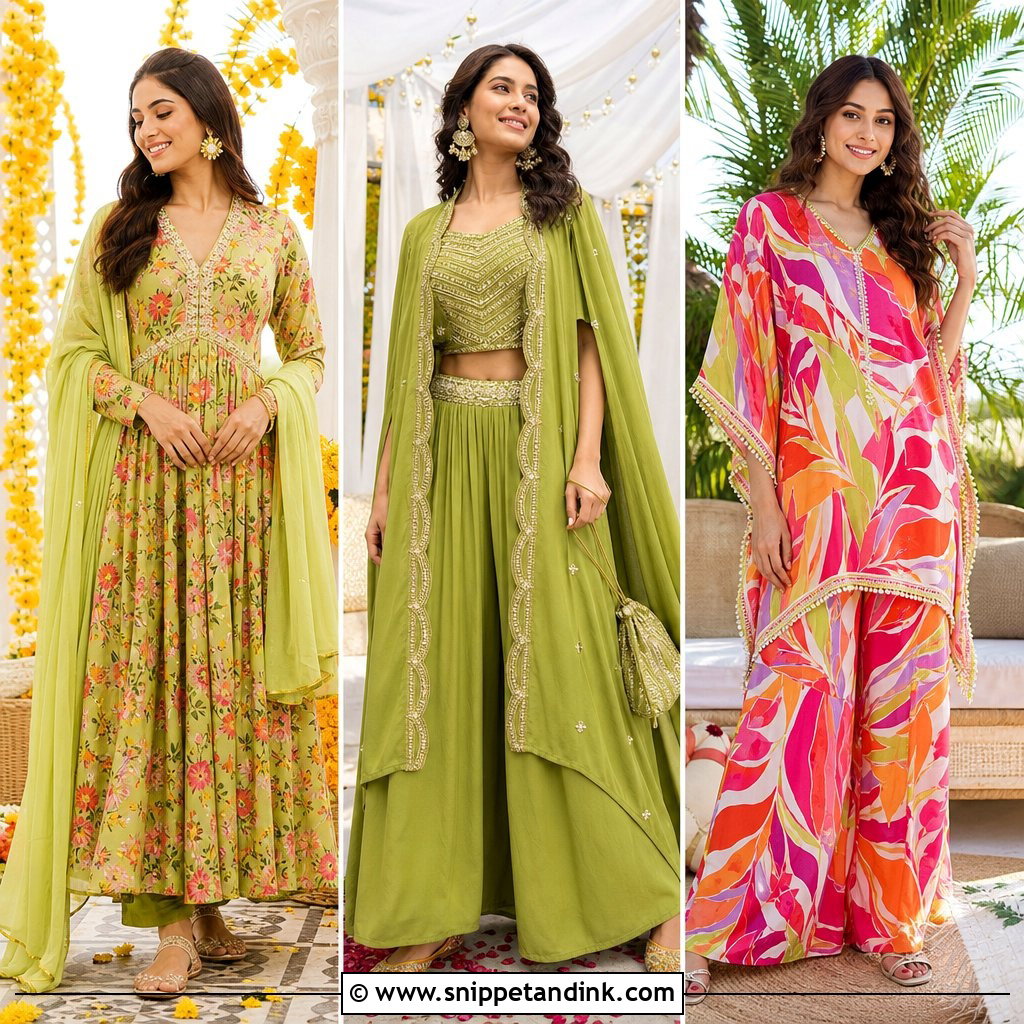
The flare of an Anarkali does what a lehenga does with half the weight, which matters if you’re dancing straight after your henna dries. A green Mehandi Anarkali suit also sits well against fresh marigold décor and the dark orange of a developing stain. I look for a floor-length cut with a V or sweetheart neck and either three-quarter sleeves or none at all. Long fitted sleeves are the one mistake here, because they can’t be pushed up past wet paste. A contrasting yellow or pink dupatta, a maang tikka and flat embroidered shoes are all it needs.
3. Floral Mehandi Sharara Set
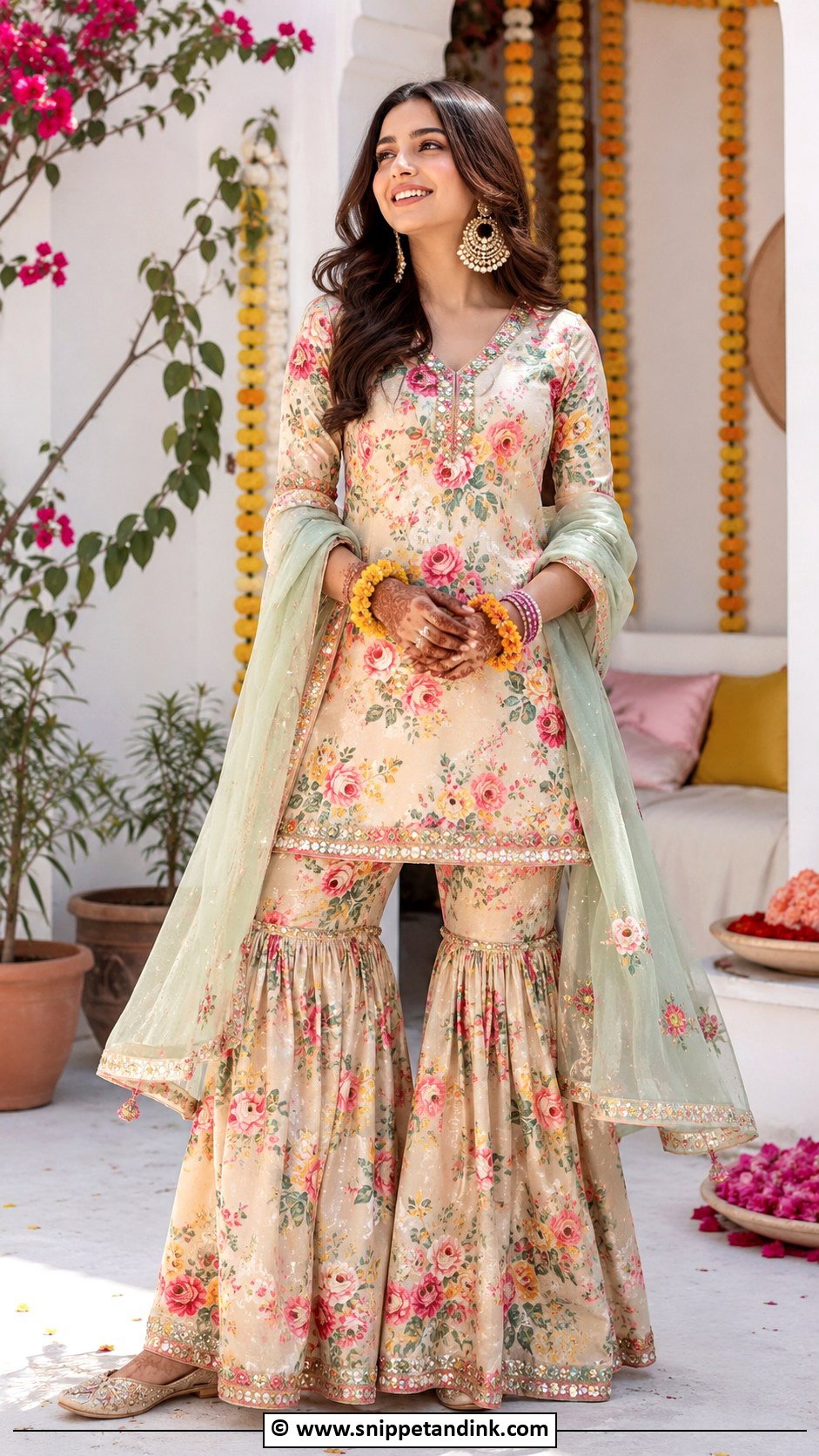
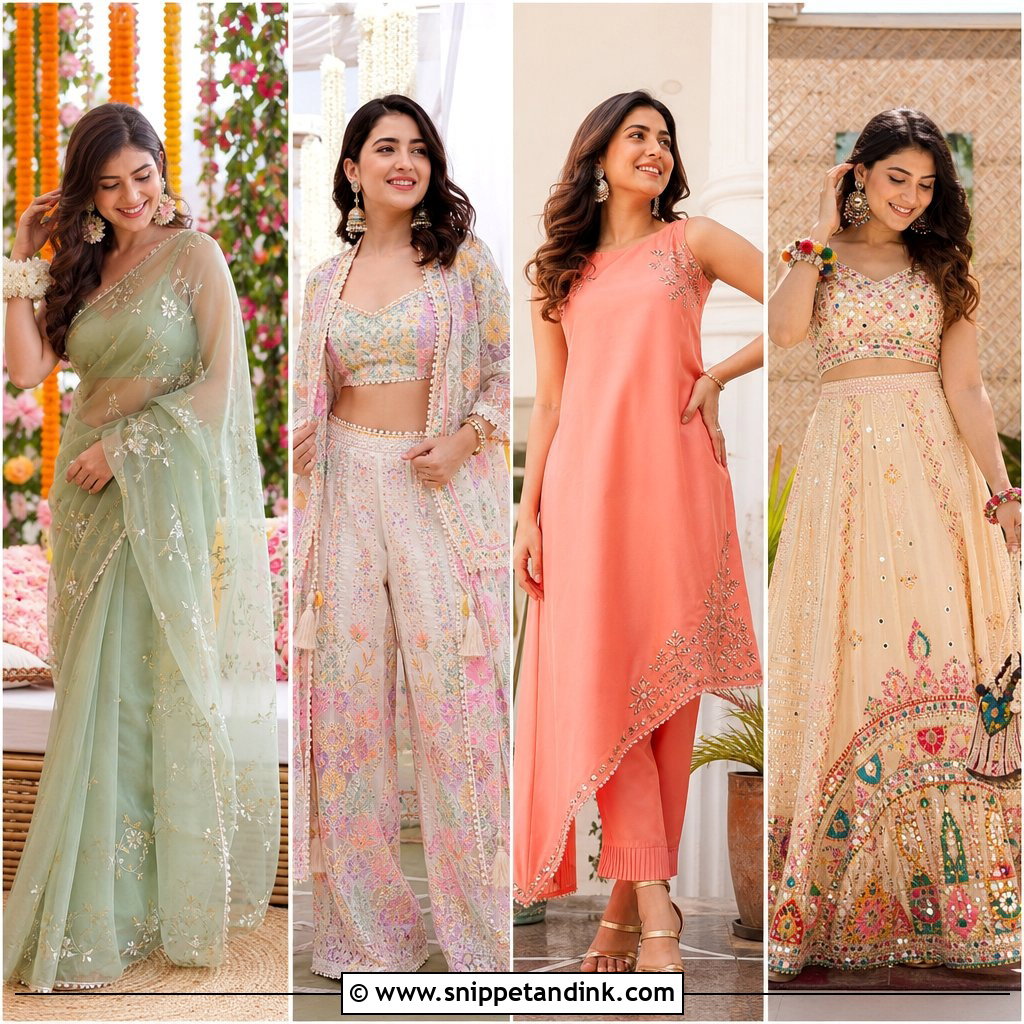
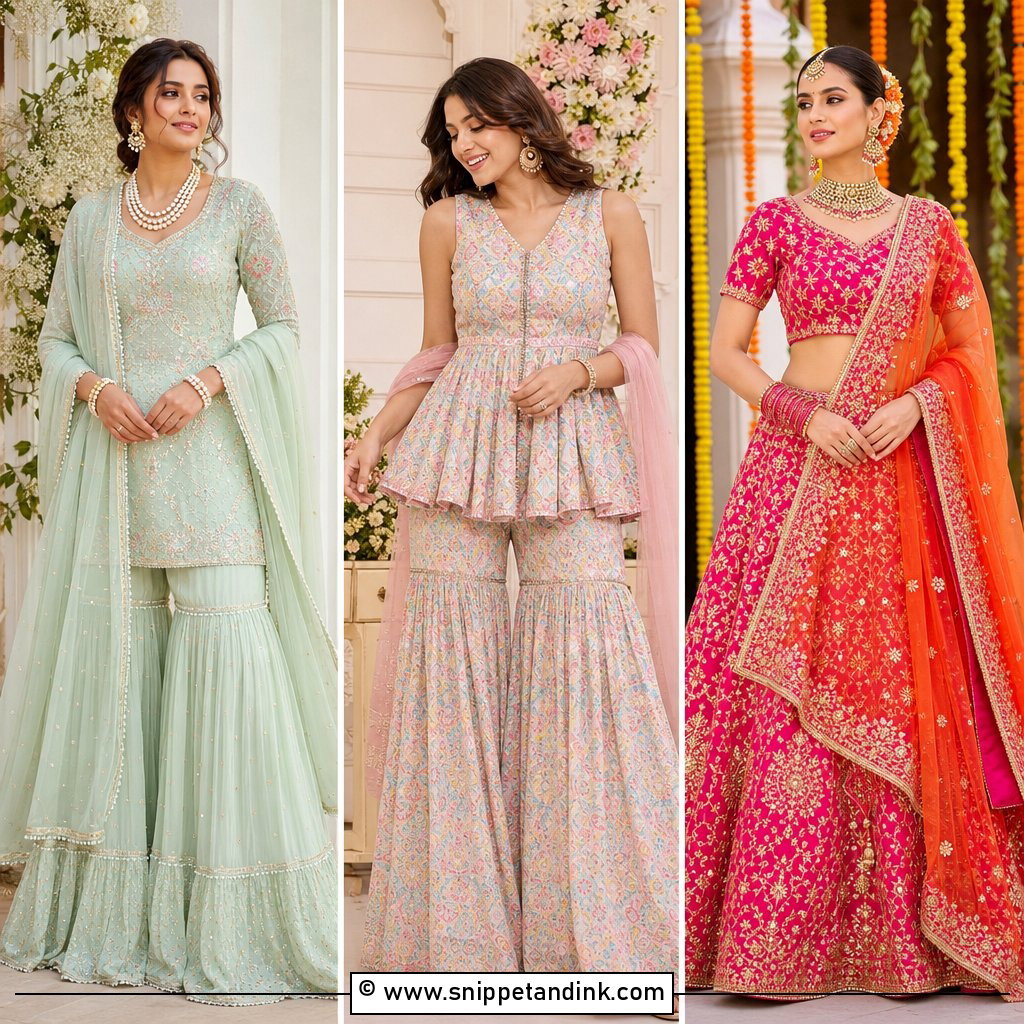
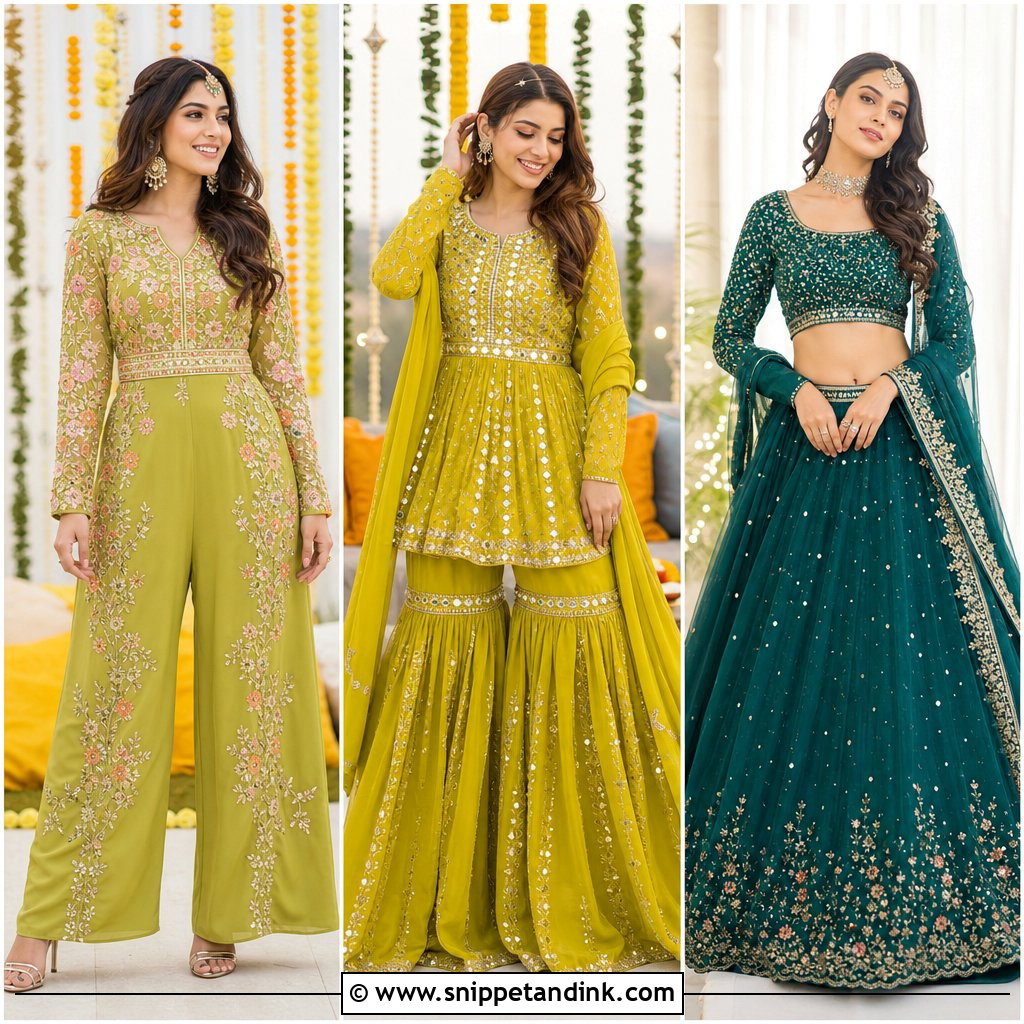
Sharara pants are the most forgiving thing you can wear to sit cross-legged for two hours. A floral Mehandi sharara set pairs that ease with a short kurta, so the print shows in full-length photos instead of being lost in fabric folds. Lime, coral and ivory prints all work. If you want shine, keep it to small mirror dots or a gota hem, since heavy sequins catch on the cushion. I’d wear bangles on one wrist only, leaving the other bare for the artist.
4. Multi Color Mehandi Lehenga
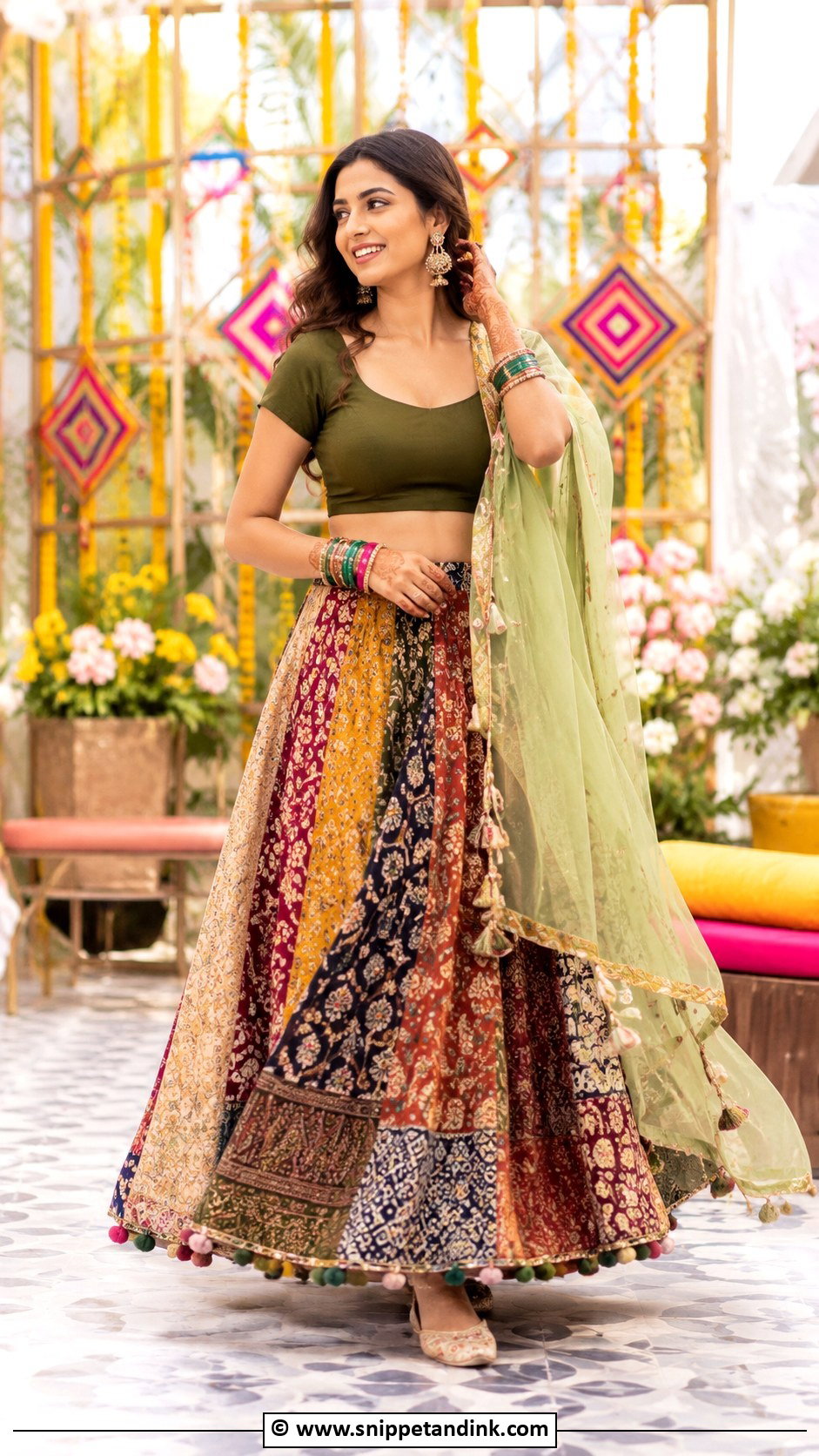
Patchwork kalis in five colours carry a lot of visual noise, so everything around them has to calm down. With a multi color lehenga I keep the blouse in one solid shade pulled from the skirt and choose the lightest dupatta I can find. Check the stiffness before you buy: some printed cotton skirts are lined with buckram and stand away from the body, which makes walking through a crowded lawn awkward. Jhumkas, loose waves and neutral juttis let the skirt stay the loudest thing in the room.
5. Chikankari Mehandi Co Ord Set
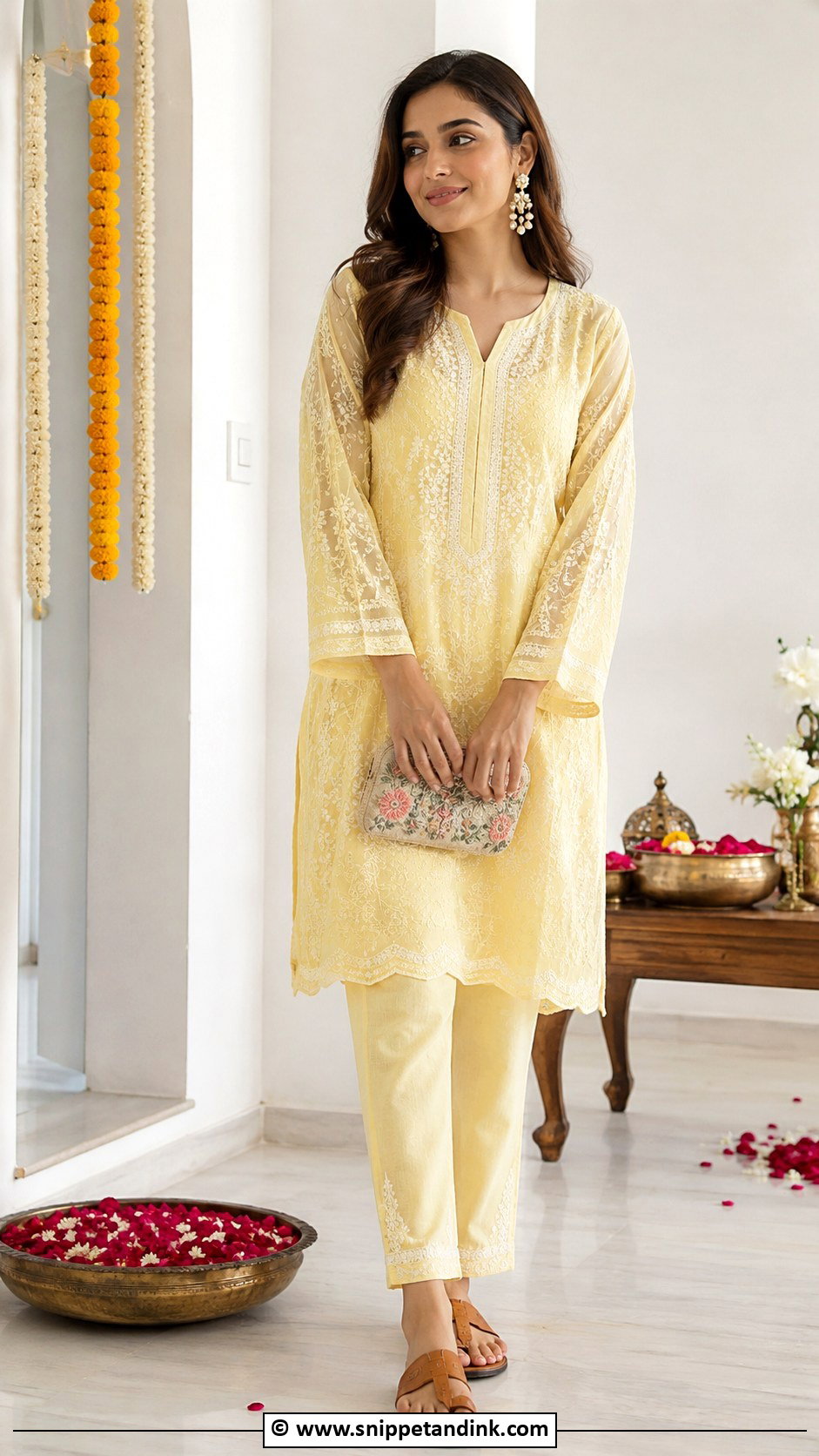
Chikankari is shadow work and fine white thread on cotton or georgette, so its appeal is texture you notice up close. A chikankari Mehandi co ord set suits smaller home functions and destination events where heat is the real enemy. Soft yellow, mint or peach bases keep it festive. Because the embroidery is subtle, I add one firm piece of jewelry, usually pearl earrings, and a neat bun so the outfit doesn’t read as daywear. Kolhapuri sandals keep it honest and comfortable.
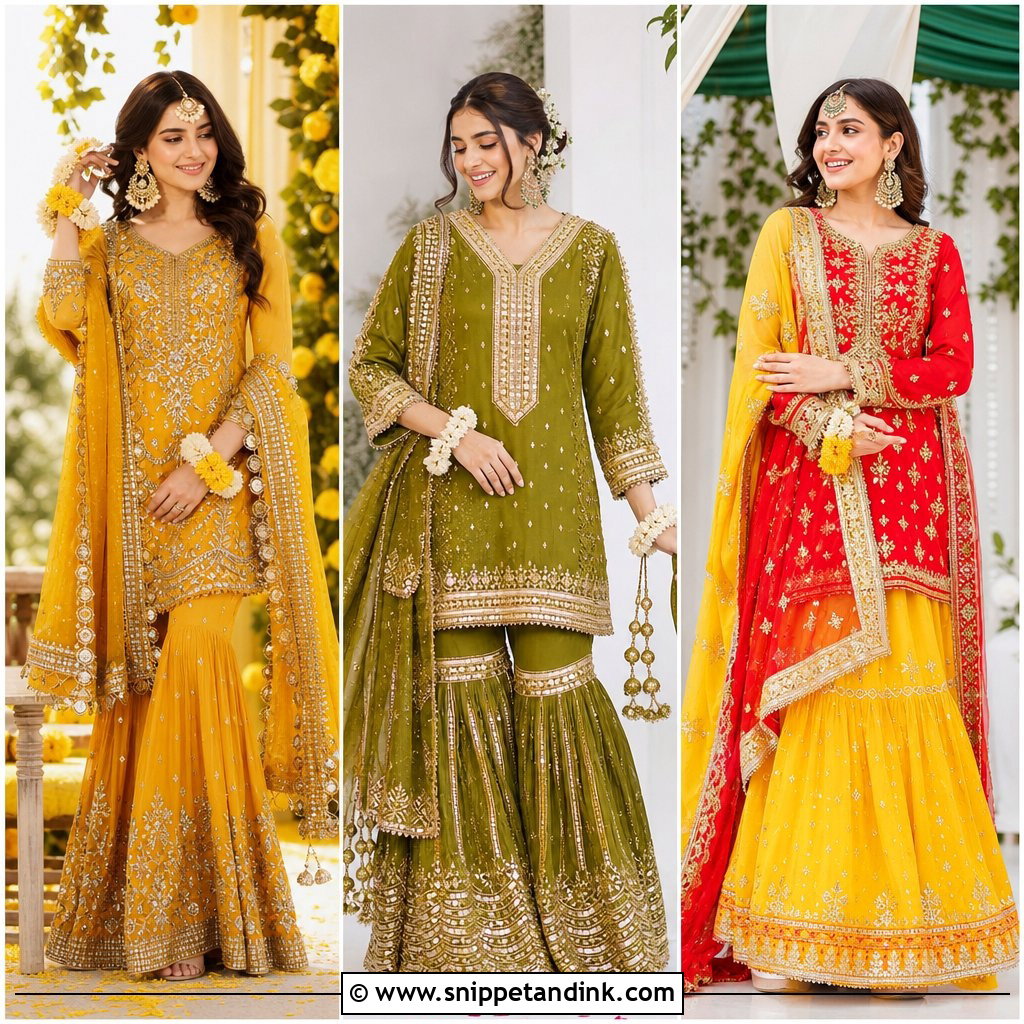
6. Orange Mehandi Gharara Suit
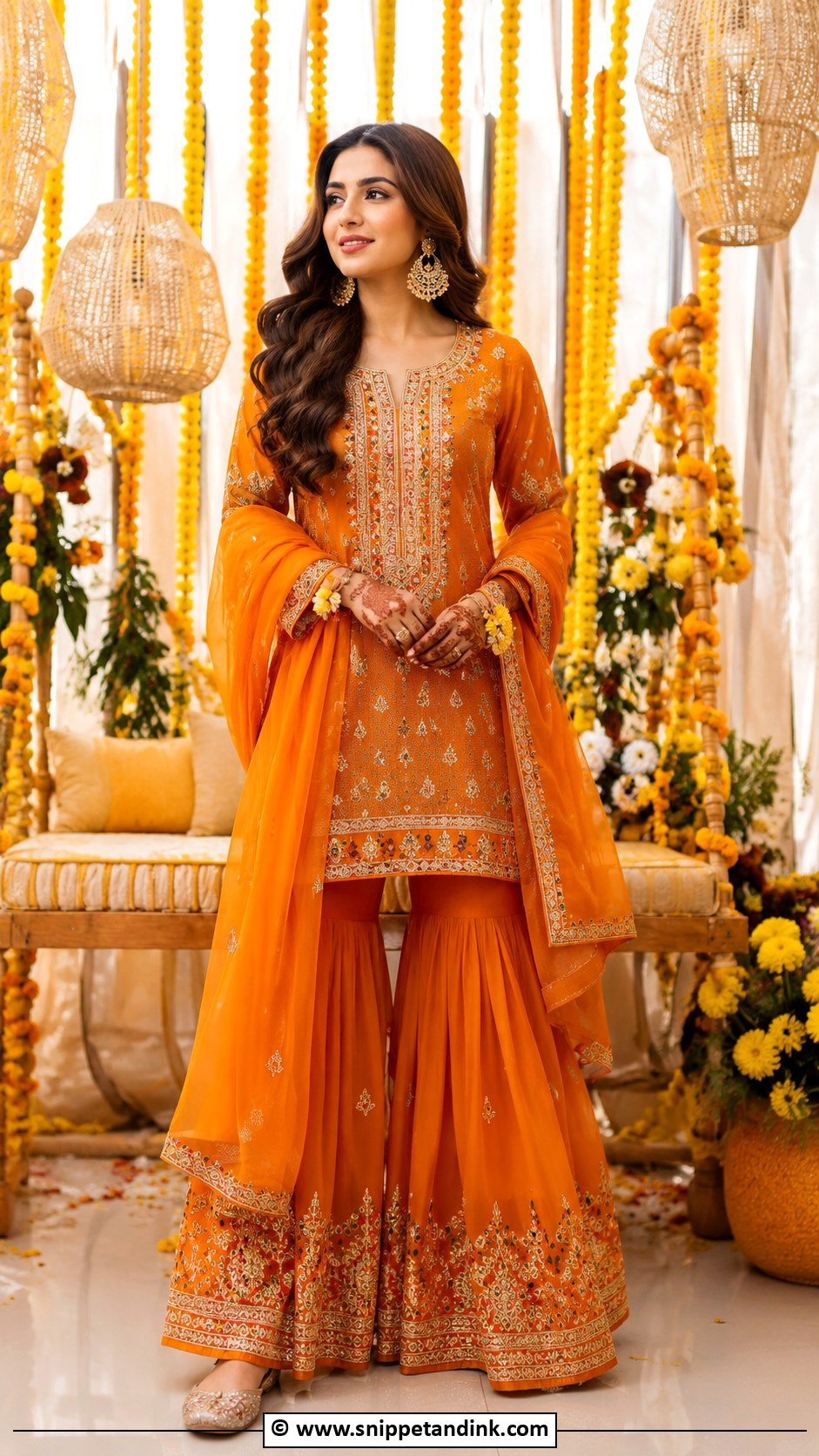
Gharara pants are joined at the knee with a band, and that seam is what gives the flare its drama. An orange gharara suit in marigold or burnt orange carries gold gota work better than almost any other colour. The flare also eats fabric, so try sitting down in the shop; a badly cut gharara bunches at the knee and pulls at the waist. Drape the dupatta over one shoulder, add chaandbalis and embroidered khussas, and you have a regal Pakistani Mehandi look without bridal weight.
7. Pink Mehandi Palazzo Suit
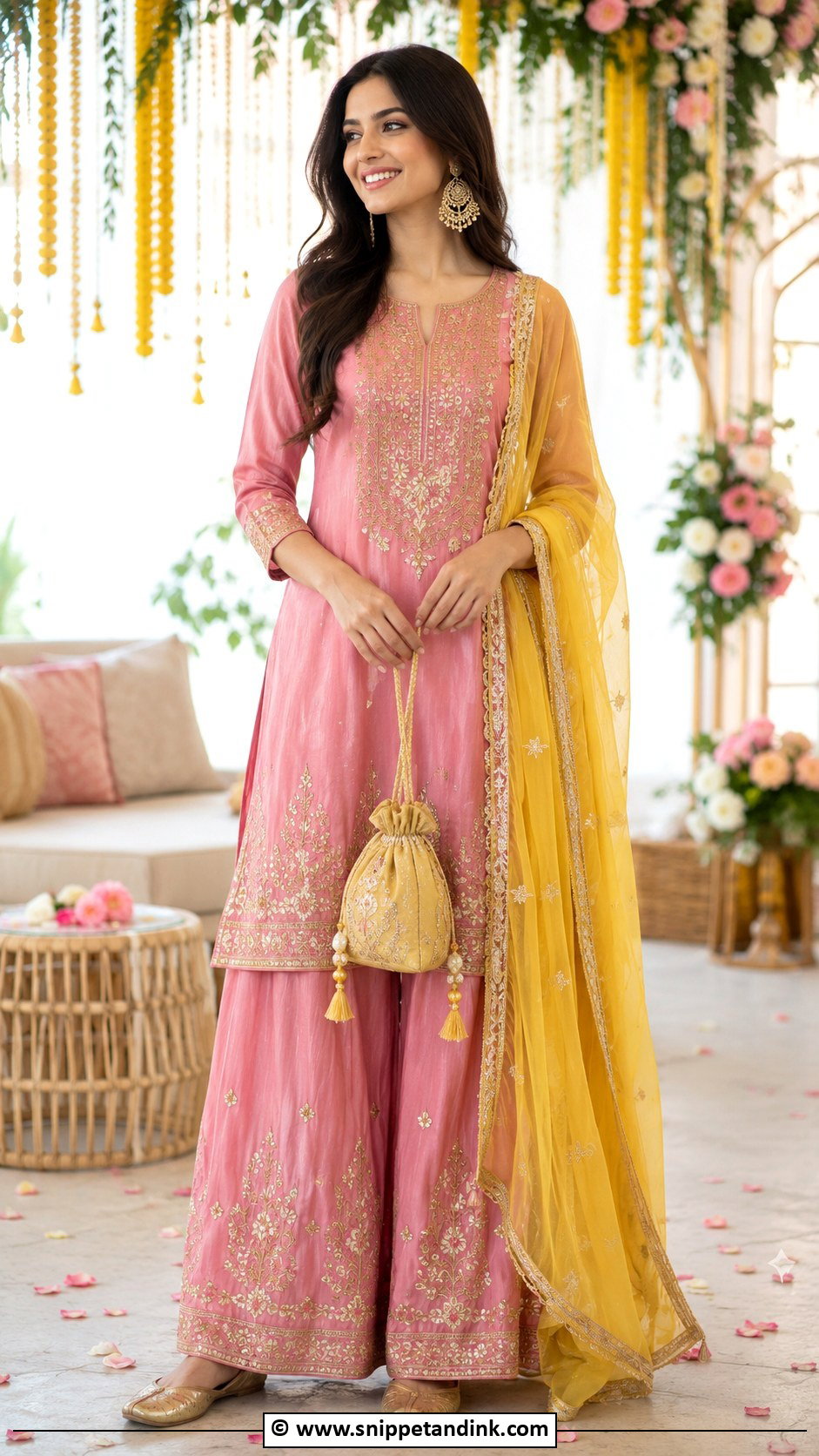
I reach for a palazzo suit when a client wants something she’ll wear again at Eid or a cousin’s dholki. Rose, rani or blush pink with a yellow or green dupatta still says Mehandi, and the wide pants let you fold your legs under you without the fabric pulling. A straight or A-line kurta keeps the line tidy. Gold earrings, a few bangles and a potli are enough. Skip a long trailing hem here, as palazzos that touch the floor collect henna crumbs and dust from floor seating.
8. Mirror Work Mehandi Lehenga
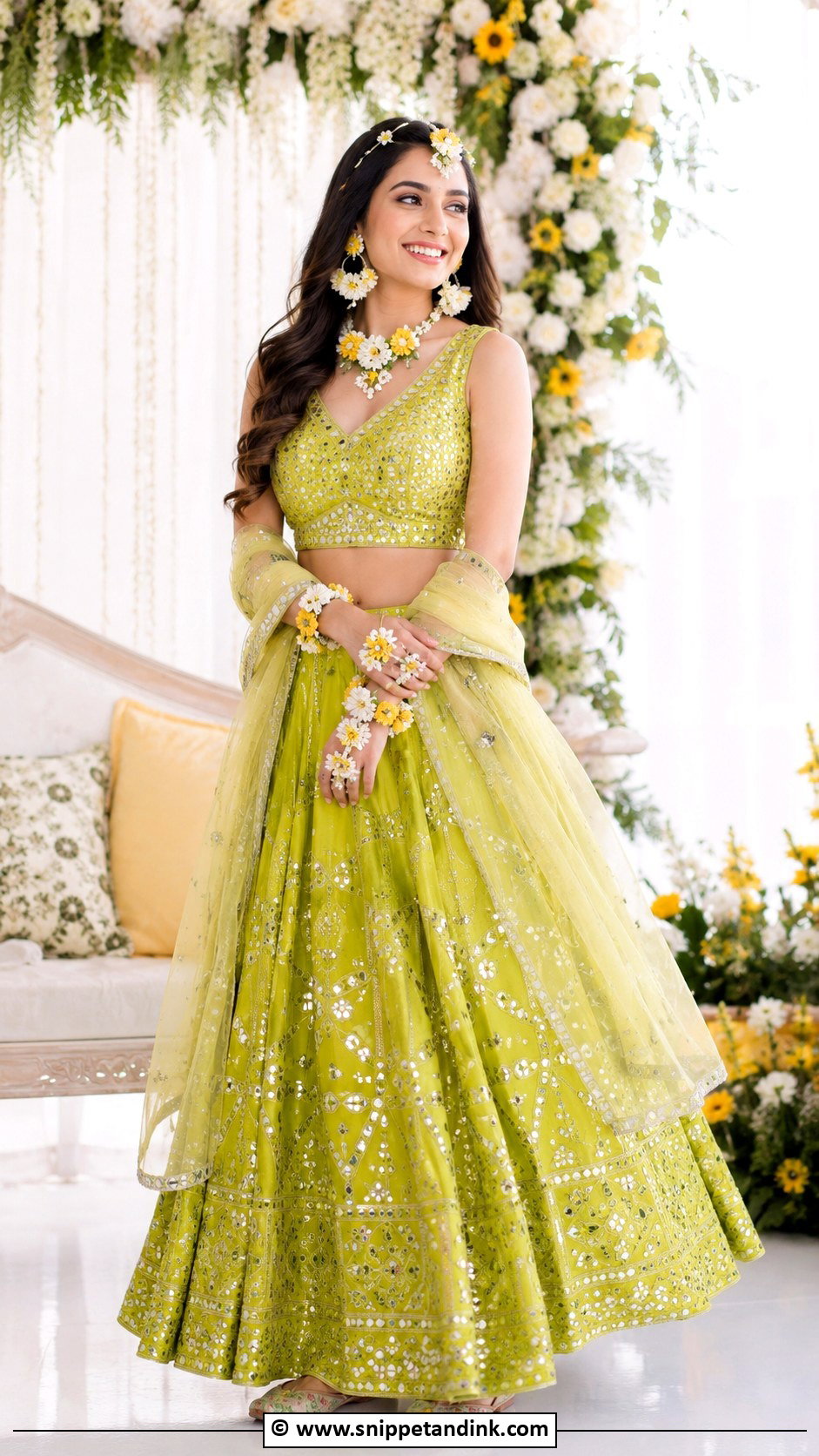
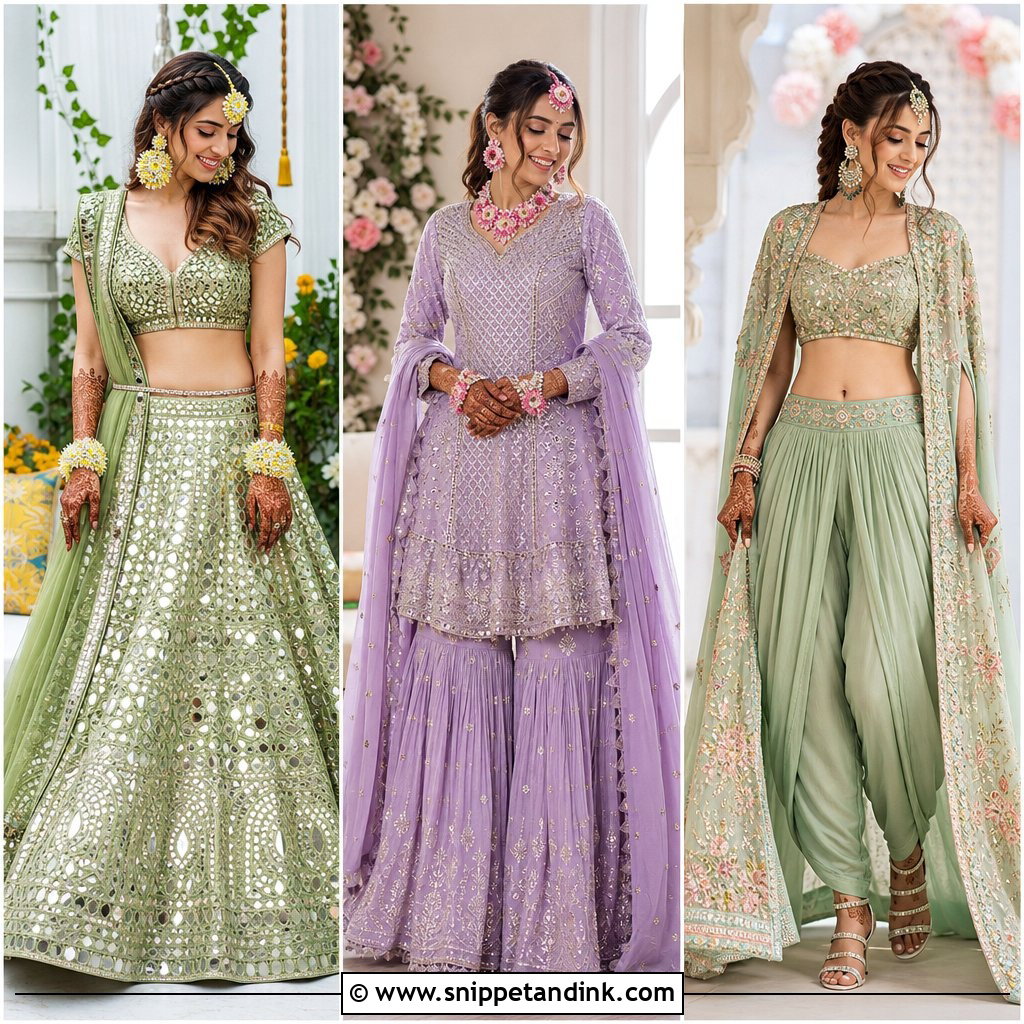
Real mirror work is small glass discs stitched down with thread, and it throws light back at the camera in a way sequins can’t. That sparkle means a mirror work lehenga needs very little jewelry. Pick a bright base like turquoise or lime and pair it with a sleeveless or short-sleeved blouse. One warning from fittings: the mirrors have edges, and a loose dupatta dragged across wet henna will smear it, so I pin the dupatta flat before the artist begins. Fresh flower jewelry suits the shine better than heavy gold.
9. Lime Green Mehandi Kurta Set
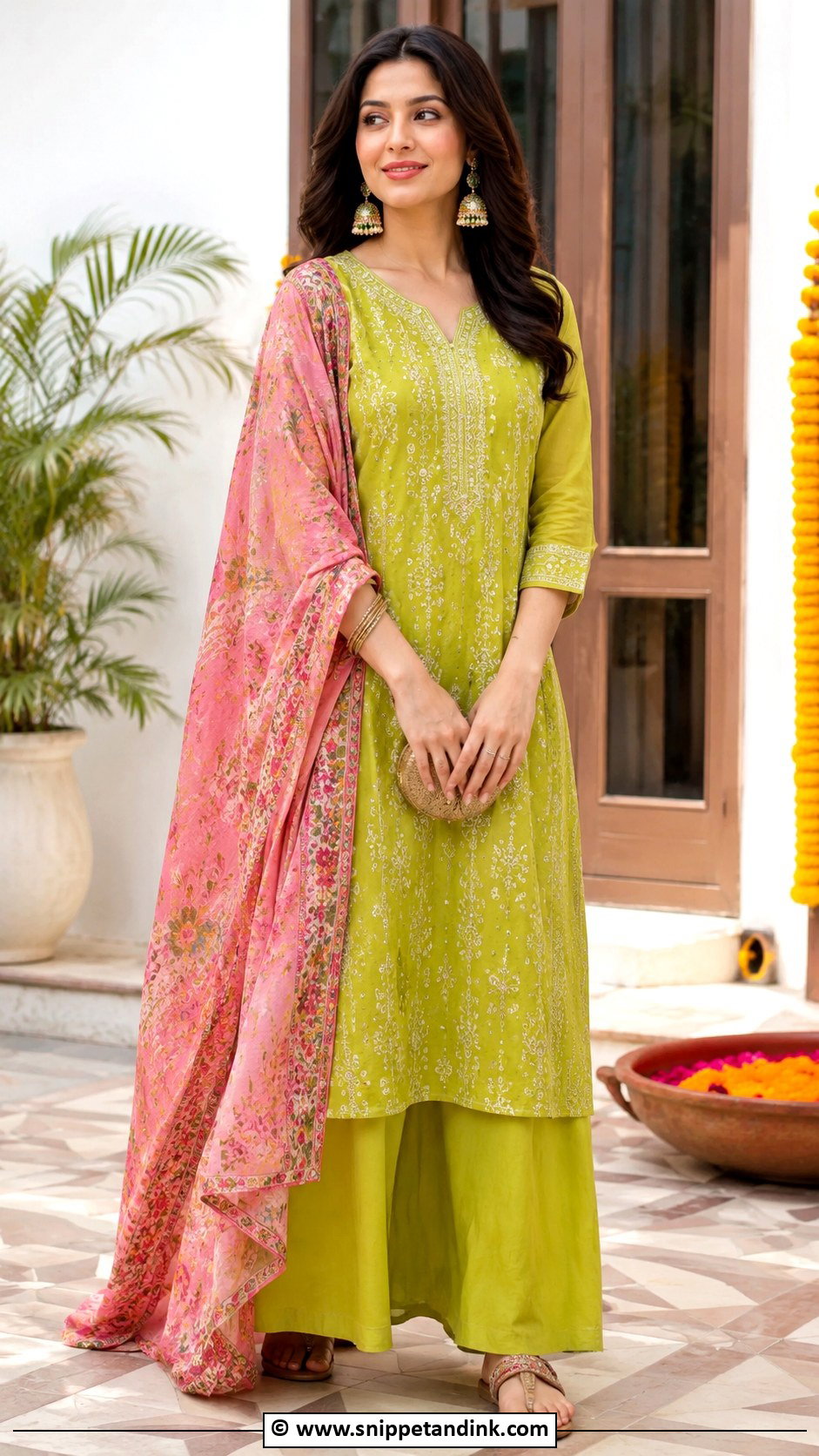
Lime green looks fresh in daylight and makes a henna stain read darker beside it. For a lime green kurta set I’d choose cotton, muslin or light georgette with straight pants or cigarette trousers, since a slim leg looks smart when you’re standing at a home ceremony. Muslin creases quickly, so steam it on the morning, not the night before. Add a printed pink or orange dupatta for contrast, then jhumkas and flat sandals. It’s the outfit I suggest most often for cousins who will be helping in the kitchen as well as dancing.
10. Bandhani Mehandi Lehenga
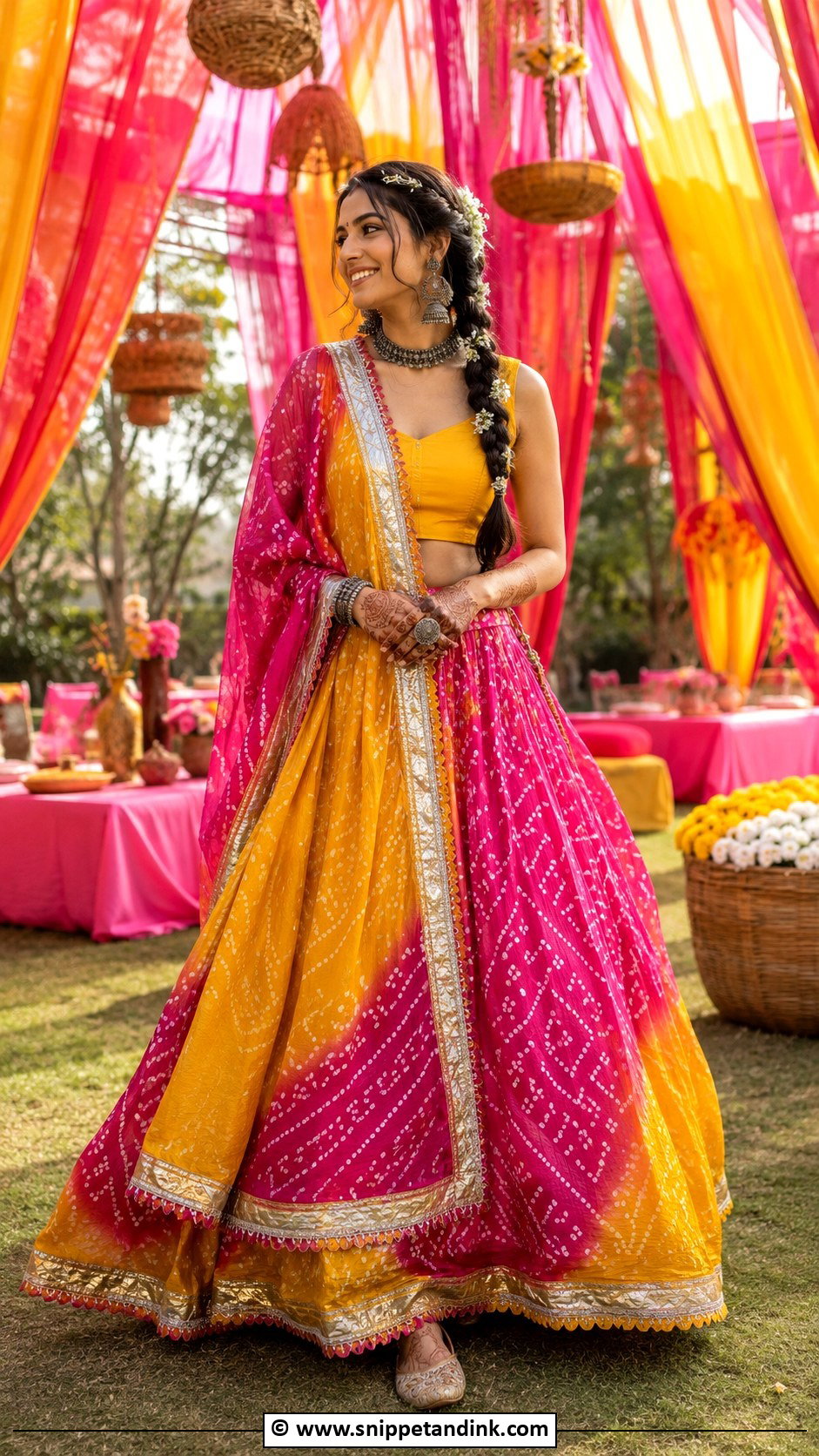
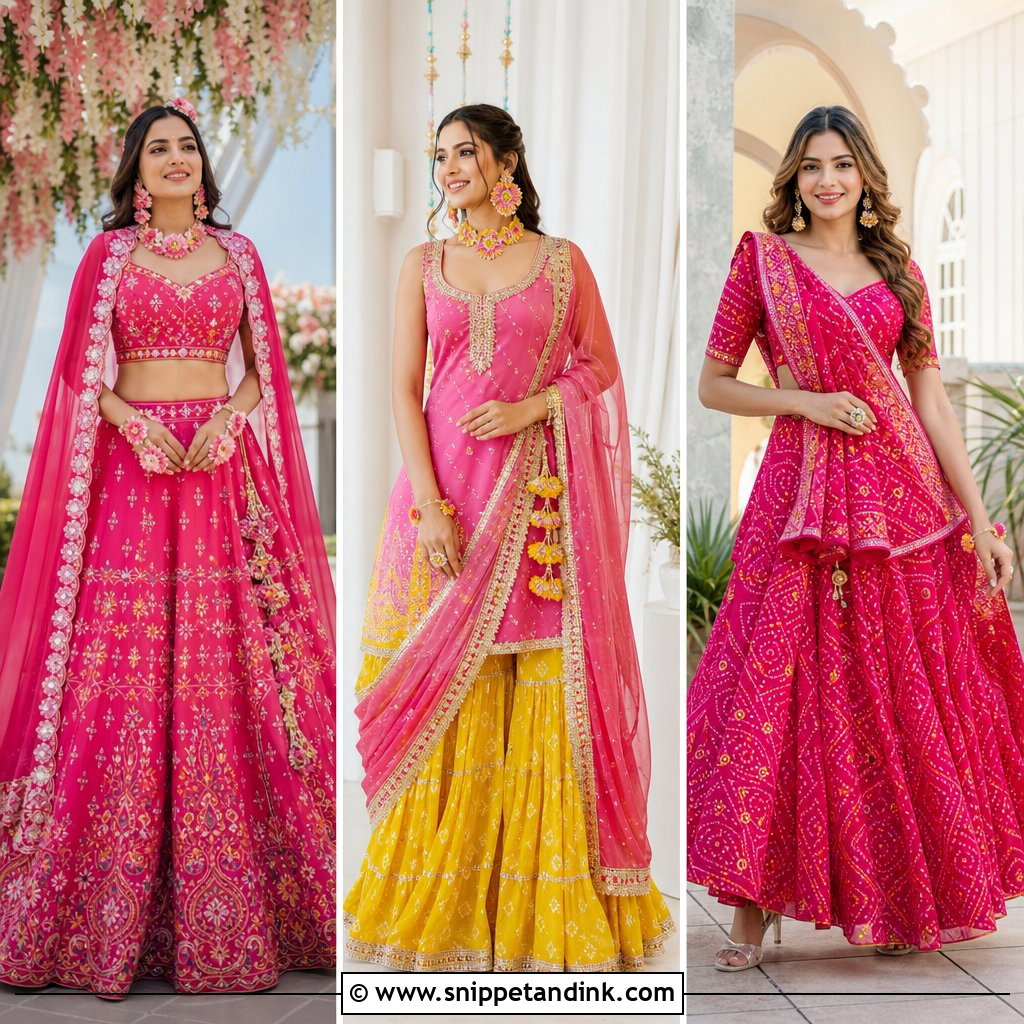
Bandhani is tie-dye made by pinching and binding tiny points of cloth before dyeing, and the dotted pattern does the festive work on its own. A bandhani lehenga needs only a gota edge on the dupatta and a plain blouse. It sits naturally at daytime lawn functions and with families who prefer regional dress. The fabric is often thin, so ask whether the skirt is lined, or it can go sheer in strong sun. Oxidized silver, a braid and fresh flowers suit its handmade character.
11. Pastel Mehandi Lehenga
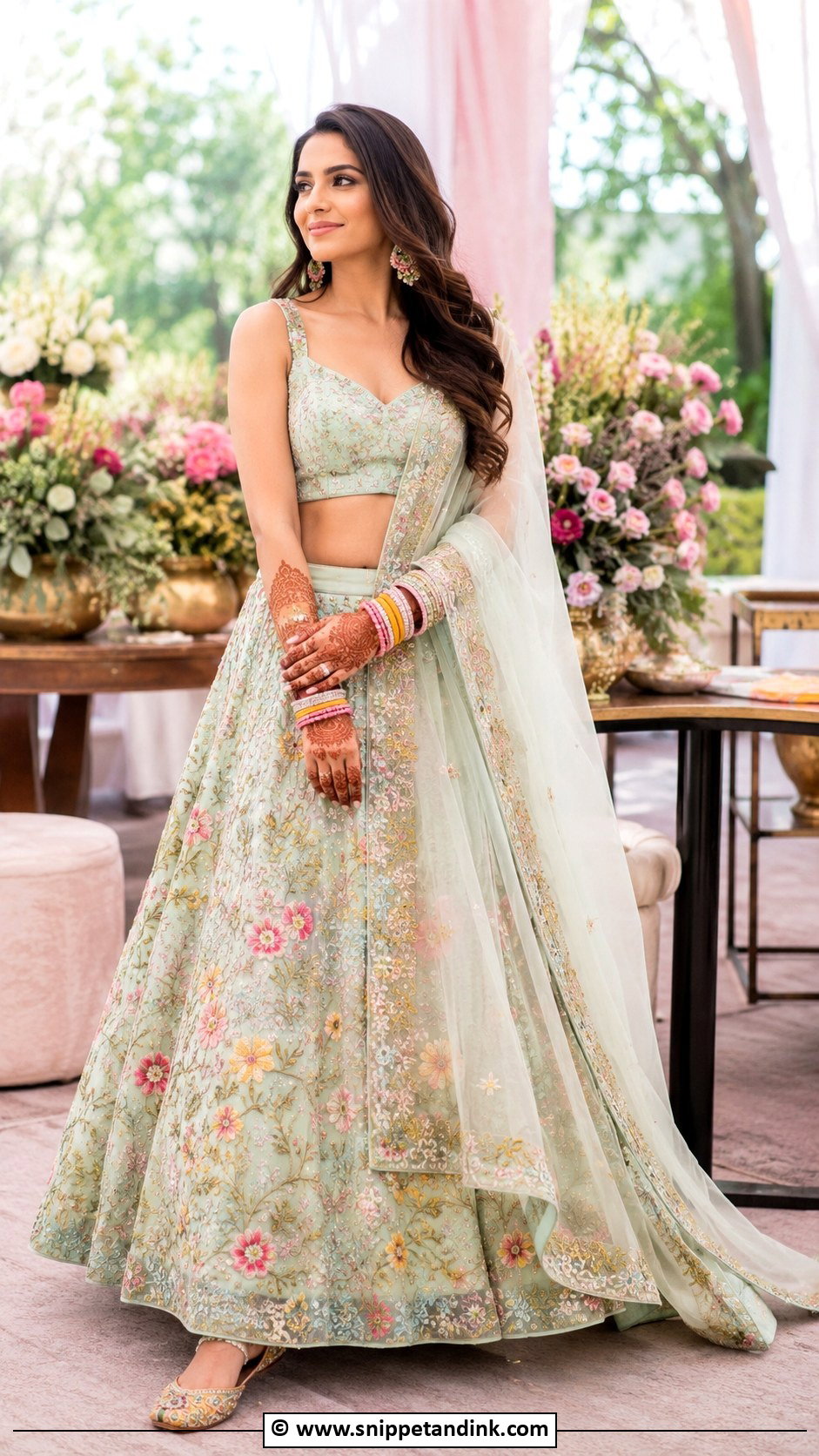
Pastels can disappear at a Mehandi surrounded by yellow drapes and marigold strings, which is the main thing I warn people about. A pastel lehenga in mint, peach or lavender holds its own when you add one bright accent: green bangles, a pink earring or a yellow dupatta. Organza and georgette keep it airy for afternoon heat. Pastels do show henna paste marks more than saturated colours, so be careful where you rest your hands while the design dries.
12. White Mehandi Sharara With Color Dupatta
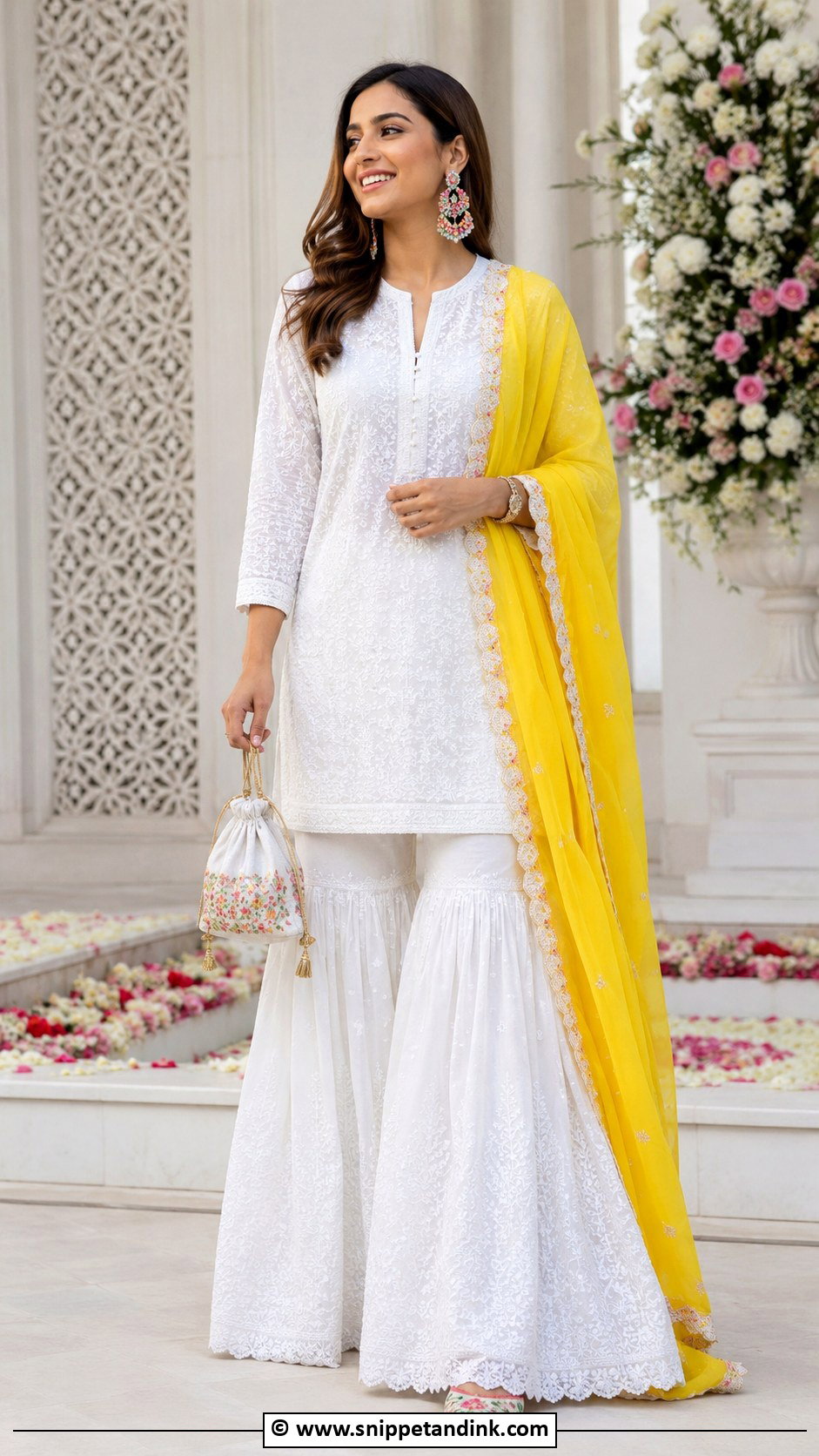
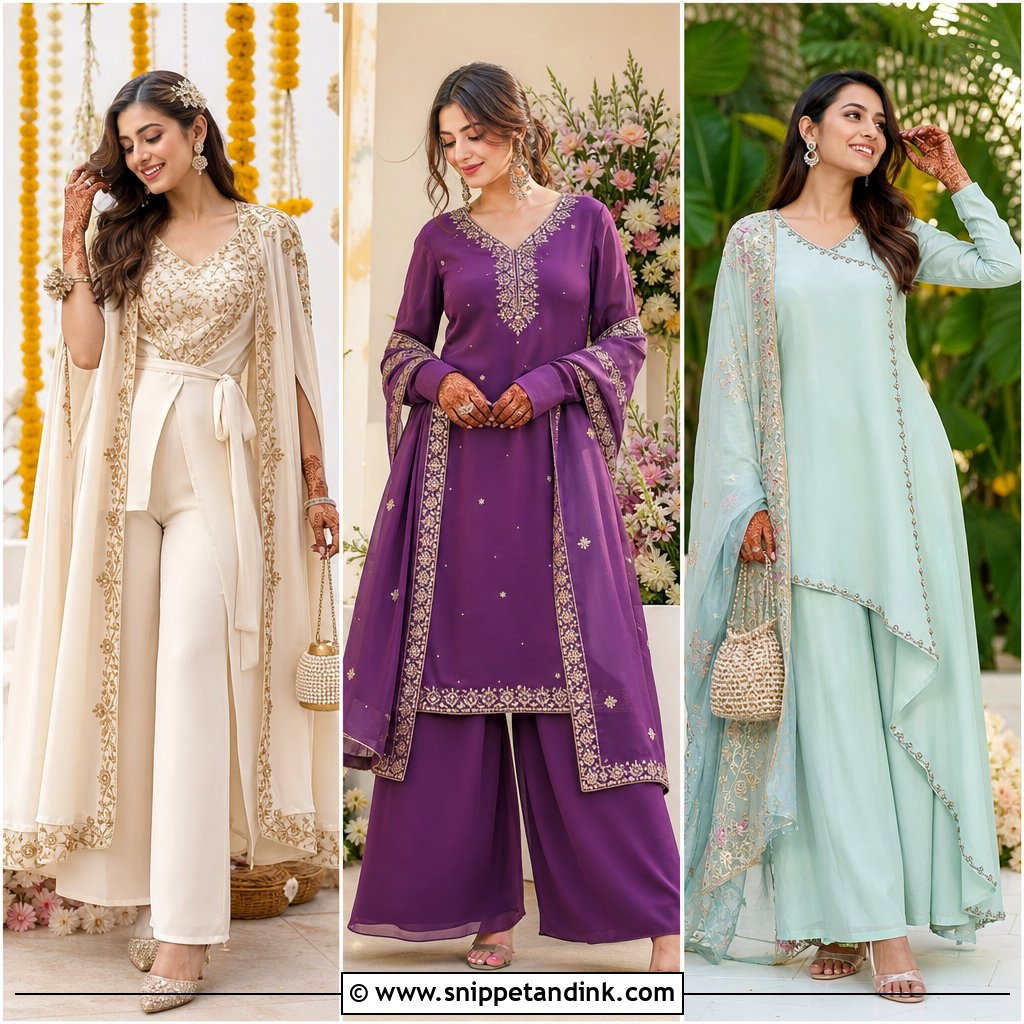
White is a bold choice at a henna function, and I only recommend it to people who can sit still. The paste and the lemon-sugar sealant both mark pale cotton. If you love the look, a white sharara with a colourful dupatta works best for guests who are not getting their own henna done. The dupatta carries the yellow or green of the event, while chikankari or thread embroidery adds texture to the white. A short kurta keeps the flare of the sharara visible.
13. Ruffle Saree Mehandi Dress
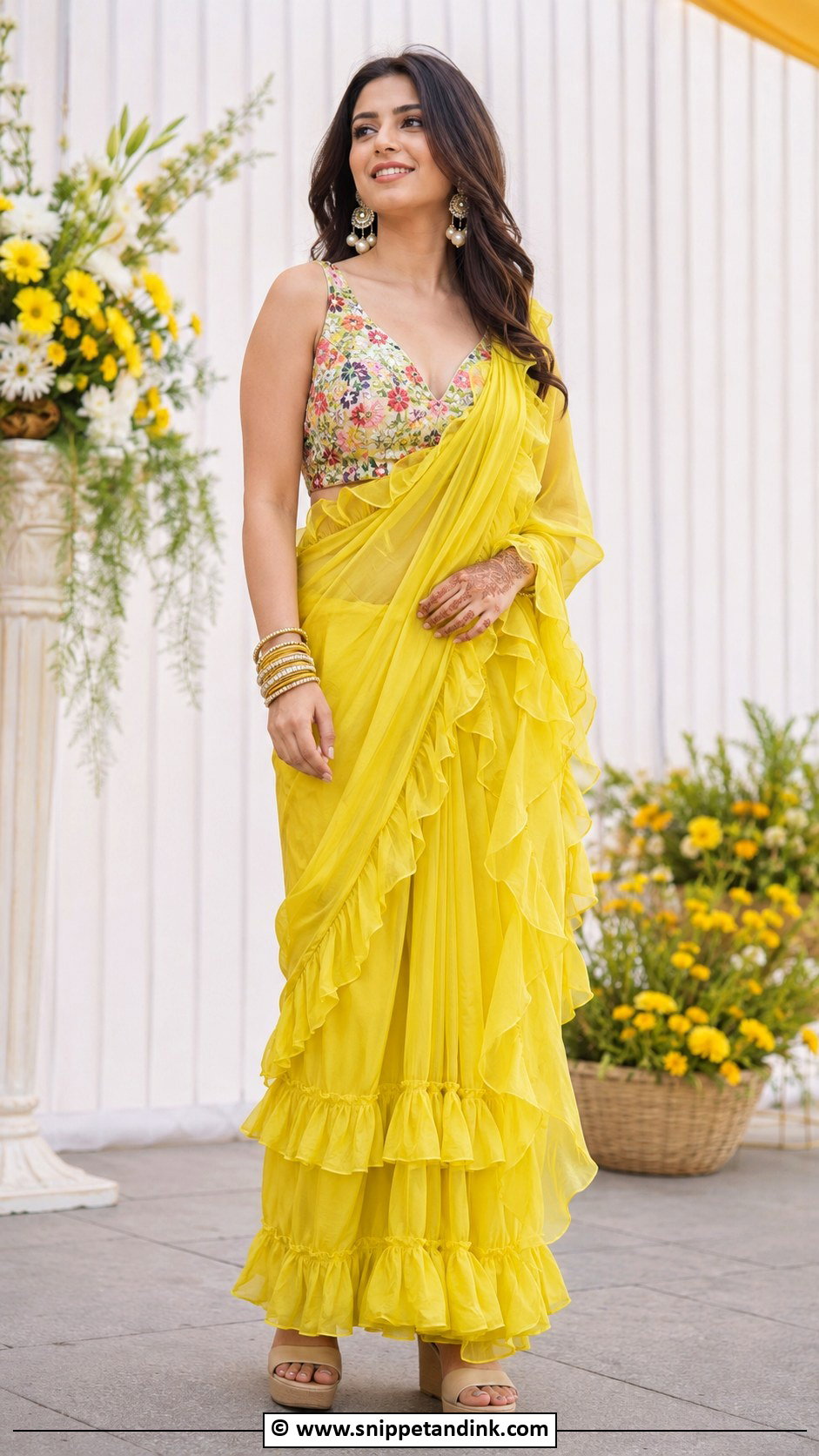
A pre-stitched ruffle saree gives you the drape without forty minutes of pleating and a dozen safety pins, and that is the real reason it suits a dance-heavy night. The ruffles add movement and hide a slightly loose pleat if it shifts. Pair it with a sleeveless blouse so the artist has your full arm. I’d avoid stilettos with it; ruffled hems catch heels on stairs, so wedges or low block heels are safer. Sleek hair keeps the eye on the ruffles.
14. Cape Mehandi Lehenga
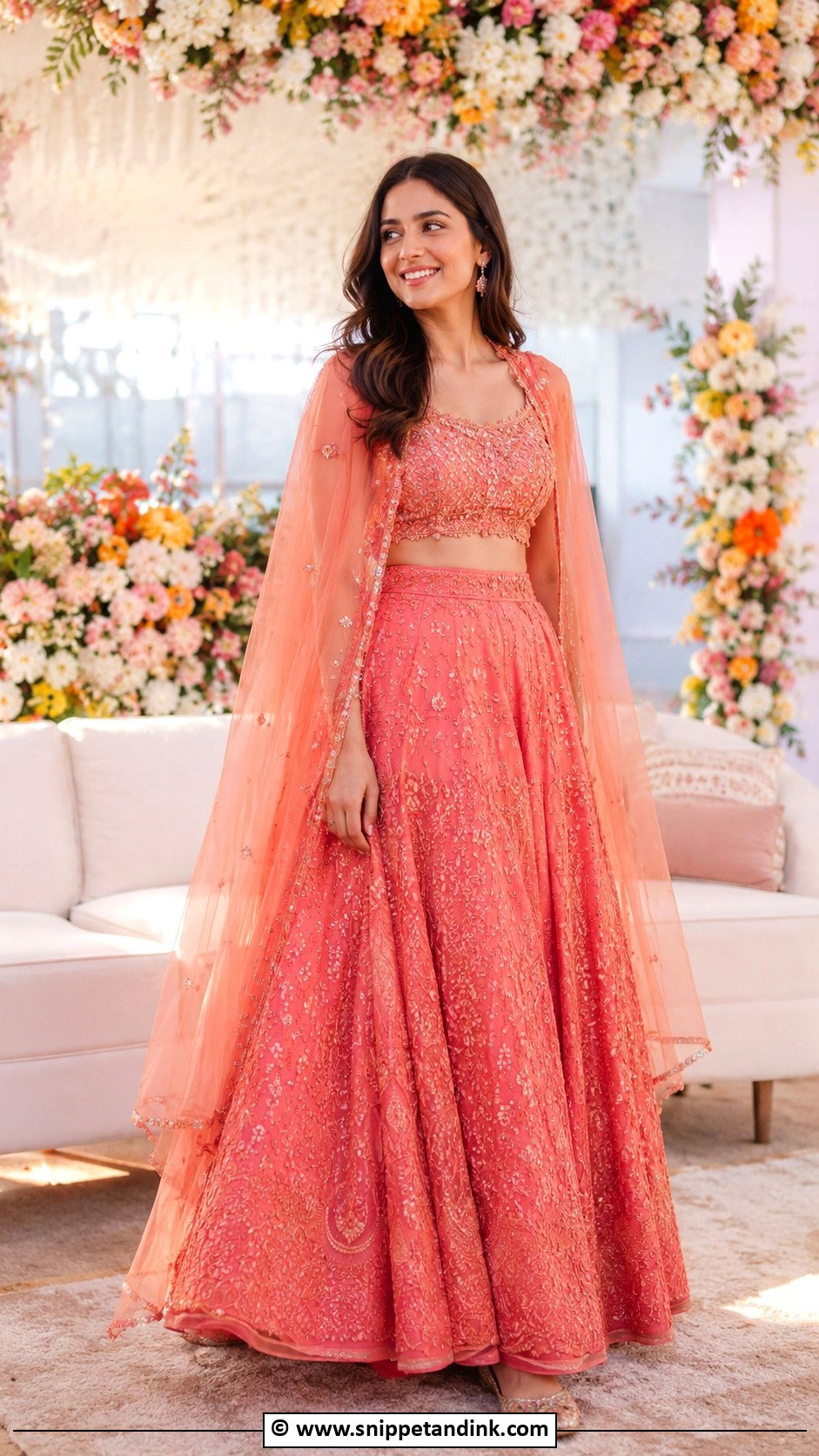
Dupattas slip, get sat on and fall into wet henna, and a cape removes that whole problem. With a cape lehenga your hands stay free for the artist, for dancing and for holding a plate. Sheer organza capes are the lightest and move well in photos, while embroidered capes add warmth for evening outdoor events. Because the cape already frames the shoulders, I keep jewelry to earrings and a single ring. Check the cape fastening at the fitting; a single hook at the neck can pull forward when you lean in.
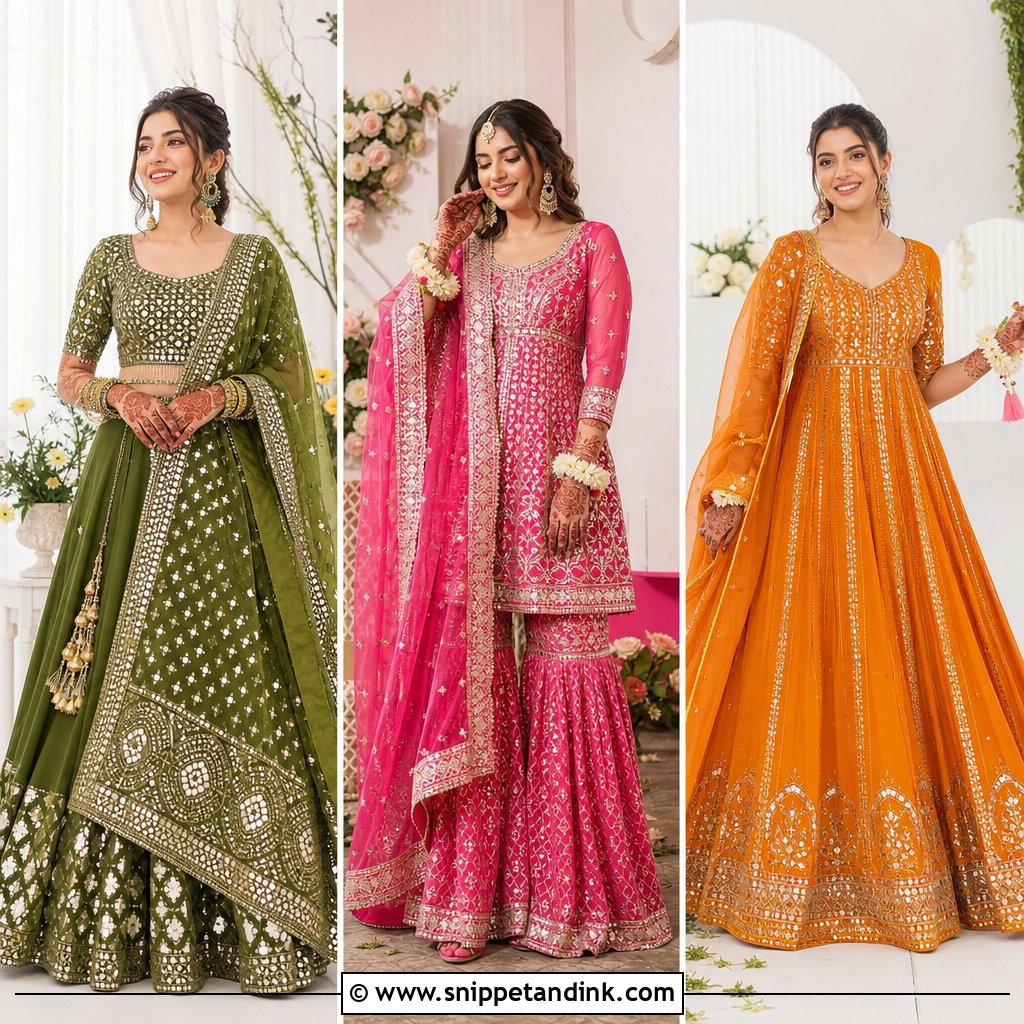
15. Peplum Mehandi Sharara Set
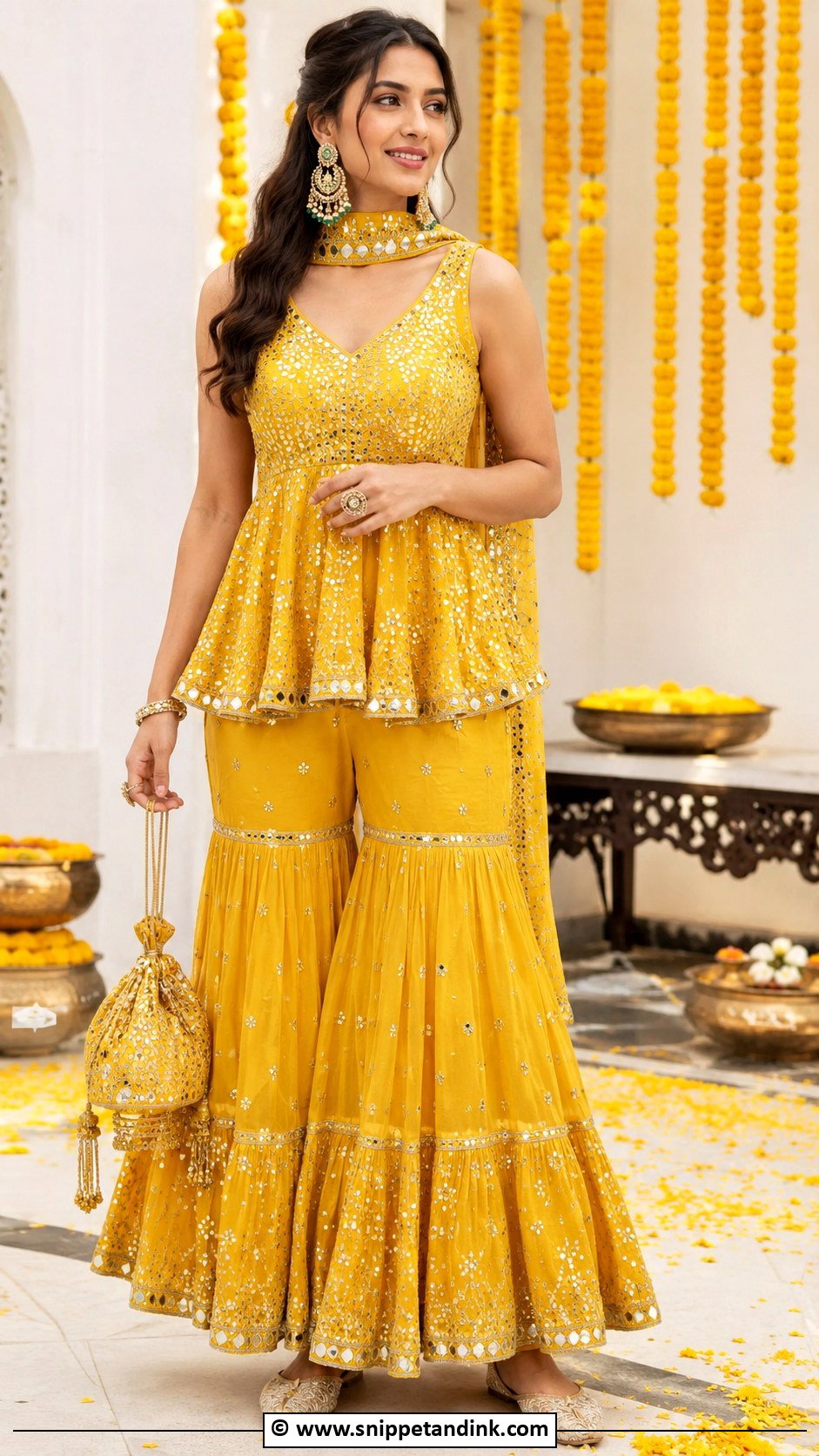
The peplum flares from a fitted waist, which gives shape to anyone who feels lost in a straight kurta. A peplum sharara set in parrot green, hot pink or orange looks dressed without the weight of a lehenga. Embroidery at the neckline and hem is enough. Fit is where this one goes wrong: if the waist seam sits too high it rides up when you sit, so try it seated on a low stool before final alterations. Soft waves and embellished juttis suit it well.
16. Leheriya Mehandi Suit
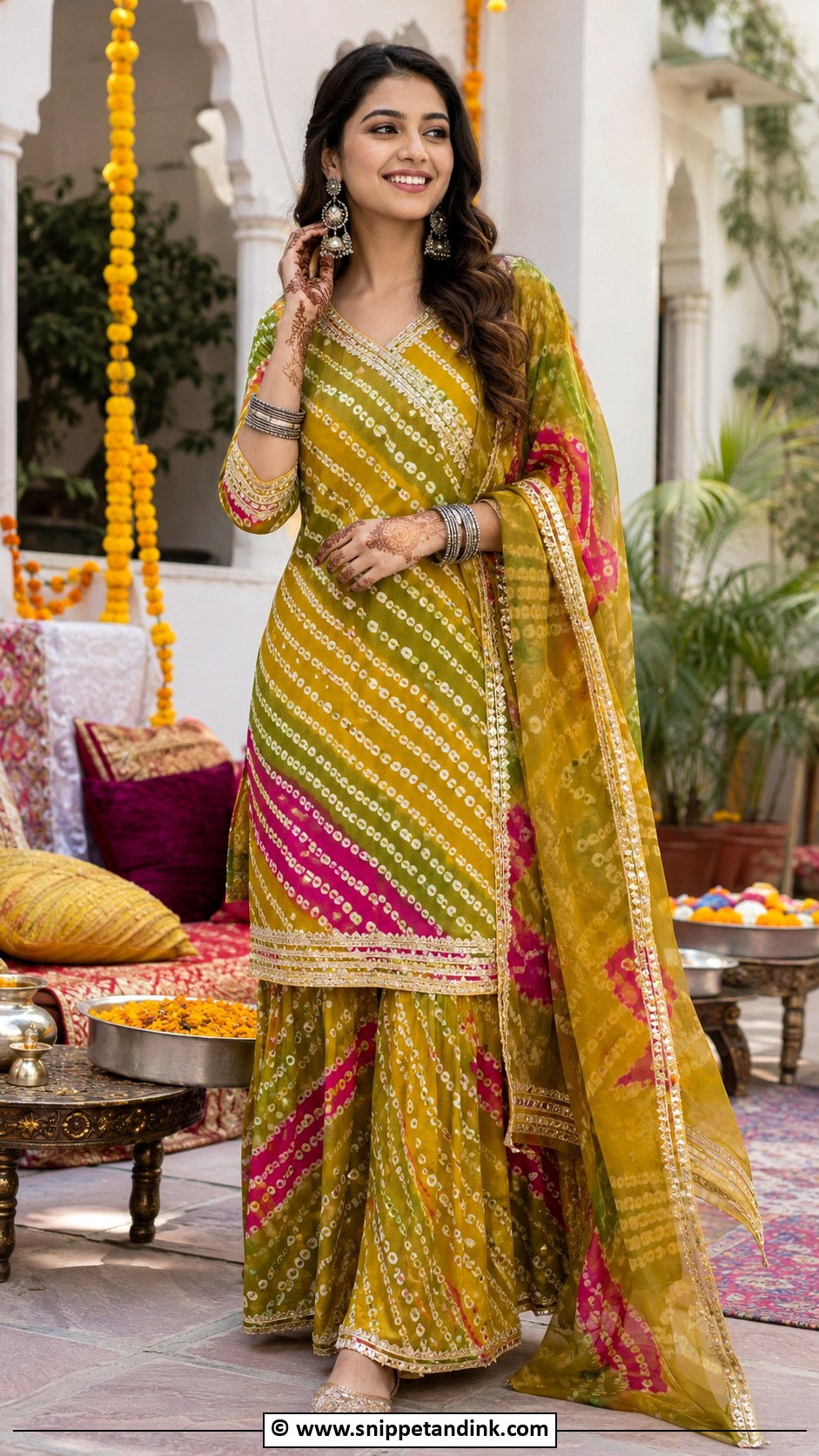
Leheriya is a resist-dye technique from Rajasthan where the cloth is rolled and tied diagonally, leaving a wave pattern that suits a festive lawn party. A leheriya suit in yellow and pink or green and orange looks right with a kurta and palazzos for comfort or a sharara for more ceremony. A gota border on the dupatta is what tips it from day outfit to wedding outfit. Leheriya cotton bleeds in its first wash, so keep it away from white fabric if it gets damp from a drink or rain.
17. Mustard Mehandi Salwar Kameez
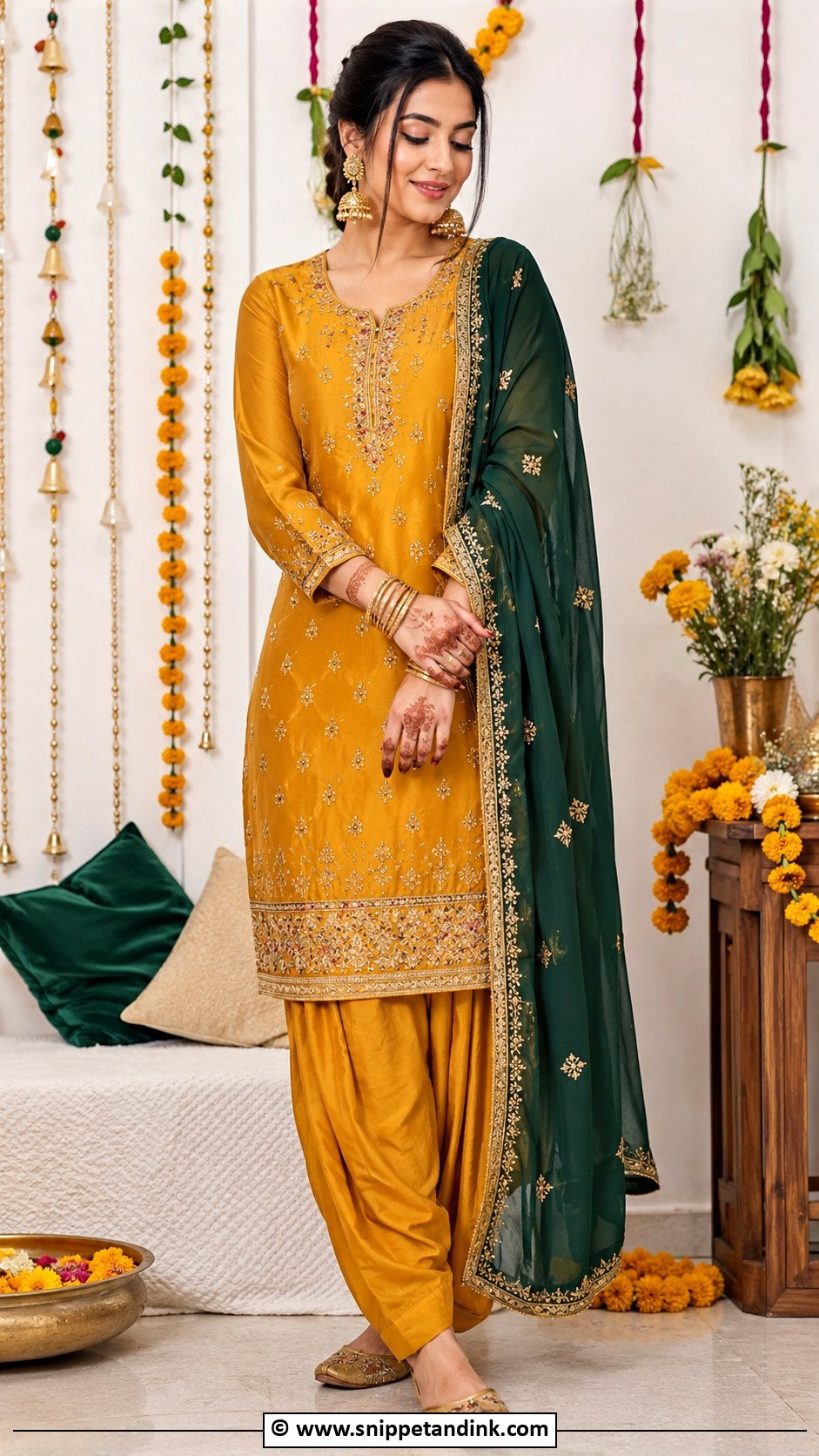
Mustard is warmer and slightly deeper than haldi yellow, and it flatters olive and deeper skin tones especially well in afternoon light. A mustard salwar kameez with lace or gota patti suits intimate home functions and families who want fuller coverage. Contrast it with a green or orange dupatta so it doesn’t fade into the décor. Jhumkas, bangles and khussas keep it traditional. A neat low bun suits the modest line of the kameez better than loose curls.
18. Printed Mehandi Maxi Dress
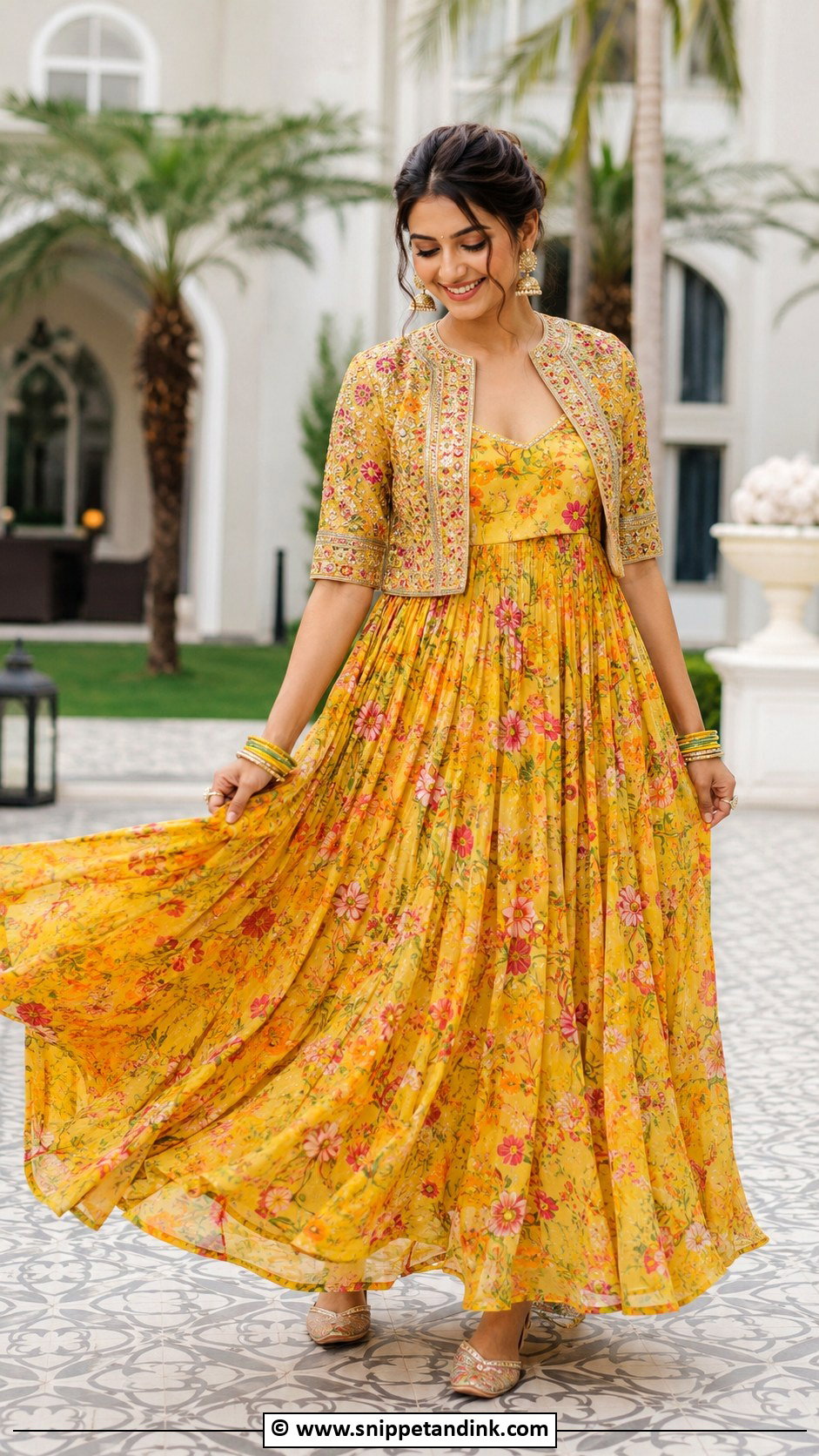
A maxi dress only reads as Mehandi wear once you add ethnic layers, so the styling matters more than the dress here. A printed maxi in paisley, block print or florals becomes festive with a cropped embroidered jacket and a pair of jhumkas. I suggest it for beachside or destination functions where sand and wind make a lehenga a nuisance. Choose a flowing skirt rather than a bodycon cut, because you’ll still be sitting on the floor for henna.
19. Short Kurti Mehandi Gharara
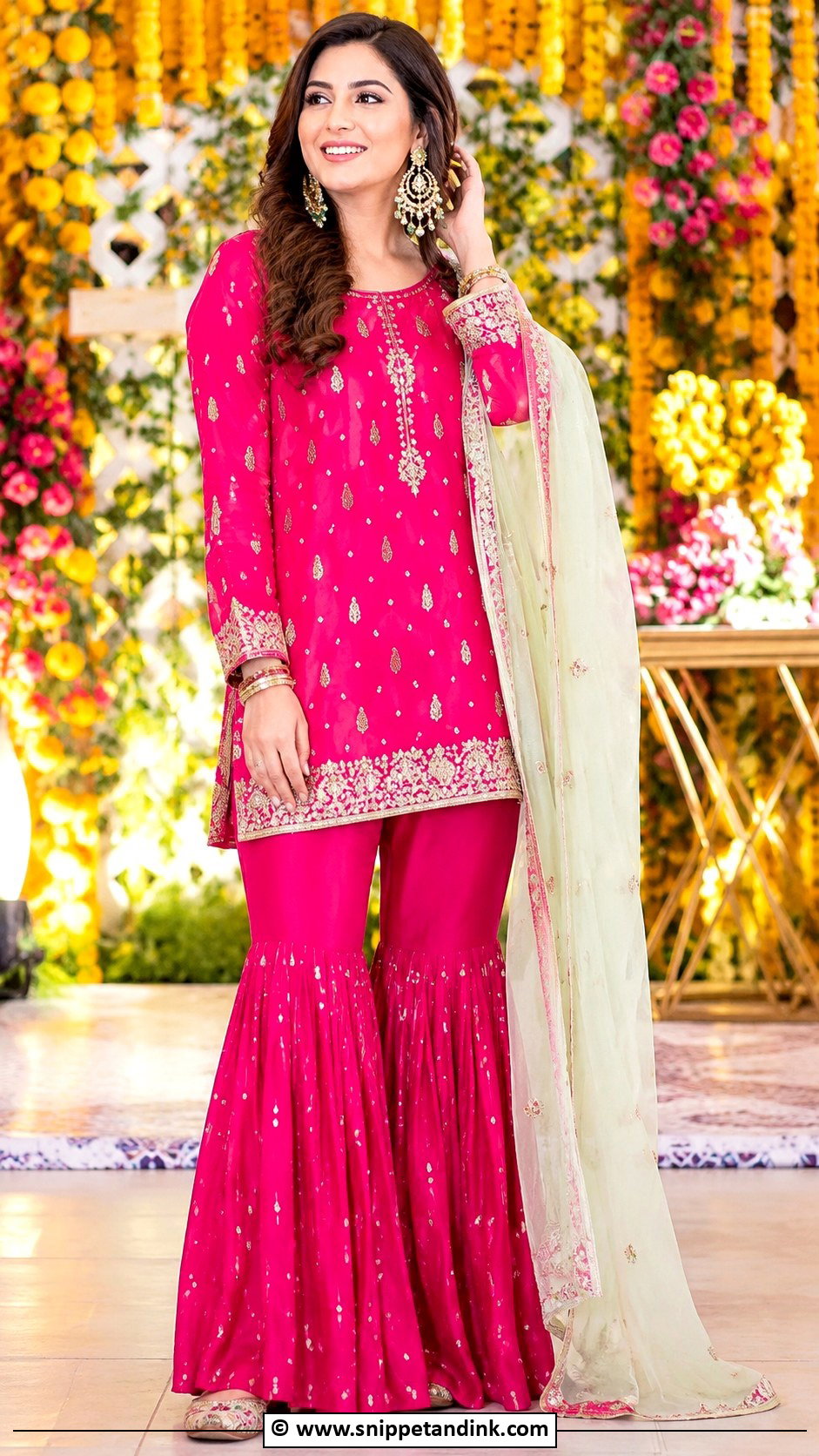
The shorter the kurti, the more of the gharara flare you see, which is why the two belong together. A short kurti Mehandi gharara in fuchsia or yellow with zari borders gives a full silhouette while staying light enough to dance in. I tell bridesmaids to check the kurti length against the knee band of the gharara: when the hem stops just above it, the proportions look intended. Chaandbalis, soft curls and embroidered khussas suit the Pakistani styling.
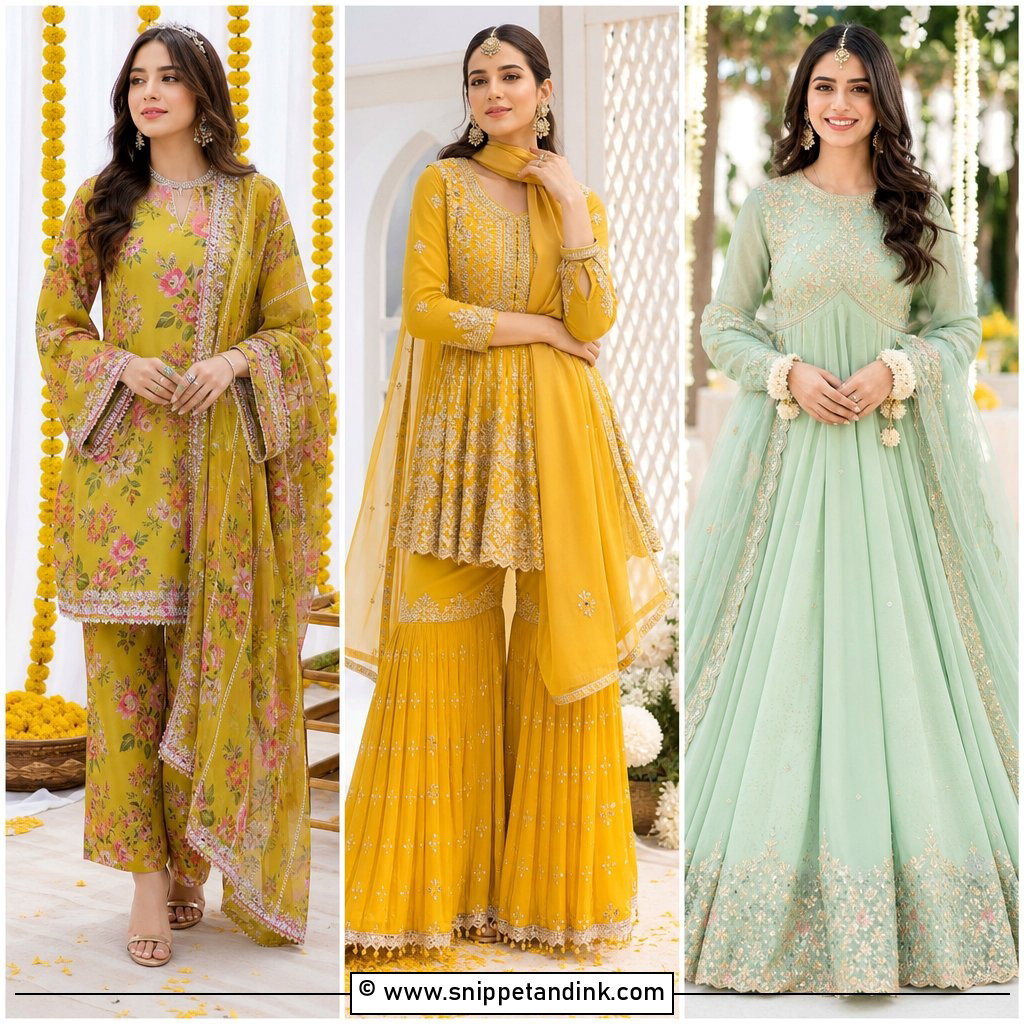
20. Indo Western Mehandi Dhoti Set
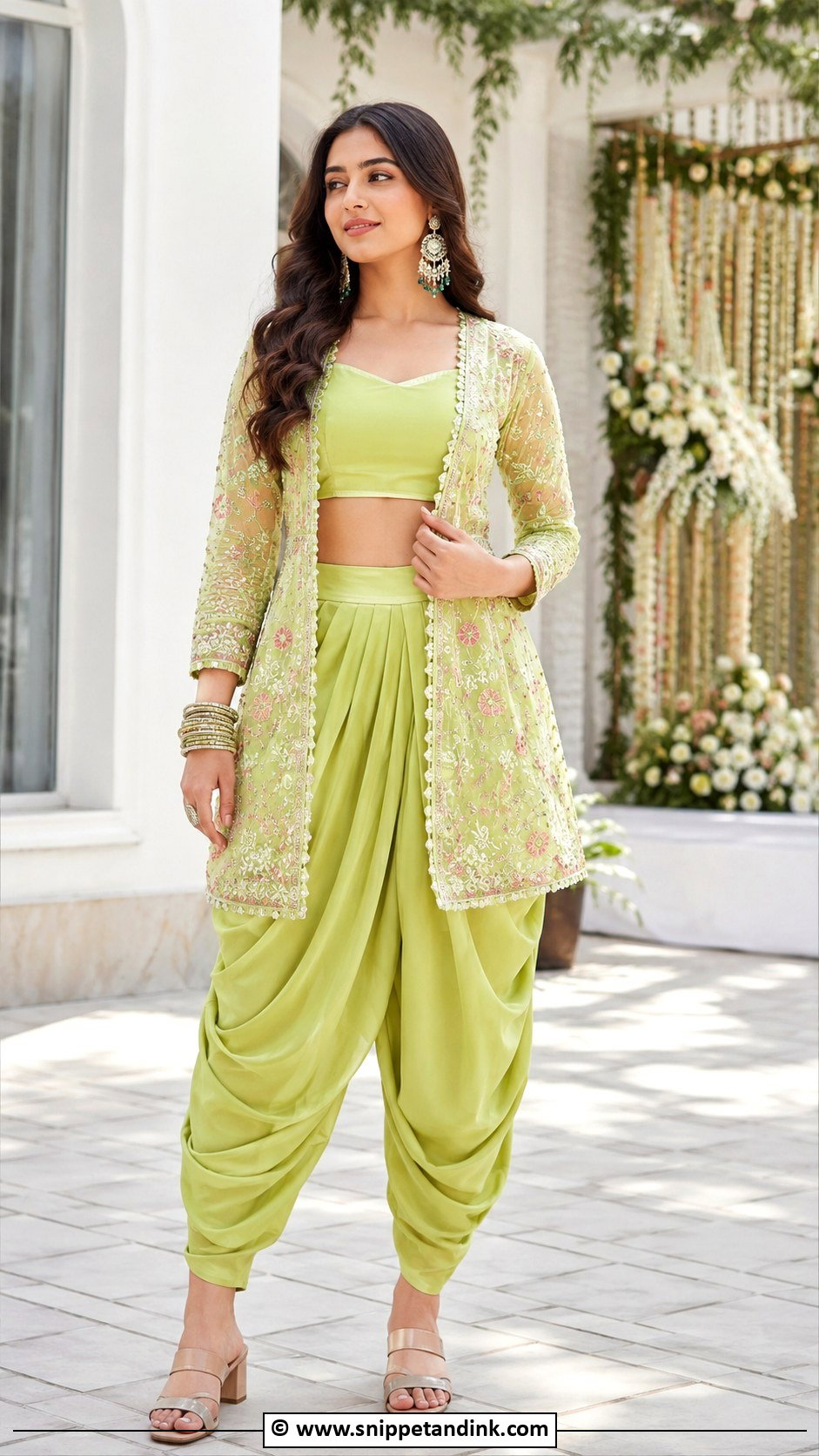
Dhoti pants are pre-draped and stitched, so you get the folds of a traditional dhoti without any tying. An Indo western Mehandi dhoti set with a crop top or short embroidered jacket is about the lightest outfit on this list for dancing. Coral, lime and ivory keep it bright. It suits a narrow or straight frame best, as the draped seat adds volume at the hip. A sleek ponytail and block heels keep it sharp.
21. Yellow Mehandi Saree With Floral Blouse
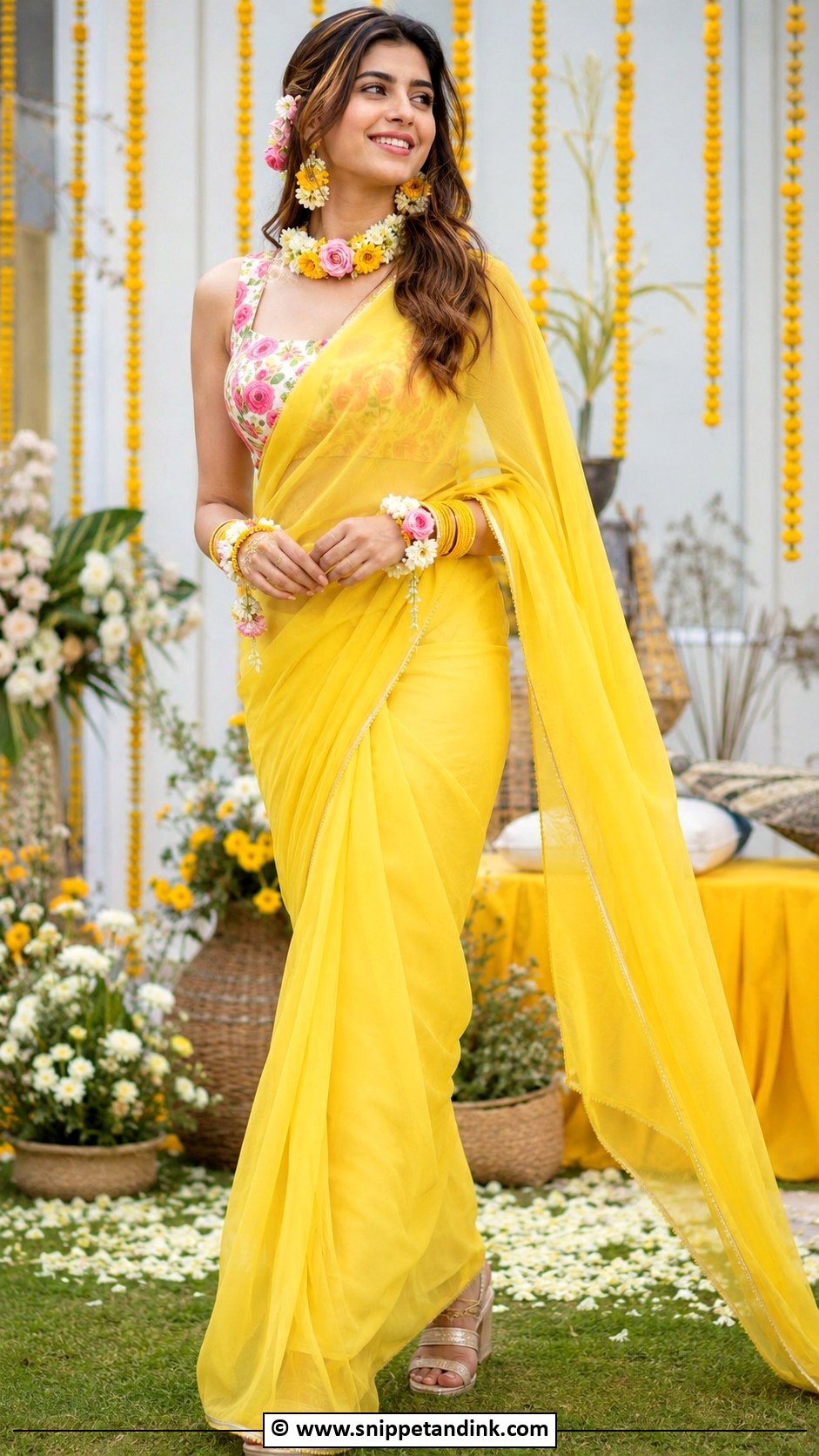
A plain yellow saree with a printed floral blouse lets you change the whole mood just by swapping the blouse later. Organza, chiffon and georgette drape lightly and don’t stay creased after sitting. Keep the blouse sleeveless or short-sleeved so the artist can work above the wrist. A low bun with fresh flowers and jhumkas fit the traditional side of it. Pin the pallu at the shoulder with a brooch pin hidden under the fold, so it doesn’t slide down while your hands are occupied.
22. Green Mehandi Lehenga With Pink Dupatta
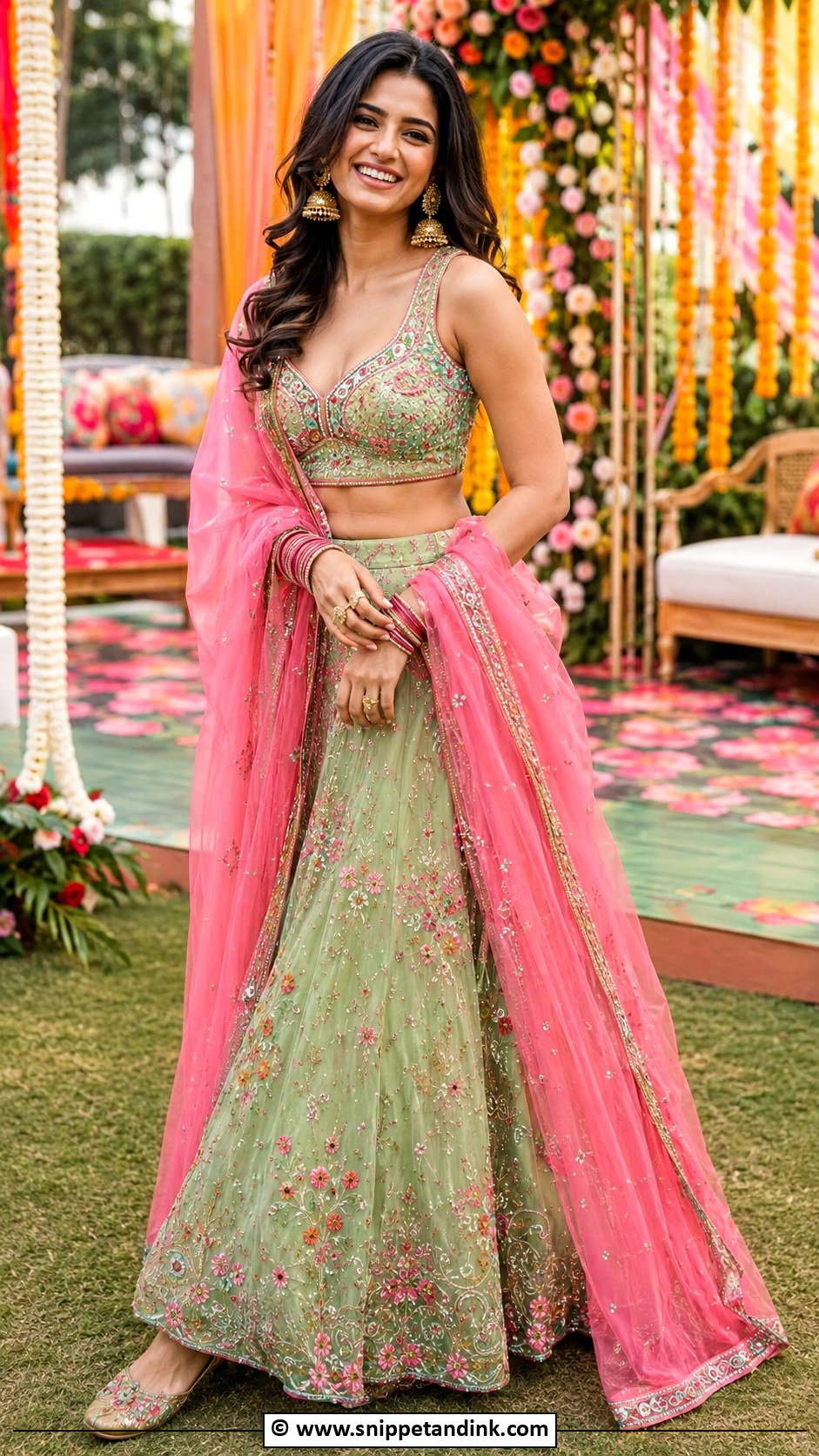
Green and pink are complementary on the colour wheel, so a green lehenga with a pink dupatta carries contrast without any effort. The green feels tied to the henna itself, while the pink softens it beside the face. For a bride, this pairing stands out against yellow décor where an all-yellow outfit would blend in. Choose light floral embroidery or gota, a short choli, and pink bangles to repeat the dupatta colour at the wrist.
23. Sequin Mehandi Palazzo Set
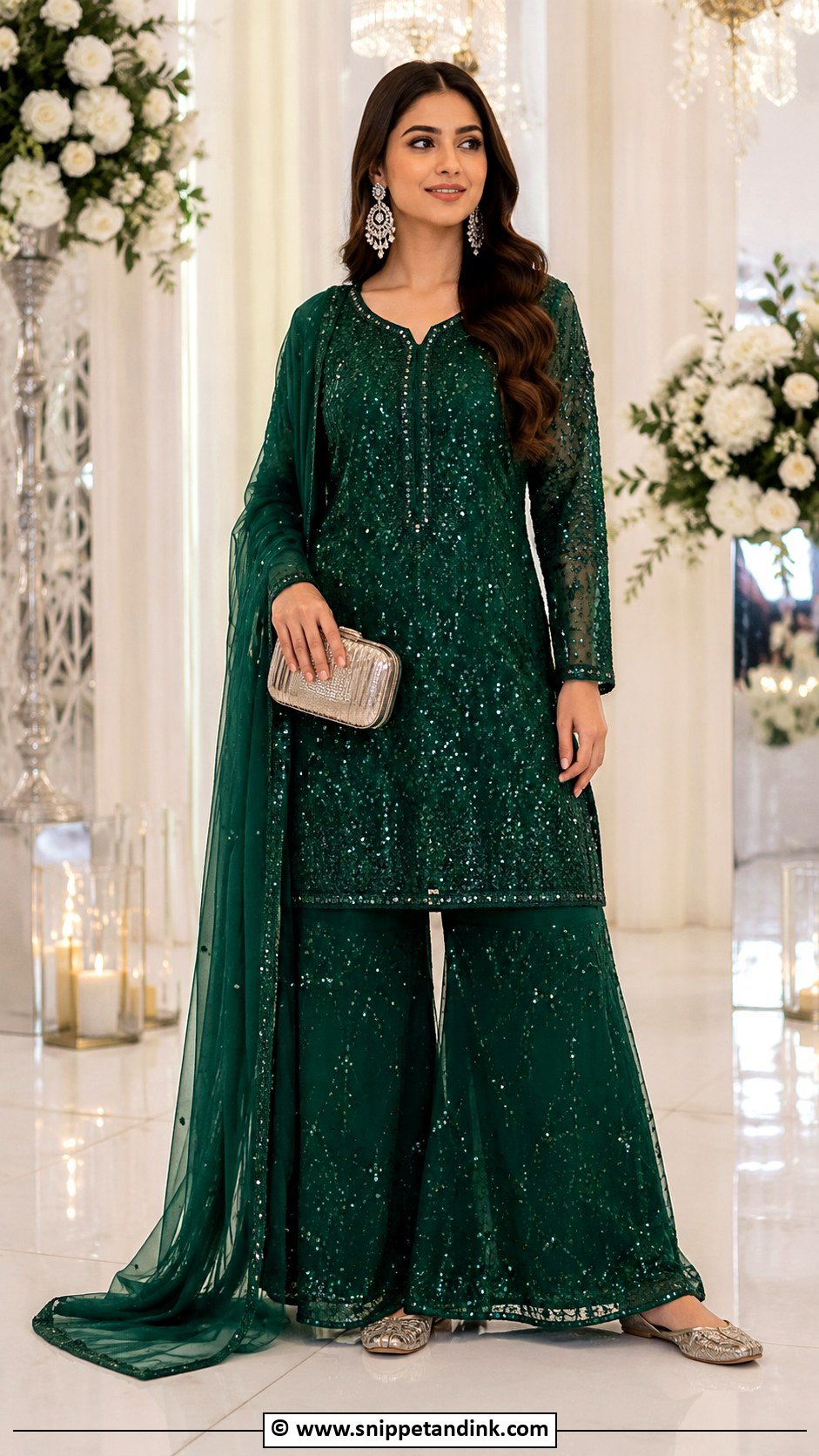
Evening Mehandi functions move indoors or under lights, and that’s when sequins finally earn their place. A sequin palazzo set in emerald, teal or champagne picks up warm bulbs without looking costume-like if the sequins are small and scattered. Sequins scratch the skin on the inner arm, so make sure the sleeve lining is soft. Keep the dupatta plain to avoid two kinds of shine competing. Crystal earrings and metallic flats suit a night look that still lets you sit and dance.
24. Cotton Mehandi Kurta With Palazzo
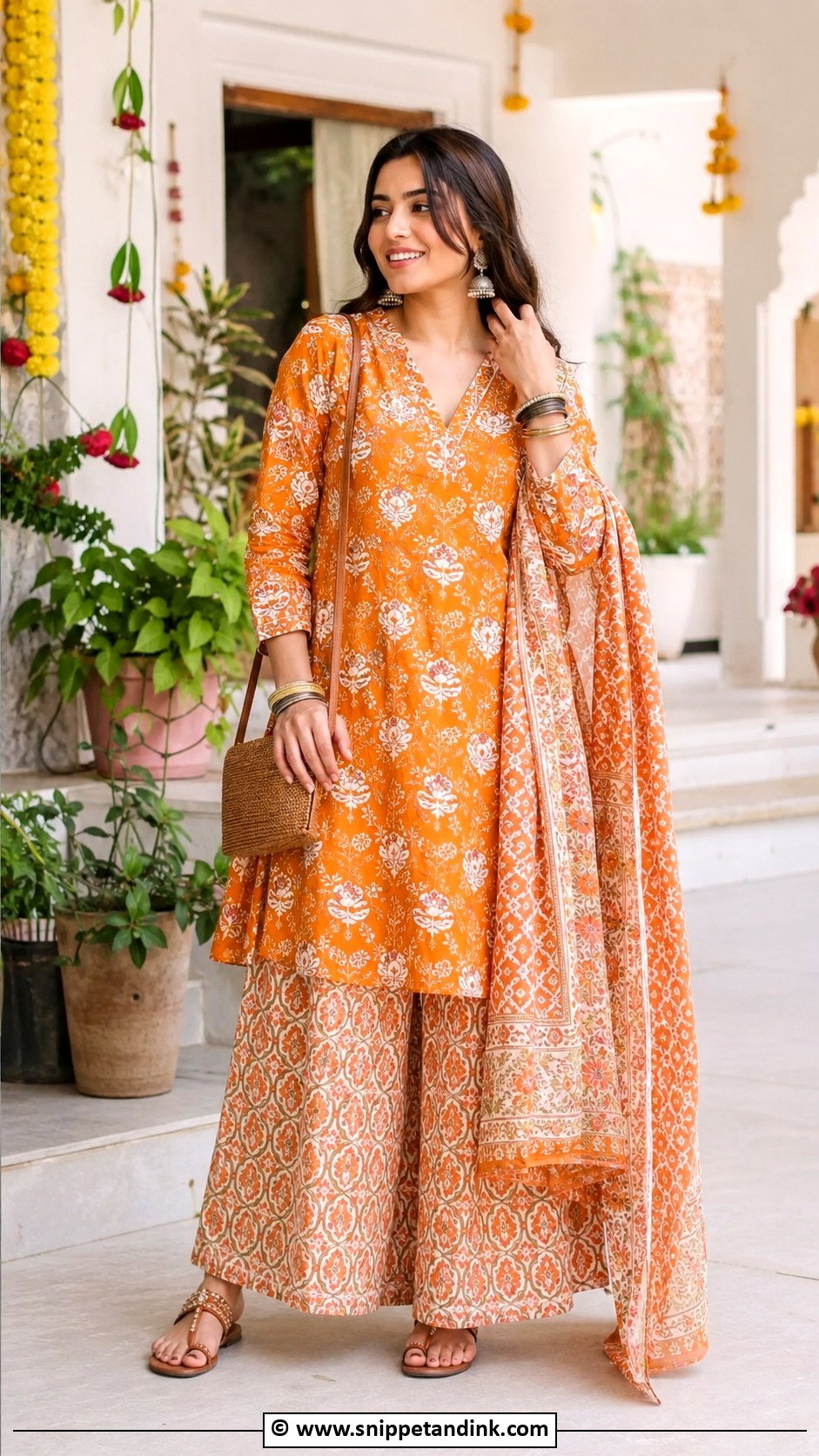
Cotton is the honest answer for a summer home Mehandi in a crowded room. A cotton kurta with palazzo pants breathes, washes easily if henna touches it, and costs less than most festive sets. Block print or lace trim adds just enough interest. Cotton does wrinkle where you sit, so I suggest a slub or mulmul weave, which hides creases better than a smooth poplin. A printed dupatta, jhumkas and kolhapuri flats finish a practical outfit that still looks put together.
25. Embroidered Mehandi Jacket Set
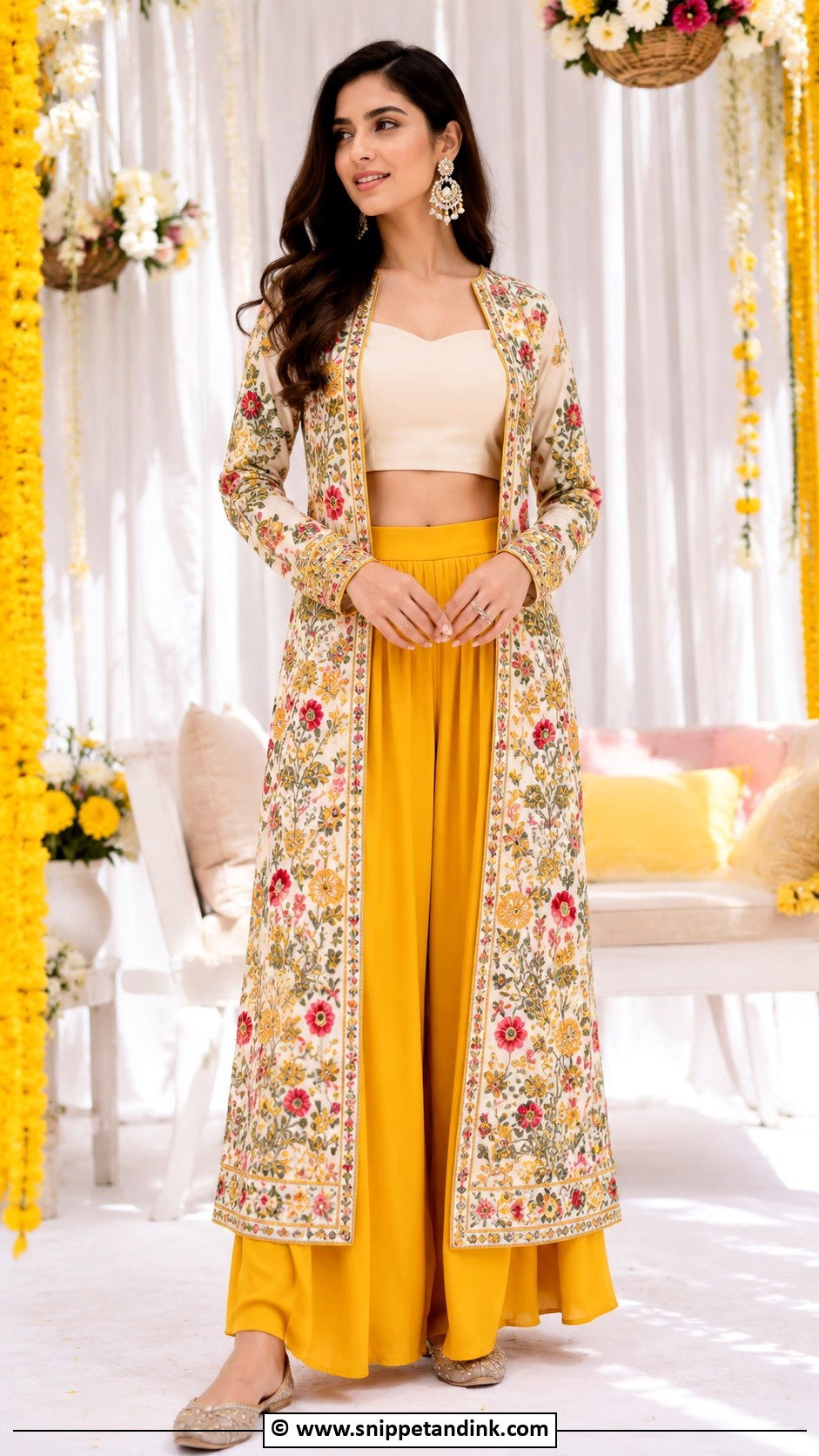
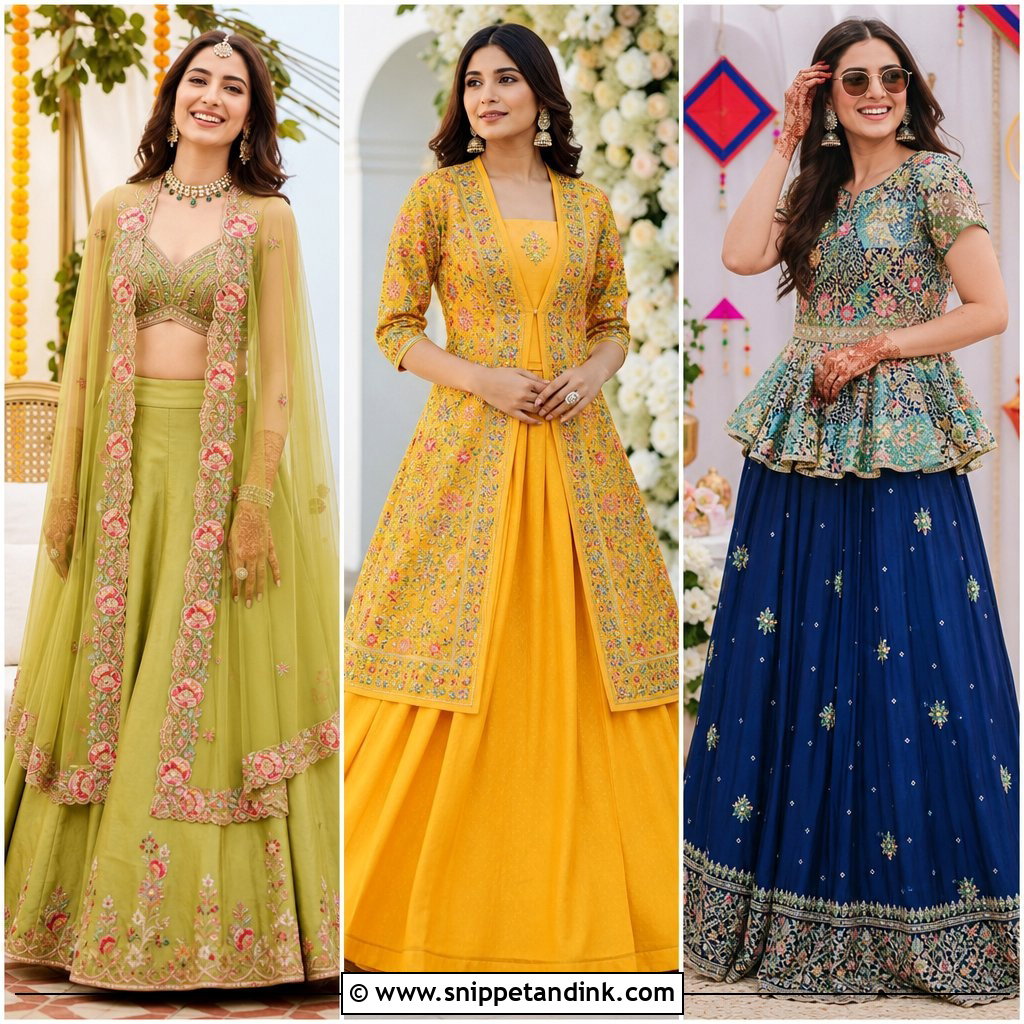
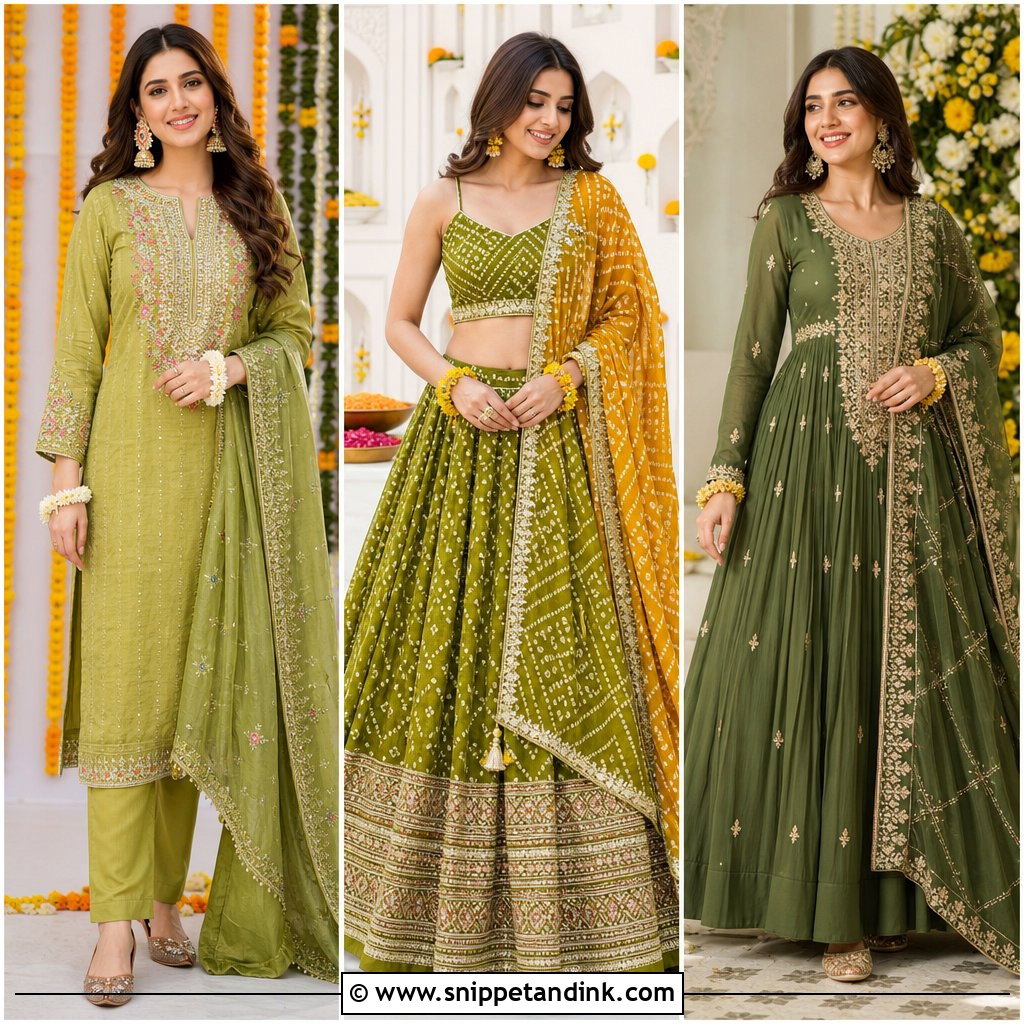
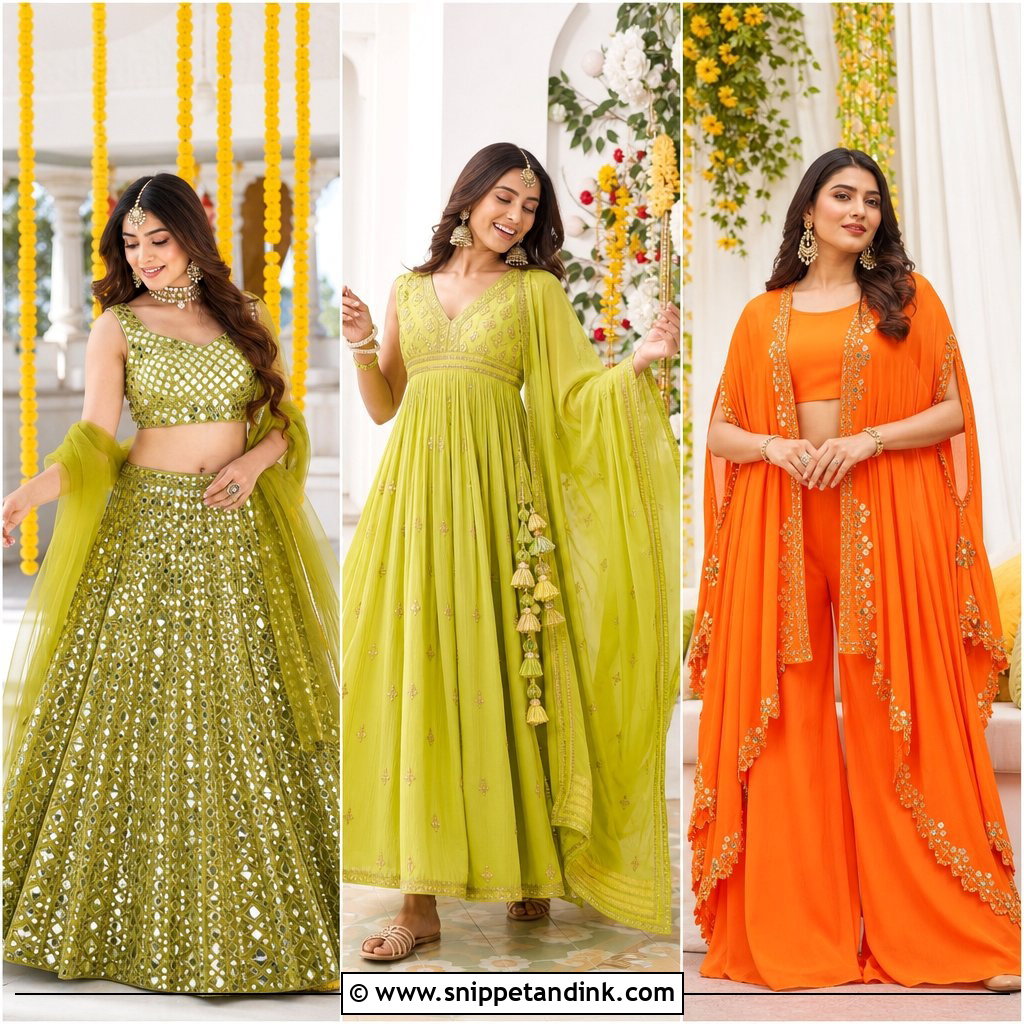
The jacket replaces the dupatta, so your hands stay free and nothing slides into wet paste. For an embroidered jacket set, I pair a crop top or fitted kurta with palazzos, dhoti pants or a flared skirt, then let the jacket bring the colour. Mirror work or thread embroidery on a yellow, mint or ivory base is festive without weighing much. Choose a jacket that stops at the hip or the knee; mid-thigh lengths cut the leg awkwardly in photos. Sleek hair and simple rings keep it modern.
26. Fuchsia Mehandi Lehenga
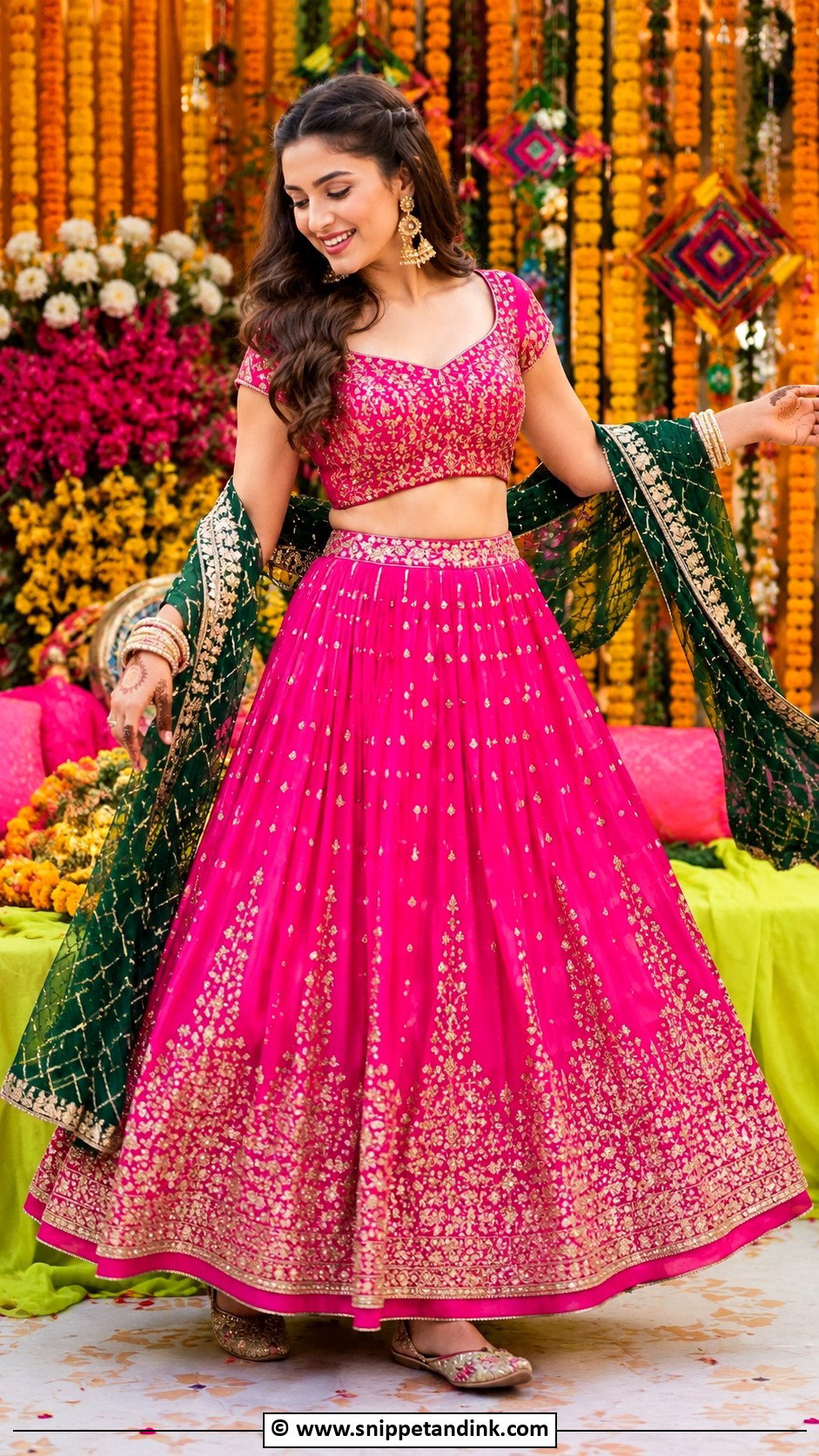
Fuchsia is the colour I suggest to anyone tired of yellow, because it still reads as celebration from across a room. A fuchsia lehenga with gold borders or mirror work looks rich even in light georgette. Pair it with a green or orange dupatta to bring the outfit back into the Mehandi palette. In group photos it pops beside yellow and green, so if three bridesmaids all choose fuchsia, it can overpower the bride. Gold earrings and embroidered juttis keep it balanced.
27. Mint Mehandi Anarkali With Yellow Dupatta
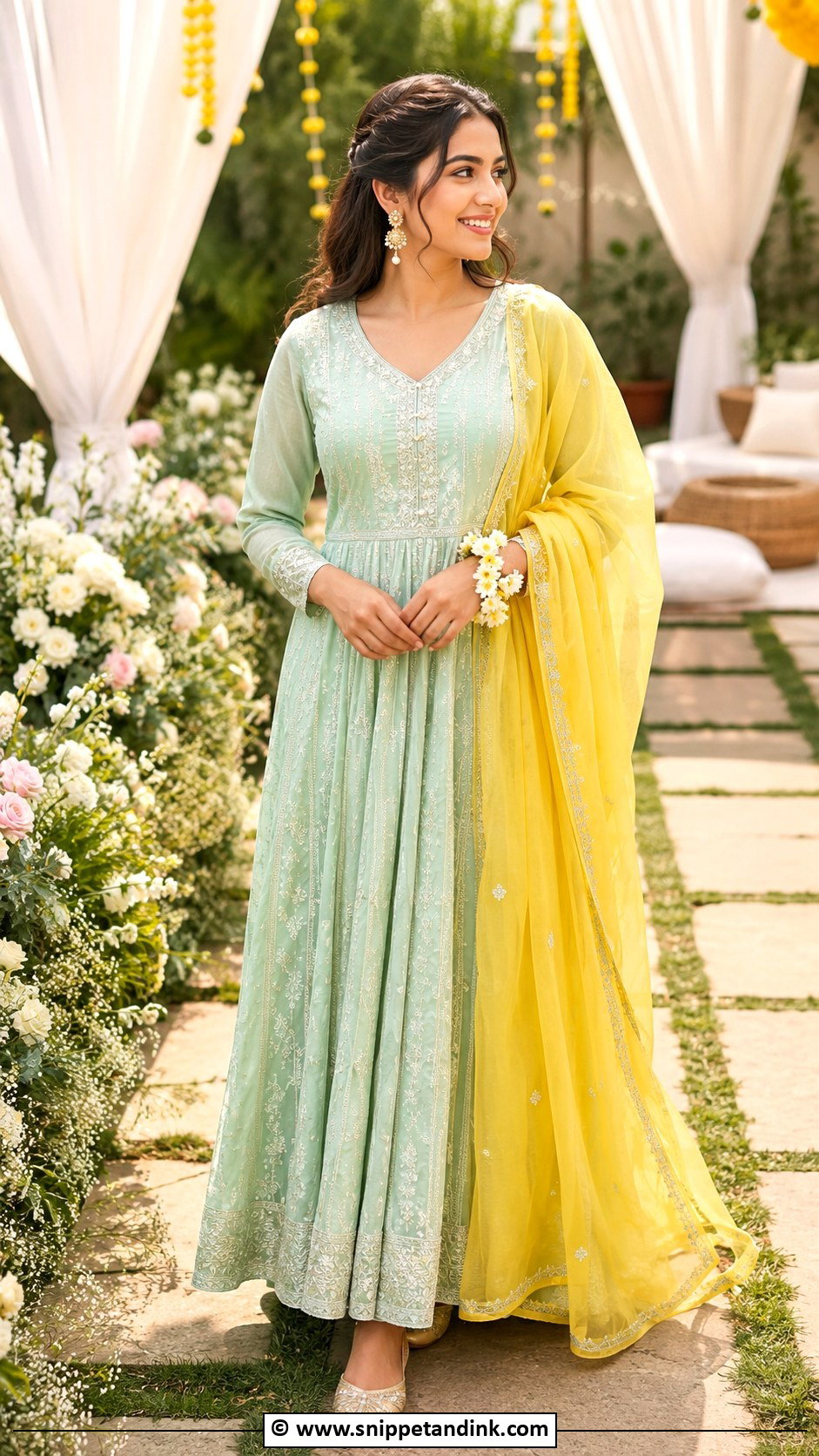
Mint is calming and cool, and a yellow dupatta warms it up enough for a henna function. A flowing mint Anarkali suits daytime garden events and is kind to most body shapes, since the flare starts high and hides a full seat when you stand up from the floor. Keep the embroidery light. Pearl earrings and floral jewelry suit pastel better than heavy kundan. A soft half-up style keeps hair off the neck in the heat.
28. Pakistani Mehandi Lehenga Choli
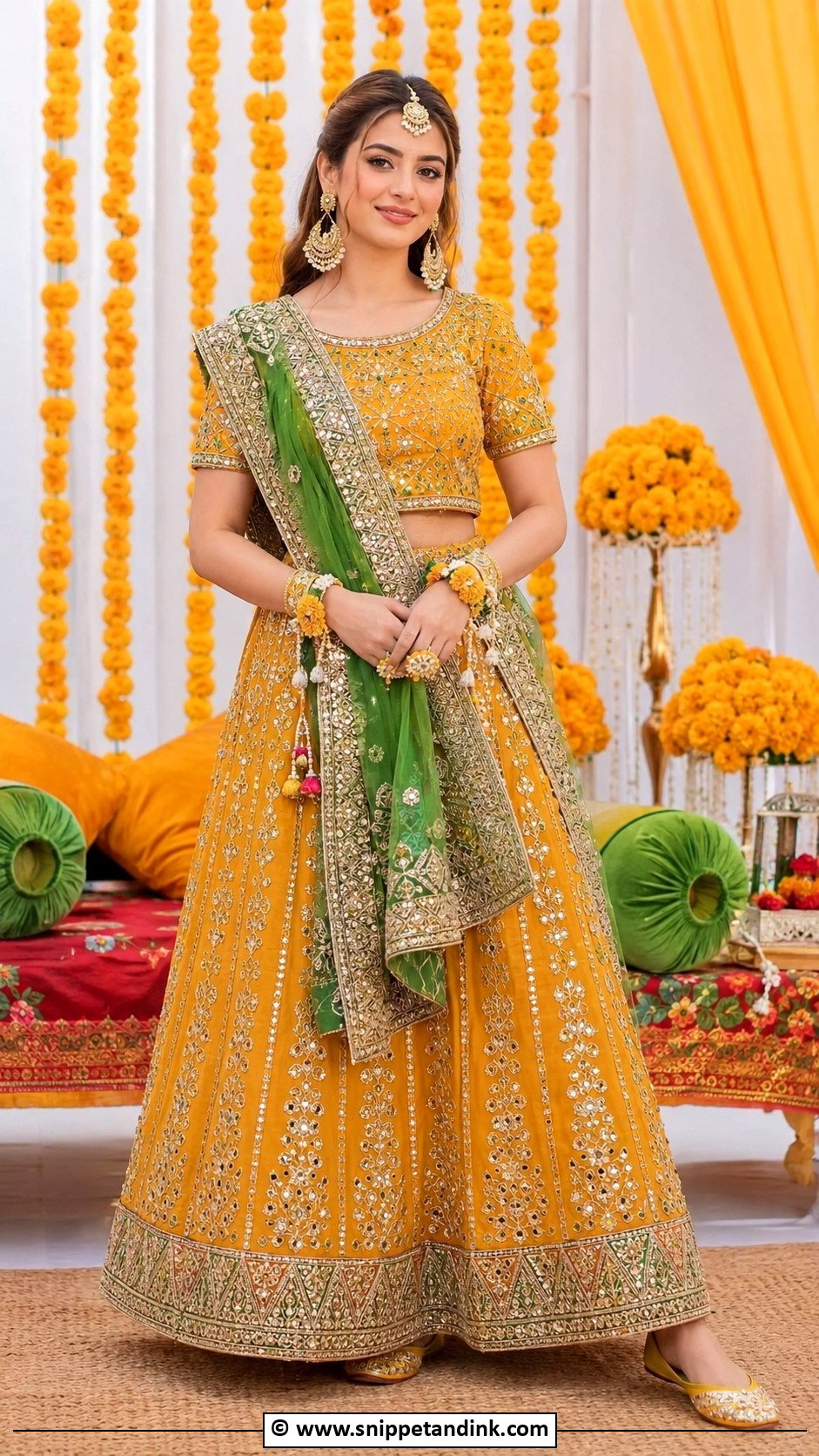
A Pakistani Mehandi lehenga choli usually leans into deep yellow, green, orange or magenta with dense gota and zari, and the dupatta is often draped with real ceremony. For a bride sitting through a long henna session, I’d ask for a lighter version of that richness: less padding in the blouse and a dupatta that can be pinned at the shoulder. Passa jewelry, chaandbalis and khussas complete the traditional look. Soft glam makeup holds better than a full matte base in a warm room.
29. Sleeveless Mehandi Crop Top Skirt
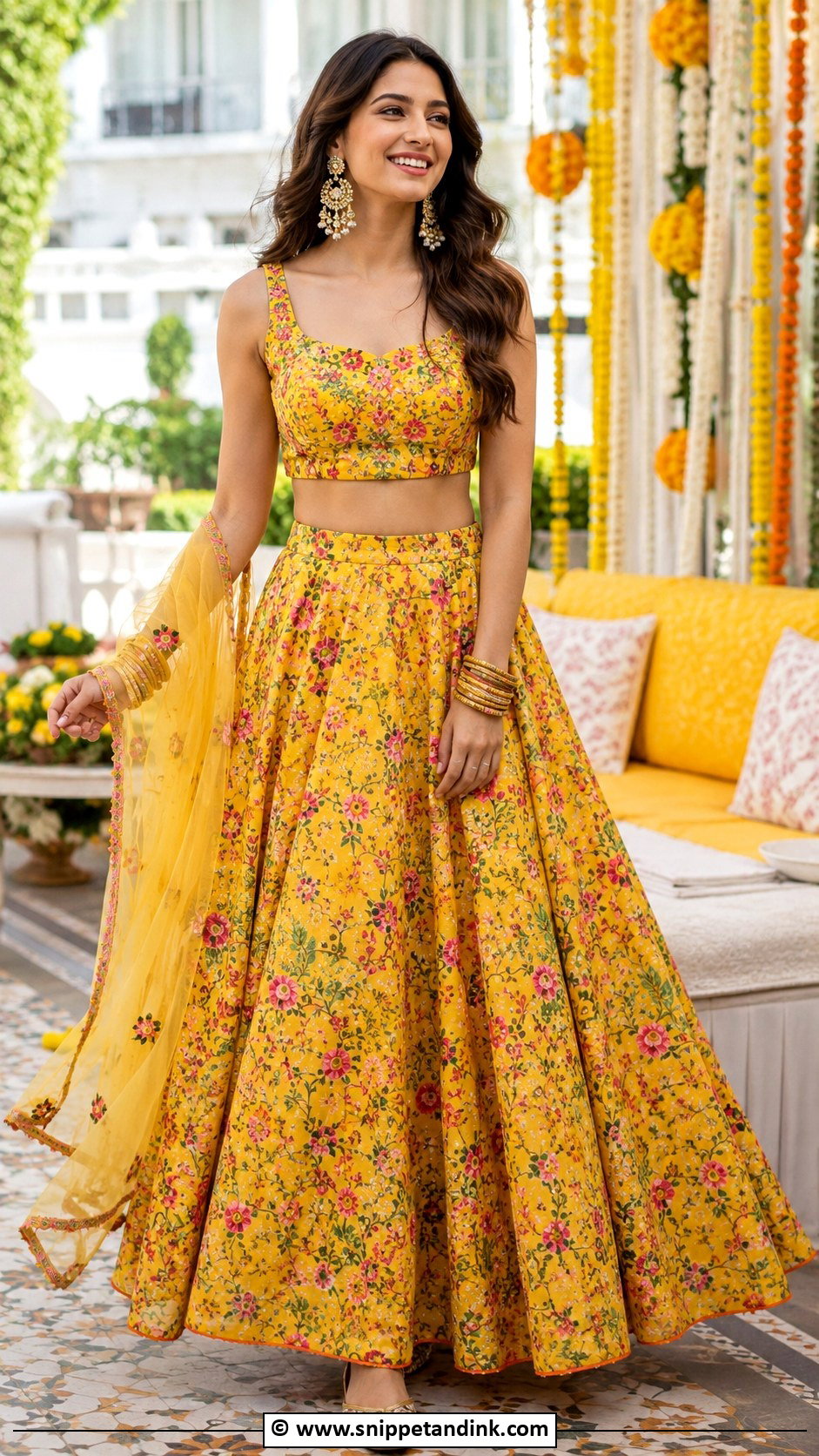
A sleeveless crop top with a full skirt is the simplest way to keep both arms bare for henna right up to the shoulder. Floral prints and light mirror work in coral or yellow keep the outfit festive. You can skip the dupatta for a cleaner look, though I keep one in the bag in case an elder relative expects more coverage. Check the gap between top and skirt while seated; the midriff shows more on the floor than standing. Loose waves and stacked bangles suit the playful feel.
30. Red And Yellow Mehandi Suit
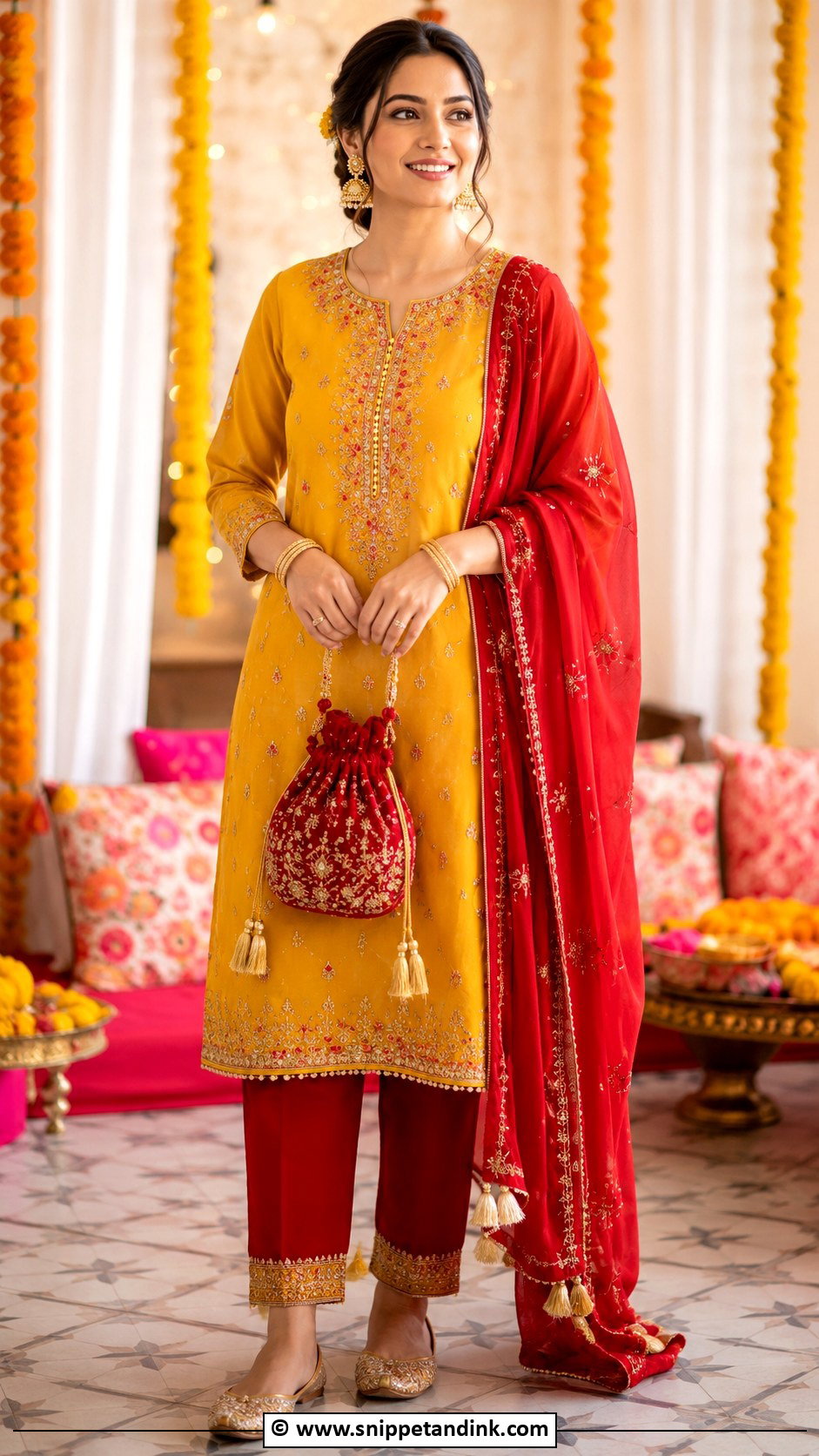
Red and yellow is the old festive pairing, and it works in a suit as well as in a lehenga. Wear a yellow kurta with a red dupatta or reverse it, depending on which colour suits your face better, since the dupatta sits closest to it. A straight kurta, an Anarkali or a sharara set all carry the combination. Gota work or printed details are enough. Gold earrings and a small potli bag complete a look that suits relatives of every age.
When Henna Paste Lands on the Fabric
It will happen at some point in the evening. A fresh smear of henna is mostly mud at first, and the dye only binds once it sits. That gives you a short window.
- Let wet paste set for a minute, then lift it off with the edge of a card or a blunt knife. Wiping it pushes it deeper into the weave.
- Blot the spot from the back with cold water. Hot water sets the stain.
- On cotton, a little dish soap worked in with a fingertip helps. On silk, georgette or anything with embroidery, stop at cold water and take it to a dry cleaner within a day or two, telling them it’s henna.
- Keep the lemon-sugar sealant in mind too. It’s sticky and leaves a sugar mark that attracts dust, but it rinses out with plain water.
Oil is the other culprit. Many artists rub clove or mustard oil on hands after scraping, and that leaves a grease ring on silk. I keep an old cotton dupatta in the bag for the scraping stage and swap back into the good one afterwards.
How Yellow and Green Change Under Evening Lights
Daytime and night functions need different thinking about colour. Under warm string lights, bright yellow shifts toward orange and pale lime can look slightly sickly, while deeper greens, magenta and teal hold their tone. Pastels flatten out at night and photograph almost grey if the lighting is dim.
If your Mehandi starts in the afternoon and runs past sunset, I’d lean toward a saturated shade with some metallic thread, mirror work or gota. Those pick up light once the sun goes down, so the outfit still has life in the late photos when everyone is dancing.
Sit Down in It Before You Say Yes
The right Mehandi outfit is the one you forget about once the music starts. Light fabrics, short or no sleeves, a pinned dupatta or no dupatta at all: those small decisions matter more than the exact silhouette. Pick from the yellow lehengas, green Anarkalis, shararas, co ords or dhoti sets above, then adjust the colour, jewelry and shoes to your role at the function, the venue and the hours you’ll spend seated. Do one full dress rehearsal at home, sitting on the floor, before the day.
You'll Like These Ideas:


Leave a Reply