
Most of the people I dress for a Mehandi aren’t the bride. They’re sisters, cousins, mothers and friends who’ll spend the afternoon on floor cushions, queue for their own henna and then dance until late, and the outfits that work for them are the ones nobody has to keep fixing. Green is the traditional color, though yellow, pink, orange, turquoise and mixed prints all suit the day. The practical rules are short: sleeves that stop above the wrist if you’re getting henna, a light dupatta you can pin, and flat juttis or sandals. Below are twenty complete looks, with notes on how each one shifts for the bride, the bridal party or a guest.

How Dressed Up Should You Be If You Aren’t the Bride?
This is the question I get most in the week before a Mehandi. The honest answer is that it depends on how close you are to the couple, and the outfit’s weight should follow that closeness.
- Bride: the fullest skirt, the densest embroidery and the most jewelry in the room. Everything else is measured against her.
- Sisters and bridesmaids: festive and coordinated, often in an assigned color or a shared silhouette, with lighter work than the bride so she still stands out in group photos.
- Mothers and aunts: rich color with more coverage, such as an Anarkali, a saree or a knee-length kurta, and comfortable shoes for a long evening of hosting.
- Guests: bright and cheerful, but lighter. A kurta set, sharara or simple lehenga is right; a heavily embellished bridal-weight lehenga is too much.
Colors deserve a quick check too. Red is often kept for the bride, and some families treat black or white as unlucky at wedding functions. If the invitation names a palette or theme, follow it. If it doesn’t, a short message to the hosts saves you from guessing.
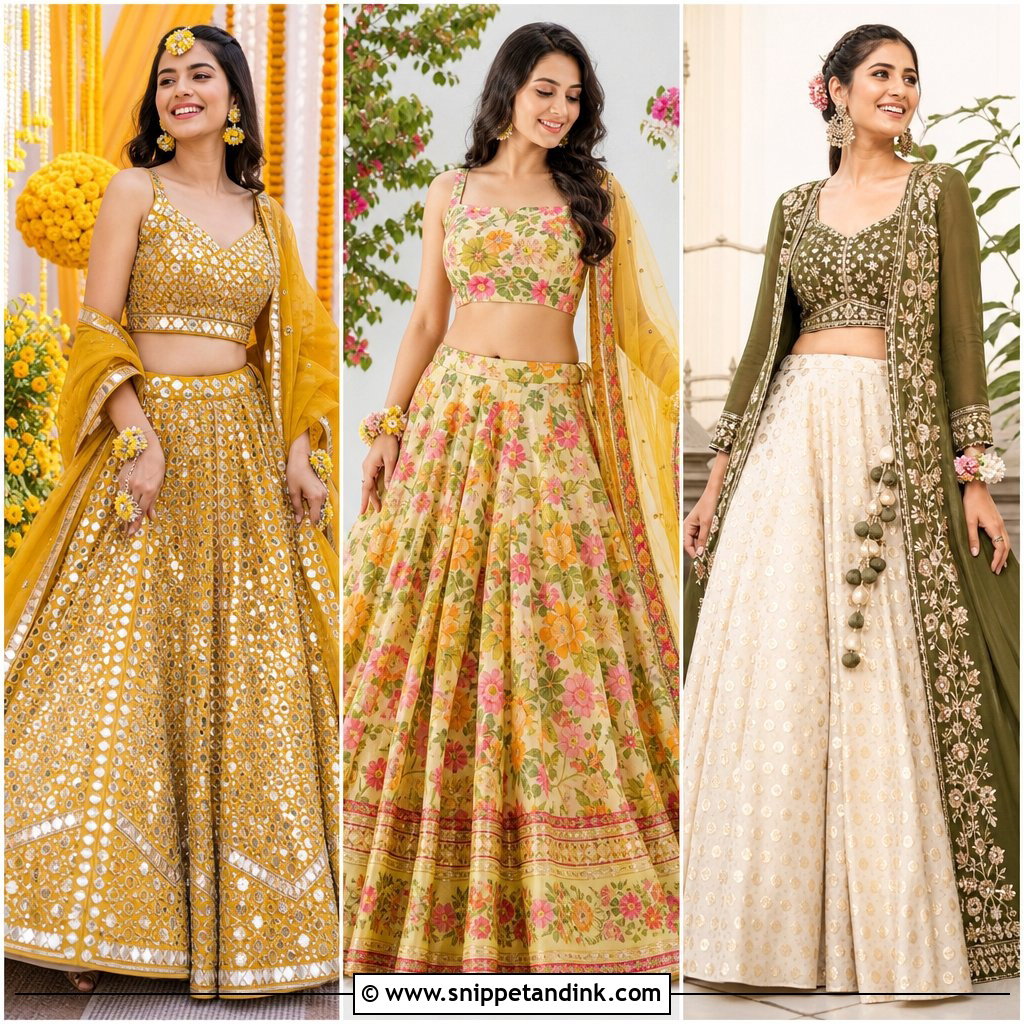
1. Green Lehenga Mehandi Outfit
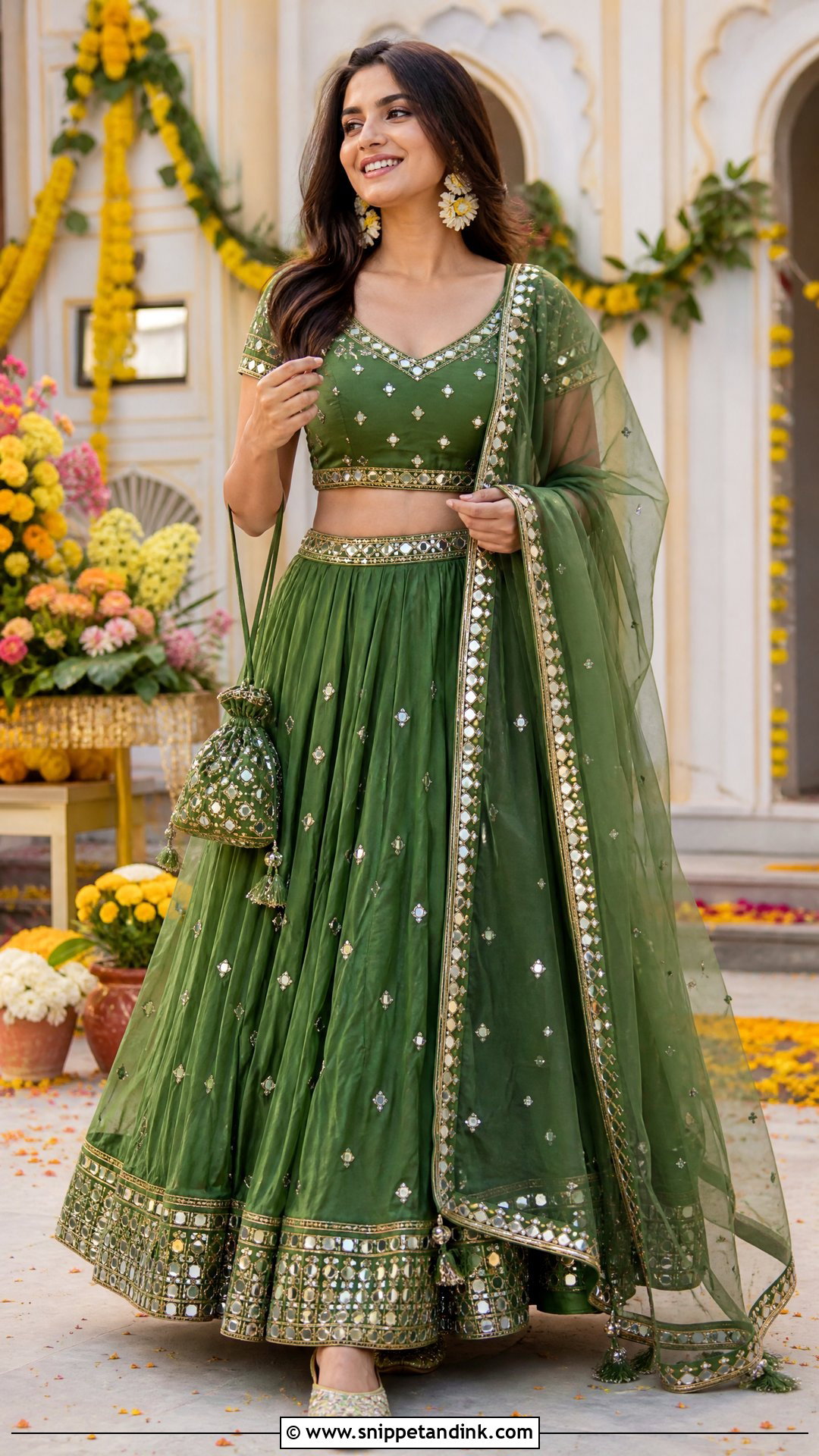
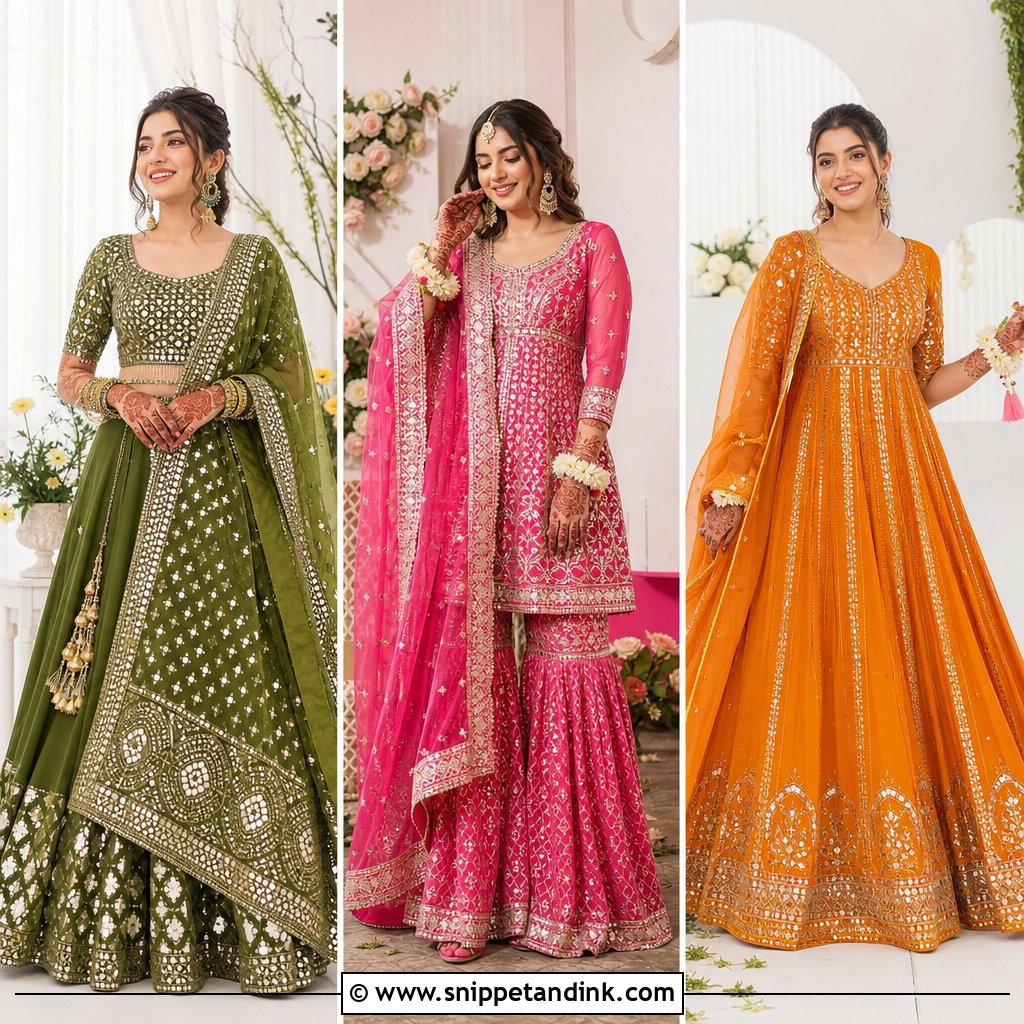
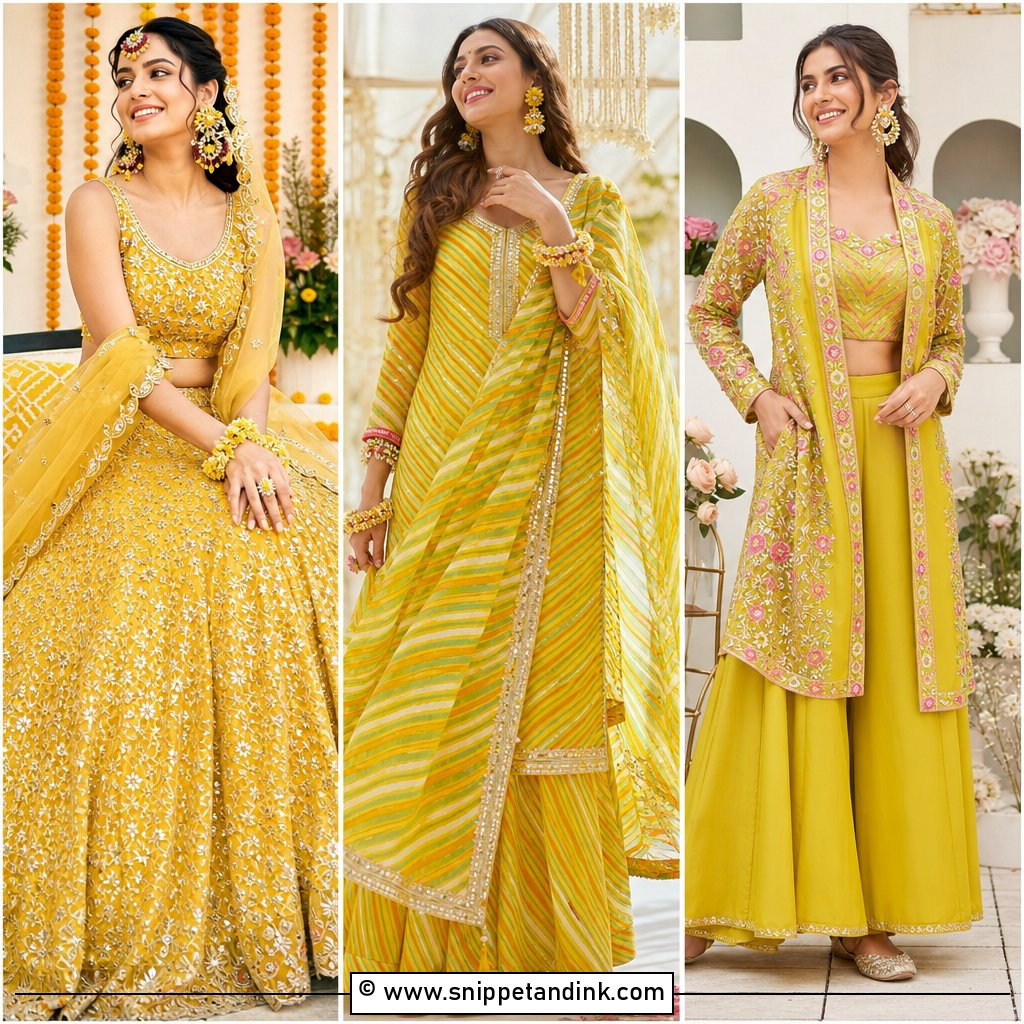
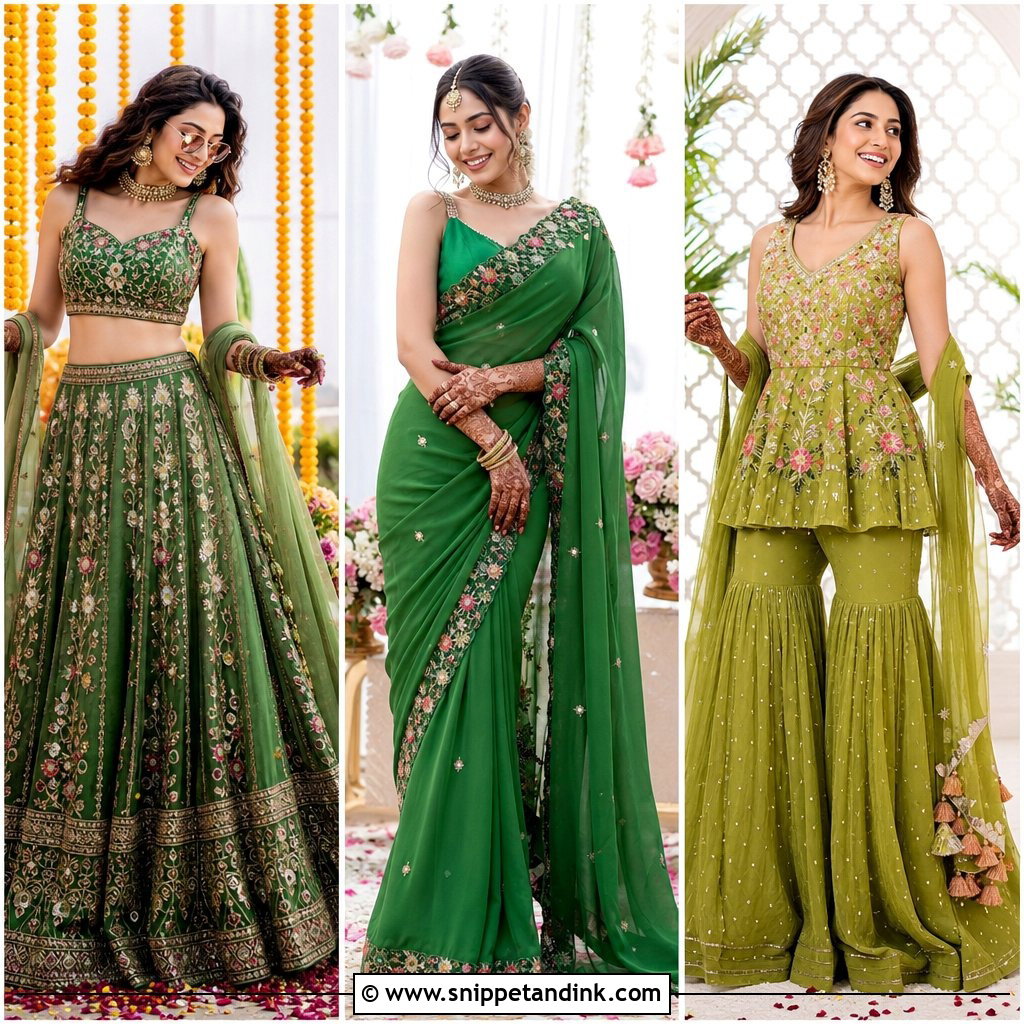
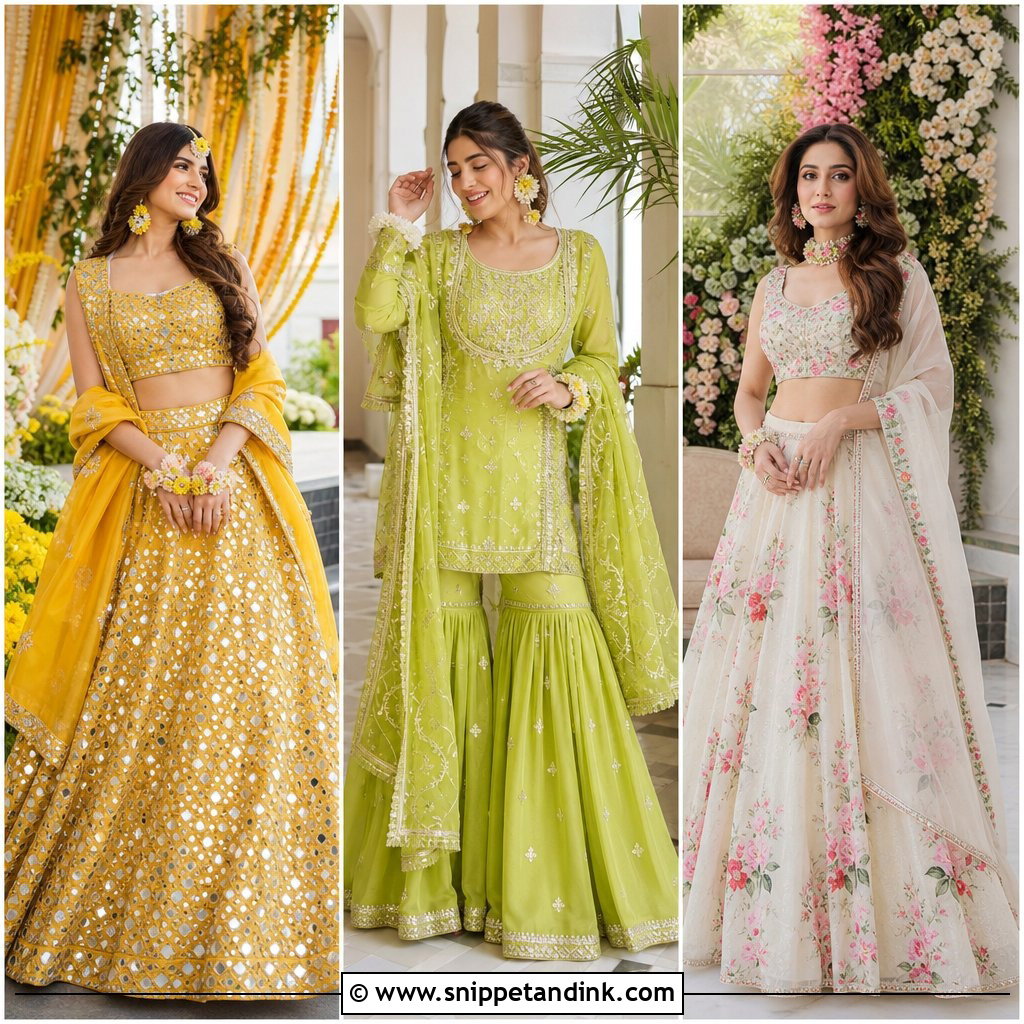
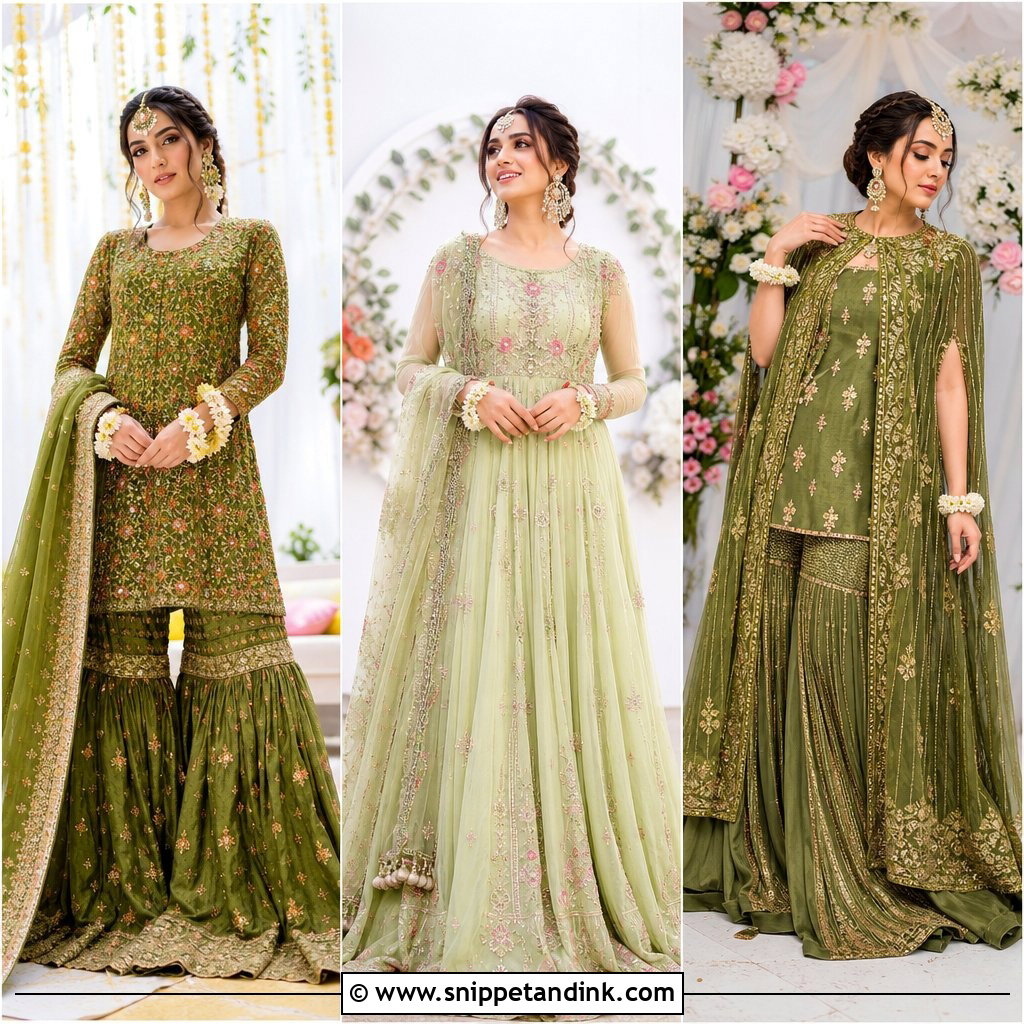
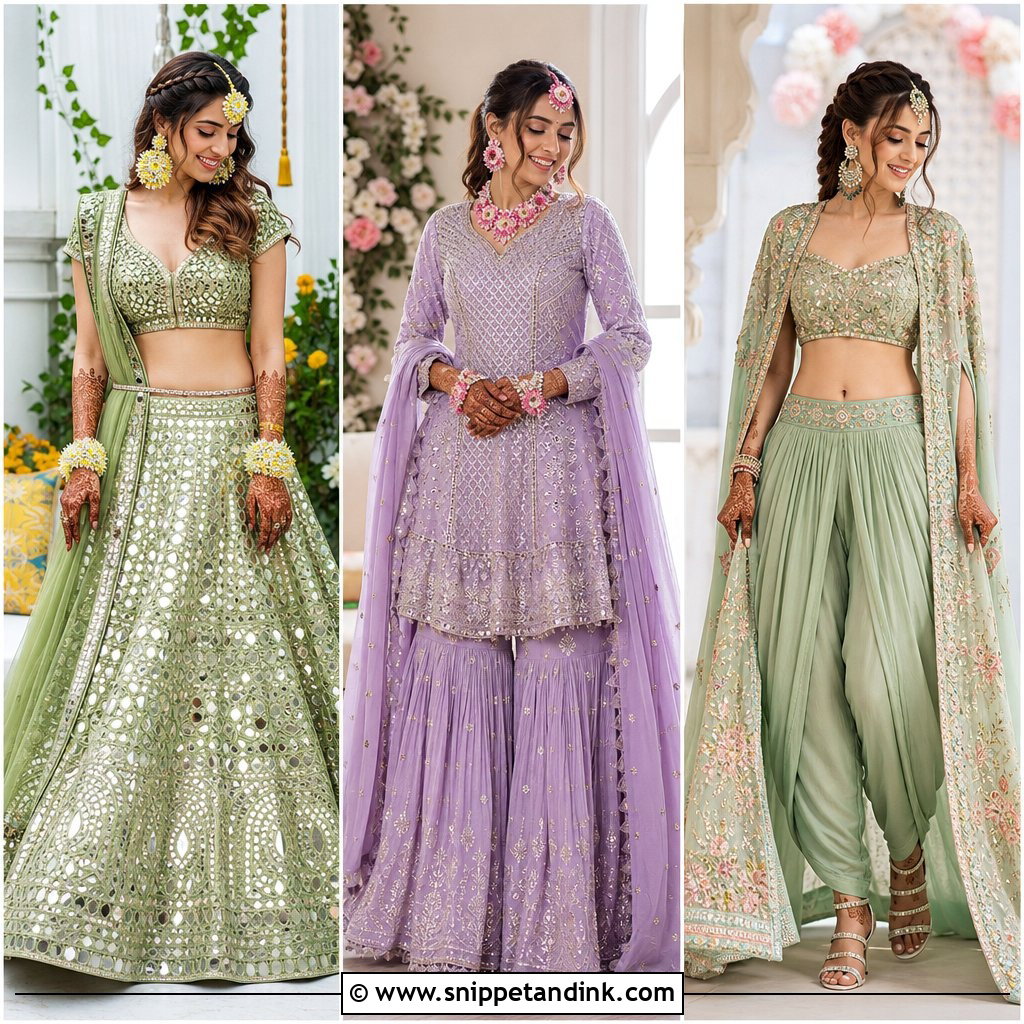
Green is the safe classic, and a lehenga in georgette or cotton silk keeps it comfortable on a warm afternoon. Mirror work or a colorful border is enough decoration. What I adjust most is the flare: a bride can carry a full skirt, but a guest who’ll be moving between the food, the dhol and the henna queue is happier in a skirt that doesn’t sweep across other people’s laps when she sits. Wear a short-sleeved blouse and pin a light net or organza dupatta to one shoulder. Embroidered juttis, floral earrings, stacked bangles and a small potli finish it, and a flower-trimmed braid keeps hair off your hands.
2. Yellow Sharara Mehandi Outfit
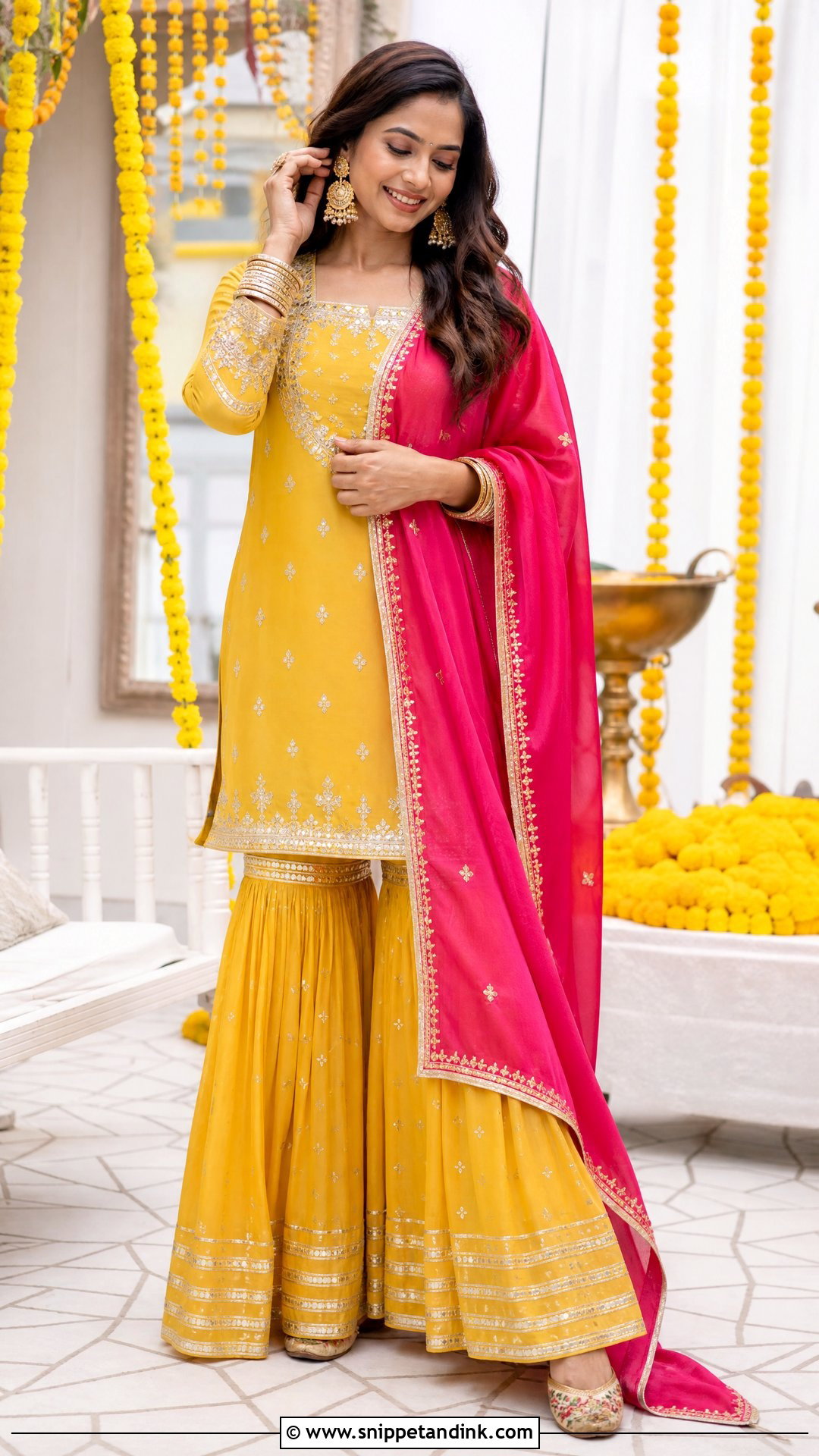
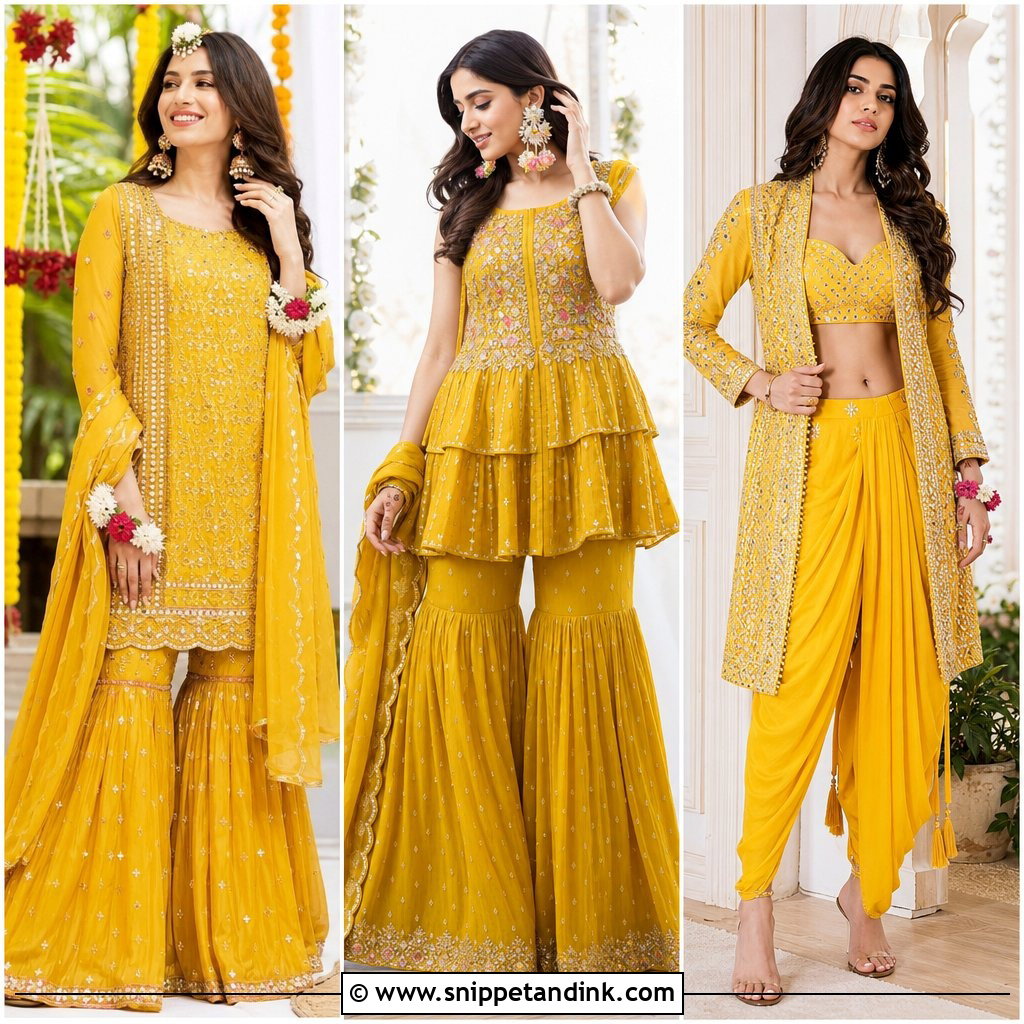
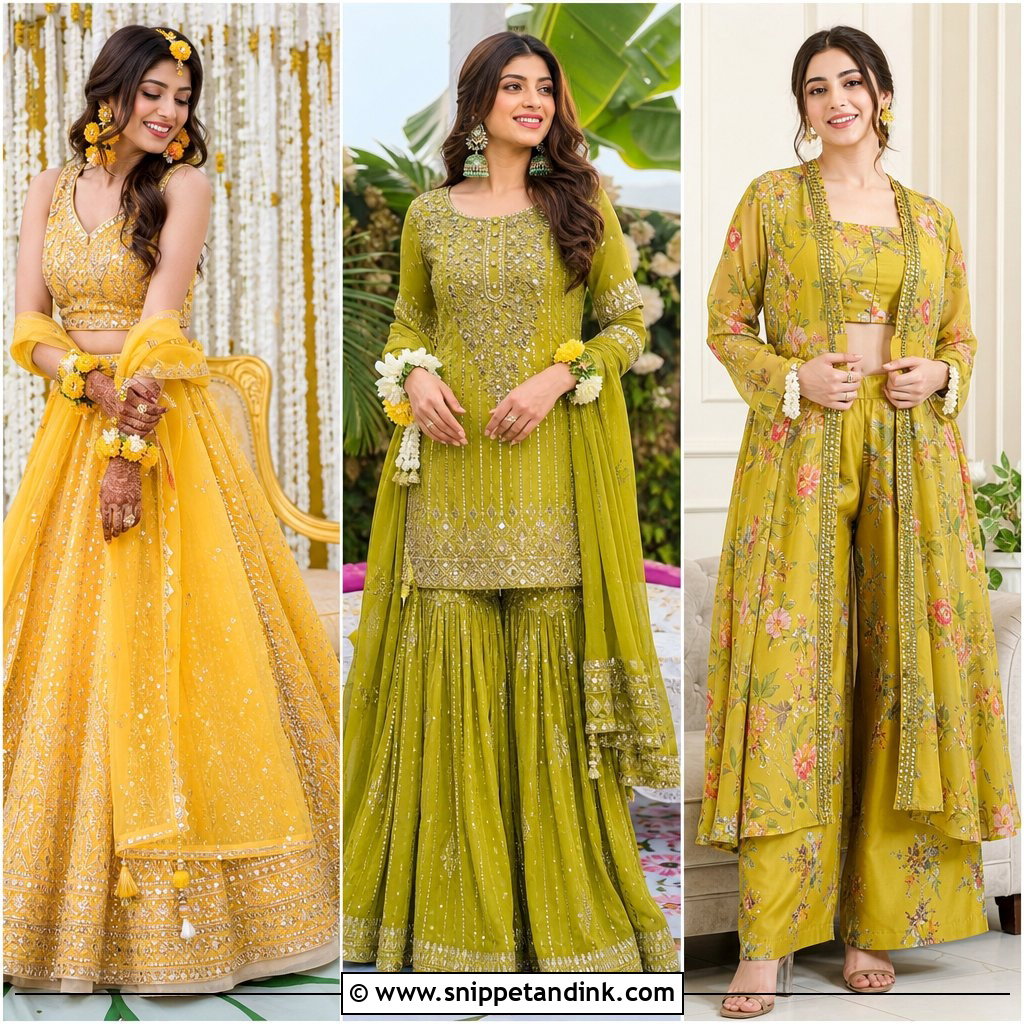
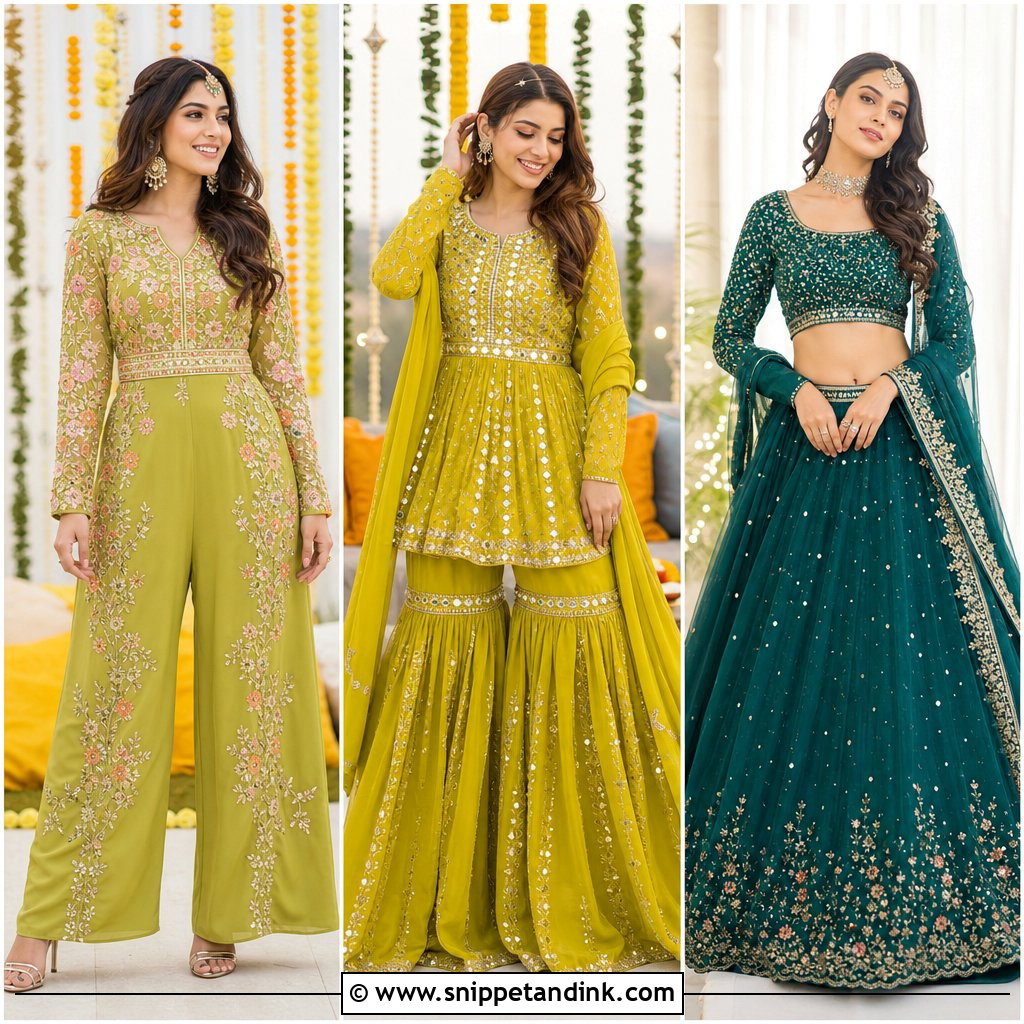
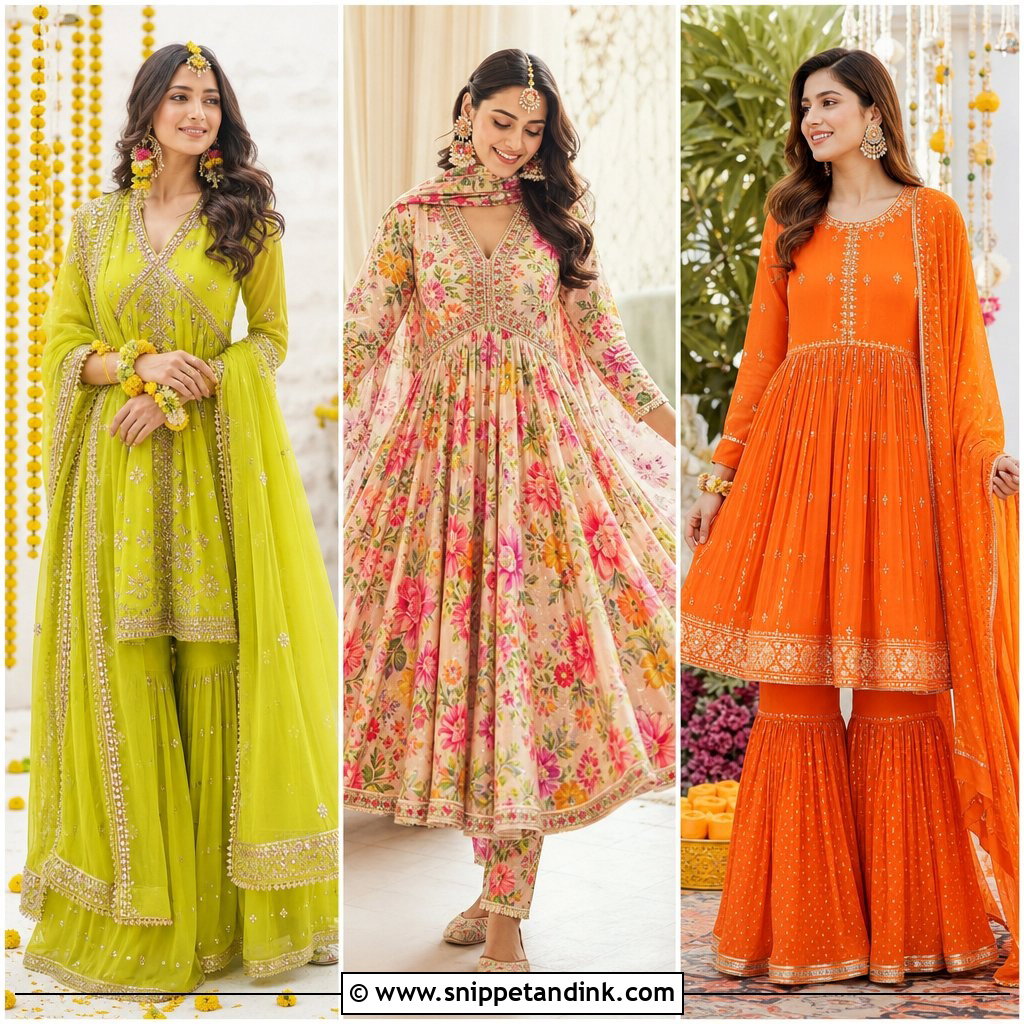
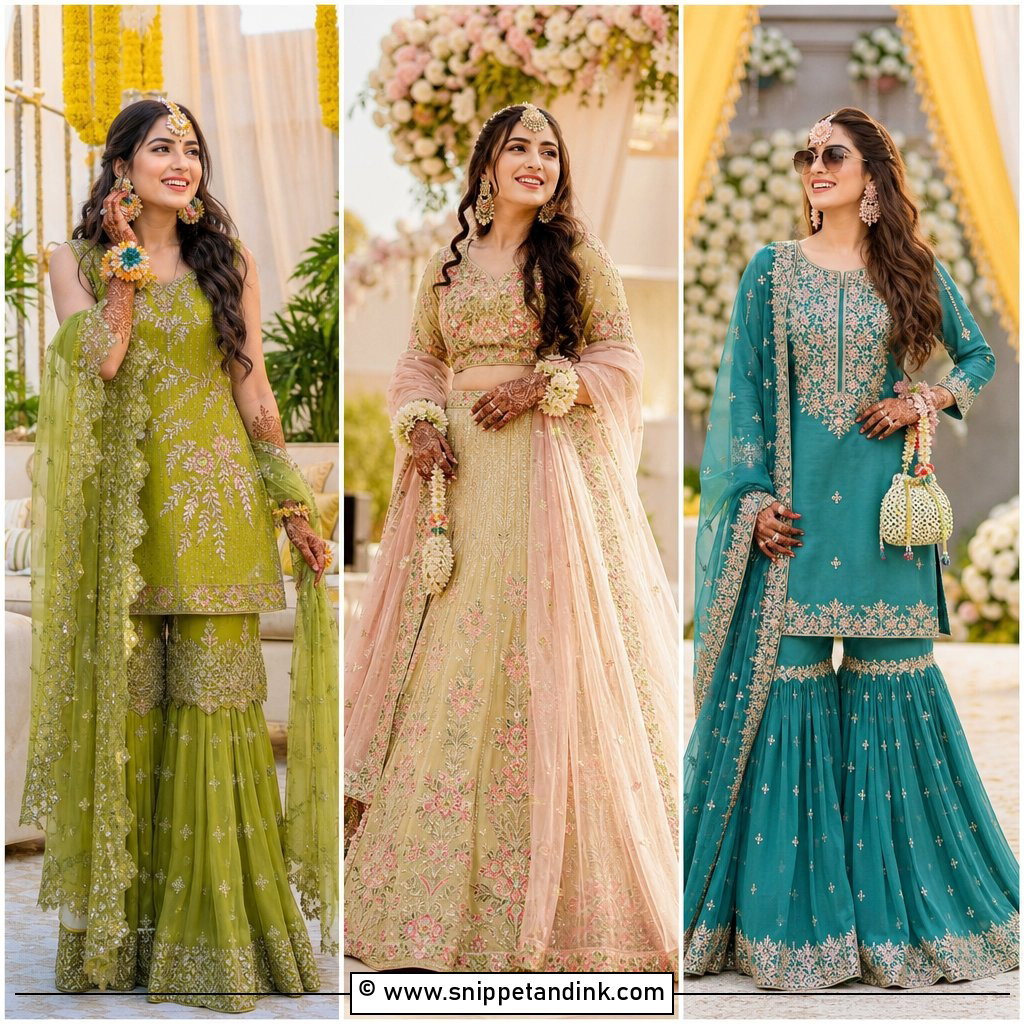
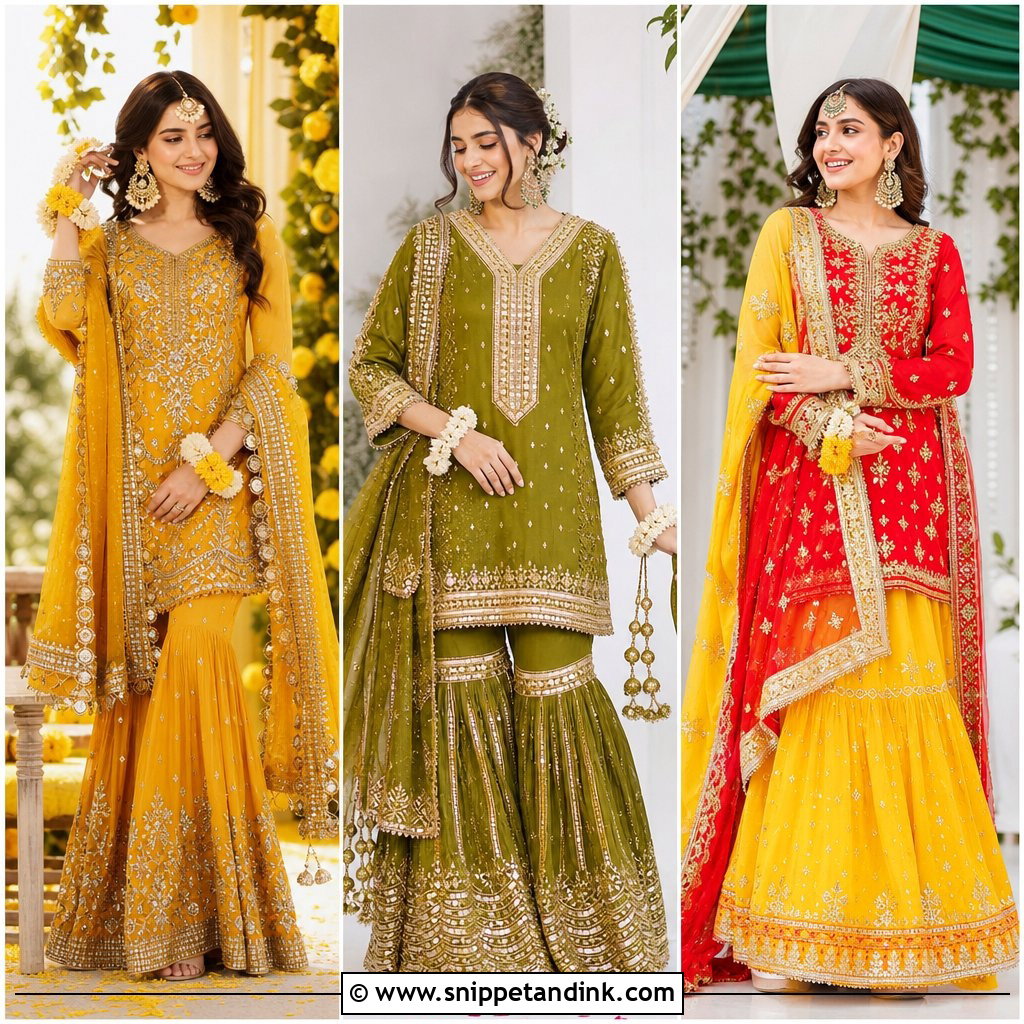
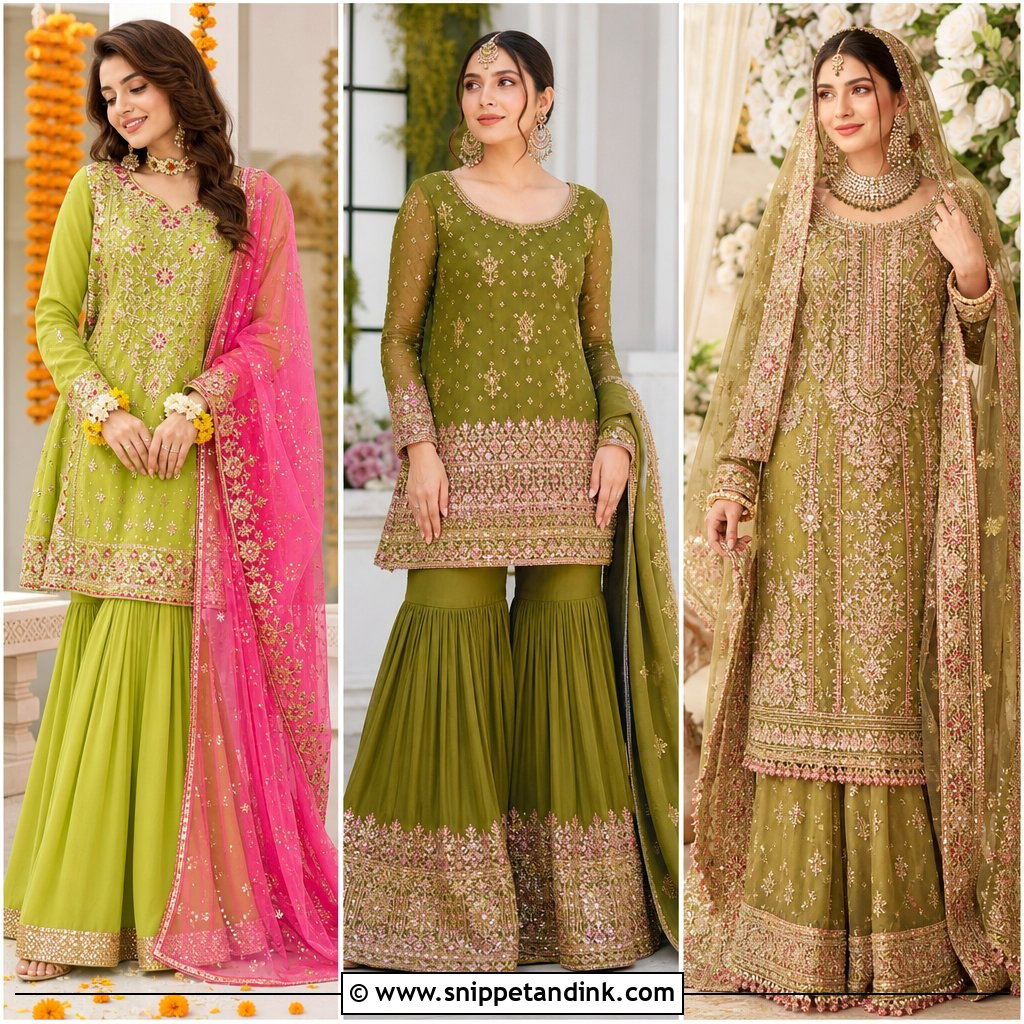
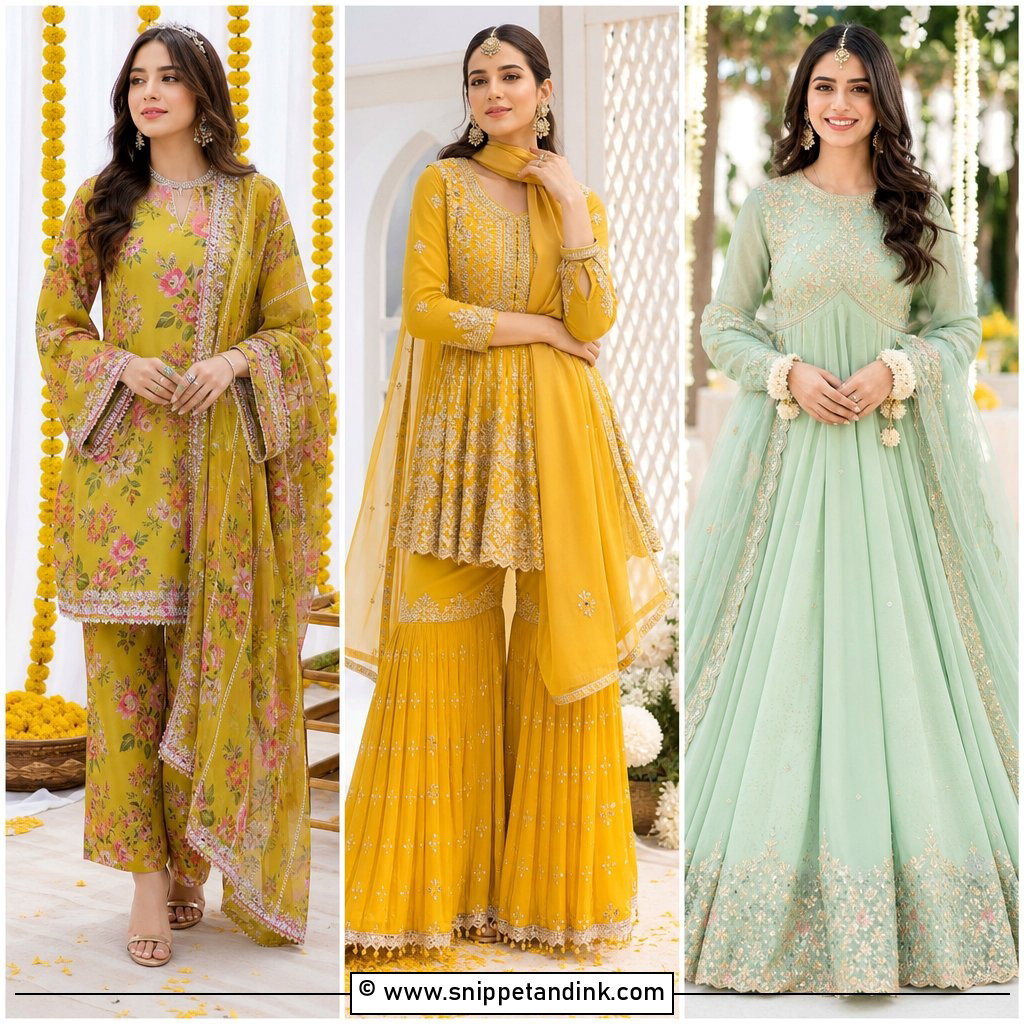
A sunny yellow sharara is the set I suggest most often to bridesmaids, because it moves well, packs small and looks festive in every group photo. It pairs a short or knee-length kurta with wide flared pants. Keep the embellishment to light gota patti or small mirrors; heavy work drags the sharara legs down so they stop swinging. A pink or green dupatta adds contrast. Gold-toned jhumkas, embroidered juttis and a slim stack of bangles are plenty. If you’re having henna done, choose short or three-quarter sleeves. Knee-length kurtas cover more and suit mothers and aunts who’d rather not show the waistband when they sit.
3. Floral Lehenga Mehandi Outfit
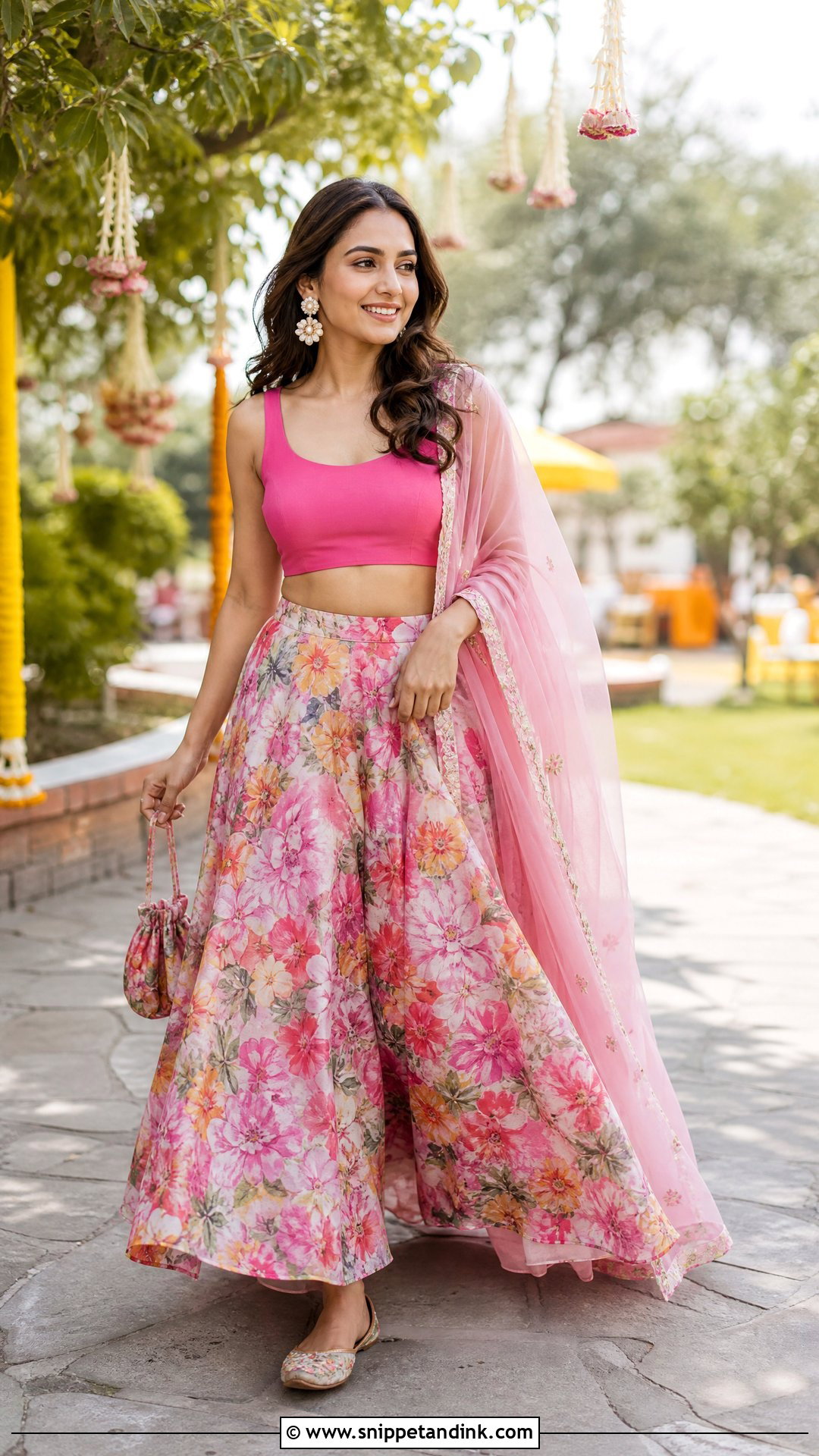
Print is forgiving in a way embroidery isn’t. A floral lehenga with large blooms in pink, coral and turquoise hides a henna smudge or a chai spill far better than a plain skirt, which is a real advantage at a Mehandi. Pair it with a solid crop blouse that repeats one color from the print, and add a light chiffon dupatta that doesn’t cover the pattern. Simple juttis and pearl or floral earrings are enough; skip heavy hand jewelry if you’ll be getting henna. Wear a soft ponytail or half-up style. The skirt’s volume and the blouse’s length and neckline are easy for a tailor to adjust, so this works across ages and body shapes.
4. Pink Anarkali Mehandi Outfit
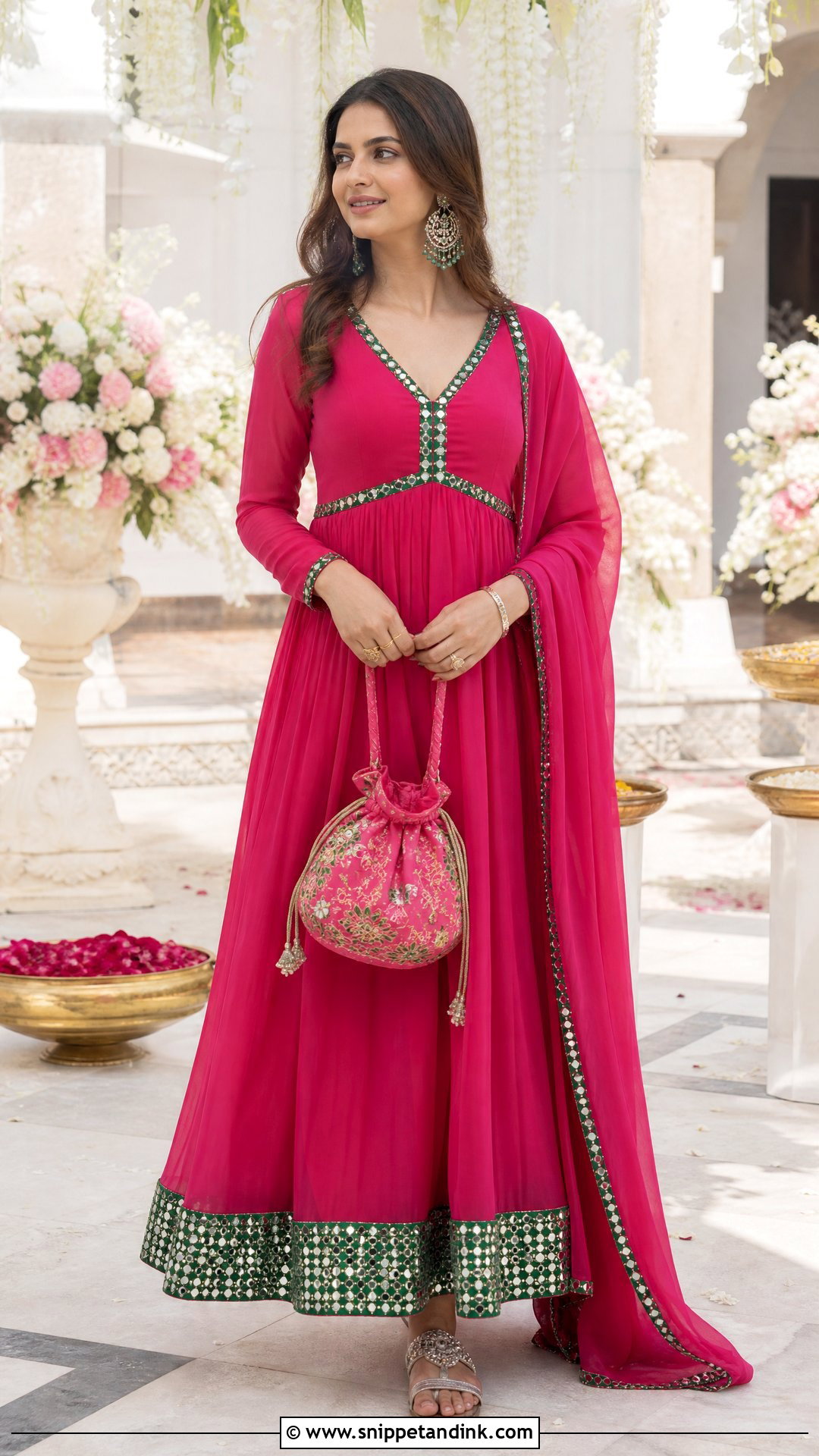
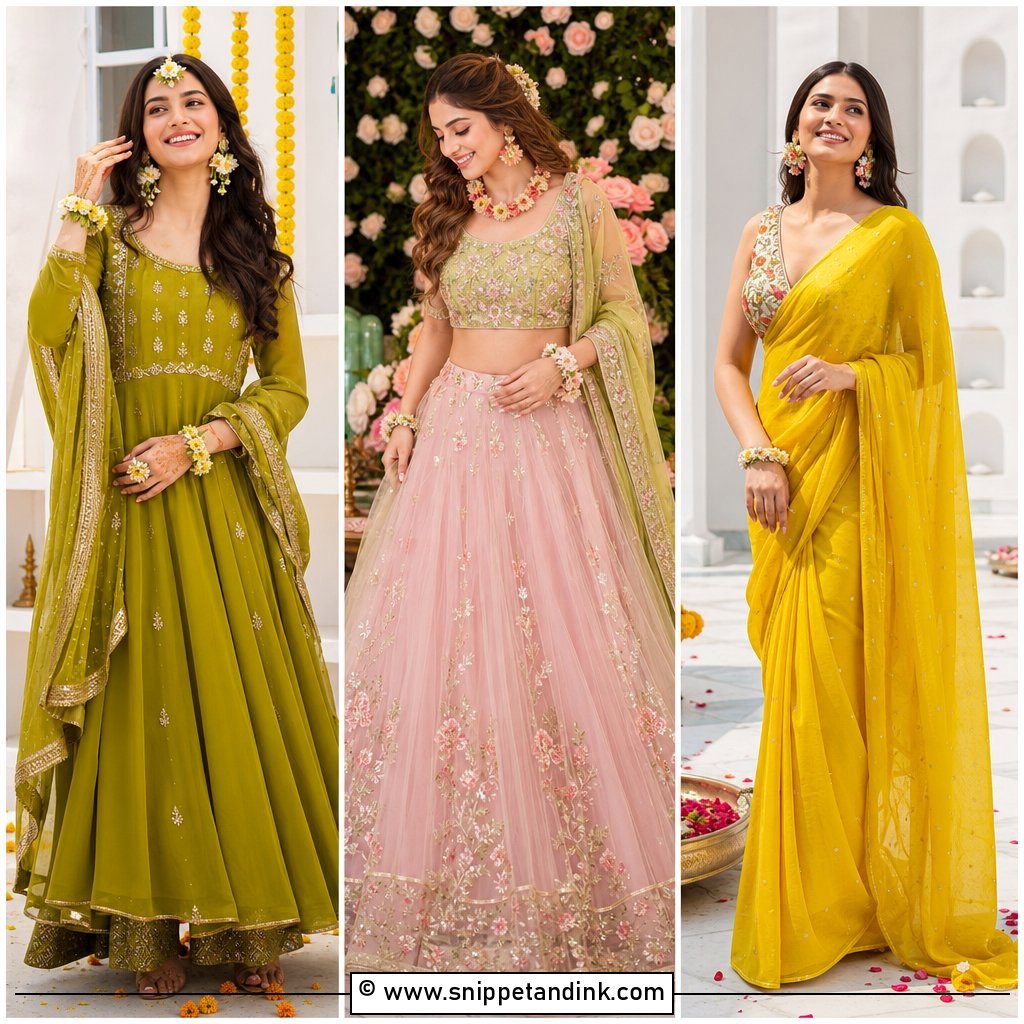
If you’d rather not manage separates, a pink Anarkali gives you one flowing piece. Fuchsia reads bold and festive; blush or rose is quieter, and that’s often the better call for a mother of the bride who wants to look dressed without competing with the bride. Choose cotton silk, chiffon or georgette with a fitted bodice you can actually breathe in after lunch. Green piping or mirror work ties it to the Mehandi palette. Add a narrow dupatta pinned at one shoulder, metallic sandals, statement earrings and a compact potli. Short sleeves make henna easy. The one thing to watch is the hem: Anarkalis are often cut long, so check the length in your own flat shoes.
5. Mirror Work Palazzo Mehandi Outfit
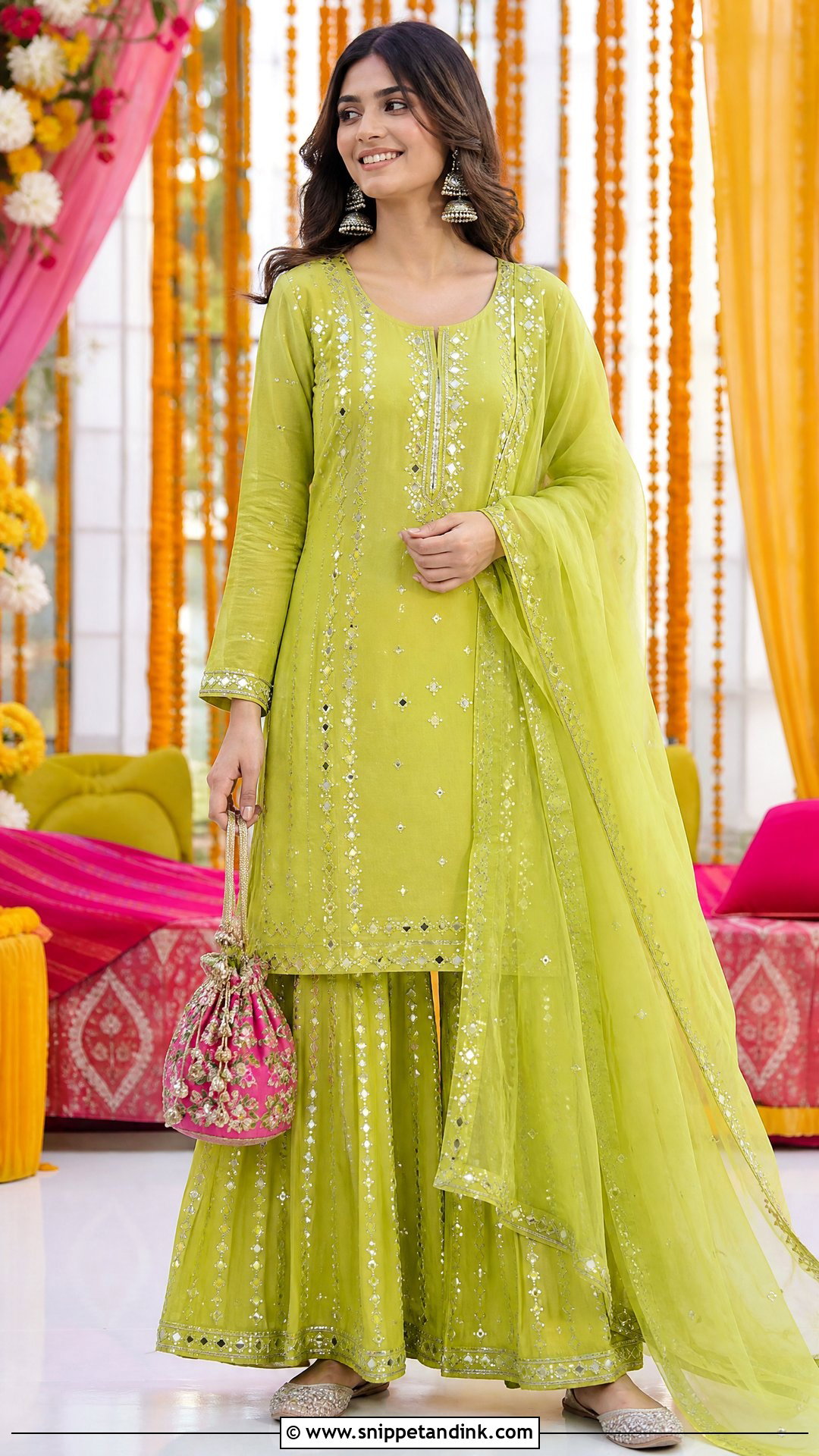
Mirror work brings sparkle without the weight of a lehenga. Start with a straight or fitted kurta in lime, coral, turquoise or hot pink and add palazzos that let you sit on the floor without fuss. Keep the mirrors to the neckline, sleeve edges and hem; that’s where the camera picks them up anyway. A soft chiffon dupatta, silver jhumkas, embellished flat sandals and a bright potli finish it. Leave rings off if you’re getting henna, because the artist has to work around them and the paste pools at the band. Use earrings or a hair accessory for impact instead. Close family can dress it up with more embroidery, while guests can keep it minimal.
6. Bandhani Lehenga Mehandi Outfit
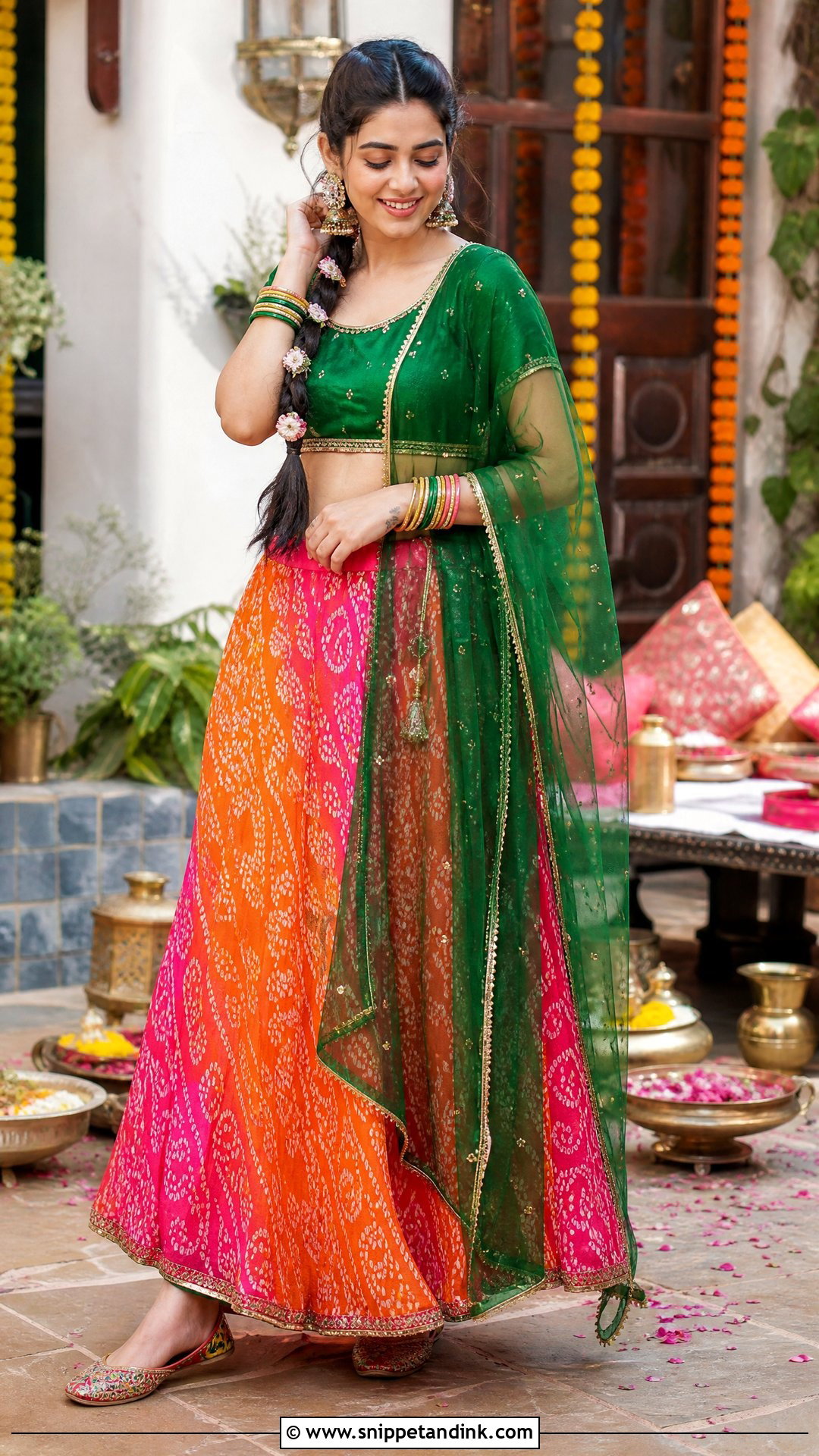
Bandhani is tie-dye made by pinching and binding tiny points of cloth before dyeing, so no two pieces are identical, and a Bandhani lehenga looks right at a Mehandi without any extra effort. Red-and-green and pink-and-orange are the classic pairings. Keep the flare manageable and pair it with a solid short-sleeved blouse so the dots have somewhere to rest. One printed piece is usually enough: either a Bandhani dupatta over a plain skirt, or a plain chiffon dupatta over a Bandhani skirt. Traditional jhumkas, bangles, embroidered juttis and a braid finish it. Guests should keep the embellishment light; brides can add mirror work, tassels or a waist belt.
7. Mint Green Kurta Set Mehandi Outfit
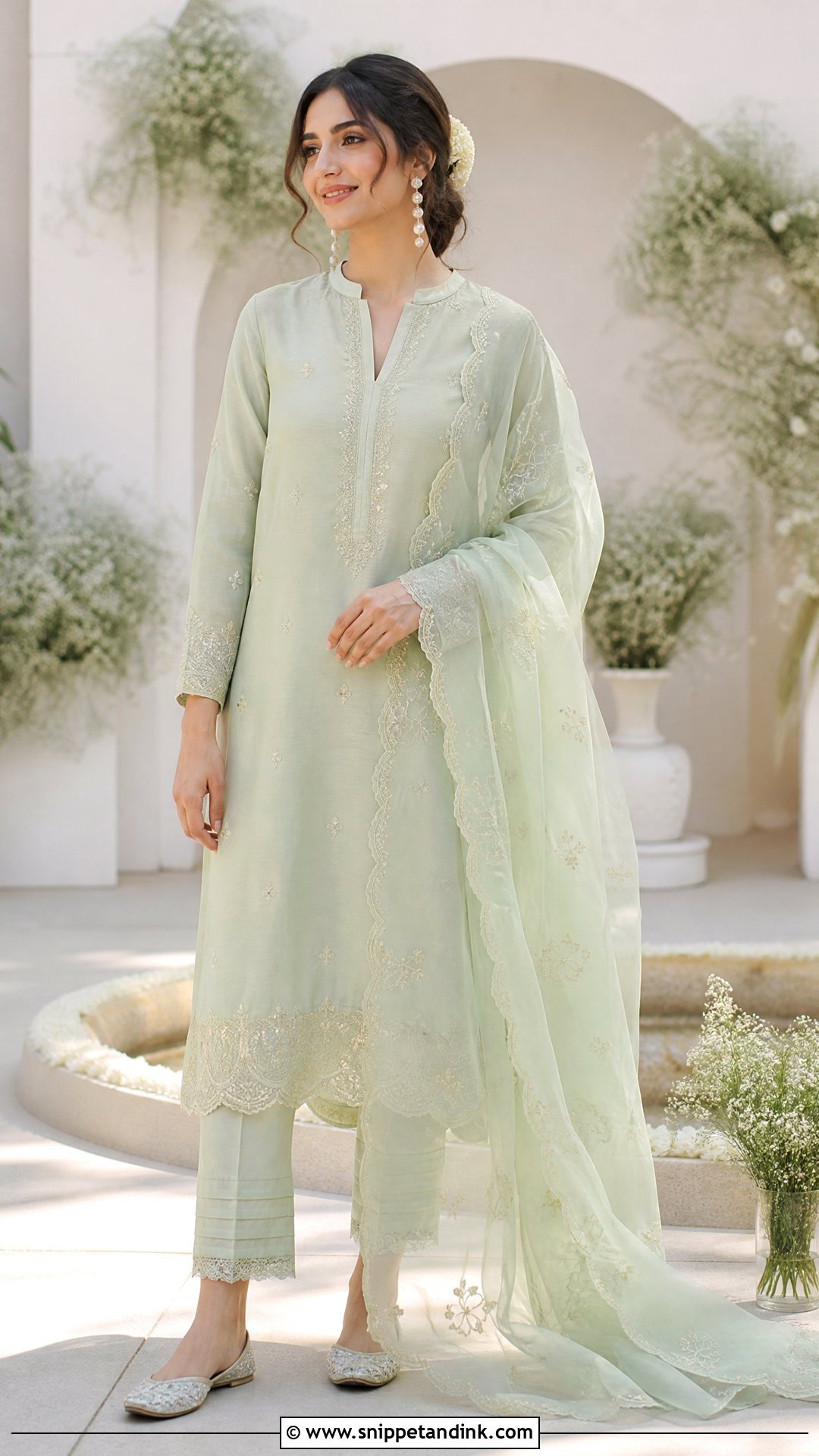
Mint is a relief on a hot day. A straight or gently flared kurta with cropped pants keeps you cool at an outdoor daytime ceremony, and white thread embroidery or tiny sequins add just enough detail. An organza dupatta with a scalloped edge polishes it, pinned at the shoulder so it stays clear of wet henna. Pearl earrings, silver juttis and a floral hair accessory suit the pale color. Light colors do show marks, so if you’re queuing for henna, keep a napkin across your lap while the paste dries. Ask your tailor for a longer hem, a higher neckline or a different sleeve length if you want more coverage; mint kurta sets are easy to adapt for every age.
8. Multicolor Co-Ord Mehandi Outfit
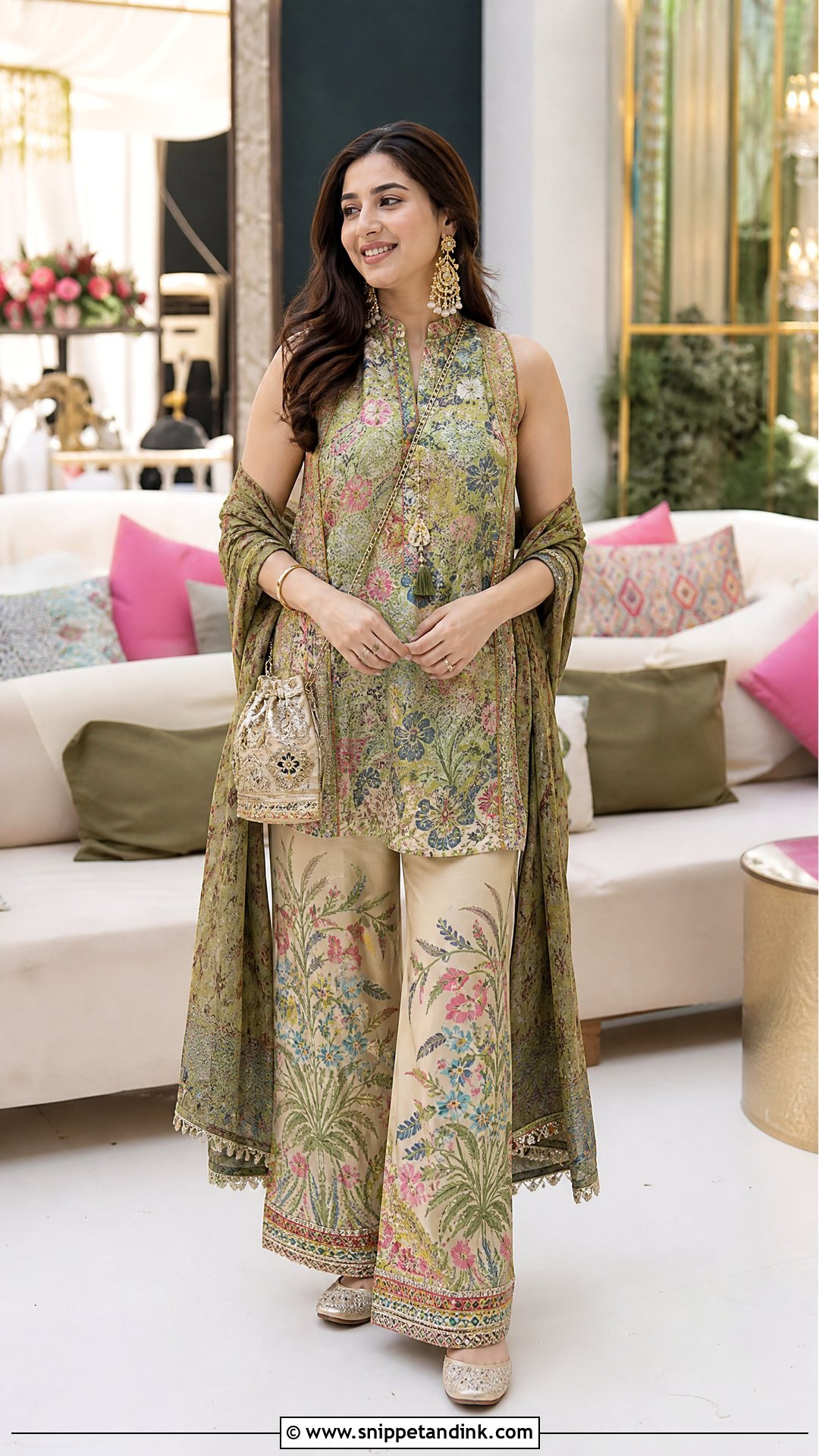
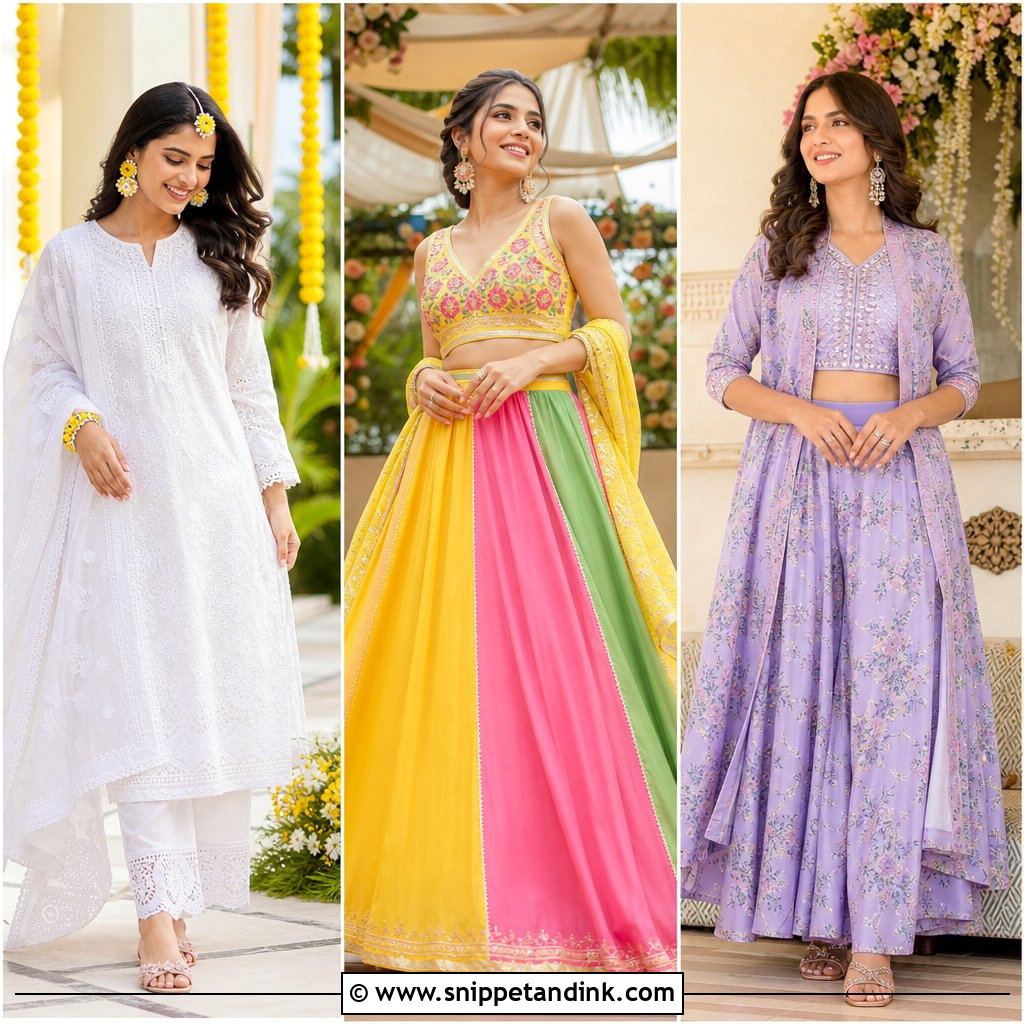
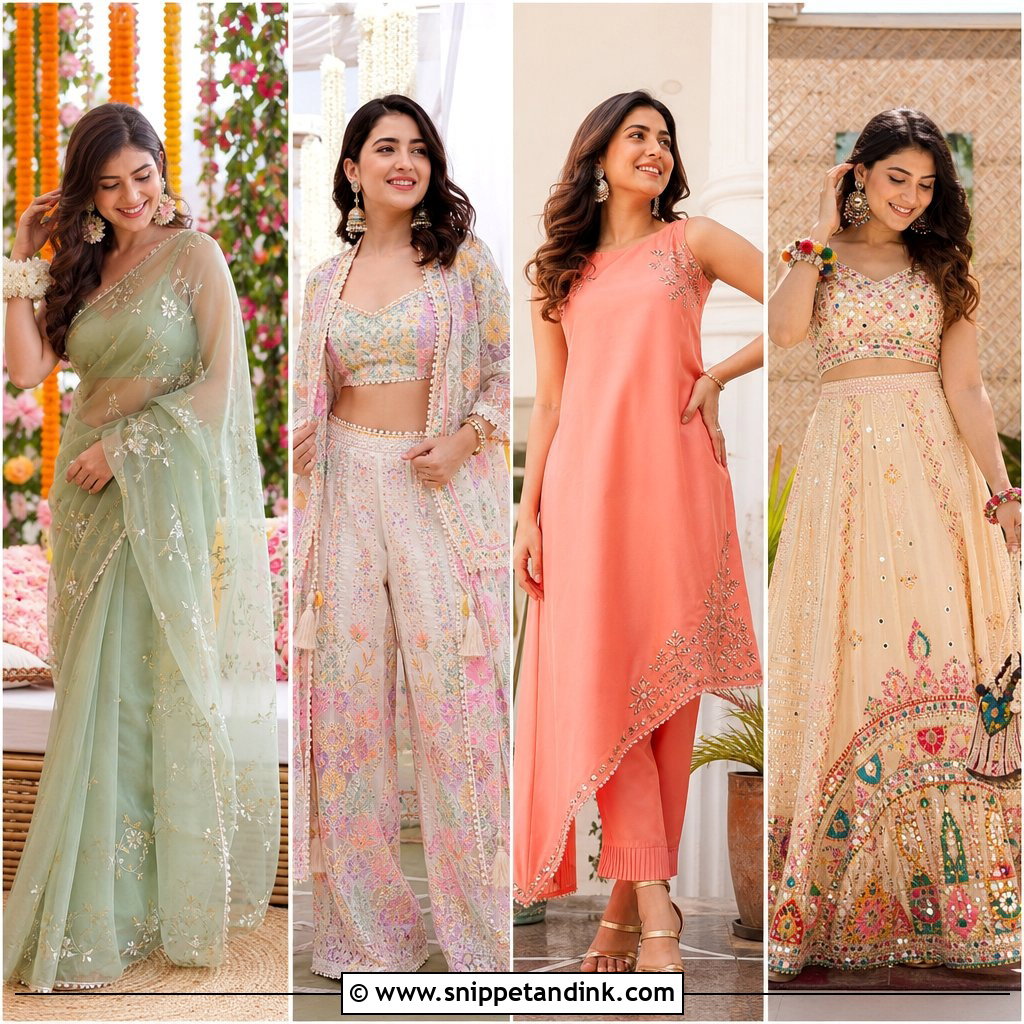
Co-ord sets are the modern guest’s answer to a Mehandi, and a multicolor one feels lively without needing a dupatta. A cropped or hip-length top with matching wide-leg pants or a flowing skirt is the usual shape, in patchwork, floral or geometric prints. Keep the neckline and sleeves plain so the colors stay in charge. Layer a light cape or sleeveless long jacket if you want more coverage. Neutral juttis, bold earrings and a small crossbody potli finish it, and the crossbody strap is worth having, since your hands will be either full of food or covered in henna. A longer top and tailored pants make the same idea work for older guests.
9. Orange Gharara Mehandi Outfit
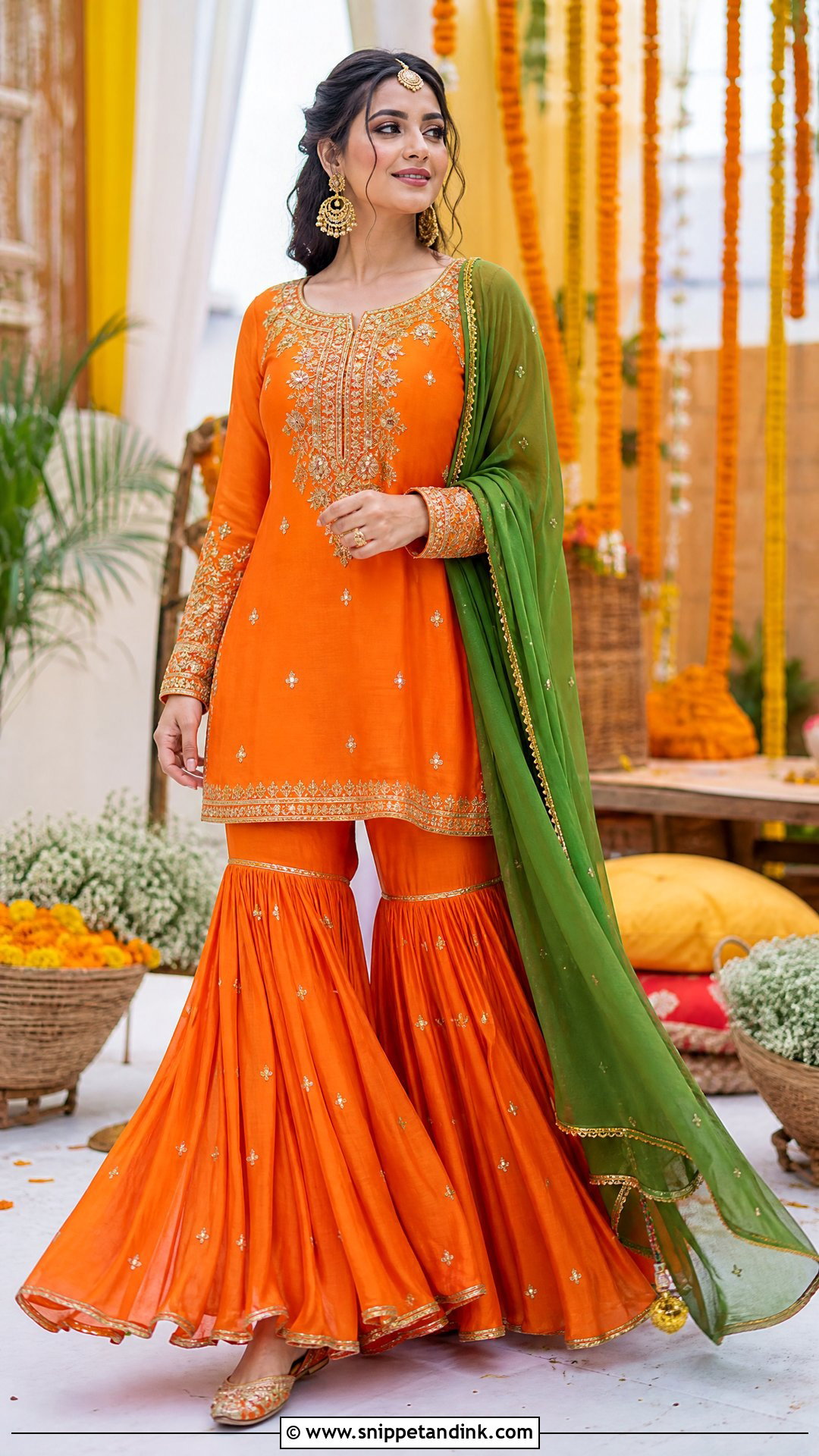
A bright orange gharara is warm and traditional. The pants are fitted to the knee, where there’s usually a decorative band, and then flare out, so walking is easy but sitting cross-legged pulls at that knee seam; try it in a seated position before the final stitching. Pair it with a short kurti in gota patti, zari or pink embroidery and add a light green or fuchsia dupatta. Gold jhumkas, embroidered juttis and a small maang tikka complete it. Brides can layer necklaces; guests should keep jewelry minimal. Check that the hem clears the floor in your actual footwear so you don’t step on it while dancing.
10. Indo Western Dhoti Mehandi Outfit
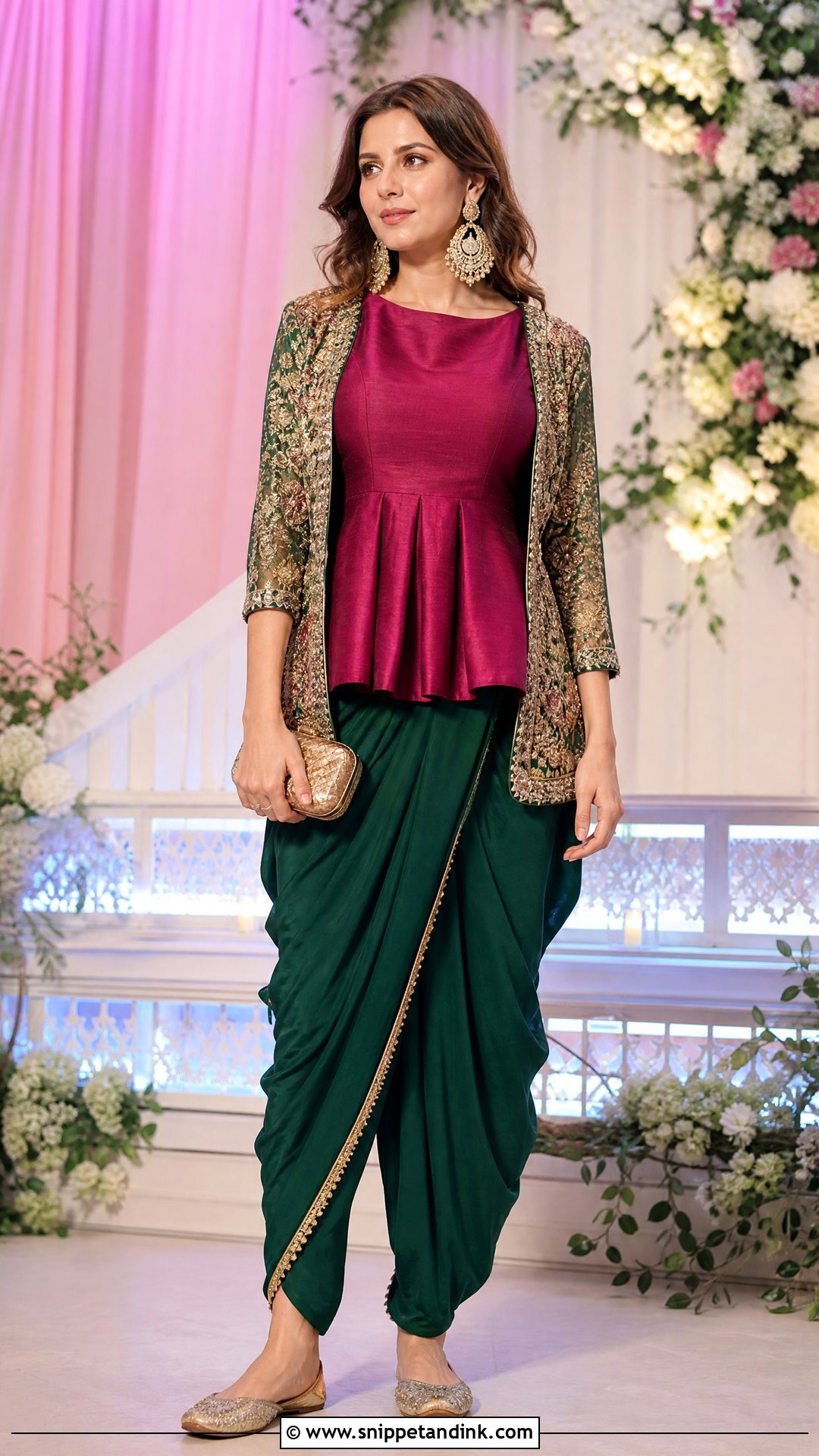
Could a traditional outfit feel as easy as party wear? An Indo Western dhoti set gets close, with draped pants under a structured blouse, peplum or short kurta. Jewel tones suit it best; emerald and teal are my favorites because they hold their depth in evening light. A printed jacket or one-shoulder cape adds a second layer without the weight of a skirt. Statement earrings, metallic block heels or juttis and a small clutch finish it. The drape on dhoti pants sits low through the seat, so sit and squat at the fitting before you commit. Keep wrists bare if henna is part of your plans.
11. Chikankari Sharara Mehandi Outfit
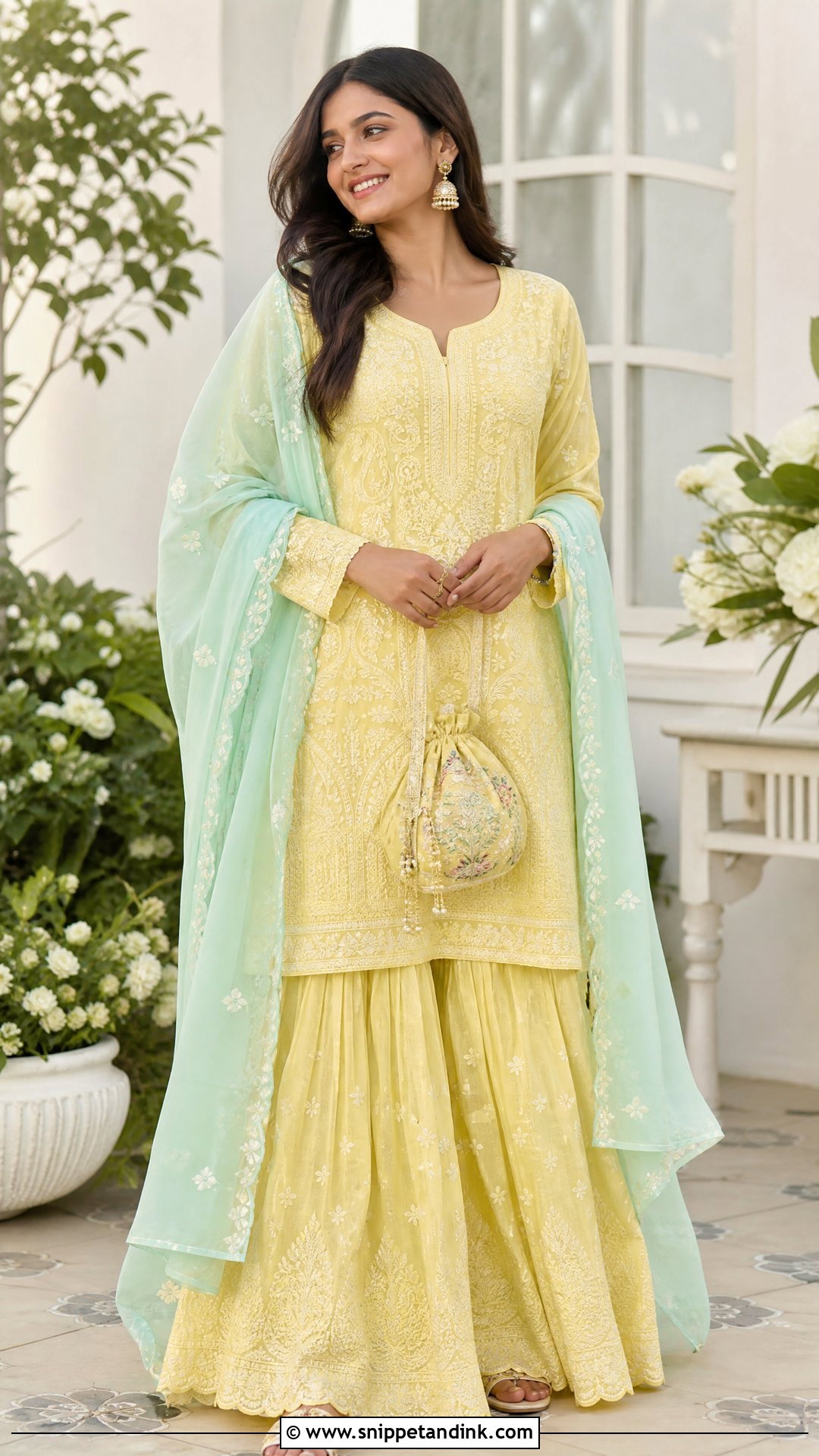
Chikankari is fine hand embroidery from Lucknow, traditionally white thread on light cotton or georgette, and on a sharara it reads refined rather than flashy. Pastel yellow, mint, peach or soft pink with a short kurta and flowing bottoms are easy to wear all day. A bit of colored threadwork or a few tiny mirrors makes it feel festive. Add a sheer dupatta in a brighter shade, pearl jhumkas, flat sandals and a floral potli, with a neat braid or low ponytail. The fabrics are often sheer, so ask whether the set comes lined; bright outdoor light and camera flash both show more than you’d expect.
12. Cape Lehenga Mehandi Outfit
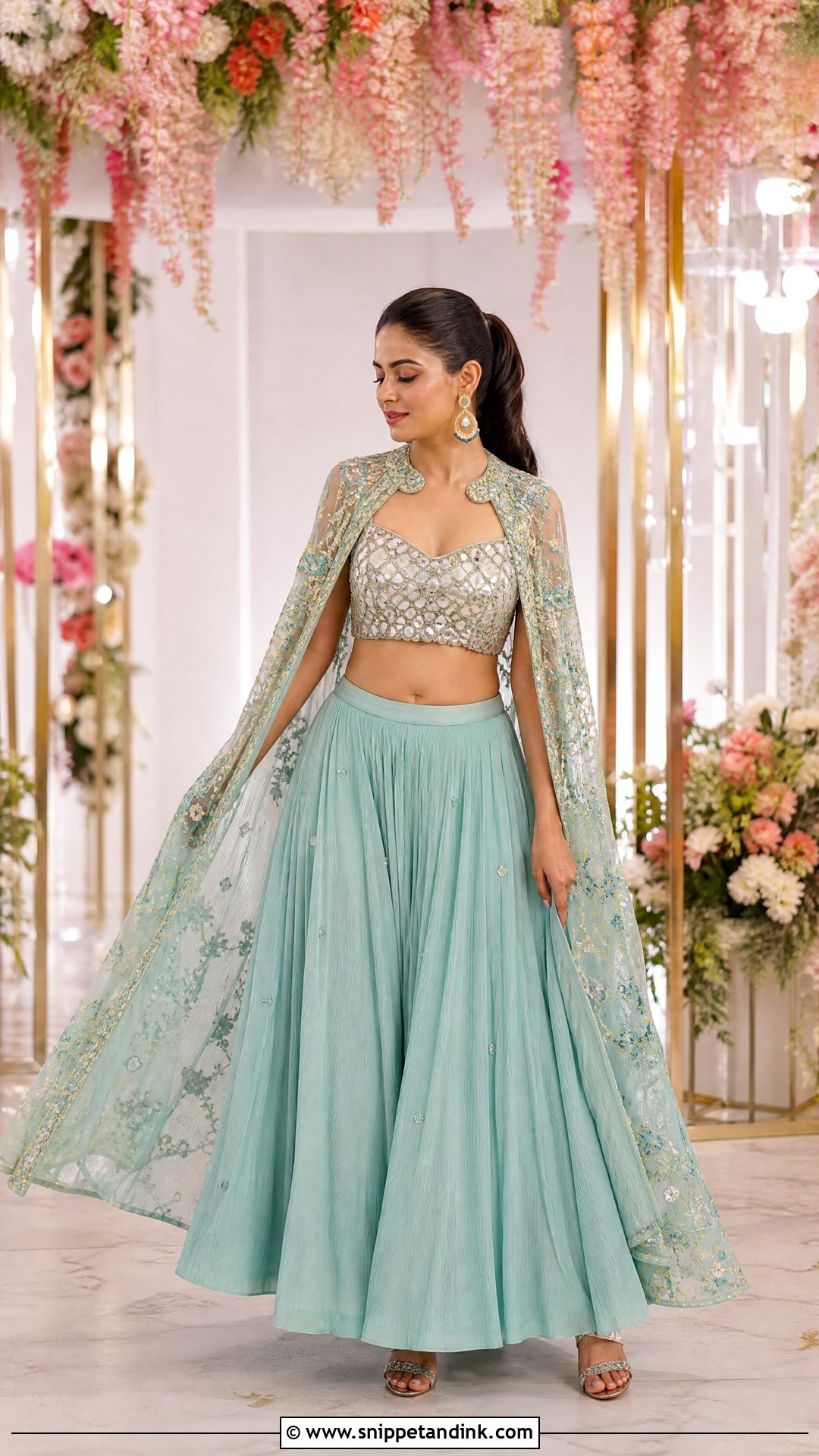
A cape lehenga skips the dupatta altogether, which is half the reason people love it. Start with a lightweight skirt and coordinated blouse in green, turquoise or a vivid floral, then layer a sheer embroidered cape ending at the waist or hip. Before you buy, lift your arms as if resting them on a henna cushion: the cape needs open sides or wide sleeves, or the artist will have to work around fabric. Statement earrings, a sleek ponytail, embellished sandals and a compact clutch finish it. If the cape is worked heavily around the neckline, skip the necklace. This one suits the bride or a sister who wants a bit of drama.
13. Green Saree Mehandi Outfit
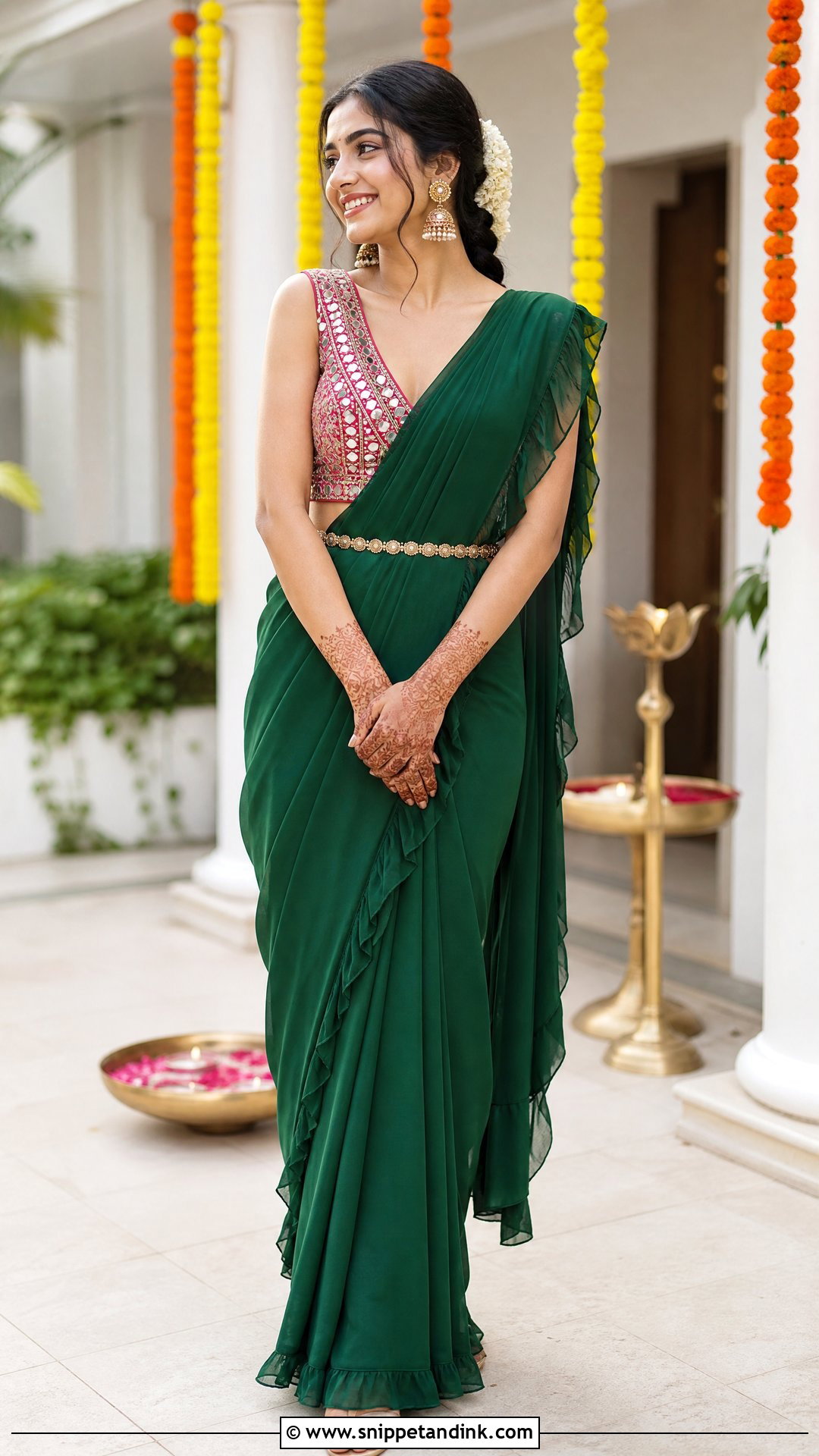
A saree at a Mehandi works only if the drape stays put while you sit on the floor and dance. Choose chiffon, georgette or a soft pre-stitched design rather than stiff silk. Pair it with a contrasting pink or yellow short-sleeved blouse in mirror work. Pin the pleats at the waist and the pallu at the shoulder with more pins than you think you need, so both hands stay free. Jhumkas, a waist belt, comfortable sandals and flowers in a low bun or braid finish it. A pre-draped saree is my usual recommendation for guests who love the look but don’t wear sarees often. Keep the hem a touch above the floor in crowded spaces.
14. Peplum Sharara Mehandi Outfit
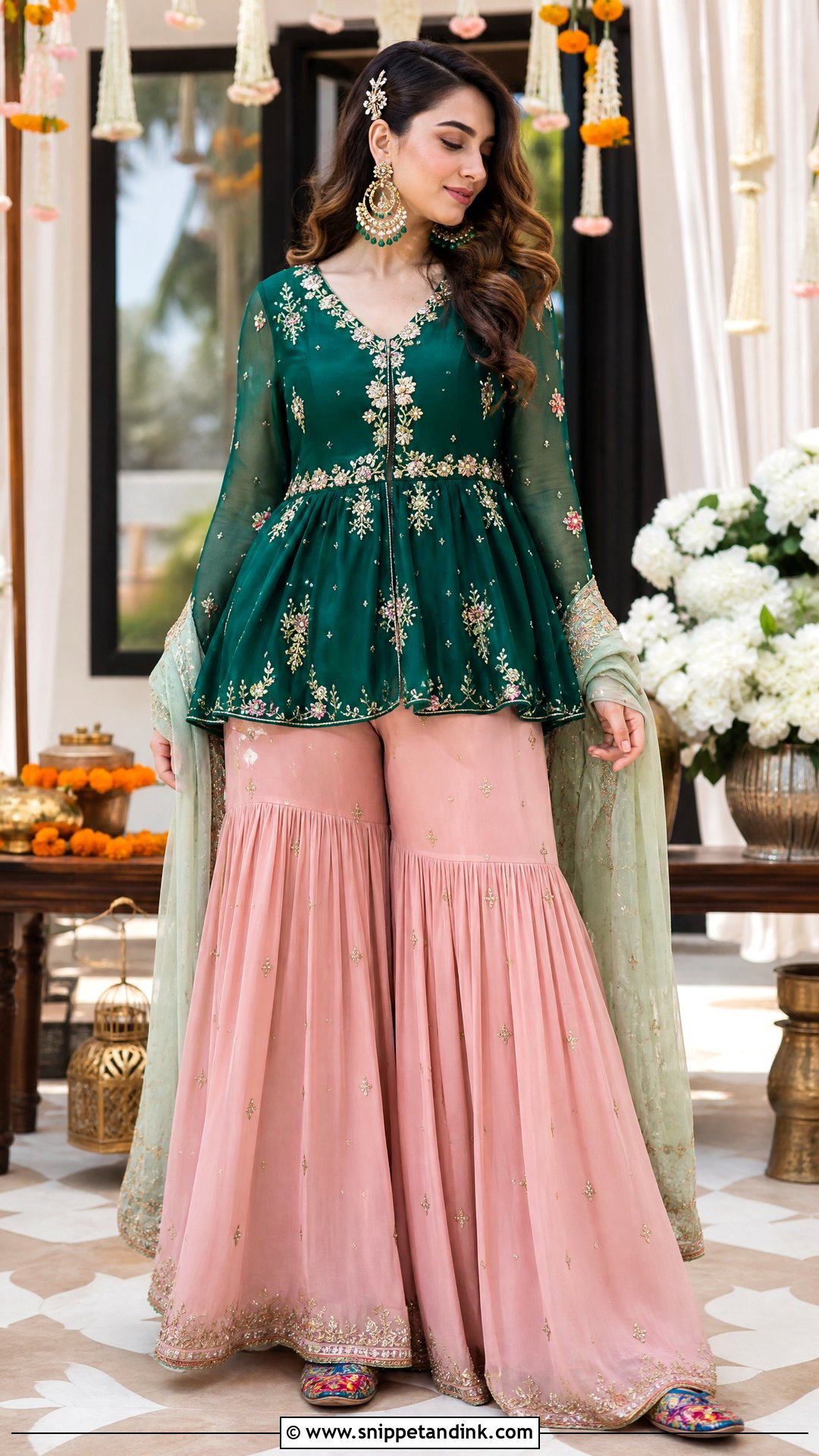
The peplum flares just below the waist, so it skims the middle without clinging, and that’s why it suits so many shapes. Pair it with wide sharara pants in a matching or contrasting shade; emerald with pink and mustard with turquoise are both cheerful. Keep the decoration to small mirrors, threadwork or gota trim, because dense embellishment starts to feel heavy after a few hours on the floor. A narrow dupatta is optional. Chandbalis, comfortable juttis and a decorative hair clip finish it. Ask your tailor to set the waist seam where you’re most comfortable, not where the pattern says; a longer peplum also gives extra coverage.
15. Jacket And Skirt Mehandi Outfit
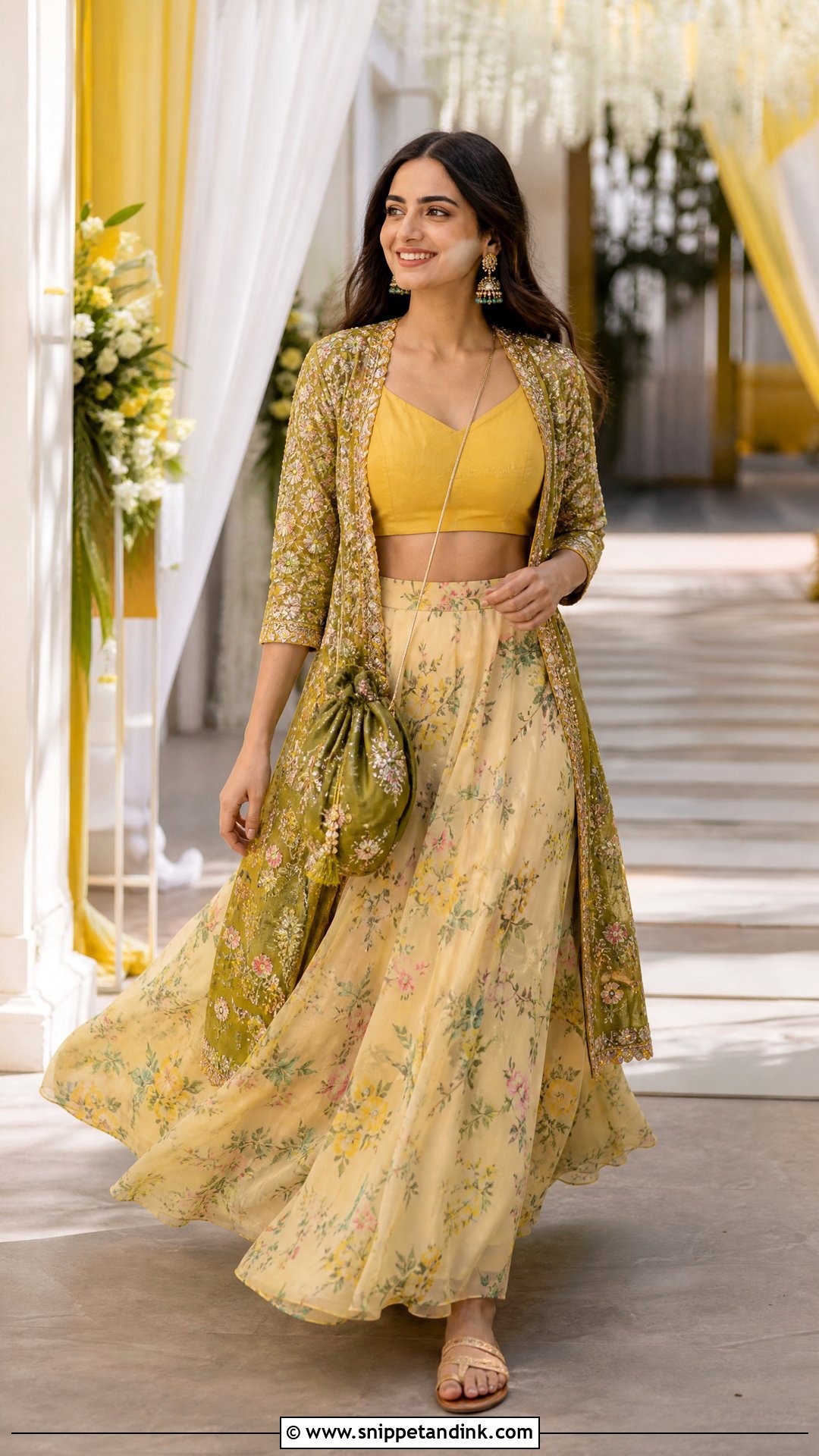
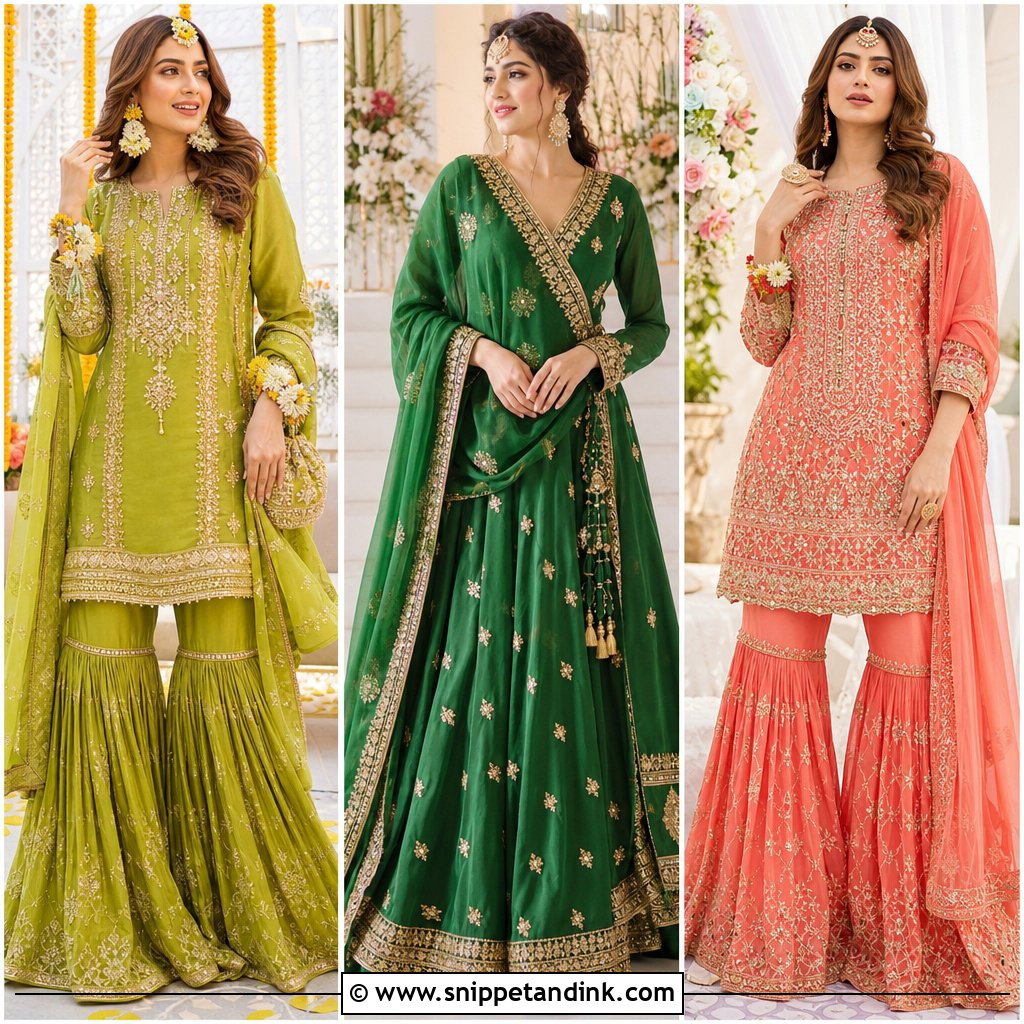
Layers are useful at an outdoor Mehandi that starts in the afternoon sun and ends in a cool evening. Combine a simple crop top or fitted blouse with a printed skirt and an open-front embroidered jacket. A waist-length jacket looks youthful; a knee-length one gives more coverage and structure. Floral prints or threadwork in green, yellow and pink suit the day. Flat sandals, statement earrings and a small bag with a wrist-free strap complete it. Make sure the jacket sleeves are short or loose enough to push well above the elbow before the henna starts. Afterwards the pieces split easily: the jacket over trousers, the skirt with another blouse.
16. Patiala Suit Mehandi Outfit
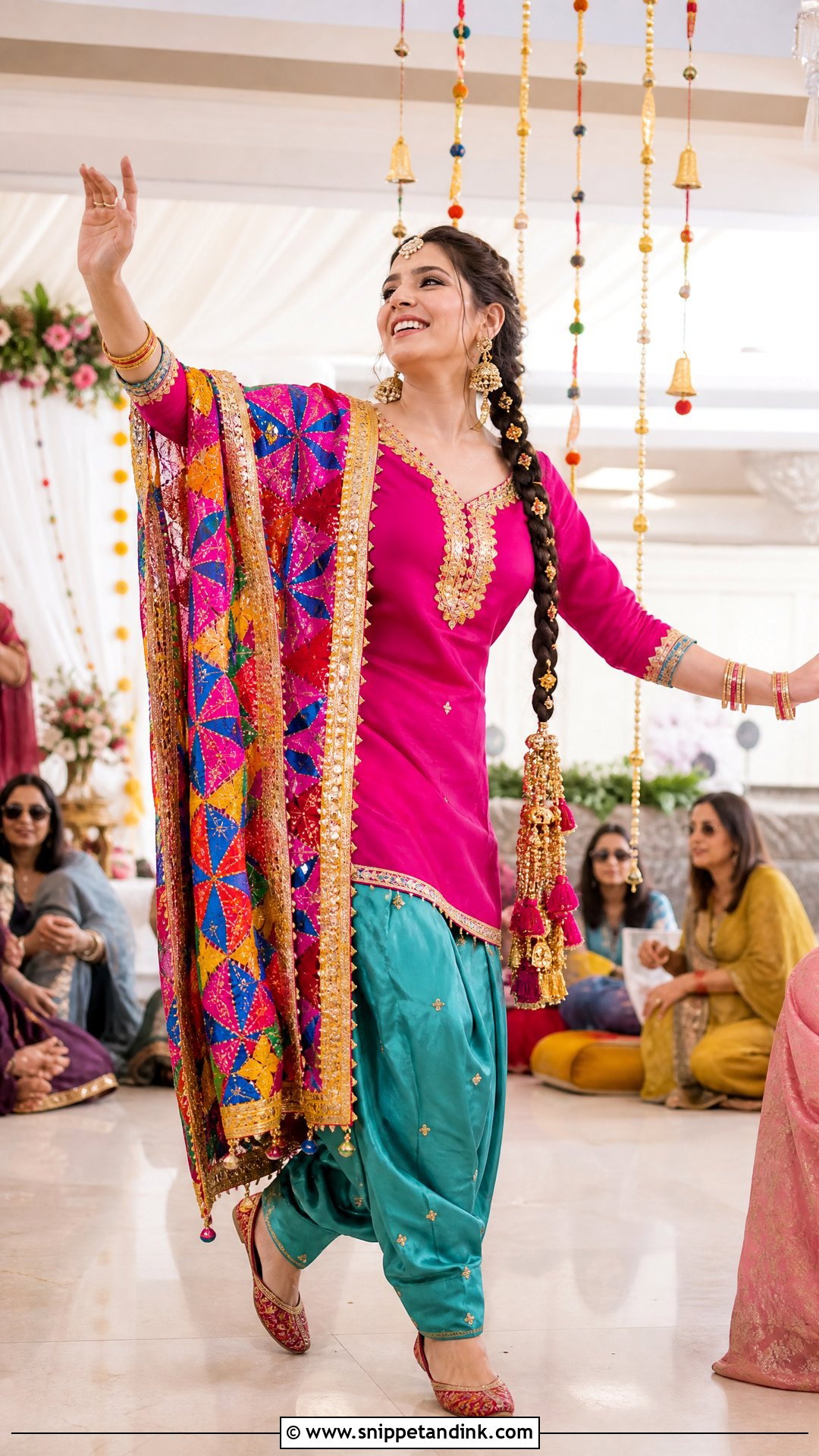
A Patiala suit is made for a night of bhangra. Pair a short kurti in magenta, green or mustard with contrasting pleated Patiala pants, and let a phulkari dupatta, the bright hand-embroidered Punjabi wrap, turn it into a festive outfit. Pin the dupatta at one shoulder or wear it around the neck before your henna starts. Punjabi juttis, bold jhumkas, a paranda braid and a few lightweight bangles finish it. The pants use a lot of fabric, so choose a soft cotton or crepe that folds neatly when you sit. It’s the easiest look here for anyone who’d like to dance without thinking about her clothes.
17. Printed Maxi Dress Mehandi Outfit
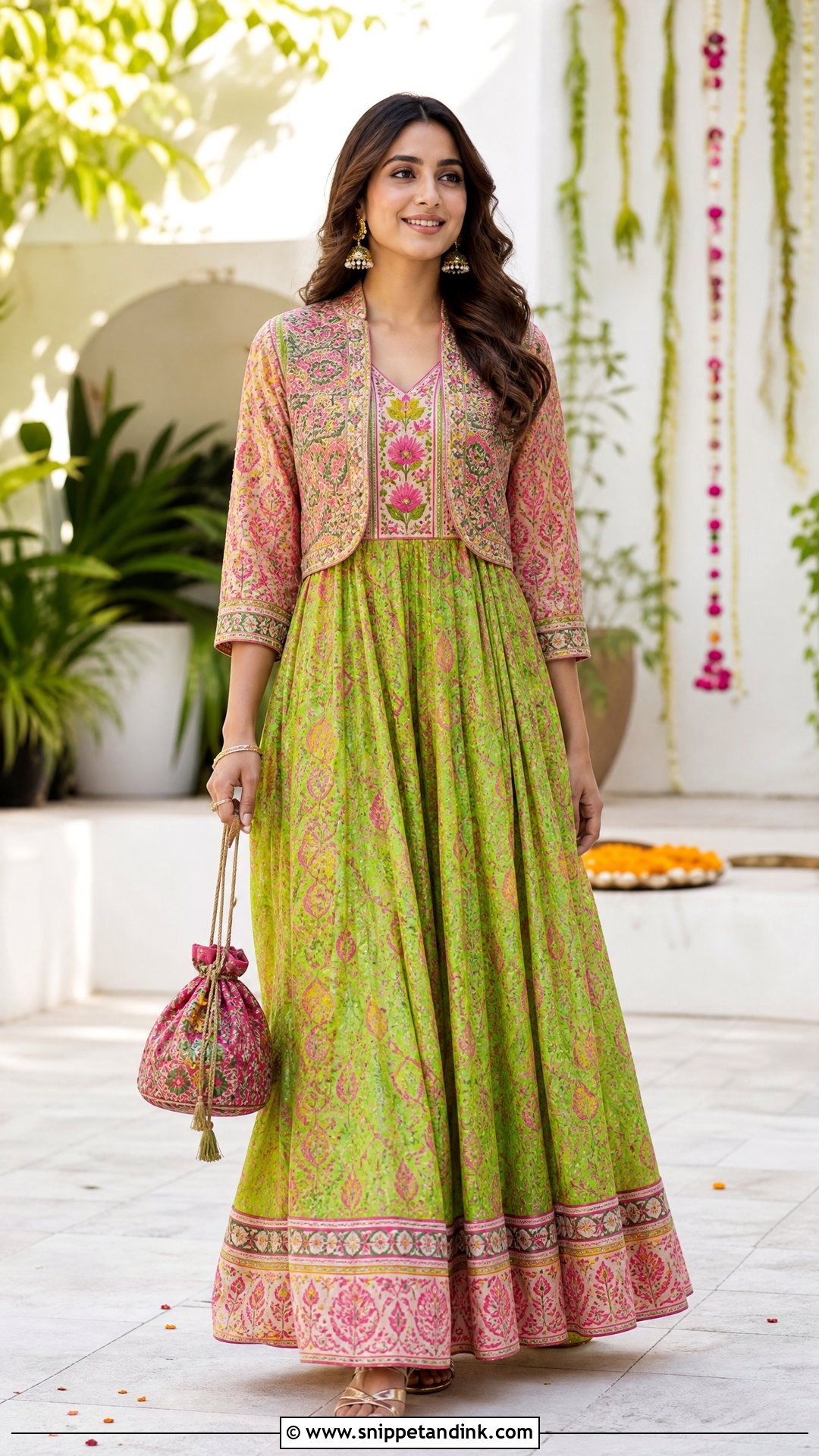
For a relaxed, less formal Mehandi, a printed maxi dress is a simple Indo Western option that still looks like it belongs. Look for Indian florals, block prints or geometric motifs in green, pink or yellow, with a defined waist and a softly flared skirt. If you’re planning full-arm henna, go for flutter sleeves or sleeveless. Jhumkas, metallic sandals and an embroidered potli make it read as wedding wear rather than holiday wear, and a cropped ethnic jacket adds coverage. I’d check one thing with the hosts first: some families expect traditional dress at the Mehandi, and a maxi works best when the invitation leans casual.
18. Crop Top And Palazzo Mehandi Outfit
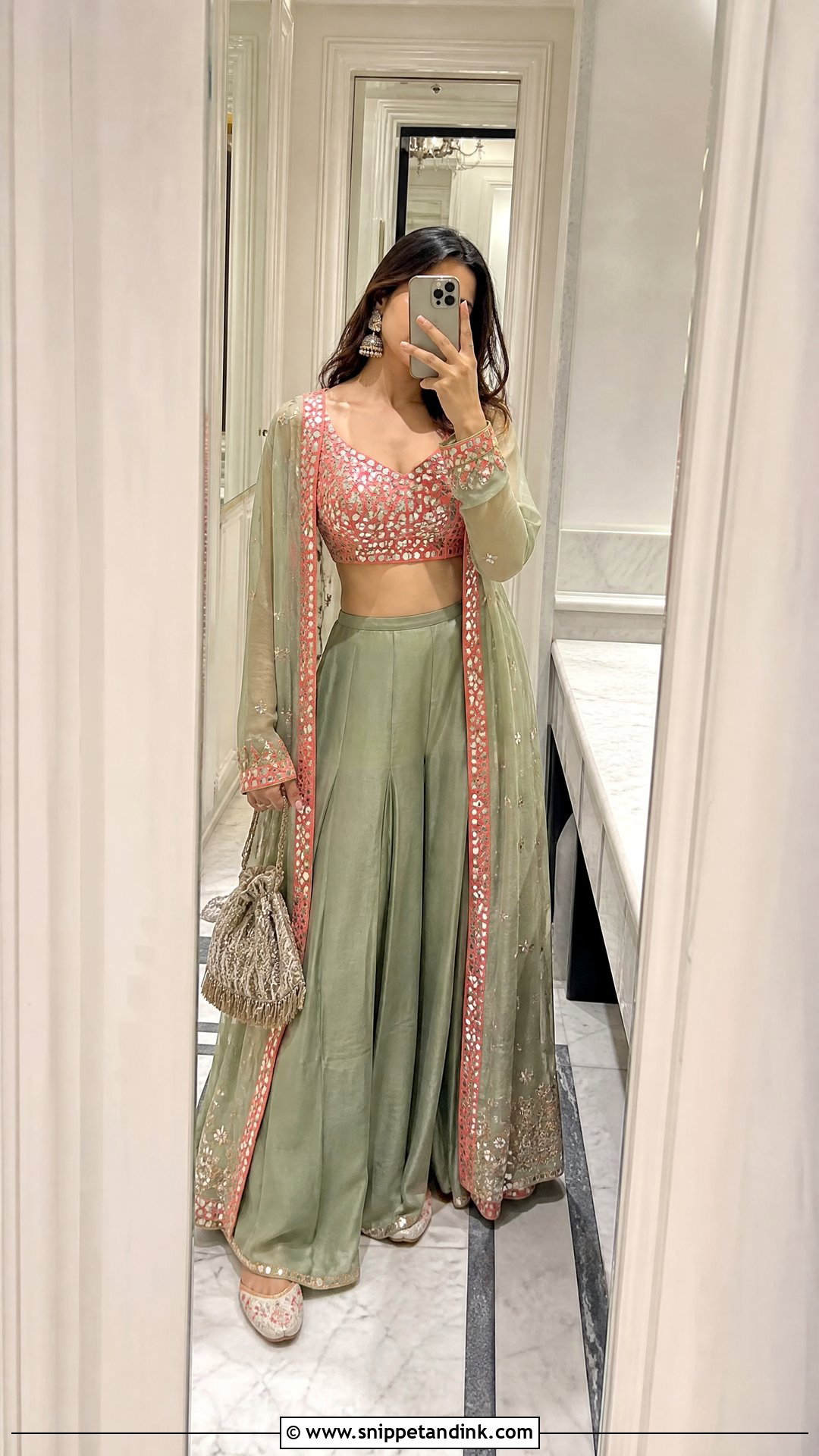
Crop top and palazzos is the easiest outfit here to personalize. A mirror-work or embroidered top with solid wide-leg pants in a matching shade is the dressier version; a plain blouse with printed palazzos is the casual one. Add a long open shrug or sheer cape for coverage. Silver earrings, flat juttis and a structured potli complete it. I prefer high-waisted palazzos because they meet the top without a gap when you sit down, which is when a crop top tends to ride up. For a bridal party, give everyone the same silhouette in different colors and let each person choose the top length and rise.
19. Ruffle Saree Mehandi Outfit
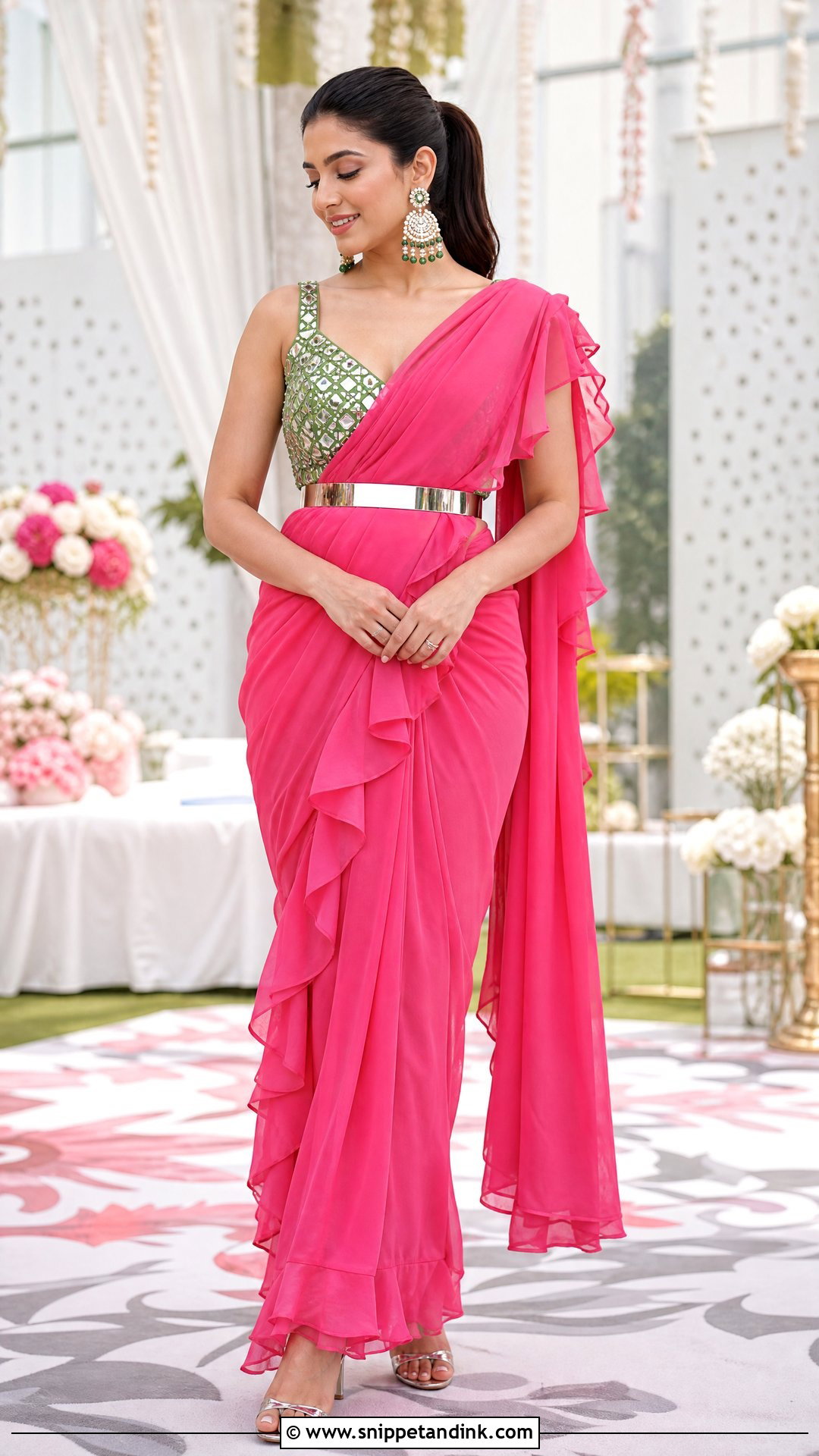
Ruffles add bounce to a saree and match the Mehandi’s cheerful energy. Choose a pre-draped chiffon or georgette ruffle saree in lime, hot pink or turquoise and pair it with a fitted blouse with mirror work or tassels. Pre-stitched pleats won’t come undone on the dance floor, which is the main reason I suggest this version. A decorative waist belt holds the drape, and statement earrings, a sleek ponytail and metallic sandals finish it. Skip bracelets if you’re having henna and put your detail in the hair instead. Ruffles add volume at the hem, so if you’re petite, ask for one or two tiers rather than a full cascade.
20. White And Green Mehandi Outfit
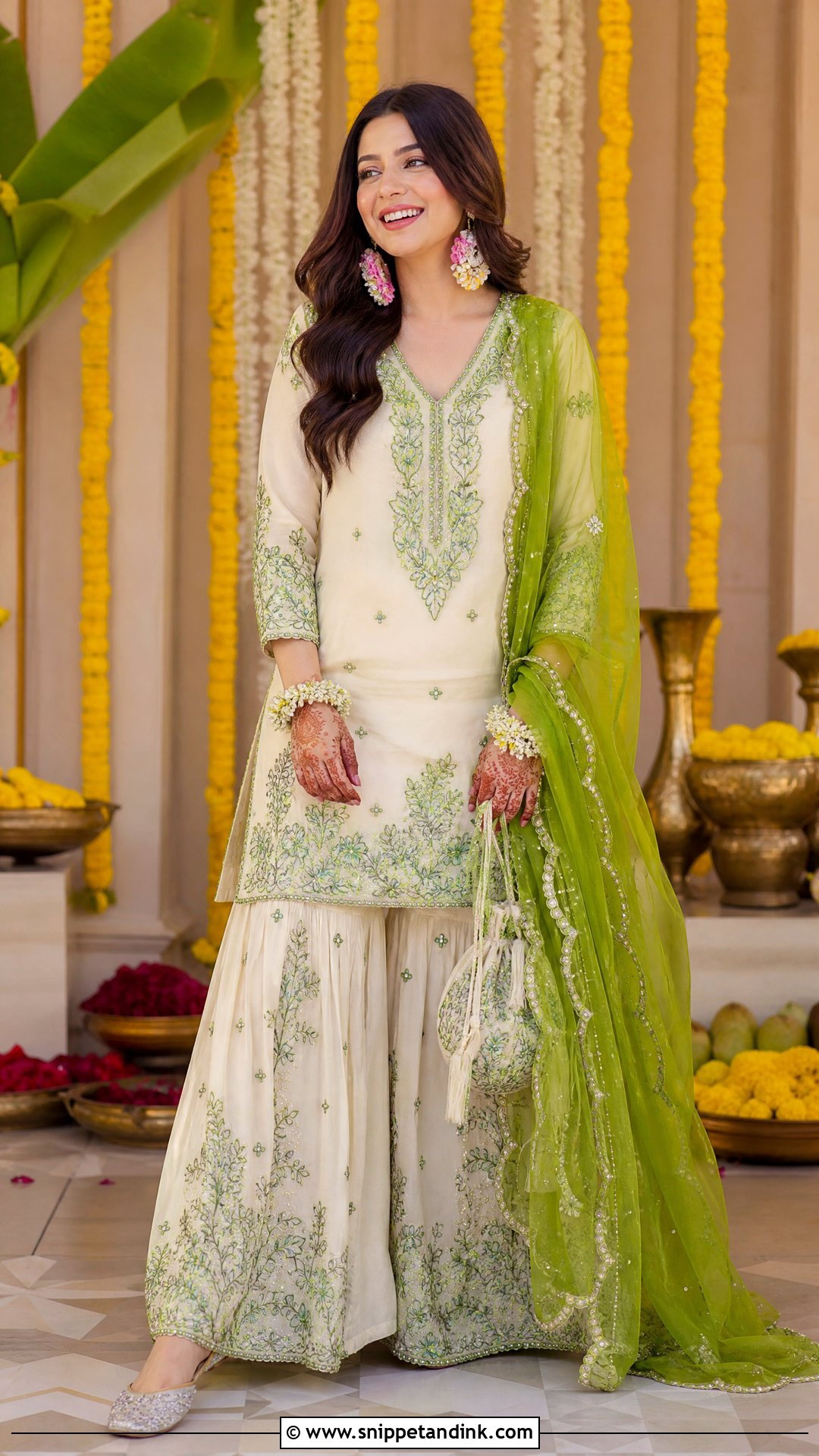
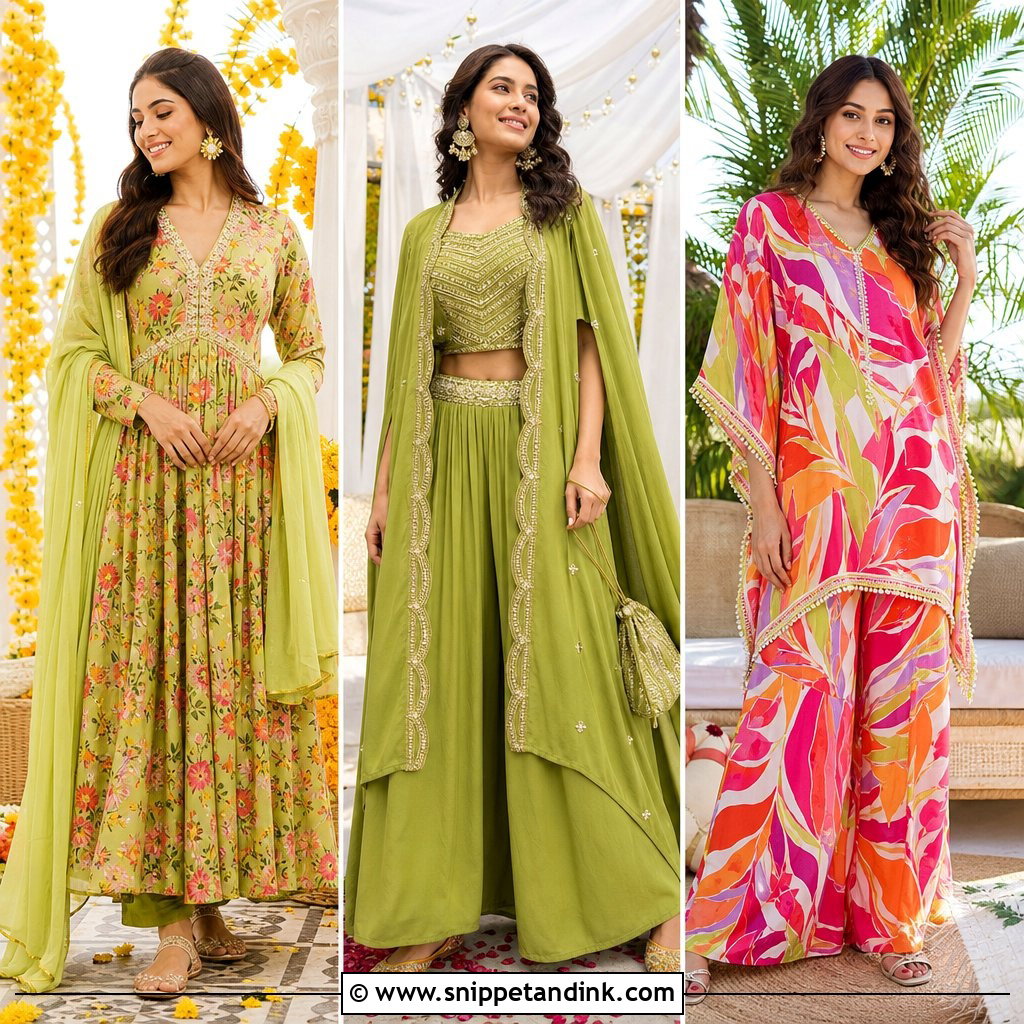
White and green looks crisp against all the color at a Mehandi. Start with an ivory or white kurta, lehenga, or sharara with green floral embroidery or a printed border, add a bright green dupatta, and bring in pink or yellow through tassels or a potli. Insist on lined fabric, since unlined white turns sheer in daylight. Silver juttis, floral jewelry and a neat braid finish it. Henna paste on white cotton is very hard to remove, so wear an older dupatta over your lap while the paste dries. And in some families white carries a specific meaning, so check with the hosts before you choose it.
Getting in the Henna Queue as a Guest
At most Mehandis the bride’s design comes first and can take hours, so guests usually get smaller designs from the same artist or from extra artists booked for the afternoon. A simple palm or back-of-hand design takes far less time, but the paste still needs to sit and dry before you can touch anything. Plan your outfit around those dead hands.
A few things I tell guests to sort out first
- Eat before you sit down. Once the paste is on, someone else will be feeding you.
- Pin your dupatta and push up your sleeves before the artist starts; you won’t be able to adjust them for a while afterwards.
- Put your phone and lipstick in a crossbody potli, not a clutch you’ll need to hold.
- Take off rings and bracelets in advance, and keep them in the bag rather than a pocket.
- Ask the artist how long to leave the paste on. Leaving it longer usually gives a deeper stain, so a darker outfit that hides smudges makes a long wait easier.
If you’re staying late, the paste will dry and crumble on its own, and that’s when your outfit takes most of the damage. Brush flakes away from the fabric, not into it, and avoid washing your hands with water for as long as you can, since water early on lightens the stain.
Green, Yellow or Something Else Entirely?
Any of these will work if it lets you sit on the floor, hold out your hands for the artist and dance afterwards without fixing anything. Lehengas, shararas, palazzo sets, sarees and Indo Western pieces all qualify. Green is the traditional pick, though pink, yellow, orange, mint and bold prints feel just as festive. Pin your drapes, wear comfortable shoes, keep jewelry light and choose a hairstyle that holds. Then match the level of embellishment to your role: the bride sets the top line, and everyone else stays a step below it.
You'll Like These Ideas:


Leave a Reply