
A mehndi is the one wedding night where the outfit has to work harder than it looks. It has to hold up through dholki songs, a choreographed dance, family portraits and close-ups of fresh henna, and it has to let you sit on the floor and get up again without a fuss. That’s why the classic palette of yellow, green, orange, pink and ivory usually comes with lighter finishes like mirror work, gota and threadwork rather than heavy zardozi. The bride tends to wear a lehenga, gharara or sharara; sisters, cousins and guests can go lighter with angrakhas, peplums, kurtas or fusion sets. Here are 30 complete looks, with my notes on who each one suits and where it can catch you out.
Bride, Sister or Guest? Pitching the Embroidery to Your Role
The fastest way I sort mehndi outfits is by how much work they carry, not by color. The bride can wear the most embroidery and the widest silhouette; her sisters and the bridesmaids sit one step down; guests step down again. When a guest arrives in a heavily worked yellow lehenga, she isn’t breaking a rule, but she will appear to be competing in every stage photo.
- Bride: heavier gota and mirror work, a lehenga, gharara or pishwas, and a dupatta that can be pinned securely for the rasm.
- Sisters and bridesmaids: one coordinated palette agreed together, lighter work, and cuts that let them dance.
- Guests: suits, angrakhas, co ords or palazzos with one festive element, usually the dupatta.
If there’s a choreographed dance, I ask the performers to rehearse at least once in their real outfits. Sleeves that look fine standing still can stop an arm halfway up, and a lehenga that’s half an inch too long gets caught under a heel on the first spin.
1. Yellow Mehndi Lehenga Choli
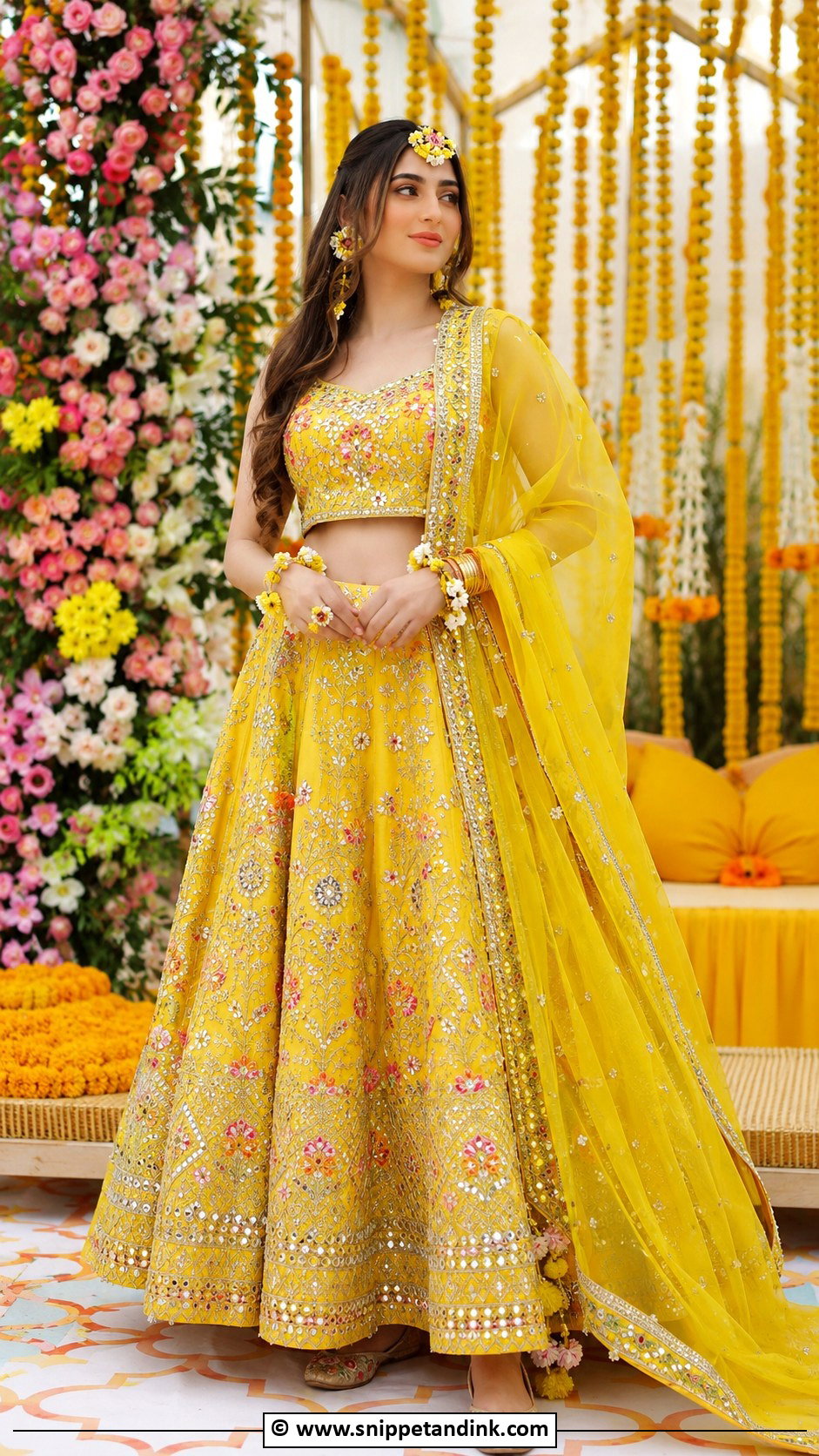
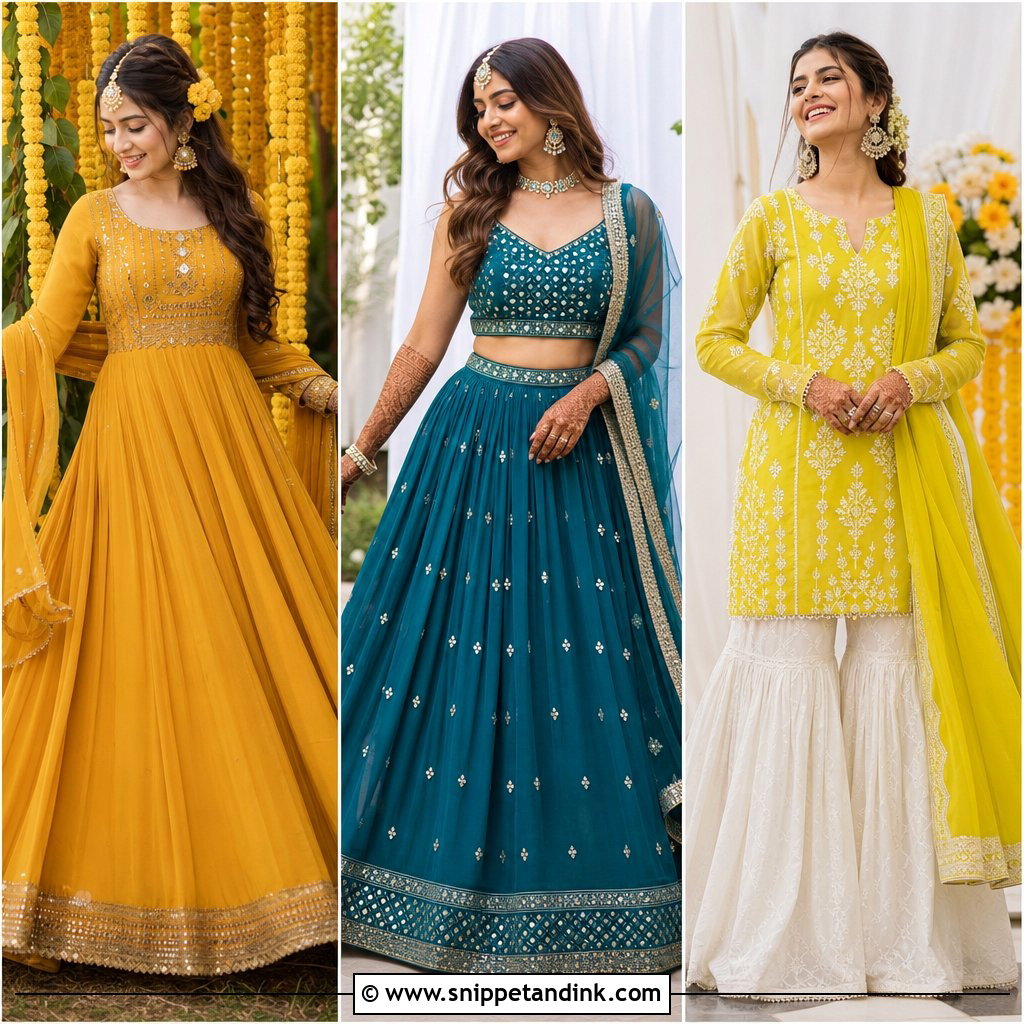
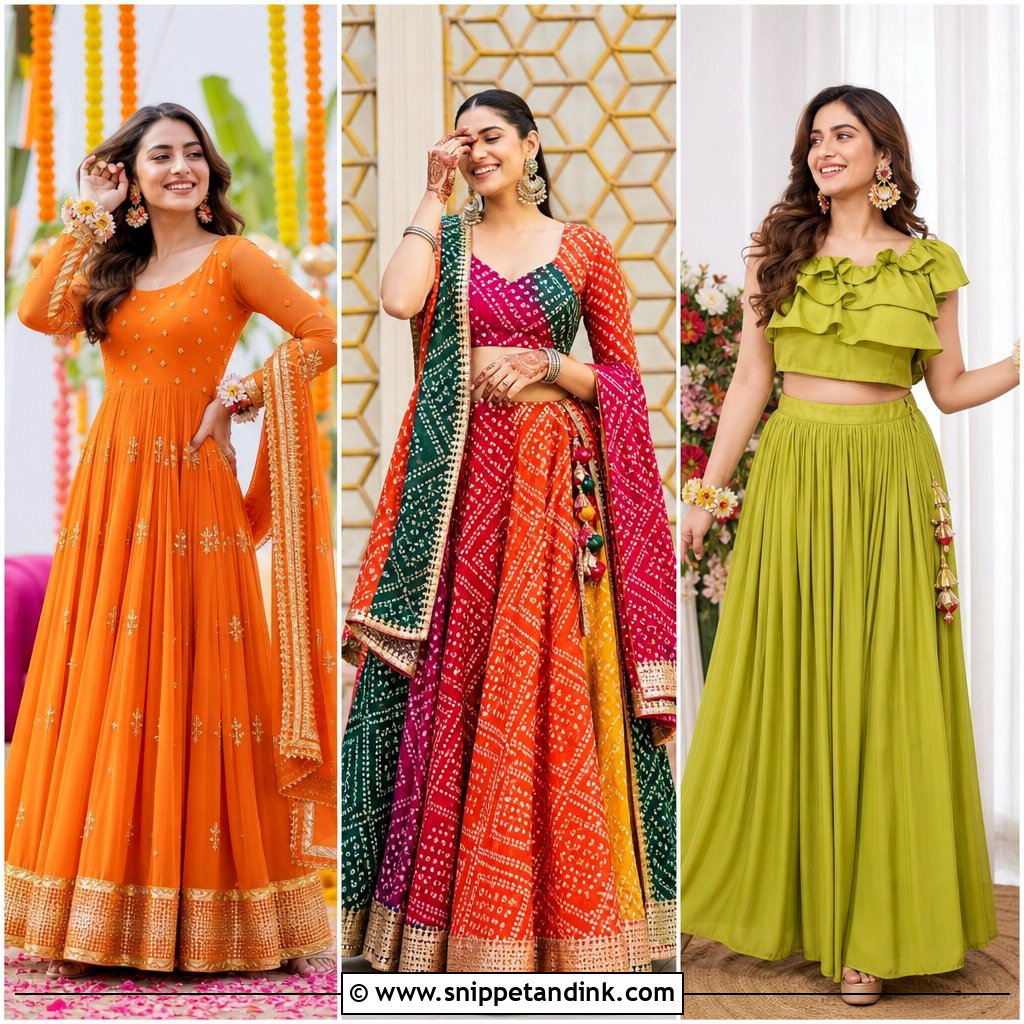
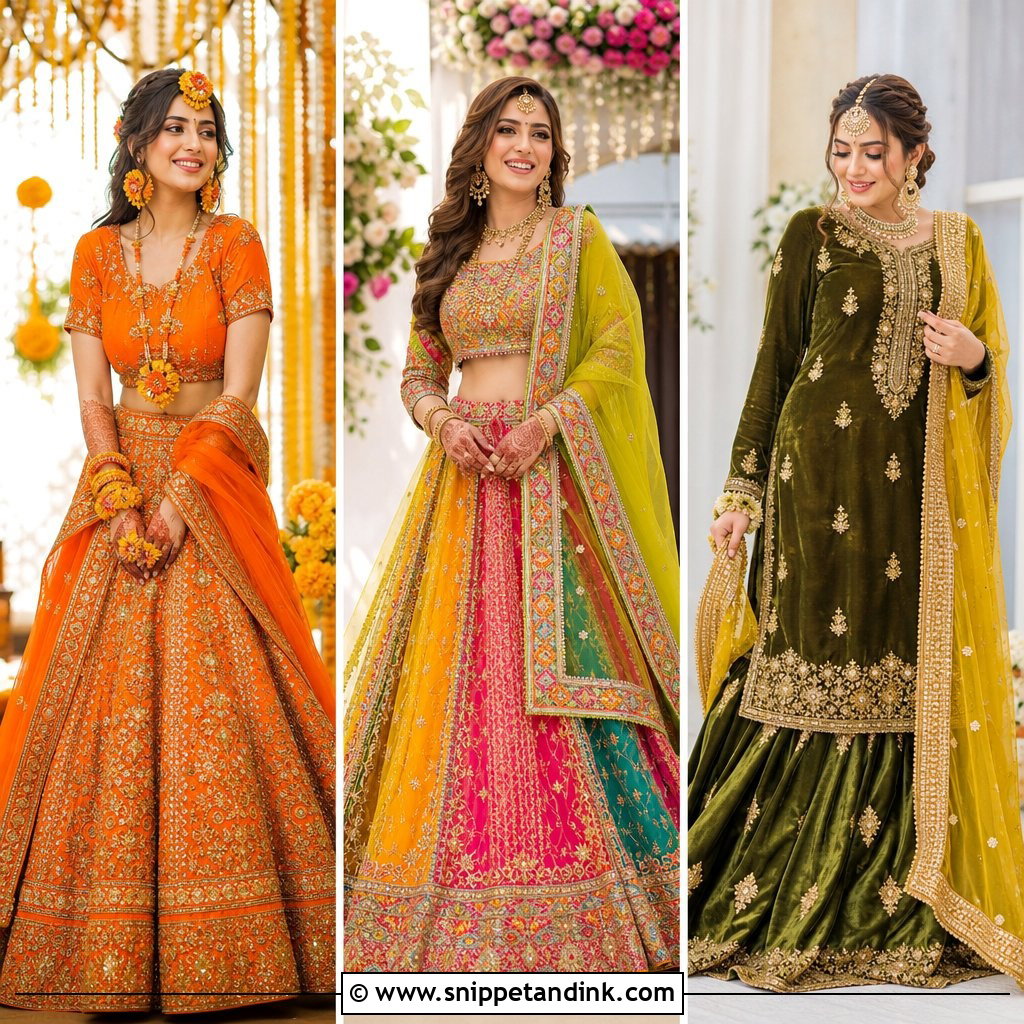
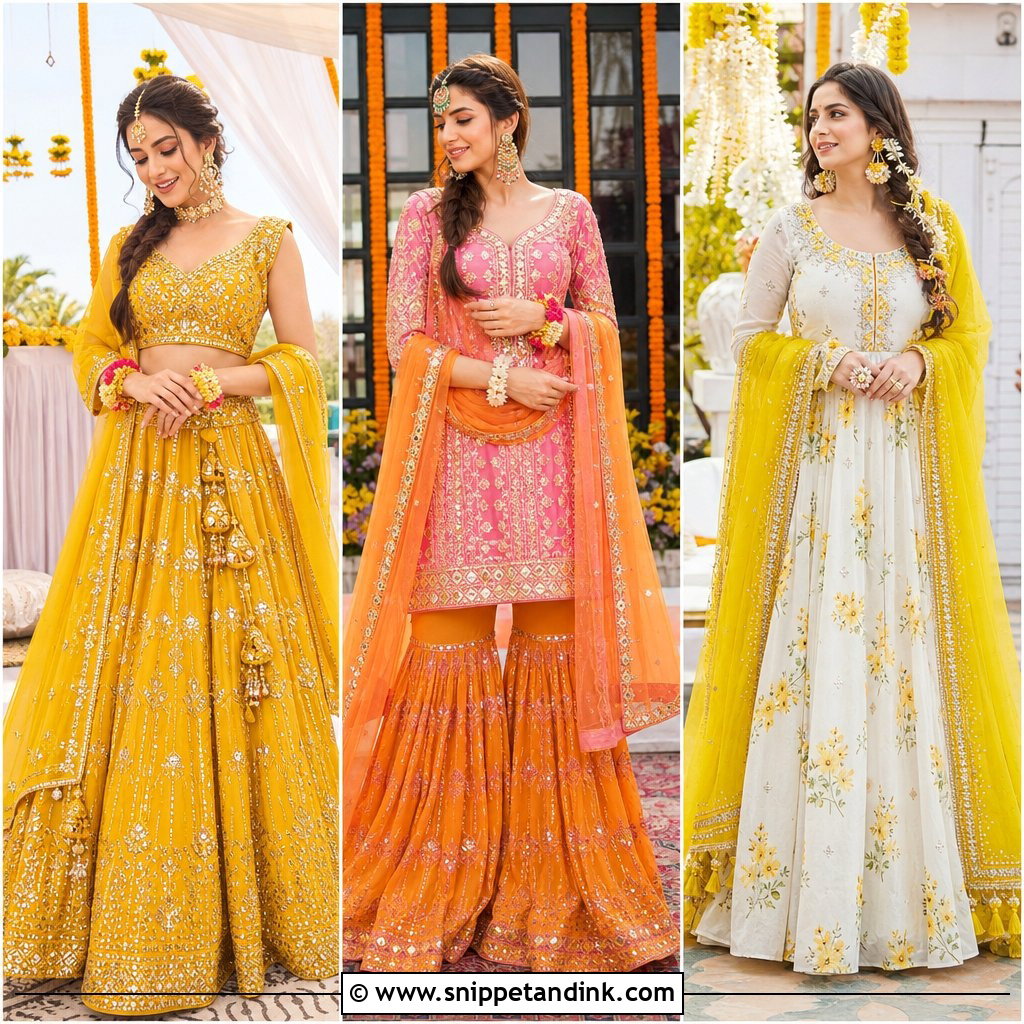
Yellow is the color most families expect at a mehndi, and a lehenga choli in it is still the safest bet for the bride. Keep the work to gota, mirrors or light thread so the skirt stays swingy; once a yellow lehenga carries barat-level embroidery, it stops moving when you dance. A short choli or a slightly longer blouse sits well under a sheer dupatta in yellow, orange or pink. For the bride, add floral jewelry, bangles, khussas and glowing makeup. As a guest, I’d keep the embroidery lighter and the earrings simple so the two of you don’t read as matching.
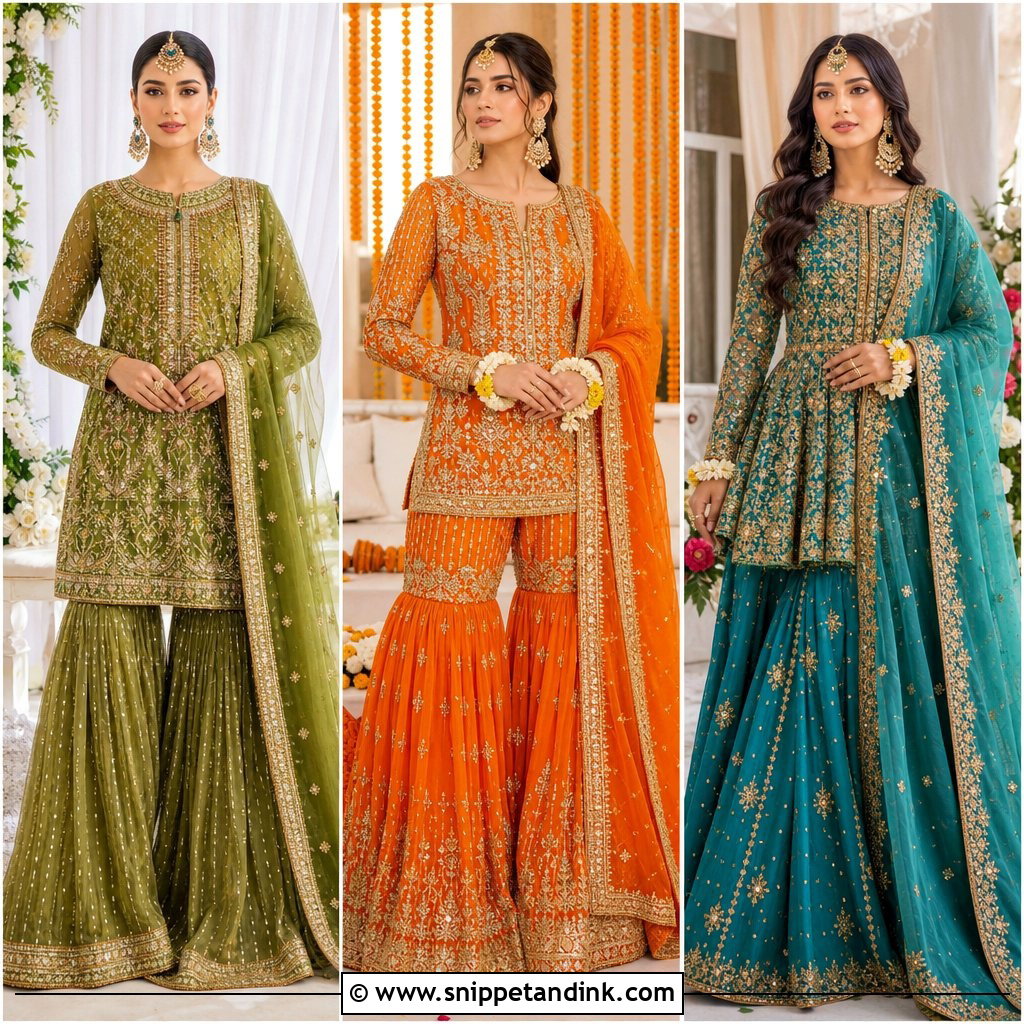
2. Green Mehndi Sharara Outfit
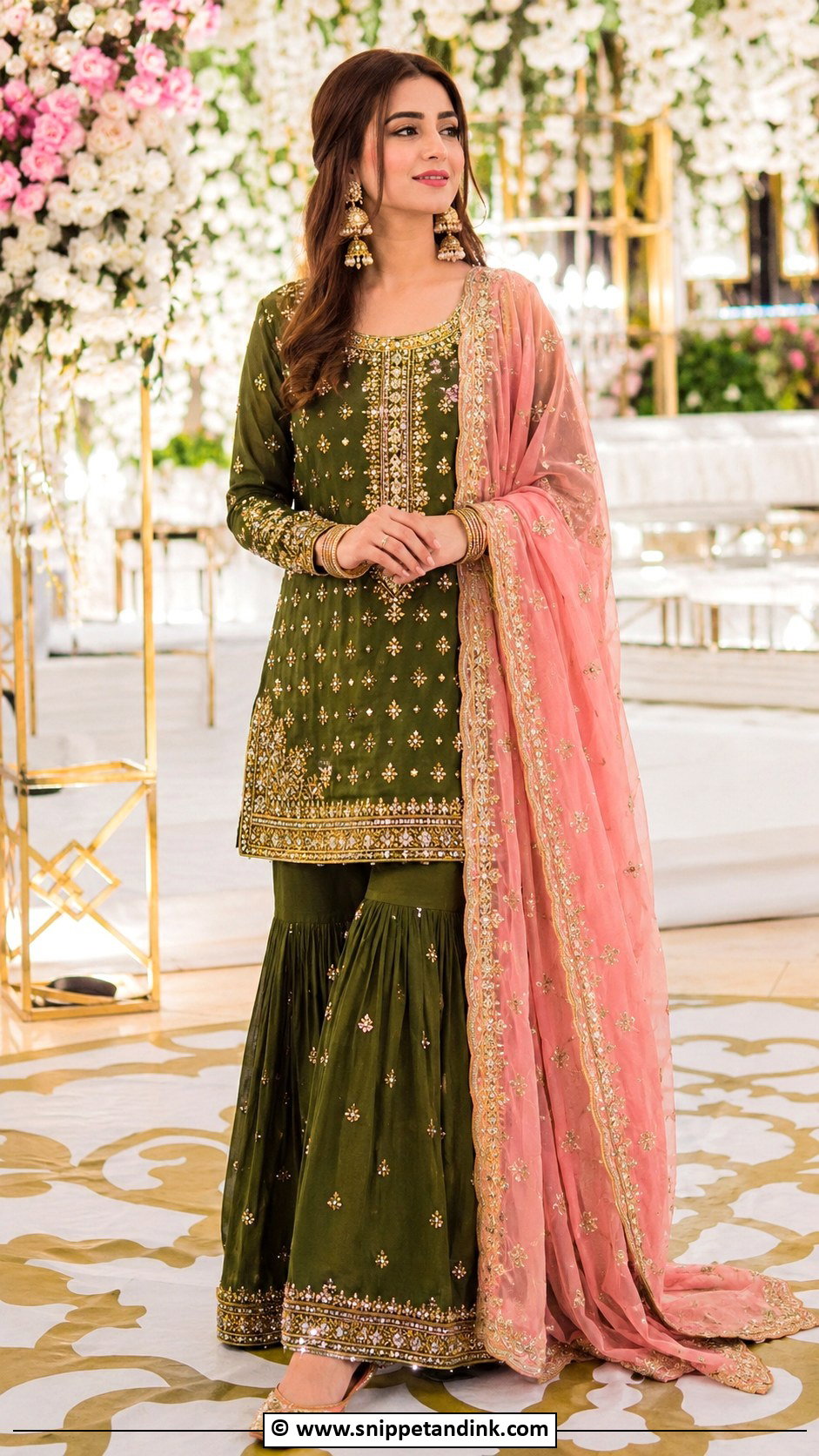
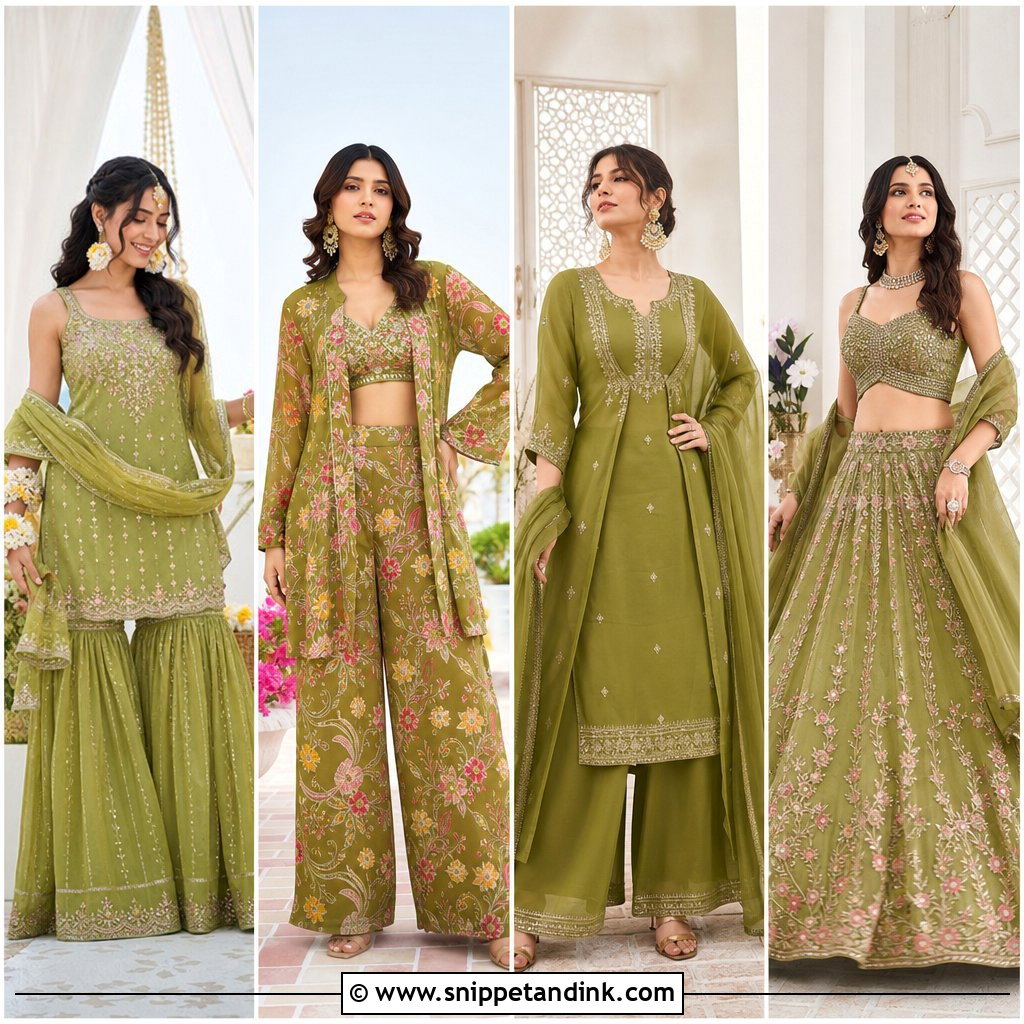
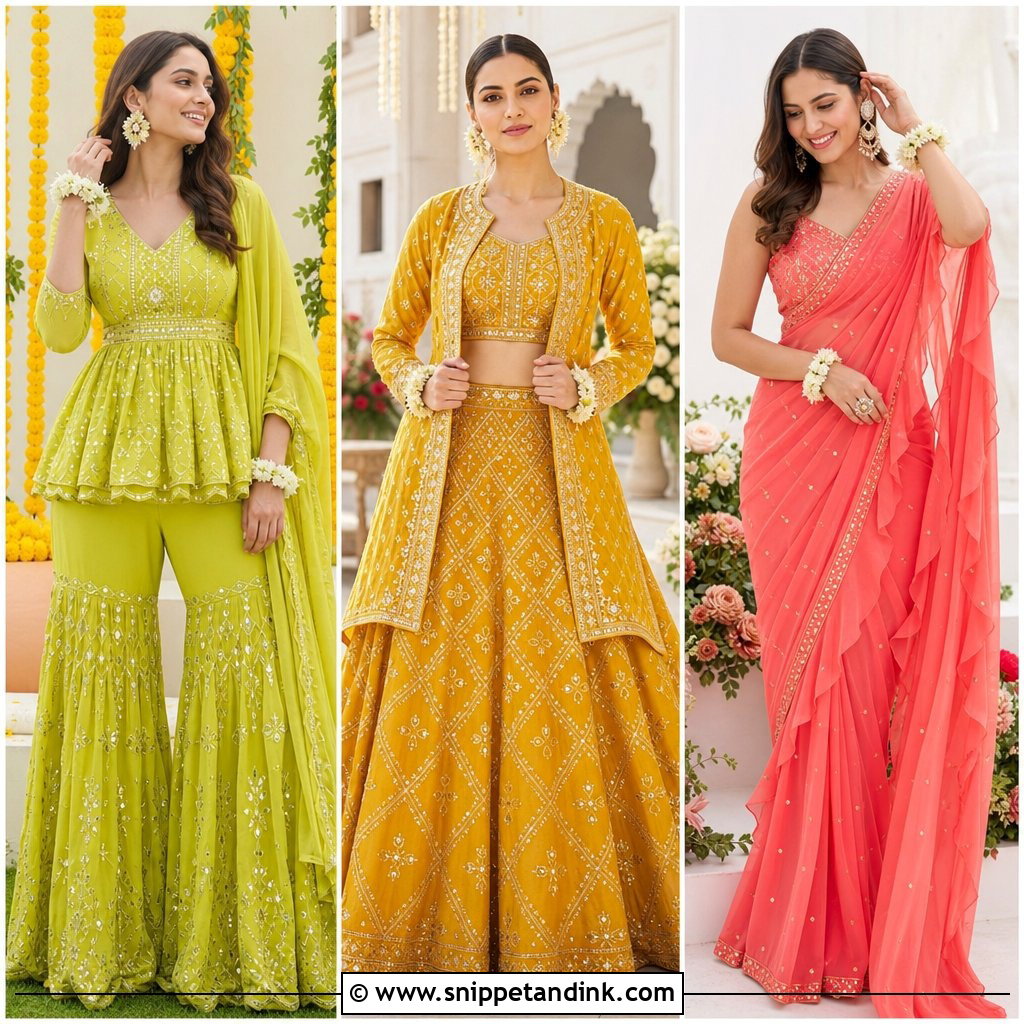
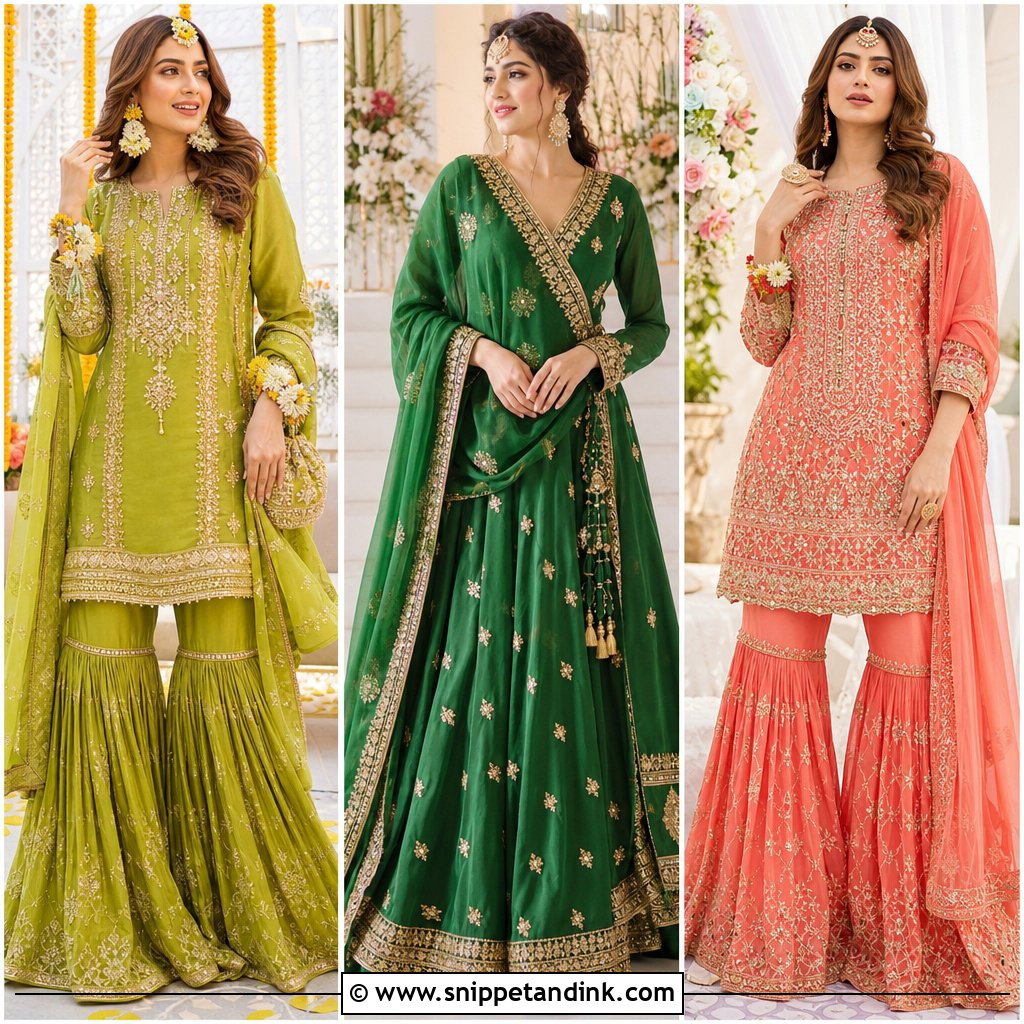
Green ranges from emerald to mehndi green, lime and parrot, and the right one depends on your undertone more than your preference. Warm, golden skin usually looks livelier in mehndi green or emerald; parrot green is bright enough to wash out paler skin unless the dupatta brings color back near the face. A short embroidered kameez over a wide sharara with gota, sequins or mirrors at the hem, plus a yellow, orange or hot pink dupatta, suits sisters and close family well. The wide legs make sitting cross-legged on a floor cushion easy. Finish with jhumkas, stacked bangles, soft curls and embellished khussas.
3. Orange Mehndi Gharara Dress
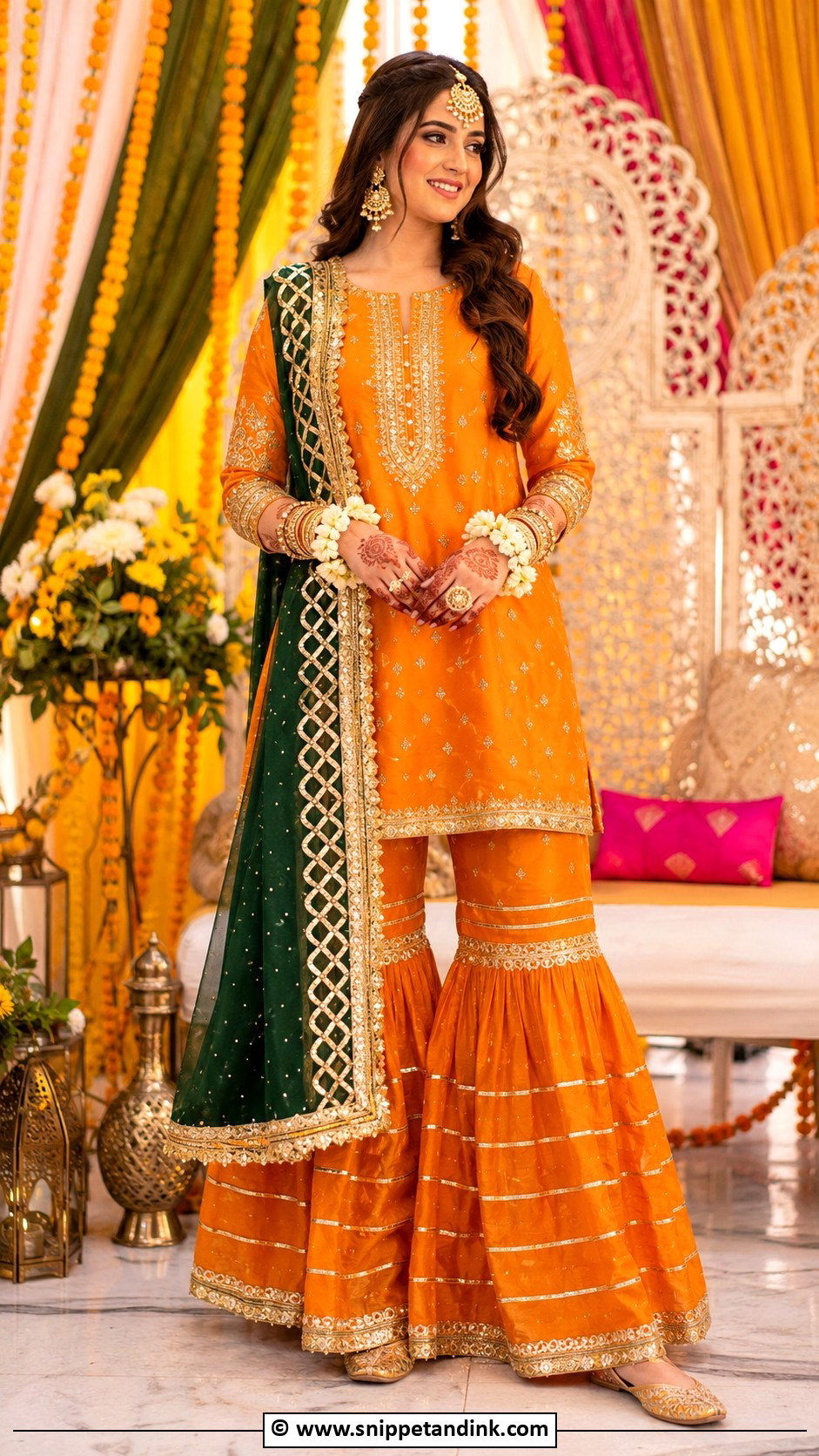
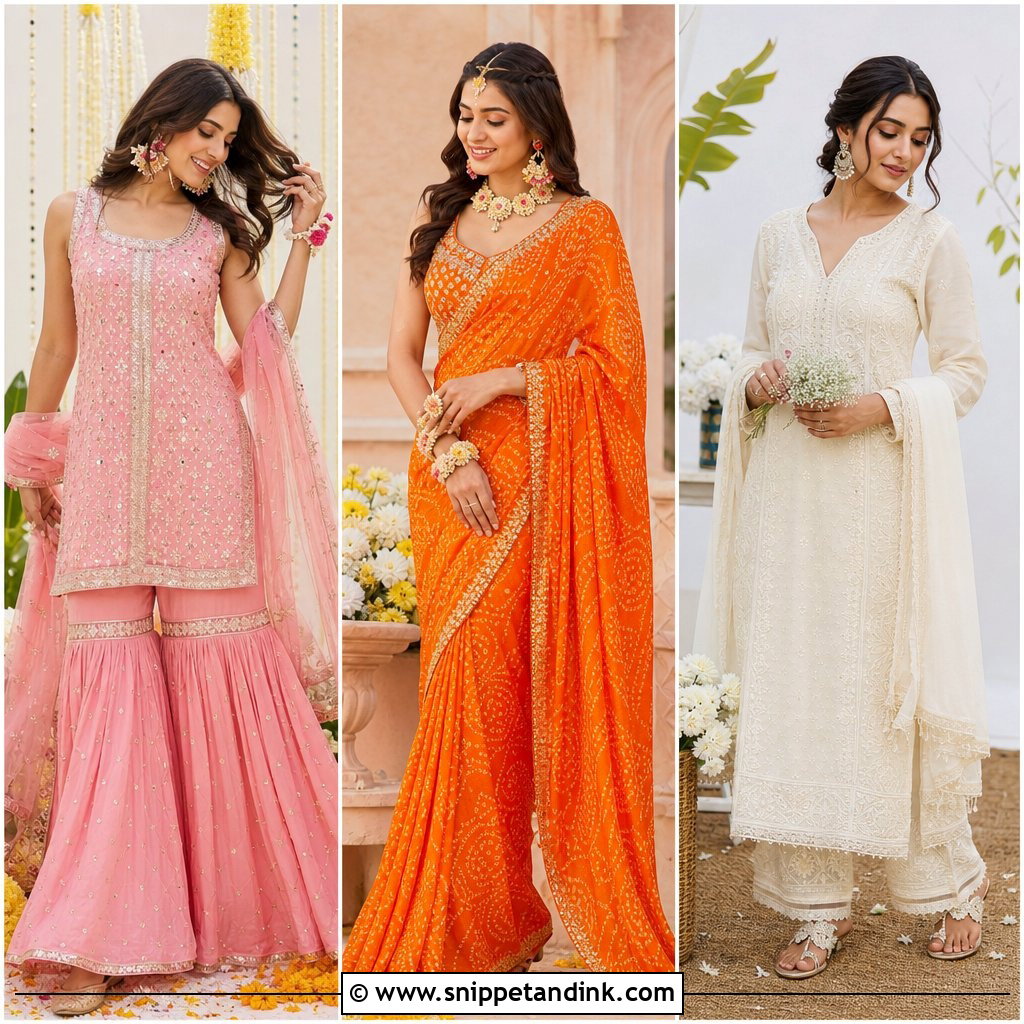
An orange mehndi gharara dress is my answer for a bride who wants bold color but not red. Burnt orange, tangerine and marigold pick up the marigold garlands and floral decor that turn up at so many mehndis, so you look part of the setting rather than set against it. A short kurti over a flared gharara gives that old-school silhouette, worked in gota patti, dabka, mirrors or bright thread. A green or pink dupatta adds contrast. Orange shows sweat marks under the arms faster than most colors, so I ask for a lining in cotton rather than polyester. Passa jewelry, gold bangles and khussas complete it.
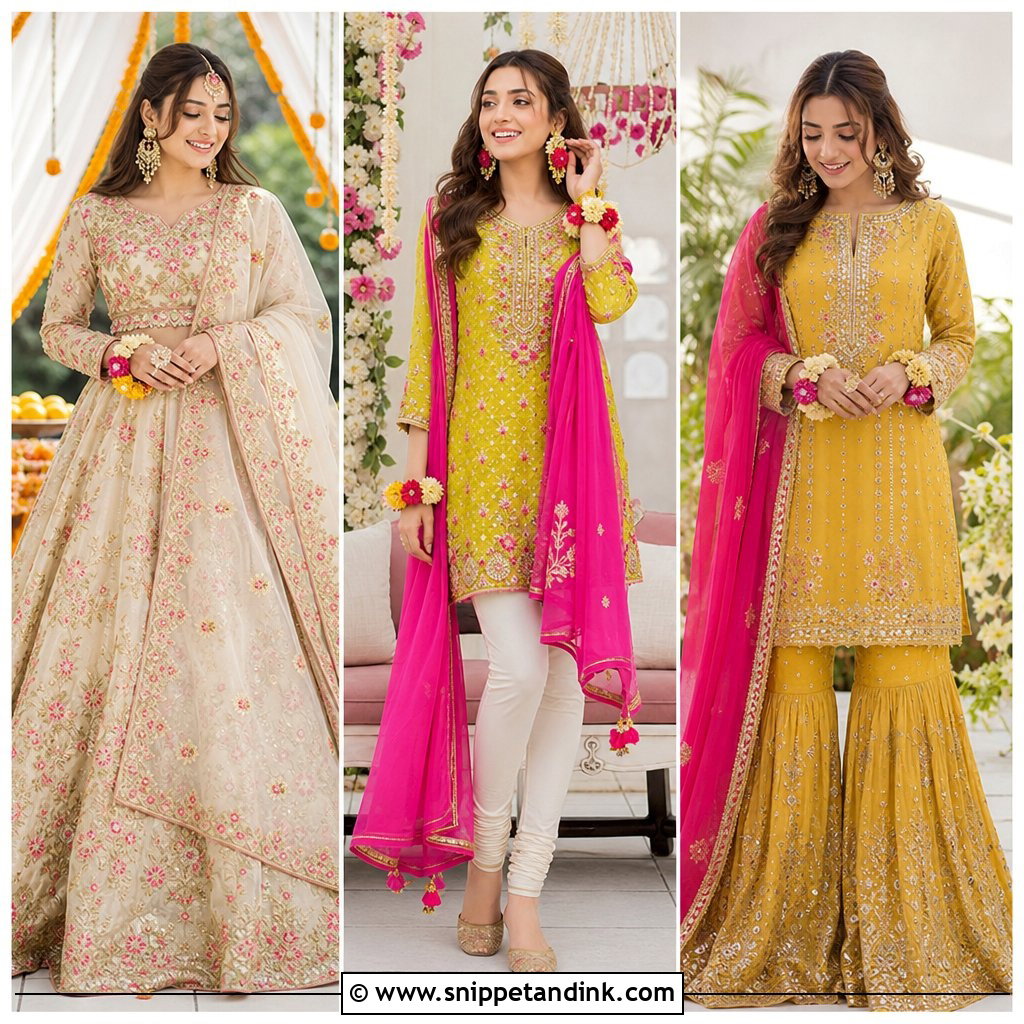
4. Pink And Yellow Mehndi Dress
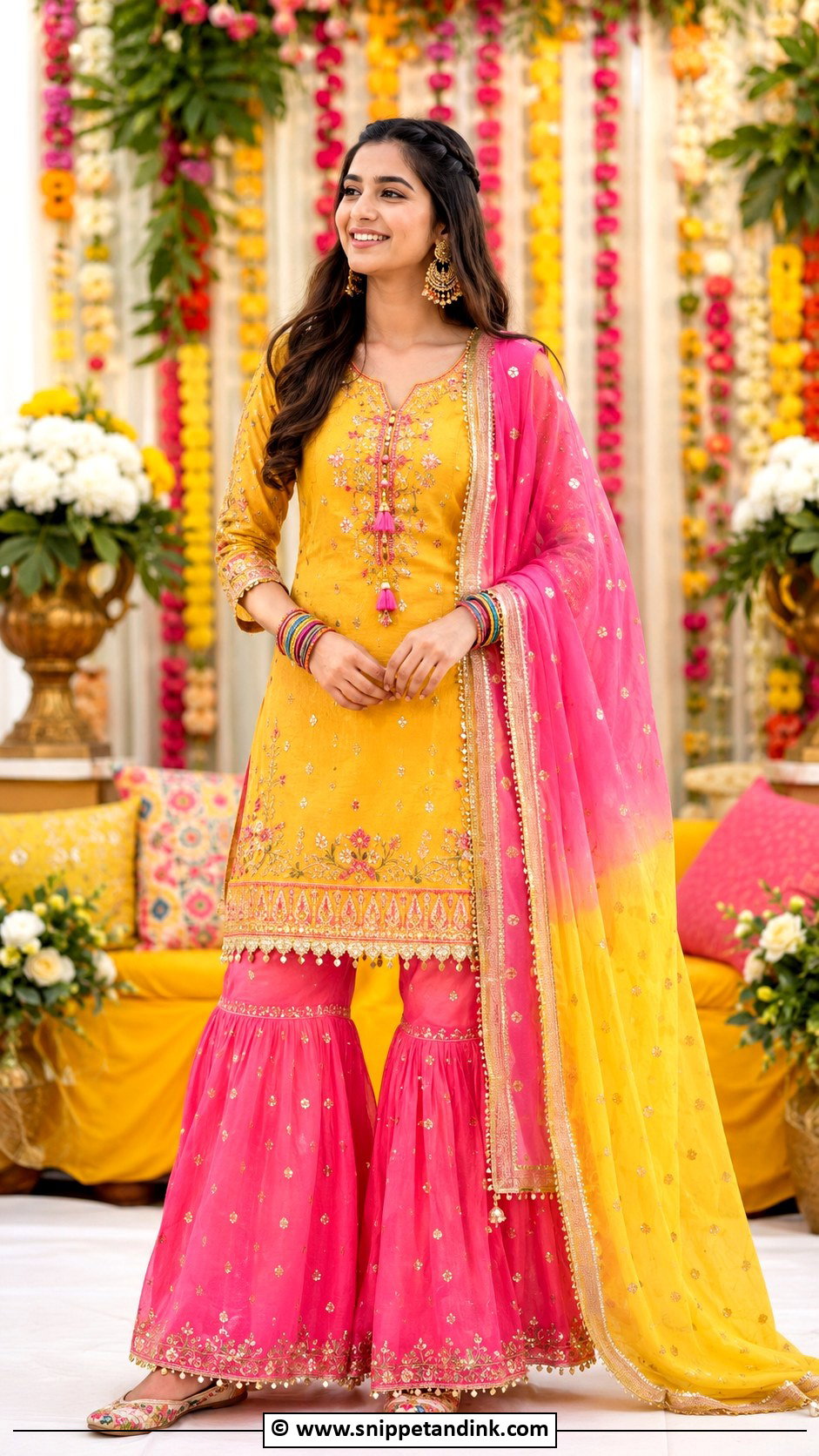
Pink with yellow is cheerful and easy to coordinate, which makes it a good brief for a group of bridesmaids. One person can wear a yellow kameez with a pink sharara, another a pink lehenga with a yellow dupatta, a third a two-tone anarkali, and the group still looks planned. Gold or floral jewelry keeps each look tied together. I’d agree the exact pink before anyone orders, because hot pink and baby pink next to the same yellow look like two different weddings in a group photo. Add soft waves, peachy makeup and colored bangles.
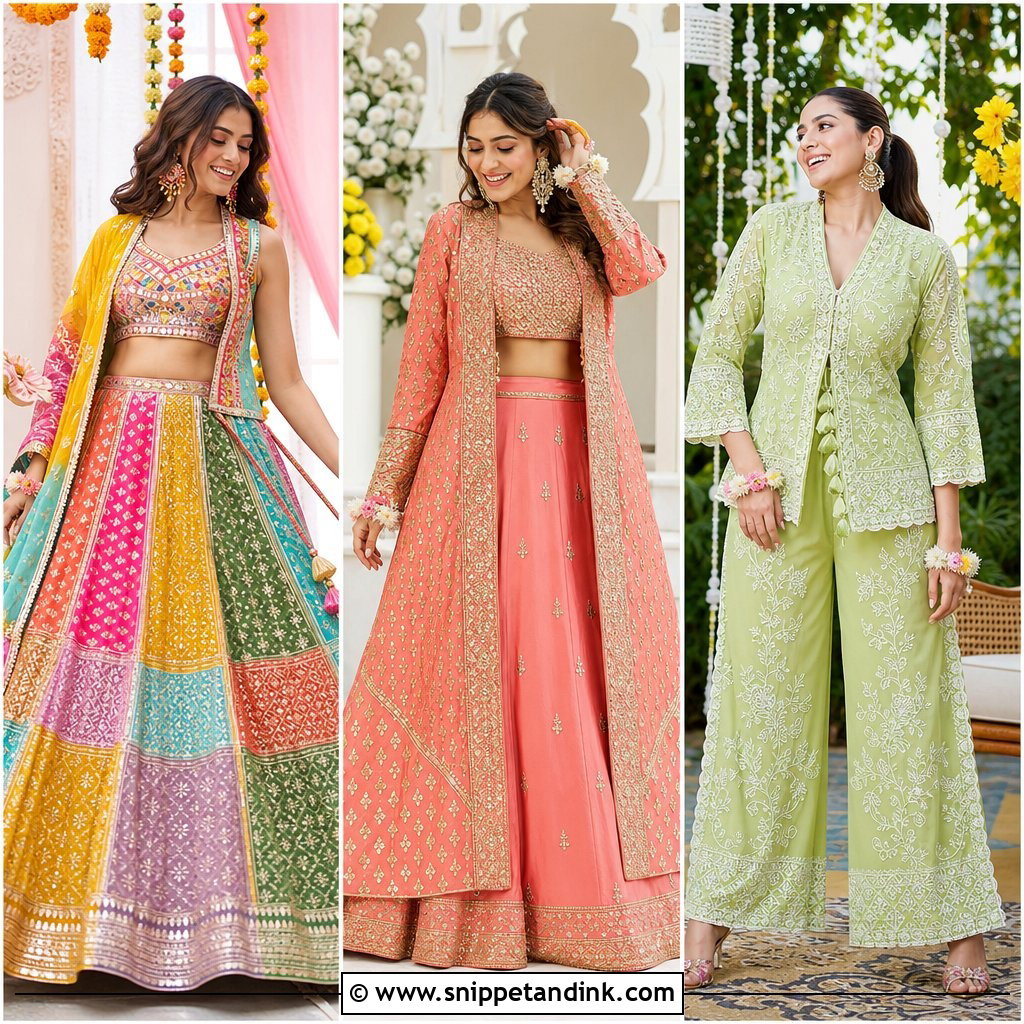
5. Multicolor Mehndi Lehenga
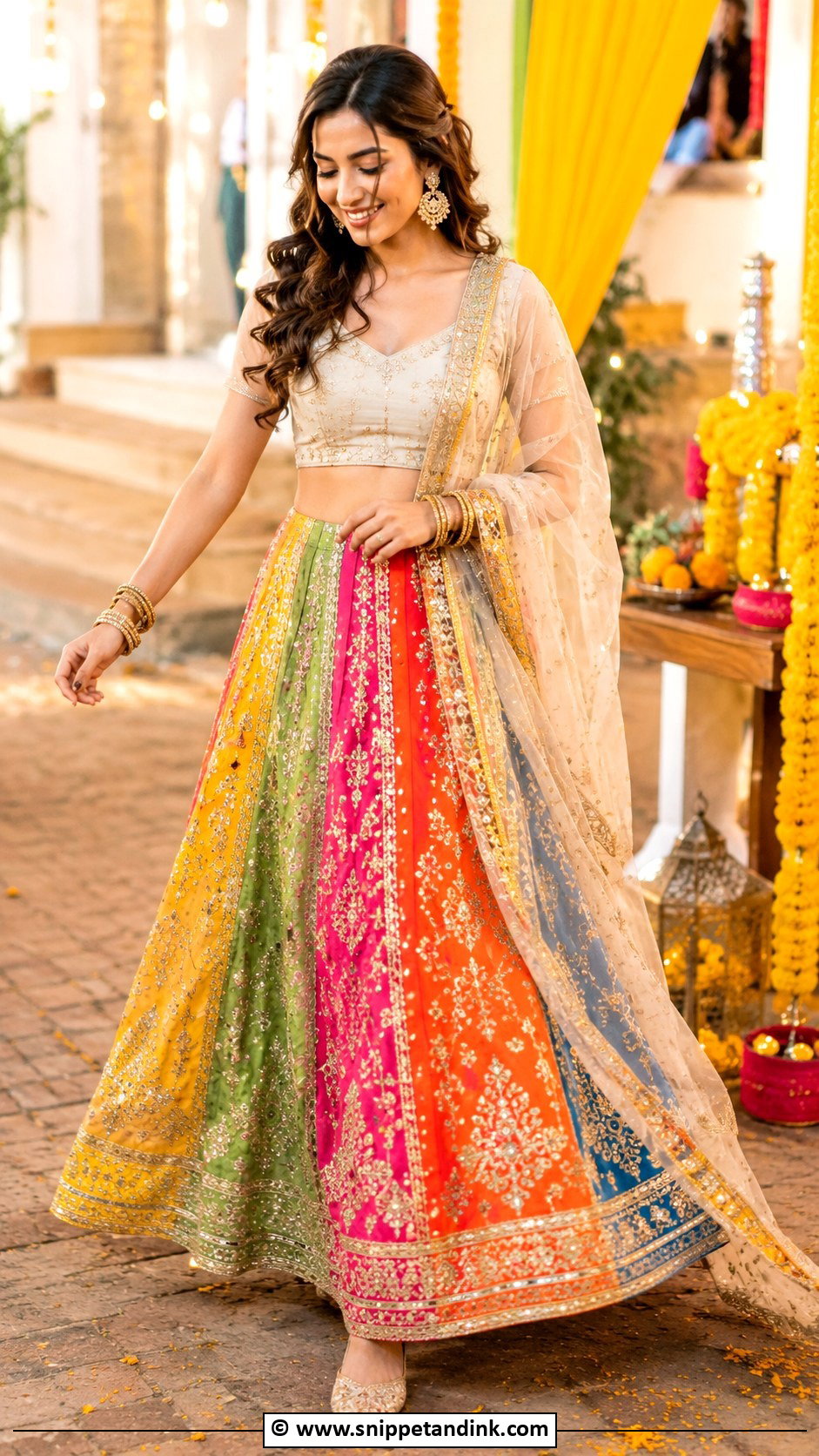
A multicolor lehenga stands out in a group photo, which is exactly why I usually give it to a sister rather than the bride, unless the bride wants to be the brightest point on the stage. Panels of yellow, green, orange, pink and blue need a calm counterpart: a plain blouse or a lightly worked choli. A net or organza dupatta with colored borders ties the panels together. Go easy on accessories. With this many colors, gold earrings, bangles and khussas are enough.
6. Pakistani Mehndi Anarkali Dress
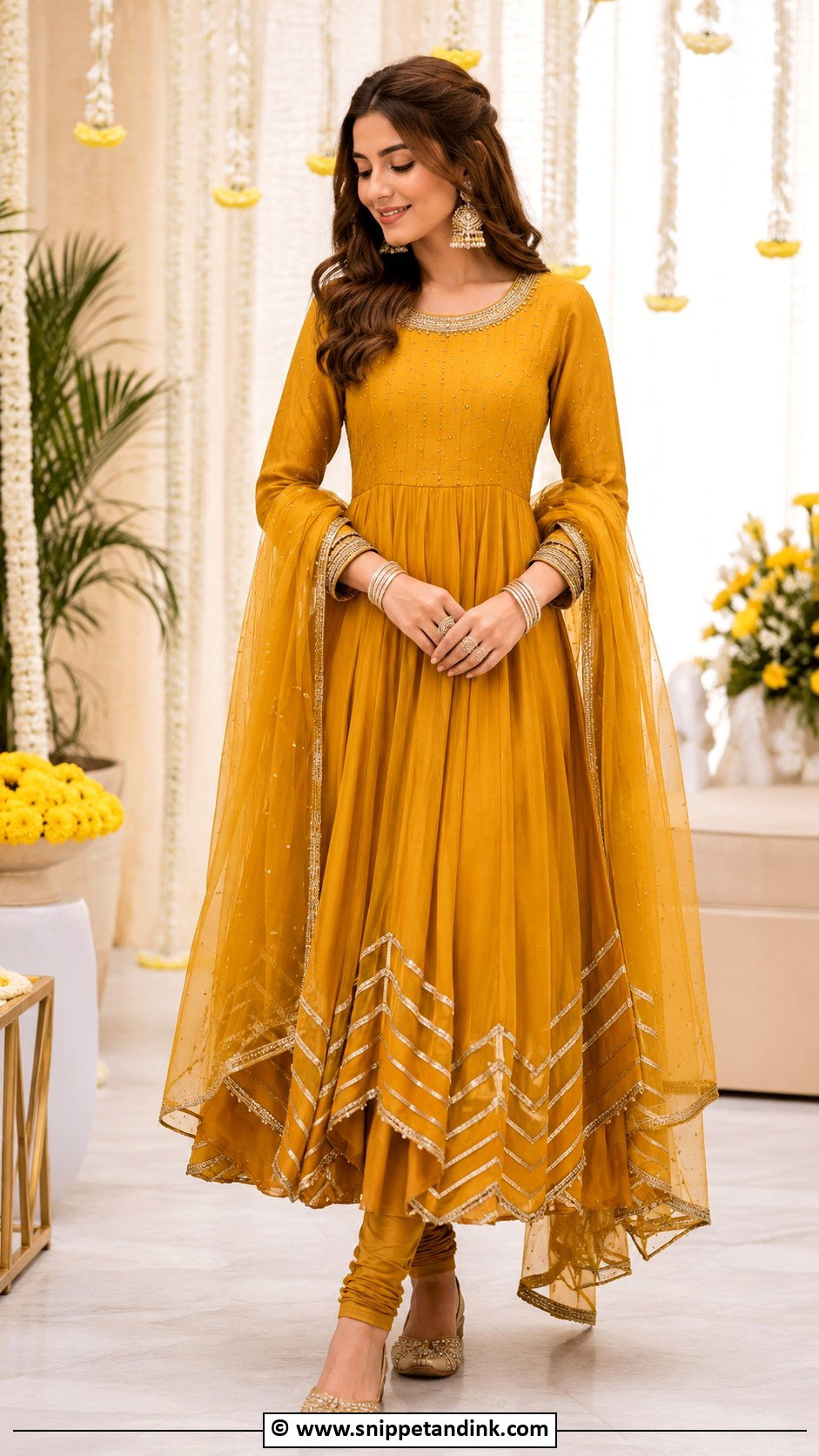
An anarkali gives coverage and movement at the same time. The fitted bodice and long flare spin out when you walk or dance, and in mustard, lime, marigold, coral or fuchsia it reads festive without needing much work; embroidered borders, gota and a few mirrors are plenty. Pair it with churidar or slim trousers and a light dupatta. I watch the waist seam on anarkalis at fittings. If it sits even an inch too low, the flare starts below the natural waist and the whole dress looks heavy. It suits guests, mothers and family members, with jhumkas, a sleek bun, bangles and embellished flats.
7. Mustard Mehndi Peplum Sharara
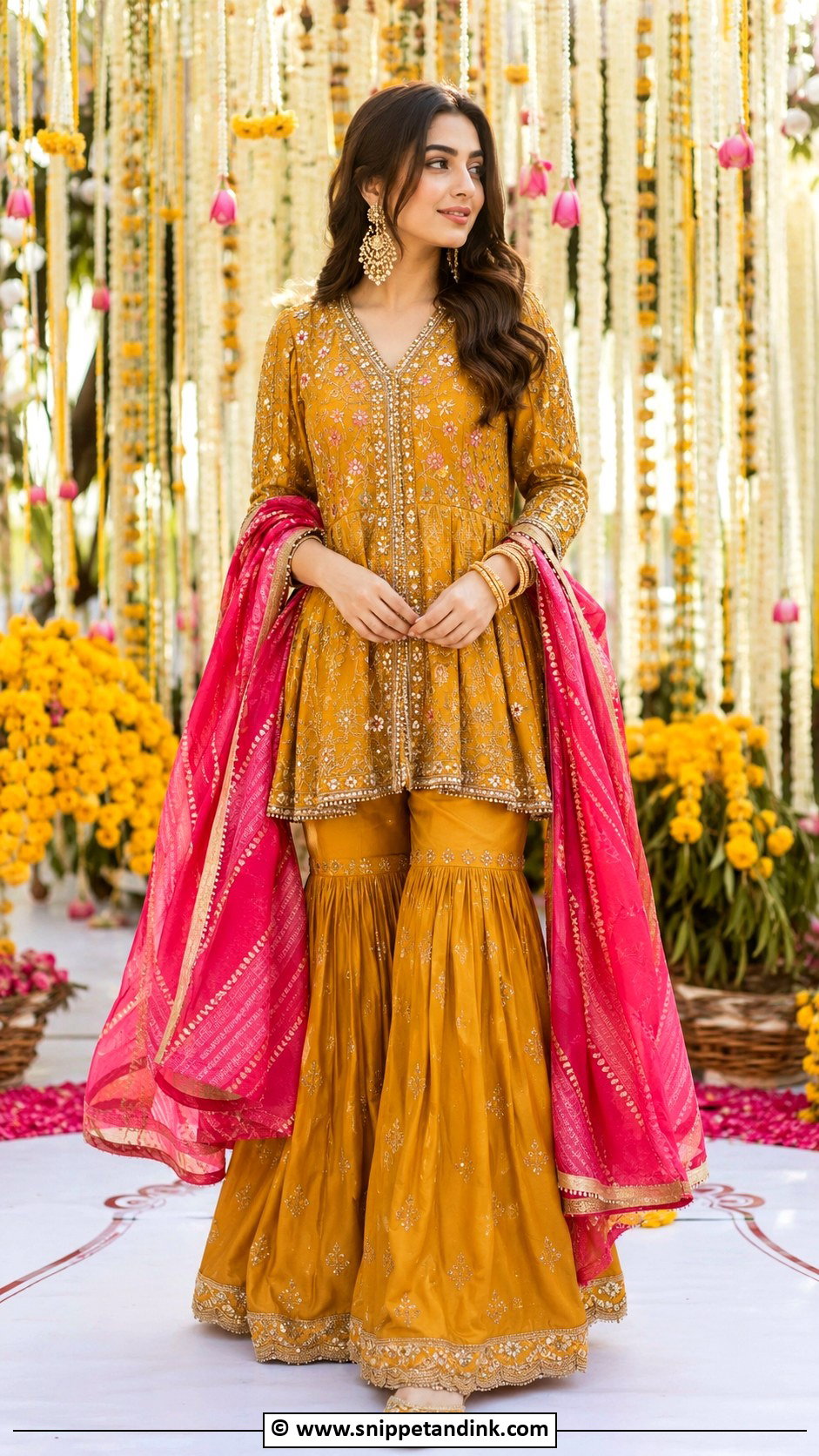
Peplum over sharara is a modern cut that still sits comfortably in Pakistani wedding fashion. The peplum shapes the waist and the sharara adds volume, and mustard is kinder than neon yellow on most skin. Put the mirror work, gota borders or resham on the peplum and keep the sharara plain or lightly worked; embroidery on both halves fights for attention. A contrasting hot pink, green or ivory dupatta adds interest. This works well for bridesmaids and close family, with statement earrings, khussas and glowing skin.
8. Lime Green Mehndi Lehenga
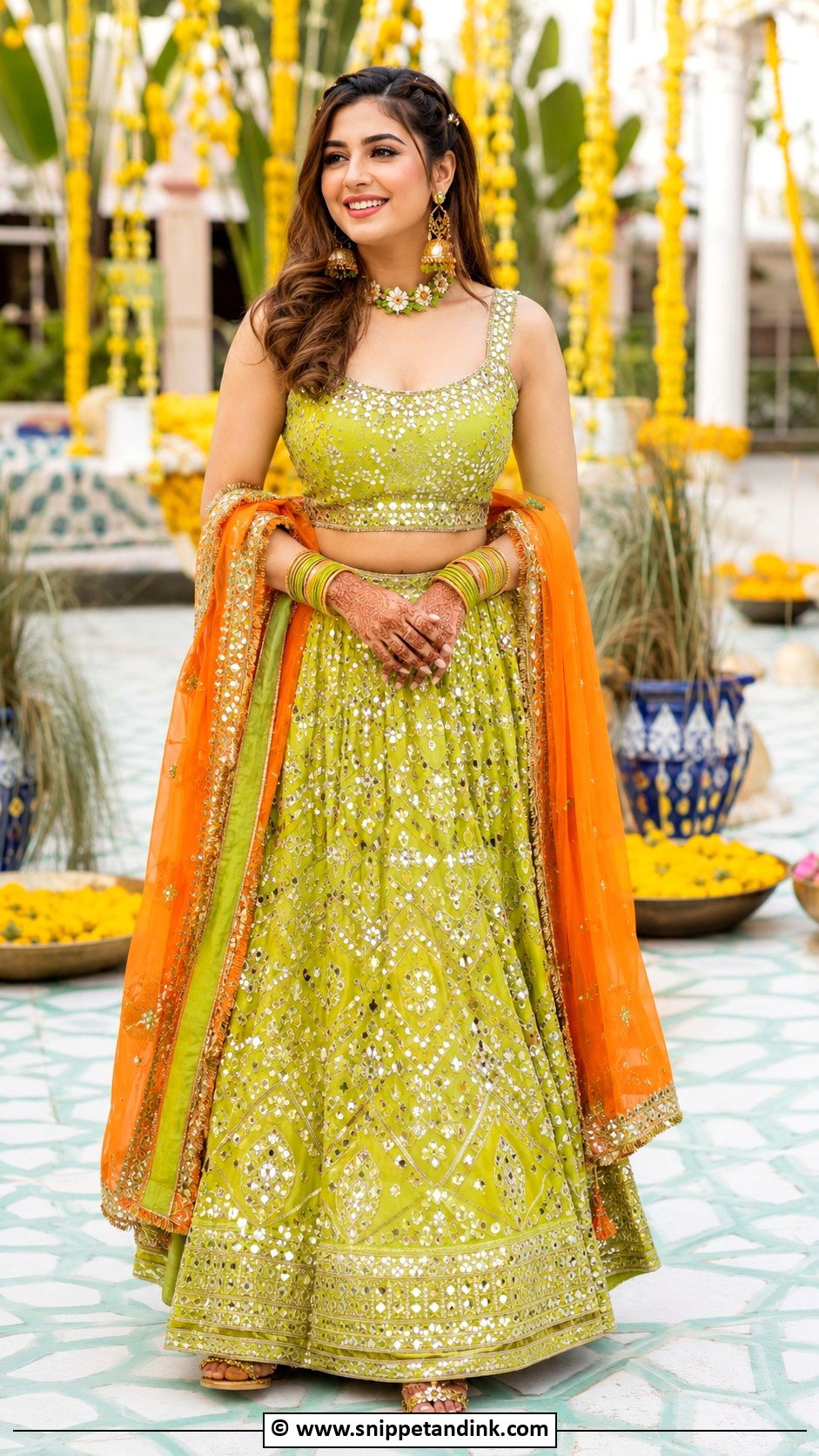
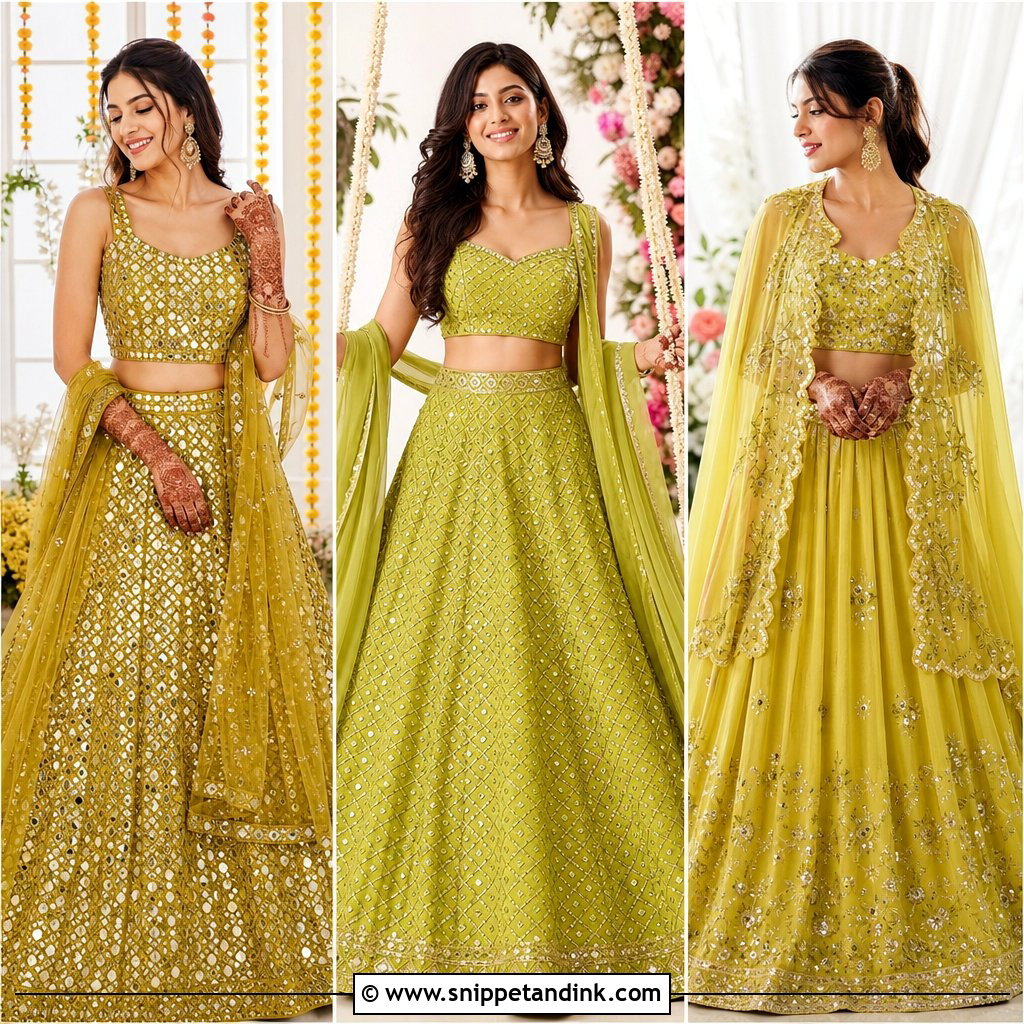
Lime is a daytime shade. A lime green mehndi lehenga looks fresh at garden setups and in front of bright stage decor, while under warm evening bulbs it can turn slightly sallow. Light embroidery, mirrors or small sequins catch the sun without looking formal. Pair a matching choli with a yellow, pink or orange dupatta. For a bride, add heavier borders and floral jewelry; for a guest, keep the cut simple and the accessories few. Dewy makeup, glossy lips, loose curls and gold or pearl pieces finish it.
9. White Mehndi Dress With Colorful Dupatta
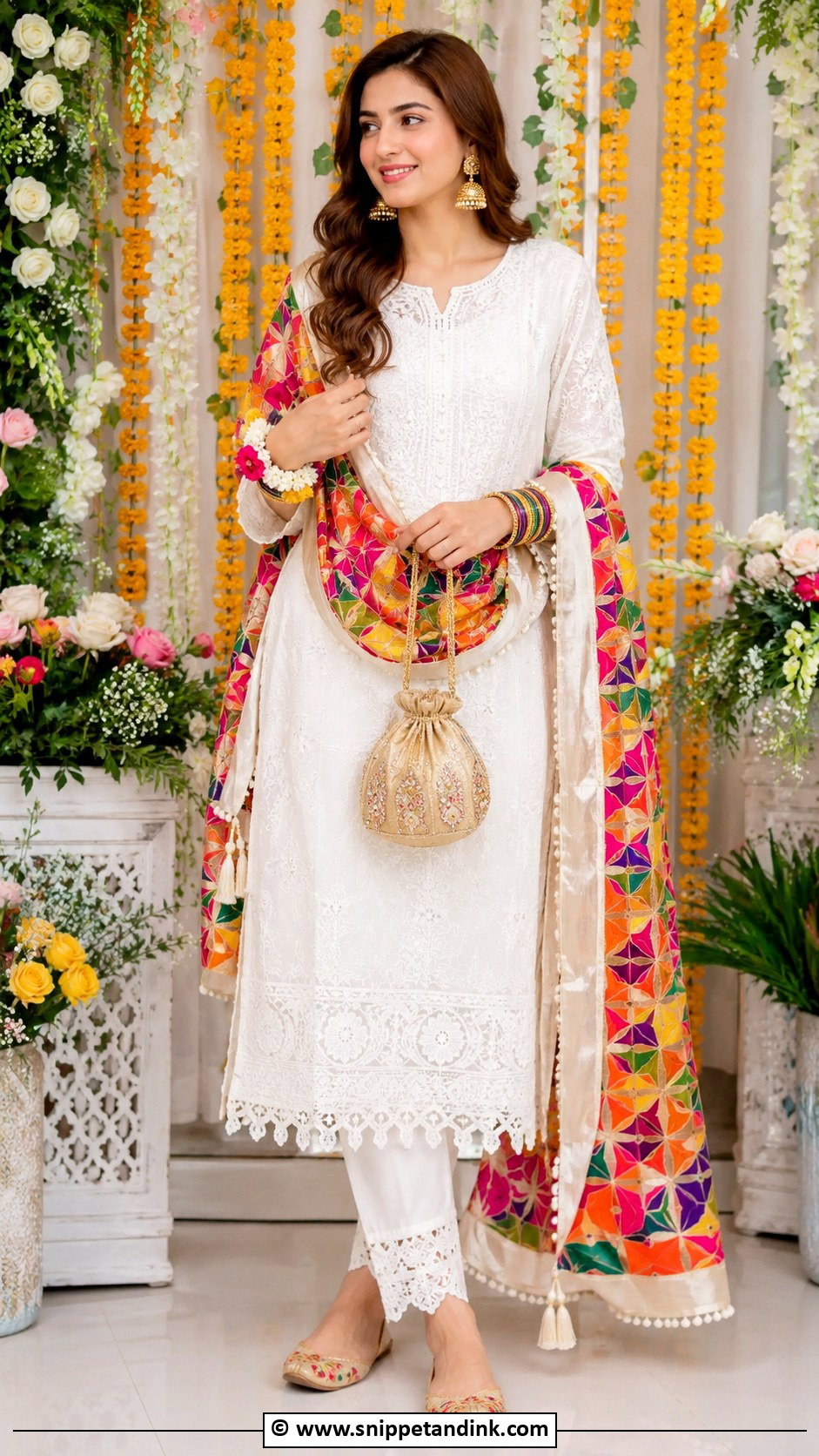
A white base lets the dupatta do the talking. The outfit can be an embroidered kurta, anarkali, lehenga or gharara set, and the color comes from a dupatta with gota, phulkari, mirror work or multicolor borders. It’s a smart route for guests who’d like to look festive without wearing bold color head to toe. Be careful with fresh henna, though. Wet paste and orange stain transfer onto white cotton instantly, so if you’re having your hands done that night, choose a darker kurta. Colored bangles, gold earrings and embroidered khussas pull it together, with warm makeup so the white doesn’t flatten you.
10. Mehndi Kurta With Gharara
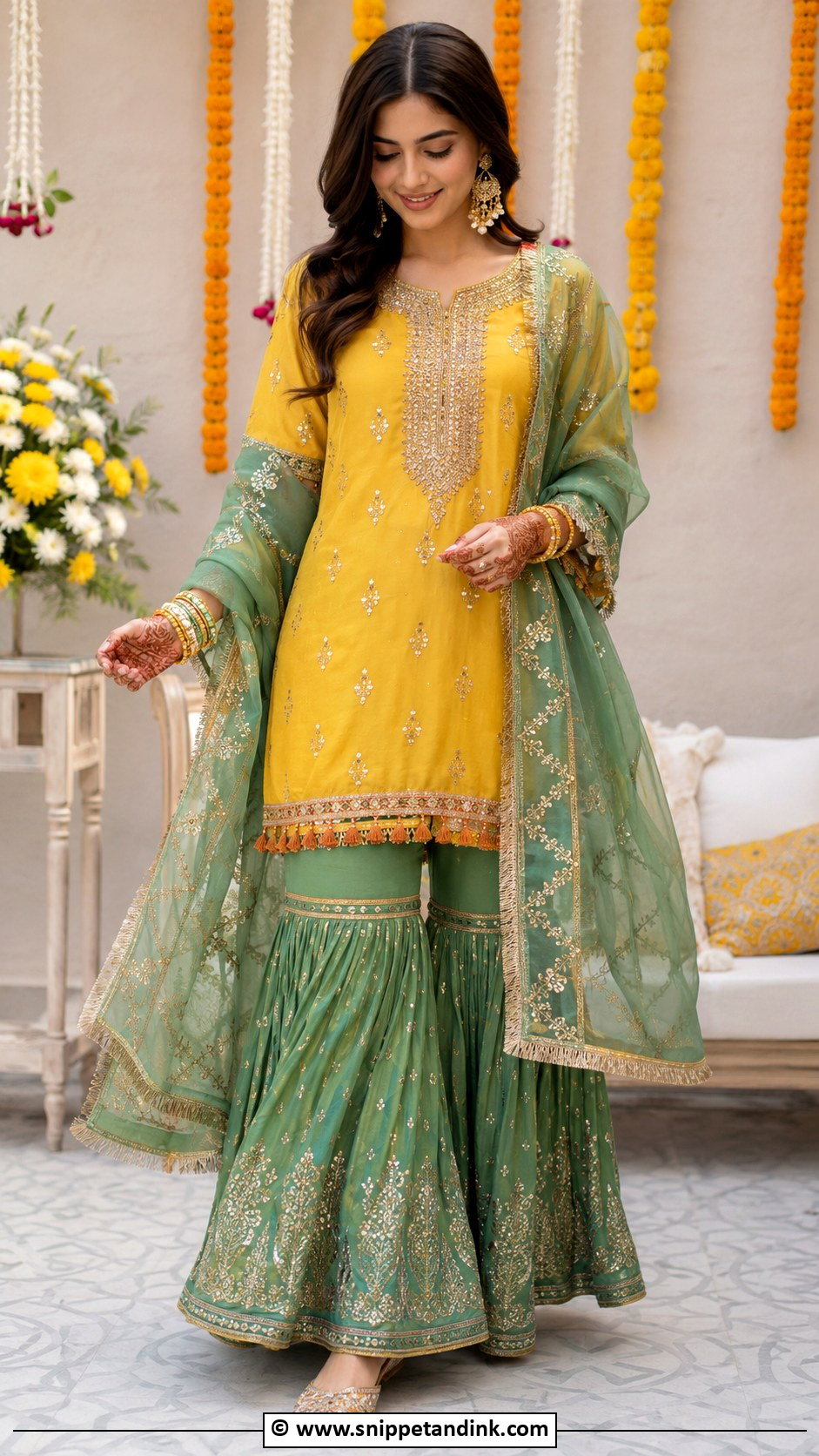
I recommend a kurta with gharara to almost every age and body shape. The volume starts low on the leg, so the hip and waist stay neat while the hem swings. Choose a straight or short kurta in yellow, green, orange or pink with gota lace or thread work, and a matching or contrasting dupatta. It’s ideal territory for home mehndis, dholki nights and smaller family functions, where a full lehenga would feel like too much. Traditional jewelry, soft sandals or khussas and a small potli bag are all you need.
11. Mehndi Angrakha Dress
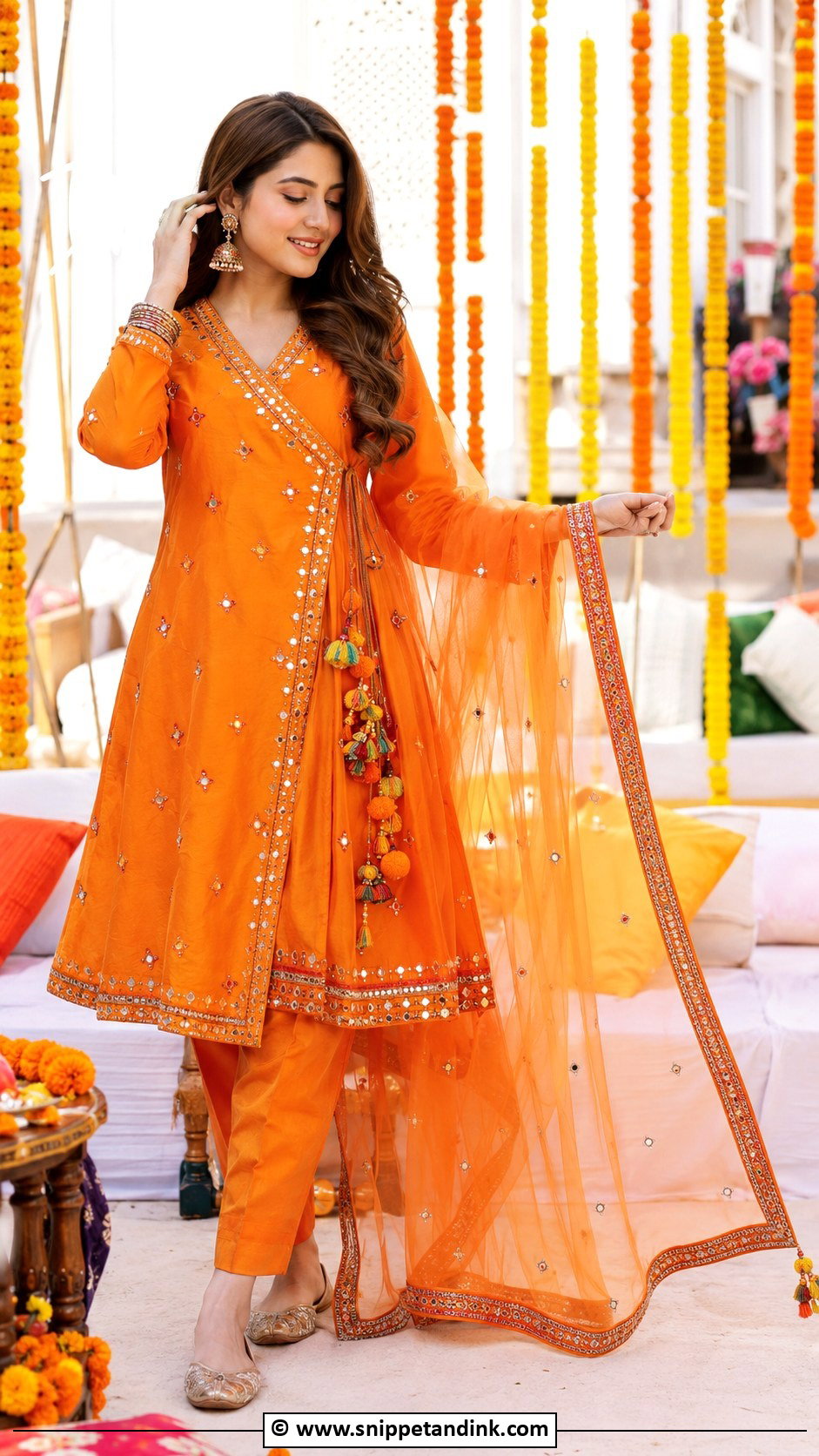
An angrakha wraps across the front and ties at the side, and that overlap is what sets it apart from a regular kurta. In mustard, orange, green or pink with gota, tassels or mirrors, it pairs with churidar, straight trousers, sharara pants or even a lehenga skirt. One fitting point: the wrap opens when you lift your arms to dance, so I have a hidden hook or snap added below the tie. A light dupatta, jhumkas, bangles and khussas complete it, and guests find it easy to manage all night.
12. Mehndi Lehenga With Mirror Work
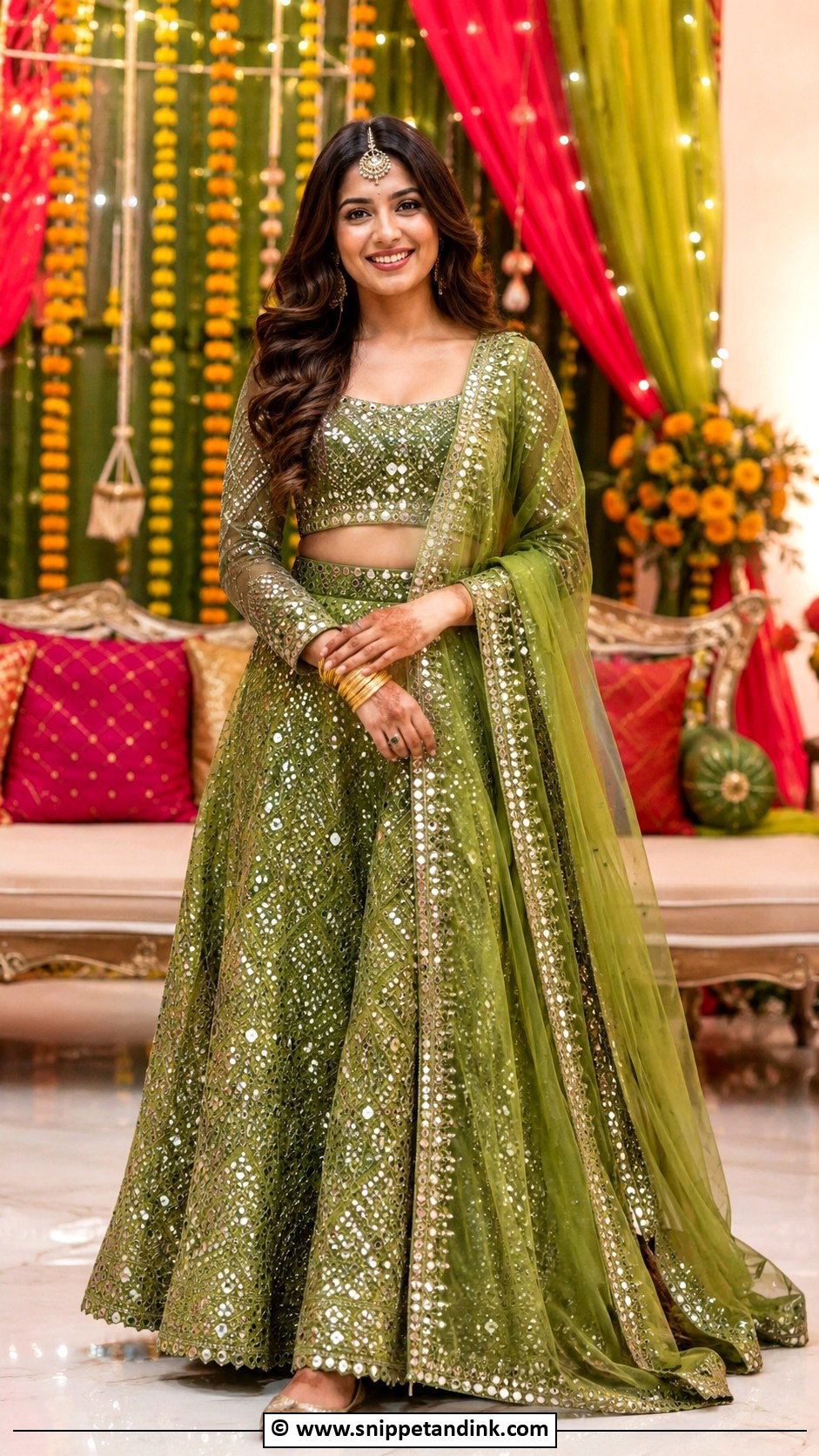
Mirror work gives you sparkle without the weight of metal embroidery. The small glass pieces bounce light during dances and stage photos, especially in the evening. Choose a lehenga in yellow, green, rust or fuchsia with mirrors spread across the skirt and blouse, and a sheer dupatta with a mirror border. How heavily it’s worked decides who should wear it: dense mirrors for the bride, scattered ones for relatives. Mirror edges can scratch arms and catch on delicate dupattas, so I check that every piece is firmly stitched and smoothly bound. Keep jewelry to gold bangles, a maang tikka and simple earrings, with khussas or block heels.
13. Mehndi Gota Patti Suit
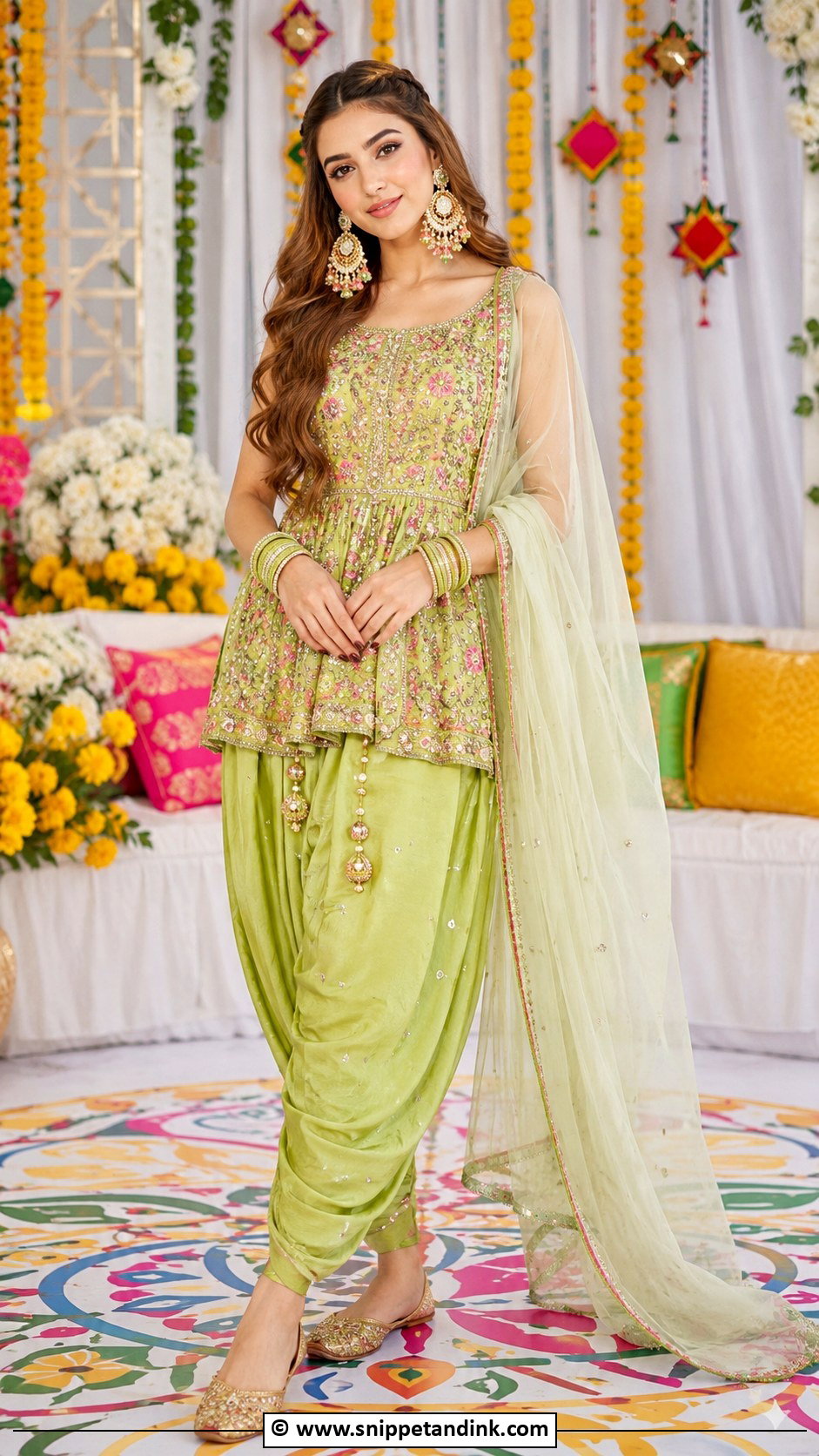
Gota patti is the ribbon appliqué that makes almost any fabric look like a wedding outfit, and it glows on yellow, orange, green and pink. The shape is up to you: a straight shirt with trousers, a short kameez with sharara, or a long kurta with gharara pants. The dupatta usually carries most of the charm, so I’d spend there, on a heavy gota border. Cheaper gota is plastic-coated and dulls quickly, while better gota keeps its shine. If the suit is heavily worked, keep makeup and hair clean, and add gold jewelry, a potli and embellished flats.
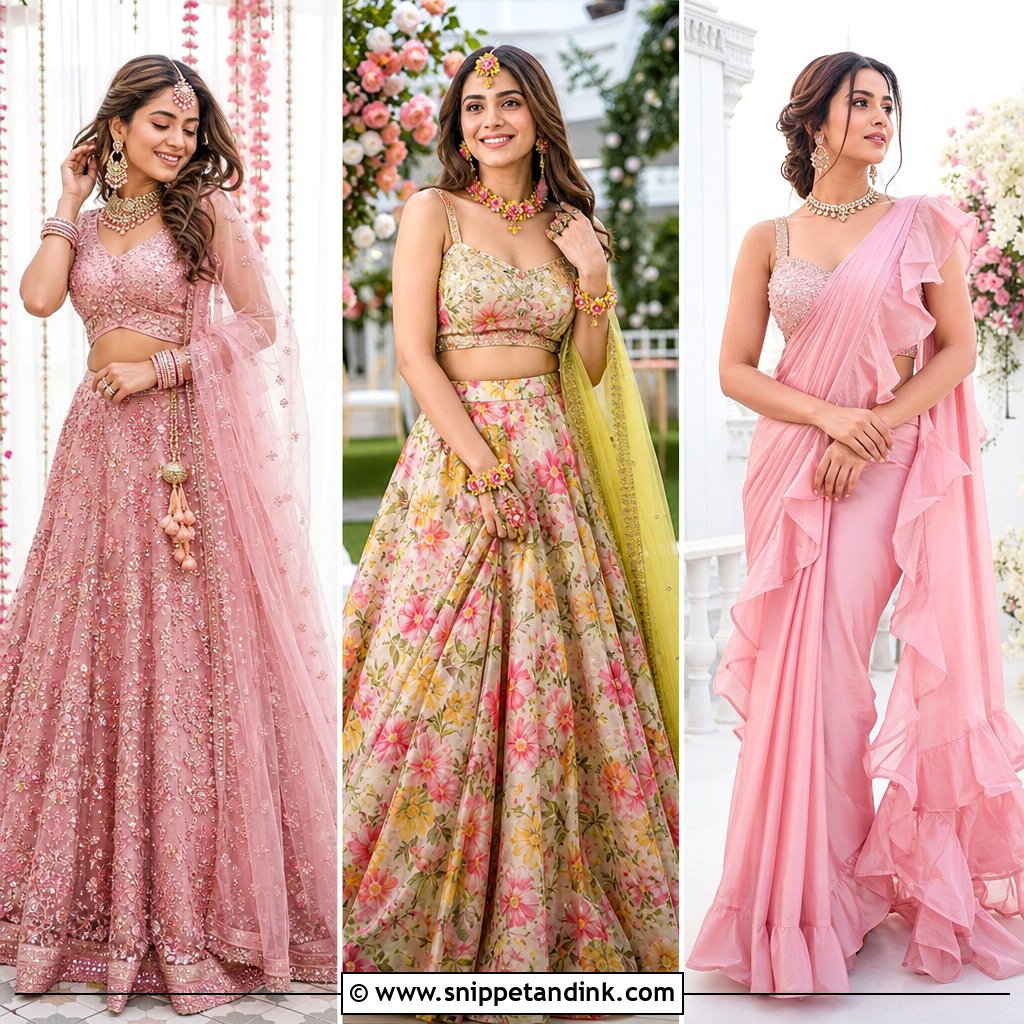
14. Floral Mehndi Dress
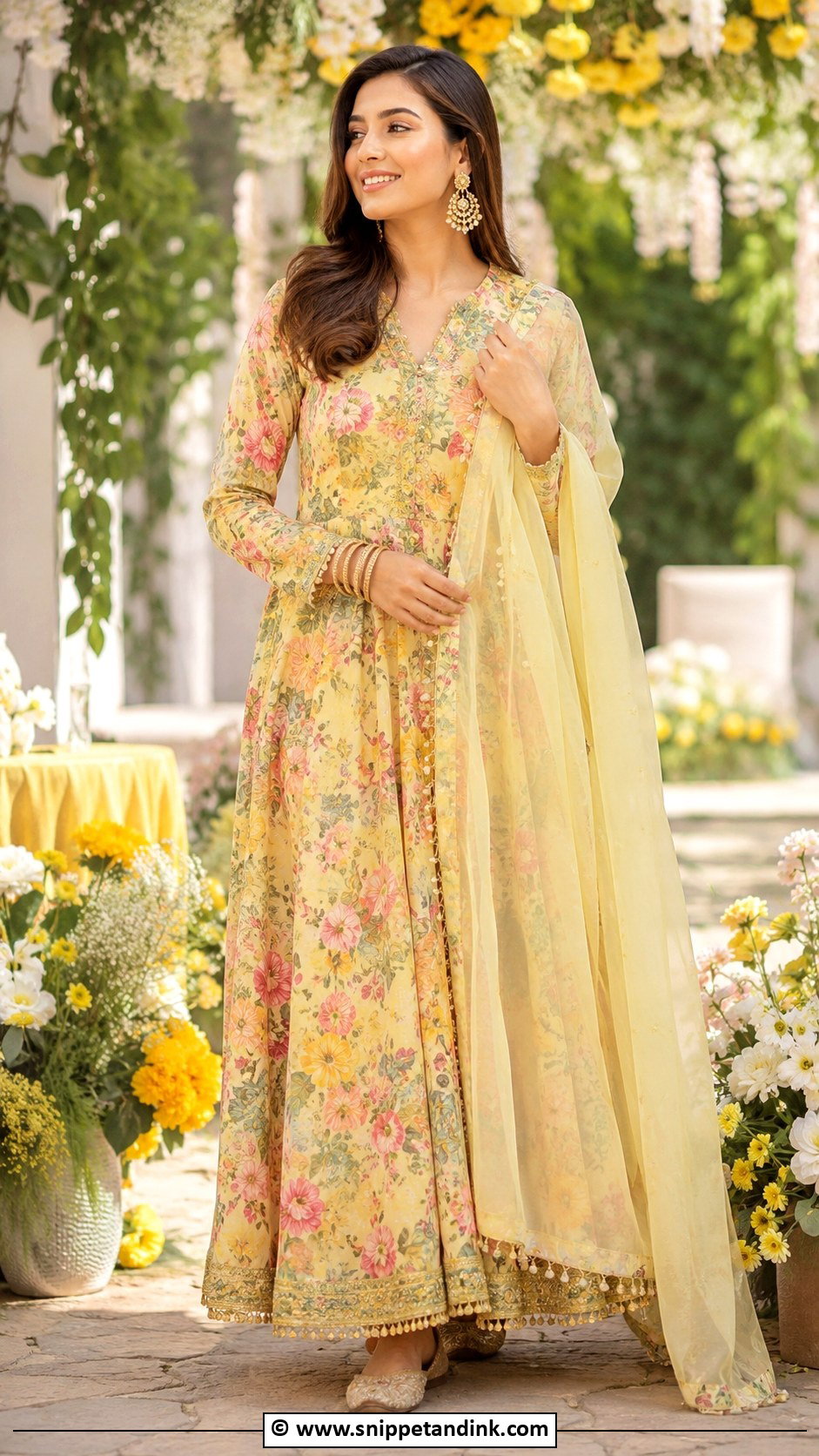
Florals belong to daytime mehndis. They work on organza, chiffon, lawn, cotton net and silk blends, as a printed lehenga, anarkali, sharara set or long kurta with a plain dupatta. Yellow, pink, peach, green and ivory prints sit well against henna decor. I suggest florals to guests who want to look festive without wearing heavy embellishment, and I always check the print scale against the wearer: big blooms on a petite frame swamp her in photos, while tiny ditsy prints vanish from a distance. Floral earrings, pearls or simple gold, with khussas or low heels, finish it for a garden venue.
15. Mehndi Saree With Pakistani Blouse
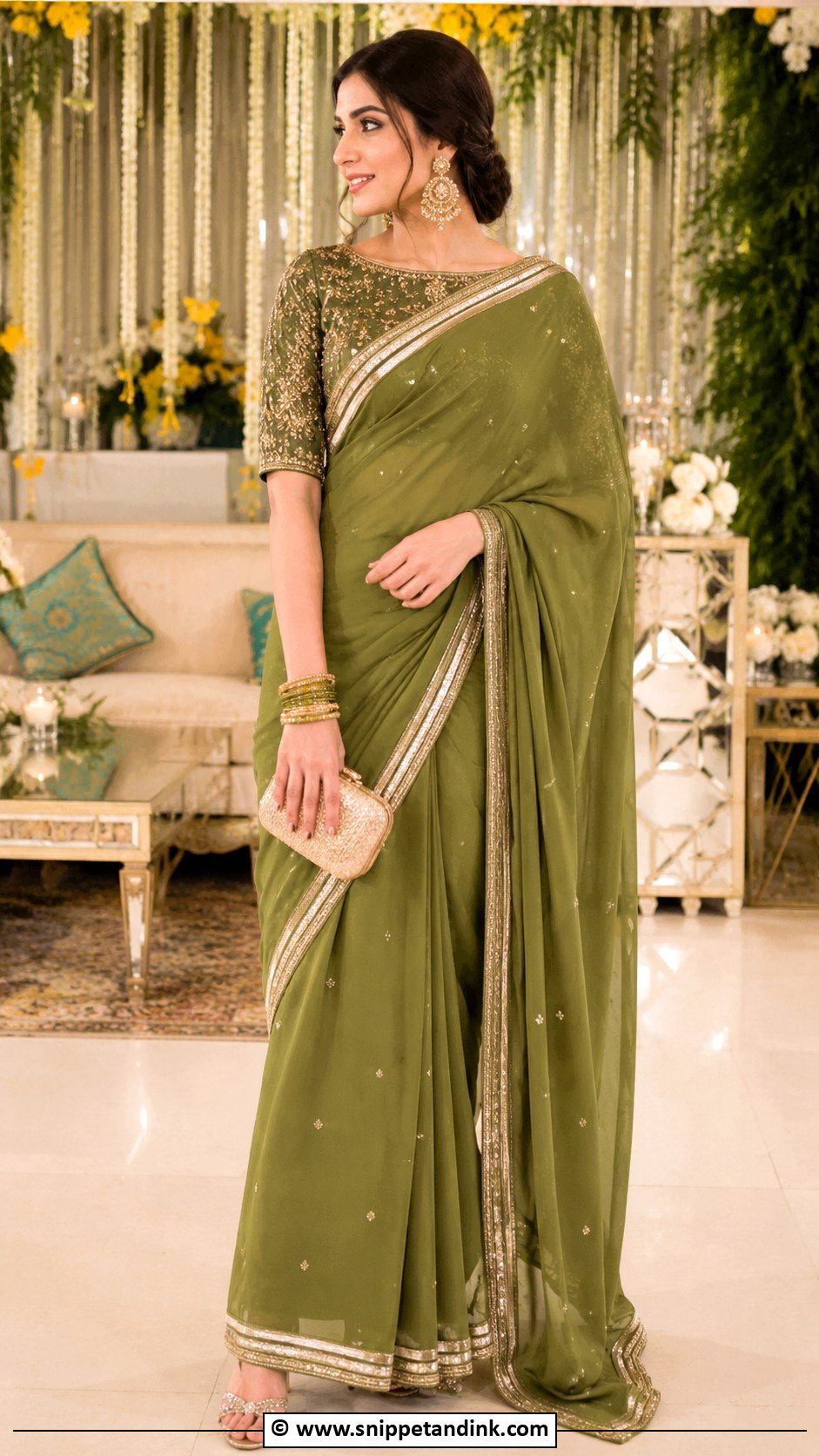
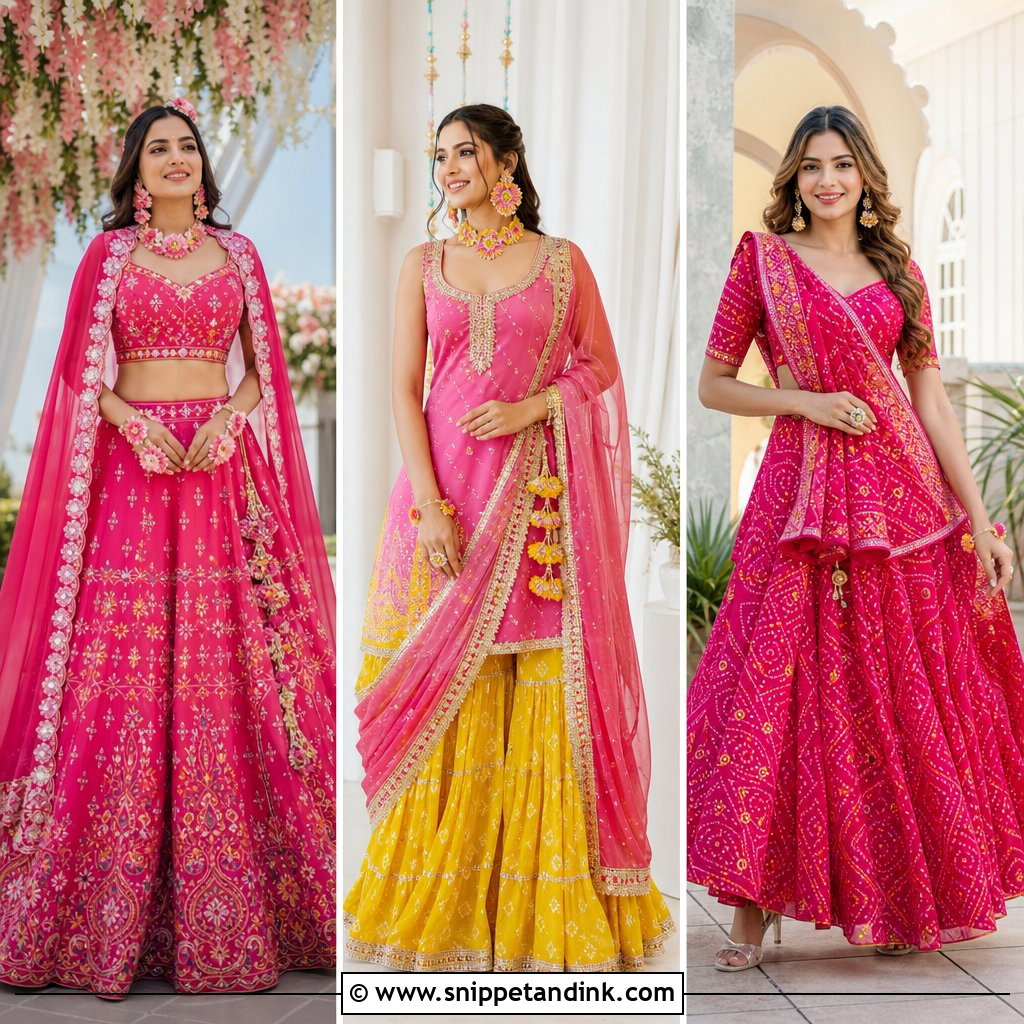
A saree draped over a Pakistani-style blouse suits women who like a long, graceful line. Pick yellow, green, orange or pink with gota borders, mirrors or light embroidery, and choose a structured blouse, short choli or a longer blouse for more coverage. Older sisters, aunts and mothers often prefer it to a lehenga. The risk at a mehndi is the floor: you’ll sit and stand many times, so have it pinned firmly at the pleats and shoulder, and keep the hem just off the ground so nobody steps on it during the dance. Statement earrings, bangles and a neat bun or soft waves complete it.
16. Mehndi Maxi Dress
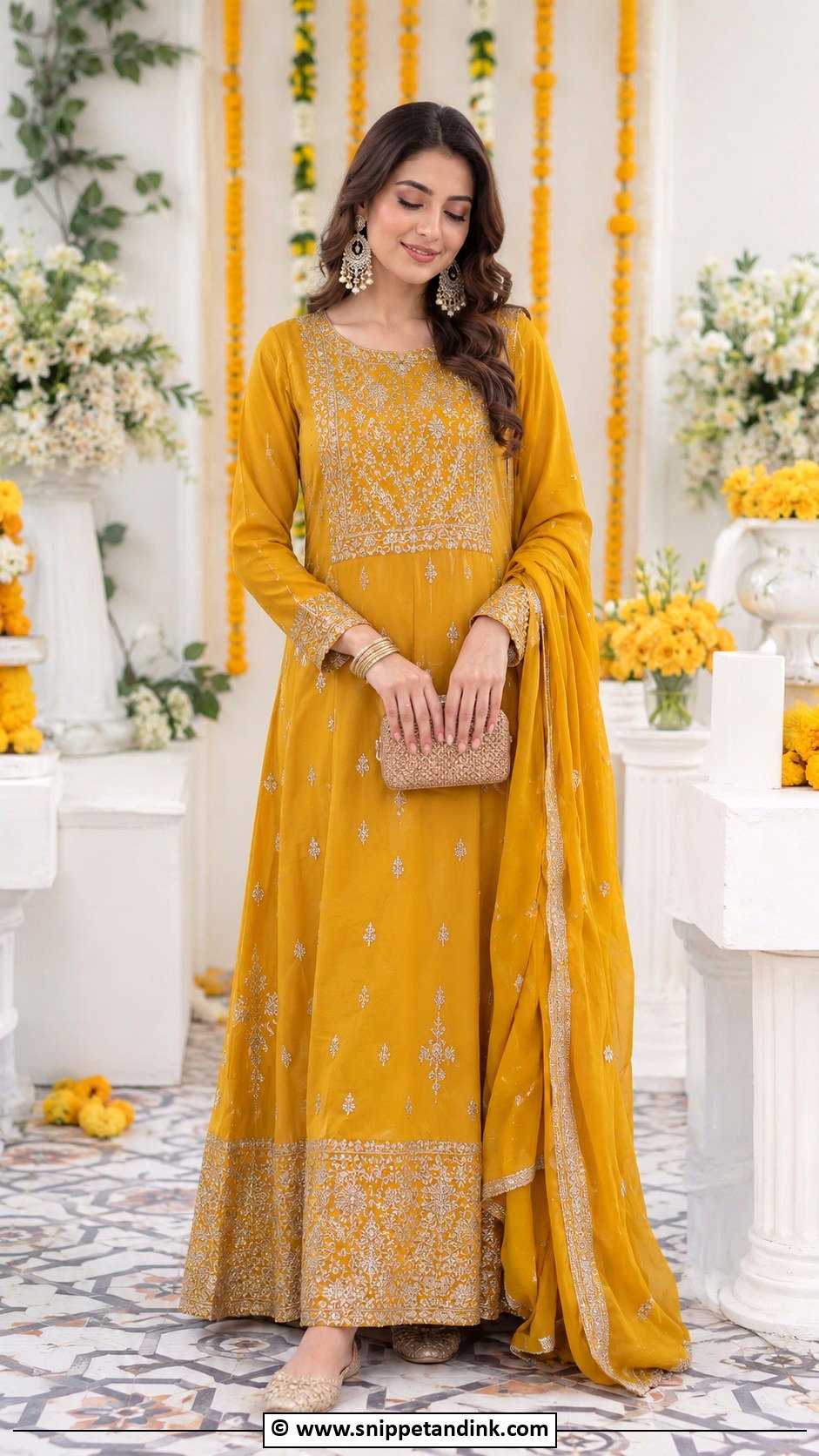
A maxi gives modest, full-length coverage and still moves enough for a lively function. Mustard, mehndi green, coral or multicolor embroidery suit it, with a fitted bodice, a flared skirt and gota borders or mirrors for the festive part. Add a dupatta for a more traditional finish. I steer guests who dislike lehengas toward a maxi, because there’s no waistband to readjust all night. Chandelier earrings, a soft clutch and embellished flats or low heels complete it.
17. Mehndi Dhoti Pants Outfit
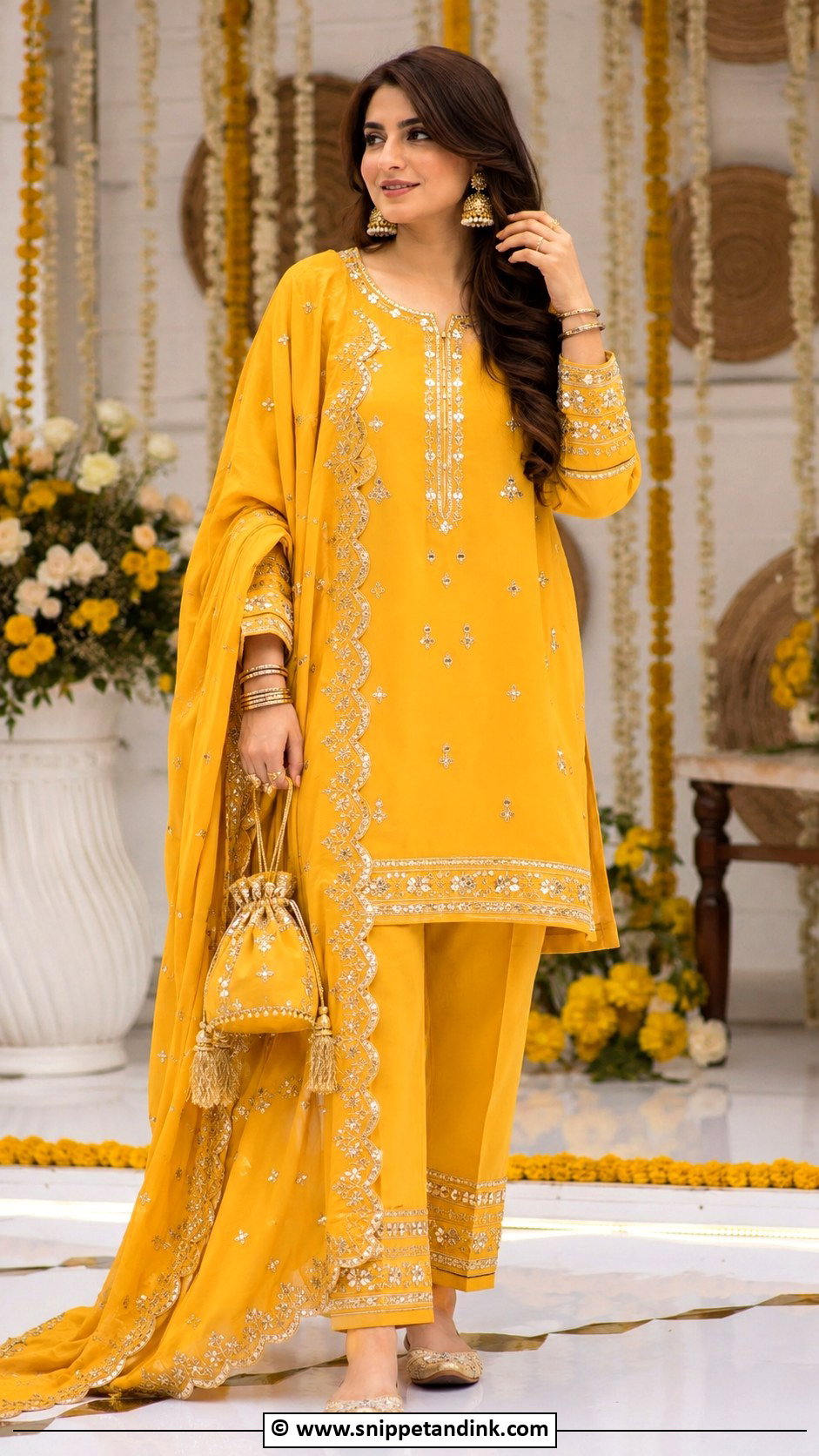
Dhoti pants are the fusion option, and they’re my first pick for anyone performing a dance. The draped shape lets you kick, squat and turn without worrying about a hem. Pair them with a short kurti, a peplum or an embroidered jacket in lime, mustard, orange or hot pink, finished with gota lace, tassels, mirrors or thread. If the top already gives enough coverage and detail, skip the dupatta or keep it light. Statement earrings, bangles and khussas suit it; heels on a dance floor are a gamble.
18. Mehndi Jacket Lehenga
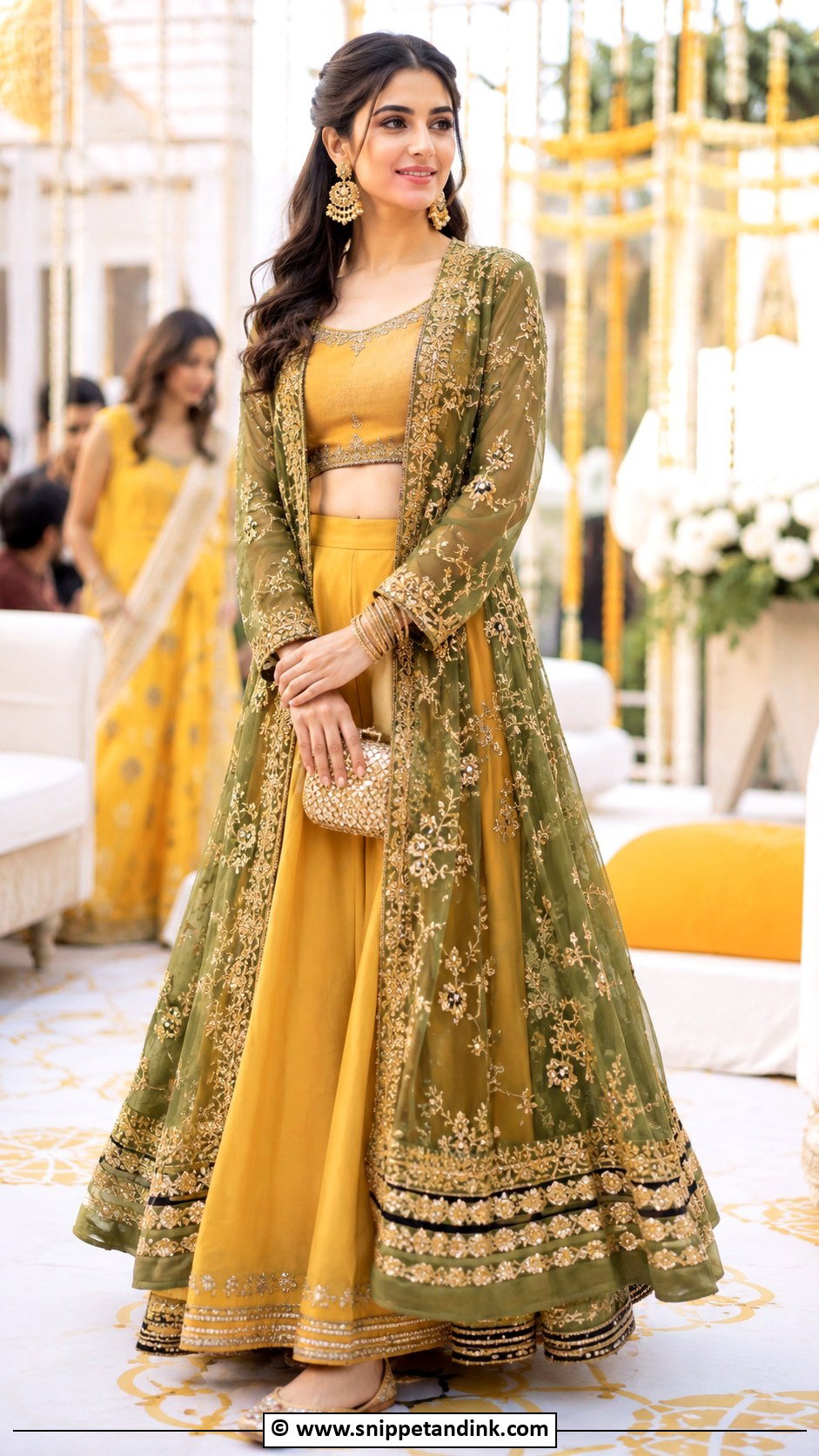
A jacket over a lehenga replaces the dupatta and gives coverage in a more modern way. It can be short, long, sheer, embroidered or mirror-worked, and it should be the focus, so keep the lehenga and blouse simple underneath. Yellow, green, ivory and multicolor combinations suit a mehndi. I ask for the jacket in the lightest fabric the design allows; a heavily worked long jacket gets hot within twenty minutes of dancing. Sleek earrings, bangles and a small clutch complete it for bridesmaids and fashion-forward guests.
19. Mehndi Palazzo Suit
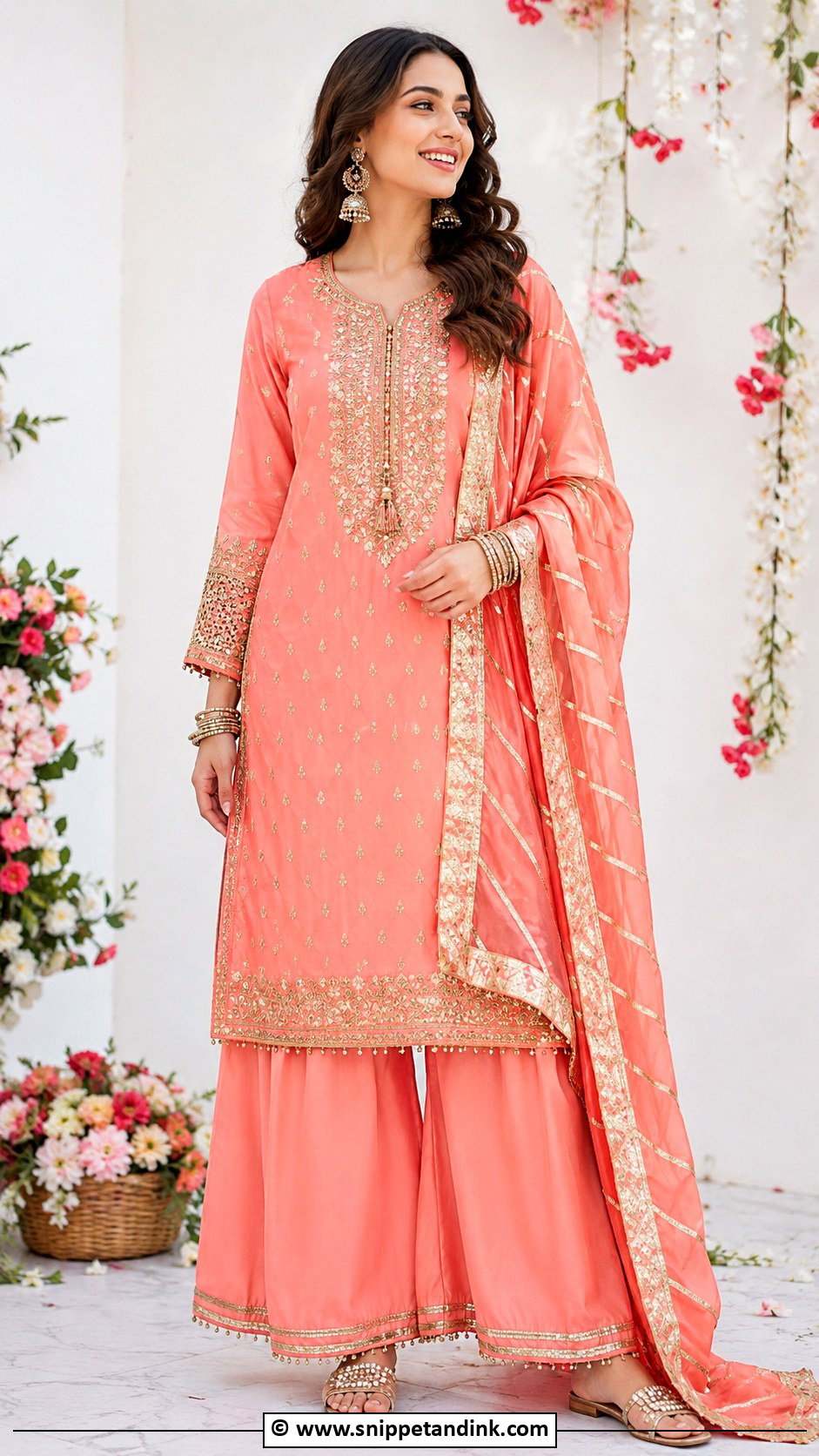
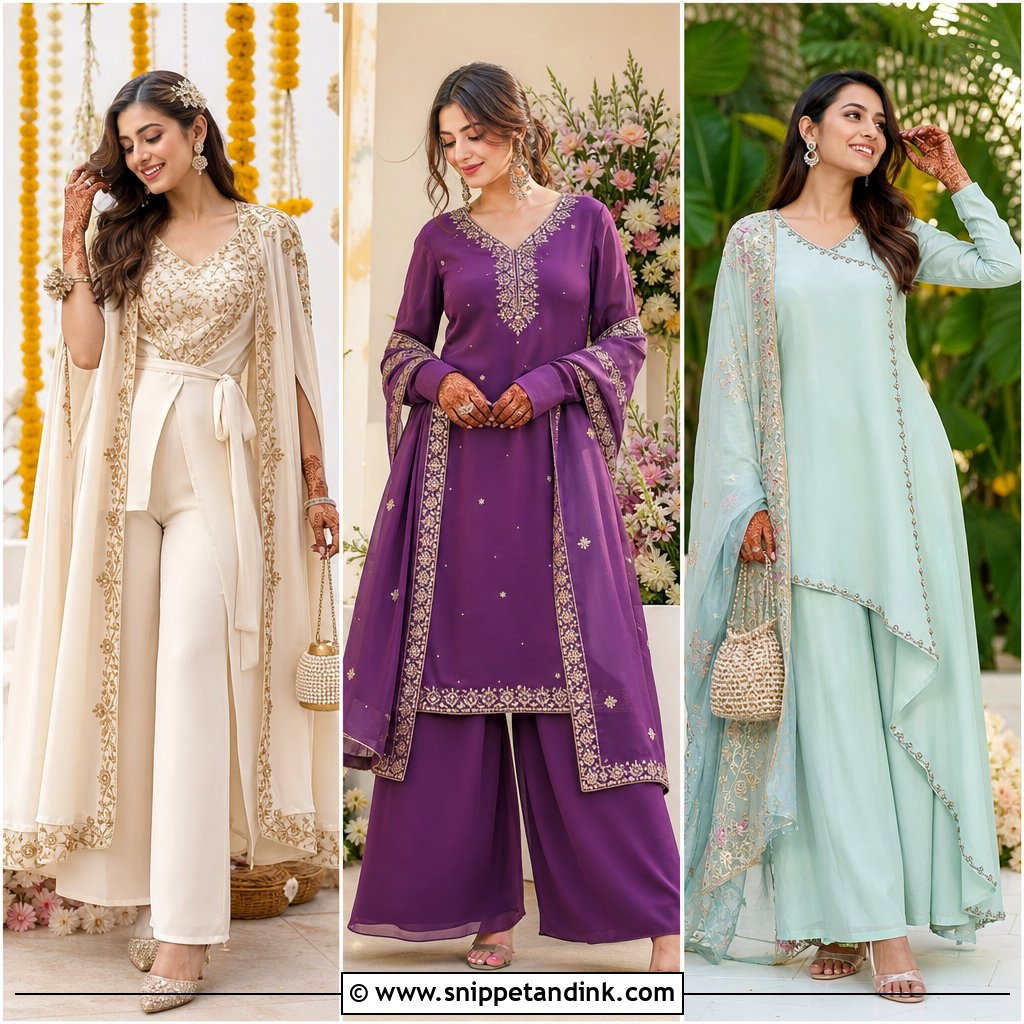
Palazzos are the comfort choice for a long night. The wide legs breathe and move, and an embroidered kurta or short top supplies the structure. Marigold, parrot green, coral, fuchsia or ivory with colored thread all suit a mehndi, and a dupatta with gota or mirror borders makes it more traditional. Younger girls and anyone who prefers relaxed shapes tend to love it. Check the palazzo length with your shoes on, because wide hems that brush the floor collect dust and henna. Khussas, jhumkas, stacked bangles and a soft blowout or half-up style finish it.
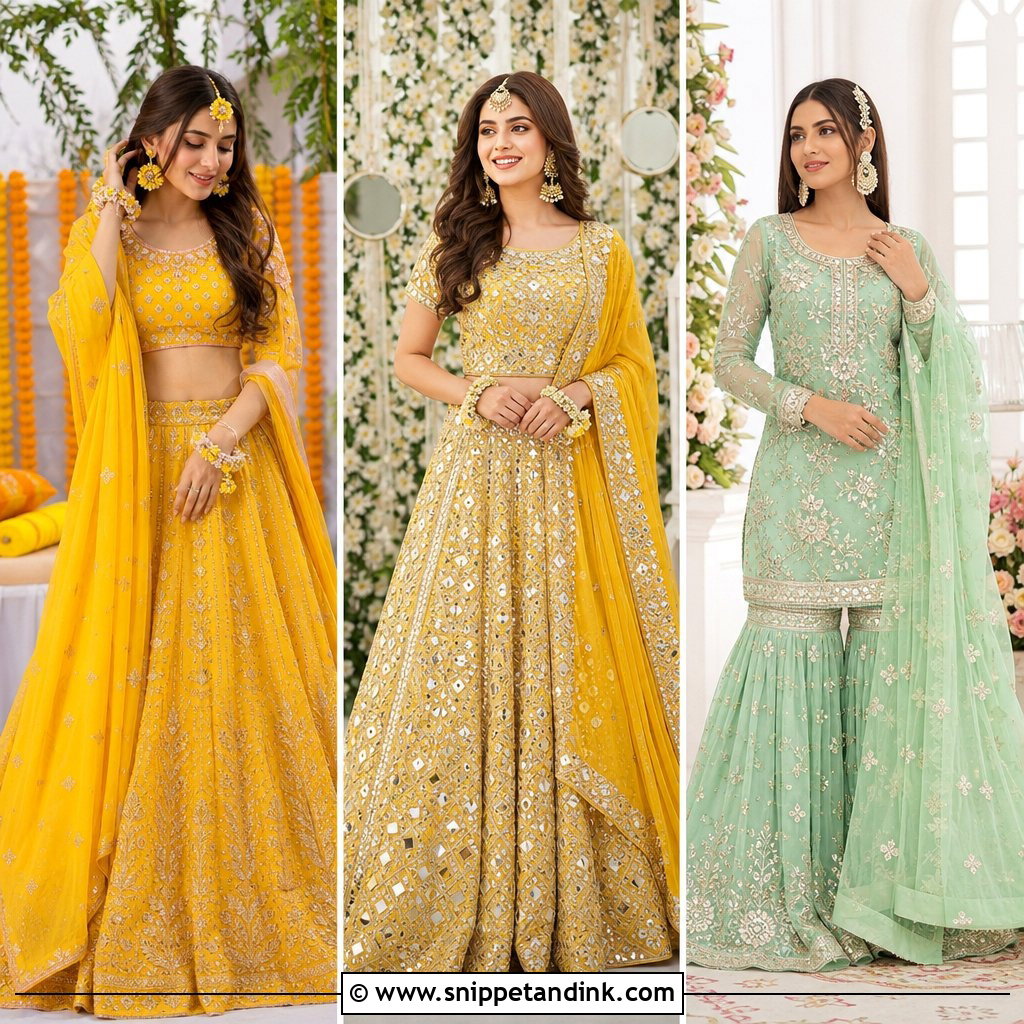
20. Mehndi Pishwas Dress
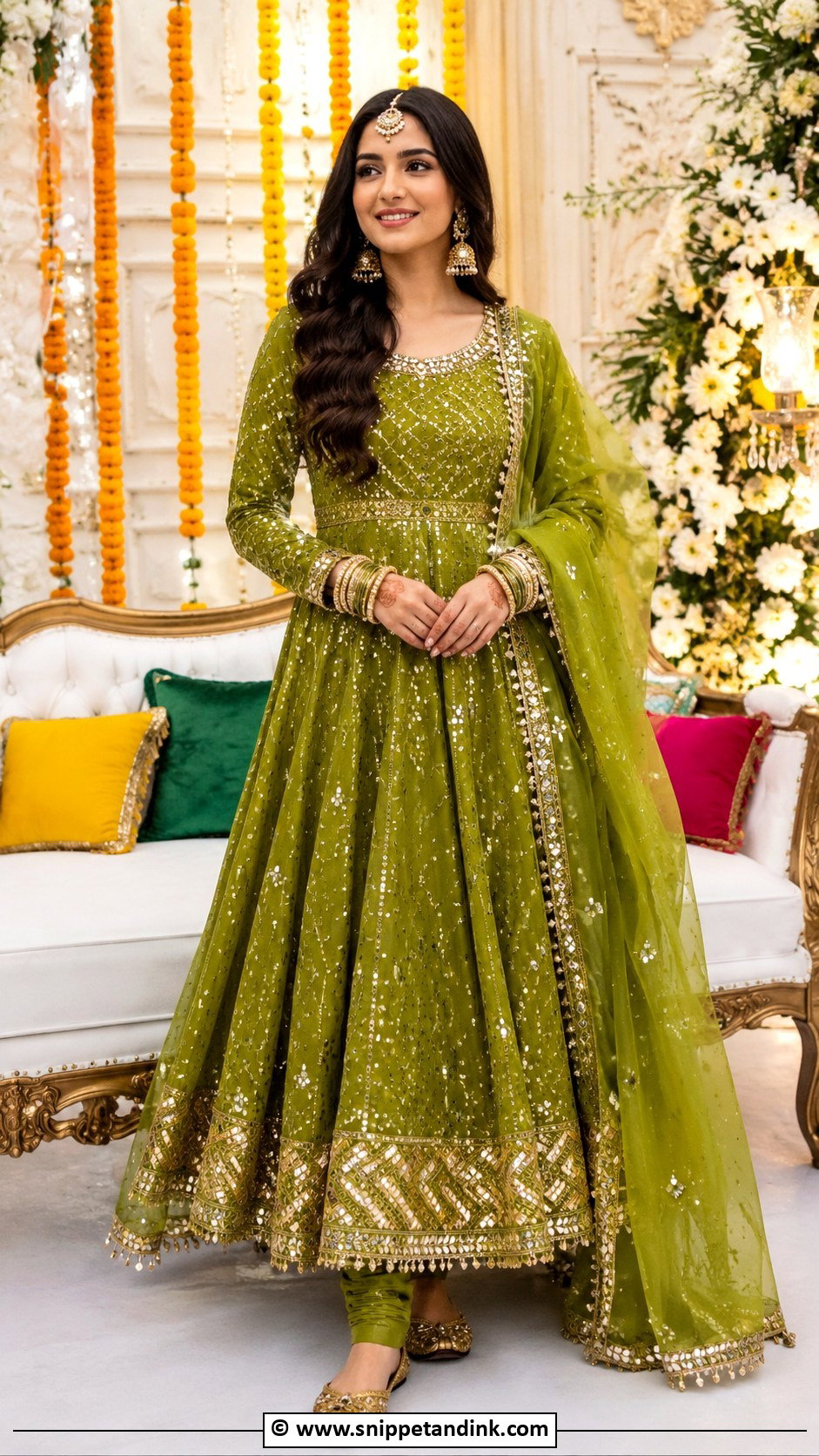
The pishwas is the most formal shape here, and I’d keep it for the bride, her sisters or close family. A fitted bodice drops into long flared panels, and in mustard, green, orange or pink, rather than barat reds, it stays clearly mehndi. Gota patti, mirrors and thread show best on the flare, where they catch the light as you turn. Pair it with churidar and a soft dupatta. Before the event, spin in it once with your dupatta pinned; if the dupatta lifts and wraps around your neck, it needs another pin at the back. A maang tikka, jhumkas, bangles and khussas complete it.
21. Mehndi Short Frock With Sharara
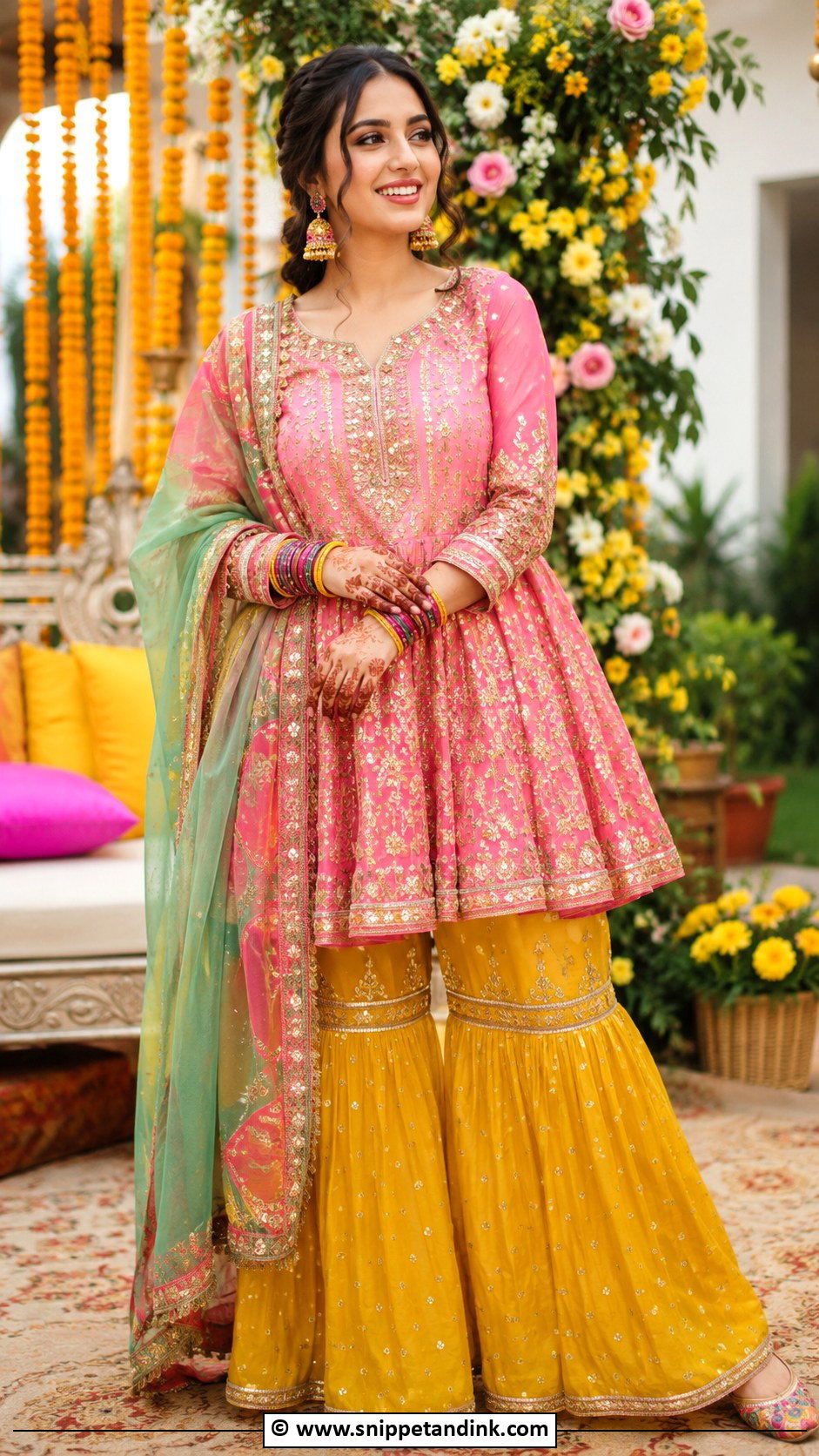
A short frock over a sharara puts movement at both ends of the outfit, which is why younger cousins and bridesmaids tend to pick it. It works in yellow, pink, green, orange or multicolor, with light gota, tassels, mirrors or lace borders and a contrasting dupatta. The frock length matters: mid-thigh keeps it youthful, while knee length makes the sharara look shorter. Add colored bangles, jhumkas, khussas and fresh makeup with a bright lip.
22. Mehndi Velvet Gharara
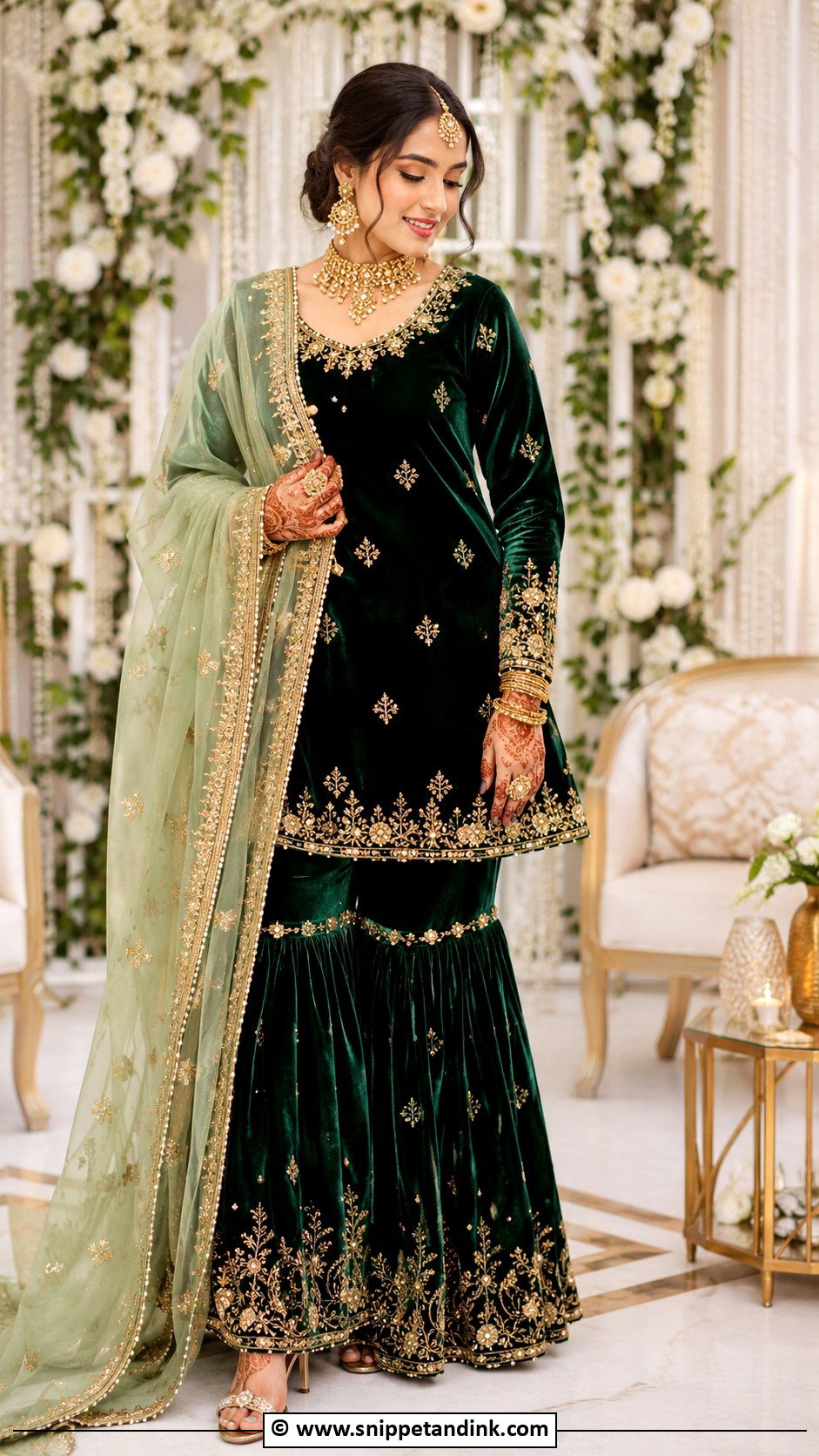
Velvet belongs to winter and indoor evening mehndis. It deepens emerald, mustard, rust, magenta and deep orange in a way flat fabrics can’t, and a short velvet kameez over a matching or contrasting gharara with gota, zari or dabka looks rich straight away. Velvet is warm, so keep the dupatta in net, organza or chiffon. It suits brides, sisters, and close family members at indoor functions. One honest caution: henna paste is very hard to lift from velvet pile, so wear it after your own mehndi has dried and flaked. Gold jewelry, a neat hairstyle and heels or khussas complete it.
23. Mehndi Organza Suit
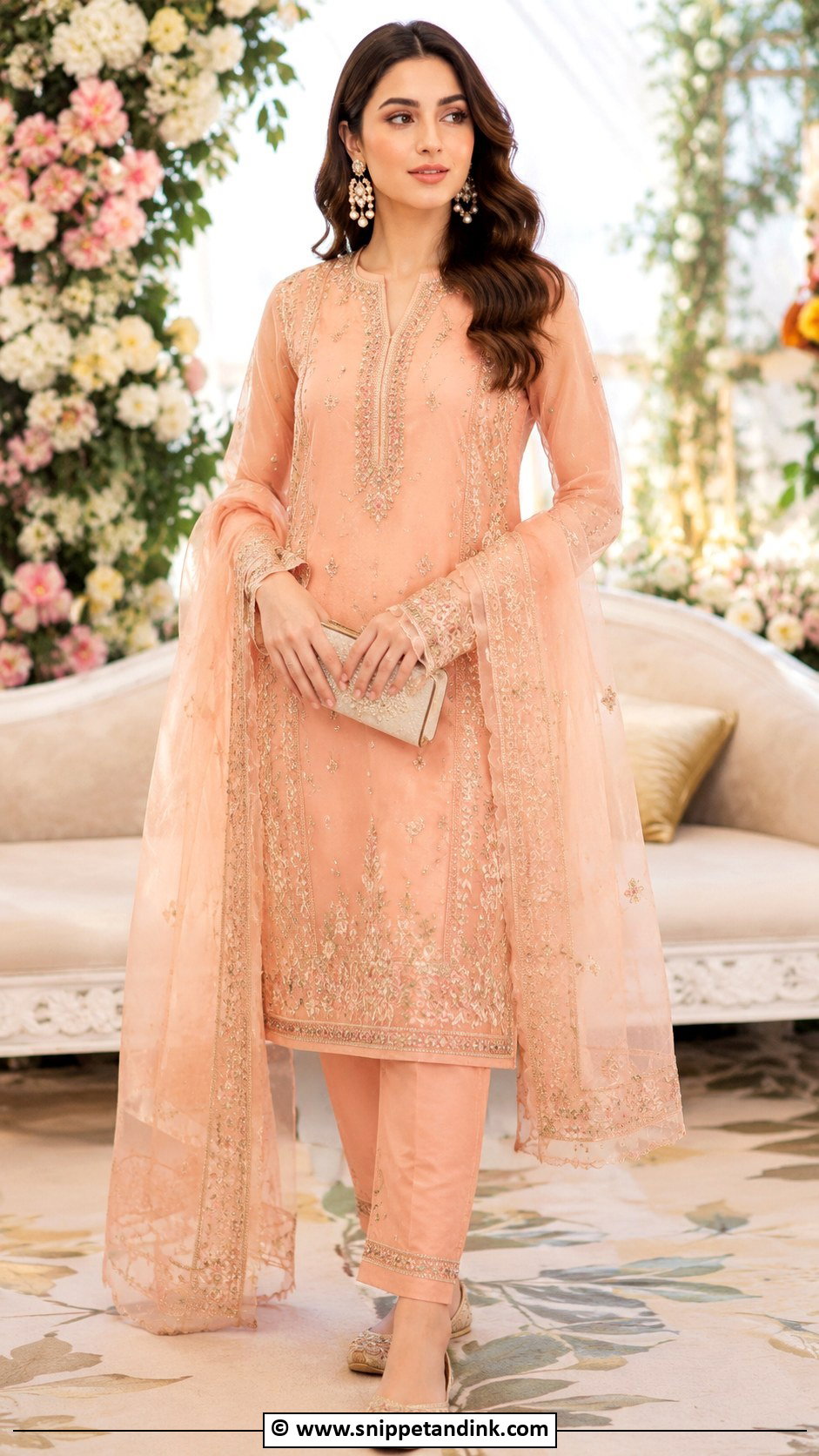
Organza holds its shape while still looking soft, which makes it ideal for embroidered shirts, sleeves and dupattas. A suit in yellow, mint, peach, coral or ivory with colored thread or gota, paired with straight trousers, gharara pants or a sharara, suits guests who want a refined look without heavy fabric. Organza is sheer, so the lining decides comfort. I’d ask for a soft cotton or silk lining cut to the shirt shape, not a stiff loose slip. Pearl or gold earrings, a small clutch and embroidered flats finish it.
24. Mehndi Chiffon Lehenga
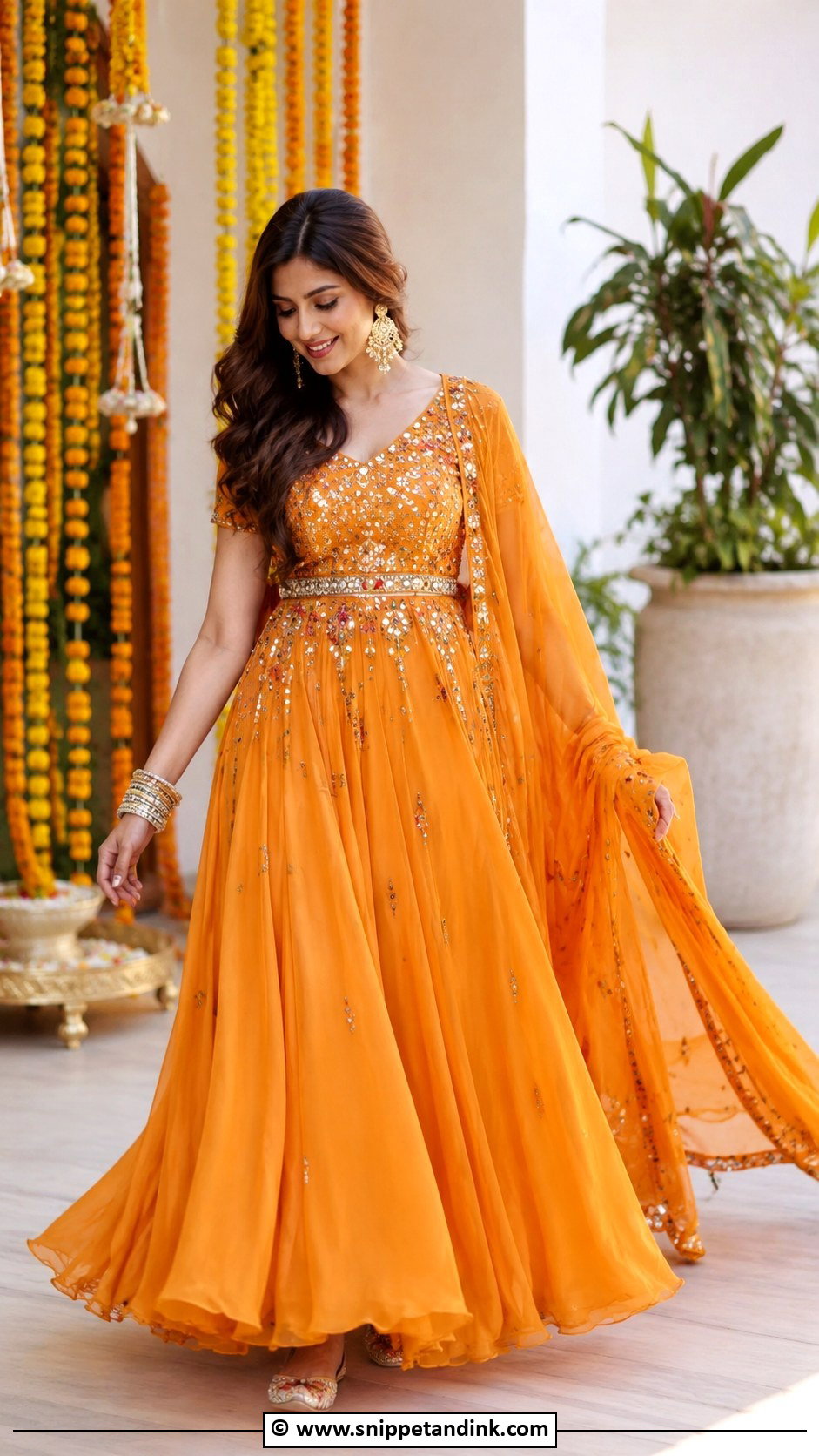
Chiffon is the lightest lehenga fabric here, and it’s the one I suggest to a bride planning to dance most of the night. It drapes and swings without weight; in yellow, orange, pink or green with fine embroidery, sequins or gota borders, it feels festive without effort, and a chiffon dupatta stays easy to manage. Chiffon clings when it’s damp, so I add a slightly fuller lining in warm weather. Traditional earrings, bangles and khussas complete it, with a soft hairstyle since the fabric already brings the movement.
25. Mehndi Co Ord Set
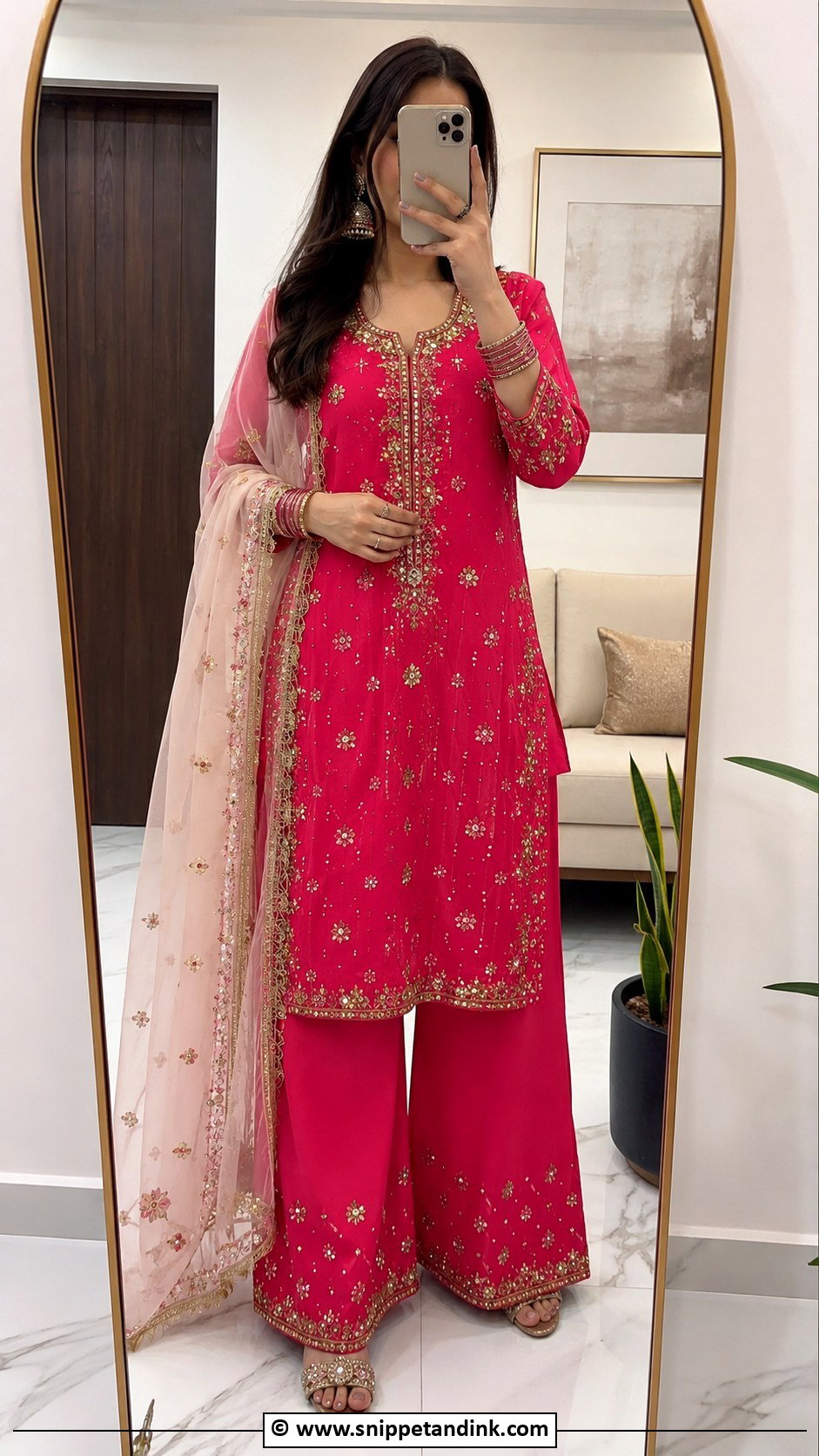
A mehndi co ord set suits casual or semi-formal celebrations: a matching kurta and pants, a crop top and skirt, or a short tunic with wide-leg trousers. Festive details like mirror work, gota borders, tassels or colored embroidery make it wedding-ready, and a matching dupatta pushes it toward traditional. Friends and cousins like it because they can wear it again. Watch the crop top length if the family is conservative; a longer top or a dupatta draped across the front avoids awkward moments. Khussas, block heels or embellished sandals finish it.
26. Mehndi Cape Lehenga
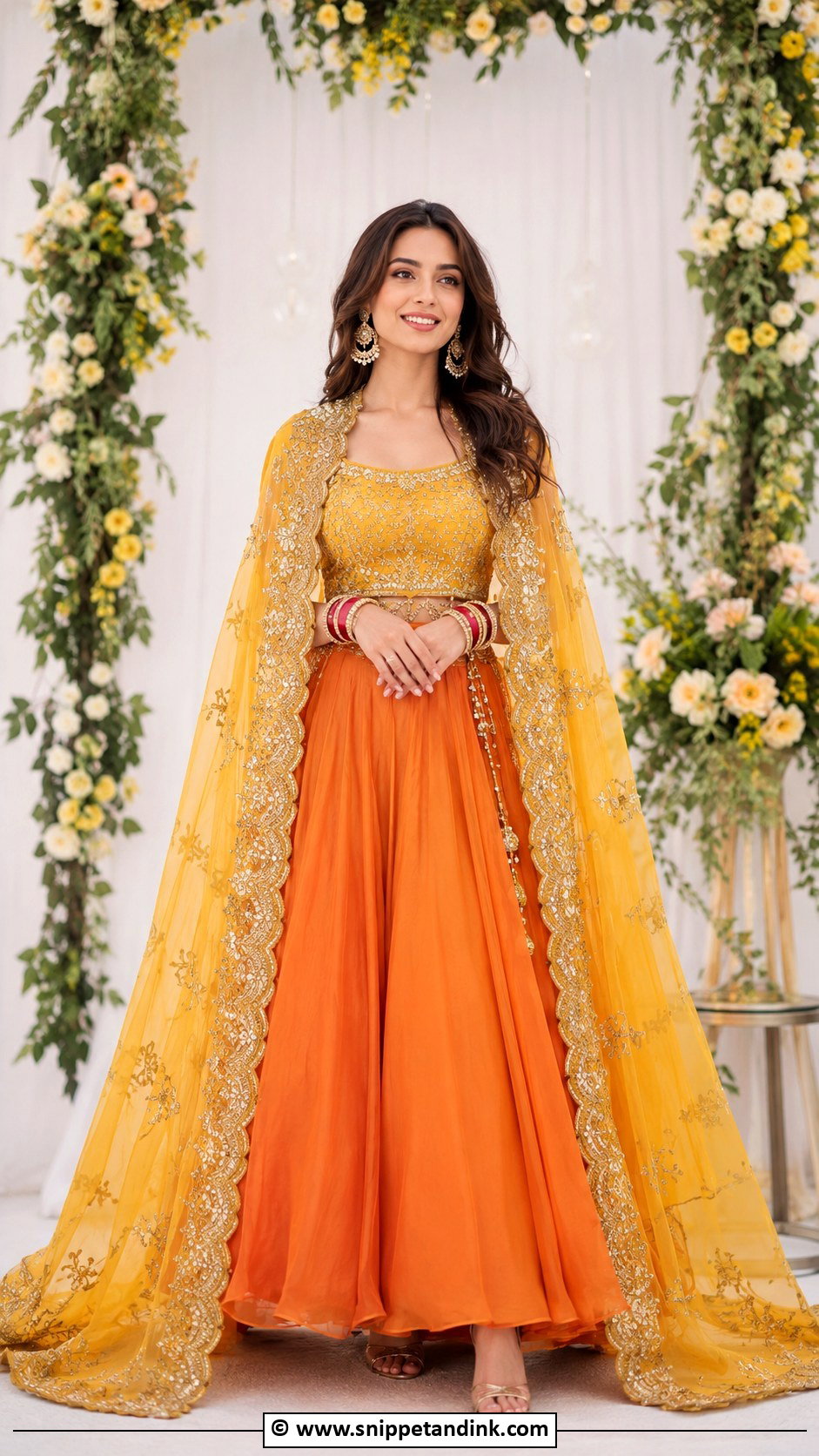
A cape replaces the dupatta, so your hands stay free for dancing, photos and holding out your palms for henna. Pair a bright lehenga in yellow, green, pink or orange with a sheer embroidered cape worked in mirrors, sequins or thread. The blouse has to fit closely, since a cape shows every gap at the shoulder. Skip heavy necklaces; they tangle with the cape’s neckline. Statement earrings, bangles and heels or khussas complete it for bridesmaids, sisters and brides who want something different.
27. Mehndi Long Shirt With Lehenga
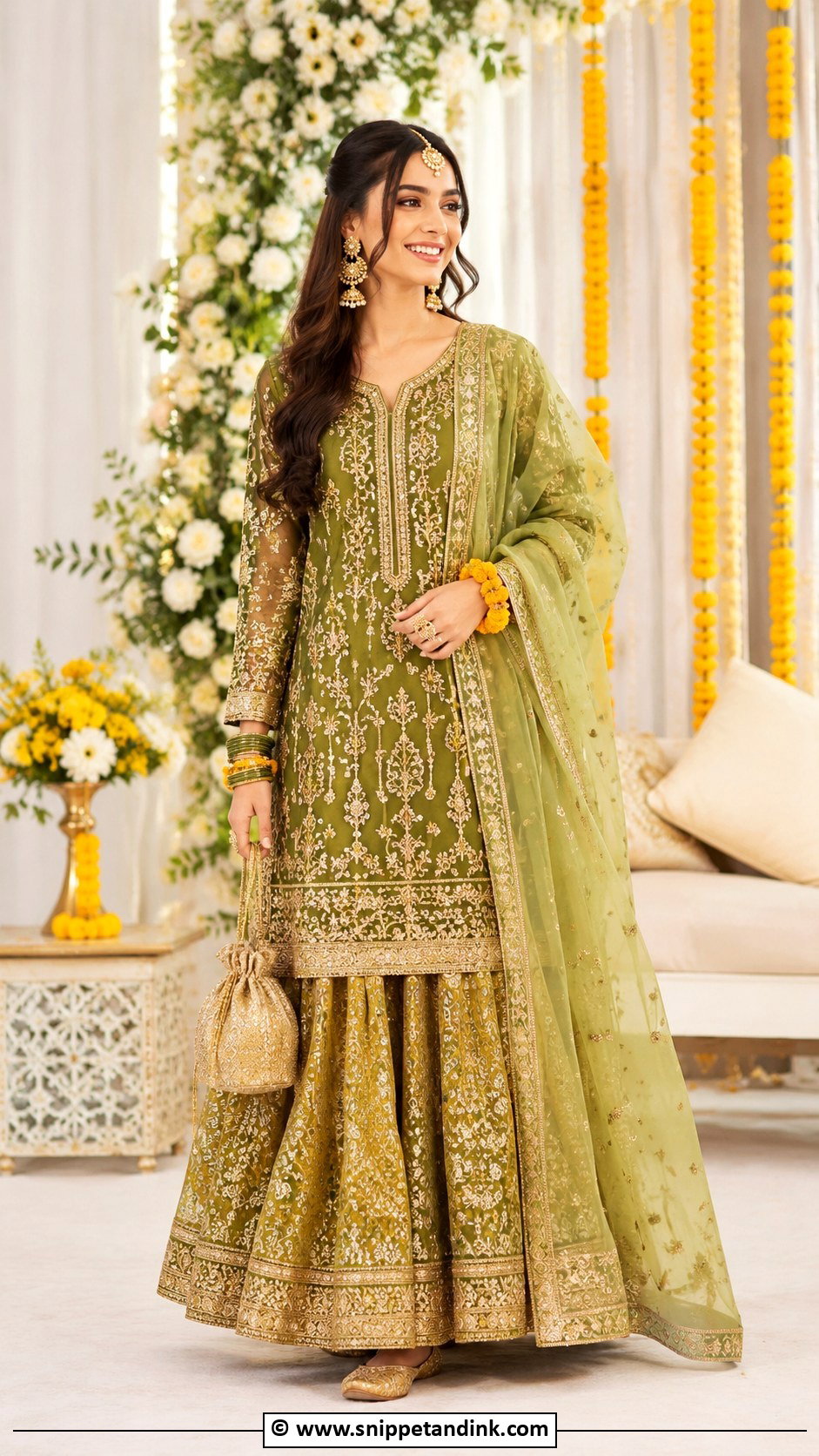
A long shirt over a lehenga is modest, flattering and familiar from Pakistani formal wear. The shirt gives coverage and lengthens the figure, while the lehenga adds flare. Choose a straight or slightly flared shirt in yellow, green, rust or pink with embroidery at the neckline, sleeves and hem, plus a coordinated lehenga and a light dupatta. I’d keep the shirt hem just below the knee so the lehenga still shows when you walk. Gold jewelry, a sleek bun and a potli bag finish it for brides, sisters, mothers and guests alike.
28. Mehndi Phulkari Dupatta Outfit
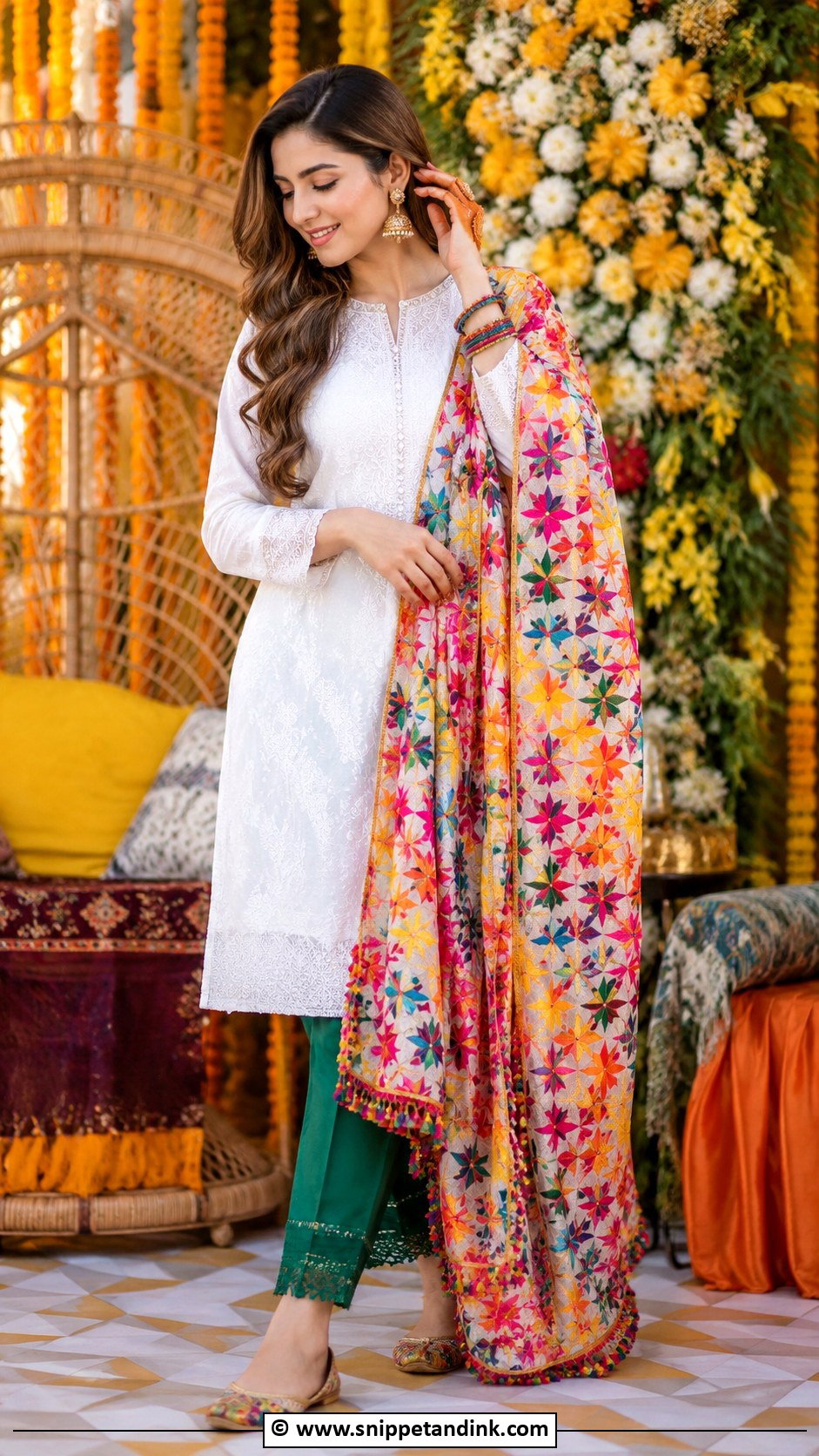
Phulkari is hand-embroidered in bright silk floss, traditionally in darning stitch, so a mehndi phulkari dupatta outfit carries a lot of character from one piece. Start with a simple kurta set, gharara, sharara or lehenga in white, yellow, green or orange, then add a phulkari dupatta in pink, blue, red and mustard. Because the dupatta is the statement, the base stays simple and comfortable, which suits guests, cousins and dholki nights. Real hand phulkari is heavier than printed versions, so pin it at the shoulder. Jhumkas, bangles and khussas complete it.
29. Mehndi Banarsi Lehenga
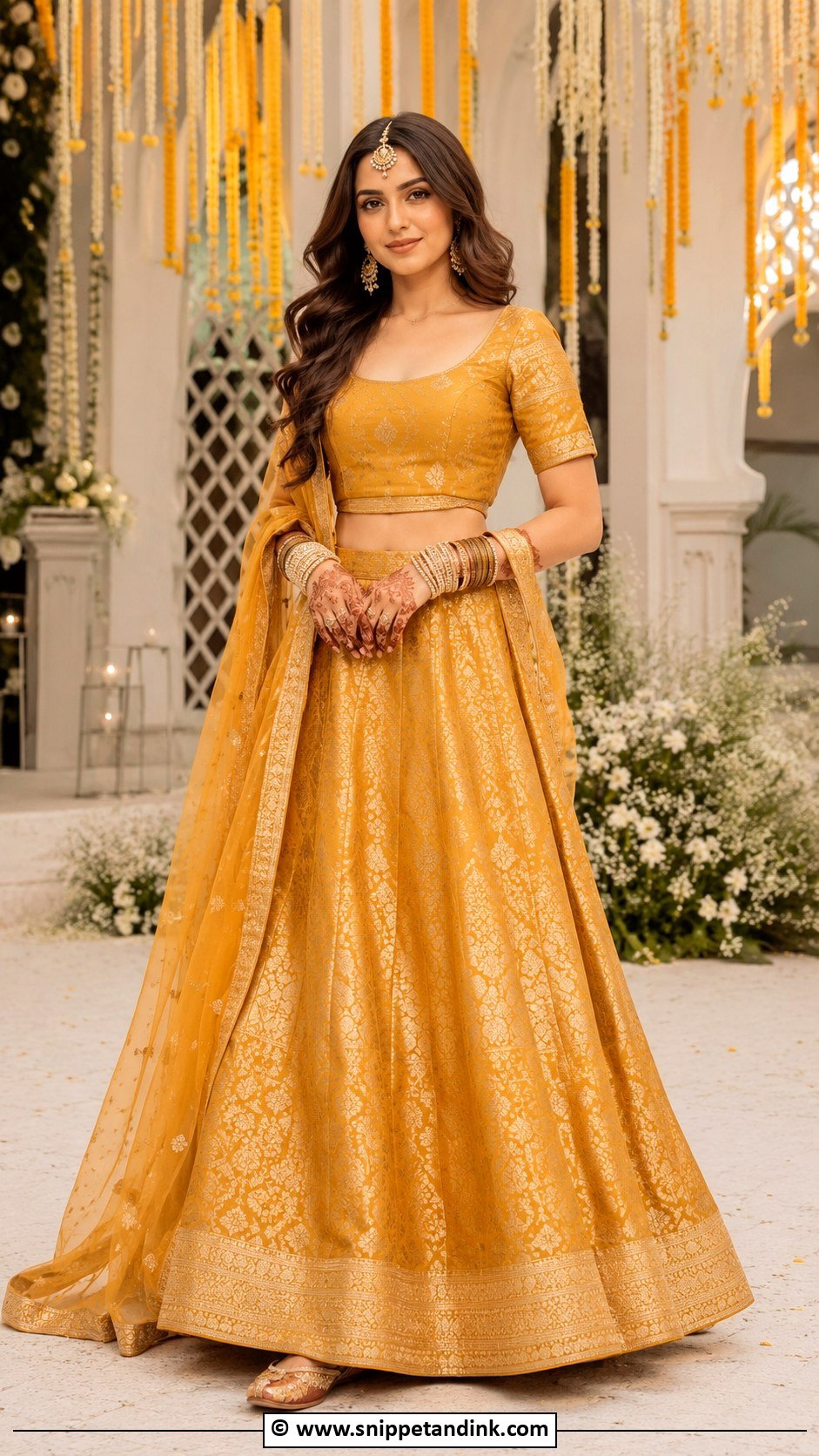
Banarasi silk carries its richness in the weave, with metallic zari woven into the fabric itself, so it needs very little embroidery. Mustard, green, orange, magenta and gold all suit it. Pair the lehenga with a simple blouse and a light dupatta so the fabric stays the focus, and add gota borders or tassels if you’d like more mehndi flavor. Banarasi is stiffer than chiffon or net, so the skirt stands away from the body rather than flowing; I ask for an extra panel or two at the hem so it can still move. Gold jewelry, a neat hairstyle and khussas or heels are enough.
30. Mehndi Pastel Dress
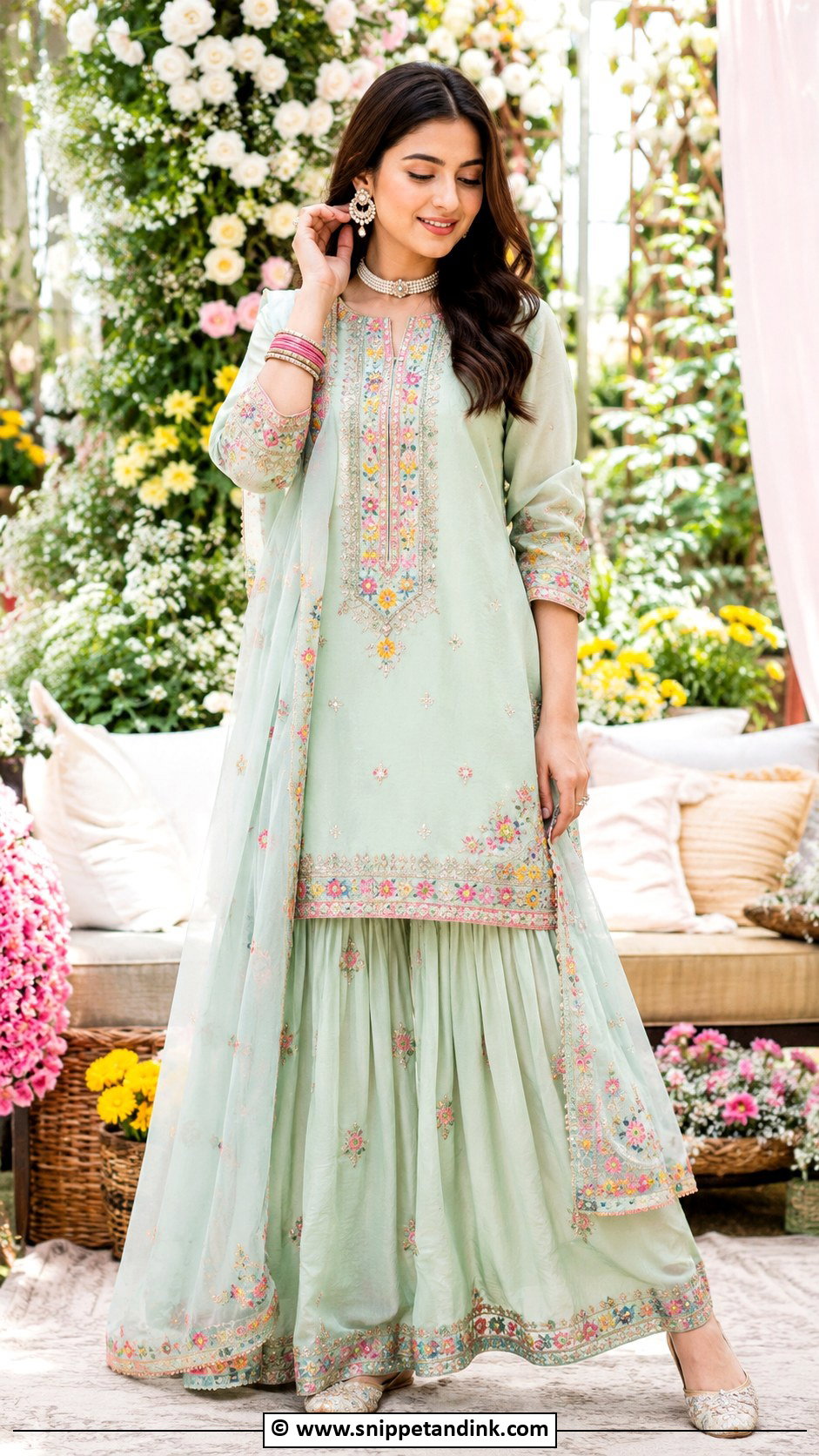
Pastels are a soft break from the bright palette, and pastel yellow, mint, peach, blush and powder blue all work when they carry colored embroidery or gota. Choose a pastel lehenga, sharara, anarkali or organza suit, then bring brighter color in through the dupatta, jewelry or bangles. Pastels without contrast can look washed out against bright mehndi decor, so I always include at least one strong accent near the face. Mirrors, floral embroidery or a colored border keep it festive for a daytime event or garden venue. Pearl jewelry, soft makeup and embellished flats finish it.
Henna Paste, Haldi and Oil on Light Fabric
A mehndi outfit meets three things no other wedding outfit does: wet henna paste, turmeric from the ubtan and oily food served on the floor. Each one stains light fabric differently, and I plan for all three.
Henna stains as it oxidizes, so a smear on cotton or silk keeps darkening for hours. If paste touches the fabric, lift it off with a dry tissue straight away without rubbing, and tell your dry cleaner exactly what it was. Turmeric is the opposite problem; it spreads with water, so dabbing it with a wet napkin usually makes the mark bigger. Leave it dry, scrape off what you can and let a specialist handle it. Turmeric marks also fade with sunlight, which can help on sturdy cottons but would also fade dyed silk, so test on a hidden seam first.
- Roll sleeves back or choose three-quarter sleeves if your hands are being done that night.
- Sit on a spare dupatta or shawl when you’re on floor cushions.
- Take the dupatta off before eating and drape it over a chair, well away from oil.
- Pack a few tissues and a small safety pin set in a potli; they solve most problems in the moment.
Your Role, Your Venue and the Mehndi Outfit That Fits Both
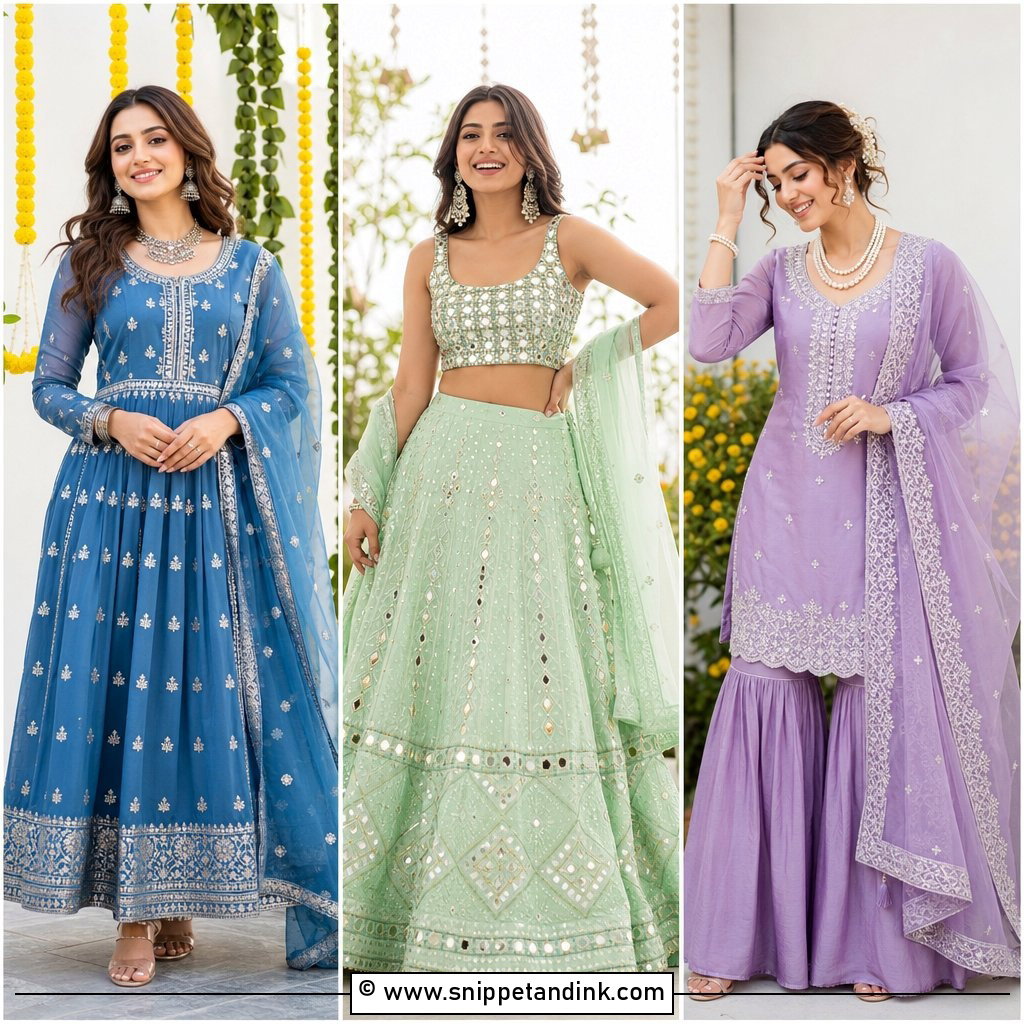
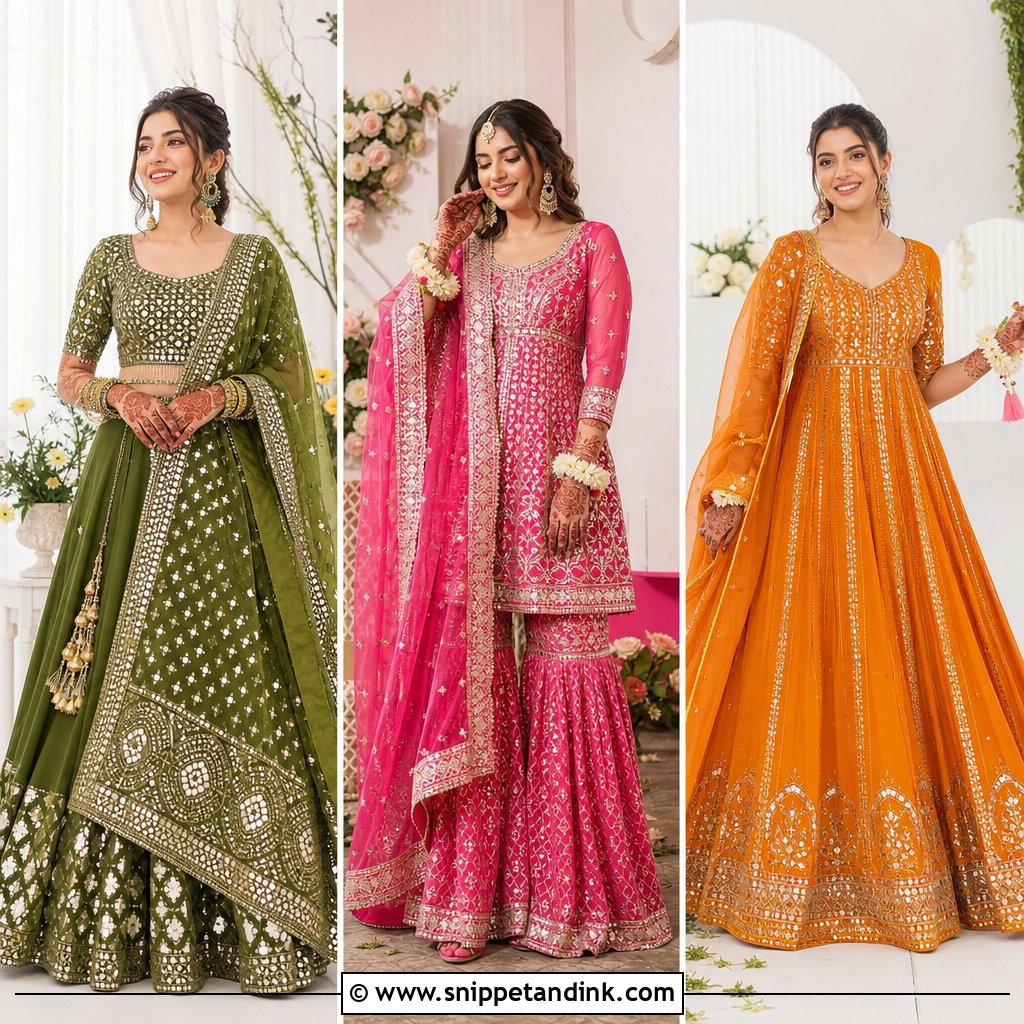
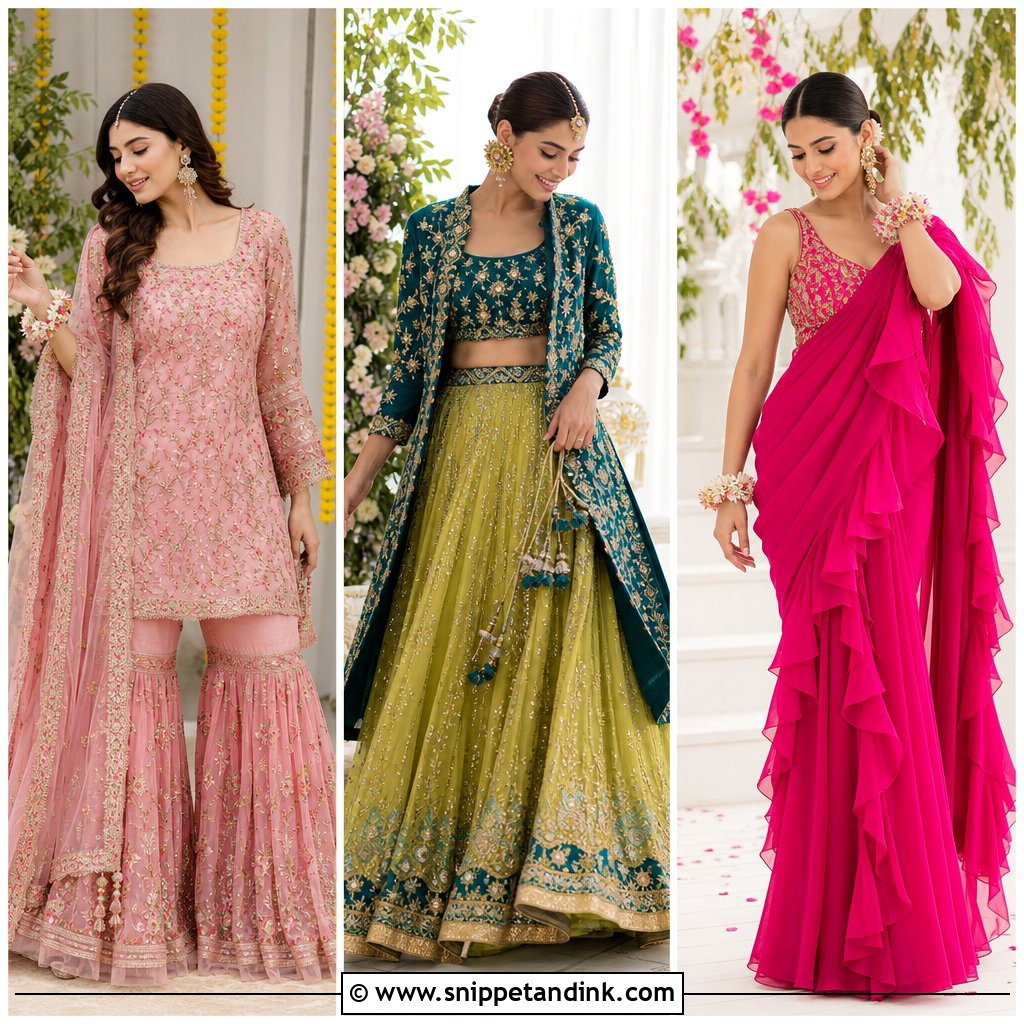
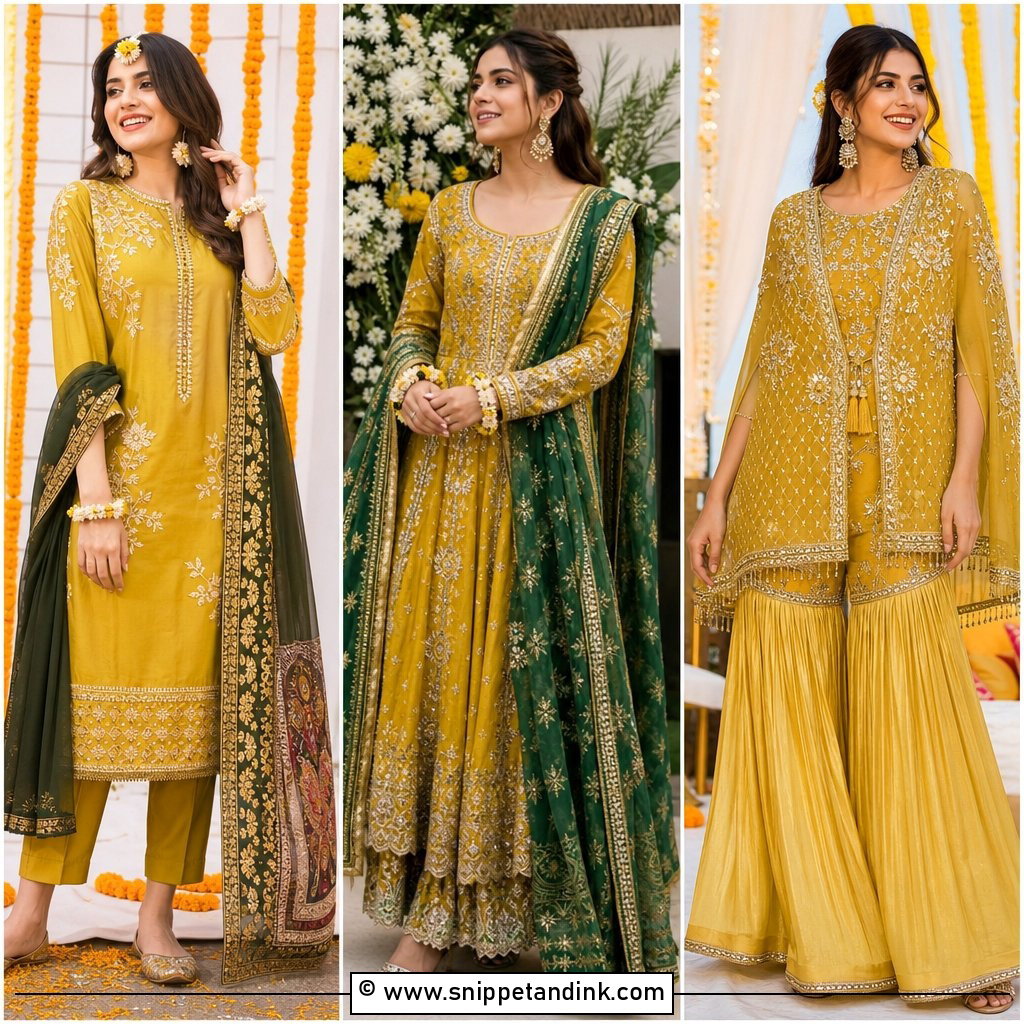
The range here runs from classic yellow lehengas to cape outfits, colorful shararas, phulkari dupattas and soft pastels, and the right one depends on your role, your comfort and the mood of the night. Brides can carry heavier ghararas, a pishwas or a mirror-work lehenga; guests can enjoy lighter suits, co ord sets, organza and florals. Whatever you wear, try it with your shoes on and do one full spin and one sit-down on the floor before the event. If both feel easy, you’ll enjoy the night instead of managing your clothes.
You'll Like These Ideas:


Leave a Reply