
A mehndi outfit has a job most wedding clothes never face: it has to sit still for an hour or more while someone paints your hands, then survive a night of dancing with drying paste on your skin. When I style a mehndi look, sleeves and the dupatta come before colour, because the prettiest lehenga is a problem if its cuffs drag through wet henna. The palette for this function still runs warm and bright, yellows, greens, oranges and pinks, with mirror work and gota doing most of the sparkle. Below are thirty outfit shapes, from a plain kurta set to a full bridal gharara, with notes on who each one suits and where it tends to cause trouble on the night.
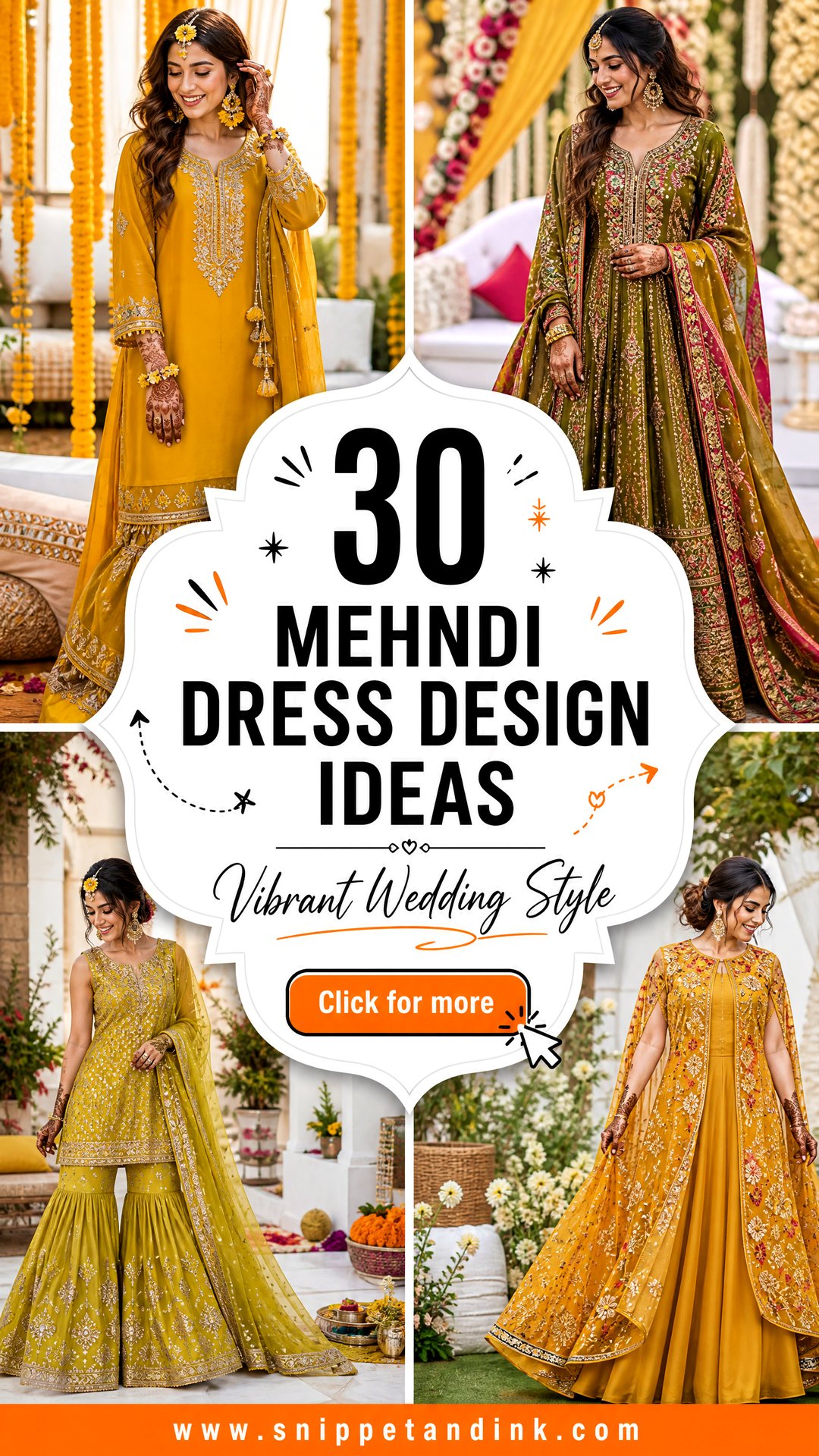
Sleeves, Dupattas and the Hour You Spend Sitting Still
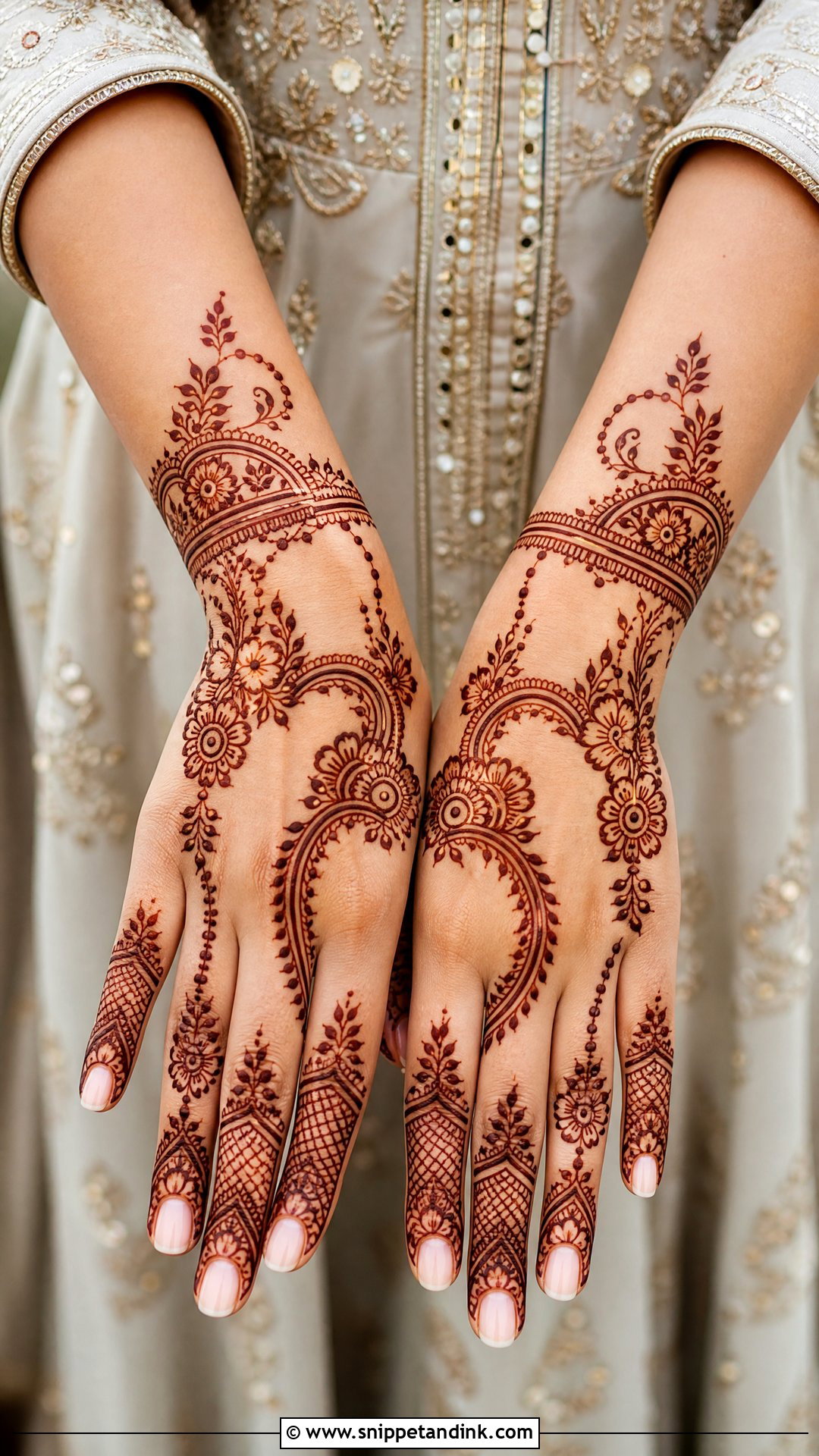
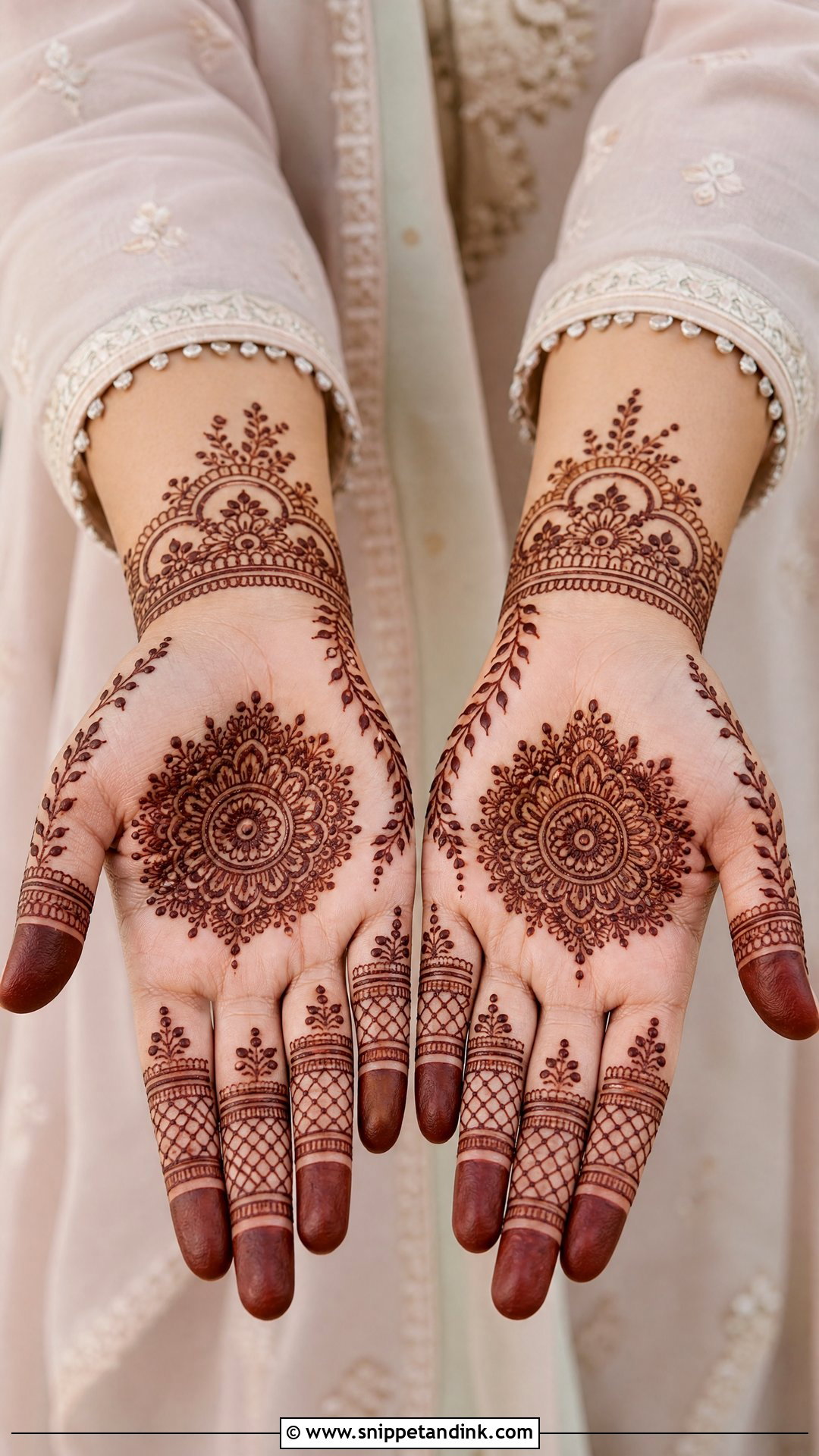
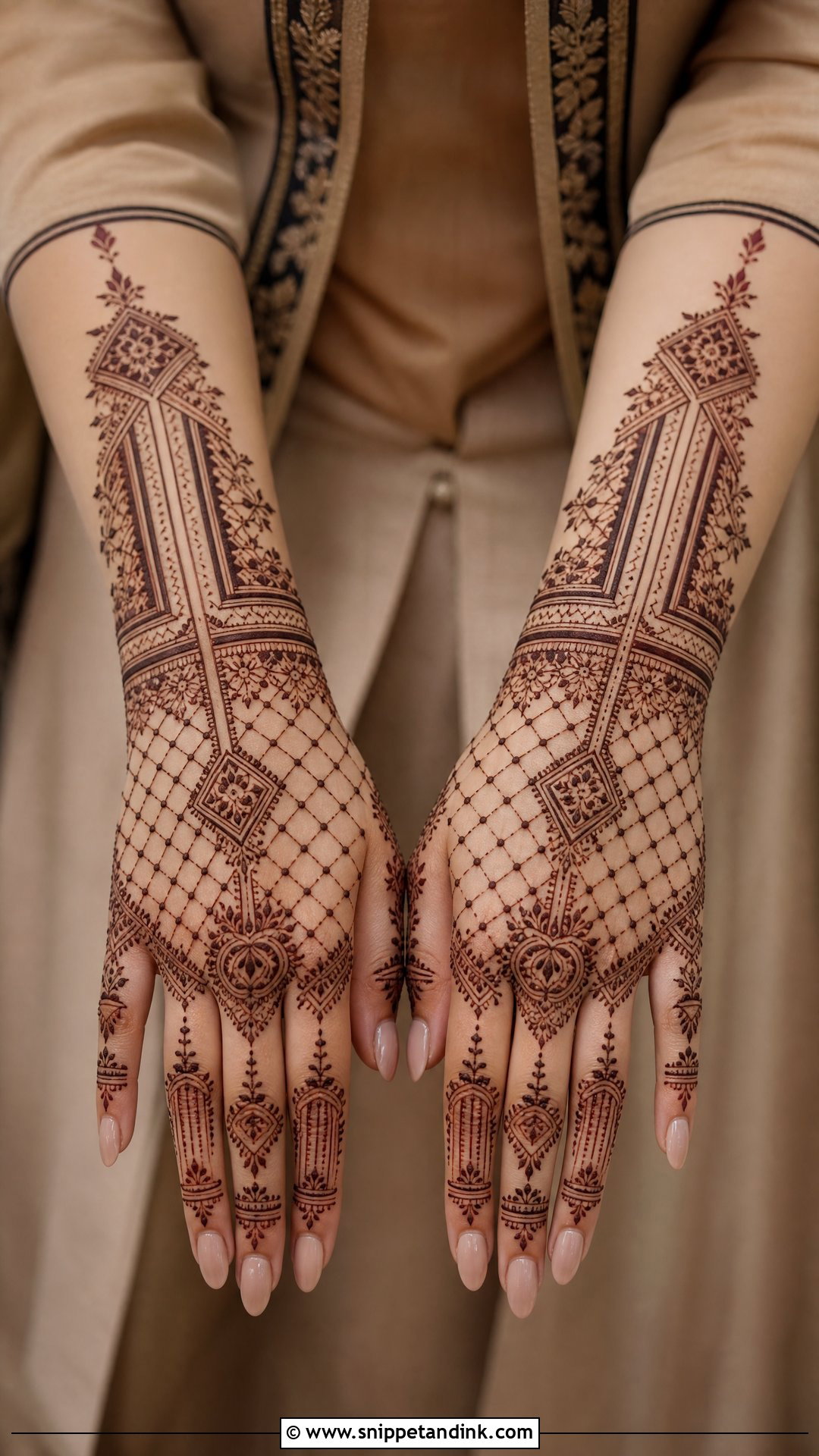
Henna paste stays wet for a while and then dries into a crust that you are asked to keep on for hours, sometimes overnight, because the longer it stays the darker the stain. That changes how a mehndi outfit has to be built. Before I look at colour or embroidery, I sit the bride or guest down in the outfit and ask her to rest her forearms on her knees, palms up, the way she will for the artist.
- Sleeves: sleeveless, cap or elbow length if the design goes up the arm. Three-quarter is fine for hands-only henna. Anything tight at the wrist is out.
- Dupatta: pinned at one shoulder, or swapped for a cape or jacket. A loose dupatta slides forward the moment you lean in.
- Waist: check it seated. A waistband that is fine standing can press hard after an hour cross-legged on a cushion.
- Lap: dark or printed fabric across the lap hides the odd crumb of dried paste; pale silk shows every flake.
Jewellery follows the same logic. Earrings, a tikka and a necklace can go on at the start. Rings and bangles wait until the henna is dry, or the artist will have to work around them and you’ll end up with a pale band where the metal sat.
1. Yellow Mehndi Lehenga Design
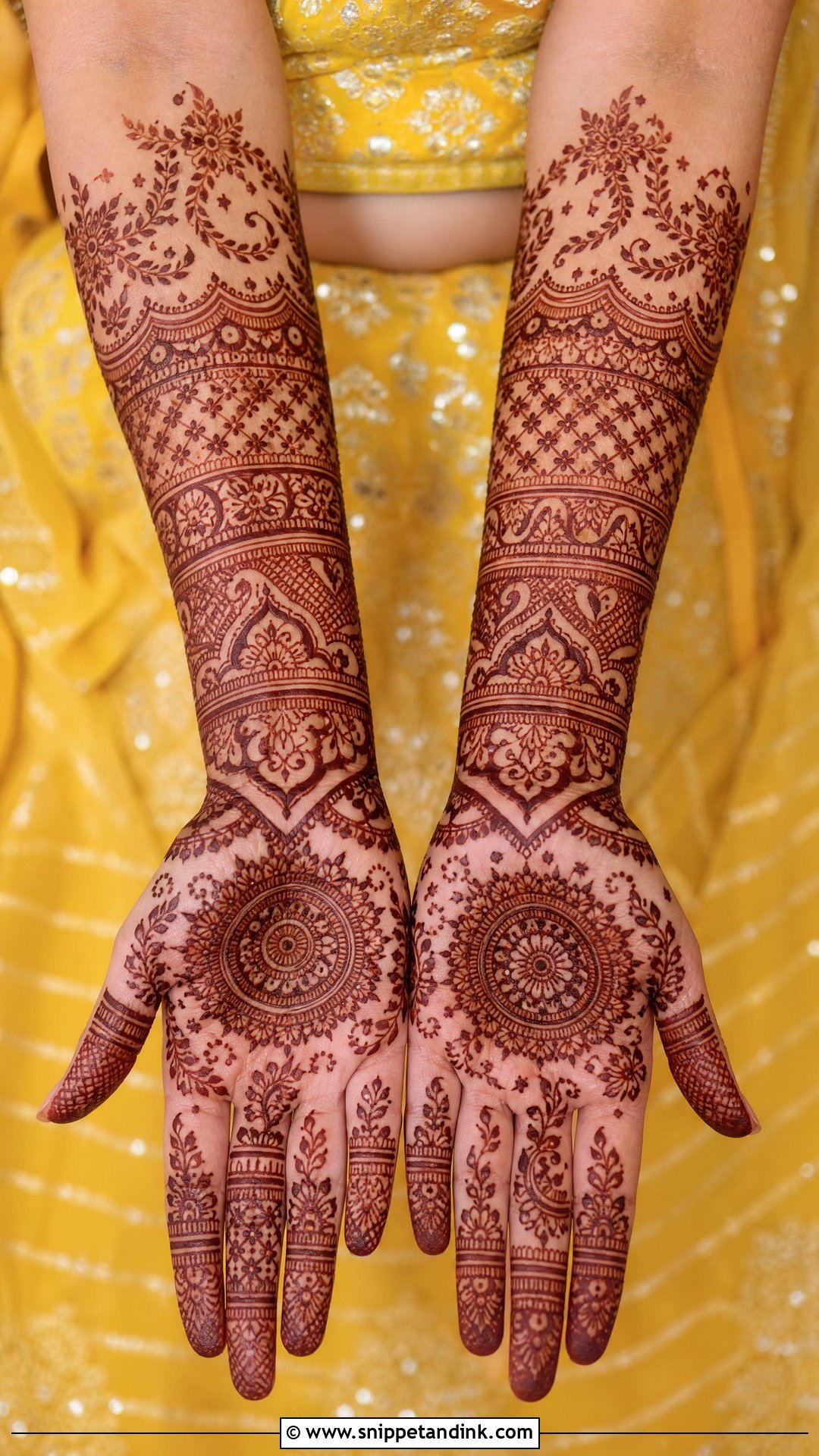
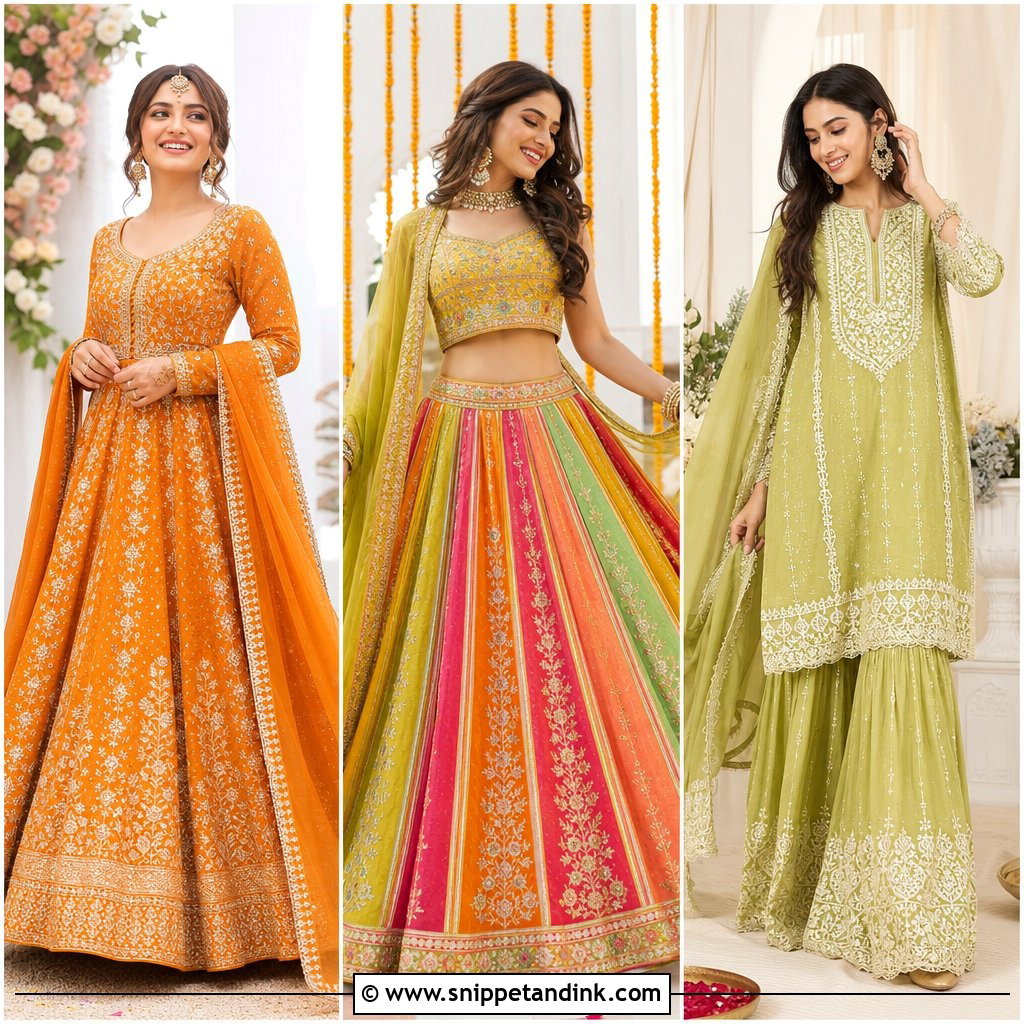
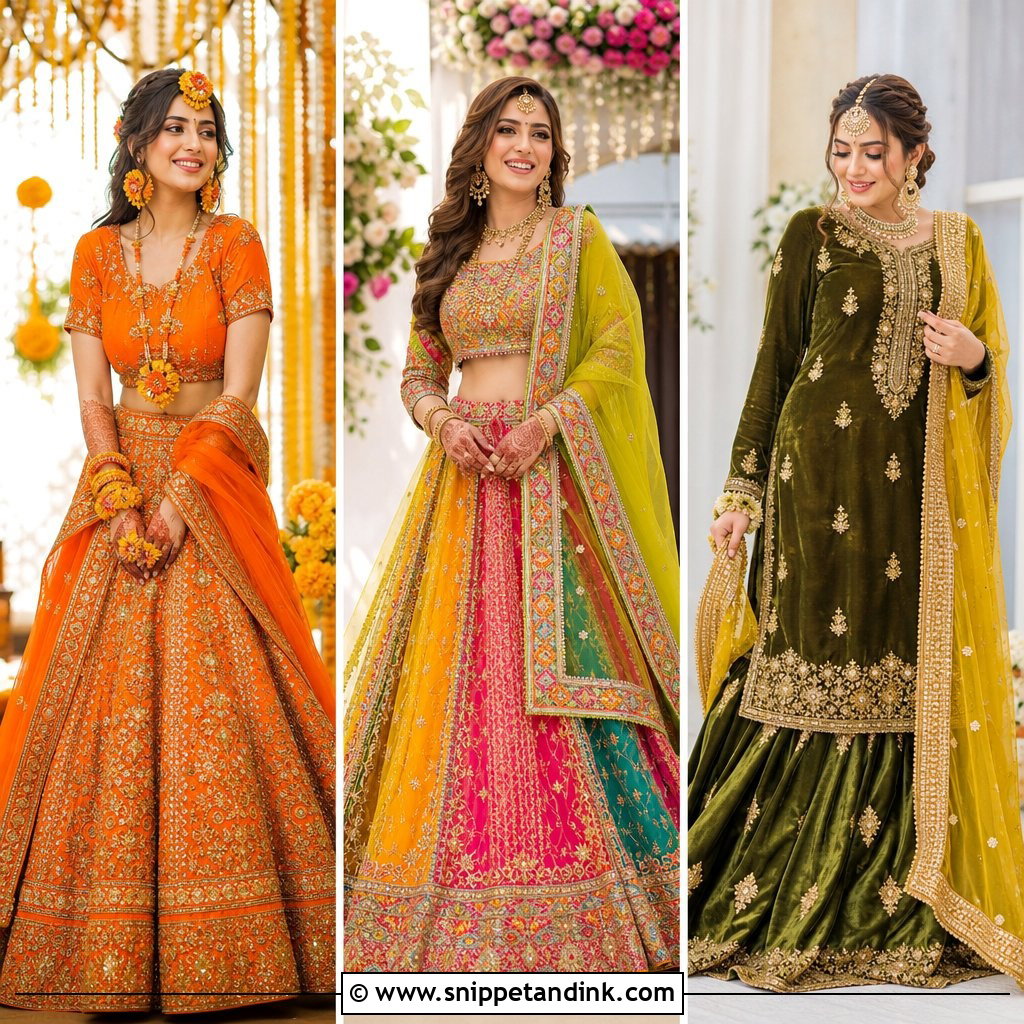
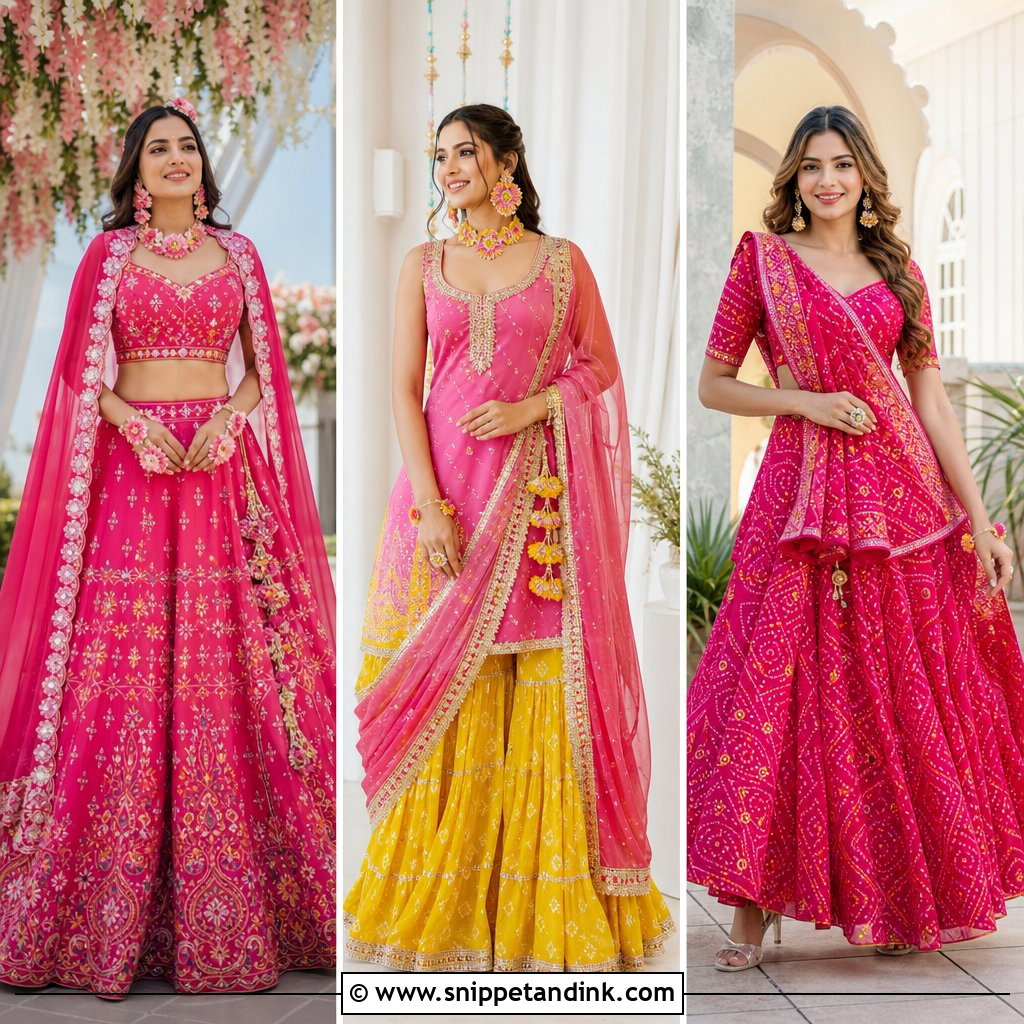
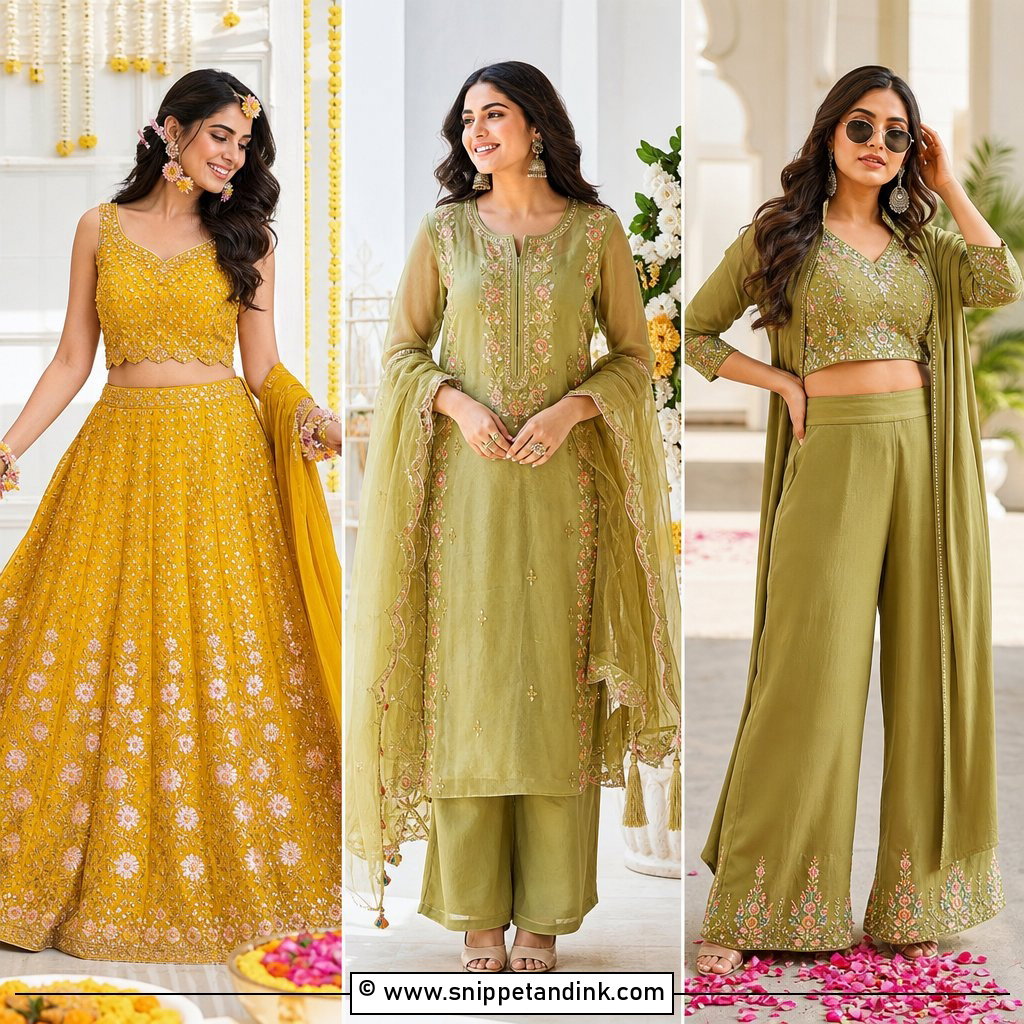
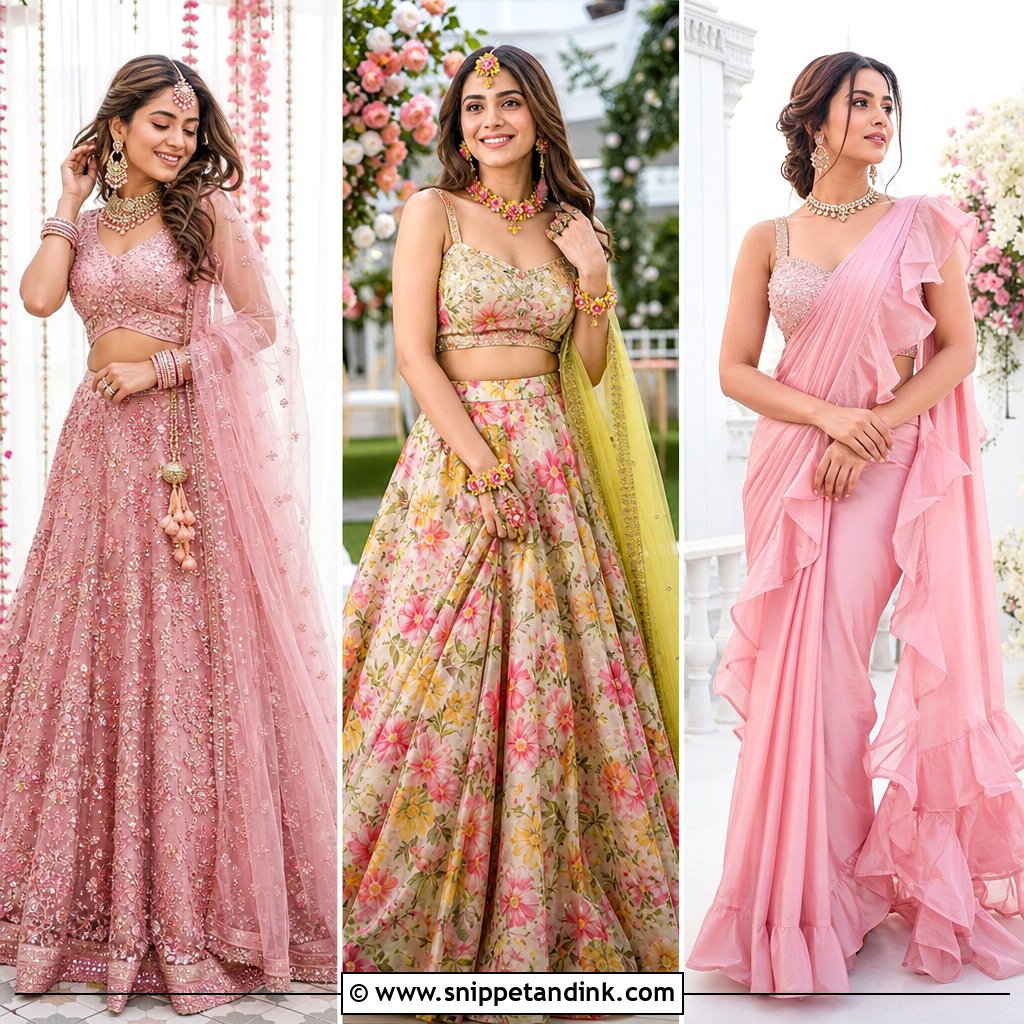
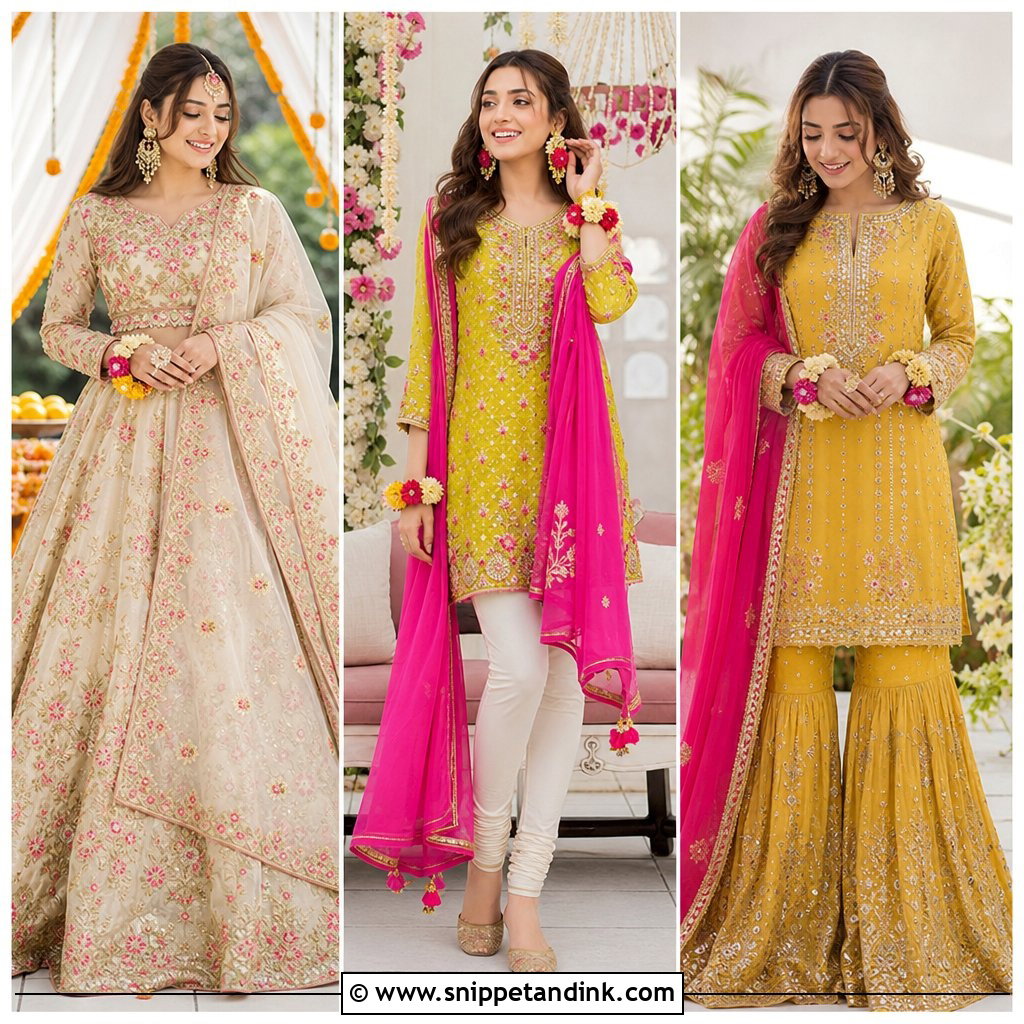
Yellow is the classic mehndi colour, and it earns that spot by glowing under both daylight and warm evening bulbs. The thing I check first on a yellow lehenga is the weight of the skirt: gota patti and small mirrors keep it festive, but layers of can-can and heavy zari make sitting through henna miserable. A sleeveless or short-sleeved blouse leaves the forearms clear. I pick organza or chiffon for the dupatta because net tends to catch on bangles and pull. Brides can carry fuller jewellery here; a guest in yellow looks better with jhumkas and a few bangles added once her hands are dry.
2. Green Mehndi Sharara Design
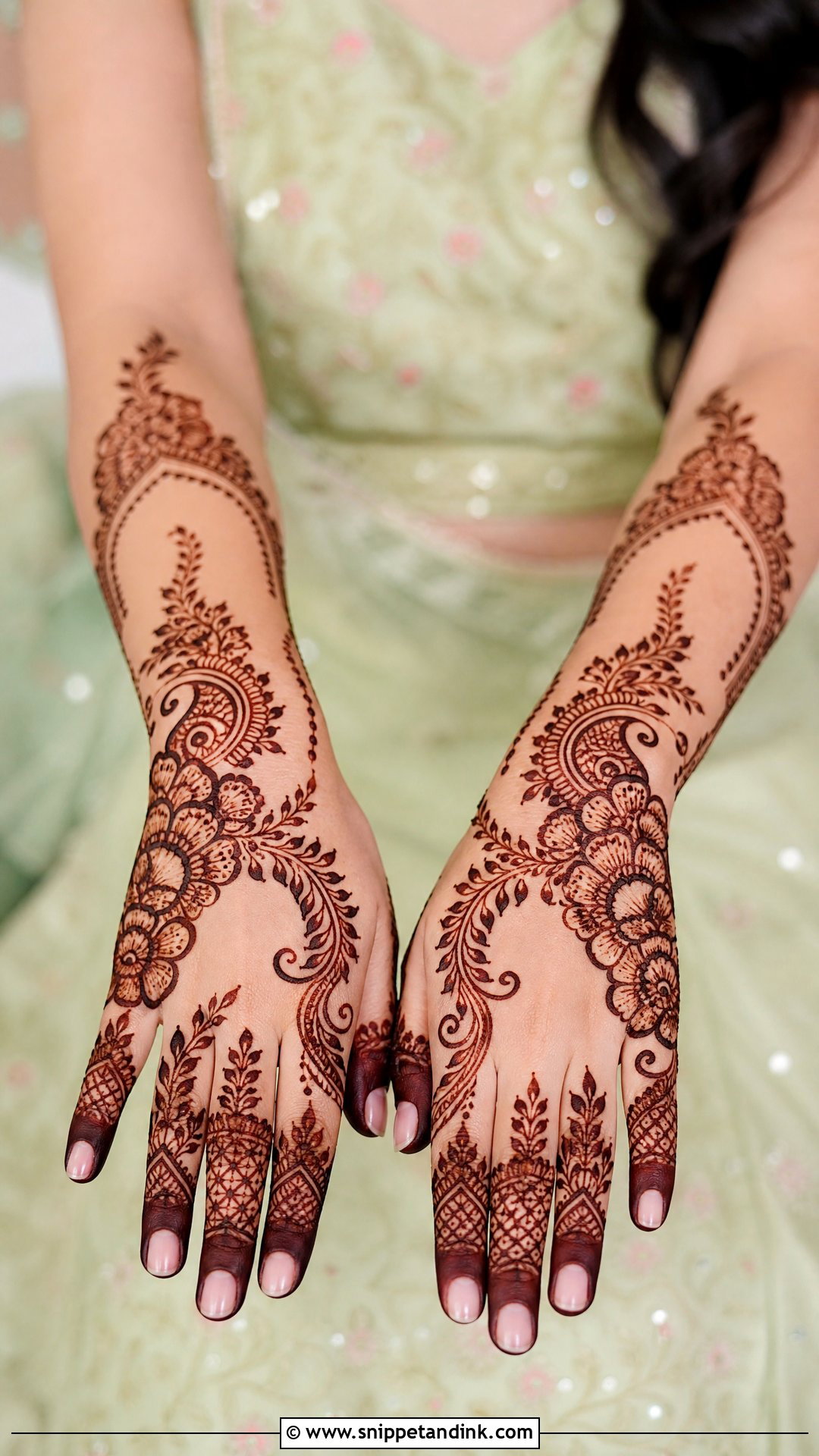
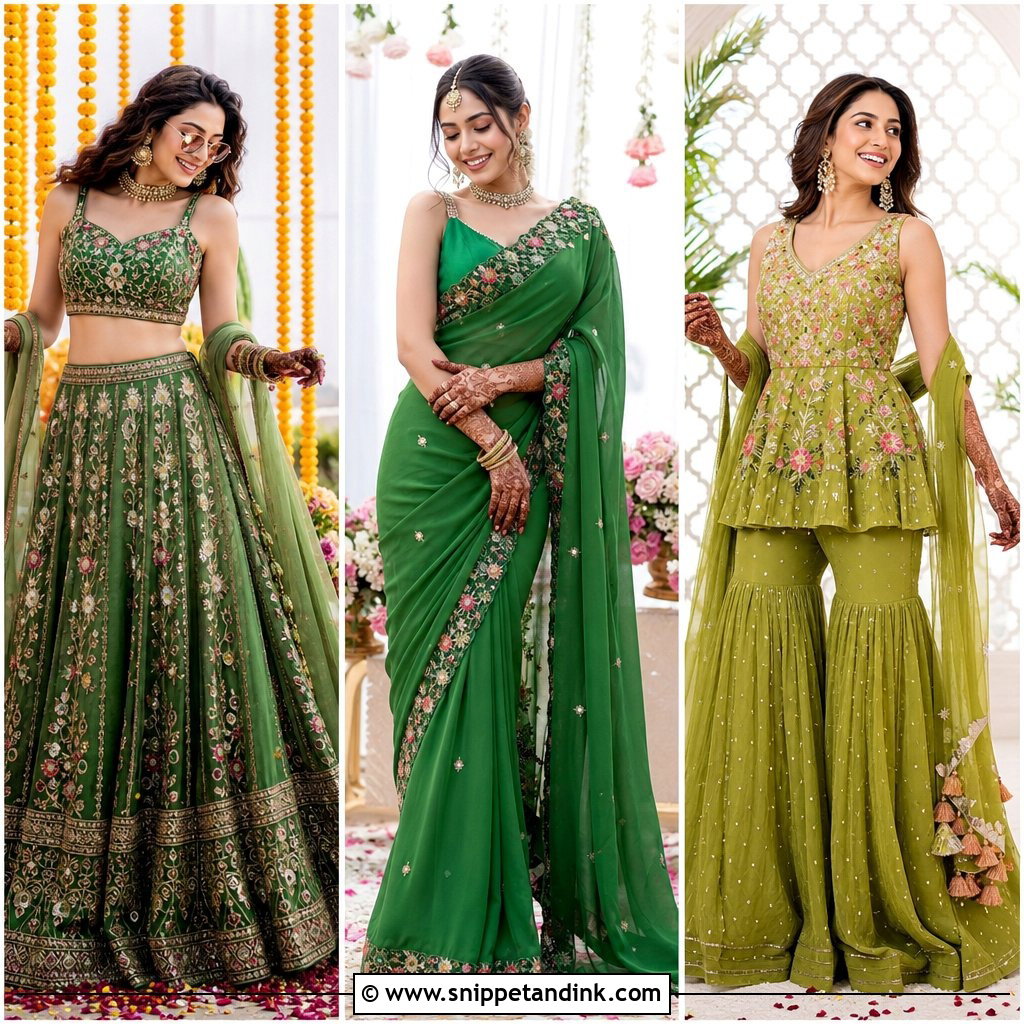
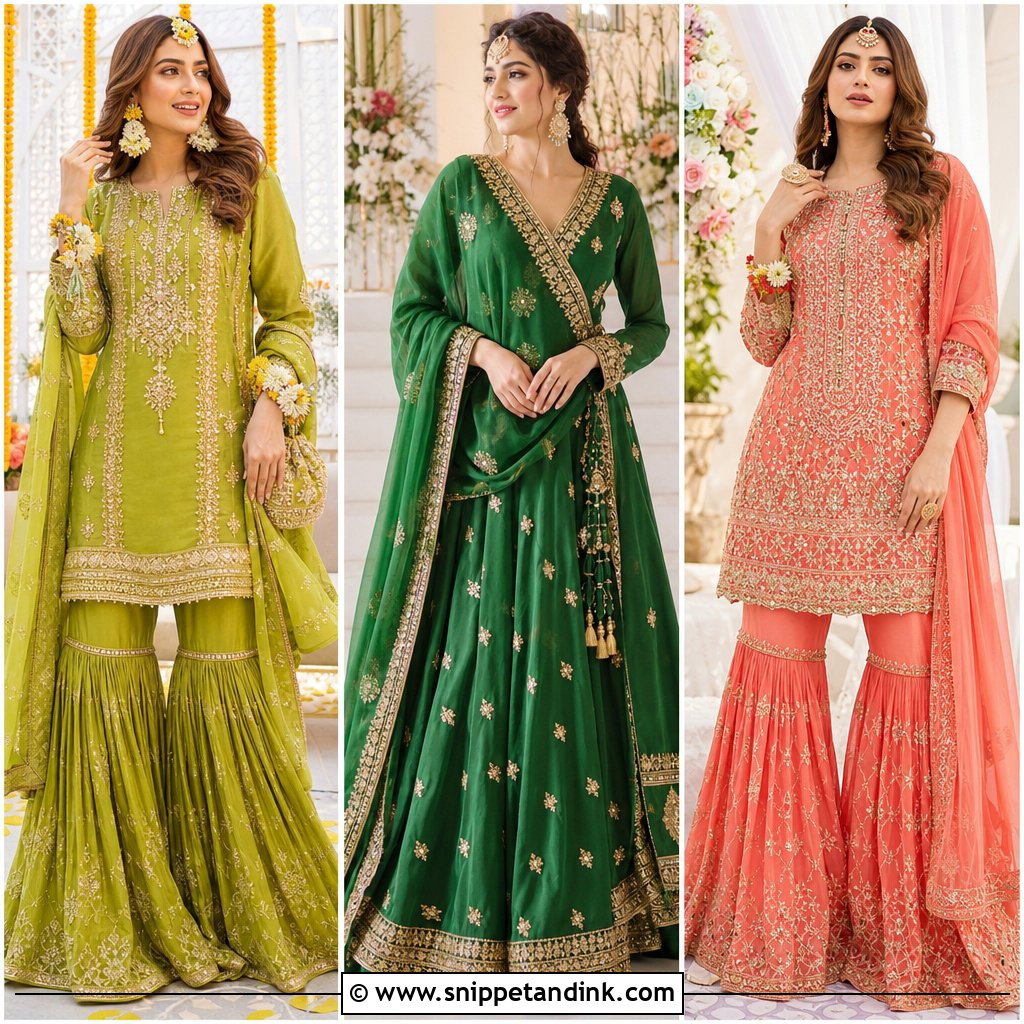
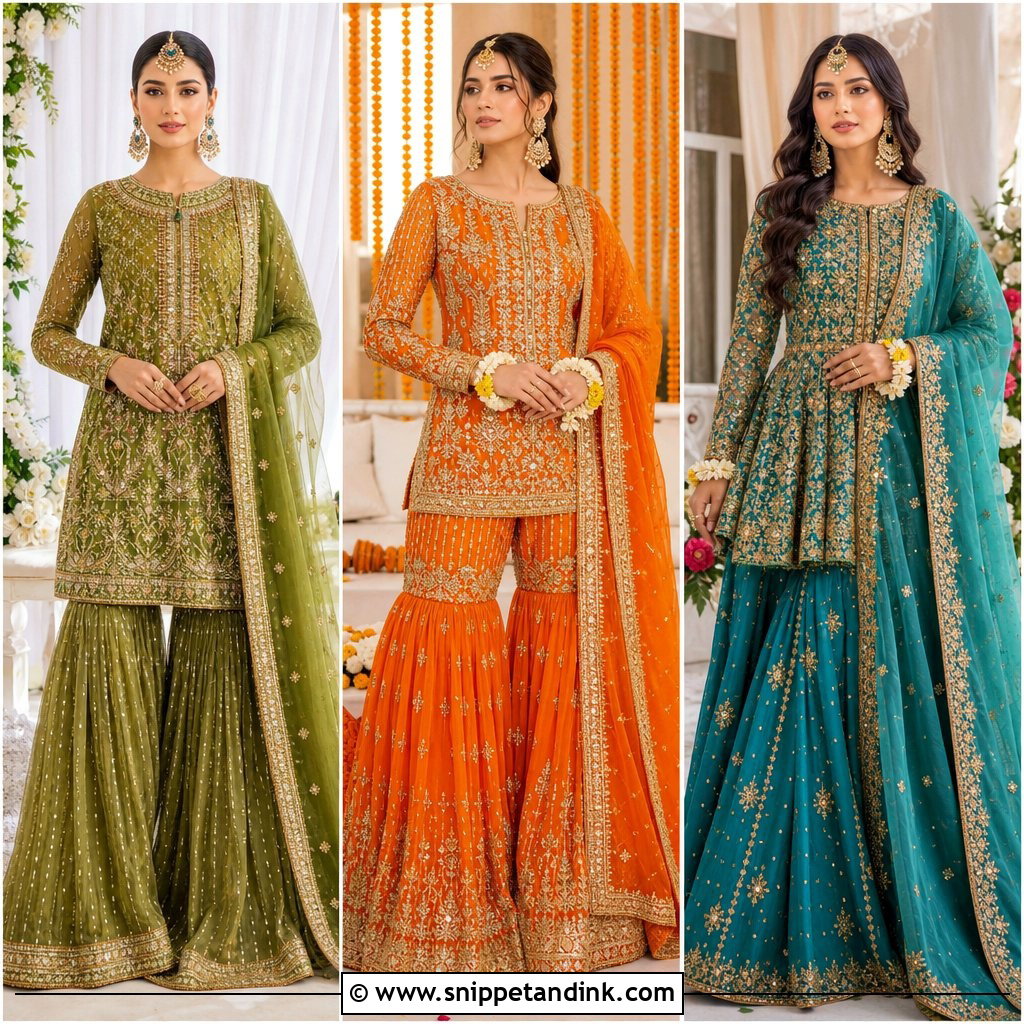
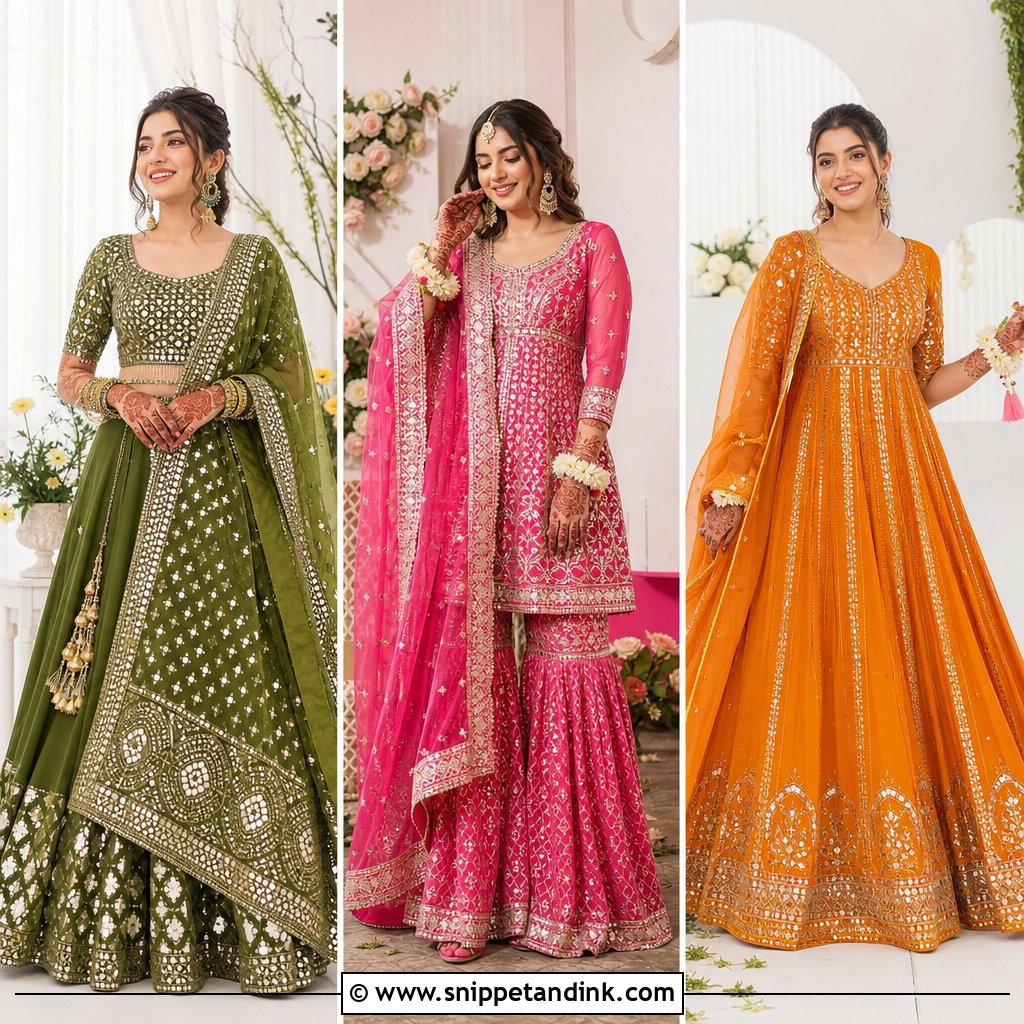
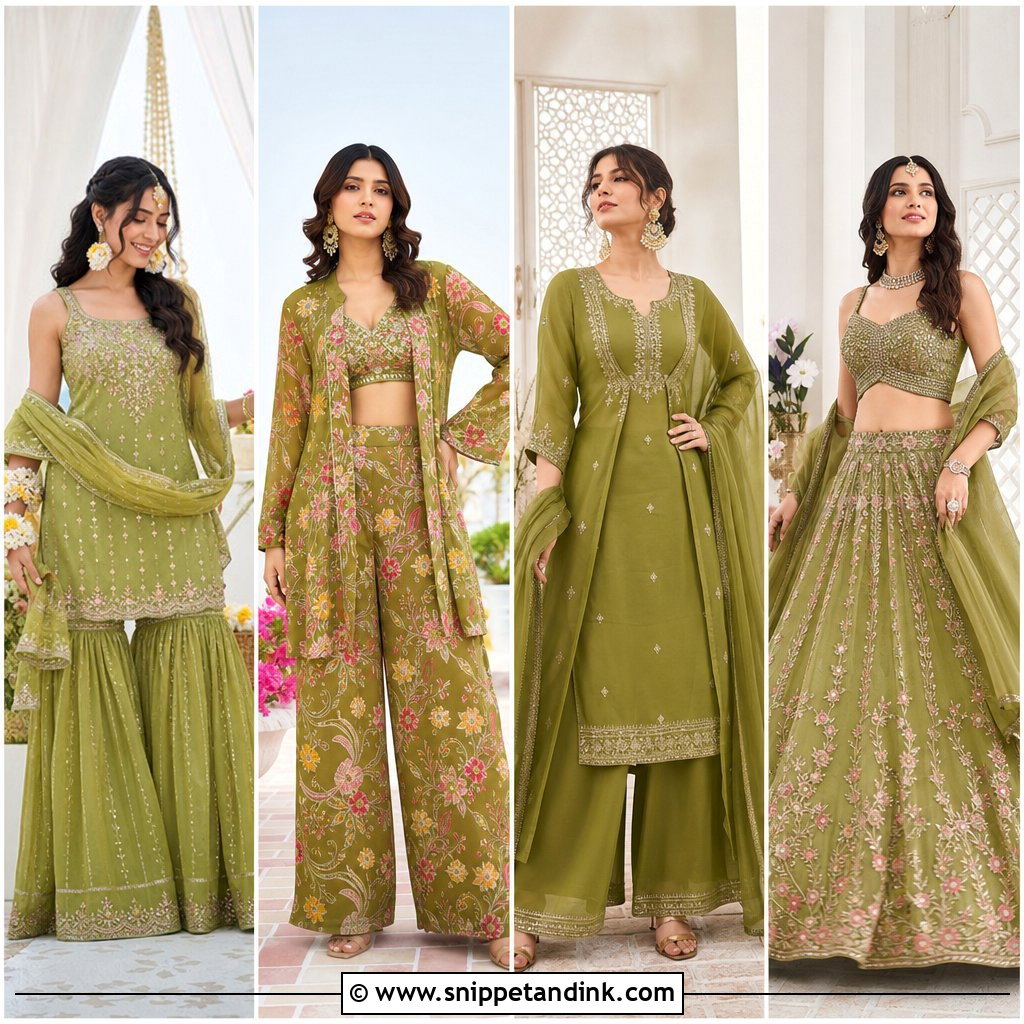
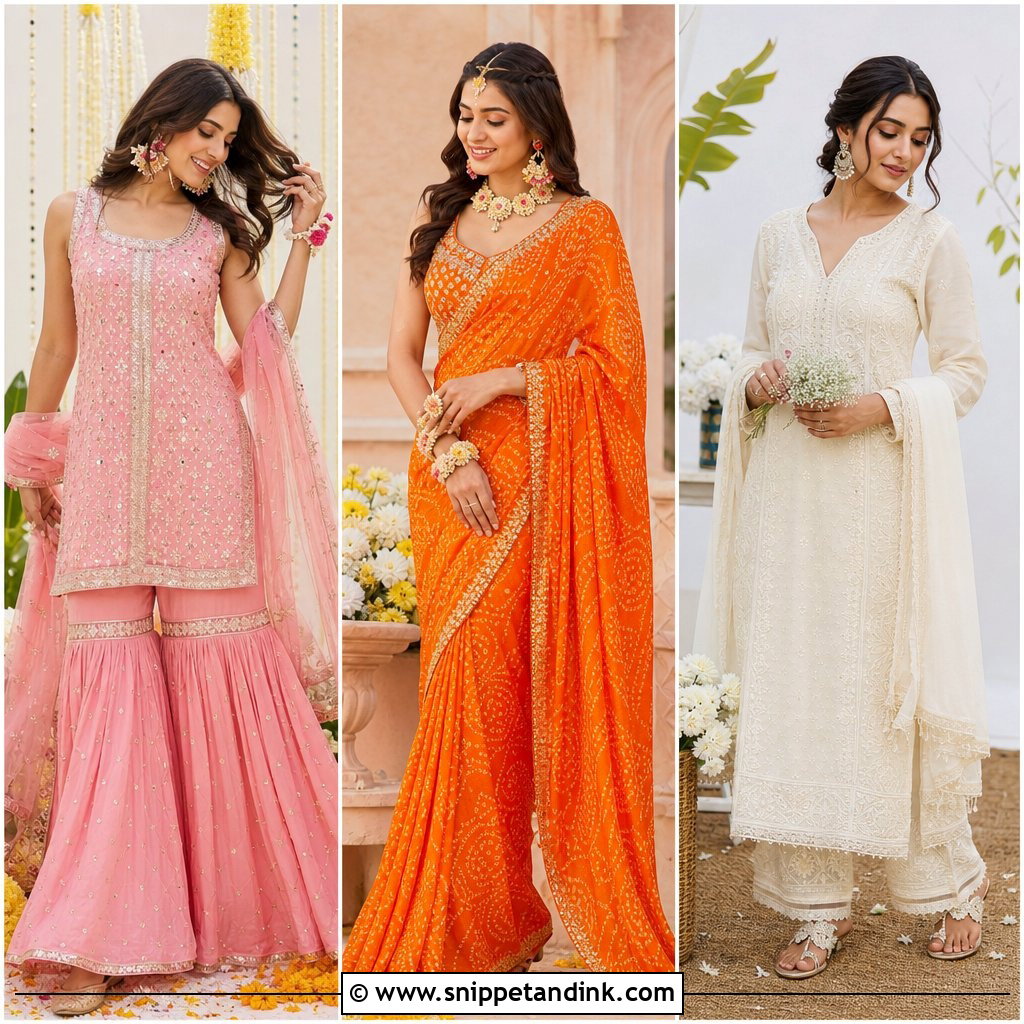
Sharara pants are flared from the knee down, so you can sit cross-legged on a floor cushion and dance an hour later without changing. Green ranges widely, from parrot and mehndi green to sage and emerald, and the darker the shade, the more it reads as evening wear. I keep the kurti short, with mirror work or a zari border at the hem, so the flare of the pants shows. Sisters of the bride suit this shape well; it looks dressed-up without competing with the bridal outfit. Three-quarter sleeves are the longest I’d go if the artist is working above the wrist.
3. Orange Mehndi Gharara Design
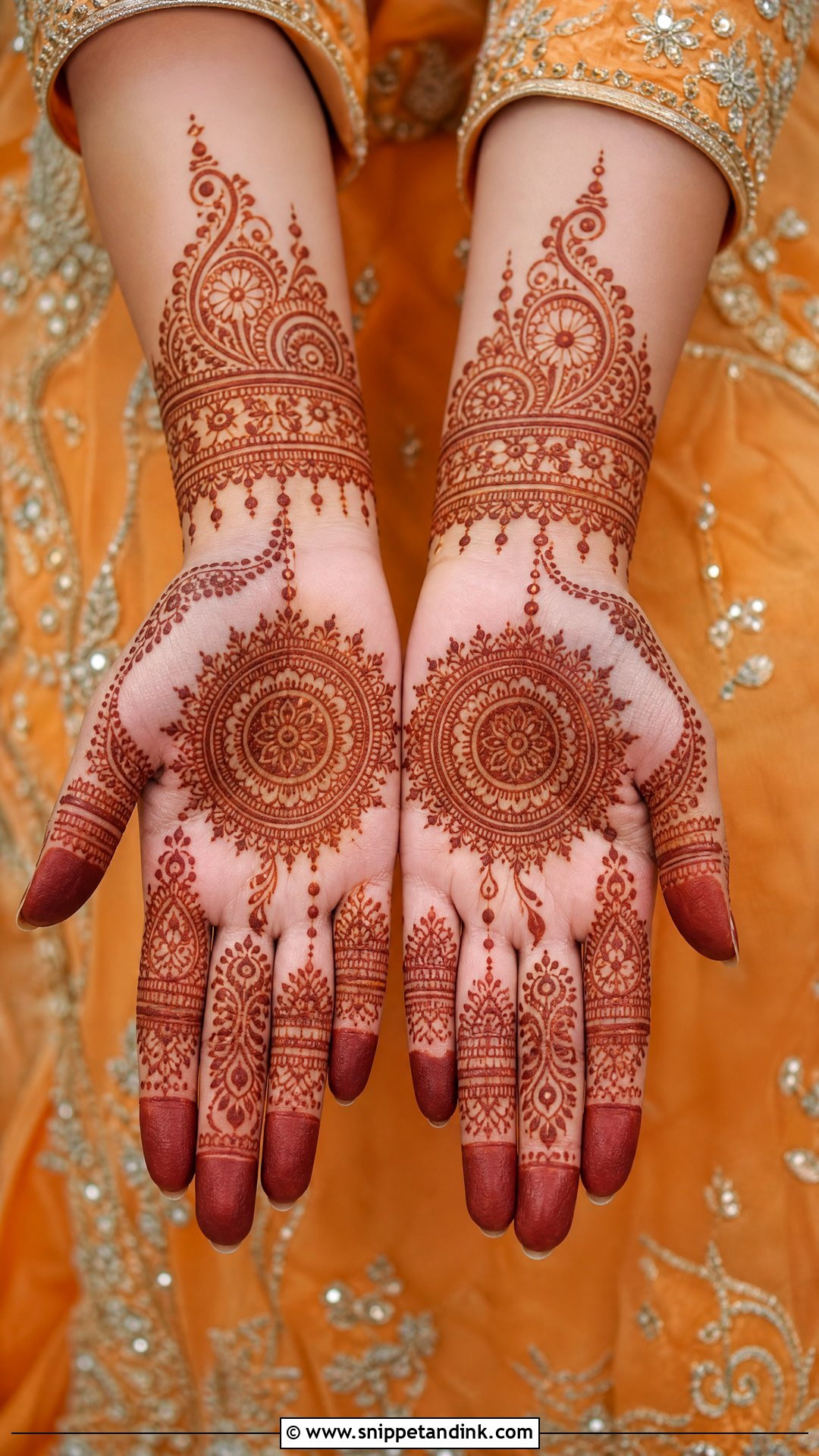
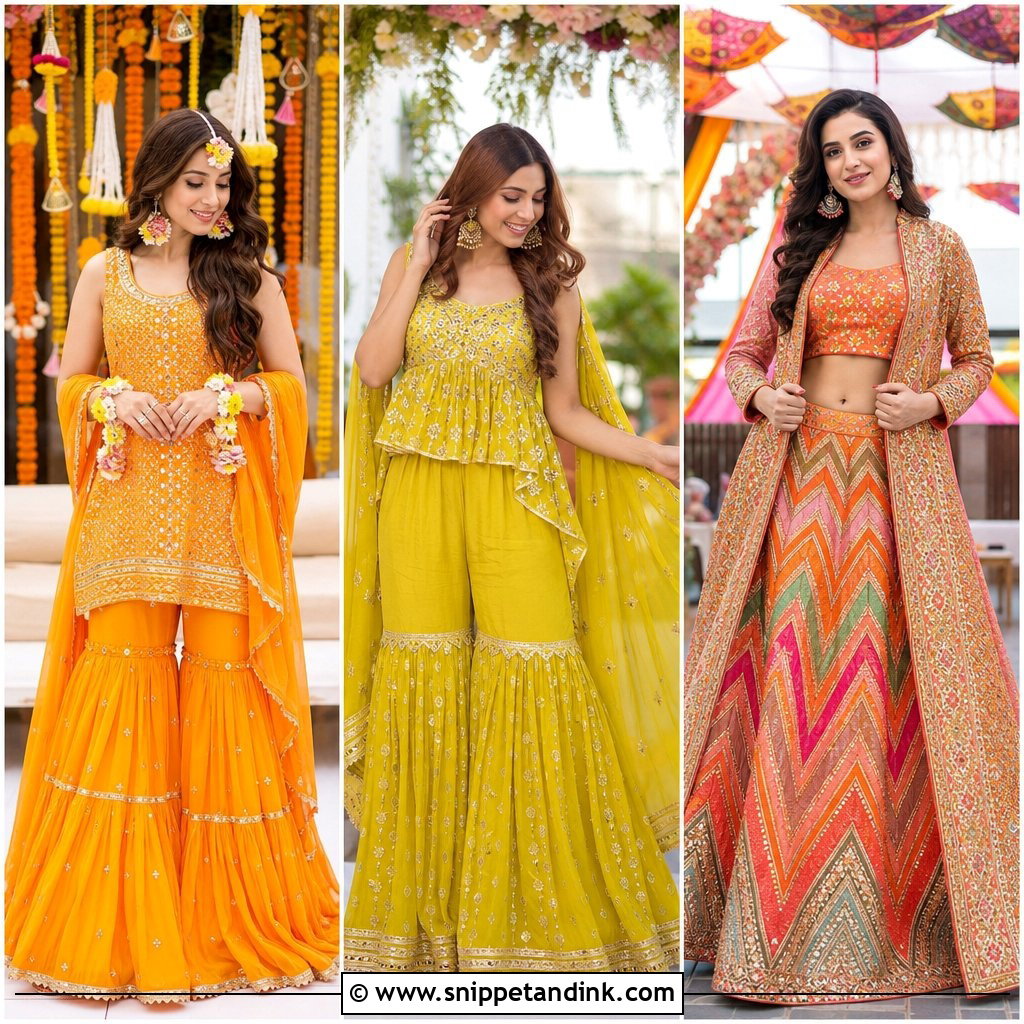
Tangerine, rust and marigold all sit happily in the orange family, and a gharara in any of them reads as traditional straight away. The gharara is cut fitted to the knee, where a gathered band releases into a wide flare, and that join is where I check the tailoring: if the band sits too high, the whole outfit looks short-legged in photos. A knee-length kurti with an embroidered border balances it. Contrast the dupatta in pink or green if you want the look to feel playful. Chandbalis or a tikka are enough jewellery; orange already does the shouting.
4. Pink Mehndi Anarkali Design
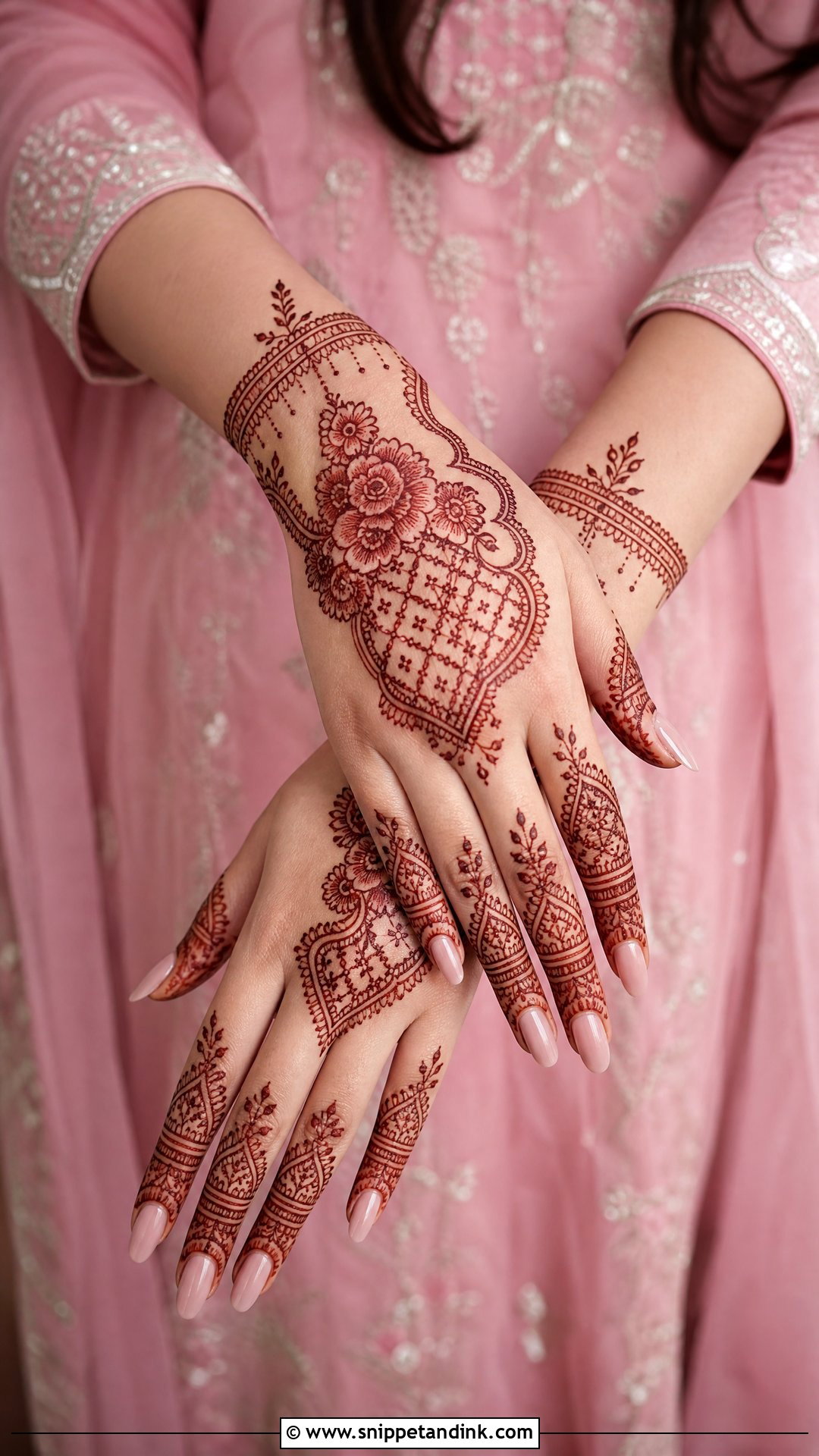
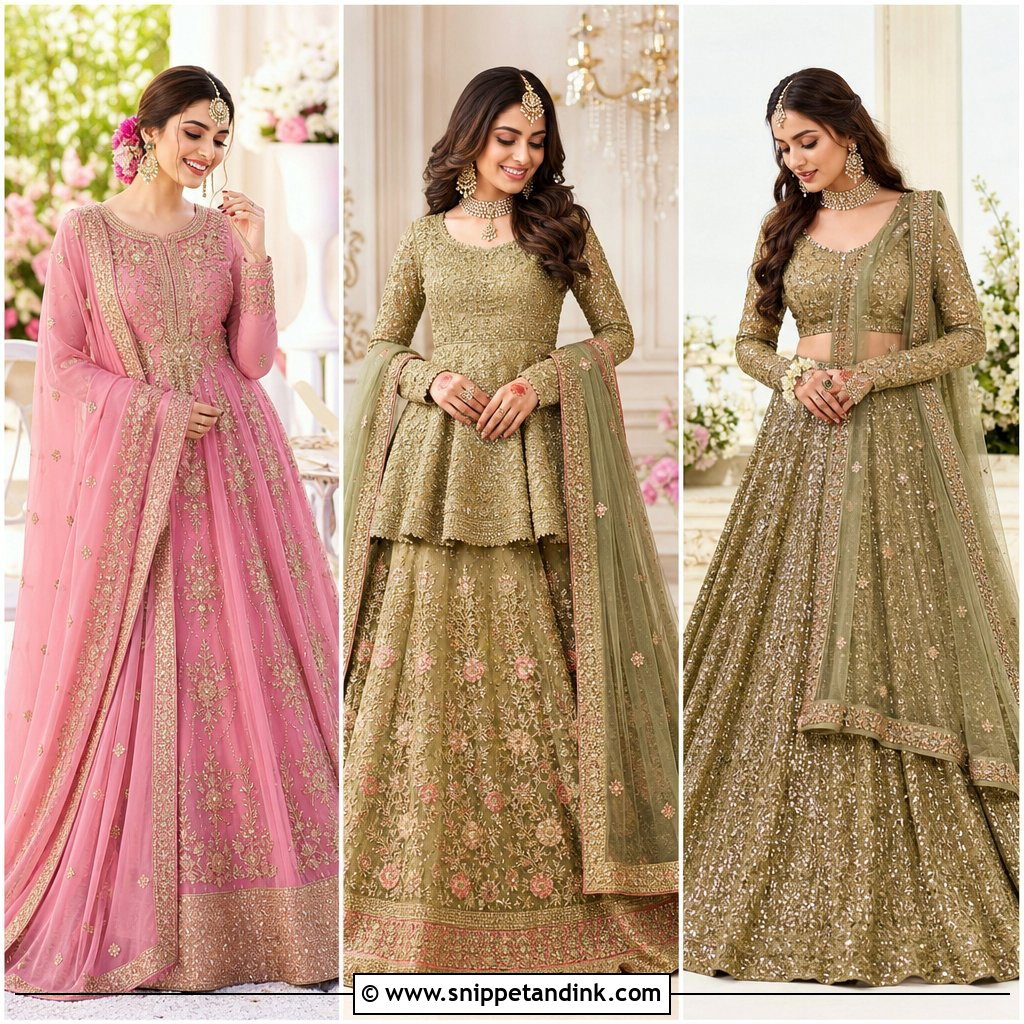
Anarkalis forgive a lot. The fitted bodice and long flared panels give shape without clinging, which is why I reach for them for guests who don’t want the fuss of a lehenga. Rose, fuchsia and peach-pink each set a different mood, so match the shade to whether the function is a daytime lunch or a late night. Block print or light mirror accents keep the fabric soft. Watch the sleeve finish: a tight, embroidered cuff sits right where the henna artist wants to work, and it will rub the paste off the first time you lift a glass.
5. Floral Mehndi Lehenga Design
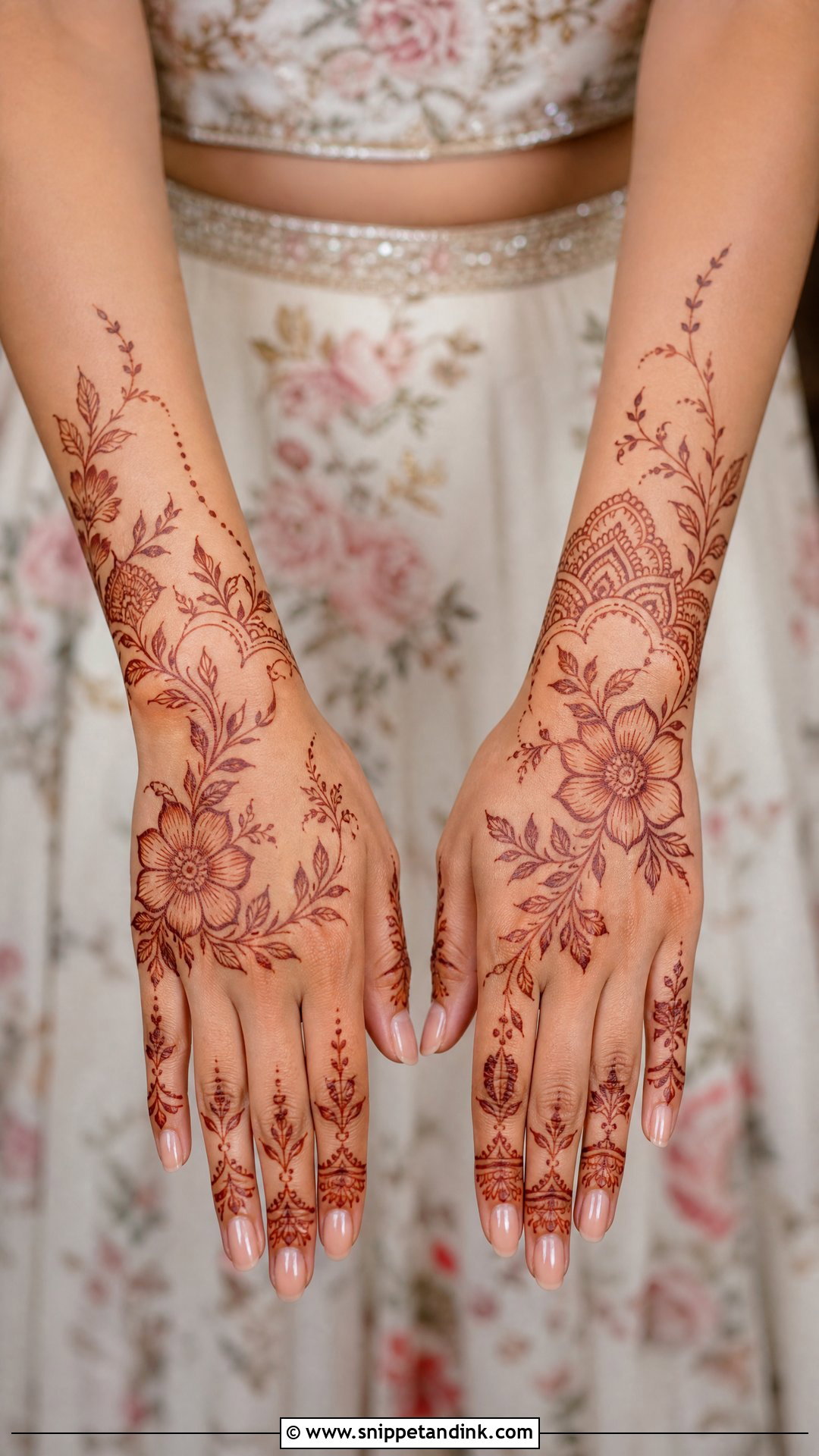
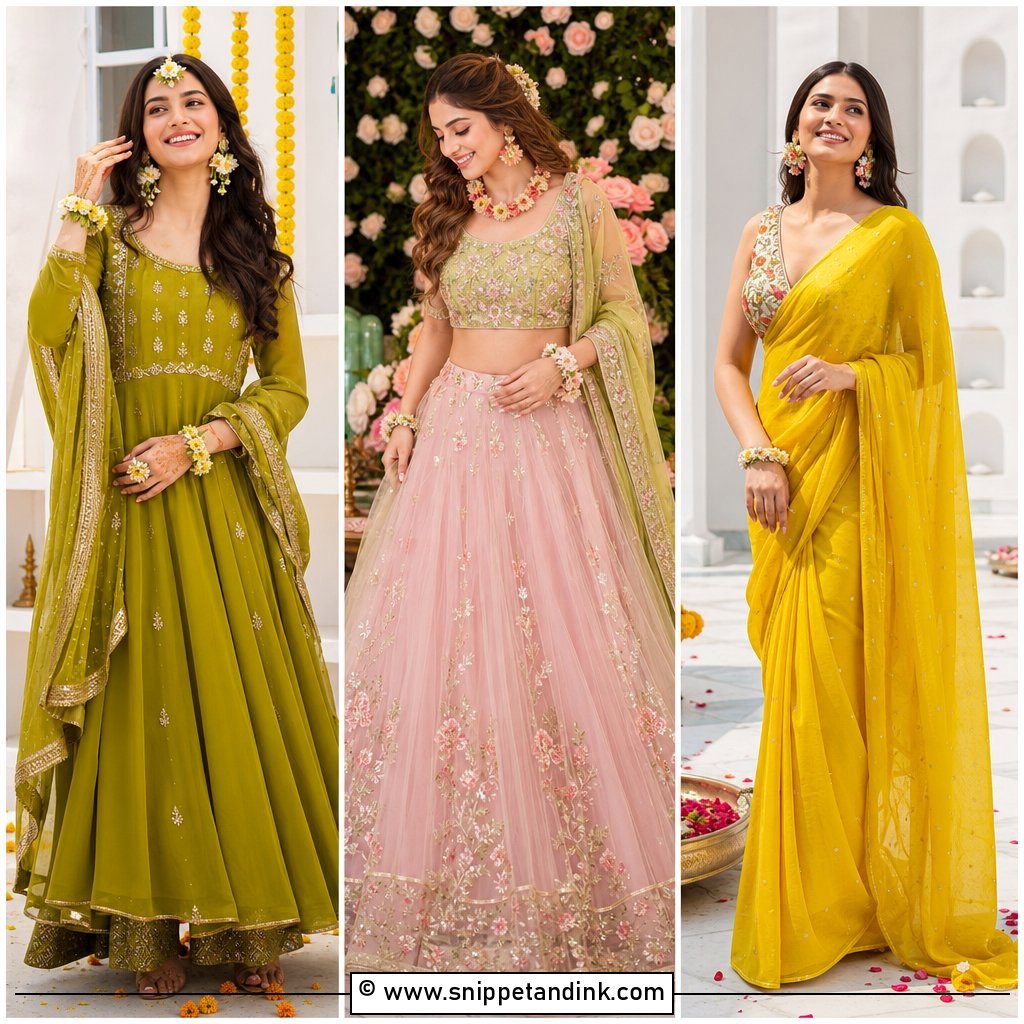
Printed and threadwork florals are the lighter answer to bridal embroidery, and a garden mehndi is where they make the most sense. I like a pastel base with coloured flowers scattered across it, because solid blocks of print can look busy next to a dense henna pattern. Pair it with a cropped blouse and a soft dupatta. Brides can add flower jewellery or a floral tikka to tie into the decor. The breathable weight is the real reason I suggest this for spring and summer: a heavy lehenga in afternoon sun is something you feel by the second hour.
6. Mirror Work Mehndi Dress Design
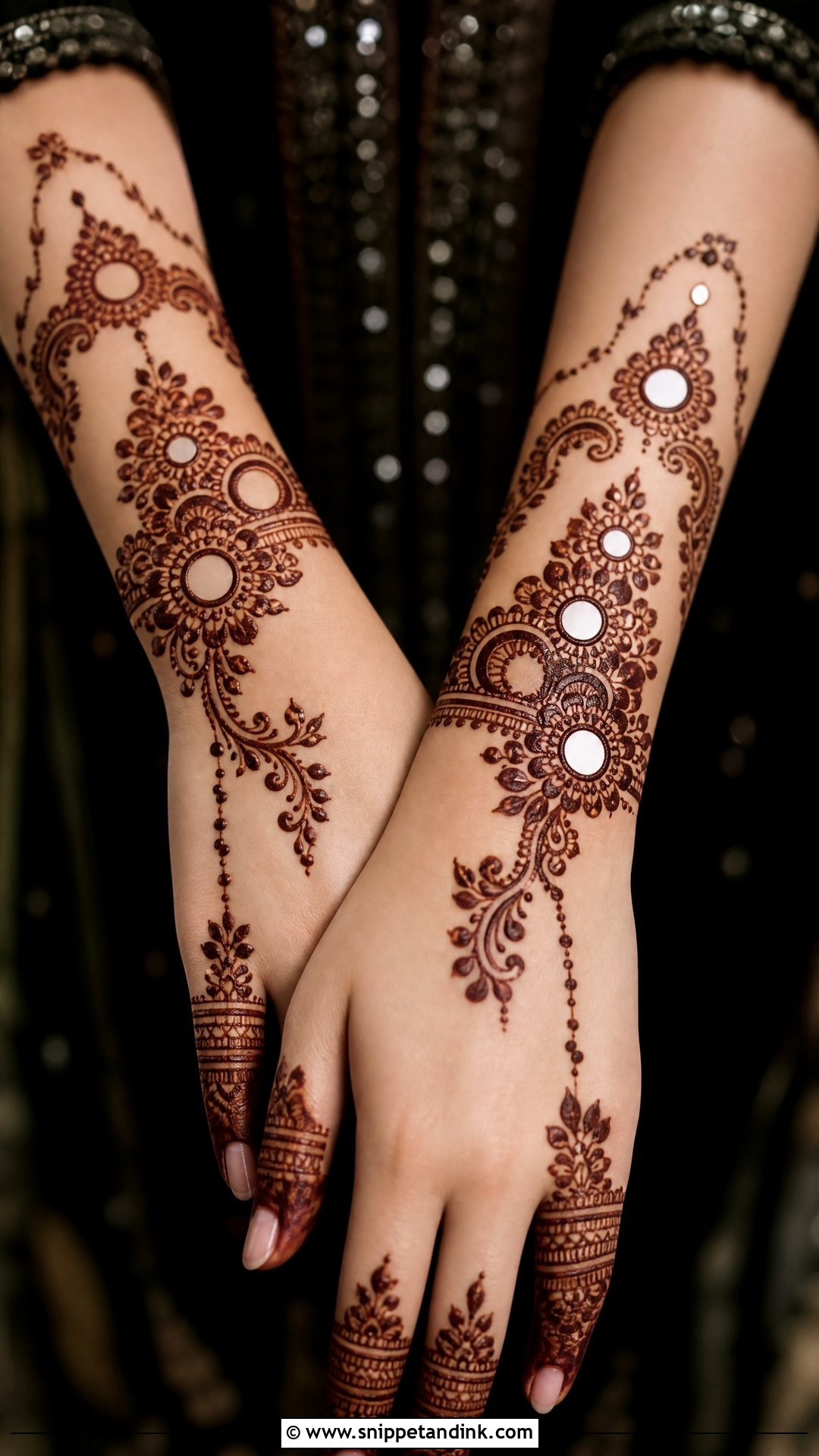
Mirror work catches every string light at a mehndi, and the effect doubles once the dancing starts. The rule I follow is a light base fabric under the mirrors, because each little glass disc adds weight and a fully covered lehenga can drag at the waist. Lime, teal, orange and pink all carry mirrors well. When the outfit is heavily worked, I strip the jewellery back to earrings. One practical warning: the edges of mirror embroidery can scratch fresh henna if the artist rests your arm against your own blouse, so keep a soft scarf across your lap.
7. Gota Patti Mehndi Suit Design
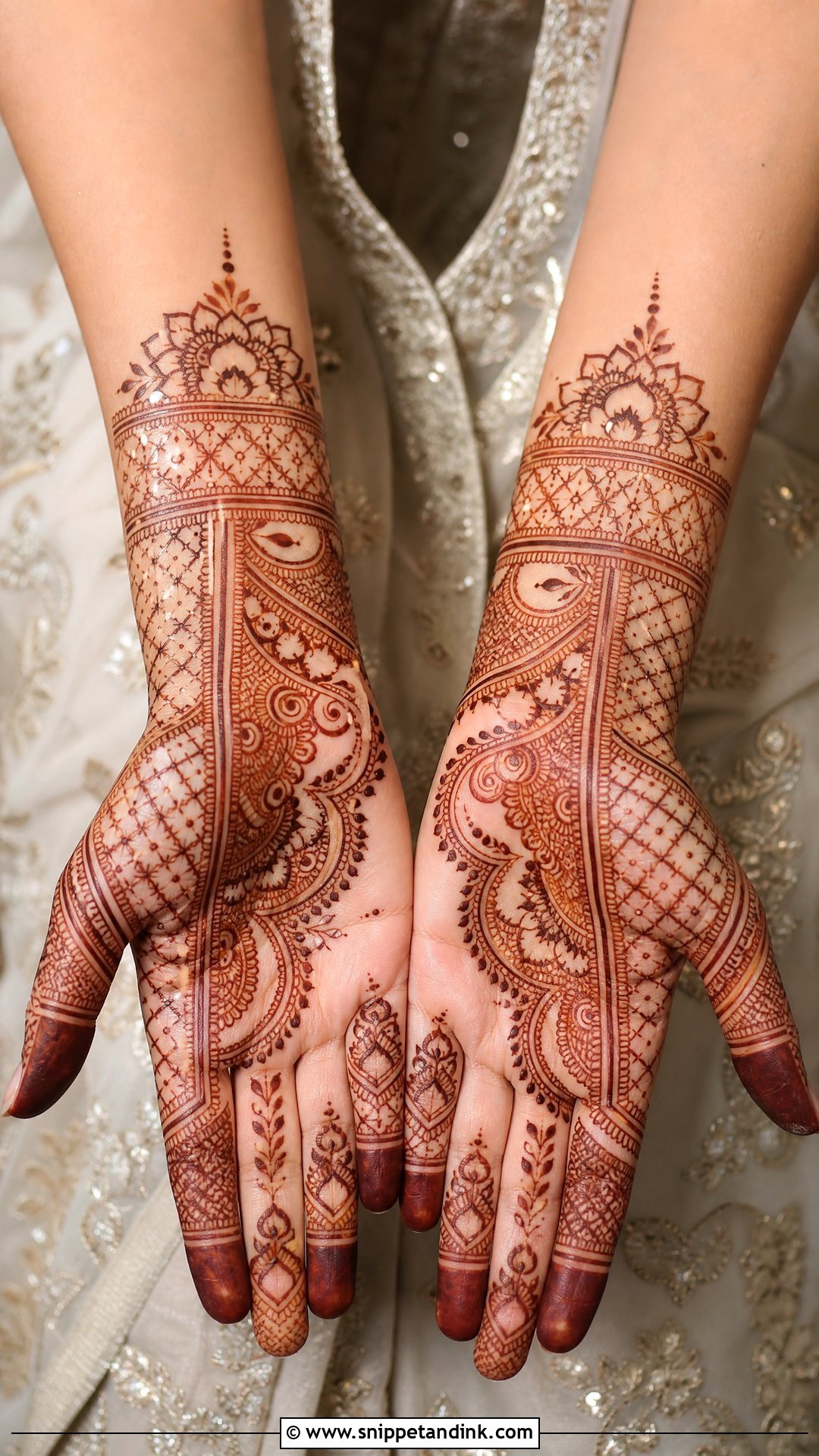
Gota is a flat ribbon of metallic lace stitched onto fabric, so it gives shine without the weight of dense zari. On a kurta suit I like it framing the neckline, cuffs, hem and dupatta edge, which keeps the centre of the outfit calm. Mustard, green and rani pink are the traditional colours for it. Mothers and aunts often choose this shape because it is easy to wear for hours of greeting and serving. Pin the dupatta at one shoulder so it can’t swing into wet paste, and finish with juttis and a small potli bag.
8. Mustard Mehndi Kurta Design
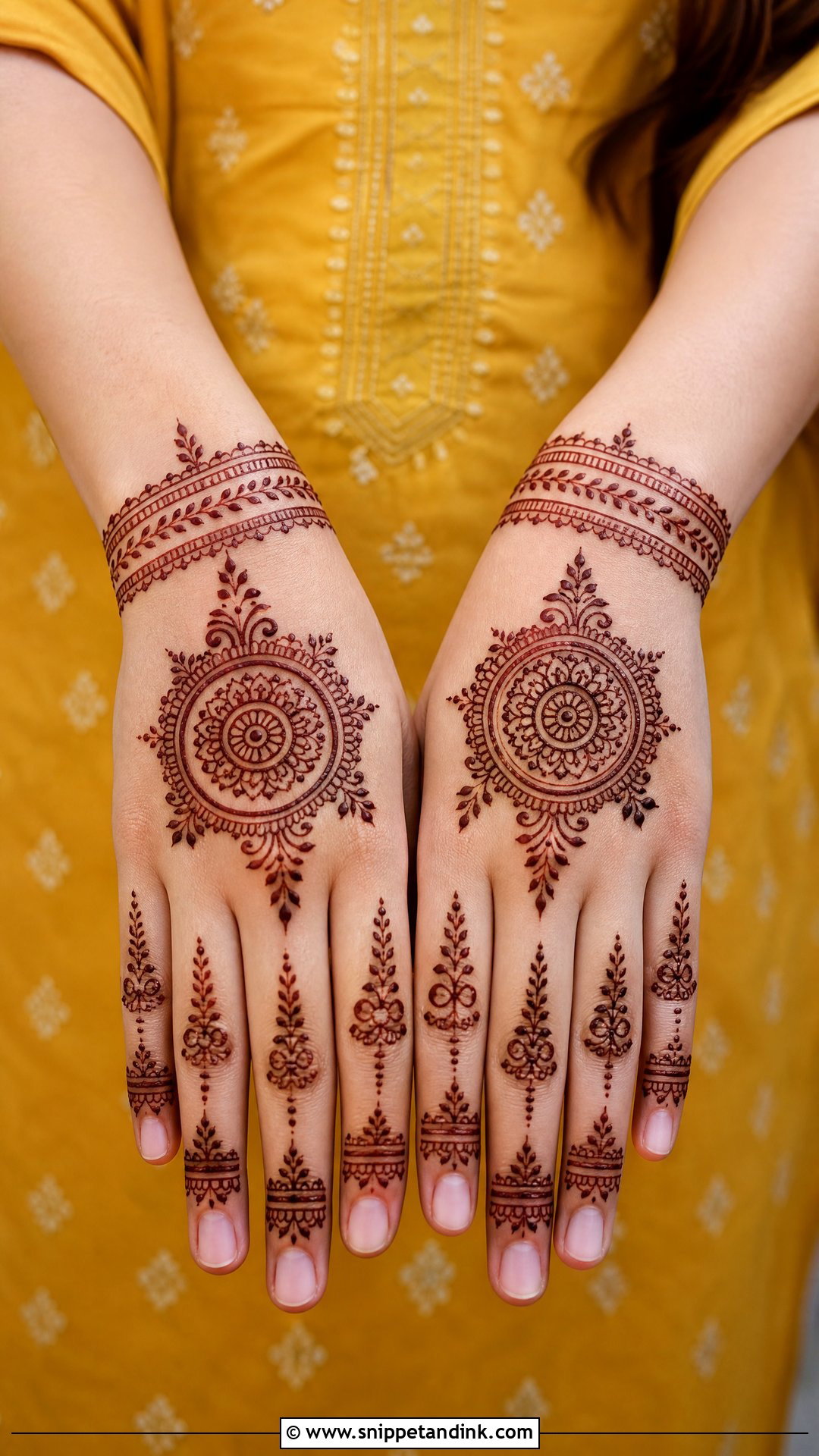
Mustard sits between yellow and brown, so it flatters warmer and deeper skin tones that bright lemon can wash out. A mustard kurta set changes character with the fabric: chanderi and cotton silk keep it day-appropriate, raw silk pushes it toward evening. I’d put the embroidery on the yoke rather than all over, so the colour does the work. Palazzos or sharara pants both suit it. A contrasting dupatta in pink or ivory adds depth, and this is the outfit I suggest most often for small home functions where comfort matters more than spectacle.
9. Multicolor Mehndi Lehenga Design
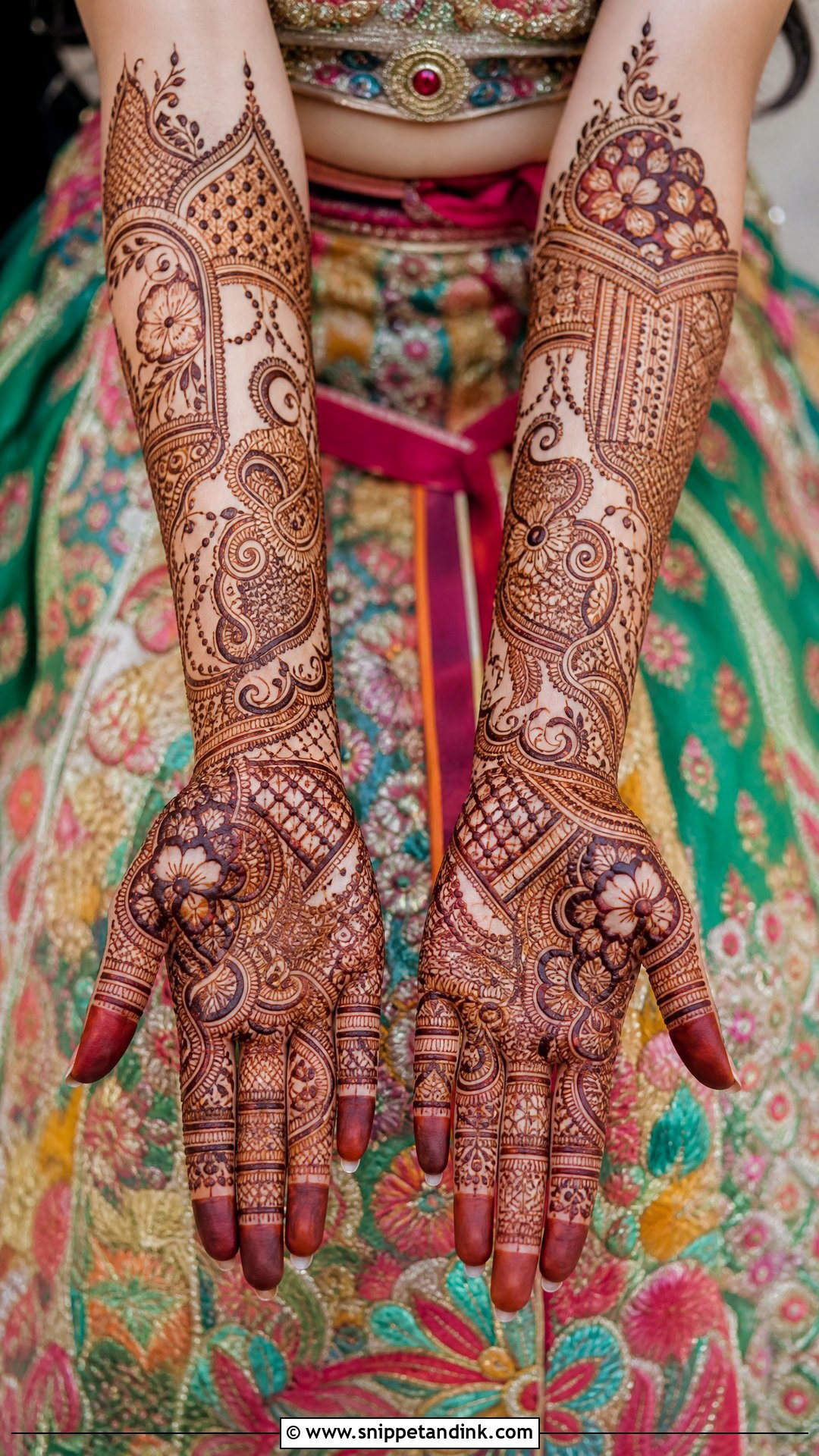
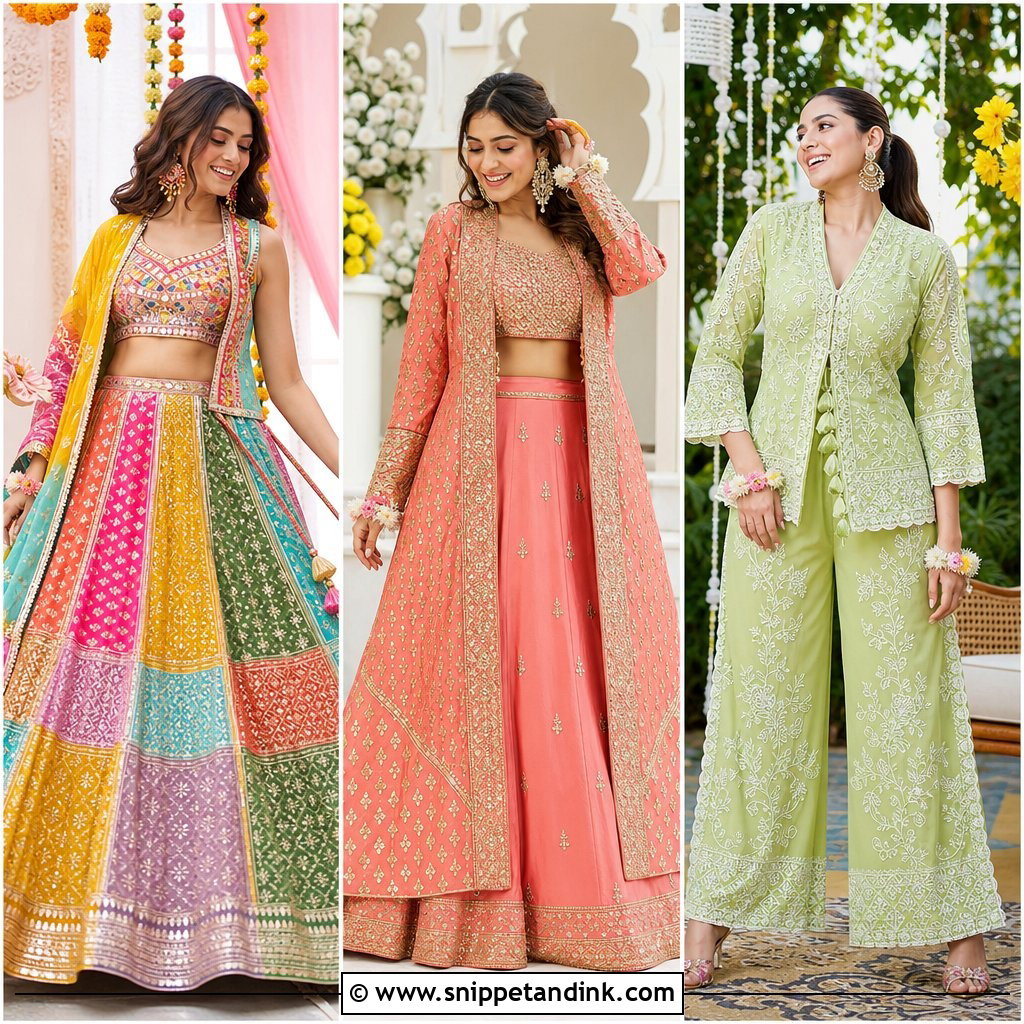
A multicolour lehenga makes sense for the night before the formal wedding, when the bride can be loud and nobody minds. Panelled skirts in yellow, pink, green and blue swing open when you turn, which is where the effect really shows. The styling trick is to lift one colour from the skirt into the dupatta, otherwise the eye has nowhere to rest. Keep the blouse fitted but not tight around the ribs; you will be sitting for henna. With this much colour, I skip heavy necklaces entirely and use flower jewellery or simple jhumkas.
10. Indo Western Mehndi Dress Design
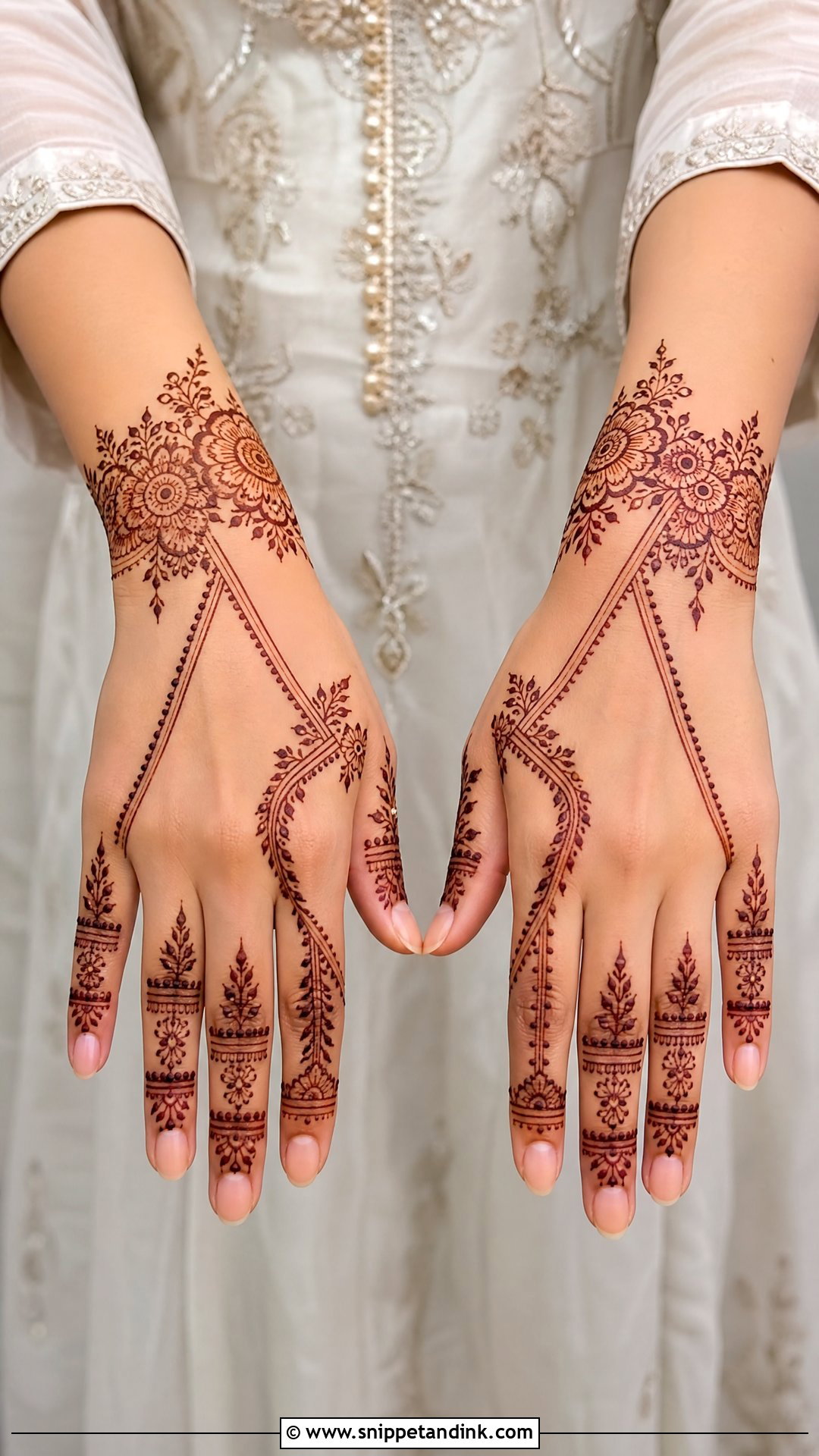
Fusion shapes, like a crop top with dhoti pants or a cape blouse over palazzos, keep the hands and forearms completely visible, which is exactly what the henna artist wants. An Indo Western mehndi dress also suits the bridesmaid or cousin who’d rather not manage a dupatta all night. Mirror work, tassels or a bright print keep it festive. The one detail I measure is the cape or jacket sleeve: anything that falls past the wrist bone will brush the paste every time you gesture.
11. Pakistani Mehndi Dress Design
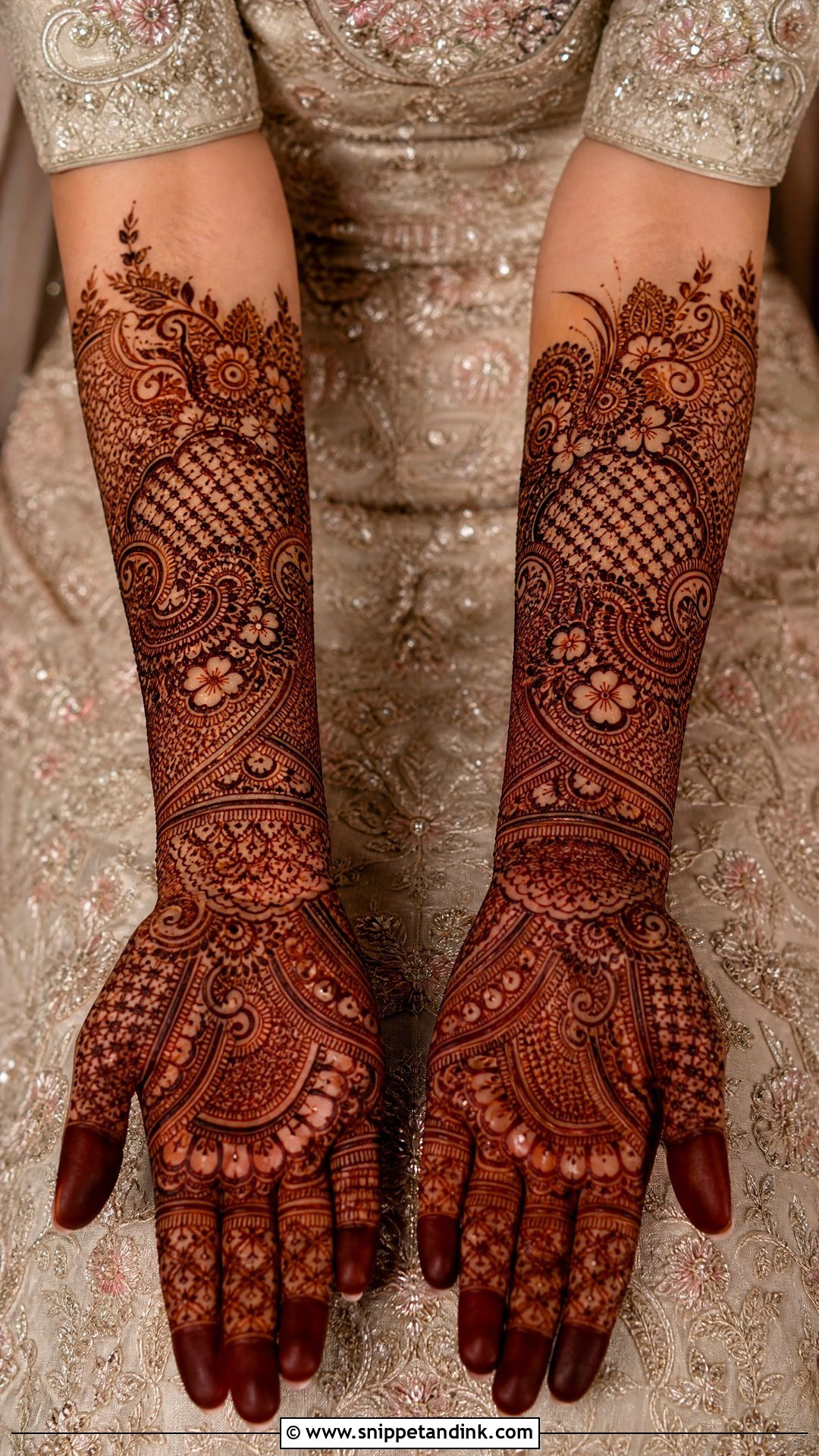
Long shirts over ghararas, short kurtis with shararas, pishwas and angrakha cuts are the shapes you see most at a Pakistani mehndi, usually in yellow, green, orange or pink with gota and zari. A Pakistani mehndi dress for the bride is often the most decorated outfit of the function, while sisters wear lighter versions of the same palette. The bordered dupatta is half the look, so I don’t let anyone skimp on it. Heavy wrist cuffs are common on these shirts, and if your mehndi runs up the arm, ask the tailor for a plain or open sleeve instead.
12. Indian Mehndi Dress Design
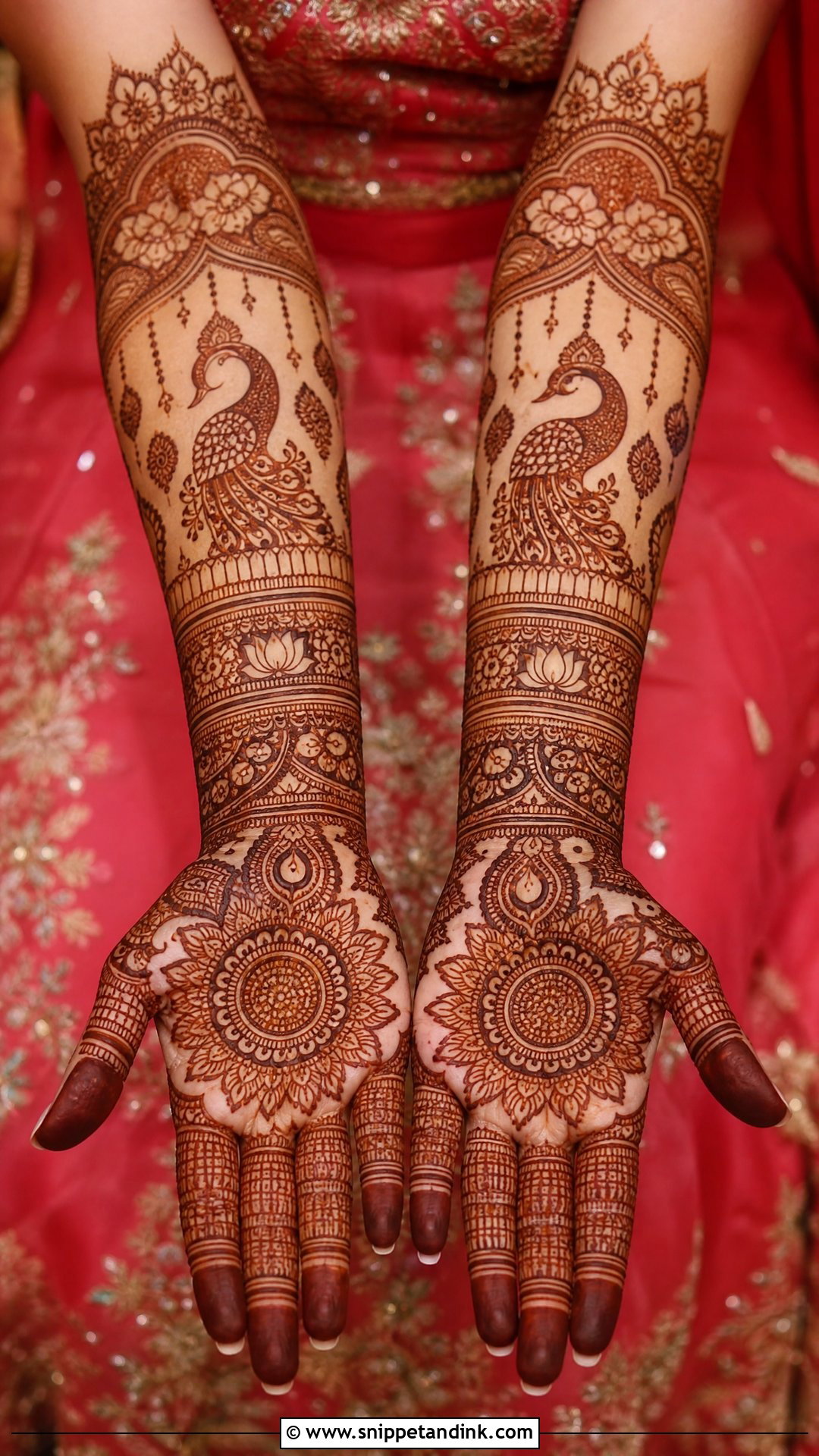
Indian mehndi clothing covers everything from lehengas and anarkalis to sarees and simple kurta sets, and the right one depends on how the ceremony runs. For a bride, I start from yellow or green with mirror work or gota. For guests at a large venue with a DJ, a printed anarkali or a light silk suit holds up better than anything stiff. Bangles, jhumkas and a bindi are part of the look, but bangles go on after the henna dries, not before. Leave the space around the wrists clear and the rest of the outfit can be as full as you like.
13. Simple Mehndi Dress Design
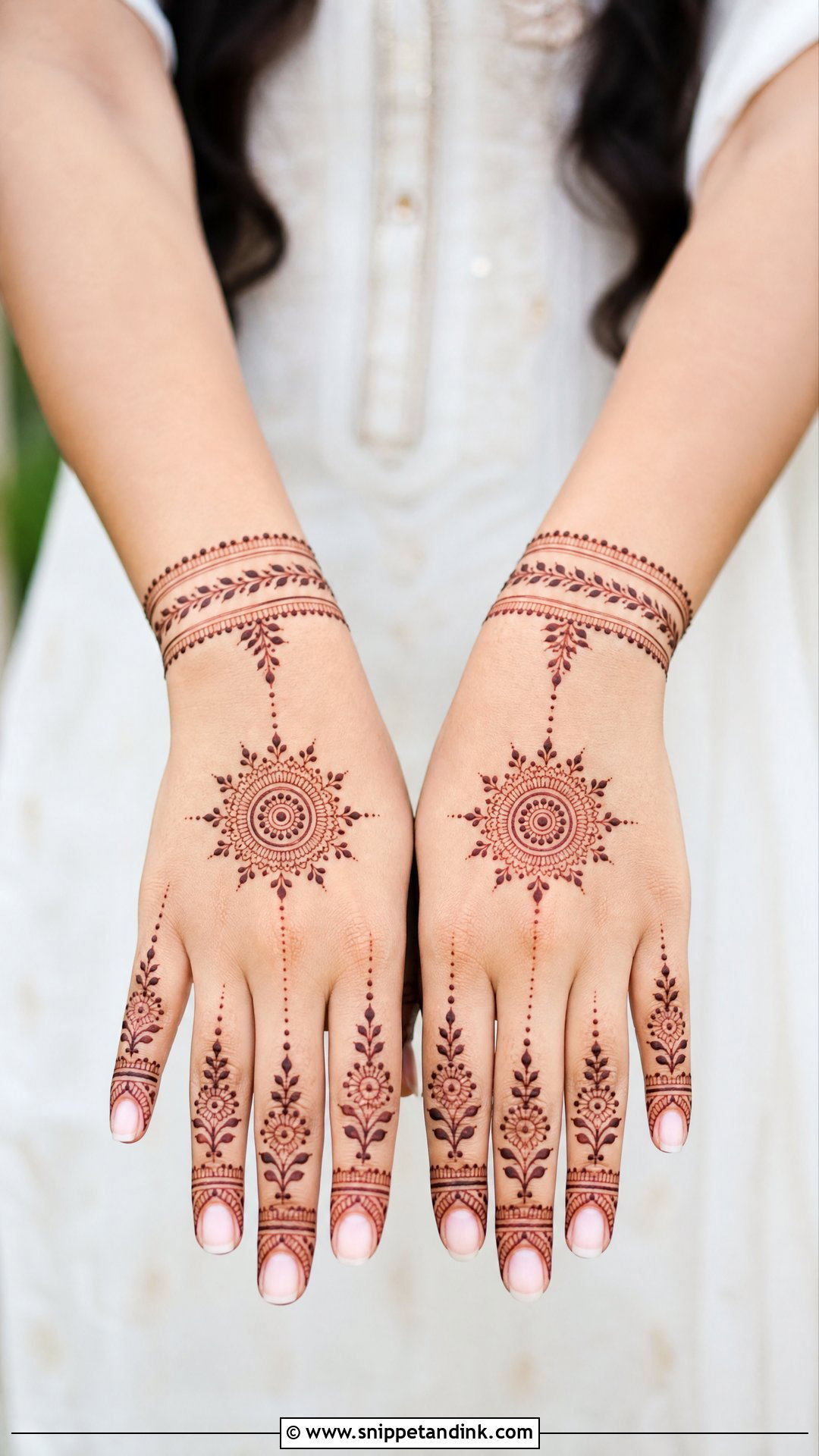
Plain outfits fall apart when the fit is careless, so with a simple mehndi look I spend my attention on tailoring. A clean kurta set or plain sharara in mustard, mint, peach or coral needs a sharp shoulder seam and the right sleeve length more than it needs embroidery. Give it one detail, gota edging or mirror buttons, and stop there. Earrings, juttis and a few bangles go on once your hands are dry. The upside is that the henna becomes the decoration, which is the point of the evening anyway.
14. Bridal Mehndi Dress Design
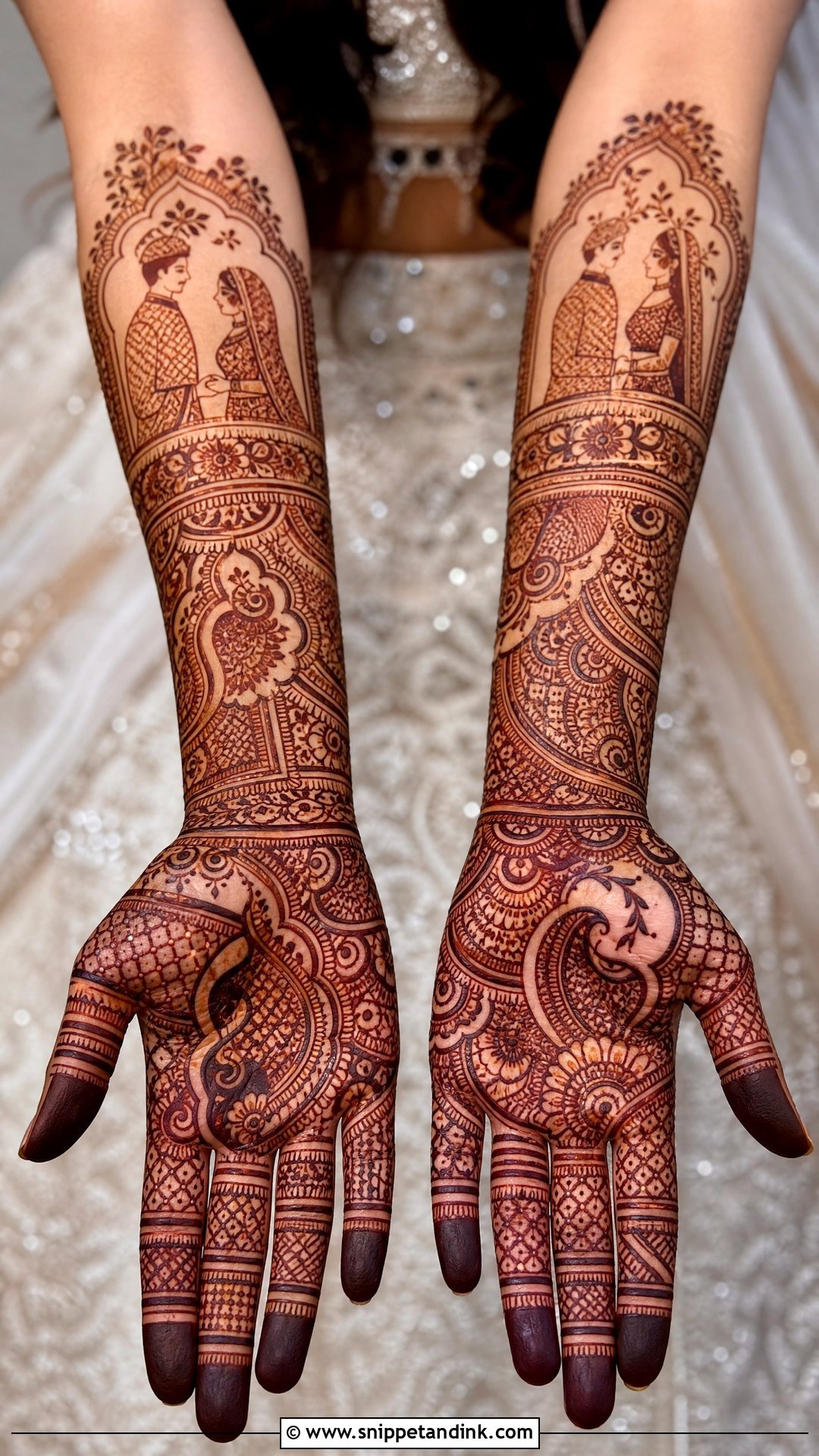
The bride sits longest at a mehndi, often for hours while the artist works on both hands and feet, so a bridal mehndi dress has to be judged seated as well as standing. Lehenga, sharara, gharara and pishwas all work. Stiff silk and a tight waistband are the two things I’d rule out, because they dig in by the second hour. Put the embroidery at the neckline and hem where it frames the face and the feet, and keep the sleeves short or open. Floral jewellery and a light dupatta finish it without adding weight.
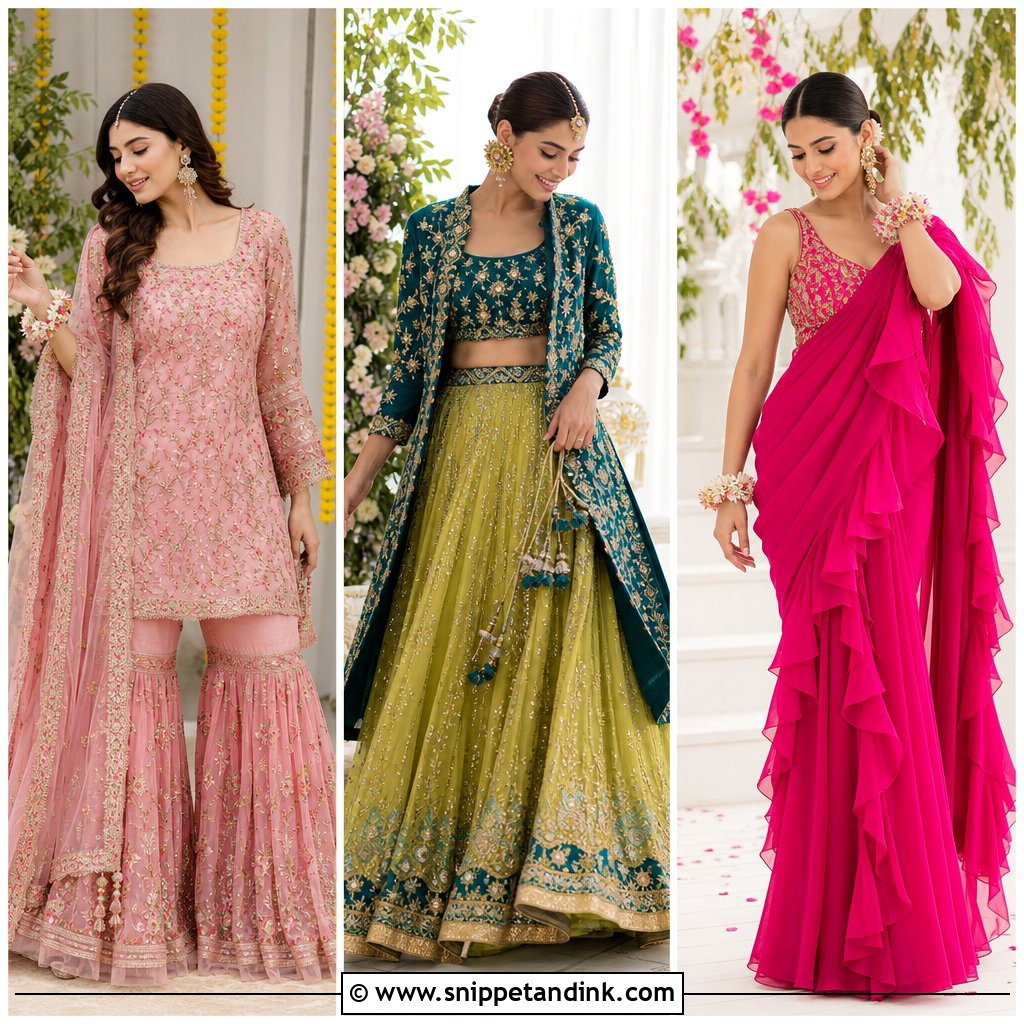
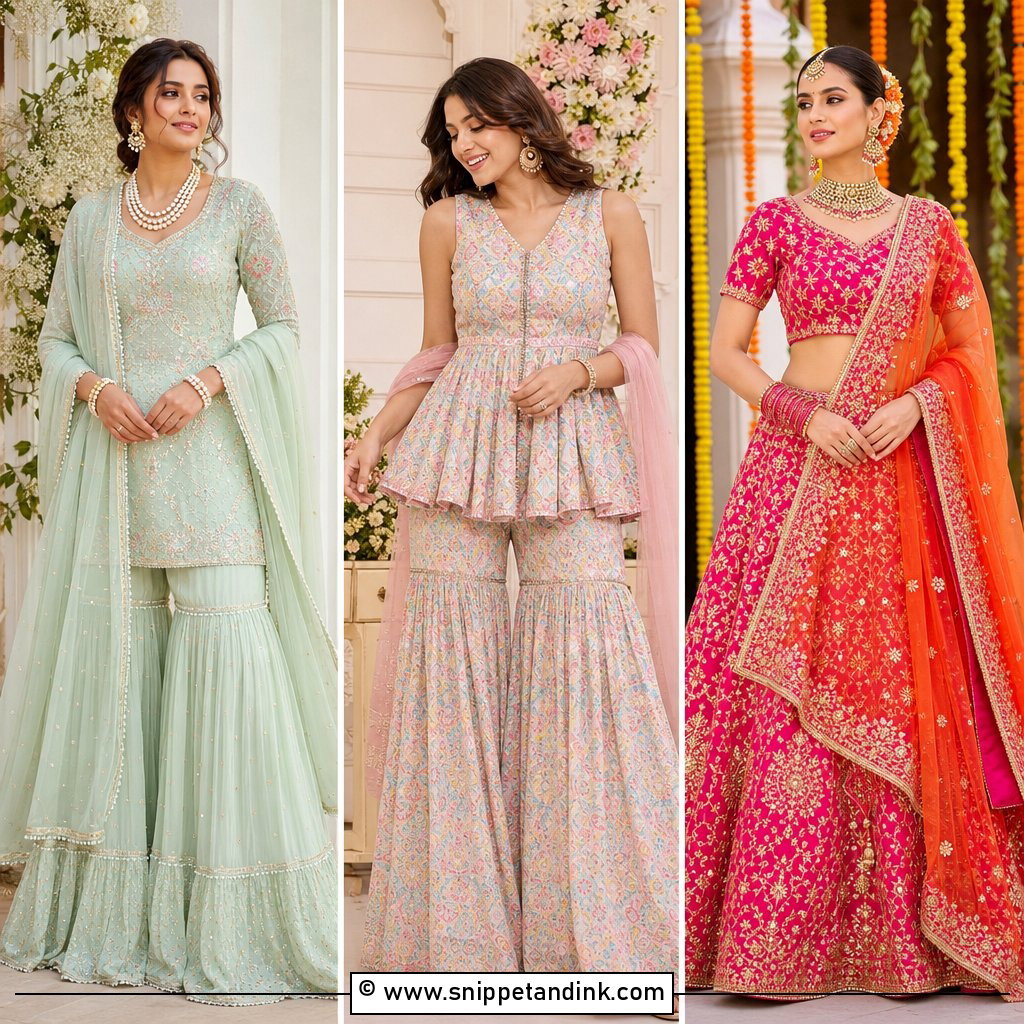
15. Bridesmaid Mehndi Dress Design
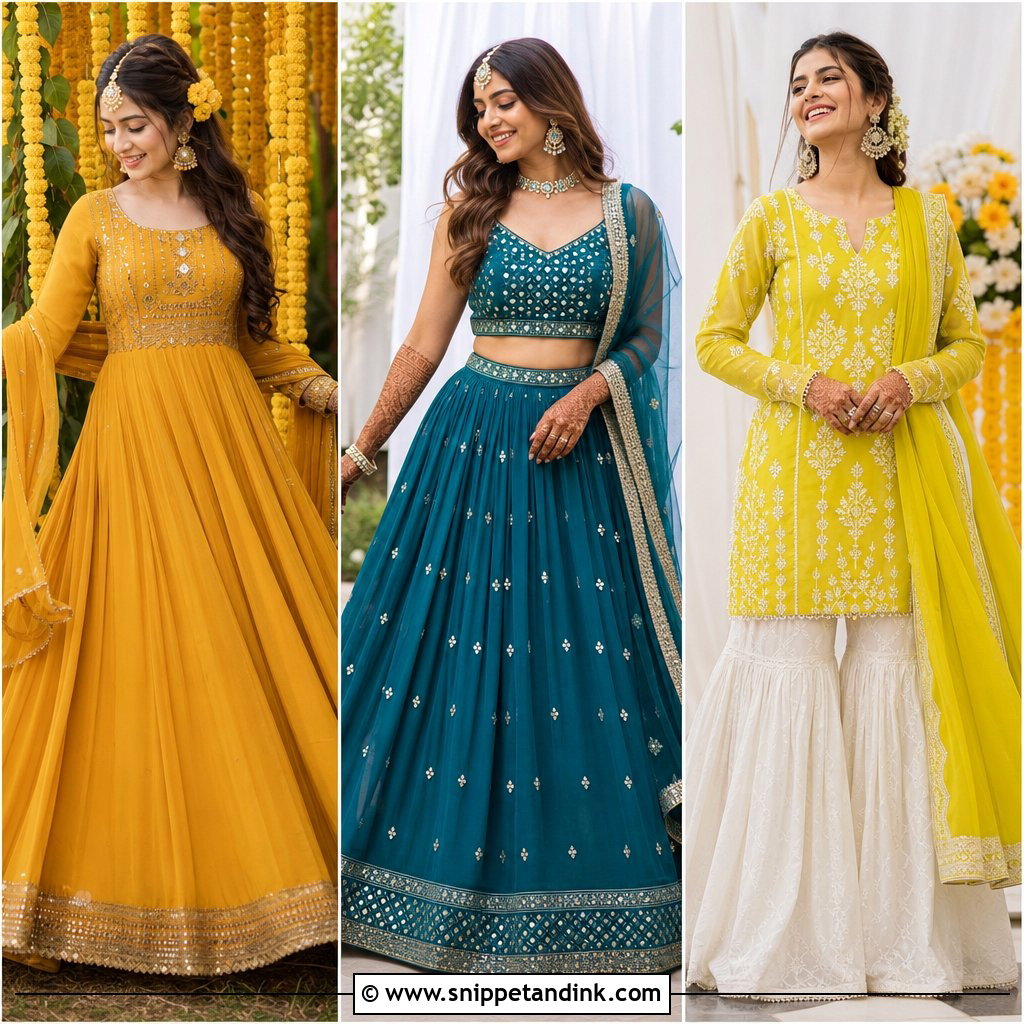
Bridesmaids at a mehndi look best when they share a colour family rather than an identical outfit. If the bride is in yellow, I’d dress her friends in greens, peach or pink so she still stands apart in group photos. Sharara sets, printed lehengas, cape sets and anarkalis can all sit side by side once the palette is agreed. Keep the embroidery lighter than hers. And if everyone is getting henna, tell them to leave rings and bangles off until it dries; it saves a lot of smudged fingers.
16. Guest Mehndi Dress Design
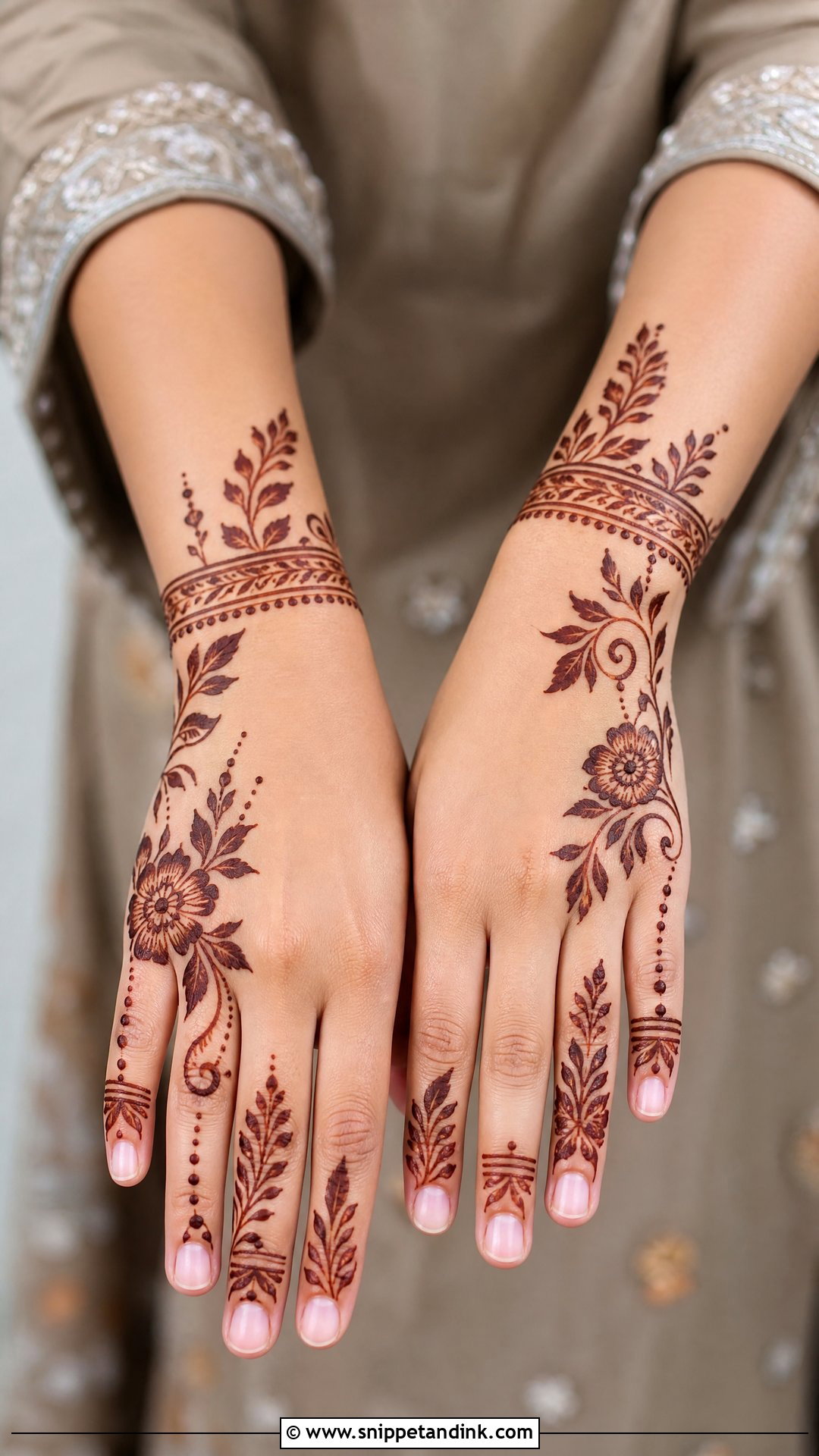
Guests get the most freedom at a mehndi, and the one firm rule is not to dress more bridal than the bride. A printed kurta set, light lehenga, anarkali or saree all sit comfortably in the festive range. Breathable fabric matters more than you’d think, because you’ll be standing, eating, greeting and dancing for hours. Choose sleeves that roll back if you want henna yourself. Your shoes deserve as much thought as your jewellery here; a flat jutti beats a heel on a lawn or a dance floor.
17. Haldi Mehndi Dress Design
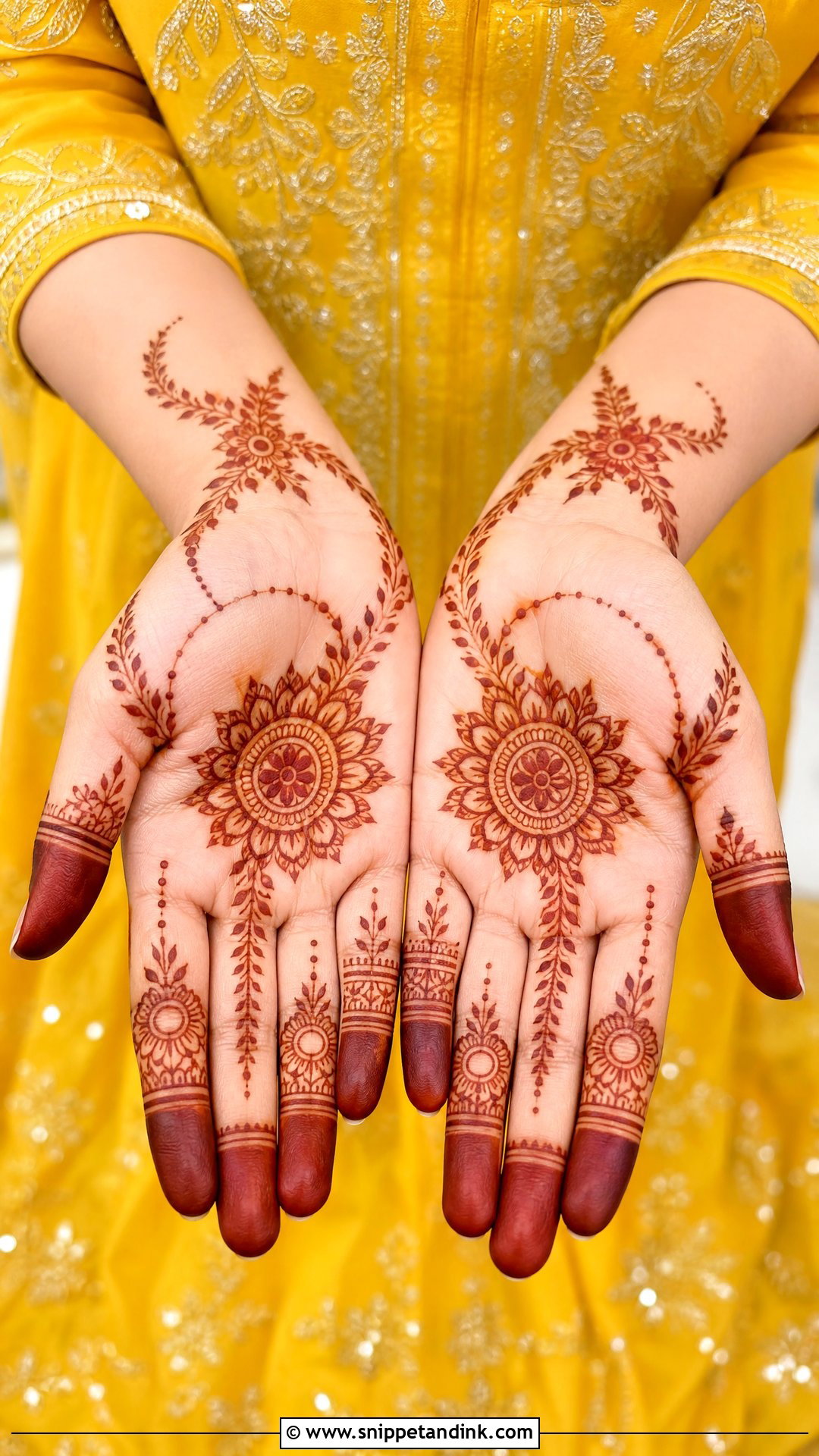
Haldi paste stains fabric, and turmeric yellow on silk rarely washes out, so when haldi and mehndi share a day I steer families toward cotton and washable blends. Yellow, lime, peach and white with yellow trim are the usual choices. A cotton kurta set or simple lehenga takes a splash without drama. Save dry-clean-only pieces for the evening function. If the henna follows the haldi, make sure the sleeves roll up easily, because you’ll be covered in paste of two kinds by lunchtime.
18. Saree Mehndi Dress Design
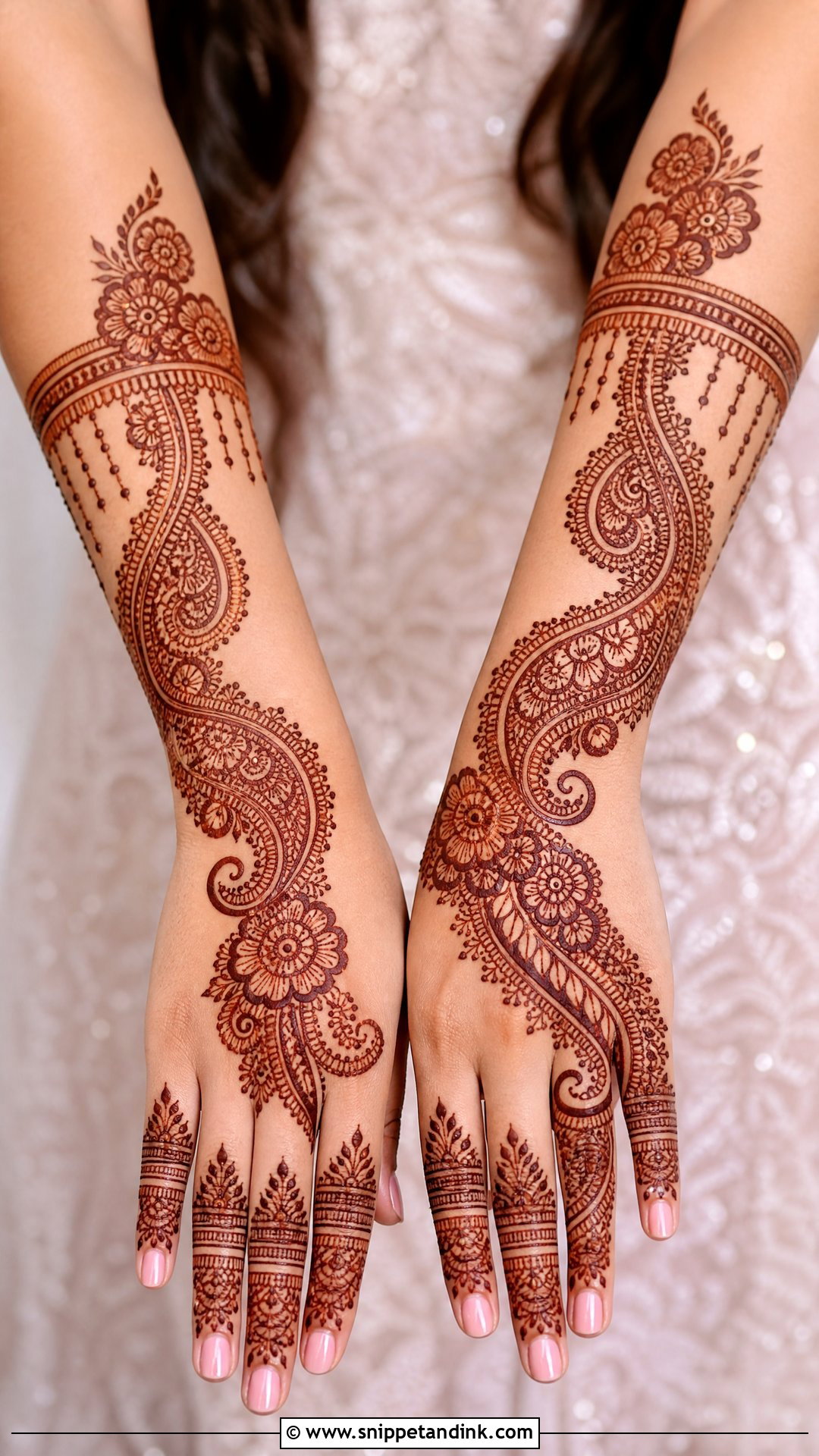
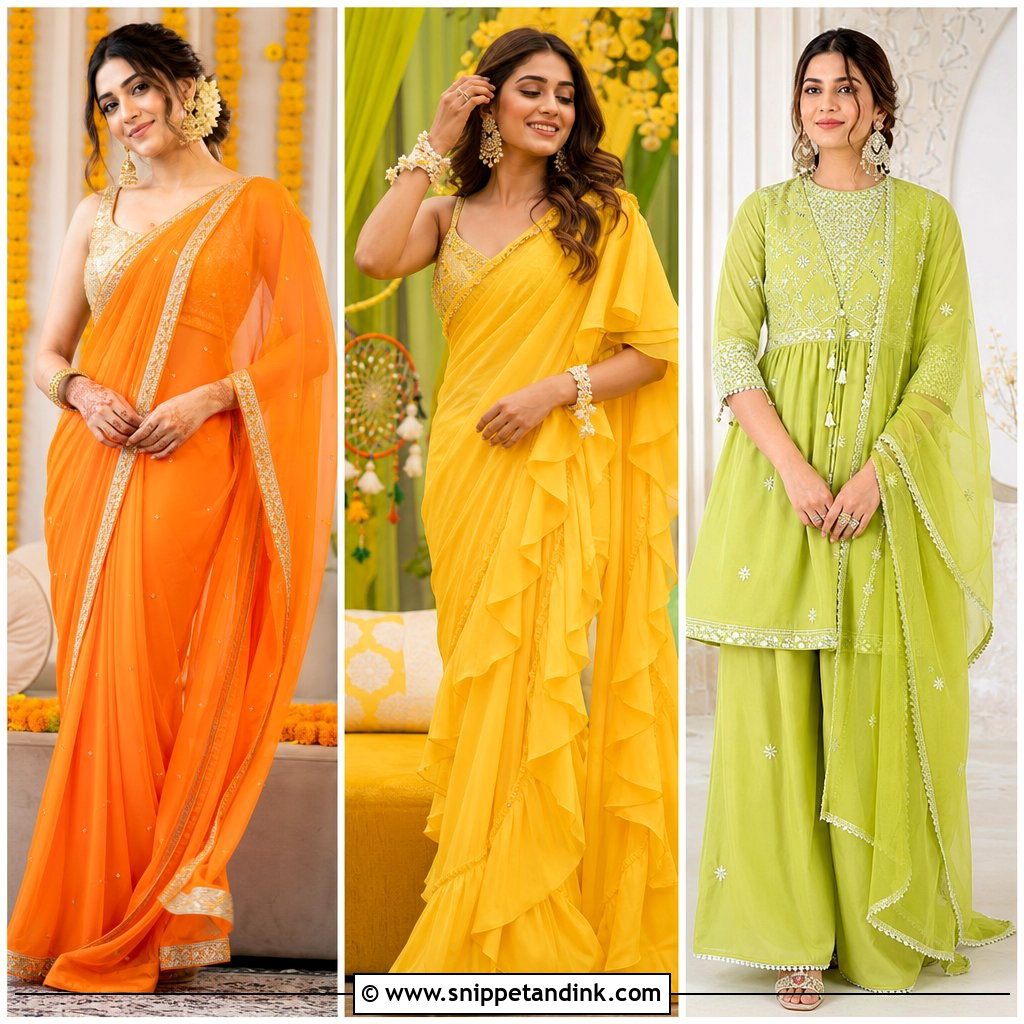
A saree at a mehndi needs a lighter drape than you’d wear to the wedding itself, because you’ll be sitting, rising and dancing repeatedly. Georgette, chiffon and organza fall easily and recover from creasing; heavier silks hold every fold you sit on. I pair it with a sleeveless or elbow-length blouse so the forearms stay free. Pre-draped sarees solve the pleat-collapse problem for anyone not used to wearing one all night. Keep the hair neat and lifted, since the pallu already gives the outfit plenty of movement.
19. Lehenga Choli Mehndi Design
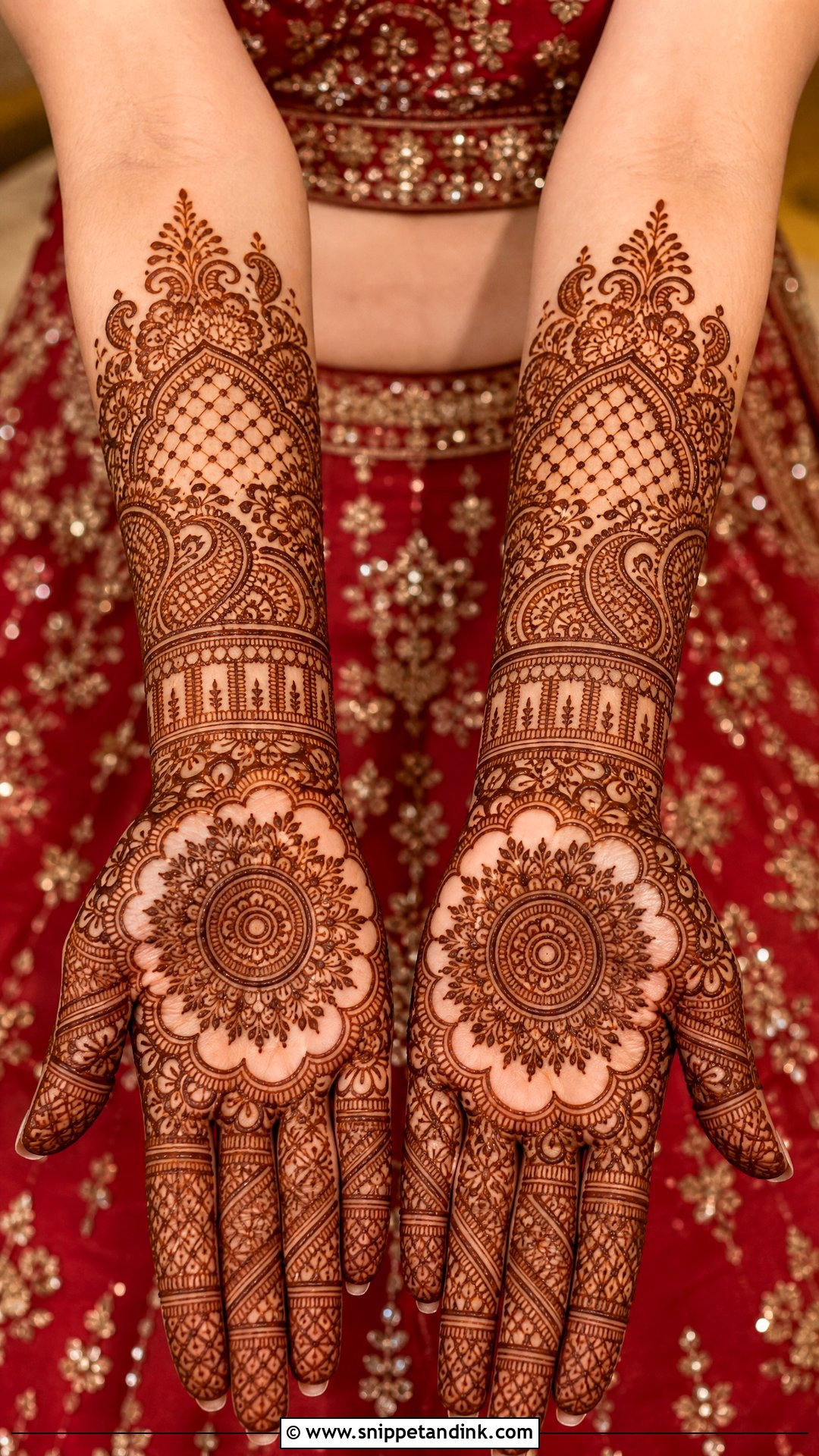
Very few outfits read as festive from every angle the way a lehenga choli does, which is why it’s the safest pick when you’re unsure. For a traditional version, I go yellow, green, orange or pink with mirror work or gota; for something lighter, floral print and a fun blouse back. Test the skirt by sitting in it at the fitting. Enough flare to dance in, not so much weight that it pins you to the chair. Pin the dupatta on one shoulder during henna, and finish with jhumkas and a flower-dressed braid.
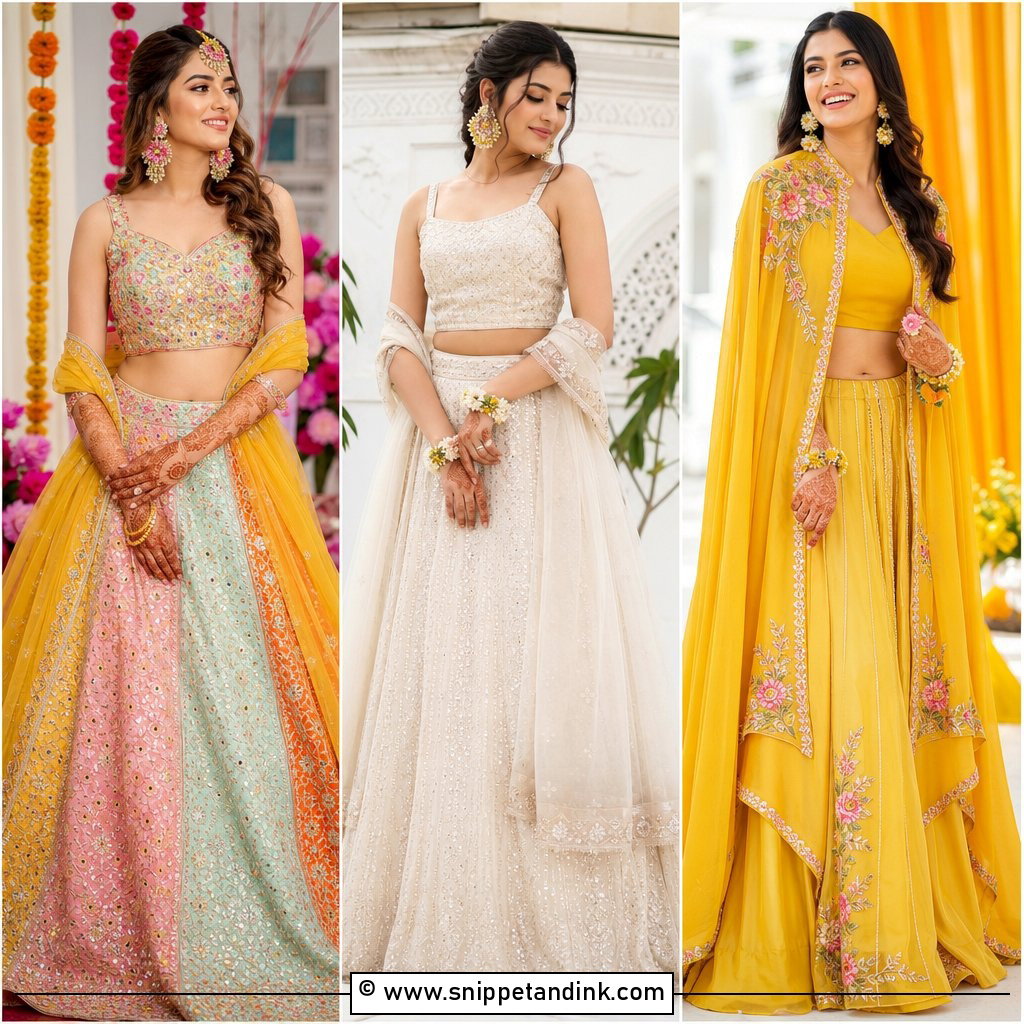
20. Sharara Suit Mehndi Design
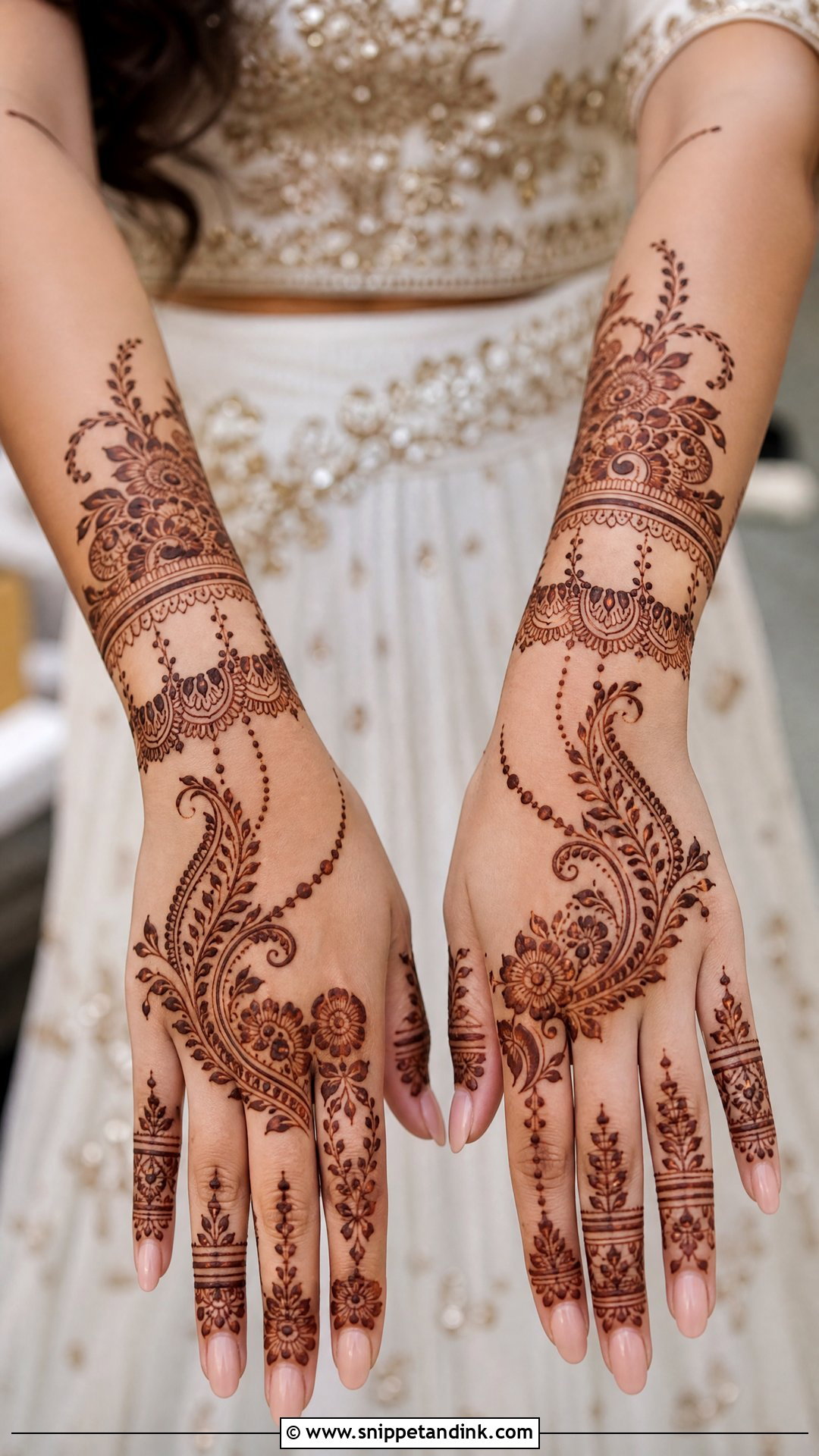
A sharara suit works for almost anyone at the function, from the bride’s cousins to her grandmother, because the flared pants hide a lot and move well. Mustard, emerald, hot pink and teal are the colours I see most. Short kurtis look younger and show more of the flare; longer ones feel more formal and cover the hips. Embroidered borders or tassels on the dupatta are enough decoration. Keep that dupatta light, because a heavy one slides off the shoulder and straight into wet paste.
21. Gharara Mehndi Dress Design
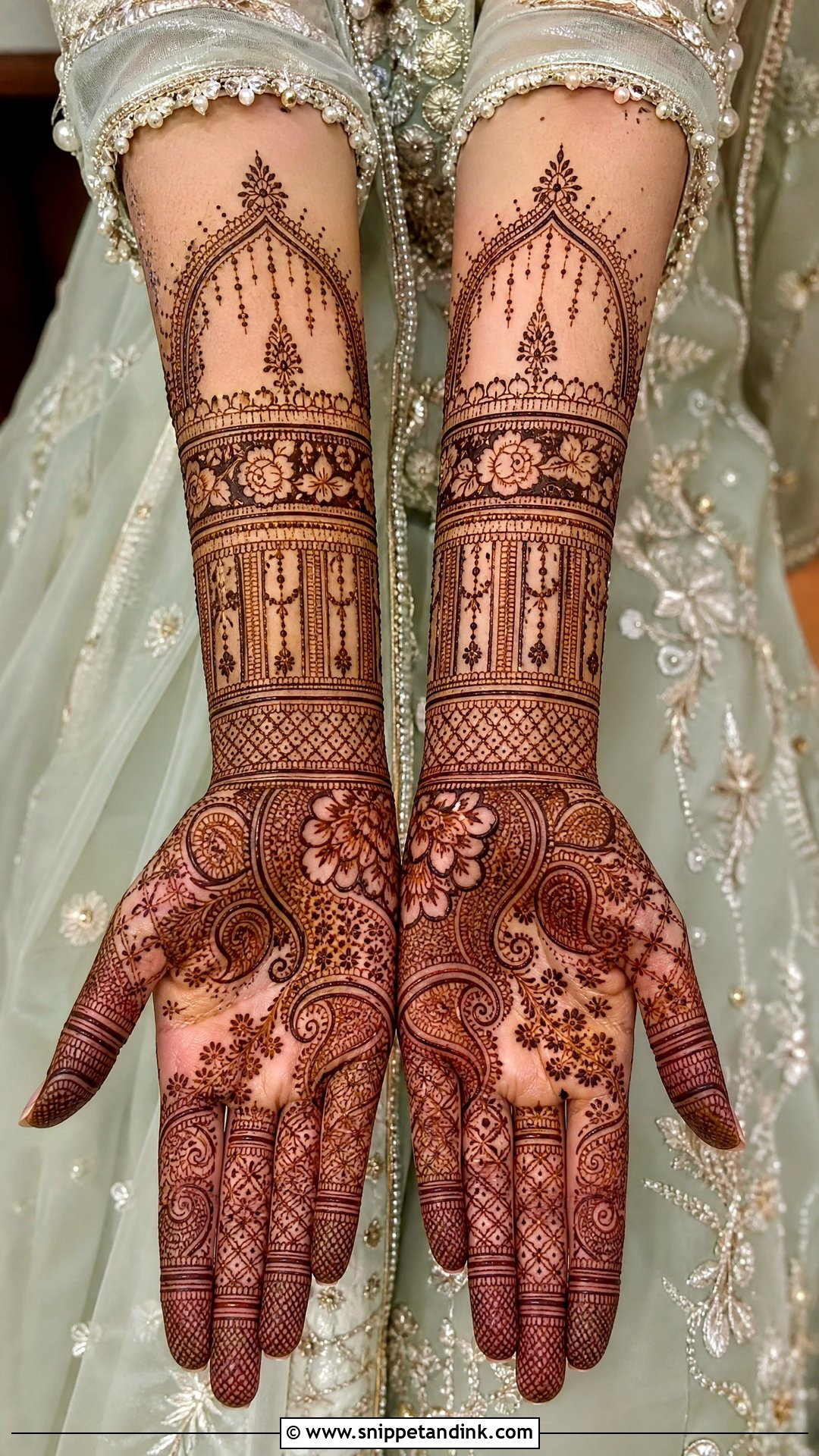
A gharara gets its character from one seam: it is fitted through the thigh, then gathered at the knee into a wide flare. That join is often decorated with a gota band, and it’s the first thing the camera picks up. I pair it with a short kurti or peplum so the flare isn’t hidden. Yellow with green feels traditional; pink with orange feels more playful. It suits brides at Pakistani mehndi functions who want something less expected than a lehenga. Keep the wrists bare for the artist.
22. Anarkali Mehndi Dress Design
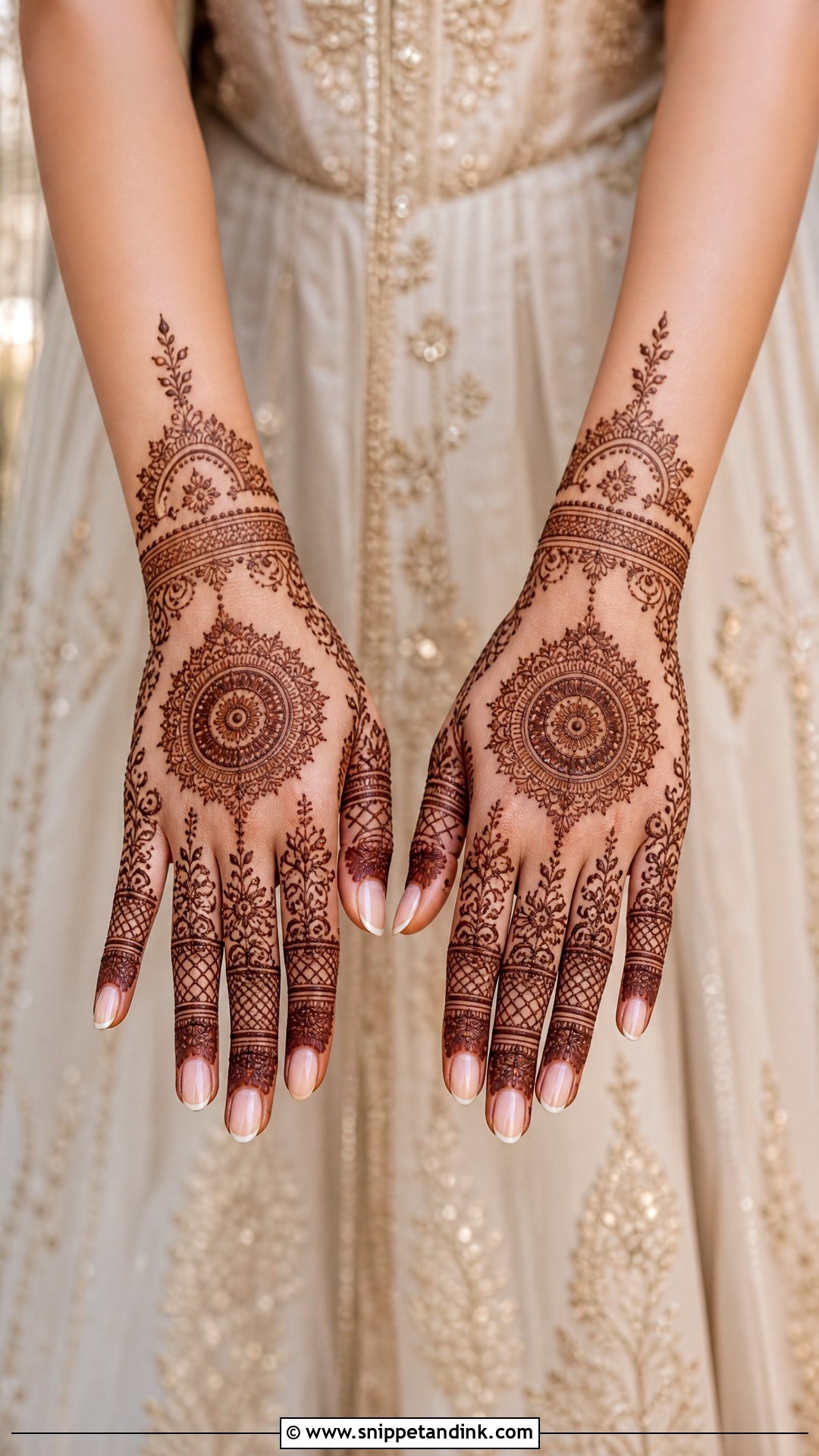
Anarkalis move well, and that’s the main reason I suggest them to anyone expecting to dance. The flared panels swing without needing a full skirt underneath. Floor length looks grand but catches under heels on stairs; calf length is easier to manage at a crowded function. Bright shades read festive straight away, while pastels need colourful embroidery to keep them from looking like daywear. Skip tight long sleeves if your henna will go above the wrist. Embellished flats and a light dupatta are all it needs.
23. Cape Mehndi Dress Design
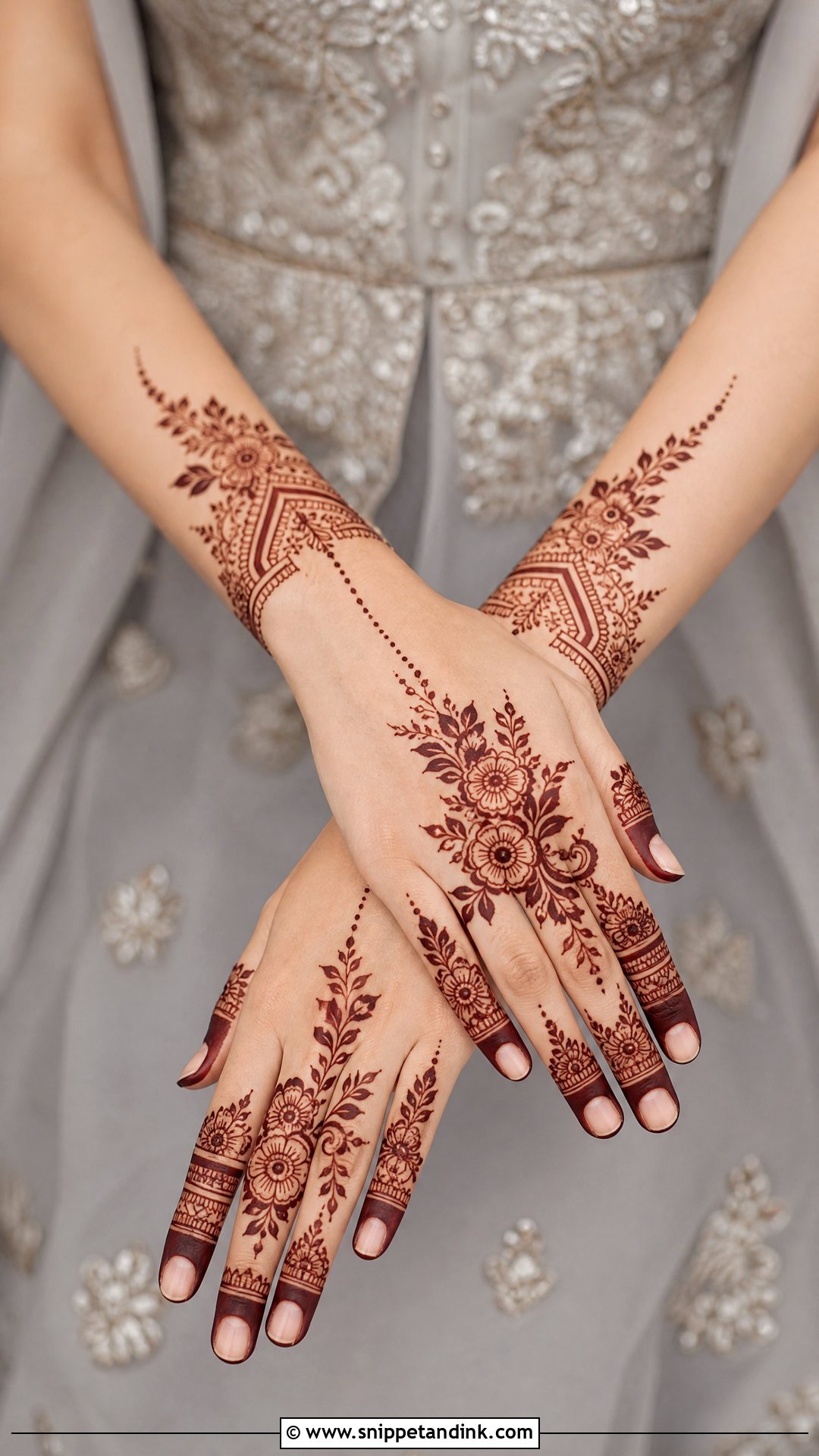
A cape replaces the dupatta, which is a real advantage at a mehndi: there’s nothing to slip off the shoulder while your hands are wet. It sits over a lehenga, dhoti pants, palazzos or a skirt. I choose short, shoulder or open-front capes, because a long sleeved cape hangs right over the wrists. Mirror work and tassels give it sparkle. Keep the base outfit fitted so the cape has something to fall against, and swap the necklace for earrings, since a cape already frames the neckline.
24. Dhoti Pant Mehndi Dress Design
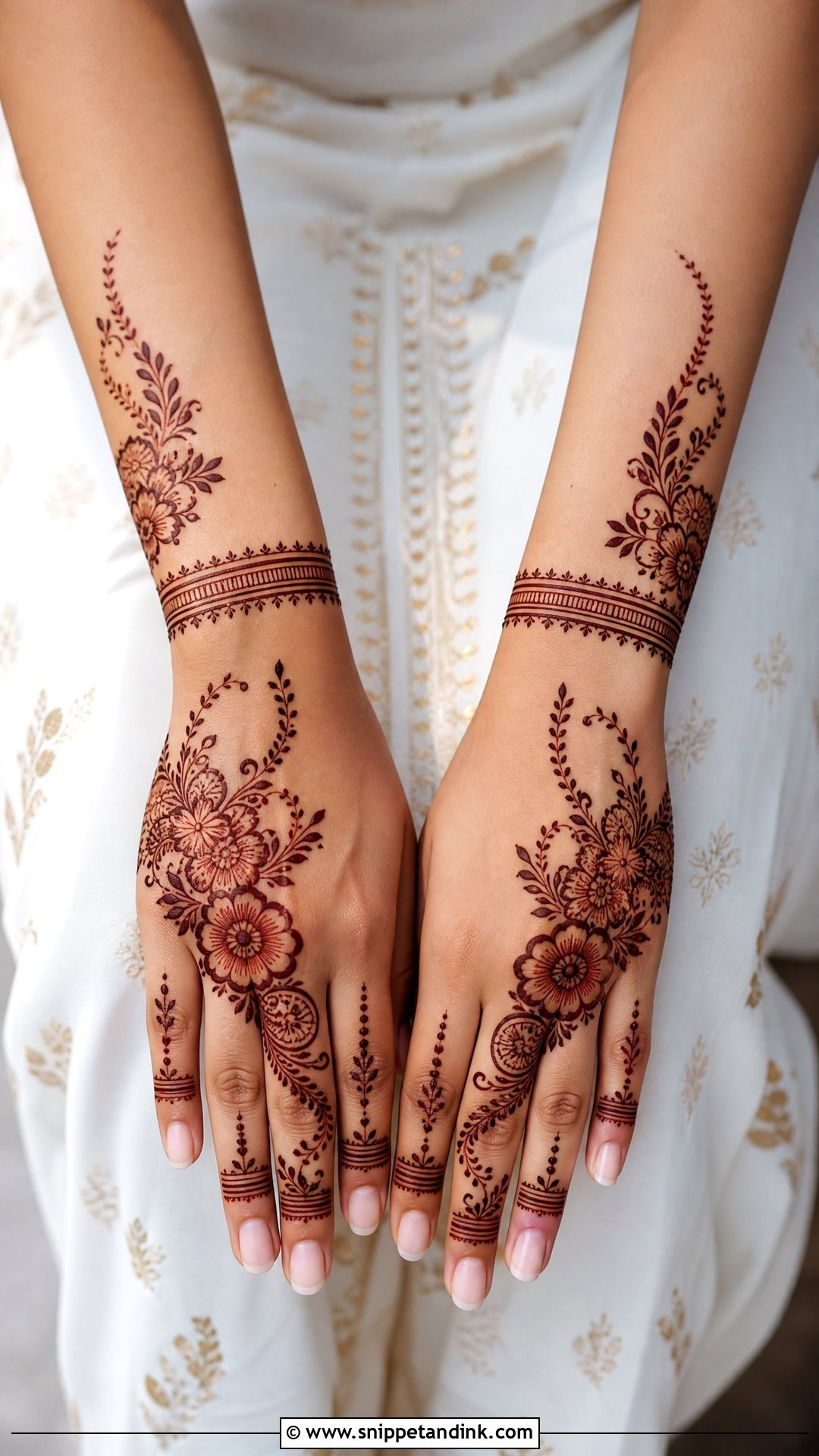
Dhoti pants are draped and gathered so they look full without restricting your stride, which is why dance-heavy functions suit them. They need a short top above them, a crop, peplum or short kurti, otherwise the drape disappears. Yellow, turquoise and lime keep them festive. A mirror-work top or printed jacket adds sparkle without adding weight. I keep accessories sharp and few, because the silhouette is already unusual. Younger guests and bridesmaids carry it best; for a bride, it suits a casual mehndi more than a formal stage event.
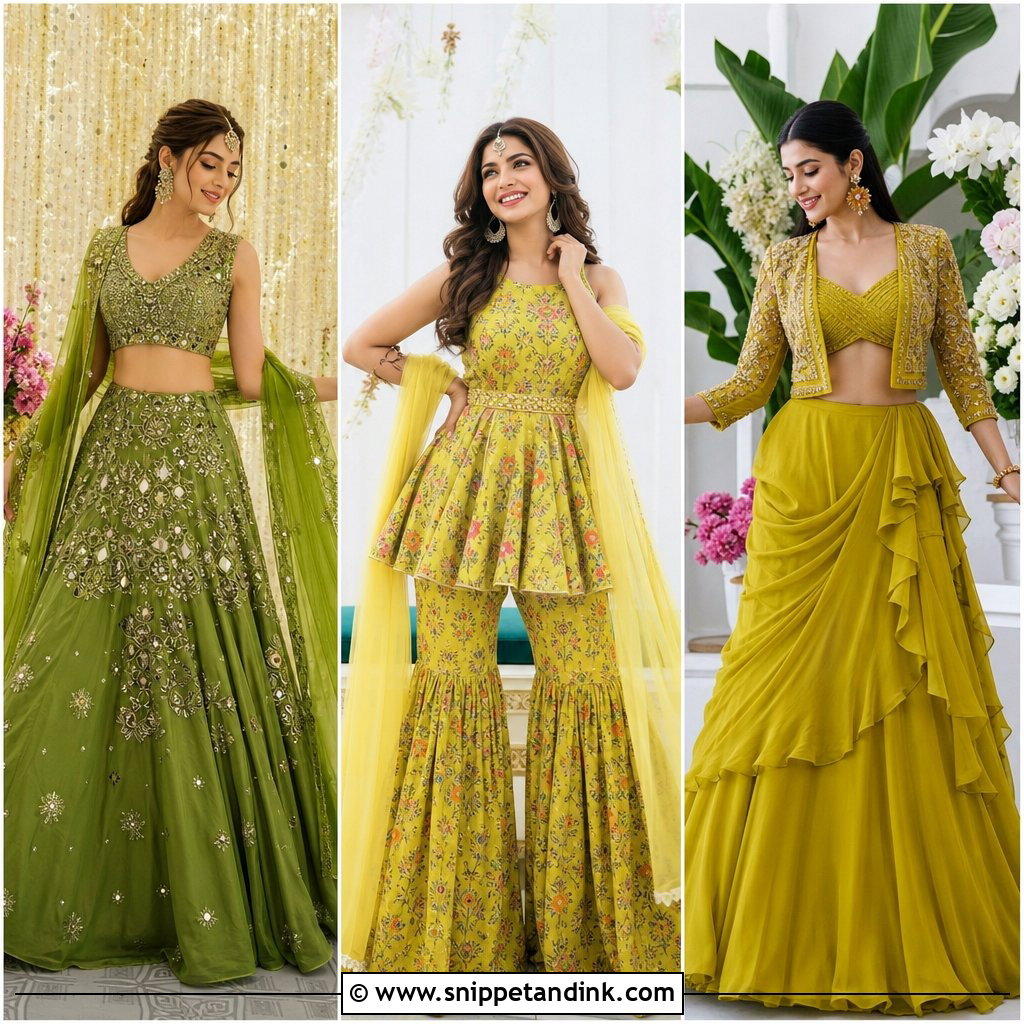
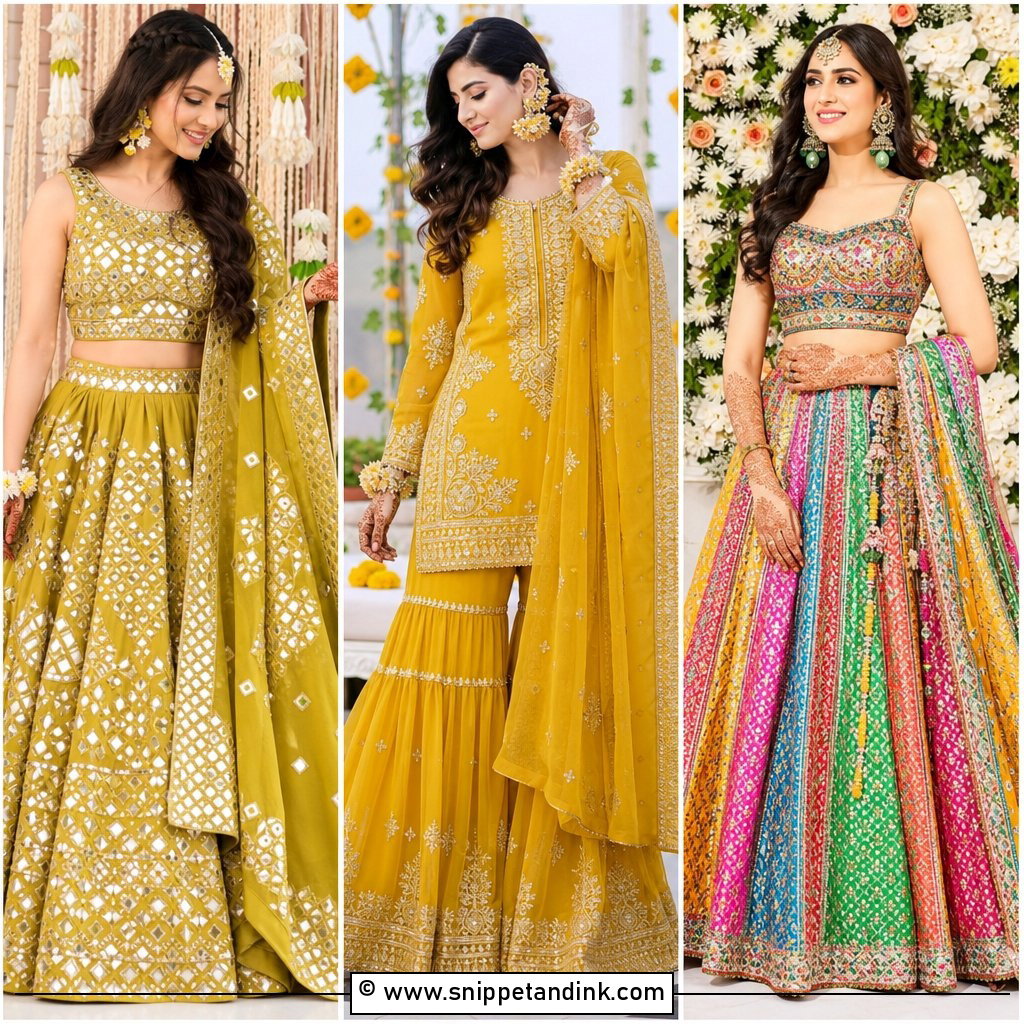
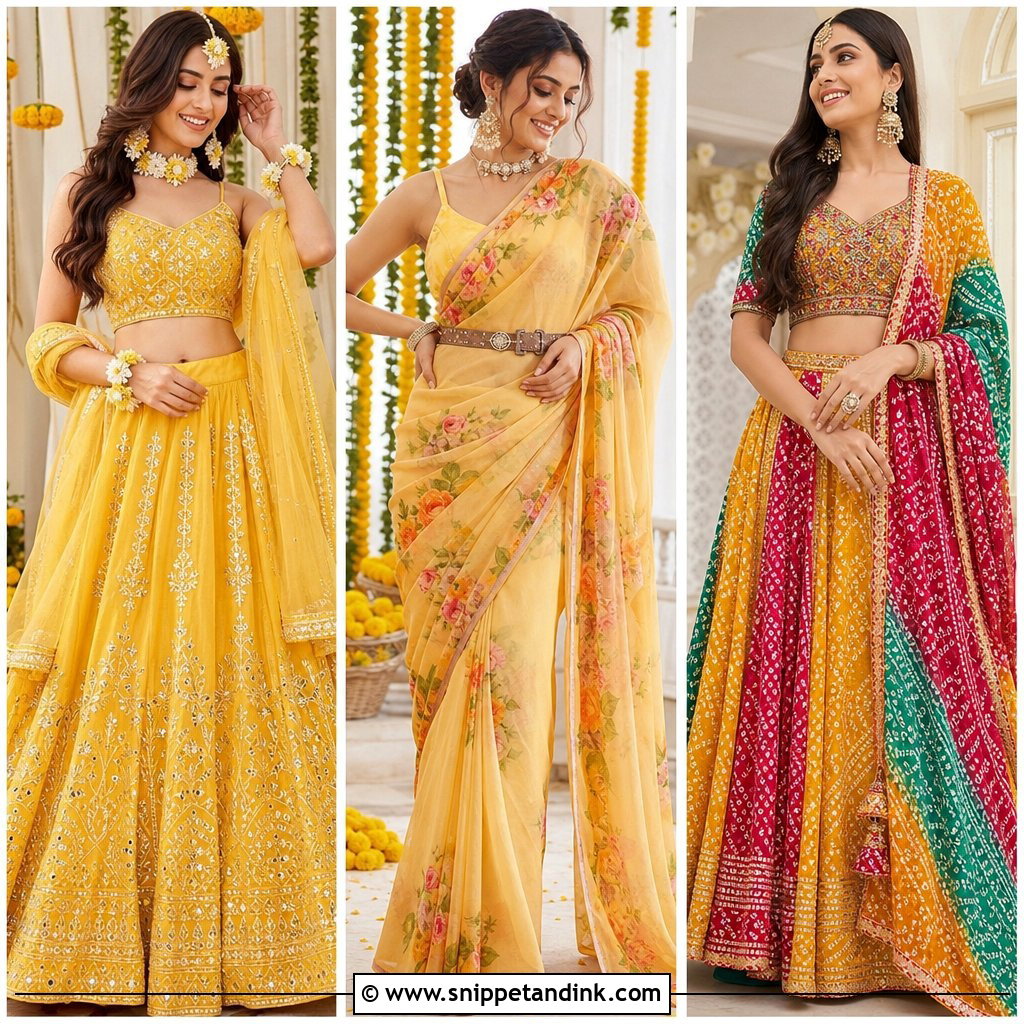
25. Palazzo Mehndi Suit Design
Wide-legged palazzos are about as comfortable as festive clothing gets, and you can sit on a floor cushion in them without a second thought. They pair with short kurtas, long kurtas and peplums. Cotton silk, crepe, georgette and chanderi all drape well; avoid stiff fabrics that make the legs stand out like a tent. Coral, mint and mustard are easy colours. I add embroidery at the neckline or dupatta border to lift it. Flats and simple jewellery finish it for guests and family members who want modest coverage.
26. Jacket Mehndi Dress Design
A jacket gives you the layered look of a dupatta without anything to adjust all evening. It goes over a lehenga, crop top and pants, a kurta set or a gown. I choose sleeveless or short-sleeved pieces underneath when henna is going on the arms. A long jacket gives drama at an evening function; a short one keeps things lighter. Leave it open or fastened at a single hook so it can hang away from your hands while you sit, and balance it with earrings rather than a necklace.
27. Pastel Mehndi Dress Design
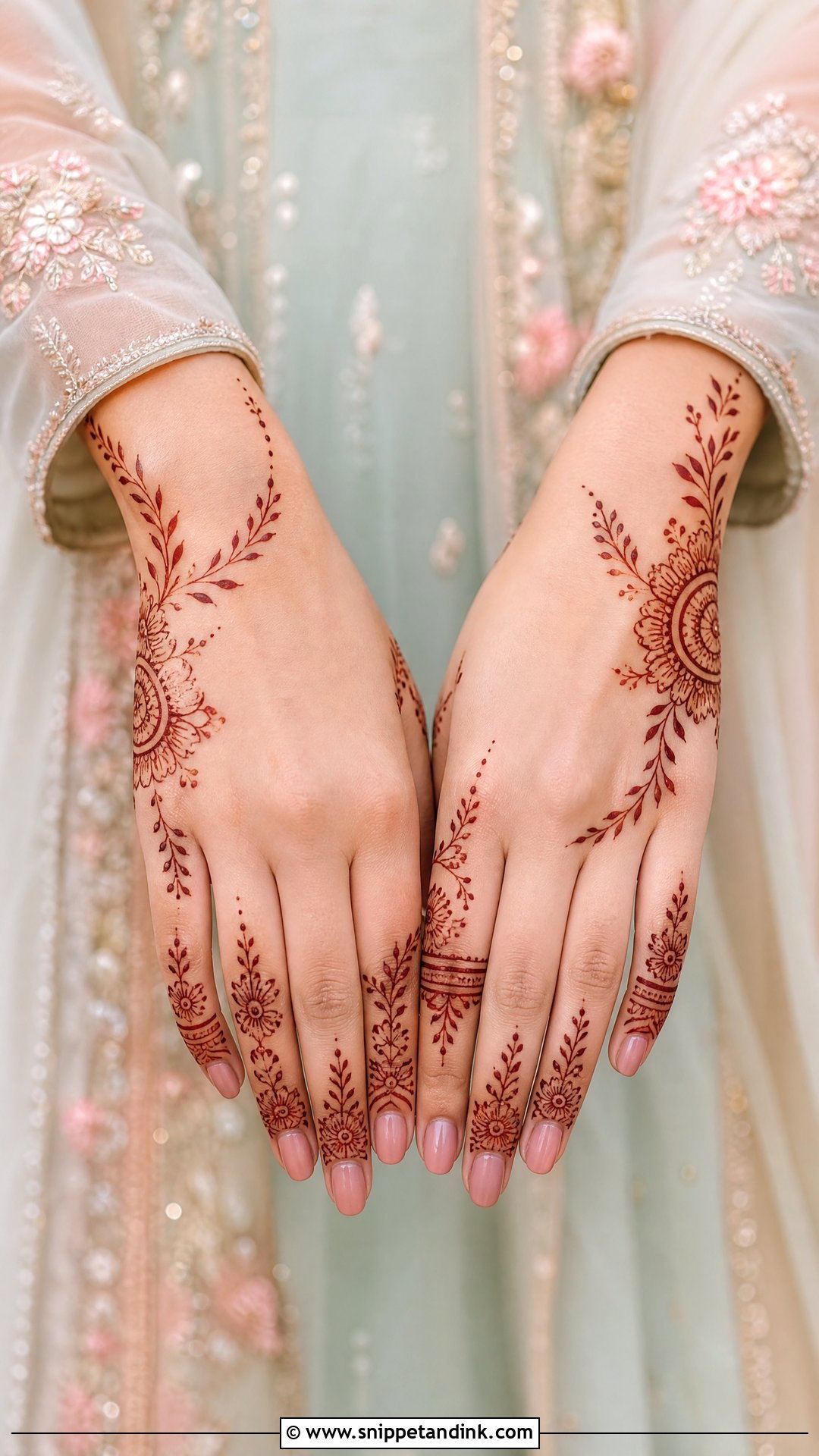
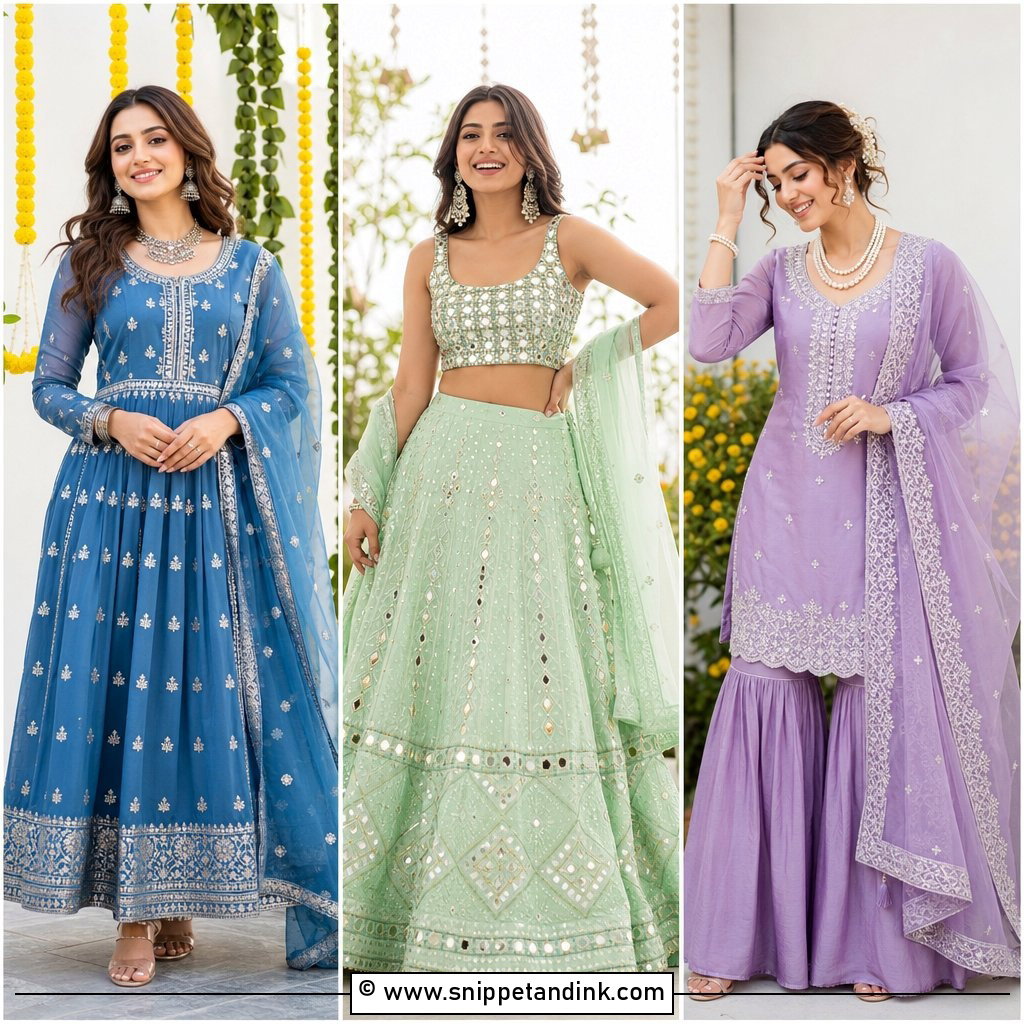
Daytime and garden mehndis are where pastels make the most sense, because soft shades can look washed out under yellow evening lighting. Mint, powder pink, lemon, peach and lavender need texture to feel festive, so I add mirror work, pearls or coloured threadwork. A pastel lehenga, anarkali or sharara works. Deep maroon henna reads strongly against a pale sleeve or lap, which is a nice bonus for close-up photos. Brides can bring in brighter floral jewellery for contrast; guests can keep it understated.
28. Minimal Mehndi Dress Design
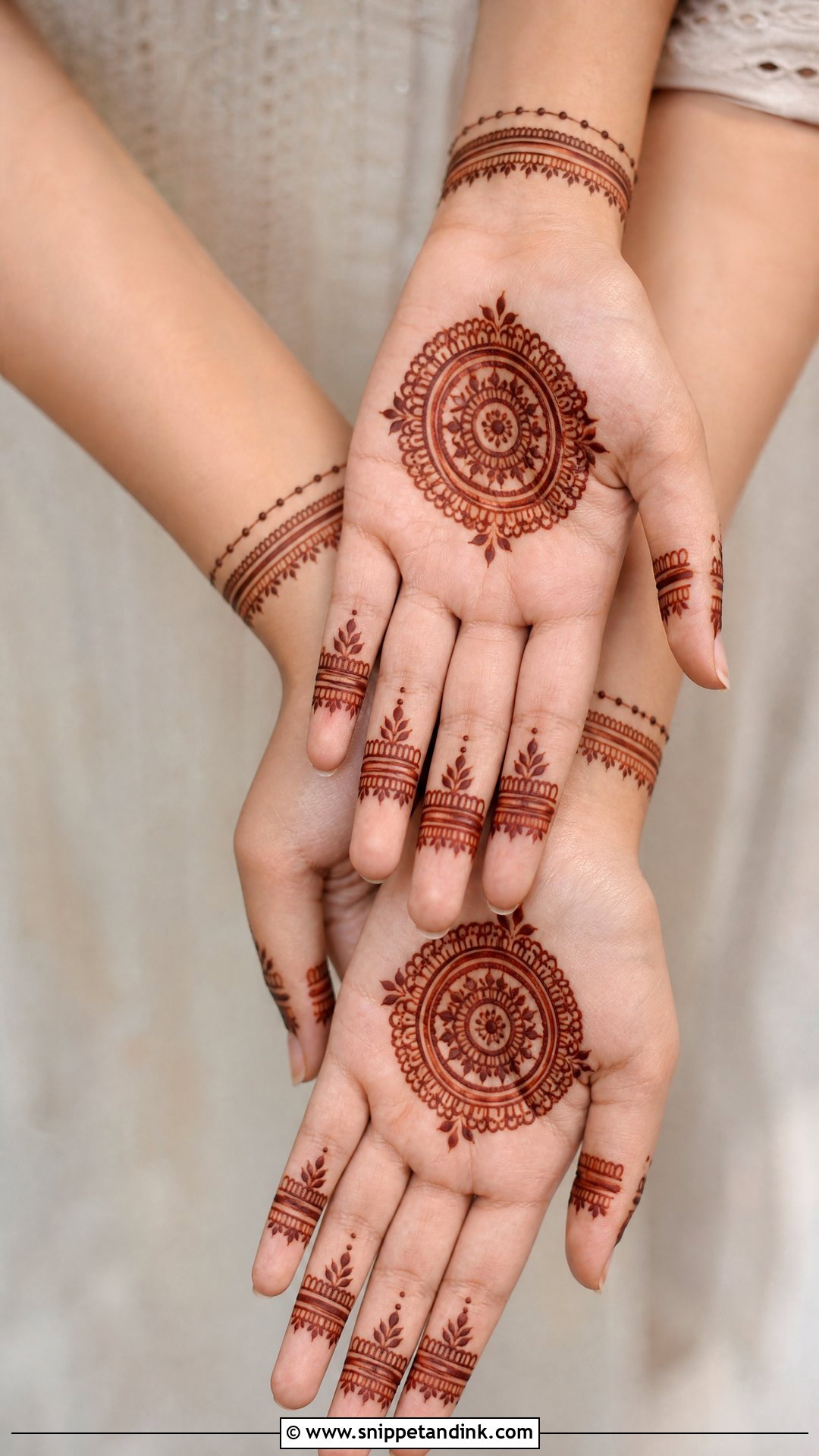
Minimal doesn’t mean empty. A plain silk kurta set, a light organza saree or a solid sharara with a fine border needs crisp fit and good fabric to carry it. I allow one statement piece, large earrings, a tikka or embroidered juttis, and nothing more. This approach suits intimate ceremonies and anyone who finds heavy embroidery uncomfortable. It also leaves the henna as the most detailed thing you’re wearing, which a deep stain deserves. Keep makeup fresh to match.
29. Luxury Mehndi Dress Design
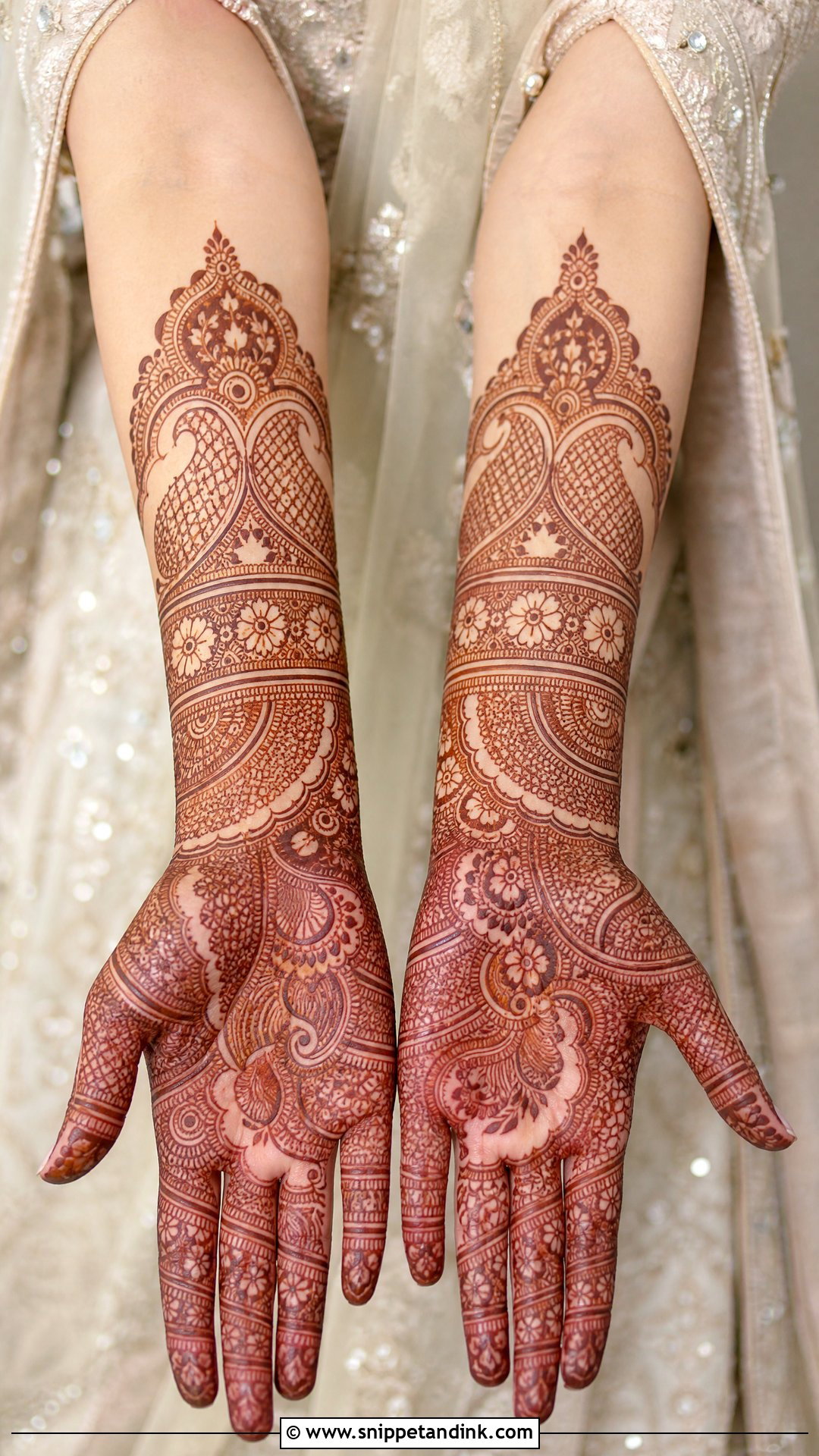
With a luxury mehndi outfit, the difference shows up close: in the density of the embroidery, the fall of a raw silk, the neatness of the finishing inside the seams. Embroidered ghararas, designer shararas and layered pishwas are the usual shapes, still in playful mustard, emerald, rust or magenta. Brides tend to choose this level for larger functions with a stage and professional photography. Heavy outfits get hot, so I ask for a lining in breathable cotton. No cuffs near the wrists, and a dupatta drape that’s pinned in at least two places.
30. Modern Mehndi Dress Design
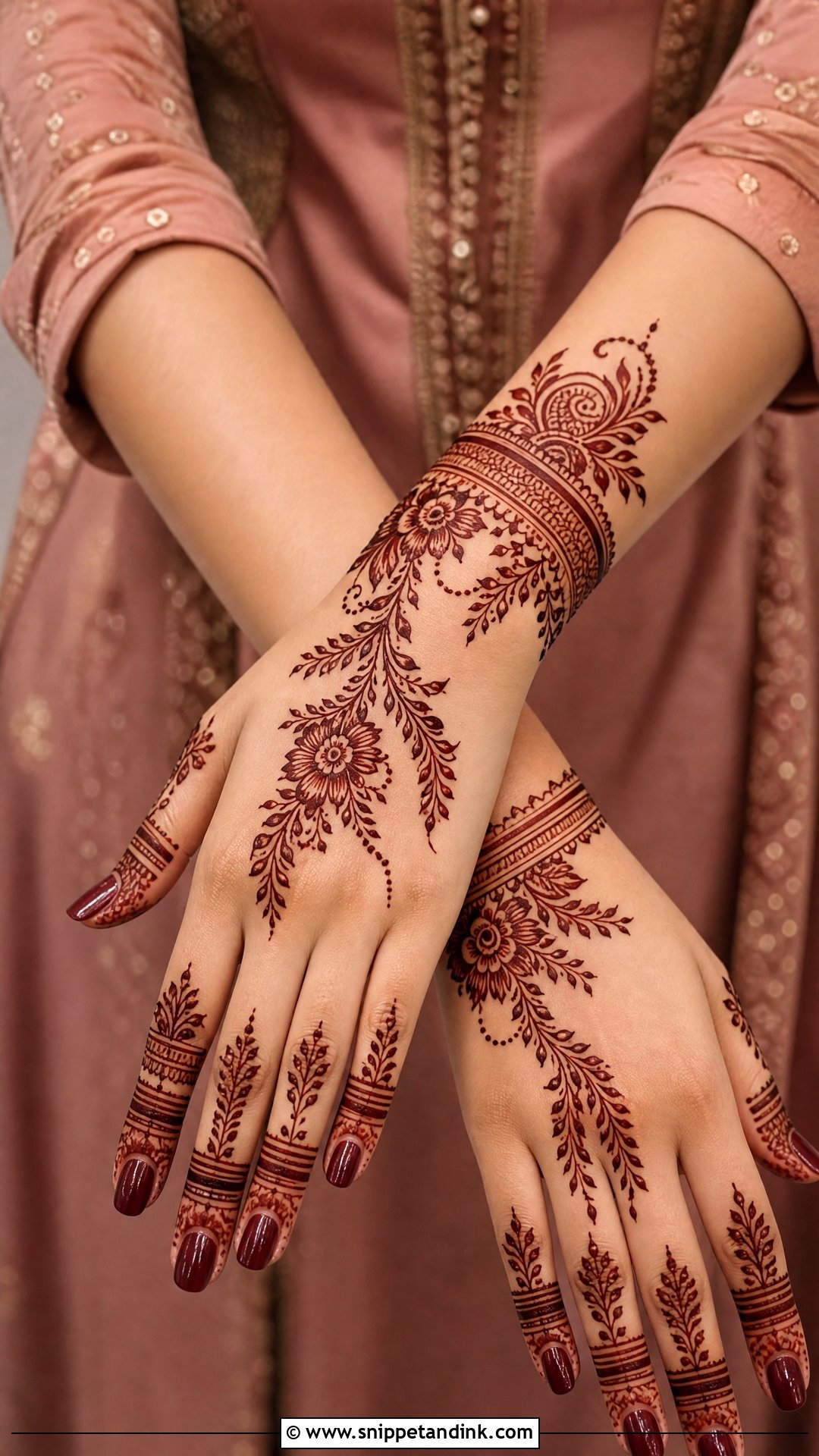
Modern mehndi clothing swaps heavy embroidery for cut and drape: a ruffle saree, a belted lehenga, a printed co-ord, a structured sharara. Colours can be bold or soft, but the styling stays clean. Statement cuts, tassels and mirror highlights carry the festive feel. I’d suggest this route to a bride who wants the mehndi to feel distinct from her wedding outfit. Hands and wrists stay visible because the henna is still the centre of the function, and comfortable shoes finish it.
When Paste or Haldi Gets on the Outfit
It happens at almost every mehndi: someone leans on a sleeve, a crumb of drying paste falls into a lap, a cousin hugs you with wet hands. Henna dye binds to keratin in skin far more strongly than to most fabric, so a quick, dry response usually saves the outfit. Rubbing it in with water is what makes it worse.
- Let wet paste set for a minute, then lift it off with the edge of a card or a blunt knife rather than wiping.
- Brush away dried flakes outdoors or over a sink; crushed paste in a fold leaves a faint orange shadow.
- On washable cotton, rinse the back of the fabric with cold water and a little mild detergent the same night.
- On silk, embroidered or dry-clean-only pieces, don’t treat it at home. Tell the cleaner it’s henna or turmeric, since both need a specific approach.
Storing Gota and Mirror Work Between Functions
A lot of mehndi outfits get worn again, at a sister’s wedding or an Eid gathering, and the metallic trims are what age first. Gota and zari can tarnish in damp air, and mirrors loosen if the outfit is folded tightly across them.
Air the outfit for a day before packing it away so any sweat dries out. Fold it with soft muslin or plain cotton between the embroidered layers, never inside plastic, which traps moisture. Turn heavy lehenga skirts inside out so the mirrors face inward. Refold along different lines every few months, because long-held creases eventually crack the threadwork along the fold.
Dressing for an Evening That Starts in the Henna Chair
Every outfit above can work, as long as your hands stay free for the artist and you can sit, stand and dance in it without fighting the fabric. Brides can go bold with a lehenga, gharara or full sharara; guests and bridesmaids do well in lighter suits, anarkalis, sarees and fusion sets. Try the outfit sitting down before the day, check where the sleeves fall, and plan where the dupatta will be pinned. Get those three right and the rest is colour, which is the fun part.
You'll Like These Ideas:


Leave a Reply