
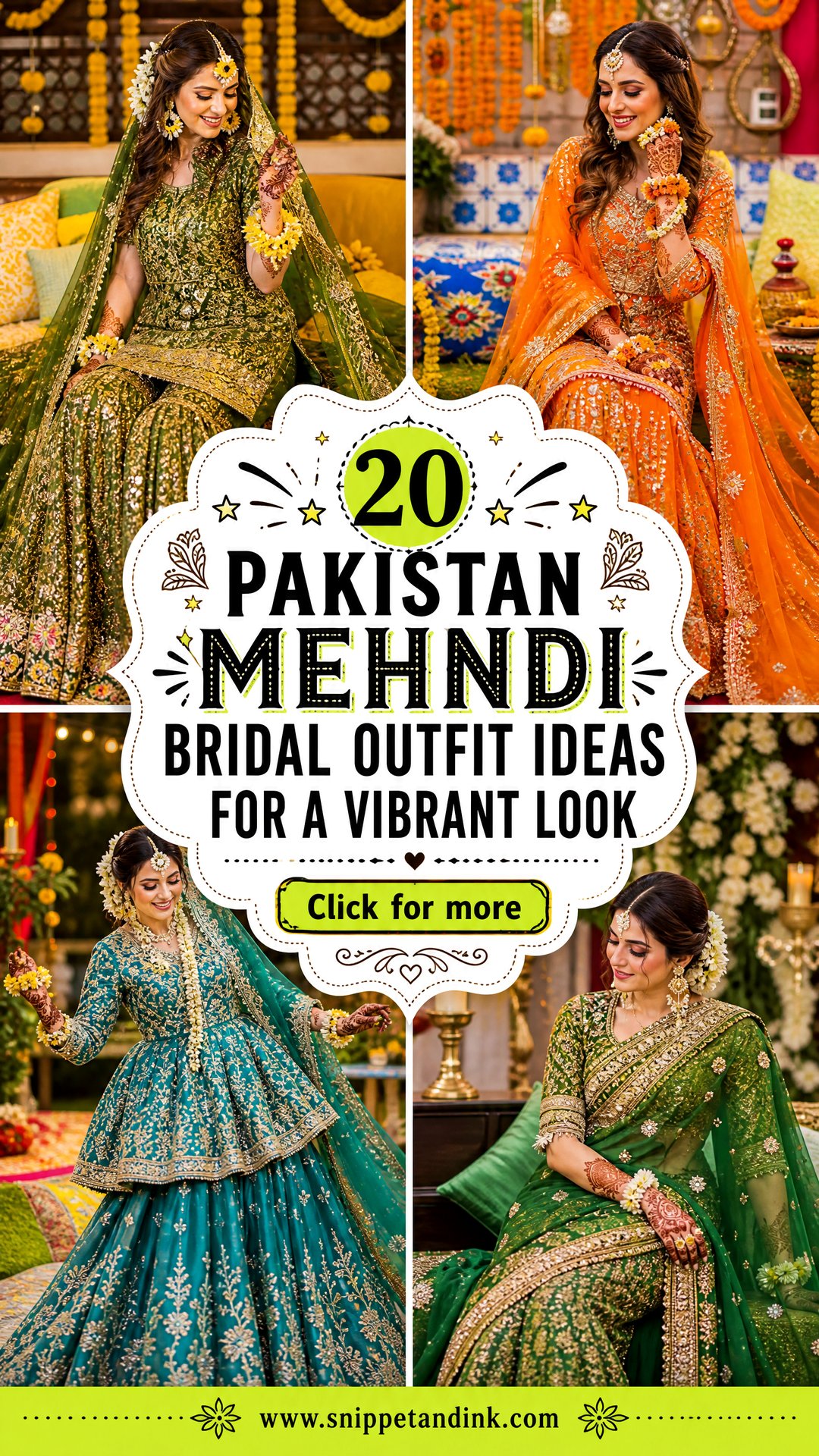
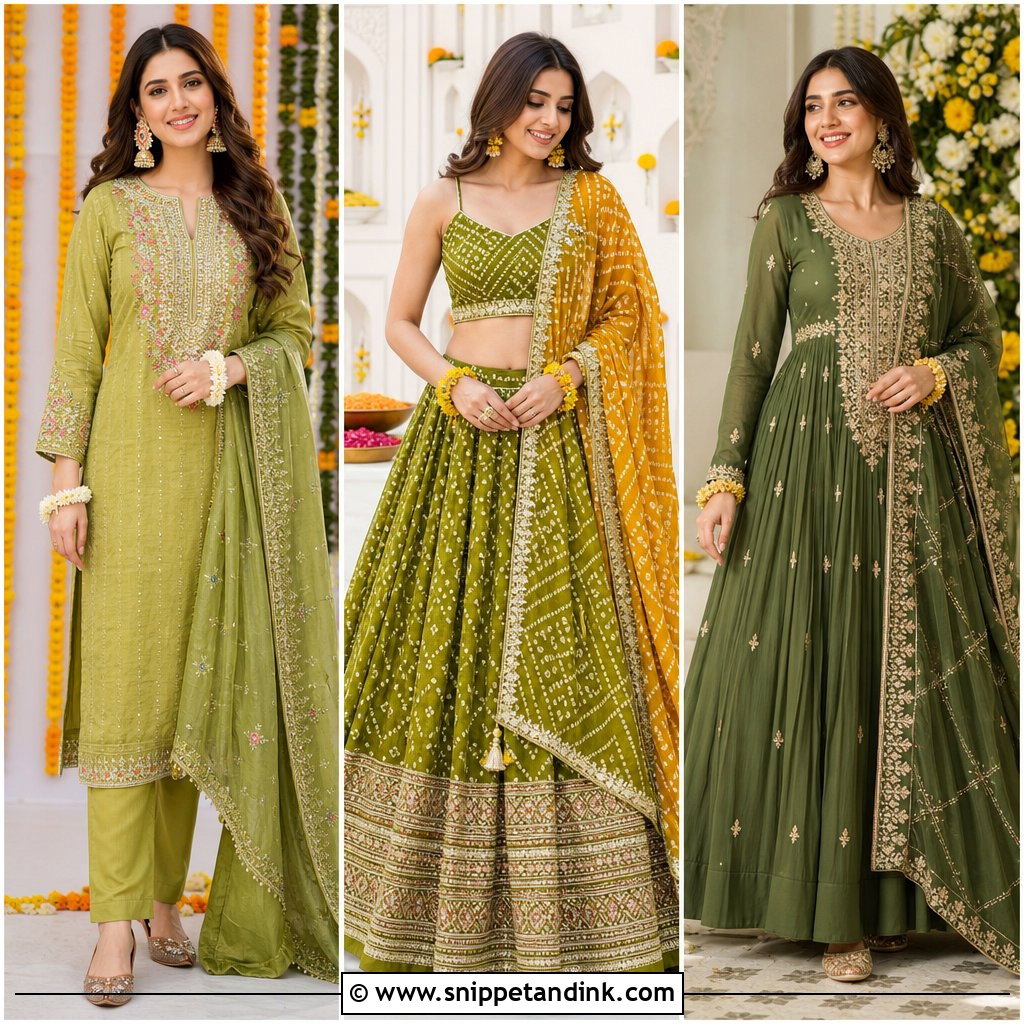
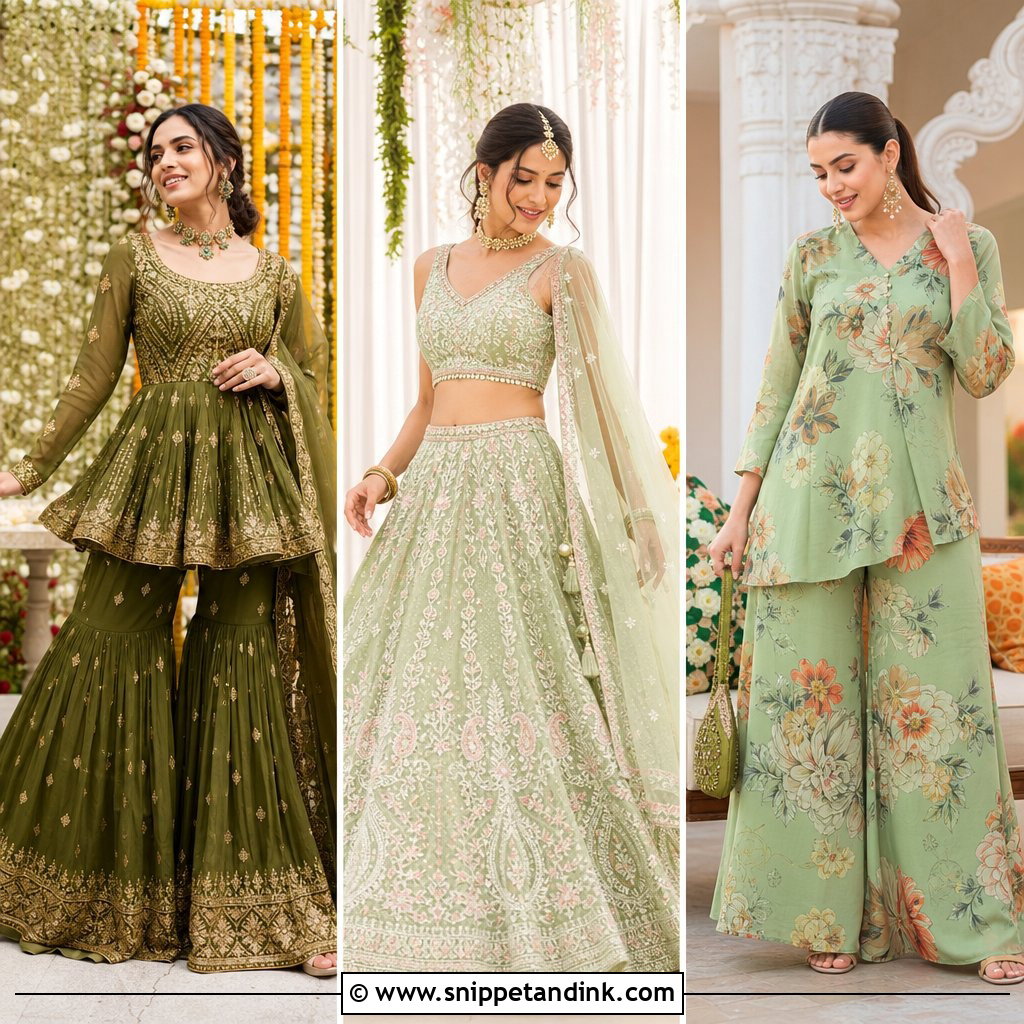
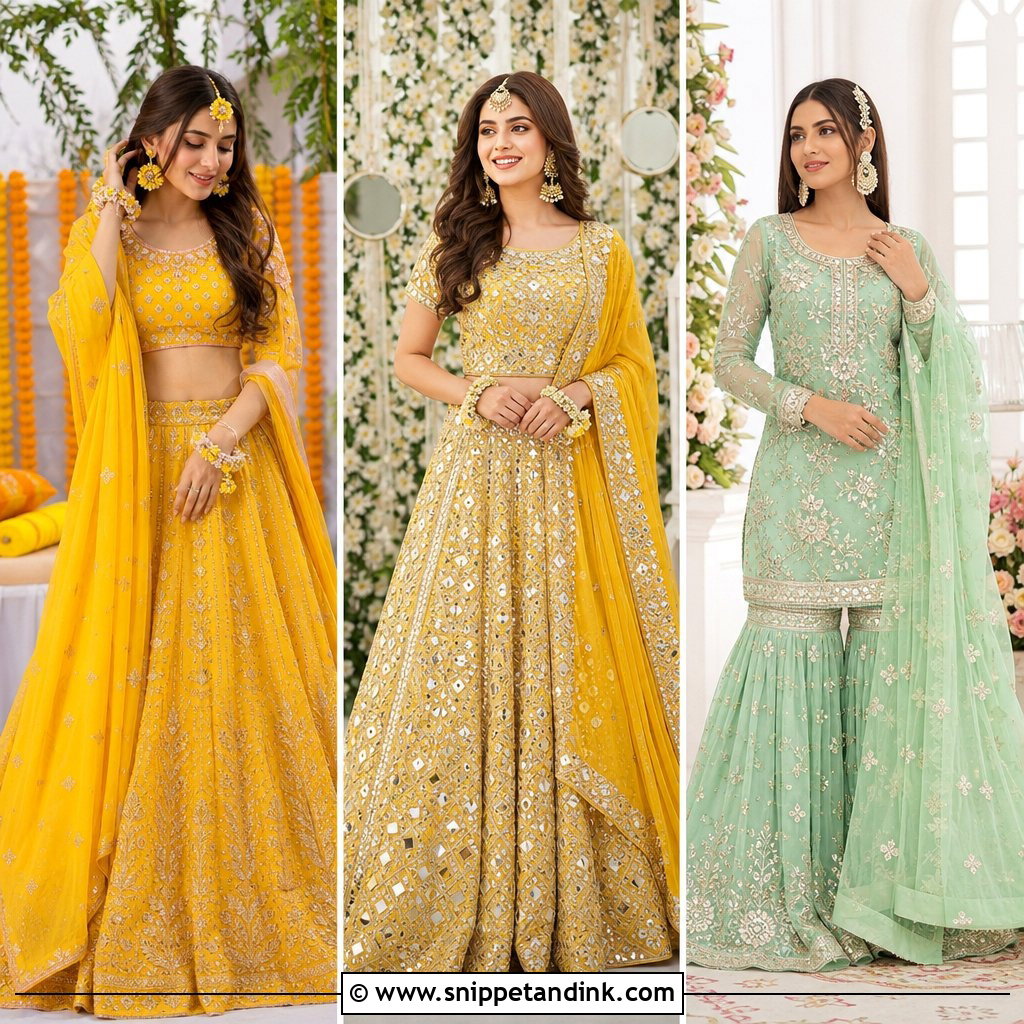
A mehndi outfit has a harder job than the walima or baraat dress. You will sit cross-legged for henna, dance with cousins, and be photographed under strings of marigolds, sometimes all within an hour. When I style a Pakistani bride for her mehndi, I start with movement and only then talk colour. Yellow, orange and green are still the classic palette, with coral, teal, mint and fuchsia as fresher choices. Lehenga cholis, ghararas, shararas, pishwas dresses and angrakhas all suit the night because they let you move. Below are 20 complete looks, with my notes on balancing embroidery, jewellery, shoes and dupatta so that nothing fights for attention.
Henna Paste, Wet Hands and Sleeves That Stay Clean
Many brides have their own henna applied earlier, but plenty still sit for a few designs or touch-ups on the night. Either way, the paste is wet for a while, then it dries and cracks, and many artists finish with a sticky lemon-sugar coat to keep it on longer. Every one of those stages can mark fabric, and henna on silk or organza usually leaves an orange stain.
- Elbow-length or three-quarter sleeves keep fabric well away from the wrists and the backs of the hands.
- Avoid wide bell sleeves or long cuffs that hang over the hands, however lovely they look on the hanger.
- Pin the dupatta so it never needs adjusting by hand. You will not be able to touch it for a while.
- Bangles go on after the paste has dried and been scraped off, or they smear the design.
- Keep a plain cloth on your lap while the paste sets, especially in ivory, mint or any pale shade.
Tell whoever is helping you dress what time the henna starts. With wet hands you cannot fix a slipping dupatta or eat neatly, so everything should be secured before you sit down.
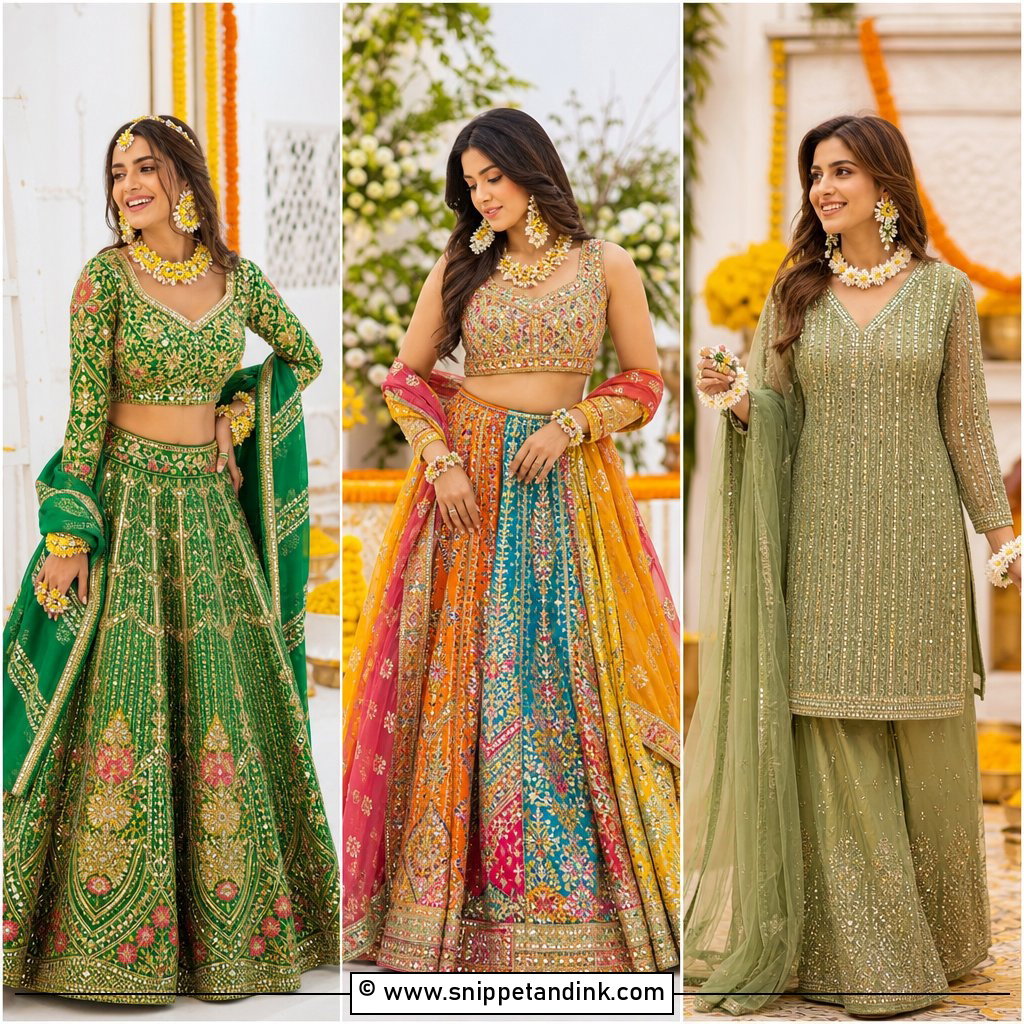
1. Yellow Mehndi Bridal Lehenga
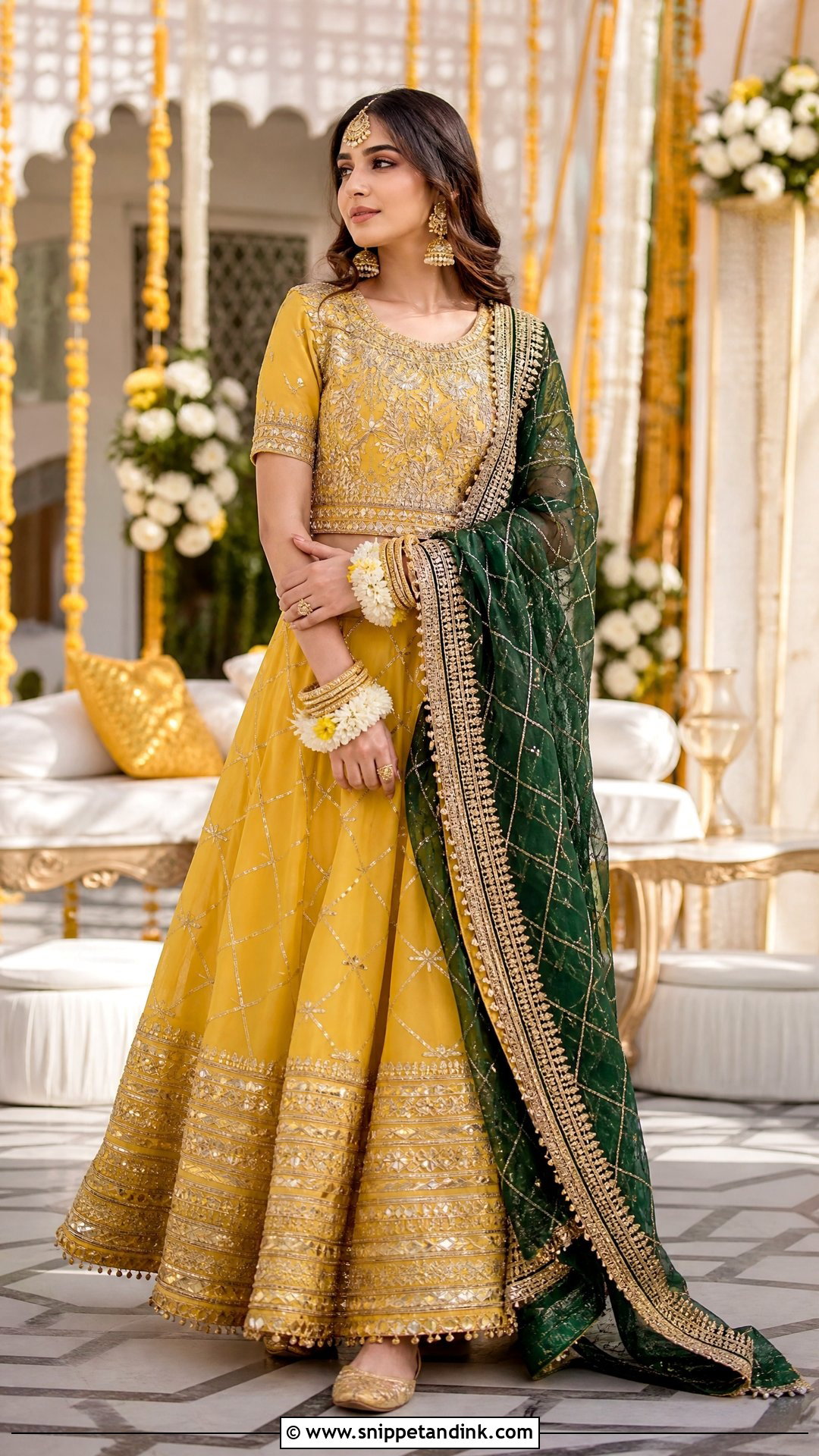
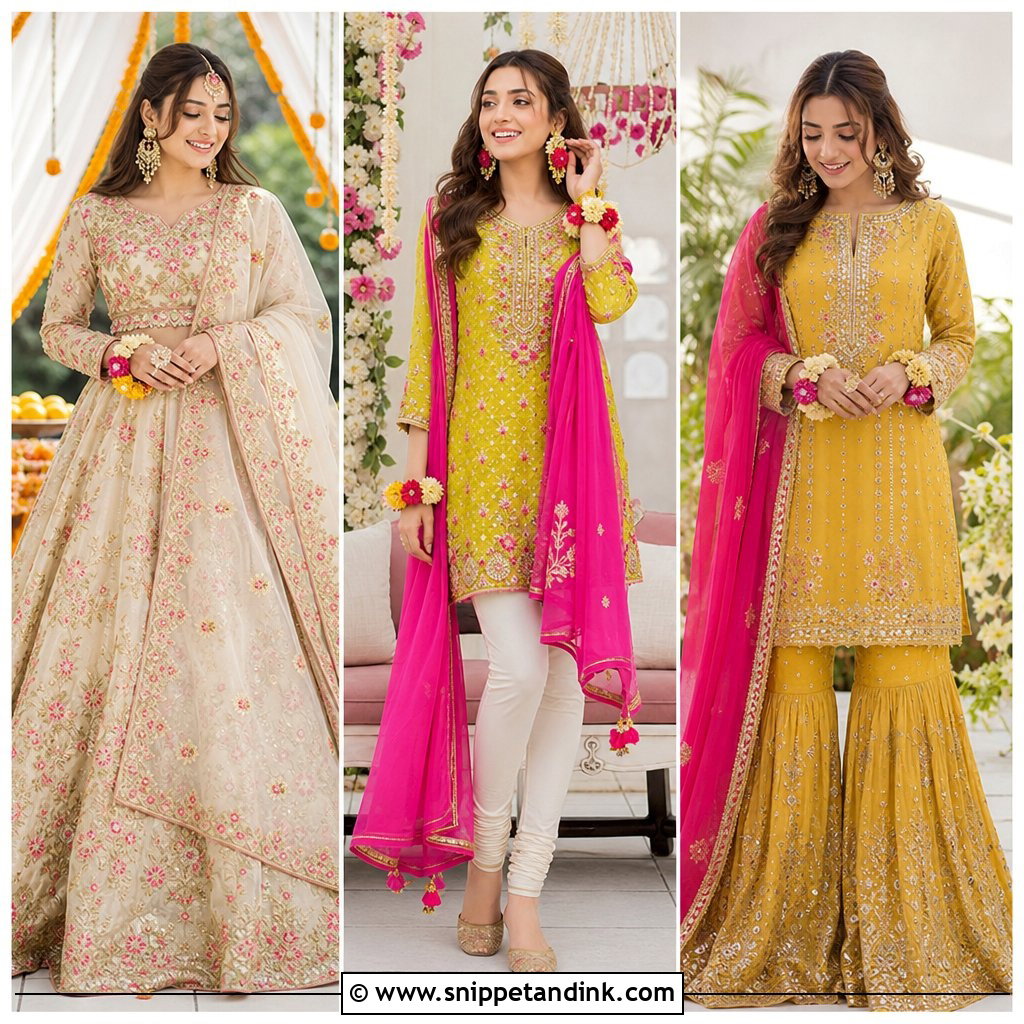
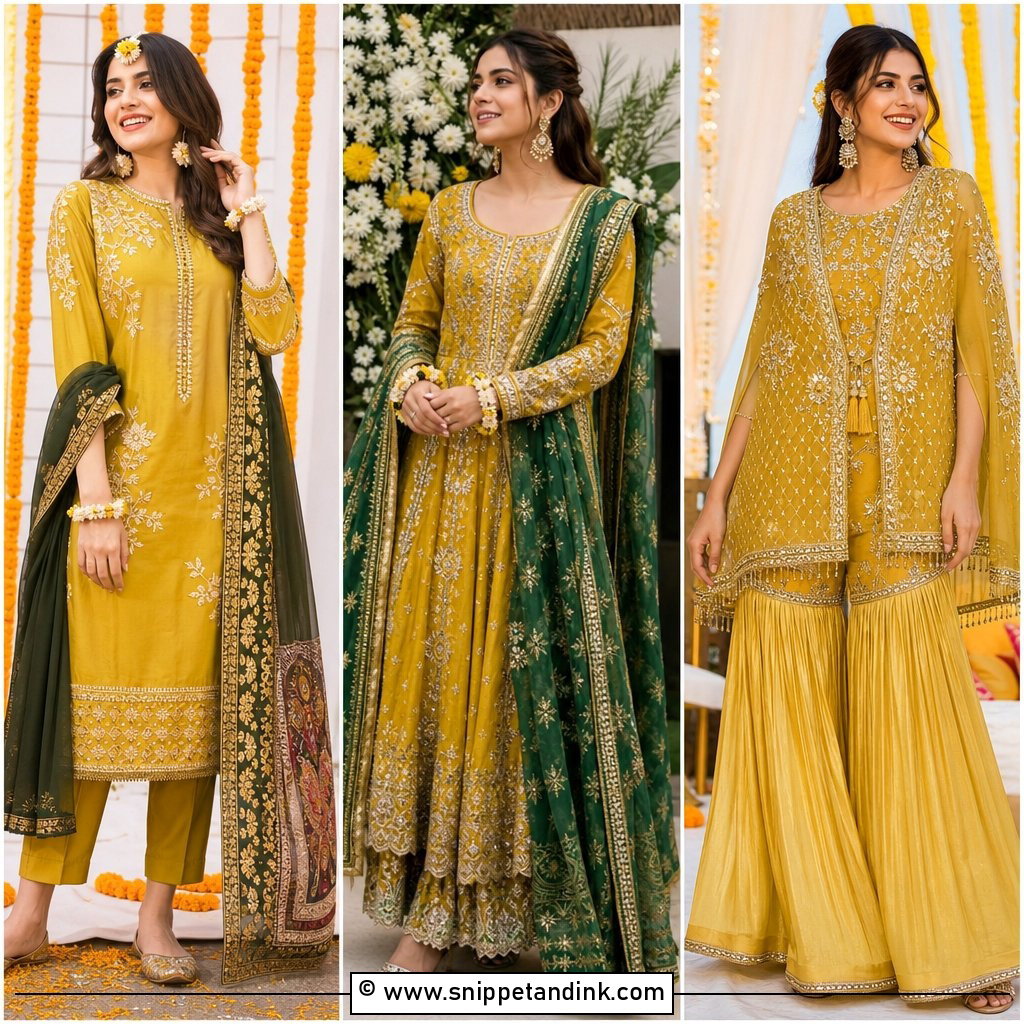
Yellow is the colour most families picture for a mehndi, and a raw silk or organza lehenga with gold gota keeps it festive for a daytime event. My one rule with yellow: it needs a partner. On its own it can wash out both skin and photographs, so I add a green or hot pink dupatta for definition. A short choli with elbow-length sleeves is practical, since sleeves that stop above the wrist stay clear of the henna. Gold jhumkas, a small tikka, embroidered khussas and fresh floral bracelets finish it. Peach blush and a rosy lip keep the face warm next to all that colour.
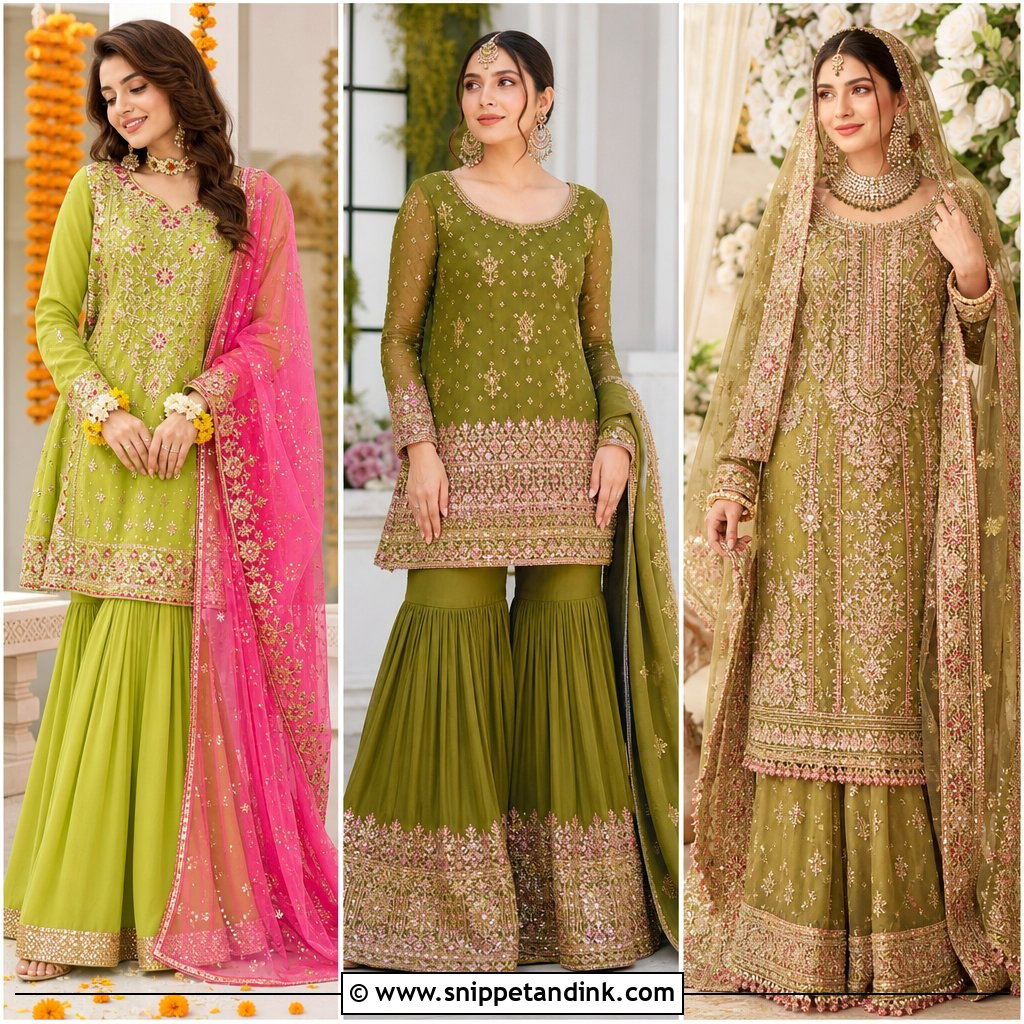
2. Green Mehndi Bridal Gharara
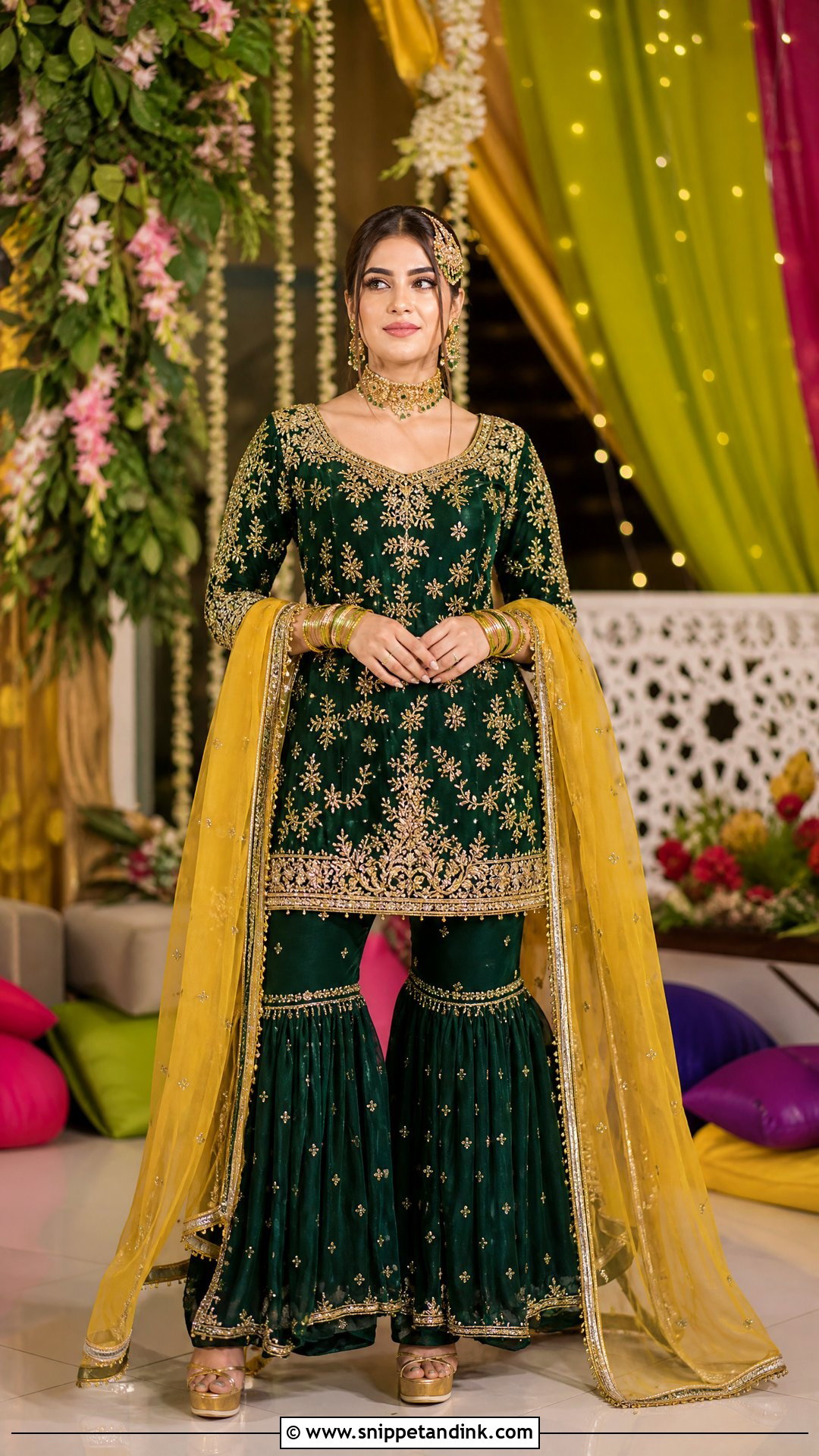
An emerald gharara reads as traditional the moment you walk in. The flare starts at the knee, where the gota band covers the join between the fitted upper leg and the gathered lower panel, so that band is where I look first for good finishing. Pair it with a short embroidered kameez with a modest round neck, which leaves room for a choker. A yellow organza dupatta over one shoulder lets its border frame the outfit. Cushioned khussas, a passa and chandbalis complete it. Emerald holds up well under warm evening lighting, so it suits a night function with lots of colourful décor.
3. Mustard Mehndi Bridal Pishwas
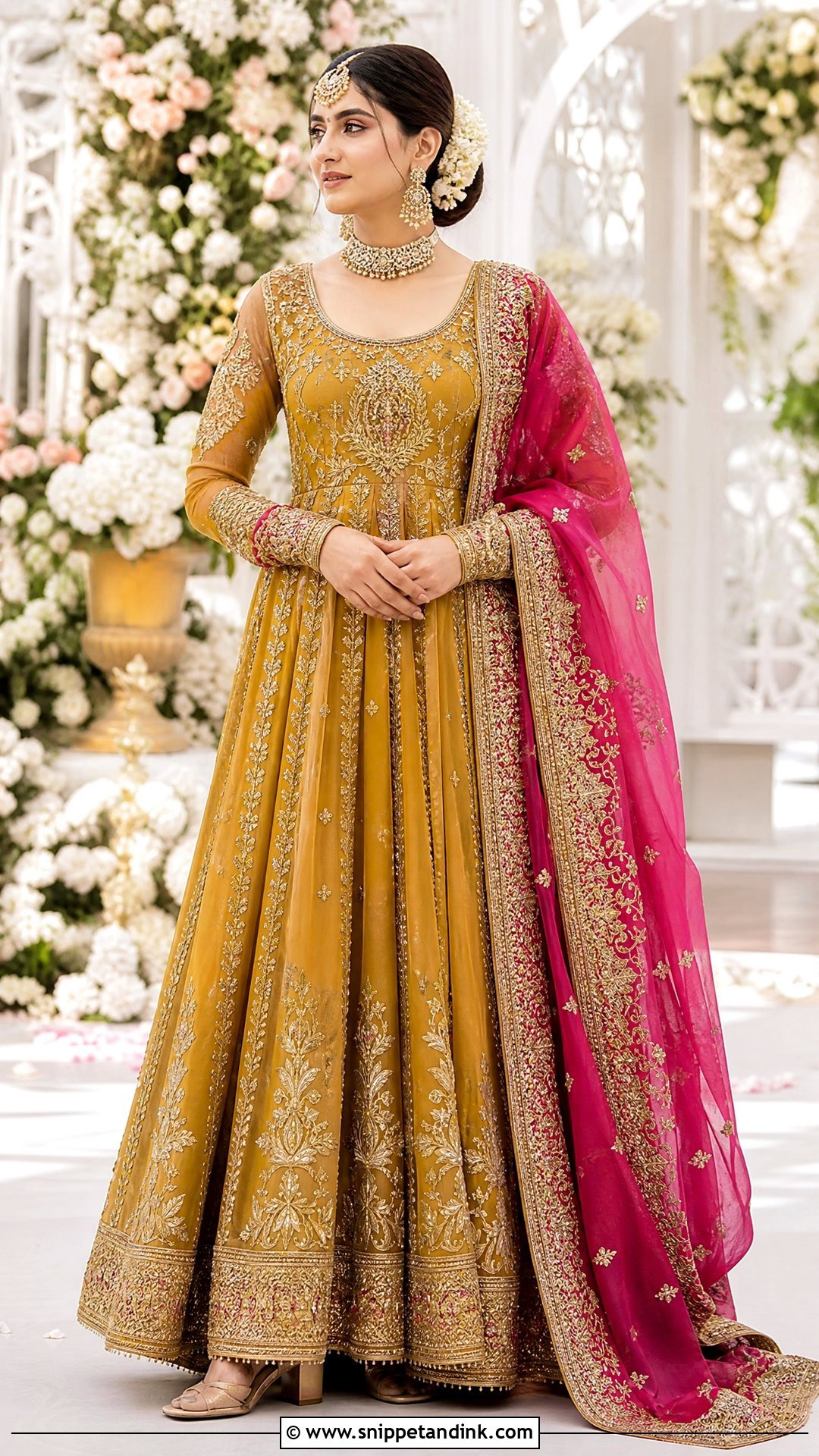
A mustard pishwas is the outfit for a bride who wants to spin. The fitted bodice and full, floor-length skirt look regal without the weight of a separate lehenga. Antique gold embroidery, small mirrors and narrow green panel borders keep it traditional. Before the event, I ask brides to practise sitting in it, because a pishwas this full needs to be gathered forward before you sit, or you will be perched on the panels. A magenta dupatta pinned over one shoulder frees your hands for dancing. Fresh white and magenta flower jewellery works well in daylight in place of heavy gold.
4. Orange Mehndi Bridal Sharara
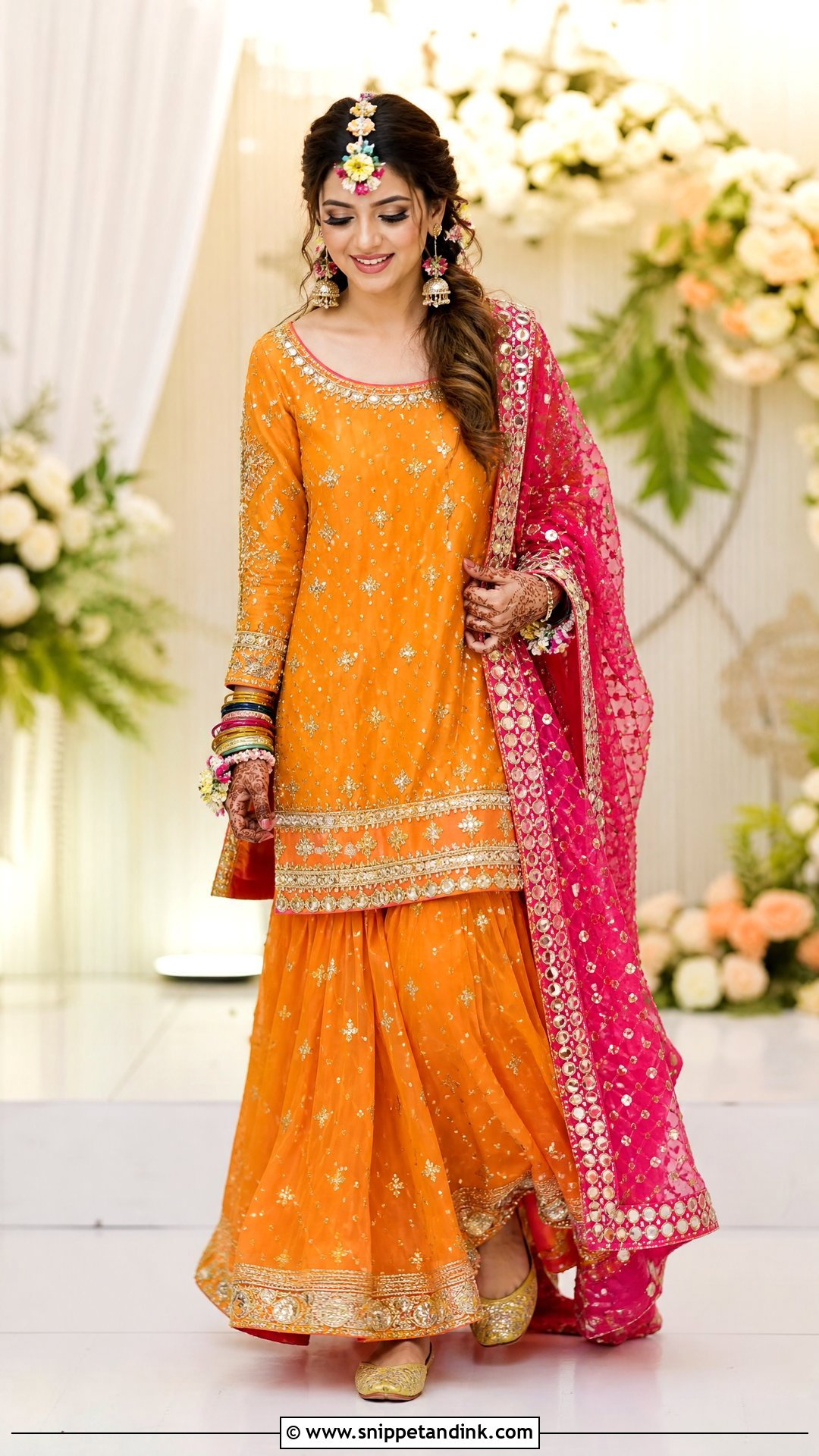
Orange is an energetic swap for classic yellow, and a sharara gives it width without the knee seam of a gharara. Pair the wide trousers with a slightly longer kameez in restrained gold work and small pink florals. I check sharara volume by having the bride sit on a low stool. If the fabric bunches into a hard ridge behind the knees, it is too heavy for a long night. A hot pink dupatta with a mirror border, secured with a discreet loop at the wrist, stays put through dancing. A floral matha patti adds play without heavy jewellery; coral lipstick and soft liner balance the bright palette.
5. Multicolor Mehndi Bridal Lehenga
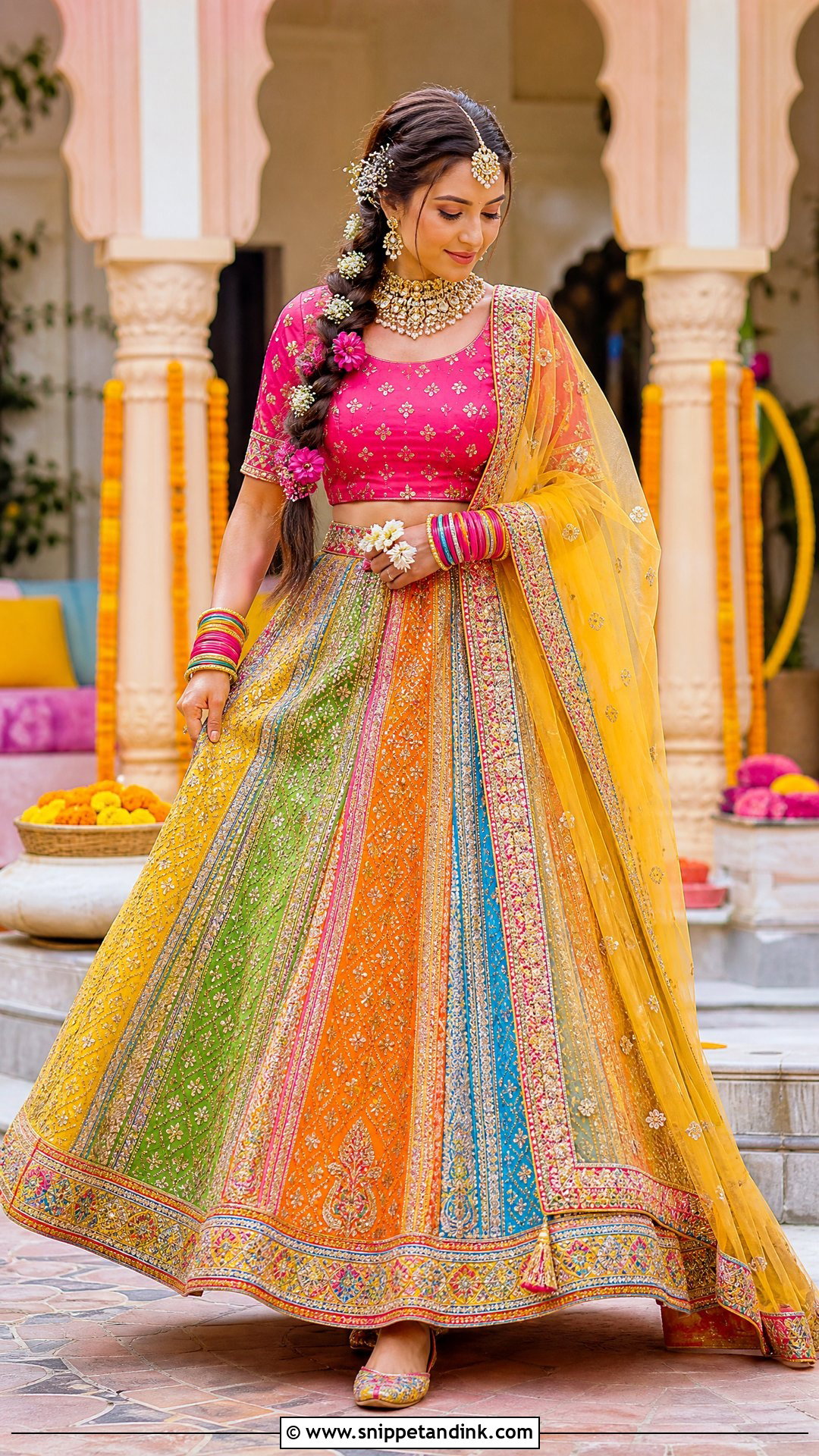
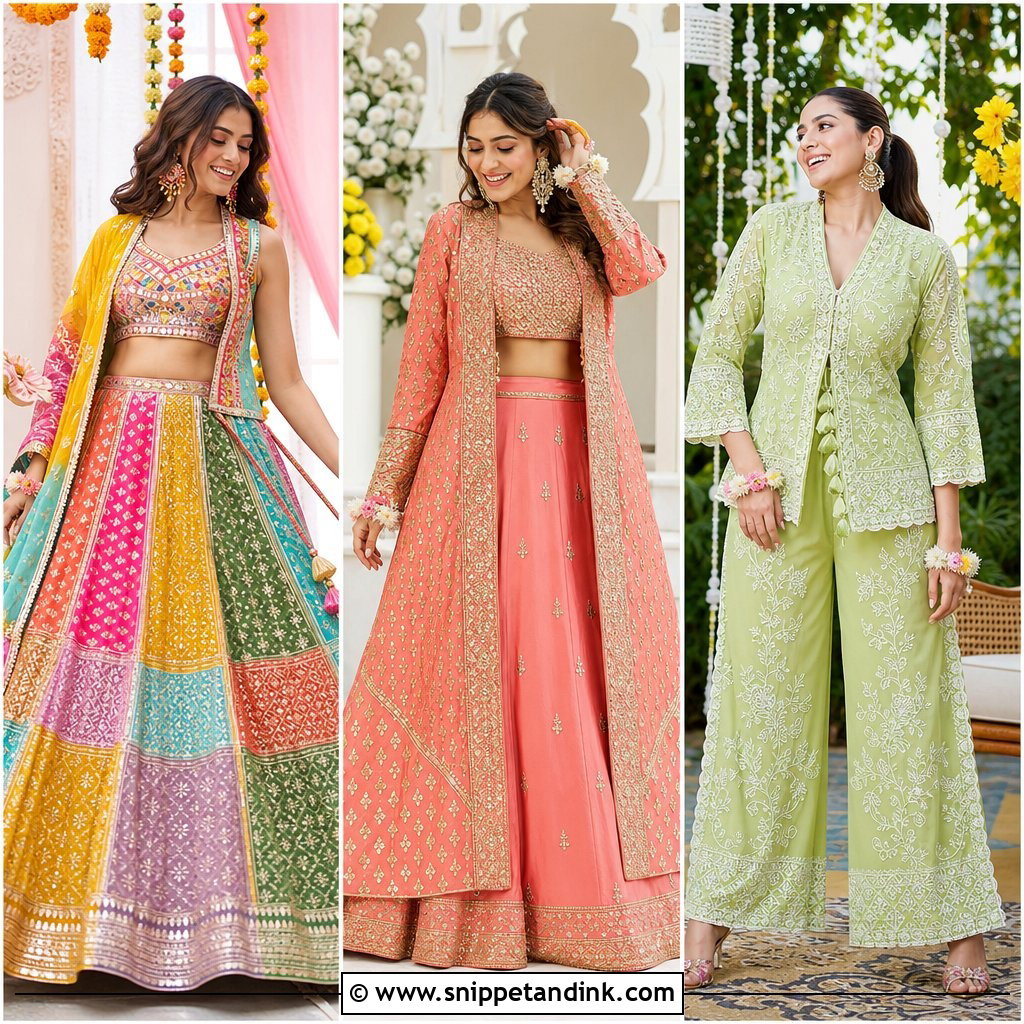
Can’t settle on one colour? A multicolor lehenga lets yellow, green, pink, orange and blue all appear in one outfit. I always prefer paneled skirts here, where each shade has its own section, because a mixed print at this scale blurs into noise in wide photographs. A solid green or fuchsia choli anchors it, and a sheer yellow dupatta with multicolour edging ties it together. Choose one jewellery focal point, usually a gold choker with matching earrings, and stop there. A polished braid with small flower pins and a soft pink lip keep the face calm against the clothing.
6. Lime Green Mehndi Bridal Angrakha
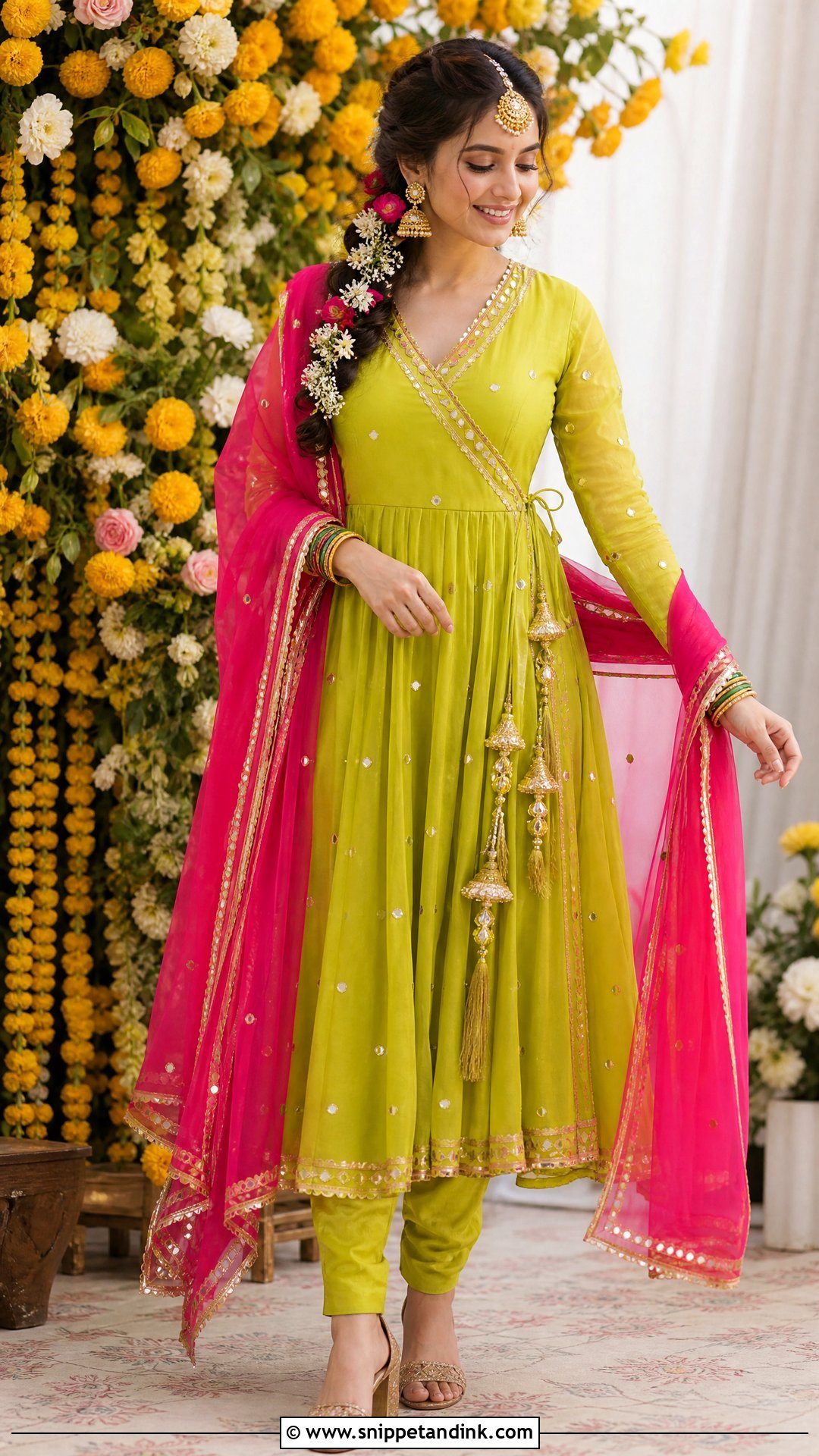
The angrakha’s overlapping wrap bodice makes a natural focal point, and in lime green it looks current rather than costume. The flared lower half moves well for portraits and choreographed dances. I like pink piping and gold tassels with mirror work kept to the neckline and hem. The wrap has one weakness: the tie closure loosens as you move. I add a hidden hook or a press stud under the tie at the fitting so the neckline stays where it should. Churidar or narrow trousers in the same green, a hot pink organza dupatta across the elbows, and low block heels finish it.
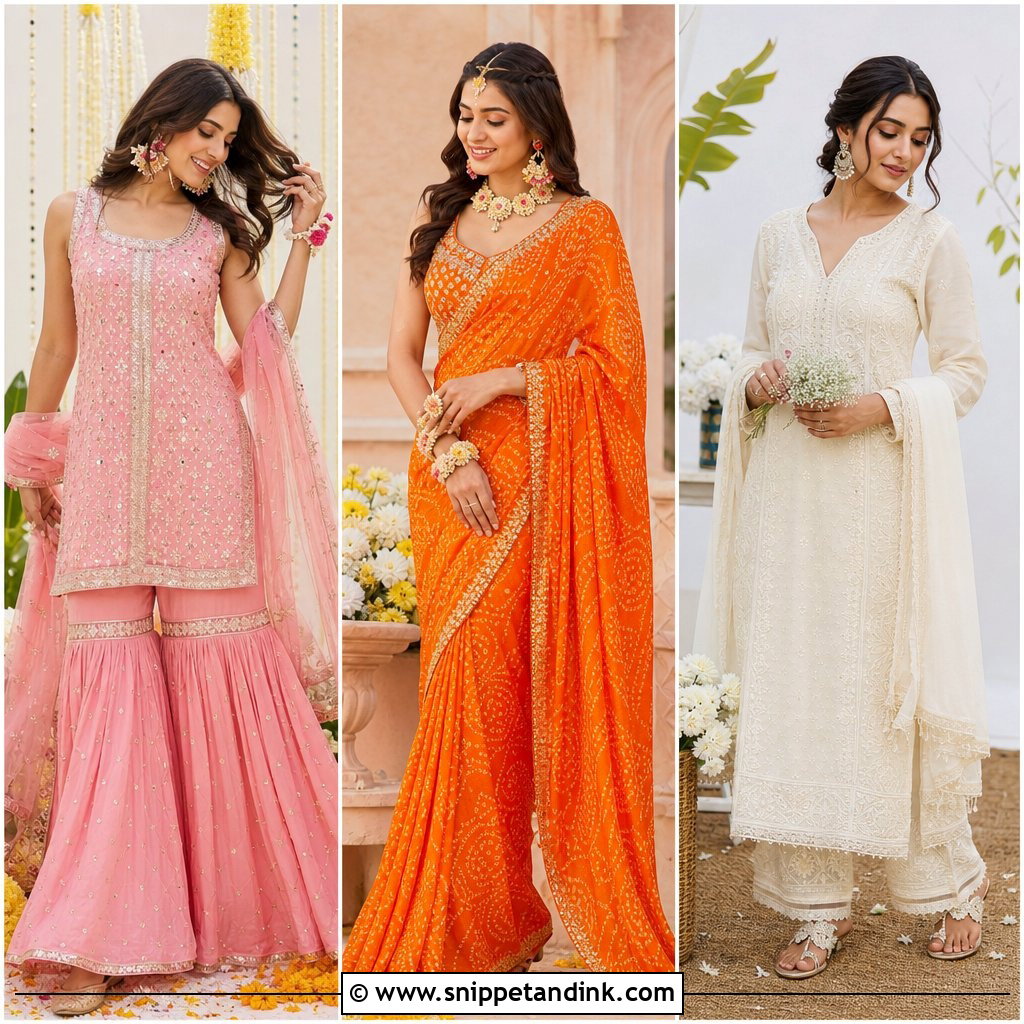
7. Pink And Yellow Mehndi Bridal Gharara
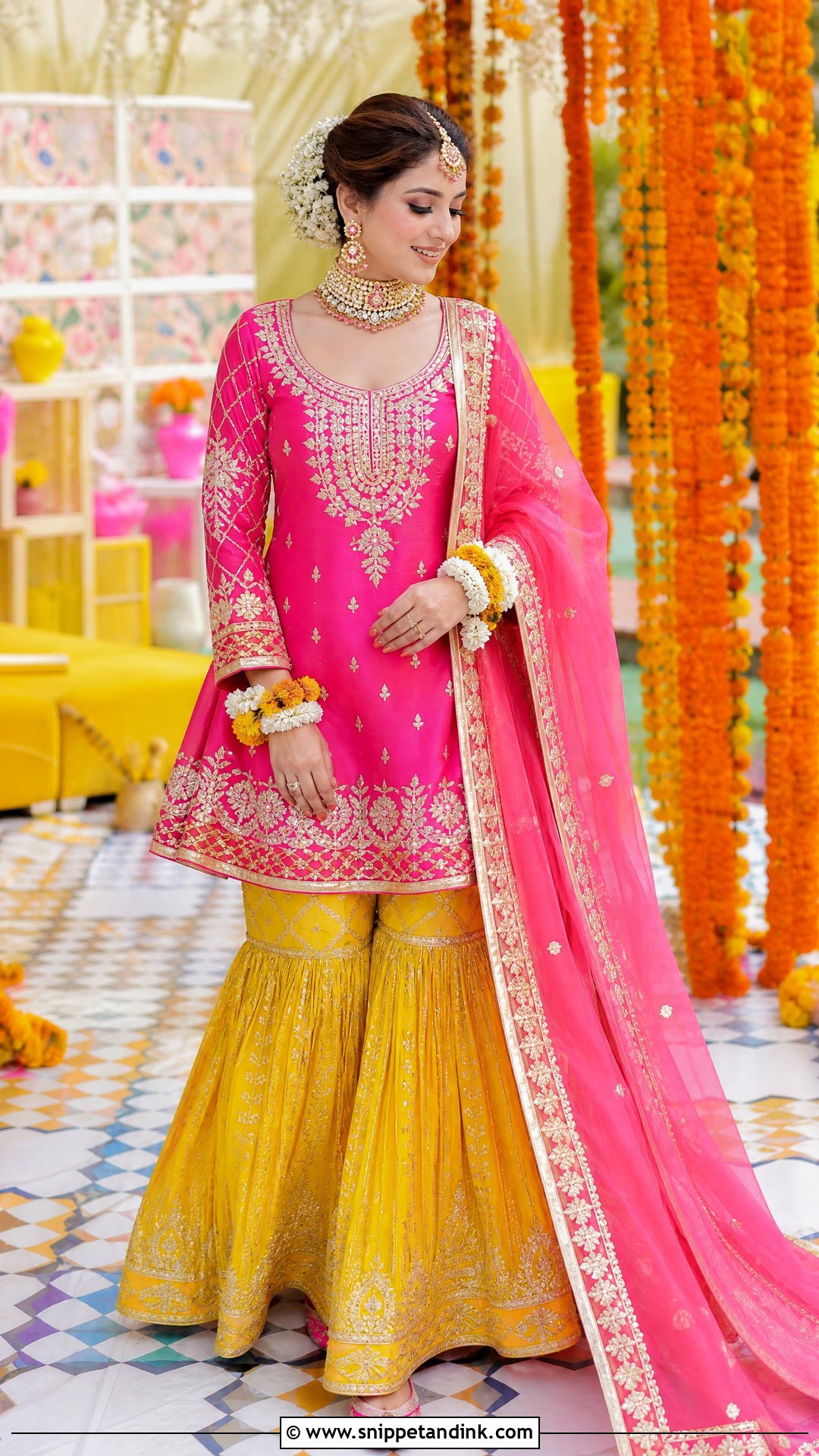
Pink with yellow looks bridal without needing heavy embellishment. A hot pink short kameez with gota lines and yellow florals over a sunshine-yellow gharara with pink borders. The sheer yellow dupatta can cover your head for the entrance and portraits, then move to one shoulder. I keep a few extra safety pins in the bride’s bag for exactly that switch. A pearl-and-gold choker, a delicate passa and pink khussas complete the look. Mixed glass and floral bangles add texture, but I keep them toward the forearm so they don’t press into fresh henna on the wrists.
8. Teal Mehndi Bridal Peplum Lehenga
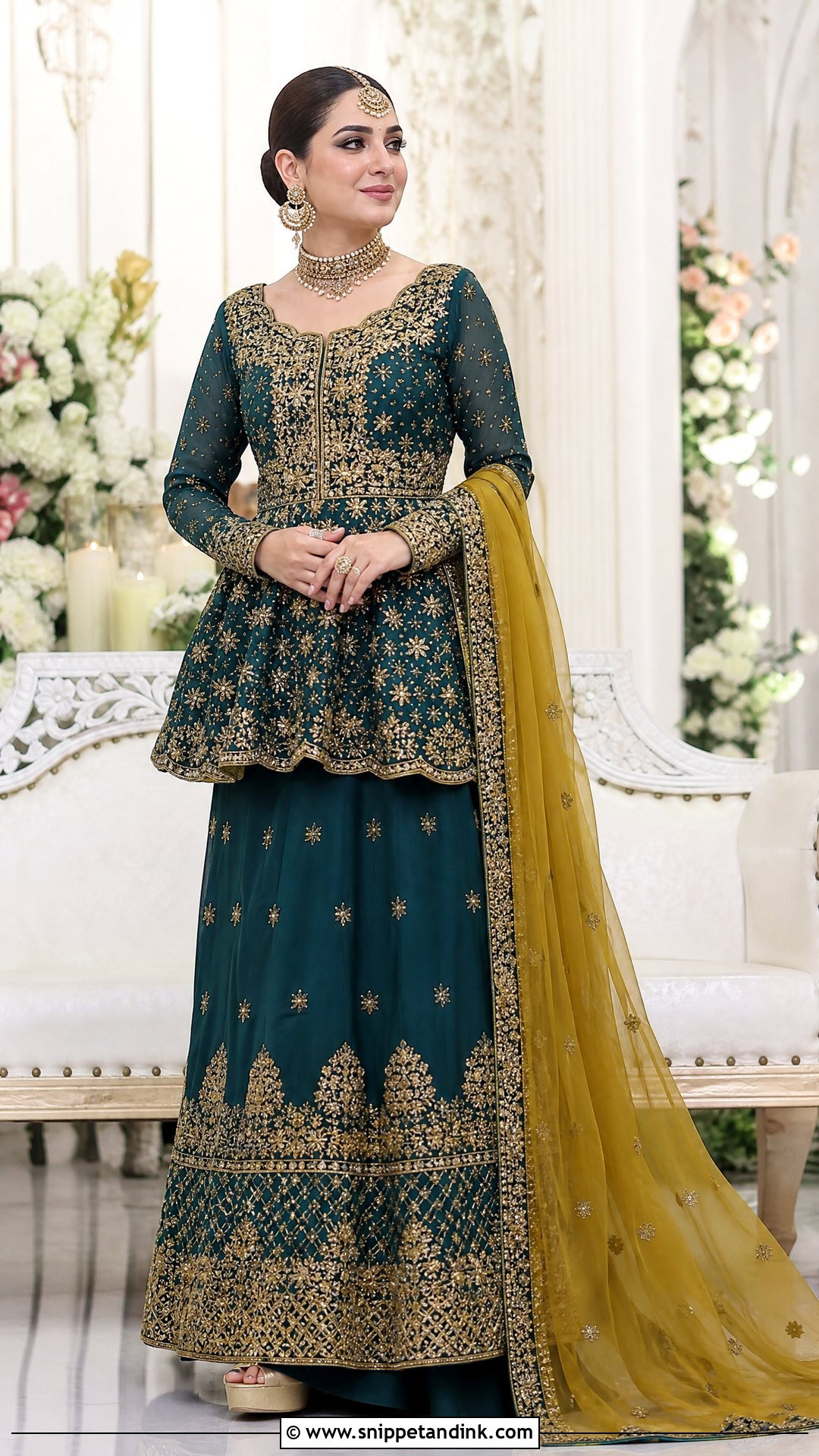
Deep teal suits a bride who finds yellow and orange too expected, and it looks particularly rich in an evening venue. A structured peplum top with a defined waist sits over a matching lehenga with lighter skirt embroidery and a heavier hem. Bring in mehndi colour through a mustard or coral dupatta edged in teal. Antique gold jewellery suits this palette more than bright yellow gold. A peplum flares from the waist, so I tell brides to try it seated; if the peplum lifts and juts at the front, it needs to be shortened slightly. Warm metallic eyes and a coral lip complete it.
9. Ivory Floral Mehndi Bridal Lehenga
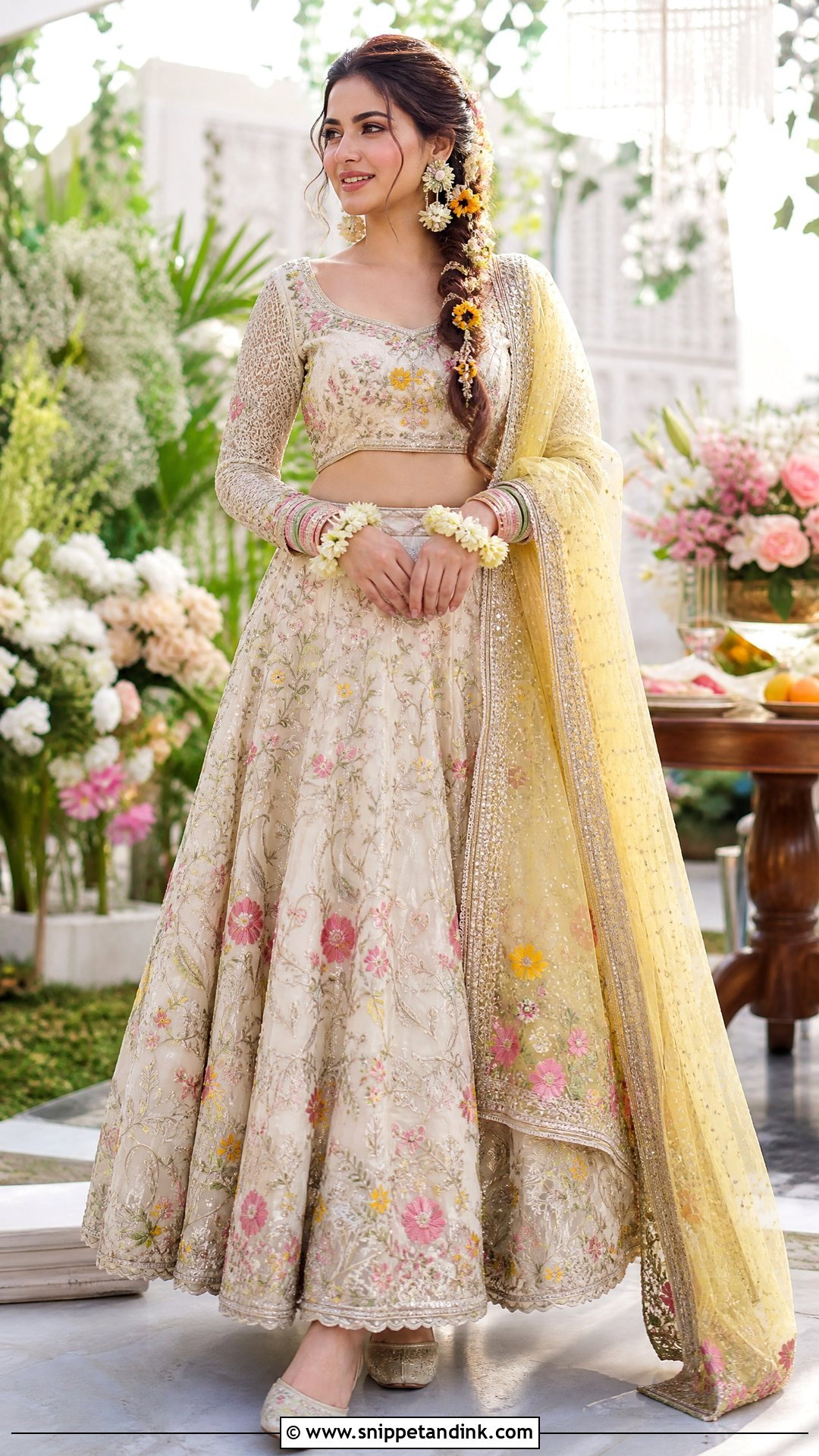
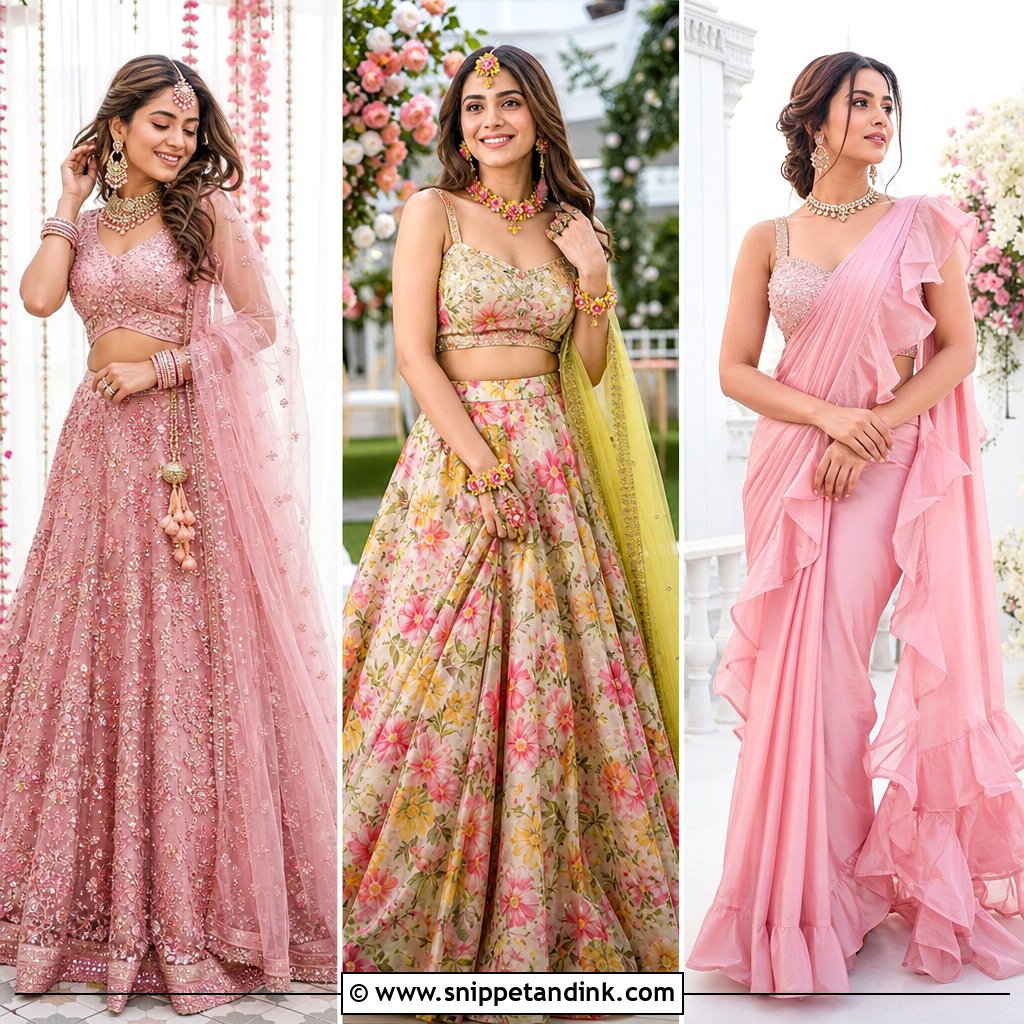
An ivory base lets coloured floral embroidery carry the whole outfit, which suits a bride who wants a softer mehndi. Look for flowers in pink, orange, yellow and green spaced out across a light lehenga, rather than dense metallic work. A matching choli and a green or yellow dupatta bring the festive colour. My honest warning about ivory at a mehndi: henna paste and turmeric both stain pale fabric. If you choose it, plan to have henna applied in a separate, simpler outfit or wear a cover on your lap. Floral jewellery, pearl jhumkas and a loose braid with flowers keep it airy for a garden afternoon.
10. Green Mehndi Bridal Saree
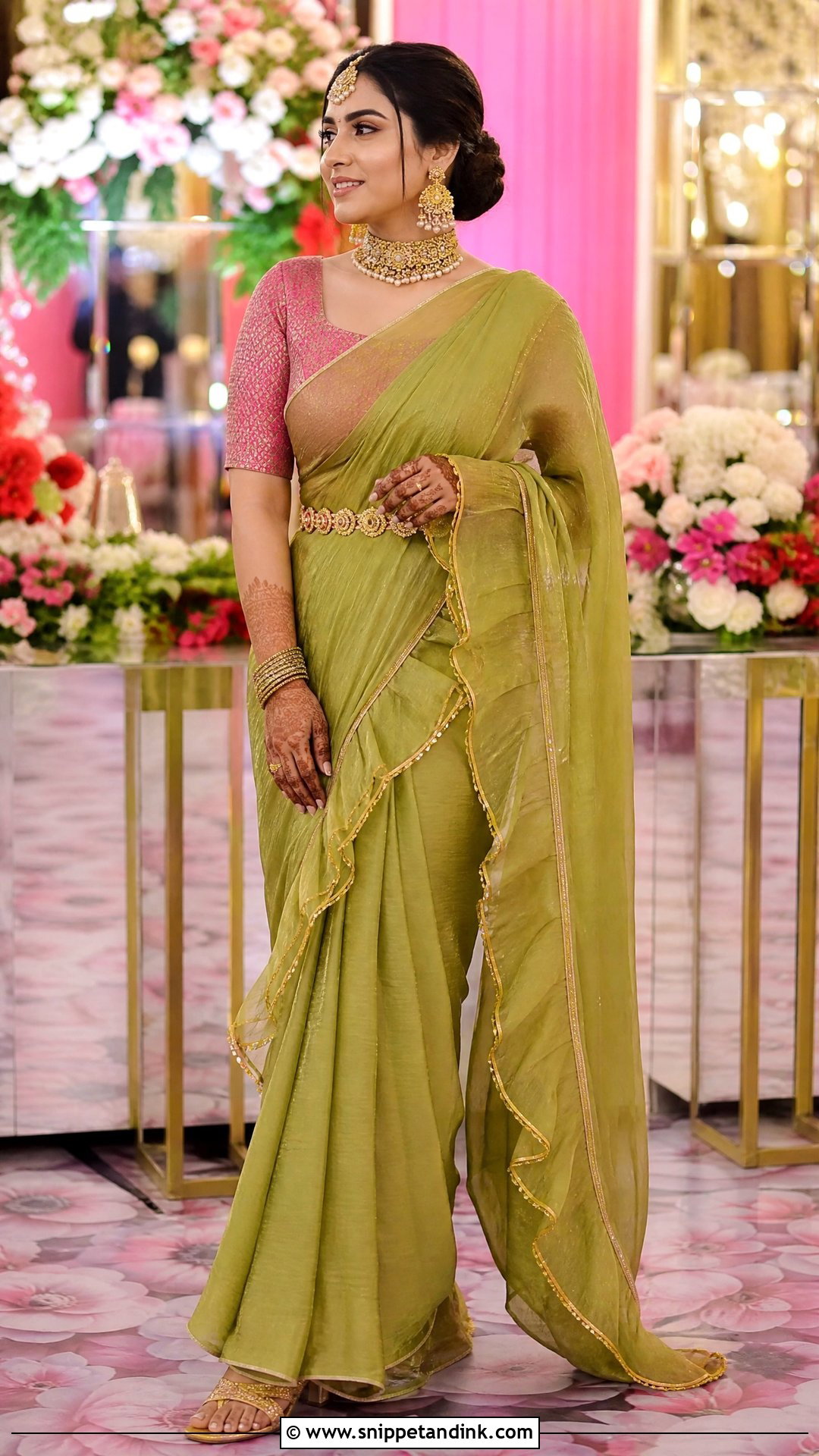
A green saree gives a sleeker mehndi look while keeping the colour of the occasion. Silk, chiffon or organza with a gold border and scattered florals or mirrors, paired with a contrasting pink blouse with structured sleeves. Draping matters more than the fabric here. I pin the pleats at the waist and again at the shoulder so the pallu cannot slide while you dance, and a slim embellished belt holds everything in place. Choose either a statement choker or a heavy tikka, not both. A neat low bun, winged liner and berry lipstick finish it.
11. Coral Mehndi Bridal Pishwas
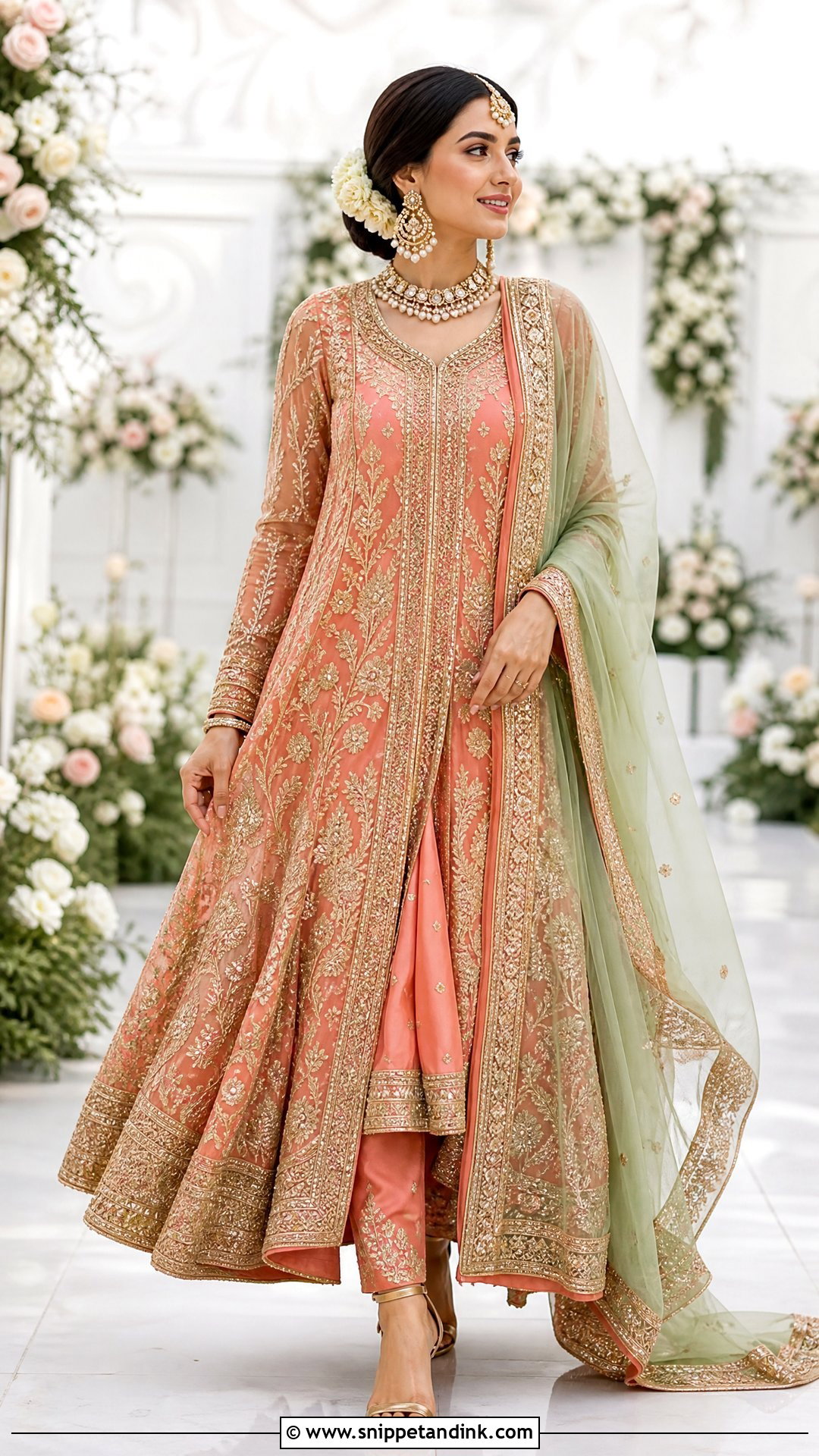
Coral is warm without the intensity of orange or hot pink, and it suits most skin tones in daylight. A long pishwas with gold embroidery along the bodice, sleeves, seams and hem, with small touches of green for contrast. Pair it with fitted trousers and a mint or pistachio organza dupatta with a coral border. When the pishwas is densely embellished, I swap chunky bangles for slim bracelets so the henna stays visible. Wear gold sandals with a stable heel, then soft waves or a low twisted bun with pale flowers.
12. Mirror Work Mehndi Bridal Lehenga
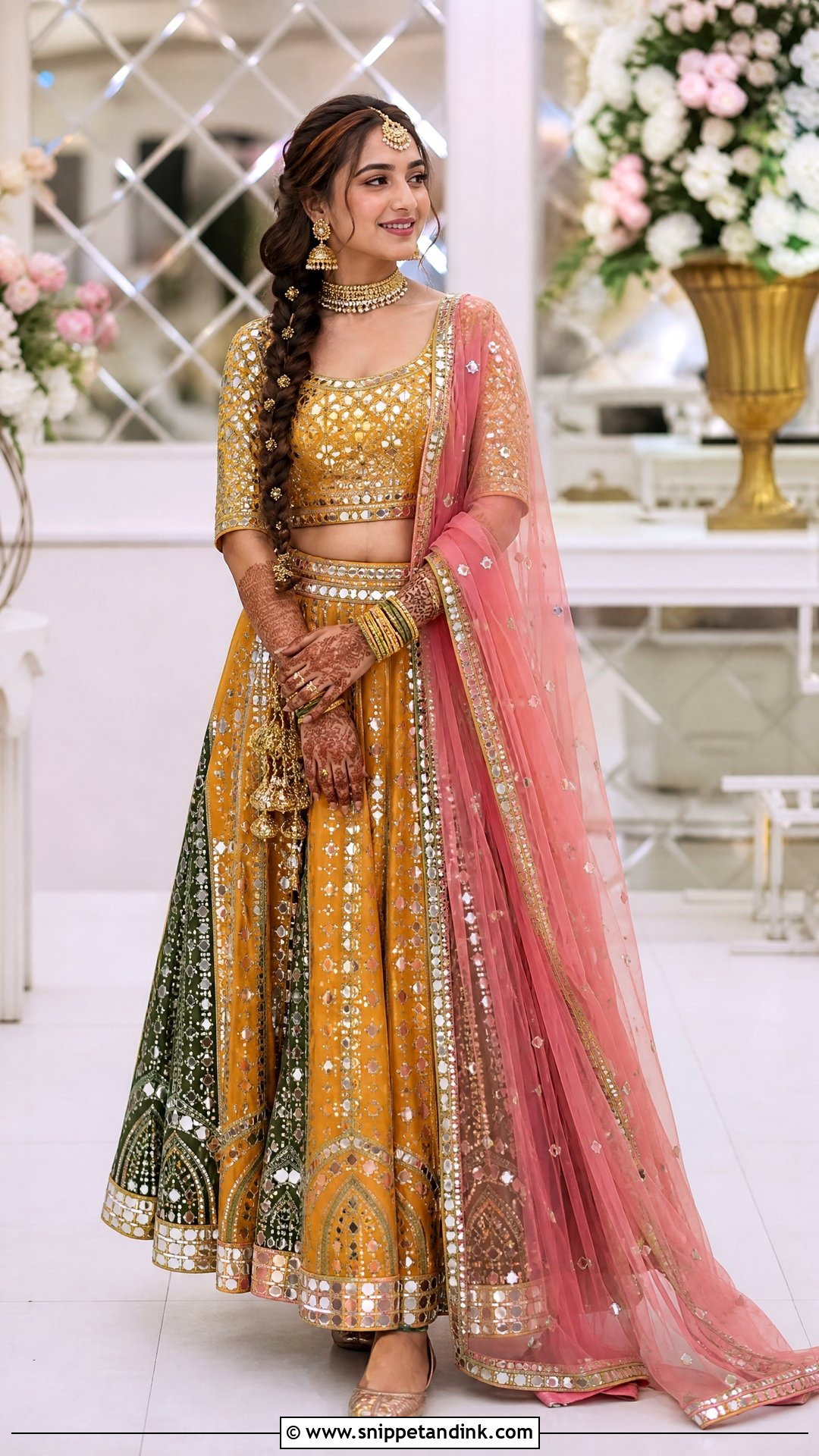
Mirror work earns its place indoors, under artificial light, where every piece of glass throws a flicker. A green or mustard lehenga with evenly spaced mirrors and coloured thread, a fitted choli that repeats the motif at the neckline and sleeves, then a lightweight pink dupatta with a plain border so the shine stays away from your face. I pair mirror work with matte gold jewellery, because polished gold plus glass becomes too much glare in flash photographs. A textured braid and soft brown eyes keep the face from competing.
13. Phulkari Mehndi Bridal Lehenga
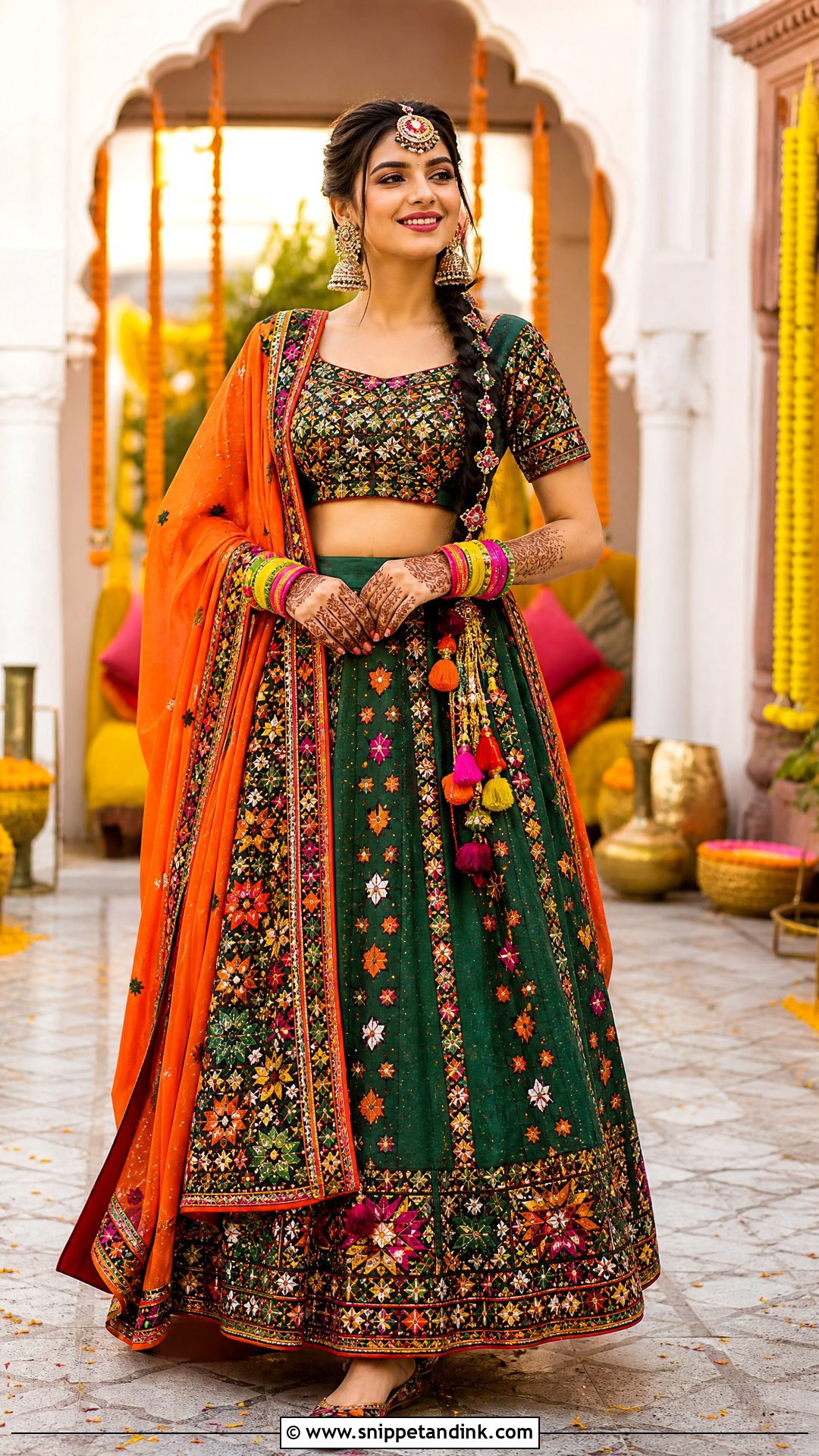
Phulkari embroidery, with its dense, geometric florals, is all texture. Choose a deep green, mustard or magenta skirt stitched in several bright shades, then a simpler short choli that repeats just two or three of those colours. A solid orange or yellow dupatta with an embroidered border completes the outfit without hiding the skirt. My favourite accessory here is a long braid finished with a paranda, the tasselled braid ornament, because it adds colour and also stops hair from catching on the embroidery. Traditional jhumkas, mixed bangles and khussas that echo one thread colour keep it festive for a dance-heavy night.
14. Bandhani Mehndi Bridal Gharara
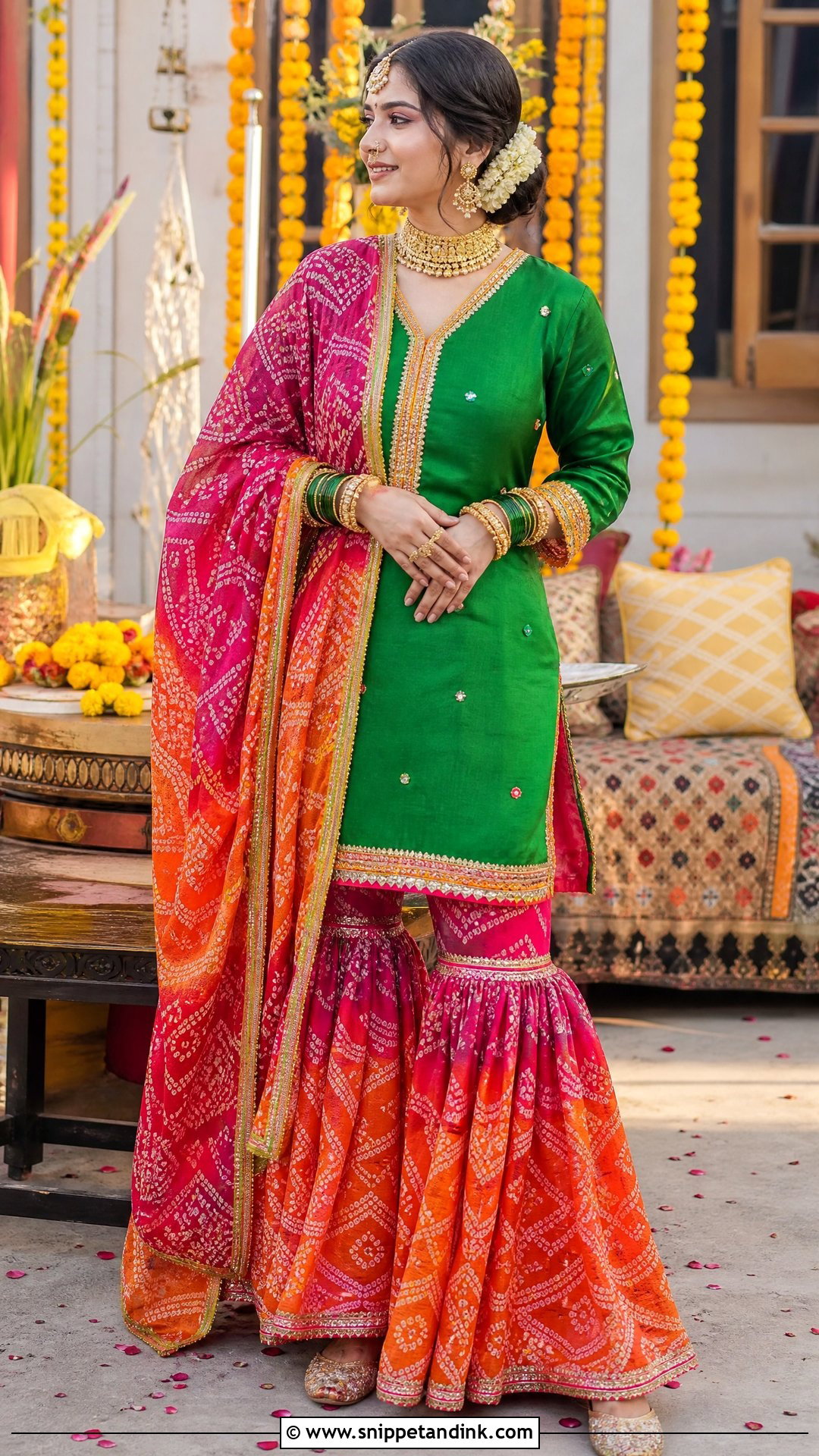
Bandhani, the tie-dye dot pattern, brings bold graphic colour into a gharara. Choose printed trousers in red, pink, orange or green and pair them with a solid short kameez with gota and small mirrors. The rule I follow: only one piece carries the print, or a contrasting bandhani dupatta and nothing else. Real bandhani is often a lighter fabric, so the gharara needs a lining to hang well. Traditional gold jewellery including a choker, tikka and slim nose ring gives it bridal weight. A low bun keeps the neckline open, and soft kohl with a rich pink lip suits the vivid colours.
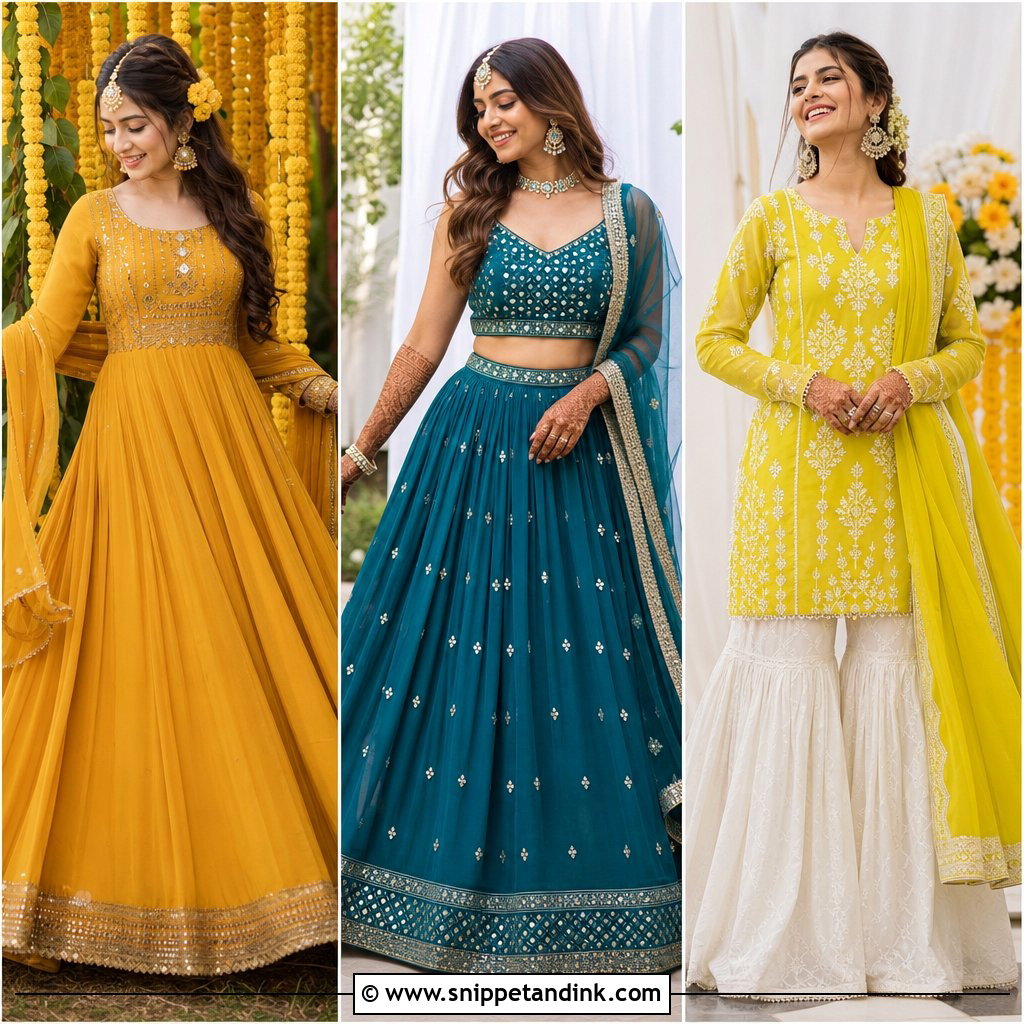
15. Yellow Mehndi Bridal Kurta With Dhoti Pants
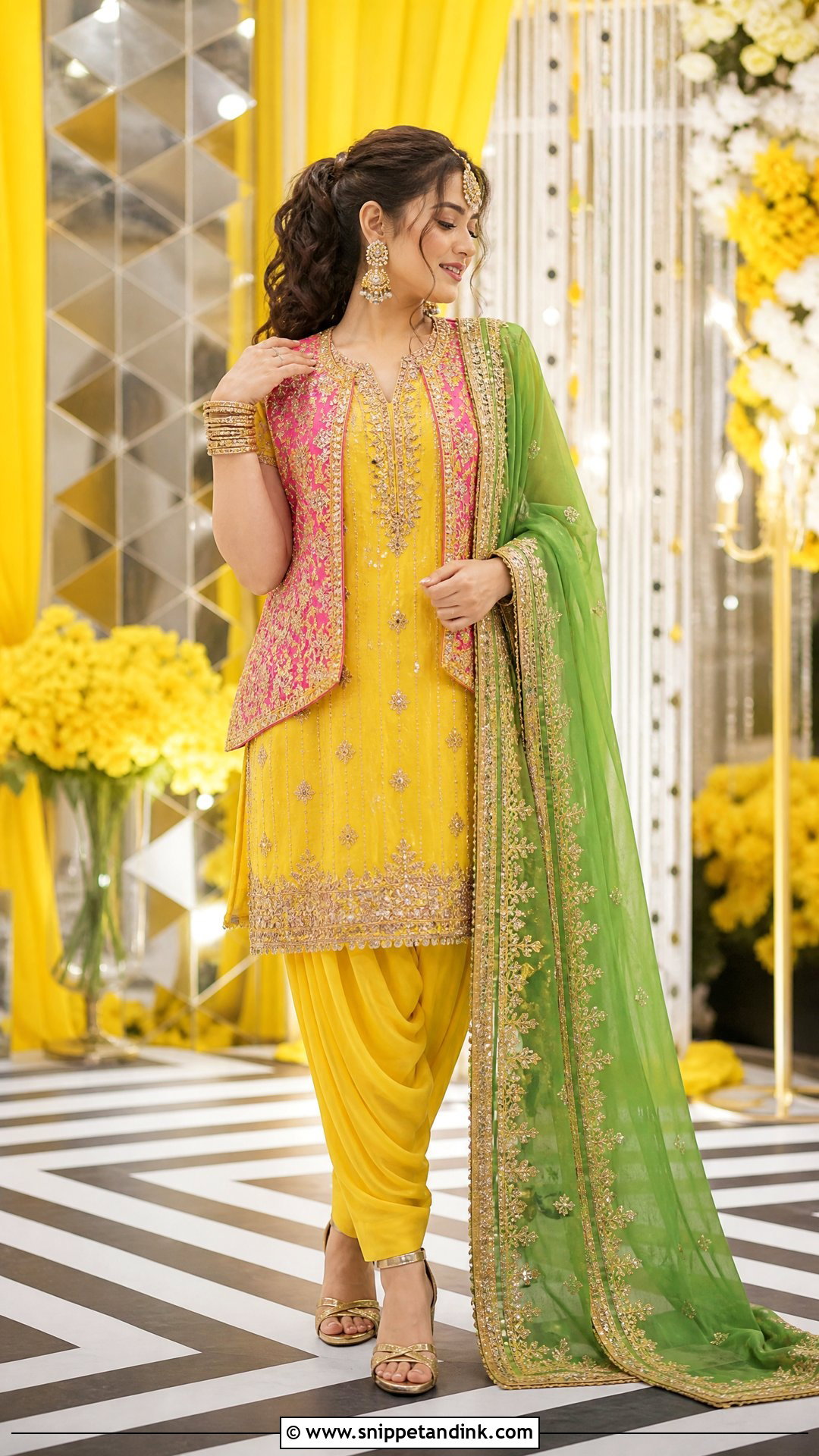
A yellow kurta with dhoti-style pants is a modern choice for a smaller mehndi or a night built around dancing. Pick a knee-length kurta with side slits, gold gota at the neck and colourful florals at the hem. The dhoti should drape softly. I fit it so the gathered front falls straight when the bride is standing, because extra bulk at the hip is the most common problem with this silhouette. A short green or pink embroidered jacket adds structure, and statement earrings, a floral tikka and gold block heels turn the separates into a bridal outfit. A textured high ponytail suits the shape.
16. Green Jacket Mehndi Bridal Lehenga
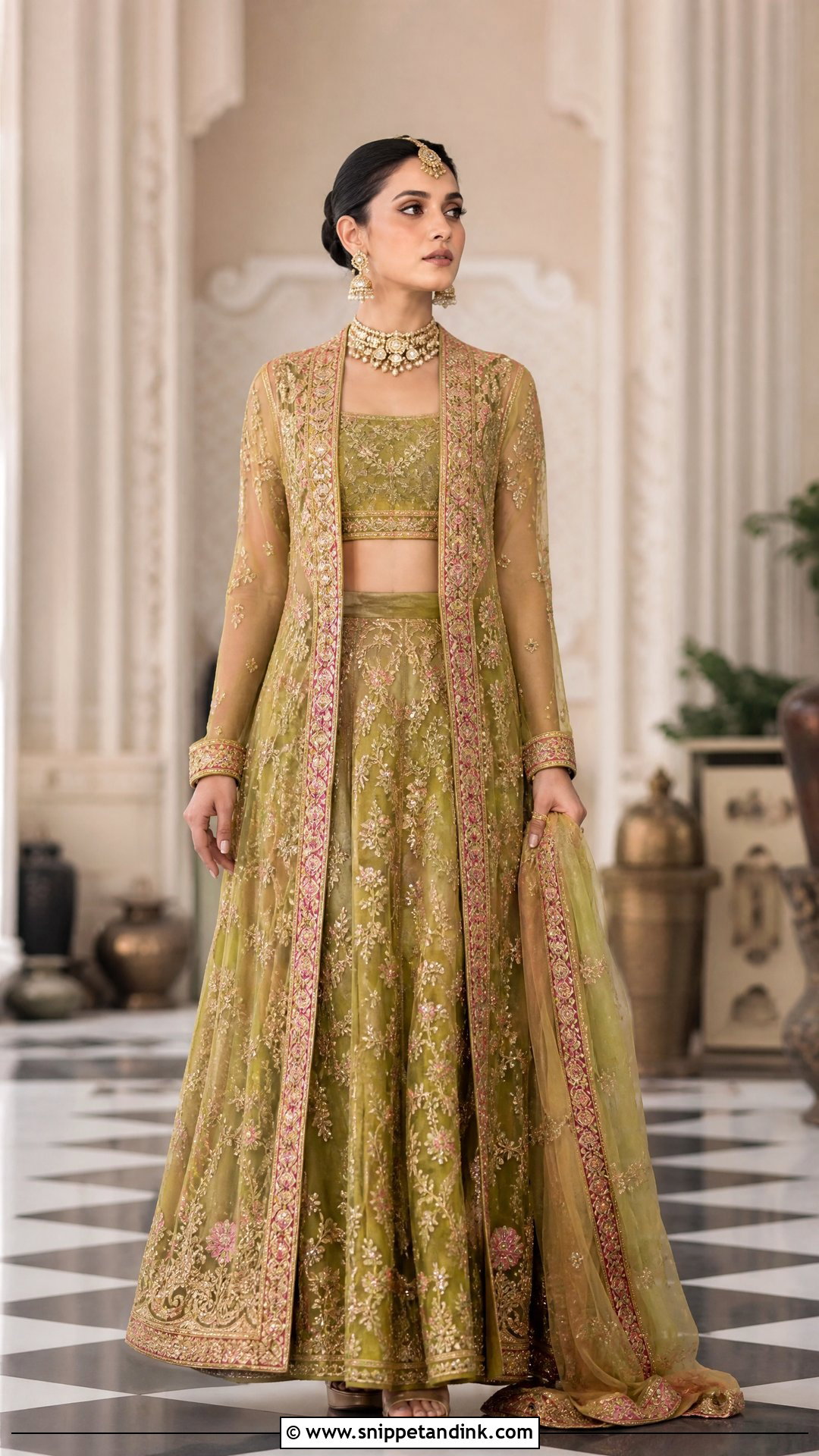
A long embroidered jacket layers grace over a simple green lehenga and fitted choli in the same shade. The sheer, front-open jacket with gold vines and small mirrors should end near the skirt hem, which draws one long vertical line. Because the jacket already moves, a narrow dupatta draped over one arm is enough. I steer brides to this outfit when they want more coverage at an evening event without wearing anything heavy on the arms. A gold choker, a delicate tikka and a sleek low bun keep it clean and structured.
17. Fuchsia Mehndi Bridal Farshi Gharara
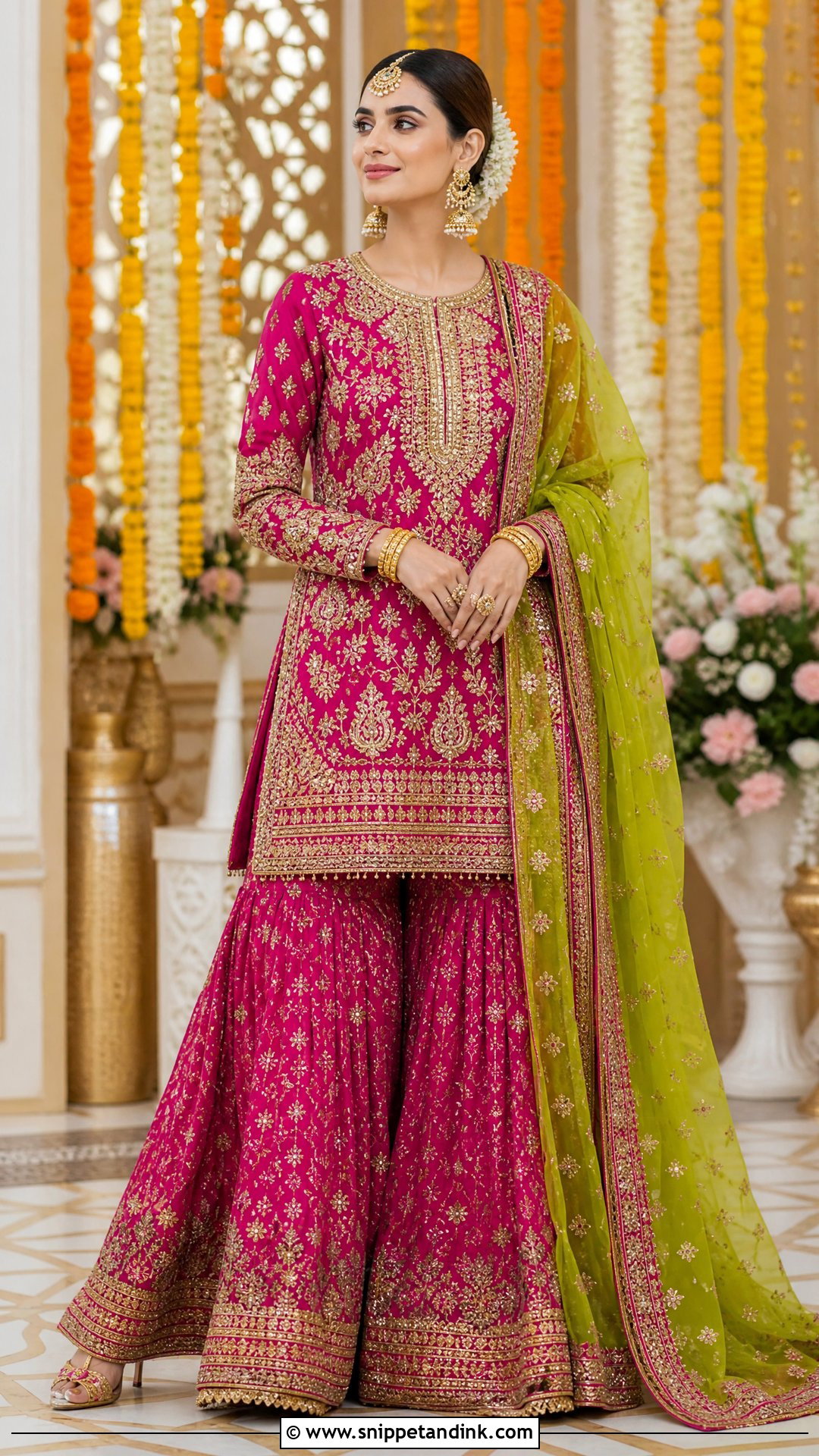
Fuchsia with a farshi gharara is a dramatic combination for a confident bride. The farshi trails across the floor, which looks wonderful in photographs and is tricky on stairs. Practise walking in it with the exact shoes you will wear, because the length is set to those heels. A short kameez with antique gold embroidery and small green details, a lime or mustard dupatta edged in fuchsia, and gold jhumkas and a passa complete the look. I insist on stable, embellished block heels with this one. A stiletto catches in the trailing hem.
18. Mint Mehndi Bridal Sharara
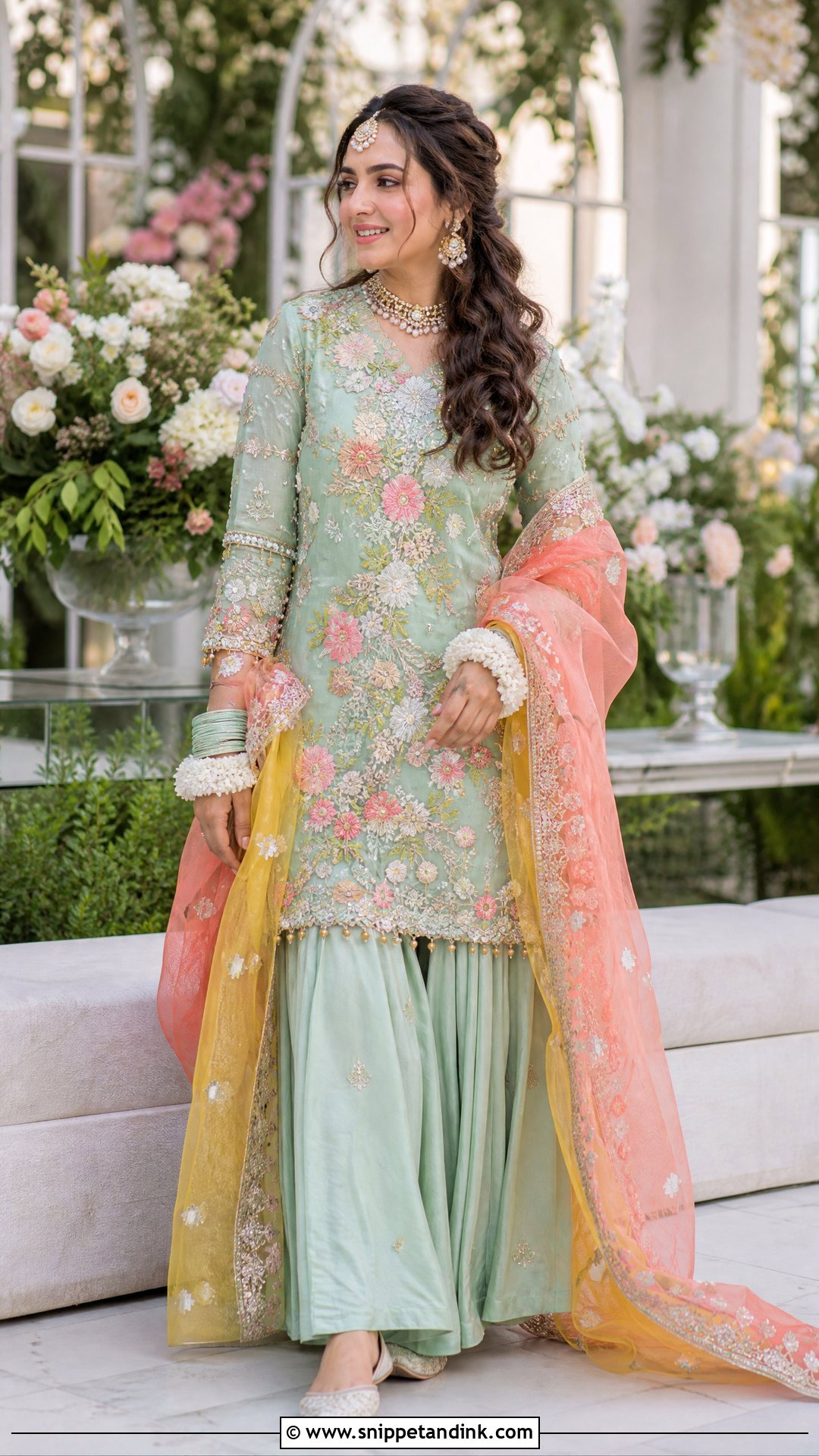
Mint is the calm option for a bride who prefers pastels over saturated colour. A flowing mint sharara with a short kameez embroidered in white, gold, yellow and pale pink. A coral or yellow dupatta adds warmth and ties it back to the mehndi palette. Pastel organza crushes easily, so I pin it at the shoulder with a flat brooch rather than several safety pins. Pearl-and-gold jewellery, floral bracelets and ivory khussas stay in the soft palette. Mint holds up better in natural light than under strong yellow bulbs, where it can lose its colour.
19. Color Block Mehndi Bridal Lehenga
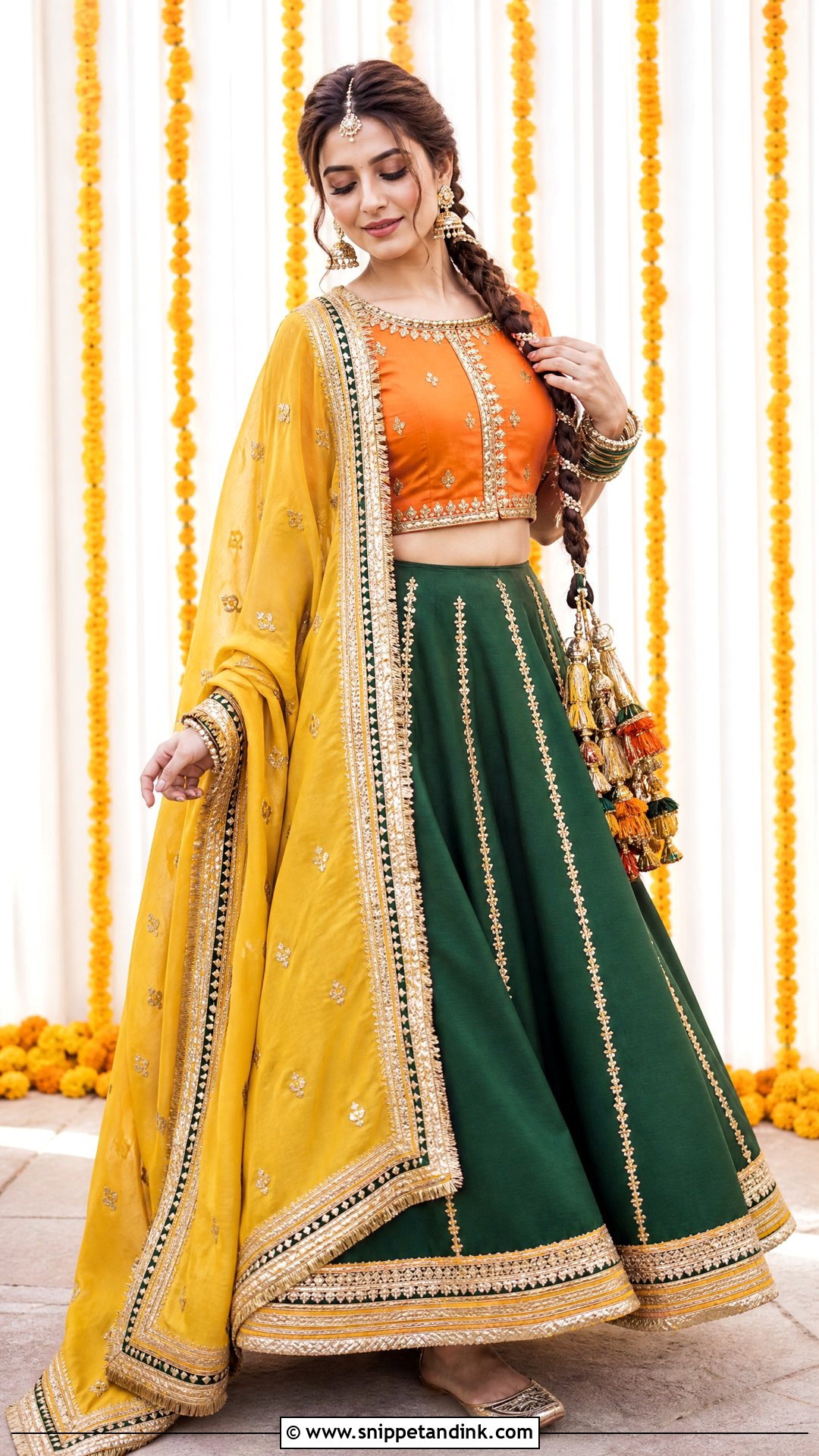
Colour blocking combines several mehndi shades without a busy print. Try a green lehenga, an orange choli and a yellow dupatta tied together with matching gold gota borders, or a magenta skirt with a teal top and lime dupatta. Keep each piece mostly solid and put the embroidery at the neckline, cuffs, waist and hem. I advise this look for venues with simple décor. Against a wall of marigolds and fairy lights, three blocks of colour start to compete with the backdrop. Neutral bronze eyes and a rose lip keep your face clear of the contrast.
20. White And Yellow Mehndi Bridal Anarkali
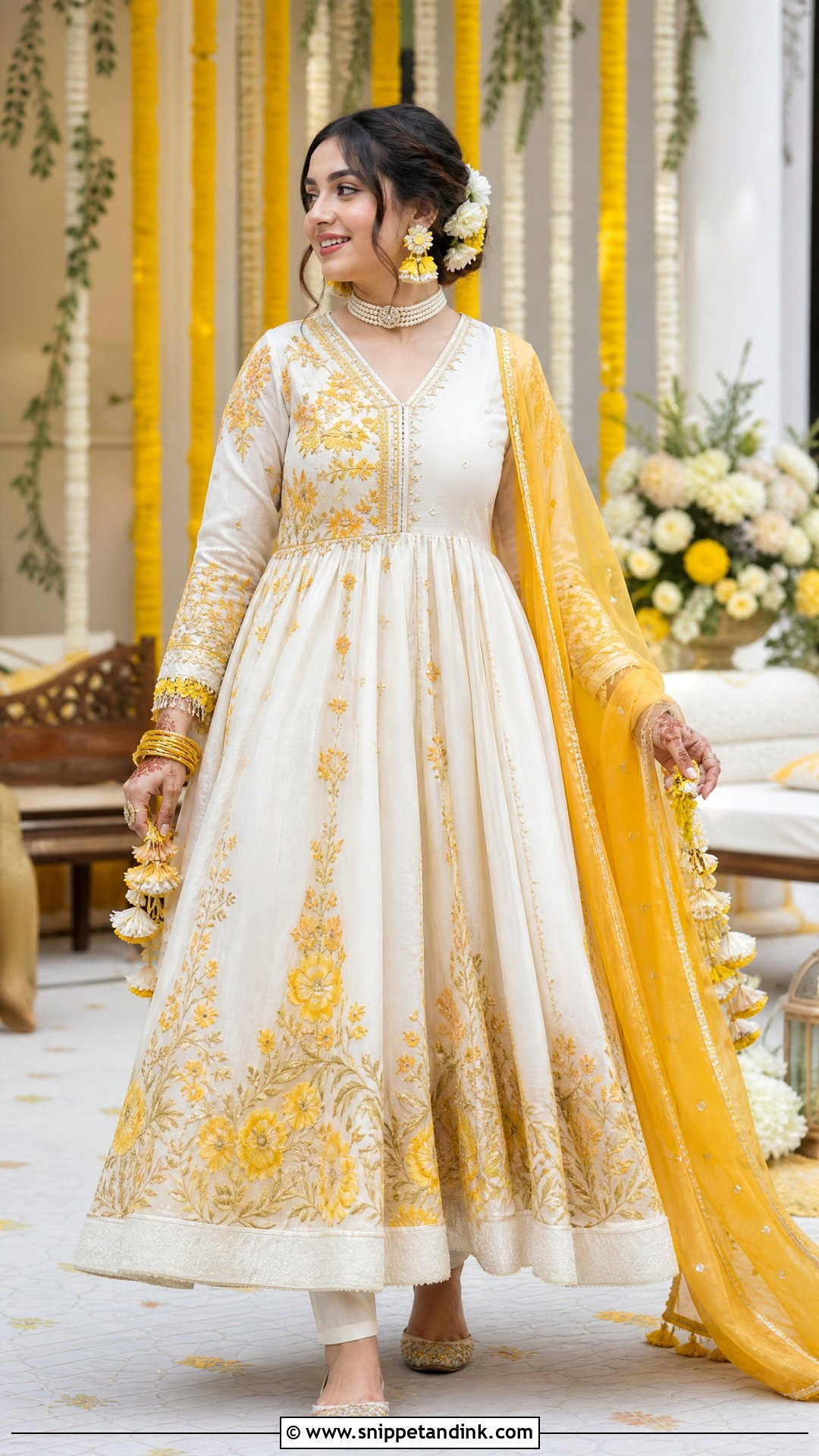
White with yellow suits a bride who wants a fresh, daytime mehndi. An ivory Anarkali with yellow florals, gold gota and small green details at the neck and hem, narrow ivory trousers, and a vivid yellow dupatta with tassels. Pale fabric and wet henna do not mix, so I keep the dupatta pinned securely and have a coordinating yellow shawl ready to cover your lap while the henna is applied. Floral earrings, a pearl choker, gold bangles and ivory khussas finish it, with a braided bun of yellow and white flowers.
How Heavy Is Too Heavy for a Night of Dholki Dancing?
Mehndi nights run late, and a lehenga that feels fine for ten minutes at a fitting can feel like a weight belt by midnight. I ask brides to wear the full outfit, including dupatta and jewellery, for at least twenty minutes at the final fitting, then sit, stand and dance a few steps.
What I Check at That Final Fitting
- The waistband should not dig in when you sit. Heavy skirts often need a wider band or extra hooks.
- Gharara and farshi hems should clear the floor in front when you walk, even if they trail behind.
- Dupatta weight matters: a heavily embroidered dupatta pulls on the shoulder and drags the neckline sideways.
- Lift your arms above your head. If the choli rides up, it needs more ease or a longer hem.
If the outfit is being made to order, especially by a designer in Pakistan, build in time for shipping and at least one local alteration. Lead times vary a lot between workshops, so I ask brides to confirm dates in writing before paying the deposit.
After the Night Is Over
Gota and zari tarnish when trapped with damp, so let the outfit air overnight before packing it. Spot any henna or oil marks for a specialist cleaner rather than scrubbing them at home. Store it folded in soft cotton or muslin, not plastic, and refold it along different lines every few months so the embroidery doesn’t crack at the creases.
The Outfit Should Let You Sit, Dance and Hold Out Your Hands
A good mehndi outfit lets you sit for henna, dance with your cousins and hold your hands out for photographs without worrying about any of it. The looks above run from traditional yellow lehengas and ghararas to flowing pishwas dresses, modern separates and pastel combinations. Start with the silhouette you feel most confident in, then build around it: one dupatta drape that stays put, shoes you can stand in, and jewellery that leaves room for your henna. Think about the venue, the time of day and the weather. I would always choose one strong focal point over an outfit where every piece is trying to be the star.
You'll Like These Ideas:


Leave a Reply