
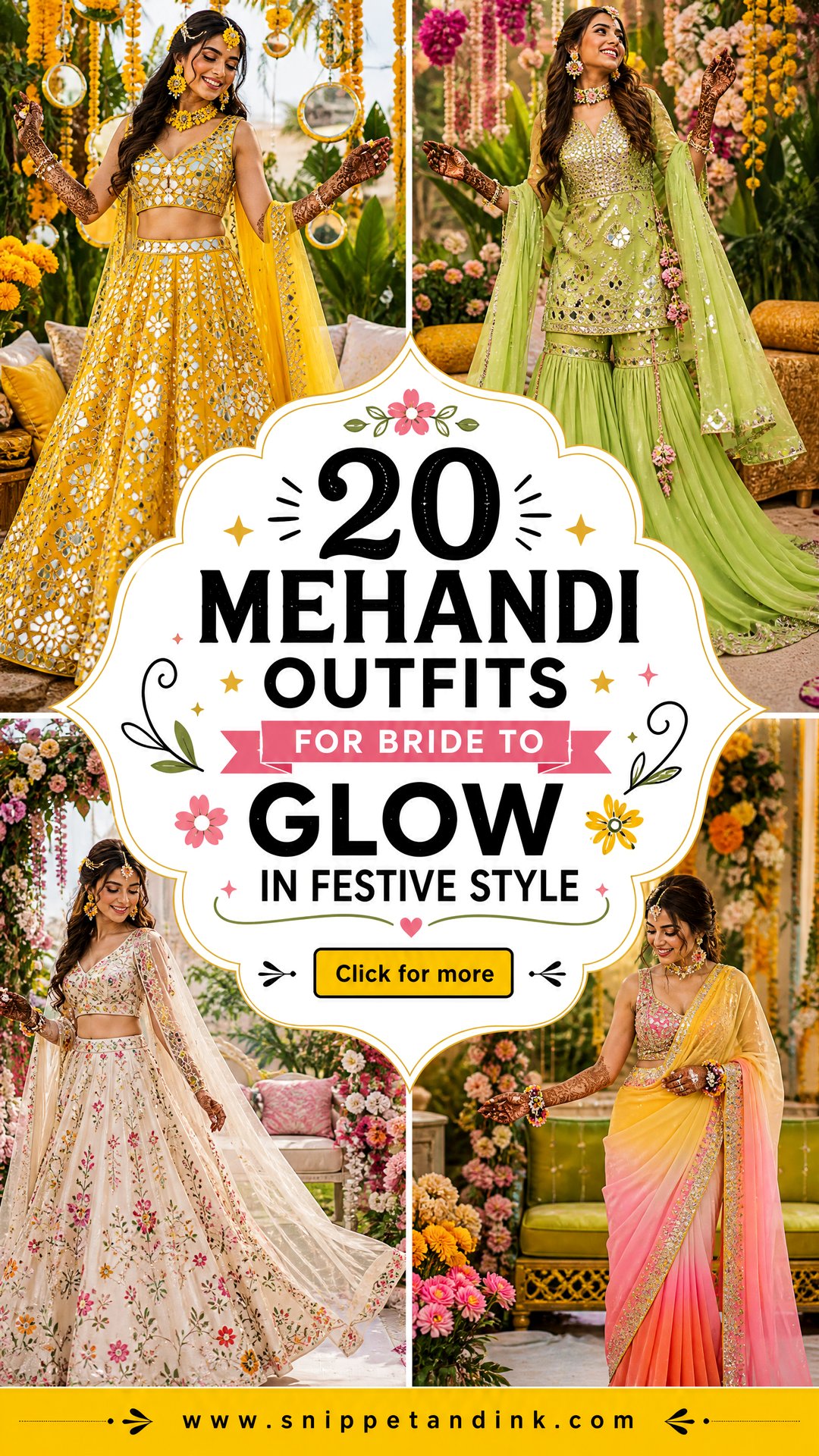
I spend the whole of a bride’s mehandi sitting knee to knee with her, so I see what her outfit does for hours at close range. The outfits that work are the ones I never have to ask her to adjust: sleeves that stay above my design line, a dupatta that’s pinned and out of the way, and a skirt she can sit in without shifting every ten minutes. Lehengas are still the favorite, but shararas, sarees, Anarkalis, jumpsuits and Indo-Western sets all work just as well. Fabric weight, where the jewelry sits and what’s on your feet matter too. The twenty looks below range from classic green and yellow to florals, jewel tones and pastels, and I’ve noted what each one means for the henna.
Match the Sleeve to Where Your Design Stops
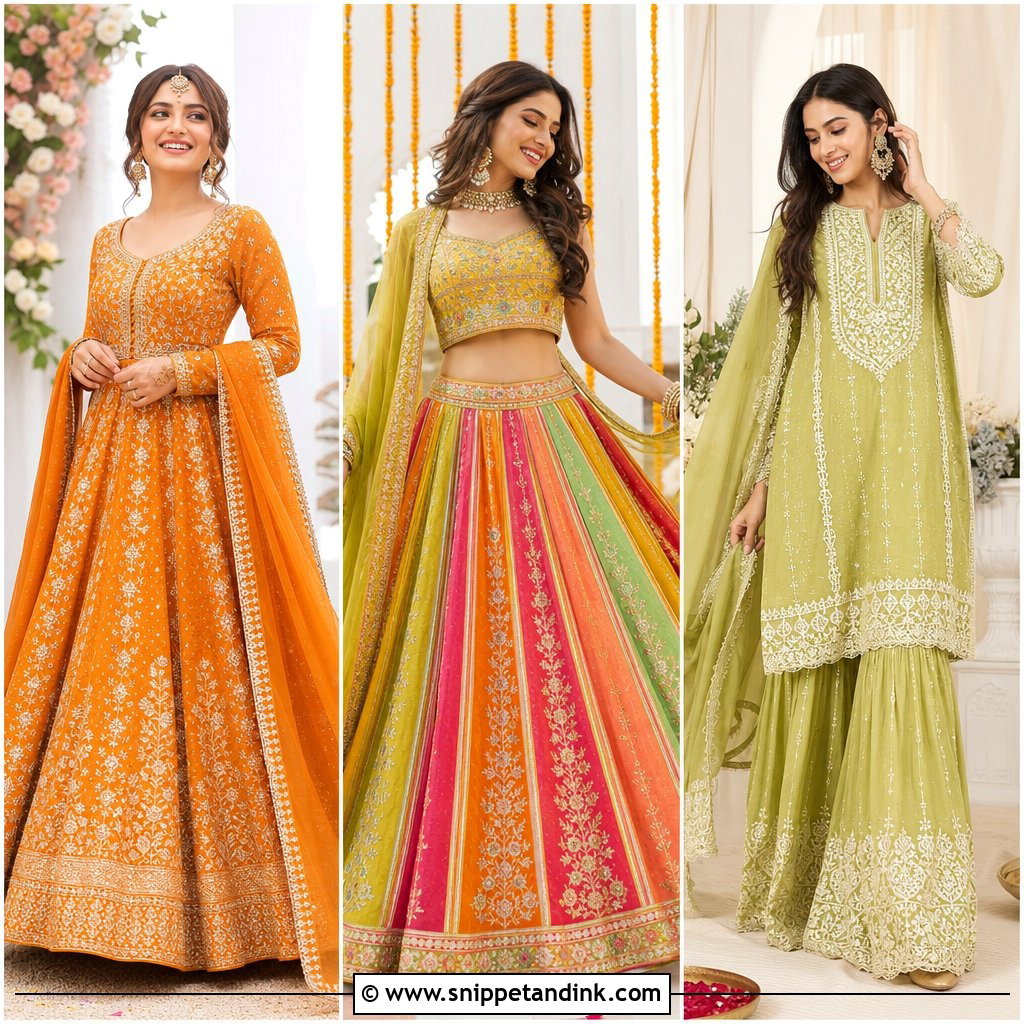
Before a bride picks her outfit, I’d like her to know how far her henna will go. Bridal designs range from a full hand ending at the wrist to patterns running past the elbow, and feet can stop at the ankle or climb toward the knee. Each of those changes what you can wear.
- Wrist-length design: almost any sleeve works, including elbow length.
- Mid-forearm design: short or cap sleeves, so the cuff doesn’t rest on paste while it dries.
- Elbow or higher: sleeveless, or a blouse with a short structured sleeve that won’t slide down.
- Feet to the ankle: a hem you can lift and clip easily. Shararas, ghararas and palazzos are simpler than a heavy lehenga.
- Feet past the ankle: wear something you can pull to the knee without strain, and avoid fitted churidar pants.
Seating matters as much as sleeves. I usually work with the bride on a low sofa or floor cushion and her arms resting on a pillow. A stiff, heavily embroidered skirt makes that position tiring within an hour, which is one reason lighter fabrics come up so often in the looks below.
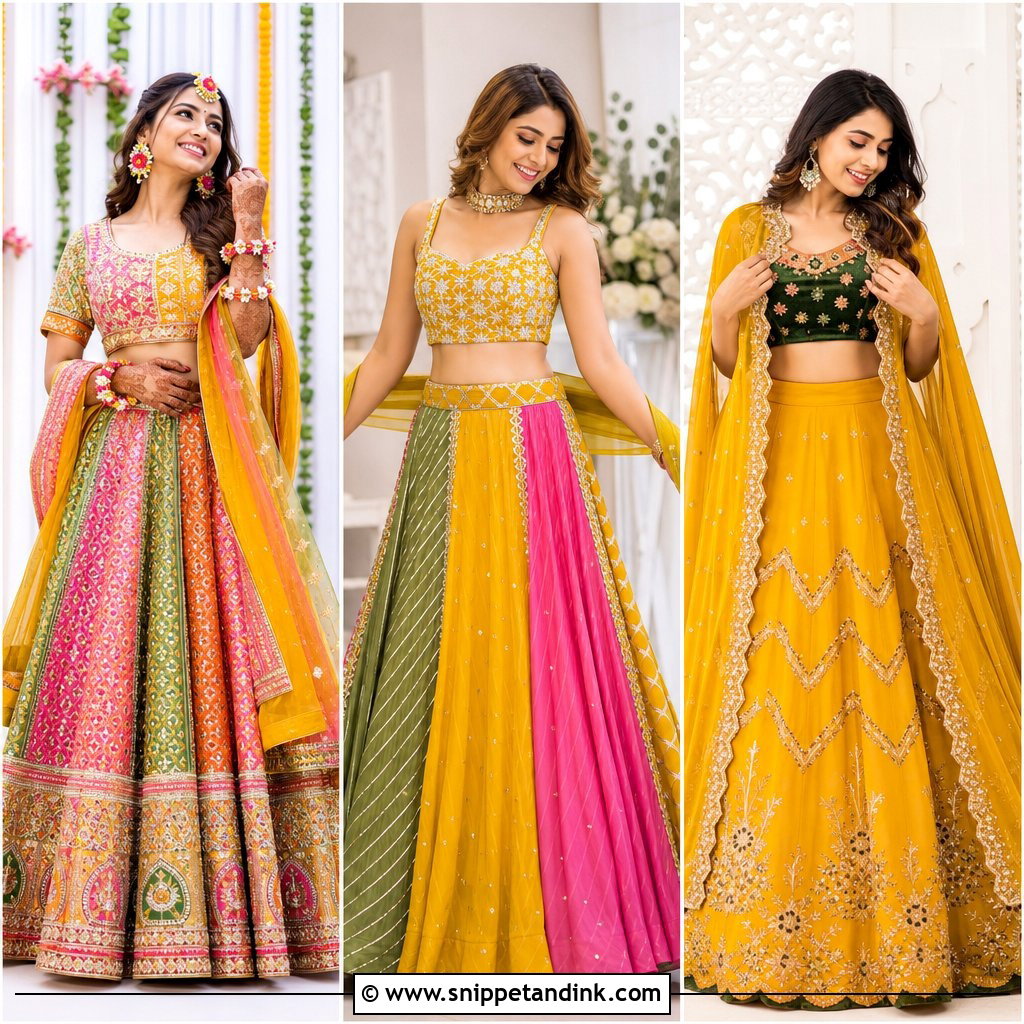
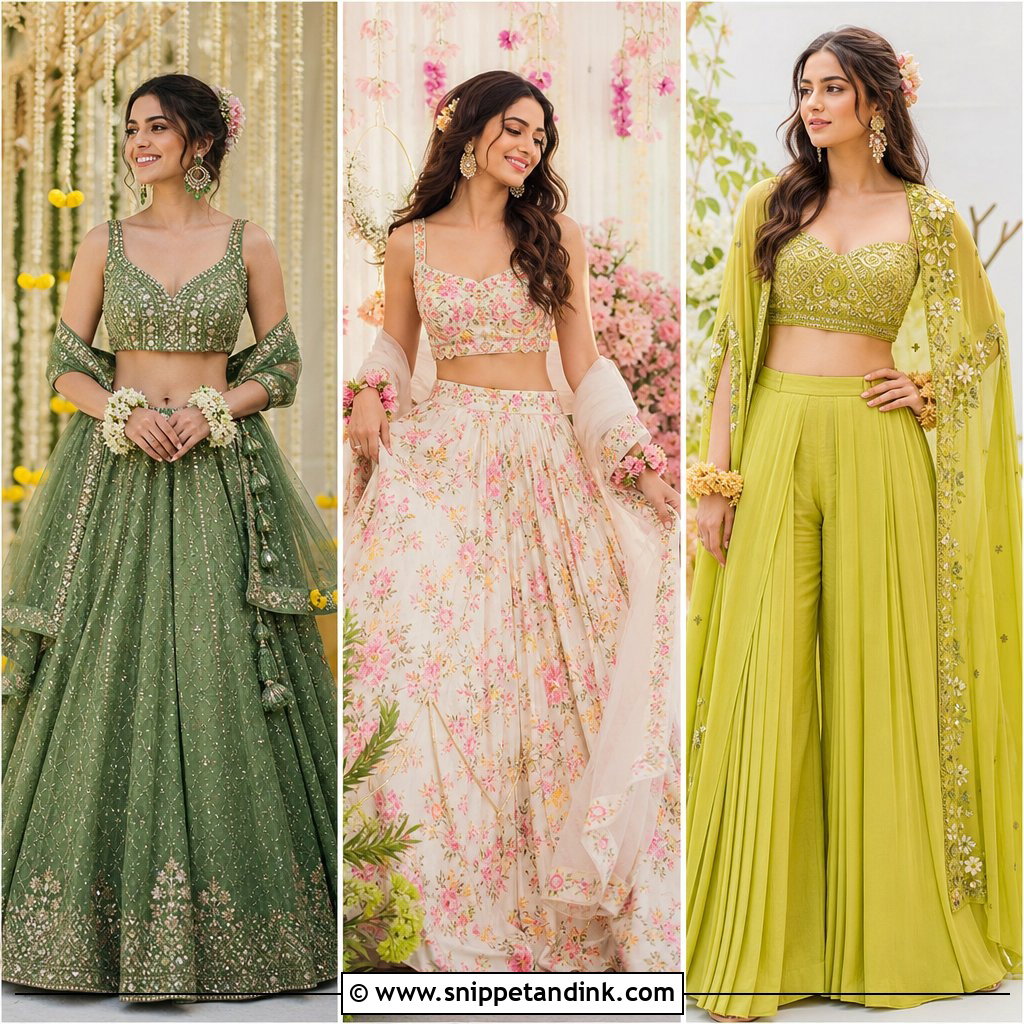
1. Green Floral Lehenga Mehandi Outfit
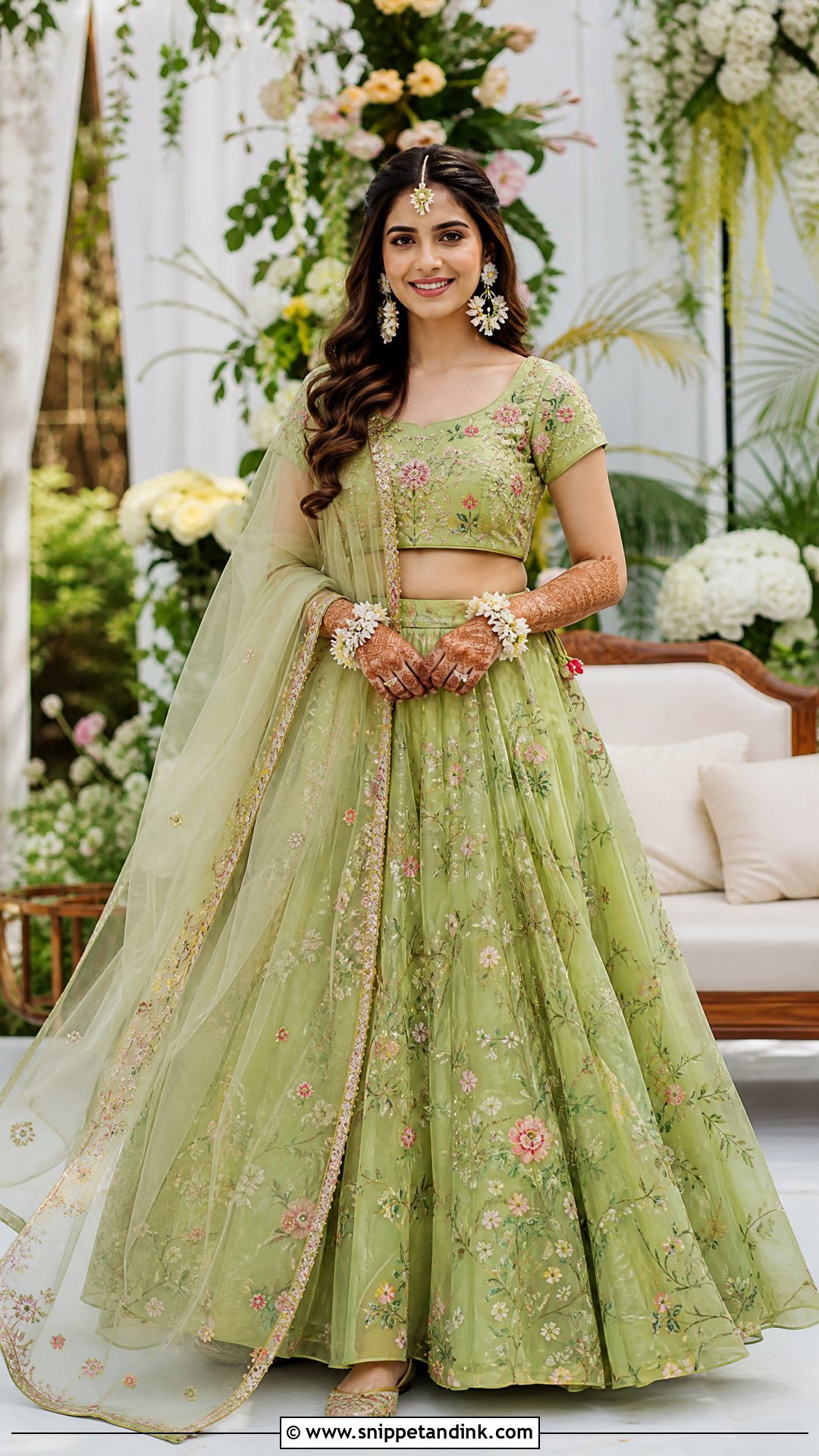
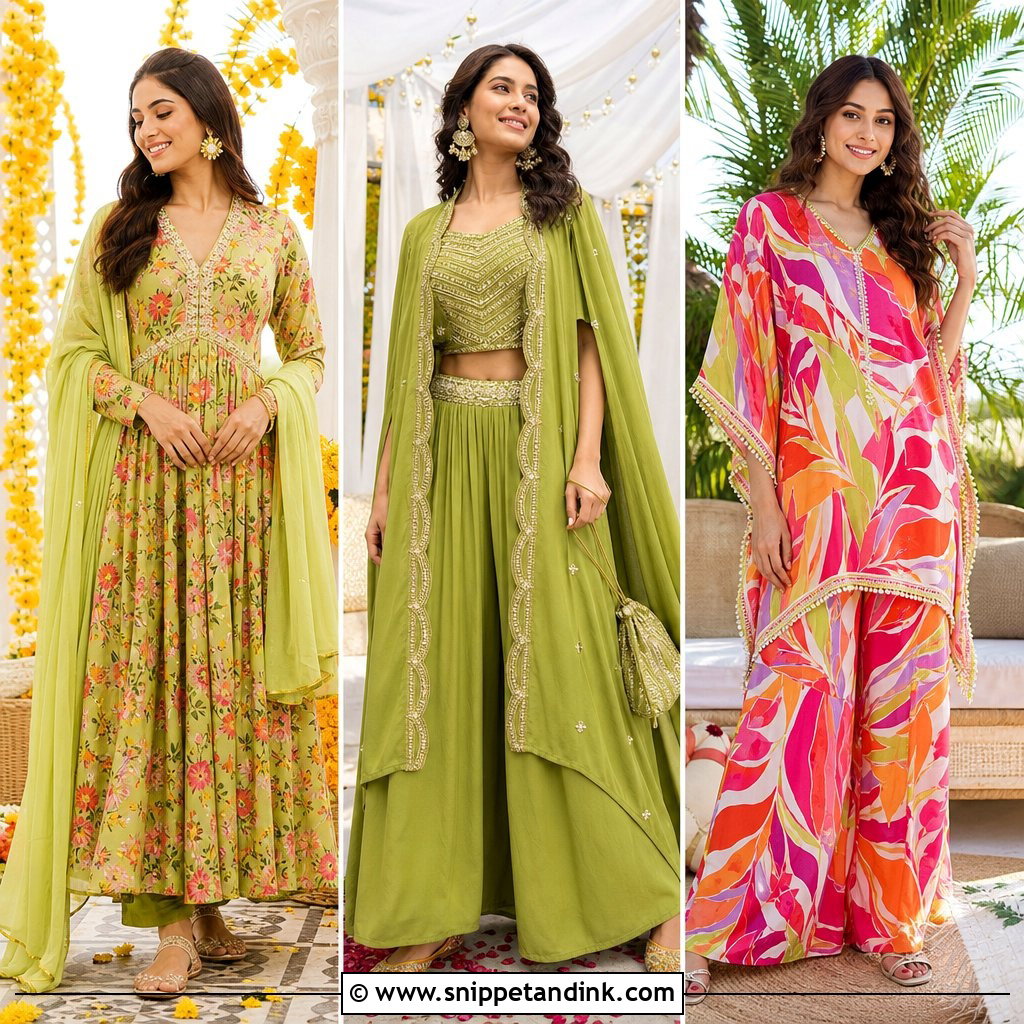
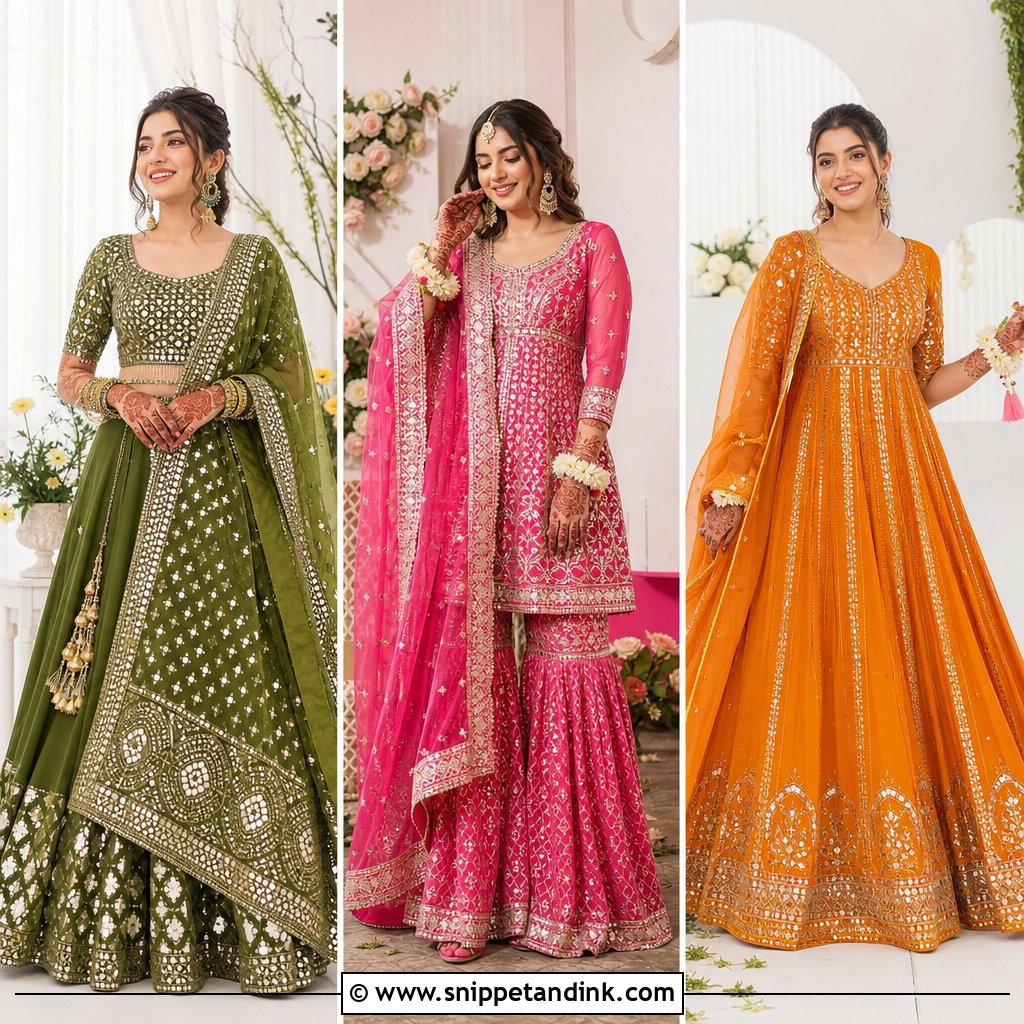
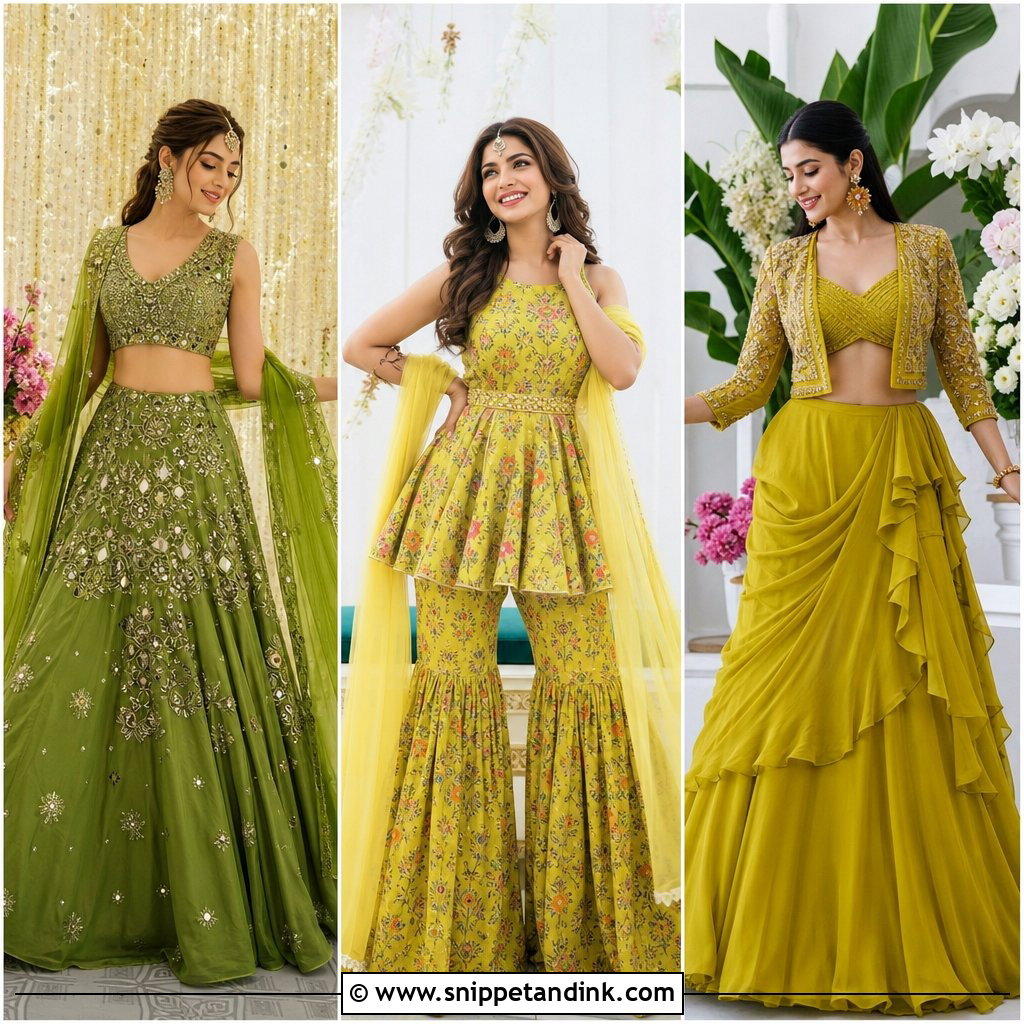
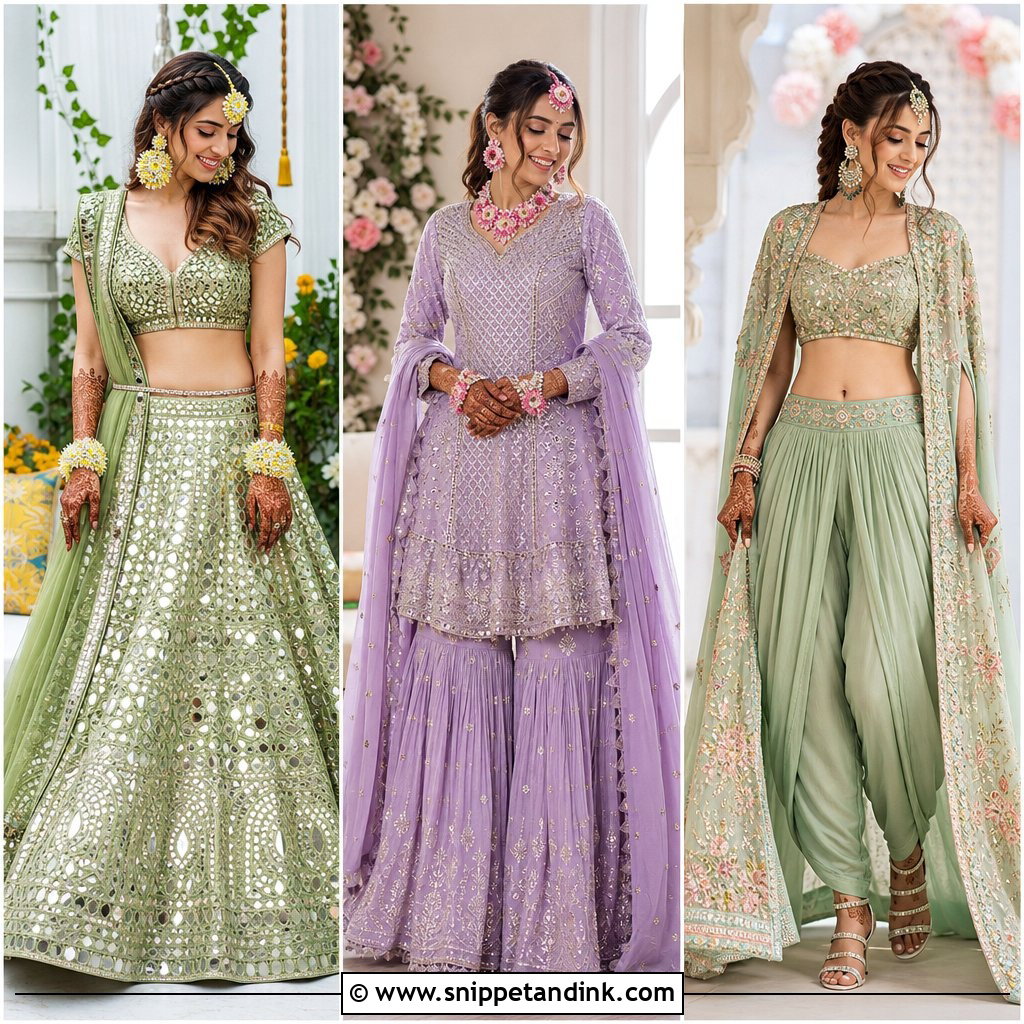
Green florals sit naturally with the color of fresh paste, so this one feels right the moment the cones come out. Pick a light skirt with printed botanicals or fine threadwork rather than dense embroidery that’s tiring to sit in. A short-sleeved blouse with a square or sweetheart neckline and a soft organza dupatta over one shoulder complete it. For jewelry, floral earrings, a small maang tikka and a light choker; nothing on the hands or wrists until I’m finished. Block heels or embroidered juttis go on afterwards anyway if I’m doing your feet. A loose braid with tiny flowers stays behind you while you lean forward. A high-rise skirt and the blouse length you prefer make it work for any body shape.
2. Yellow Mirror Work Lehenga Mehandi Outfit
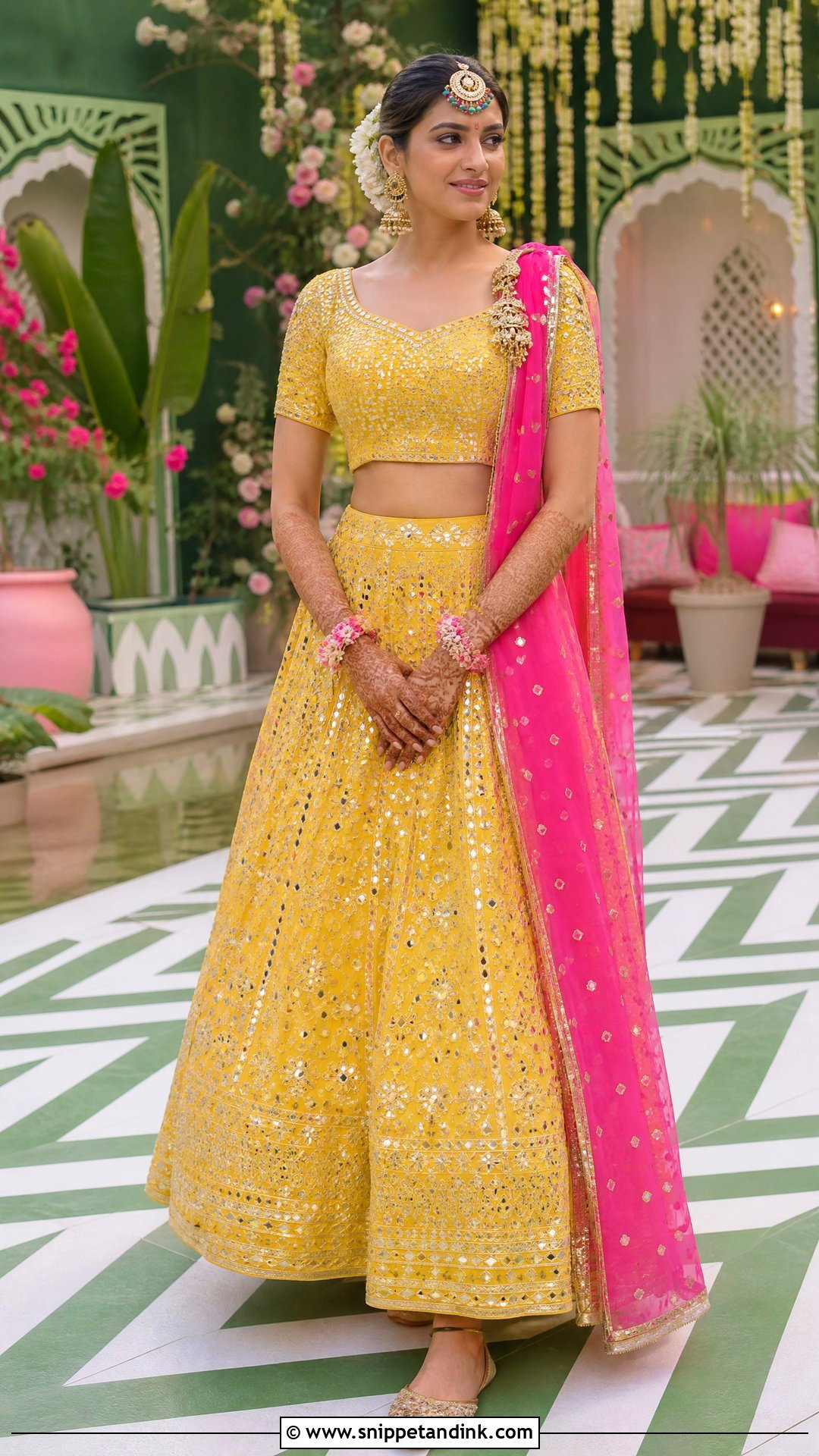
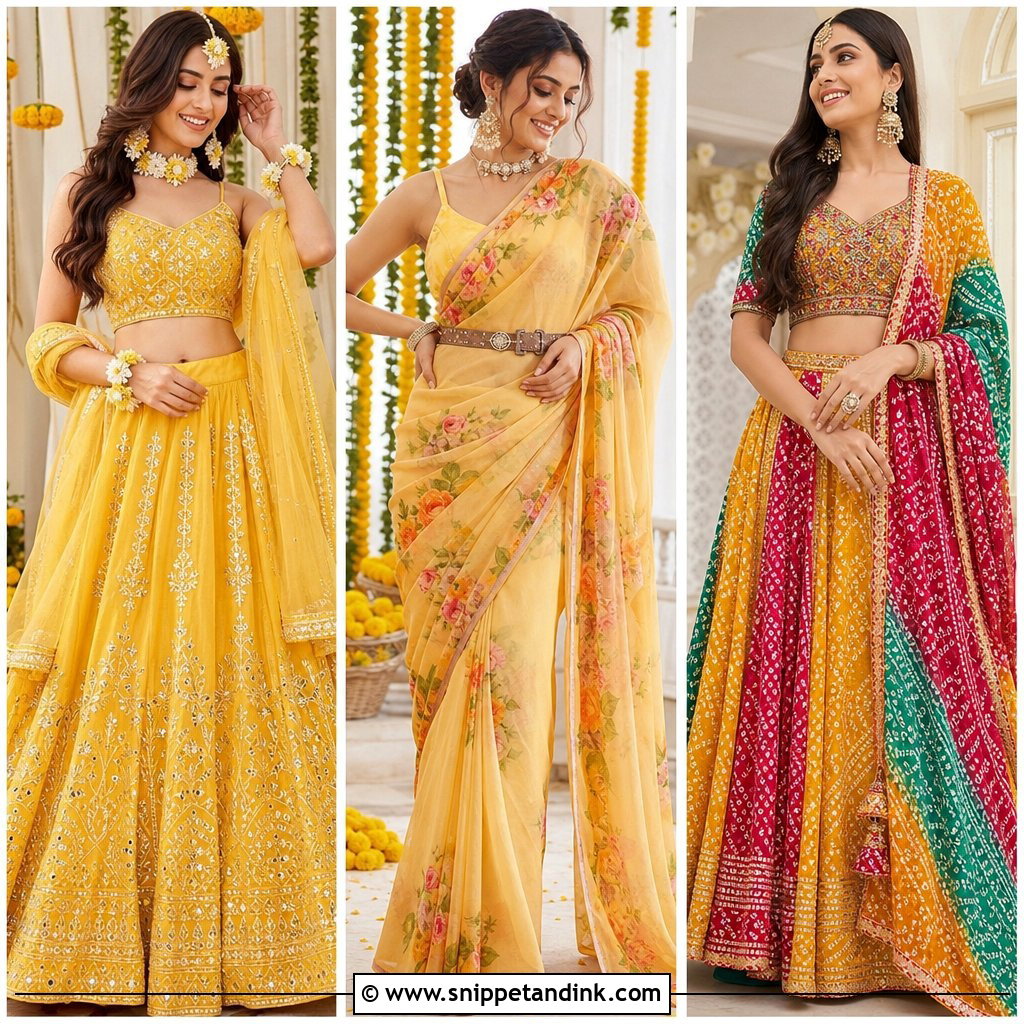
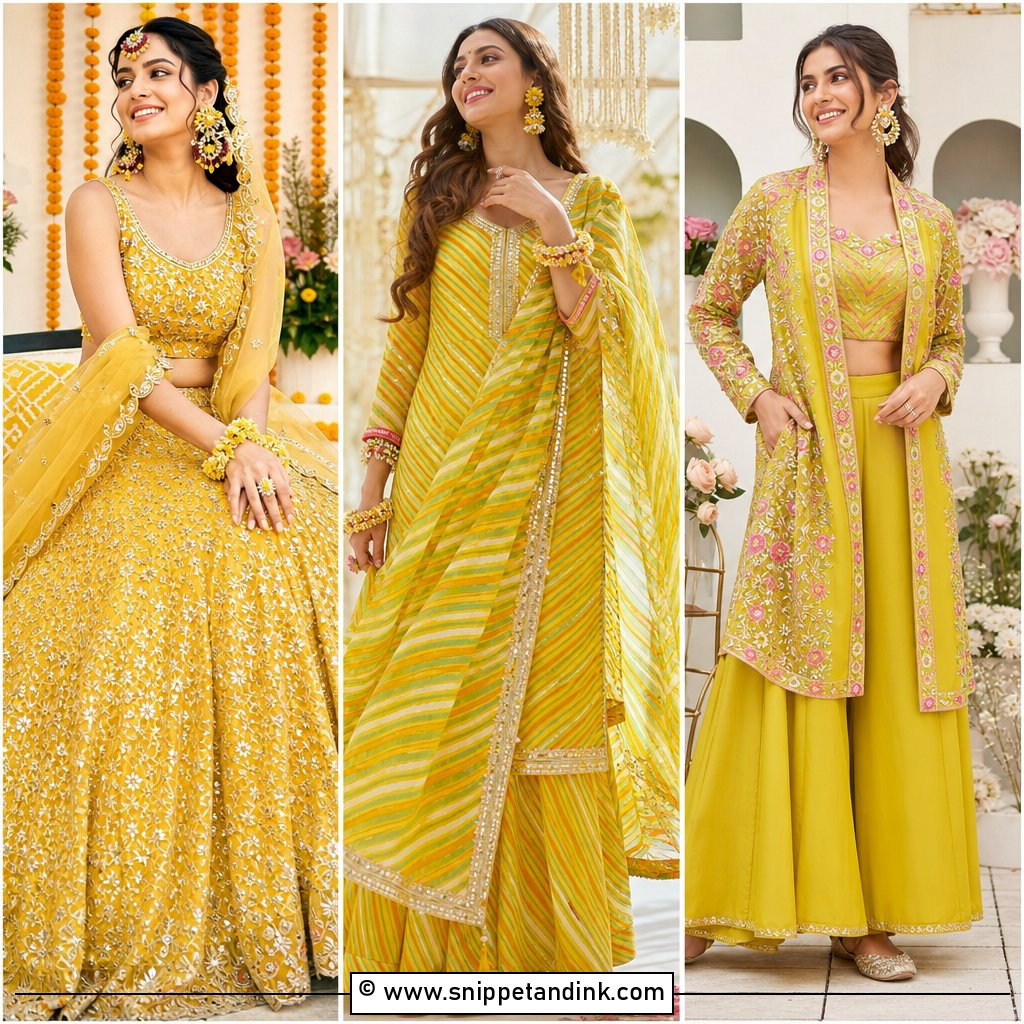
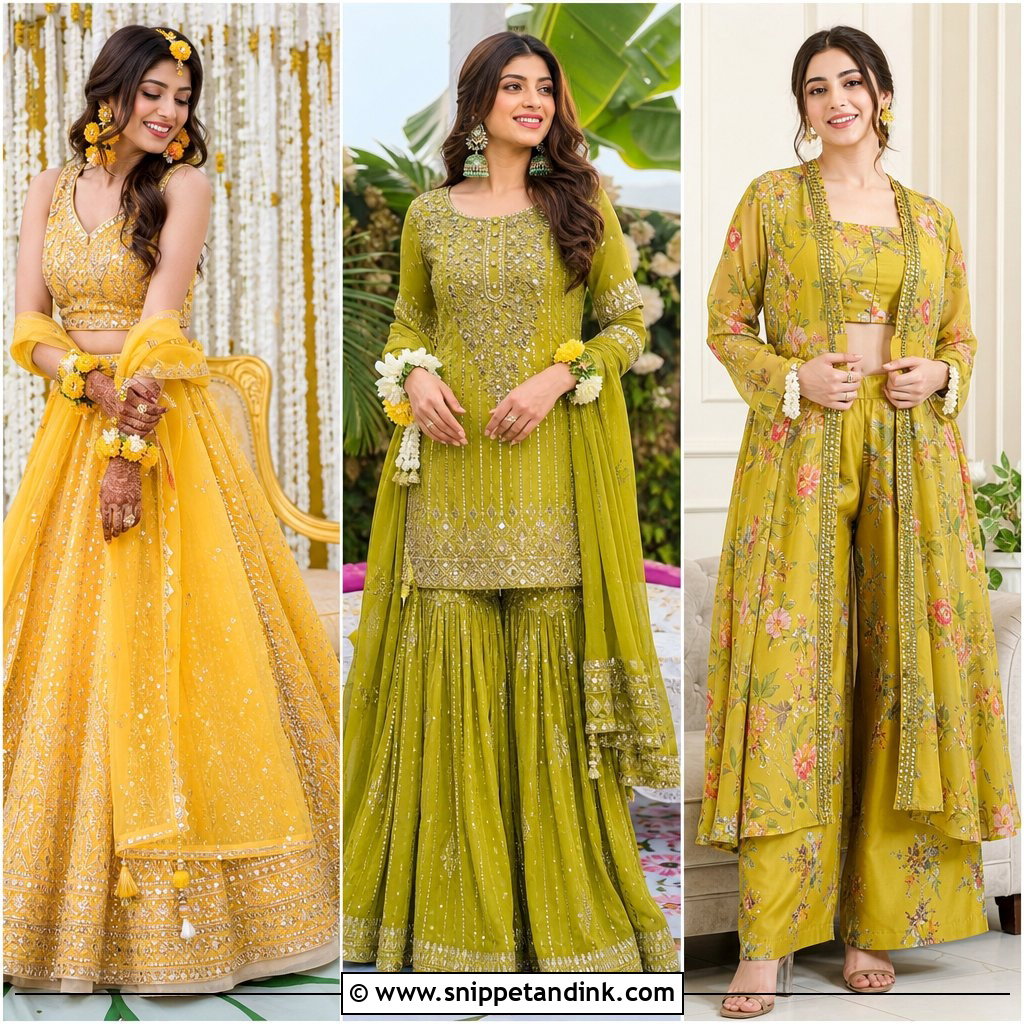
Yellow and deep henna brown make a warm, happy pairing in photos. A mirror work lehenga adds sparkle without heavy embellishment, and I like a structured short-sleeved blouse here because a stiff sleeve edge doesn’t creep down onto fresh paste. Add a pink, orange or green dupatta for contrast, pinned at both the shoulder and the waist. Gold jhumkas, a colorful maang tikka and low wedges or cushioned juttis finish it, with flowers in a ponytail or half-up style. Neon yellow can bounce color onto the skin in close-ups; mustard or marigold is softer. Defined eyes and a peachy lip suit it.
3. Multicolor Bandhani Lehenga Mehandi Outfit
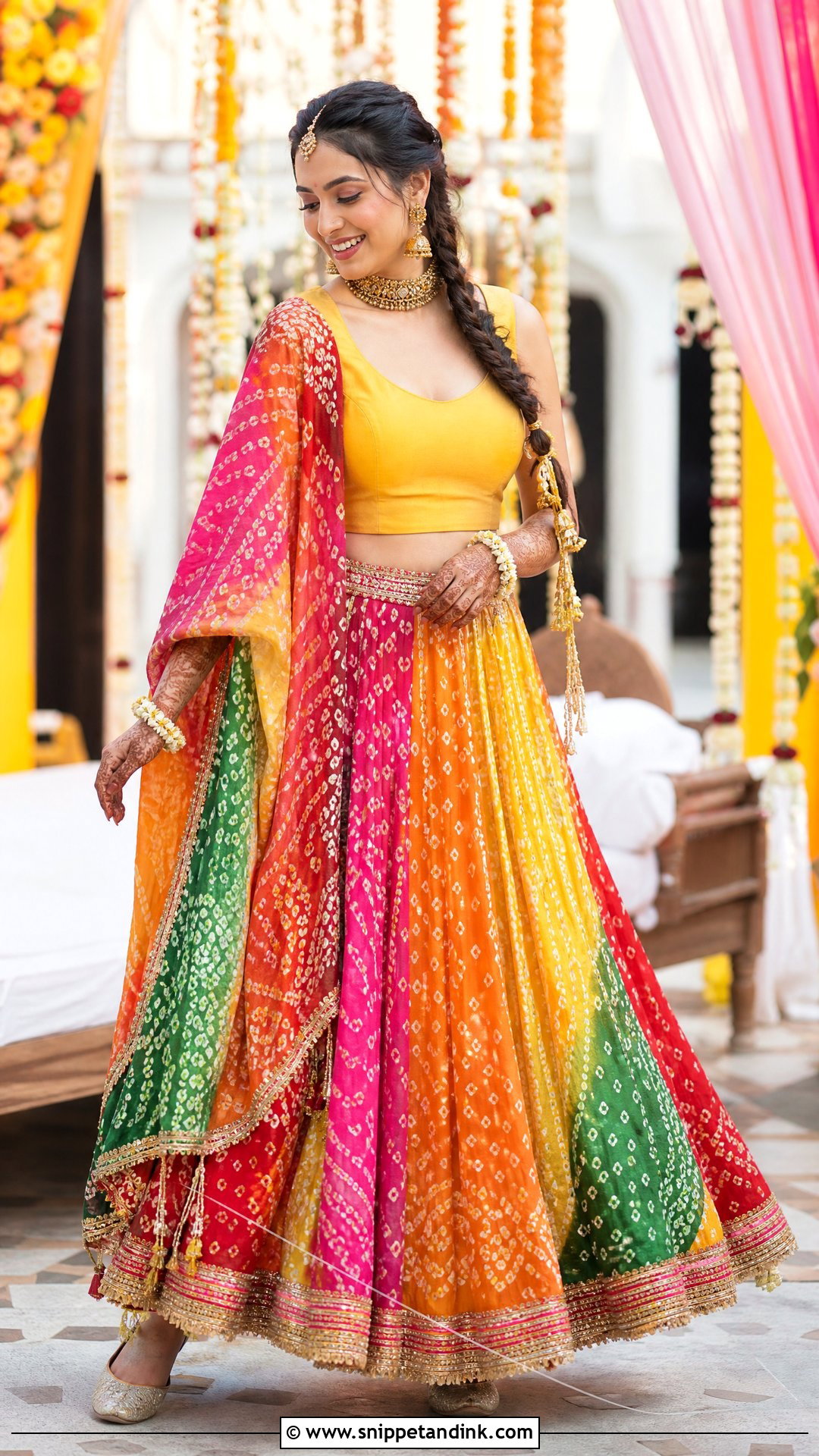
Can’t settle on one color? Bandhani solves that. The tie-dyed dots mix green, pink, orange and red in one skirt, finished with a decorative border, and a solid blouse gives the eye somewhere to rest. My one request is that you decide on the blouse sleeve after we’ve agreed your design length. If your henna stops at the wrist, an elbow sleeve is fine; if it goes to the elbow, go sleeveless. Gold jhumkas and a small choker go on before we start, bangles only once the paste has dried. Metallic juttis, and a sleek braid or low ponytail keep the outfit from looking overdone. Bandhani is light, so it suits a daytime or home mehandi.
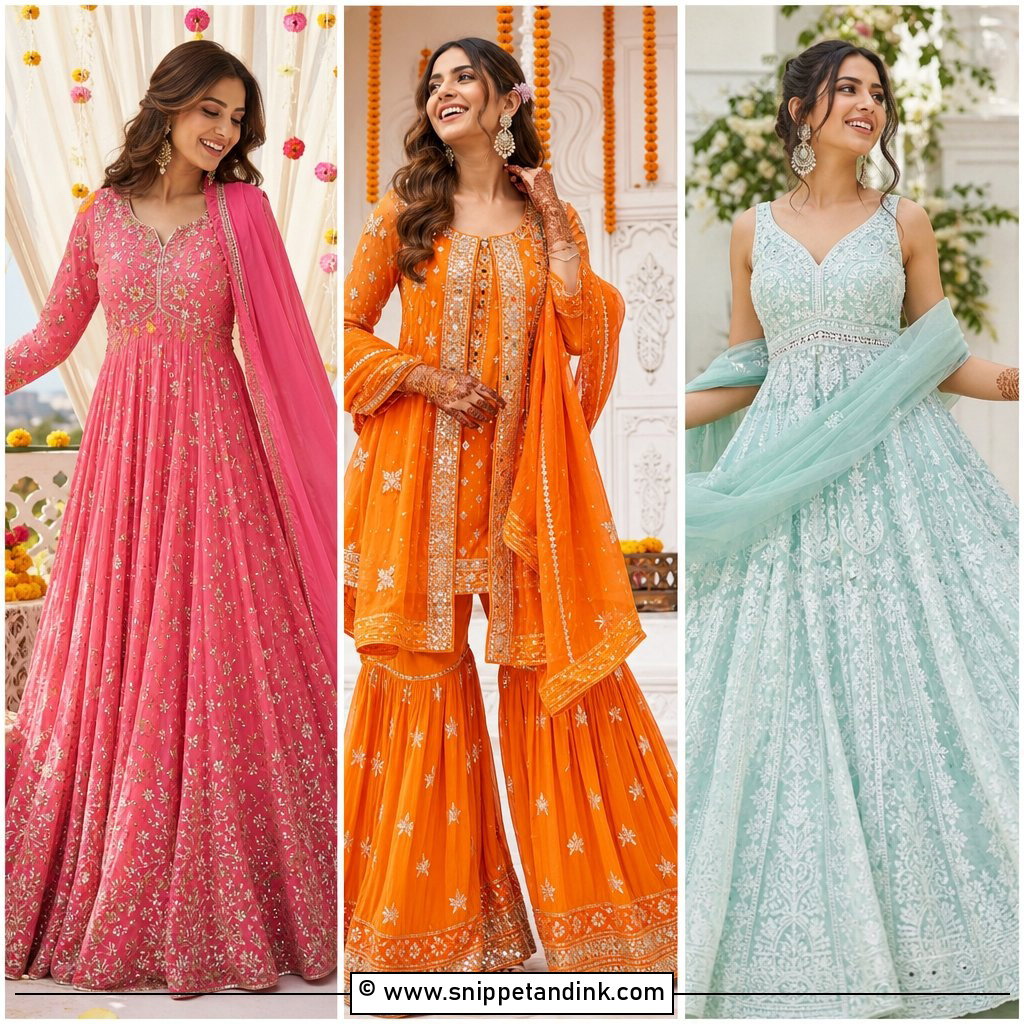
4. Pink Sharara Mehandi Outfit
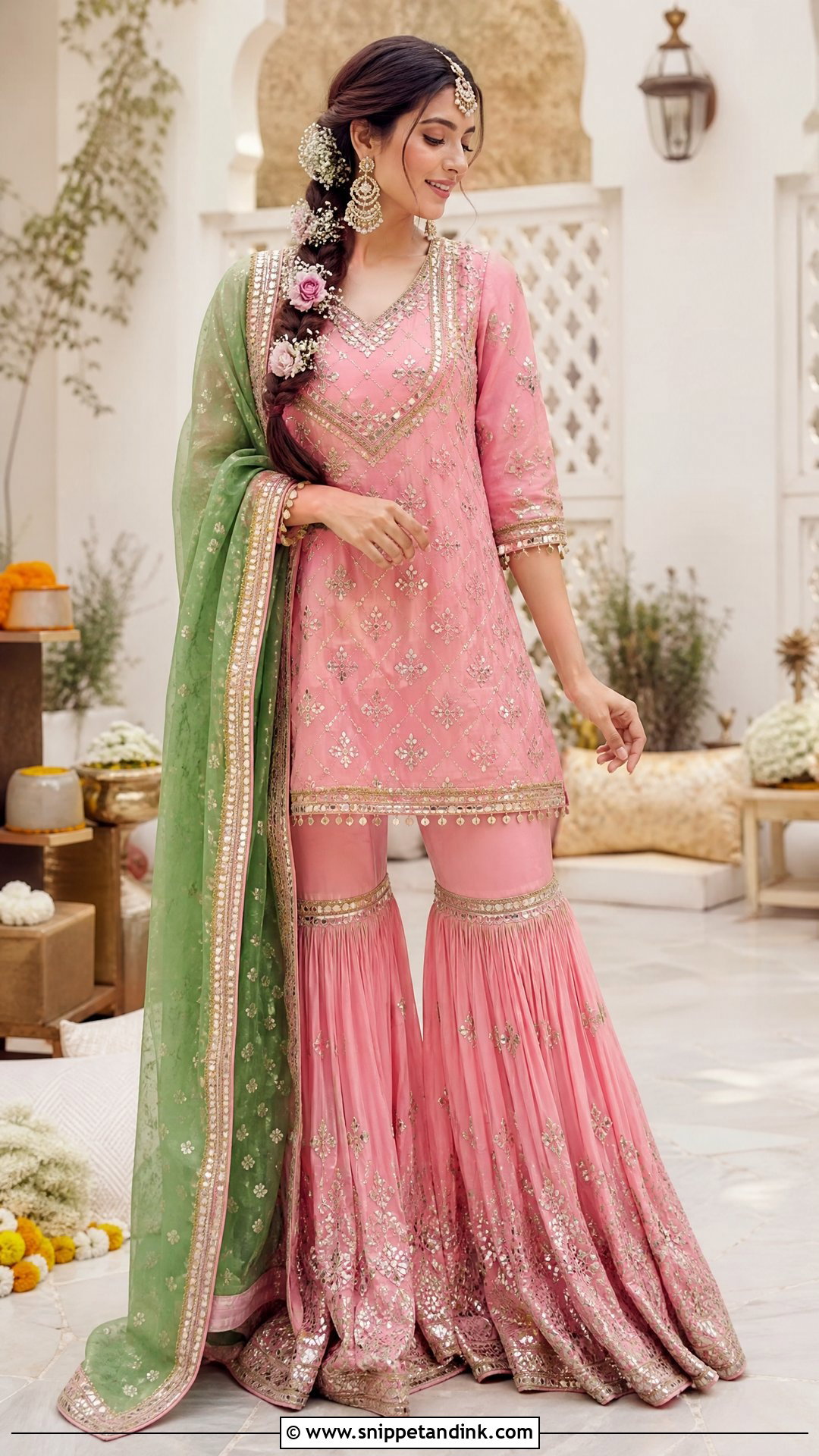
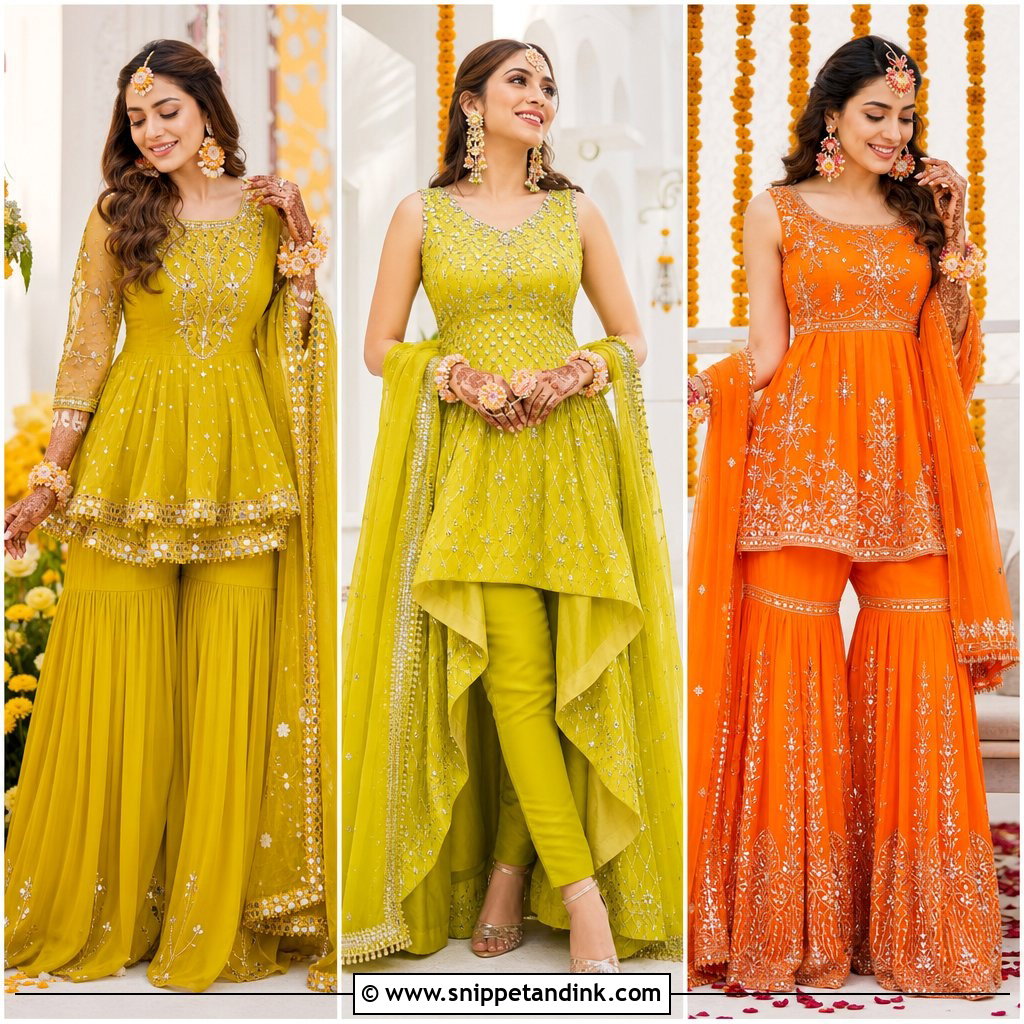
A flowing pink sharara is one of my favorite outfits to work around, because the bride can sit cross-legged with her feet tucked in or stretch them out for foot designs without anything binding at the knee. Choose wide flared pants with gota or mirror work at the hem and a short kurti ending near the hip. A green or yellow dupatta brings in the traditional colors. Kundan earrings, a delicate maang tikka and flat juttis complete it. Three-quarter or short sleeves both work, depending on your design. Hot pink is bolder; dusty rose is gentler. Finish with a center-parted braid and floral pins.
5. Lime Green Gharara Mehandi Outfit
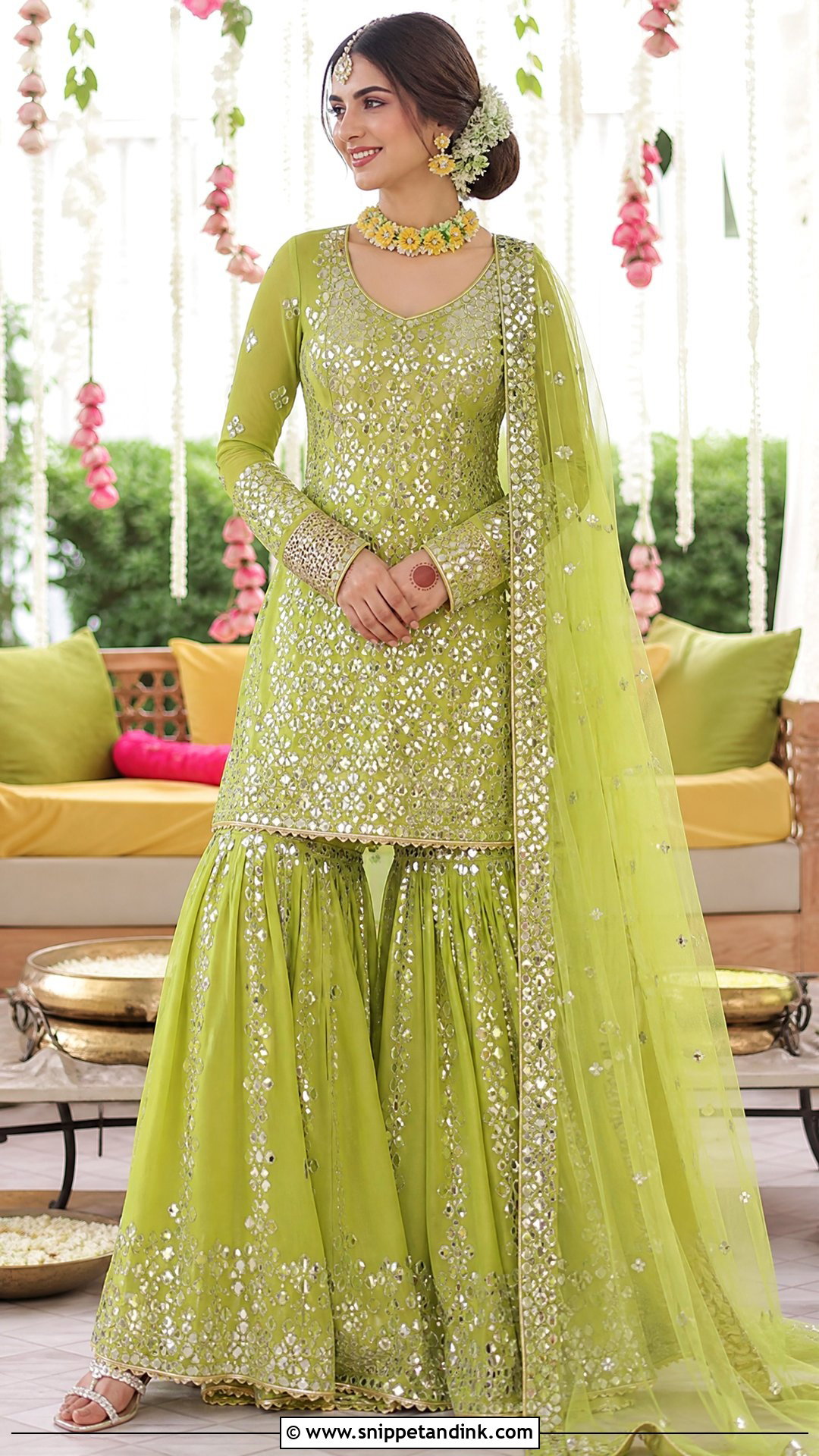
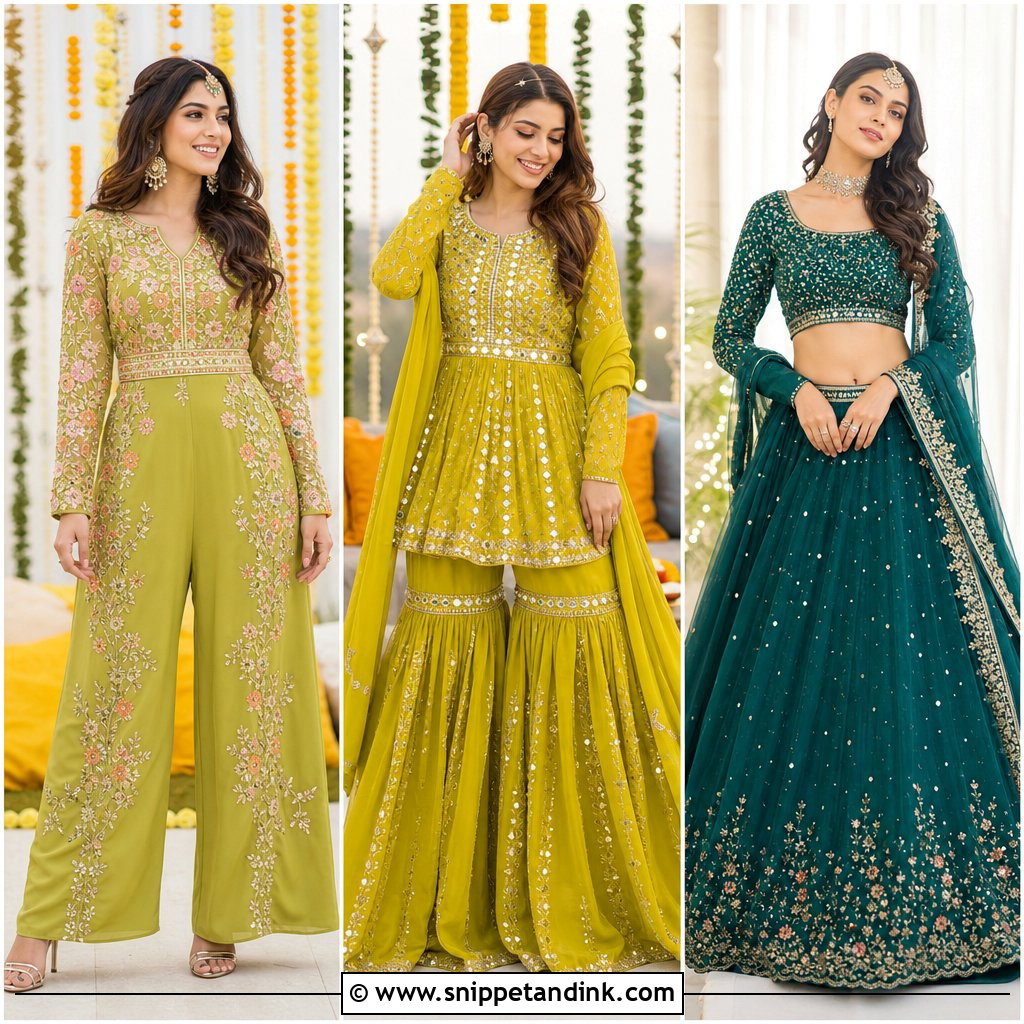
Lime green is lively outdoors. A gharara is fitted to the knee, where it’s joined with a decorative band, and then flares wide below. That knee band is my concern for foot henna: if it’s snug, the bride can’t bend comfortably to give me her feet, so check it seated. Pair the gharara with a fitted short kurti in subtle mirrors or pearls and a sheer dupatta with a narrow border. Statement earrings, a centered maang tikka and a floral necklace are playful enough. Flat juttis hide under the flare. A low bun with fresh flowers keeps hair off your shoulders, and a soft glowing face with a rosy lip balances the color.
6. Ivory Floral Lehenga Mehandi Outfit
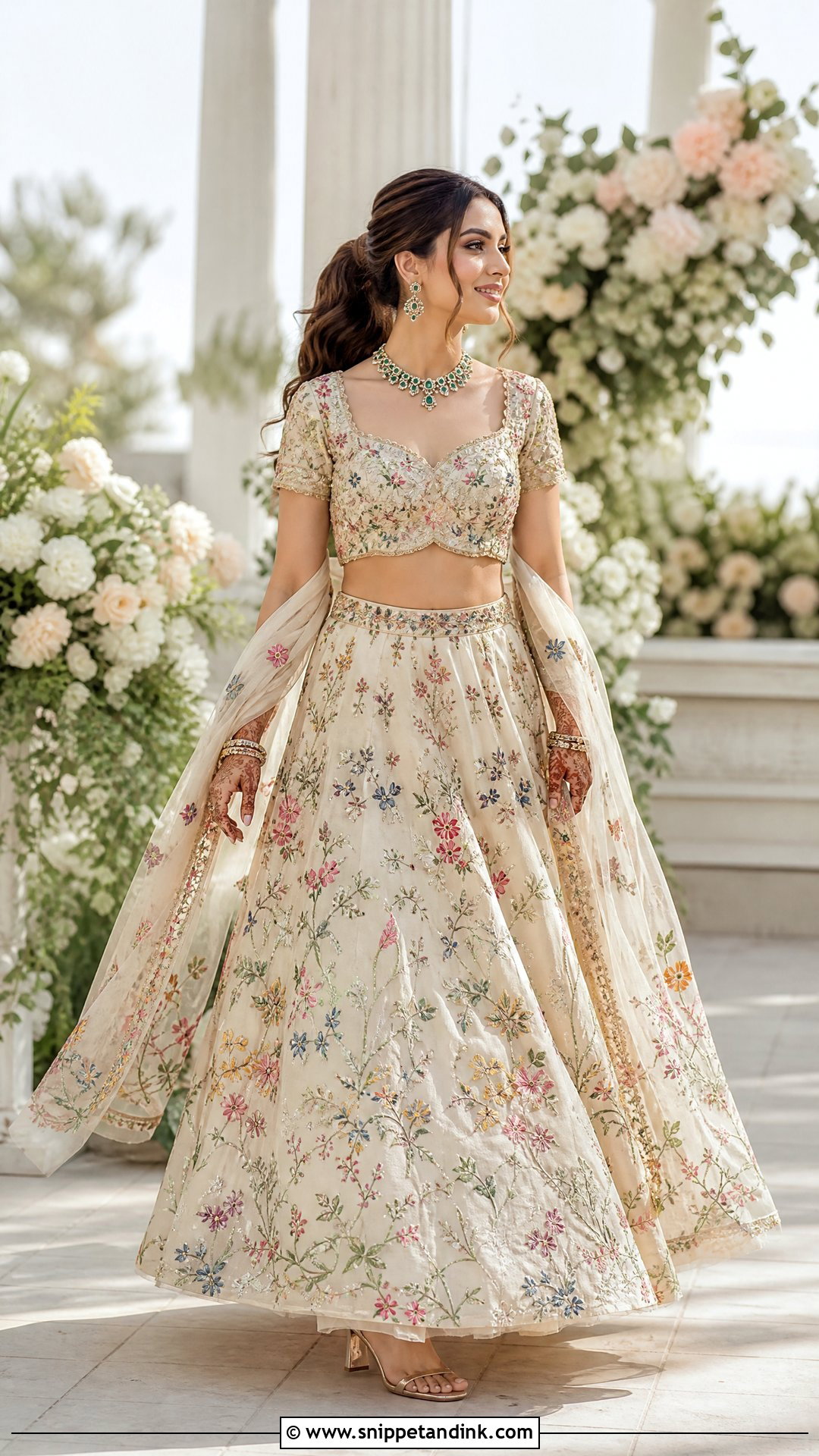
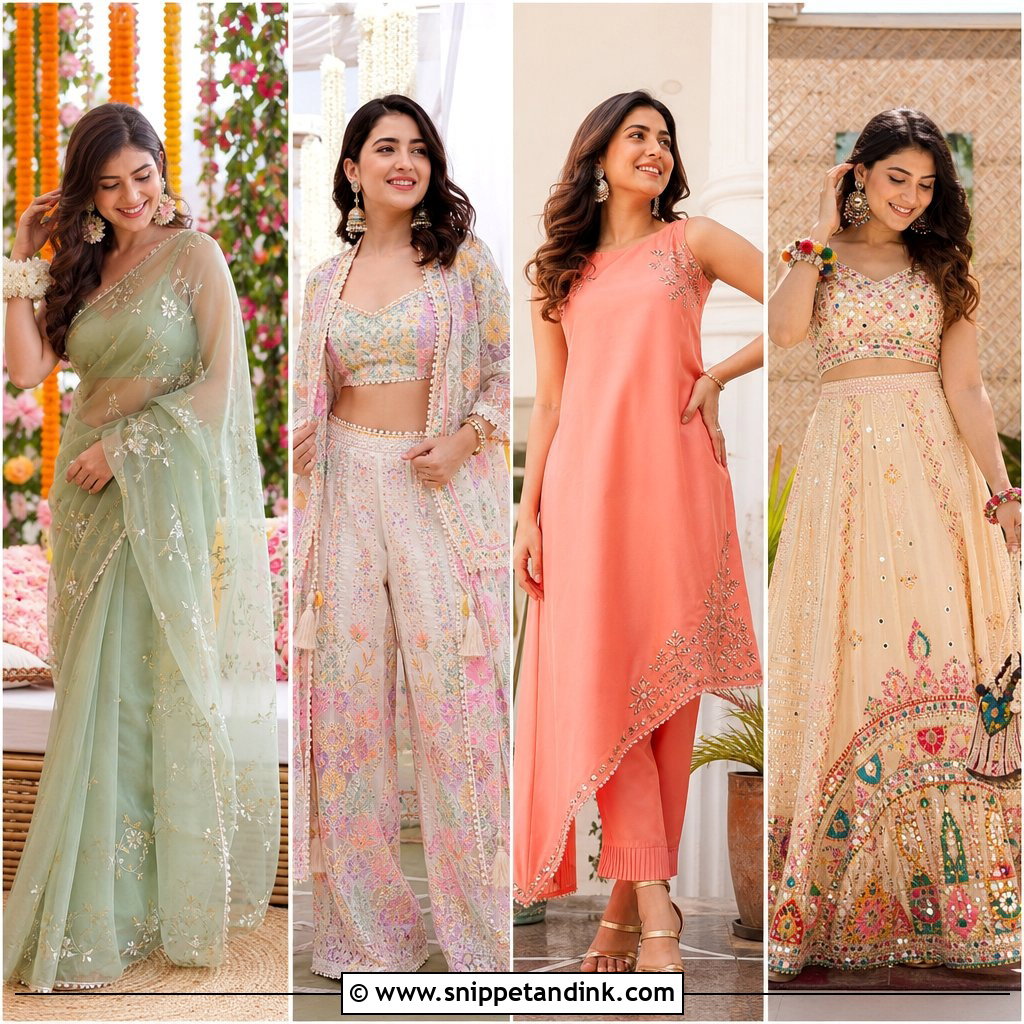
Ivory with scattered pink, green and lavender flowers lets the henna become part of the outfit’s color story, and I love how a dark stain looks against it in photos. It’s also the outfit I worry about most while I work. Wet paste and the lemon-sugar mix I dab on to keep it moist will both mark ivory, so we keep a sheet or towel over your lap the whole time. Pair the lehenga with a short-sleeved cropped blouse and a sheer floral dupatta pinned behind the shoulders. Emerald or multicolor jewelry stops it looking too plain. Choose block heels for a formal venue, flats for a garden. Keep the hem off the floor so it doesn’t sweep through dropped paste or petals.
7. Orange Anarkali Mehandi Outfit
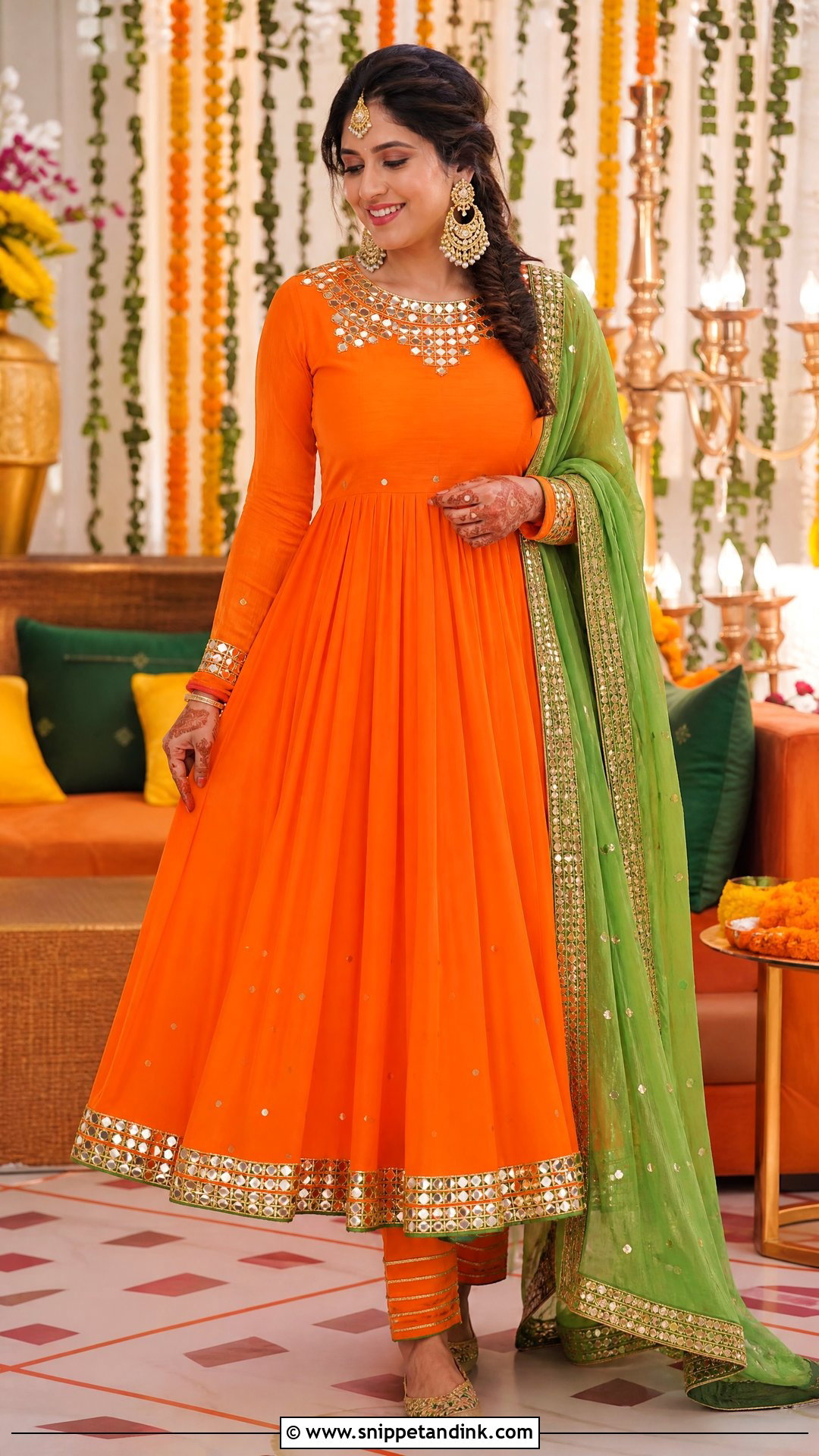
An orange Anarkali gives you one flowing piece with no waistband digging in while you sit. Look for a breathable fabric, a fitted bodice and a full skirt, with mirror work or gold embroidery kept to the neckline. Fitted pants underneath and a pink or green dupatta over one shoulder complete it. Gold chandbalis, a small tikka and embroidered juttis finish the look. Anarkali sleeves are often cut long, so if your henna goes above the wrist, ask for short sleeves when you order. Tangerine reads bright and modern; burnt orange is richer for evening. A side braid and a coral lip suit it.
8. Mint Green Palazzo Mehandi Outfit
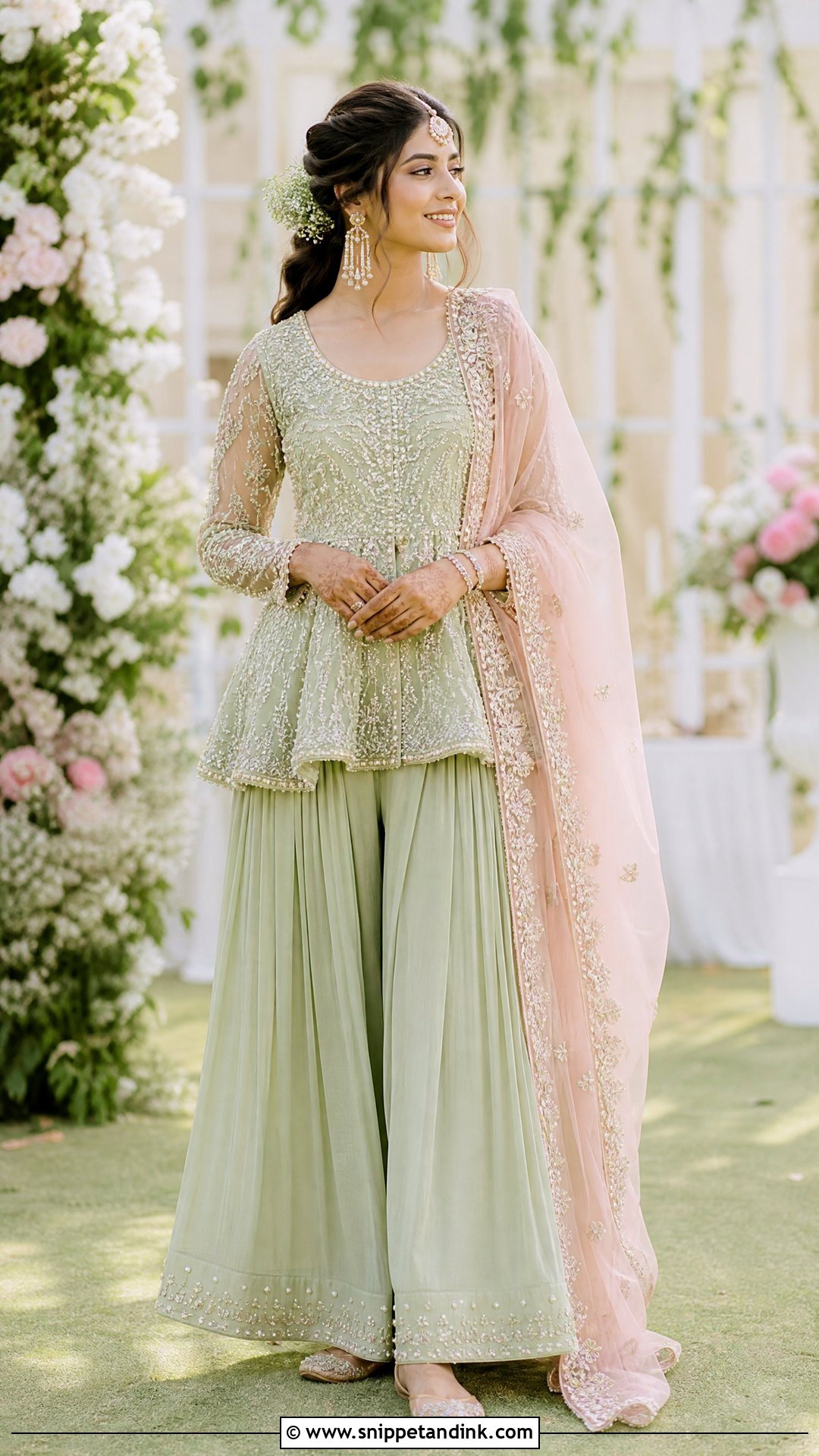
Mint palazzos are easy on a bride who has a long sitting ahead. The wide legs let you sit cross-legged, and there’s no skirt to pool around my cushion. Choose a short peplum or straight kurti with pearl or mirror details, and add a blush pink dupatta for contrast. Pearl-drop earrings, a delicate headpiece and silver or champagne flats keep it light, with a loose ponytail and small floral pins. Mint suits a daytime garden ceremony, and silver embellishment carries it into evening. Pale fabrics show everything, though, so ask for a lining that keeps it opaque and keep a towel on your lap during application.
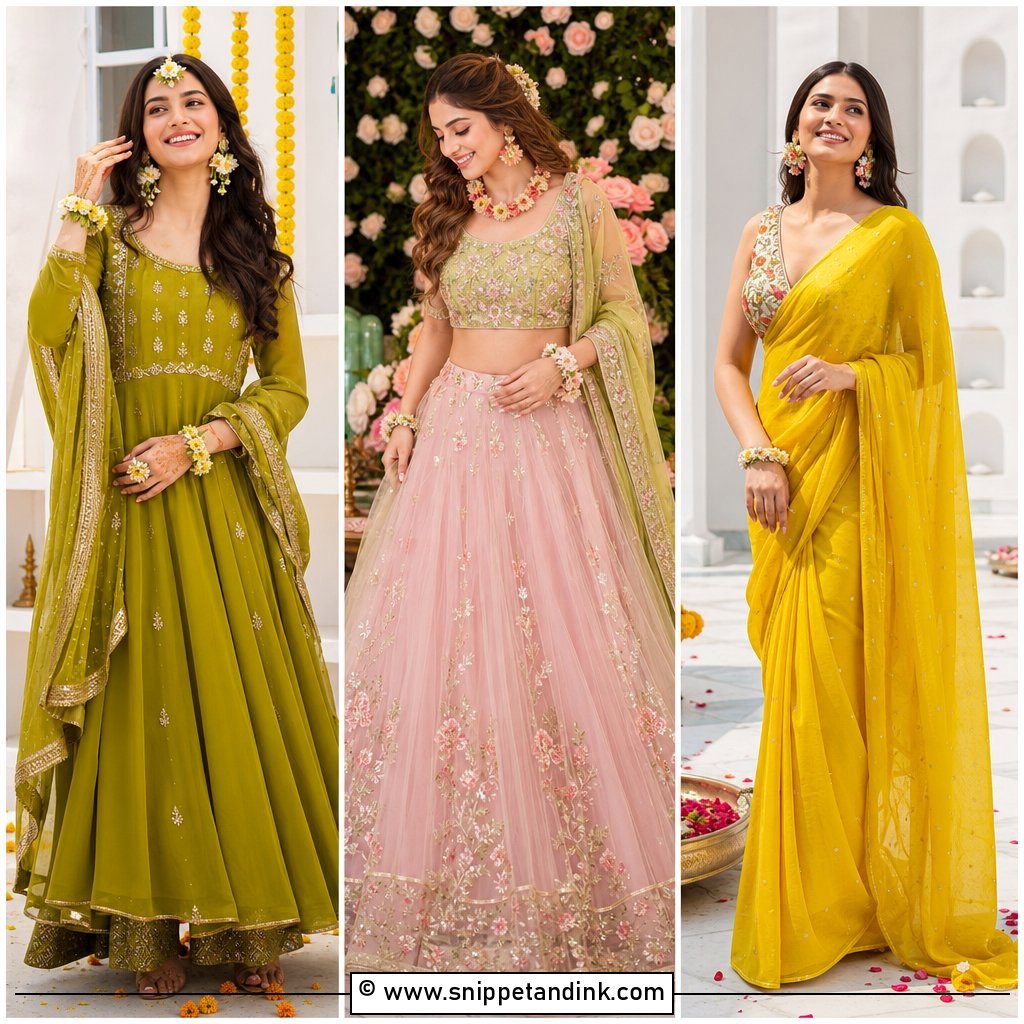
9. Rani Pink Saree Mehandi Outfit
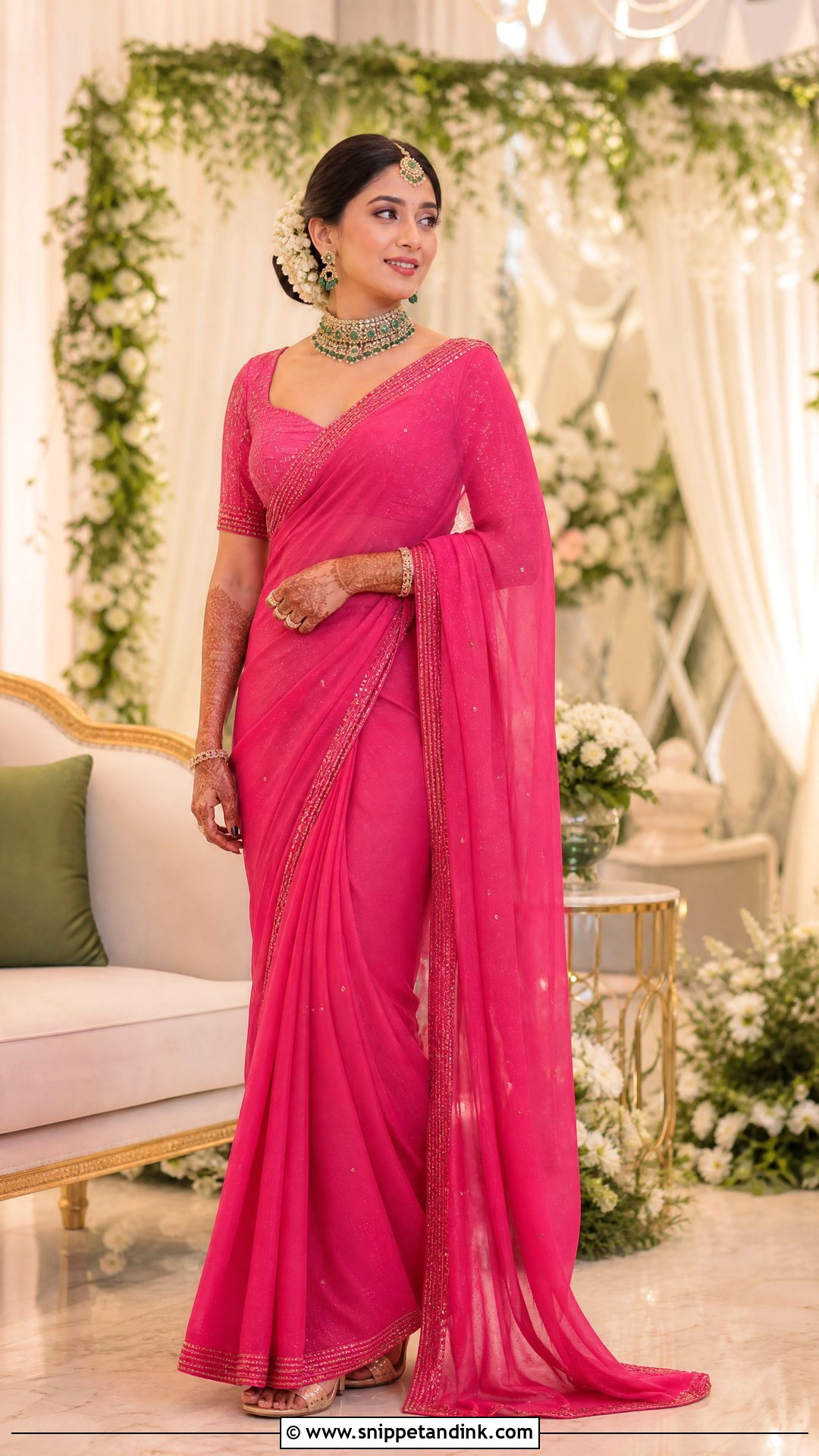
Rani pink is bridal through and through. A pre-draped saree in light georgette or chiffon, with a slim embroidered border and a fitted short-sleeved blouse, gives you that color without a wrap that needs constant fixing. That matters, because once both hands are covered you can’t tuck a pleat back in. A green choker, matching earrings and a small maang tikka add contrast, and low metallic heels help the drape fall. For more coverage, an elbow-length blouse is fine as long as it ends above where I’ll stop. Pin every pleat before I start, and finish with a sleek low bun and flowers.
10. Teal Dhoti Pant Mehandi Outfit
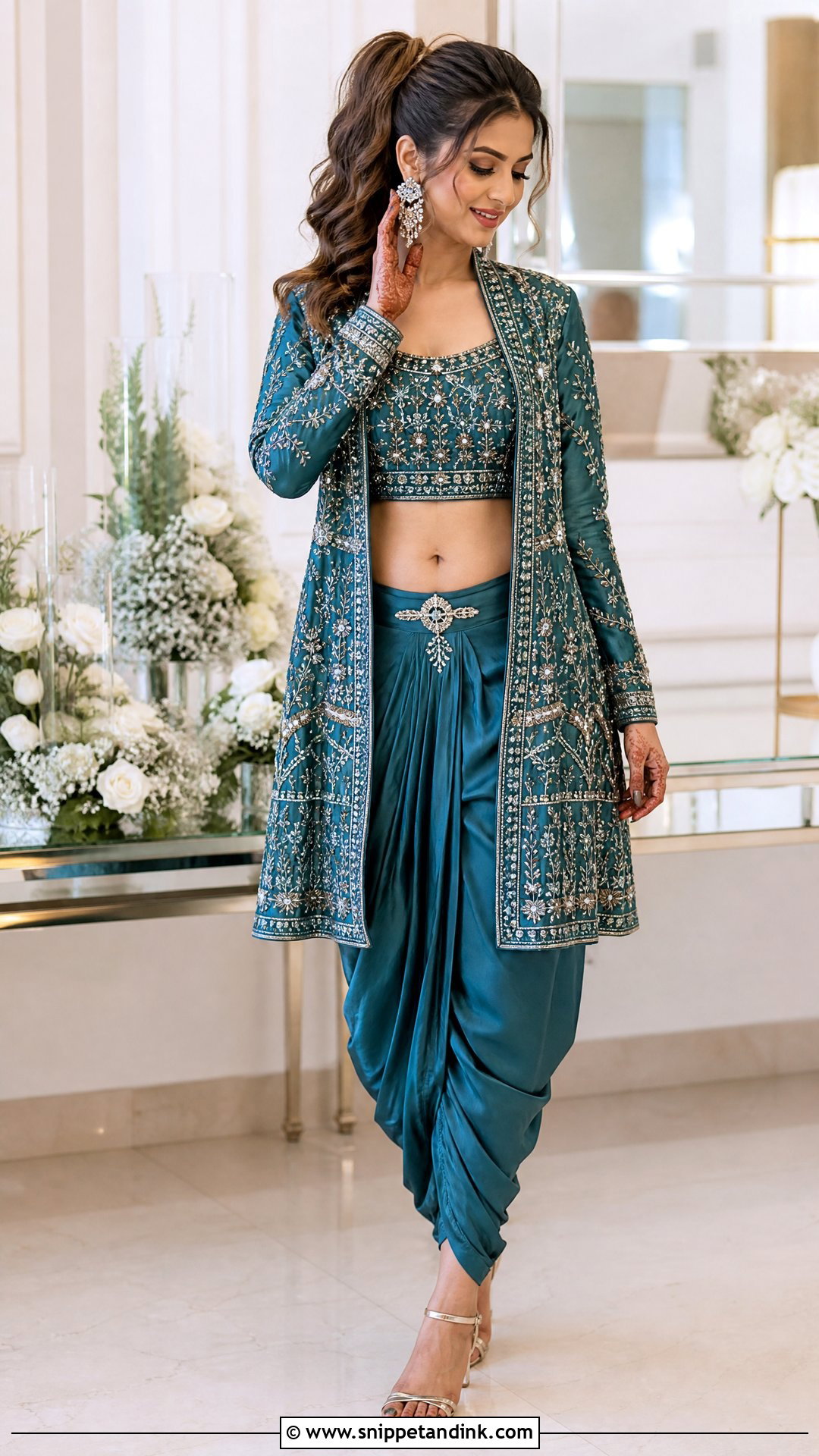
A teal dhoti pant set brings structure and a modern edge. Draped dhoti pants in a fluid fabric go with a fitted crop top or short peplum blouse, and an embroidered jacket or a dupatta behind the arms finishes the shape. Nothing hangs near your hands, which I appreciate. Silver statement earrings and metallic sandals complete it; the bold ring waits until after application. Teal looks rich next to magenta, mustard and coral, and a deep stain looks especially warm against it. A high ponytail or textured braid suits the look. Make sure the waistband stays secure when you’re seated low.
11. Purple Peplum Lehenga Mehandi Outfit
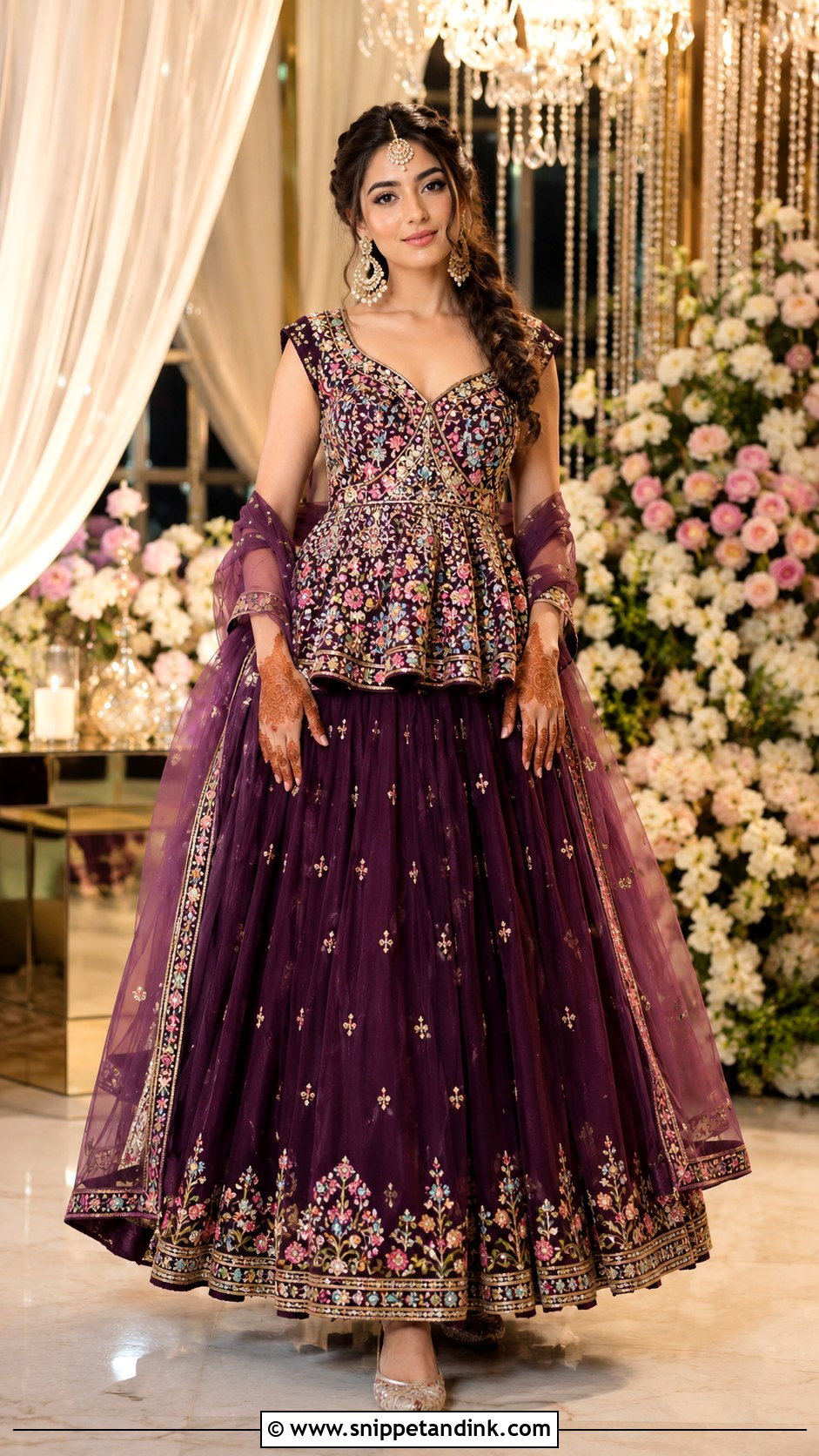
Deep purple is a rich change from green and yellow, and it suits an indoor or evening mehandi. A structured peplum over a flowing lehenga defines the waist and covers the midsection comfortably when you lean forward. Look for multicolor threadwork or mirror embellishment to lighten the base. Skip a front drape; put a sheer dupatta over one shoulder or behind both arms instead. Gold or kundan earrings, a compact maang tikka and neutral juttis complete it, with a soft side braid or curled ponytail. A plum lip can be heavy with this much color, so a muted rose with luminous skin is the softer choice.
12. Mustard Kurta And Skirt Mehandi Outfit
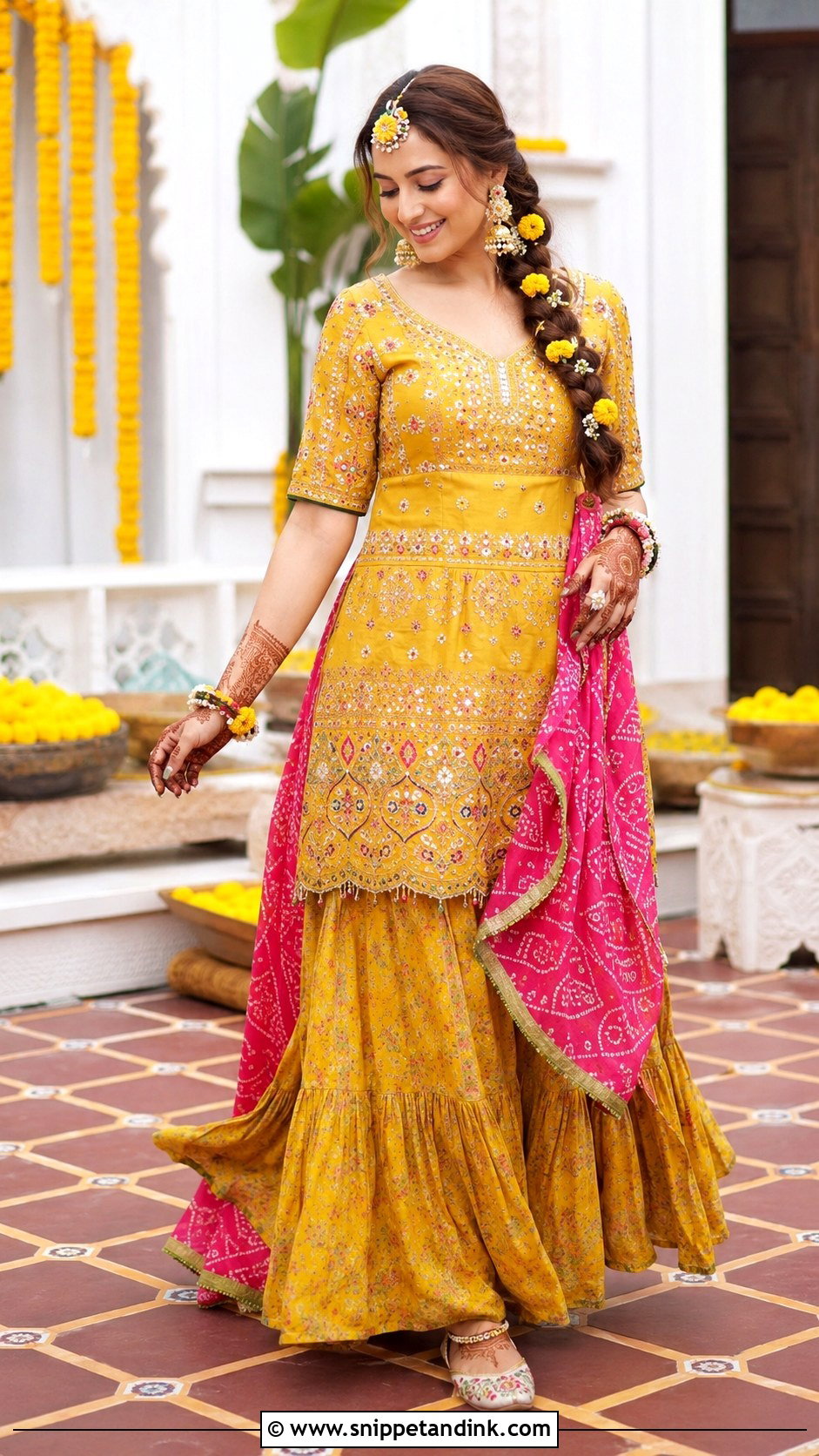
Mustard is softer than bright yellow and works indoors or out. A short or mid-length kurta with side slits over a printed or embroidered flared skirt is about as unfussy as a bridal outfit gets. The slits help, since they let the kurta fall to the sides when you sit instead of bunching on your lap where your hands rest. Add a pink Bandhani dupatta or green organza drape across one shoulder and pin it firmly at the waist. Antique gold earrings, a floral maang tikka and embroidered juttis finish it. Want more waist definition? Add a slim fabric belt once the paste has dried. A loose braid with marigold-colored flowers completes it.
13. Pastel Cape Lehenga Mehandi Outfit
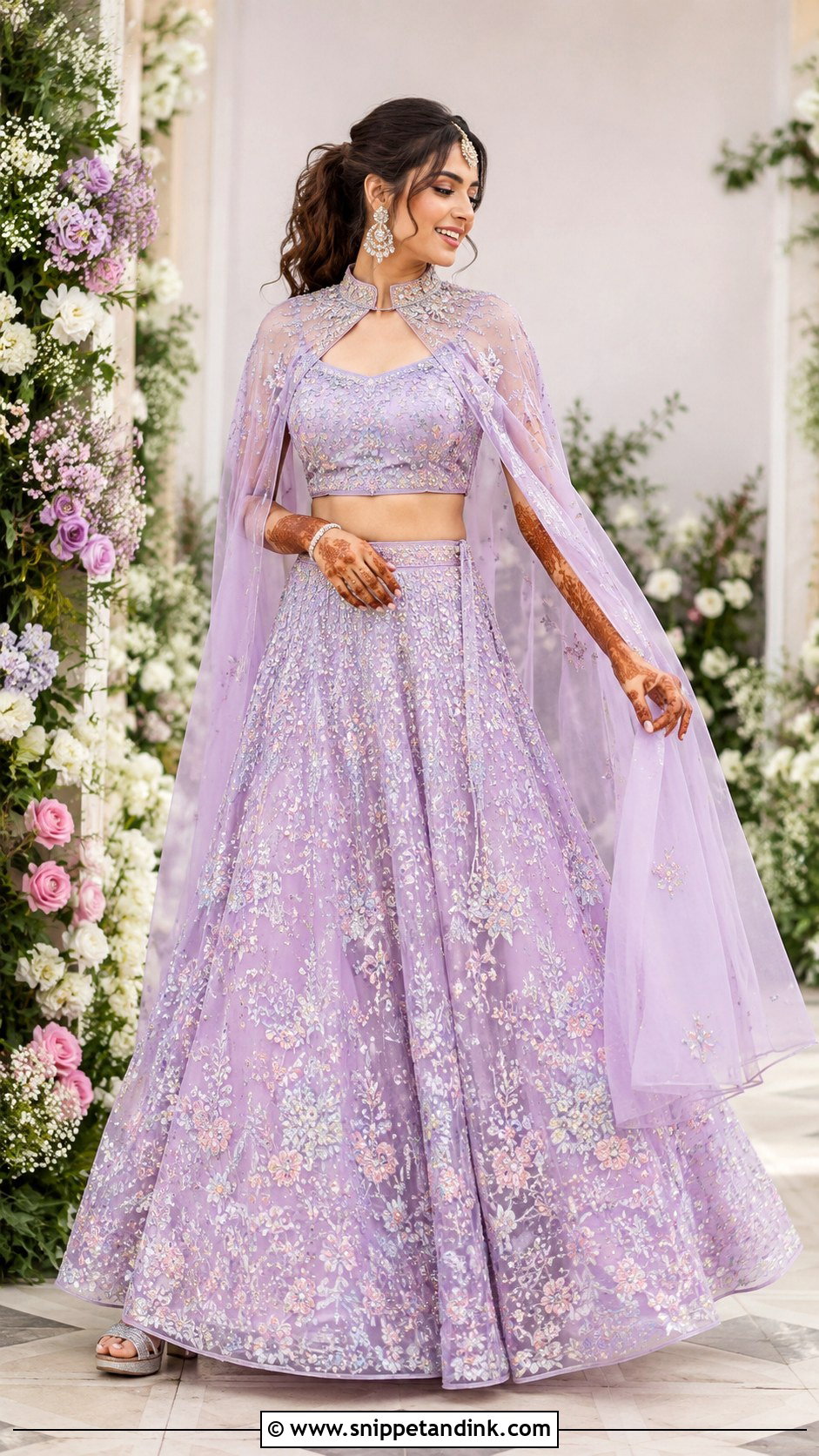
A pastel cape lehenga in blush, lavender, powder blue or peach gives you drama without a loose dupatta near your hands. Pair a delicately embroidered skirt with a fitted sleeveless blouse and a sheer cape attached at the shoulders, ending around the calves rather than trailing on the floor. With your arms resting forward on the cushion, the cape should fall behind them. Crystal earrings, a delicate maang tikka and silver block heels complete it, with a softly curled ponytail. Pastels can blend into pale decor, so add one deeper accent through flowers or jewelry. It suits a bride who wants very little fabric to manage.
14. Blue Printed Lehenga Mehandi Outfit
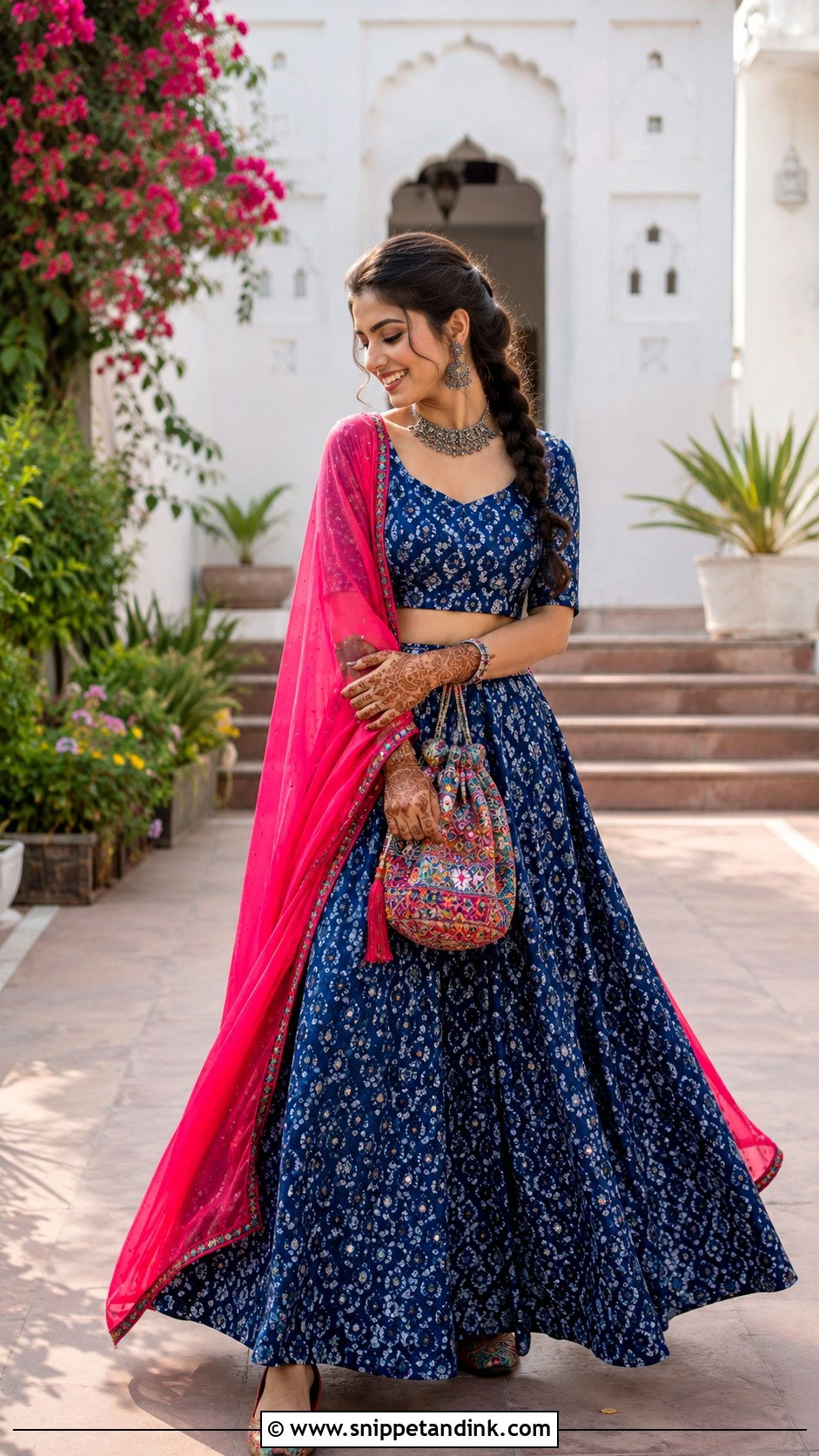
Blue is a refreshing change at a venue already full of green and yellow. Choose an indigo, cobalt or turquoise skirt in floral, geometric or block prints, with a short coordinated blouse and a bright pink or lime dupatta. Prints are lighter than heavy embroidery, and they hide small smudges well. Oxidized silver jewelry gives a bohemian feel; kundan is more formal. Comfortable juttis, a braided ponytail and a colorful potli complete it. Check the inner lining is smooth, because a rough one becomes irritating after a few hours of sitting. A defined waist and moderate flare suit most figures.
15. White And Green Mehandi Outfit
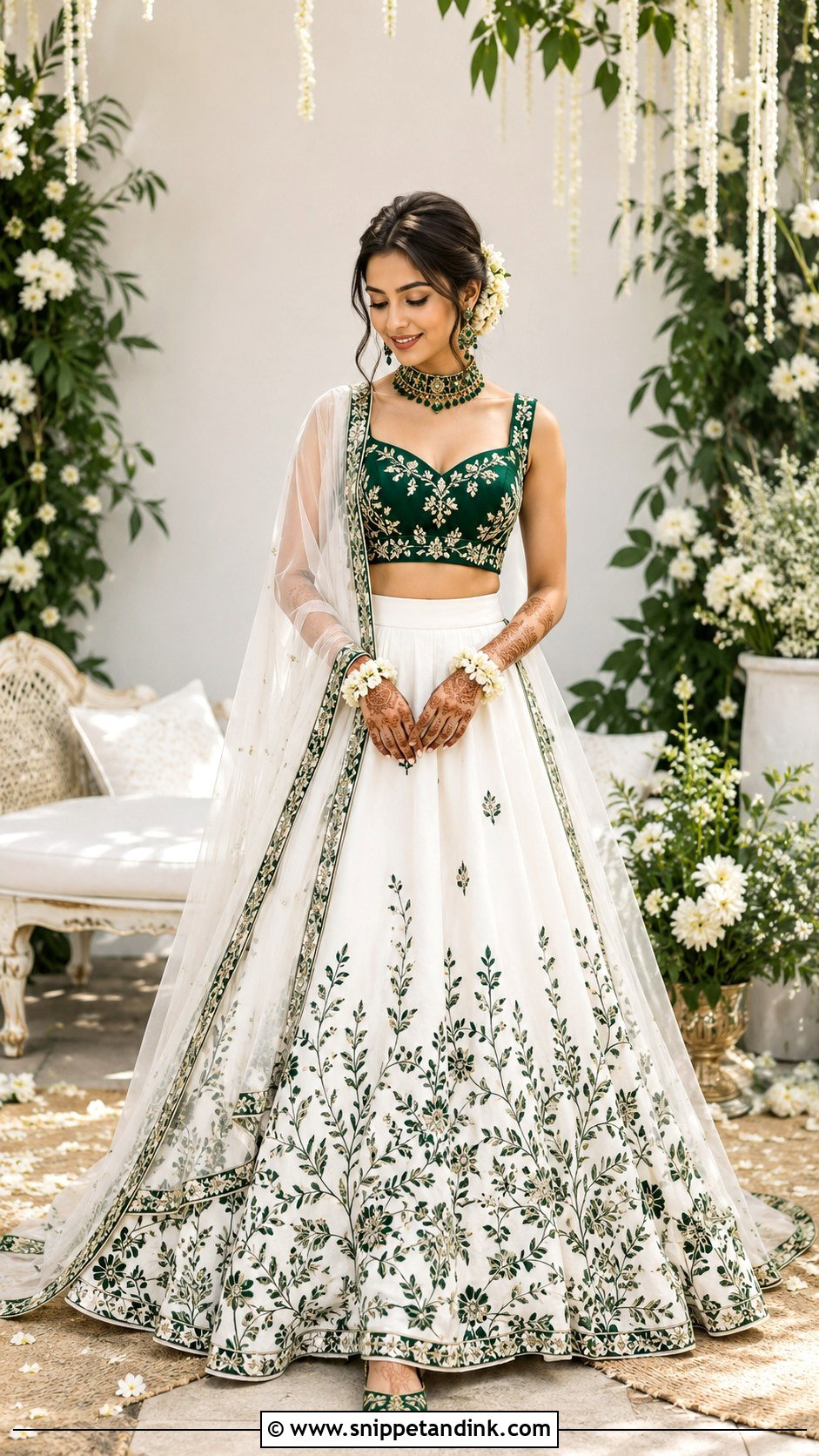
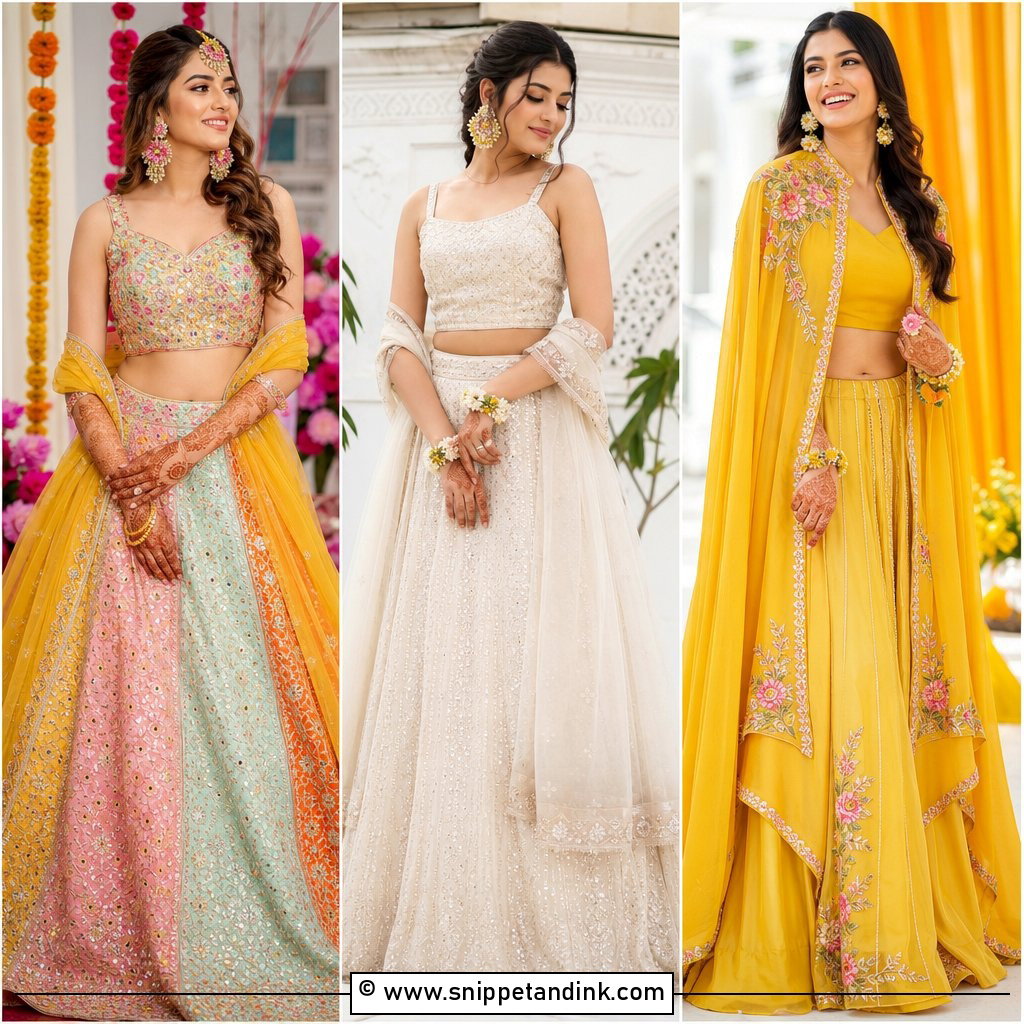
White with vivid green looks crisp and clean, which is exactly why it makes me nervous. Henna paste is designed to stain, and on white cotton that mark can be permanent. If you love this look, choose a washable fabric and keep a towel over the skirt during application. Try a white lehenga or palazzo set with green floral embroidery or a botanical border, a fitted green blouse and a sheer white dupatta edged in matching thread. Emerald earrings, a light choker and white floral hair accessories coordinate the palette. Metallic flats or green juttis finish it, with a sleek ponytail and a warm pink lip.
16. Red And Yellow Lehenga Mehandi Outfit
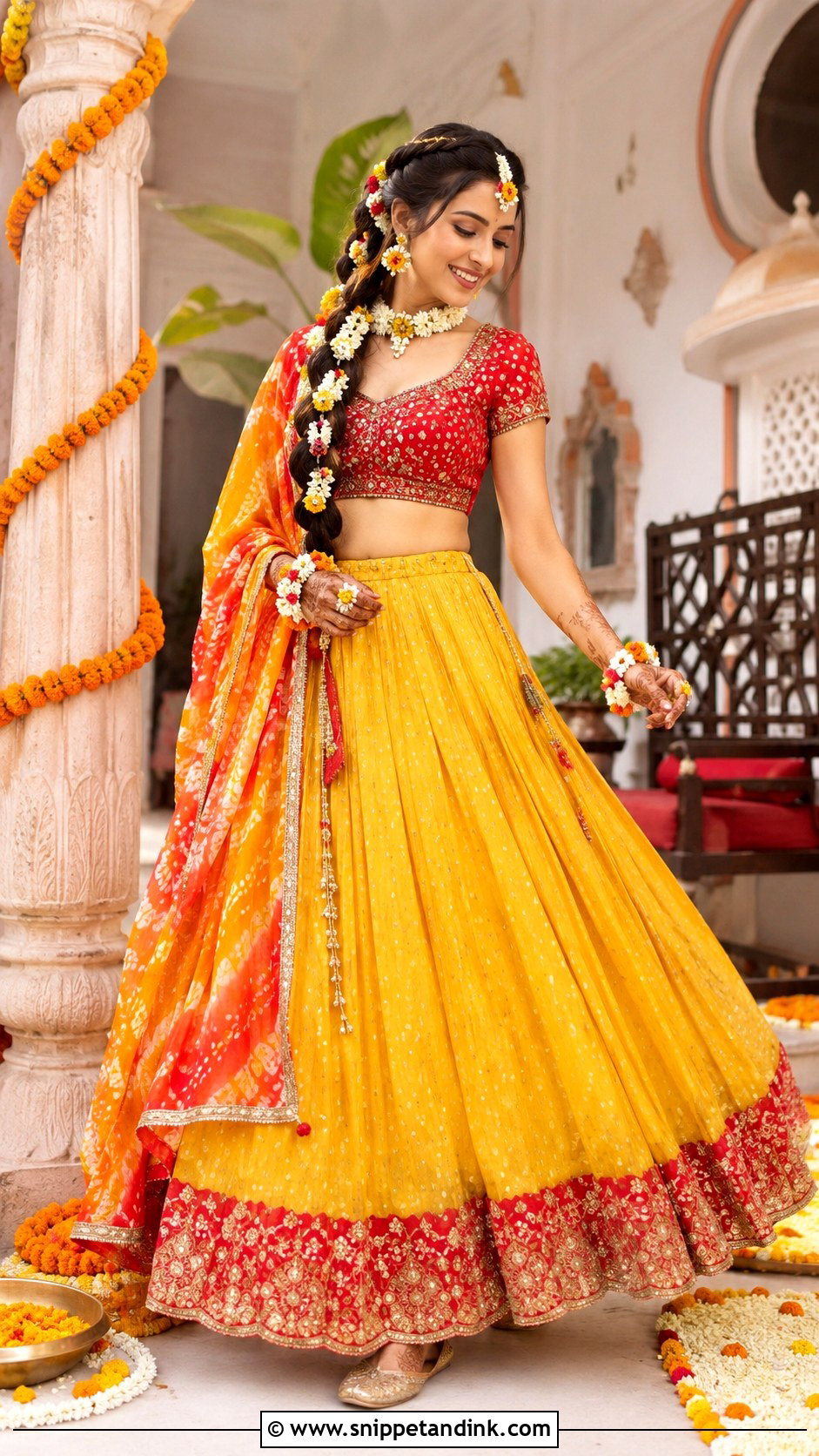
Red and yellow are the traditional celebration colors, and together they make a bold bridal outfit. Try a yellow skirt with a red embroidered border, a fitted red blouse and a light yellow or Bandhani dupatta, or reverse the colors for more depth. Keep the yellow dominant if your wedding outfit is red, so the mehandi look stays distinct. Gold jhumkas, a maang tikka and floral jewelry are enough; choose one main statement piece. Short sleeves and a dupatta pinned at the shoulder protect both fabric and fresh paste. Gold juttis for greeting guests, and a smooth braid with red and yellow flowers to finish.
17. Emerald Green Velvet Mehandi Outfit
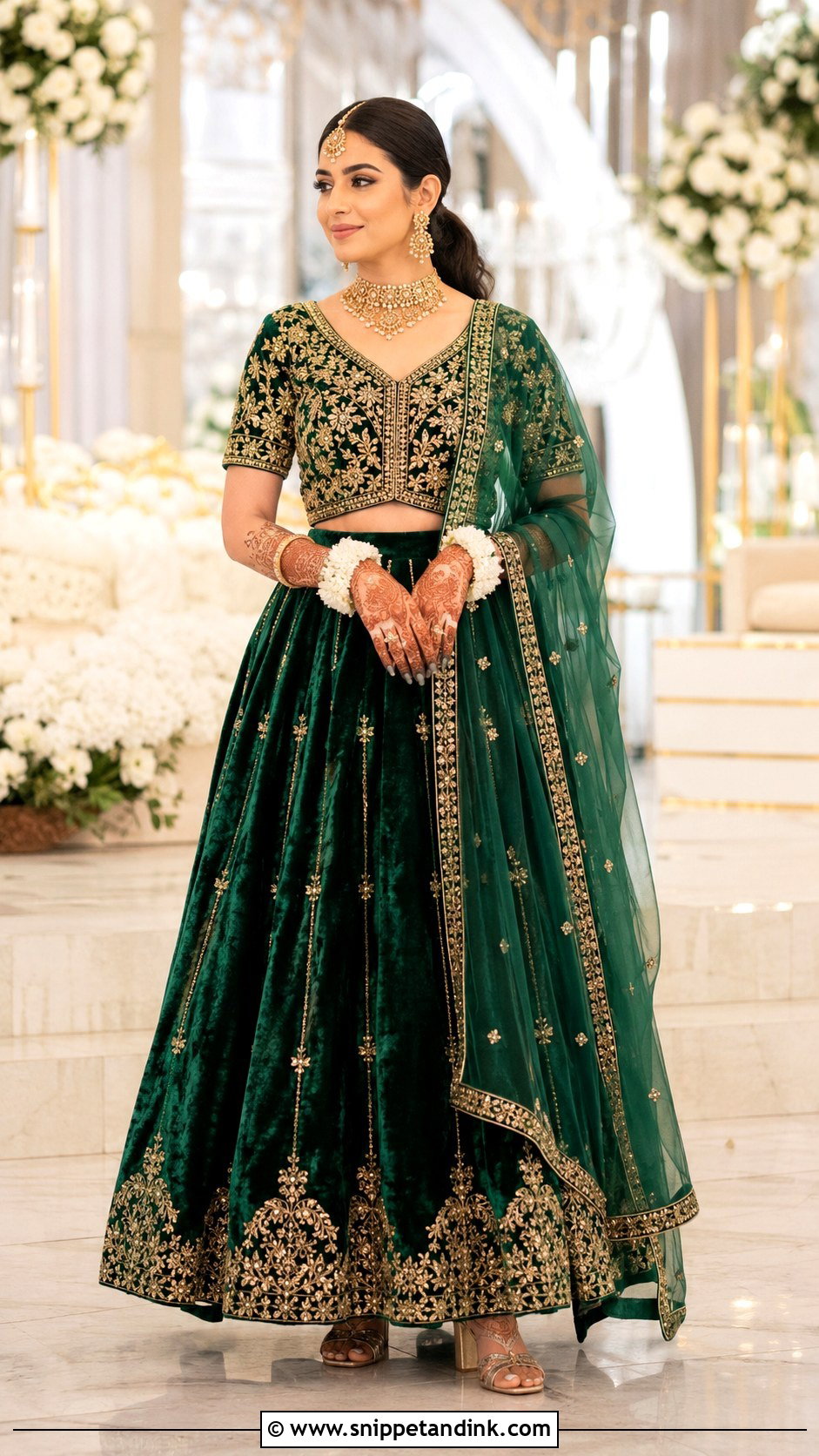
Planning a cool-weather or evening mehandi? Emerald velvet brings depth and a regal color. Keep the skirt moderately flared, with a short-sleeved velvet blouse embroidered in gold at the neckline, and a light net dupatta so it doesn’t look heavy. Antique gold jewelry, a small maang tikka and cushioned block heels complete it. Velvet is warm, though, and warmth actually helps the henna darken, so a bride in velvet often stays comfortable while her stain develops. In a hot room it’s too much; save it for air conditioning or a cool season, or wear velvet only on the blouse. Check that sleeve embellishment won’t scratch your arms or get in my way.
18. Ombre Drape Saree Mehandi Outfit
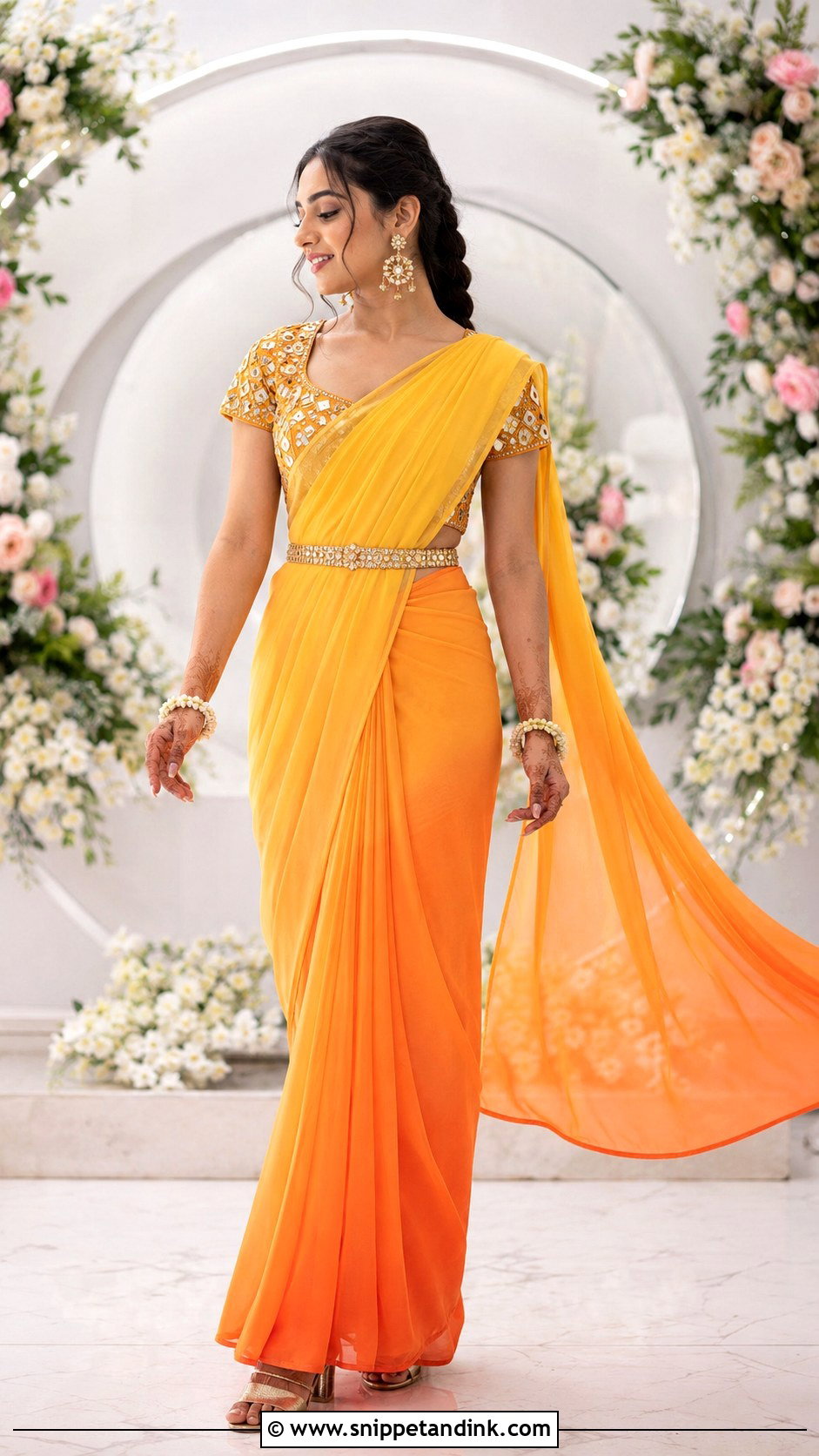
An ombre drape saree blends several colors without the busyness of an all-over print. Look for a pre-stitched saree in light georgette or chiffon that fades from yellow to orange or green to blue. The stitched pleats are the real advantage: they stay put when your hands are out of action for hours. Pair it with a short-sleeved mirror work blouse, statement earrings, a delicate headpiece and low block heels. A narrow waist belt holds the drape, but test it seated, because belts dig in when you lean forward. Finish with a sleek braid and a lip color taken from the saree’s deepest shade.
19. Boho Crop Top And Skirt Mehandi Outfit
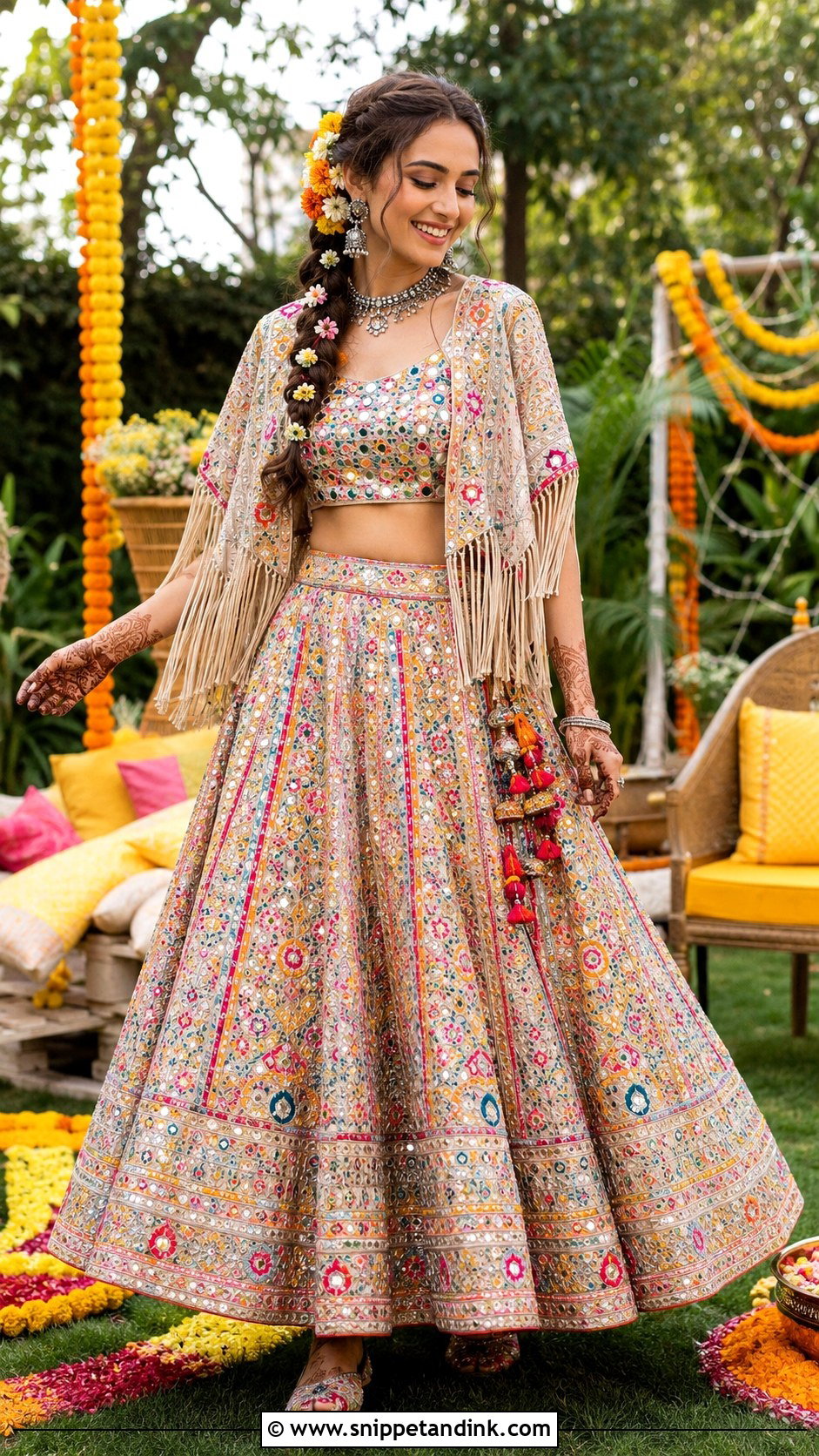
A boho crop top and skirt suit a relaxed, personal celebration. Choose a printed or embroidered skirt with colorful tassels and a coordinating crop top with mirror work. Swap the long dupatta for a short fringed cape or light jacket. Tassels and fringe are where I have to be careful, because they swing into wet paste easily, so keep them clear of the wrists and tie back any long ones at the sleeve. Oxidized silver earrings, a statement necklace and floral hair accessories complete it, with embroidered flats and a textured side braid. Repeat at least two colors across top and skirt so the pieces look like one bridal outfit.
20. Green Jumpsuit With Cape Mehandi Outfit
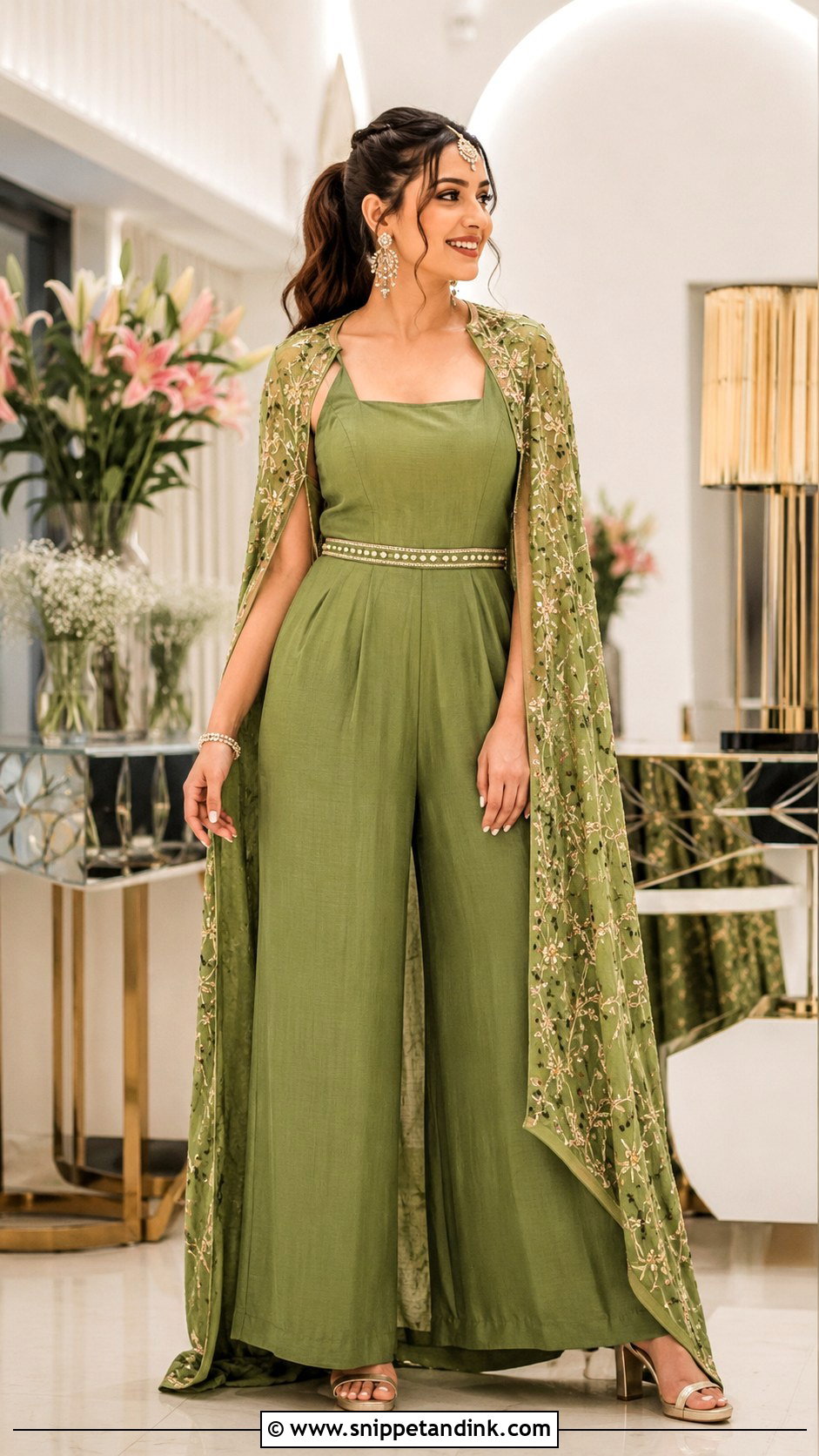
A green jumpsuit with a detachable cape gives you the most freedom to move. Choose a wide-leg style with a defined waist, a supportive bodice and short or no sleeves, and add an embroidered cape that falls from the shoulders without covering the forearms. Statement earrings, a delicate maang tikka and metallic block heels make it bridal; a mirror or pearl belt works if it’s comfortable seated. The detail I’d check before anything else is the zip. Get dressed fully before I start, and make sure a sister knows how the zip works, since you won’t be able to use your hands. Emerald feels formal; lime or mint is lighter for daytime.
Why the Stain Keeps Darkening After the Party
When the paste comes off, the stain underneath is orange. That’s normal. Henna keeps oxidizing and darkens over the next day or two, reaching its deepest reddish brown somewhere around 24 to 48 hours. That’s why many families hold the mehandi a day or two before the wedding, so the color peaks for the ceremony rather than the party.
What I ask brides to do that night
- Leave the paste on as long as you can, ideally for several hours or overnight. Wrapping hands loosely in tissue or cotton keeps it from flaking onto your outfit and bed.
- Scrape the dried paste off with a blunt edge or your fingers. Don’t wash it off.
- Keep water away for the rest of the night and as long as you comfortably can the next morning.
- Keep your hands warm. Warmth helps the color develop, which is one reason a cold venue can give a lighter stain.
Change out of your mehandi outfit carefully once the paste is off. Dried flakes cling to embroidery and mirror work, so shake the outfit outdoors before folding it, and air it overnight so any leftover oil or sealant doesn’t sit in the fabric.
The Outfit Frames the Henna, Not the Other Way Round
When you plan, start with how long you’ll sit, how far up your arms and legs the design will go, and whether you’ll be indoors or out. Those answers decide the sleeve, the hem and the fabric, and the color comes after. Lehengas give you traditional impact, while shararas, sarees, palazzo sets and jumpsuits are just as valid. Keep jewelry and hair clear of your hands, and put your own personality into the palette and proportions. Any of these looks can be adjusted for your venue, your body, your family’s customs and the amount of embellishment you enjoy.
You'll Like These Ideas:


Leave a Reply