
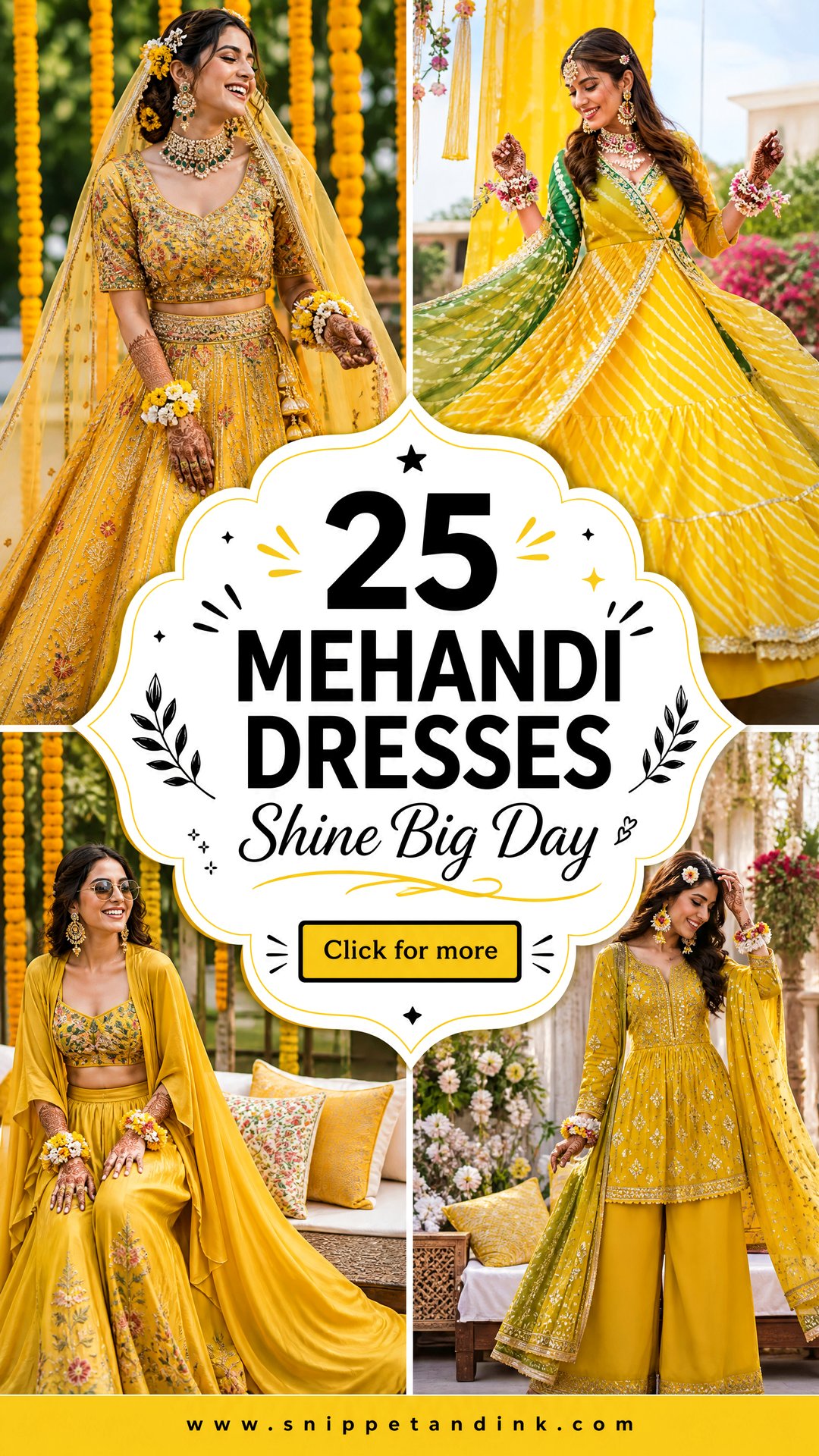
A mehndi outfit has a harder job than most bridal clothes. You will sit still for hours while paste dries on your hands, then stand up and dance, hug relatives and pose for photos without smearing a single line. When I style a bride for this function, color comes second; the first question is what her arms and lap will be doing all day. Today’s bridal mehndi fashion gives you plenty of room to play: yellow lehengas, mirror-work sets, shararas, ghararas, sarees, anarkalis, fusion co-ords and light outfits for destination events. Greens, mustard, lime and multicolor palettes still lead, while pastels and floral prints suit brides who want something softer. Below are 25 outfits I’d happily put on a bride, with notes on where each one helps or gets in the way of your henna.
Dressing Around Wet Henna for Five or Six Hours
Full bridal henna on both hands and feet usually takes several hours to apply, and the paste then needs to stay on for as long as you can manage, ideally overnight, for the deepest stain. That means your outfit is being worn by someone who can’t use her hands. At fittings I walk brides through that reality before we talk about embroidery.
- Sleeves should end at or above the elbow if your design goes past the wrist. Fitted sleeves cannot be pushed up once the paste is on.
- Have someone pin the dupatta to the blouse with safety pins at both shoulders before the artist starts. A loose drape always slides toward the hands.
- Do a sitting test in the trial. Sit cross-legged on the floor for ten minutes and check whether the waistband digs in or the skirt bunches under your knees.
- Plan the bathroom trip before the hands are done. A side zip or hooks you can’t reach without fingers will need a helper later.
- Feet go last, so the hem has to clear your ankles or be lifted and pinned. Shararas and Patiala salwars make this much easier than floor-length skirts.
If you’re torn between two outfits, choose the one that passes the sitting test. Nobody looks at the embroidery in photos when the bride is uncomfortable.
1. Yellow Mehndi Lehenga For Bride
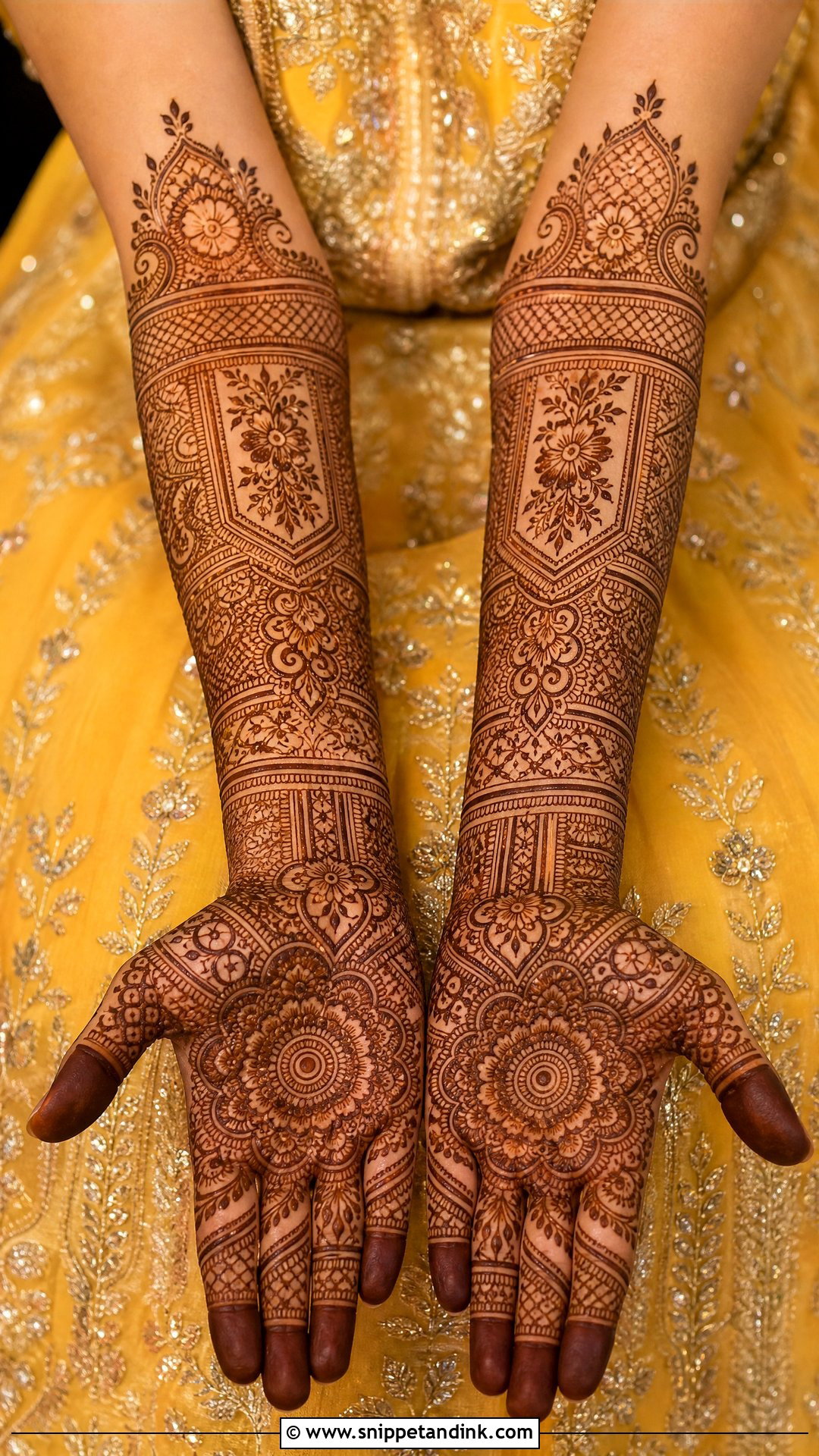
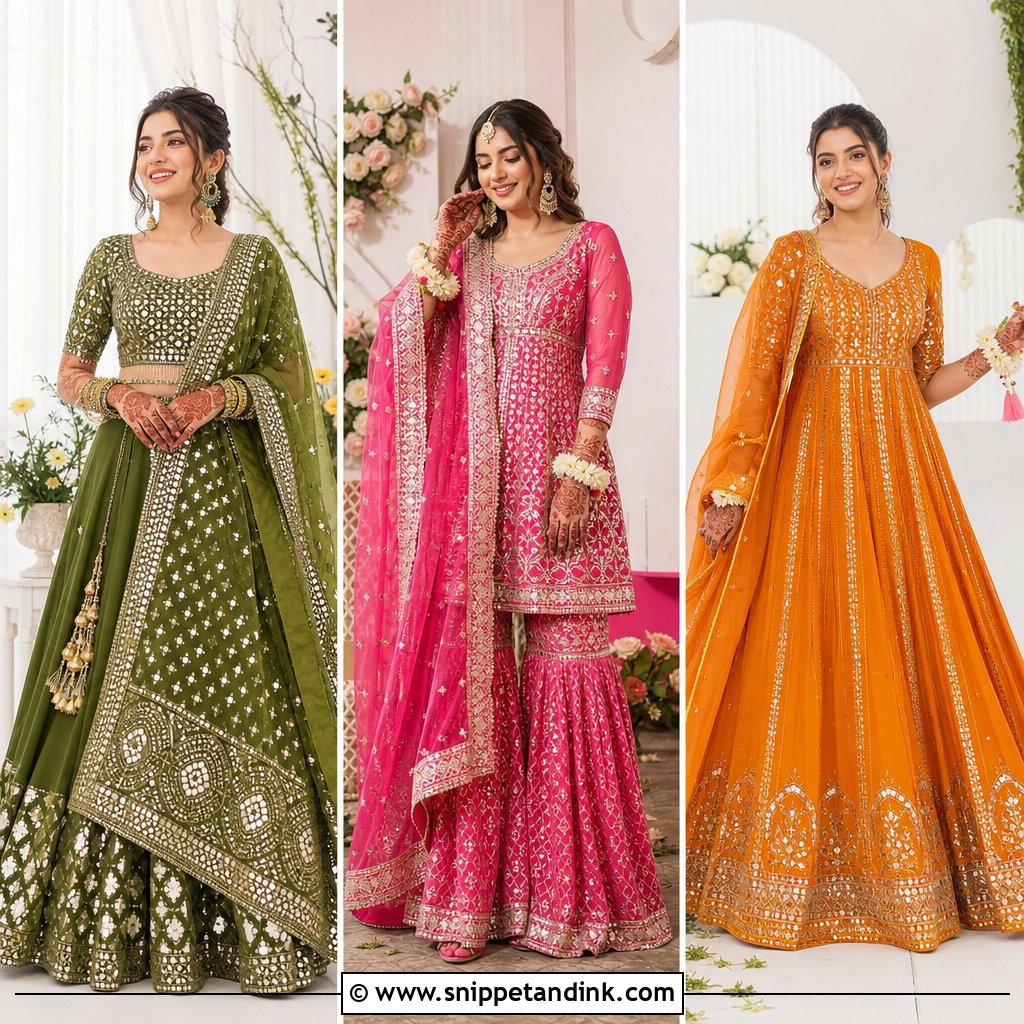
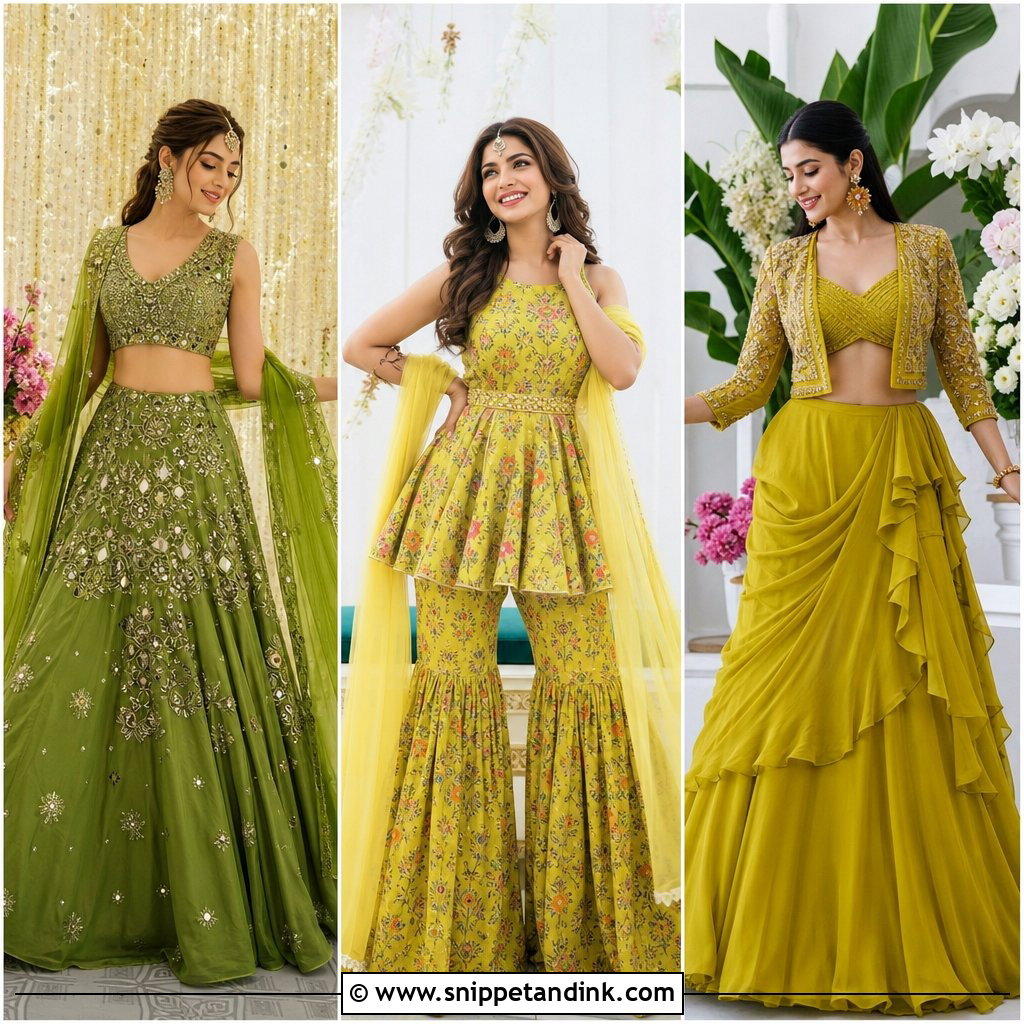
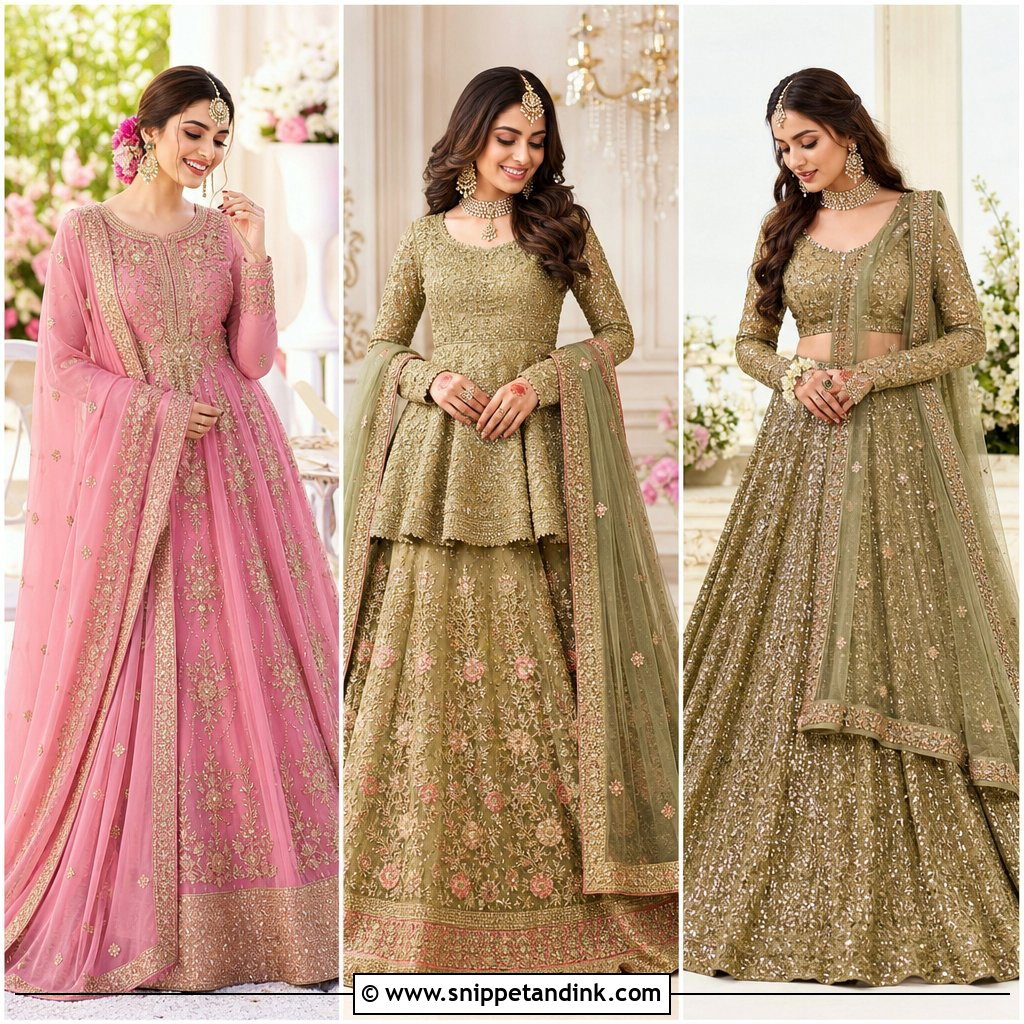
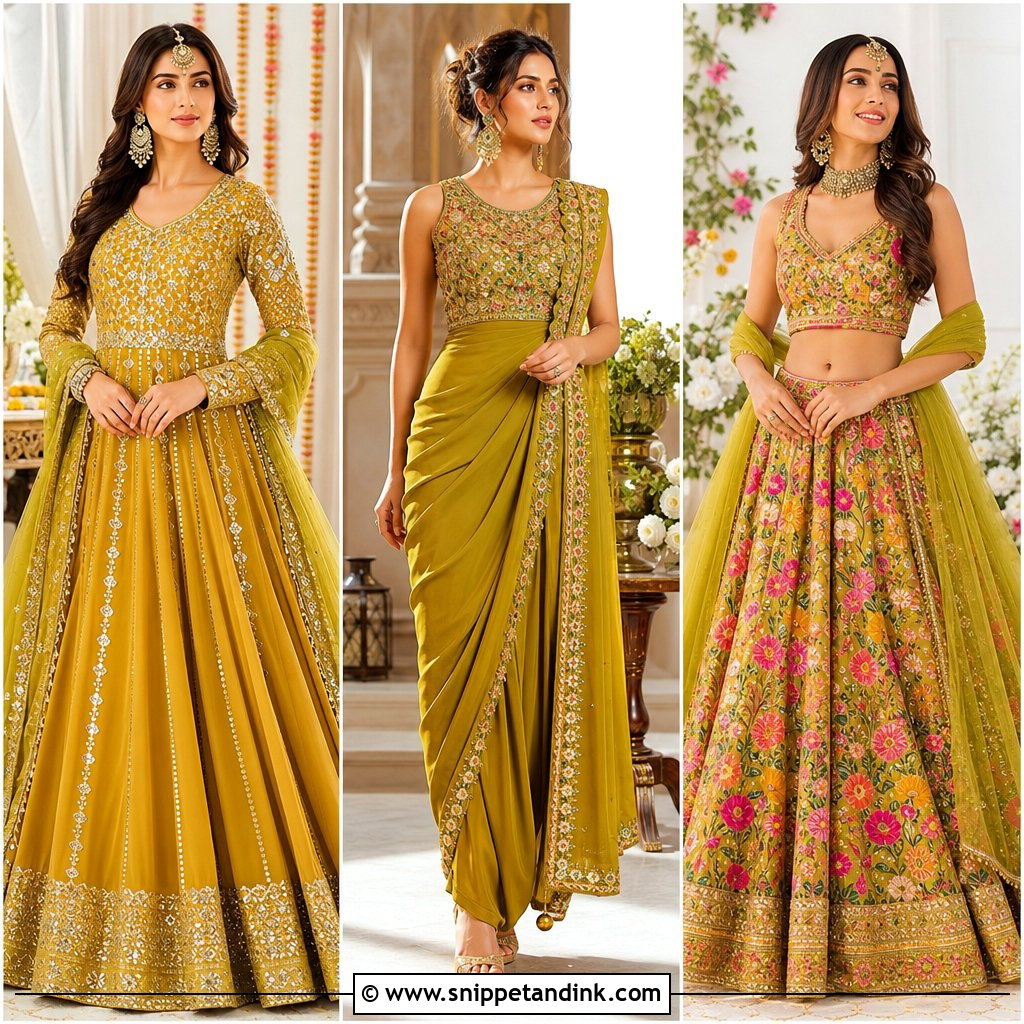
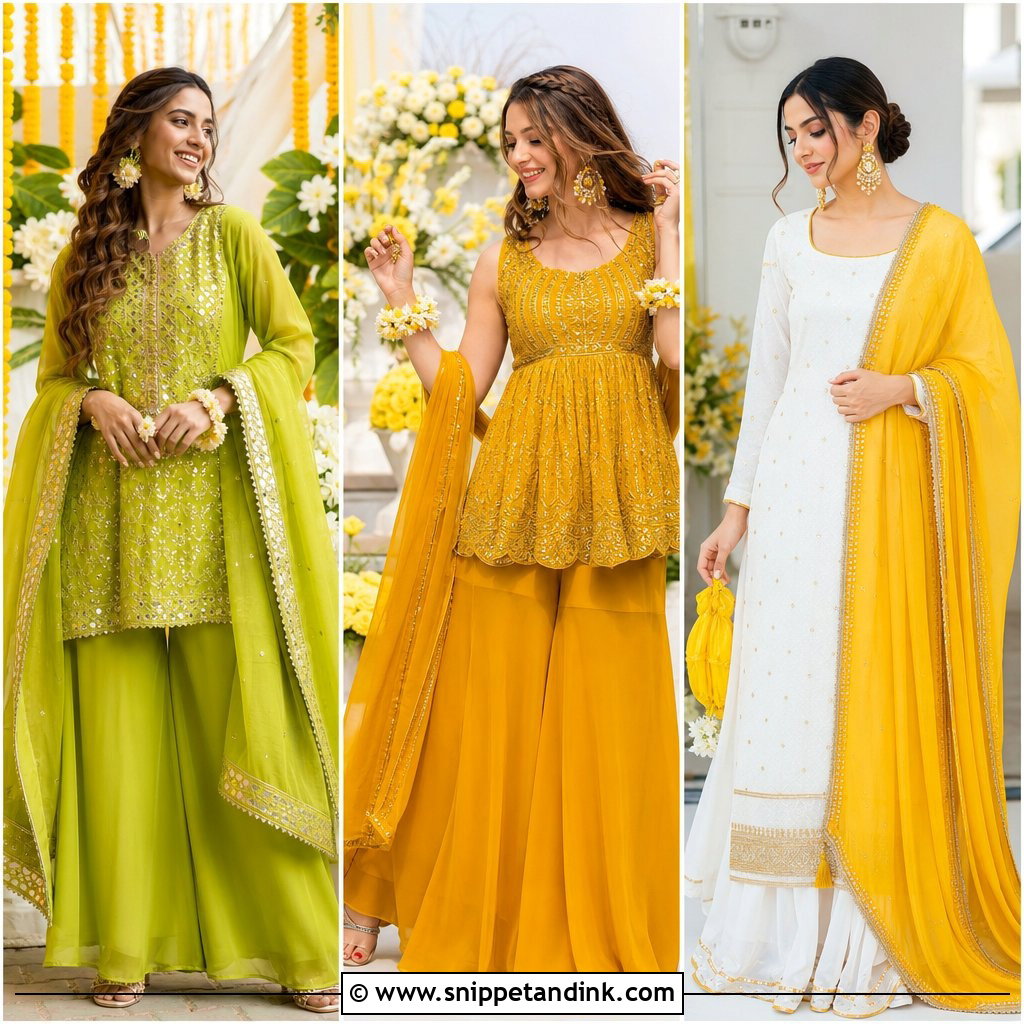
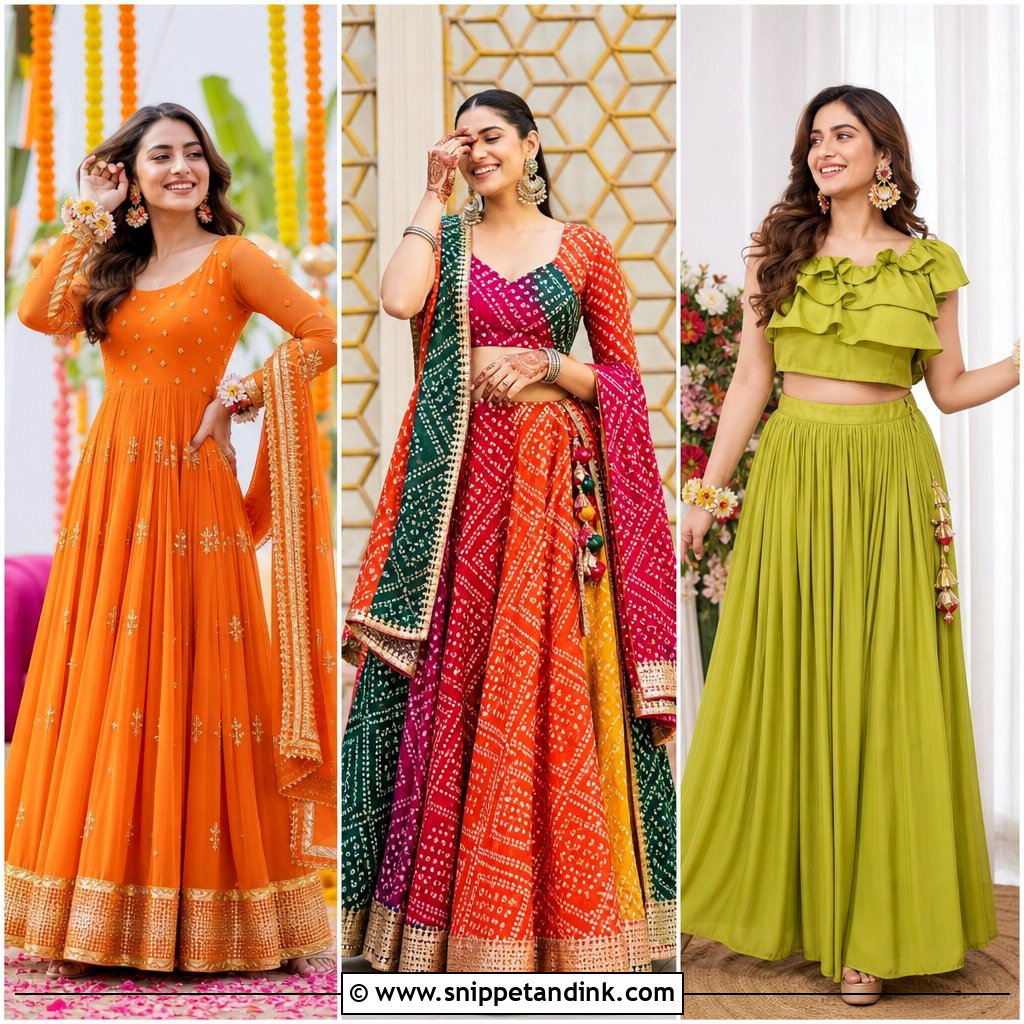
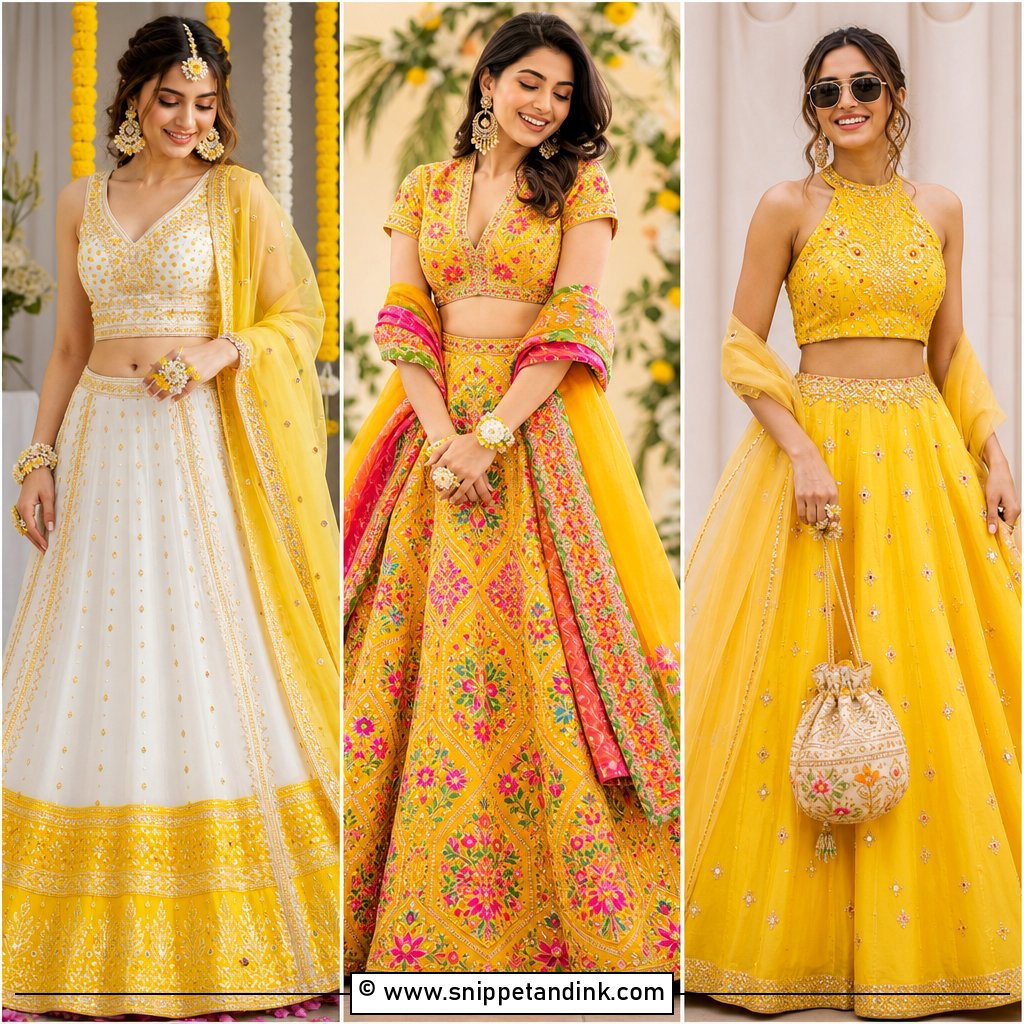
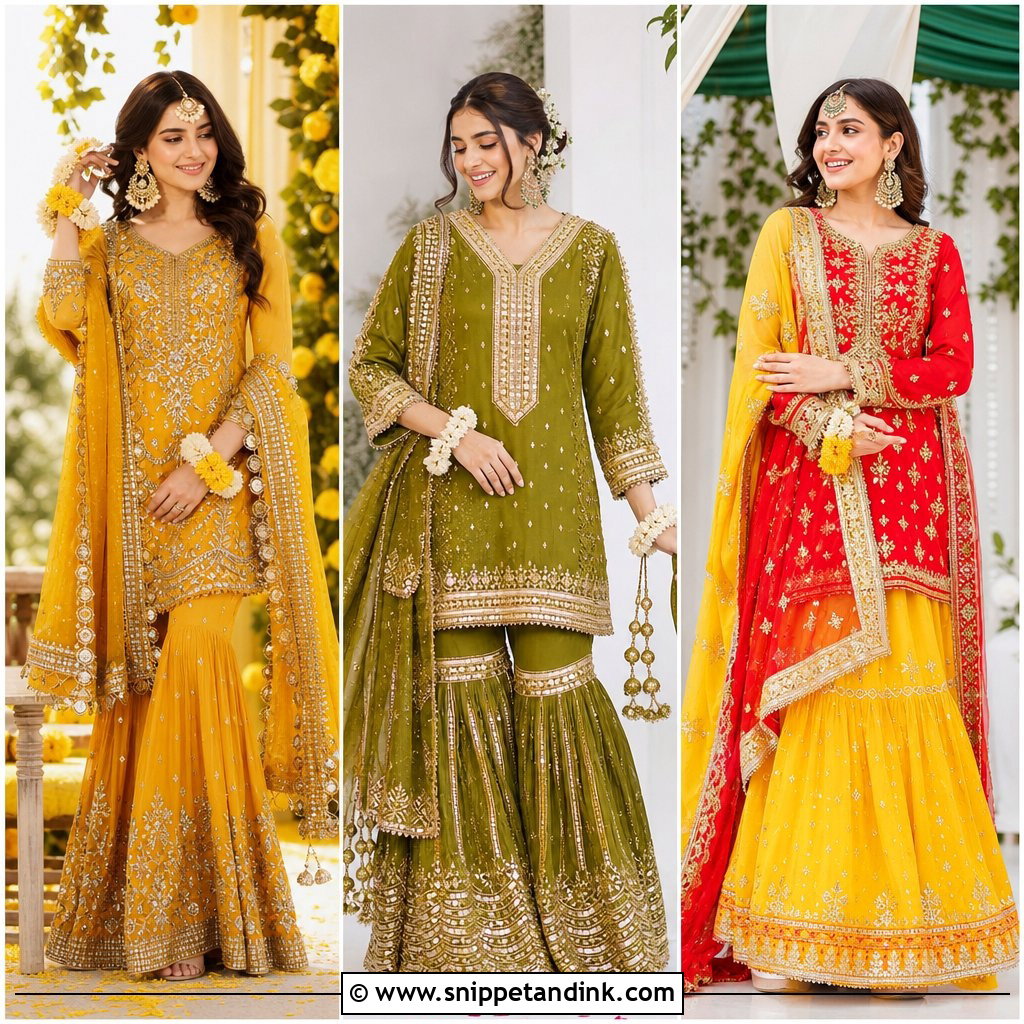
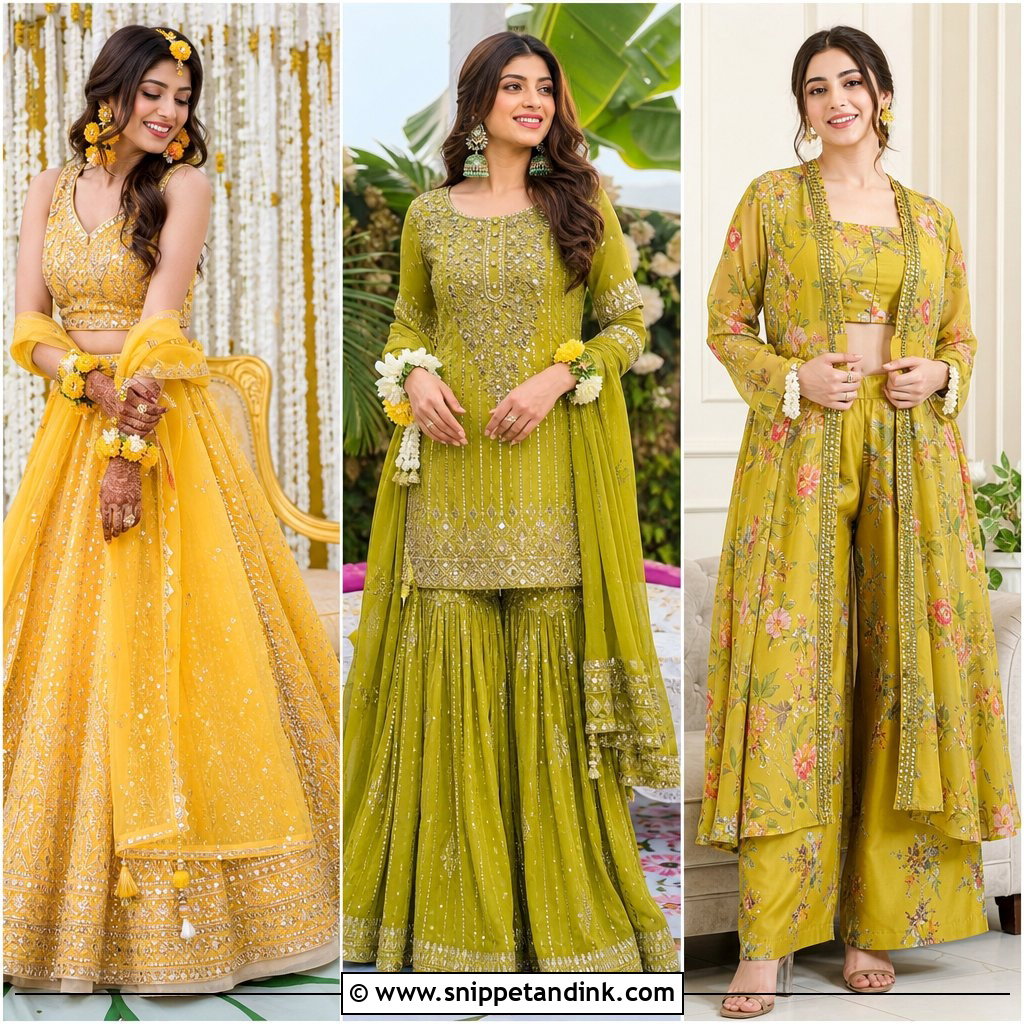
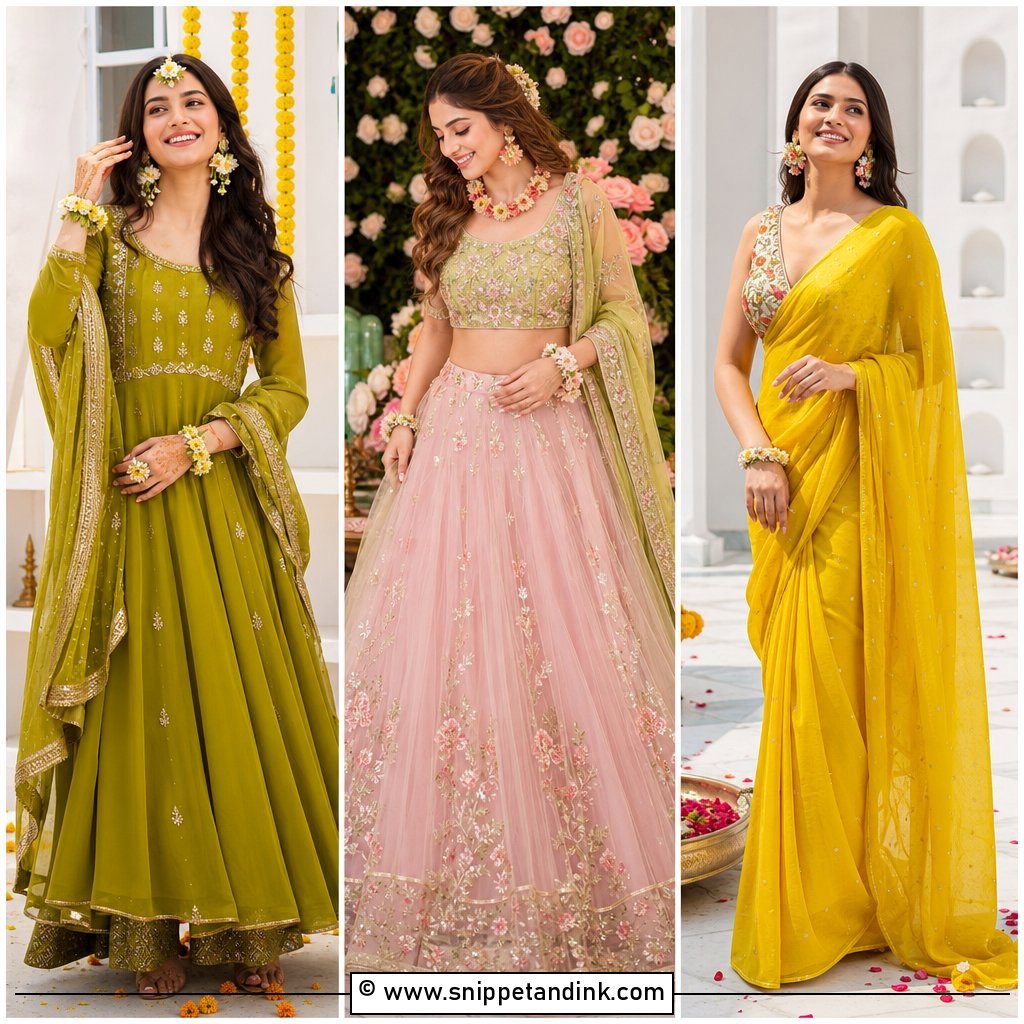
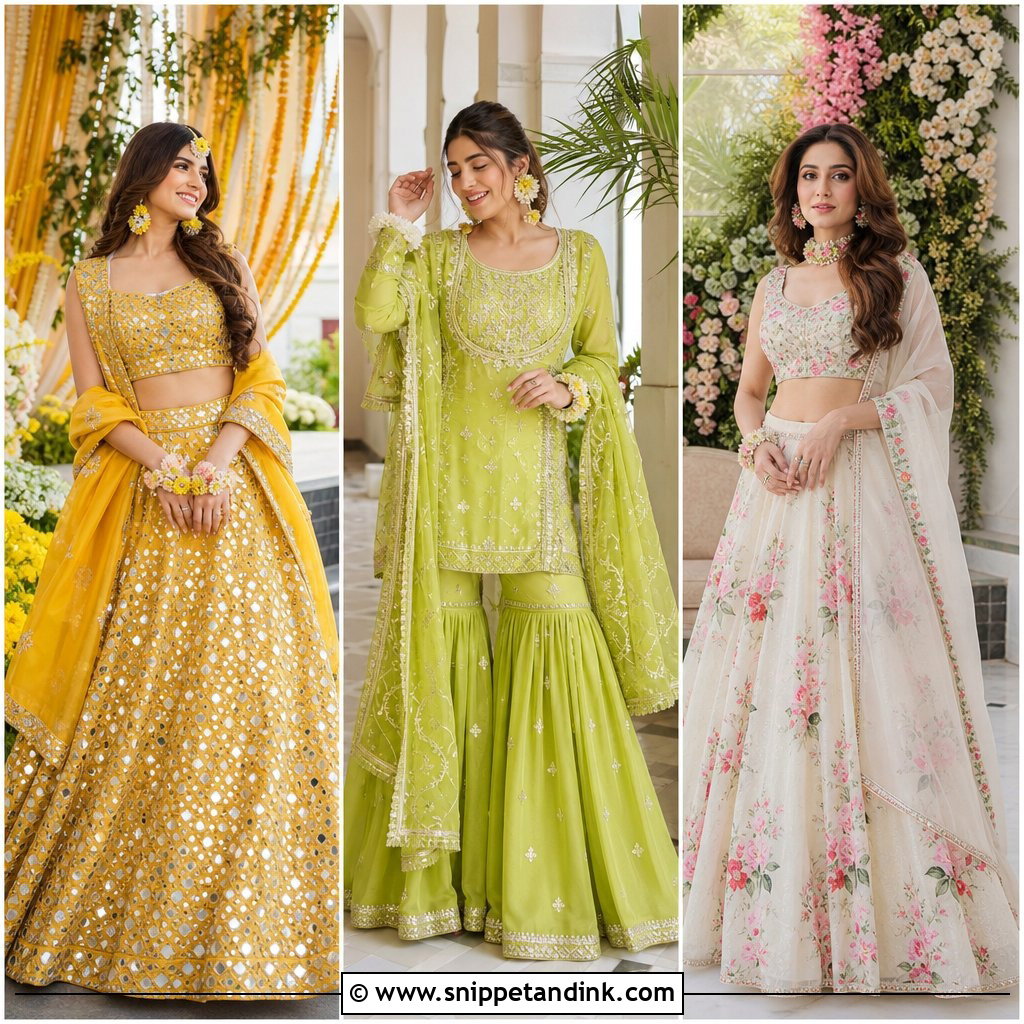
Yellow is still the color most families expect, and it earns its place: it bounces warm light onto the face and makes a fresh orange stain look richer beside it. The versions that work best have a light skirt, a fitted blouse and a soft dupatta you can pin back off the hands. I’d pick gota patti, mirror work or thread embroidery over heavy zardozi here, because heavy metal work presses into your thighs after an hour of sitting cross-legged. A sleeveless, short-sleeve or elbow-sleeve blouse keeps full-hand designs clear. Floral jewelry, jhumkas or a maang tikka finish it for a daytime event.
2. Green Mehndi Lehenga For Bride
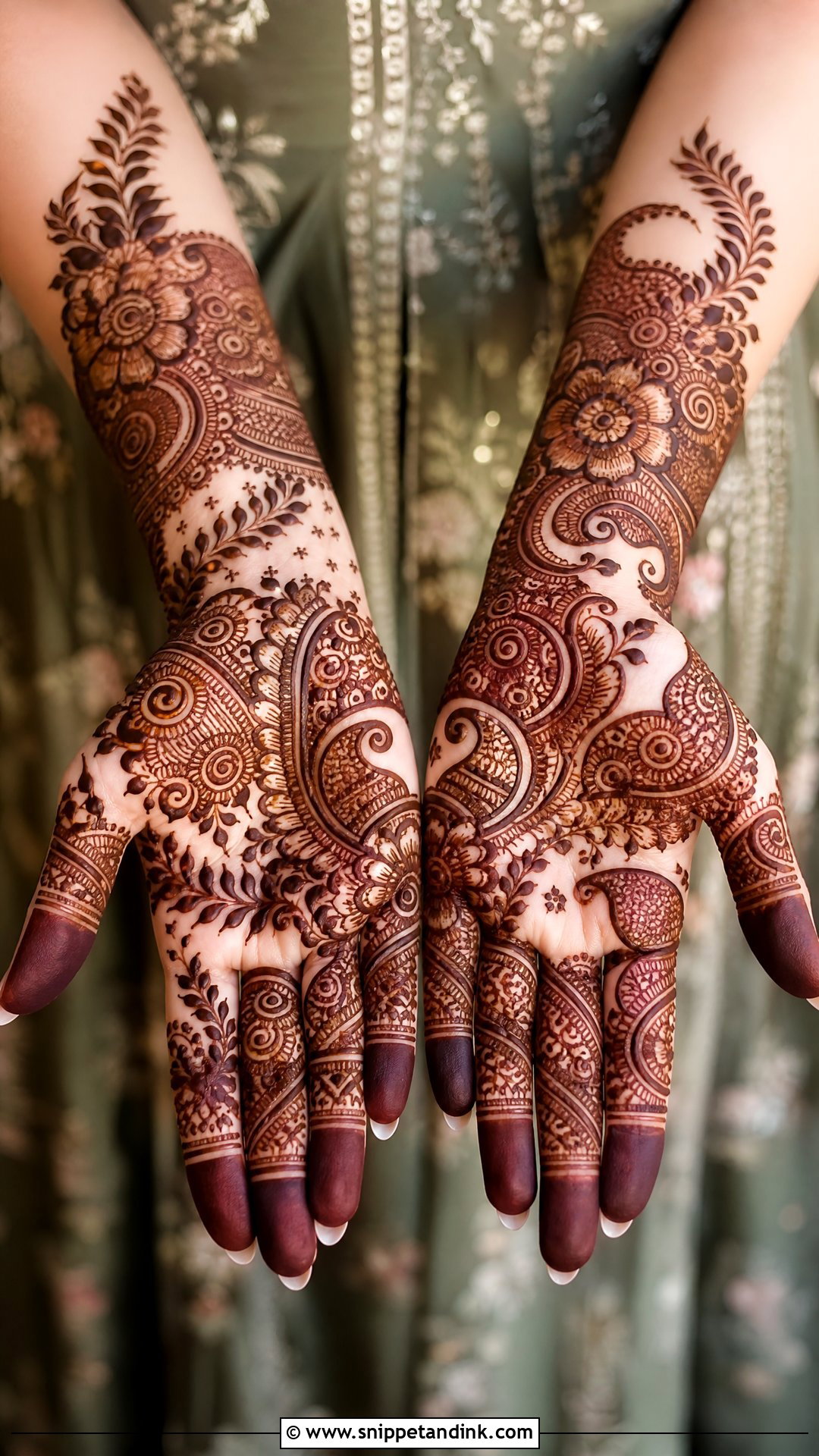
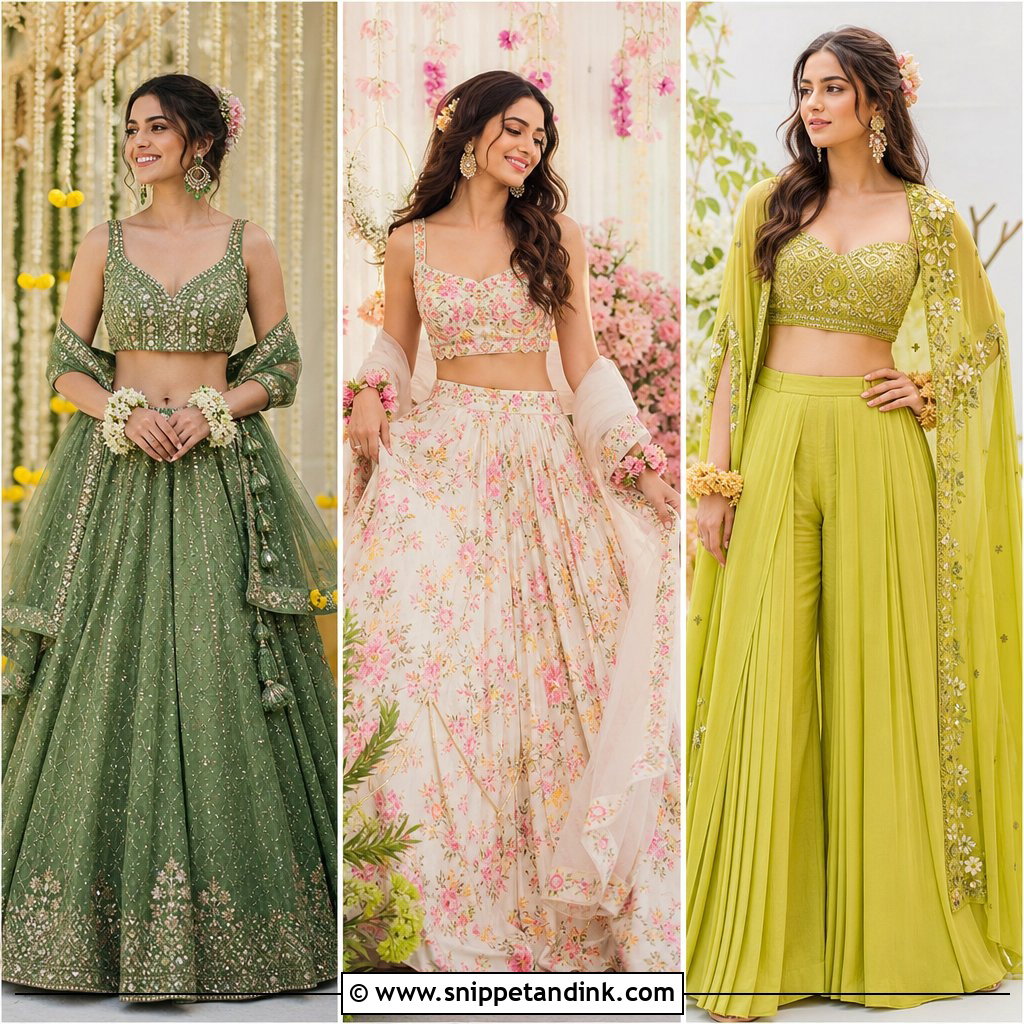
Green ties straight back to the henna leaf, which is why so many families love it for this night. Lime reads playful, emerald feels royal and pistachio is the softest of the three. Gold embroidery keeps it classic; a pink, orange or ivory accent makes it feel current. Ask for a flared skirt if the mehndi and sangeet are combined, since you’ll be dancing in it. One warning from fittings: tight long sleeves and forearm henna do not mix, so if your artist is working past the wrist, cut the sleeve at the elbow or above.
3. Multicolor Mehndi Lehenga For Bride
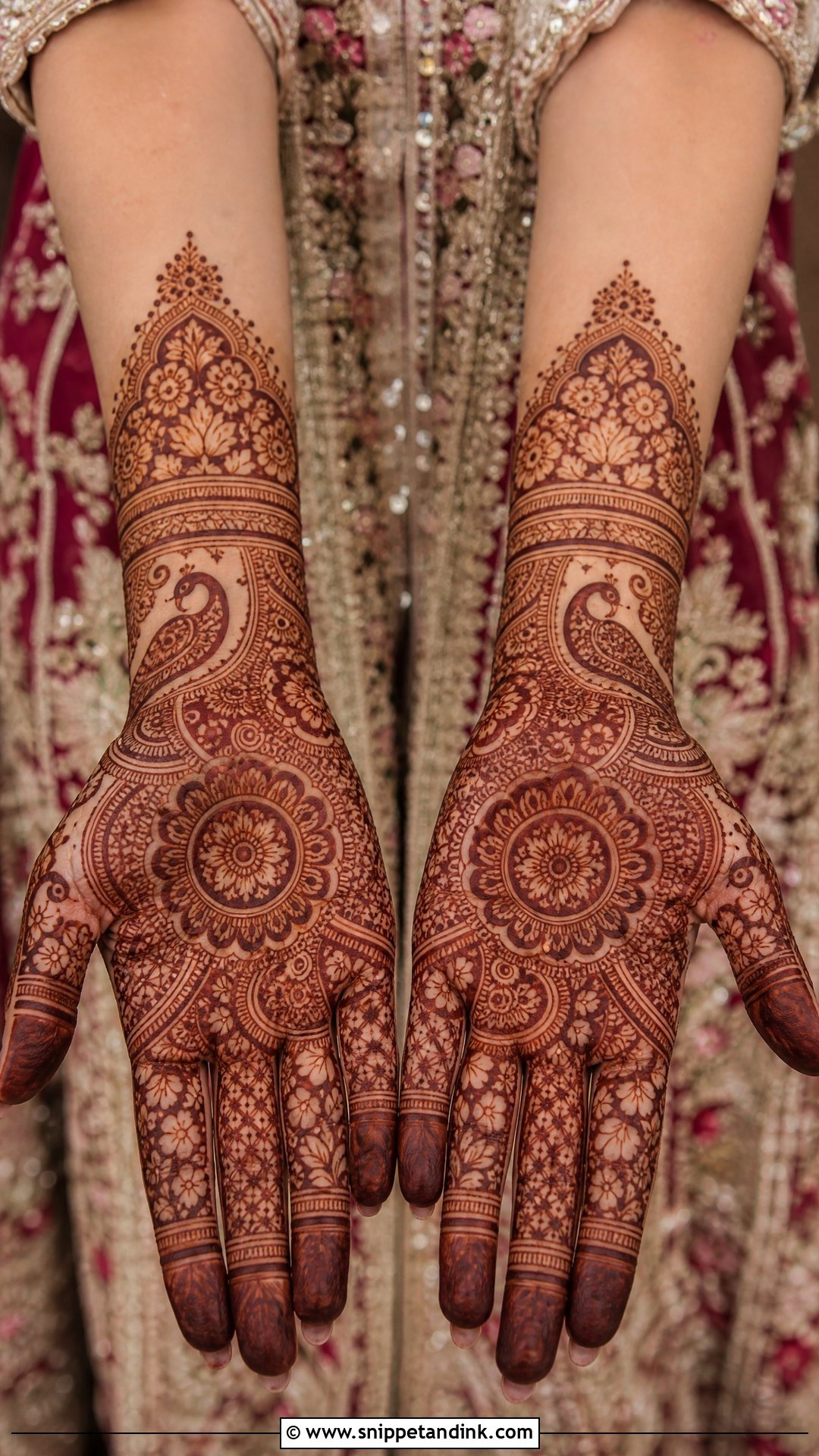
Patchwork panels, printed kalis and contrasting borders give a multicolor lehenga energy from every side, and it sits naturally against marigolds, drapes and colorful floor seating. The risk is a skirt that fights everything around it. I usually hold a bride to four related shades, such as yellow, pink, orange and green, and then calm the top half with a plain blouse. Mirror work or tassels can add movement. With this much going on in the fabric, ask your artist for defined florals and paisleys with clear wrist bands rather than dense fill that blurs at a distance.
4. Mirror Work Mehndi Dress For Bride
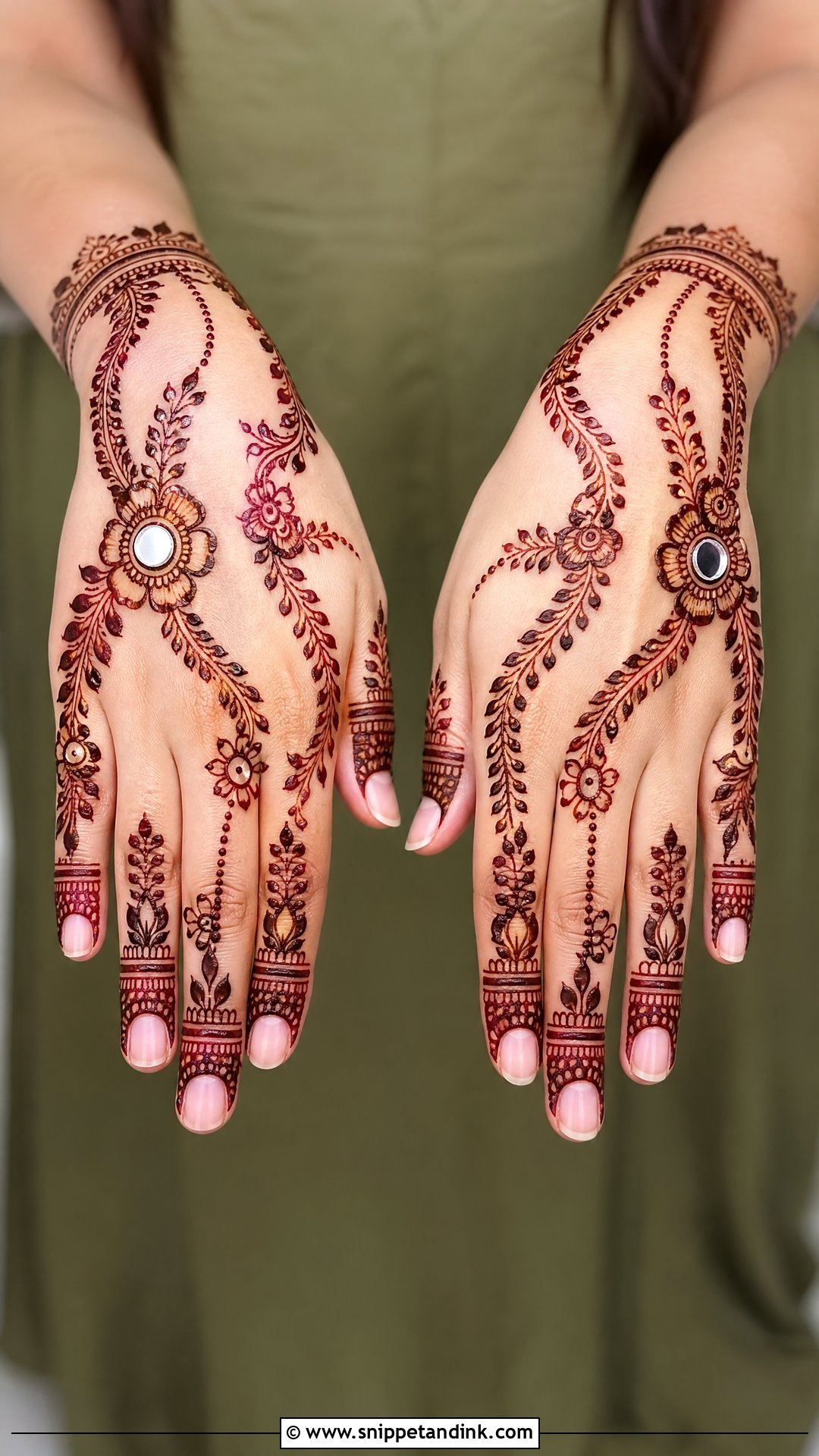
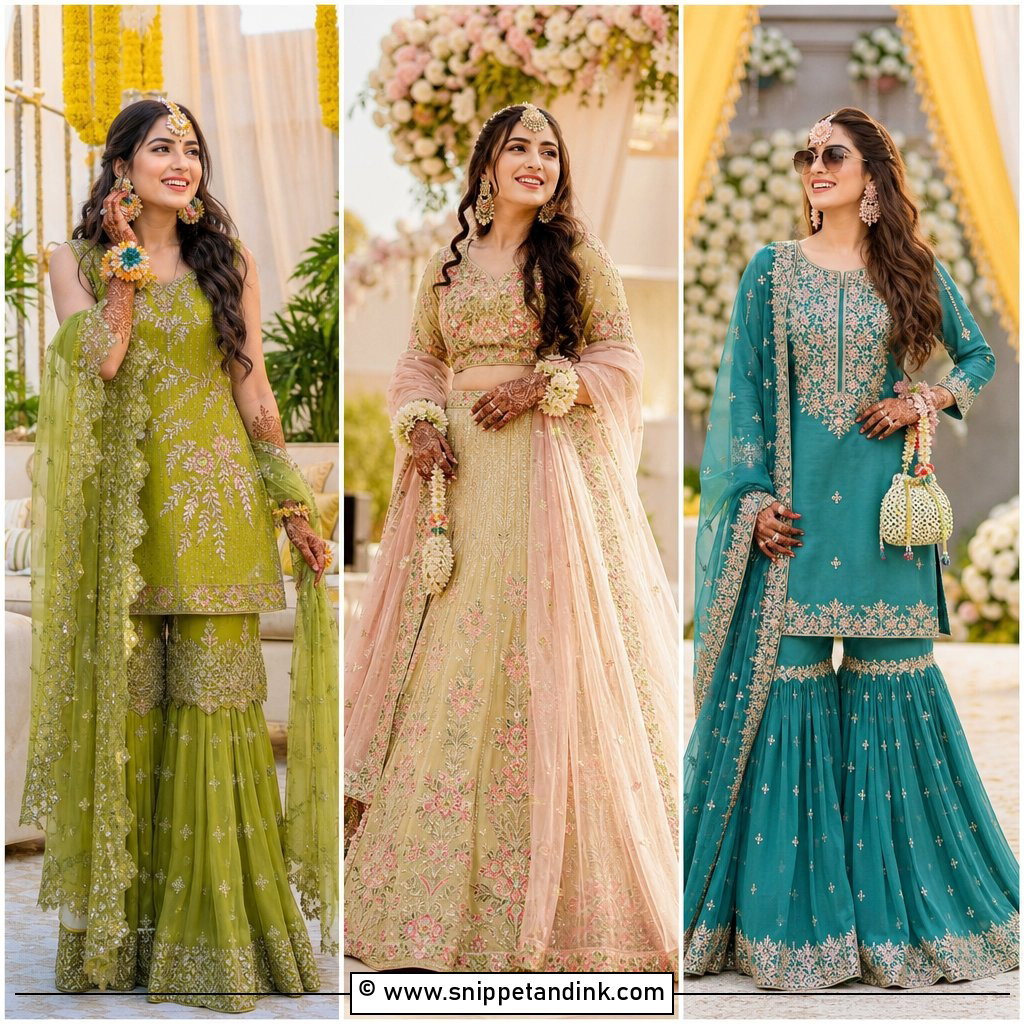
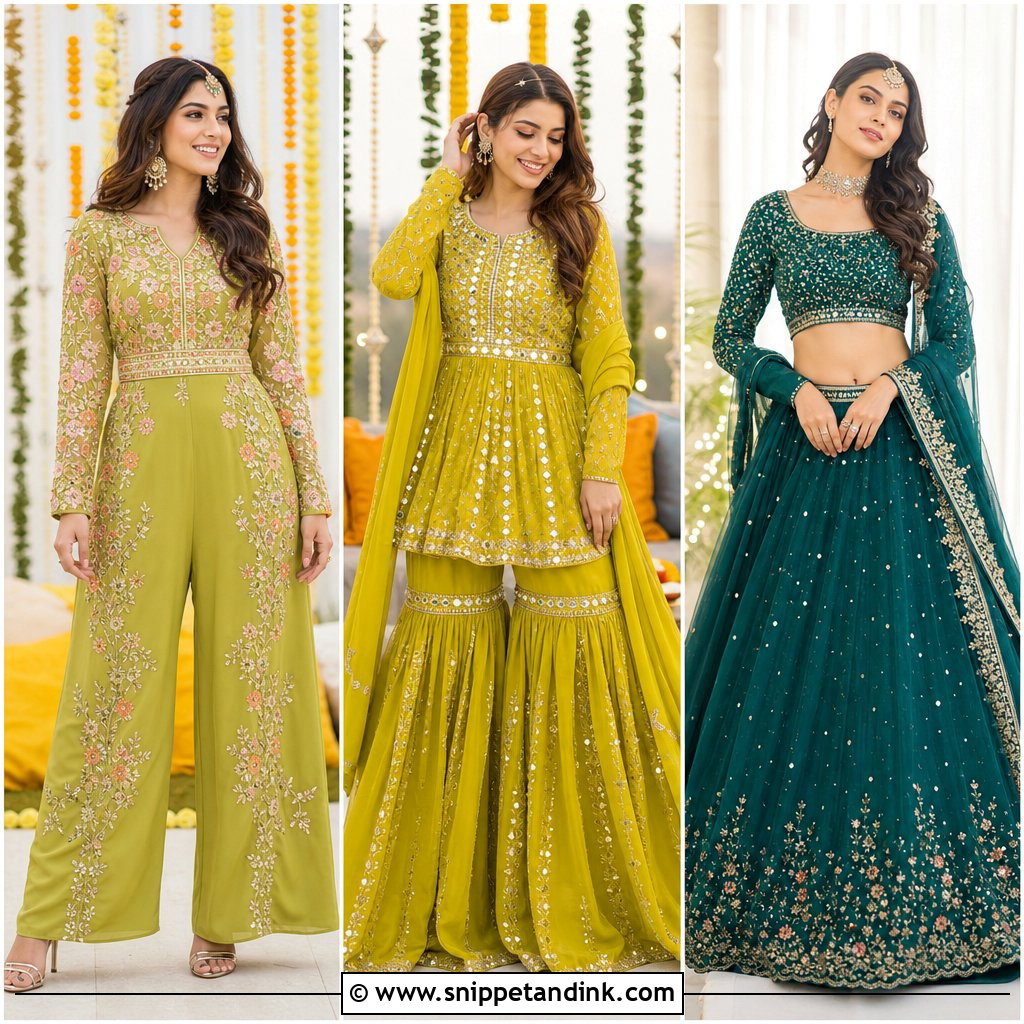
Mirrors catch every bit of light, so this one shines in dance photos and evening candids. A mirror-work lehenga, sharara or skirt set looks bridal without heavy embroidery, especially in yellow, green, orange, turquoise or rani pink. Before you buy, run your fingertips along the sleeve hems and waistband. Cheap pieces have sharp glass edges or loose stitching that scratch skin and catch on a cone when the artist leans in. Keep the dupatta light so the sparkle has room, and ask for a bolder henna design so your hands don’t disappear beside the shine.
5. Sharara Mehndi Dress For Bride
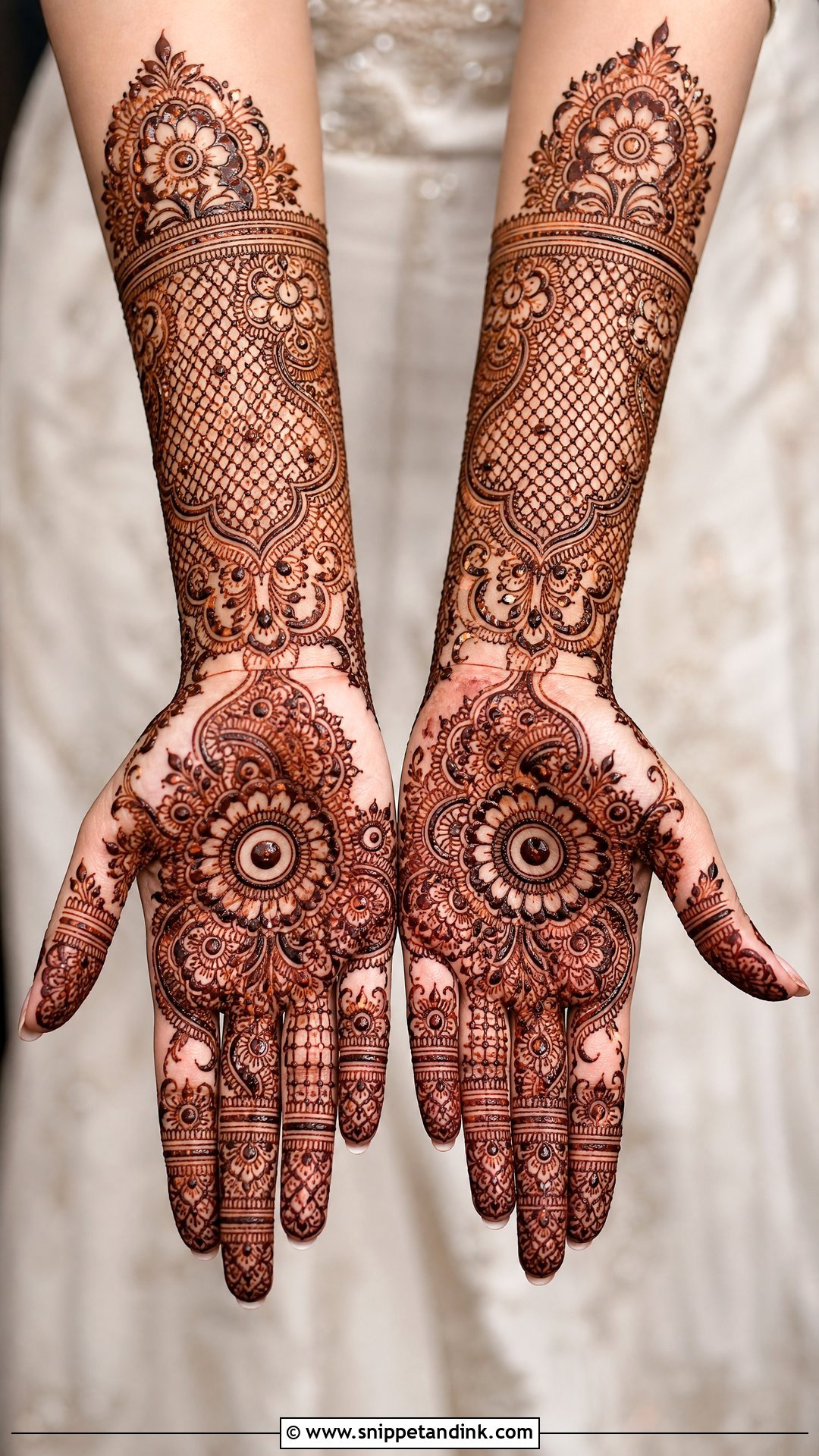
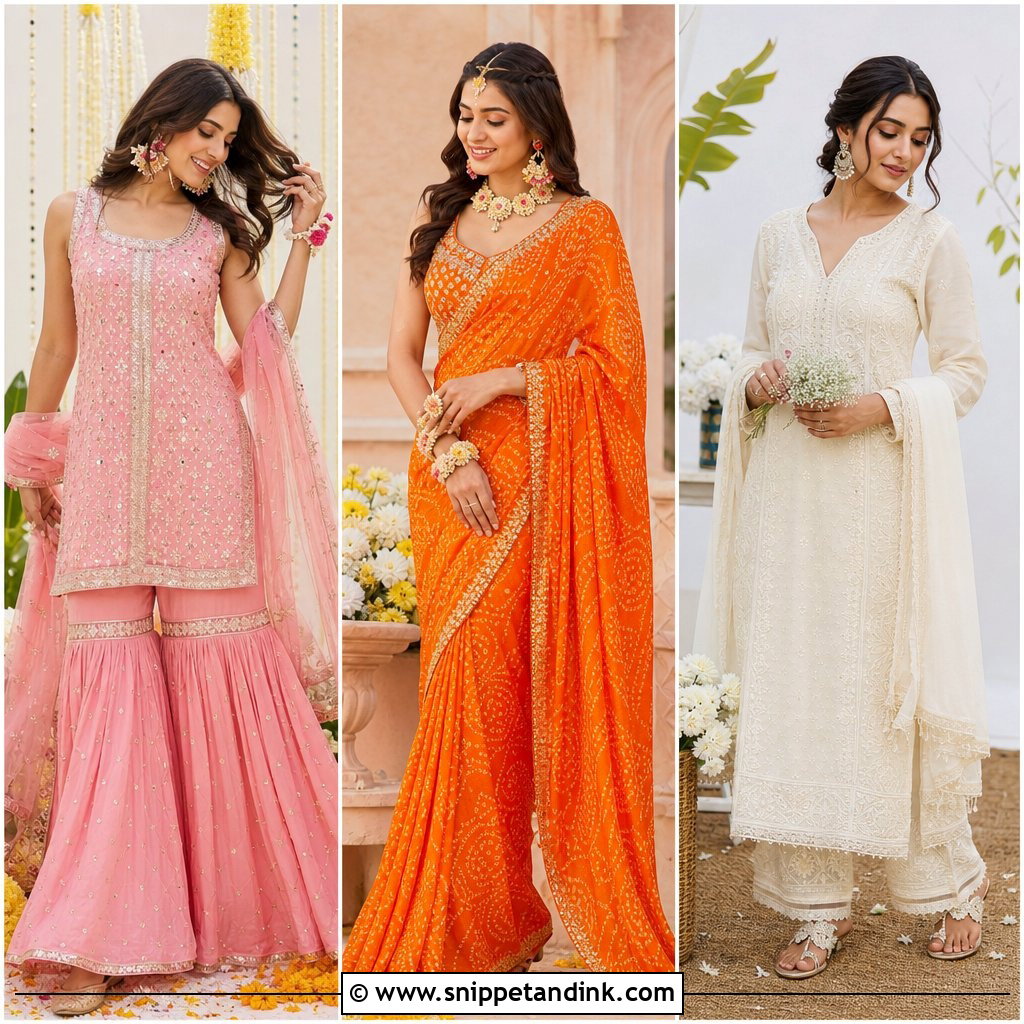
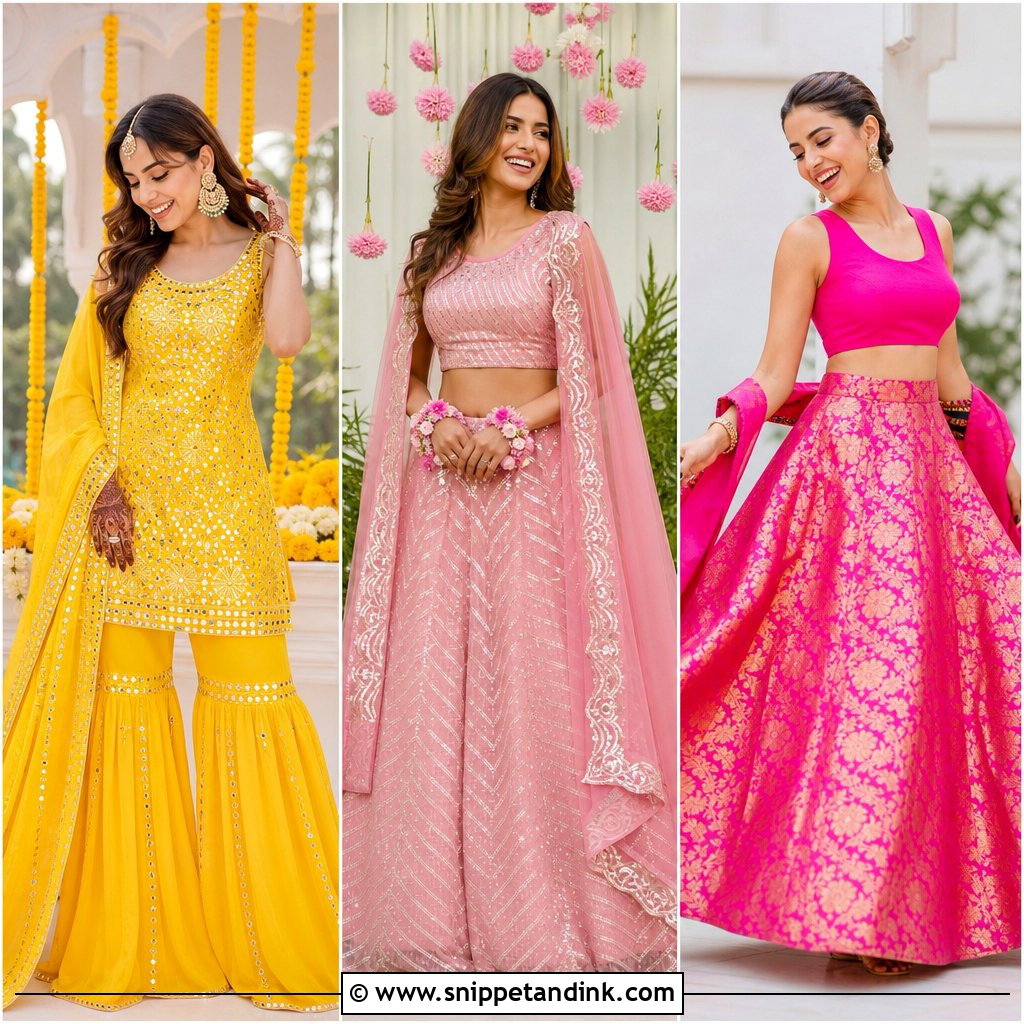
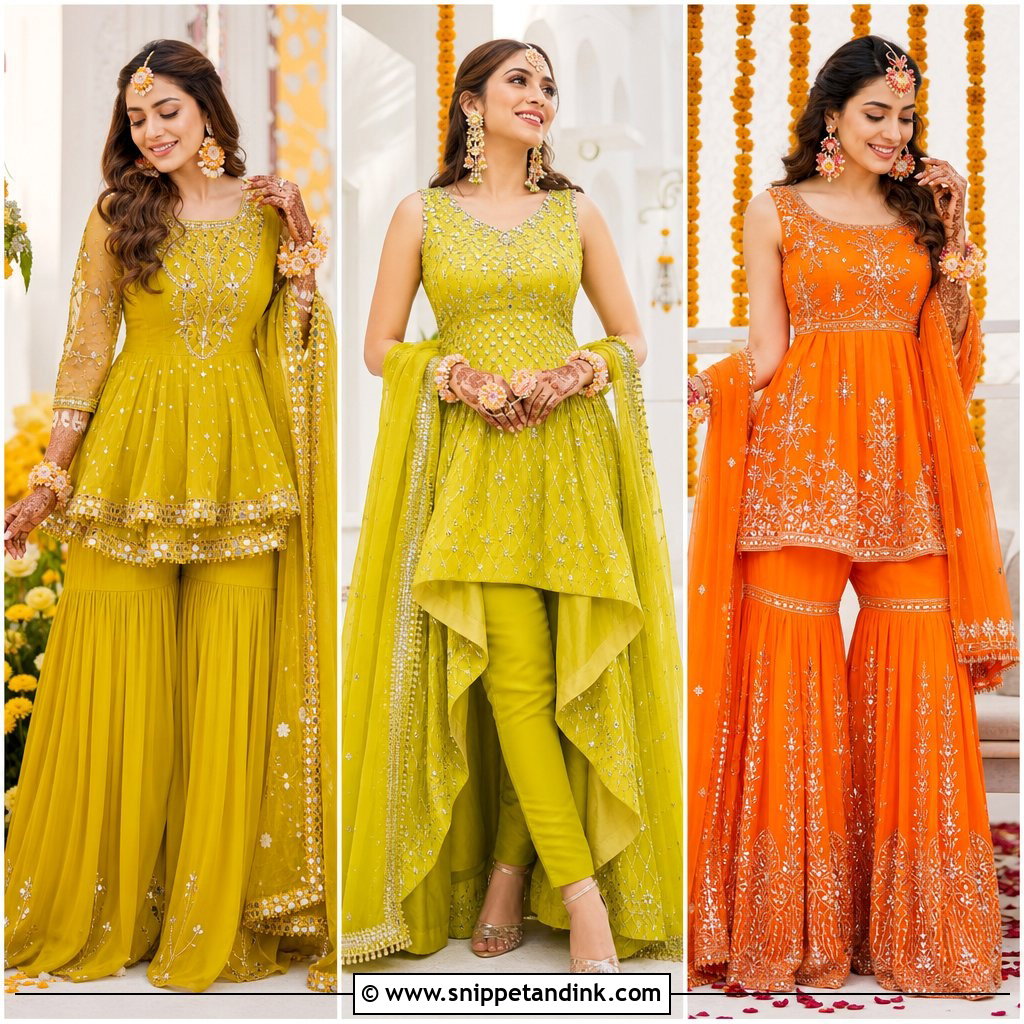
Of everything on this list, the sharara is the outfit I recommend most to brides who are nervous about sitting for hours. The wide legs let you sit cross-legged, kneel for foot mehndi and get up again without wrestling a skirt. A short kurti over it looks traditional; a peplum top feels newer. Yellow, green, coral and fuchsia all suit the shape, and gota borders or mirror details make it bridal without adding weight. Because the hem sits clear of the ankle, foot mehndi stays visible when you walk.
6. Gharara Mehndi Dress For Bride
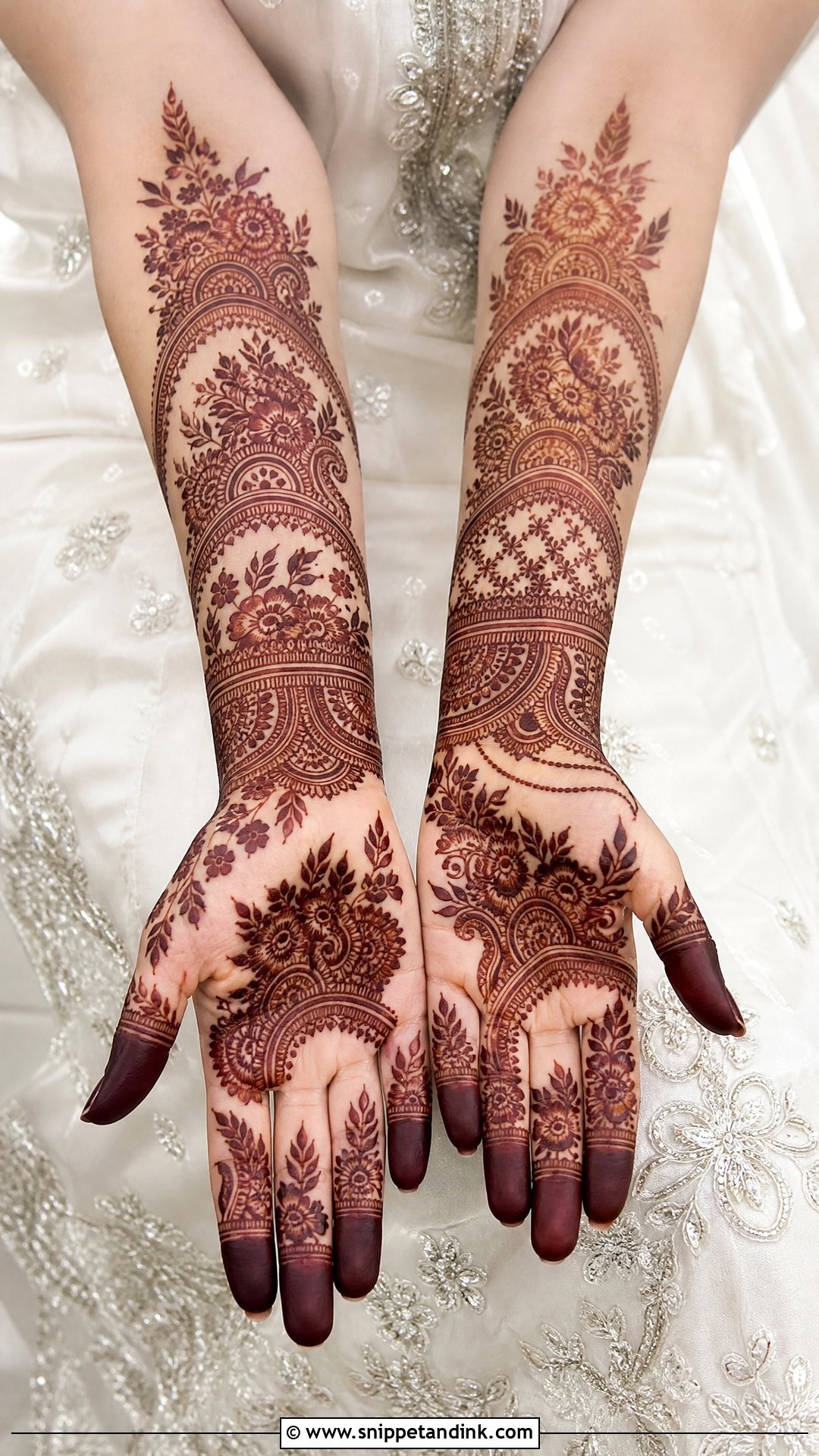
Fitted to the knee and then flaring out, the gharara has a regal Pakistani bridal shape that reads clearly in photos. Pair it with a short kameez, an embellished dupatta and traditional jewelry. Mustard, mehndi green, rust and magenta with gota, dabka or zari accents all suit a bride who loves heritage clothing. The catch is weight. A full gharara can carry metres of fabric around the knee, so I ask for breathable cotton silk or georgette and a waistband with a drawstring backup. Traditional paisley, jaali and floral bands suit it well.
7. Anarkali Mehndi Dress For Bride
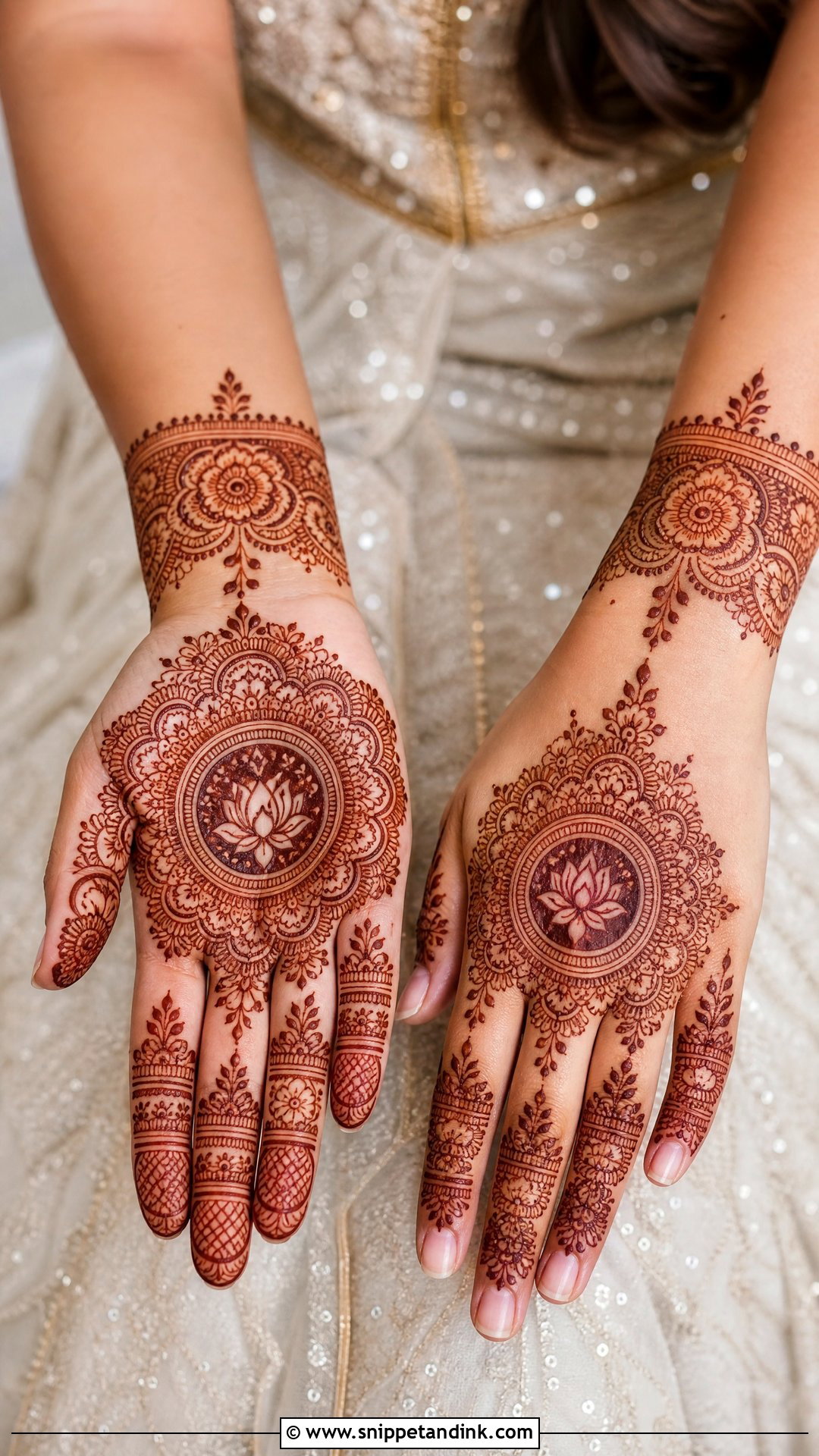
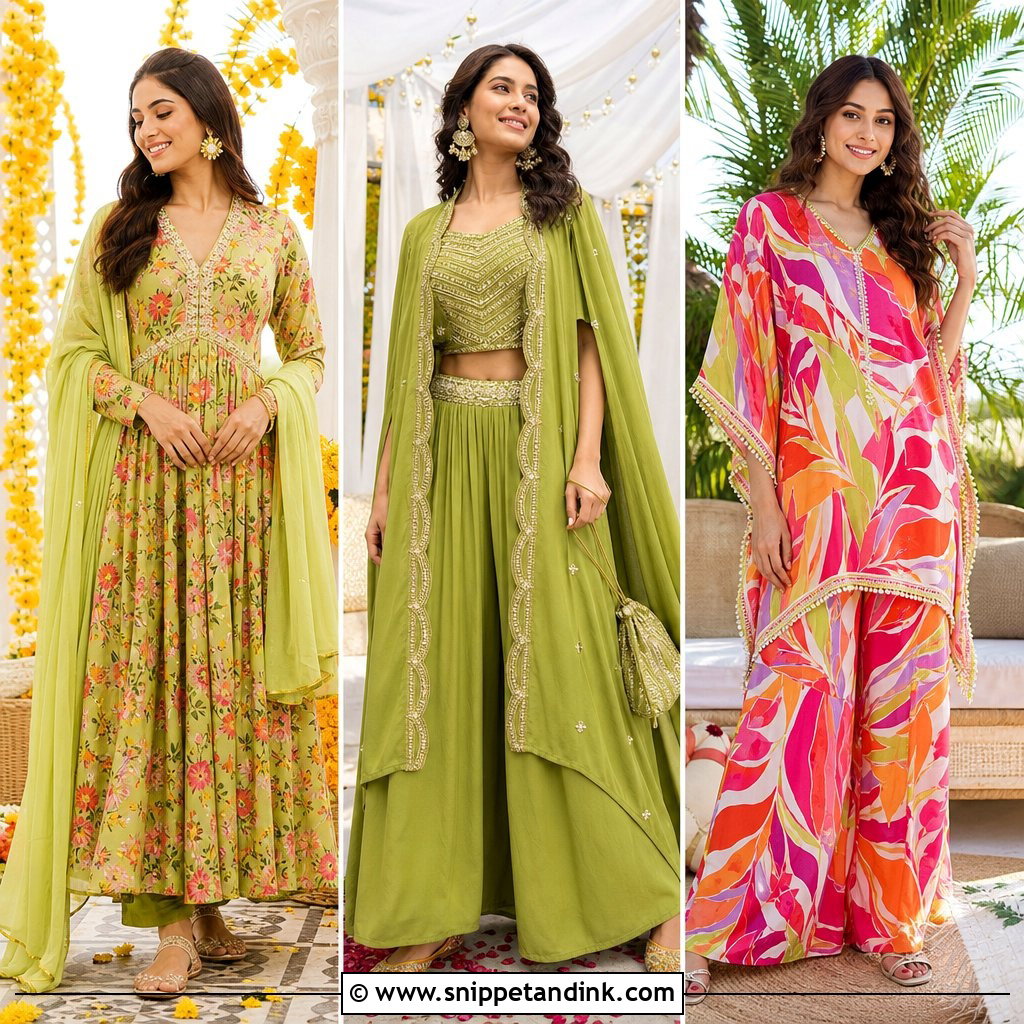
The Anarkali is the gentlest choice here: one long flare instead of a skirt, blouse and separate drape. Mustard, lime, peach or bright pink keep it festive, and it suits intimate home ceremonies where you’ll be on cushions most of the evening. Sleeves are the deciding detail. Three-quarter sleeves only work if your henna stops at the palms and back of the hand; for full bridal coverage I’d go sleeveless or short. A light dupatta, chandbalis and floral bangles are all it needs.
8. Floral Print Mehndi Dress For Bride
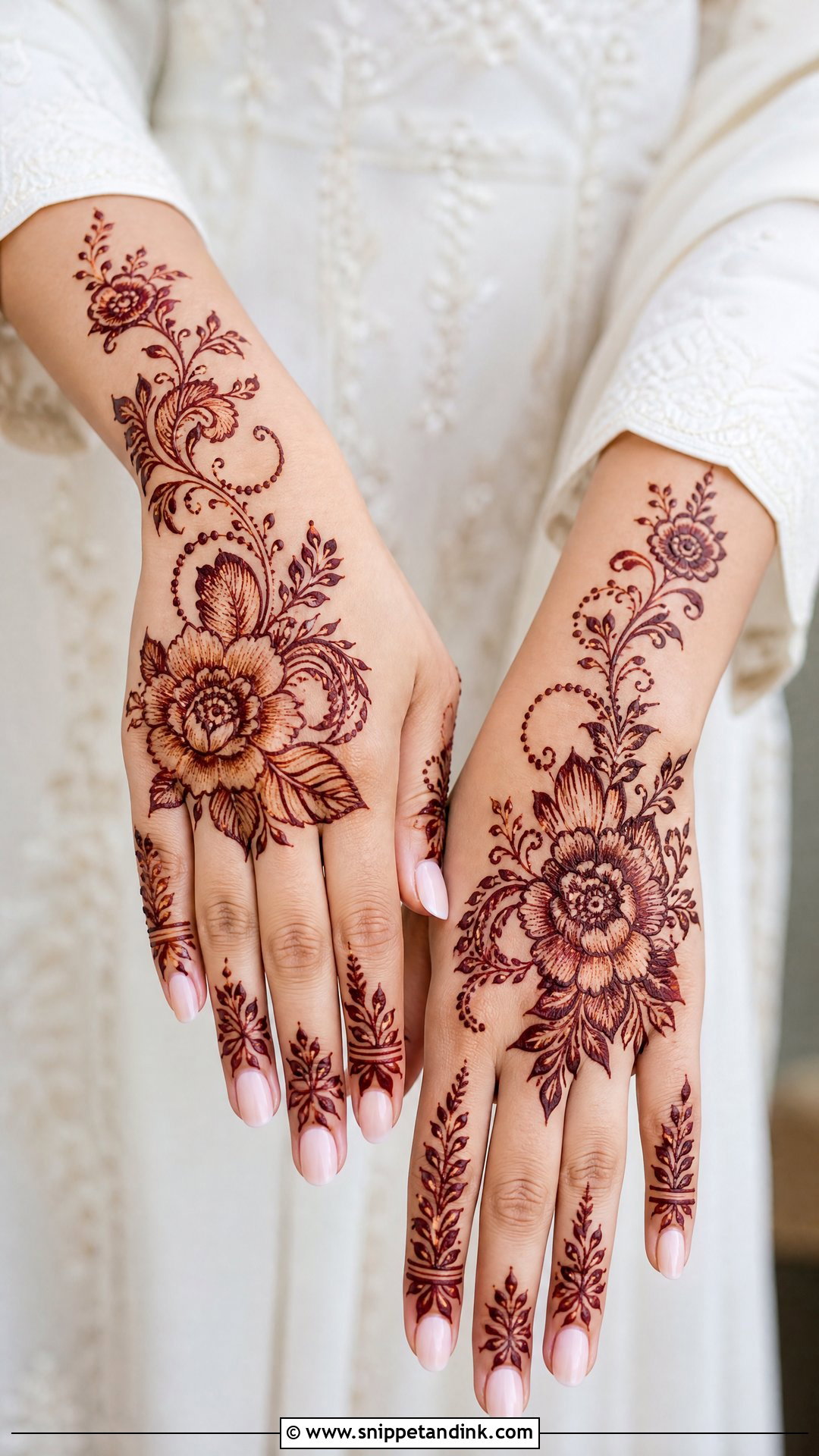
Prints are the easiest way to make a daytime mehndi feel fresh. A printed lehenga, sharara, cape set or Anarkali with embroidery only at the blouse or border is far lighter than an all-over embroidered piece, which matters during a long henna session. Large tropical florals feel modern and destination-ready; small traditional prints feel classic. To lift it into bridal territory, add one strong element: statement jewelry, a standout hairstyle or a contrasting dupatta. I always tell the artist when the outfit is a busy print, because clean, open henna patterns read better against it than packed ones.
9. Ruffle Saree Mehndi Dress For Bride
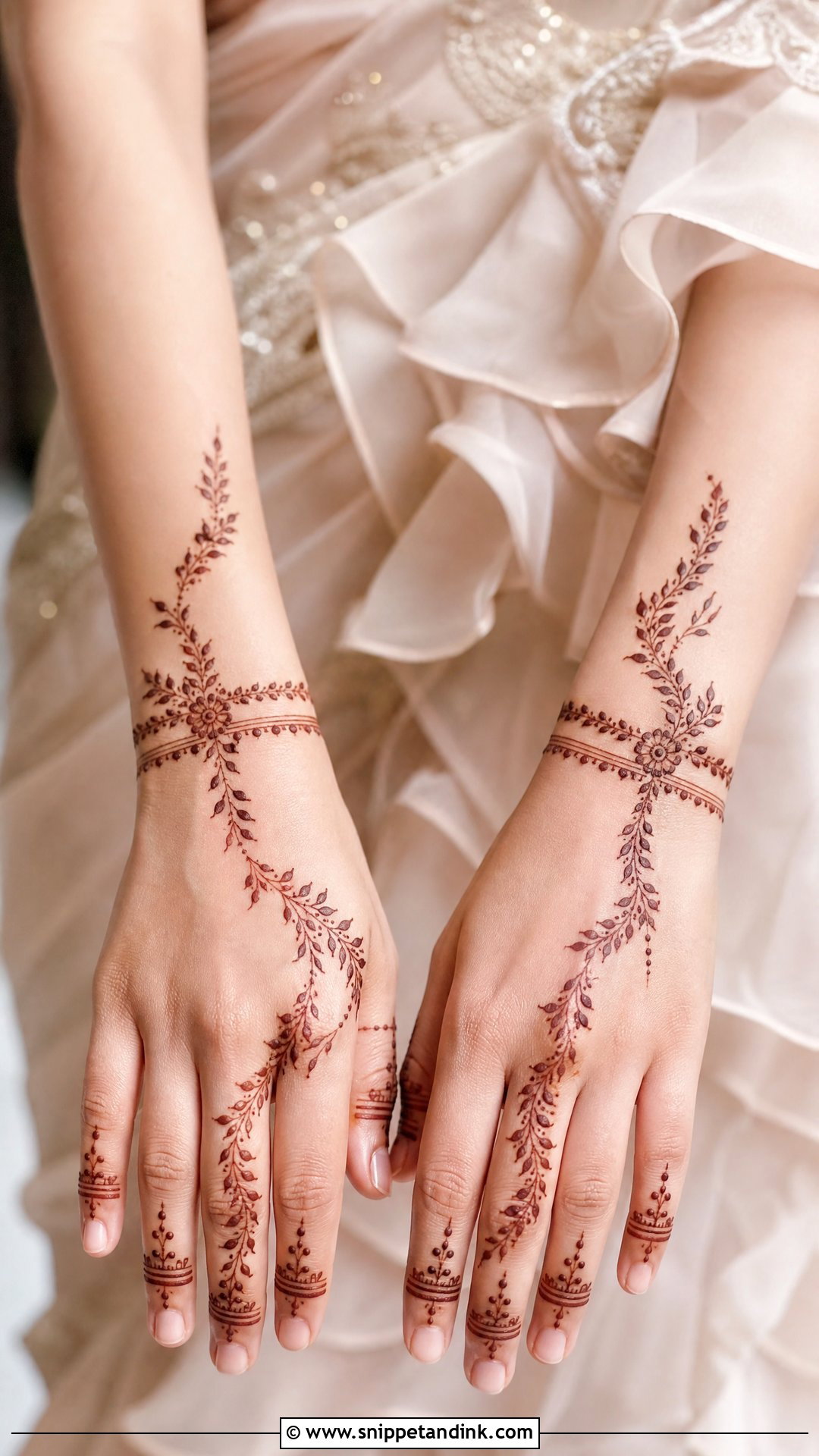
A ruffle saree brings drama to a pre-wedding function without the formality of a full silk drape. Pre-draped ruffle versions are the ones I reach for, because a hand-pleated saree loosens once you start dancing and you can’t fix pleats with wet henna on your palms. Mustard, lime, hot pink, orange and floral prints all work. An embroidered blouse, a mirror-work belt or statement earrings make it feel bridal. If the henna is happening at the event itself, pin the pallu firmly to the shoulder and well away from your hands before the artist sits down.
10. Pre Draped Saree Mehndi Dress For Bride
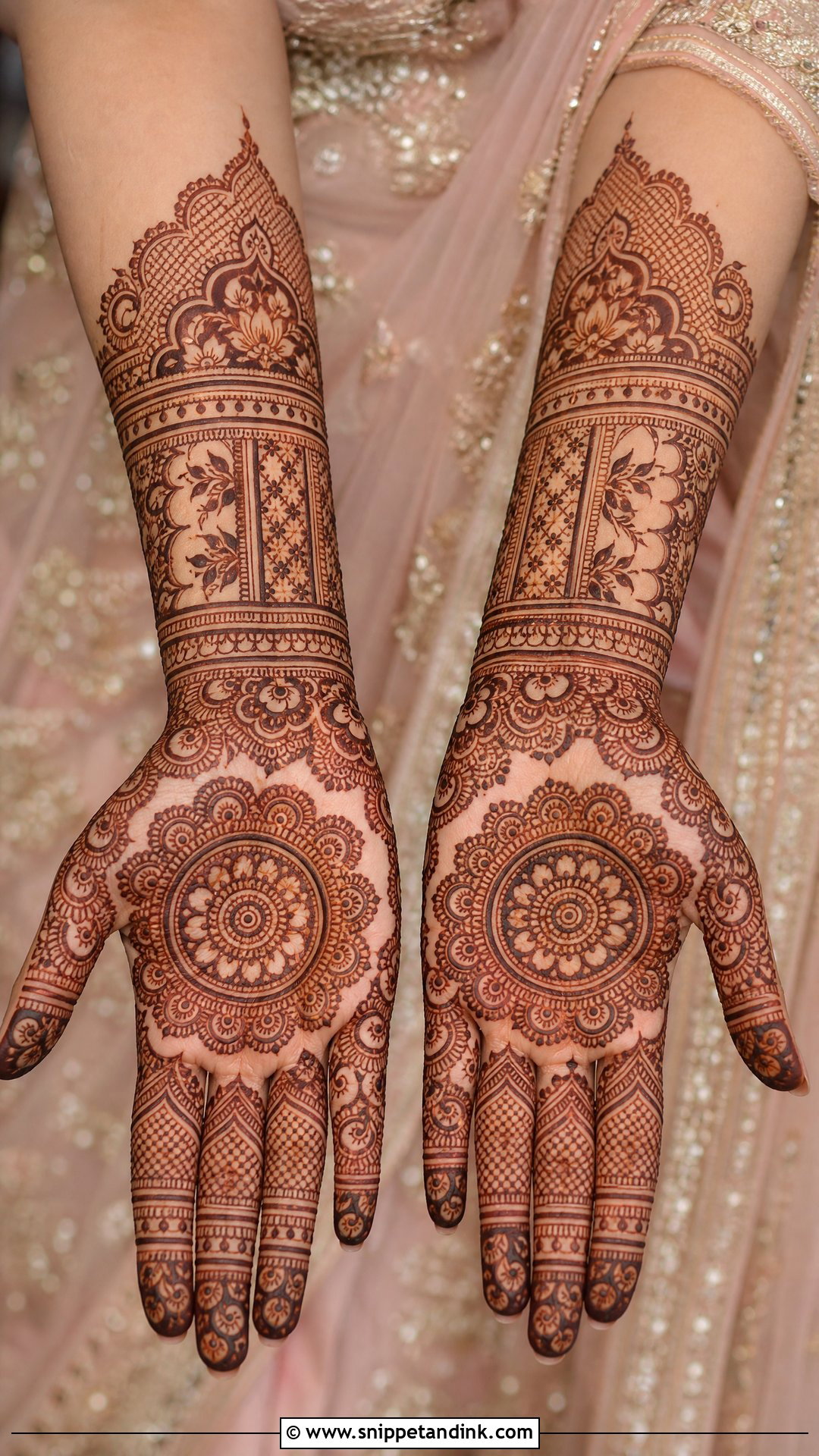
This is the saree for a bride who loves a clean line but doesn’t want to think about pleats all evening. The attached drape, structured waist and light fabric let you move freely, and there’s nothing to re-tuck after you stand. Bright yellow, parrot green, coral and printed versions with mirror-work blouses all suit the night. I’d add a belt; it holds the drape in place and gives the waist a defined shape. It also crosses over well to cocktail-style mehndi evenings. Bold back-hand henna, stacked bangles and a sleek hairstyle keep the look tidy.
11. Cape Lehenga Mehndi Dress For Bride
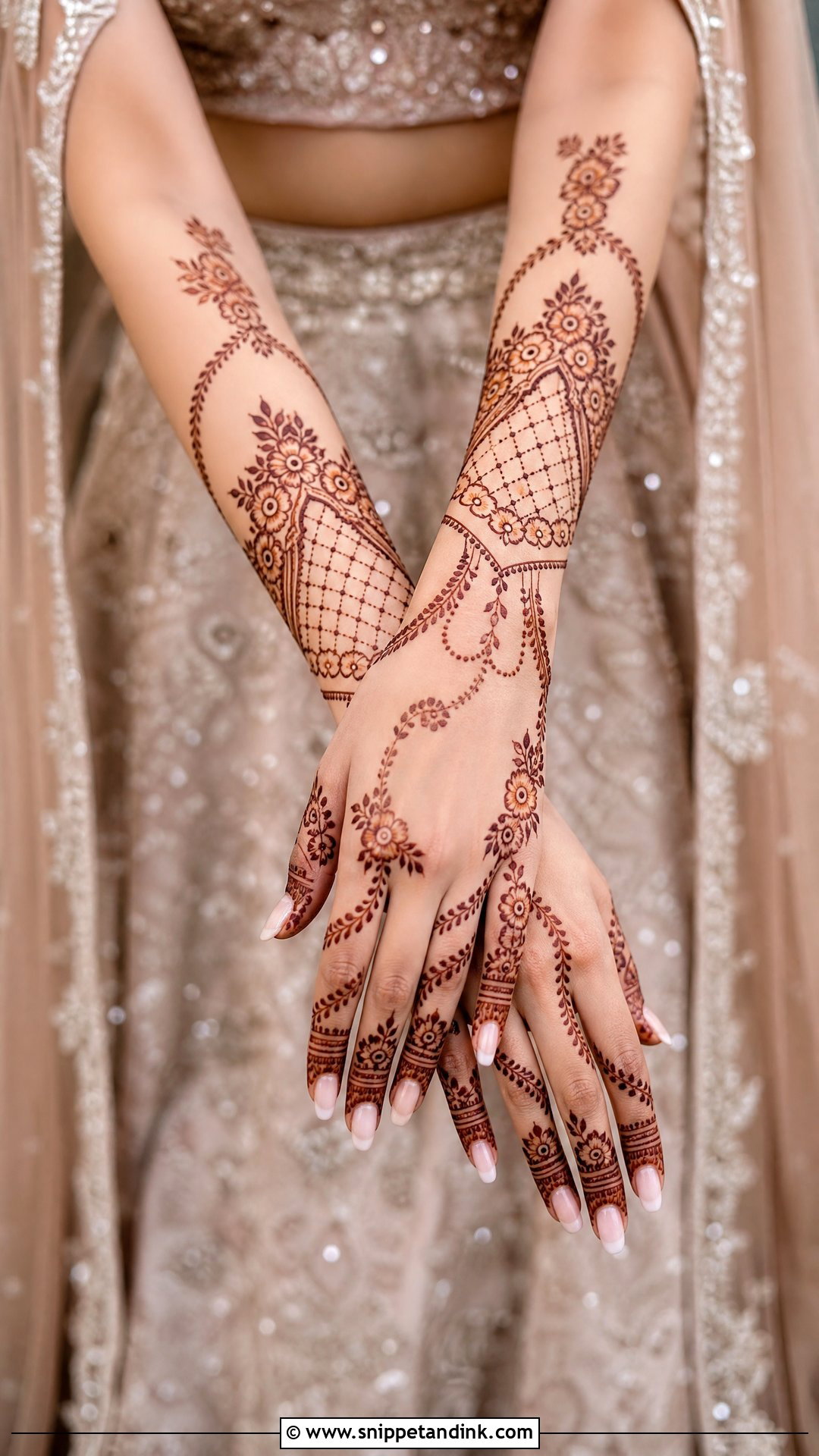
A cape lehenga solves the problem every henna artist complains about: a dupatta sliding down the arm onto wet paste. The cape replaces the dupatta completely, so your hands and arms stay free for full designs. Light net, organza or georgette with embroidered edges is the right weight; a heavy cape pulls at the shoulders by evening. Under it, a yellow, green, peach or multicolor lehenga keeps things festive. Short capes look youthful and long ones look regal. Since the cape already moves a lot, I keep jewelry to earrings and a tikka, and it looks lovely in twirl shots.
12. Jacket Lehenga Mehndi Dress For Bride
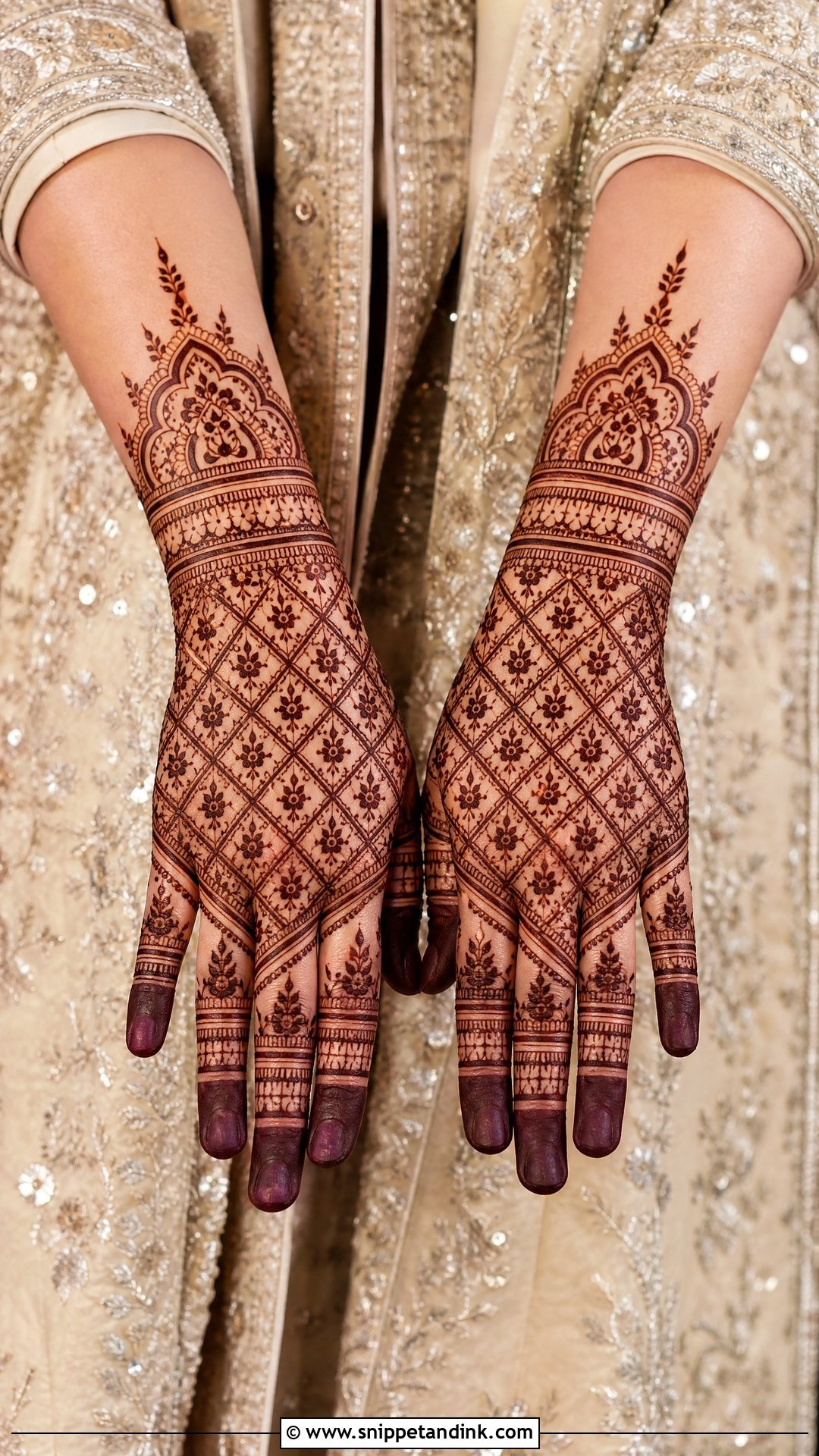
Layering is the appeal of a jacket lehenga, and the length changes the whole mood: cropped, waist-length or long. For mehndi I steer brides to a light, open jacket over a sleeveless crop top, because a fitted jacket with sleeves will cover the forearms and can rub fresh paste. The open version stays breathable and keeps your arms out of the way. Mustard, green, pink and orange look festive, while ivory with colorful embroidery feels modern. It’s a strong option for an evening function where you want shape without stiffness.
13. Peplum Sharara Mehndi Dress For Bride
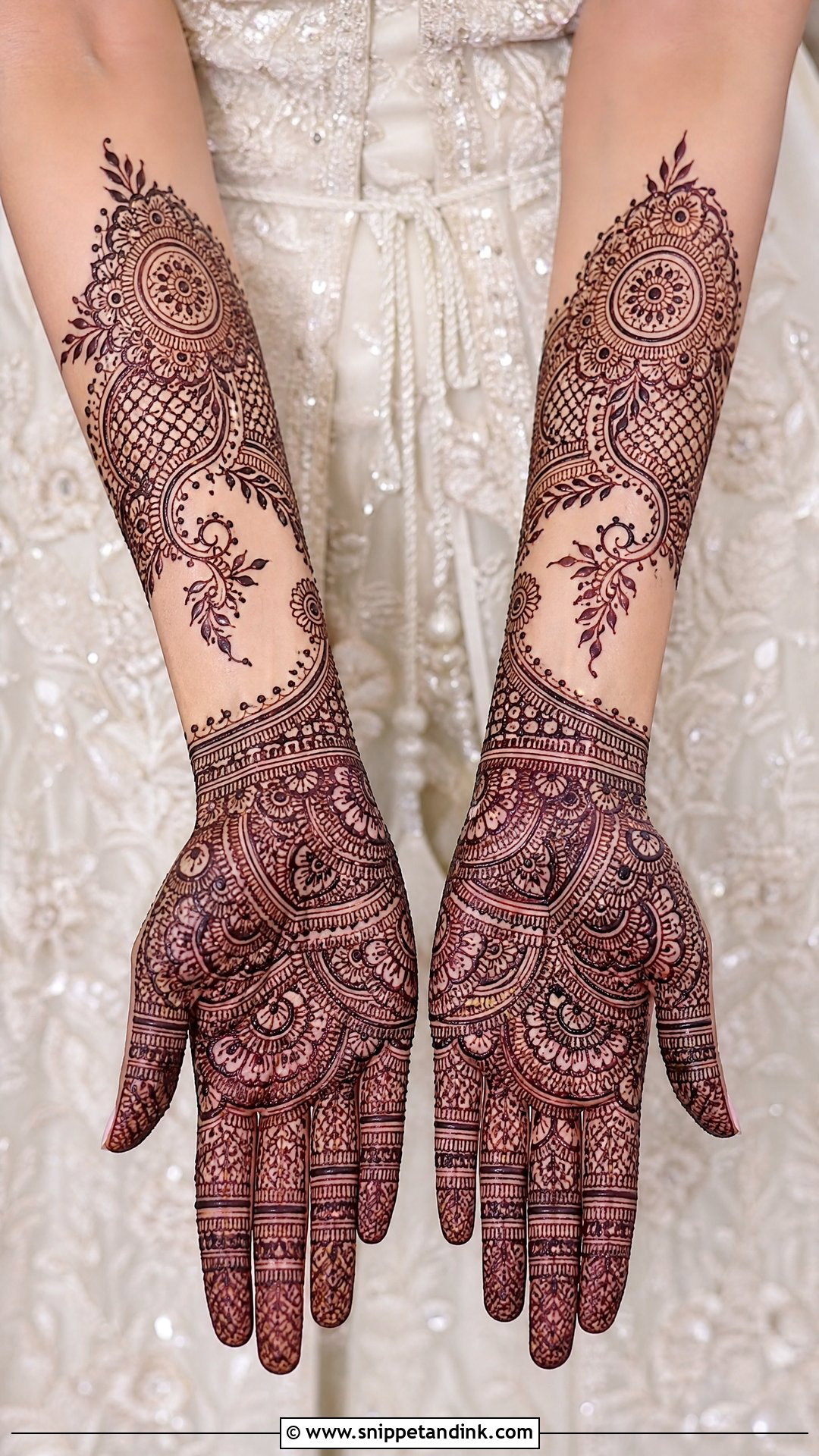
A peplum sharara mehndi dress defines the waist with the top and leaves the volume to the trousers, which is a flattering split for most body shapes. It feels structured without being stiff. Choose a peplum with mirror work, gota patti or colorful thread work and keep the bottoms flowing. Yellow and green are the classic picks; coral, turquoise and magenta look striking too. The flare stops above the floor, so nothing drags while you dance. Henna with bold wrist cuffs sits right where the peplum sleeve ends, which is why I like the two together.
14. Chikankari Mehndi Dress For Bride
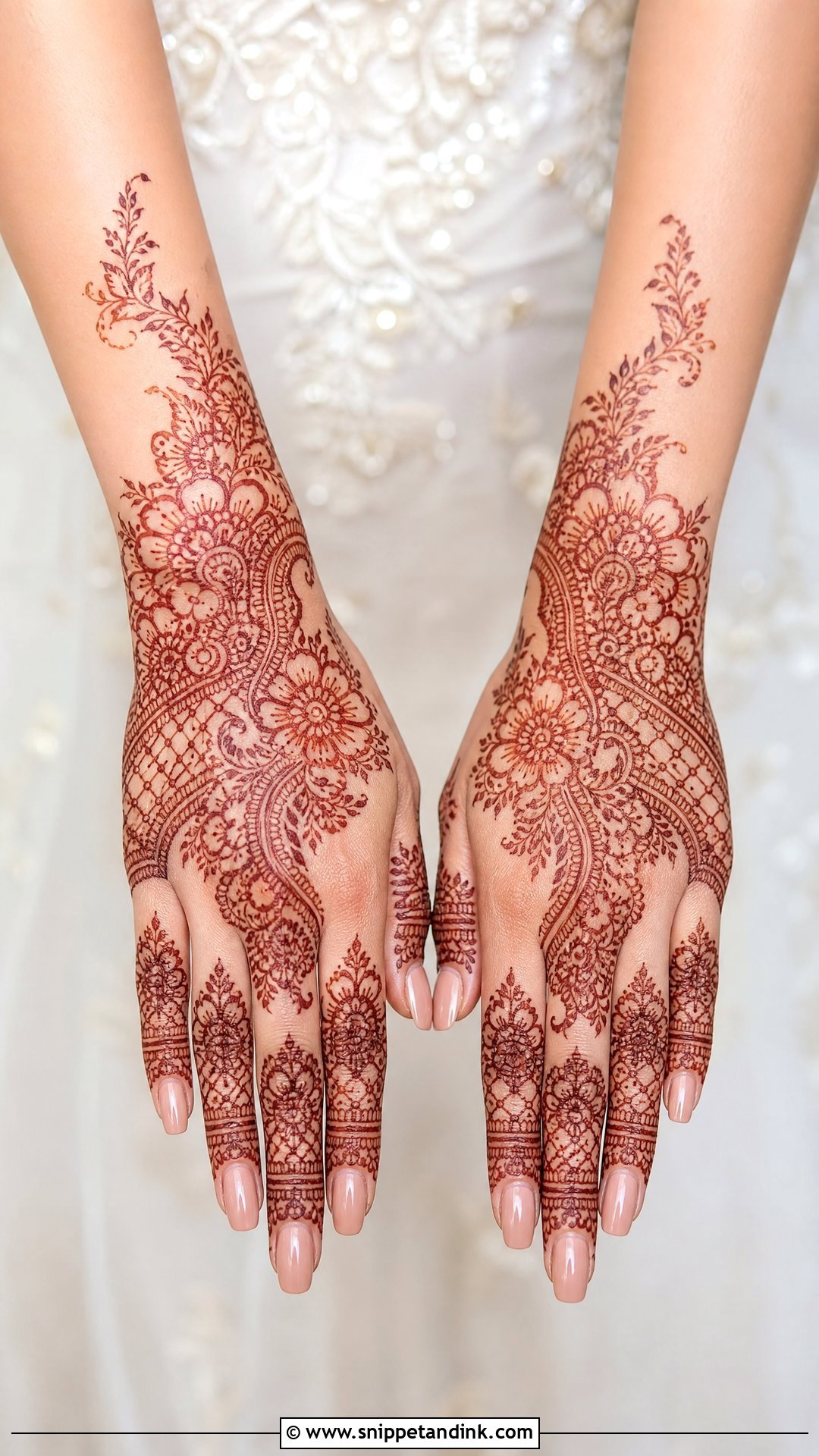
Chikankari is the quiet option, hand embroidery from the Lucknow tradition that looks delicate rather than sparkly. It suits lehengas, shararas, kurta sets and Anarkalis. For mehndi I’d go for colored chikankari over plain white: pastel yellow, mint, peach or sage green looks festive in daylight and hides small henna marks far better than white. Mirror highlights, sequins or gota borders add bridal detail if you want it. The fabric is usually fine cotton or georgette, so it stays cool through a long afternoon. Pearls, soft curls and natural makeup suit it, and detailed floral henna echoes the embroidery.
15. Bandhani Mehndi Dress For Bride
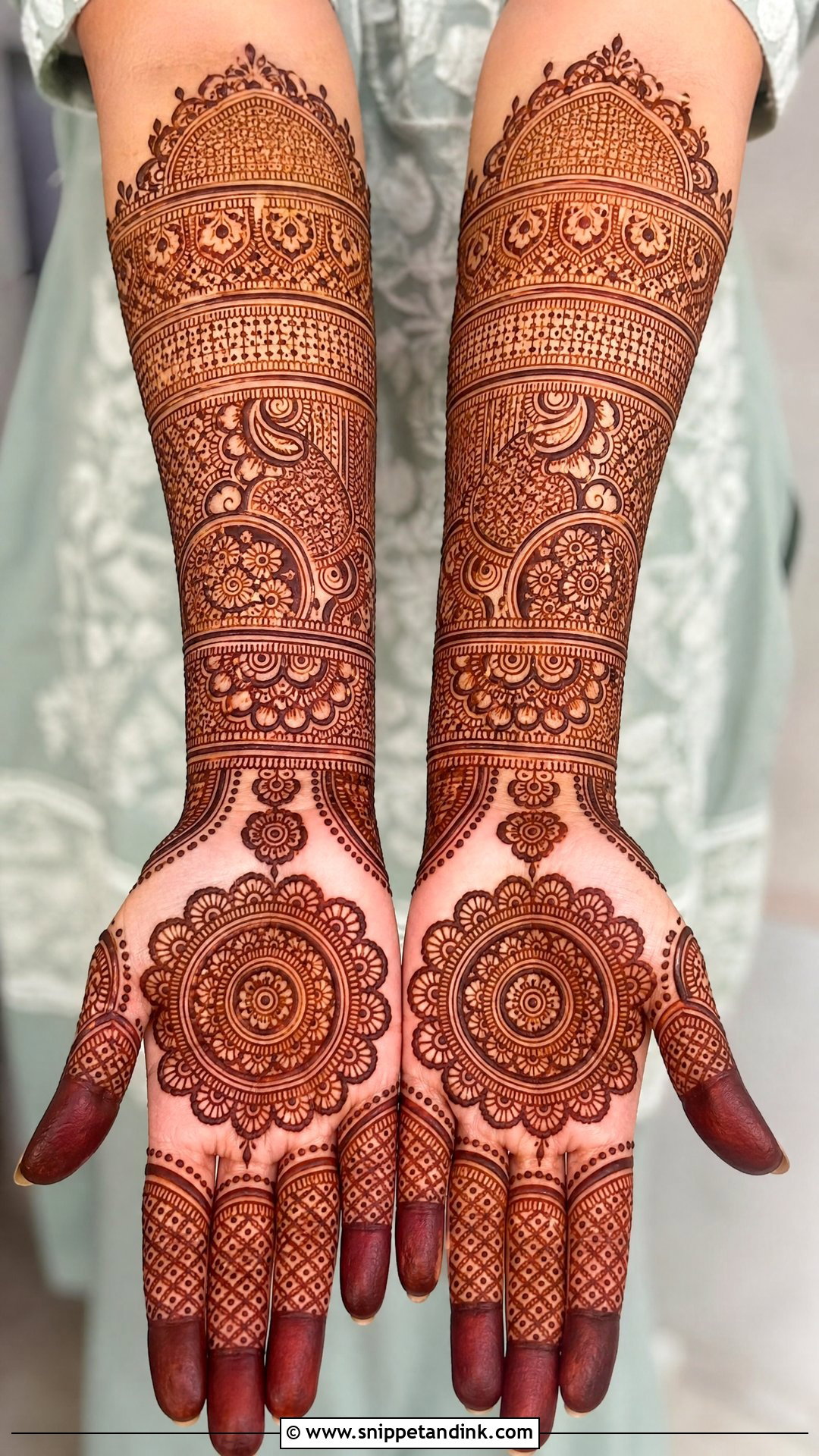
A bandhani mehndi dress carries a Gujarati and Rajasthani heritage in its tiny tie-dyed dots. You can wear it as a lehenga, gharara or saree, or keep it to a bandhani dupatta over a solid blouse. Yellow with red, green with pink, orange with magenta and mustard with maroon all look rich. Gota patti borders make it bridal without much weight. One thing to know: genuine bandhani is hand-dyed, and the dye can bleed if it gets wet, so keep lemon-sugar sealant and wet wipes away from the fabric. A maang tikka and earrings are enough jewelry, with paisleys and mandalas on the hands.
16. Leheriya Mehndi Dress For Bride
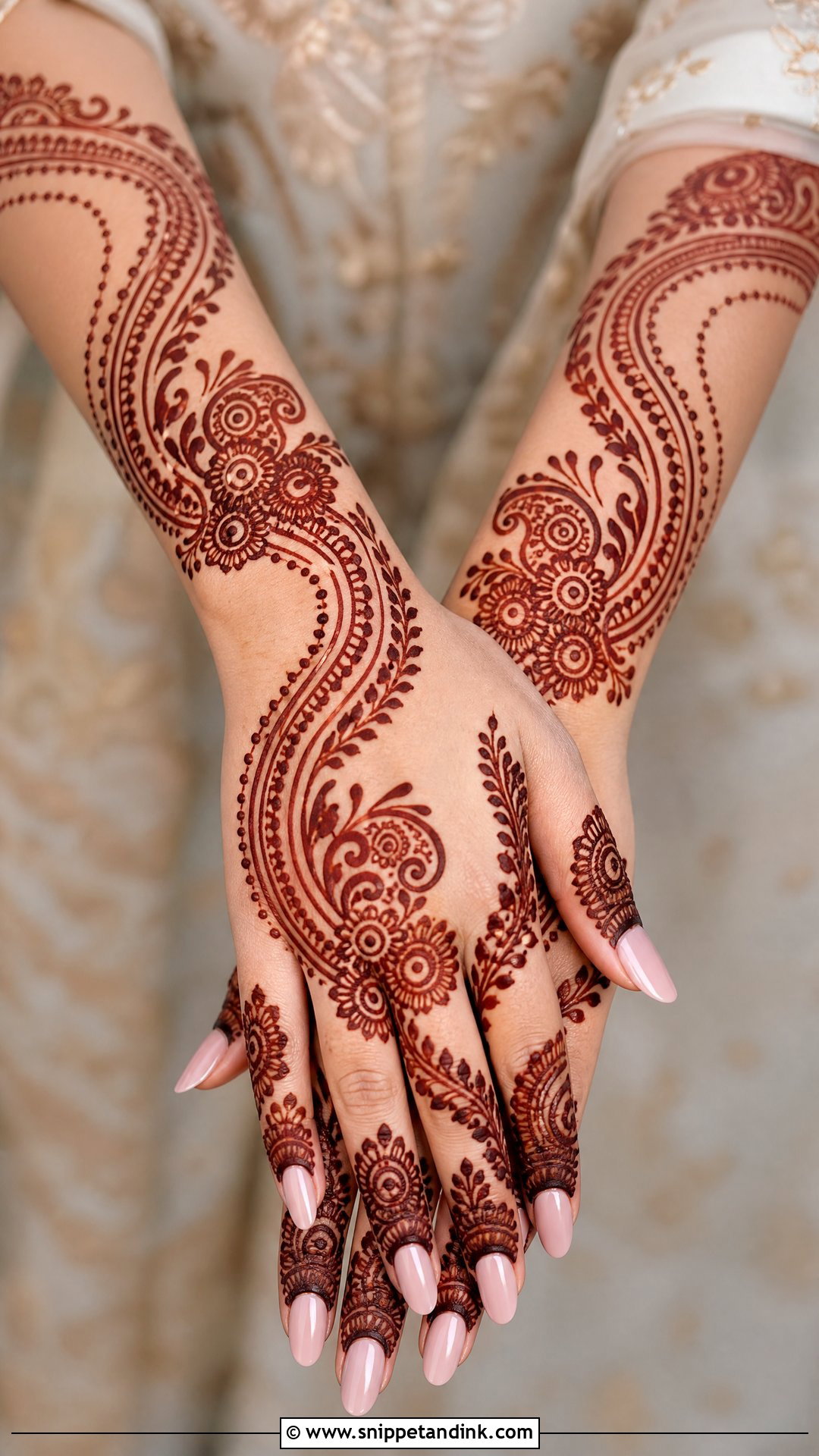
Leheriya’s wave print is made for summer and outdoor ceremonies; the fabric is usually light, and the diagonal stripes give movement even when you’re sitting. Yellow, pink, orange, green and blue combinations look cheerful. Wear a printed skirt with an embroidered blouse, or a leheriya dupatta over a solid sharara set. It’s also one of the easiest pieces to wear again after the wedding, which I always point out to brides on a budget. Gota jewelry or a potli bag adds charm, and clean Arabic or Indo-Arabic henna sits well against the flowing stripes.
17. Silk Half Saree Mehndi Dress For Bride
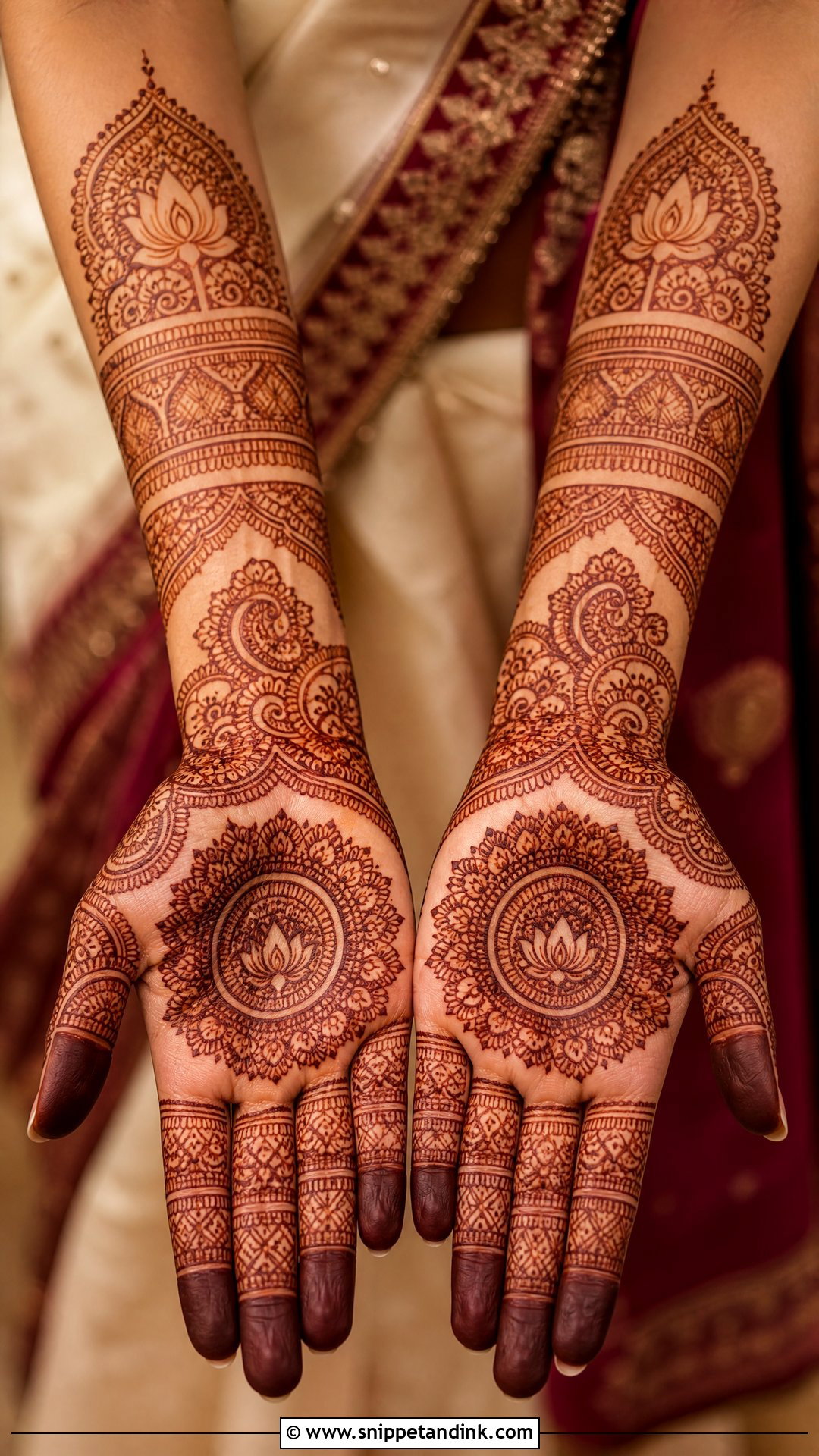
A silk half saree gives South Indian brides, and anyone who loves a traditional drape, the richness of silk in a skirt, blouse and dupatta that is easier to manage than a full saree. Bright yellow, green, orange and pink with gold borders look festive. Silk is warm and stiff, though, so for a long or outdoor ceremony I ask for a lighter weave. Check the blouse sleeve before the tailor finishes it: structured silk sleeves rarely push up, and your artist needs to reach the forearm. Temple jewelry, jasmine and a neat braid complete it, with full-palm traditional motifs.
18. Punjabi Patiala Mehndi Dress For Bride
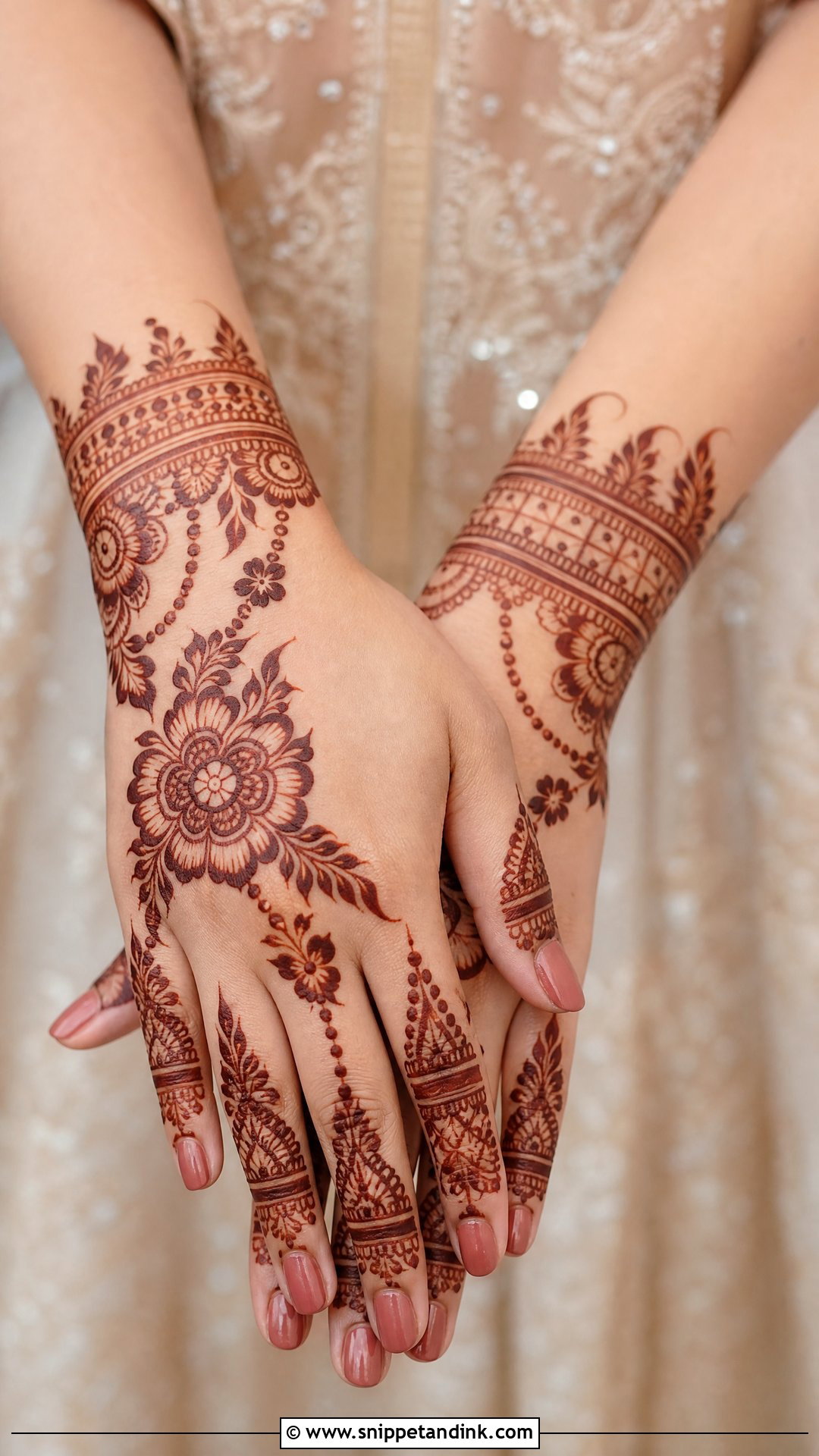
A Punjabi Patiala mehndi dress is made for a bride who plans to dance all night. The short embroidered kurti and pleated salwar give you full leg freedom, and the gathered pleats hide creases from sitting. Bright yellow, parrot green, hot pink and orange suit it, and a phulkari dupatta adds embroidery with real cultural weight. On its own it reads casual to semi-formal; heavier kurti embroidery pushes it into bridal territory. Add a paranda, juttis and bangles. Bold back-hand henna and finger details match its energy.
19. Indo Western Mehndi Dress For Bride
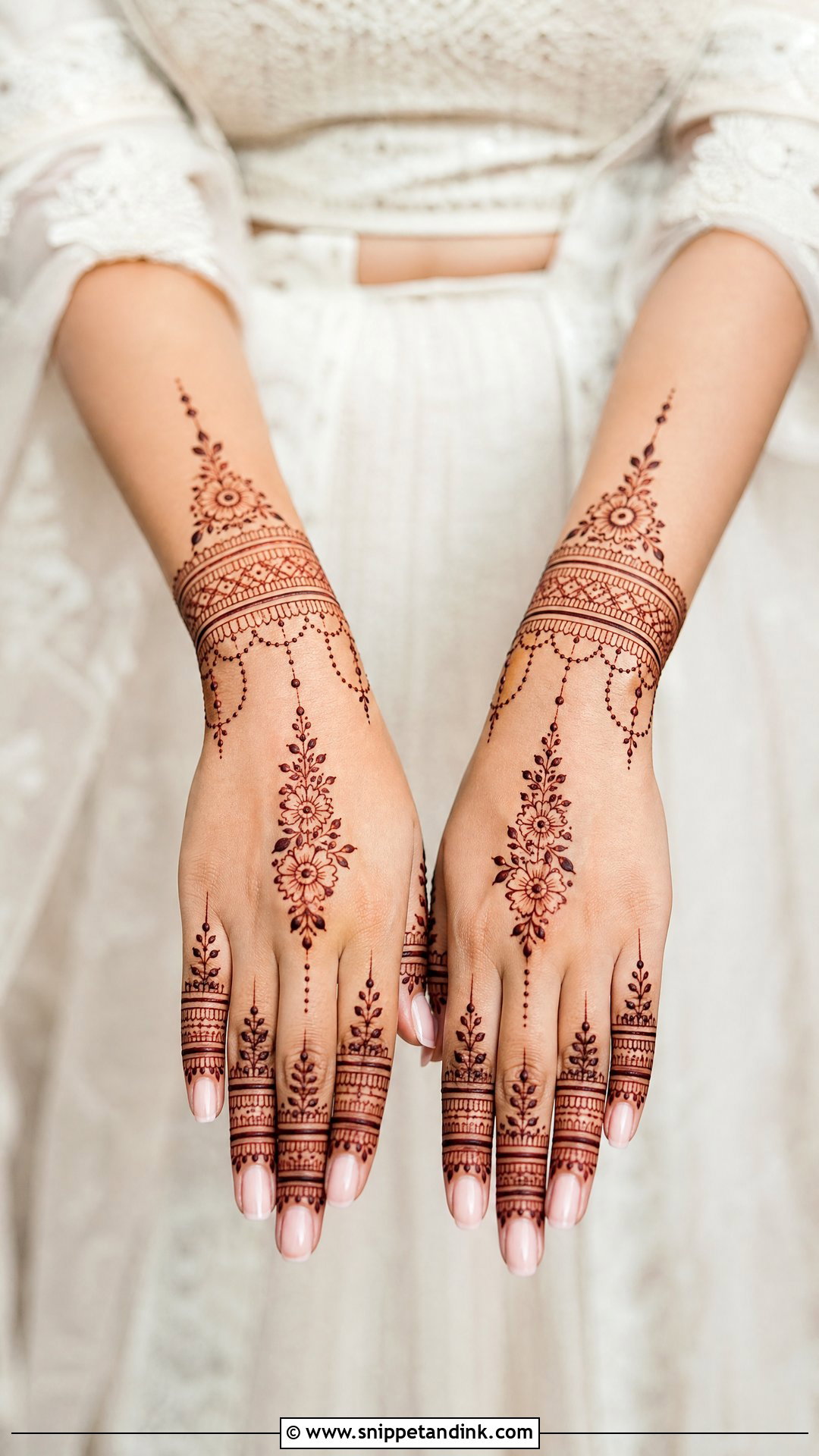
Indo western outfits cover a lot of ground: a crop top and skirt, a dhoti pant set, a draped cape or a structured co-ord with Indian embroidery. What makes one work for mehndi is festive color and a shape you can sit in comfortably. Yellow, lime, coral, fuchsia and printed combinations all suit. These are good for destination or poolside events and for brides who don’t want heavy bridal wear before the wedding itself. I always add one firmly traditional piece, kundan earrings or a maang tikka, so it still reads as the bride. Minimal henna looks chic here.
20. Dhoti Pant Mehndi Dress For Bride
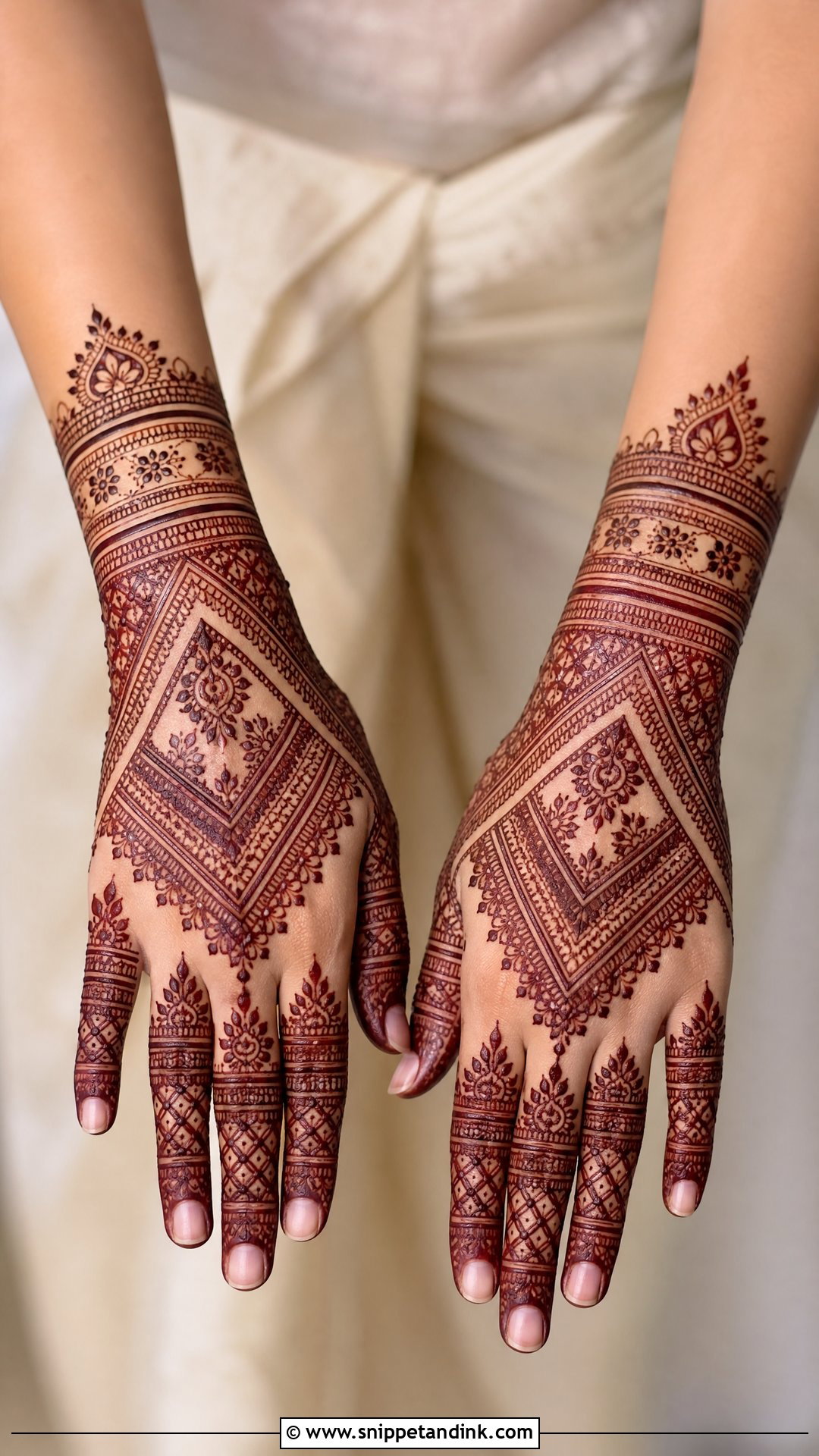
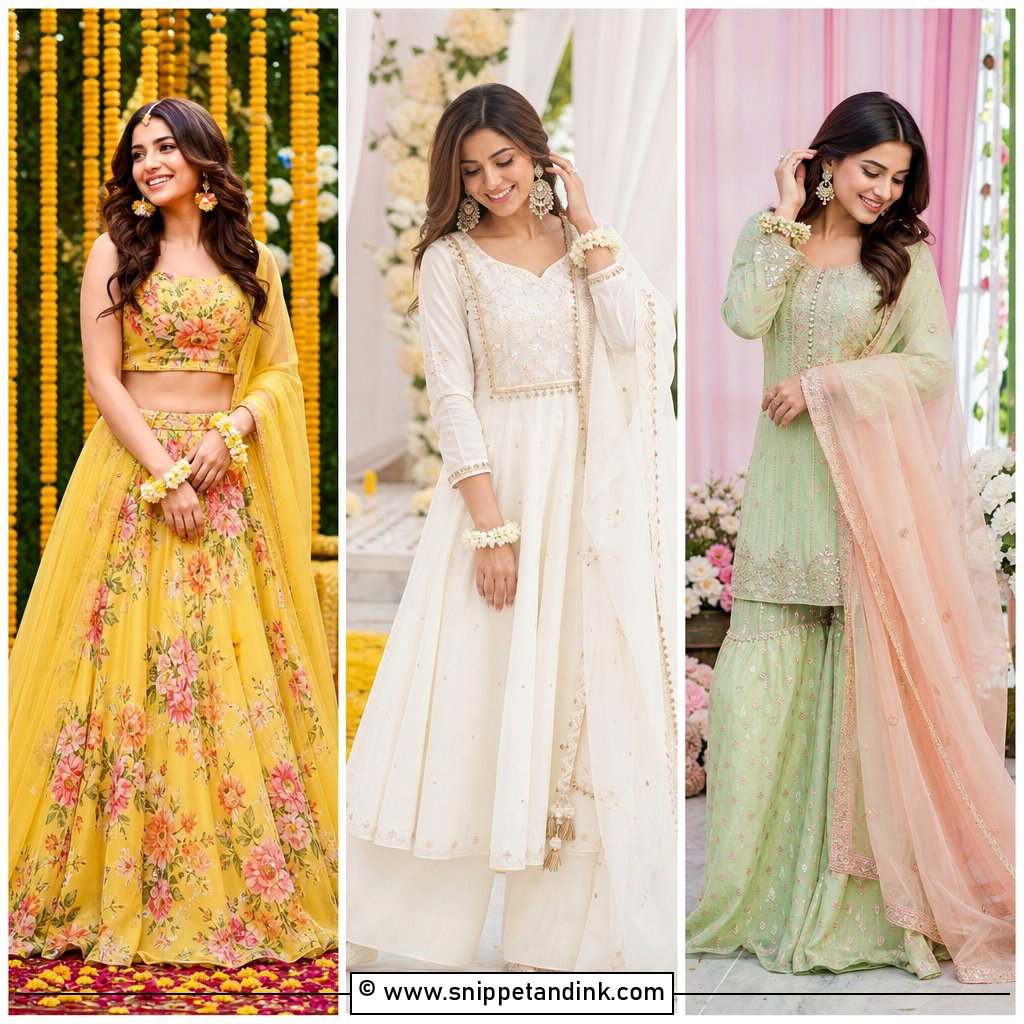
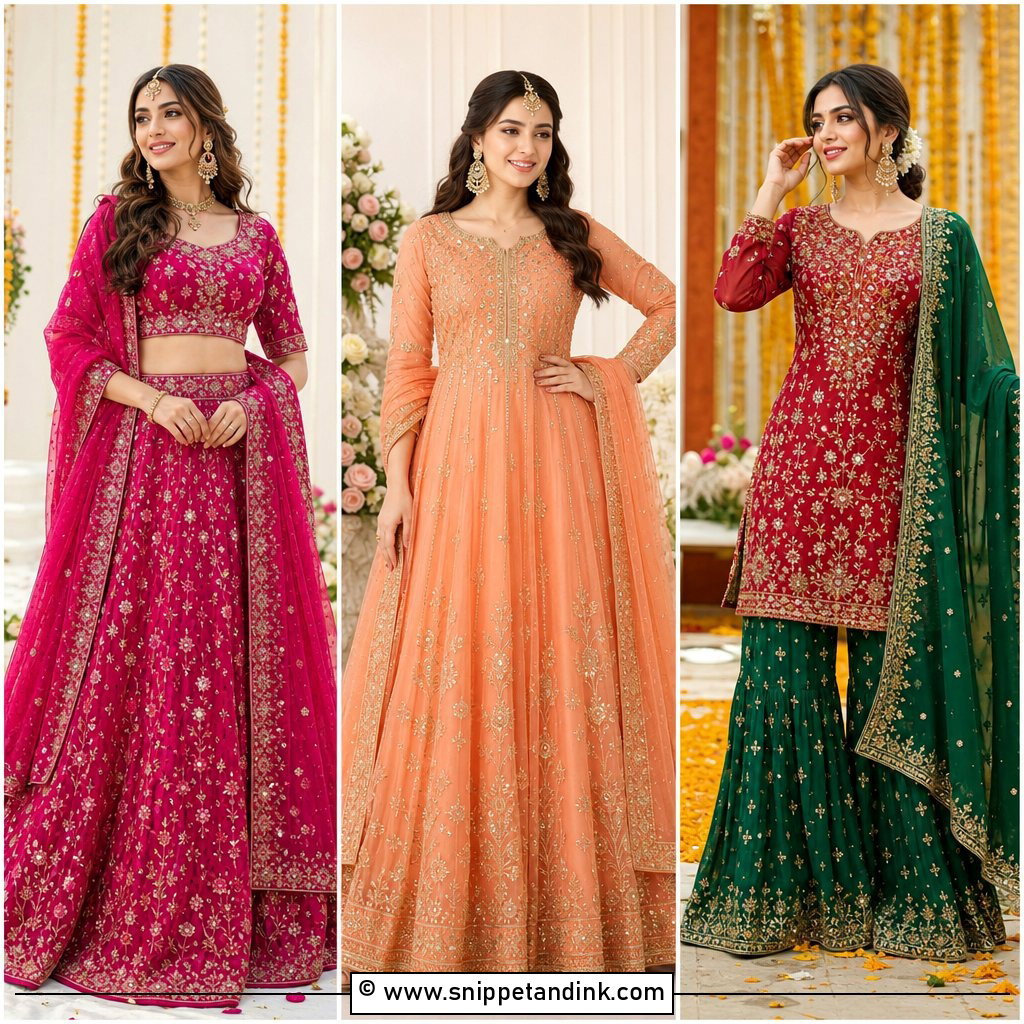
A dhoti pant mehndi dress is bold and easy to move in, with a fashion-forward feel. Pair the embroidered dhoti with a crop top, short kurti, peplum blouse or cape. Fabric matters more than usual here: the drape only falls cleanly in light georgette or crepe, and stiff silk bunches at the hip when you sit. Mustard, emerald, coral and ivory with colorful embroidery suit mehndi. The shape is already strong, so keep accessories to a few pieces, and add a belt to define the waist and hold everything secure. Bracelet-style henna bands finish it.
21. Palazzo Suit Mehndi Dress For Bride
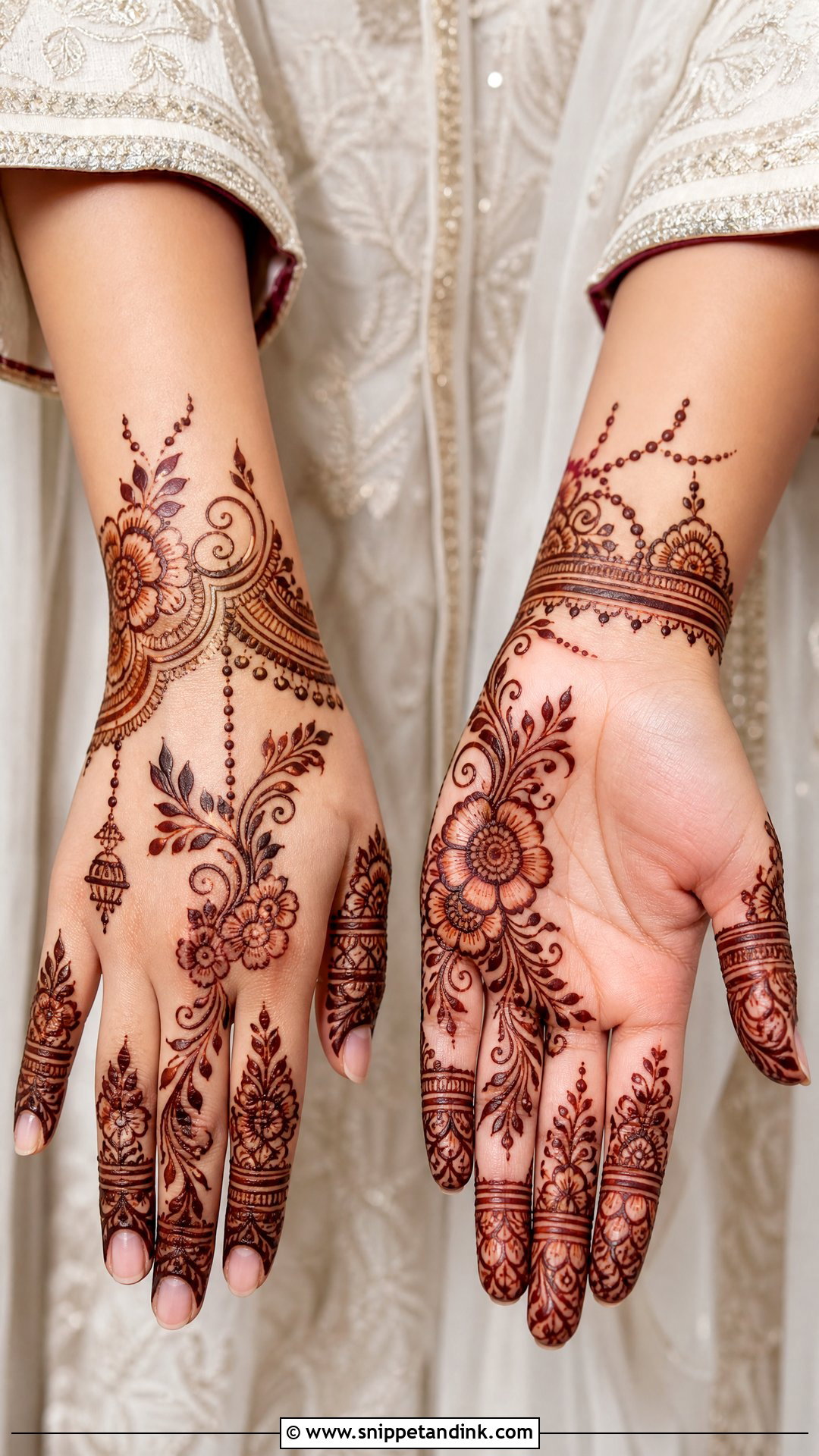
Comfort comes first with a palazzo suit, and the wide legs make sitting for henna genuinely easy. A short kurta, long kurta or embroidered tunic can all work depending on how formal the event is. Because the shape is simple, the color and detail have to carry the bridal feel: yellow with pink borders, green with gold thread work or orange with mirror accents. It’s an easy outfit to wear again after the wedding. Jhumkas, bangles and a light dupatta are enough. Floral henna suits its relaxed shape.
22. Kurta Skirt Mehndi Dress For Bride
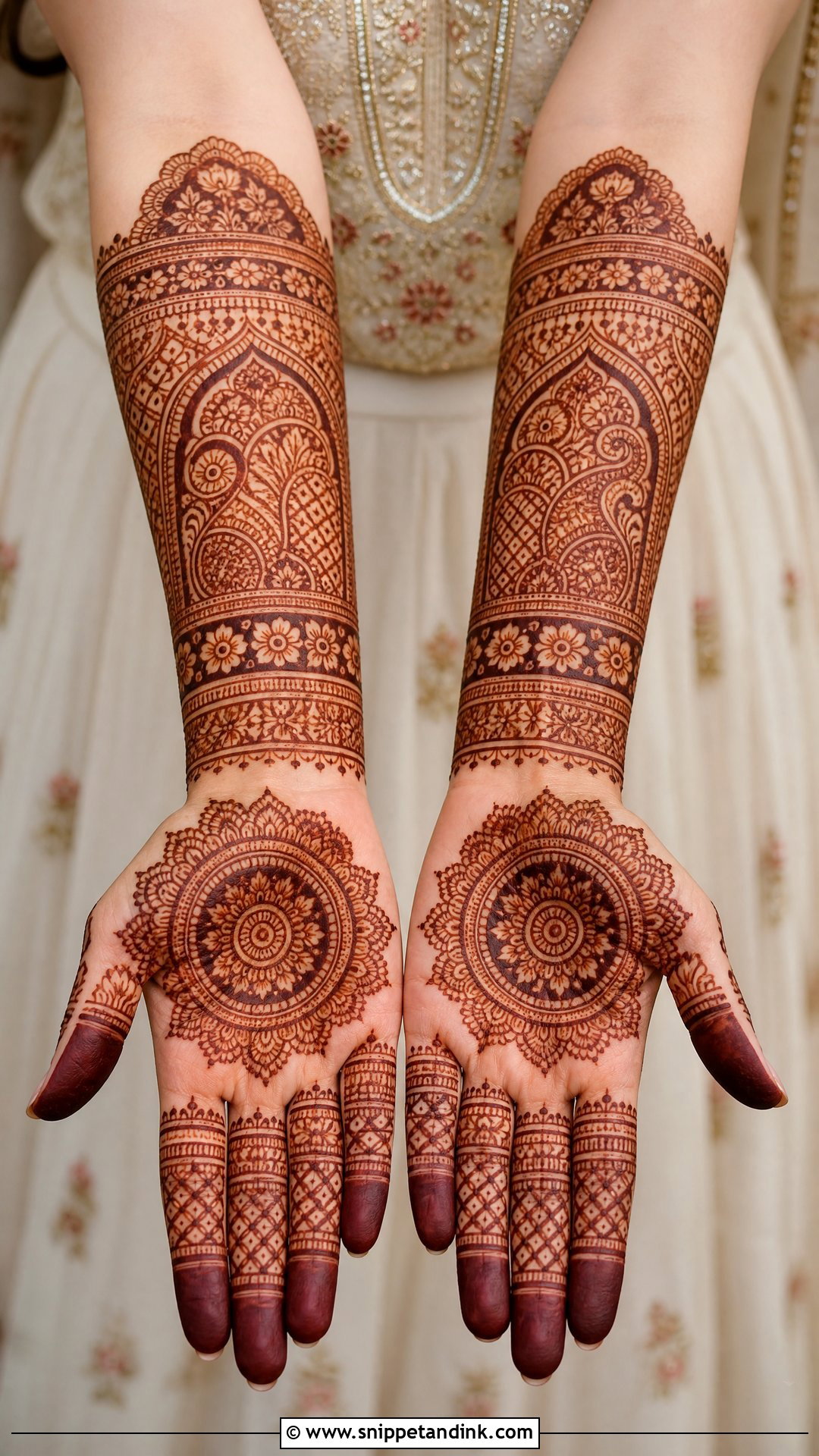
A kurta over a flared skirt gives you the lehenga silhouette with more coverage at the midriff, which many brides find more comfortable when sitting low for hours. A short kurta looks youthful; a long one feels regal. Gota, mirror work, zari borders and colorful prints all suit it, in the classic mehndi yellow, green, pink and orange. Pin the dupatta neatly before henna starts, because the kurta’s longer hem already sits close to your lap. Traditional full-hand henna and fresh flower accessories pair well.
23. Pastel Mehndi Dress For Bride
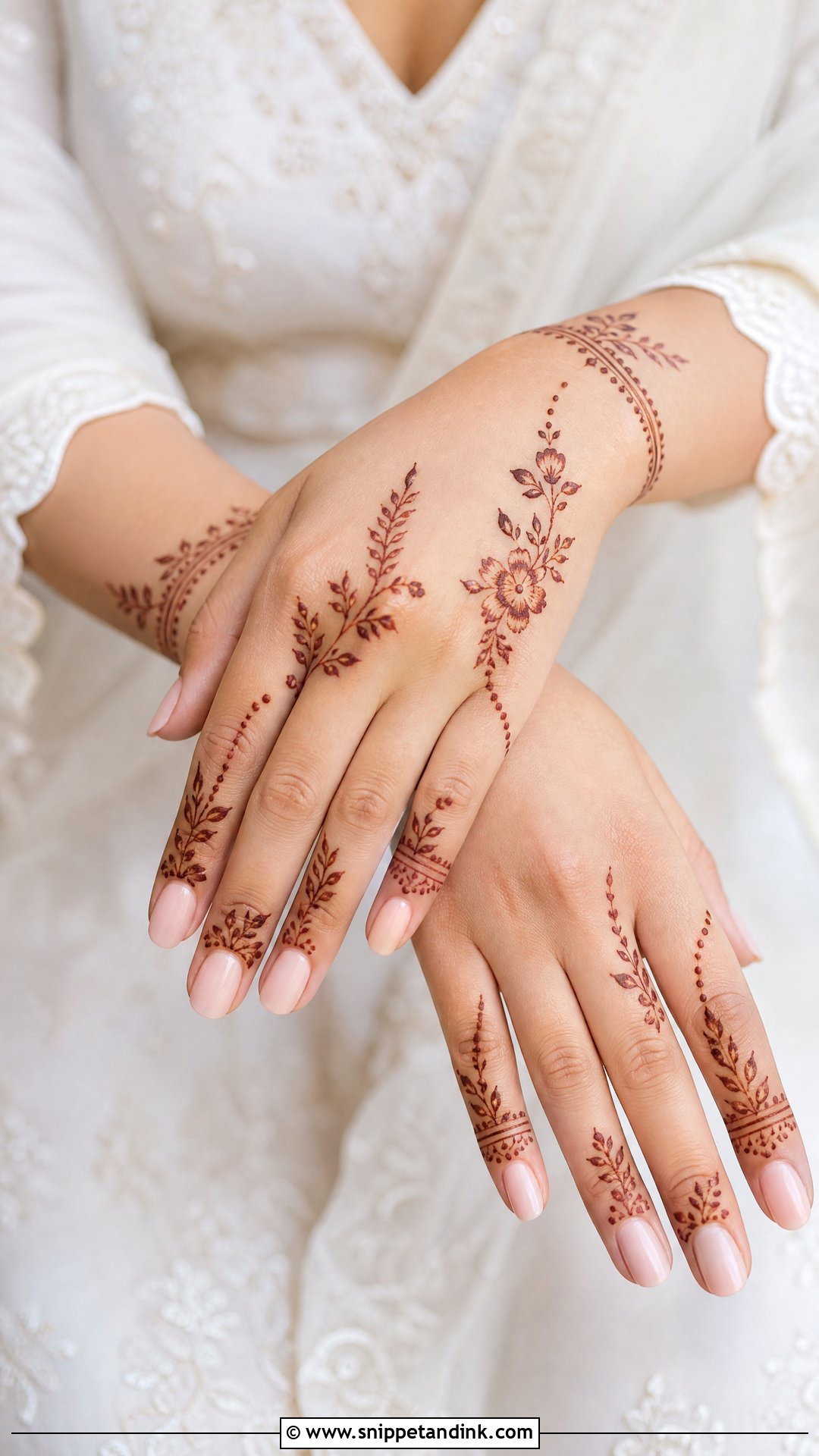
Pastels suit the bride who finds the usual bright palette too loud. Mint, peach, lemon, blush, sage and powder blue all work if the outfit carries enough detail, so look for mirror work, colorful thread embroidery, gota borders or a contrasting dupatta. Without that detail, a pastel can look washed out in photos next to brightly dressed relatives. Morning ceremonies, garden settings and small celebrations suit it best. On deeper skin tones, I lean toward warm pastels like peach, butter yellow and pistachio, which glow rather than turn ashy. Floral jewelry or pearls finish it, and fine-line henna fits the softer mood.
24. Orange Mehndi Dress For Bride
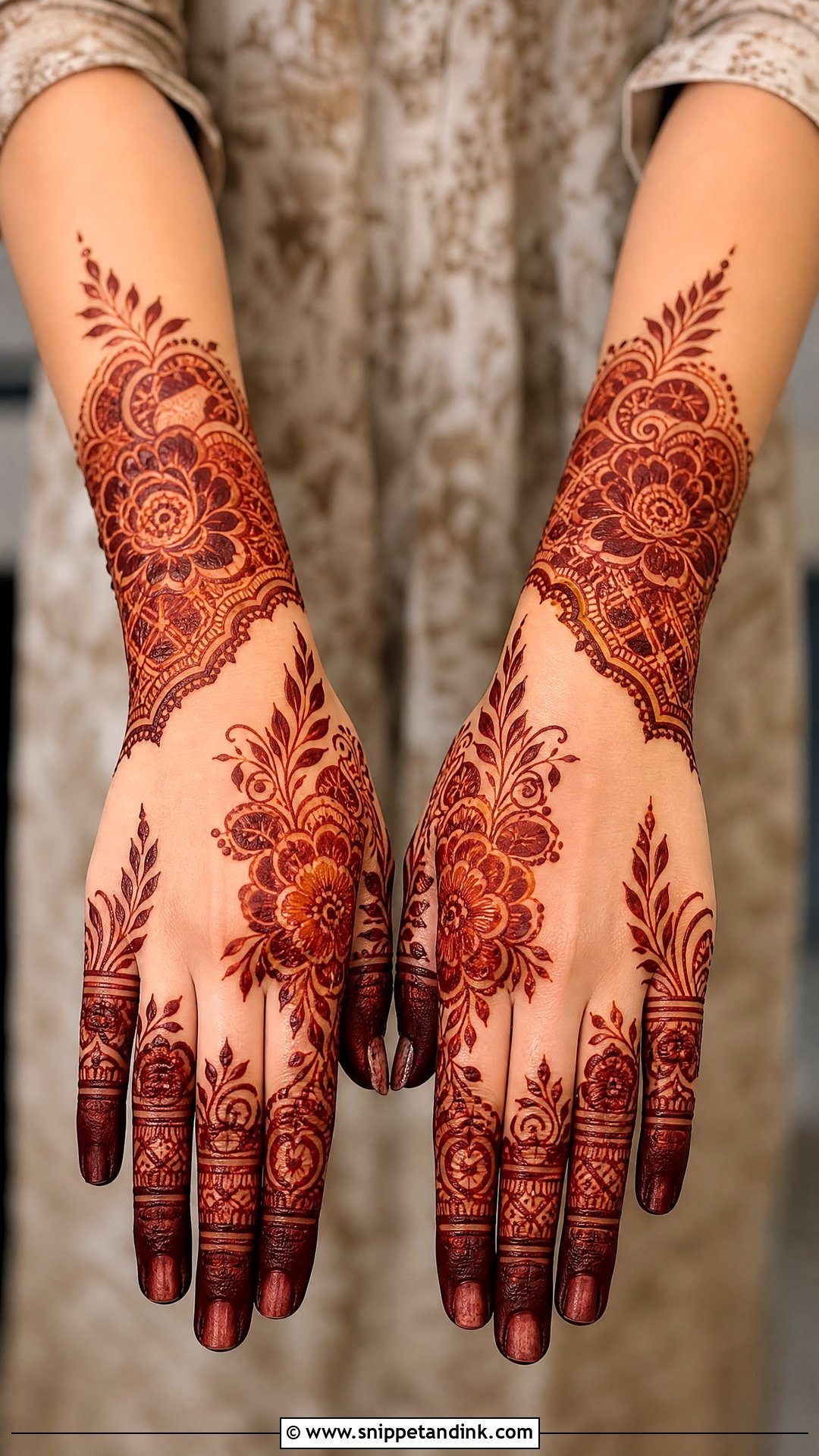
Orange is the color I suggest when a bride wants the warmth of yellow without wearing what everyone expects. Tangerine, marigold, rust and coral-orange each suit different skin tones and decor, so hold the fabric to your face in daylight before deciding. Lehengas, shararas, sarees and Anarkalis in orange all look great in natural light. Gold embroidery keeps it classic, while pink or green accents add playful contrast. Keep makeup warm with glowing skin, and keep jewelry balanced, since orange already does a lot. Traditional paisleys, florals and wrist cuffs complete it.
25. White And Yellow Mehndi Dress For Bride
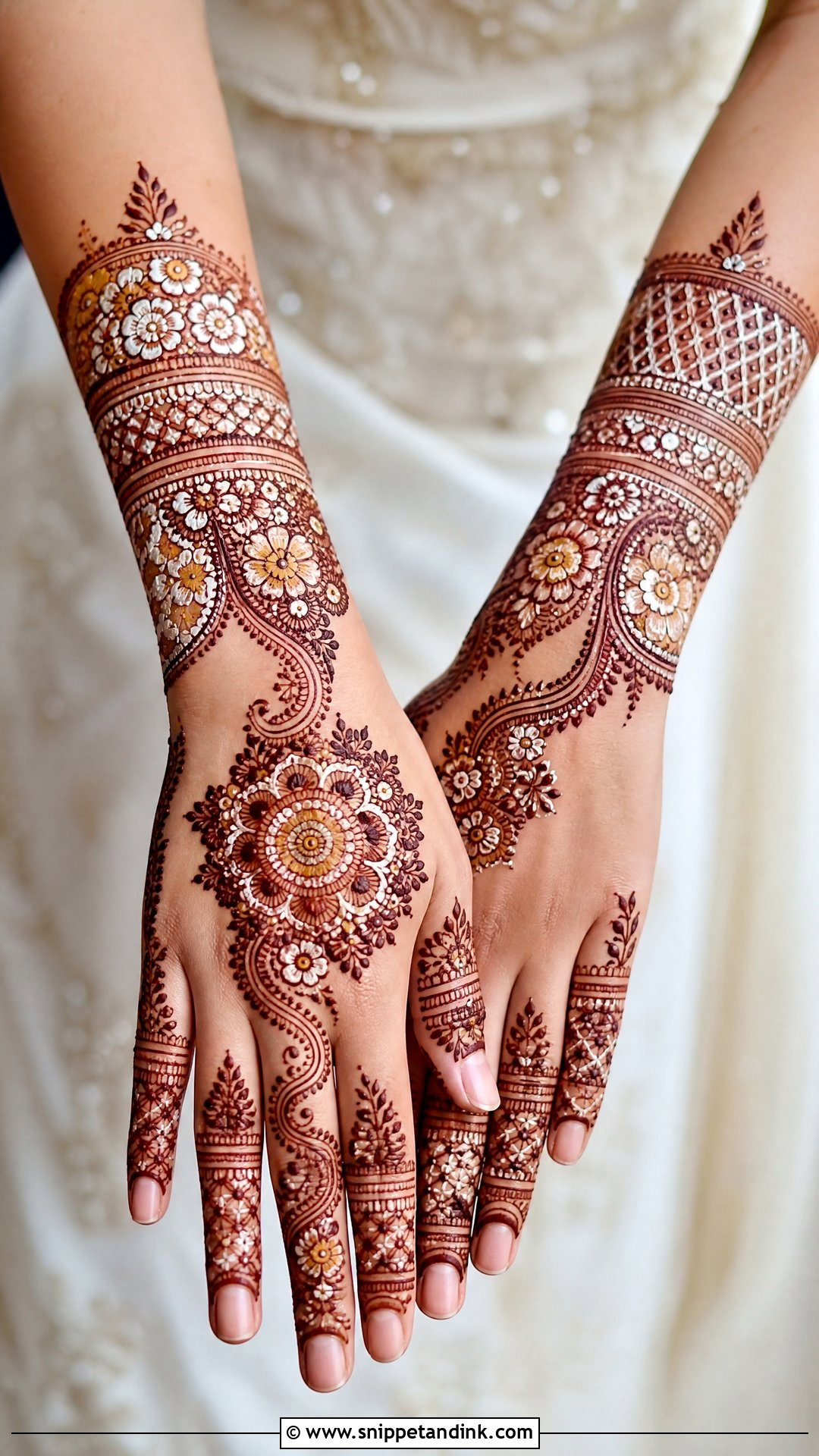
White with yellow embroidery, dupatta or borders keeps the mood light and fresh, and it suits lehengas, shararas, sarees and cape sets at daytime ceremonies with floral decor. I’ll be honest about the trade-off: white is the riskiest base at a mehndi. Wet paste, turmeric from a haldi held the same day and lemon-sugar drips all show on it. If you love it, choose a yellow dupatta or printed skirt so most of the white sits on the upper half, away from your lap. Floral jewelry, gold earrings or pearls suit it, and a deep maroon stain stands out clearly against the pale fabric.
When Paste or Lemon Sugar Lands on the Fabric
Henna dye bonds with protein and natural fiber, so silk, cotton and wool are the fabrics most likely to hold a mark. Synthetic georgette and net usually wipe cleaner. The lemon-sugar mix many artists dab on to keep the paste moist is sticky and can leave a dull patch on silk once it dries.
On the night
If paste touches the fabric, don’t rub it. Let it dry, then flick it off with a fingernail or blunt knife. Rubbing wet paste pushes dye deeper into the weave. Keep a clean cotton cloth on your lap while sealant is being applied, and keep turmeric well away if a haldi falls on the same day.
Afterward
Air the outfit overnight before you pack it, since trapped sweat and flower moisture are what cause musty smells and yellowing. Take it to a dry cleaner who handles bridal wear and point out every mark, telling them it is henna. Store embroidered and mirror-work pieces folded in muslin, not plastic, with tissue between the folds, and refold them every few months so the creases don’t set. Heavy lehengas shouldn’t be hung by the waistband for long, because the weight stretches it.
Sleeves, Seating and the Dance Floor Decide It
The right outfit is the one you forget you’re wearing while you sit, dance and hold your hands out to dry. A heavy lehenga will suit one bride, while a sharara, ruffle saree, Anarkali or Indo western set suits another far better. Before you commit, think through the timing, the weather, the venue, how far up your arms the henna goes and how much you plan to move. Bright colors still lead, but pastels, prints, capes and fusion shapes all have a place. If you remember one thing from a fitting, make it the sleeves: anything that touches wet henna will cost you part of your design.
You'll Like These Ideas:


Leave a Reply