
An all-yellow haldi outfit can disappear against yellow decor, marigold garlands and a courtyard full of yellow-clad relatives. A second colour fixes that. It gives the outfit an edge in photos and says something about you: pink feels playful, emerald feels rooted, royal blue feels confident, white and lavender feel calm. Which one works depends on your role, the venue and how much you’ll be moving. Light fabric, comfortable shoes, secure draping and minimal jewellery still matter most for a daytime ritual. Below I’ve paired yellow with twenty contrasts across a traditional lehenga, sharara, saree, suit and fusion pieces, with notes on where the second colour should sit.
Where Should the Second Colour Go?
The same two colours can look balanced or awkward depending on where you place them. When I plan a contrast outfit, I decide the proportion first and the exact shade second. Roughly, yellow should cover most of the outfit and the contrast should take a smaller share, so the haldi colour still leads.
Each placement changes the effect:
- Contrast blouse: draws the eye to the face and shoulders. Good for petite frames and for anyone who wants attention on jewellery and makeup.
- Contrast dupatta: the most flexible, because you can move it, take it off for the ritual or switch it for photos. It’s also the cheapest way to add a second colour to an outfit you already own.
- Contrast bottom: palazzos or a skirt in the second colour lengthen the legs visually when the top is short, but they split the body at the waist if the kurta is long.
- Contrast jacket or cape: the outer layer dominates, so make sure you love the colour, because it will be the main colour in every photo.
Repeat the contrast once more in a small detail, such as a border, a bangle or flowers in the hair. Without that echo, a single block of contrast looks borrowed rather than planned.
1. Yellow Lehenga With Pink Blouse
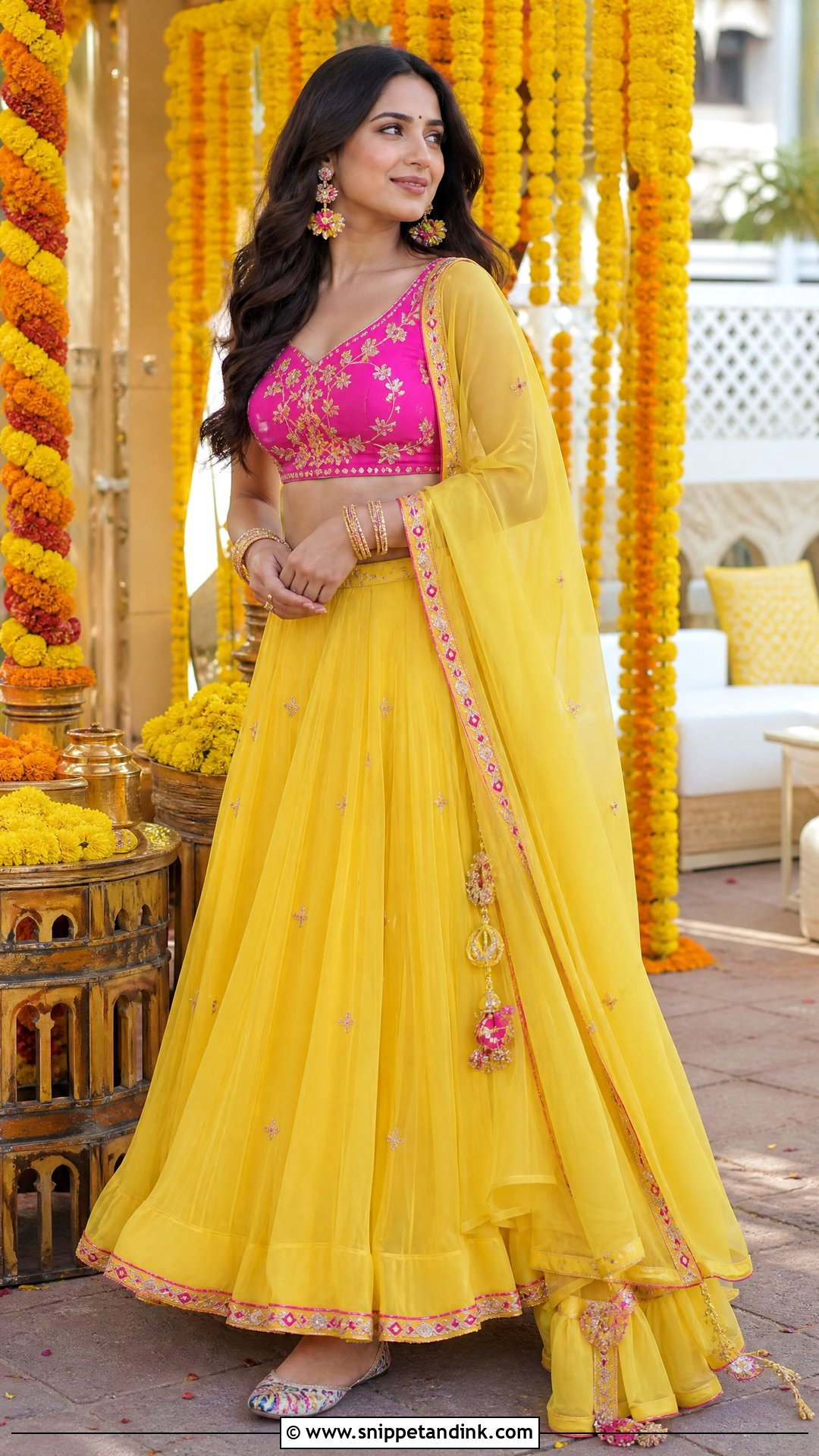
Yellow and pink is the pairing I suggest first to a bride who’s nervous about contrast, because it can’t really go wrong. A light georgette or cotton-silk skirt with an easy flare, then a fitted rani-pink blouse. A sheer yellow dupatta with a narrow pink border repeats the blouse colour near the hem and stops the outfit looking cut in half at the waist. Brides can add delicate mirror or gota work; guests usually prefer plainer embroidery. Floral earrings, stacked bangles and juttis complete it, with a flower-decorated low bun. Rani pink reflects onto the face in daylight, so keep blush and lip soft; matching the blouse exactly makes the face look flushed in close-ups.
2. Yellow Sharara With Green Dupatta
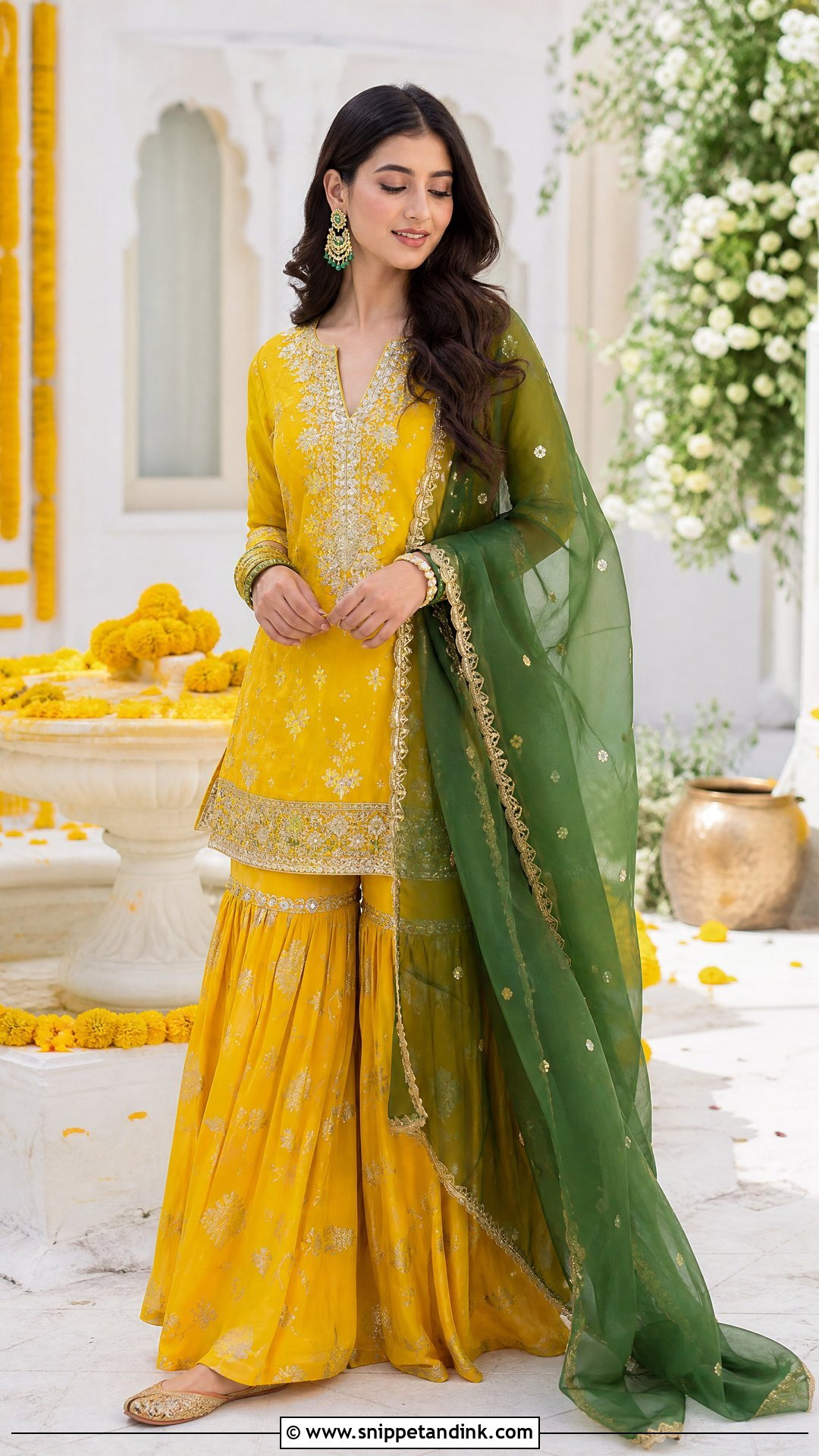
Emerald or bottle green against yellow looks like marigolds and their leaves, which is why it suits outdoor haldis so well. A short yellow kurta and sharara with a green dupatta give the base; the wide sharara handles dancing and floor seating. Keep gold embroidery around the neckline rather than all over. A green organza dupatta with a yellow border connects the two colours. Green stone earrings, gold bangles and juttis finish it, with a braid or soft ponytail. Bridesmaids can share identical green dupattas, which reads as coordinated without matching outfits. The bride stands out with floral jewellery and a richer neckline. Dark green can look black in shade, so choose emerald over bottle green for an indoor function.
3. Yellow Saree With Royal Blue Blouse
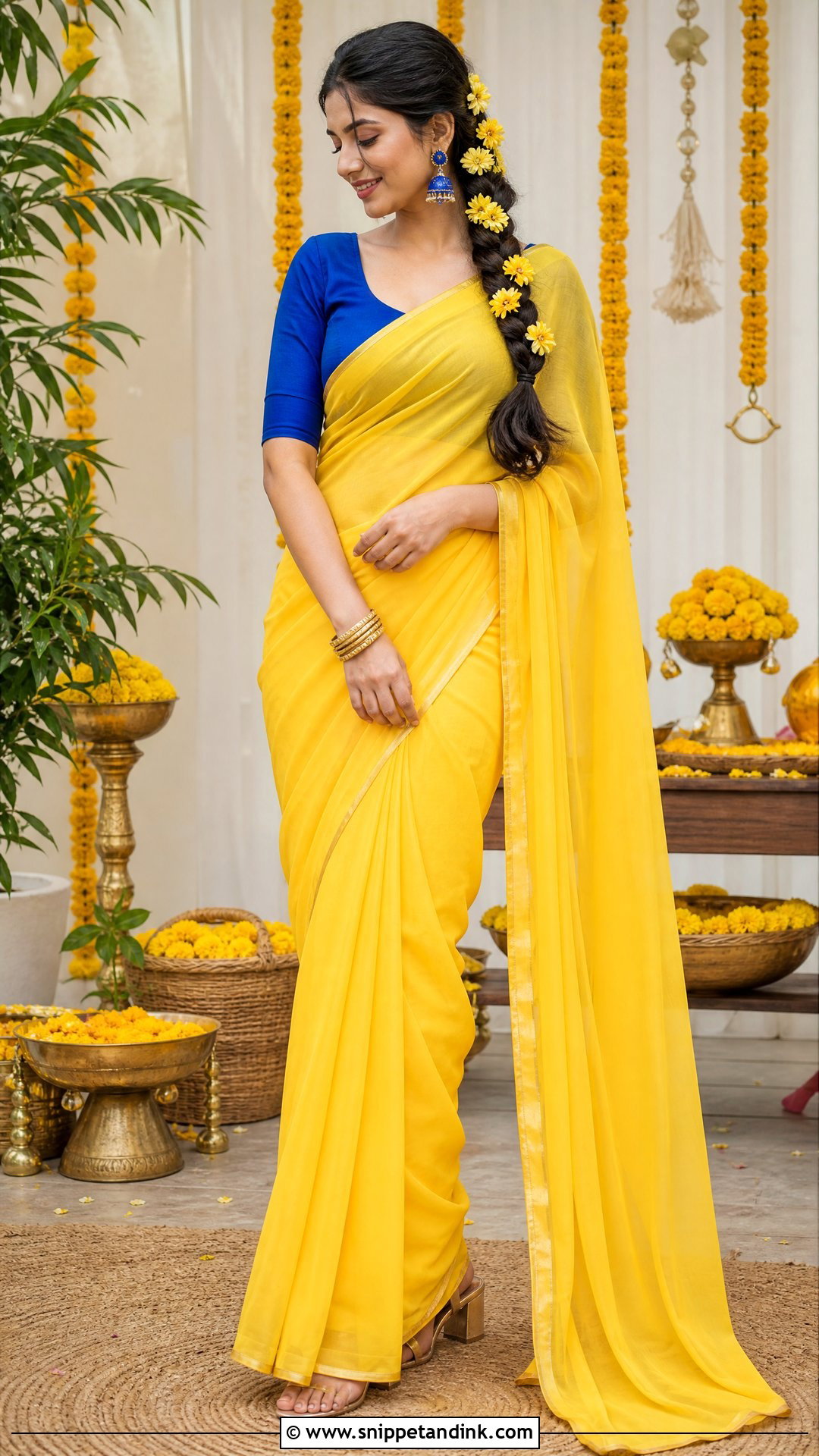
Royal blue against yellow is the boldest contrast on the colour wheel, and it suits a bride, sister or close guest who’s comfortable being noticed. Lightweight chiffon, georgette or organza saree, with a royal blue blouse with elbow sleeves, a square neck or a little mirror work. The blouse is enough blue; adding blue to the border as well makes it look like a uniform. Pin the pleats and pallu securely before any dancing. Blue stone jhumkas, slim gold bangles and low block heels. A sleek braid with small yellow flowers. I’d shorten the pallu a little for a haldi, since you’ll be near turmeric bowls, water, petals and crowded seating.
4. Yellow Anarkali With Purple Dupatta
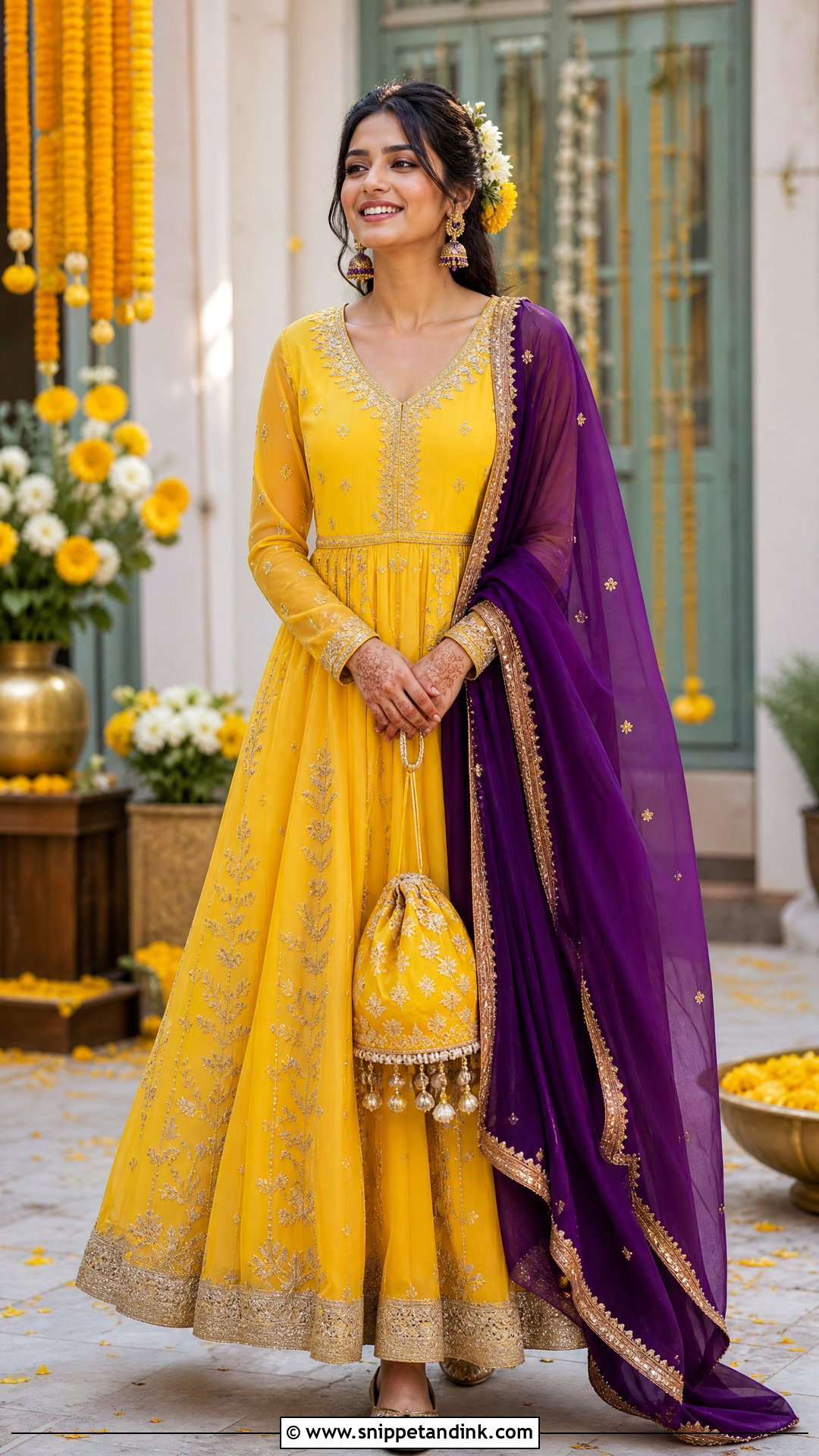
Purple is the regal contrast. A flowing yellow Anarkali with a deep purple dupatta looks rich and still joyful. Calf or ankle length in cotton silk, chanderi or light georgette, with a defined waist and a moderate flare that’s easy to handle. Purple photographs clearly against marigold decor, which is part of its appeal. Purple enamel earrings, gold bangles and embellished flats finish it. Brides can add floral wrist pieces or a fine maang tikka; guests keep jewellery lighter. A loose braid or half-up style suits it. Pick a warm, red-leaning purple rather than a cool violet; cool purples can look muddy beside bright yellow. A small potli for tissues, pins and essentials.
5. Yellow Kurta With Orange Palazzo
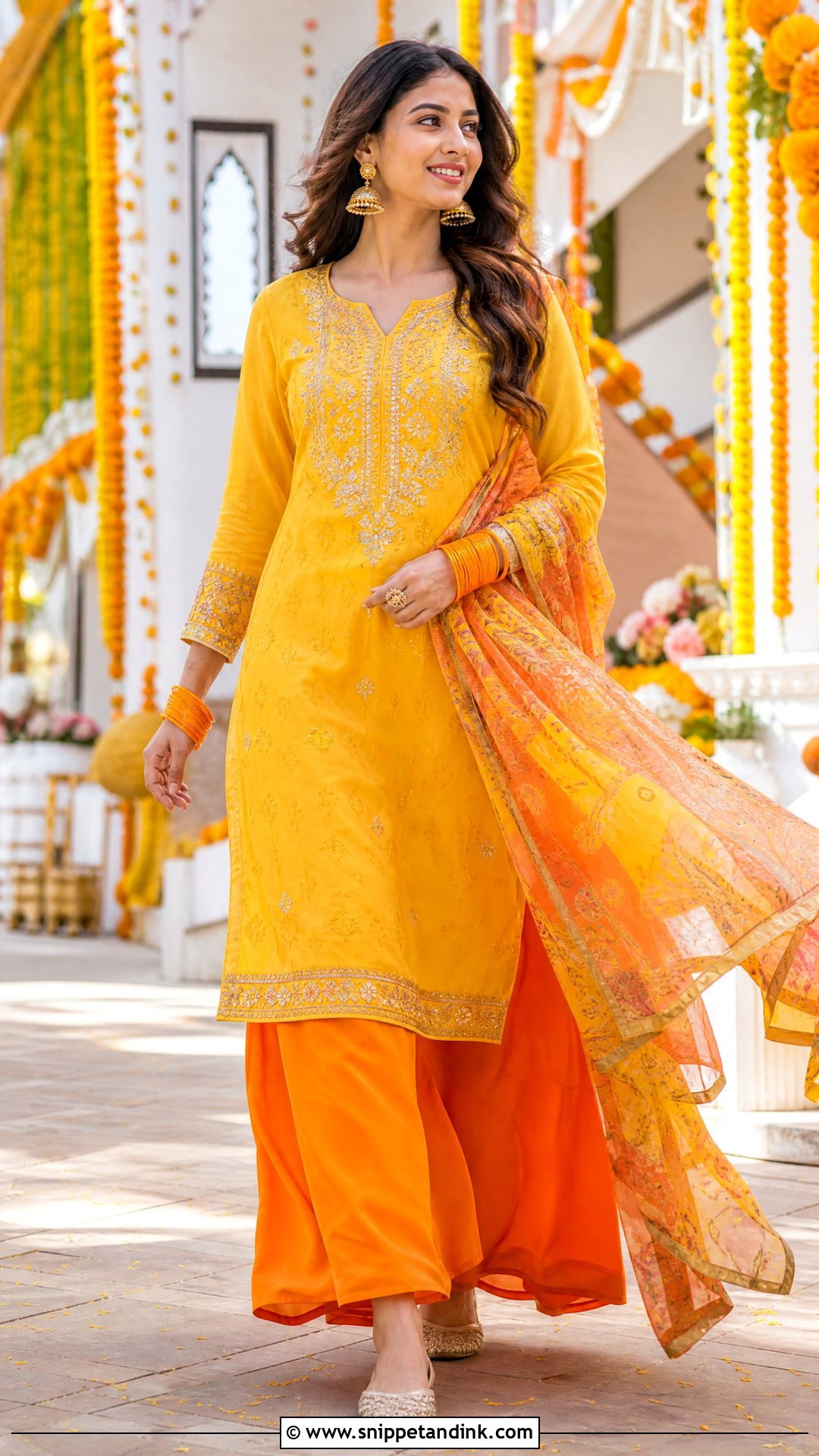
Yellow and orange sit next to each other on the colour wheel, so this is a warm tonal pairing rather than a sharp contrast. Start with a straight yellow kurta with white, gold or orange threadwork. Flowing orange palazzos underneath bring colour to the lower half. A printed dupatta containing both shades blends the two. Gold jhumkas, orange bangles and beige or gold juttis complete it. A simple ponytail with a small floral clip keeps it young. Guests who want traditional clothes without a heavy lehenga tend to like it. Because both colours are warm, the outfit can feel hot to look at in midday sun; a white or ivory dupatta cools it down if the haldi is outdoors in summer.
6. Yellow Skirt With White Crop Top
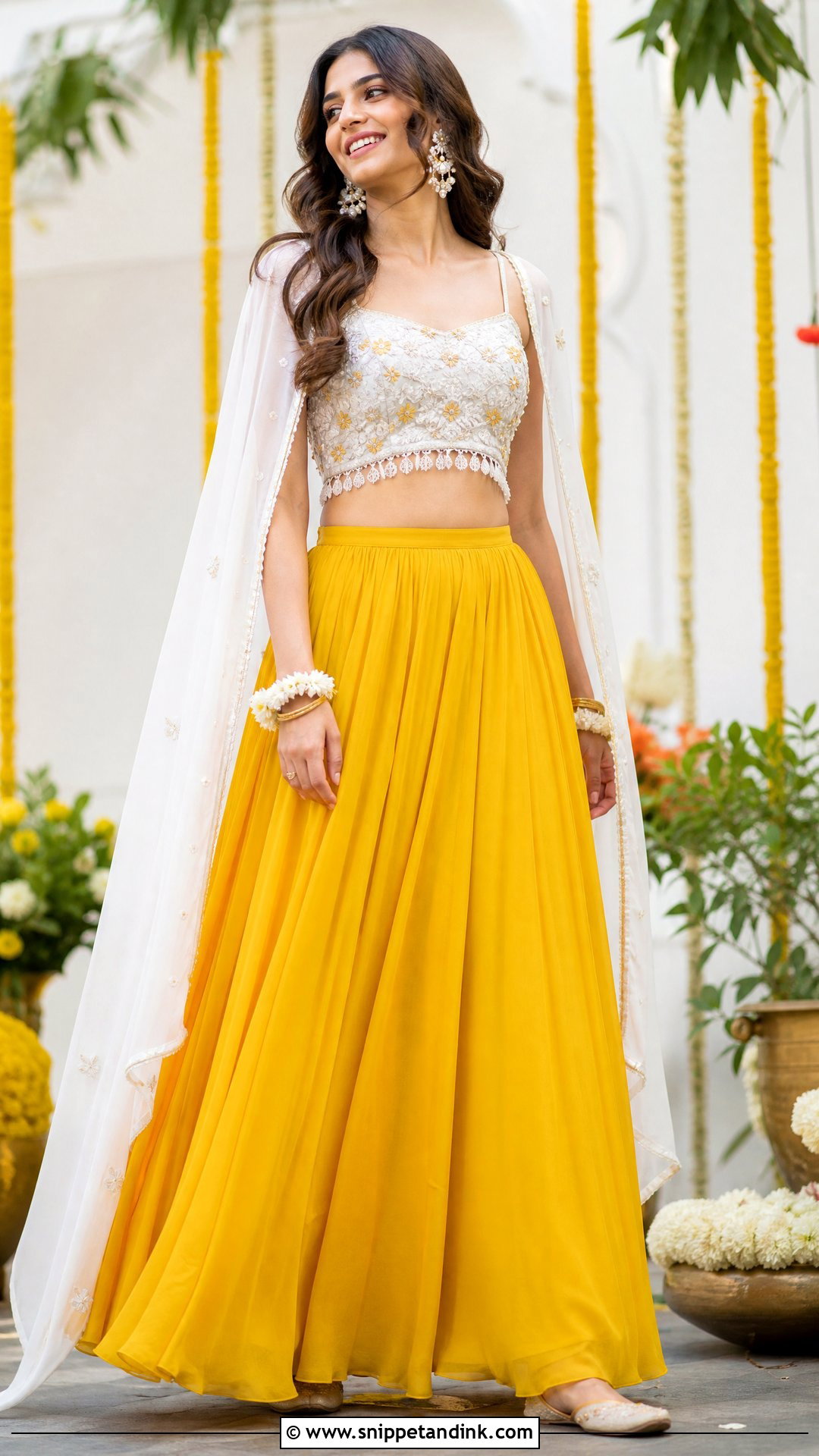
Yellow with white is the cleanest contrast, and the riskiest at a haldi. A breezy yellow skirt with a medium flare and a structured white blouse or embroidered crop top with decent coverage form the base. A yellow-and-white printed dupatta, or a light white cape for an Indo-Western finish, completes it. Pearl earrings, white flower bracelets and neutral juttis keep the palette fresh. White shows every turmeric mark, so I only recommend it to guests who won’t be applying paste, or for photos before the ritual. Loose waves or a neat braid. A yellow potli and slim gold bangles add warmth. If you do wear it, keep a set of wet wipes and avoid sitting near the bowls.
7. Yellow Gharara With Red Dupatta
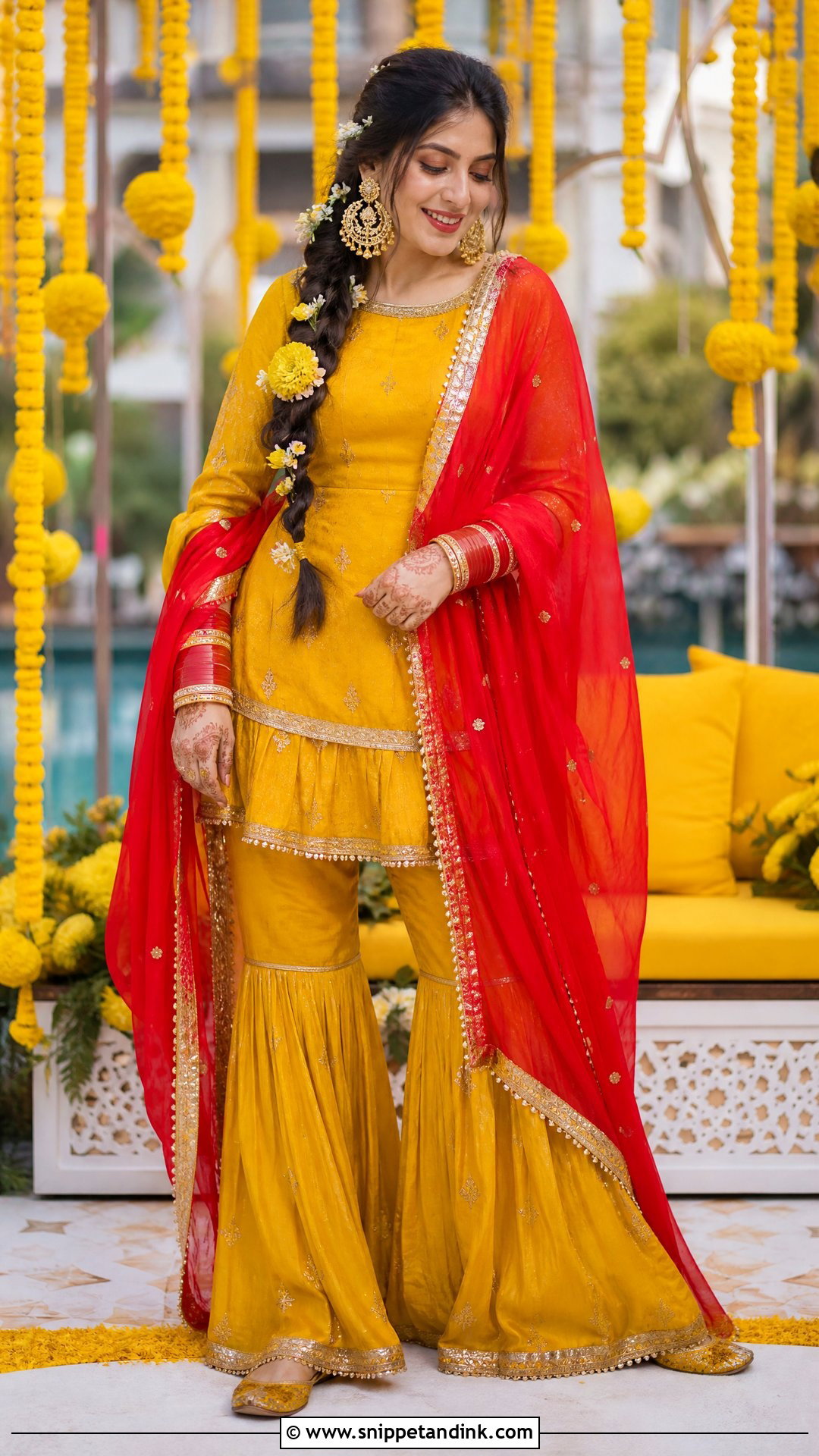
Red against yellow is the traditional combination, and on a gharara it looks festive straight away. A short kurta with gold piping and flared gharara trousers with subtle gota at the knee and hem make the base. The red dupatta needs to be light enough to pin and should have a narrow yellow or gold border to link it back. It suits brides who like classic colours, and relatives when the embroidery stays modest. Gold chandbalis, red bangles and yellow juttis. A flower-decorated braid softens the strong colours. Keep makeup balanced: natural base, defined eyes, muted rose lip. A bright red lipstick beside a red dupatta crowds the face.
8. Yellow Dhoti Pants With Teal Cape
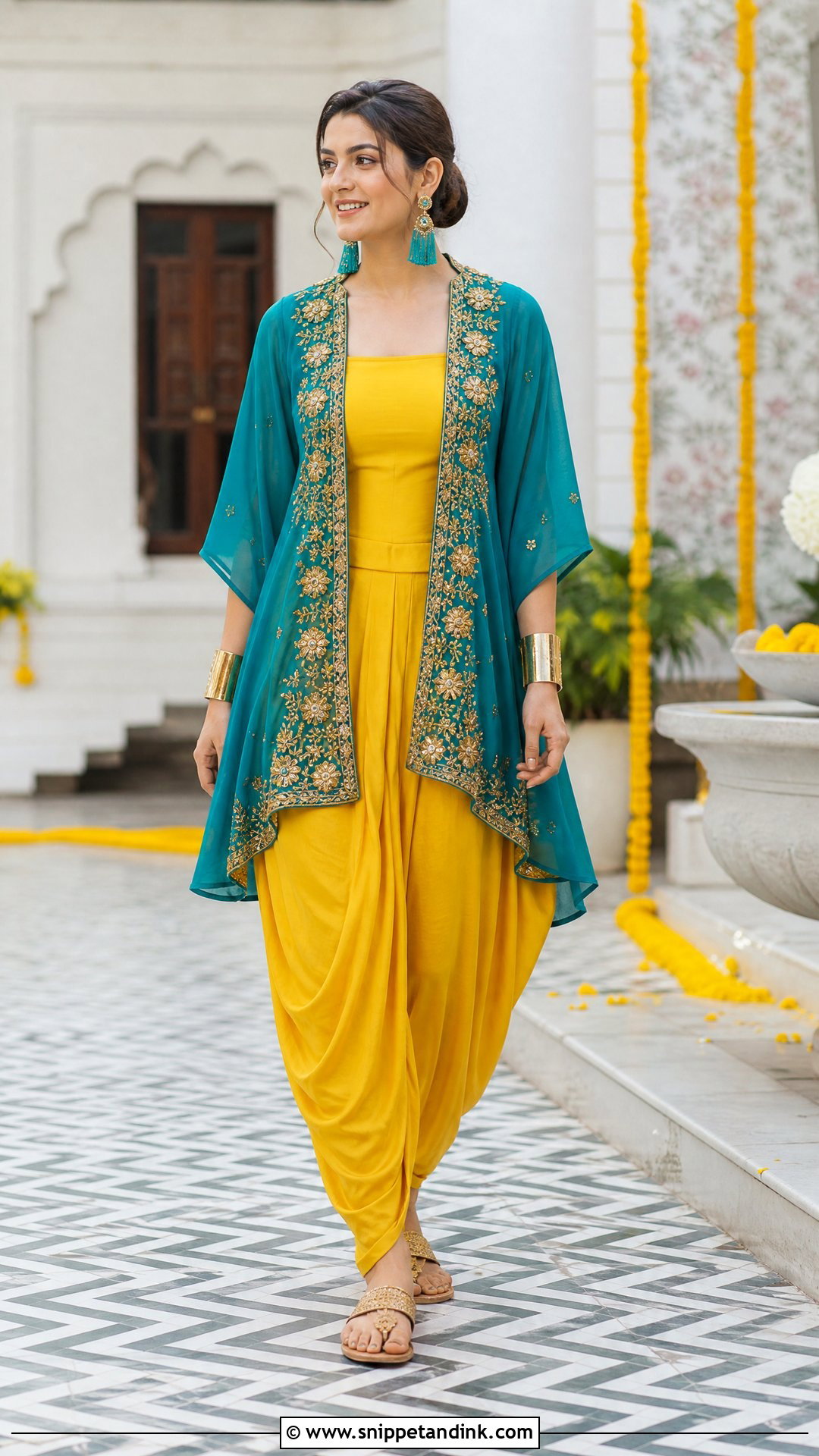
Teal is the contrast I like for fusion outfits because it feels modern next to yellow. Combine yellow dhoti pants with a fitted yellow top and a teal embroidered cape. The draped trousers move freely; the cape adds height and a clear second colour. Keep the cape hip or knee length so the dhoti shape still shows. Teal threadwork, mirror details or a fine floral print add festivity without weight. Teal earrings, gold cuffs and flat kolhapuris finish it, with a high ponytail or sleek bun to keep the cape collar visible. It suits a modern bride, bridesmaid or guest who wants something other than a standard kurta set.
9. Yellow Palazzo Set With Magenta Jacket
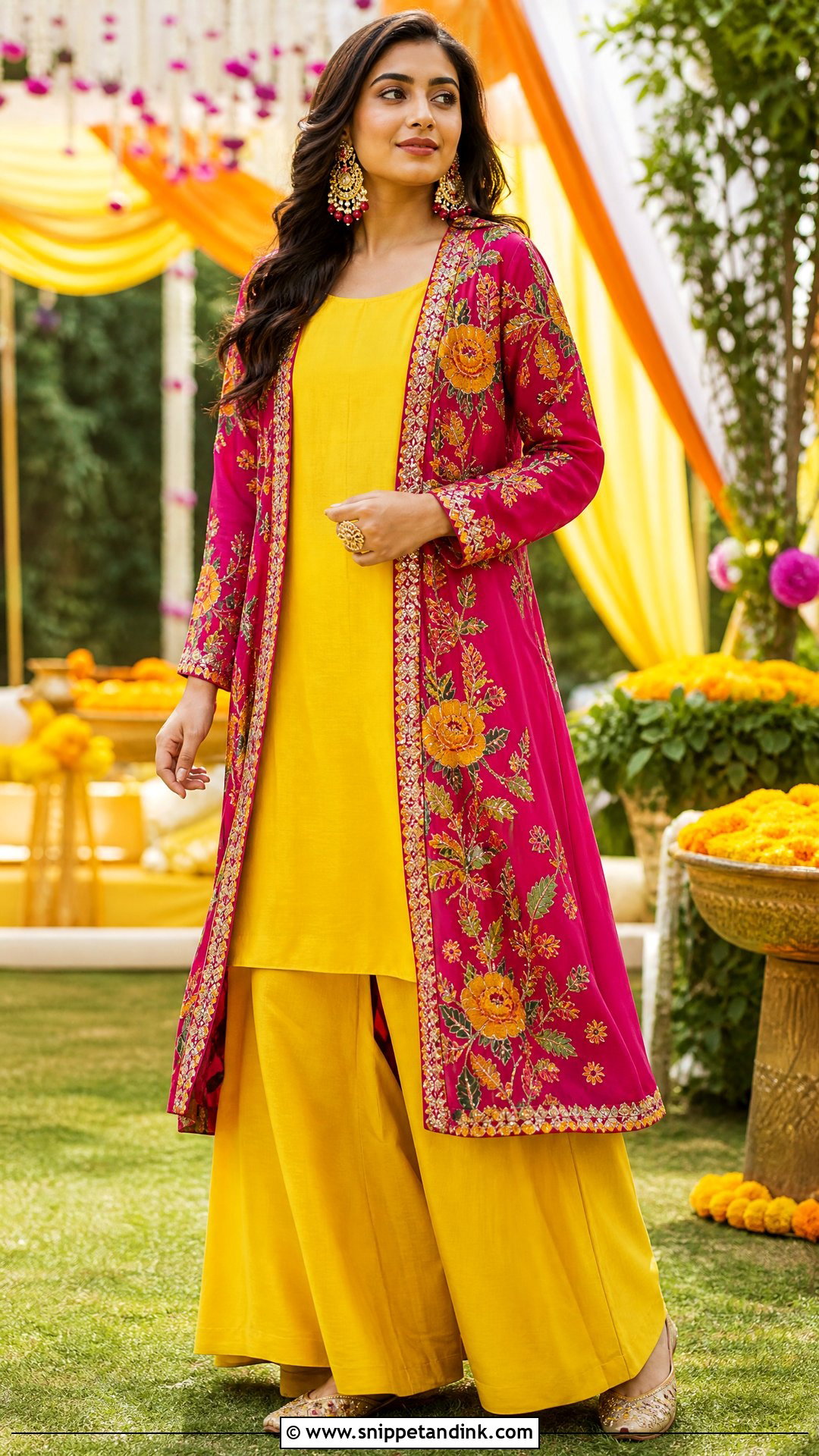
A long magenta jacket over a yellow palazzo set puts the contrast on the outermost layer, so it’s the colour people see first. Begin with a plain sleeveless or short-sleeve yellow kurta and matching palazzos. Add an open-front magenta jacket with floral embroidery, mirror work or printed borders. Below the knee looks elegant, but only if the fabric is light; a heavy jacket in noon heat is miserable. Magenta stone earrings, a gold ring and block heels or juttis complete it. A side braid or curled ponytail balances the long line. Brides can choose a more decorative jacket with floral haathphool; guests keep it printed and simple. Skip the dupatta entirely. The jacket replaces it.
10. Yellow Chikankari Suit With Mint Dupatta
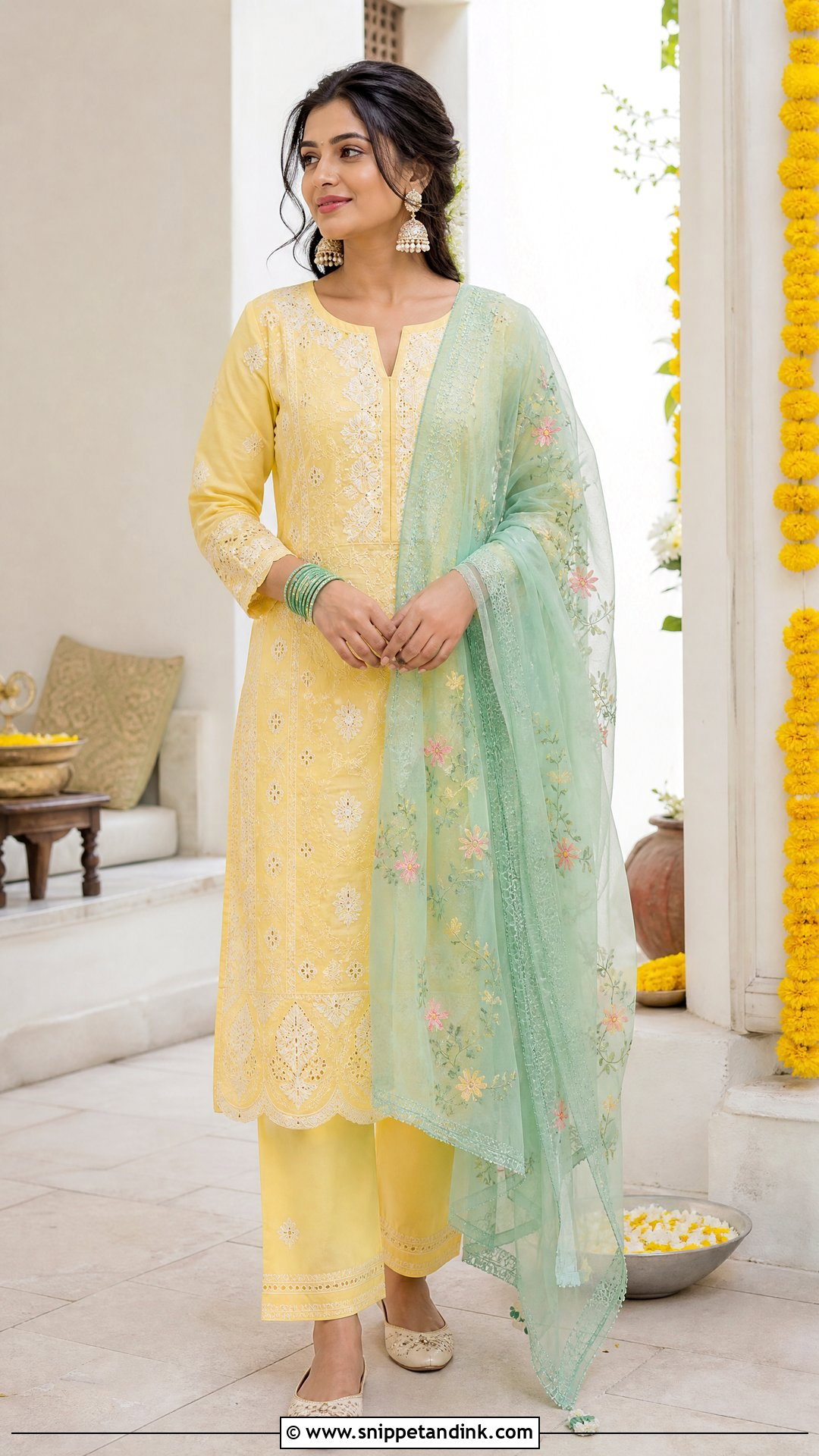
Mint against yellow is the softest contrast here, and it suits chikankari perfectly. A straight or slightly flared yellow kurta with tonal white embroidery and matching trousers form the base. A sheer mint dupatta with tiny florals or a slim pearl border brings colour without competing with the hand embroidery. Pearl jhumkas, mint bangles and ivory juttis complete it. It’s a morning, home-ceremony or understated-guest outfit. A low ponytail, loose braid or soft bun keeps the mood calm. Chikankari is usually on fine cotton or georgette, which shows paste stains easily, so stand back during the application. A bridal party can share mint floral jewellery while the bride wears a bolder yellow and green.
11. Yellow Bandhani Lehenga With Maroon Blouse
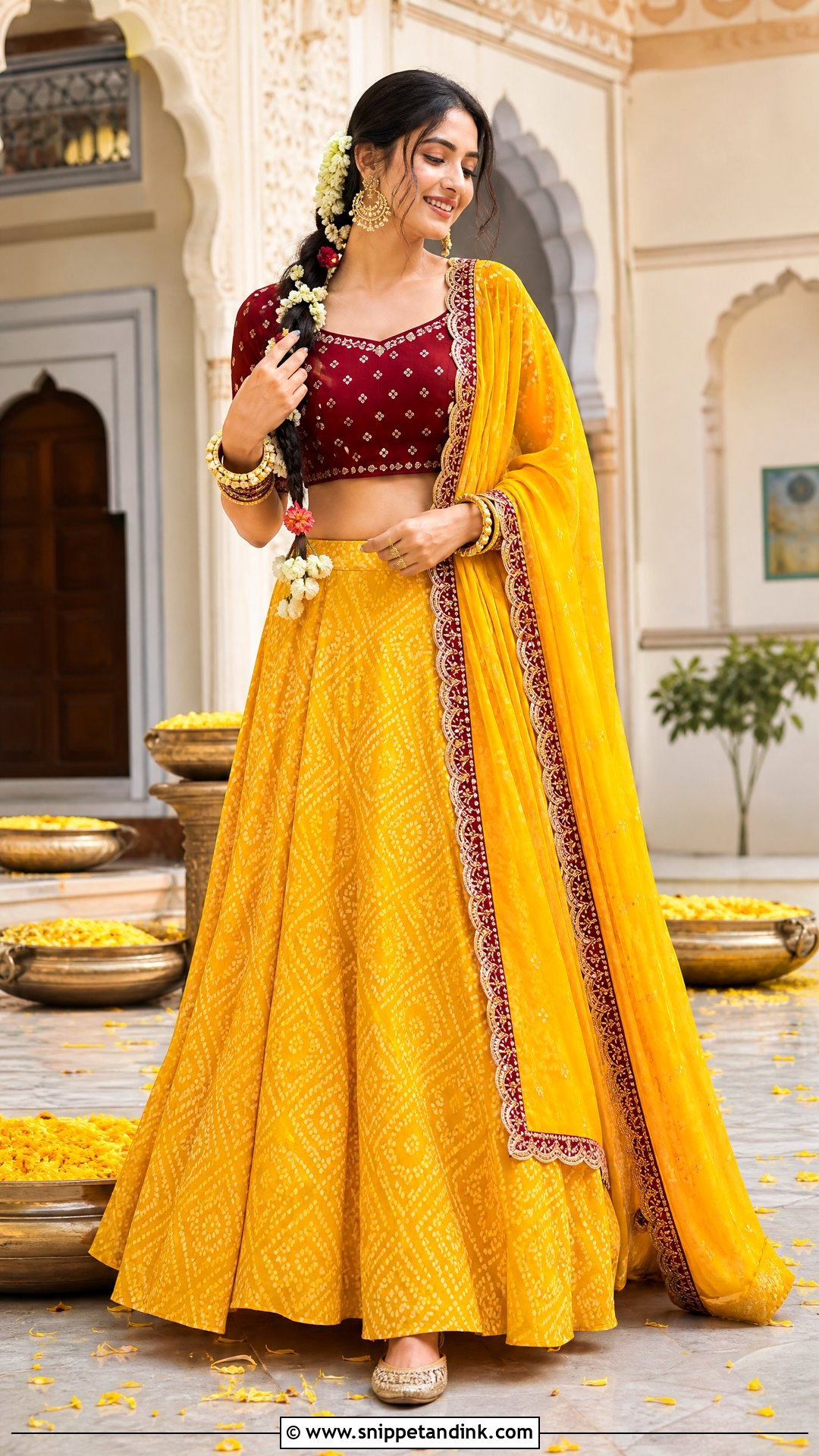
Maroon gives bandhani real depth. Take a bandhani yellow lehenga and pair it with a deep maroon blouse: modest neckline, elbow sleeves, a little gold embroidery. A yellow dupatta with maroon edging carries the contrast from top to bottom. Antique-gold earrings, maroon bangles and cushioned juttis finish it. Brides can add a small maang tikka and kaleere; guests choose one statement piece. A centre-parted braid with small flowers suits the regional character. Bandhani dots already give plenty of pattern, so a heavily embroidered blouse turns busy. Maroon also hides turmeric splashes better than any other contrast colour on this list.
12. Yellow Floral Gown With Turquoise Dupatta
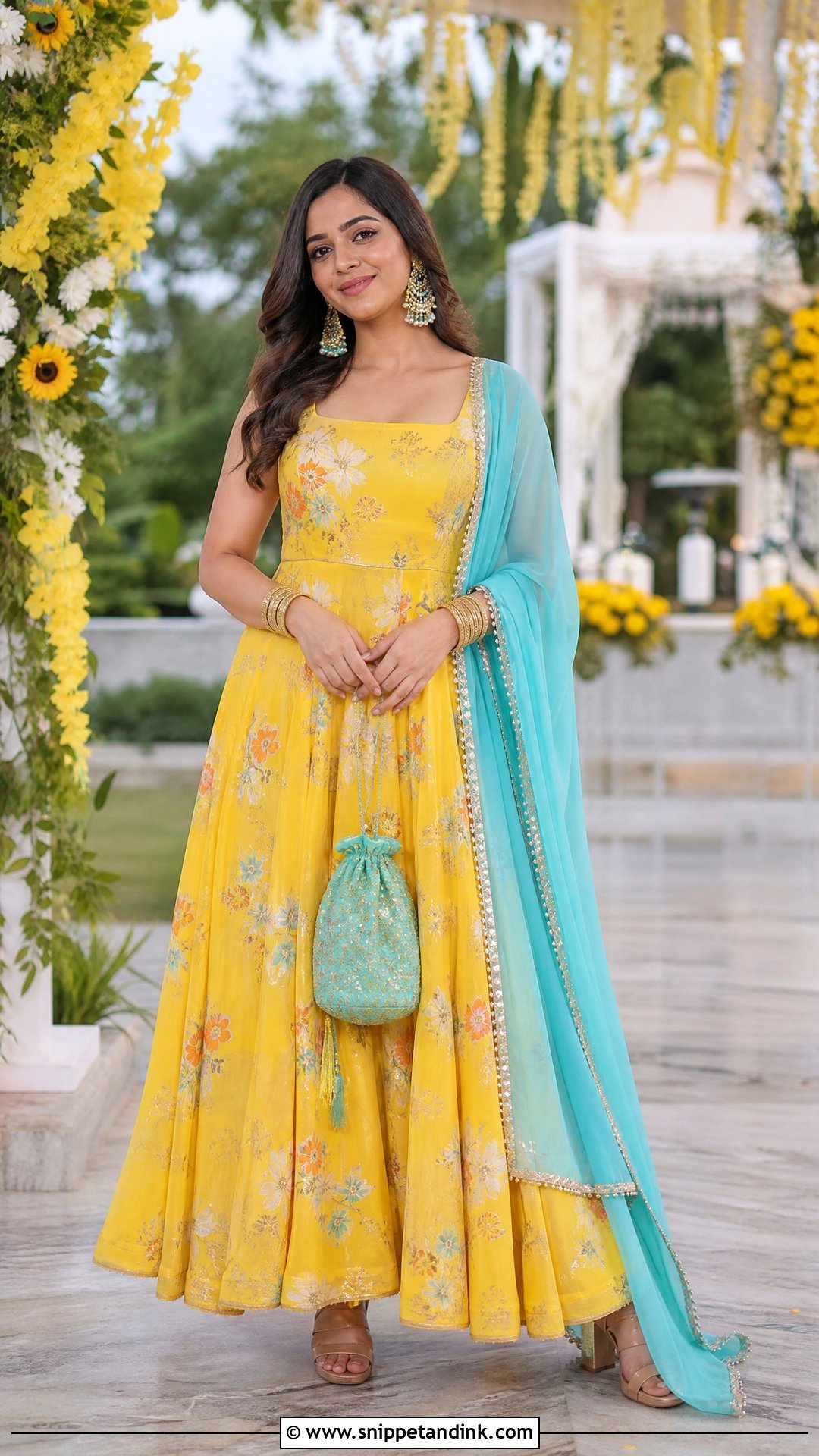
A floral gown with a turquoise dupatta is a lighter alternative to traditional sets. Look for an ankle-length gown with a fitted bodice, flowing skirt and small florals in white, turquoise or pink. A sheer turquoise dupatta over one shoulder brings out the contrast and keeps your hands free. Turquoise drops, gold bangles and neutral block heels complete it. A half-up style with loose waves suits the romantic shape. I keep the hem slightly off the floor so it doesn’t trip you or soak up spilled paste. A small turquoise potli repeats the colour. Turquoise is a cool contrast; it suits garden haldis and works on guests, bridesmaids and brides planning something relaxed.
13. Mustard Yellow Saree With Rani Pink Blouse
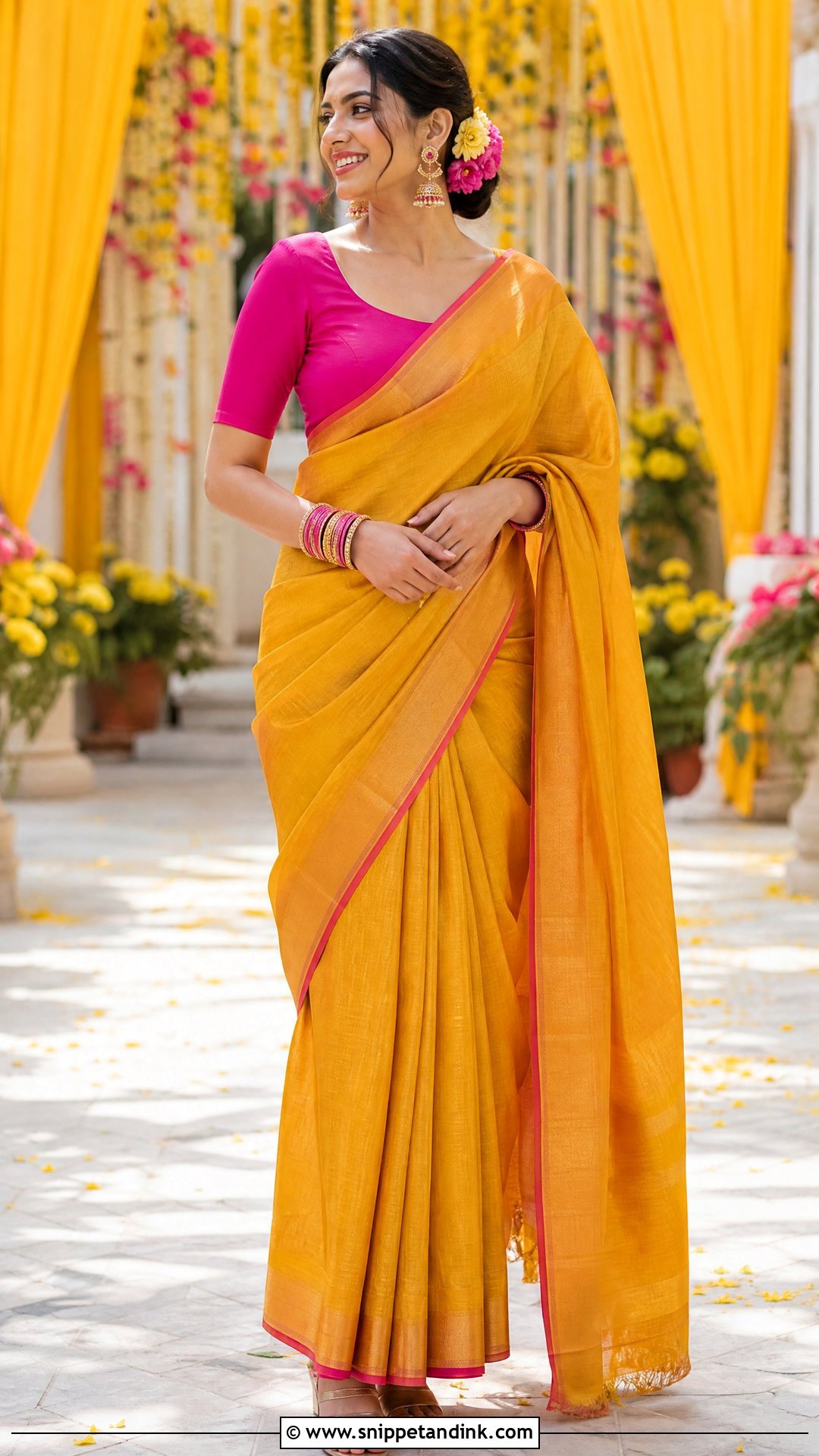
Mustard and rani pink are both strong enough to stand alone, so together they look rich without any heavy decoration. A mustard cotton-silk, linen or chanderi saree with a slim gold border, and a bright rani-pink blouse with a round neck and comfortable sleeves. Pleat neatly and pin the pallu for movement. Pink-and-gold jhumkas, stacked bangles and low-heeled sandals. A low bun with yellow and pink flowers ties it together. A saree can be draped tighter or looser to suit comfort, which makes this flattering across ages. Linen creases fast, so expect some wrinkling by the end. Brides can add a waist belt; guests keep the blouse simple.
14. Lemon Yellow Co-Ord With Lavender Dupatta
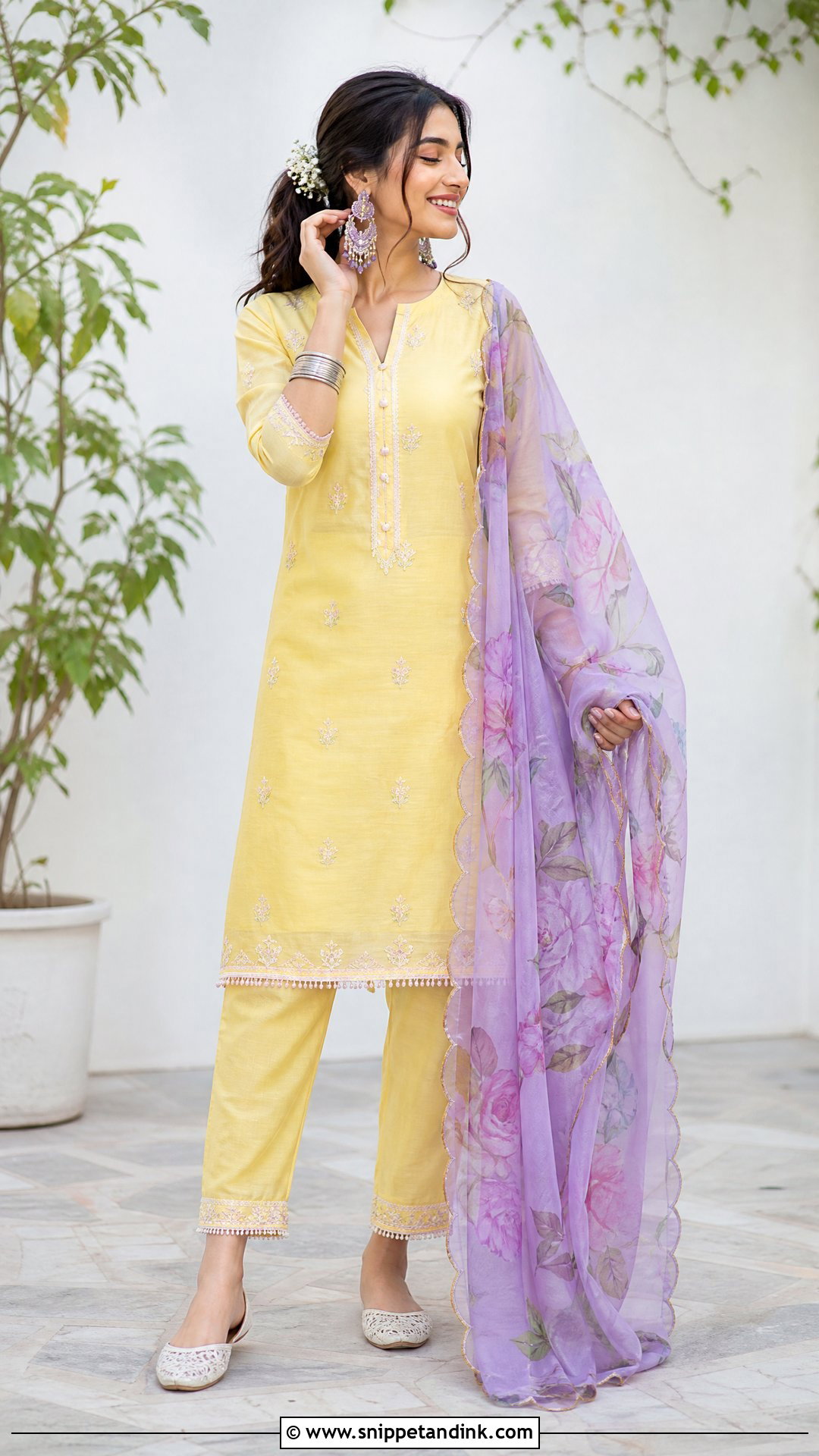
Lemon and lavender are both pale, so the contrast is gentle and the outfit looks fresh and young. A short or mid-length lemon kurta with straight trousers in the same shade makes a simple base. A lavender organza dupatta with tiny embroidered flowers, scalloped edges or a little silver detailing adds the colour. Silver suits lavender better than gold; heavy gold embroidery swamps a pastel pair. Lavender earrings, slim silver bangles and white juttis. A relaxed ponytail or loose waves with small lavender flowers. It suits bridesmaids, younger guests and minimal brides. In harsh midday sun lavender can photograph almost grey, so this pairing looks best in shade or soft morning light.

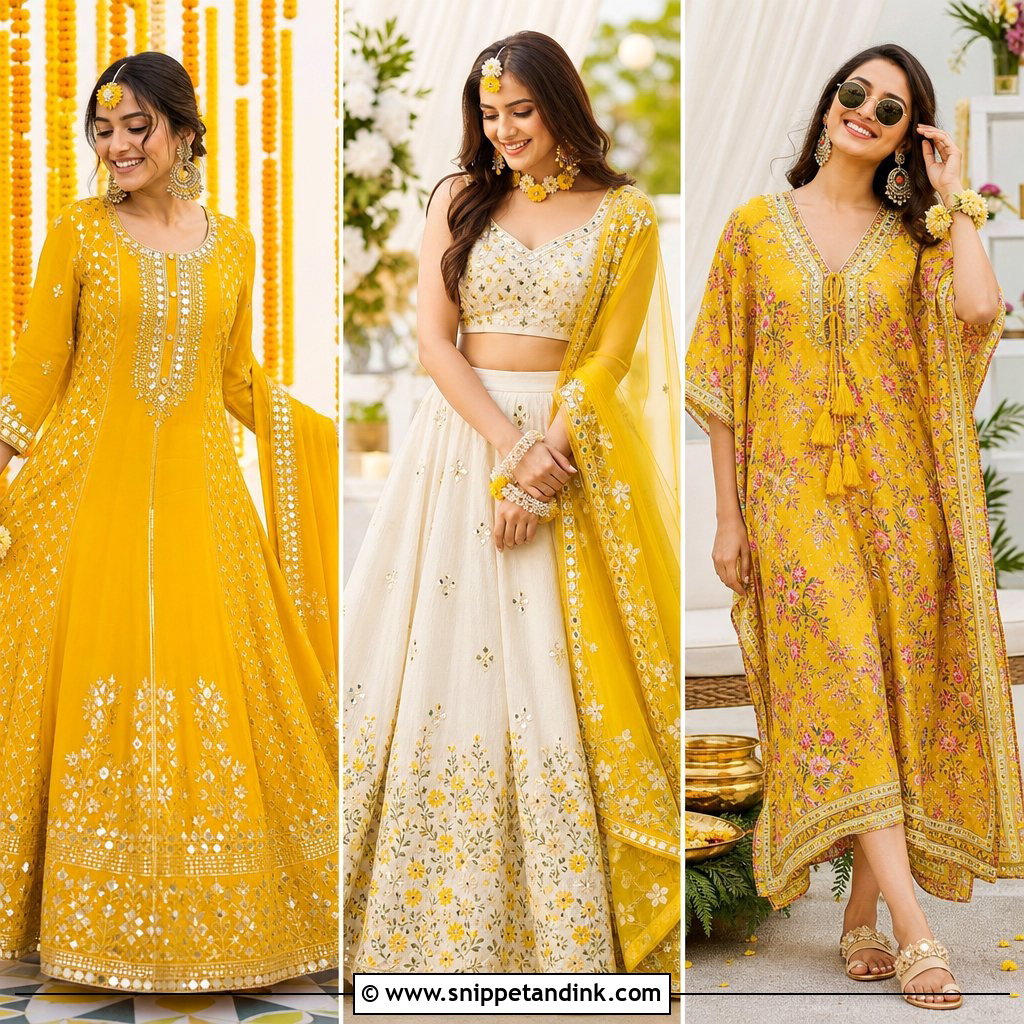
15. Yellow Peplum Sharara With Coral Dupatta
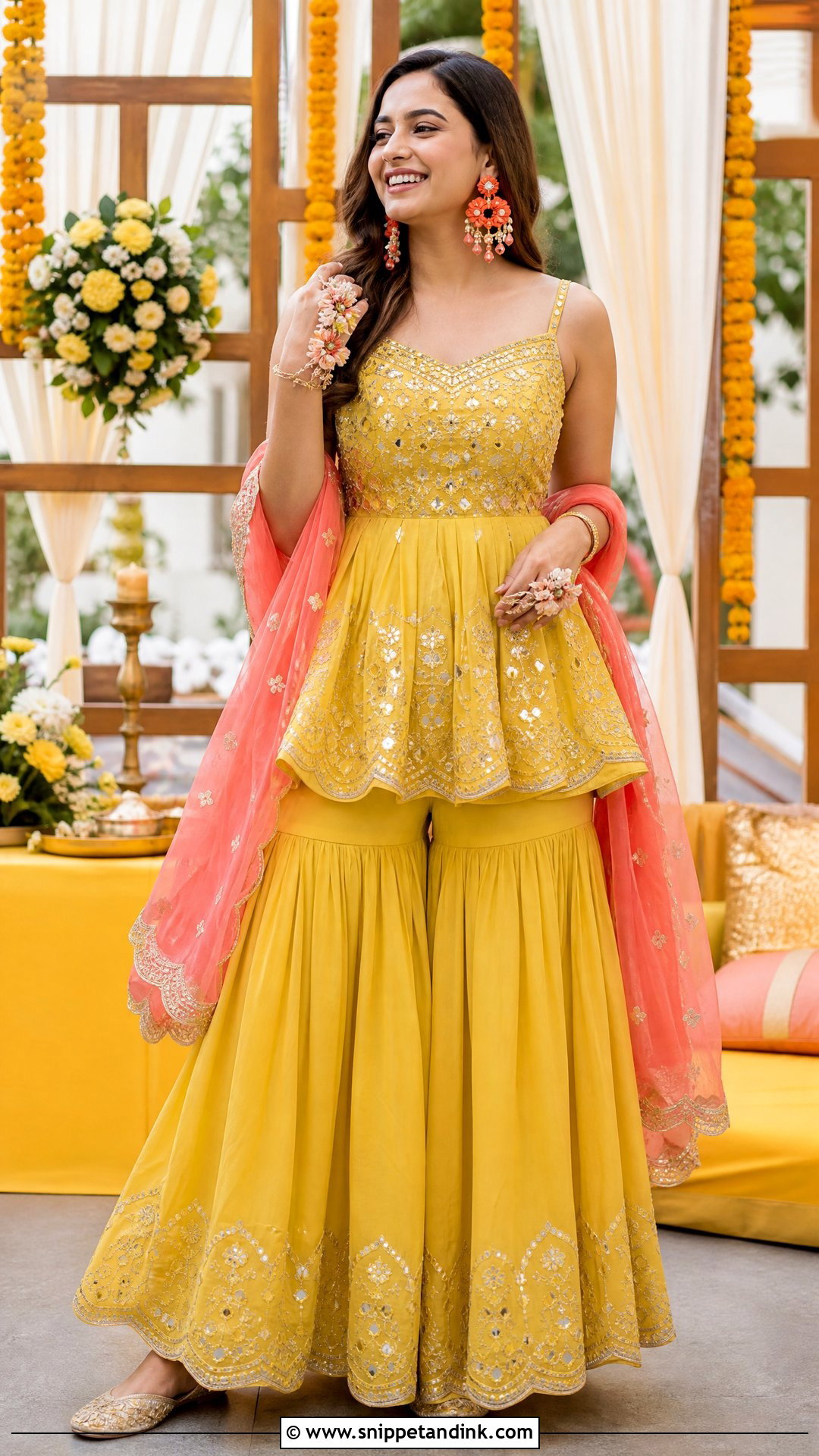
A yellow peplum top and sharara gain warmth from a soft coral dupatta. The peplum gives the waist structure; the sharara gives movement. Keep mirror or gota work to the neckline and hem. A coral chiffon dupatta with yellow piping makes the transition between the colours smooth. Coral earrings, gold bangles and embroidered flats. Brides can add floral haathphool and a small maang tikka; guests choose hoops or jhumkas. A half-up braid keeps the face clear. Coral sits between pink and orange, so it suits nearly every skin tone, which is why I suggest it for mixed bridesmaid groups. It looks dressier than a kurta set without any extra effort.
16. Yellow Silk Lehenga With Royal Blue Blouse
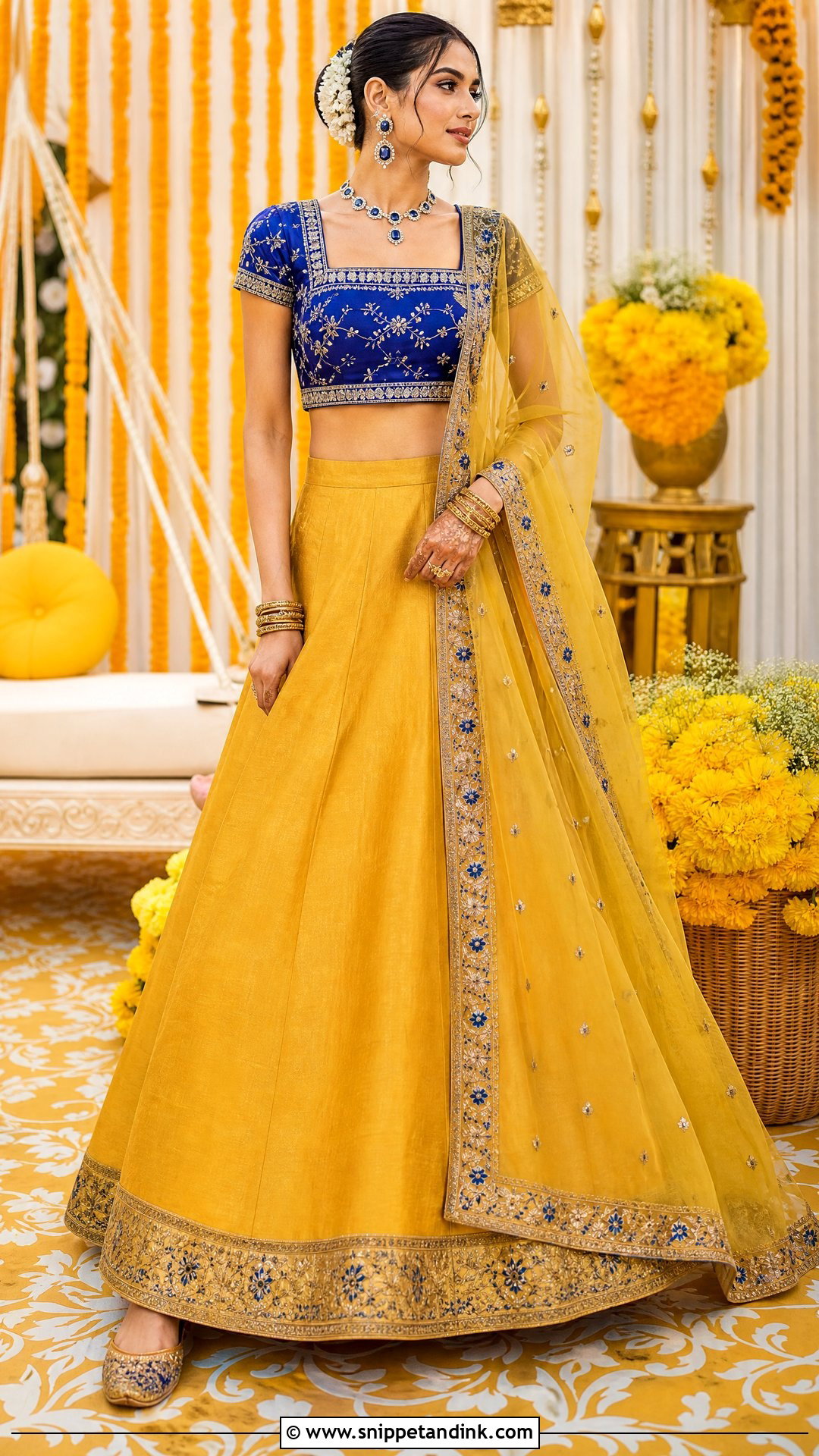
A yellow silk lehenga with a royal blue blouse is the structured choice, for a bride who wants her haldi to look as considered as her wedding. Pick a skirt with a controlled flare and minimal woven motifs, so sitting on the floor is comfortable. The blue blouse can carry gold embroidery, a square neck and supportive straps or sleeves. Drape a light yellow organza dupatta across one shoulder and secure it at the waist. Blue stone jewellery, gold bangles and low wedges or juttis. A sleek bun ringed with yellow flowers. Silk is warm, so ask for a cotton lining and avoid extra layers. Guests can borrow the idea in cotton silk with less embroidery.
17. Yellow Kurta With Beige Skirt
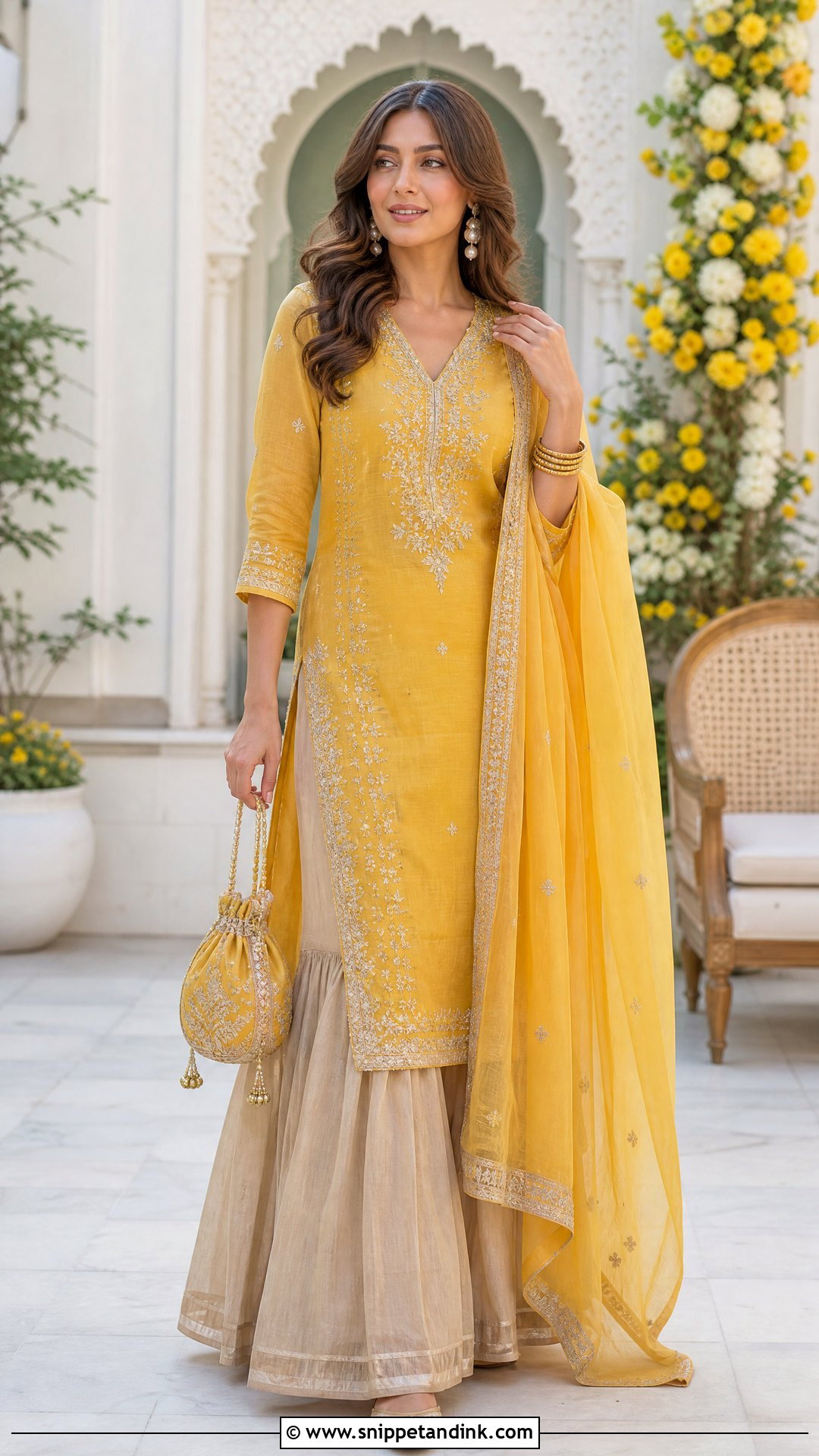
Beige is the quietest contrast here, and it’s my suggestion for anyone who finds colour-blocking too loud. A fitted knee-length yellow kurta with side slits over a flowing beige skirt, so the skirt’s movement still shows. Gold or ivory embroidery bridges the two shades. A light yellow dupatta with a beige border completes the layers. Pearl earrings, gold bangles and beige juttis or low block heels. A loose braid or low bun. Mature guests and family members often prefer this. A structured beige potli adds polish. Keep the skirt’s volume moderate so you can move through a crowded courtyard. Beige also forgives turmeric splashes better than white.
18. Yellow Salwar Suit With Fuchsia Dupatta
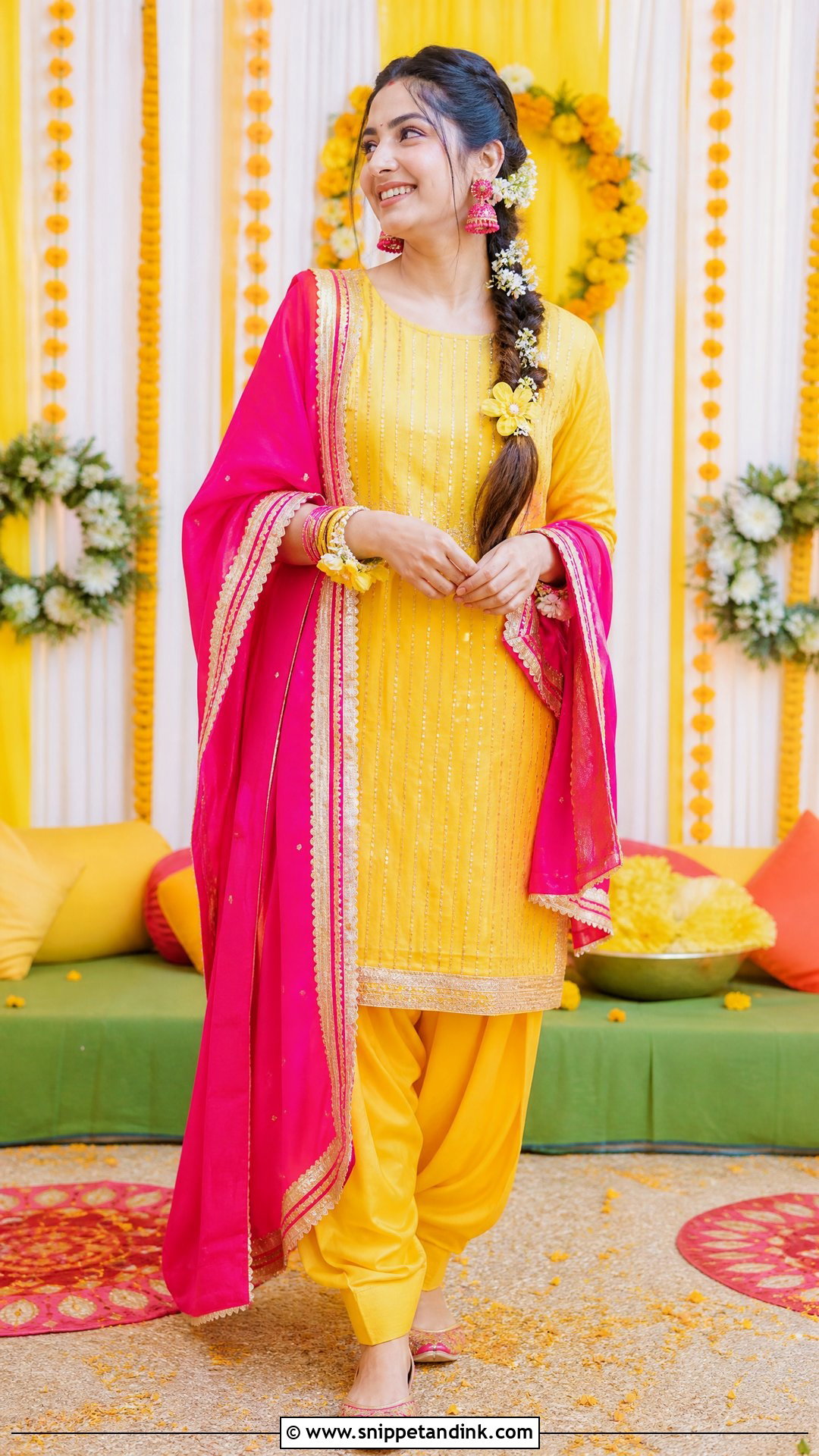
A classic yellow salwar suit feels new with a bold fuchsia dupatta. Choose a comfortable straight kurta and softly pleated salwar in cotton silk, chanderi or another breathable fabric. The dupatta can carry yellow floral embroidery, a gota border or small mirrors that echo the suit. Fuchsia jhumkas, mixed yellow and pink bangles and cushioned juttis complete it. A braided ponytail with flowers stays practical. Sleeve length, neckline and kurta fit can all be adjusted, so it suits every age. Brides can choose a fuller dupatta and floral jewellery; guests a simpler chiffon one. Pin the dupatta firmly so it doesn’t drop into the paste when you lean forward.
19. Yellow Draped Dress With Emerald Jacket
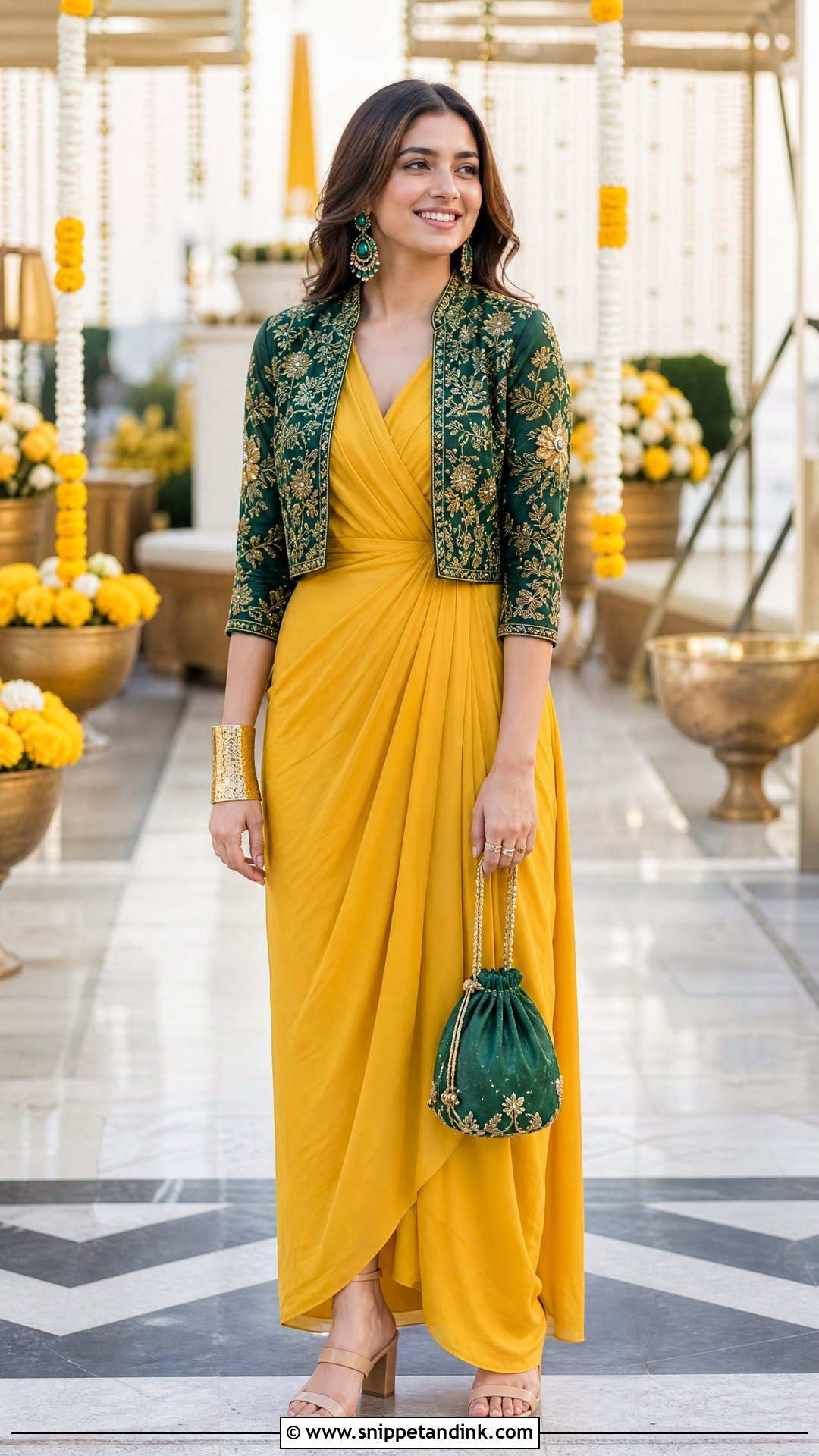
A draped yellow dress under a cropped emerald jacket is the most fashion-led contrast on this list. Choose a knee or ankle-length dress with saree-style pleating and a secure bodice. Layer a cropped or waist-length emerald jacket with light embroidery at the edges; the short jacket defines the waist without hiding the drape. Emerald earrings, a gold cuff and neutral block heels complete it, with a sleek ponytail or polished low bun. It suits guests, sisters and brides who want something other than traditional separates. Keep the jacket light and avoid a trailing hem. A structured green clutch or potli adds one final note of contrast. Pre-stitched drapes need fitting at the hip, so try it seated.

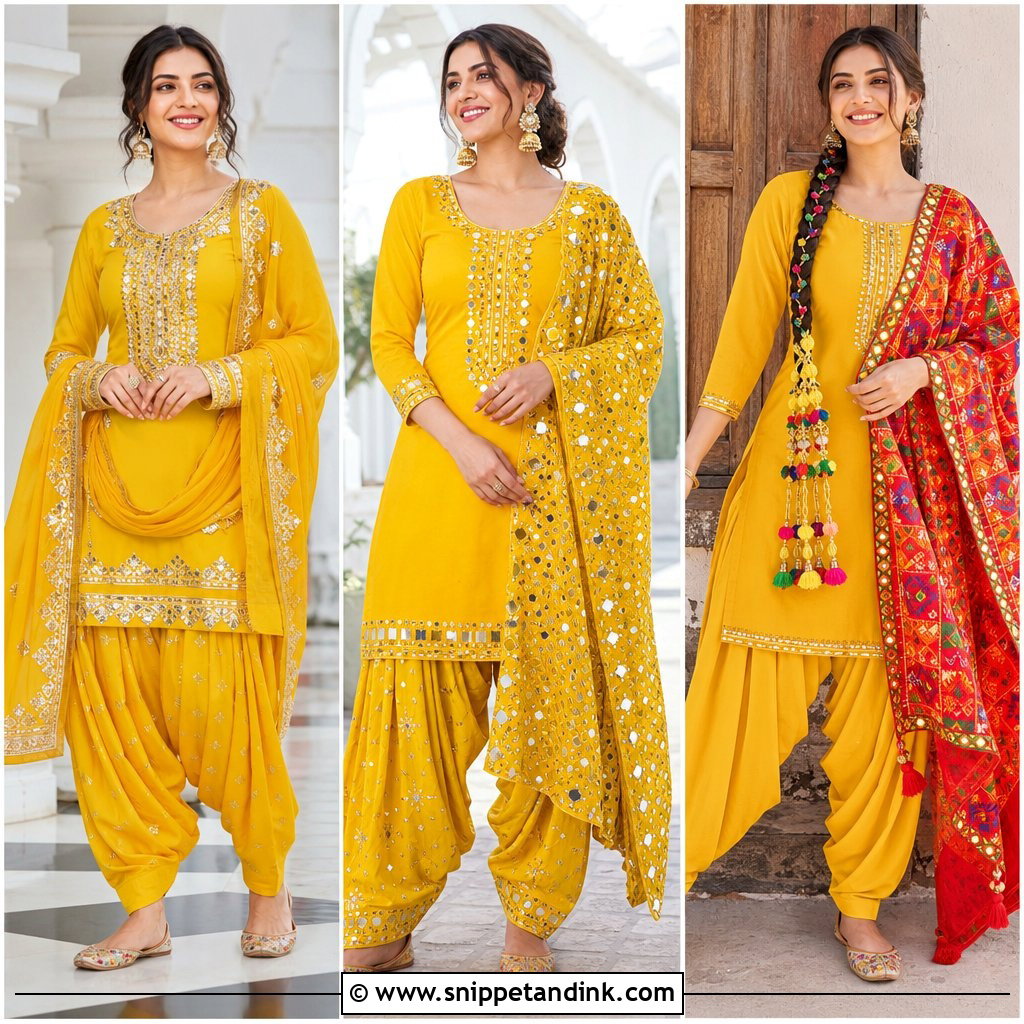
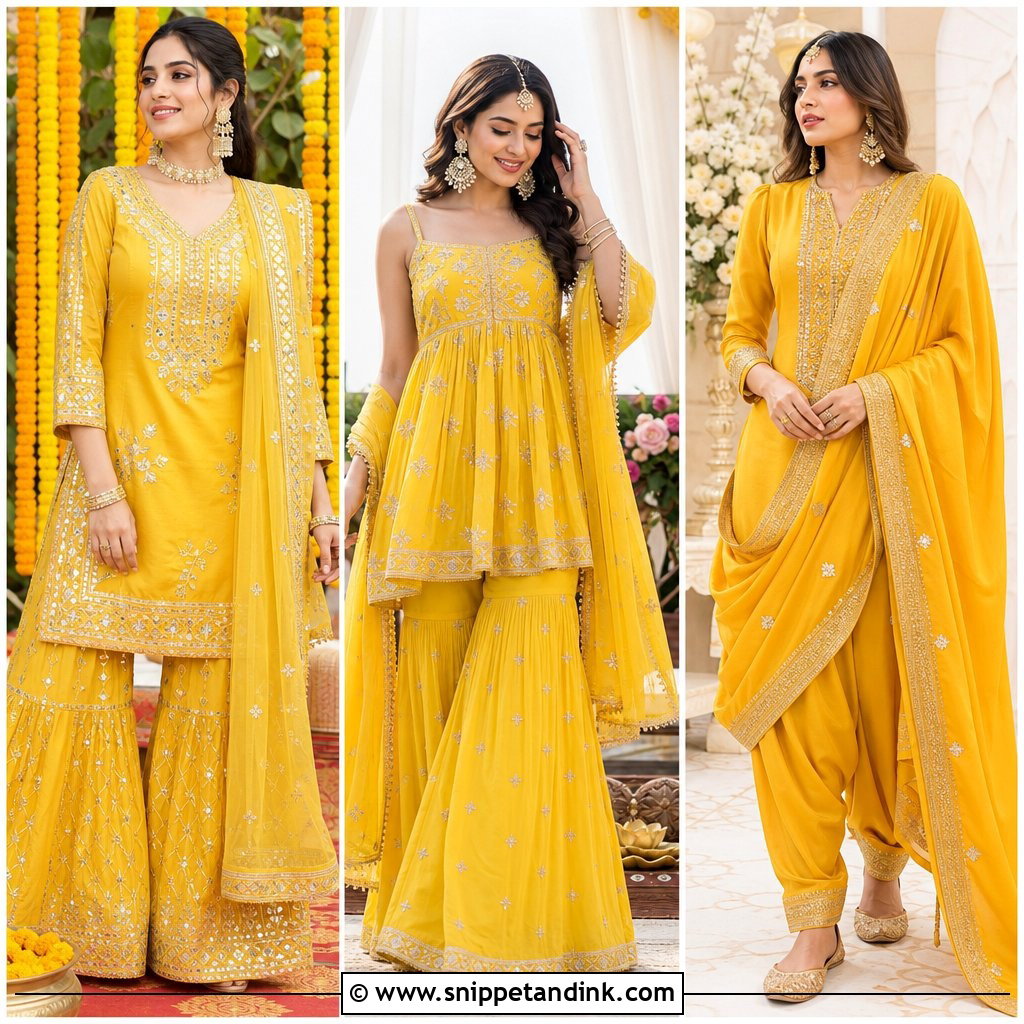
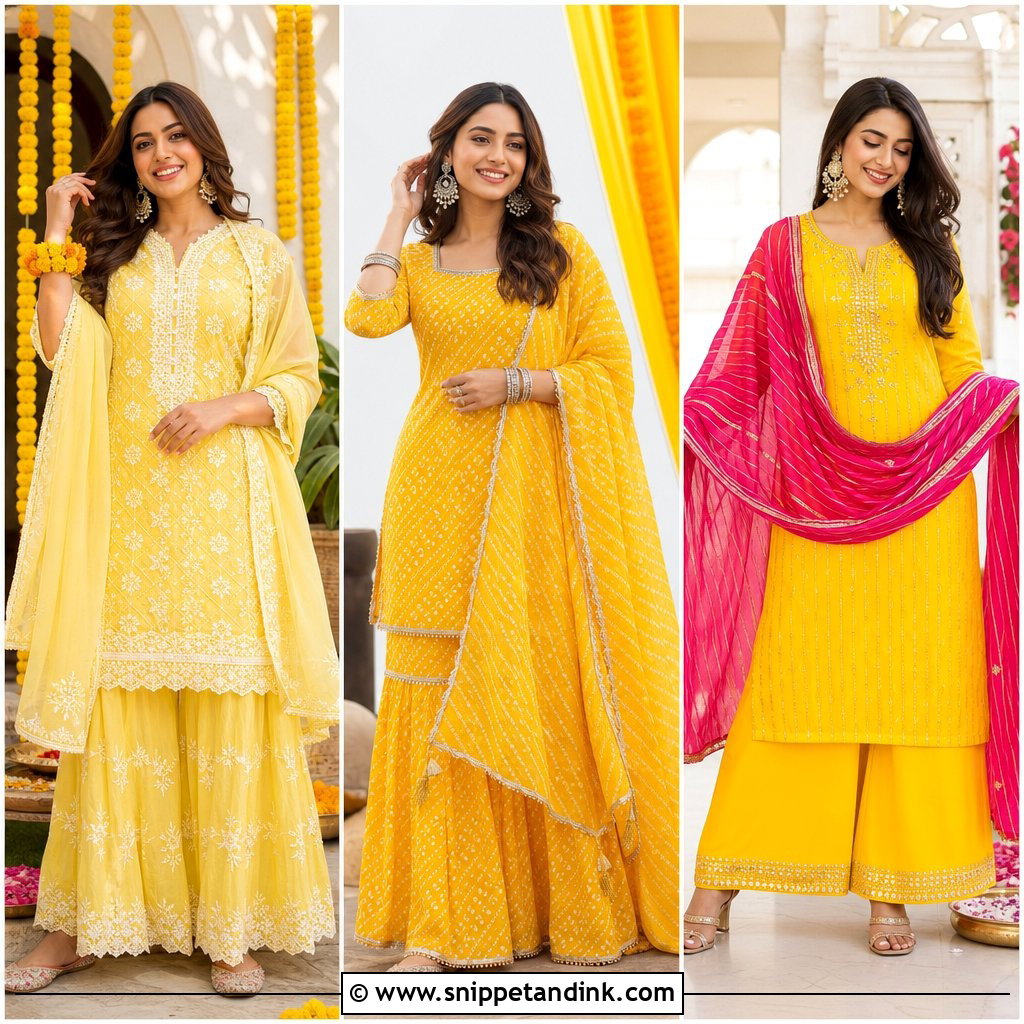
20. Yellow Jumpsuit With Multicolor Cape
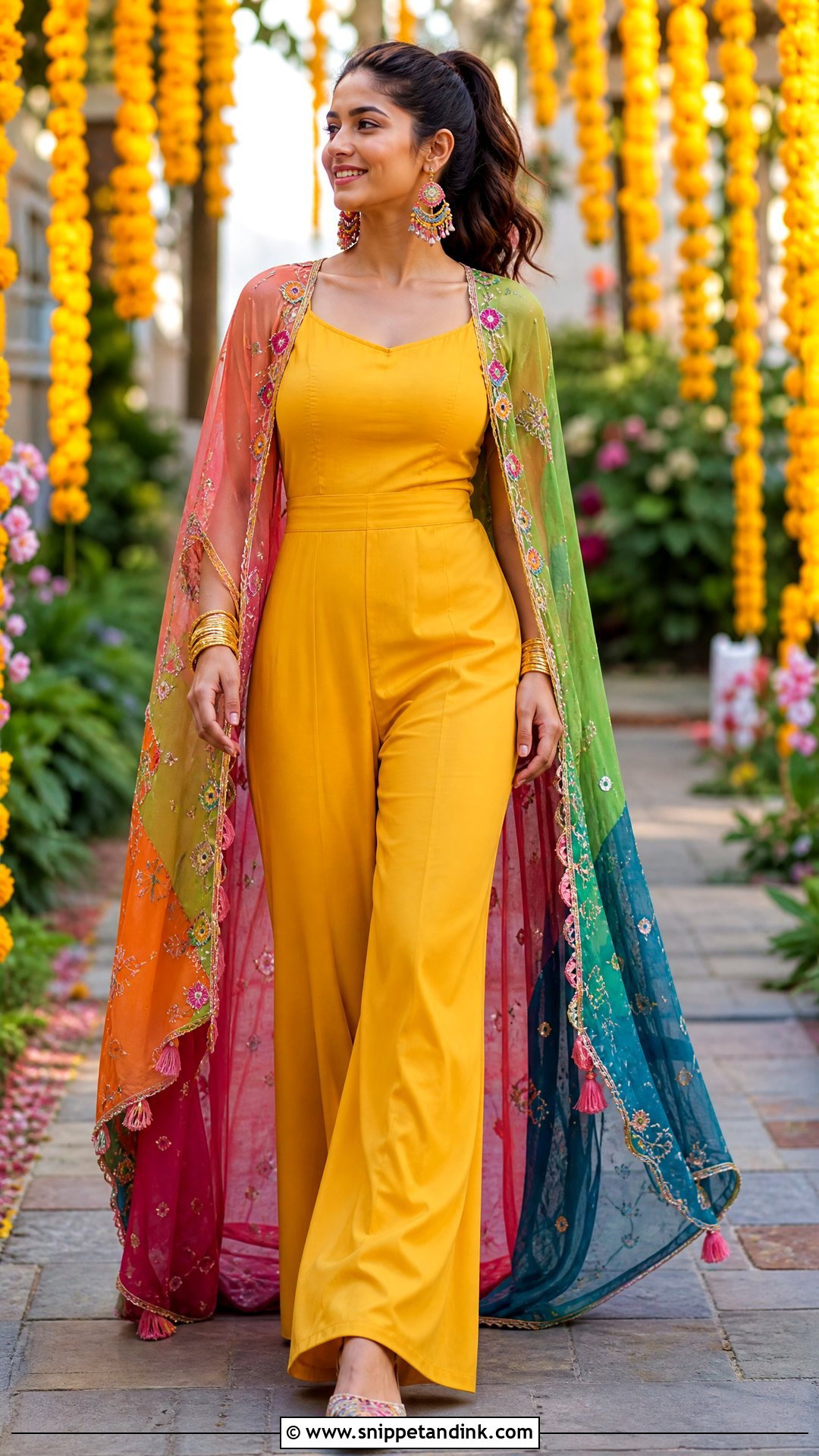
A yellow jumpsuit with a multicolour cape is the most playful closing option, for an informal or modern haldi. Pick a wide-leg jumpsuit with a defined waist, secure neckline and fabric that moves. Layer a sheer cape with touches of pink, green, blue and orange, keeping yellow dominant. Multicolour earrings, gold bangles and platform sandals or embroidered flats. A high ponytail shows off the cape and neckline. Bridesmaids and guests enjoy this one; a bride can make it her own with floral jewellery and a more ornate cape. When the cape carries several colours, keep everything else plain, because a printed jumpsuit under a multicolour cape becomes noise. Skip long sleeves and trailing panels.
Pink, Teal or Lavender Against a Wall of Marigolds
Haldi decor is almost always yellow and orange, so your contrast colour has to hold its own in front of it. From dressing for these events and seeing the photos afterwards, here’s how the common contrasts behave.
- Rani pink, fuchsia and magenta stand out in every light and against every marigold backdrop. They’re the safest if photos matter most to you.
- Royal blue, emerald and teal look striking in sunlight but drop toward black in deep shade or under a canopy. Pick the brighter version of each for covered venues.
- Purple and maroon read rich in person; very dark versions lose detail in photos, so keep embroidery on them light enough to see.
- Mint, lavender and beige soften beautifully in morning light but can look grey or washed out at noon. Plan these for early, shaded functions.
- White blows out in strong sun and shows every stain. Use it in small amounts, such as a border or a blouse under a dupatta.
One more practical point: ask the decorator or the family what colour the backdrop and seating will be. If the stage is pink, a pink contrast will merge into it, and a green or blue one will look sharper in every photo taken there.
Let the Second Colour Do One Job Well
A good contrast haldi outfit is joyful, comfortable and secure enough to forget about. Pink, royal blue, emerald and purple make a bold statement next to yellow; white, beige, mint and lavender give a softer finish. Before you decide, think about how long you’ll wear it, whether turmeric will touch it, and how easily you can sit or move. Brides can use richer embroidery, floral jewellery and statement dupattas to stand apart, while guests look balanced with simpler fabric and fewer accessories. Pick the pairing that feels like you, and you’ll spend the day enjoying it instead of adjusting it.
You'll Like These Ideas:



Leave a Reply