
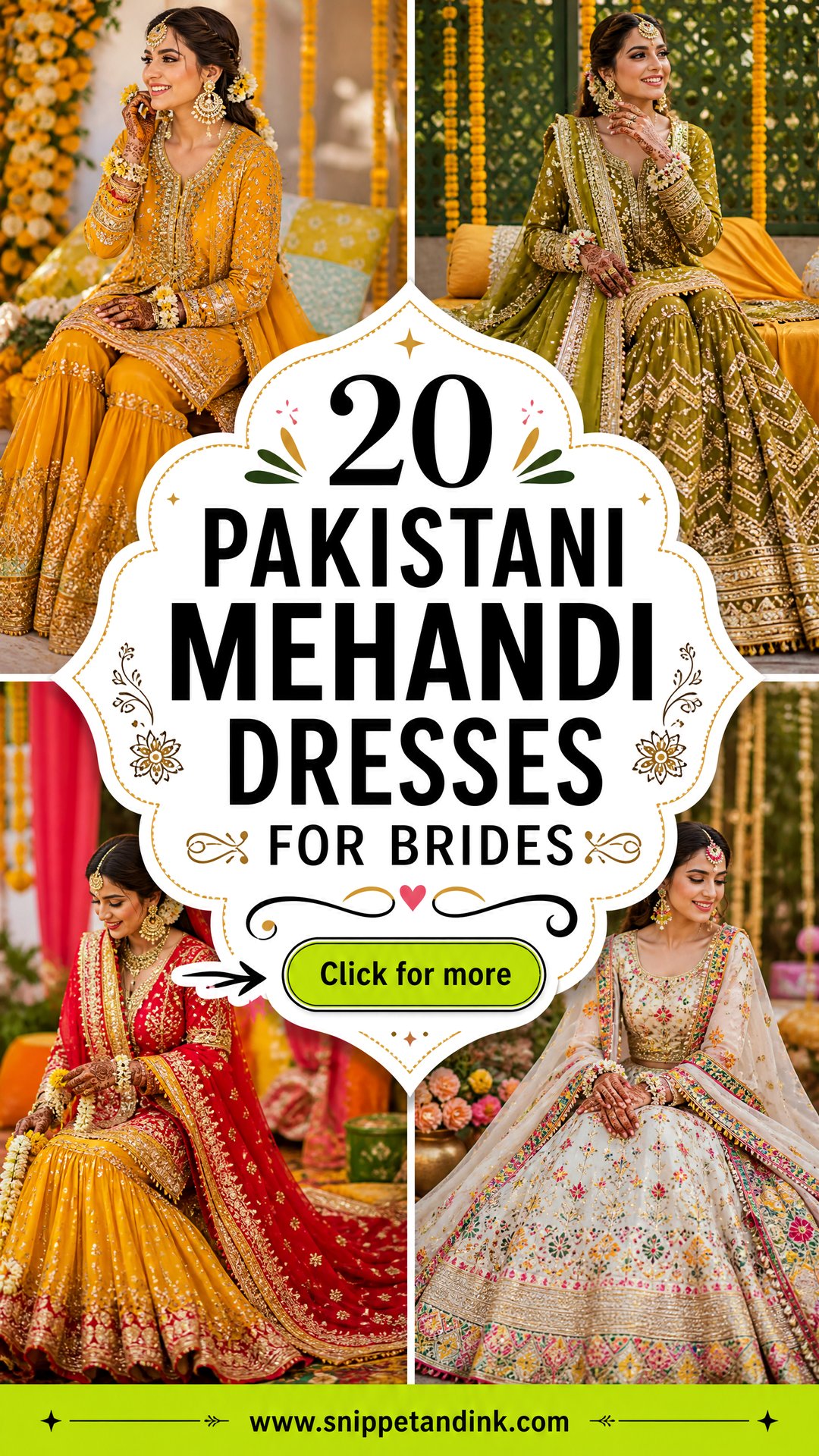
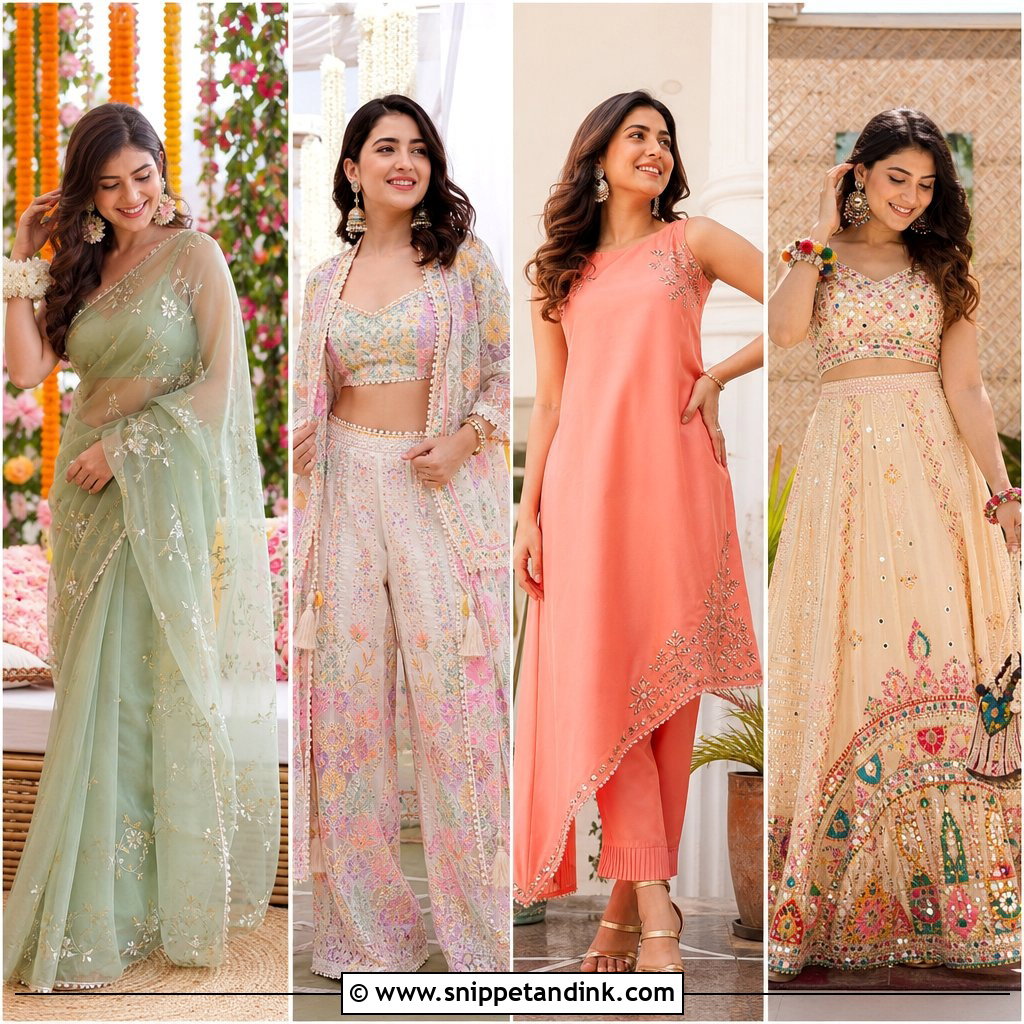
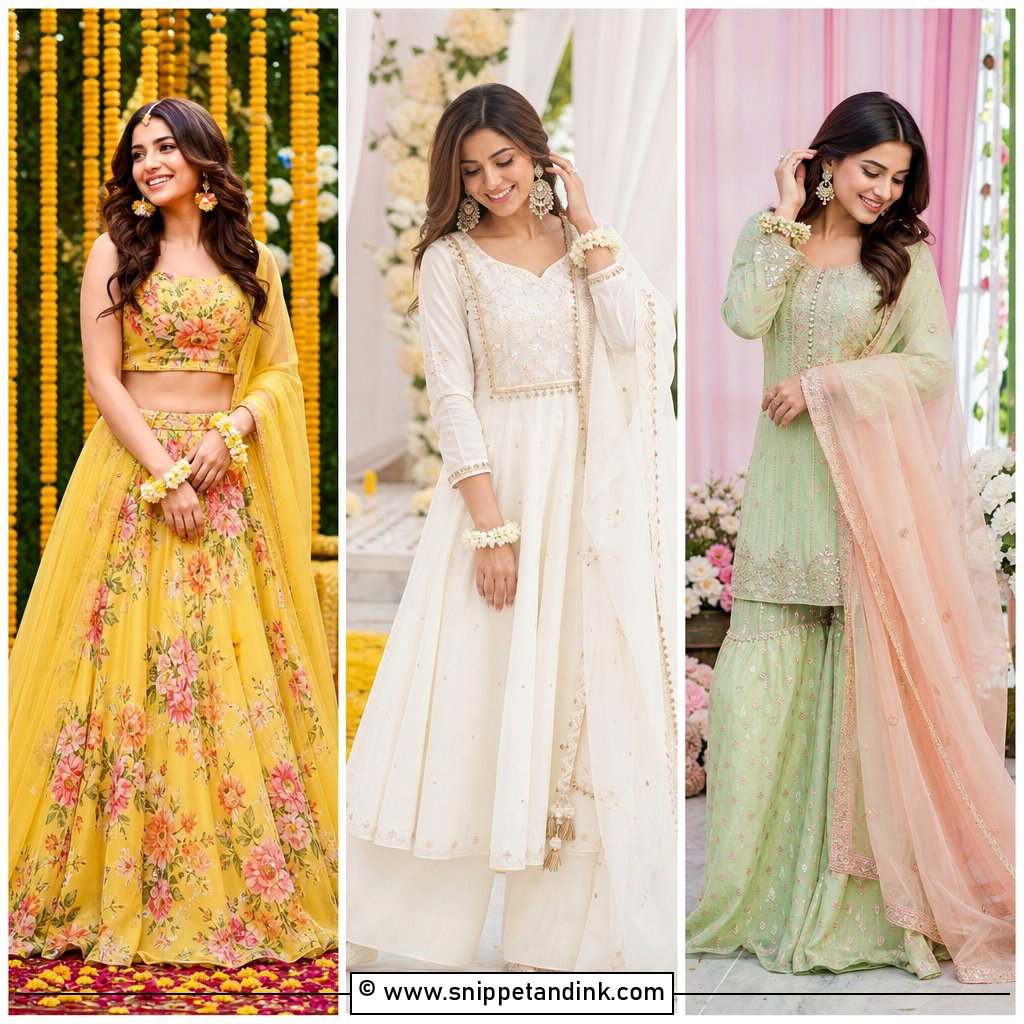
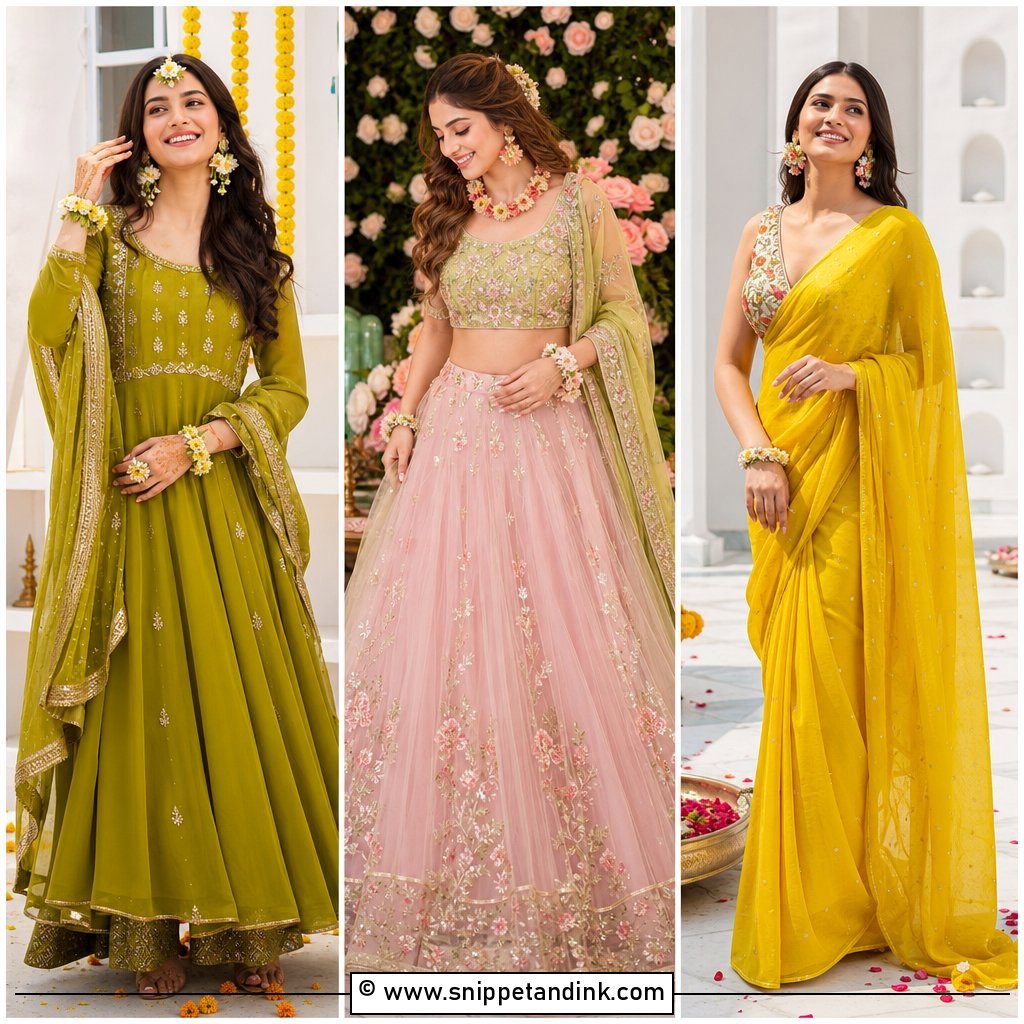
A Mehandi outfit has a job most bridal clothes never get: the bride has to sit still for henna, then stand for photos, then dance with her cousins, often with her hands still drying. When I dress a bride for this night, comfort and sleeve length come before color. Yellow and green are still the backbone, yet hot pink, orange, turquoise and even lavender all work if the details stay festive. Gota, mirror work, tassels and a contrasting dupatta carry the celebration without needing the weight of a wedding-day lehenga. Below are twenty bridal looks, from a classic gharara to a jacket lehenga, each with the fitting notes I would give at a trial.
Sleeves, Hooks and Wet Henna on Your Hands
Many brides have their full mehndi applied a day or two before the function, but plenty still have some henna put on during the night itself. Either way, plan the outfit around hands you cannot use for a while.
- Get fully dressed, jewelry and dupatta pinned, before any paste goes on. Hooks, zips and drawstrings are impossible with wet hands.
- Elbow-length or three-quarter sleeves stay clear of the wrists. Full sleeves rub the paste off and the paste stains silk.
- Ask for a side zip with a hook at the top rather than a long run of back hooks; someone else will be fastening you either way, but zips are quicker for bathroom breaks.
- Keep a sister or friend as your hands for the evening: dupatta, water, phone, tissues.
Henna paste that touches the outfit leaves an orange-brown mark that rarely comes out of silk or organza. A dupatta drifting across the lap is the usual culprit, which is why I pin it at the shoulder for most of the looks below.
1. Yellow Bridal Mehandi Lehenga
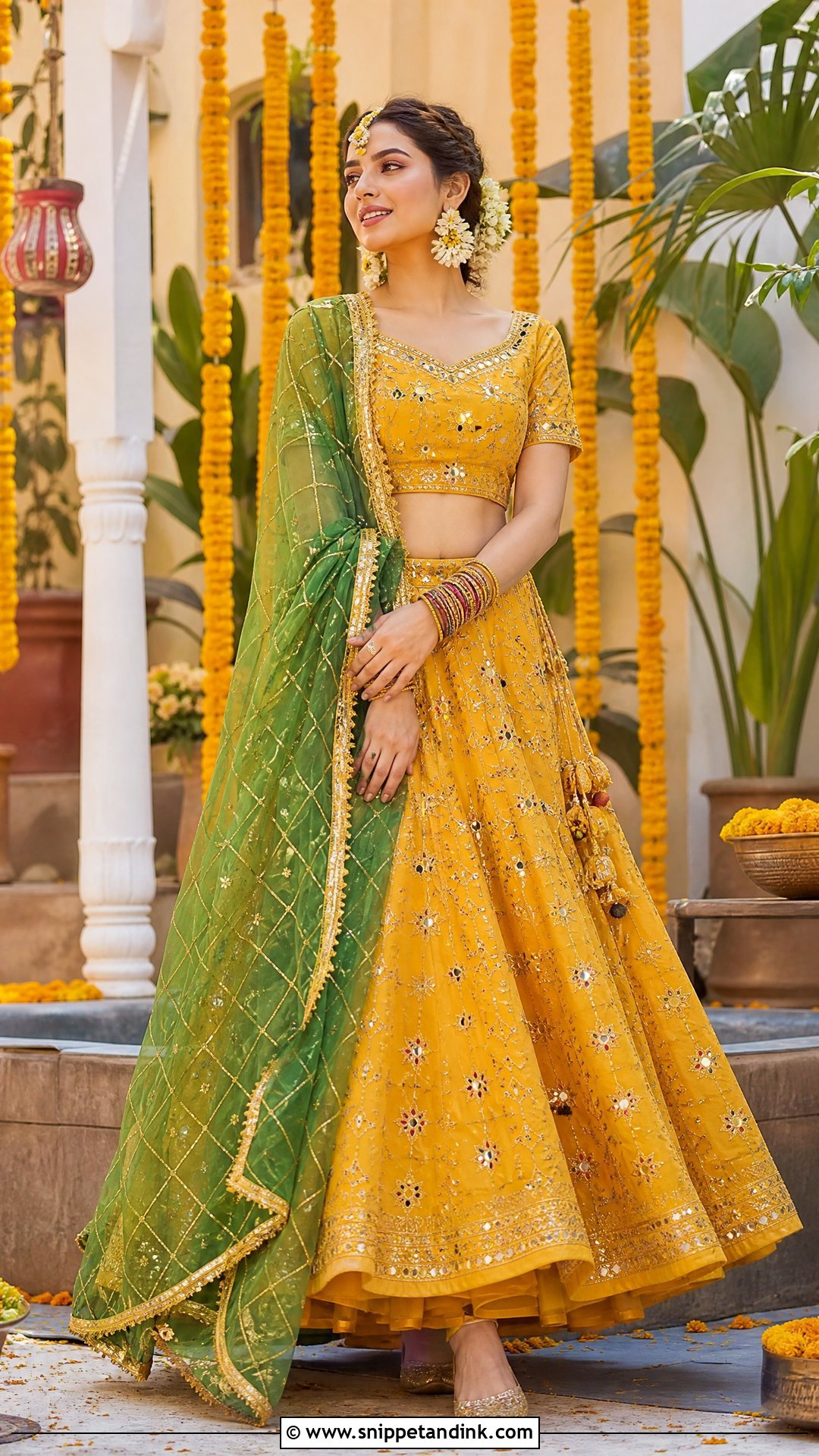
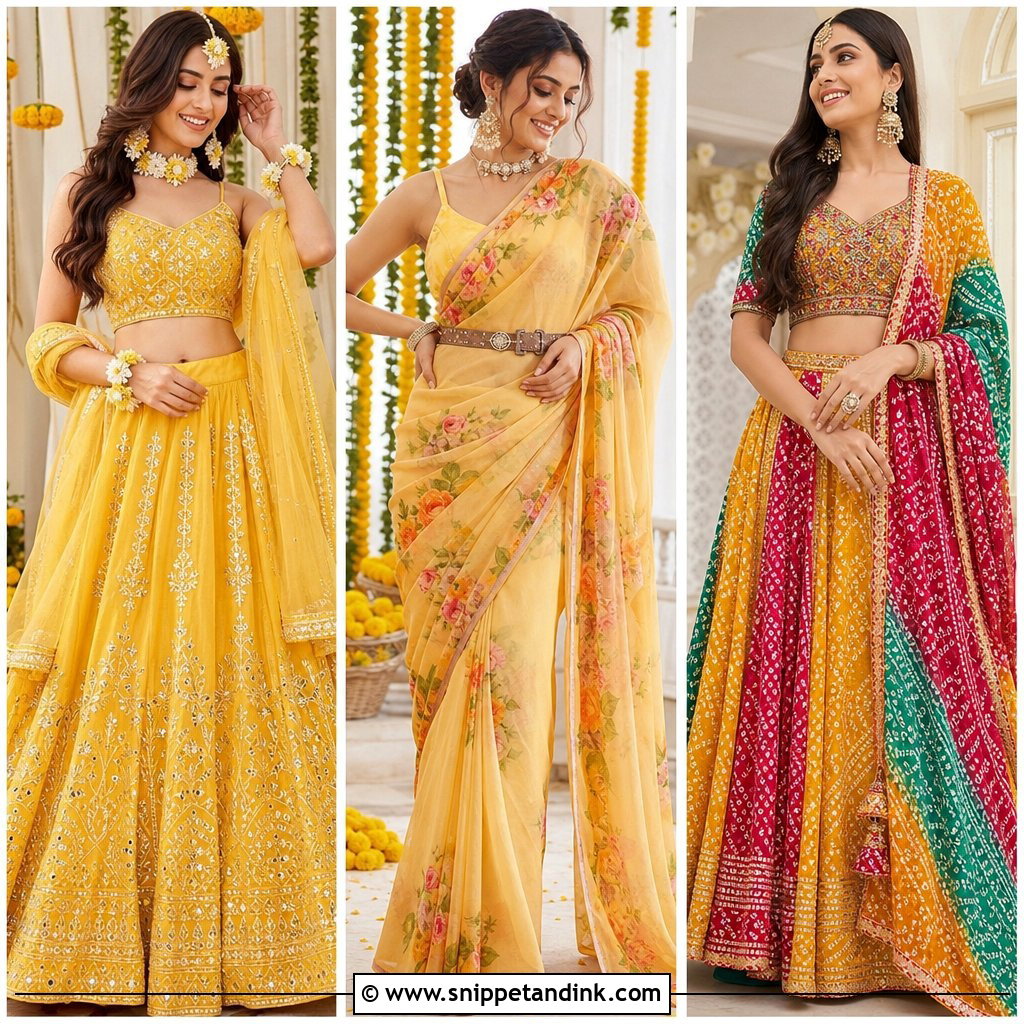
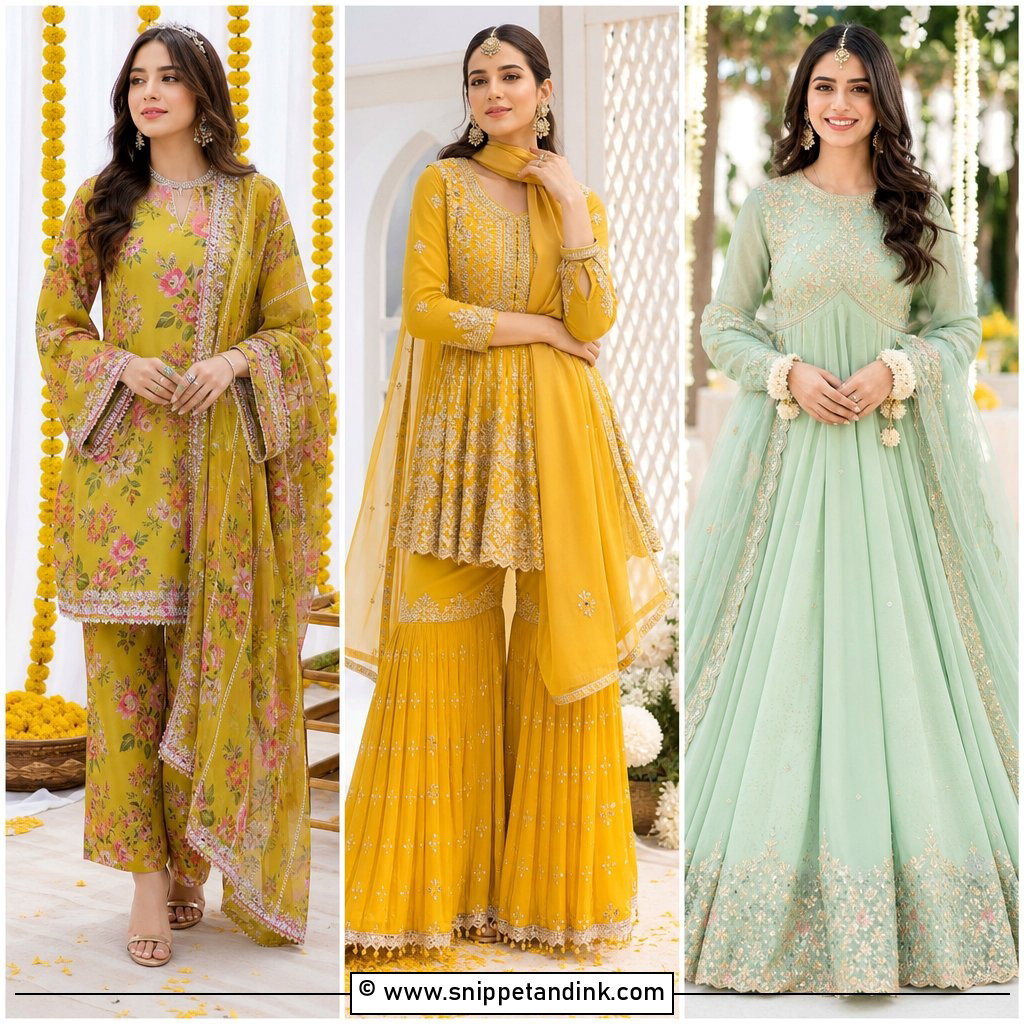
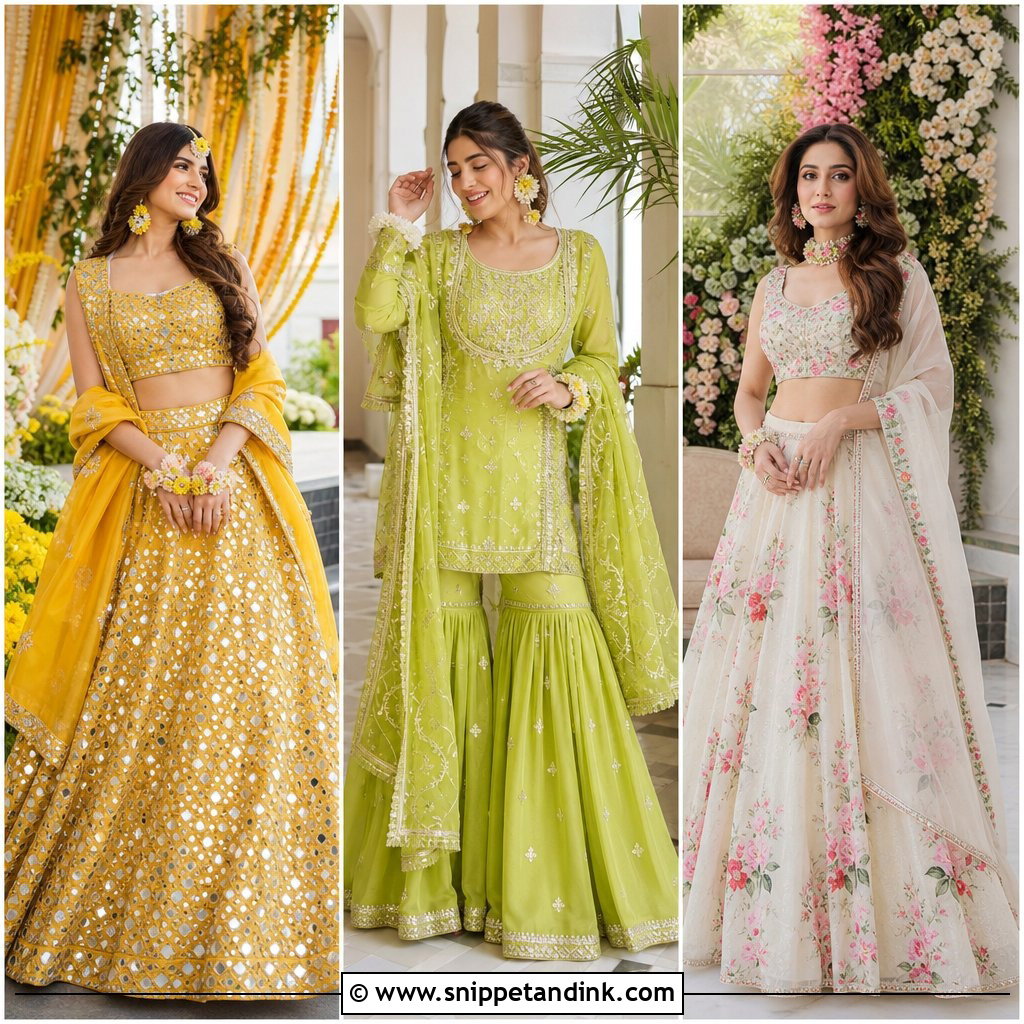
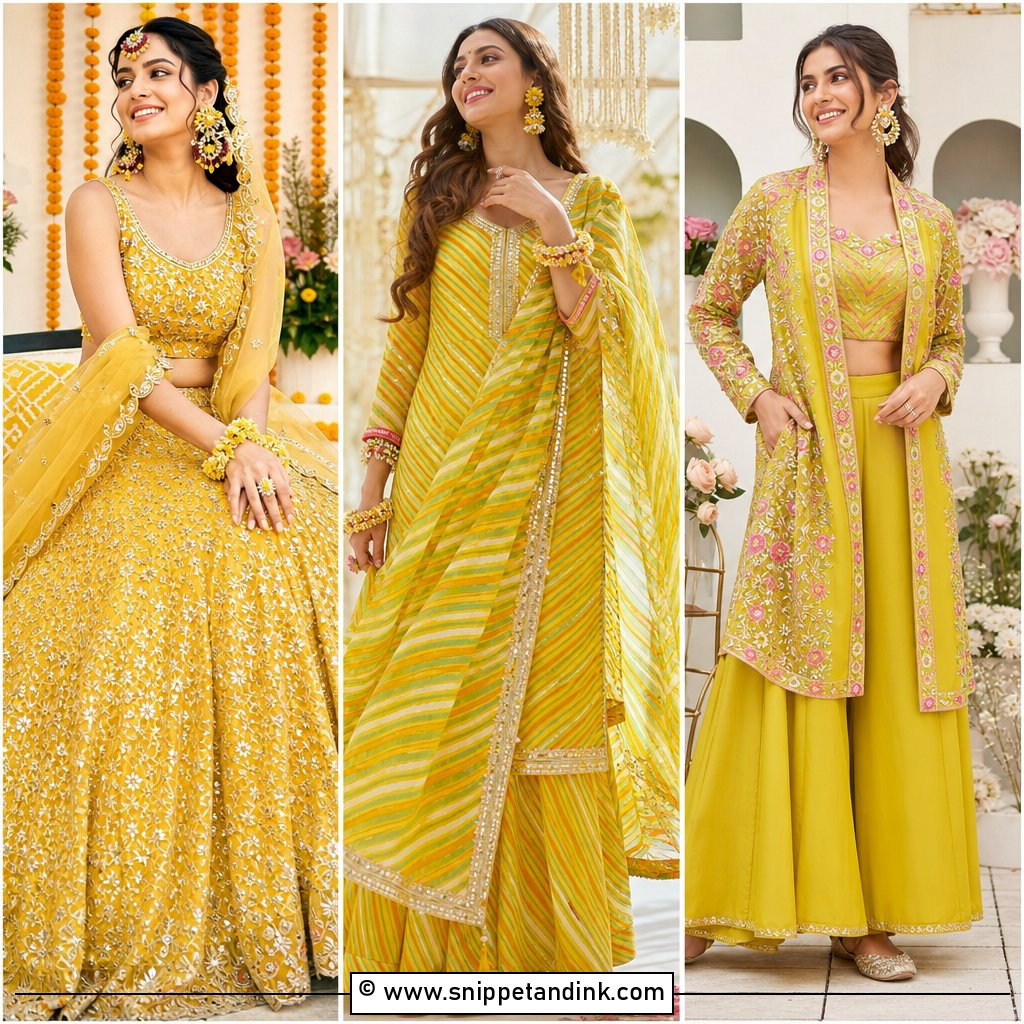
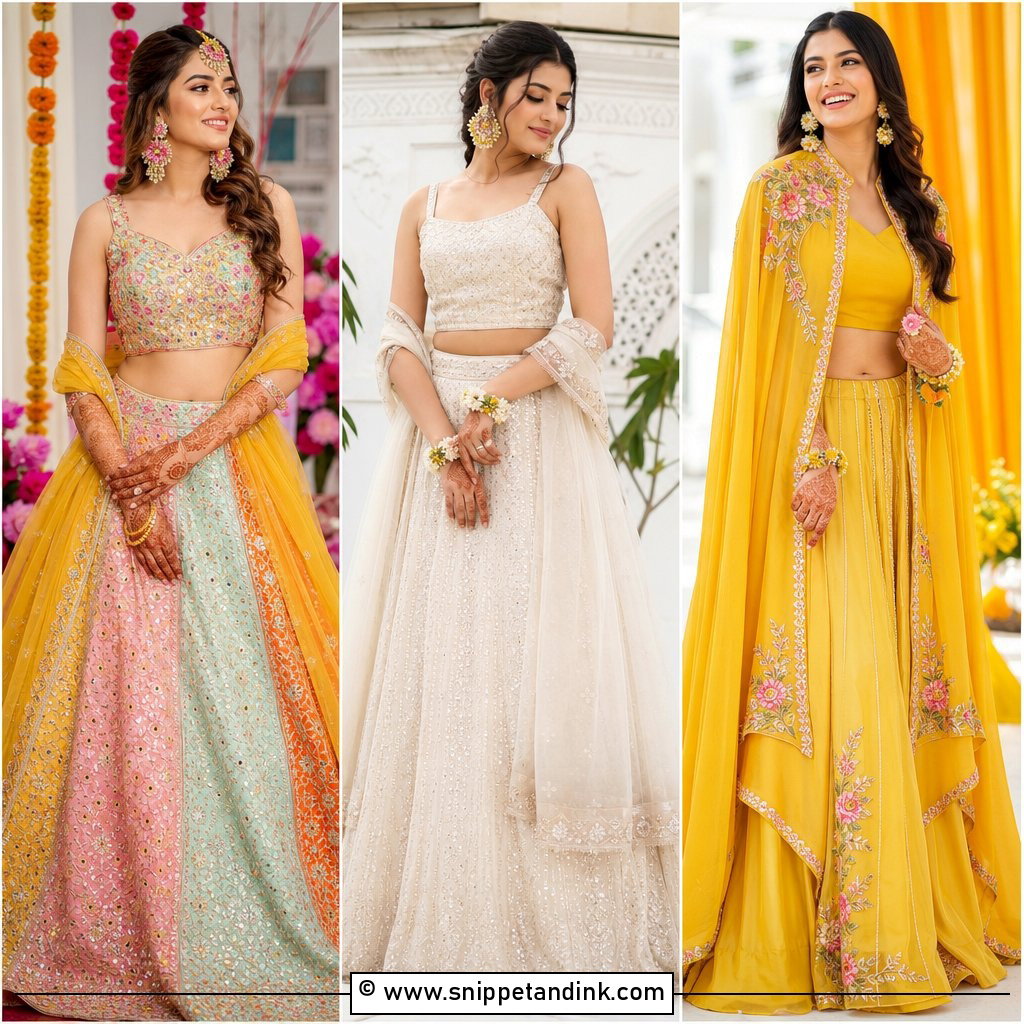
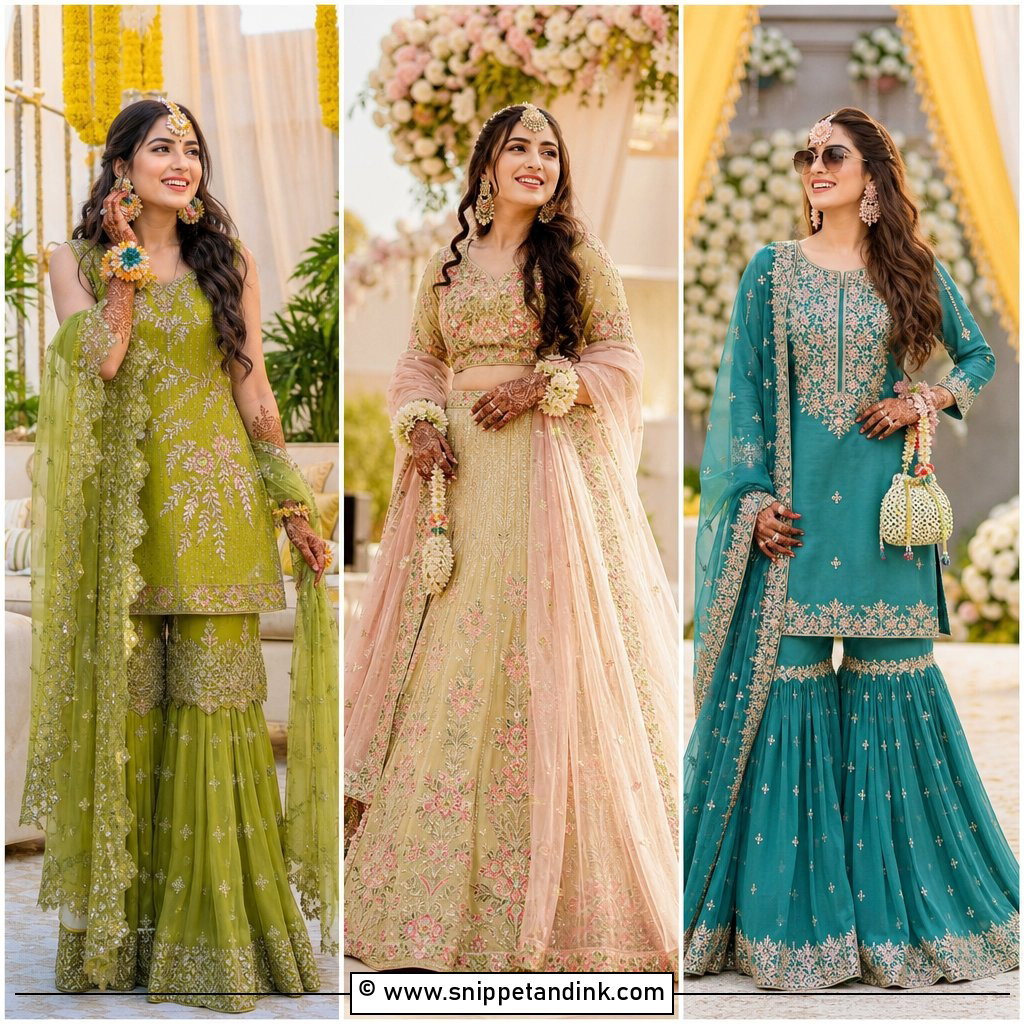
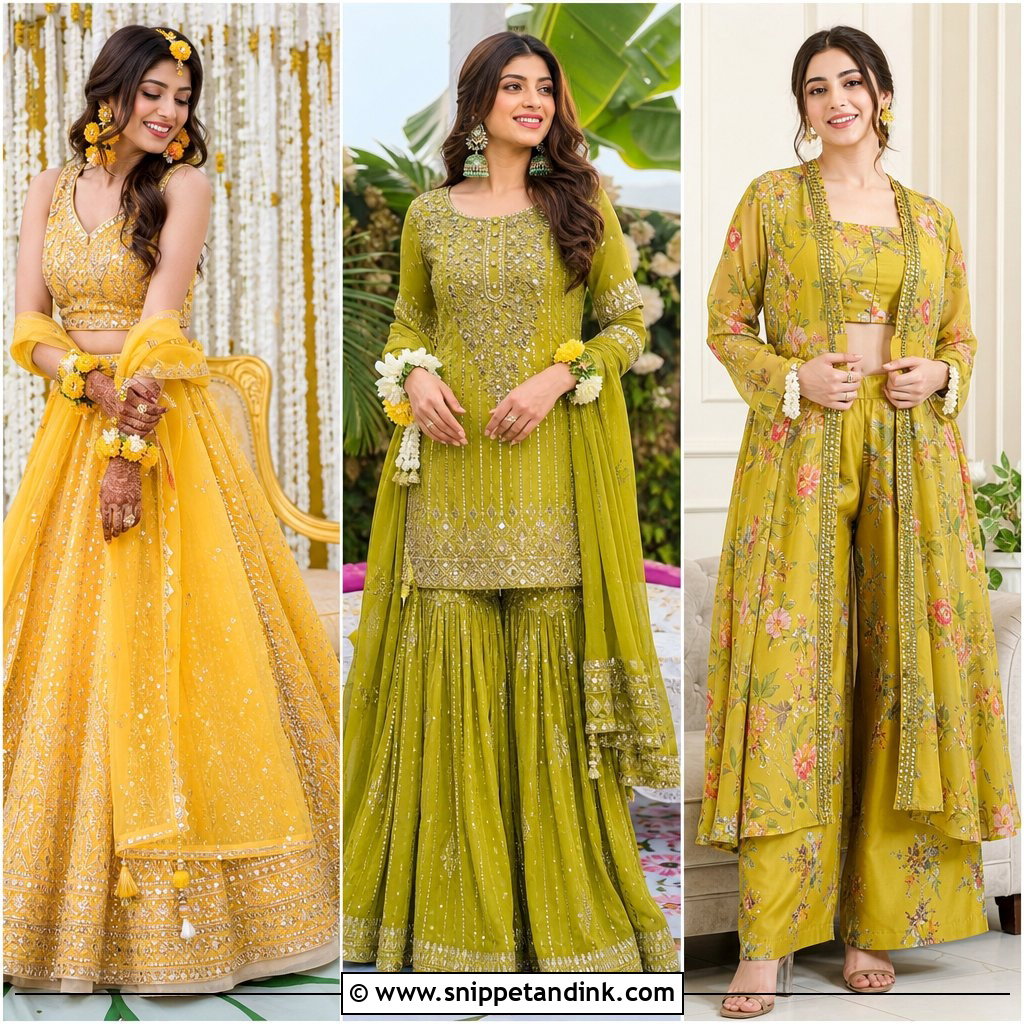
Yellow is the color families expect, and it earns that place: it glows under fairy lights and hides small henna marks. I like the skirt in raw silk or organza with gota borders and a little mirror work, worn with a short choli in elbow-length sleeves so the henna stays clear of the cuff. A green, pink or orange dupatta gives the contrast. Petite brides should keep the motifs small and the flare moderate; a taller bride can take broad borders. Ask for a firm waistband with a drawstring backup, because a hook-only waist loosens after an hour of dancing. Gold khussas and a light maang tikka finish it.
2. Green Bridal Mehandi Gharara
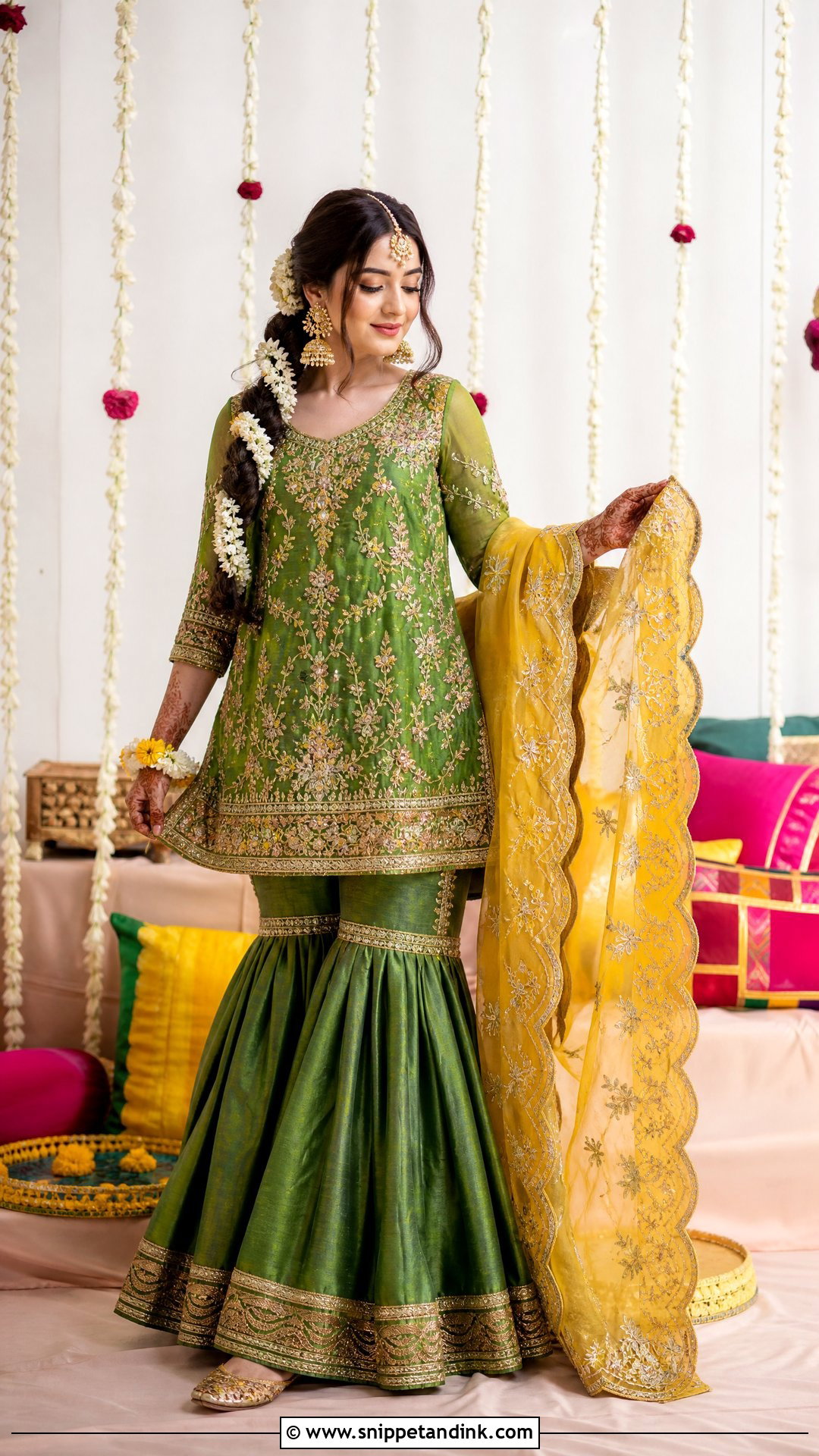
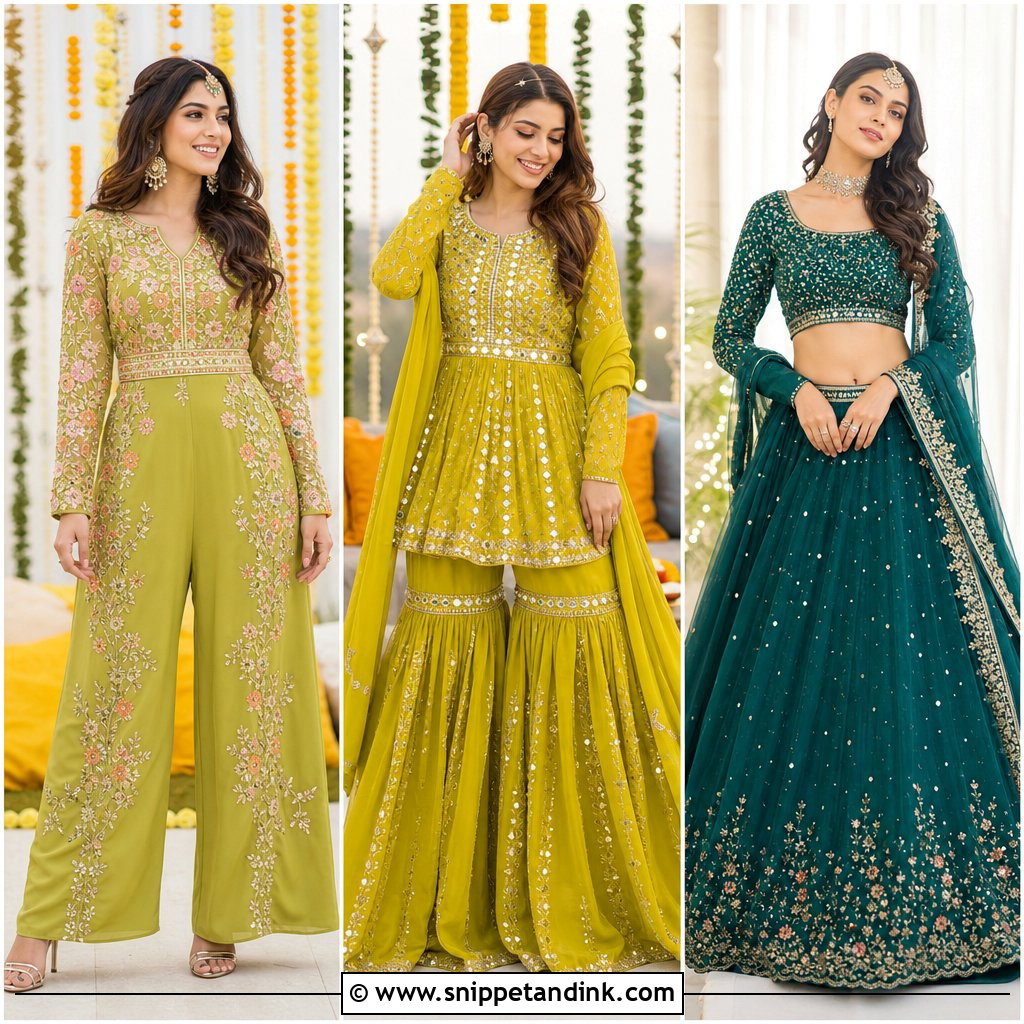
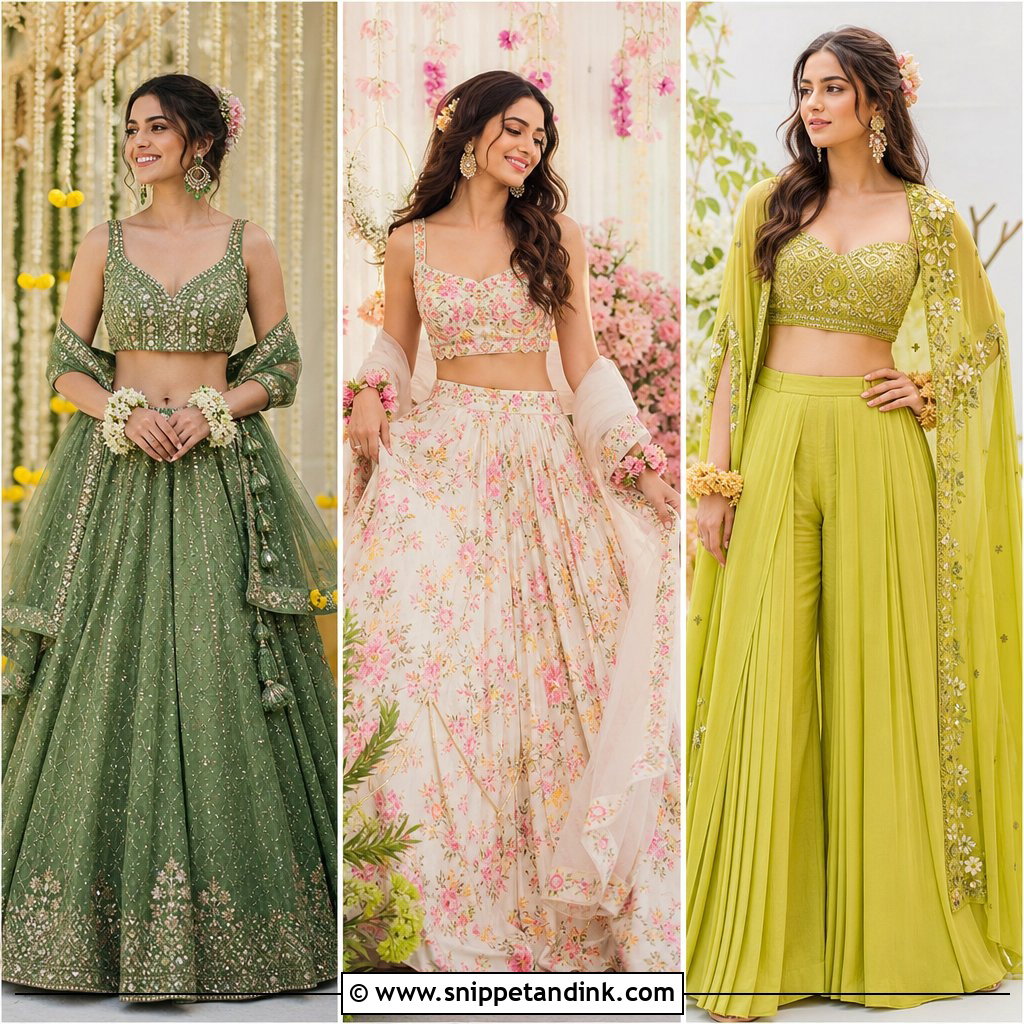
Green in silk or jamawar has a depth that yellow cannot match at night. The gharara is the most traditional Pakistani cut here: fitted to the knee, then gathered at the knee joint into a full flare, worn under a short kameez that ends near the hip to keep the classic Pakistani silhouette in proportion. The structured top defines the upper body while the legs stay free. A yellow organza dupatta with scalloped edges lifts the green, and jasmine in a braid or bun adds scent as well as color. I always ask the tailor for a soft lining and an elastic-backed waist if the bride will make more than one entrance.
3. Multicolor Bridal Mehandi Lehenga
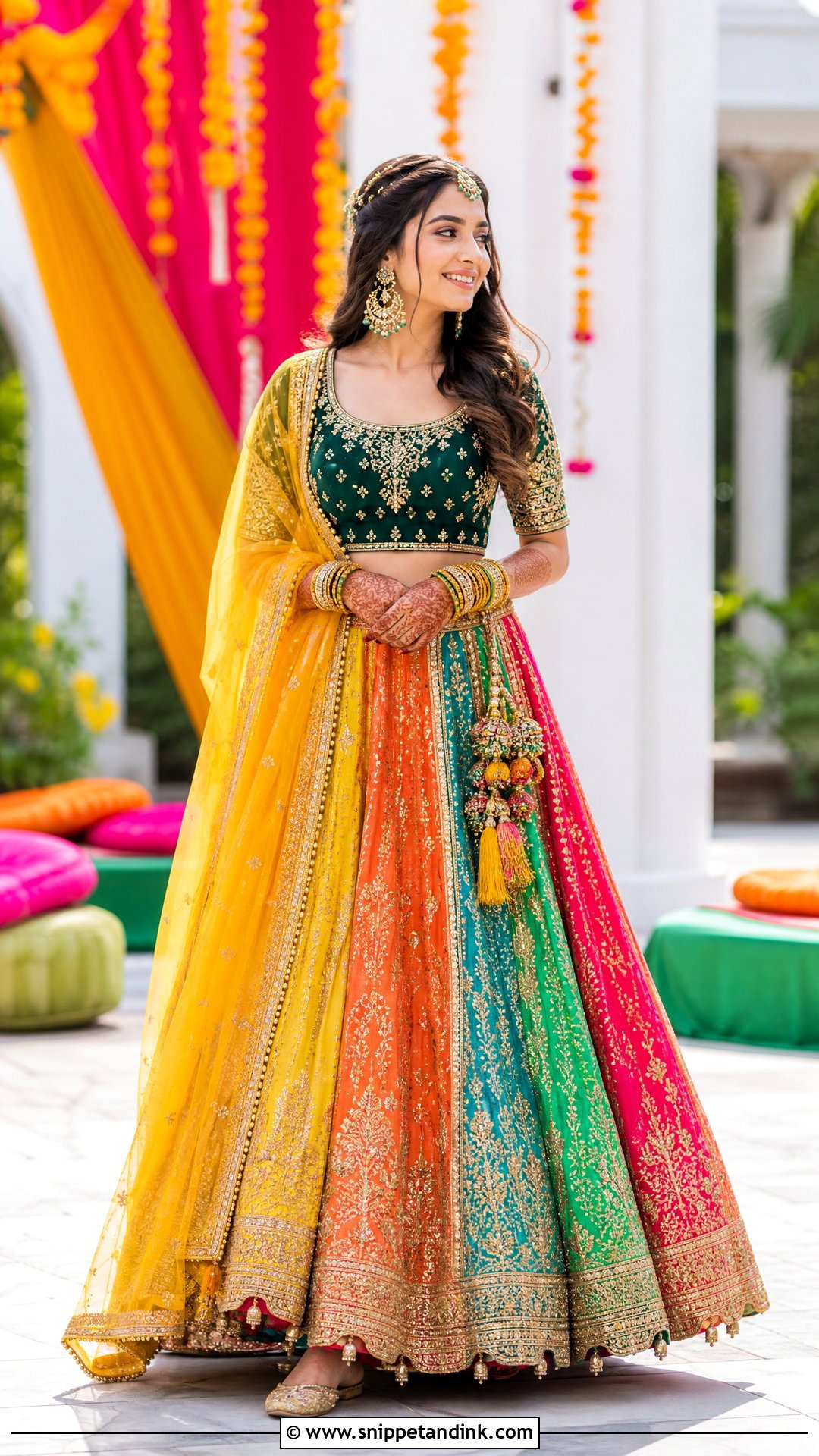
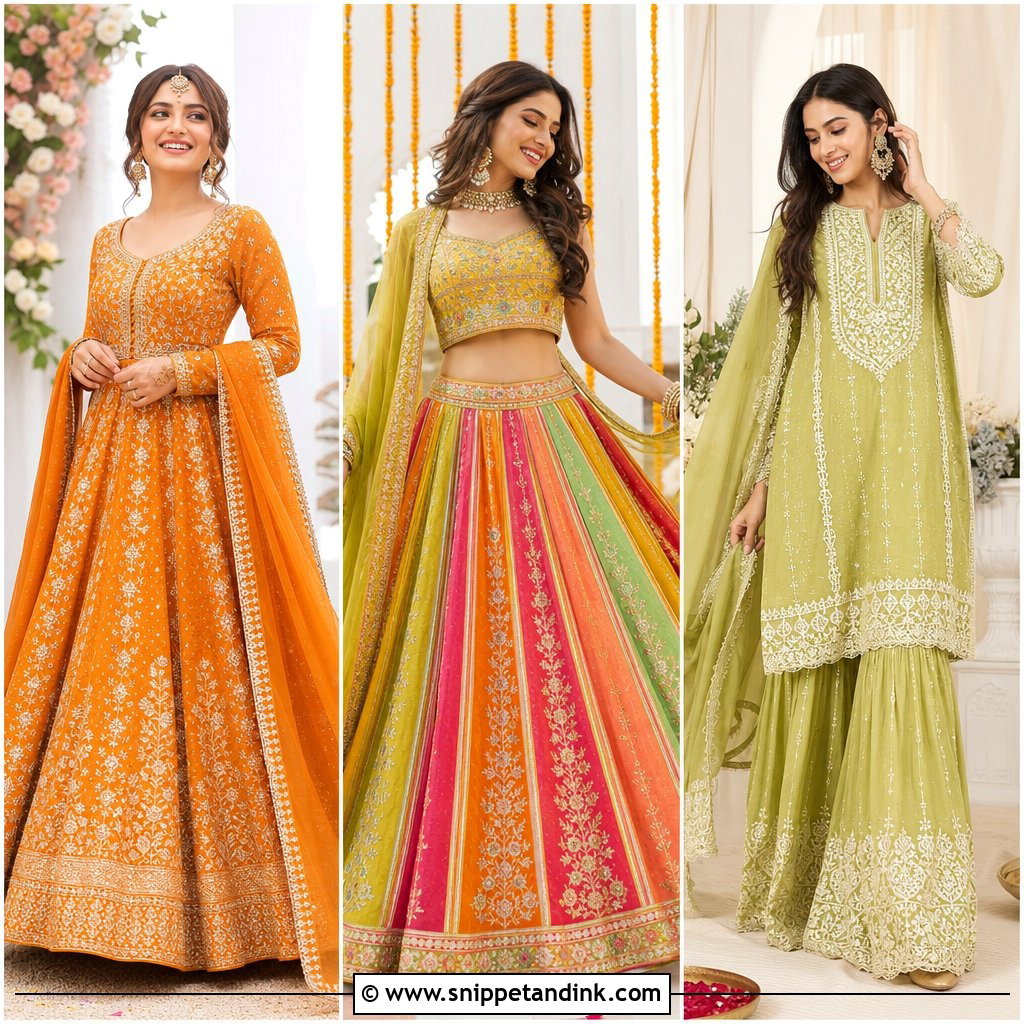
Paneled skirts look festive on a hanger but can turn chaotic once jewelry and a dupatta go on. On a multicolor lehenga, I ask for one repeating gota or mirror trim to cross every seam, which pulls yellow, fuchsia, orange and turquoise into one piece. Then the choli goes solid, emerald or hot pink, and the dupatta stays light yellow. This outfit holds its own on a busy stage full of colored drapes. A bride wanting less noise can pick muted jewel tones; one who loves maximal dressing can add tassels at the waist.
4. Mustard Bridal Mehandi Sharara
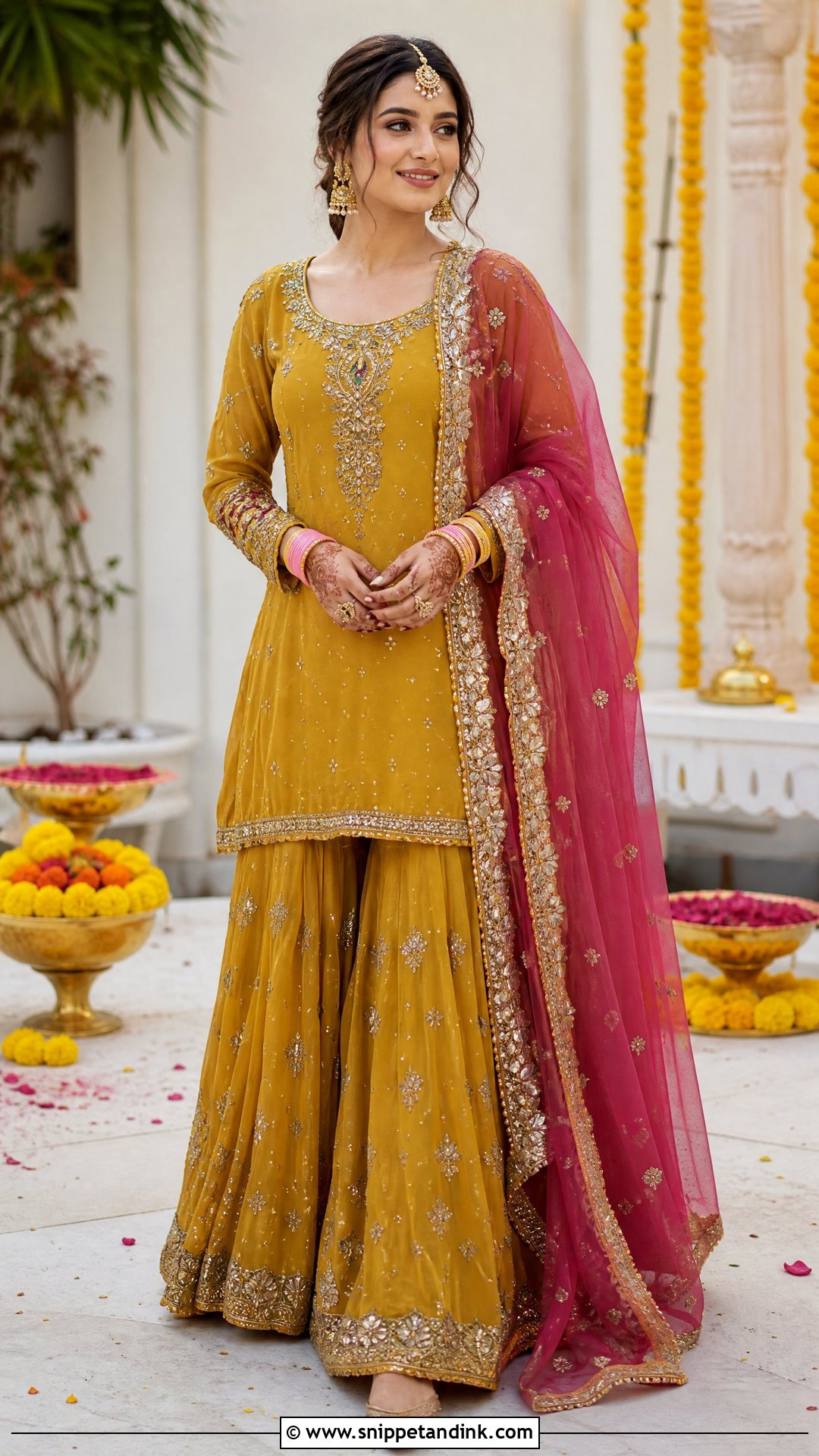
Mustard reads richer than bright yellow under warm evening light and suits autumn functions. A short embroidered kurti over a wide sharara in chiffon or georgette moves freely, and a sharara usually feels lighter on the hips than a layered lehenga. Antique gold gota or dabka at the hem and neckline is enough embellishment. Drape a magenta or bottle-green dupatta over one shoulder so it never falls across your hands while henna dries. The kurti must fit cleanly through the shoulders; any looseness there adds bulk that the flared sharara then exaggerates.
5. Orange Bridal Mehandi Pishwas
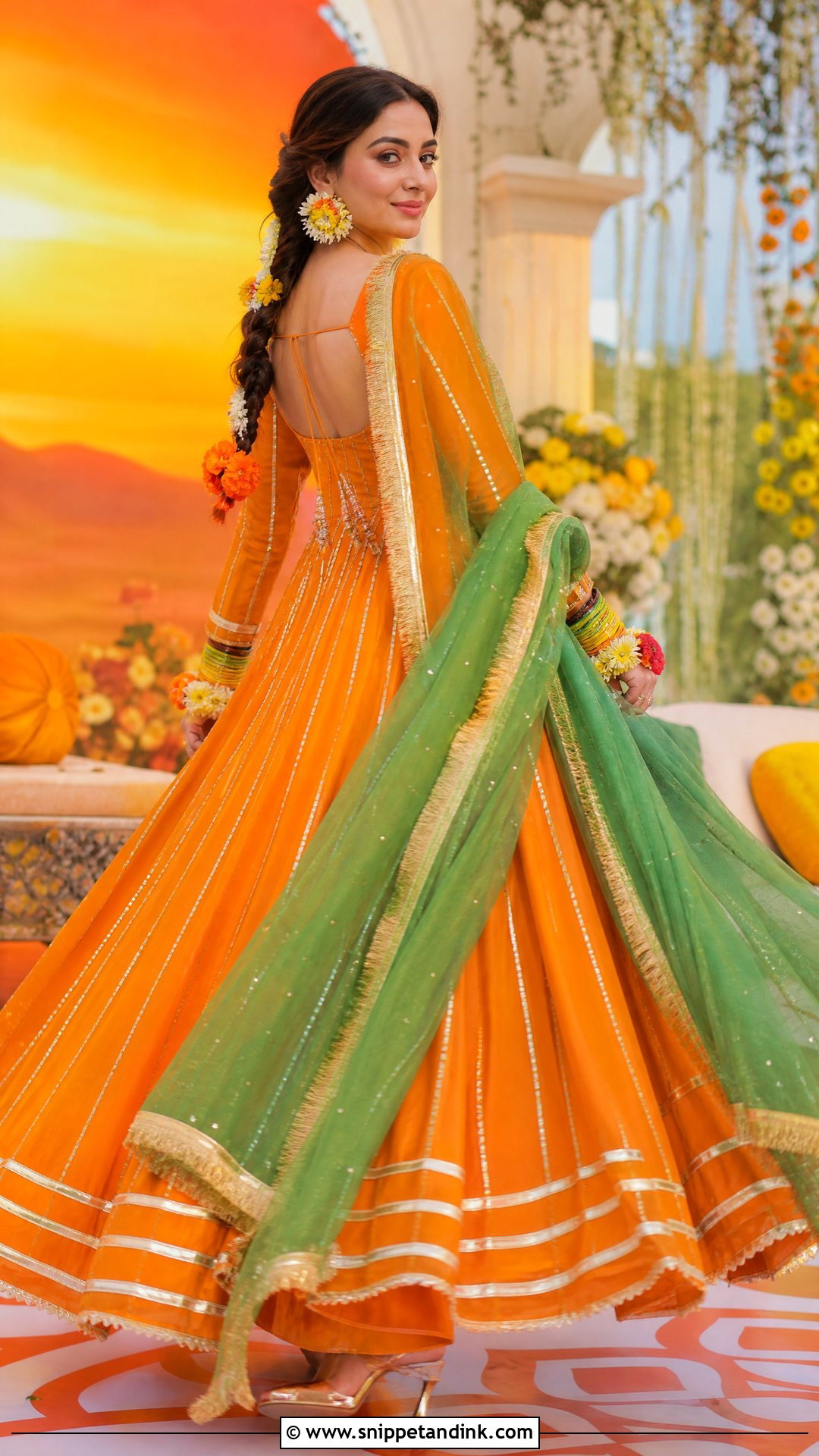
A pishwas is cut as one long fitted bodice flowing into a circular skirt, and the twirl is what brides choose it for. Burnt orange looks grown-up at sunset; a brighter marigold feels playful in daylight. Gota lines down each panel emphasize the flare without adding weight. The waist seam carries the whole dress, so I fit it carefully on curvy brides to stop the bodice riding up when the arms lift. Ask for light inner layers rather than heavy can-can; a pishwas keeps its shape through cut, not stiffness. A green dupatta and center-parted braid complete it.
6. Pink And Yellow Bridal Mehandi Lehenga
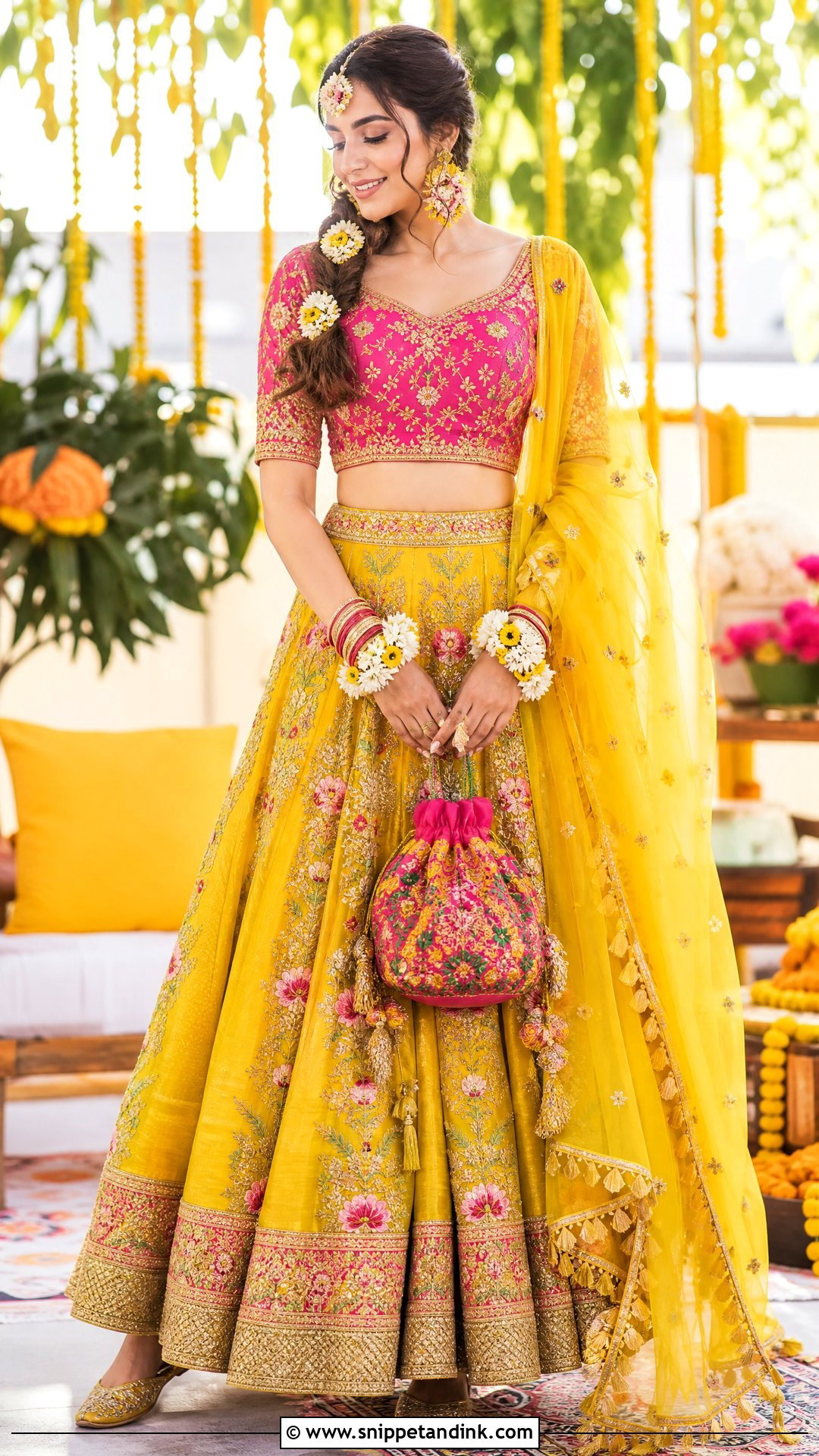
Pink against yellow is cheerful and still unmistakably Mehandi. A yellow lehenga with pink floral threadwork or broad fuchsia borders, under a fitted pink choli, gives each piece clear edges in photographs. A sheer yellow dupatta with small tassels ties them back together. Brides wanting coverage can choose a longer blouse with sheer sleeves. The skirt already has plenty of pattern, so I keep jewelry concentrated near the face and match the lipstick to the pink rather than adding a third shade.
7. Mirror Work Bridal Mehandi Dress
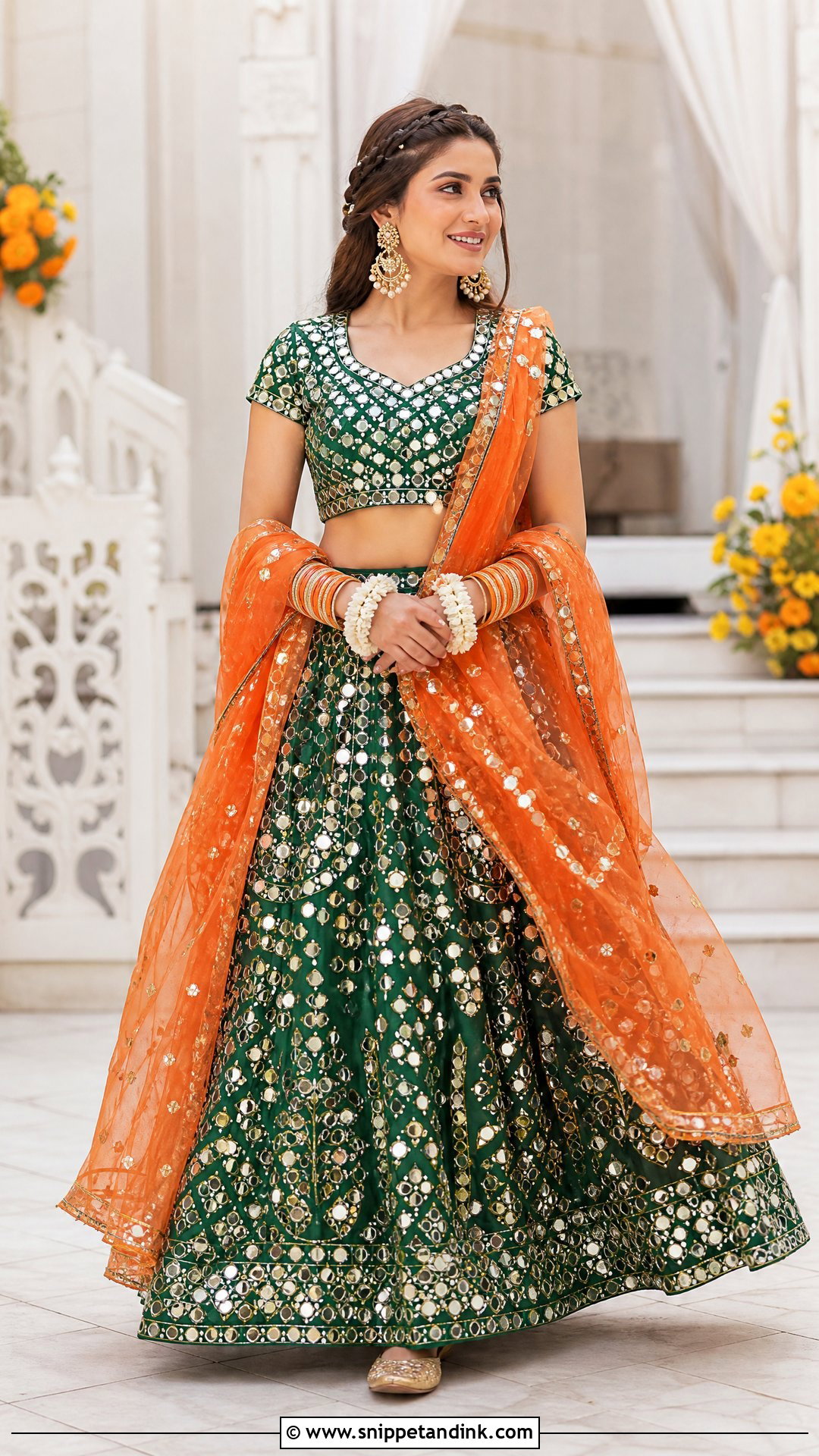
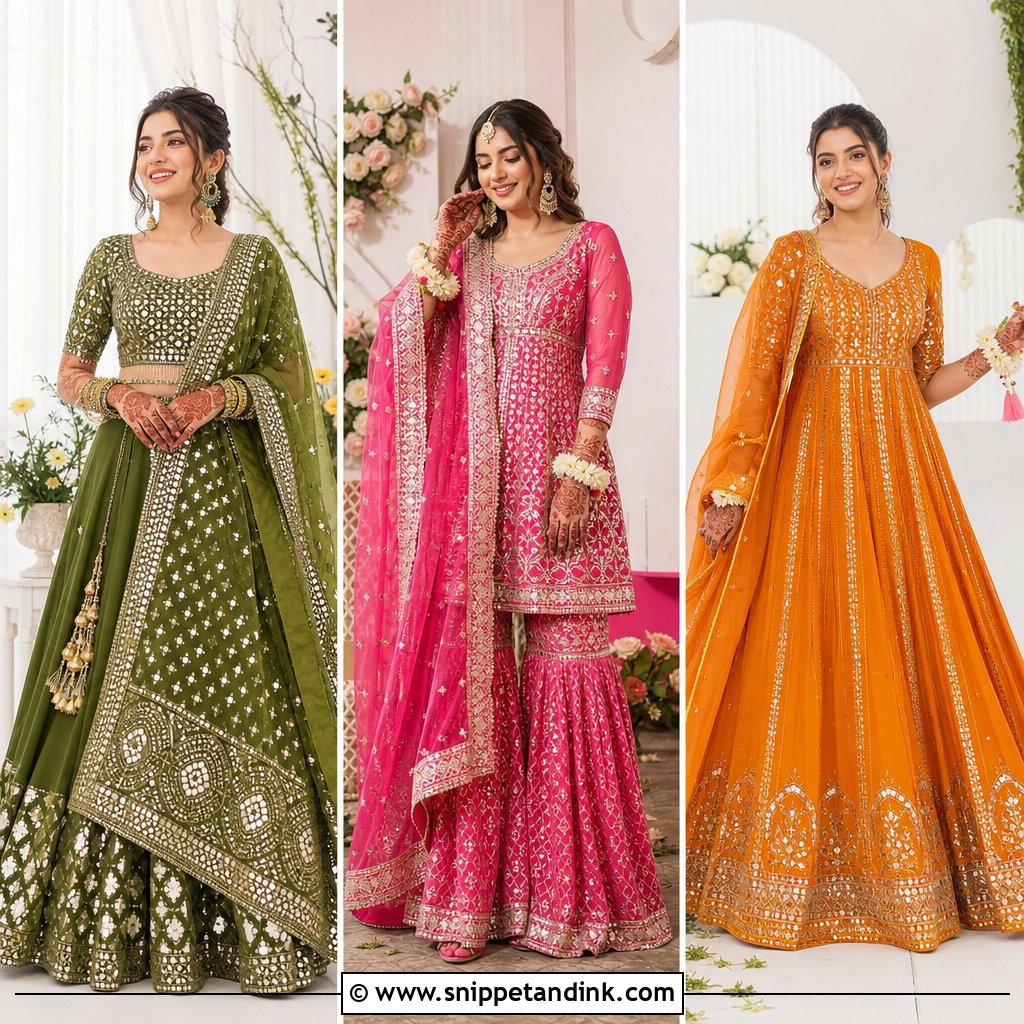
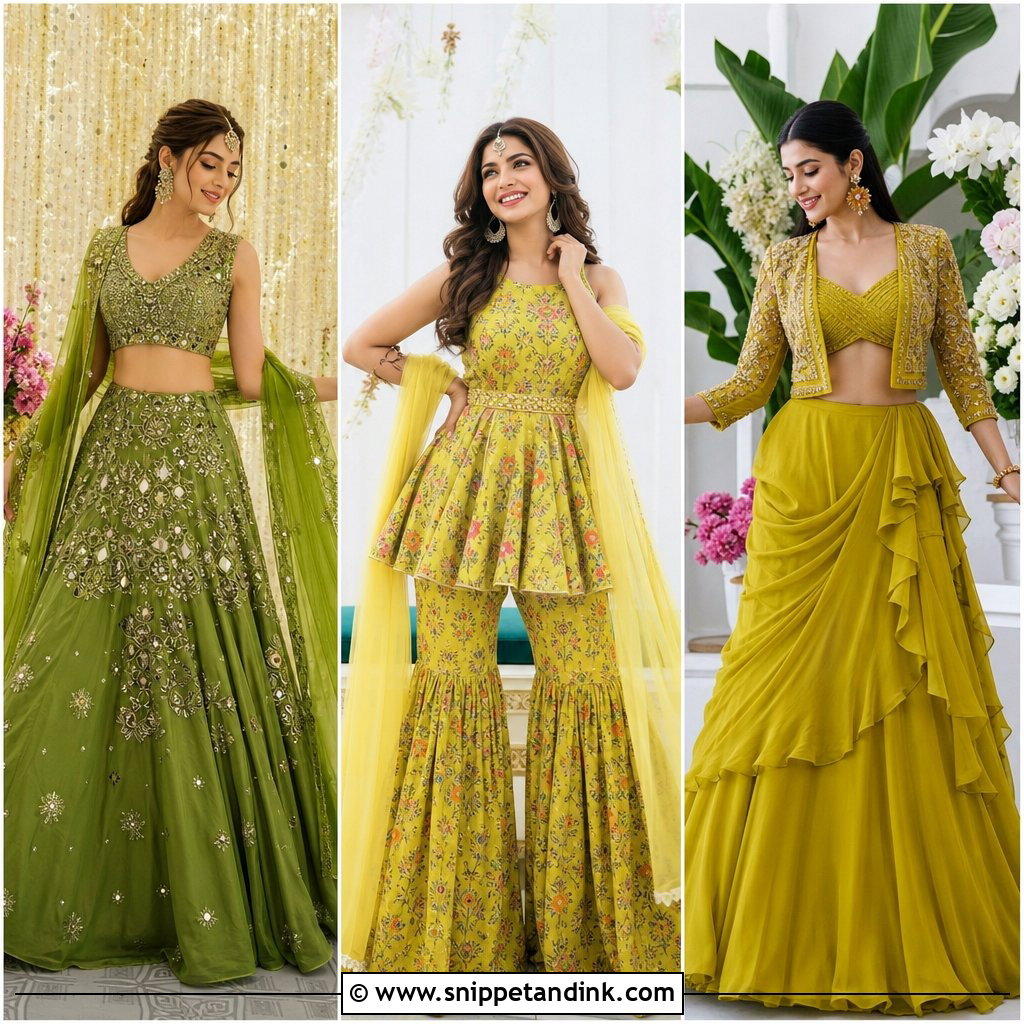
Mirror work catches every light source, from daylight to the stage spots, and gives sparkle without sequins. Before a bride buys, I check how the mirrors are attached: a properly finished shisha has a tight stitched ring around it, and loose ones snag the dupatta all night. A green or yellow lehenga with a coordinating choli and an orange, pink or turquoise dupatta with a simple border keeps it balanced. Mirror embroidery is heavier than people expect, so the skirt lining should stay light. Scattered motifs give subtle shine; geometric panels at the hem suit a louder party.
8. Gota Work Bridal Mehandi Gharara
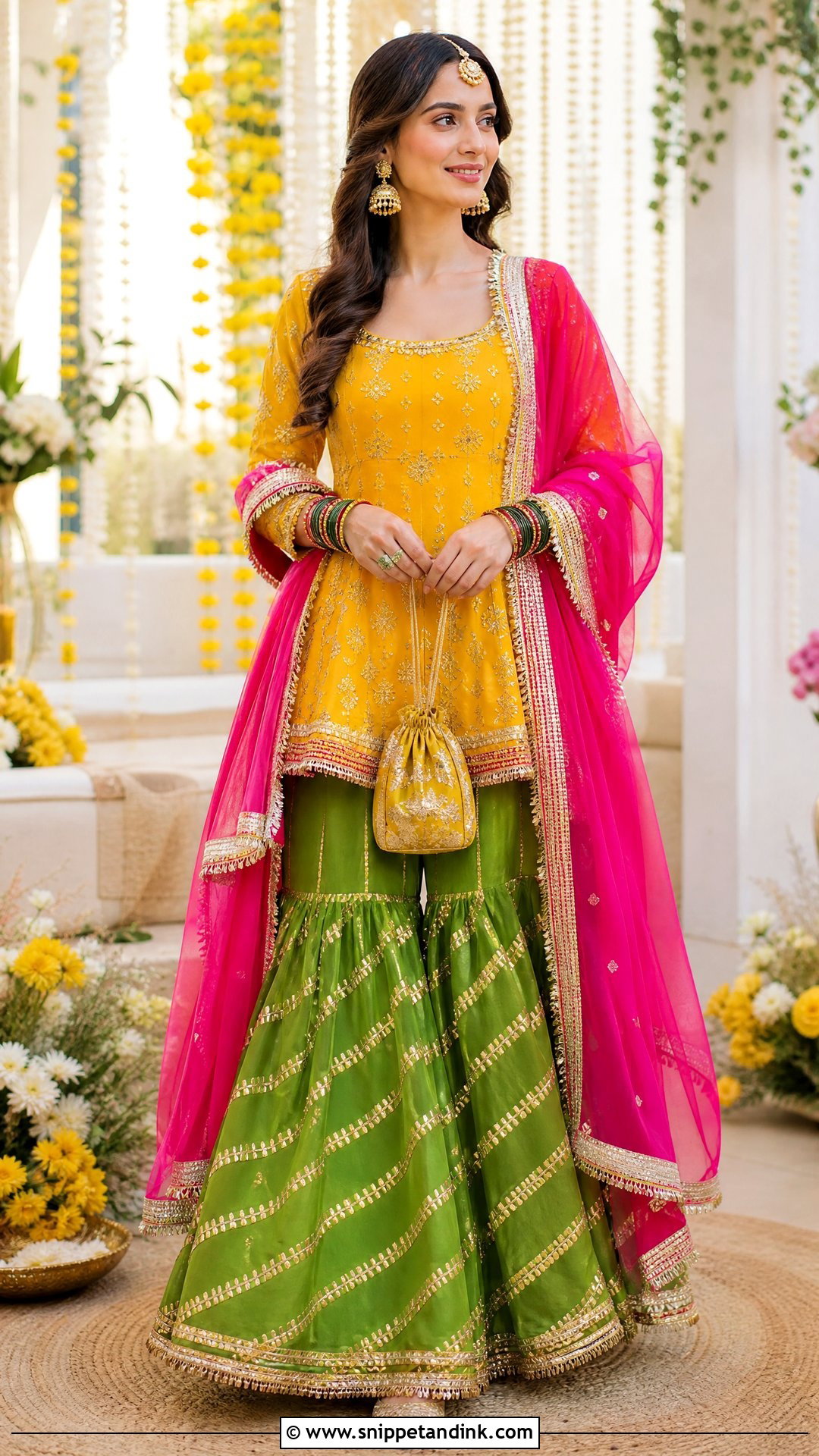
Gota against vivid fabric is the oldest Mehandi trick there is, and it still works. A yellow or parrot-green gharara with diagonal gota lines and scalloped borders pairs with a short kameez carrying the same trim at the neck and sleeves. A hot-pink organza dupatta with kiran fringe adds movement. Gota already reflects light strongly, so I keep makeup fresh rather than glittery. The underside of gota can be scratchy; the embellishment should be backed with soft fabric at the cuffs, neckline and knees, where it rubs most while sitting.
9. Angrakha Bridal Mehandi Dress
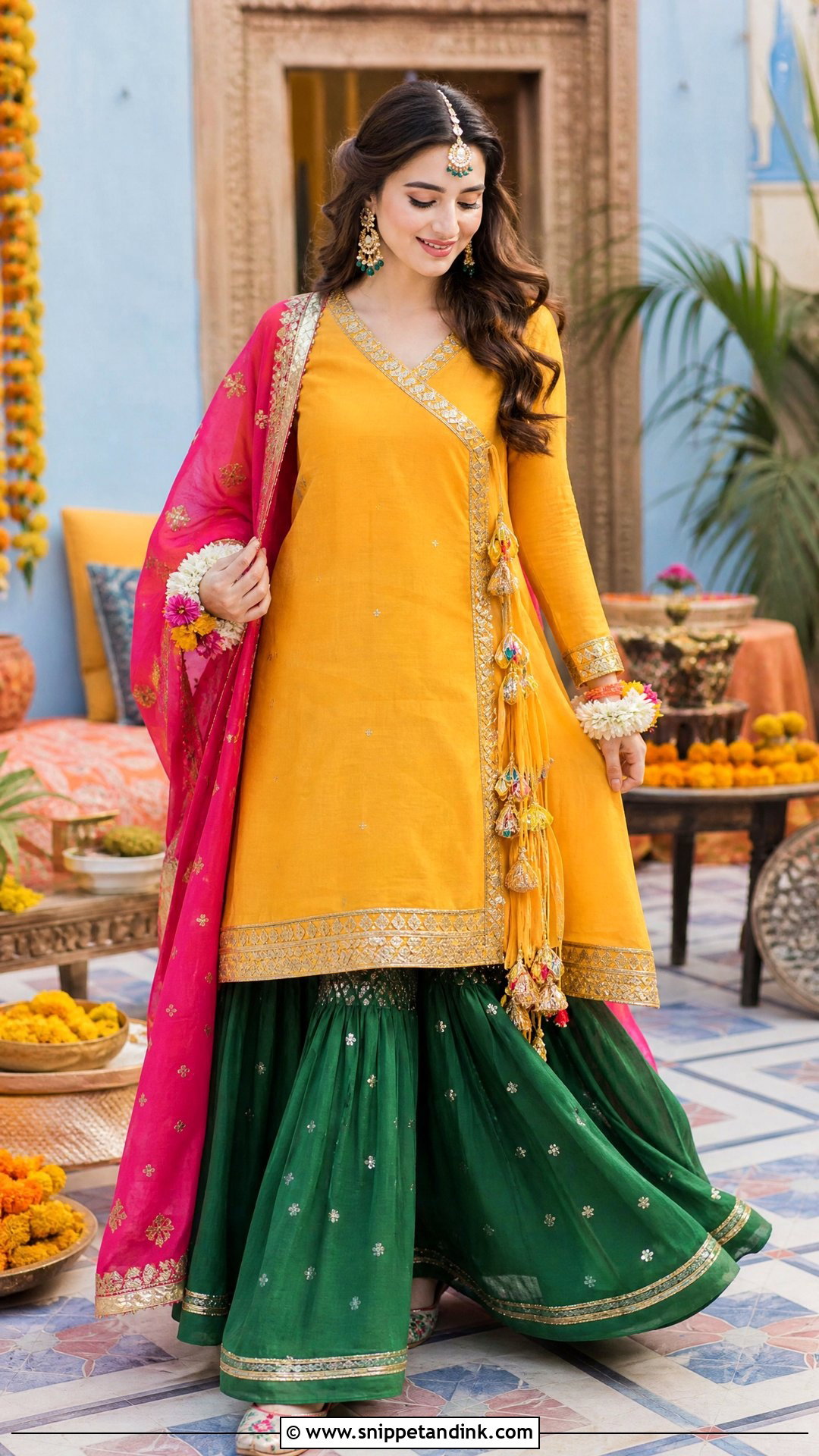
The angrakha’s diagonal wrap lengthens the upper body, and it adjusts slightly at the side closure, which helps if weight shifts before the wedding. Choose knee or ankle length in yellow, lime green or orange, with gota edging and tassels at the tie. A short angrakha over a sharara looks festive; a long one over straight trousers is sleeker. The wrap must be held by hidden hooks beneath the tie, otherwise it opens when the bride leans forward to have her hands decorated. A pink dupatta over one shoulder, embroidered khussas and a tikka are enough.
10. Peplum Bridal Mehandi Lehenga
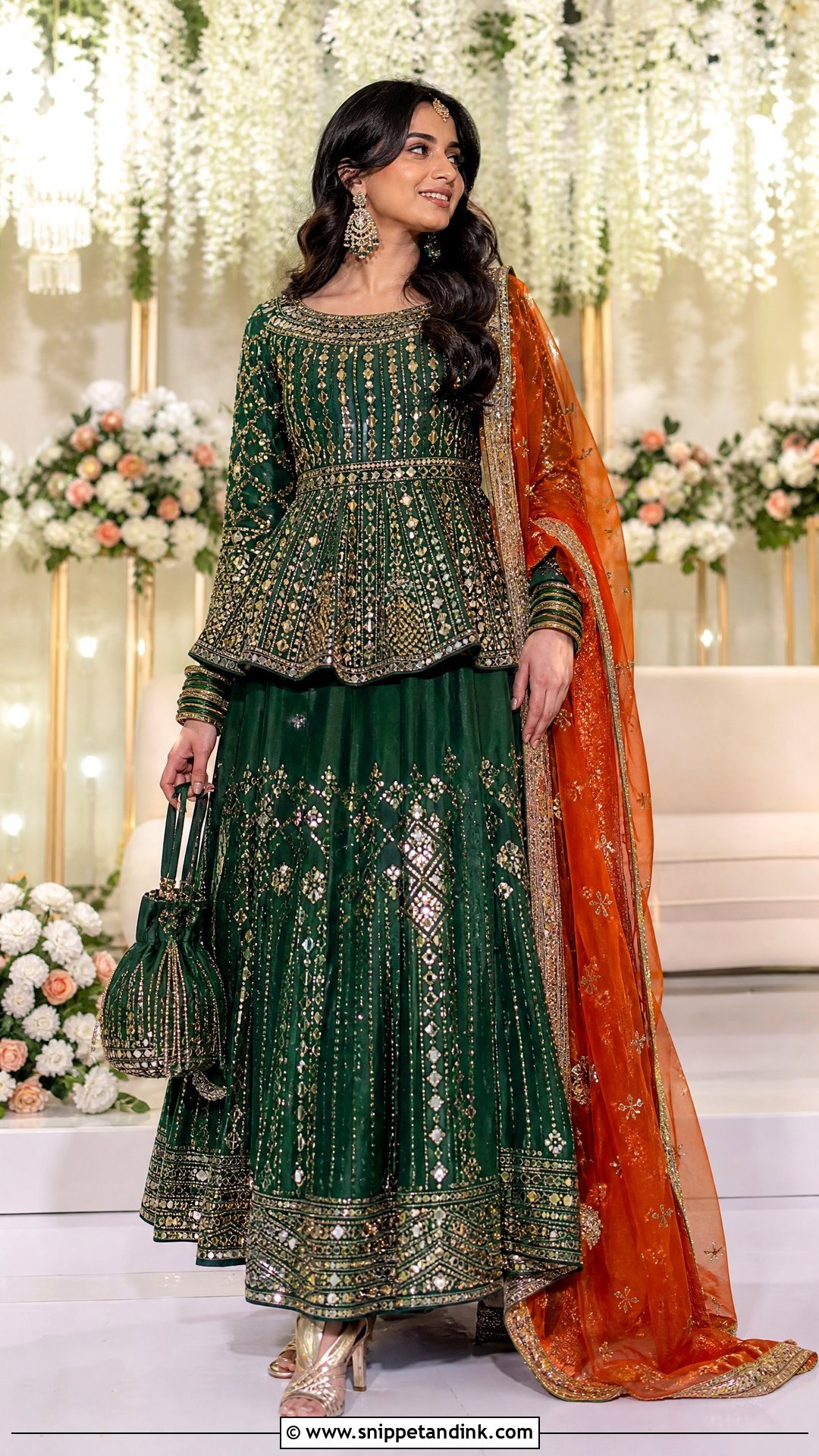
Brides who feel self-conscious about the midsection often like a peplum, because it defines the waist and then skims past the stomach. A peplum top and lehenga in emerald, chartreuse or yellow keeps the Mehandi colors while looking more current. Keep the peplum’s flare in proportion to the skirt; a wide peplum over a very full lehenga swamps a petite frame. Wear the pink or orange dupatta over one shoulder so the shape stays visible, and leave the neckline clean for floral jewelry.
11. Jacket Bridal Mehandi Lehenga
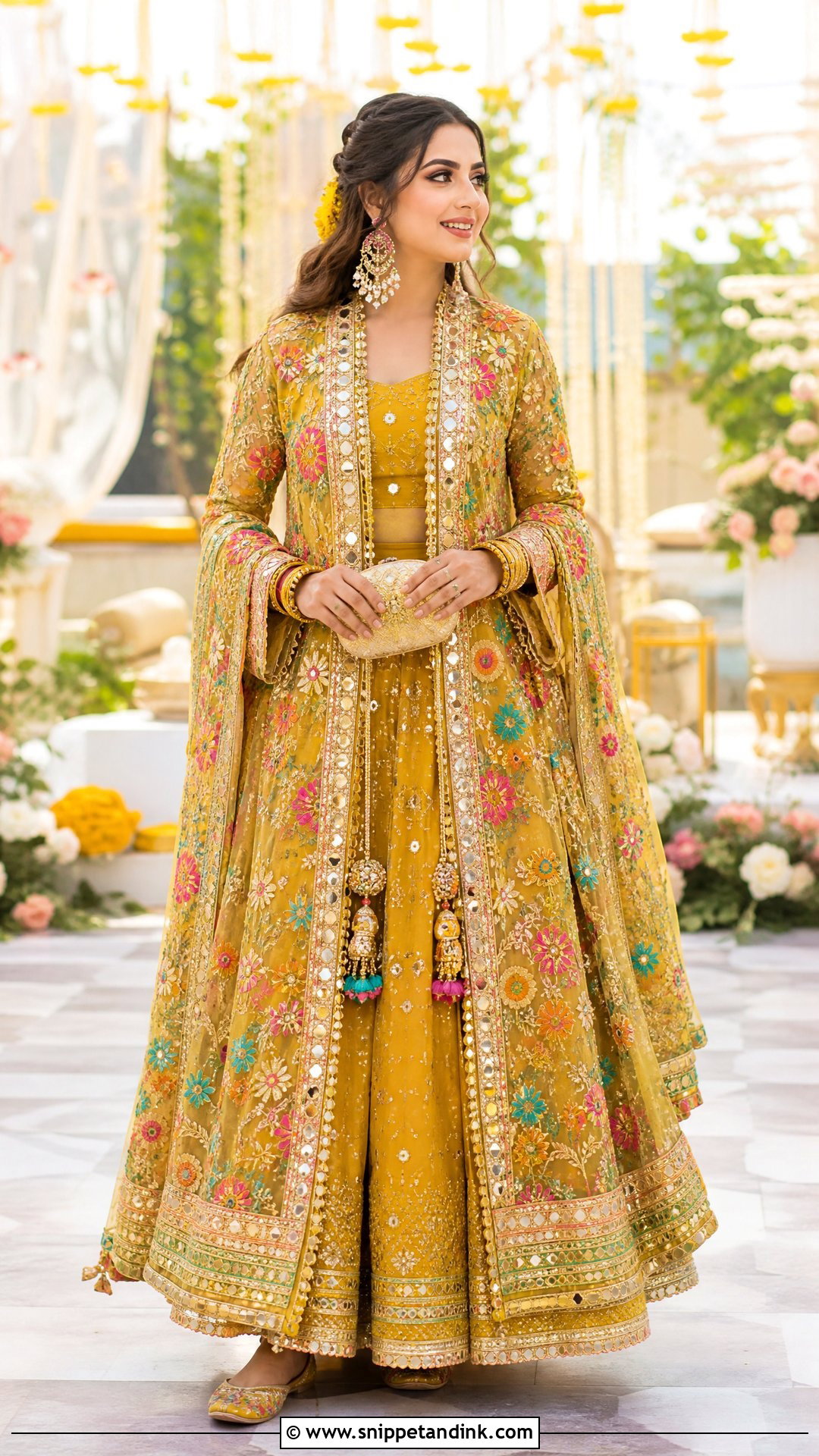
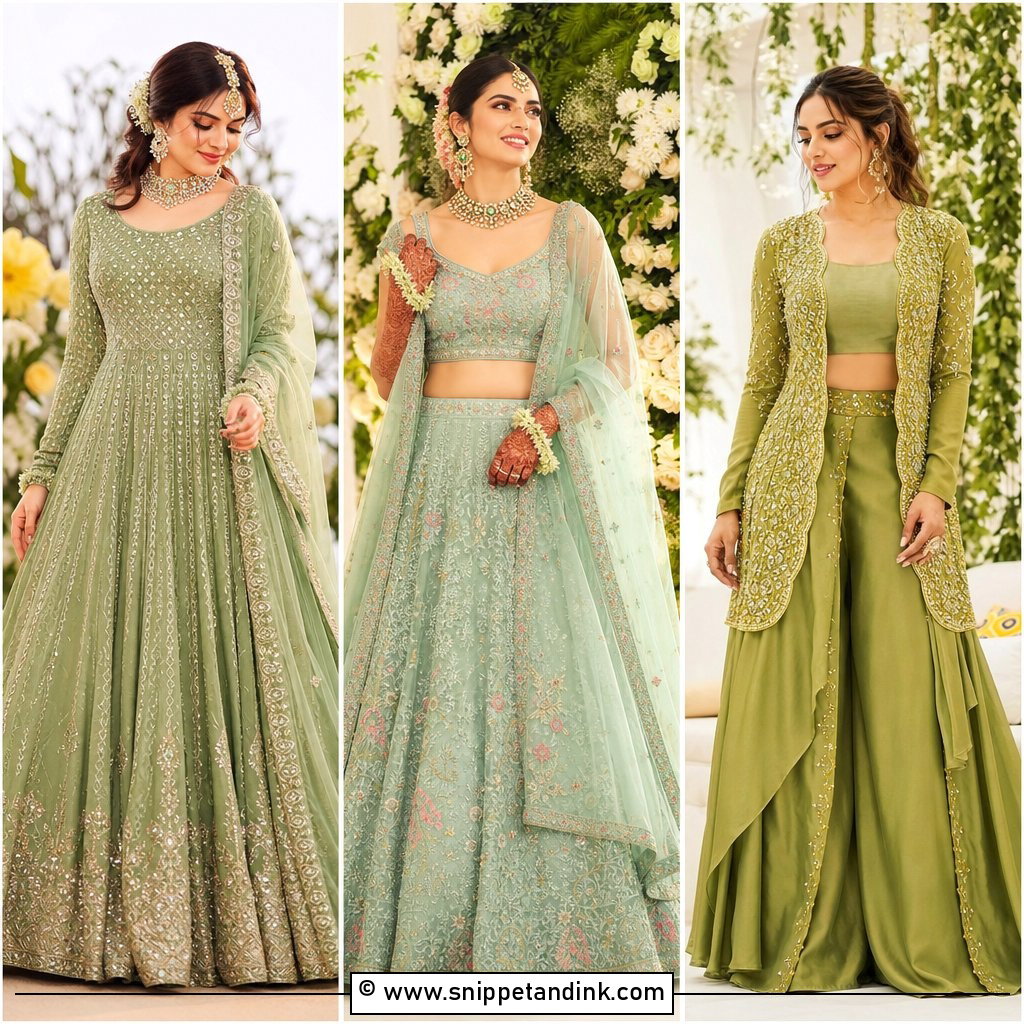
A jacket lehenga splits the outfit into layers, which makes it easy to personalize and easy to cool down in. Start with a plain yellow or green lehenga and choli, then add a sheer knee or ankle-length jacket where the floral threadwork, mirrors and gota live. With the jacket on, a dupatta is often unnecessary; skip it if your family is comfortable with that. The open front draws a long vertical line. For outdoor events, pick organza or net for the jacket, since stiff fabric across the armhole restricts the arms the moment the dancing starts.
12. Floral Bridal Mehandi Anarkali
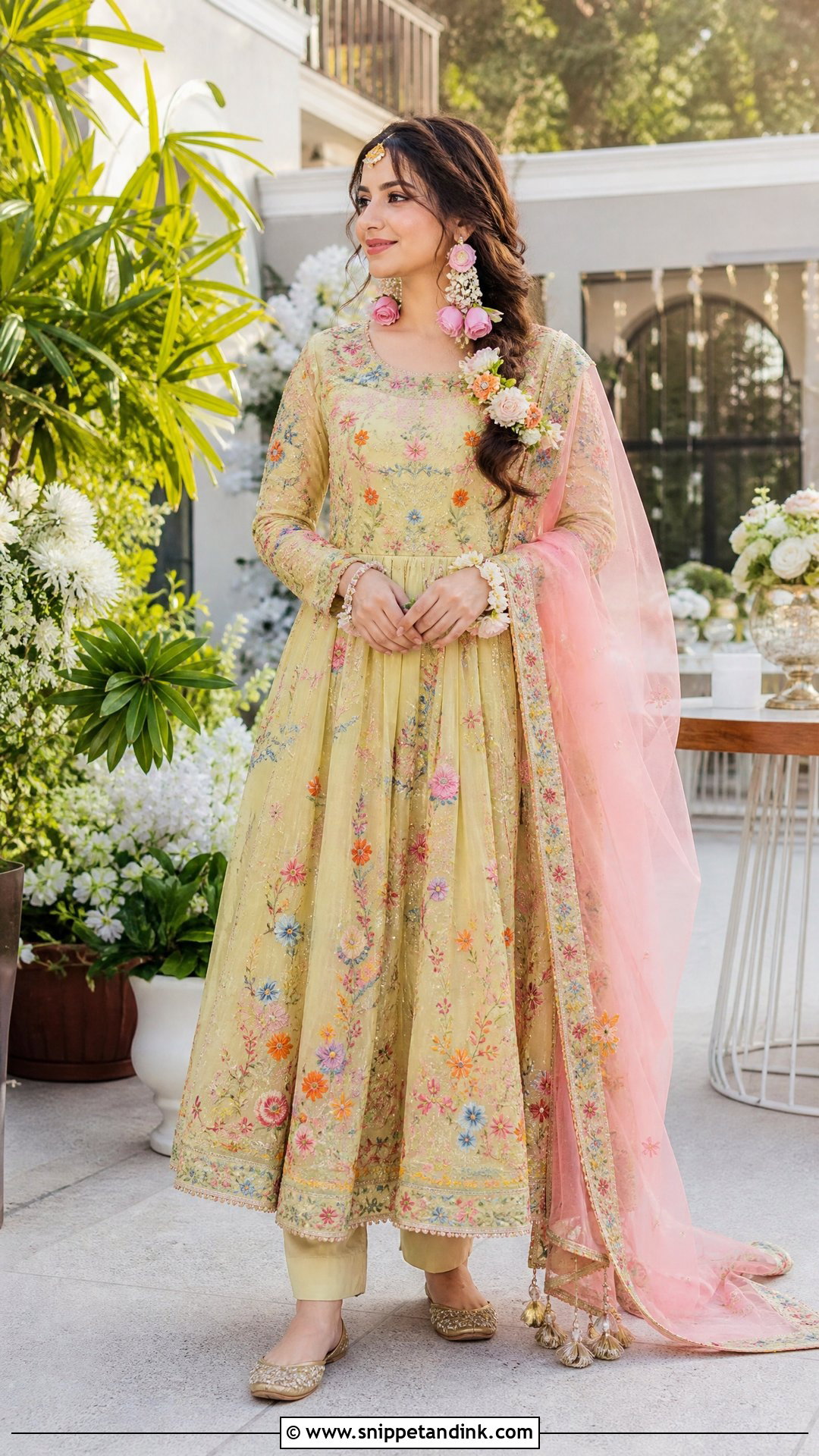
Floral threadwork softens the whole look compared with heavy geometric embroidery. A floral Anarkali on a yellow, ivory or pale green base, covered with pink, orange and blue flowers, flows from a fitted bodice with no waistband to dig in. Narrow trousers, a pink organza dupatta and gold juttis complete it, with fresh flower earrings and a light tikka. It suits lawns, courtyards and smaller home celebrations. Check two things at the fitting: the hem must clear the floor, and the sleeves must let you lift your arms to shoulder height.
13. Turquoise Bridal Mehandi Sharara
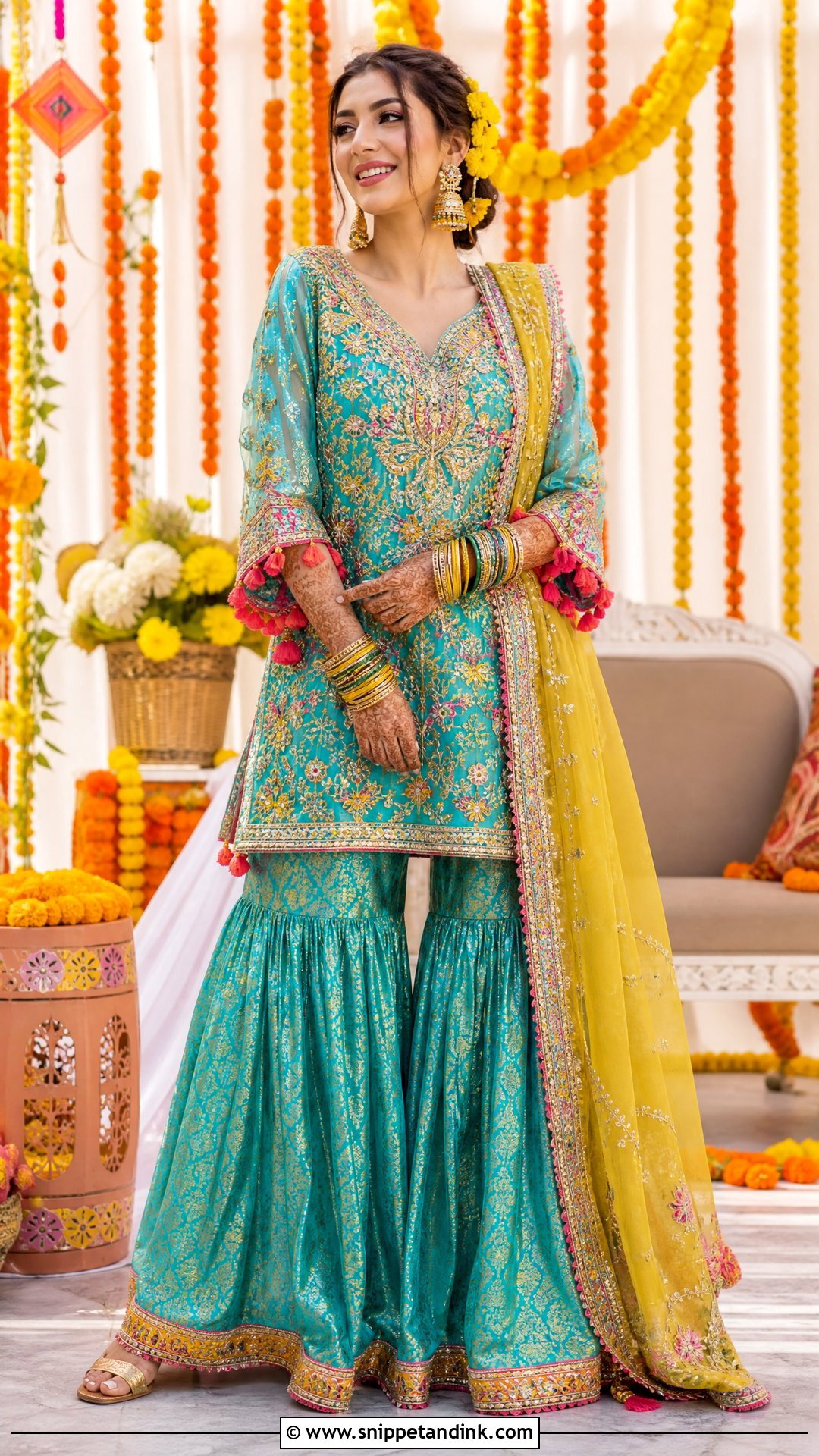
Turquoise separates the bride from orange and yellow decor, which a yellow outfit cannot do. A short turquoise kameez with a matching sharara, trimmed in gold gota and pink-and-yellow thread, keeps it festive. A marigold dupatta reconnects the look to the traditional ceremony colors, and pink tassels at the cuffs or waistband add play. Keep the sharara fabric fluid; a stiff turquoise silk tends to look flat in photographs. A bride wanting restraint can limit embroidery to the neckline, cuffs and lower panels.
14. Hot Pink Bridal Mehandi Gharara
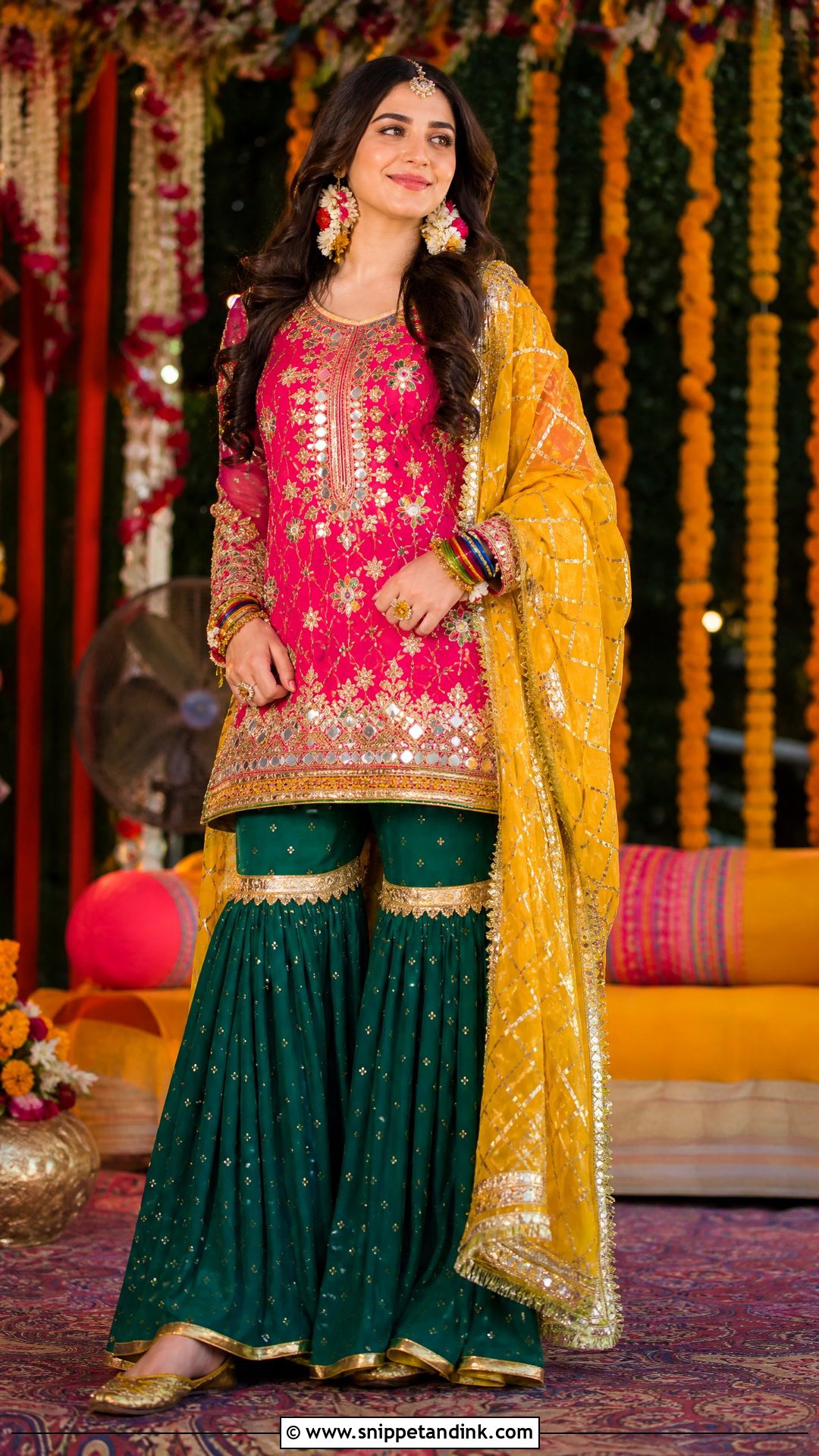
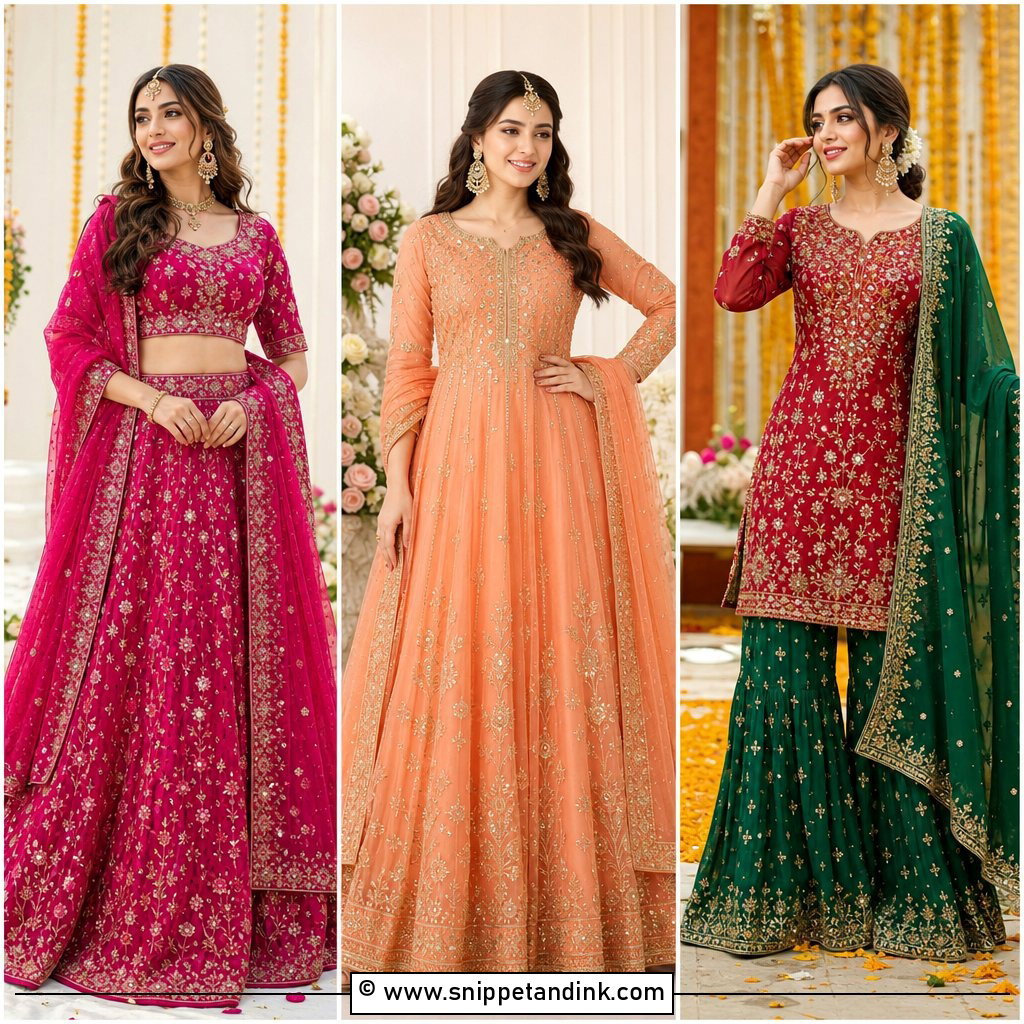
Hot pink suits a bride who does not want to be in yellow at all. Pair a short hot-pink kameez with an emerald or orange gharara and repeat the same gold gota on both pieces so the contrast feels planned. A yellow dupatta over one shoulder brings the traditional shade back near the face. Concentrate embroidery at the neckline, sleeves and gharara flare; spread evenly, it muddies the bold colors. Choose one metal for all jewelry here. Beaded tassels are fine for a maximalist; otherwise leave them off.
15. Lavender Bridal Mehandi Lehenga
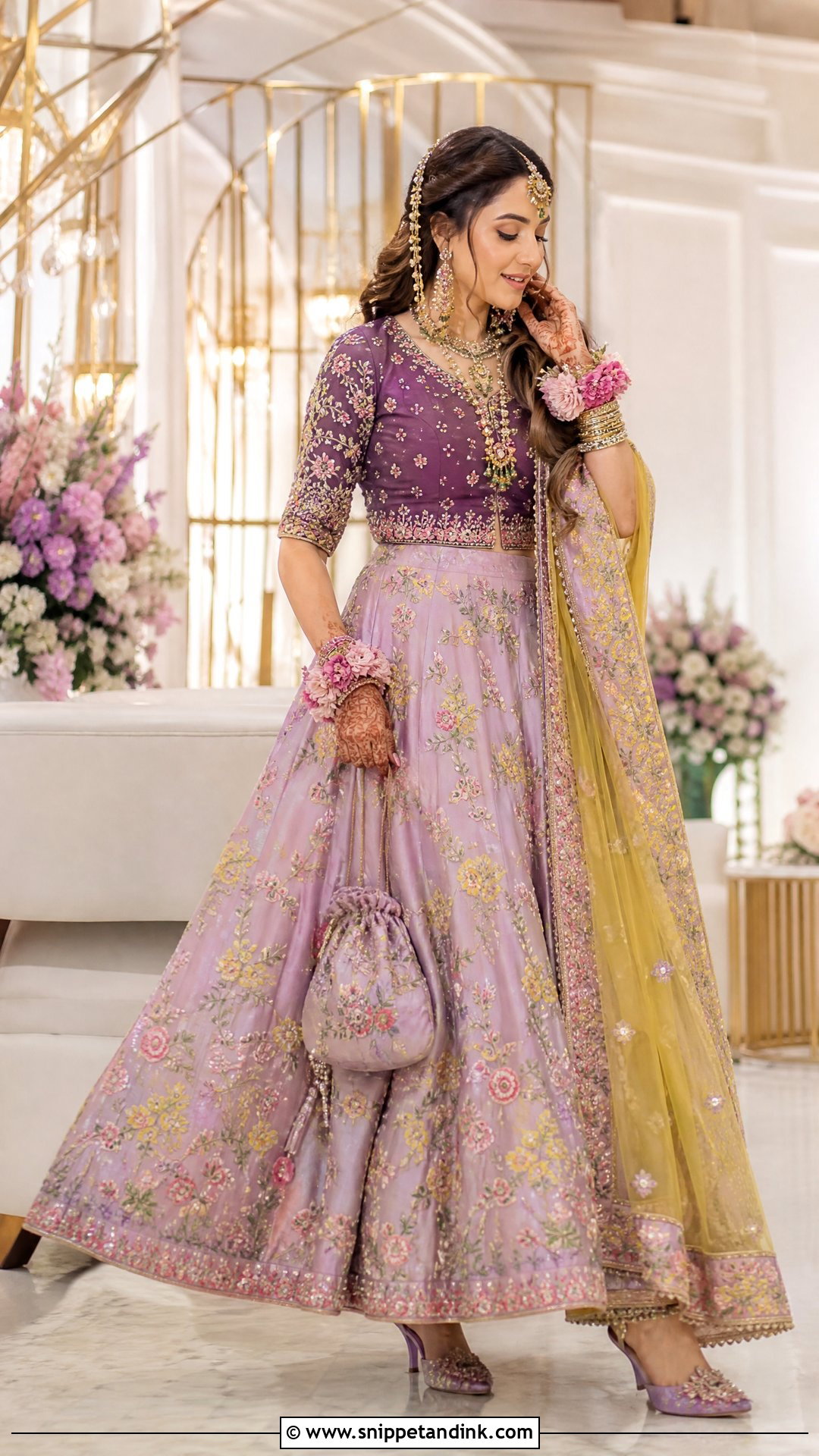
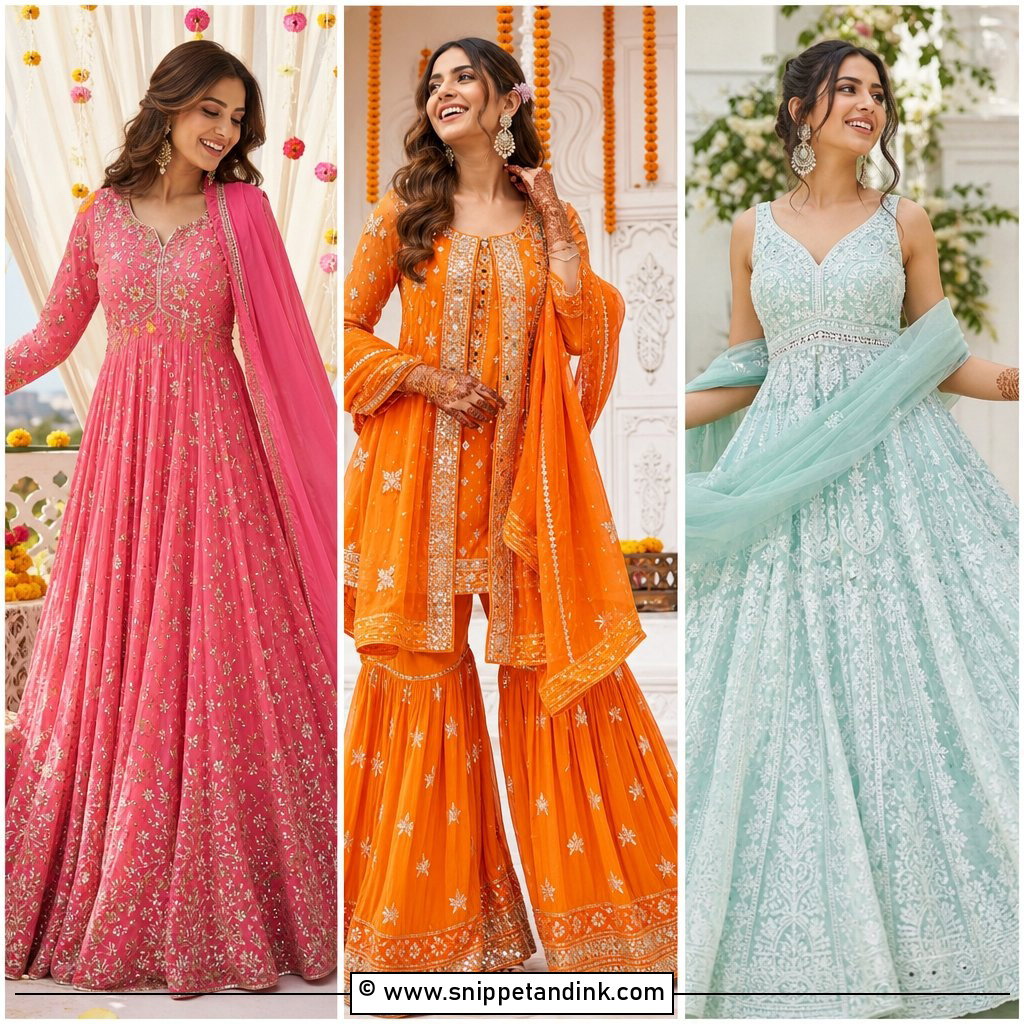
Lavender is the gentlest color on this list, and it needs help to read as Mehandi rather than reception. I add at least one strong contrast: a lavender lehenga with yellow, green and pink floral embroidery, a matching or deep purple choli, and a sheer yellow dupatta edged in lavender gota. Silver-gold jewelry suits the cool base. Indoor daytime events flatter it most; under yellow tungsten bulbs lavender can turn greyish, so look at the fabric under warm light before ordering. Vertical motifs and a defined waistband help lengthen the silhouette.
16. Red And Yellow Bridal Mehandi Dress
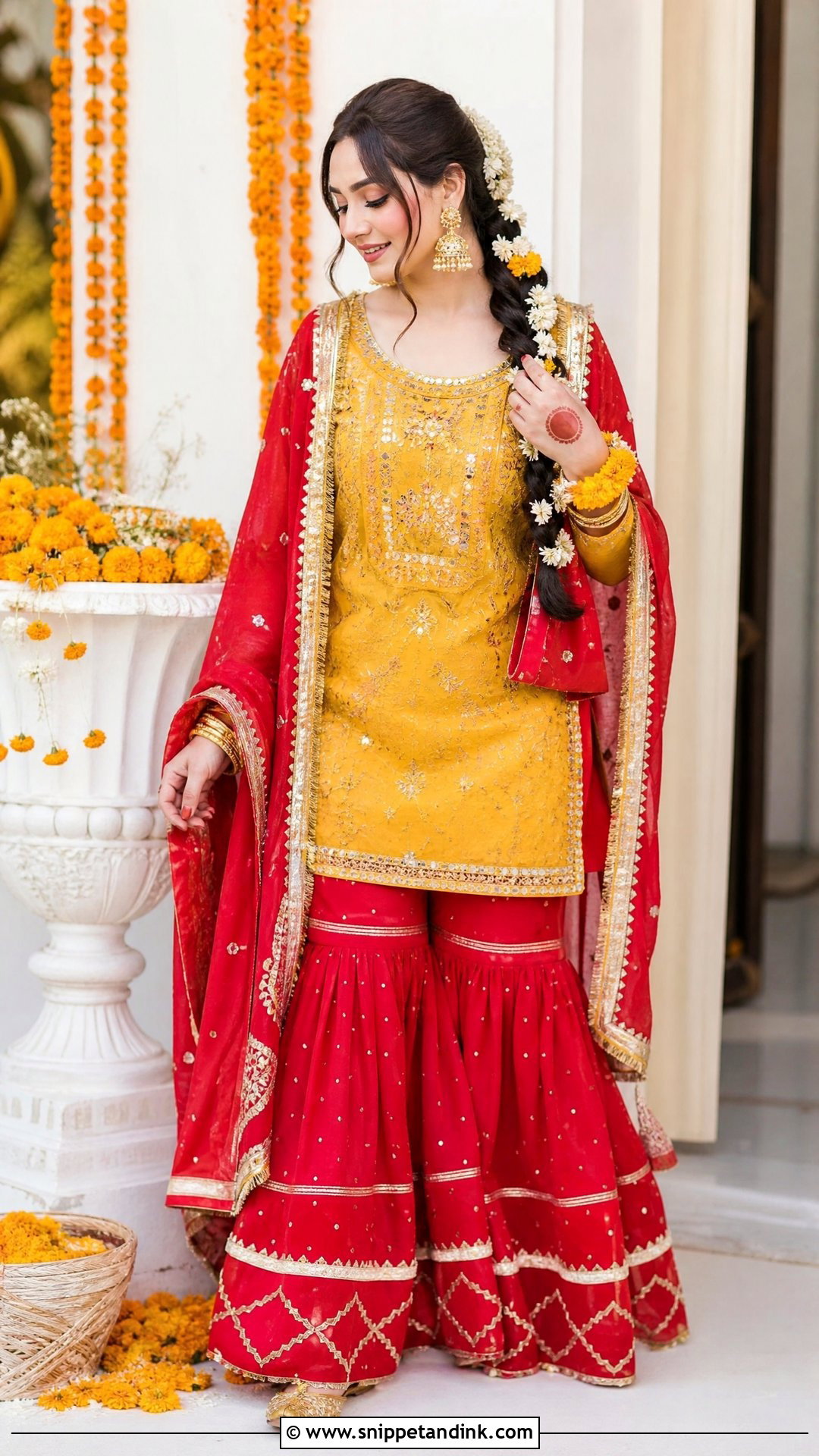
Red belongs to the wedding day in most Pakistani families, so a red Mehandi outfit has to look deliberately playful. Pair a red lehenga or gharara with a yellow short shirt and use gold gota and green thread across both. Choose tassels, mirrors and colorful embroidery rather than dense zardozi, which instantly reads as baraat. Drape the light red dupatta over one arm to keep the yellow bodice visible and the hands free. Reversing it, yellow skirt with a red choli, gives a brighter daytime version.
17. Ivory Multicolor Bridal Mehandi Lehenga
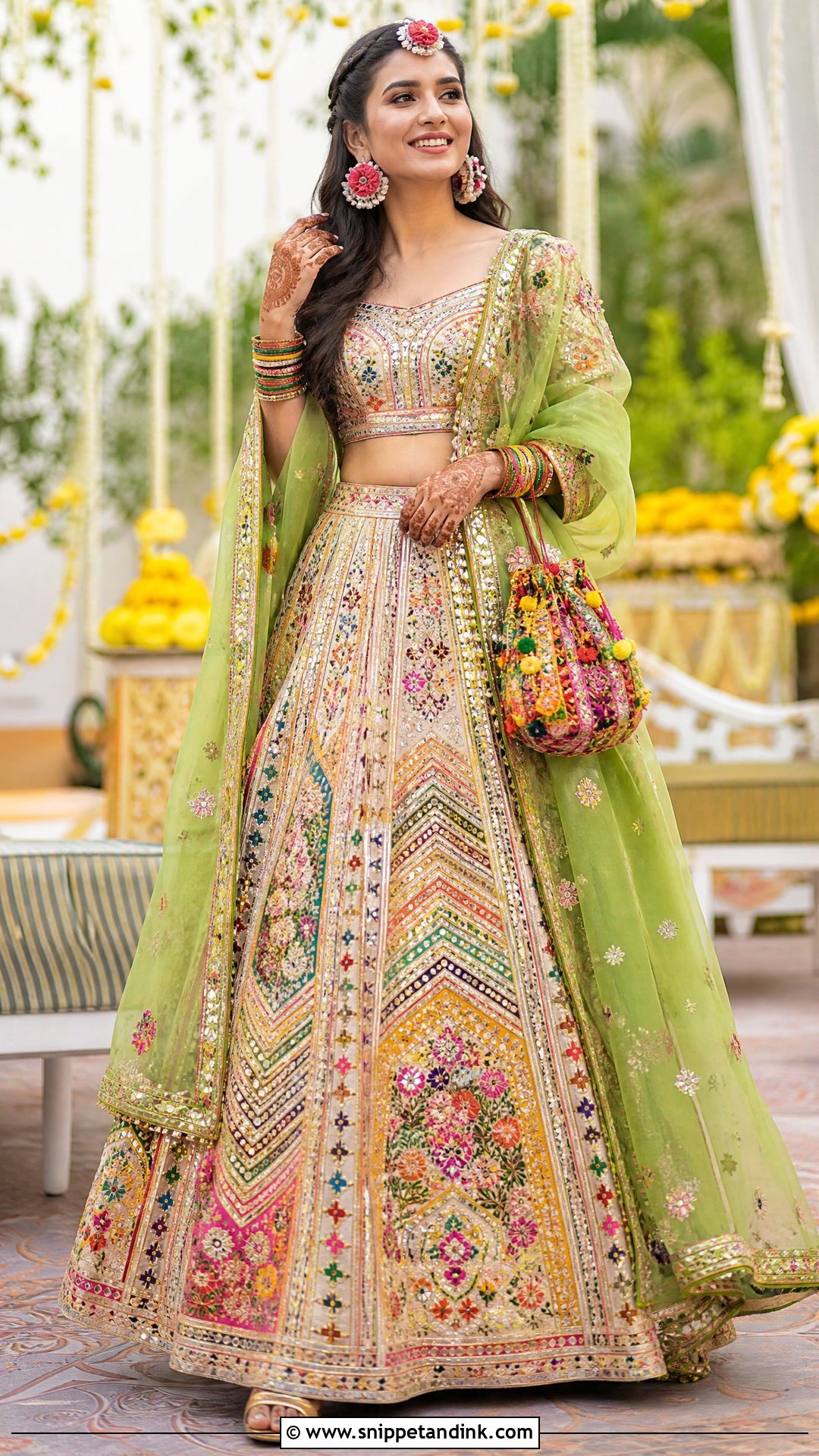
An ivory base lets colorful Mehandi embroidery stand out against busy decor without clashing. Geometric panels, floral threadwork and mirrors in strong colors over ivory, with restrained gold, stay distinctive on a crowded stage. Bring color back through a green, pink or yellow dupatta and multicolor bangles. Of every outfit here, this is the one most at risk from henna paste, oil and spilled food, so it must be fully lined and I keep the bride seated on a covered cushion. A colored waistband or border adds definition between blouse and skirt.
18. Parrot Green Bridal Mehandi Pishwas
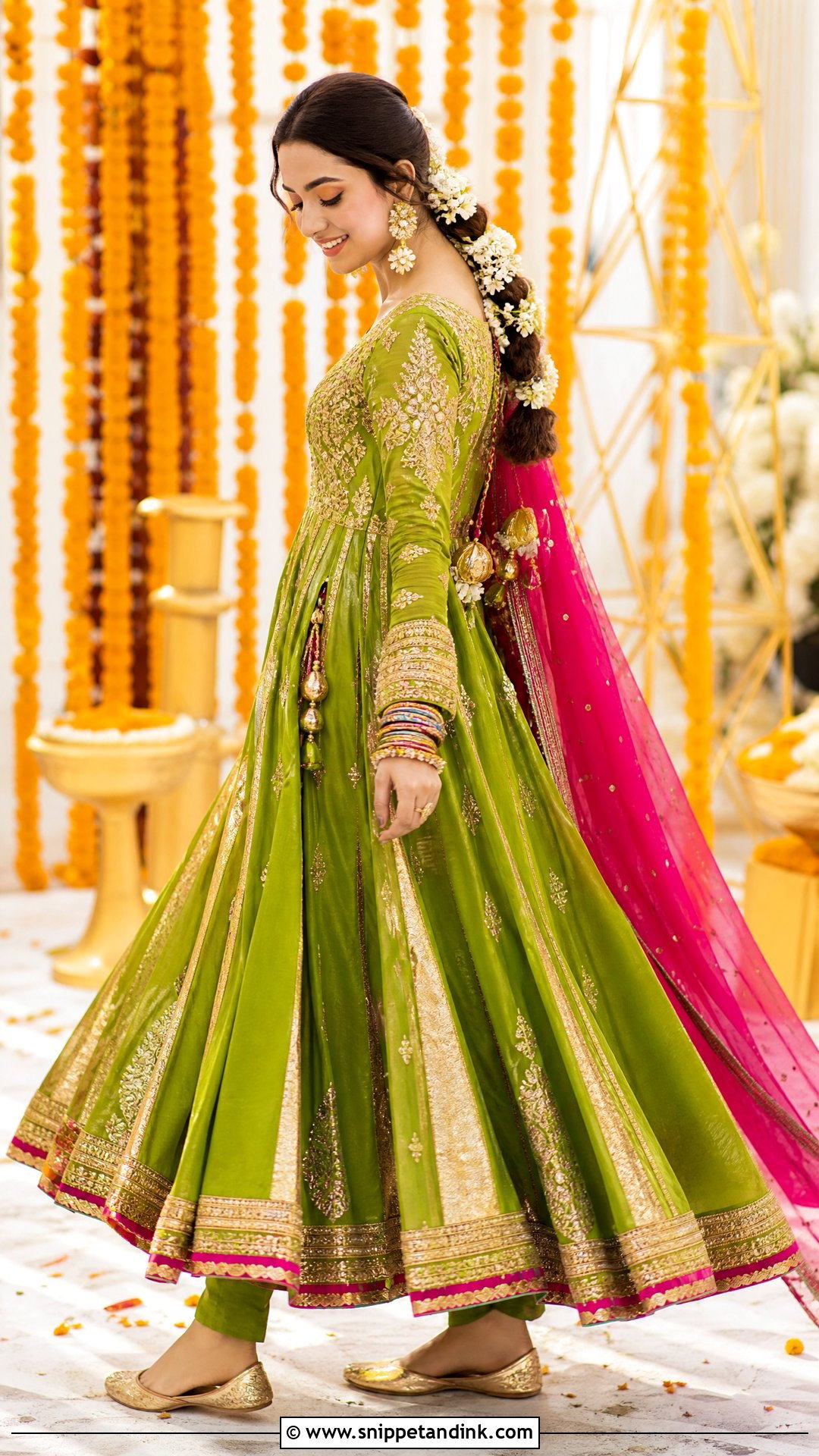
Parrot green is strong enough that the accessories have to step back. A full-length pishwas with gold gota along the panels and pink, yellow and orange embroidery at the bodice and cuffs gives plenty of color on its own. Add a hot-pink dupatta, gold khussas and jasmine in a braid, then stop. Petite brides do better with narrower panels and smaller motifs; taller brides can carry a fuller skirt. The bodice has to be fitted close, otherwise the flare looks like extra fabric rather than shape.
19. Dhoti Pants Bridal Mehandi Outfit
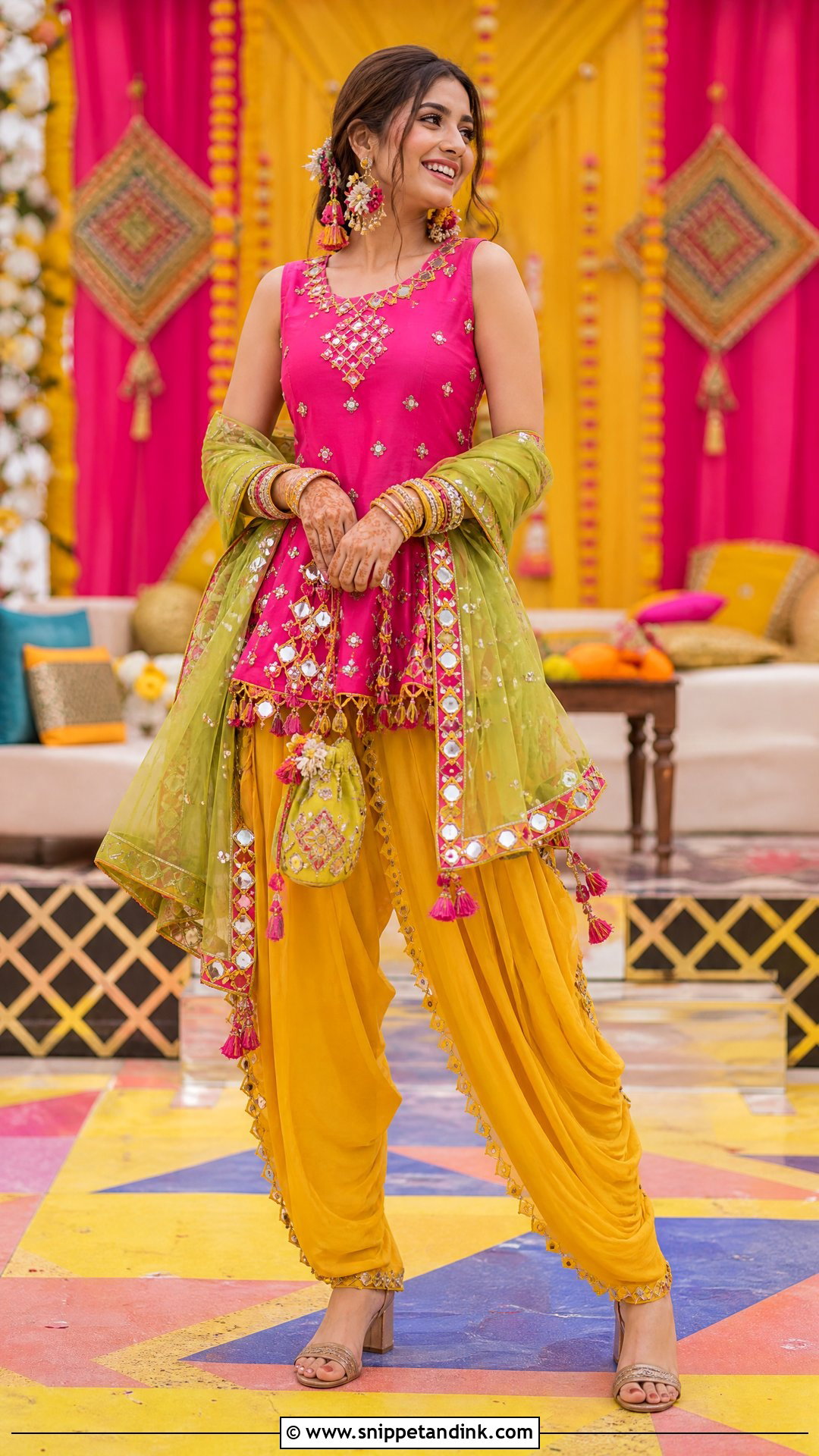
Dhoti pants depend entirely on tailoring; the drape needs to be pleated and stitched so it holds, or it slips and bulks around the hips by midnight. Pair draped dhoti pants in yellow, green or orange with a hot-pink embroidered short top or structured peplum. Mirror work, gota or tassels keep it tied to Pakistani craft. Pin the dupatta at one shoulder and catch it near the wrist so the draped pants stay visible. Block heels are steadier than stilettos for a dance-heavy night.
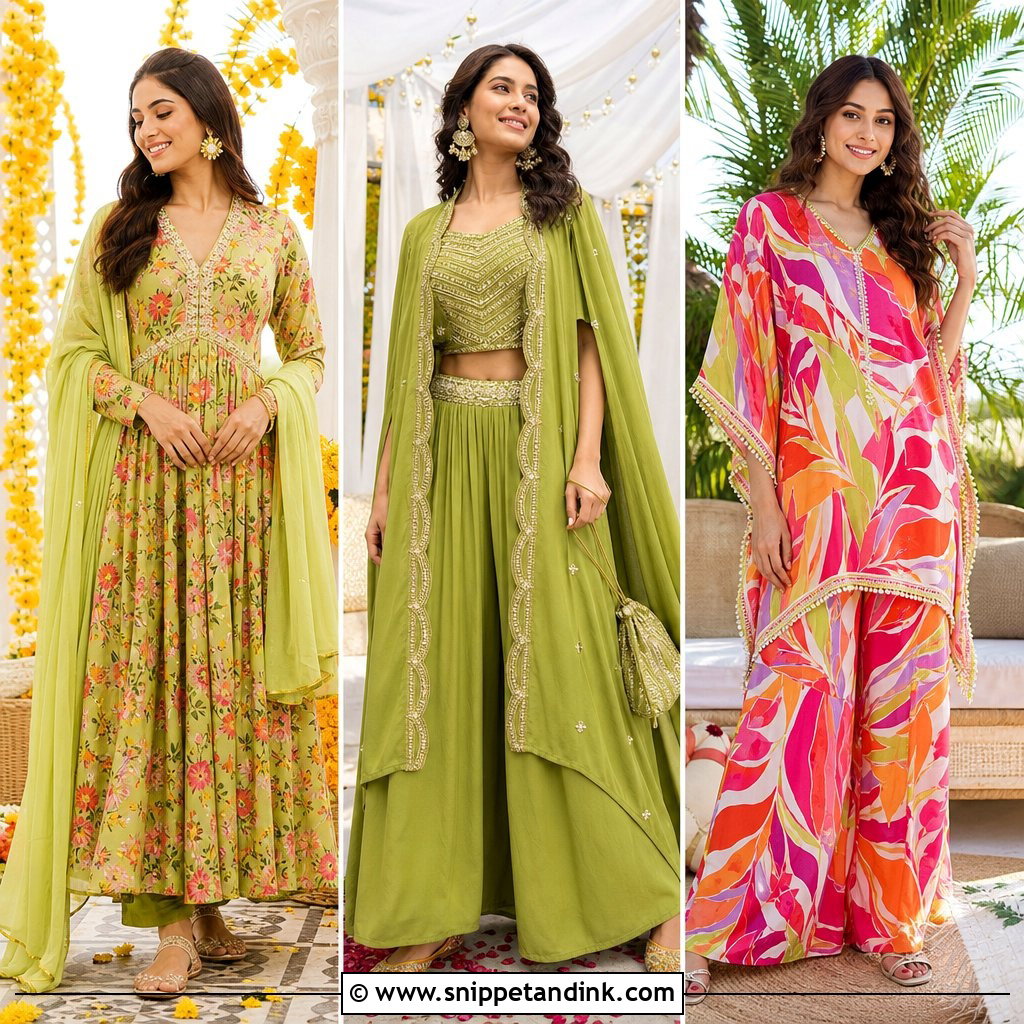
20. Velvet Choli Bridal Mehandi Lehenga
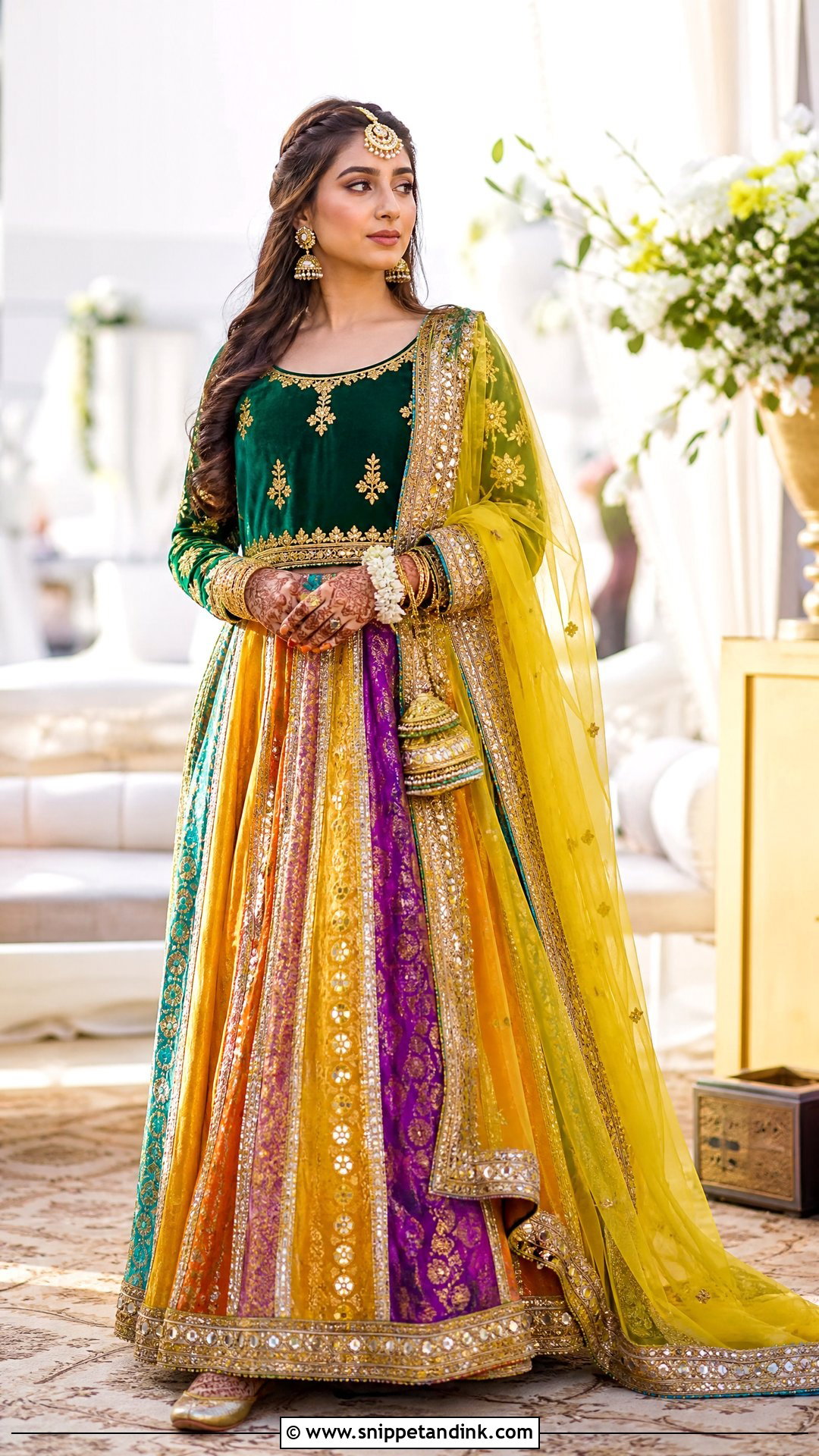
Velvet is warm, so I only use it for winter or evening functions, and only on the choli. A velvet choli in emerald, magenta or deep purple over a lighter yellow or multicolor silk lehenga gives depth without making the whole outfit heavy. Gold embroidery at the neckline and sleeves links it to the gota on the skirt. Full sleeves suit outdoor winter events but sit right where henna goes, so get the mehndi done before the blouse goes on or choose elbow-length. A well-fitted velvet blouse also supports better than most fabrics.
Ordering From a Designer or Tailor Months Out
Hand-embroidered Mehandi outfits take time. Gota, mirror and dabka work are done by hand, and busy workshops in wedding season often quote two to three months for a custom piece. Timelines vary widely, so ask for a written delivery date, not an estimate.
A sensible order of events
- Settle the color by looking at real fabric under warm evening light, not a screen.
- Order with your measurements taken by one person, and ask the maker to leave extra seam allowance at the waist and side seams.
- Plan at least one fitting with the shoes and the undergarments you will actually wear.
- Have the finished outfit in hand three to four weeks before the event, so there is time for a final alteration.
If the outfit is being made in Pakistan and shipped abroad, add the shipping time and the possibility of a customs delay on top of that. I would rather a bride receive it early and steam it than wait on a courier the week of her Mehandi. When it arrives, try on every piece, check the dupatta length against your height, and test the closures sitting down.
What Should Still Fit After Three Hours on the Stage?
Ask that question of every outfit you try. A yellow lehenga can be as memorable as a turquoise sharara or a dhoti-pants fusion look, but none of them work if the waist digs in, the dupatta keeps sliding or the sleeves smudge your henna. Prioritize a breathable lining, closures that cannot pop, a dupatta you can pin and forget, and flat or block-heeled shoes for hours of standing. Let gota, mirrors and tassels carry the festivity instead of heavy embellishment. Then pick the silhouette you feel most like yourself in; that ease shows in every photo.
You'll Like These Ideas:


Leave a Reply