
Braids are the most hard-working thing I can put in a bride’s hair. A braid is a built-in anchor: pins grip it, veils sit on it, and it keeps its shape long after loose curls have dropped. The twenty styles below run from fine fishtails and raised Dutch braids to braided buns, crowns and stitch braids. Each one asks something different of your hair, so I’ve added what it needs, how I build it, and where it tends to go wrong.
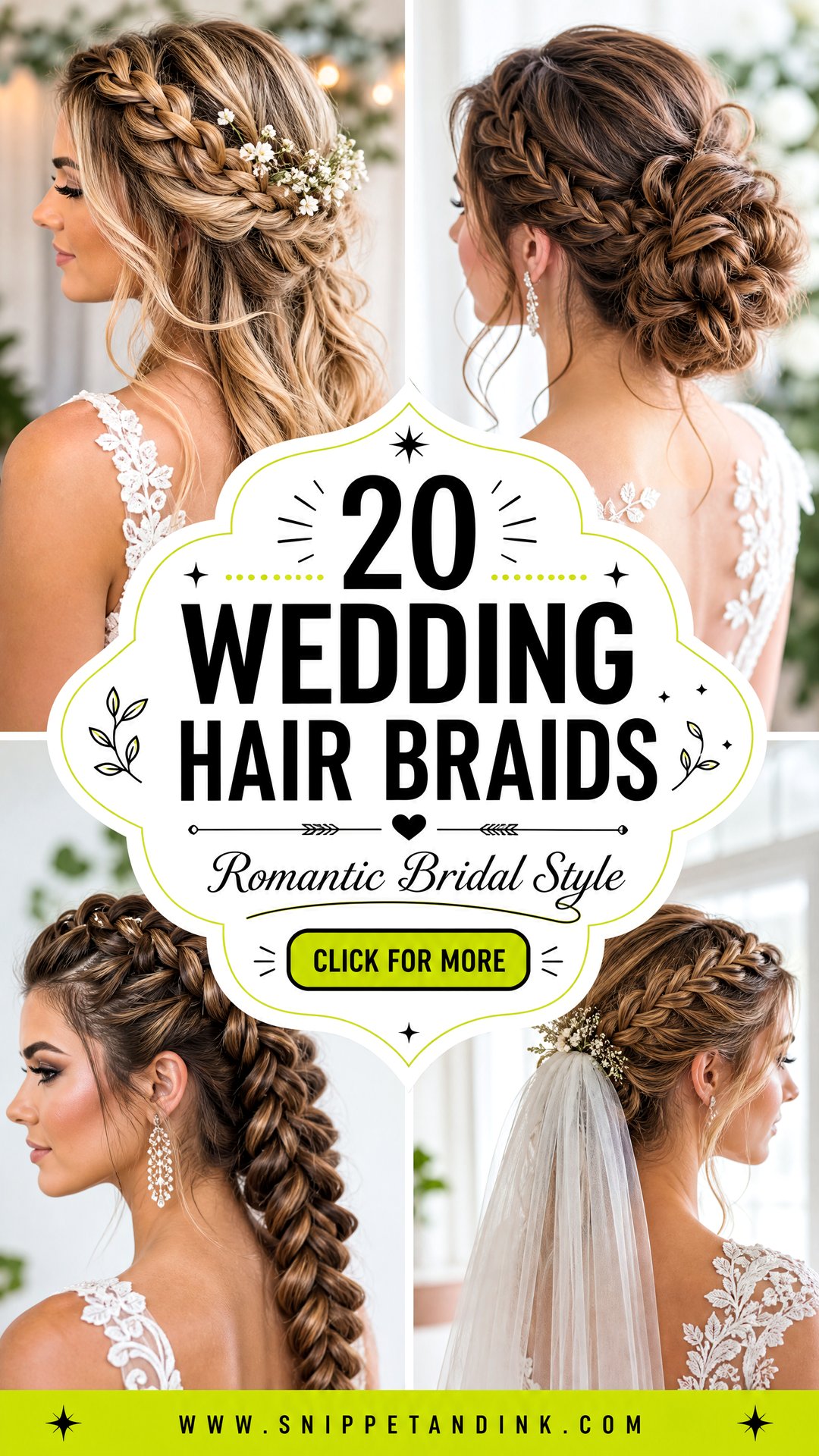
Fine Hair, Layers and Silky Hair All Braid Differently
Most bridal braid photos are taken on thick, long hair, often with extensions. If your hair isn’t like that, a braid can still work, but it needs a different approach.
Fine or thin hair
I prep with dry shampoo or texture spray so the hair has grip, then pull the braid apart gently once it’s tied. That pulling, sometimes called pancaking, can almost double how wide a braid looks. Clip-in extensions matched to your color add real fullness, especially for crown braids and braided buns.
Layered hair
Short layers poke out of a braid, especially near the face and the nape. A little smoothing cream or pomade on each section before braiding keeps them in. Fishtails and rope braids hide layers better than a three-strand braid because the sections are smaller.
Very silky or freshly washed hair
Clean, conditioned hair slips. I’d ask you to wash the day before, not the morning of, and skip heavy conditioner on the lengths. If your hair is still slippery, a texture spray gives the braid enough friction to hold.
1. Fishtail Braid Wedding Hairstyle
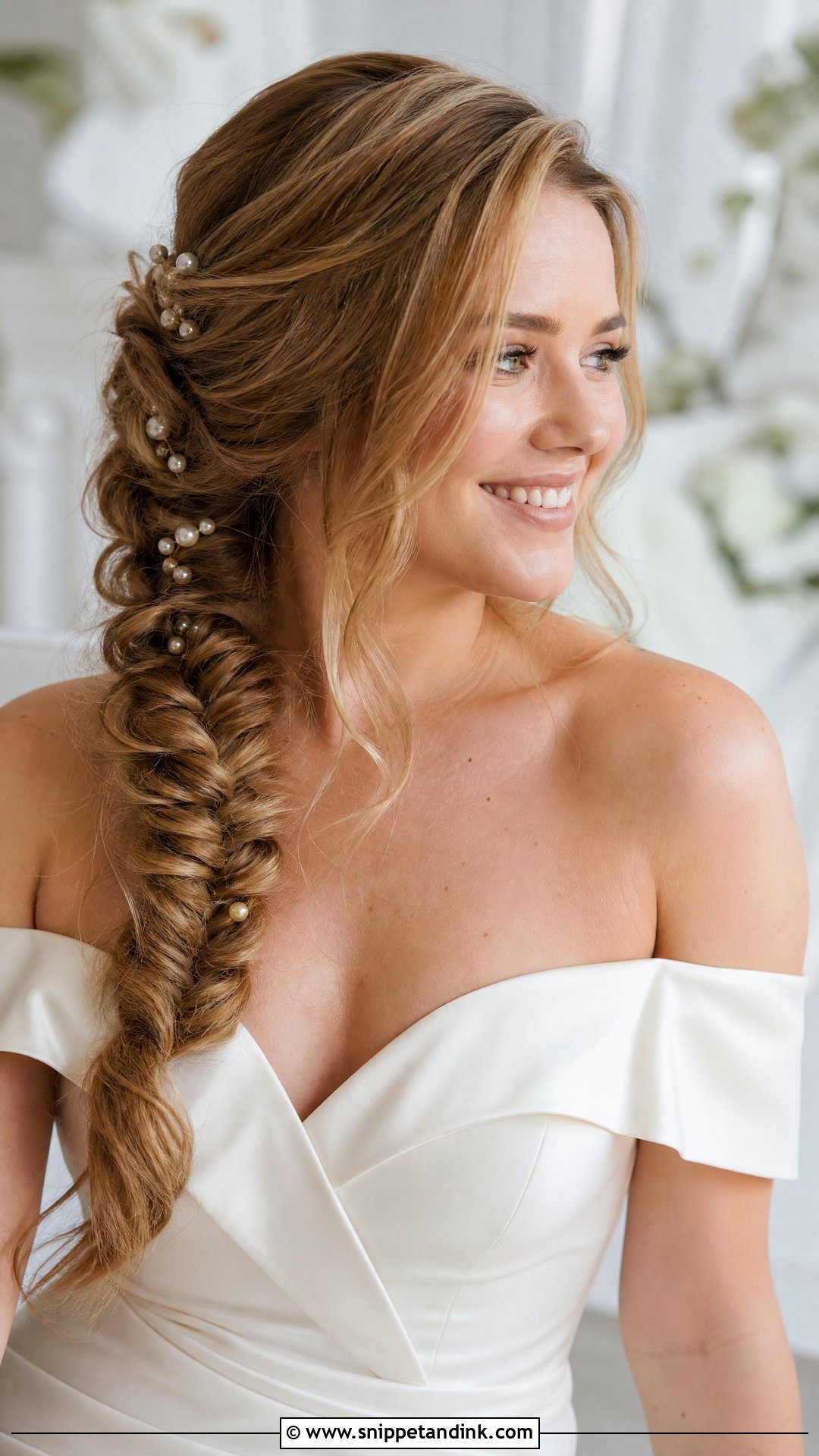
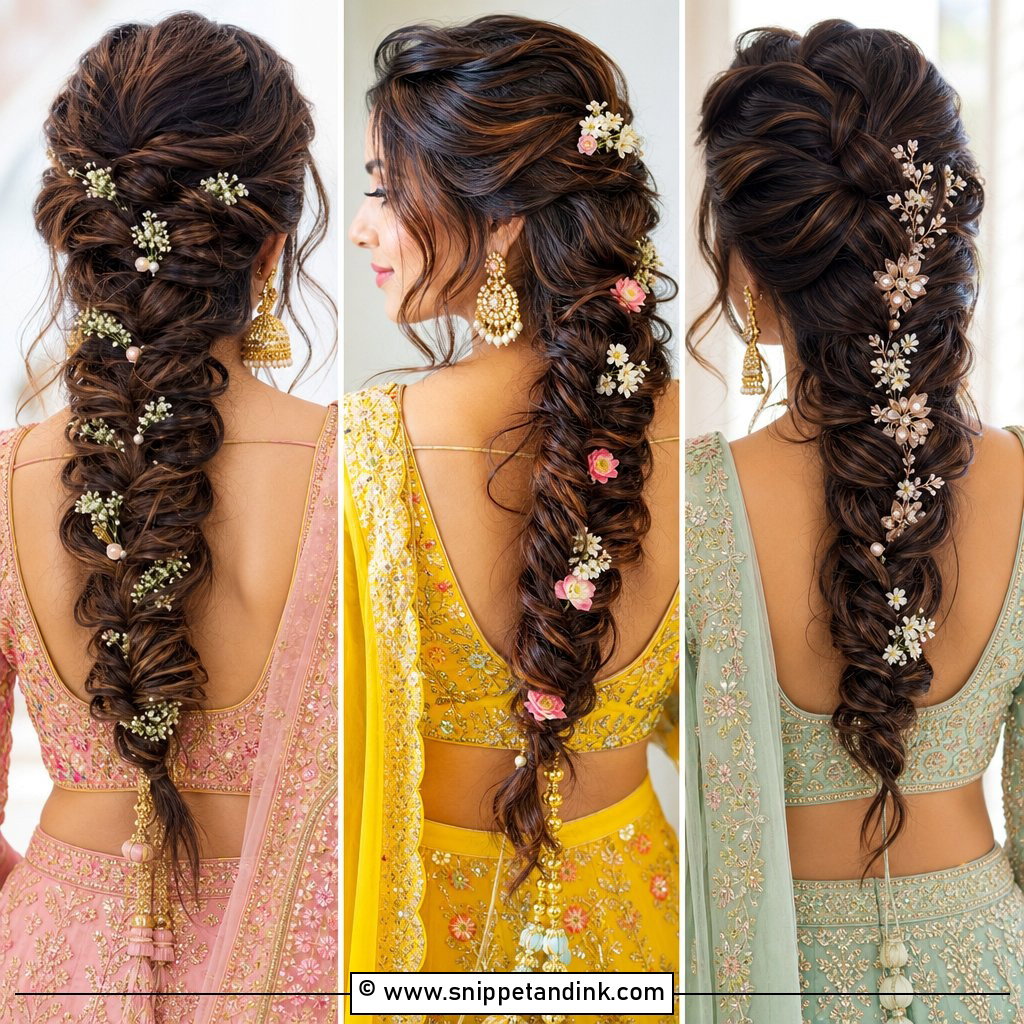
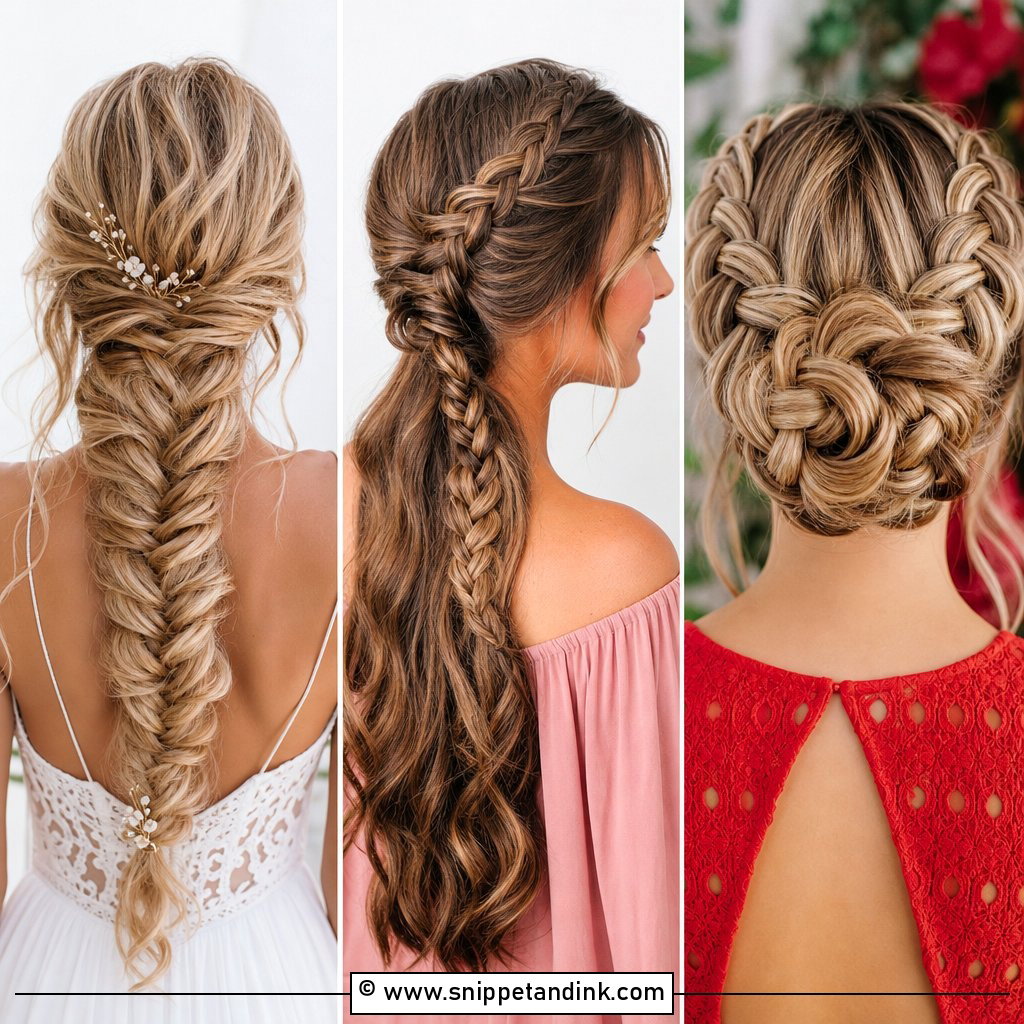
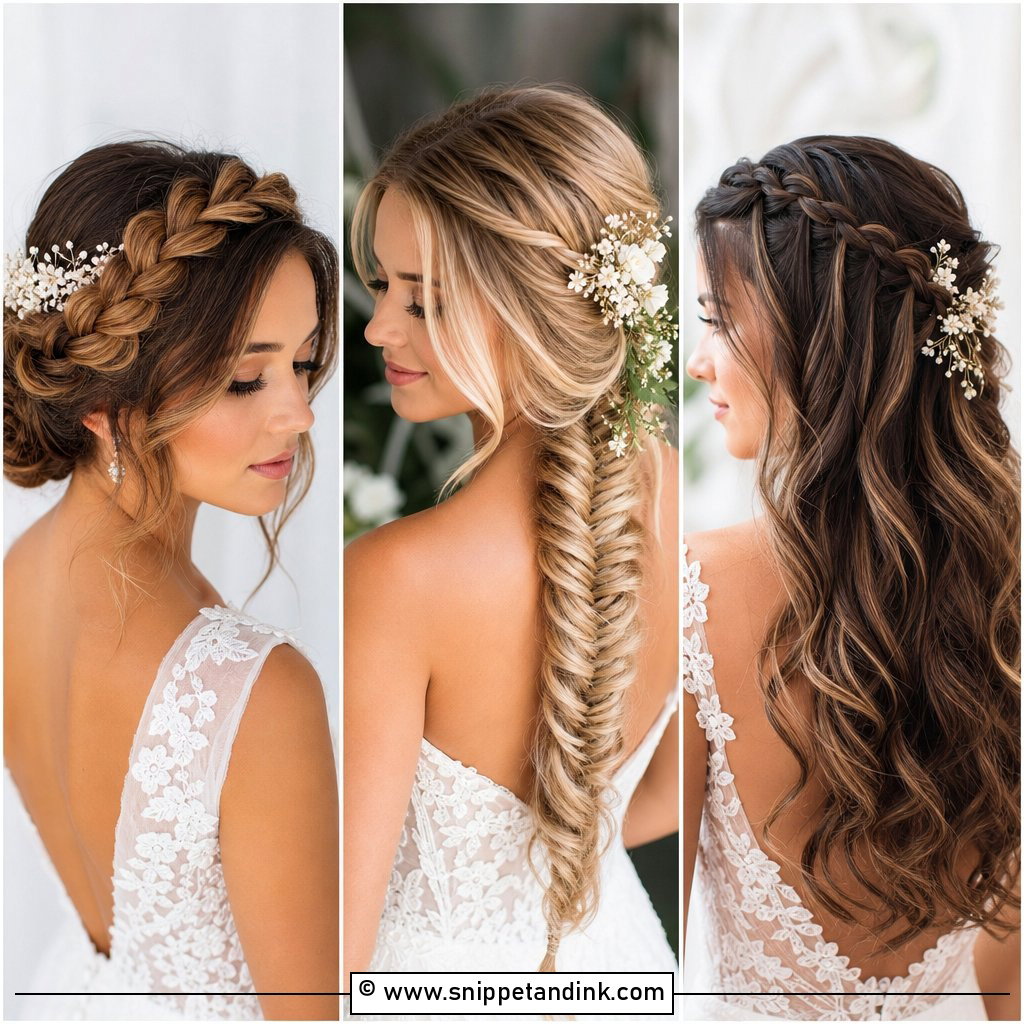
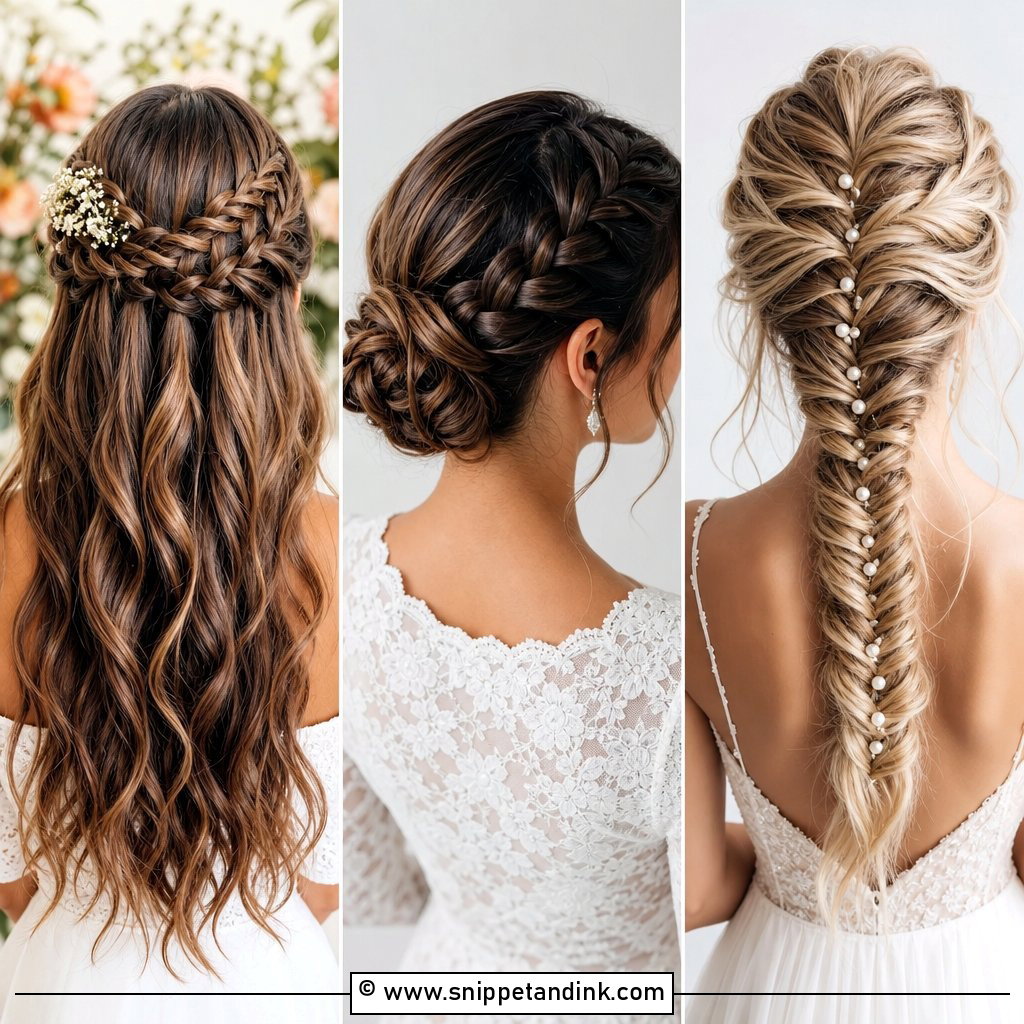
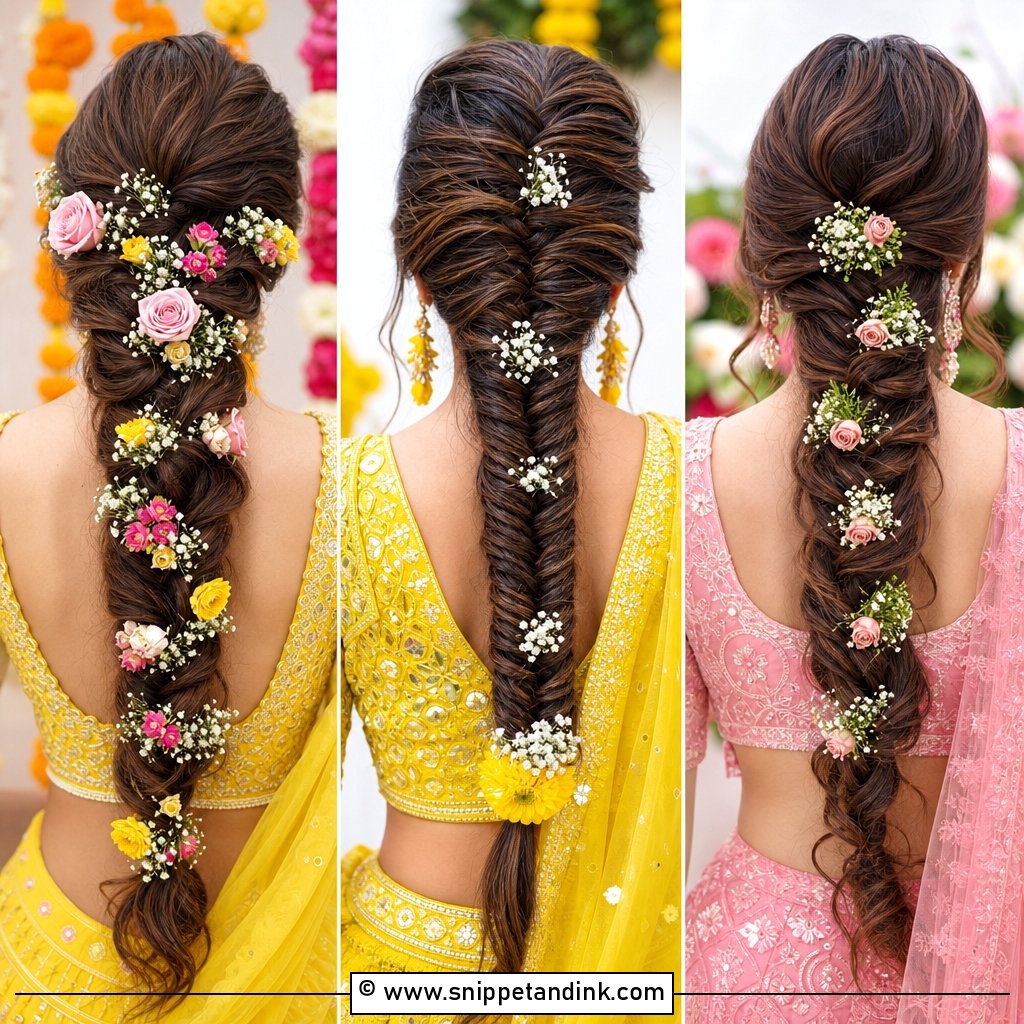
A fishtail is only two sections, with a thin strand crossed from the outside of one to the other, over and over. Those thin strands are why it looks so intricate. The thinner you take them, the finer the pattern, but on a long braid that means a lot of crossings, so allow extra chair time. I’d keep this one to medium and long hair. Once it’s tied, I pull the edges out gently to widen it, then slide pearls or baby’s breath into the gaps along its length. Worn over one shoulder or tucked into a loose updo, it holds well.
2. Dutch Braid Bridal Updo
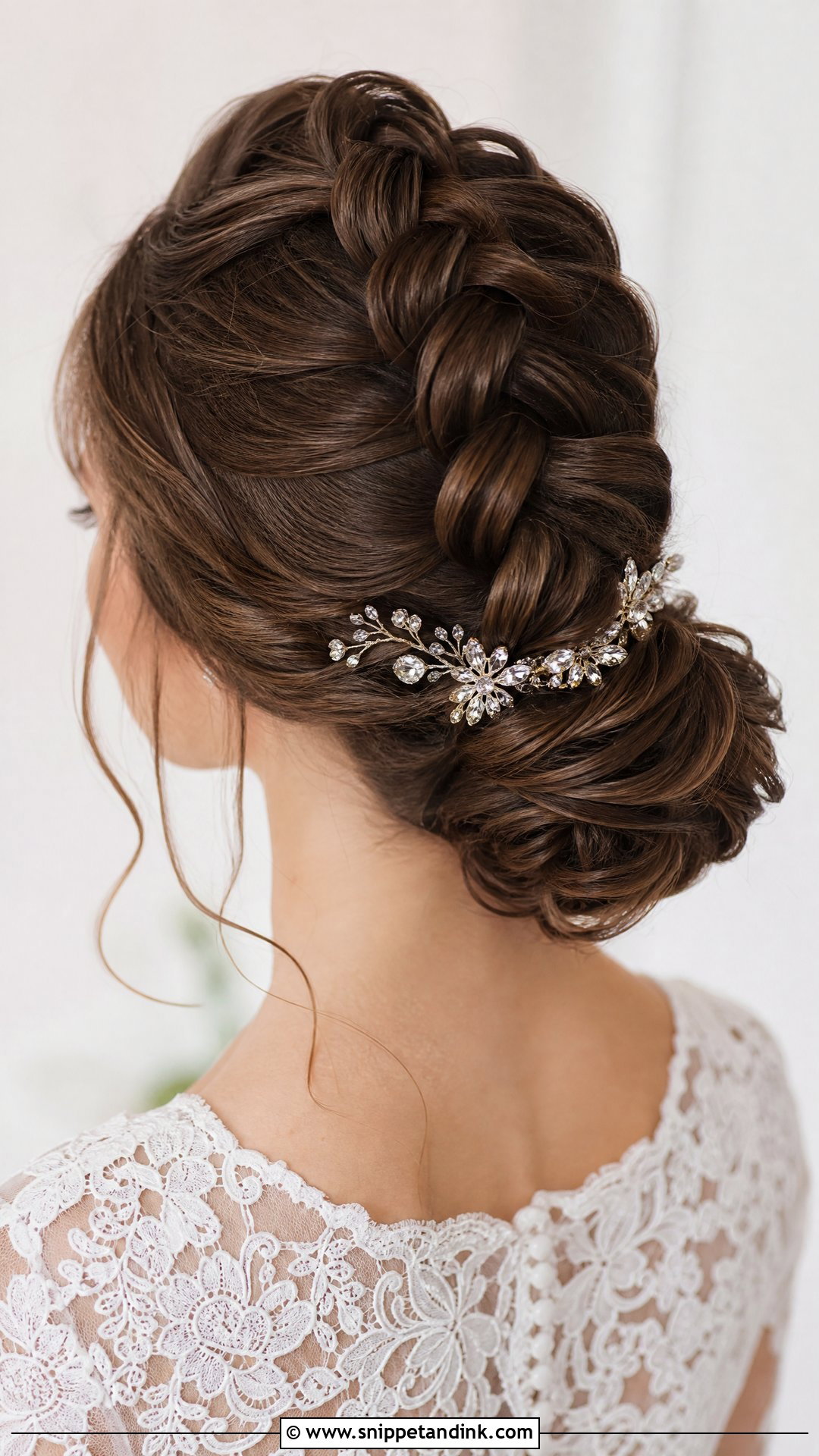
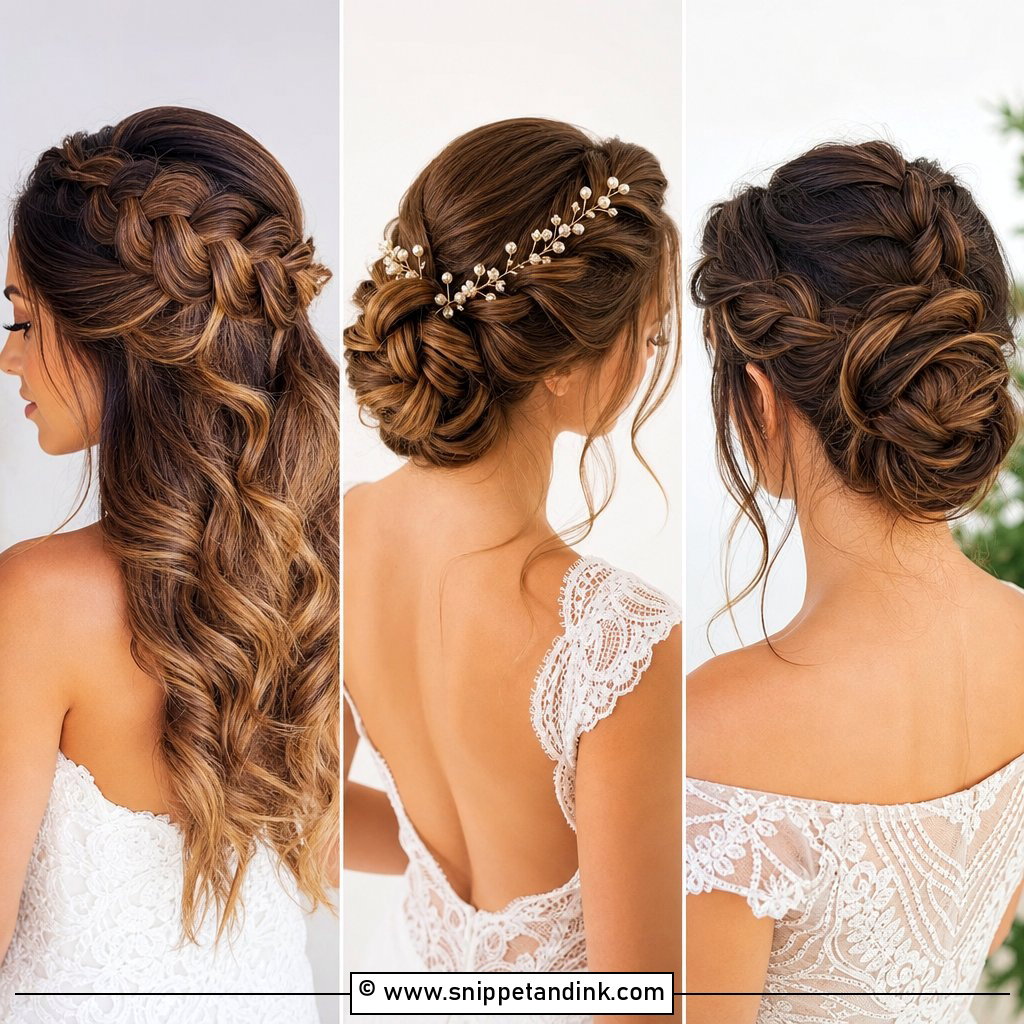
A Dutch braid crosses each section under rather than over, so the braid sits raised on top of the hair instead of lying flat. That 3D texture is the point. One thick braid down the center reads bold; two meeting in a low bun reads neater. Because the braid sits proud, it catches light and shadow and shows clearly in photographs from every side. It’s one of the firmest bases I can give a bride for a long day. A sparkly pin or a few fresh flowers at the base is enough decoration.
3. Waterfall Braid for Brides
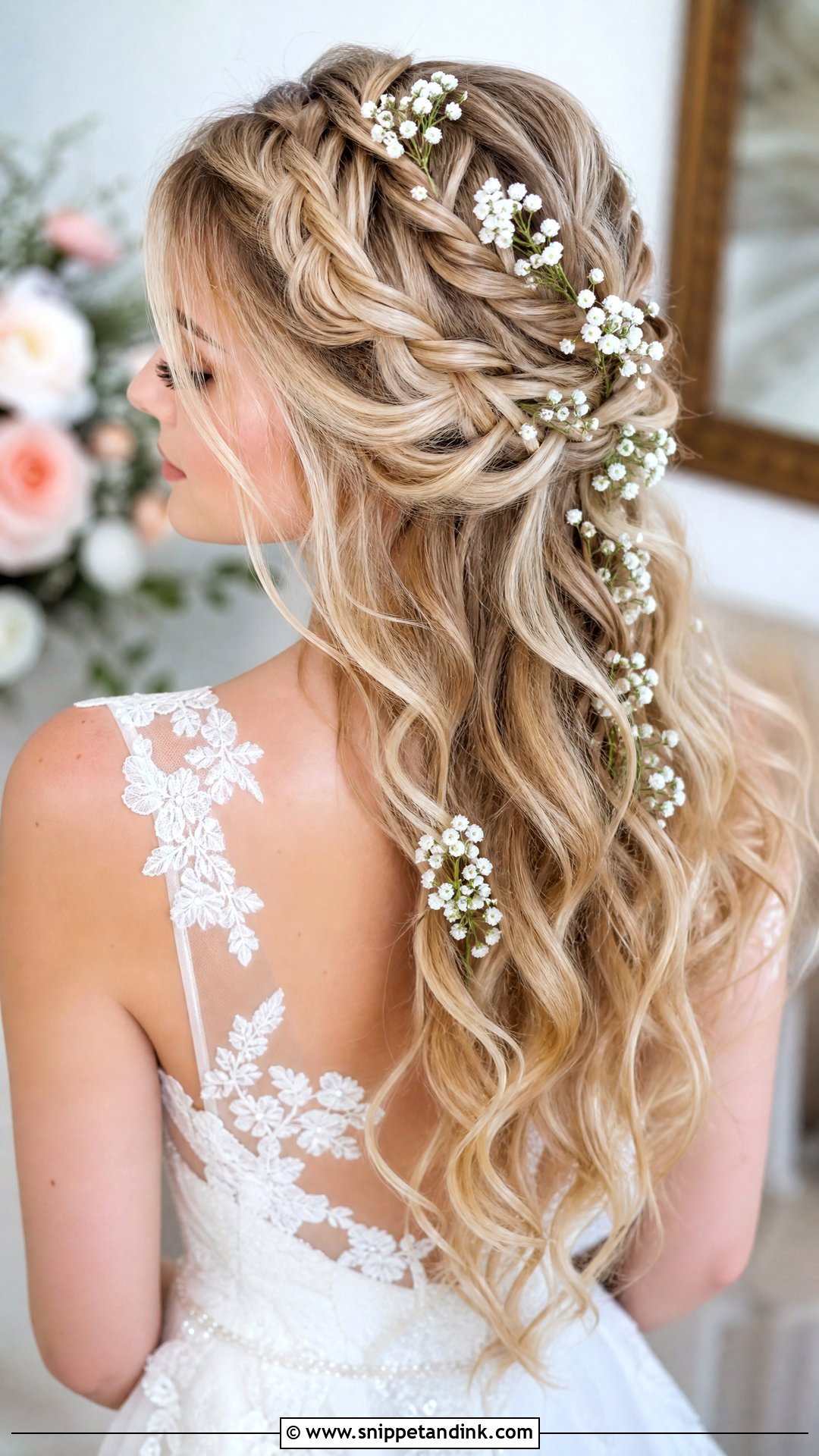
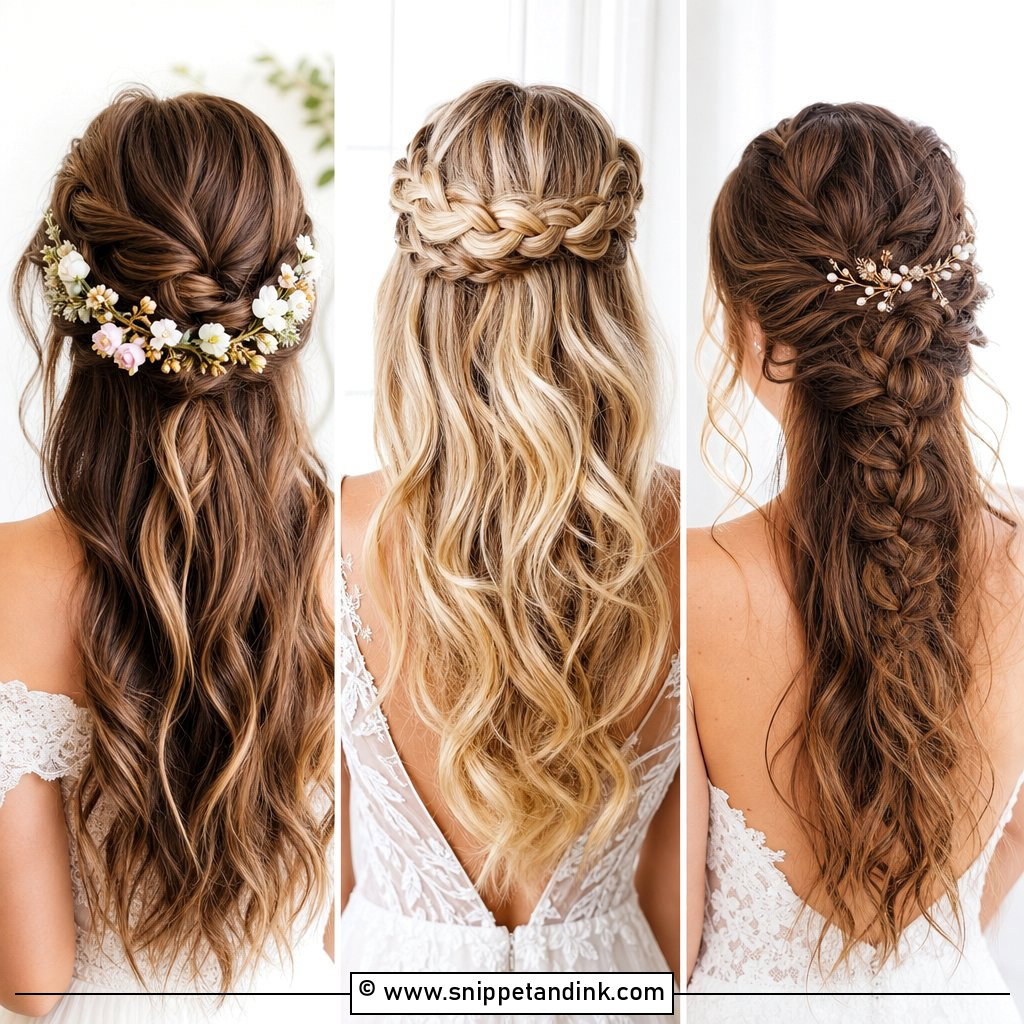
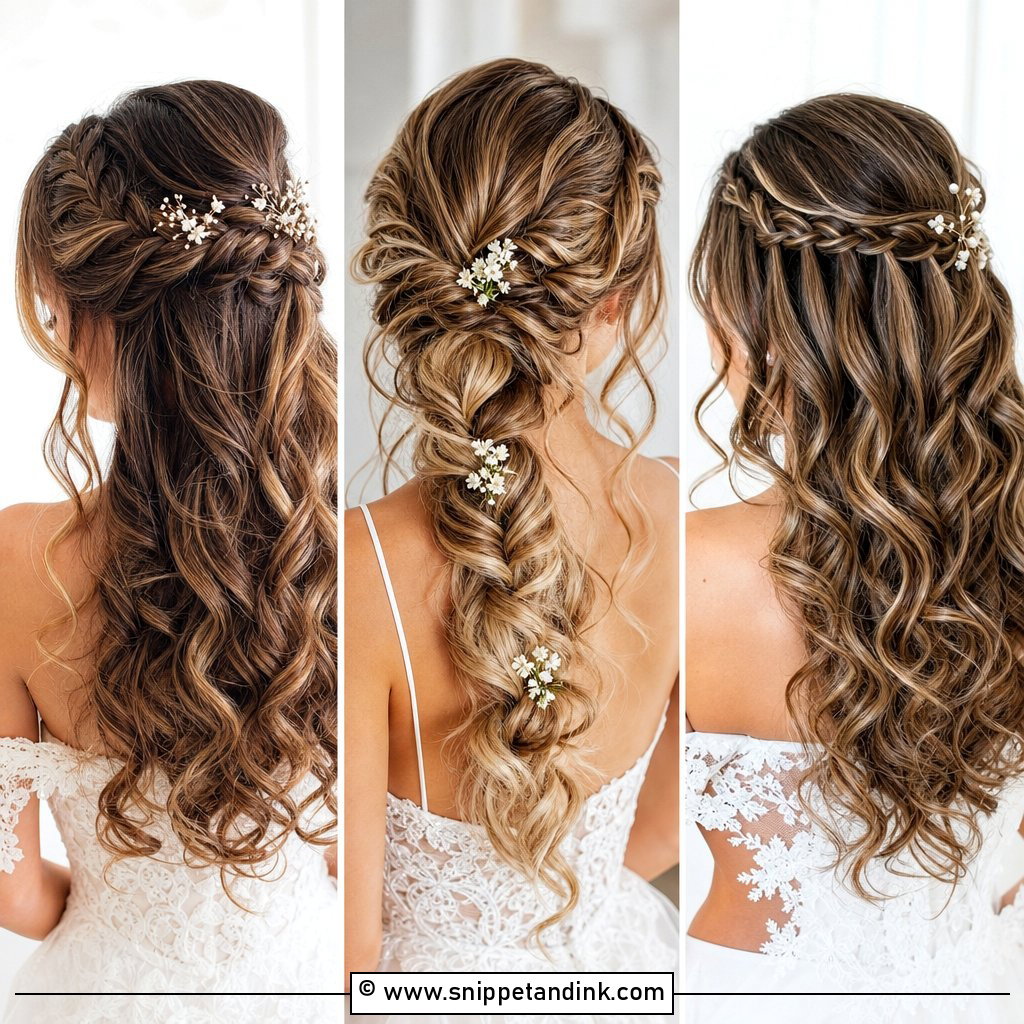
The waterfall braid is a half-up braid that drops its top strand each time and picks up a new one, so loose pieces fall through it like water. It works best on medium or long hair with some wave, since dead-straight hair makes the dropped strands look limp. I curl the hair first and braid second. It’s delicate, which is both its charm and its weakness: on very fine or slippery hair it can loosen by evening, so I pin it from underneath at two or three points. Tiny flowers along the braid suit a garden ceremony.
4. Braided Bun Wedding Updo
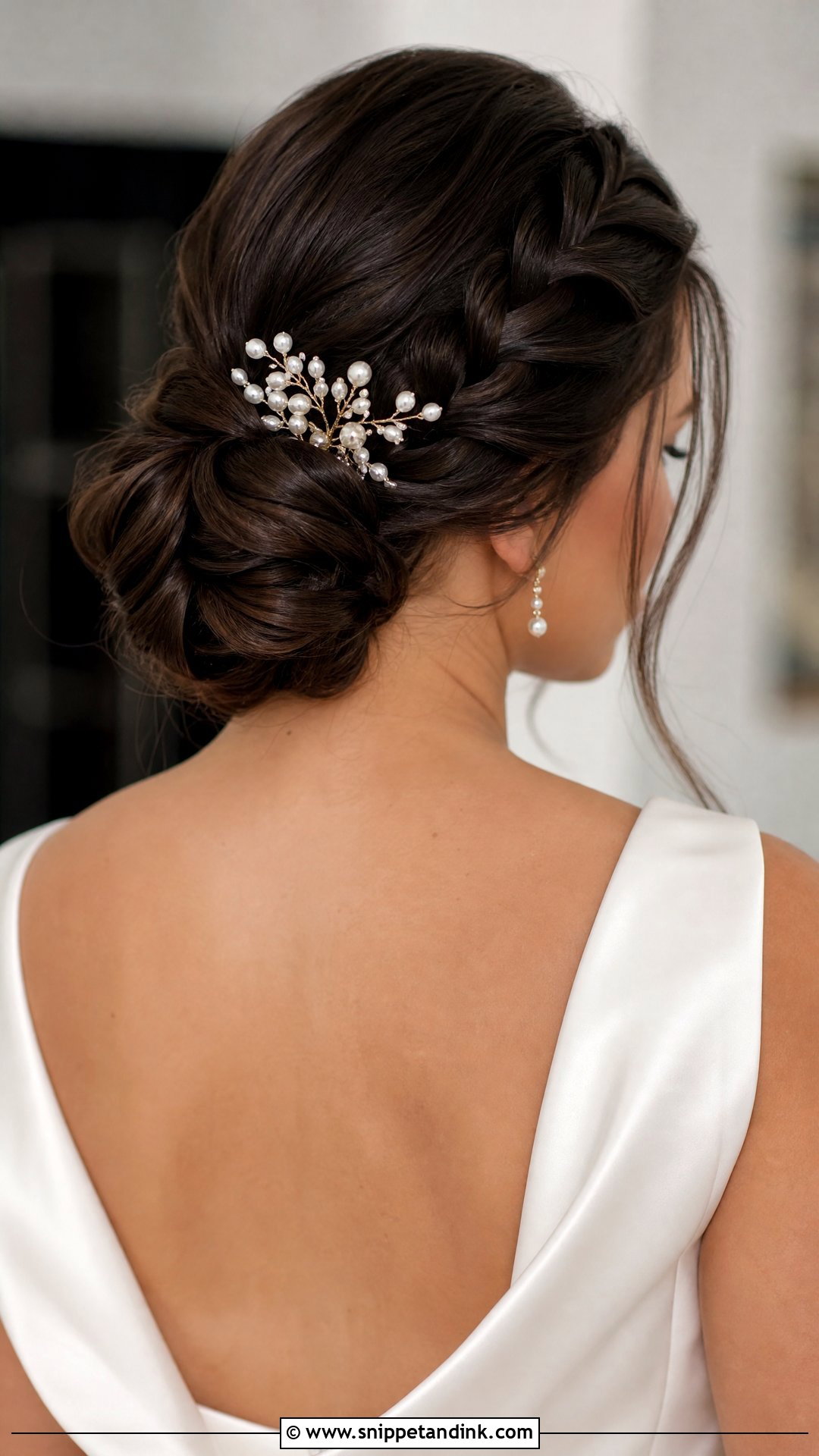
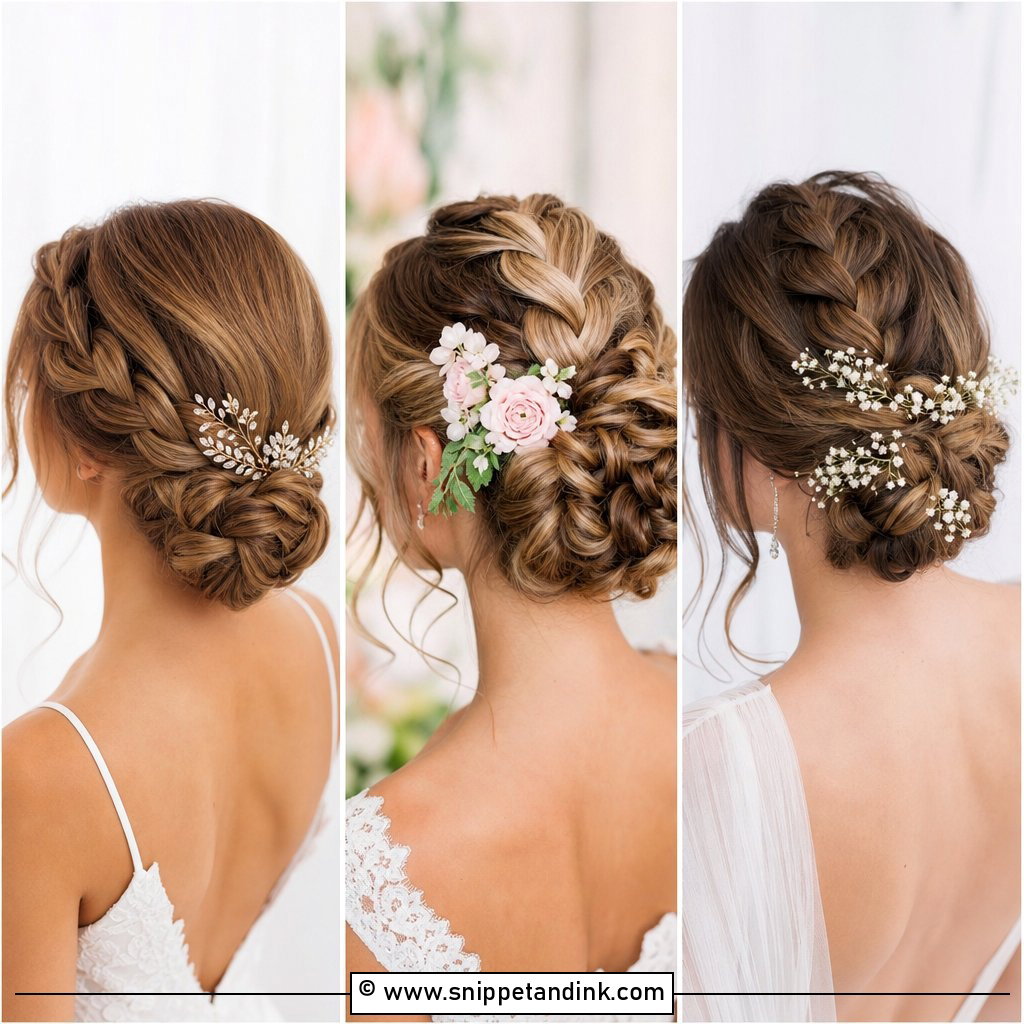
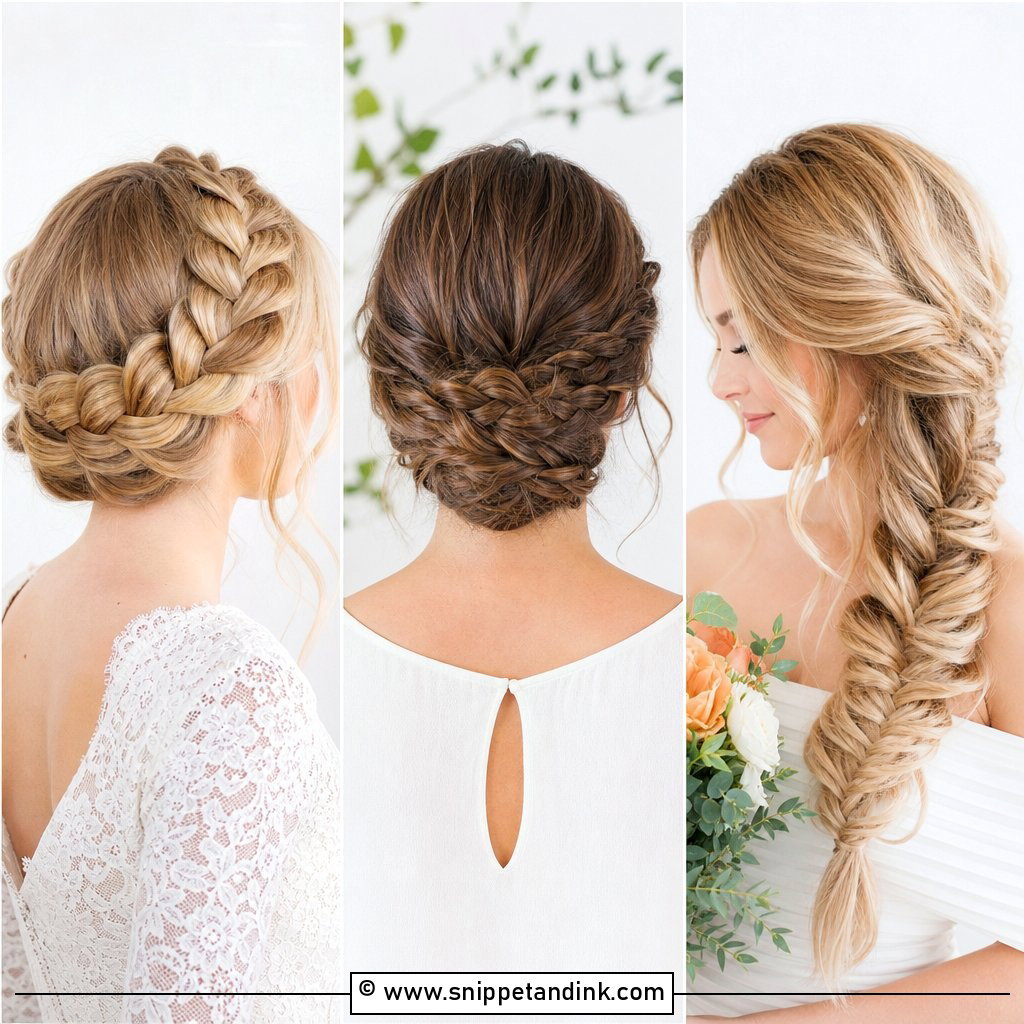
A braided bun combines a bun’s security with braid texture wrapped through it. French, Dutch or fishtail braids can all be coiled into the shape. Thick, long hair makes the fullest version; with fine hair I’d add a small padding or clip-in pieces so the bun doesn’t look sparse. It keeps everything off the neck, so the neckline of your gown is fully on show. I pin every coil of braid separately as I wrap it, which is why it holds day and night. A jeweled comb or a few pearls finish it.
5. Side-Swept Braid Wedding Look
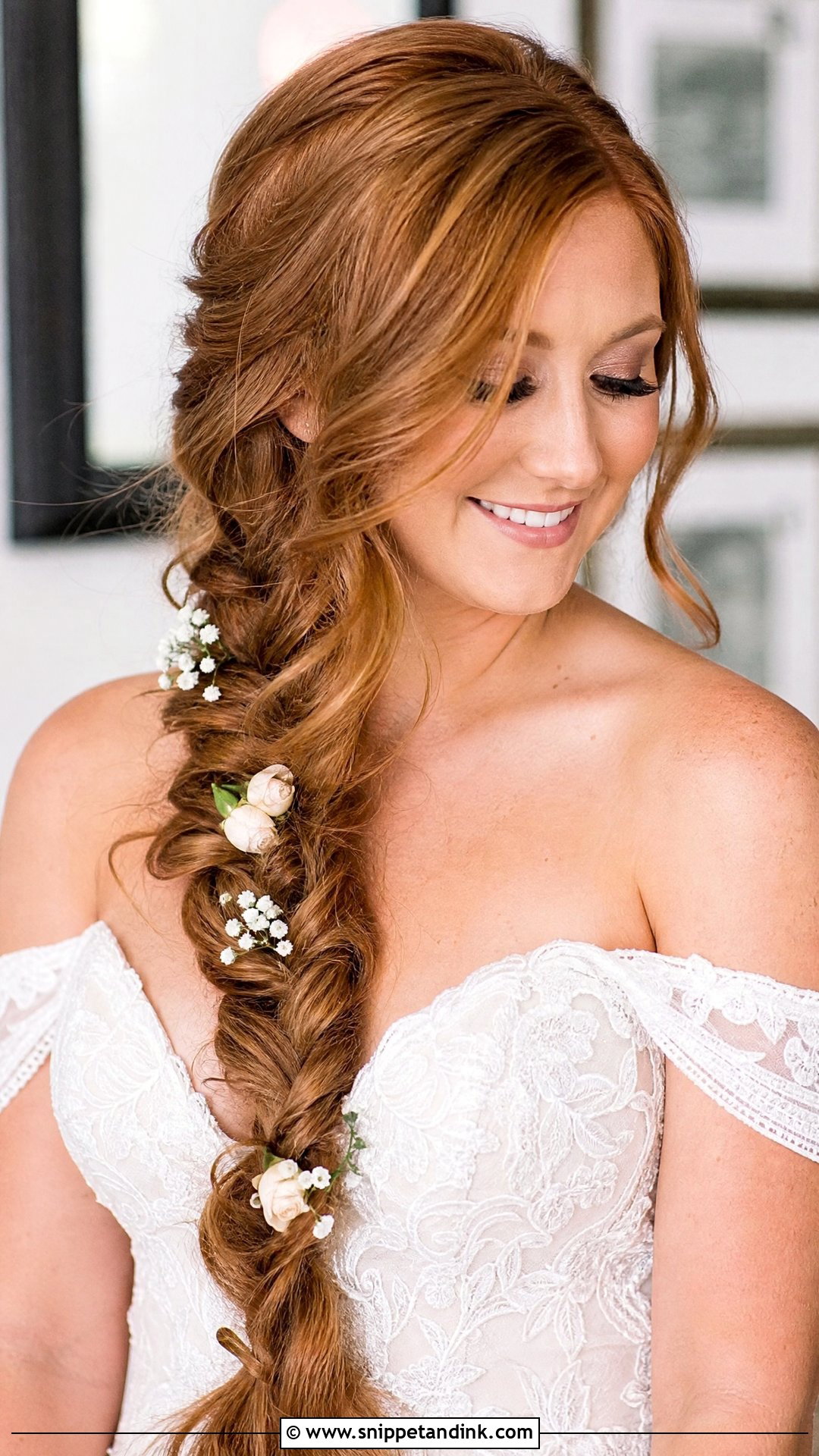
A braid swept over one shoulder suits almost every length and texture. Fishtail, three-strand and rope braids all work. Start it low behind the ear on the opposite side and bring it across, so it hugs the head instead of hanging off it. Pulling a few pieces loose adds softness, but pull them before you spray or they’ll stick out. It sits best with off-the-shoulder gowns and small earrings on the bare side. Weave in blooms or pins along the braid. The one catch: if you’ll be hugging a lot of guests, expect the braid to rub on one side by the end of the night.
6. Crown Braid Wedding Hairstyle
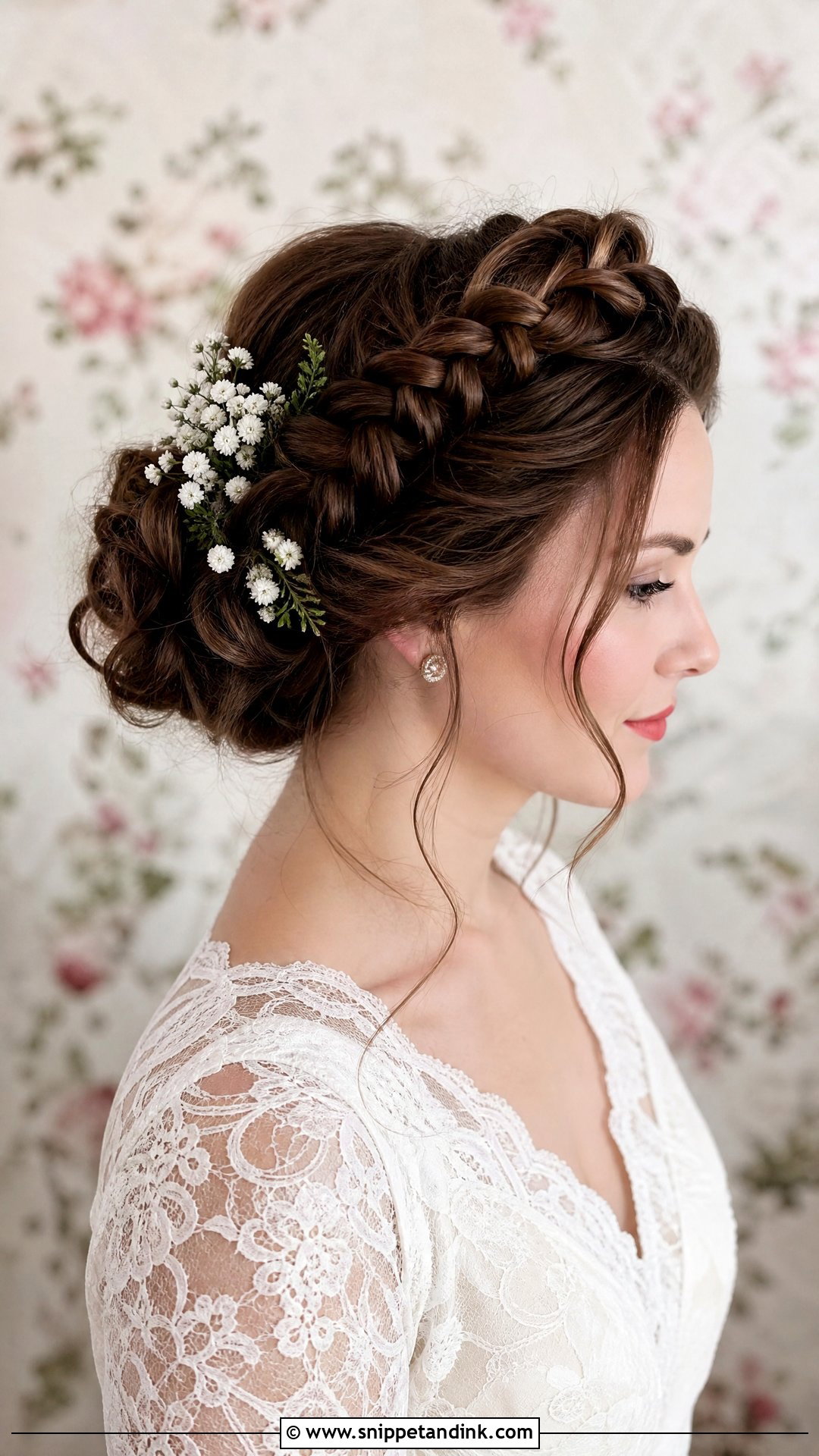
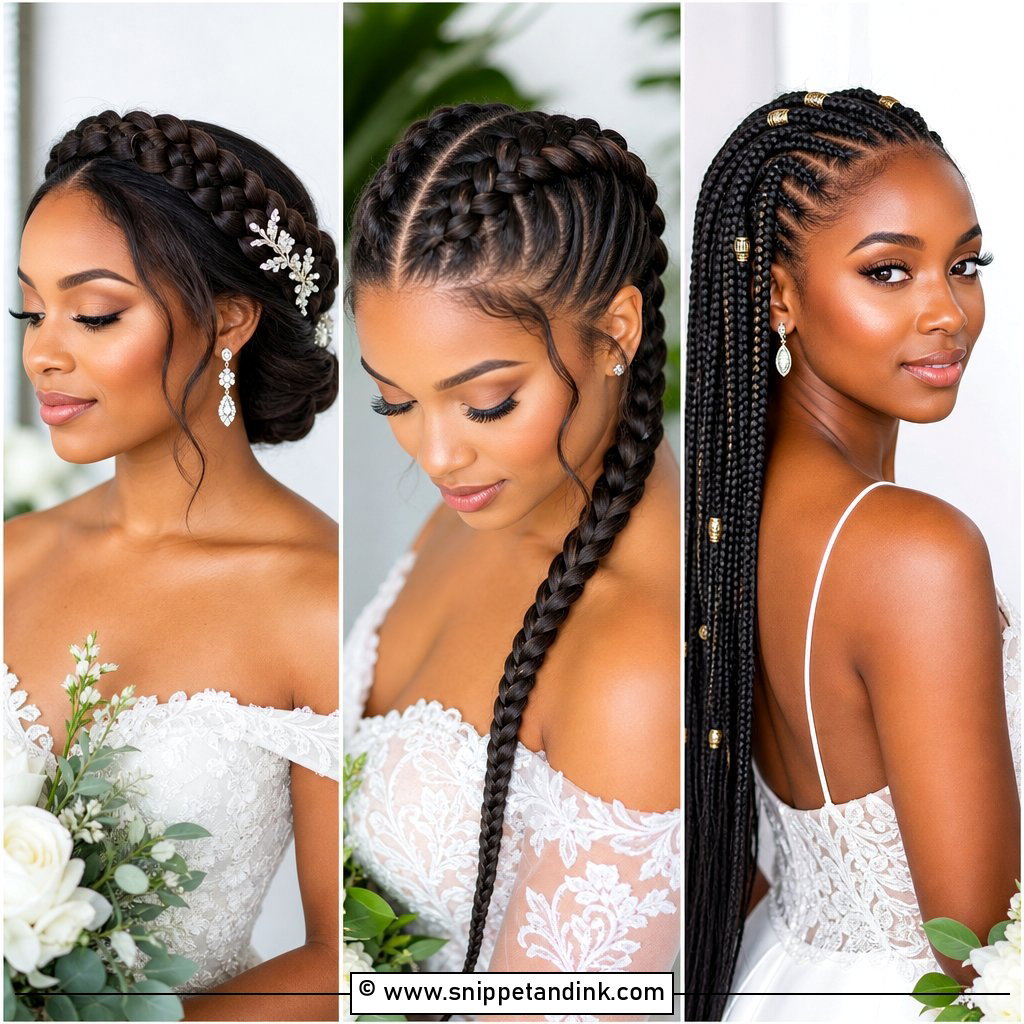
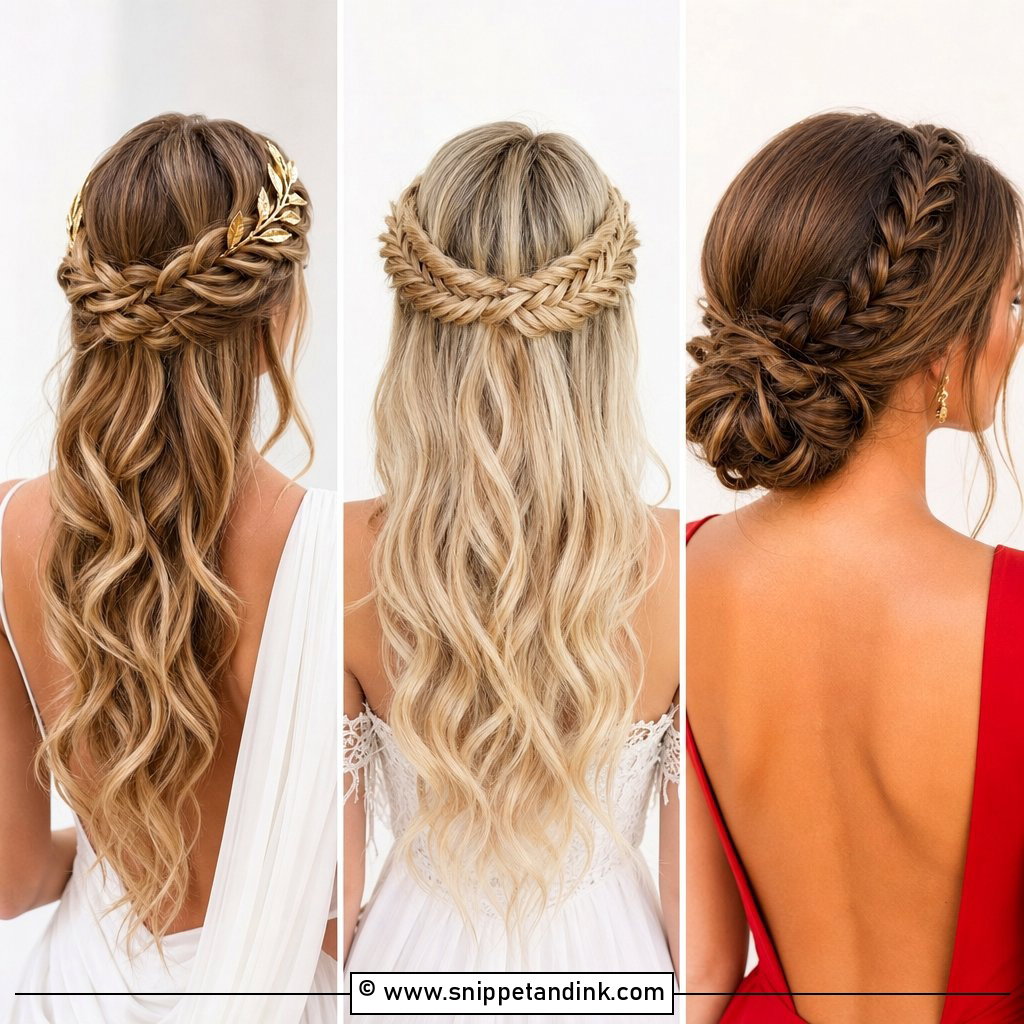
A crown braid wraps all the way around the head like a woven halo. Also called a halo or milkmaid braid, it keeps hair completely off the face and neck, which makes it comfortable for a warm-weather wedding and leaves room for big earrings. I usually make two braids and pin them across the top, tucking the ends under each other; one long braid works only on very long hair. You can keep it sleek or tease it loose. Fresh flowers tucked in make a natural floral crown. Shoulder-length hair can manage it with a little extension hair added to the braids.
7. Half-Up Braided Wedding Style
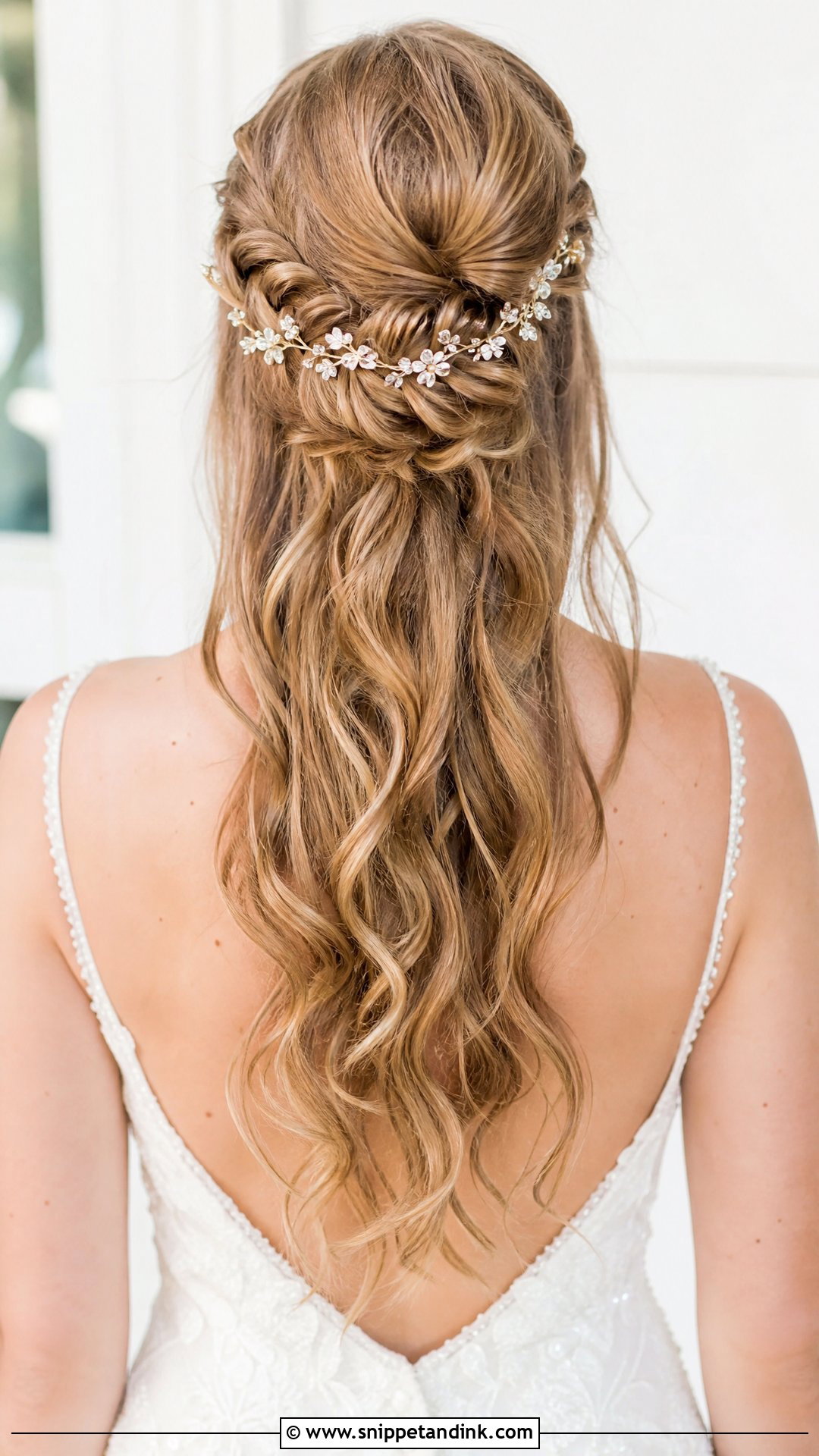
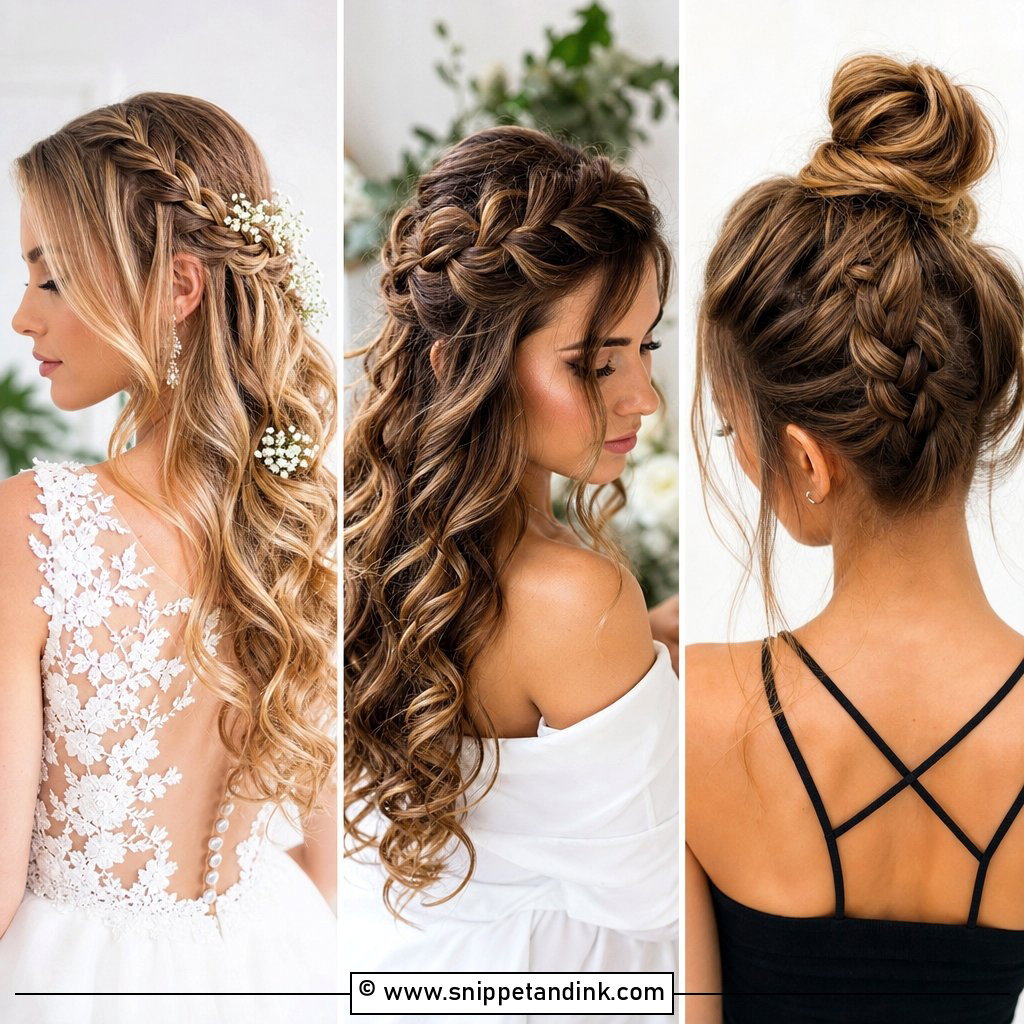
Half-up braids keep hair out of your face and show off your length. The braids can be French, fishtail or simple twists, meeting at the back of the head where a hairpiece or flowers can sit. Most face shapes and textures suit it. I set curls in the loose lengths before braiding, because once the braids are in, curling around them is awkward. It’s an easy one to move from ceremony to reception without changes, so it’s a common pick for brides who don’t want a mid-day restyle.
8. Boho Braided Wedding Hairstyle
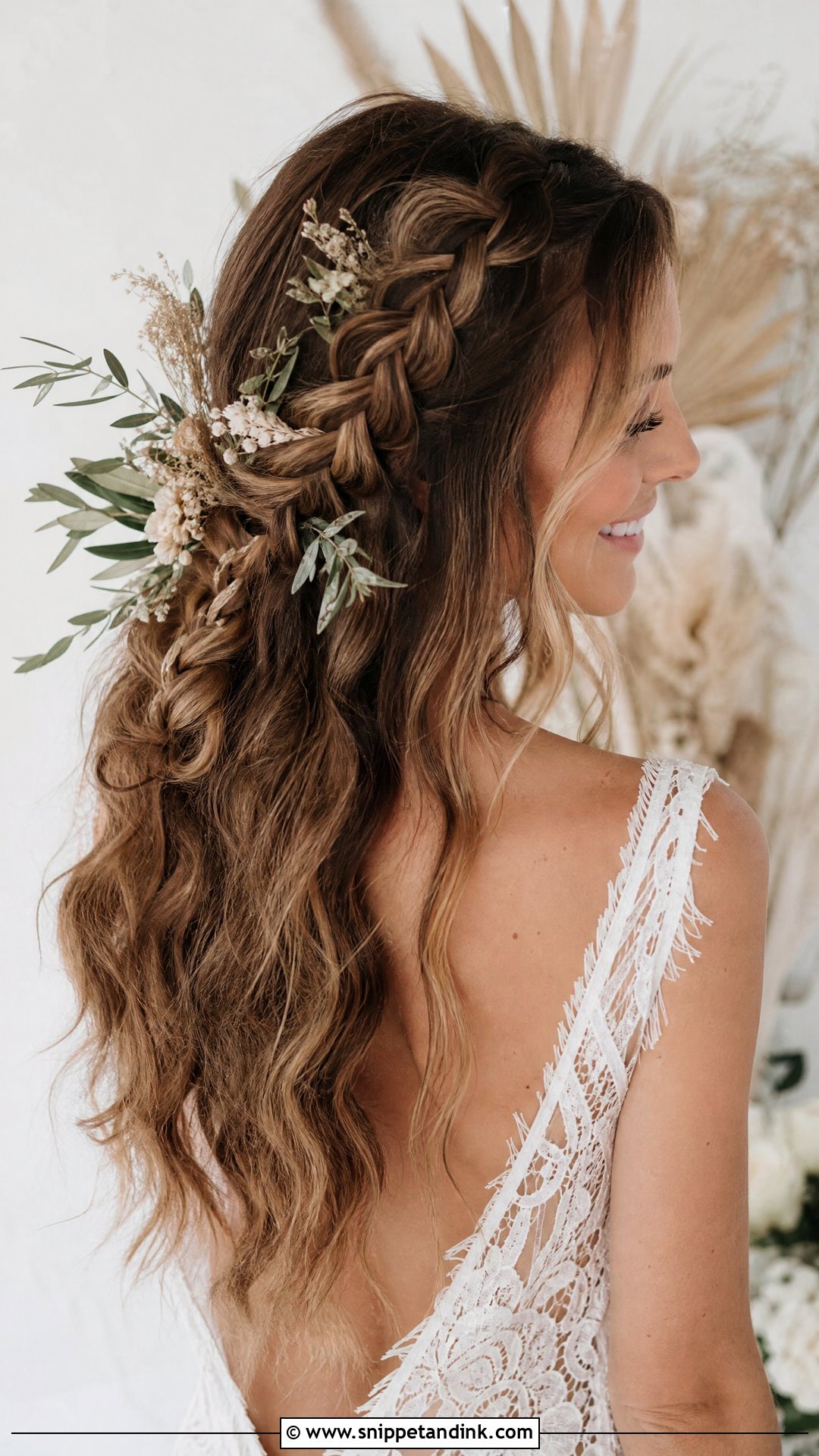
Boho braids are meant to look undone, but undone still needs structure underneath. Small braids woven through loose waves get their lived-in look from my pulling them apart, not from leaving them sloppy. They suit rustic, outdoor and festival-style weddings. Dried flowers, greenery and baby’s breath all tuck in easily, and dried stems have the advantage of not wilting. Several small braids layered together read more artistic than one large one. Avoid it if your hair is very fine and straight, because the loose pieces can just look flat by evening.
9. French Braid Wedding Updo
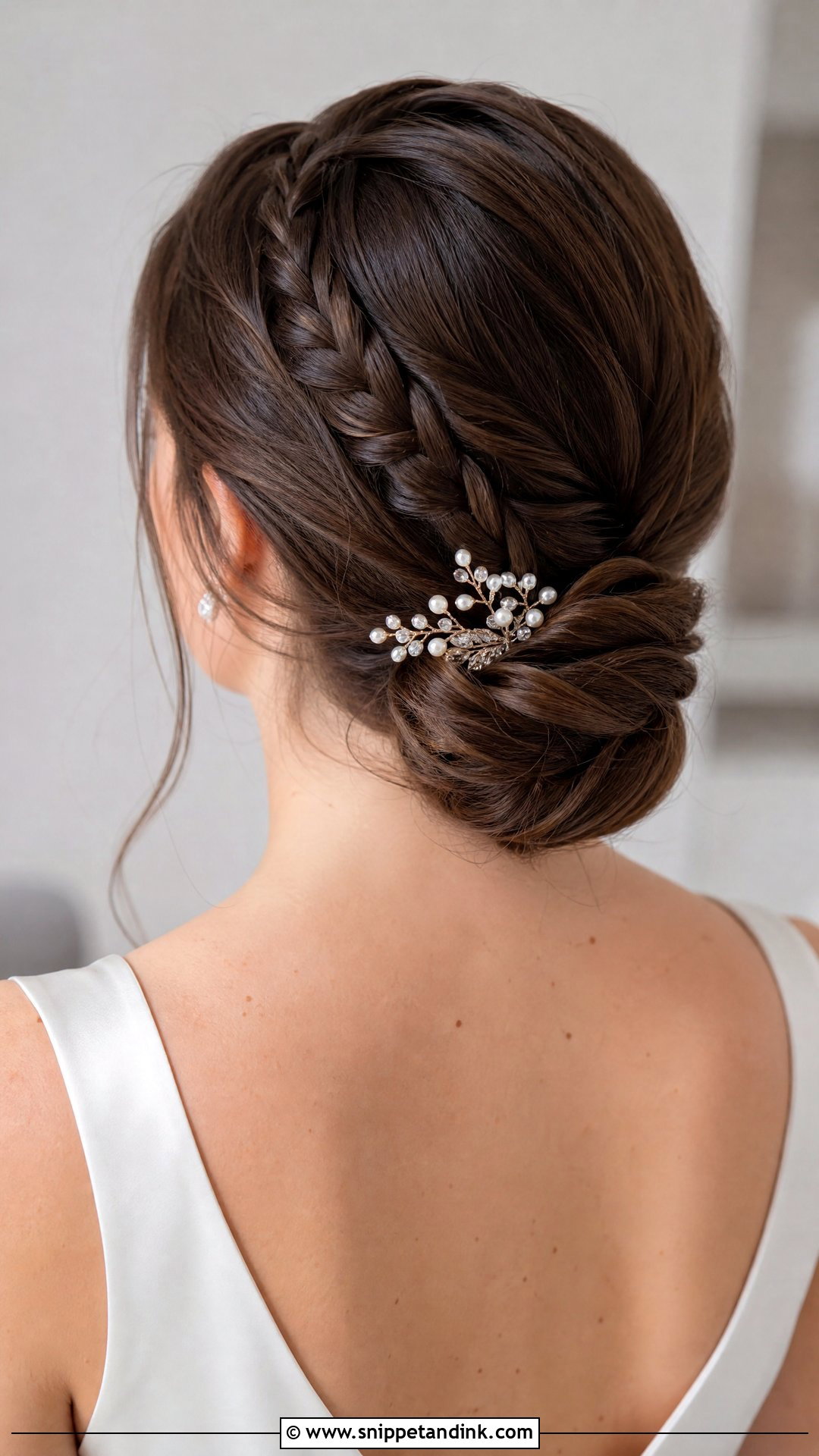
A French braid crosses sections over the top and lies flat and smooth against the head, which is what makes it look so clean. As a bridal updo, it usually leads into a low bun or twist at the nape. It’s secure enough for a full day of hugging and dancing. Keep it tight for a polished look or loosen the edges for softness. A jeweled pin or veil comb sits neatly just above where the braid ends. It suits most hair types, though very layered hair will need a little product so short pieces don’t spring out of the braid.
10. Braided Ponytail for Weddings
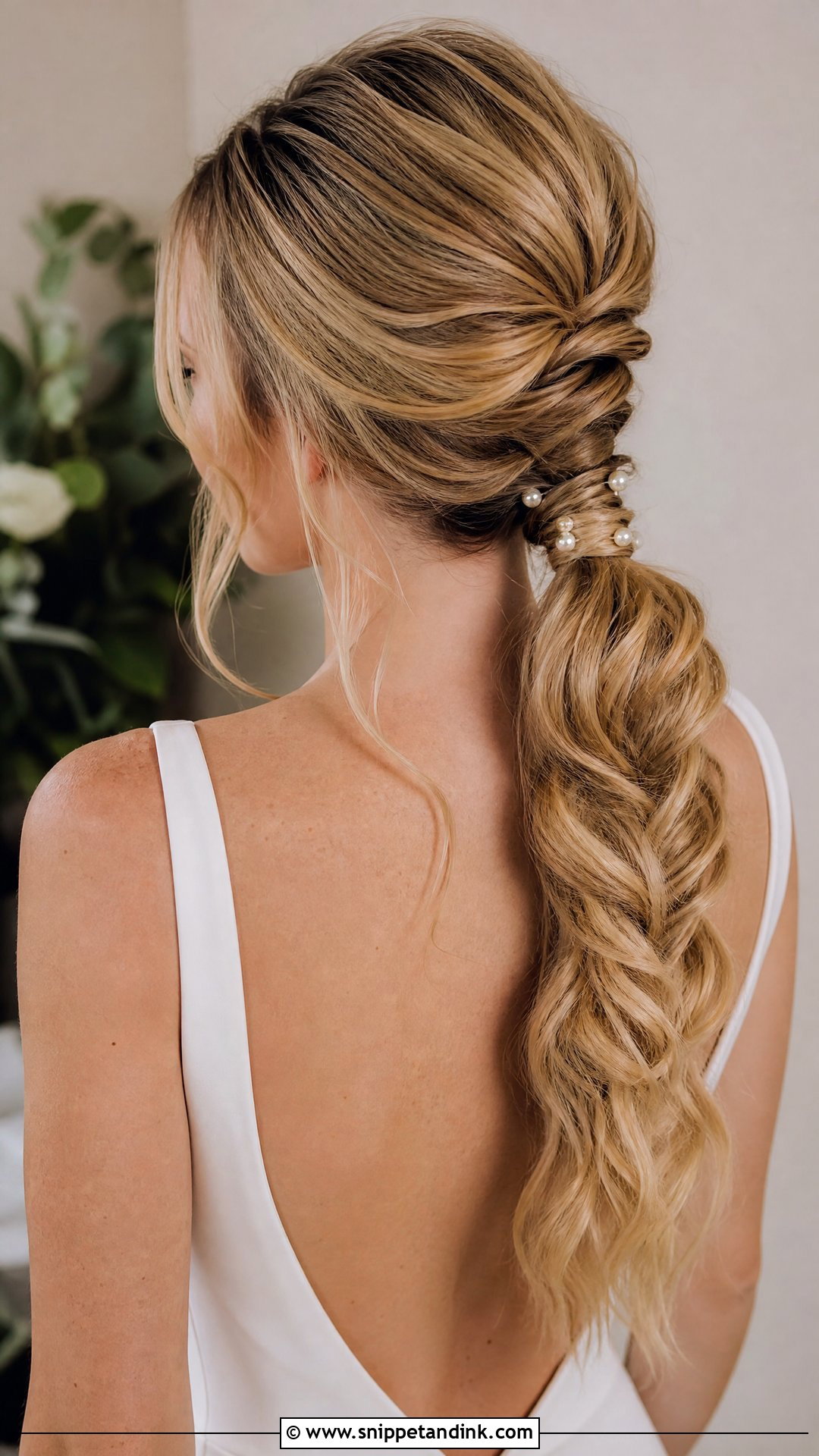
A braided ponytail is a ponytail made bridal. You can braid the pony itself or braid the sections leading up to it. Low feels soft and romantic; high feels fresh and young. I always wrap a strand of hair around the base to hide the elastic, then pin it underneath. A high pony pulls on the scalp for hours, so if you’re prone to headaches I’d set it at mid-height. Pearls or a ribbon at the base finish it.
11. Messy Braided Bun Wedding Style
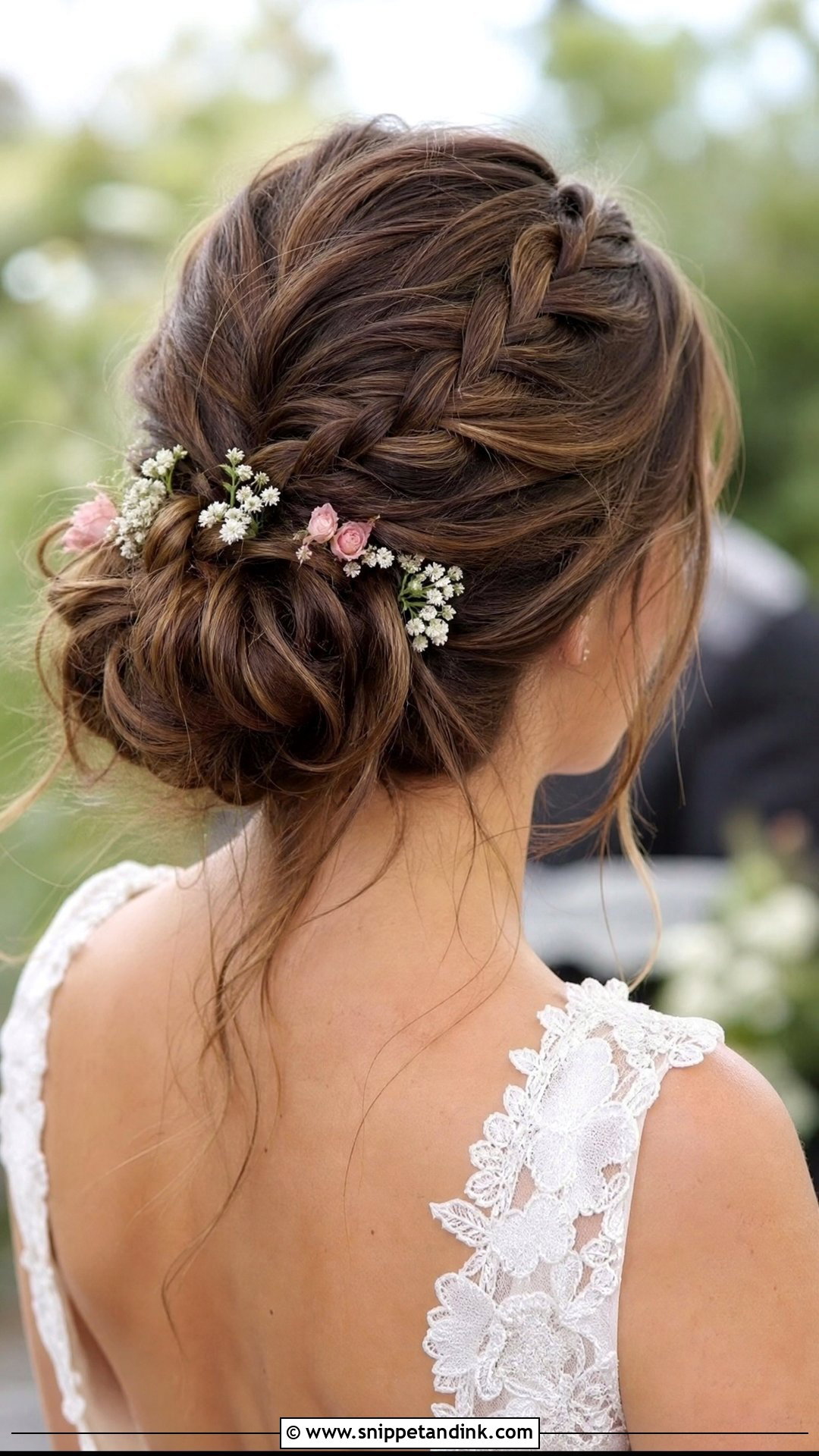
A messy braided bun looks relaxed, but the mess is placed. A reverse French braid usually leads up from the nape into the bun for texture. I curl the hair first so the bun has something to hold, then loosen it piece by piece with my fingers. That relaxed finish is forgiving in photos, because a stray piece looks deliberate. It suits outdoor and garden weddings. Leave a couple of face-framing pieces out, and tuck small flowers or pins where the braid meets the bun.
12. Floral Braided Wedding Hairstyle
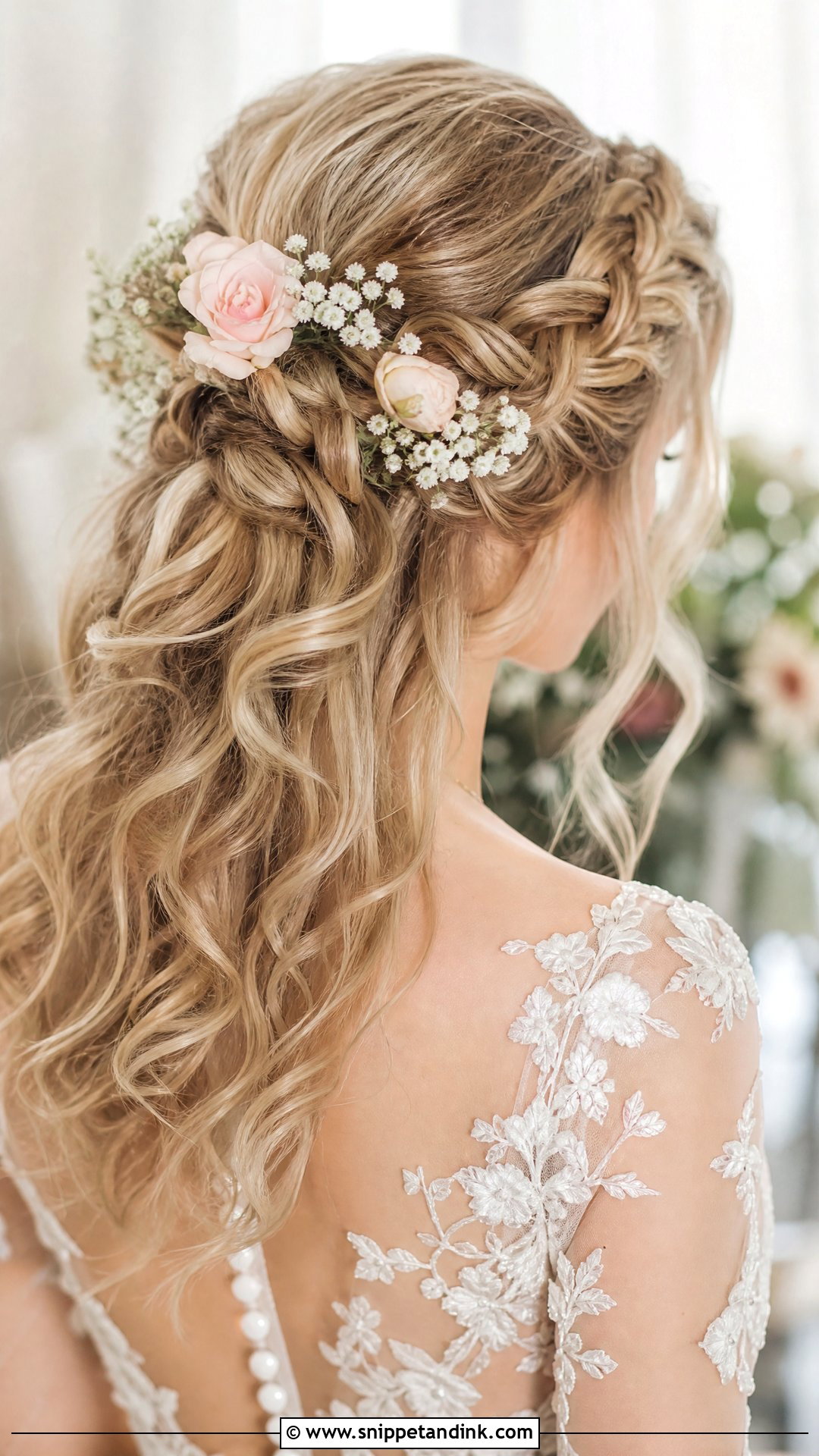
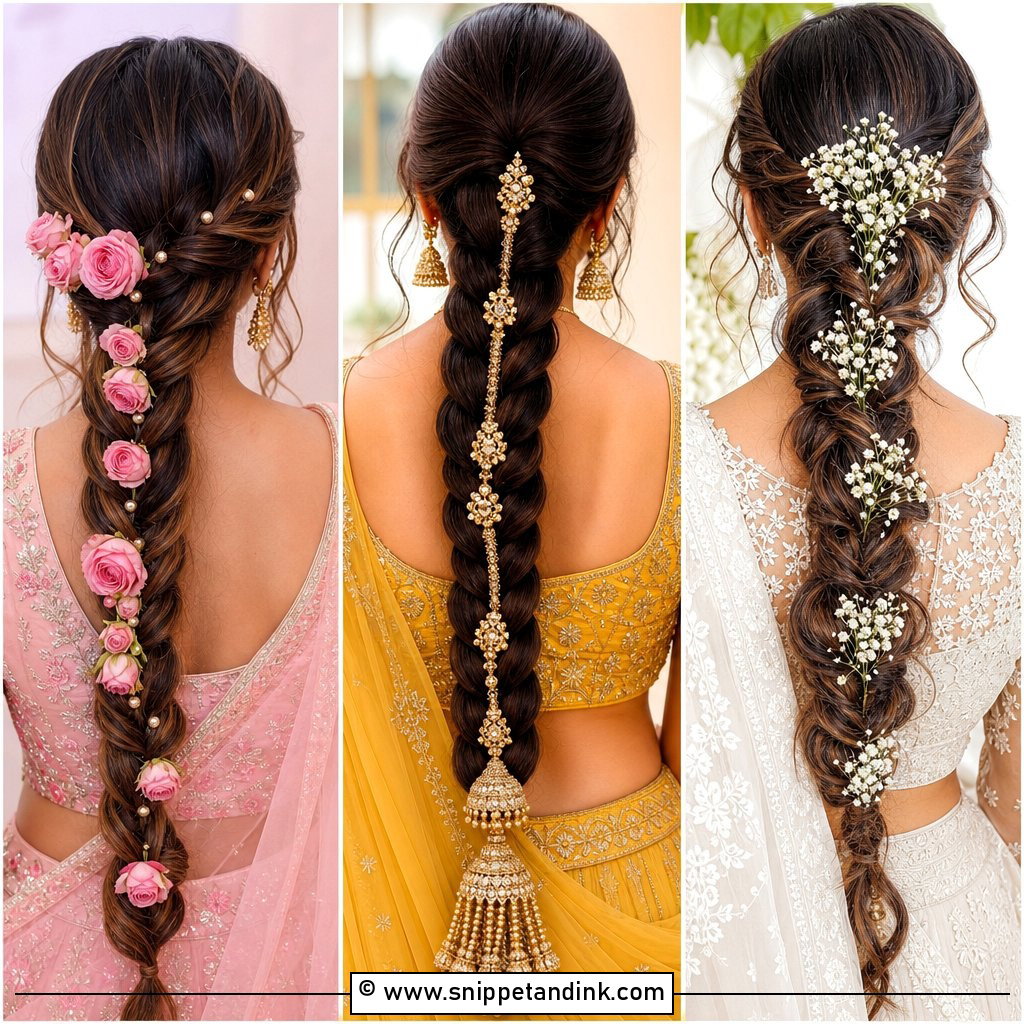
Flowers make a braid look elaborate with very little extra effort. I braid first, then press small blooms into the gaps along the braid, wiring anything heavier than baby’s breath so it doesn’t fall out. Ask your florist for blooms that match your bouquet and are sturdy enough to last out of water for hours. Baby’s breath, roses, and wildflowers all work, though roses should be small spray varieties. It suits a half-up style, an updo or a side braid at a spring or outdoor wedding. Keep the flowers cool until the last minute.
13. Rope Braid Wedding Hairstyle
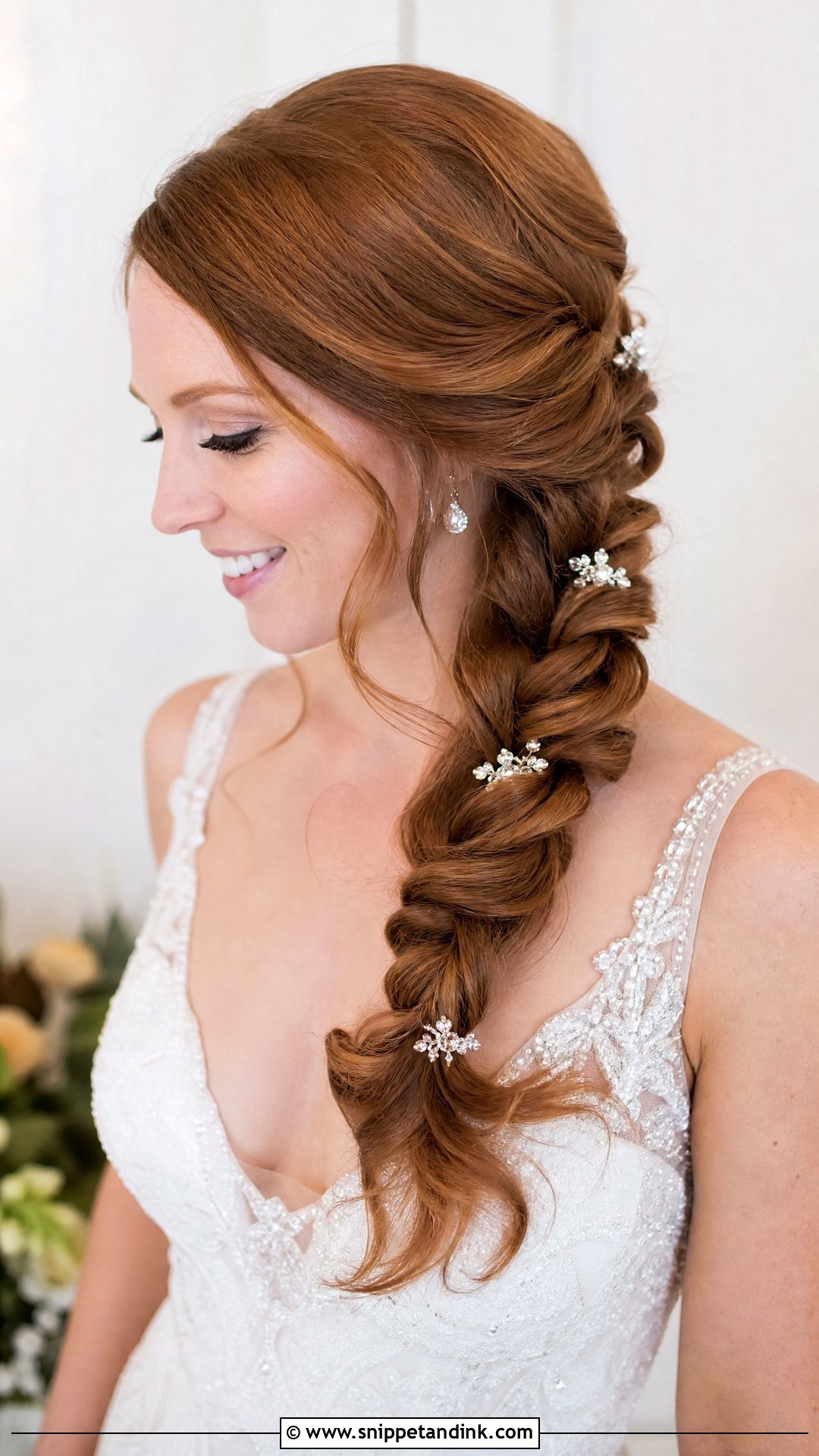
A rope braid is two sections twisted around each other. Here’s the technique that makes it hold: twist each section in one direction, then wrap them around each other in the opposite direction. Twist them the same way and it unravels as soon as you let go. It looks more complicated than it is, which makes it a smart bridal choice. Side braid, bun or half-up all work. It suits long and medium hair and finishes with a few pins or small blooms.
14. Braided Faux Hawk Wedding Look
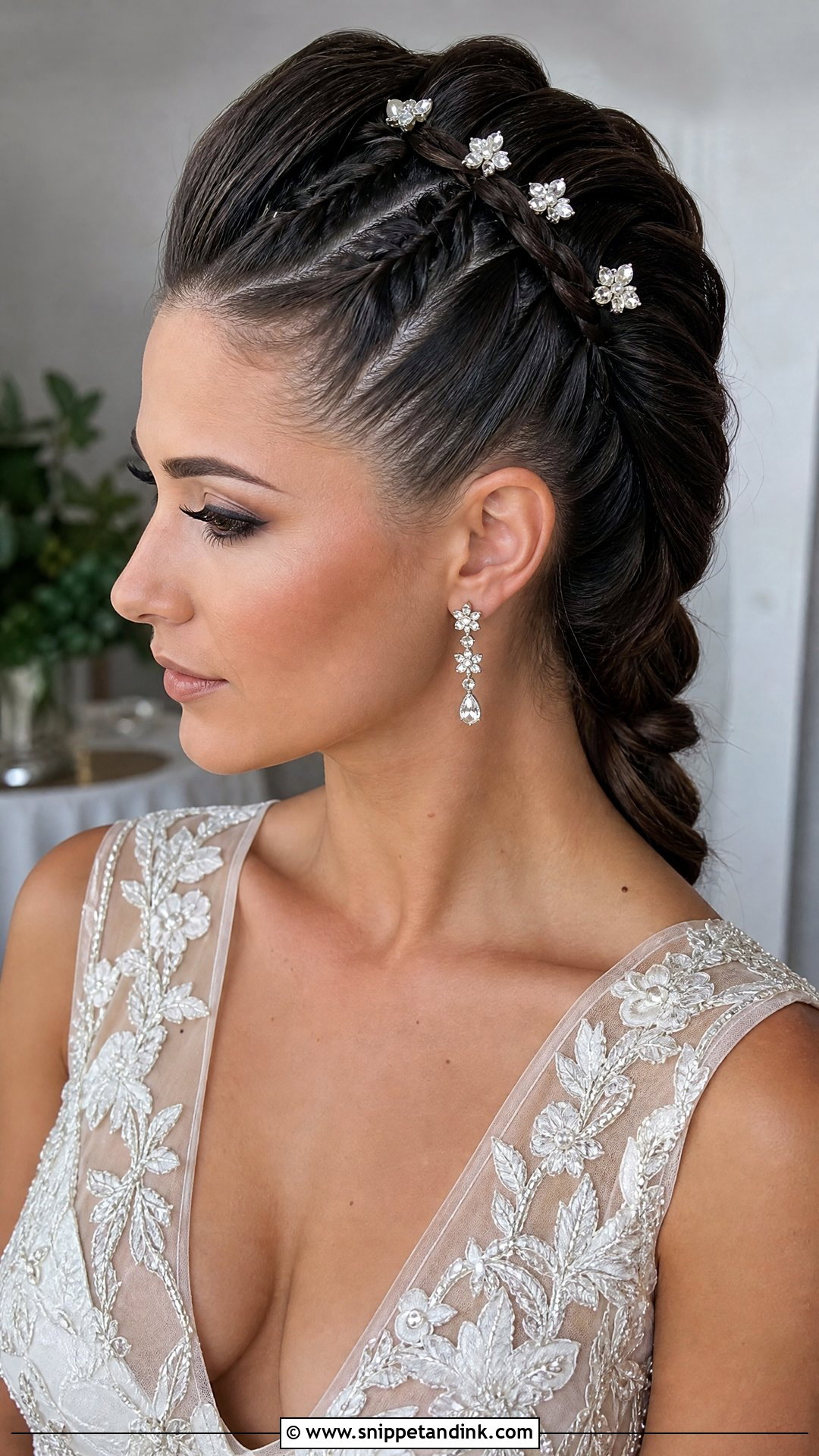
For a bride who wants some edge, the braided faux hawk runs braids down the center while the sides are smoothed and pinned back. You can do one braid or several stacked down the middle for more height. Smoothed sides make it look sharp; loose pieces or flowers bring it back toward romantic. The sides need firm pinning, since that’s where it tends to give out first. It’s a better match for a fashion-led bride in a sleek gown than for a classic ballroom.
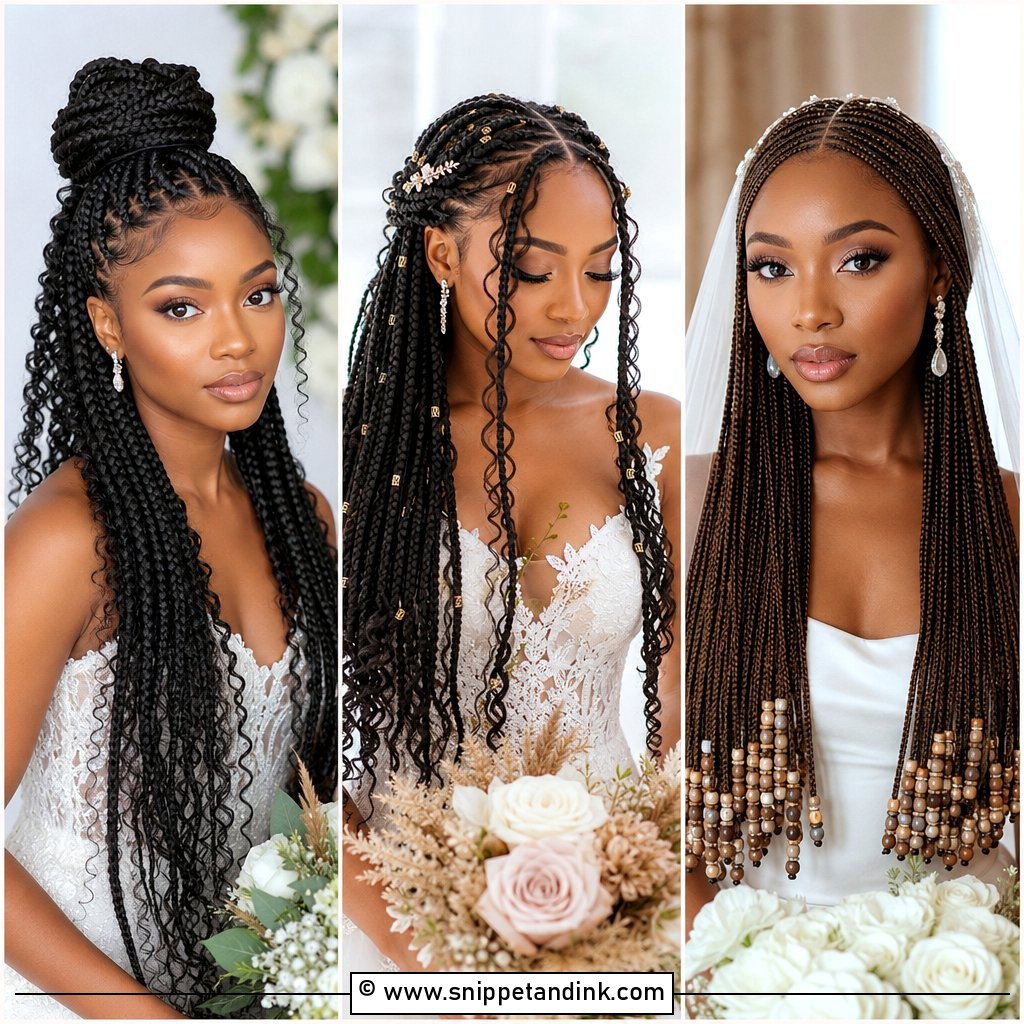
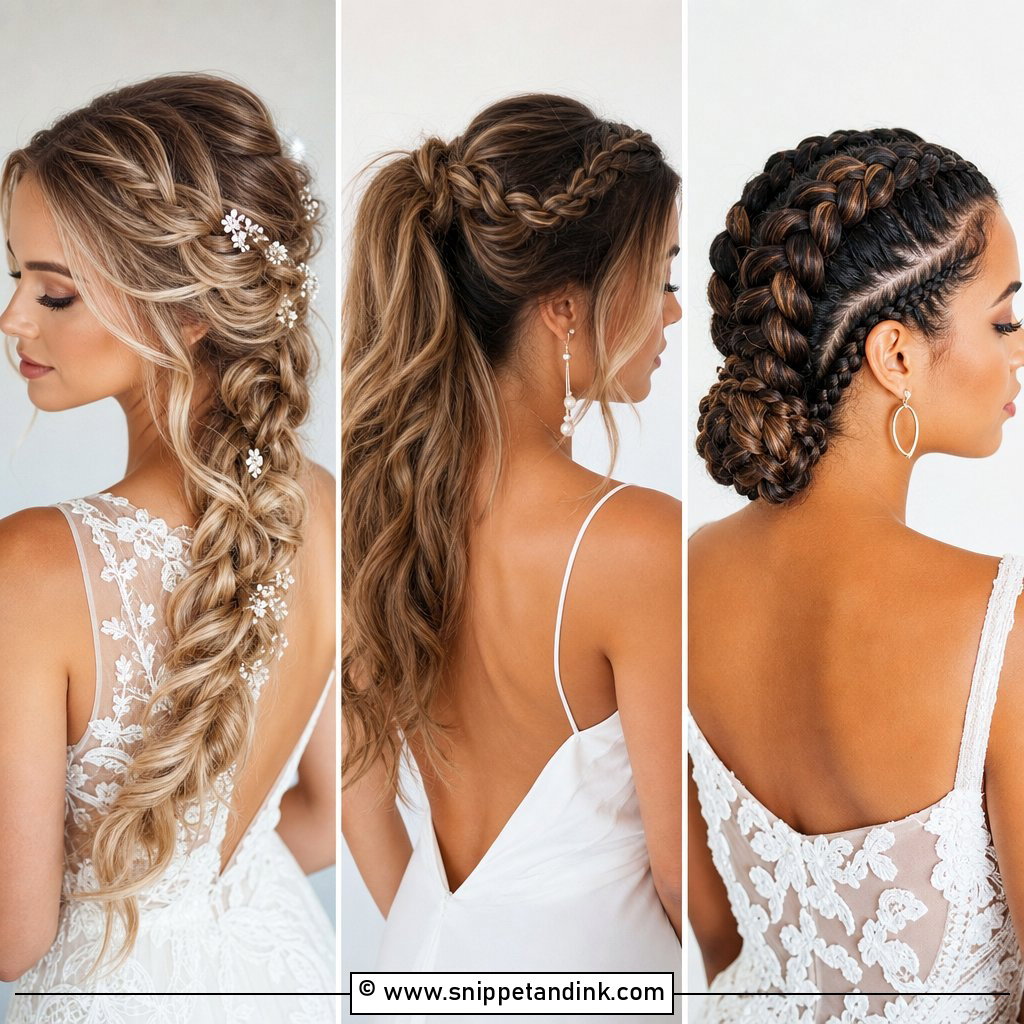
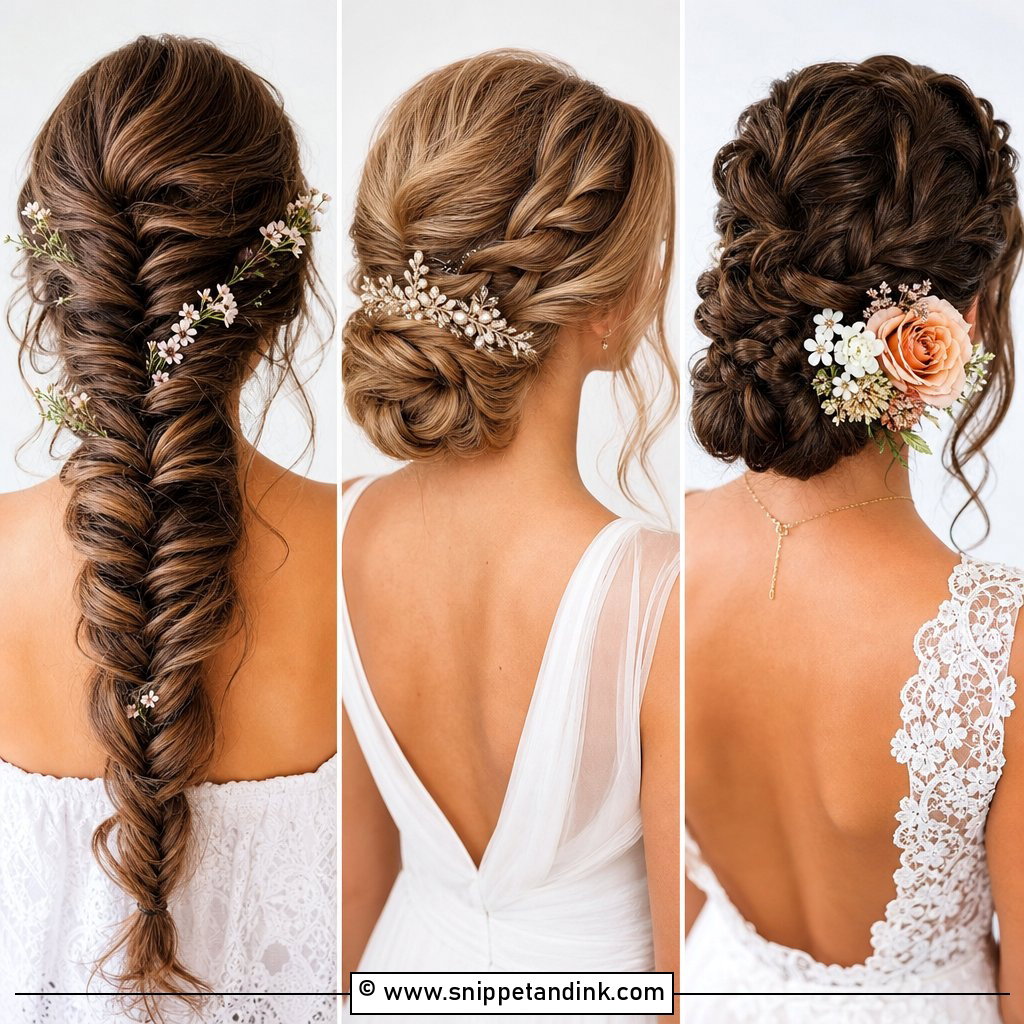
15. Double Dutch Braid Wedding Style
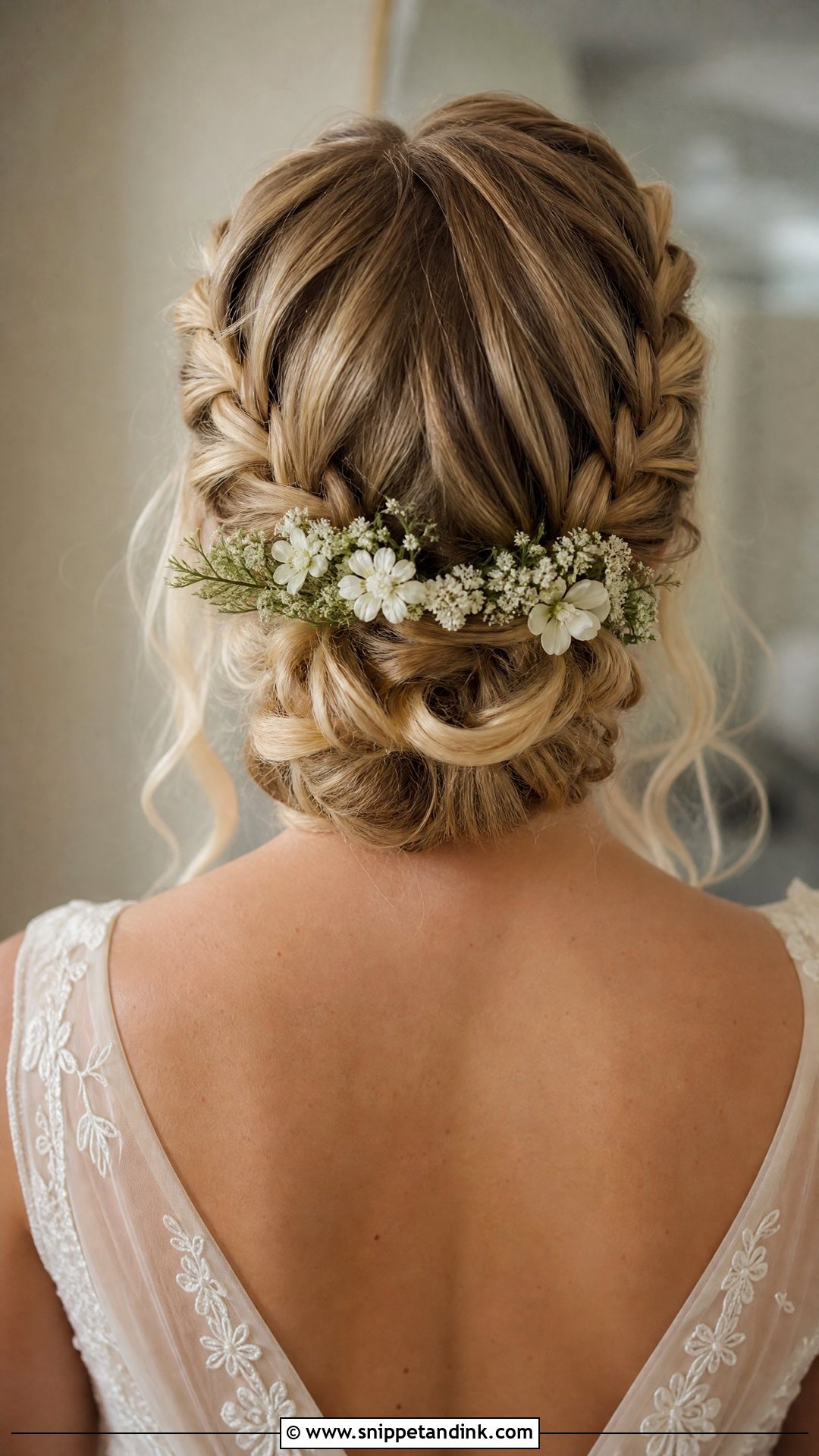
Two raised braids running along the head is the double Dutch braid look, and it often meets in a low bun or ponytail. The symmetry is the challenge. I part with a tail comb and check from behind in a mirror before starting, because one braid sitting higher than the other is obvious in photos. It holds very well all day. Long, thick hair gives the fullest result. Pins or fresh flowers where the braids meet hide the join.
16. Stitch Braid Wedding Hairstyle
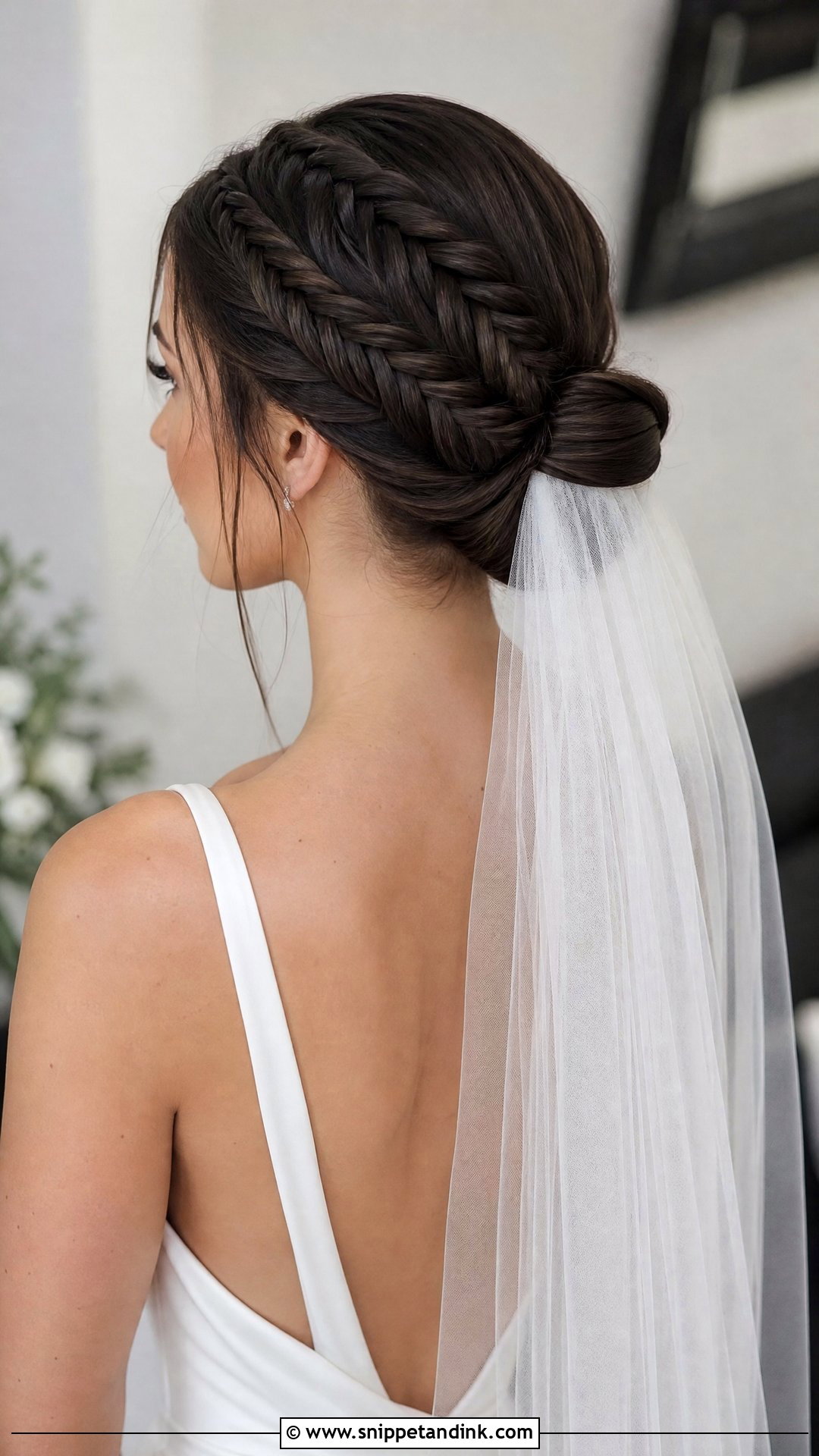
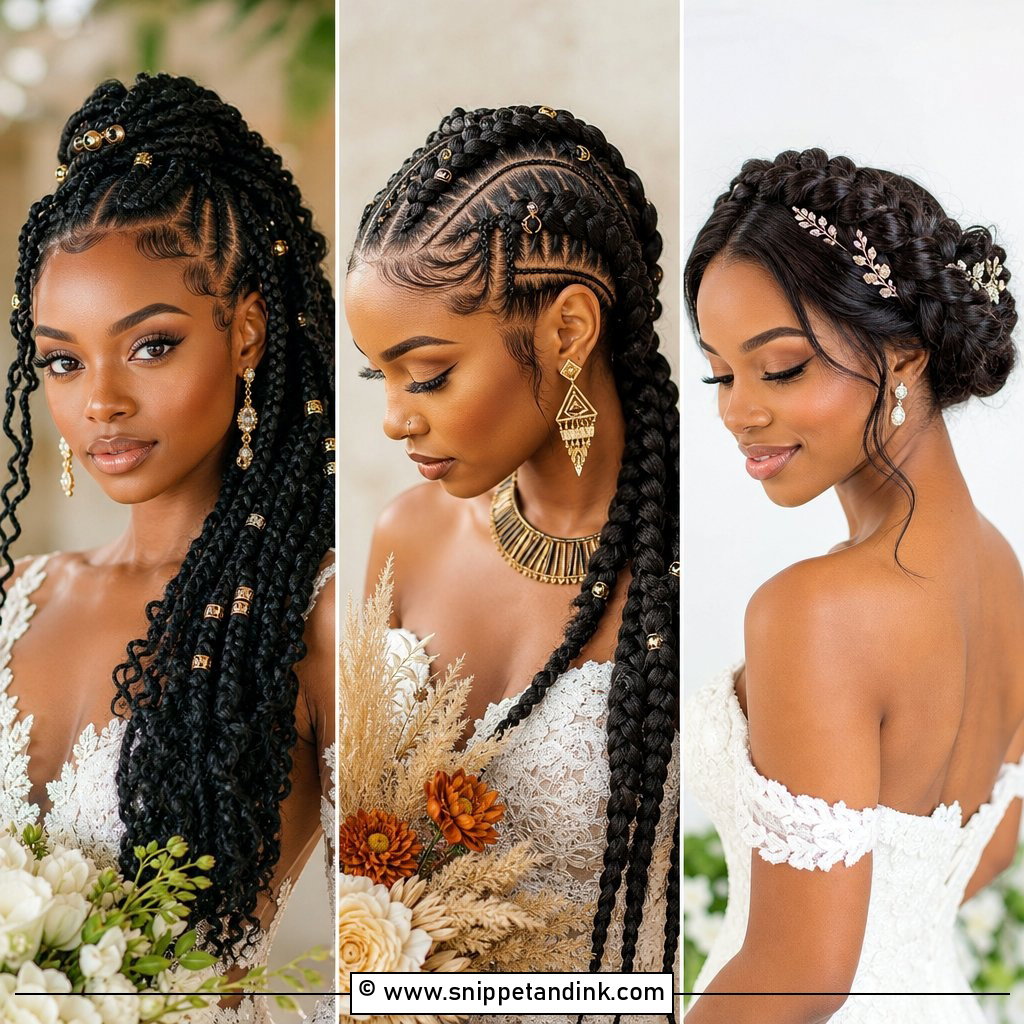
Stitch braids are feed-in braids where the stylist makes small horizontal parts across each row, so the braid shows neat, evenly spaced lines like stitching. The geometric look is sharp and modern. The precision takes time and a steady hand, so this is one for an experienced braider, ideally booked a day or two before the wedding. Stitch braids hold their shape very well. They pair neatly with a low bun or ponytail, and a veil or a few flowers can sit at the base.
17. Braided Chignon Wedding Updo
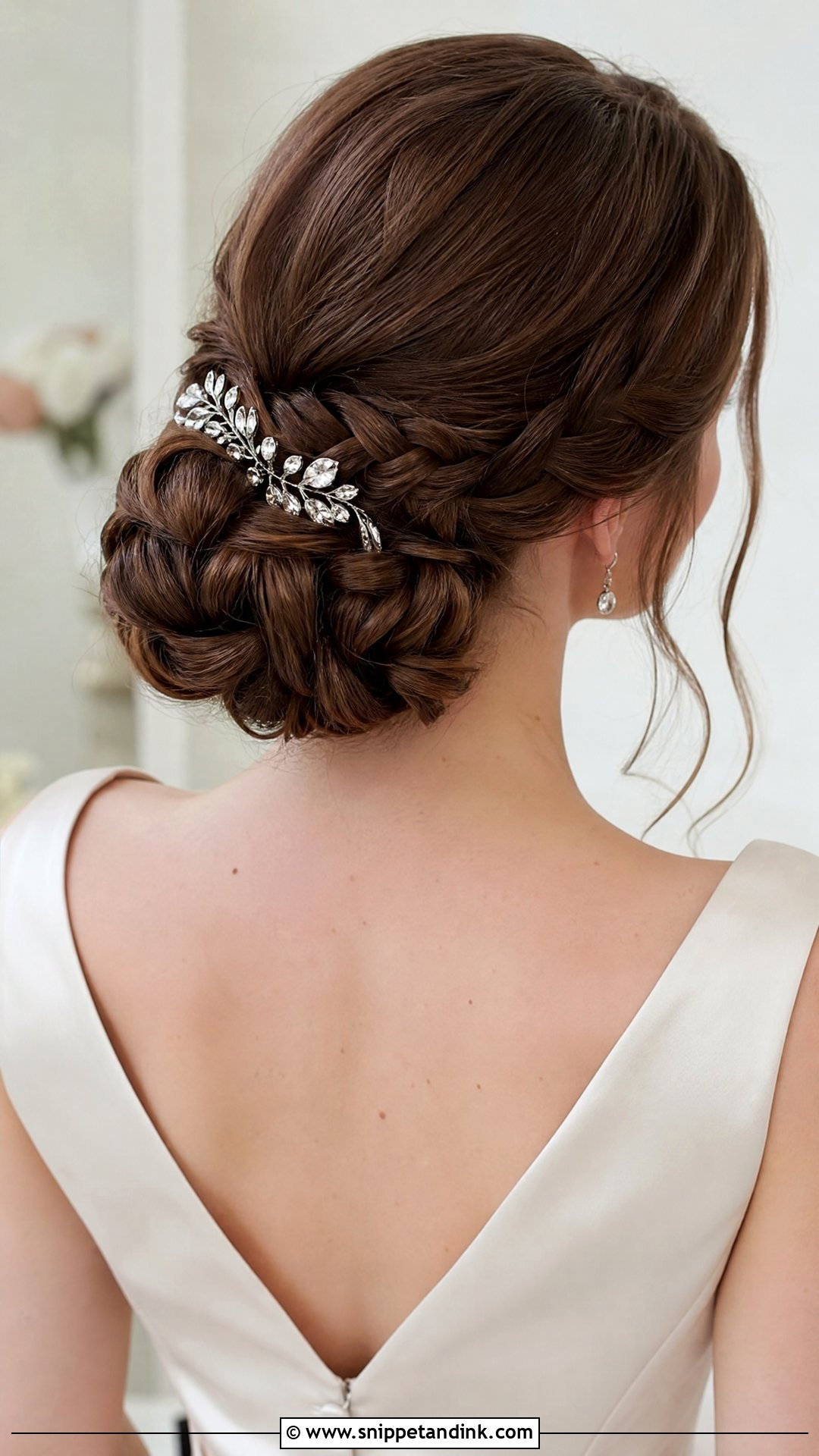
A braided chignon is a low, looped knot at the nape with braid detail woven in or wrapped around it. It’s polished and formal, and it shows off your gown’s neckline and back. I usually braid a section from one side, build the chignon from the rest, then wrap the braid around it. You can keep it smooth or let tendrils out. A jeweled comb tucks in at the side. It suits most brides and most dresses, which is why it remains so common.
18. Braided Low Bun Wedding Style
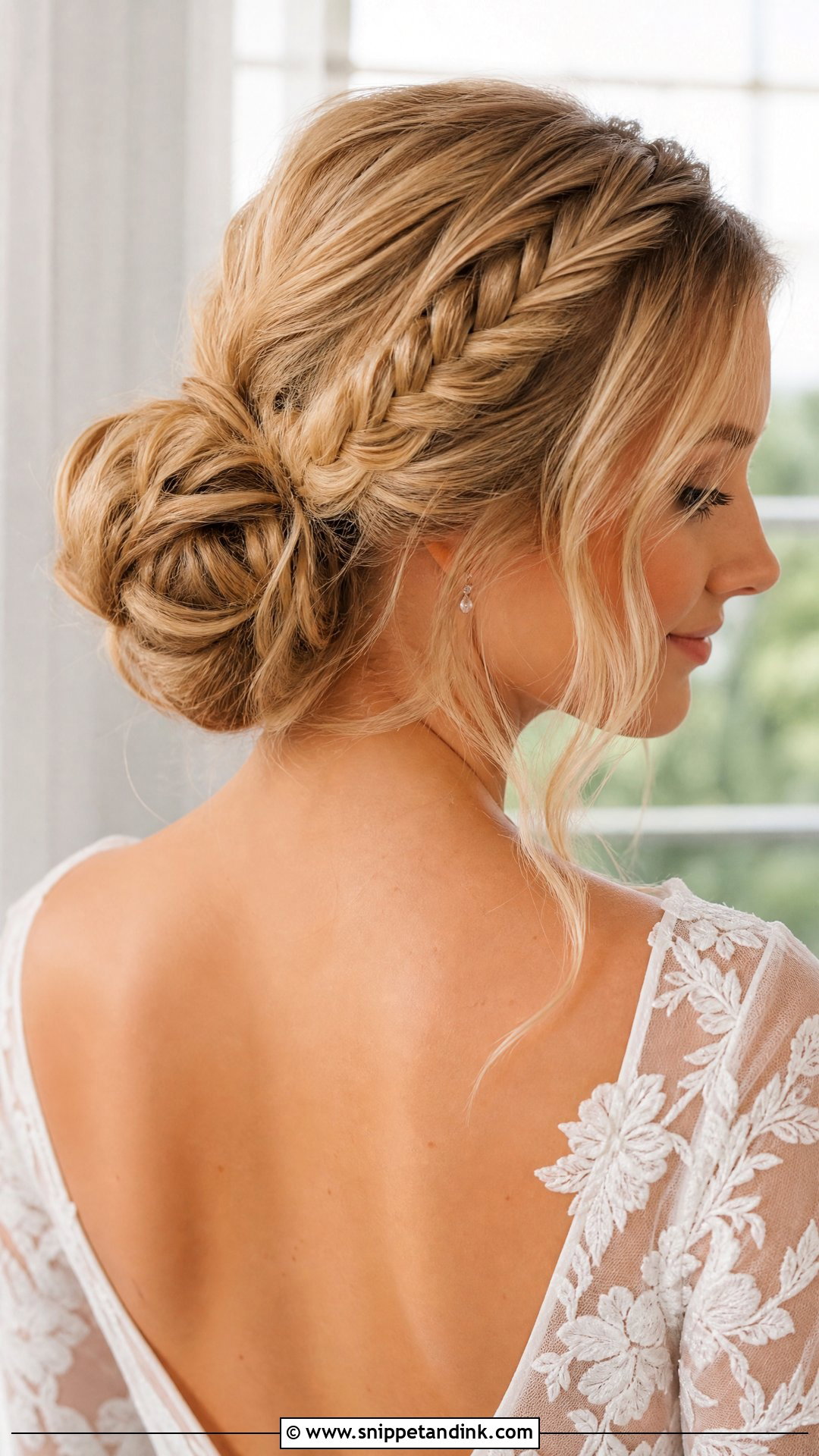
A braided low bun is comfortable as well as elegant. The low placement keeps weight off the crown, so it doesn’t pull through a long day. Fishtail, French or rope braids can all add texture. It works for formal and casual weddings alike. Pull a few pieces loose around the face for softness. Pearls or a small hairpiece finish it, and a veil comb sits right above the bun.
19. Braided Veil Wedding Hairstyle
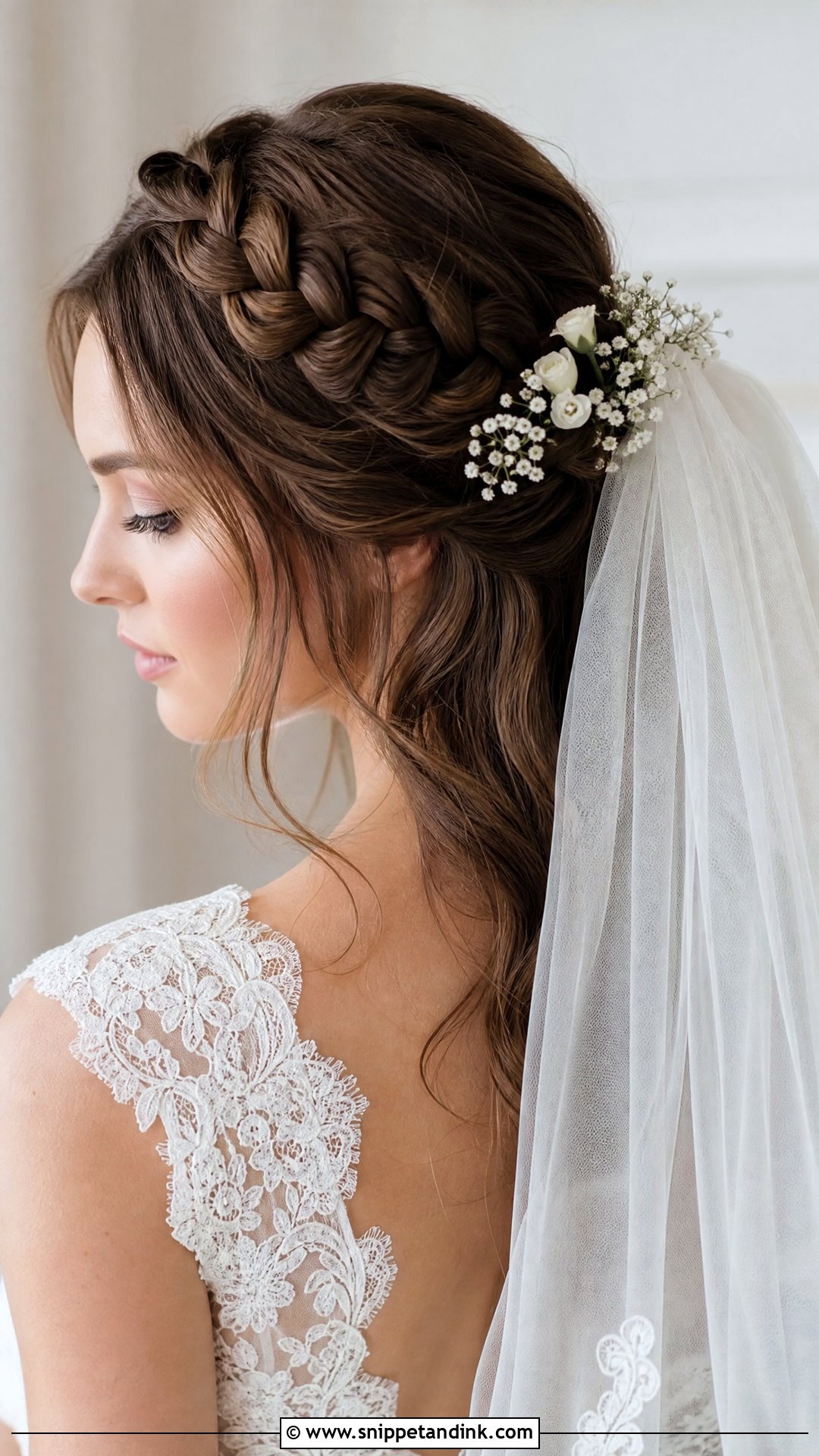
Veils need something to hold onto, and a braid is the best anchor I know. A crown braid, half-up braid or braided updo all work as the base. I slide the veil comb in just above or into the braid itself, so the weight sits on woven hair rather than slippery strands. Once the veil comes off for the reception, the braid still looks finished on its own, which means no restyle. Small flowers or pins near the veil placement hide the comb. Bring the veil to your trial to test it.
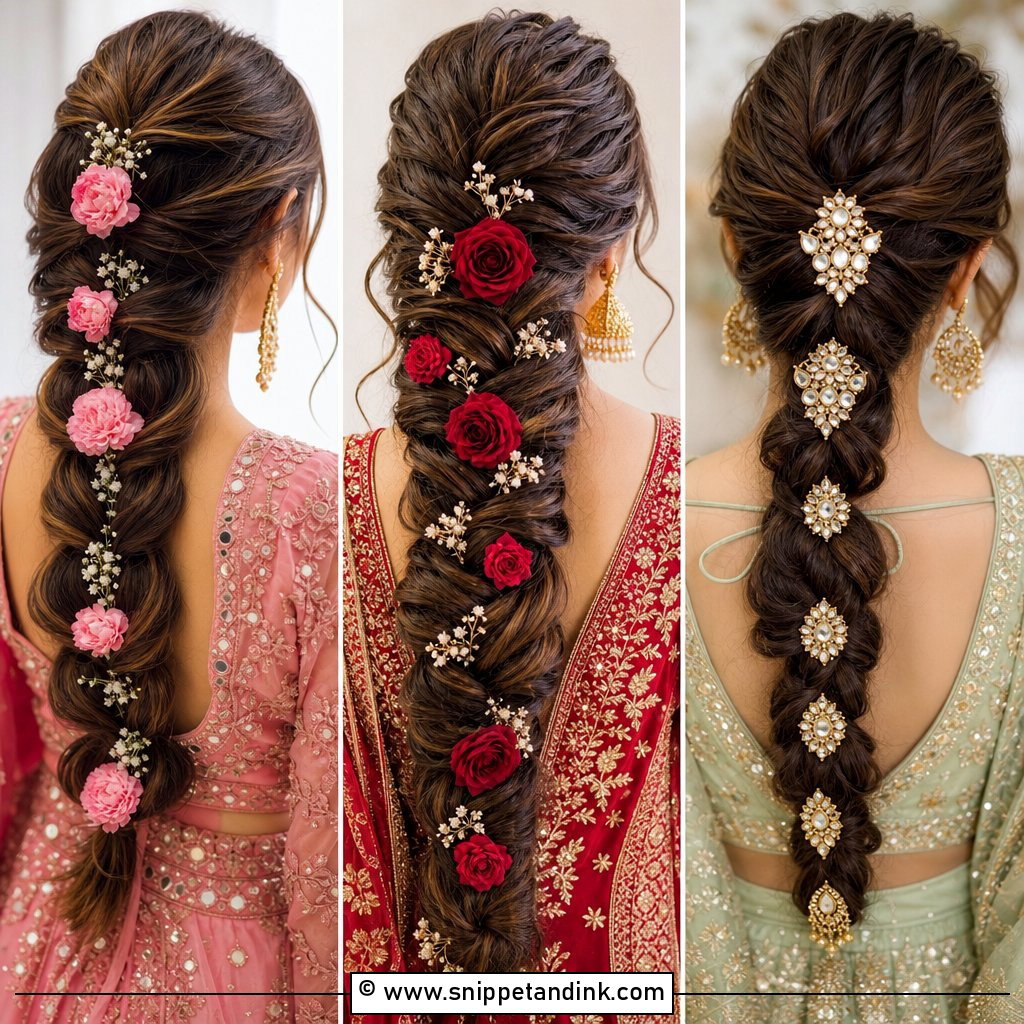

20. Braided Half-Crown Wedding Look
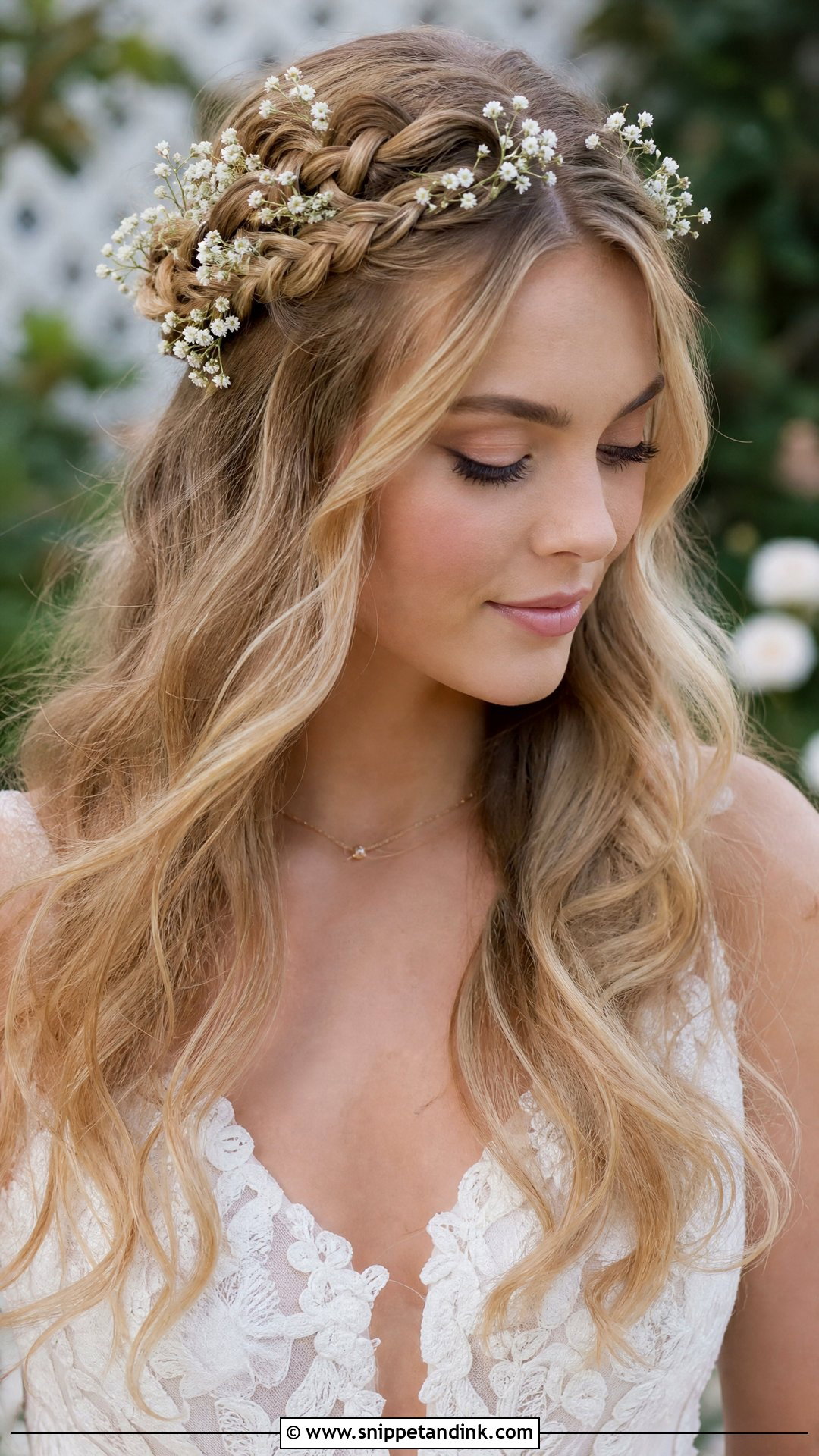
A half-crown braid wraps partway around the head while the back flows freely in waves. It creates a halo effect without fully pulling the hair up, and it stays light all day. It suits garden, outdoor and bohemian weddings. Loose and airy braids look softer; neat ones look more polished. It needs medium or long hair with some texture, so on silky straight hair I’d prep with a texture spray first. Baby’s breath or tiny flowers tuck right into it.
Undoing a Braided Style at the End of the Night
Nobody tells brides this part. After ten or more hours in pins and spray, a braided style can take a while to take out, and tugging at it tired is how hair breaks.
- Ask your stylist roughly how many pins went in, and count them as you remove them.
- Take out flowers and accessories first, then the pins, working from the top of the style down.
- Unravel each braid from the end upward, with your fingers rather than a brush.
- Work a generous amount of conditioner or detangling spray through the hair before brushing.
- Brush from the ends up in small sections, then wash the next morning.
If you’re leaving early the next day, it’s often easier to sleep with the braid in, wrapped in a silk scarf, and take it down in the shower in the morning with conditioner already on.
Expect some shedding when the braids come out. Hair that would normally fall out over a day stays trapped in a braid, so a handful in the brush is normal and not damage. Snapping at the hairline is different, and usually means a braid was too tight; mention it to your stylist so the tension can be eased for anything you wear on the honeymoon.
Which Braid Fits the Hair You Actually Have?
The right braid depends on your hair as much as your style. Thick, long hair can carry a crown or a braided bun easily; fine or layered hair suits waterfall braids, rope braids or a half-up look with a little added hair. Take two or three of these photos to your trial and ask your stylist which will hold in your texture. Then add your own touches with flowers or pins, and enjoy wearing a style that won’t fall apart.
You'll Like These Ideas:


Leave a Reply