
A bridal design has to work at two distances: up close in a ring shot, and from across the mandap when she raises her hands. When I sit down with a bride, I’m thinking about her outfit, her jewellery, the ceremony and her own taste before I pick up a cone. Some brides want heavy Indian full-hand work with portraits and peacocks. Others prefer Arabic trails, negative space, mandalas or clean finger patterns. Initials, wedding dates, love-story details, jaali, lotus motifs and matched front-and-back designs are all common requests now. Here are thirty bridal looks, with what each one asks of the artist and of you.
Timing the Application So the Colour Peaks on the Wedding Day
Natural henna doesn’t show its final colour when the paste comes off. The stain starts out bright orange and darkens over the next day or two toward a deep reddish brown. That’s why I schedule bridal application one to two days before the wedding, never the morning of. Apply too early, though, and the palms begin to fade and peel by the reception.
How long you’ll sit depends on coverage. A minimal design might take an hour or so; full hands and feet in detailed Indian or Rajasthani work can take most of a day. Eat beforehand, use the bathroom, and have someone ready to hold your phone and feed you.
Aftercare for a darker stain
- Leave the paste on as long as you can, ideally six hours or overnight. Your artist may dab on a sugar and lemon mixture to keep it moist and stuck to the skin.
- Scrape the dried paste off with a blunt edge. Don’t wash it off.
- Keep water off your hands for the next twelve to twenty-four hours.
- Warmth helps the stain develop, so keep your hands warm, and rub in a little balm or natural oil before any contact with water.
1. Full Hand Indian Bridal Mehendi
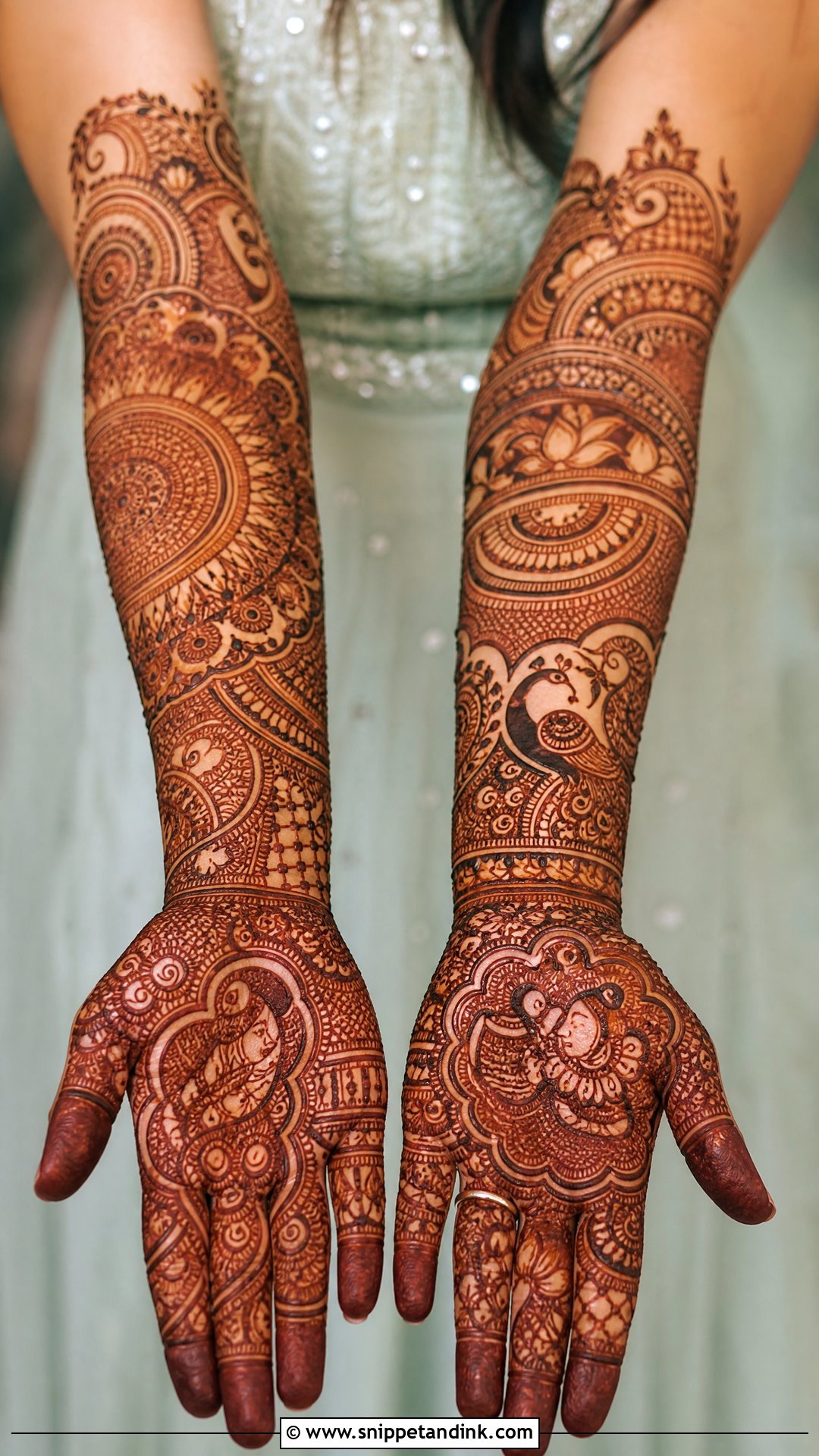
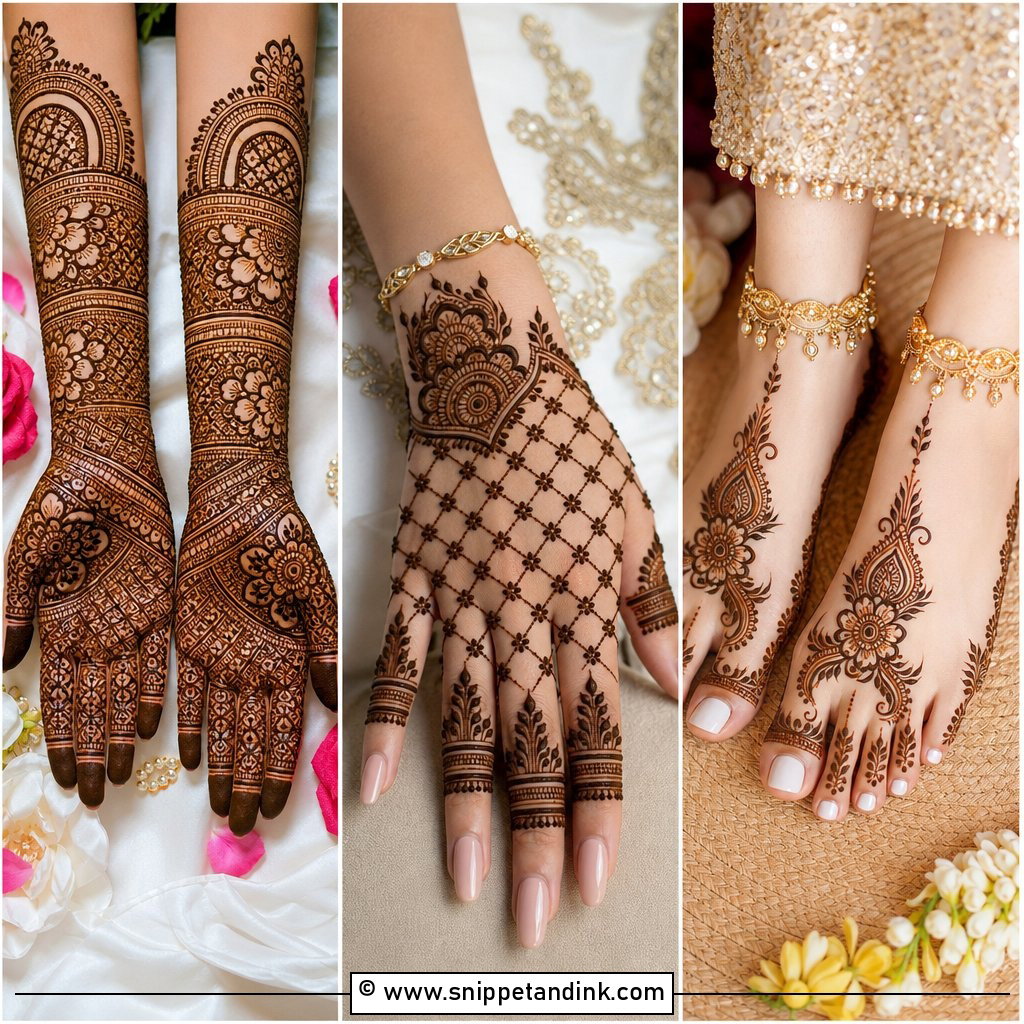
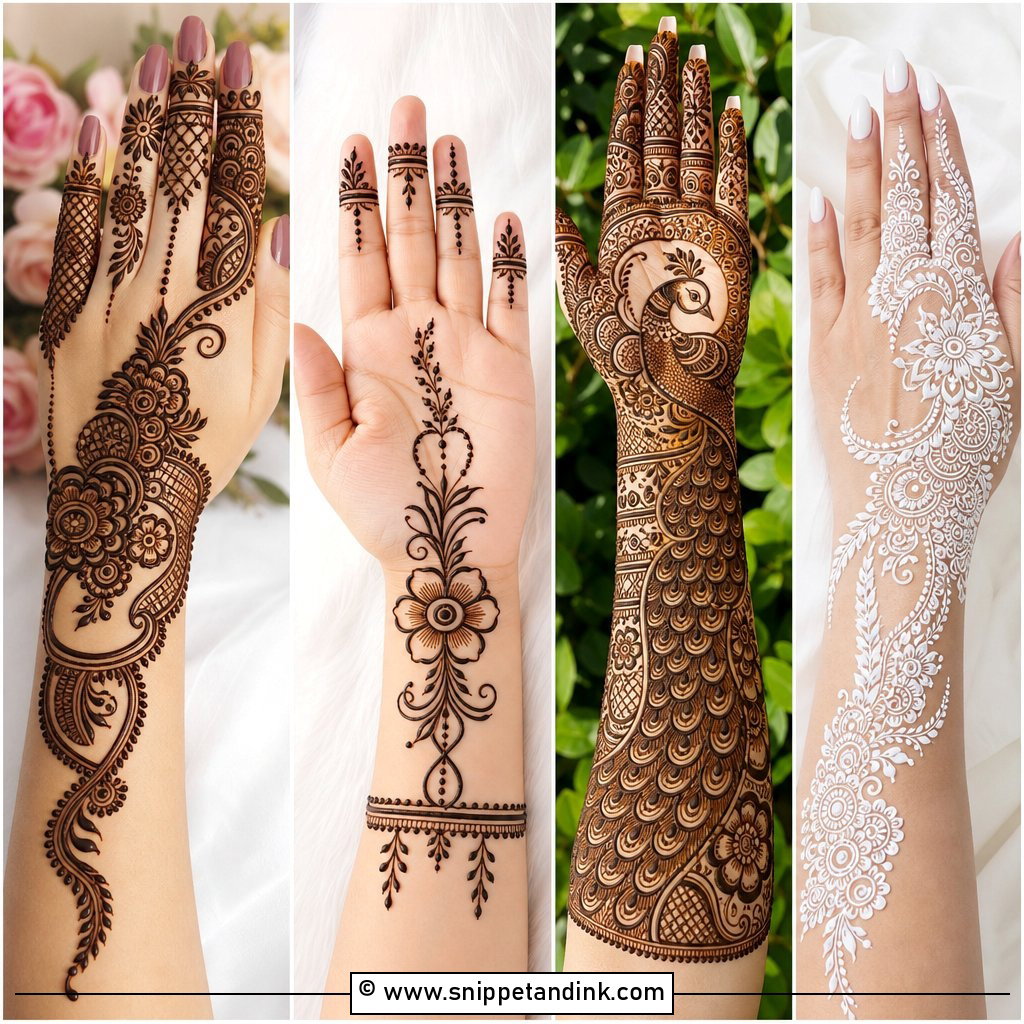
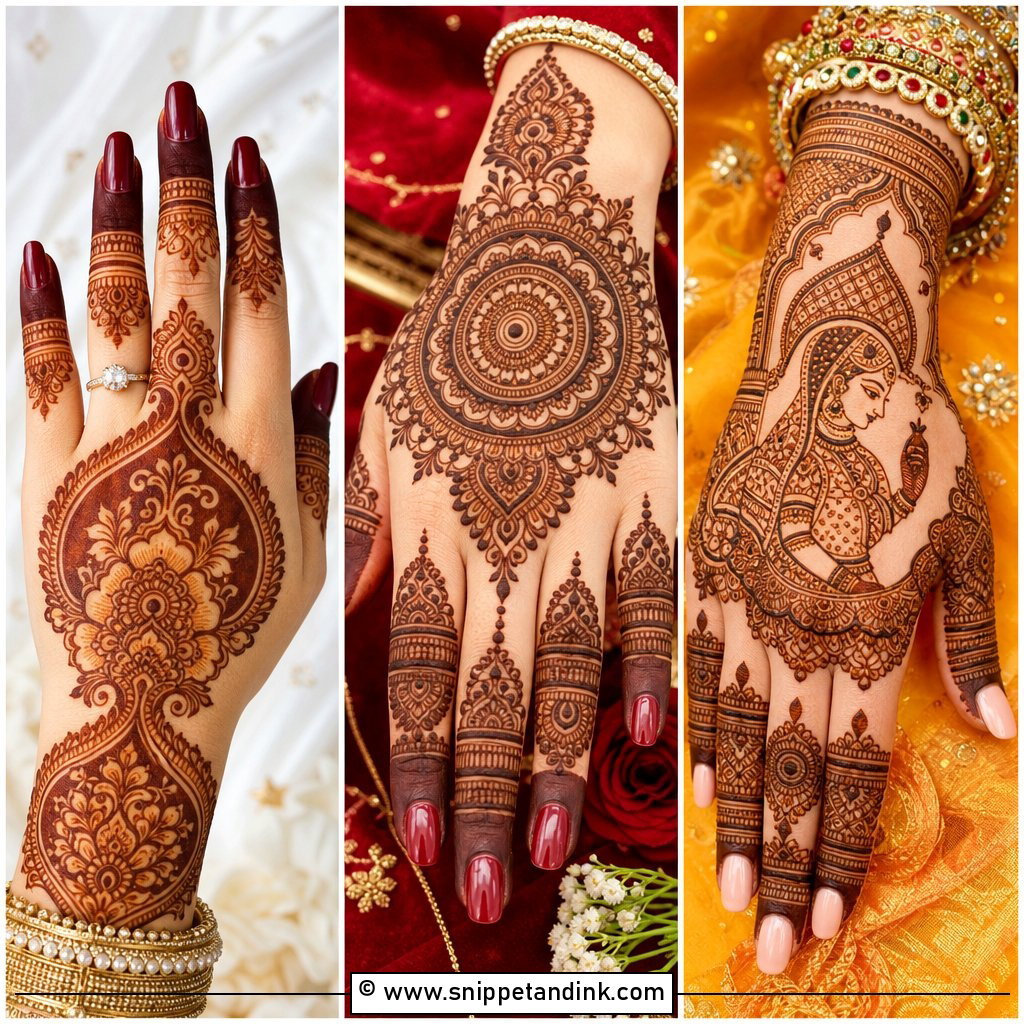
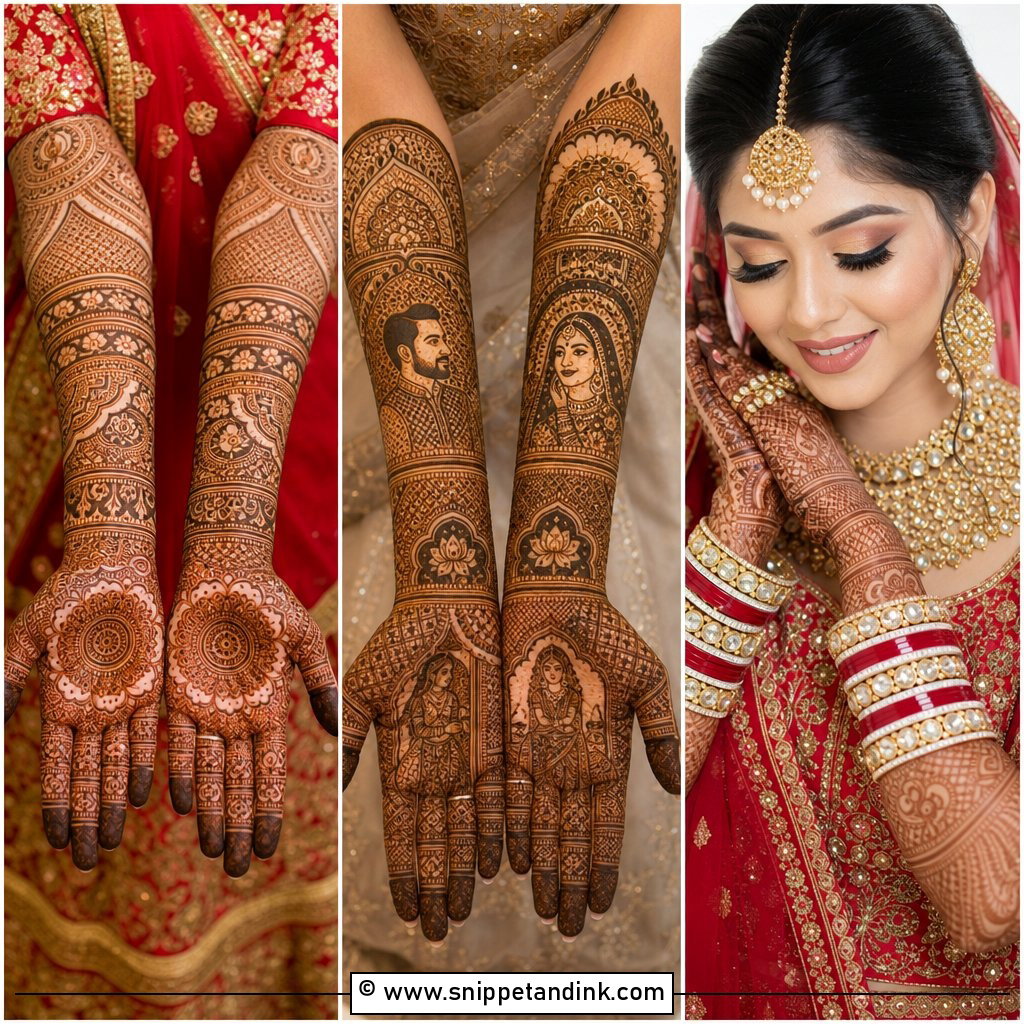
Full hand Indian bridal mehendi covers the palms, backs of the hands, wrists and forearms in dense detail: paisleys, lotuses, peacocks, mandalas, bride and groom figures and fine fillers. It sits naturally with heavy lehengas, silk sarees, kundan and red or maroon outfits. The danger is mud. When every area is filled at the same density, the stain reads as one dark mass in photos. I keep the main motifs open and outlined with a slightly thicker line, then let the fillers do the shading around them. Plan for a long sitting, often most of an afternoon.
2. Arabic Bridal Mehendi
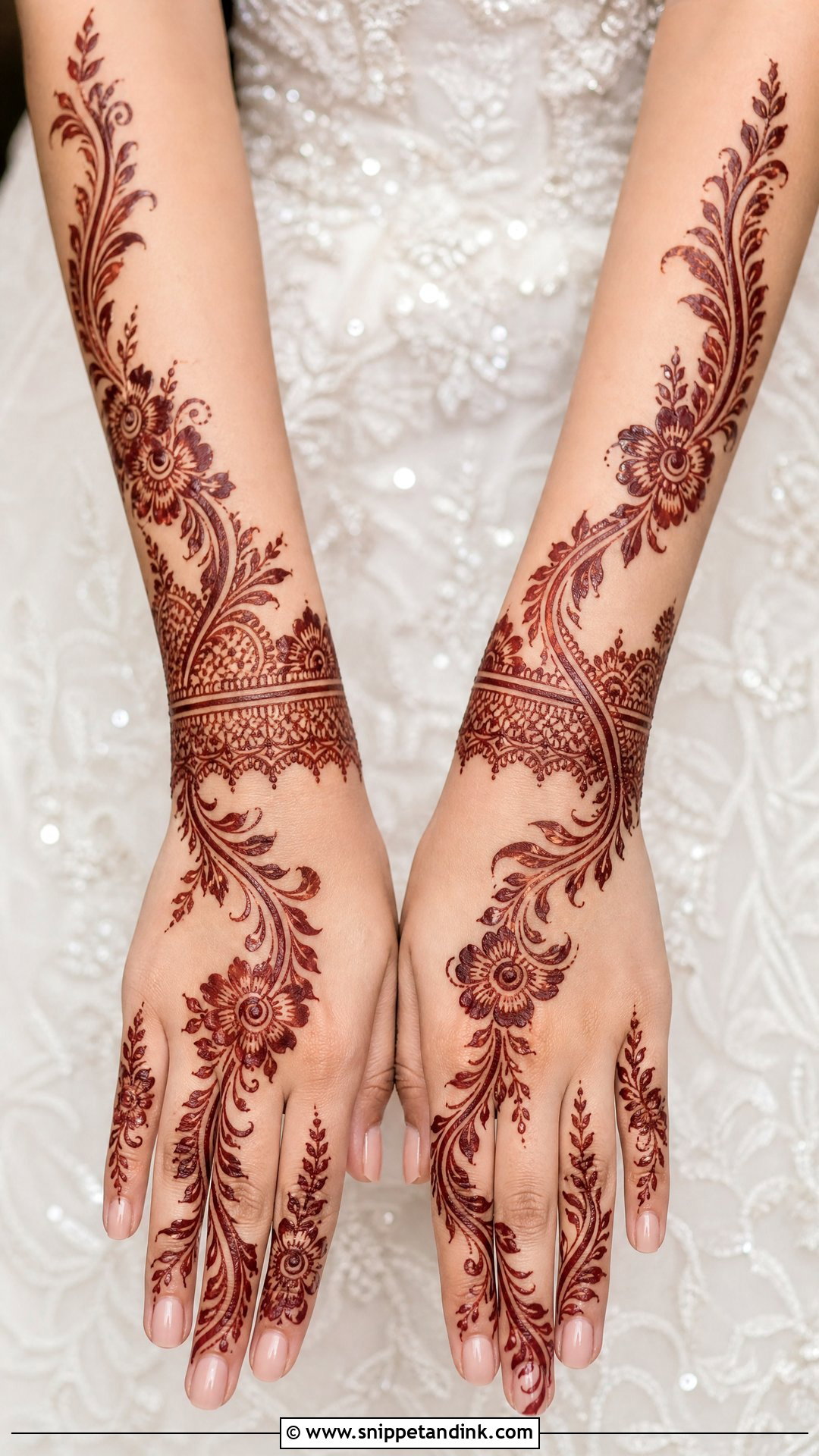
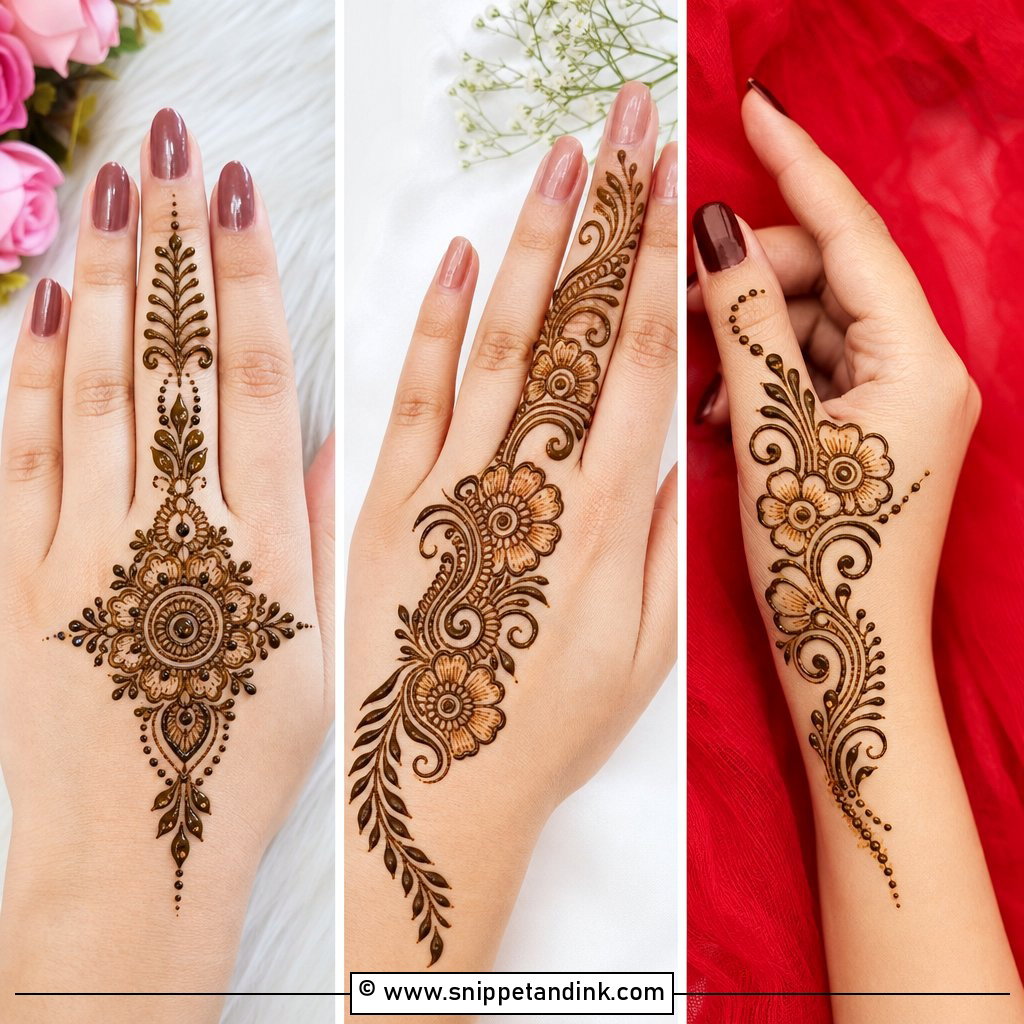
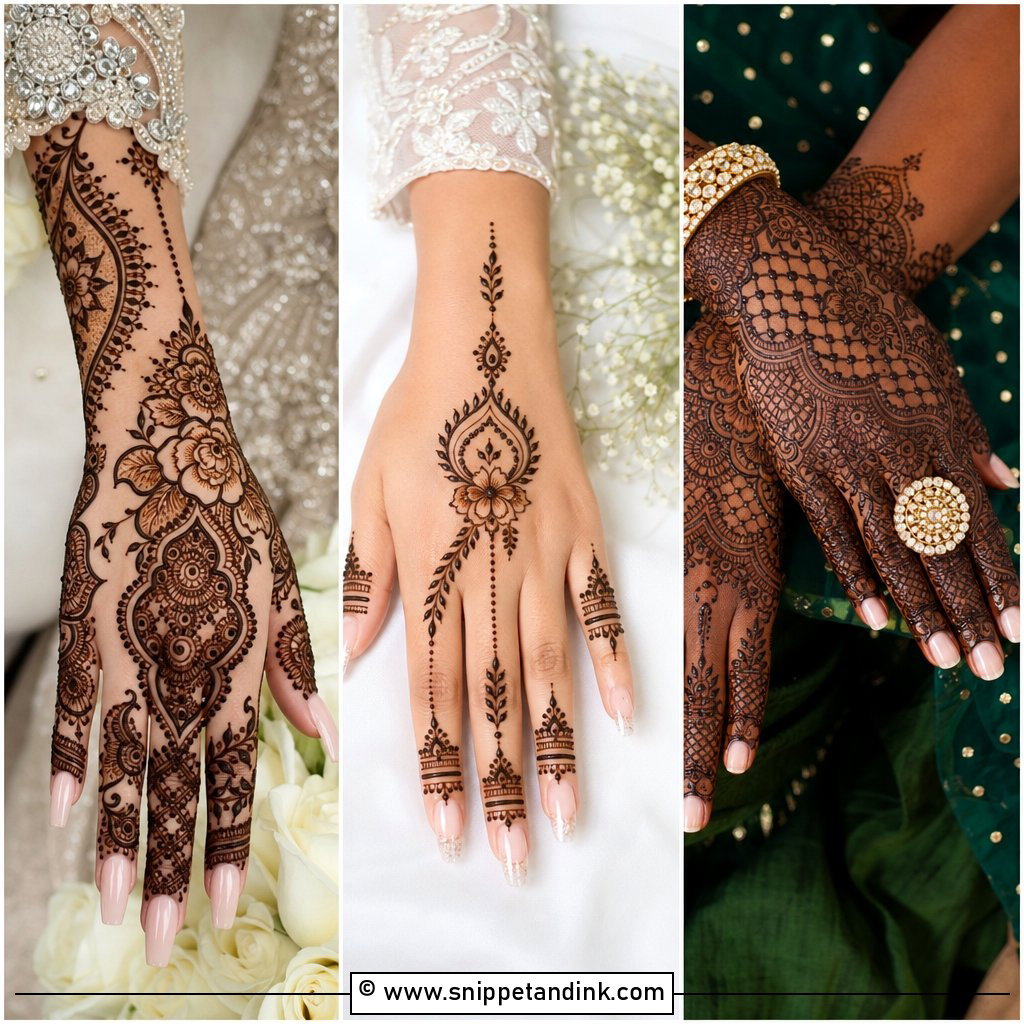
Arabic designs use flowing vines, large flowers and leafy curves that run diagonally across the palm and back of the hand, with plenty of bare skin between them. That open space is why they look clean in photos, and why they’re quicker to apply than full Indian work. They suit engagements, nikahs, sangeets and destination weddings. For a bride, I extend the trail from the fingertips up the forearm with floral bands and wrist cuffs. Bold Arabic lines need a slightly thicker paste flow, so the stain stays crisp rather than broken.
3. Indo Arabic Bridal Mehendi
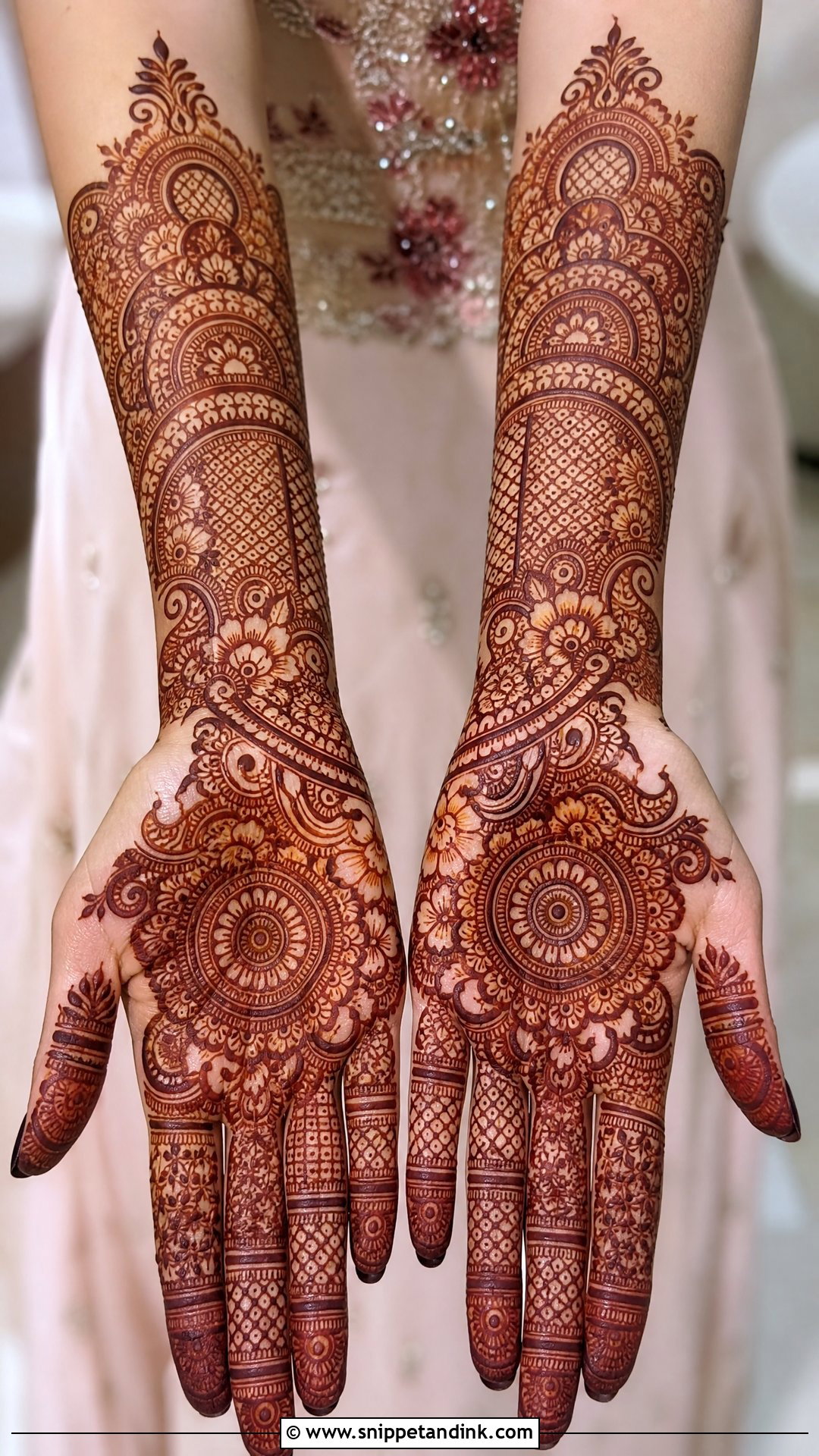
Indo Arabic work mixes the open layout of Arabic with Indian detail: big floral trails next to paisley blocks, shaded petals, mandala centres, jaali and fine finger fills. It suits almost any outfit, from embroidered lehengas to pastel shararas. Brides who want something modern that still feels traditional on the wedding day often land here. I like hiding the groom’s name, tiny wedding bells or a small lotus mandala in the palm. The skill is in the transitions; the Arabic and Indian sections need a shared border or vine, or they look like two designs glued together.
4. Rajasthani Bridal Mehendi
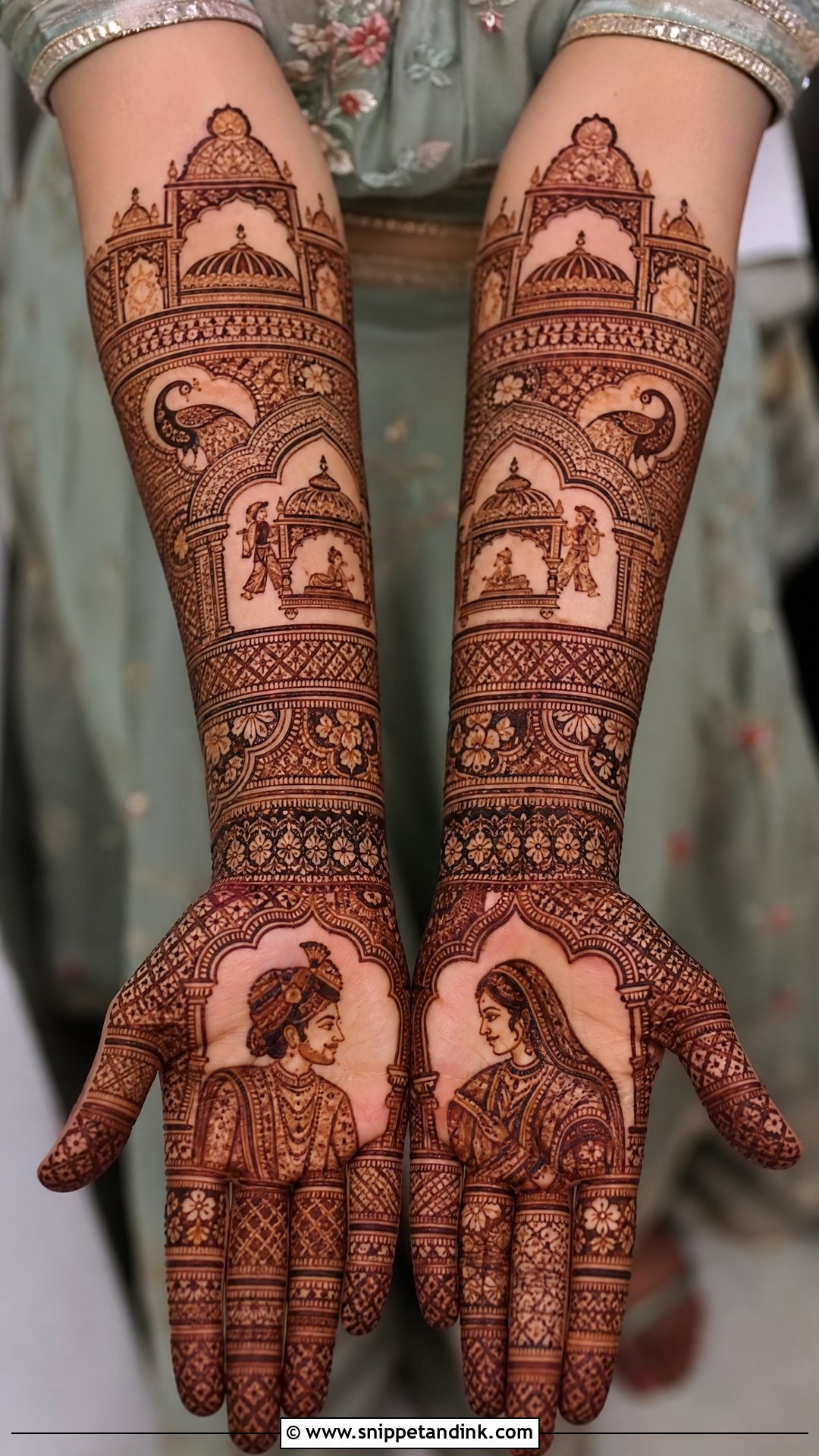
Rajasthani bridal mehendi tells stories: dulha and dulhan figures, palanquins, elephants, peacocks, mirrored patterns and palace arches. It’s dense and symmetrical, and it suits bandhani, gota patti, mirror work and heirloom jewellery. Figures take time to draw cleanly, so I book much longer sessions for this style and ask the bride not to squeeze it in on a busy day. You can personalise it with initials or a symbol from your story. It isn’t minimal, and it shouldn’t try to be.
5. Pakistani Bridal Mehendi
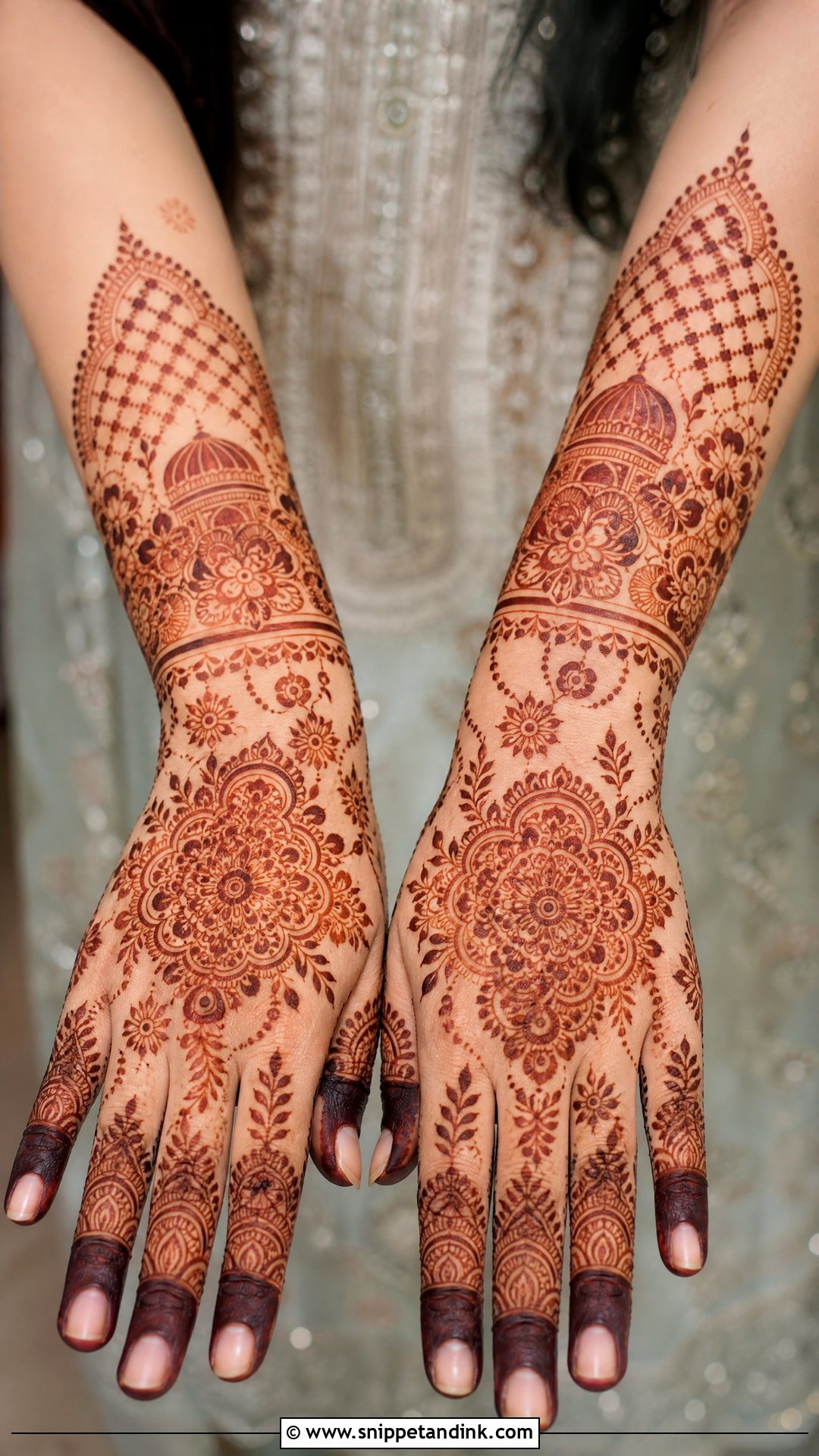
Pakistani bridal mehendi tends to flow, with floral vines, dome shapes, paisleys, fine lines, leafy borders and delicate net patterns linked softly into one another. Bracelet-style wrists and filled fingers give it a jewellery-like look. It pairs well with ghararas, shararas, long kameez and heavily embroidered bridal outfits. Even when it’s dense, the motifs connect smoothly rather than sitting in blocks. For a modern take, I add shaded florals or a little negative space around the central pattern so it breathes.
6. Moroccan Bridal Mehendi
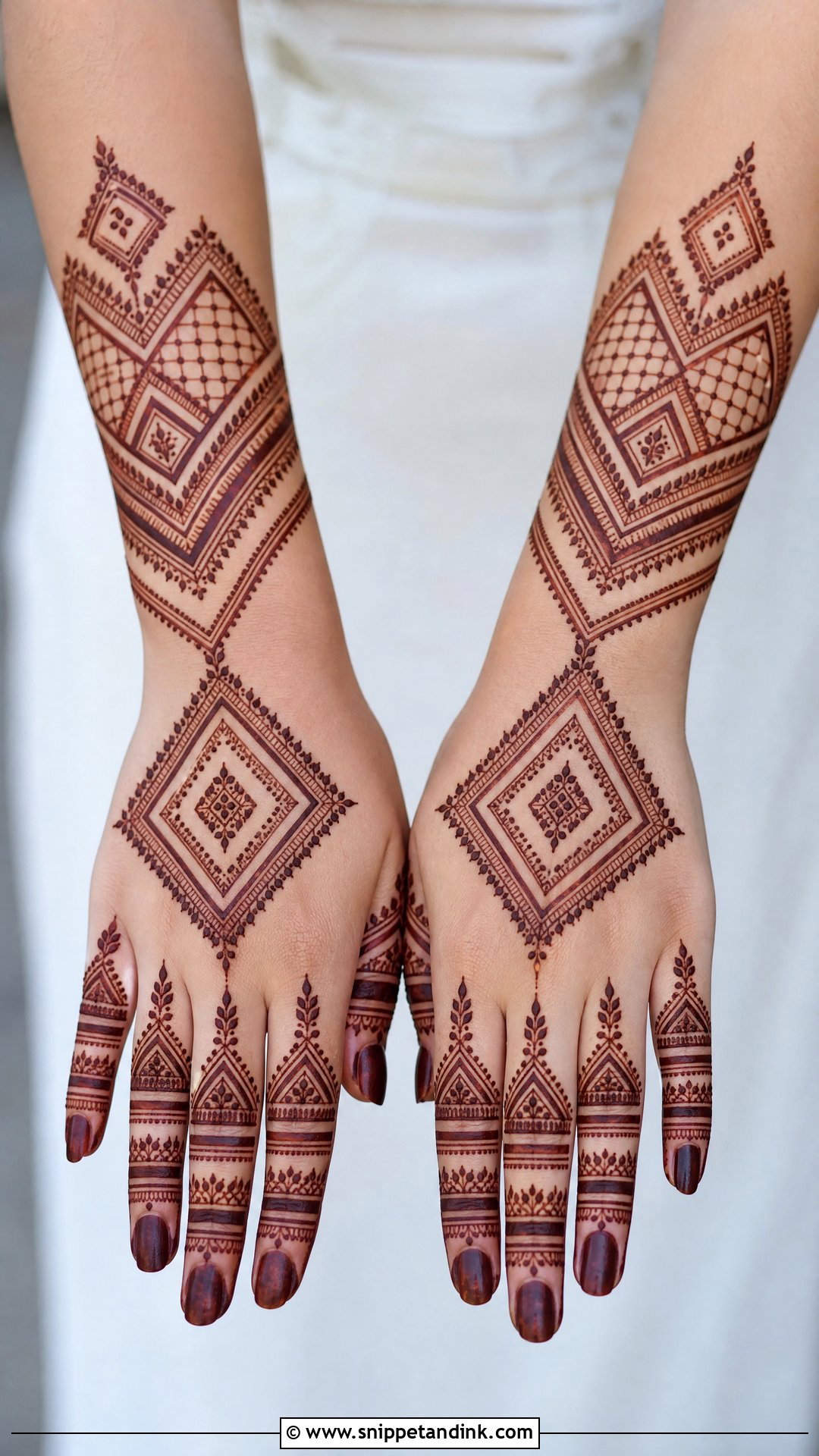
Moroccan designs swap flowers for geometry: lines, diamonds, triangles, chevrons, grids and symmetrical blocks. They can cover the whole hand or run as a back-hand panel up the wrist and forearm. They suit contemporary bridal outfits, fusion lehengas and minimal jewellery. Geometric work is unforgiving, because a wobbly line or uneven grid is obvious. I lightly map the main lines with dots before filling them in. For a softer bridal feel, small dots, cuffs and fine finger bands round off the hard edges.
7. Gulf Bridal Mehendi
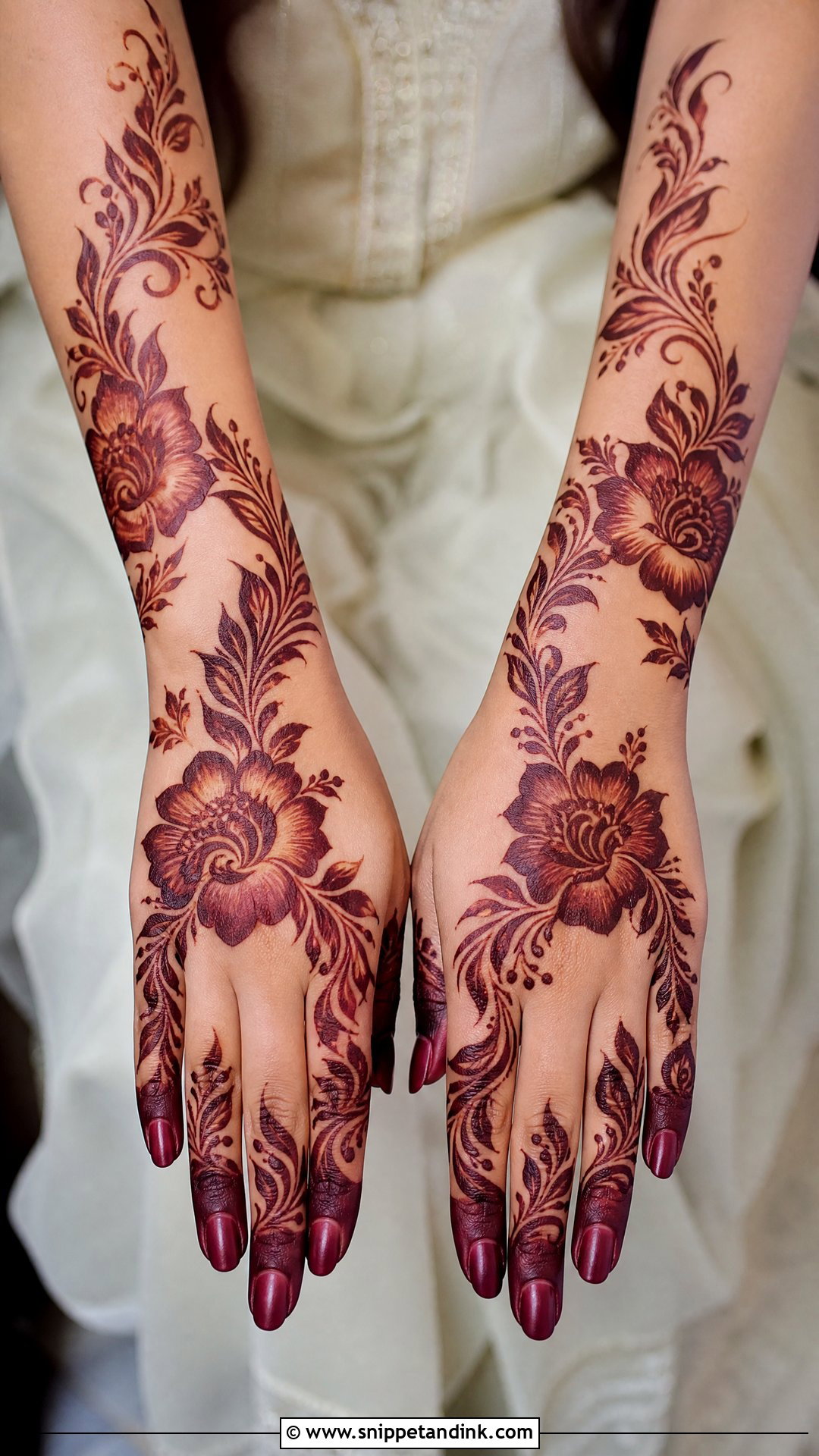
Gulf or Khaleeji designs use bold florals and sweeping leaves placed across the hands and forearms, with open space around them. I suggest them when a bride wants patterns that read from a distance instead of fine detail that blurs. They suit gold jewellery, embellished sleeves, gowns and lehengas. Shaded petals add depth. Khaleeji work often uses a darker, smoother paste with a very even line, so I strain my paste extra fine for this style. Keep the fingers neatly filled with vines, dots or leafy bands to finish it.
8. Mandala Bridal Mehendi
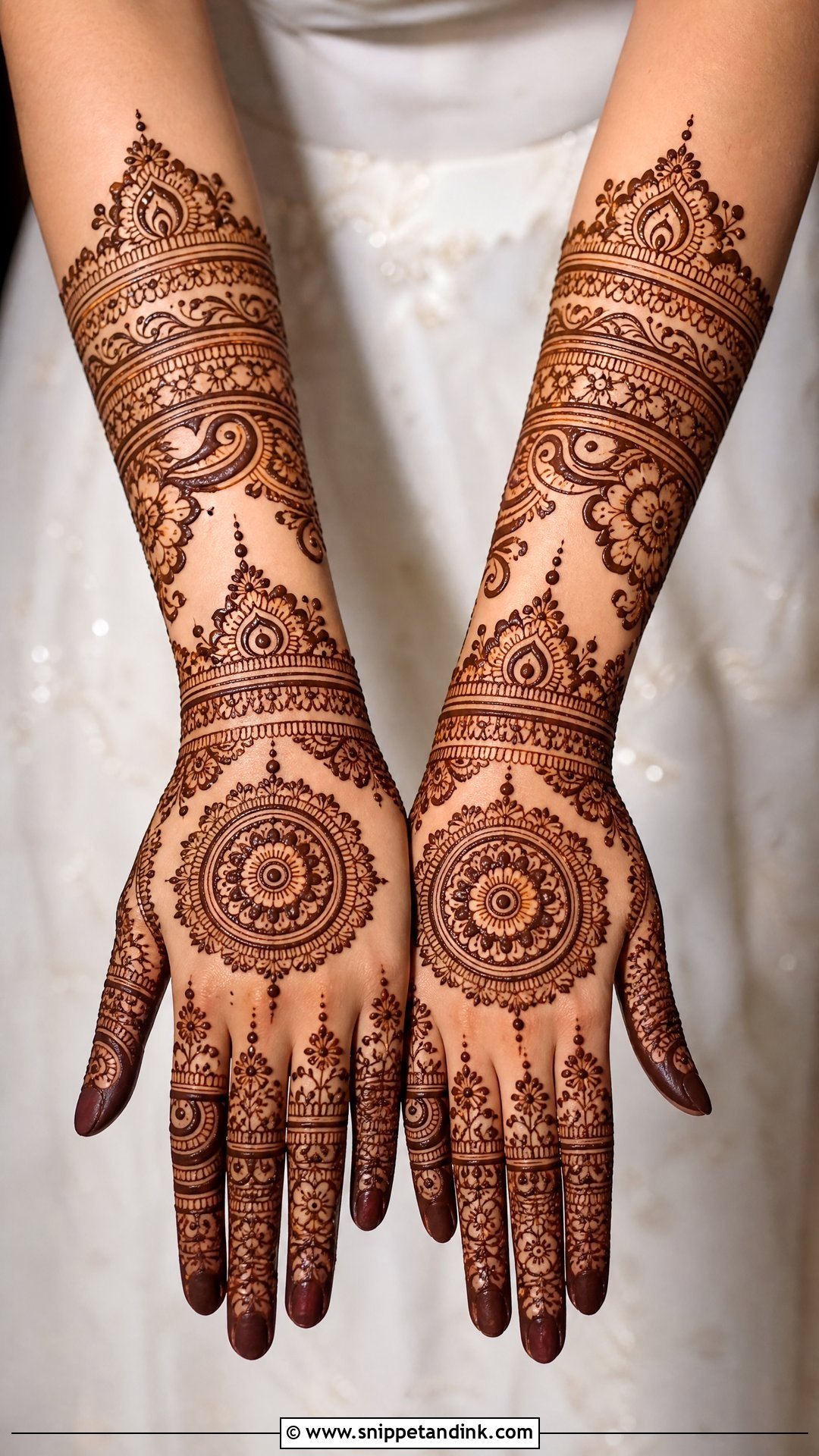
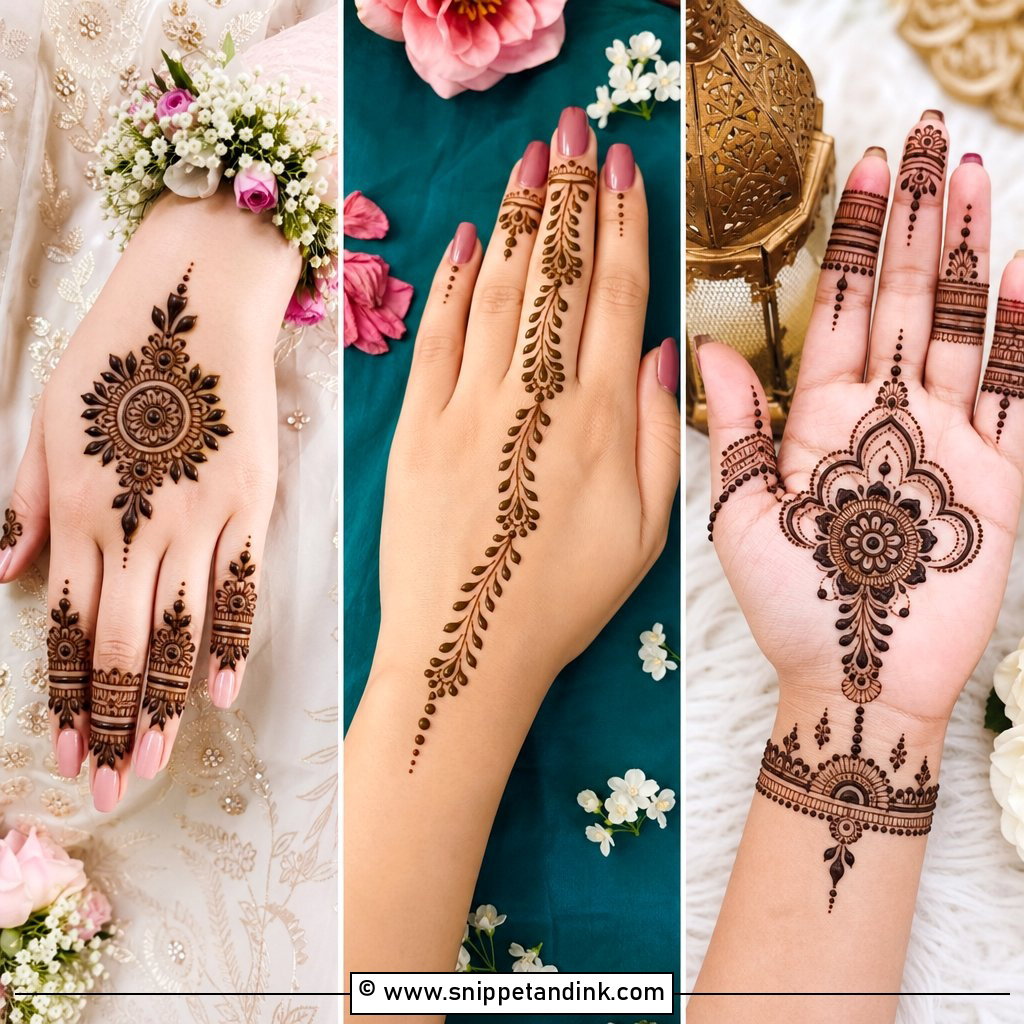
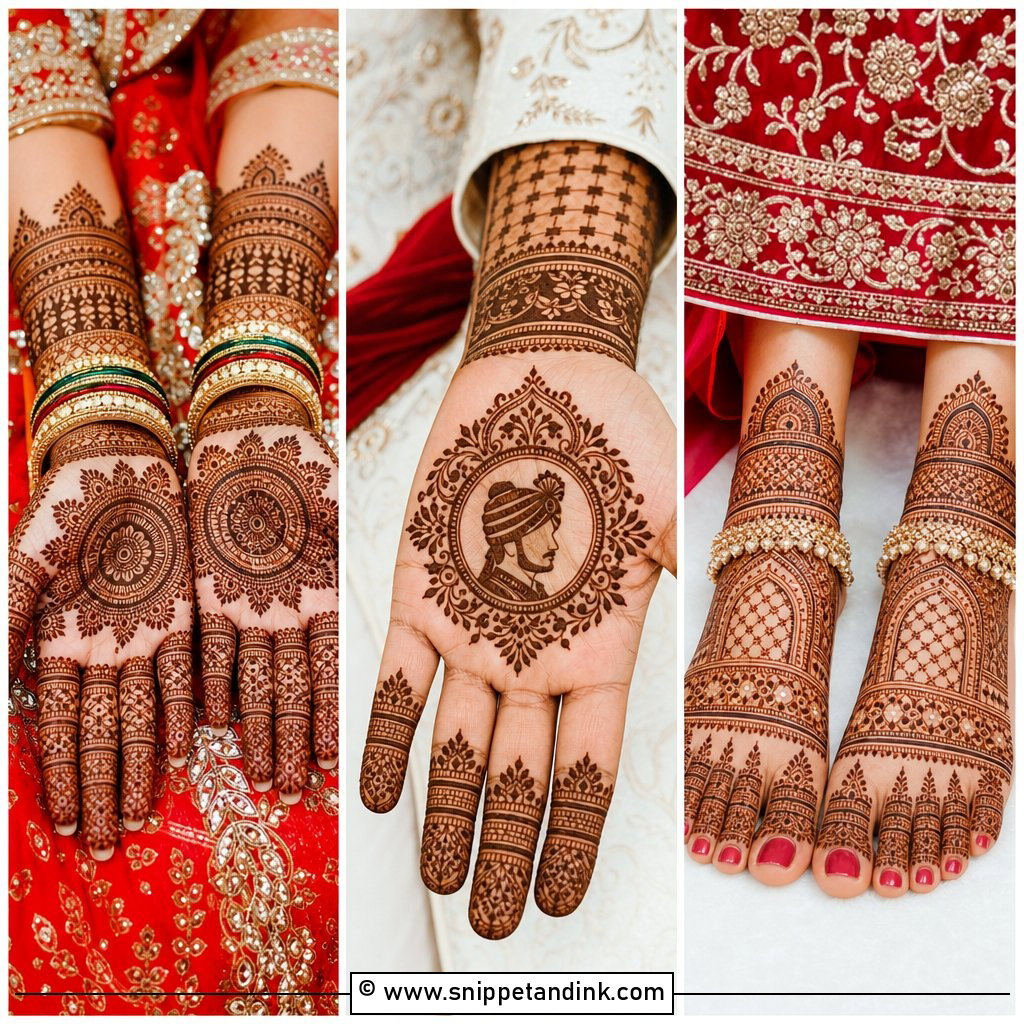
A mandala design puts its main circular motif in the center of the palm or on the back of the hand, with borders, finger patterns and wrist bands around it. For a bride, the mandala expands into a full design with paisleys, jaali, florals and bracelet cuffs. The centre of the palm is one of the darkest-staining spots on the hand, which is exactly why a mandala there looks so rich after a day or two. It’s also a good choice with heavy jewellery, because the central focus keeps the design from looking busy.
9. Lotus Bridal Mehendi
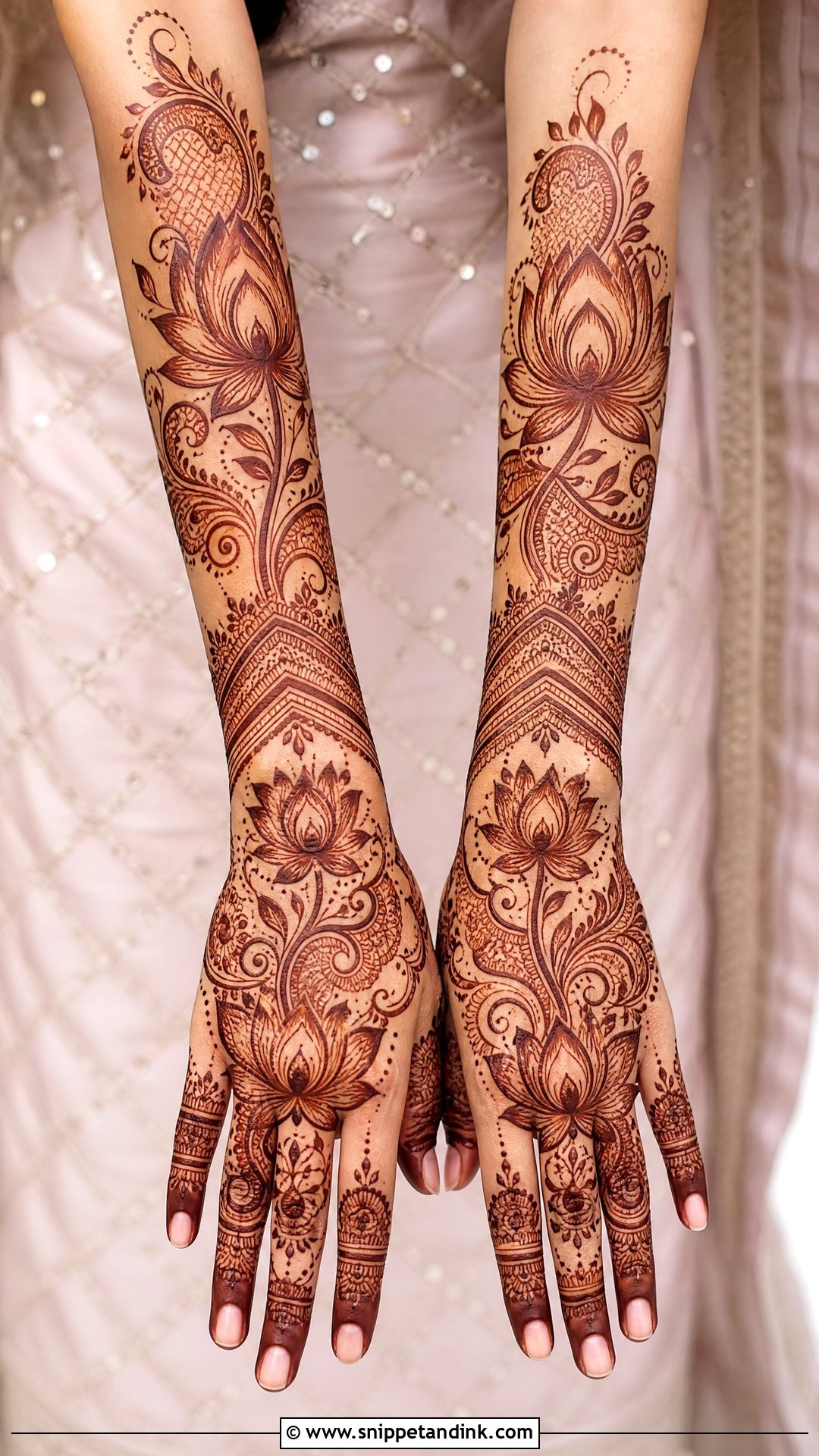
The lotus suits palms, back hands, wrists and forearms, as a large central flower, a repeated border or a vine winding through. Petals are clear shapes, so they stay readable even in dense work, and they suit classic and pastel outfits alike. Pair it with paisleys, mandalas, dots and fine leaves for a full bridal design. For a modern look, I leave a thin halo of bare skin around each lotus. On a darker skin tone, that halo matters even more, because it gives the stain a contrast edge that photographs well.
10. Peacock Bridal Mehendi
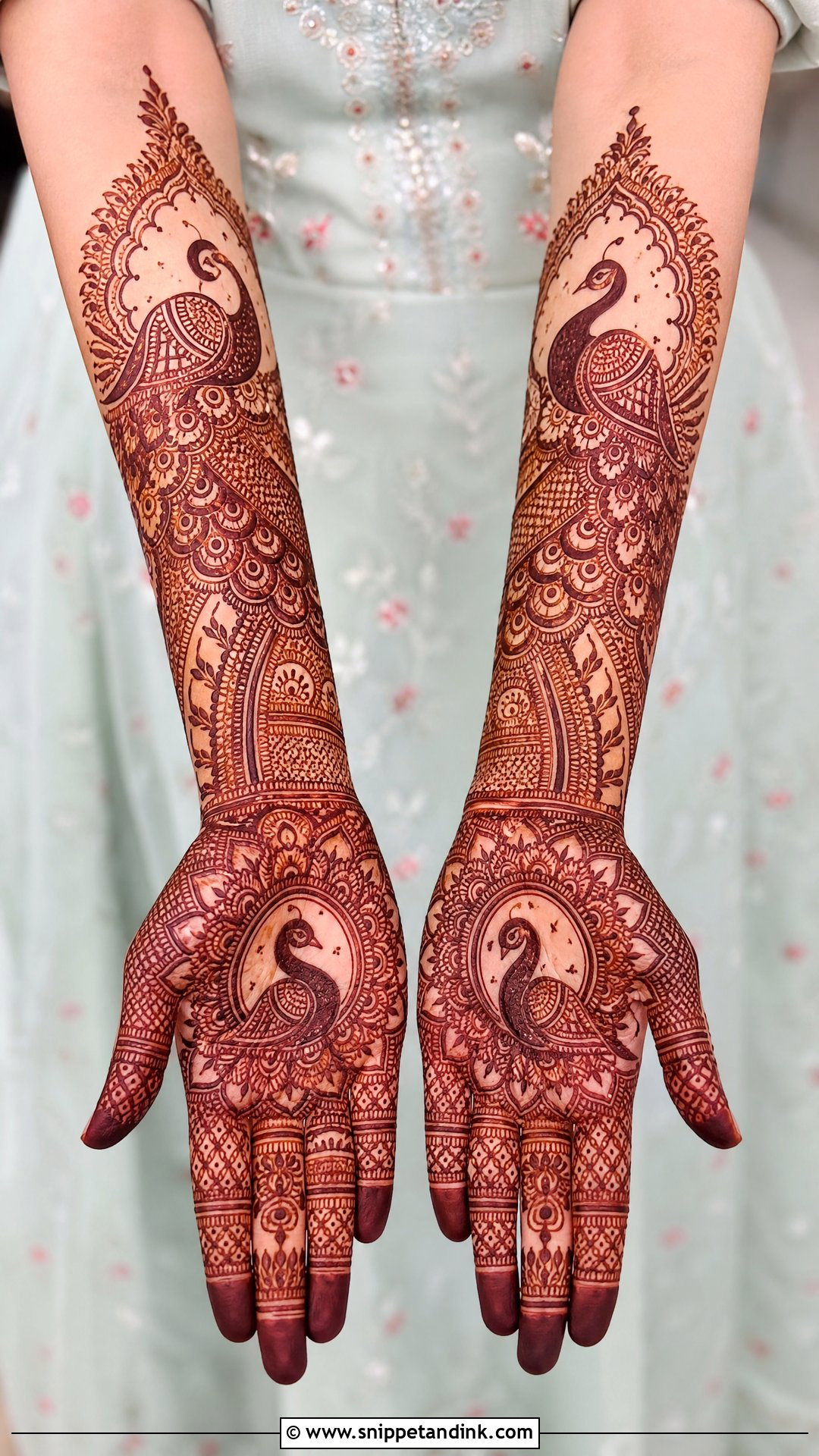
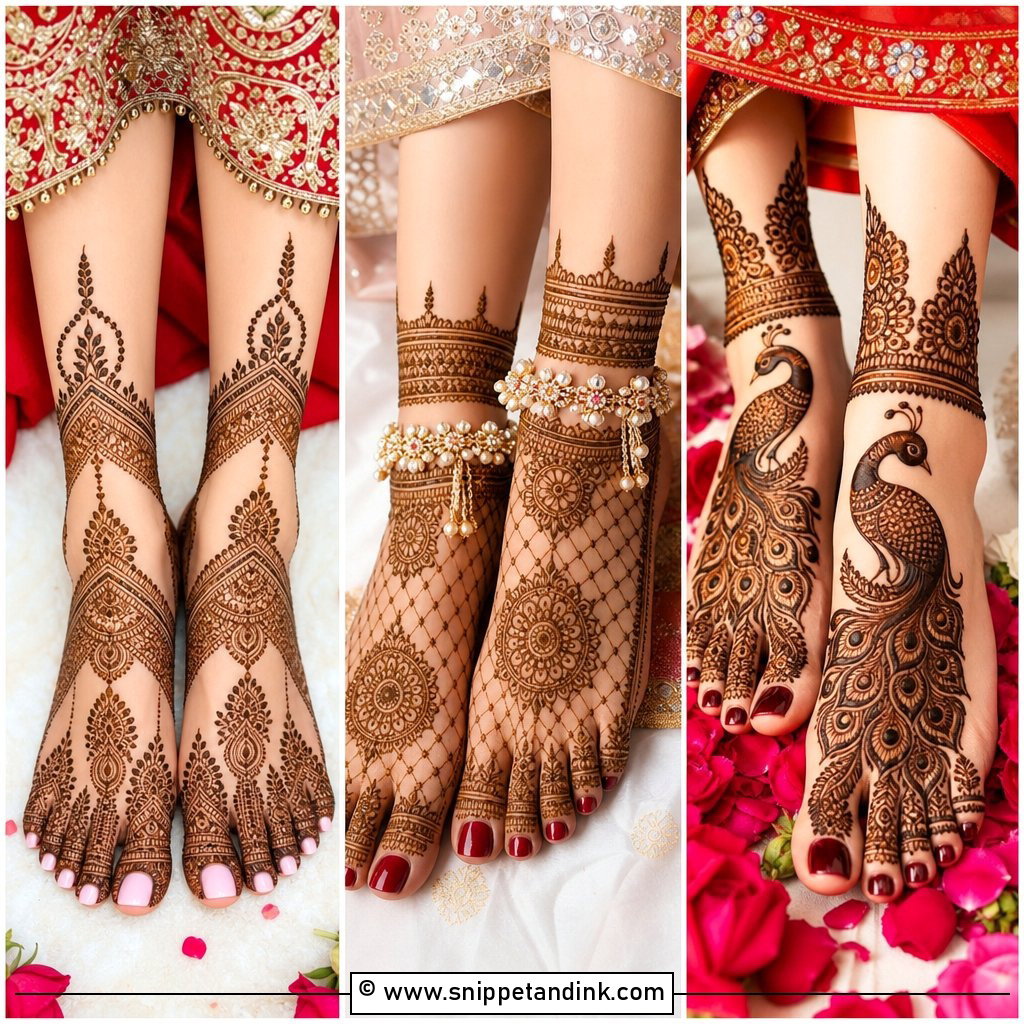
Peacocks can sit on the palm, back of the hand or forearm, surrounded by paisleys, feathers, florals and fine filler. Some brides want one large peacock per hand; others want smaller mirrored birds hidden in the design. The curved neck and long feathers draw the eye along the hand and make fingers look longer. They suit colourful lehengas and temple jewellery. Feathers are where peacock work goes wrong: overfilled feathers blur into a dark smudge after the stain darkens, so I leave clear gaps between each eye and its strands.
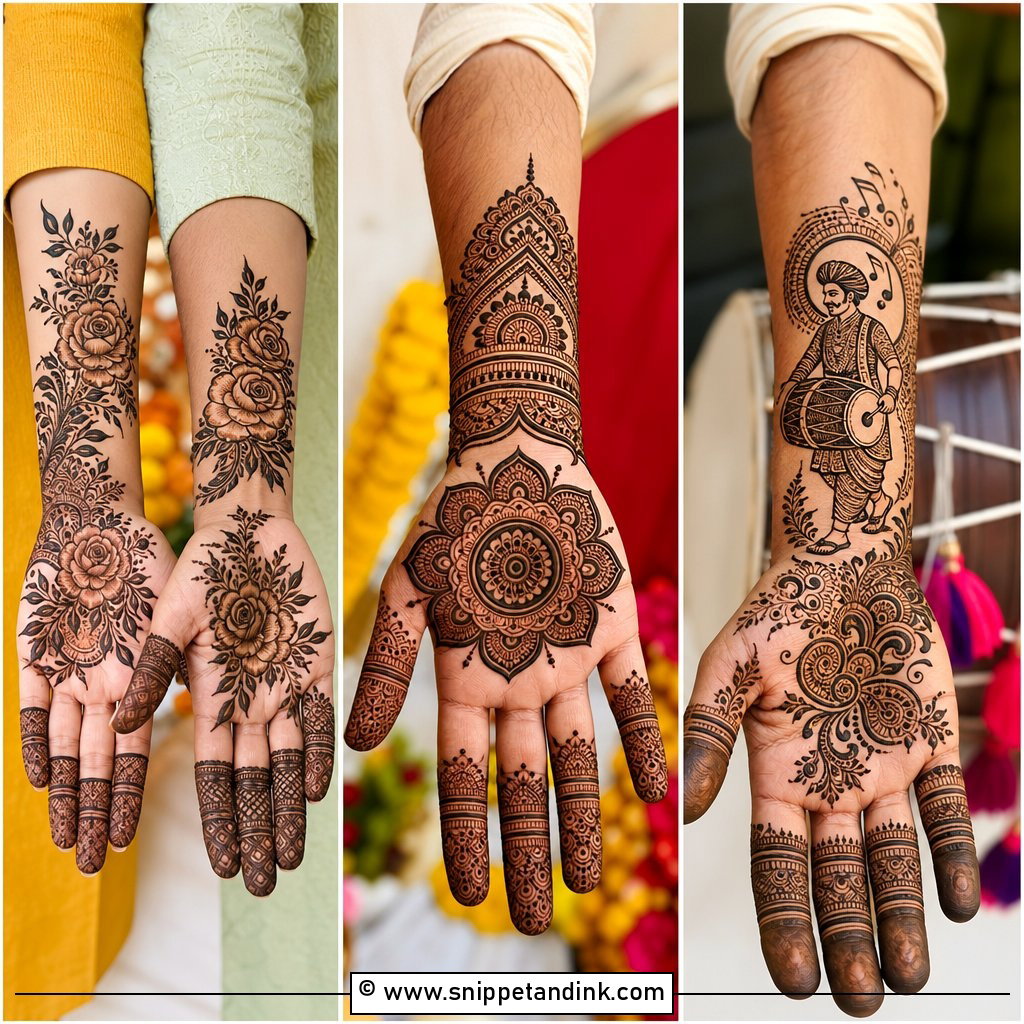
11. Bride Groom Portrait Mehendi
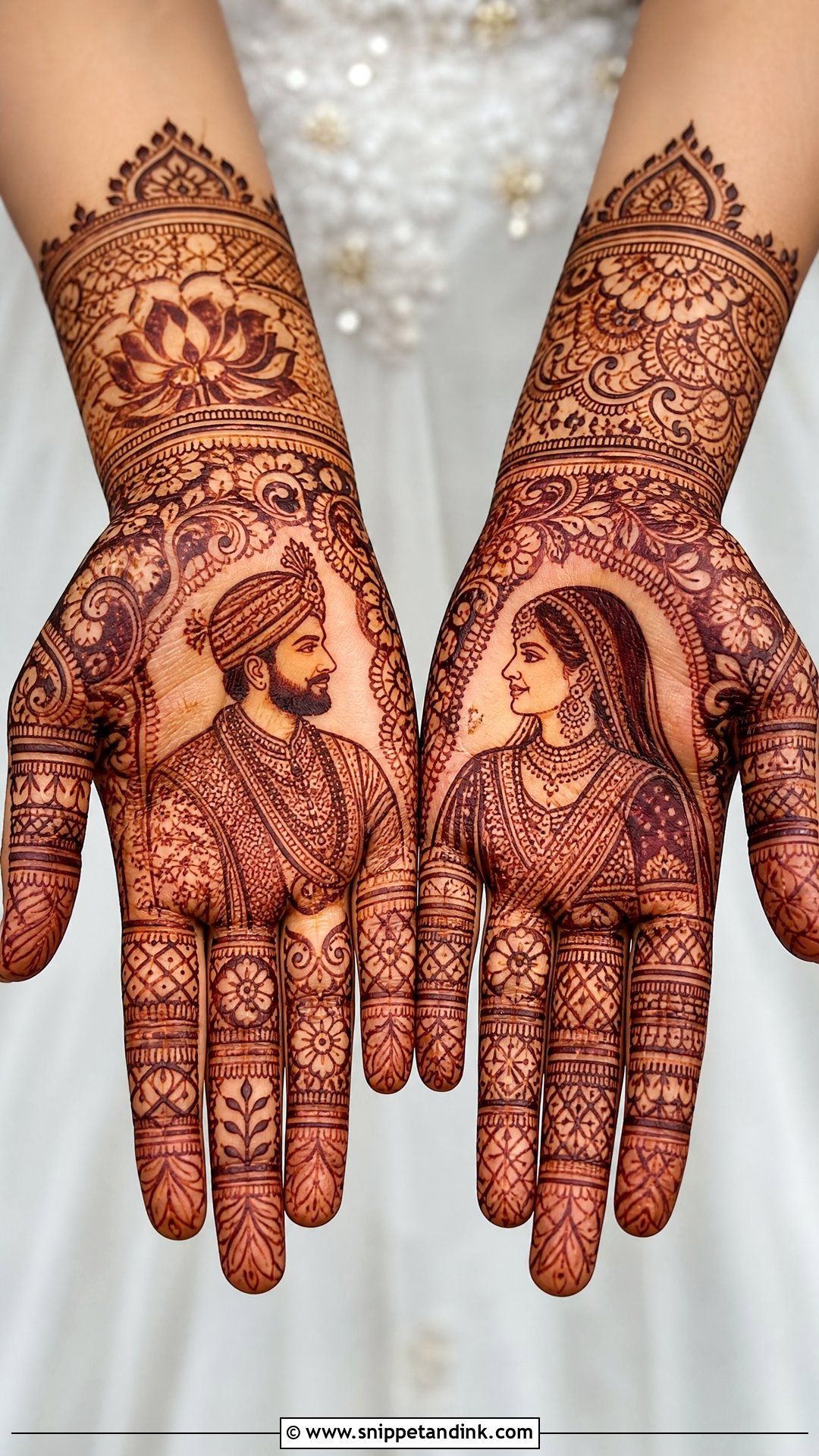
Portrait designs usually place the bride’s face on one palm and the groom’s on the other, framed by wedding motifs, flowers and mandalas. Some include jaimala or varmala scenes. This is for a bride who wants her hands to tell a story. Faces are the hardest thing to draw in henna, because the paste spreads slightly and a millimetre changes an expression. Choose an artist whose portfolio shows real portrait work, and send reference photos well ahead so she can practise. Keep the fillers around the faces simple so they stay the focus.
12. Personalized Bridal Mehendi
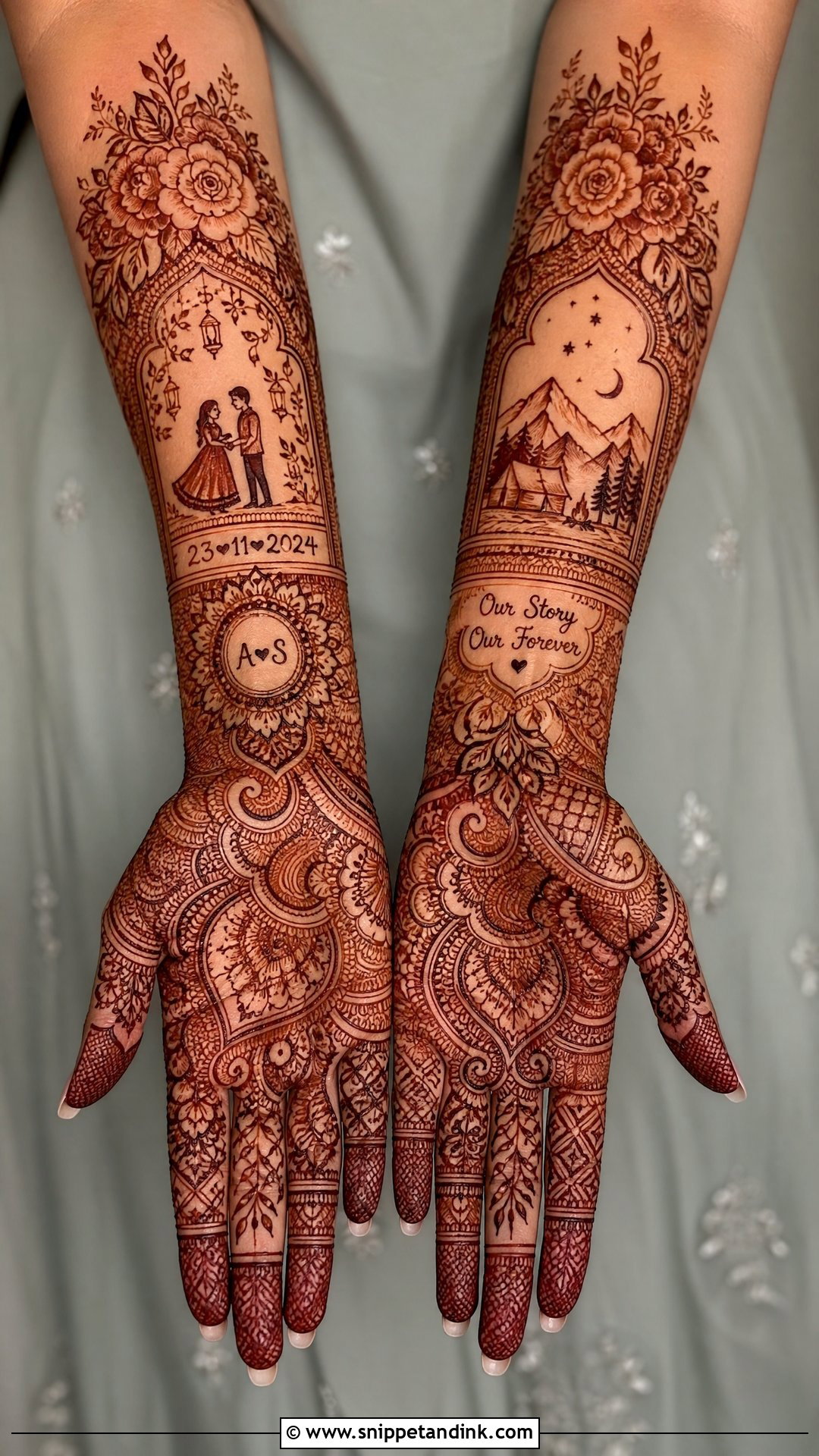
Personal details can be tucked anywhere in a design. You might add initials, wedding dates, a proposal symbol, a travel memory, a pet’s name or a favourite flower. The overall style can be Indian, Arabic, Indo Arabic or minimal. I work these in as part of the pattern rather than as stickers on top, so a skyline might become a border and a date might sit inside a paisley. Write your list down before the appointment; deciding mid-session slows everything and the paste on finished areas starts cracking while we wait.
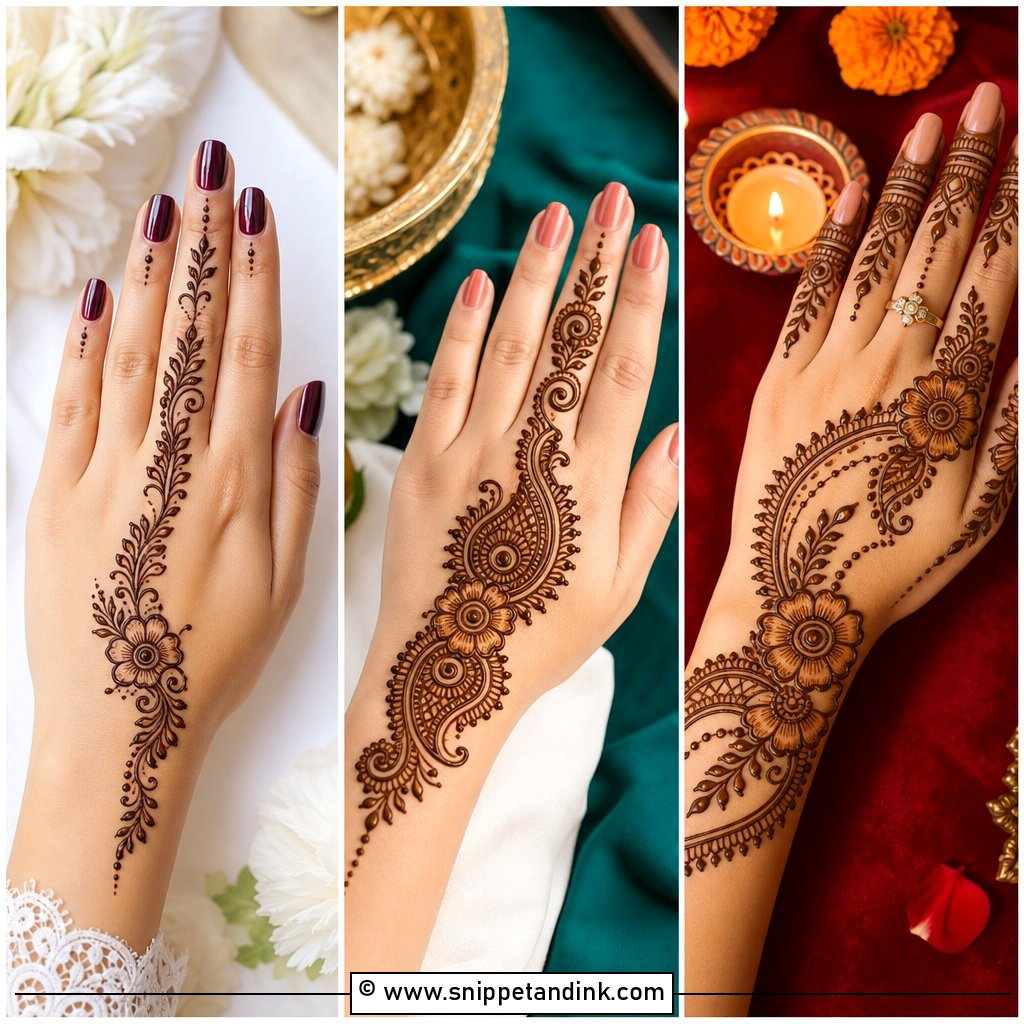
13. Minimal Bridal Mehendi
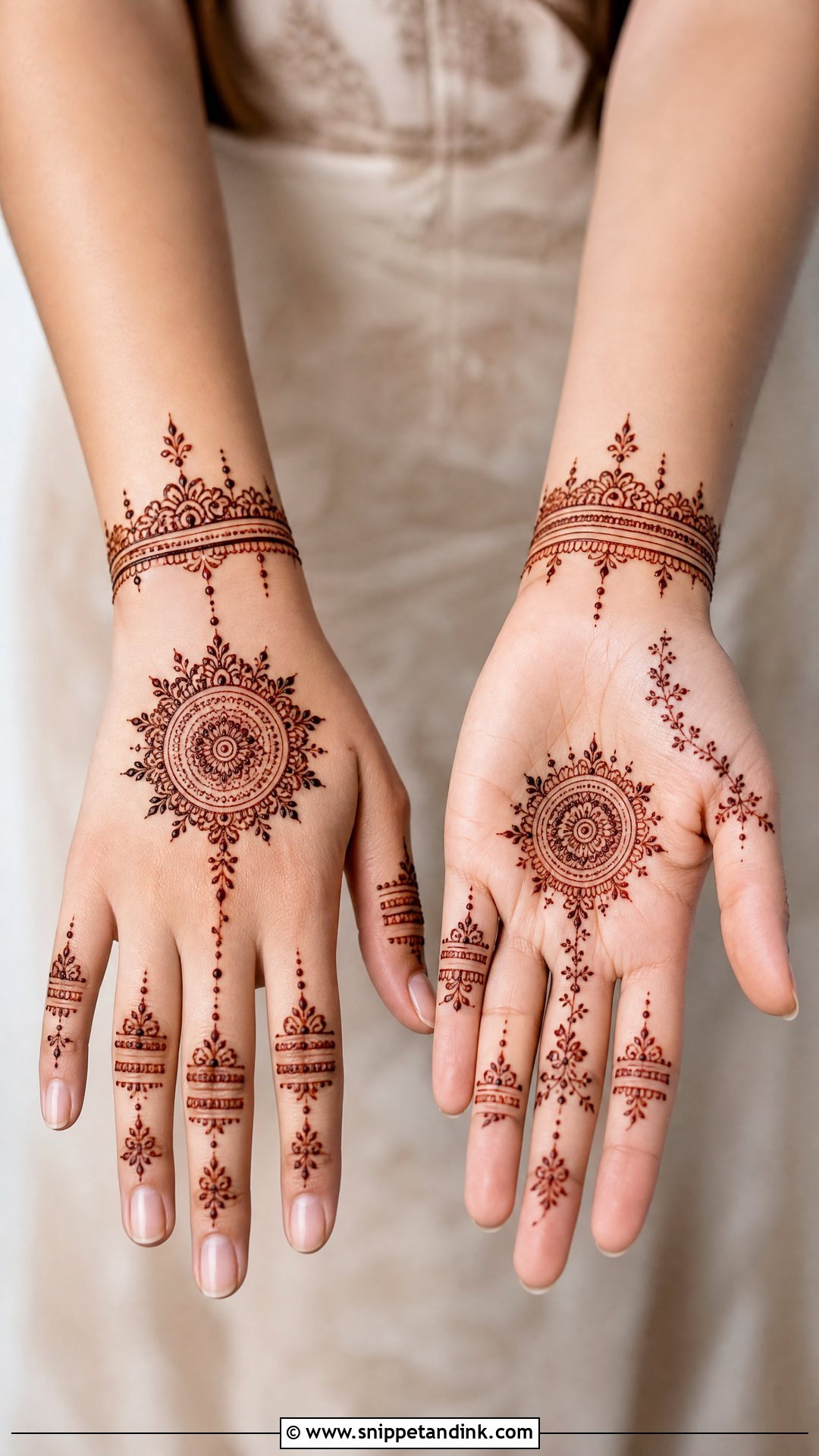
A minimal bridal design might be a simple mandala, delicate finger patterns, fine wrist bands, small florals or a soft trail across the back of the hand. It suits courthouse weddings, intimate ceremonies and destination weddings, and it lets rings, bangles and nail art show clearly. Small random motifs look like doodles, so I keep minimal designs symmetrical and refined. Initials, a tiny lotus or a bracelet pattern make it feel bridal. It’s also the kindest option if you’re short on time; a minimal design can be done in a fraction of a full bridal sitting.
14. Heavy Bridal Mehendi
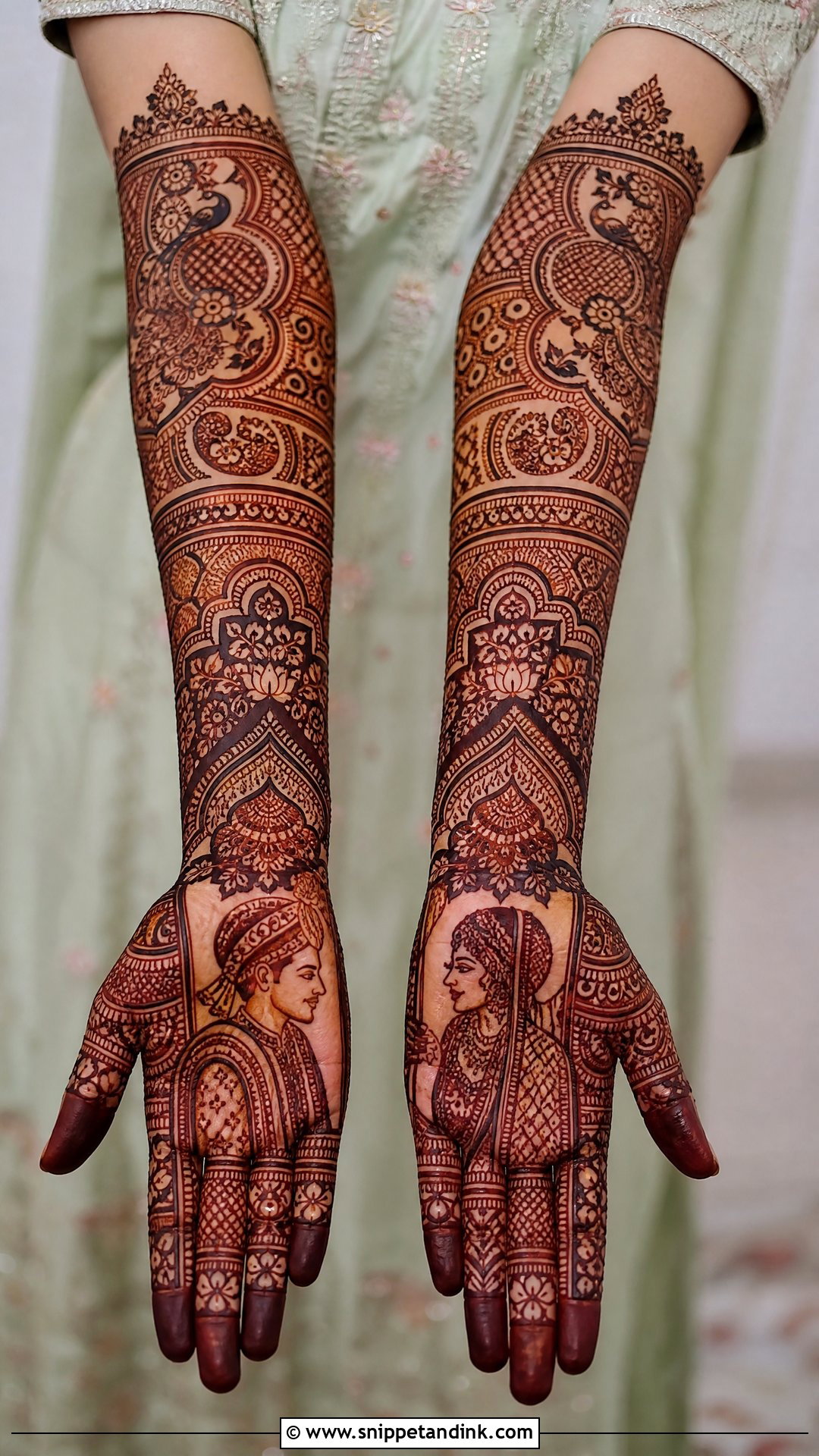
Heavy bridal work covers the hands and often reaches the elbows with dense motifs, fine lines, shaded florals, paisleys, mandalas, jaali and traditional figures. It produces a rich, dark result for the main wedding. The way to keep it readable is structure. I divide the arm into sections with borders and bands and give each palm and back hand a clear focal point. If everything is filled the same way, the eye has nowhere to land. Expect to sit for several hours and plan meals and bathroom breaks before we start.
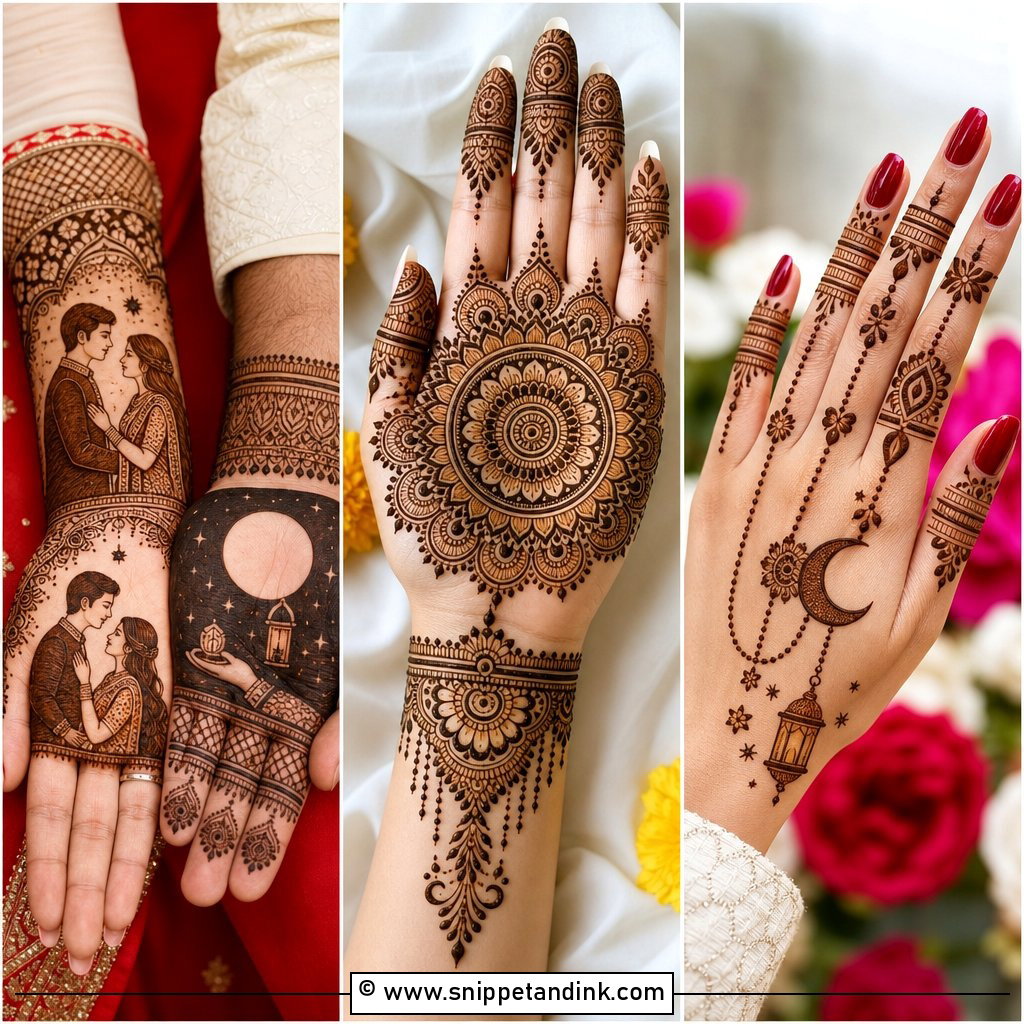
15. Simple Bridal Mehendi
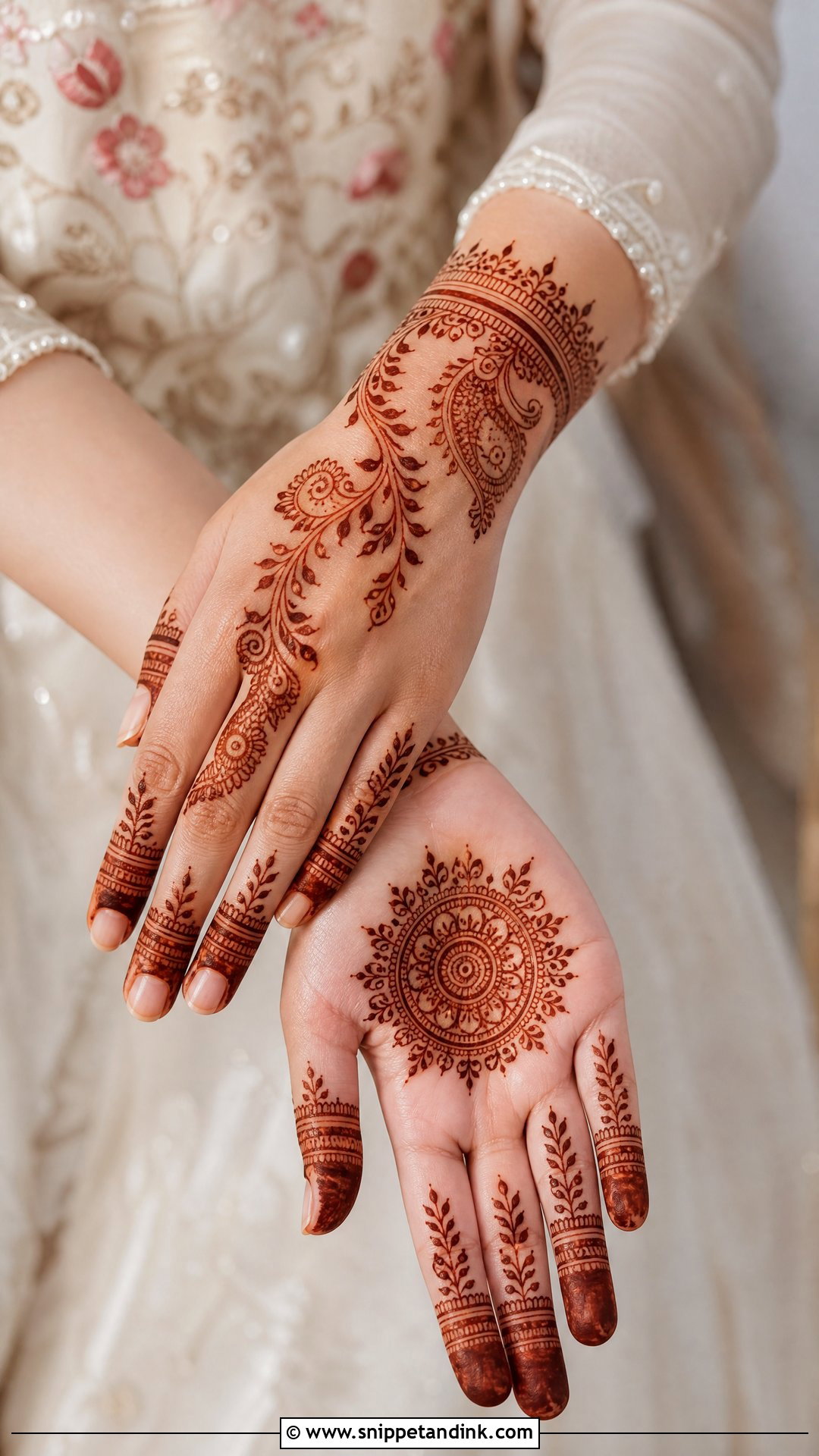
Simple bridal designs are lighter than heavy work but still special enough for the rituals: floral trails, mandala palms, leafy fingers, wrist cuffs and small paisley accents. They’re quicker to apply, which helps in a packed wedding week. They suit engagements, haldi or mehendi night, and the wedding itself for brides who dislike dense coverage. My trick for making a simple design read as bridal is to carry it just past the wrist and finish every fingertip with a solid cap, since filled tips stain darkest and frame the whole hand.
16. Back Hand Bridal Mehendi
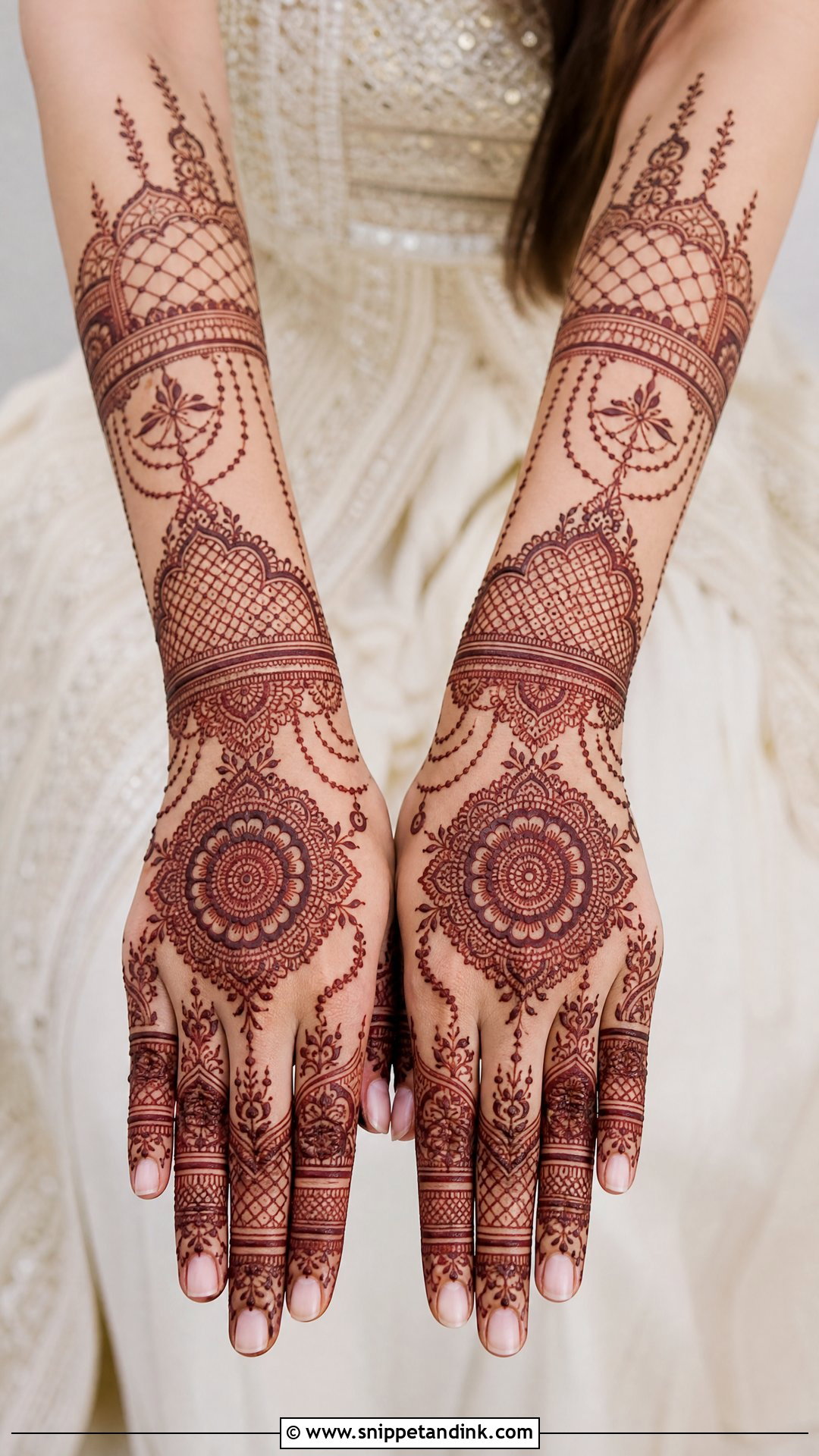
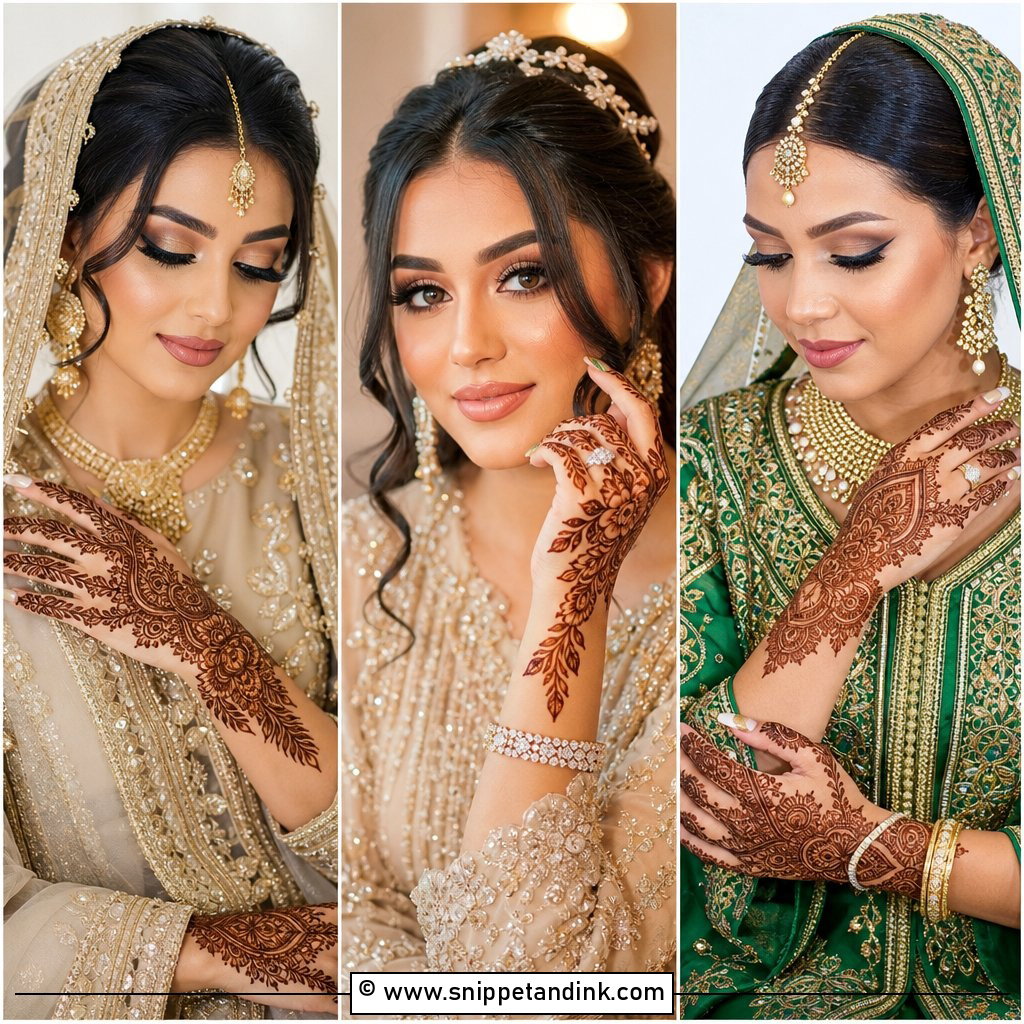
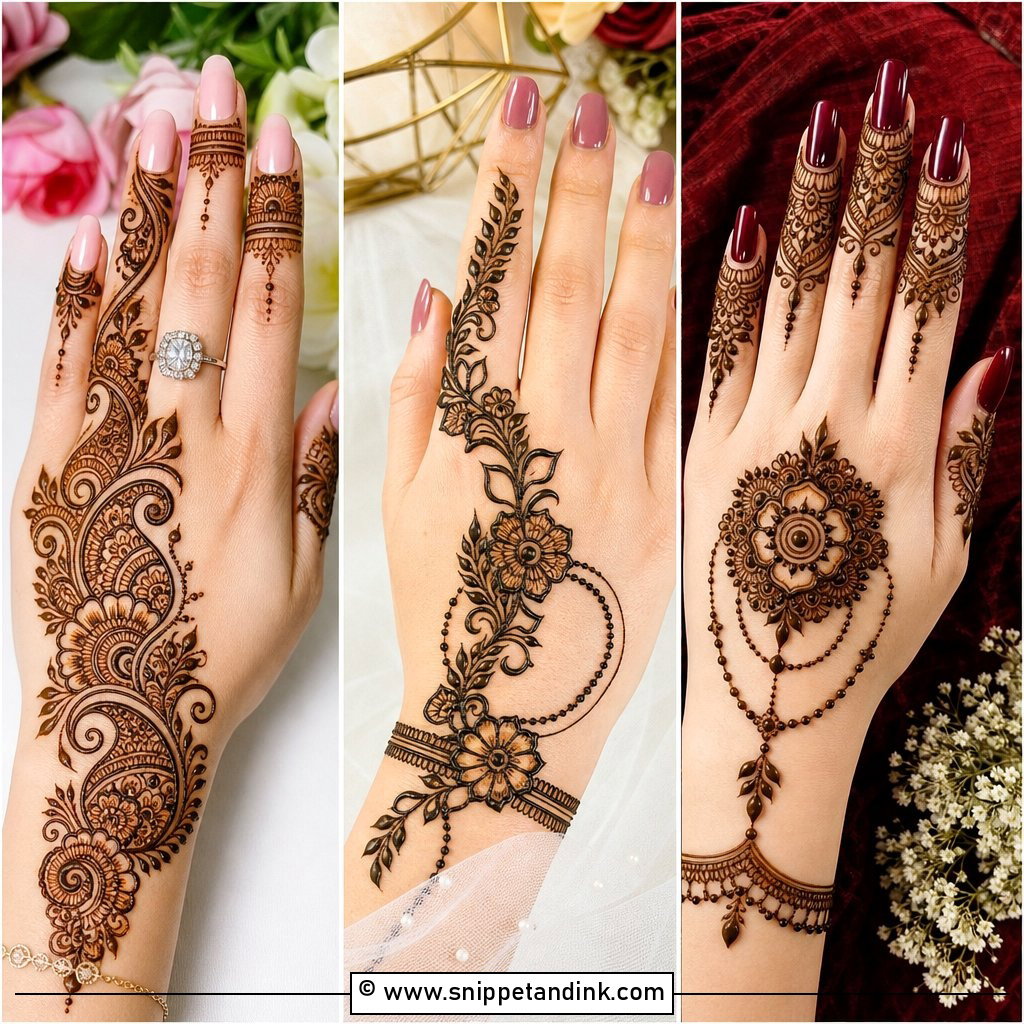
The back of the hand appears in more photos than the palm: ring shots, bangle close-ups, dupatta poses and ceremony moments. A complete back-hand design might include mandalas, floral vines, jaali, bracelet cuffs and detailed fingers, either fully covered or in an open Arabic layout. Backs of hands stain lighter than palms, because the skin is thinner, so I use bolder lines there and leave the paste on as long as the bride can manage. With heavily embroidered sleeves, a balanced back-hand design stops the whole look feeling busy.
17. Front Hand Bridal Mehendi
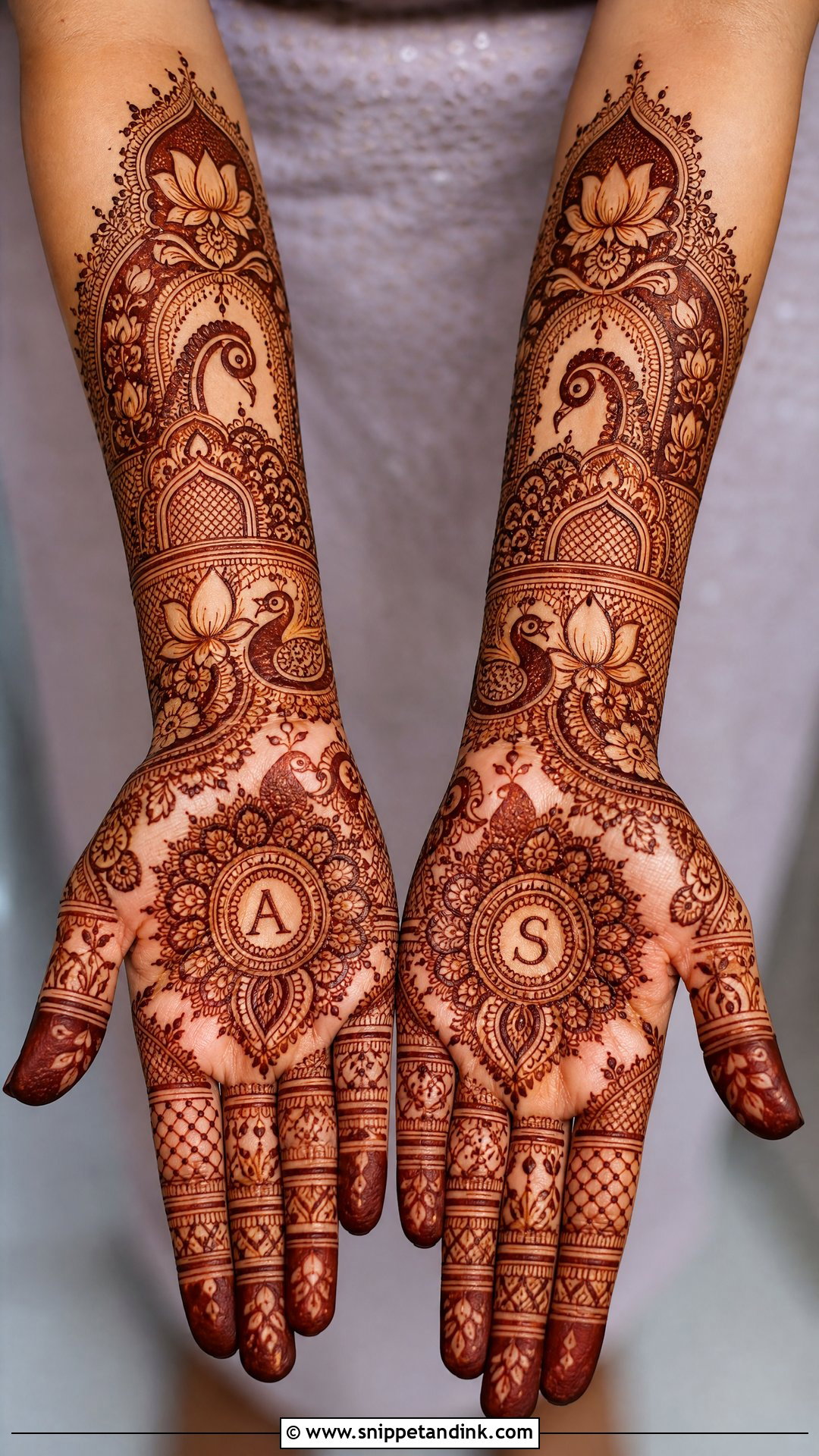
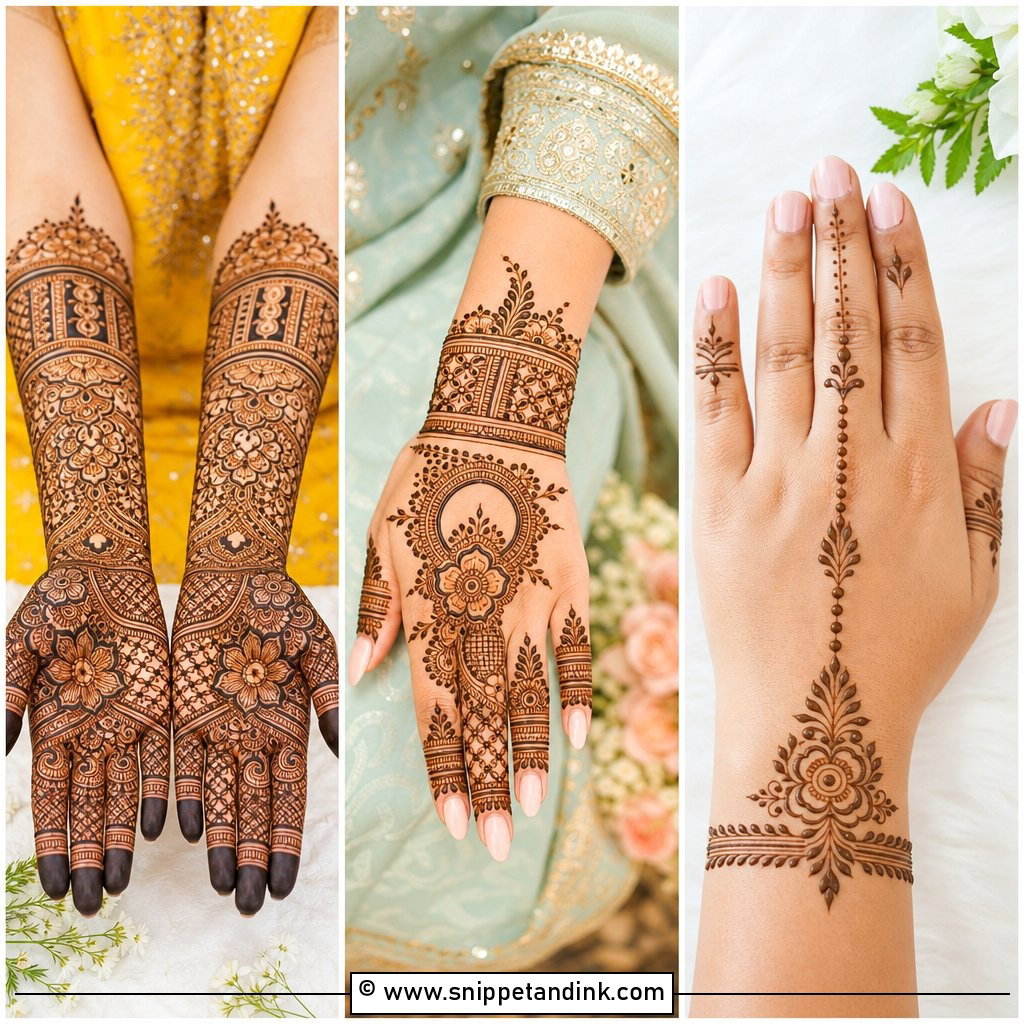
The palms, fingers and inner wrists carry the most meaningful details, such as the groom’s initials, wedding dates, portraits, lotuses, peacocks or mandalas. Palms stain darker than anywhere else on the body, so a front-hand design looks rich once it develops. Plan a clear central motif with fillers around it, and decide whether the fingers will be fully filled, semi-filled or banded. Hidden initials make the traditional groom-name hunt fun, but I’d hide them somewhere fair. Tucked into a crowded filler, they can take him all night to find.
18. Full Arm Bridal Mehendi
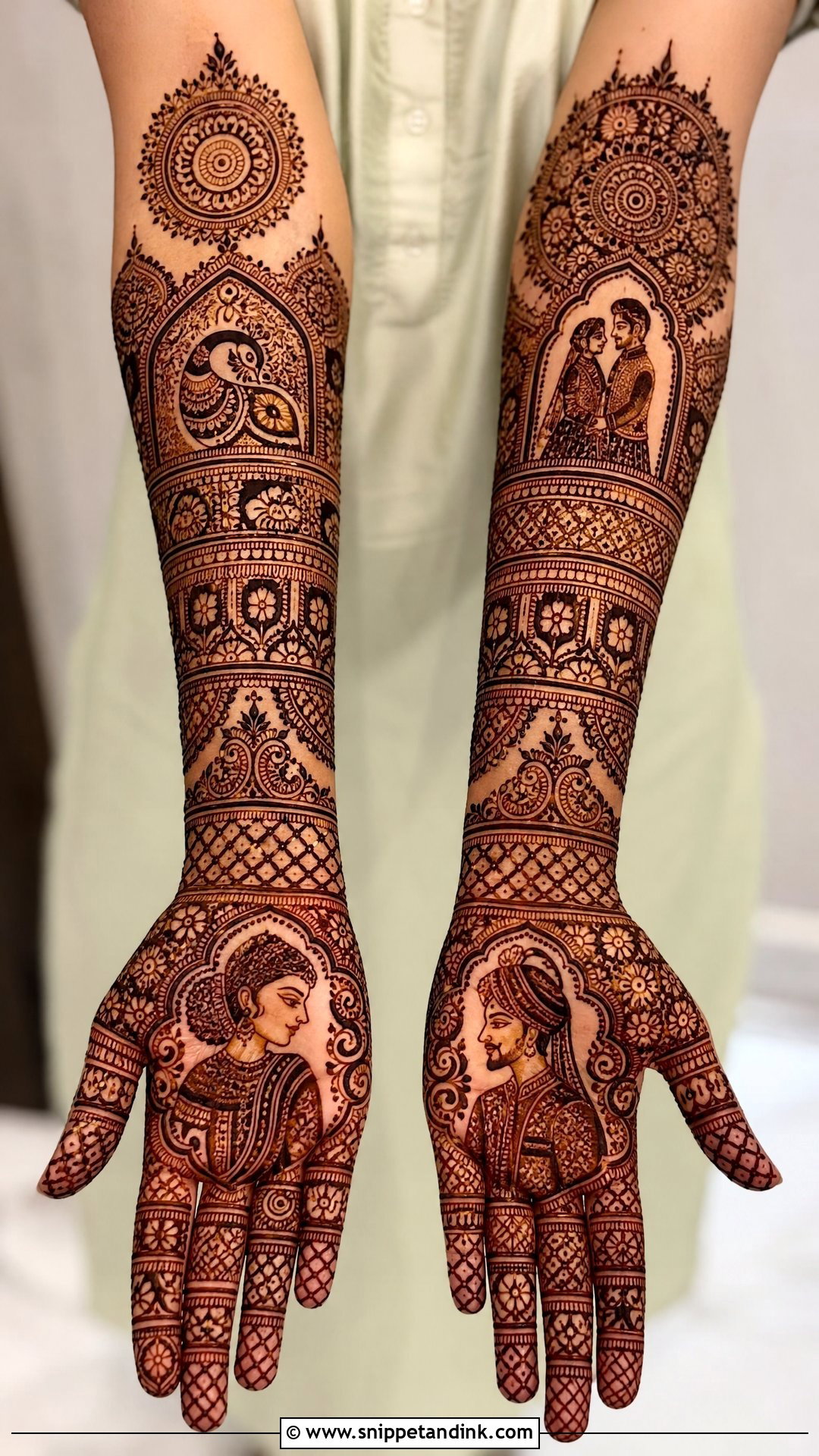
Full arm designs start at the fingertips and run to the elbow or above, built from sections: palm mandalas, wrist cuffs, forearm florals, paisley panels, jaali and even portrait scenes. They suit sleeveless, short-sleeve or sheer-sleeve bridal outfits. Expect the upper forearm to stain noticeably lighter than the hands, which is normal; skin there is thinner and cooler. Book plenty of time, rest your arms on a cushion during the session, and ask your artist to vary motif sizes so the design doesn’t look packed.
19. Jewelry Bridal Mehendi
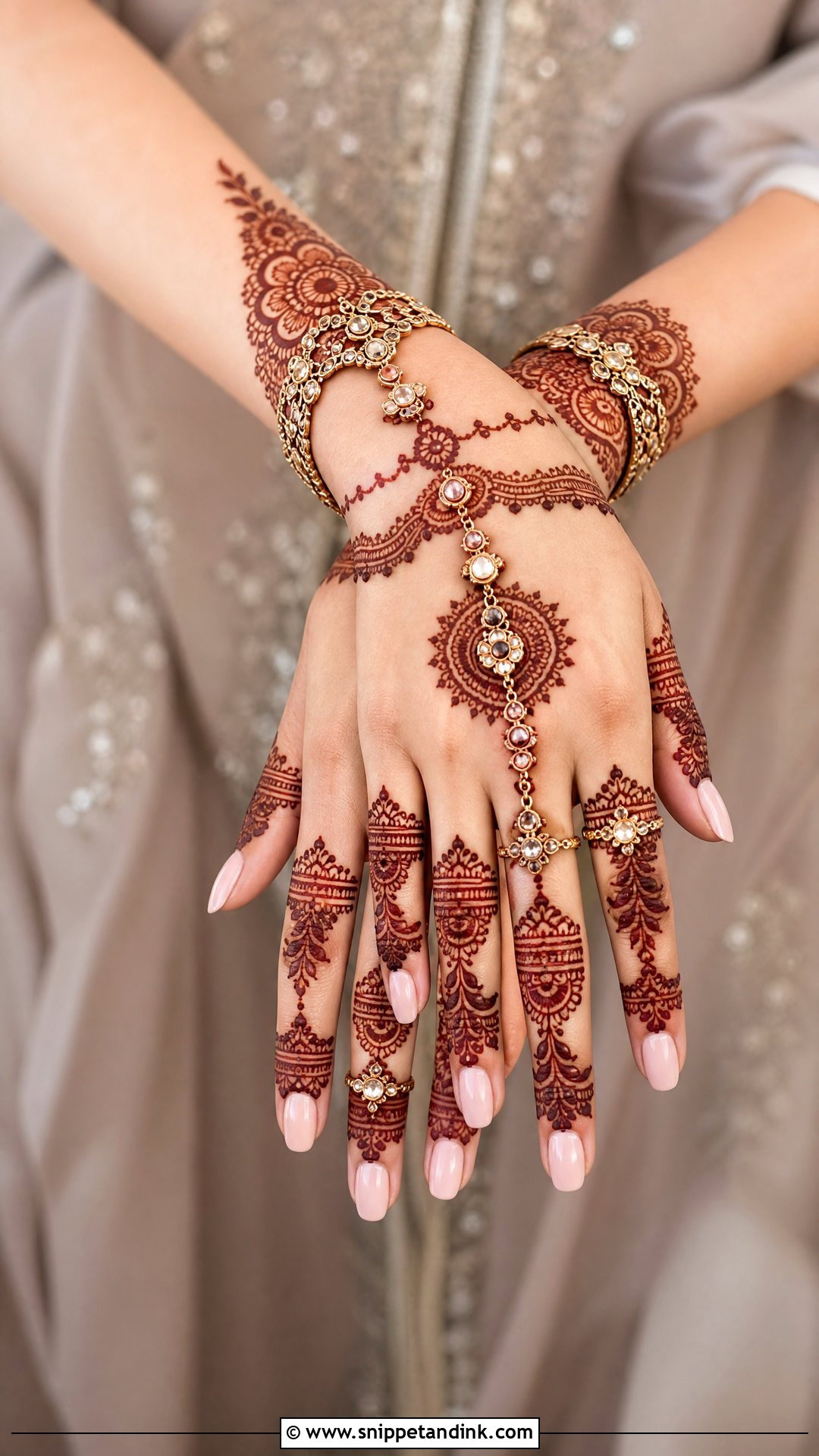
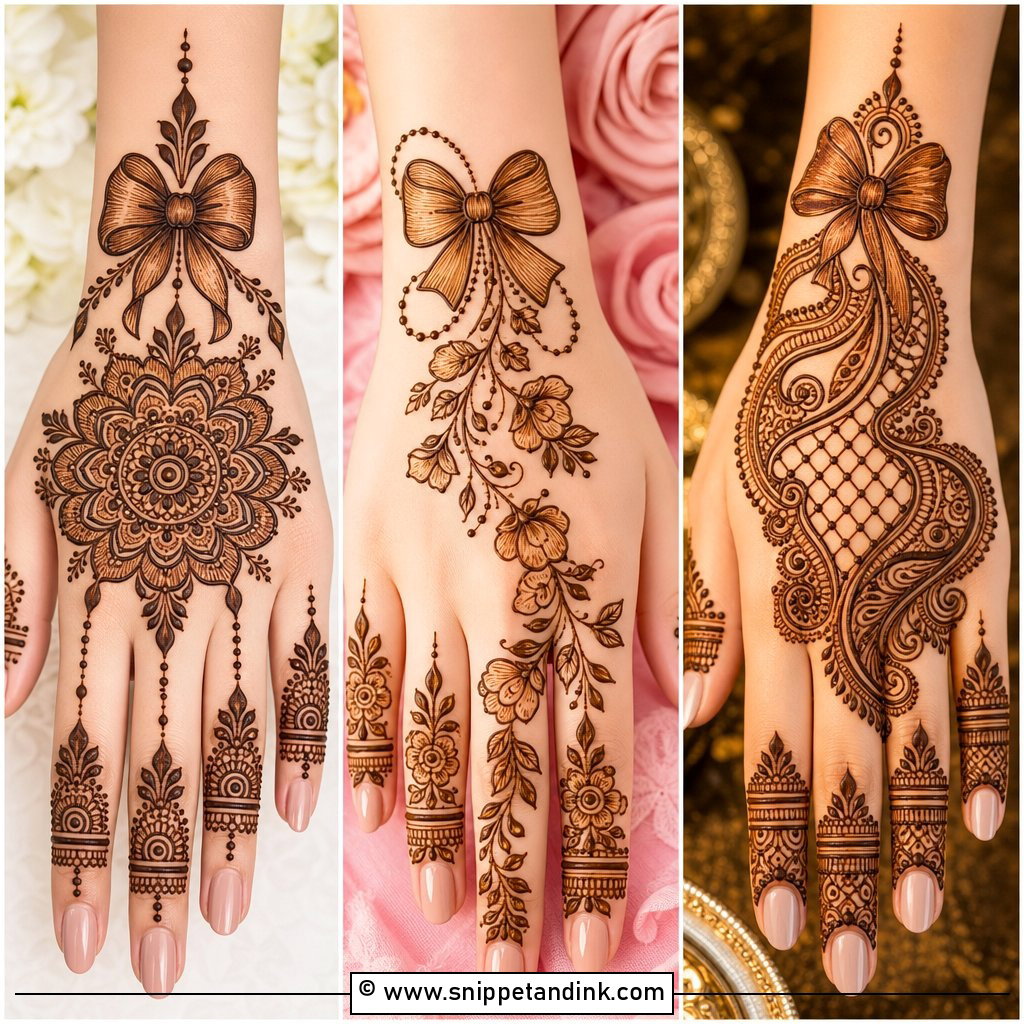
Jewellery-style designs draw hand ornaments in henna: ring chains, hathphool patterns, bracelet cuffs, finger bands and wrist-to-finger links. They complement real jewellery without competing with it, and they can be minimal or detailed. They show most clearly on the back of the hand. Small florals, dots and paisley borders around the chains make them bridal. When a bride will wear a real haath phool, I draw the henna chain slightly offset so the stain and the metal don’t sit on top of each other and cancel out.
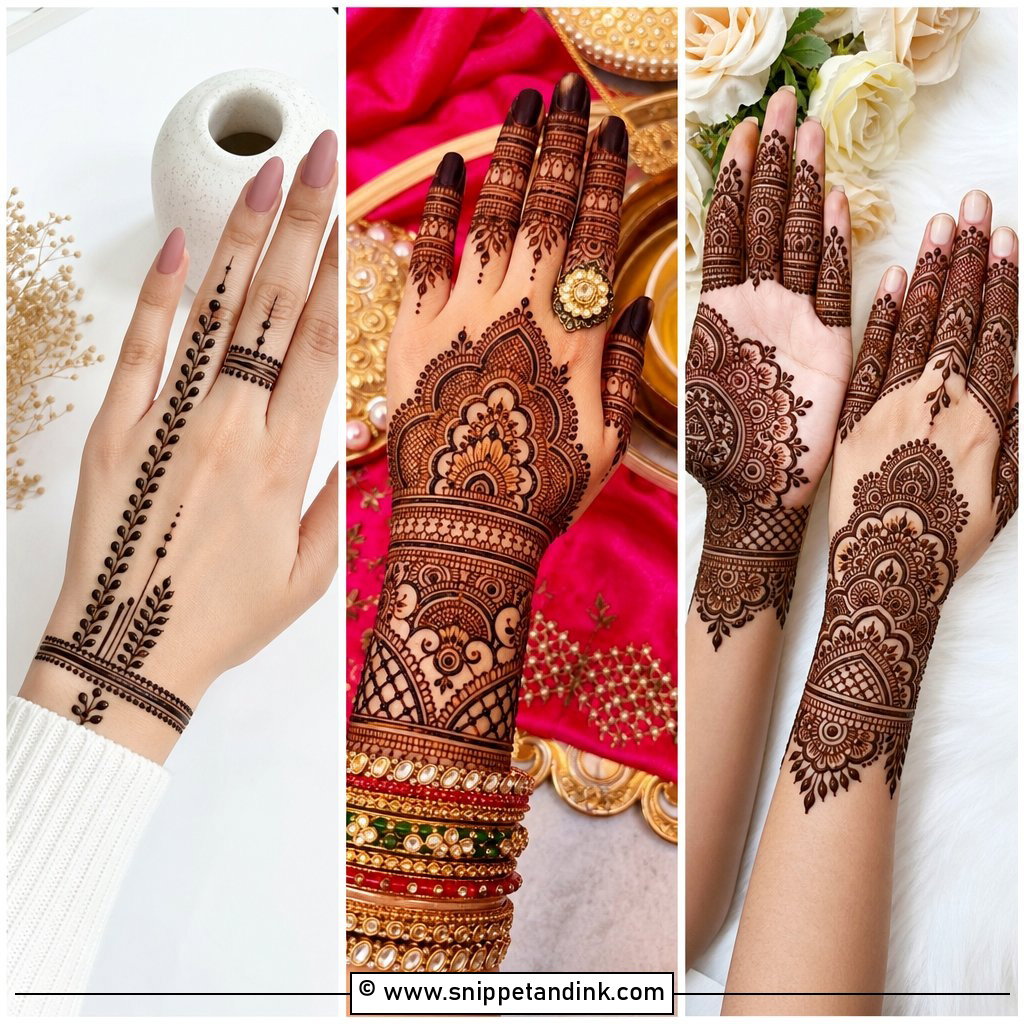

20. Jaali Bridal Mehendi
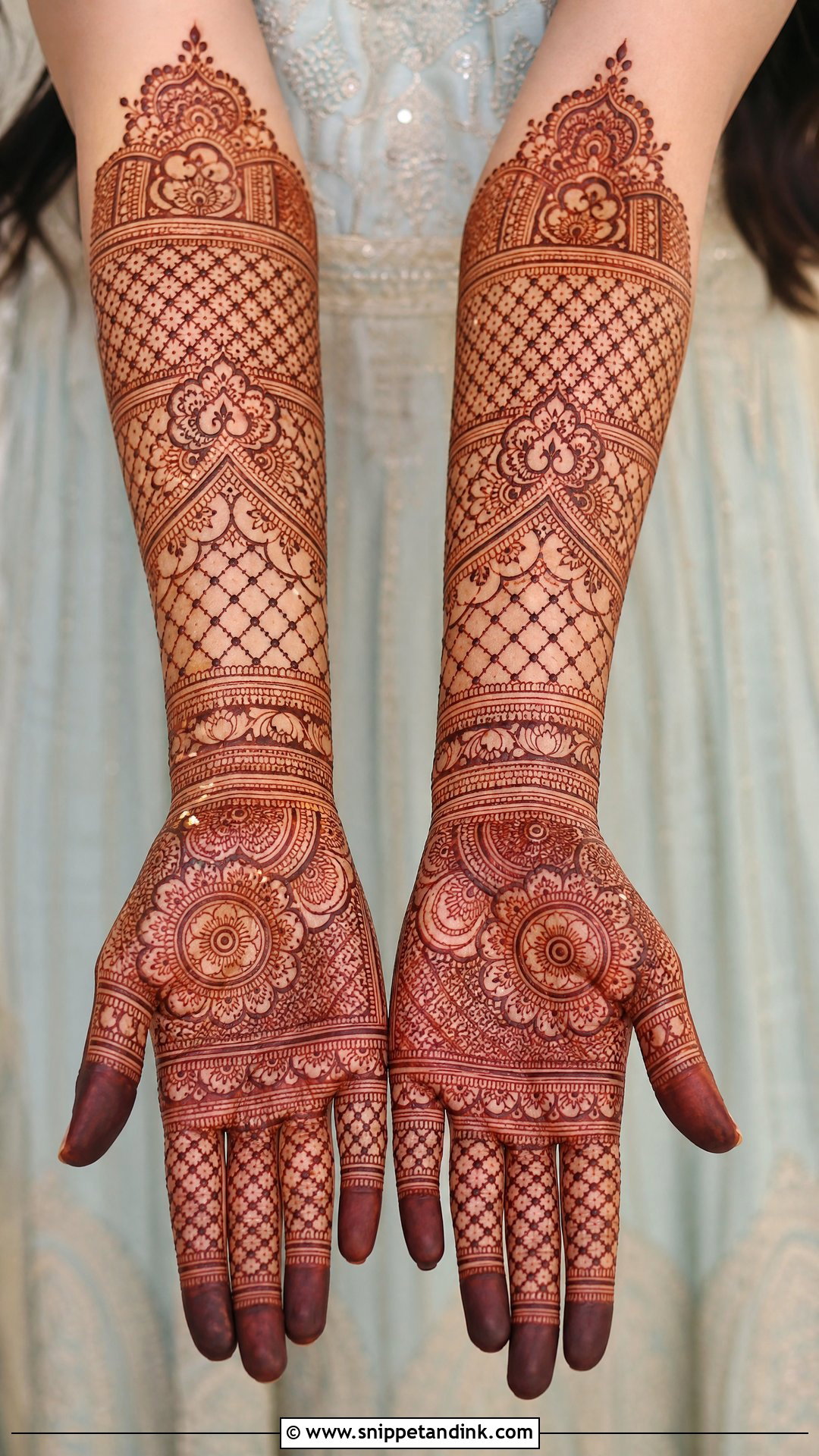
Jaali is the net or mesh pattern that adds texture between bolder motifs, on the palms, back hands, wrists or forearms. It’s often paired with flowers, mandalas, paisleys and strong borders. It gives detailed coverage without relying only on tiny filler lines, and the contrast between filled and open areas reads well in photos. Diamond, floral, lace-style and geometric meshes are all options. Even spacing is everything; uneven jaali looks scribbled once the stain darkens. It pairs naturally with embroidered bridal fabrics.
21. Floral Bridal Mehendi
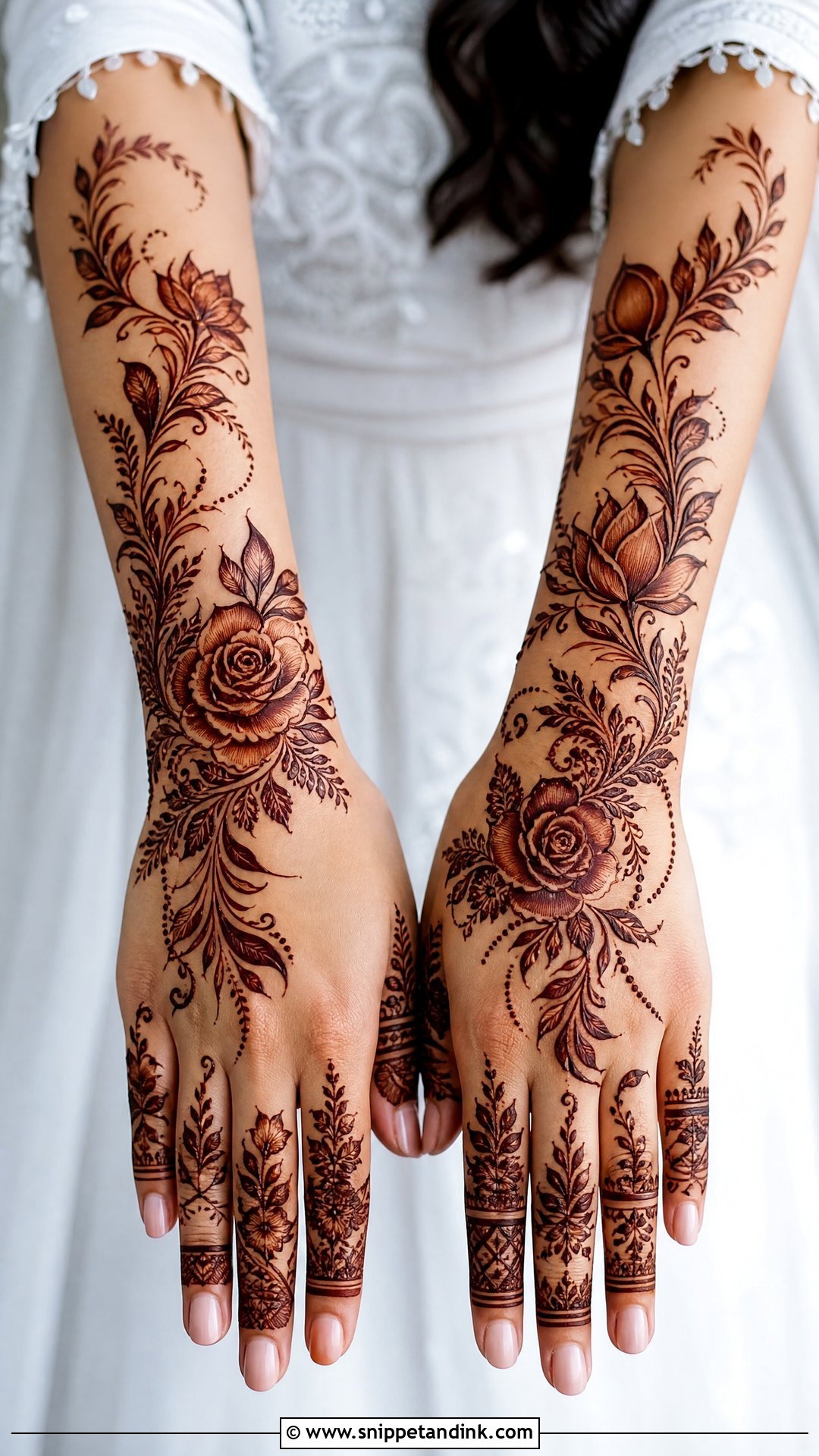
Florals give a romantic design without traditional figures. Roses, lotuses, vines, leafy stems and petal clusters can fill a full bridal hand. They can be bold and Arabic-inspired or small and Indian-inspired, and they suit pastel lehengas, floral jewellery and daytime ceremonies. To make a floral design feel complete, I combine large flowers with small fillers, wrist bands and detailed fingers. Shaded petals add depth and negative space keeps it airy. Too many same-size flowers look like wallpaper, so I vary the scale on purpose.
22. Paisley Bridal Mehendi
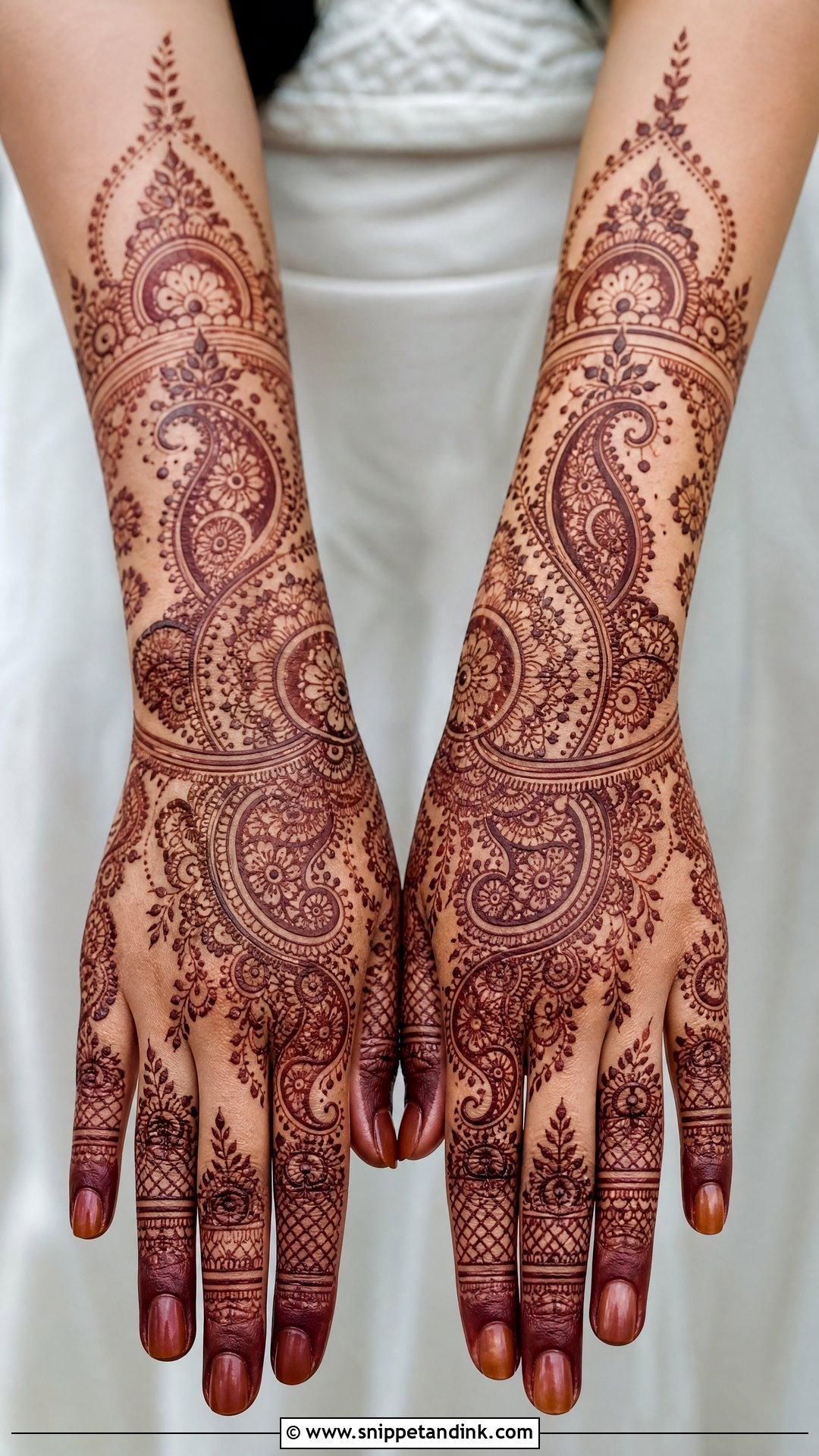
The paisley, or mango motif, is one of the oldest shapes in bridal henna. It sits well on palms, wrists, fingers and forearms, and it can be filled with lines, dots, petals, tiny checks or leaves. It blends with peacocks, mandalas, jaali and floral borders. A paisley design can be dense for a regal finish or more open for a modern look. I vary the sizes deliberately, a big paisley curling into two smaller ones, because rows of identical paisleys look stamped rather than drawn. It suits almost any bridal outfit.
23. Bracelet Bridal Mehendi
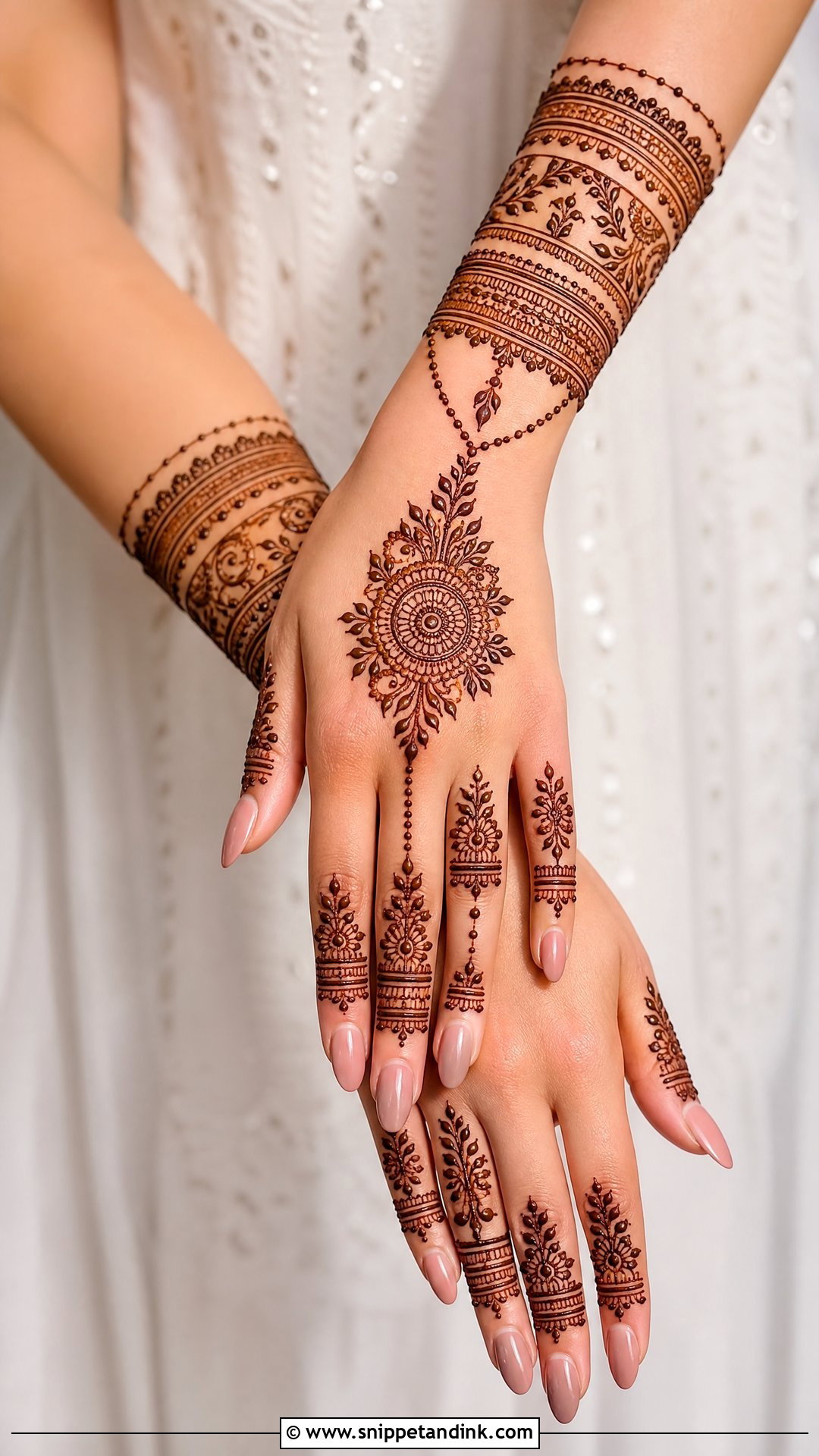
A bracelet design is built around stacked bands at the wrist, rings on the fingers and chains across the back of the hand. It can be paired with a palm mandala or a floral trail for a fuller look. It’s practical when you’ll wear a lot of bangles and kaleeras, because the bands echo them. I place the widest band just below where the chooda will sit, so it shows rather than hiding under the bangles. Clean, symmetrical lines make it look intentional, whether you choose thick traditional cuffs or delicate lace-like bands.
24. Modern Bridal Mehendi
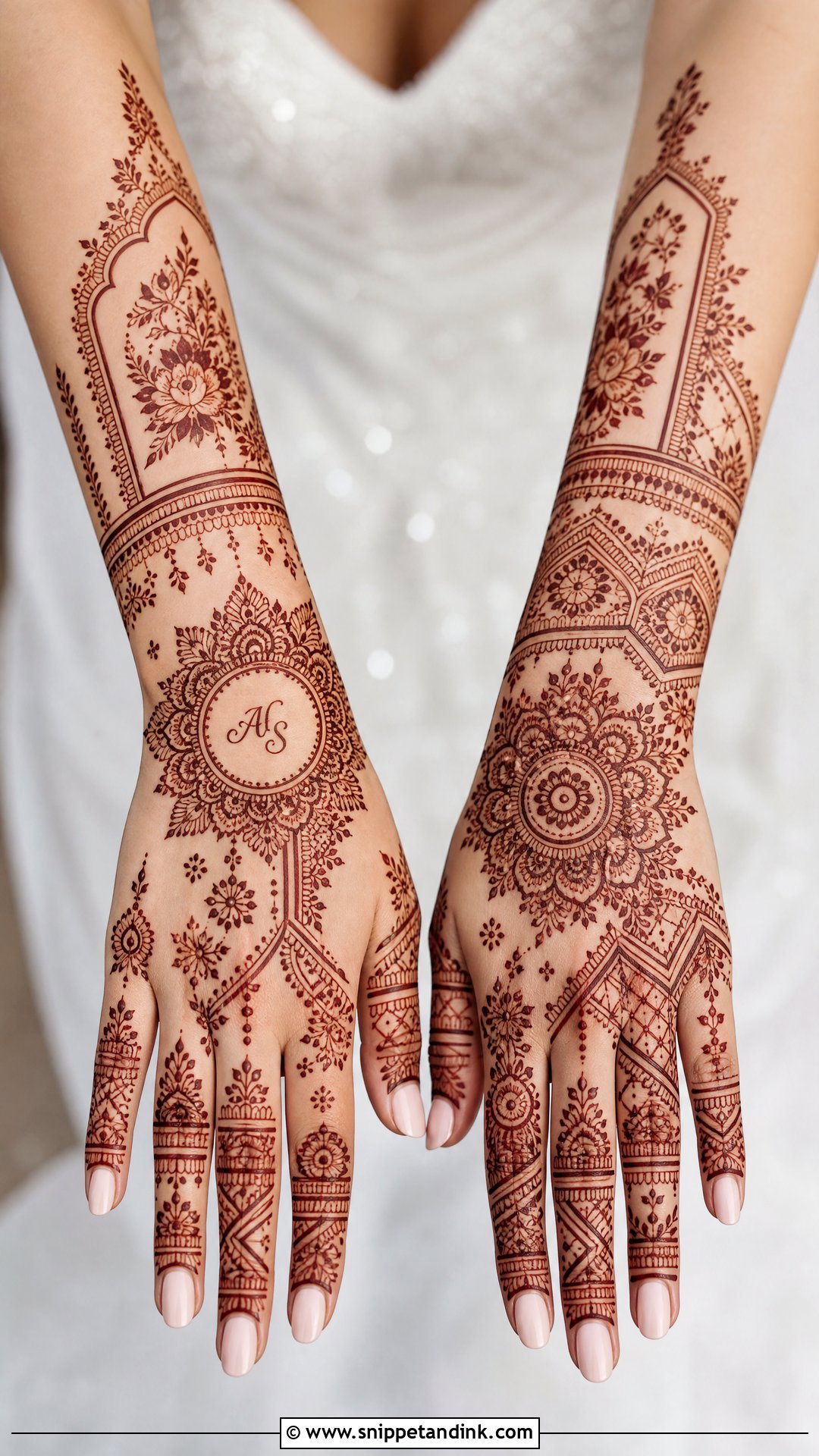
Modern bridal work takes the tradition and changes the spacing: negative space, fine-line florals, asymmetric placement, minimal fingers, geometric panels, initials and clean wrist extensions. It doesn’t have to look plain. It suits pastel lehengas, fusion outfits, contemporary jewellery and outdoor ceremonies. I keep one or two strong focal points, like a mandala, a lotus or a personal symbol, and let the rest of the design breathe. Fine-line work needs a very fine cone tip and a paste that flows evenly, otherwise the thin lines break as they dry.
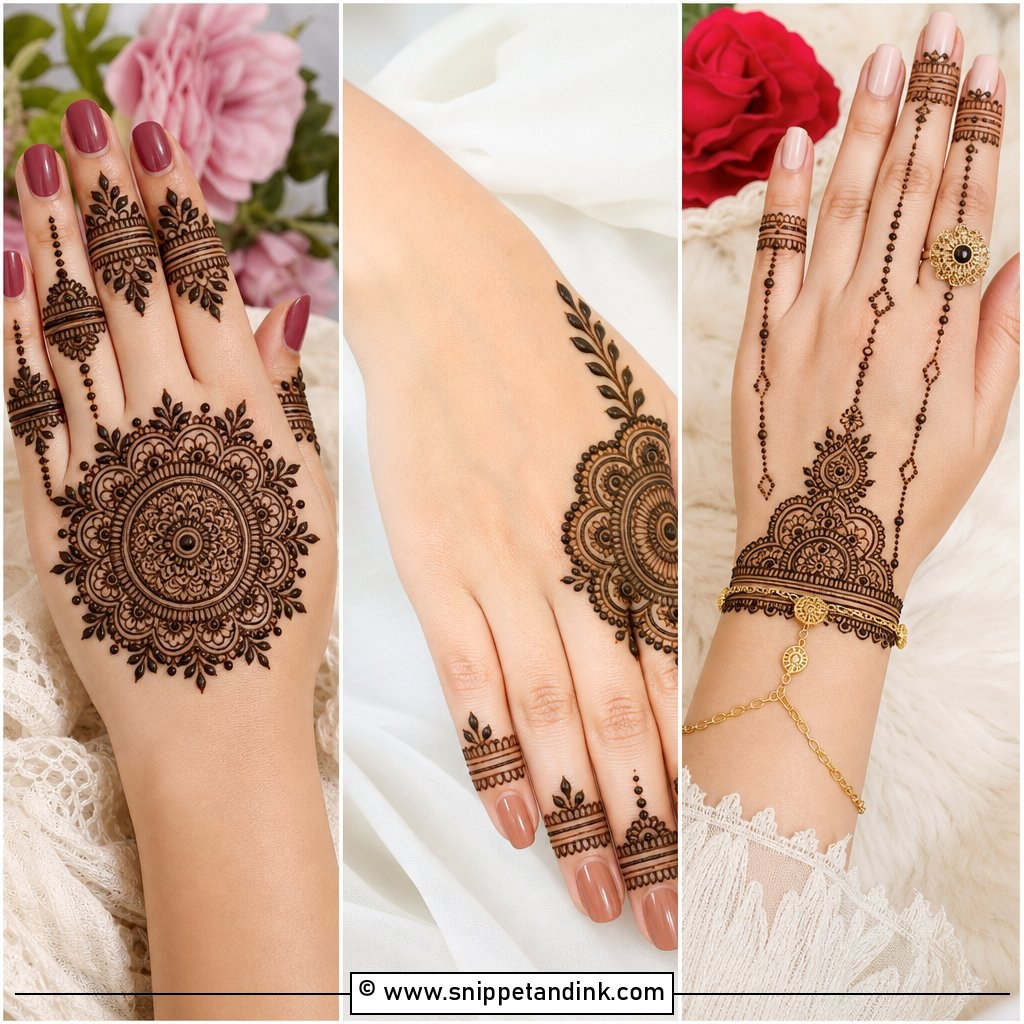


25. Shaded Bridal Mehendi
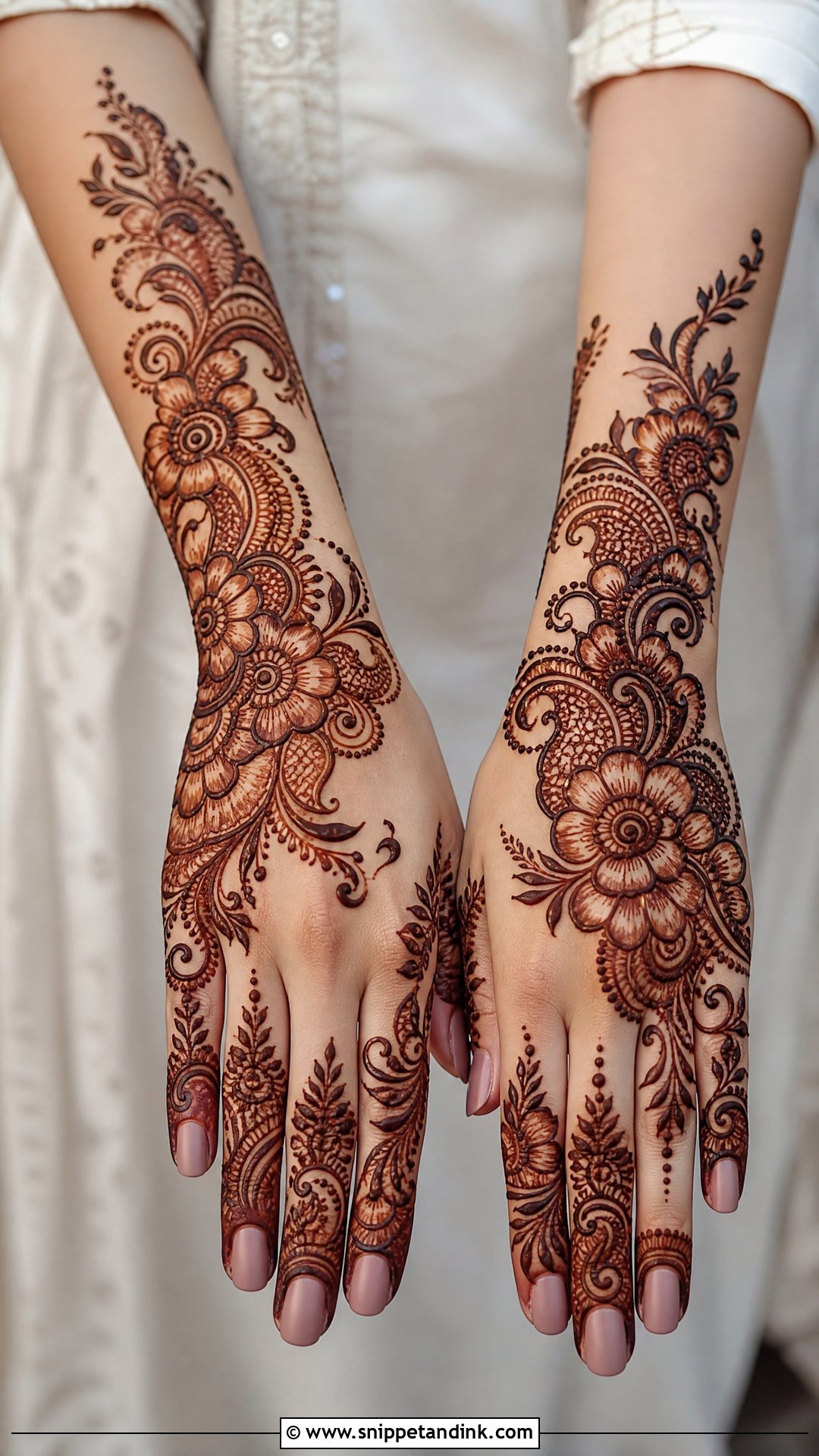
Shading fills petals, leaves, paisleys and borders with a softer, lighter tone, giving depth without dense line work. It’s common in Arabic, Indo Arabic and modern designs because it creates contrast. Shaded flowers on the back of the hand look especially good in photos. On the palm, I use shading sparingly, because palm skin stains so dark that the shaded areas can lose their difference from solid ones. Pair shaded motifs with fine outlines, dots and open space so the design keeps its balance.
26. Finger Bridal Mehendi
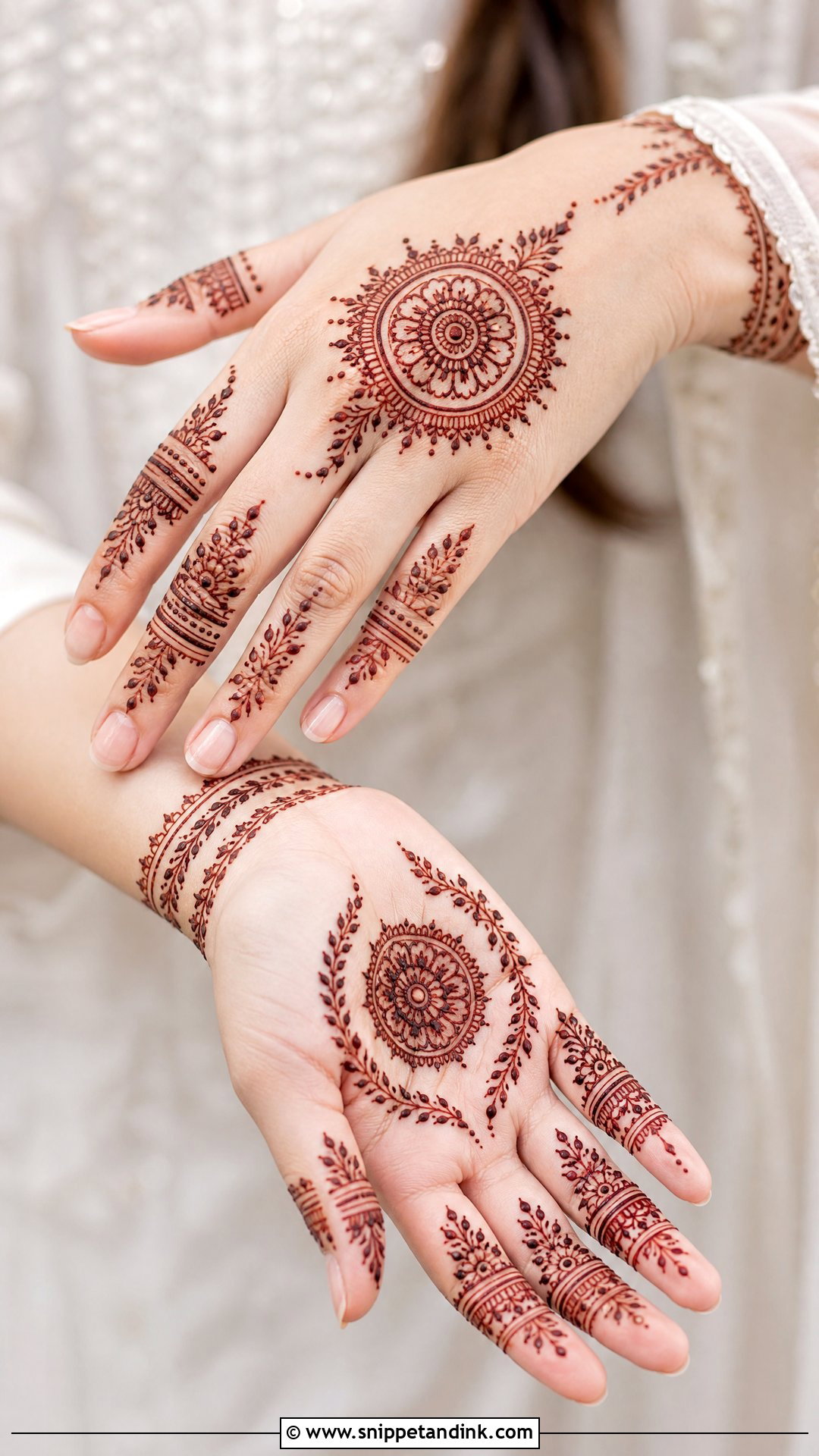
Finger-focused designs put most of the detail on the fingers and keep the palm or back of the hand lighter. Ring bands, leafy trails, tiny florals, checks, dots and lace patterns can run along each finger. For a bride, it needs an anchor such as a central mandala, bracelet cuff or palm motif, otherwise it looks unfinished. It’s a good choice when your engagement ring, nail colour or hathphool should be the star. I connect the patterns across all five fingers with a shared motif, so they read as one design instead of five separate ones.
27. White Bridal Mehendi
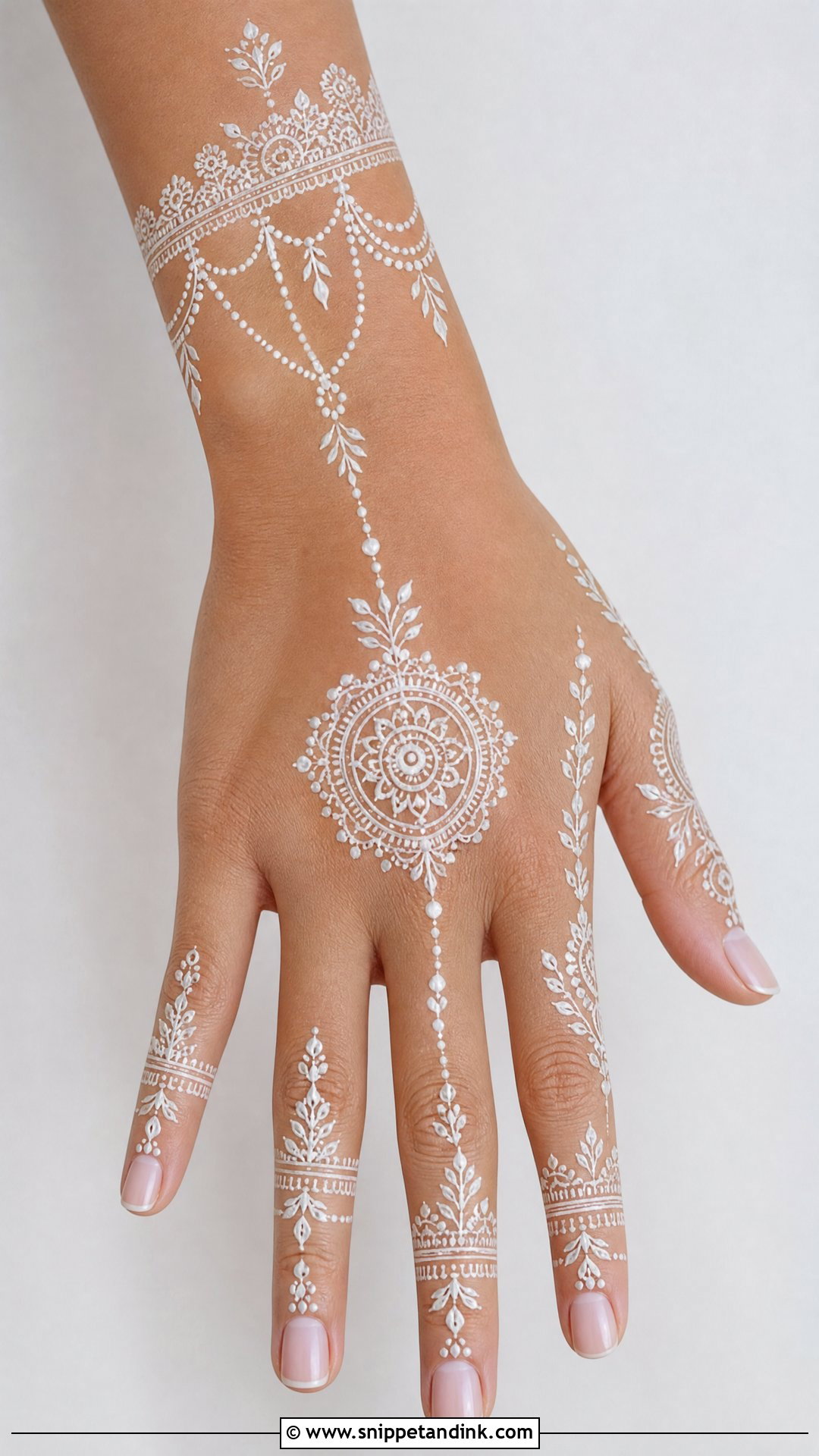
White bridal mehendi isn’t henna at all. It’s body paint or a cosmetic adhesive design that gives a lace-like effect, and it leaves no stain. Brides choose it for receptions, beach weddings, contemporary outfits and pre-wedding shoots. It looks best on the back of the hand with floral vines, mandalas and chain details, kept open rather than crowded. It lasts only a day or so and rubs off with friction, so I’d apply it on the day of the shoot and keep hands away from bags and fabric.
28. Glitter Bridal Mehendi
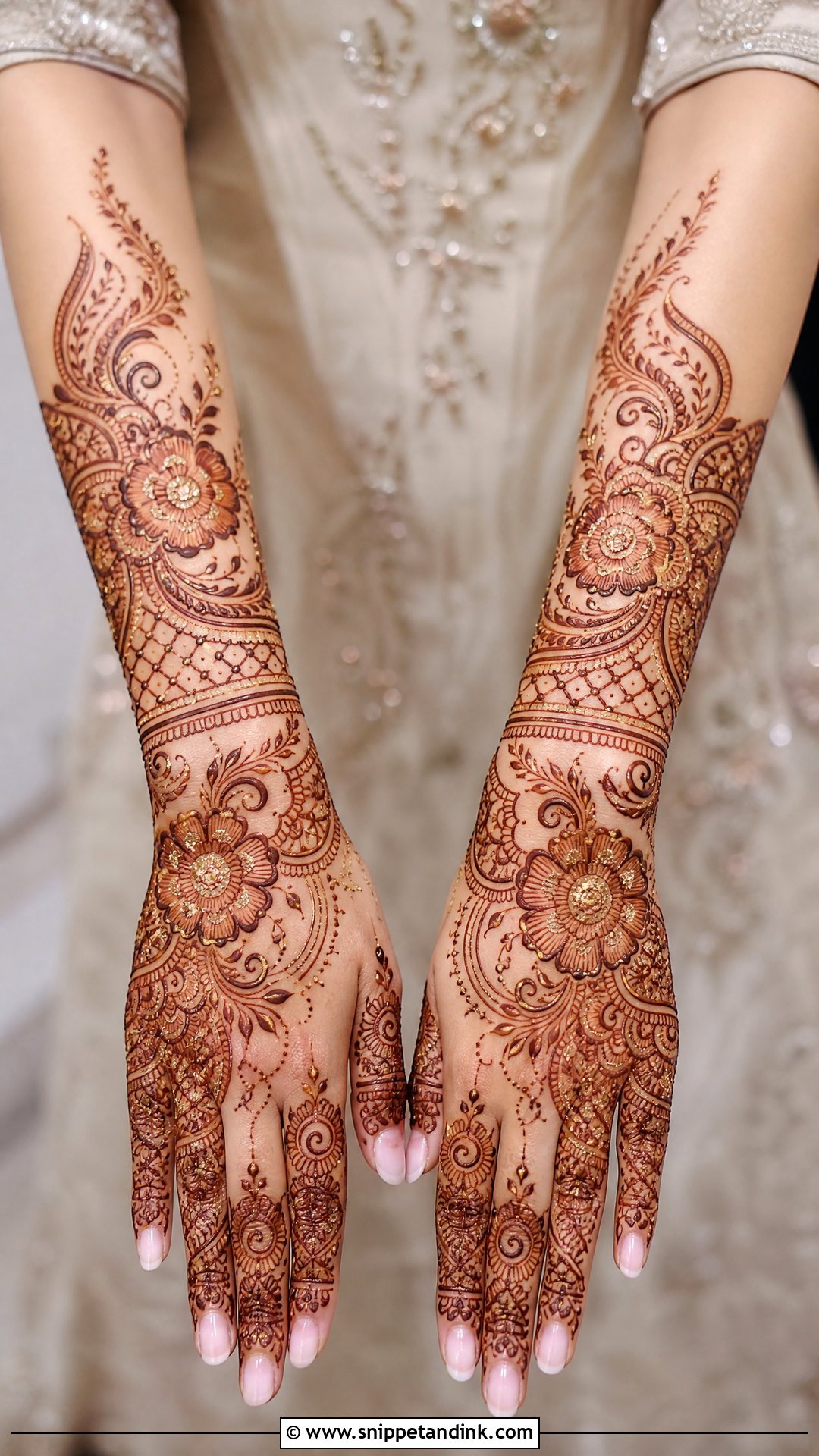
Glitter is applied over dried henna lines or as a temporary decoration, usually with a cosmetic adhesive. Brides tend to save it for the sangeet, reception or engagement rather than the main ceremony. Keep it subtle: floral centres, borders, wrist cuffs or a few paisleys rather than the whole hand. Gold, champagne, rose gold and deep maroon glitter look bridal without being loud. Never put glitter on the paste while it’s still wet; the adhesive traps moisture and lifts the henna before it can stain.
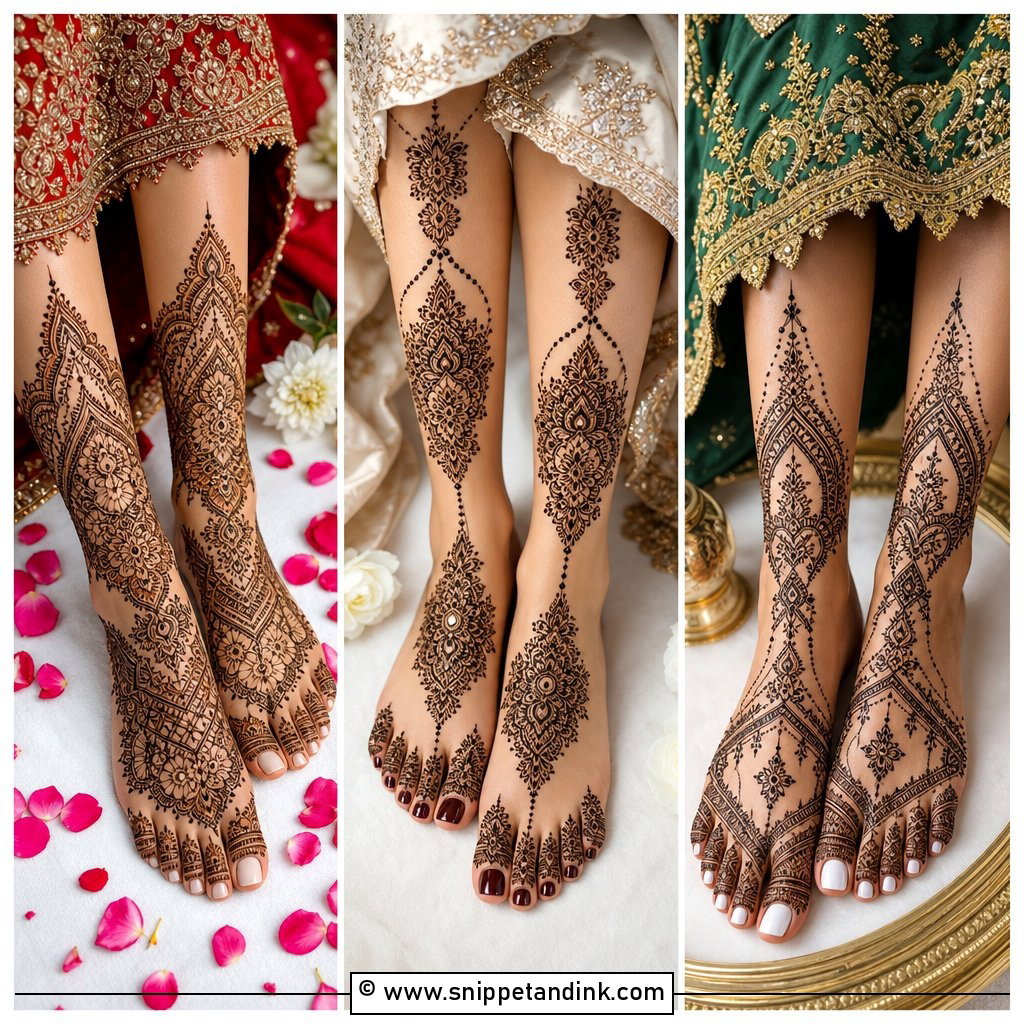
29. Bridal Mehendi For Feet
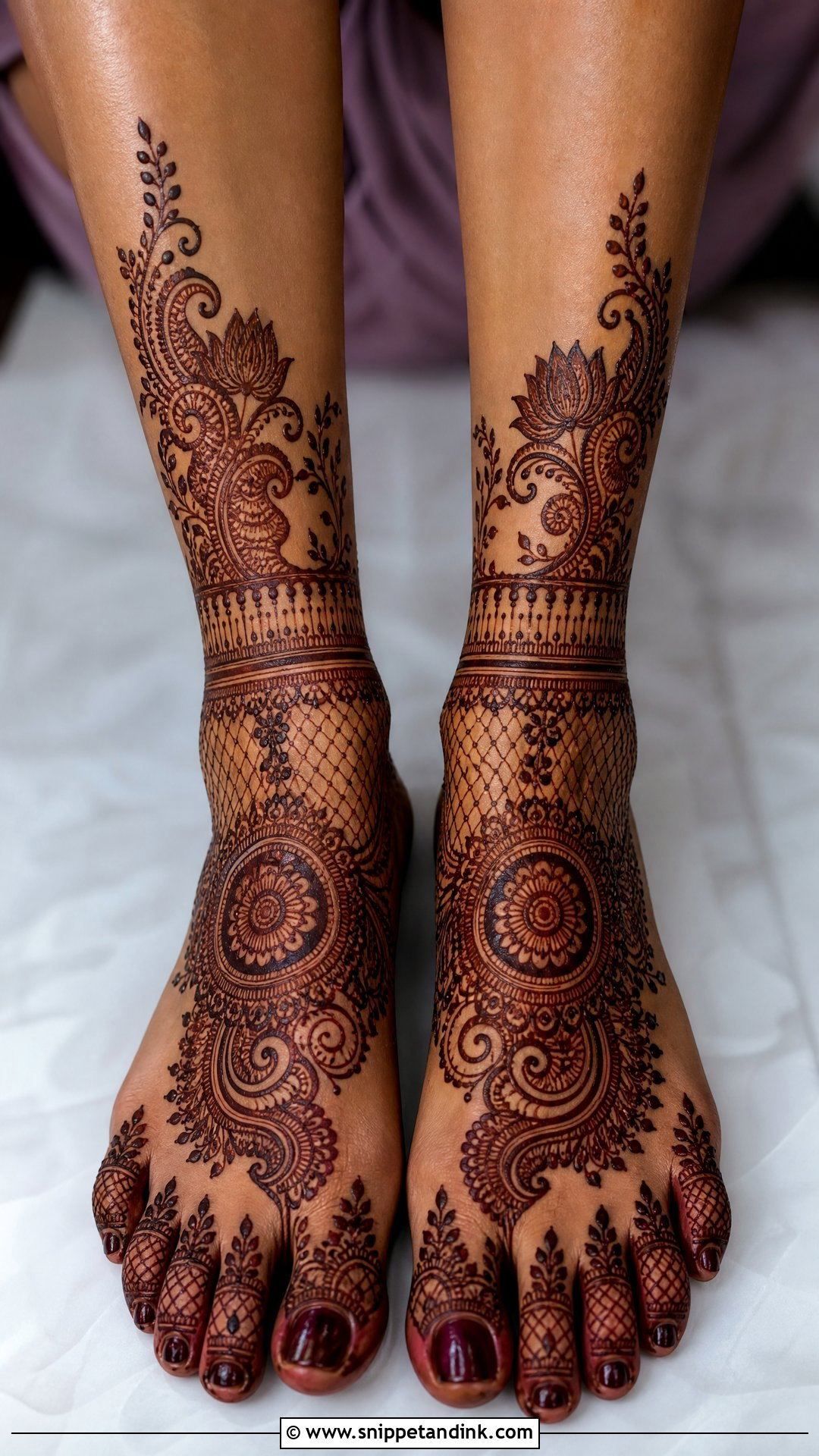
Bridal mehendi for feet completes the traditional look, especially where anklets, toe rings, sandals or bare feet will be seen. Designs can cover the toes, the top of the foot, the ankle and the lower leg, with lotuses, paisleys, mandalas, anklet bands, vines and jaali. Feet stain beautifully, often darker than the hands, but the paste has to stay on undisturbed, so I do feet last and the bride shouldn’t walk until it’s dry. Keep the toes neat and the ankle design balanced with your payal.
30. Matching Hand And Foot Bridal Mehendi
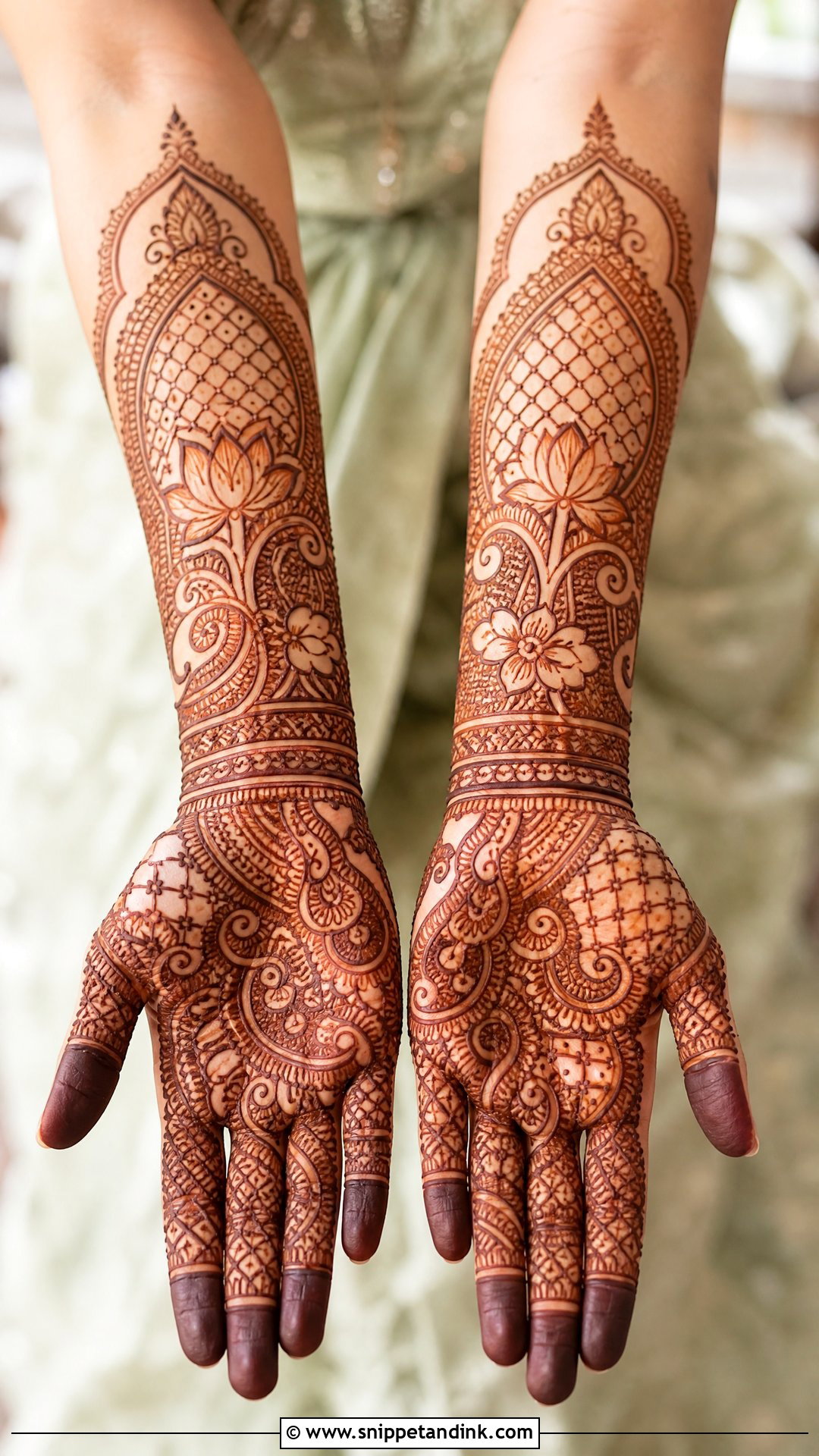
Hands and feet don’t need to be identical, but they should share a design language. If your hands have lotus and jaali motifs, your feet can repeat lotus anklets and smaller mesh panels. If your hands are Arabic, your feet can carry flowing floral trails. This coordination shows in bridal portraits, getting-ready photos and ceremony close-ups, and it makes the whole look feel intentional. I sketch both placements together before starting, and I usually apply the hands first so the bride can rest her feet while they dry.
Black Henna, Patch Tests and Paste You Can Trust
Real henna paste is a simple mix: powdered henna leaf, a liquid such as lemon juice or water, a little sugar, and an essential oil to help release the dye. It stains orange to brown, never black. Anything sold as black henna or promising a jet-black result in an hour usually contains a chemical hair dye called PPD, which can cause severe skin reactions, blistering and lasting scars. I won’t use it, and you shouldn’t let anyone put it on you.
Ask your artist what’s in her paste and whether she mixes it herself. Ready-made cones from shops can contain preservatives or dyes that aren’t listed clearly. If you have sensitive skin or reacted to henna before, ask for a small test dot on your inner arm a few days ahead and watch for itching or redness. Essential oils can irritate some skin, so mention any allergies when you book.
One more thing to say up front: very fresh henna can stain fabric. Wear something old or dark during the application and keep your bridal outfit well out of reach until the paste is off.
Bring Your Outfit Photos to the Design Consultation
A pretty pattern is only one part of the decision. The design should suit your outfit, jewellery, ceremony, comfort and personality. A traditional bride might love full hand Indian, Rajasthani, peacock, or portrait mehendi. A modern bride might lean toward Arabic, minimal, jewellery-style, shaded or negative-space work. You can personalise any of them with initials, dates or symbols. Before your appointment, save reference photos, and talk through placement, timing and stain care with your artist, so the colour peaks on the day that matters most.
You'll Like These Ideas:


Leave a Reply