
Long hair is the easiest length to braid and the hardest to keep braided for a whole wedding day. There is plenty to work with, so the plait can be full and wide, but all that weight is pulling on every pin from the moment you stand up for the ceremony. The twenty styles below cover the range I get asked for, from loose fishtails over one shoulder to crowns that sit tight enough to carry a veil. Under each one I’ve noted how it actually behaves once it’s in: what hair it needs, where it tends to slip, and what I’d do differently for fine or very heavy lengths.
Why Day-Old Hair Braids Better Than Freshly Washed
Freshly washed long hair is slippery. Strands slide out of the braid, pins lose their grip, and loosened sections fall flat within a few hours. For most braided styles I ask brides to wash the day before and come with clean, dry hair that has had a night to settle. If your scalp gets oily overnight, a little dry shampoo at the roots the morning of is fine.
Very fine or very silky hair needs extra grip even on day two. I use a texture spray or a light dusting powder through the lengths before I start, and I curl the hair first on most styles, because a wave gives the braid something to hold.
When extensions make sense
Long hair isn’t always thick hair. If your ends are thin, a braid can look full at the top and narrow at the bottom, especially once it’s pulled apart. A few clip-in wefts, matched to your color and placed under the top layer, fill out the plait and give pins more to hold. Bring them to the trial so your stylist can blend them, not on the morning itself.
- Tell your stylist if your hair is chemically lightened; bleached lengths tangle more and need gentler loosening.
- Skip heavy conditioner and oils on your last wash before the wedding.
- If you have a sensitive scalp, ask for looser braids near the hairline.
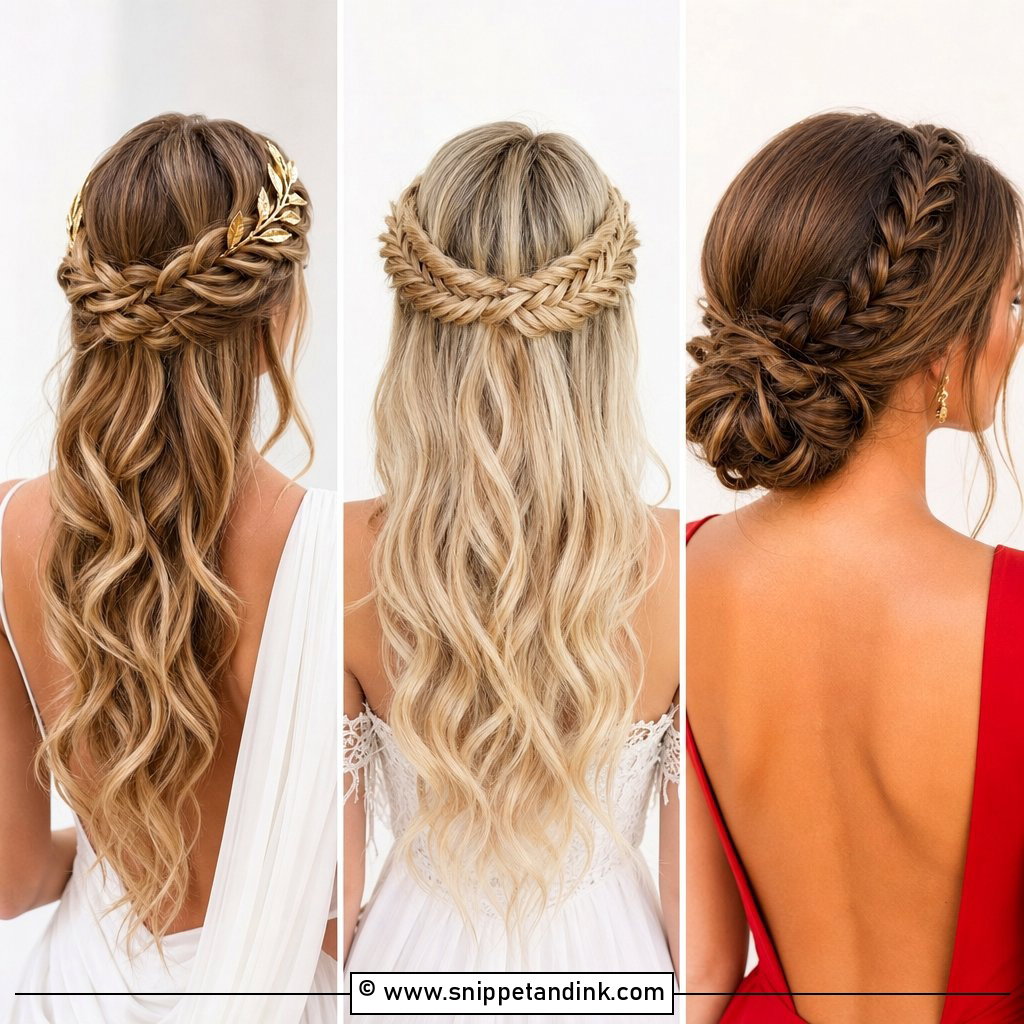
1. Loose Fishtail Braid for Long Hair
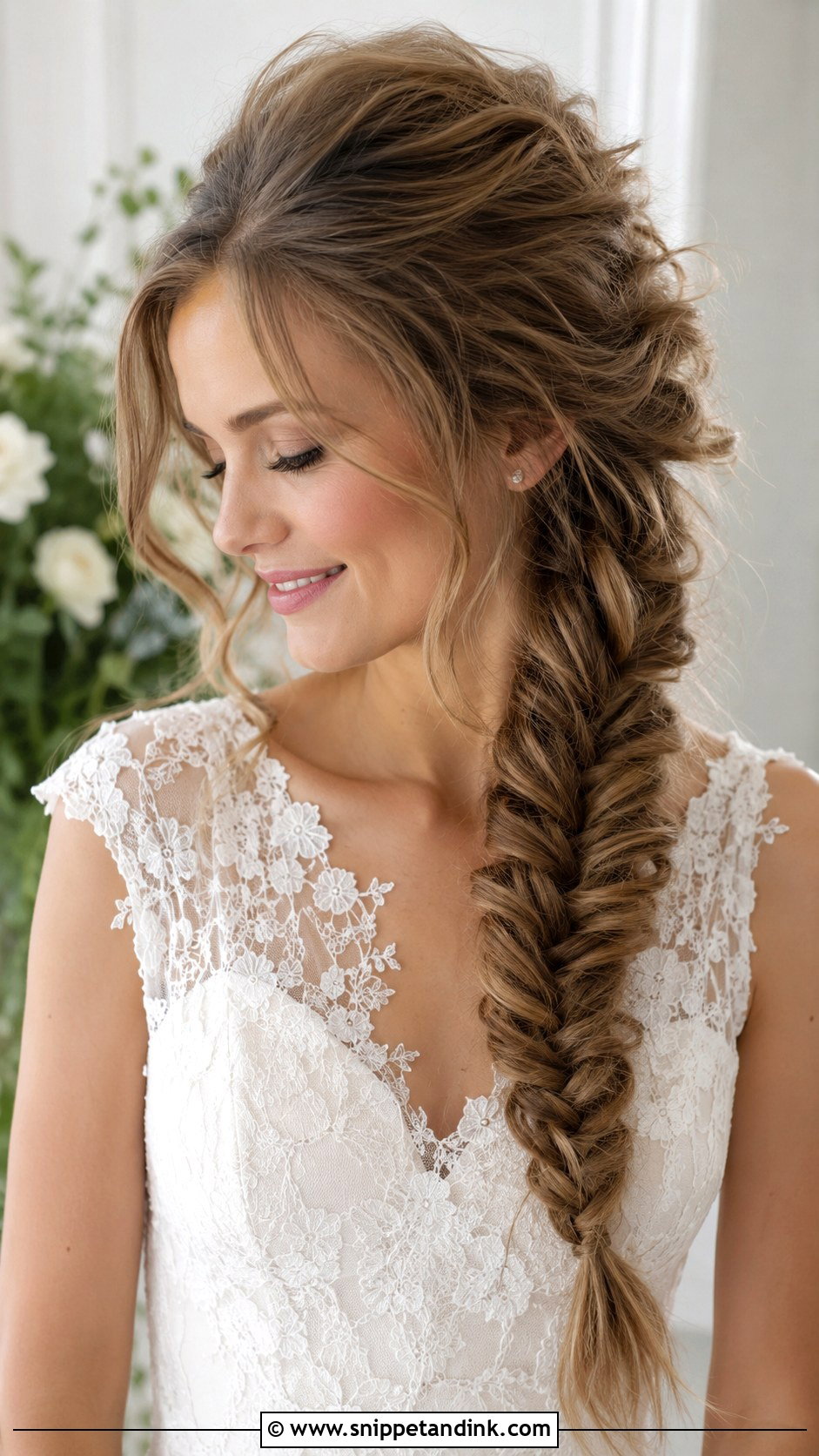
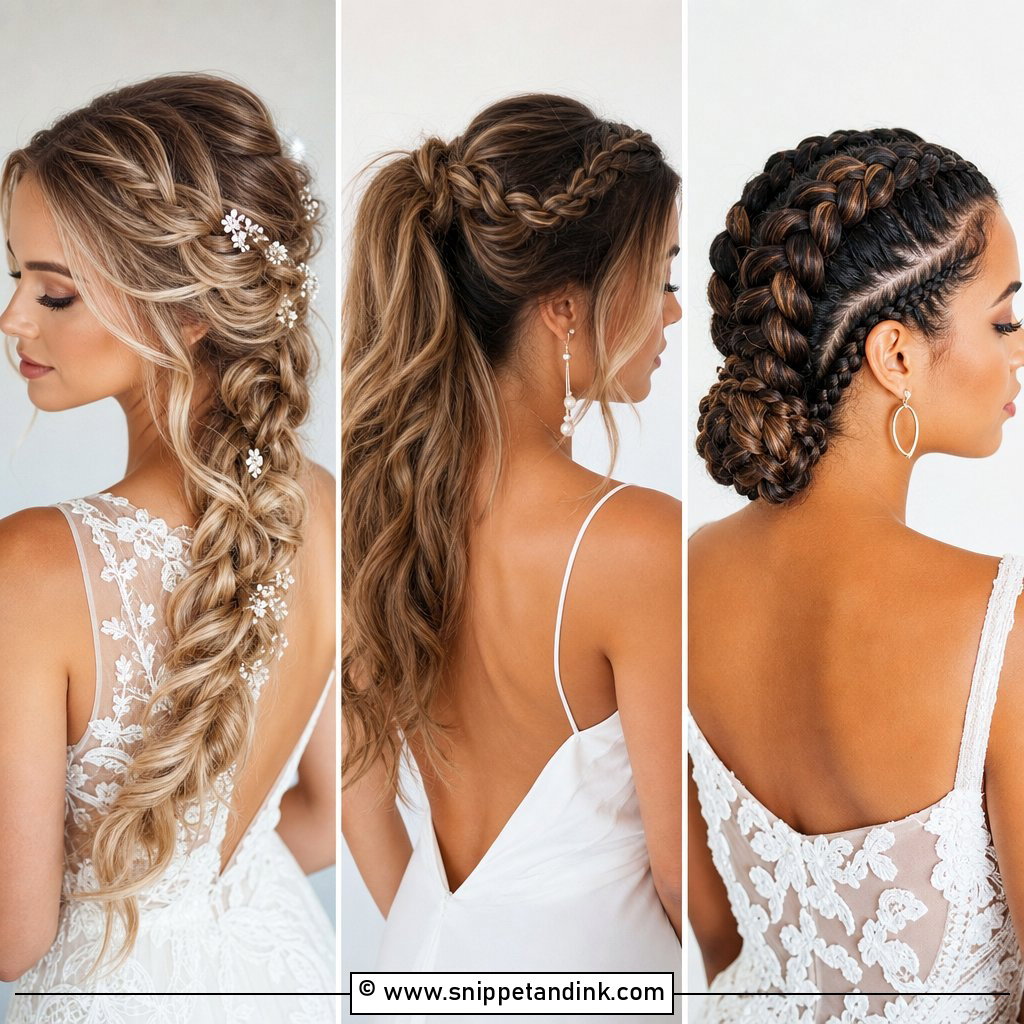
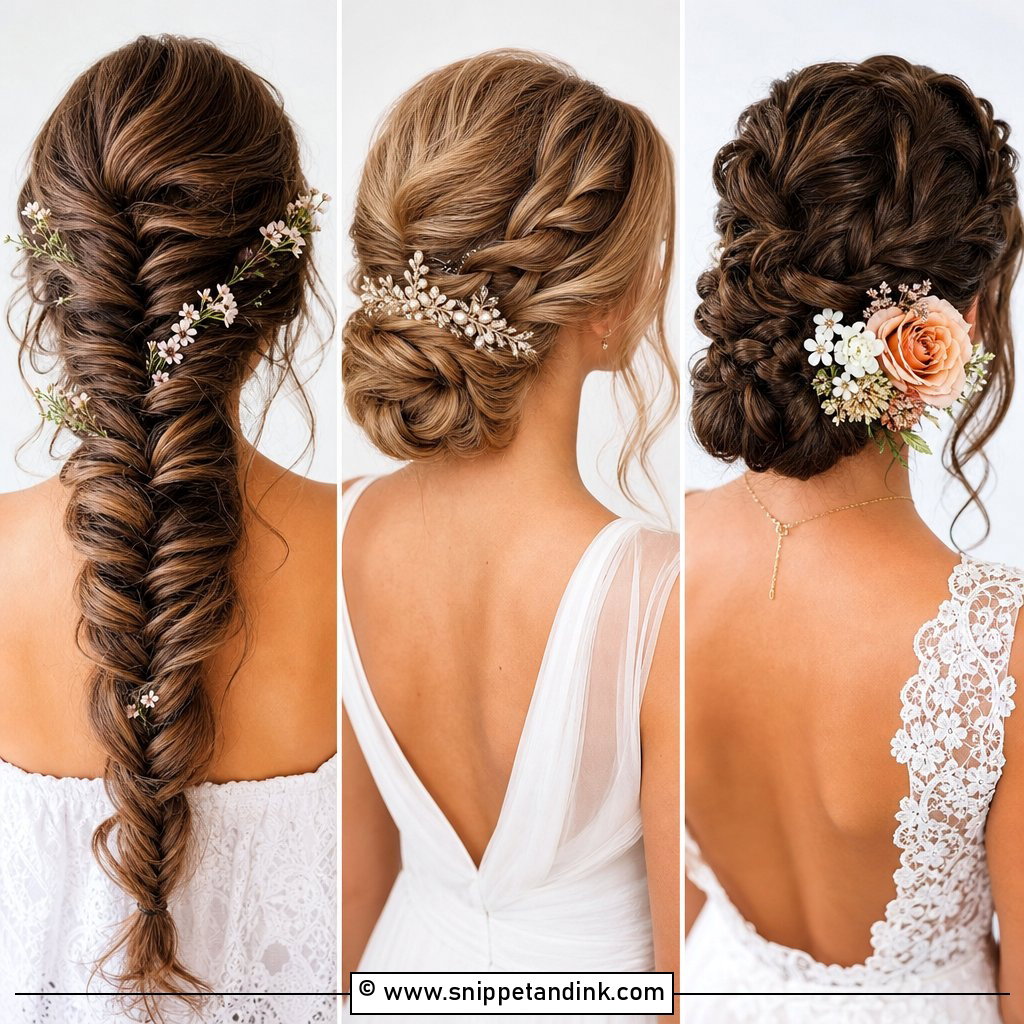
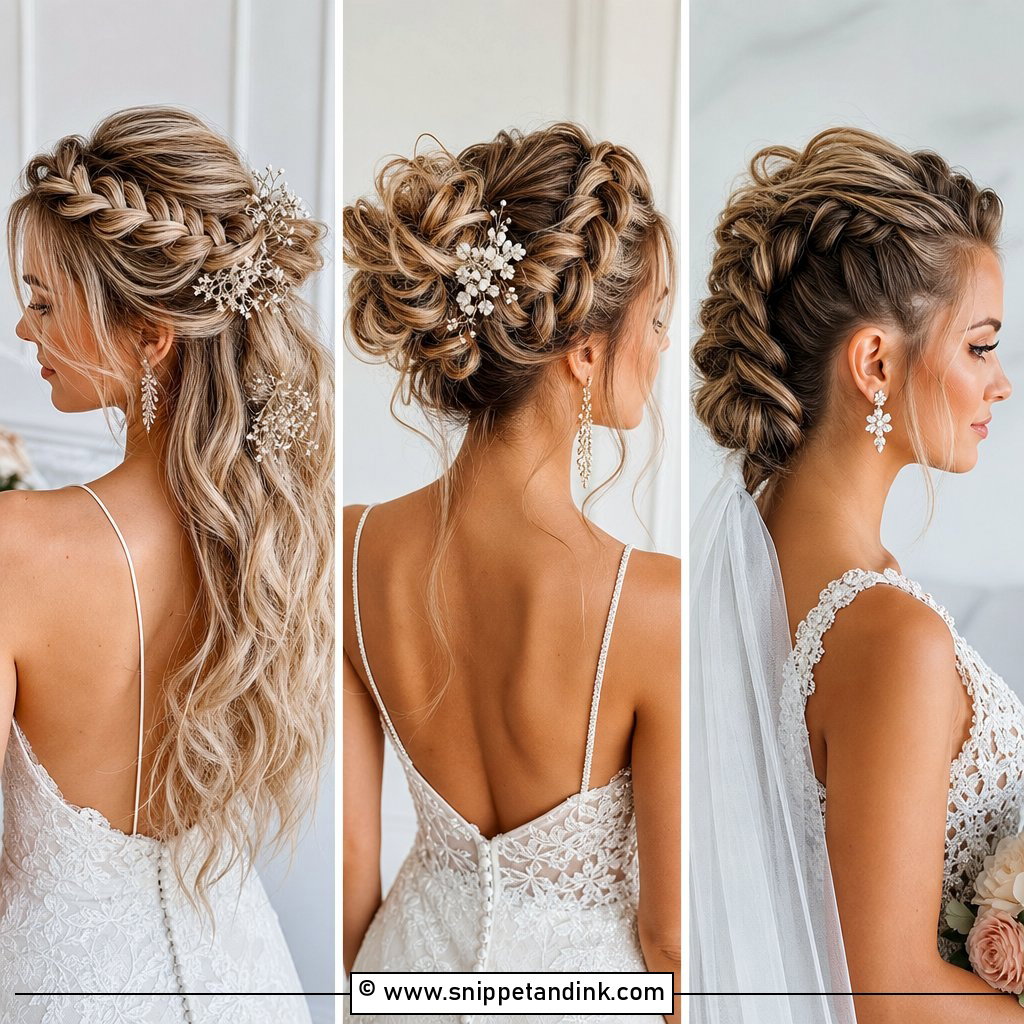
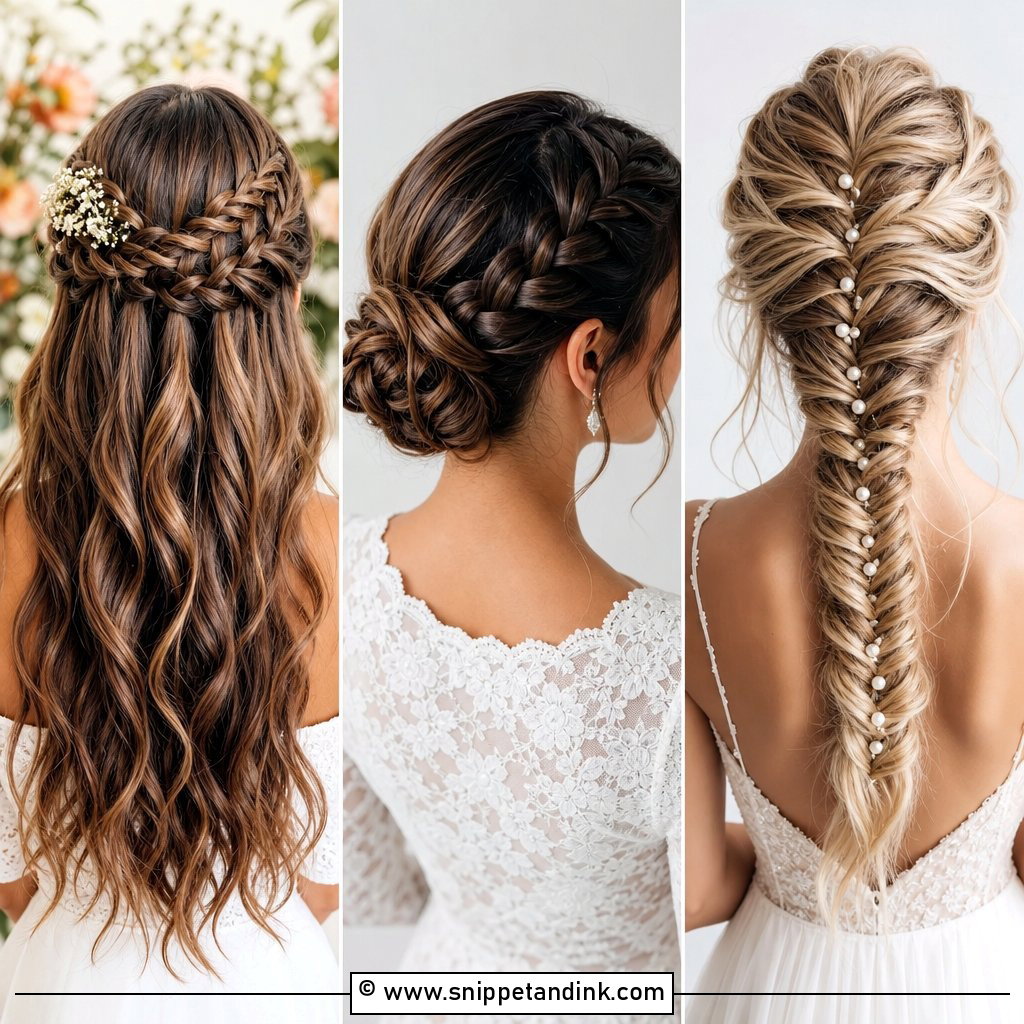
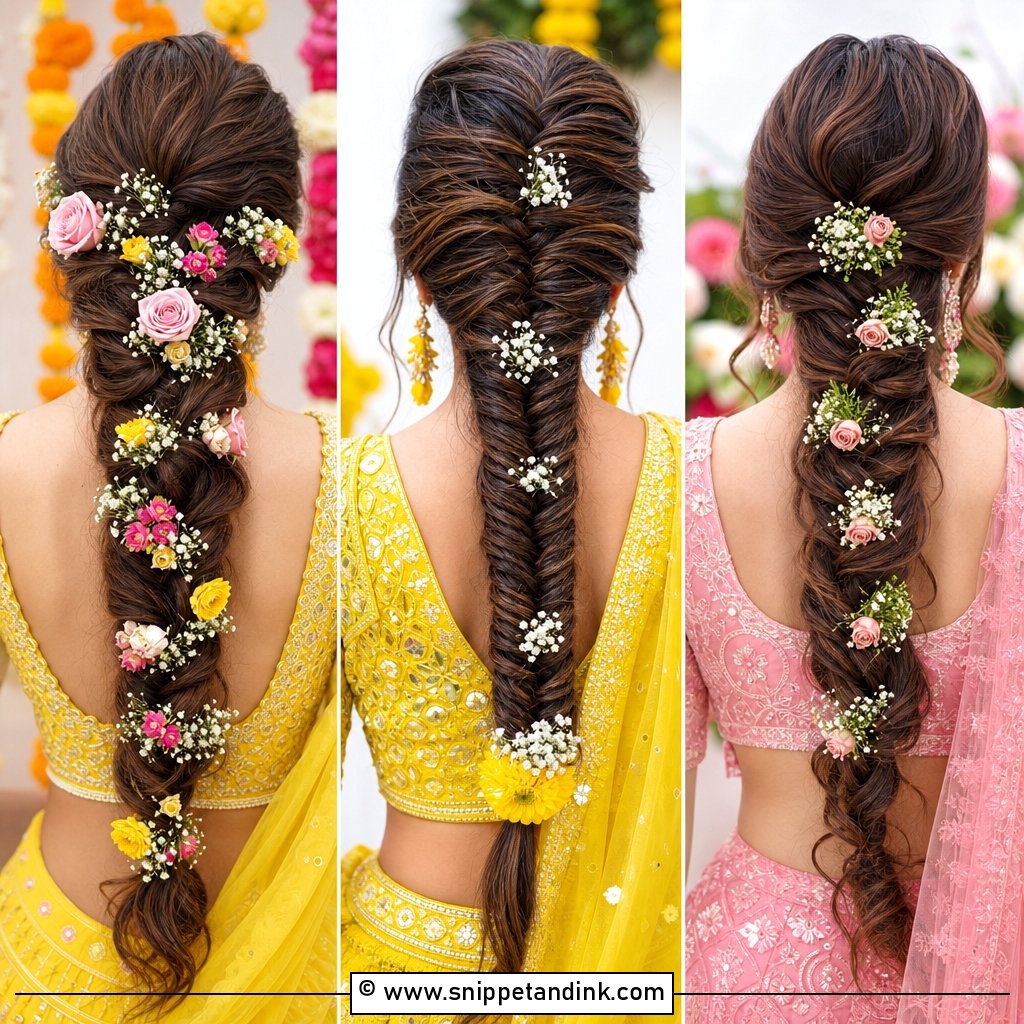
A fishtail only uses two sections, which is why it looks so woven and why it eats length quickly. On thick hair it pancakes out wide and holds its shape. On fine hair I braid it tighter first, pin it, and only then pull the edges, because loosening a soft fishtail too early makes it collapse into a thin rope by dinner. A little backcomb at the crown and two face-framing pieces are all it needs. Keep any bloom near the elastic, where it hides the band.
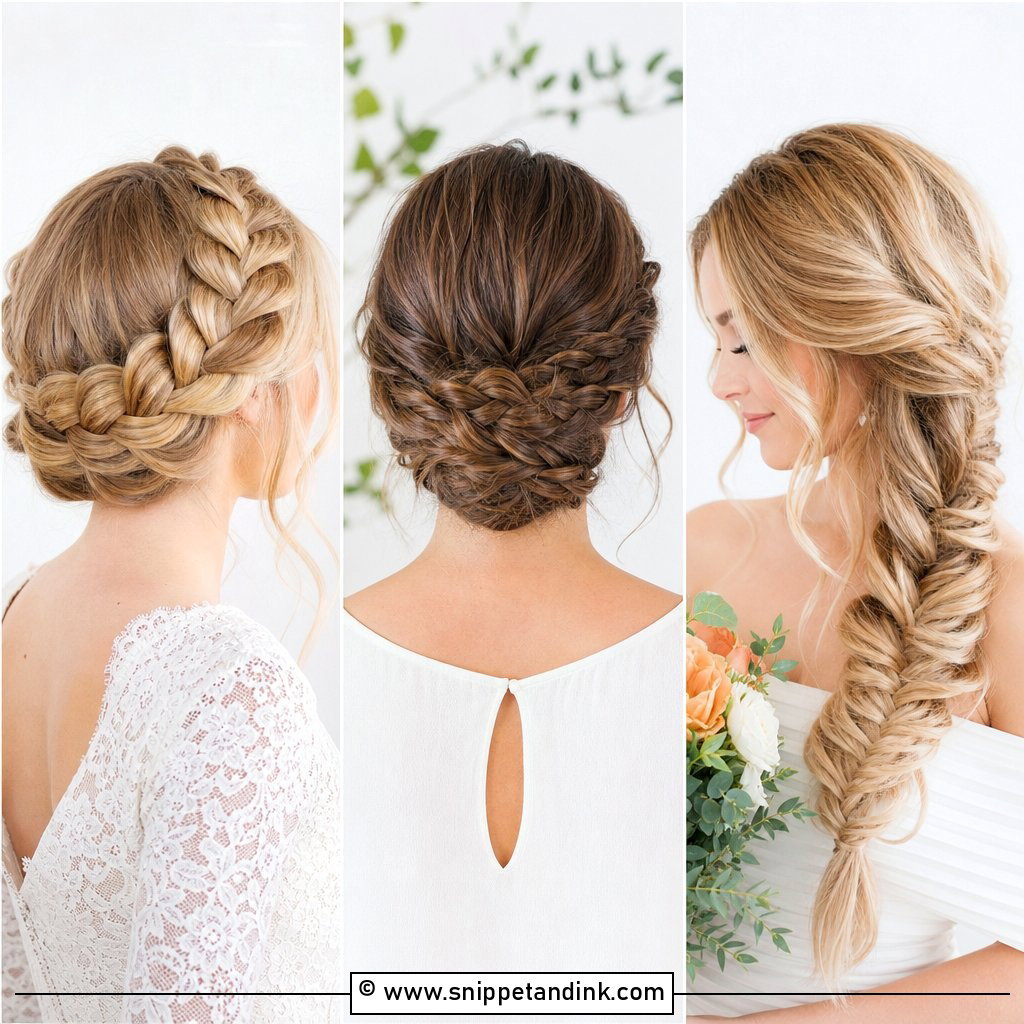
2. Braided Crown Updo for Brides
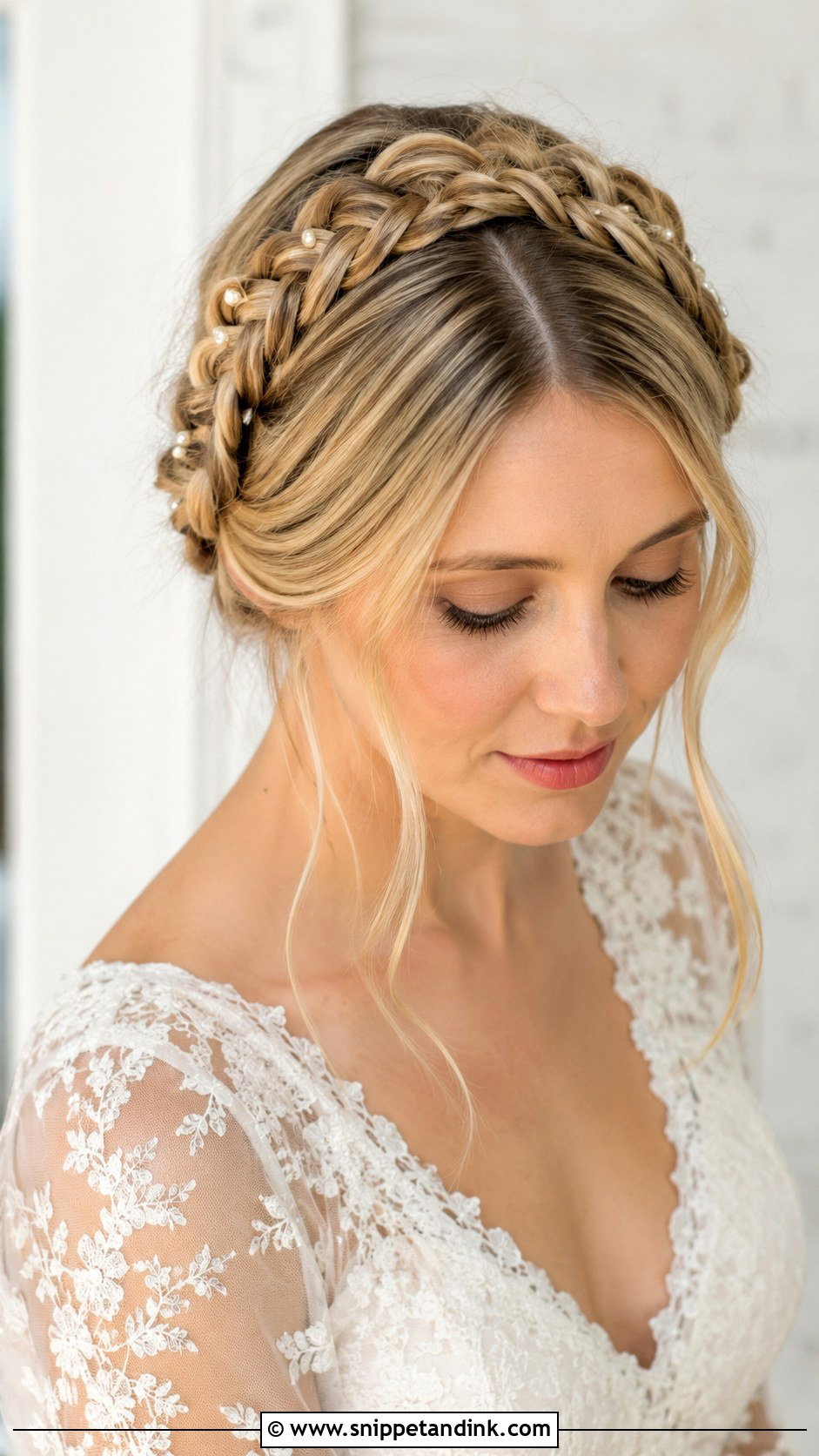
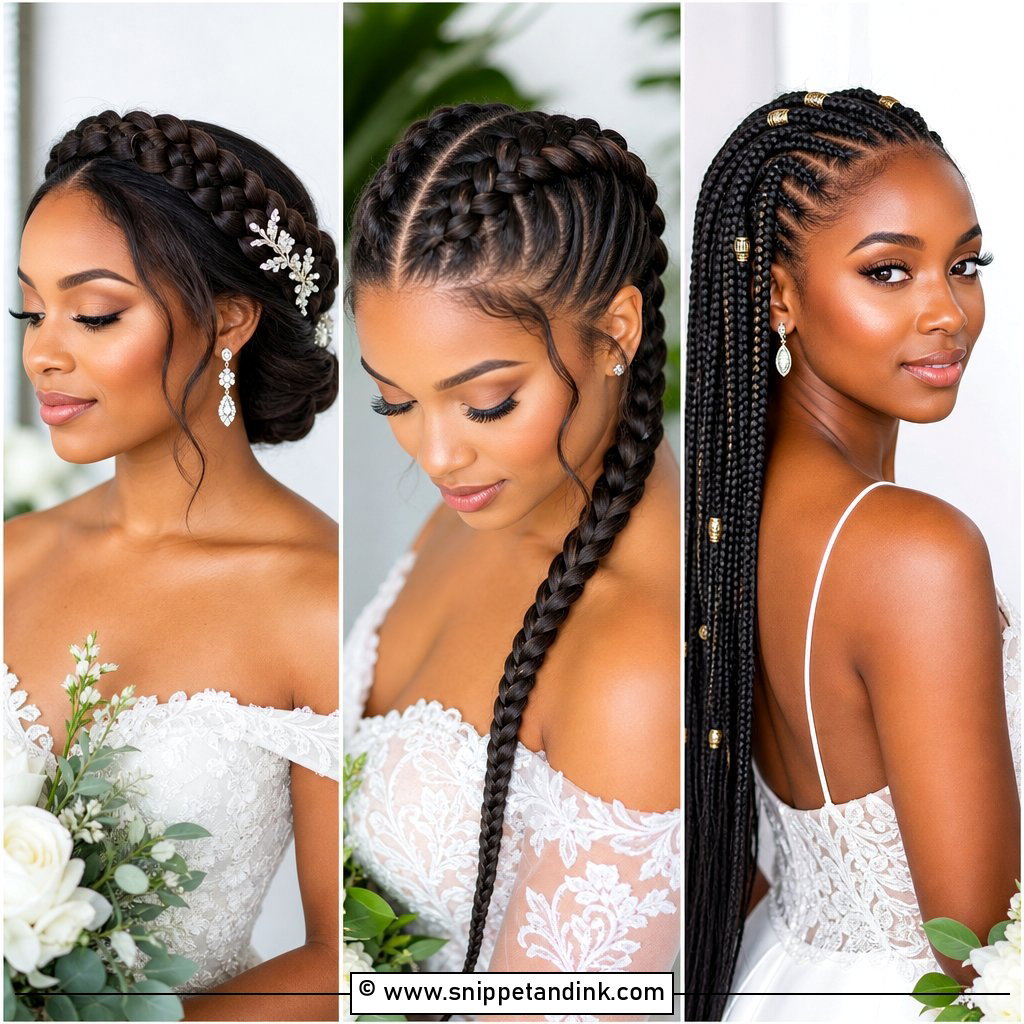
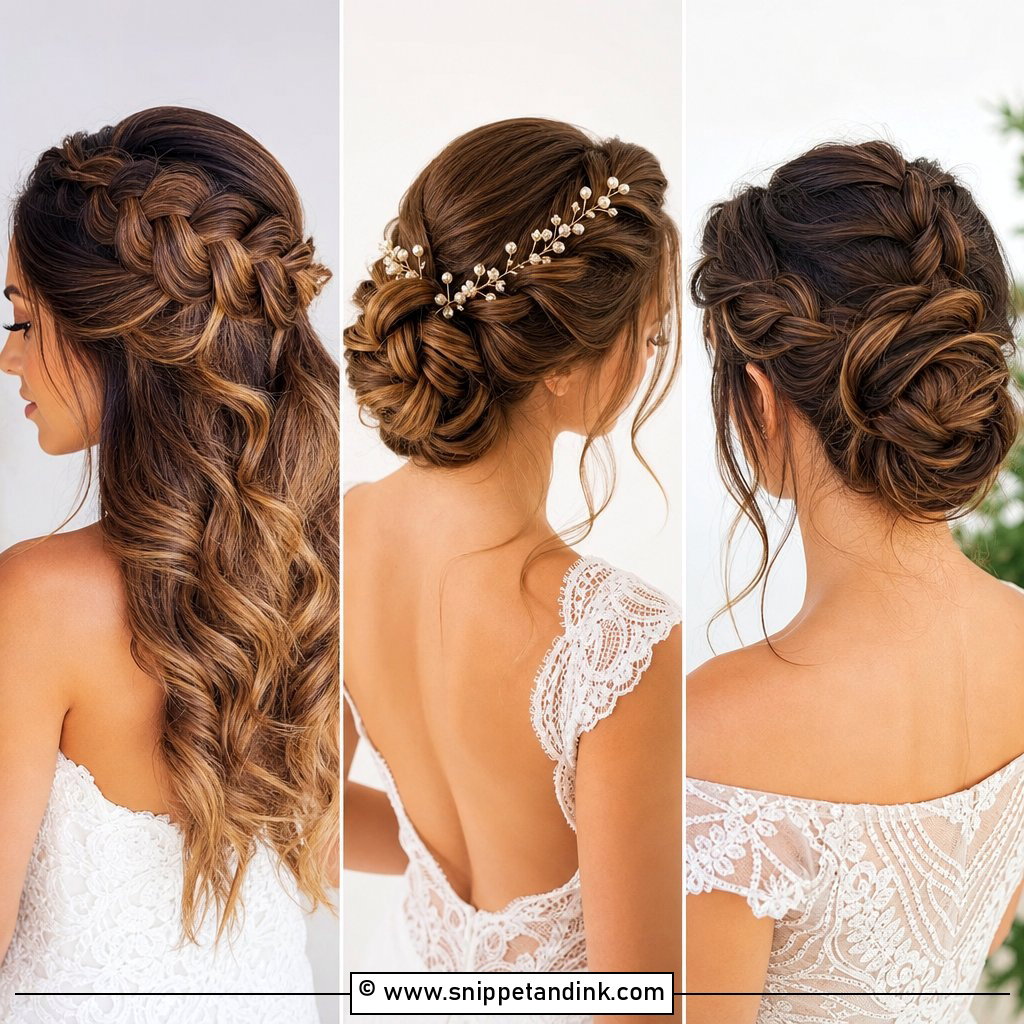
A braided crown sits on top of the head, so all the weight of long hair is carried by pins rather than by the nape. That makes it one of the most comfortable styles for a hot ceremony, with nothing touching your neck. I anchor it with crossed bobby pins every few inches; a single row of pins going one direction is how crowns slide backward after a few hugs. If you plan to wear a veil, the comb goes just beneath the braided halo, where it grips the braid instead of slipping on smooth hair. Very long, thick hair can make a crown too bulky at the sides, so I sometimes thin the braid by tucking the ends into a small bun at the back.
3. Side Swept Braid With Loose Waves
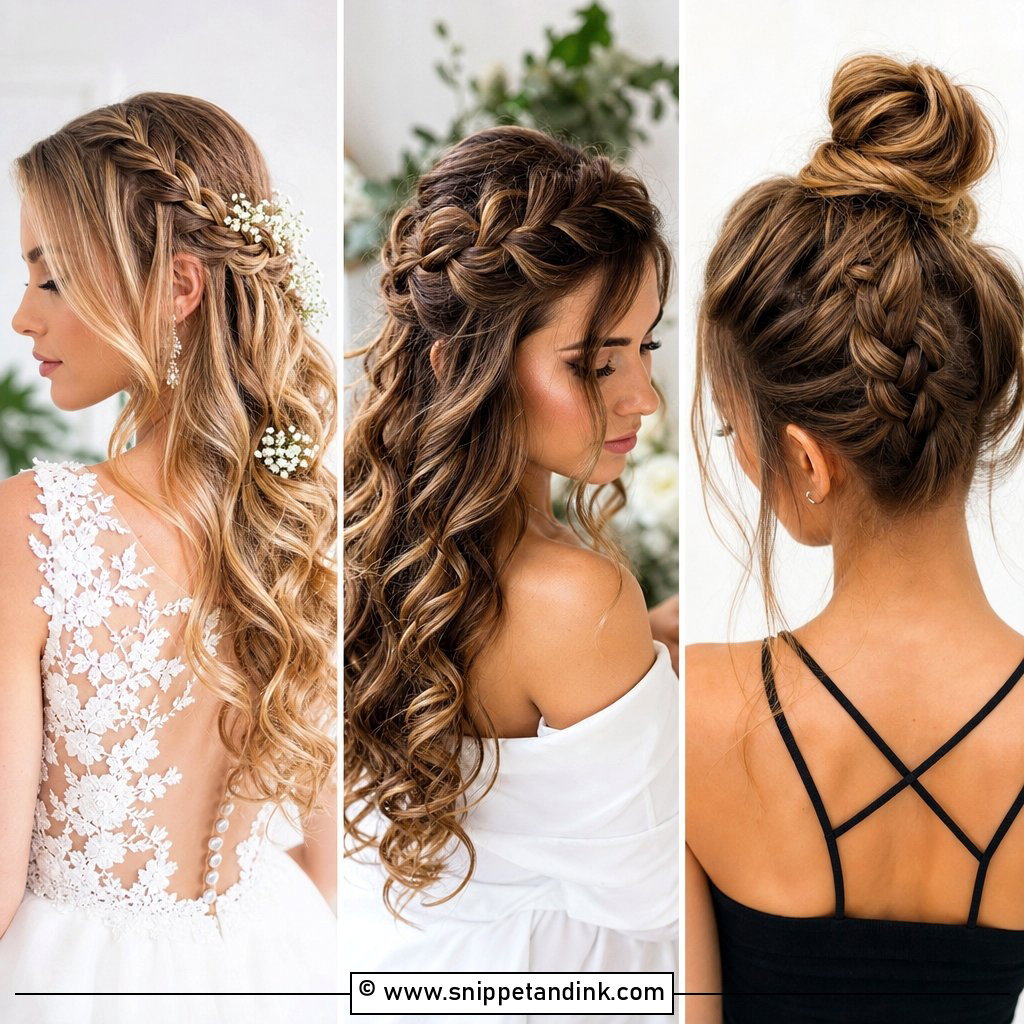
Here the waves do most of the work and the braid just gathers them. I curl first, let the curls set cold, then sweep everything to one side and plait only the lower half loosely so the texture above still shows. It suits strapless and off-shoulder necklines because one shoulder stays bare and any beading on the other side isn’t hidden. The weak point is the hairline at the back: sweeping long hair to one side can expose a gap, so I pin a hidden anchor behind the ear. A sparkly hair vine threaded through the braid also helps hold it in position.
4. Dutch Braid Wedding Updo
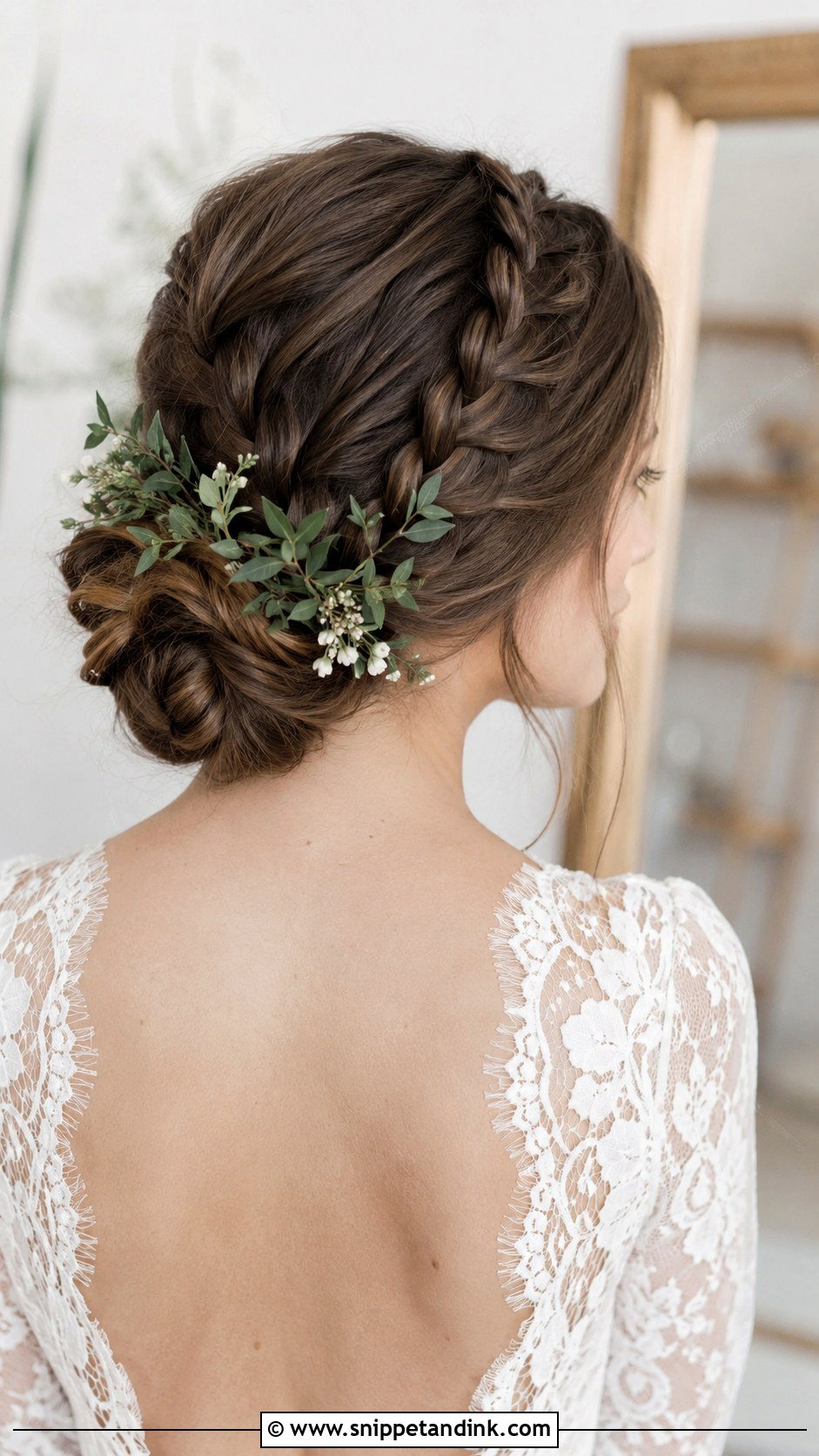
Dutch braids are worked by crossing strands underneath, so the plait stands up off the head instead of lying flat. Two of them wrapped into a nape bun is one of the most secure styles I can do on long, heavy hair, because the braids grip the scalp and spread the weight across the head. Pull the edges gently and the pattern looks fuller in photos. The trade-off is tension: if your scalp is sensitive, tell your stylist at the trial, since tight Dutch braids can ache by evening. Small greenery tucked between the two braids reads well against the raised texture.
5. Half Up Braided Crown With Flowing Hair
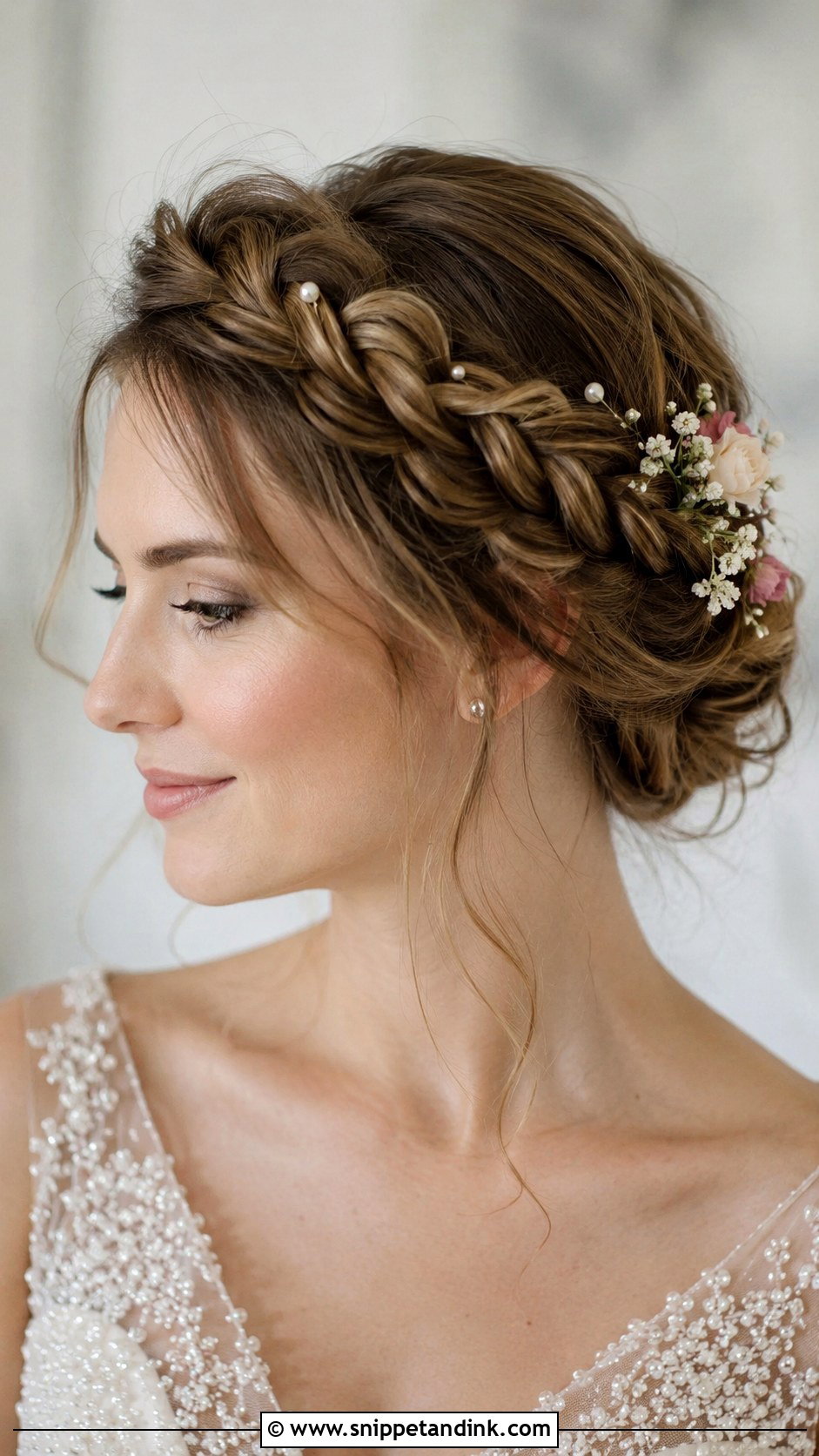
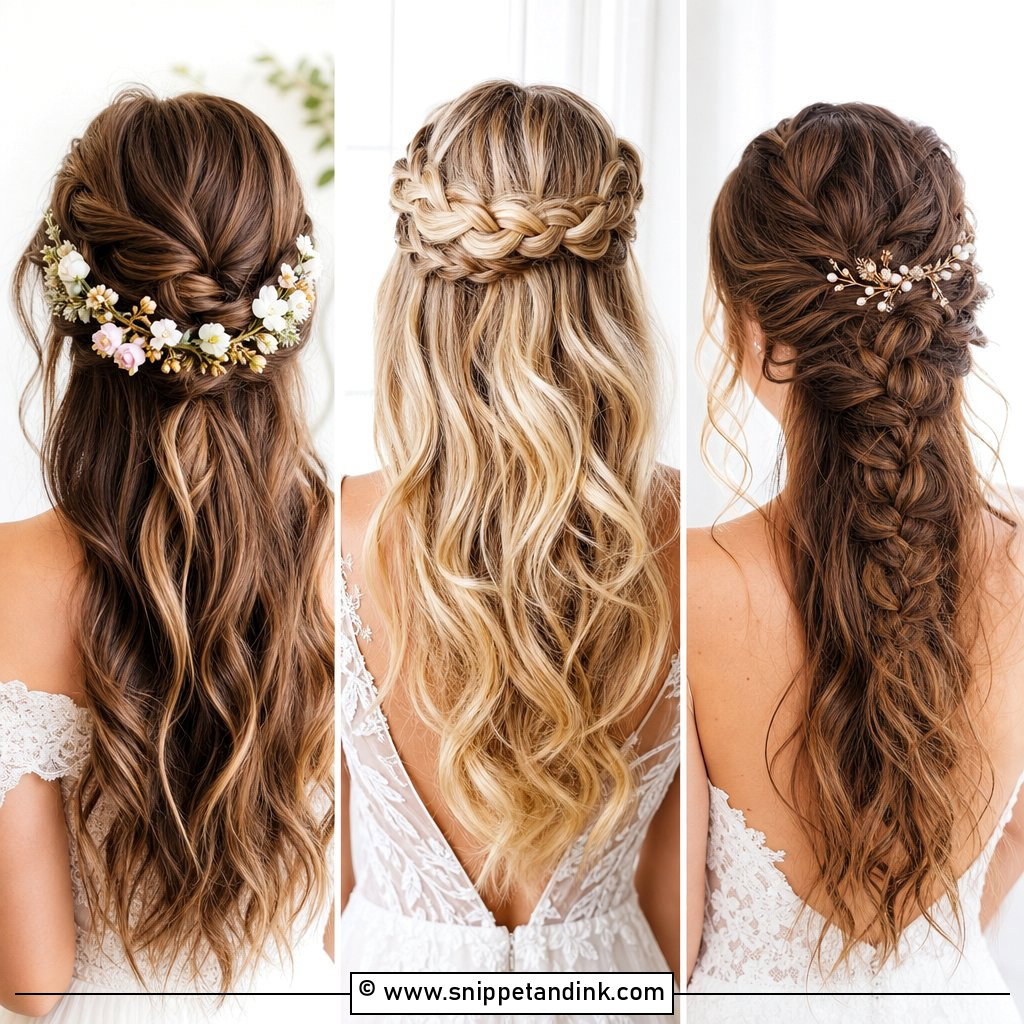
This is the answer for the bride who keeps changing her mind between up and down. Thin braids gather the top section into a crown and the rest of your length hangs in waves, which keeps hair off your face during vows and still shows how long it is. It’s the most popular back shot of the day, so I check it in a mirror from behind at the trial. Waves on very long hair drop faster under their own weight, and that’s the part that needs a strong setting spray and a few hours of cooling before the ceremony. Baby’s breath is light enough not to drag the crown down.
6. Milkmaid Braid for Long Hair
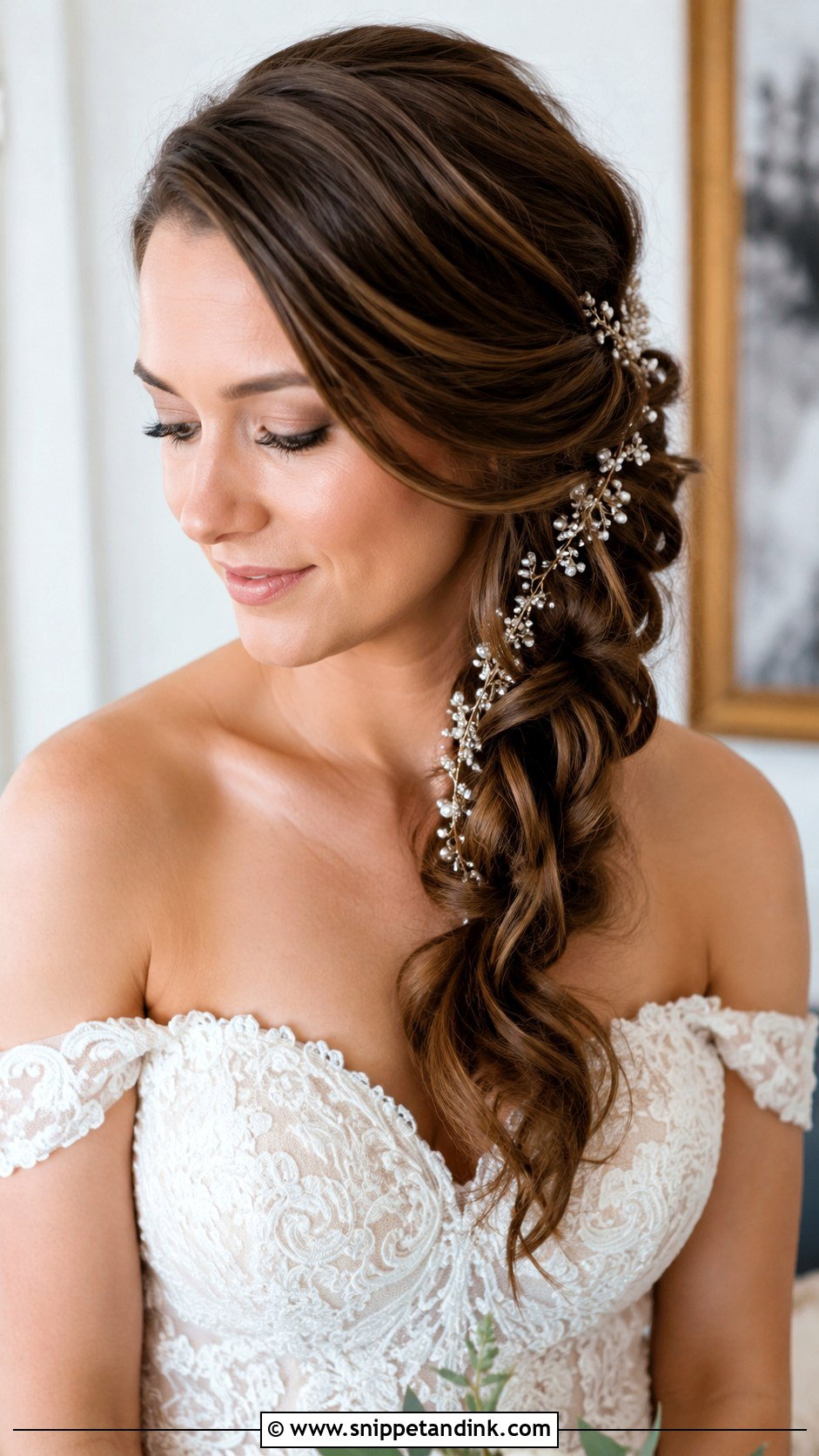
Two braids start at the nape, travel up and over the head, and pin across the top; that’s the milkmaid braid, and long hair makes it look full rather than stretched. It is genuinely low maintenance once it’s set, because nothing hangs loose to tangle. The common problem is where the two ends meet: on very long hair they overlap and create a lump, so I tuck one end under the opposite braid instead of crossing them on top. A slightly loosened finish softens the face, and pearl pins hide every join.
7. Messy Braided Bun for Brides
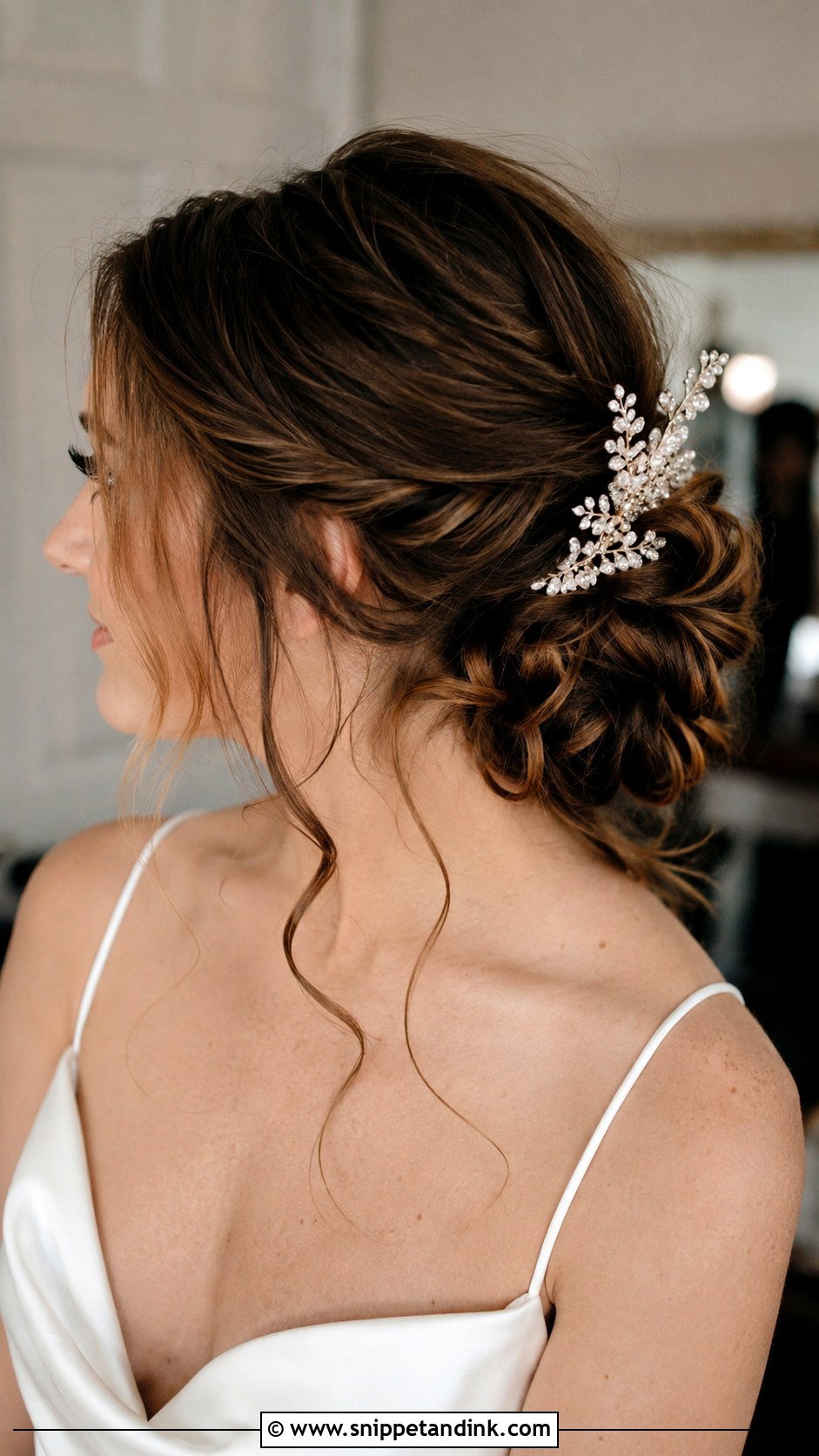
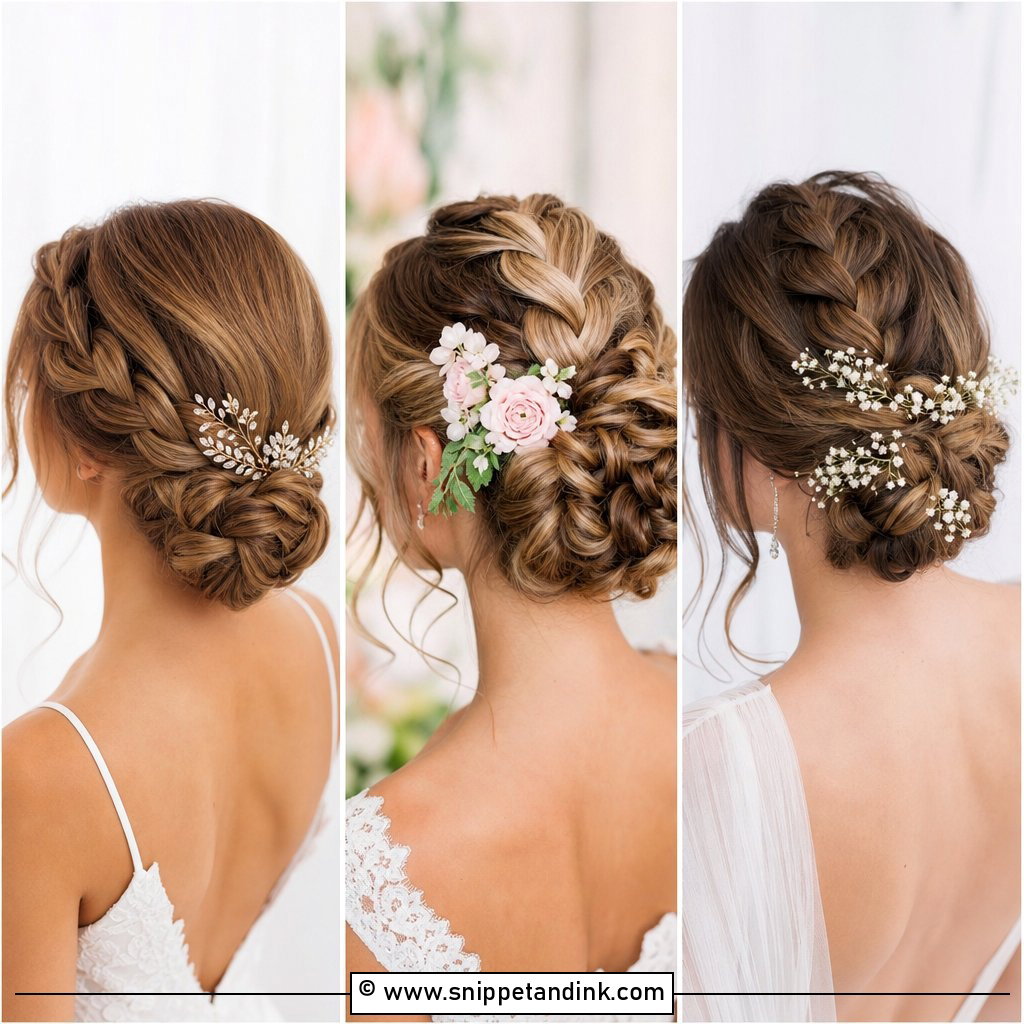
Loose braids pinned into a low bun give you texture that looks relaxed but is actually locked in at the base. I build the bun around a firm anchor ponytail or a cross of pins first, then wrap the braids around it; skipping that step is why messy buns sag halfway through the reception. Pull out a few tendrils last, after the bun is secure. The braided wrap keeps it from looking like an ordinary knot, and it sits comfortably against both plain crepe and heavy lace. A jeweled comb at one side finishes it without competing with the braids.
8. Boho Braided Half Up Style
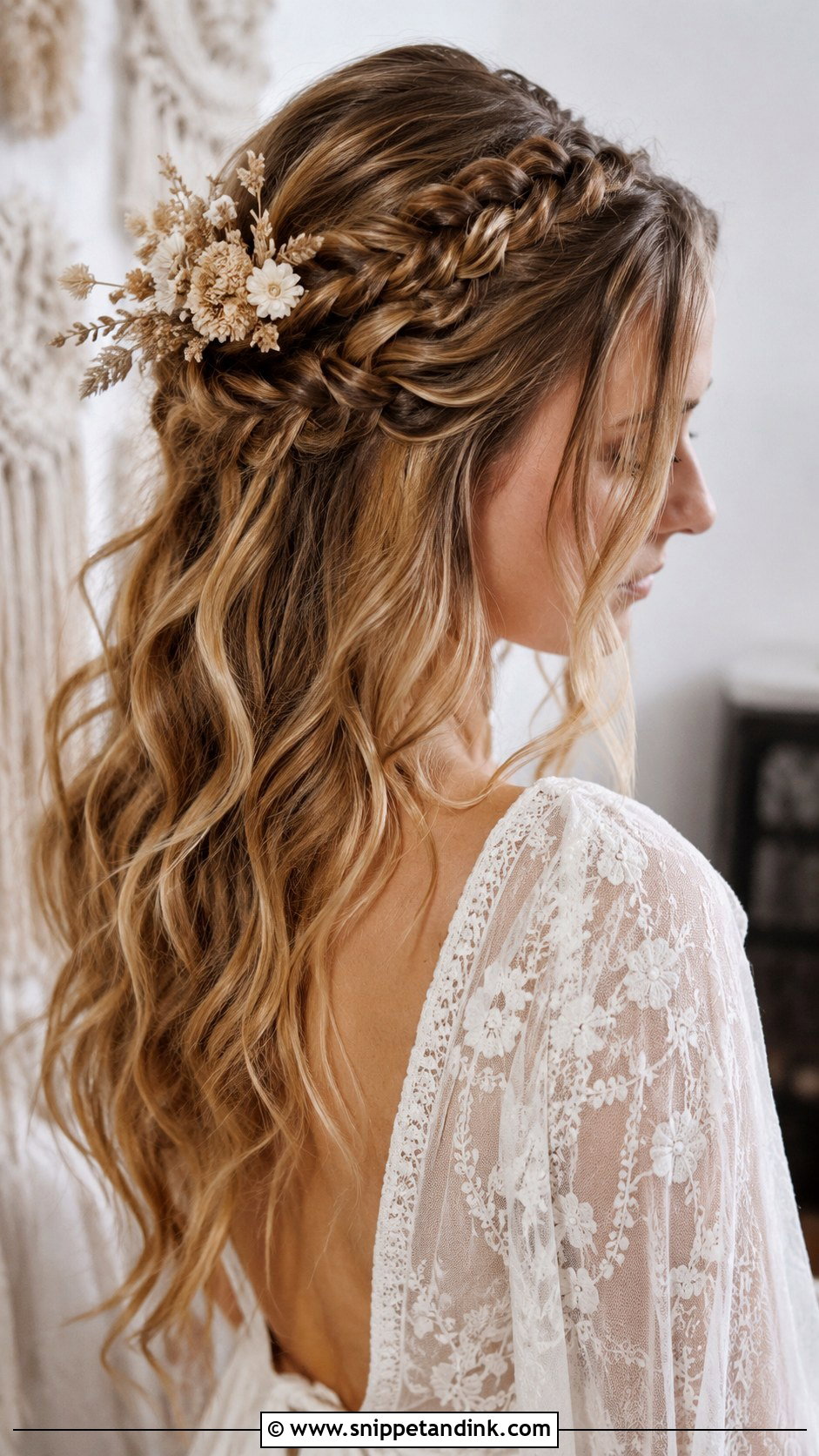
Several small, loose braids pulled back from the temples, with the rest of the hair left tousled, is the style I steer beach and woodland brides toward. It tolerates wind better than smooth waves because the texture is supposed to move. Braid on hair with some grip, either second-day hair or hair prepped with texture spray, or the tiny plaits slide out within an hour. Accent braids near the temples frame the face, and a hair chain or dried flowers suit the loose, uneven finish.
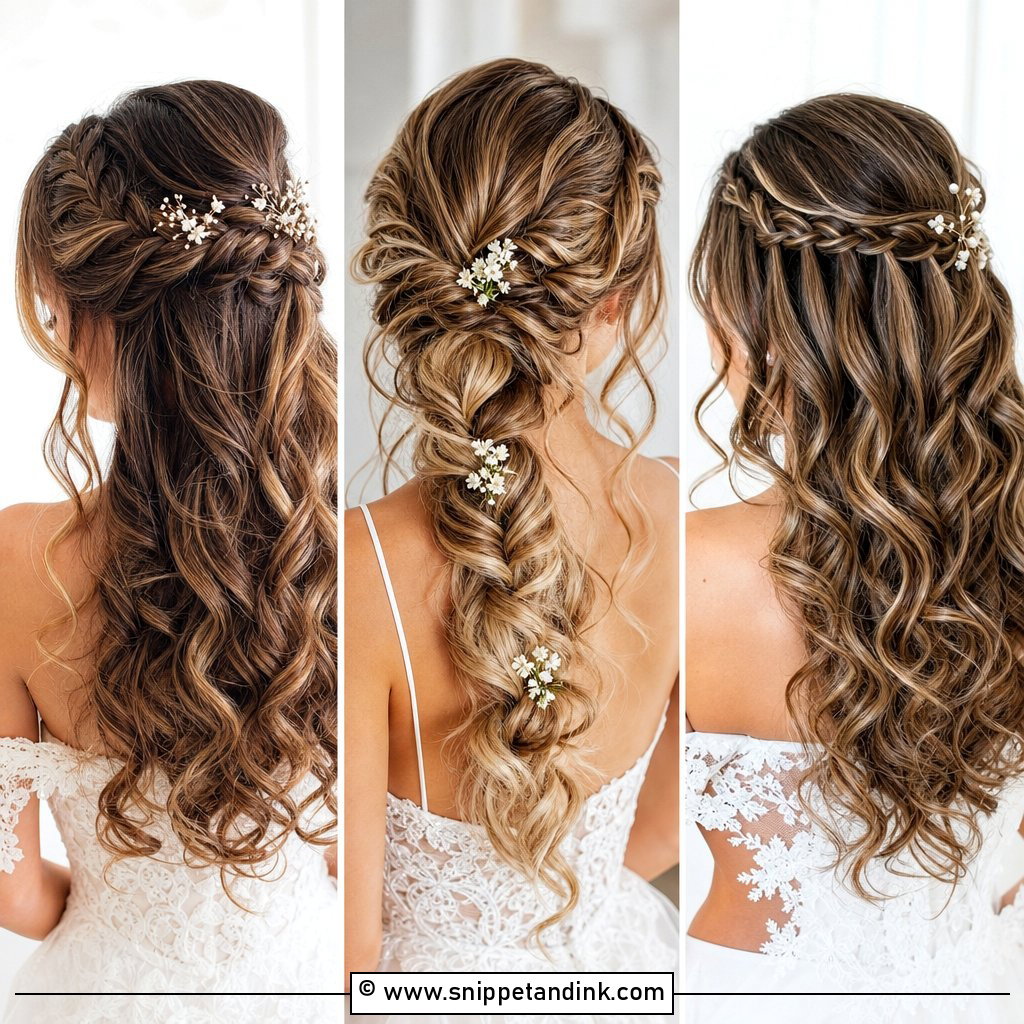
9. Waterfall Braid for Long Hair
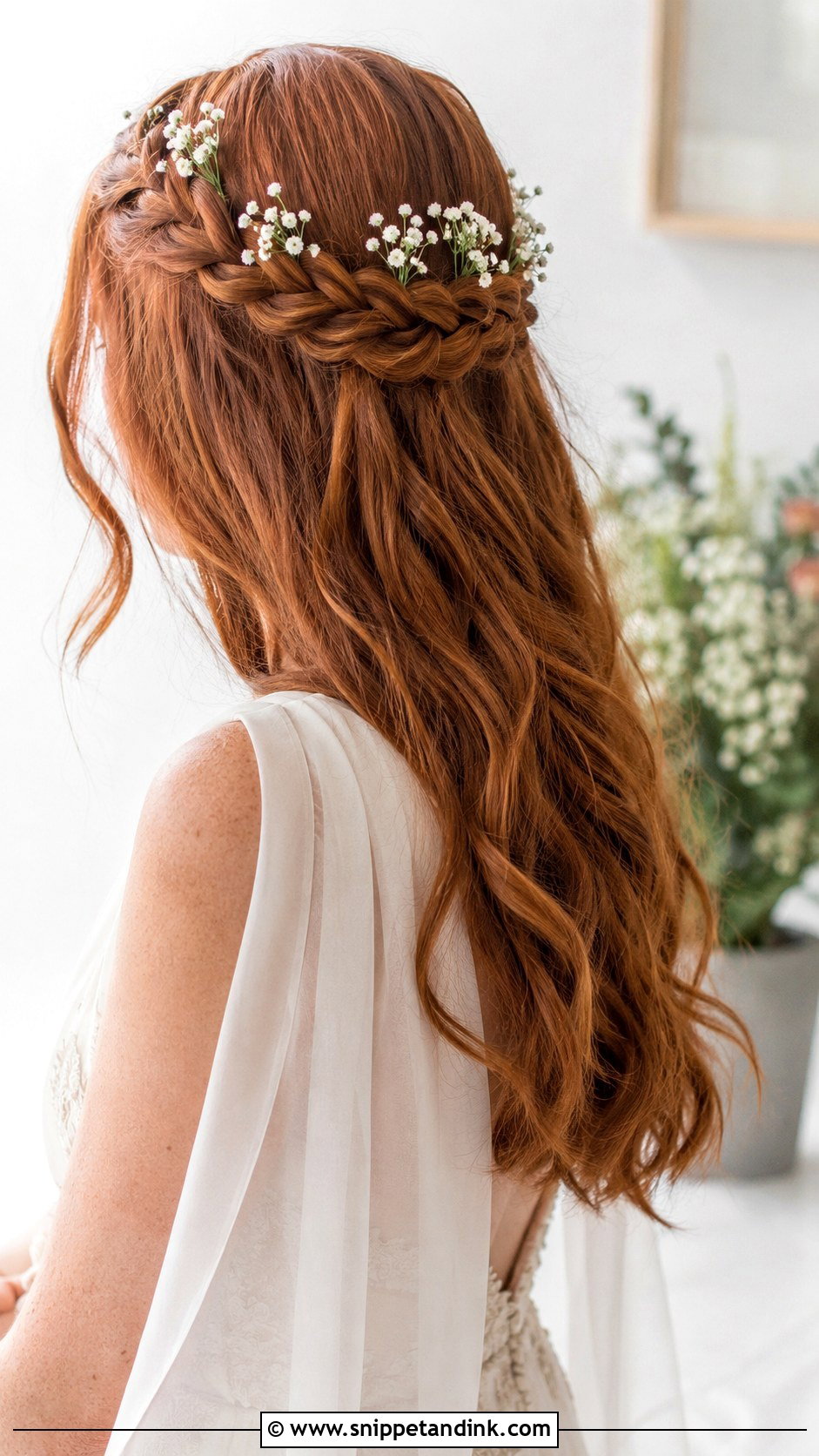
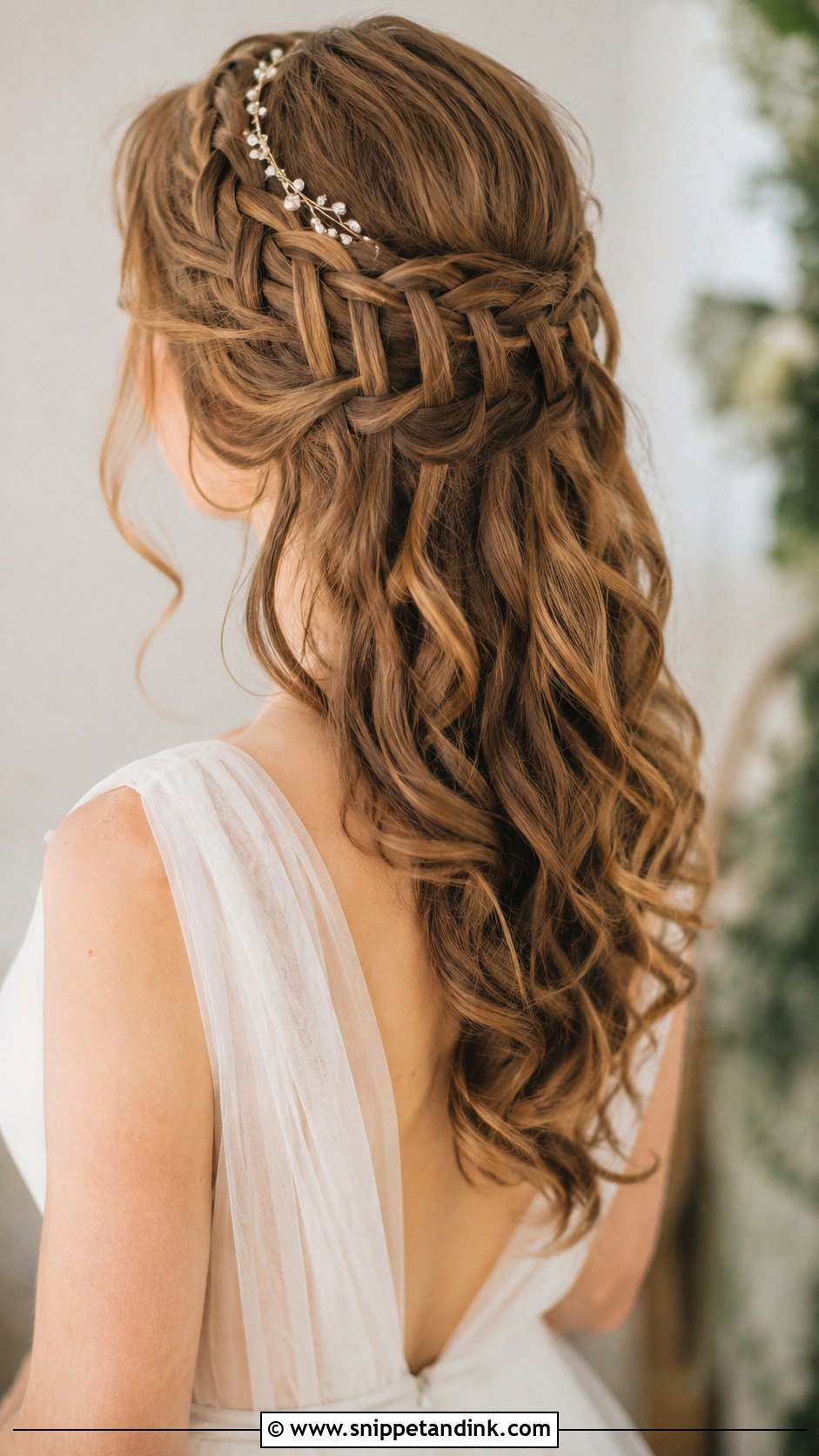
A waterfall braid runs horizontally around the back of the head, and each time you cross, you drop the top strand and pick up a new one, so pieces fall through like water. It shows off long length without pulling all of it up, and the falling pieces look best curled. What I warn brides about is fragility: this is the least secure braid on the list, and the dropped strands can tangle into the braid line when you hug people. A thin hair vine woven along it adds shine and a little extra hold, and from behind it reads clearly in ceremony photos.
10. Braided Low Bun With Loose Strands
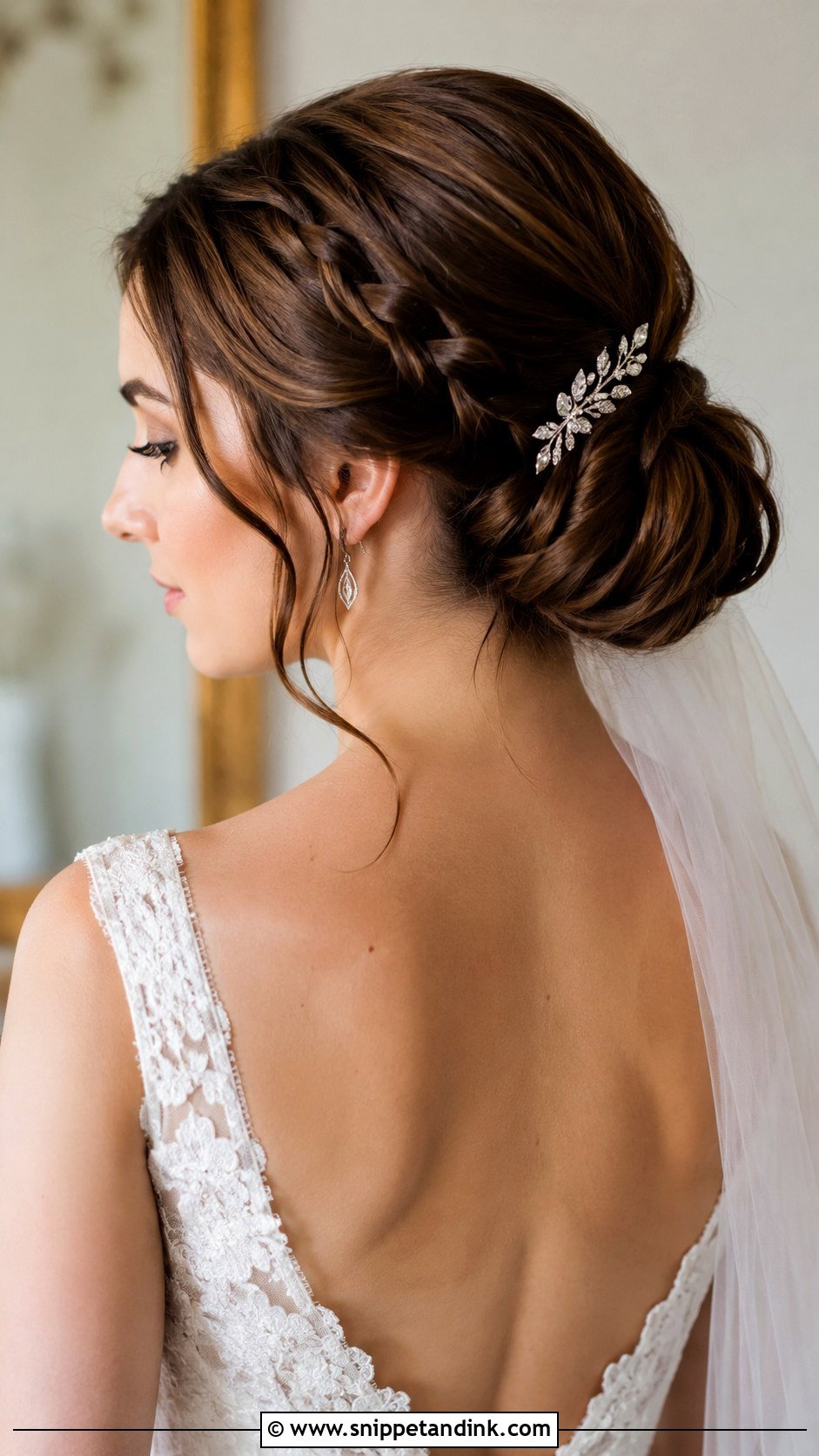
A plait coiled into a smooth, low chignon at the nape is my go-to for black-tie and formal ceremonies. The braid adds texture to what would otherwise be a plain bun, and coiling a braid instead of loose hair means it holds its shape for hours. On very thick hair the bun can get large and heavy, so I sometimes braid only half the length and twist the rest underneath. Leave a few loose strands at the face. With the neck clear, statement earrings carry the look, and a jeweled comb at the base is enough.
11. Rope Braid Wedding Hairstyle
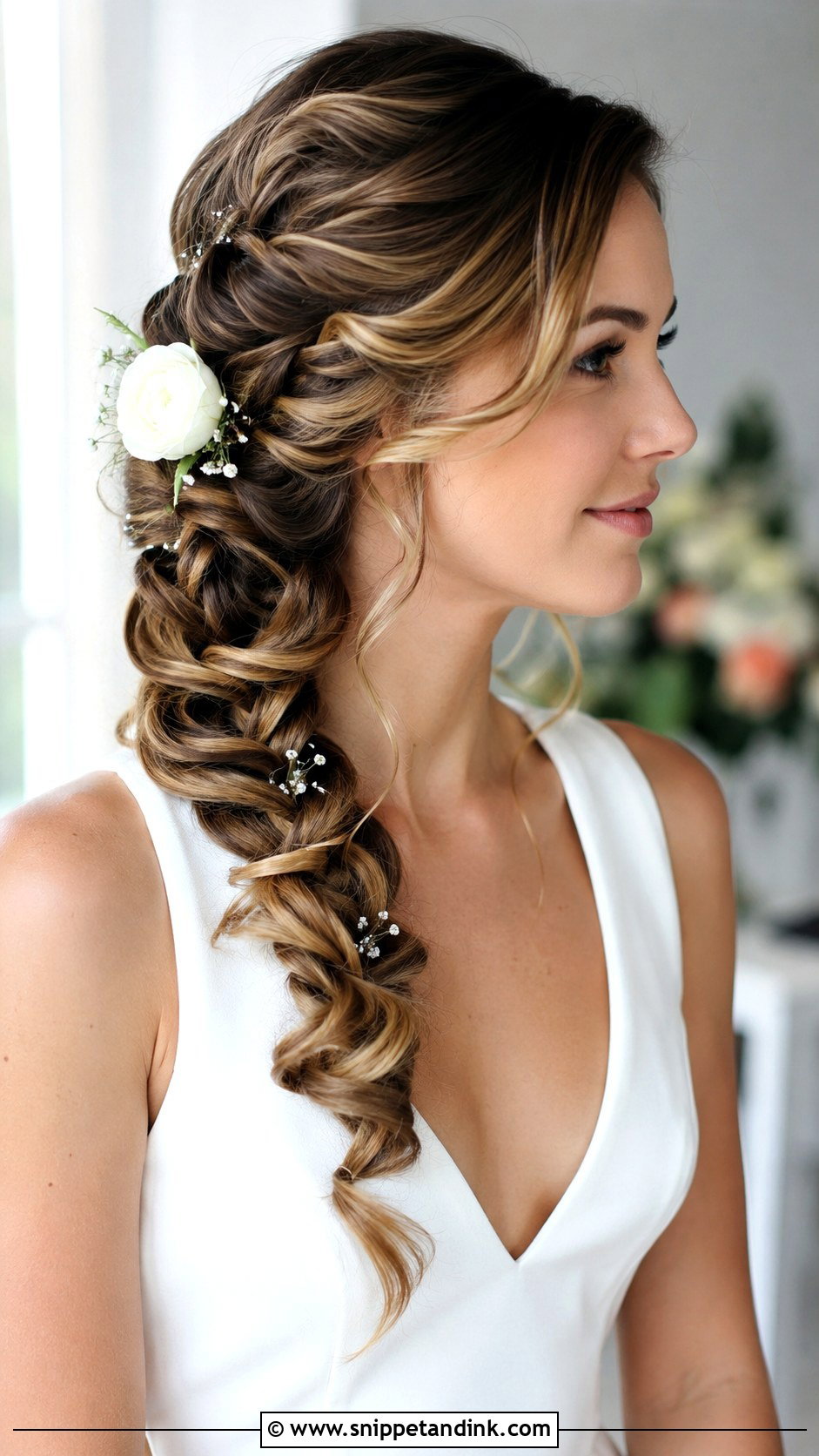
The rope braid isn’t really a braid at all: you twist two strands in one direction and wrap them around each other in the opposite direction, and that counter-twist is what stops it unravelling. Get the directions the same and it falls apart in minutes, which is the mistake I see most often in self-done versions. It’s clean and graphic, so it suits minimalist dresses, and on long hair you can wear it to the side, pinned up, or half up. The spirals catch light well. One pin or a single bloom is plenty.
12. French Braid Updo for Brides
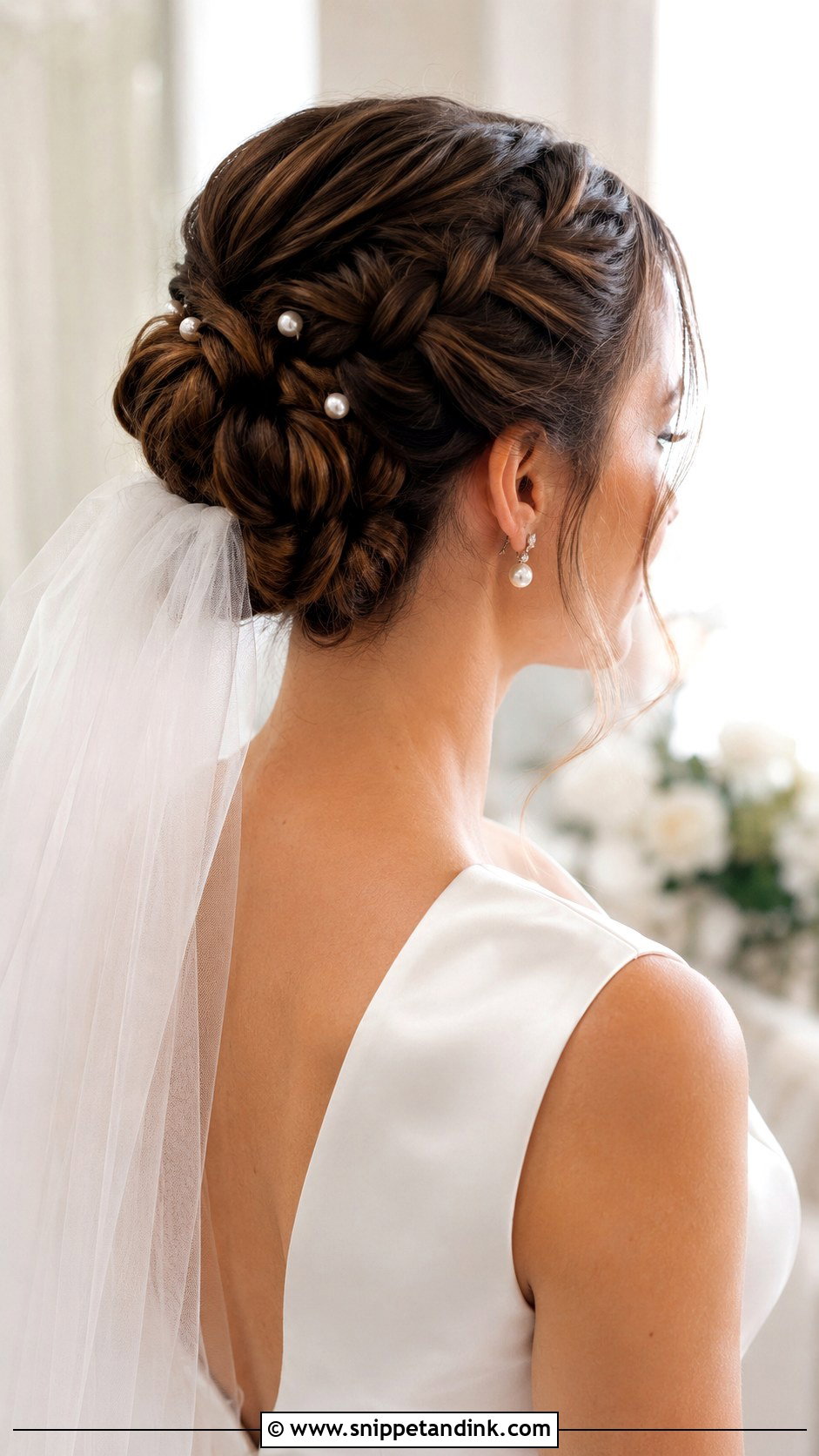
The French braid crosses strands over the top, so it lies flat against the scalp, then the length is tucked and pinned into an updo. It is the most adaptable style here; I can place it centrally, off to one side, or as two braids depending on the face and neckline. Because the braid is tight against the head, it gives a veil comb something solid to grip, and it stays put through dancing. Loosen the edges for softness, but stop short on fine hair, or the scalp starts to show through the plait.
13. Twisted Braided Crown With Curls
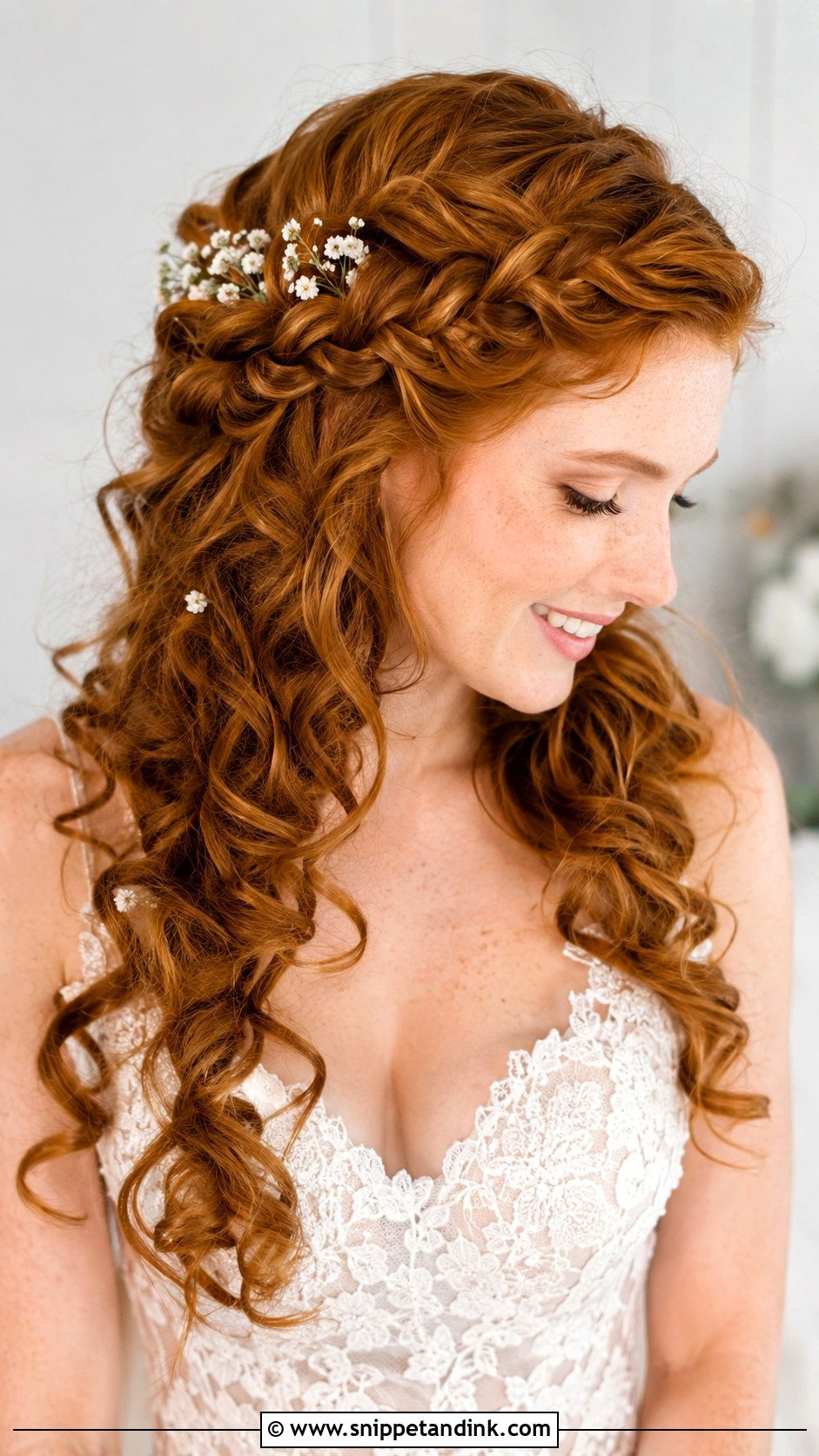
Twists are faster than braids and gentler on fragile hair, so a twisted crown over long curls suits brides who find tight braiding uncomfortable. The twists go across the top and keep the face clear, and the curls carry the length. I set the curls with heat and let them cool completely before twisting the crown, otherwise the warmth of the hands flattens them. Tiny blooms or pearl accents along the twists sit securely because twists have more gaps to tuck into than a braid.
14. Fishtail Braided Updo for Long Hair
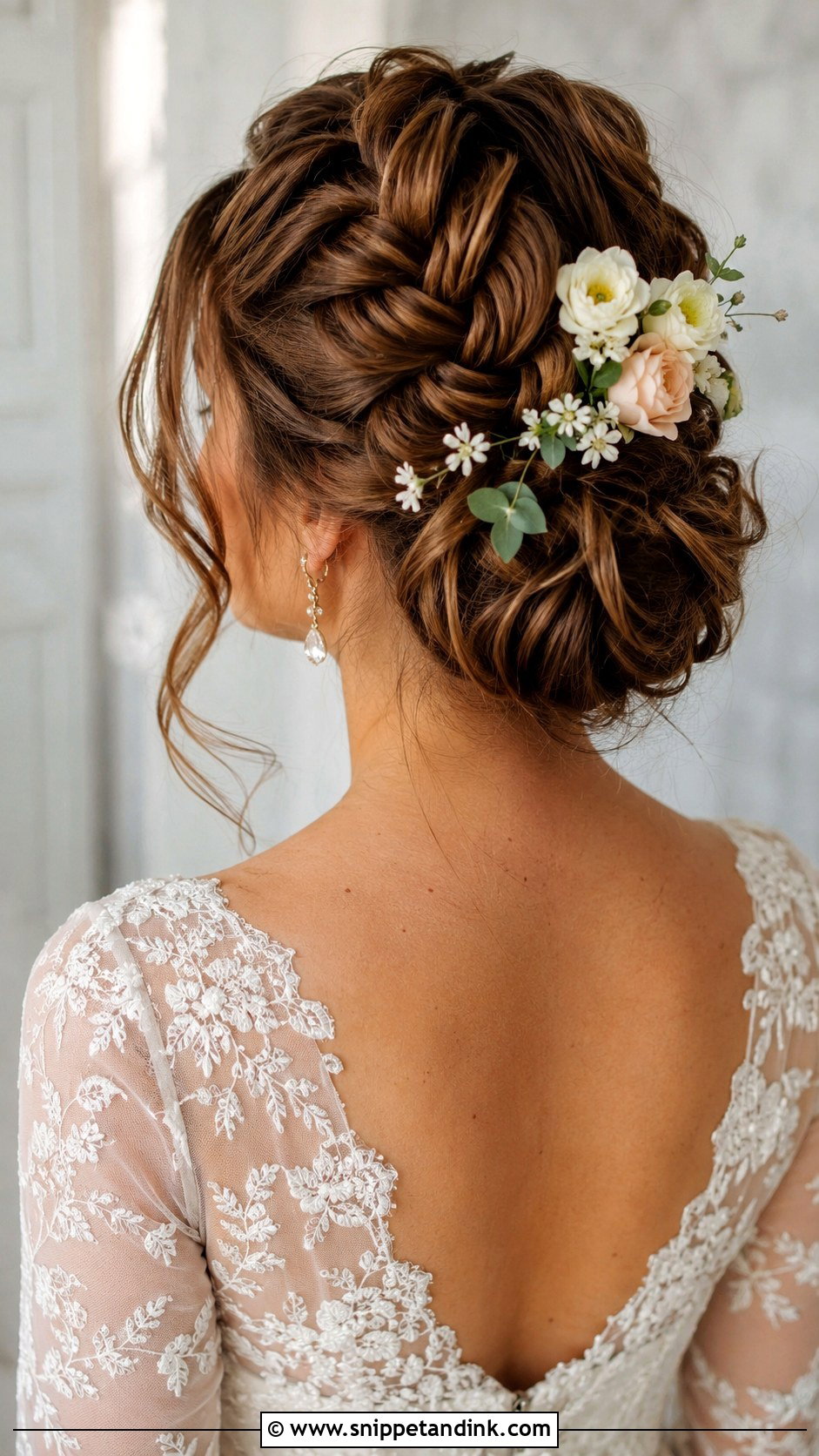
You get all the woven detail of a fishtail without wearing it down: the plait is finished, then coiled and pinned at the back. Long, heavy hair holds this shape well, and the coil spreads the weight across more pins than a simple bun. I loosen the fishtail before I coil it, not after, because pulling at a pinned coil tends to drag pins loose. The texture is fine enough for a formal room and relaxed enough for a garden, and a sparkly comb tucked into one side catches the light.
15. Braided Ponytail for Brides
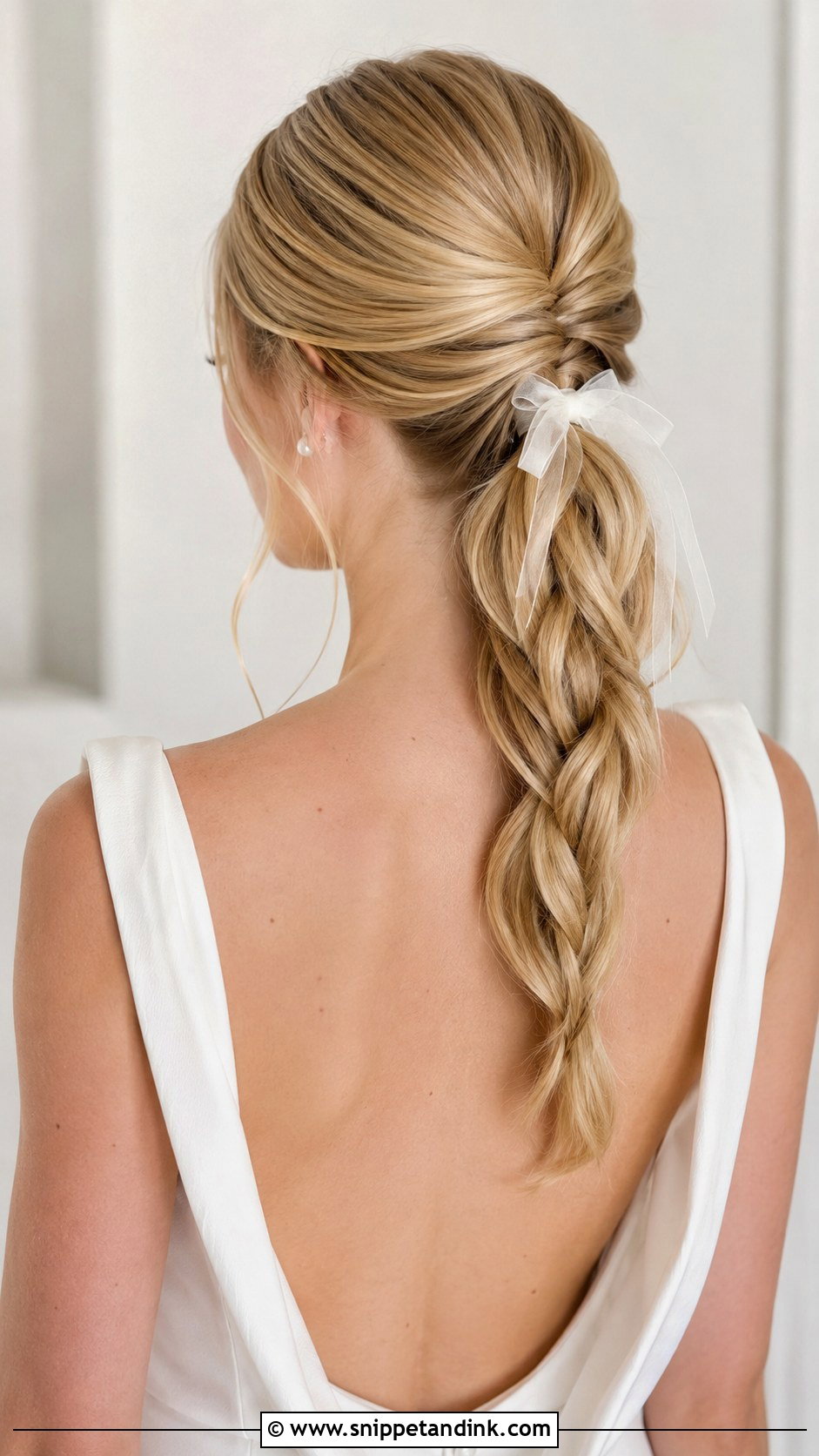
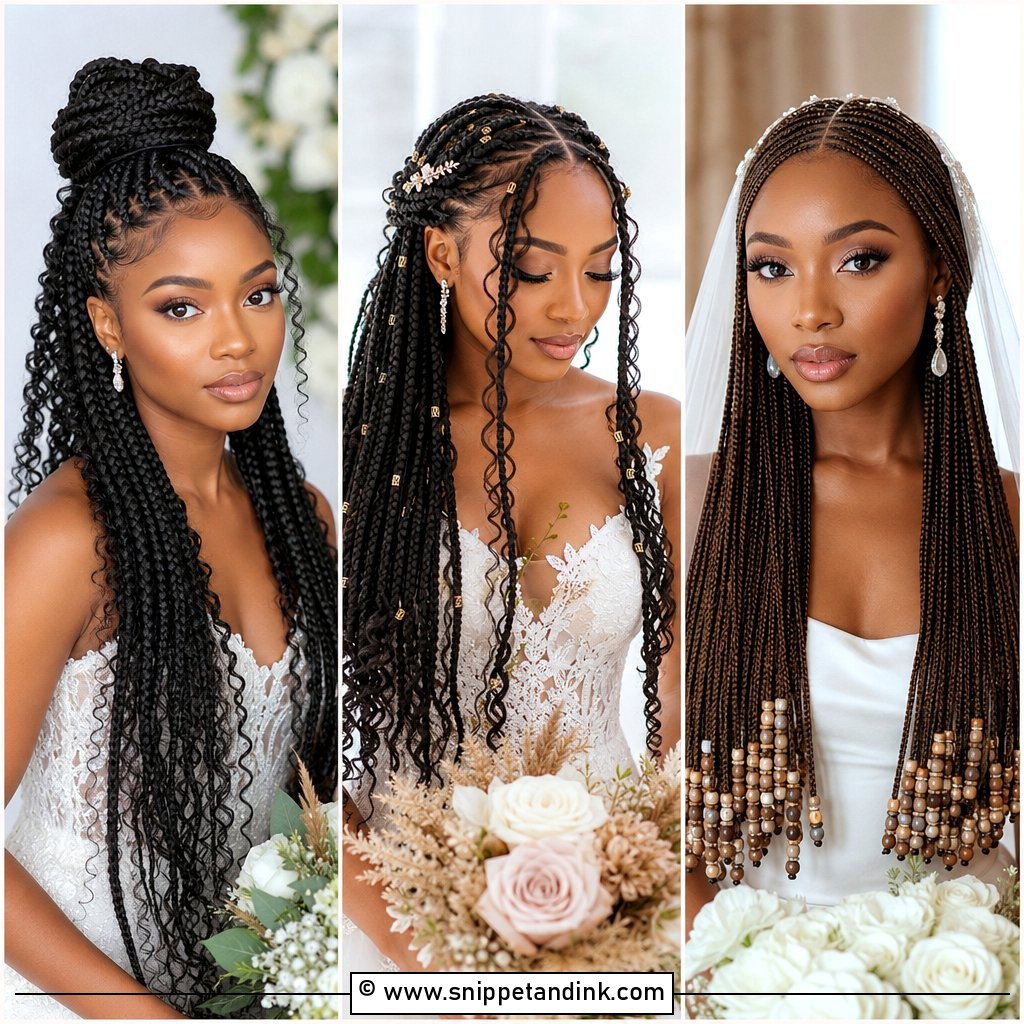
A ponytail gathered at the crown or the nape, with the length braided, is quick, modern and very secure. The height decides the mood: a high one reads sleek and glam, a low one with a tousled braid reads softer. I always wrap a strand around the base to hide the elastic and pin it underneath. On long hair the braid can swing hard when you dance, so I put a second clear elastic halfway down to keep the shape. Pull the braid wider for fullness, and finish with a ribbon if you want something playful.
16. Accent Braids With Half Up Curls
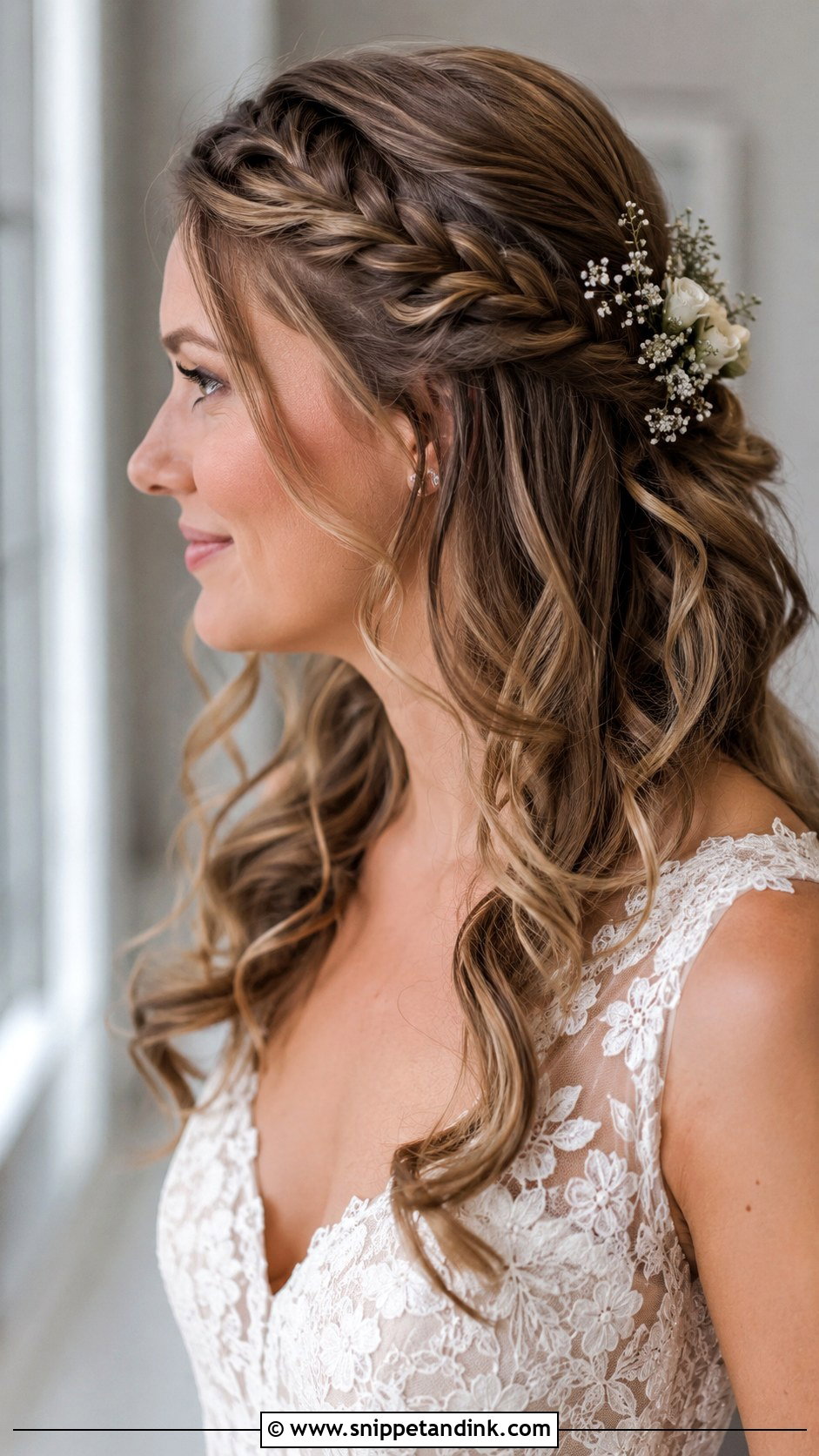
A few small braids through the sides and crown, with the top half pulled back over curls, is the lightest braided option on this list. It’s the one I suggest when a bride likes texture but doesn’t want a braid to be the whole look. The accent braids also do a practical job, holding the half-up section firmly where a plain clip would slip down long, heavy hair. Floral pins or one sparkly clip at the join are enough; anything bigger hides the braids.
17. Crown Braid With Veil
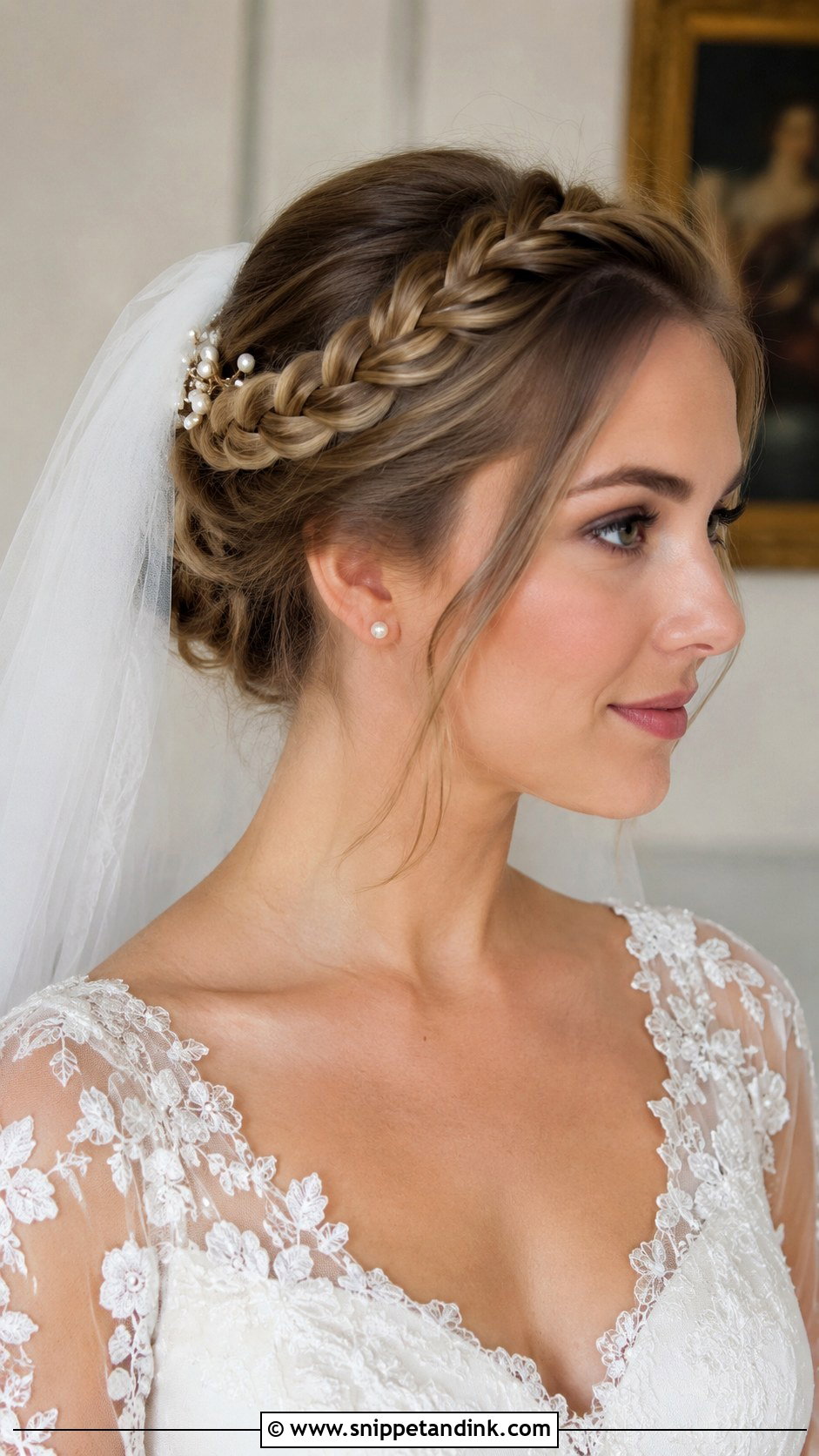
The crown braid works as a built-in veil anchor: the comb tucks underneath it and the braid locks it in place, which matters with long cathedral veils that pull backward all through the ceremony. It frames the face and keeps long hair completely controlled. After the ceremony the veil comes out and the braid still looks finished, so there’s no restyle needed for the reception. I soften the edges slightly before the veil goes in, not after, and add pearl pins along the crown for a little shine.
18. Double Braided Updo for Long Hair
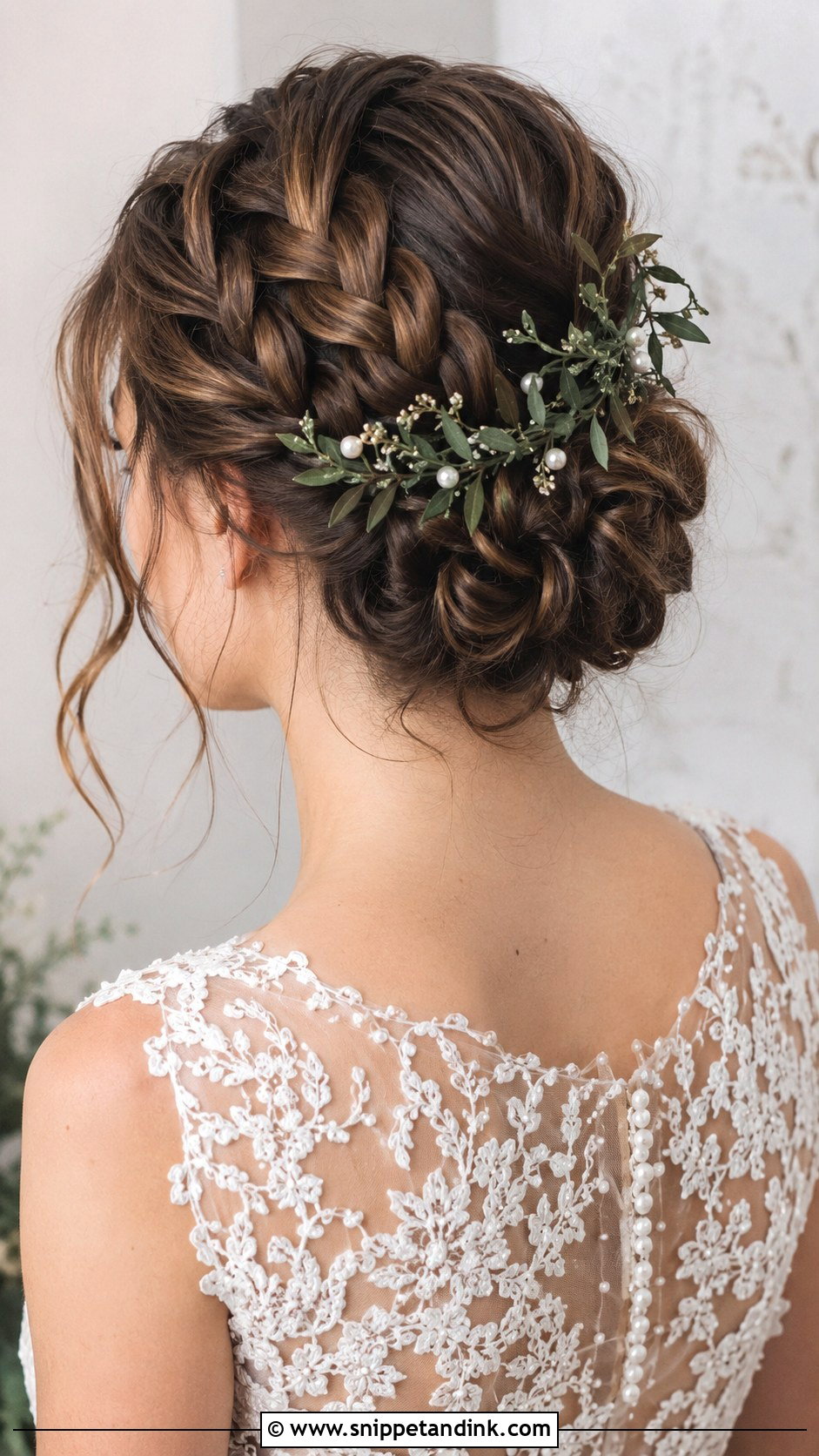
Two braids gathered into one updo give you more depth than a single plait, which is why this double braided updo suits long, thick hair best. Fine hair can do it too, but I’d add clip-in extensions first, or the two braids look thin when they meet. Loosen each braid gently before pinning so the texture is even on both sides. The pattern is clearly visible from behind, and greenery or pearl pins tucked between the braids fill the seam. It also spreads heavy hair across the head, which is more comfortable over a long day than one big bun.
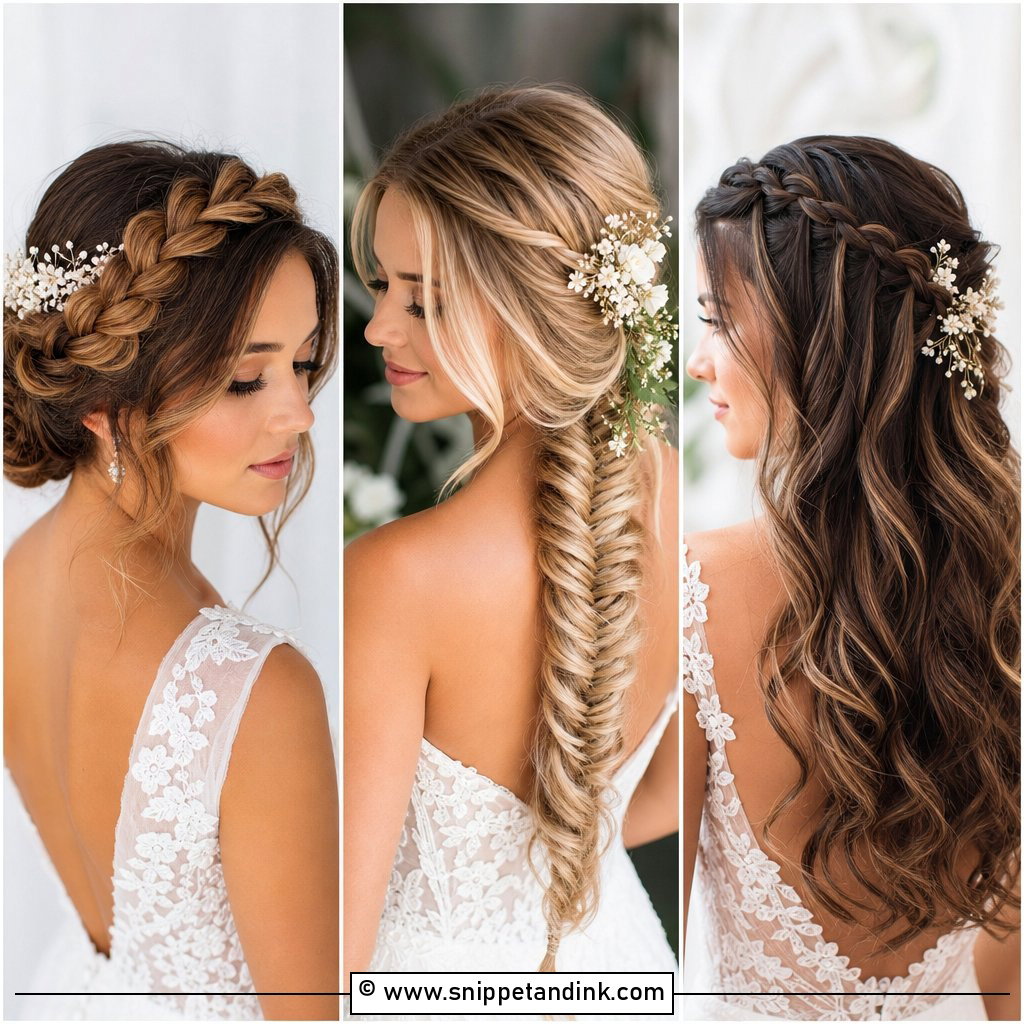
19. Loose Side Braid With Floral Accents
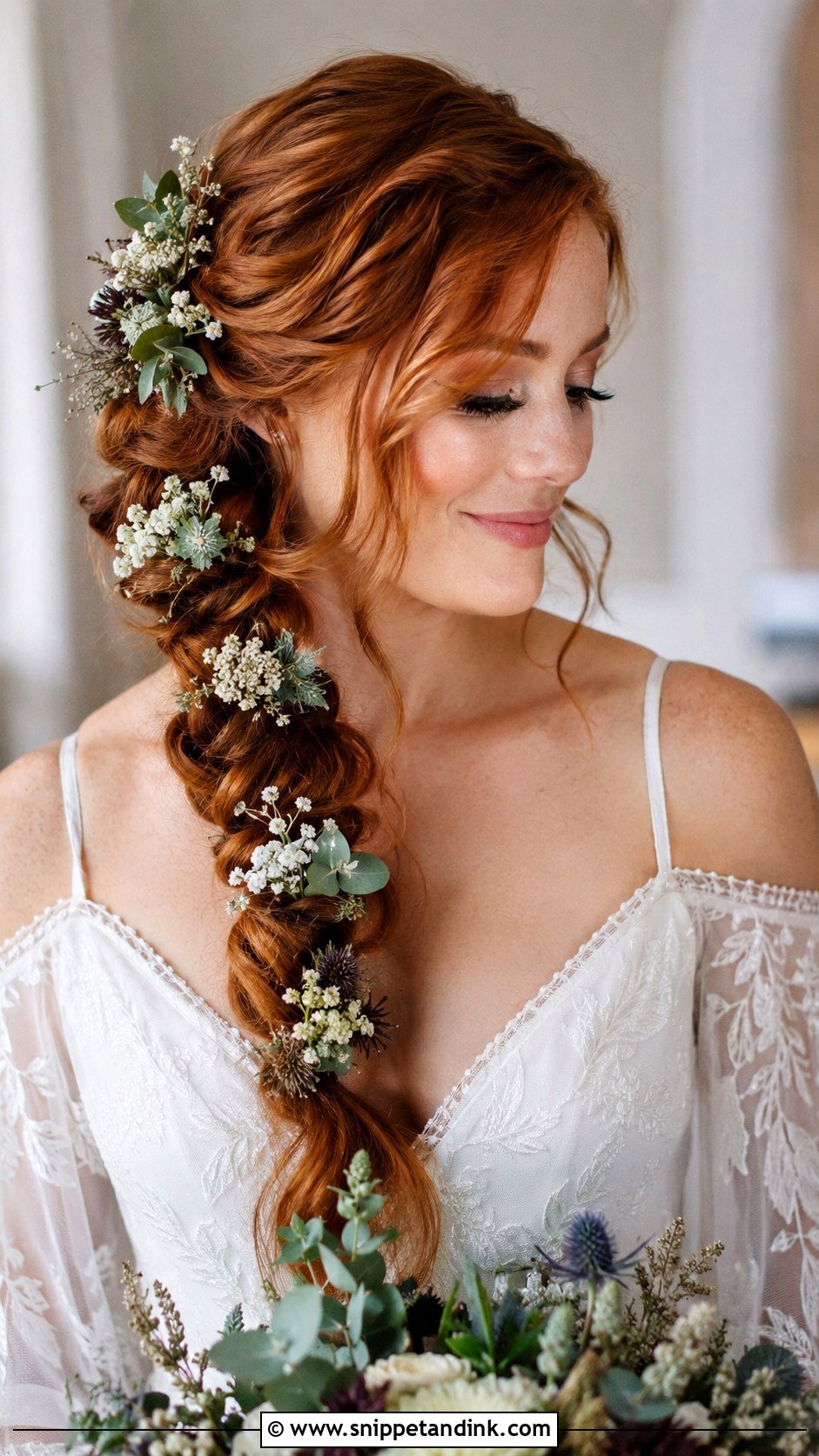
Hair swept to one side, braided softly and dotted with flowers is the classic garden look, and the flowers are what make or break it. Fresh blooms wilt out of water, so I choose sturdy ones like spray roses and waxflower, wire them, and add them last; dried or preserved flowers are the safe choice for long outdoor days. The side placement bares one shoulder and shows earrings. Pull the braid apart gently and leave a few wisps at the face, but keep the top of the head smooth, or the whole style can look unfinished.
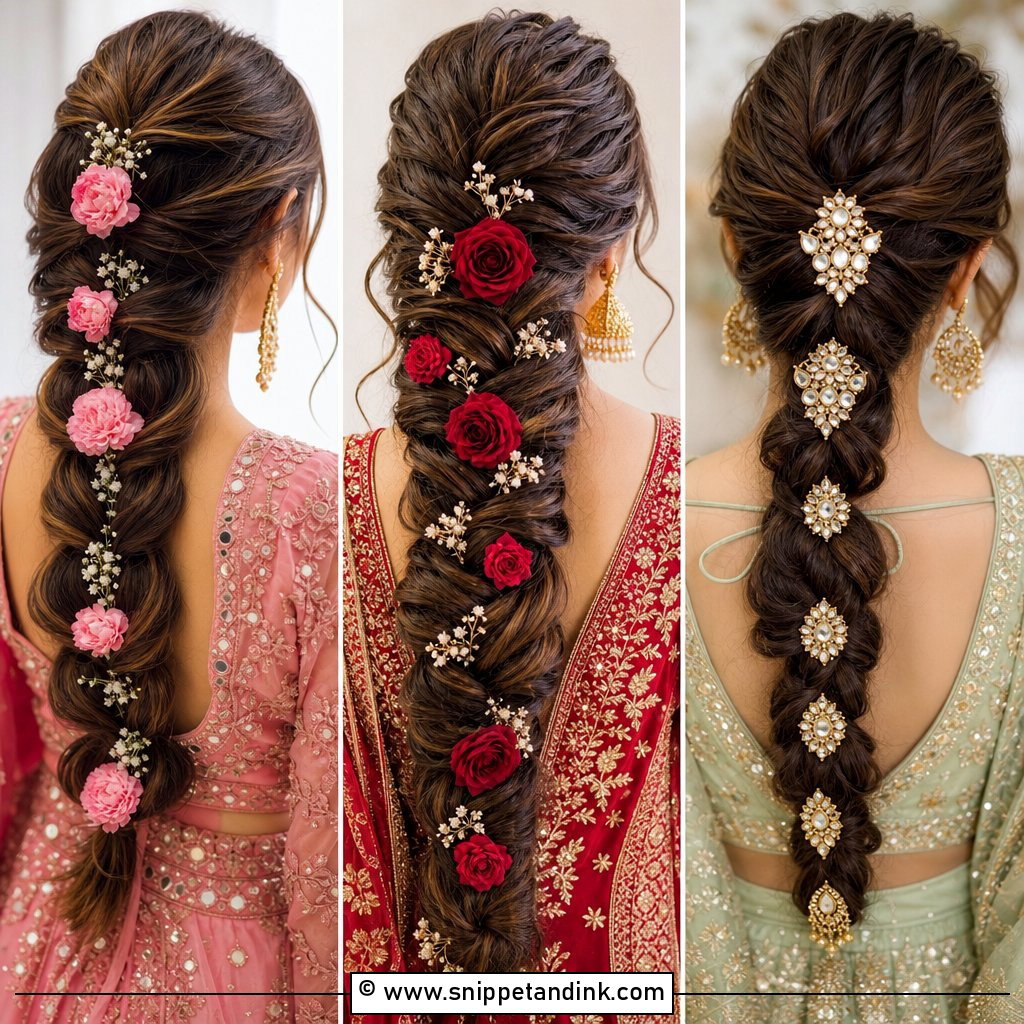

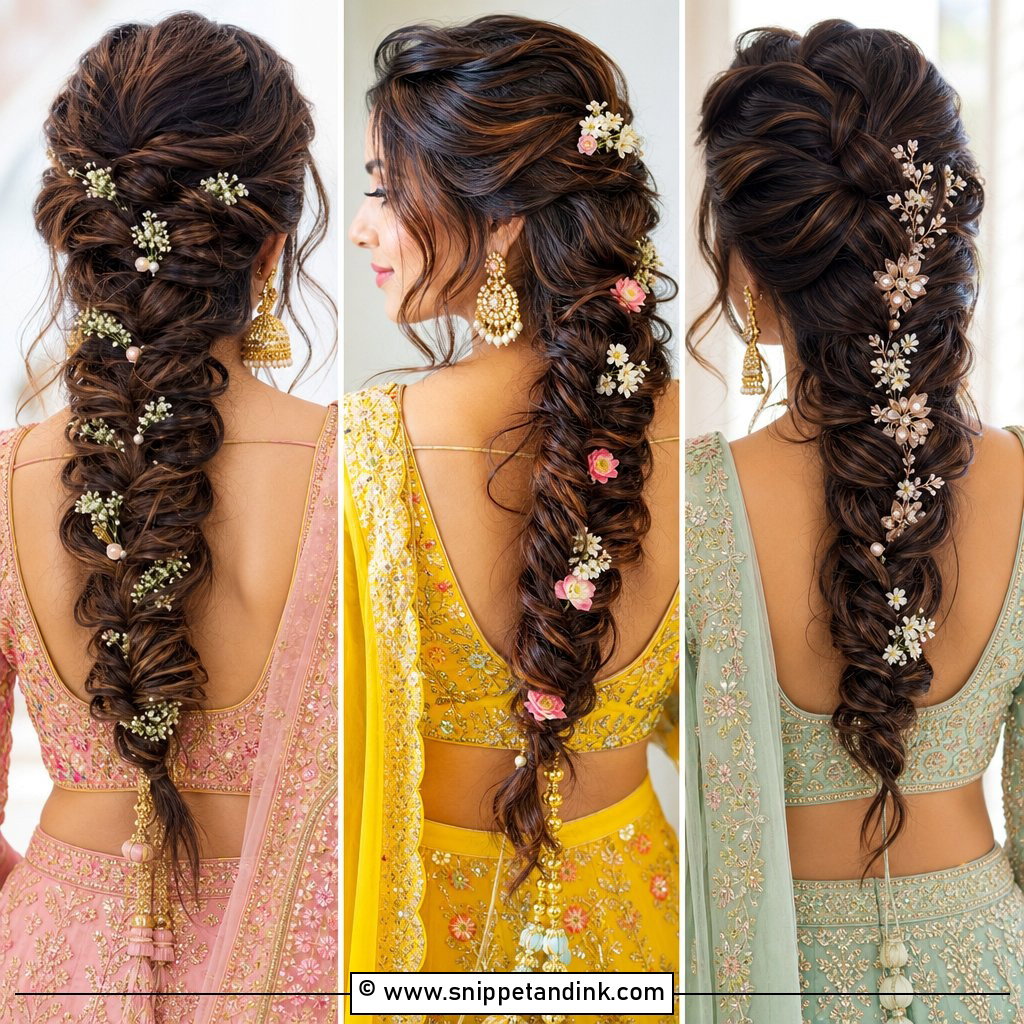
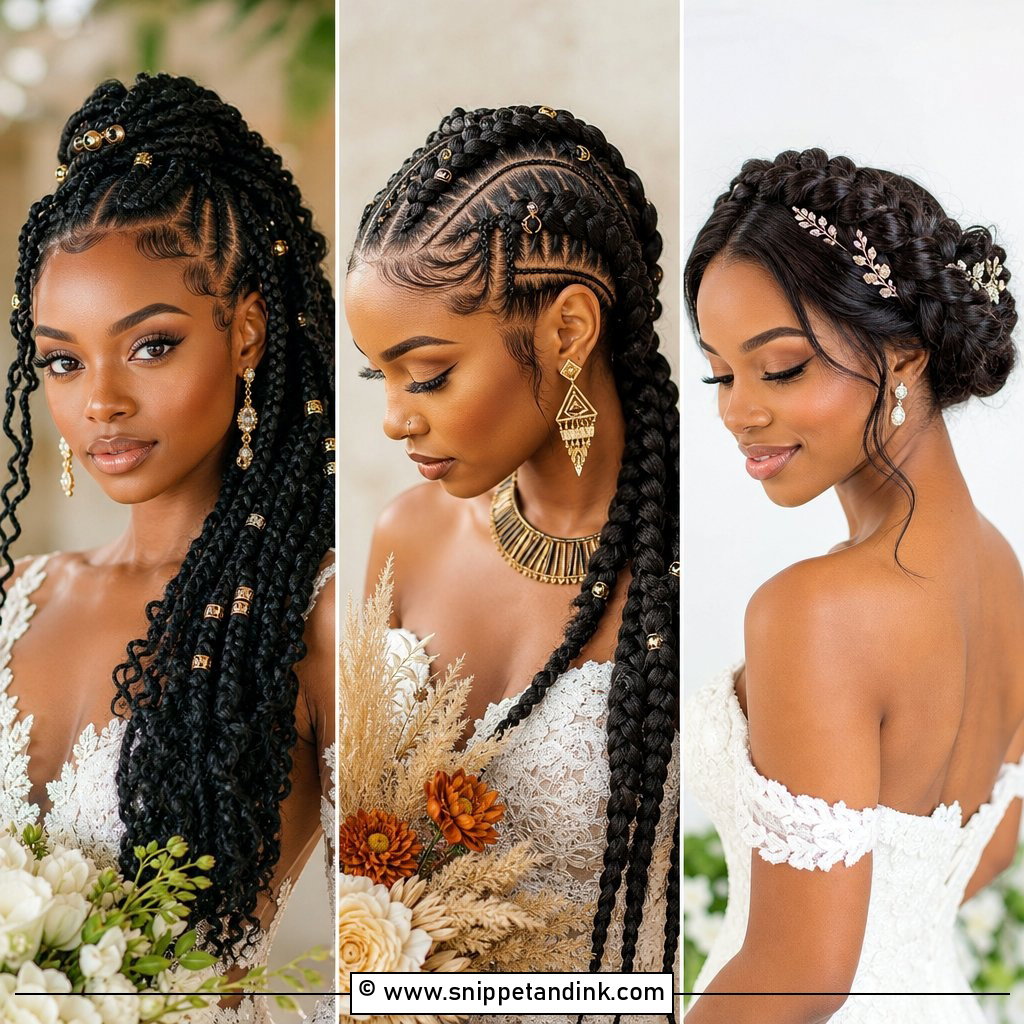
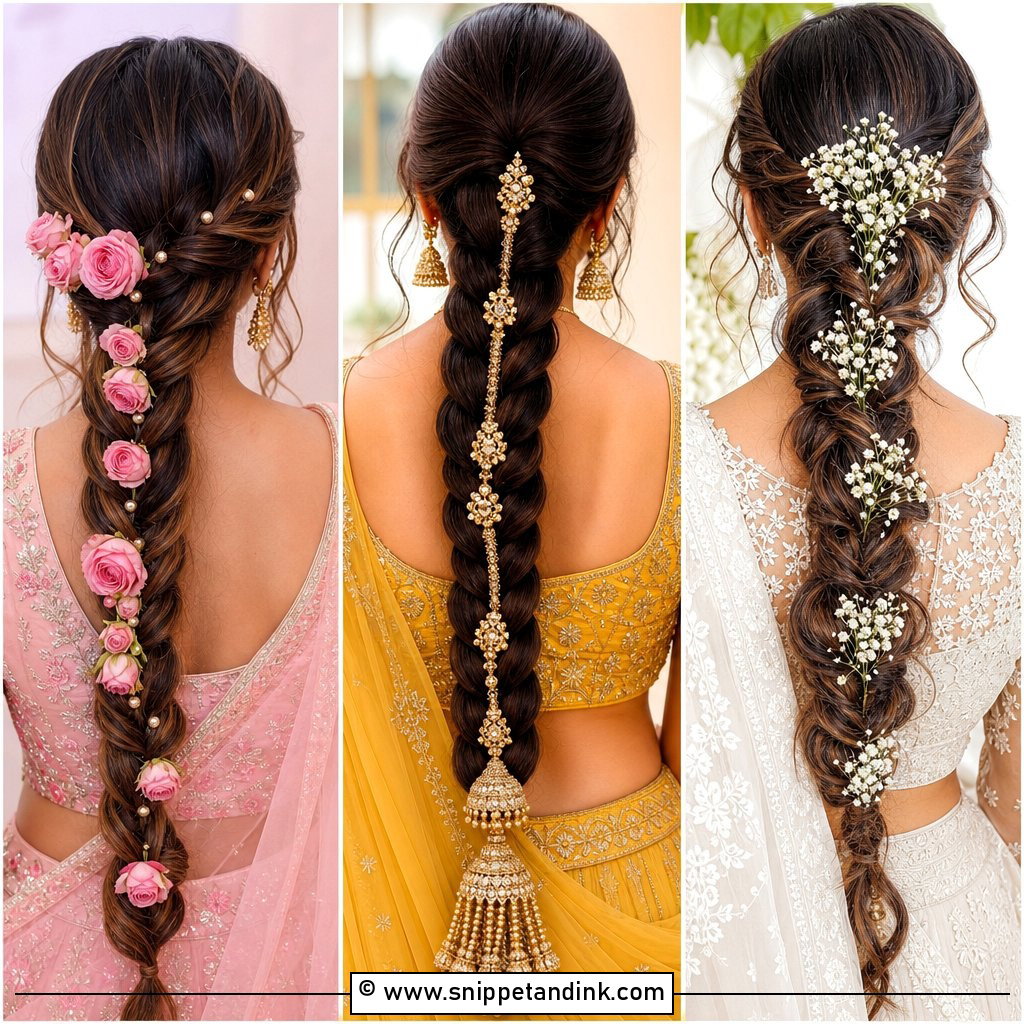
20. Halo Braid With Loose Waves
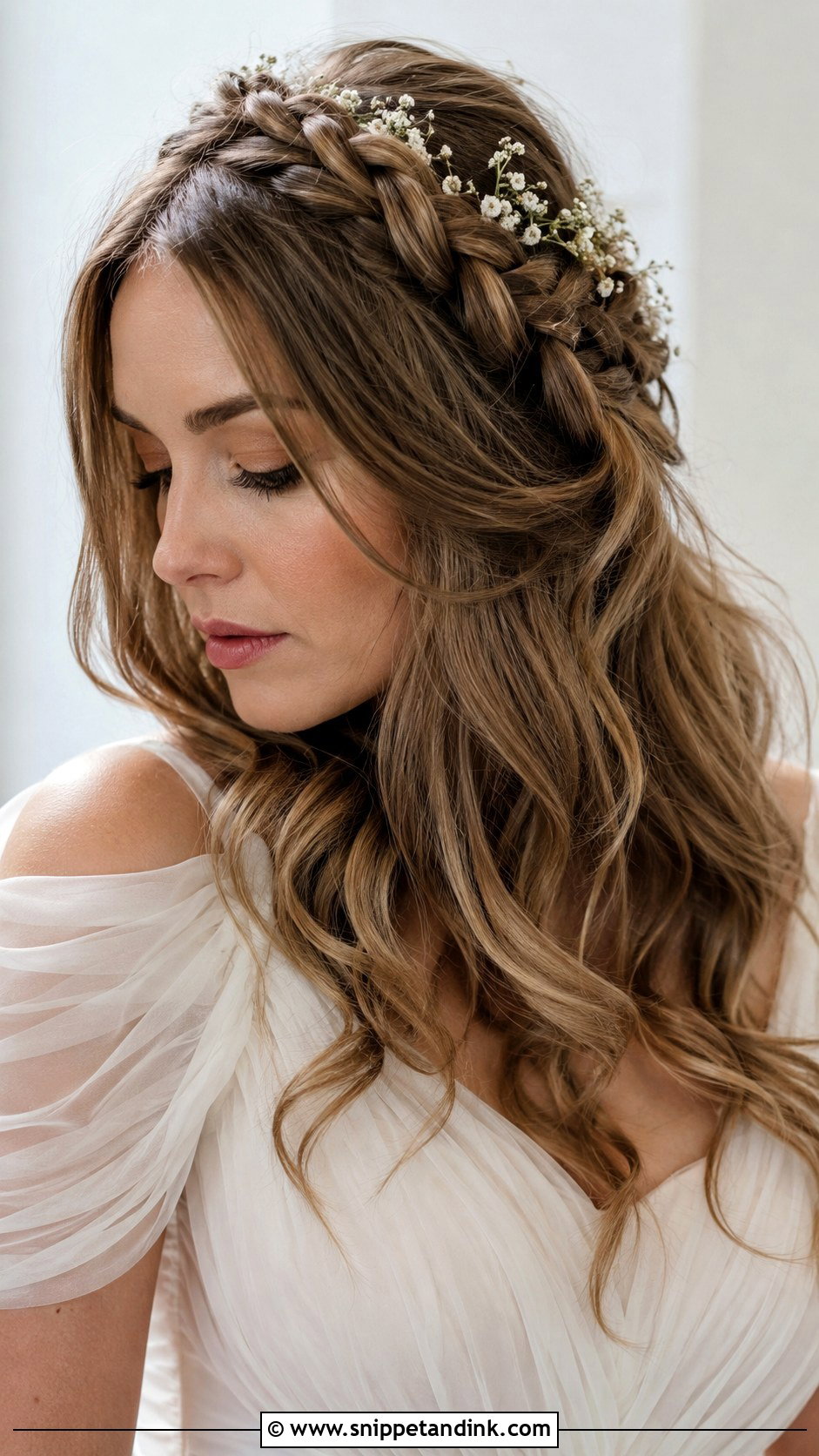
A halo braid circles the head while waves fall below, combining the hold of a wrapped braid with the movement of cascading long hair. It needs real length to wrap all the way around, so if your hair stops at the shoulder blades, a partial halo or a little added hair is more realistic. It keeps the face clear and shows texture from every side. Delicate flowers or pearl pins along the halo add detail, and loosening the braid slightly keeps it soft against the waves.
How a Long Braid Behaves From Vows to the Last Dance
Long hair is heavy, and the weight is what loosens a braid over the day, not just the dancing. Styles that spread the weight across the head, like crowns, double braids and coiled updos, last longest. Single braids that hang, like a side braid or a ponytail, move more and are worth a few extra hidden pins at the top.
Pins, veils and humidity
I cross bobby pins in an X wherever a braid needs to stay put, and I use U-shaped pins for buns because they hold without flattening the shape. A veil comb should be pinned into a braid or under a bun, never just pushed into loose hair. In humid weather, curls in the loose sections will drop first, so I keep a small travel hairspray and four or five pins in the bridal bag for touch-ups after photos.
Taking it down at the end of the night
Remove every pin before you touch the braid, then loosen the plait from the bottom up with your fingers. Brushing through a braid full of hairspray snaps hair. A little conditioner or detangling spray on the lengths before brushing makes it much easier, and your waves from the day will be soft and kinked for a morning after.
Which Braid Suits Your Dress and Venue?
Start with the back of your dress and your venue, then pick the braid. An open or low back suits styles that are pinned up and show the neck; a high lace neckline usually looks better with hair half up or swept to one side. Outdoor weddings call for the more secure braids on this list, and a formal room suits the chignons. Bring photos of two or three styles to your trial, including one of the back, and wear a top with a neckline similar to your dress so you can judge the shape honestly.
You'll Like These Ideas:


Leave a Reply