
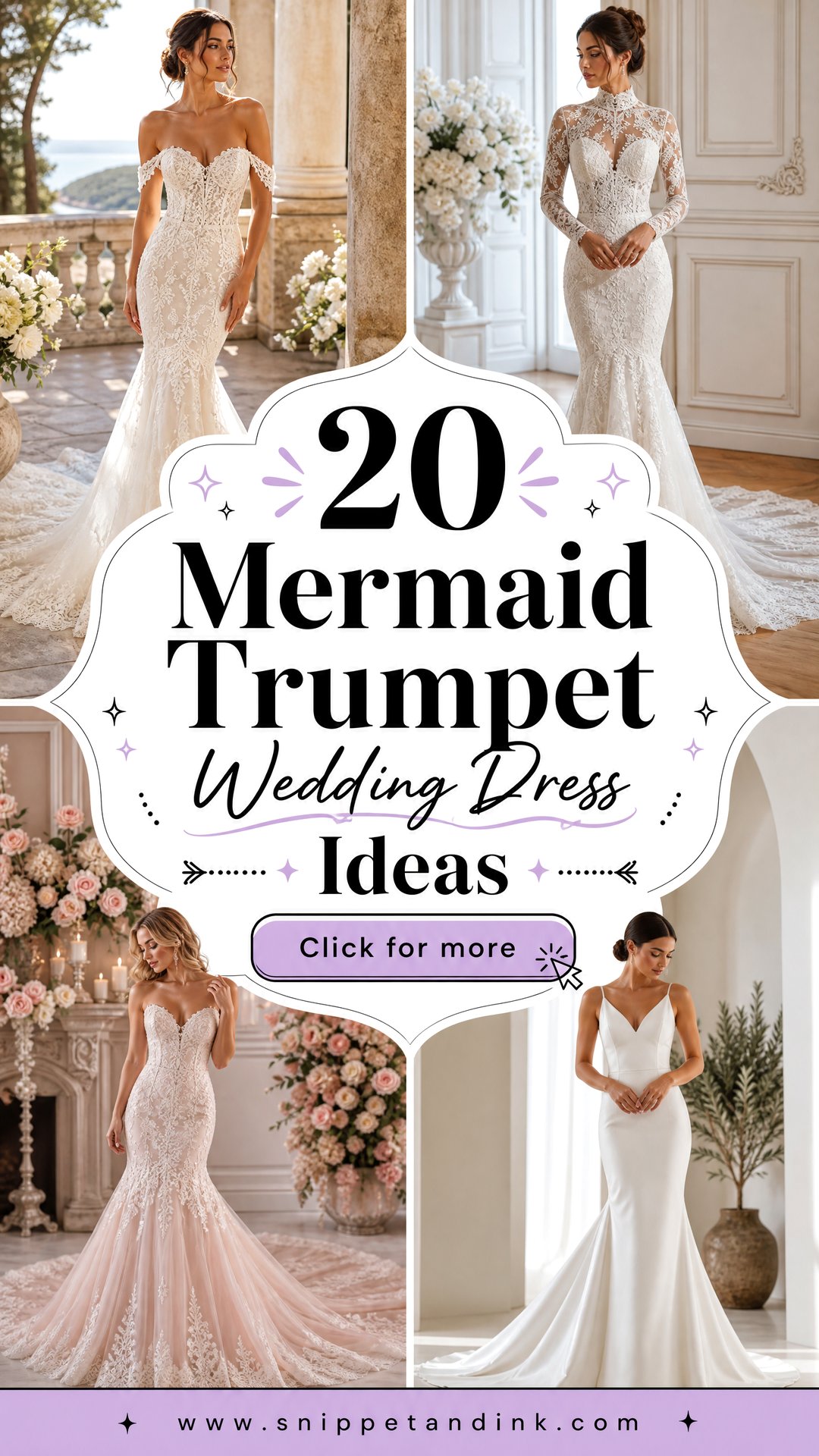
Mermaid and trumpet gowns follow your shape closely and then open out, and the point where that happens changes everything about how the dress feels. In the fitting room I explain it simply: a trumpet starts widening around mid-thigh, a mermaid holds on until the knee and flares lower and harder. Fabric, neckline and train length then push either shape toward minimal, romantic or glamorous. Because these gowns are fitted, alterations matter more than with almost any other silhouette; the dress has to look close to the body and still let you walk, sit and dance. The twenty below run from plain satin to dimensional lace, with the accessories and hair I would pair with each.
A Timeline From First Appointment to Final Fitting
Fitted gowns are rarely bought off the rack. Most are ordered in your size and made to order, and then altered, so the calendar matters as much as the style. This is the schedule I give brides who want a mermaid or trumpet shape.
- Nine to twelve months out: start trying on. Production times vary a lot between designers, but several months is typical, and lace or heavily beaded gowns often take longer.
- At ordering: measurements are taken and the size is chosen from the designer’s chart. Expect to size for your largest measurement; the rest is taken in later.
- Two to three months before: first fitting, wearing the shoes and undergarments you plan to marry in.
- Four to six weeks before: second fitting for refinements, plus the bustle.
- Final week or two: last check and collection. Bring the person who will help you dress so they can learn the closures.
Shorter timelines are possible, but rush fees are common, and your choice shrinks to what the shop has in stock. If your wedding is under six months away, I would ask straight away which samples or stock gowns can be bought and altered.
1. Strapless Satin Mermaid Wedding Dress
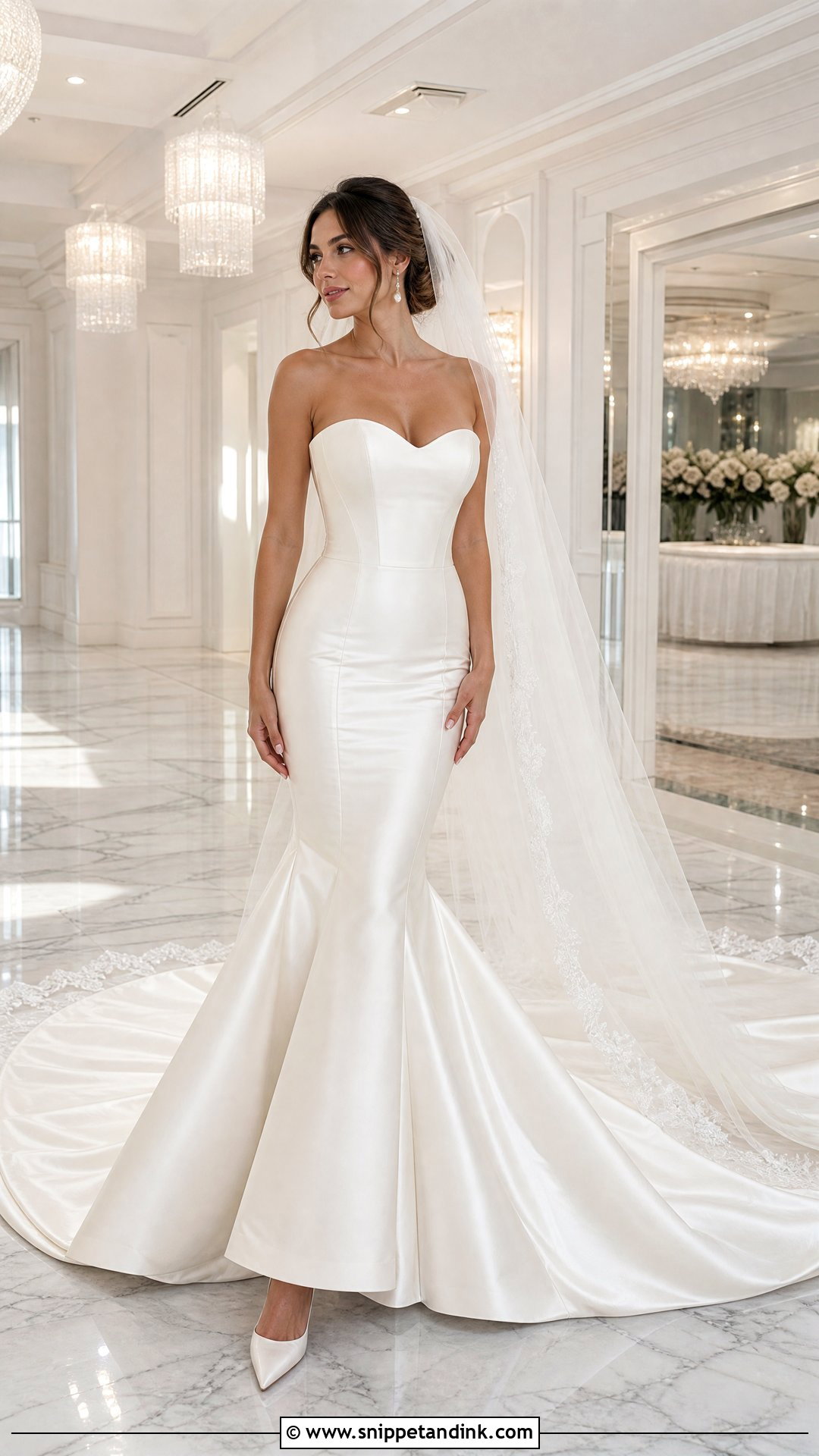
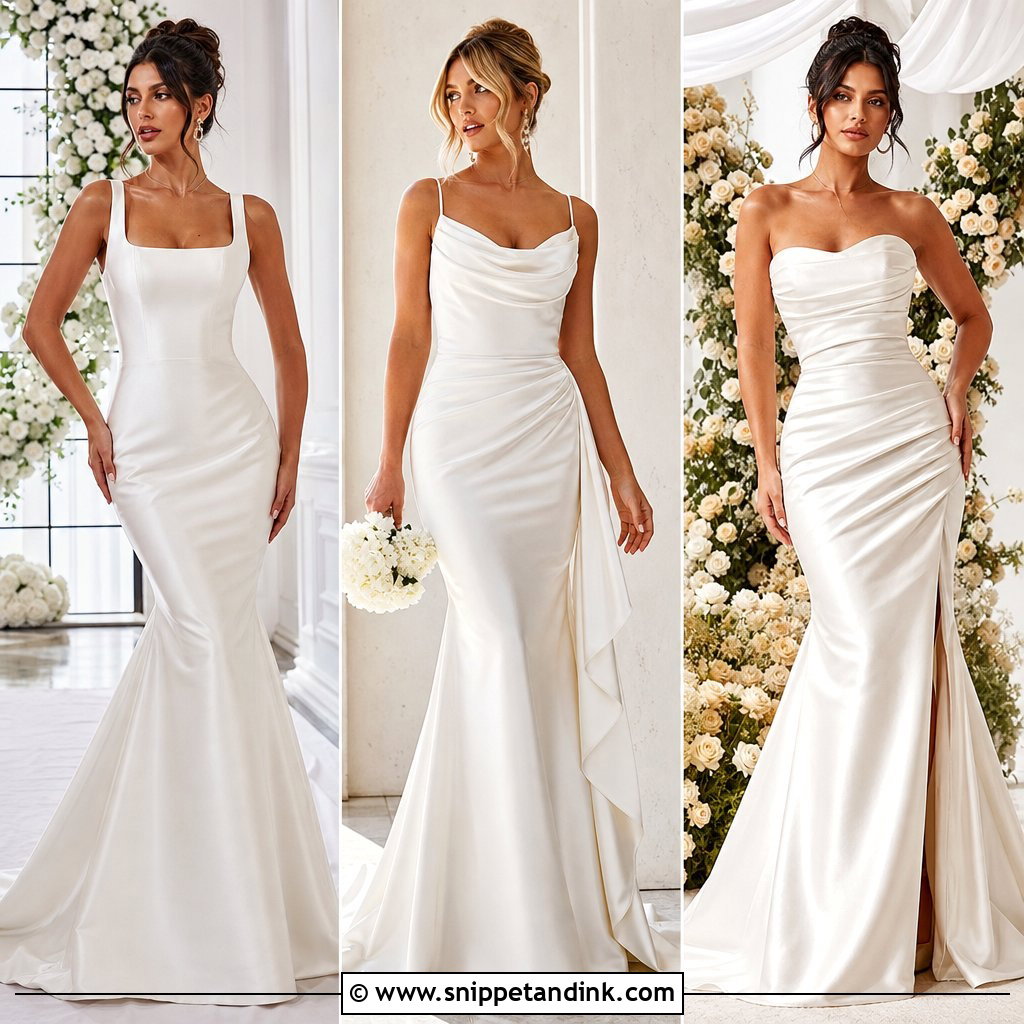
Strapless satin is the purest version of this shape, and also the least forgiving. Satin shows exactly where every seam sits, so a slightly off side seam is visible from across the room. I want internal boning in the bodice and a gently curved neckline, because the boning, not tightness, is what keeps a strapless top up once you are dancing. A low flare with a chapel train gives enough drama without any embellishment. Pointed ivory pumps, pearl drops and a satin-edged cathedral veil finish it, with a sleek bun or soft waves. At every fitting, sit, walk and raise both arms; if the bodice edge moves, ask for grip tape or extra boning before anything else.
2. Sweetheart Lace Mermaid Wedding Dress
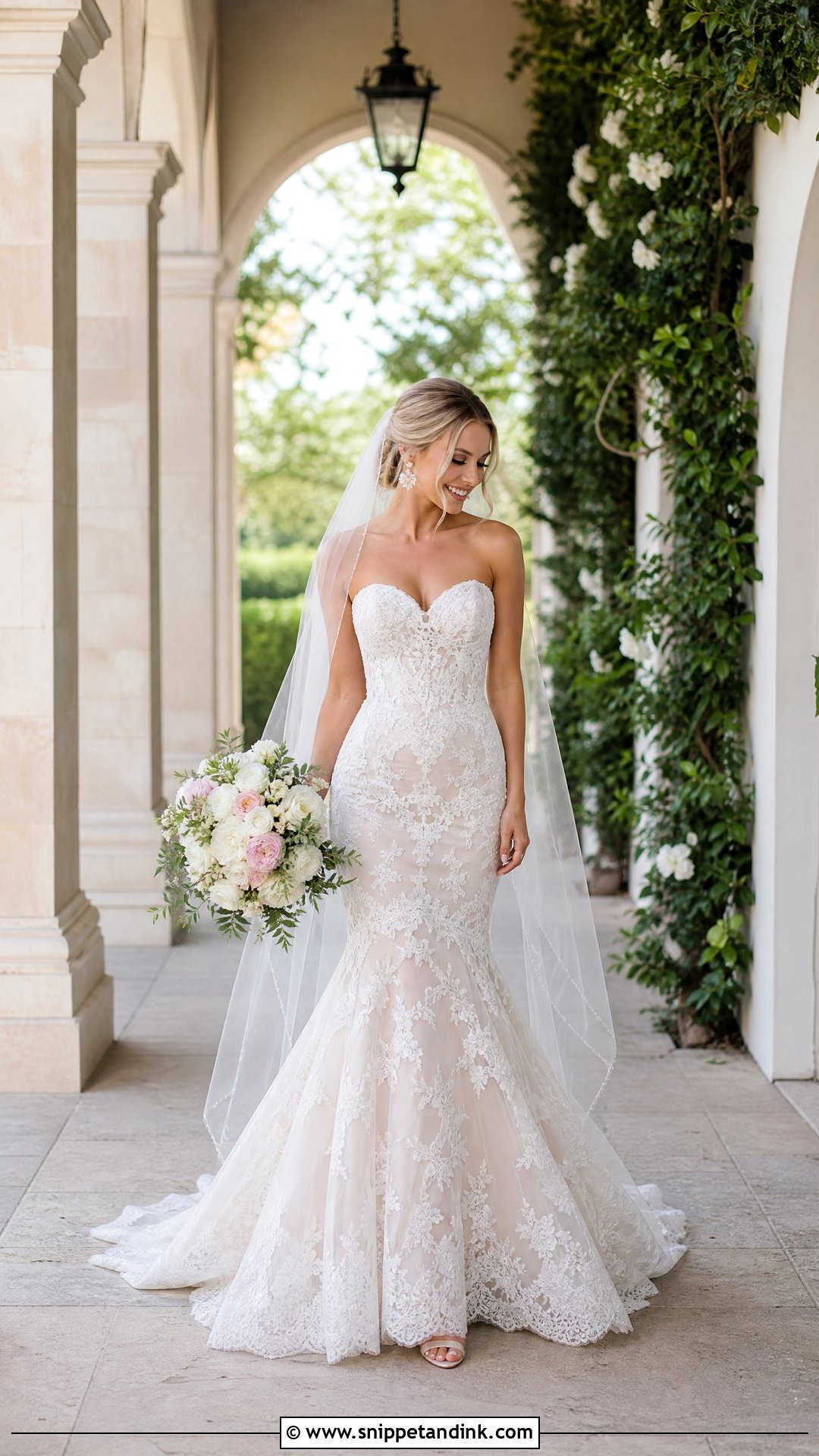
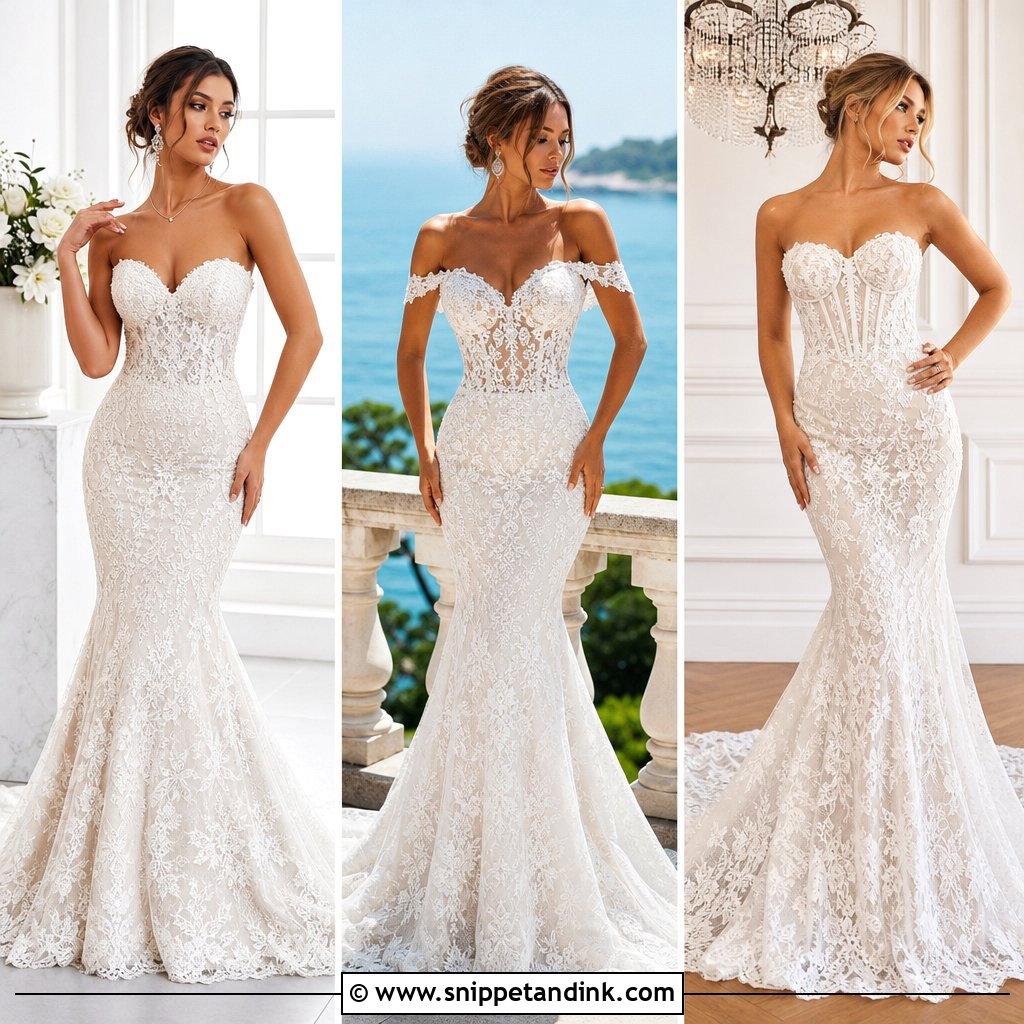
Romantic lace and a sweetheart neckline is the combination I see tried on most, and the detail that separates a good one from an ordinary one is where the lace stops. Appliqués that run over the hips and then thin out across the flare make the mermaid curve obvious while keeping the train light. Ivory peep-toe heels, a fingertip veil, floral studs and a small bouquet with trailing greenery suit it, and a half-up style leaves the neckline open. For more coverage, ask about a sheer illusion panel between the curves of the sweetheart. A nude or blush lining under white lace makes the pattern show up far more clearly in photographs than white on white.
3. Long Sleeve Lace Trumpet Wedding Dress
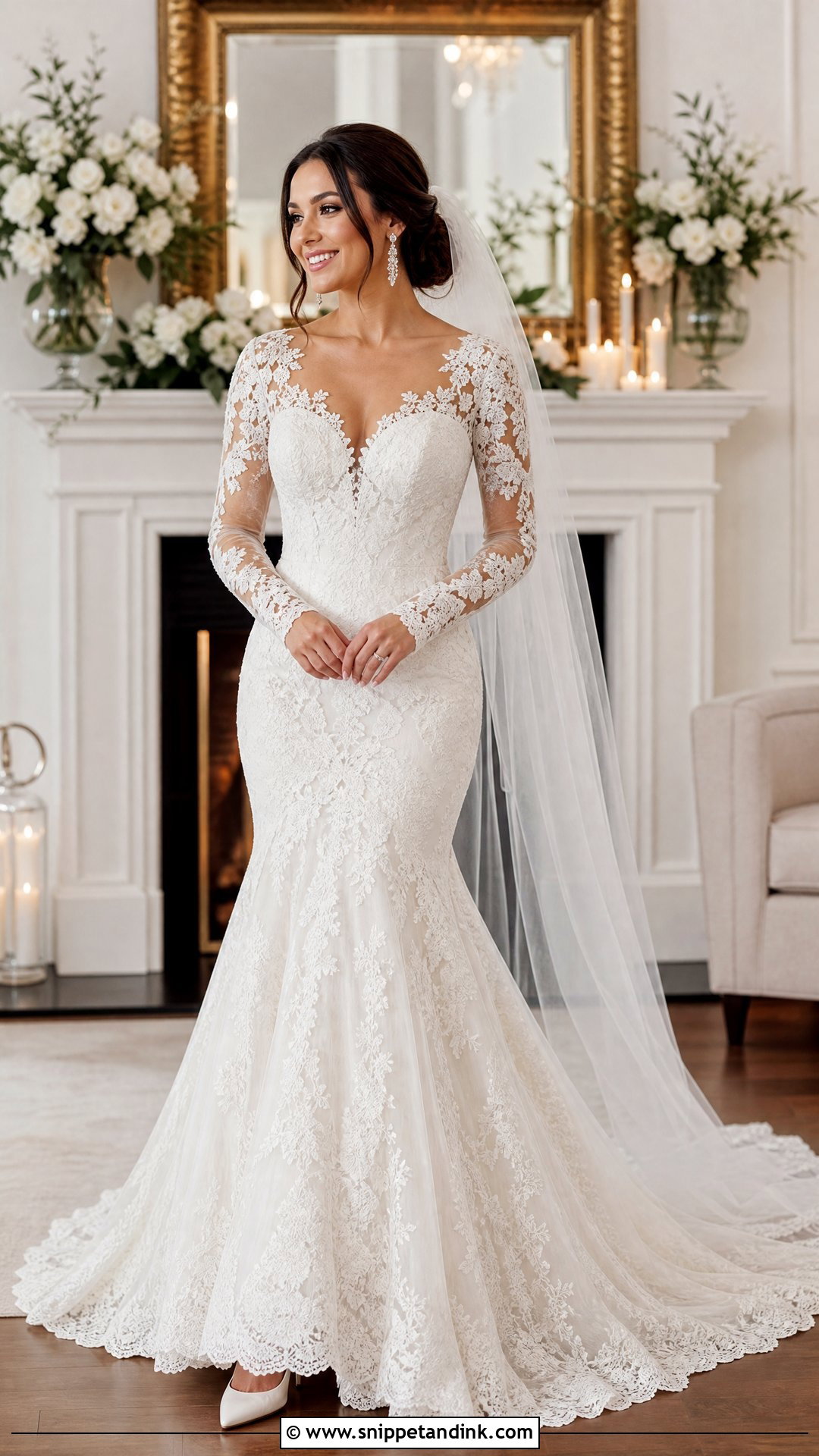
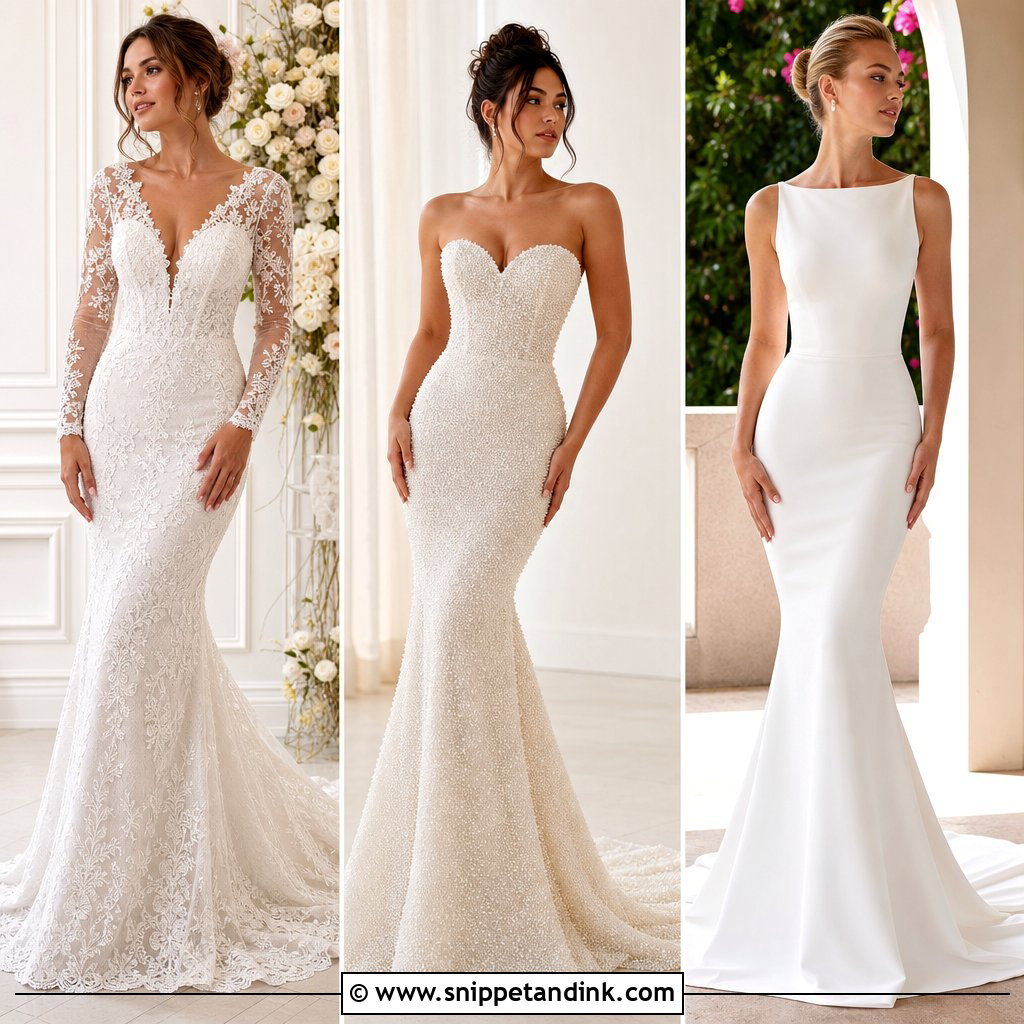
Long lace sleeves are the most common reason a fitted gown feels stiff, so I check how they are made before anything else. Sheer illusion sleeves with appliqués placed along them are far lighter and move better than fully lined lace. Pair them with a fitted bodice, a mid-thigh flare and a soft scalloped train for walking room. Closed-toe satin pumps, small crystal earrings and a plain tulle veil keep attention on the sleeve work, and a low chignon shows off the neckline and back. It suits fall and winter weddings and indoor venues. Have the tailor check the shoulder seam and the elbow while your arm is bent, since a sleeve that fits only when your arm hangs straight will tug all day.
4. Off Shoulder Mermaid Wedding Dress
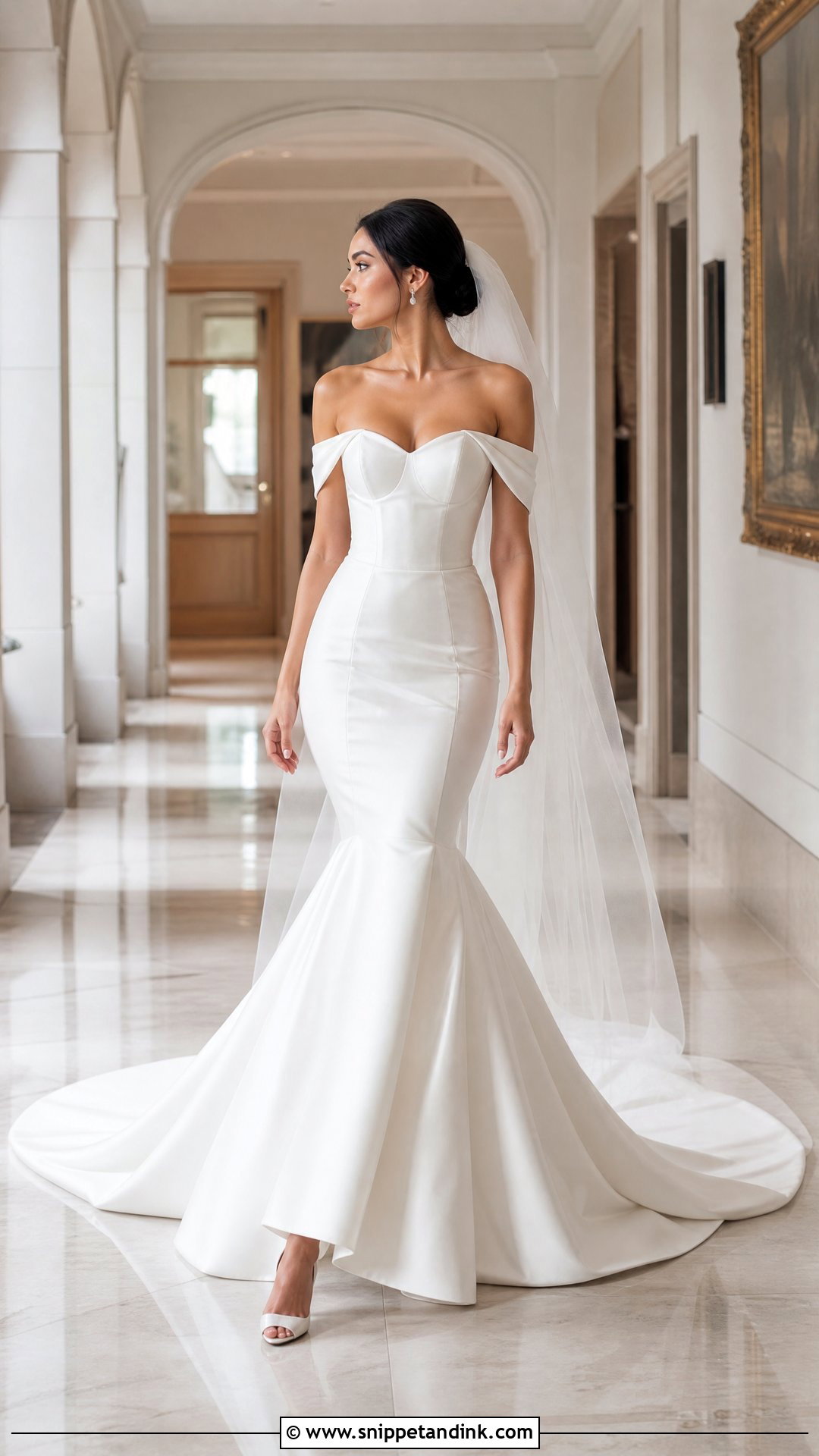
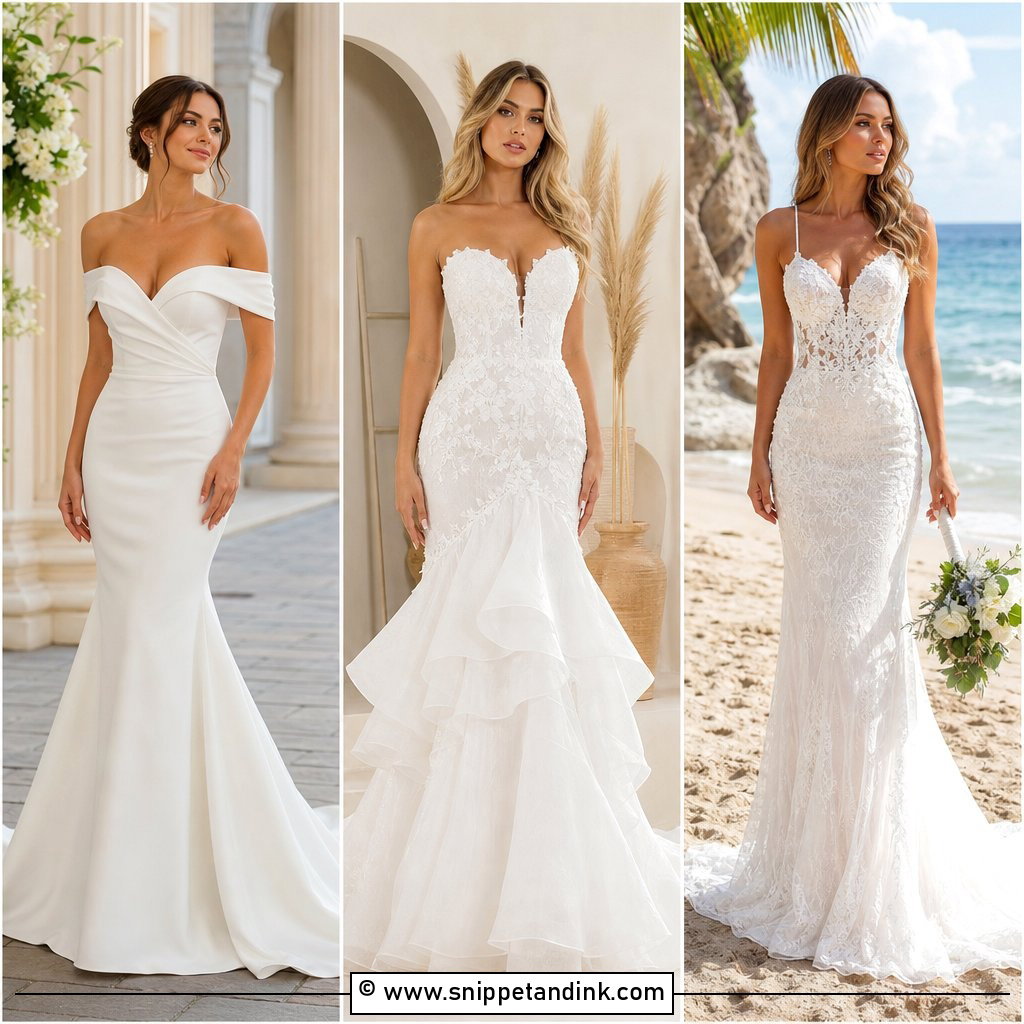
An off-shoulder neckline frames the collarbones and softens the strictness of the fitted skirt. Draped satin bands look polished, while lace or tulle sleeves read more romantic. The trade-off is movement: anything sitting on the upper arm limits how high you can reach, and you will be hugging people for hours. I have every bride reach forward, hug me and pretend to dance before we commit. Pair it with a structured bodice, a skirt flaring near the knee, delicate drop earrings, ivory slingbacks and a long sheer veil set under a low bun. Skip the necklace. If the sleeves feel restrictive, detachable off-shoulder straps give you the ceremony look and freedom later.
5. Corset Bodice Trumpet Wedding Dress
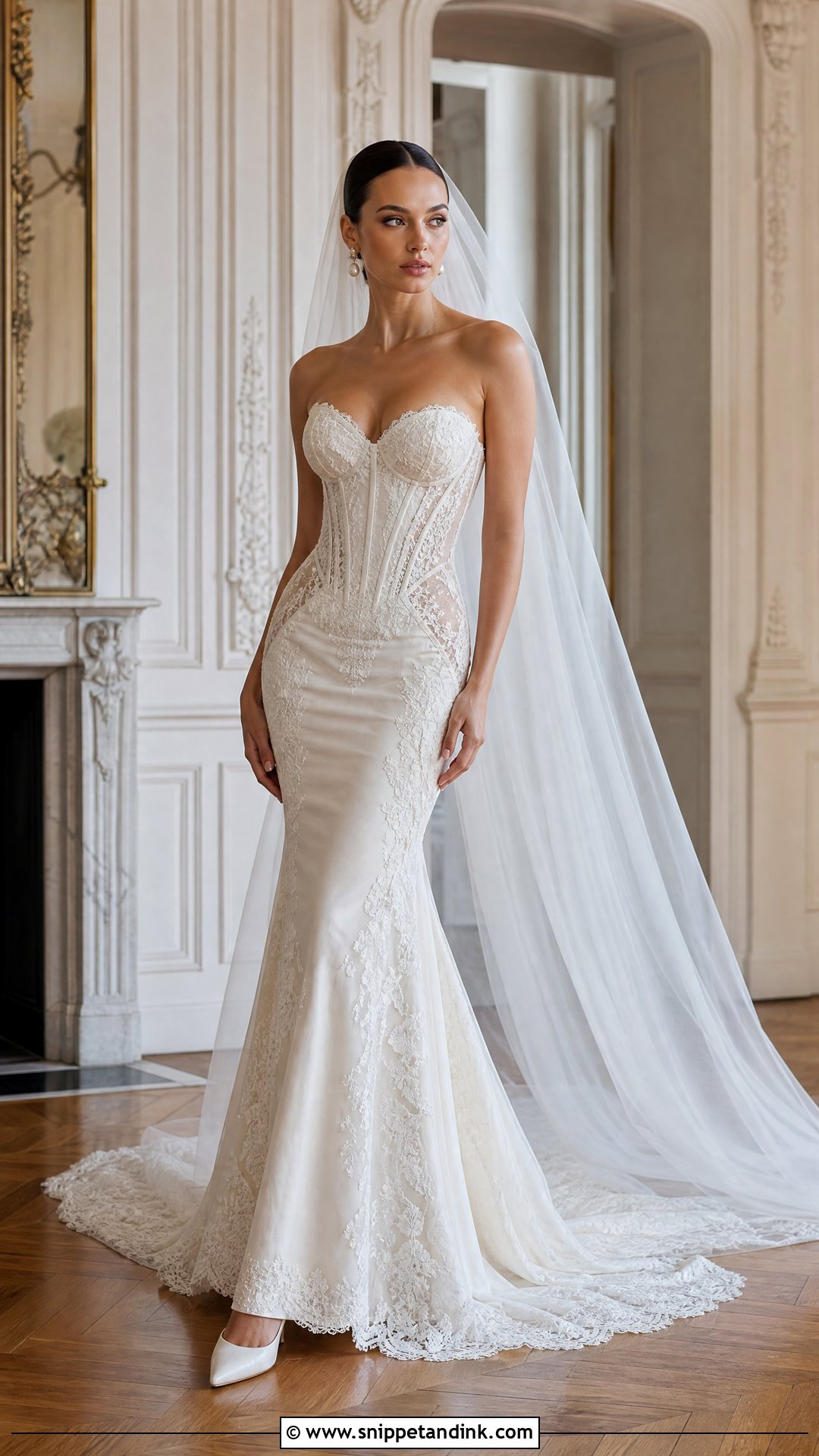
A visible corset gives the trumpet shape modern structure, but only if the cups match your body. That is the first thing I check, because correcting cups or boning that sit in the wrong place is a big, costly alteration, sometimes not worth doing at all. Look for supportive cups, boning that lies flat and a waist seam that runs smoothly into the skirt. Lace panels make it romantic; satin or crepe makes it sharper. Pearl earrings, pointed pumps, a structured mini bag for portraits and a plain cathedral veil complete it, with loose waves or a textured low bun to soften the lines. The mid-thigh flare gives you a far longer stride than a knee-level mermaid.
6. Square Neck Crepe Mermaid Wedding Dress
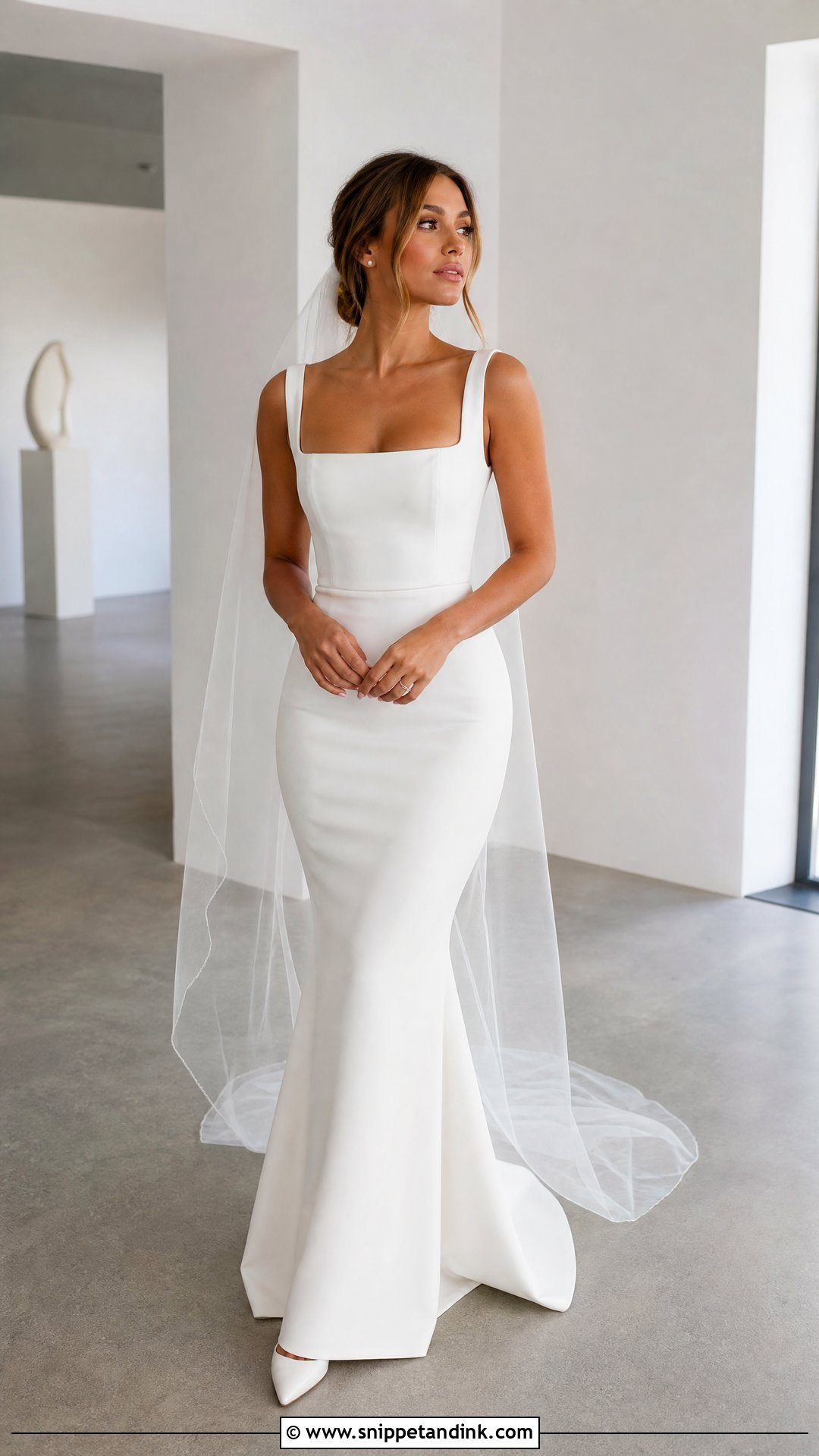
Crepe with a square neckline is the cleanest modern take on the mermaid. The fabric should skim the hips without pulling, then open into a restrained flare with a sweep or chapel train. Wider straps leave room for built-in cups or a proper bra, which many brides are relieved to hear. Pearl studs, white pointed heels and a raw-edge veil keep everything minimal, and a centre-parted low bun echoes the straight lines. Matte crepe reads cleanly in bright daylight because it does not bounce light back at the camera. Shapewear can smooth the foundation, but sit down in it for twenty minutes before the wedding; anything that rolls at the waist will show through crepe.
7. High Neck Lace Trumpet Wedding Dress
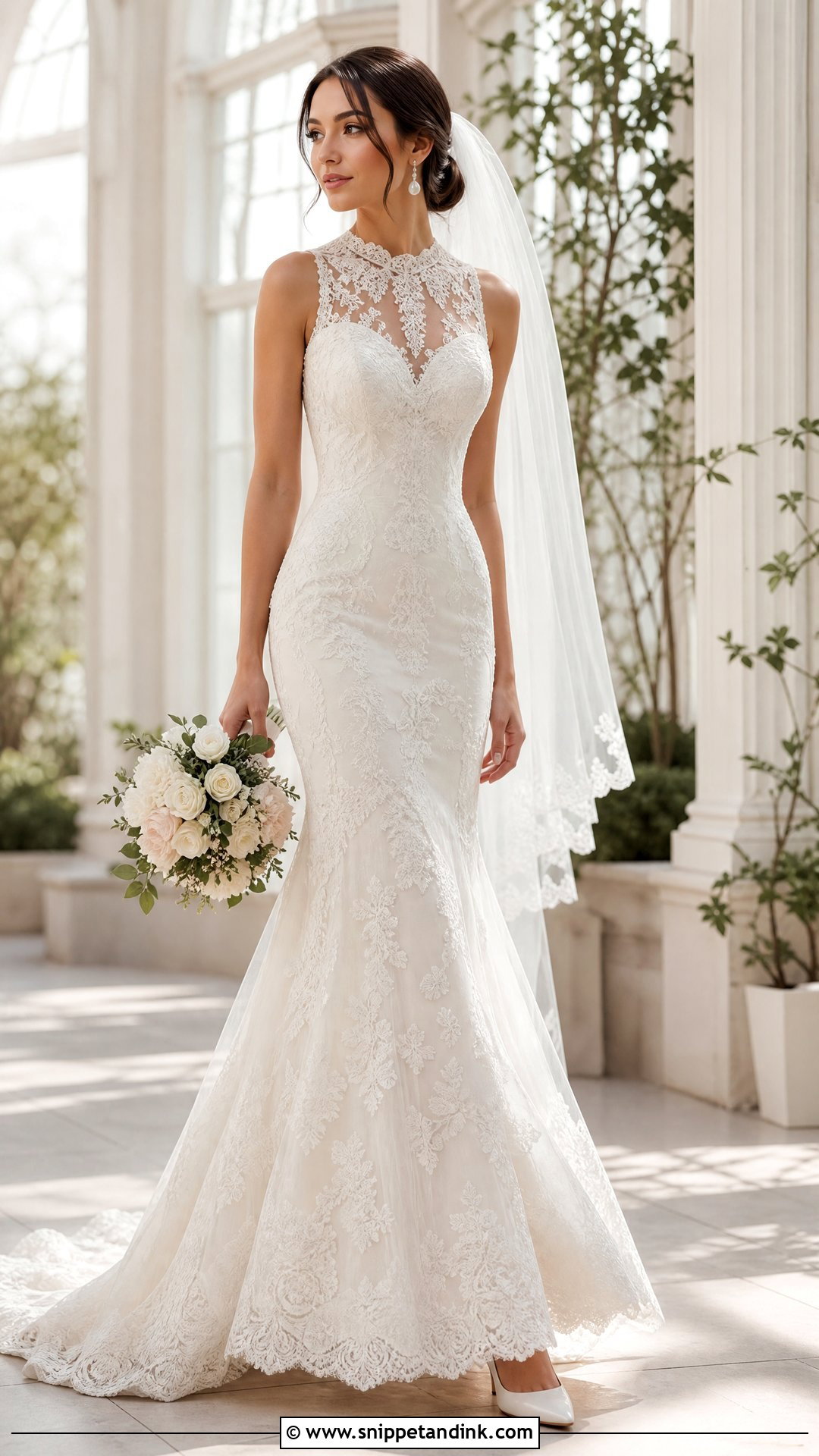
Could a covered neckline feel as striking as a plunging one? With lace climbing up an illusion collar, it often does. Look for appliqués arranged around the collar, shoulders and bodice, and keep the arms bare or the sleeves short so the top half does not get heavy. Ivory pumps, small pearl earrings and a low veil set beneath a neat chignon are all it needs, since a long lace train takes the place of jewellery. The thing I always test is the collar edge: turn your head side to side and look down. If the mesh folds or scratches, ask for a softer illusion fabric, which a good seamstress can usually swap in.
8. Mermaid Wedding Dress With Detachable Overskirt
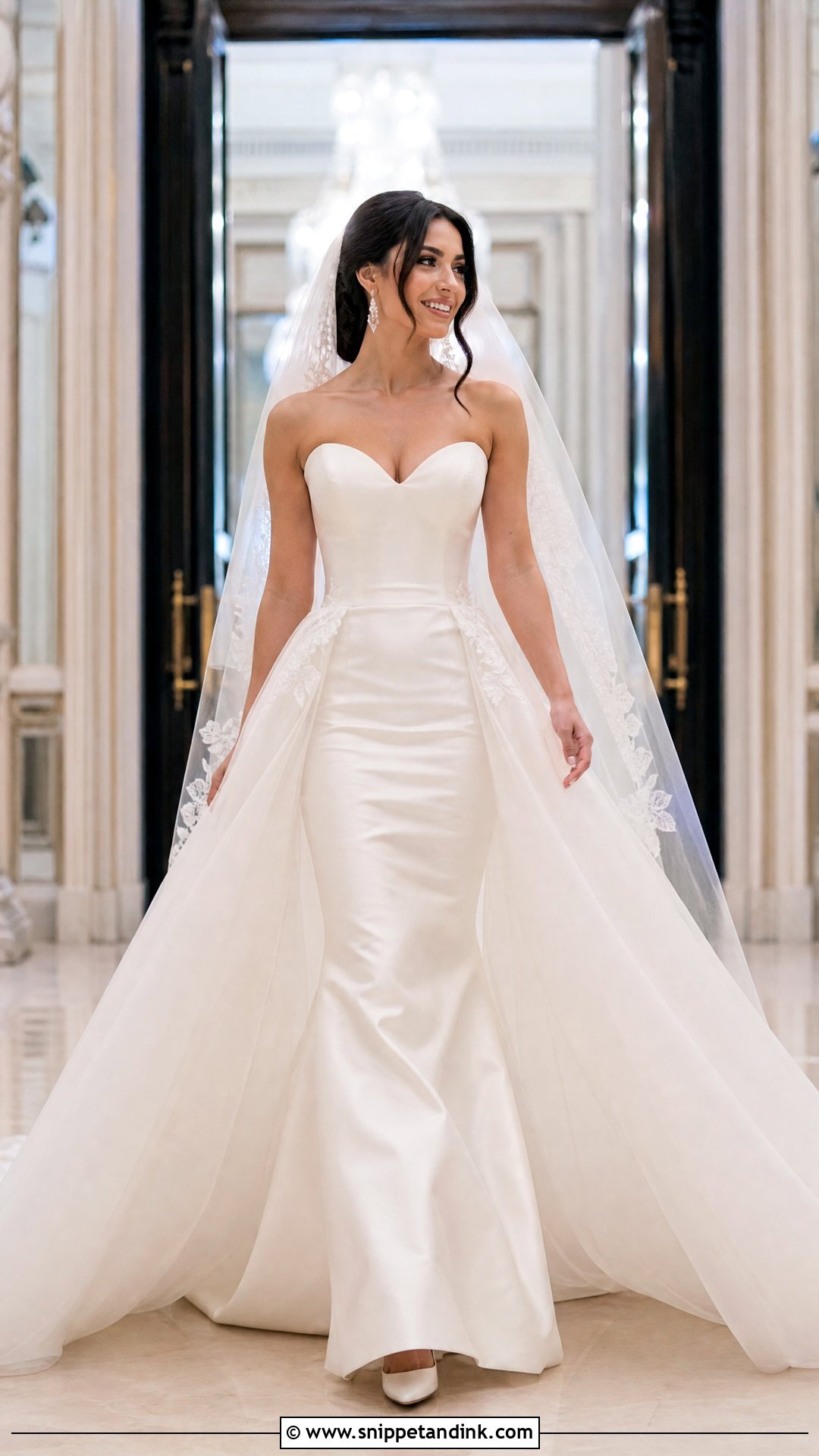
A detachable overskirt gives you two silhouettes for one dress: a full skirt for the aisle and the fitted mermaid for dancing. Sheer tulle lets the shape underneath show through, while satin, organza or matching lace builds real volume. Wear it with a cathedral veil and elegant pumps for the ceremony, then take it off before the first dance. Convertible bridal elements like this let you change the mood without changing dresses. What I check is the waistband: it should sit flat and be hidden under matching appliqué, beading or fabric. Practise taking the overskirt off with whoever will help you, so the change takes a couple of minutes and does not knock your hair or veil.
9. Trumpet Wedding Dress With Detachable Sleeves
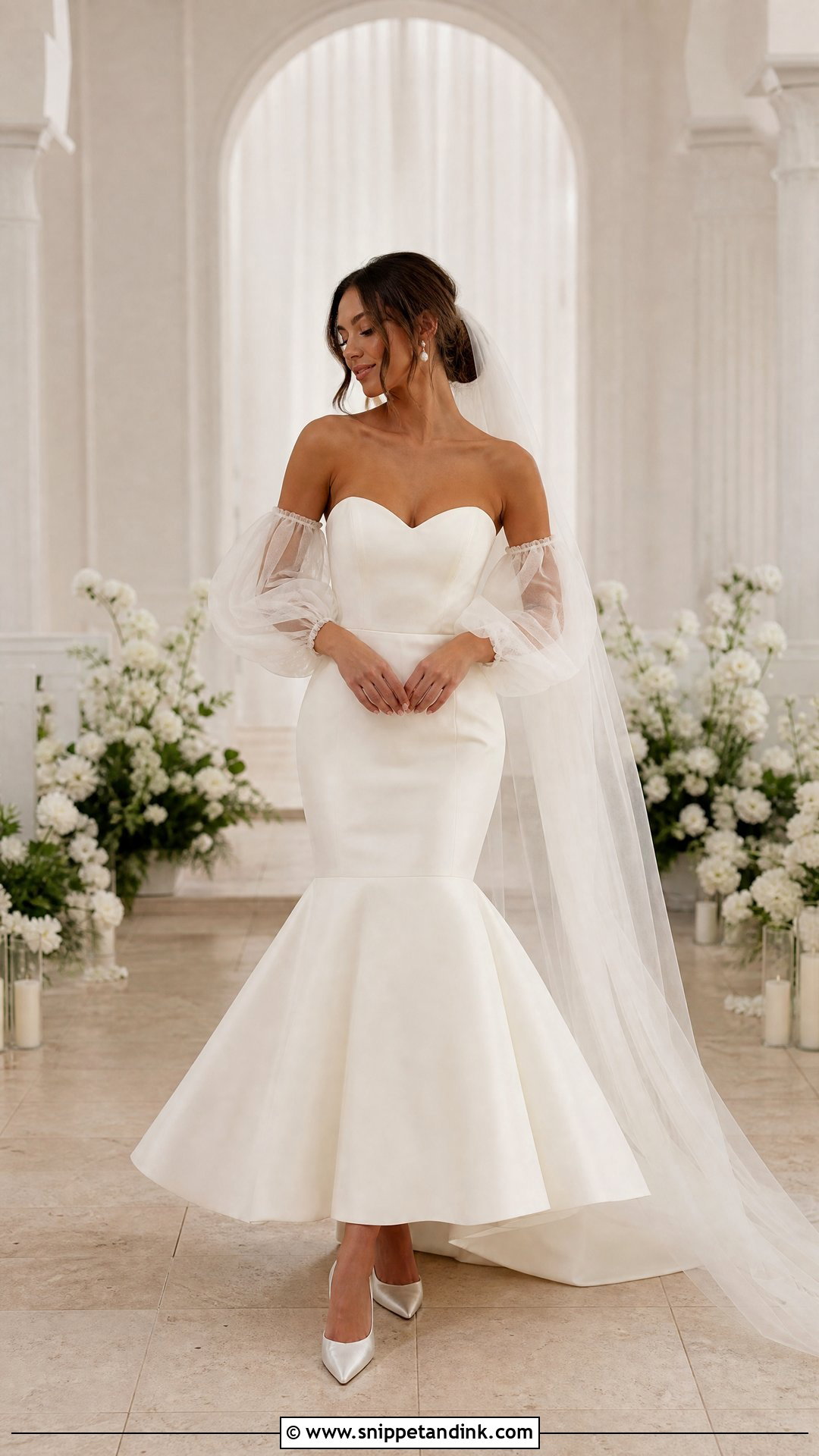
Detachable sleeves move a strapless trumpet from a covered ceremony look to a lighter reception one. Slim lace sleeves stay classic; tulle puffs bring more fashion volume. The fastening is what I look at closely, because poorly placed loops or snaps leave little gaps around the arm. Wear them with a long veil, pearl earrings and pointed ivory heels for the ceremony, then switch to bolder earrings or a short veil once they come off. Sleeves like this give you options without permanently altering the gown. Raise your arms and move around while wearing them: they should stay put without dragging the bodice down or pinching the upper arm.
10. Floral Applique Mermaid Wedding Dress
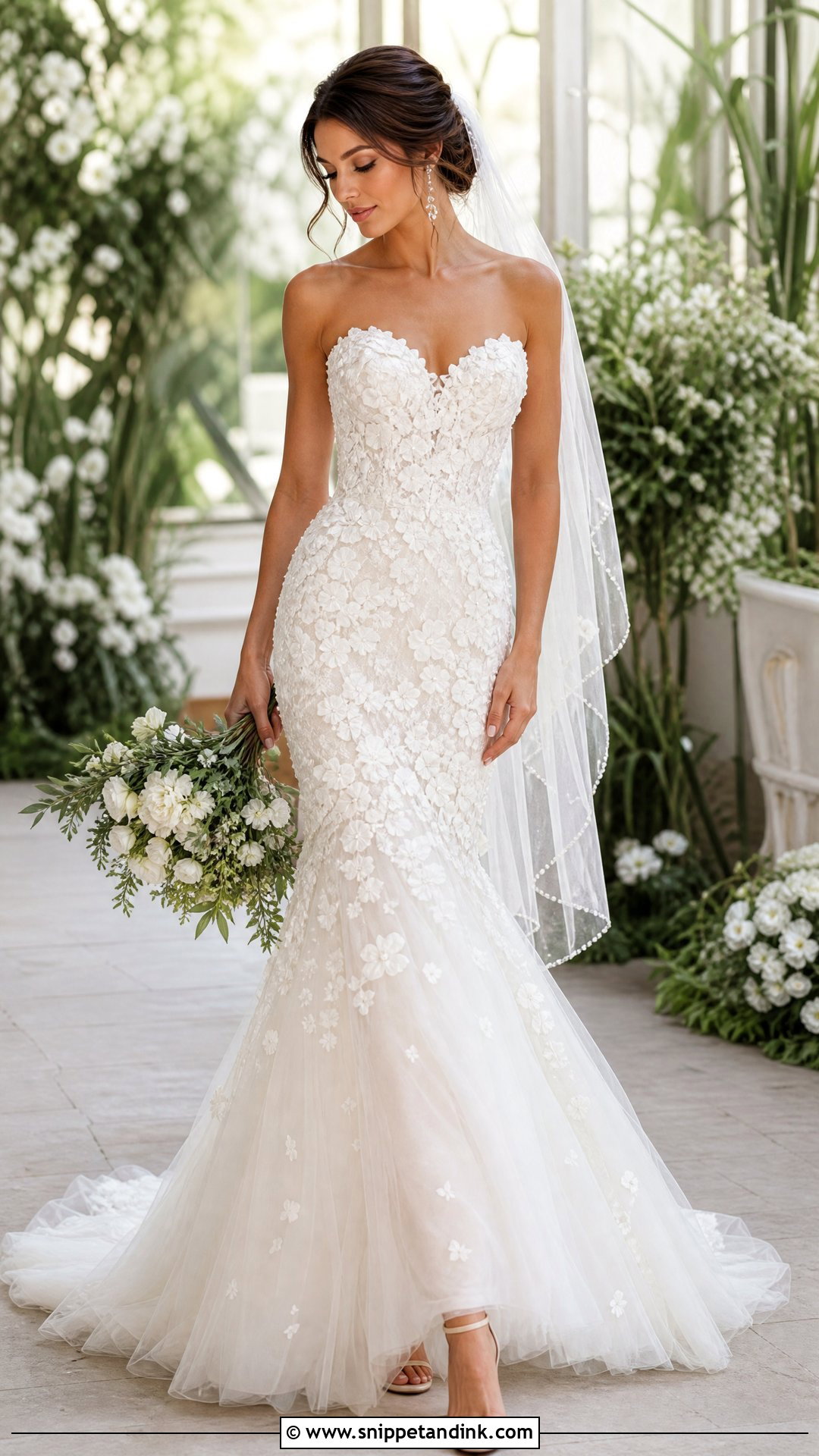
Three-dimensional flowers give a mermaid gown texture you notice from every side. The best versions concentrate the appliqués over the bodice and hips, then let them scatter down into the tulle flare so the skirt does not look crowded. Floral pearl earrings, ivory ankle-strap heels and a sheer veil with a lightly embellished edge suit it, along with a loose low bun or polished ponytail. Let the gown inspire the bouquet without copying every bloom; a simpler arrangement in complementary colours looks more natural next to all that texture. At fittings, check the appliqués around any seams that were taken in, because they can lift and catch the veil.
11. Beaded Mermaid Wedding Dress
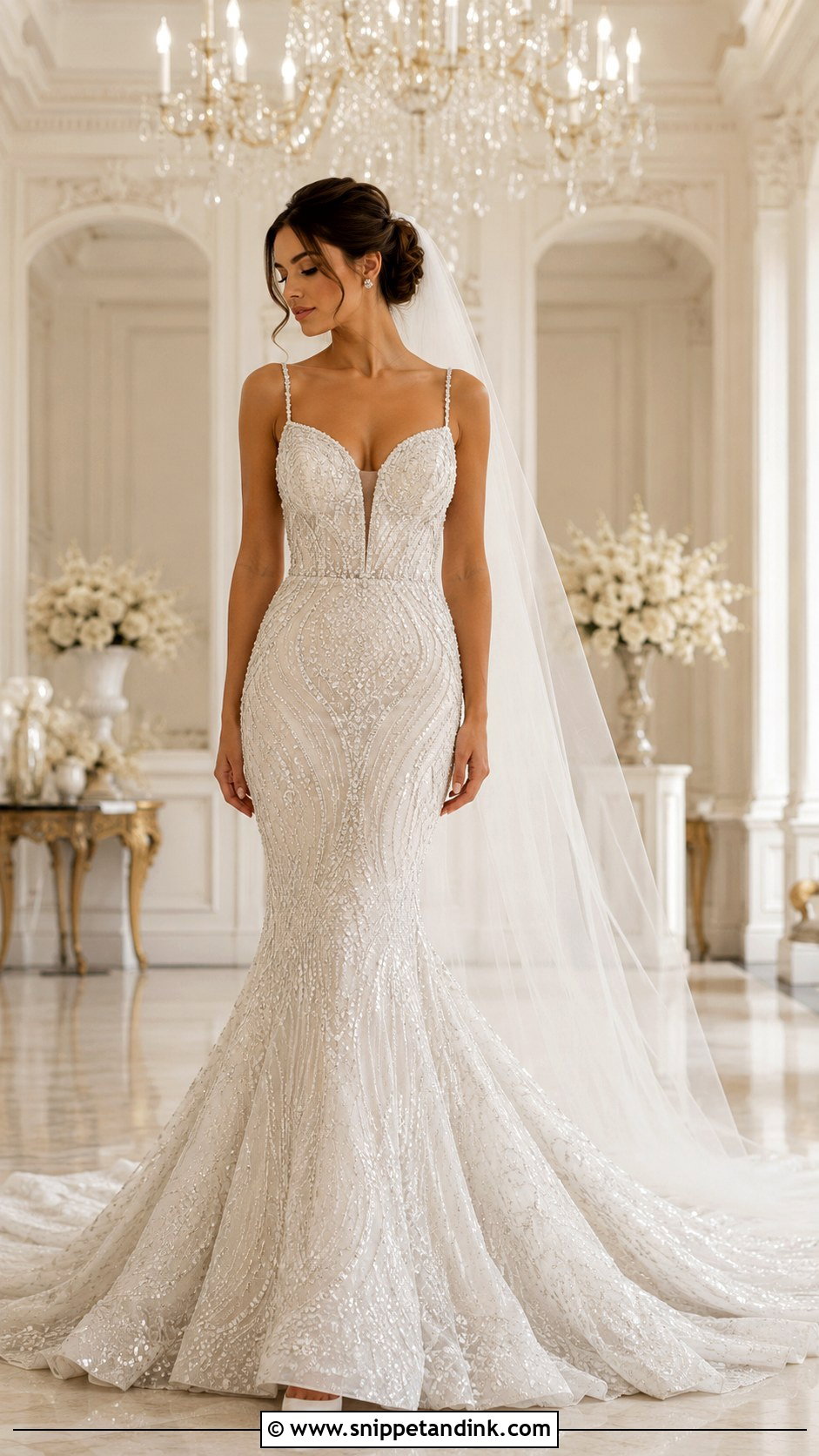
Beading turns a fitted gown luminous, but weight is the trade-off nobody mentions until you are in it. A heavily beaded mermaid can feel noticeably heavier than lace or crepe, so walk around in the sample before ordering. I prefer beading that runs vertically or sits in balanced motifs rather than heavy clusters in one spot. The lining colour, whether nude, champagne or ivory, changes how bright the beadwork looks. Simple satin heels, crystal studs and a plain veil let the surface do the talking, with a polished hairstyle. Ask about a reinforced bustle, since a beaded train strains ordinary loops, and run your hand inside the bodice to make sure the lining covers every bead backing.
12. Pearl Trumpet Wedding Dress
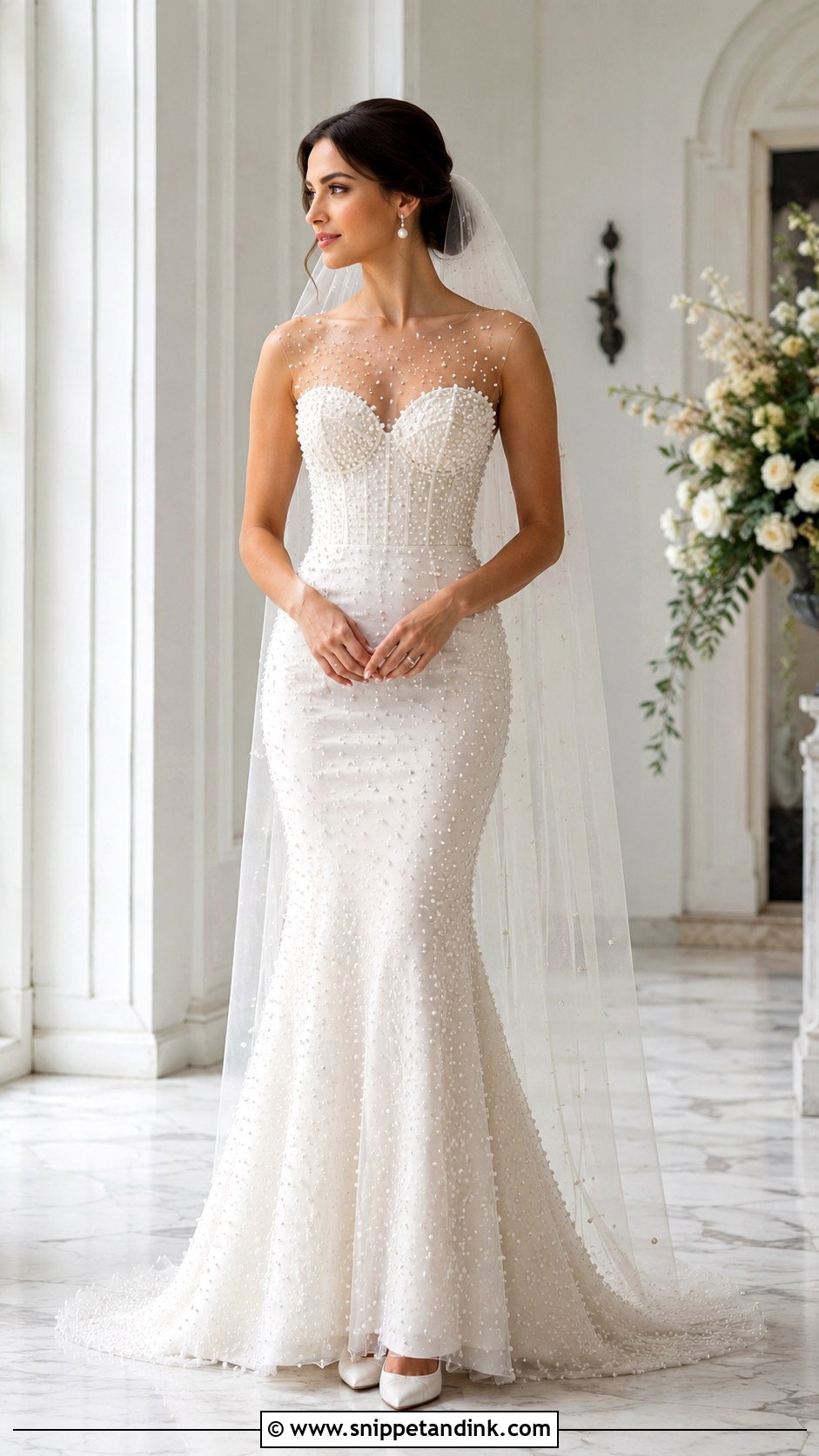
Pearls catch light gently, without the sharp glitter of crystals. Scattered pearls on illusion tulle look delicate; dense pearl work feels more glamorous. A fitted bodice with secure straps or solid internal structure carries the weight, balanced by a clean mid-thigh flare. Pearl drop earrings, closed-toe ivory pumps and a plain fingertip veil suit it, and a smooth low bun repeats the round shapes. Leave the beaded handbag at home, since it will snag. Before alterations begin, ask how the seamstress will remove and replace pearls near the side seams. If the pattern is not reset carefully, the spacing looks uneven exactly where the eye follows the waist.
13. Mikado Mermaid Wedding Dress
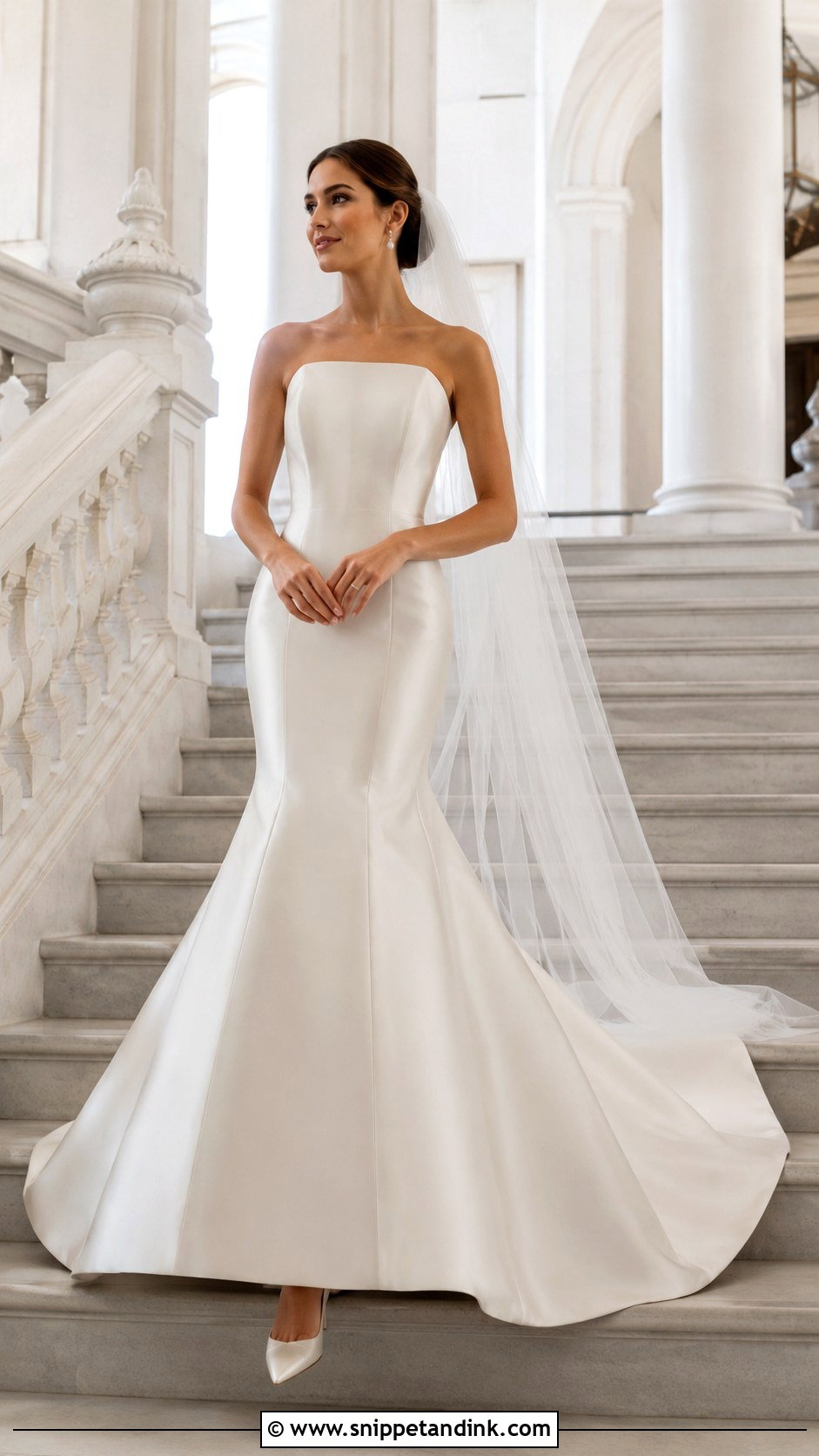
Mikado is a stiff, slightly crisp fabric, which gives a mermaid gown a crisp outline and architectural presence. It holds a straight, scoop or softly draped neckline without collapsing, and princess seams carry the line smoothly from bodice to hips before the lower flare. Sculptural pearl earrings, pointed satin pumps and a long single-layer veil suit it, as does a sleek ponytail or low knot. Because Mikado does not stretch, sitting is where it fails. I ask brides to sit and climb a few steps at the fitting; if deep creases form across the lap or the skirt pulls tight, the dress may need extra ease or hidden pleats added.
14. Ruffle Skirt Mermaid Wedding Dress
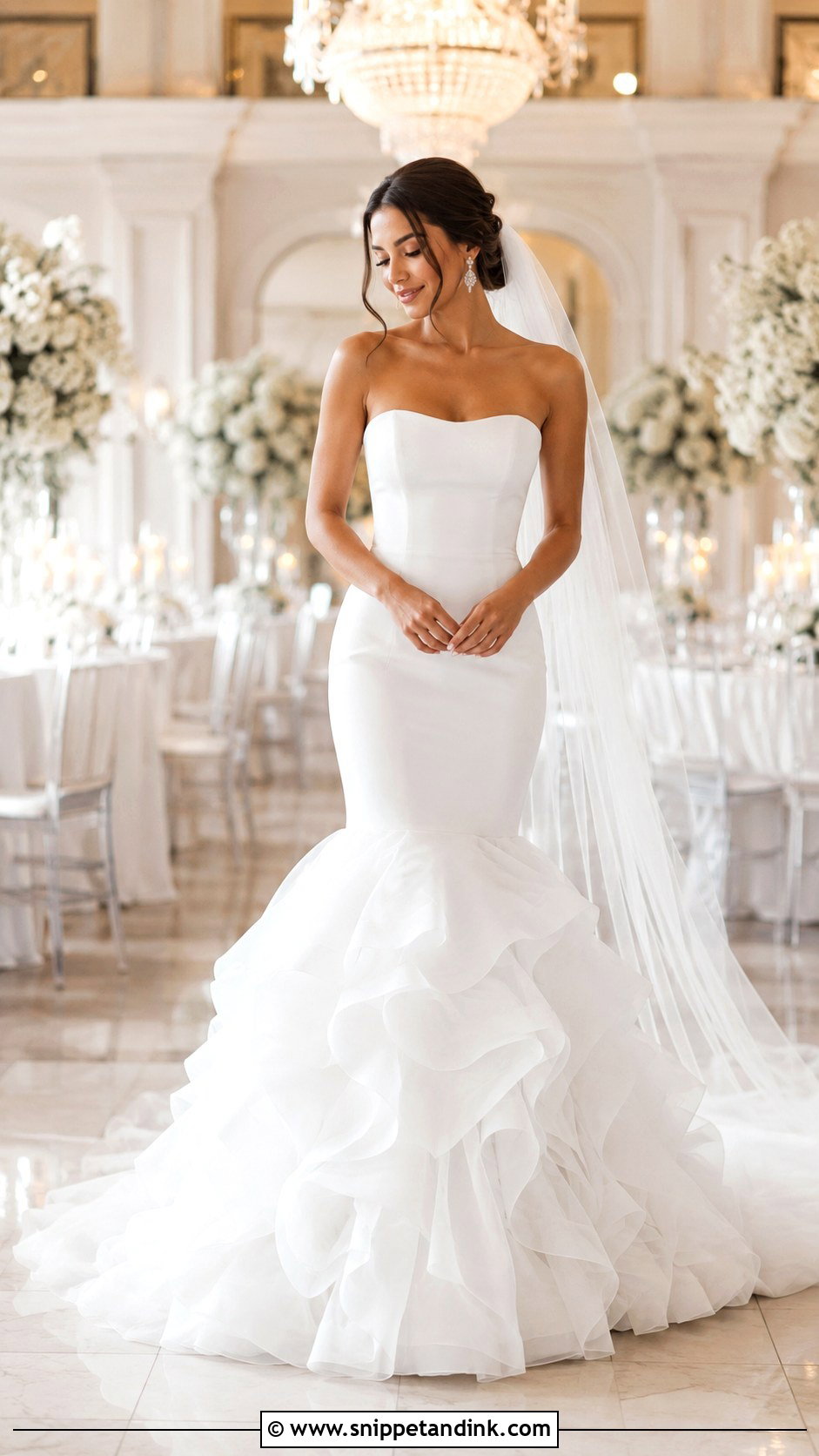
Ruffles at the base of a fitted gown give it movement every time you take a step. Organza ruffles stay crisp and airy; tulle tiers look softer. I keep the bodice fairly plain, because a busy top plus a dramatic ruffled skirt can overwhelm, and a strapless or one-shoulder neckline balances the proportion well. Understated earrings, hidden platform heels and a plain veil that ends before or well beyond the fullest ruffles are what I would choose. In photos, leave space behind you so the train shows. Ask the boutique how to steam, pack and bustle the skirt correctly, because crushed ruffles take a long time to revive by hand.

15. Blush Mermaid Wedding Dress
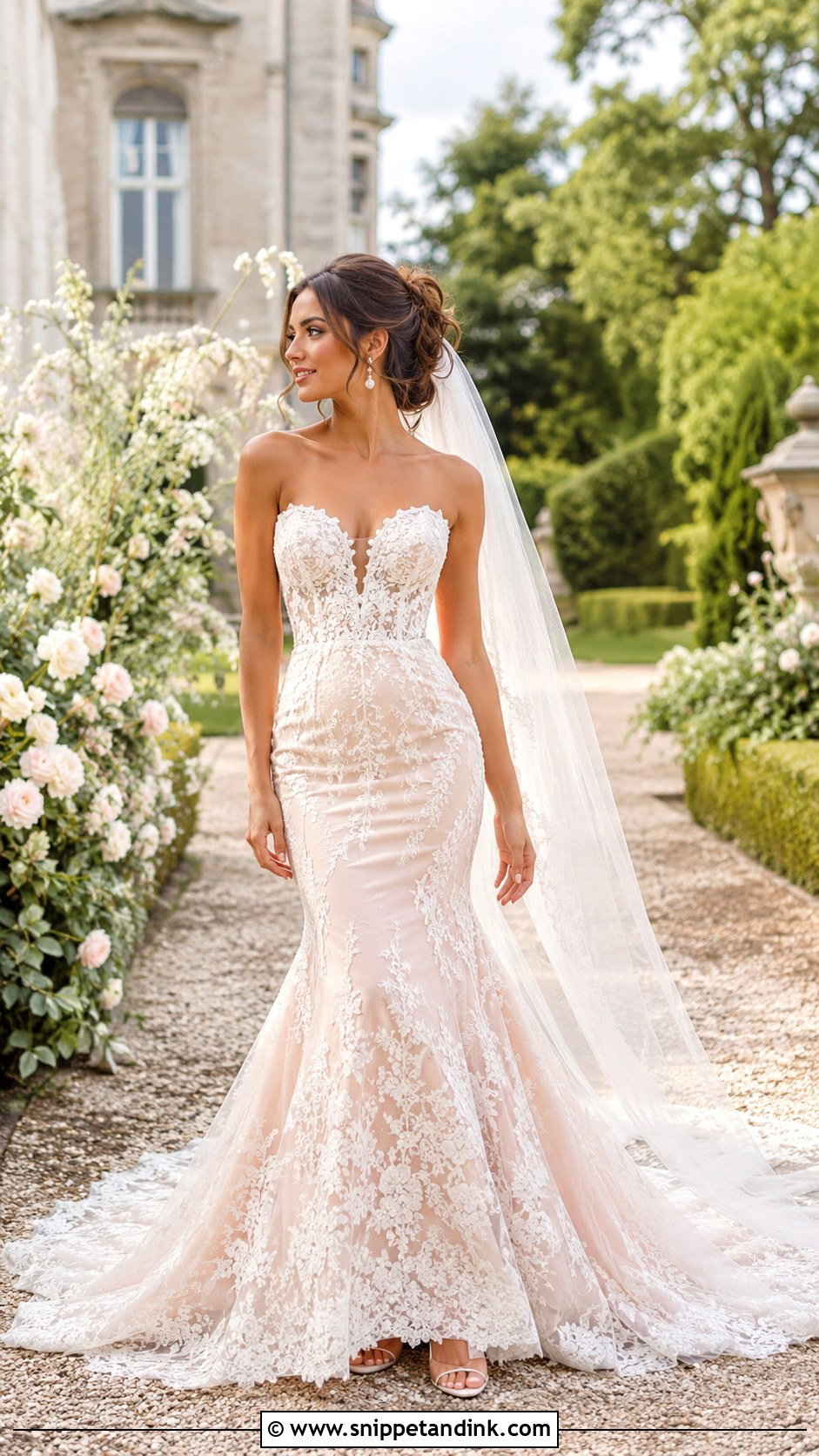
Blush adds colour while still reading as bridal, either as a full blush gown or as a pink lining beneath ivory lace. The colour shifts more than people expect, so I always walk brides to a window and then back under indoor lights before they decide. Ivory shoes, rose-toned pearl earrings and a neutral sheer veil stop the overall look from tipping too pink. A bouquet in cream, pale peach and muted green rounds out the palette in gardens, estates and softly decorated ballrooms. If your bridesmaids wear pink, choose a noticeably different depth or undertone so you do not blend into them in group portraits.
16. Champagne Trumpet Wedding Dress
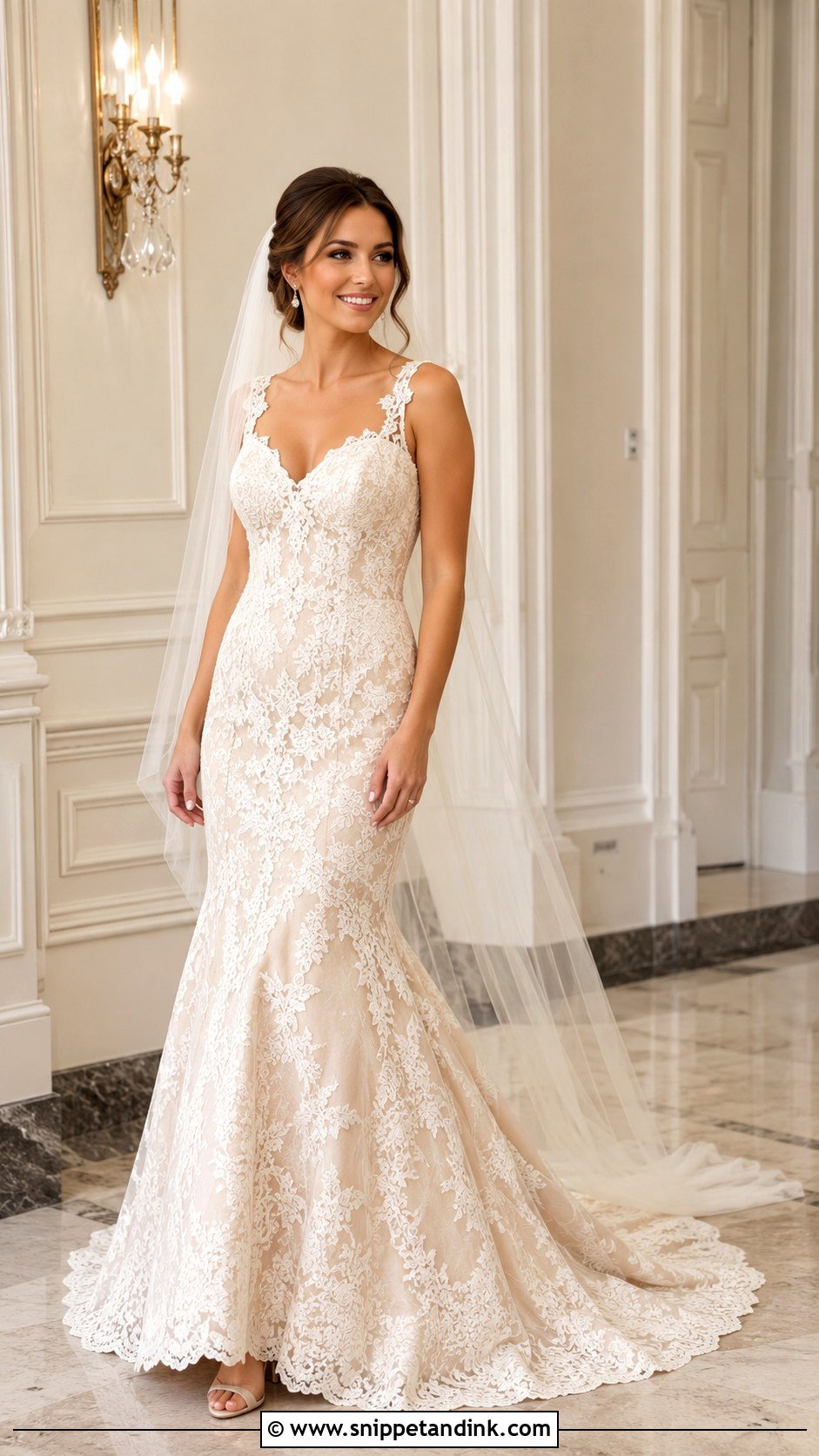
Champagne under ivory lace or light beadwork gives a trumpet gown warmth that pure white cannot. The mid-thigh flare keeps the stride longer than a tight mermaid. I pair it with neutral satin heels, gold-toned pearl earrings and an ivory veil that matches the lace, not the lining, plus a softly twisted updo. Match your undergarments to your skin tone rather than the gown, or they will show as a pale shape under the lace. Champagne can look beige, gold or blush depending on the light and what surrounds it, so view it in at least two kinds of lighting before you say yes.
17. Minimalist Trumpet Wedding Dress
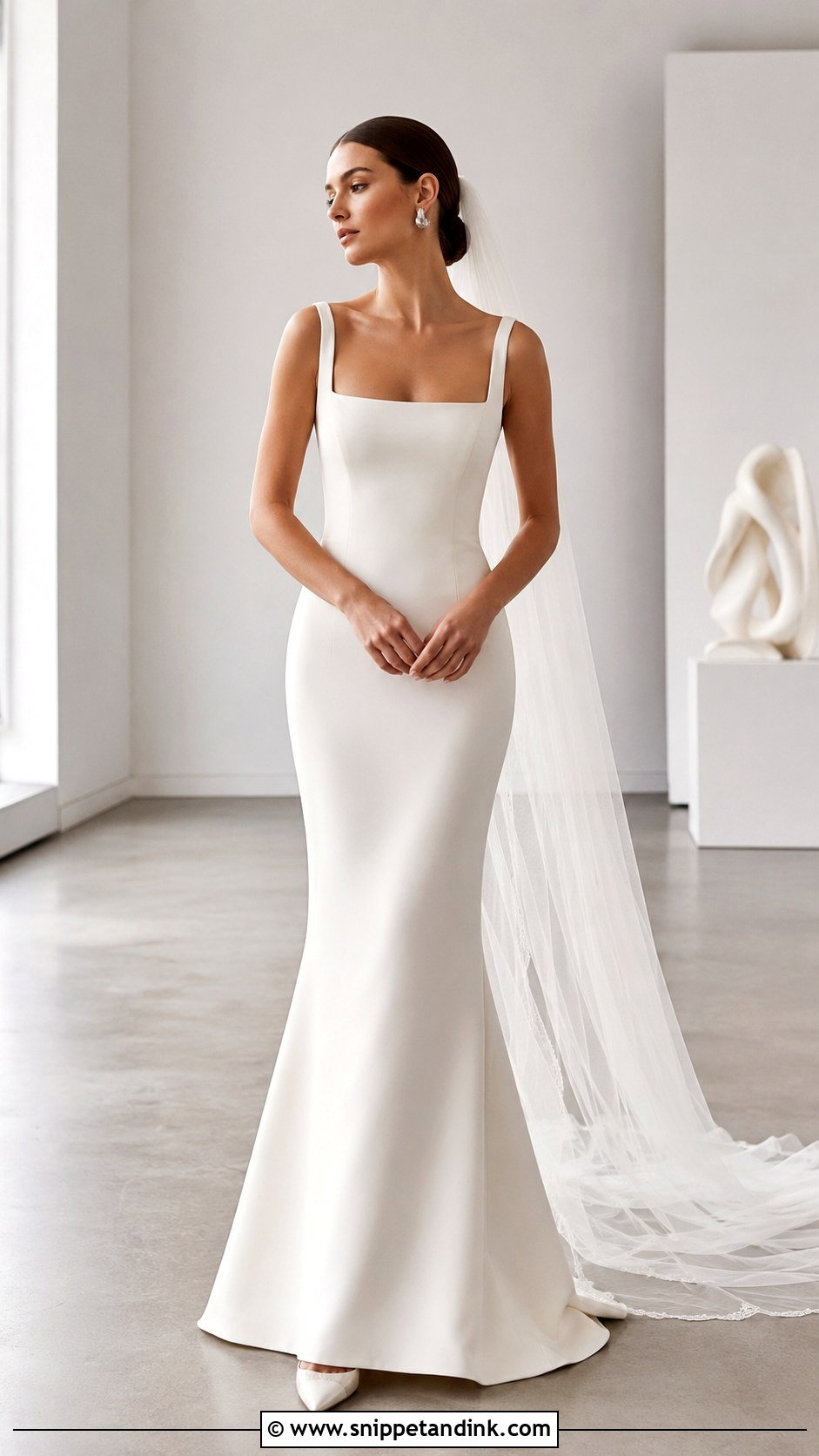
Minimal gowns put fit under a spotlight. With no lace or beading to distract, a wrinkle at the hip or a slightly uneven seam is the first thing anyone sees, so I tell brides to book extra fitting time around the waist, hips and hem. Matte crepe, satin or Mikado with very little embellishment works best, finished with a bateau, square or straight neckline. Polished pumps, pearl or sculptural metal earrings and a long raw-edge veil complete it, with a neat bun or smooth waves. If you want one detail, choose a low back, fabric-covered buttons or a removable bow, and let that single element carry the dress.
18. Vintage Lace Mermaid Wedding Dress
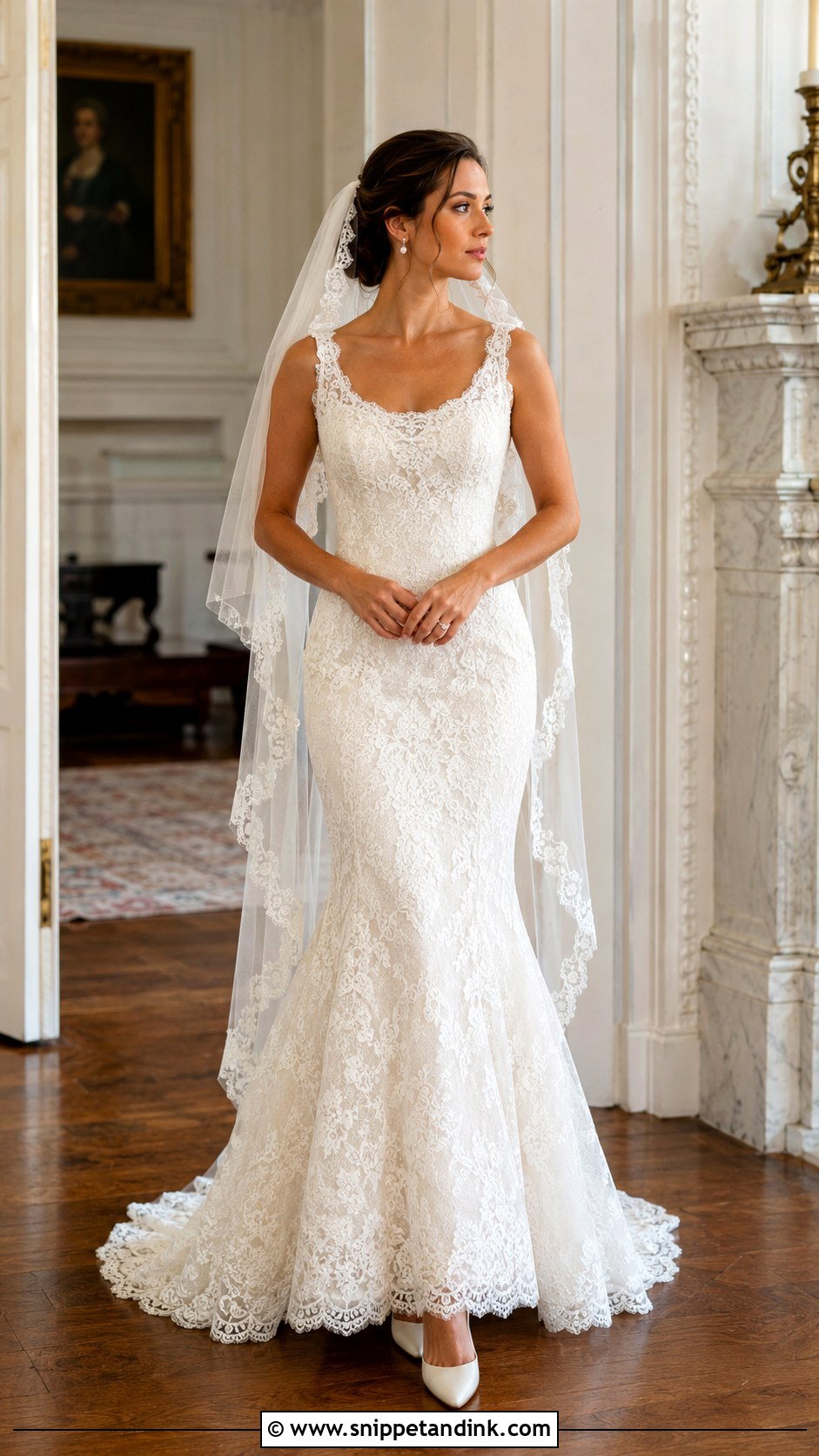
Vintage-style lace brings rich detail, but it can tip into costume quickly. Delicate eyelash lace, botanical motifs, scalloped edges or a lined bodice with a modest scoop all feel right; what keeps it current is a well-fitted waist and a clean flare. Pearl button earrings, ivory almond-toe heels and a veil with a lace edge that complements, not copies, the gown suit it. Soft brushed waves or a low rolled updo carry the period mood. With very intricate lace, I keep the bouquet simple and jewellery minimal. Fine eyelash edges are fragile, so ask the seamstress to hand-tack any loose ends before the wedding.
19. Plus Size Mermaid Wedding Dress
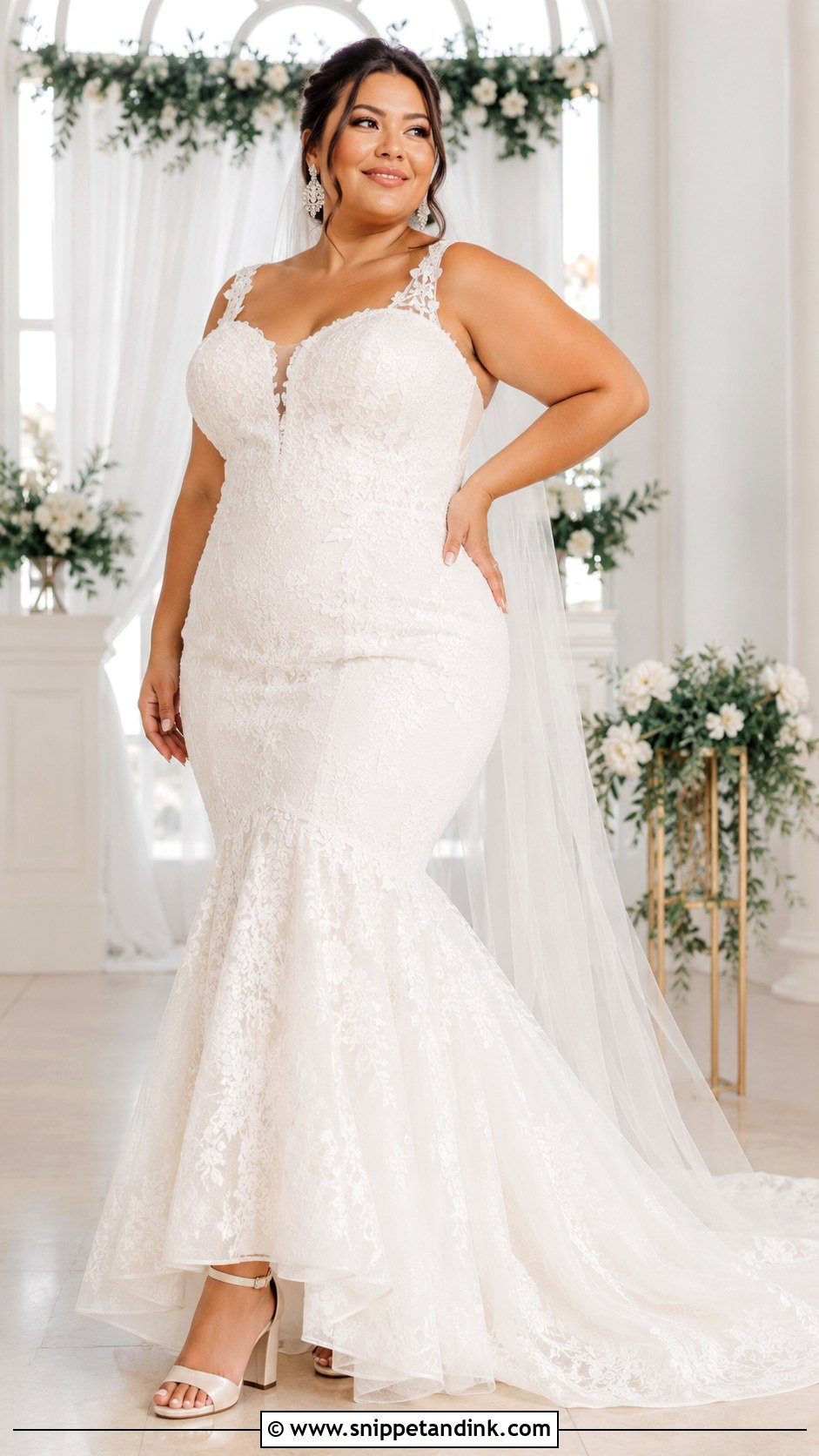
A plus-size mermaid gown should hold you up first and show off second. I look for a structured bodice, cups placed where your bust actually sits, supportive straps and stretch lining where it helps. A flare starting slightly above the knee gives drama without hobbling you. Stable block-heel pumps, comfortable undergarments, statement earrings and a veil anchored firmly into the hairstyle finish it. Lace appliqué and diagonal draping add detail, but no body needs correcting; choose features because you like them. Shop at a boutique that stocks samples in your size range, since pinning a small sample to guess at the real neckline and waist rarely gives an accurate picture.
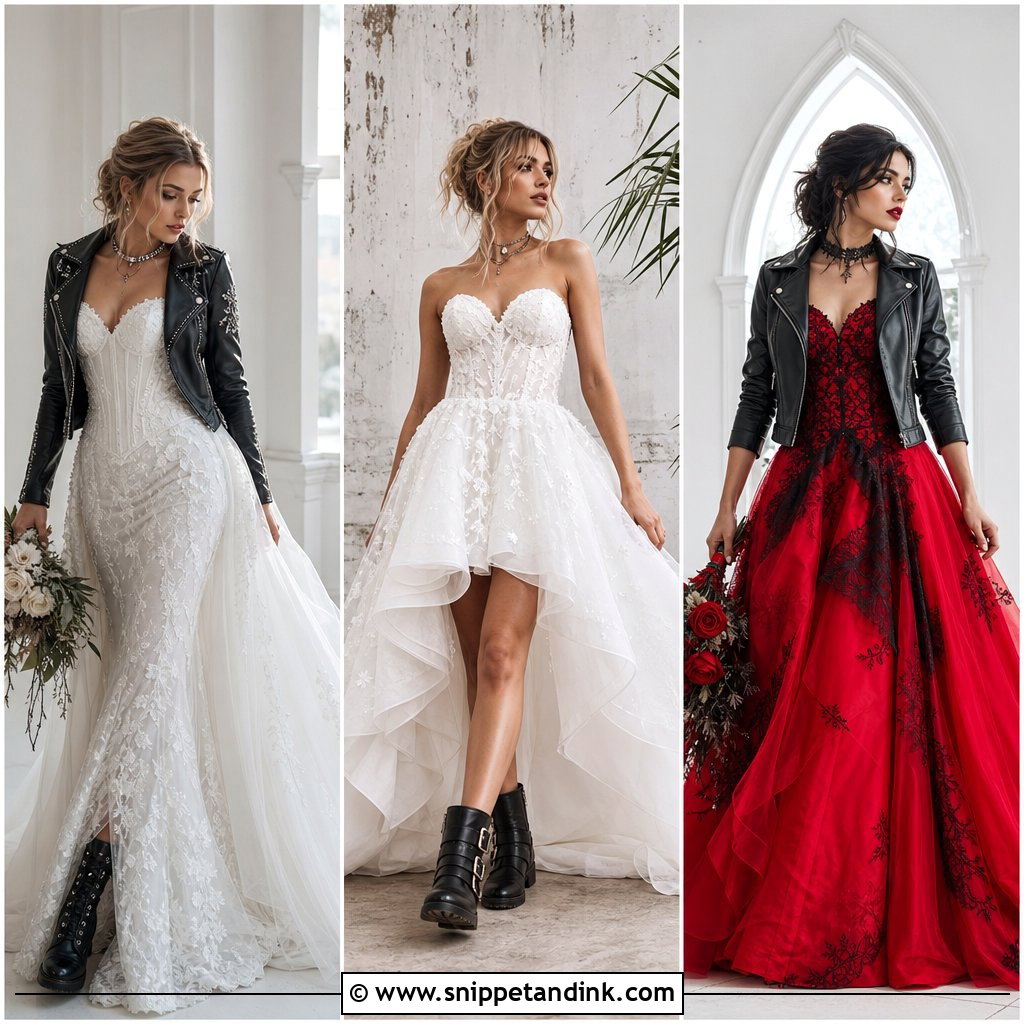

20. Petite Trumpet Wedding Dress
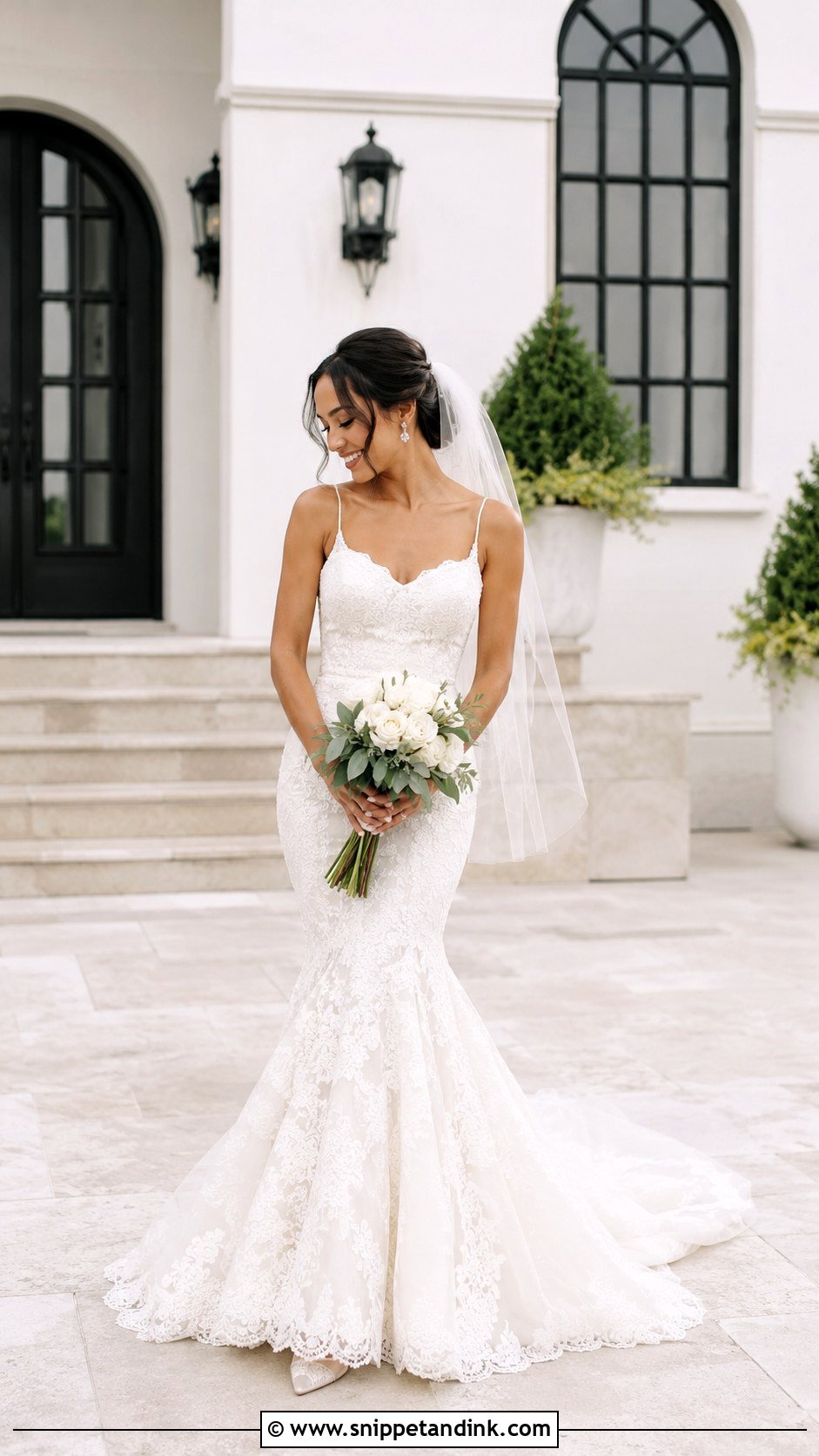
For a petite bride, proportion matters more than any rule about height. A trumpet wedding dress with a higher flare shows more leg line and lets you walk easily. Keep the bodice clean, the straps narrow and lace motifs small enough that they do not swamp your frame. Pointed heels or comfortable platforms, delicate earrings and a single-layer veil are enough. What catches petite brides out is the hem: taking length off a fitted skirt can move the flare right down to the calf. Ask whether the gown can be ordered in a shorter length, so the waist, hip and flare land where the designer intended.
Bustling a Mermaid Train So You Can Dance
A train that flows from a knee-level flare drags heavily once the dancing starts, so every gown on this list needs a bustle. The style should suit the fabric, and I always ask to see it bustled at the second fitting rather than trusting the description.
- Under bustle (often called French): the train is folded under and tied with ribbons inside the skirt. It hides well under lace and soft tulle and keeps the outside looking smooth.
- Over bustle (often called American): the train is lifted and hooked to the outside at the back of the hips. It is quick and suits satin and crepe, though the hook points can show.
- Ballroom bustle: many small attachment points make the hem look like it was always floor length. It takes longer to fasten but suits heavy, structured fabrics.
Ribbons are usually colour-coded or numbered. Choose one person, often your maid of honour, to attend the fitting, take a short video and practise it once. Beaded and heavily appliquéd trains need extra or reinforced points, or a loop can tear halfway through the reception.
Which Veil Length Shows Off the Curve?
With a fitted skirt, the veil can hide the very shape you chose, so I look at where it stops in relation to the flare. Elbow and waist-length veils end above the hips and leave the whole line on show. Fingertip length lands around mid-thigh, which suits a mermaid because the knee release stays visible, but on a trumpet it can sit right on top of the point where the skirt opens. A cathedral veil that runs past the train frames the flare from behind and looks wonderful in aisle photos, and it is the length I suggest most often with these gowns.
Treat Body-Type Charts as Suggestions
A fitted bridal gown should look dramatic and feel secure, in proportions that suit the person wearing it. The ideas above cover plain satin, romantic lace, convertible skirts and sleeves, soft colours, inclusive fits and heavy embellishment. When you try one on, look past the front view in the mirror: walk, sit, turn, climb a step and check the train from behind. Bring shoes with a similar heel height and undergarments close to what you will wear. Charts that match silhouettes to body types are a place to start, not a rule. A good consultant and seamstress can adapt the shape you love until it feels like yours.
You'll Like These Ideas:



Leave a Reply