
Most brides walk into their first appointment knowing a neckline they like and nothing else. That’s fine, but the dress you end up loving is decided mostly by its silhouette and fabric, and you only find that out by moving in it. So below I’ve gone through the main wedding dress styles one by one, from ball gowns to slip dresses and convertible pieces, with what each does on the body, where it struggles, and what I’d put with it. Read it with your venue, season and how much you plan to dance in mind, because those three things rule out more gowns than taste does.
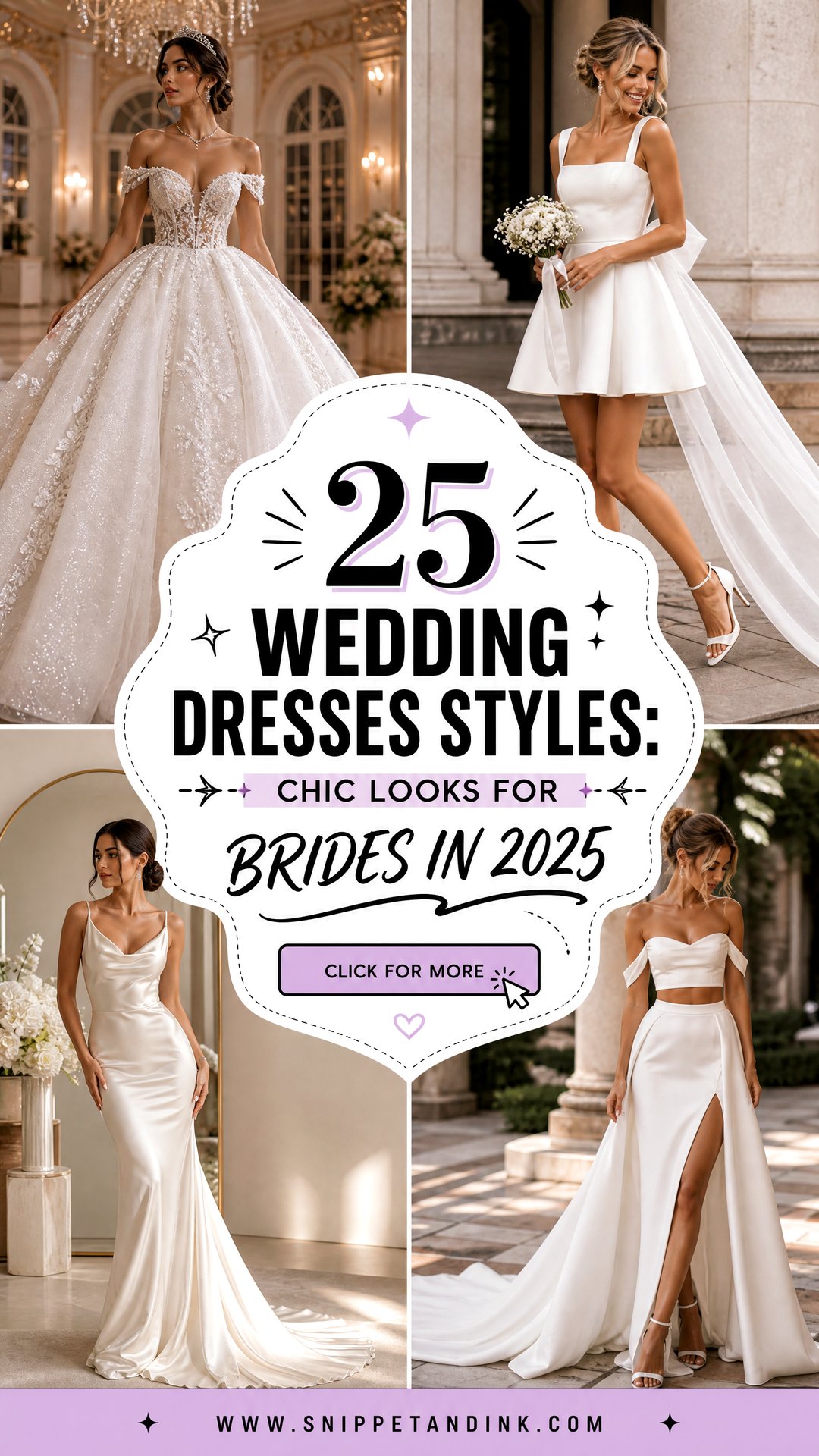
Silhouette First, Neckline Second, Fabric Last
When a bride sits down with a long list of saved pictures, I sort them by silhouette before anything else. The silhouette decides how you walk and sit; the neckline and fabric can usually be adjusted or swapped within that shape. A first appointment goes much better when you’ve narrowed it to two or three shapes.
- Silhouette: A line, ball gown, mermaid, trumpet, fit and flare, sheath, column or slip. This is the decision that changes how the whole day feels.
- Neckline: square, V, sweetheart, high neck, halter, off the shoulder or strapless. Picks the frame for your face and jewelry.
- Fabric: satin, crepe, mikado, lace, tulle, chiffon. Sets the mood and how the gown copes with heat, creasing and movement.
Bring shoes close to the height you’ll wear and the type of bra you plan to use. A two-inch difference in heel changes how a hem reads, and the wrong underwear makes a fitted gown look badly cut when it isn’t. Wear something that’s easy to take off quickly, because you’ll try on several in an hour.
1. A Line Wedding Dress
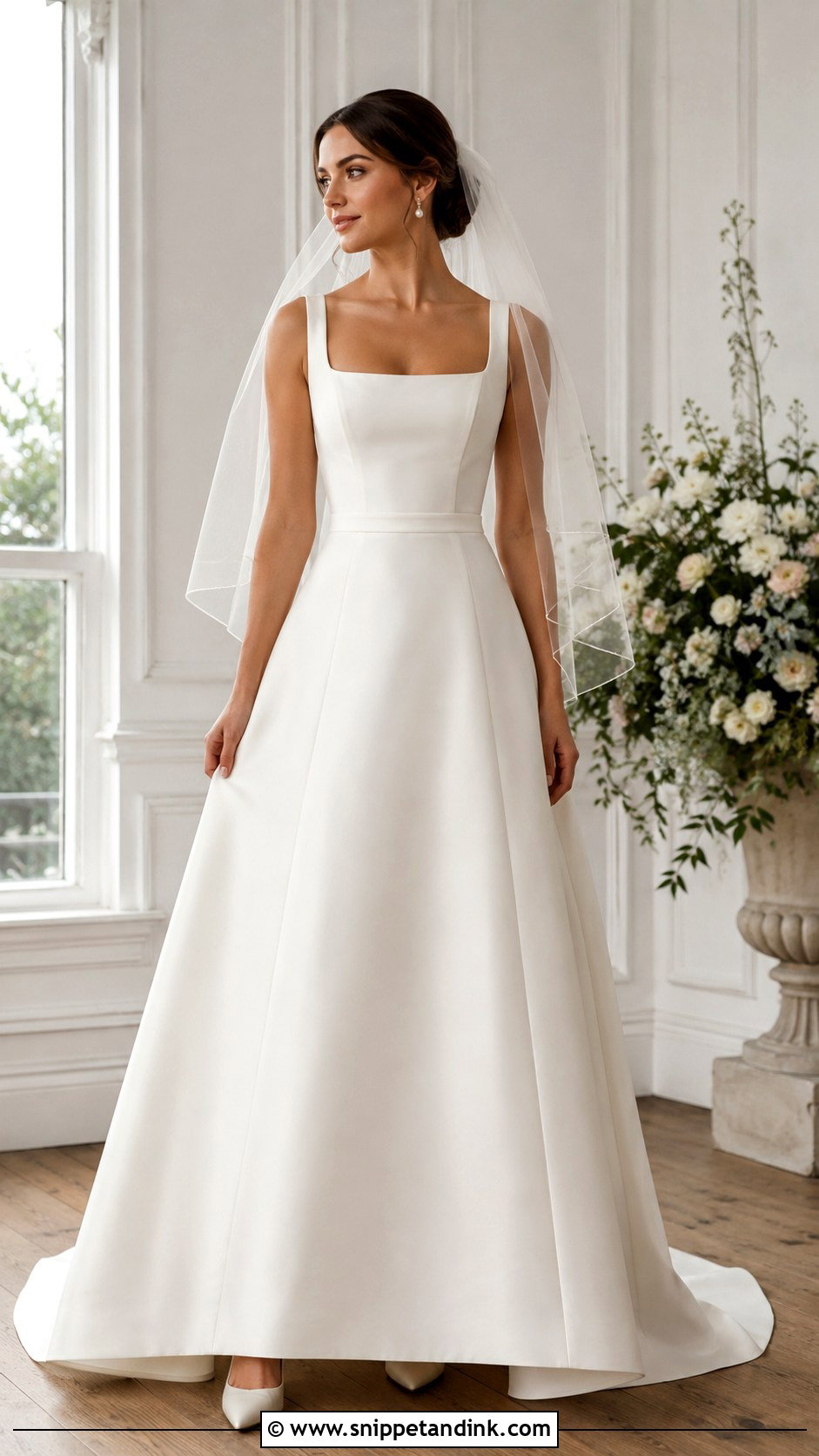
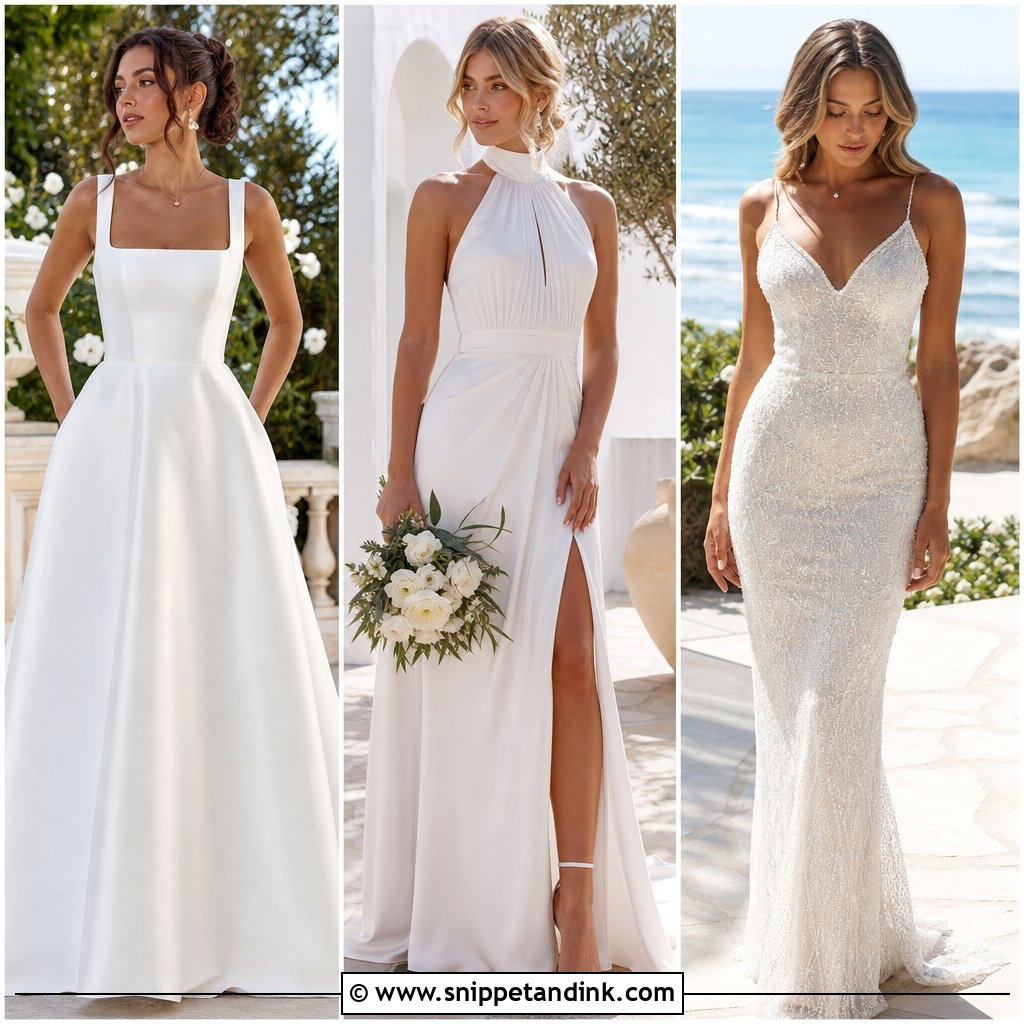
If I had to put every bride in one shape for a first try-on, it would be this one. The fitted bodice marks the waist and the skirt falls away gradually, so it hides as much or as little as you want through the hips. Satin or mikado gives a crisp, formal A line; lace appliqué and tulle make it softer. The thing to watch is where the waist seam lands. Too high and you look shortened; too low and the skirt starts to drag. A low bun and pointed heels keep the line clean.
2. Ball Gown Wedding Dress
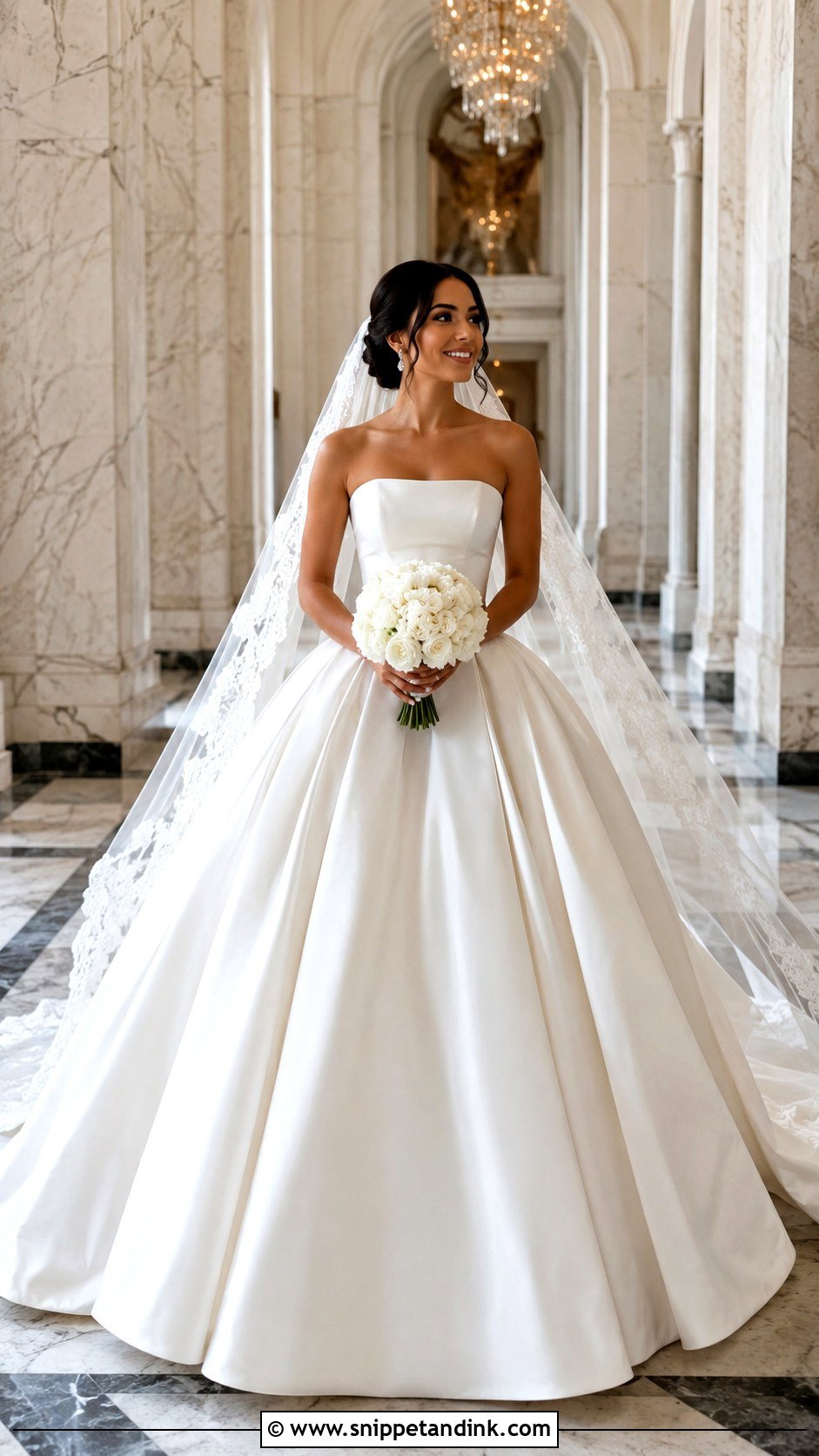
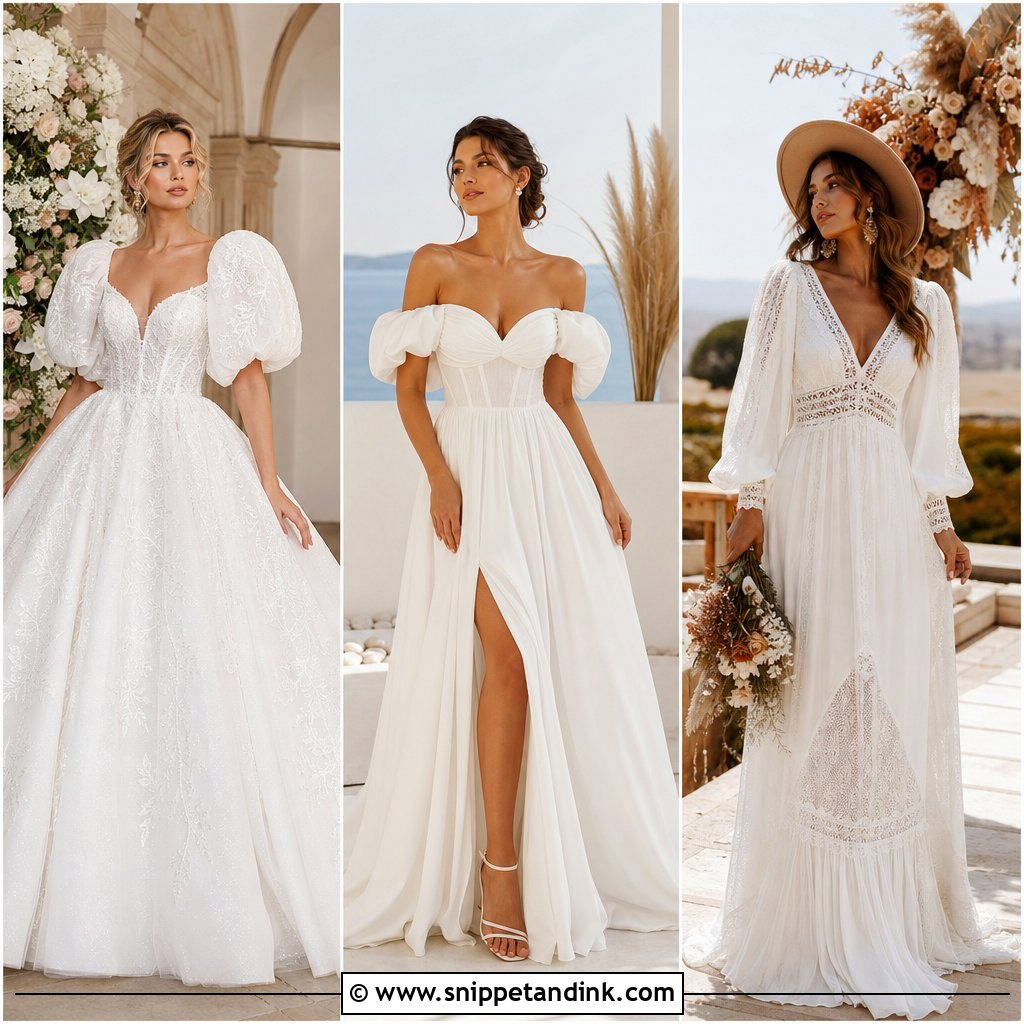
A ball gown is the most traditional shape there is: a structured bodice and a skirt held out by layers of tulle, a crinoline or a stiff fabric like organza. It needs space. In a small registry room or a narrow aisle it looks crammed, while in a ballroom or cathedral it fills the room the way it was designed to. Expect weight. A full satin ball gown can feel heavy by the evening, so ask to wear it for ten minutes in the shop, not two. Drop earrings and a clean updo are all it needs; skip the big necklace if the bodice is beaded.
3. Mermaid Wedding Dress
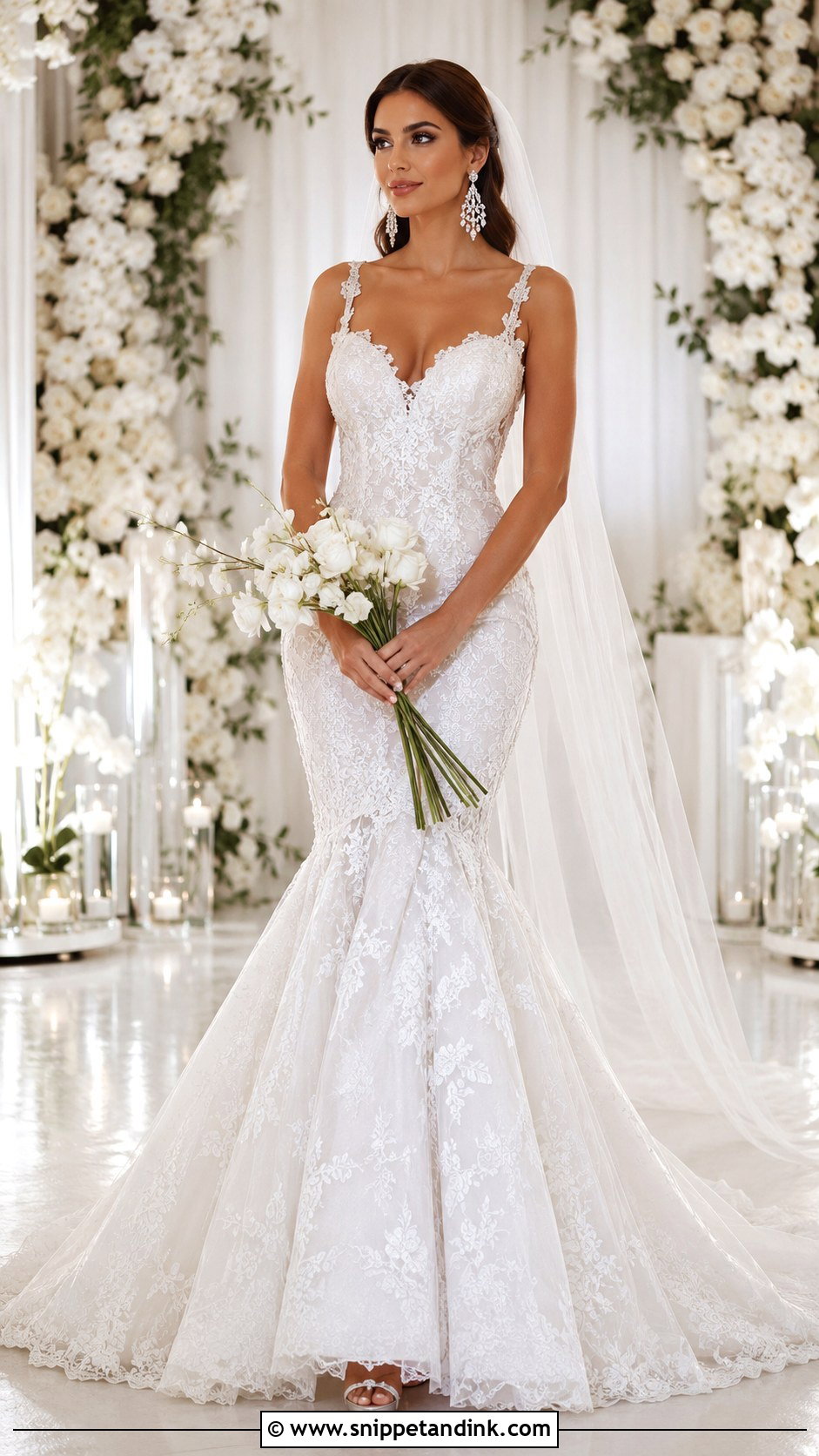
A mermaid follows the body tightly to the knee and then flares. It is a confident shape, and it is also the one I see brides regret most when they haven’t tested it properly. Walk across the shop, climb a step and sit on a low chair during the fitting. Stretch crepe gives the most movement; lace over a stiff lining gives the least. Strapless and off-the-shoulder necklines suit it, and a slimmer, trailing bouquet looks better against the shape than a round one.
4. Trumpet Wedding Dress
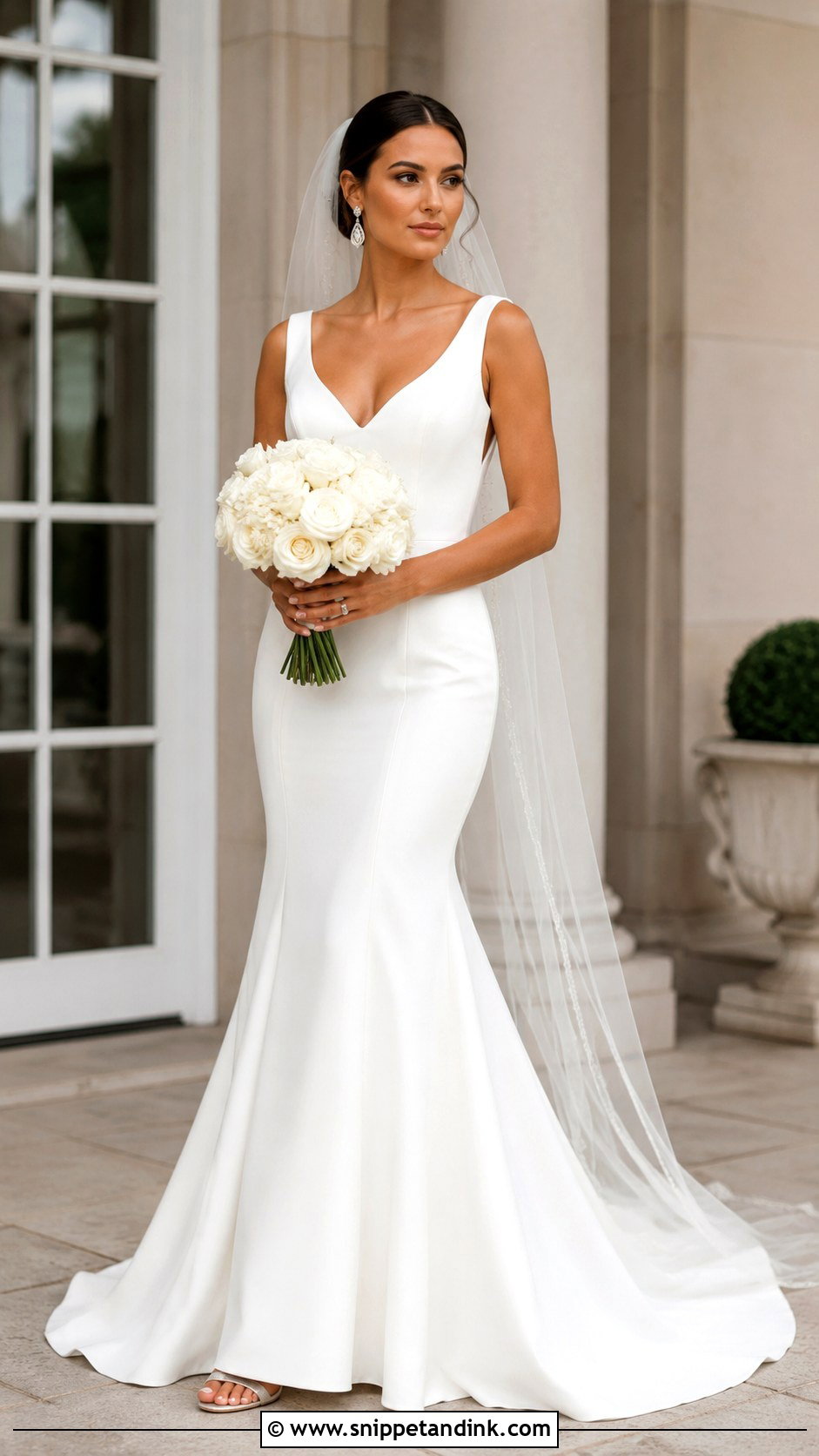
The trumpet looks close to a mermaid in photos, but the flare starts higher, around mid-thigh, and that one change makes it much easier to walk and dance in. I suggest it to brides who love the mermaid shape and dread the shuffle. Crepe reads clean, lace over tulle reads softer. Ask your seamstress early about the bustle: a fitted skirt with a long train often needs a French or ballroom bustle with several points, and some fabrics take one more neatly than others.
5. Sheath Wedding Dress
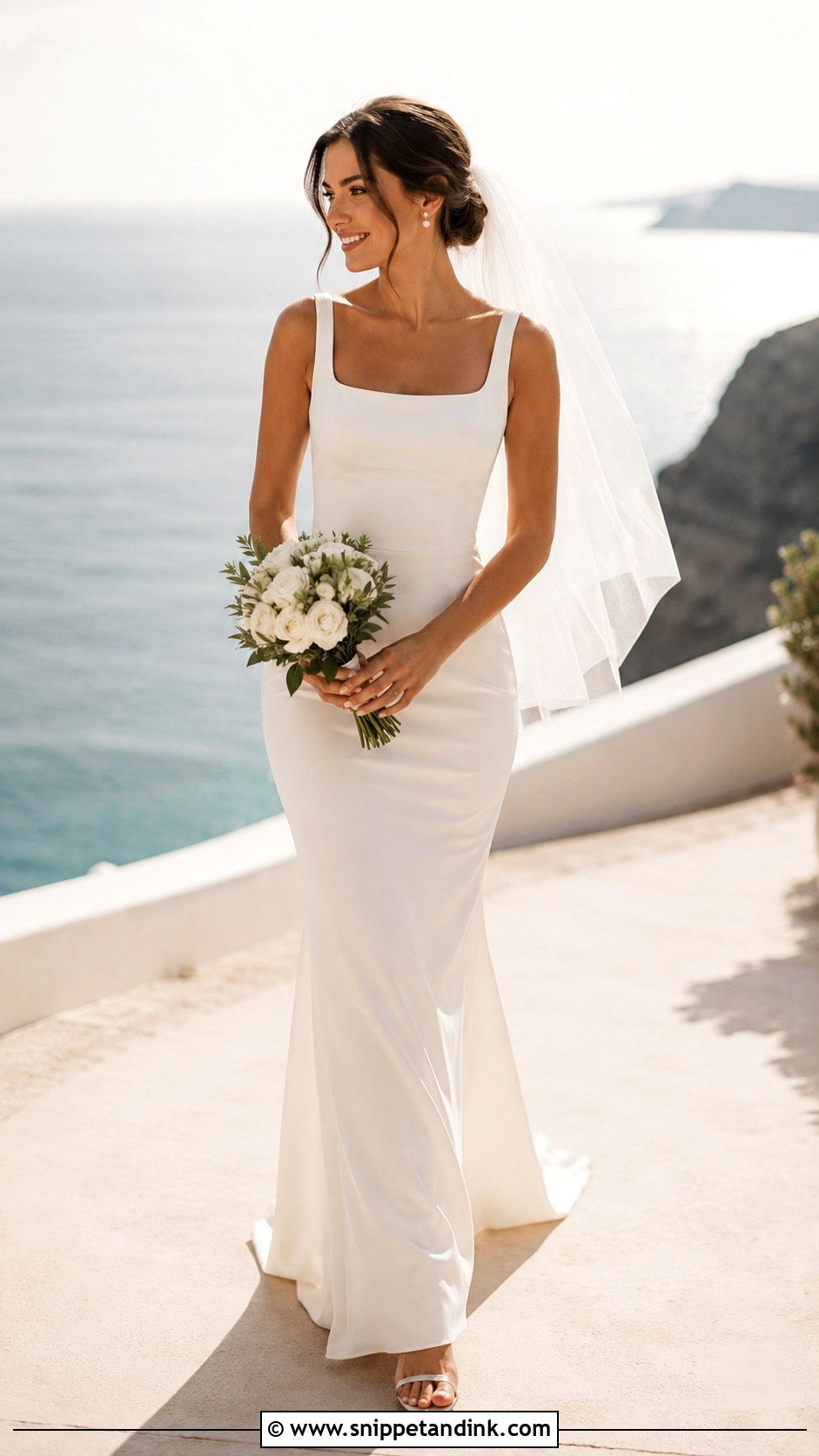
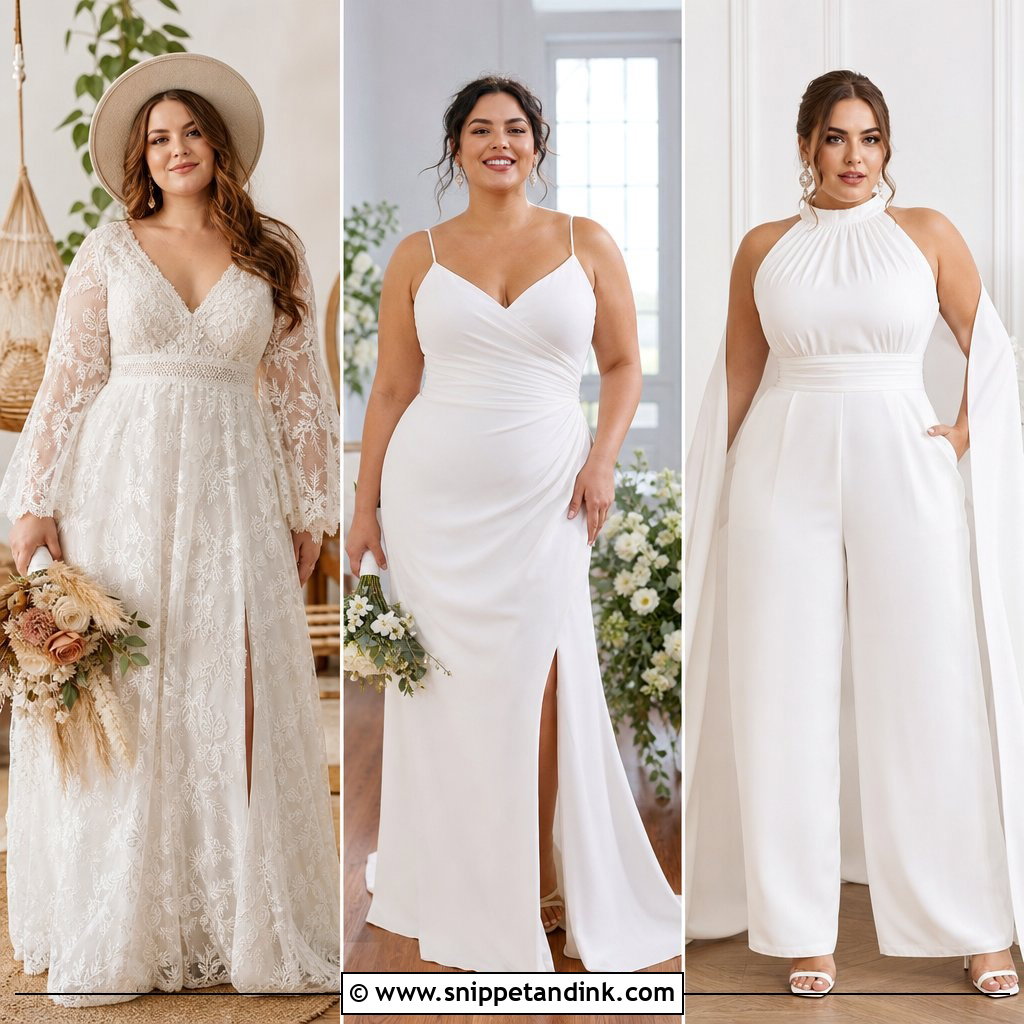
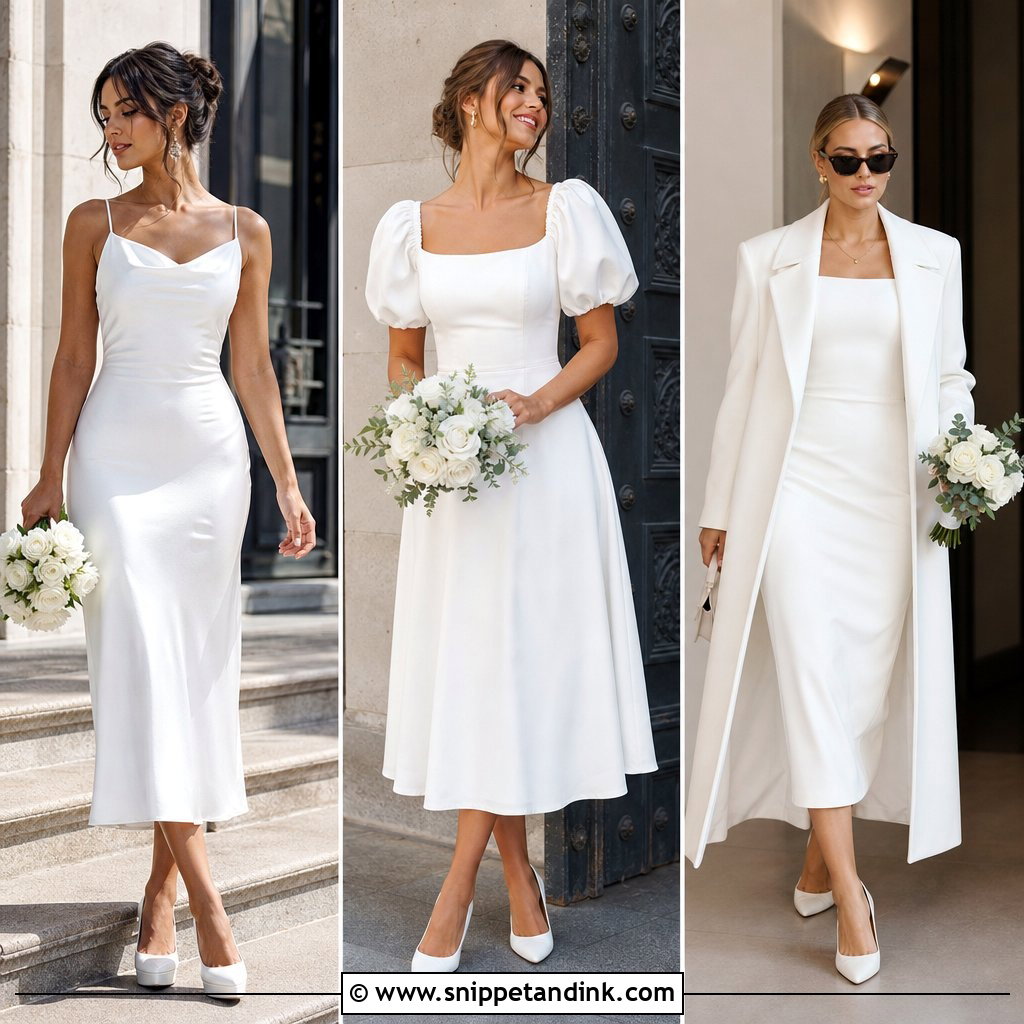
A sheath wedding dress follows the body loosely without flaring, so it’s light, simple to pack and easy to move in. That’s why it turns up so often at beach, destination and courthouse weddings. Light crepe, silk or chiffon suit it best; heavy fabric drags the shape down. Because there’s no volume to hide anything, underwear lines and a slightly loose hip show immediately. A sleek low bun, pearl studs and a small bouquet keep it uncluttered, and a sheer cape or long veil adds ceremony weight when you want it.
6. Column Wedding Dress
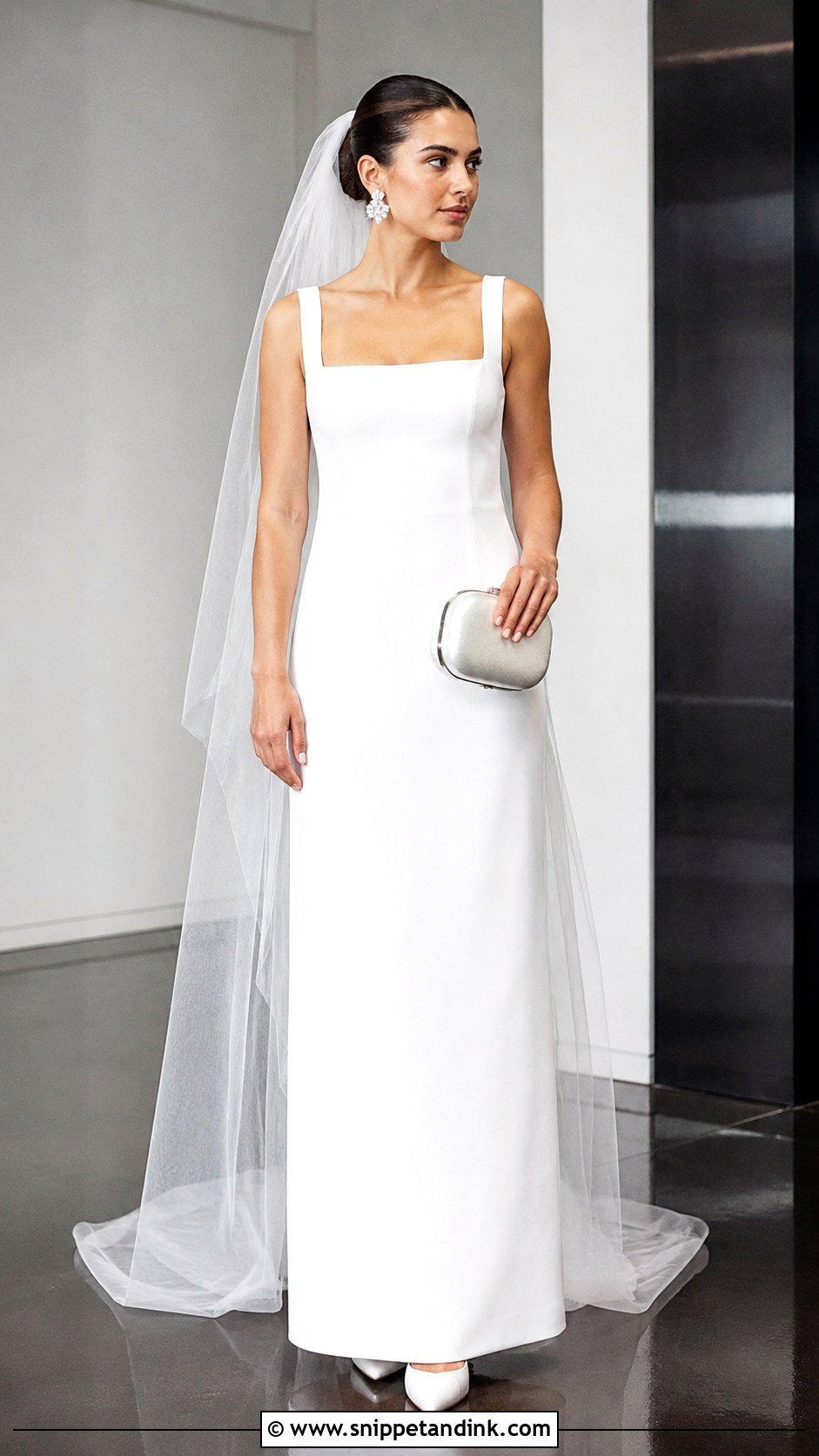
A column runs straight from neckline to hem, and unlike a sheath it usually has enough body to skim rather than cling. It’s the most architectural of the slim shapes. Square necklines, sharp seams and folded drapes look right on it. The tailoring has to be exact, especially at the hem, which should just brush the shoe. Pointed pumps, sculptural earrings and a sleek veil suit galleries, rooftops and city halls. If the column is truly narrow, check you can get in and out of a car in it.
7. Fit And Flare Wedding Dress
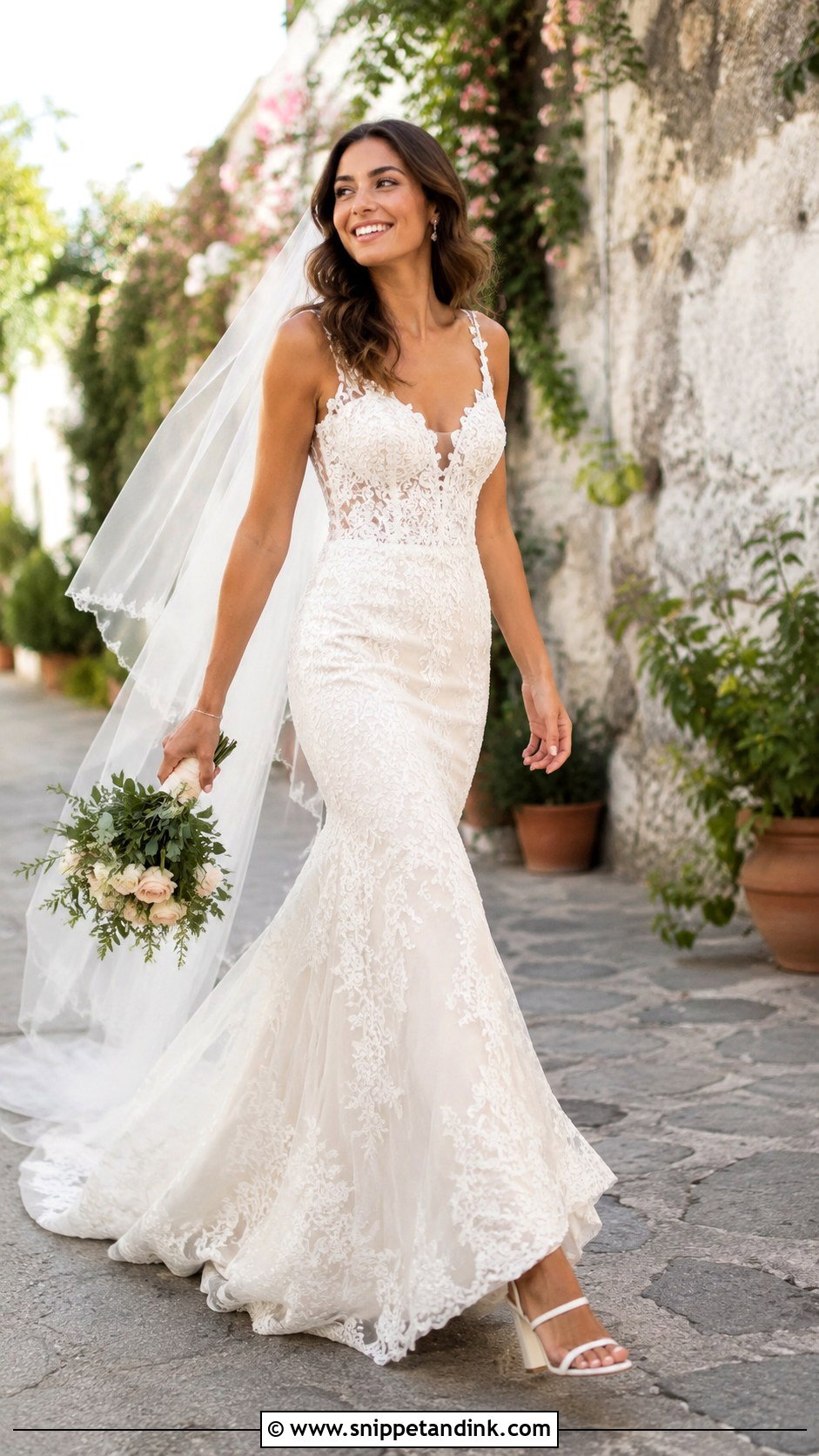
Fit and flare is the softer cousin of the mermaid: fitted through the bodice and upper hip, then opening gently. It gives shape without restricting your stride. In lace it leans romantic, in crepe it leans modern. Because the skirt sits close at the top, I’d steer away from stiletto heels on grass or gravel and into a block heel, which stops you sinking and keeps the hem level. A medium veil and soft curls keep the proportions right.
8. Slip Wedding Dress
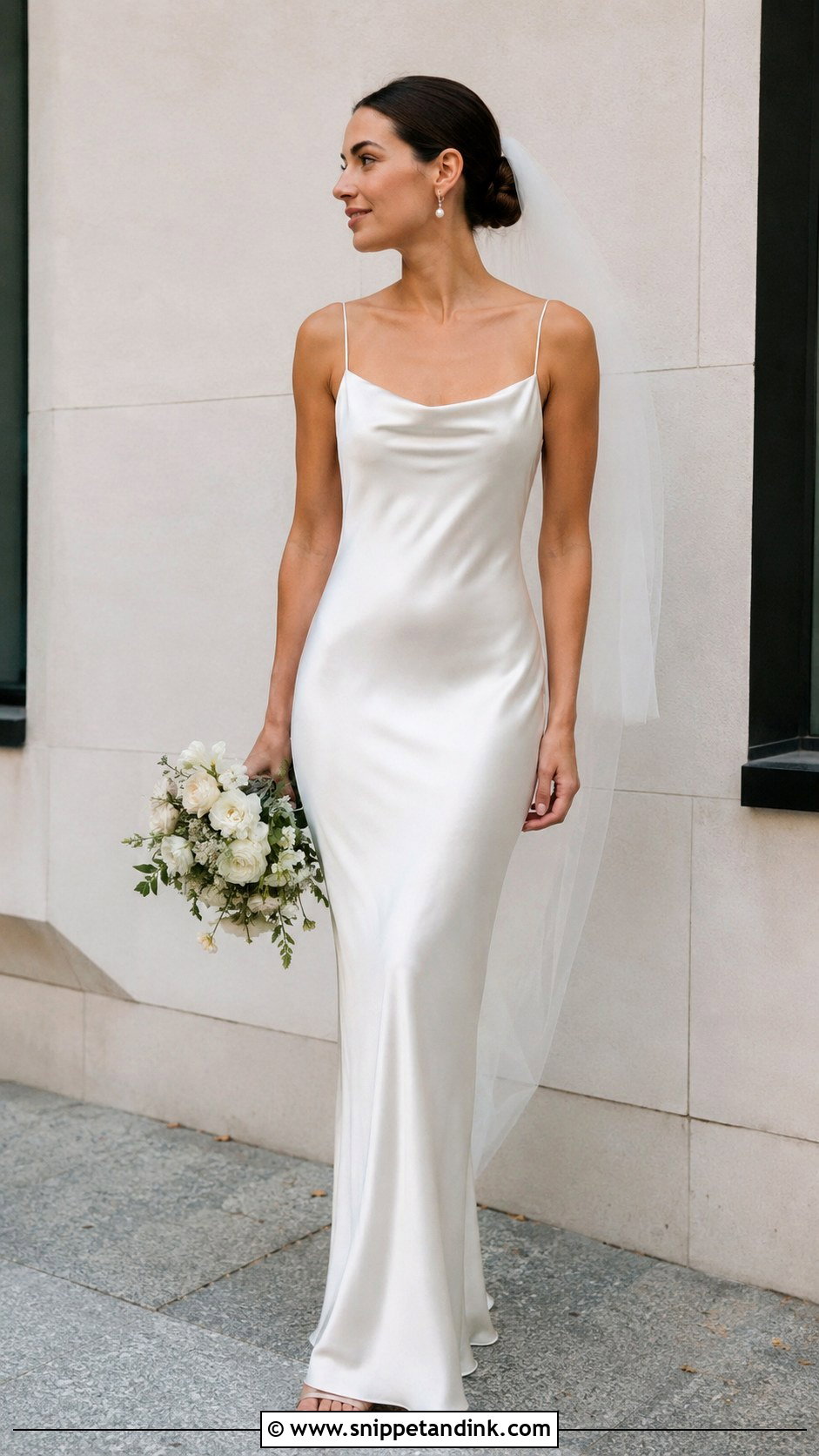
A slip is cut on the bias, which is what makes satin or charmeuse fall in that fluid way and also what makes it so unforgiving. Every seam and every bit of underwear shows through. If you love it, budget for a good fitting and the right undergarments before anything else. Barely-there heels, pearl drops and a sleek bun keep it clean. For more cover, a sheer long sleeve topper or a lace cape goes over it easily, which also makes it a smart reception change.
9. Tea Length Wedding Dress
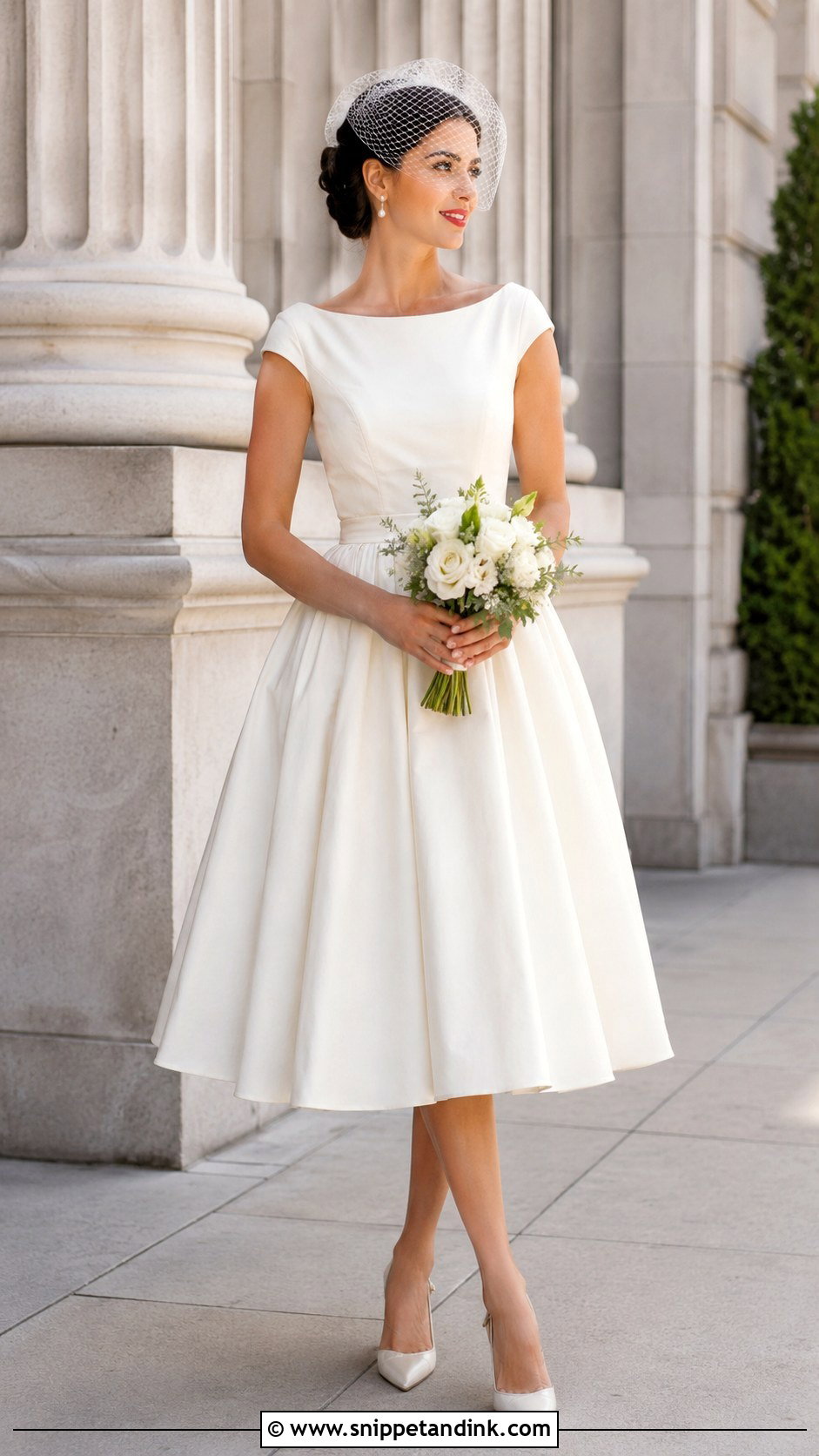
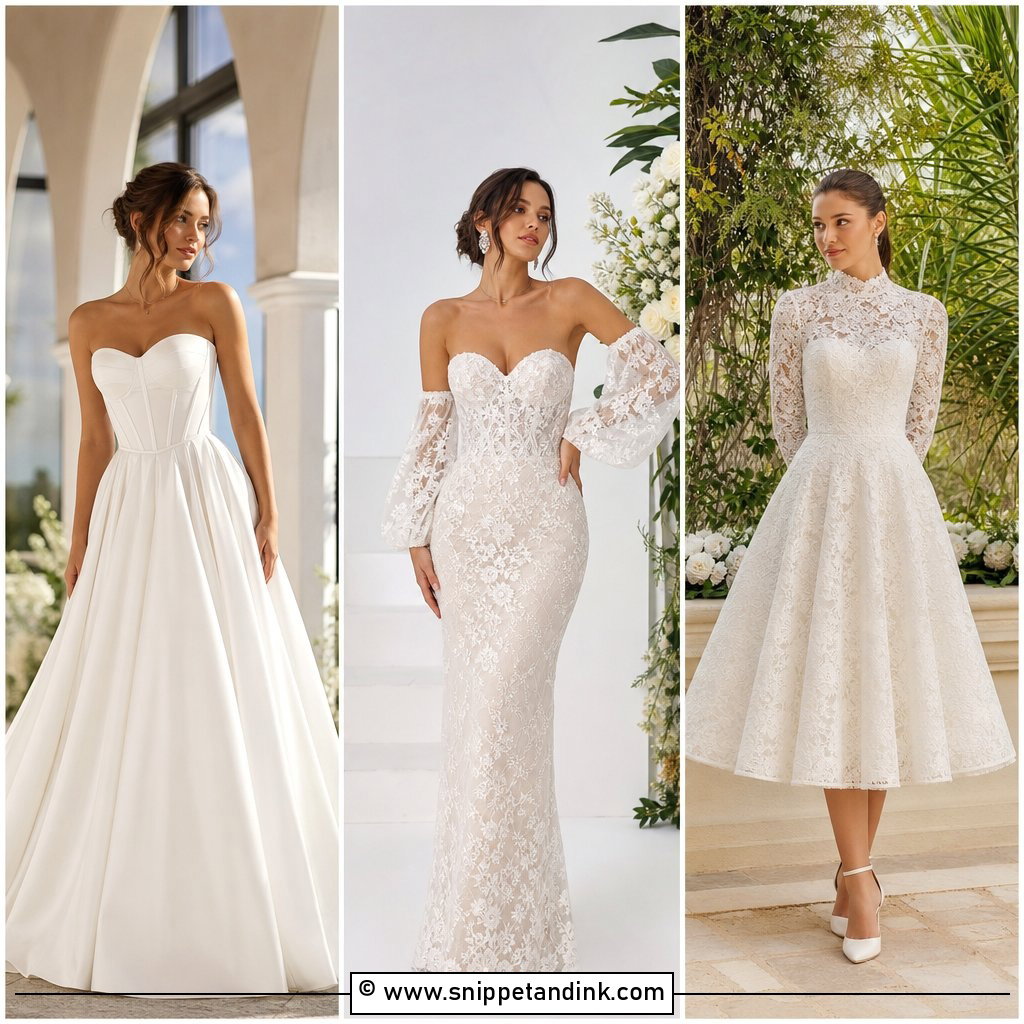
Tea length lands between the knee and ankle, and it brings a 1950s feel without trying hard. Shoes are on show, so pick ones you love: pointed pumps, slingbacks or embellished flats if you’ll be on your feet all day. A full skirt with a petticoat looks retro; a softer skirt looks more understated. I’d keep the veil short, a birdcage or a small blusher, since a long veil over a short skirt looks unbalanced. There’s less fabric to manage, so dancing is easy.
10. Mini Wedding Dress
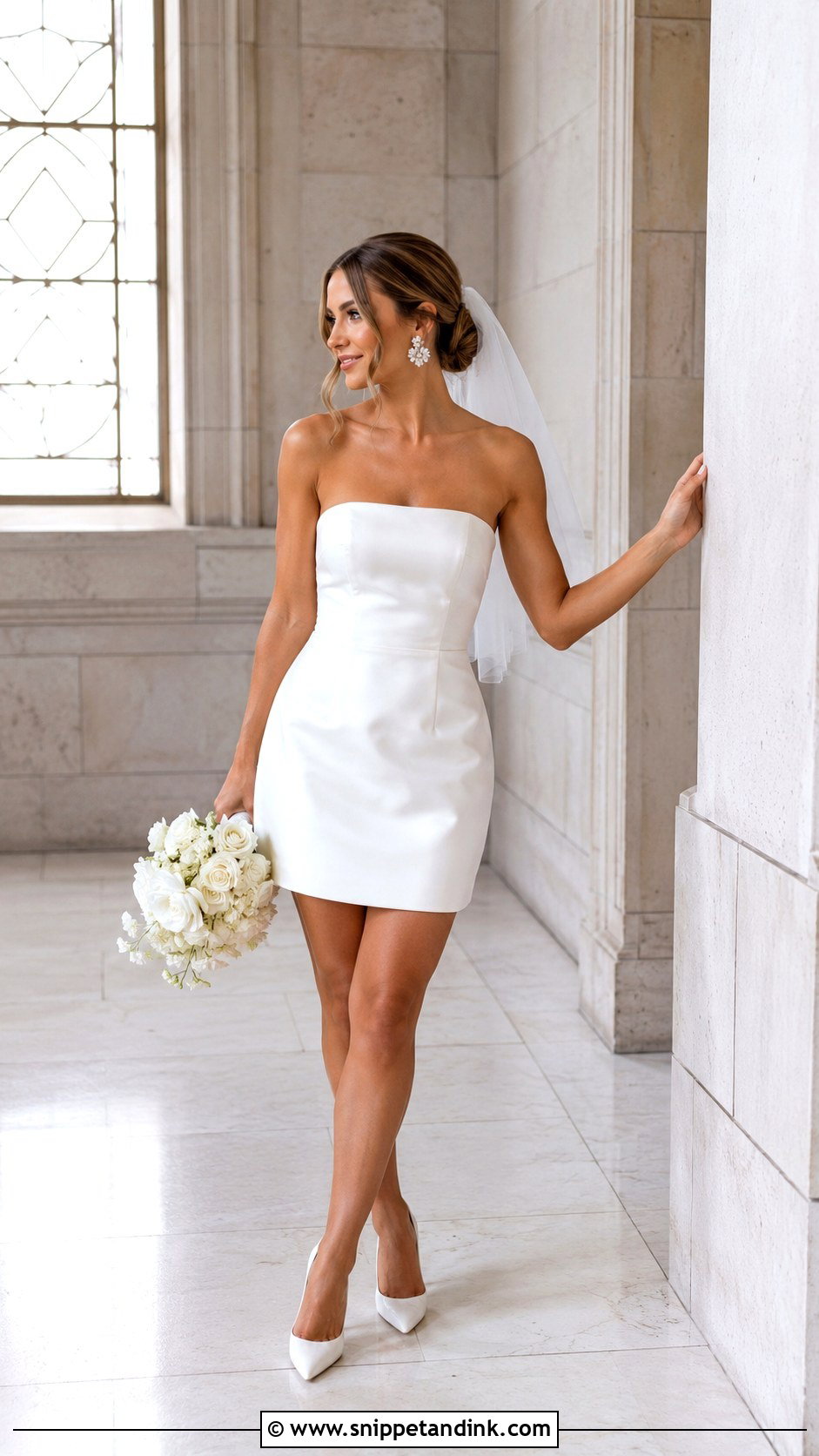
A mini needs bridal detail to look like a wedding dress rather than a party dress. Structured satin, a bow, pearl trim or feather cuffs do that. It’s a natural fit for courthouse ceremonies, elopements and after-party looks. Tailoring has to be precise, because a hem even slightly uneven shows on a short dress. Sheer tights in cold weather, bare legs in warm. A short veil and statement earrings finish it.
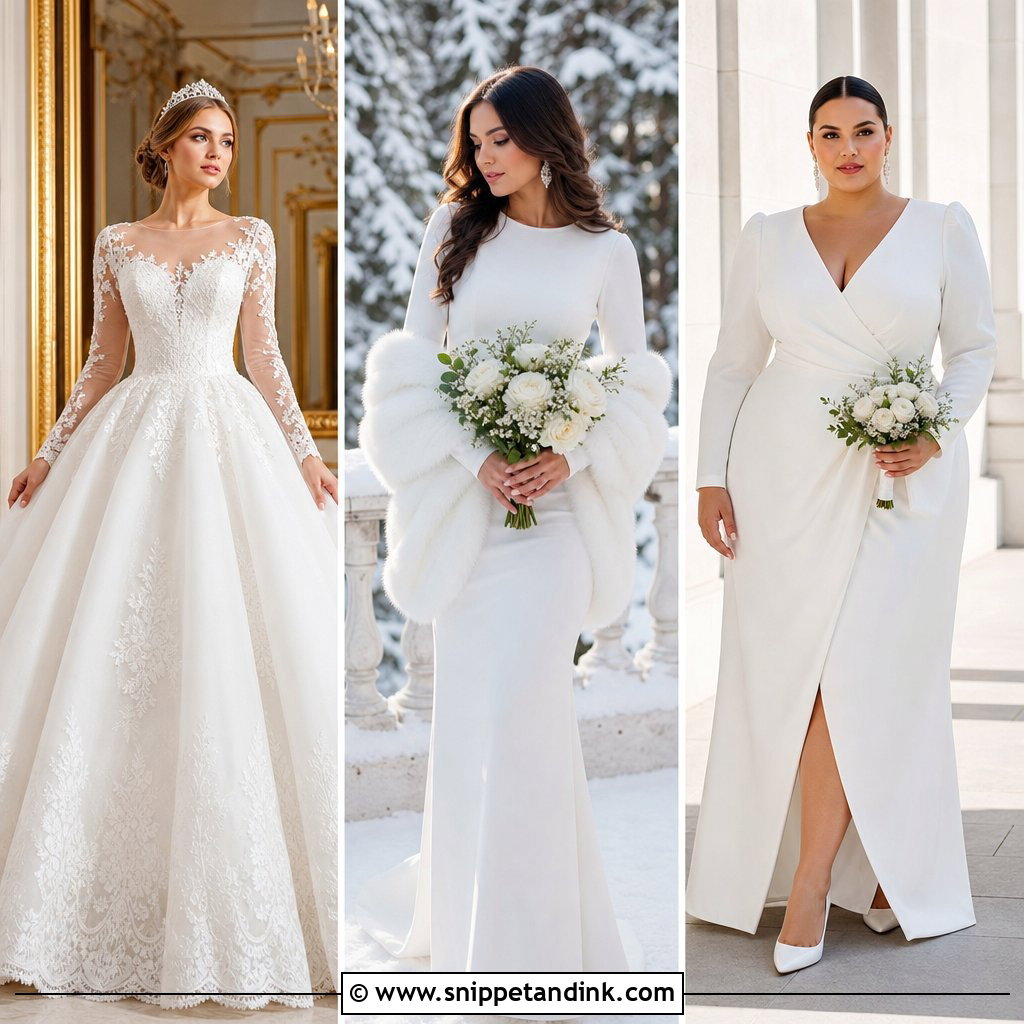
11. Long Sleeve Wedding Dress
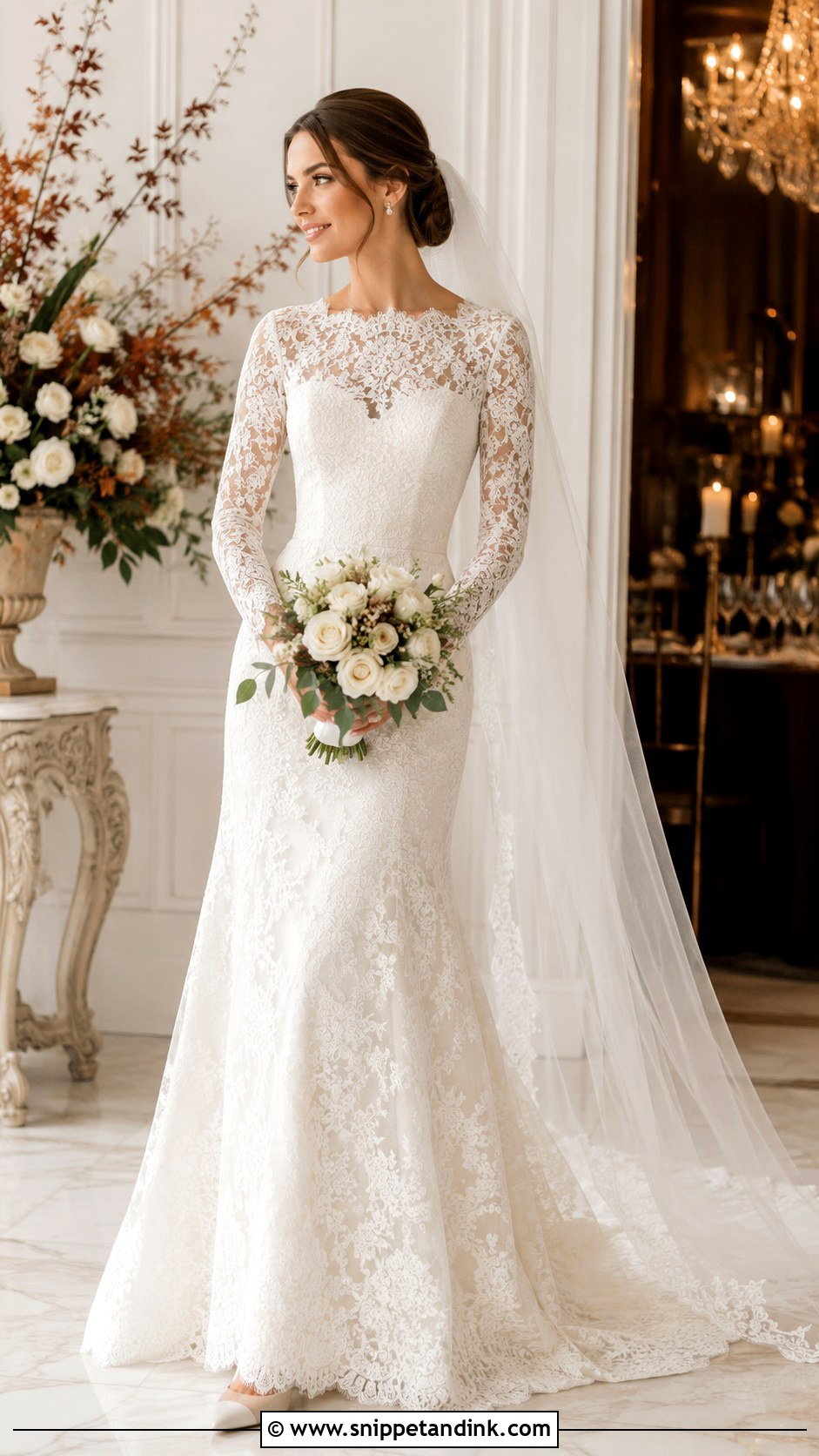
Long sleeves cover the arms without making a gown look heavy, provided the fabric is right. Lace and sheer illusion sleeves breathe; satin sleeves are warmer and look more formal. Set-in sleeves restrict arm movement more than people expect, so raise your arms and hug someone in the fitting room. Wear your hair up so the sleeves and neckline are seen, and keep earrings small if the lace is busy. Fall, winter and formal indoor weddings are where these come into their own.
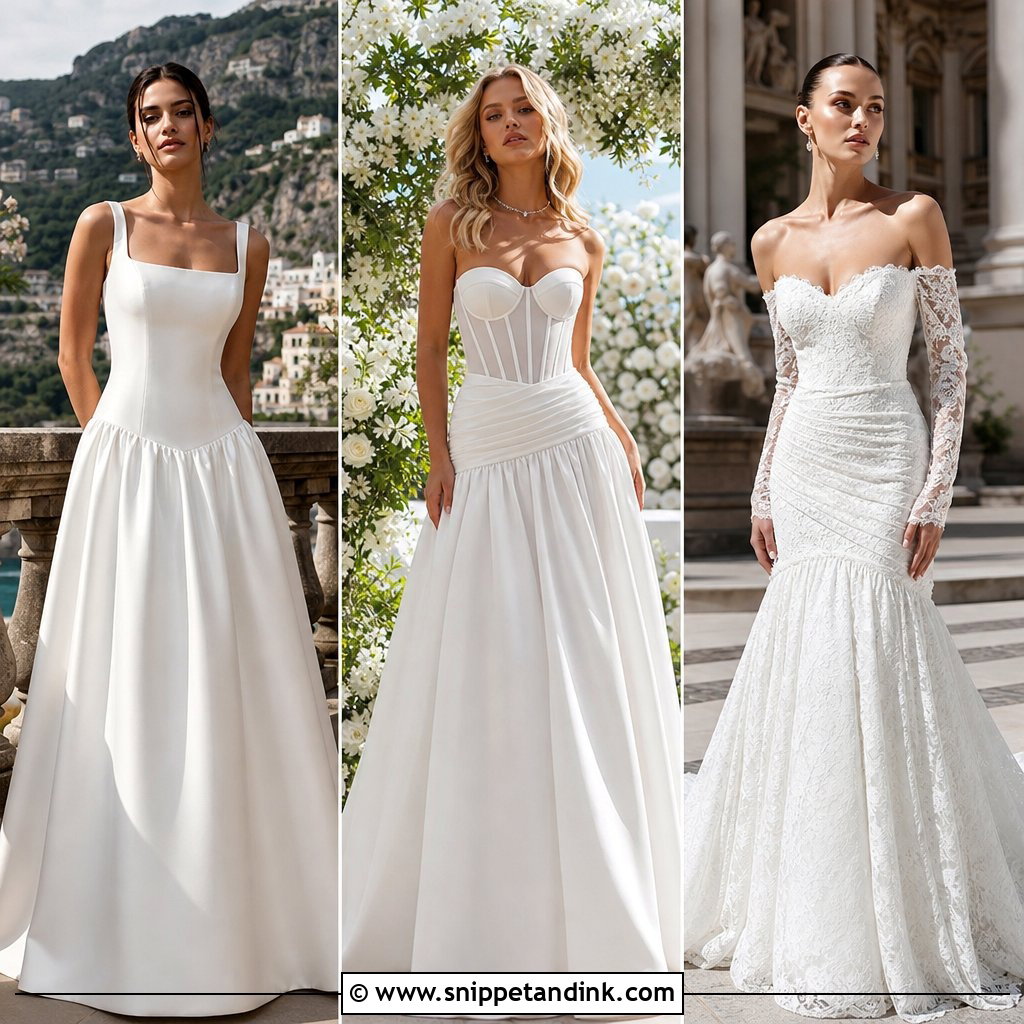
12. Off The Shoulder Wedding Dress
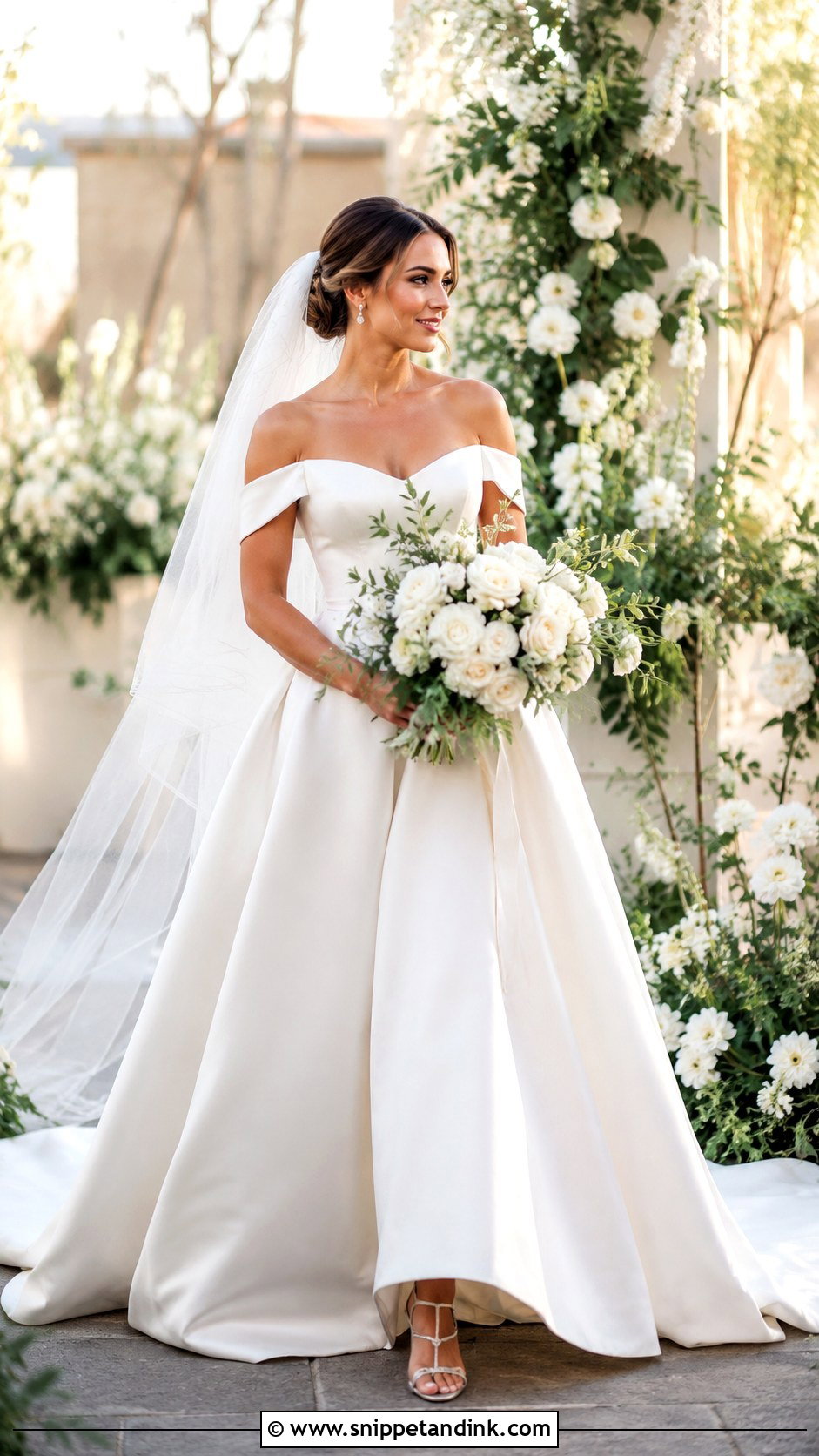
An off-the-shoulder neckline shows the collarbones and shoulders, and it works on A line, ball gown, mermaid and fit and flare cuts alike. The weak point is arm movement: the band sits across the upper arm, so you can’t lift your arms very high. I always make brides try waving and hugging. Support has to come from the bodice itself, with boning and a firm waist. Drop earrings beat a necklace here, and a low bun or half-up style keeps the shoulder line in view.
13. Strapless Wedding Dress
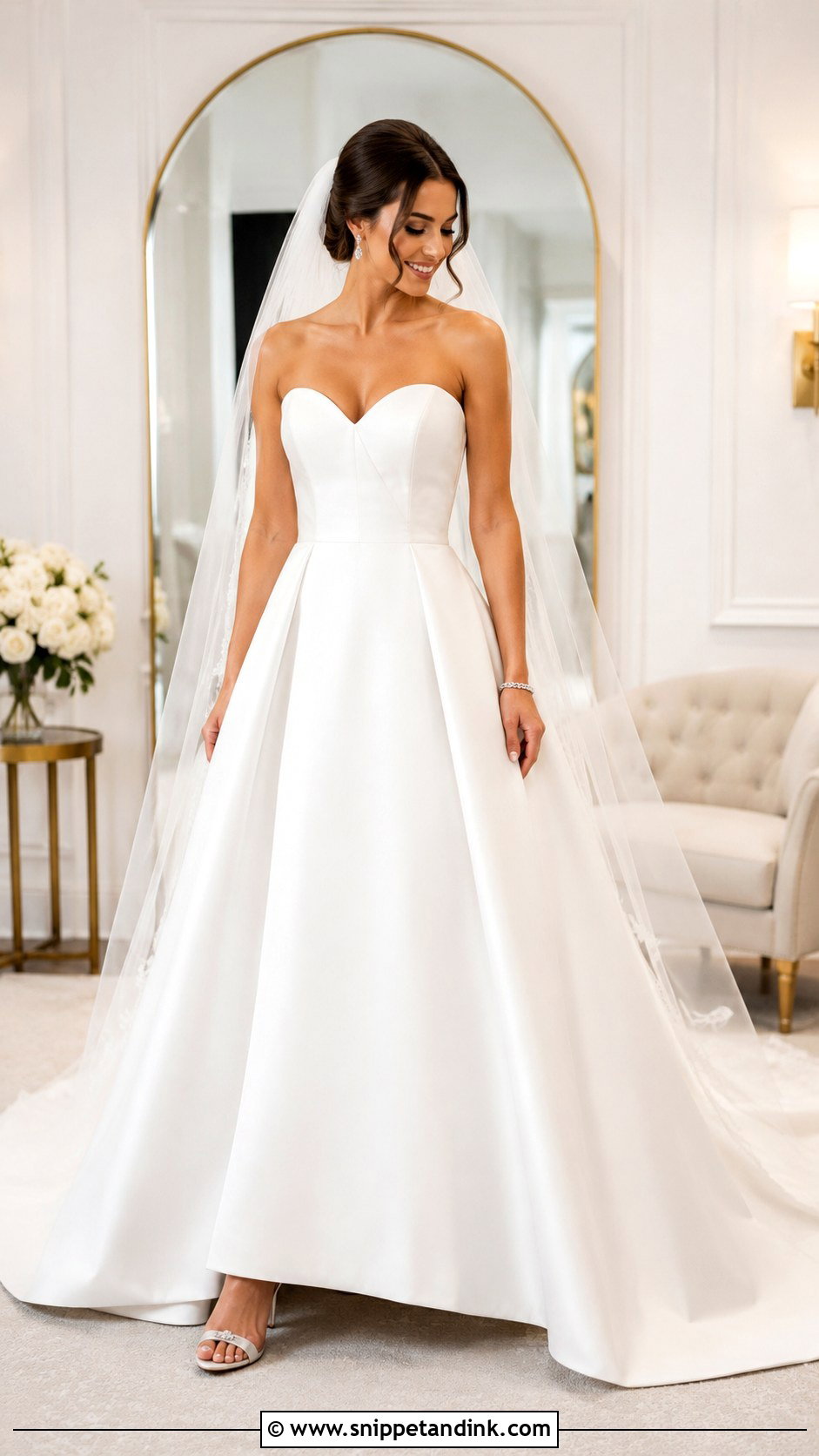
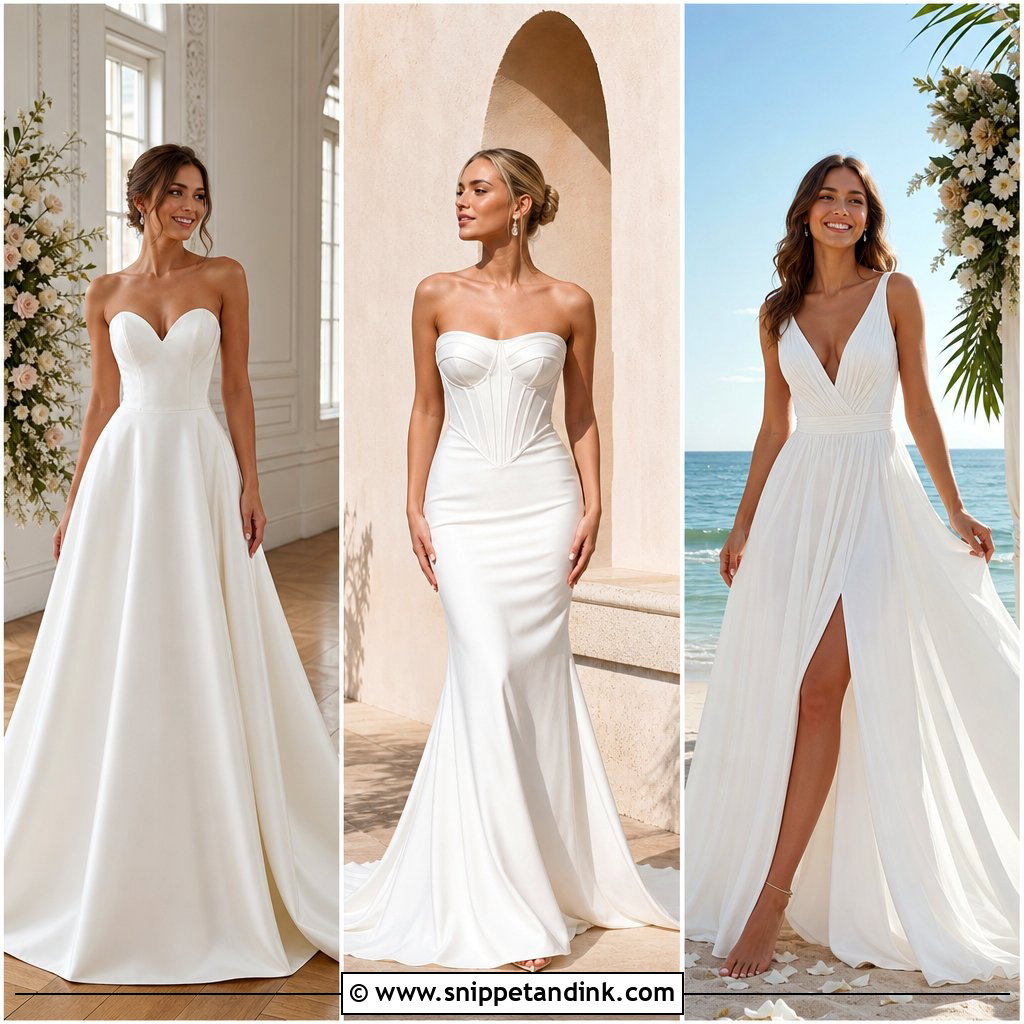
Strapless goes with almost every silhouette, but it lives or dies on its bodice. A well-built one has boning, a grip tape at the top and a waist stay, so you are not tugging it up all night. If you catch yourself hitching it in the shop, it won’t get better on the day. Sweetheart necklines read romantic; a straight-across top reads modern. A removable bolero or cape gives you ceremony coverage when a venue asks for it.
14. Square Neck Wedding Dress
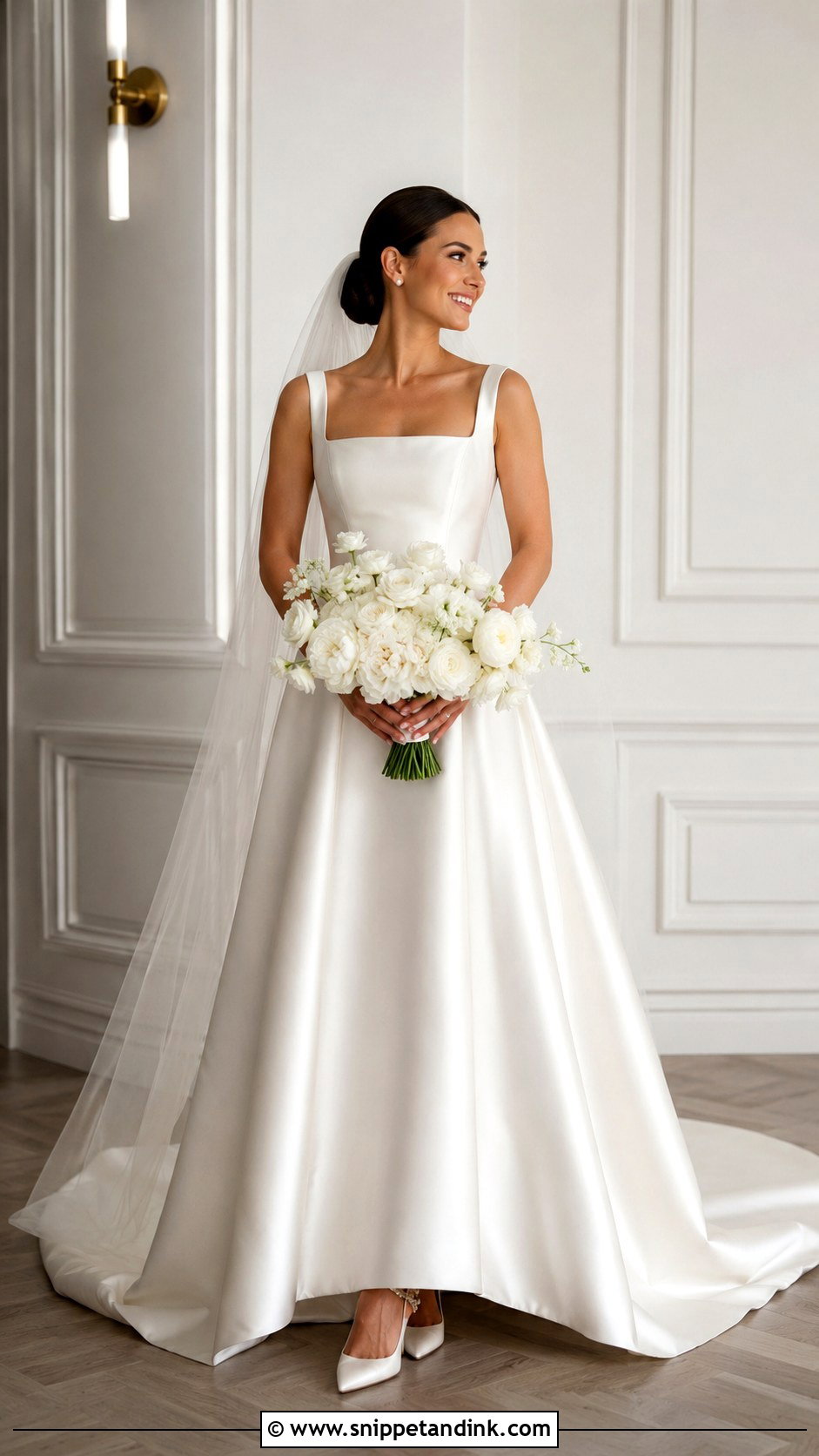
A square neck frames the collarbone with a straight edge and gives the bodice a crisp top. It sits nicely on A line, sheath, column and long sleeve gowns. The risk is the corners gaping when you lean forward, so check that before buying. Satin keeps it polished, crepe makes it minimal, lace softens it. A low bun, pearl studs and no necklace let the shape show.
15. V Neck Wedding Dress
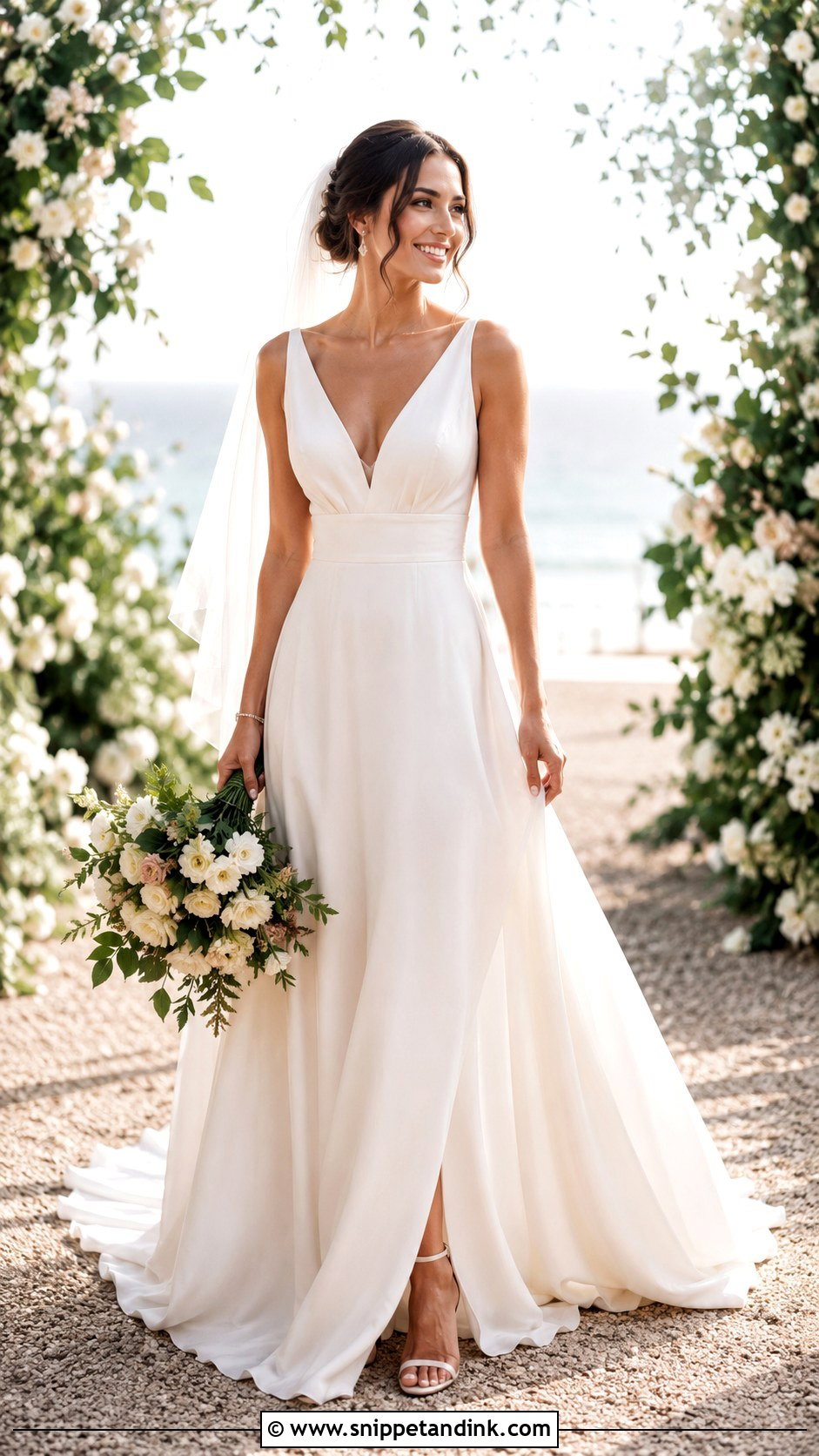
A V neck draws the eye downward, which lengthens the neck and torso. A shallow V suits most brides; a deep plunge needs mesh, tape or internal structure to stay in place through hugs and dancing. I’d skip a pendant unless the bodice is plain; earrings do the job without crowding the point of the V. It suits flowing skirts, fitted gowns and lace bodices, and it is one of the cooler necklines for summer.
16. High Neck Wedding Dress
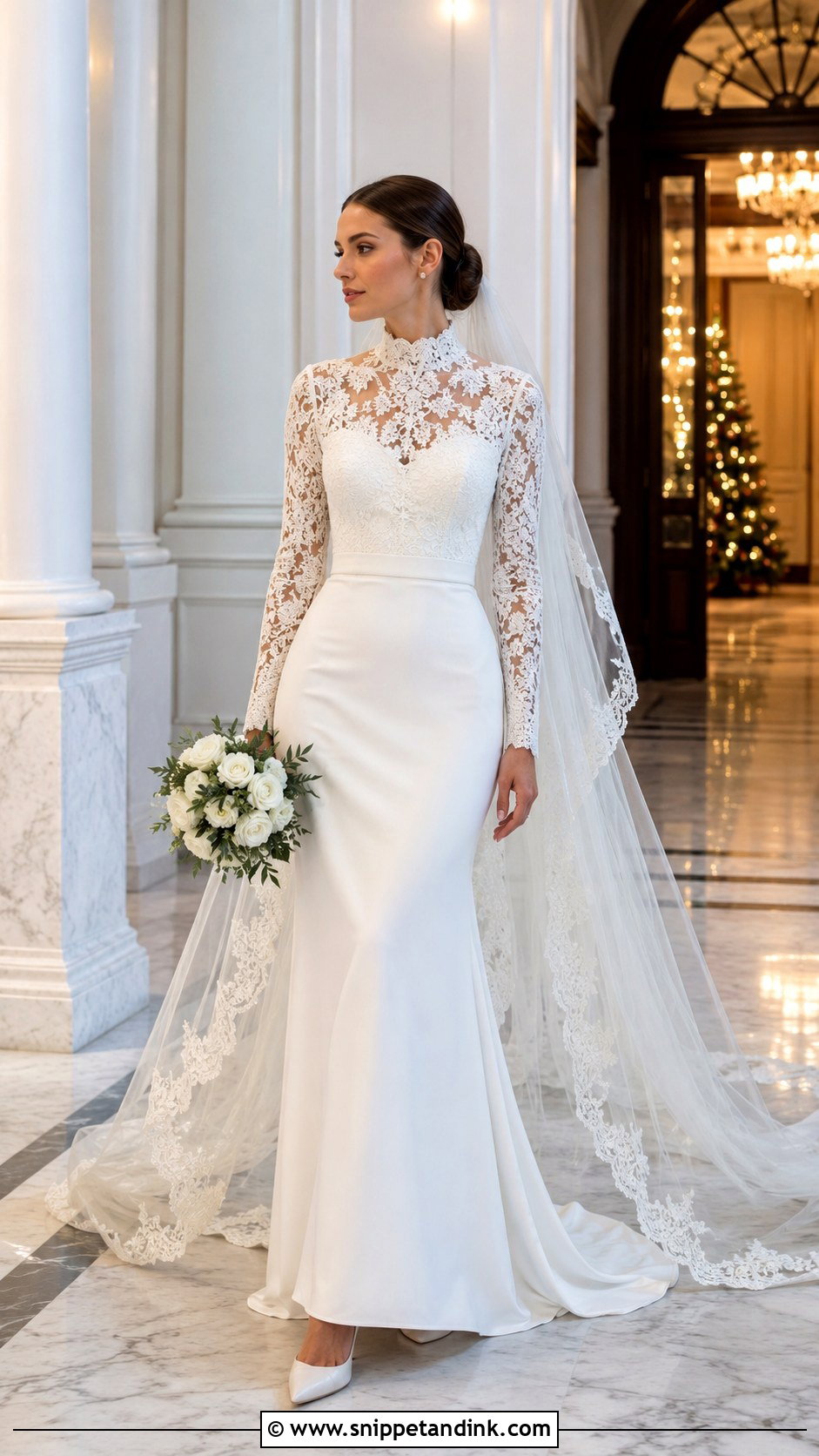
A high neck gives full coverage and still looks sharp. Lace makes it regal, crepe sleek, sheer illusion fabric lighter. It’s the neckline that most needs an updo, because hair down hides the detail. Small studs only; a necklace has nowhere to go. In a warm room a high lace neck can get hot, so for summer I’d look for an illusion neck with a mesh base. In winter and at formal venues it’s at home.
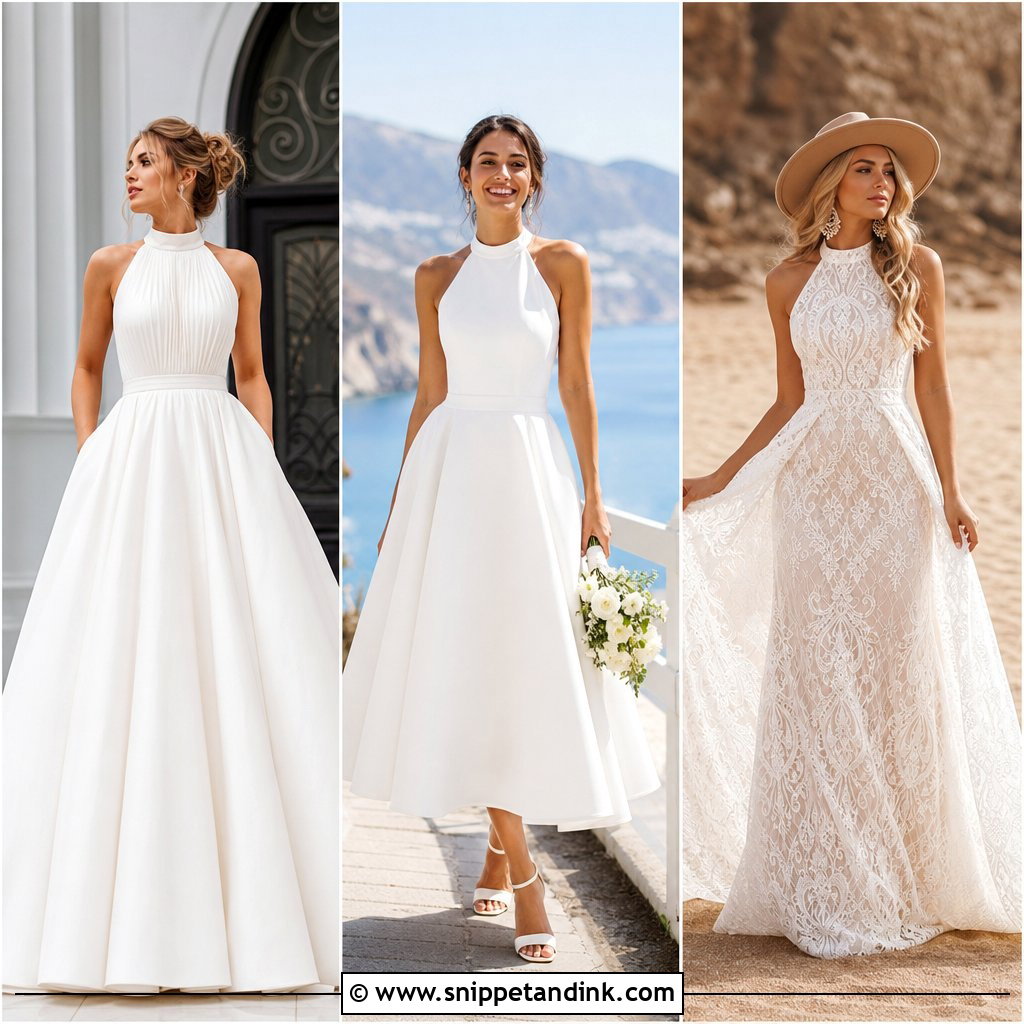
17. Halter Wedding Dress
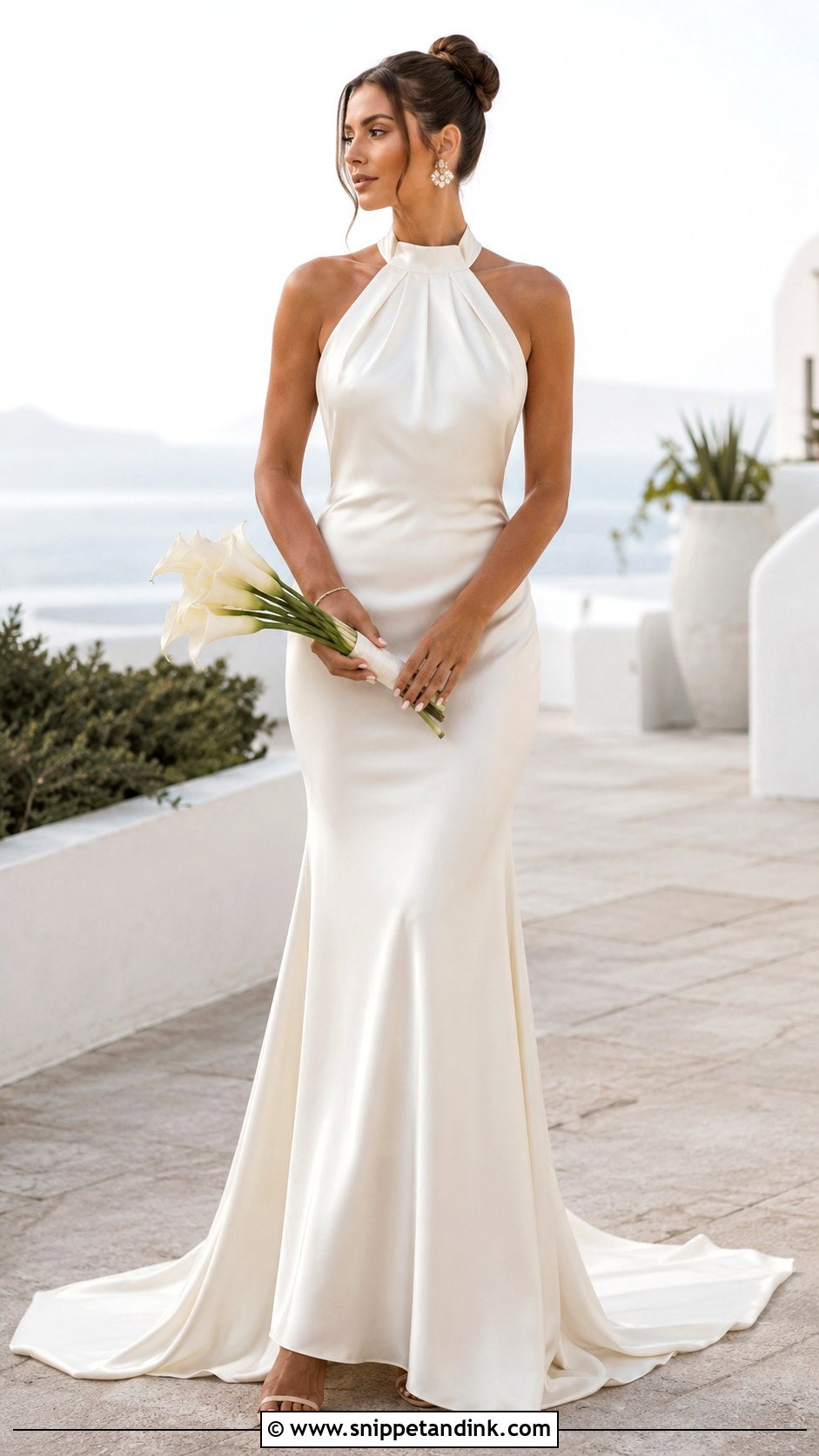
A halter strap ties or fastens behind the neck and shows off the shoulders and back. It’s very comfortable for dancing because the bodice is held from above. Satin looks sleek, chiffon soft, beading glamorous. Skip the necklace. A high bun or smooth ponytail keeps the halter line visible. Check the neck strap after an hour of wear in the shop: if it presses into the back of the neck, a wider band or a different fastening will fix it.
18. Corset Wedding Dress
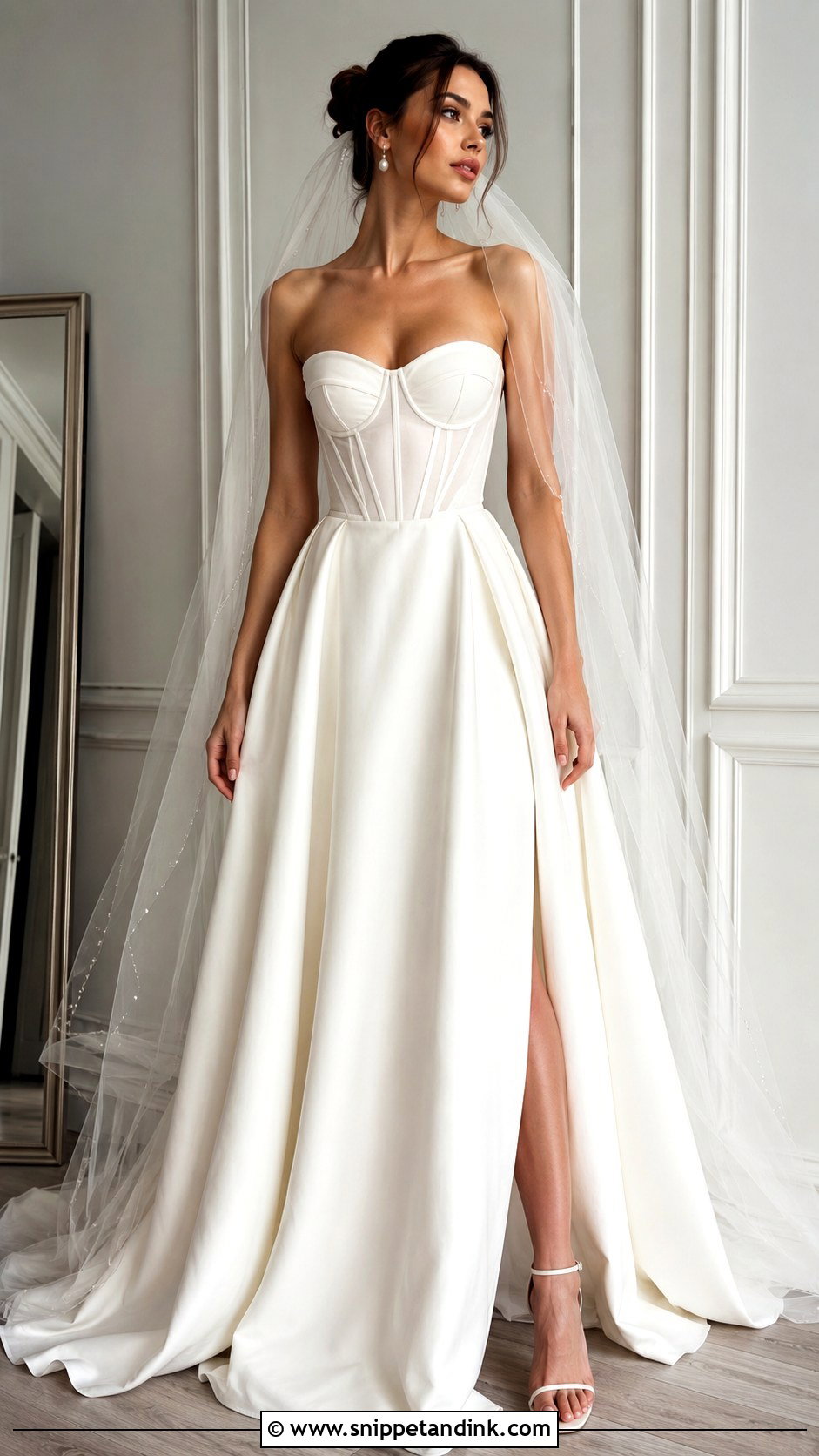
A corset bodice shapes the waist and supports the bust, with boning either visible as a design feature or hidden under satin or lace. It pairs with ball gowns, A lines, fitted skirts and even minis. A corset should feel firm, not painful. If you can’t breathe deeply or sit comfortably after ten minutes, it’s too tight or cut wrong for you. Keep accessories simple when the bodice is detailed, and let the hairstyle match the mood of the skirt.
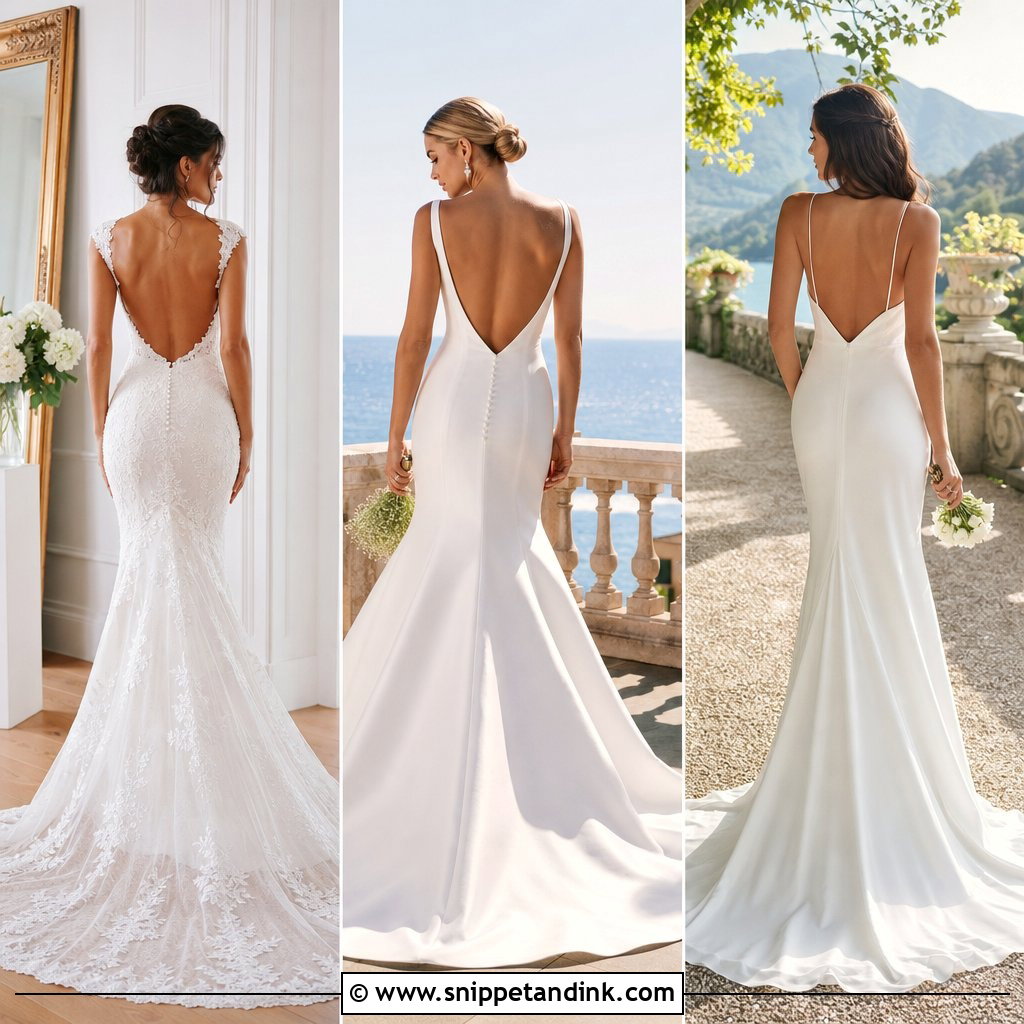
19. Lace Wedding Dress
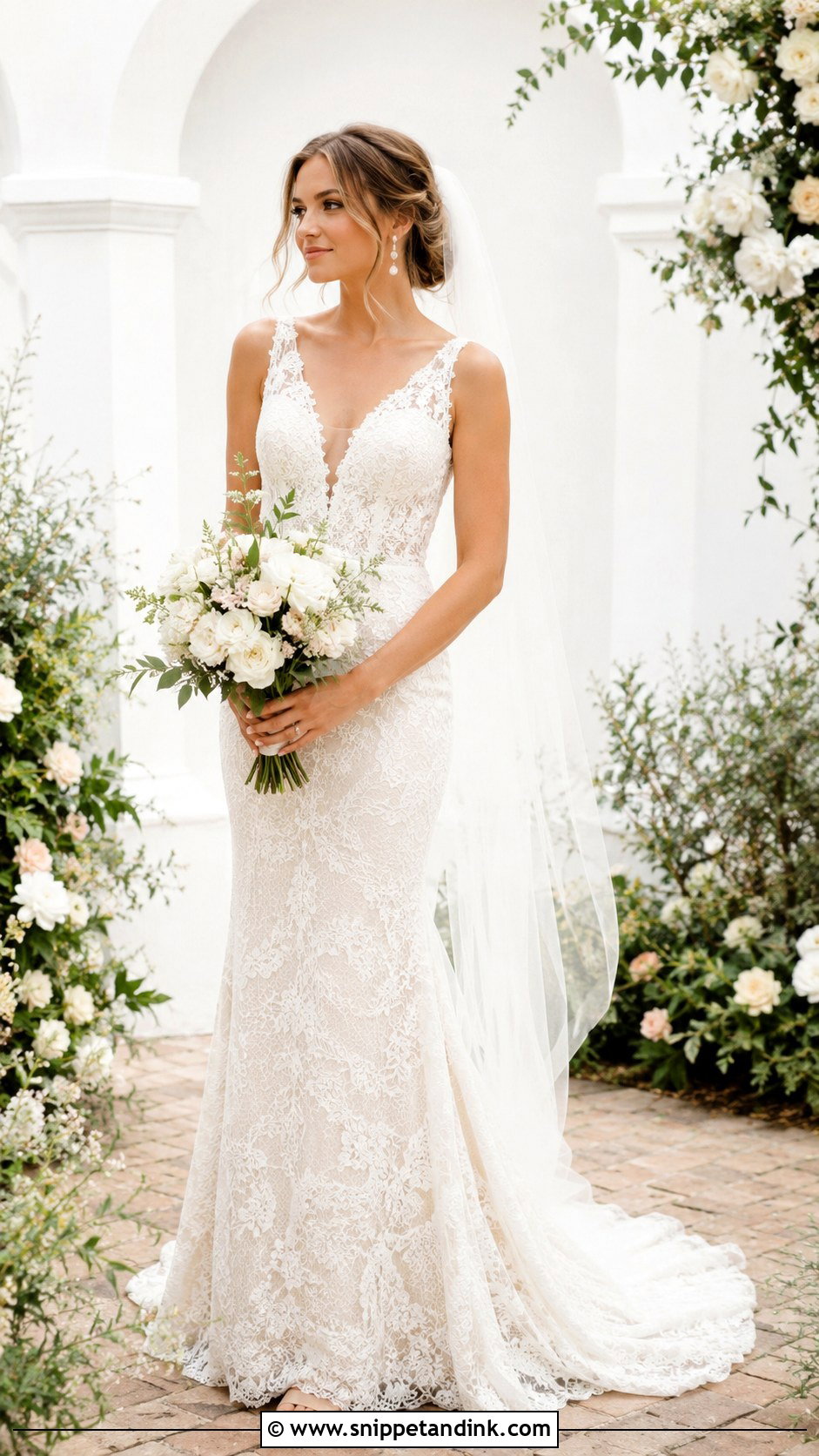
Lace changes character with its pattern. Floral lace is classic, geometric lace modern, Chantilly fine and light. Heavier corded or guipure lace holds its own shape, which suits a fitted dress; fine lace drapes better over a full skirt. Alterations on lace take more care, because a seamstress often has to move motifs by hand around the seams. Pearl earrings and simple heels are enough. If the lace is bold, wear a smooth hairstyle.
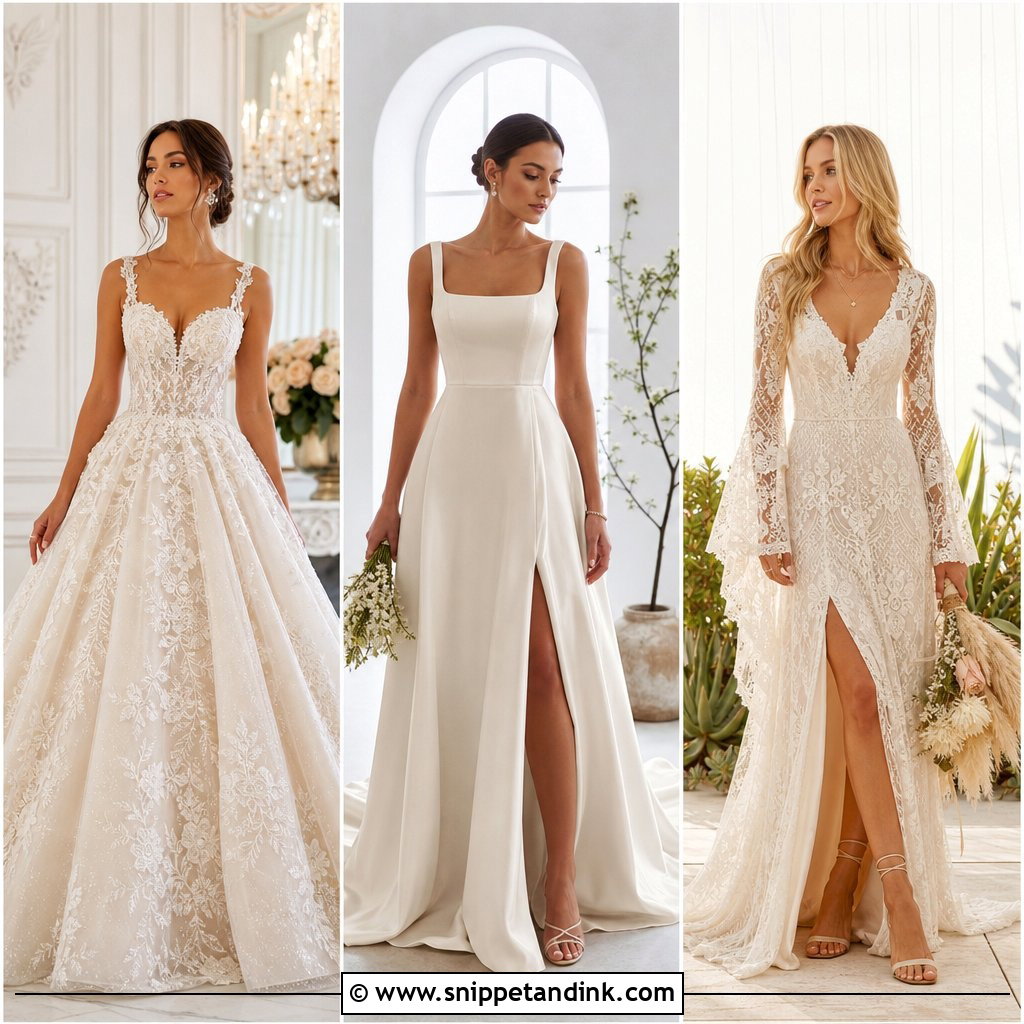
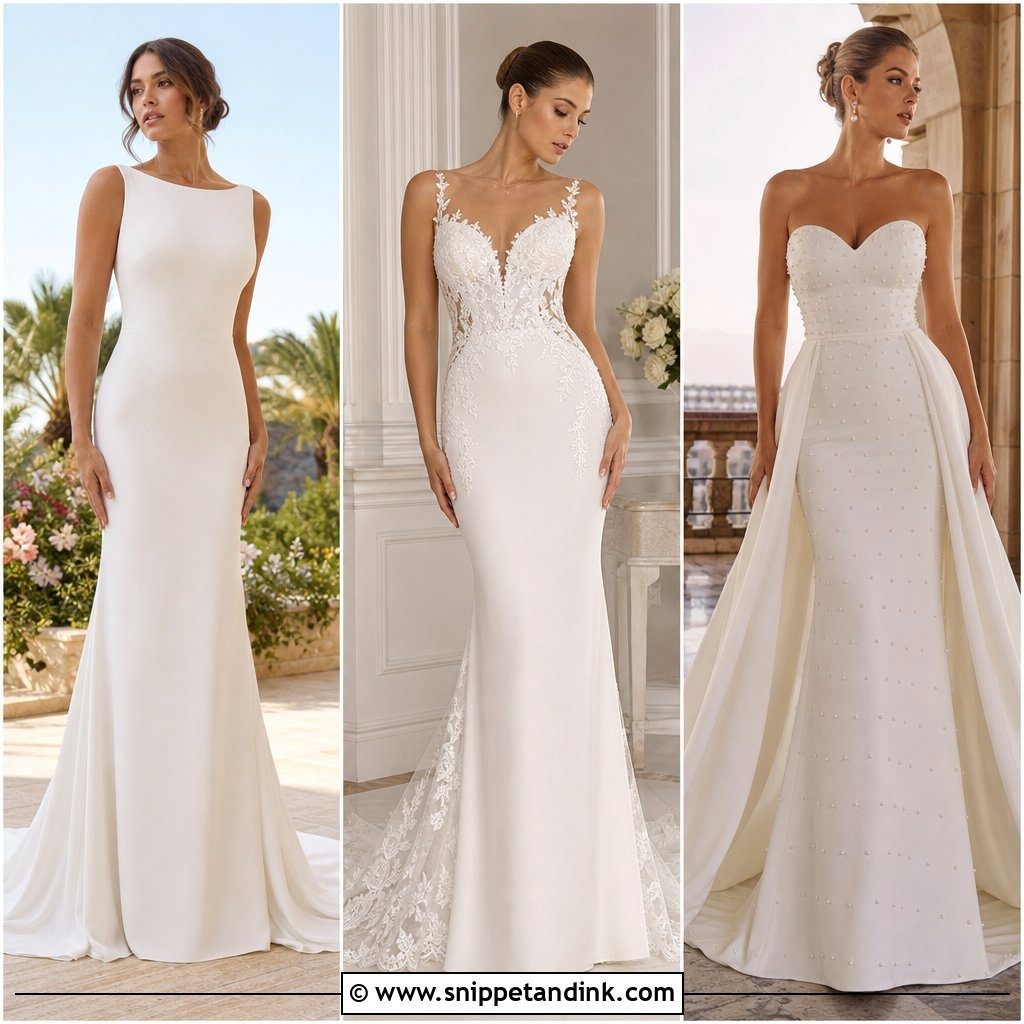

20. Satin Wedding Dress
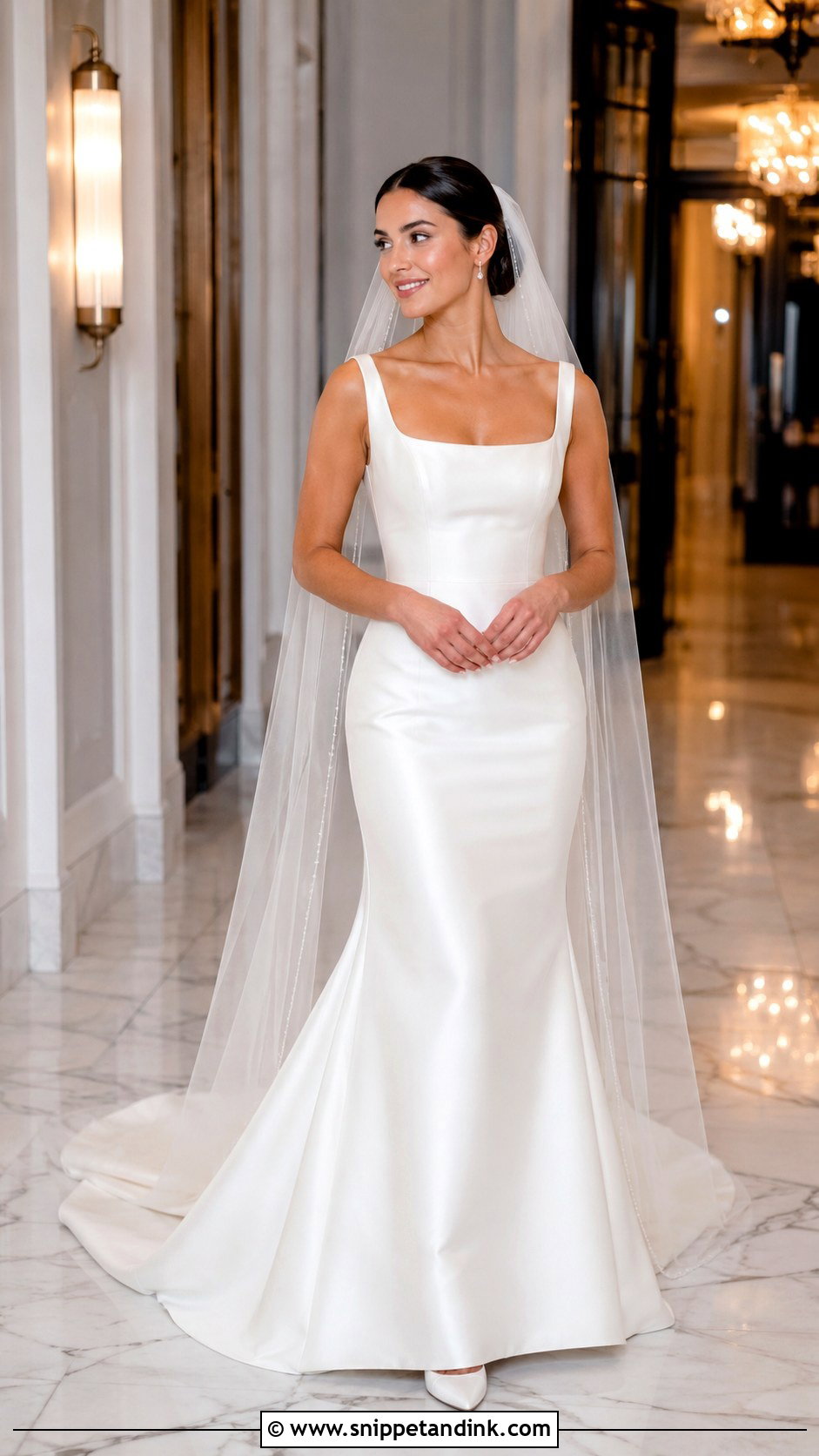
Satin has a smooth, luminous surface that suits both a slip and a full ball gown. The catch: it reflects light and shows every crease and every place the fit is off. Good lining and careful tailoring matter more on satin than on almost any other fabric. Classic pumps and pearl earrings are enough; heavy accessories fight its shine. Bring a steamer on the day, since satin creases the moment you sit.
21. Tulle Wedding Dress
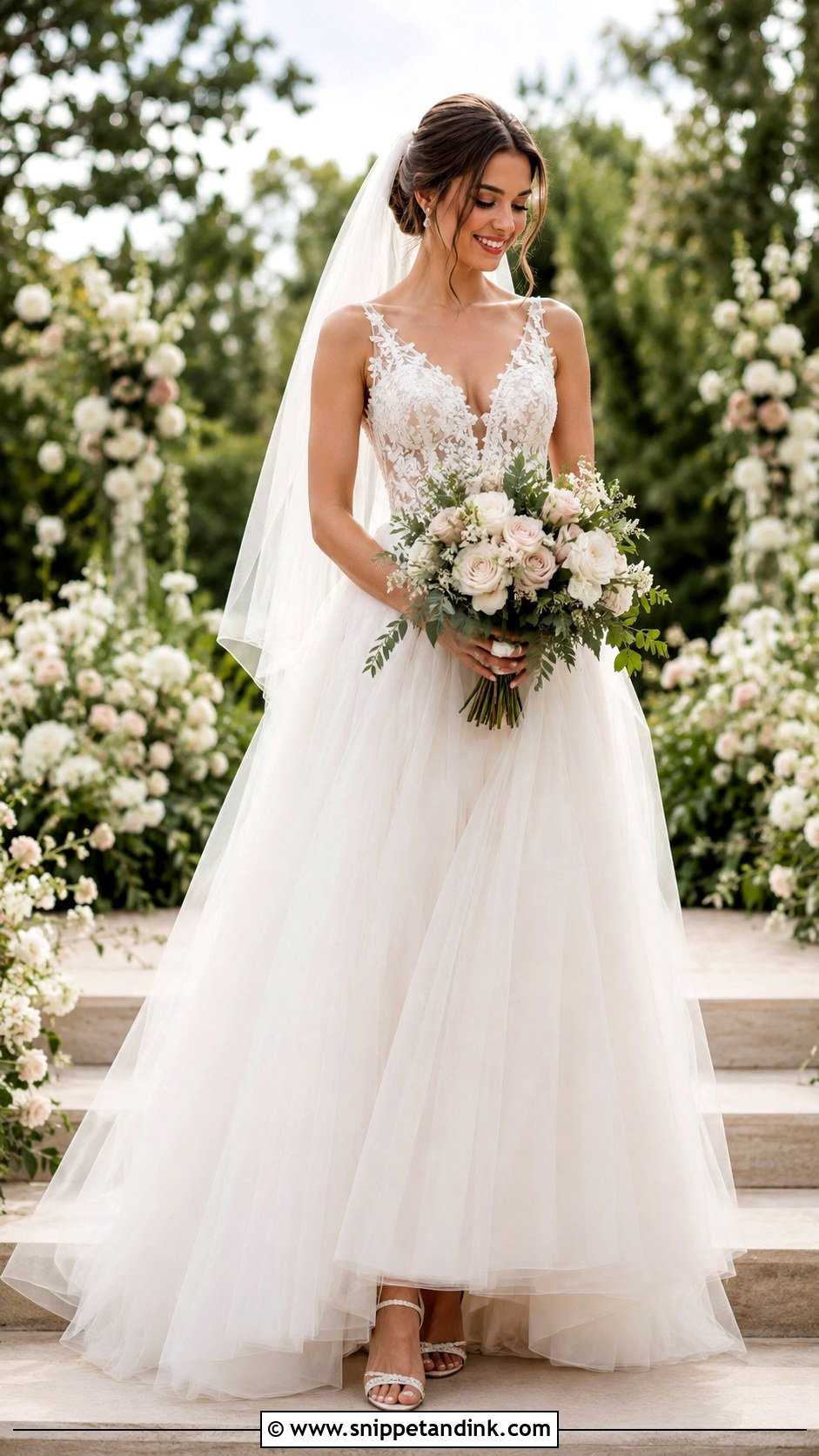
Tulle is a fine net, and in layers it builds volume that still looks light. It’s used for most ball gowns and full A line skirts. Plain tulle reads dreamy and minimal, embroidered tulle adds detail. Tulle snags on rough bark, jewelry and velcro, so outdoors I’d watch where you stand for photos. Delicate heels, a simple veil and small earrings keep it from looking fussy. A loose bun suits it, and natural light flatters it best.
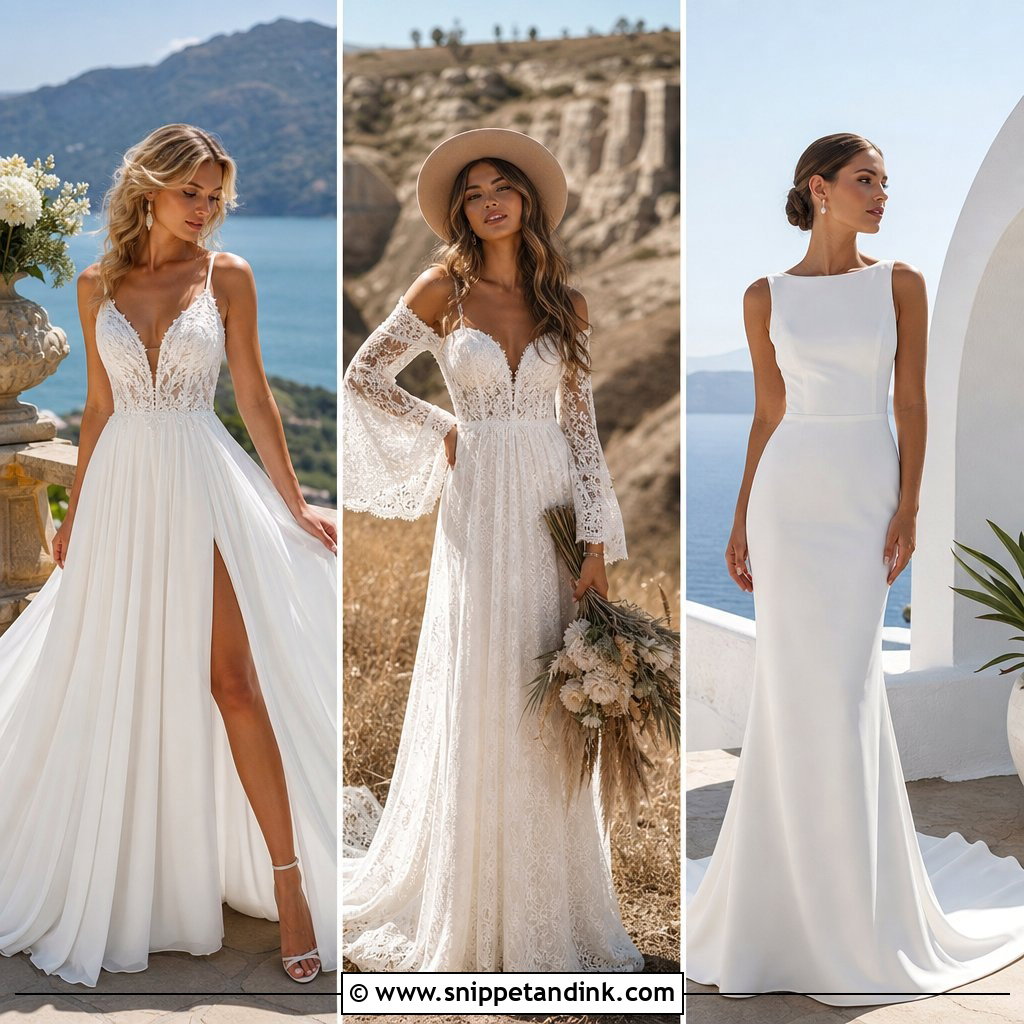
22. Boho Wedding Dress
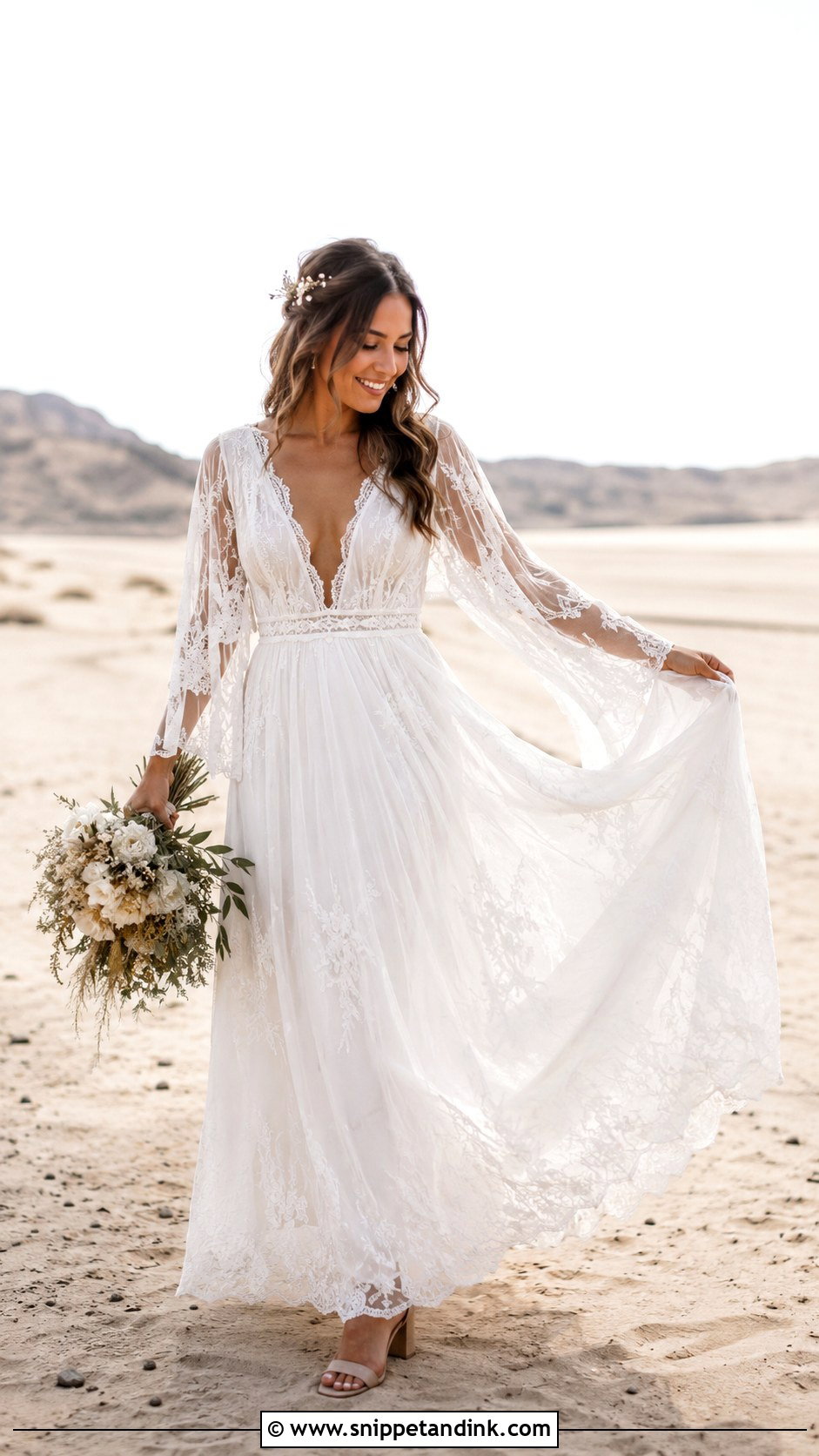
Boho dresses tend to be lighter: soft lace, flowing sleeves, unlined skirts, open backs, light embroidery. They pack well and move outdoors, which is why they suit desert, beach and garden weddings. Loose waves, hair pins and sandals or block heels belong with them; a formal tiara or crystal jewelry does not. A sheer cape or soft veil adds ceremony weight without stiffening it. Check open-back styles for bra options early.
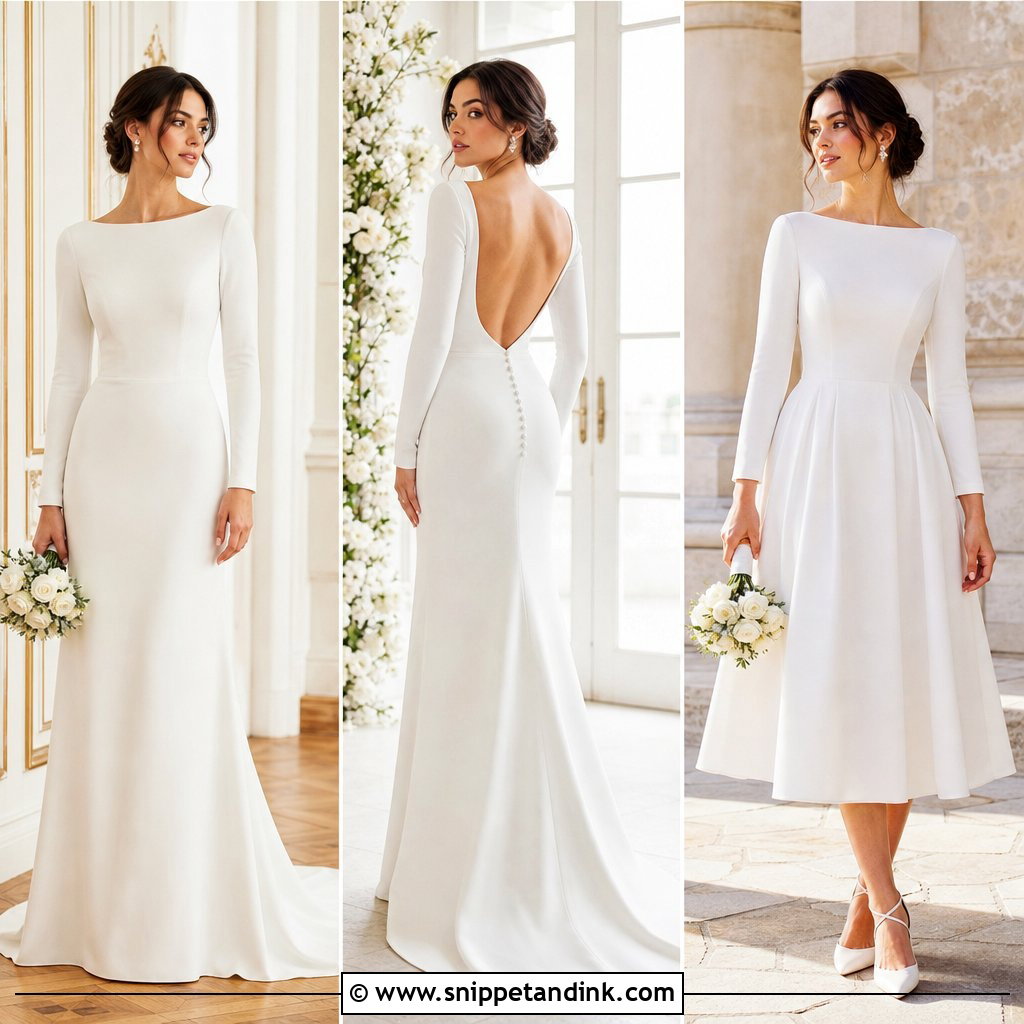
23. Minimalist Wedding Dress
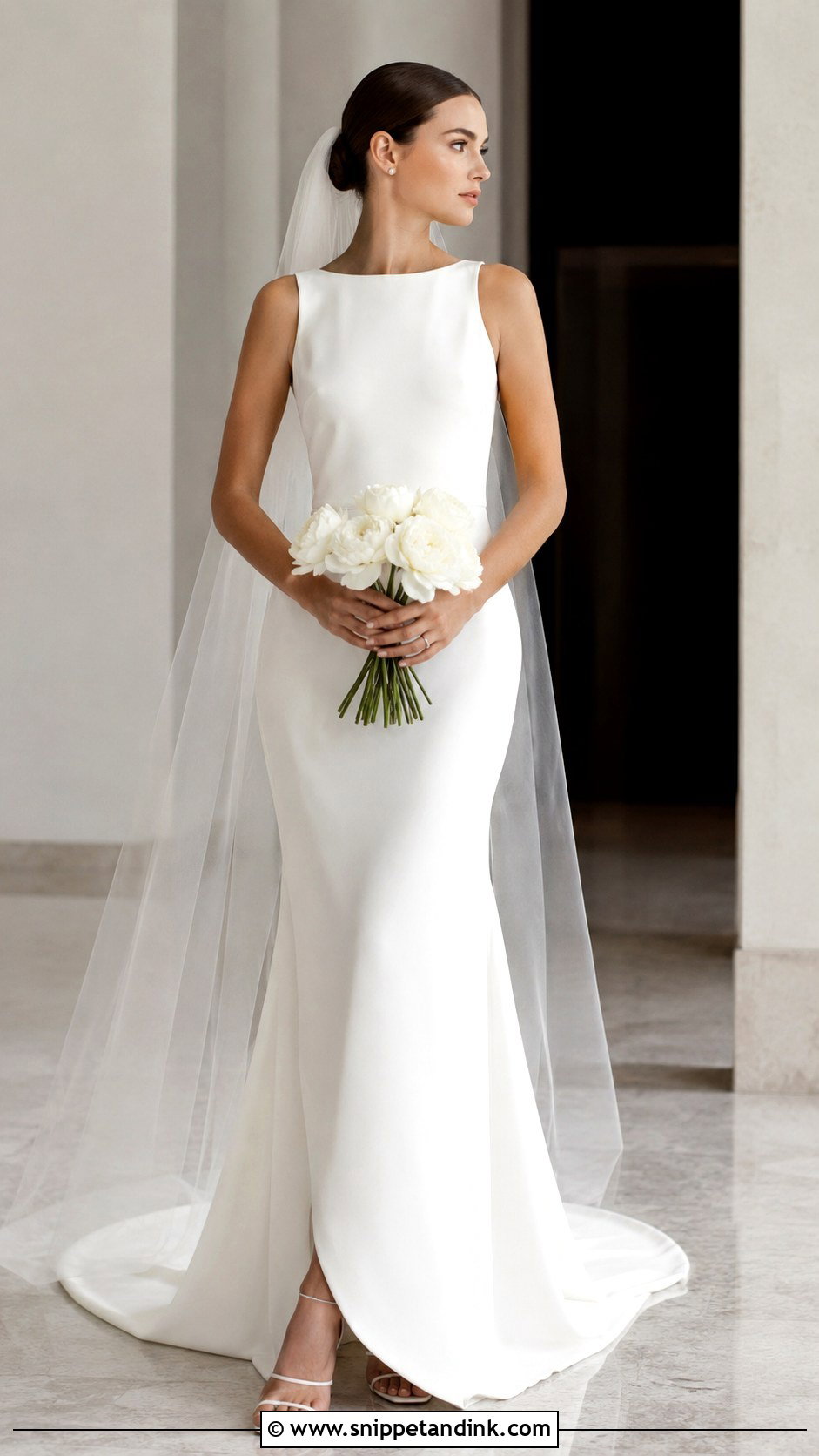
On a dress without decoration, the cut and fabric carry everything. Crepe, satin and mikado hold their shape and suit minimal designs best. A square neck column, long sleeve sheath or structured A line all work. Fit is the whole story: the seams must lie flat and the hem fall cleanly. I’d let one detail do the talking, a low back, a sculptural bow or strong sleeves. Sleek heels, pearl studs, a smooth bun and a plain veil keep it calm.
24. Two Piece Wedding Dress
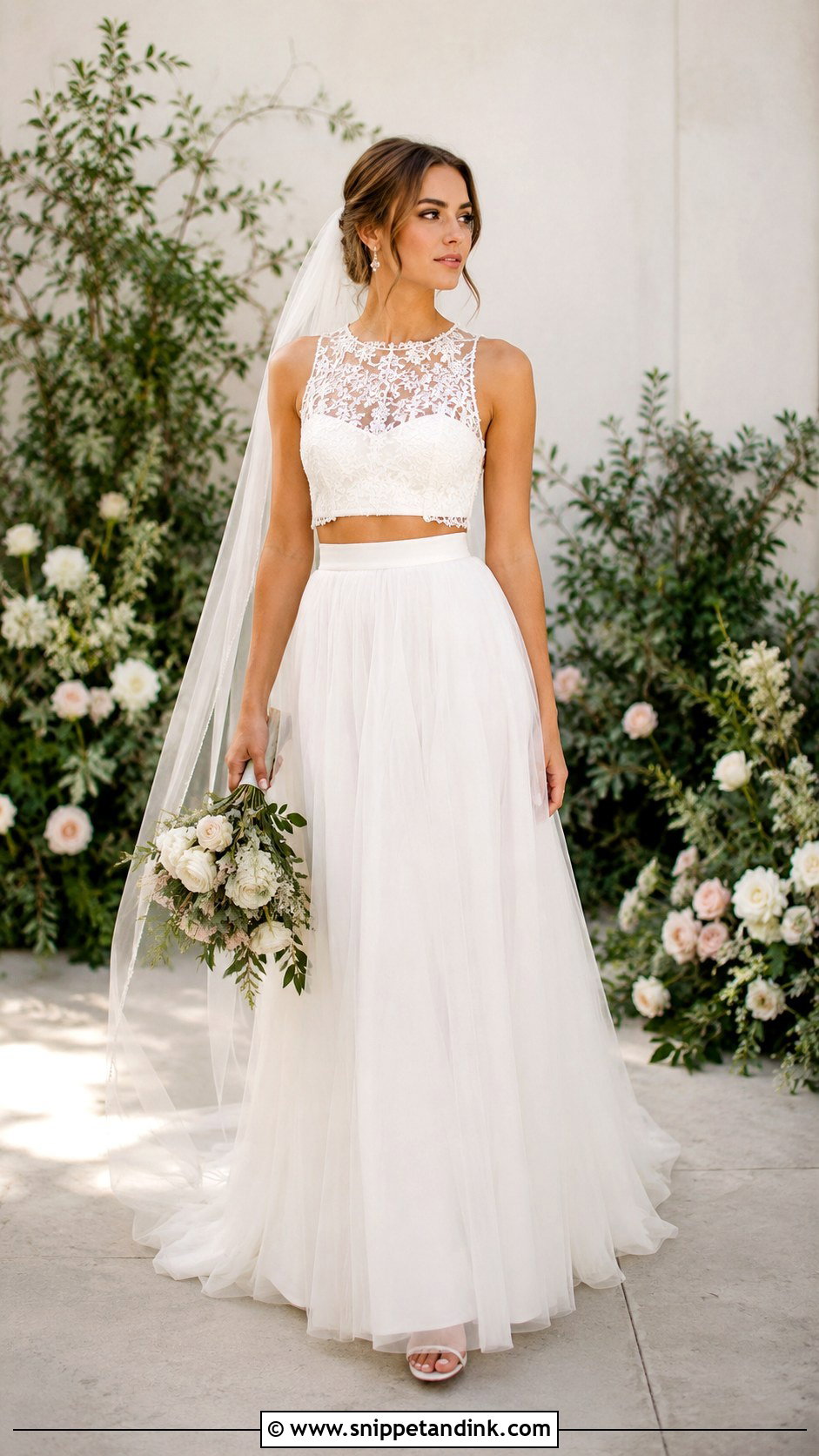
Separates let you mix sizes, which is useful if your top and bottom measure differently. A lace crop top with a high-waist tulle skirt looks romantic, a satin top with a column skirt looks sleek, and tailored trousers suit a modern ceremony. The gap between pieces is the thing to test. Raise your arms and sit down to see how much skin shows. If the top is detailed, keep the skirt plain, and pick jewelry that ties the two together.

25. Convertible Wedding Dress
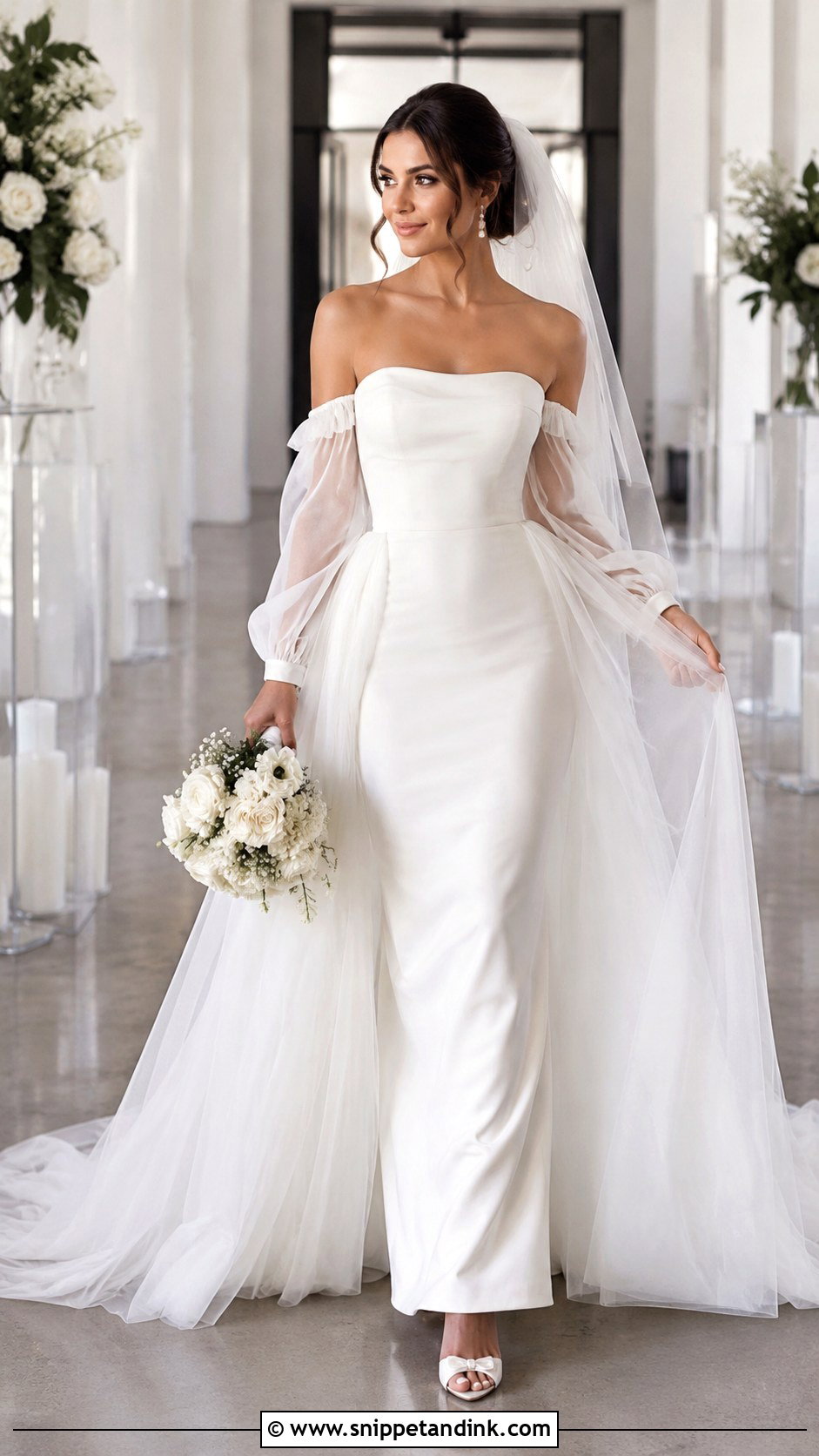
A convertible wedding dress gives you two looks in one gown: a detachable overskirt, removable sleeves, a cape or a train that comes off for the reception. A fitted crepe gown with a tulle overskirt is the classic version. Ask how each piece fastens. Hidden hooks or buttons are more secure than snaps, and someone in your party should practise the change before the day. Check both versions from the back in a mirror; the underlayer must look finished on its own.
Let the Venue Rule Some of These Out
Brides often pick the dress before visiting the venue properly, and then find out the aisle is gravel or the ceremony room is too small for a ball gown. A quick walk through the venue with the dress in mind saves a lot of trouble.
- Grass, sand or gravel: shorter trains and lighter skirts. A long train collects dirt and drags, and fitted skirts make uneven ground harder.
- Stairs and narrow aisles: full ball gowns and long cathedral trains need someone to help you manage them every time you move.
- Heat: crepe, chiffon and light tulle breathe. Heavy satin, mikado and long lace sleeves get warm quickly.
- Cold or air-conditioned rooms: long sleeves, a cape or a cover-up you can wear for the ceremony and take off later.
- Formal religious ceremonies: ask whether shoulders need covering. A removable bolero or jacket solves it without changing dress.
How Long a Gown Takes From Order to Final Fitting
Most made-to-order wedding dresses take several months to arrive from the day you order, and the exact time varies a lot by designer, so ask the shop for that maker’s current timing. After that come alterations, usually two or three fittings over a few weeks. I suggest ordering about nine to twelve months before the wedding, with fittings starting two to three months out. Styles that need more fitting time are the close ones: mermaid, trumpet, column, slip and corset bodices, because every centimetre shows. Lace gowns also take longer to alter, since motifs may need moving by hand. Off-the-rack and sample dresses skip the waiting entirely, which makes them a good option for short engagements.
Try the Shape You Think You’ll Hate
A gown has to look right in photos, but it also has to work for twelve hours of sitting, walking, hugging and dancing. That’s why I’d judge every style here by how it moves as much as how it looks on the hanger. Try two or three silhouettes even if you think you know your answer, bring the shoes you plan to wear, and pay attention to support and fabric. The A line, the slip, the corset and the convertible all look different on a real body than in a picture.
You'll Like These Ideas:









Leave a Reply