
A big gown is a commitment you make with your body, not just your eyes. Right now the dramatic end of bridal is full of sculpted basque waists, oversized bows, pearl work, corset bodices, bubble hems and detachable trains, and none of them behave the same once you’re wearing them. In fittings I watch how a bride walks, sits and turns in a dress before I care how it looks on the hanger, because that’s where extravagance either works or quietly wears her out. The ideas below cover thirty ways to go grand, with notes on fabric, weight and styling so you can picture the whole look and how it will feel at hour eight.
Weight, Bustles and the Hours After the Aisle
The aisle walk lasts a minute or two. The rest of the day is standing for photos, sitting through dinner, hugging relatives and dancing, so when I fit a dramatic gown I think about those hours first. A ball gown in satin or jacquard with a long train can feel noticeably heavy by evening, and most of that weight hangs from the waist.
Ask how the train will be bustled
Almost every long train needs a bustle for the reception. An over bustle lifts the train with hooks and loops onto the back of the skirt; an under bustle, sometimes called a French bustle, tucks it underneath with ribbons. Heavy fabrics usually need more attachment points to hold. I ask the seamstress to show the bustle on you at a fitting and to colour-code the ribbons, then I teach one bridesmaid how to do it, because the person who bustles the dress is rarely the person who saw it done.
Do a sit, stair and hug test
- Sit on a hard chair for a few minutes. Boning that pokes now will hurt by dinner.
- Walk up and down stairs holding the skirt with one hand, the way you will on the day.
- Lift both arms as if hugging someone taller. Strapless and off-shoulder bodices should not shift.
- Turn quickly and stop. The train and any detachable pieces should follow without tugging.
If a gown fails one of these, it doesn’t always mean no. Often a seamstress can add a waist stay, soften a bone or reposition a hook. It does mean you should raise it early, not at the final fitting.
1. Ball Gown Wedding Dress With Cathedral Train
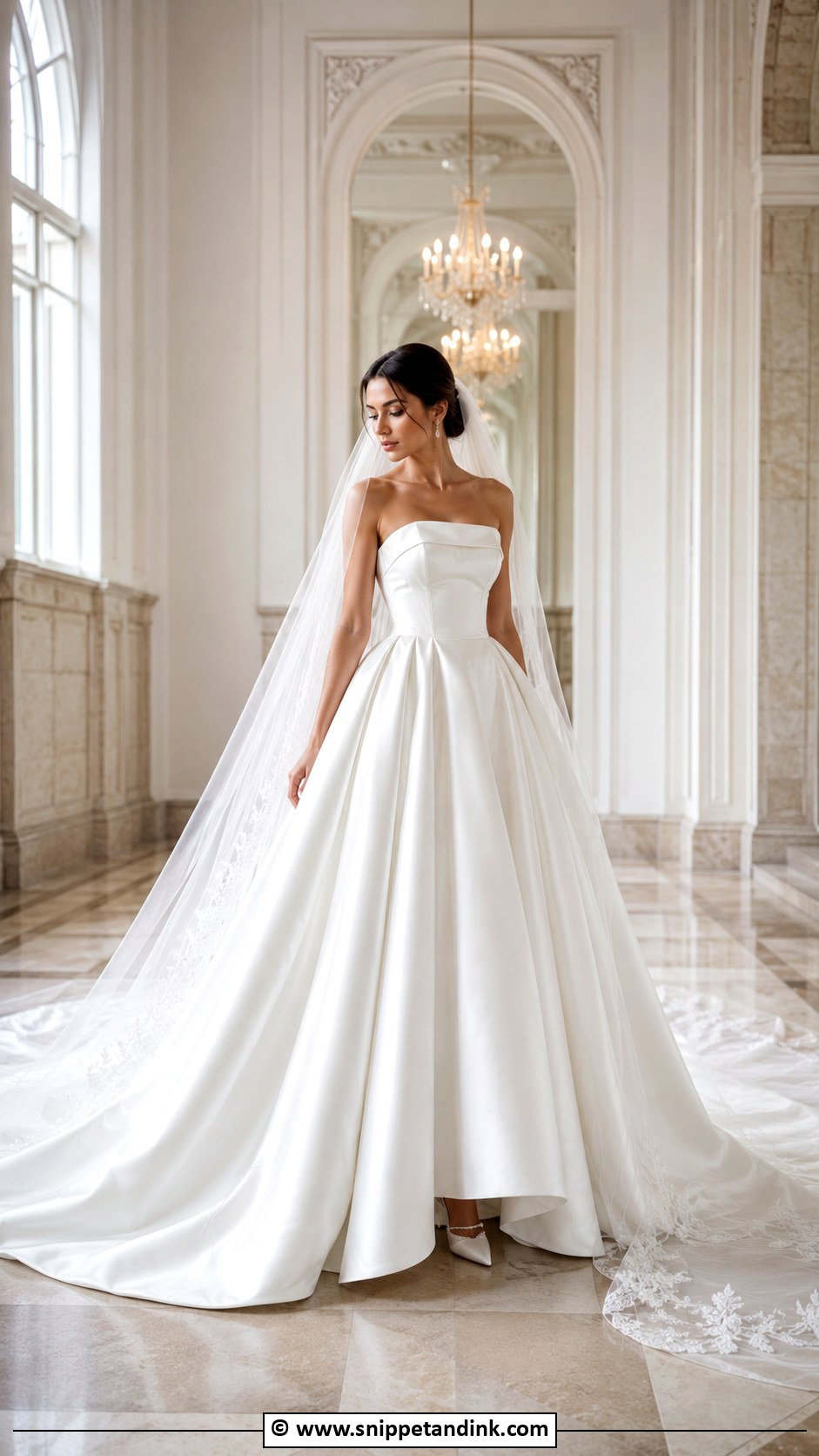
This is the gown most people imagine when they hear the word bridal: a fitted bodice, a skirt built out into that royal shape, and a train that keeps arriving after you do. Silk mikado gives a crisp, architectural skirt; layered tulle gives movement and a softer outline. What I check first is the venue aisle, because a cathedral train needs a long, clean run to read properly and gets bunched on a short or carpeted aisle. Plan the bustle at your first alteration fitting, not the last. A simple bodice can carry a crystal comb or a slim tiara; a heavily beaded one rarely needs either.
2. Basque Waist Wedding Dress With Full Skirt
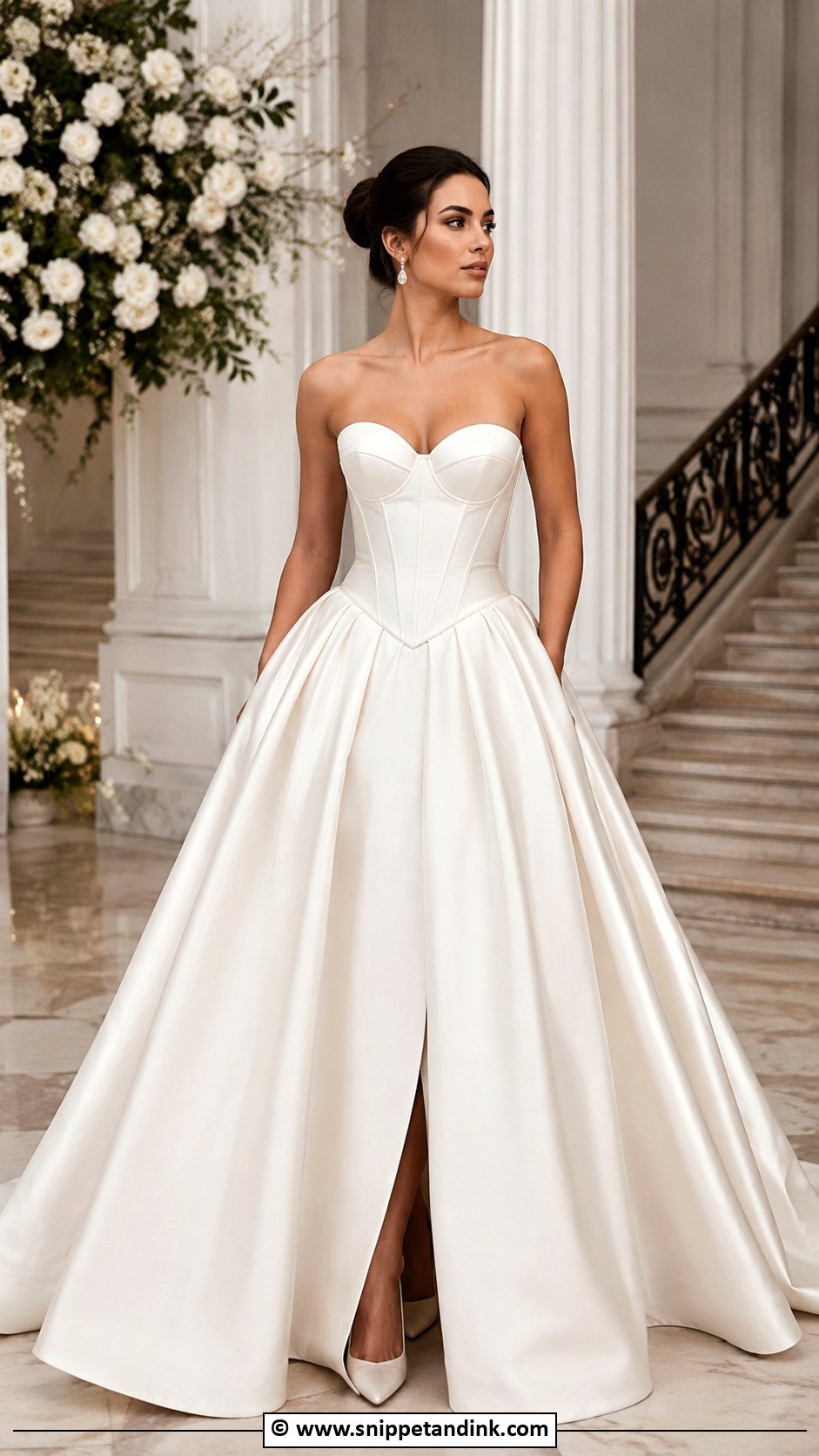
The dipped point of a basque waist wedding dress lengthens the torso and sits right on the hip bones, which is why it flatters so many shapes. It needs a fabric with body, like satin, jacquard or silk faille, or the V softens and the line disappears. At a fitting I always have the bride sit down: if the point digs into her lap, the bodice needs a little more ease at the hip. Hidden tulle layers under the skirt keep it moving instead of standing stiff. Pointed shoes and drop earrings suit the shape because they repeat that downward line.
3. Corset Wedding Dress With Lace Sleeves
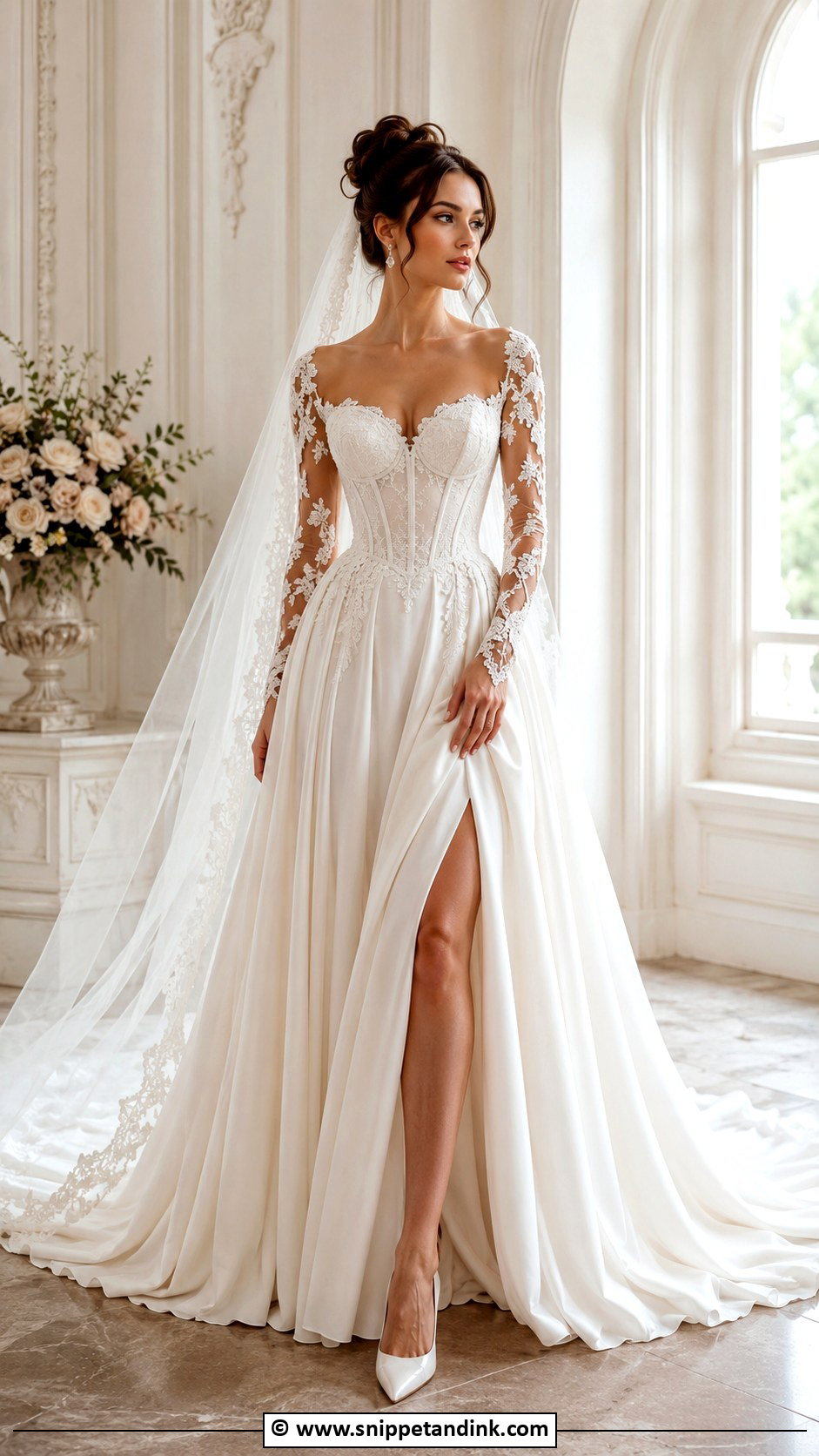
Real boning does the work here, so the lace sleeves can stay sheer and light without the dress feeling flimsy. I usually suggest this for cooler months and historic venues, where the coverage feels natural rather than modest for its own sake. The thing to test is arm movement: fitted lace sleeves can restrict how high you can lift your arms, which matters for hugs and the first dance. Ask whether the sleeves are sewn in or detachable before you fall for one. A lace-edged veil and soft curls keep the detail consistent without piling on more pattern.
4. Mermaid Wedding Dress With Overskirt
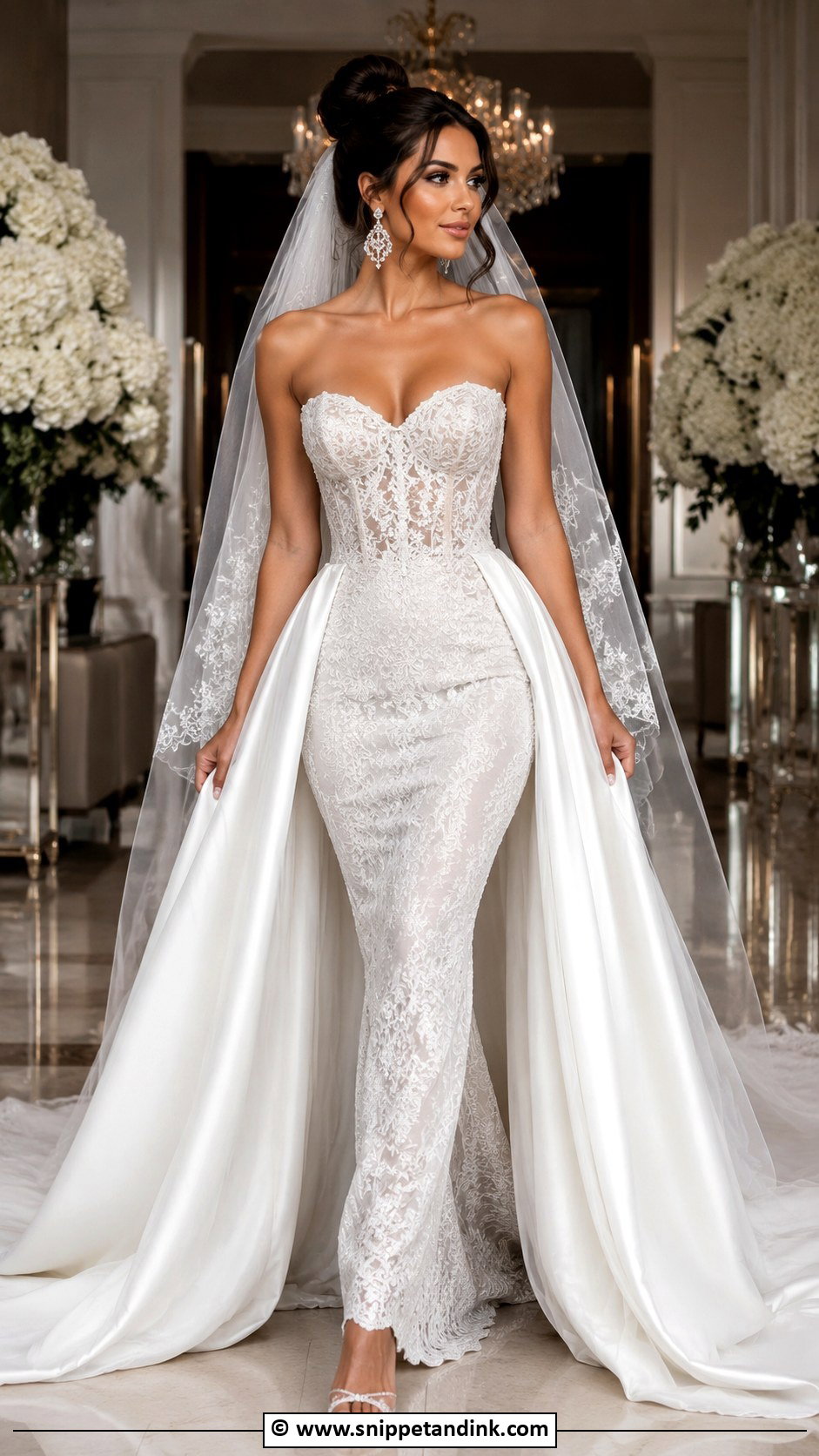
Two silhouettes, one gown. A fitted mermaid wedding dress under a detachable overskirt gives you the full ceremony sweep, then a sleek reception line once the skirt comes off. Mermaids flare at or below the knee, so walking takes shorter steps than you’re used to, and I always have brides practise stairs in the fitting room. The overskirt closure matters more than its fabric: hooks and a hidden waistband hold better than snaps on a heavy skirt. Keep the ceremony styling classic and switch to a bolder earring after dinner so the change reads as deliberate.
5. Pearl Wedding Dress With Long Veil
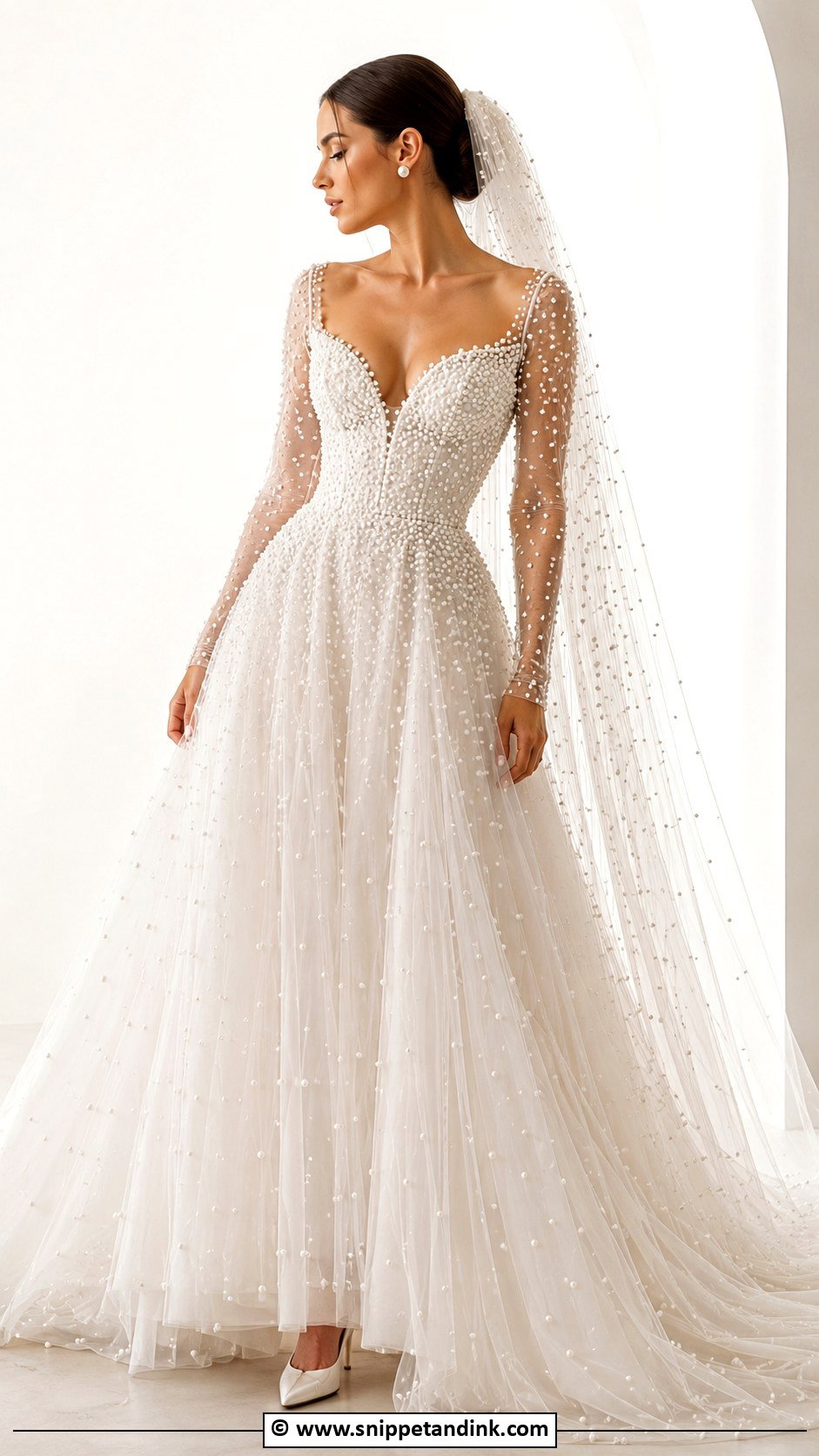
Pearls give texture without the hard flash of crystal, which is why they suit brides who want richness but not glitter. They can be scattered over tulle, clustered on the bodice or run down the sleeves. Pearl work adds real weight, though, so I check the shoulder straps and lining are strong enough to carry it without pulling at the neckline. A long veil with a matching pearl edge ties the whole outline together. After that, stop: pearl studs and a neat chignon are plenty, and anything more starts competing.
6. Floral Applique Wedding Dress With Tulle Skirt
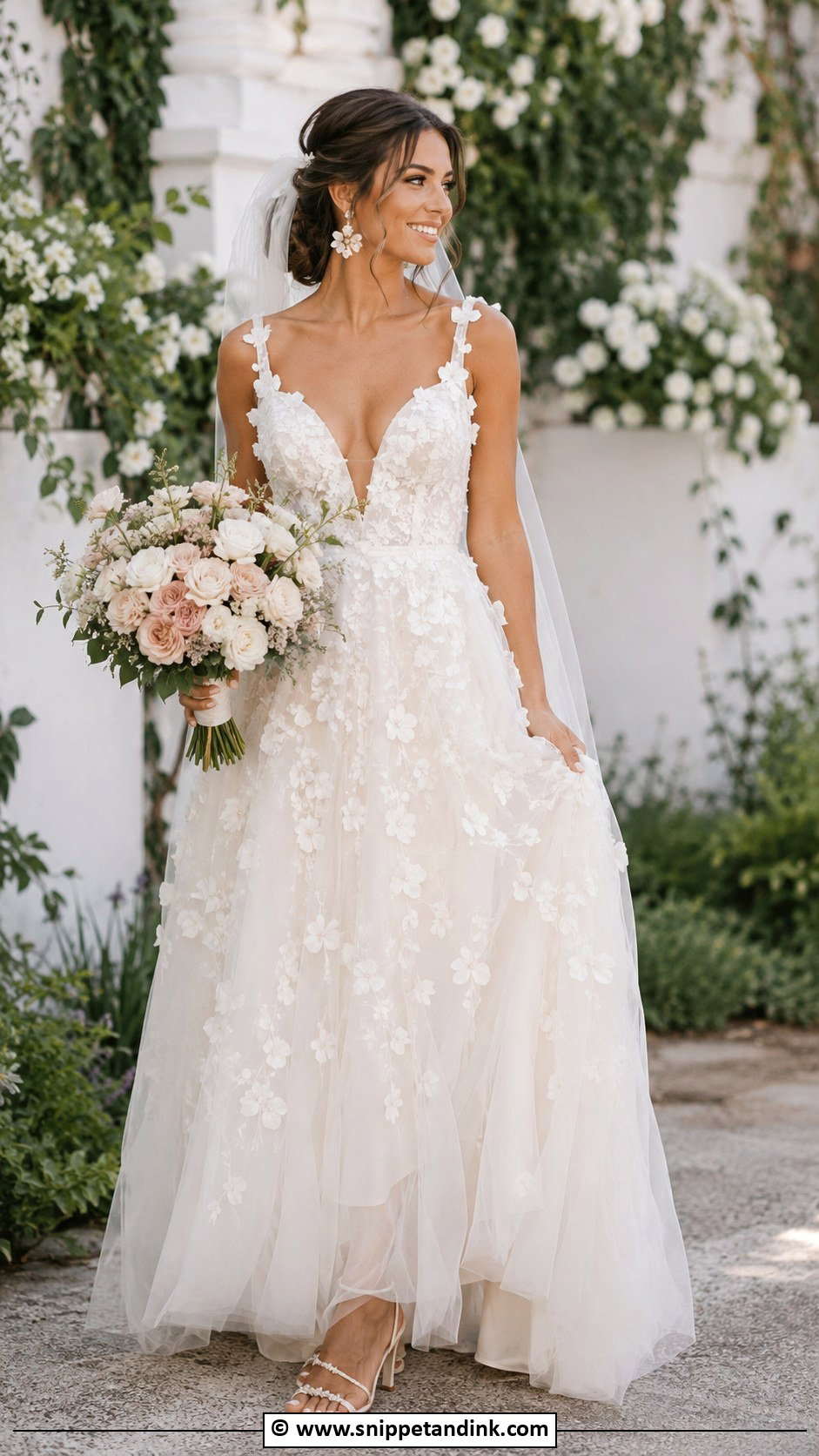
Appliqué changes character depending on how it’s cut. Flat lace flowers read delicate; padded, three-dimensional blooms catch shadow and look sculptural from across a room. On a sheer bodice I look closely at how the motifs are placed over the bust and waist, because that placement does the job a lining usually would. Tulle keeps the skirt full without the weight of satin, so it’s one of the easier dramatic gowns to wear all day. Let the appliqué carry the detail and pick a plain veil so the two don’t blur together.
7. Beaded Wedding Dress With Sheer Cape
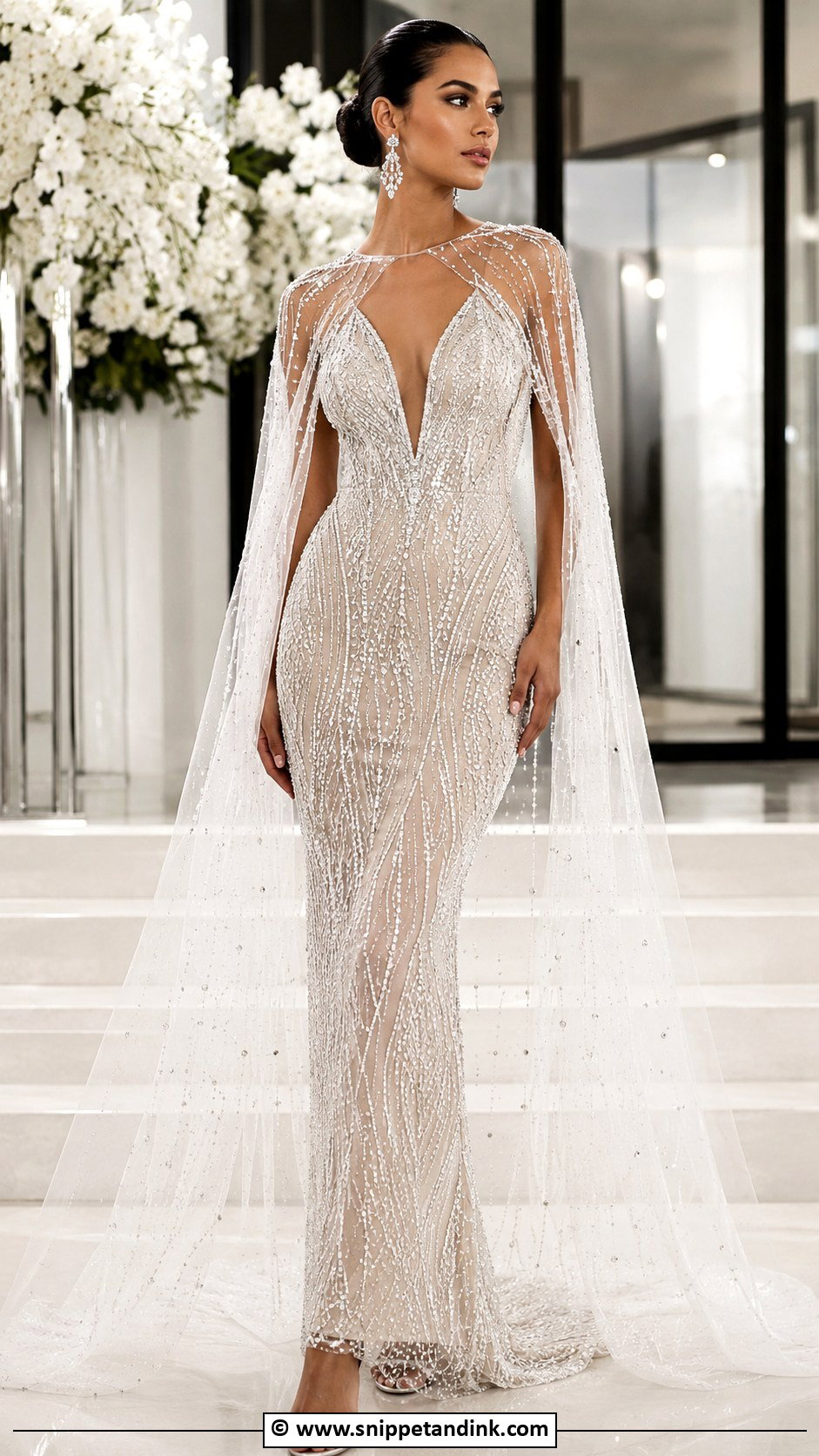
A sheer cape gives you length and ceremony without a veil pinned into your hair, which some brides find a relief. Shoulder-attached capes feel formal and frame the back; capes that fall from the back seam move more softly. Heavy beadwork catches every light source, so this one comes alive at evening receptions. The practical catch is that the cape catches on chair backs and tangles in a crowd, so I ask whether it can be unhooked later. Keep shoes sleek and let a low bun show off the neckline.
8. Satin Wedding Dress With Statement Bow
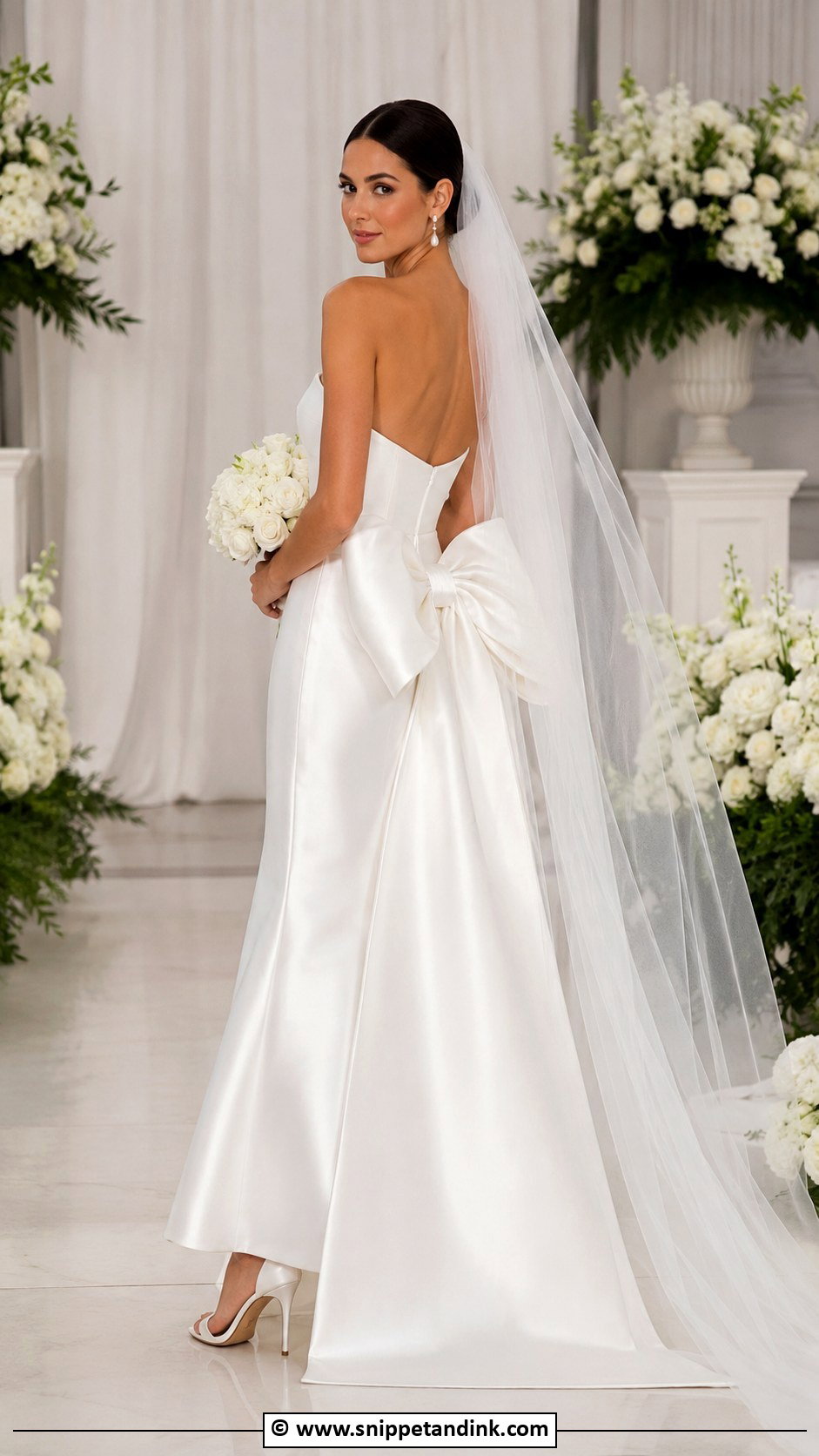
The bow only works if the fabric can hold it, which is why satin is the usual partner. A back-waist bow looks good walking away; a shoulder bow frames the face in portraits; a hip bow shifts the balance to one side. I warn brides that a large back bow gets crushed when you sit, so ask the seamstress to interface it or plan to fluff it after the ceremony. Keep the hair simple if the bow is big. A polished bun gives it room.
9. High Neck Wedding Dress With Beaded Bodice
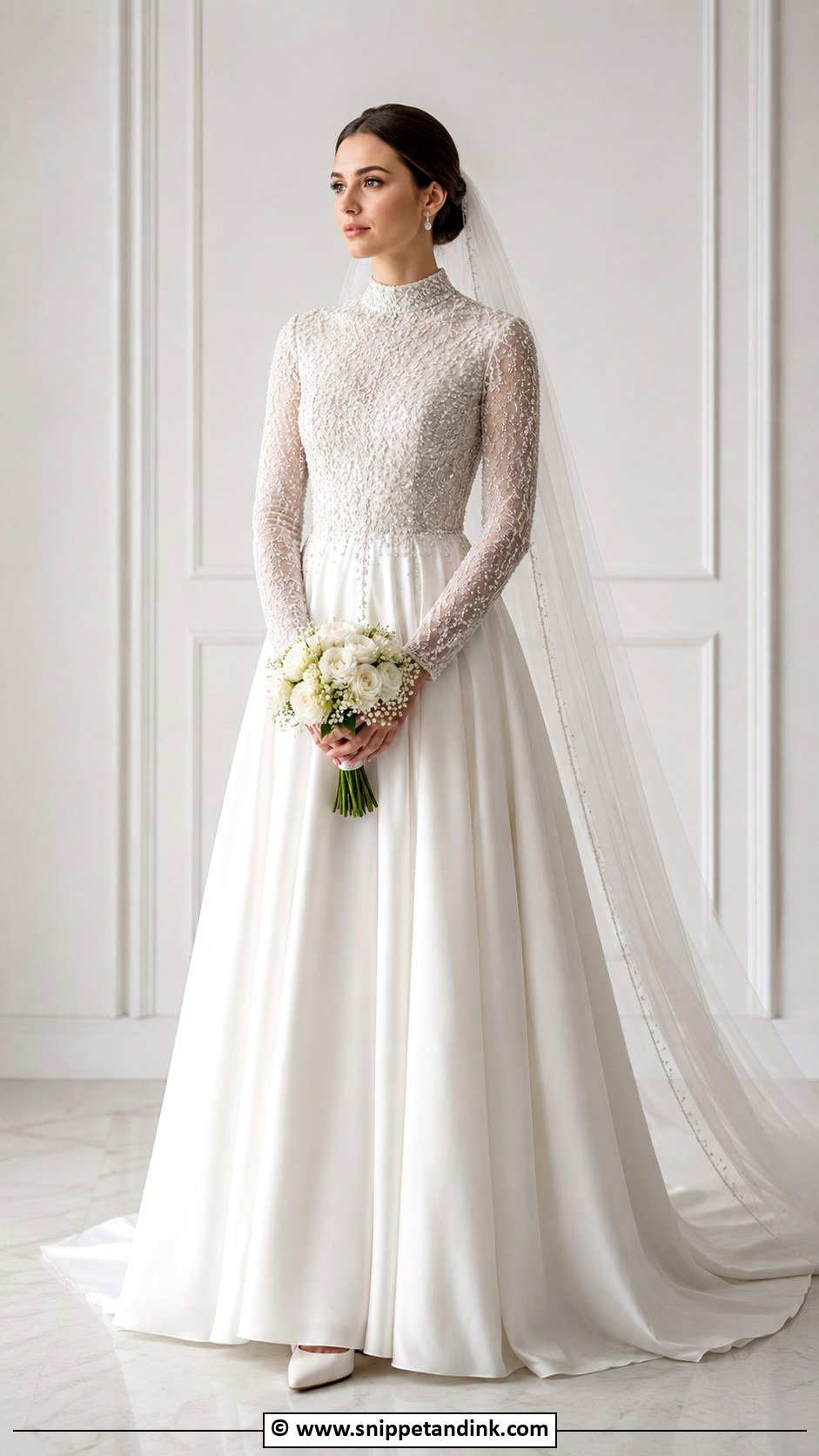
A high neck pulls the eye up to the face, and a beaded bodice adds light across the chest and shoulders. It’s a good answer for anyone who wants coverage and still wants the dress to feel glamorous. My first check is the collar: it should sit flat with a finger’s width of room, because a tight high neck feels much tighter after a few hours of talking and eating. Wear the hair up so the neckline stays visible. Earrings stay small, since the beading already sits close to your face.
10. Off Shoulder Wedding Dress With Dramatic Train
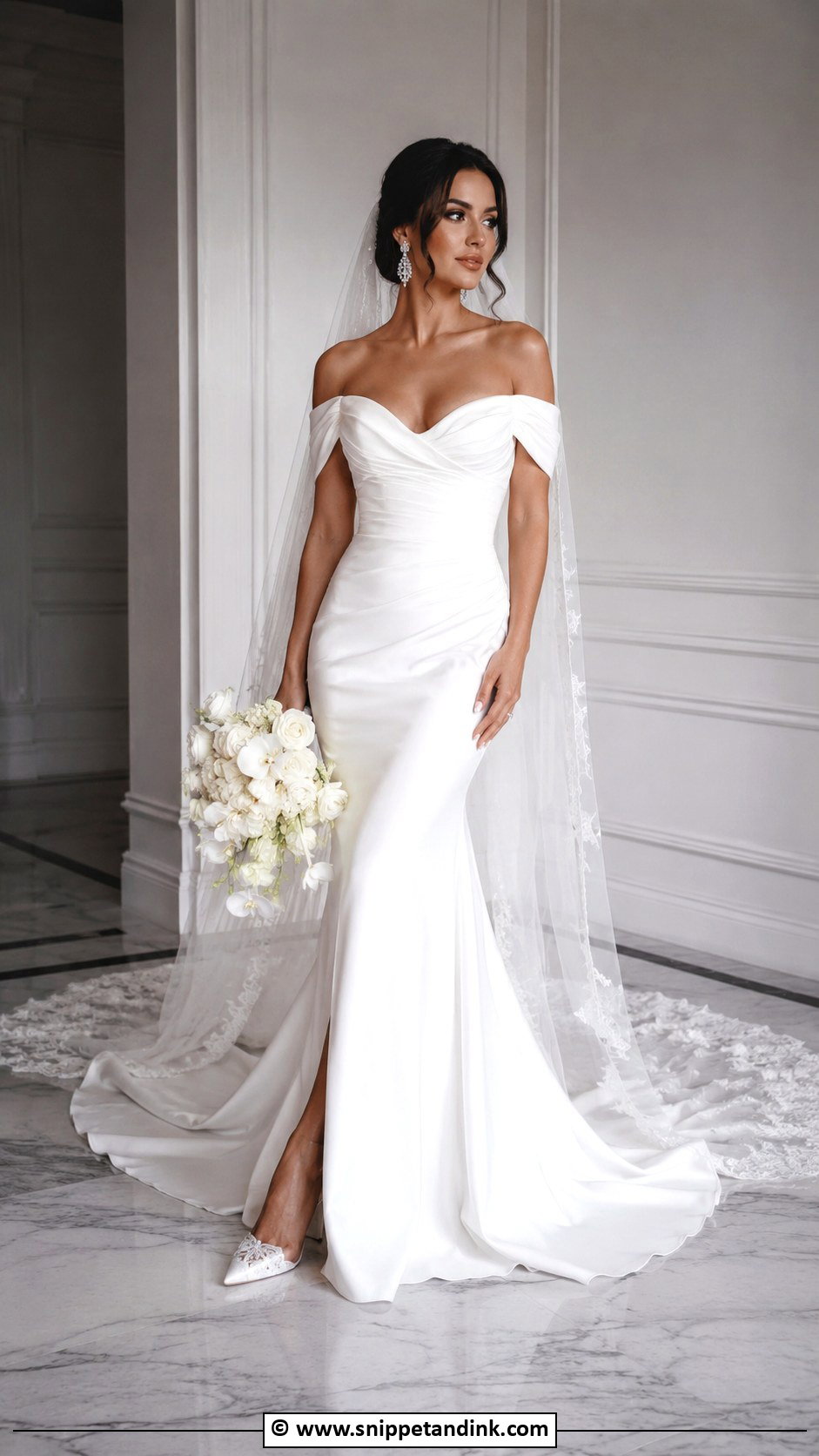
Off-the-shoulder necklines show the collarbones and pair naturally with a long train for a strong silhouette from both front and back. Satin makes it classic, tulle makes it softer, lace makes it ornate. The real question is support: this neckline has nothing over the shoulders, so the bodice structure has to hold everything up, and I have brides raise their arms at every fitting to make sure it stays put. Choose either a fine necklace or chandelier earrings, not both. A structured bouquet balances the width at the shoulders.
11. Lace Wedding Dress With Long Sleeves
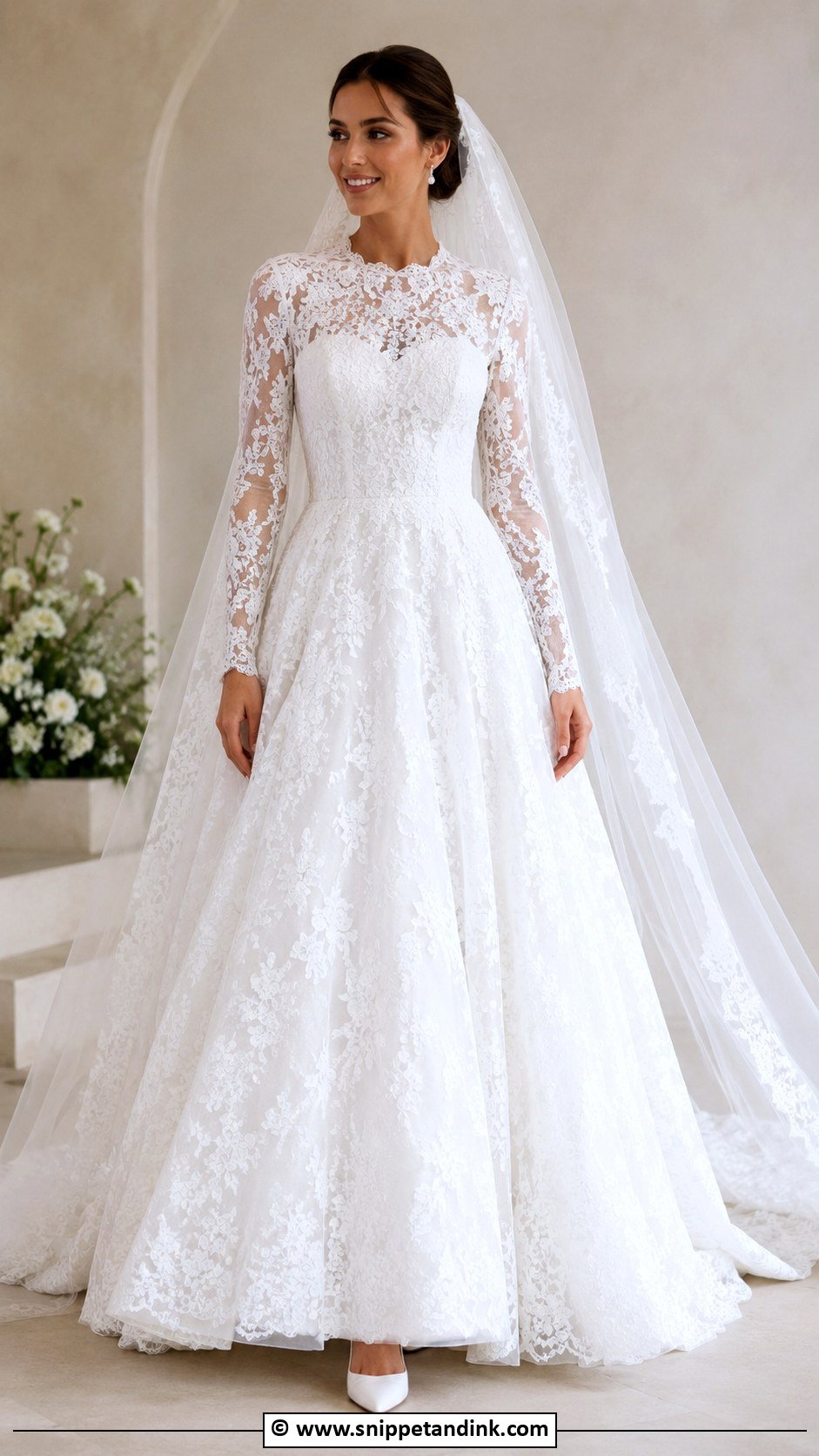
Long lace sleeves suit fall and winter weddings and formal indoor venues where bare arms would feel out of season. The lace itself sets the mood: small botanical repeats look vintage, large motifs look modern. A full skirt with a fitted bodice reads royal; a slim lace column feels quieter. I check that the sleeve lace matches the bodice lace in colour under daylight, since dye lots can differ slightly. A cathedral veil adds length if you want it, and pearl earrings are about all the jewellery this needs.
12. Sequin Wedding Dress With Fitted Silhouette
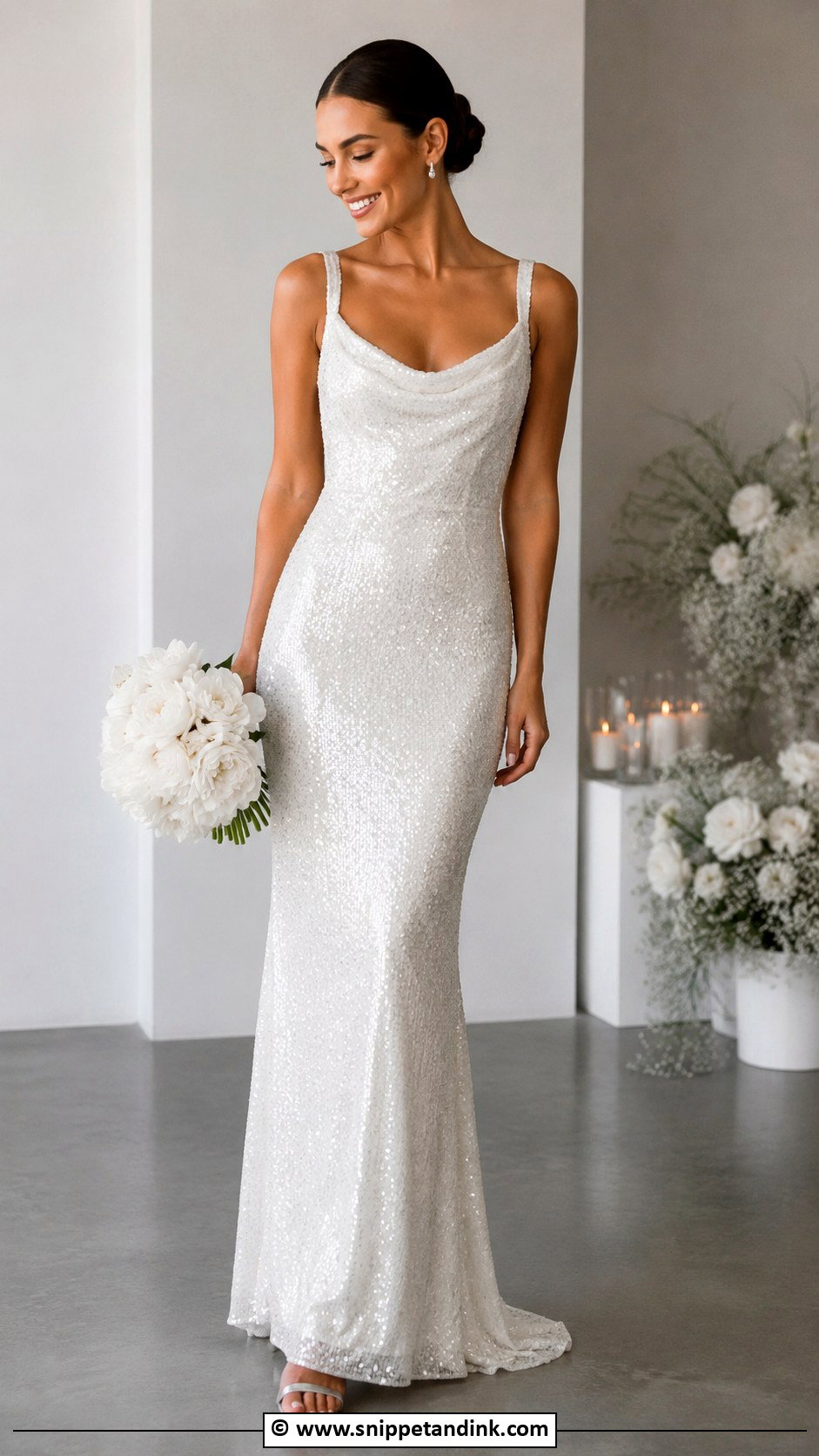
Sequins turn every light in the room into part of the dress, so this belongs at an evening ceremony, a hotel ballroom or a rooftop after dark. A fitted cut keeps all that shine controlled instead of overwhelming. My caution is about the lining: sequins can scratch the inner arm and catch on lace and hair, so look for a soft lining and smooth seams. Metallic heels and minimal jewellery are enough. Many brides skip the veil with this one, which keeps it modern.
13. Tulle Wedding Dress With Ruffle Skirt
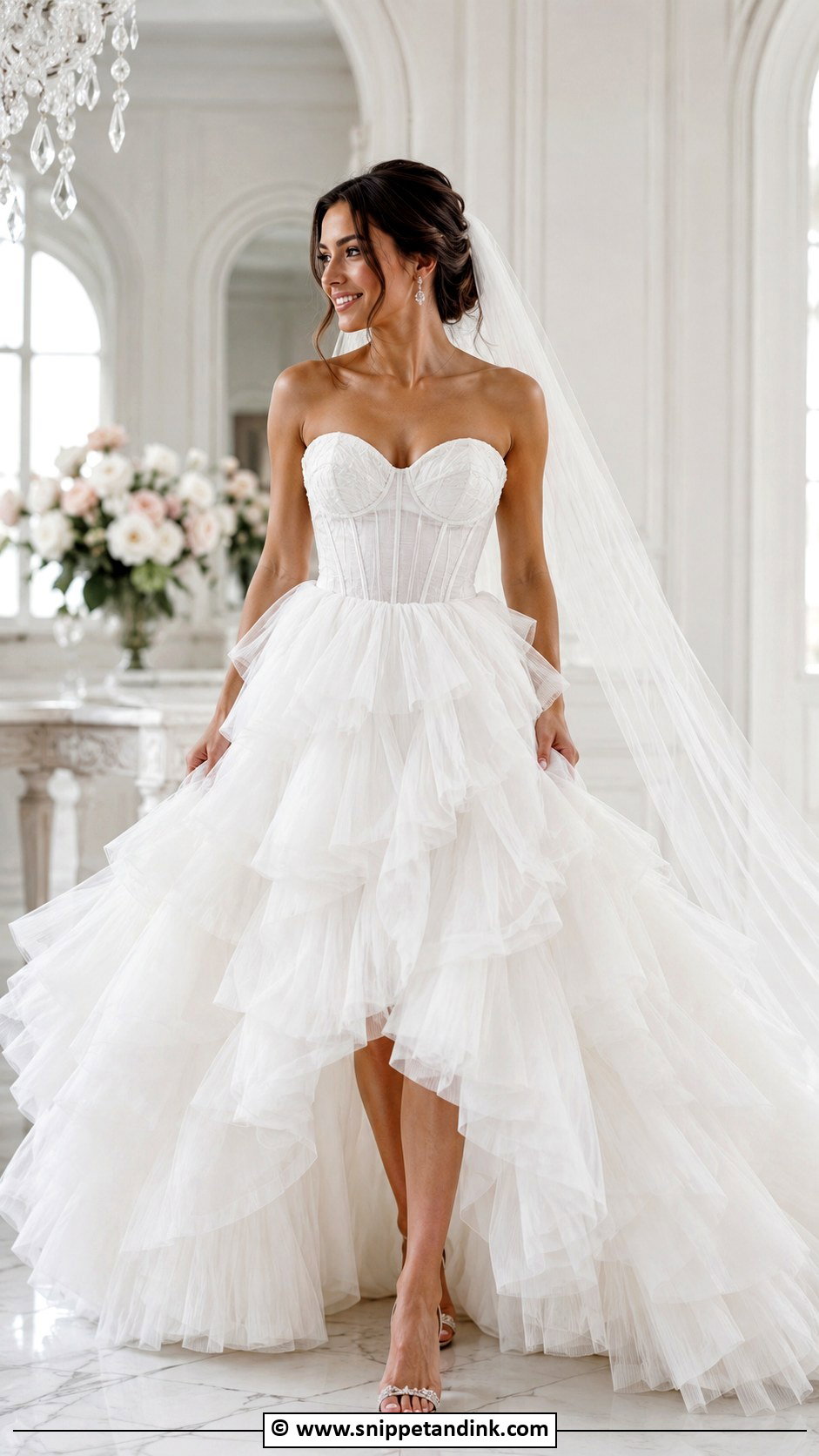
Layered tulle ruffles give a princess shape a fashion edge, and they move well in photographs because each tier swings a little behind the last. The bodice can be strapless, corseted or off the shoulder, depending on how much structure you want. Ruffled tulle snags easily on bouquet stems, shoe buckles and rough floors, so I tell brides to keep a small pair of scissors in the emergency kit for loose threads. Because the skirt already has volume, keep the jewellery light. A floral hair pin is enough decoration up top.
14. Drop Waist Wedding Dress With Bubble Hem
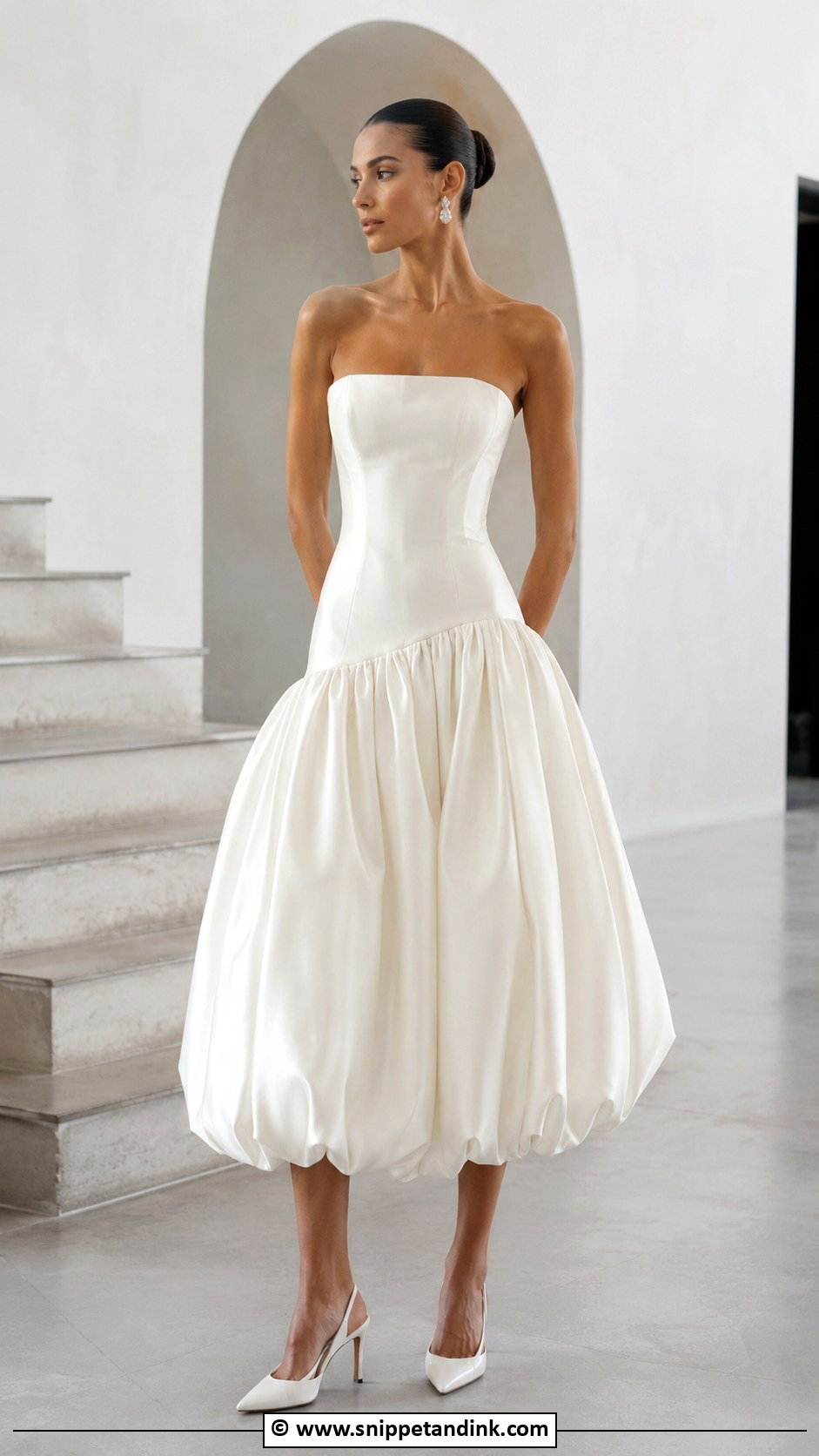
A dropped waist lengthens the torso, and the bubble hem gathers the skirt back in so it balloons out at the bottom. It’s a runway shape, and it needs crisp taffeta or structured satin to keep that rounded hem from collapsing. I’d steer petite brides with a short torso toward a slightly higher drop, since a very low waist can shorten the legs visually. Keep the top half plain. A sleek ponytail and sculptural earrings suit the modern line, especially in a venue with clean architecture.

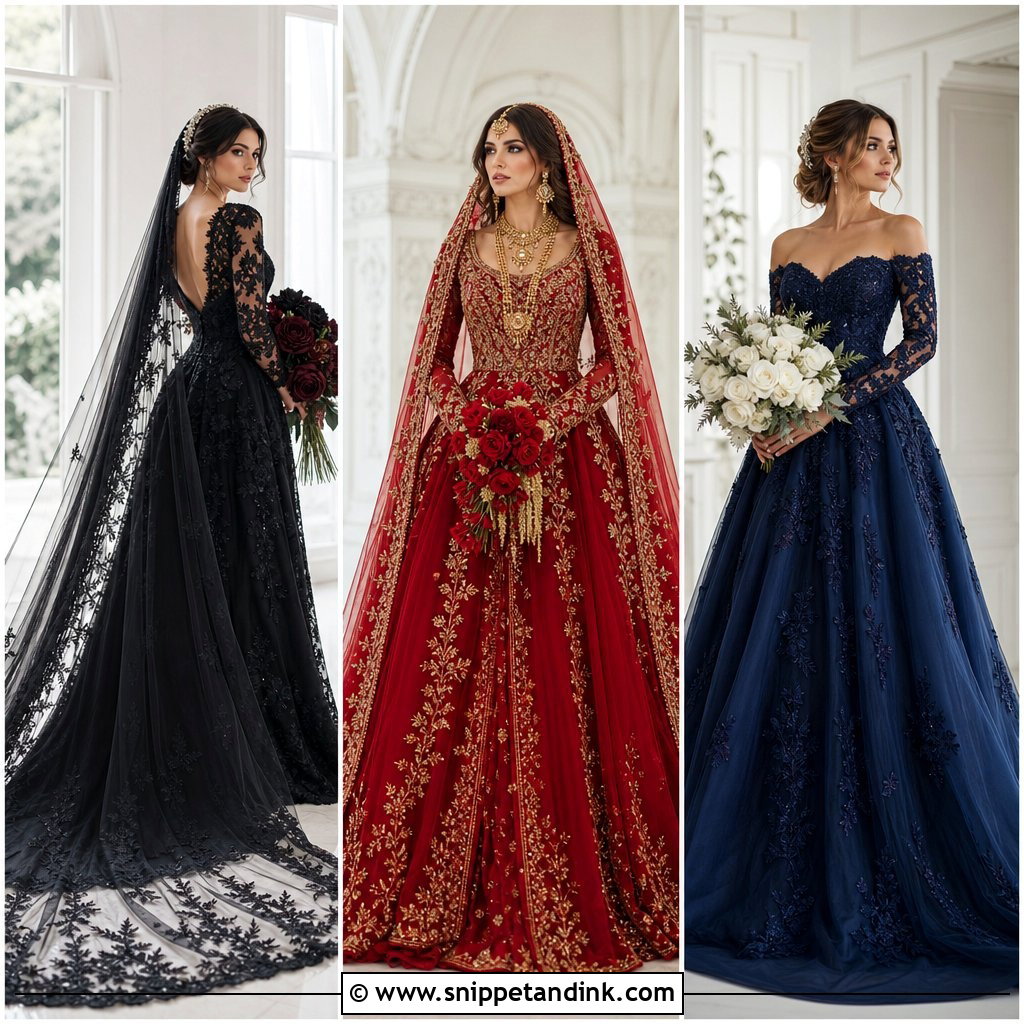
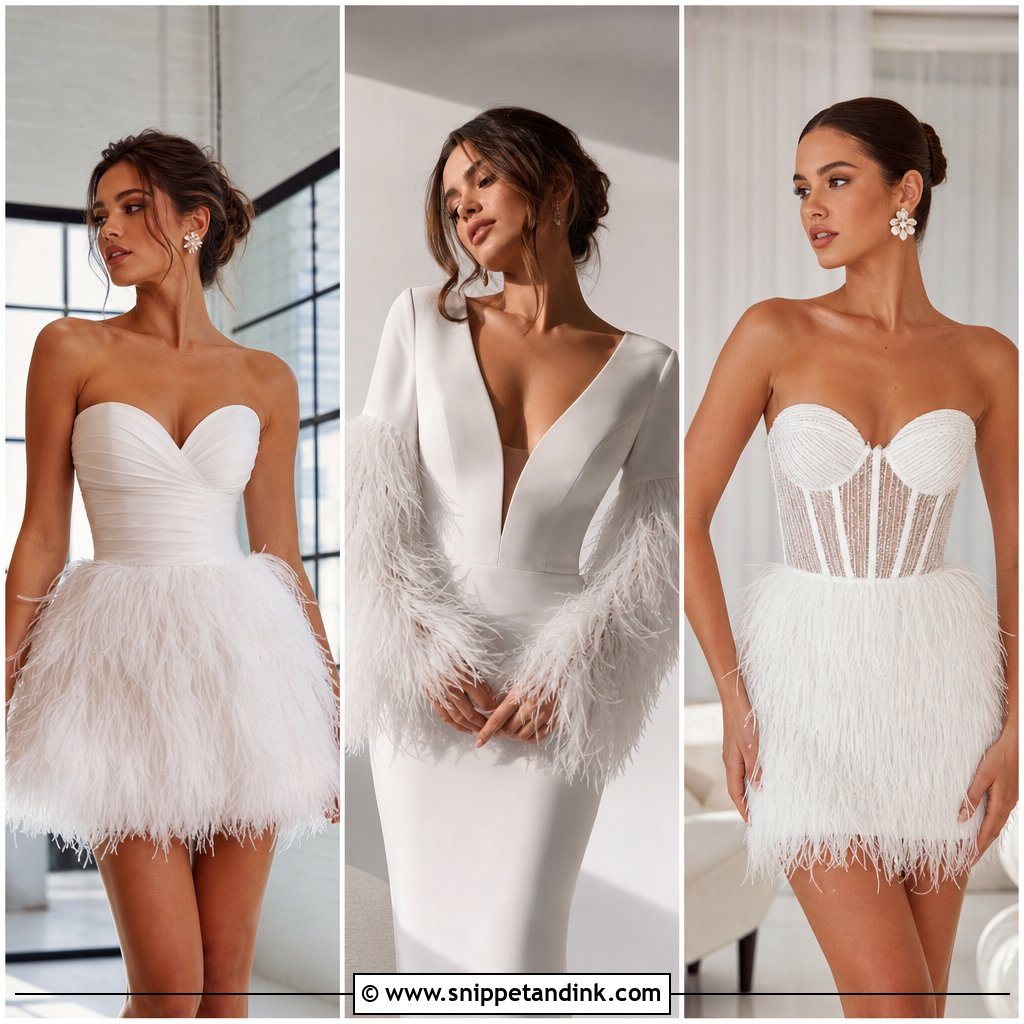
15. Feather Wedding Dress With Strapless Neckline
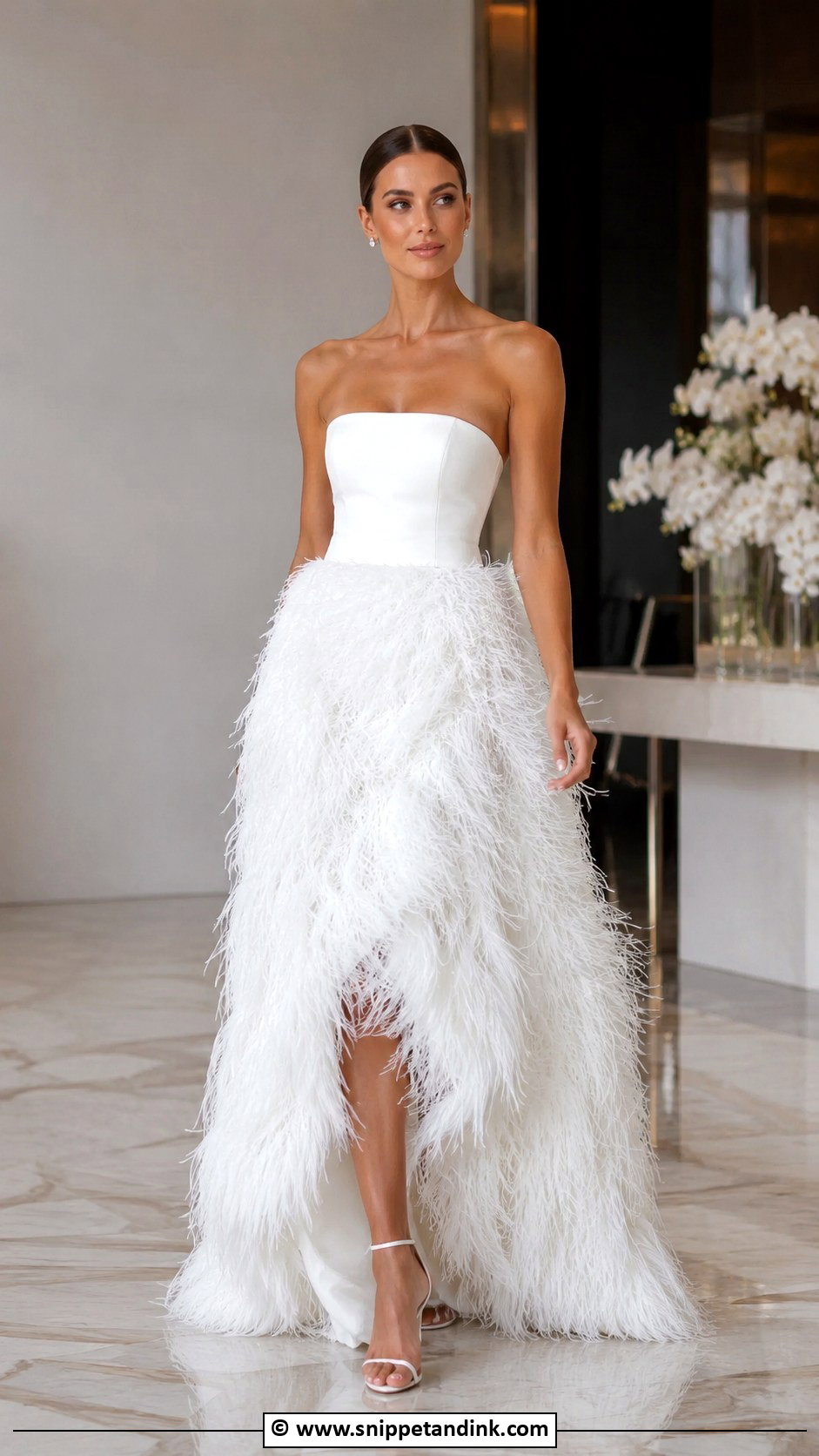
Feathers move with every breath of air, which gives this gown a soft, living texture you can’t get from beads. They might trim the neckline, cover the skirt or sit in fine layers over tulle. A strapless top keeps the feathers from crowding your face. My honest warning is that feathers shed and flatten, especially in humid weather and in a crush of hugs, so this is often a better reception change than an all-day gown. Skip necklaces entirely and keep the hair sleek.
16. One Shoulder Wedding Dress With Sculpted Skirt
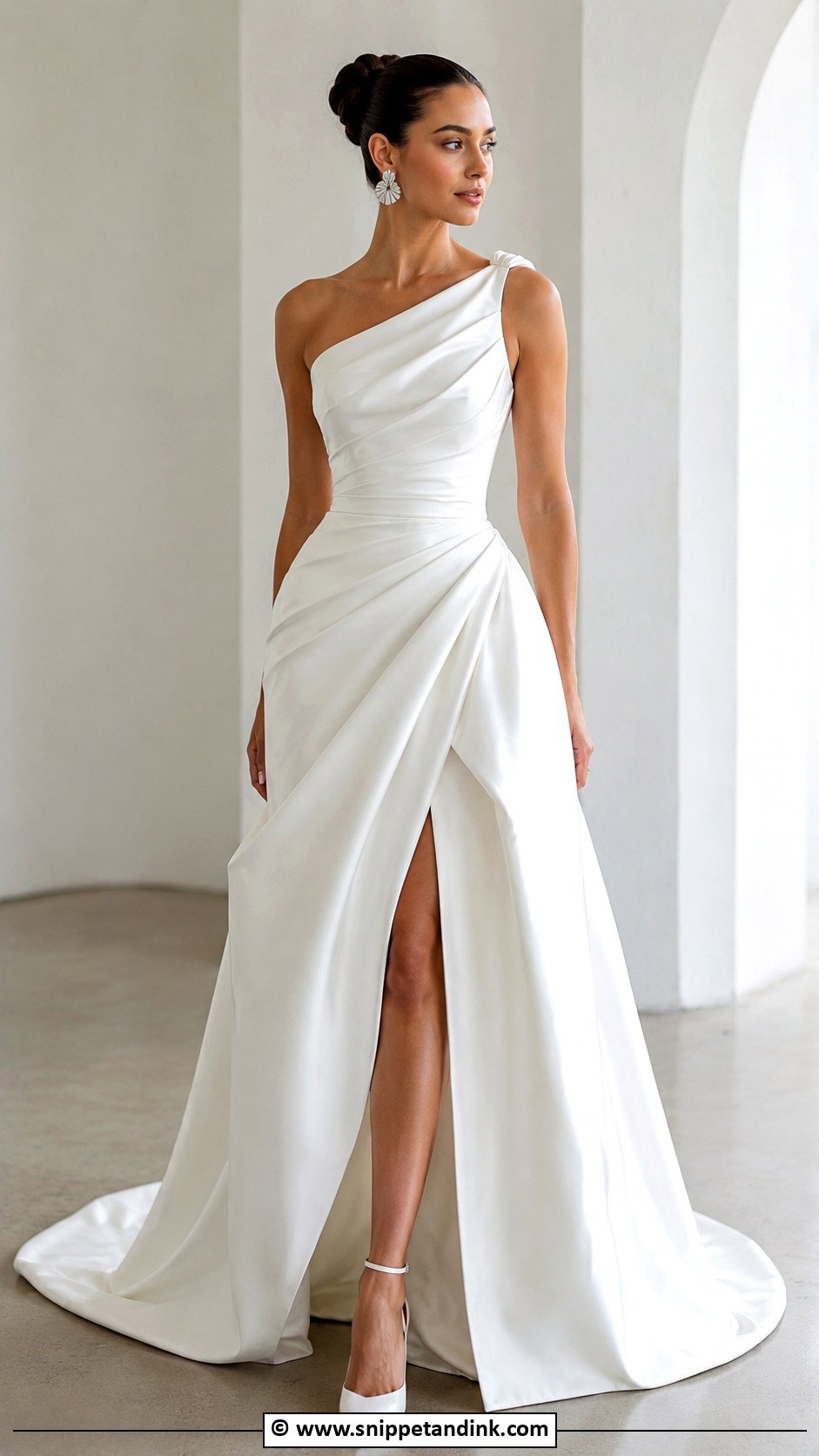
An asymmetric neckline looks editorial straight away, and a sculpted skirt adds structure without any lace or sparkle. Satin, mikado and silk faille hold those folds well. The single shoulder strap carries a lot of the bodice weight, so at fittings I check it isn’t cutting in or sliding toward the neck. One statement earring on the bare side, sleek heels and a clean bun suit the mood. If you wear a veil, keep it plain and long so it doesn’t fight the neckline.
17. Gold Wedding Dress With Embroidery
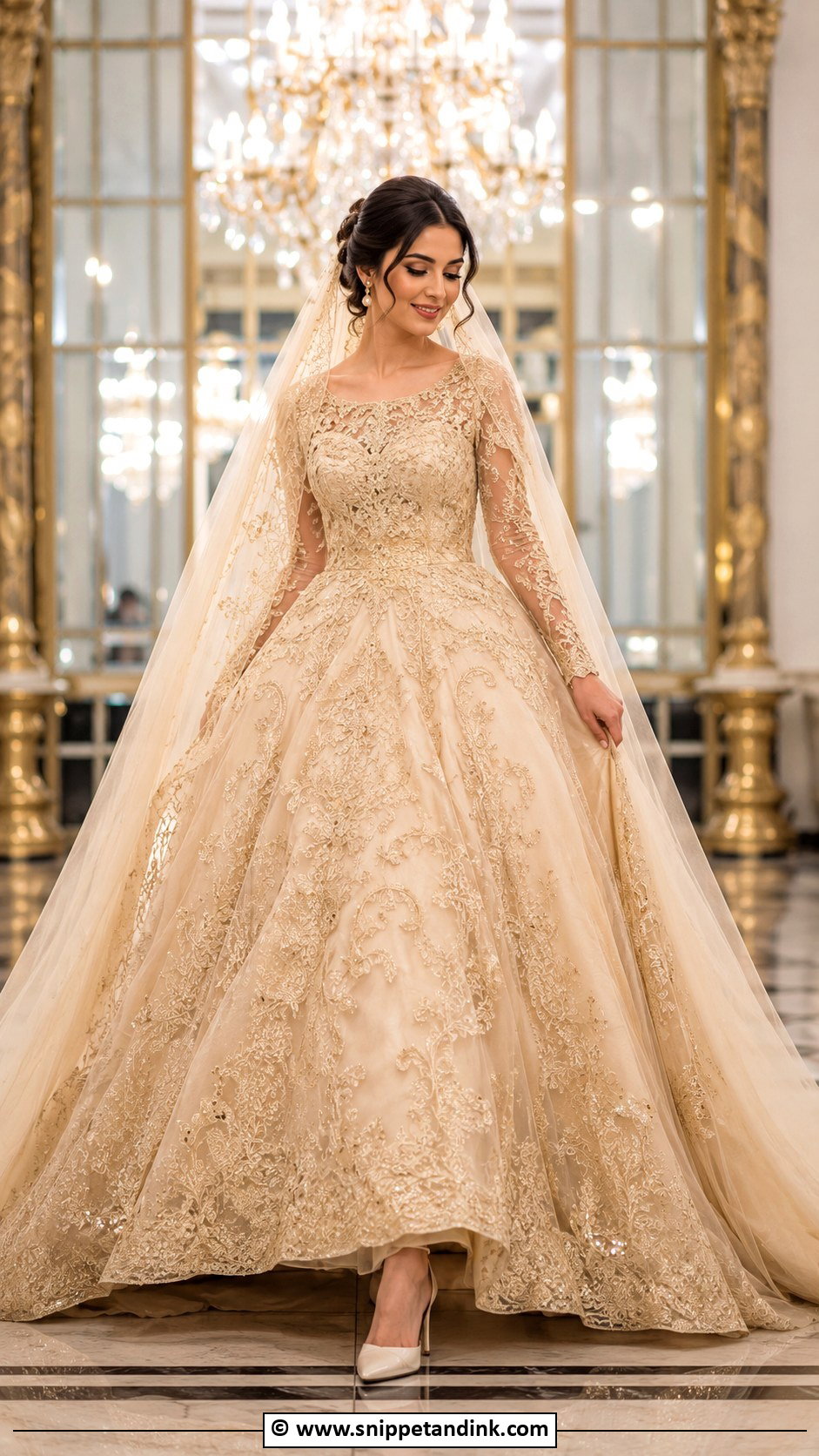
Gold gives you colour without leaving bridal territory, especially in champagne, pale gold or antique gold tones. Embroidery that follows the bodice, sleeves or train adds depth and shows the handwork up close. The thing I always test is the gold against the bride’s skin in daylight: some golds warm the face, others make it look sallow. Warm-toned pearl earrings and ivory or gold shoes suit it. Keep the bouquet to ivory roses, cream orchids or greenery so the flowers don’t clash with the fabric.
18. Blush Wedding Dress With Layered Skirt
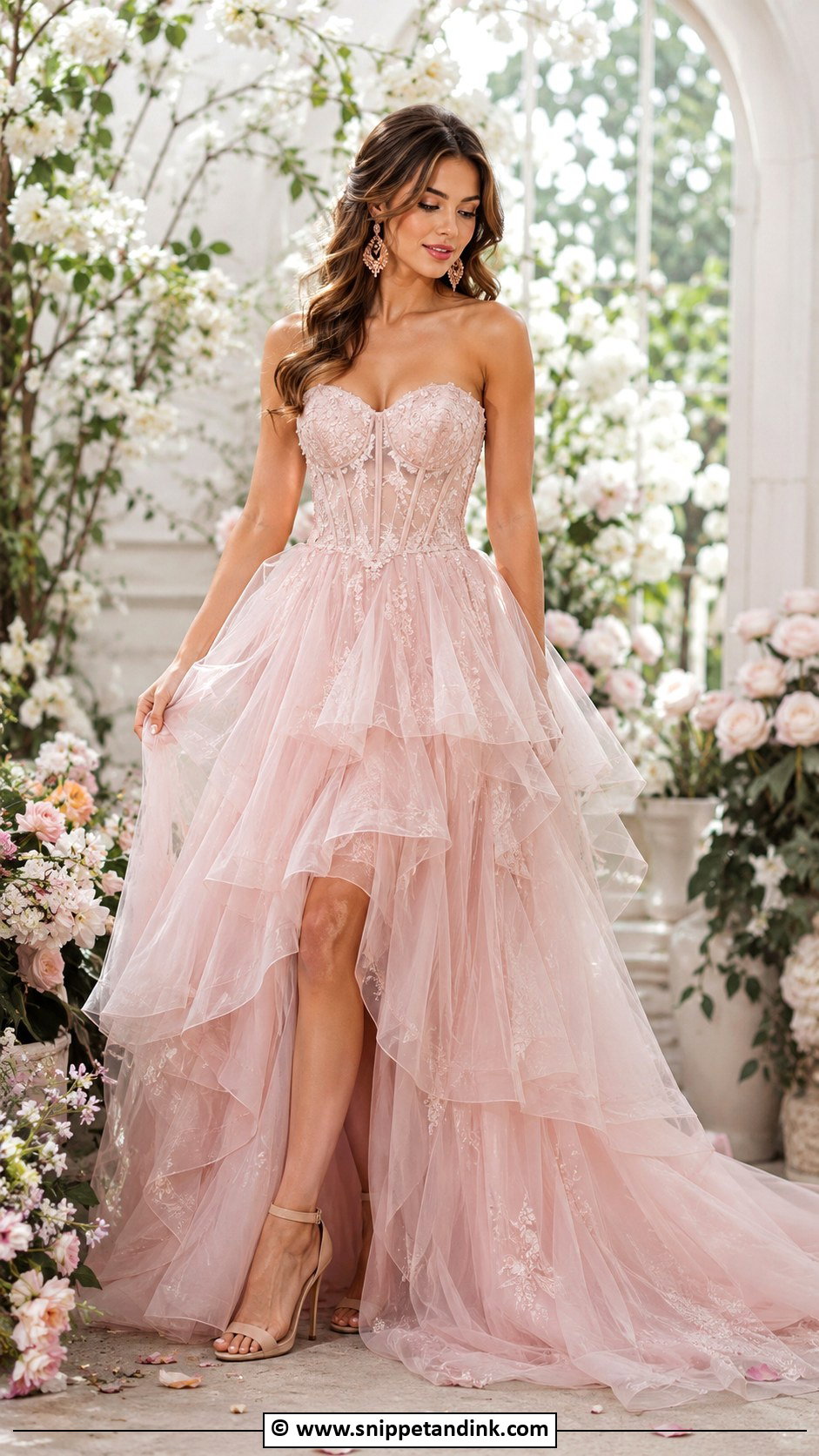
Blush adds warmth while staying close to tradition, and layers of tulle or organza make the colour look deeper where the layers overlap. Spring and garden weddings suit it best. A corset bodice gives shape, and floral appliqué softens the colour further. The detail people miss is the veil: an ivory veil next to blush can look grey, and a blush veil can look pink against ivory skin, so I hold both up to the dress by a window before ordering. Rose-gold jewellery and soft curls keep the palette consistent.
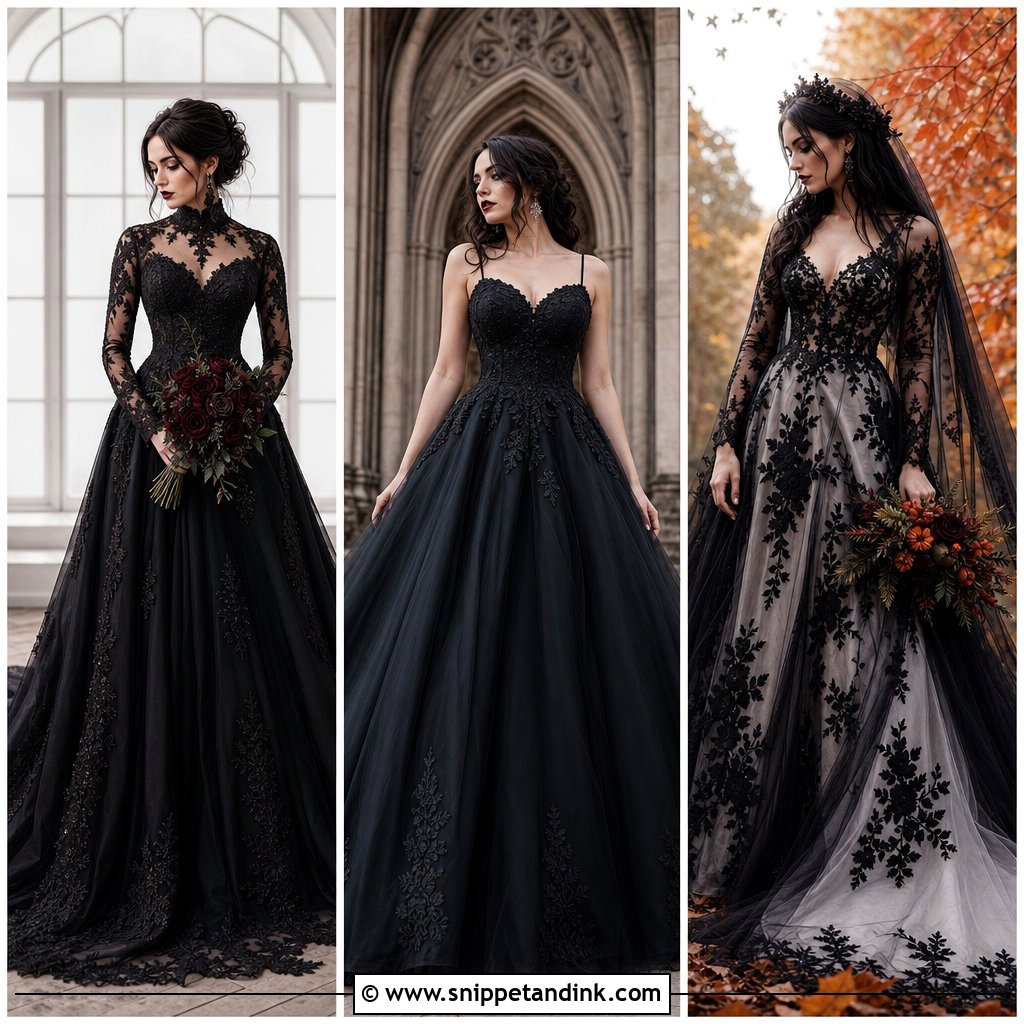
19. Black And White Wedding Dress With Ball Skirt
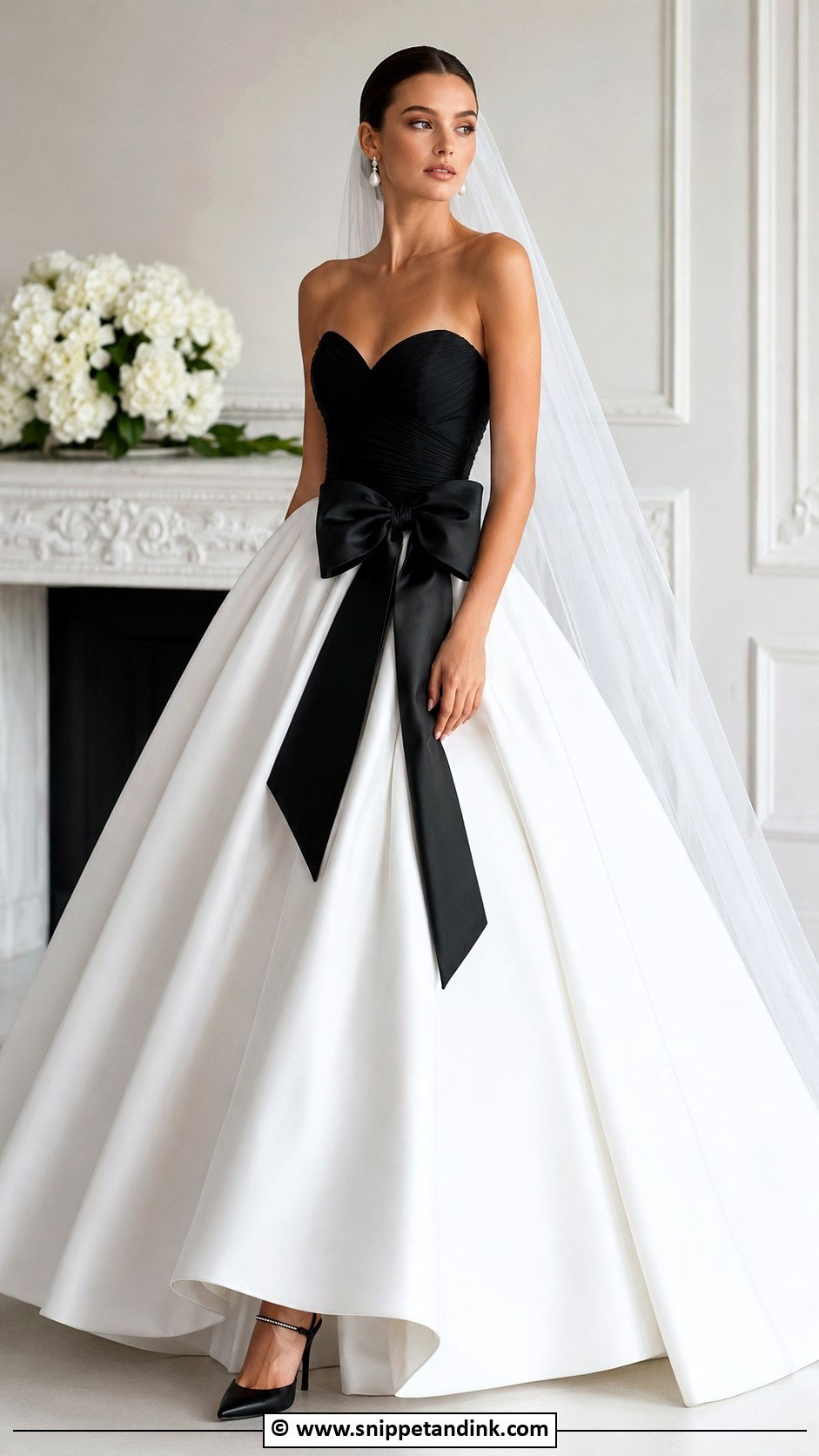
Contrast does all the work here. The black might be a bow, gloves, embroidery or a full bodice over a white skirt, and the full ball skirt keeps it reading as a wedding dress. I’d keep everything else formal and quiet so the black looks planned, not costume. Black dye can transfer onto white fabric in heat or rain, so ask the maker how the contrast is lined. Black satin heels, pearl earrings and a white bouquet tied with dark ribbon finish it cleanly.
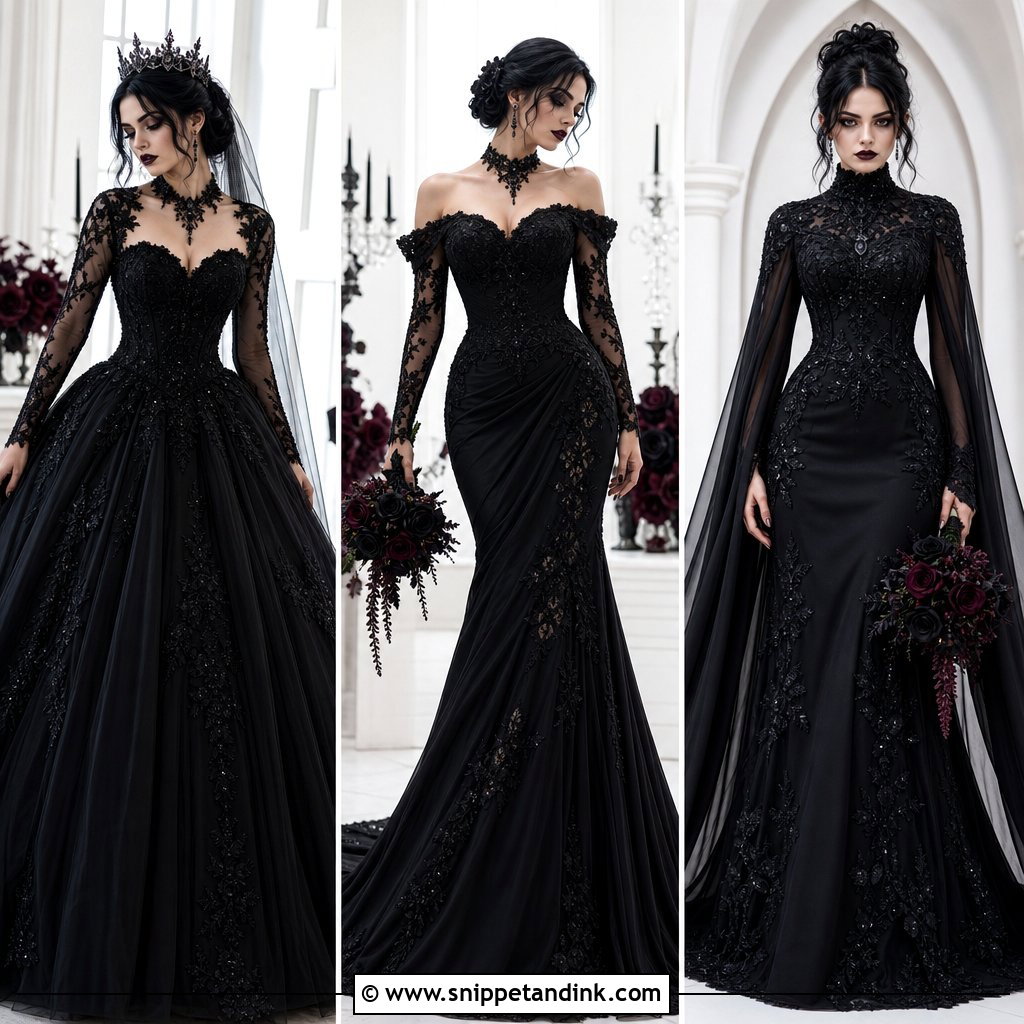
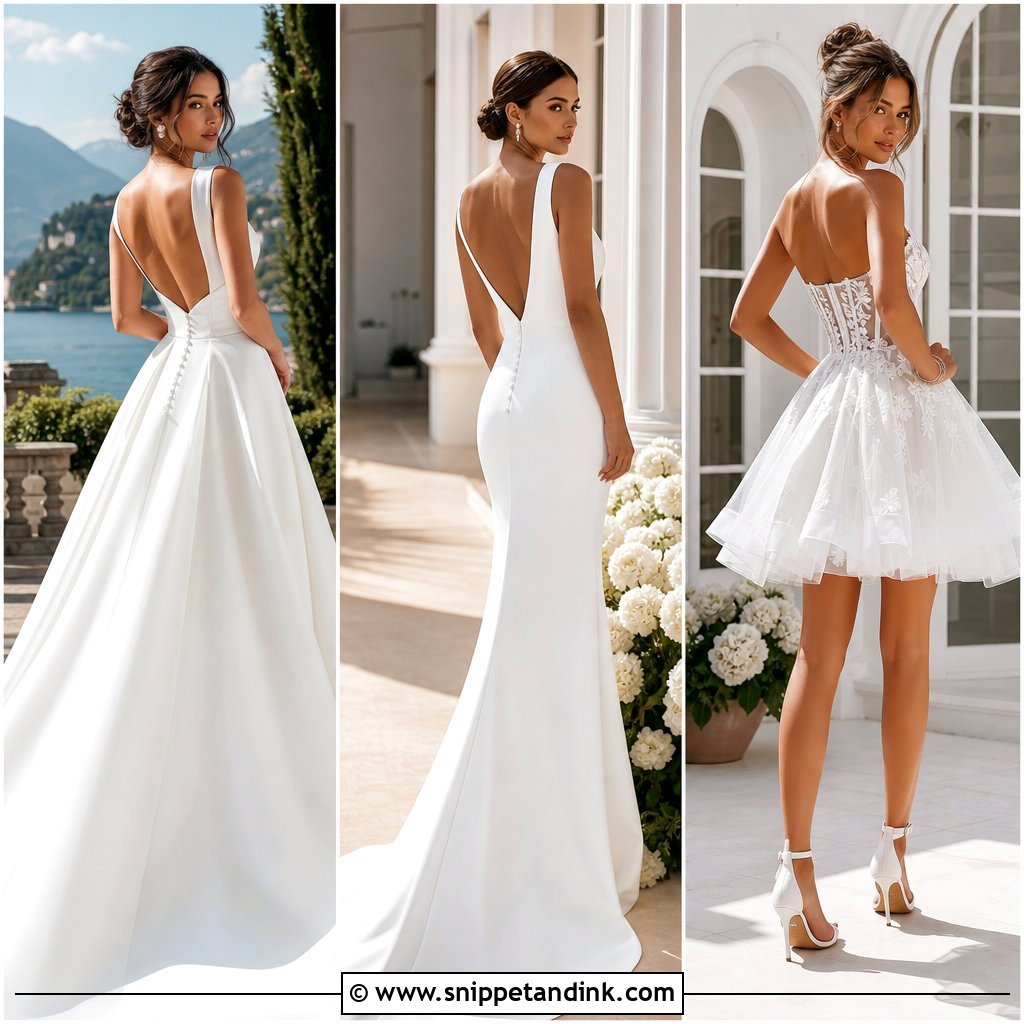
20. Sheer Sleeve Wedding Dress With Crystal Details
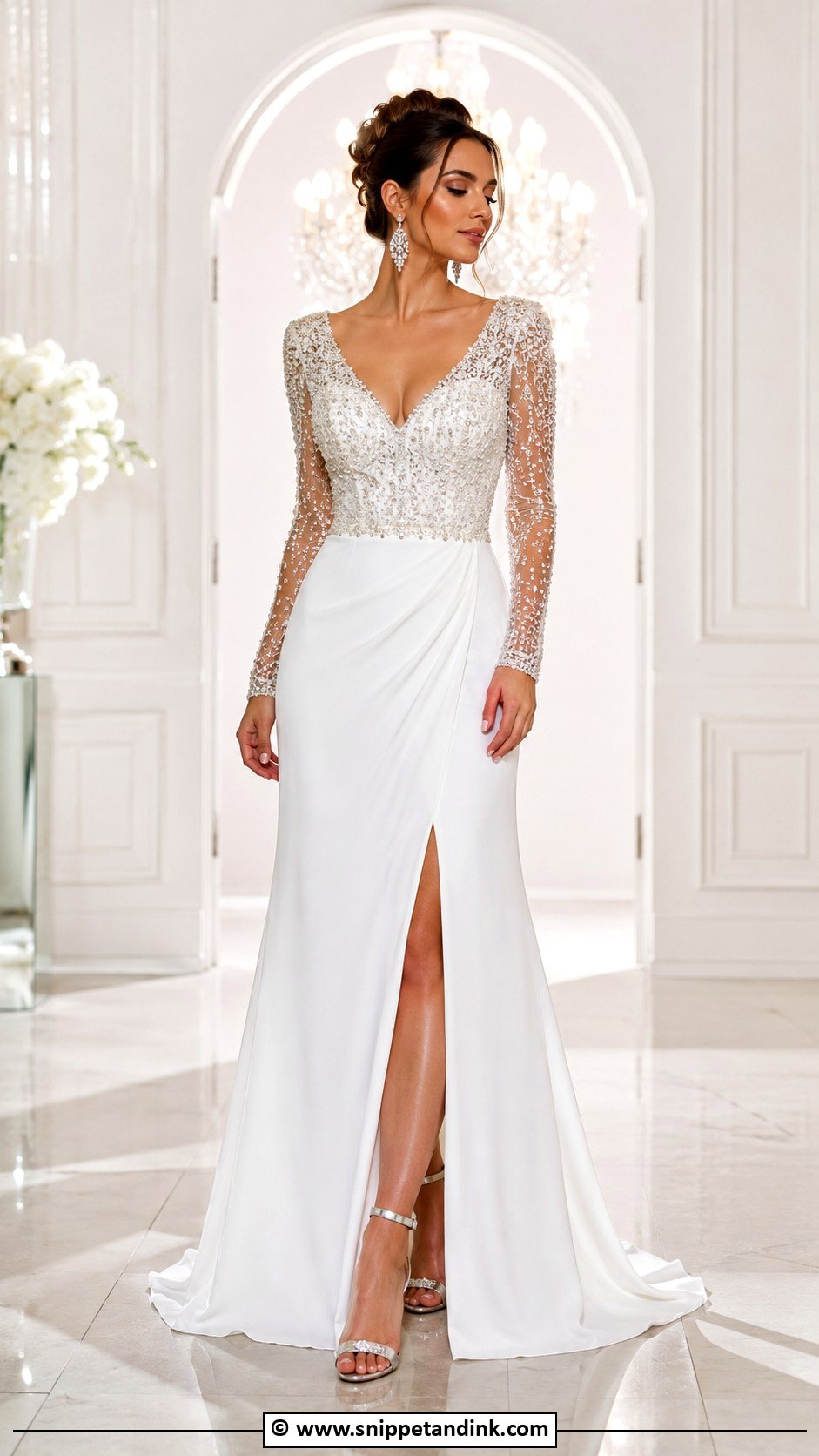
Sheer sleeves give coverage that barely registers, and crystals scattered over them flash every time you move your arms. Evening light is where this one really shows off. Balance matters: if the sleeves are heavily decorated, a plainer skirt keeps the gown from looking overloaded. I check how the crystals are attached, because glued stones can pop off during hugs while sewn ones stay. Wear a soft updo and a plain veil, since the sleeves already carry enough shine.
21. Mikado Wedding Dress With Square Neckline
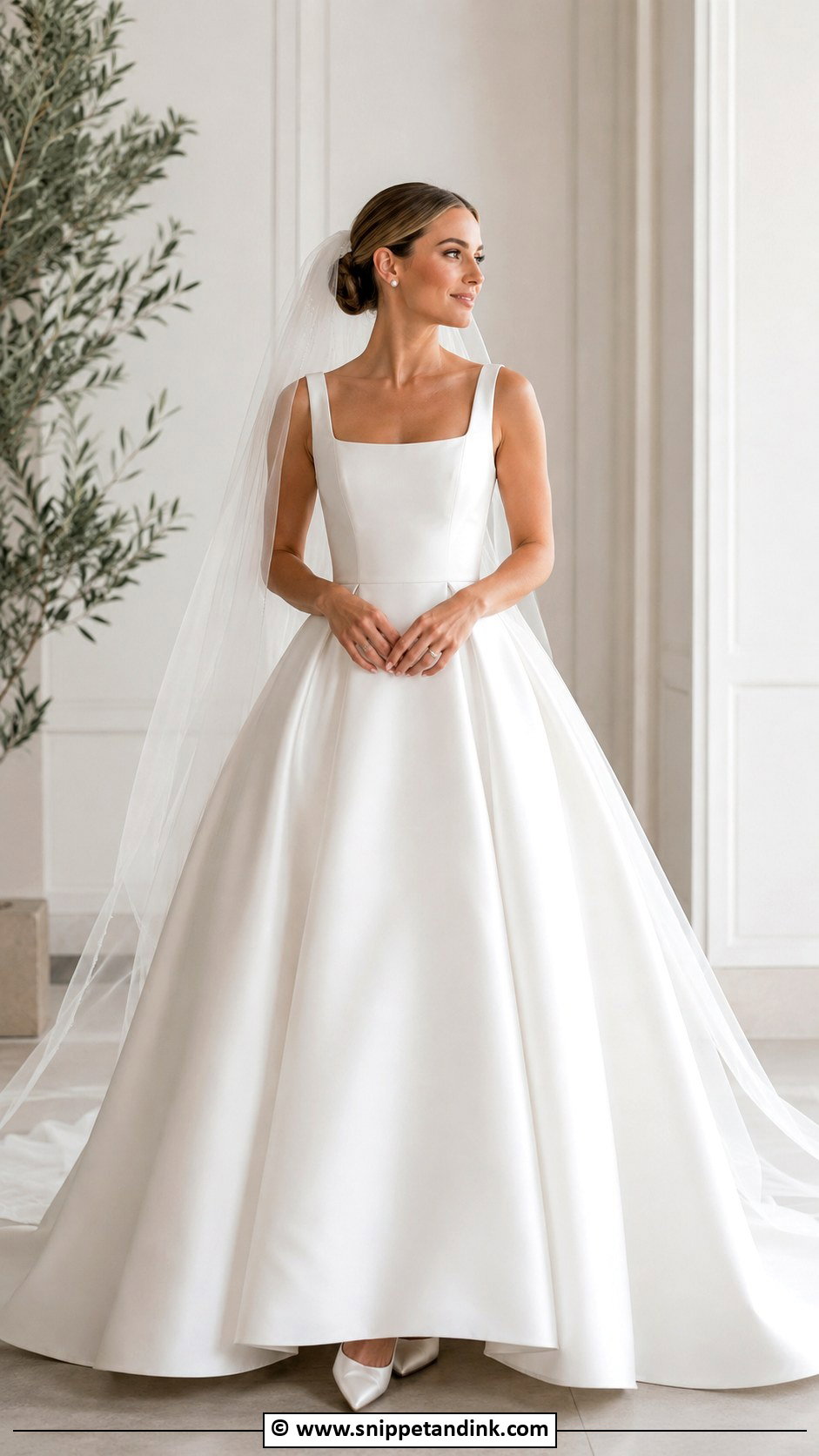
Mikado is a heavy silk blend with a slight sheen, and its weight is what lets a clean dress hold a dramatic shape. A square neckline feels classic without being expected. It suits a minimalist who still wants presence in the room. Mikado does crease where it folds when you sit, so I always recommend a good steam on the morning and a look at the skirt before photos. Covered buttons down the back or a sweeping train add drama if you want more. A low bun keeps the neckline visible.
22. Organza Wedding Dress With Oversized Sleeves
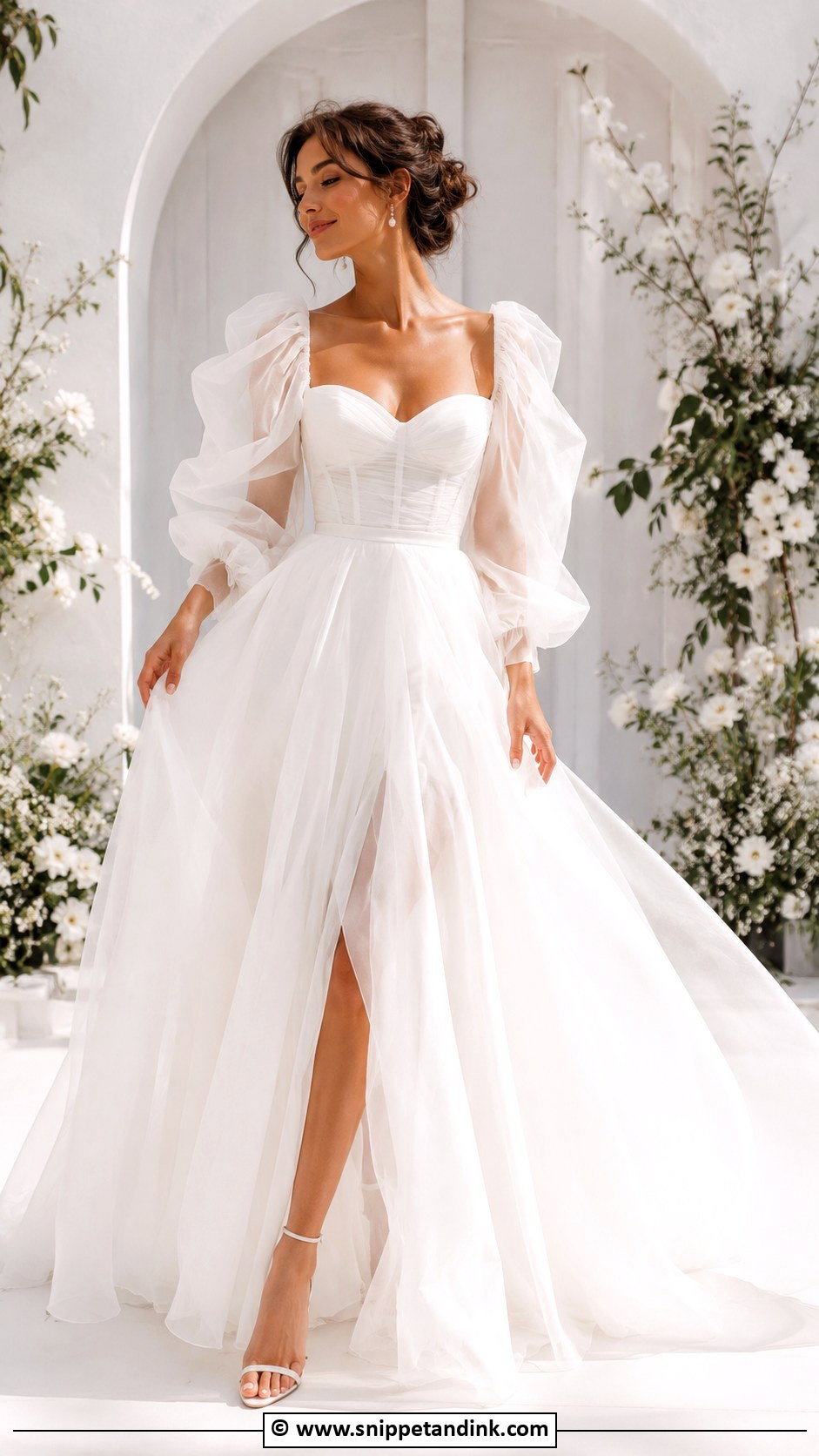
Organza is stiff but light, so it holds a big puff or bishop sleeve without the weight of satin. That makes oversized sleeves wearable for a whole day. The fitted bodice keeps all that volume from looking loose. With very large sleeves I test how the bride holds her bouquet and hugs people, since wide sleeves crush easily and block the arms. Skip the veil if the sleeves are huge, or choose a sheer one that falls behind them.
23. Jacquard Wedding Dress With Royal Train
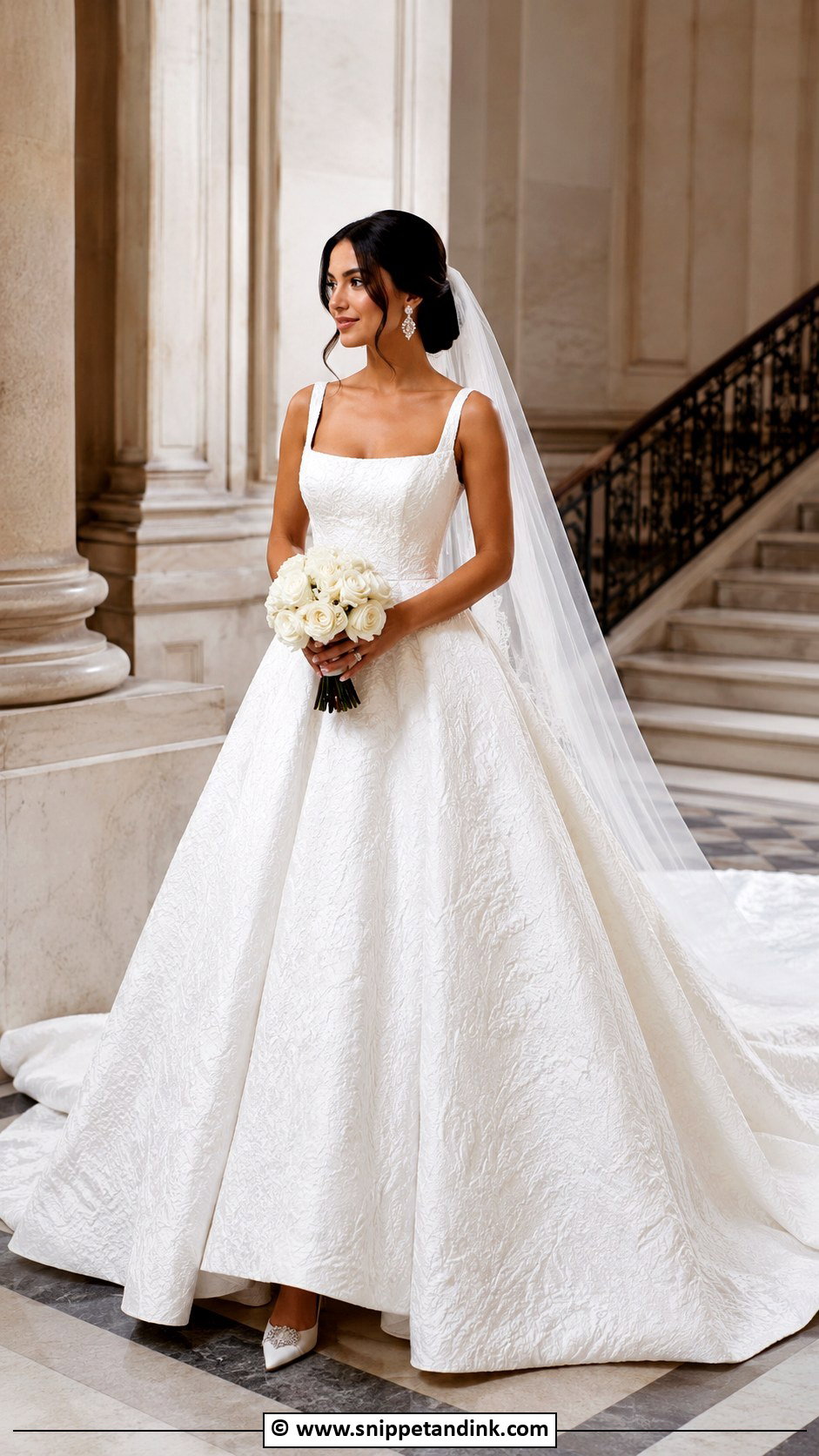
Jacquard has its pattern woven in rather than embroidered on, so you get richness and texture without extra beadwork. Add a royal train and the gown needs a big ceremony space to make sense. Keep the skirt full or A-line so the woven pattern stays readable instead of disappearing into folds. Jacquard is heavy, and a royal-length train in it adds real weight to the waist, so I plan a strong bustle with several attachment points. Classic pumps, pearl earrings and a neat bouquet are all it needs.
24. A Line Wedding Dress With Detachable Sleeves
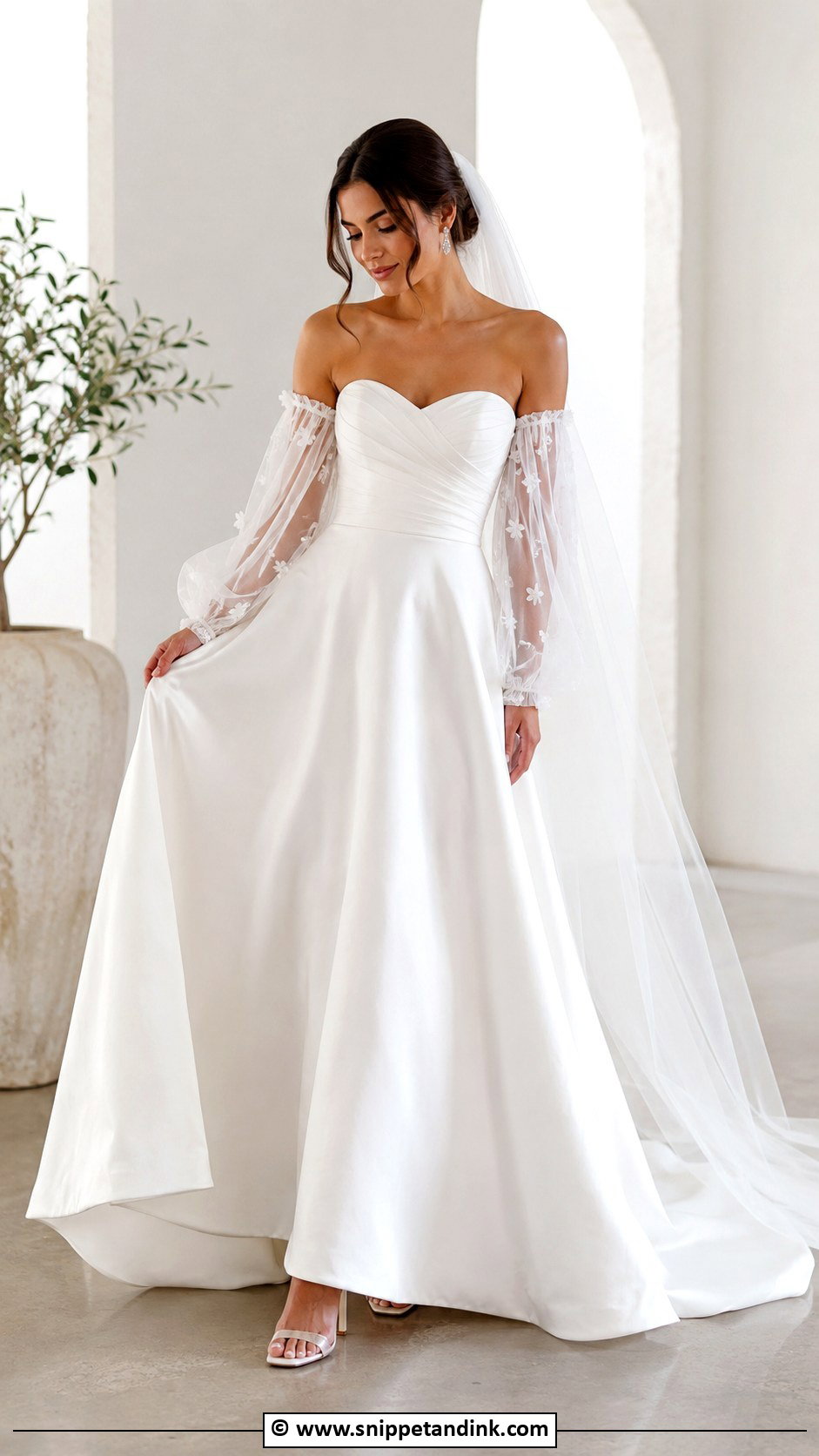
An A-line skirt defines the waist and falls away from the hips, which is why it flatters so many body types. Detachable sleeves add the drama for the ceremony and come off for dancing. Lace sleeves read romantic, satin sleeves read structured, and sheer beaded sleeves add sparkle. I ask brides to try the sleeves on and off in the fitting room, because the attachment, whether buttons, ties or elastic loops, has to be something a bridesmaid can manage quickly. Match the veil edge to the sleeve detail, then switch to a bolder hair accessory for the reception.
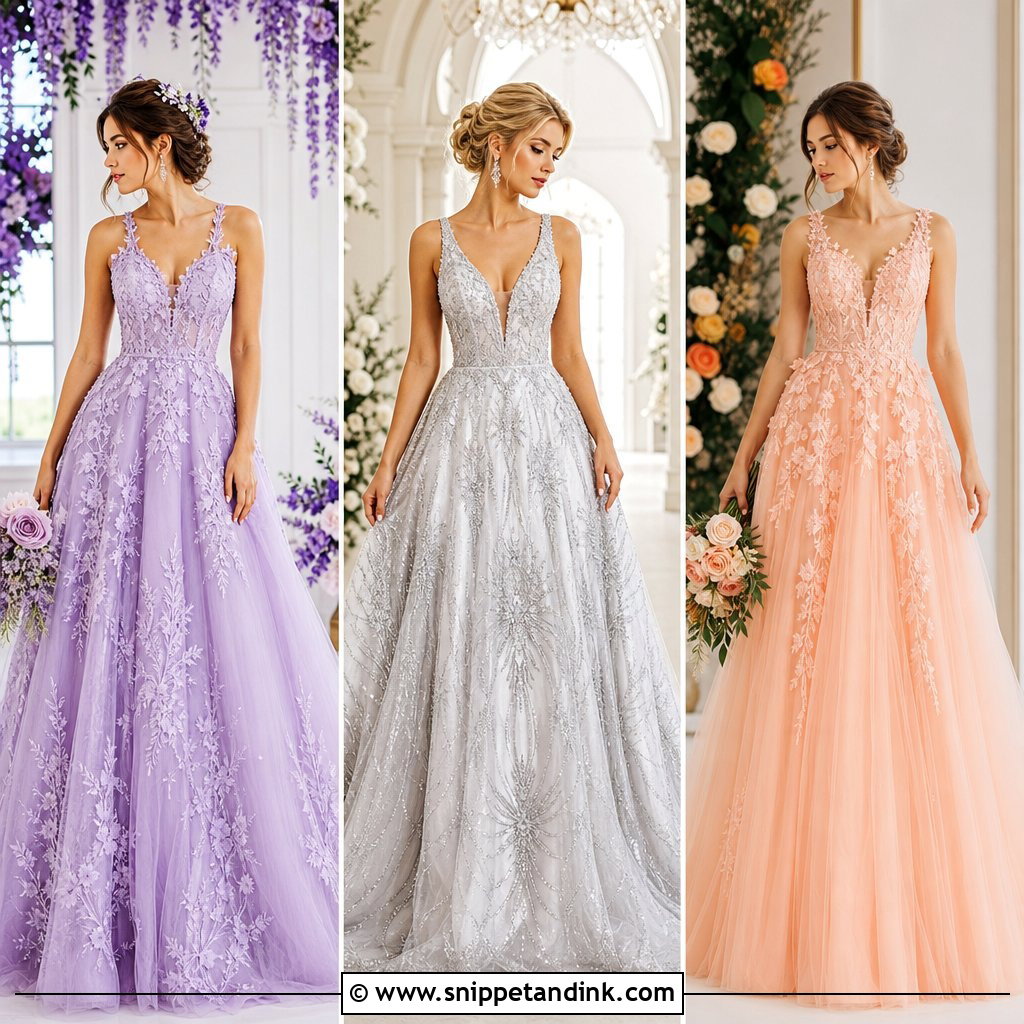


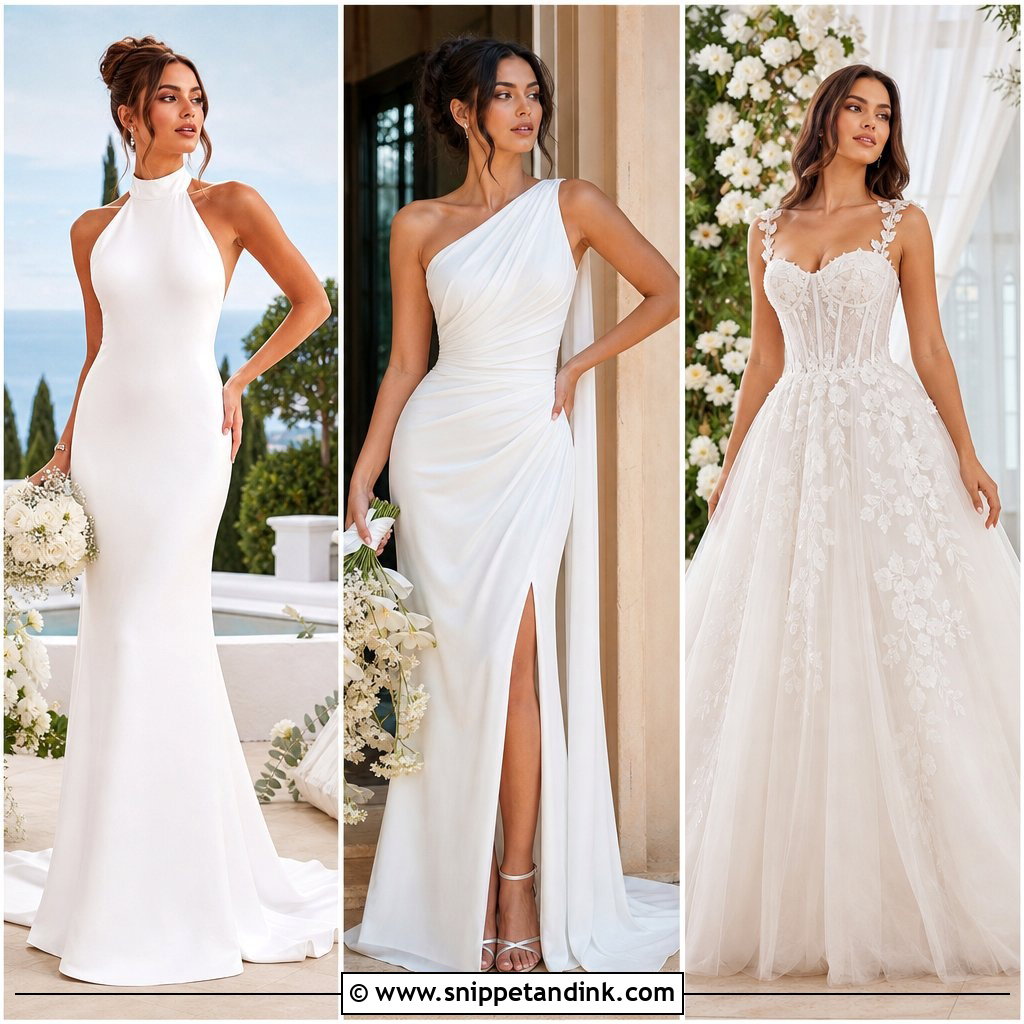

25. Princess Wedding Dress With Sparkle Bodice
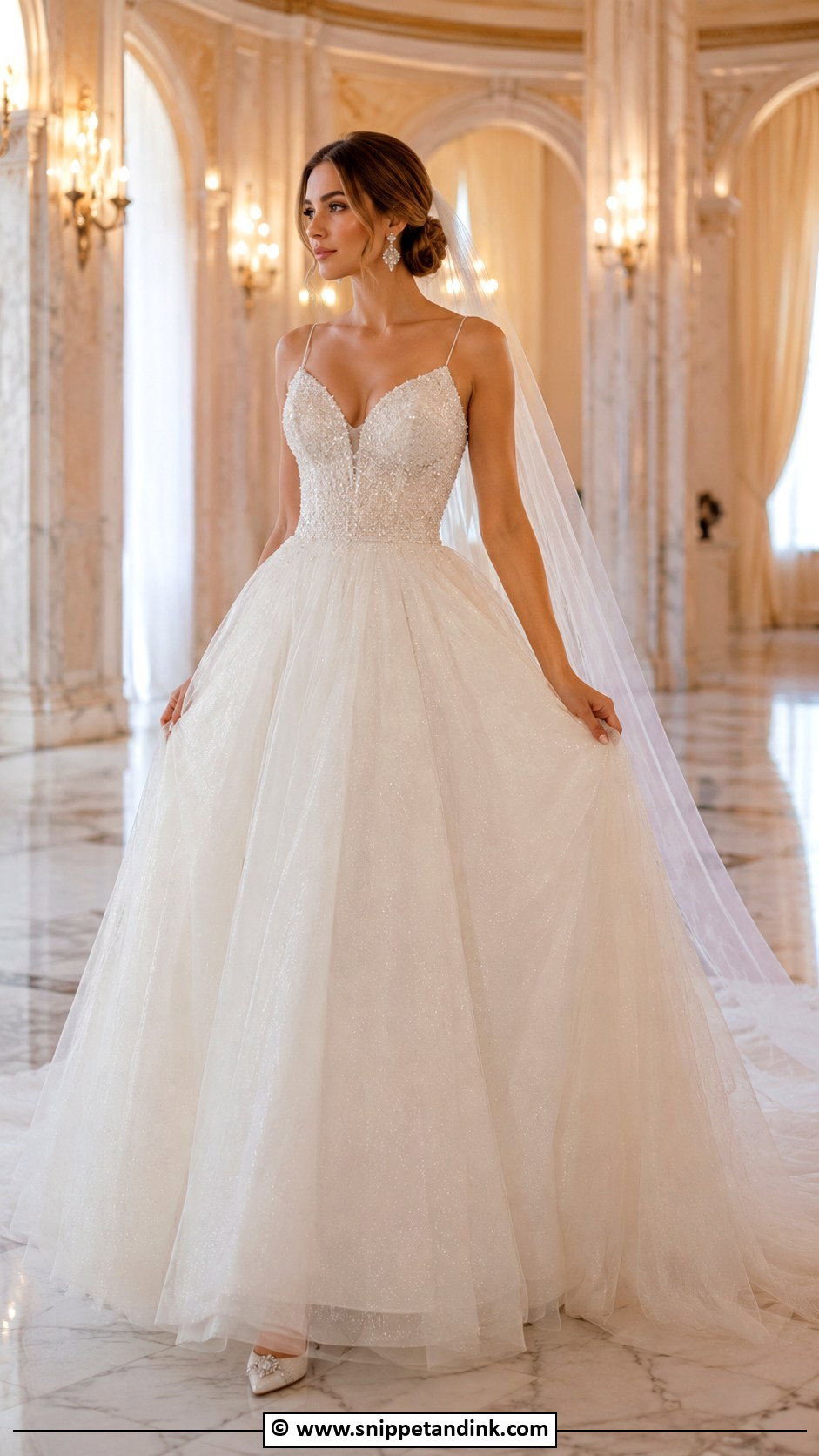
This is the fairy-tale version: sparkle concentrated on the bodice, a full soft skirt below. Keeping the shine to one zone is what stops it from looking costume-like. I’d pick either sparkling earrings or a sparkling veil edge, never both, since the bodice already pulls the eye to the face. Heavily beaded bodices are stiff, so check you can bend to pick something up and sit comfortably for dinner. Soft curls keep it from feeling too formal.
26. Vintage Wedding Dress With Beaded Fringe
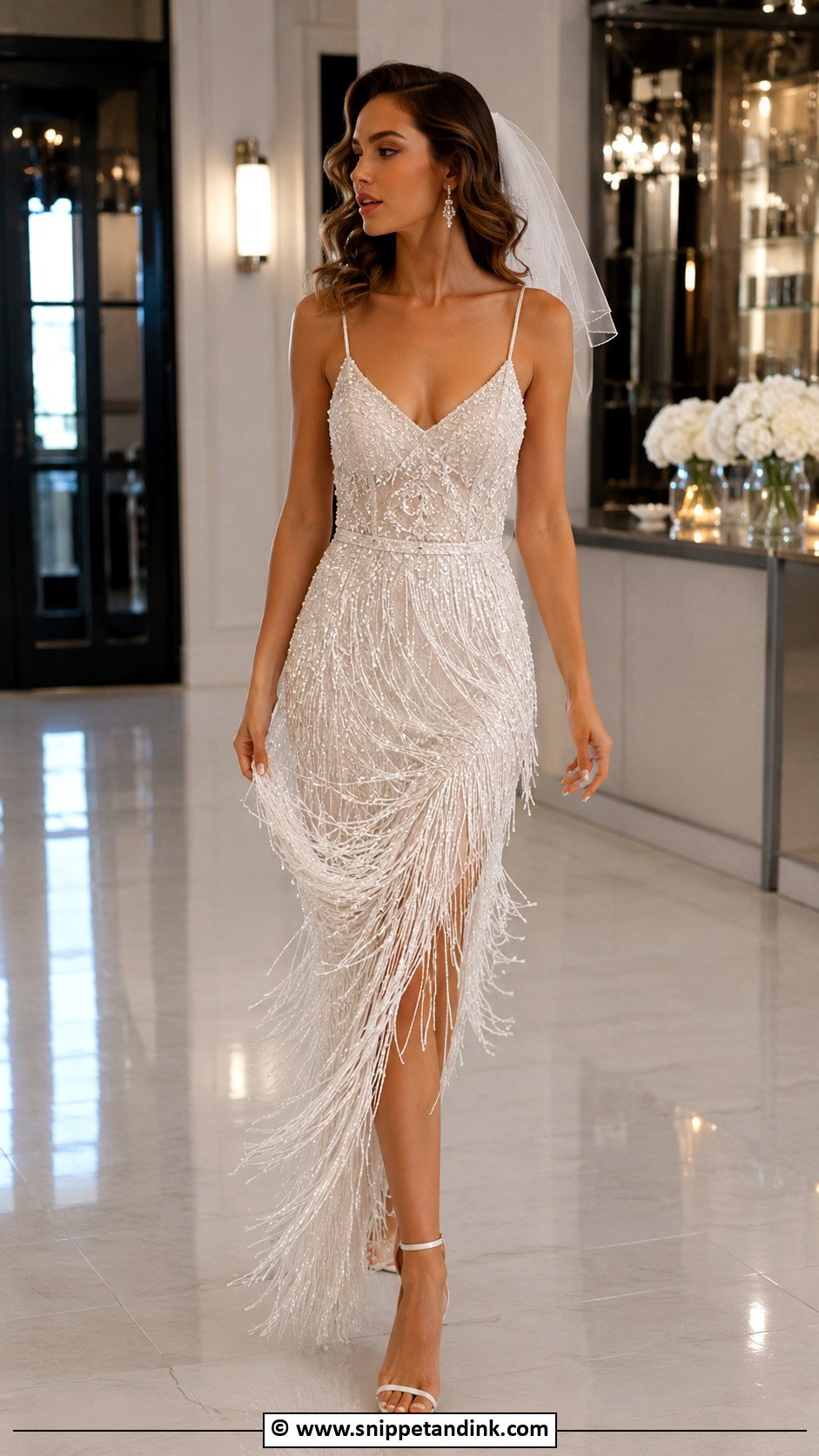
Beaded fringe swings when you walk and almost flies when you dance, which gives this vintage look real energy. A fitted silhouette keeps it sleek. Fringe tangles in a long veil, so a short veil or a hair comb works better here. My practical note: fringe snags on chair edges and catches on itself, so check the strands are knotted individually and ask for spare beads. Strappy heels, waved hair and small drop earrings fit the old Hollywood mood.
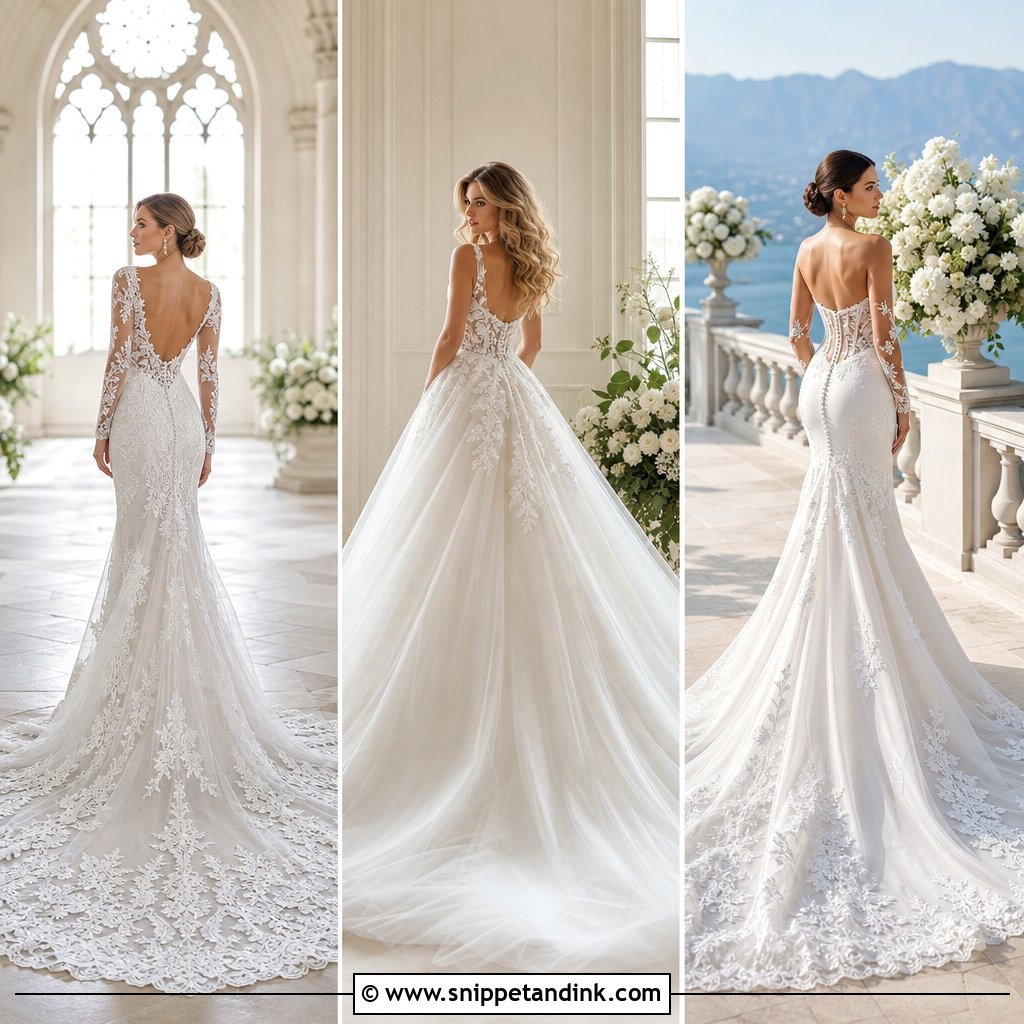
27. Illusion Wedding Dress With Floral Train
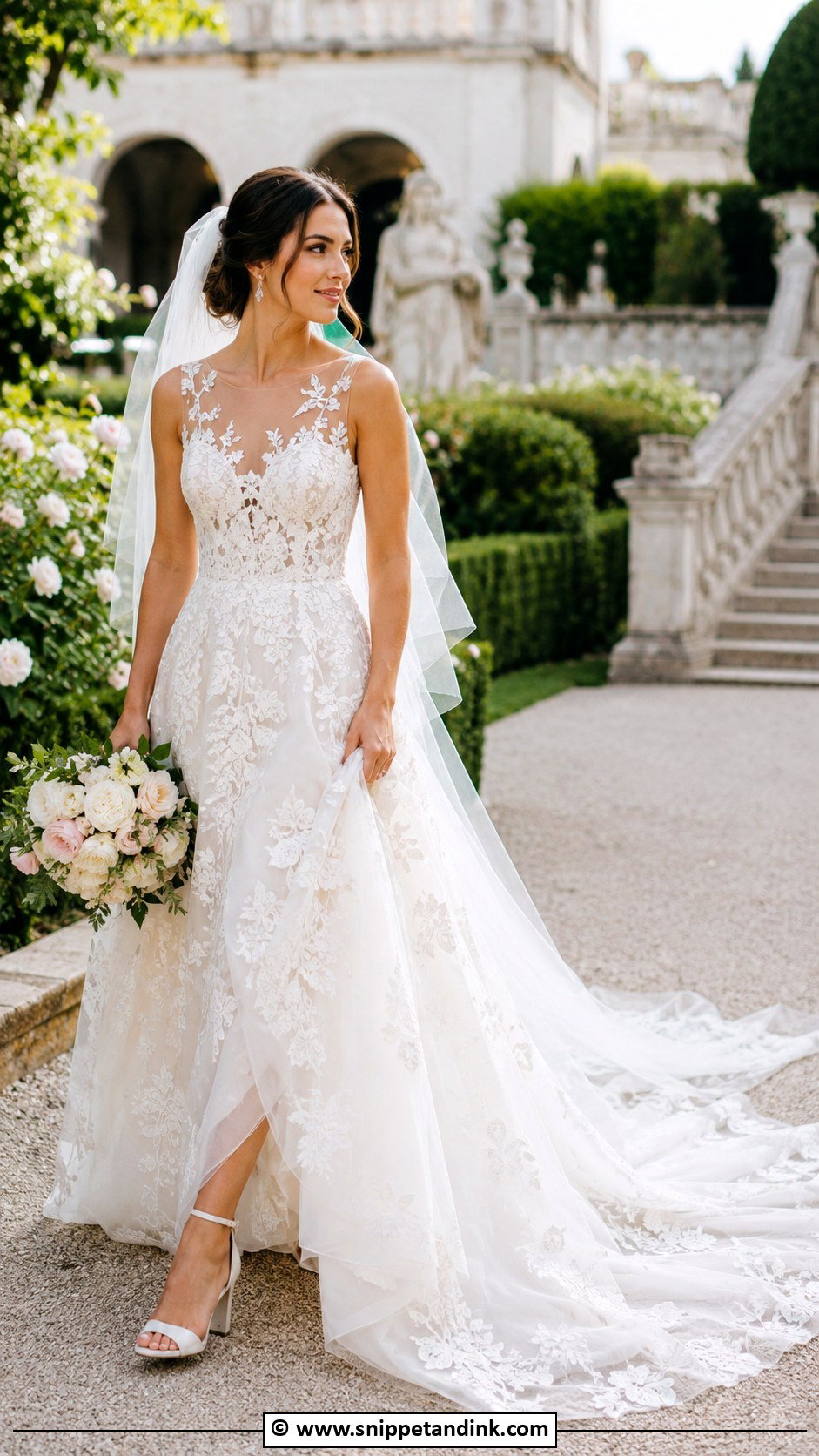
An illusion bodice gives the look of bare skin under fine mesh, so the appliqué seems to float. When the floral appliqués continue down into the train, the back view becomes the main event, both in close-ups and wide aisle shots. I check how the illusion mesh matches the bride’s skin tone, because the wrong shade shows as a visible panel in photos. Keep the veil simple so the train stays visible. Garden weddings, estate venues and spring ceremonies suit it well.
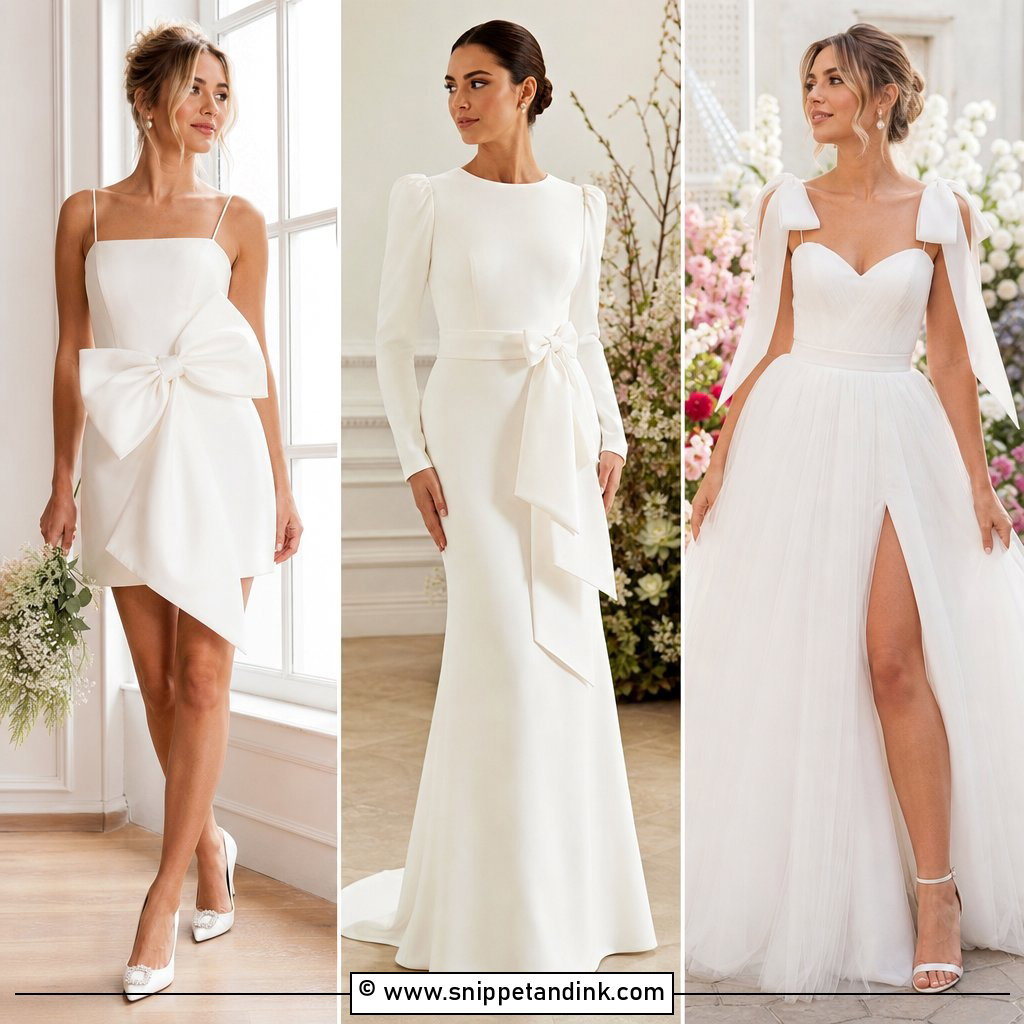
28. Minimalist Wedding Dress With Oversized Bow
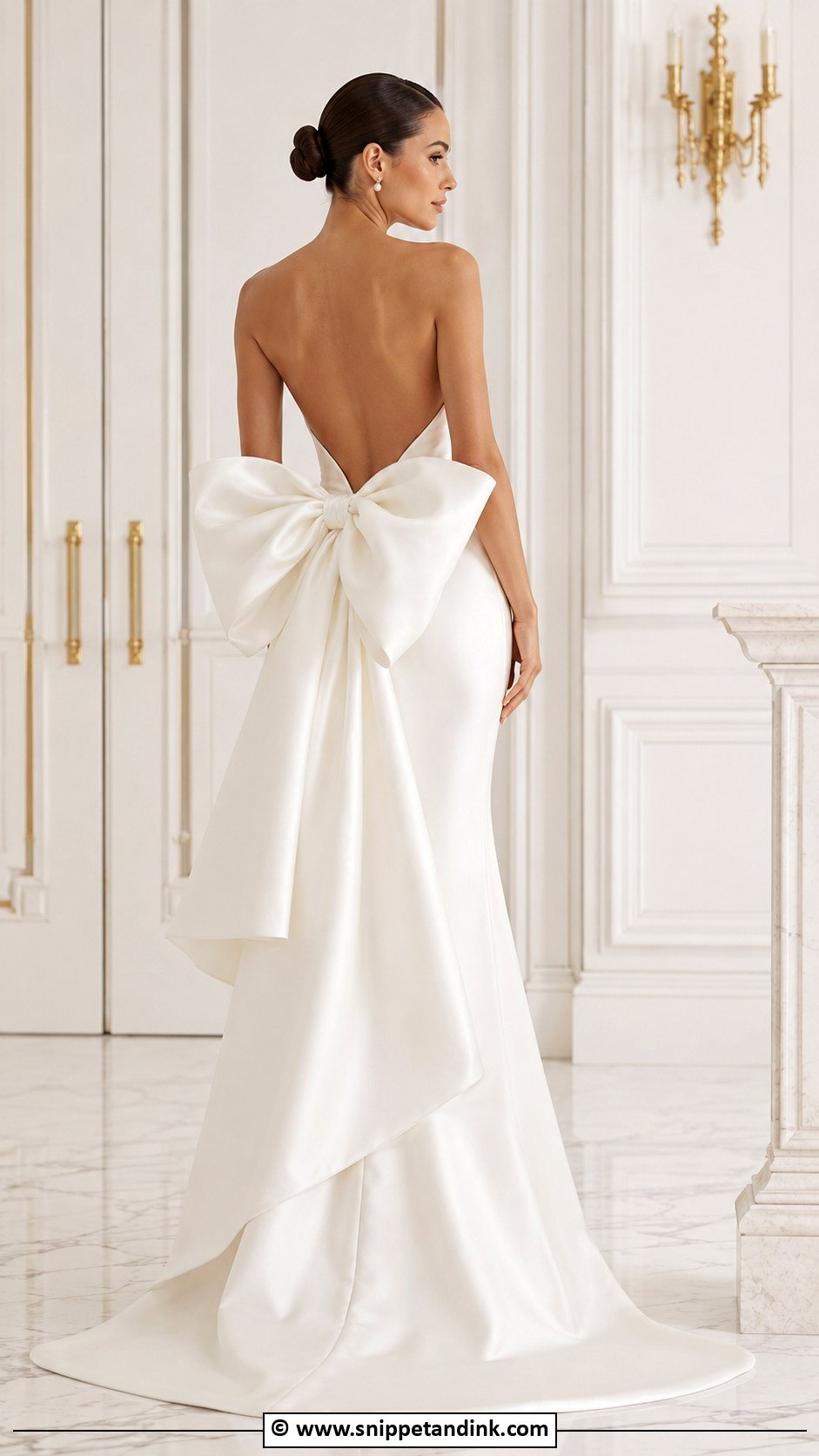
A clean gown with an oversized bow shows that extravagant does not have to mean heavily decorated. The plain dress gives the bow room to be the whole statement. Satin, mikado and crepe all work, in a column, A-line or ball-gown shape. Placement changes the mood: a back bow makes the exit, a shoulder bow feels modern, a waist bow feels classic. Big bows need internal support or they droop by the reception, so I ask the seamstress how hers is built. Pearl earrings and a smooth bun keep the rest simple.
29. Convertible Wedding Dress With Reception Skirt
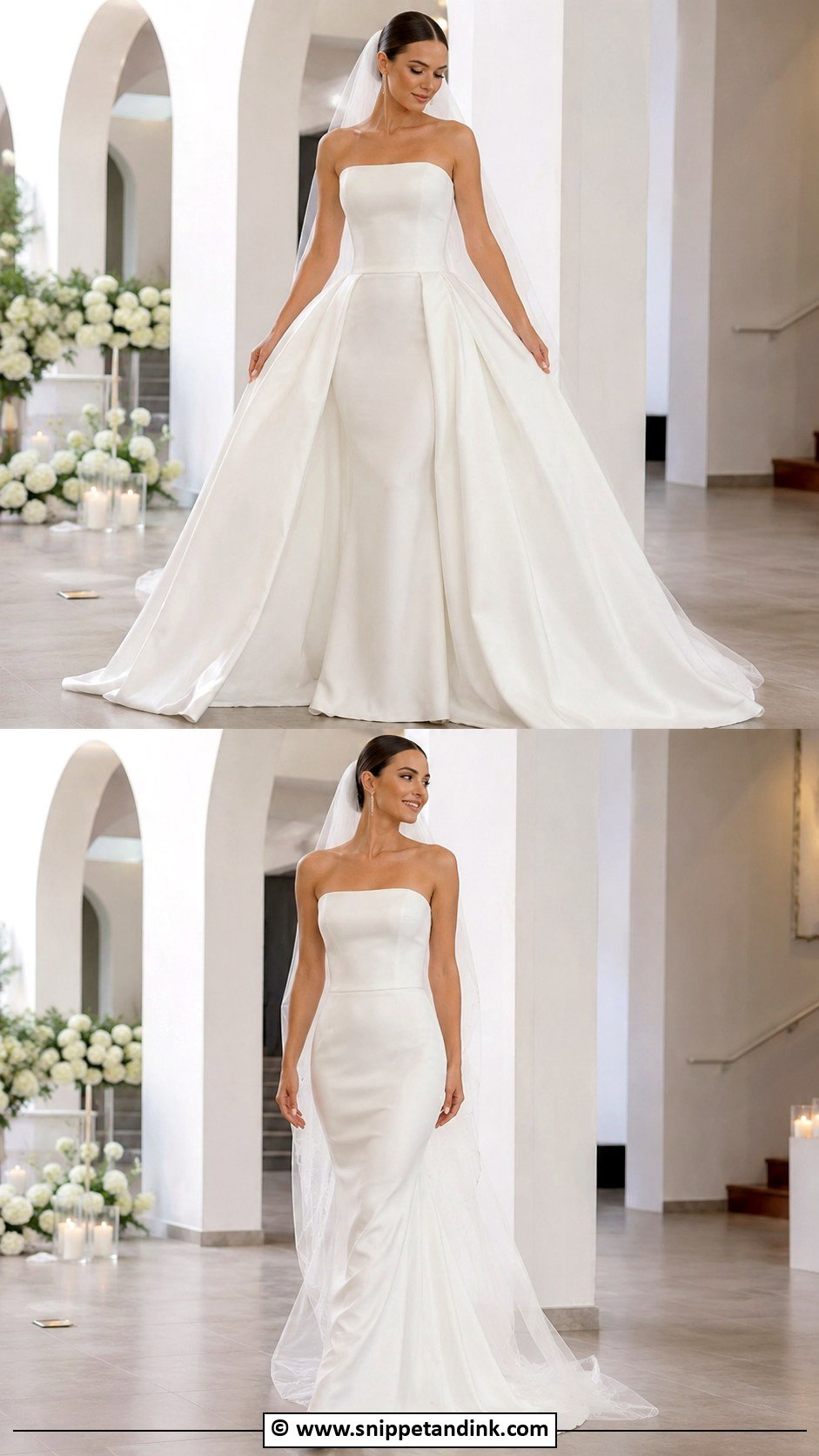
A convertible gown gives you a ceremony look and a lighter reception look without buying a second dress. The ceremony version may include a full overskirt, long train, cape or detachable sleeves; the reception version is lighter or shorter so you can move. I always ask who will make the change on the day and how long it takes, because a fiddly conversion eats into reception time. The pieces need to attach securely and look finished both ways. Add statement earrings or a sparkly clutch for the second look.
30. Couture Wedding Dress With Architectural Skirt
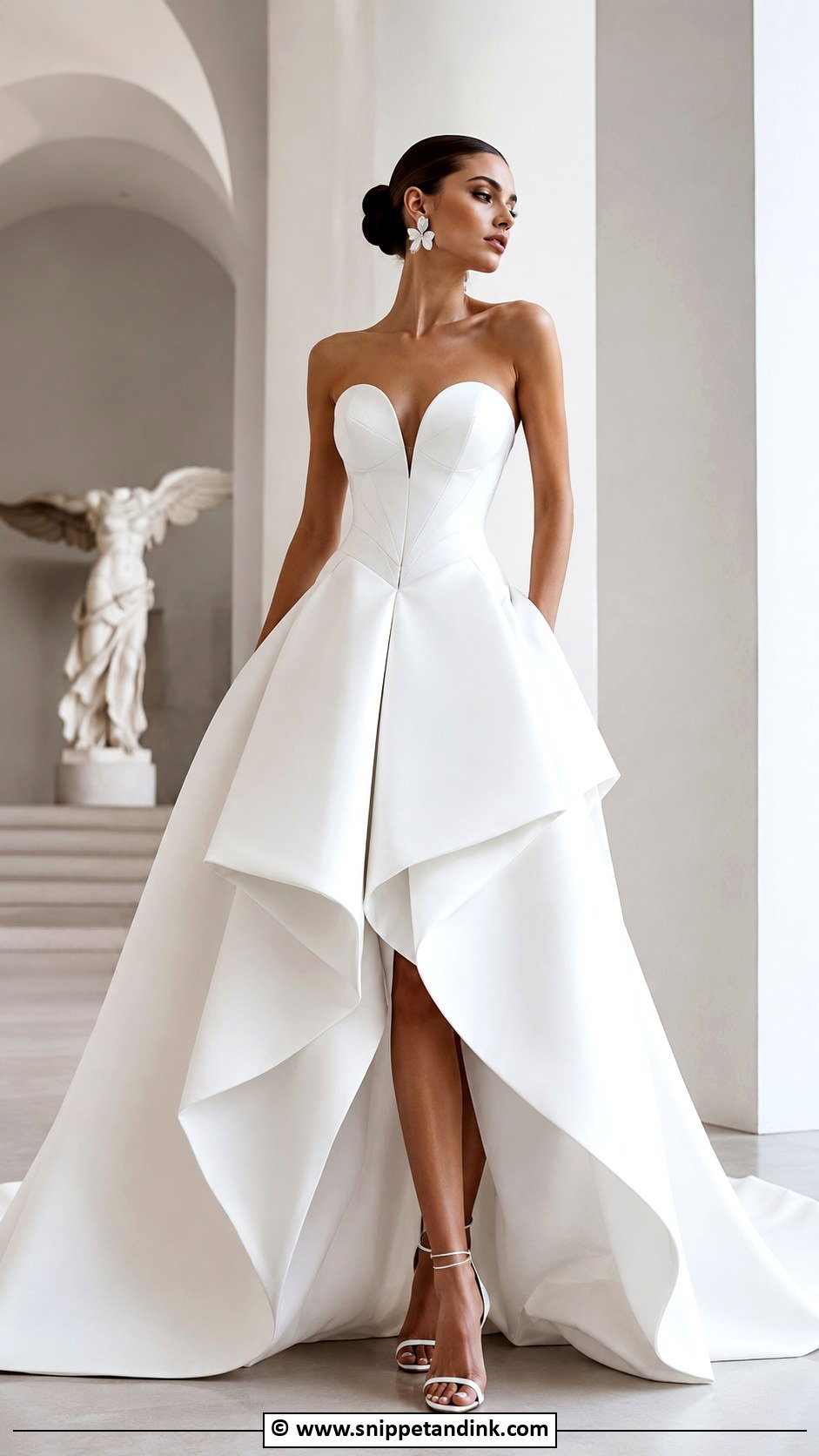
The skirt is the art here: sculpted folds, deep pleats, asymmetric layers or structured panels that hold a shape on their own. Mikado, taffeta, satin and organza are the fabrics that manage it. Keep the bodice fitted and the accessories modern so the skirt stays the focus. Architectural skirts can be awkward in a car and on a narrow staircase, so I plan the route from getting-ready room to aisle before the day. Museums, modern hotels and minimal venues give the shape a clean background.
Ordering Early Enough for Structure and Handwork
Dramatic gowns take longer to make. Hand beading, pearl work, feathers and structured skirts are slower to produce than a plain crepe sheath, and many bridal houses quote several months from order to delivery. I tell brides to start shopping roughly a year out if they want this level of detail, and to ask each boutique for its current lead time in writing, since it varies by designer and season.
Alterations then need their own window. Most big gowns go through two or three fittings, usually starting a couple of months before the wedding, and heavily beaded pieces can take longer because beads have to be removed and re-sewn wherever a seam moves. Bring your actual wedding shoes and undergarments to the first fitting. Hem length and bodice fit depend on both.
Steaming and Storing a Structured Gown
Collect the dress as close to the wedding as your schedule allows and hang it in its breathable bag, from the hanger loops, not the shoulders. Heavy skirts stretch delicate straps if they hang by them for weeks.
- Steam on the morning with a handheld steamer held a few inches away. Never press an iron directly on beading, sequins or feathers.
- Mikado and taffeta show fold lines most; tulle and organza usually relax with gentle steam.
- Keep a white cloth and plain water for small marks, and blot rather than rub.
- After the wedding, have the gown professionally cleaned within a few weeks so sugar and sweat stains don’t yellow.
- Store it in acid-free tissue in a box or cotton bag, somewhere cool and dark, never sealed in plastic.
Drama Should Still Let You Sit Down to Dinner
Some brides feel most like themselves in a royal ball gown with a cathedral train, others in a sculpted corset, feathers, pearls or a single modern bow. The right one is the drama you can still breathe, sit and dance in. When you narrow it down, look at fabric weight, how the train is bustled, how the neckline holds when you lift your arms, and how the gown looks from the back of the room. Get those right and a big dress carries you from the aisle to the last song without asking you to think about it.
You'll Like These Ideas:




Leave a Reply