
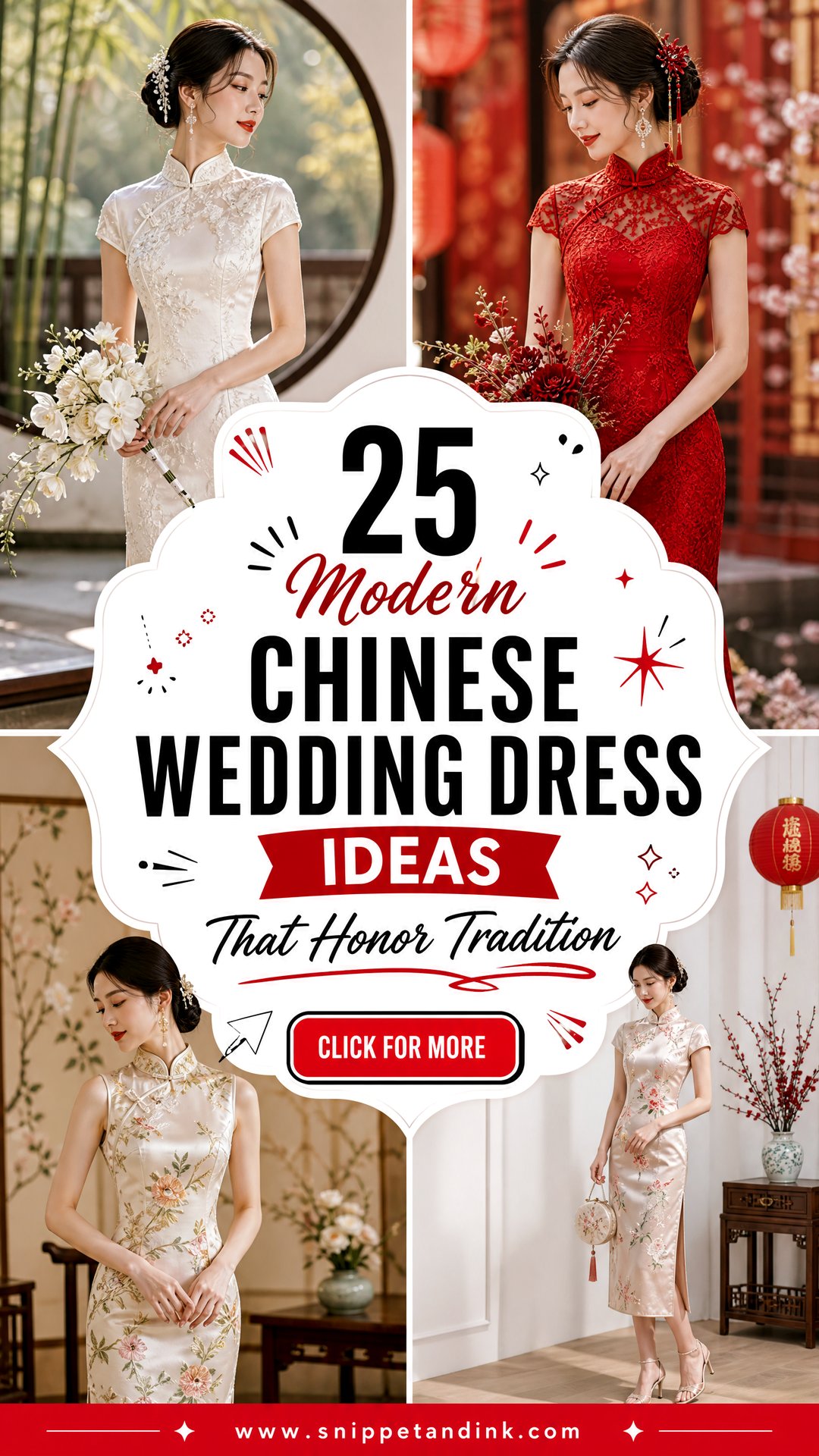
Chinese bridal dress has moved well past the single red dress worn for one ceremony. The brides I dress now mix qipao, qun kua, xiuhefu, hanfu-inspired robes and Western gowns with a mandarin collar, often two or three across a single day. My first question is never the color. It’s what she will be doing in each outfit: kneeling to serve tea, walking table to table at the banquet, or standing through an hour of family portraits. A fitted qipao and a heavily embroidered qun kua behave very differently once you sit down, and a good wardrobe plans for that. The ideas below run from the most traditional to the most fused, with notes on how each one actually wears.
How a Qipao Should Fit Before It Leaves the Shop
A qipao is cut close to the body, and that is both its beauty and the reason so many brides end up uncomfortable by the banquet. Off-the-rack sizing rarely matches your bust, waist and hip at once, so plan on alterations, and leave enough time for at least two fittings. Custom pieces with hand embroidery take longer still, so order those first in your planning.
At the fitting I don’t let anyone judge the dress standing still in front of a mirror. These are the checks I run:
- Kneel and bow as you would at the tea ceremony. The slit should stay modest and the seams across the hip shouldn’t strain.
- Sit on a hard chair for a few minutes. Look for pulling at the frog closures across the chest and ripples at the lap.
- Turn your head and look down. The mandarin collar should leave about a finger’s width of room at the throat.
- Lift both arms as if pouring tea. If the whole dress rises with them, the armholes need to be lower.
- Walk a flight of stairs in your wedding shoes. A narrow hem may need the slit raised slightly or a walking pleat added.
Bring the actual shoes and undergarments to every fitting. A smooth slip or shapewear changes how silk falls across the hip, and a hem set for flats will drag once you’re in heels.
1. Red Qipao Wedding Dress
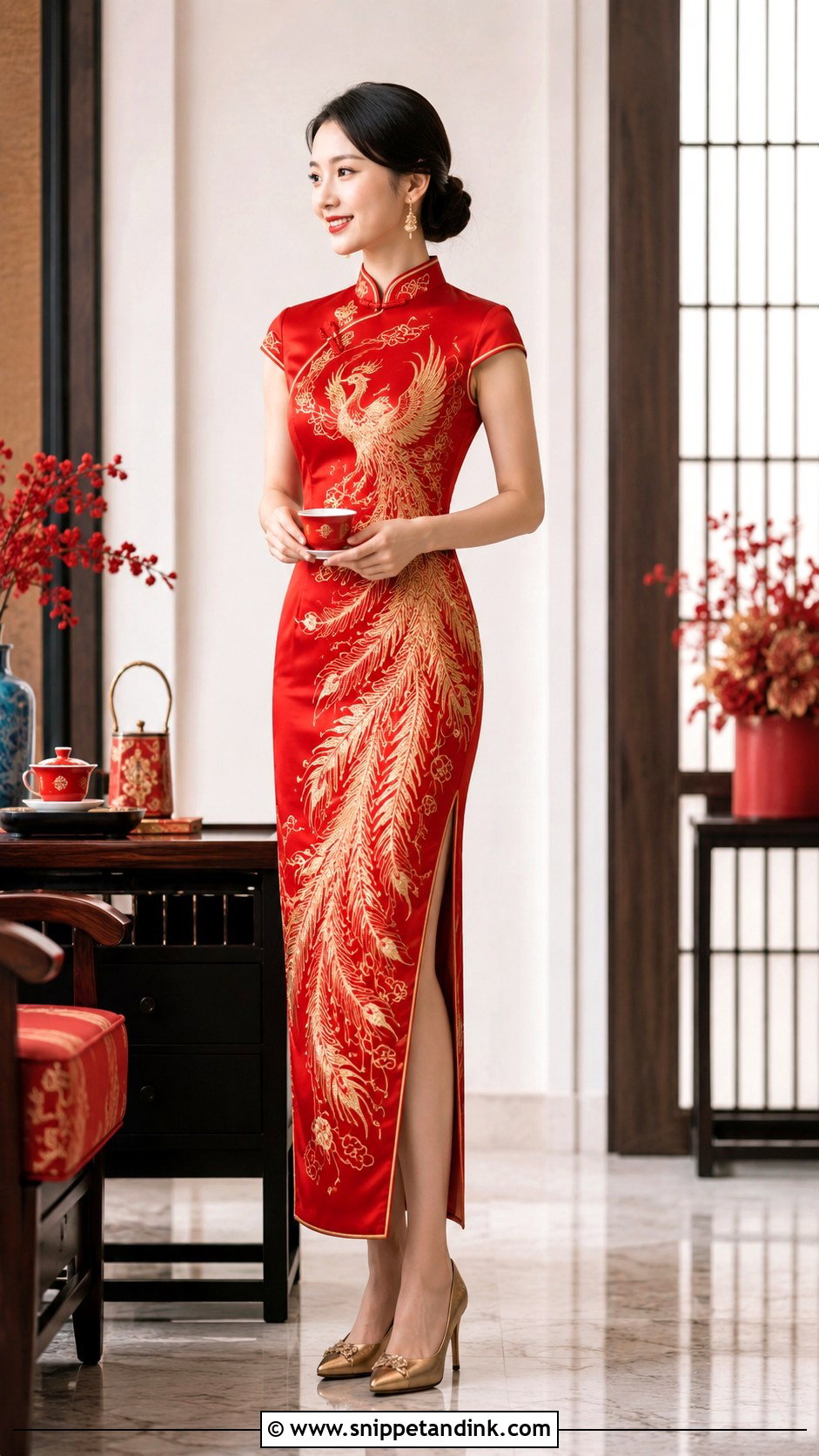
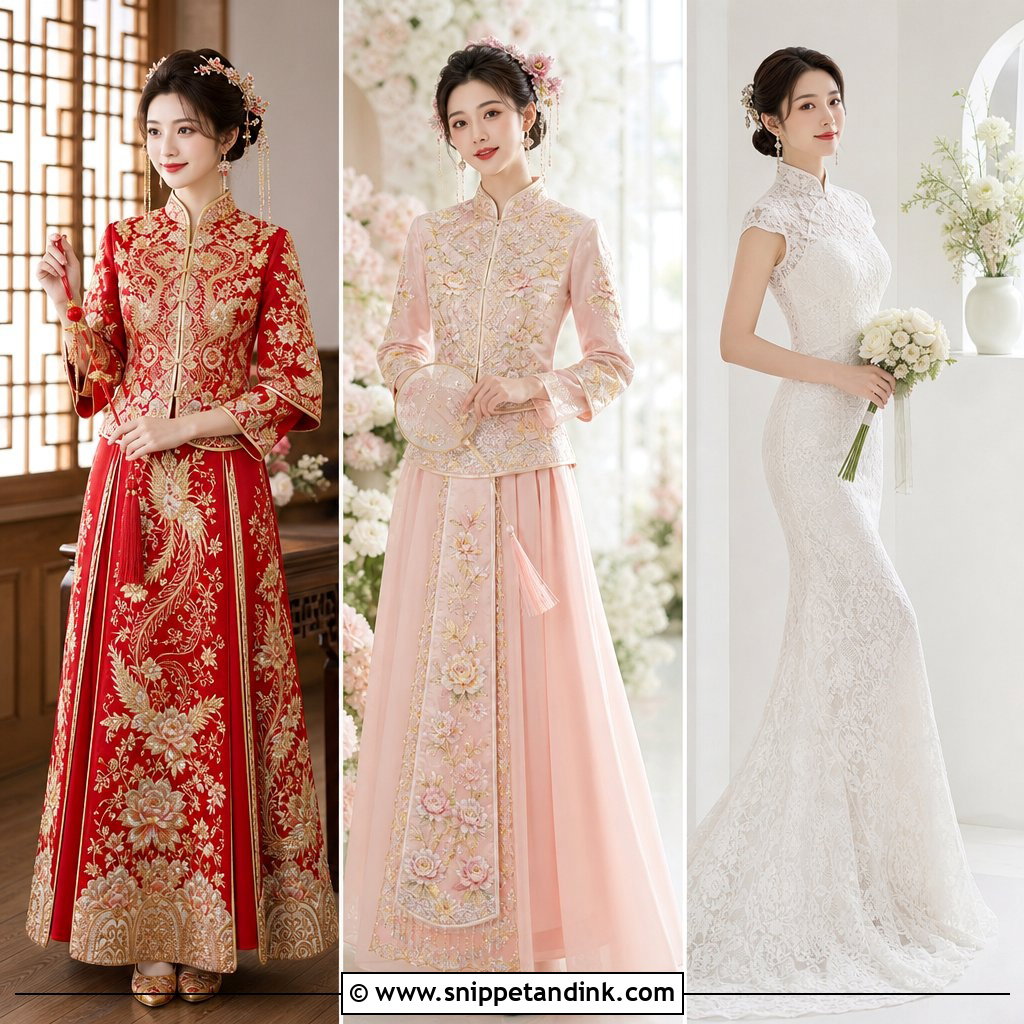
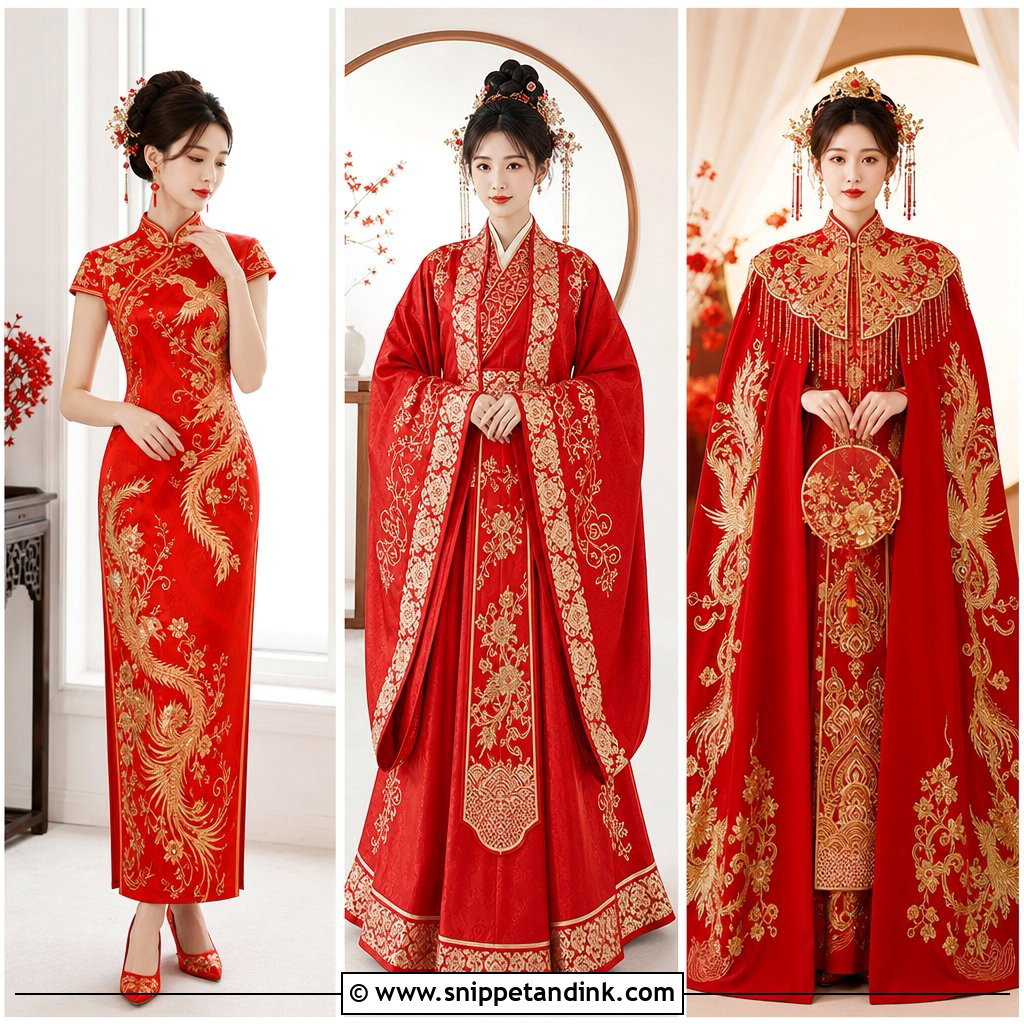
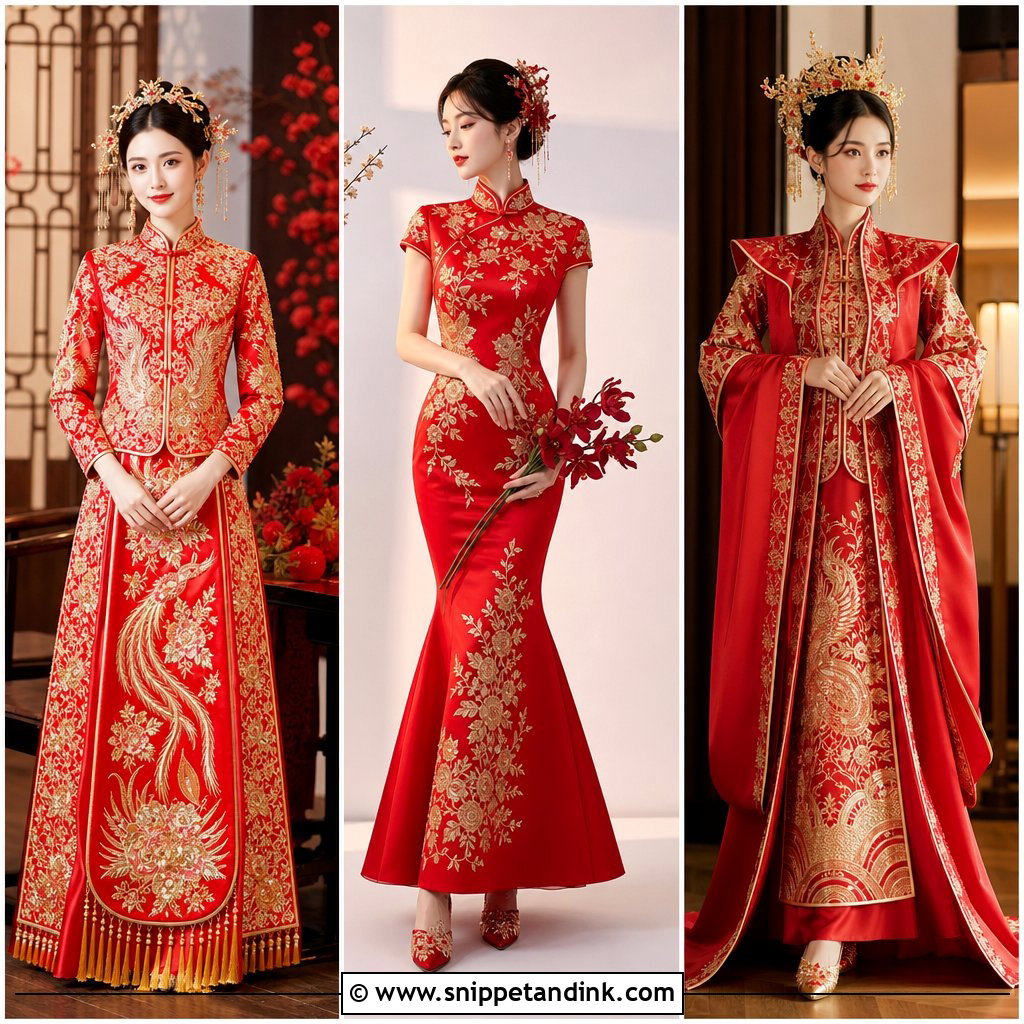
A red qipao wedding dress is still the piece most families expect to see at the tea ceremony, and it earns its place. The high mandarin collar, side slit and frog closures carry the tradition; the fabric decides how it wears. Silk and brocade hold the line of the body, while stretch satin can ripple across the hip when you sit. I check the slit height with the bride kneeling, because a slit cut for standing often opens too far once she bows to pour tea. Gold phoenix or peony embroidery reads as celebratory, and asking for a midi length with less beading on the bodice makes it feel current.
2. White Cheongsam Wedding Dress
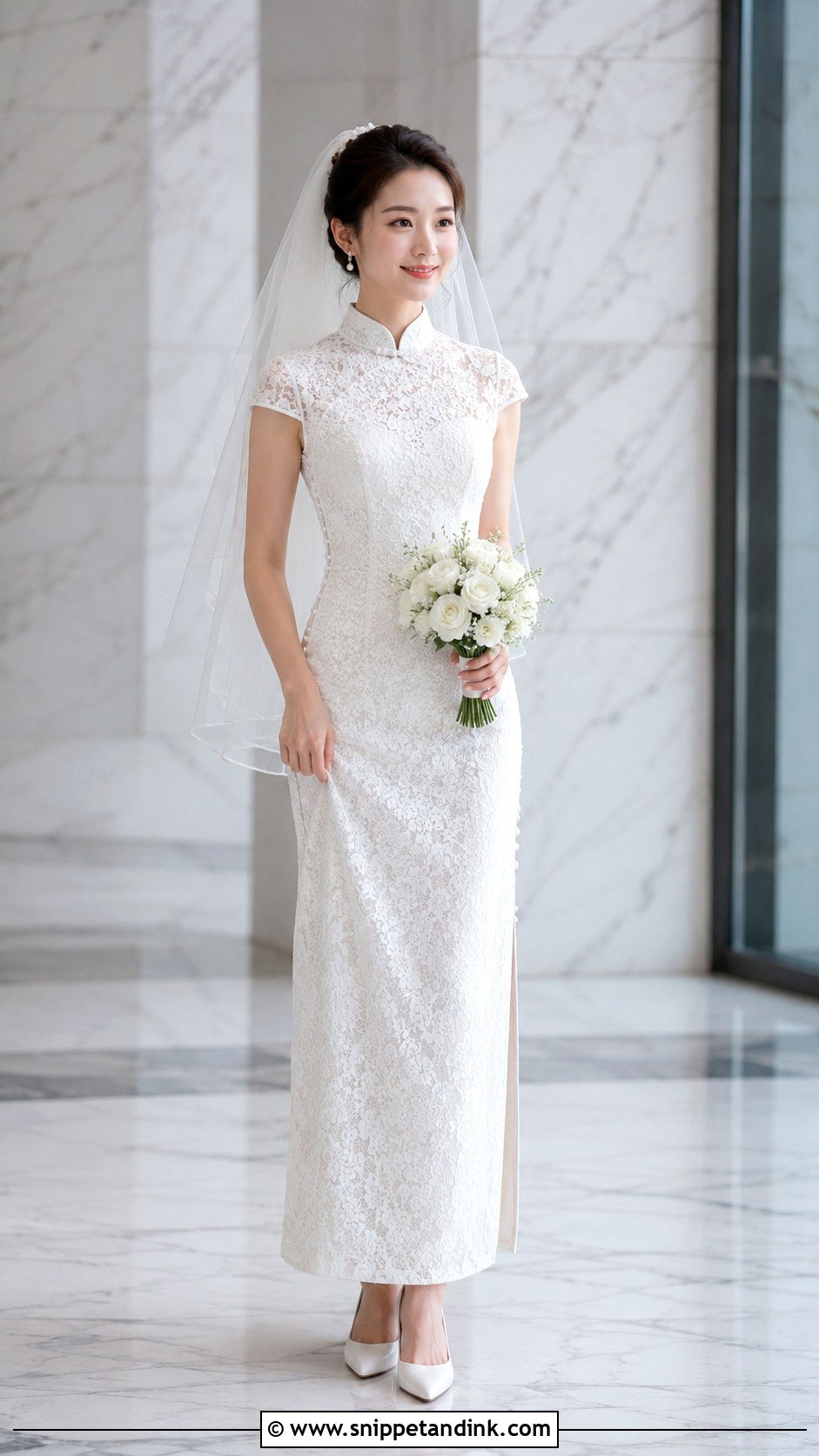
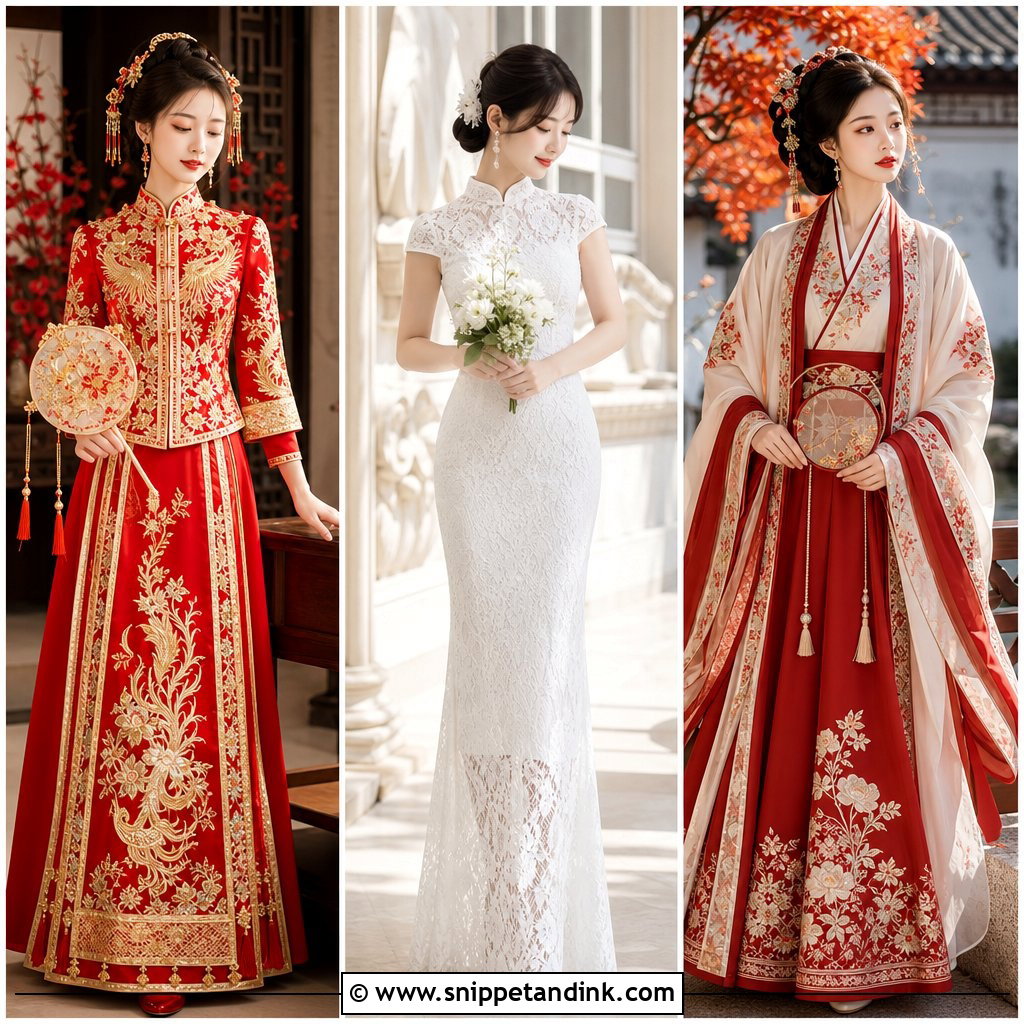
Ivory is the bridge between a Western aisle and a Chinese silhouette. A white cheongsam with a lace overlay, pearl buttons or tonal floral embroidery keeps the structure of the traditional cut while sitting comfortably beside a veil and white heels. A column shape looks cleanest; a slight flare at the hem is kinder if you have a long walk or stairs. One honest caution: some older relatives still link plain white with mourning, so I suggest adding a touch of red or gold somewhere, even a lining or a hairpin, if grandparents will be there. It sits easily at a courthouse, in a garden or at a banquet.
3. Red Qun Kua Wedding Dress
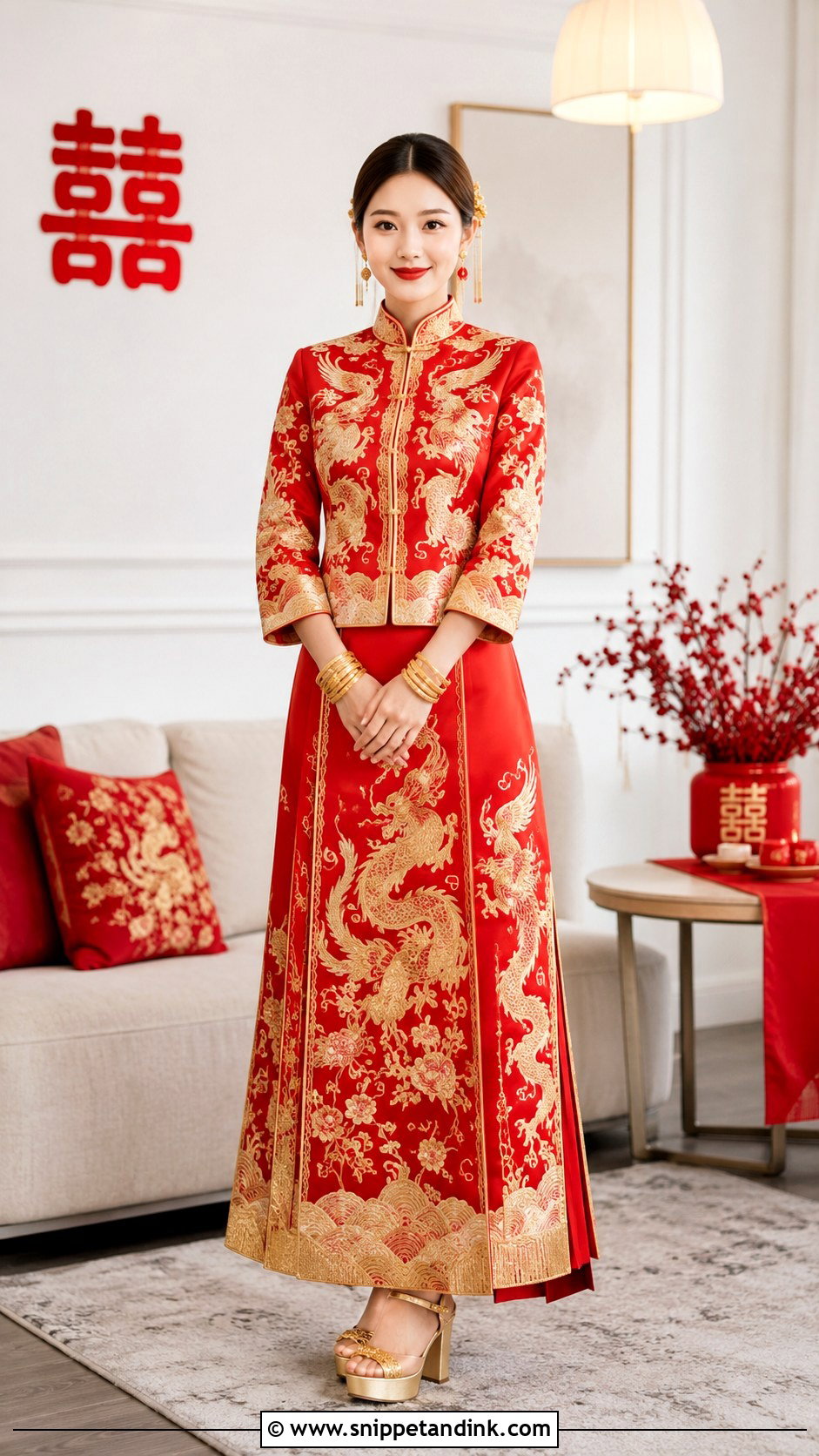
The qun kua is the heaviest outfit on this list, literally. Dense gold or silver embroidery on the jacket and skirt adds real weight, and the jacket is cut boxy, so it won’t move with you the way a qipao does. That is exactly why it suits the tea ceremony: it holds a neat shape whether you stand or kneel, and the dragon and phoenix, read as harmony between husband and wife, face the camera either way. For a modern update, ask for a slimmer jacket or a lighter base fabric. Gold platform heels, family gold jewelry and a center-part bun finish it.
4. Modern Xiuhefu Wedding Dress
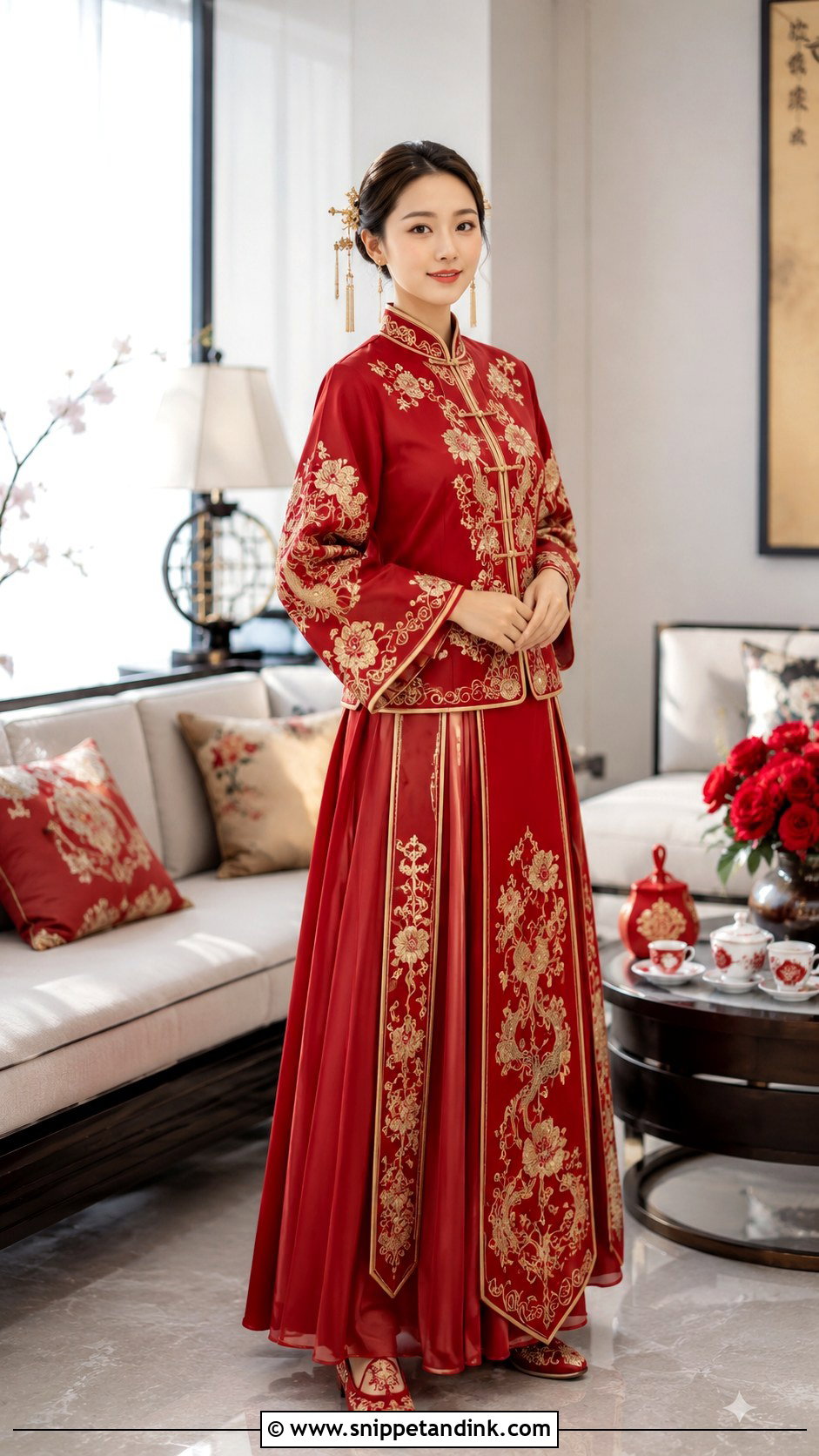
Xiuhefu is what I suggest to brides who dread a tight dress. The jacket is looser, the sleeves are wide and the skirt flows, so bowing, sitting and greeting relatives all feel easy. The trade-off is that it can swallow a petite frame, so I usually have the sleeves and jacket hem taken up rather than left at the standard cut. Red silk with fine gold embroidery is classic, and a blush-red reads softer. Embroidered flats or low block heels keep you steady, and gold hairpins with simple dangling earrings finish the outfit.
5. Red Lace Qipao Wedding Dress
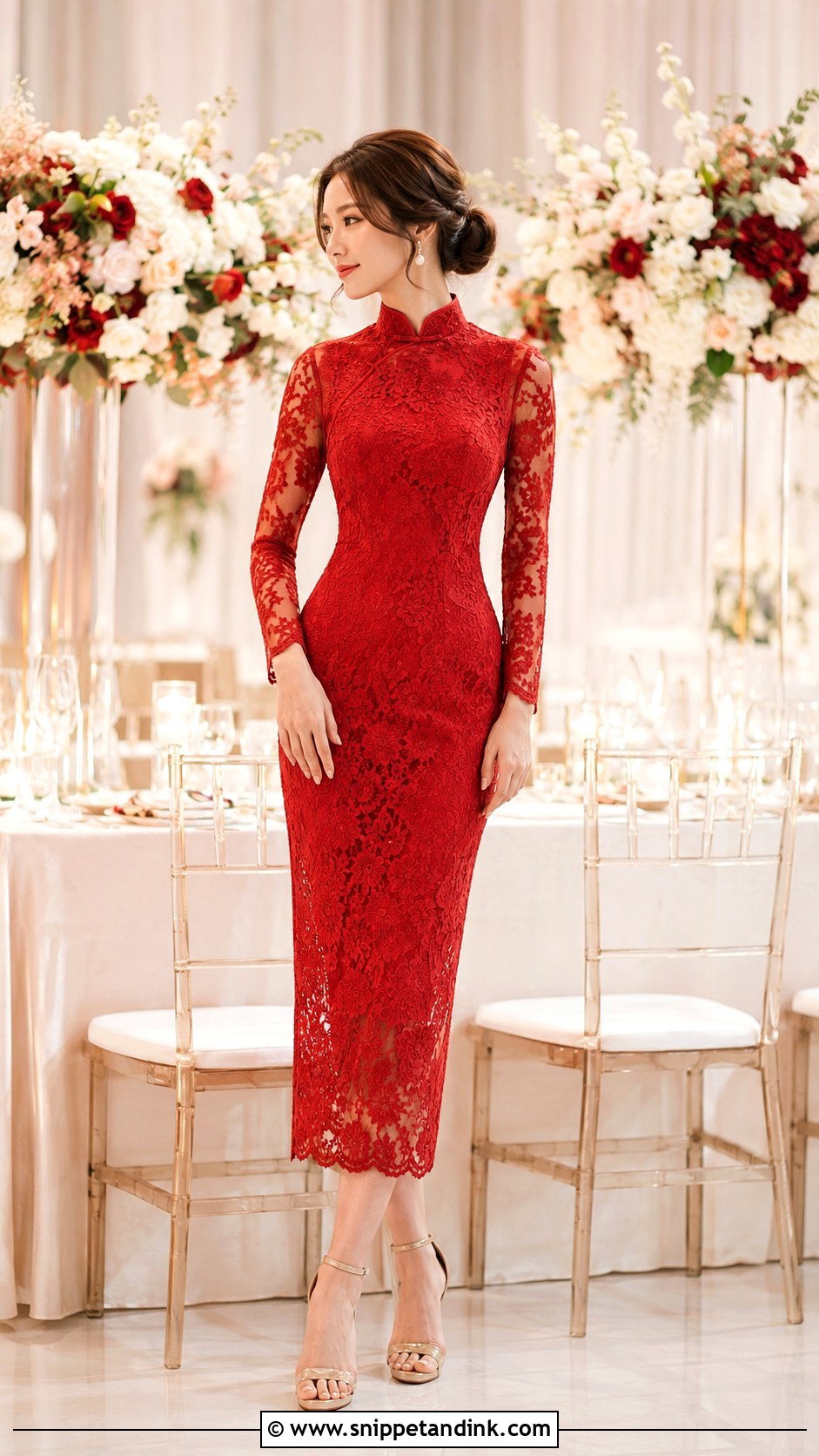
Lace takes some of the severity out of a fitted qipao. Sheer lace sleeves or floral lace panels on the bodice add texture without the weight of full embroidery. What I watch on red lace is the lining: if its shade is even slightly off, the lace looks pink under flash. Hold the dress up in daylight and again under a phone flash before you commit. A half-up style or soft bun keeps the neckline visible, and nude or gold heels with pearl drops keep it light. I like it most as a reception or engagement-dinner dress.
6. Gold Cheongsam Wedding Dress
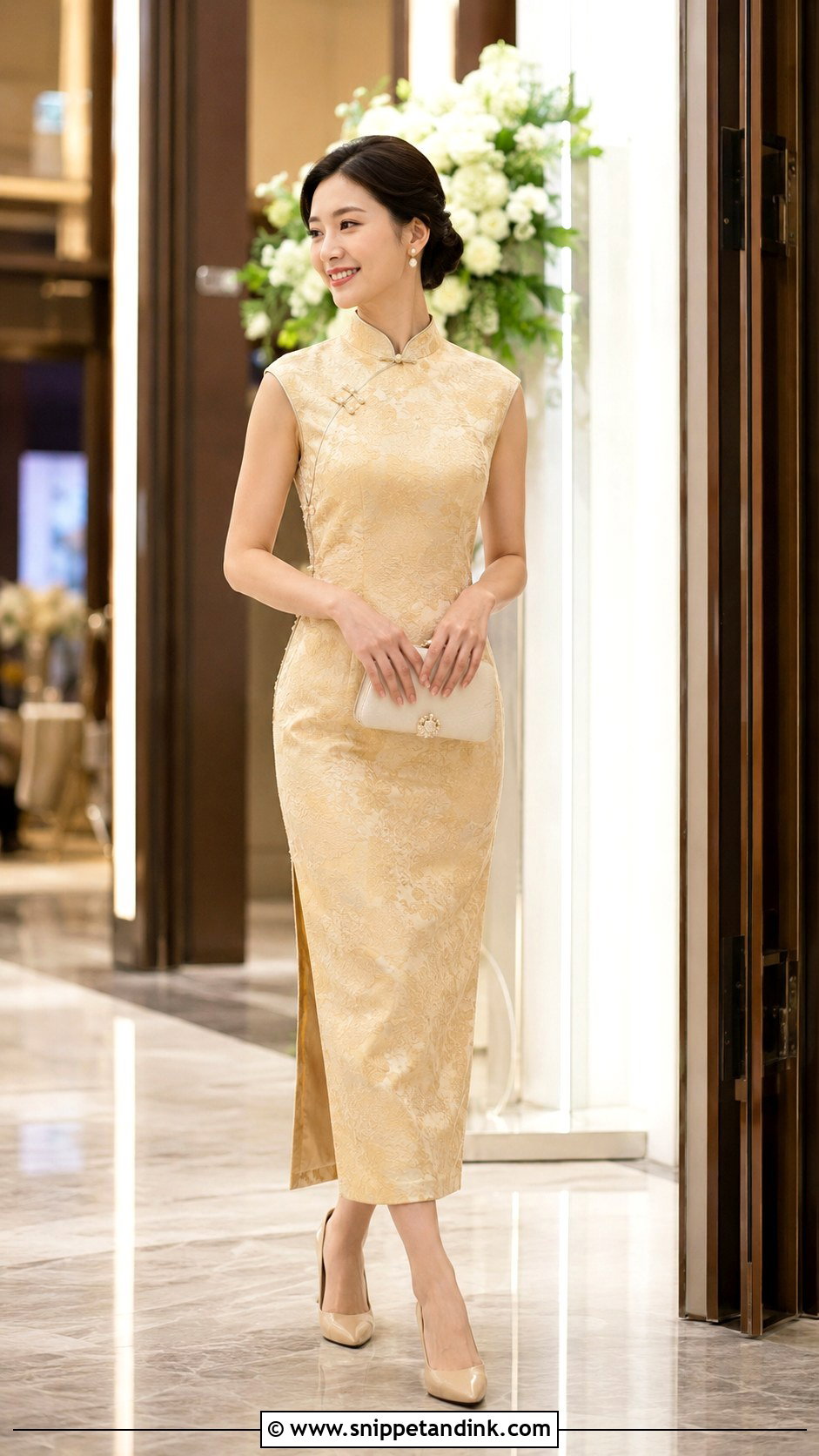
Gold has stood for wealth and joy at Chinese weddings for generations, so a gold cheongsam feels festive without needing red. The risk is shine stacked on shine. I’d choose tone-on-tone jacquard or subtle metallic thread, then pull the accessories down to champagne heels, pearl studs and a small ivory clutch. Metallic fabric also shows every crease at the lap after dinner, which makes a jacquard weave the safer pick for a reception change you’ll sit in.
7. Champagne Qipao Wedding Dress
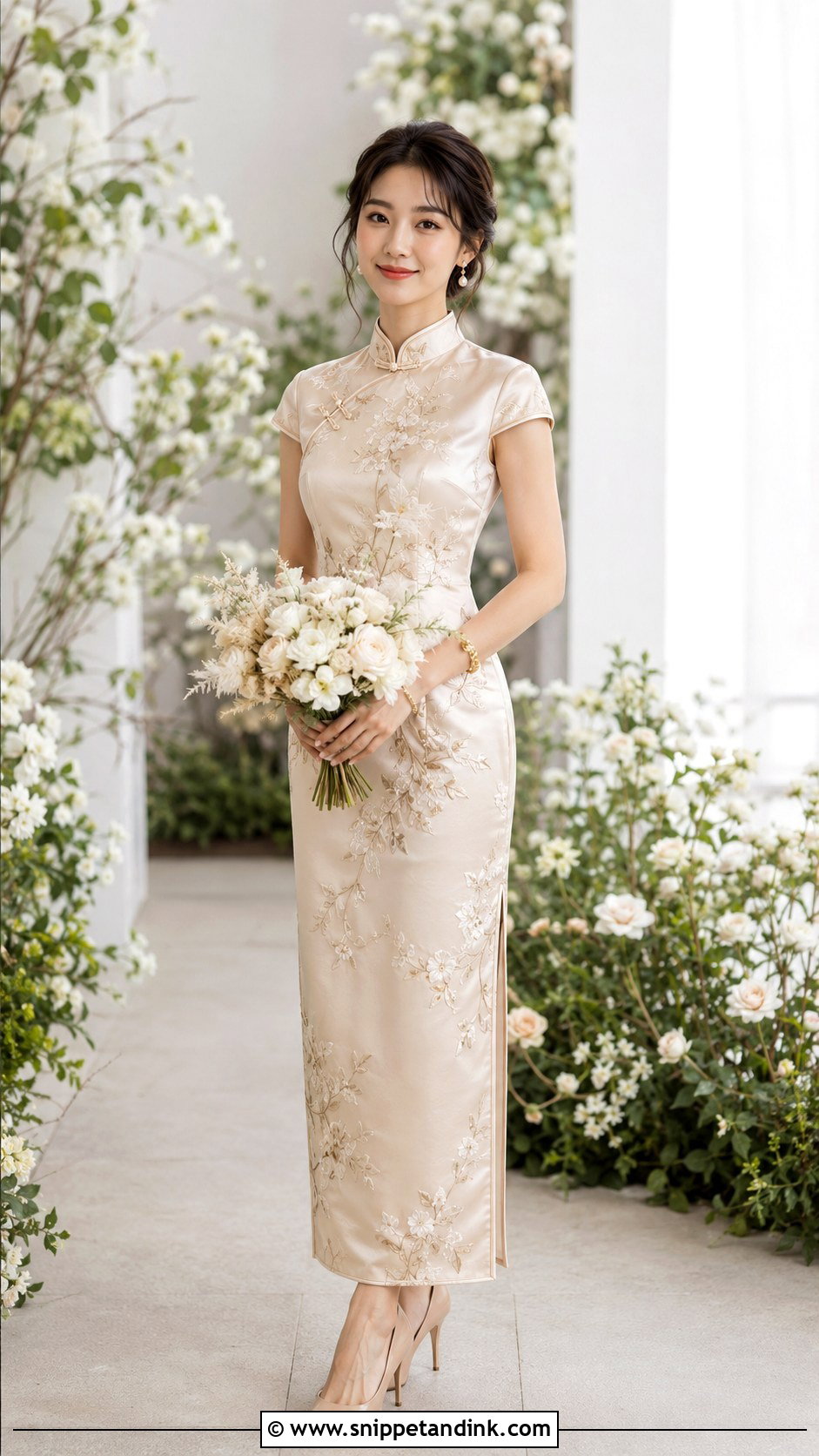
Champagne sits between red and white, and in natural light it is the easiest shade here to photograph, because it warms most skin tones instead of draining them. Satin, silk or brocade with gentle floral embroidery all work, and cap or short sleeves keep the shape modern. Brides with a neutral palette often wear this as the second outfit after a red tea ceremony dress, with nude heels, pearl earrings and a cream or blush bouquet. Ask to see the fabric against your skin first. Some champagnes lean grey and some lean peach, and only one of those will suit you.
8. Blush Pink Cheongsam Wedding Dress
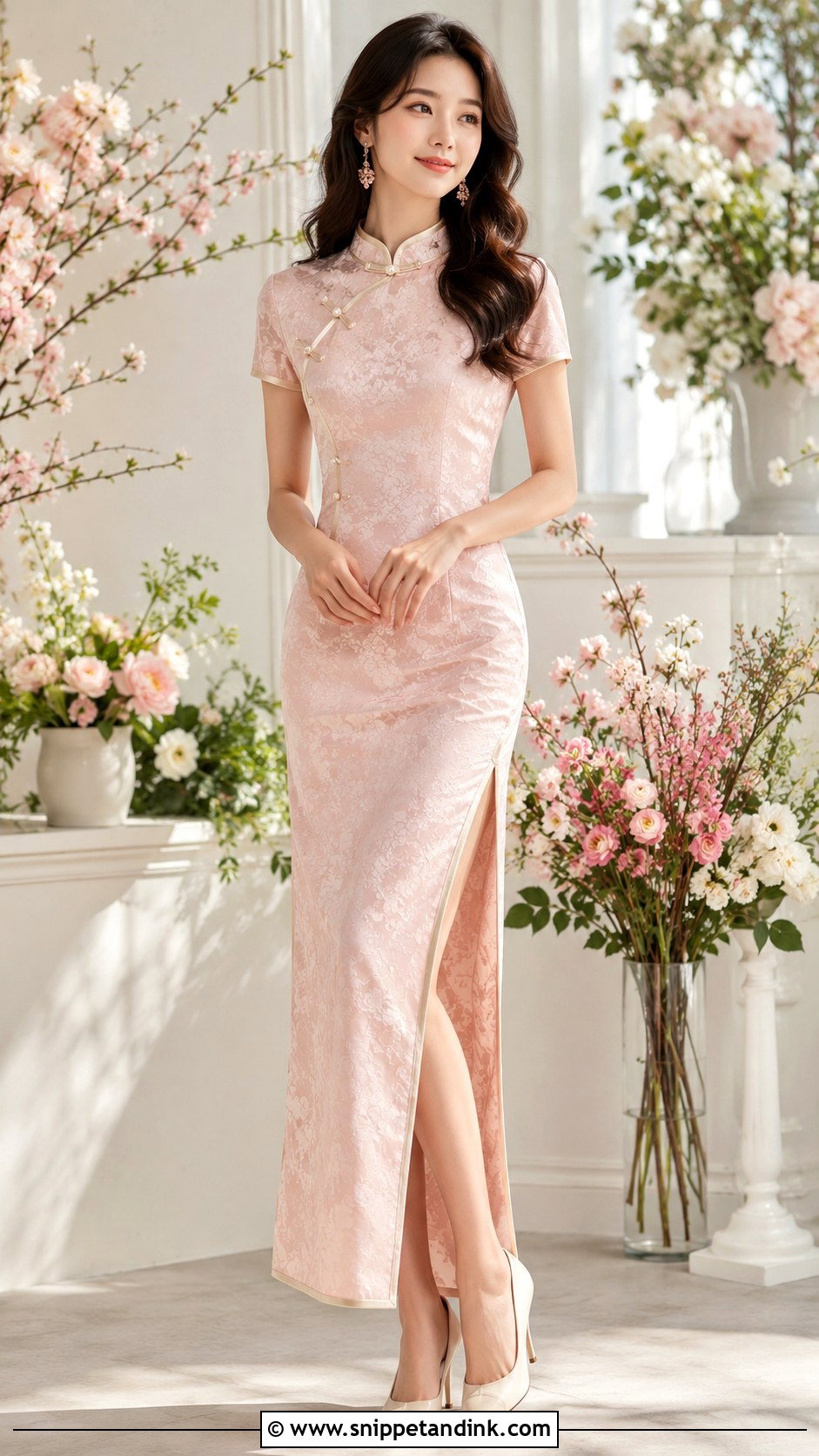
Blush pink is the gentle option for a spring wedding or garden reception. Because the shade is pale, the details carry the dress: floral embroidery, pearl buttons or a thin gold trim. I keep the embroidery light here, since dense work on a pale ground looks busy from across a room. Ivory heels, rose-gold jewelry and soft waves or a low bun suit it, and it looks its best in daylight beside pastel flowers rather than in a dim banquet hall.
9. Black And Red Qipao Wedding Dress
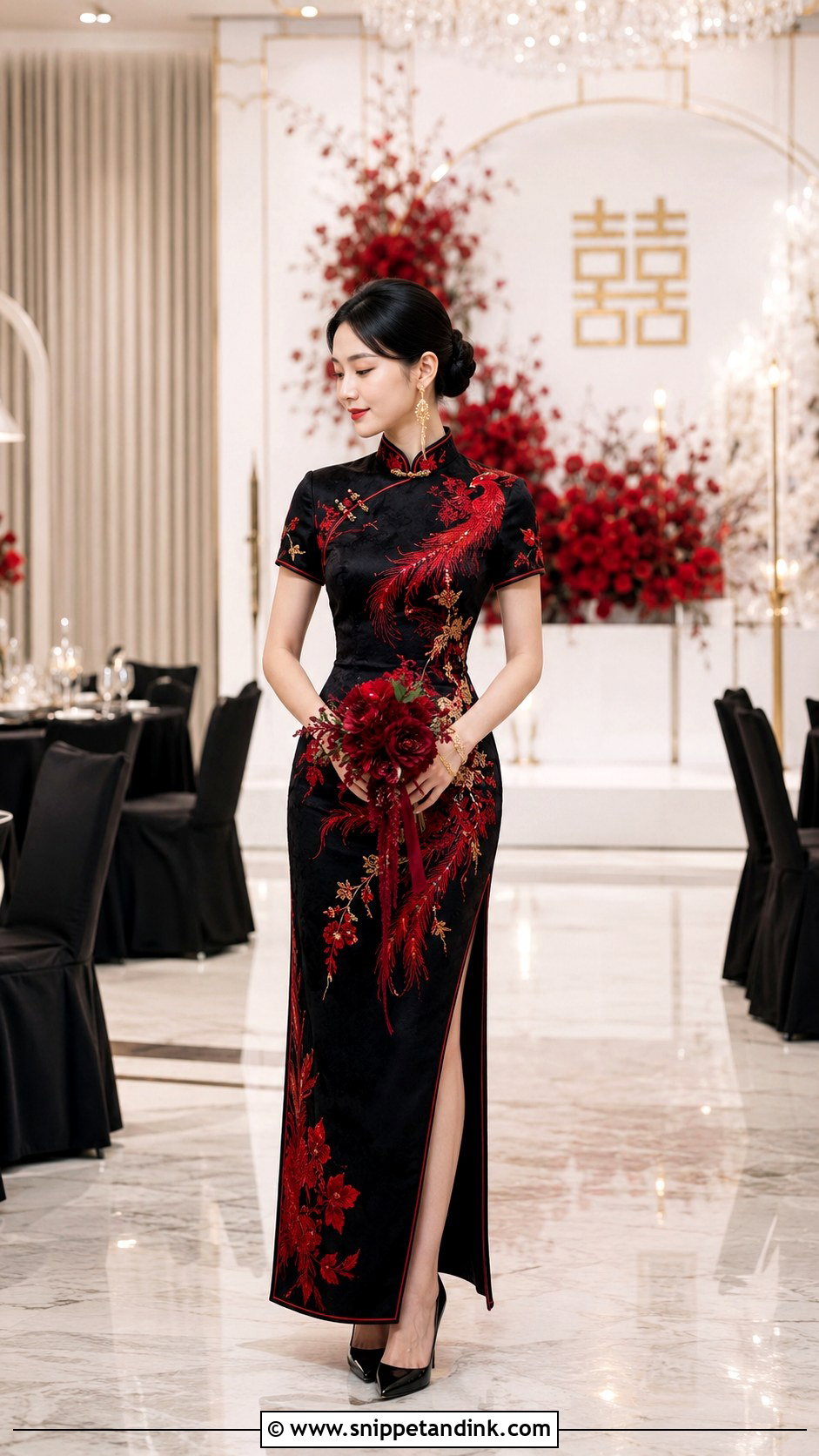
Black and red is an evening dress, and I treat it as one. The red keeps the wedding symbolism, while black lace, or black satin with red embroidery, gives it an edge that comes alive after dark with a red lip. Talk to your family before you buy it. For some elders black is still unwelcome at a wedding, so I’d steer you toward wearing it for the banquet exit or an editorial pre-wedding shoot rather than the tea ceremony. Black satin heels, gold earrings and a sleek bun are all it needs.
10. Mandarin Collar Wedding Gown
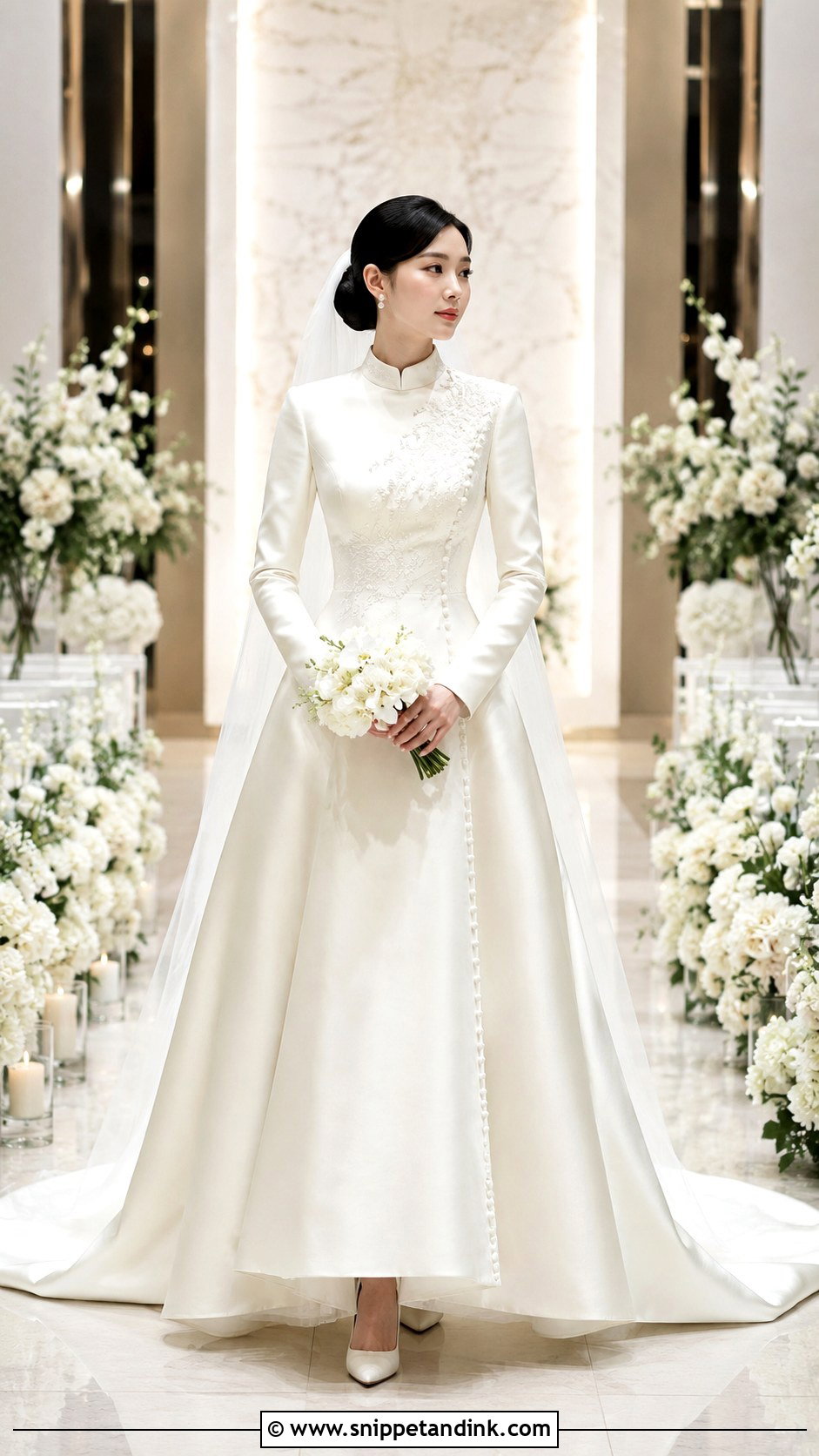
A mandarin collar gown borrows one strong element from Chinese dress and pairs it with a Western skirt or train, so a single dress can carry the whole aisle moment while still nodding to heritage. The collar is where fit matters most. It should sit close without pressing on the throat when you look down, and I have it checked with the veil in, since a comb pinned at the back can push the collar forward. Ivory satin, lace or mikado with covered buttons or piping around the collar works well with a long veil and a clean chignon.
11. Qipao Wedding Dress With Train
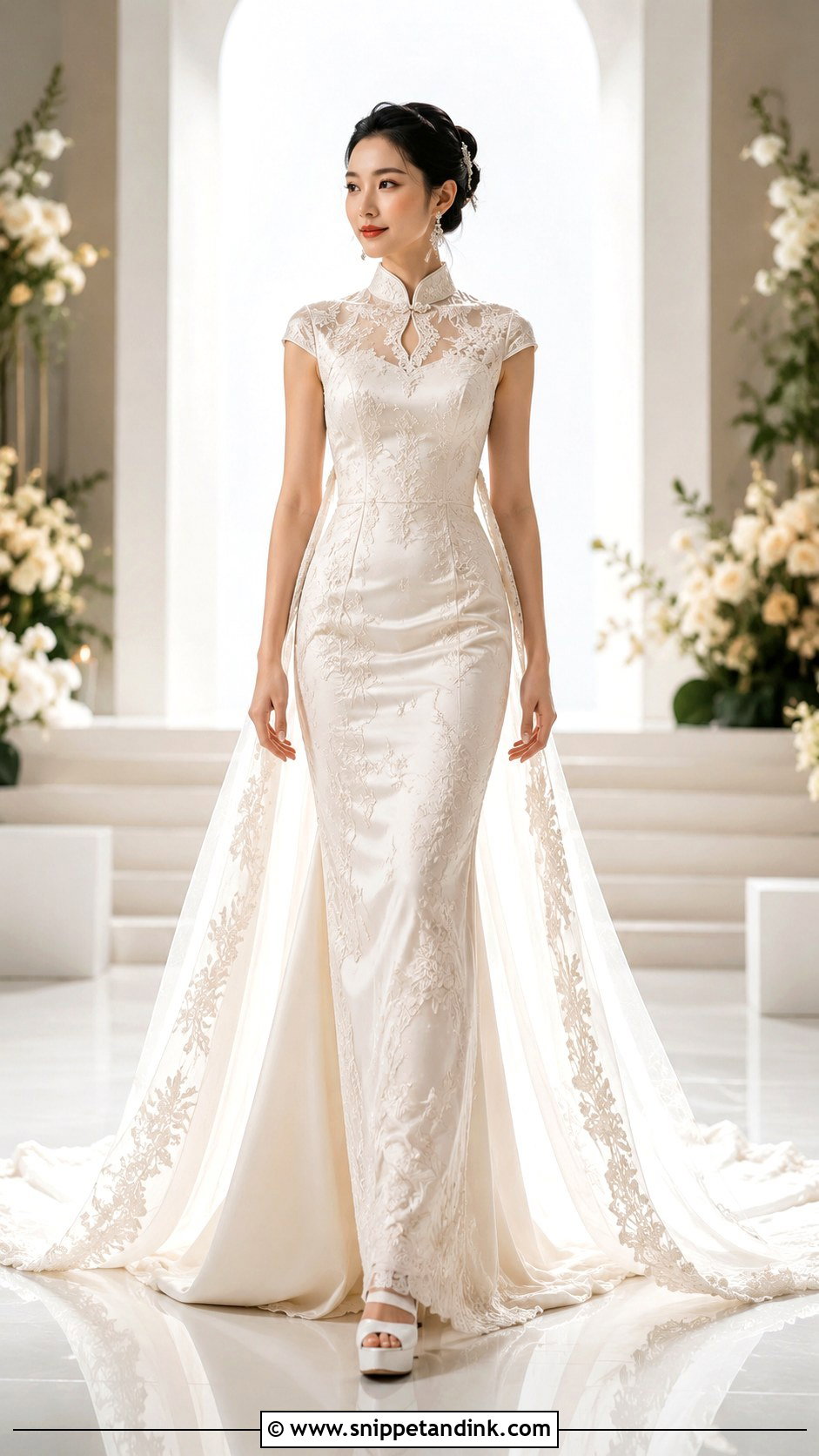
Adding a train to a qipao changes its presence entirely. The fitted bodice keeps the traditional line, and the train gives you movement in photos. The catch is walking: a qipao doesn’t allow a long stride, and dragging fabric behind a narrow skirt makes it harder still. I’d insist on a detachable train, or at least a bustle loop, if you’ll be moving between tables later. Keep the hair up so the collar and shoulders stay visible. A veil suits white or ivory versions; a gold hairpiece suits red or champagne.
12. Off Shoulder Cheongsam Wedding Dress
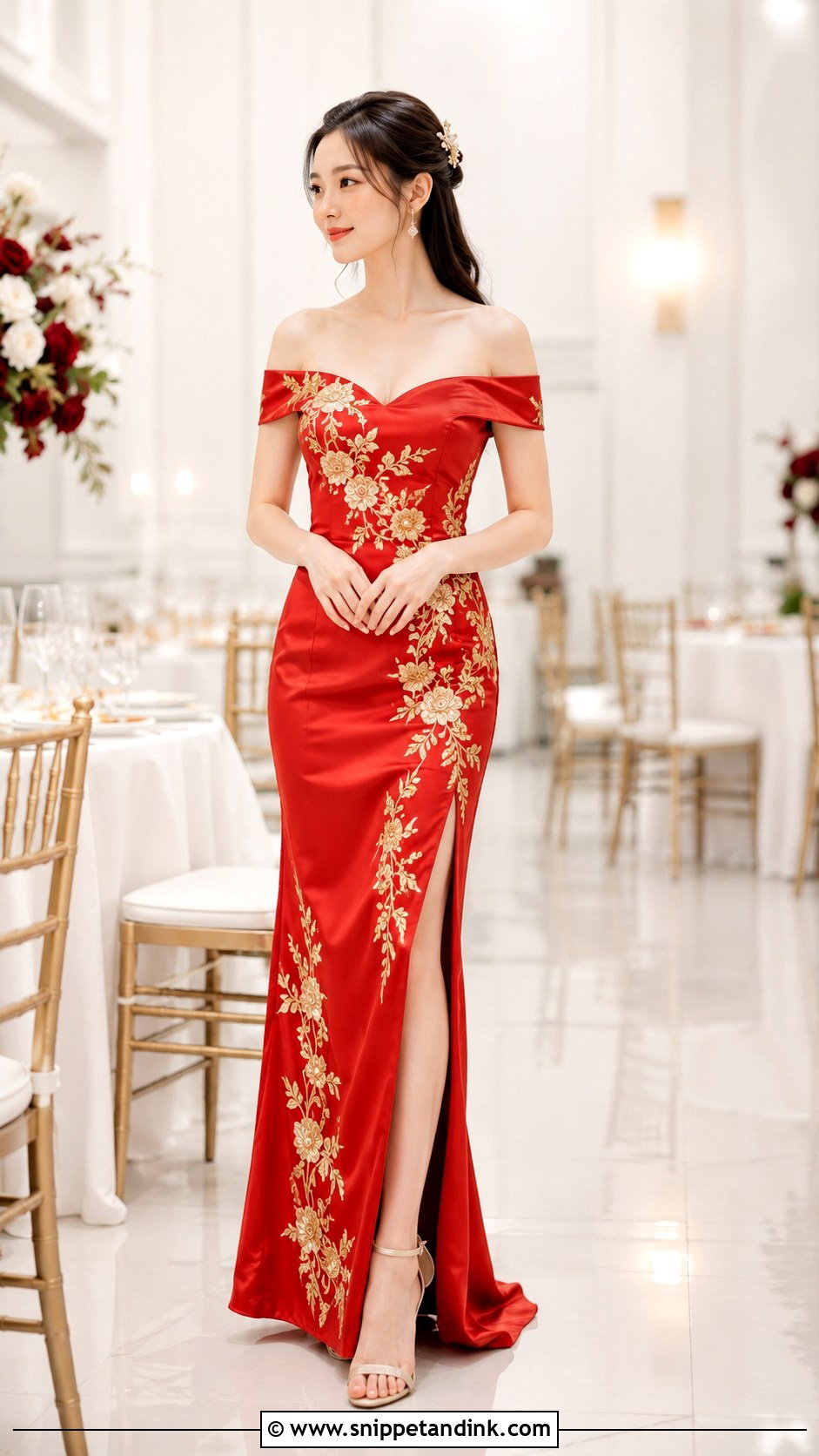
Taking the shoulders off a cheongsam moves it furthest from the classic high collar, which suits brides who find a closed neck too warm or too formal. My concern with this cut is staying power. An off-shoulder band needs proper boning or a silicone grip strip, otherwise it creeps up every time you raise your arms to hug someone. Keep the rest restrained with covered buttons, a modest slit and drop earrings, and most of the time skip the necklace. It works best as a reception or portrait dress.
13. Sleeveless Qipao Wedding Dress
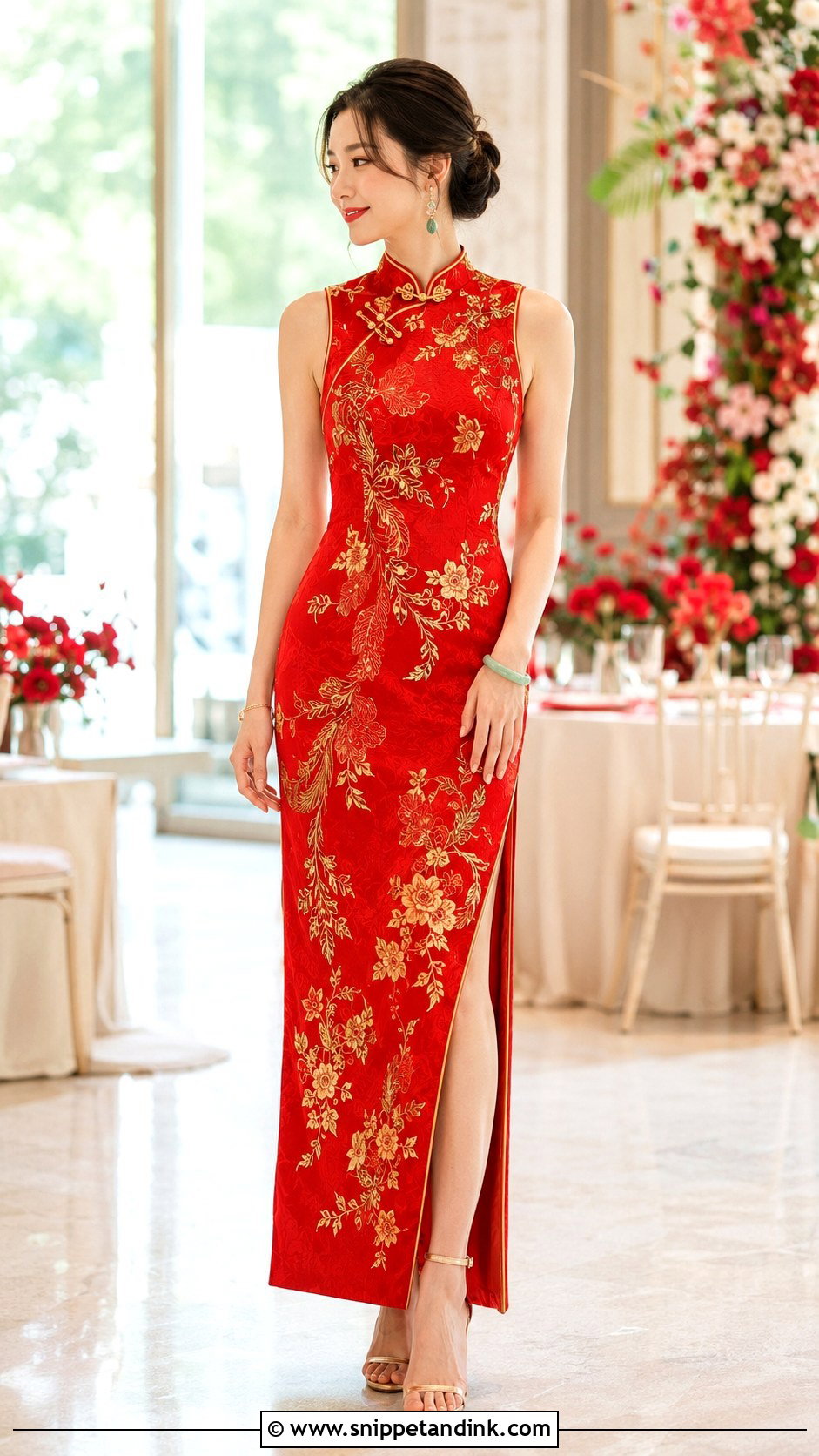
A sleeveless qipao wedding dress is the one I suggest for a hot-climate wedding. It keeps the mandarin collar and fitted shape but frees the arms. Silk satin shows damp marks under the arm quickly, so in real heat I’d lean toward embroidered lace or a jacquard, which hide moisture better. A midi or floor length with a neat side slit both work. Strappy gold heels, jade or pearl earrings and a tidy bun keep it light, and a thin cape or shawl covers the shoulders for a more formal ceremony.
14. Long Sleeve Cheongsam Wedding Dress
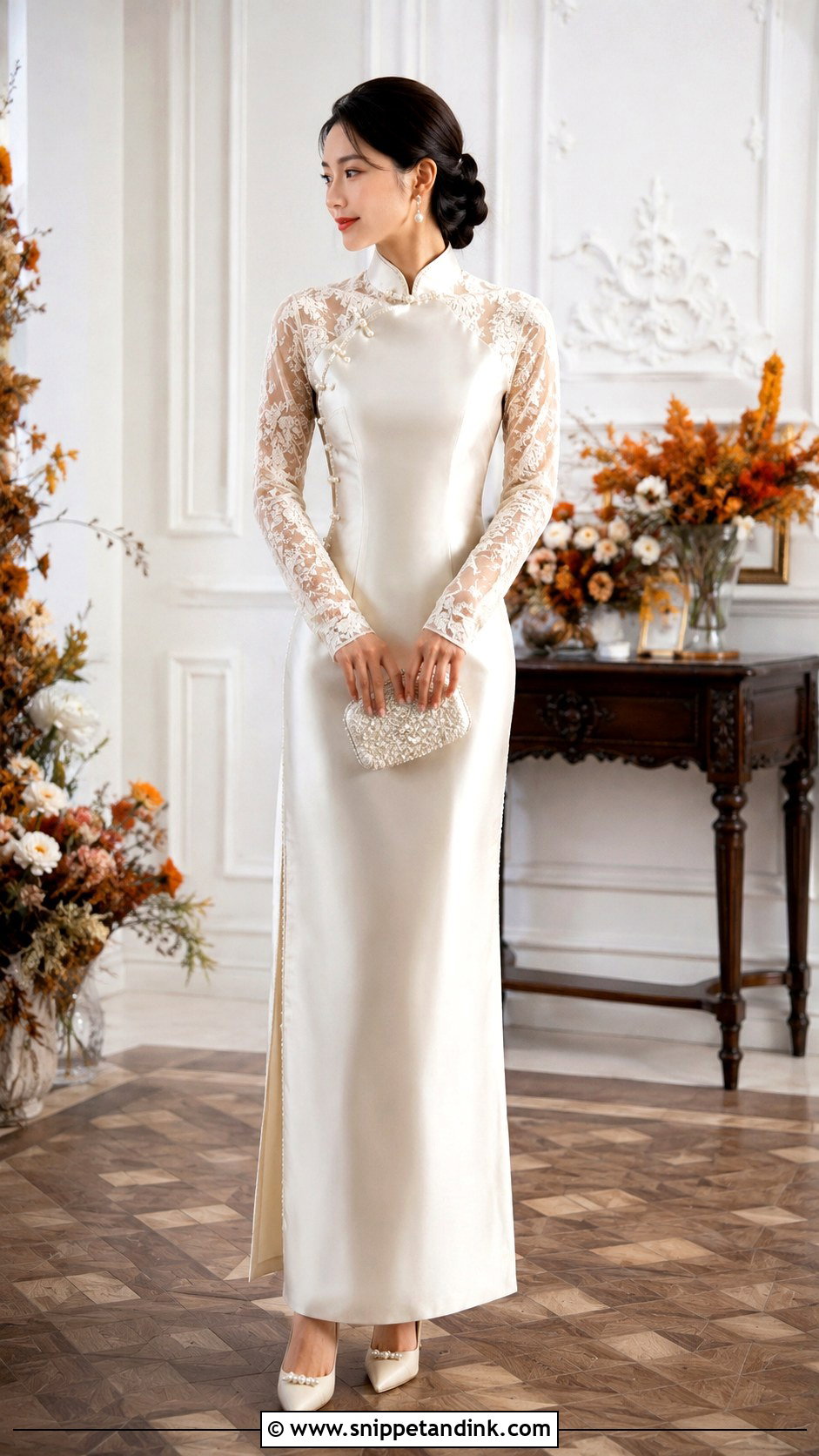
Long sleeves bring coverage without making a cheongsam look dated, and the sleeve fabric sets the mood: sheer lace or embroidered mesh feels lighter, satin feels ceremonial. The fitting detail people miss is the armhole. A high, close armhole looks sleek but limits how far you can lift your arms, and you’ll lift them constantly while pouring tea and toasting. I test it by having the bride reach forward and up. Red reads traditional; ivory and champagne read softer. It suits autumn and winter weddings and heavily air-conditioned banquet halls.
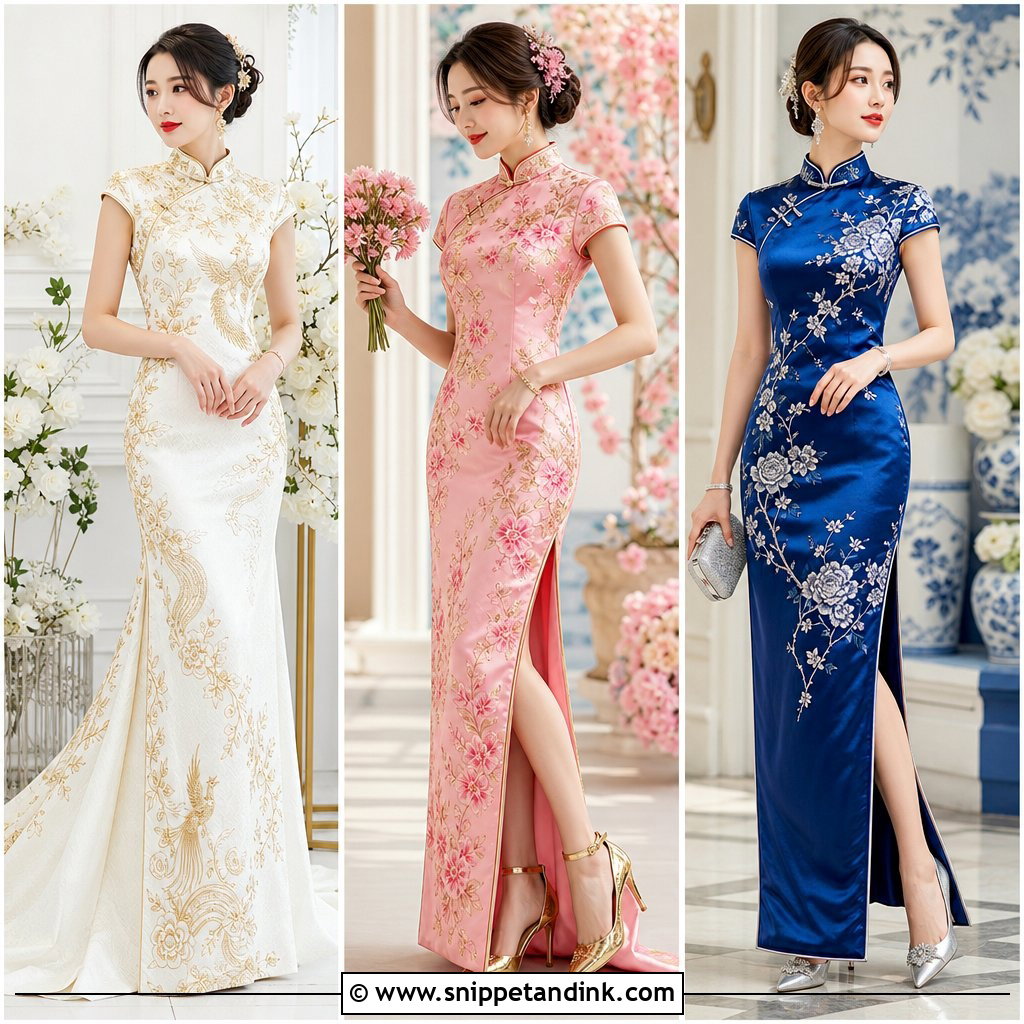
15. Short Qipao Wedding Dress
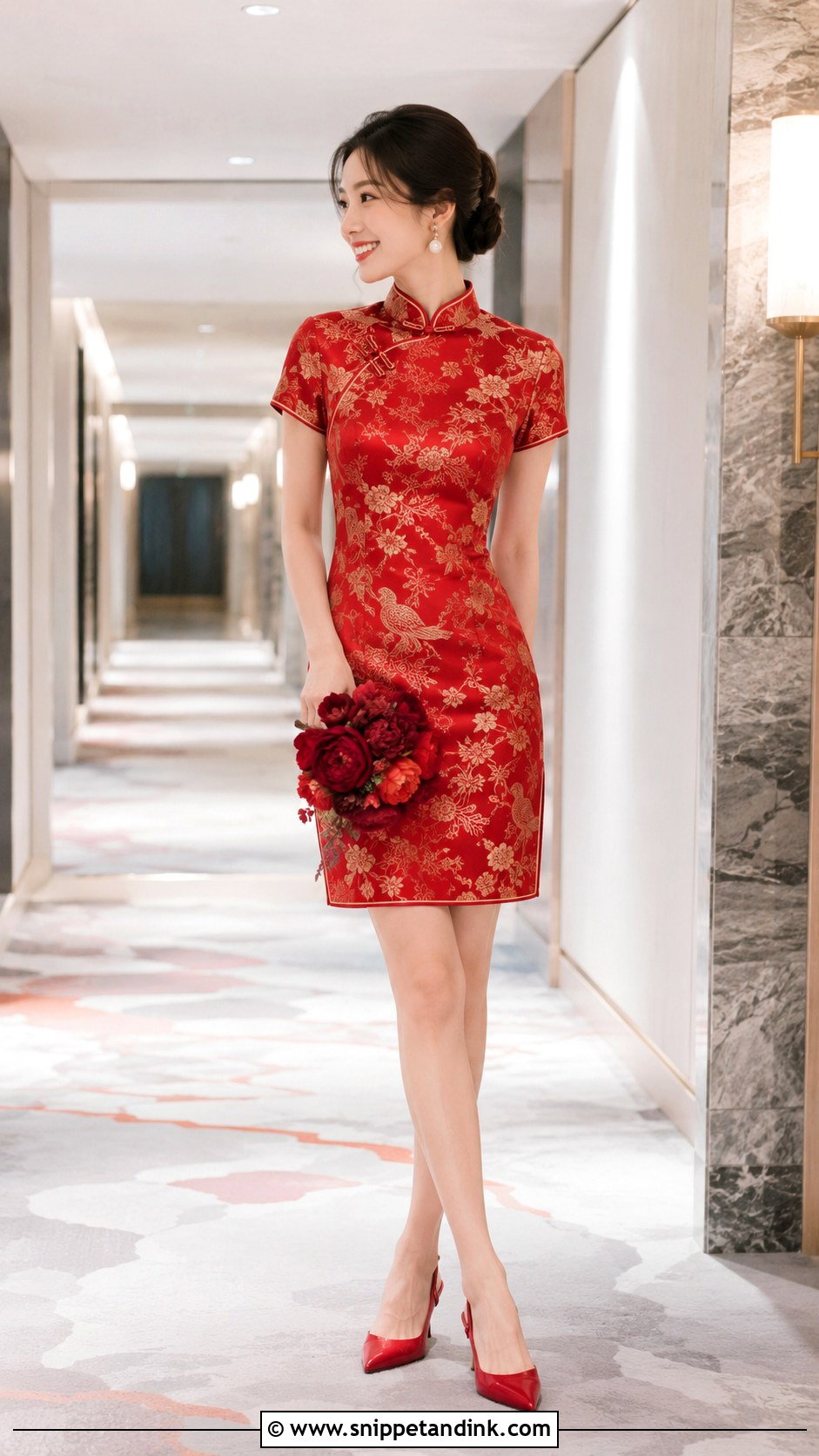
A short qipao is the dress for dancing, an after-party, or a civil ceremony followed by lunch. Knee length or shorter still reads as bridal in red satin, ivory lace or brocade. A high collar and structured fabric keep it refined; a thin stretch knit turns it into a party dress. Slingback heels, pearl earrings and a neat updo balance the shorter hem. If you’re traveling between venues, it’s also by far the easiest outfit to get in and out of a car with.
16. Tea Length Cheongsam Wedding Dress
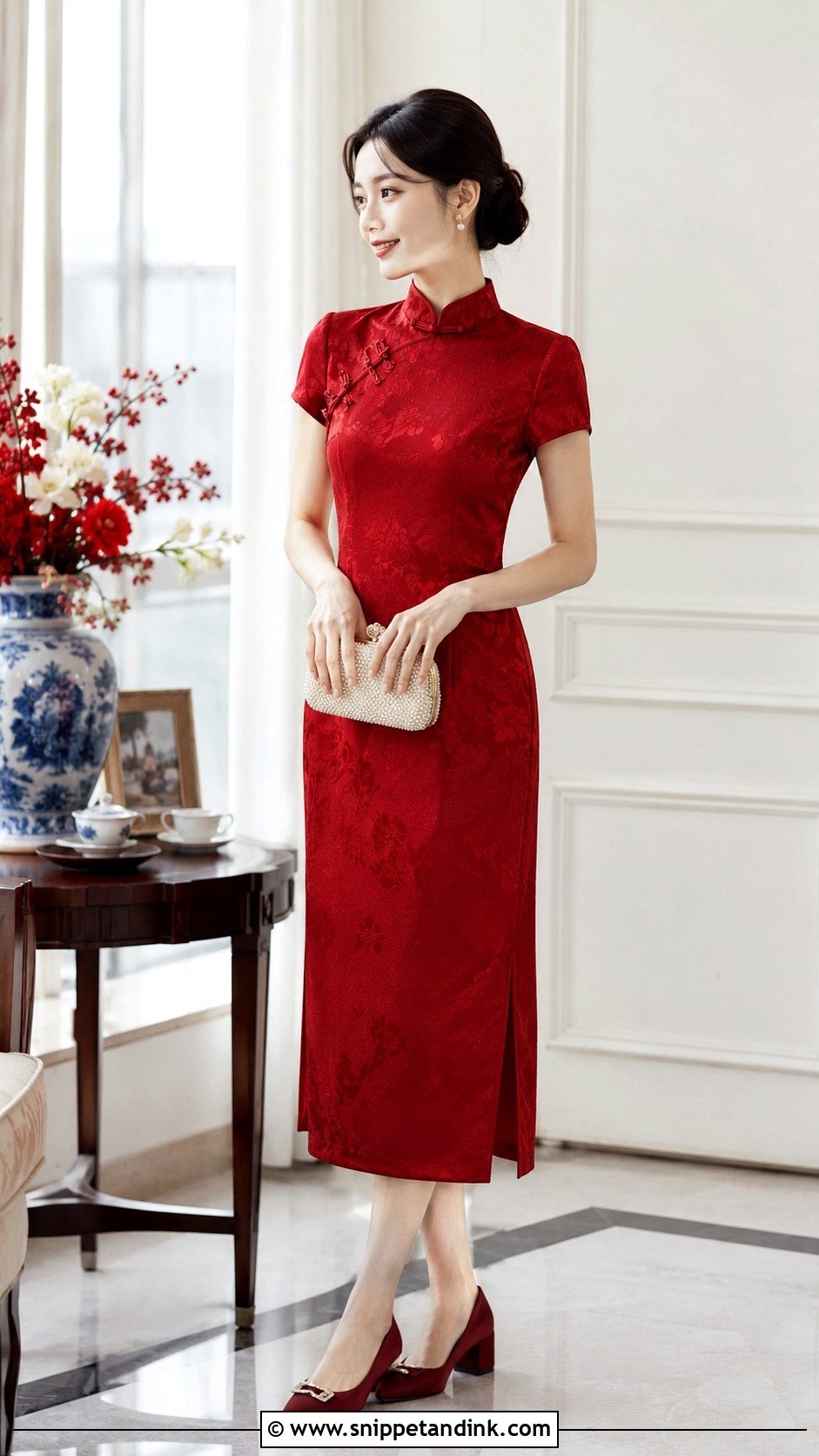
Tea length lands below the knee or at mid-calf, so sitting and walking are far easier than in a floor-length gown. It also puts your shoes on show, which means choosing them with care. Red brocade, ivory lace, champagne satin and soft pink jacquard all hold this length well. Check the hem with your actual shoes on. A hem that stops at the widest part of the calf can shorten the leg in full-length photos, and moving it an inch up or down fixes that. It fits a civil wedding, a tea ceremony or a small restaurant reception.
17. Two Piece Chinese Wedding Dress
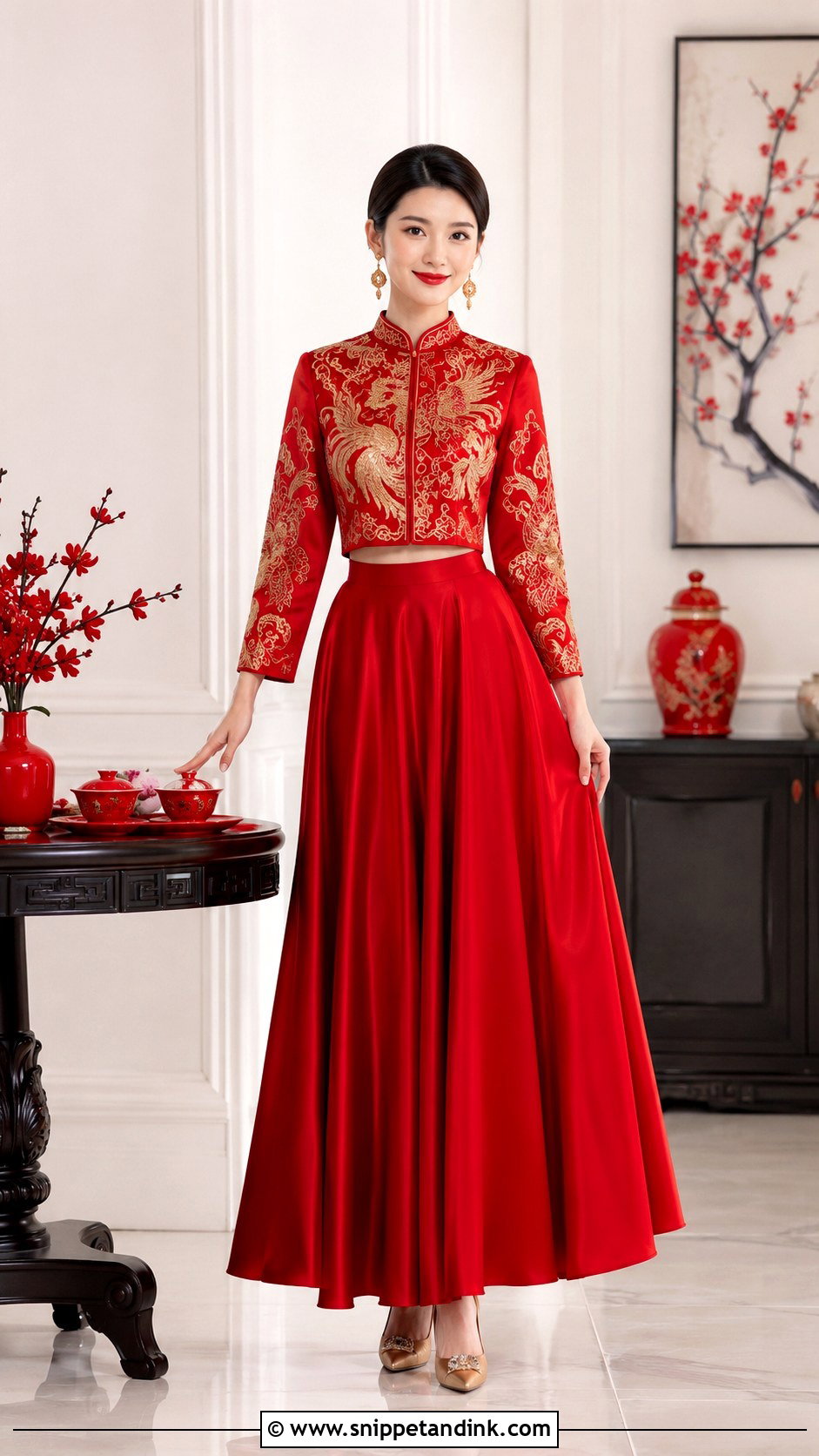
A two piece Chinese wedding dress follows the old tradition of bridal separates in a lighter form: a cropped mandarin-collar jacket over a high-waisted skirt, a xiuhefu-style set, or an embroidered top with a satin skirt. Separates are much easier to alter than a one-piece dress, which matters if your top and bottom are different sizes. You can also wear the skirt again with a second top at the reception. Red and gold reads traditional, ivory and champagne read fusion, and smooth hair lets the neckline show.
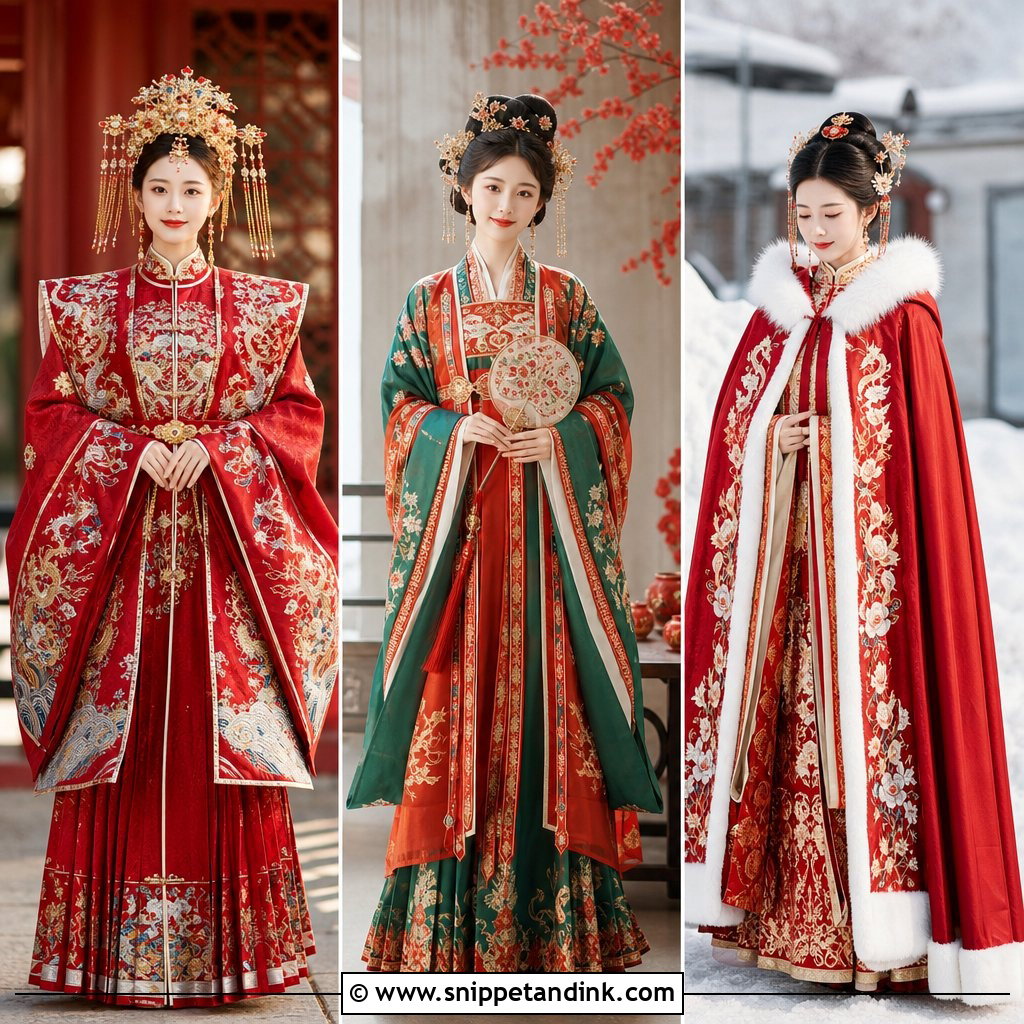
18. Hanfu Wedding Dress
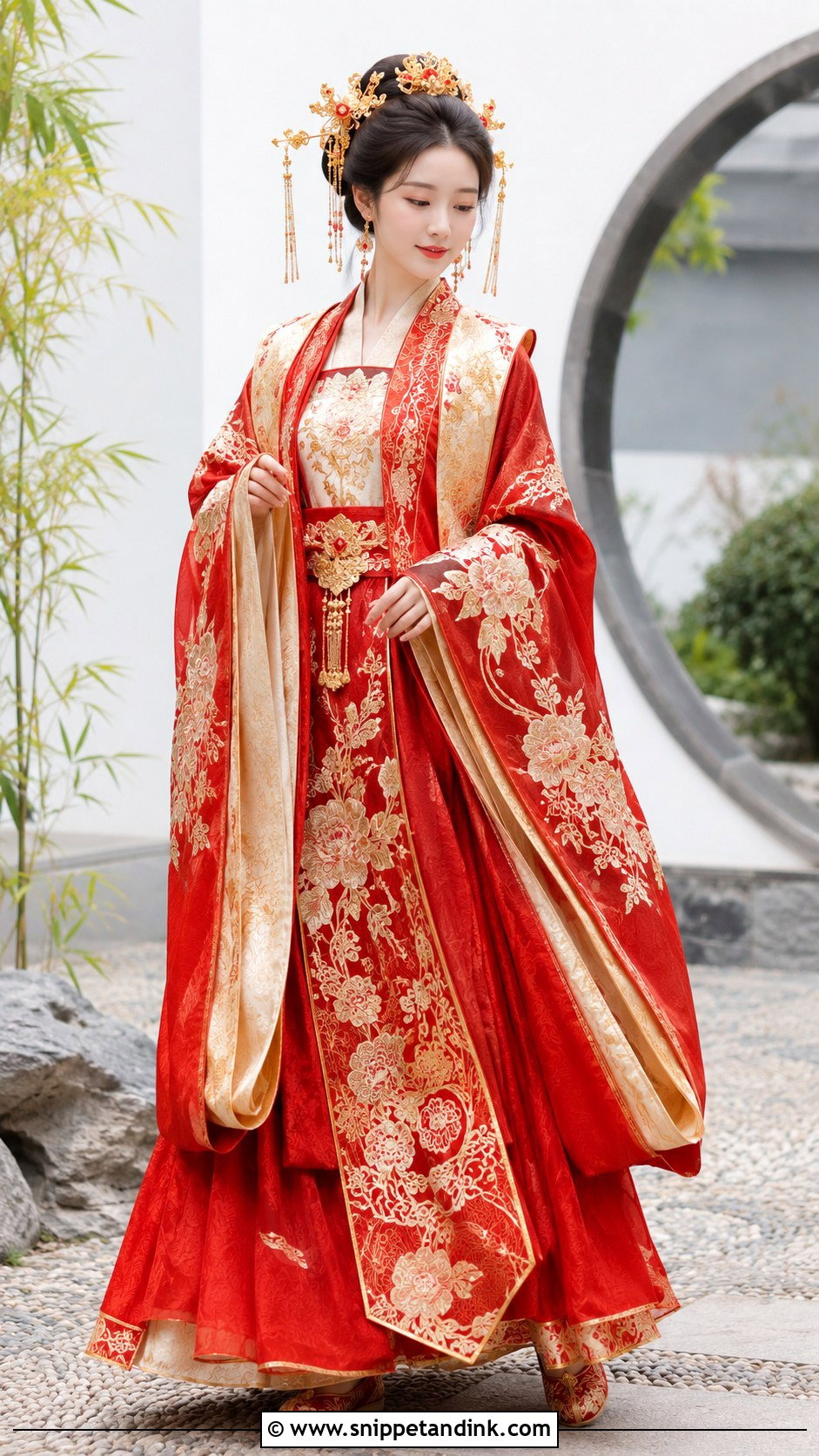
Hanfu brings layered robes, wide sleeves, wrapped fronts and long skirts, so it moves more than anything else here. That volume is the point, and also the challenge. The wrapped layers need securing at the waist with hidden ties or pins or they loosen through the day, and the long skirt needs a hand on every staircase. Red and gold is classic, while ivory, blush and pale green feel softer. With this much fabric, I keep makeup and jewelry restrained. I’d save it for pre-wedding photos or a heritage-focused ceremony.
19. Modern Red Hanfu Wedding Dress
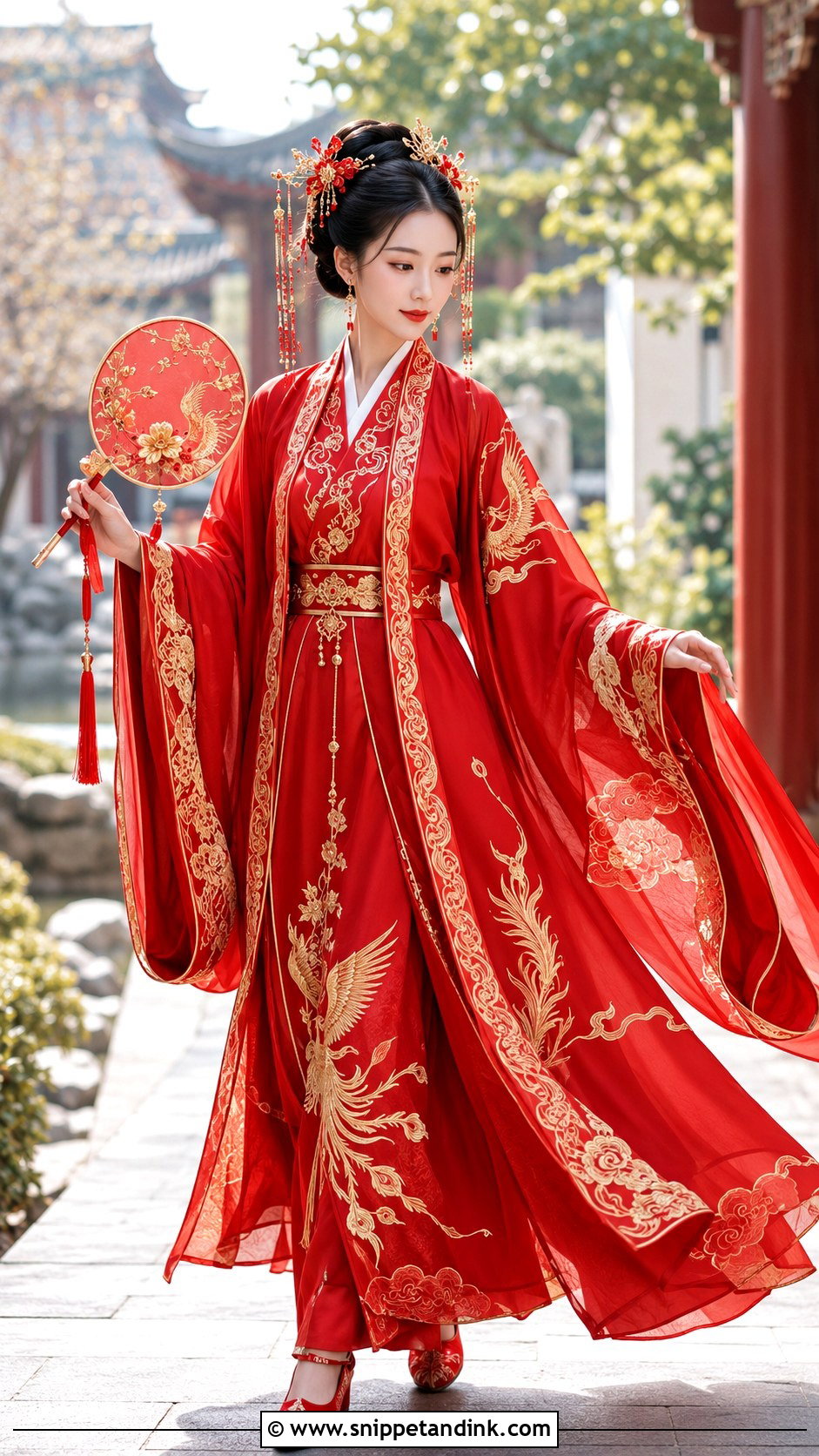
A modern red hanfu wedding dress keeps the wide sleeves and layers but uses lighter fabric and a defined waist, which makes it far easier to wear than a traditional set. Look for clean embroidery along the collar and hem, such as gold trim, phoenix motifs or cloud patterns. Wide sleeves catch on chair backs and dip into dishes, so if you plan to eat in it, practice holding the sleeve back with your free hand. Embroidered shoes, hairpins and a bridal fan complete it.
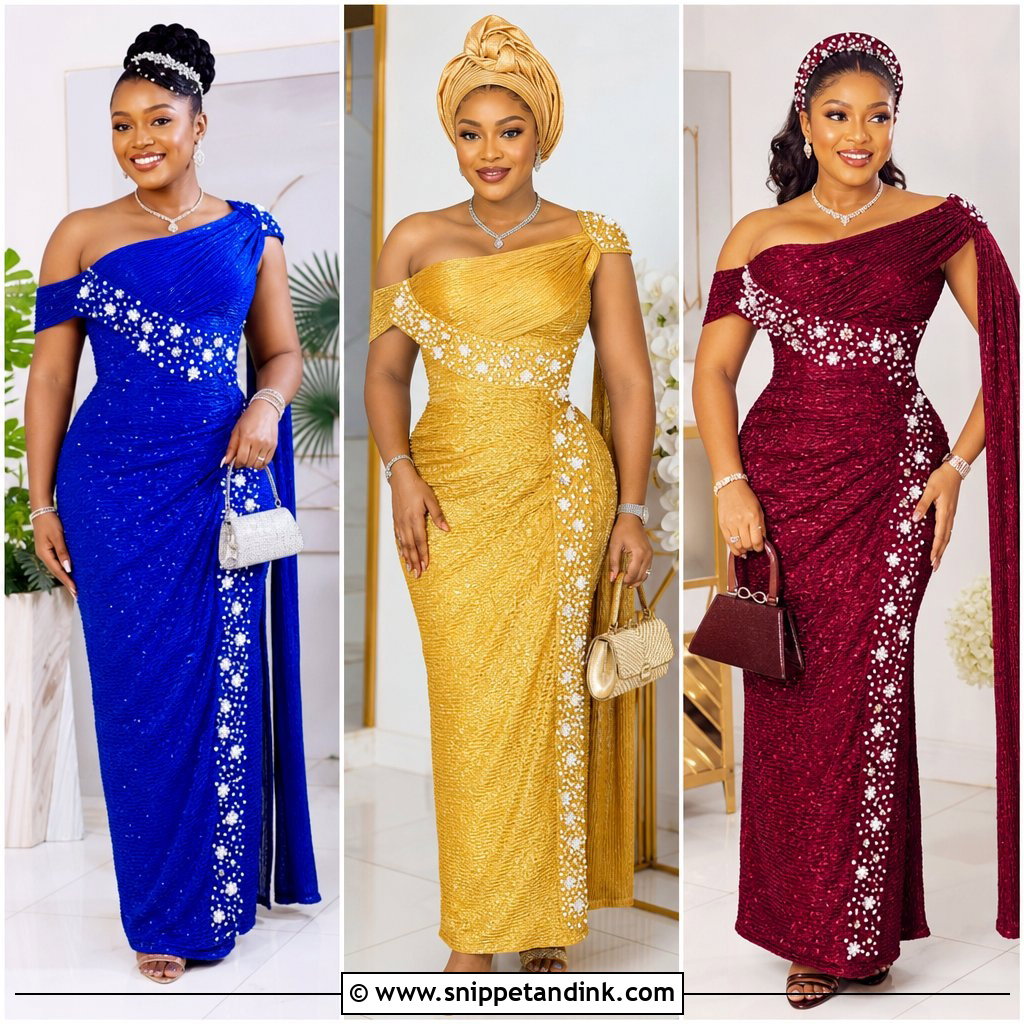
20. Chinese Wedding Dress With Cape
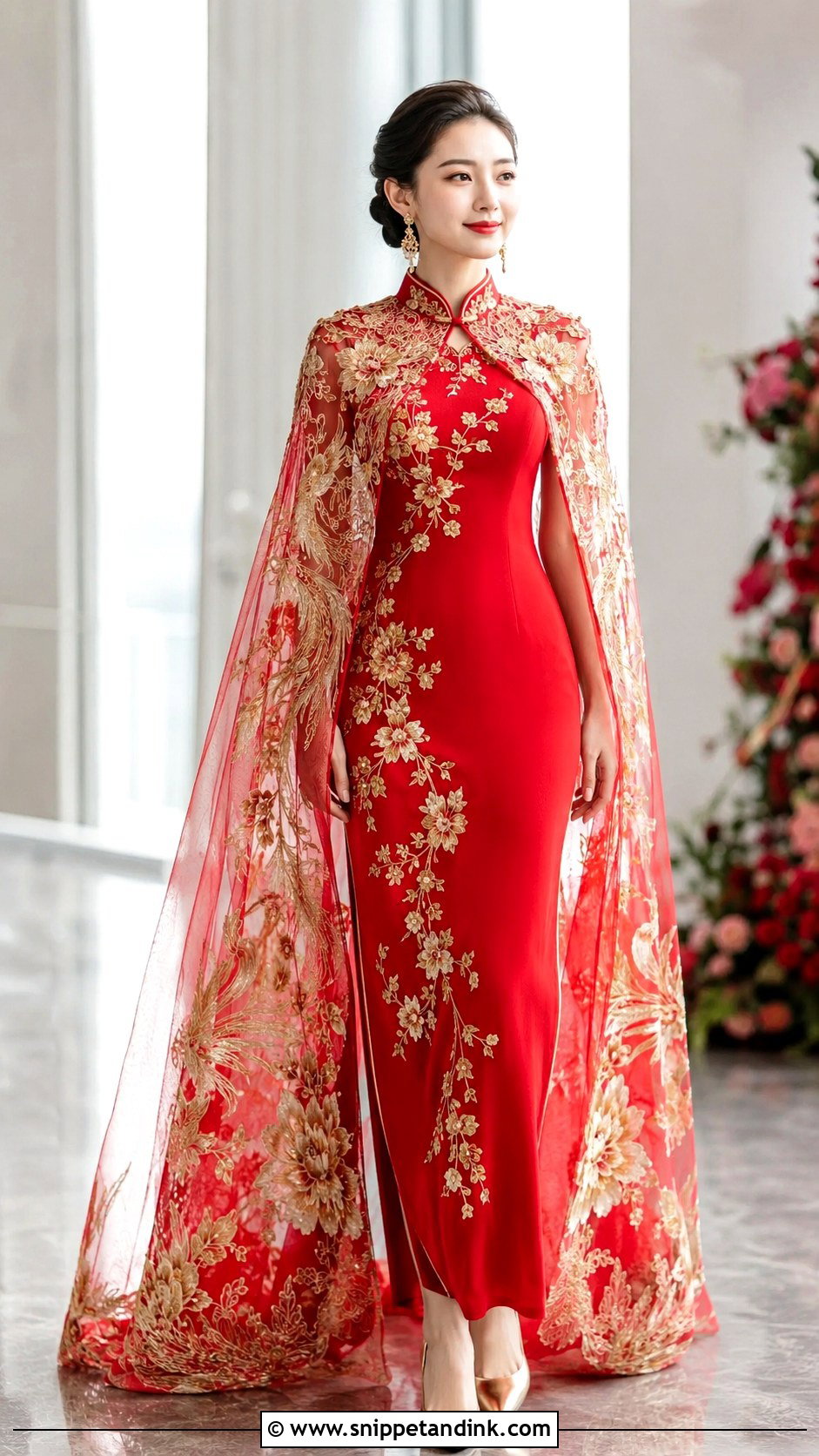
A cape adds movement to an otherwise still silhouette. It can go over a qipao, a cheongsam gown or a mandarin-collar dress, in sheer fabric, satin, tulle or embroidery. I prefer one that attaches at the shoulders with hidden hooks, because a cape tied only at the neck drags the collar backward as the fabric pulls. Red with gold embroidery feels ceremonial; ivory with pearl detail feels softer. Keep the hair up and sleek, and use it where it earns its keep: the ceremony entrance and back-view portraits.
21. Chinese Wedding Dress With Detachable Skirt
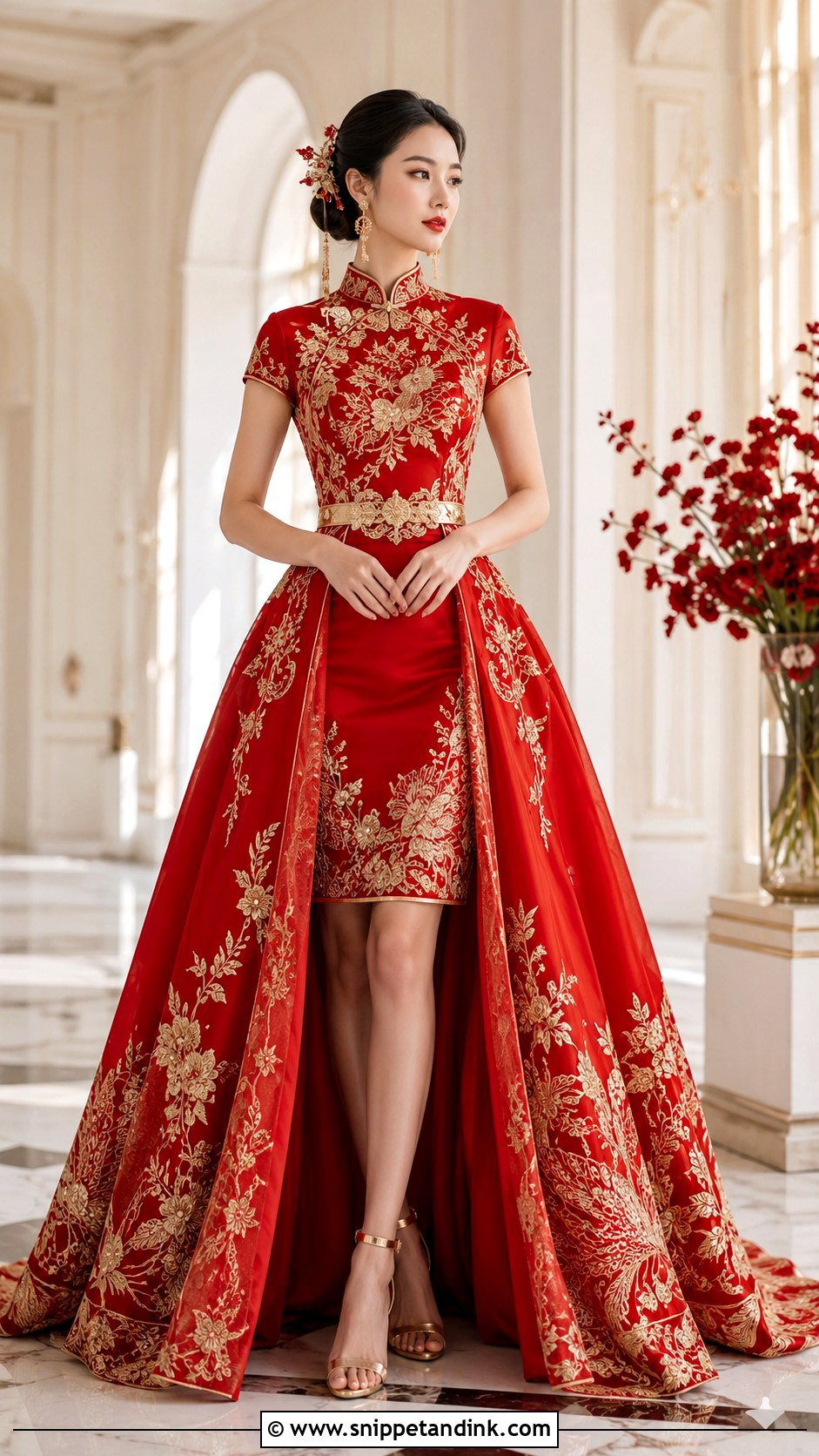
A detachable skirt gives you two outfits from one dress. Underneath sits a fitted qipao or cheongsam, and a removable overskirt adds volume for the ceremony, then comes off for the reception. The attachment is the part I scrutinize. Hidden snaps or hooks along a waistband are much faster than a long zip, and whoever helps you change should practice removing it before the day, because a stuck fastener eats into a tight changeover. Pick shoes that suit both lengths.
22. Embroidered Phoenix Qipao Wedding Dress
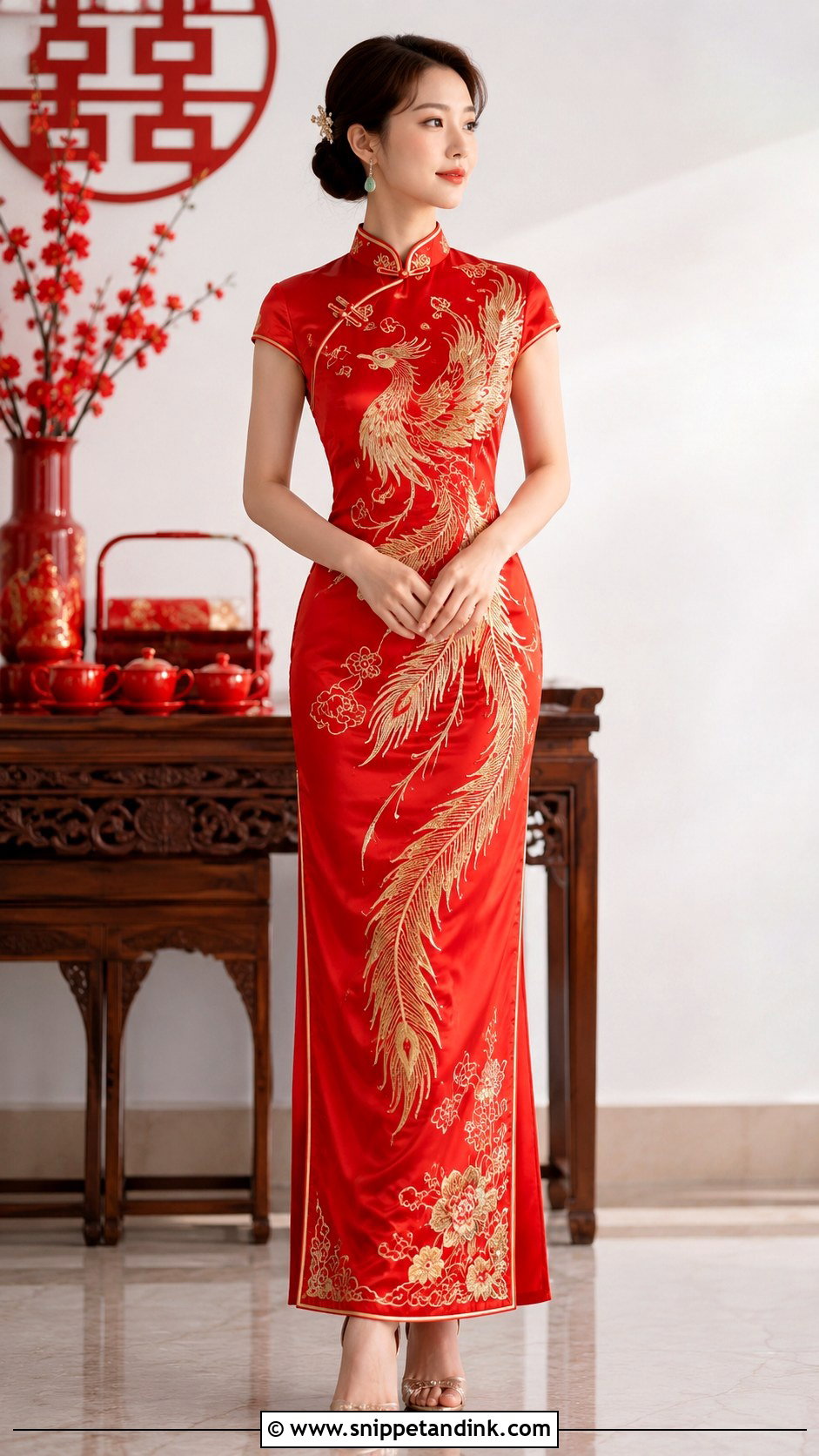
Phoenix embroidery is the classic bridal motif, tied to grace and renewal and often paired with the groom’s dragon. For a modern take, I’d place it along the bodice, the hem or one side panel instead of covering the whole dress, so the motif has room to read in photos. Hand embroidery is heavier and stiffer than machine work, and a large phoenix across the hip will change how the dress drapes when you sit. Red and gold is traditional, ivory with gold also works, and jade or pearl earrings with a sleek bun with a subtle hairpin finish it.
23. Peony Cheongsam Wedding Dress
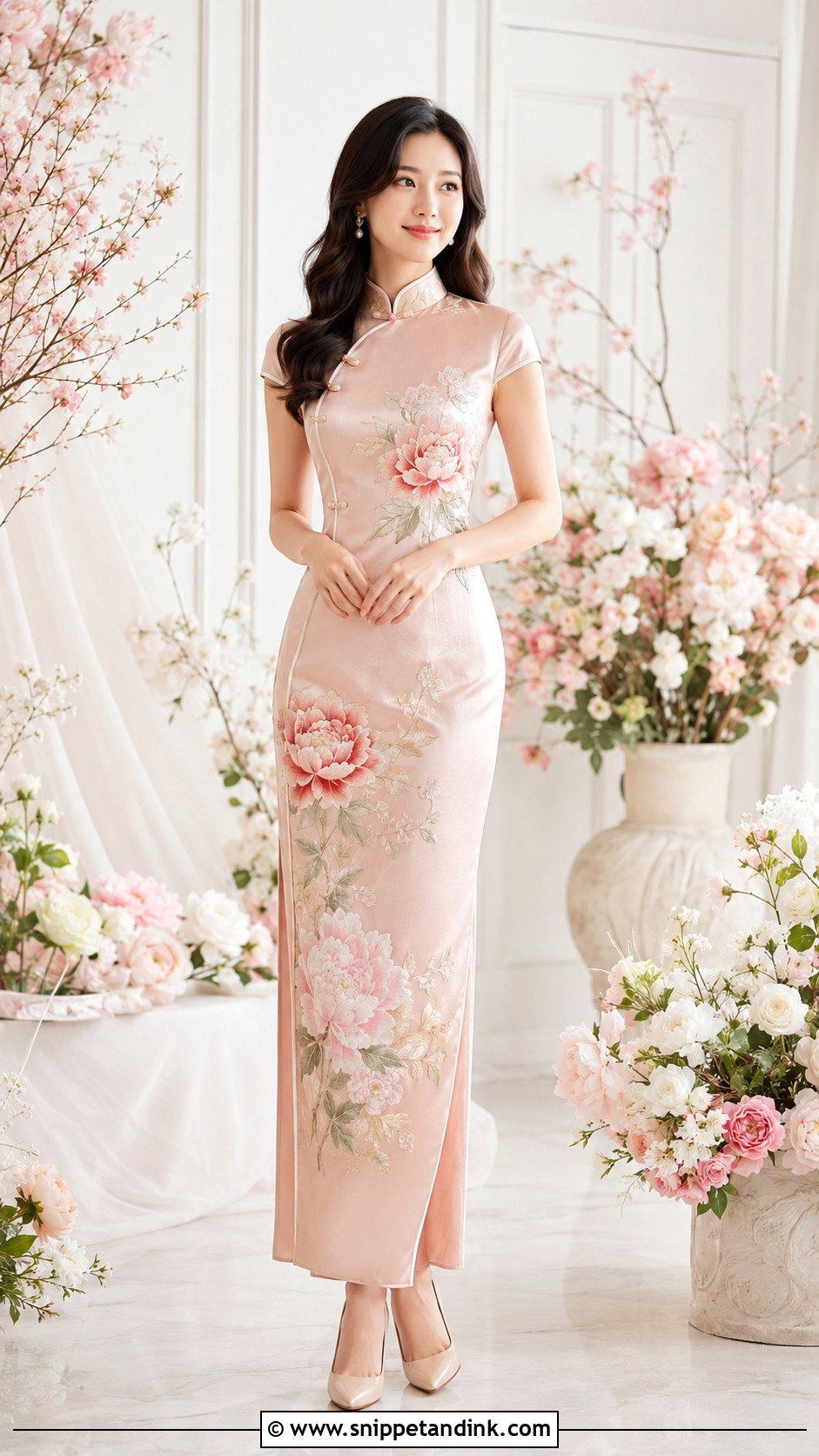
A peony cheongsam wedding dress carries the flower long associated with honor and prosperity, and it softens the formality of dragon-and-phoenix work. Embroidered peonies on red, blush, ivory or champagne each suit a different palette. The slim cut keeps a floral pattern from tipping into sweet, and pearl buttons or fine piping add structure. Before ordering, ask where the largest bloom will sit on your body. A big peony landing on the bust or hip pulls the eye exactly there. Neutral heels and a low bun or smooth waves complete it.
24. Velvet Qipao Wedding Dress
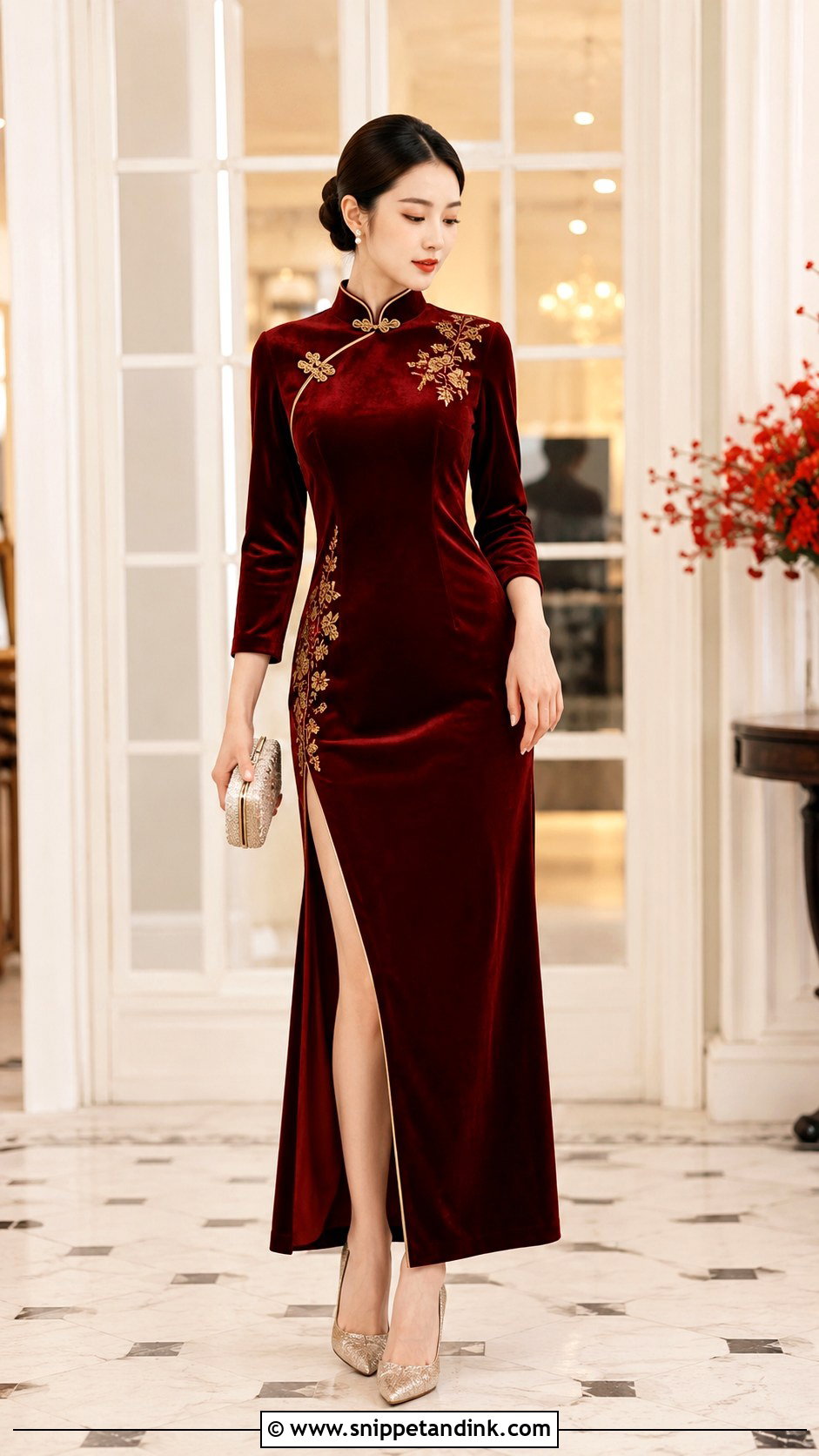
Velvet is my favorite fabric for a winter qipao. It has depth on its own, so even a plain design looks rich, and it keeps you warm in a cold hall. Red is the traditional choice, though burgundy, emerald and midnight blue all sit well in velvet. Keep the silhouette clean and the embroidery minimal. Velvet crushes where you sit and holds pressure marks, so steam it rather than iron it, and leave heavy accessories at home so they don’t fight the texture.
25. Modern Chinese Wedding Reception Dress
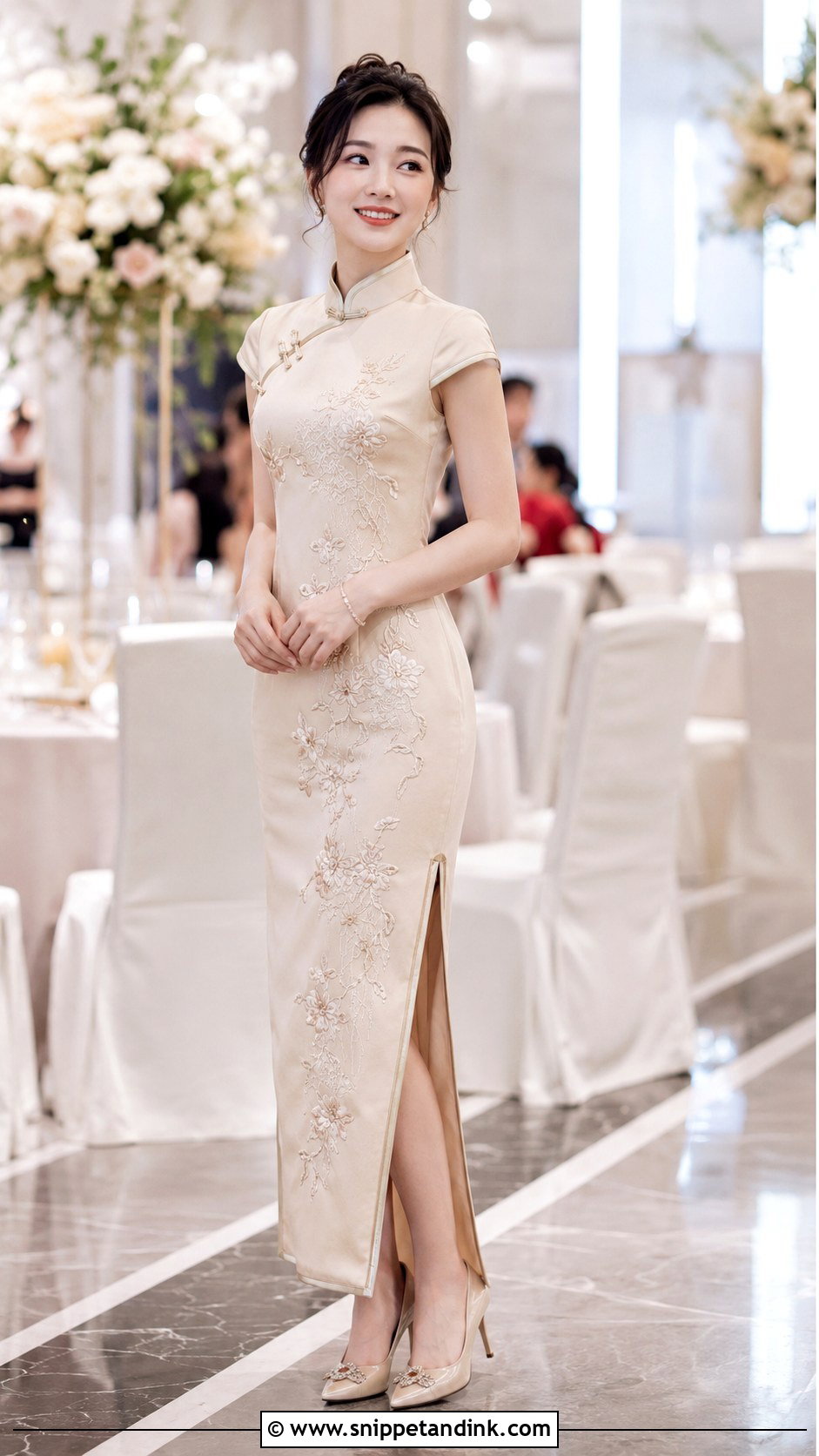
The reception dress has one job: let you move for hours. You’ll walk between tables, toast, sit through a long dinner and greet guests. Many brides go lighter here with a simple qipao, a cheongsam with a slit, a short red dress or a champagne mandarin-collar gown. My test at the fitting is to have the bride sit, stand and raise a glass several times without touching the dress. If she adjusts it even once, we alter it. Secure heels, simple jewelry and a hairstyle that holds are worth more than any extra detail.
What Elders Notice at a Tea Ceremony
The tea ceremony is the most traditional part of many Chinese weddings, and it’s where your dress choice is read most closely. Red is the safe and expected color, because it signals luck and joy. Gold works beside it. Plain white and all-black are the two I’d raise with the family first, since some older relatives still associate them with mourning.
Coverage matters more here than at the reception. You’ll be kneeling or bowing to serve tea to parents and elders, so a high slit or a deep neckline that looked fine standing can feel awkward up close. Your hands will be busy with cups and trays, which is why I keep bracelets slim and sleeves out of the way. Gold jewelry given by the family is often worn at this moment, so leave space at the wrist and neck for it rather than piling on your own pieces.
Silk, Velvet and Gold Thread After the Wedding
Embroidered bridal pieces deserve proper care, especially if you hope to pass one down. Have the dress cleaned soon after the wedding by a cleaner who handles silk and metallic thread. Sugary drinks and food can leave stains that are nearly invisible at first and turn brown as they oxidize over the following months.
- Store heavy embroidered pieces such as a qun kua folded flat rather than hung, so the shoulders don’t stretch under the weight.
- Pad every fold with acid-free tissue to stop permanent creases forming across the embroidery.
- Keep them in a breathable cotton bag, never sealed plastic, which traps moisture and can dull gold thread.
- Steam velvet from the inside instead of ironing it, so the pile isn’t crushed flat.
- Unfold and refold along different lines once or twice a year.
Red for the Tea, Ivory for the Aisle, Something Easy for Dinner
Match each outfit to its moment. Red holds the tea ceremony, white or ivory carries the aisle, and the banquet calls for something you can sit in, and plenty of brides wear all three. Whatever you pick, judge it on fit, fabric and what its symbols mean to your family, then try it on while doing the things you’ll actually do that day. A dress that passes that test is the one to buy.
You'll Like These Ideas:



Leave a Reply