
There isn’t one Indonesian wedding dress. There are dozens of regional traditions, built from fitted kebaya, hand-drawn batik, shimmering songket, sculpted crowns and local woven cloth, alongside modern gowns that borrow from them. Kebaya and batik are both living heritage, and a wedding is where they carry the most weight. The outfit should reflect the couple’s background, fit the ceremony and stay comfortable through hours of tropical heat. Colours, motifs, jewellery and even the way a cloth is wrapped can carry regional or family meaning, so for any ceremonial adat look I always bring in a dresser from that tradition. Below are twenty looks, from full regional dress to fusion gowns.
Rent the Adat Set, Tailor the Kebaya
For full regional dress, most Indonesian brides don’t buy the crown, the jewellery or the ceremonial cloths. They come as a set from the perias or bridal studio that does the dressing and makeup, and the dresser who brings them also knows how to put them on. That’s usually the safer route: the pieces match, and nothing is assembled from guesswork.
The kebaya is different. Because it fits close to the body, I always prefer it made to measure. Give a tailor plenty of time, especially for hand-beaded lace, and plan at least two fittings, one with the bodice and one with the full outfit, shoes and headpiece.
- Ask the bridal studio exactly which pieces are included and whether the crown is the full-weight original or a lighter version.
- Bring the batik or songket to the kebaya fitting so the tailor can balance the colours.
- Check who will dress you on the morning, and how early they need to arrive.
1. White Javanese Indonesian Wedding Dress
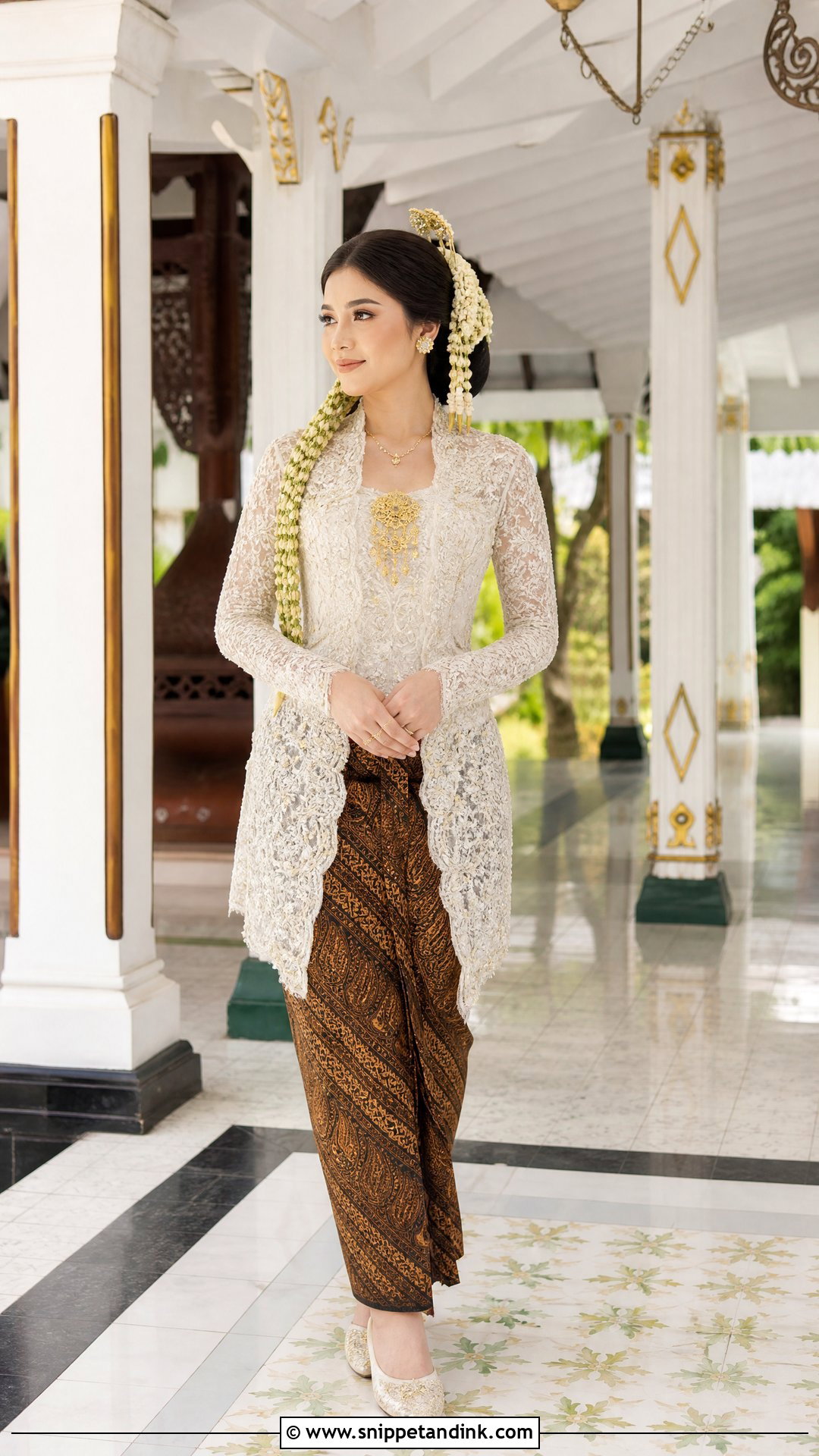
A white Javanese look starts with a fitted long-sleeve kebaya in lace or embroidered tulle over a lined bodice, worn with a batik jarik wrapped neatly around the waist and hips. A low bun, jasmine garlands, fine gold jewellery and closed-toe heels complete it. I usually suggest ivory, soft white or champagne over stark white, because the batik pattern reads more clearly against a warmer top. Some batik patterns are reserved for particular stages of the ceremony, so ask the family or the dresser which cloth is right. It suits an akad, a formal portrait or a calm indoor ceremony.
2. Black Velvet Javanese Indonesian Wedding Dress
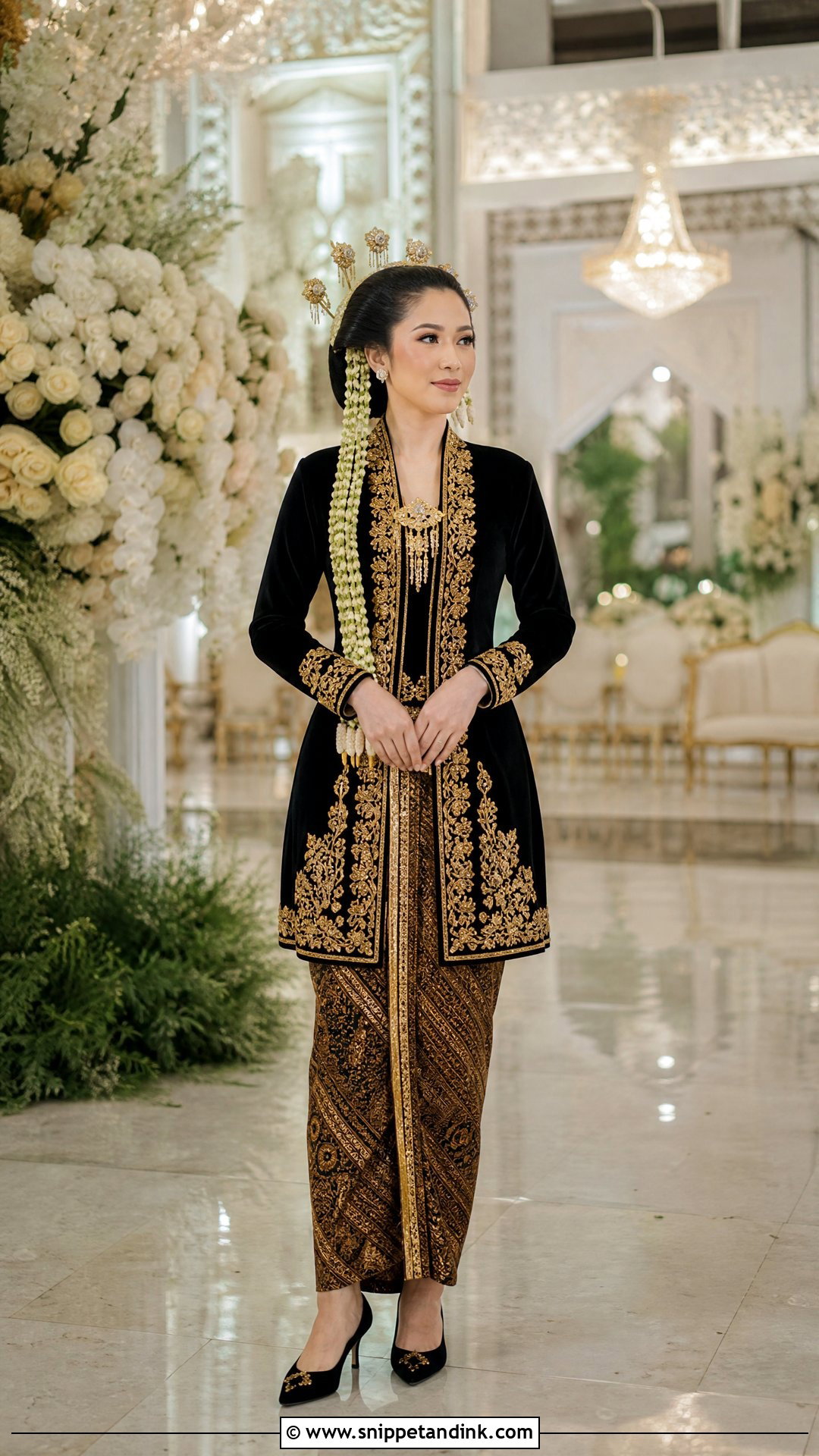
Black velvet with gold embroidery at the neckline, cuffs and front opening is the formal Javanese look, and velvet is surprisingly practical for it: it holds its shape under heavy embroidery where lace would sag. A brown, black and gold batik jarik balances the weight below. The makeup counts as part of the outfit, and paes-inspired makeup, with its shaped forehead, should be drawn by a trained perias, with gold hair ornaments chosen to suit. Black pumps or low block heels hide under the jarik. Keep the bouquet small so it doesn’t sit over the embroidery. The trade-off is heat: velvet in an air-conditioned ballroom is fine, but in an open-air hall it becomes punishing.
3. Sundanese Siger Indonesian Wedding Dress
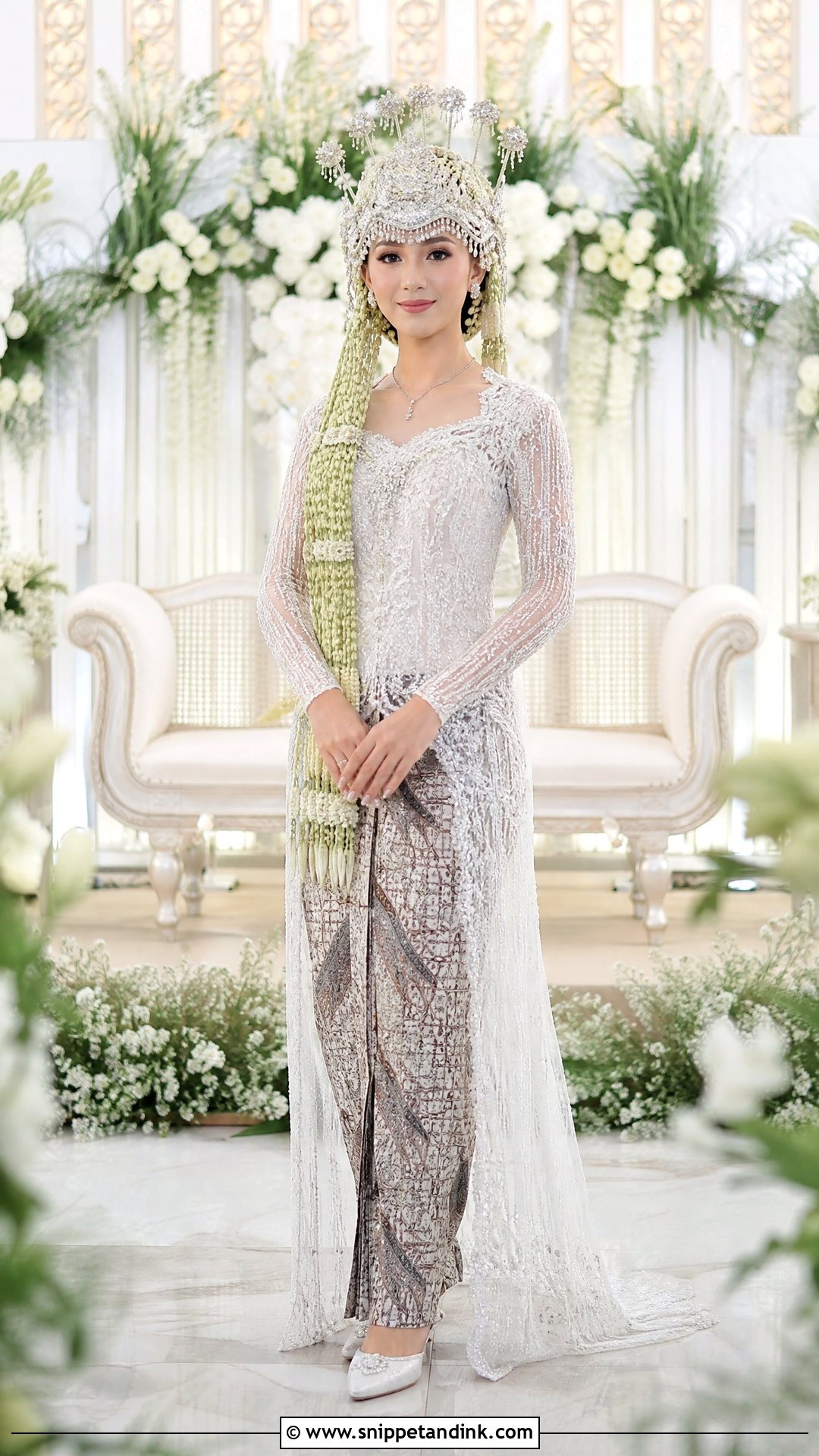
The siger crown dominates a Sundanese bridal look, so everything below it has to stay calm. Pair an embellished white kebaya with a coordinated batik skirt; crystal beading, floral embroidery or scalloped lace all work if they’re kept balanced. A skirt with a clean front drape makes walking and sitting easier. Long jasmine strands, small drop earrings and silver or white heels finish it, with defined but fresh makeup. The siger has its own fitting: it’s pinned into a prepared bun and needs to be balanced so it doesn’t tip forward when you bow your head. Book a Sundanese bridal specialist to dress you.
4. Balinese Payas Agung Indonesian Wedding Dress
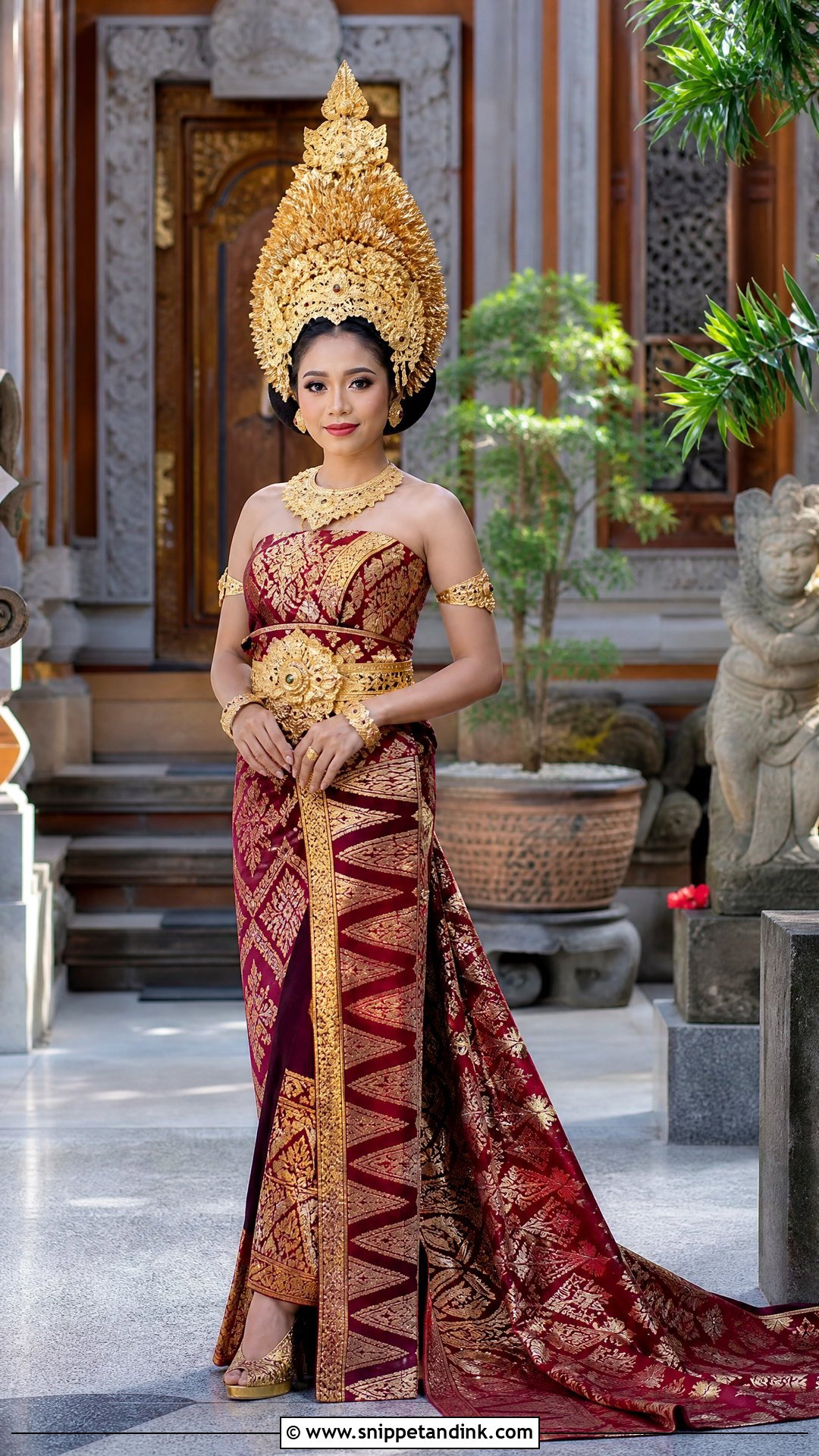
Payas Agung is the grandest Balinese bridal dress: richly woven songket in gold, red, ivory or deep jewel tones, a fitted upper garment, a structured waist, traditional jewellery, an ornate belt and a tall ceremonial headdress decorated with gold ornaments and flowers. The headdress is heavy, and the wrapped layers limit how you walk and sit. Plan fitting time, practise sitting down, and have a lighter look ready for the reception. This is sacred ceremonial dress, not a costume, so work with Balinese dressers who know how it is built and worn.
5. Minangkabau Suntiang Indonesian Wedding Dress
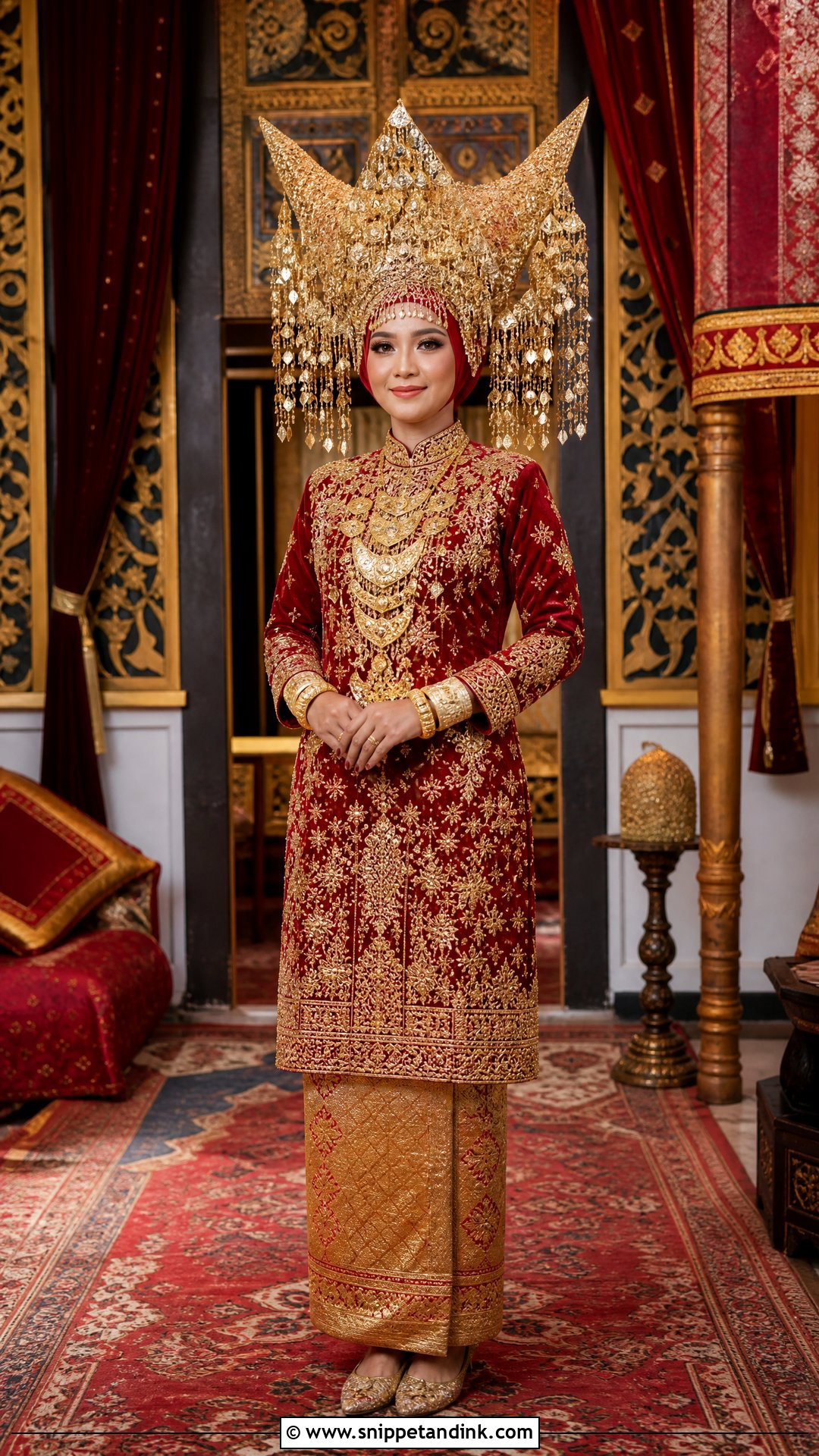
The suntiang is the Minangkabau crown of layered gold ornaments, and a traditional one is famously heavy. Discuss its weight, how it attaches and how long you’ll wear it at an early fitting, and practise holding your head still in it. A richly decorated baju kurung pairs with songket in red, gold, maroon or another colour the family approves. Long sleeves and a longer bodice give coverage, and metallic embroidery ties the clothing to the crown. Add coordinated necklaces, bracelets and stable shoes. Leave out unrelated Western accessories and keep the bouquet small; this look is already complete. It suits a formal adat ceremony or a grand reception entrance.
6. Palembang Aesan Gede Indonesian Wedding Dress
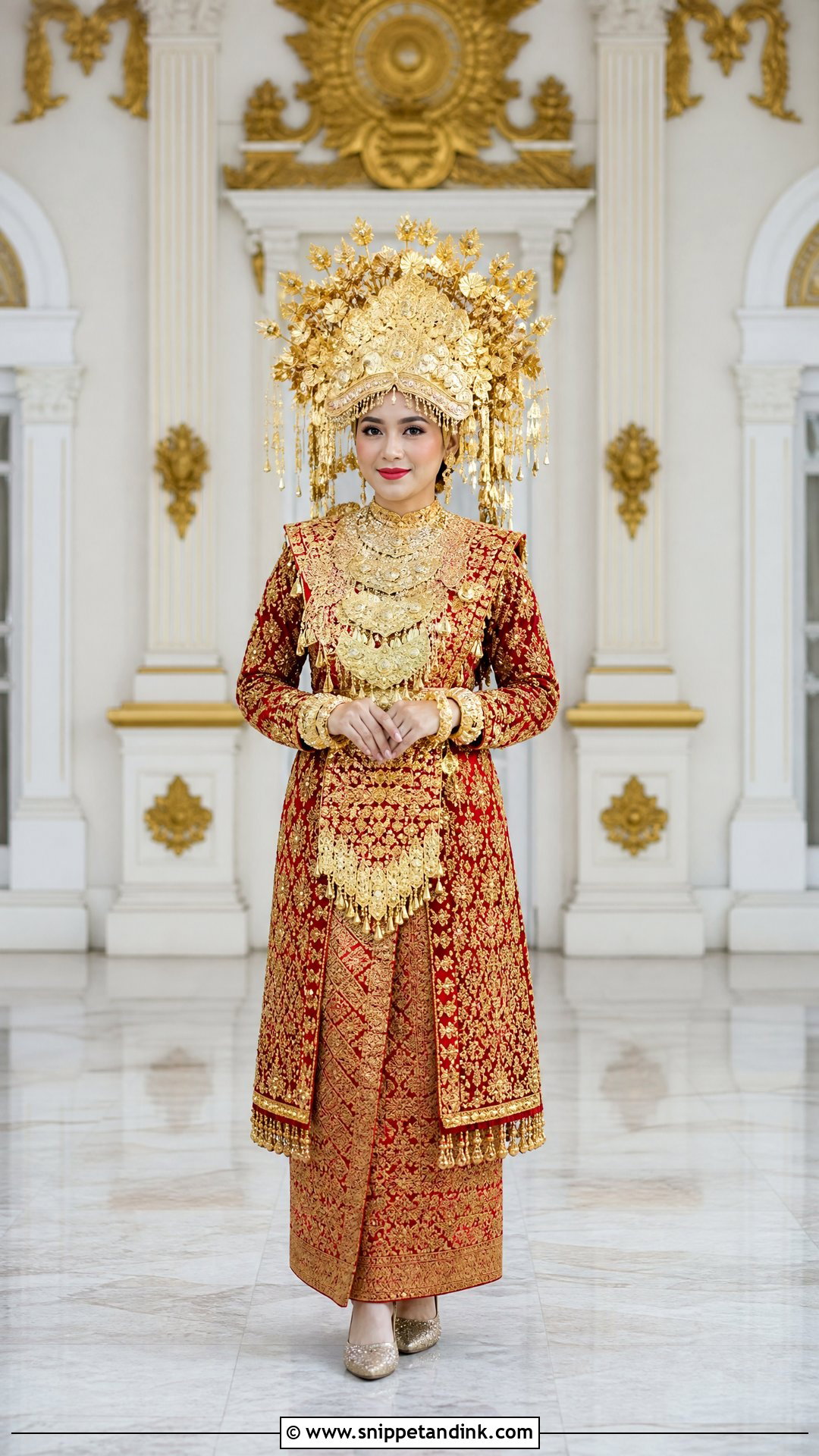
Aesan Gede is the Palembang royal-style bridal dress, and gold leads it: songket, layered jewellery, a decorative chest covering and an ornate crown. Red and gold is the most dramatic pairing, with pink, green or deep maroon as careful variations. The effect depends on symmetry, so every layer has to sit exactly where it should. That’s why I wouldn’t attempt to assemble this one without a trained Palembang bridal specialist, who will also explain what each piece means. Keep shoes supportive and hidden under the woven skirt, and makeup strong enough for photos without competing with the crown.
7. Bugis Baju Bodo Indonesian Wedding Dress
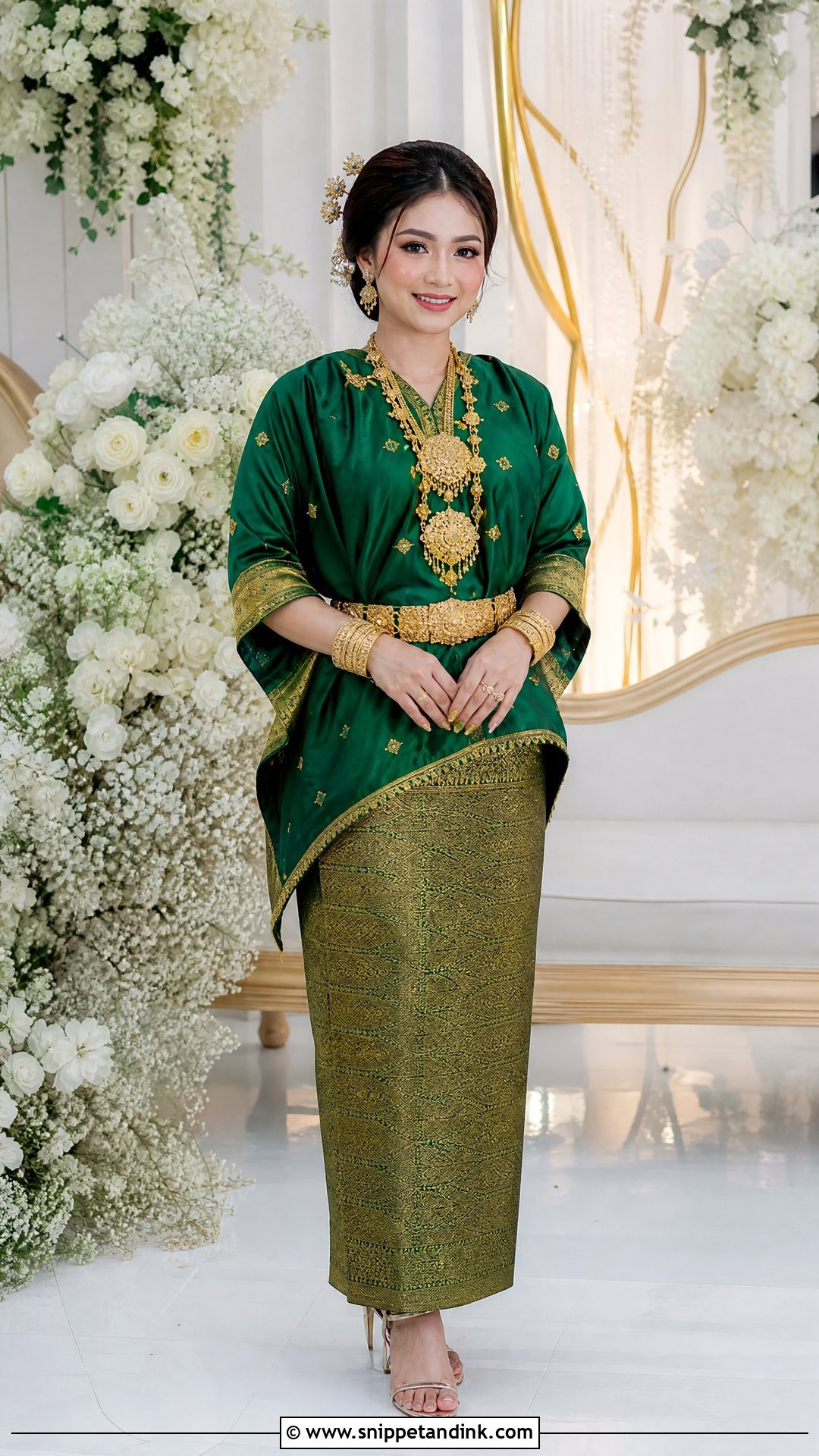
The baju bodo is a loose, square, short-sleeved Bugis top, traditionally in sheer fabric, and its boxy shape against a straight sarong is what makes it so recognisable. For a wedding, choose silk or another fine fabric with an intricately woven sarong or songket. Emerald, red, gold, pink and soft pastels all appear; colour in this tradition has meaning, so pick with guidance. A decorative belt, layered gold jewellery, a formal updo and simple heels finish it. Modernise through tailoring, lining and a controlled palette, not by changing the shape. Fitting the top close to the body turns it into something else entirely.
8. Batak Toba Ulos Indonesian Wedding Dress
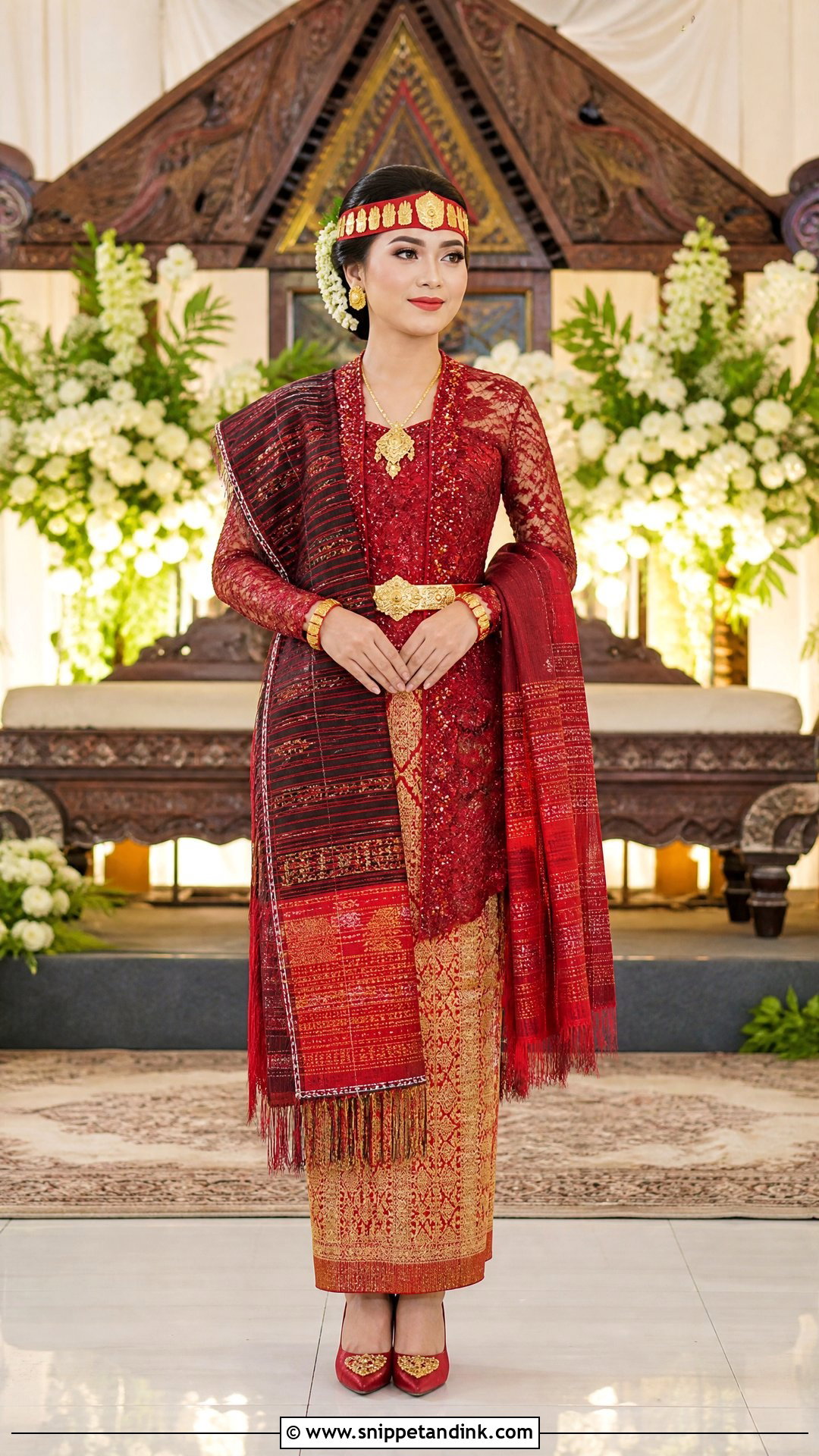
Ulos, the Batak hand-woven cloth, is given and worn in ways set by family and ceremony, so it shouldn’t be draped by guesswork. A Batak Toba bride typically wears an elegant kebaya with a fitted songket skirt, with ulos added as the family directs. Red, black and gold are the bold traditional palette; ivory or deep burgundy can soften it where appropriate. A sortali headband, coordinated jewellery, a sleek bun and practical closed-toe shoes finish it. Never cut or alter an heirloom cloth. Ask an experienced dresser how to fold and secure each piece, since practice differs between families and communities.
9. Lampung Siger Indonesian Wedding Dress
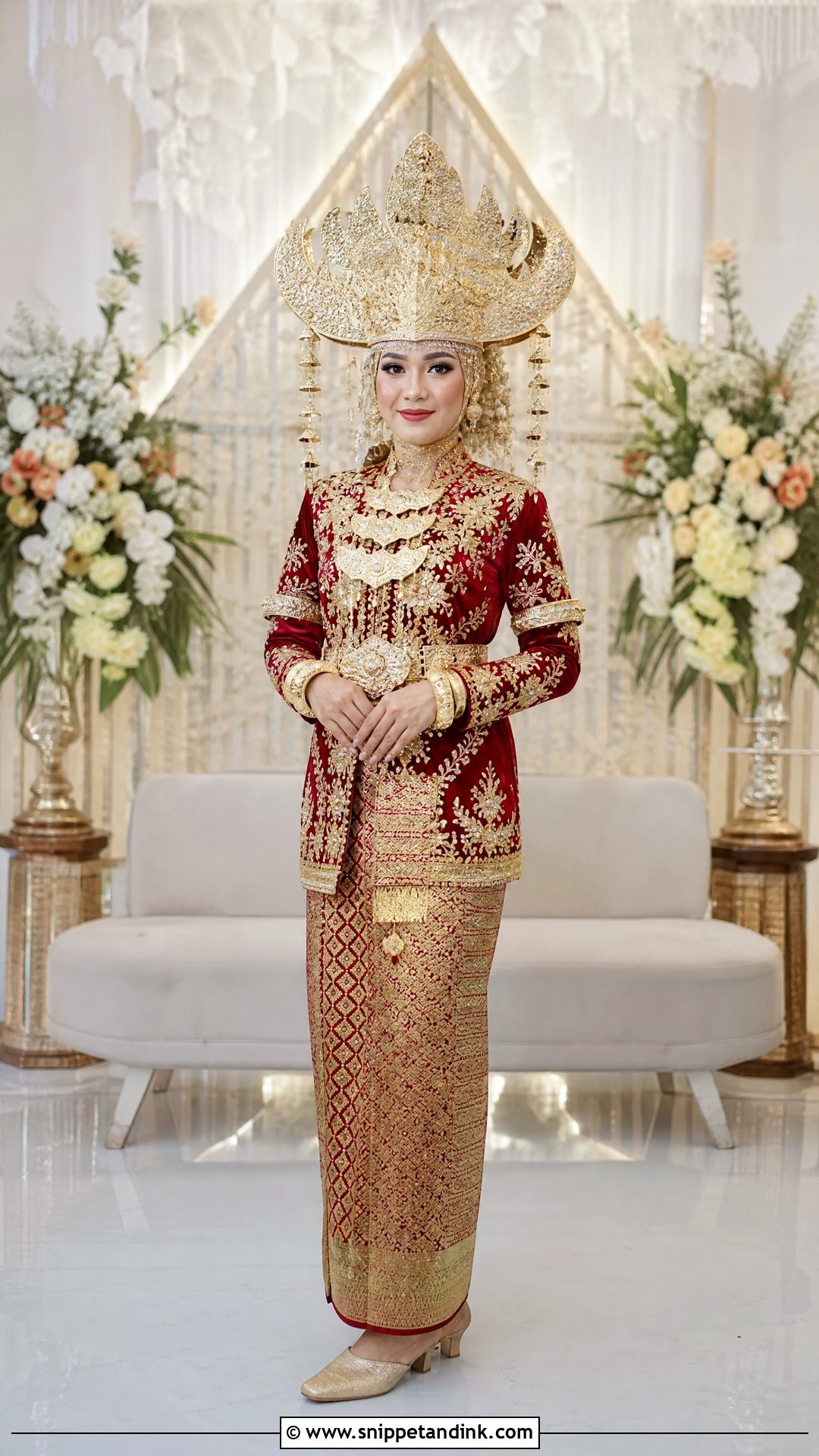
The Lampung siger is a tall gold crown with points across the top, and it pairs with tapis, a cloth embroidered with gold thread. Build the look on a fitted embroidered top and a structured woven skirt that keeps the gold in view. Red and gold is classic; white and gold is a lighter version if the family agrees. Balance the crown with a tidy hairstyle and defined makeup, and hold the bouquet below the waist in photos. With a long, heavy lower garment, low heels or formal flats are what I’d choose. Crowns, cloths and jewellery vary by region and family, so arrange the full set through a Lampung dresser rather than mixing pieces.
10. Acehnese Dara Baro Indonesian Wedding Dress
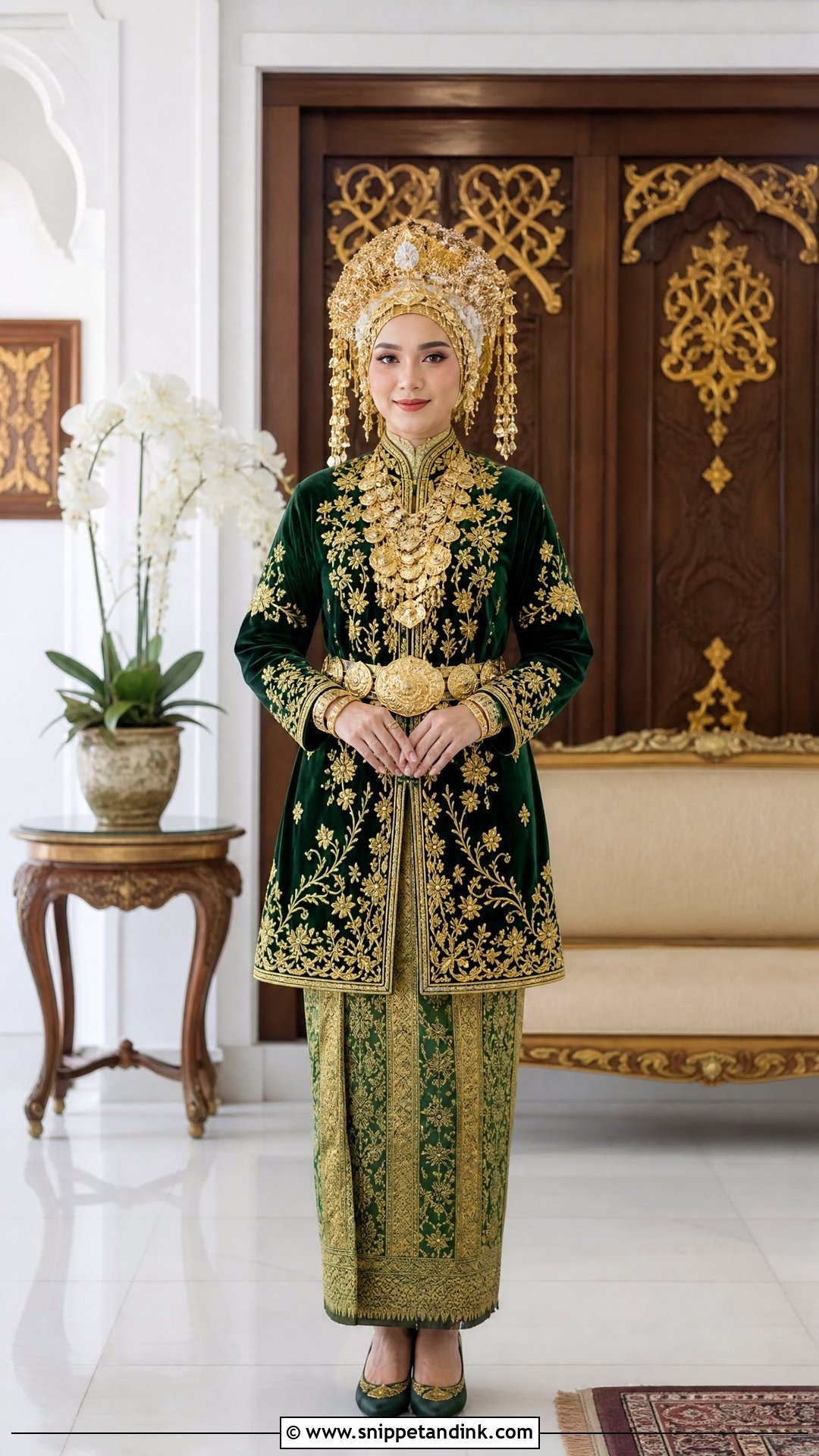
Dara Baro is the Acehnese bride, and her dress is usually in deep jewel colours, red, green, black or gold, with carefully placed metallic embroidery. A long-sleeve top and matching lower garment support the belt, necklace, bracelets and traditional head ornaments. Fit each piece securely, because the bride is up and down for greetings and photos for hours. The hairstyle, or a covered style where the bride wears one, has to work with the headpiece from the first fitting, not be adjusted on the day. Simple, stable shoes and a modest bouquet keep the embroidery visible. Treat it as a full ceremonial set, arranged by an Acehnese bridal professional.
11. Betawi Kebaya Encim Indonesian Wedding Dress
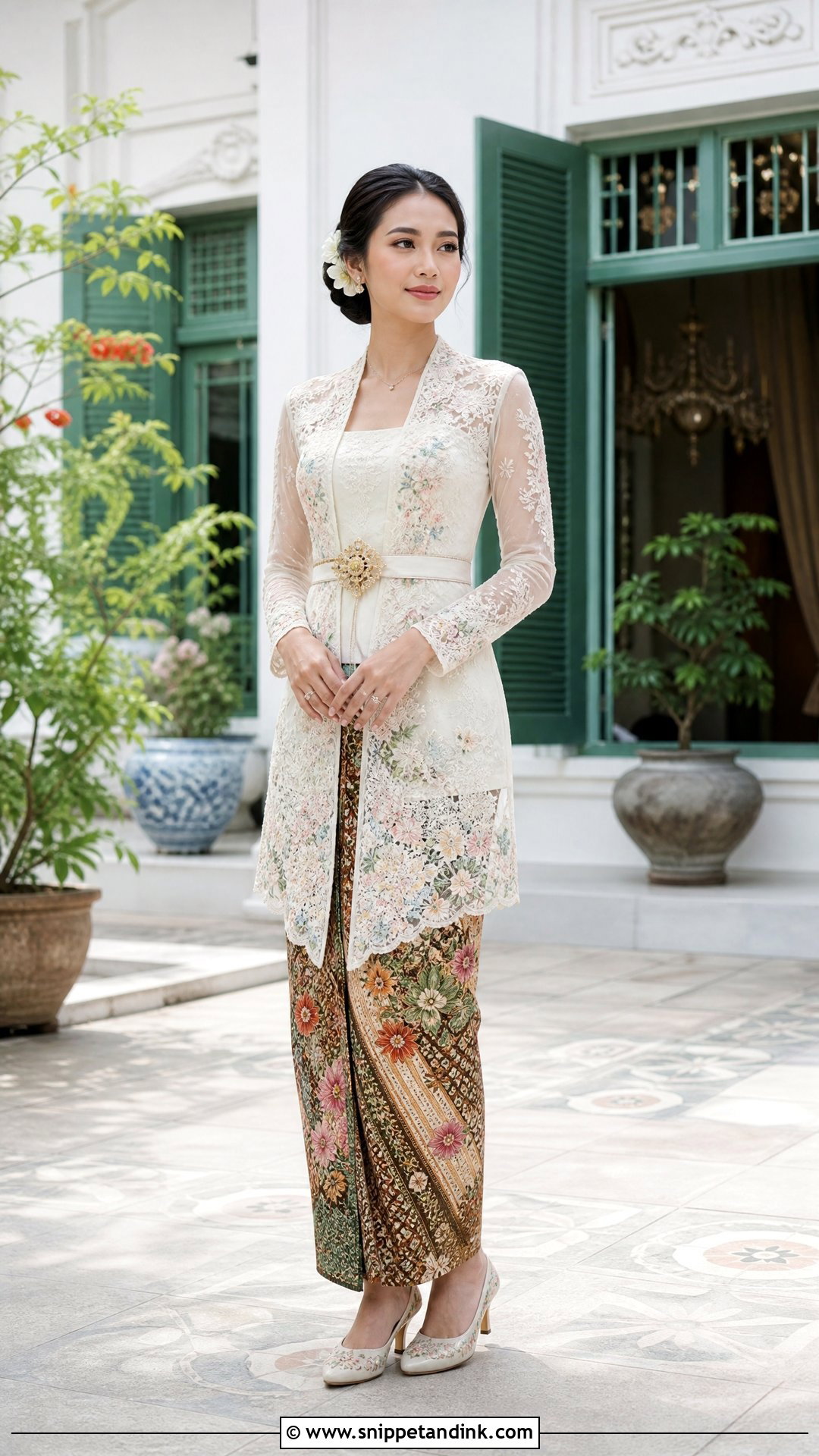
Kebaya encim is the lighter, embroidered kebaya associated with Betawi and Peranakan dress, a blend of Chinese and local influences. Choose white, ivory or a soft colour with floral embroidery and a neat scalloped edge, with a fitted batik skirt, a slim belt, delicate jewellery and low embroidered heels. A smooth bun with small flowers keeps attention on the blouse. The fabric is often sheer, so if you want more coverage, ask for a matched lining rather than changing the cut. For a ceremonial version, choose motifs and accessories with an informed maker.
12. Madurese Kebaya Indonesian Wedding Dress
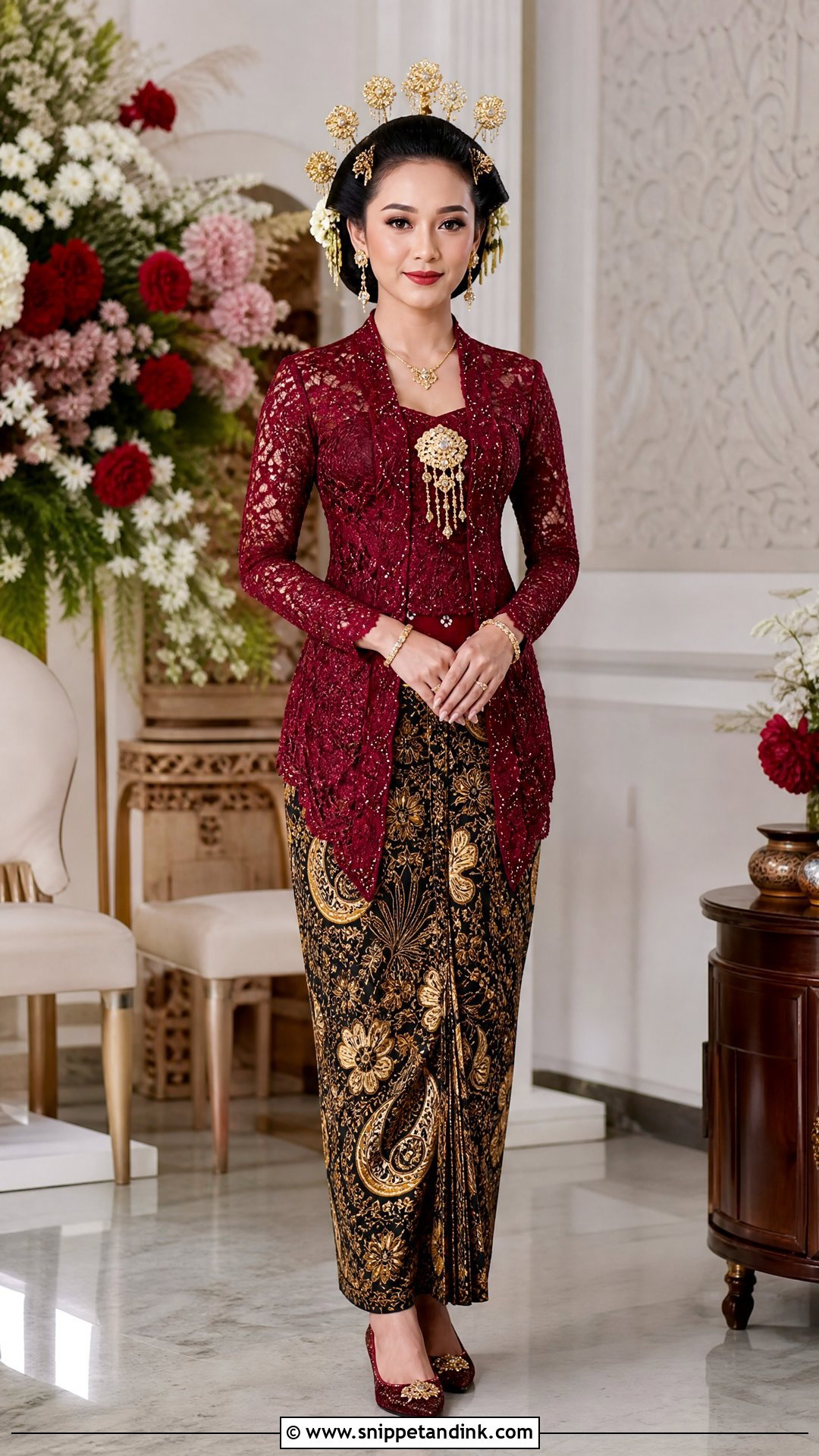
A Madurese bridal look is confident: close tailoring, strong colour and detailed ornament. Start with a fitted kebaya with embroidery or beadwork and a coordinated batik or woven skirt in deep red, ivory, black or gold, depending on the tradition followed. A dressed bridal bun with suitable hair ornaments, formal jewellery and low heels finish it. Younger brides often ask for modern touches, such as a longer hem, better lining or lighter beadwork, and these work as long as the recognisable shape stays. Ask local experts before adapting ceremonial details or mixing pieces from other communities.
13. Modest Hijab Indonesian Wedding Dress
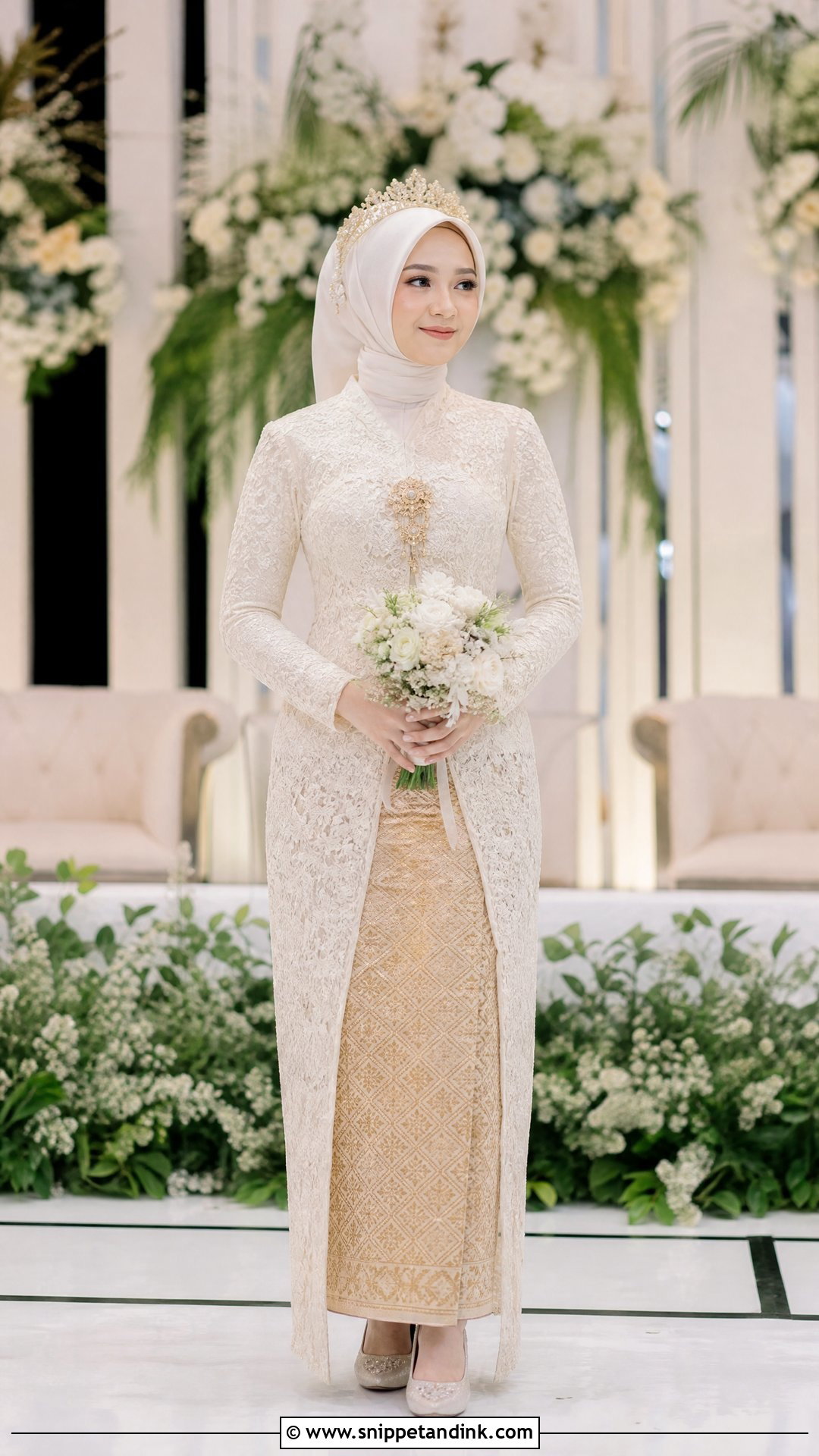
For full coverage, choose a long-sleeve lace or embroidered kebaya with an opaque lining, a higher neckline and a hem that falls over the hips, with a straight batik or songket skirt you can walk in. A neatly wrapped hijab in the same colour family makes a smooth base for a light crown, brooch or jasmine. Closed-toe heels and a compact bouquet finish it. Ivory, champagne, dusty pink and sage are soft; burgundy and gold suit evening. The fitting detail I fuss over is the neck and shoulder seams. Bulky seams there push the hijab out of shape, so ask the tailor to flatten and grade them.
14. Modern Mermaid Kebaya Indonesian Wedding Dress
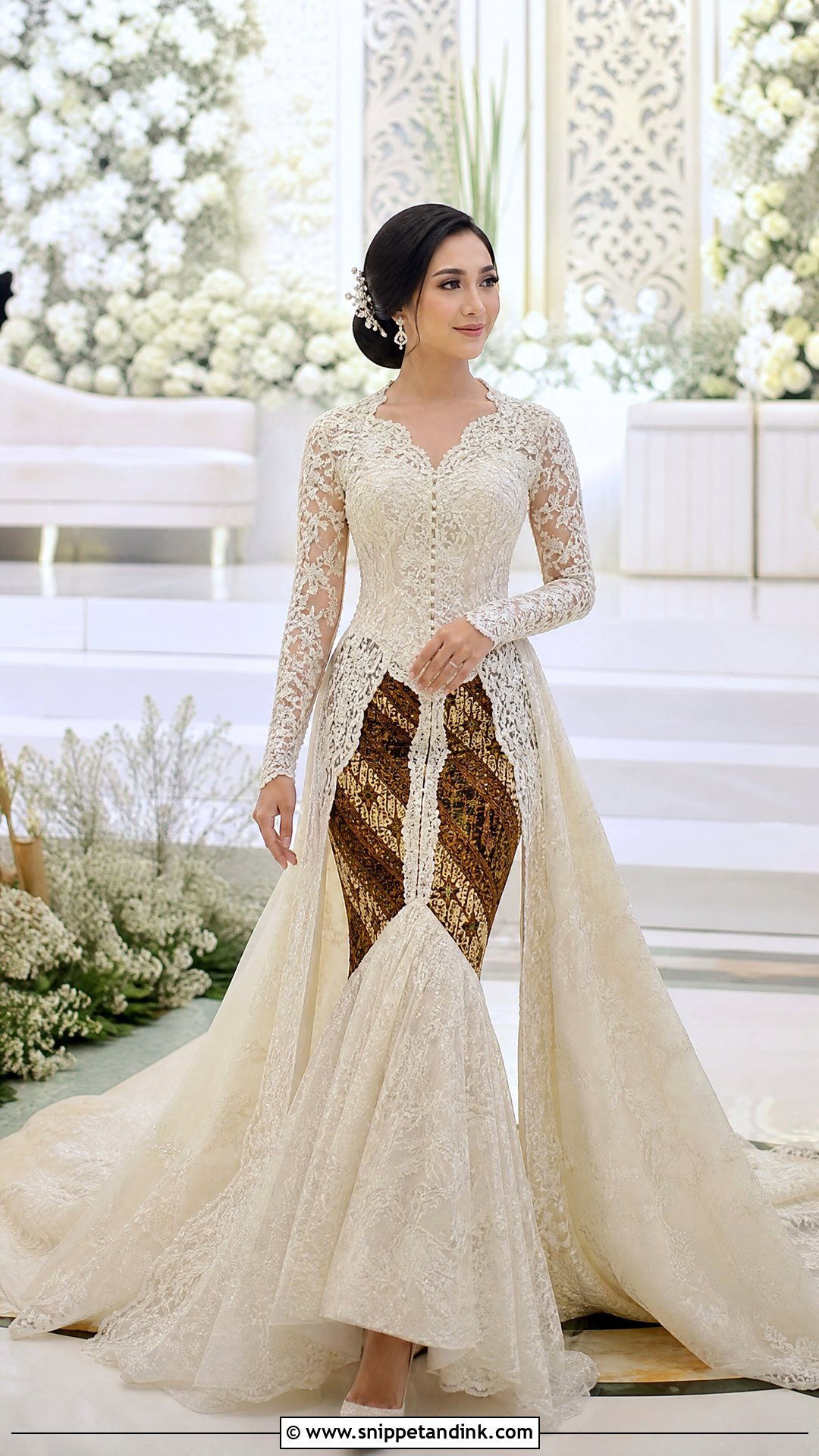
A mermaid kebaya gown fits close through the hips and flares below the knee, so it’s the most dramatic fusion option and the hardest to sit in. Lace or embroidered tulle covers the bodice and sleeves, with some motifs running down the skirt. The lining must match your skin tone or the gown, or it shows as patches in flash photos. A detachable train gives you the entrance and then lets you move at the reception. Pair it with a sleek bun, crystal hairpins, drop earrings, pointed heels and a small cascading bouquet. If you add a batik or handwoven panel, place it so the cloth isn’t cut through its motif.
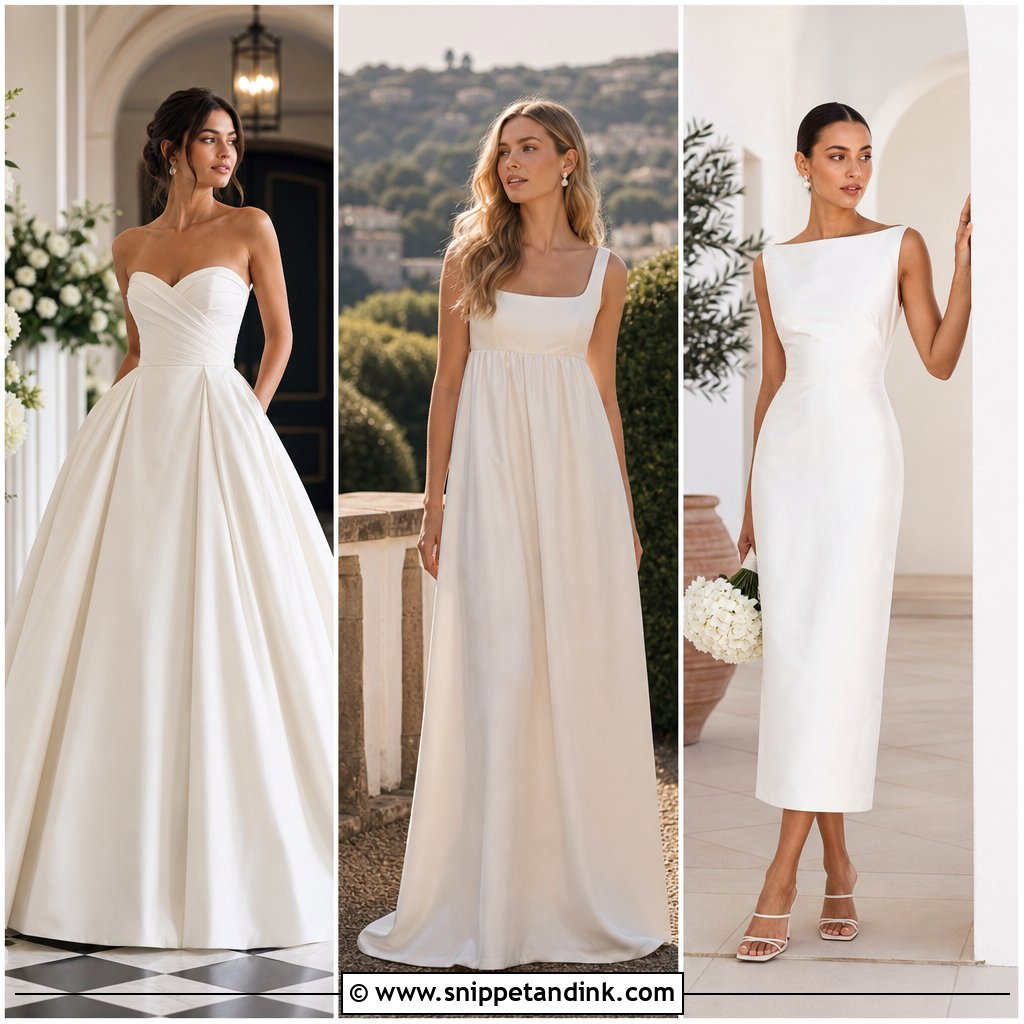
15. A-Line Kebaya Indonesian Wedding Dress
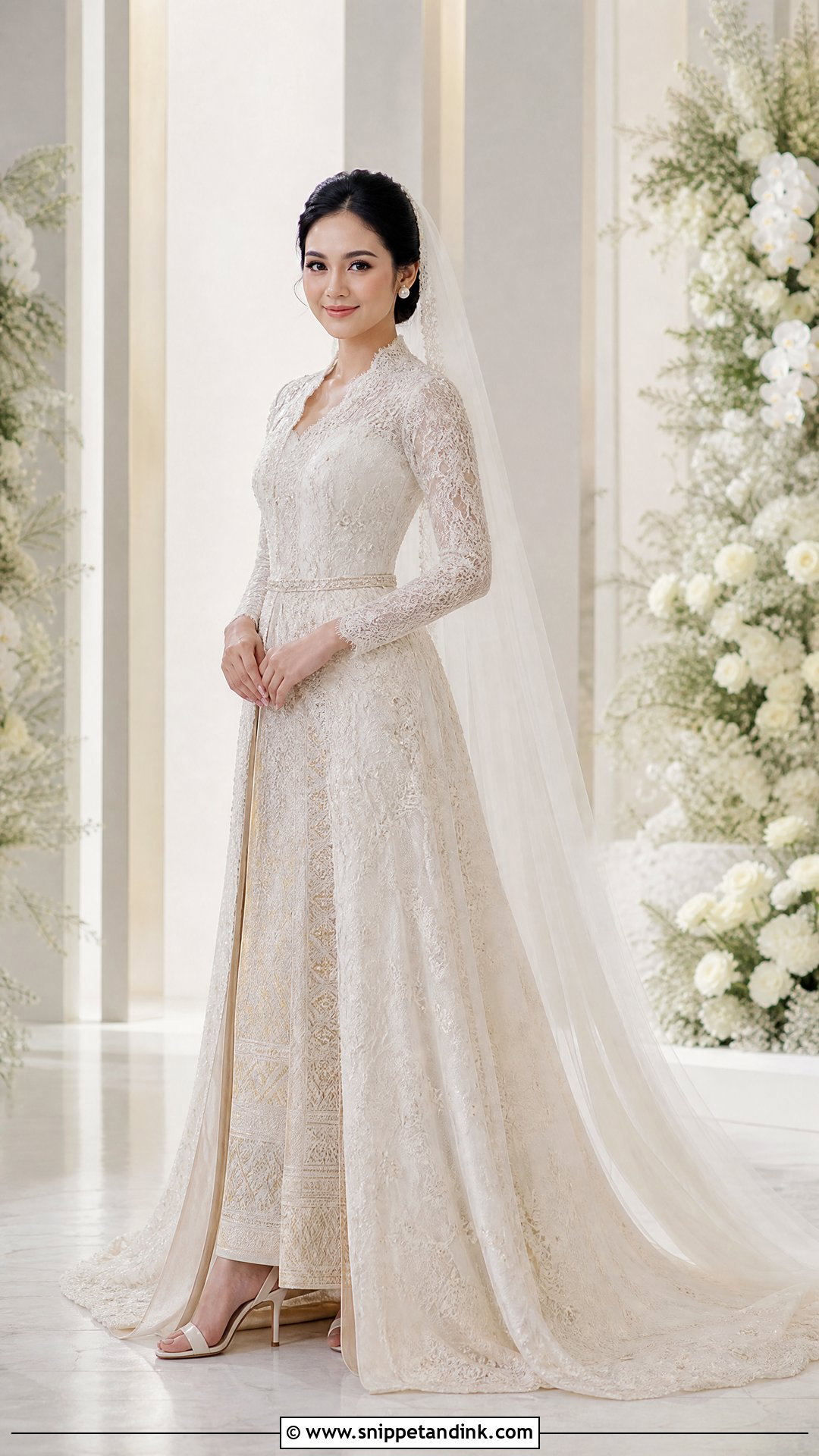
The A-line kebaya gown is the one I recommend most for brides moving between an akad, portraits and a reception, because you can walk, sit and kneel in it. An embroidered bodice opens into a gently widening floor-length skirt, with long sleeves, a properly lined illusion neckline and a defined waist. Indonesian character can come from lace motifs, a batik waistband, songket panels or a removable woven overskirt. Keep the heavy beadwork on the bodice so the skirt still moves. Medium heels, a low bun, pearl earrings and a soft cathedral veil, if it suits the ceremony, finish it.
16. Cape Sleeve Kebaya Indonesian Wedding Dress
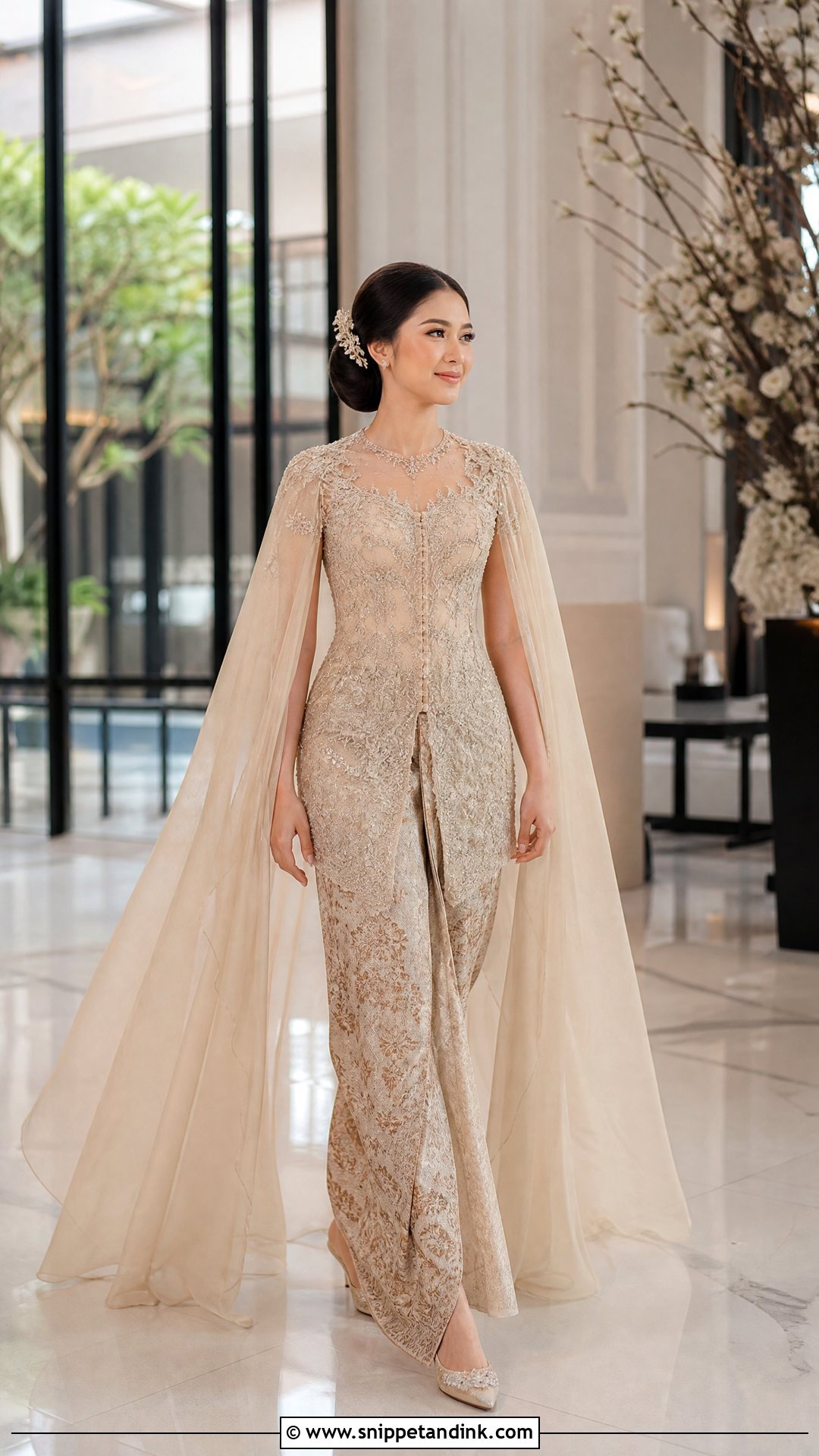
A cape sleeve gives movement and an entrance without a heavy train. Start with a fitted ivory or champagne base embroidered across the bodice, with a light cape attached at the shoulders falling behind the arms so the waist stays visible. Pair it with a matching A-line skirt, or a slim songket for a more traditional result. Pointed pumps, a polished bun, small earrings and a simple hair comb finish it. Keep beading off the cape edges; weight there pulls the drape out of line. A detachable cape is the better buy, since you’ll want it off for eating and dancing.
17. Ivory Kutubaru Indonesian Wedding Dress
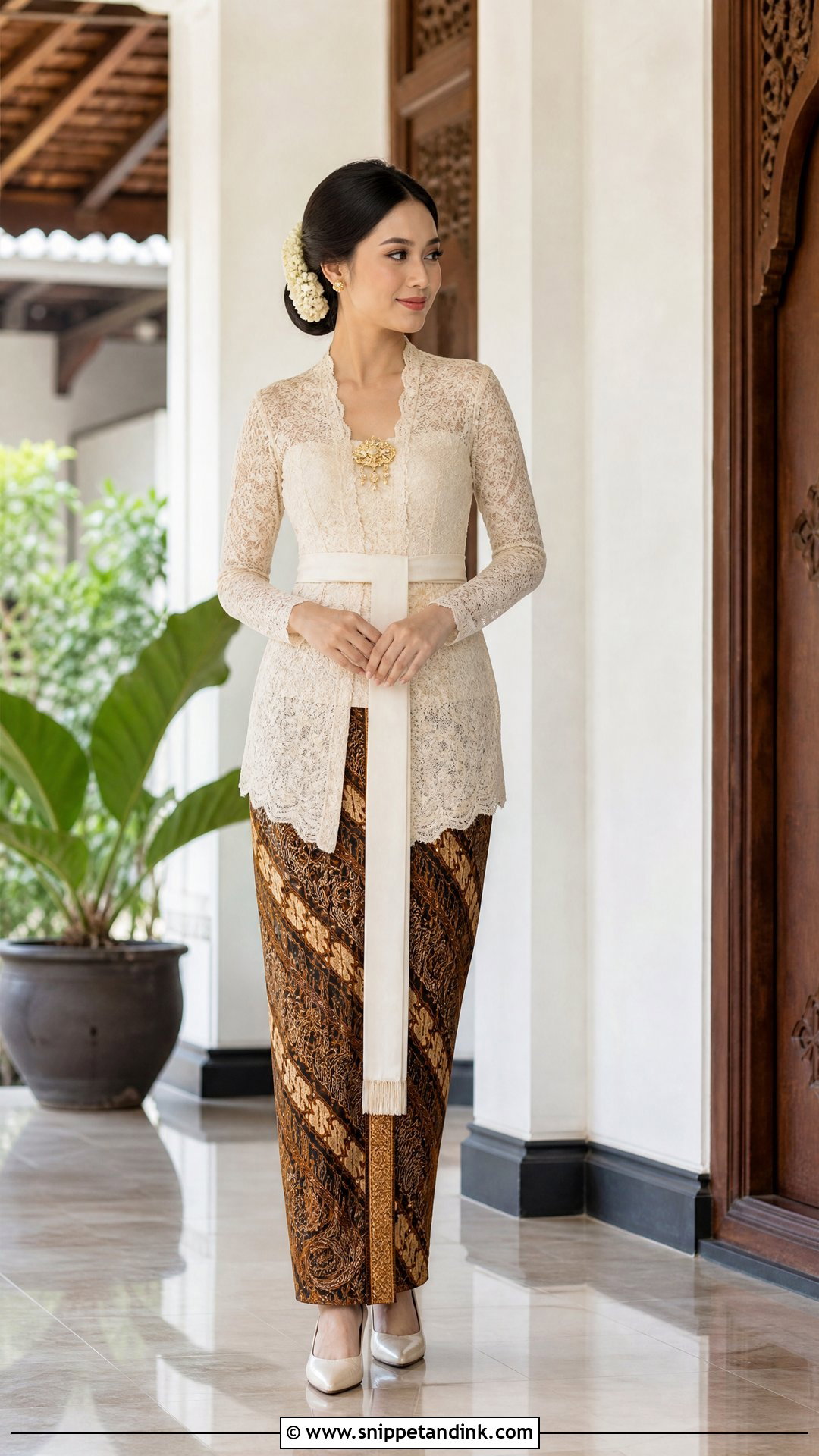
The kutubaru kebaya has a separate panel joining the two front edges, which gives it a clean, understated line. Choose ivory cotton lace, silk, brocade or embroidered fabric with a modest lining and precise tailoring, worn with a batik jarik in warm brown, cream and muted gold. A narrow waist sash defines the shape. Finish with a low bun, jasmine, small gold earrings and closed-toe heels, and keep beading to the cuffs, neckline or front panel. Choose ceremony-appropriate batik with someone who knows the patterns.
18. Batik Lace Indonesian Wedding Dress
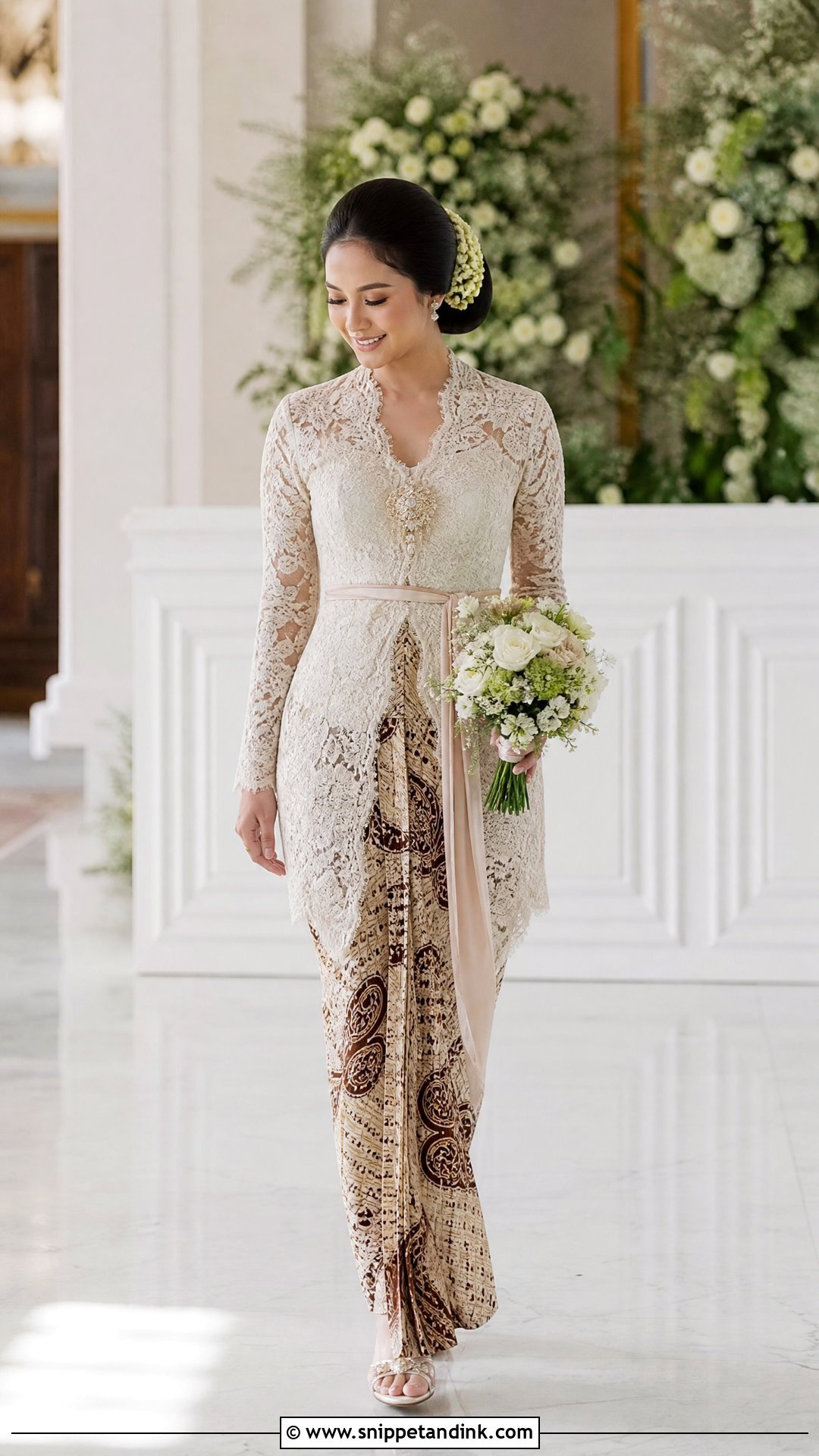
Lace and batik both have strong patterns, so each needs room. Start with a fitted lace kebaya in ivory, blush or pale gold, then a batik skirt with a clear motif and a smooth, flat front rather than gathers. Pick up one colour from the batik in the shoes, sash or bag. A neat bun, a jasmine strand, pearl earrings and medium heels suit it. Skip a big train, which hides the cloth. Particular batik patterns are associated with marriage, and others with occasions you wouldn’t want at a wedding, so ask a batik specialist or a family elder to help choose.
19. Songket Reception Indonesian Wedding Dress
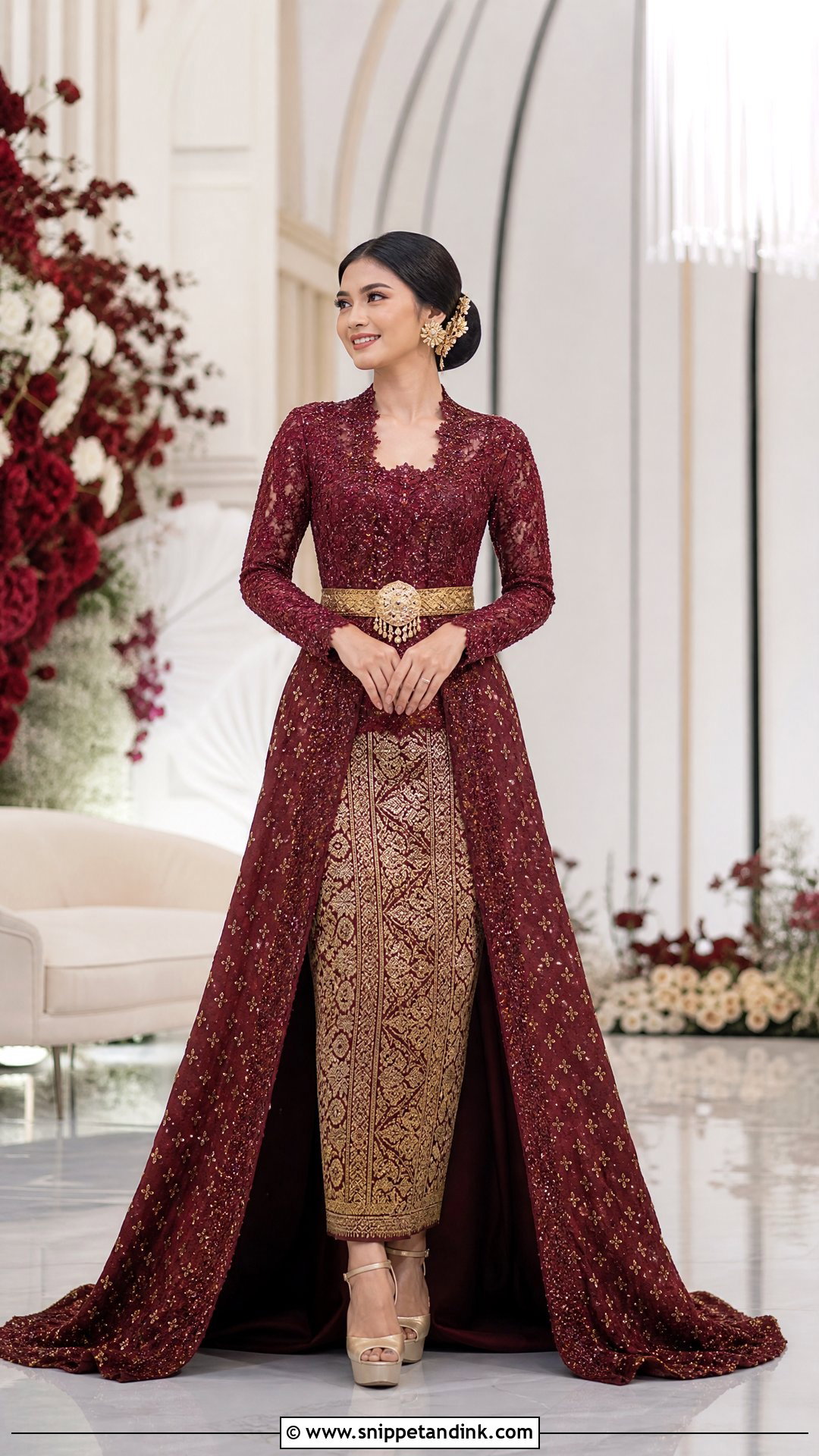
Songket is woven with metallic thread, which is why it glows under reception lighting, and why a songket-centered bridal outfit suits an evening. Pair a fitted silk or embroidered kebaya with a structured songket skirt in gold, silver, emerald, navy or burgundy, keeping the top simpler if the cloth is dense. A coordinated belt, a sleek bun, statement earrings and platform heels finish it, and a detachable overskirt gives you an entrance you can later shed. Songket belongs to several communities, so use it in your own cultural context. Line it well; the metallic threads feel rough against bare skin.
20. Pastel Modern Indonesian Wedding Dress
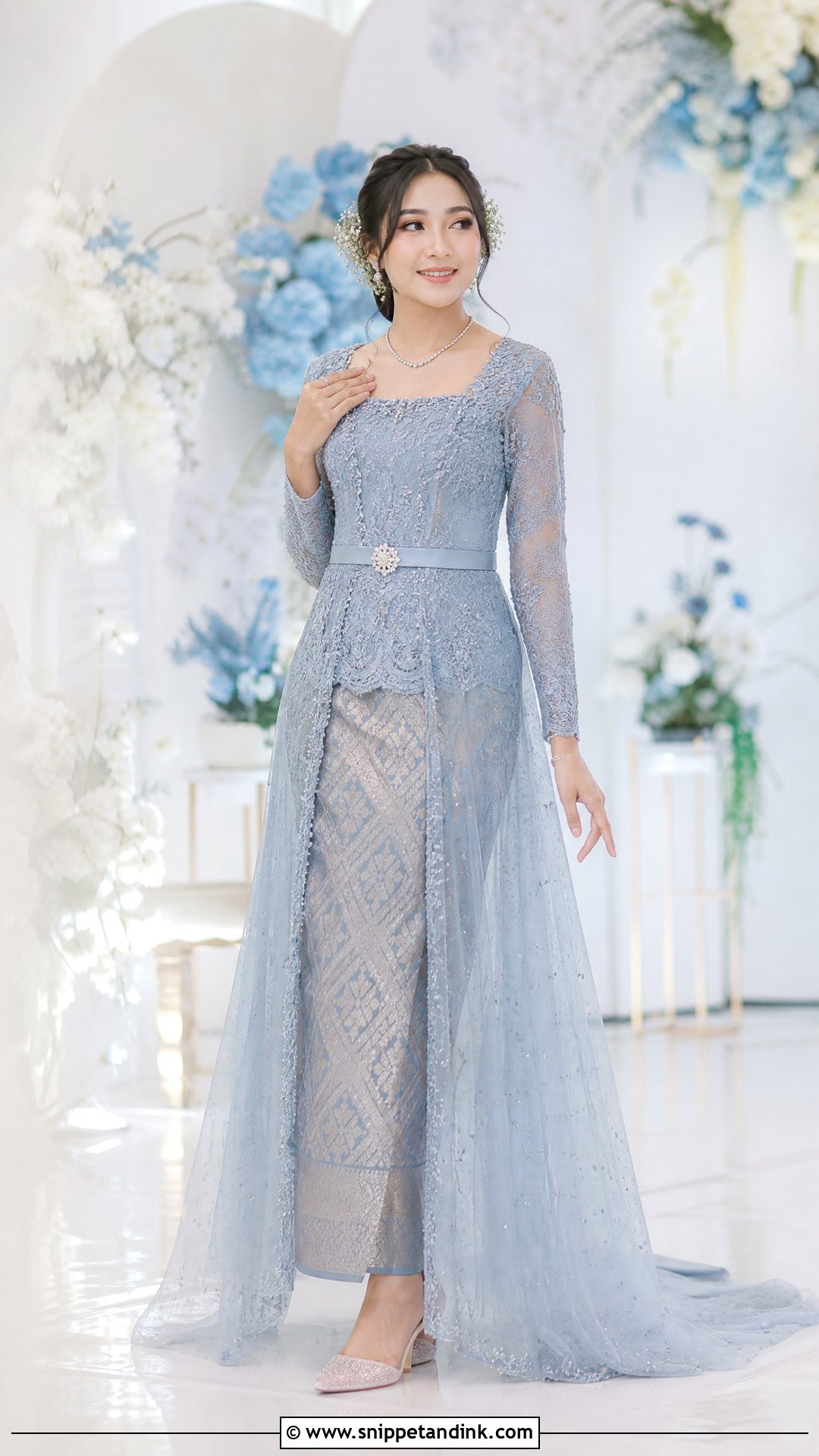
Pastel kebaya, in dusty blue, blush, lilac, sage or pale peach, is a modern route that still reads as Indonesian. Pair it with a coordinated batik or songket skirt with clear contrast between top and bottom, or both disappear into one blur in photos. A smooth bun or matching hijab, small floral hair accents, pearls and neutral heels complete it; a slim belt adds structure, and a sheer overskirt adds drama for the ceremony. Modern kebaya can vary widely in length, fabric and decoration, so customise freely while keeping the recognisable construction, and get advice on traditional motifs.
Heat, Humidity and a Heavy Crown
Most of these outfits are worn in tropical heat, sometimes outdoors, often in long layers of lined lace, velvet or metallic cloth with a crown on top. That combination wears brides out faster than nerves do. A few things genuinely help.
- Line the kebaya in cotton or a breathable fabric rather than polyester, which holds sweat against the skin.
- Choose a light underlayer for under the jarik or songket; a slip that clings in humidity makes walking harder.
- Ask the dresser to remove or lighten the headdress during any break; crowns pinned into the hair tire the neck within a few hours.
- Keep a fan, blotting papers and a straw for drinks in someone’s bag so lipstick survives.
Changing Between Akad and Reception
Many couples wear a quieter kebaya for the akad and a grander regional or songket look for the reception. The change takes longer than people schedule for. Taking down a pinned crown, unwrapping a jarik and redressing in a new set can run to well over an hour once hair and makeup are adjusted.
Ask your dresser how long they need, then add a margin. Pack the second outfit in order of dressing, and keep the jewellery for each look in separate labelled pouches. Mixing pieces from two traditions in a rushed change is exactly the mistake you’re trying to avoid.
Heritage First, Then Your Own Touches
The bridal looks that stay with people combine skilled craft, real comfort and respect for what the clothing means. You might wear a white Javanese kebaya, a baju bodo, a full Aesan Gede, a songket reception outfit or a modern kebaya gown. Whichever you choose, every piece should belong to one look. Think about the ceremony, the venue, the heat, how much you’ll move and how long you’ll wear it. And when ceremonial garments or meaningful motifs are involved, talk to family, a regional dresser, a textile specialist or an Indonesian designer before you commit. That conversation is what makes the outfit yours rather than borrowed.
You'll Like These Ideas:


Leave a Reply