
A Chinese wedding wardrobe is rarely one dress. Depending on your family, it might mean ceremonial qun kwa sets for the tea ceremony, a fitted qipao for the banquet, a layered hanfu for portraits or a Western gown with Chinese details. The qun kwa is an embroidered jacket over a long skirt; the qipao is a close-fitting one-piece that took its modern shape in early twentieth-century Shanghai. When I help a bride plan, the first questions aren’t about colour. They’re about which ceremonies she’ll attend, whether she’ll kneel, and how many hours she’ll be wearing each piece. The twenty outfits below are grouped from the most traditional to the most modern.
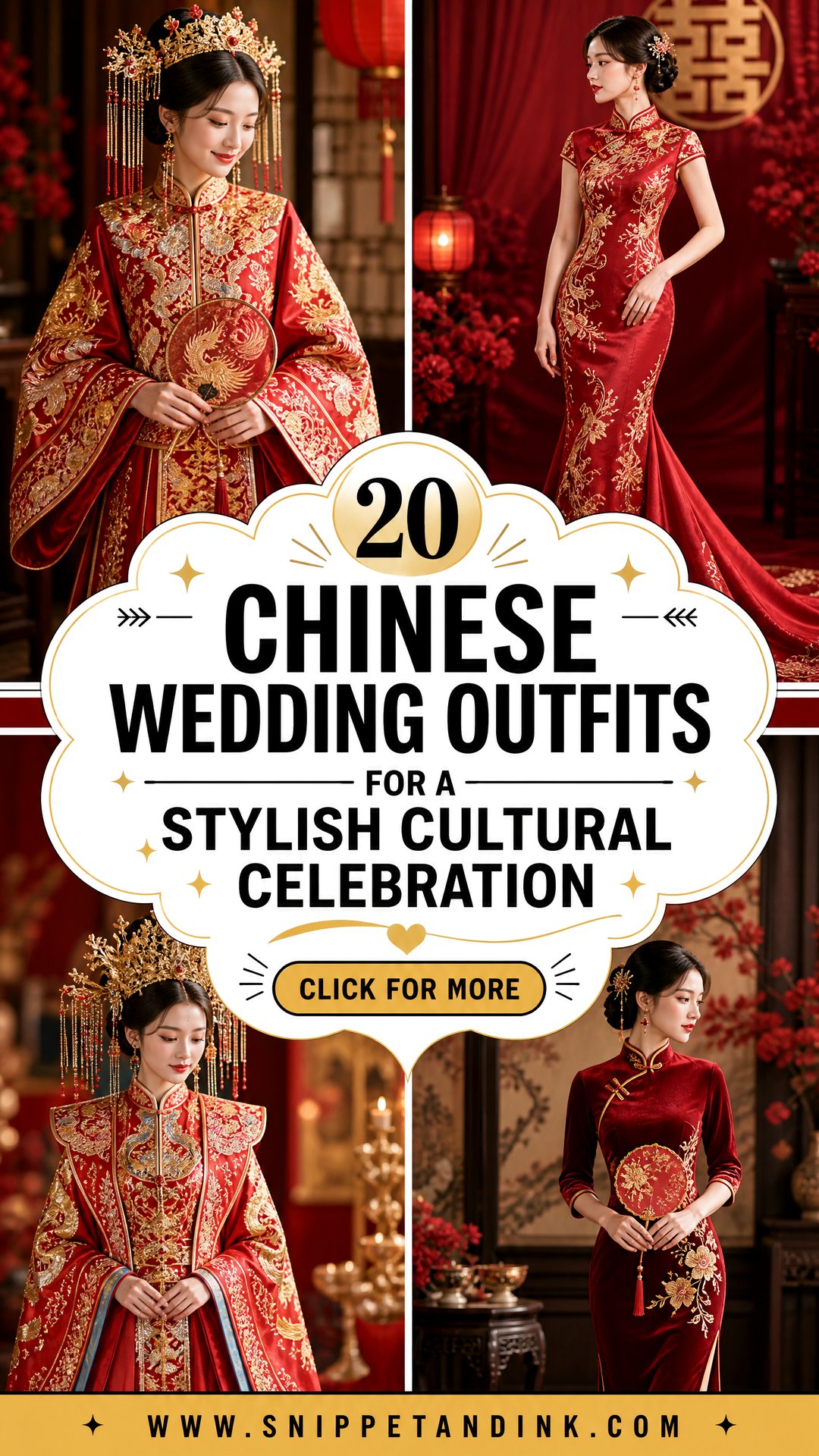
Dragons, Peonies and Double Happiness on Bridal Embroidery
Chinese bridal embroidery is full of symbols, and elders often read them before they notice the cut. I always go through the motifs with a bride before she orders, so nothing ends up on her jacket by accident.
- Dragon and phoenix: the groom and the bride, and the balance of the marriage. The classic pairing for qun kwa.
- Double happiness: the doubled character for joy, used almost only for weddings.
- Peony: wealth and honour, often worked large on skirts and hems.
- Mandarin ducks: a devoted, lifelong couple, since the pair is traditionally seen together.
- Pomegranates and lotus seeds: wishes for children, which some modern couples prefer to leave out.
- Bats and clouds: good fortune and good luck, frequently used as smaller filling motifs.
Colour carries meaning too. Red means joy and luck, gold suggests prosperity, and plain white or black is still avoided by many families for ceremonies because of their link to funerals. If your family is from a particular region, ask what they expect; customs differ more than most people assume.
1. Red Qun Kwa Chinese Wedding Outfit
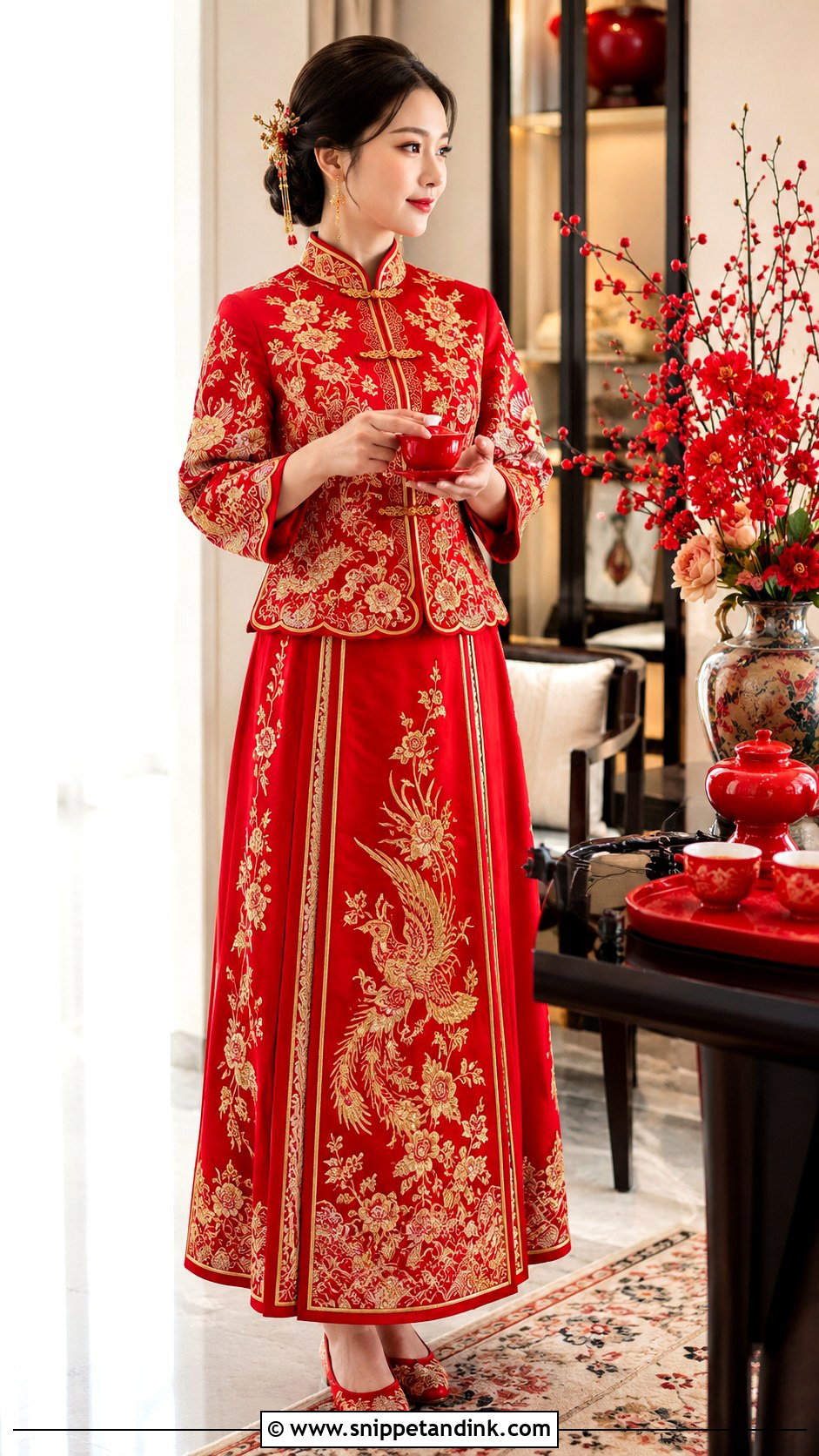
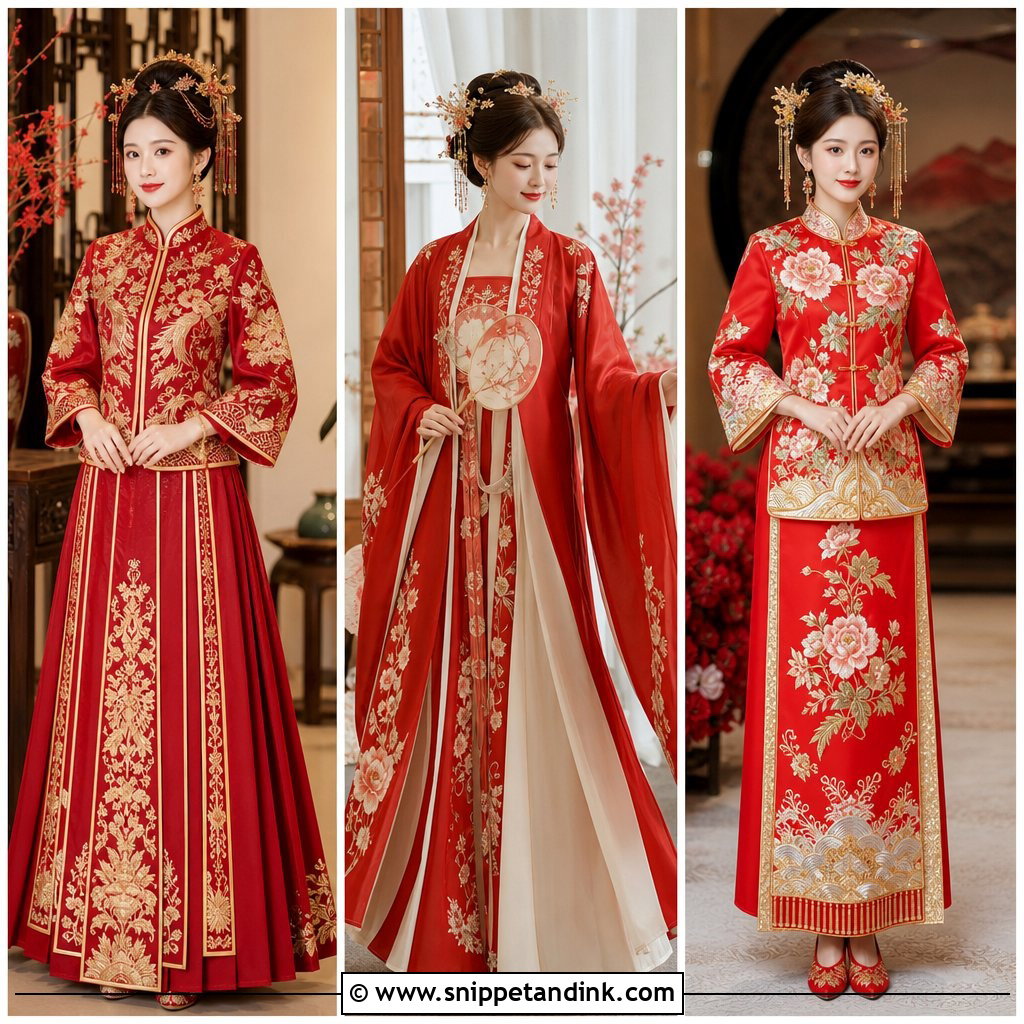
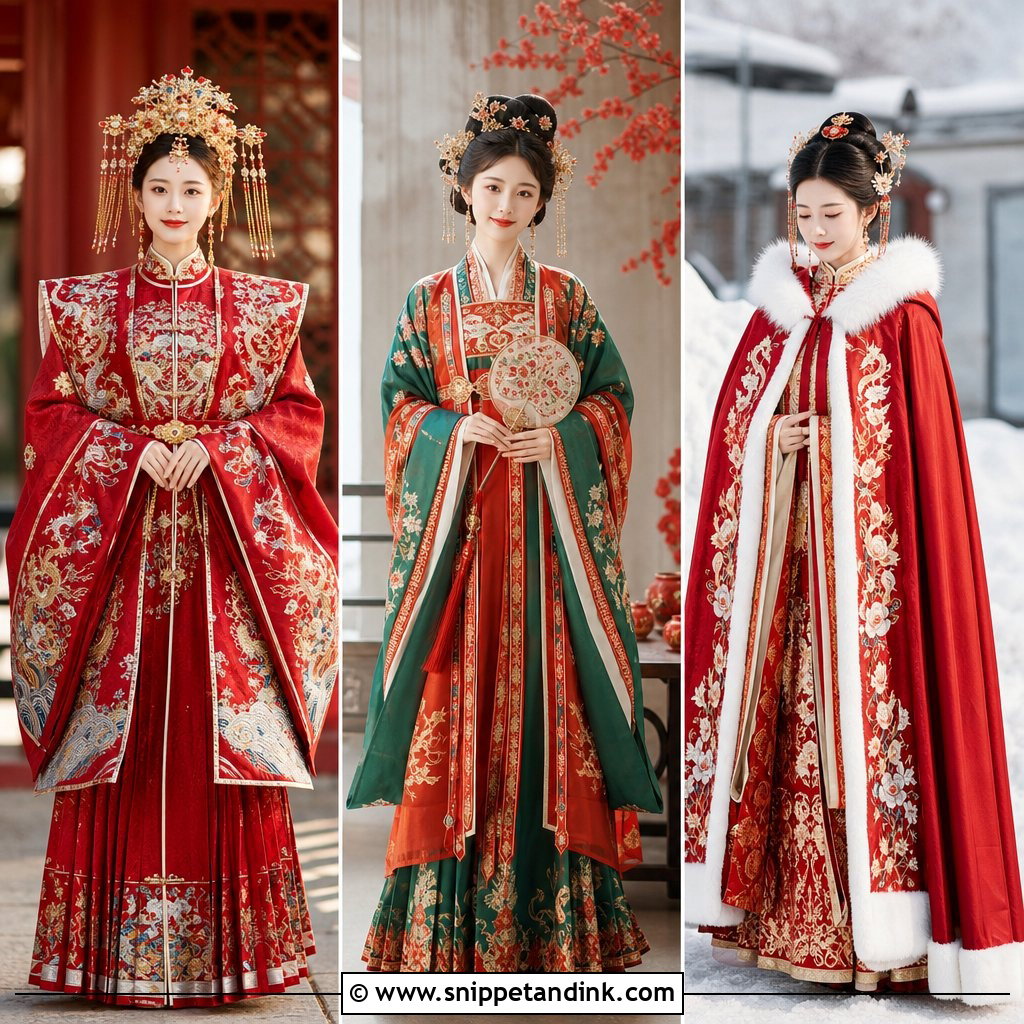
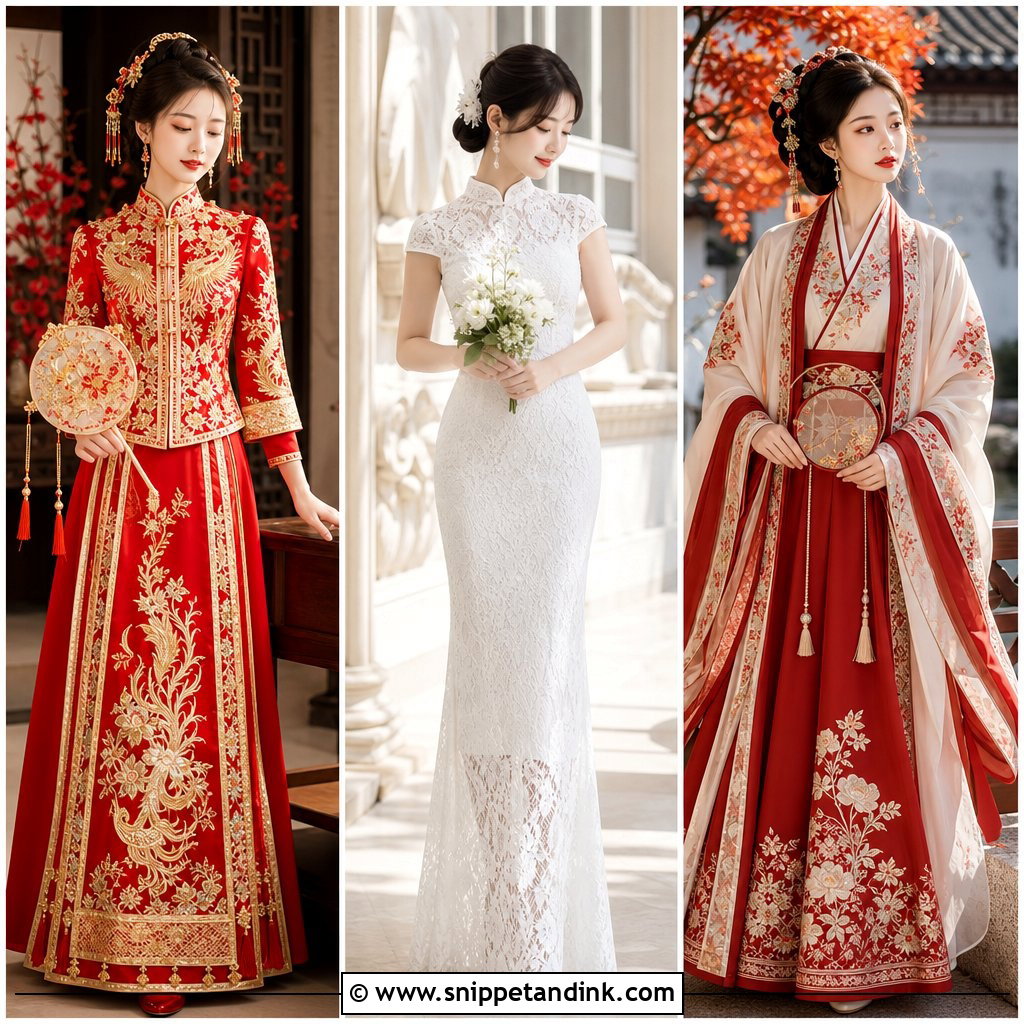
For a traditional tea ceremony, the red qun kwa is still the outfit most elders hope to see. The jacket and ankle-length skirt are worked in gold or silver embroidery, and that metallic thread makes the fabric stiffer than people expect. Wear embroidered red flats or a low block heel you can kneel and rise in. Gold drop earrings, a polished low bun and red or gold pins are all the jewellery it needs, plus a small, plain bag. The fitting detail I fuss over is sleeve length: it should end at the wrist bone so it doesn’t drag across the tea tray when you serve.
2. Dragon And Phoenix Qun Kwa Chinese Wedding Outfit
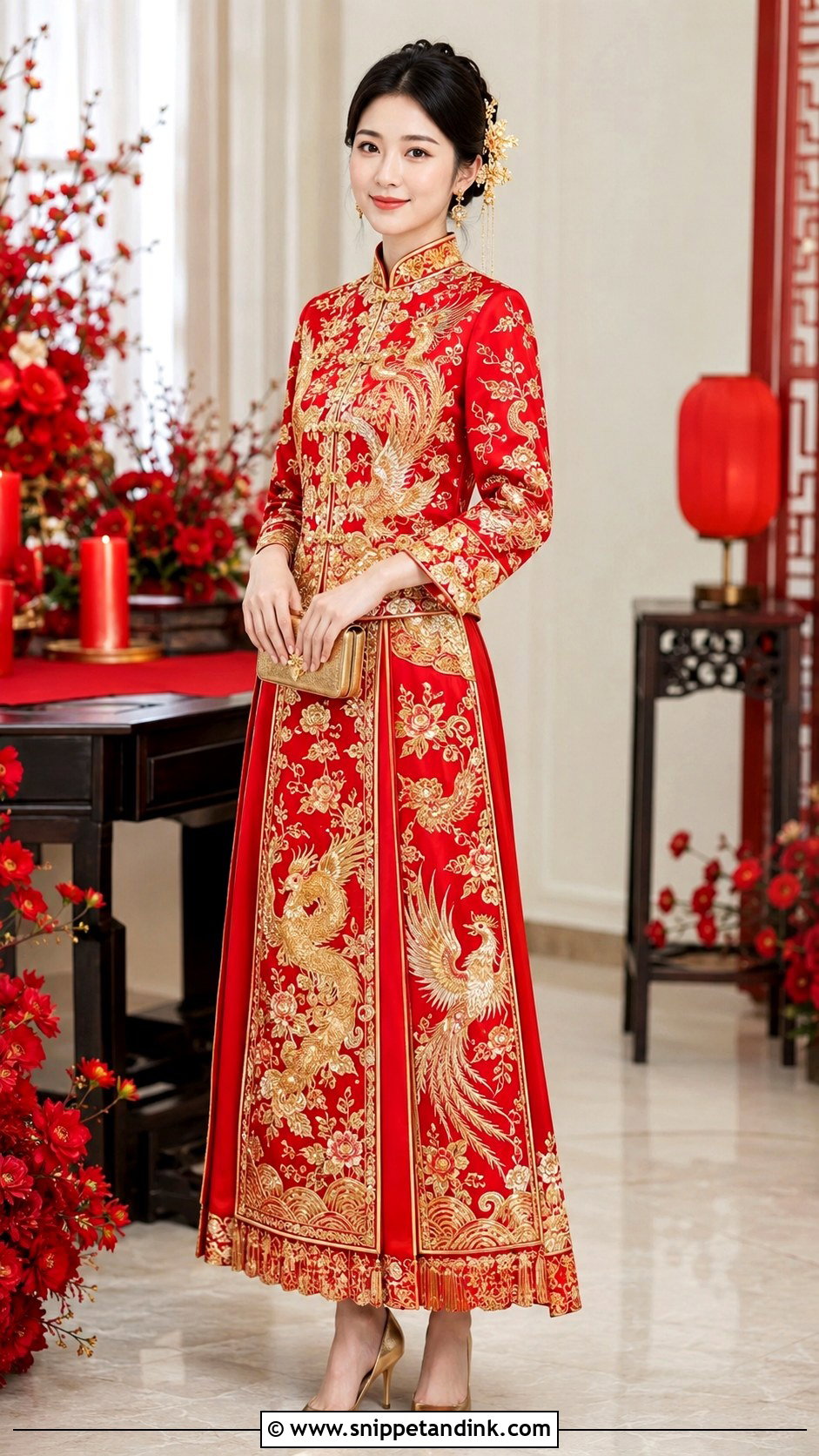
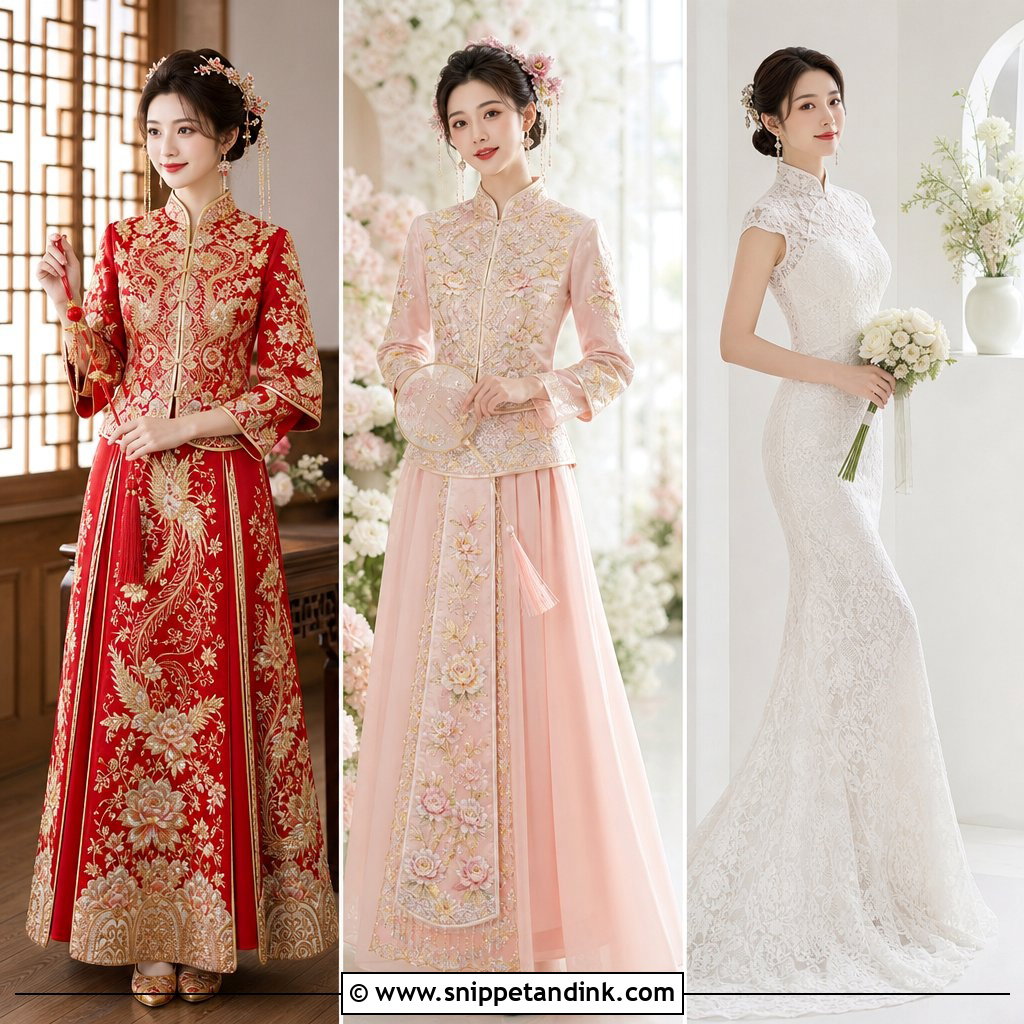
Dragon and phoenix embroidery is the classic pairing for a married couple, the dragon for the groom and the phoenix for the bride. On a good piece, the metallic threadwork is balanced across both sides of the jacket and down the skirt, not clustered in one patch. I keep accessories plain here: gold pumps, a small structured clutch, fine gold earrings and a smooth bun with one comb. If the jacket is cut relaxed, the shoulder seams and cuffs still need to sit correctly or it looks borrowed. Regional customs vary, so ask your family which motifs they expect before you choose.
3. Xiuhefu Chinese Wedding Outfit
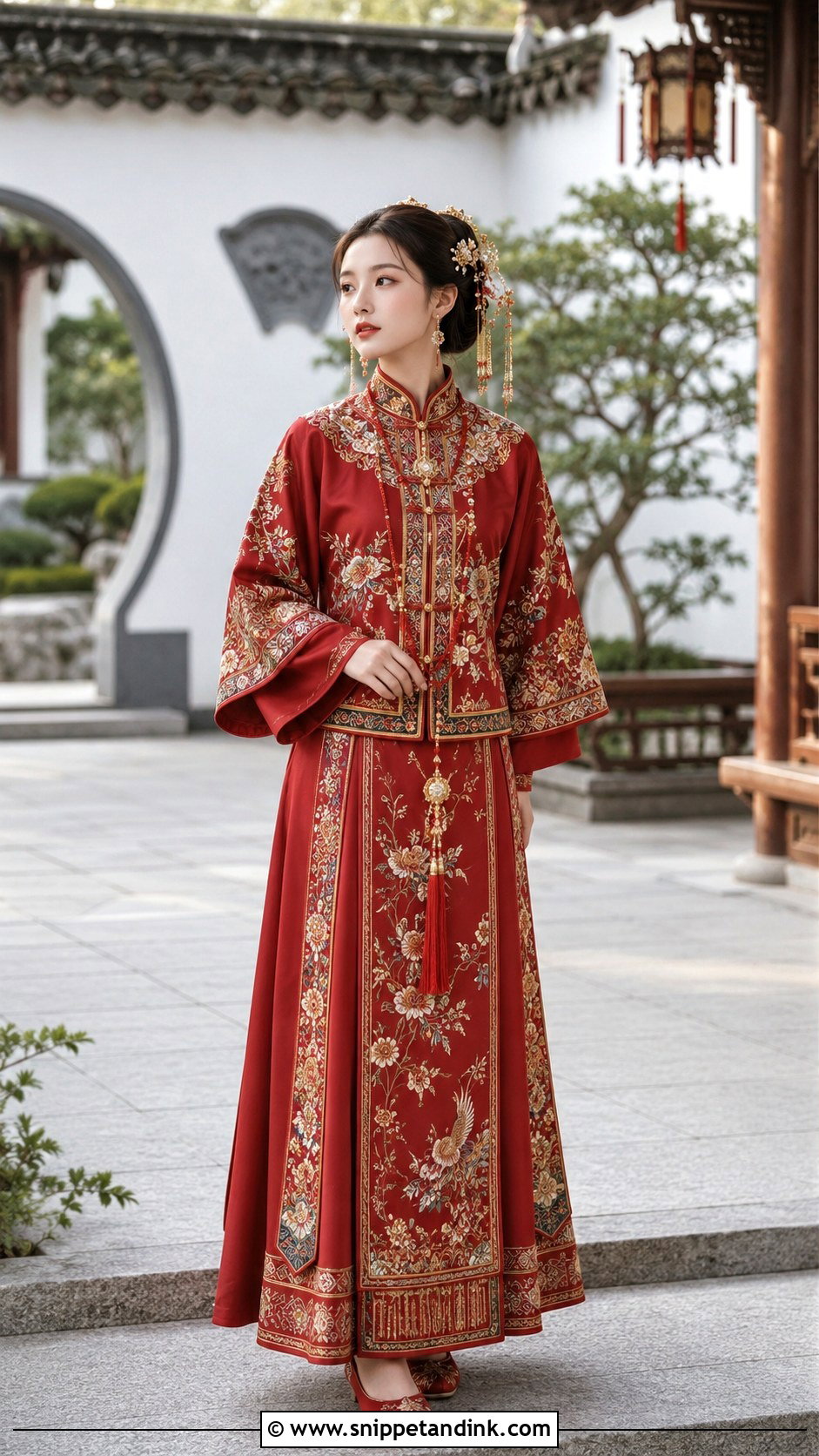
Wider sleeves and a softer skirt make a xiuhefu feel less rigid than a qun kwa. The jacket is red and embroidered, the skirt long, and the waist gently fitted. Red embroidered flats, pearl and gold earrings and a round bag suit it, with a neat updo and gold pins. A necklace is one item too many when the collar is already embroidered. The skirt is the part I have hemmed most carefully: it should clear the floor by a fingertip in the shoes you’ll wear, because a sweeping hem gets trodden on the moment you kneel.
4. Red Silk Qipao Chinese Wedding Outfit
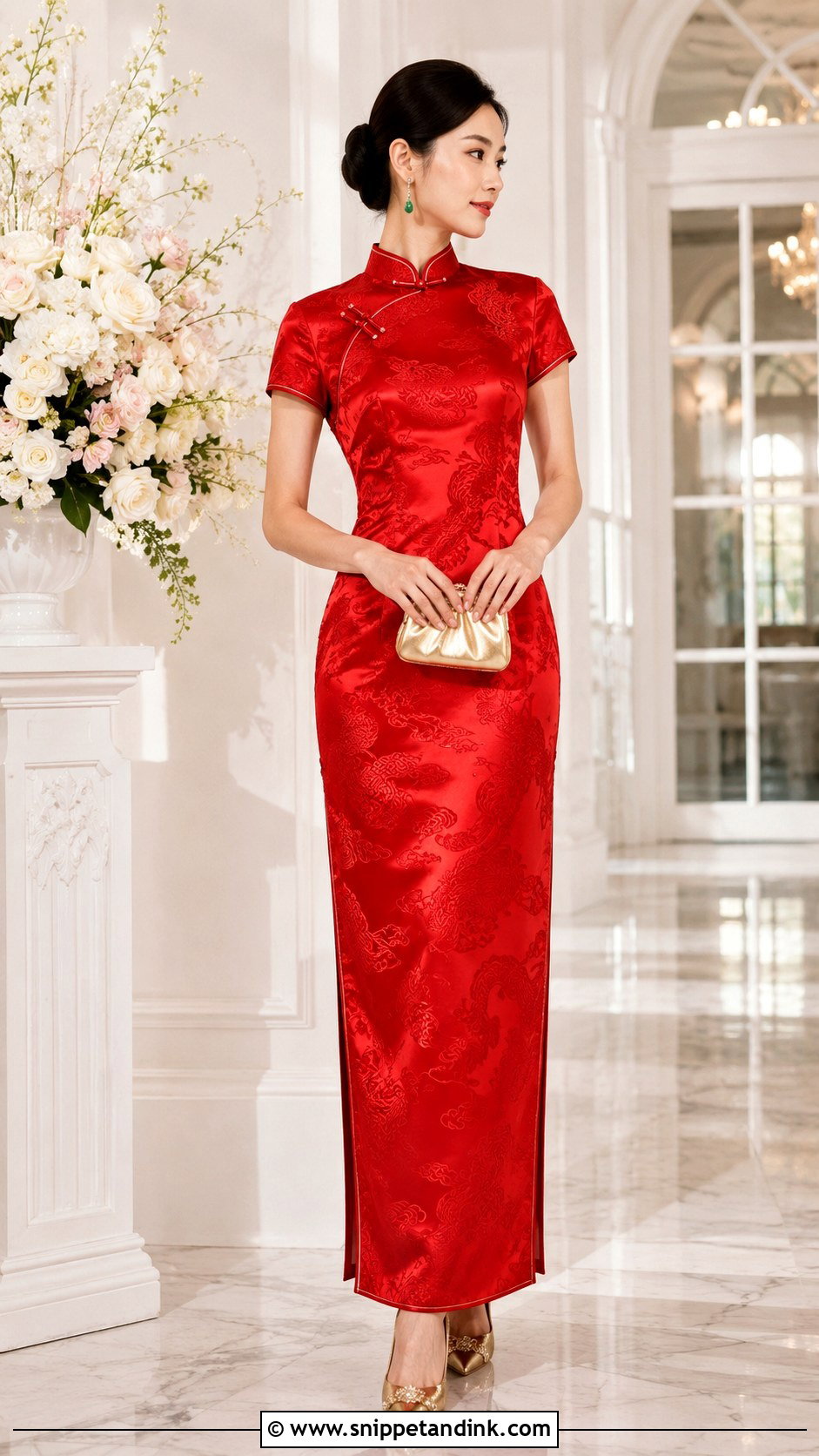
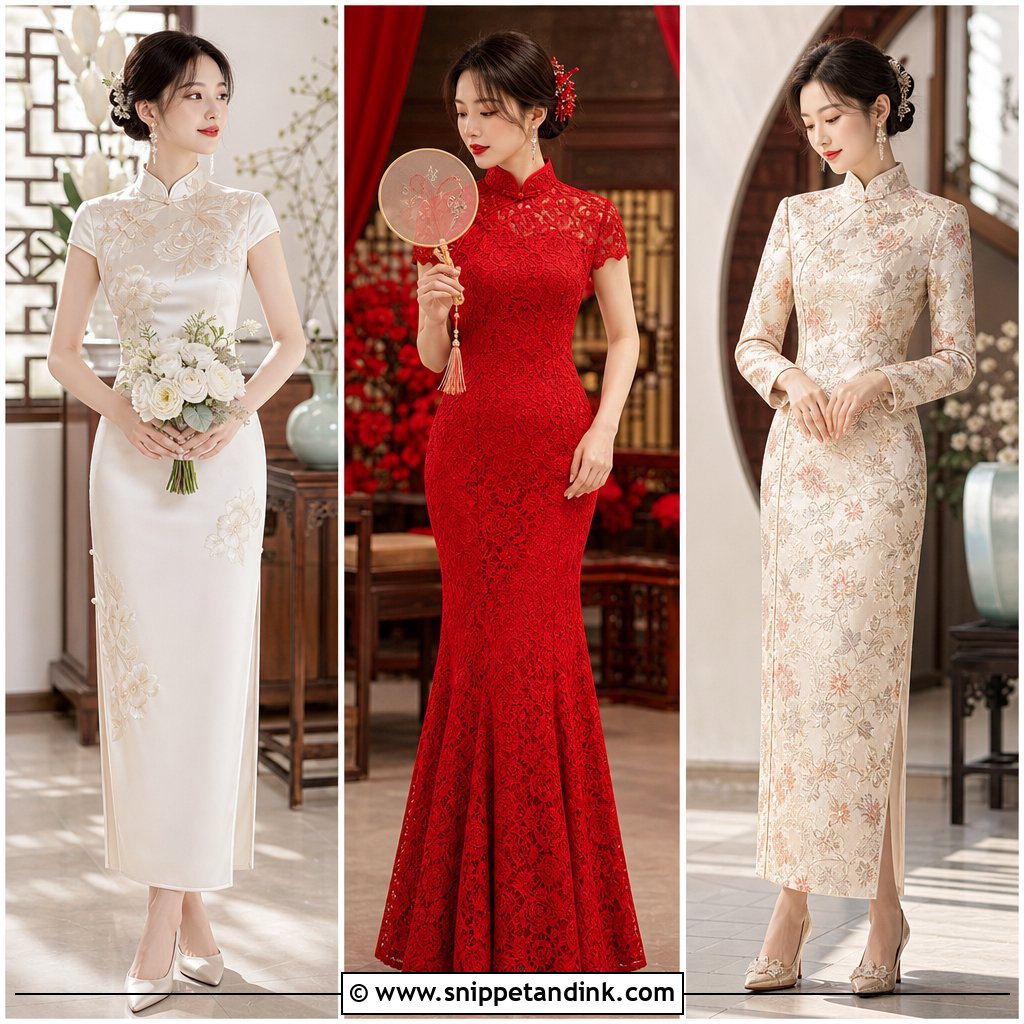
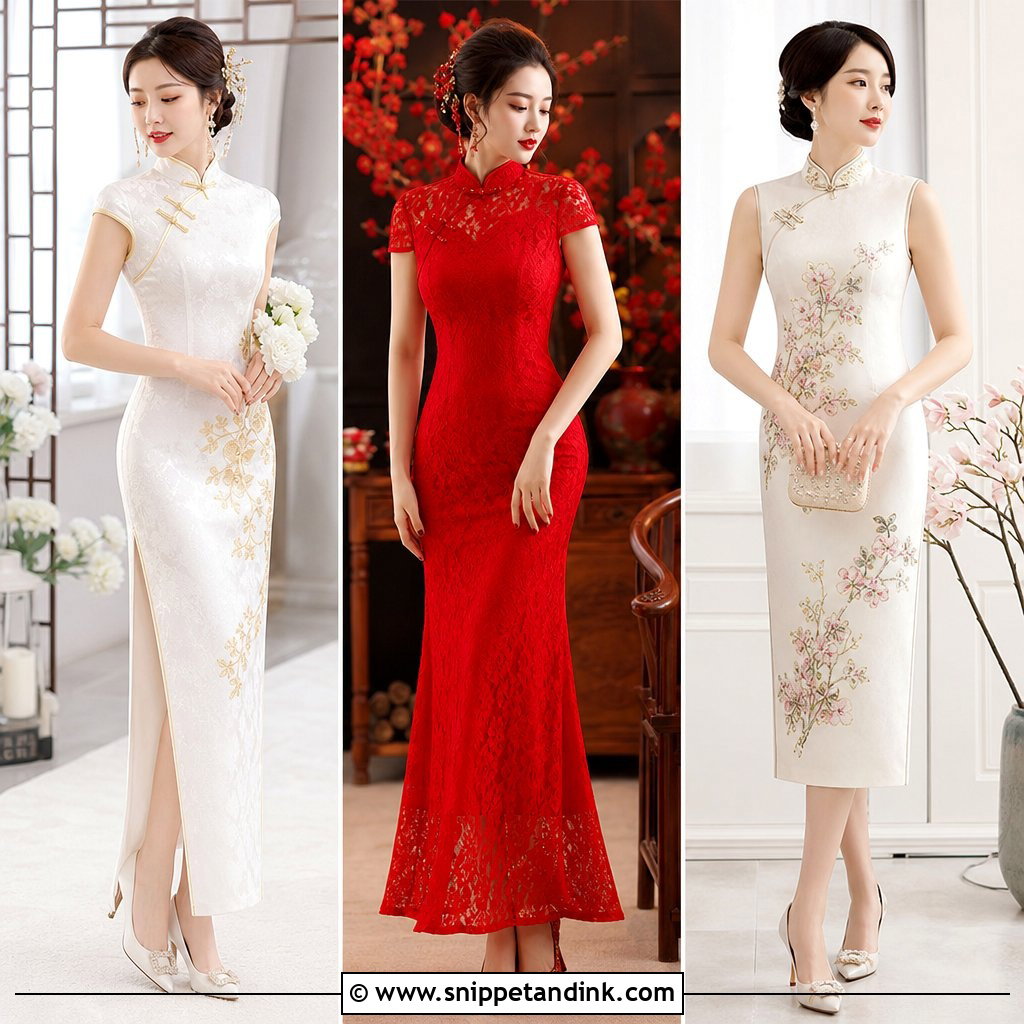
The red silk qipao is a fitted dress with a high collar and a diagonal closure across the chest, and its close shape comes from the Western tailoring techniques that were adopted when it developed in Shanghai. That precision is why it needs a real tailor. I’d have it fitted at the shoulders, waist and hips, and check the side slits by sitting down rather than standing. Silk with a subtle floral jacquard or restrained gold embroidery has more depth than plain satin in photos. Pointed gold heels, jade or gold earrings and a small satin clutch finish it, with a sleek chignon to show off the collar.
5. Gold Embroidered Qipao Chinese Wedding Outfit
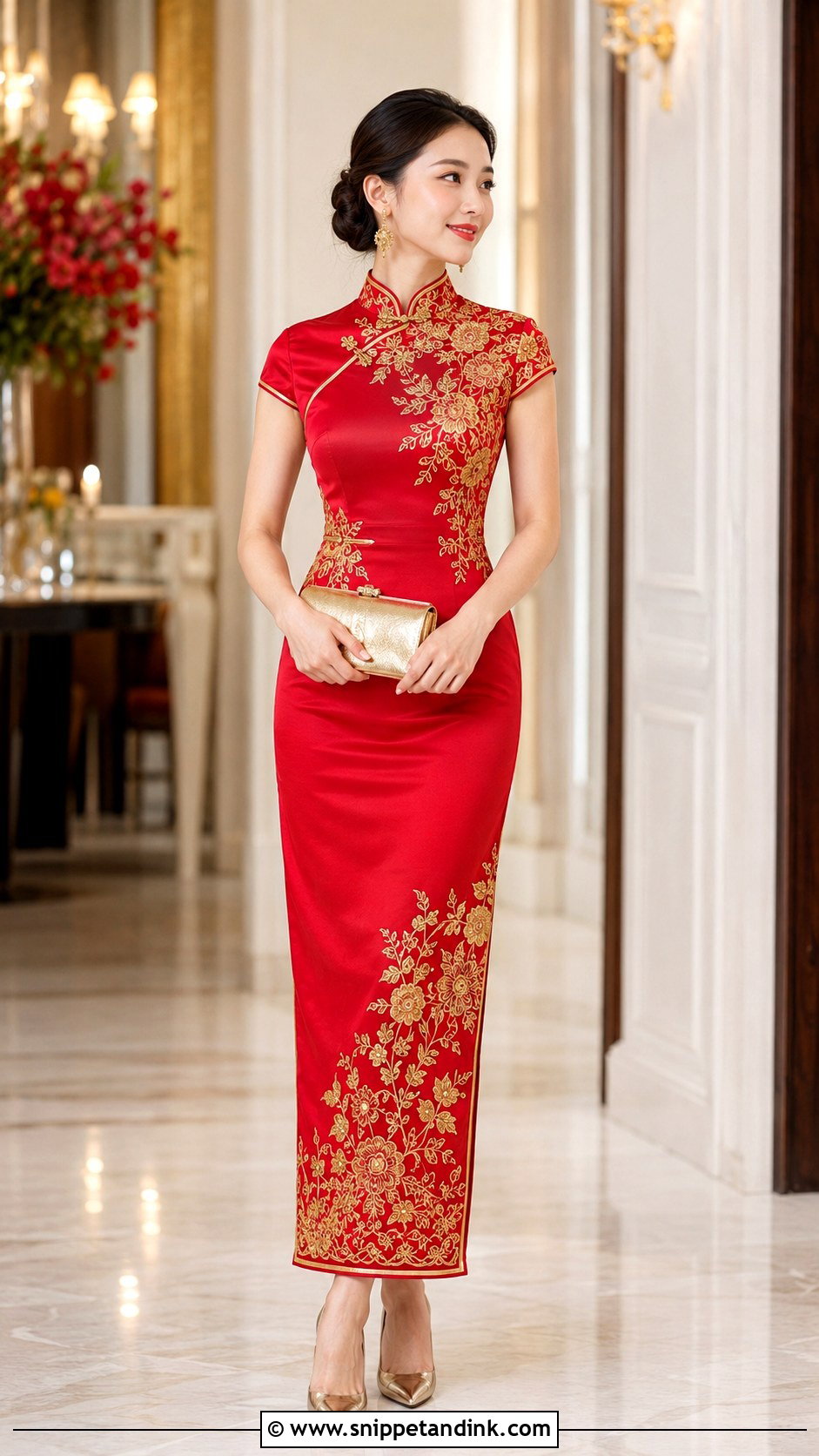
Imagine gold thread catching the light as you walk into the banquet hall. A red qipao with embroidery focused at the collar, shoulders, waist or hem gives that effect without extra jewellery. Where the motif sits changes your shape: a motif on the hip widens it, one running diagonally across the body lengthens it. Heavy embroidery can scratch on the inside, so ask for a soft lining that covers the back of the stitching. Plain red or metallic pumps, a gold clutch, small drops and one bracelet are enough. The dress should skim, not squeeze, so you can still enjoy dinner.
6. Red Lace Qipao Chinese Wedding Outfit
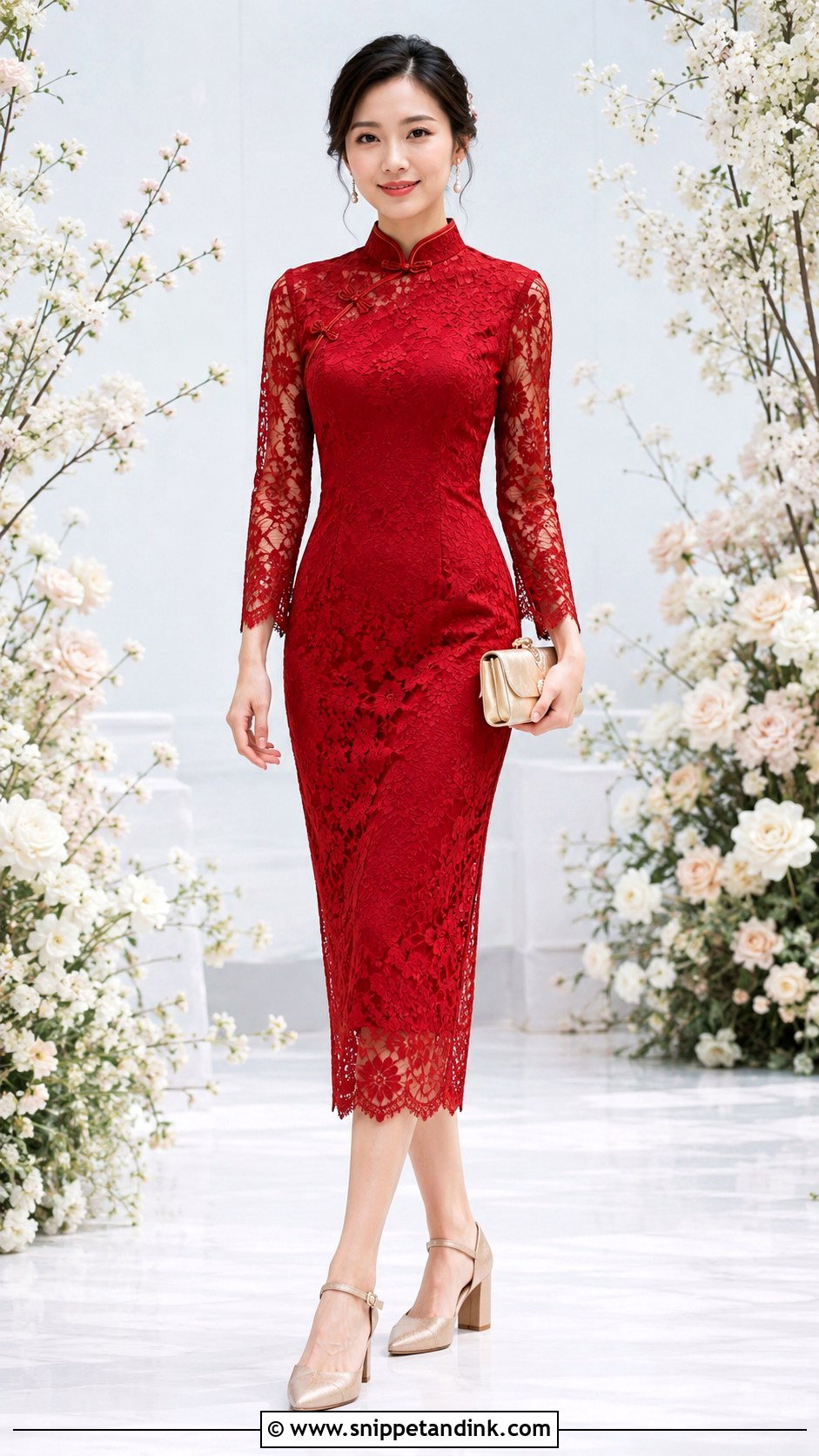
Lace lightens a classic red qipao for spring and summer, either as an overlay, as sleeves or as scattered appliqués over a solid lining. The lining is where lace dresses succeed or fail: a red lining under red lace looks rich, while a nude one under red can read patchy in flash photos, so I ask to see a phone photo with flash at the fitting. Nude, red or gold block heels, pearl drops and a satin clutch keep it simple. Skip lace shoes and a lace veil; one lace element is plenty.
7. White Lace Qipao Chinese Wedding Outfit
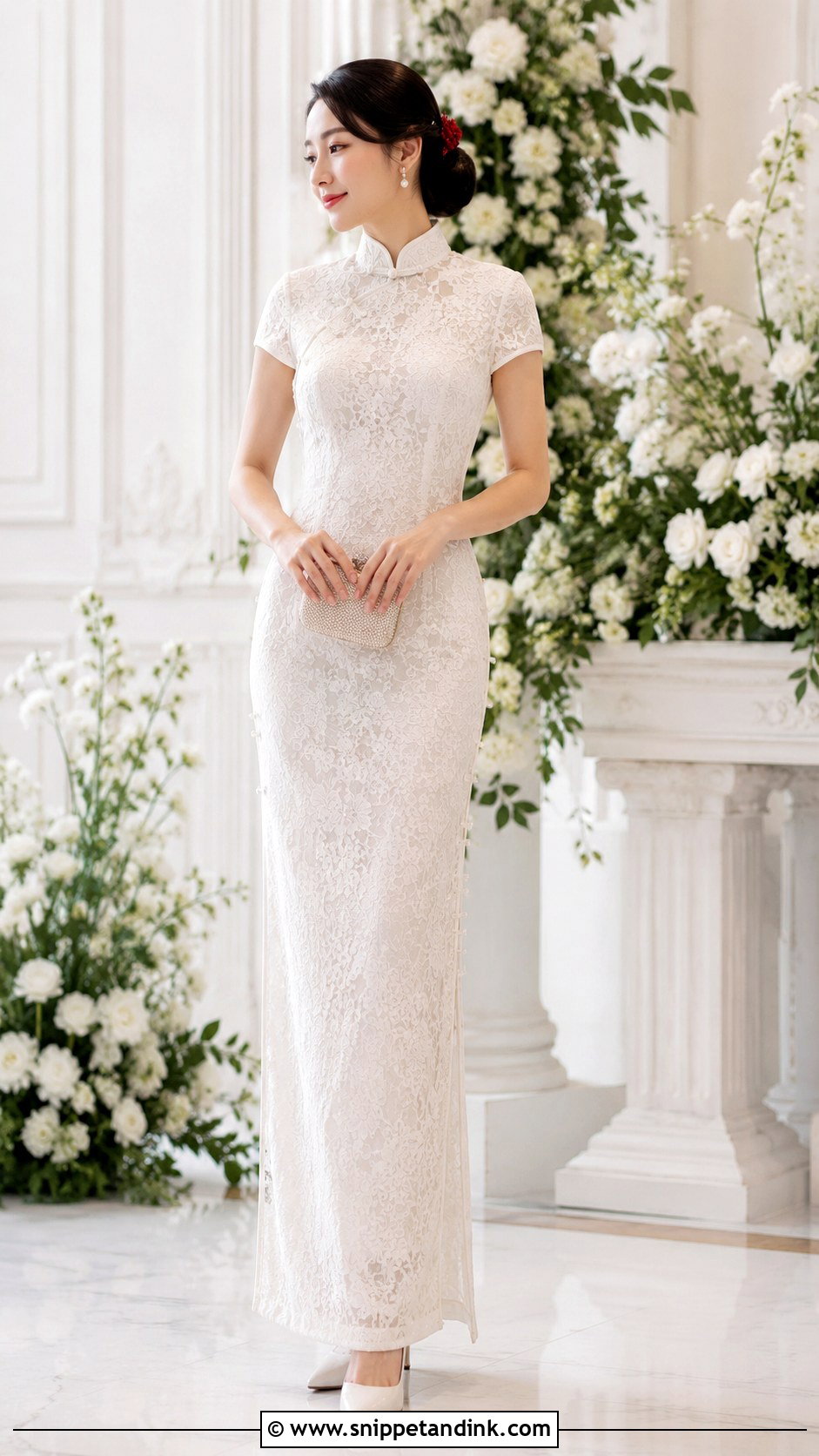
Many brides wear white for a civil ceremony or the main service and change into red for the tea ceremony or banquet, and a white lace qipao bridges the two worlds. Ivory or soft white lace with a high collar, covered buttons and a full-length or midi hem keeps it clearly Chinese in cut. Ivory pointed heels, pearl earrings and a compact clutch suit it, with a low chignon or soft waved bob. I like adding a red hair ornament that can be swapped in or out. Some older relatives associate plain white with mourning, so talk it through with family first.
8. Red Mermaid Qipao Chinese Wedding Outfit
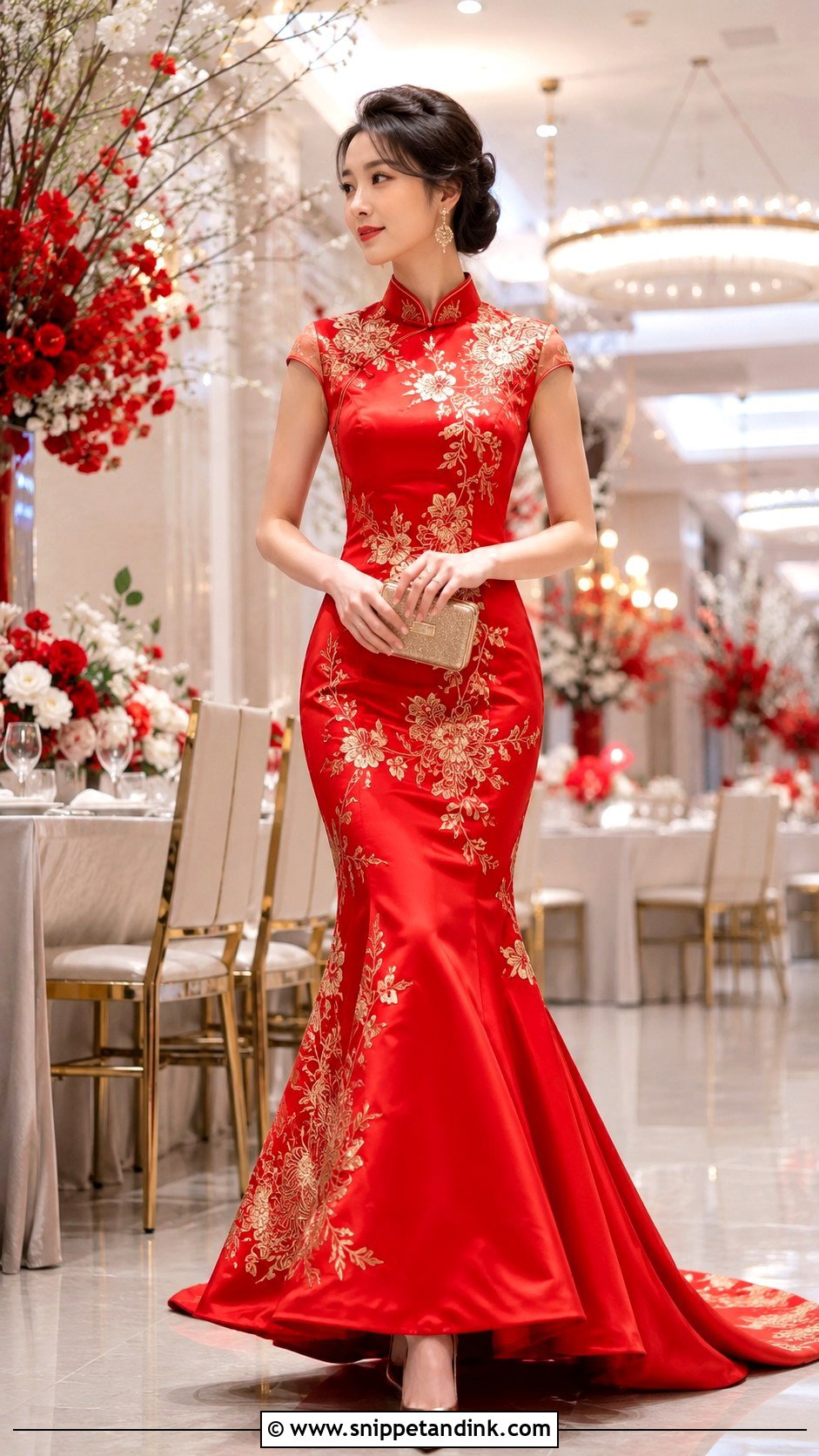
A red mermaid qipao keeps the high collar and decorative closures but flares out at the hem for an evening entrance. Satin, jacquard or structured crepe hold the flare; soft silk collapses. The honest limitation is movement: this cut is for entrances, dinner and photos, not for a kneeling tea ceremony. A hidden back vent or a flexible skirt panel helps with stairs, and you should climb some at the fitting. Pointed metallic heels, statement earrings and a box clutch suit the drama. Wear your hair up so the collar shows.
9. Mandarin Collar Ball Gown Chinese Wedding Outfit
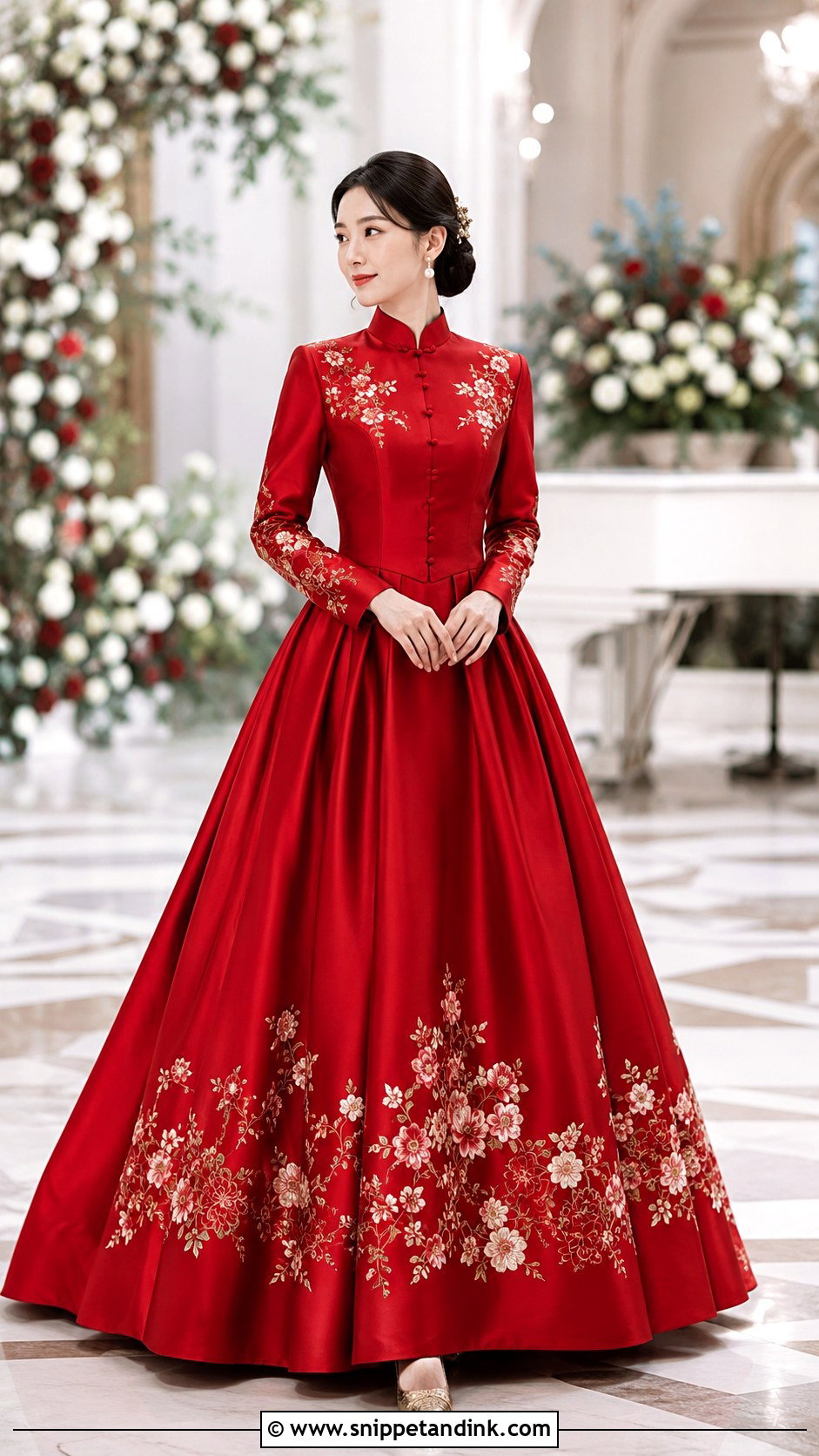
A ball gown with a Mandarin collar gives grandeur and coverage while leaving room through the hips and legs. Red or ivory satin, mikado or layered organza with covered buttons is the base; embroidered flowers or clouds tie it to the theme without covering every inch. Mikado holds a big skirt’s shape well and resists creasing through a long day. Closed-toe heels, crystal or pearl earrings and a structured mini bag finish it, with a polished bun. Ask your seamstress to add a bustle or removable train for the reception, and skip oversized jewellery.
10. Red Hanfu Chinese Wedding Outfit
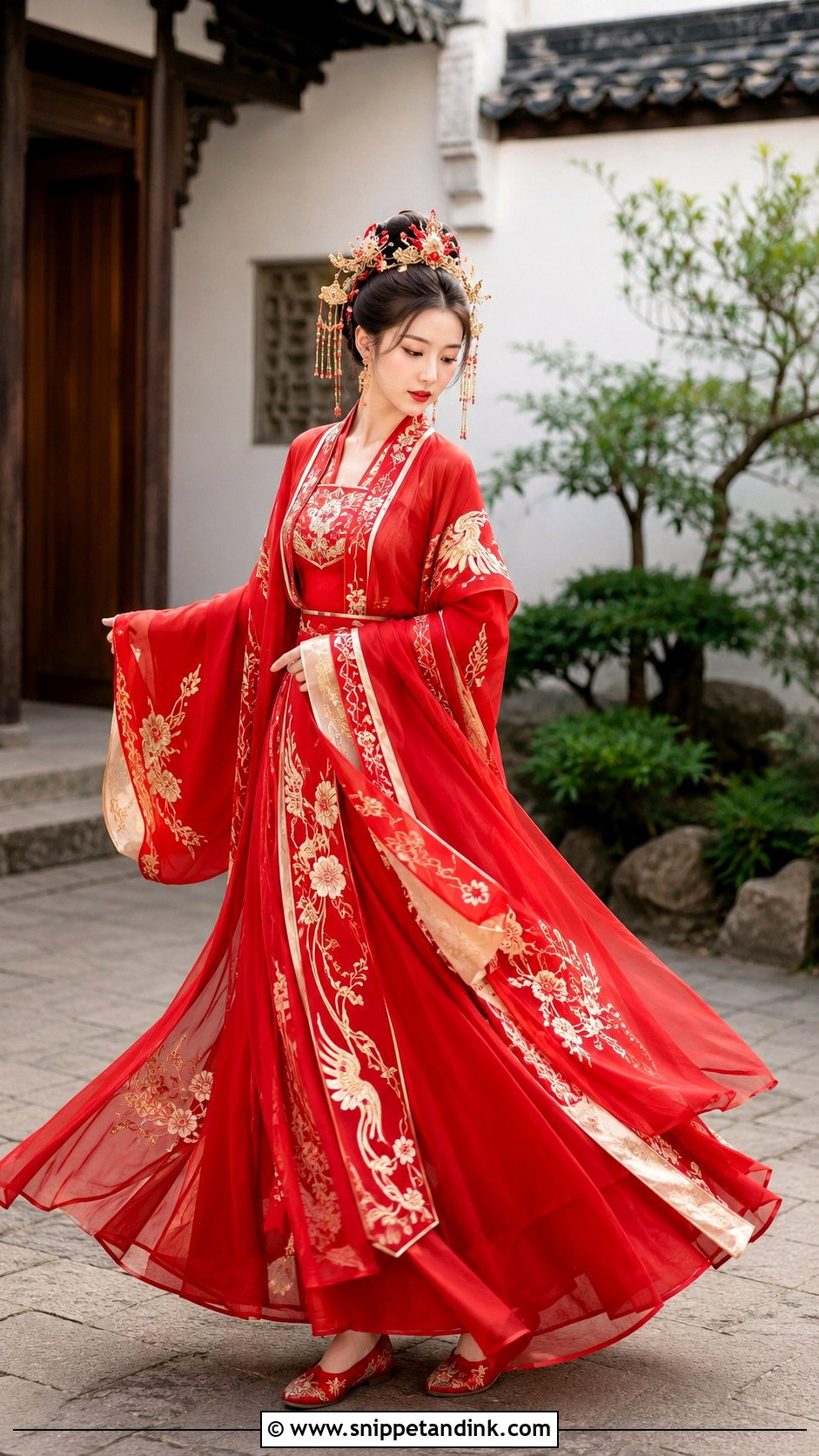
Hanfu moves differently from anything else here, with long layered fabric and sleeves that sway as you walk. Choose a robe, inner layer and long skirt designed as a set rather than mixing pieces. Gold trim at the neckline and edges defines it. Embroidered flats, a small silk pouch and traditional hair ornaments on a firm updo complete it. Wide sleeves catch on raised rings and bangles, so I keep bracelets off. Hanfu has had a big modern revival and construction varies by period, so consult a knowledgeable maker if accuracy matters, and practise sitting and turning in every layer.
11. Ming Hanfu Chinese Wedding Outfit
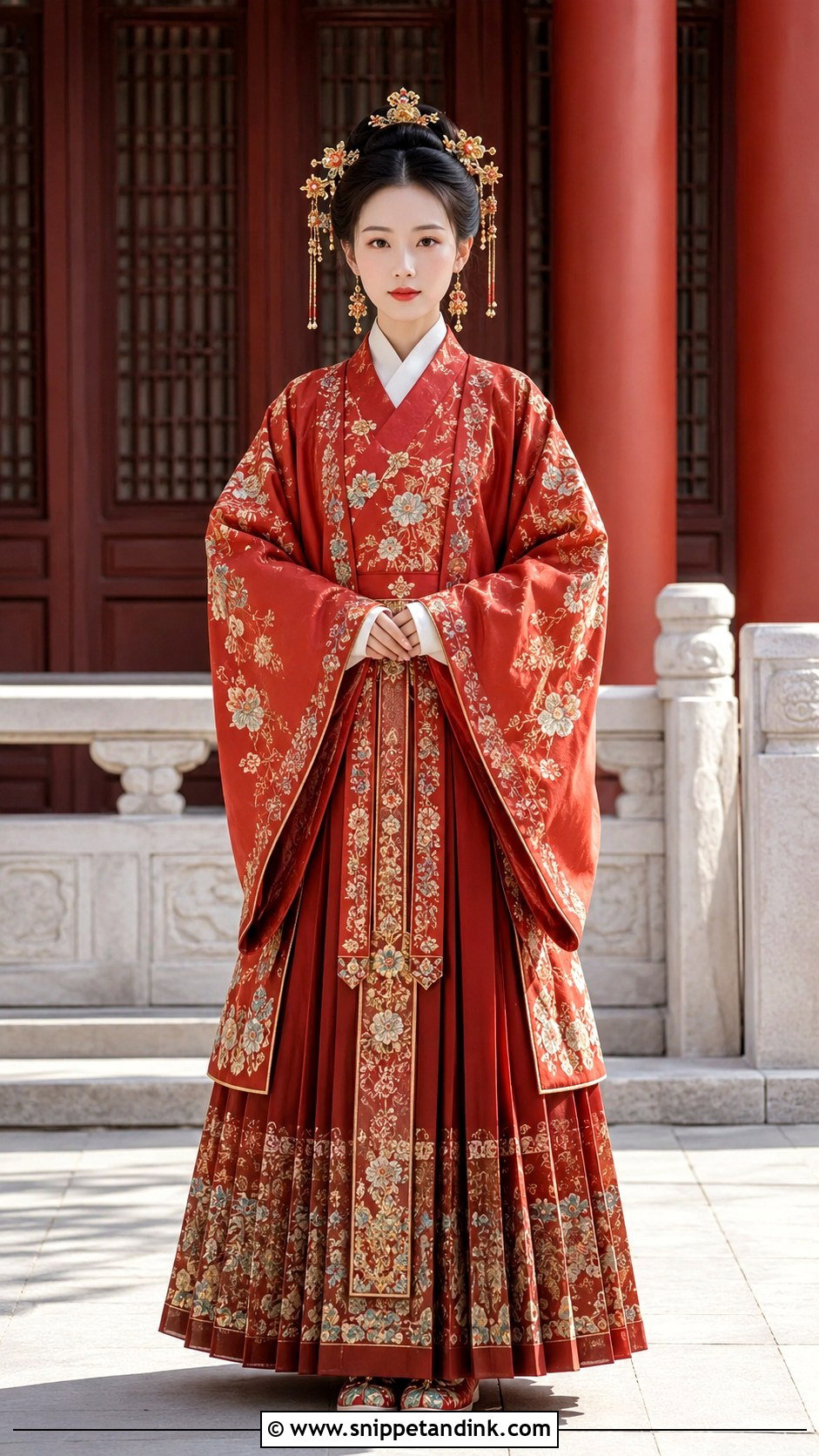
A Ming-inspired hanfu outfit has a stately, structured upper garment over a long pleated skirt, often a mamian (horse-face) skirt with flat panels front and back. Rich red with gold detailing suits a formal ceremony or heritage portraits. The waistband of a mamian skirt ties on, and I always retie it with the bride seated, since a waist that’s comfortable standing can dig in at dinner. Flat embroidered shoes, gold earrings, a fabric bag and symmetrical hair ornaments keep it coherent. Avoid mixing accessories from different dynasties.
12. Fengguan Xiapei Chinese Wedding Outfit
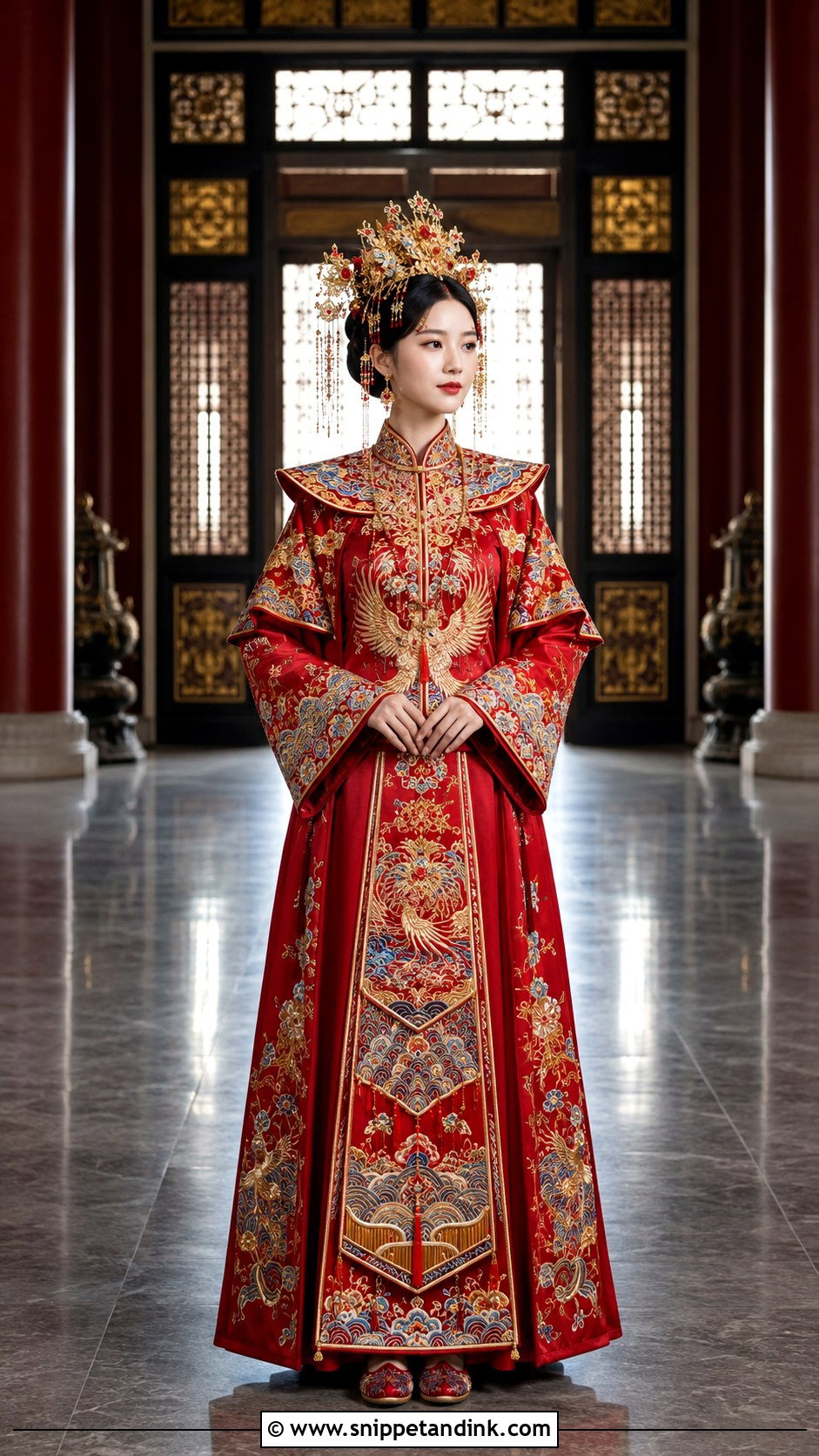
The fengguan xiapei is the most theatrical outfit a bride can wear: a phoenix crown, a richly embroidered red robe and a decorative stole over the shoulders. Crown and robe must match in colour and motif or the crown looks detached. Movement is slow in this outfit, so comfortable embroidered flats are essential. I’d skip a necklace and use small earrings that won’t tangle with the crown’s hanging strands. Your hairstylist needs a secure base and extra time to set the headpiece. Save it for the formal ritual, portraits and a planned entrance rather than the dance floor.
13. Red Aoqun Chinese Wedding Outfit
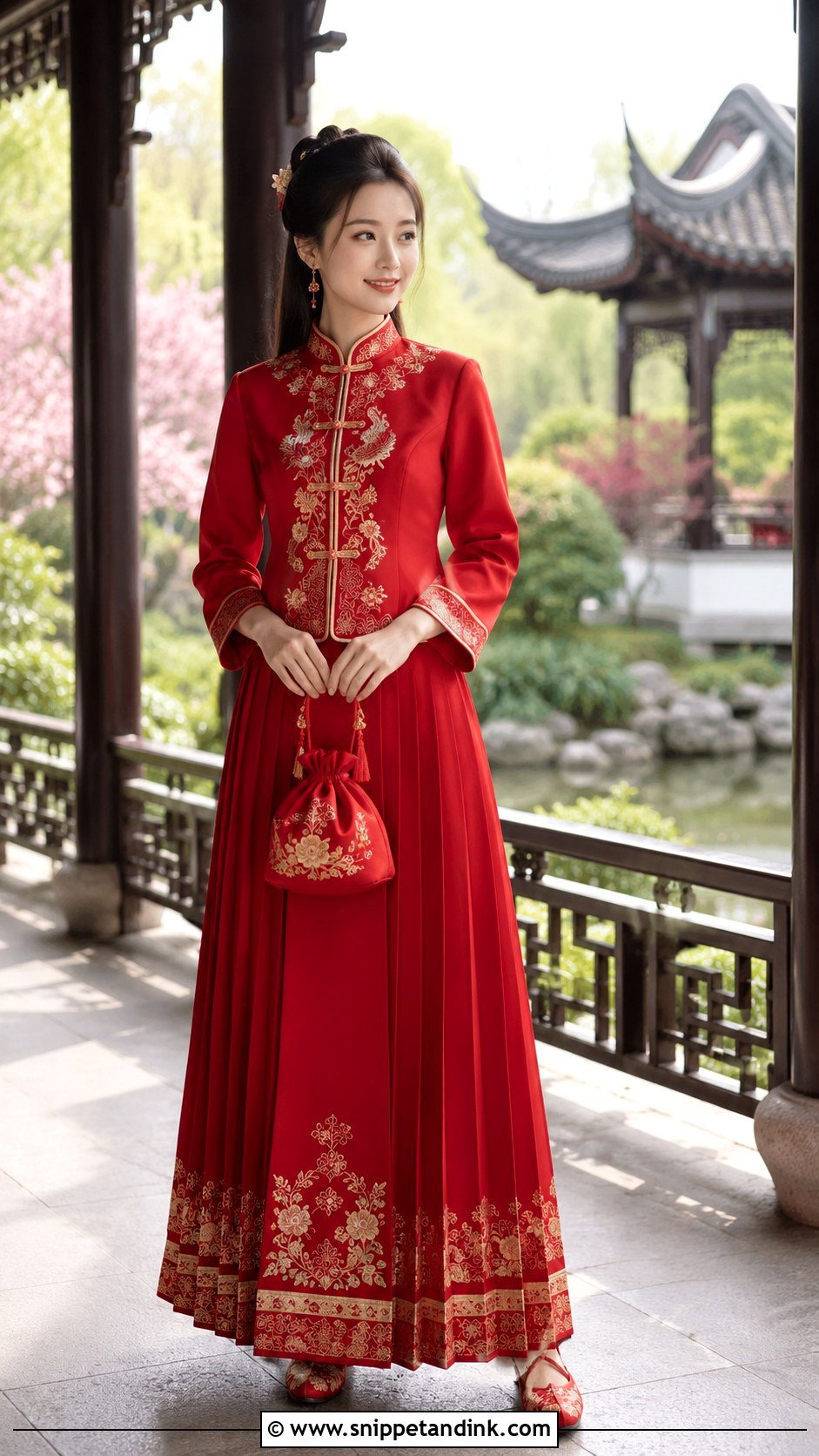
An aoqun pairs a jacket with a long pleated skirt but is usually less densely embroidered than a qun kwa, so it’s lighter and easier to wear all day. Woven gold borders, floral embroidery or decorative fastenings make it bridal. The skirt’s waistband position sets your proportions; set higher, it lengthens the legs. I’d have the hem finish just above the shoe so it never brushes the ground. Red flats, drop earrings and a small embroidered pouch suit it, with a half-up style or low bun when the collar is low.
14. Red Qipao With Cape Chinese Wedding Outfit
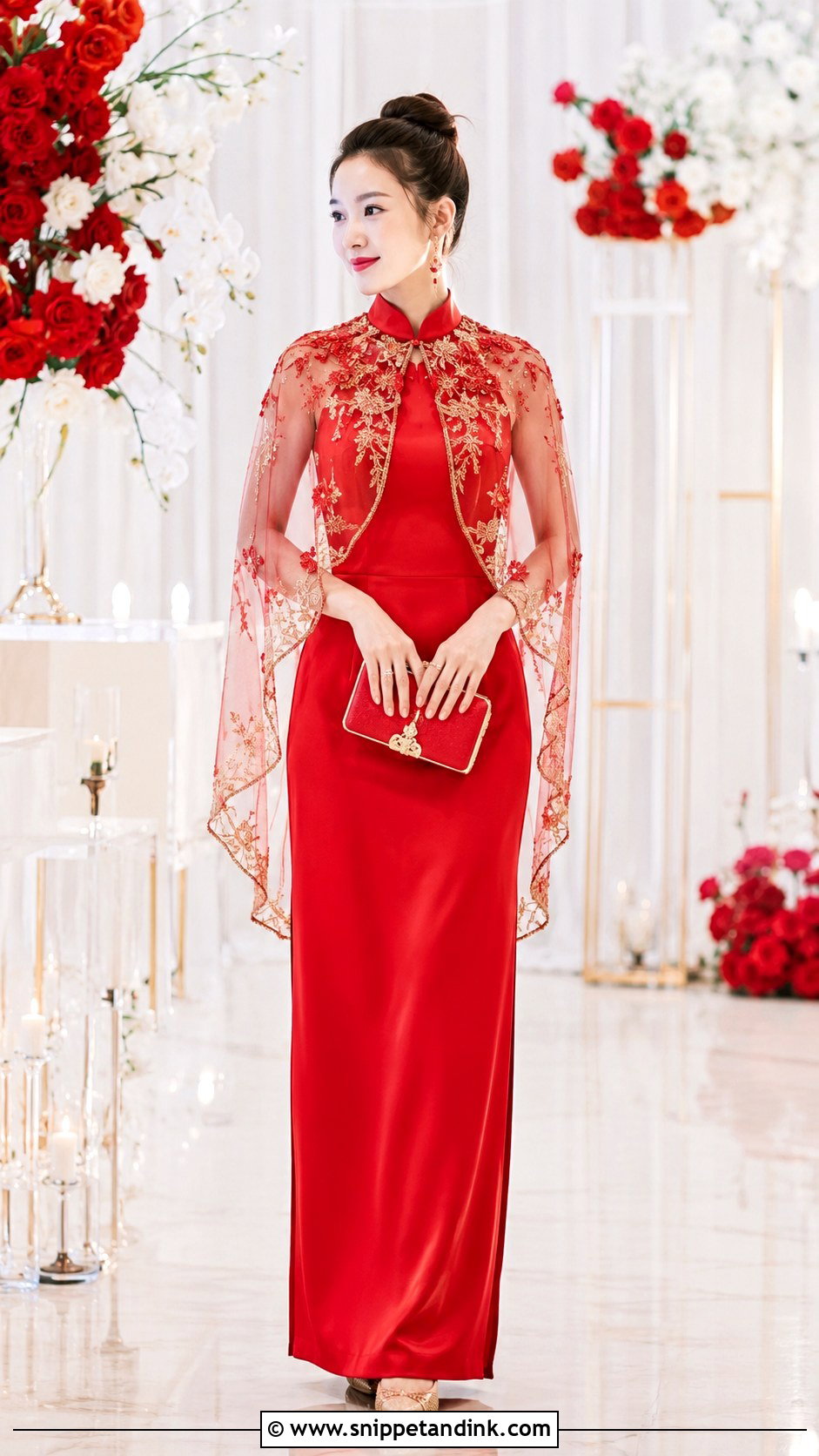
A sheer embroidered cape over a plain floor-length red qipao gives you two looks: covered for the ceremony, sleek for dinner once the cape comes off. The qipao underneath should be simple satin or crepe so the two pieces don’t compete. Fastenings are what I test hardest, because sheer fabric shifts with every step; hidden snaps at the shoulder hold better than a single hook at the collar. Gold heels, delicate earrings and a red clutch finish it. A high bun or smooth ponytail keeps hair out of the cape’s neckline.
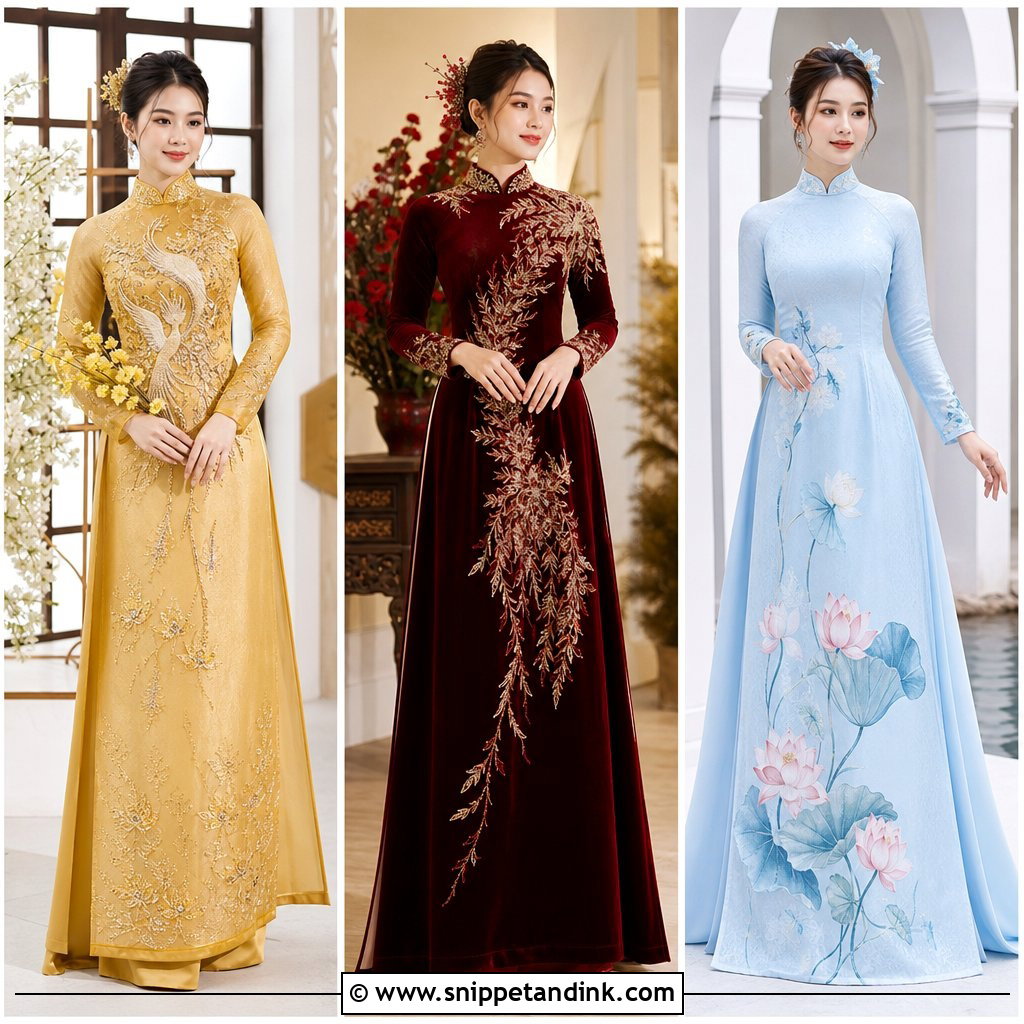
15. Red Qipao Top And Skirt Chinese Wedding Outfit
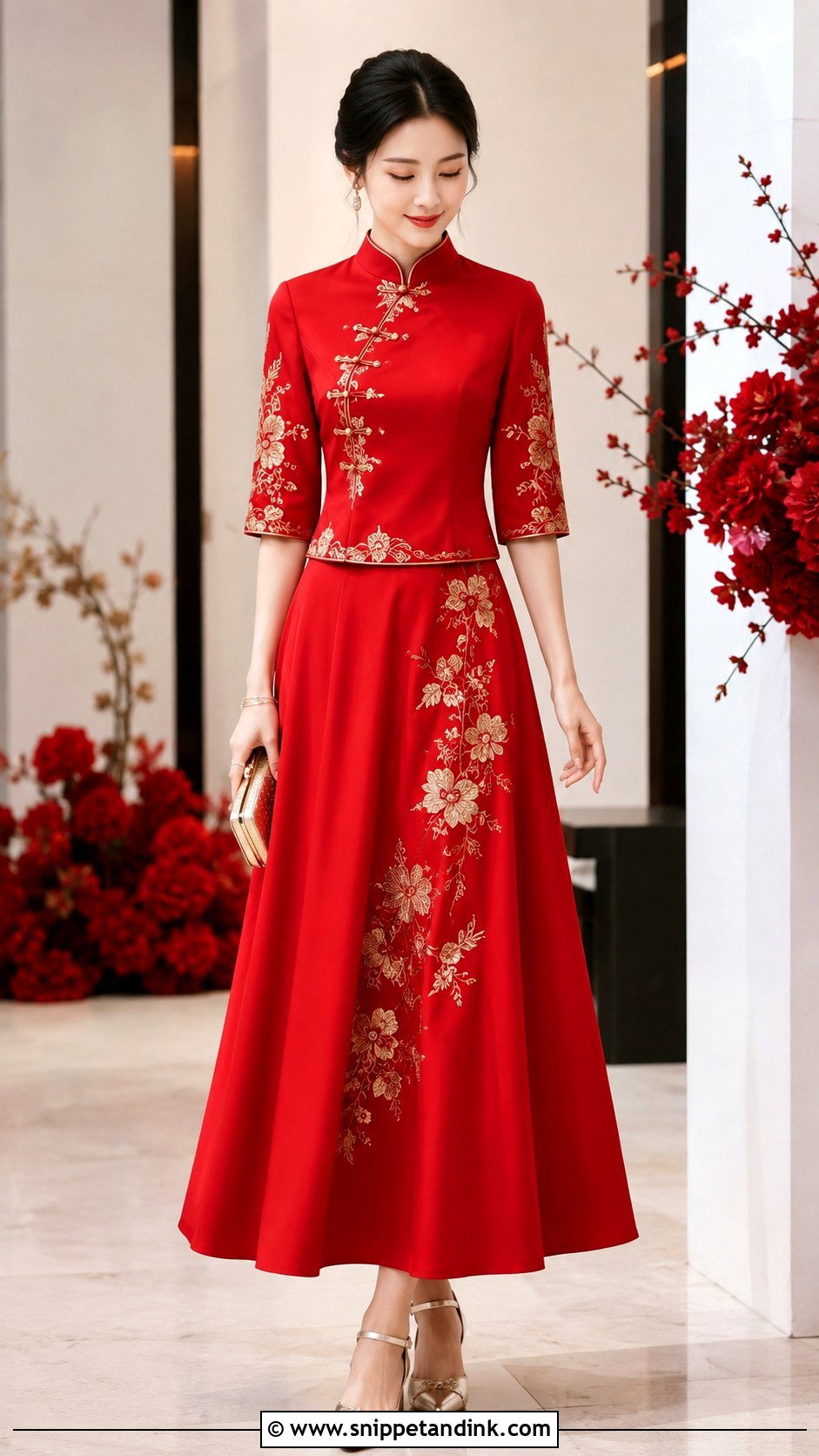
Separates give the same impression as a qipao with far easier alterations: a fitted high-collar blouse with frog closures and a sweeping A-line or pleated skirt. In matching red they read as one gown; in red and gold the split becomes a feature. The blouse has to stay put when you lift your arms to serve tea, so it should either tuck in securely or end cleanly at the waistband. Metallic block heels, a small clutch and understated drops suit it. You can also wear each piece again, which brides appreciate later.
16. Red Tea Length Qipao Chinese Wedding Outfit
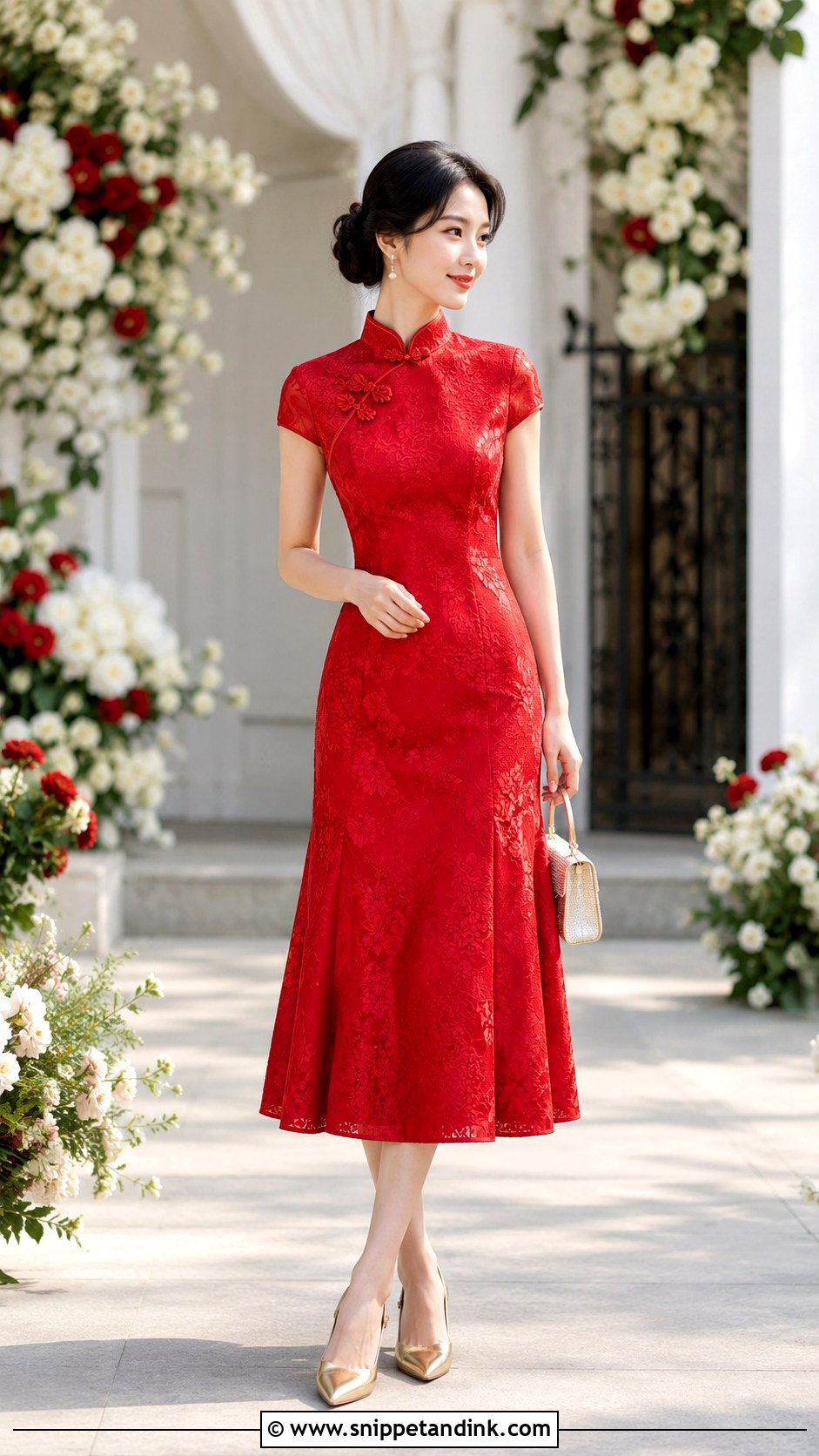
Tea length is the easiest qipao to move in, with a hem between knee and ankle and a shaped waist. Red jacquard, silk or satin keeps it formal, with restrained embroidery. Your shoes are on show, so they need to look chosen: gold slingbacks are my default. Pearl earrings and a top-handle bag finish it, with a smooth updo, short waves or a blowout. It’s well suited to a courthouse ceremony or a smaller celebration where you’ll walk a lot.
17. Red Velvet Qipao Chinese Wedding Outfit
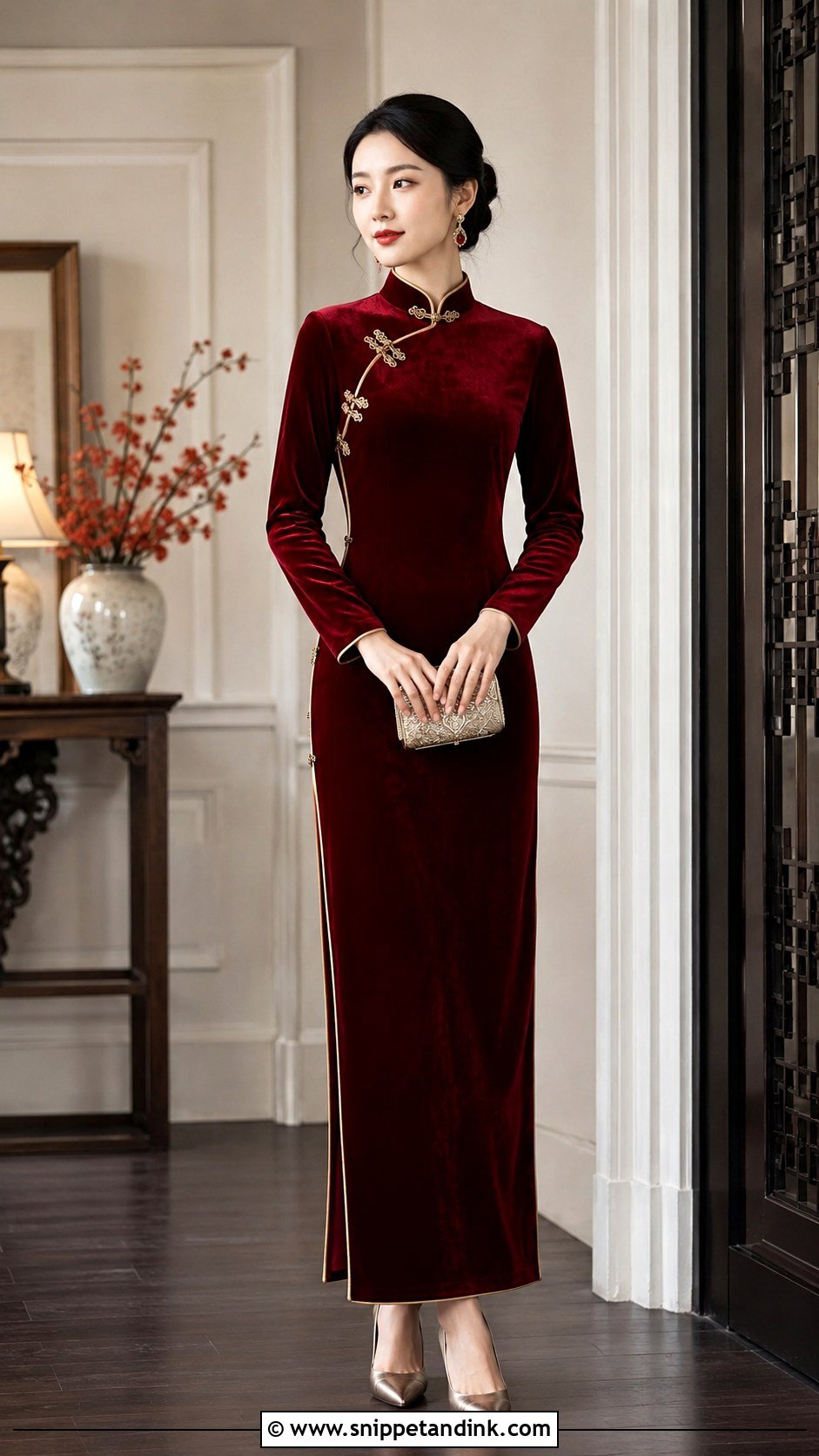
Velvet has a nap, which means it looks lighter or darker depending on which way the pile is brushed. On a qipao that matters: check the dress in daylight and indoor light to make sure every panel was cut in the same direction. A long-sleeved deep red velvet qipao with subtle gold piping or decorative buttons suits a winter wedding indoors. Closed-toe gold pumps, a velvet or metallic clutch and vintage-style drops complete it. A sleek low bun stops the heavy fabric looking bulky, and a smooth lining stops it clinging.
18. Blush Embroidered Qipao Chinese Wedding Outfit
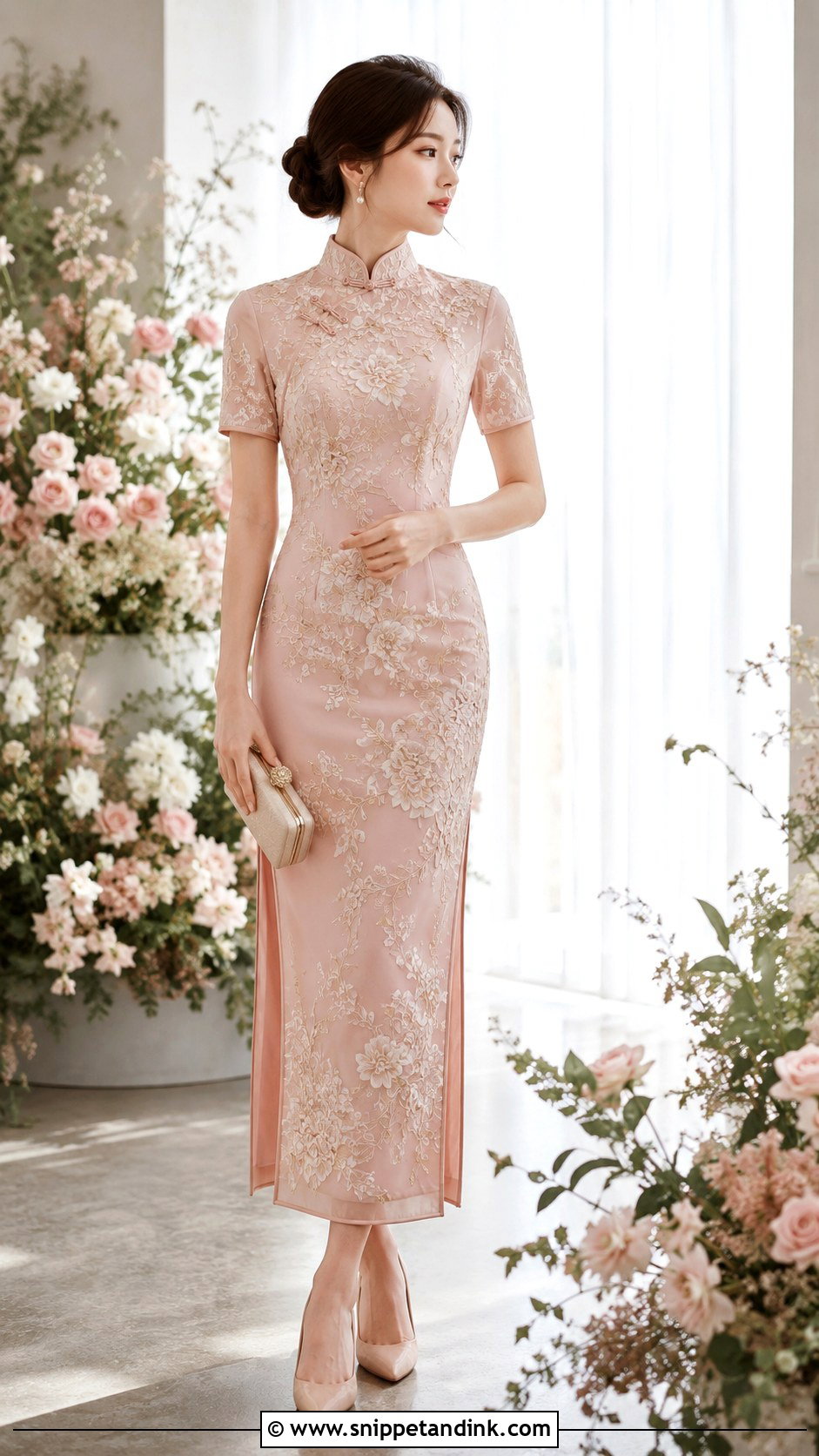
Not every outfit change needs to be red. A blush or peach qipao with champagne or muted gold embroidery suits portraits, a daytime reception or the last change of the night. Nude pointed heels, pearl earrings and a champagne clutch, with soft waves or a textured bun, keep it light. Pastels can wash out next to the face, so I’d give make-up slightly more definition than usual. If red matters to your family, keep the blush outfit for a secondary moment. Guests are usually expected to avoid red at Chinese weddings, but the bride has more freedom across several outfits.
19. White Wedding Gown With Red Cape Outfit
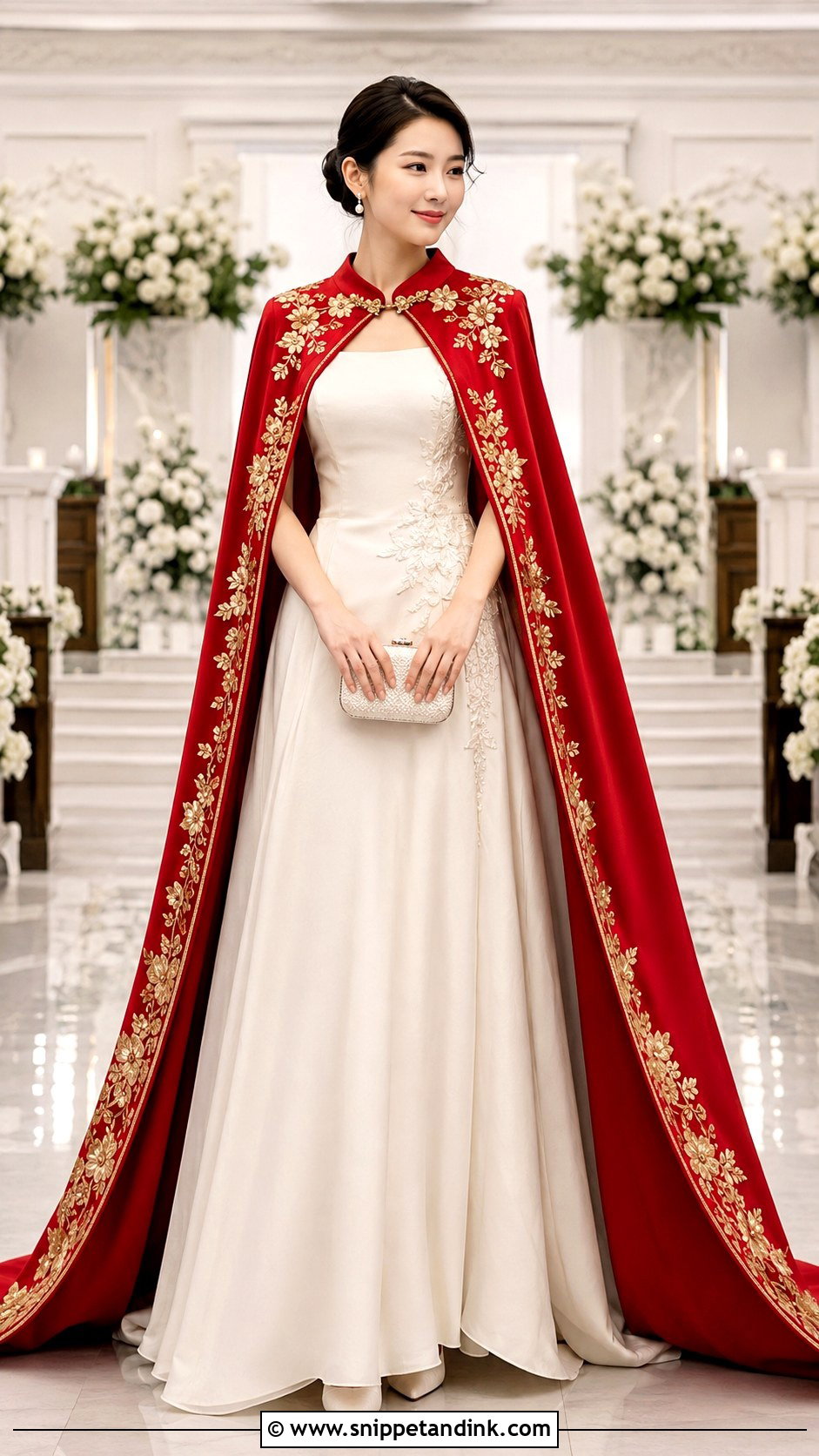
A plain white gown under a red embroidered cape is a neat East-meets-West bridal combination when one ceremony blends both traditions. The gown should be simple, a column, A-line or ball gown with little surface decoration, so the cape’s gold trim and motifs carry the look. I always ask the tailor to anchor the cape to the gown’s structure rather than its outer fabric, since a heavy cape pulls and puckers delicate silk. Ivory or gold heels, pearl earrings and a smooth low bun suit it. Remove the cape after the ceremony for a second, quieter look.
20. Modern Red Mini Qipao Chinese Wedding Outfit
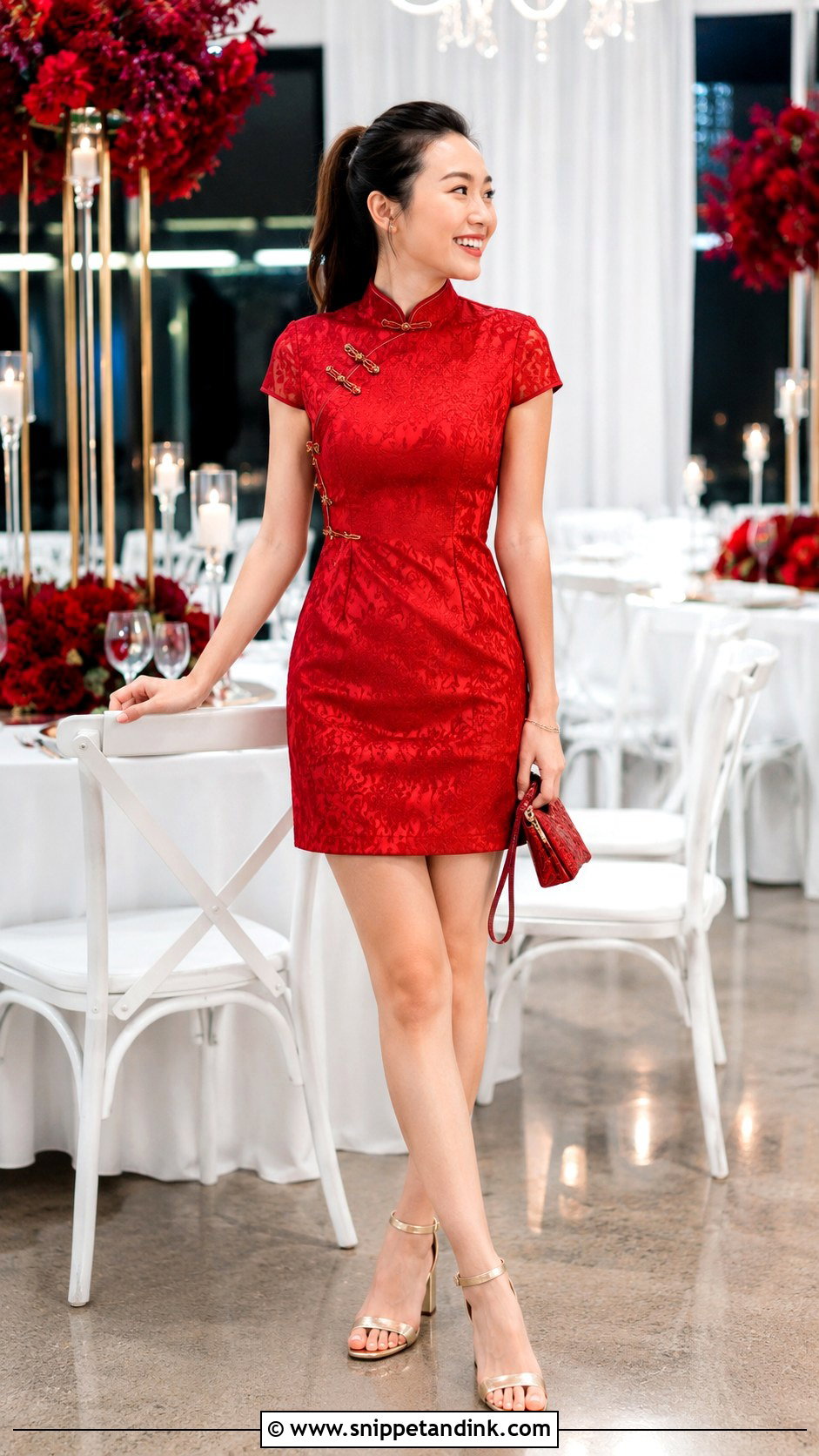
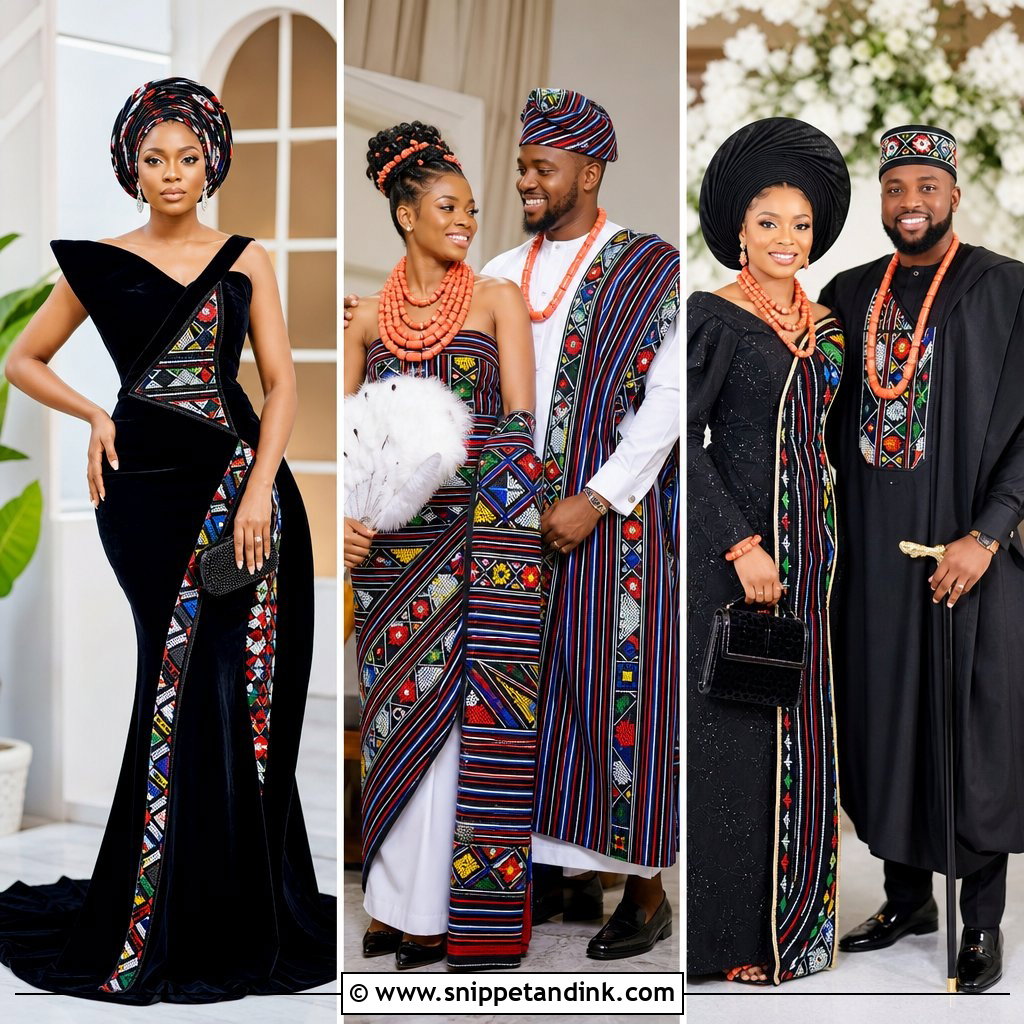
Ready to dance? A short red qipao keeps the high collar, shaped seams and closures but frees your legs for the last hours of the reception. Structured crepe, satin or jacquard with a bit of stretch moves best. Low block heels or pointed flats suit it, plus small gold earrings and a wristlet so your hands are free. Balance the short hem with sleeves or a higher neck to keep it bridal. I’d save it until the formal ceremonies and family photos are done.
How Many Fittings a Qipao Really Needs
A qipao has almost no ease, so small changes in the body show straight away. For a made-to-measure dress, I plan on at least two fittings, and I put the final one a couple of weeks before the wedding, close enough to be accurate but with time to make adjustments.
- Collar: you should fit one finger between the collar and your neck. Any tighter becomes painful after an hour of talking and eating.
- Closures: the frog fastenings shouldn’t strain or gape when you sit.
- Slit: sit on a low chair and cross your legs to see where it falls.
- Hips and seat: the fabric shouldn’t pull into horizontal lines when you walk.
- Shoes and underwear: bring the exact pair and the exact shapewear to every fitting, or the hem and fit will be wrong.
Folding Away an Embroidered Qun Kwa So It Lasts
Many qun kwa are passed down, and the gold thread is what suffers first. Have it professionally cleaned before storage, because make-up at the collar and sweat at the underarms can stain silk and discolour metal thread over time. Store it flat in a box, with acid-free tissue between the layers and rolled tissue inside every fold so the embroidery isn’t creased sharply. Avoid plastic garment bags, which hold moisture, and don’t leave a heavy jacket on a hanger for years, as the shoulders stretch. Keep the box somewhere dry and dark, and refold it along slightly different lines when you check on it.
Several Outfits, One Family Story
The right wedding wardrobe should celebrate your background and still let you move, sit and eat comfortably. From the traditional qun kwa and historical hanfu to fitted qipao and fusion gowns, every outfit here suits a particular part of the day. Think about where each one will be worn, what the colour and motifs mean to your family, and how long you’ll be in it. A good tailor manages the layers and hems; your relatives can tell you which regional customs matter. Put those together and each change will feel connected to the rest.
You'll Like These Ideas:


Leave a Reply