
A qipao is close-fitted, collared and fastened with fabric knots, which makes it one of the most demanding wedding garments I fit. It’s also one of the most rewarding, because a qipao that fits properly looks poised in a way few gowns do. The Mandarin collar, the diagonal closure across the chest and the pankou knots can be made in traditional red brocade or in softer bridal fabrics, and brides wear them for the tea ceremony, the banquet, portraits, a civil ceremony or the main event. Modern versions mix Chinese details with lace, trains, open backs and lighter colours. Below are twenty designs, each with the shoes, jewellery and hair I’d pair with it, and notes on where each one needs care in fitting.
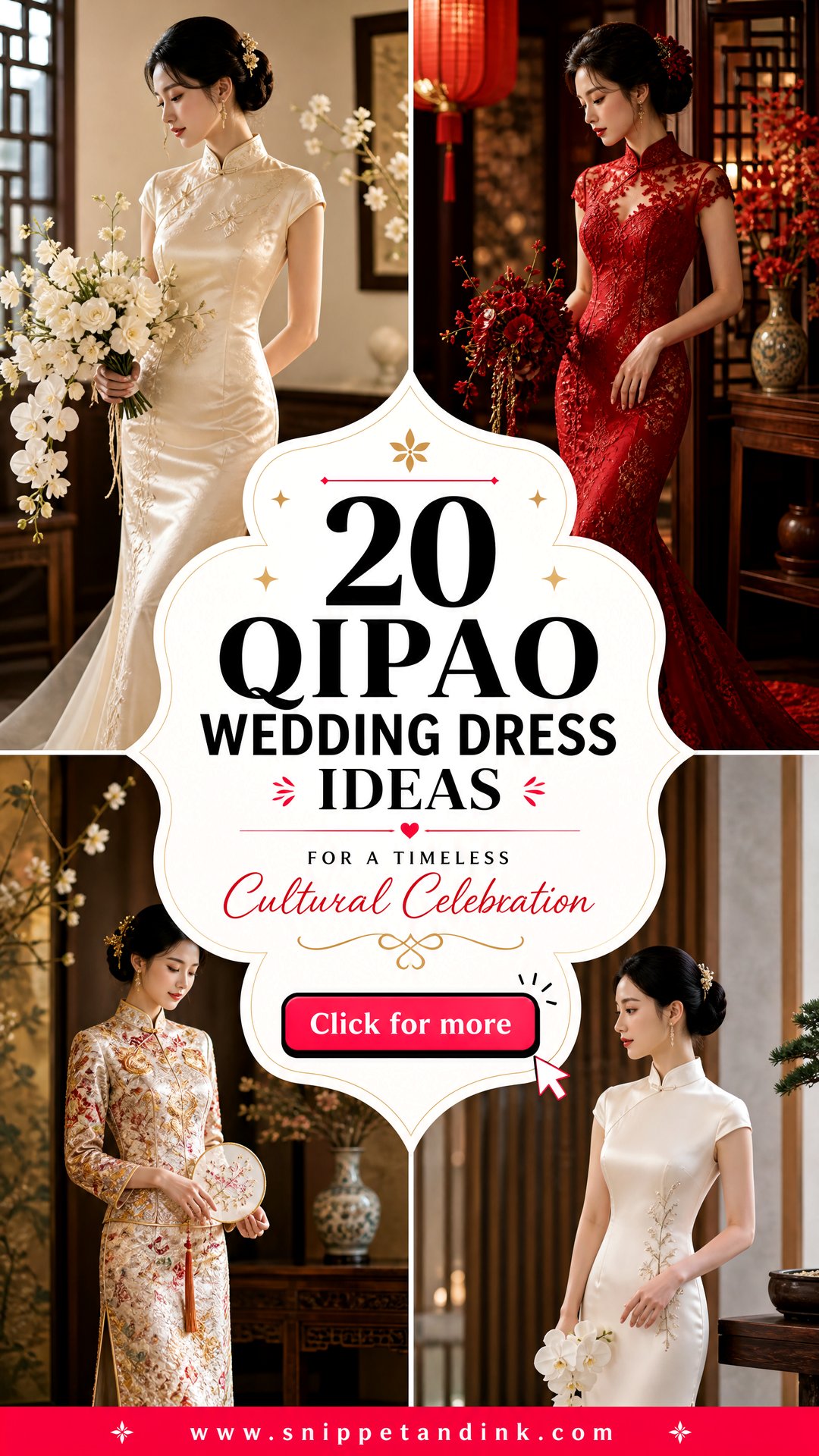
Ready-Made or Tailored: How a Qipao Is Fitted
A qipao has almost no ease, so it fits more like a second skin than a gown. Ready-made qipaos work if your measurements are close to the size chart, but most brides need at least some alteration, and many have one made to measure. A made-to-measure qipao commonly takes several weeks to a few months depending on the maker and how much hand embroidery is involved, so I suggest starting about four to six months before the wedding and asking each maker for their current timing.
Where I check the fit
- The collar: you should be able to slide one finger inside it comfortably. Any tighter and she’ll feel it every time she swallows or turns her head.
- The diagonal closure: the opening should lie flat across the chest with no gaping between the knots when she sits or reaches forward.
- The slit: sit, climb a step and kneel. The slit height that looks right standing often opens too far when seated.
- The hips and seat: fitted, never pulling. Horizontal creases across the hips mean it’s too tight.
Bring the shoes and underwear you’ll wear on the day to every fitting. A qipao is fitted to the body underneath it, and a different bra changes the bust line and collar position.
1. Traditional Red And Gold Qipao Wedding Dress
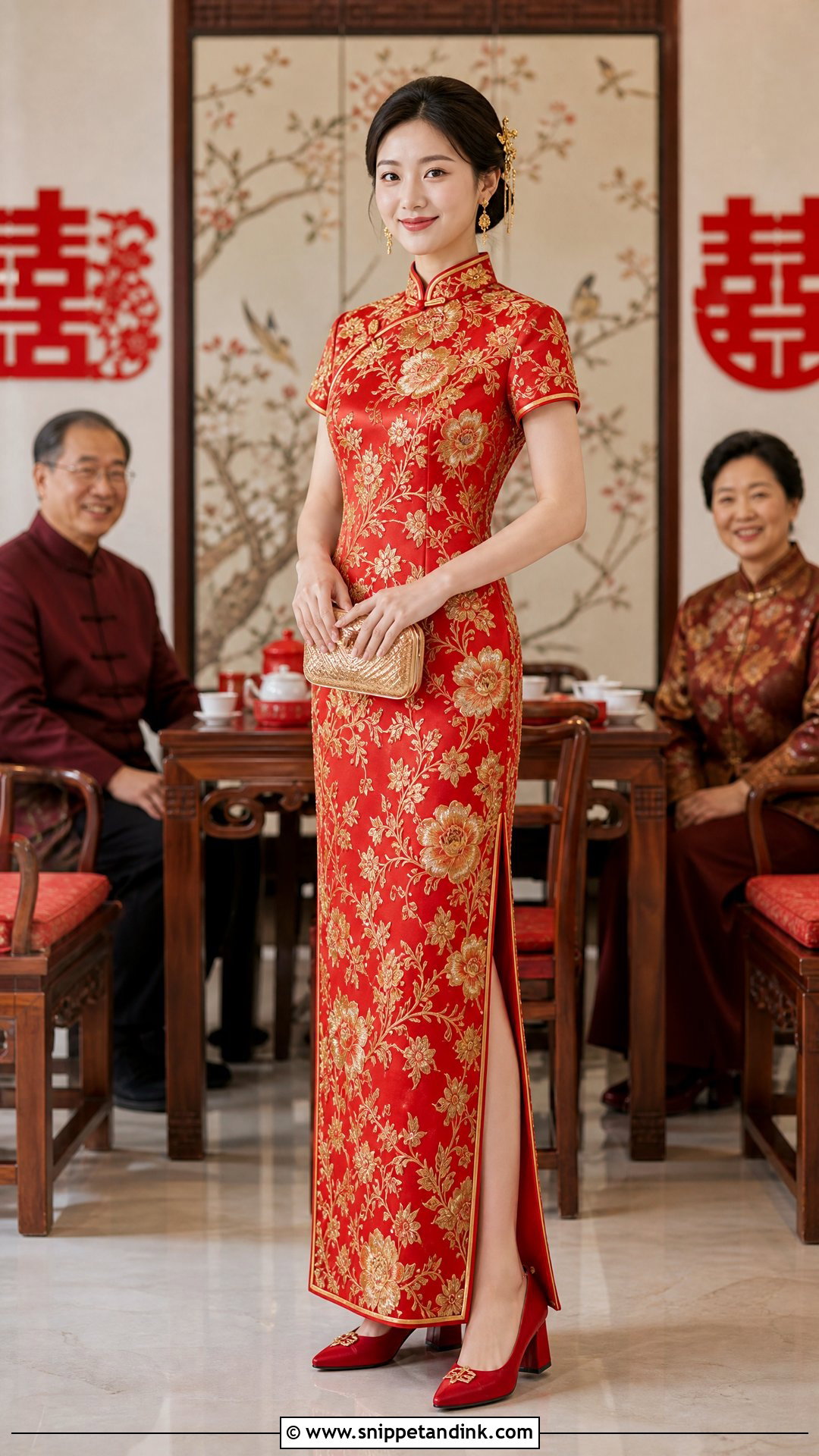
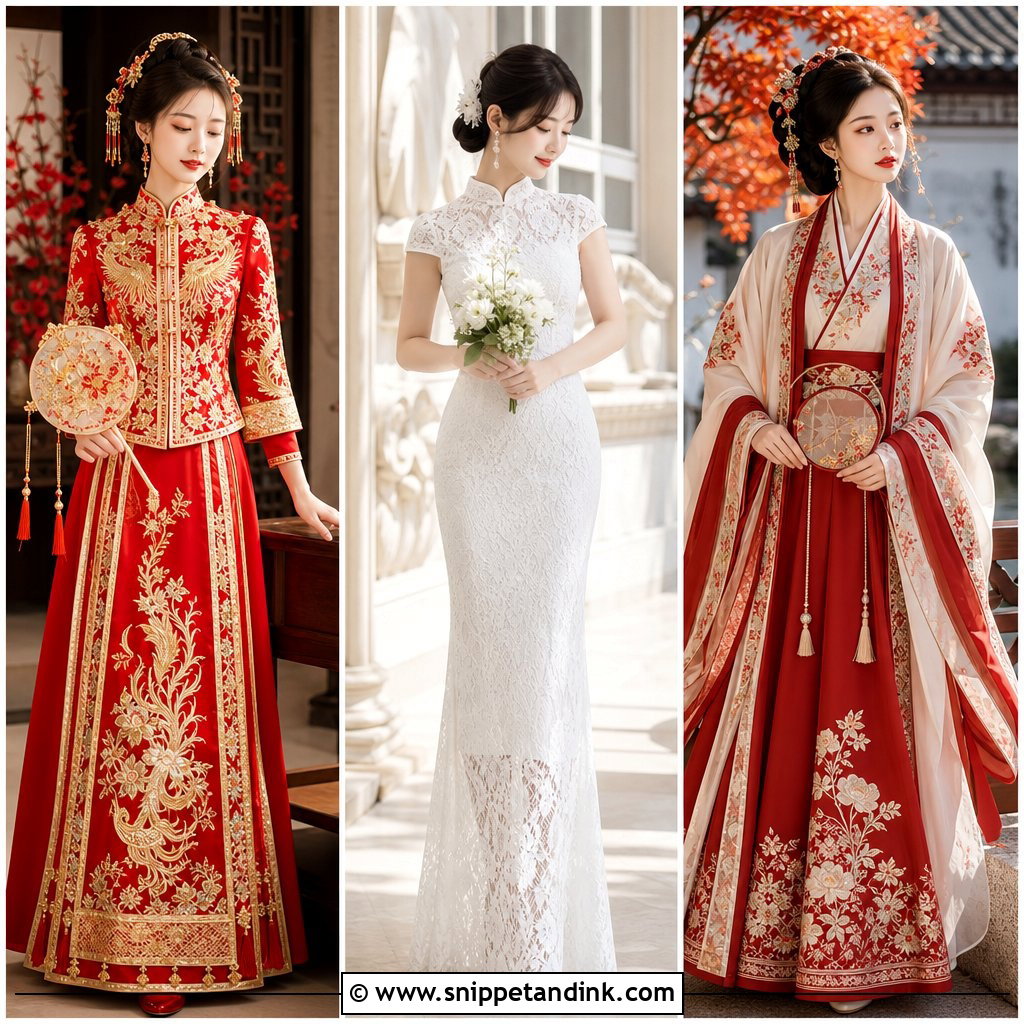
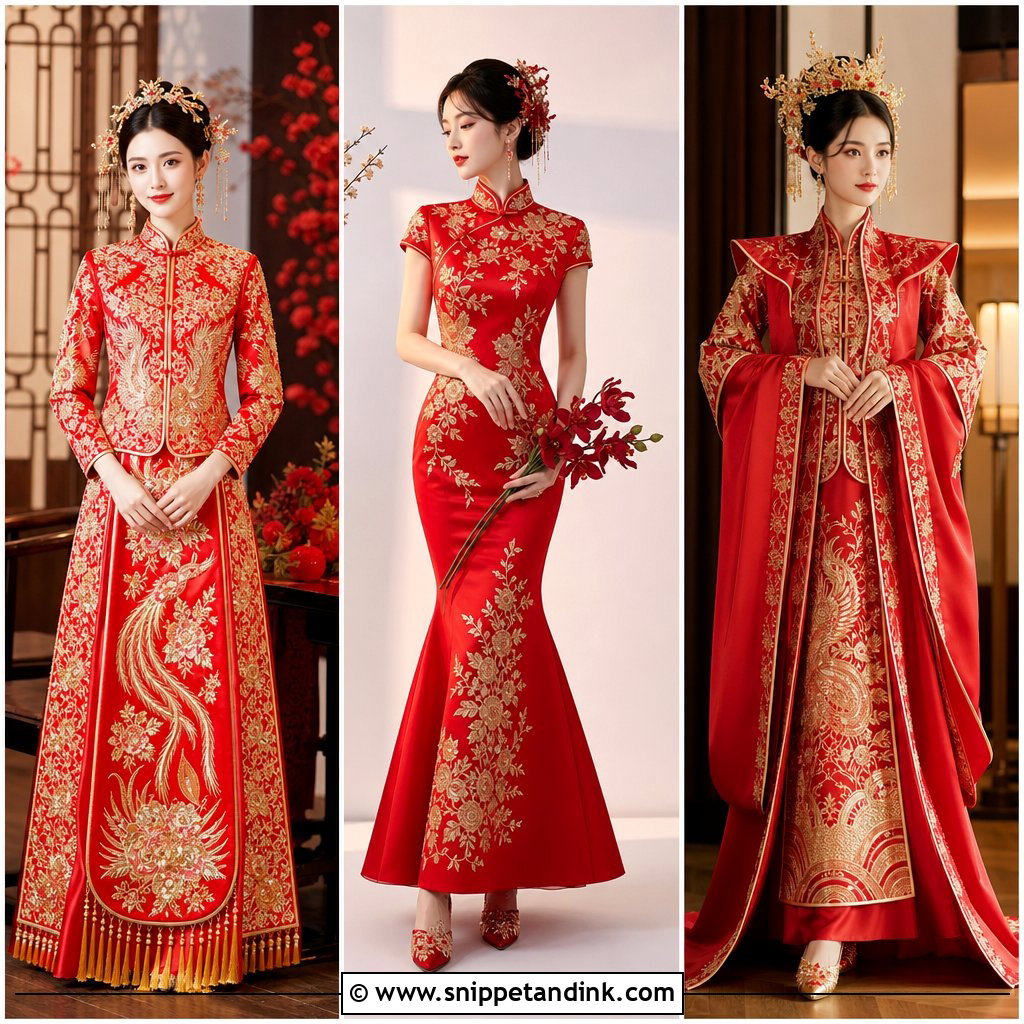
A traditional red and gold qipao in brocade is the classic, and the one most families hope to see at the tea ceremony. Floor length, a fitted waist and side slits, with gold embroidery of flowers, birds or paired wedding motifs. Brocade is stiff and has no give at all, and that’s the problem I plan around. During the tea ceremony the bride kneels or bows to serve elders, so I ask for extra ease through the hips and thighs and test kneeling at the fitting. Red or gold block heels, fine drop earrings and a sleek low bun leave the embroidered collar visible; a gold hairpin adds ceremony.
2. Ivory Silk Qipao Wedding Dress
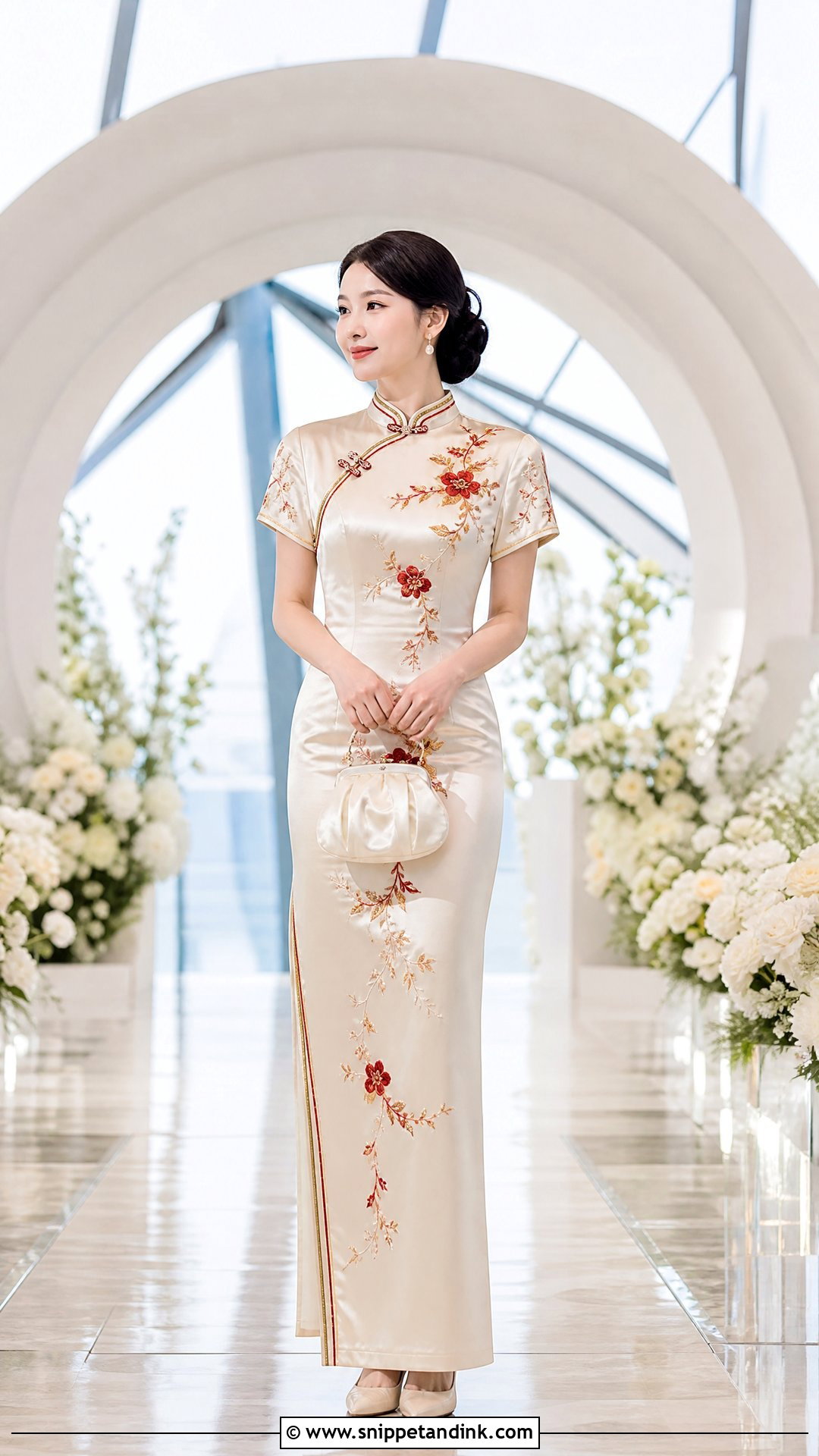
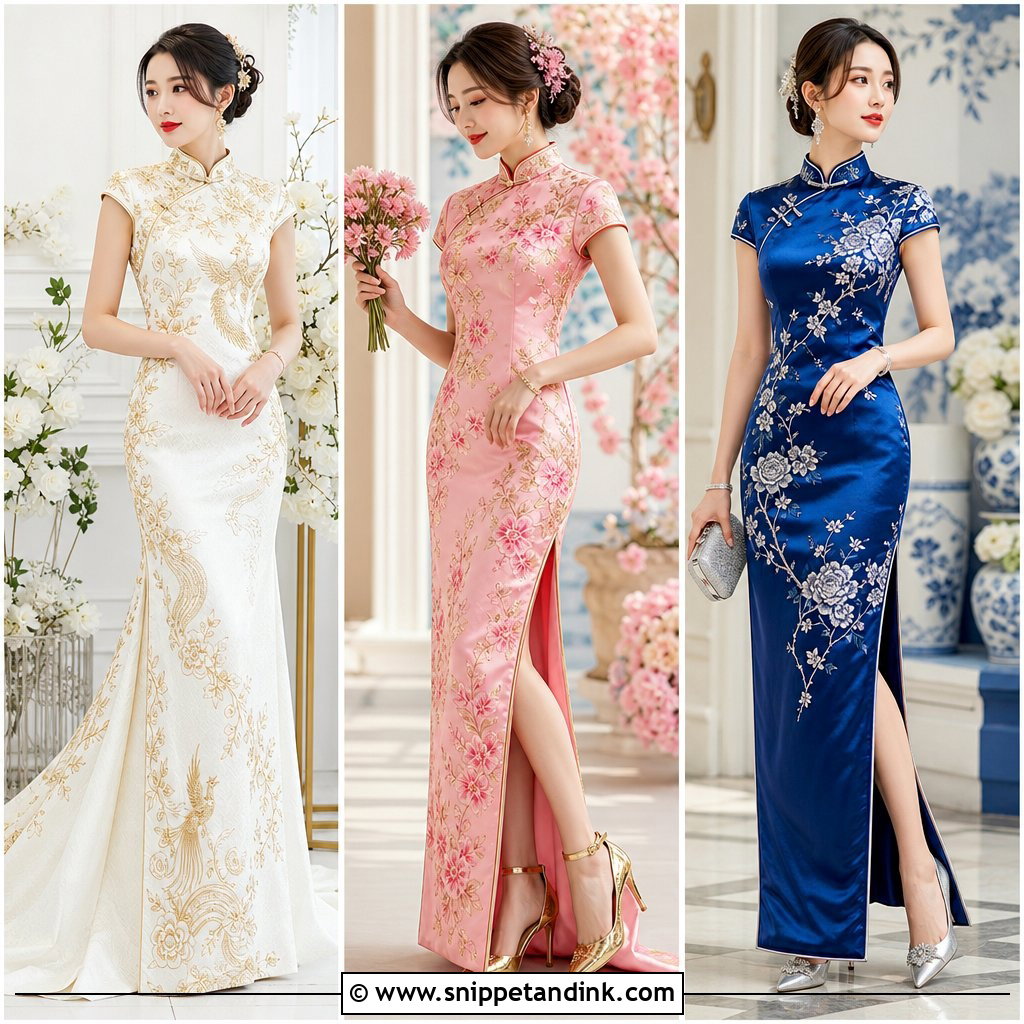
Ivory silk is what I suggest when a qipao has to sit comfortably inside a Western palette. Full length, gently shaped at the waist, with fabric-covered pankou and fine red or gold embroidery at the collar. Lightweight silk is honest about everything underneath it, so I insist on a lining: it stops the fabric going sheer in daylight and helps it hang straight instead of clinging. Pearl earrings, ivory pointed pumps and a small satin bag keep it quiet. A low chignon or smooth half-up style suits the collar. It photographs well at courthouse ceremonies and portraits.
3. Red Lace Mermaid Qipao Wedding Dress
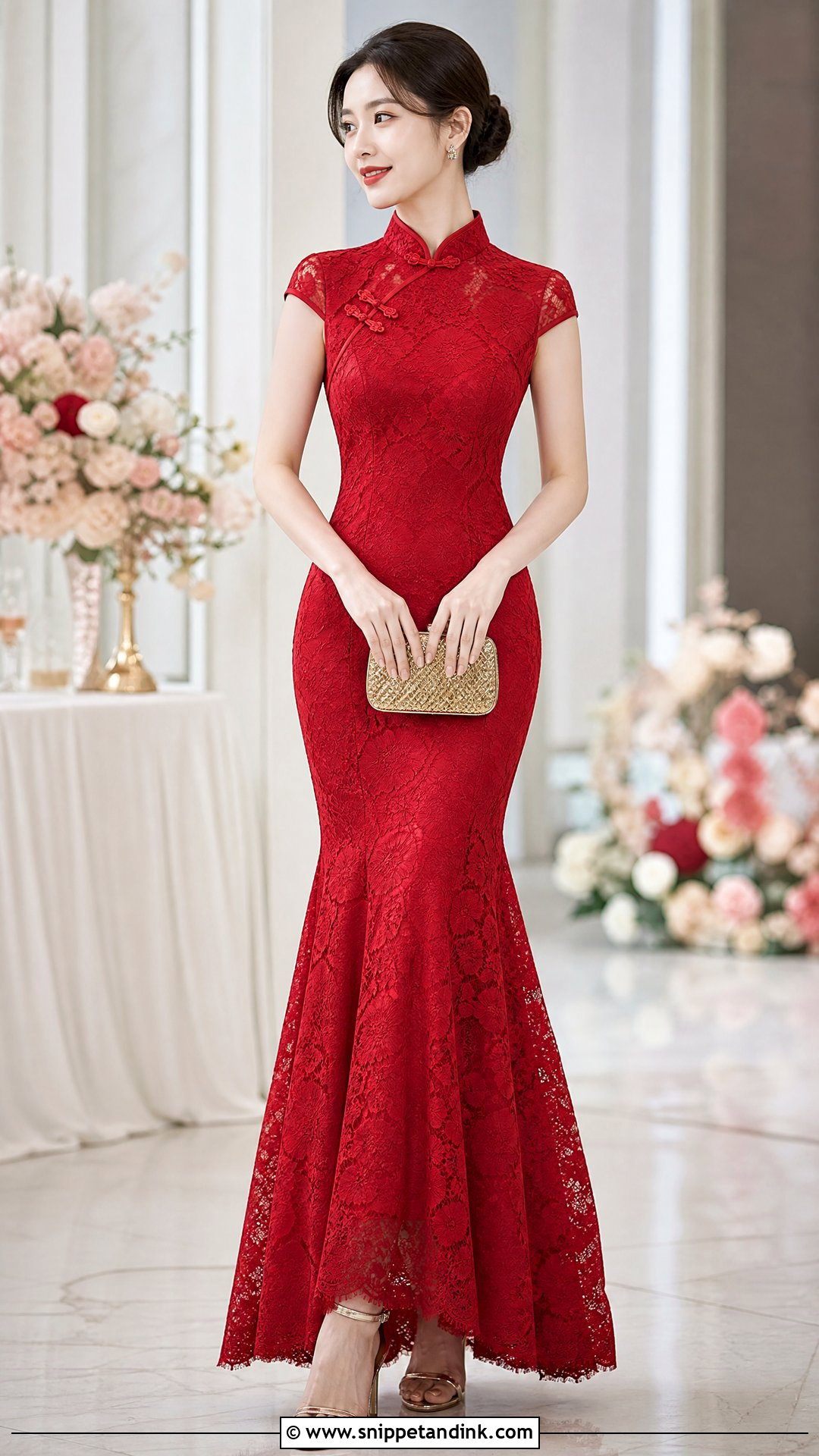
Red lace cut as a mermaid qipao is a reception dress: fitted bodice, sculpted hips, flared skirt. The lace must sit over a solid lining, or it looks like lingerie in flash photos. A Mandarin collar and knotted side closure keep it recognisably a qipao, and a modest back opening modernises it. Metallic ankle-strap heels, a small gold clutch and studs are enough; skip the necklace so the collar isn’t crowded. Where the flare starts matters. Too low, at the knee, and she can only shuffle; I prefer it a little higher so she can walk and dance.
4. Dragon And Phoenix Qipao Wedding Dress
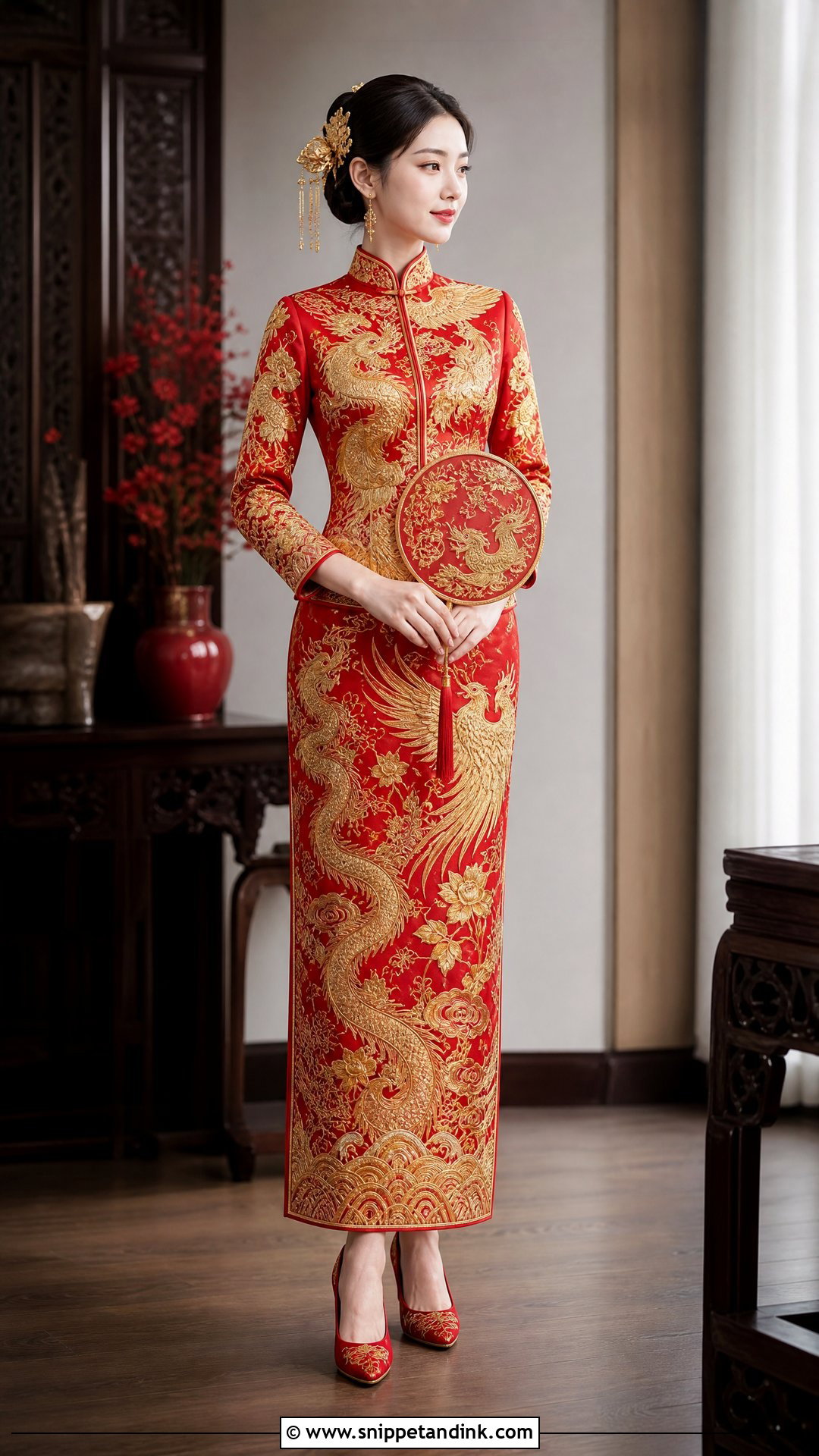
A dragon and phoenix qipao is all about the embroidery, the traditional pairing of the groom and bride. I look for gold threadwork spread across bodice and skirt rather than one small cluster. Check embroidery placement before ordering: on a fitted dress, the darts and seams can cut through a motif, and a phoenix with its head lost in a side seam is a common disappointment. Slim gold earrings, a smooth bangle, red closed pumps and a round fan for portraits. Talk to family about colours and symbols if the dress is for the tea ceremony.
5. Long Sleeve Brocade Qipao Wedding Dress
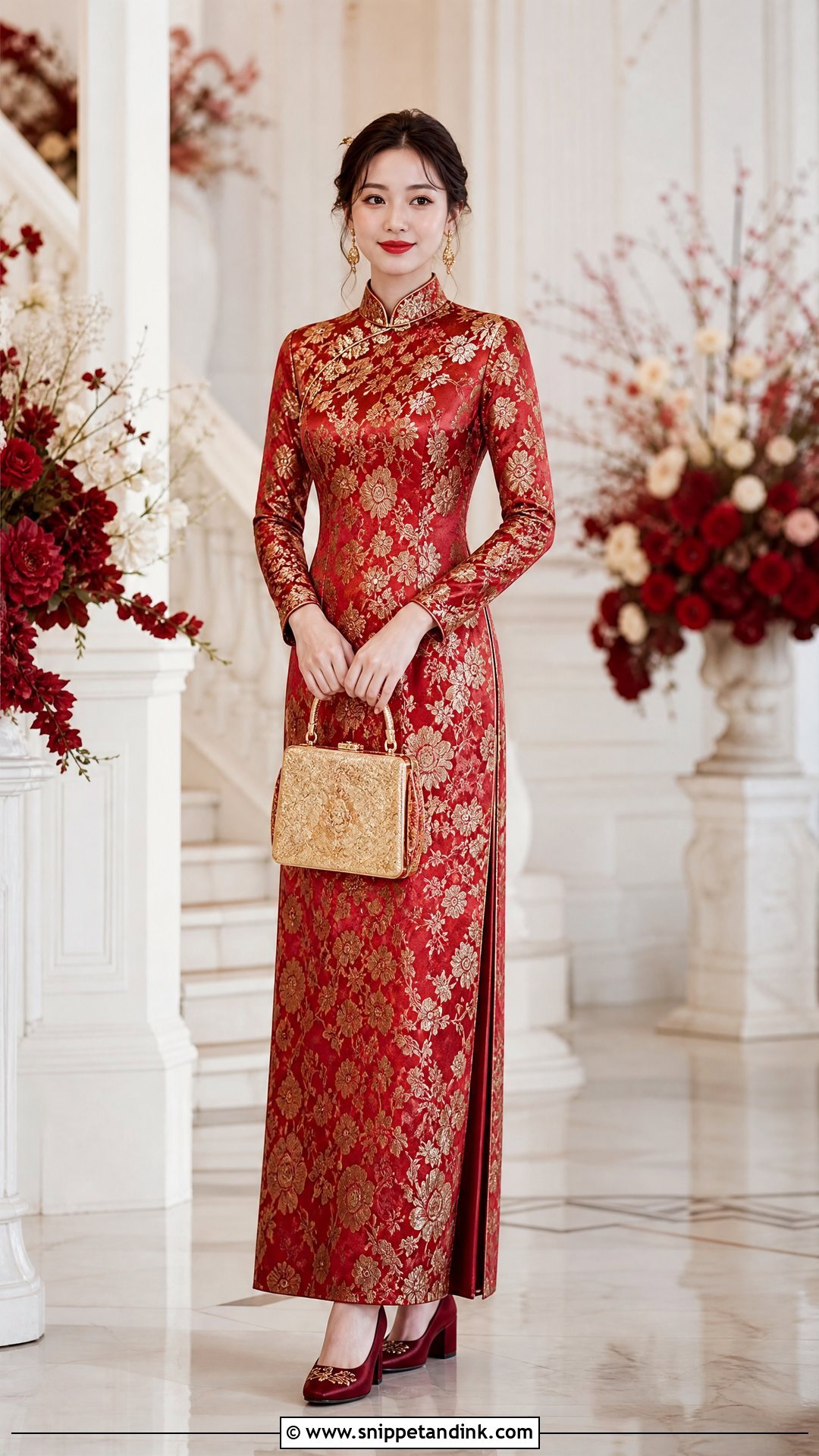
Long sleeves in brocade make sense for cold weather and formal indoor venues. Deep red with gold floral weaving and neatly finished cuffs looks rich. The catch: fitted brocade sleeves restrict how far she can raise her arms, and she’ll be pouring tea and hugging relatives. At the fitting, I have her lift a teapot-height cup and reach forward; if the sleeve pulls at the armpit, the armhole needs recutting. Hidden stretch panels or a back vent in the skirt help with sitting. Block heels, gold drops and a smooth updo, no heavy necklace. A light red wrap covers travel between venues.
6. Sleeveless Satin Qipao Wedding Dress
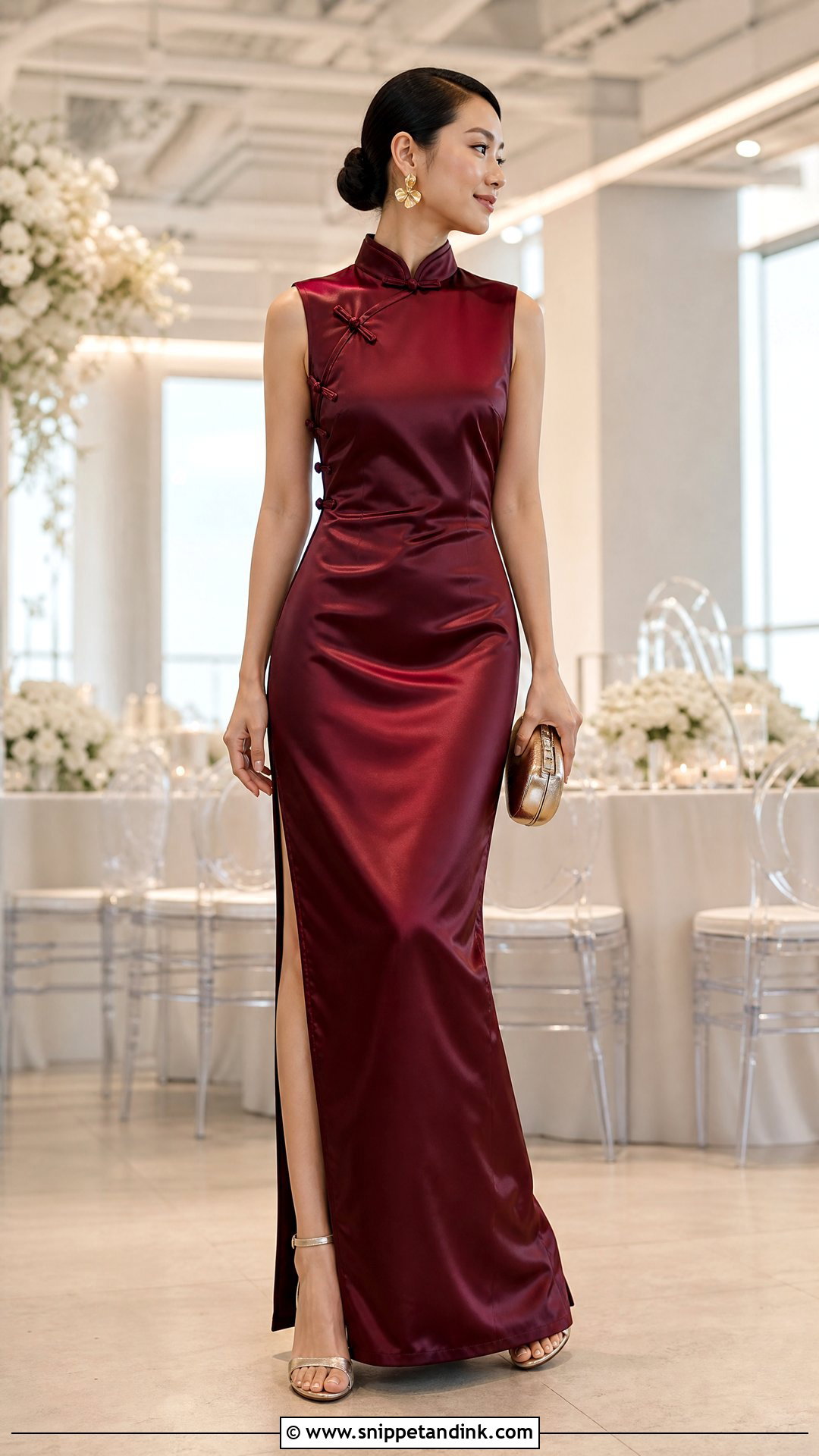
Sleeveless satin is a clean, warm-weather qipao. A column or softly fitted shape with a high collar, the side closure and one controlled slit. Red is classic; burgundy is deeper and quieter. Satin shows every pull and crease, so the fit has to be precise, not tight. A satin qipao one size too small shows strain lines across the hips the moment she sits. Smooth, edge-free underwear and a breathable lining help it lie flat. Champagne heels, sculptural earrings and a small metallic clutch, with a polished ponytail or low bun. An embroidered shawl covers the shoulders for outdoor portraits.
7. Tea Length Qipao Wedding Dress
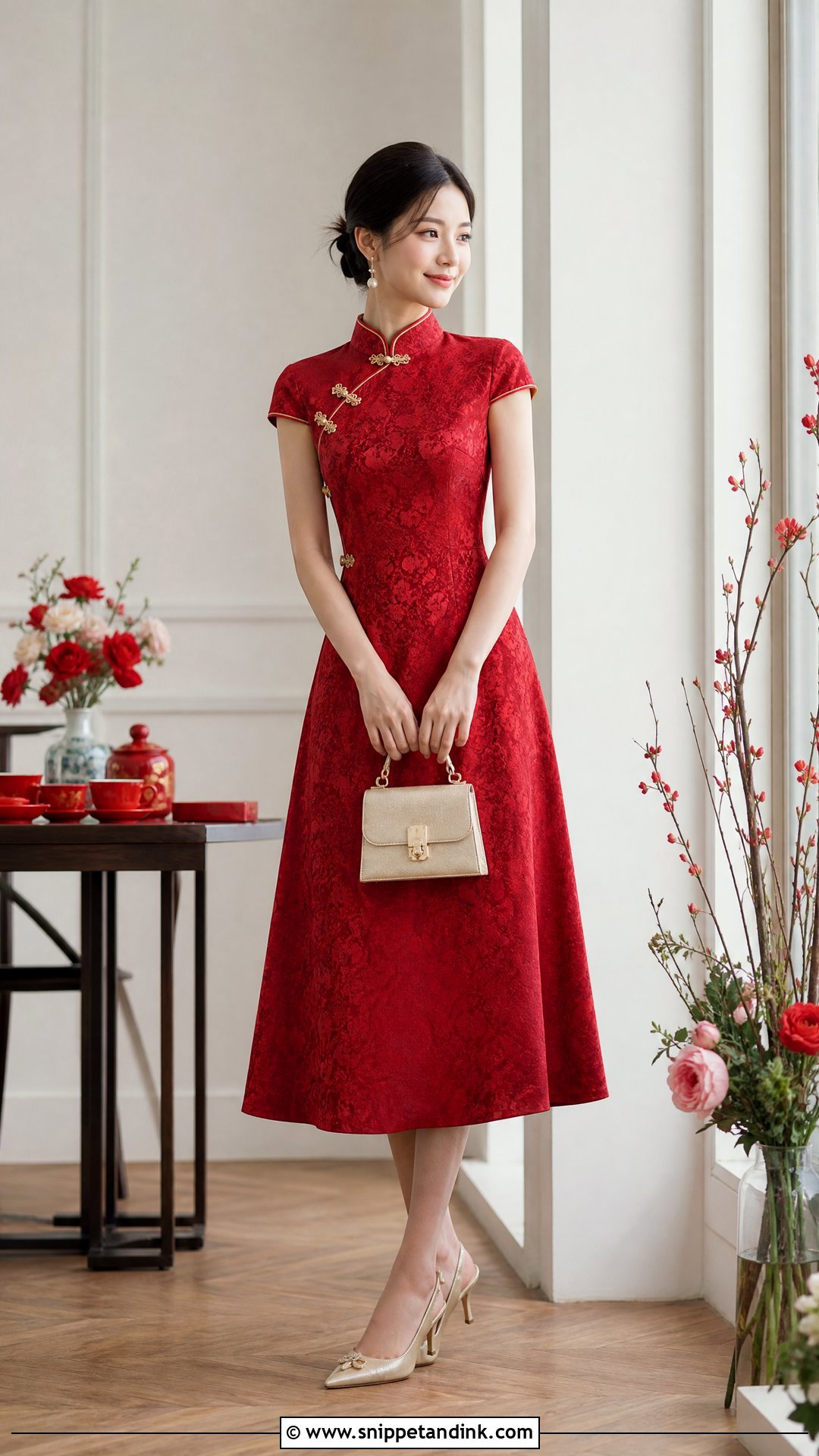
A tea-length qipao is the practical choice for a daytime tea ceremony or a civil wedding. The hem falls between knee and ankle, short enough that she won’t step on it while kneeling. Red jacquard with cap sleeves, a defined waist and gold fastenings is my starting point. Because the shoes are on show, pick slingbacks or pumps that look special but are stable. Pearl drops, a structured mini bag and a soft bun or shoulder-length waves. If she’d like more movement, a gentle A-line skirt gives room through the hips without losing the collar and closure.
8. Minimalist High Neck Qipao Wedding Dress
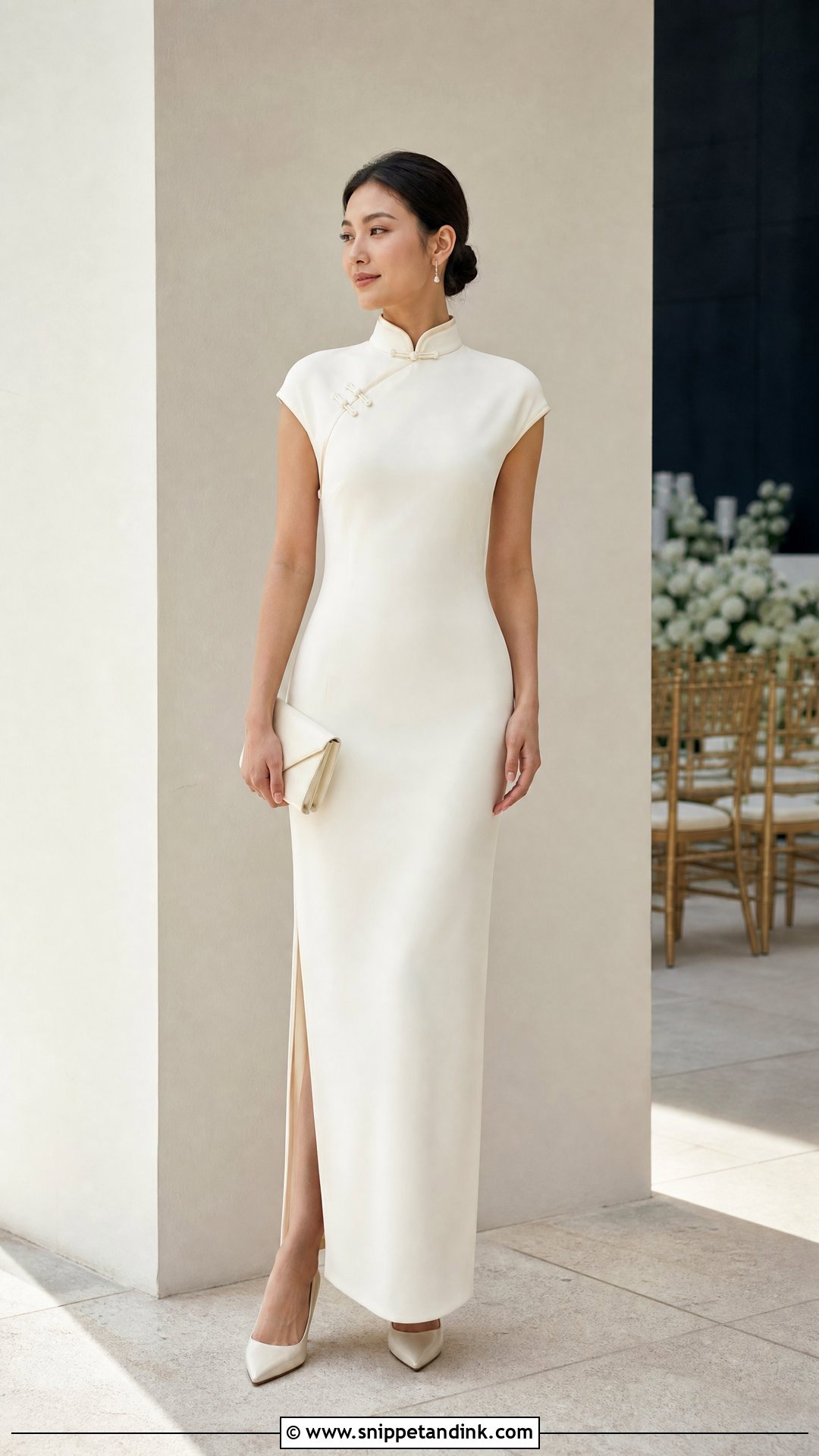
Minimalist qipaos look simple and are actually the hardest to get right, because there’s no embroidery to distract from the fit. A high neck in ivory, red or champagne silk crepe, hidden closures with one or two visible knots, a floor-length column skirt. Every fitting point shows: the collar must sit flush, the bust dart has to point to the right spot, and the hips can’t pull. A slit set slightly to the side helps her walk while keeping coverage. Slim earrings, pointed pumps, an envelope clutch and a low knot. It suits modern venues and small ceremonies.
9. Open Back Qipao Wedding Dress
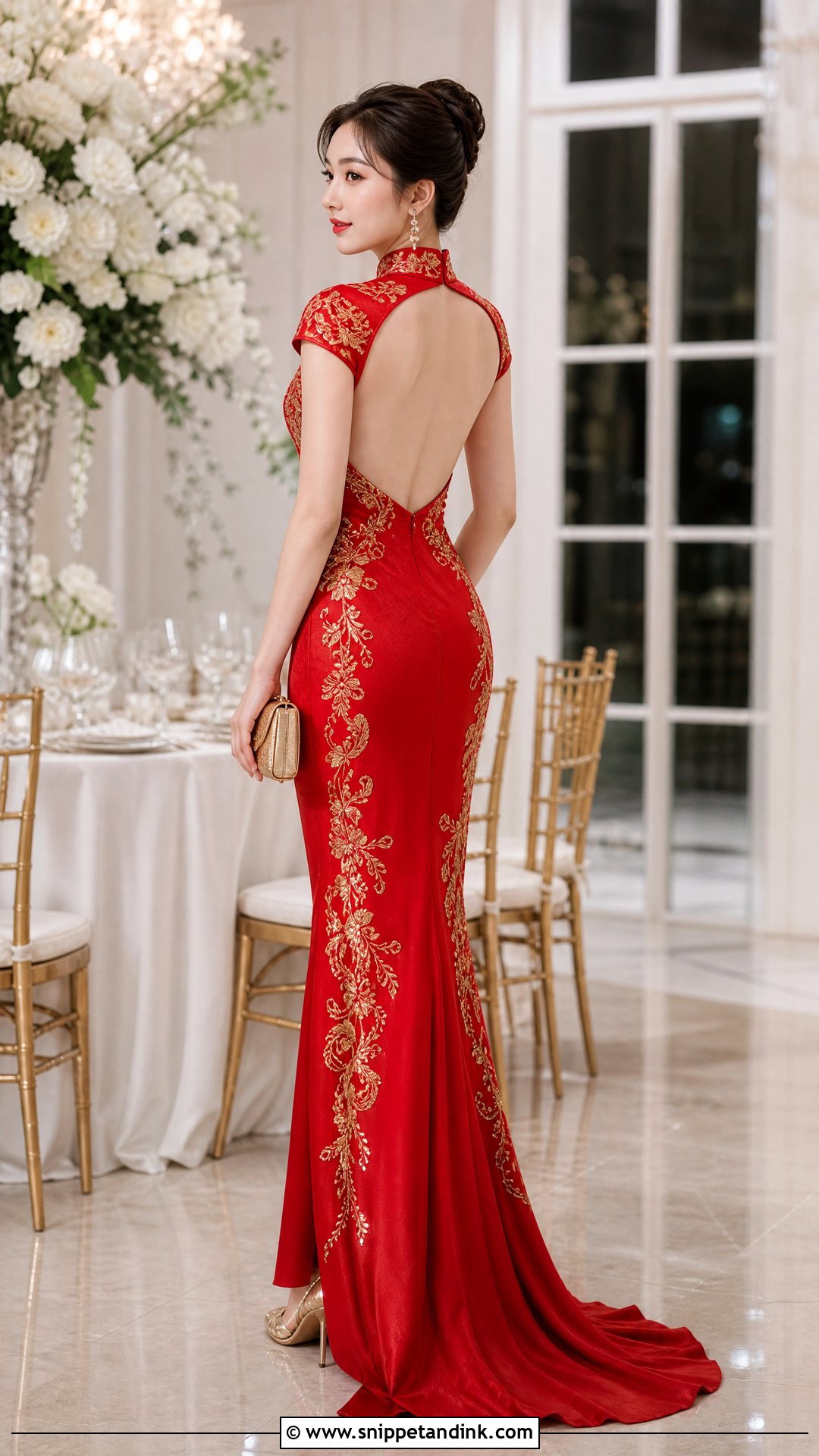
An open back keeps the qipao’s front traditional and surprises from behind. The Mandarin collar, the diagonal bodice and the fitted red shape stay; the back gets a rounded, keyhole or scooped opening. The tricky part is that the collar loses its support when the back is cut away, so it can tip forward. A good maker adds a hook-and-eye or a fine strap at the nape to anchor it. An updo is a must here. Discuss bra options early, since most standard bras won’t work. A short sweep train suits a dinner or reception entrance.
10. Qipao Wedding Dress With Train
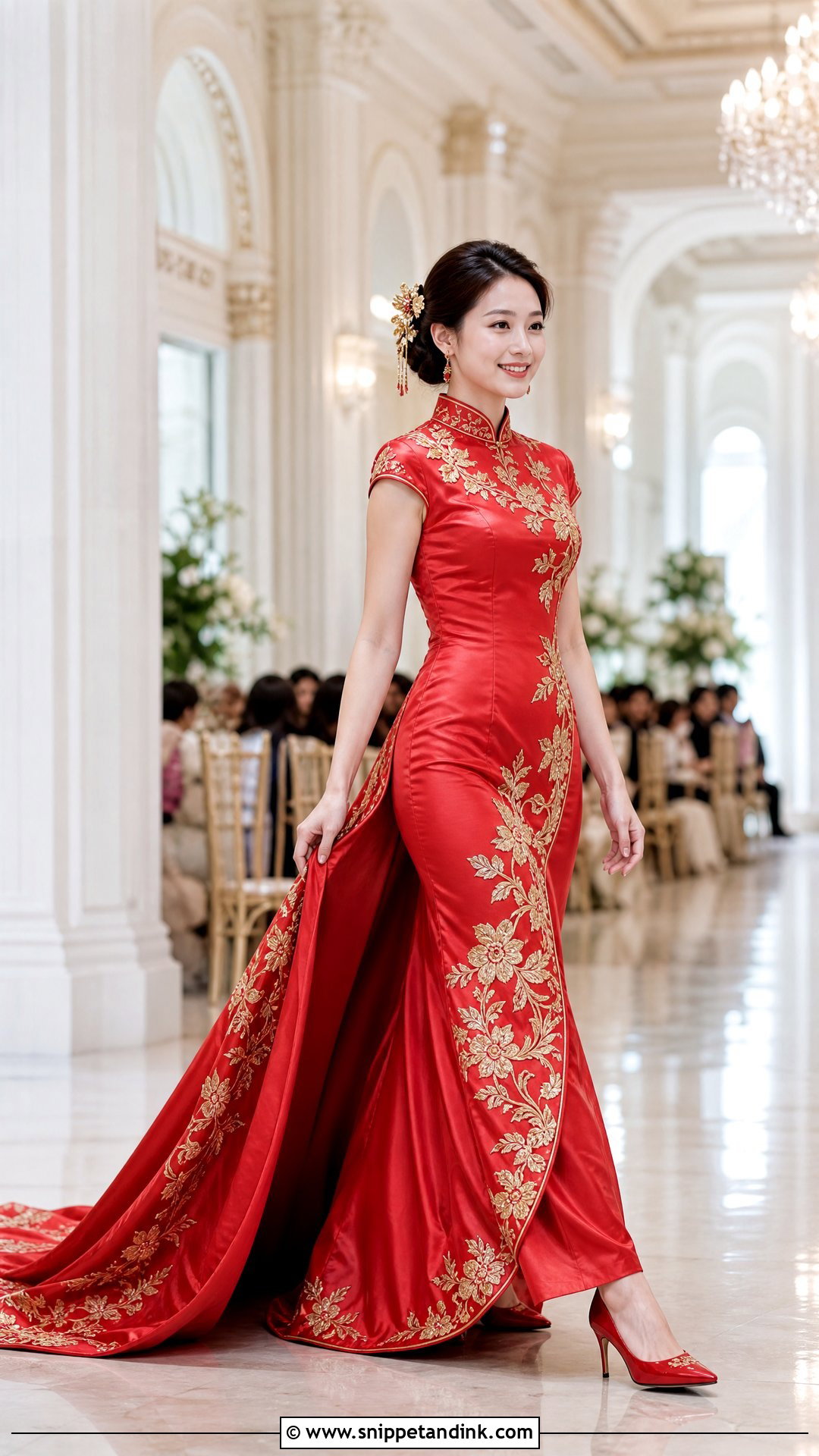
A qipao with a train borrows the entrance of a Western gown while keeping the qipao bodice, collar and side closure. Chapel length or a removable train both work; red satin with gold embroidery is bold, ivory with red details softer. Ask for a bustle, a wrist loop or a detachable panel, because a fitted qipao skirt plus a train makes sitting at a banquet table awkward. At the fitting, practise turning and walking. A well-made train flows out of the skirt seams; a badly made one looks pinned on. Classic pumps, drop earrings and a sleek bun with one decorative pin.
11. Qipao Wedding Dress With Cape
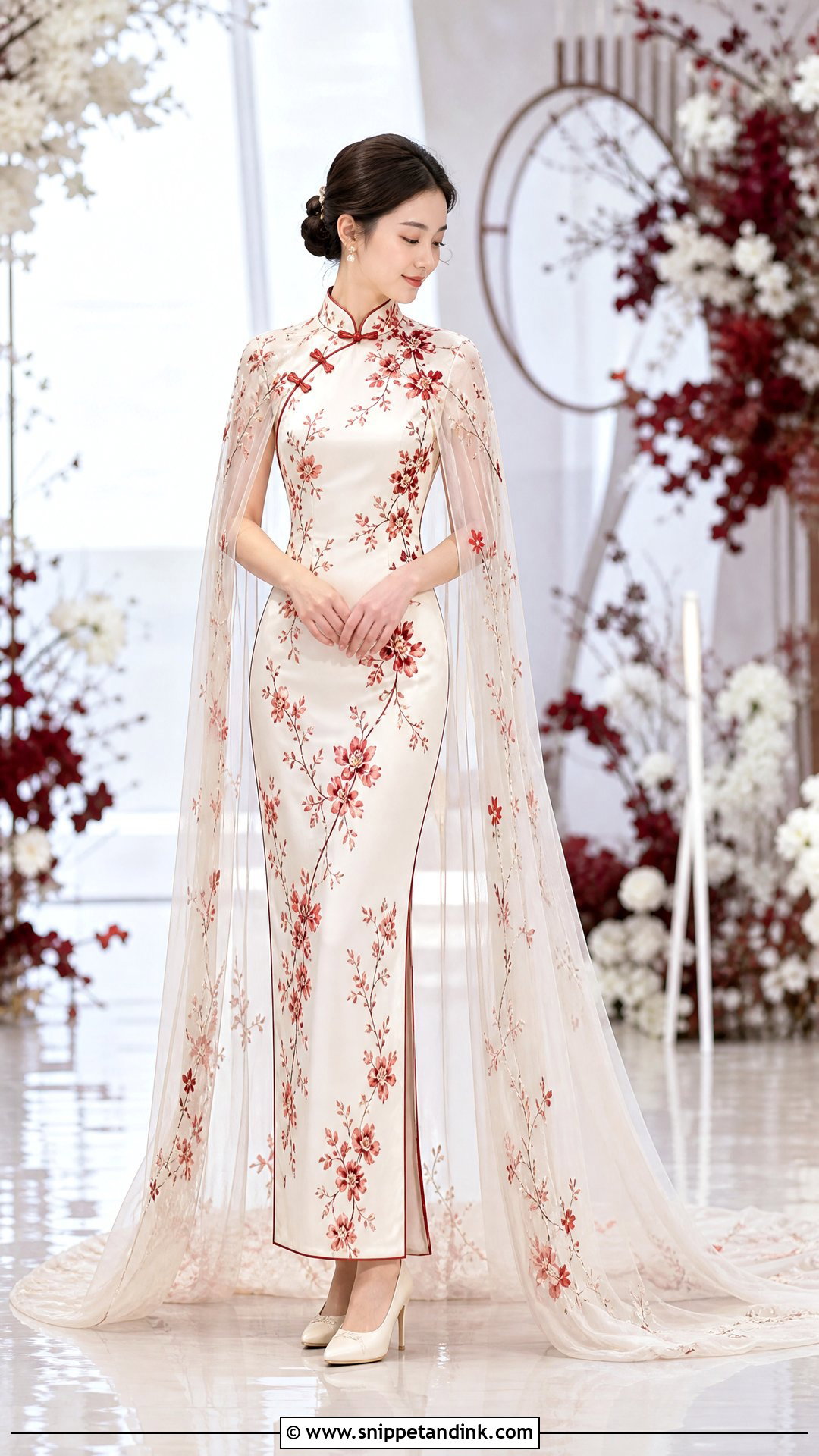
A detachable cape adds movement to a fitted qipao for the ceremony, then comes off for dinner. Sheer tulle embroidered with flowers or gold vines, attached at the shoulders of a red, ivory or champagne qipao and running into a soft train. Check the attachment points carefully. Tulle has weight when it’s embroidered, and if it hooks too far back it drags the collar against her throat. Simple earrings, closed-toe heels and a low bun; no necklace, since the collar and cape already frame the face.
12. Blush Floral Qipao Wedding Dress
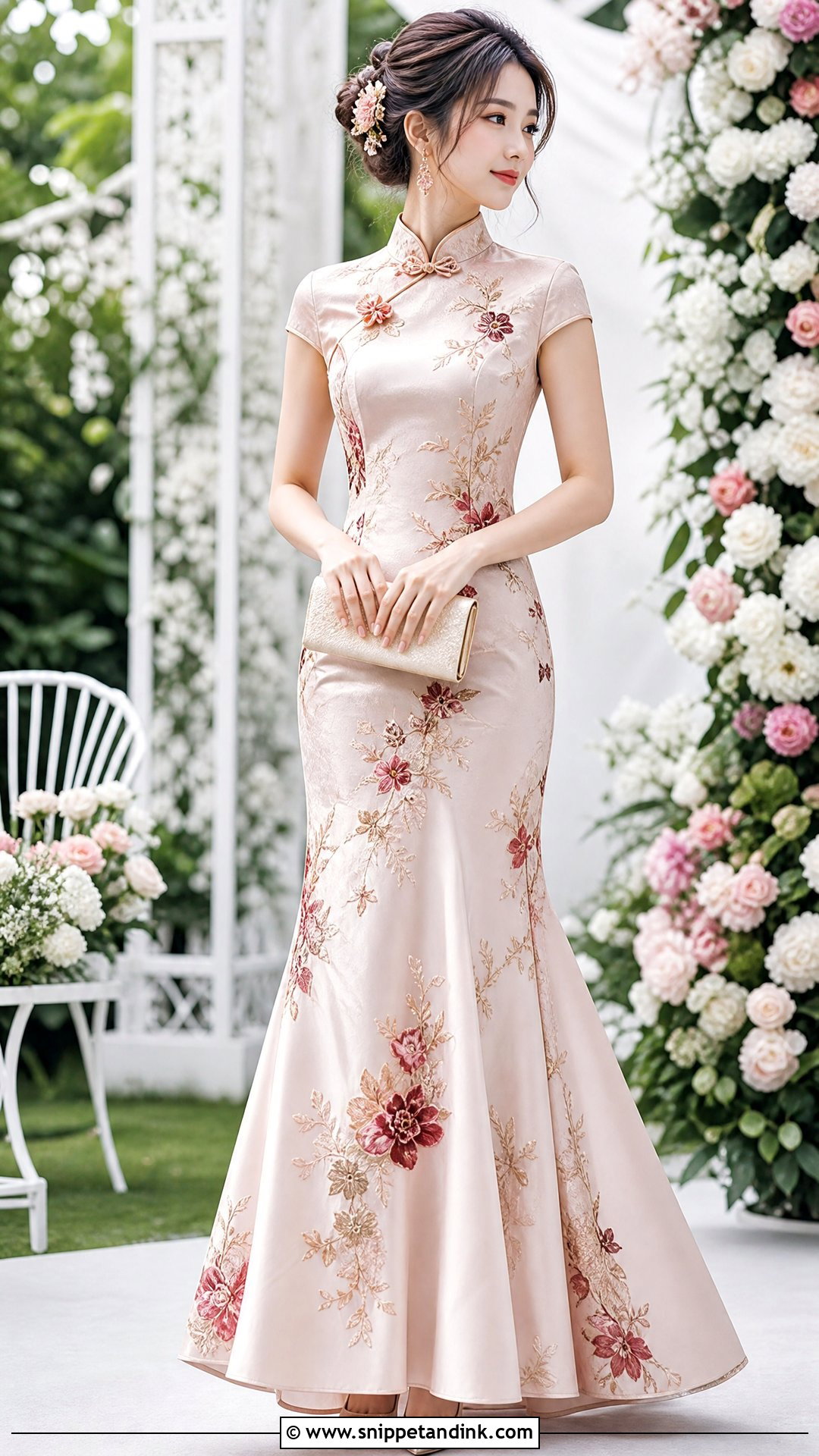
Blush pink is the softer choice. A midi or floor-length qipao with red, ivory and muted gold embroidery, a fitted bodice and a gently flared skirt. Nude or champagne heels, rose-gold earrings and a pale clutch; fresh flowers or a small jewelled comb in a relaxed updo. Turn the dress inside out before buying. Heavy embroidery leaves knots and metallic threads on the reverse that scratch over a long day, and a soft lining is the fix. It suits garden venues, daytime banquets, engagement parties and tea ceremonies.
13. Champagne Beaded Qipao Wedding Dress
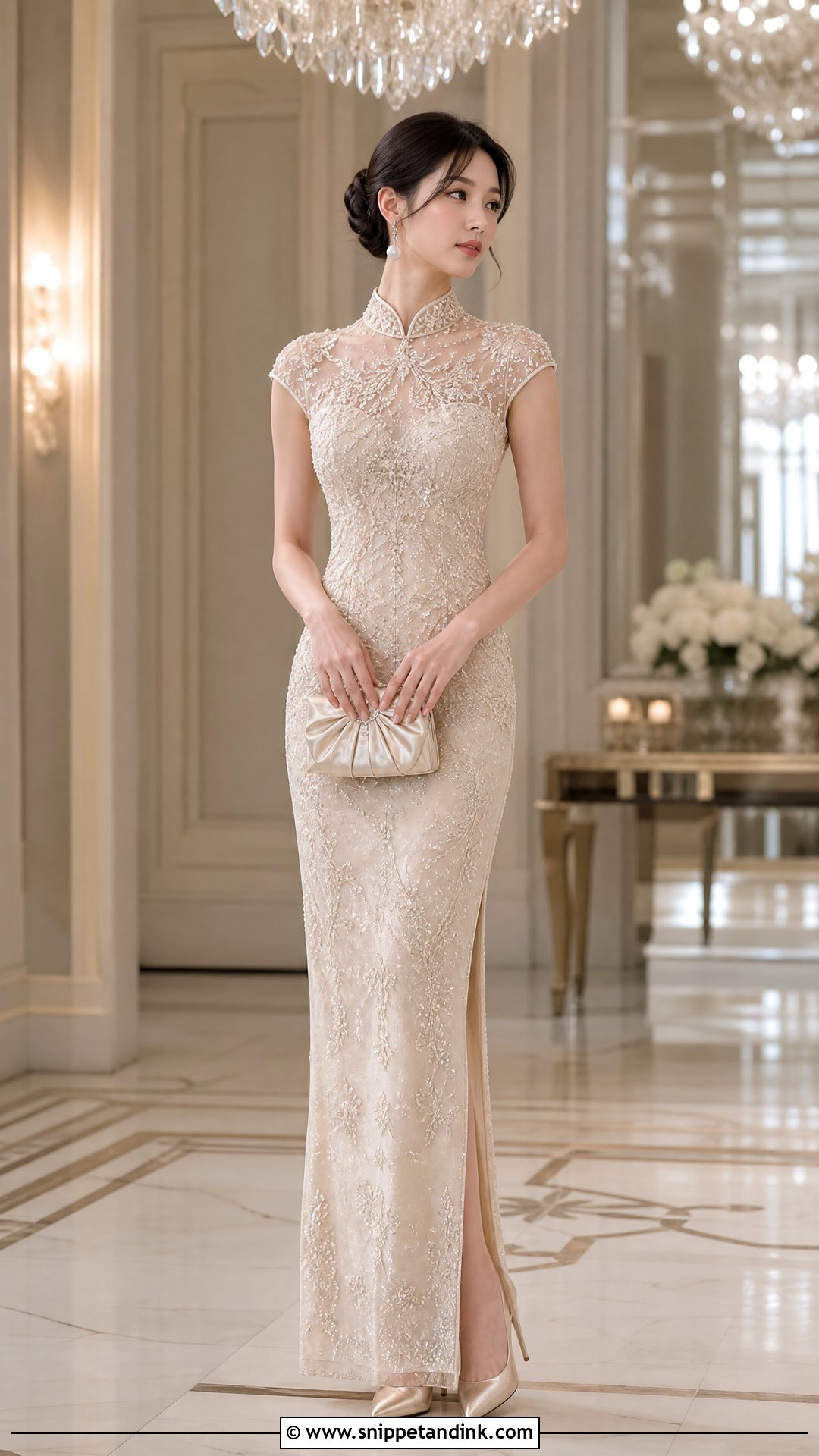
Champagne with fine beading gives a qipao a soft glow without red’s intensity, which is why brides often choose it for the evening change. Look for beading that follows the bodice seams and is spread evenly. Beaded fabric is heavier than it looks, and the weight pulls the shoulders down and the waist out of place unless there’s structure inside. Ask how it’s supported. Sheer cap sleeves, metallic pumps, pearl earrings and a satin box clutch. Avoid chunky bracelets, which snag beads. A side-parted chignon keeps the collar clear.
14. Black And Red Qipao Wedding Dress
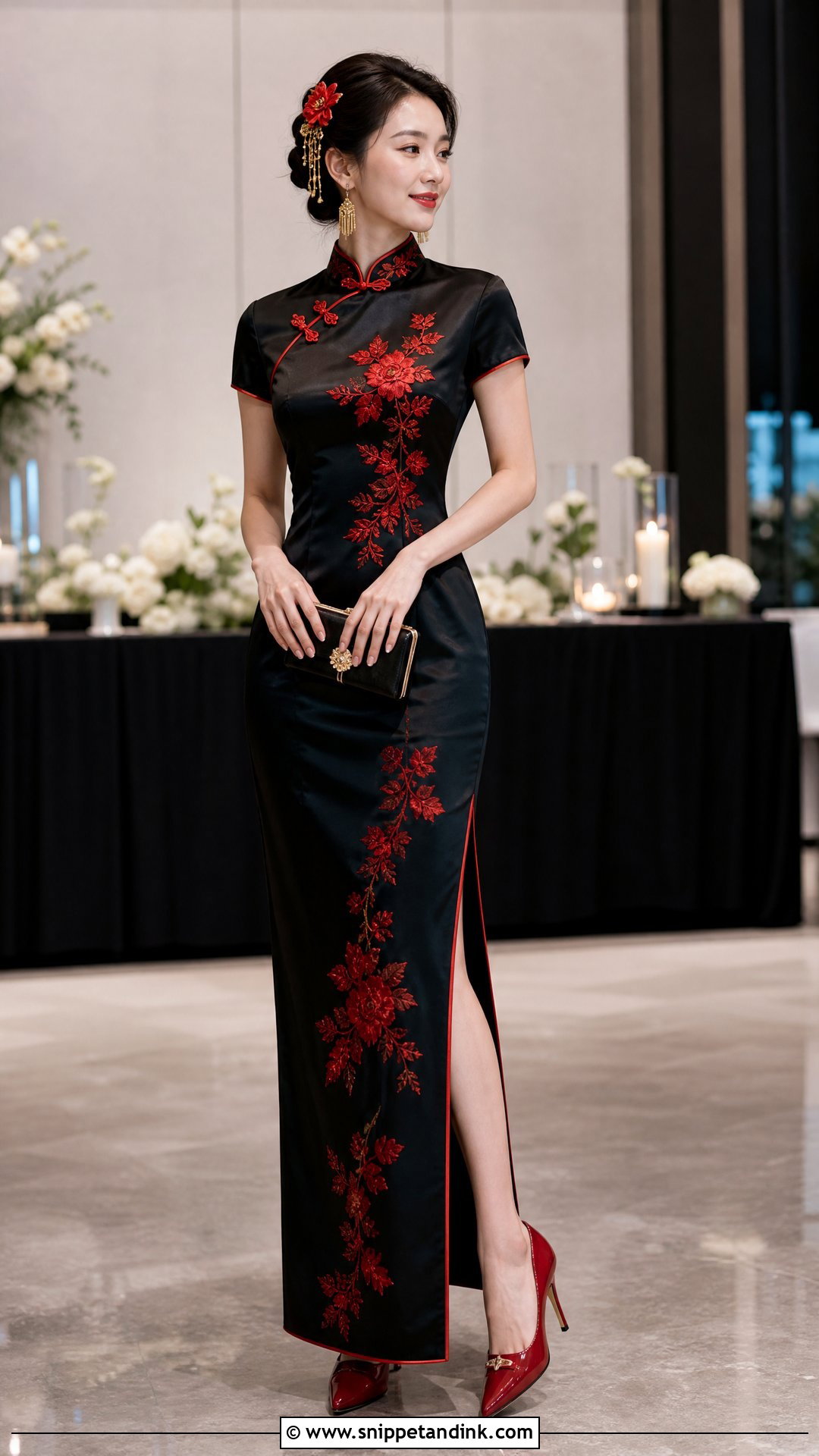
Black and red is a fashion-led choice for the evening reception or a portrait session. Black silk or satin with red floral embroidery, red piping and matching knots, fitted long with a side slit. Red pointed heels, gold statement earrings and a small black clutch; a red hair ornament in a sleek bun ties it together. Be aware that in some families black is associated with mourning and isn’t welcome at a wedding, so talk it through before wearing it to a traditional ceremony. Pick one makeup focus: lips or eyes, not both.


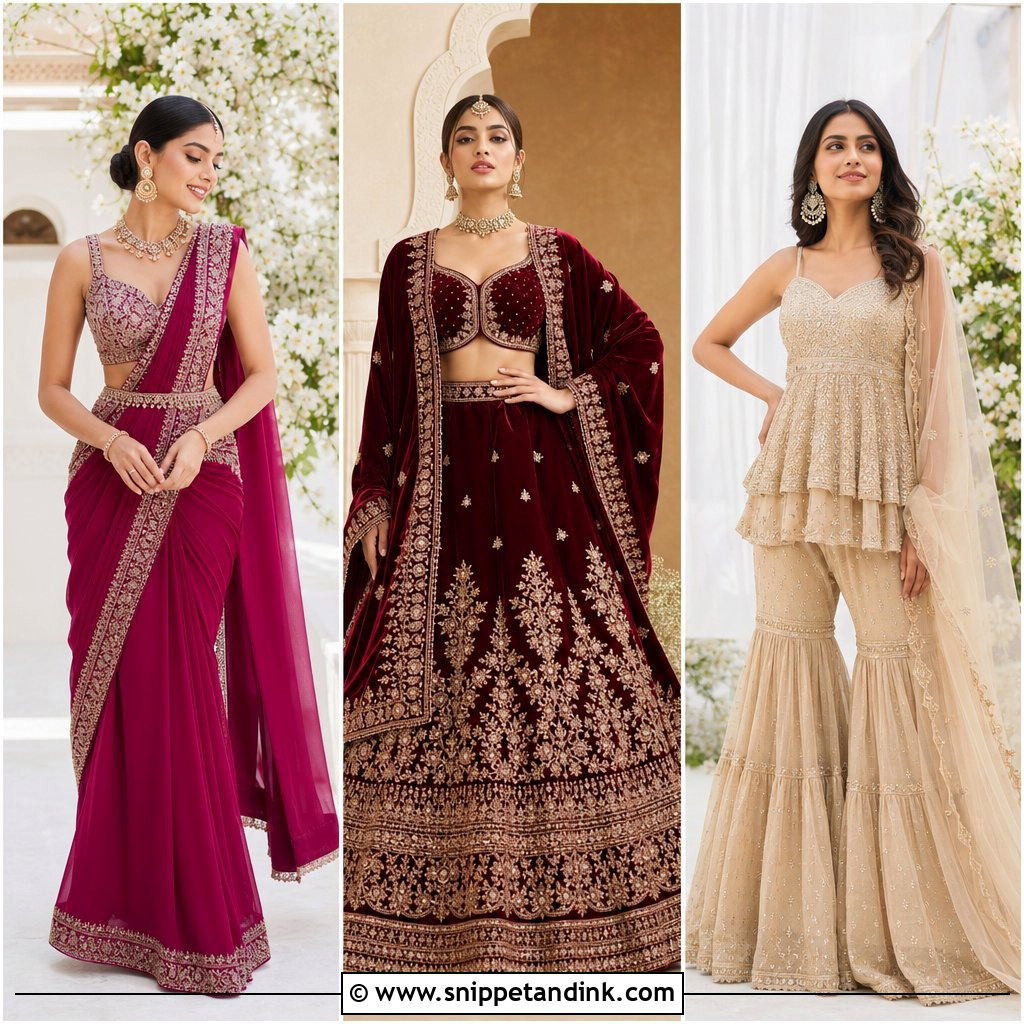
15. Blue Embroidered Qipao Wedding Dress
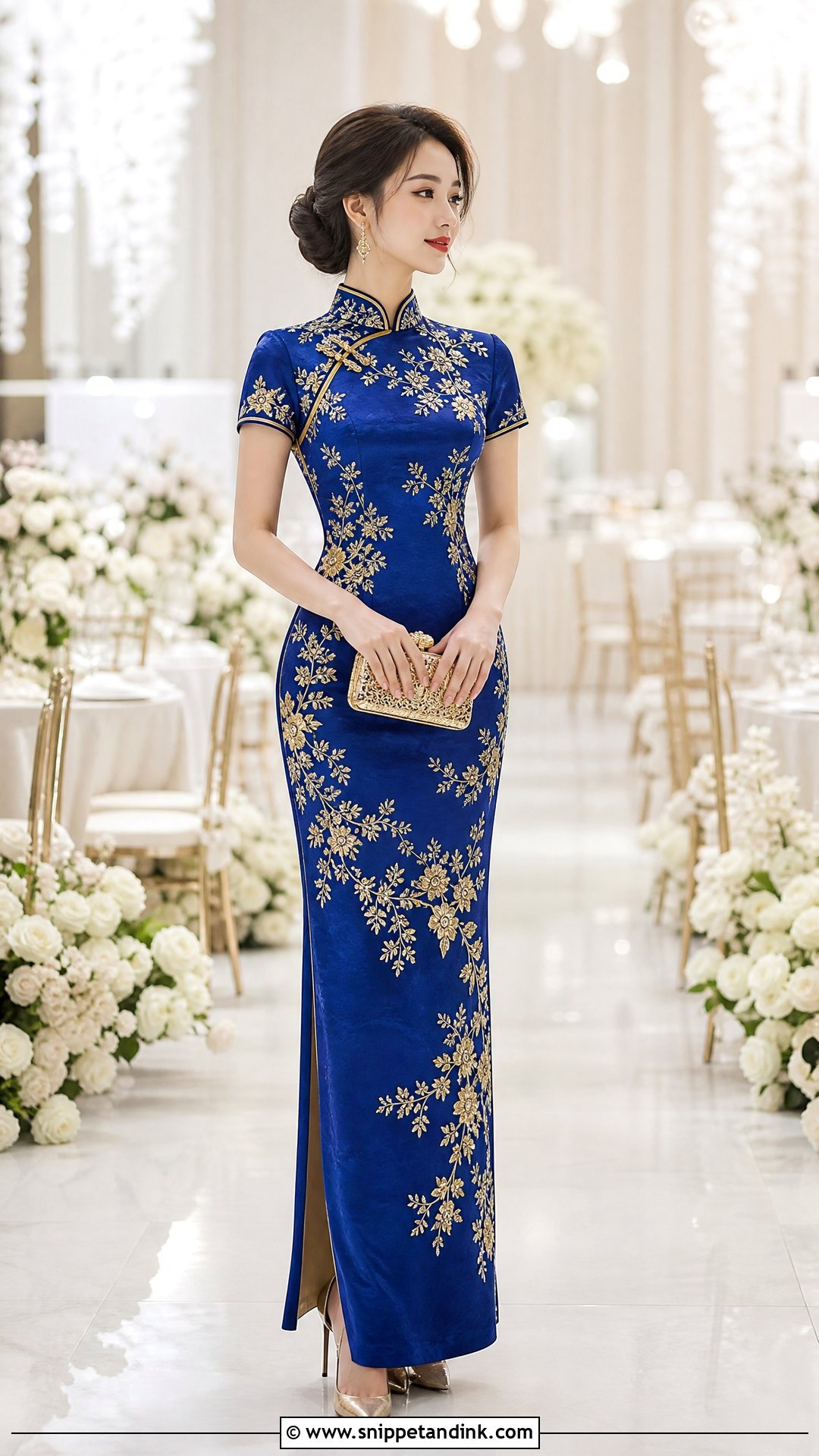
Blue gives a colourful qipao outside the red tradition. Navy, sapphire and blue-green carry gold, silver or multicoloured embroidery well. A fitted midi or floor-length dress with a clean collar and short sleeves. Choose one metal for all accessories and repeat it: metallic heels, a slim bracelet, drop earrings, a gold clutch. A soft low bun keeps it formal. Blue suits a rehearsal dinner, engagement banquet or reception change. Check it under the venue’s lighting, because dark blue satin can turn almost black in dim rooms.
16. Plus Size A-Line Qipao Wedding Dress
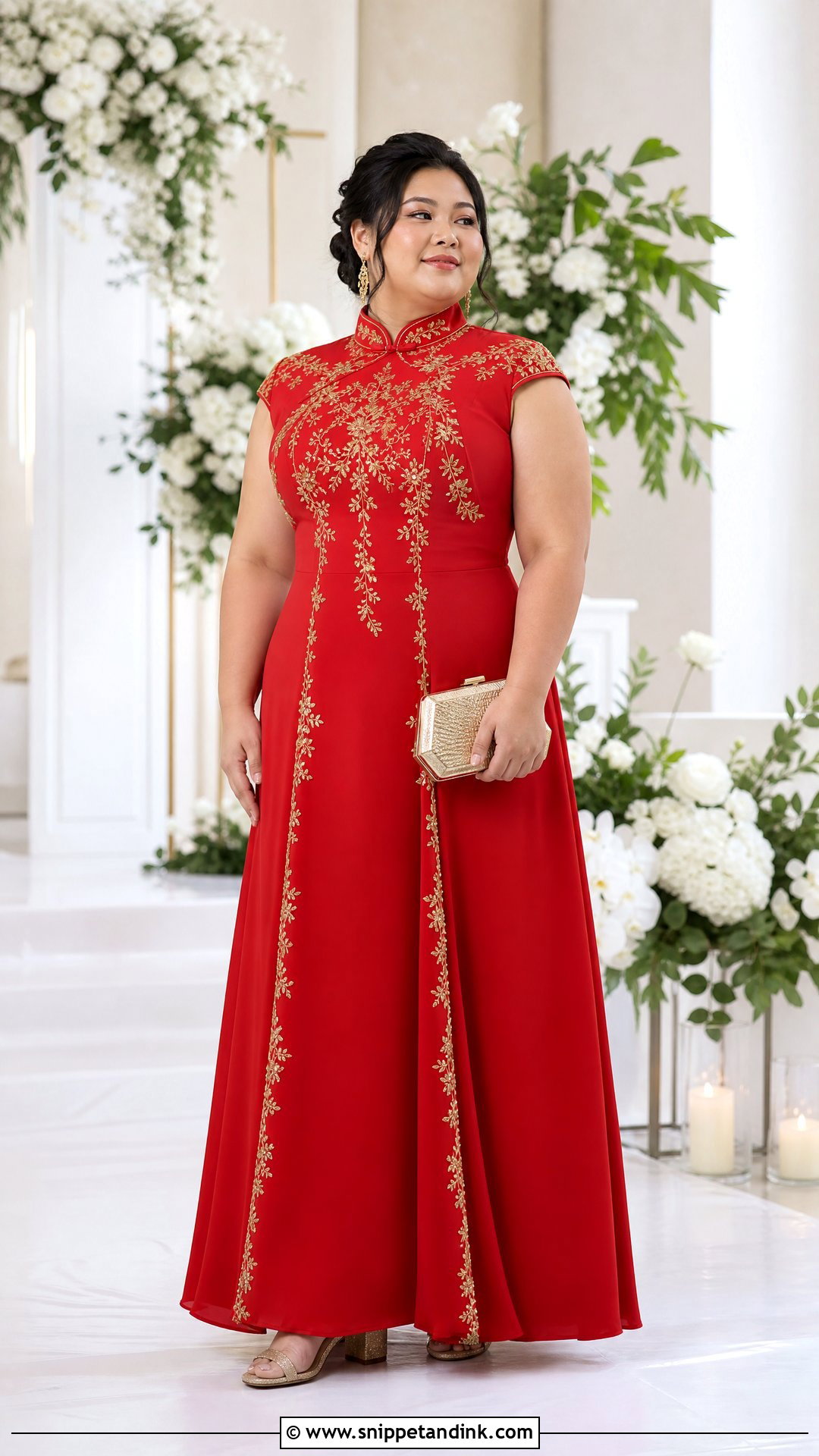
A-line is the qipao shape I recommend most to plus-size brides who find a pencil skirt restrictive. The skirt widens gradually from a well-placed waist seam, so it moves rather than clings. Red crepe or soft brocade has enough body to hold that shape. Vertical embroidery or diagonal piping draws the eye upward. Fit the collar first: a qipao collar that’s too tight feels like a hand at the throat all day, and it’s easy to fix if caught early. Then bust placement, sleeve movement and a smooth waist. Size to fit, never down. Stable block heels and a swept-back style complete it.
17. Petite Midi Qipao Wedding Dress
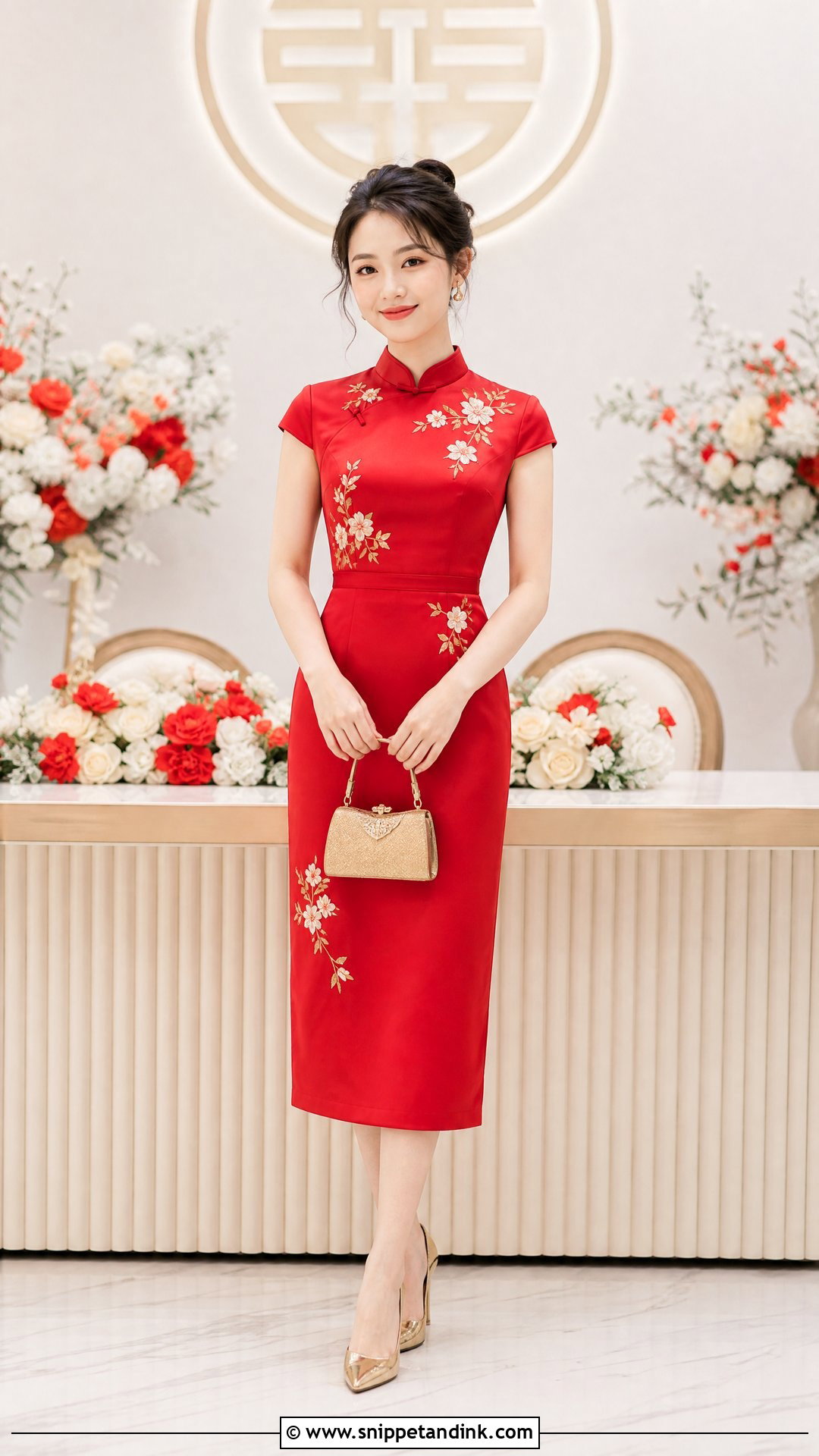
On a petite frame, a midi qipao looks best ending just below the knee or at the narrow part of the calf, never mid-calf where the leg is widest. A slightly raised waist and a narrow collar lengthen the line. Small-scale floral embroidery in red silk keeps the proportions right; big motifs swallow a small body. Pointed heels in red, gold or nude, compact earrings and a small bag; a neat updo adds height. Avoid long sleeves or wide cuffs unless they’re tailored to her arm. Hemming matters here more than anywhere. A centimetre changes the balance.
18. Maternity Empire Waist Qipao Wedding Dress
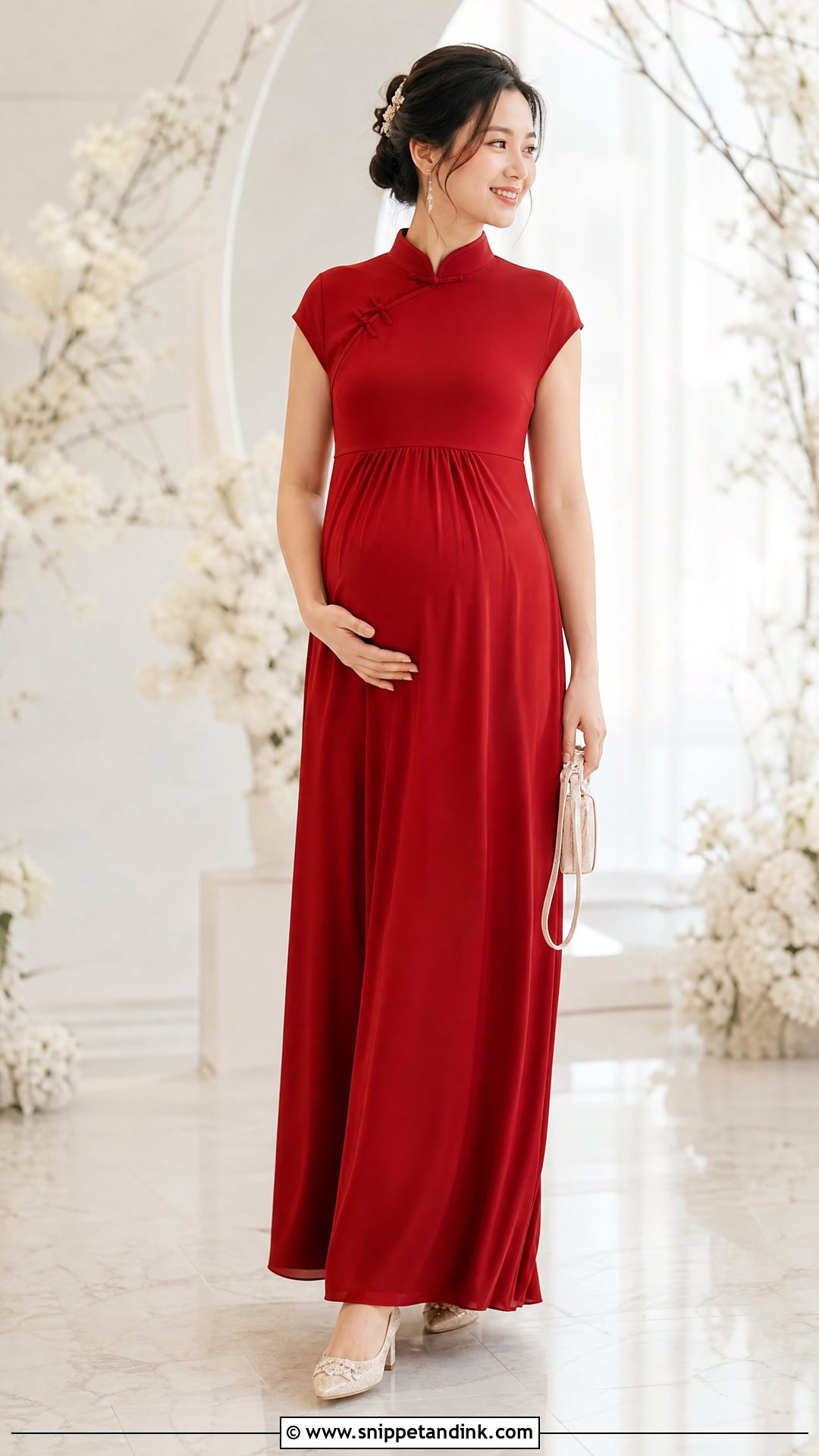
For a pregnant bride, an empire-waist qipao keeps the collar, the diagonal neckline and the knots while removing pressure across the middle. It should fit smoothly at the shoulders and bust and fall loosely below. Stretch silk, lined lace or soft crepe move with her. Low block heels or embellished flats, light earrings, a small wristlet and a softly pinned style keep her comfortable through a long ceremony. Book the final fitting as close to the wedding as your maker will allow. Keep heavy embroidery away from the waist, and ask for a breathable lining.
19. Short Qipao Reception Dress
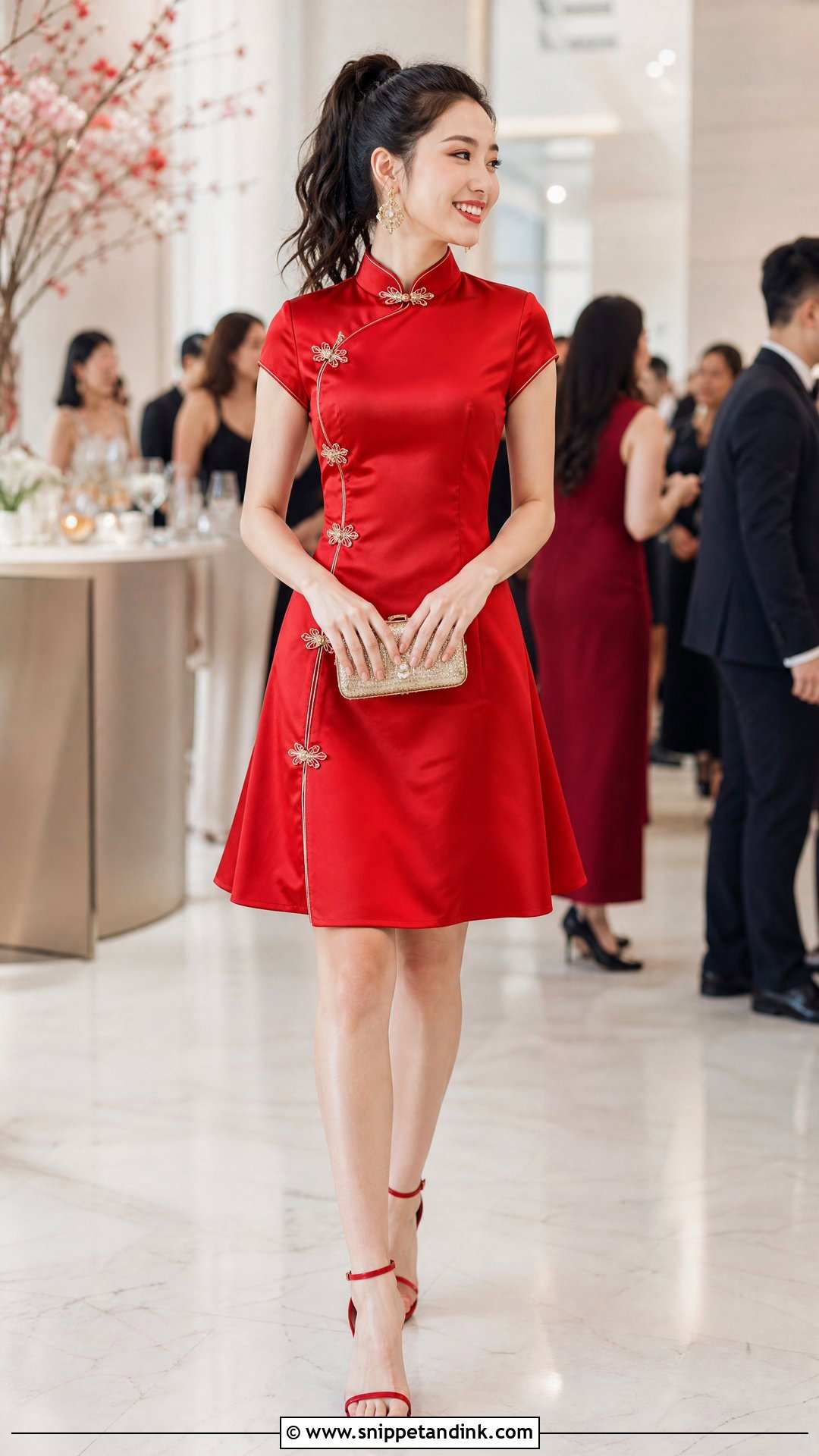
A short qipao makes a lively reception change while echoing the ceremony dress. Knee-length or above, in red satin, lace or embellished jacquard, with the collar and knotted closure. A fitted or softly flared skirt depends on how much she plans to dance. For a lot of dancing, I suggest built-in shorts or a slightly longer back hem; short fitted dresses ride up. Secure ankle-strap heels, statement earrings and a mini clutch, with a high ponytail or polished bun. It also suits an after-party or a courthouse ceremony.
20. Two Piece Qipao Wedding Outfit
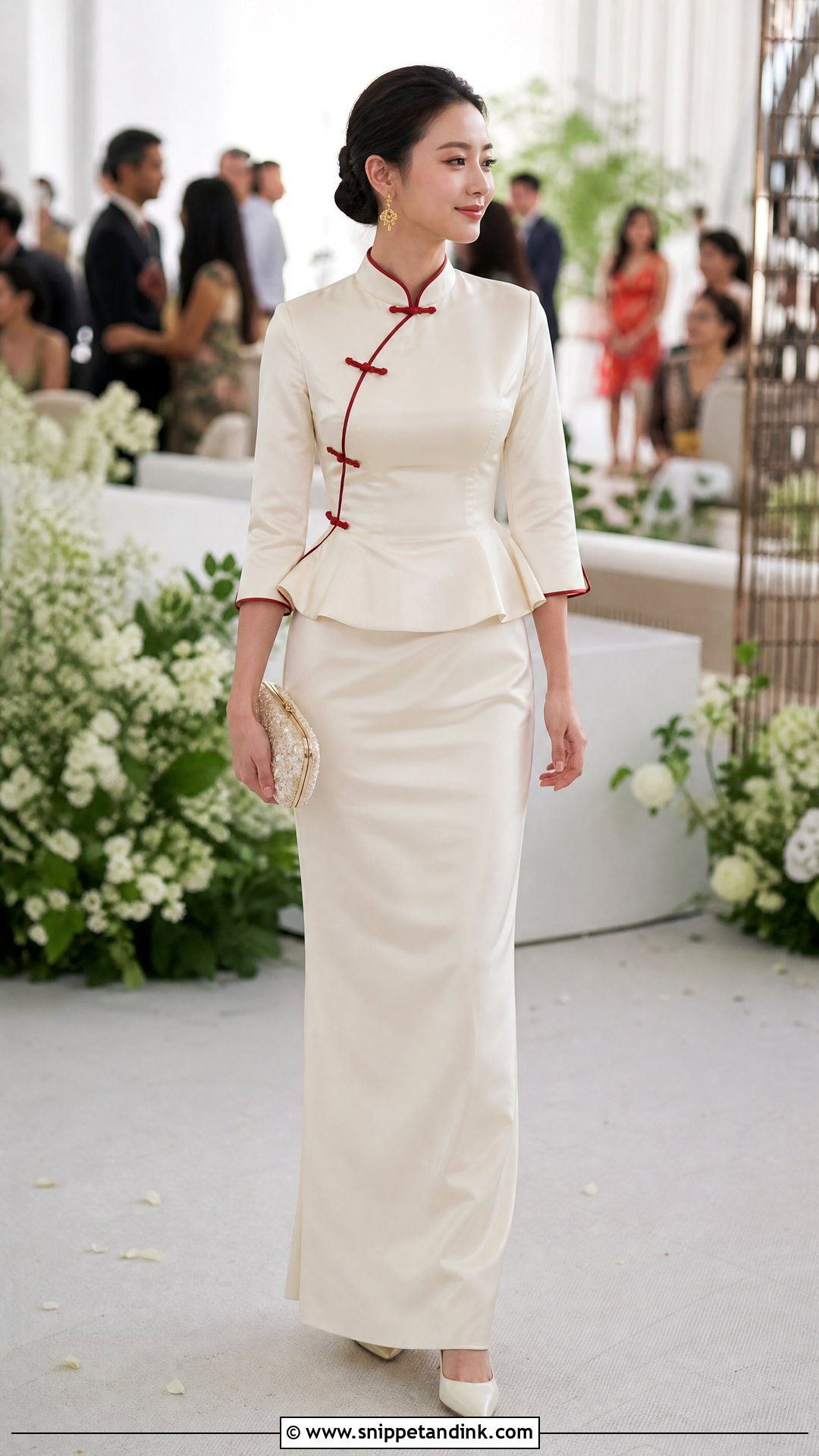
A two-piece qipao is easier to fit and easier to wear again. A Mandarin-collar peplum top or fitted jacket over a floor-length skirt; red brocade for tradition, ivory silk with red piping for something modern. Because the top and skirt are separate, a tailor can adjust each without disturbing the other, which helps brides whose top and bottom halves are different sizes. Test the waist overlap as she sits and raises her arms; a gap appears there first. Keep the colours unified so it reads as one outfit. Pointed heels, gold earrings and a low bun.
Planning the Changes Between Tea Ceremony and Banquet
Many Chinese weddings involve more than one outfit: often a red qipao or kwa for the tea ceremony, a gown for the main ceremony and something easier for the banquet. Brides sometimes plan three or four changes. That only works if the changes are planned like part of the schedule.
- Allow at least twenty minutes for each change, plus time for hair and makeup touch-ups. A qipao with many knot fastenings takes longer to do up than a zip.
- Assign one person to handle the changes: someone who knows the fastenings and keeps a kit with safety pins, fashion tape and spare knots.
- Wear the tea ceremony dress for the kneeling and bowing, and keep trains and heavy capes for later moments.
- Ask the family about colour customs. Red is the auspicious choice, while some elders consider all-white or all-black unlucky at a wedding.
After the wedding, have silk and brocade qipaos professionally cleaned, then store them flat or rolled in acid-free tissue. Hanging a heavily embroidered qipao for months stretches the shoulders and can distort the collar.
A Collar That Sits Right Matters More Than Any Embroidery
A qipao should honour what matters to you and your family and still let you move, sit, kneel and eat through a long day. Red brocade, ivory silk, lace, soft blush, heavy embroidery and modern two-pieces are all different ways to make a meaningful bridal outfit. Think about the ceremony, the venue, the weather, your family’s preferences and how many outfit changes you’re planning. Put most of your budget and time into tailoring. The collar should be comfortable, the skirt should let you walk, and every knot should lie flat.
You'll Like These Ideas:




Leave a Reply