
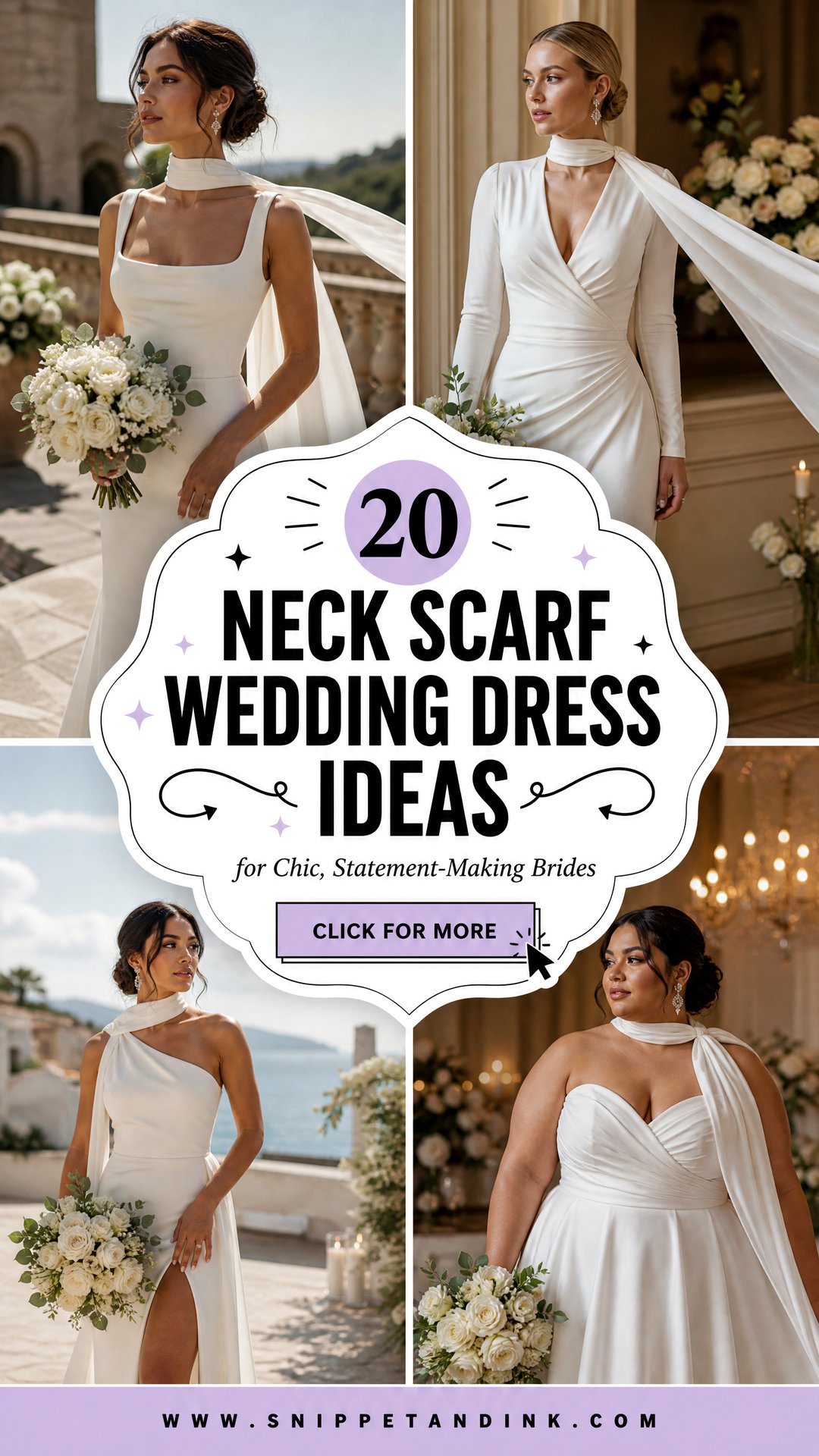
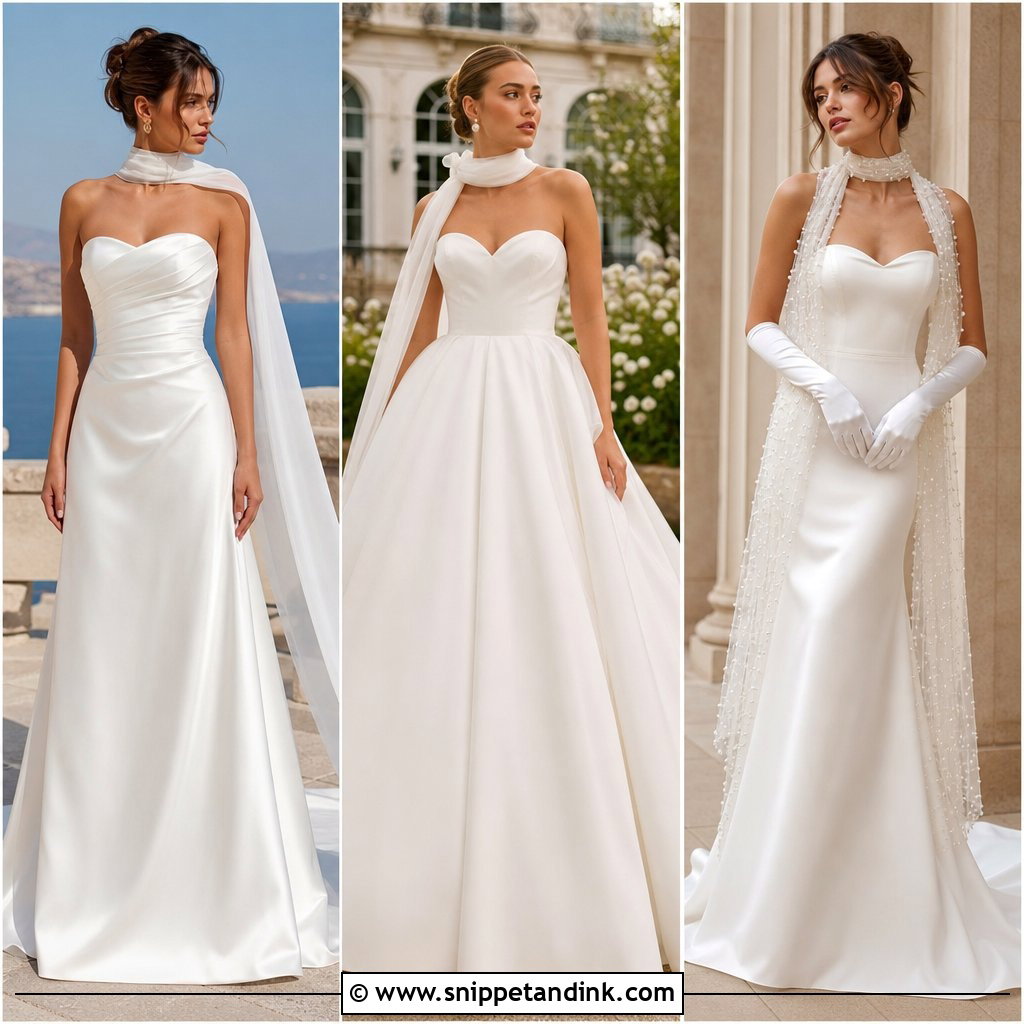
A neck scarf does something a veil can’t: it moves with the bride’s shoulders instead of hanging from her head, so every turn at the altar gets a little flutter behind it. I’ve seen it work over a bare satin column and over a full lace ball gown, either as a veil replacement, a frame for the neckline or a light trailing train. Designers have been sending skinny scarves and other unexpected accessories down bridal runways for a few seasons now, and brides have picked the idea up. The whole look rests on three decisions: the fabric, the length and how it’s draped. Get those right and the hair, shoes and bouquet just need to stay out of its way. Below are twenty gowns, each with the scarf styling I’d suggest for it.
How Long the Scarf Should Be for Your Height and Gown
The most common mistake I see is buying a scarf by the length that looked good on the model. A scarf that skims the floor on someone very tall will drag behind a petite bride and get stepped on. I measure from the nape of the neck to where the ends should finish, then add enough for the wrap.
- Mid-back finish: works with tea-length, minis and anything with a bustle.
- Hem-length: the ends finish level with the gown’s hem, which suits columns and slips.
- Trailing: about one to two feet beyond the hem, a veil replacement for long aisles. Have someone carry or arrange it for photos.
- Width: narrower for busy necklines, wider only when the bodice is plain.
If you can, order a little extra fabric. A seamstress can always shorten a scarf and finish the edge, but she can’t add length invisibly.
1. Strapless Satin Neck Scarf Wedding Dress
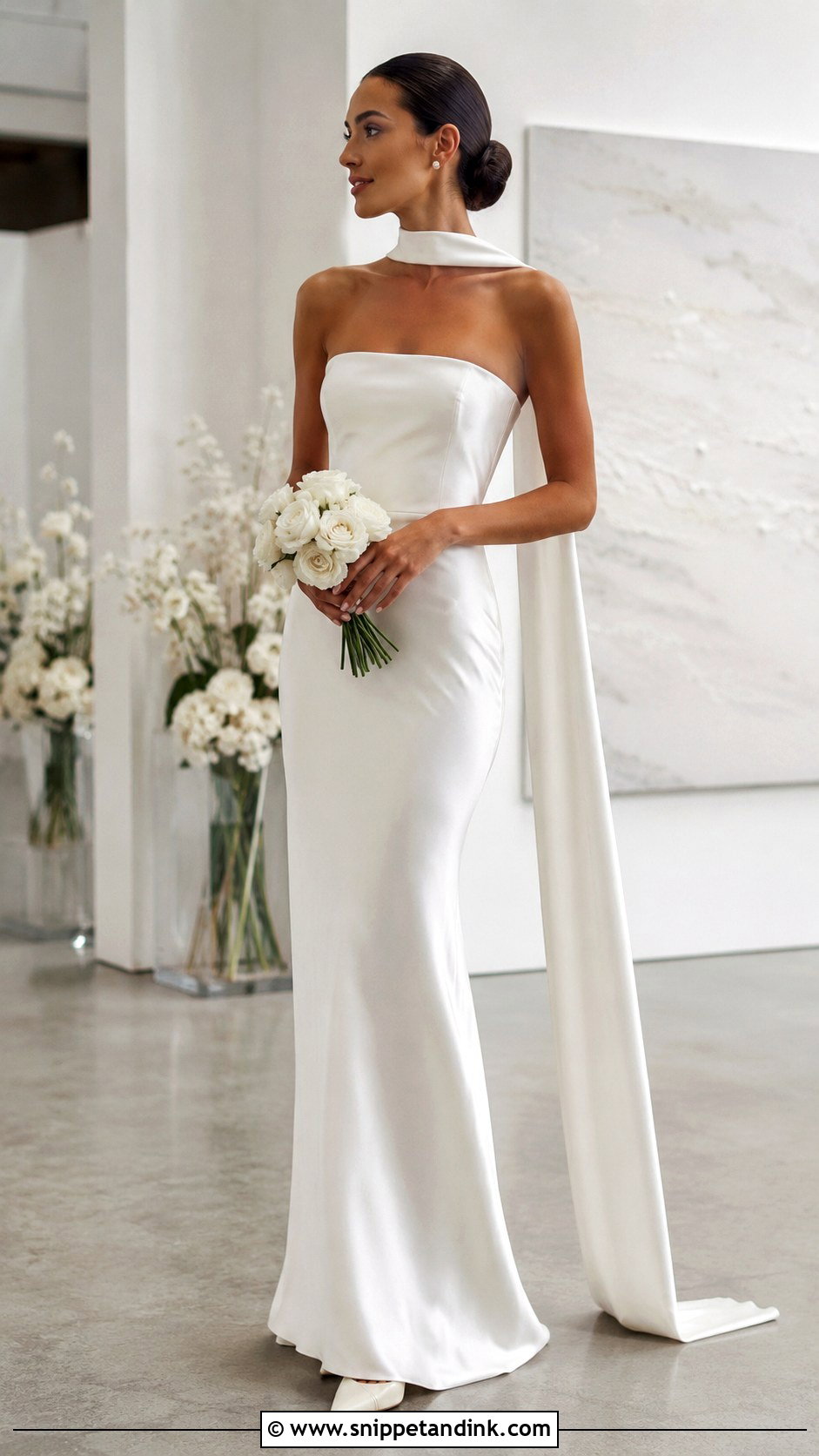
Satin on satin is the cleanest way to start. A strapless column in structured satin or Mikado holds its shape, and a matching scarf wrapped once around the neck with both ends falling down the back adds movement without covering the bodice. I’d always cut the scarf from the same bolt as the dress if the bridal shop can do it, because two “ivory” satins from different mills rarely match under flash. Pointed ivory pumps, pearl studs and a sleek low bun, which also stops the scarf catching in loose hair. A compact bouquet of white roses or callas. Galleries and hotel ballrooms suit it.
2. Square Neck Crepe Neck Scarf Wedding Dress
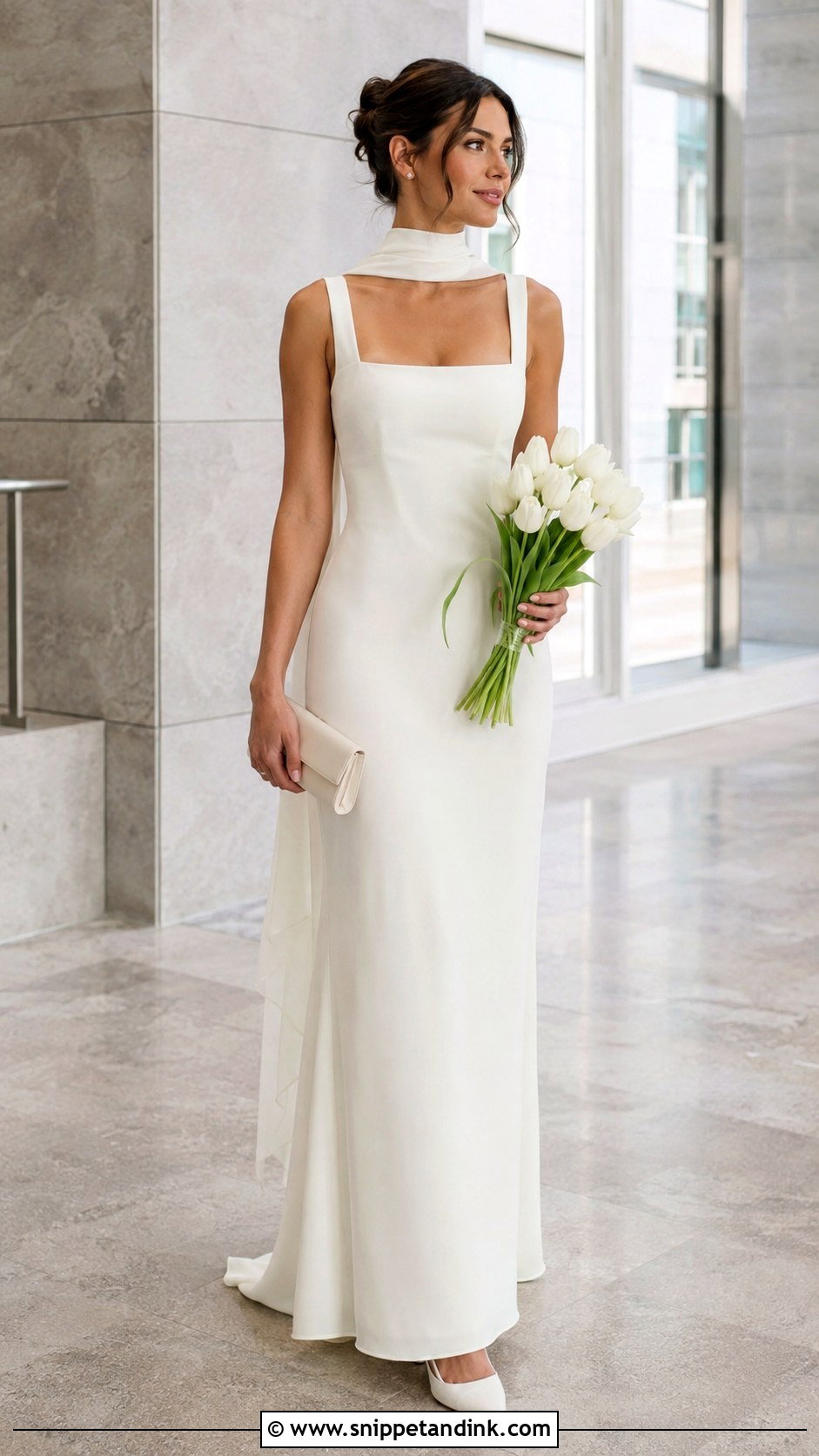
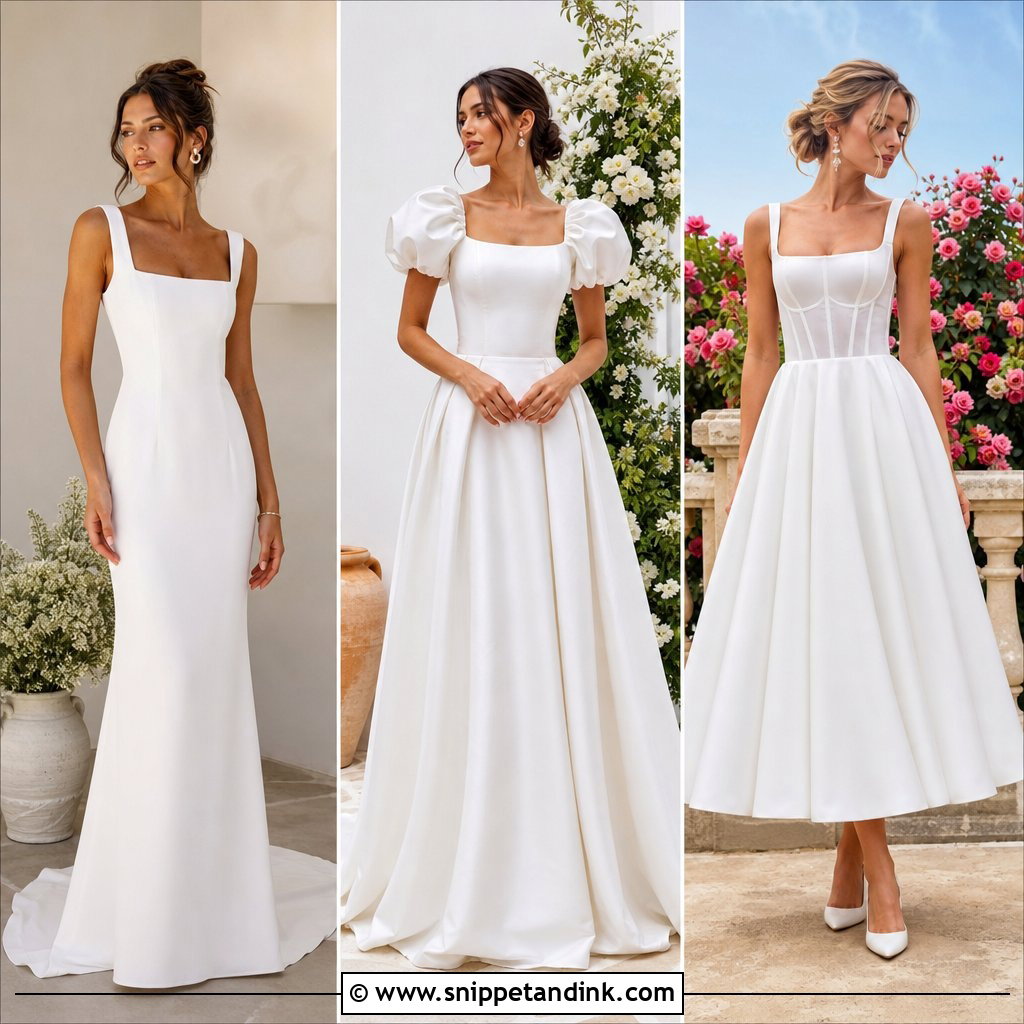
With a square neckline, the straight edge is the feature, so the scarf must stay narrow. Heavy crepe would sit on the corners and soften them; a narrow chiffon scarf lets them show. Drape it loosely, one end over the shoulder and the other down the back. Closed-toe slingbacks, a structured ivory clutch, small diamond or crystal studs, and a soft chignon. White tulips add a few curves to all that geometry. Crepe is forgiving to sit in for hours, which makes this my pick for a bride who’d rather be comfortable than sparkly at a courthouse or contemporary venue.
3. Basque Waist Neck Scarf Wedding Dress
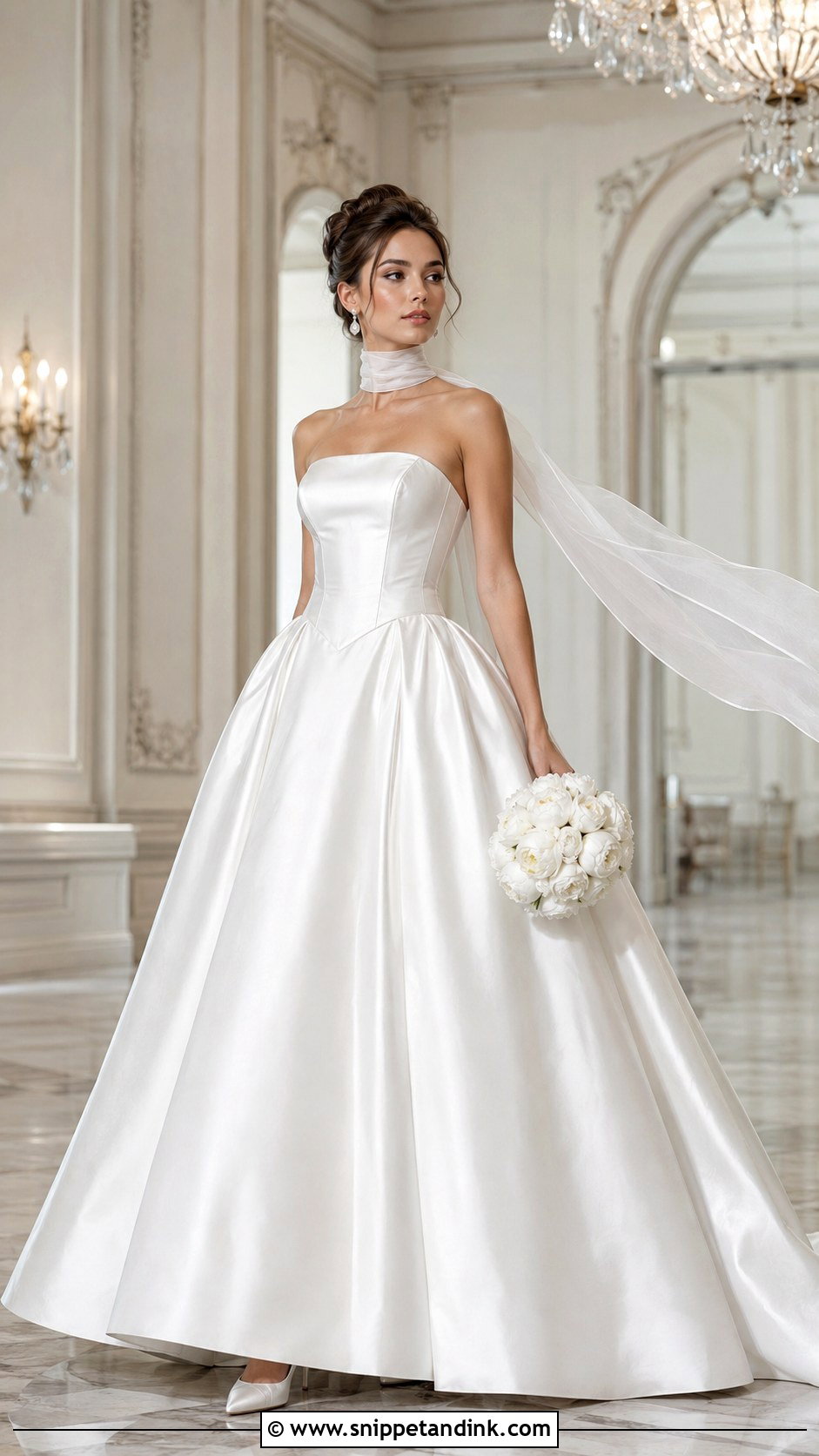
A basque waist dips into a point at the front and makes a full skirt look even fuller. Against that much structure, I want the scarf to look almost weightless, so I’d use organza and let the ends float behind the shoulders rather than tying a knot that sits bulky on the collarbone. Ivory satin, silk faille or Mikado gown; satin pumps; a cathedral train if the room is big enough. Neat updo, drop earrings, a rounded bouquet. No necklace, since the scarf already frames the neck. It’s a modern take on a traditional princess wedding dress, and it needs a ballroom or a long aisle to show off.
4. Drop Waist Neck Scarf Wedding Dress
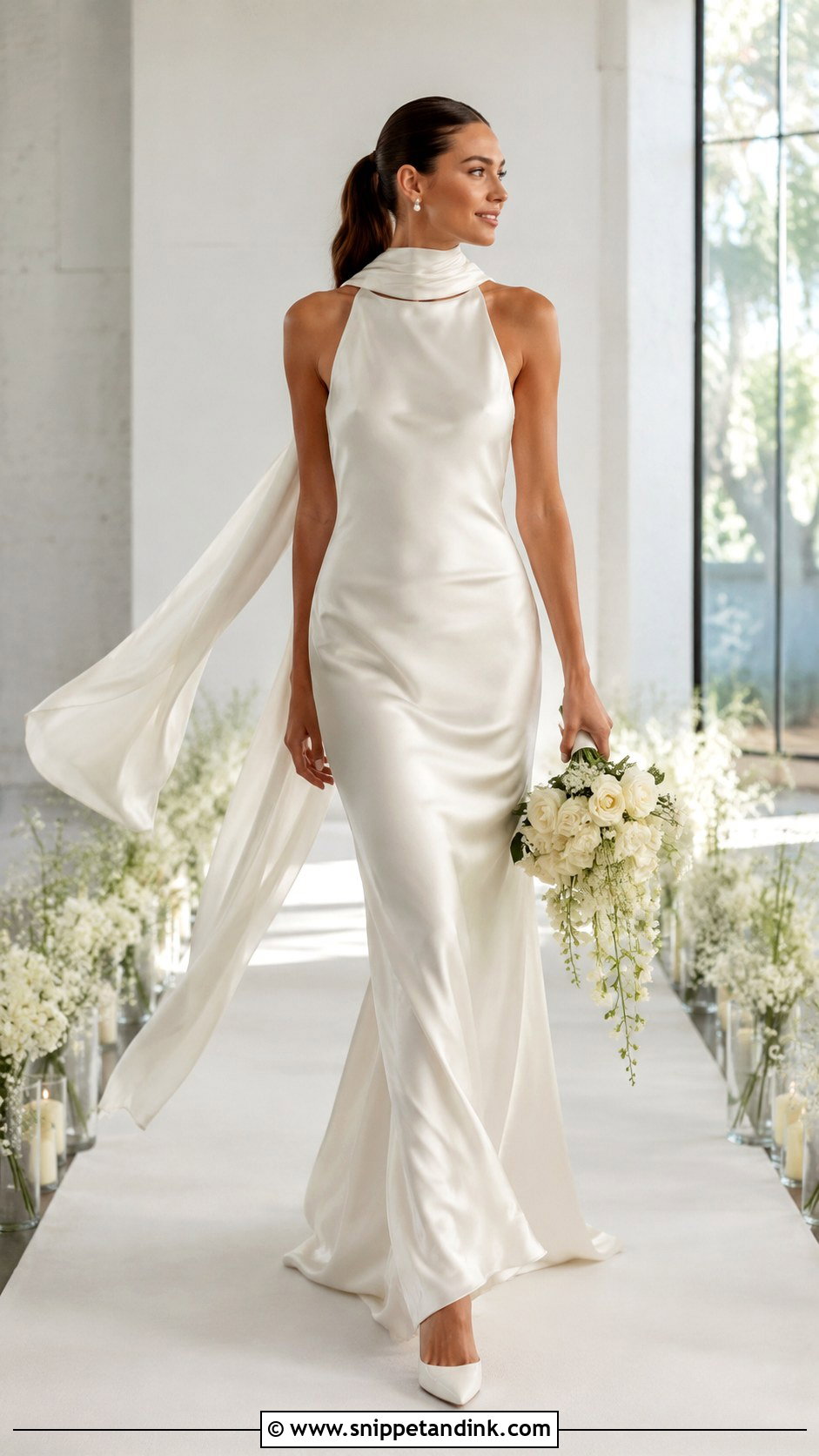
Drop waists lengthen the torso before the skirt opens, which flatters straighter, longer bodies more than very curvy ones. Keep the scarf a slim satin that matches the dress exactly, and knot it loosely at the nape so the front stays uninterrupted. Low pointed heels, pearl earrings, a smooth bun or polished ponytail depending on how formal the venue is. A small cascading bouquet repeats the scarf’s vertical line. This works best on a dress with very few seams or embellishments. The proportion is the interesting part, and decoration only distracts from it.
5. Lace A-Line Neck Scarf Wedding Dress
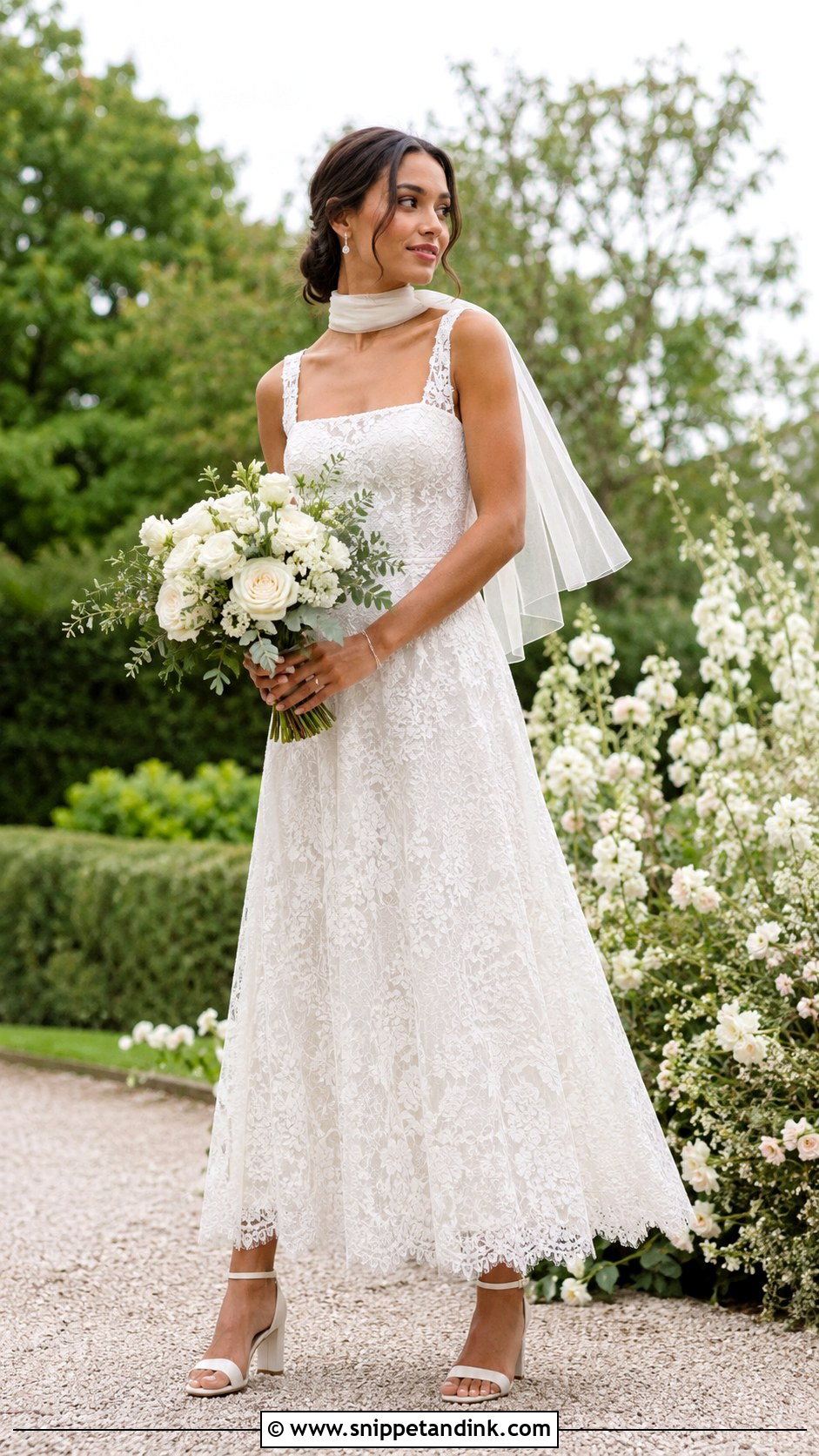
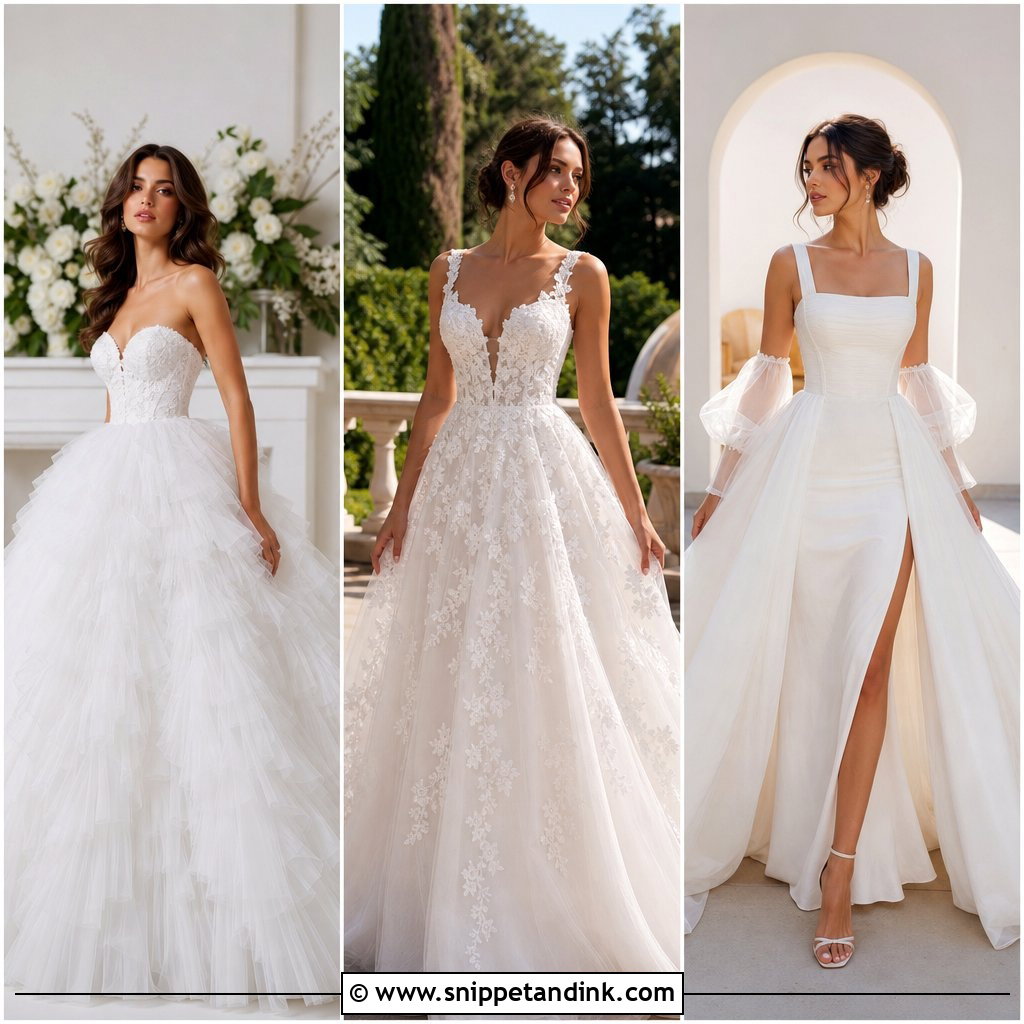
Lace and a lace scarf together can look like too much of a good thing. I usually suggest plain tulle, or tulle with only a thin lace edge, so the dress keeps its texture to itself. Drape it close to the neck and let the ends flow down the back. Tulle catches on lace motifs, though, so do a test walk in the shop and see whether the ends snag on the skirt. Ivory block heels for garden paths, pearl earrings, a delicate bracelet, a loose low bun with a few face-framing pieces. Garden roses with seasonal greenery. Daylight shows lace best, so gardens and historic estates are ideal.
6. Silk Slip Neck Scarf Wedding Dress
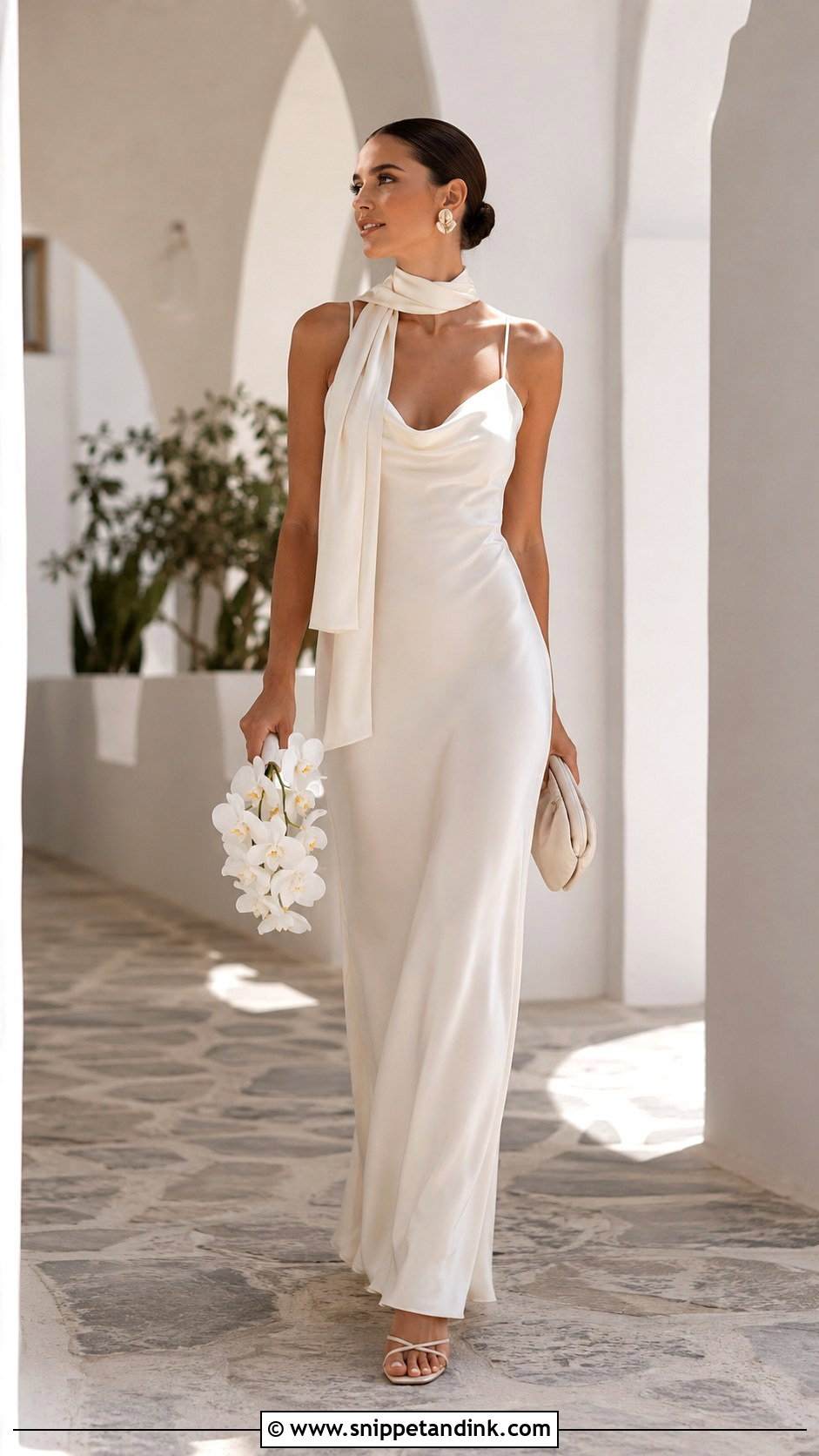
A silk slip and a narrow matching scarf is about as minimal as bridal gets. The gown should skim, not cling, usually with bias cutting that lets it fall over the hips. I’d warn any bride that bias-cut silk shows every line underneath, so try it on with the exact underwear you’ll wear. Wrap the scarf loosely with one end a little longer than the other. Strappy minimal heels, a sculptural earring, a silk clutch, a smooth bun or waved bob. Keep makeup natural; the fabric already has sheen. Orchids or callas finish it. Intimate ceremonies and destination weddings suit it.
7. Off Shoulder Neck Scarf Wedding Dress
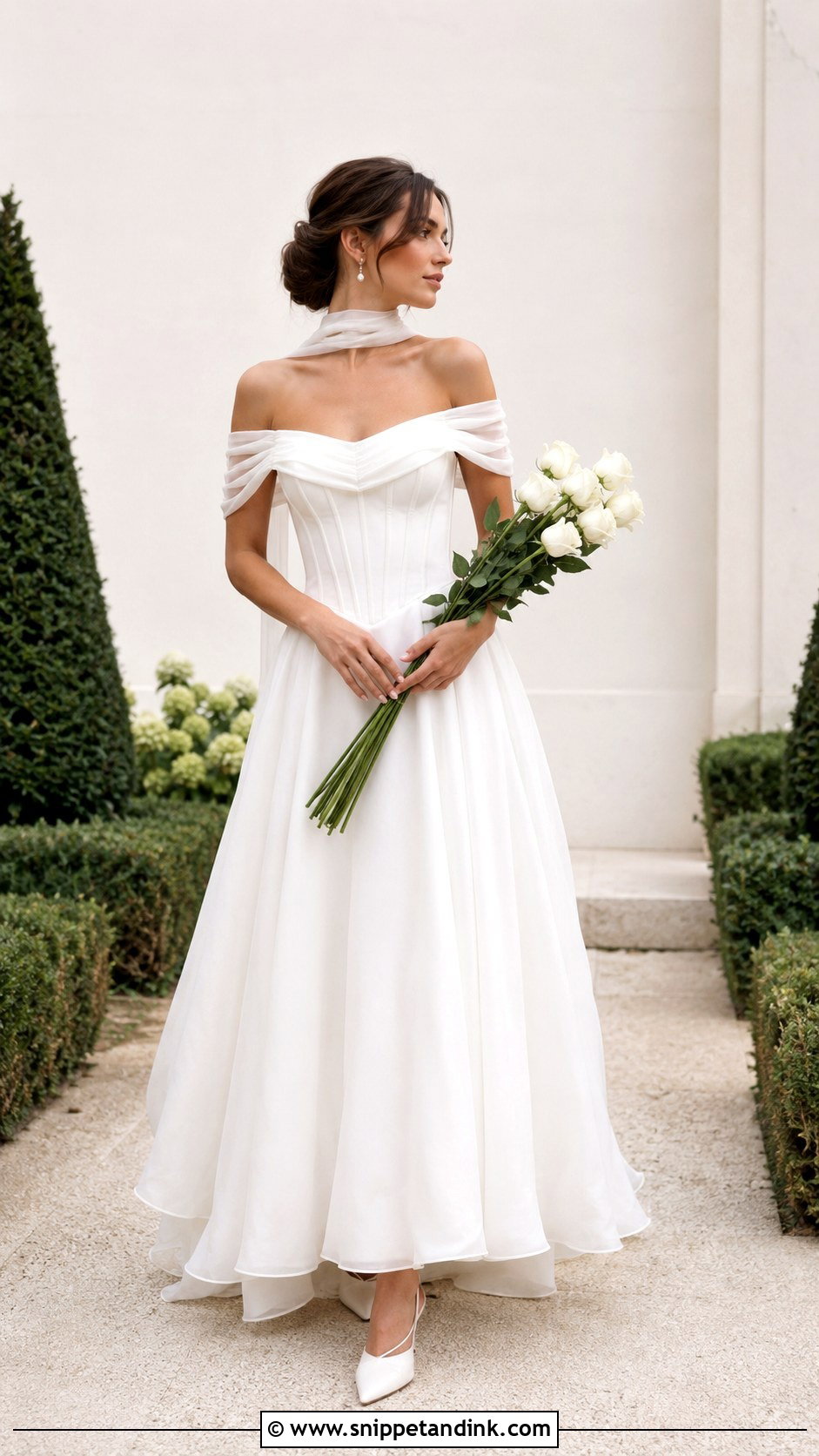
Off-the-shoulder necklines already show the collarbone, so the scarf has to be the lightest thing on the dress. A detachable chiffon or organza piece resting at the base of the neck is right; anything heavier pulls the eye up and fights the bodice. Fitted corset, flowing A-line skirt, satin slingbacks, drop earrings and a low twisted updo. Skip bracelets if the sleeves are draped or folded. Long-stemmed white roses suit the line. Off-shoulder sleeves also restrict how high she can lift her arms, so I check this at the fitting by asking for a full hug. Formal gardens and classic estates.
8. Halter Neck Scarf Wedding Dress
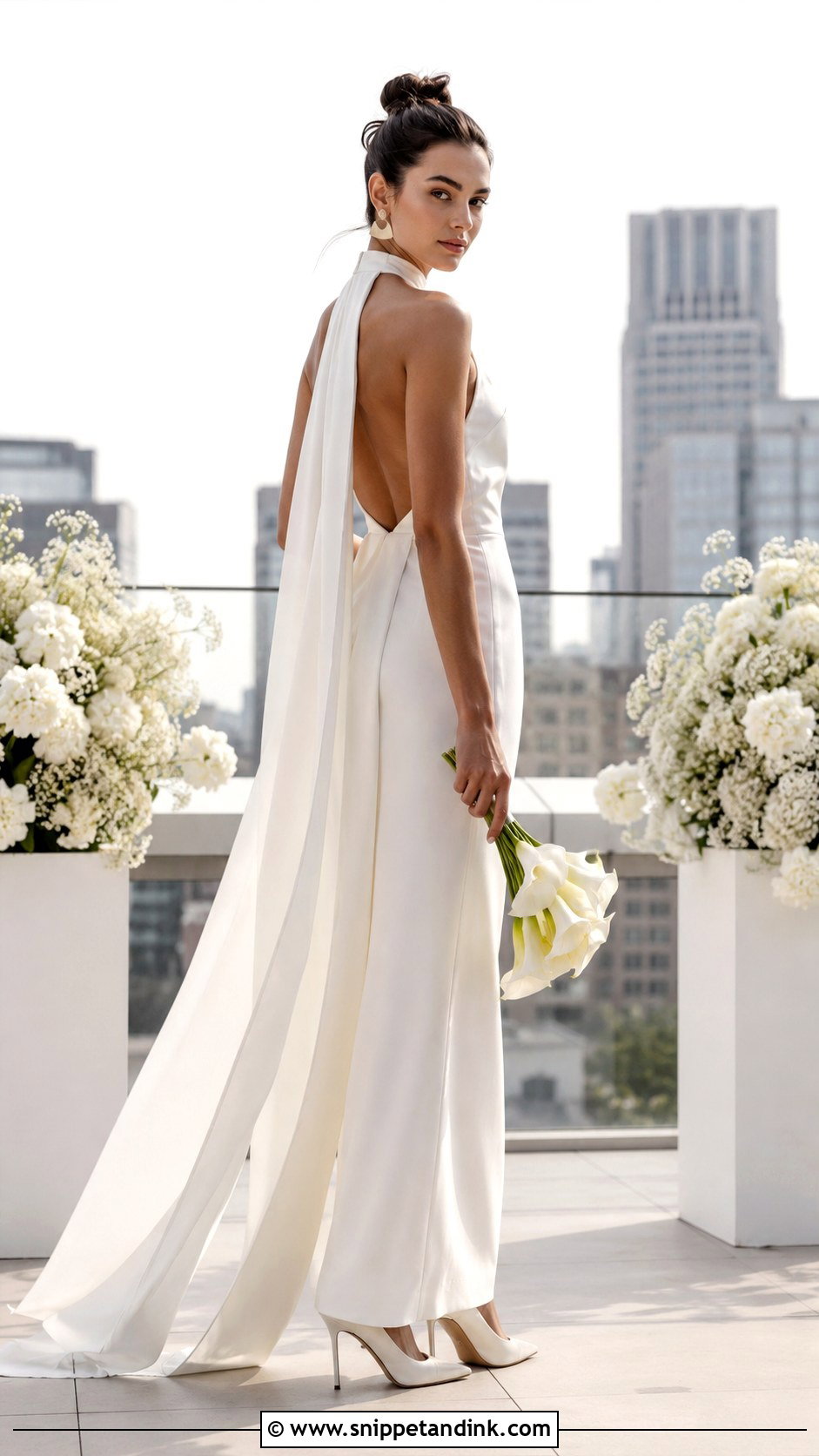
Here the scarf is part of the dress. A halter gown with fabric extending from the collar and falling down the open back looks like one continuous piece, which is cleaner than adding a separate wrap. Satin or crepe column, sleek pumps, geometric earrings, high bun, no necklace, and a narrow bouquet. Because the scarf hangs from the halter, any weight on it pulls on the neck, so walk and sit in it before buying and ask whether the seamstress can add a hidden hook at the nape. Rooftops and modern ballrooms are its natural setting.
9. Long Sleeve Neck Scarf Wedding Dress
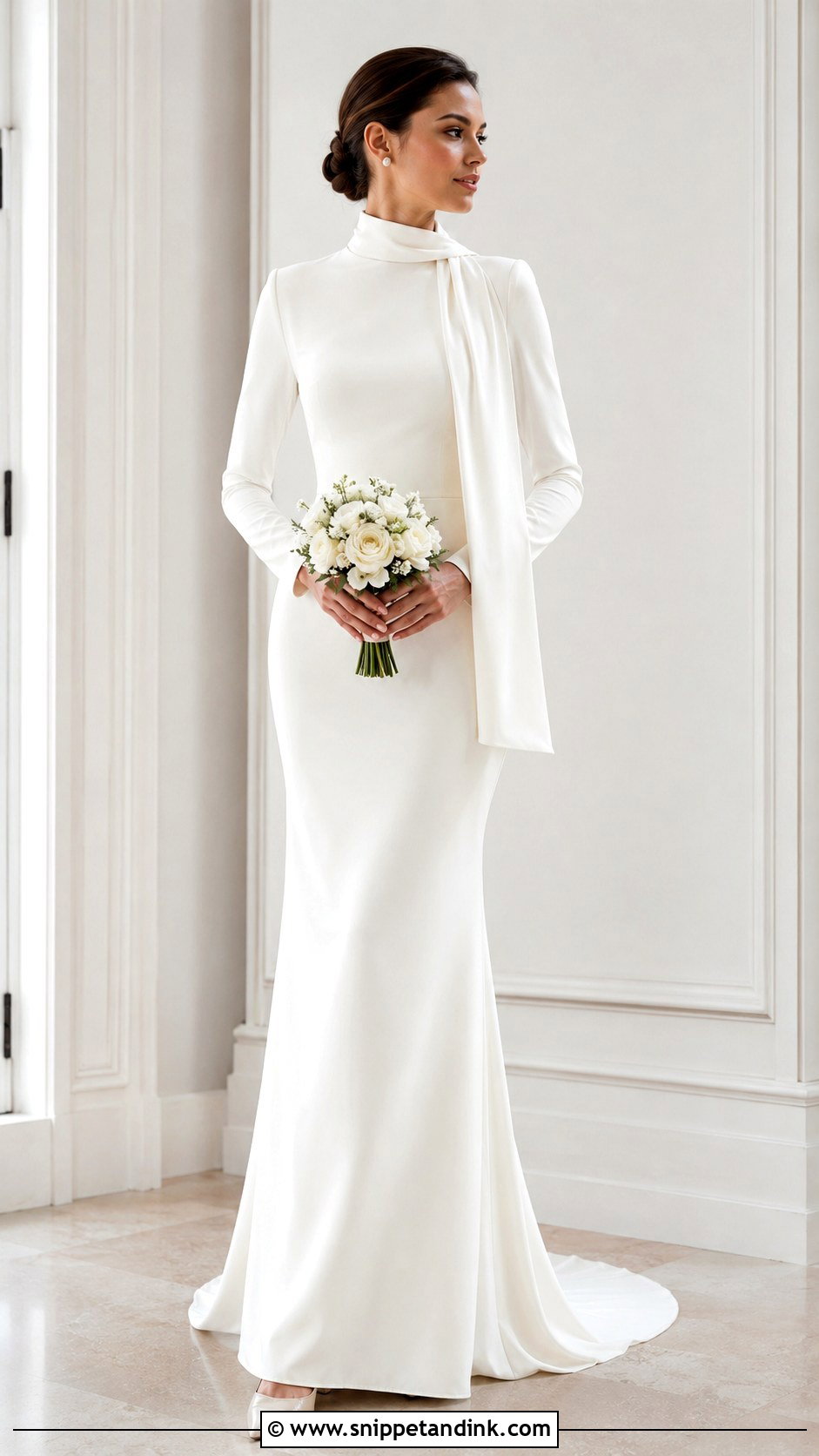
Long sleeves and a scarf can crowd the upper body quickly. My fix is to keep both light: a fitted crepe gown with plain sleeves and a narrow chiffon scarf placed loosely. No dense lace, no big cuffs, no bulky knot. Pointed ivory heels, pearl studs and a low bun. If she wants a veil too, attach it under the bun so it falls beneath the scarf, and test it with both on, since two sheer layers can tangle when she turns. A compact white bouquet. For cooler seasons and formal ceremonies, it gives coverage without stiffness.
10. High Neck Scarf Wedding Dress
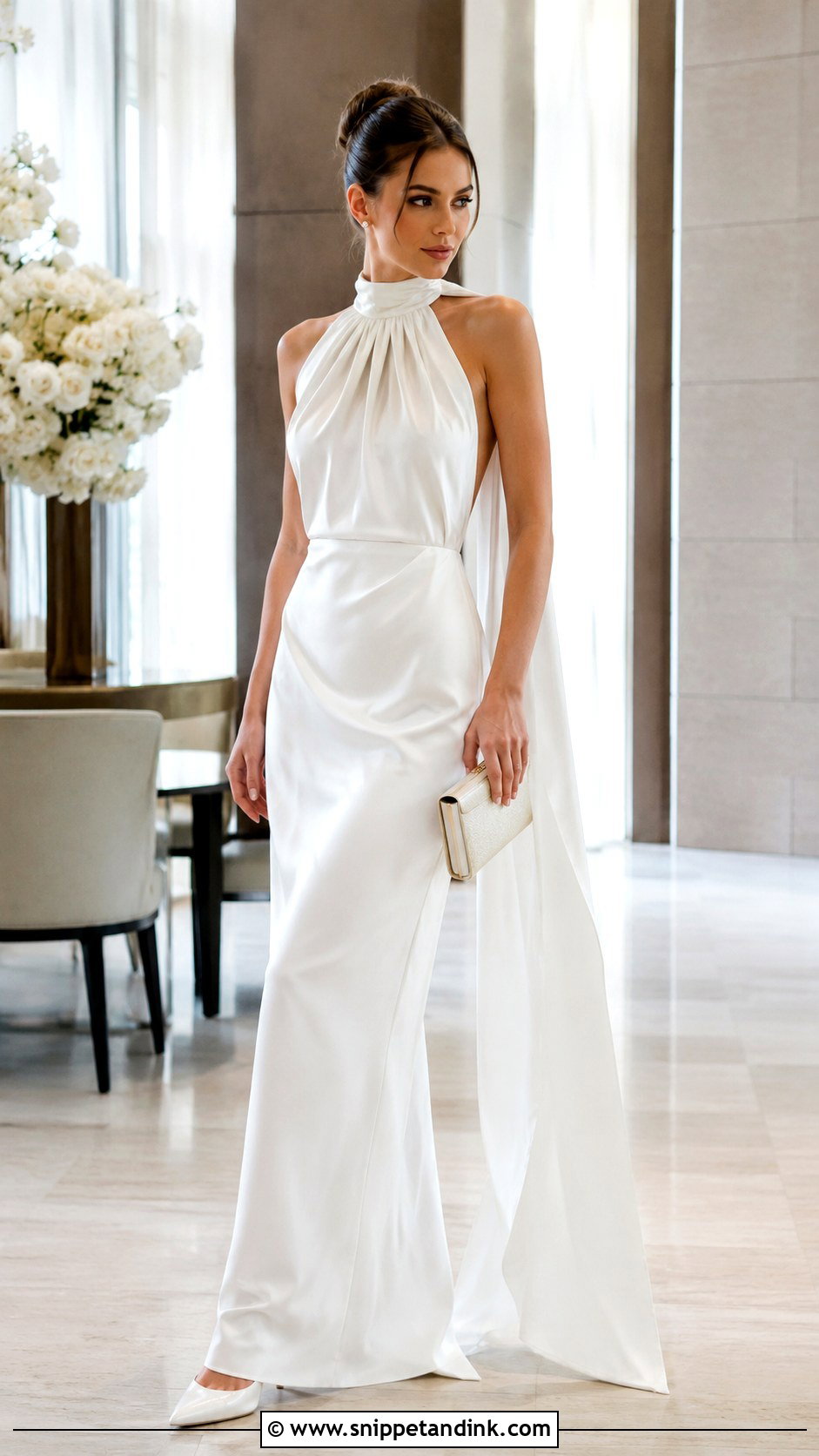
High necklines only work with a scarf when the two are designed together. The best version I’ve seen is a softly gathered neck that extends into two scarf-like panels at the back. Fluid silk, satin or chiffon; thick fabric bunches under the chin. Straight skirt, pointed pumps, a small structured bag, and hair pulled up high so nothing interrupts the neckline. Studs only. A long-stemmed bouquet mirrors the panel length. This suits a bride who wants coverage at the throat and a little runway drama behind her.
11. Sweetheart Neck Scarf Wedding Dress
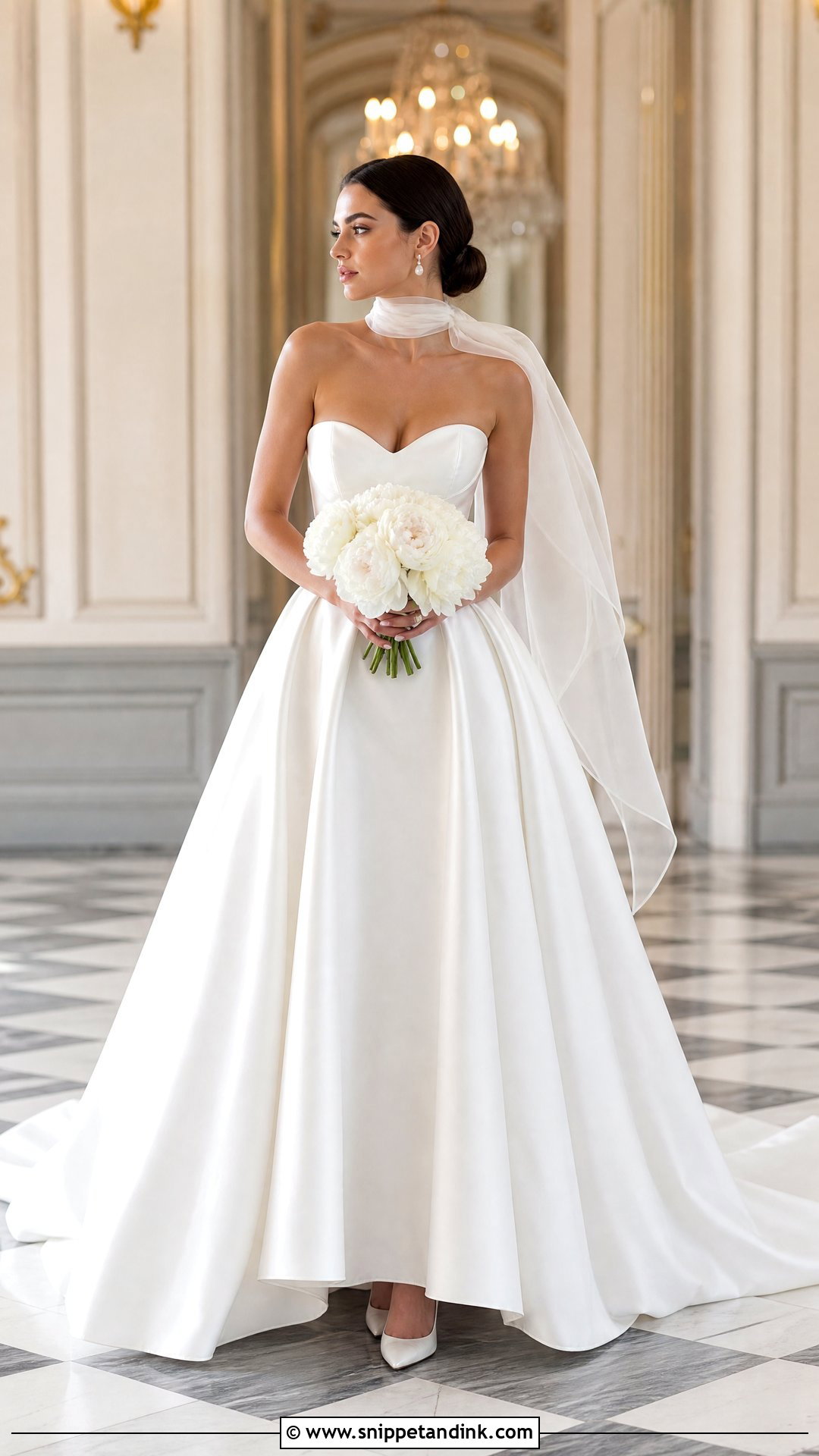
A sweetheart bodice makes the scarf look romantic rather than editorial. Start with a strapless fitted gown, then add a translucent organza scarf in exactly the same ivory, tied loosely at the back so the curved neckline stays visible. A full satin skirt, pointed pumps, pearl drops and a sculpted low bun. Peonies or roses suit the rounded shapes. Strapless sweethearts rely on boning and a snug fit to stay up, and a scarf tied too tight can drag the bodice down at the back, so I tie it with a fingertip of slack. Ballrooms and estates.
12. Chiffon Neck Scarf Wedding Dress
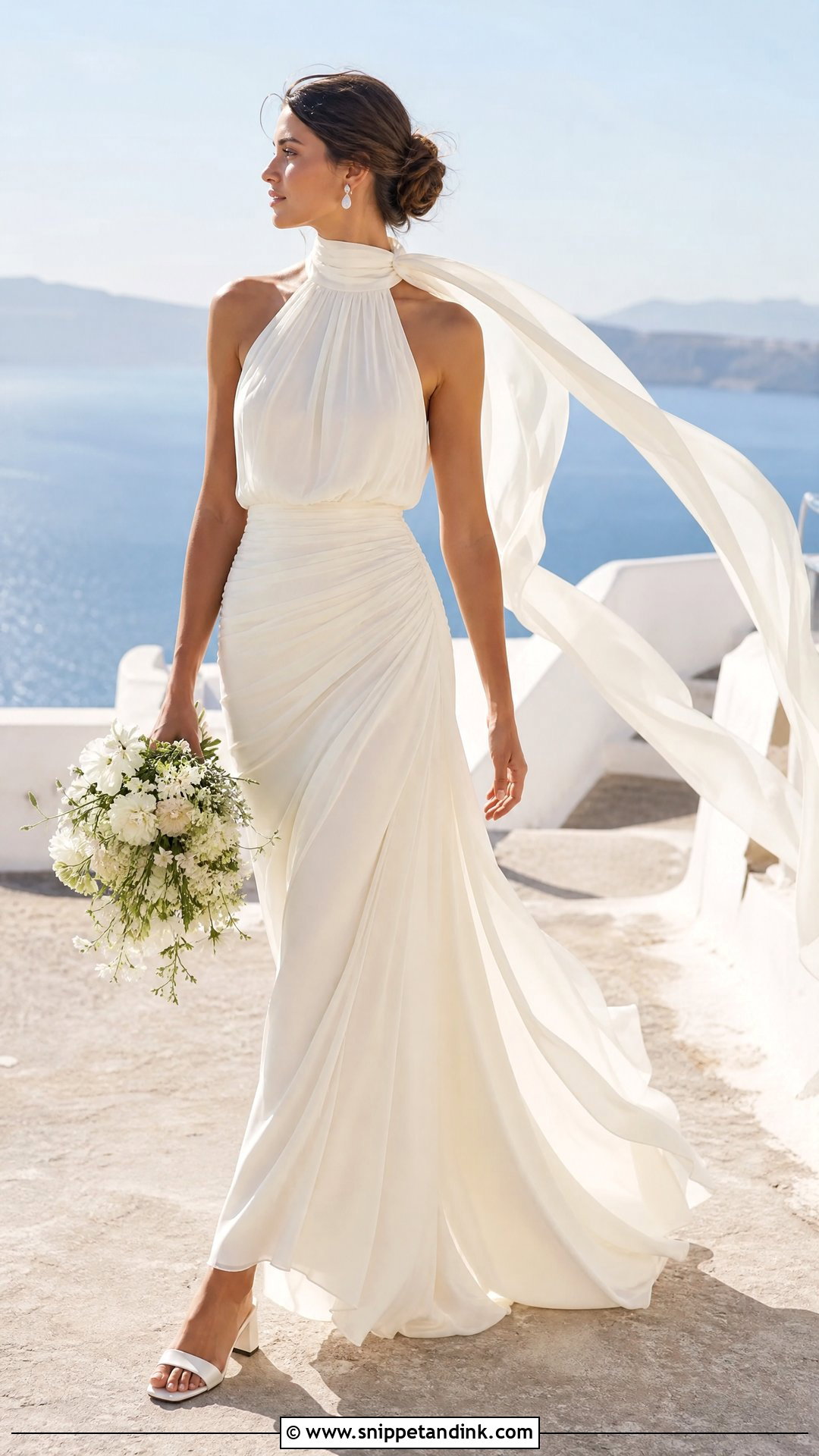
Chiffon is the fabric that moves most in a breeze, so it’s my first suggestion for coastal and garden ceremonies. A softly draped gown with a fitted waist, plus a matching scarf long enough to trail behind the shoulders after a single loose wrap. Block-heel sandals for uneven ground, delicate earrings, a relaxed low bun. Cosmos or sweet peas echo the lightness. Chiffon pulls easily, so keep it away from textured jewellery, sharp bobby pins and crystal hair combs. In real wind, the scarf will blow forward over her face, so I tuck one end into the back of the bodice for the vows.
13. Mini Neck Scarf Wedding Dress
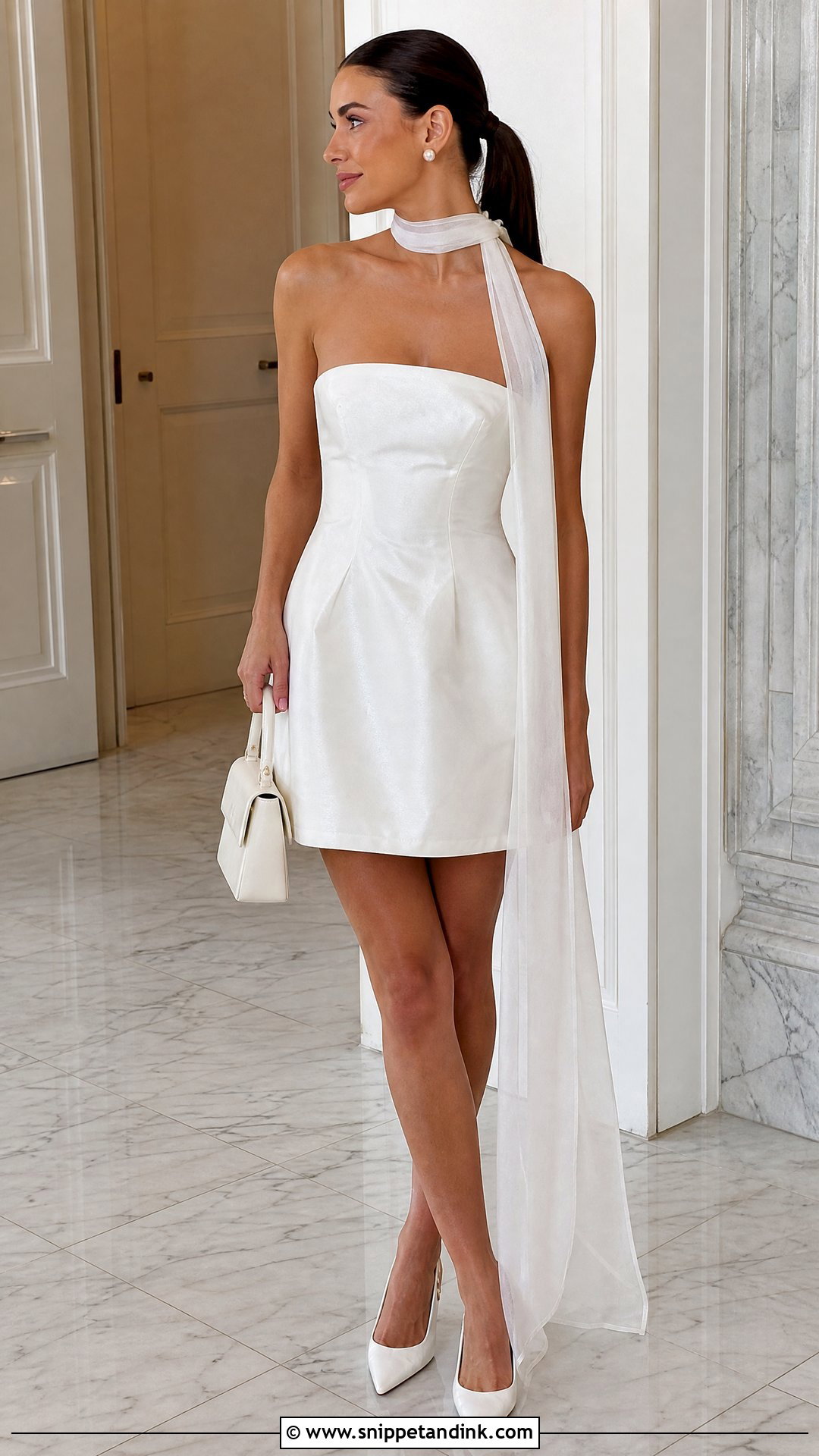
A mini dress plus a long scarf gives a short look real bridal drama, because the fabric extends past the hem and makes the outfit look taller. Choose a structured strapless mini in satin or crepe and wrap a sheer scarf once, letting it fall below the skirt. Slingbacks, pearl studs, a top-handle bag, and hair in a neat bun, sleek ponytail or short glossy waves. For a ceremony that calls for more length, add a removable overskirt and reveal the mini later. Courthouses, welcome parties and receptions are where I’d use it.
14. Tea Length Neck Scarf Wedding Dress
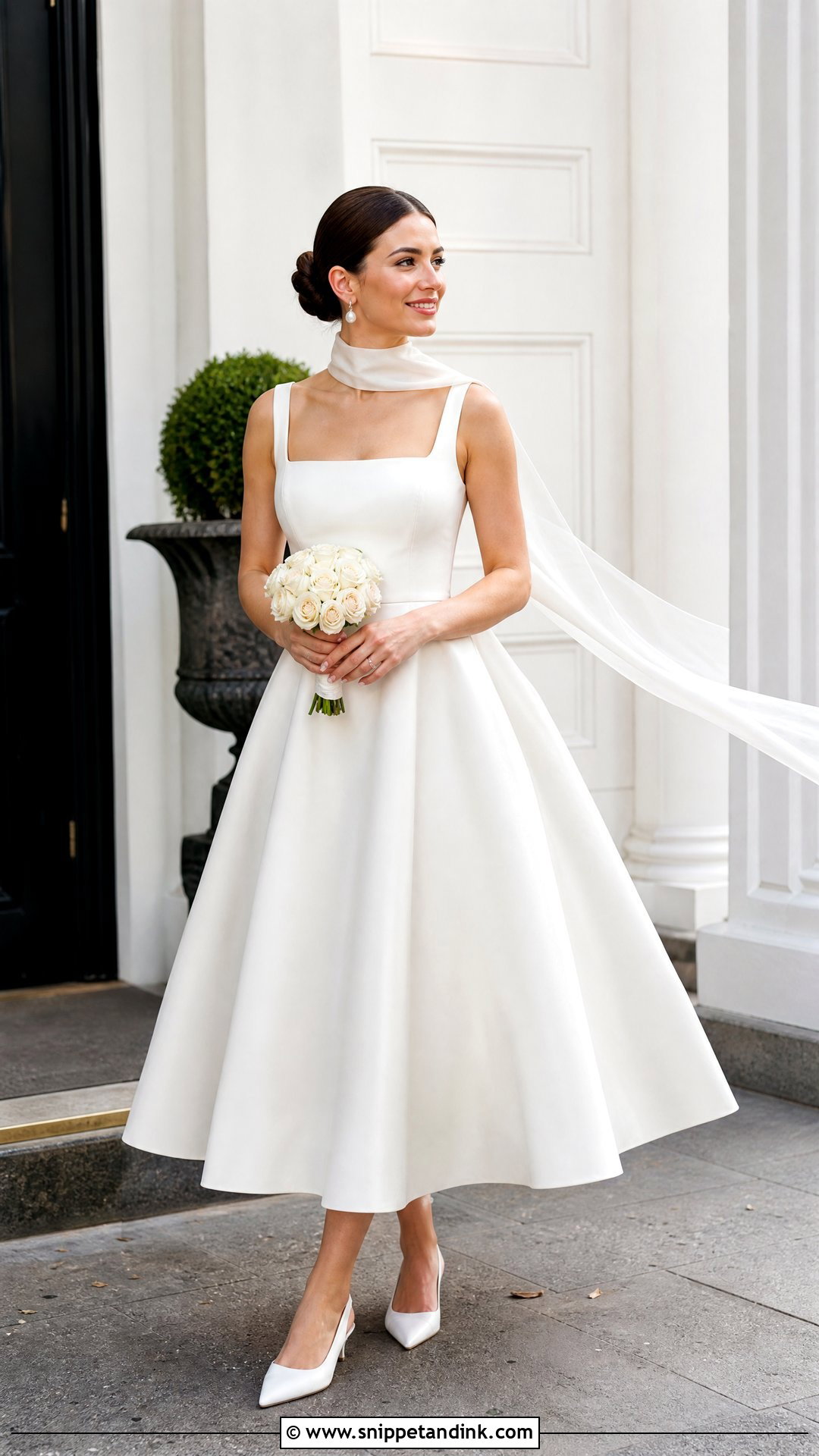
Tea length shows the shoes, so the shoes become half the outfit. Pick kitten heels, slingbacks or pointed pumps with some character. The dress itself, strapless or square-neck, with a fitted waist and a hem between knee and ankle, has a vintage feel; a slim scarf wrapped once with the ends stopping mid-back modernises it. Long trailing ends would overpower the short skirt, so keep them shorter than on a floor-length gown. Pearl earrings, a smooth low bun, a compact rose bouquet. City ceremonies and afternoon receptions.
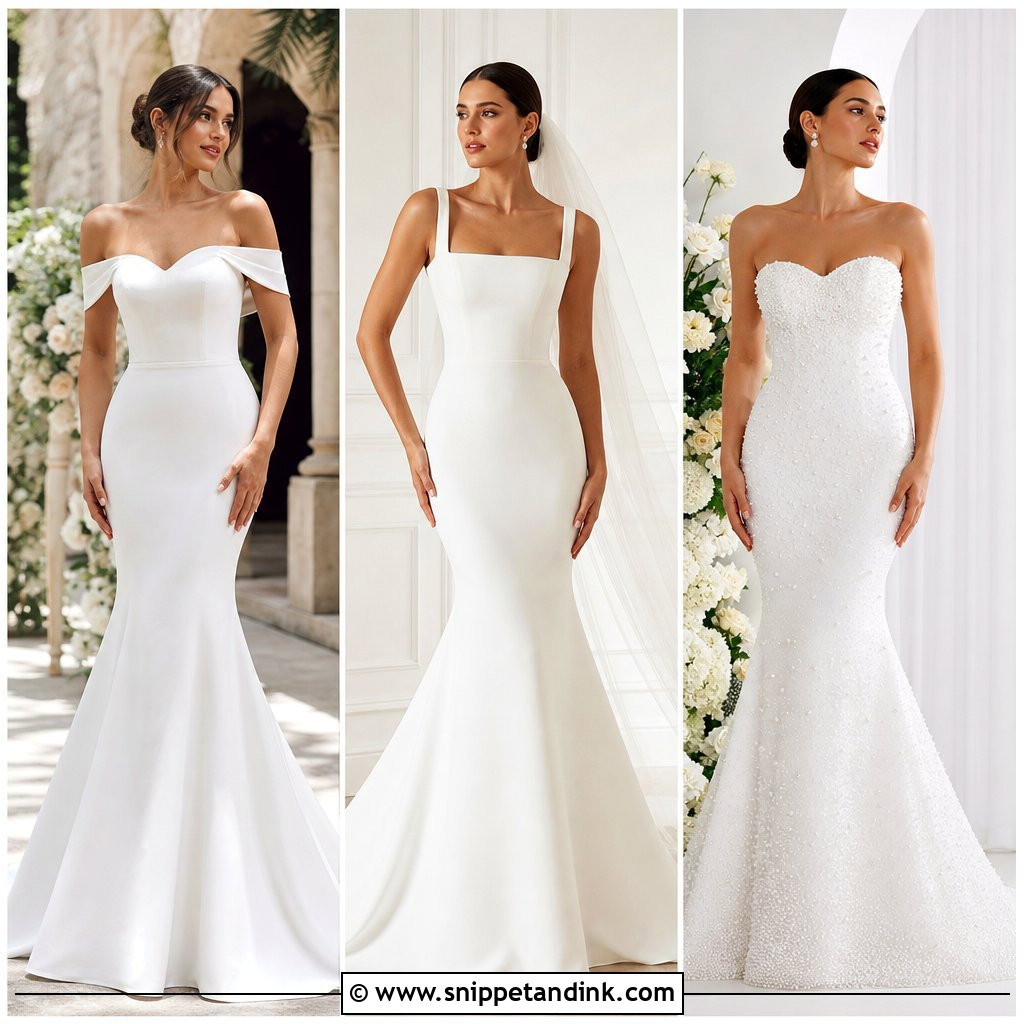
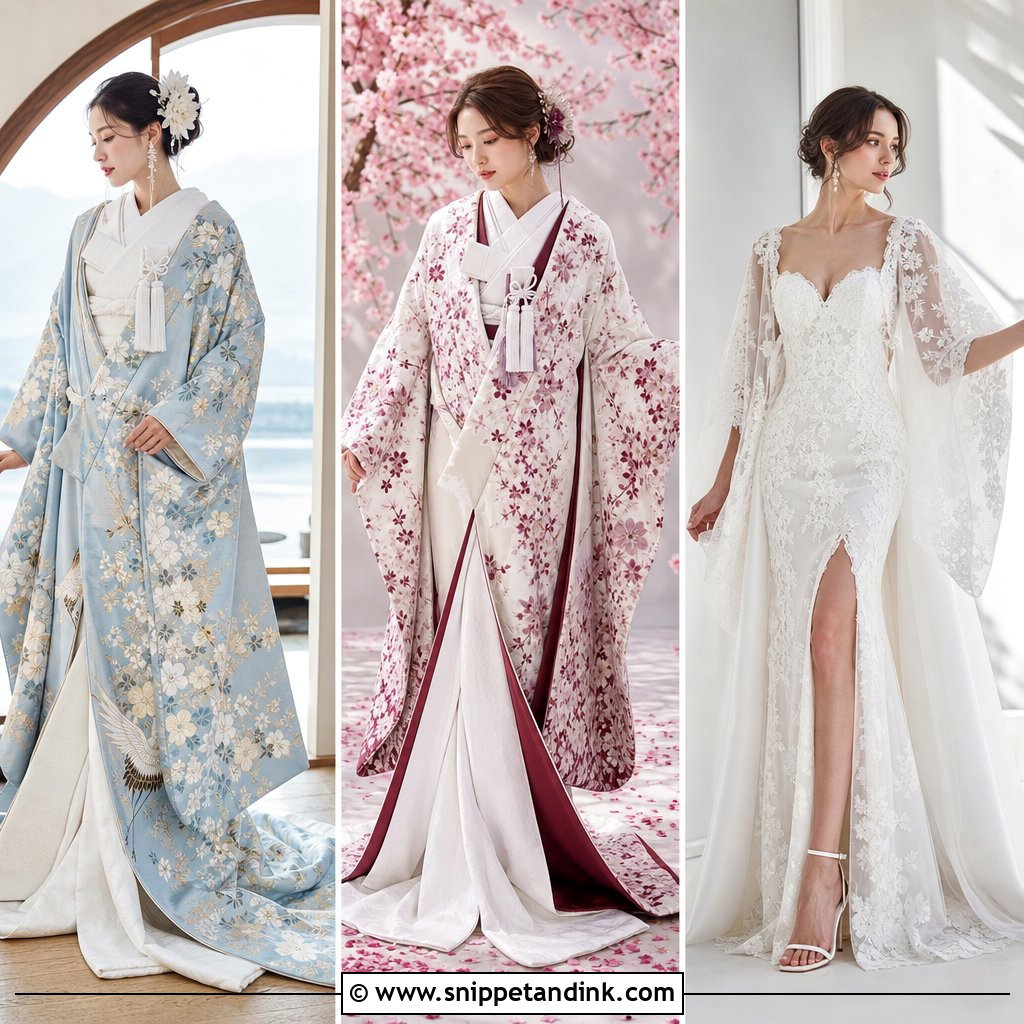
15. Mermaid Neck Scarf Wedding Dress
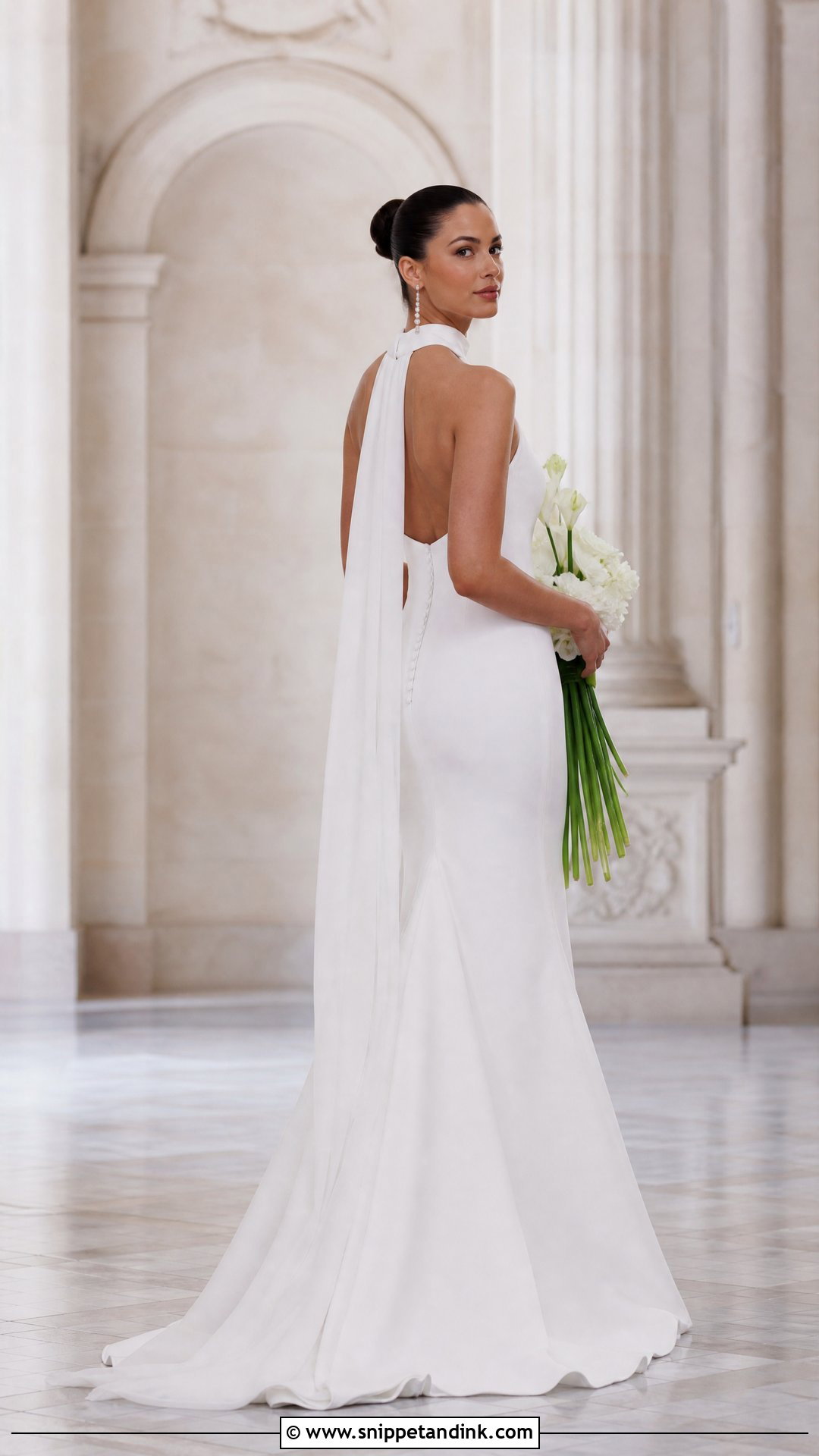
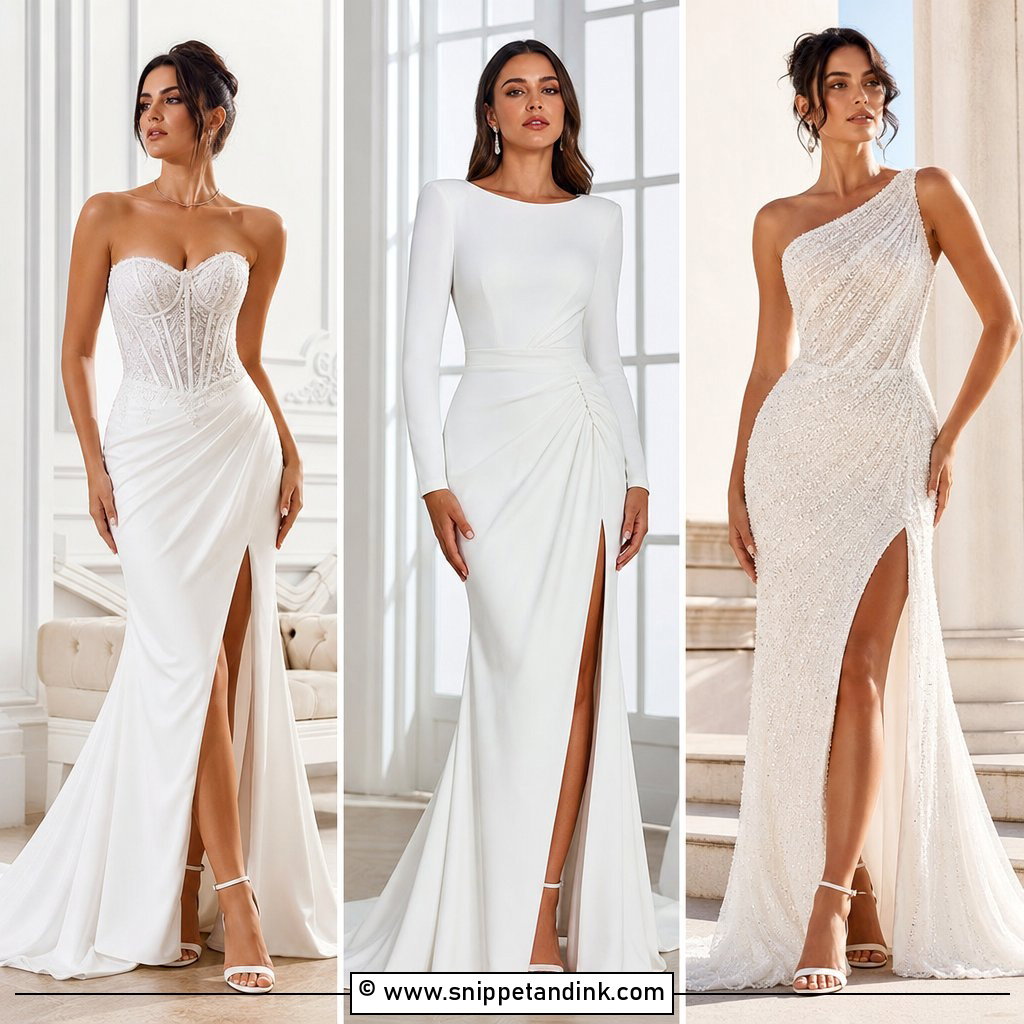
Mermaid gowns are fitted to the knee, which already makes walking a project. I’d keep the scarf controlled: a narrow chiffon wrapped close to the neck and lying straight down the back to follow the long line. Smooth crepe or satin with little embellishment, pointed heels with real support, small drops and a sleek updo. A long-stemmed bouquet suits the shape better than a round one. The thing I check is the bustle: when the train is hooked up for the reception, make sure the scarf ends don’t get caught in the bustle points or trodden on during the first dance.
16. One Shoulder Neck Scarf Wedding Dress
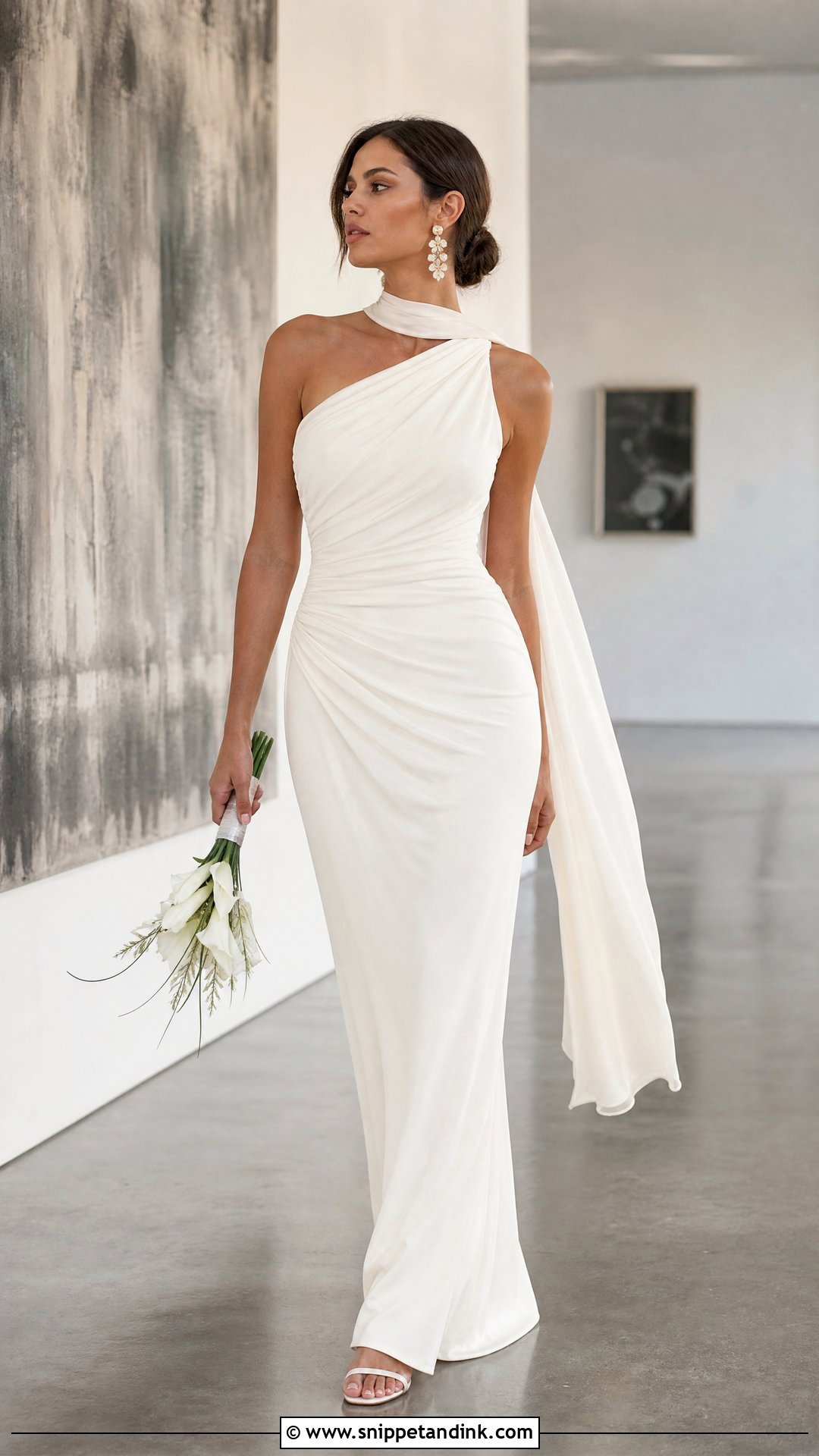
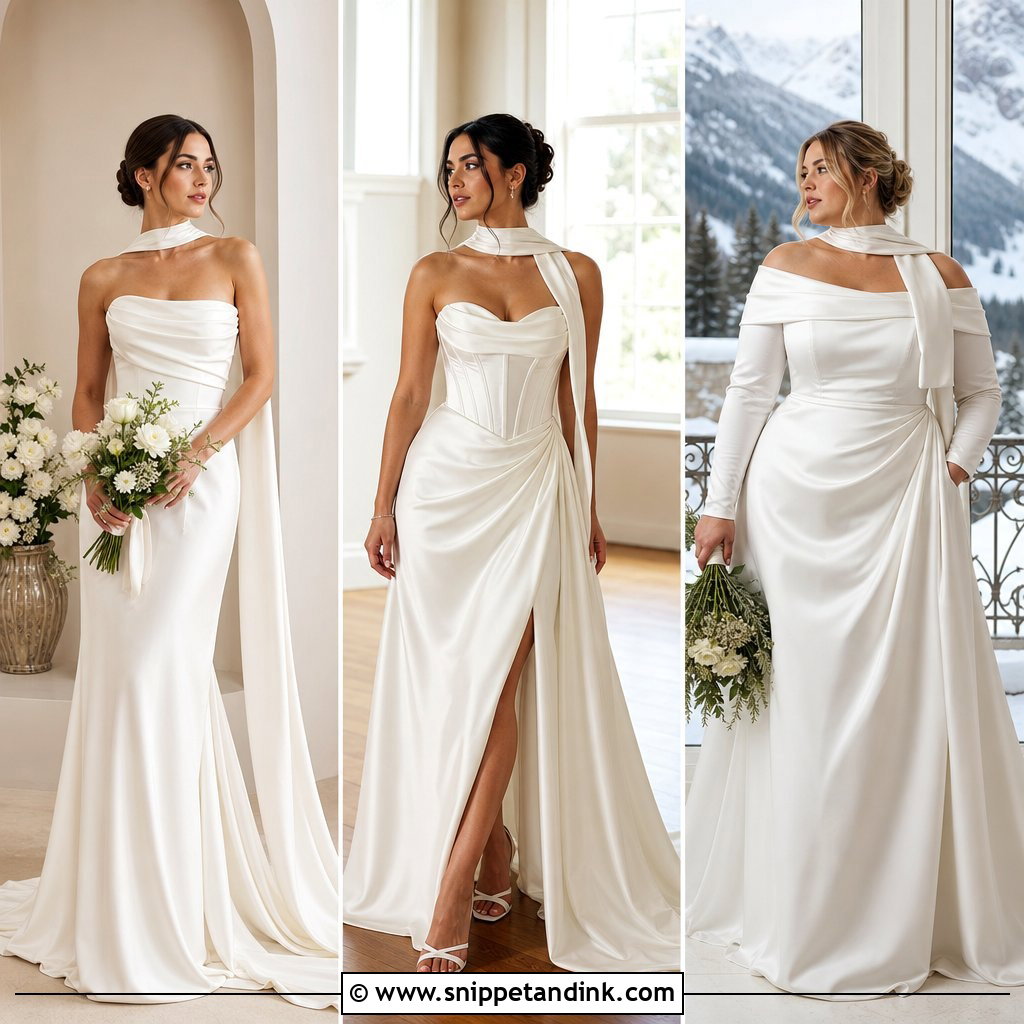
One-shoulder gowns already have a direction, and the scarf should go the same way. Choose soft draping across the bodice, then lay one end over the bare shoulder and let the other trail behind. A straight or gently flared skirt keeps it from getting complicated. Metallic or ivory sandals, a single statement earring on the exposed side, and a side-parted bun. Carry a narrow bouquet that doesn’t hide the asymmetry. The scarf must be light, because any weight pulls the single strap off-centre. Gallery and rooftop weddings.
17. Floral Applique Neck Scarf Wedding Dress
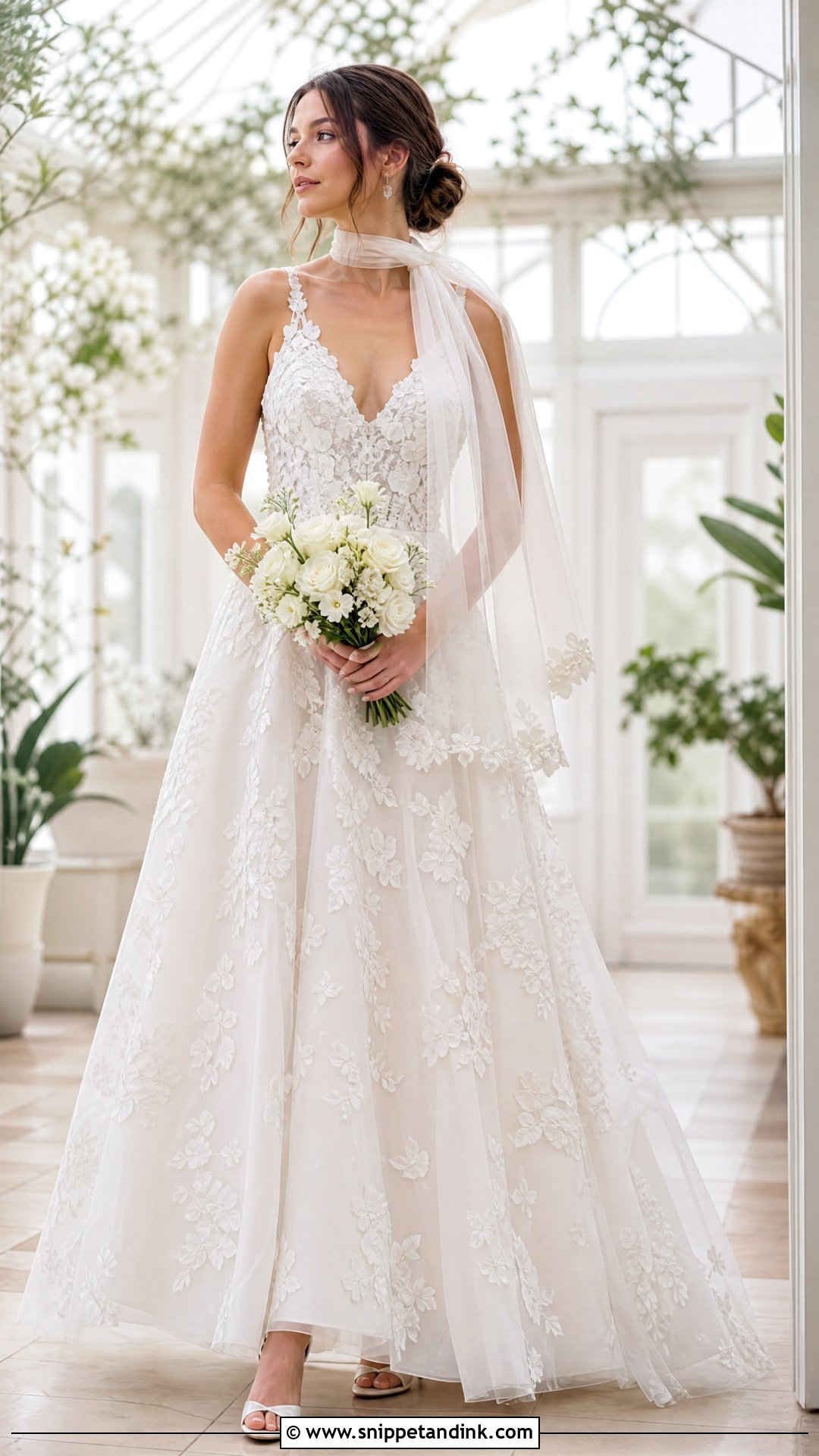
Floral appliqués and a scarf can coexist if the flowers stay away from the neck. Choose an A-line with flowers on the bodice or lower skirt and a fairly clean neckline. Then a plain tulle scarf with a few appliqués only at the ends ties the two together. Three-dimensional flowers snag tulle easily, so I’d have the seamstress check the stitching on both. Simple satin heels, tiny crystal studs, a low textured bun, and a restrained bouquet. No floral headpiece or ornate veil. Spring gardens and conservatories, where daylight picks up the texture.
18. Pearl Neck Scarf Wedding Dress
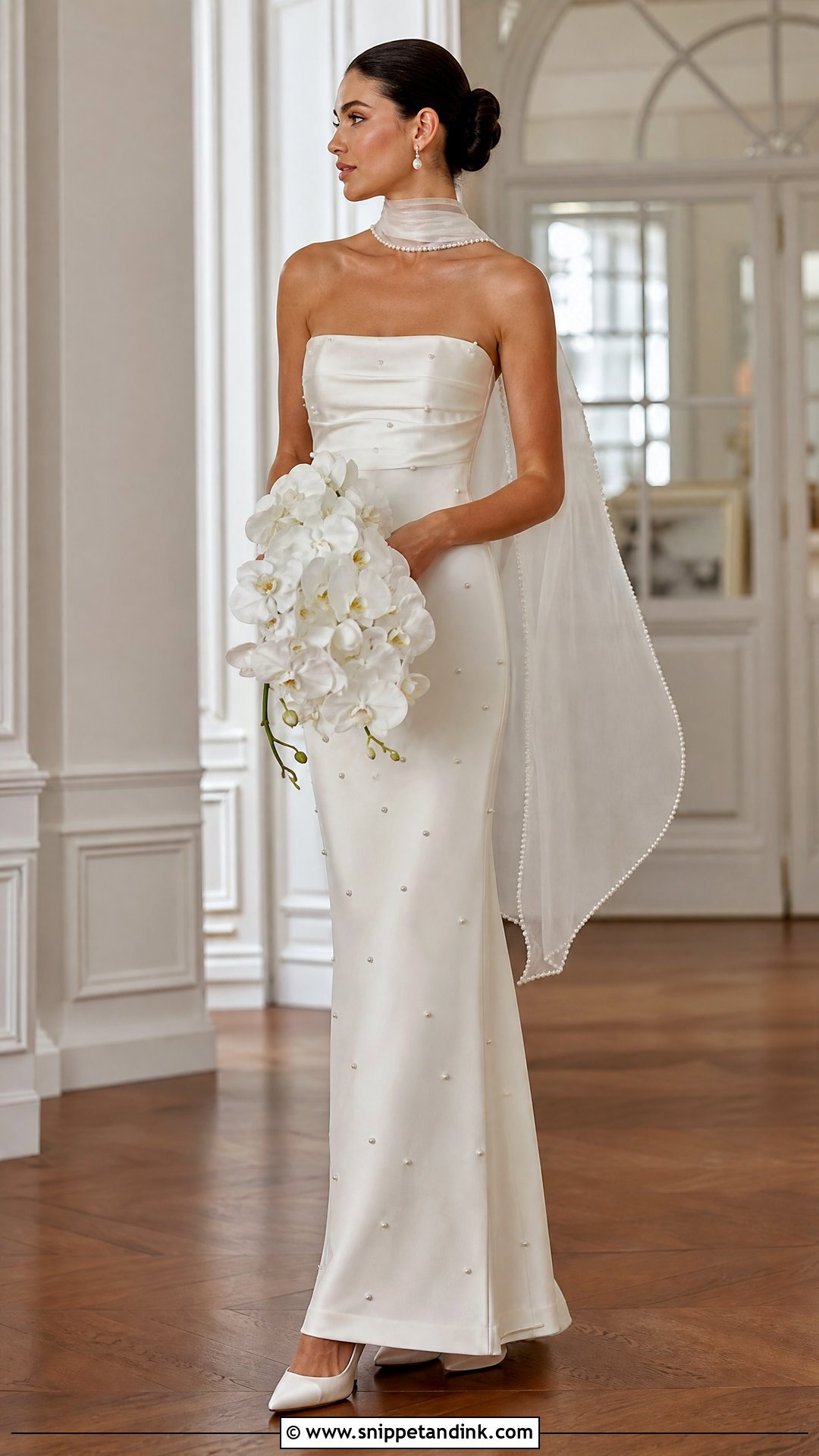
Pearls give a soft glow rather than sparkle. A plain crepe or satin column with pearls scattered over the bodice, and a sheer scarf with a lightly beaded edge. Keep the beading delicate; a heavy border makes the scarf hang stiff instead of draping. Pearl earrings, closed-toe satin pumps, a polished low bun, no necklace. White orchids or roses. Beads can scratch or catch satin when she moves, so run the scarf edge across a hidden part of the gown before the day. Evening receptions and smart indoor venues.
19. Plus Size Neck Scarf Wedding Dress
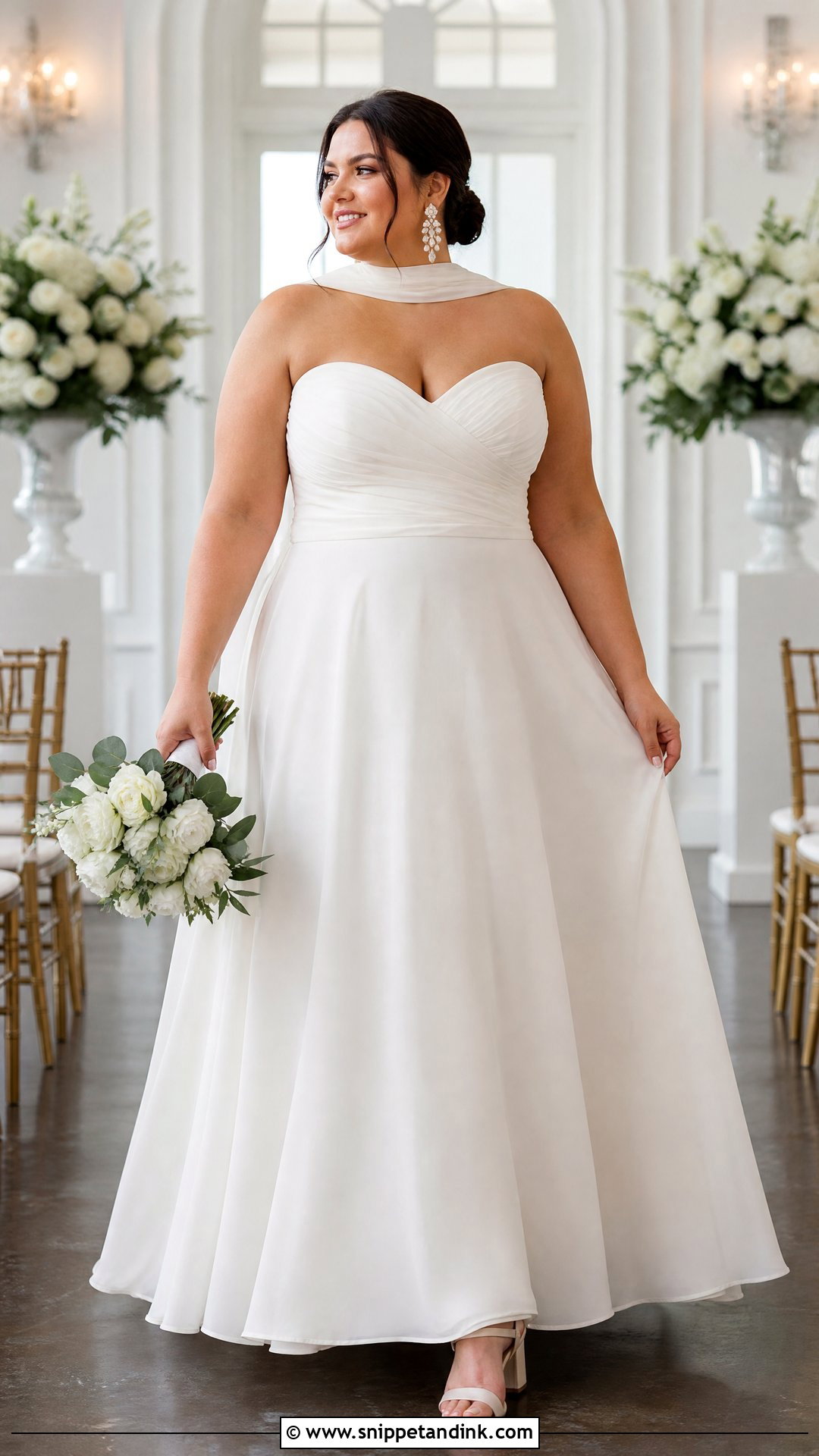
For plus-size brides, the support of the gown comes first, and the scarf follows. An A-line with a structured bodice and wide-set straps, a sweetheart neckline or well-boned strapless construction, whichever feels secure. A lightweight chiffon scarf adds movement without bulk and should drape loosely to keep the neckline open. Block heels or flats for the long day, statement earrings, a low bun, and a bouquet scaled to the dress. At fittings I ask brides to walk, sit and raise both arms with the scarf on, because that shows whether it slides or the straps dig. Comfort shapes the final choice more than any rule.
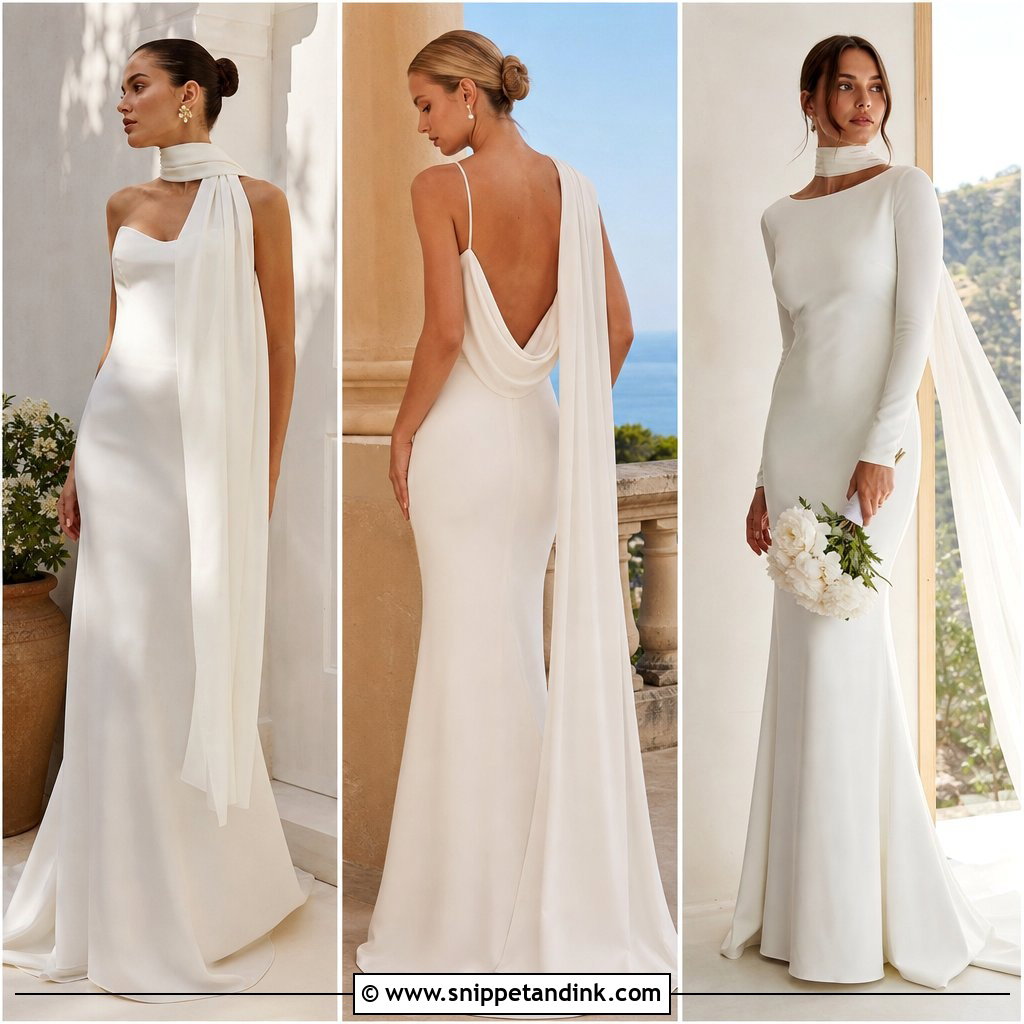
20. Modest Neck Scarf Wedding Dress
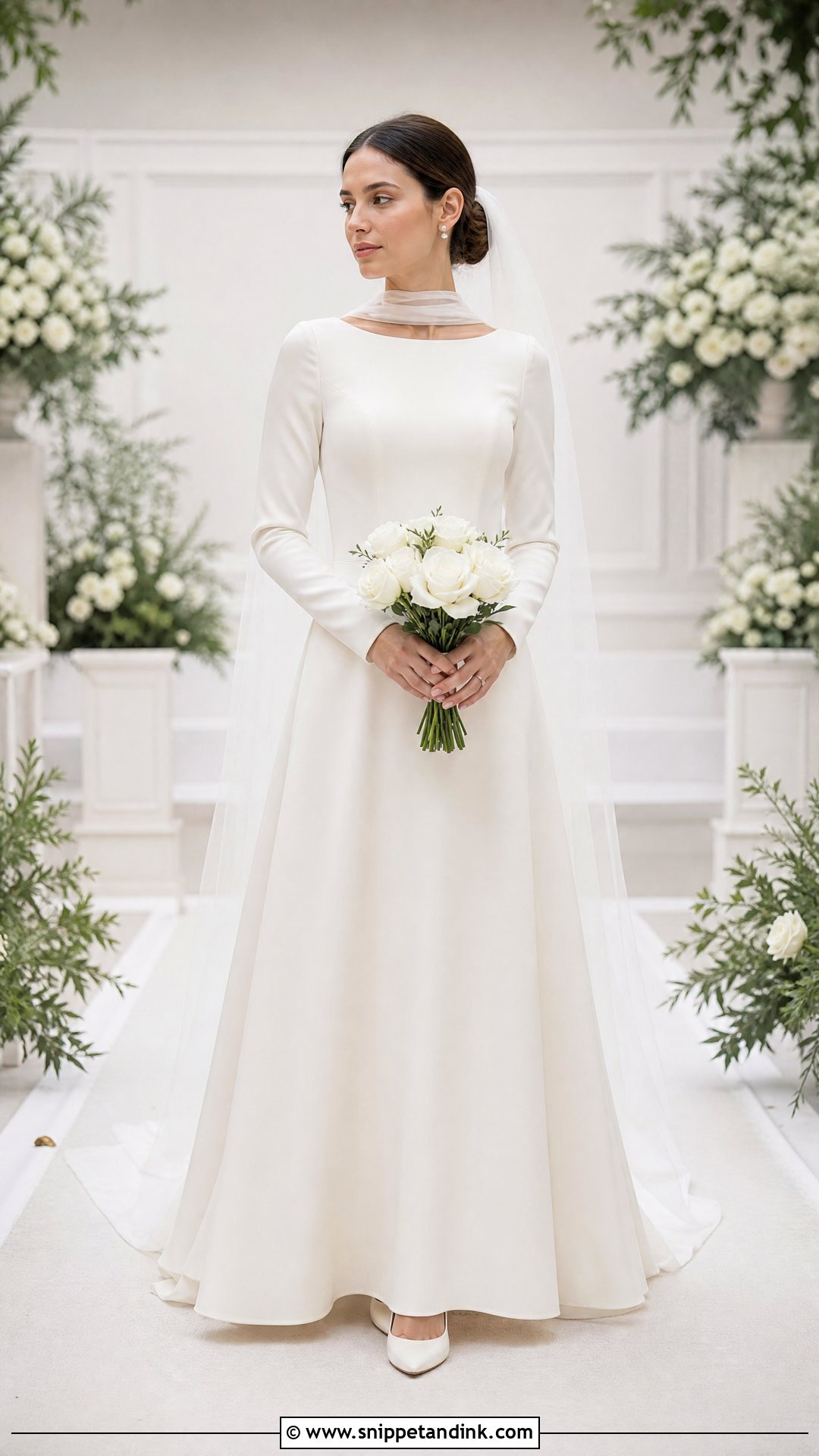
For a modest look, the scarf should feel built in, so start with a long-sleeve A-line. A bateau or softly rounded neckline covers the shoulders and leaves room for a narrow chiffon scarf draped loosely, with its ends falling down the back. Closed-toe pumps, pearl studs, a smooth low bun and an optional light veil. White roses and greenery. Avoid thick knots, heavy embellishment and puffed sleeves, which crowd the neck. If the ceremony requires the head covered, a long scarf can double as a head wrap for the ceremony and be lowered to the neck afterwards.
Stopping a Bridal Scarf From Slipping, Snagging or Blowing Away
A scarf that’s simply wrapped will move by the second hug. Any bridal seamstress can fix this in an hour, so ask about it at the first fitting rather than the last.
Anchoring it to the gown
My usual method is a small thread loop or hidden snap at the back of the neckline, with a matching snap on the scarf. It holds the centre in place while the ends stay free. On strapless dresses, a clear elastic loop sewn inside the back bodice lets the scarf pass through without pulling the bodice down. Avoid safety pins on silk and satin; they leave holes that show.
Hair, wind and the reception
Brief your hairstylist about the scarf. Loose curls tangle in chiffon, and exposed pins snag it, so a low bun or smooth ponytail is the safest base. Outdoors, plan where the ends go during the vows; tucking one into the bodice keeps it off your face. For dancing, many brides unhook it altogether. Decide in advance who will hold it, and give them a clean bag, because a white scarf on a chair picks up wine quickly.
Afterwards, roll rather than fold silk or satin scarves, wrap them in acid-free tissue and store them with the gown. Folds left for years can set into permanent creases.
Ivory, Weight and Drape Have to Match the Gown
A neck scarf succeeds when the neckline, fabric and shoes look planned together. Satin gives a crisper line and some shine; chiffon, tulle and organza move more. The scarf can stand in for a veil, come off for the reception or be sewn into the gown itself. Keep jewellery quiet, think about how the fabric behaves in wind and while seated, and test the whole outfit at an alteration fitting. It should never pull on the neckline, catch on beading or tangle with the train. Above everything, wear a gown you feel comfortable in. A scarf is an accessory, not a reason to choose a dress.
You'll Like These Ideas:


Leave a Reply