
A scarf is the smallest accessory I put on a bride, and one of the hardest to get right. Done well, it moves when you walk, frames the face and can stand in for a veil. Done badly, it slips off a shoulder all evening or hangs like an afterthought. The difference is almost always fabric weight and how it’s anchored. Below are thirty pairings of gown and scarf, from chiffon at the neck of a satin column to cashmere over a winter ball gown, with what I’d watch for on each one.
Silk, Chiffon or Cashmere? What Each Scarf Fabric Does Over a Gown
I choose the fabric first and the style second, because the fabric decides whether a scarf drapes, floats or stays in place. Here’s how the common ones behave.
- Chiffon: very light, moves in the slightest breeze, slips on satin. Needs a pin or clip to stay put.
- Silk twill or crepe de chine: soft sheen, holds a knot well, and photographs better than synthetic satin.
- Tulle: catches slightly on lace and texture, so it stays where you put it, but it can snag on beading.
- Organza: crisp enough to hold a bow, sheer enough to show the dress, creases sharply when folded.
- Cashmere: for warmth only. It’s soft and drapes well but adds volume, so keep it for winter.
Length matters too. For a neck scarf, I measure from the nape of your neck to where you want the ends to stop, then double it and add a little for the knot. For a back drape, stand in your dress and have someone measure from the neck down to where the back opening ends or to the floor.
Finally, look at the hem. A hand-rolled hem is soft and flat; a machine-overlocked edge on chiffon looks cheap up close and can curl. If you’re having one made, ask for a rolled hem.
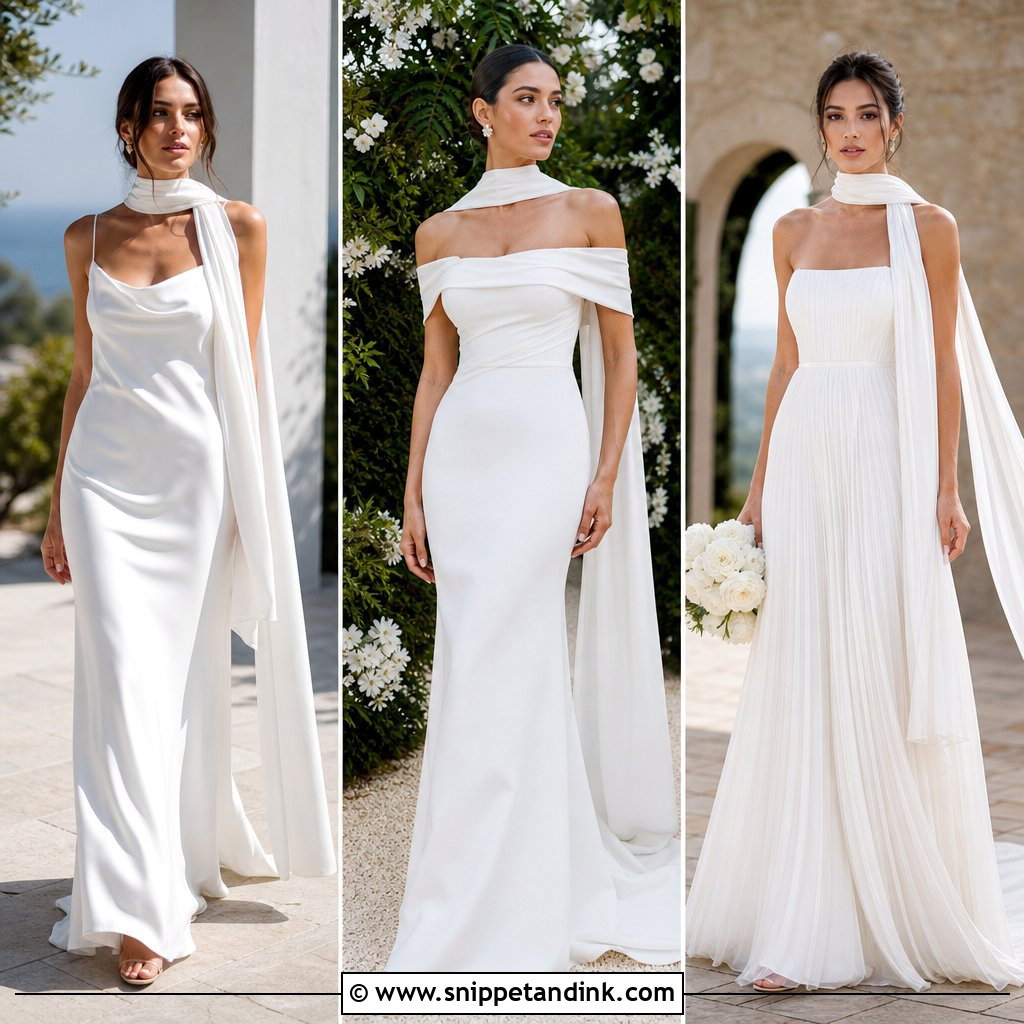
1. Satin Wedding Dress With Chiffon Neck Scarf
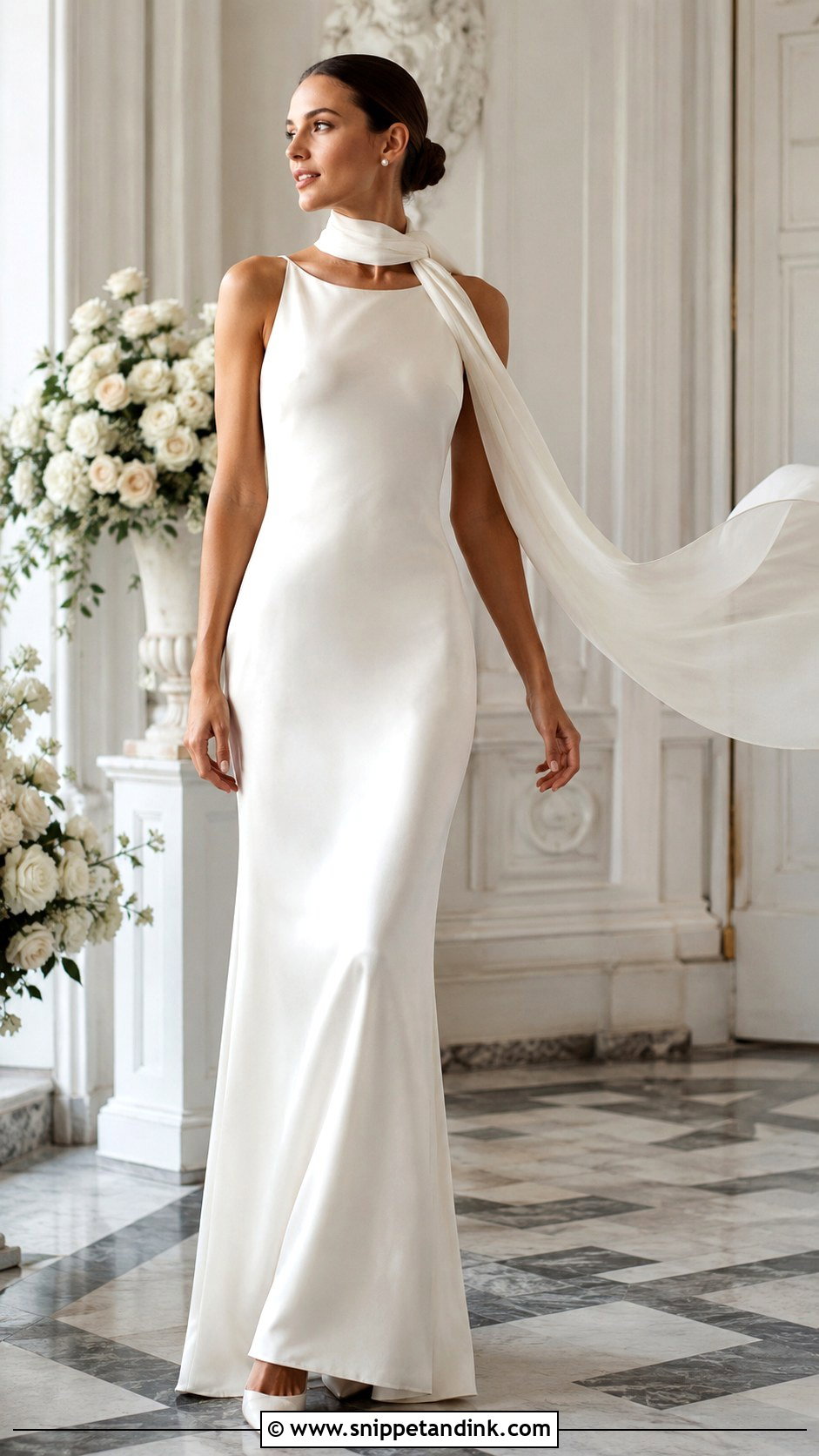
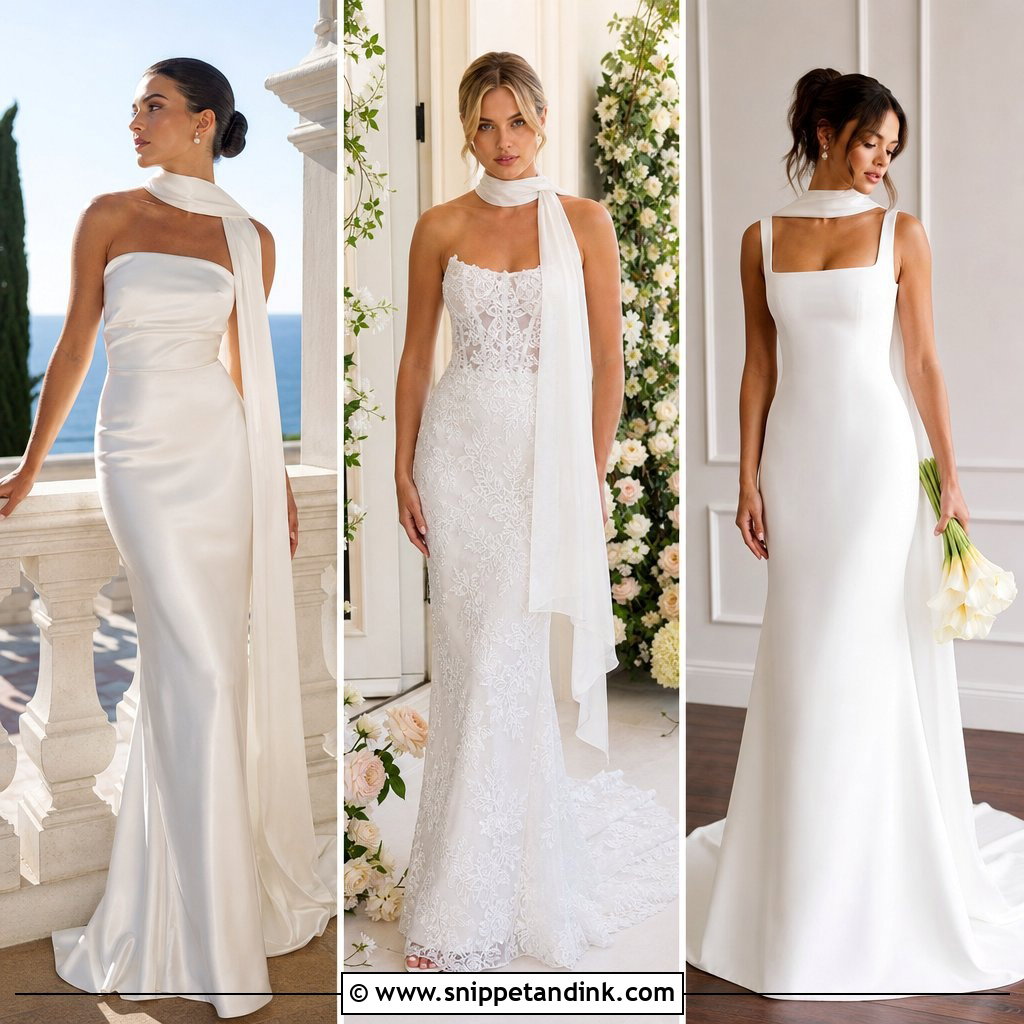
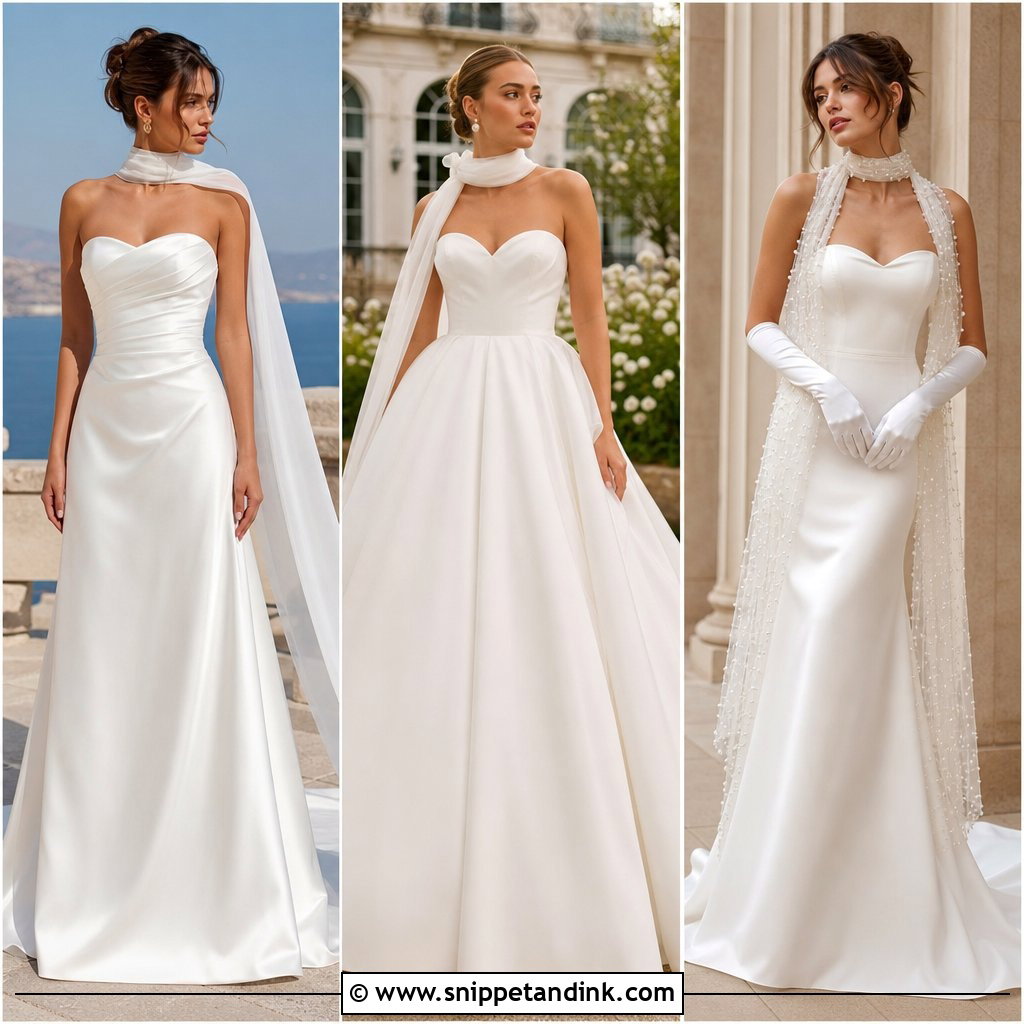
Satin and chiffon make one of my favourite contrasts: a structured, faintly shiny gown with something weightless moving at the neck. Over a strapless, square-neck or plain column dress, the scarf ends up as the only accessory, and it doesn’t need help. I let one end fall in front and the other run down the back so the line looks deliberate from both sides. Chiffon is slippery on satin, so I fix the knot with a small hidden pin through the lining before the ceremony. Pearl studs and a low bun keep it clean.
2. Strapless Wedding Dress With Long Bridal Scarf
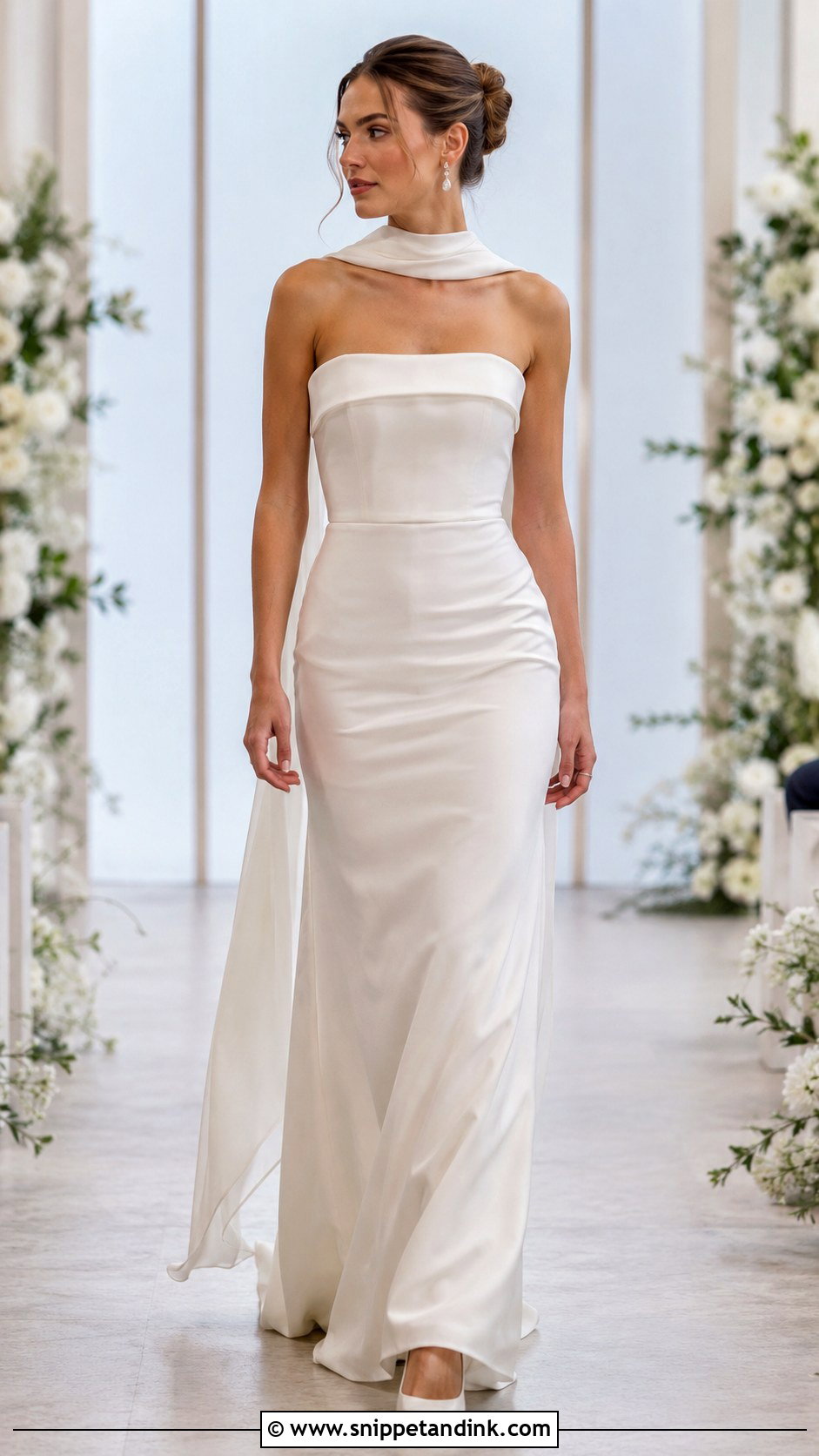
With a strapless bodice there is nothing on the shoulders to fight the scarf, so a long one can frame them on its own and replace a necklace. Match the scarf to the dress tone closely; a pure white chiffon next to ivory satin looks like a mistake. I’d wrap it once loosely around the neck, or tie a small knot to one side, and let the ends fall behind like a short veil. The one thing to watch is the knot sitting directly on the throat, which feels tight by the evening. Keep it a finger’s width loose.
3. Lace Wedding Dress With Sheer Tulle Scarf
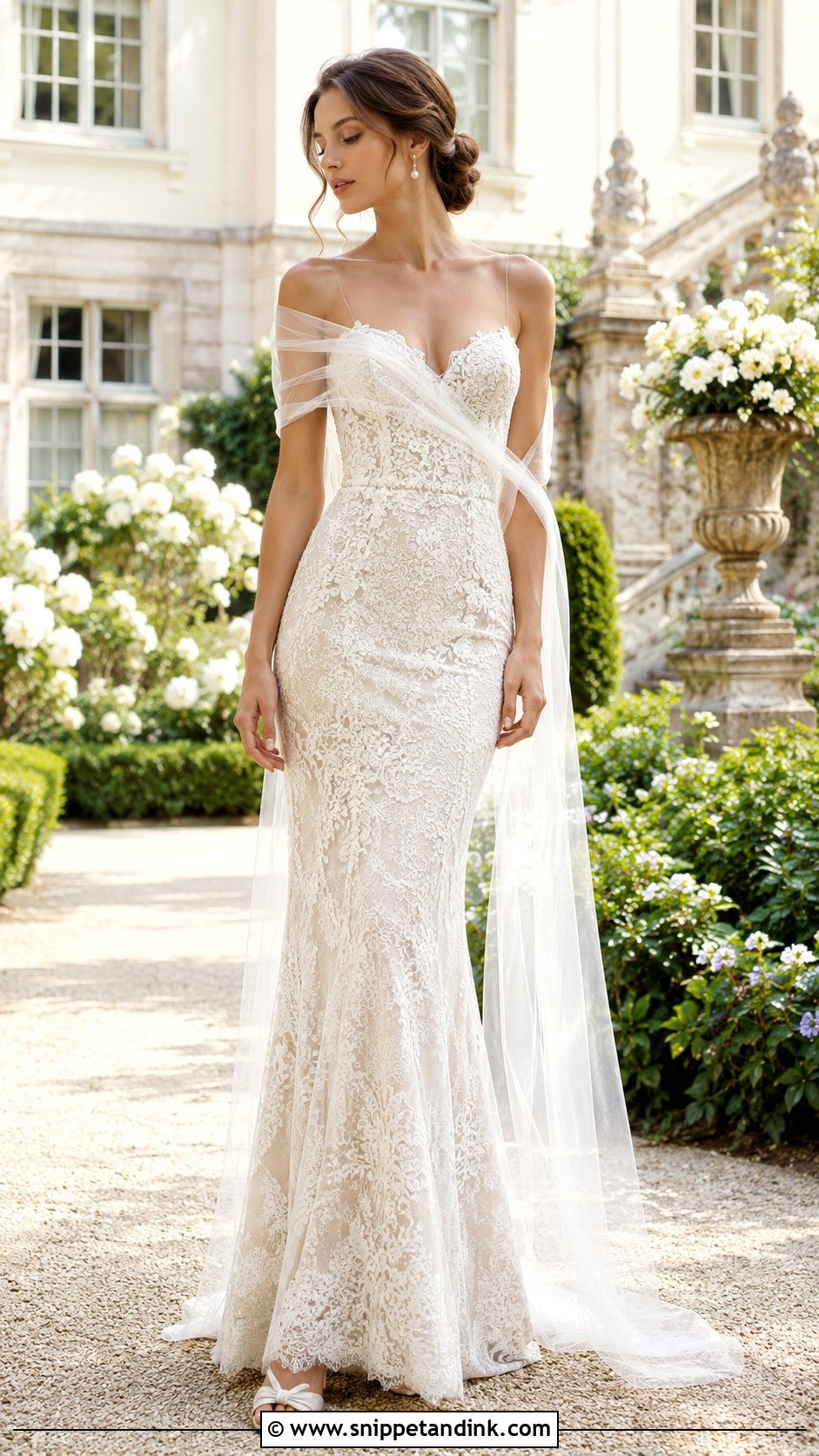
Lace already has plenty going on, so the scarf has one job: add a floating layer without adding pattern. A plain tulle scarf does exactly that over a fitted lace gown, an A-line or a sleeved lace dress. I’d never put a patterned or embroidered scarf on lace; the two textures fight and both lose. Tulle catches slightly on corded lace, which actually helps it stay put. Small pearls or crystal studs, a loose chignon and soft makeup finish it. Garden and country-house settings suit the mood.
4. Minimalist Wedding Dress With Silk Scarf
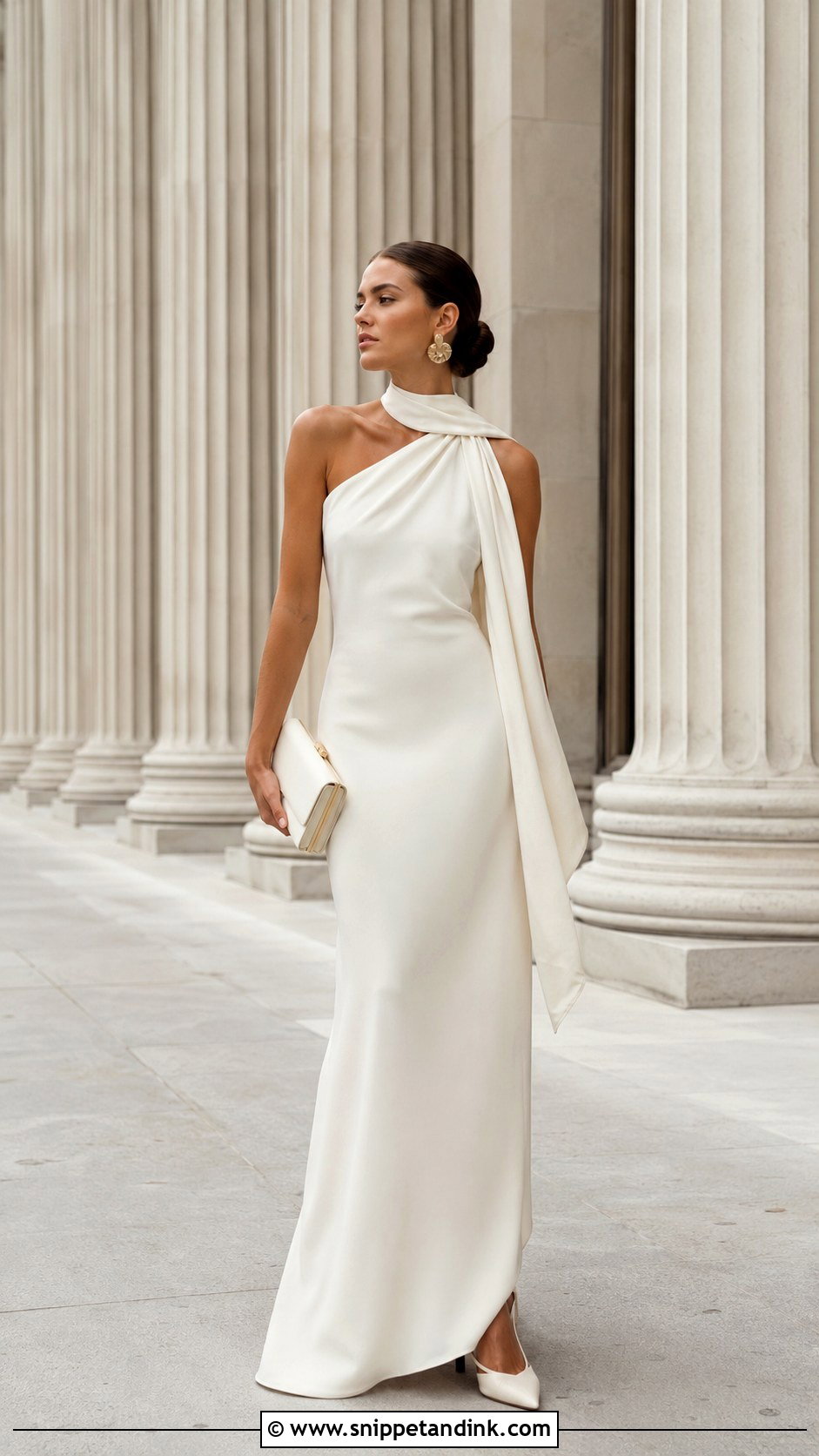
Quiet luxury depends on fabric, and this is where I’d spend on a real silk scarf rather than polyester. A crepe, satin or mikado gown with a narrow silk scarf tied loosely at the neck or laid over one shoulder looks considered without trying. Keep it ivory or cream. Silk has a soft sheen that photographs better than synthetic satin, which can flash under a camera flash. Sculptural earrings and slingbacks suit it, as do courthouse ceremonies, rooftops and small receptions.
5. Off Shoulder Wedding Dress With Draped Scarf
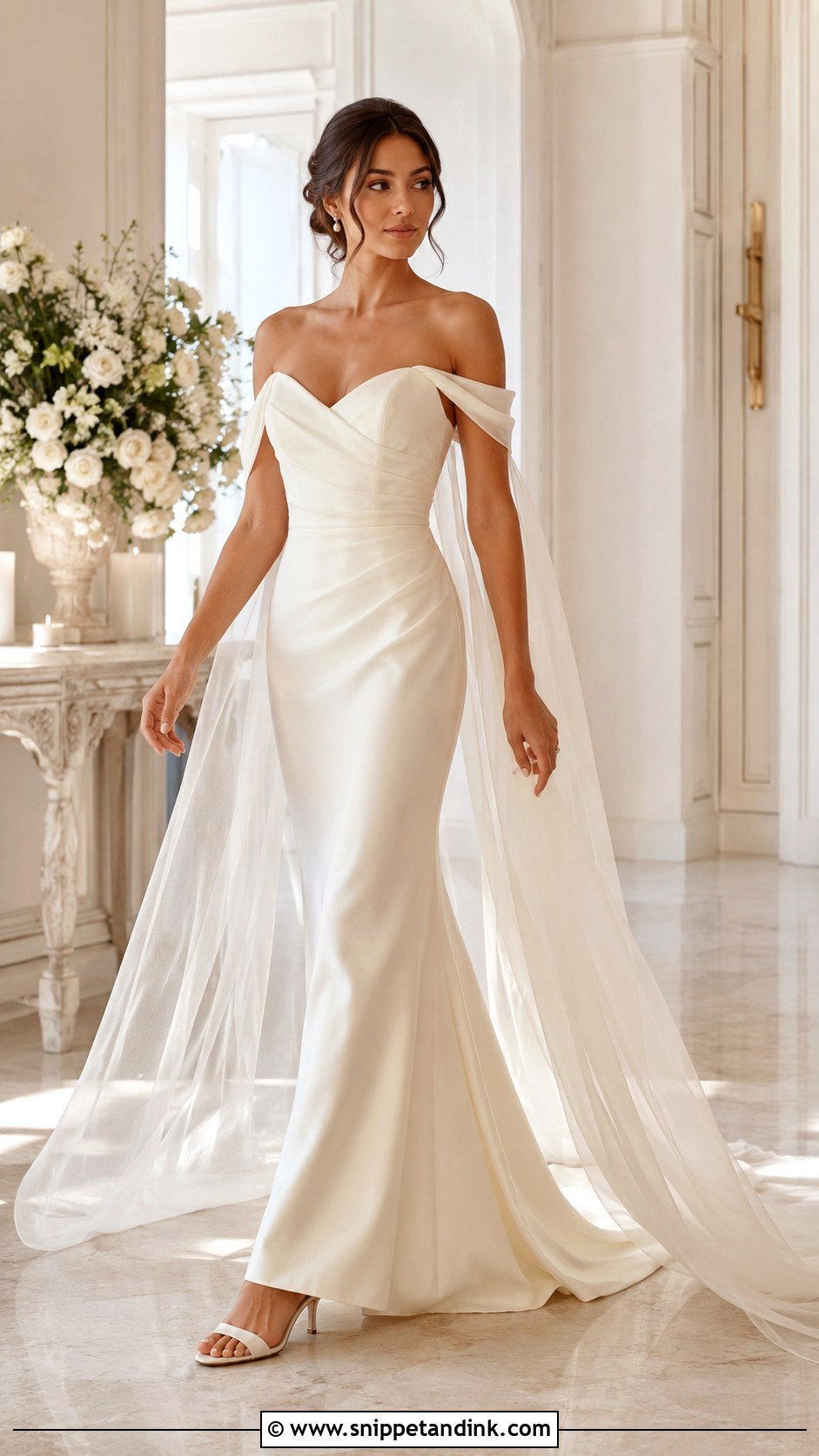
The neckline already shows the collarbone, so the scarf has to sit lightly or it hides what makes the dress. I rest a sheer chiffon or organza scarf on the upper arms and let it trail behind. It frames portraits well and gives walking shots some movement. The risk is that the scarf and the off-shoulder band both slide down at the same time when you raise your arms. A couple of discreet stitches or pins into the band fix that. Skip the necklace.
6. Slip Wedding Dress With Skinny Scarf
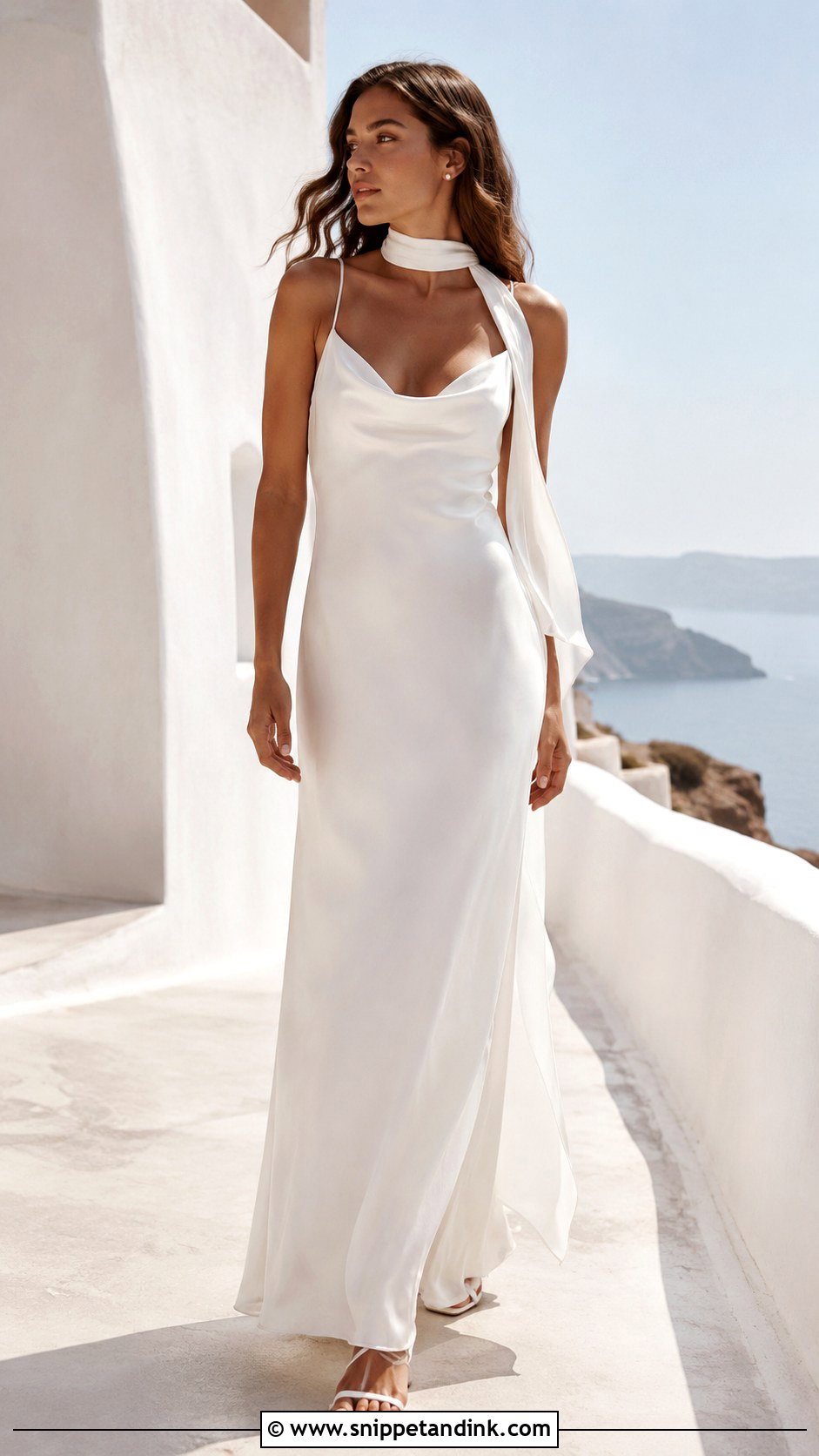
Slip dresses are fluid and bare, so a skinny scarf gives them a point of detail without weighing down a thin strap. Silk, satin or light chiffon all move with the dress. Tie it once at the neck, leave the ends loose, or let it drape around the back. Narrow silk scarves slide on bare skin, which is part of their charm, but at a beach wedding with wind it can blow off entirely; a scarf clip under the knot is a cheap insurance. Strappy heels and waved hair suit it.
7. Ball Gown Wedding Dress With Organza Scarf
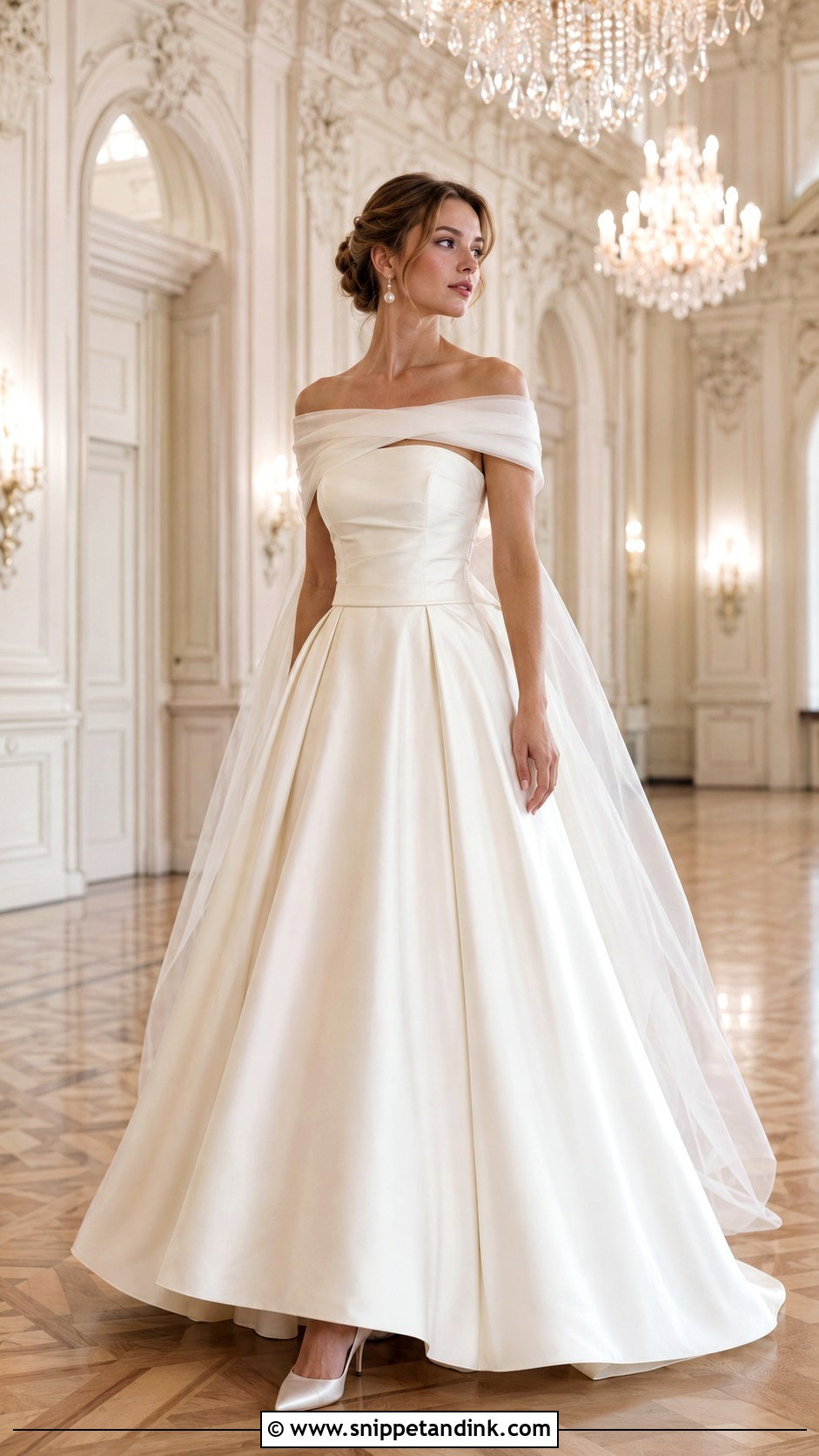
A ball gown wedding dress has so much skirt that a skinny scarf disappears beside it. I go wide: an organza scarf that can be draped over the shoulders, tied in a bow at the back or wrapped loosely around the arms. Organza has enough body to hold a bow shape, unlike chiffon, which collapses. It works best on a strapless or plain-bodice ball gown. Keep everything else restrained, since the gown already has presence.
8. A Line Wedding Dress With Pearl Scarf
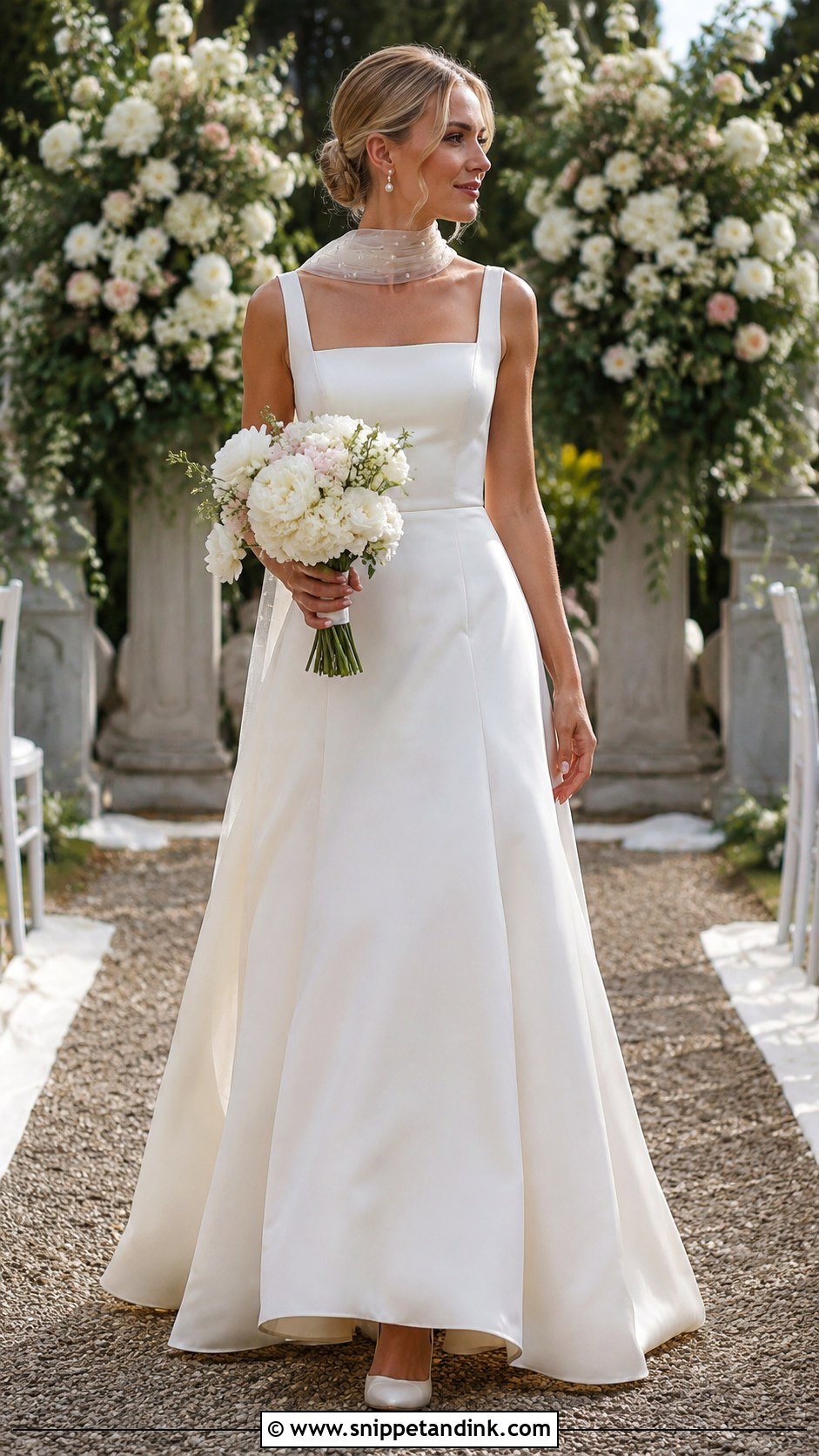
Pearl-scattered scarves add texture without turning an A-line into something ornate. Over a plain satin, crepe or soft tulle gown, the pearls have a clean backdrop. I check how the pearls are attached before anyone buys: sewn pearls stay, glued ones fall off when the scarf is knotted. Rest it around the neck or across the shoulders. Pearl earrings repeat the detail, and that’s enough pearl for one outfit.
9. Column Wedding Dress With Back Draped Scarf
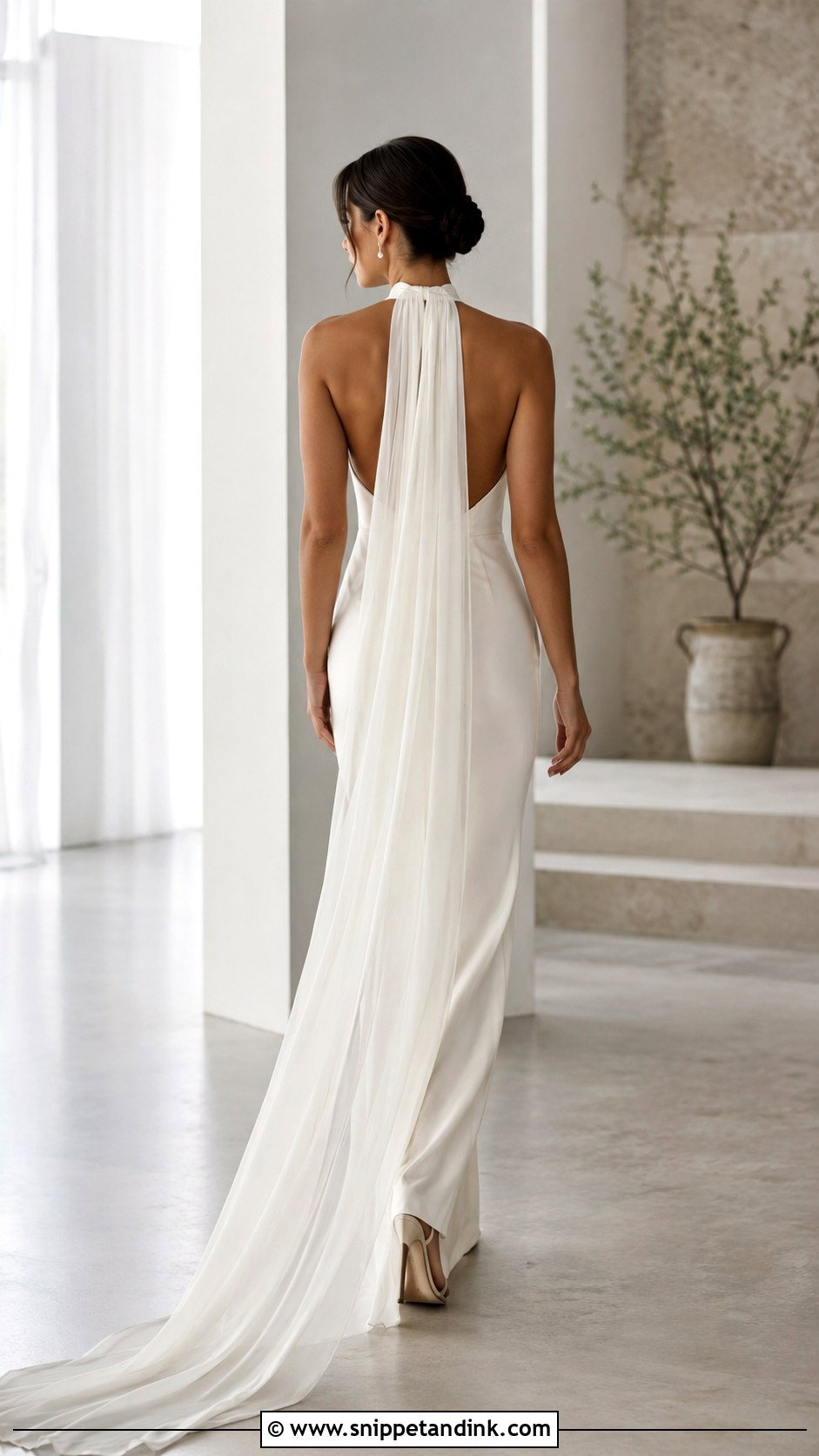
From behind, a column gown with a back draped scarf reads like a veil that starts at the neck rather than the head, and that is the view your guests see during the vows. The front stays sleek. High-neck, halter, square-neck and strapless columns all suit it. I’d choose a long chiffon, silk or tulle scarf that falls past the hips or almost to the hem. Wear the hair up or tucked back, because loose hair covers the very detail you chose.
10. Halter Wedding Dress With Tied Scarf
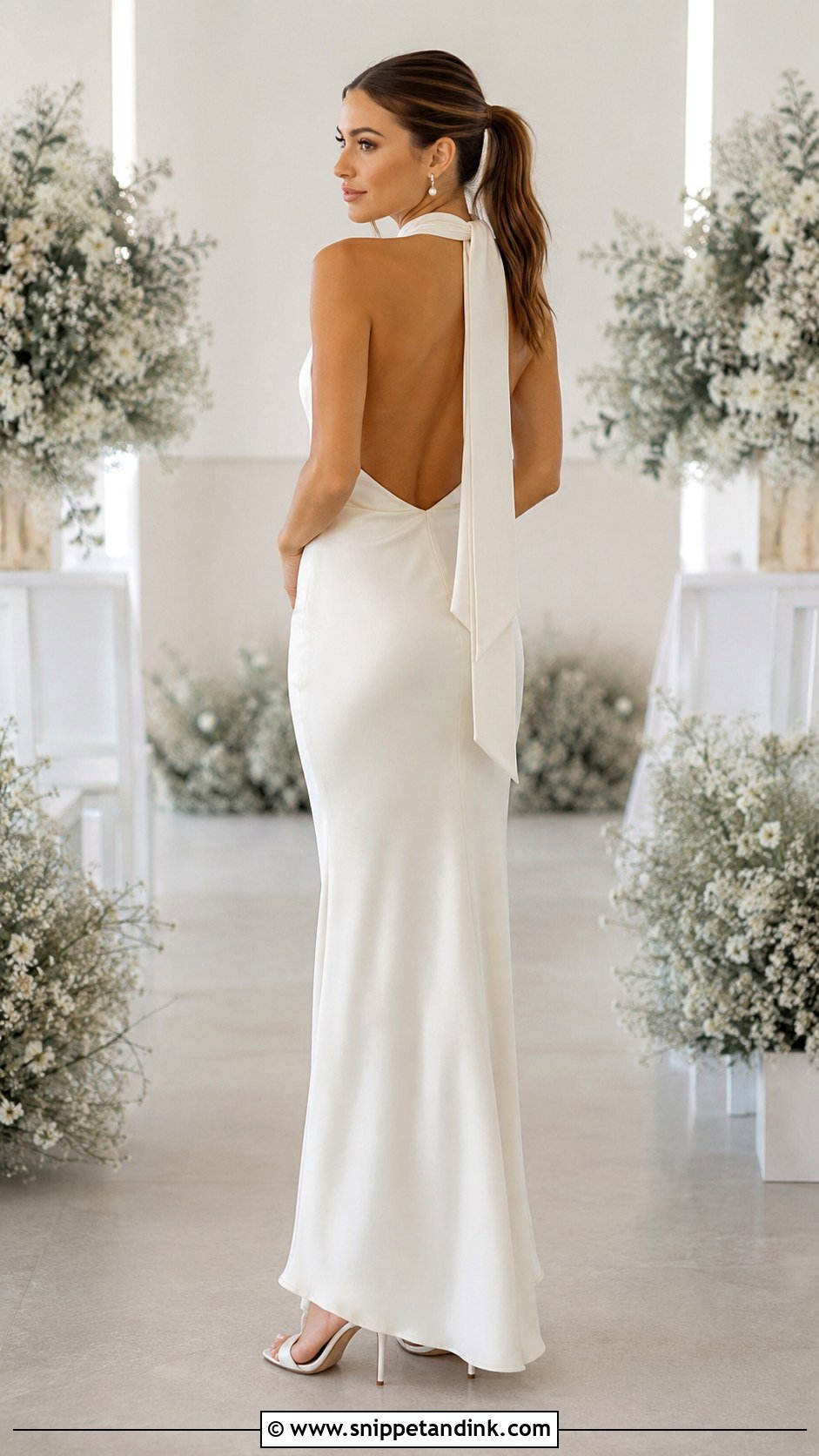
A halter already wraps the neck, so a scarf there must look like part of the design, not a second collar. I tie a narrow scarf at the back of the neck and let it run down the spine, which looks best on a low-back satin halter with a fitted skirt. Watch the weight: the halter strap carries the bodice, and a heavy scarf tied to it pulls on the neck all day. Delicate earrings and a low bun or smooth ponytail keep the shoulders clear.
11. High Neck Wedding Dress With Shoulder Scarf
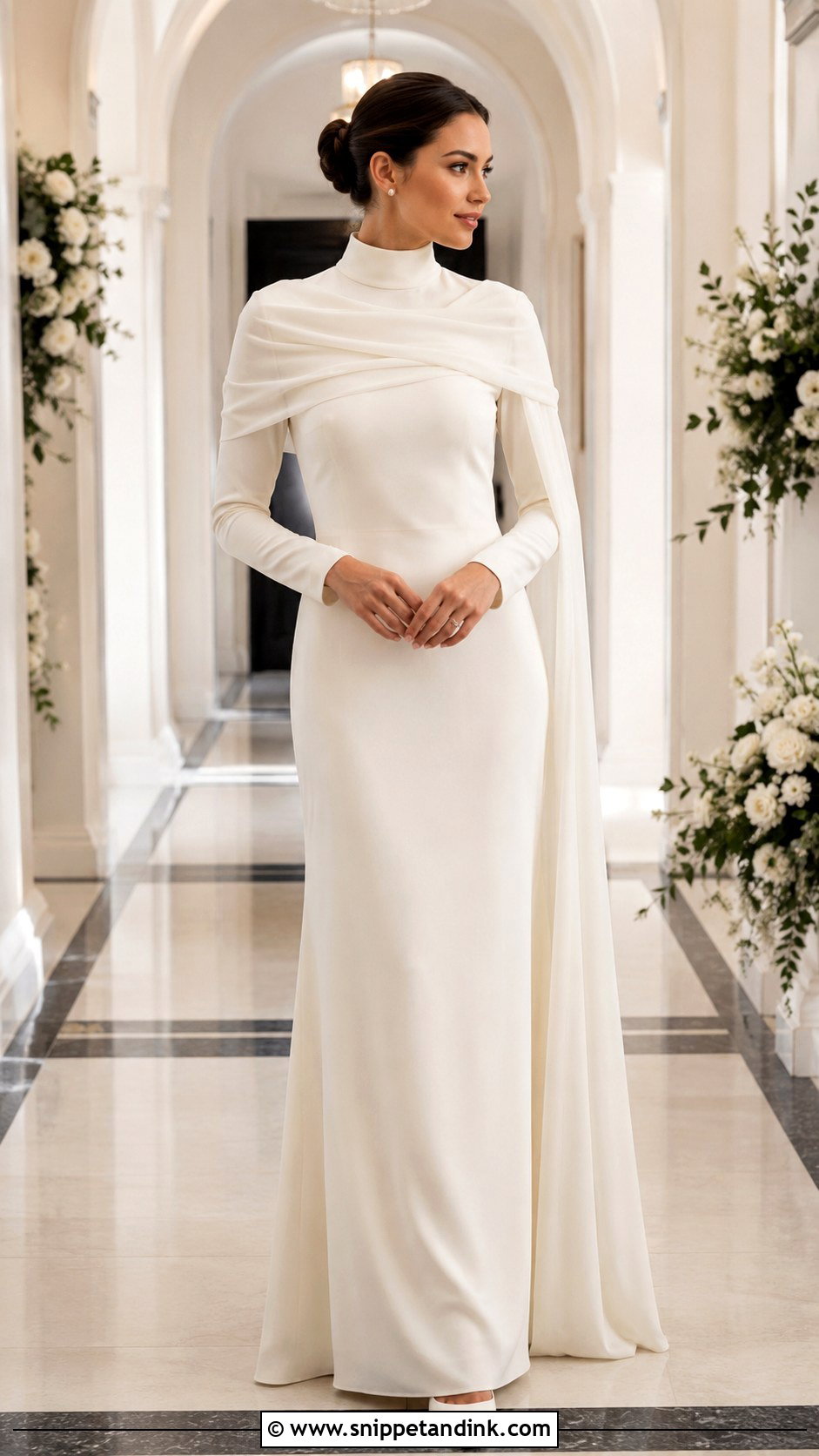
Vintage is the word I’d use for this one. The high neckline gives coverage, and the scarf adds movement across the shoulders or down the back. Weight matters again: chiffon, silk georgette or fine tulle, never anything thick, or the upper body starts to look wrapped. It sits well with a slim gown, a soft A-line or a lace high-neck design. Keep the hair neat so the neckline shows. It’s a good fit for formal ceremonies and cooler months.
12. Long Sleeve Wedding Dress With Soft Scarf
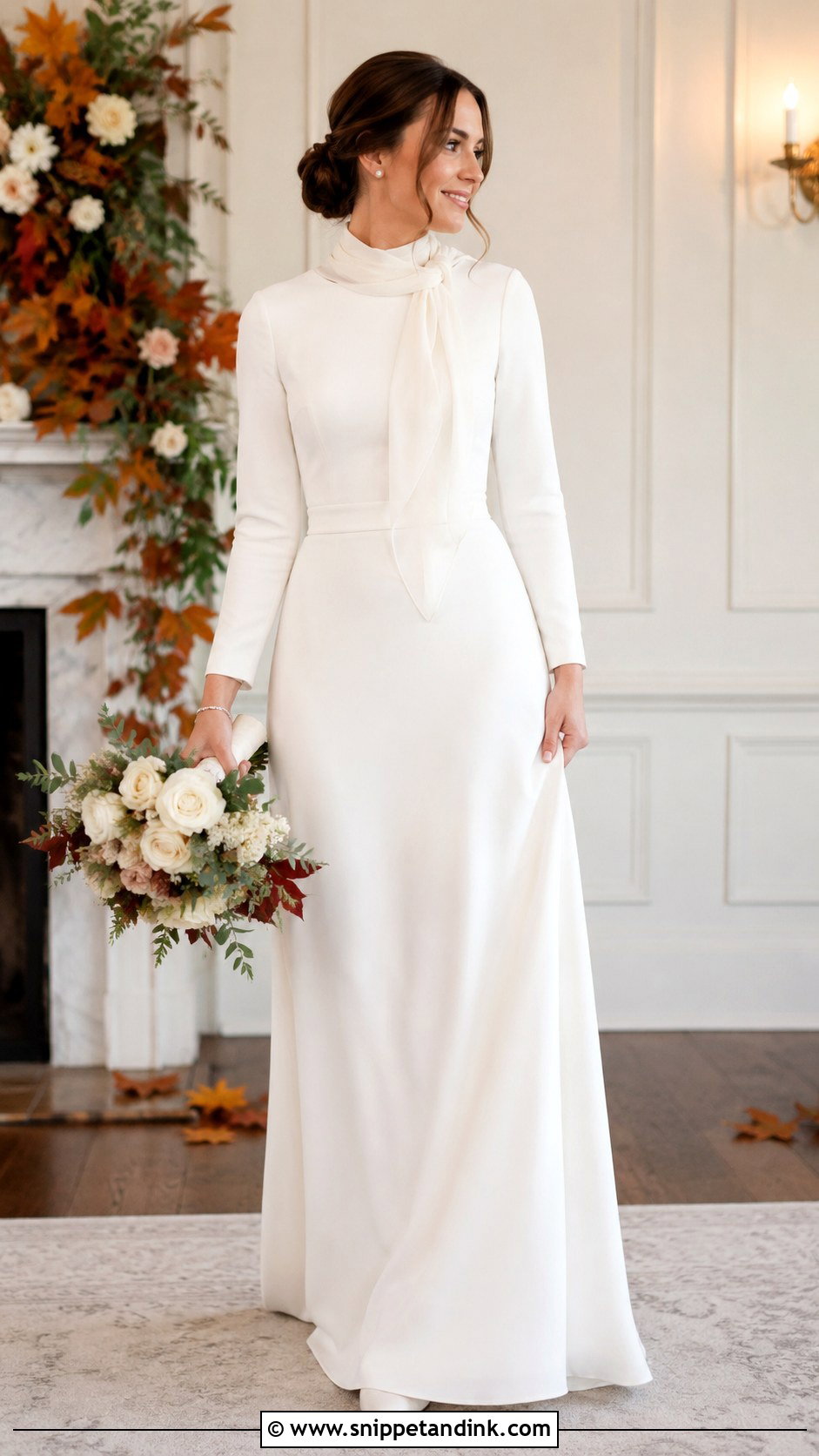
Sleeves already cover the arms, so a scarf on a modest bridal look needs to be airy, or the outfit becomes heavy. A very thin chiffon or silk scarf tied loosely at the neck or draped behind the shoulders adds dimension. It goes with crepe, lace, satin or tulle. The scarf comes off easily for the reception if you want a lighter feel. I’d plan this for autumn and winter weddings or a courthouse ceremony where coverage matters to you.
13. Short Wedding Dress With Neck Scarf
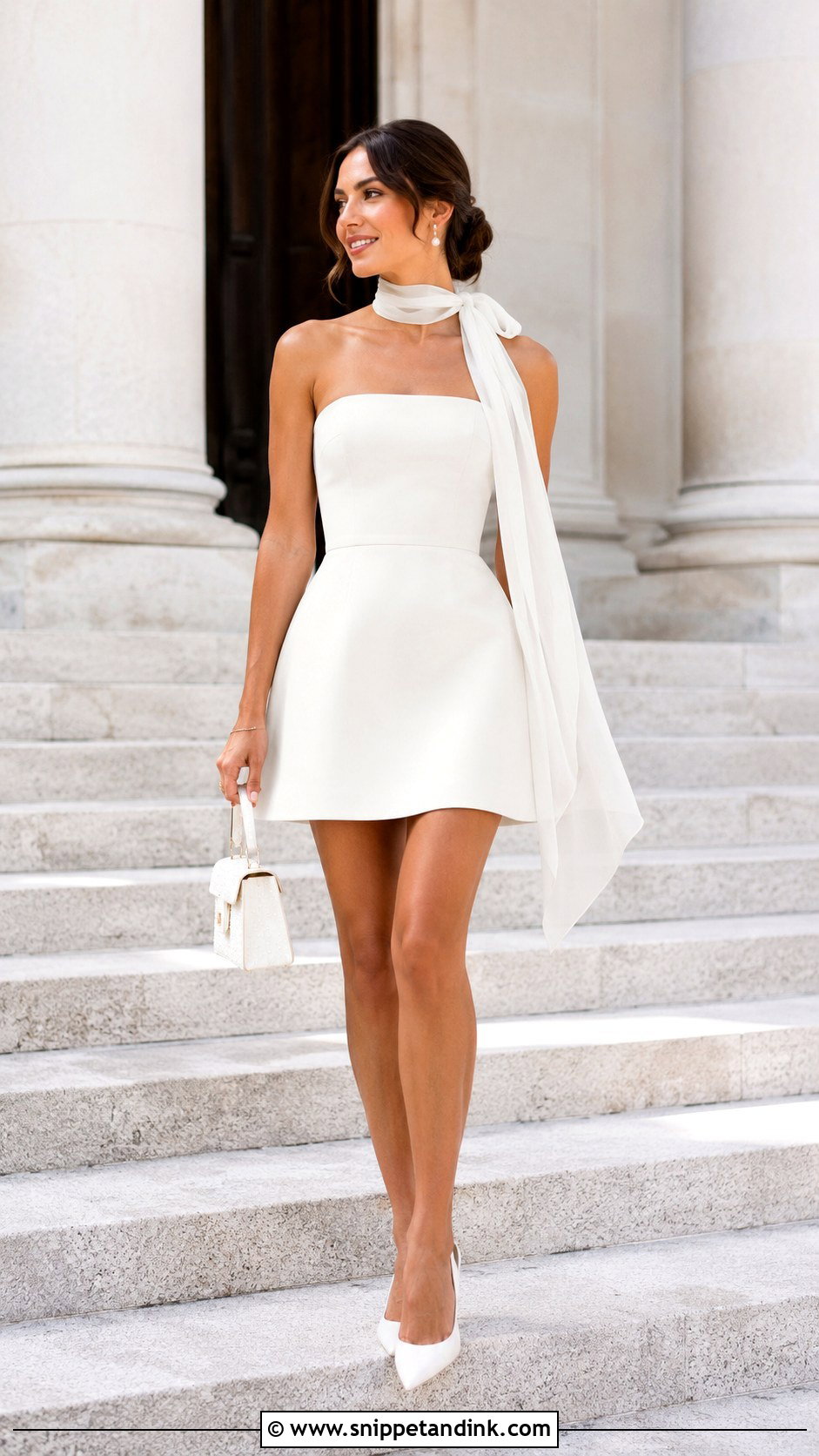
On a short dress, the scarf is what tells people you’re the bride. A structured mini or knee-length dress in satin, crepe or mikado with a slim chiffon or silk scarf tied at the side of the neck stops it looking like a party dress. I keep the knot small, since a big bow at the neck on a short dress can tip into airline uniform. White pumps or slingbacks, pearl earrings and a small top-handle bag finish it. It works for courthouse weddings, rehearsal dinners and reception exits.
14. Tea Length Wedding Dress With Vintage Scarf
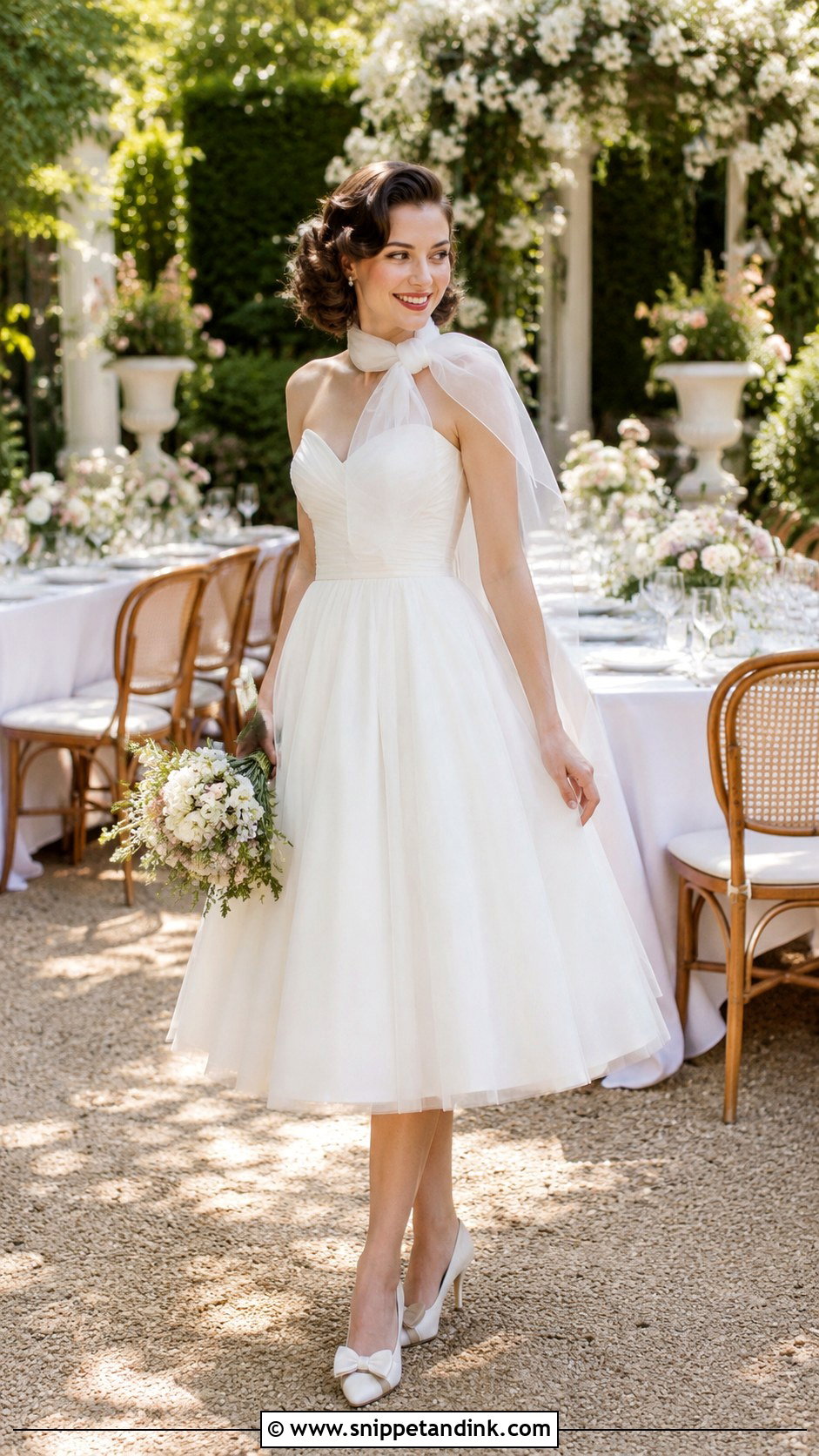
Tea length shows the shoes, so the shoes need to be good: satin pumps, bow heels or low block heels. A sheer scarf tied at the neck or draped over the shoulders adds the vintage mood. The line between vintage and costume is thin, so I keep everything else modern: one era reference, not five. A fitted bodice, a full skirt and soft ivory carry it. Pearl studs and softly curled hair suit garden ceremonies, courthouses and brunch receptions.
15. Courthouse Wedding Dress With Silk Scarf
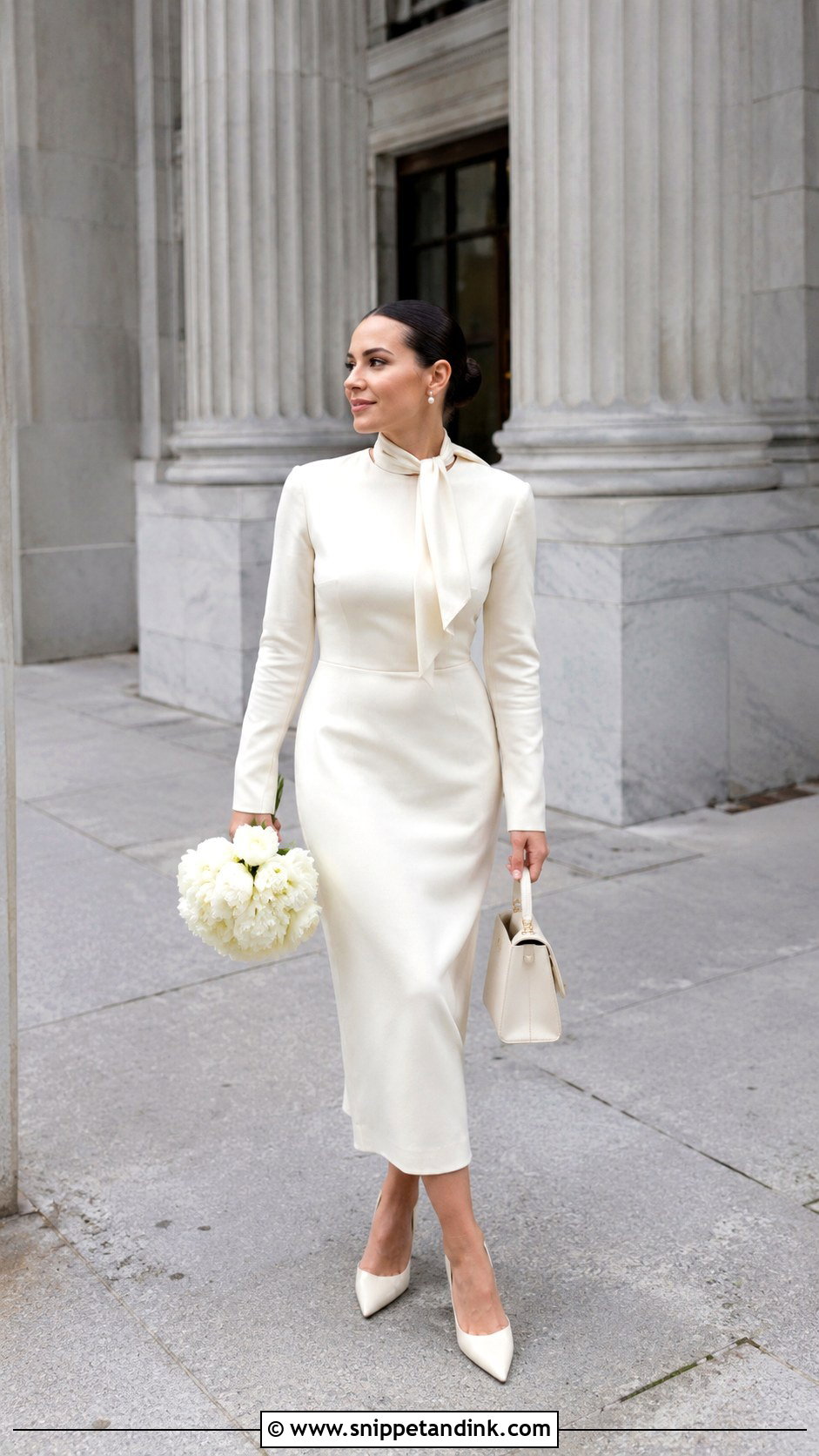
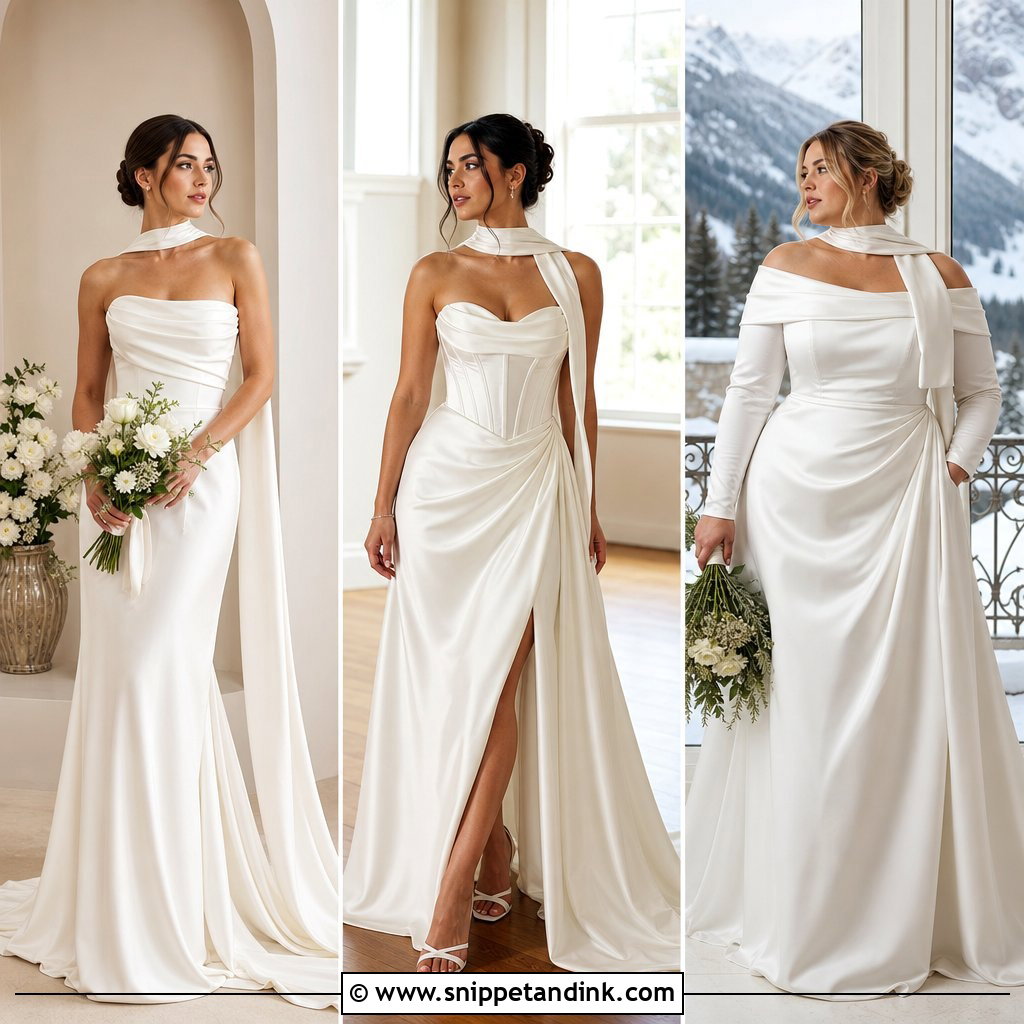
For a courthouse, a matching silk scarf makes a clean midi, a sheath or a tailored mini feel like a wedding outfit rather than smart workwear. Tie it close to the neck for a sharp finish, or let it hang loose for something softer. I sometimes add a blazer for arrival photos and take it off for the ceremony; the scarf then carries the look on its own. Pointed heels, pearl earrings and a small structured bag finish it. I reach for it most at civil ceremonies and city elopements.
16. Beach Wedding Dress With Chiffon Scarf
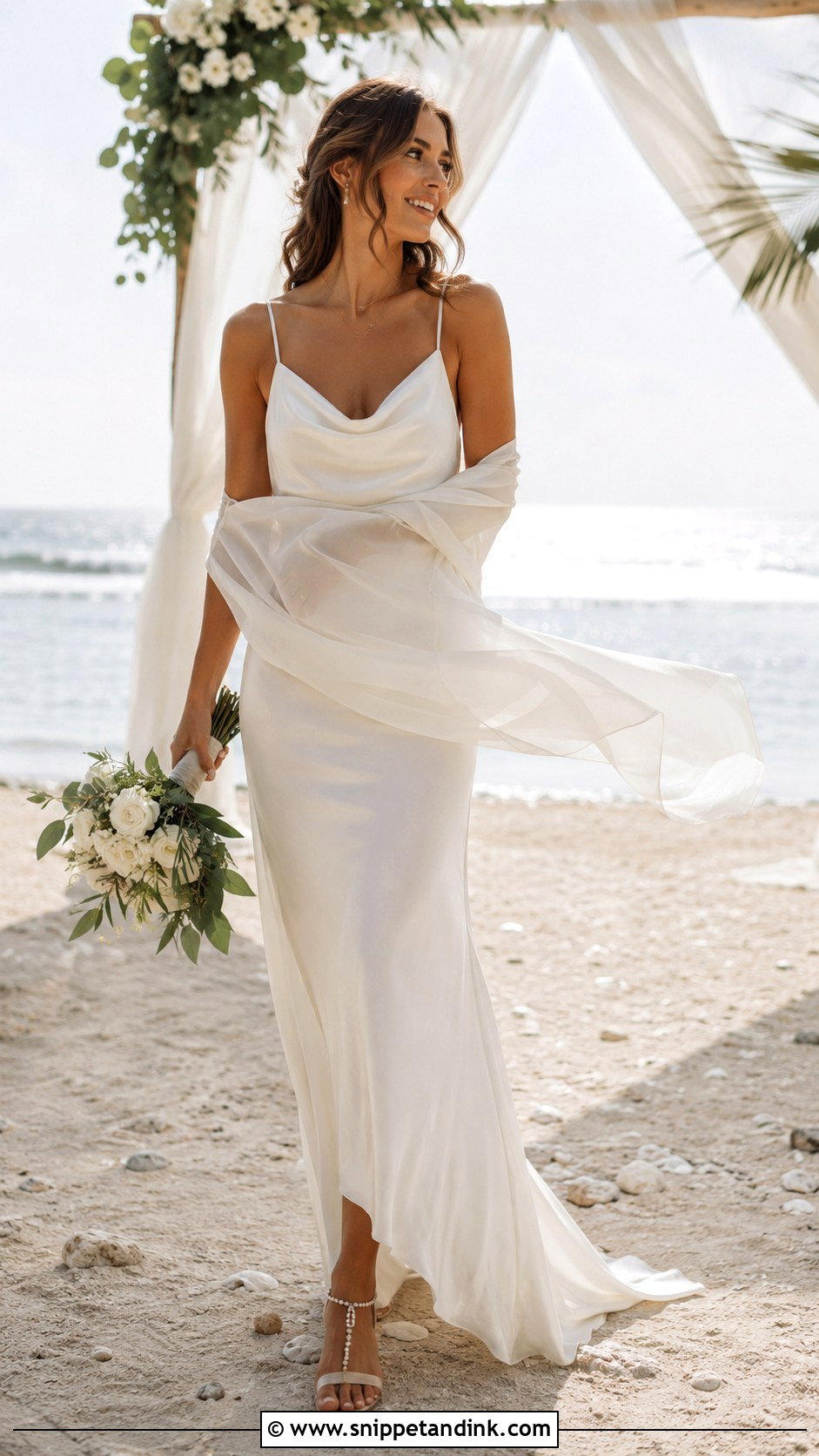
On a beach, the wind decides what your scarf does, so the scarf has to be light enough to move and secure enough not to leave. Ivory, cream or pale blush chiffon over a slip dress, a flowing A-line or a relaxed sheath suits the setting. I knot it once and pin under the knot, because a free chiffon scarf can fly off during the vows. Flat sandals and loose or braided hair fit the mood. Skip heavy embellishment; salt air and sand get into beading.
17. Winter Wedding Dress With Cashmere Scarf
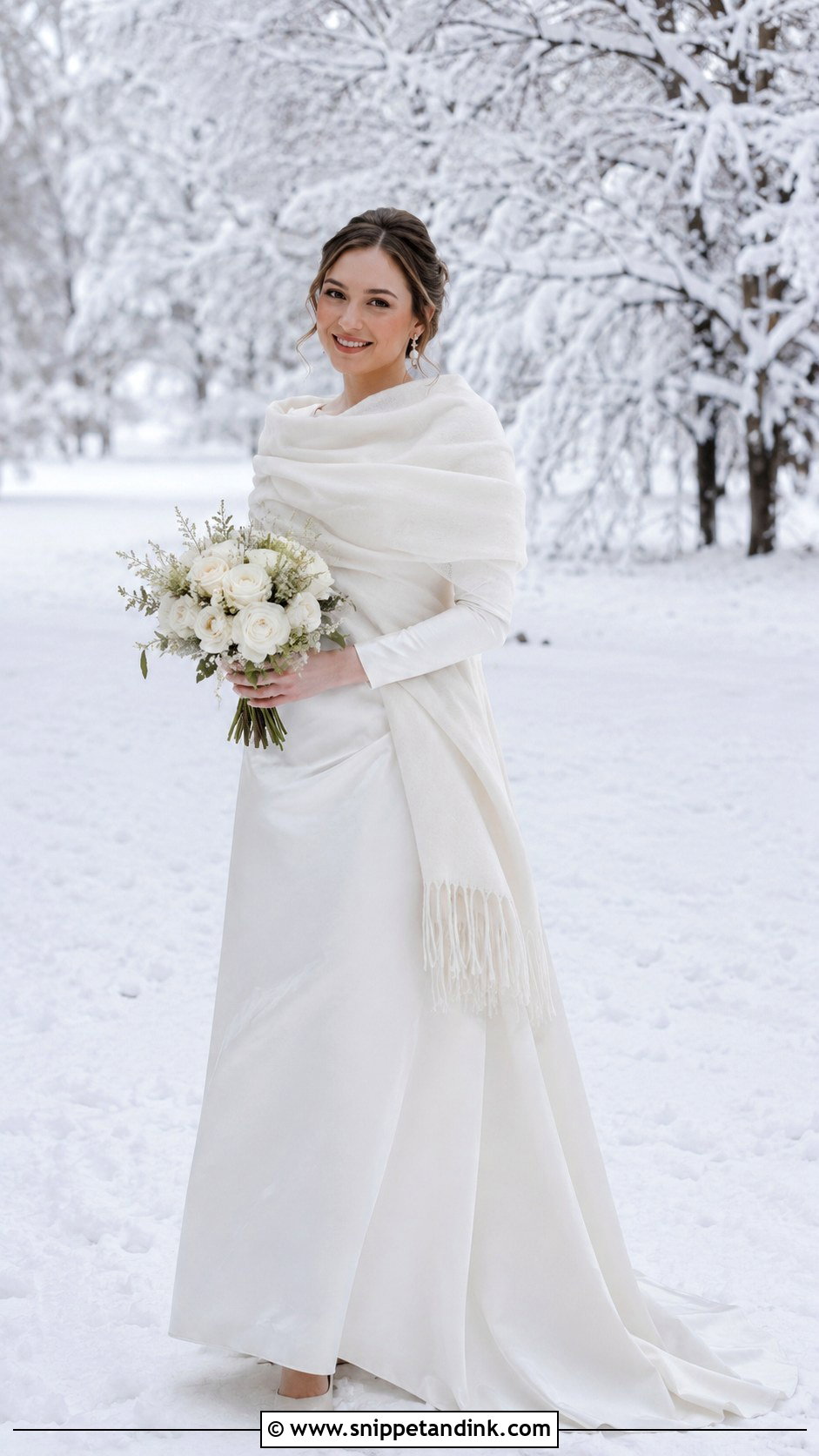
Cashmere is the one scarf here that’s mostly about warmth. A soft ivory cashmere wrap over a long-sleeved satin gown, a crepe dress or a structured ball gown keeps you warm for outdoor photos without hiding the dress the way a coat does. Wrap it around the shoulders outside, loosen it indoors. Cashmere sheds a little on dark fabric, so warn your partner if they’re in a navy or black suit. Closed-toe heels and a smooth bun keep it polished.
18. Summer Wedding Dress With Sheer Scarf
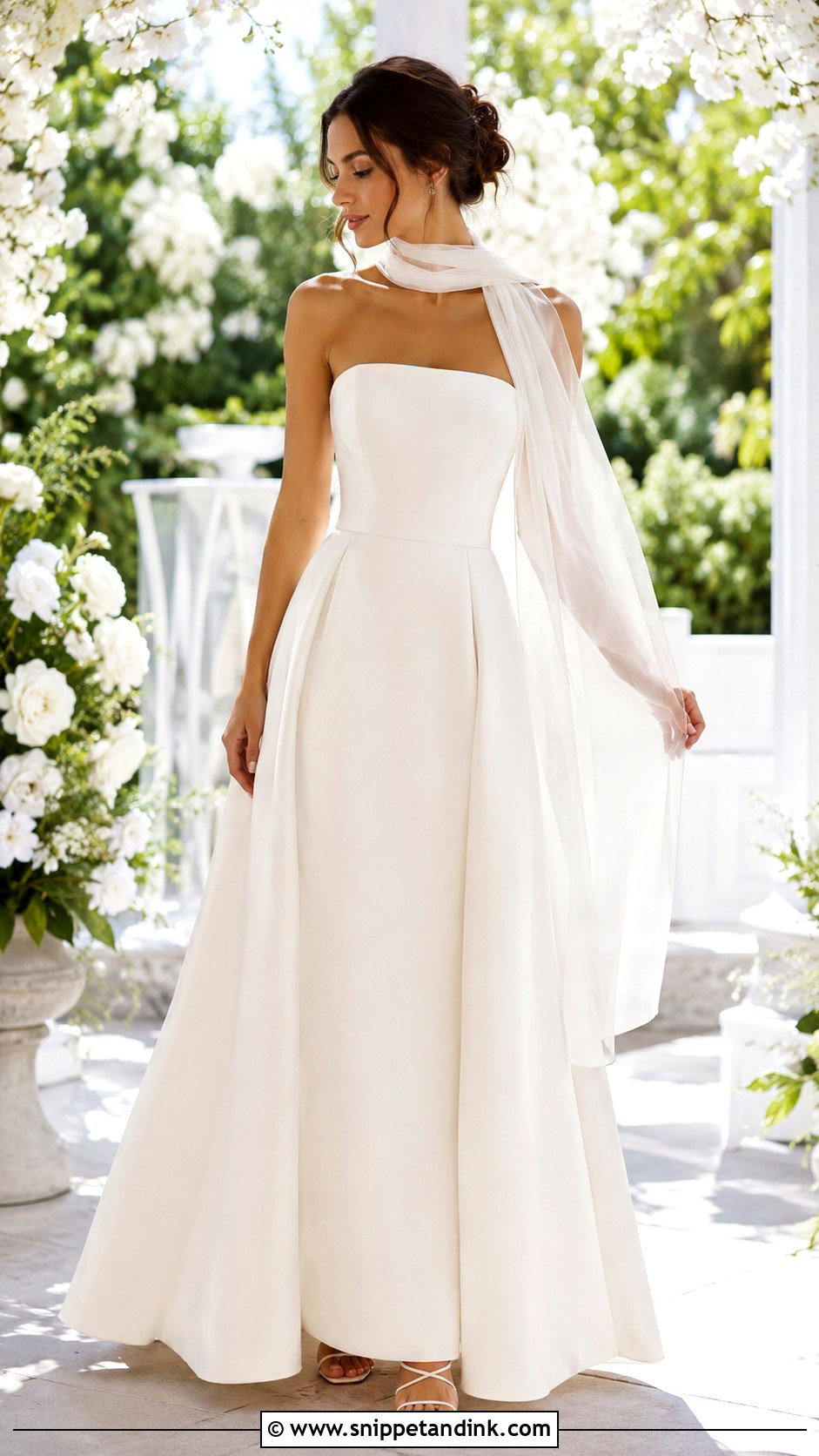
In the heat, you want coverage without warmth. Chiffon, silk georgette, fine tulle and organza breathe; polyester satin doesn’t, and it shows sweat marks. A sheer scarf over a strapless gown, a slip dress or a simple A-line sits loosely and moves easily. I’d keep it off the neck if possible, because fabric against the throat in summer gets uncomfortable fast. Strappy sandals and a soft updo suit outdoor ceremonies and gardens. It also works as a lighter alternative to a full veil.
19. Garden Wedding Dress With Floral Scarf
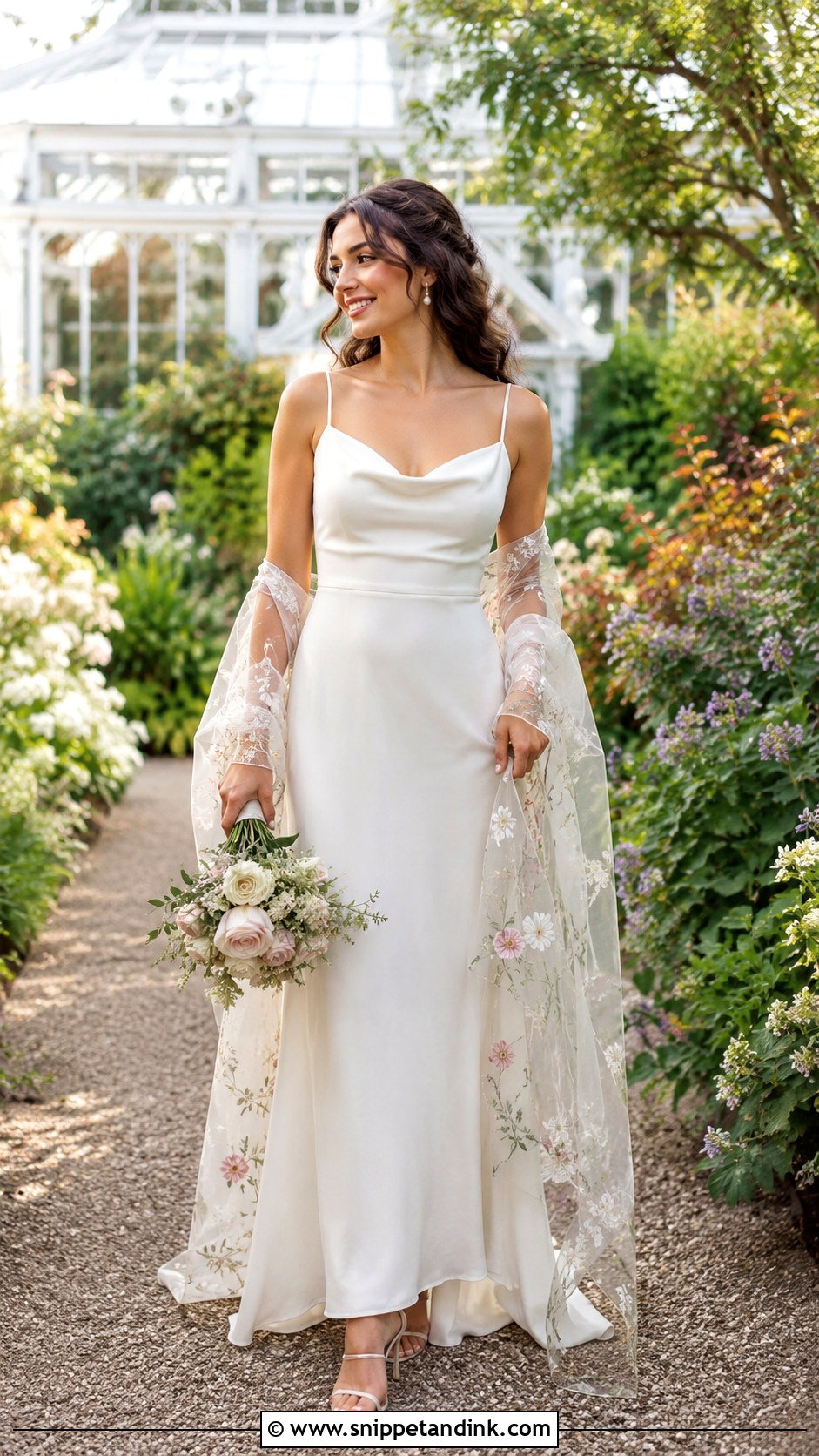
A floral scarf brings the garden onto the dress, but keep it quiet: embroidered flowers, subtle appliqué or a tone-on-tone print rather than a bold botanical. A simple A-line, slip dress or soft tulle gown gives the detail room. If the scarf has colour, stay with blush, champagne or pale sage, which sit happily next to ivory. I like to match a flower in the scarf to one in the bouquet. Pearl earrings and soft waves complete it.
20. Boho Wedding Dress With Gauze Scarf
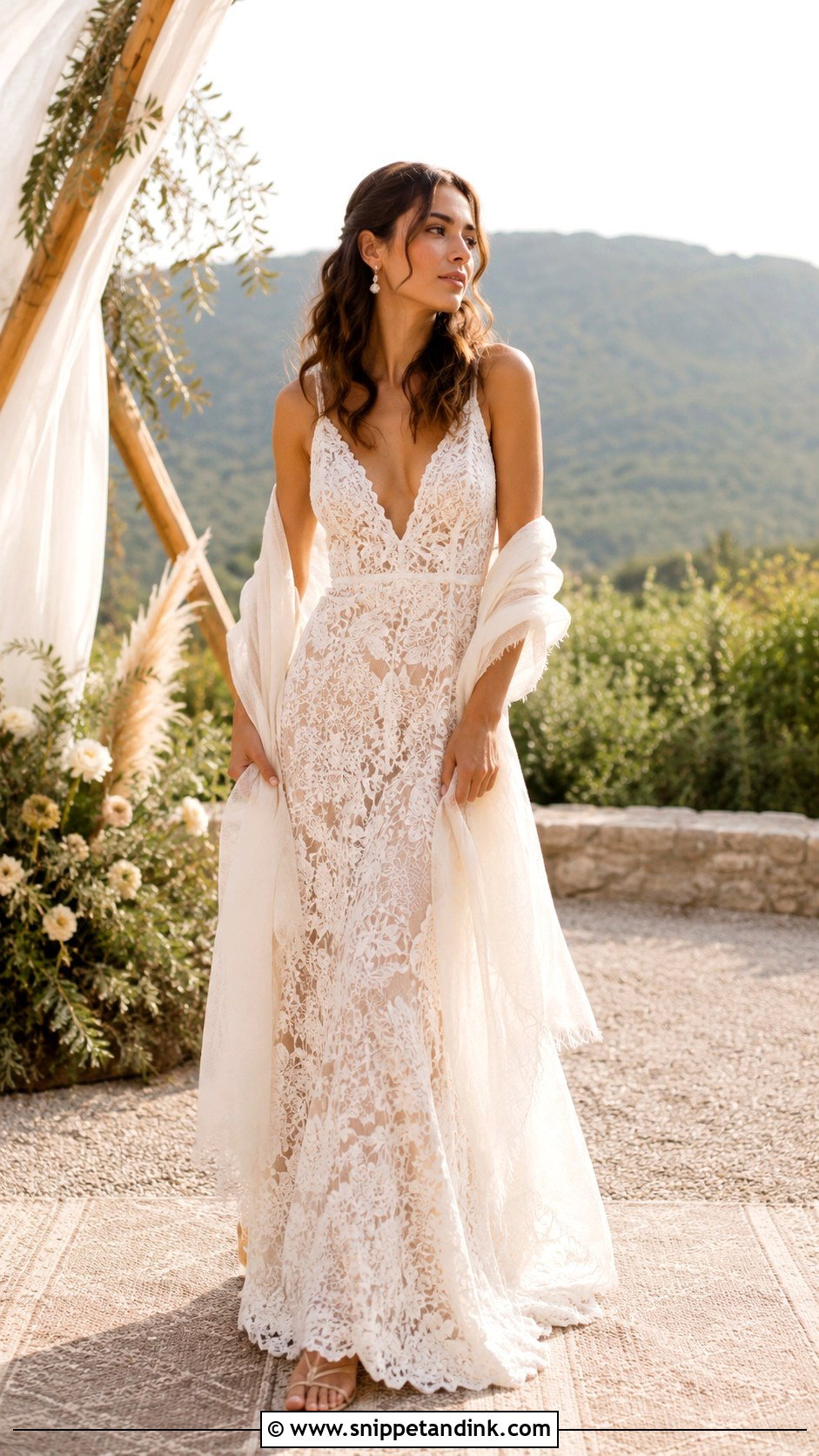
Gauze has a soft, slightly crumpled texture that suits a relaxed dress far better than smooth silk. It goes with lace, crochet details, loose skirts and relaxed sleeves. Drape an ivory or natural white scarf loosely around the shoulders or tie it in a soft knot. The crinkle is part of the appeal, so this is the one scarf I wouldn’t steam flat. Sandals, undone waves and a flower comb finish it. Outdoor weddings, desert ceremonies and barn venues suit the mood.
21. Modern Wedding Dress With Cape Scarf
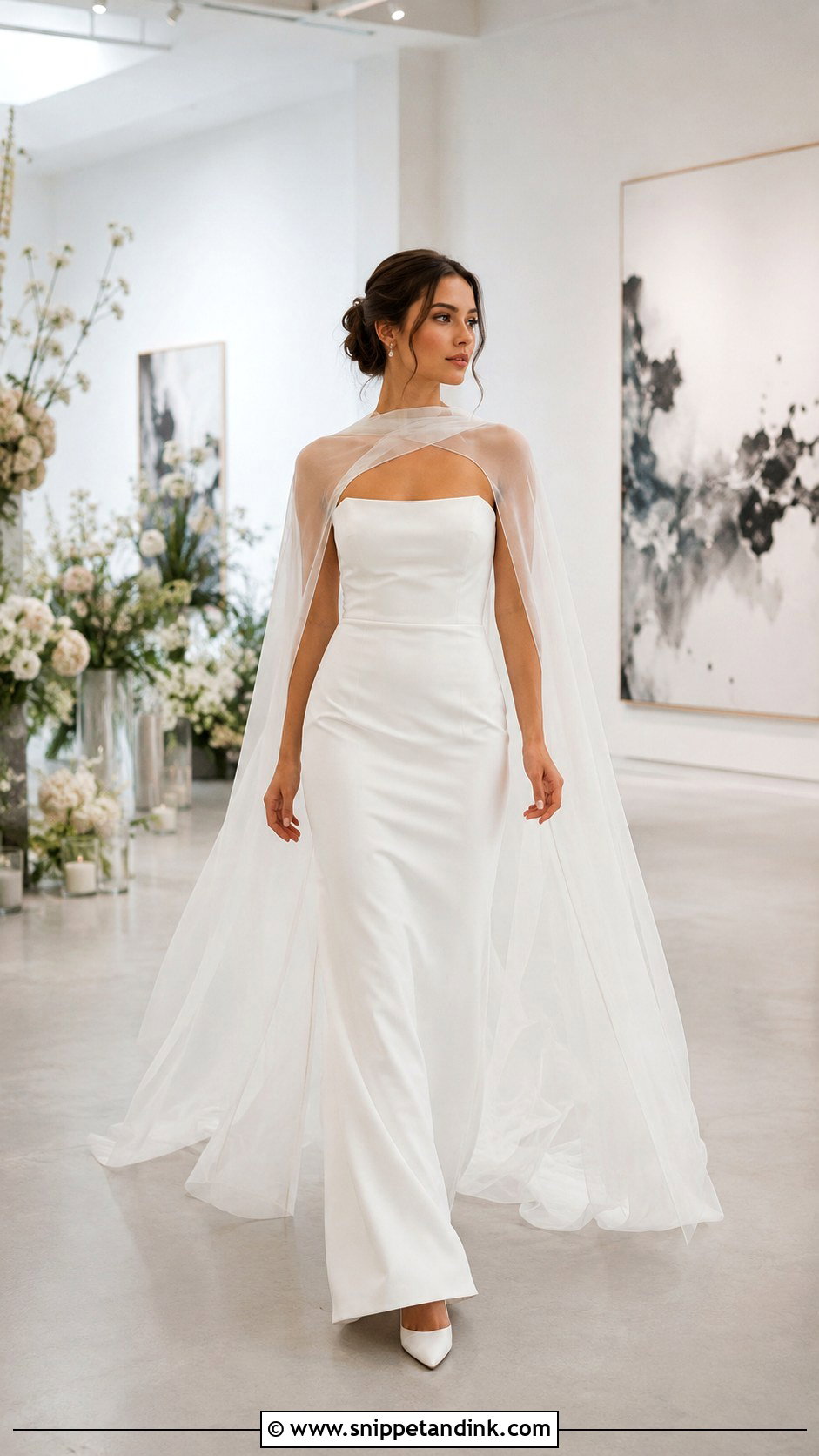
A cape scarf sits between an accessory and a garment. It can attach at the shoulders, wrap around the neck, or fall from the back like a soft cape. Over a simple column, a strapless dress or a fitted crepe, it gives drama while staying wearable. Sheer organza, chiffon or tulle moves without going stiff. Because it is longer and wider than a normal scarf, it needs a fixed point, so I’d have small loops sewn inside the bodice. A sleek bun and sharp heels suit it.
22. Classic Wedding Dress With Satin Scarf
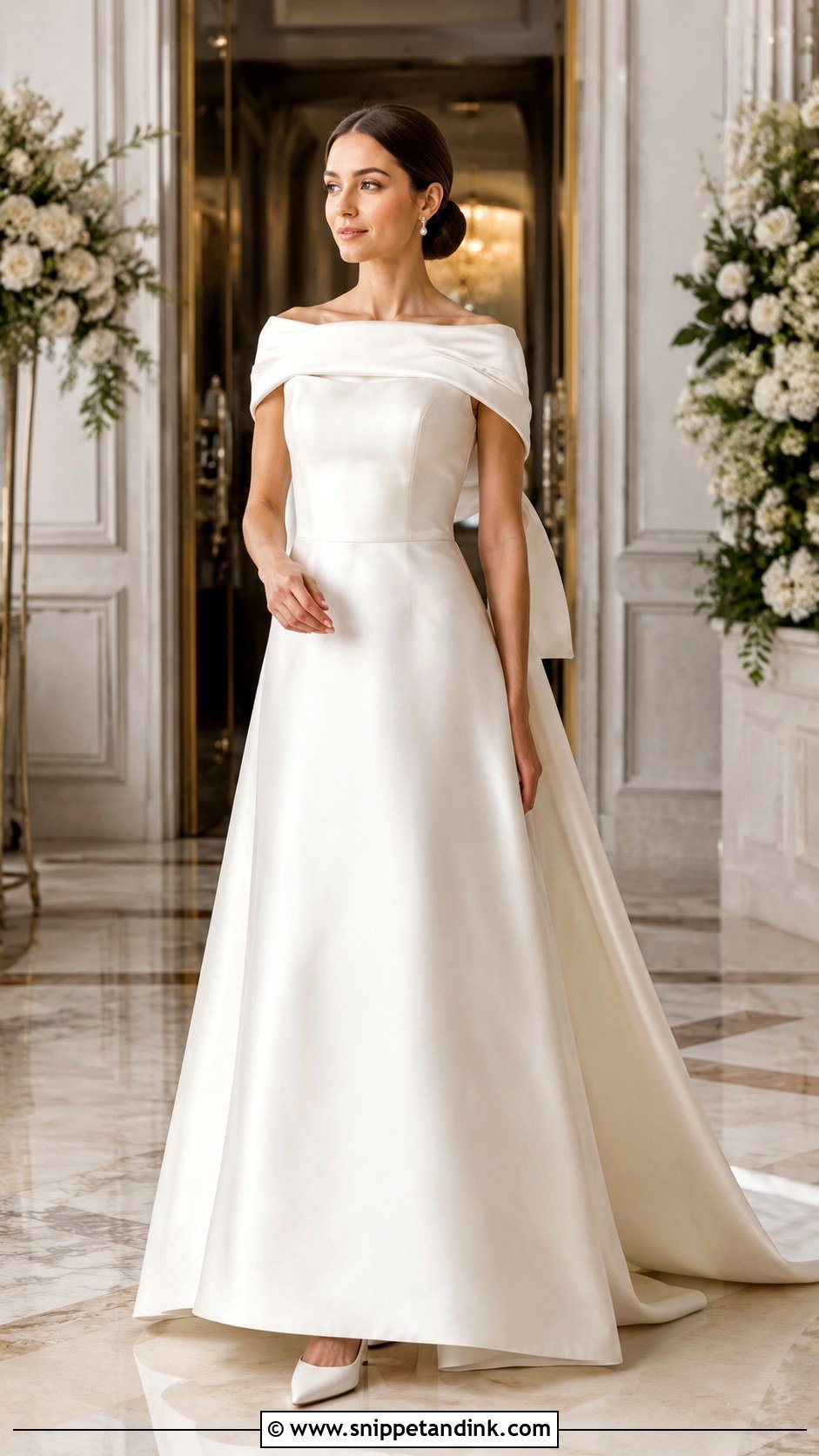
Satin on satin is the most formal combination here, and the shade match has to be exact. Ivory, diamond white and champagne differ more than they look in a shop. I’d ask the bridal shop for a fabric offcut or order the scarf from the same maker. It pairs with a strapless ball gown, an A-line or a fitted satin gown. Tie it in a neat bow at the back or drape it over the shoulders. Satin creases where it’s knotted, so tie it once and leave it.
23. Mermaid Wedding Dress With Sheer Scarf
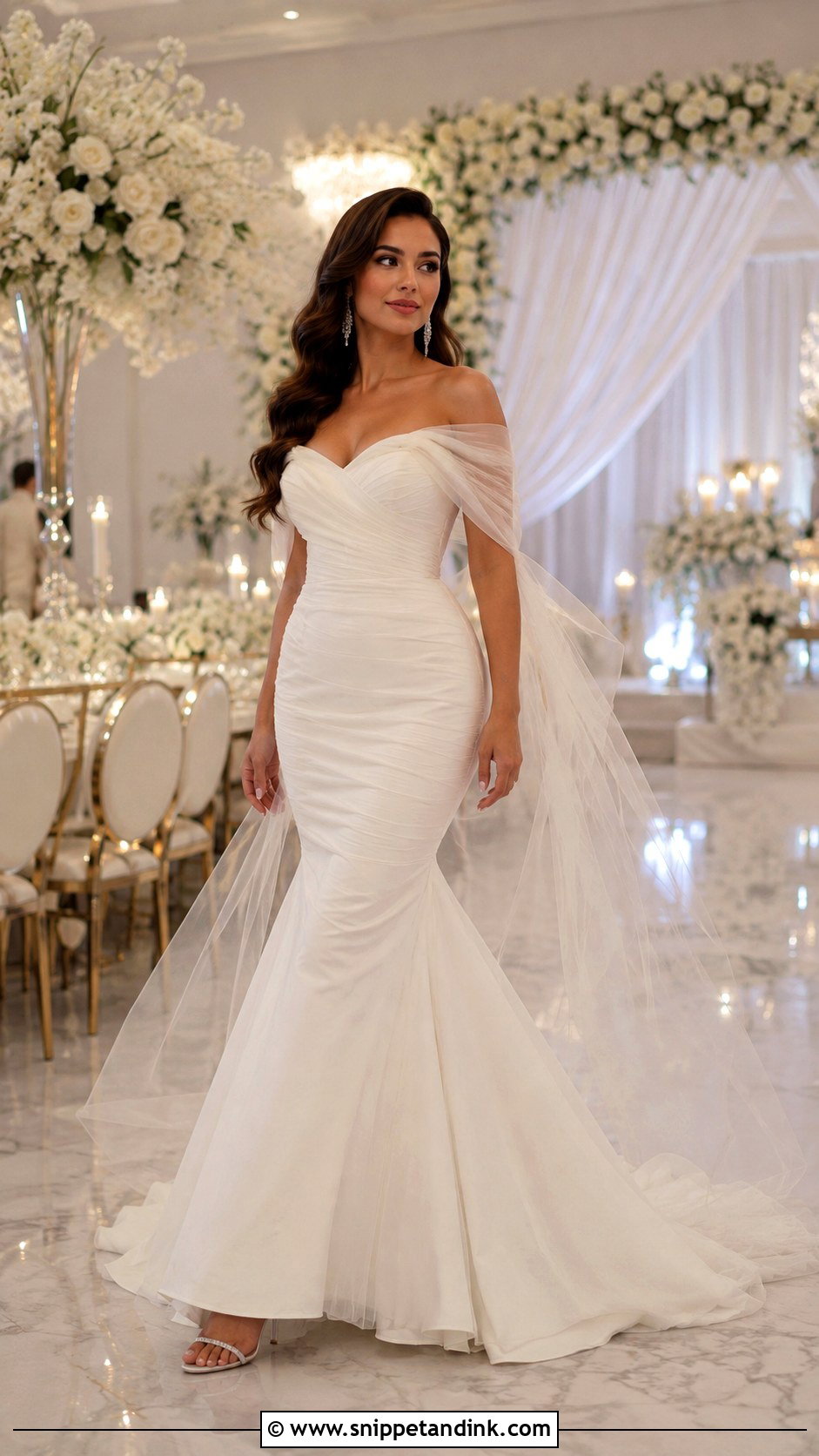
A mermaid gown already shows the body, so the scarf should soften the top half without hiding the shape. Chiffon, tulle or silk georgette are light enough. A long scarf running down the back echoes the flare of the skirt and the train, which ties the silhouette together. I keep it short of the floor, though, since a mermaid already makes turning awkward, and a trailing scarf gives you one more thing to step on. Drop earrings and a polished wave or low bun suit it.
24. Square Neck Wedding Dress With Draped Scarf
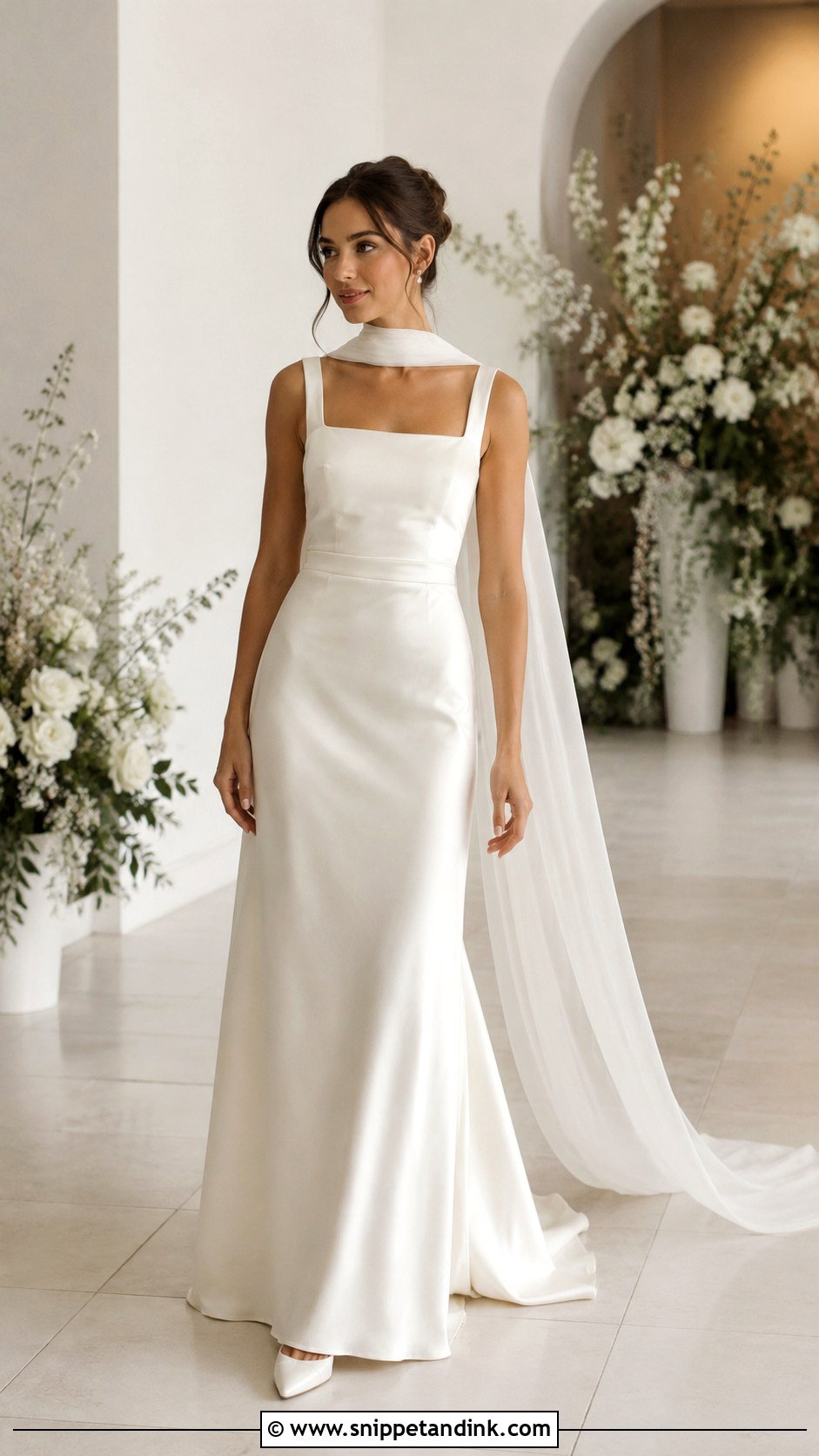
The square neckline gives structure; the scarf softens its corners. Lay it lightly around the neck with the ends over the back, or drape it across the shoulders for portraits. Satin, crepe and mikado all suit it. A heavy necklace would crowd the neckline, so I’d stick to pearl or crystal studs. This pairing is for the bride who wants something simple without it looking plain. Indoor ceremonies and modern outdoor venues both work.
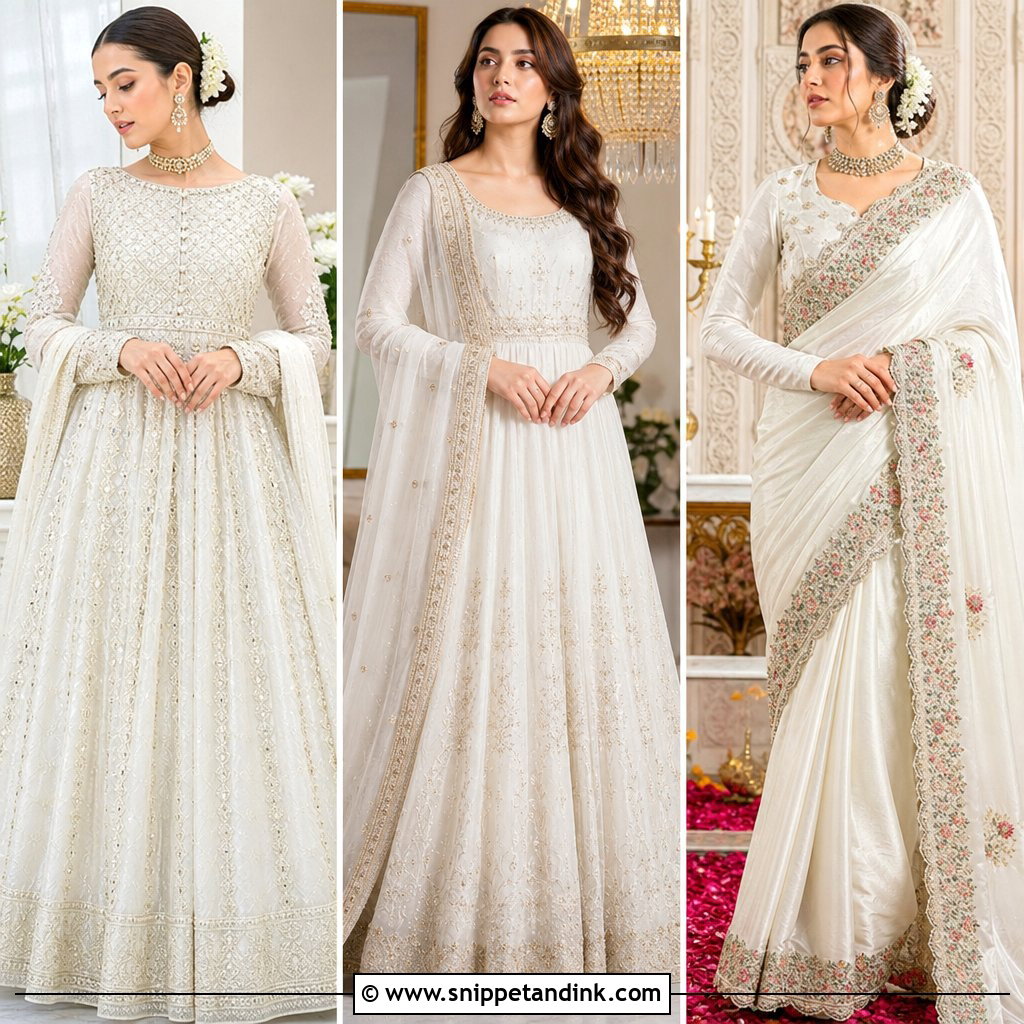
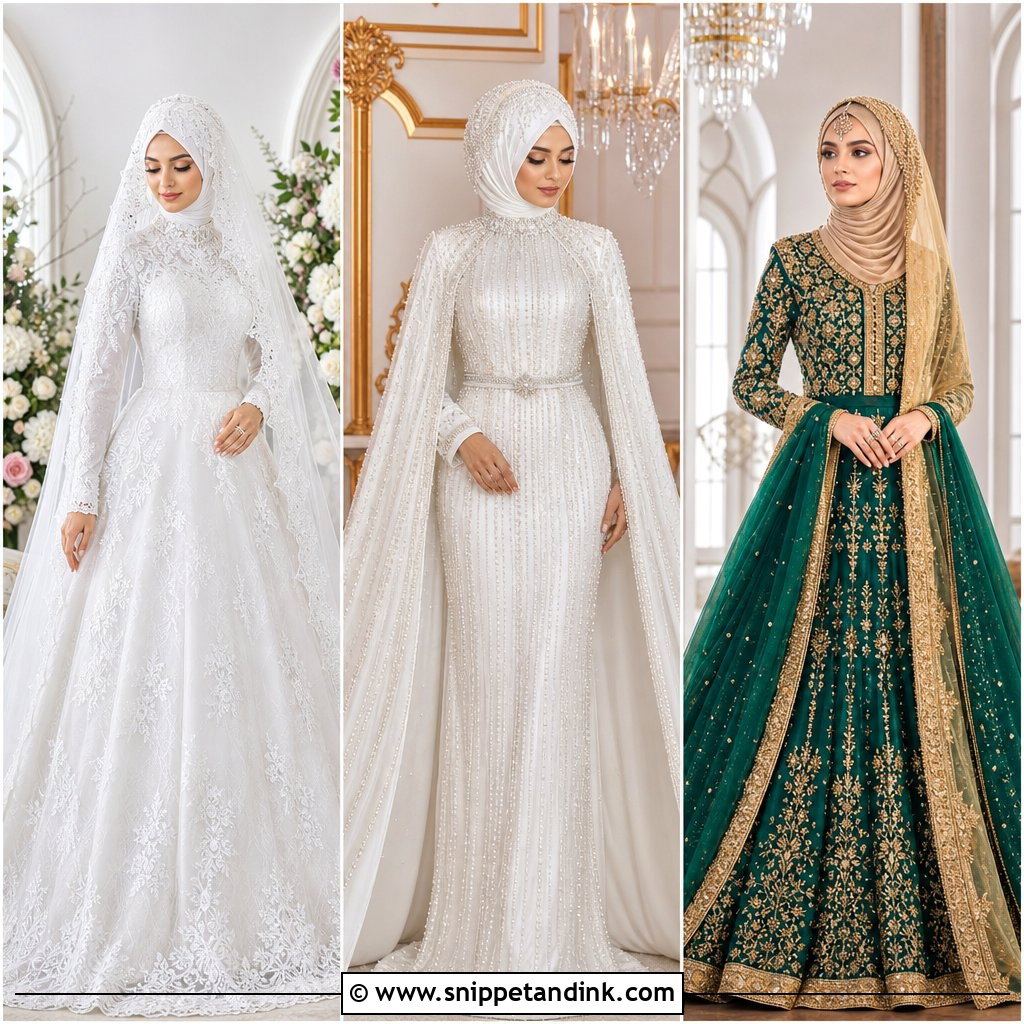
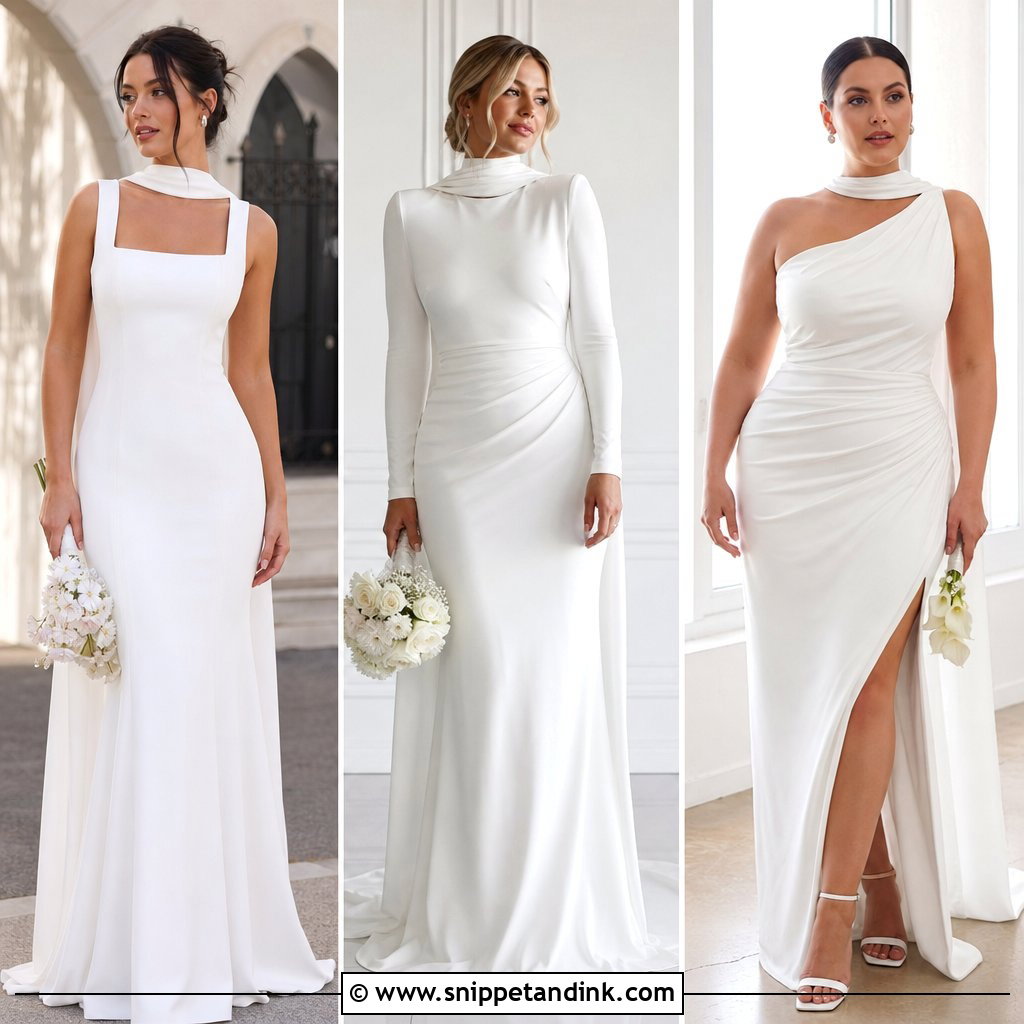
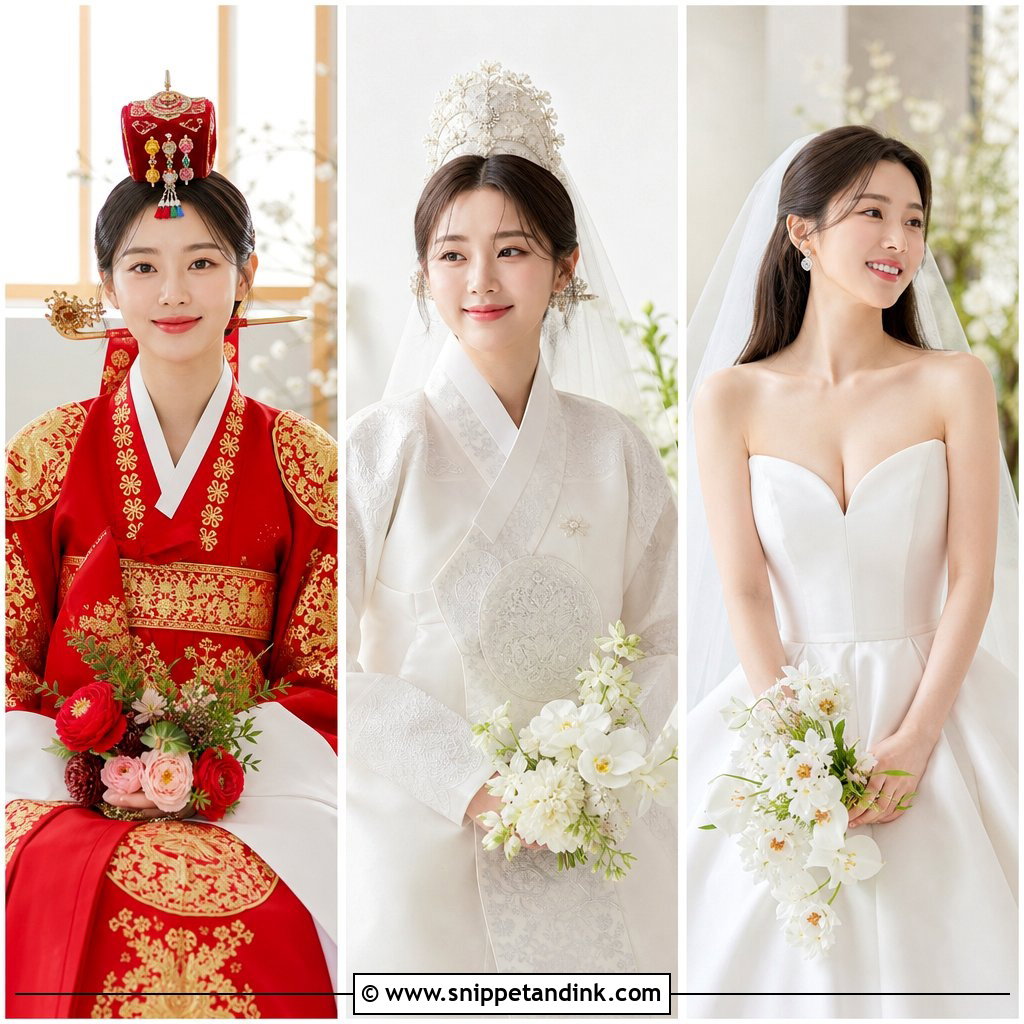
25. Backless Wedding Dress With Long Scarf
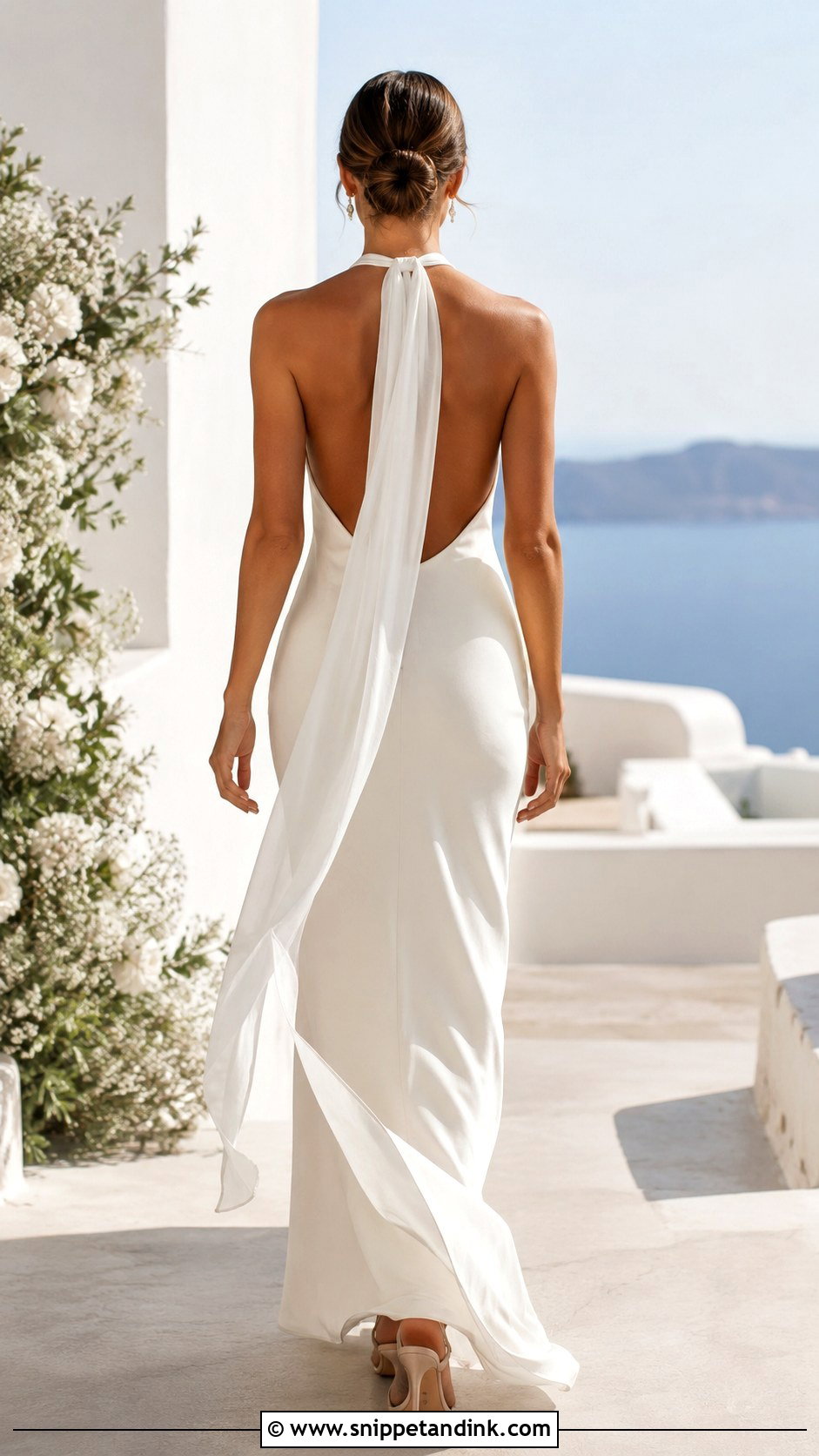
Tie the scarf at the neck and let it fall down the open back, and you get movement without covering the design. A long chiffon or silk scarf feels light against bare skin. It suits slip gowns, halter dresses and fitted crepe silhouettes. I’d check where the scarf ends against the back opening: if it stops exactly at the lowest point of the back, it draws the eye there nicely; if it stops halfway, it looks unfinished. Keep the front bare and the hair off the back.
26. Embellished Wedding Dress With Plain Scarf
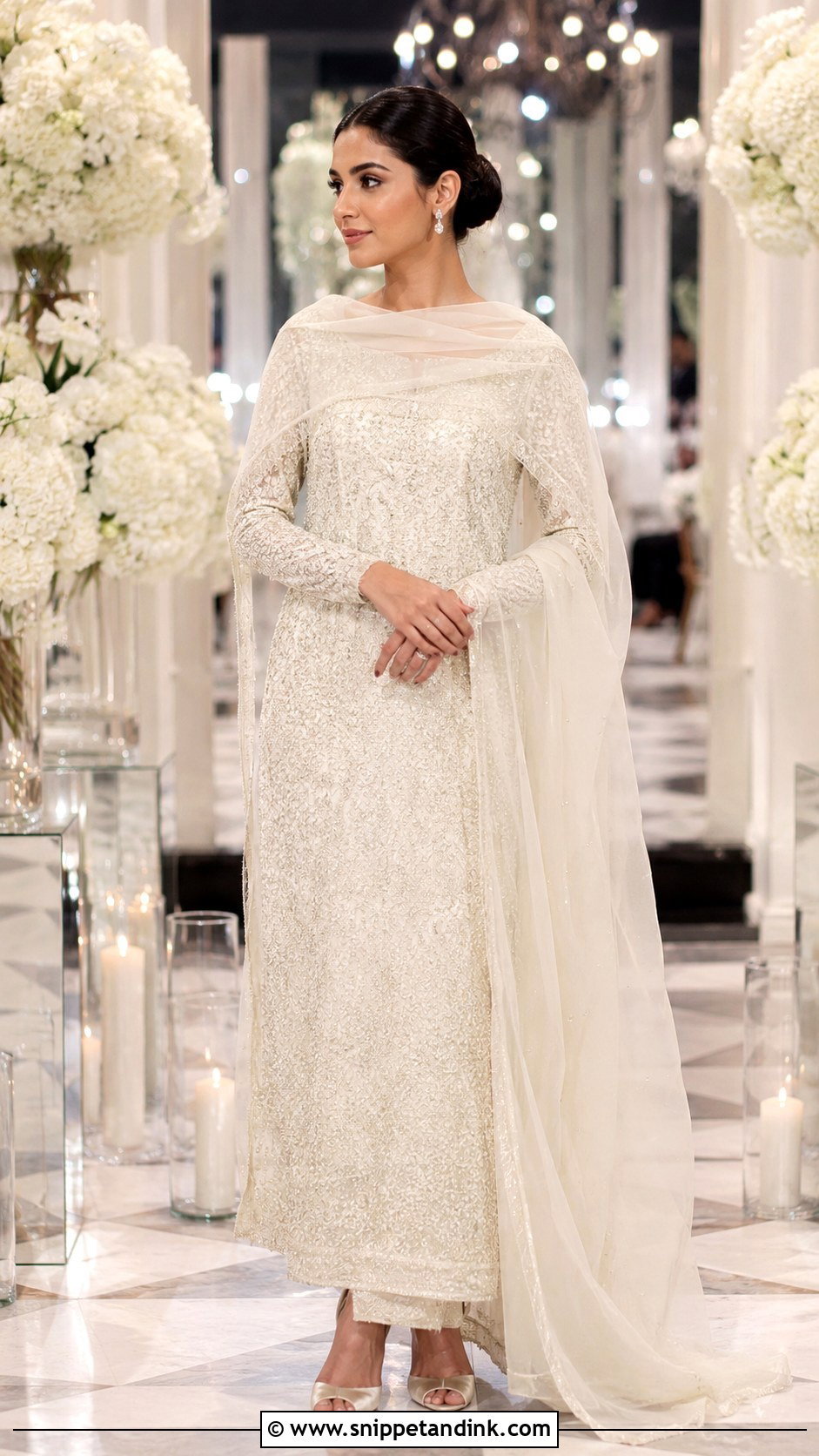
When the gown is beaded, sequinned or covered in lace, the scarf should be completely plain. A sheer ivory chiffon or tulle scarf softens the look without adding clutter. I check that the scarf doesn’t snag: sequins and crystal beading catch fine chiffon, so a slightly firmer tulle or a silk with a tighter weave is safer over a heavily embellished bodice. Keep jewelry small. It suits evening ceremonies and formal receptions.
27. Simple Wedding Dress With Pearl Edge Scarf
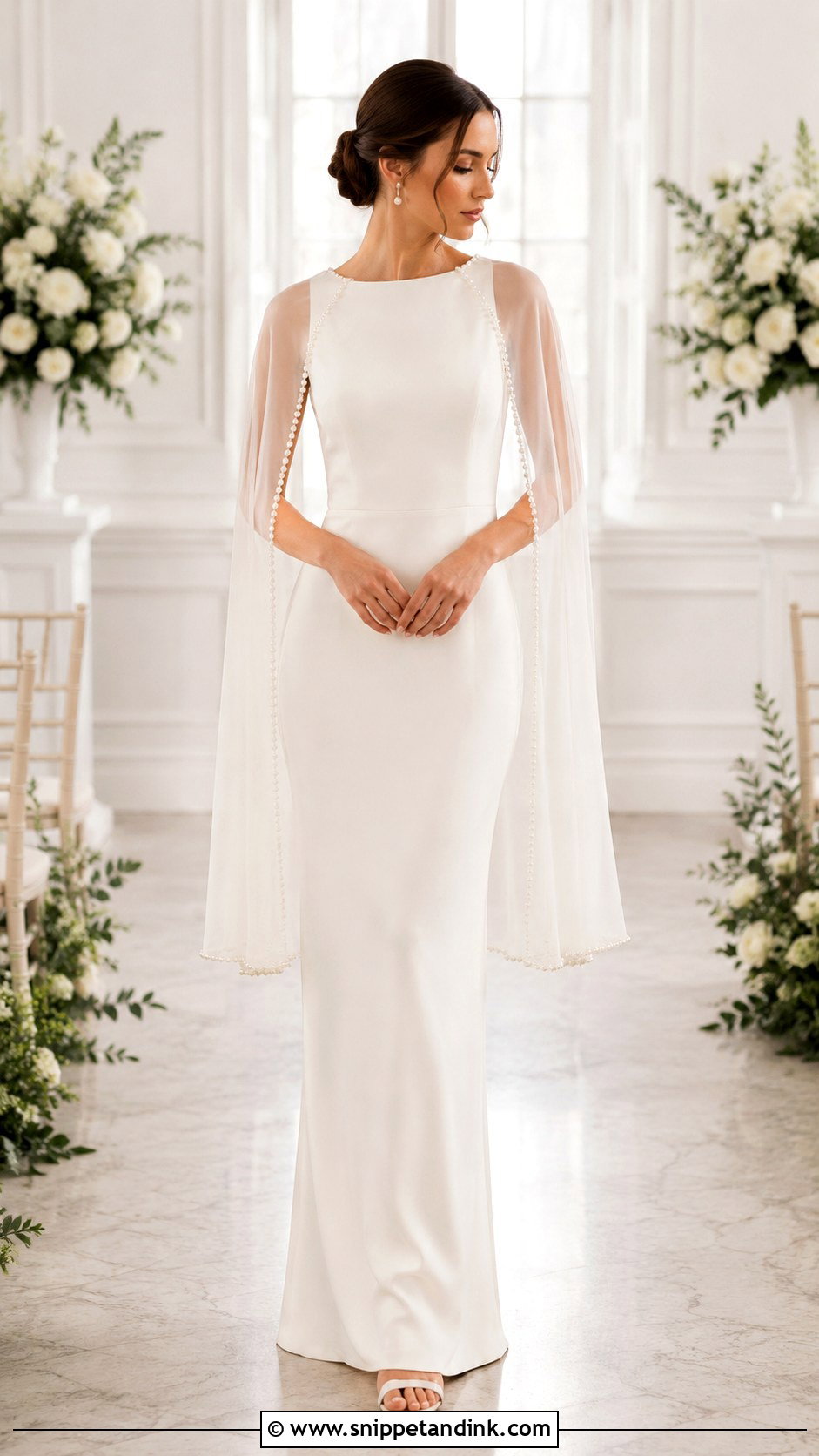
A pearl-edged scarf puts detail near the face without a necklace. The gown can be plain satin, crepe or chiffon; the pearls along the hem add a small finish. Drape the scarf over the shoulders or tie it softly at the neck so the trim shows. The edge gives the scarf a bit of weight, which helps it hang straight and stops it lifting in a breeze. Pearl earrings repeat the detail. It’s a good choice for small weddings where people see you up close.
28. Reception Wedding Dress With Scarf
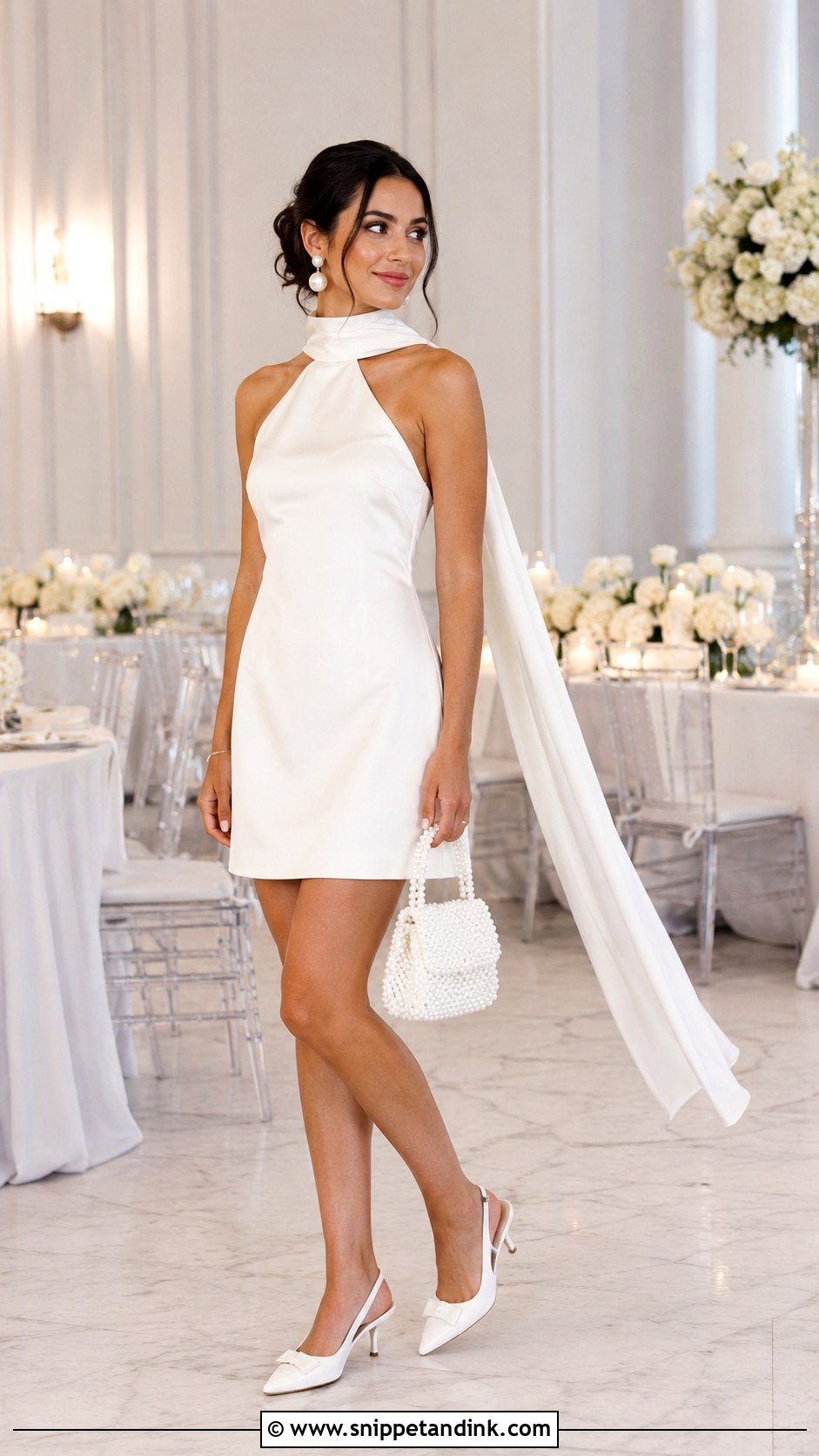
Adding a scarf after the ceremony is the simplest outfit change there is. A short dress, a sleek midi or a fitted column feels ready for the party with a narrow scarf at the neck or down the back. Satin, silk or chiffon give a smooth finish. It can replace the veil once the ceremony is over, and it’s light enough to dance in. I tie it a little tighter for the evening than I would for portraits, so it survives the dance floor.
29. Plus Size Wedding Dress With Soft Scarf
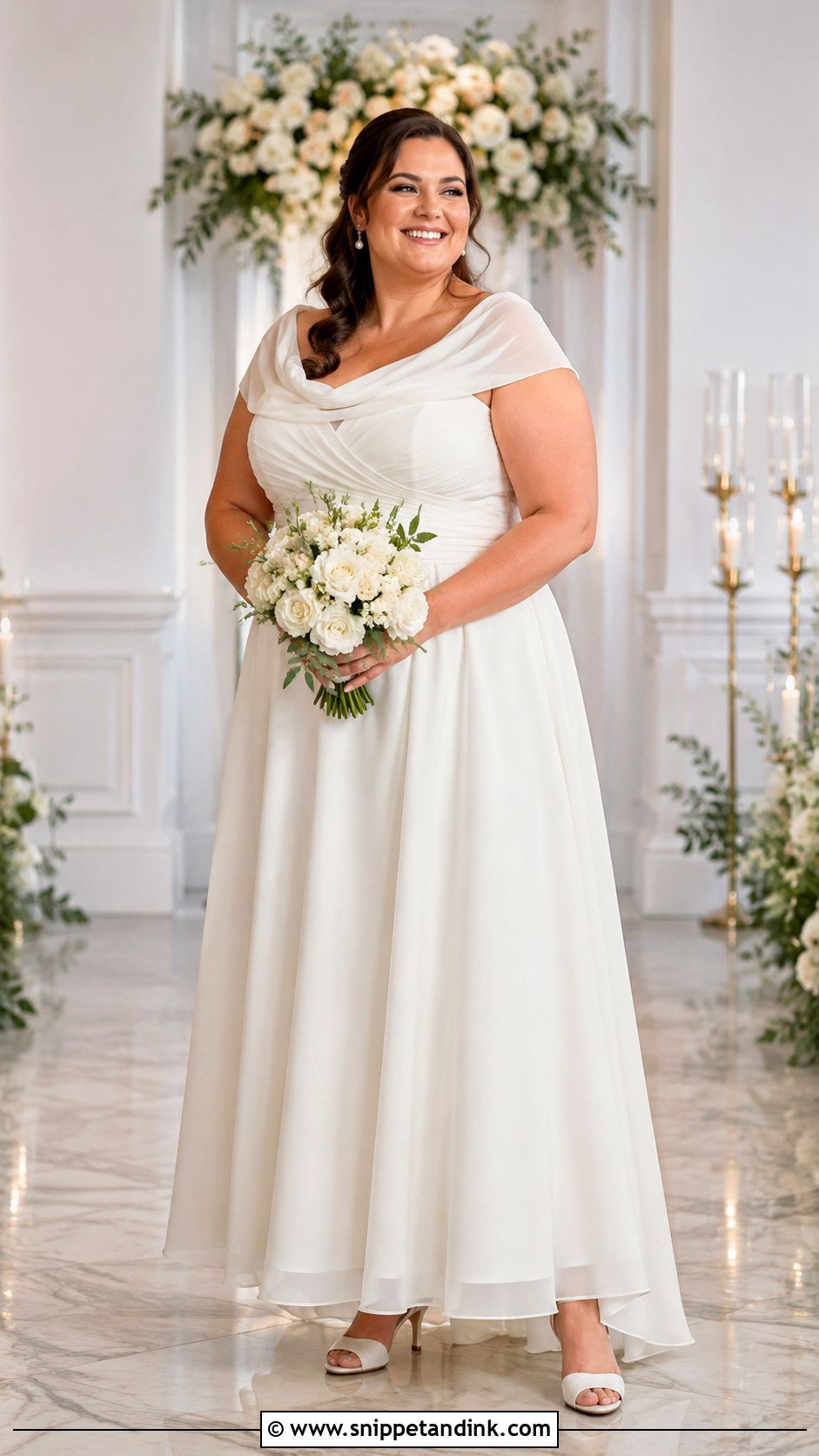
Curvier brides can wear a scarf as easily as anyone; what matters is fabric weight. A light chiffon, silk or tulle drapes smoothly, while a heavy or stiff scarf adds bulk at the shoulders. A-line gowns, wrap dresses, off-shoulder styles and structured satin all work. Wear it loose at the neck, over the shoulders or down the back. I’d avoid knotting it on the chest, which adds volume where most brides don’t want it, and favour a long vertical drape instead.
30. Modest Wedding Dress With Bridal Scarf
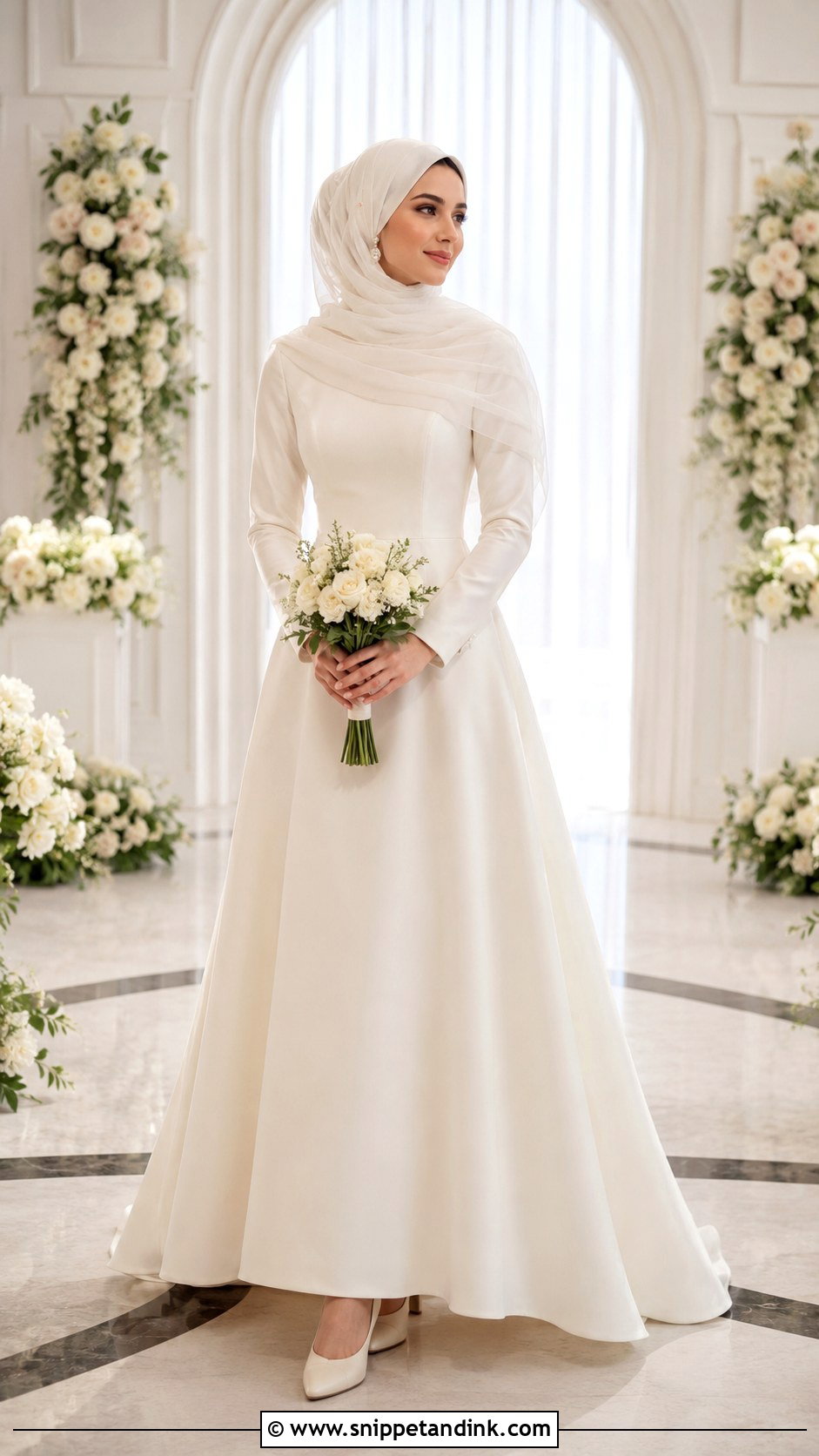
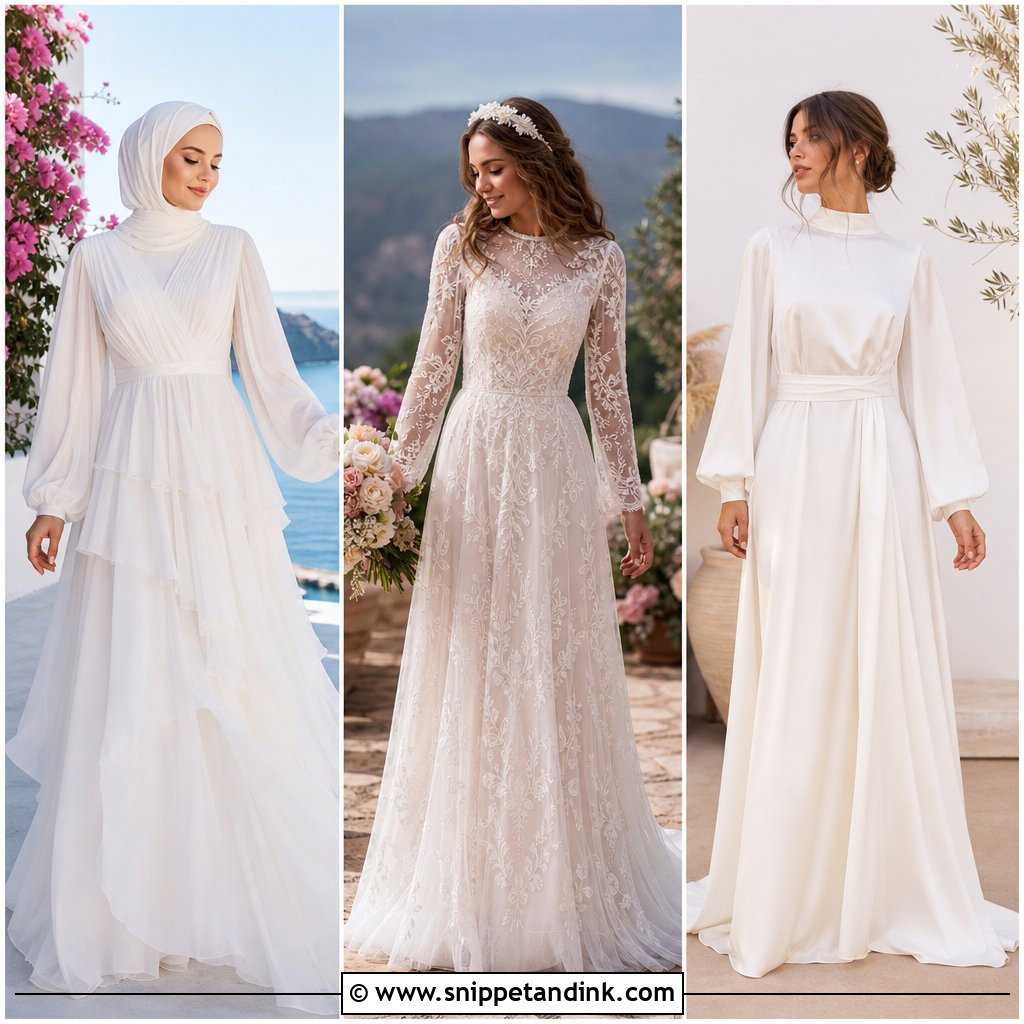
For a modest dress, the scarf can do more than decorate: it can cover the hair for a religious ceremony and come down to the shoulders afterwards. Long sleeves, higher necklines and A-line skirts already give coverage. Chiffon, silk or fine tulle drape best, and the colour should match the gown. If the scarf goes over the hair, plan the hairstyle with it in mind; a low bun gives the fabric something to rest on and pins can hold it in place without showing.
Knots and Pins That Hold a Bridal Scarf All Day
A scarf that has to be re-tied every hour is a scarf you’ll take off by dinner. These are the methods I rely on.
- The single loose knot: wrap once, tie once at the side of the neck, then put a small safety pin through the knot from the inside so it can’t loosen.
- The back drape: lay the middle of the scarf across the front of the neck, cross the ends at the nape and let them fall. Pin the cross to the dress lining.
- The shoulder drape: rest the scarf on the upper arms and fix it to the bodice or sleeve with two small pins on each side, hidden in a seam.
- The bow: use organza or satin, which hold shape. Tie it once, check it in a mirror, and secure the centre with a stitch if it’s going to be there all day.
Double-sided fashion tape helps on bare skin, but I’d test it first; some skin reacts to it, and it doesn’t hold well once you’re warm. Small scarf clips are useful for silk and chiffon on a windy day.
Getting a Scarf That Actually Matches the Dress
This is where most bridal scarves go wrong. White, diamond white, ivory and champagne all look alike on a screen and very different next to each other. My approach is to ask the bridal shop whether the designer makes a matching scarf, or whether they can order a length of the same fabric. Failing that, take a swatch from the hem allowance when your dress is altered and use it to shop. Look at the two together in daylight by a window, since that’s the light most of your photos will be taken in. A scarf that matches the dress in tone looks expensive even when it’s simple; one that is a shade off always looks like an add-on.
One Length of Fabric, Many Ways to Wear It
A scarf changes how a dress feels with very little effort. It softens a structured gown, gives a minimalist dress some movement, keeps you warm in winter and adds personality to a simple outfit. Dress fabric, neckline, venue and comfort decide which one works. Chiffon, silk, tulle, organza, satin and cashmere all behave differently, so match the weight to the job. Then anchor it properly, and it will still be where you put it at the end of the night.
You'll Like These Ideas:



Leave a Reply