
A big bow is a detail guests see from behind, from the side and in every walking-away photo, so it has to be right. Bows now turn up on the back, shoulder, waist, bodice and train, on everything from structured satin ball gowns to sleek columns, minis and gowns with a coloured bow. I’ve paired each dress below with the shoes, jewellery, hair and veil that let the bow stay visible. The part brides tend to underestimate is how a bow behaves after hours of sitting, hugging and dancing, so I’ve added the fitting checks that keep it crisp.
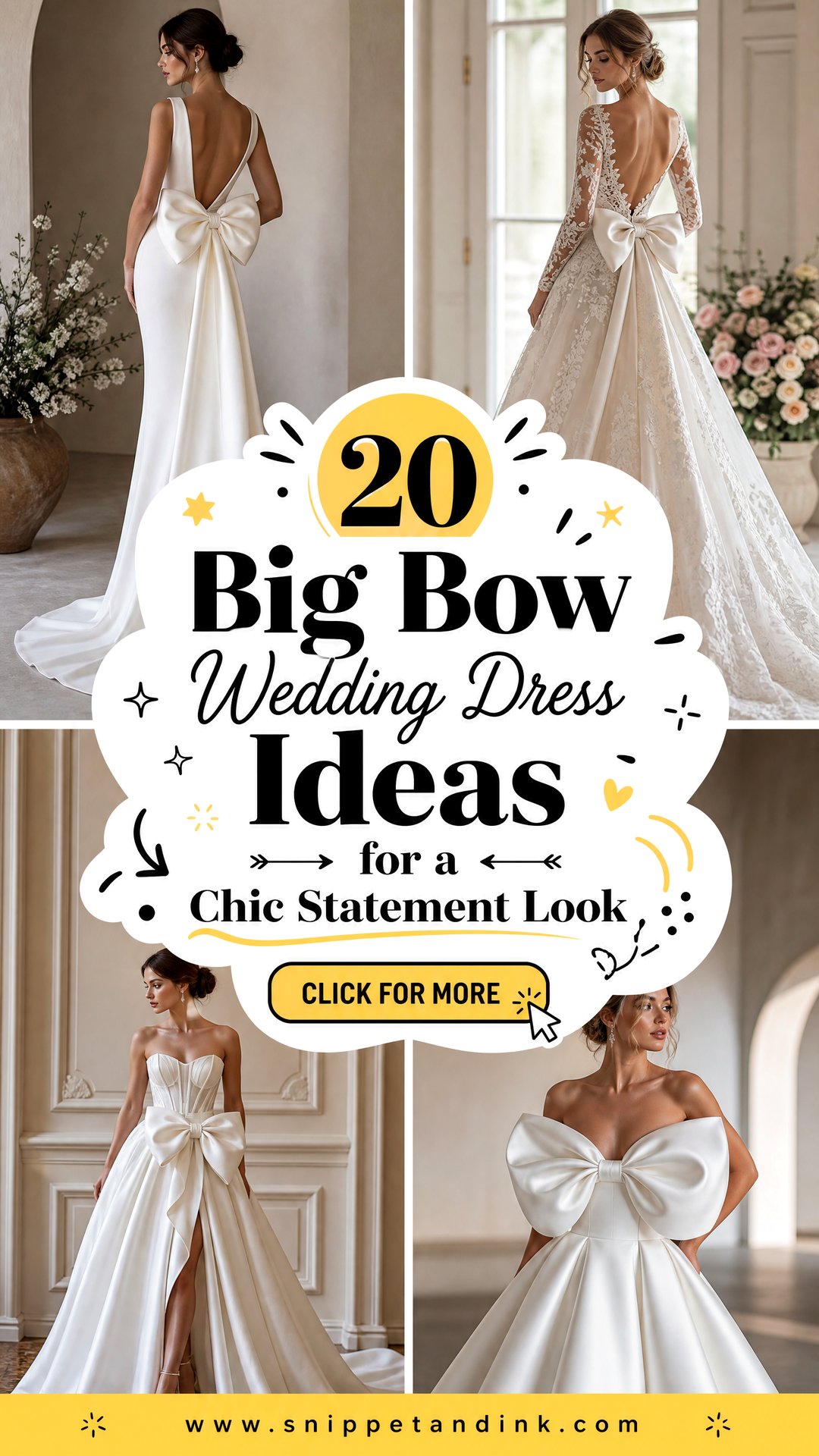
Where a Bow Sits Changes Your Proportions
Before falling for a particular gown, decide where you want people to look. A bow pulls the eye to its position, so its placement works like a belt or a neckline.
- Back waist: the safest placement for most figures. It defines the waist from behind and leaves the front clean for photos.
- Shoulder: widens the shoulder line, which balances fuller hips. If your shoulders are already broad, a smaller bow keeps things even.
- Front waist or bodice: adds volume where it sits. On a short torso, keep it small and slightly high, or it can make the waist look lower.
- Hip or side: draws attention to the curve, which is why it pairs well with mermaid and trumpet shapes.
I also look at scale. On a petite bride, a bow wider than her shoulders swallows her from behind. On a tall bride, a small bow can look like trim. Hold a folded piece of fabric or paper to the spot during a try-on to judge size before ordering.
1. Oversized Back Bow Ball Gown
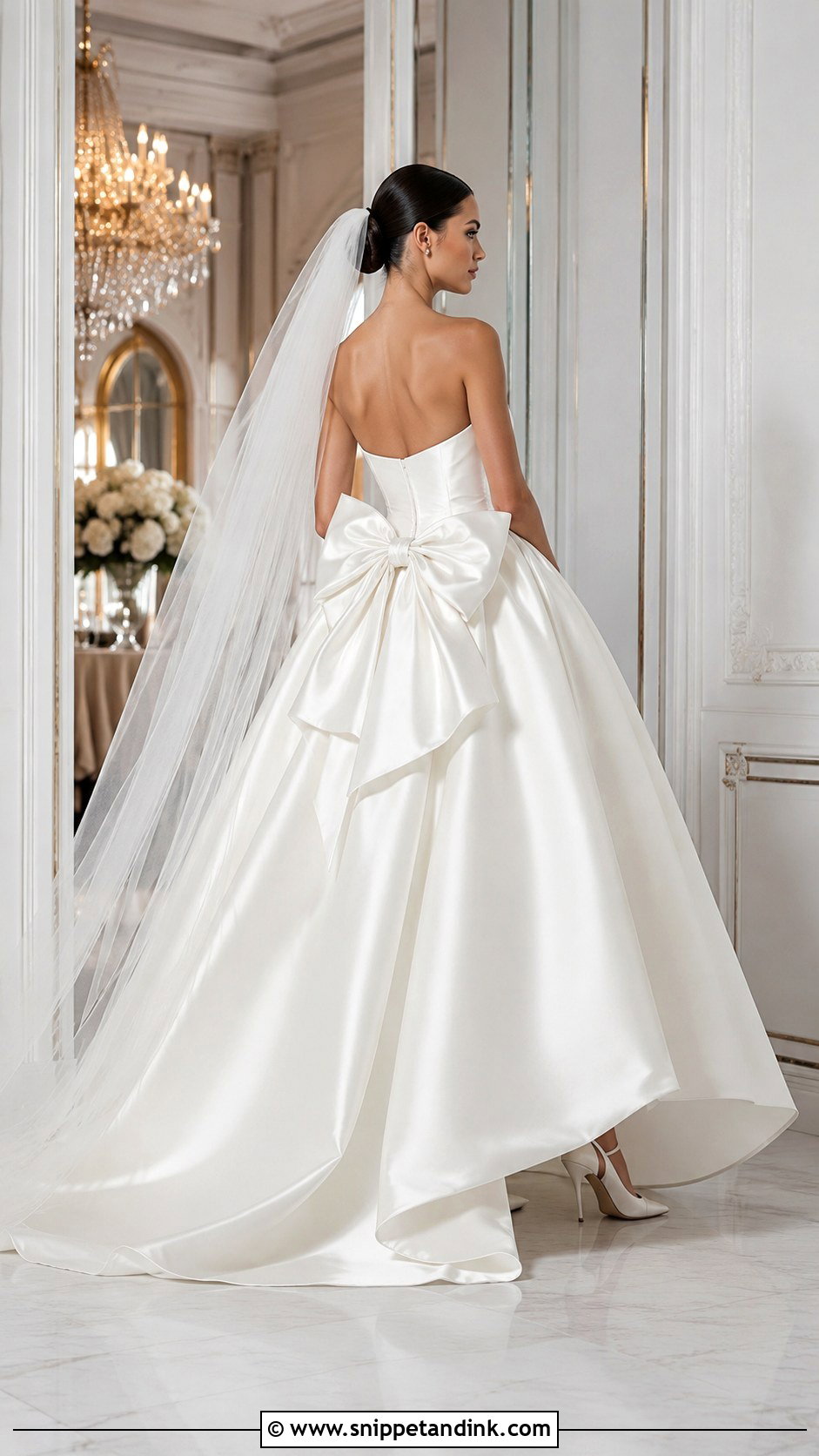
This is the bow at its most traditional: structured loops and long tails sitting right at the back waist of a strapless satin ball gown. The front stays clean, so the reveal happens as you walk past the guests. I keep the hair in a smooth low bun and fix a plain cathedral veil underneath it, never over, so the loops aren’t flattened. Pointed ivory pumps, pearl studs and a compact bouquet of white roses or peonies are enough. Ballrooms and formal estates give the train room. Ask for the bow to be stitched to the bodice at several points rather than hung from one, so it doesn’t sag as the evening goes on.
2. Strapless Satin Wedding Dress With Big Bow
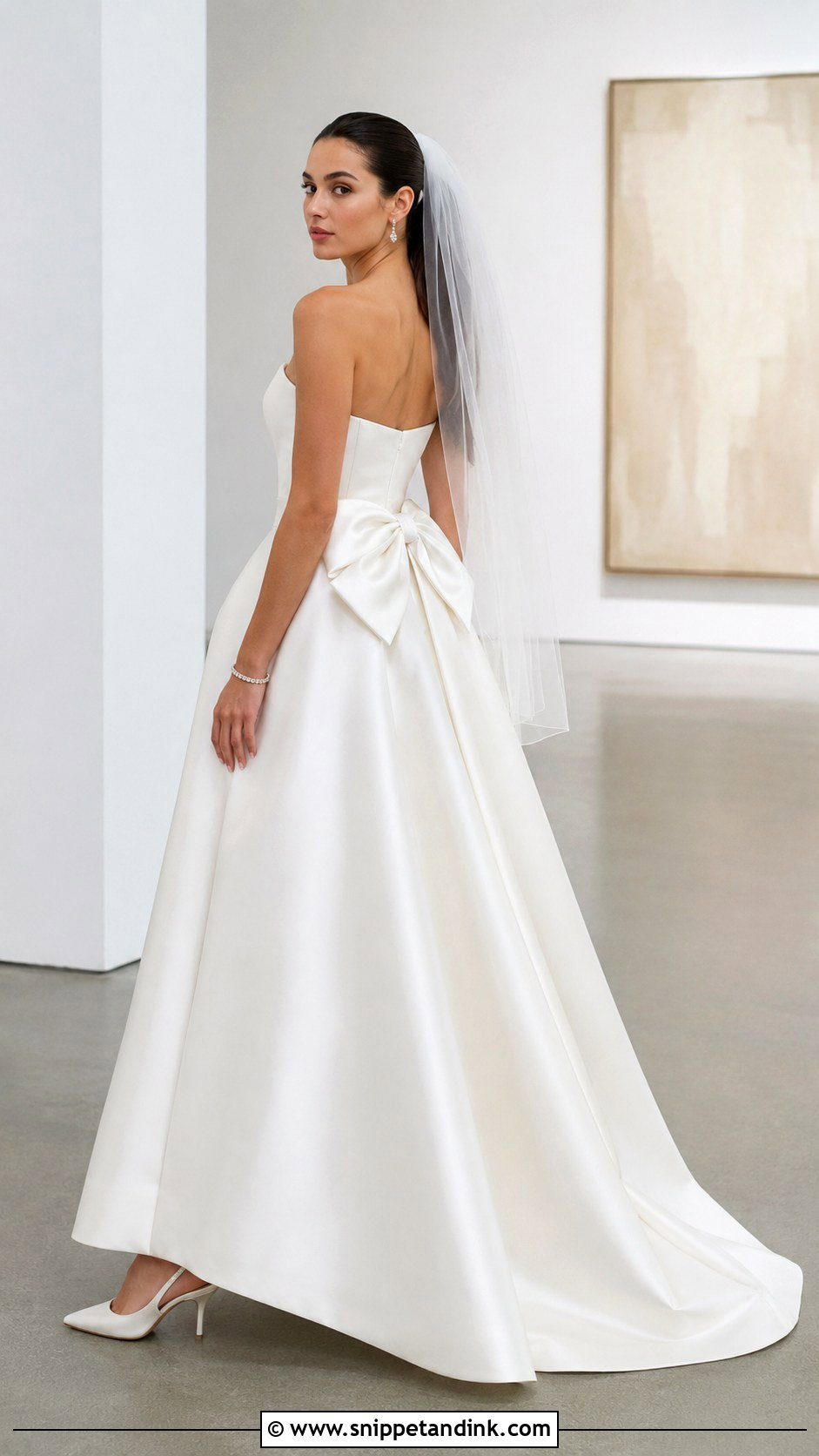
On a strapless satin A-line, a wide back bow does two jobs. It adds volume behind and it draws the eye to how cleanly the gown is built. A straight or gently curved neckline keeps it modern. Ivory slingbacks, small drops and a thin tennis bracelet are enough jewellery; no necklace. I’d wear a sleek ponytail or tucked bun here, both of which leave the back open, plus a plain fingertip veil. Galleries and city venues suit it. If you sit for long dinners, check that the bow sits above the chair back, not where you’ll lean on it.
3. Off Shoulder Big Bow Wedding Dress
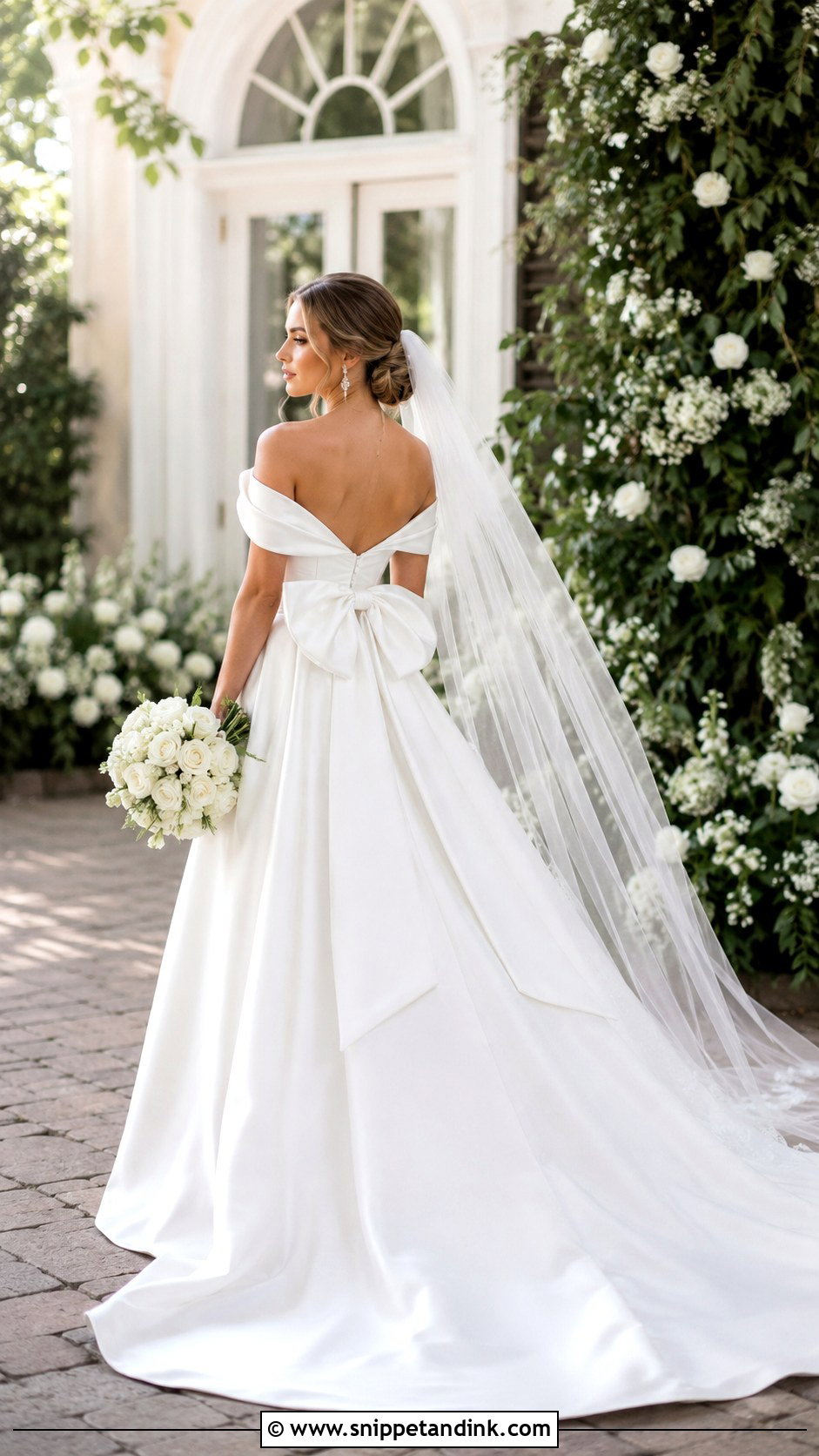
Off-the-shoulder sleeves give a soft frame at the front, and a structured back bow brings the drama behind. The two only work together when the skirt is a simple A-line with a natural waist. I like crystal studs, satin block heels and a slim bracelet, with a loose low bun and a few strands at the face. Keep the veil chapel-length and unembellished, and plan to remove it after the ceremony so the bow gets its photos. White garden roses in a round bouquet suit the gentler shape. Gardens and country houses are where I picture this dress.
4. One Shoulder Bow Wedding Dress
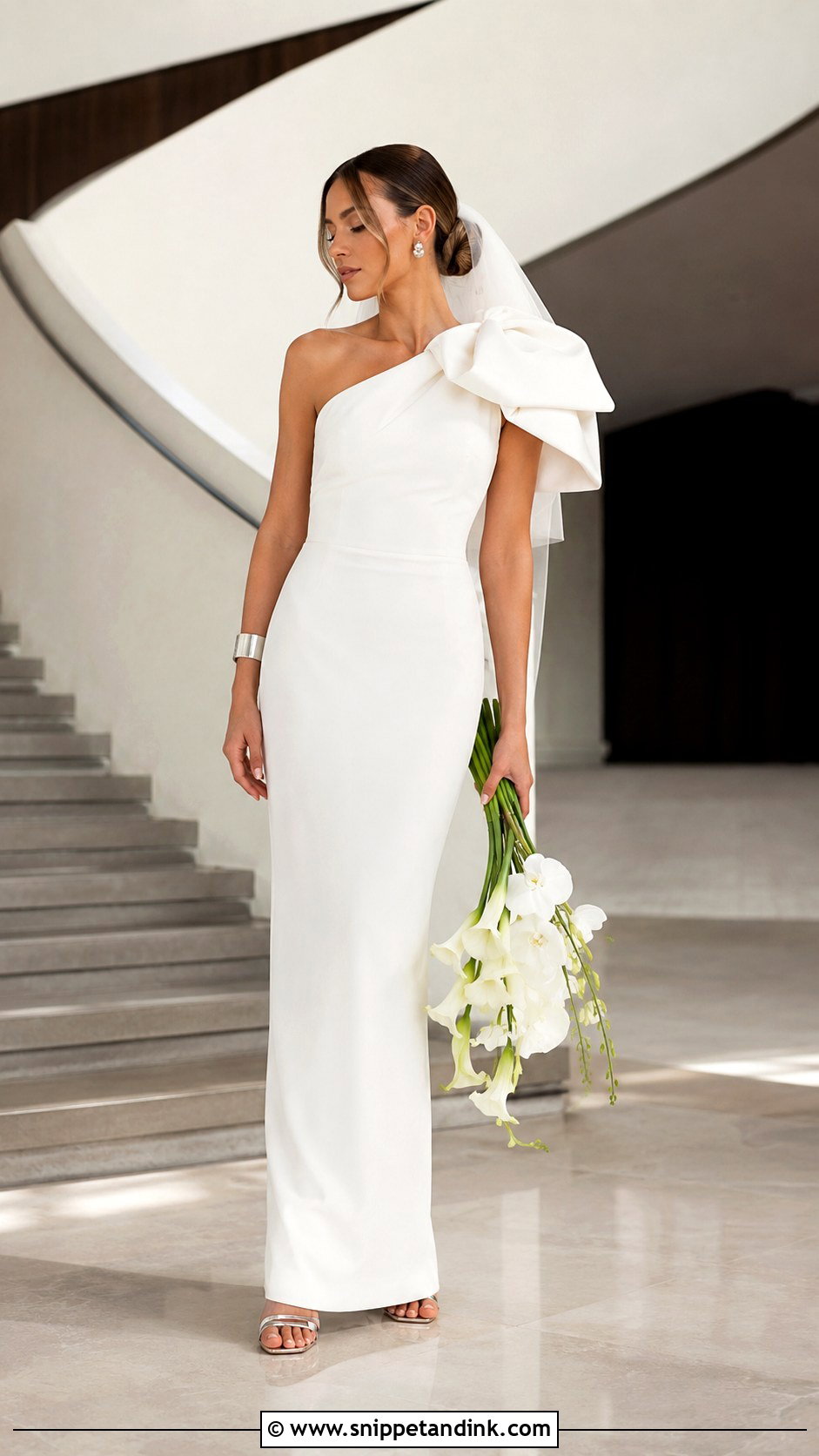
Putting the bow on the shoulder turns it into part of the neckline. It is my favourite placement for a bride who wants the detail visible in every front-facing photo. A straight column or softly flared skirt keeps the rest quiet. Silver sandals and a slim cuff work well, and I usually suggest one small earring on the bare side only. No necklace. The low bun goes on the side away from the bow. Most veils fight a shoulder bow, so a short minimal one or none at all is better. A long-stemmed bouquet balances the asymmetry.
5. Big Front Bow Wedding Dress
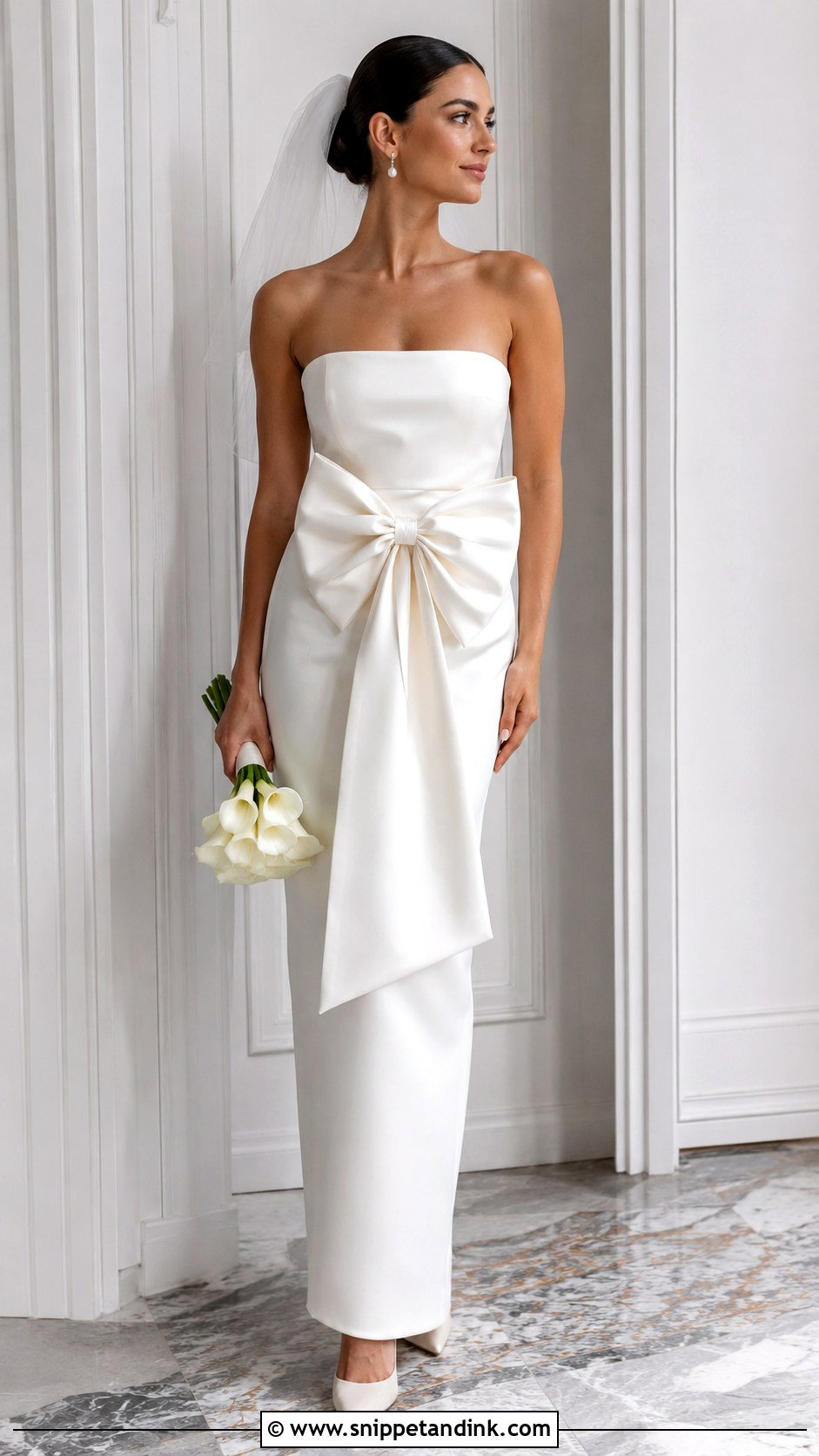
Why save the drama for the back? A front bow becomes the focal point of the whole dress, which means everything else must step back. I put it on a strapless gown with a simple fitted skirt, folded softly just above the natural waist where it adds a little definition. Pointed pumps, pearl drops and a clean low chignon suit it. Skip necklaces, belts and embellished veils; a plain shoulder-length veil is enough. One caution: a front bow sits right where your bouquet goes, so carry something small, like a few calla lilies, held low or to the side. City ceremonies, modern venues and courthouses suit it.
6. Side Bow Mermaid Wedding Dress
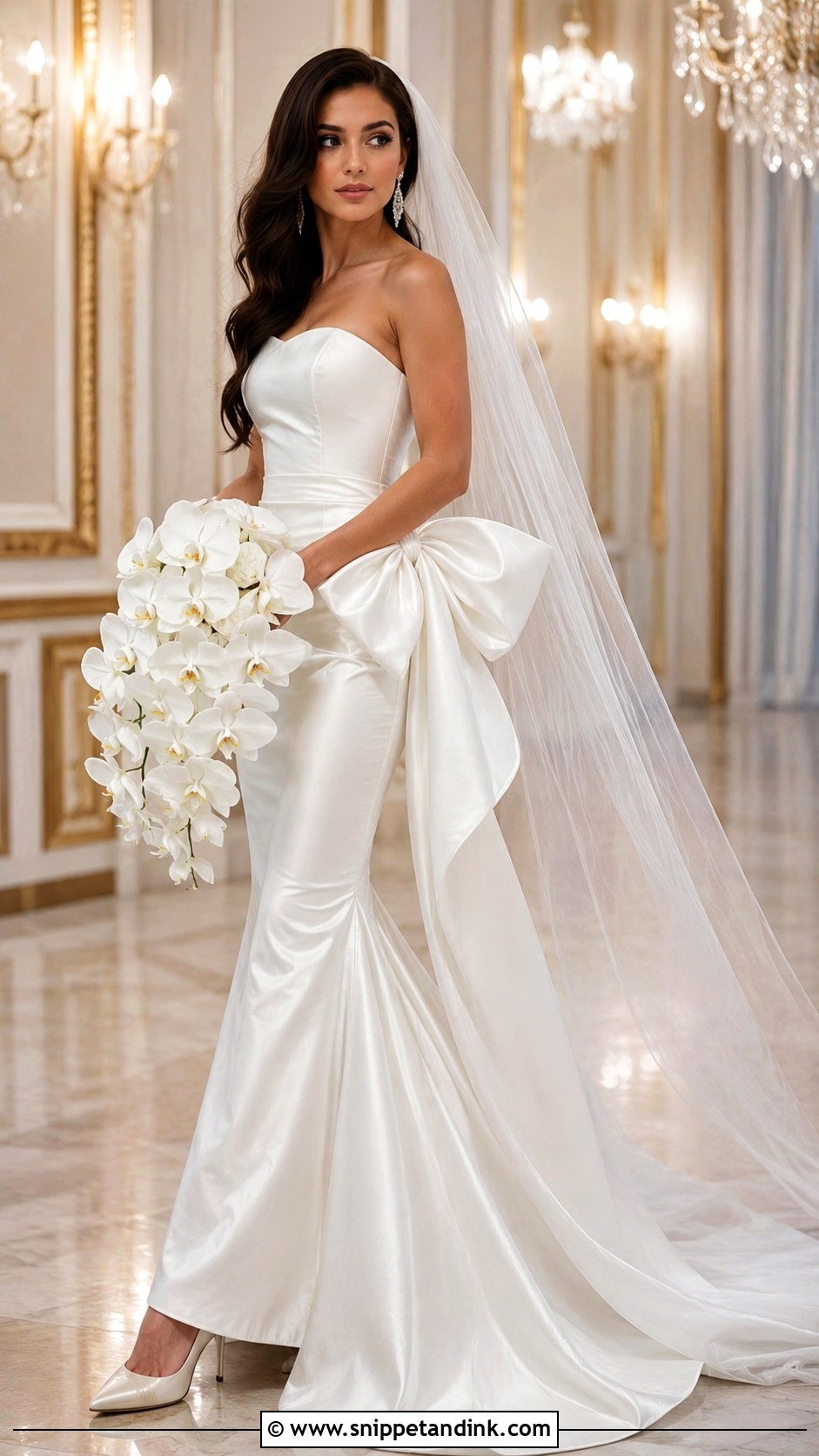
On a mermaid gown, a side bow at the hip marks the point where the fitted body turns into the flare. Crepe or satin keeps it refined. The tails are where I look hardest: they can trail into the skirt, but on a mermaid they must never wrap around the knees, because the flare already limits your stride. Comfortable pointed pumps, slim crystal earrings and a fine bracelet suit it, with polished Hollywood-inspired waves swept to the opposite shoulder. A narrow chapel veil adds movement without bulk at the bow. Long white orchids or callas finish it for an evening ballroom.
7. Detachable Bow Train Wedding Dress
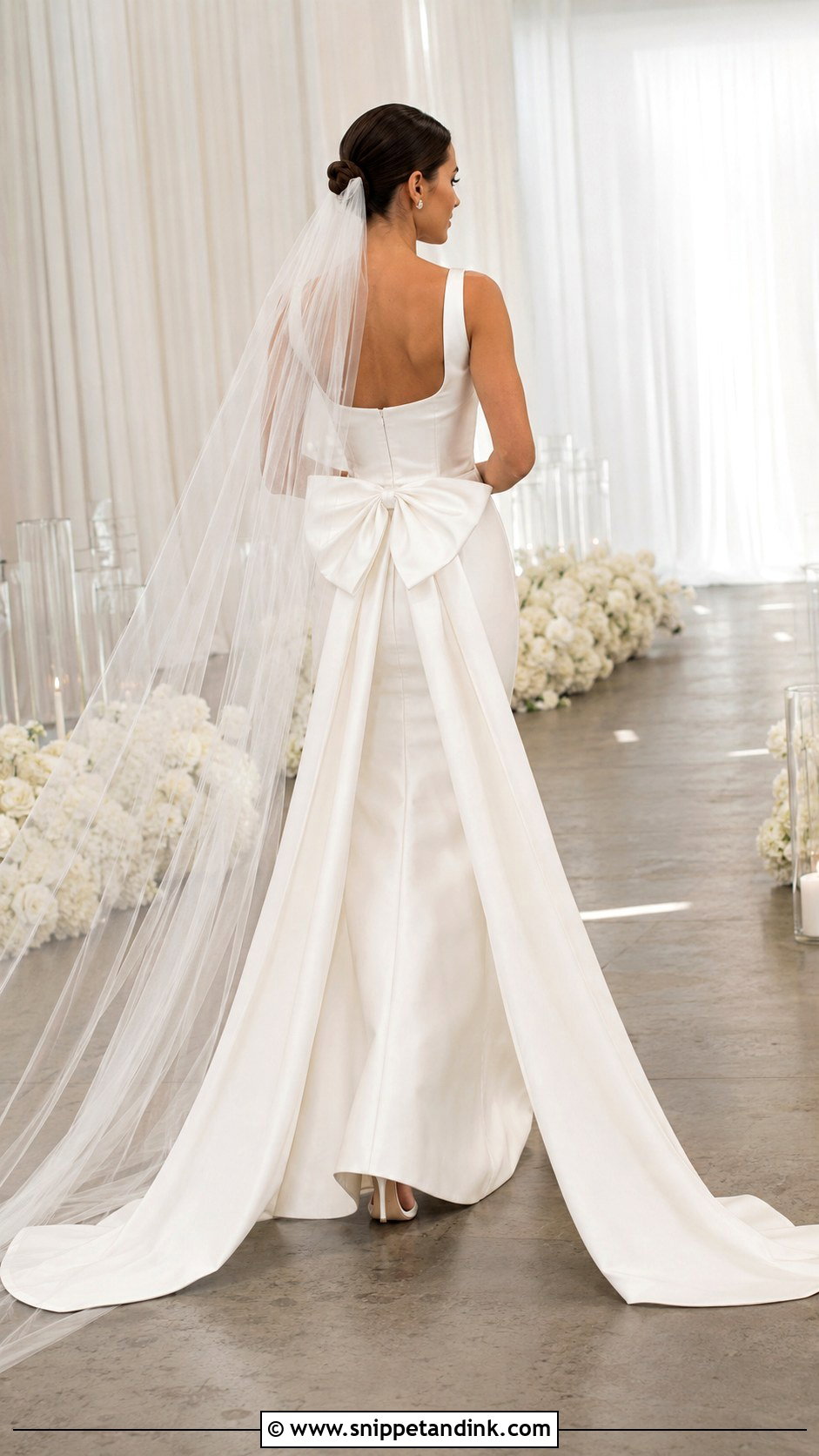
A detachable bow train is two dresses for the price of one fitting schedule. For the ceremony, a large bow at the back waist of a strapless or square-neck satin gown carries long panels into a sweeping train. After the formal photos, the bow, train and veil come off and you have a lighter reception dress. I style the first look with a low bun, crystal studs, pointed heels and a plain cathedral veil, then swap in statement earrings or a sparkly comb. Practise the removal with whoever helps you. Most attach with hooks or snaps that are hard to find in a hurry. It is easiest when ceremony and reception share a venue.
8. Mikado A-Line Wedding Dress With Back Bow
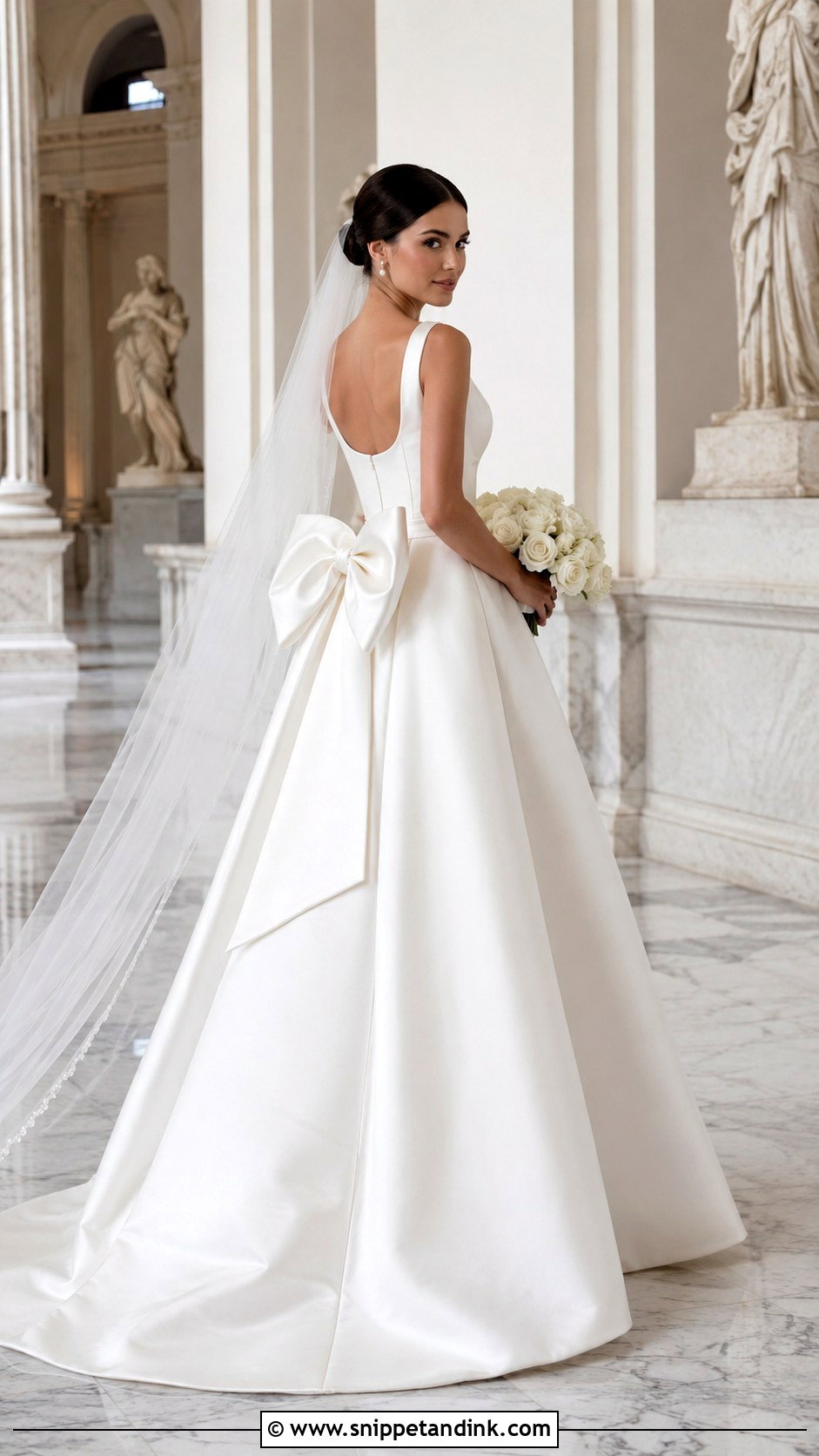
Mikado is the fabric I reach for when a bride wants a bow that stays crisp all day. It is heavy and slightly stiff, so broad loops keep their shape where softer satin would droop. A clean scoop neckline, tailored bodice and gently widening skirt give the bow a solid base at the natural waist, with medium tails following the train. Pearl earrings, closed satin pumps, a fine bracelet and a centre-parted bun keep hair clear of the back. A single-layer chapel veil and white roses with a little greenery finish it. Museums, grand halls and hotels suit the formality.
9. Minimalist Column Wedding Dress With Bow
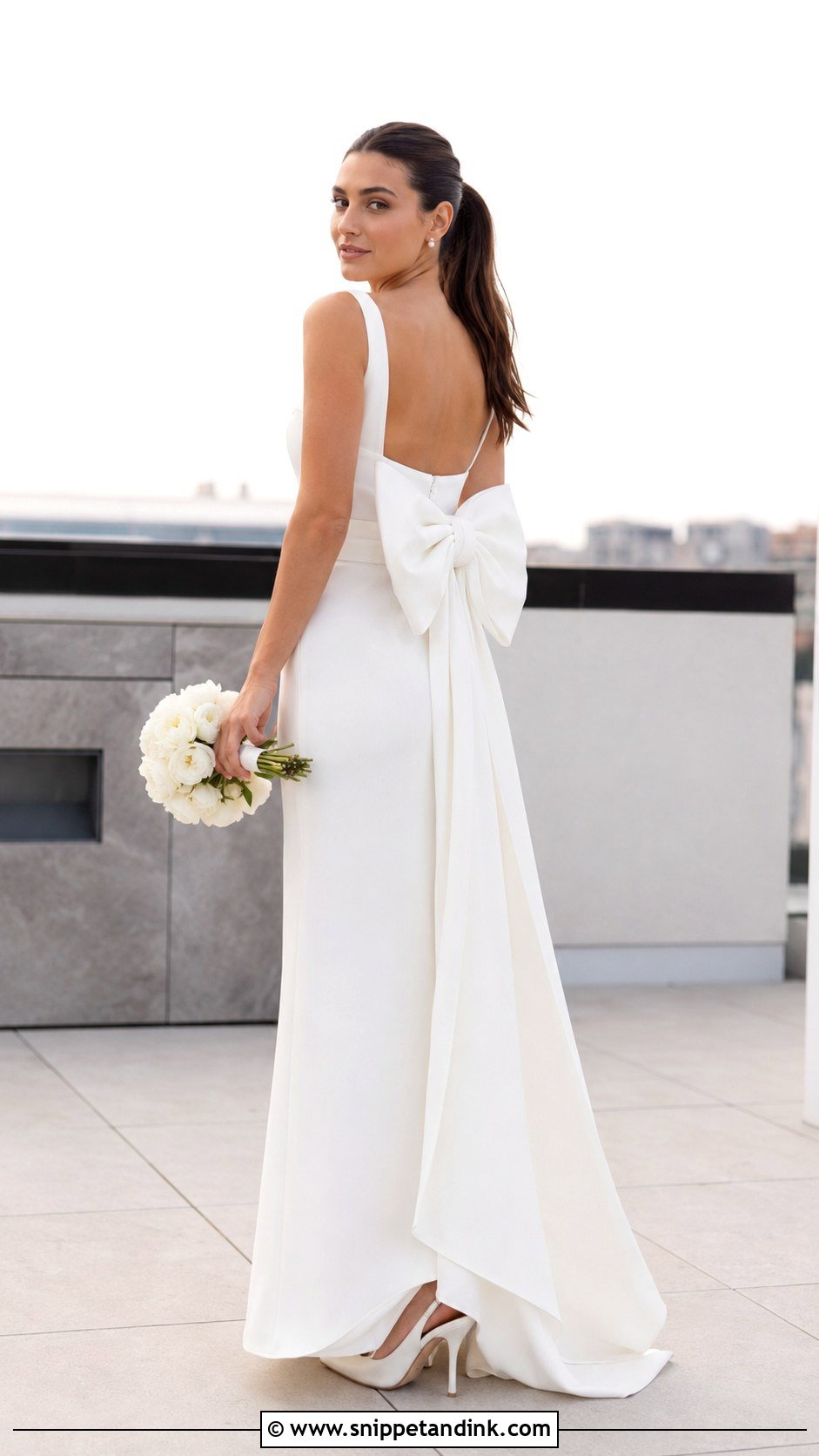
A column with nothing on the front and one soft bow at the back is the most restrained look in this list. That restraint needs good fabric: heavy crepe or satin that hangs straight. Bateau, square and strapless necklines all suit it. I let the bow tails fall straight down to repeat the line of the skirt. Minimal pearl studs, slingbacks and a small structured clutch are enough, with a neat ponytail or compact chignon. Skip a long veil. A short blusher or a simple comb leaves the bow in view. Lofts, rooftops and courthouses fit it.
10. Lace Wedding Dress With Satin Bow
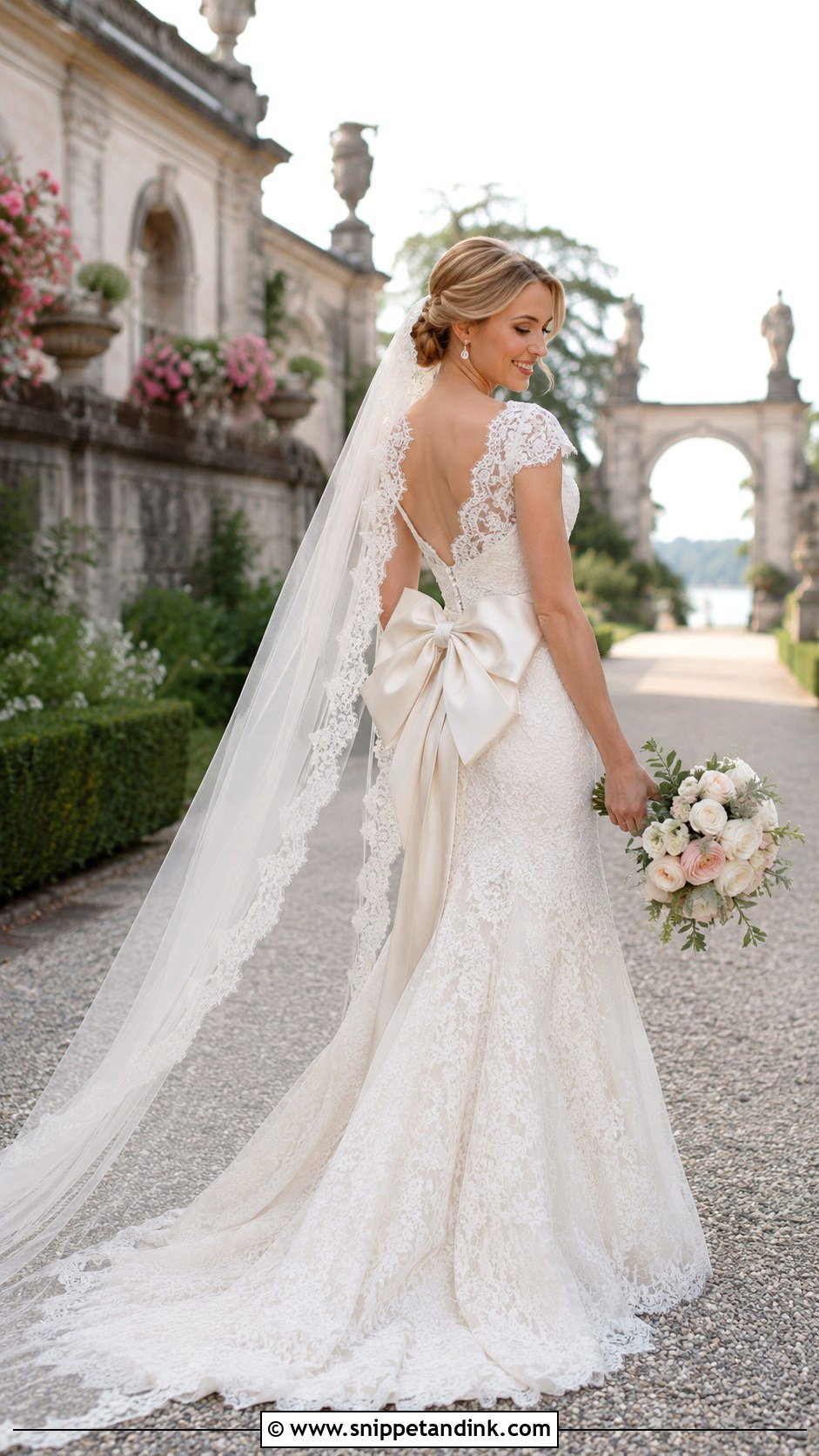
Lace and a big bow can look busy unless one of them stays plain. Here the bow is smooth satin, set at the back waist of a fitted lace bodice and softly flared skirt, and that contrast is what makes it work. Ivory pumps, pearl drops and a simple bracelet suit it, with a loose low bun and a few curls at the face. Choose a sheer chapel veil with only a narrow lace edge so it echoes the gown without hiding the bow. White and pale blush flowers finish it. It feels at home in a garden, historic home, vineyard or a classic church.
11. Tulle Ball Gown With Big Bow
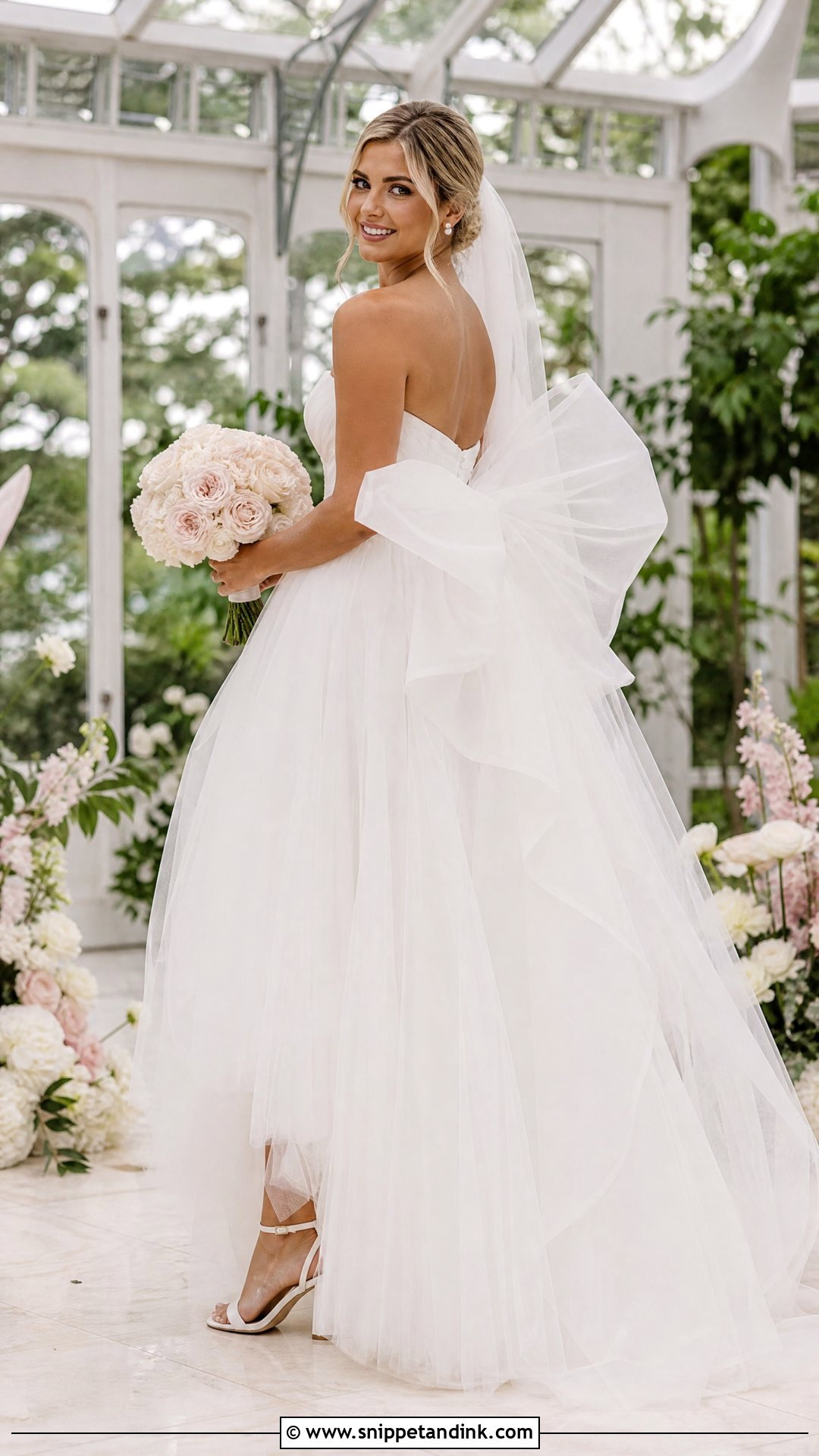
A satin bow can look stiff on a tulle ball gown, which is why I’d usually go for a tulle or organza bow instead. It blends with the skirt rather than sitting on top of it. Keep the strapless bodice almost plain. Pearl studs, block-heel sandals and a fine hair comb suit it. Hair goes up, because loose curls tangle with soft bow loops by the end of the night. A plain fingertip veil is lighter than a cathedral one here. Carry white or pale blush flowers in a round shape. Gardens, conservatories and bright spring or summer ballrooms suit it.
12. Basque Waist Wedding Dress With Bow
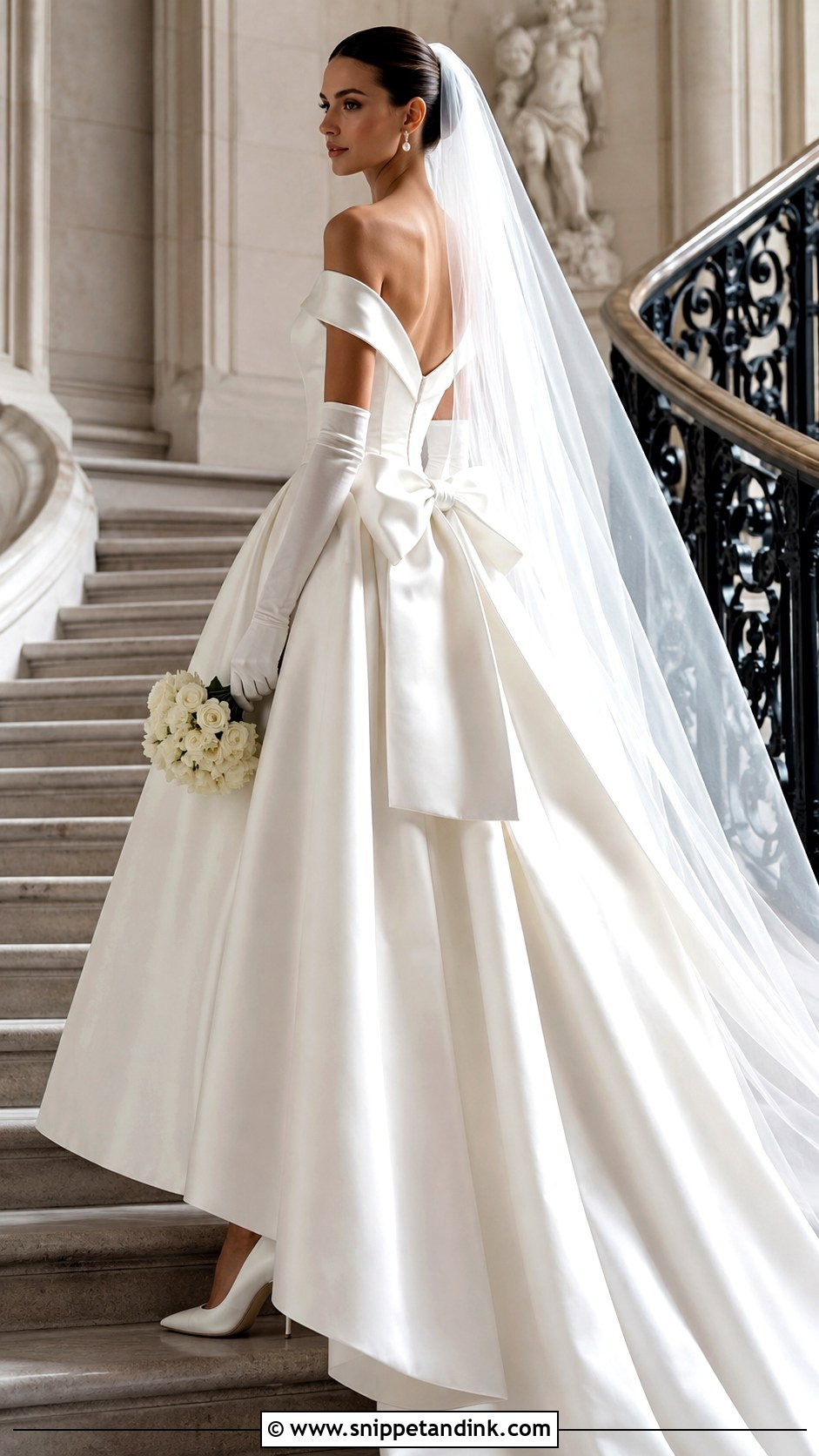
A basque-waist gown already has a strong line where the bodice dips at the front. Placing the bow at centre back, exactly where bodice meets skirt, keeps that front point clean while adding weight behind. A full satin skirt suits it. This is one of the few looks where I’d add elbow-length gloves, with pointed satin pumps and drop earrings. Anchor a long plain veil under a smooth bun and keep the bouquet compact and white. It suits a ballroom, a formal estate or any ceremony with a strict dress code.
13. High Neck Wedding Dress With Shoulder Bow
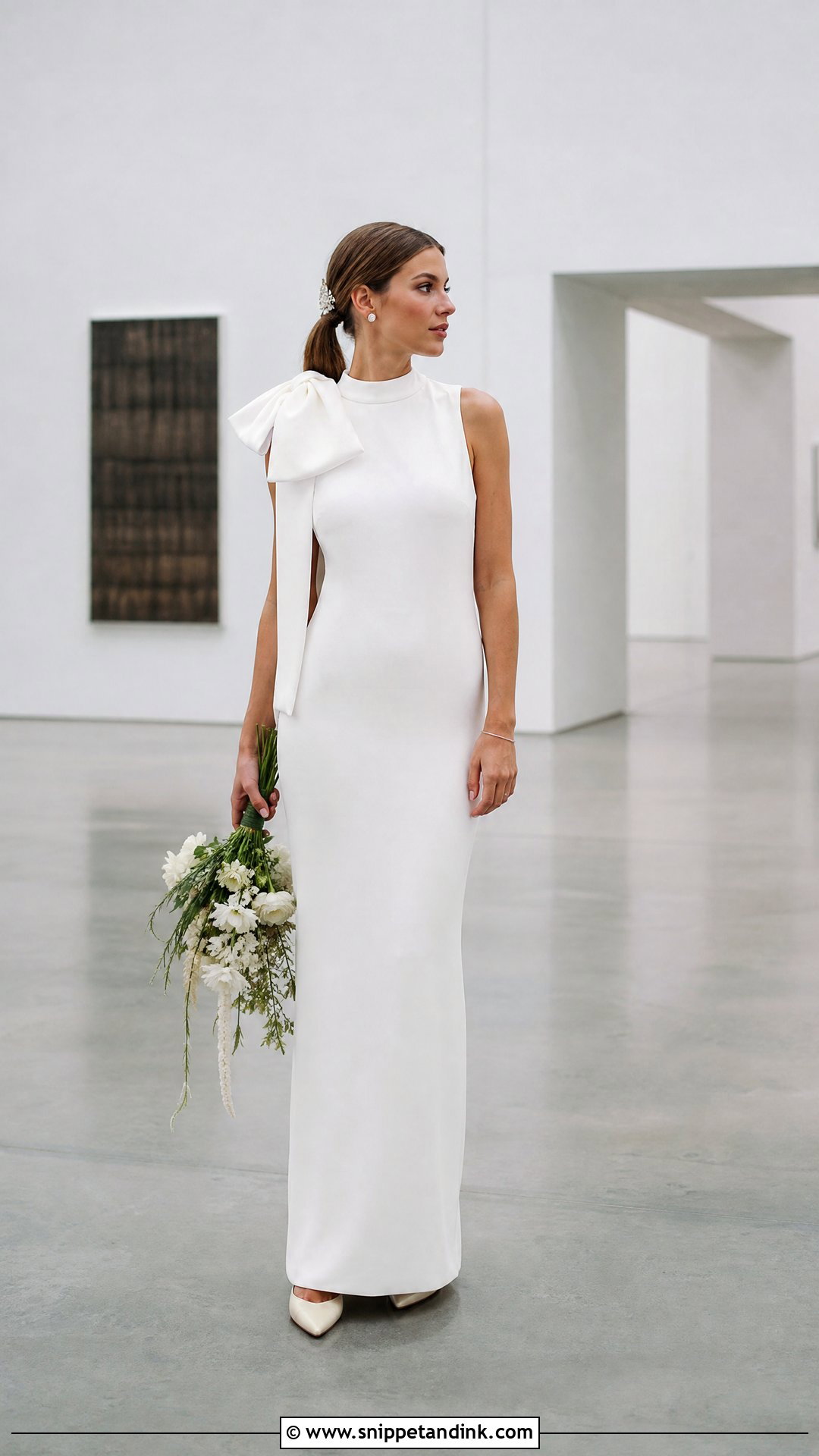
A shoulder bow on a high neck sits close to your face, so comfort decides everything. The bow should rise a little above the shoulder without brushing your jaw when you turn. Choose a sleeveless column or A-line with almost no surface decoration. Simple studs, a slim bracelet and low pointed heels suit it, with no necklace. A sleek low ponytail or bun reveals the shoulder. I’d swap a traditional veil for a small comb or a short tulle veil at the back. A long-stemmed bouquet keeps the look linear for a gallery or modern hotel.
14. Long Sleeve Wedding Dress With Back Bow
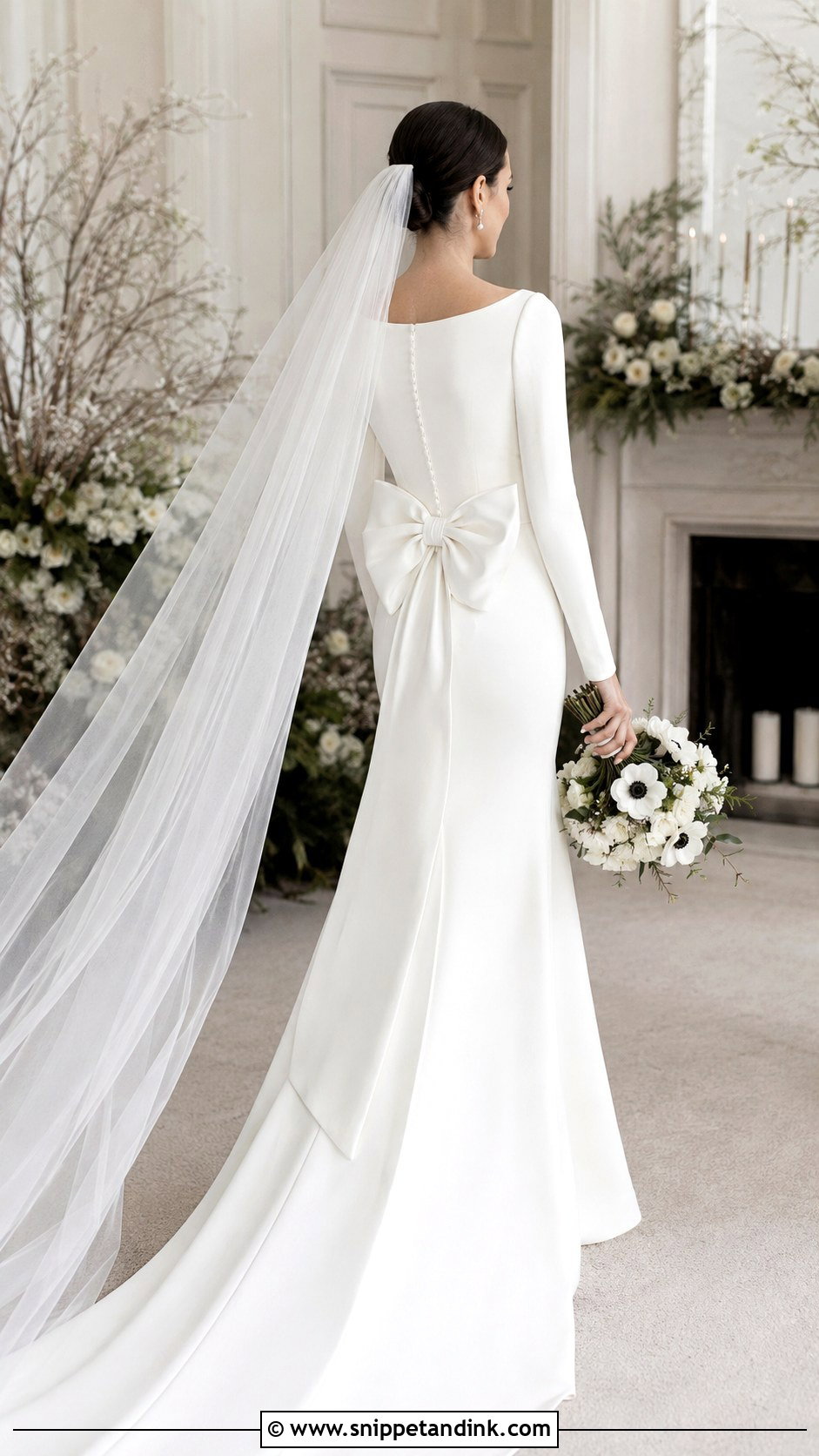
Long sleeves and a big back bow give coverage at the front and a surprise behind. A fitted crepe dress with a boat neckline, defined waist and gentle flare is my starting point. Plain sleeves only, so nothing competes with the bow. A structured satin bow low on the back adds contrast against the matte crepe. Pearl earrings, closed pumps and a single ring or bracelet are enough, with a smooth low bun. Wear a plain cathedral veil for the ceremony, then take it off for portraits of the back. White roses or anemones suit autumn and winter weddings.
15. Square Neck Wedding Dress With Waist Bow
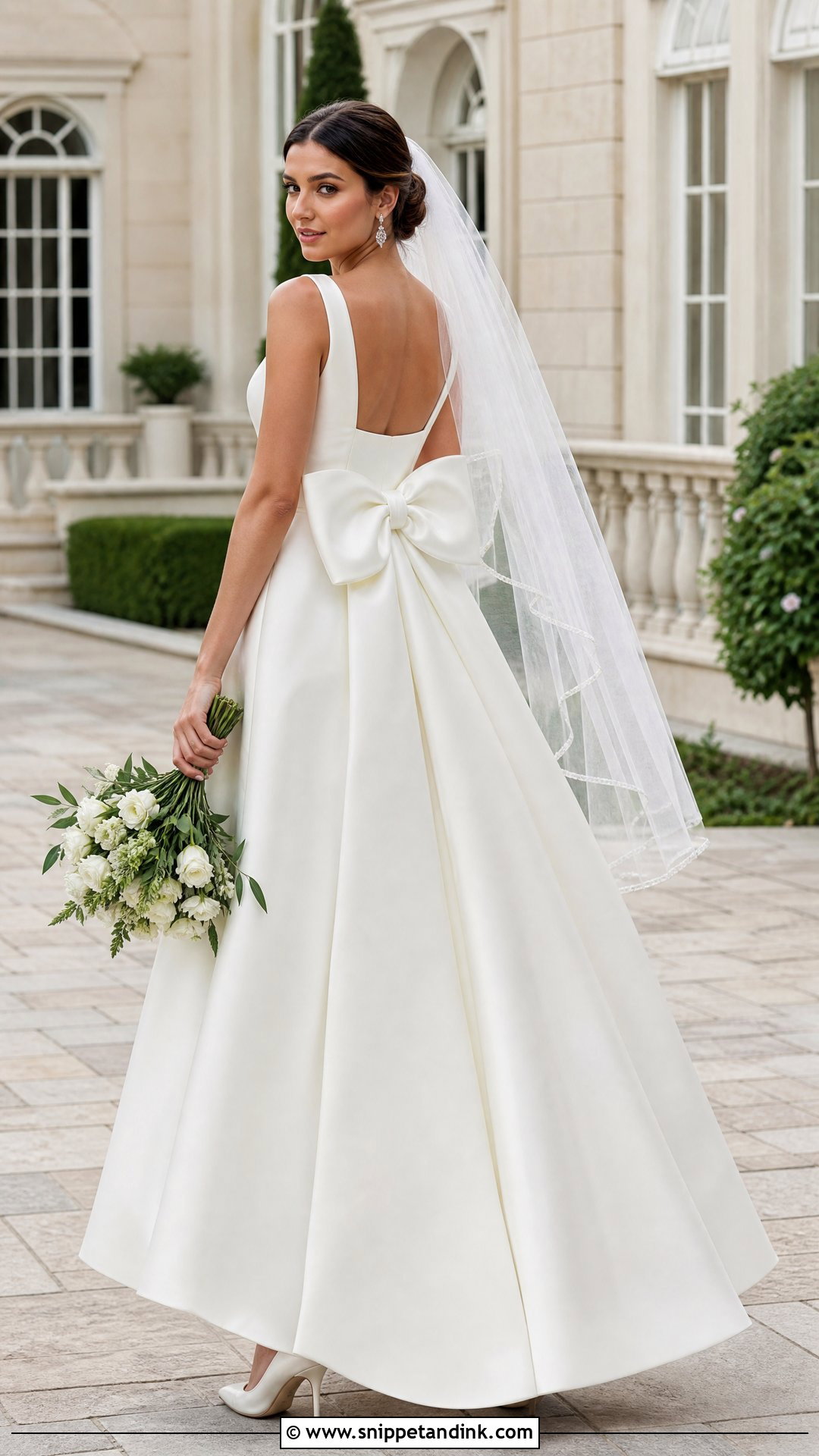
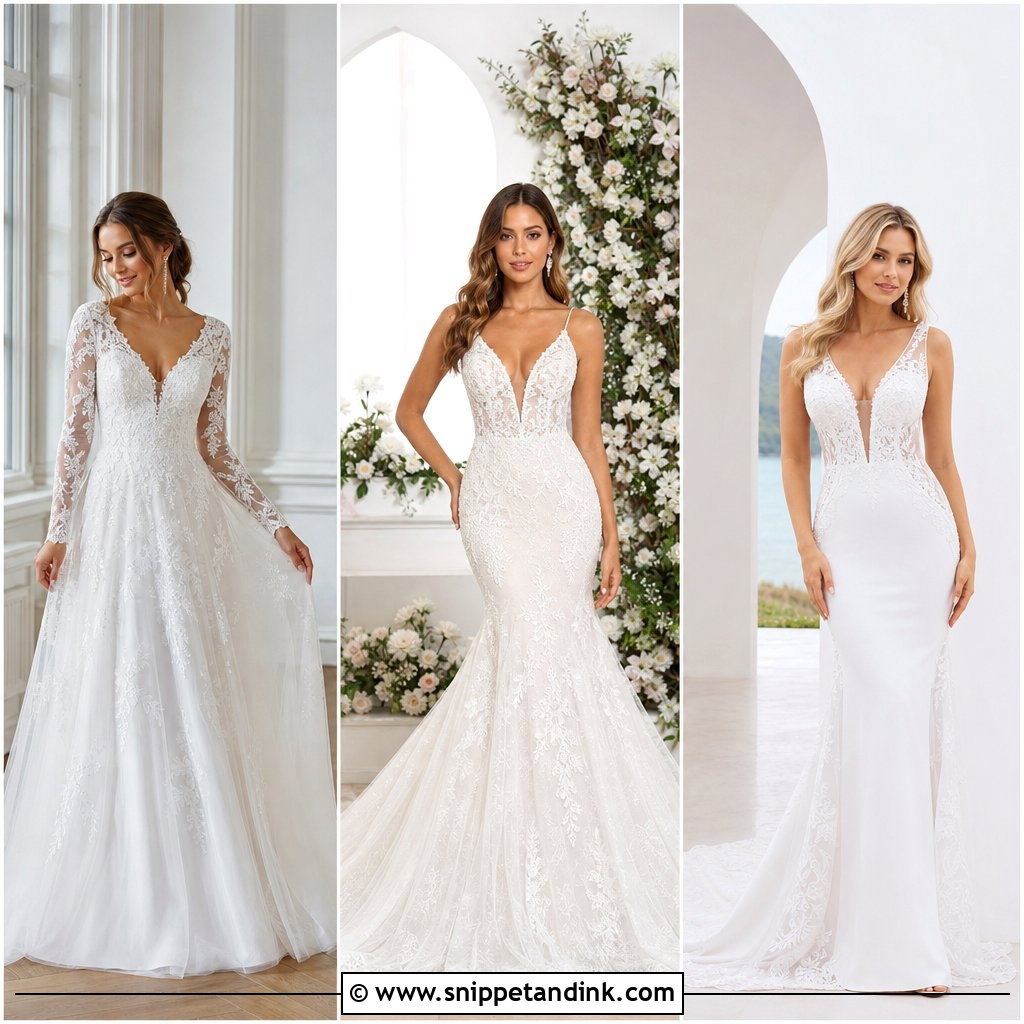
From the front this gown is all clean square neckline; from behind it is all bow. Wide straps, a fitted bodice and an A-line skirt give the shape, with a large bow at centre back waist. Pearl or crystal drops, ivory pumps and a delicate bracelet suit it. A low twisted bun shows the neckline and stays clear of the bow, with a fingertip veil fixed below the bun. Leave the neck bare unless the chain is very fine. A medium bouquet of white flowers and greenery works for a church or a relaxed outdoor wedding equally.
16. Tea Length Wedding Dress With Big Bow
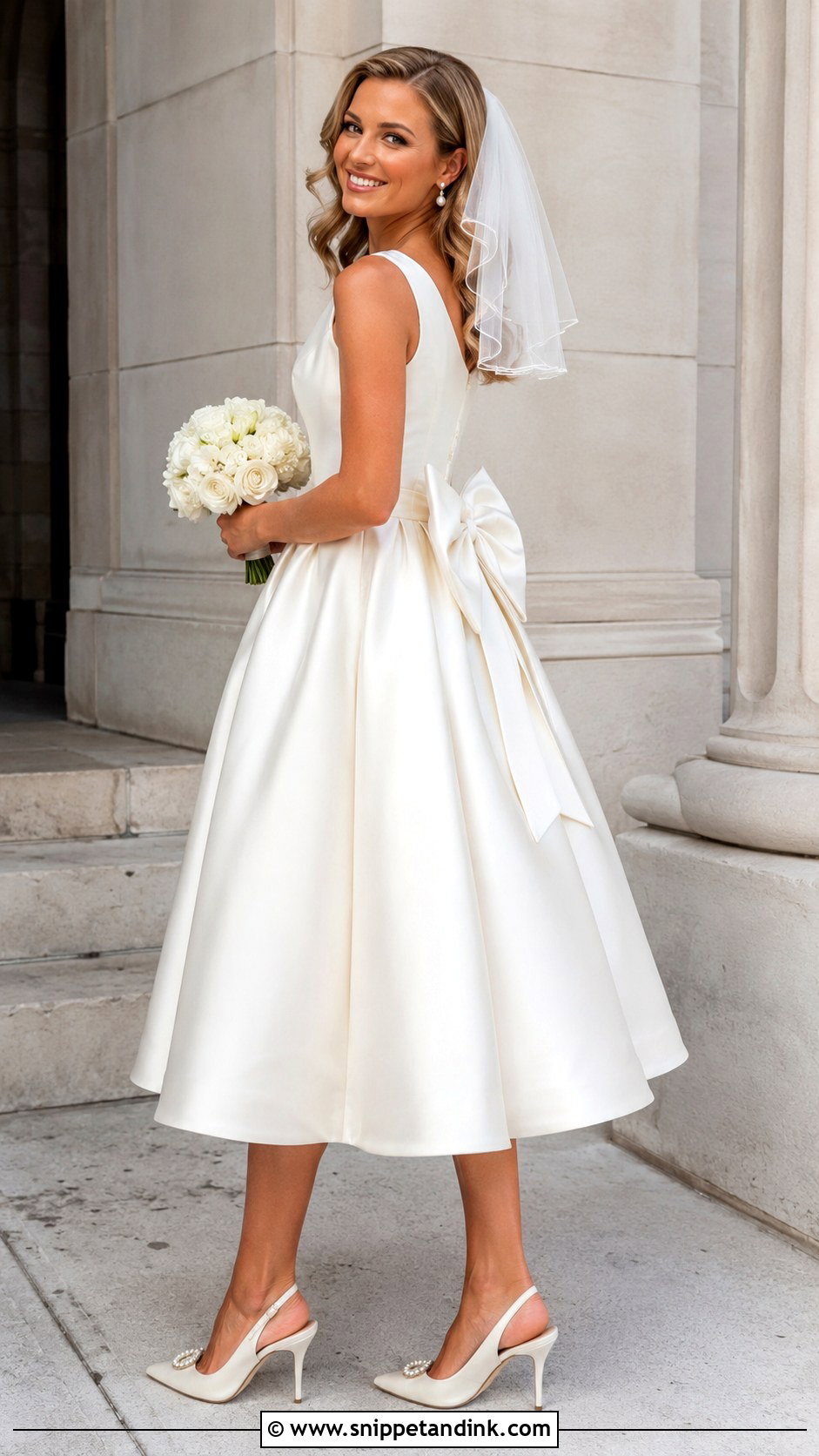
Tea length shows off your shoes, so the bow and the shoes become partners. A fitted satin bodice, defined waist and full skirt ending between knee and ankle gives a retro shape. Keep the bow tails shorter than the hem. Tails that dangle past the skirt look like a mistake on this length. Pointed pumps, ankle straps or slingbacks in ivory all suit it, with pearl button earrings and a short veil. Hair can be soft waves or a smooth low bun, and the bouquet should stay compact. Courthouses, restaurant receptions and daytime weddings suit it.
17. Wedding Mini Dress With Oversized Bow
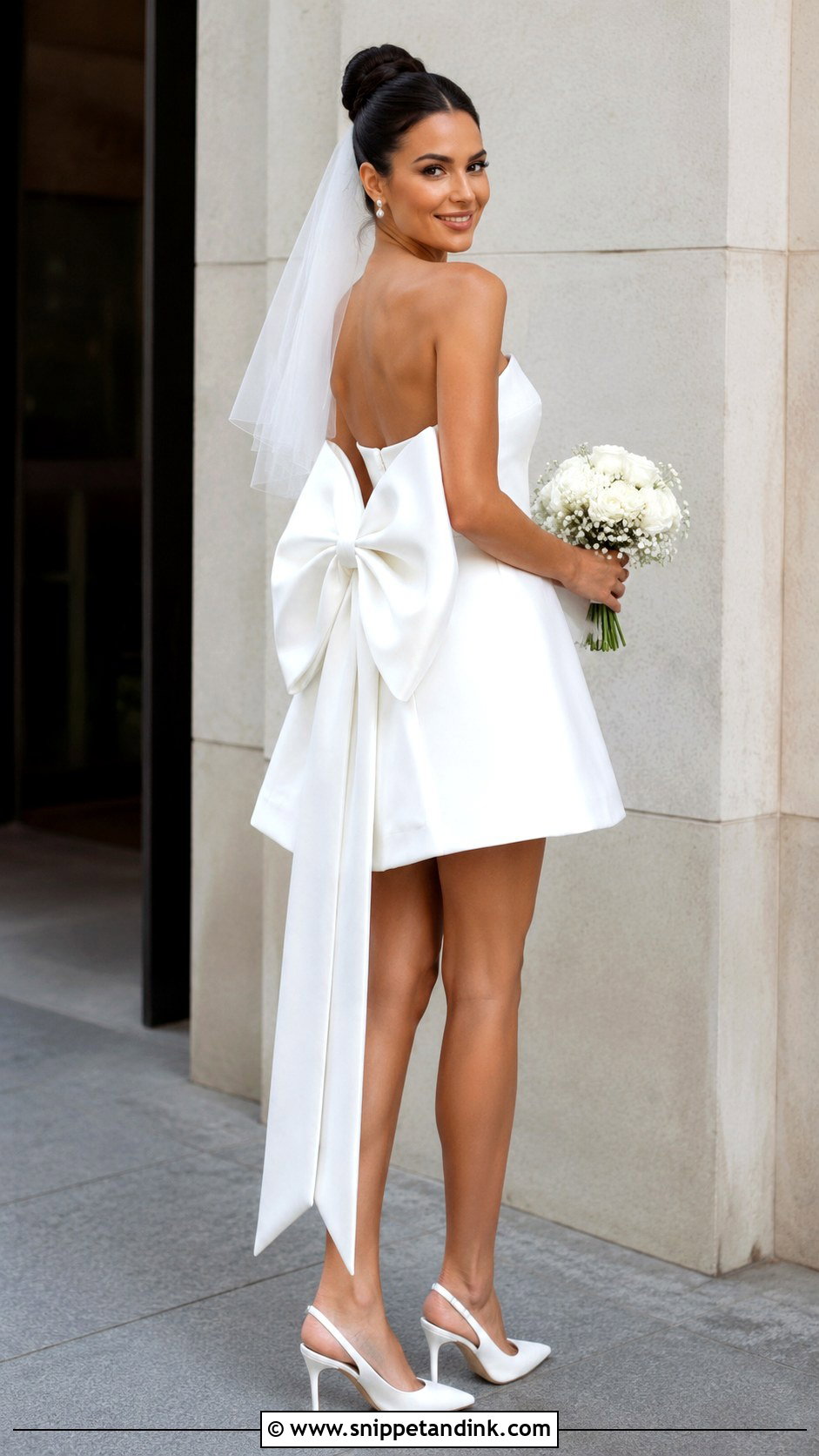
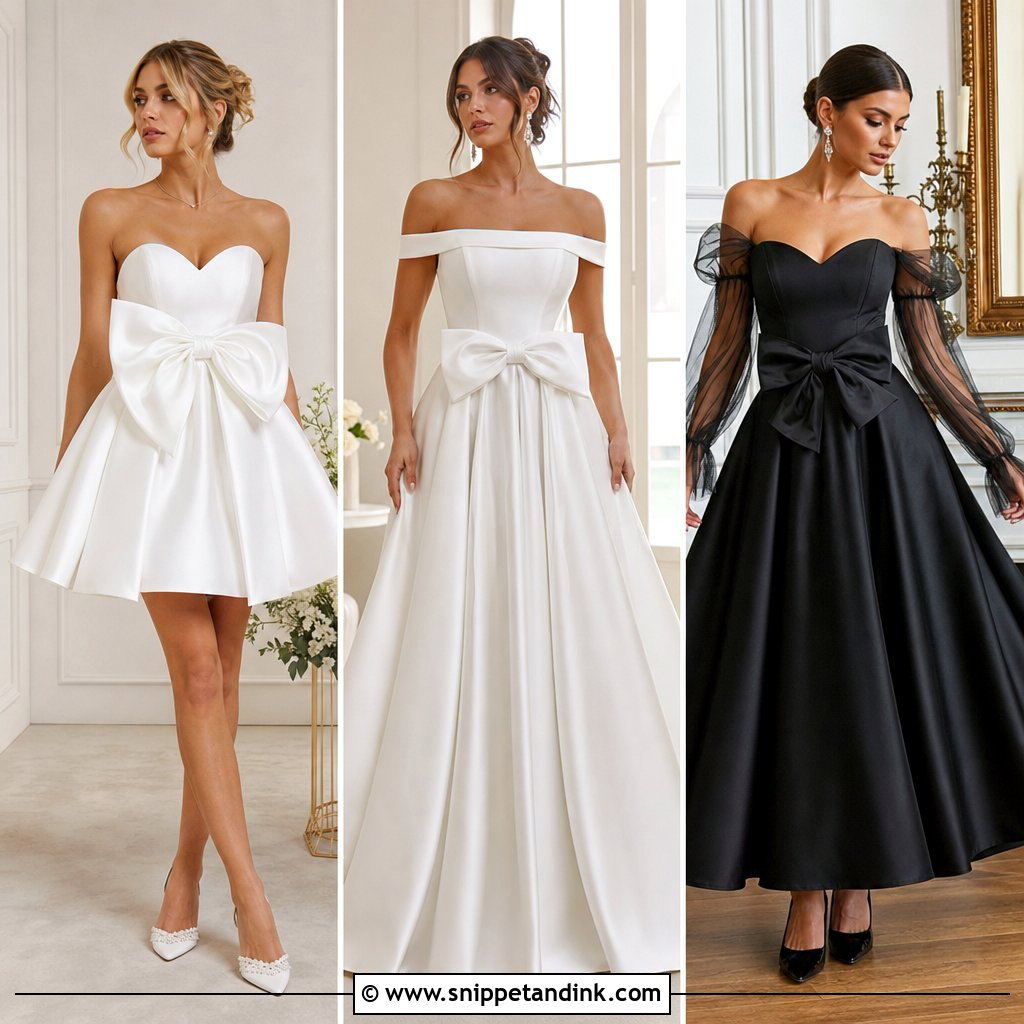
A bridal mini with a big bow needs structure, or it starts to look like a party dress. Satin in a clean shift or fitted A-line, with a straight or square neckline, gives the bow a firm base across the back. Pointed slingbacks and pearl earrings suit it, and sheer tights work in cold months. A sleek ponytail or high bun shows both the bow and the neckline. Wear a short veil for the ceremony and remove it later. A small bouquet or a single bloom keeps the proportions light. It suits a courthouse wedding, a city celebration or an after-party change. Sit and dance in it first, as a short skirt with a heavy bow can pull backward.
18. Black Bow Wedding Dress
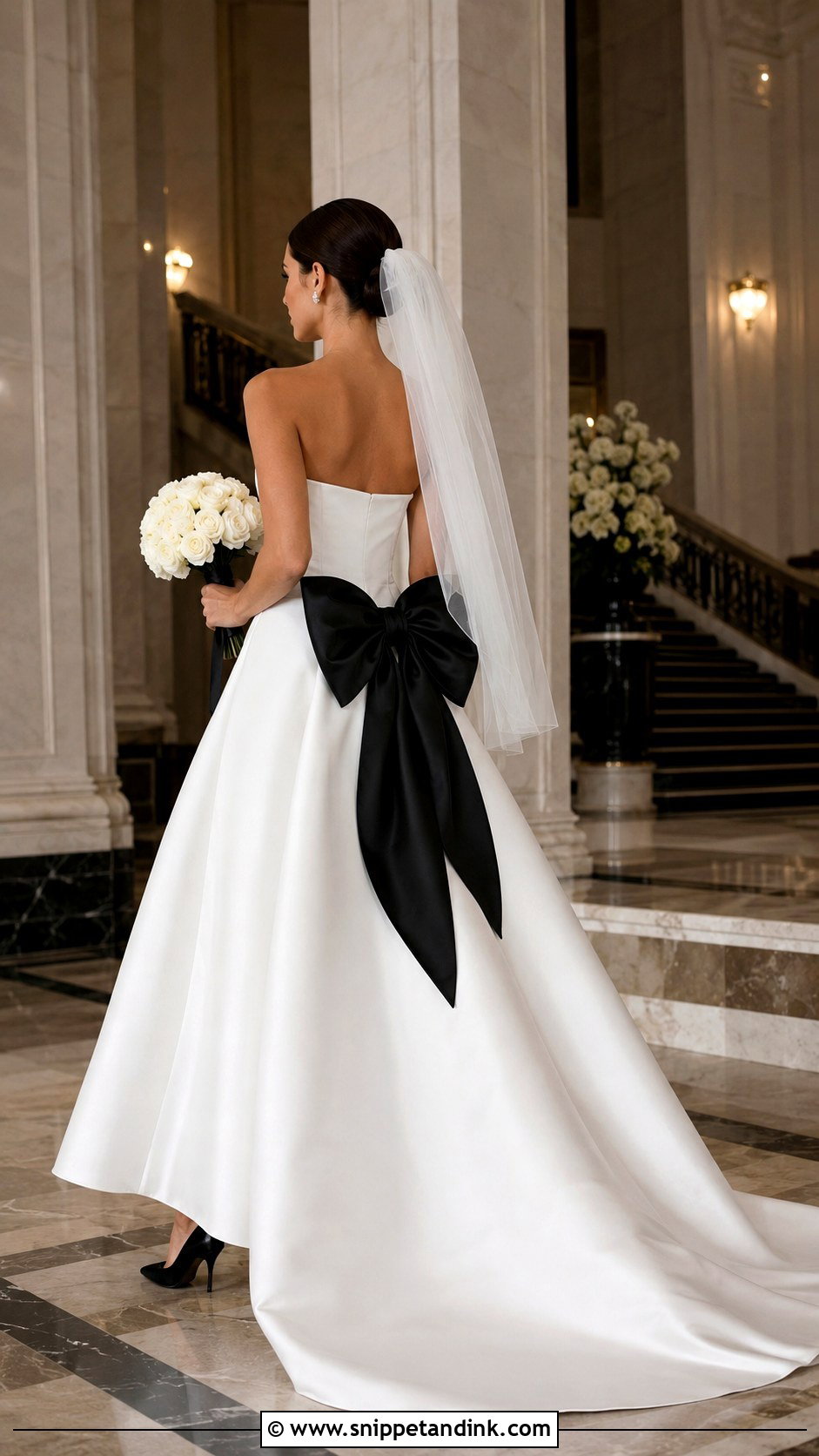
A black bow on a white gown is graphic and very formal. I put one large black bow at the back waist of a simple satin ball gown or fitted A-line and keep everything else disciplined: black pointed pumps, diamond-look studs and a small black velvet clutch for later. Hair goes in a low bun, and the veil stays plain white so the bridal side reads clearly. Wrapping a white bouquet in black ribbon ties it together. Have the black fabric pre-tested for colour transfer. A dark bow that bleeds onto ivory satin in a damp evening is very hard to fix.
19. Blue Bow Wedding Dress
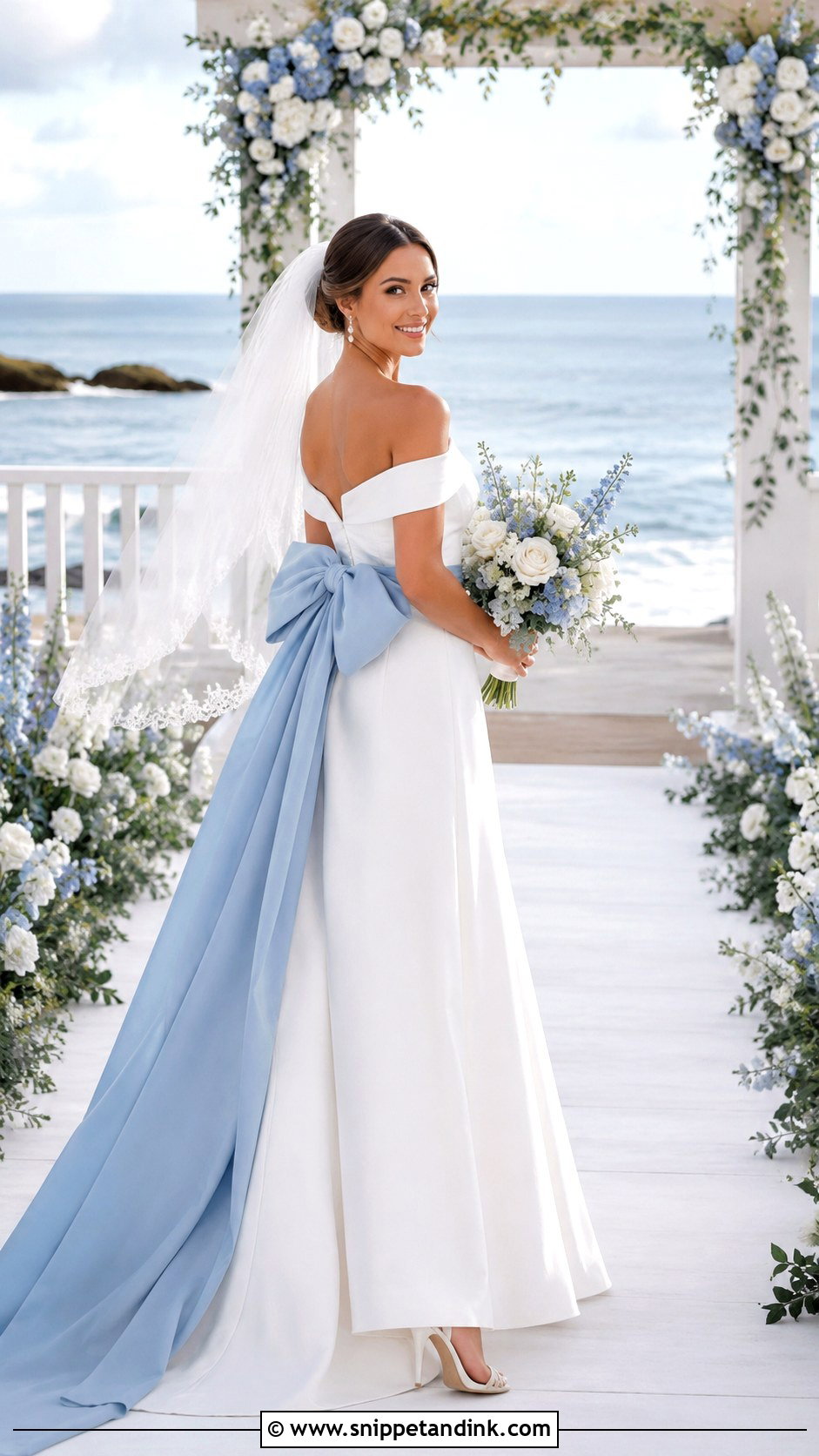
Powder blue is the gentlest way to add colour to a white gown. An oversized pale blue bow at the back waist of a clean A-line, with tails partway down the skirt, keeps it bridal and doubles nicely as your something blue. Strapless or off-the-shoulder necklines both work. Ivory heels, silver earrings and a pale blue hairpin or clutch repeat the colour lightly. Keep the hair simple so it doesn’t cover the bow. A sheer chapel veil softens the colour without hiding it, and a few pale blue blooms among white flowers tie in the bouquet. Coastal venues, gardens and spring weddings suit it.
20. Sculptural Bow Bodice Wedding Dress
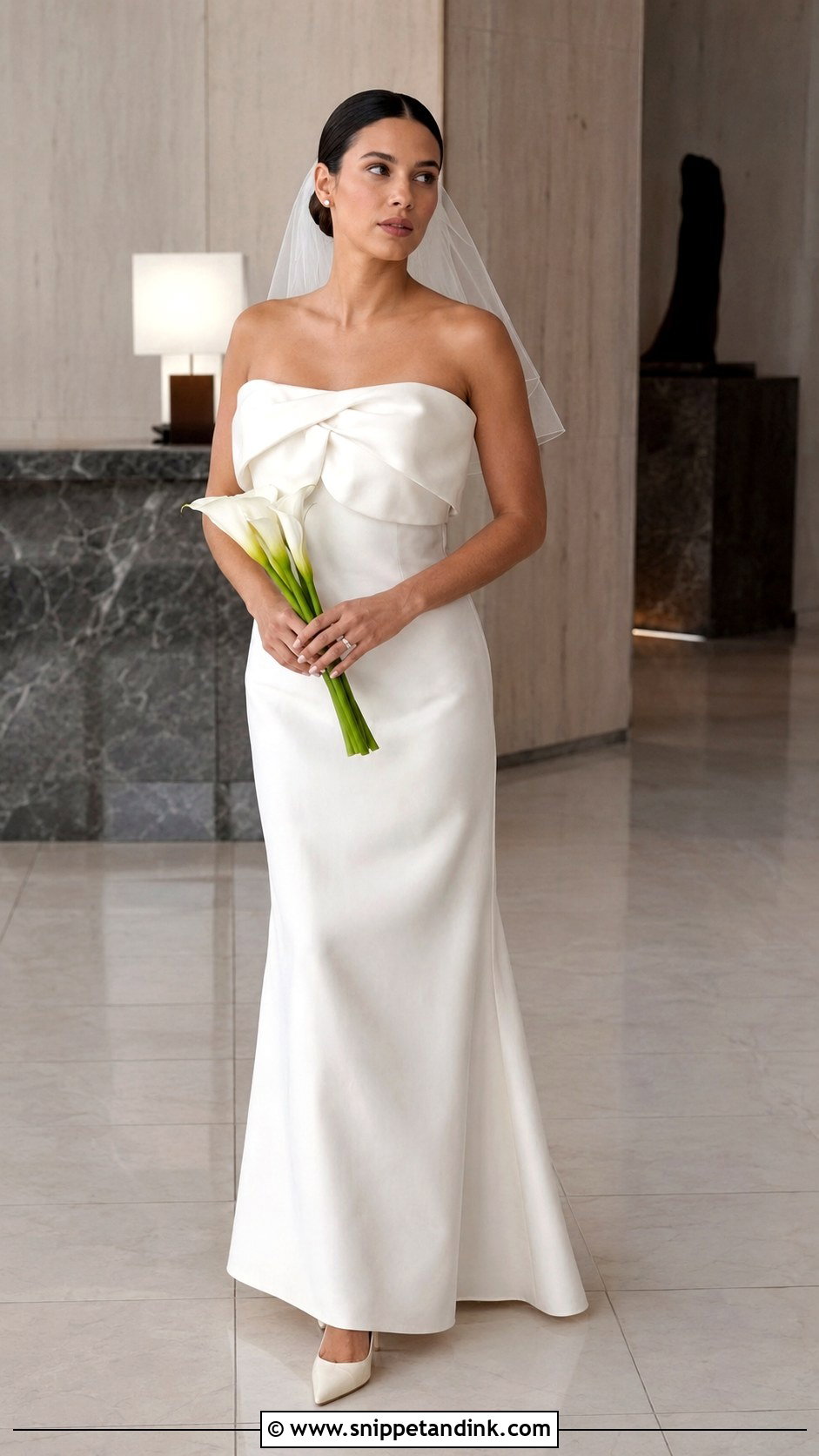
Here the bow is the bodice. Folded satin forms an oversized bow across the chest or upper waist of a strapless gown, so this is the most fashion-led dress on the list. A straight column or light flare balances the volume above. With that much happening at the top, I keep jewellery to small crystal studs and minimal rings, with sleek pointed pumps and a centre-parted bun. No necklace, and the veil is short, plain or skipped. A narrow bouquet of white calla lilies suits it far better than a round mixed one. Check that the folds sit flat when you lift your arms; a bow bodice can rise and gape if it isn’t anchored inside.
Why Big Bows Droop by Evening and How a Seamstress Prevents It
A bow that looks sculpted at the fitting can be limp by the first dance. Body heat, a long car ride and sitting against a chair all flatten soft loops. These are the questions I ask before alterations finish.
- Is the bow interfaced or lined? A stiff inner layer helps satin and crepe loops hold their shape far longer.
- Where is it tacked down? Several hidden stitches along the base stop it rotating or sliding to one side.
- Will it crush when you sit? Ask to sit in a hard chair at the fitting and check the loops afterwards.
- Can it come off? Hooks or snaps let you remove a large bow for dancing without unpicking anything.
Adding a Bow to a Gown You Already Own
If you’ve found the right dress and it simply has no bow, a bridal seamstress can make one from matching fabric, often taken from extra hem length or ordered from the designer. I always suggest a detachable bow in this case rather than sewing it on permanently, so you can try it in different positions at fittings. Bring a photo of the size and shape you want, and allow time for one extra fitting.
Which Bow Placement Fits Your Day?
A bow should look like part of the dress, not something added on the way out the door. Think about where it sits, how big it is, what it is made of and how it moves, then compare that with your neckline and silhouette. Back bows give you an unforgettable exit, shoulder bows frame the upper body, and front or side bows are the most fashion-led. Keep shoes, jewellery and hair simple so the bow can be seen. Detachable bows give you a second look for the reception. Before you commit, walk, sit and turn in the dress at a fitting and look at the bow in a phone photo, not just the mirror.
You'll Like These Ideas:


Leave a Reply