
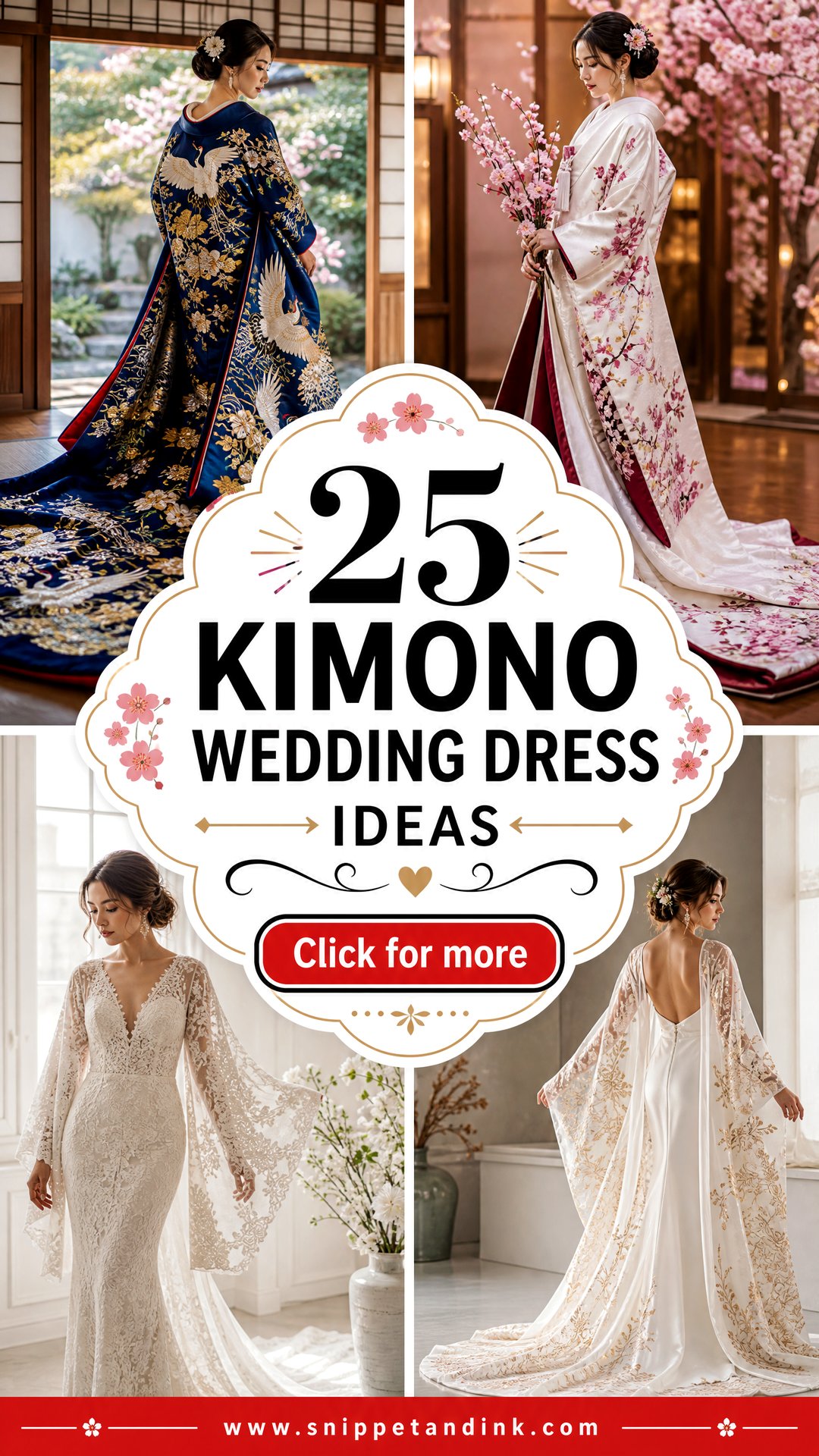
Kimono bridalwear runs on a spectrum. At one end sit the traditional Japanese garments: the all-white shiromuku and the colored iro-uchikake, both layered and dressed by a specialist. At the other end are Western gowns that borrow a wrap bodice, a wide sleeve or an obi-shaped waist. Most of my fittings in this area start with one question: is this about heritage, or about a silhouette you love? The answer changes everything, from who dresses you to how you sit at dinner. You might land on a fully layered wedding kimono, a Western gown with graceful kimono sleeves, or an embroidered robe you remove for the reception. The ideas below cover all three.
Left Over Right, and Other Rules a Kimono Won’t Bend
A kimono always closes with the left panel over the right, as seen on the wearer. The reverse is how the deceased are dressed for a funeral, and it is the single mistake that will make Japanese guests wince. I check it on every kimono-inspired Western gown too, since some designers cut the wrap the other way without realizing what it means.
Traditional bridal kimono are formal garments with their own rules, and most brides in Japan rent them rather than buy them, often as a package with the dresser and the hair. If you have no family connection to Japan, that’s not a barrier to wearing one, but it changes the approach. Go through a rental house or dresser who can explain what each piece is and when it is worn, and wear it as intended rather than cutting or restyling it.
Three questions I ask before any kimono fitting
- Will there be Japanese family or guests at the ceremony? If so, follow traditional dressing exactly.
- Is the garment heirloom, rented or new? Heirlooms and rentals are never altered.
- Does the day include an outfit change? Many couples move from white to a colored robe or a Western gown, and the timing has to be planned around the dresser.
1. White Shiromuku Kimono Wedding Dress
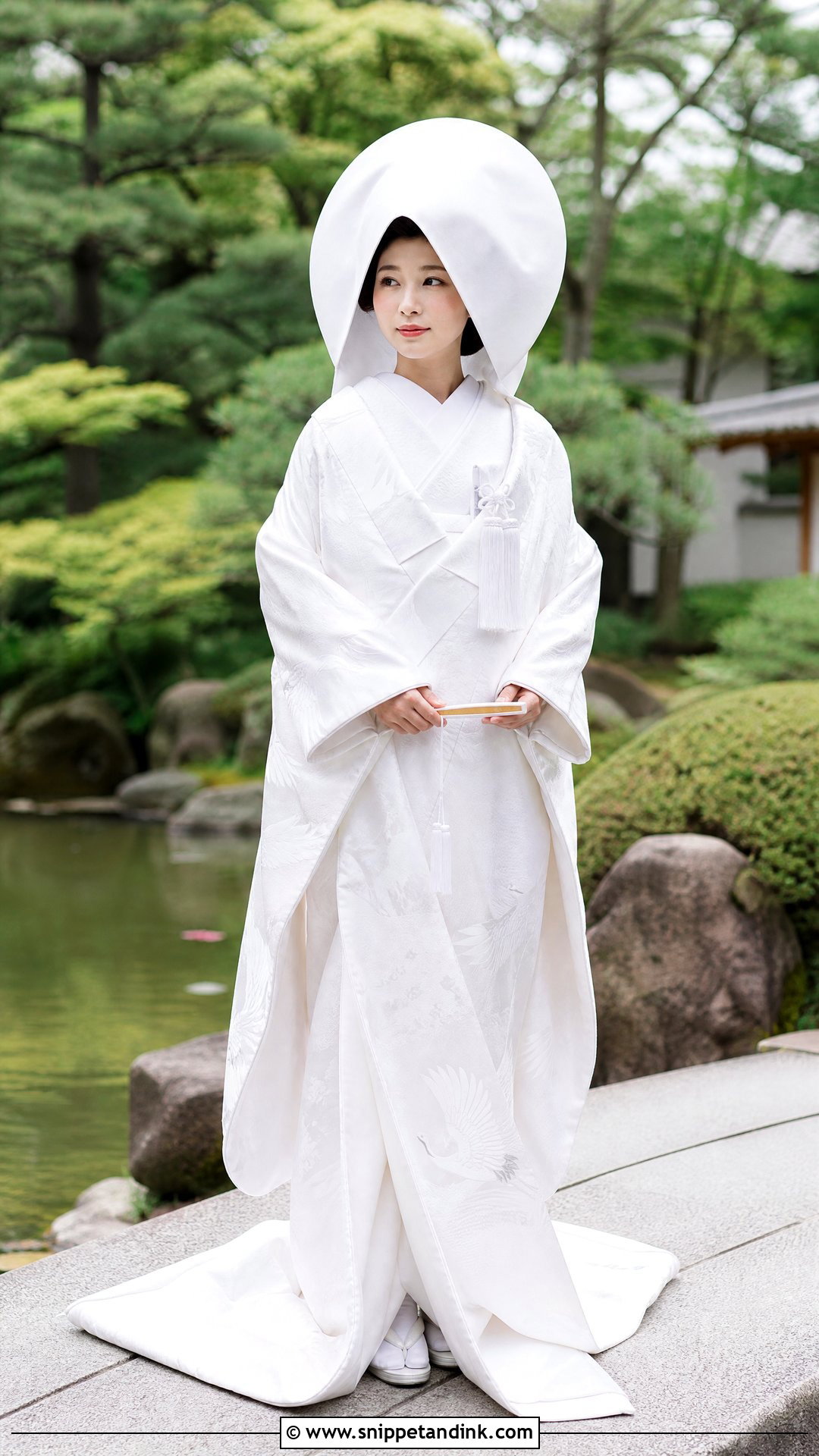
A white shiromuku is white from the inner layers to the outer robe, and the depth comes entirely from the weave. Under good light, woven cranes or geometric patterns appear and disappear as you move, which is why I ask brides to look at the fabric at an angle rather than flat on a rail. The outer robe has a padded hem that trails behind, and it is heavier than most people expect. White zori and tabi socks finish it; a wataboshi hood is the traditional choice, a smooth low bun the simpler one. This is never a dress you put on alone. A trained dresser builds it layer by layer.
2. White And Gold Uchikake Kimono Wedding Dress
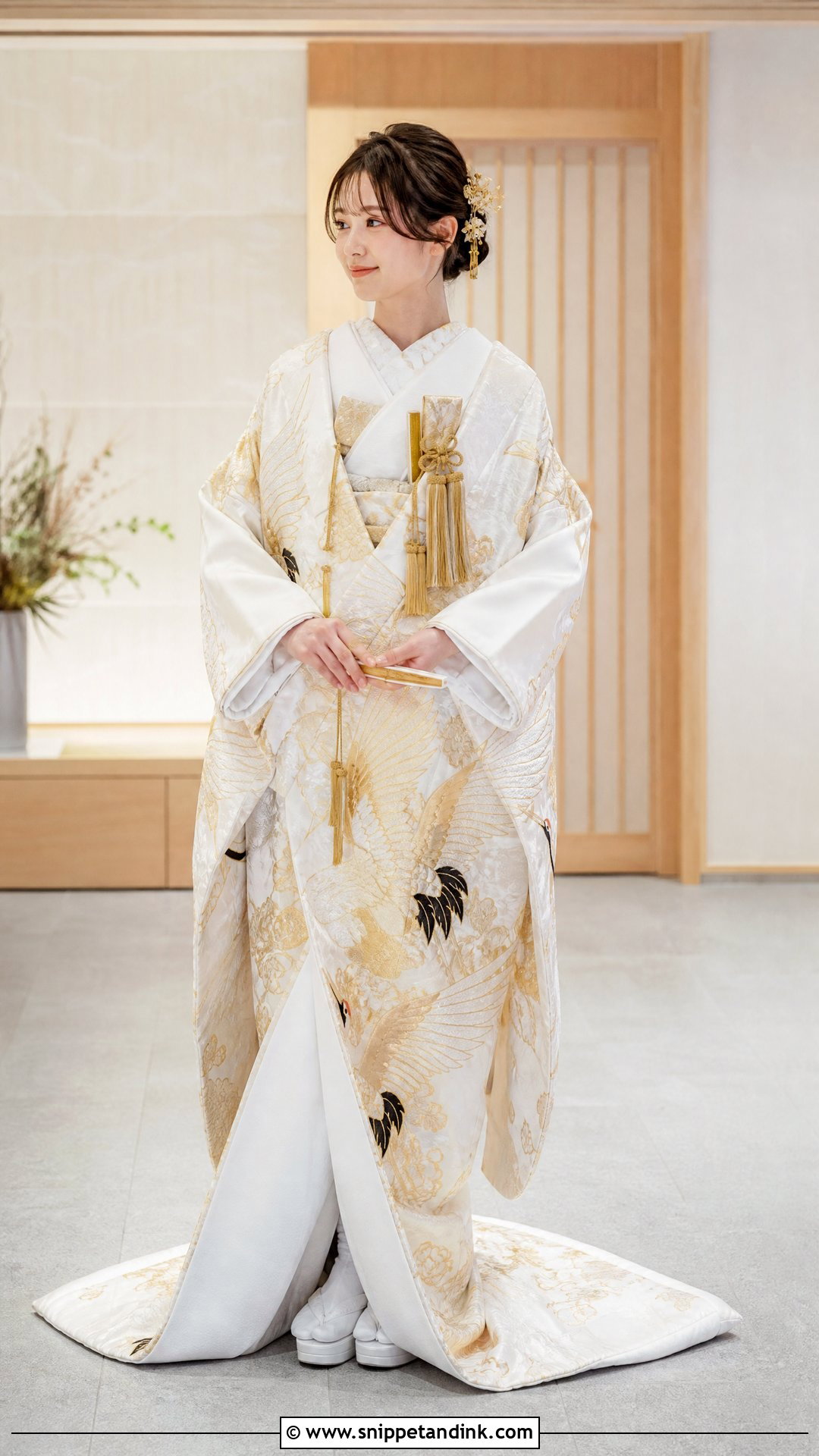
White silk with gold embroidery gives you light and richness without much color, so it suits brides who find red too loud but plain white too quiet. I prefer the gold concentrated at the hem and sleeves; when it climbs right up to the collar, it competes with the face in close portraits. Wear it over a white kakeshita with a metallic obi and small gold hair ornaments. Makeup can stay soft, with a muted rose lip. White zori disappear under the long outer robe. Metallic thread needs directional light to show, so a venue with big windows serves this one far better than a dim hall.
3. Red Iro-Uchikake Kimono Wedding Dress
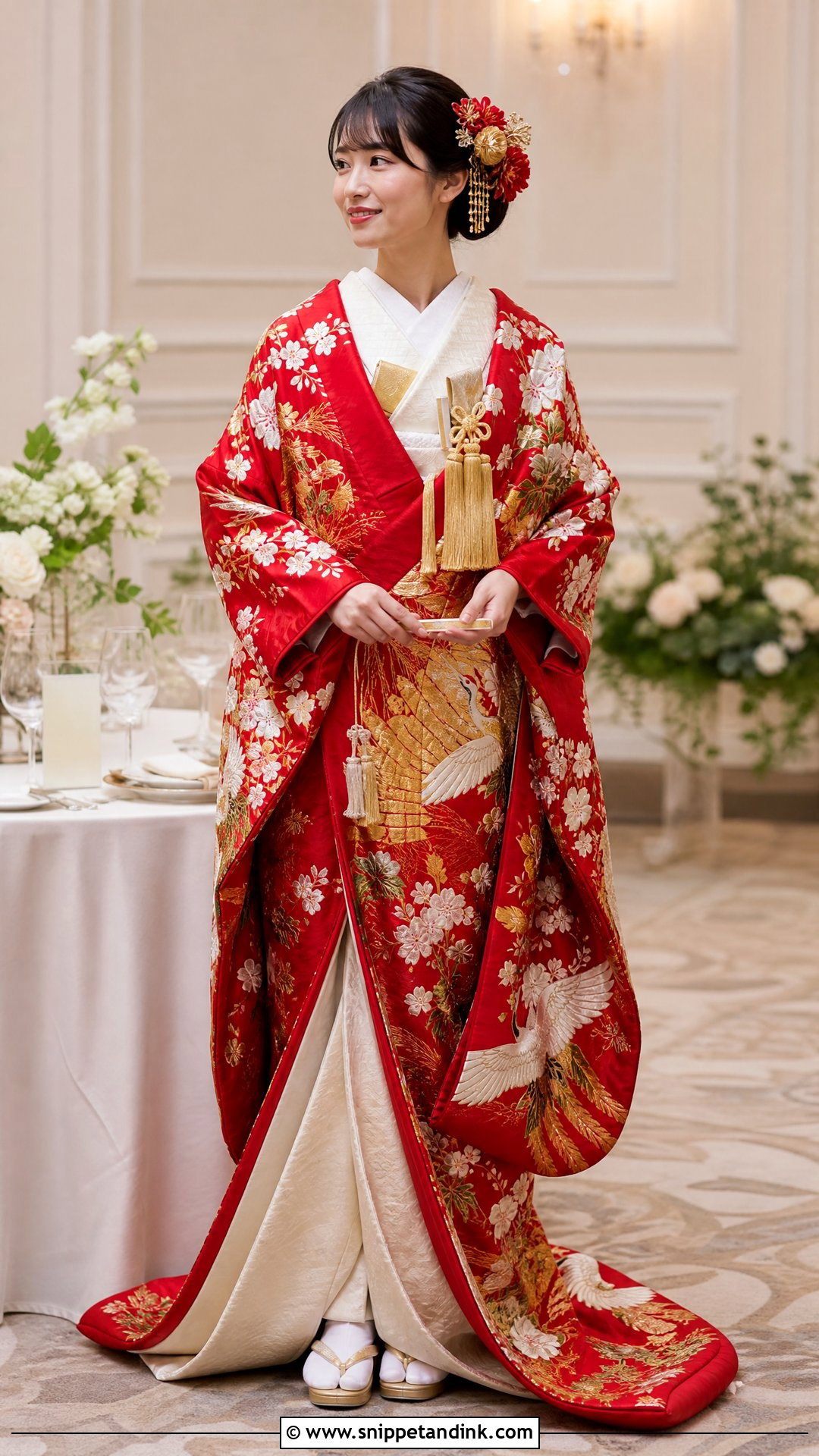
Red is the color of celebration, and in a traditional wedding the red iro-uchikake usually arrives as the outfit change after a white ceremony look. Cranes in white, gold leaves and small touches of green are the classic pattern combination. Layer it over a pale kakeshita so the robe has something quiet to sit against. Gold or ivory zori, tabi and a folding fan complete it, and for the hair a polished bun with red and gold kanzashi-style ornaments chosen with your dresser’s guidance. Leave the necklaces at home. A kimono collar was never designed to sit under jewelry, and the embroidery already fills the shoulders.
4. Black And Gold Kimono Wedding Dress
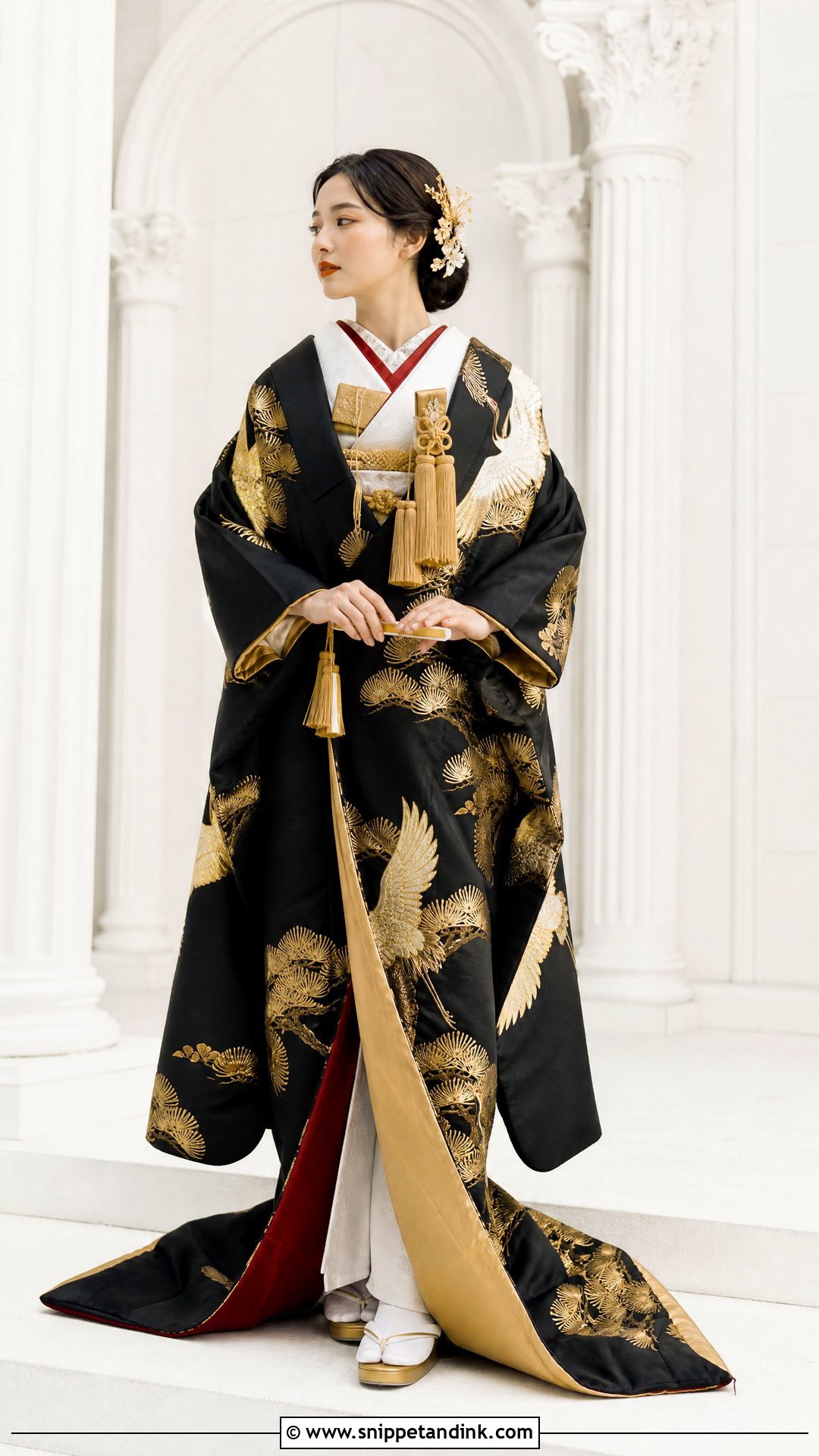
Black uchikake with gold embroidery is the most dramatic option here, and the one where the inner layer matters most. A red or ivory collar showing at the neckline lifts the dark robe away from the face; without it, black can drain color from your skin in photographs. Pine, fans or flowing water across the shoulders and lower robe suit the strong ground color. Defined eyeliner and a red lip feel right for an evening ceremony; a softer palette works by day. Plan portraits against pale walls or light wood, since a black robe against a dark background loses all its embroidery.
5. Pink Iro-Uchikake Kimono Wedding Dress
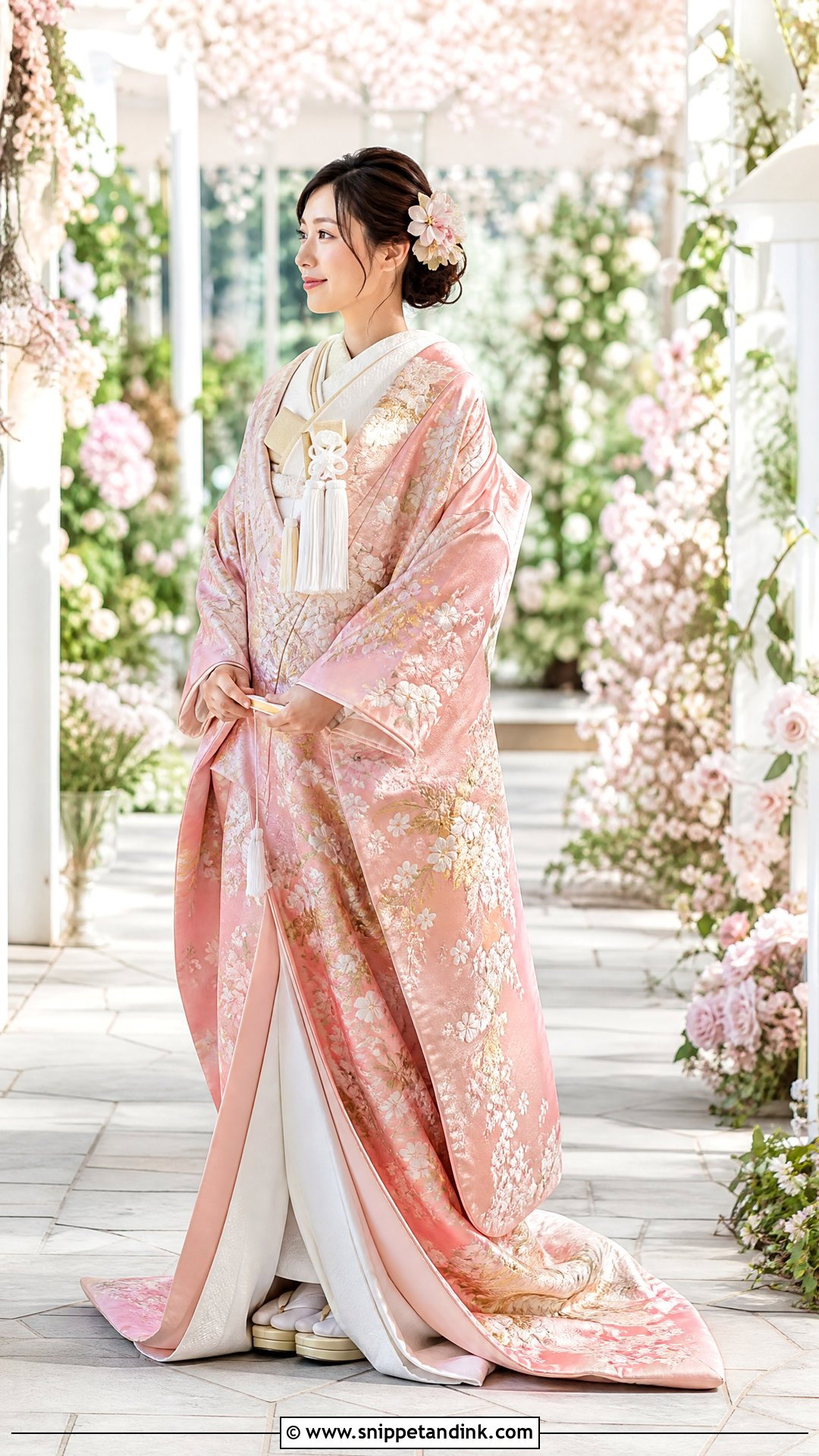
Pink is the gentler route into a colored uchikake. Blush, dusty rose and pale peach grounds with ivory blossoms and champagne thread feel celebratory without the weight of saturated red. I connect the layers through the obi, choosing one that carries both the pink and the gold, over an ivory kakeshita. A compact floral hair arrangement is enough; a big one fights the pattern. Rose and peach makeup tones keep the color story consistent. It is a natural reception change for spring, and it holds its color well in soft outdoor light.
6. Blue Iro-Uchikake Kimono Wedding Dress
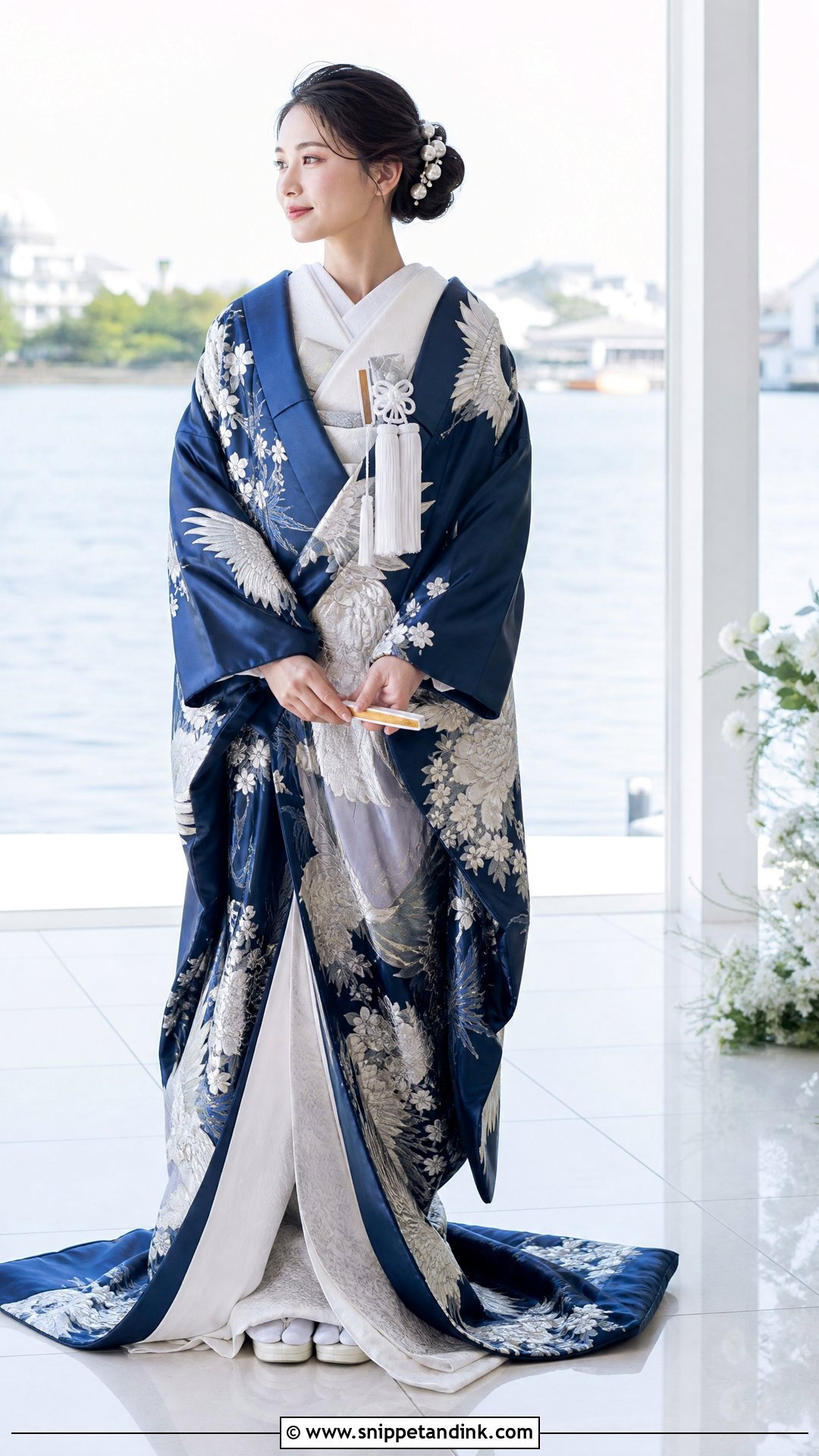
Blue reads calm, and it is easier than most colors to place in a cool-toned venue. Powder blue suits daytime; navy or deep teal gives evening formality. Silver, white and muted pink embroidery stand out best on the darker blues. Under it, an ivory or pale blue kakeshita with a coordinated obi, pearl-style hair ornaments and a smooth low bun. My one caution is photographic: dark navy loses detail against dark backgrounds, so ask your photographer for a light neutral wall for the formal shots. It suits winter dates and waterside venues.
7. Green Iro-Uchikake Kimono Wedding Dress
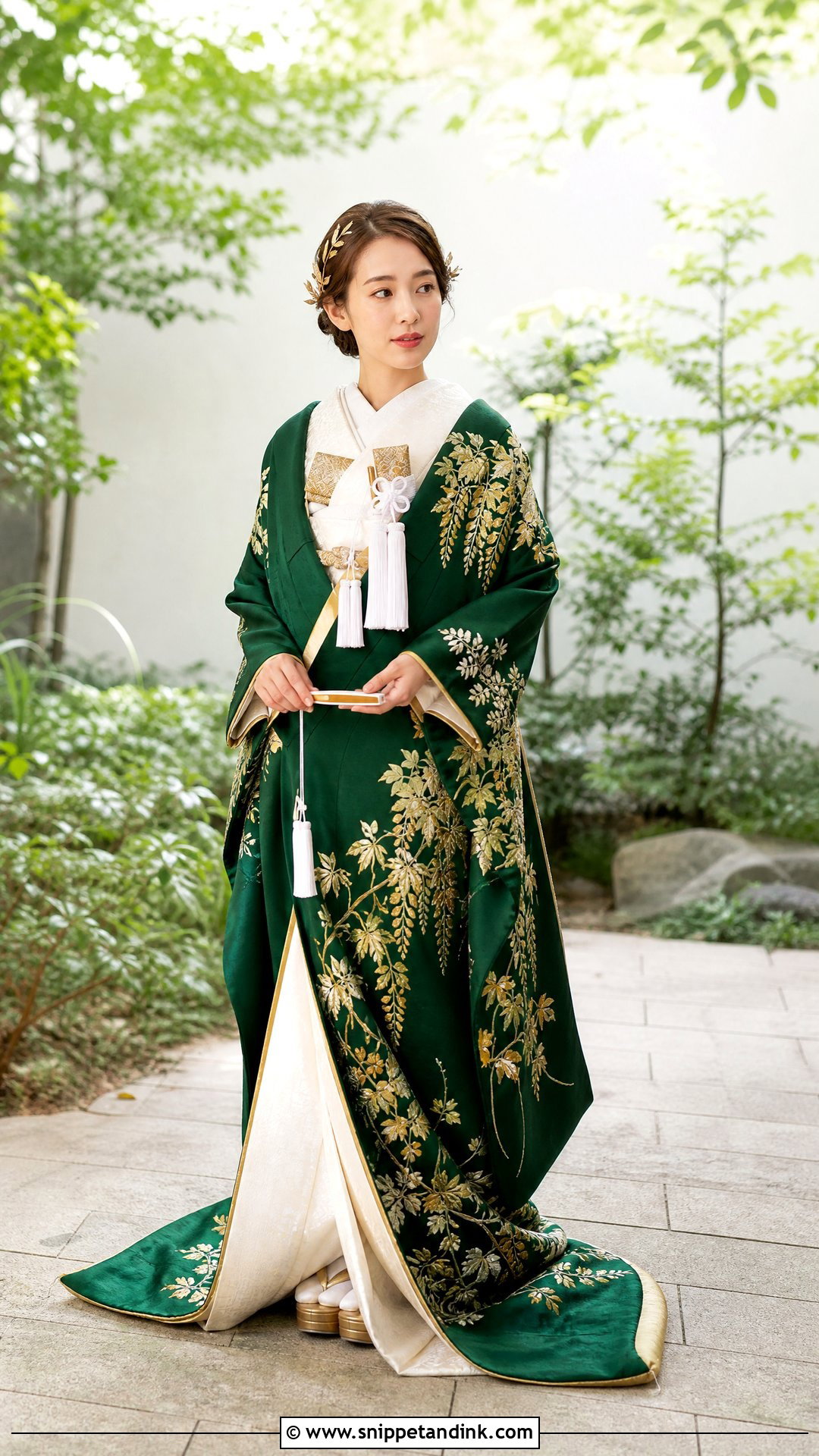
Green covers a lot of ground. Emerald with gold cranes is bold and formal; sage covered in cream florals feels softer and more current. Either way, an ivory inner kimono and an obi that repeats one embroidery color keeps it from looking like a costume. Gold zori and small botanical hair ornaments complete it. On the bouquet I’d hold back to white flowers and greenery, or skip it entirely if the robe already feels finished. Green is the hardest color to photograph accurately under warm indoor bulbs, which can turn it muddy, so balanced or natural light makes a real difference.
8. Crane Embroidered Kimono Wedding Dress
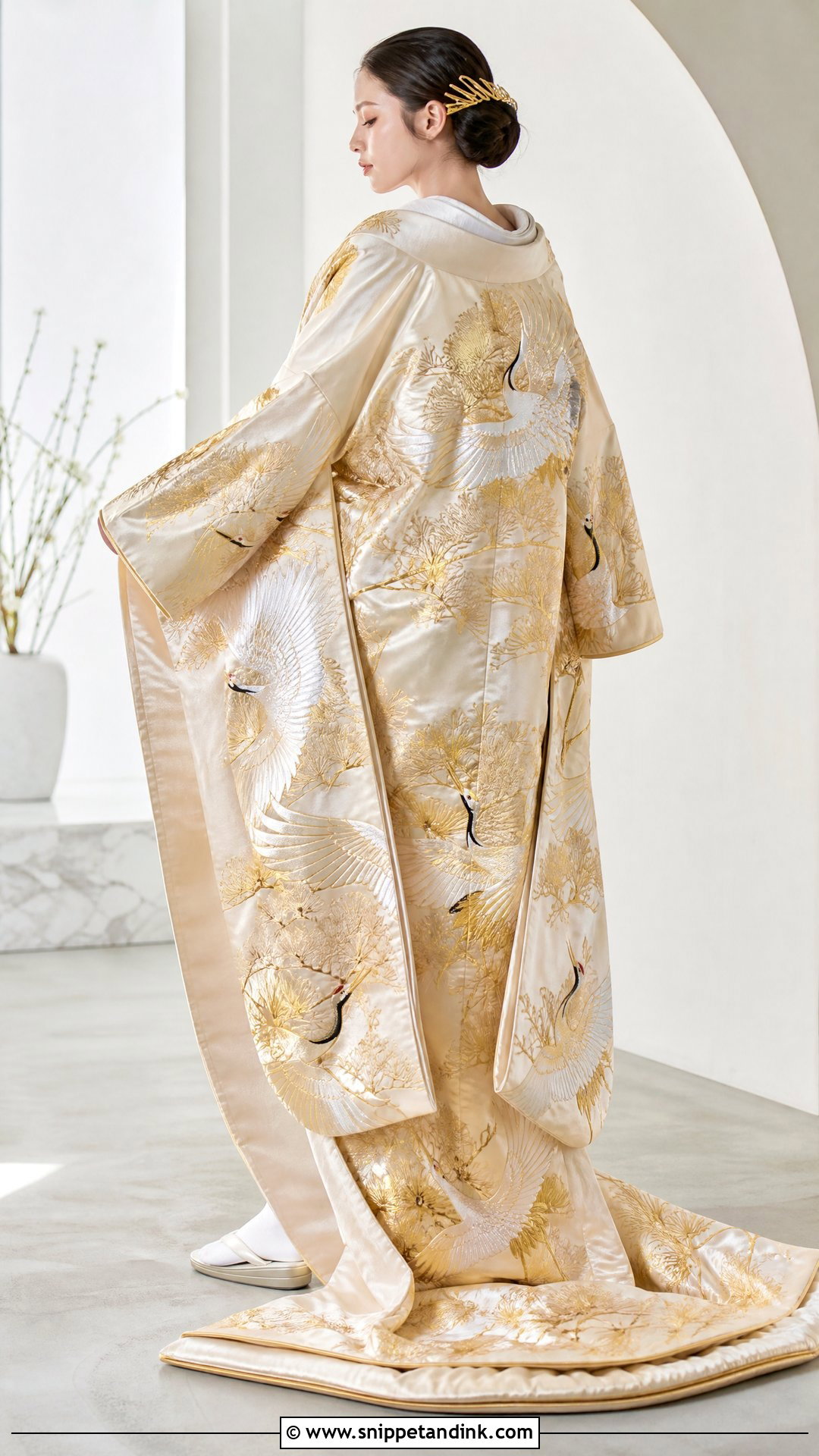
Cranes are among the oldest motifs on Japanese bridal garments, often paired with pine, bamboo or plum. They usually sweep across the back and sleeves, which means the best view of the robe is the one guests see as you walk away. The ground can be white, red, navy or black depending on the mood you want. Keep the inner kimono and accessories quiet so the composition stays readable, with a structured bun and a single metallic ornament. For portraits, the dresser should arrange the padded hem into a smooth curve behind you, and should line up the embroidery so the cranes don’t fold into the obi.
9. Cherry Blossom Kimono Wedding Dress
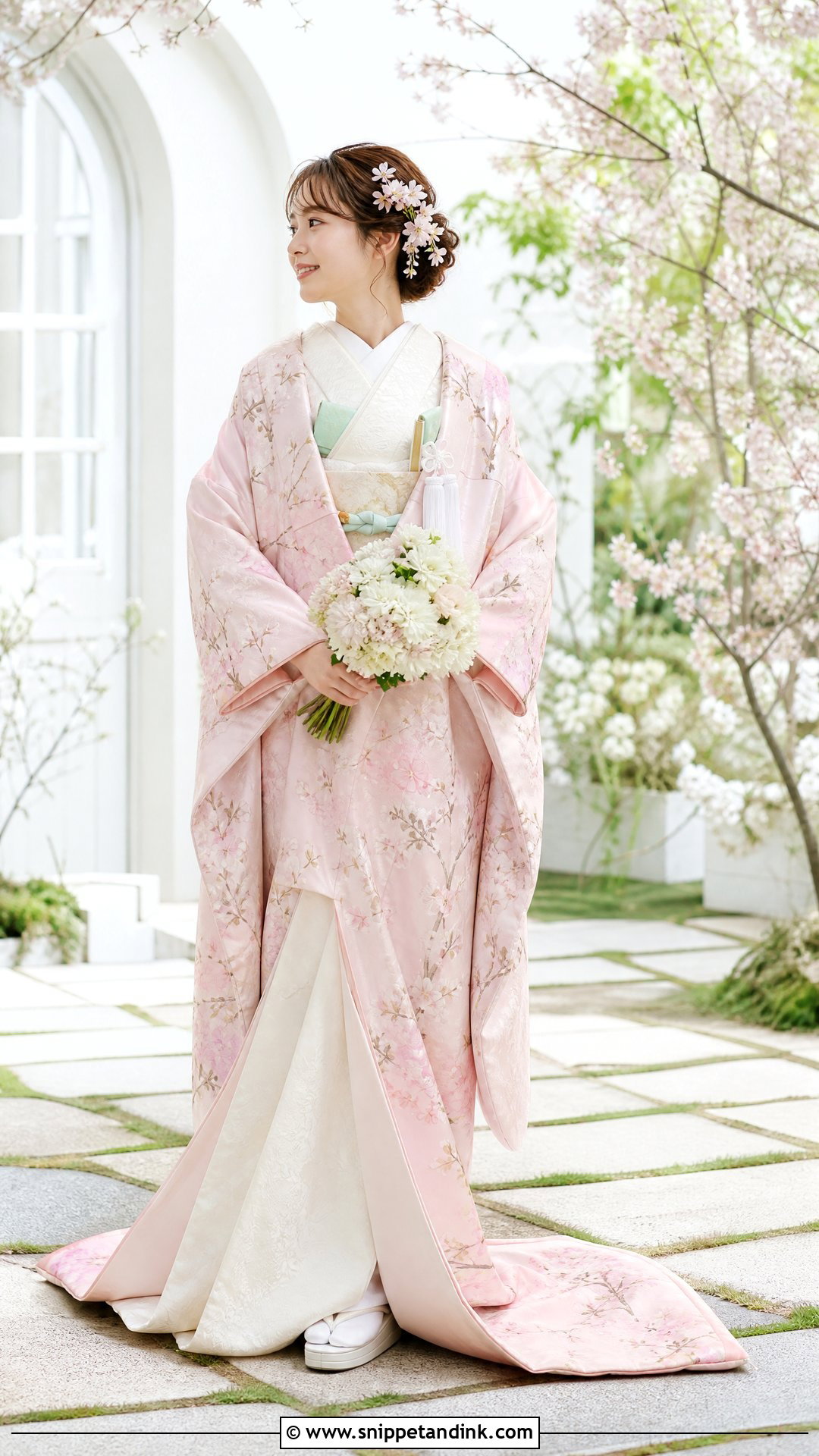
Cherry blossom embroidery is the obvious spring motif, and branches of blush and white blossoms on an ivory or sky-blue uchikake deliver exactly what people hope for. Small gold details give the pastel some definition. A clean ivory kakeshita and a pale obi echo the embroidery. Finish with white tabi, light zori and a neat bun with a small cluster of blossom ornaments. Keep the bouquet compact in pink and cream. Where I see this go wrong is accessories: a beaded veil or large jewelry on top of a busy pastel pattern makes the whole look fussy.
10. Peony Kimono Wedding Dress
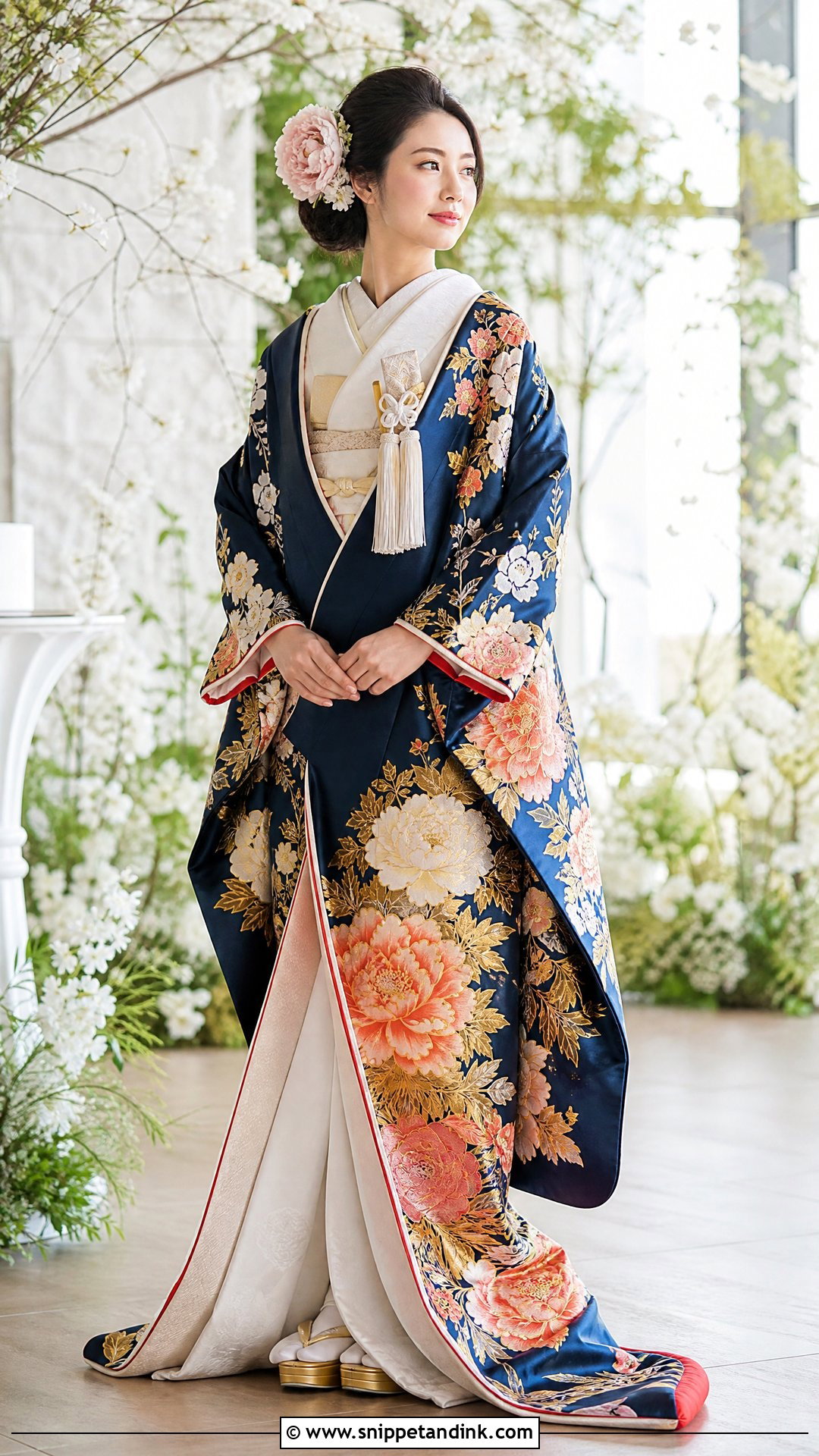
Peonies are large flowers, and large motifs need space. I look for robes where the blooms climb from the hem toward the sleeves and leave the upper body calmer, because peonies printed edge to edge read as wallpaper in a full-length photograph. Burgundy or coral peonies on cream, red or deep blue silk are classic combinations. Pull one quieter color from the pattern for the kakeshita and obi. A low bun with one peony-style hairpiece and simple zori suit it, and a small ivory fan can stand in for a bouquet in formal portraits.
11. Chrysanthemum Kimono Wedding Dress
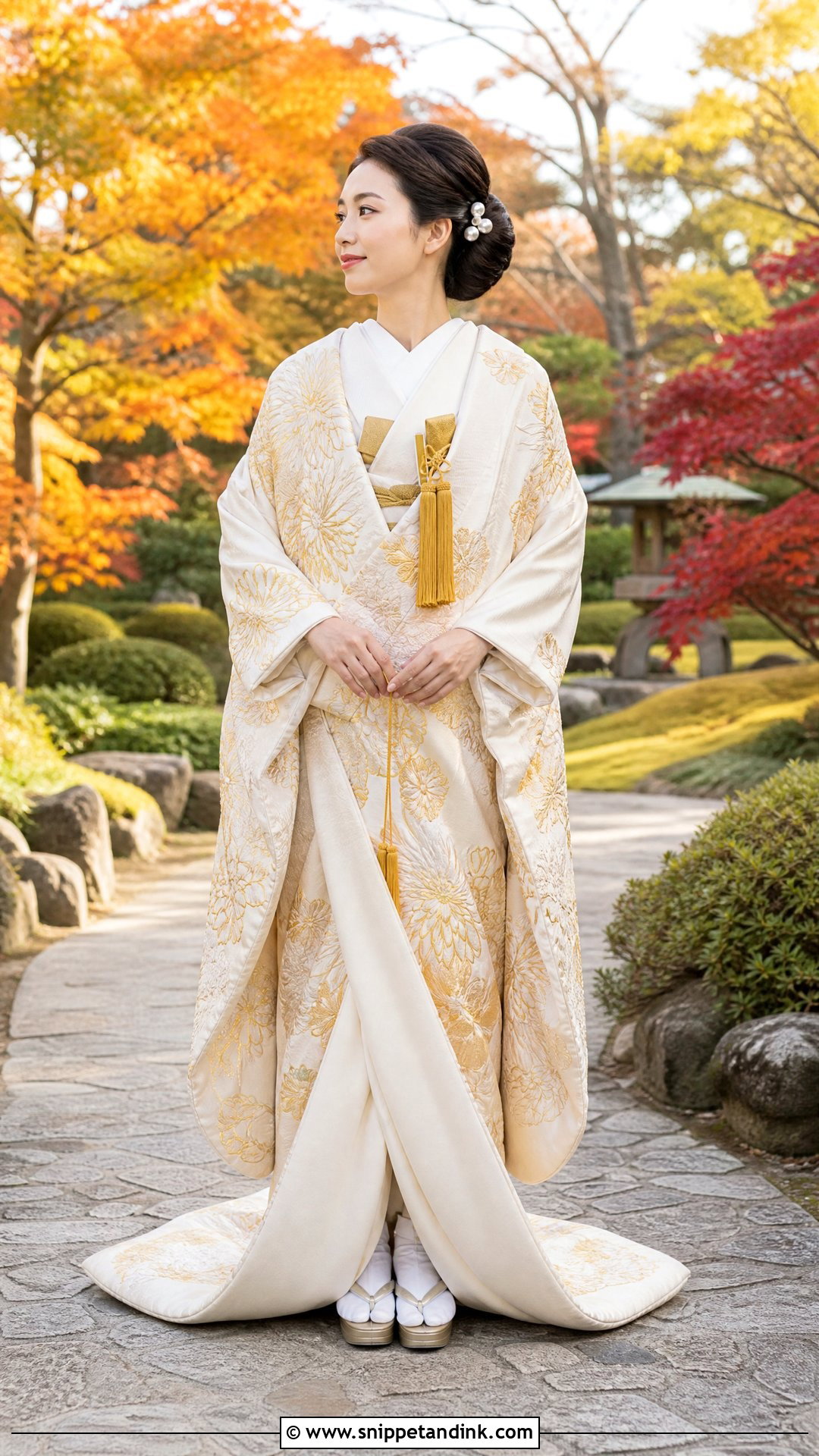
Chrysanthemums carry a lot of texture in embroidery, layered petal by petal, which gives the robe a structured, almost sculpted surface. Cream with pale gold blooms is the understated version; red or black grounds push the contrast. Choose a plain inner collar and a restrained obi so the neckline stays clean, and finish the bun with gold combs or pearl pins. Chrysanthemums are an autumn flower in Japanese seasonal dress, so this is a natural fit for a fall ceremony. Skip jewelry and let the needlework do it.
12. Plum Blossom Kimono Wedding Dress
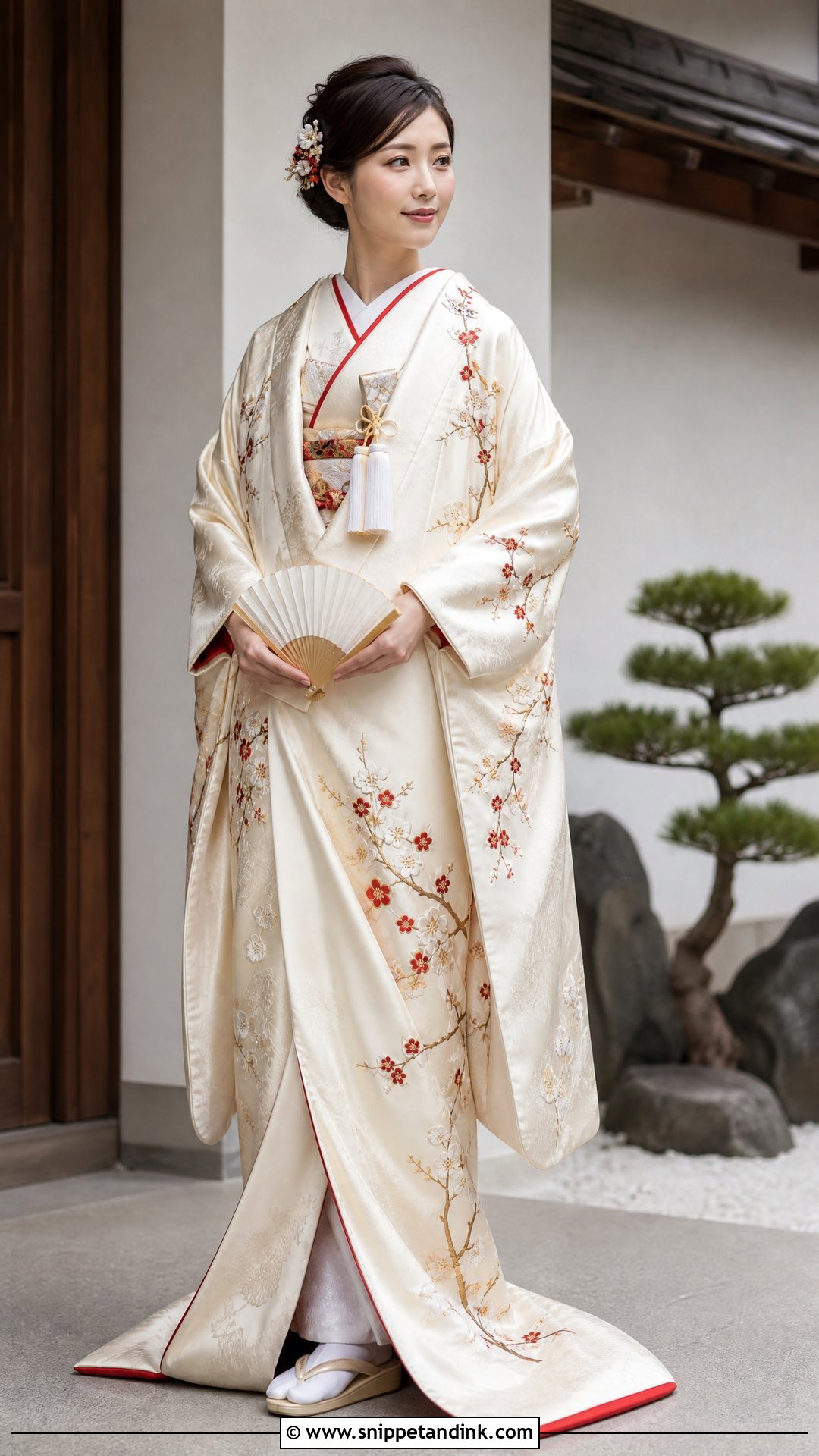
Plum blossom is smaller and sparser than cherry blossom, which suits brides who want botanical detail without a full floral surface. Plum flowers at the end of winter, so it sits well on winter and early-spring dates. Red and gold blossoms on ivory are the classic contrast; a pale gray or blue ground feels quieter. A red inner collar can add a thin line of color right at the face. Pair with an ivory kakeshita, a coordinated obi and white footwear, and place tiny blossom pins to one side of a smooth bun. Simple architecture or bare branches make the strongest backdrop.
13. Phoenix Kimono Wedding Dress
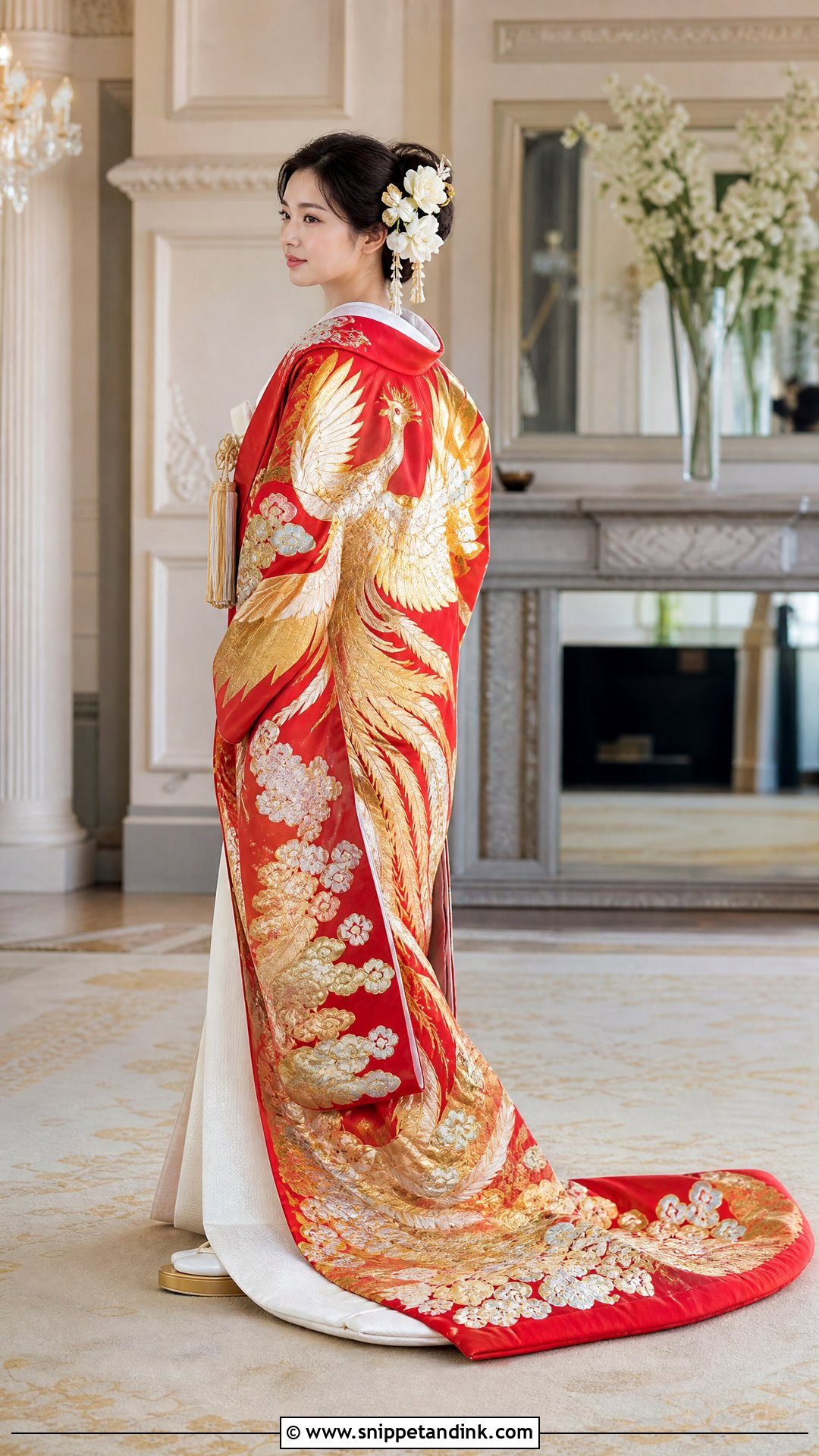
A phoenix embroidered across an uchikake is a commanding motif, usually placed so the bird spreads across the back or lower half with clouds and flowers around it. Red and black grounds make it dramatic; ivory lightens it. A simple kakeshita underneath and one accent color repeated through the obi and hair ornaments keep the look coherent. I’d drop earrings altogether. Most importantly, brief your photographer to shoot the back and the side profile. A phoenix robe photographed only from the front hides the very thing you chose it for.
14. Seigaiha Wave Kimono Wedding Dress
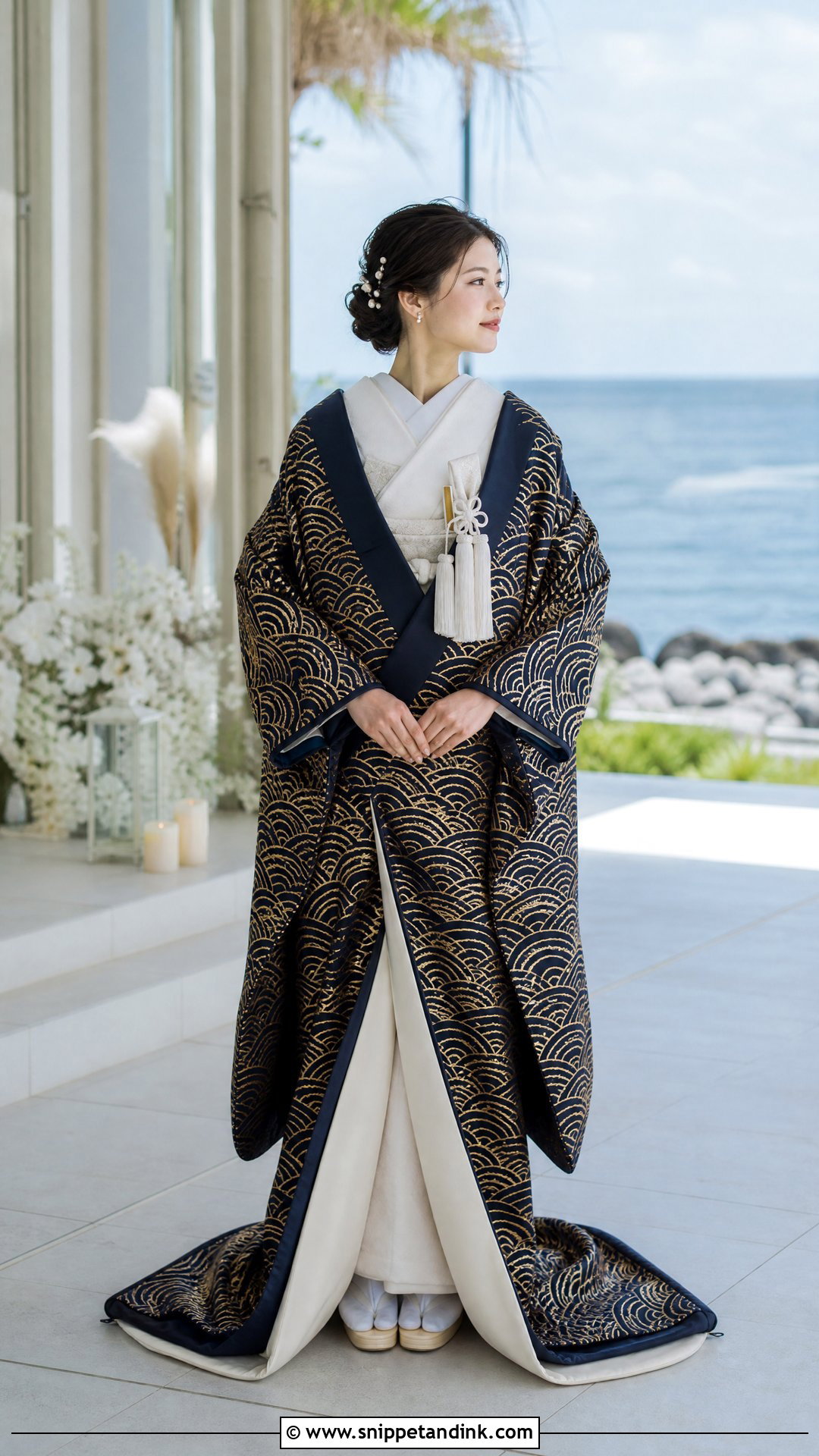
Seigaiha, the overlapping wave pattern, gives a robe rhythm rather than bloom, and it suits brides who find florals too sweet. Silver or pale blue waves on ivory stay restrained; gold on navy brings more contrast. A plain inner kimono and a neatly tied obi keep the geometry clean. Pearl hairpins, tabi and light zori finish it. Repeating patterns are busy at a distance, so I avoid a mixed bouquet or bold jewelry here. Coastal venues and minimal interiors show it best, where the pattern has smooth surfaces to stand against.
15. Silk Kimono Sleeve Wedding Dress
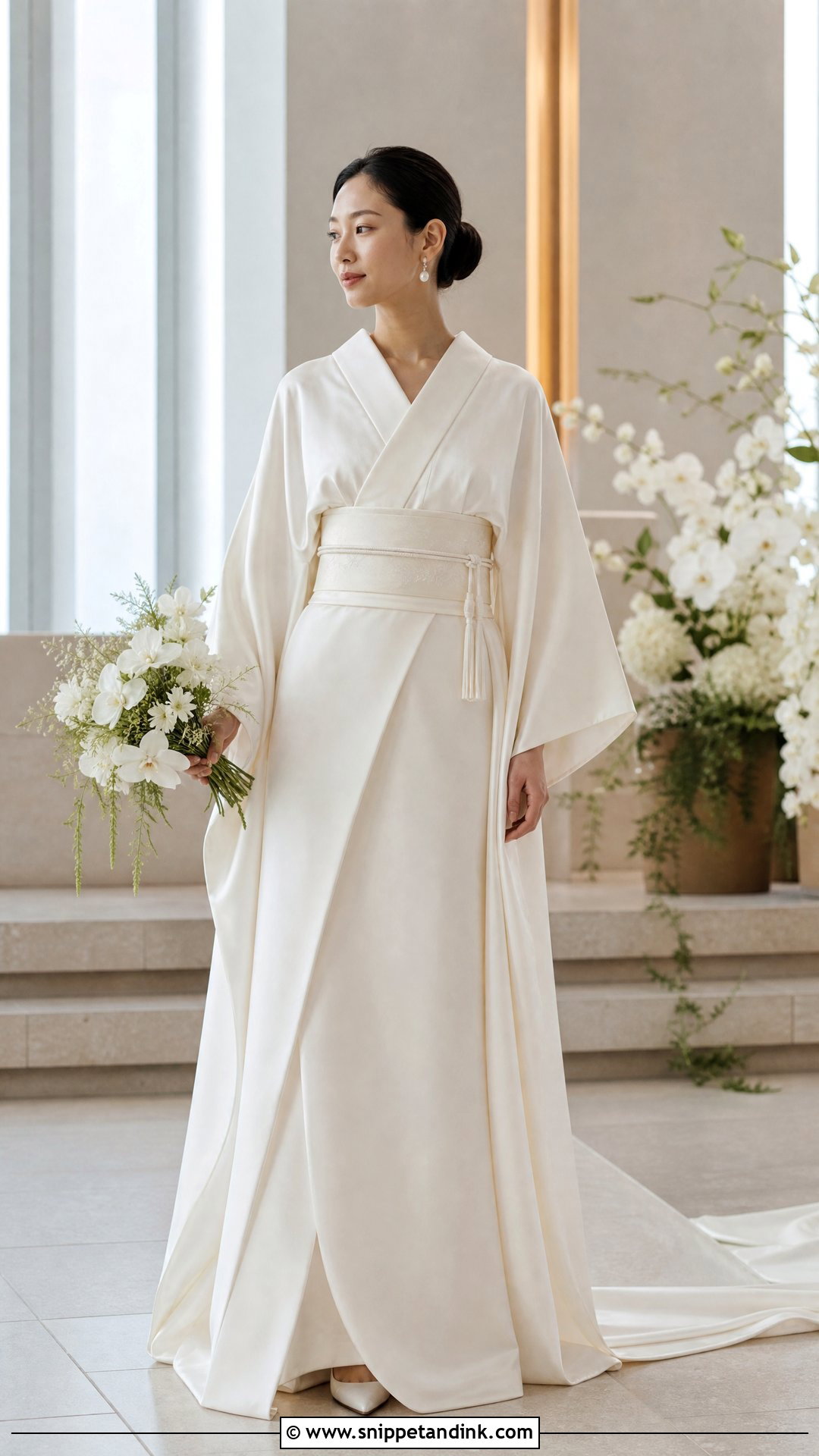
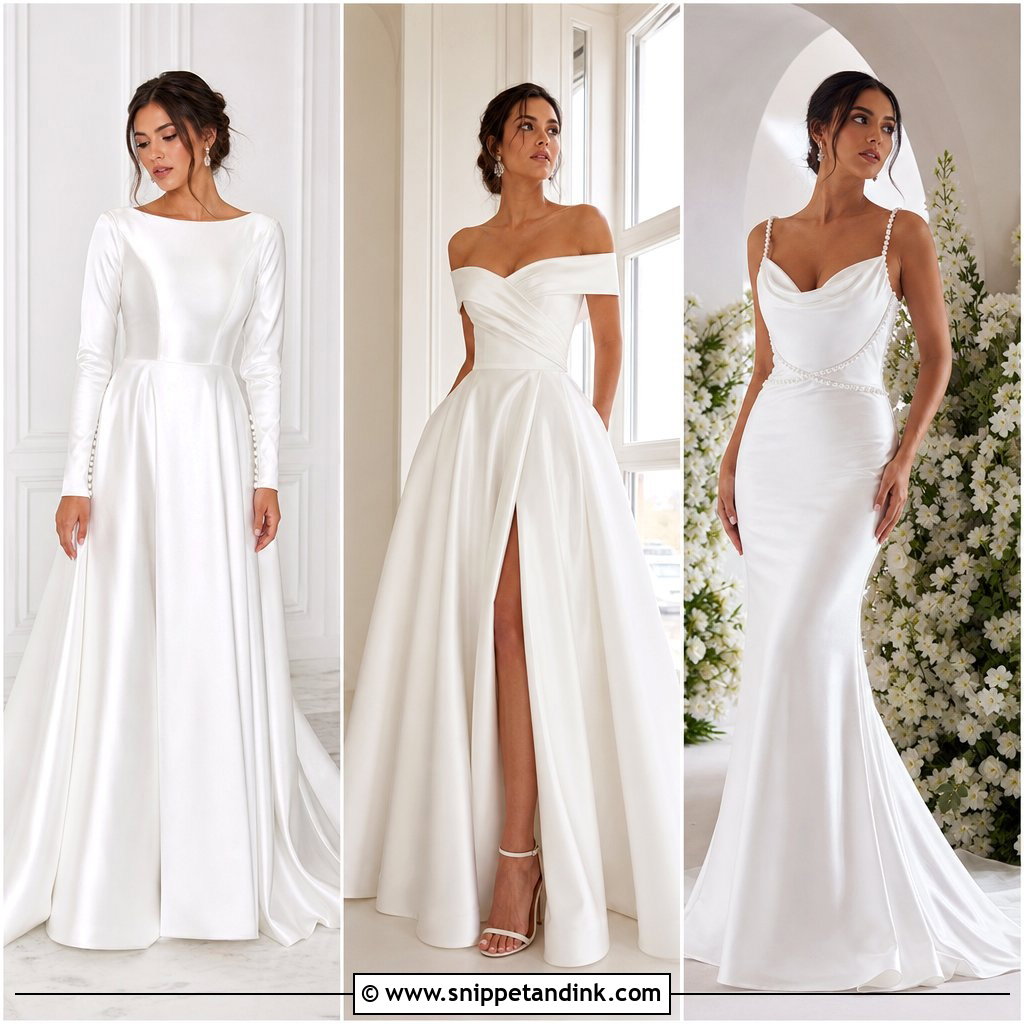
Plenty of brides want the line of a kimono without the layers. A silk gown with wide kimono-style sleeves gives you that: an ivory wrap bodice, a defined waist and a fluid skirt you can walk and dance in. A narrow obi-style belt shapes the waist; a wide one starts to look theatrical on a Western gown. Pointed shoes, pearl drops and a sleek low bun suit it. A chapel veil works only if the sleeves are plain. The fitting point I watch most is sleeve length, because wide silk sleeves sweep through candle centerpieces and sauce at the head table.
16. Lace Kimono Sleeve Wedding Dress
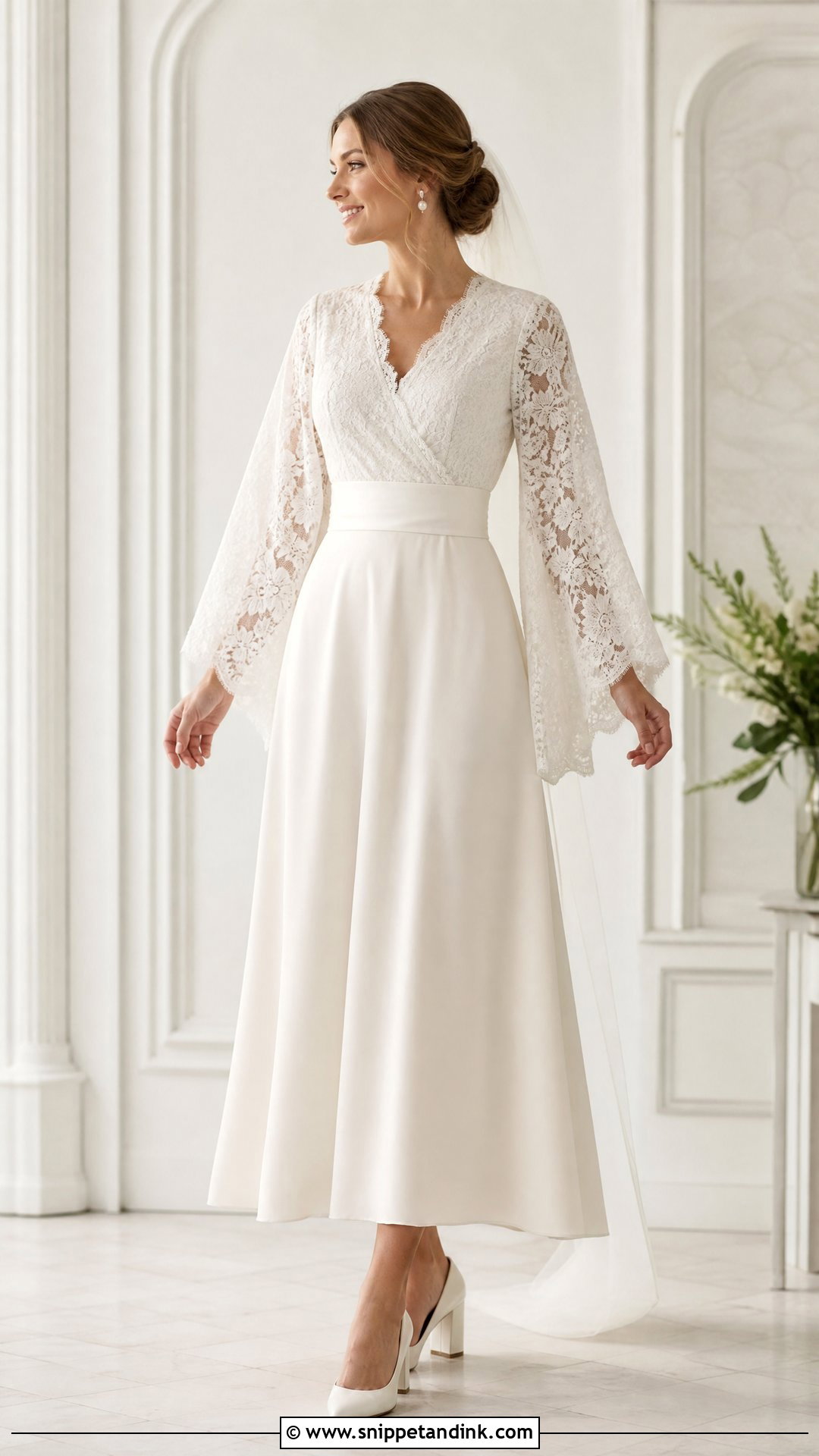
Lace on a wide sleeve adds coverage and texture at once. The best versions use a fitted lining under wide floral-lace sleeves, a wrap neckline and an A-line skirt. A satin sash breaks the lace bodice from the skirt so the eye has somewhere to rest. Block-heel pumps and small earrings keep it grounded; pick a plain fingertip veil, since beaded edging on top of lace looks crowded. Before the final fitting, mime the day: hold a bouquet, hug someone, lift a fork. Wide lace sleeves catch on bouquet wire and chair backs more than brides expect.
17. Satin Wrap Kimono Wedding Dress
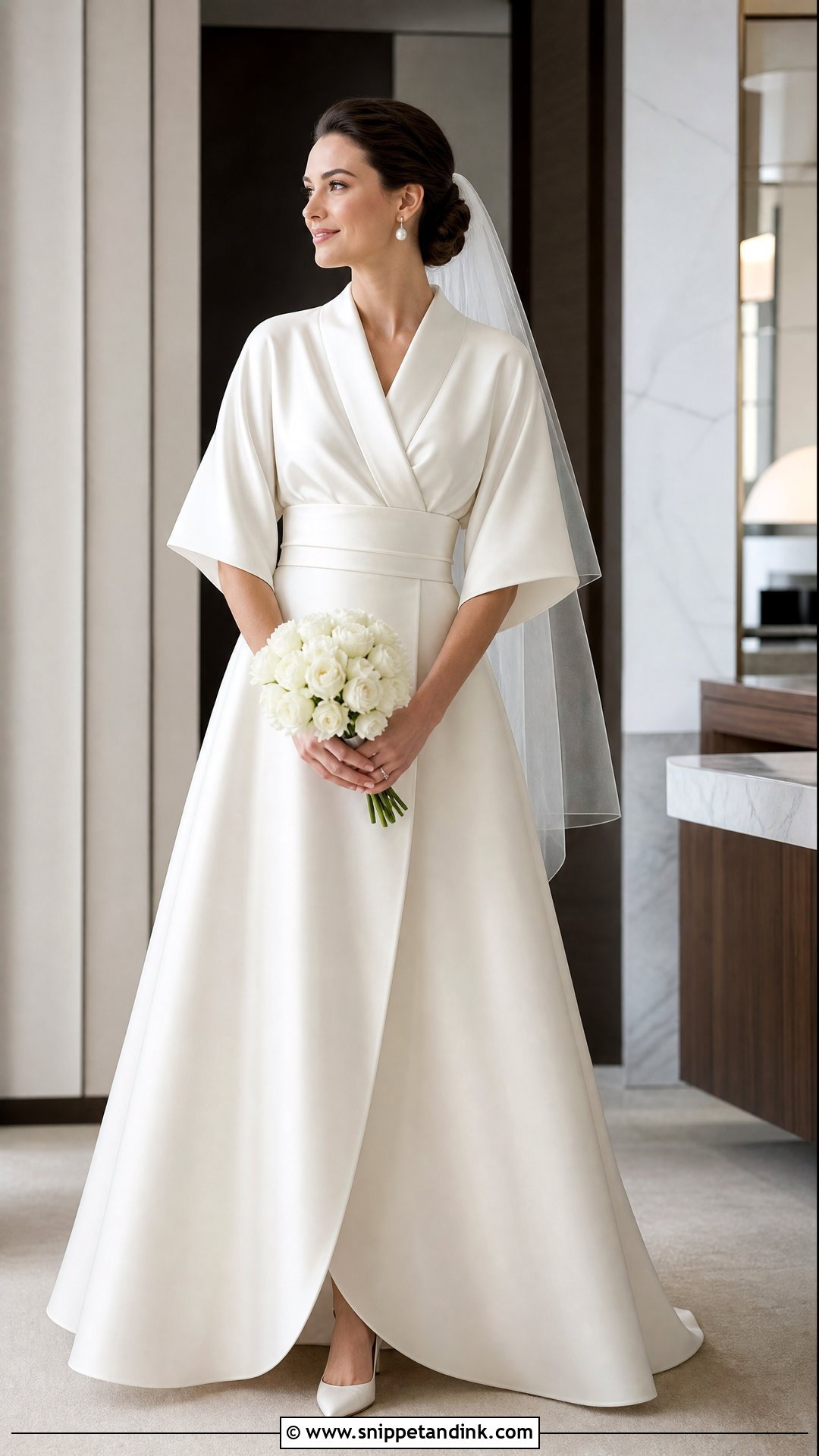
Satin on a wrap front looks clean and catches light along every fold. That same smoothness shows every gap, so the crossover needs discreet reinforcement inside, a hook or snap at the inner edge, or the neckline will open as you move. Elbow-length wide sleeves, a structured waistband and a soft flare suit the fabric. Satin pumps, pearl earrings and a polished chignon keep the line streamlined, and a long veil adds ceremony drama. Steam the satin carefully on the day and check it under the venue’s actual lighting; satin reveals creases and fit issues that crepe hides.
18. A-Line Kimono Wedding Dress
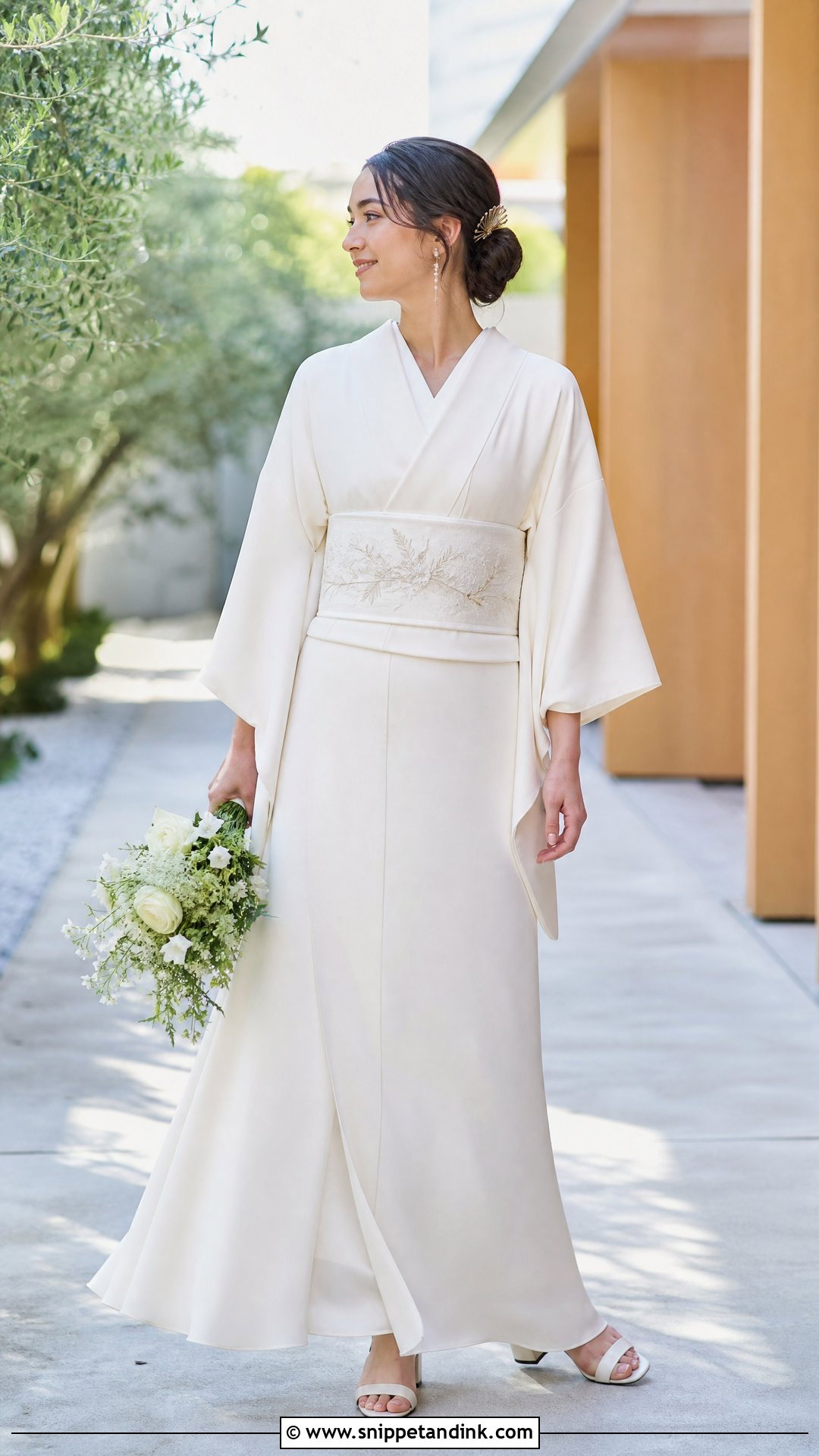
Wide sleeves add volume at the top, and an A-line skirt gives that volume something to balance against. It is the most forgiving way to wear a kimono-influenced gown. Crepe, silk or light jacquard holds the shape without weight. An obi-inspired belt with subtle embroidery becomes the focal point. Block heels, small drops and a low bun with a metallic comb finish it; a detachable back drape adds movement for the processional. It works particularly well at multicultural weddings, where the Western shape and the kimono details each nod to one side of the family.
19. Mermaid Kimono Wedding Dress
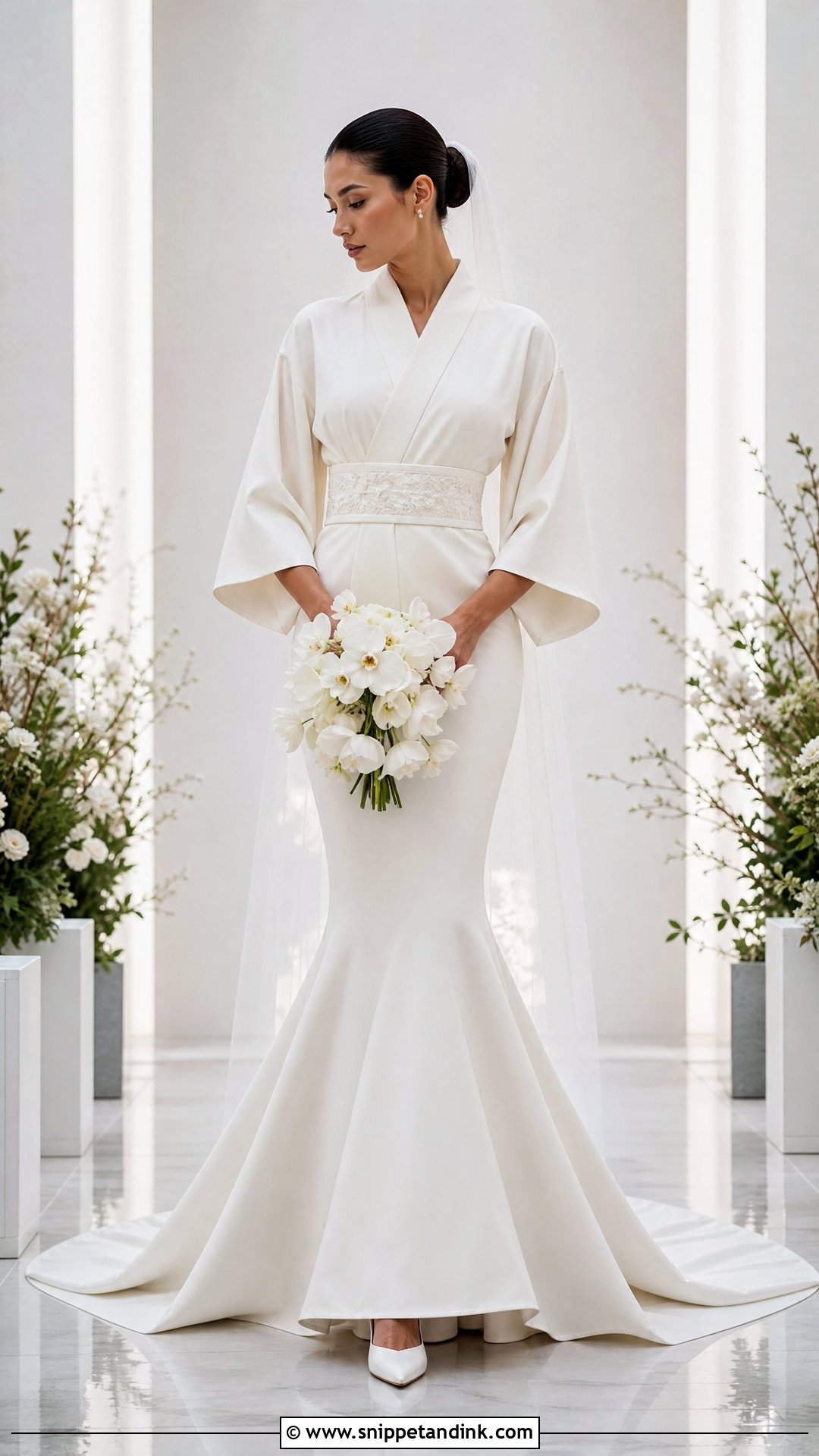
Fitted through the body and wide at the arm, a mermaid gown with kimono sleeves is a study in contrast. Stretch crepe or satin follows the figure comfortably before flaring below the knee. I always recommend three-quarter sleeves rather than floor-length ones on this silhouette; long sleeves plus a tight skirt make movement awkward. A slim embroidered sash defines the waist. Keep the veil narrow so it doesn’t hide the fitted back. Sit, climb a stair and walk at a normal pace before final alterations, since the knee line decides how freely you can move.
20. Ball Gown Kimono Wedding Dress
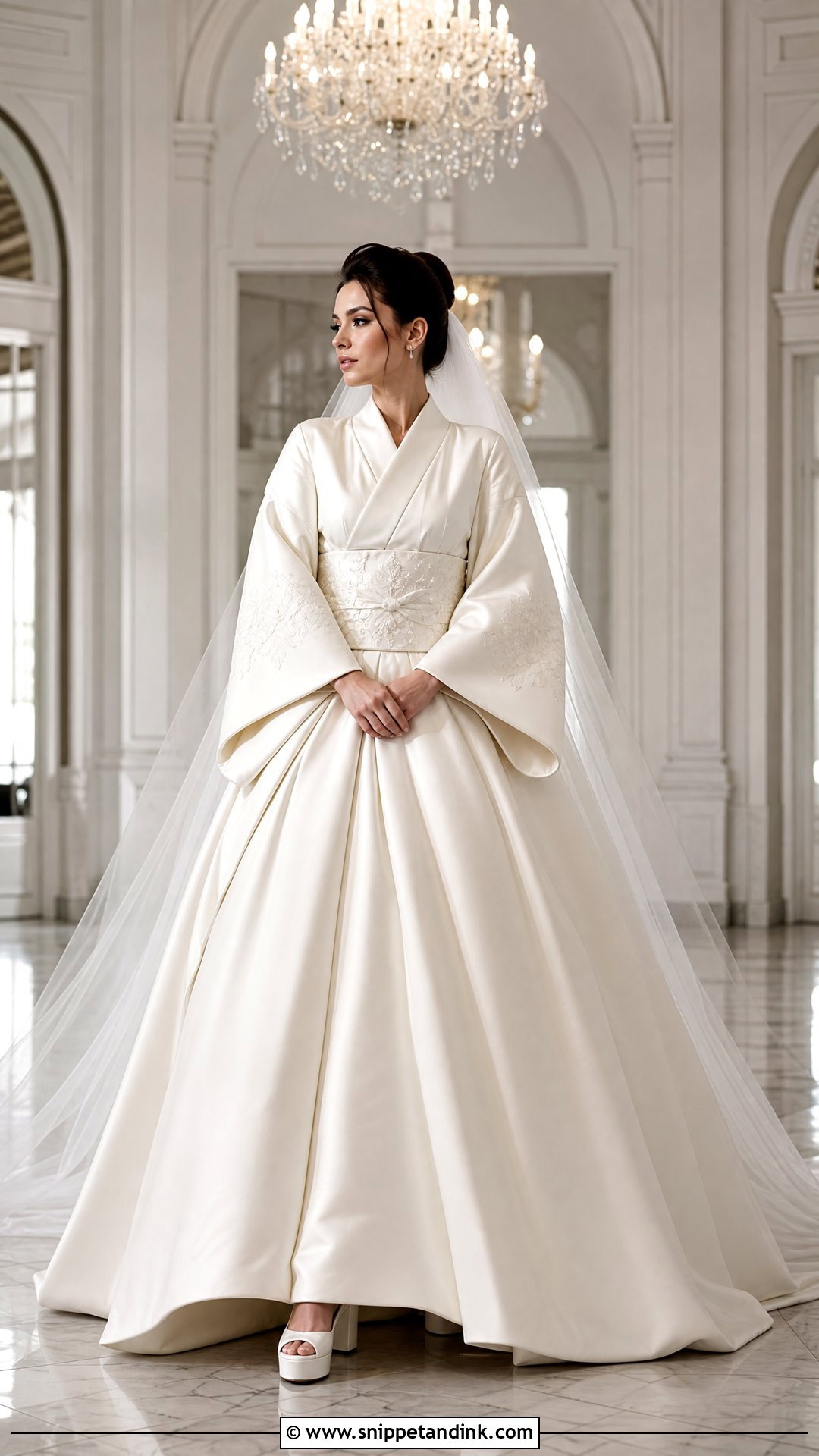
A ball gown with wide kimono sleeves is about as much dress as you can wear, so proportion becomes the job. Keep the sleeves at elbow or wrist length, since long full sleeves plus a full skirt make you look swallowed. Silk mikado, jacquard or crisp satin holds the volume. An embroidered obi-style waistband links the Japanese influence to the Western shape. Platform heels, a polished updo and a cathedral veil anchored below the bun suit a ballroom. Have the hem altered professionally with your actual shoes; ball gown fronts catch under the toe on stairs.
21. Minimalist Crepe Kimono Wedding Dress
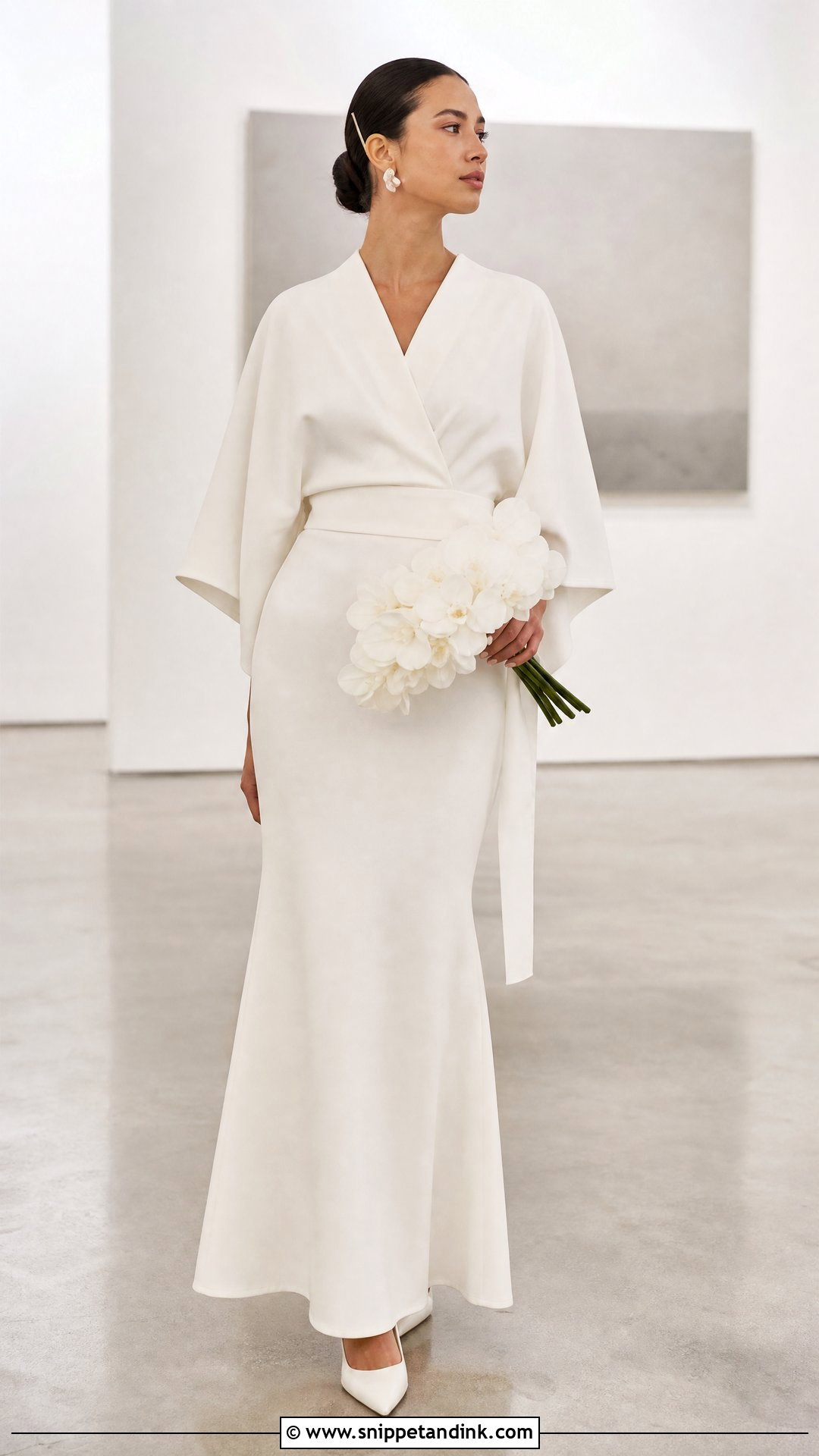
Clean ivory crepe with no embroidery puts the cut on display. Because nothing distracts from a seam on a plain surface, tailoring is not optional on this one: a pucker at the wrap or a sleeve that twists shows from across the room. A crossover neckline, wide sleeves and a straight or gently flared skirt are all it needs. Sculptural earrings, pointed pumps and a smooth low bun suit the mood, with a single flower or modern pin. It fits courthouse ceremonies and gallery venues, and a detachable train lets you shorten it for the reception.
22. Tea-Length Kimono Wedding Dress
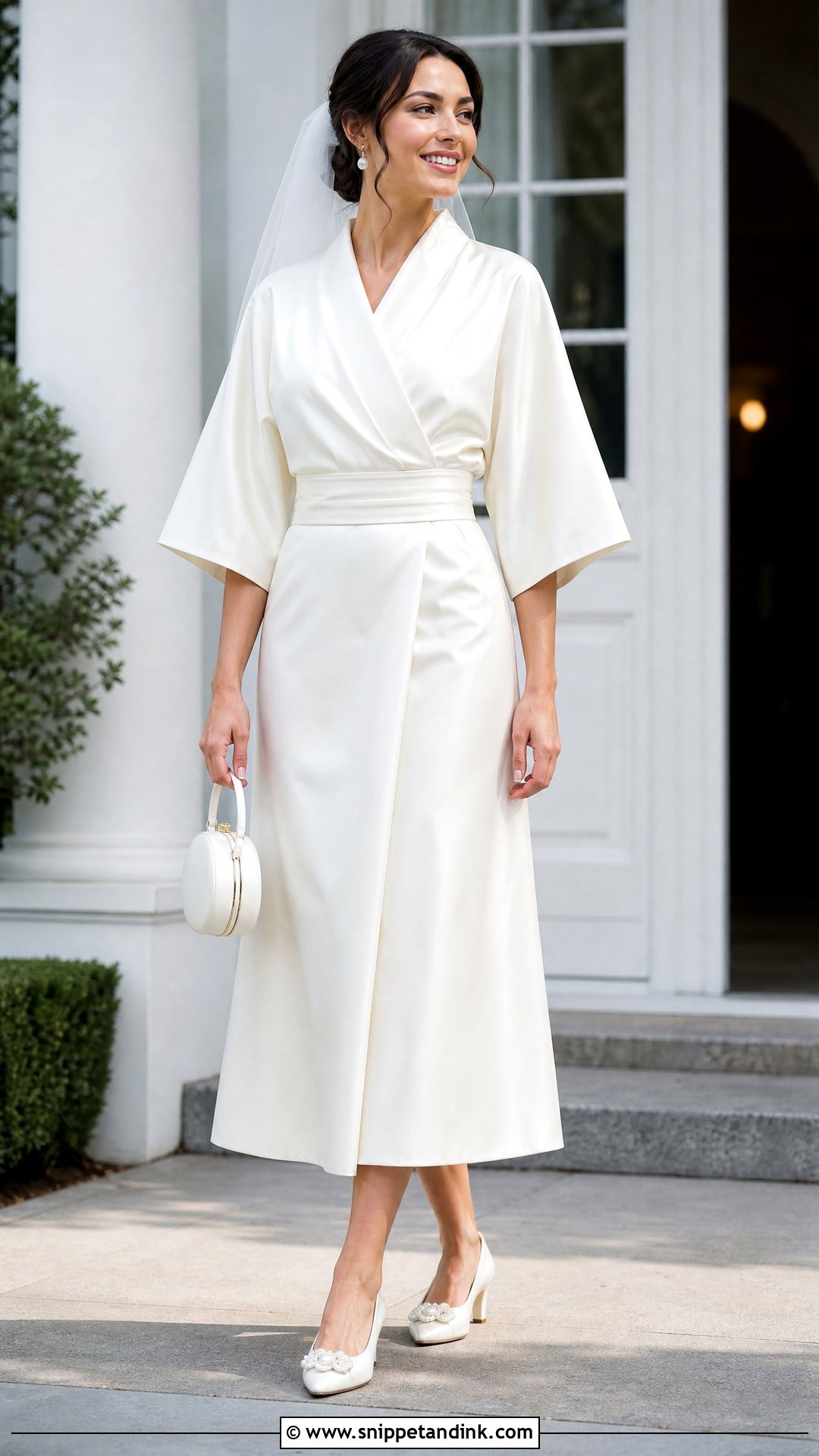
Tea length lets you wear kimono sleeves with no train to manage, which is a relief on a day with lots of walking. A wrap bodice, fitted waistband and elbow-length sleeves sit above a skirt falling between knee and ankle. Structured satin holds a crisp shape; soft crepe moves more. The shorter hem puts your shoes on show, so decorative pumps or refined flats become part of the outfit. A short veil and a neat bun suit civil ceremonies and daytime receptions. Keep the skirt full enough to balance the sleeves, or the look turns top-heavy.
23. Plus-Size Kimono Wedding Dress
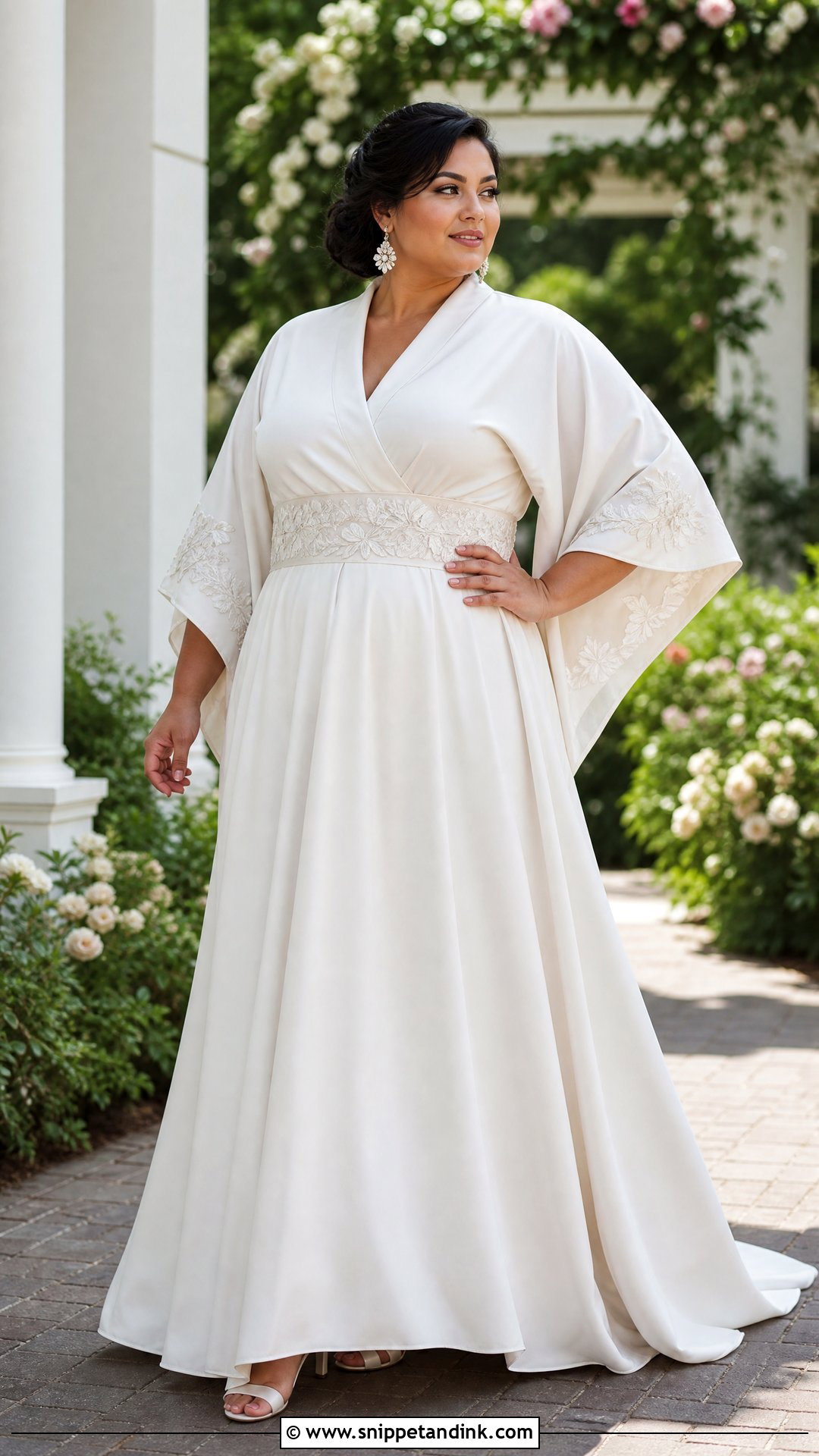
Wrap construction adjusts naturally to a curvy figure, and that makes kimono-style bridalwear a good friend to plus-size brides. An A-line or empire-waist gown with a stable wrap bodice and sleeves that widen below the elbow is my starting point. Silk-blend crepe and lined chiffon move better around the arm than stiff fabrics. Place the waistband where your waist actually is, not where a standard pattern assumes. Supportive block heels, statement earrings and an updo or side-swept style finish it. Bring your real undergarments to every fitting, because the wrap sits differently over each bra.
24. Maternity Kimono Wedding Dress
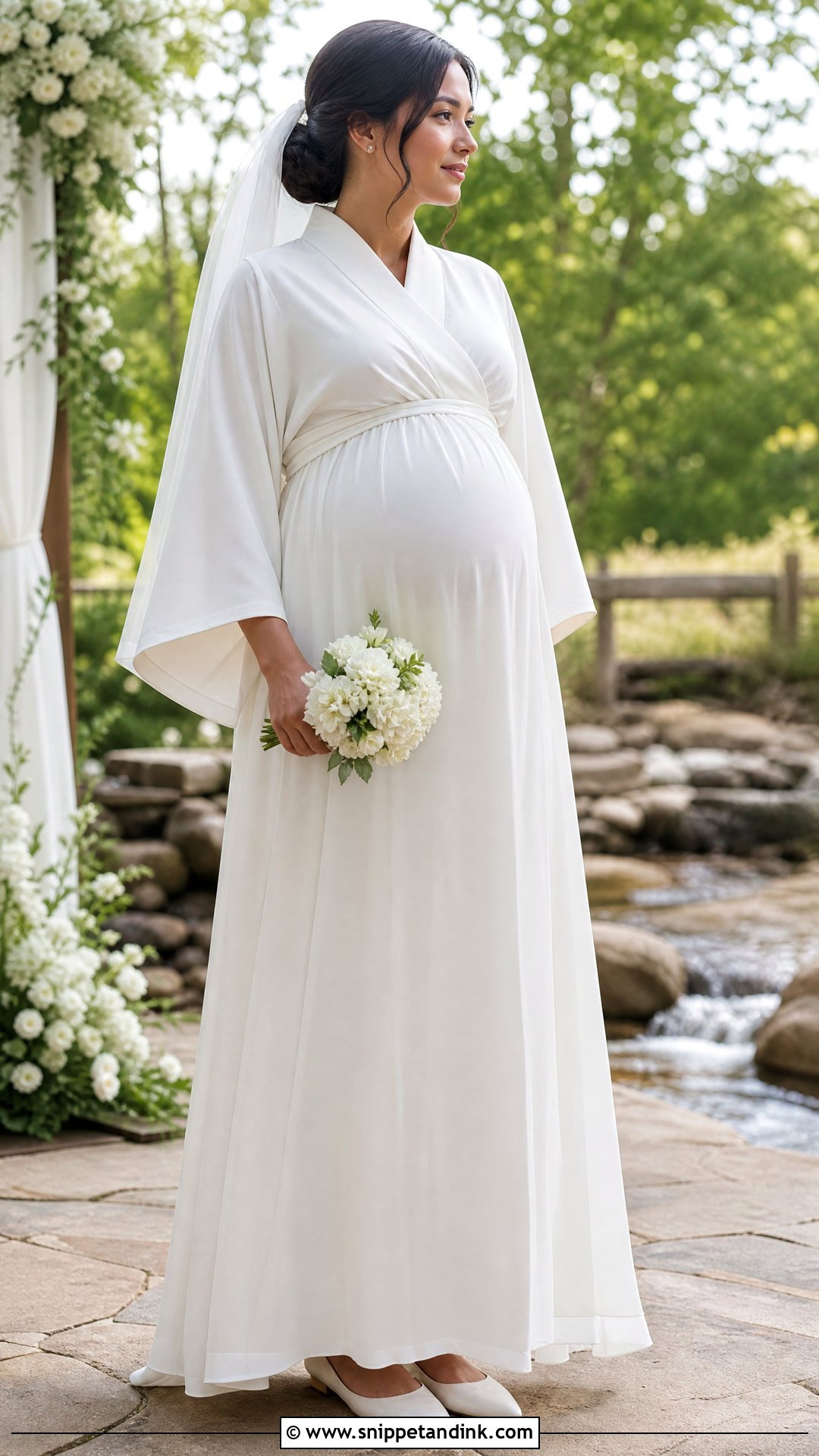
For a pregnant bride, a wrap gown is one of the easiest shapes to adapt, because the crossover can be adjusted as the bump grows. An empire waist above the bump, a soft neckline and breathable crepe or chiffon keep it comfortable. Elbow-length sleeves give coverage without weight. Secure the wrap with hidden fasteners rather than trusting a sash, which loosens over a long day. Low block heels or flats, a light veil and a compact bouquet make the hours easier. Book the final fitting as close to the date as your tailor allows.
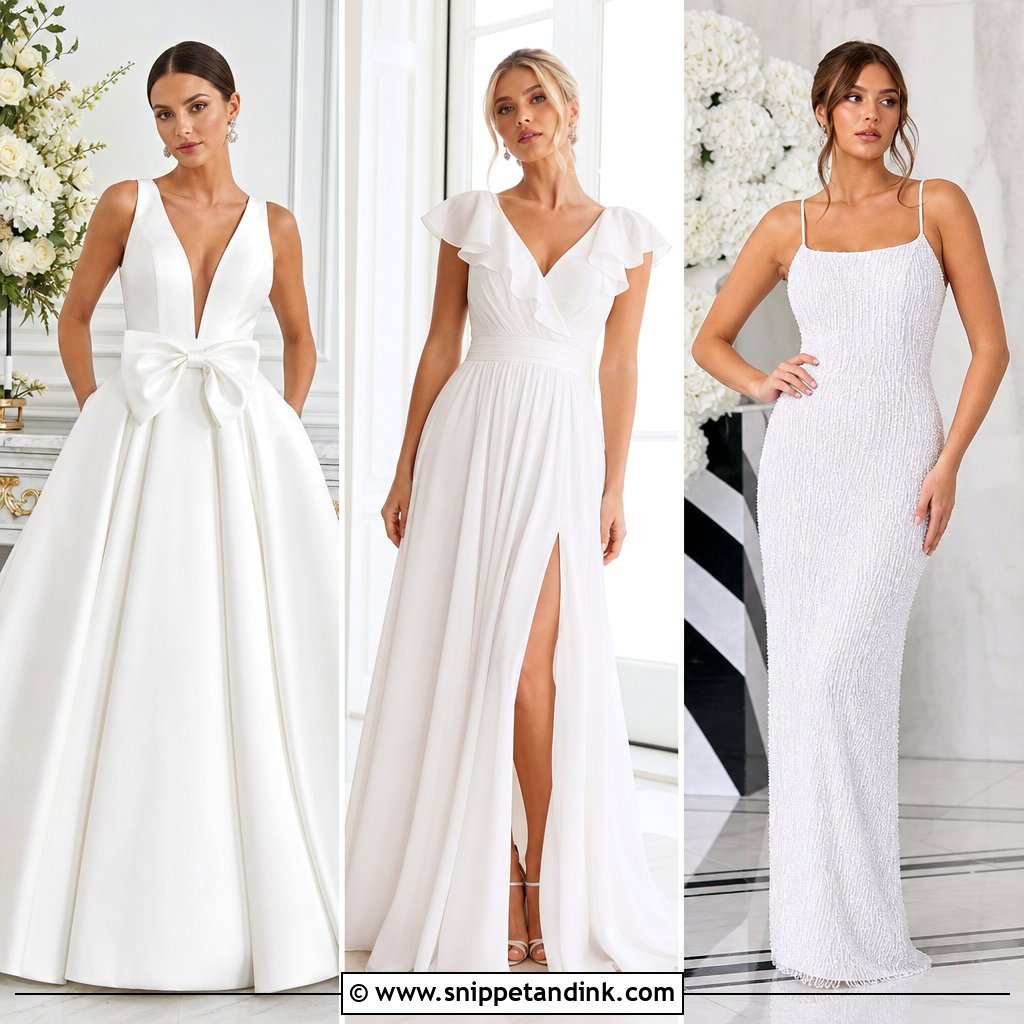
25. Detachable Kimono Robe Wedding Dress
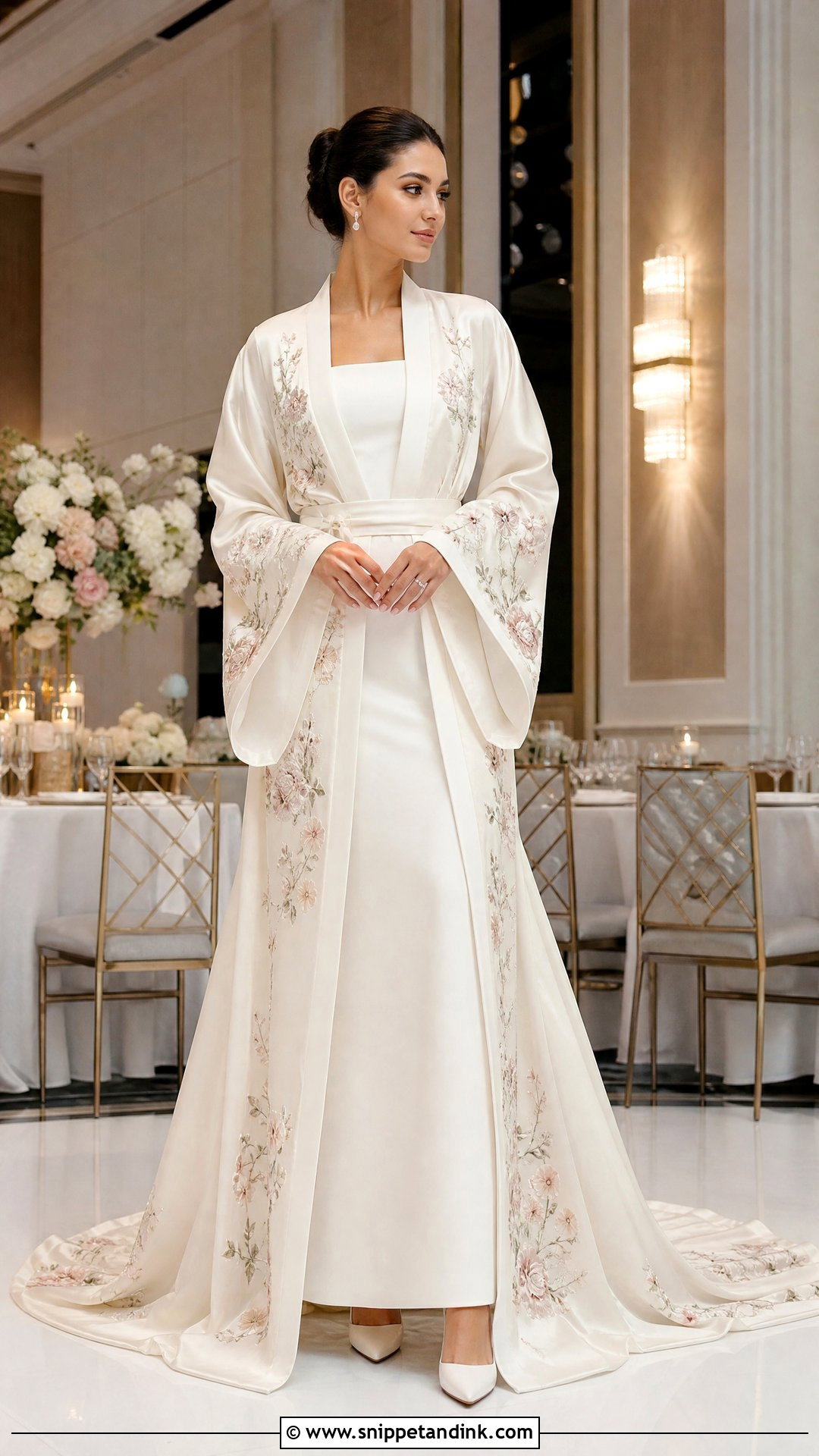
One dress, two looks: a detachable kimono robe layered over a simple ivory column, slip or A-line gown for the ceremony, then removed for the reception. Choose a robe whose white or ivory matches the dress undertone, because a cool white robe over a warm ivory gown looks dingy beside it. Floral silk or jacquard makes the outer layer memorable. For the reception, add a hair accessory or bolder earrings to freshen the base dress. If the robe is an authentic Japanese uchikake, which is traditionally a formal outer bridal robe, don’t alter it; ask a kimono dresser how to wear it as it is.
How an Hour With the Kimono Dresser Actually Goes
Dressing a bride in full traditional layers takes a specialist roughly an hour, sometimes longer with hair and the headpiece, so it has to sit near the top of the morning schedule. The base goes on first: a thin cotton underrobe and padding, often small towels tied at the waist, to flatten curves into the straight column a kimono is designed for. Then the kakeshita, the obi and finally the uchikake on top.
Wear a front-opening top to the appointment so your hair and makeup survive the change. Eat beforehand and keep drinks small afterward; the obi binds the waist firmly, and a big meal is uncomfortable once you’re dressed. A bathroom trip is possible, but it needs a helper to hold the layers.
Moving in the robe
- Take short steps from the knee. A padded hem won’t allow a normal stride.
- Hold the front edge of the uchikake lightly with your left hand when you walk, so you don’t step on it.
- Sit only on the front third of a chair, and let the dresser lift the hem behind you first.
- On stairs, ask for a hand. It feels slow, and it is meant to.
For a modern kimono-sleeve gown, none of this applies, but a lighter version does: practice eating and hugging in the sleeves at the last fitting, and ask the tailor for a wrist loop if the sleeves are long.
Respect the Garment and Let It Carry the Day
Kimono bridalwear ranges from a culturally authentic shiromuku to an ornate iro-uchikake to a contemporary gown shaped by a wide sleeve and a wrap. Whichever you wear, think about the whole outfit: fabric weight, fitting, footwear, hair ornaments, underlayers and how hot the venue will be. Traditional garments deserve an experienced kimono dresser and informed, respectful styling. Modern versions need careful tailoring so the neckline and sleeves stay put through hours of hugging and dancing. Get those right and the kimono feels like yours rather than a costume.
You'll Like These Ideas:


Leave a Reply