
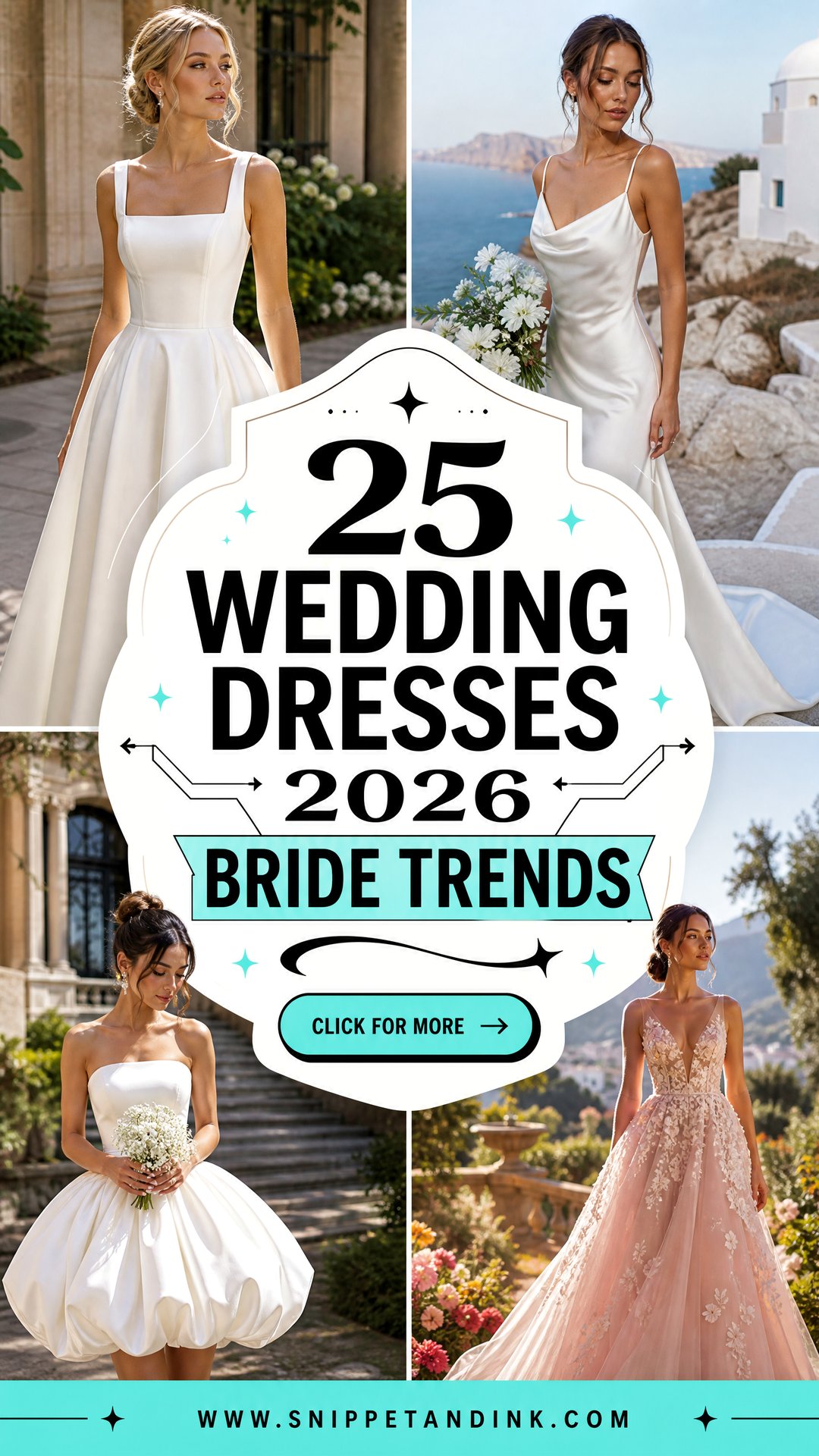
The gowns coming through for 2026 are more varied than I’ve seen in years: sculpted corsetry next to bias-cut slips, bubble hems next to cathedral-length lace, and a lot of pieces that come off halfway through the night. Removable sleeves, overskirts, capes and scarves mean one dress can now do the work of two. That freedom is great, but it also makes it easy to fall for a trend that fights your venue or your season. So before the list, I’ve put down how I match fabric to the month you’re marrying in, and further on, what has to go underneath each shape and what to read on the order form.
Matching the Fabric to the Month You Marry
Silhouette gets all the attention, but fabric decides how you feel at hour eight. I ask every bride for her date and her venue before she tries anything on, because the same shape in two fabrics can be a delight or a sweat box.
Warm months and outdoor ceremonies
Chiffon, organza, light tulle and crepe breathe best. Silk crepe is cooler than polyester crepe, but it also creases more. Heavy satin and mikado hold heat, and a fully boned bodice adds another layer against the skin. If you love structure in July, ask for a lighter lining or a shorter train so you’re not dragging extra fabric over hot ground.
Cold months and big rooms
Mikado, duchess satin and heavy crepe hold their shape and make sense of a grand staircase. Long sleeves and high necks finally feel practical. Lace looks warm but isn’t, so a lace gown in winter often needs a cover-up for outdoor photos: a faux fur stole, a cape or a cropped jacket.
One more check: how does it crease? Squeeze a corner of the fabric in your fist for ten seconds. If it stays crumpled, it will look the same after the car ride, and you’ll want a steamer at the venue.
1. Lace Wedding Dress
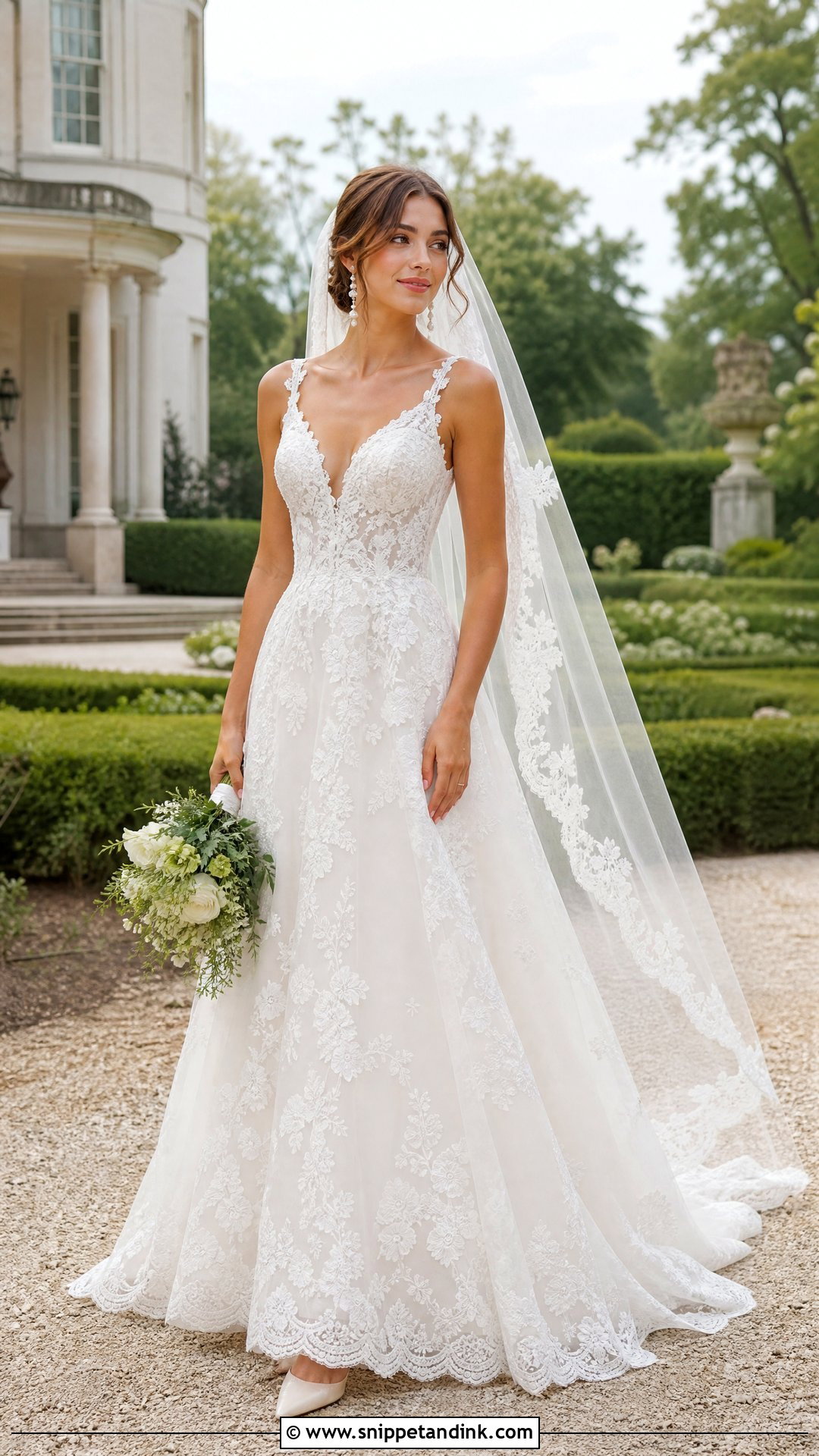
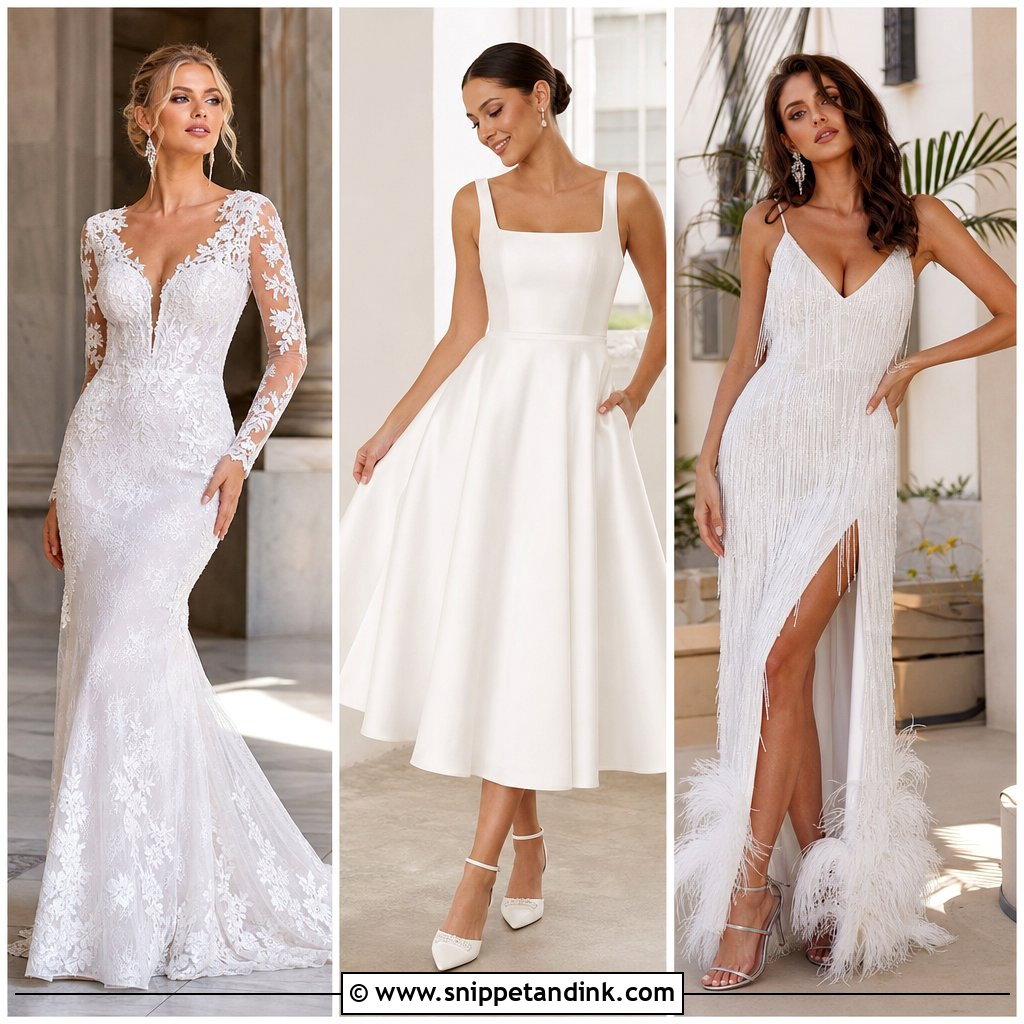
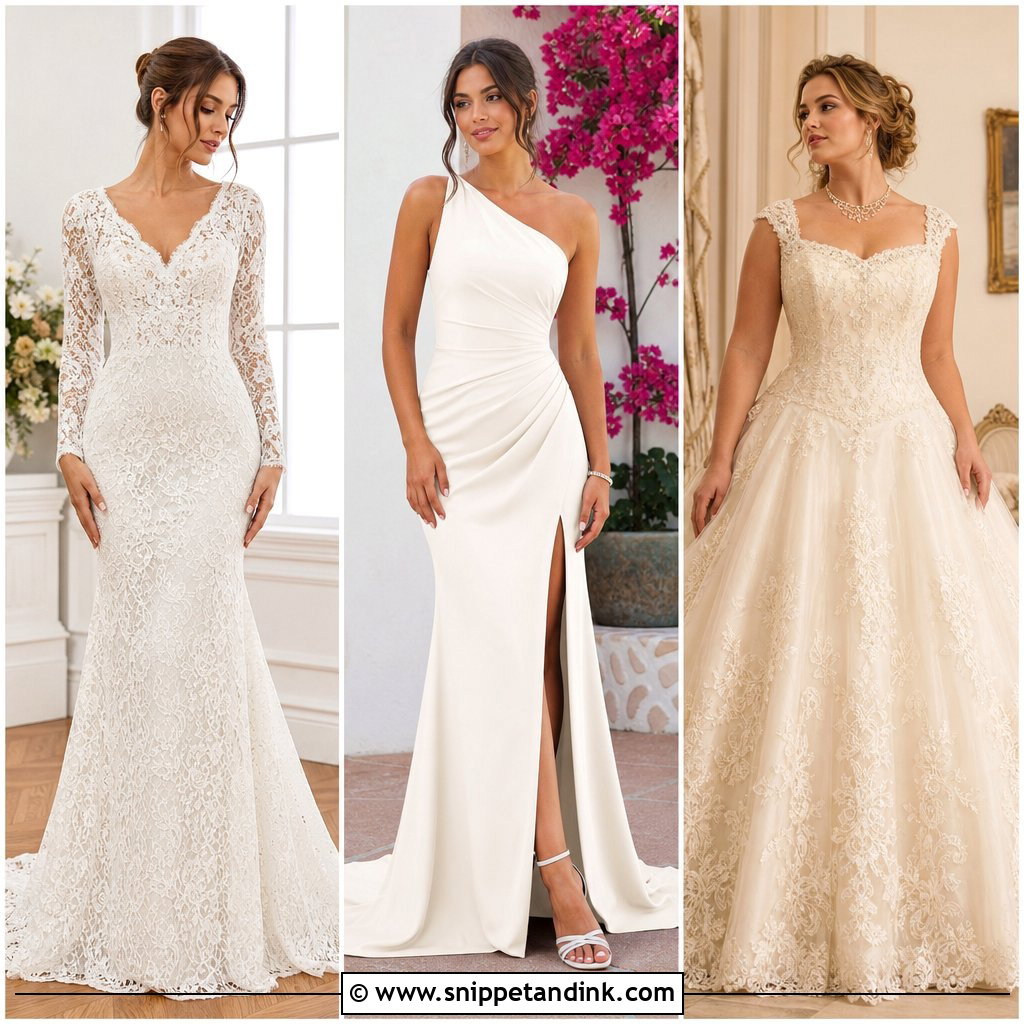
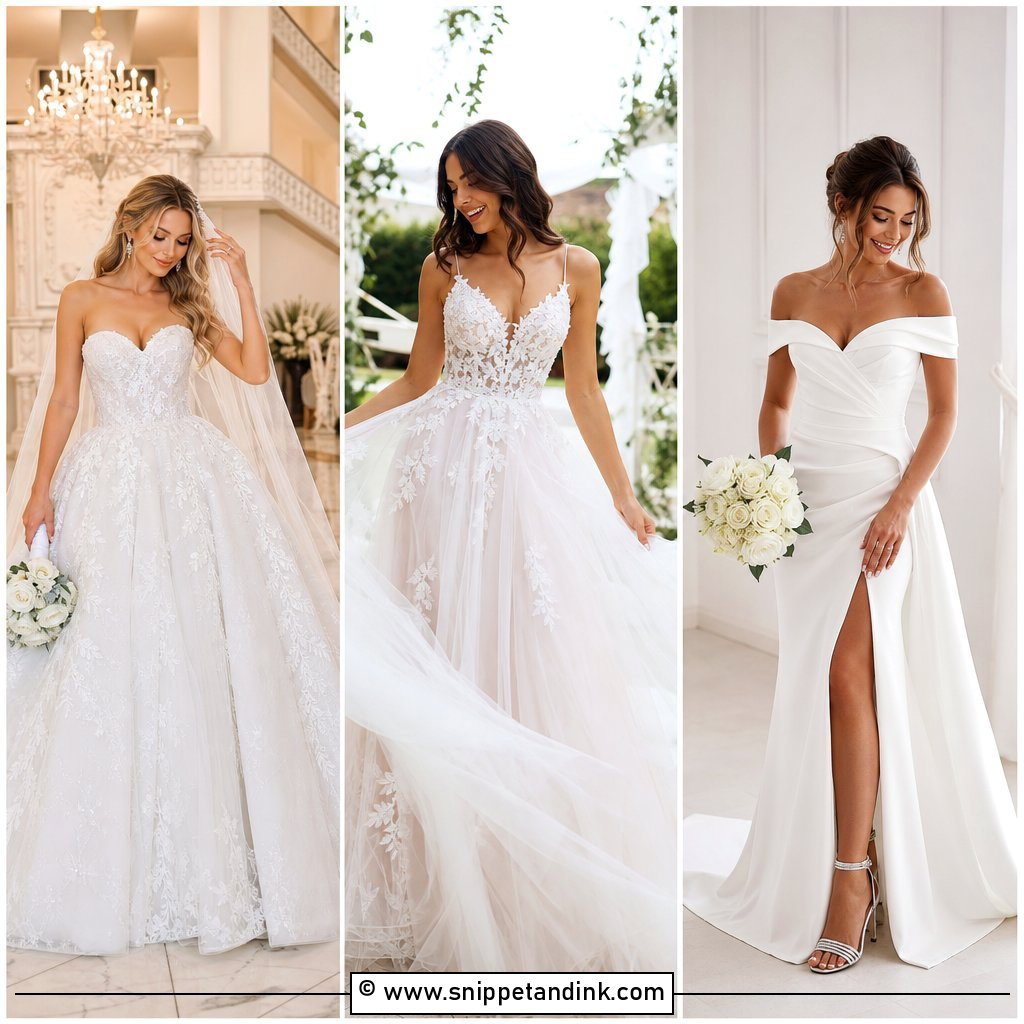
Lace is where 2026 gets bolder: bigger floral motifs, corded edges that stand slightly proud of the tulle, and layered lace that throws shadows in photos. An A-line with a fitted lace bodice is the easiest way in. The detail I fuss over is the veil edge. If the dress has heavy lace, a sheer fingertip veil with a narrow matching trim looks considered; an unrelated lace pattern on the veil looks like two different weddings. Pearl drops and pointed ivory pumps, no necklace if the neckline is embroidered, and a low bun or loose waves. Want more coverage? Lined panels, long lace sleeves or a higher neck all keep the romance.
2. Basque Waist Wedding Dress
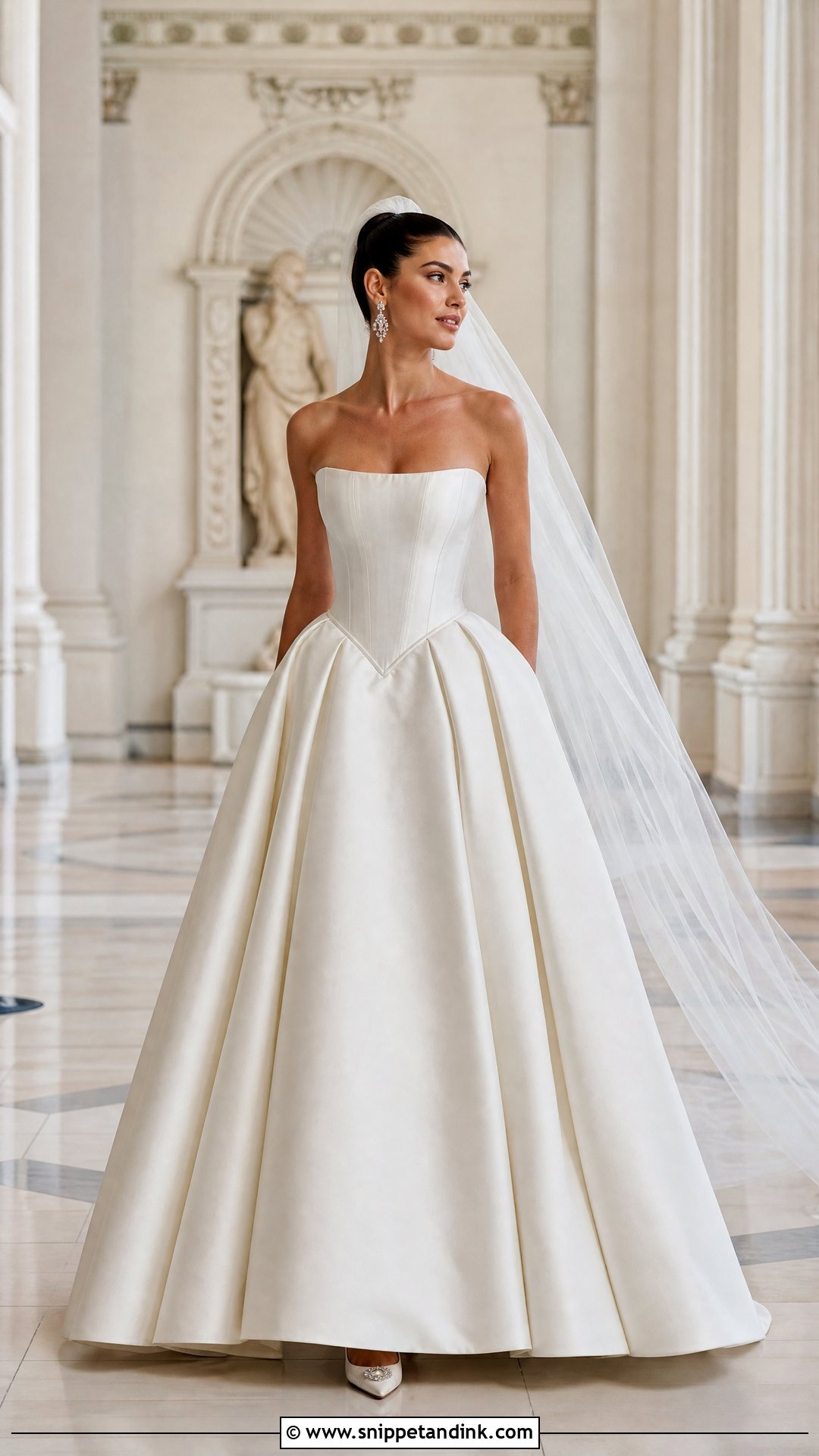
A basque waist wedding dress points down below the natural waist and then opens into the skirt, which is what gives that long, defined torso. Clean fabric keeps it from looking like a period costume. Look for real internal boning and a skirt in satin, mikado or soft tulle. In a ballroom or a grand hotel it holds its own. I keep the styling to a smooth cathedral veil, small crystal earrings and closed-toe heels, because the waist point is the feature. At fittings, sit down and raise both arms. If the point of the basque digs into your thighs when seated, it needs shortening.
3. Drop Waist Wedding Dress
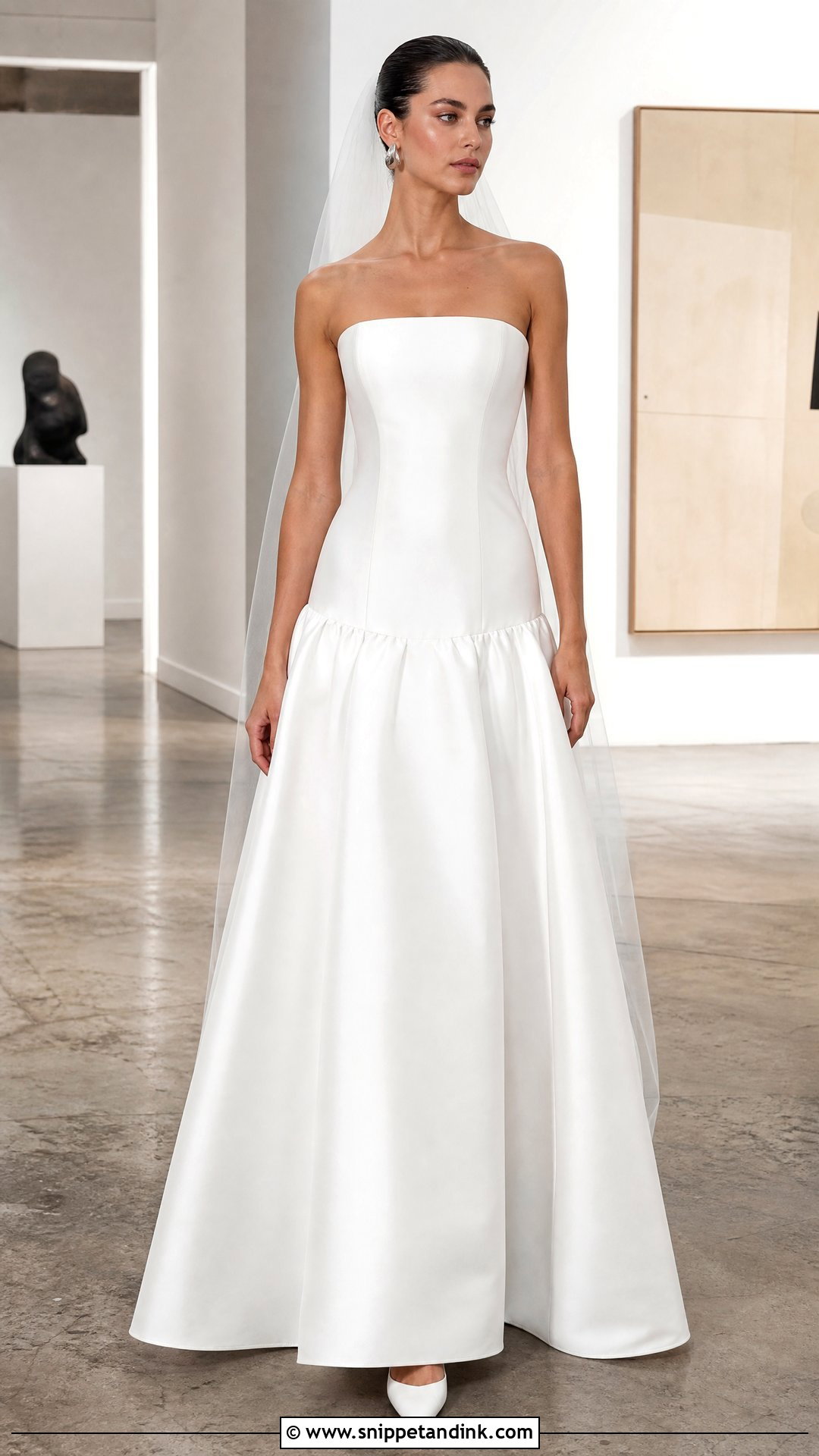
Here the bodice keeps going past your waist before the skirt releases, and that runway line depends entirely on where the drop sits on your body. A few centimetres too low and the skirt starts at the widest part of the hip. Ask the fitter to pin the seam while you stand naturally, not sucked in. Satin or mikado sharpens the architecture; lace and tulle soften it. A simple veil set below a polished bun, sculptural earrings and sleek pointed pumps are plenty. Trailing greenery in the bouquet gives a nice contrast to all those straight lines.
4. Strapless Ball Gown Wedding Dress
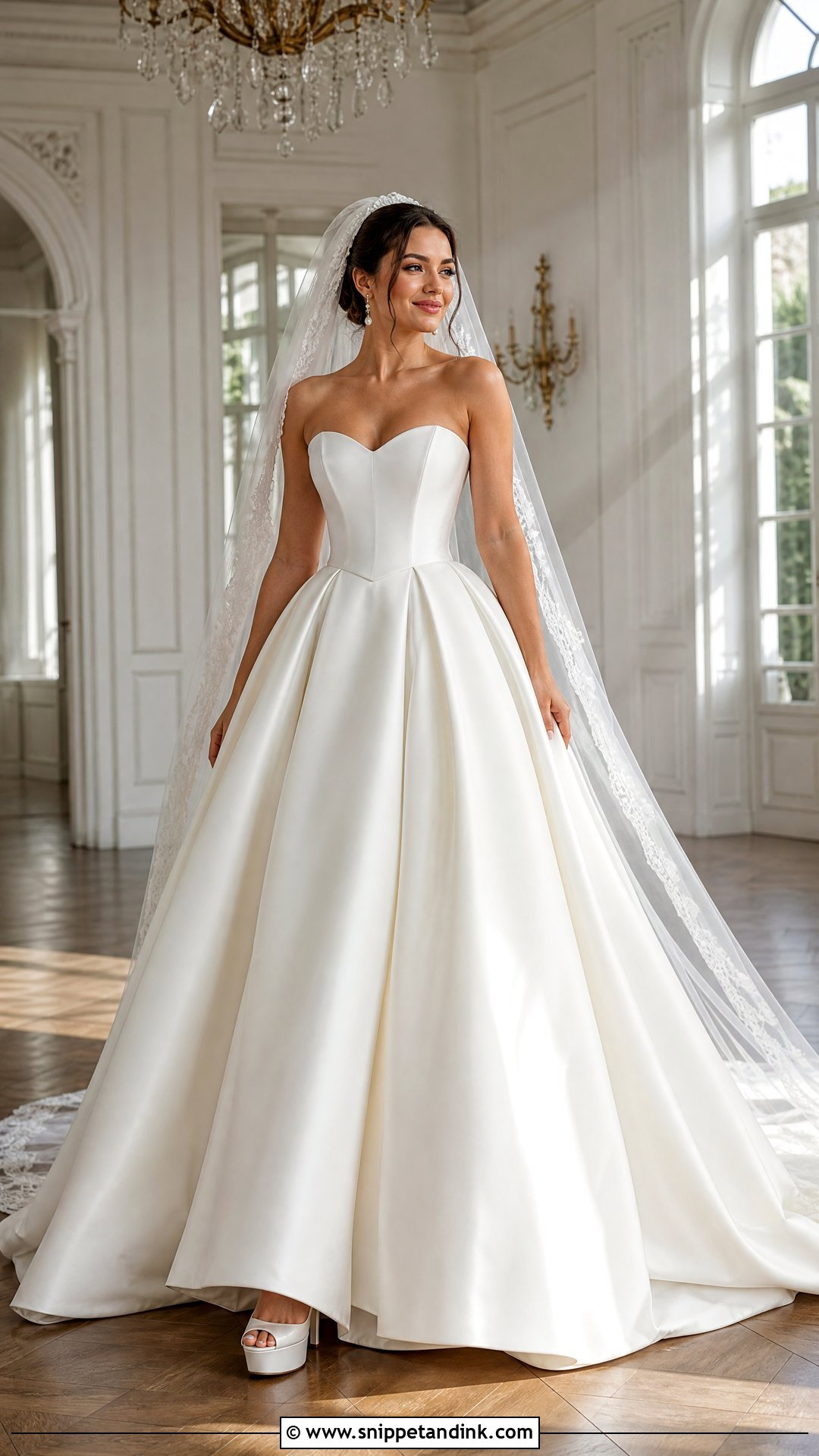
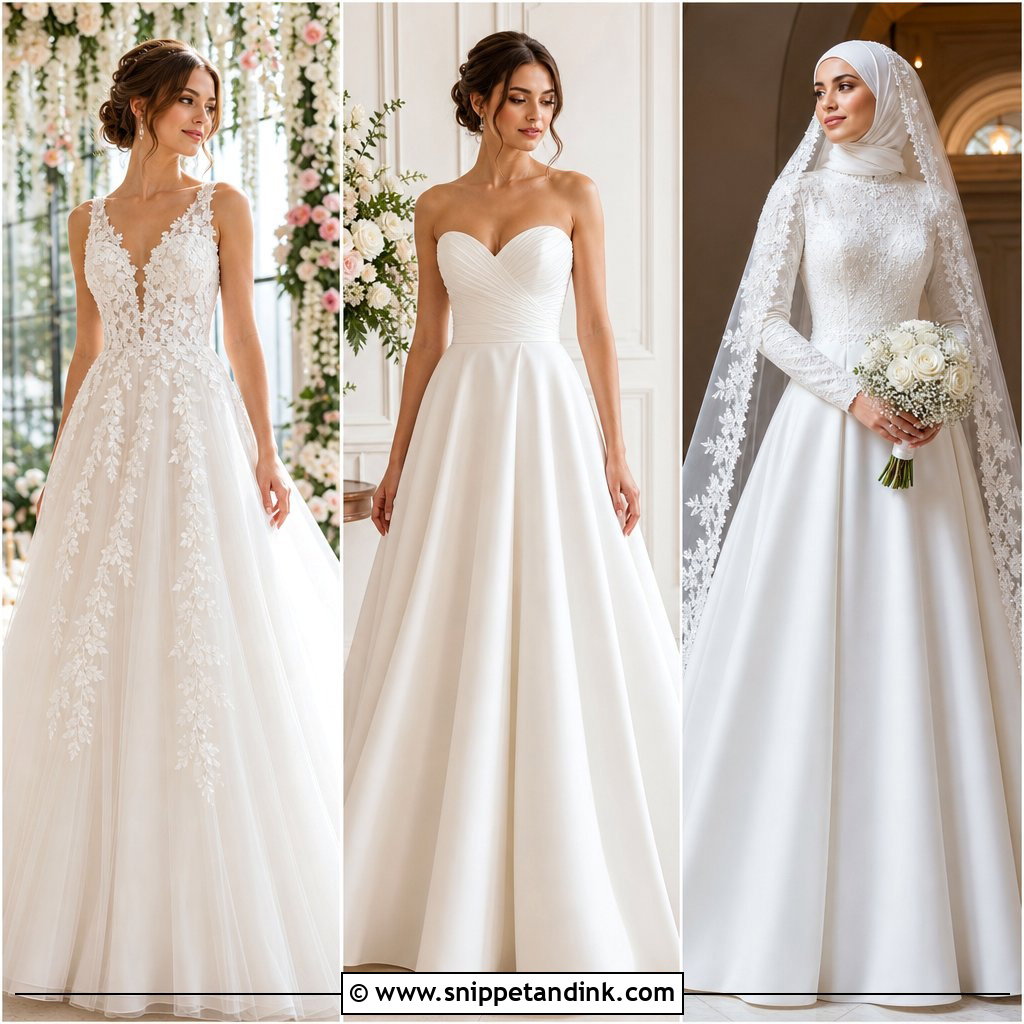
Few shapes say bride faster than a strapless ball gown. The modern version is plain ivory satin, a softly curved neckline and precise seaming, with almost no embellishment. Wear a cathedral veil for the ceremony and take it off for the reception to show pearl earrings and a polished updo. Platform heels under the skirt give height and are steadier than stilettos on a full hem. Two non-negotiables: the bodice needs strong internal structure so you’re not tugging it up all night, and the bustle should be agreed at the first fitting, because a heavy train can need several bustle points to hold.
5. Long Sleeve Wedding Dress
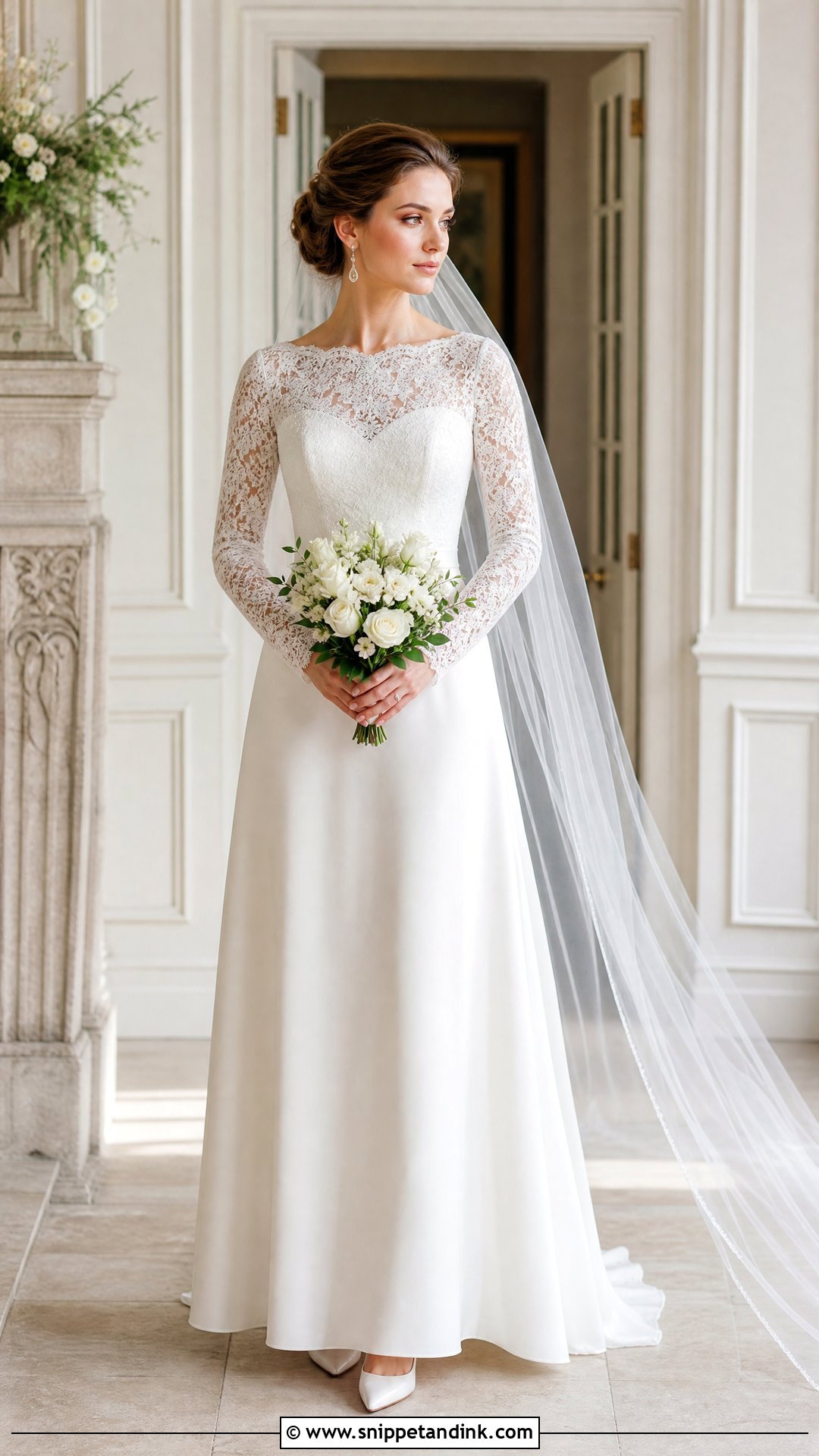
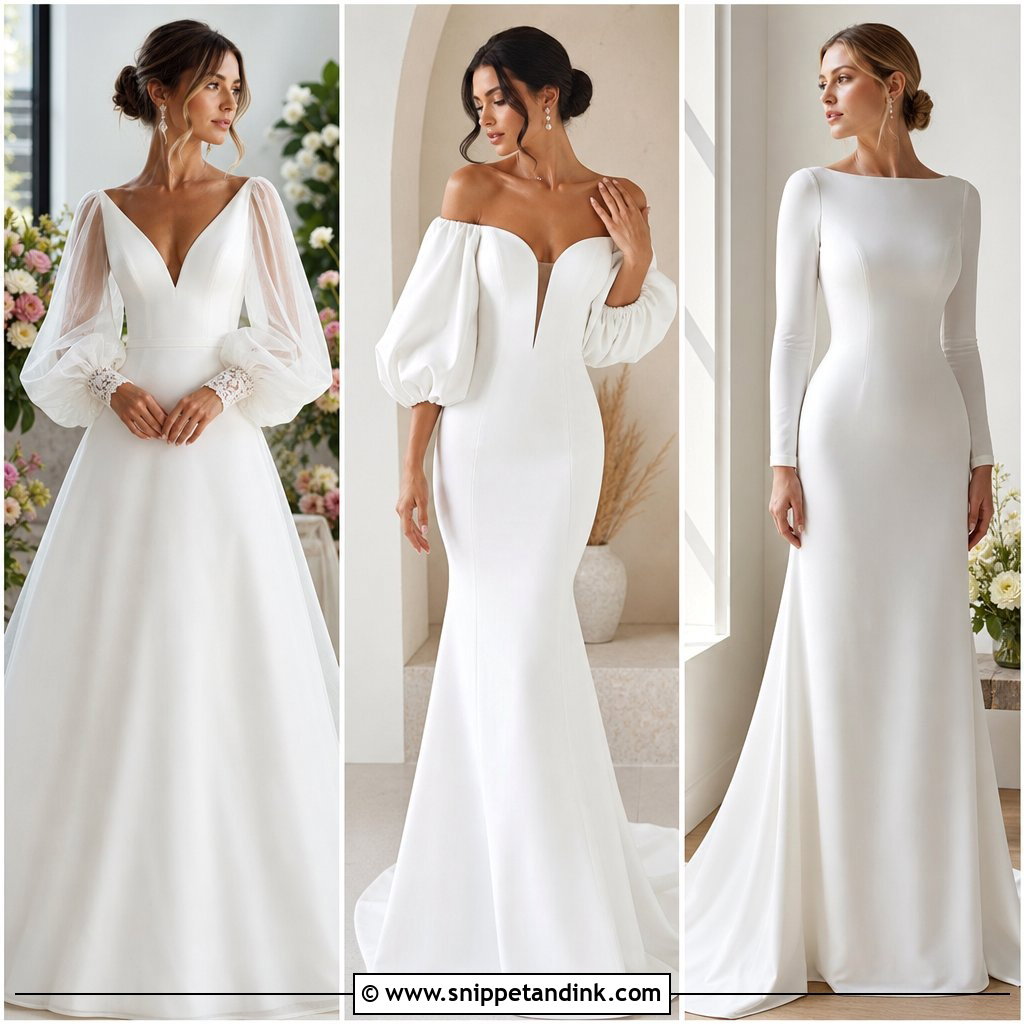
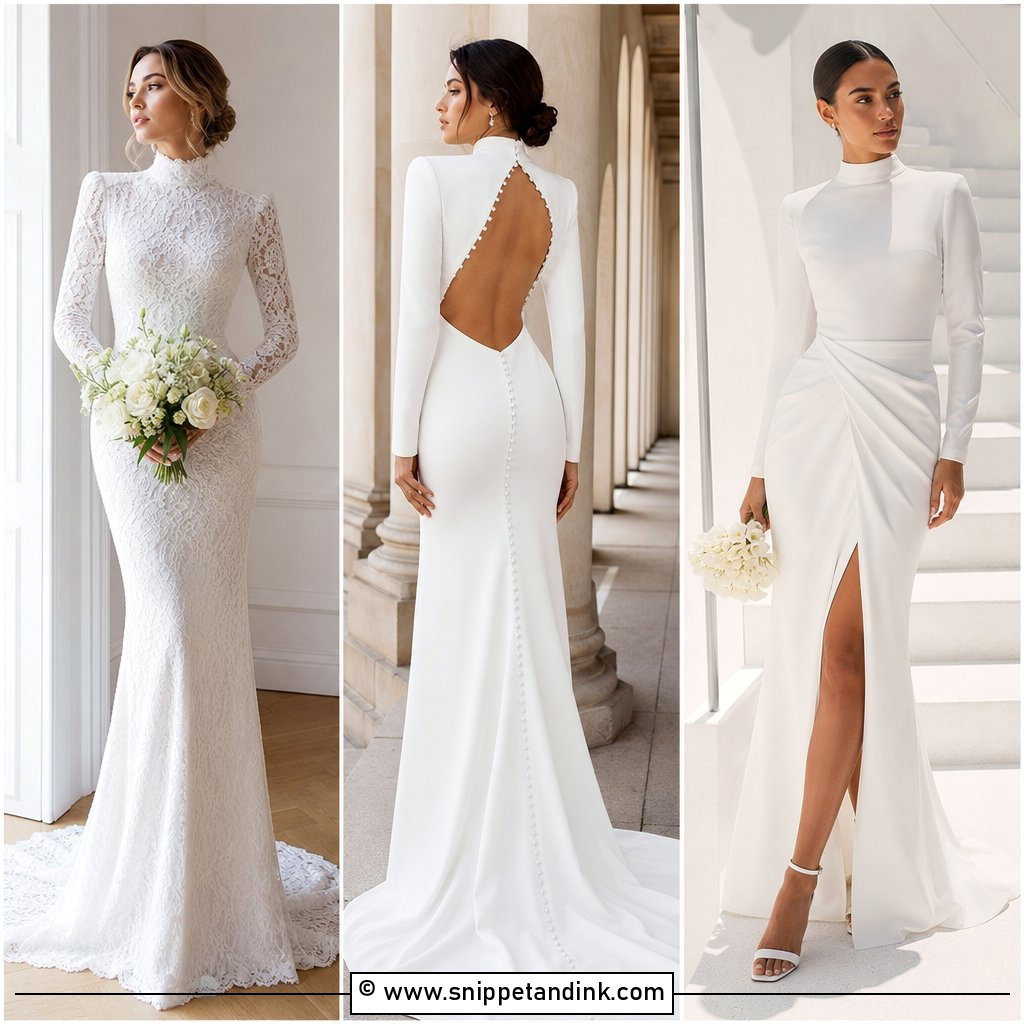
Sleeves decide the mood: sheer lace reads romantic, fitted crepe reads clean and modern. This is a fall-to-early-spring dress, though lightweight illusion sleeves can handle a mild summer day. Keep the veil narrow enough that it doesn’t hide the sleeve detail, and if the neckline is high, skip the necklace in favour of earrings or a hair comb. The test I insist on: lift your arms as if to hug someone tall. Fitted sleeves with no stretch can pull the whole bodice up, and you’ll notice it every time you reach for a glass.
6. Square Neck Wedding Dress
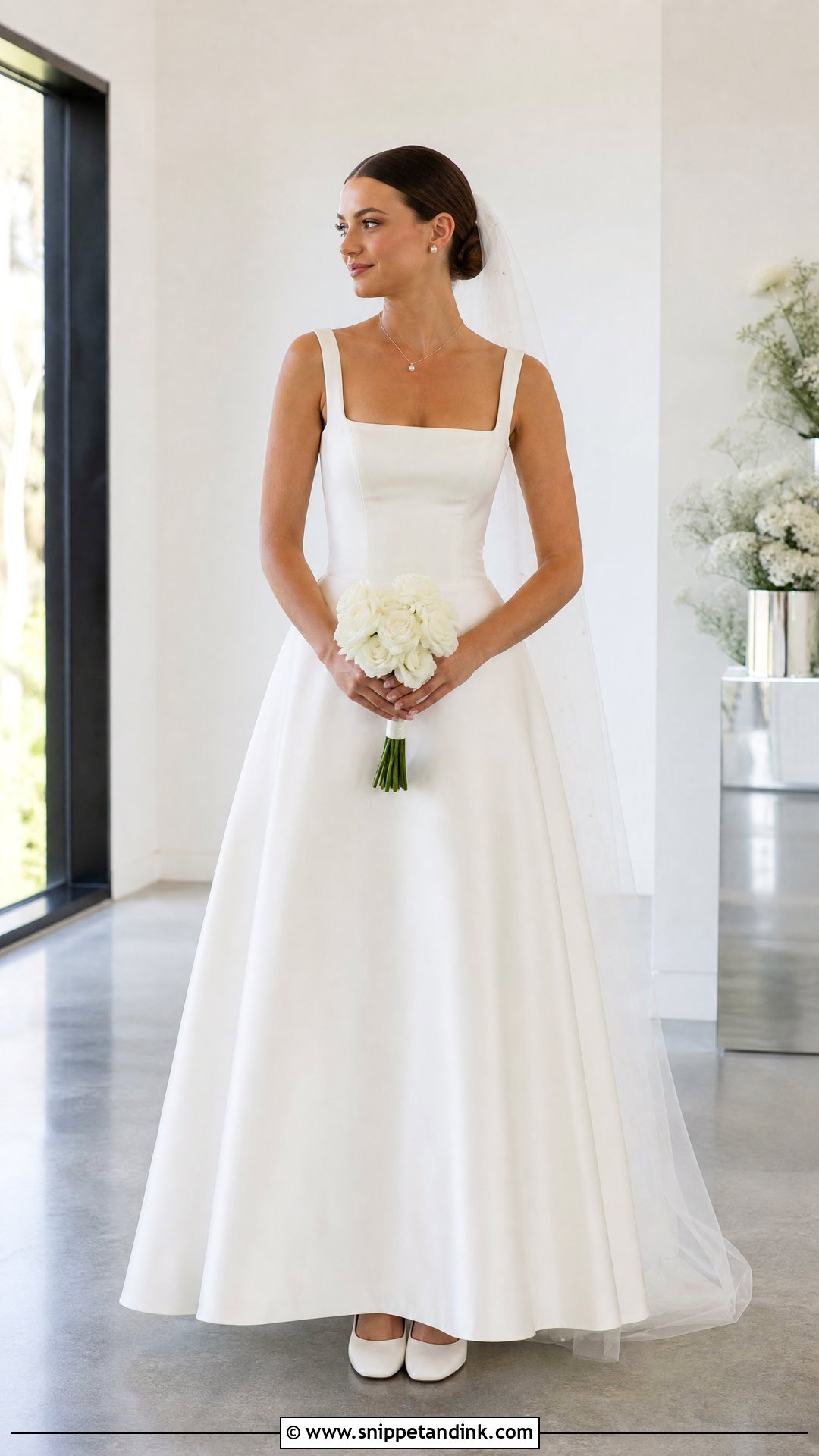
Square necklines are adaptable. Heavy satin makes them regal, lace makes them romantic, fluid crepe makes them relaxed. The wide straps are a practical bonus, because they hide a regular bra strap far better than spaghetti straps do. I’d pair it with a fine pendant that sits inside the square, pearl studs, a low chignon and block-heel pumps. A soft tulle veil keeps the neckline visible. Check in the mirror that the edge stays flat when you lean forward; a square that gapes when you bend is a fitting issue, not a design one.
7. Off The Shoulder Wedding Dress
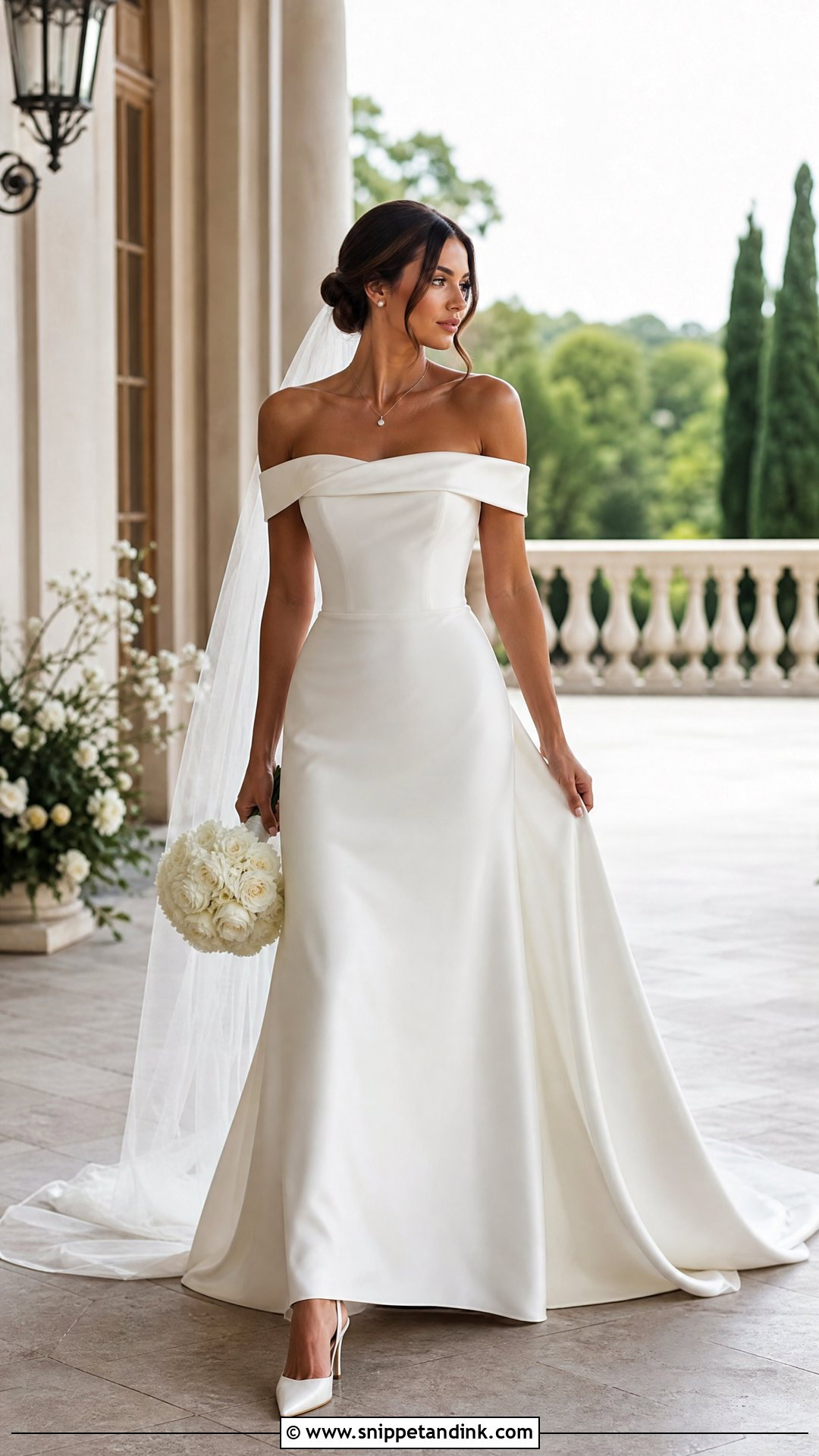
An off the shoulder neckline is all about where the band sits on your upper arm. Folded satin bands are sculptural; lace or tulle sleeves are softer. Pair an A-line or ball gown skirt for formal celebrations, or fitted crepe for a smaller room. A delicate necklace, pearl earrings, a low bun and ivory slingbacks finish it. Put the veil comb beneath the hairstyle so the tulle falls behind the shoulders rather than bunching on them. The downside is movement: you won’t lift your arms much above chest height. Removable off-the-shoulder straps solve that before the dancing starts.
8. Corset Wedding Dress
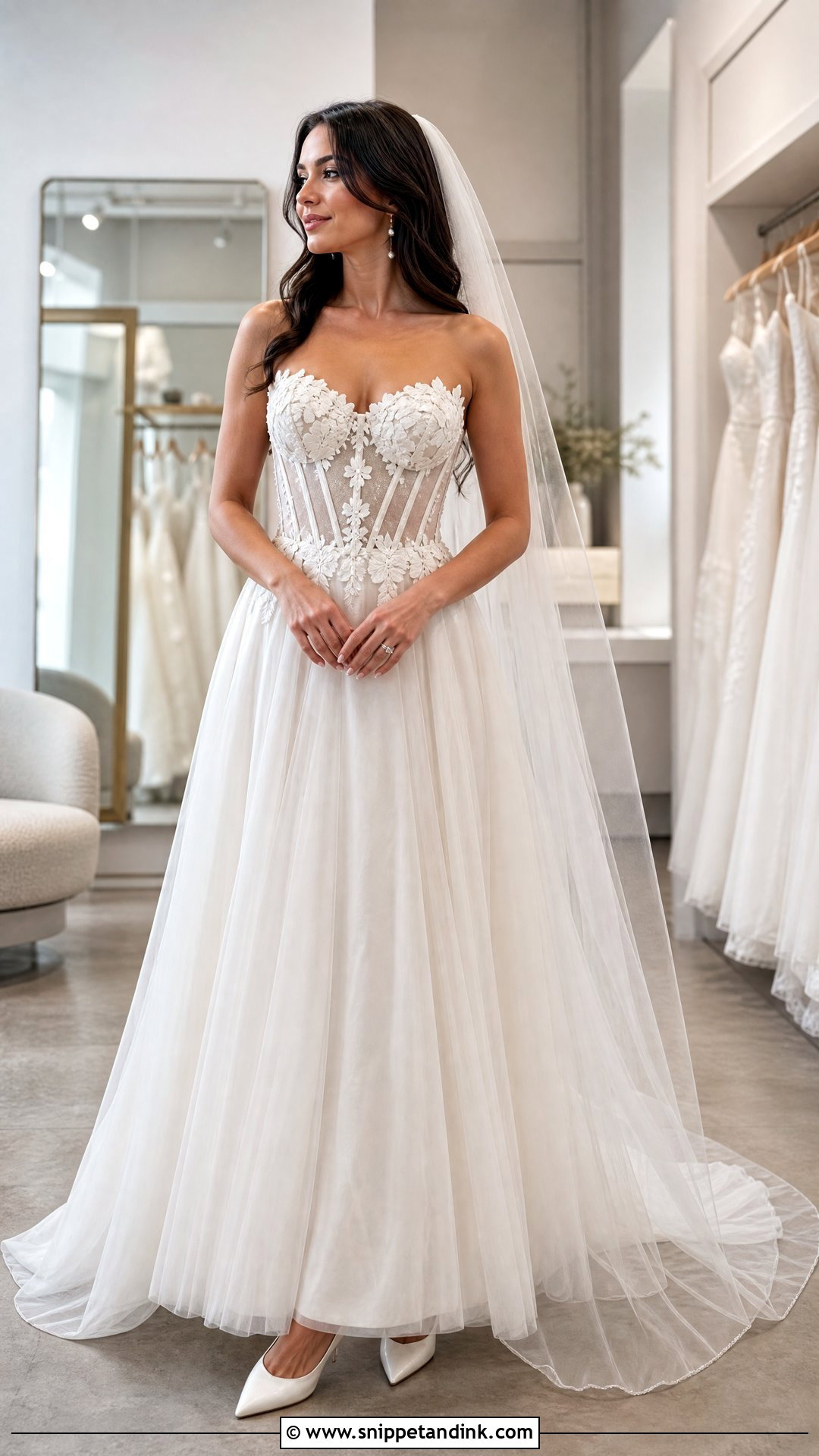
A corset dress should hold you up, not squeeze you in. Exposed boning, curved seams and lace-up backs can read modern, romantic or vintage depending on fabric. Either pair the detailed corset with a clean satin skirt, or carry the appliqué down onto a light tulle skirt for a softer join. Understated earrings, a sheer chapel veil and pointed pumps. Hair up shows off the construction; loose waves relax it. A lace-up back is useful because it gives a little adjustment on the day if your body changes between final fitting and wedding. Make sure you can breathe deeply and eat a full meal in it.
9. Satin A Line Wedding Dress
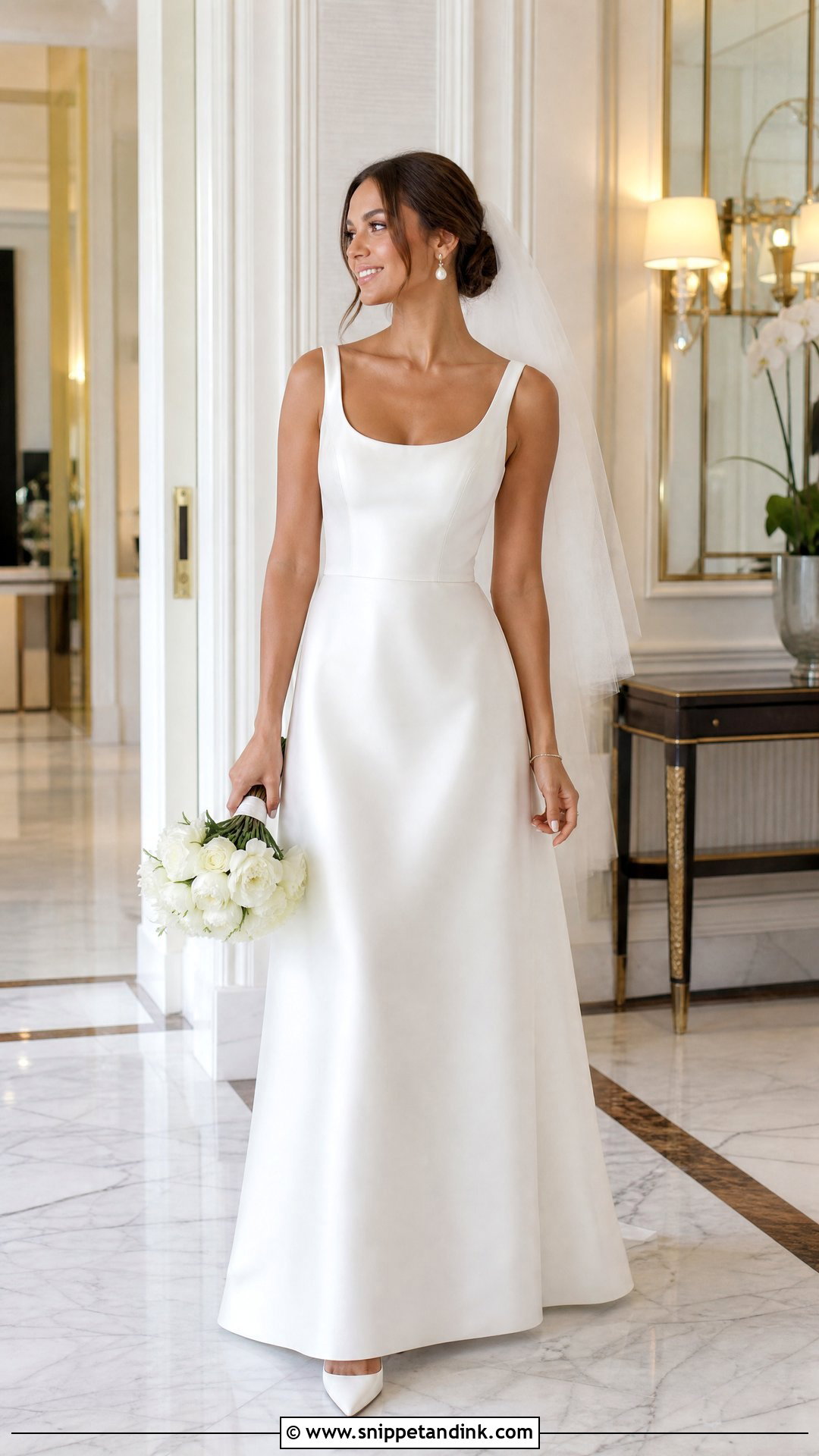
Satin A-lines are quiet dresses with real presence. The fitted top and gradual skirt suit a twenty-person ceremony and a big ballroom equally well. Matte satin is understated; a high-sheen finish looks richer but shows every crease, so think about how long you’ll be sitting in a car. A scoop, square or soft V-neck personalises it. Pearl earrings, a smooth veil, low pointed heels and a compact bouquet are all it needs. Ask for a hidden French bustle, which tucks the train under so the skirt still looks clean after the ceremony.
10. Mermaid Wedding Dress
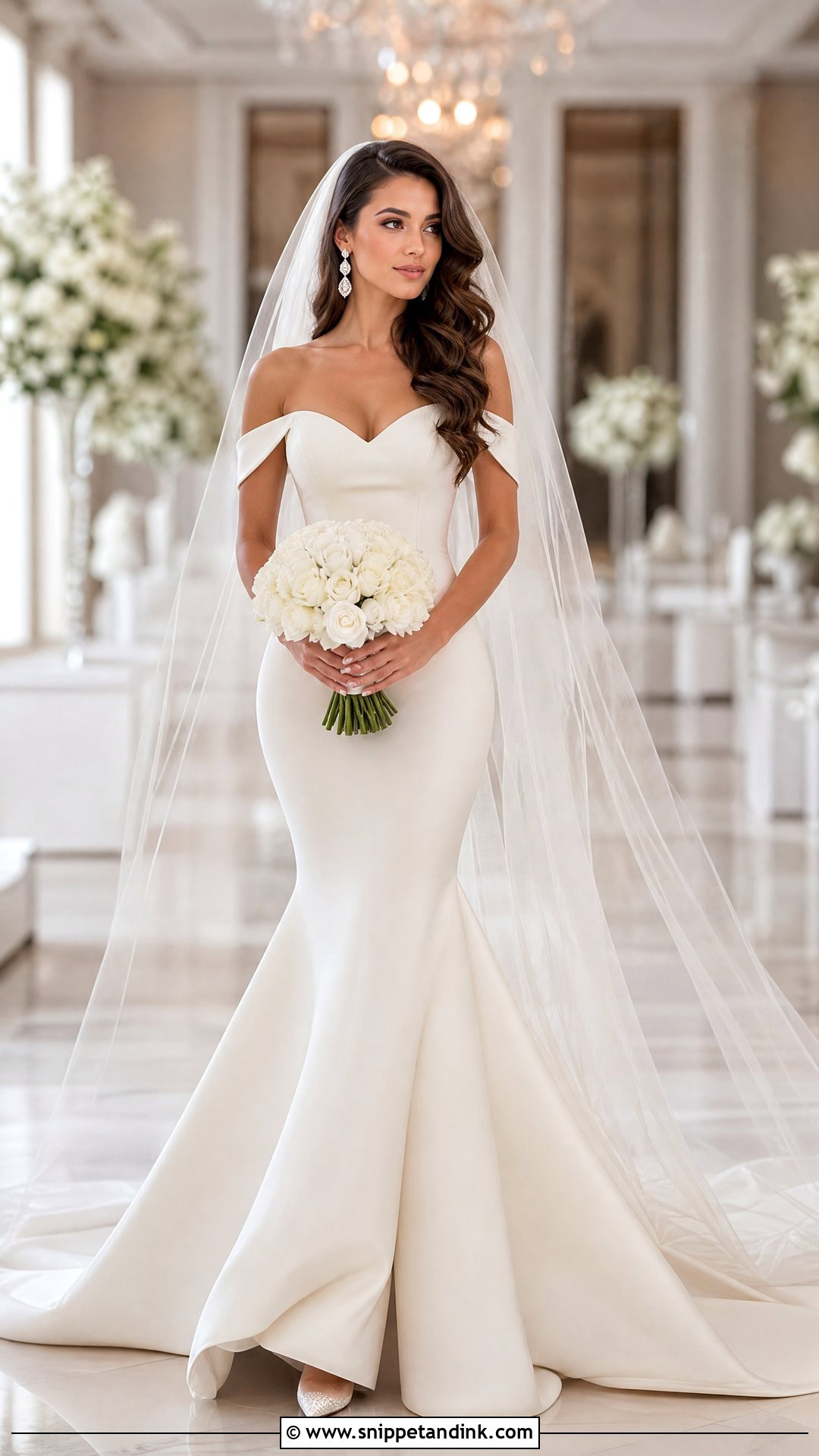
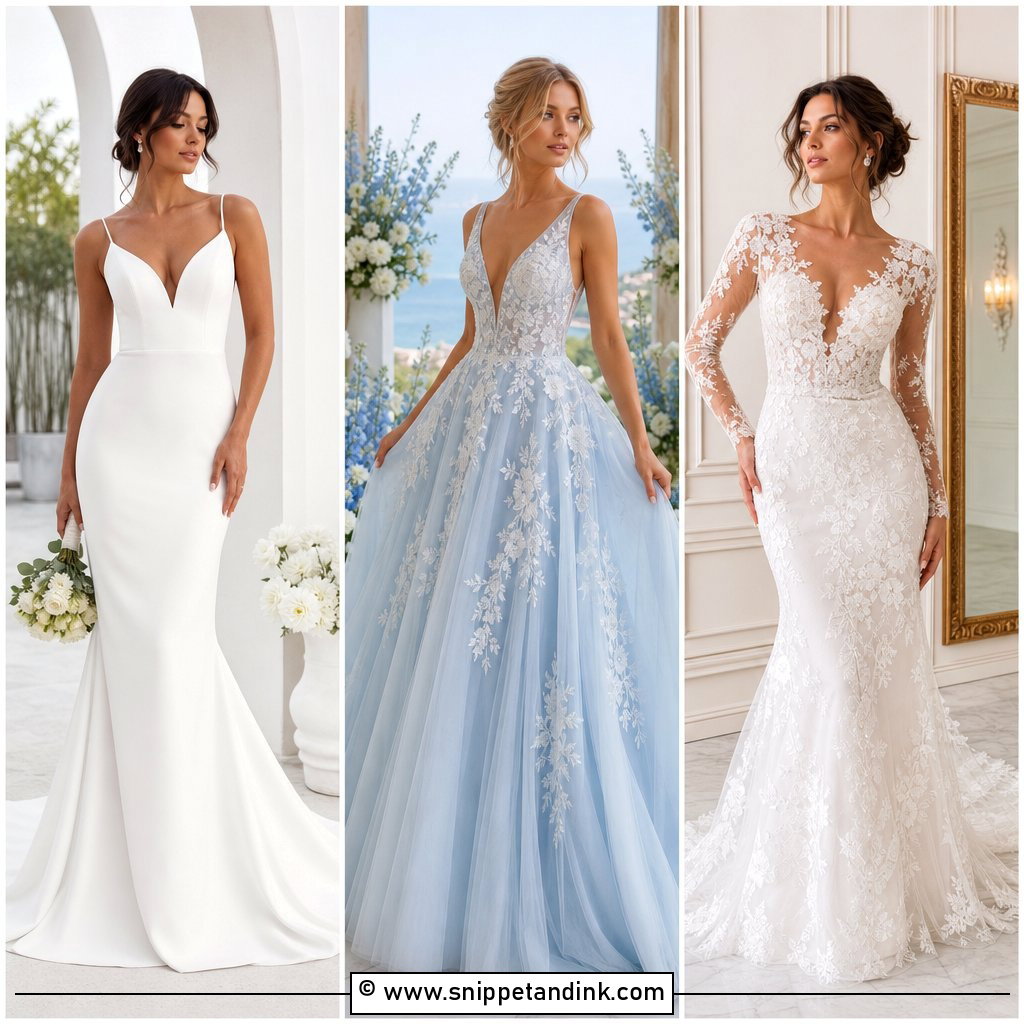
A mermaid follows you through bust, waist and hips before flaring low on the leg, and it’s at its best in formal indoor spaces. Crepe is smooth and refined; lace and beading add glamour. A long sheer veil, side-swept waves or a sleek bun, drop earrings and stable heels suit it. Alterations should follow how you move, not how you stand: walk, sit, climb a step and dance a few bars at every fitting. If you want ceremony volume too, add a removable overskirt and reveal the fitted shape at the reception.
11. Minimalist Slip Wedding Dress
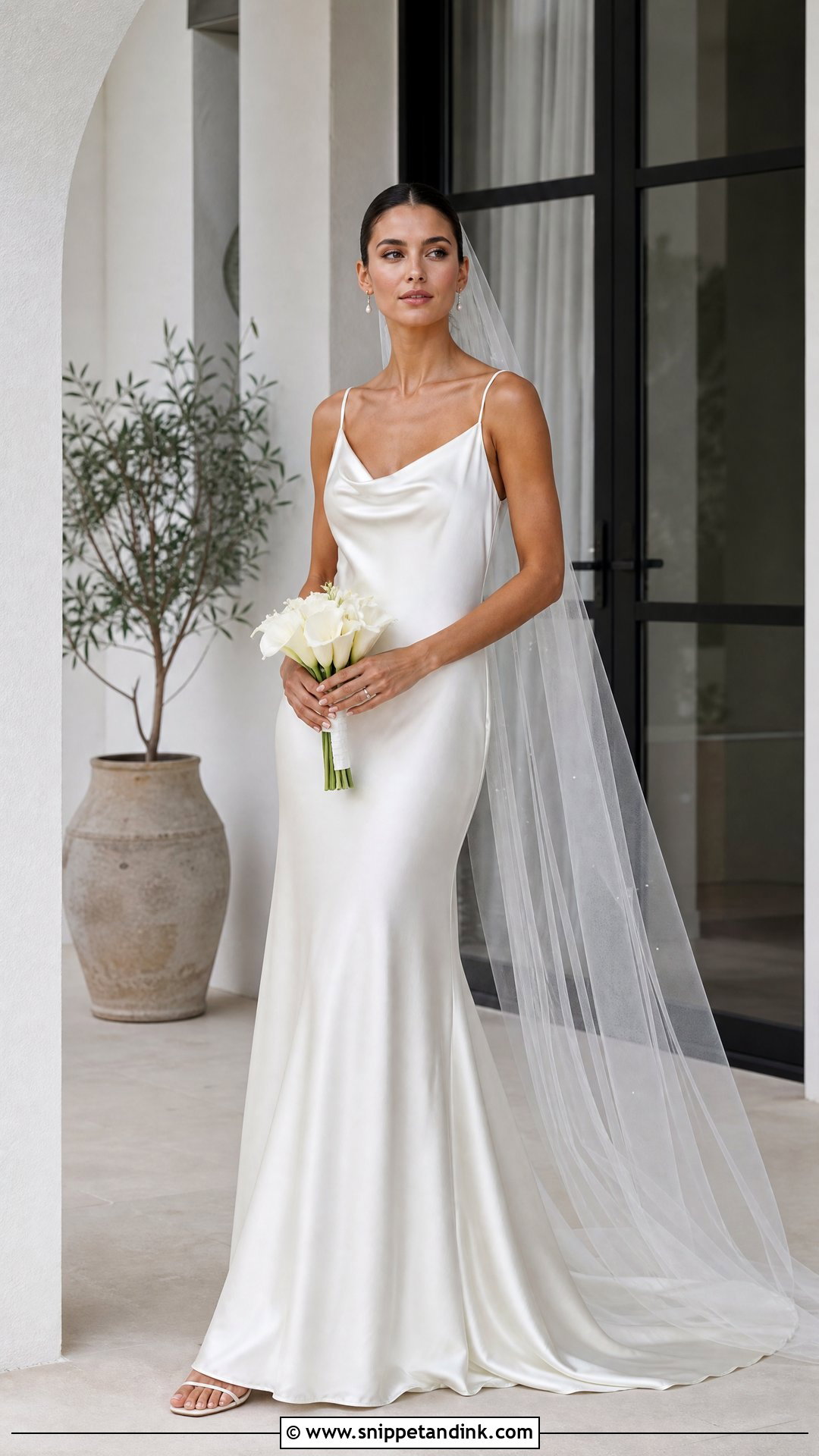
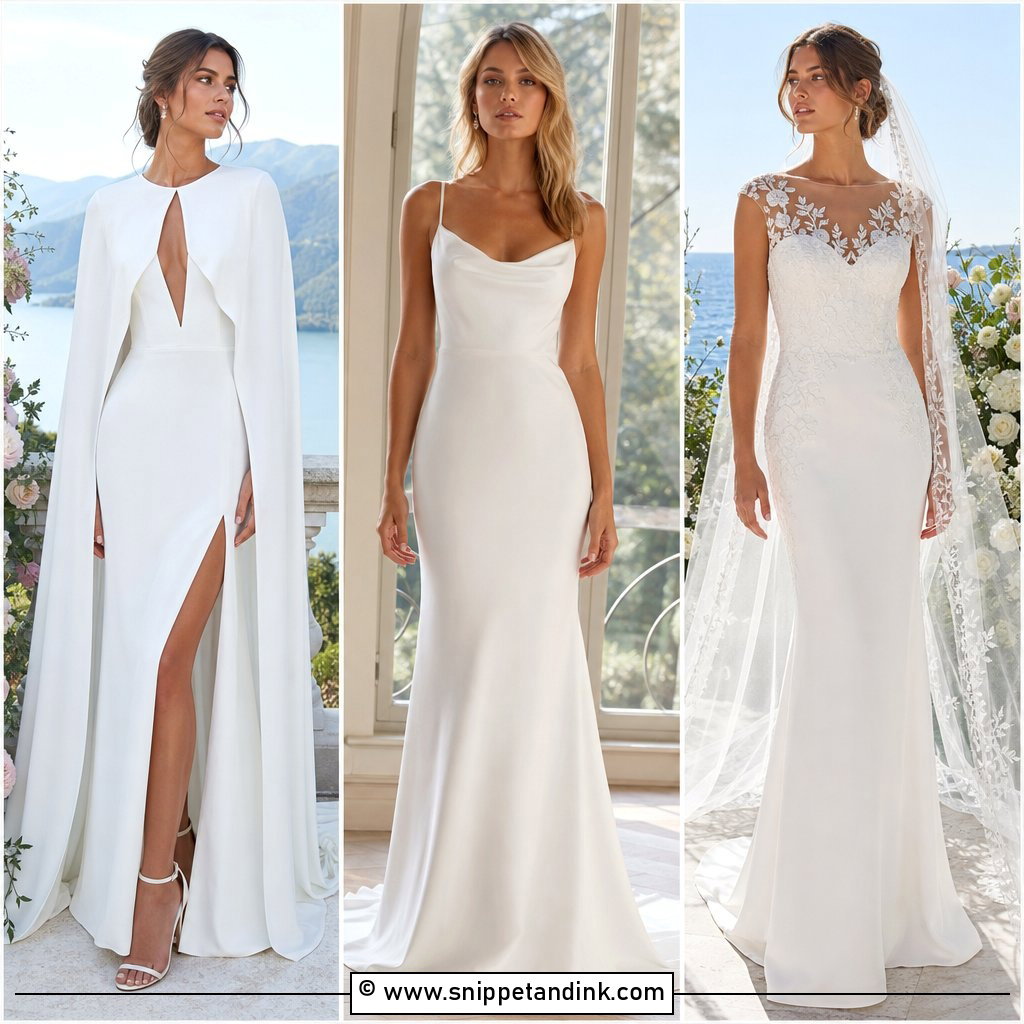
Slip dresses look simple and are surprisingly hard to wear well. Bias-cut satin or silk skims the body, and it shows every line underneath it, so I treat the undergarments as part of the dress. It suits city weddings, coastal venues and small celebrations. A softly draped neckline or clean V-neck, a long sheer veil for contrast, delicate earrings, a sleek bun, strappy ivory heels and a small structured bouquet. For a religious ceremony, a detachable cape or sheer overlay covers the shoulders without changing the dress.
12. Tea Length Wedding Dress
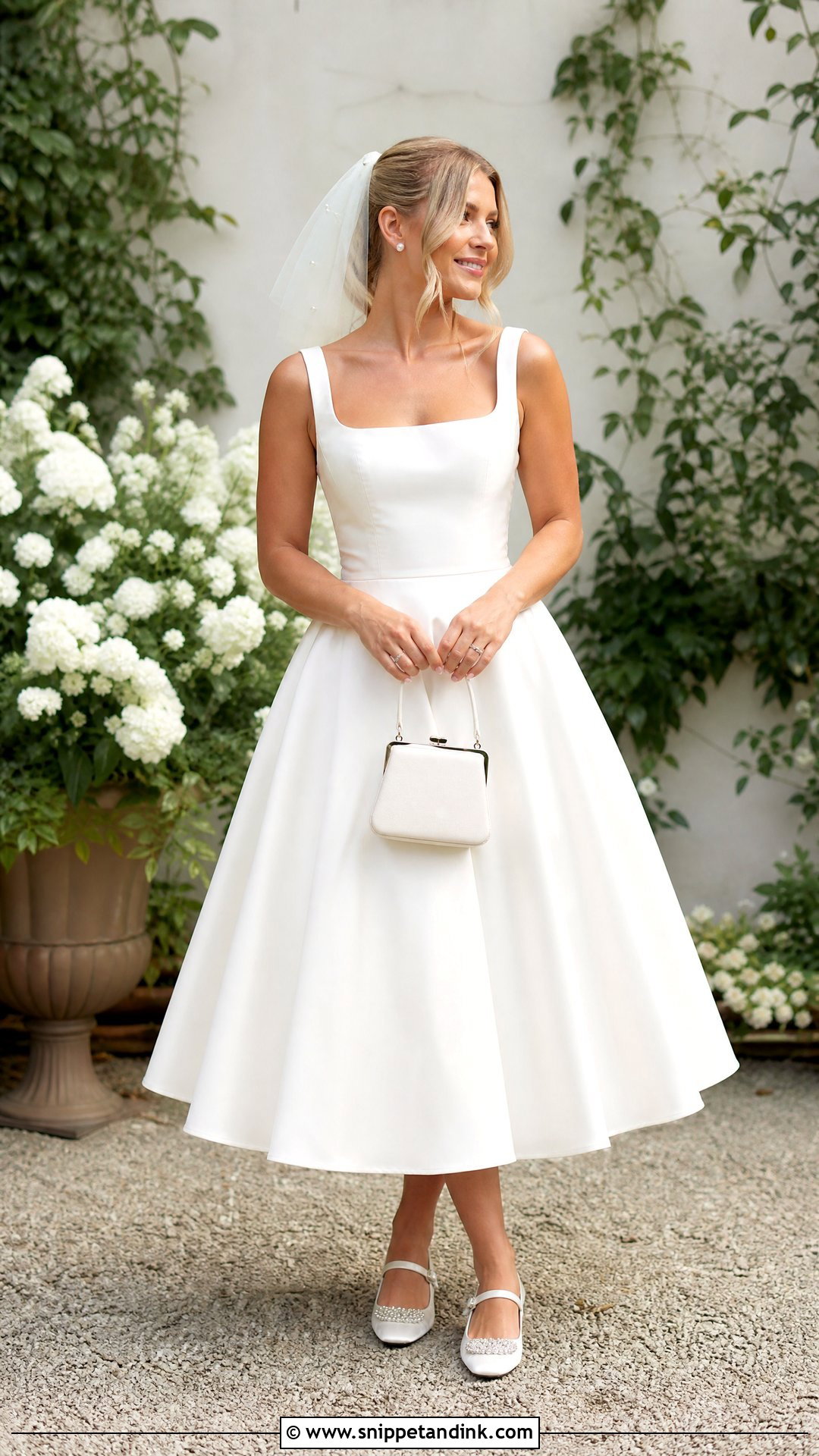
Tea length falls between knee and ankle. It’s easy to move in and puts your shoes on show, which is why brides choosing it tend to have a pair they love. A fitted bodice with a full satin or tulle skirt is the classic version; slim crepe feels modern. Pointed pumps, embellished Mary Janes or slingbacks all work, with a short veil, pearl studs and a small structured bag. Hem placement makes or breaks it. I mark it where the calf narrows, because a hem landing on the widest part of the calf shortens the leg.
13. Wedding Mini Dress
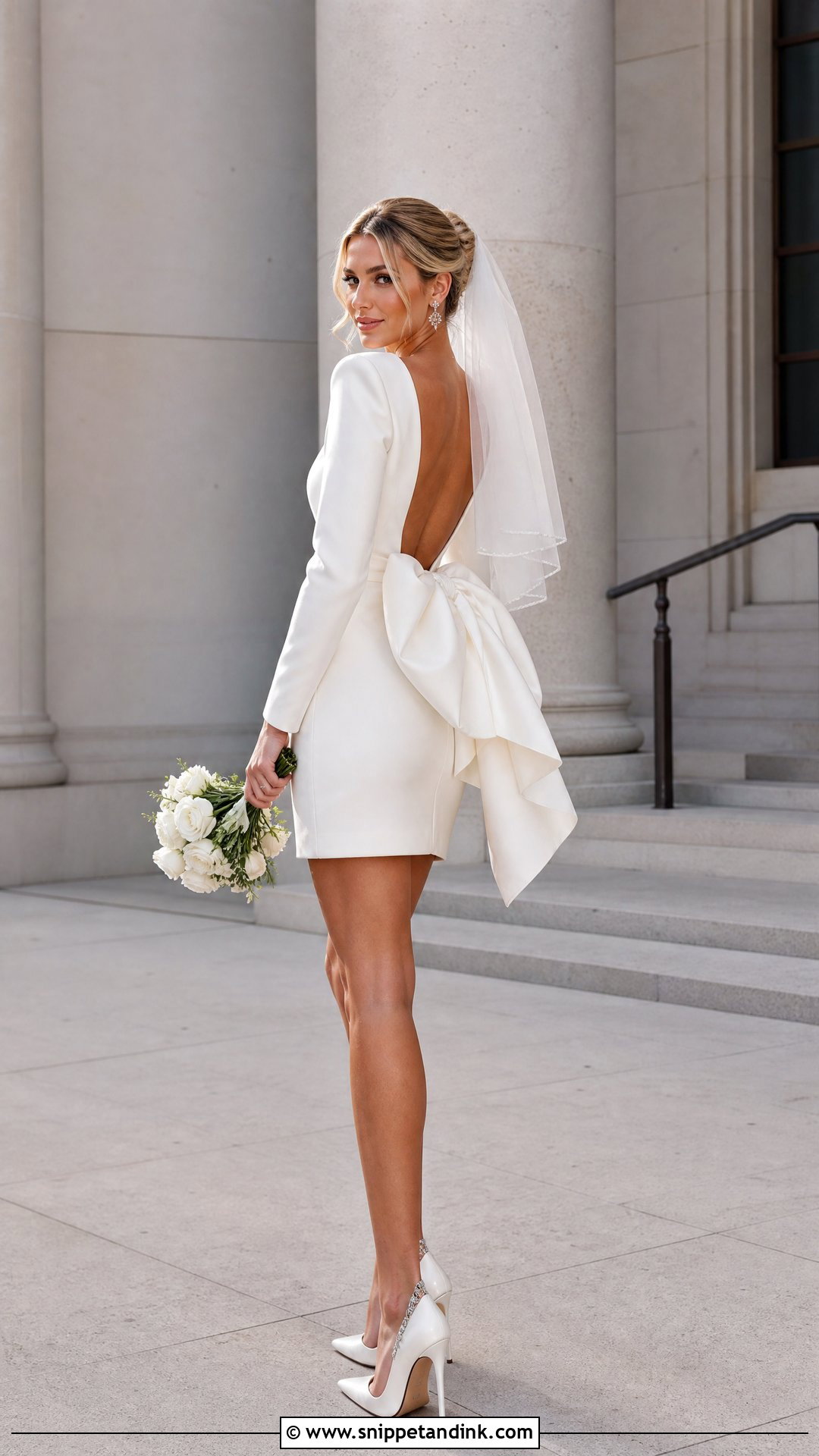
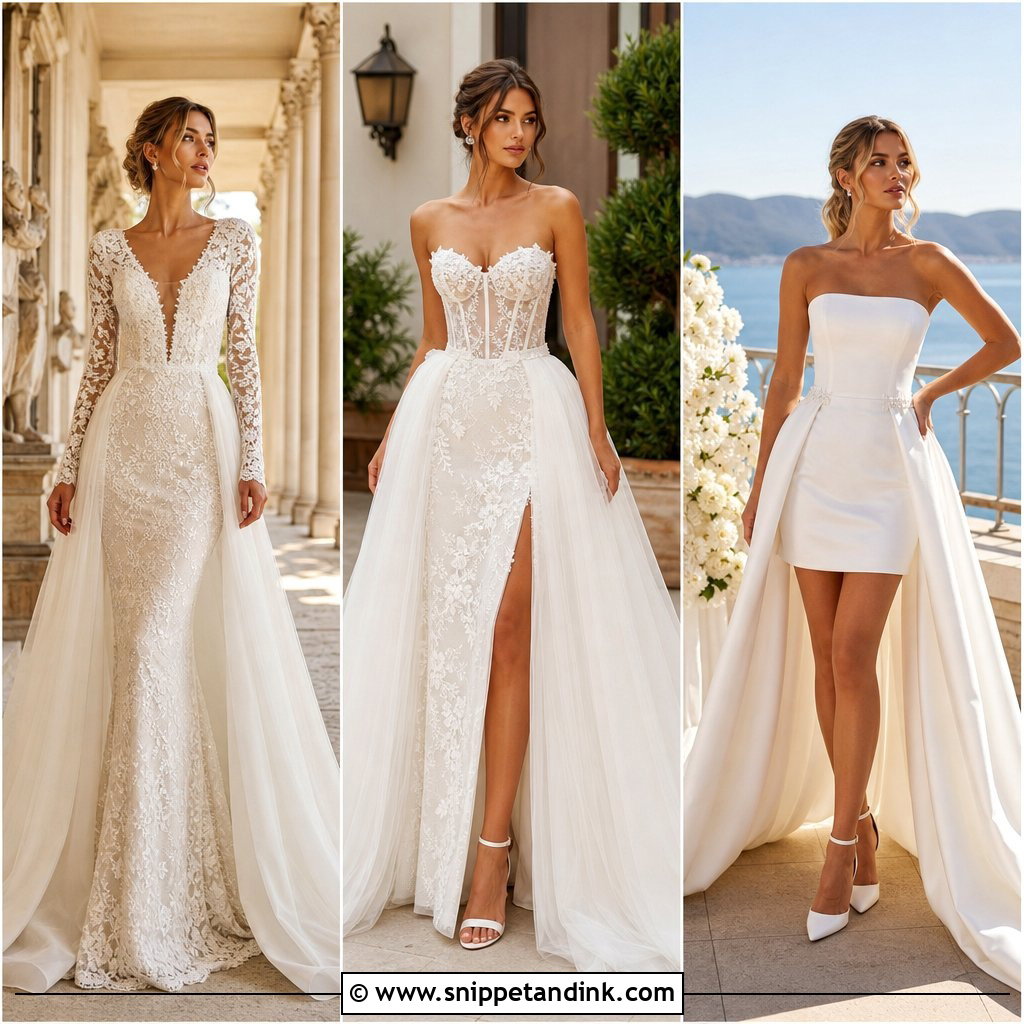
A wedding mini is practical for a civil ceremony or a reception change, and bold anywhere else. Structured satin, floral appliqué or a tailored shift keeps the short hem polished. Balance it with a higher neckline, long sleeves or a clean fitted bodice. Statement pumps, sheer tights in cooler weather, a short veil and small crystal earrings complete it. A removable bow or overskirt adds drama for portraits before you reveal the mini. Sit, bend and dance in it at fittings; a mini you keep tugging down will show in every candid photo.
14. Floral Appliqué Wedding Dress
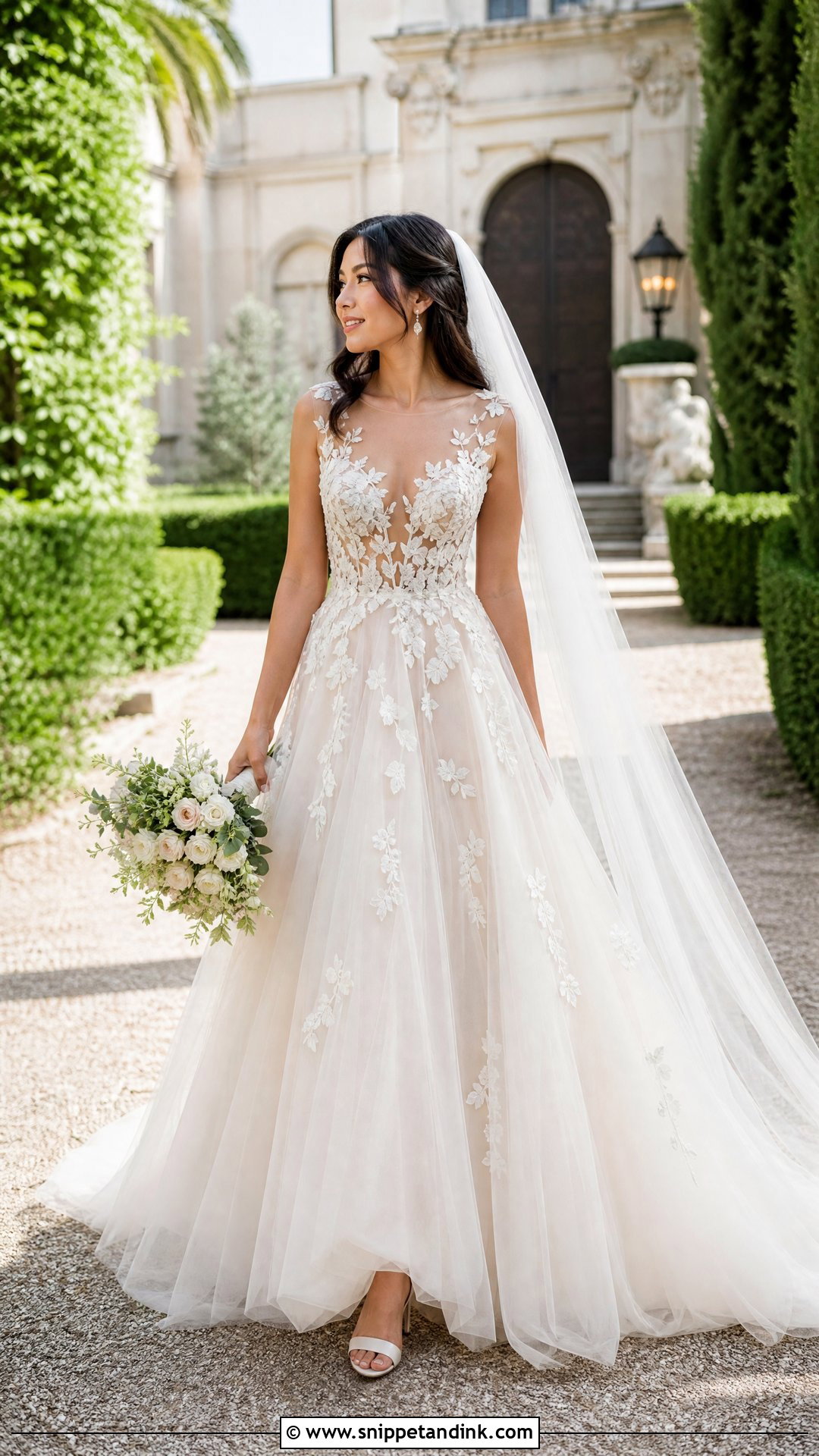
With floral appliqué, the flowers are the dress. Scattered blossoms look delicate; oversized ones look editorial. Over tulle, organza and illusion fabric the flowers seem to float. Keep accessories controlled: small pearl earrings, plain ivory heels and a veil with no edging, so it doesn’t fight the appliqué. A loosely gathered bouquet can echo the botanical theme without copying it. Before buying, run your hand over the inside of the arms and hips. Raised edges can rub skin raw over a long day, and loose stitching means a petal will come off by the reception.


15. 3D Flower Wedding Dress
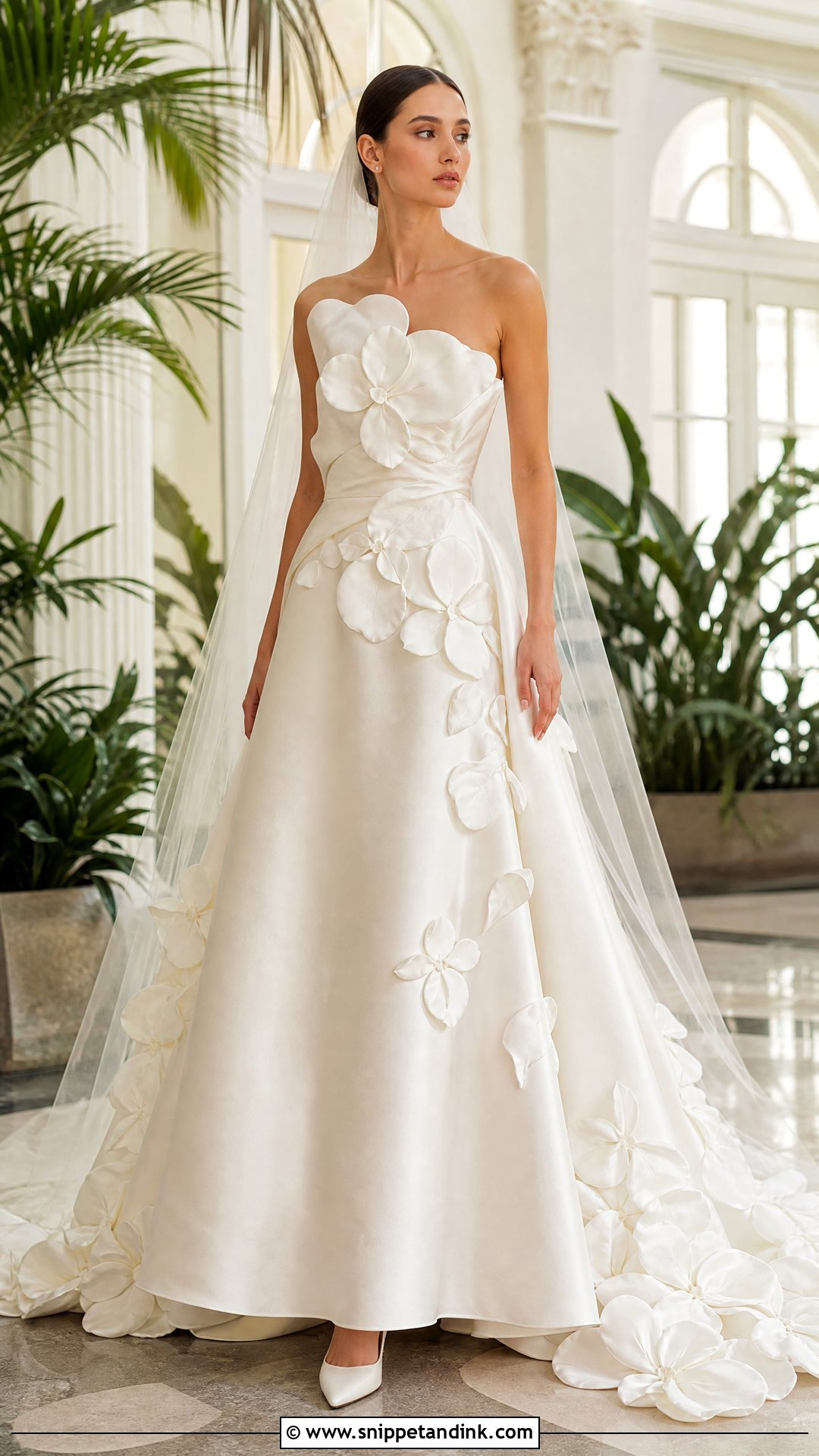
A 3D flower dress takes the appliqué idea further: sculpted petals, fabric rosettes or raised blossoms with real depth. They can cover the gown or sit along the neckline, waist and train. A clean A-line keeps heavy flowers from swamping you; a fitted cut feels high-fashion. Simple satin heels, small studs and a plain tulle veil. I’d keep the hair in a neat bun, because loose waves catch on raised petals. Ask how the gown will travel; sculpted flowers crush easily, and a garment bag with tissue between the layers is worth asking for.
16. Bows Wedding Dress
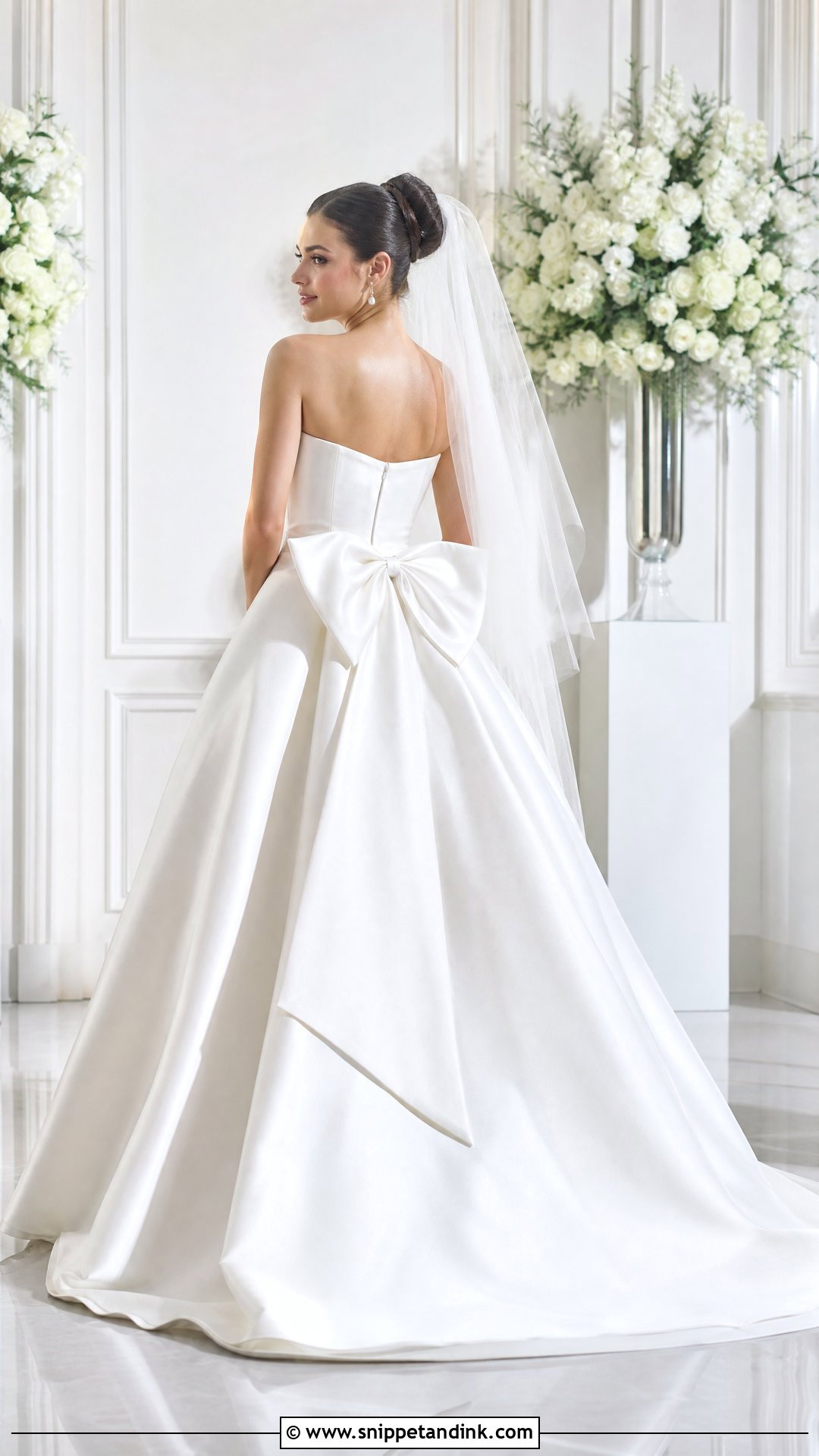
A bows wedding dress changes completely with the size of the bow. A small one at the neckline is subtle; an oversized back bow turns plain satin into a statement. Choose one dominant bow, not three. Clean pumps, pearl earrings and a sheer veil that sits below the bow, and a polished updo so it stays visible. Ask whether the bow is stiffened with interfacing; soft bows flatten after an hour in a car or a long dinner, while stiffened ones keep their loops. A removable bow gives you a second look later.
17. Bubble Hem Wedding Dress
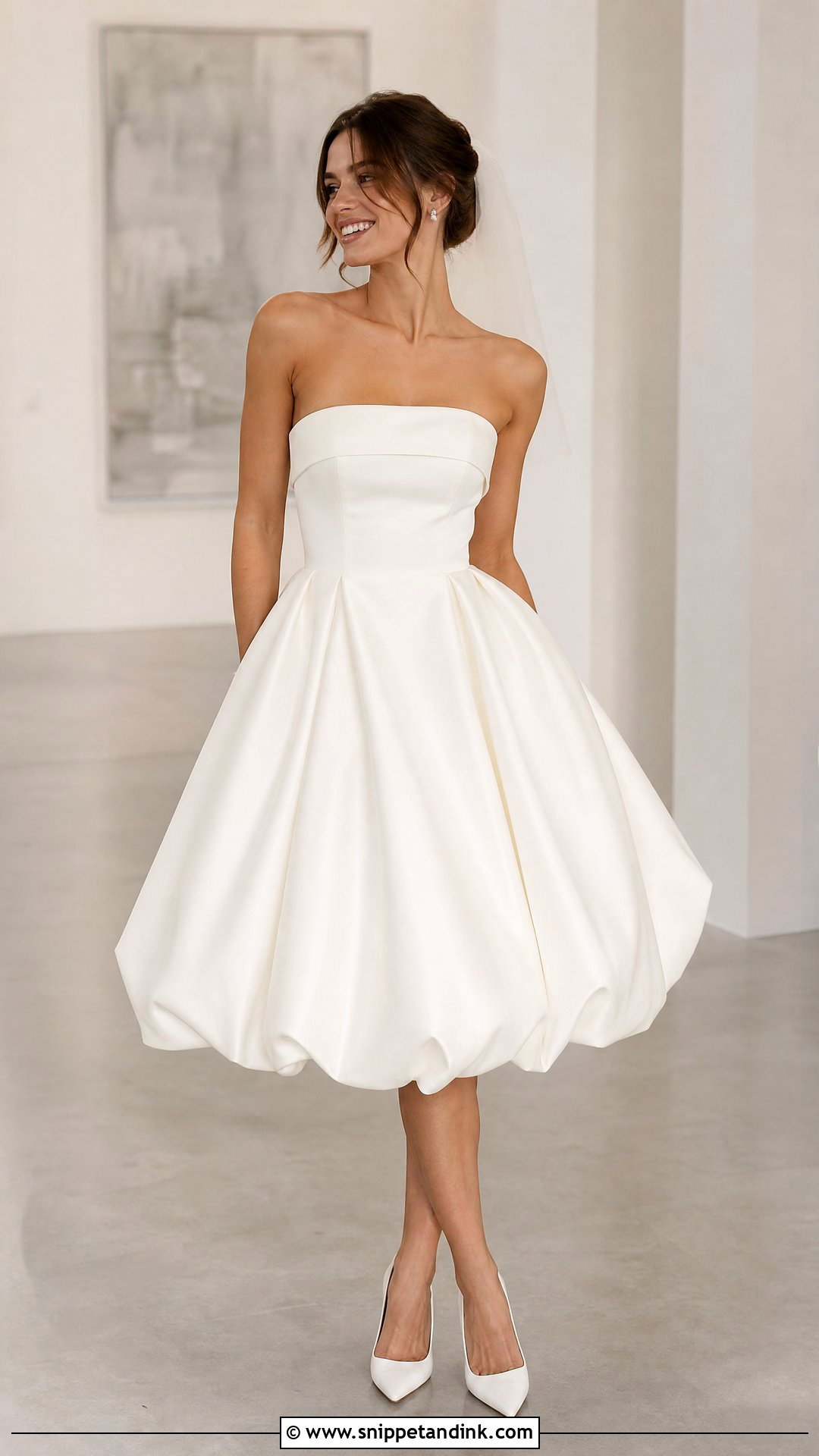
The bubble hem is the most fashion-led shape here. The fabric folds under itself at the hem to make a rounded, buoyant edge, and it works on minis, tea length and full length. Because the skirt is so expressive, the bodice should be plain and fitted, strapless or with wide straps. Pointed pumps, small silver earrings and a short veil or sleek headband. Check your stride: a bubble that’s too narrow at the hem limits how far you can step, which matters on stairs. Lighter fabric keeps the volume without weight.
18. Halter Neck Wedding Dress
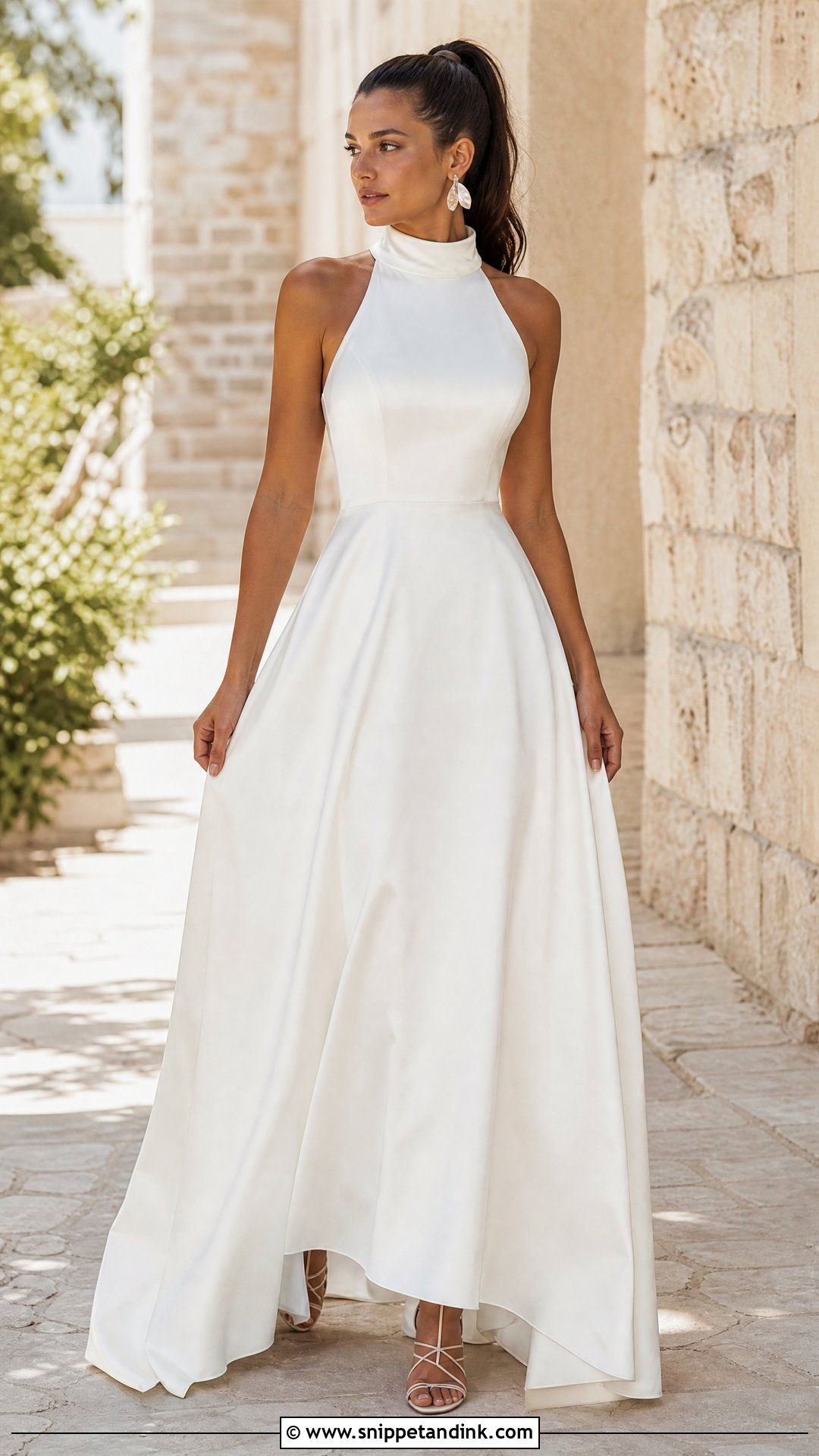
Halters give clean shoulder lines and a confident shape. A high halter in crepe or satin looks sleek; a softer draped one has a 1970s feel. A fitted column skirt is streamlined; a flowing A-line moves better outdoors. Wear hair up in a bun or high ponytail to keep the neckline clear. Sculptural earrings, a bracelet, and closed-toe or strappy ivory heels. A low back adds contrast. At fittings, check the pressure at the back of the neck. If the halter carries the weight of the bodice, it can feel heavy by evening, so ask for internal bust support.
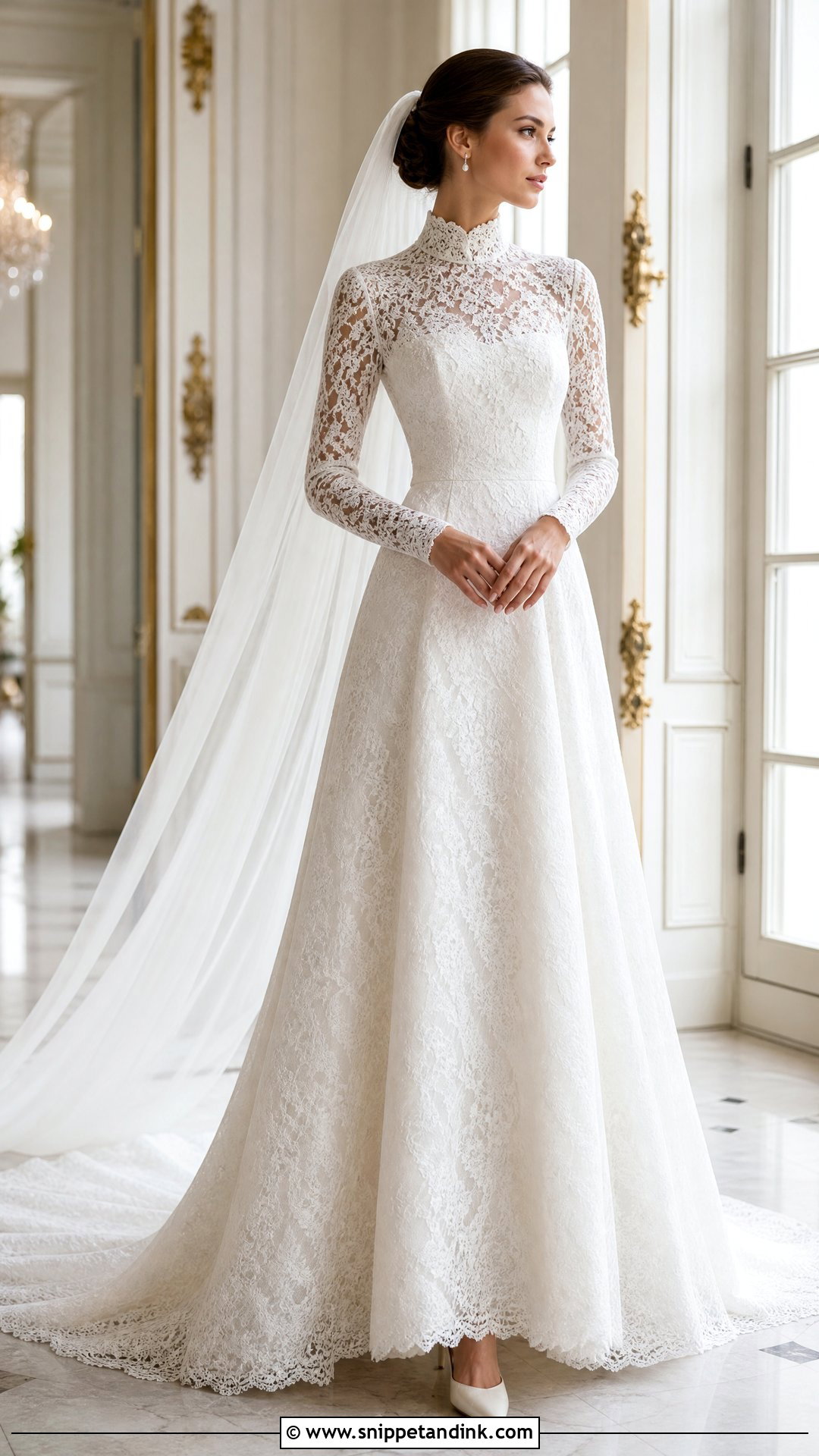
19. High Neck Lace Wedding Dress
High neck lace gives coverage with plenty of texture. Lace over an illusion lining looks light; a fully lined bodice feels more traditional. Pair it with long sleeves for a formal ceremony, or go sleeveless in warm weather. With all that detail up top, earrings replace a necklace. A low bun, smooth cathedral veil, pointed pumps and a soft bouquet keep it from feeling crowded. The edge of the lace at the throat is the bit to test: scalloped lace can scratch, and a collar that’s even slightly tight leaves a red line by evening. Turn your head both ways before signing off.

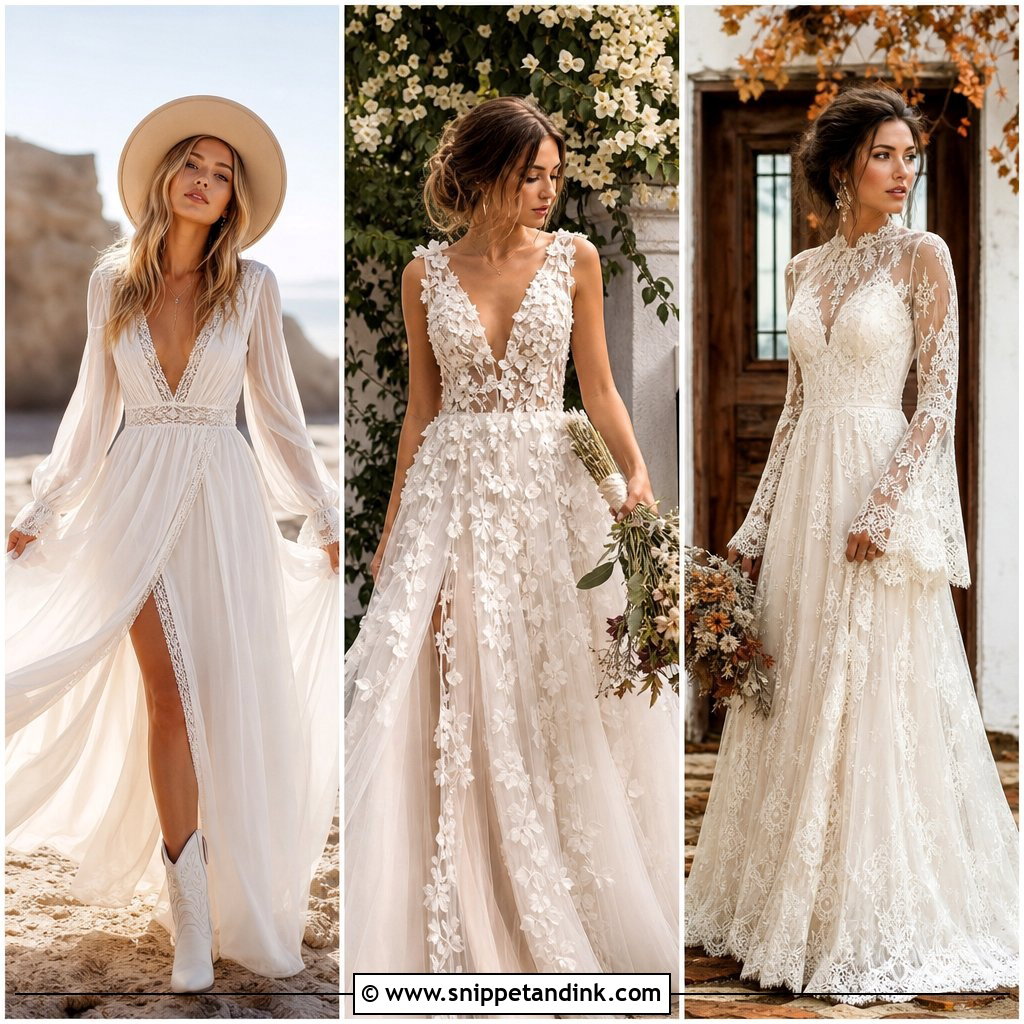
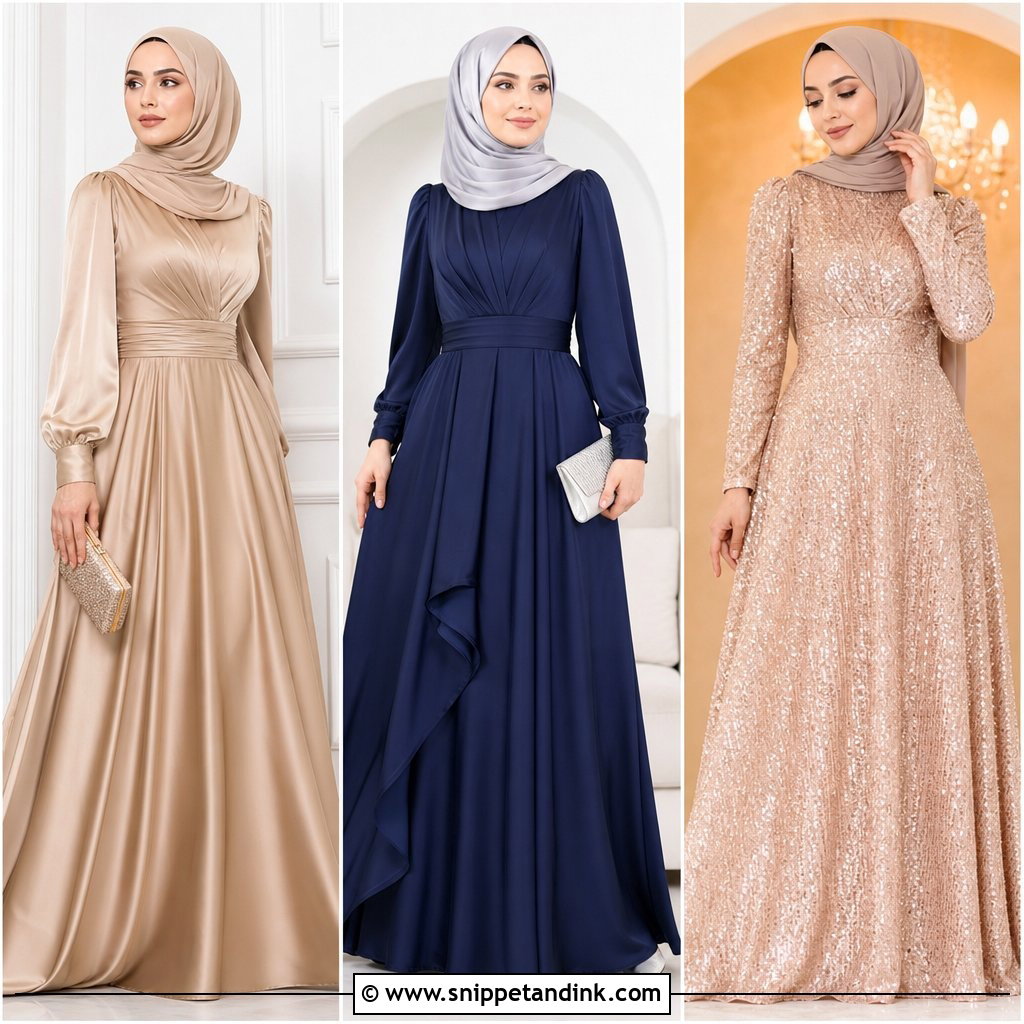


20. Cape Wedding Dress
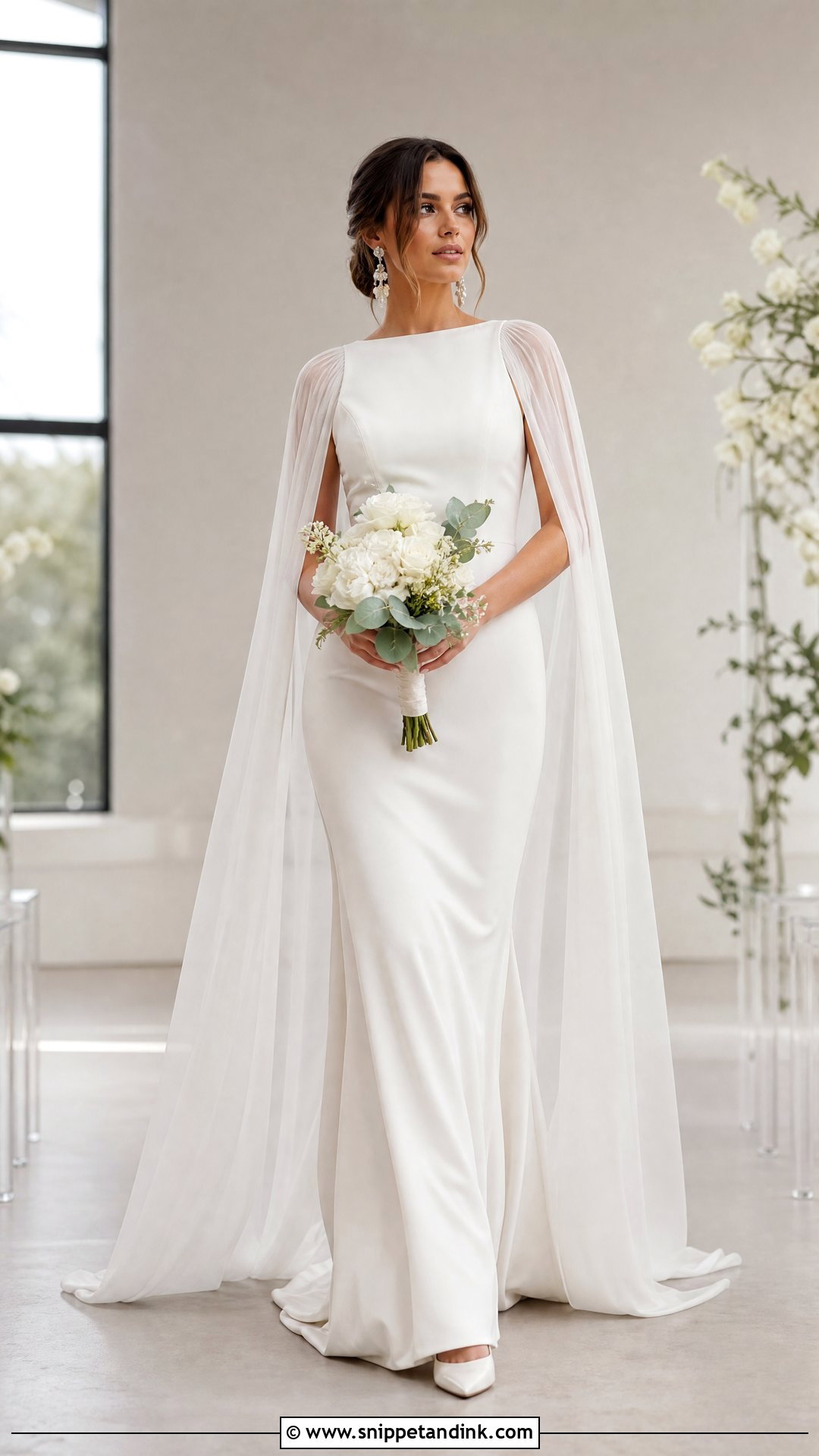
A cape gives ceremony drama without a veil. It can attach at the shoulders, flow from the neckline or start at the back of the bodice. Sheer tulle is light; crepe or satin is architectural. Wear it over a fitted column or simple A-line so the layers stay clear. A sleek bun, statement earrings, pointed pumps and a tidy bouquet. A removable cape comes off for dining. Long capes catch under heels, especially on stairs, so practise walking in the whole outfit and ask for the length to finish just at the floor.
21. Detachable Overskirt Wedding Dress
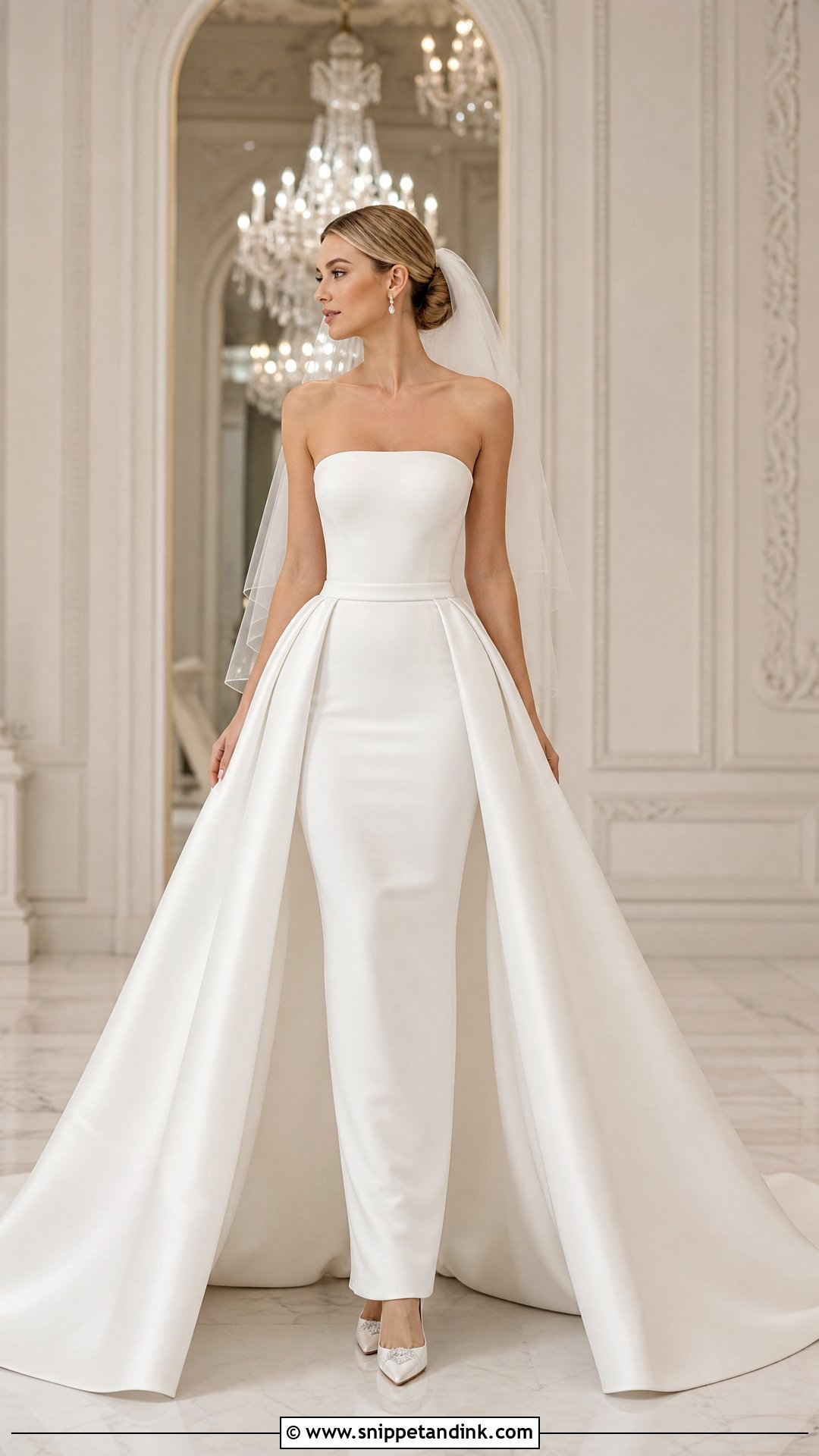
An overskirt gives you two silhouettes in one outfit: full volume for the entrance, ceremony and formal photos, then a slim sheath, mermaid or mini for dancing. Matching fabric makes the change almost invisible; a tulle overskirt reads as a soft contrast. Keep earrings, heels and hair the same for both looks. A medium-length veil avoids competing with the skirt volume. At fittings, check that the waistband is hidden from all sides and that the fastenings can be undone by a bridesmaid in a minute or two.
22. Wedding Dress With Removable Sleeves
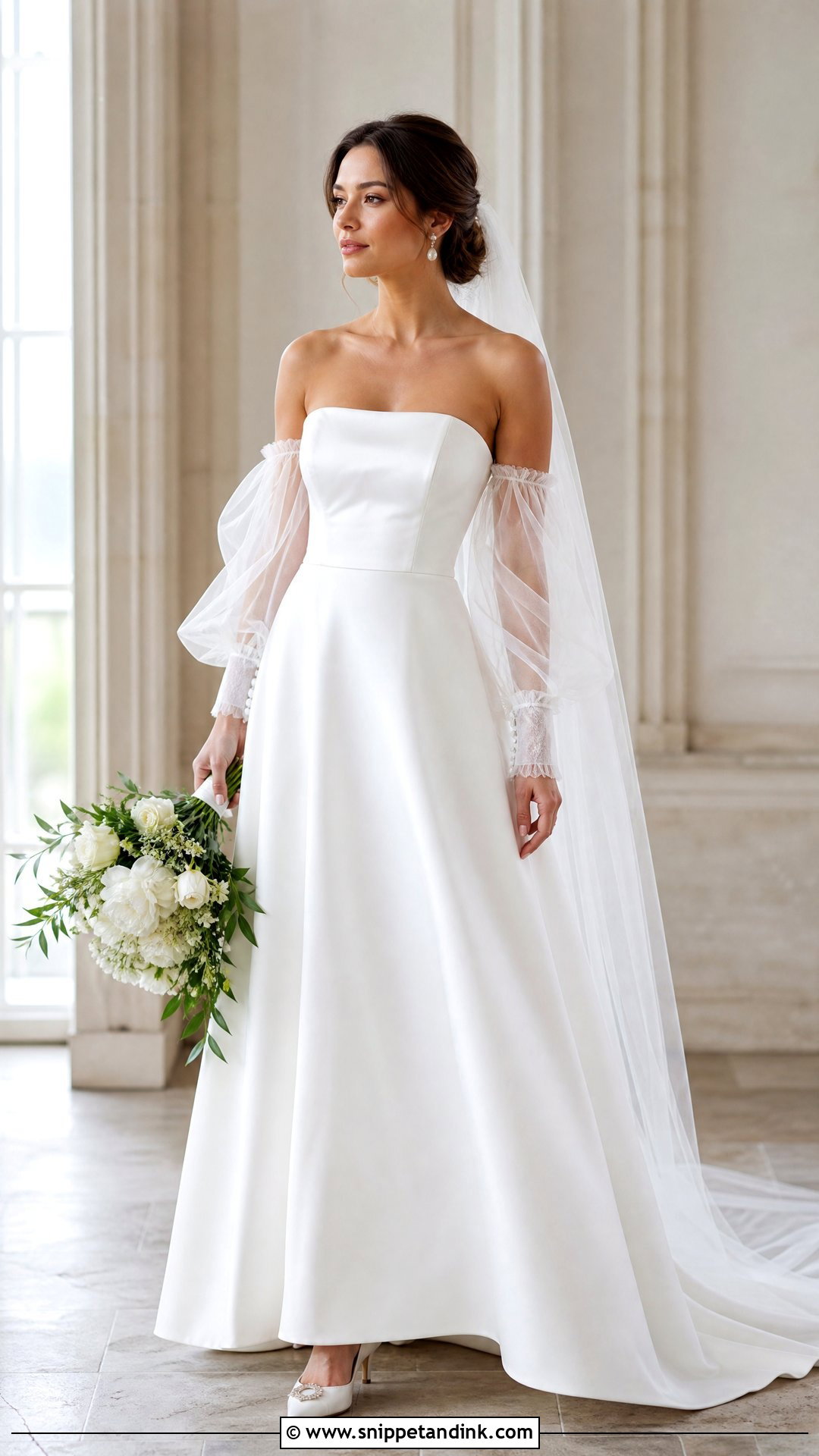
Removable sleeves let you adjust coverage through the day. Fitted lace sleeves make a strapless gown formal for the ceremony; puffed tulle sleeves add personality. Take them off and the dress is lighter for dancing. Pick sleeves that attach securely and match the neckline, so they look built-in. A sheer veil, pearl earrings, comfortable pumps and an updo complete it. Practise attaching and removing them before the day, and give one attendant a small labelled bag to keep them clean once they’re off.
23. Pearl Wedding Dress
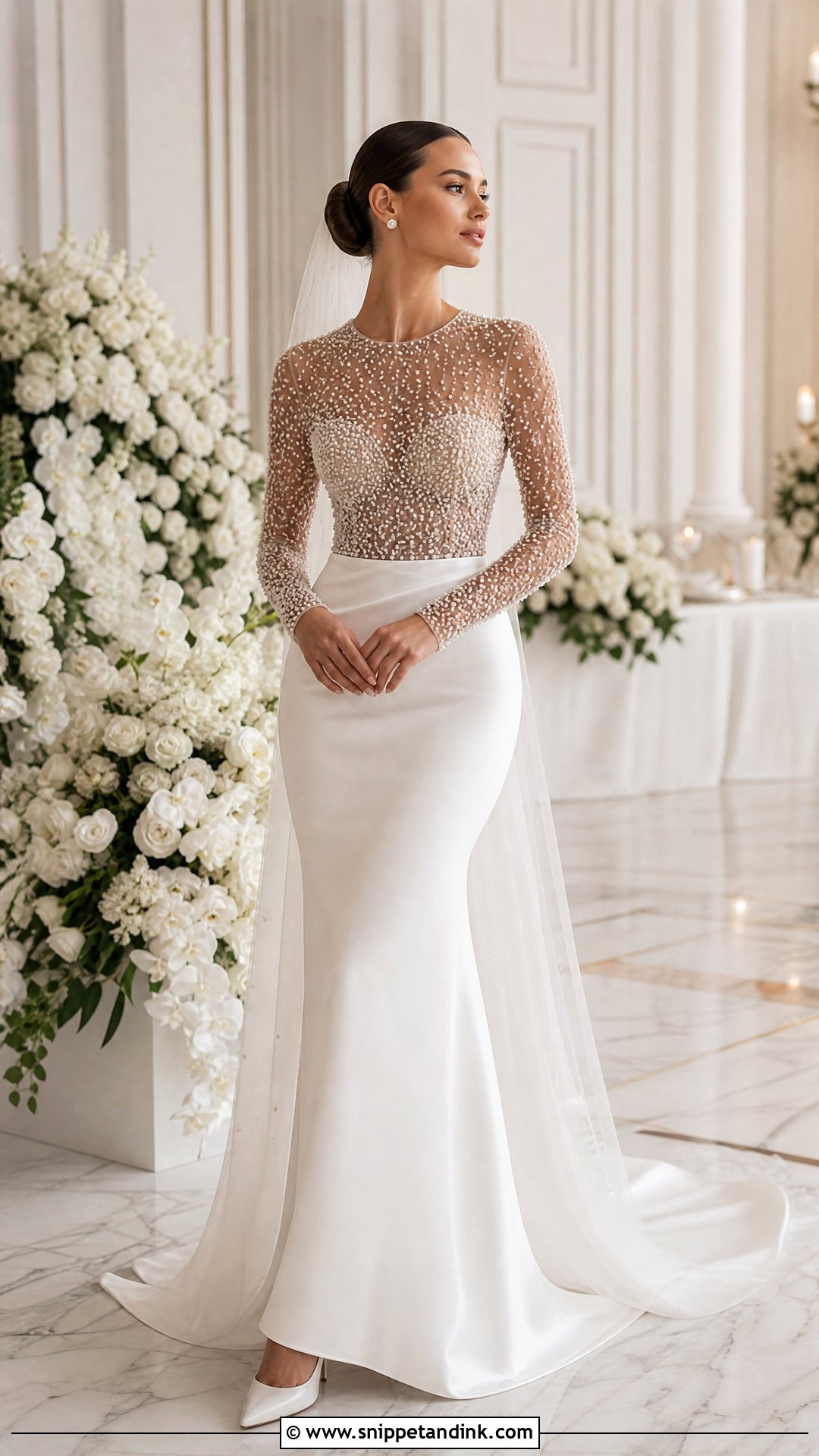
Pearls give soft shine rather than crystal flash. They can be scattered across sheer sleeves, lined along a corset bodice or clustered at the neckline and waist. A pearl-heavy top looks balanced over a plain satin skirt. Pearl studs, plain ivory pumps and a veil with minimal edging; skip extra pearl jewelry. Pearls on the inner arm and waist are the ones that catch, so check those spots. Ask the salon for spare pearls and a needle so a loose one can be sewn back on before the ceremony.
24. Wedding Dress With Scarf
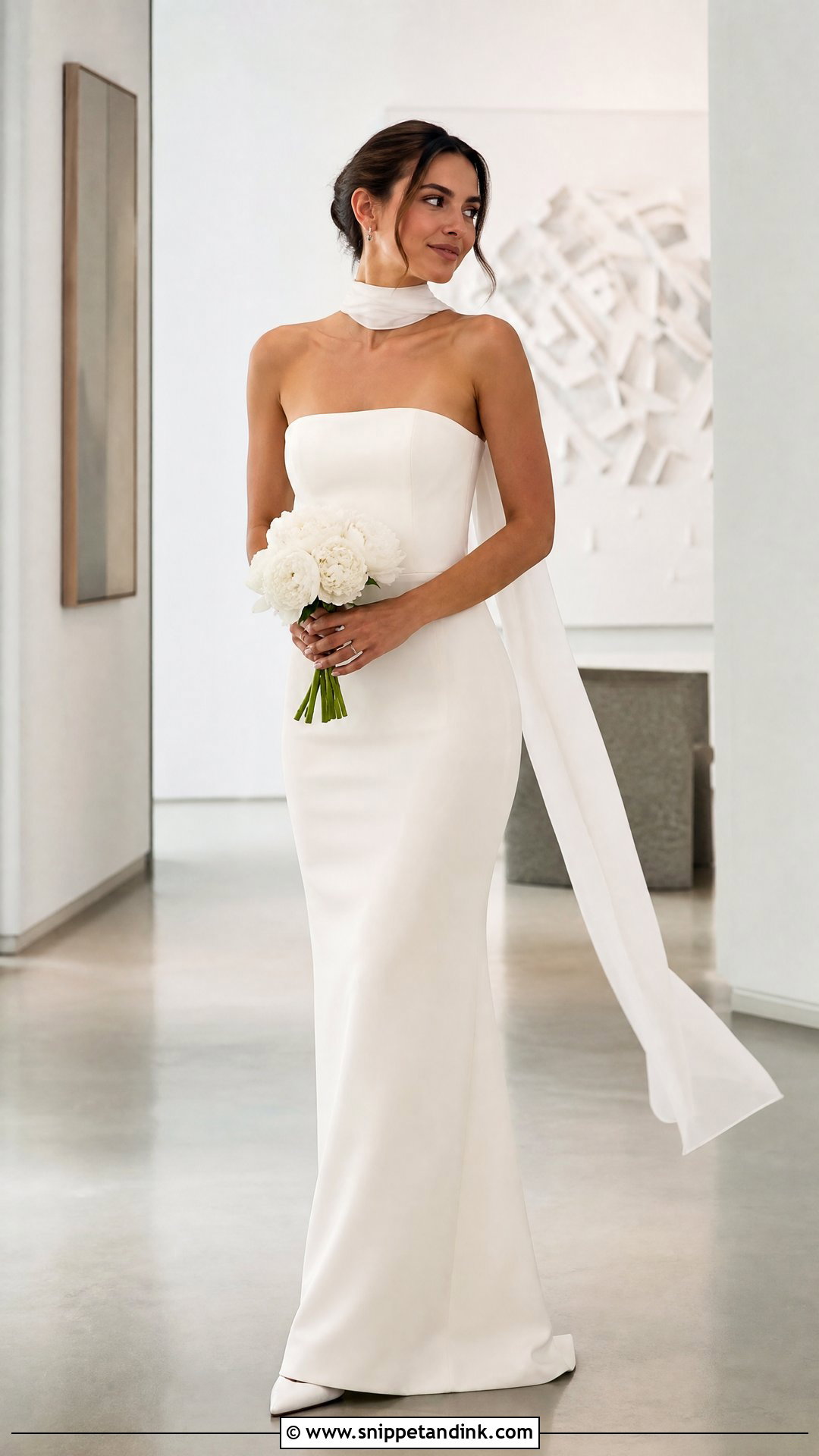
A wedding dress with a scarf brings movement and a fashion edge in place of the usual accessories. A narrow chiffon or silk scarf can wrap loosely at the neck, fall down the back or attach to the gown. It pairs well with a strapless column, a halter or a slip. Small earrings, sleek hair, pointed heels and a compact bouquet. Length matters: it should move when you walk but end well above your heels, or it becomes a trip hazard. Outdoors, have a hidden snap or small pin to stop the wind wrapping it round your face.
25. Colored Wedding Dress
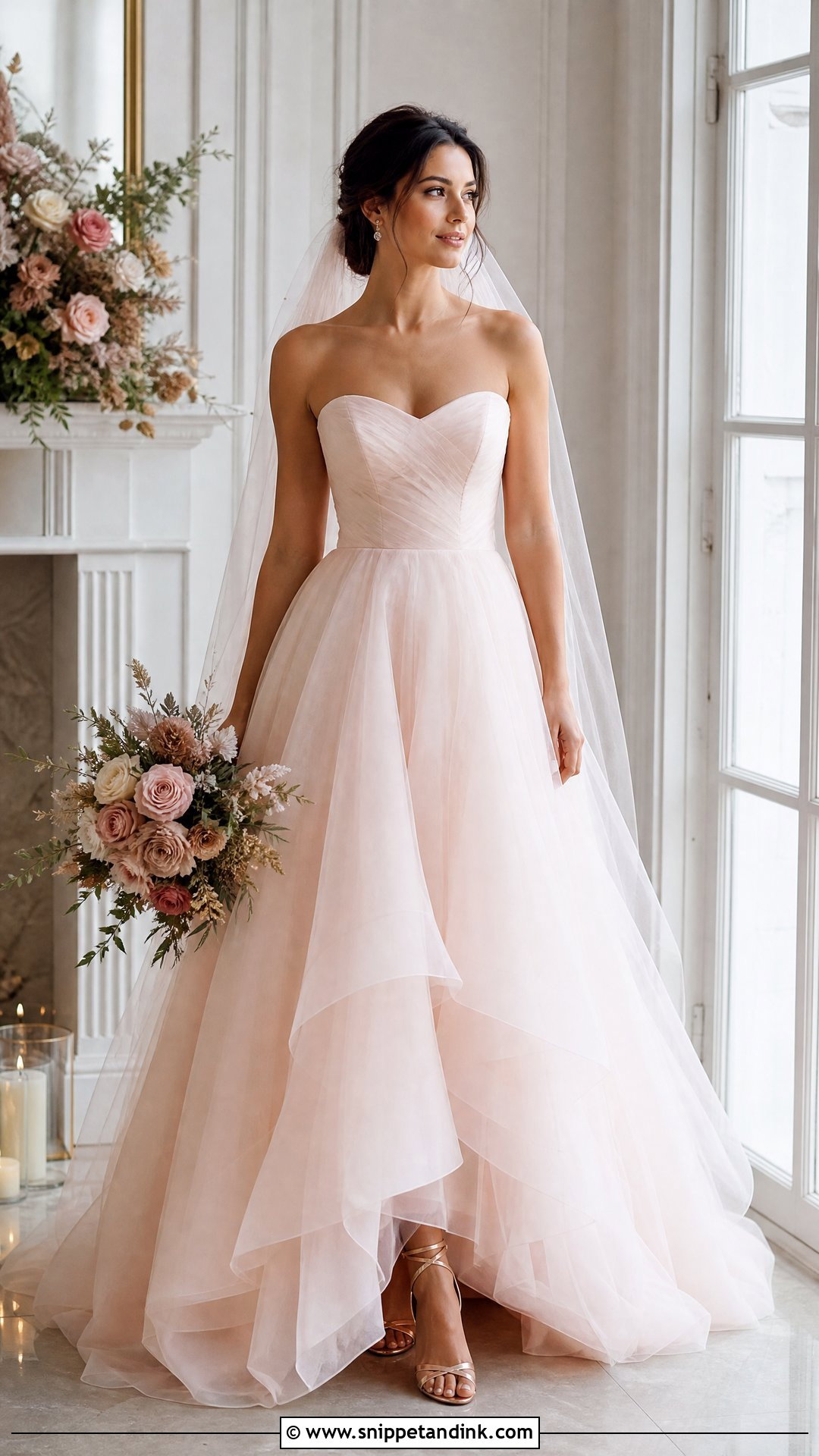
A colored wedding dress stands out while keeping a formal bridal shape. Blush, pale blue, champagne, silver and soft floral prints add colour without looking like costume. A ball gown or A-line is traditional; slim satin is modern. Match the veil to the dress’s undertone rather than defaulting to bright white. Metallic shoes, understated earrings and one coordinating shade in the bouquet tie it together. Always view the fabric in daylight and under indoor bulbs; pale colours can shift a lot between the two.
What Goes Underneath Each Shape
Undergarments are the quiet reason a dress looks right or wrong. Buy them before your first fitting and bring them every time, because the seamstress fits the dress to whatever you’re wearing.
- Strapless, corset and basque bodices usually have cups and boning built in. If not, ask for cups to be sewn in rather than relying on a strapless bra that slides.
- Slip and bias-cut dresses need laser-cut, no-line briefs in a shade close to your skin, not white, which shows through ivory.
- Low backs and halters often need a plunge or adhesive bra, or cups sewn into the lining.
- Ball gowns and full A-lines may need a petticoat or hoop for the right volume; ask whether one is included.
- Mermaids and fitted crepe show every edge, so a smoothing slip or high-waist shaper is worth trying.
Read the Order Form Twice
The order form is where expensive surprises hide. Make sure it lists the style number, colour, size and any changes you’ve agreed, such as sleeves added or a longer train. Ask how the size was chosen. Shops usually order to your largest measurement, then take the rest in, because a gown can be reduced far more easily than let out.
Check the estimated ship date, the deposit and when the balance is due, and whether rush fees apply. Ask whether alterations are done in-house and roughly what they usually cost for this style. Most bridal orders are non-refundable once placed, so be sure before you sign.
Sit, Turn, Hug: The Last Test Before You Say Yes
The right gown suits your personality, your comfort and the day you’ve planned. This list covers romantic lace, structured satin, short hemlines, sculpted flowers, convertible layers and colour. Start with the shapes that make you feel most confident, then filter by venue and season. In appointments, don’t just stand at the mirror. Sit, walk, turn, hug and dance a few steps in every serious contender. Think about alterations, undergarments and shoes before you commit. Trends are useful, but the dress should still feel like you when you look back at the photos years from now.
You'll Like These Ideas:







Leave a Reply